EP3279552B1 - Light source unit and vehicle lamp fitting - Google Patents
Light source unit and vehicle lamp fitting Download PDFInfo
- Publication number
- EP3279552B1 EP3279552B1 EP16772306.3A EP16772306A EP3279552B1 EP 3279552 B1 EP3279552 B1 EP 3279552B1 EP 16772306 A EP16772306 A EP 16772306A EP 3279552 B1 EP3279552 B1 EP 3279552B1
- Authority
- EP
- European Patent Office
- Prior art keywords
- substrate
- light source
- power supply
- source unit
- light emitting
- Prior art date
- Legal status (The legal status is an assumption and is not a legal conclusion. Google has not performed a legal analysis and makes no representation as to the accuracy of the status listed.)
- Active
Links
Images




Classifications
-
- F—MECHANICAL ENGINEERING; LIGHTING; HEATING; WEAPONS; BLASTING
- F21—LIGHTING
- F21S—NON-PORTABLE LIGHTING DEVICES; SYSTEMS THEREOF; VEHICLE LIGHTING DEVICES SPECIALLY ADAPTED FOR VEHICLE EXTERIORS
- F21S43/00—Signalling devices specially adapted for vehicle exteriors, e.g. brake lamps, direction indicator lights or reversing lights
- F21S43/10—Signalling devices specially adapted for vehicle exteriors, e.g. brake lamps, direction indicator lights or reversing lights characterised by the light source
- F21S43/13—Signalling devices specially adapted for vehicle exteriors, e.g. brake lamps, direction indicator lights or reversing lights characterised by the light source characterised by the type of light source
- F21S43/14—Light emitting diodes [LED]
-
- F—MECHANICAL ENGINEERING; LIGHTING; HEATING; WEAPONS; BLASTING
- F21—LIGHTING
- F21S—NON-PORTABLE LIGHTING DEVICES; SYSTEMS THEREOF; VEHICLE LIGHTING DEVICES SPECIALLY ADAPTED FOR VEHICLE EXTERIORS
- F21S41/00—Illuminating devices specially adapted for vehicle exteriors, e.g. headlamps
- F21S41/10—Illuminating devices specially adapted for vehicle exteriors, e.g. headlamps characterised by the light source
- F21S41/14—Illuminating devices specially adapted for vehicle exteriors, e.g. headlamps characterised by the light source characterised by the type of light source
- F21S41/141—Light emitting diodes [LED]
- F21S41/143—Light emitting diodes [LED] the main emission direction of the LED being parallel to the optical axis of the illuminating device
-
- F—MECHANICAL ENGINEERING; LIGHTING; HEATING; WEAPONS; BLASTING
- F21—LIGHTING
- F21S—NON-PORTABLE LIGHTING DEVICES; SYSTEMS THEREOF; VEHICLE LIGHTING DEVICES SPECIALLY ADAPTED FOR VEHICLE EXTERIORS
- F21S41/00—Illuminating devices specially adapted for vehicle exteriors, e.g. headlamps
- F21S41/10—Illuminating devices specially adapted for vehicle exteriors, e.g. headlamps characterised by the light source
- F21S41/19—Attachment of light sources or lamp holders
- F21S41/192—Details of lamp holders, terminals or connectors
-
- F—MECHANICAL ENGINEERING; LIGHTING; HEATING; WEAPONS; BLASTING
- F21—LIGHTING
- F21S—NON-PORTABLE LIGHTING DEVICES; SYSTEMS THEREOF; VEHICLE LIGHTING DEVICES SPECIALLY ADAPTED FOR VEHICLE EXTERIORS
- F21S41/00—Illuminating devices specially adapted for vehicle exteriors, e.g. headlamps
- F21S41/10—Illuminating devices specially adapted for vehicle exteriors, e.g. headlamps characterised by the light source
- F21S41/19—Attachment of light sources or lamp holders
- F21S41/194—Bayonet attachments
-
- F—MECHANICAL ENGINEERING; LIGHTING; HEATING; WEAPONS; BLASTING
- F21—LIGHTING
- F21S—NON-PORTABLE LIGHTING DEVICES; SYSTEMS THEREOF; VEHICLE LIGHTING DEVICES SPECIALLY ADAPTED FOR VEHICLE EXTERIORS
- F21S43/00—Signalling devices specially adapted for vehicle exteriors, e.g. brake lamps, direction indicator lights or reversing lights
- F21S43/10—Signalling devices specially adapted for vehicle exteriors, e.g. brake lamps, direction indicator lights or reversing lights characterised by the light source
- F21S43/19—Attachment of light sources or lamp holders
-
- F—MECHANICAL ENGINEERING; LIGHTING; HEATING; WEAPONS; BLASTING
- F21—LIGHTING
- F21S—NON-PORTABLE LIGHTING DEVICES; SYSTEMS THEREOF; VEHICLE LIGHTING DEVICES SPECIALLY ADAPTED FOR VEHICLE EXTERIORS
- F21S43/00—Signalling devices specially adapted for vehicle exteriors, e.g. brake lamps, direction indicator lights or reversing lights
- F21S43/10—Signalling devices specially adapted for vehicle exteriors, e.g. brake lamps, direction indicator lights or reversing lights characterised by the light source
- F21S43/19—Attachment of light sources or lamp holders
- F21S43/195—Details of lamp holders, terminals or connectors
-
- F—MECHANICAL ENGINEERING; LIGHTING; HEATING; WEAPONS; BLASTING
- F21—LIGHTING
- F21S—NON-PORTABLE LIGHTING DEVICES; SYSTEMS THEREOF; VEHICLE LIGHTING DEVICES SPECIALLY ADAPTED FOR VEHICLE EXTERIORS
- F21S43/00—Signalling devices specially adapted for vehicle exteriors, e.g. brake lamps, direction indicator lights or reversing lights
- F21S43/20—Signalling devices specially adapted for vehicle exteriors, e.g. brake lamps, direction indicator lights or reversing lights characterised by refractors, transparent cover plates, light guides or filters
- F21S43/26—Refractors, transparent cover plates, light guides or filters not provided in groups F21S43/235 - F21S43/255
-
- F—MECHANICAL ENGINEERING; LIGHTING; HEATING; WEAPONS; BLASTING
- F21—LIGHTING
- F21S—NON-PORTABLE LIGHTING DEVICES; SYSTEMS THEREOF; VEHICLE LIGHTING DEVICES SPECIALLY ADAPTED FOR VEHICLE EXTERIORS
- F21S43/00—Signalling devices specially adapted for vehicle exteriors, e.g. brake lamps, direction indicator lights or reversing lights
- F21S43/30—Signalling devices specially adapted for vehicle exteriors, e.g. brake lamps, direction indicator lights or reversing lights characterised by reflectors
- F21S43/37—Attachment thereof
-
- F—MECHANICAL ENGINEERING; LIGHTING; HEATING; WEAPONS; BLASTING
- F21—LIGHTING
- F21S—NON-PORTABLE LIGHTING DEVICES; SYSTEMS THEREOF; VEHICLE LIGHTING DEVICES SPECIALLY ADAPTED FOR VEHICLE EXTERIORS
- F21S43/00—Signalling devices specially adapted for vehicle exteriors, e.g. brake lamps, direction indicator lights or reversing lights
- F21S43/40—Signalling devices specially adapted for vehicle exteriors, e.g. brake lamps, direction indicator lights or reversing lights characterised by the combination of reflectors and refractors
-
- F—MECHANICAL ENGINEERING; LIGHTING; HEATING; WEAPONS; BLASTING
- F21—LIGHTING
- F21S—NON-PORTABLE LIGHTING DEVICES; SYSTEMS THEREOF; VEHICLE LIGHTING DEVICES SPECIALLY ADAPTED FOR VEHICLE EXTERIORS
- F21S45/00—Arrangements within vehicle lighting devices specially adapted for vehicle exteriors, for purposes other than emission or distribution of light
- F21S45/40—Cooling of lighting devices
- F21S45/47—Passive cooling, e.g. using fins, thermal conductive elements or openings
- F21S45/48—Passive cooling, e.g. using fins, thermal conductive elements or openings with means for conducting heat from the inside to the outside of the lighting devices, e.g. with fins on the outer surface of the lighting device
-
- F—MECHANICAL ENGINEERING; LIGHTING; HEATING; WEAPONS; BLASTING
- F21—LIGHTING
- F21V—FUNCTIONAL FEATURES OR DETAILS OF LIGHTING DEVICES OR SYSTEMS THEREOF; STRUCTURAL COMBINATIONS OF LIGHTING DEVICES WITH OTHER ARTICLES, NOT OTHERWISE PROVIDED FOR
- F21V19/00—Fastening of light sources or lamp holders
- F21V19/001—Fastening of light sources or lamp holders the light sources being semiconductors devices, e.g. LEDs
- F21V19/003—Fastening of light source holders, e.g. of circuit boards or substrates holding light sources
-
- F—MECHANICAL ENGINEERING; LIGHTING; HEATING; WEAPONS; BLASTING
- F21—LIGHTING
- F21V—FUNCTIONAL FEATURES OR DETAILS OF LIGHTING DEVICES OR SYSTEMS THEREOF; STRUCTURAL COMBINATIONS OF LIGHTING DEVICES WITH OTHER ARTICLES, NOT OTHERWISE PROVIDED FOR
- F21V23/00—Arrangement of electric circuit elements in or on lighting devices
- F21V23/06—Arrangement of electric circuit elements in or on lighting devices the elements being coupling devices, e.g. connectors
-
- F—MECHANICAL ENGINEERING; LIGHTING; HEATING; WEAPONS; BLASTING
- F21—LIGHTING
- F21V—FUNCTIONAL FEATURES OR DETAILS OF LIGHTING DEVICES OR SYSTEMS THEREOF; STRUCTURAL COMBINATIONS OF LIGHTING DEVICES WITH OTHER ARTICLES, NOT OTHERWISE PROVIDED FOR
- F21V29/00—Protecting lighting devices from thermal damage; Cooling or heating arrangements specially adapted for lighting devices or systems
- F21V29/50—Cooling arrangements
- F21V29/502—Cooling arrangements characterised by the adaptation for cooling of specific components
- F21V29/503—Cooling arrangements characterised by the adaptation for cooling of specific components of light sources
-
- F—MECHANICAL ENGINEERING; LIGHTING; HEATING; WEAPONS; BLASTING
- F21—LIGHTING
- F21S—NON-PORTABLE LIGHTING DEVICES; SYSTEMS THEREOF; VEHICLE LIGHTING DEVICES SPECIALLY ADAPTED FOR VEHICLE EXTERIORS
- F21S43/00—Signalling devices specially adapted for vehicle exteriors, e.g. brake lamps, direction indicator lights or reversing lights
- F21S43/30—Signalling devices specially adapted for vehicle exteriors, e.g. brake lamps, direction indicator lights or reversing lights characterised by reflectors
- F21S43/31—Optical layout thereof
-
- F—MECHANICAL ENGINEERING; LIGHTING; HEATING; WEAPONS; BLASTING
- F21—LIGHTING
- F21S—NON-PORTABLE LIGHTING DEVICES; SYSTEMS THEREOF; VEHICLE LIGHTING DEVICES SPECIALLY ADAPTED FOR VEHICLE EXTERIORS
- F21S45/00—Arrangements within vehicle lighting devices specially adapted for vehicle exteriors, for purposes other than emission or distribution of light
- F21S45/50—Waterproofing
-
- F—MECHANICAL ENGINEERING; LIGHTING; HEATING; WEAPONS; BLASTING
- F21—LIGHTING
- F21V—FUNCTIONAL FEATURES OR DETAILS OF LIGHTING DEVICES OR SYSTEMS THEREOF; STRUCTURAL COMBINATIONS OF LIGHTING DEVICES WITH OTHER ARTICLES, NOT OTHERWISE PROVIDED FOR
- F21V15/00—Protecting lighting devices from damage
-
- F—MECHANICAL ENGINEERING; LIGHTING; HEATING; WEAPONS; BLASTING
- F21—LIGHTING
- F21V—FUNCTIONAL FEATURES OR DETAILS OF LIGHTING DEVICES OR SYSTEMS THEREOF; STRUCTURAL COMBINATIONS OF LIGHTING DEVICES WITH OTHER ARTICLES, NOT OTHERWISE PROVIDED FOR
- F21V17/00—Fastening of component parts of lighting devices, e.g. shades, globes, refractors, reflectors, filters, screens, grids or protective cages
- F21V17/005—Fastening of component parts of lighting devices, e.g. shades, globes, refractors, reflectors, filters, screens, grids or protective cages with keying means, i.e. for enabling the assembling of component parts in distinctive positions, e.g. for preventing wrong mounting
-
- F—MECHANICAL ENGINEERING; LIGHTING; HEATING; WEAPONS; BLASTING
- F21—LIGHTING
- F21V—FUNCTIONAL FEATURES OR DETAILS OF LIGHTING DEVICES OR SYSTEMS THEREOF; STRUCTURAL COMBINATIONS OF LIGHTING DEVICES WITH OTHER ARTICLES, NOT OTHERWISE PROVIDED FOR
- F21V29/00—Protecting lighting devices from thermal damage; Cooling or heating arrangements specially adapted for lighting devices or systems
- F21V29/50—Cooling arrangements
- F21V29/70—Cooling arrangements characterised by passive heat-dissipating elements, e.g. heat-sinks
- F21V29/74—Cooling arrangements characterised by passive heat-dissipating elements, e.g. heat-sinks with fins or blades
Definitions
- a vehicle lamp in which a light source unit detachably attached to a lamp outer housing constituted by a lamp body and a cover is provided and a light emitting element such as a light emitting diode is used as a light source of the light source unit.
- a light emitting element serving as a light source and a substrate on which a wiring pattern for supplying current to at least the light emitting element is formed are provided, and the substrate is disposed in a socket housing (e.g., see JP 2013 25934 A ).
- the socket housing in which the substrate is disposed is attached to a lamp body.
- a part of a power supply member (connection terminal) for supplying power to the light emitting element or the like is inserted through the substrate, and the portion of the power supply member inserted through the substrate is bonded to the substrate by a conductive metal member (solder).
- a back side of the substrate is in contact with a heat conducting metal member, and heat generated at the time of emitting light from the light emitting element is released via the heat conducting metal member.
- JP 201325934 A a part of the power supply member is inserted through the substrate, the portion of the power supply member inserted through the substrate is bonded to the substrate by the conductive metal member, and the heat conducting metal member is provided only at a position facing the central portion of the substrate in order to avoid interference between the heat conducting metal member and the power supply member.
- the contact area of the heat conducting metal member with the substrate is so small that sufficient heat-dissipation properties may not be ensured at the time of emitting light from the light emitting element.
- the light source unit and the vehicle lamp of the present invention overcome the above problem and aim to improve the heat-dissipation properties relating to the heat generated at the time of emitting light from the light emitting element.
- a light source unit includes a light emitting element that functions as a light source, a wiring pattern on which the light emitting element is mounted, an electrode pad connected to the wiring pattern, a substrate on which the wiring pattern is formed and the electrode pad is mounted, a power supply body that supplies external power to the electrode pad, a socket housing which has an engaging portion that is engageable with a predetermined member and holds the substrate, the light emitting element and the power supply body, and a heat dissipation plate bonded to a rear surface of the substrate with an adhesive.
- a placement recess in which the substrate is placed is formed in the socket housing, a part of a connection terminal to be connected to the power supply circuit is positioned in the portion of the placement recess between the substrate and the engaging portion, and a gap is formed between an outer peripheral surface of the substrate and an inner peripheral surface of the placement recess, the gap comprising at least one shallow groove portion and at least one deep groove portion.
- connection terminal and the electrode pad are connected to each other by a conduction connecting part.
- connection terminal of the power supply body is positioned in the portion of the placement recess of the light source unit outside the substrate, the heat-dissipation area of the substrate can be increased.
- the power supply body has a terminal holding portion formed of an insulating resin material, and the connection terminal is supported by the terminal holding portion and is connectable to the power supply circuit.
- connection terminal of the power supply body is positioned outside the substrate, the heat-dissipation area of the substrate can be increased.
- connection terminal of the power supply body is located adjacent to the substrate, and at least the portions of the power supply body excluding both end portions are located inside the socket housing.
- connection terminal a distance between the connection terminal and the substrate is shortened, and the power supply body is located so as not to protrude largely from the socket housing.
- the power supply body is formed by integrally molding the terminal holding portion and the connection terminal, and the power supply body and the socket housing are coupled by being integrally molded.
- the power supply body and the socket housing are coupled by being integrally molded after the power supply body is formed by the integral molding.
- the conduction connecting part is shielded by the shielding member, and thus, fingers or the like are not inadvertently brought into contact with the conduction connecting part when gripping the light source unit.
- a vehicle lamp according to the present invention is a vehicle lamp including a light source unit according to the above aspects.
- connection terminal of the power supply body is positioned outside the substrate, the heat-dissipation area of the substrate can be increased, and hence, the heat-dissipation properties at the time of emitting light from the light emitting element can be improved.
- a light source unit of the present invention is applied to a light source unit used for a combination lamp having a function of a stop lamp and a tail lamp
- a vehicle lamp of the present invention is applied to a vehicle lamp including the light source unit.
- the scope of the present invention is not limited to the light source unit used for the combination lamp having the function of the stop lamp and the tail lamp, and the vehicle lamp including the light source unit.
- a light source unit of the present invention can be widely applied to a light source unit which is used for various vehicle lamps such as a headlamp, a clearance lamp, a tail lamp, a turn signal lamp, a stop lamp, a daytime running lamp, a cornering lamp, a hazard lamp, a position lamp, a back lamp, a fog lamp, or a combination lamp thereof. Further, a vehicle lamp of the present invention can be widely applied to a vehicle lamp including these various light source units.
- a front and rear direction, an up and down direction and a right and left direction are defined in such a manner that an optical axis direction is set as the front and rear direction, and an emission direction of light is set as the rear side.
- the front and rear direction, the up and down direction and the right and left direction which are described below, are defined for convenience of explanation. The practice of the present invention is not limited to these directions.
- a vehicle lamp 1 is respectively attached and arranged at both left and right ends of the front end portion of a vehicle body.
- the vehicle lamp 1 includes a lamp body 2 having a recess opened rearward and a cover 3 closing a rear opening 2a of the lamp body 2.
- a lamp outer housing 4 is configured by the lamp body 2 and the cover 3.
- An inner space of the lamp outer housing 4 is formed as a lamp chamber 5.
- a front end portion of the lamp body 2 is provided as a substantially cylindrical unit mounting portion 6 that penetrates in the front and rear direction.
- An internal space of the unit mounting portion 6 is formed as a mounting hole 6a.
- engaging protrusions 7, 7, ⁇ protruding inwardly are provided so as to be spaced apart from each other in a circumferential direction.
- the light source unit 8 is detachably attached to the unit mounting portion 6 of the lamp body 2.
- the light source unit 8 includes a socket housing 9, a power supply body 10, and a light emitting module 11 (see FIGS. 2 to 6 ).
- the socket housing 9 is formed by integrally molding a resin-molded part 12 and a heat-dissipation plate 13.
- a so-called insert molding is used in which a molten resin (resin material) is filled in a state where a metallic material is retained in a cavity of a mold, and a molded product is integrally formed by the metallic material and the resin material.
- the resin-molded part 12 has excellent thermal conductivity and is formed of, for example, a resin material which contains carbon or the like.
- the resin-molded part 12 also has conductivity. It is preferable that a heat conduction coefficient of the resin-molded part 12 is in a range of 1 W/(mK) to 30 W/(mK), and the thermal conductivity thereof is lower than that of the heat-dissipation plate 13 and higher than that of a terminal holding portion (21) (to be described later).
- the resin-molded part 12 has a disc-shaped base surface portion 14 oriented in the front and rear direction, a protrusion-shaped portion 15 protruding rearward from the center of the base surface portion 14, first heat-dissipation fins 16, 16, ⁇ protruding forward from the base surface portion 14, second heat-dissipation fins 17, 17 protruding forward from the base surface portion 14, and a connector connection portion 18 protruding forward from the base surface portion 14.
- the protrusion-shaped portion 15 includes a substrate placement portion 19 having a circular outer shape and engaging portions 20, 20, ⁇ provided on an outer peripheral surface of the substrate placement portion 19.
- the connector connection portion 18 has a cylindrical shape whose axial direction is the front and rear direction, and is disposed below the first heat-dissipation fin 16, 16, ⁇ .
- the heat-dissipation plate 13 is formed in a predetermined shape by a plate-like metallic material such as aluminum having high thermal conductivity (see FIGS. 2 and 4 ).
- the heat-dissipation plate 13 includes a first heat-dissipation portion 13a, second heat-dissipation portions 13b, 13b, third heat-dissipation portions 13c, 13c, and fourth heat-dissipation portions 13d, 13d.
- the first heat-dissipation portion 13a and the fourth heat-dissipation portions 13d, 13d are respectively formed in a substantially rectangular shape oriented in the front and rear direction.
- the second heat-dissipation portions 13b, 13b and the third heat-dissipation portions 13c, 13c are respectively formed in a substantially rectangular shape oriented in the right and left direction. Rear ends of the third heat-dissipation portions 13c, 13c are respectively continuous with both left and right ends of the first heat-dissipation portion 13a.
- Inner ends of the fourth heat-dissipation portions 13d, 13d are respectively continuous with front ends of the third heat-dissipation portions 13c, 13c, and outer ends thereof are respectively continuous with rear ends of the second heat-dissipation portions 13b, 13b. Therefore, the third heat-dissipation portions 13c, 13c are respectively formed by being bent in a direction perpendicular to the first heat-dissipation portion 13a.
- the fourth heat-dissipation portions 13d, 13d are respectively formed by being bent in a direction perpendicular to the third heat-dissipation portions 13c, 13c.
- the second heat-dissipation portions 13b, 13b are respectively formed by being bent in a direction perpendicular to the fourth heat-dissipation portions 13d, 13d.
- the heat-dissipation plate 13 is configured such that the first heat-dissipation portion 13a is disposed in the placement recess 19a of the substrate placement portion 19 of the resin-molded part 12 and is exposed to the resin-molded part 12 (see FIG. 4 ).
- the heat-dissipation plate 13 is configured such that the second heat-dissipation portions 13b, 13b are respectively disposed on the inside of the second heat-dissipation fins 17, 17, the third heat-dissipation portions 13c, 13c are disposed on the inside of the substrate placement portion 19, and the fourth heat-dissipation portions 13d, 13d are disposed on the inside of the base surface portion 14.
- An insertion and placement hole (not shown) is formed at a position up to the base surface portion 14 from the substrate placement portion 19 of the resin-molded part 12.
- the insertion and placement hole communicates with the interior of the placement recess 19a and the connector coupling portion 18.
- the power supply body 10 includes a terminal holding portion 21 formed of an insulating resin material, and connection terminals 22, 22, 22 which are held in the terminal holding portion 21 and connected to a power supply circuit (external power; not shown) (see FIG. 2 ).
- connection terminal 22 is configured such that the connector connection portion 23a protrudes forward from the terminal holding portion 21 and the wire connection portion 23b protrudes rearward from the terminal holding portion 21. Since the retaining protrusions 24, 24 are positioned at the inside of the terminal holding portion 21, the connection terminal 22 is prevented from being detached from the terminal holding portion 21 in the front and rear direction.
- the power supply body 10 is positioned in a cavity of a mold, molten resin for forming the resin-molded part 12 is filled into the cavity, and the power supply body 10 is formed integrally with the socket housing 9 by an insert molding, for example.
- the power supply body 10 is formed by integrally molding the terminal holding portion 21 and the connection terminals 22, 22, 22, and the power supply body 10 and the socket housing 9 are coupled by being integrally molded.
- the power supply body 10 is formed by the integral molding, and then, the power supply body 10 and the socket housing 9 are integrally molded, so that good positional accuracy of the connection terminals 22, 22, 22 to the terminal holding portion 21 and good positional accuracy of the power supply body 10 to the socket housing 9 can be ensured. Further, an operation of coupling the power supply body 10 and the socket housing 9 is not necessary, so that workability can be improved.
- the light emitting module 11 includes a substrate 25 having a substantially rectangular shape oriented in the front and rear direction, light emitting elements 26, 26, ⁇ mounted on the substrate 25, and various control elements 27, 27, ⁇ mounted on the substrate 25 (see FIGS. 2 to 5 ).
- five light emitting elements 26, 26, ⁇ are mounted on the center of the substrate 25.
- Light emitting diodes LEDs
- the light emitting elements 26, 26, ⁇ are configured such that four light emitting elements 26, 26, ⁇ are mounted around one light emitting element 26 in the state of being spaced apart from each other at equal intervals in the circumferential direction.
- the center light emitting element 26 serves as a light source for a tail lamp, for example, and four surrounding light emitting elements 26, 26, ⁇ serve as a light source for a stop lamp, for example.
- the light emitting elements 26, 26, ⁇ are respectively connected to the wiring patterns by conductive wires 28, 28, ⁇ (see FIG. 7 ).
- the number and function of the light emitting element 26 mounted on the substrate 25 can be arbitrarily set, depending on the type and the required brightness or the like of the vehicle lamp 1.
- control elements 27, 27, ⁇ are used as the control elements 27, 27, ⁇ .
- the control elements 27, 27, ⁇ are mounted at positions of the light emitting module 11 on the outside of the light emitting elements 26, 26, ⁇ and are connected to the wiring patterns, respectively.
- a rear surface of the substrate 25 is adhered to the surface of the first heat-dissipation portion 13a of the heat-dissipation plate 13 by an adhesive 30 (see FIG. 4 ).
- a thermally conductive adhesive is used as the adhesive 30.
- electrode pads 29, 29, 29 connected to the wiring patterns are formed side by side in the right and left direction (see FIG. 3 ).
- the electrode pads 29, 29, 29 are respectively connected, through ultrasonic welding or soldering, to the wire connection portions 23b, 23b, 23b of the connection terminals 22, 22, 22 by wires 31, 31, 31 formed of aluminum or the like and serving as a conduction connecting part.
- the connection between the wire connection portion 23b and the wire 31 is performed at the portion of the wire connection portion 23b, which is subjected to the surface treatment by nickel or gold or the like.
- the connection between the electrode pads 29, 29, 29 and the connection terminals 22, 22, 22 may be performed by a conduction connecting part other than the wires 31, 31, 31.
- a frame body 32 is attached to the portion of the substrate 25 between the light emitting elements 26, 26, ⁇ and the control elements 27, 27, ⁇ (see FIGS. 3, 4 and 7 ).
- the frame body 32 is formed in a substantially annular shape by a resin material.
- the frame body 32 is disposed at a position to surround the light emitting elements 26, 26, ⁇ and the conductive wires 28, 28,
- a sealing part 33 is applied inside the frame body 32.
- the light emitting elements 26, 26, ⁇ and the conductive wires 28, 28, ⁇ are sealed by the sealing part 33 (see FIG. 7 ).
- the sealing part 33 is formed in such a way that liquid sealing resin is filled (injected) into the frame body 32 and then cured. In this way, the sealing part 33 seals the light emitting elements 26, 26, ⁇ and the conductive wires 28, 28, ⁇ . Therefore, the frame body 32 has a function of determining the sealing part 33 into a predetermined shape by preventing the sealing resin from unnecessarily flowing toward the control elements 27, 27, ⁇ .
- the refractive index of the sealing part 33 has an intermediate value of the refractive index of the light emitting elements 26, 26, ⁇ and the refractive index of air. Since the light emitting elements 26, 26, ⁇ are sealed by the sealing part 33, a difference between the refractive index of the light emitting elements 26, 26, ⁇ and the refractive index of air is alleviated. Therefore, the emission efficiency of light from the light emitting elements 26, 26, ⁇ to the outside is improved.
- the refractive index of the lens part 34 has an intermediate value of the refractive index of the light emitting element 26 and the refractive index of air. Since the light emitted from the light emitting elements 26, 26, ⁇ is less likely to be totally reflected at the interface of the sealing part 33 and the lens part 34, it is possible to improve the emission efficiency of light from the light emitting elements 26, 26, ⁇ to the outside.
- the sealing resin or molding resin is formed in a certain shape even in the case where the injection position of the sealing resin or molding resin is deviated from a predetermined position when the sealing resin or molding resin is injected to the inside of the frame body 32. Therefore, it is possible to improve the molding accuracy of the sealing resin or molding resin.
- the molding resin has viscosity higher than that of the sealing resin and has flowability lower than that of the sealing resin.
- the viscosity of the molding resin is equal to or greater than 40 Pa ⁇ s (pascal ⁇ second), for example, and the viscosity of the sealing resin is in the range of 5 to 15 Pa ⁇ s (pascal ⁇ second), for example.
- the viscosity of the molding resin is set to be equal to or greater than 40 Pa ⁇ s, the molding resin does not flow more than necessary at the time of being injected onto the sealing resin. Therefore, the shape of the lens part 34 is likely to be formed in a desired shape.
- the viscosity of the sealing resin is set to the range of 5 to 15 Pa ⁇ s
- the sealing resin is flowing in a desired state at the time of being injected onto the substrate 25. Therefore, it is easy to maintain a planar shape and it is possible to secure good formability.
- the viscosity of the sealing resin is set to the range of 5 to 15 Pa ⁇ s
- the load on the conductive wires 28, 28, ⁇ becomes small when the sealing resin is injected onto the substrate 25. Therefore, it is possible to suppress the occurrence of disconnection or the like of the conductive wires 28, 28, ⁇ .
- the sealing resin when the sealing resin is injected onto the substrate 25, the sealing resin is injected to the inside of the frame body 32 and the shape of the sealing resin (the sealing part 33) is determined by the frame body 32. Therefore, the viscosity of the sealing resin may be less than 5 Pa ⁇ s.
- the lens part 34 is formed by a mold and then disposed on the sealing part 33.
- the molding resin having viscosity less than 40 Pa ⁇ s may be used.
- the lens part (after curing) 34 has a higher elastic modulus than the sealing part 33 (after curing).
- the elastic modulus of the sealing part 33 is less than 1 MPa and the elastic modulus of the lens part 34 is equal to or greater than 1 Mpa.
- the lens part 34 In the state where the lens part 34 is disposed, the light emitting elements 26, 26, ⁇ and the conductive wires 28, 28, ⁇ are covered by the lens part 34 in a state of being sealed by the sealing part 33.
- the frame body 32 is formed of a resin material
- the frame body 32 may be formed of a metallic material.
- the frame body 32 may be formed of a resin material and the surface thereof may be subjected to processing such as metal deposition.
- the frame body 32 may be formed of a white resin.
- An annular gasket 36 formed of, for example, a rubber material or a resin material is externally fitted and attached to the protrusion-shaped portion 15 of the light source unit 8 configured as described above (see FIGS. 1 and 4 ).
- the gasket 36 is formed of a resin material or a rubber material.
- the protrusion-shaped portion 15 is inserted to the unit mounting portion 6 of the lamp body 2 from the front and is rotated in the circumferential direction. In this way, the engaging portions 20, 20, ⁇ are respectively engaged with the engaging protrusions 7, 7, ⁇ from the rear (see FIG. 1 ).
- the engaging protrusions 7, 7, ⁇ are clamped in the engaging portions 20, 20, ⁇ and the gasket 36, and hence, the light source unit 8 is attached to the lamp body 2.
- the unit mounting portion 6 is closed by the gasket, and hence, foreign matters such as moisture are prevented from entering the lamp chamber 5 through the unit mounting portion 6 from the outside.
- the light source unit 8 when the light source unit 8 is rotated in a direction opposite to the above direction along the circumferential direction, the engagement of the engaging portions 20, 20, ⁇ to the engaging protrusions 7, 7, ⁇ is released, and hence, the protrusion-shaped portion 15 can be pulled from the unit mounting portion 6. In this way, the light source unit 8 can be detached from the lamp body 2.
- the light emitted from the light emitting element 26 is transmitted through the sealing part 33 and the lens part 34, and is irradiated to the outside through the cover 3. At this time, the irradiation direction of the light is controlled by the lens part 34, so that the light is irradiated to the outside toward a predetermined direction. At this time, when the frame body 32 serves as a reflector, a portion of the light emitted from the light emitting element 26 is irradiated to the outside by being reflected in the frame body 32.
- heat is generated in the light emitting module 11.
- the heat generated is transmitted to the first heat-dissipation portion 13a through the adhesive 30 having excellent thermal conductivity, and is transmitted to the heat-dissipation plate 13 and the resin-molded part 12.
- the heat, which is transmitted to the heat-dissipation plate 13 and the resin-molded part 12, is mainly dissipated to the outside from the first heat-dissipation fins 16, 16, ⁇ and the second heat-dissipation fins 17, 17.
- the electrode pads 29, 29, 29 are provided in the light emitting module 11
- the power supply body 10 is disposed outside the light emitting module 11
- the electrode pads 29, 29, 29 and the connection terminals 22, 22, 22 are connected to each other by the wires 31, 31, 31, respectively.
- the electrode pads 29, 29, 29, the connection terminals 22, 22, 22, and the wires 31, 31, 31 may be sealed with resin.
- the placement recess 19a formed in the substrate placement portion 19 of the socket housing 9 is slightly larger than the outer shape of the substrate 25 of the light emitting module 11. Therefore, in the state where the light emitting module 11 is disposed in the placement recess 19a, a gap 35 is formed between an outer peripheral surface of the substrate 25 and an inner peripheral surface of the placement recess 19a (see FIG. 5 ). As described above, the size of the substrate 25 is slightly larger than that of the first heat-dissipation portion 13a of the heat-dissipation plate 13.
- the substrate 25 is attached to the first heat-dissipation portion 13a of the heat-dissipation plate 13 by the adhesive 30, a part of the adhesive 30 is protruded to the outer peripheral side of the first heat-dissipation portion 13a and the protruded adhesive 30 is filled in the gap 35.
- the gap 35 is configured such that, out of the four linear groove portions around the substrate 25, one linear portion positioned on the front side of the wires 31, 31, 31 is formed as a shallow groove portion 35a (see FIG. 10 ) and the other three linear portions are formed as deep groove portion 35b, 35b, 35b, respectively (see FIG. 11 ).
- the shallow groove portion 35a is shallower than the deep groove portions 35b, 35b, 35b, and the bottom surface forming the shallow groove portion 35a is provided to have substantially the same height as a surface of the first heat-dissipation portion 13a.
- a surface 30a of the adhesive 30 protruding when attaching the substrate 25 to the first heat-dissipation portion 13a is present at a position closer to the substrate 25 in the shallow groove portion 35a than the deep groove portion 35b (see FIGS. 10 and 11 ).
- the electrode pads 29, 29, 29, the connection terminals 22, 22, 22 and the wires 31, 31, 31 may be configured to be covered by a shielding member 37 (see FIG. 12 ).
- a shielding member 37 When the shielding member 37 is used, positioning holes 15a, 15a are formed and locking protrusions 15b, 15b are provided in the protrusion-shaped portion 15 of the socket housing 9, for example.
- positioning pins 37a, 37a are provided and locking hole 37b, 37b are formed.
- the shielding member 37 is attached to the socket housing 9 in such a manner that the positioning pins 37a, 37a are positioned relative to the socket housing 9 by being respectively inserted through the positioning holes 15a, 15a and the locking protrusions 15b, 15b are respectively locked to the locking holes 37b, 37b.
- the shielding member 37 shielding at least the wires 31, 31, 31 is provided and the positioning pins 37a, 37a are respectively inserted through the positioning holes 15a, 15a, so that the shielding member 37 is attached to the socket housing 9.
- the wires 31, 31, 31 are reliably shielded by the shielding member 37 and, for example, when the light source unit 8 is attached to or detached from the lamp body 2, fingers or the like are not inadvertently brought into contact with the wires 31, 31, 31, so that the disconnection of the wires 31, 31, 31 or the detachment of the wires 31, 31, 31 from the electrode pads 29, 29, 29 and the connection terminals 22, 22, 22 can be prevented.
- the shielding member 37 may be formed in a shape or size allowing it to serve as a shade for shielding a part of light emitted from the light emitting elements 26, 26, ⁇ .
- the shielding member 37 is also used as the shade, the functionality of the light source unit 8 can be improved and a desired light distribution pattern can be formed without increasing the number of parts.
- connection terminals 22, 22, 22 are positioned outside the light emitting module 11, the connection terminals 22, 22, 22 do not interfere with the first heat-dissipation portion 13a of the heat-dissipation plate 13, and thus, the contact area between the substrate 25 and the heat-dissipation plate 13 can be increased, thereby increasing the heat-dissipation area. As a result, the heat-dissipation properties at the time of emitting light from the light emitting elements 26, 26, ⁇ can be improved.
- connection terminals 22, 22, 22 of the power supply body 10 are located adjacent to the substrate 25, and at least the portions of the power supply body 10 excluding both end portions are located inside the socket housing 9.
- connection terminals 22, 22, 22 are positioned at the portions of the placement recess 19a between the light emitting module 11 and the engaging portion 20.
- connection terminals 22, 22, 22 and the electrode pads 29, 29, 29 are connected to each other by the wires 31, 31, 31.
- connection terminals 22, 22, 22 do not interfere with the first heat-dissipation portion 13a of the heat-dissipation plate 13, the contact area between the substrate 25 and the heat-dissipation plate 13 can be increased, thereby increasing the heat-dissipation area.
- the heat-dissipation properties at the time of emitting light from the light emitting elements 26, 26, ⁇ can be further improved.
- the light emitting module 11 and the wire connecting portions 23b, 23b, 23b of the connection terminals 22, 22, 22 are positioned in the placement recess 19a, fingers or the like are not inadvertently brought into contact with the wires 31, 31, 31 connecting the wire connecting portions 23b, 23b, 23b and the electrode pads 29, 29, 29, and thus, the disconnection of the wires 31, 31, 31 or the detachment of the wires 31, 31, 31 from the electrode pads 29, 29, 29 and the connection terminals 22, 22, 22 can be prevented.
- FIGS. 13 and 15 are front views schematically showing the light source unit 8.
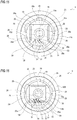
- the shallow groove portions 35a, 35a, ⁇ are formed in respective central portions of the four linear portions in the gap 35, and other portions are formed as the deep groove portions 35b, 35b, ⁇ (see FIG. 13 ).
- the adhesive 30 protruding into the shallow groove portion 35a, 35a, ⁇ can be visually confirmed. Further, it can be confirmed that the substrate 25 is adhered to the first heat-dissipation portion 13a, and the adhesive 30 is uniformly spread between the substrate 25 and the first heat-dissipation portion 13a. Further, the shallow groove portions 35a, 35a, ⁇ thicker than the deep groove portions 35b, 35b, ⁇ in the front and rear direction are respectively formed between the deep groove portions 35b, 35b, ⁇ in the gap 35. In this way, the rigidity of the resin-molded part 12A is increased in the entire peripheries of the substrate 25, so that the intensity of the resin-molded part 12A can be also increased.
- the position of the rear surface of the shallow groove portion 35a may be any position, as long as the adhesive 30 can protrude to the rear surface of the shallow groove portion 35a.
- the position of the rear surface of the shallow groove portion 35a may be the same position as the rear surface of the first heat-dissipation portion 13a or may be on the front side of the rear surface of the first heat-dissipation portion 13a.
- one shallow groove portion 35a is positioned on the front side of the wires 31, 31, 31 in the gap 35.
- the shallow groove portions 35a, 35a, ⁇ may be formed at four corners of the gap 35. Further, the shallow groove portion 35a is not limited to this position but may be formed in at least one location of the gap 35.
- the adhesive 30 protruding into the shallow groove portion 35a can be visually confirmed. Further, it can be confirmed that the substrate 25 is adhered to the first heat-dissipation portion 13a, and the adhesive 30 is uniformly spread between the substrate 25 and the first heat-dissipation portion 13a.
- FIG. 16 is a front view schematically showing the light source unit 8.
- positioning portions 19b, 19b are provided in at least two adjacent corners among four corners of the placement recess 19a of the substrate placement portion 19.
- the rear surface of the positioning portion 19b is located on the rear side of the front surface (back surface) of the substrate 25, and the inner side surface of the positioning portion 19b is formed as a slope inclined, for example, by 45 degrees with respect to the up and down direction and the right and left direction.
- the substrate 25 has, for example, chamfered portions 25a, 25a at two adjacent corners.
- the chamfered portions 25a, 25a are chamfered at the same angle as the positioning portions 19b, 19b.
- the chamfered portions 25a are abutted against the inner side surface of the positioning portions 19b, so that the chamfered portions 25a make surface contact with the positioning portions 19b. In this way, the substrate 25 is positioned with respect to the substrate placement portion 19, and rotation of the substrate 25 in the vertical plane is prevented.
- the position of the substrate 25 with respect to the substrate placement portion 19 is determined only by abutting the chamfered portions 25a, 25a against the inner side surface of the positioning portions 19b, 19b, respectively, the positioning of the substrate 25 with respect to the substrate placement portion 19 can be easily performed. Further, since the high positional accuracy of the substrate 25 with respect to the resin-molded part 12B is ensured, the high positional accuracy of the light emitting elements 26, 26, ⁇ with respect to the lamp body 2 can be easily ensured.
- the positioning can be performed by providing the positioning portions 19b, 19b at two adjacent positions, it is only necessary to ensure good machining accuracy of two positioning portions 19b, 19b and two chamfered portions 25a, 25a. Therefore, the number of parts requiring good machining accuracy can be small, and thus, the manufacturing cost of the resin-molded part 12B can be reduced.
Landscapes
- Engineering & Computer Science (AREA)
- General Engineering & Computer Science (AREA)
- Physics & Mathematics (AREA)
- Microelectronics & Electronic Packaging (AREA)
- Optics & Photonics (AREA)
- Arrangement Of Elements, Cooling, Sealing, Or The Like Of Lighting Devices (AREA)
- Non-Portable Lighting Devices Or Systems Thereof (AREA)
- Led Device Packages (AREA)
Description
- The present invention relates to a technical field of a light source unit including a socket housing and a substrate disposed in the socket housing, and a vehicle lamp including the same.
- For example, there is a vehicle lamp in which a light source unit detachably attached to a lamp outer housing constituted by a lamp body and a cover is provided and a light emitting element such as a light emitting diode is used as a light source of the light source unit.
- In such a light source unit, a light emitting element serving as a light source and a substrate on which a wiring pattern for supplying current to at least the light emitting element is formed are provided, and the substrate is disposed in a socket housing (e.g., see
JP 2013 25934 A - In the light source unit disclosed in
JP 2013 25934 A - A back side of the substrate is in contact with a heat conducting metal member, and heat generated at the time of emitting light from the light emitting element is released via the heat conducting metal member.
-
JP 2015 060753 A - However, in the light source unit disclosed in
JP 201325934 A - Accordingly, the contact area of the heat conducting metal member with the substrate is so small that sufficient heat-dissipation properties may not be ensured at the time of emitting light from the light emitting element.
- Therefore, the light source unit and the vehicle lamp of the present invention overcome the above problem and aim to improve the heat-dissipation properties relating to the heat generated at the time of emitting light from the light emitting element.
- As a first aspect, a light source unit according to the present invention includes a light emitting element that functions as a light source, a wiring pattern on which the light emitting element is mounted, an electrode pad connected to the wiring pattern, a substrate on which the wiring pattern is formed and the electrode pad is mounted, a power supply body that supplies external power to the electrode pad, a socket housing which has an engaging portion that is engageable with a predetermined member and holds the substrate, the light emitting element and the power supply body, and a heat dissipation plate bonded to a rear surface of the substrate with an adhesive. A placement recess in which the substrate is placed is formed in the socket housing, a part of a connection terminal to be connected to the power supply circuit is positioned in the portion of the placement recess between the substrate and the engaging portion, and a gap is formed between an outer peripheral surface of the substrate and an inner peripheral surface of the placement recess, the gap comprising at least one shallow groove portion and at least one deep groove portion.
- The connection terminal and the electrode pad are connected to each other by a conduction connecting part.
- In this way, since the connection terminal of the power supply body is positioned in the portion of the placement recess of the light source unit outside the substrate, the heat-dissipation area of the substrate can be increased.
- As a second aspect, in the light source unit according the present invention described above, it is preferable that the power supply body has a terminal holding portion formed of an insulating resin material, and the connection terminal is supported by the terminal holding portion and is connectable to the power supply circuit.
- In this way, since the connection terminal of the power supply body is positioned outside the substrate, the heat-dissipation area of the substrate can be increased.
- As a third aspect, in the light source unit according the present invention described above, it is preferable that one end portion of the connection terminal of the power supply body is located adjacent to the substrate, and at least the portions of the power supply body excluding both end portions are located inside the socket housing.
- In this way, a distance between the connection terminal and the substrate is shortened, and the power supply body is located so as not to protrude largely from the socket housing.
- As a fourth aspect, in the light source unit according the present invention described above, it is preferable that the power supply body is formed by integrally molding the terminal holding portion and the connection terminal, and the power supply body and the socket housing are coupled by being integrally molded.
- In this way, the power supply body and the socket housing are coupled by being integrally molded after the power supply body is formed by the integral molding.
- As a fifth aspect, in the light source unit according the present invention described above, it is preferable that there is a shielding member for shielding at least the conduction connecting part, a positioning hole is formed in one of the socket housing and the shielding member and a positioning pin inserted through the positioning hole is provided in the other, and the shielding member is attached to the socket housing in a state where the positioning pin is inserted through the positioning hole.
- In this way, the conduction connecting part is shielded by the shielding member, and thus, fingers or the like are not inadvertently brought into contact with the conduction connecting part when gripping the light source unit.
- As a sixth aspect, a vehicle lamp according to the present invention is a vehicle lamp including a light source unit according to the above aspects.
- In this way a vehicle lamp is provided with a light source unit having the advantages described above.
- According to the present invention, since the connection terminal of the power supply body is positioned outside the substrate, the heat-dissipation area of the substrate can be increased, and hence, the heat-dissipation properties at the time of emitting light from the light emitting element can be improved.
-
-
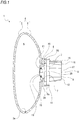
FIG. 1 is a sectional view of a vehicle lamp, showing an embodiment of the present invention together withFIGS. 2 to 16 . -
FIG. 2 is an exploded perspective view of a light source unit. -
FIG. 3 is a perspective view of the light source unit. -
FIG. 4 is a sectional view of the light source unit. -
FIG. 5 is a front view of the light source unit. -
FIG. 6 is a rear view of the light source unit. -
FIG. 7 is a schematic enlarged sectional view showing a state where a lens part is disposed on a sealing part which seals a light emitting element and a conductive wire. -
FIG. 8 is a schematic enlarged sectional view showing a state where an electrode pad and a connection terminal having a terminal portion linearly formed are connected to each other by a wire. -
FIG. 9 is a schematic enlarged sectional view showing a state where an electrode pad and a connection terminal having a terminal portion bent are connected to each other by a wire. -
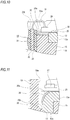
FIG. 10 is an enlarged sectional view showing a shallow groove portion in a gap formed between an outer peripheral surface of the substrate and an inner peripheral surface of a placement recess. -
FIG. 11 is an enlarged sectional view showing a deep groove portion in the gap formed between the outer peripheral surface of the substrate and the inner peripheral surface of the placement recess. -
FIG. 12 is a perspective view showing a state where the light source unit and a shielding member are separated. -
FIG. 13 is a front view conceptually showing a position of the shallow groove portion in a first modification of a resin-molded part. -
FIG. 14 is an enlarged sectional view taken along the line XIV-XIV shown inFIG. 13 . -
FIG. 15 is a front view conceptually showing the position of the shallow groove portion in the first modification of the resin-molded part. -
FIG. 16 is a front view conceptually showing a position of the substrate and a positioning portion in a second modification of a resin-molded part. - Hereinafter, embodiments for carrying out the present invention will be described with reference to the accompanying drawings.
- In the embodiments described below, a light source unit of the present invention is applied to a light source unit used for a combination lamp having a function of a stop lamp and a tail lamp, and a vehicle lamp of the present invention is applied to a vehicle lamp including the light source unit. However, it should be noted that the scope of the present invention is not limited to the light source unit used for the combination lamp having the function of the stop lamp and the tail lamp, and the vehicle lamp including the light source unit.
- A light source unit of the present invention can be widely applied to a light source unit which is used for various vehicle lamps such as a headlamp, a clearance lamp, a tail lamp, a turn signal lamp, a stop lamp, a daytime running lamp, a cornering lamp, a hazard lamp, a position lamp, a back lamp, a fog lamp, or a combination lamp thereof. Further, a vehicle lamp of the present invention can be widely applied to a vehicle lamp including these various light source units.
- In the following description, a front and rear direction, an up and down direction and a right and left direction are defined in such a manner that an optical axis direction is set as the front and rear direction, and an emission direction of light is set as the rear side. Meanwhile, the front and rear direction, the up and down direction and the right and left direction, which are described below, are defined for convenience of explanation. The practice of the present invention is not limited to these directions.
- First, a schematic configuration of a vehicle lamp is described (see
FIG. 1 ). - A
vehicle lamp 1 is respectively attached and arranged at both left and right ends of the front end portion of a vehicle body. - The
vehicle lamp 1 includes alamp body 2 having a recess opened rearward and acover 3 closing arear opening 2a of thelamp body 2. A lampouter housing 4 is configured by thelamp body 2 and thecover 3. An inner space of the lampouter housing 4 is formed as alamp chamber 5. - A front end portion of the
lamp body 2 is provided as a substantially cylindricalunit mounting portion 6 that penetrates in the front and rear direction. An internal space of theunit mounting portion 6 is formed as amounting hole 6a. At an inner peripheral surface of theunit mounting portion 6, engagingprotrusions - Subsequently, a structure of a
light source unit 8, which is attached to thelamp body 2, is described (seeFIGS. 2 to 6 ). - The
light source unit 8 is detachably attached to theunit mounting portion 6 of thelamp body 2. Thelight source unit 8 includes asocket housing 9, apower supply body 10, and a light emitting module 11 (seeFIGS. 2 to 6 ). - The
socket housing 9 is formed by integrally molding a resin-moldedpart 12 and a heat-dissipation plate 13. As the integral molding, for example, a so-called insert molding is used in which a molten resin (resin material) is filled in a state where a metallic material is retained in a cavity of a mold, and a molded product is integrally formed by the metallic material and the resin material. - The resin-molded
part 12 has excellent thermal conductivity and is formed of, for example, a resin material which contains carbon or the like. The resin-moldedpart 12 also has conductivity. It is preferable that a heat conduction coefficient of the resin-moldedpart 12 is in a range of 1 W/(mK) to 30 W/(mK), and the thermal conductivity thereof is lower than that of the heat-dissipation plate 13 and higher than that of a terminal holding portion (21) (to be described later). The resin-moldedpart 12 has a disc-shapedbase surface portion 14 oriented in the front and rear direction, a protrusion-shapedportion 15 protruding rearward from the center of thebase surface portion 14, first heat-dissipation fins base surface portion 14, second heat-dissipation fins base surface portion 14, and aconnector connection portion 18 protruding forward from thebase surface portion 14. - The protrusion-shaped
portion 15 includes asubstrate placement portion 19 having a circular outer shape and engagingportions substrate placement portion 19. - The
substrate placement portion 19 is formed with aplacement recess 19a opening rearward. Theplacement recess 19a has a substantially rectangular shape and is slightly greater than an outer shape of thelight emitting module 11. The engagingportions portions substrate placement portion 19. - The first heat-
dissipation fins FIG. 6 ). - The second heat-
dissipation fins dissipation fins base surface portion 14. A thickness in the right and left direction of the second heat-dissipation fins dissipation fins - The
connector connection portion 18 has a cylindrical shape whose axial direction is the front and rear direction, and is disposed below the first heat-dissipation fin - The heat-
dissipation plate 13 is formed in a predetermined shape by a plate-like metallic material such as aluminum having high thermal conductivity (seeFIGS. 2 and4 ). The heat-dissipation plate 13 includes a first heat-dissipation portion 13a, second heat-dissipation portions dissipation portions dissipation portions - The first heat-
dissipation portion 13a and the fourth heat-dissipation portions dissipation portions dissipation portions dissipation portions dissipation portion 13a. Inner ends of the fourth heat-dissipation portions dissipation portions dissipation portions dissipation portions dissipation portion 13a. The fourth heat-dissipation portions dissipation portions dissipation portions dissipation portions - The heat-
dissipation plate 13 is configured such that the first heat-dissipation portion 13a is disposed in theplacement recess 19a of thesubstrate placement portion 19 of the resin-moldedpart 12 and is exposed to the resin-molded part 12 (seeFIG. 4 ). The heat-dissipation plate 13 is configured such that the second heat-dissipation portions dissipation fins dissipation portions substrate placement portion 19, and the fourth heat-dissipation portions base surface portion 14. - An insertion and placement hole (not shown) is formed at a position up to the
base surface portion 14 from thesubstrate placement portion 19 of the resin-moldedpart 12. The insertion and placement hole communicates with the interior of theplacement recess 19a and theconnector coupling portion 18. - The
power supply body 10 includes aterminal holding portion 21 formed of an insulating resin material, andconnection terminals terminal holding portion 21 and connected to a power supply circuit (external power; not shown) (seeFIG. 2 ). - The
terminal holding portion 21 has a flat shape which extends in the front and rear direction and has a thin thickness in the up and down direction. - The
connection terminals terminal holding portion 21 except for a part thereof. Eachconnection terminal 22 has aterminal portion 23 extending in the front and rear direction, and retainingprotrusions terminal portion 23. A front end portion of eachterminal portion 23 is provided as aconnector connection portion 23a, and a rear end portion thereof is provided as awire connection portion 23b. At least a portion of the surface of thewire connection portion 23b is subjected to surface treatment by nickel or gold or the like, for example. - Each
connection terminal 22 is configured such that theconnector connection portion 23a protrudes forward from theterminal holding portion 21 and thewire connection portion 23b protrudes rearward from theterminal holding portion 21. Since the retainingprotrusions terminal holding portion 21, theconnection terminal 22 is prevented from being detached from theterminal holding portion 21 in the front and rear direction. - The
power supply body 10 is integrally formed by an insert molding of theterminal holding portion 21 and theconnection terminals power supply body 10 is configured such that the portion other than theconnector connection portions wire connection portions part 12, theconnector connection portions FIG. 6 ), and thewire connection portions placement recess 19a (seeFIG. 3 ). - For example, in the state of being formed by an insert molding, the
power supply body 10 is positioned in a cavity of a mold, molten resin for forming the resin-moldedpart 12 is filled into the cavity, and thepower supply body 10 is formed integrally with thesocket housing 9 by an insert molding, for example. - In this manner, the
power supply body 10 is formed by integrally molding theterminal holding portion 21 and theconnection terminals power supply body 10 and thesocket housing 9 are coupled by being integrally molded. - Therefore, the
power supply body 10 is formed by the integral molding, and then, thepower supply body 10 and thesocket housing 9 are integrally molded, so that good positional accuracy of theconnection terminals terminal holding portion 21 and good positional accuracy of thepower supply body 10 to thesocket housing 9 can be ensured. Further, an operation of coupling thepower supply body 10 and thesocket housing 9 is not necessary, so that workability can be improved. - The
light emitting module 11 includes asubstrate 25 having a substantially rectangular shape oriented in the front and rear direction,light emitting elements substrate 25, andvarious control elements FIGS. 2 to 5 ). - The
substrate 25 is, for example, a ceramic substrate. A wiring pattern for supplying current to thelight emitting elements substrate 25. The size of thesubstrate 25 is slightly larger than that of the first heat-dissipation portion 13a of the heat-dissipation plate 13. - For example, five
light emitting elements substrate 25. Light emitting diodes (LEDs) are used as thelight emitting elements light emitting elements elements light emitting element 26 in the state of being spaced apart from each other at equal intervals in the circumferential direction. The centerlight emitting element 26 serves as a light source for a tail lamp, for example, and four surroundinglight emitting elements light emitting elements conductive wires FIG. 7 ). - The
connection terminals - Further, the number and function of the
light emitting element 26 mounted on thesubstrate 25 can be arbitrarily set, depending on the type and the required brightness or the like of thevehicle lamp 1. - For example, diodes, capacitors or resistors or the like are used as the
control elements control elements light emitting module 11 on the outside of thelight emitting elements - A rear surface of the
substrate 25 is adhered to the surface of the first heat-dissipation portion 13a of the heat-dissipation plate 13 by an adhesive 30 (seeFIG. 4 ). A thermally conductive adhesive is used as the adhesive 30. - At a lower end portion of the
substrate 25,electrode pads FIG. 3 ). - The
electrode pads wire connection portions connection terminals - For example, the
electrode pads wire connection portions connection terminals wires wire connection portion 23b and thewire 31 is performed at the portion of thewire connection portion 23b, which is subjected to the surface treatment by nickel or gold or the like. Meanwhile, the connection between theelectrode pads connection terminals wires - Further, as shown in
FIG. 8 , theconnection terminal 22 may be configured such that theterminal portion 23 is linearly formed and a rear end surface of theterminal portion 23 is joined to thewire 31, or, as shown inFIG. 9 , theconnection terminal 22 may be configured such that a rear end portion of theterminal portion 23 is bent by 90° and a peripheral surface of theterminal portion 23 is joined to thewire 31. - A
frame body 32 is attached to the portion of thesubstrate 25 between thelight emitting elements control elements FIGS. 3, 4 and7 ). Theframe body 32 is formed in a substantially annular shape by a resin material. Theframe body 32 is disposed at a position to surround thelight emitting elements conductive wires - A sealing
part 33 is applied inside theframe body 32. Thelight emitting elements conductive wires FIG. 7 ). The sealingpart 33 is formed in such a way that liquid sealing resin is filled (injected) into theframe body 32 and then cured. In this way, the sealingpart 33 seals thelight emitting elements conductive wires frame body 32 has a function of determining the sealingpart 33 into a predetermined shape by preventing the sealing resin from unnecessarily flowing toward thecontrol elements - The refractive index of the sealing
part 33 has an intermediate value of the refractive index of thelight emitting elements light emitting elements part 33, a difference between the refractive index of thelight emitting elements light emitting elements - A
lens part 34 is disposed on the sealingpart 33. Thelens part 34 is formed of a predetermined molding resin and has a hemispherical shape which is convex rearward. Thelens part 34 is formed in such a manner that, for example, predetermined liquid molding resin is filled and cured on the sealingpart 33 before curing or after curing on the inside of theframe body 32. Therefore, theframe body 32 also has a function of determining thelens part 34 into a predetermined shape by preventing the molding resin for forming thelens part 34 from unnecessarily flowing toward thecontrol elements - The
lens part 34 is formed in such a manner that the molding resin is filled and cured on the sealingpart 33. Therefore, theframe body 32 also has a function of determining thelens part 34 into a predetermined shape by preventing the molding resin for forming thelens part 34 from unnecessarily flowing toward thecontrol elements - Further, the refractive index of the
lens part 34 has an intermediate value of the refractive index of thelight emitting element 26 and the refractive index of air. Since the light emitted from thelight emitting elements part 33 and thelens part 34, it is possible to improve the emission efficiency of light from thelight emitting elements - Furthermore, since the
frame body 32 is provided, the sealing resin or molding resin is formed in a certain shape even in the case where the injection position of the sealing resin or molding resin is deviated from a predetermined position when the sealing resin or molding resin is injected to the inside of theframe body 32. Therefore, it is possible to improve the molding accuracy of the sealing resin or molding resin. - The molding resin has viscosity higher than that of the sealing resin and has flowability lower than that of the sealing resin. The viscosity of the molding resin is equal to or greater than 40 Pa·s (pascal·second), for example, and the viscosity of the sealing resin is in the range of 5 to 15 Pa·s (pascal·second), for example.
- When the viscosity of the molding resin is set to be equal to or greater than 40 Pa·s, the molding resin does not flow more than necessary at the time of being injected onto the sealing resin. Therefore, the shape of the
lens part 34 is likely to be formed in a desired shape. - On the other hand, when the viscosity of the sealing resin is set to the range of 5 to 15 Pa·s, the sealing resin is flowing in a desired state at the time of being injected onto the
substrate 25. Therefore, it is easy to maintain a planar shape and it is possible to secure good formability. Further, when the viscosity of the sealing resin is set to the range of 5 to 15 Pa·s, the load on theconductive wires substrate 25. Therefore, it is possible to suppress the occurrence of disconnection or the like of theconductive wires - Meanwhile, when the sealing resin is injected onto the
substrate 25, the sealing resin is injected to the inside of theframe body 32 and the shape of the sealing resin (the sealing part 33) is determined by theframe body 32. Therefore, the viscosity of the sealing resin may be less than 5 Pa·s. - Further, there is a case that the
lens part 34 is formed by a mold and then disposed on the sealingpart 33. However, in this case, since thelens part 34 is formed into a predetermined shape by the mold, the molding resin having viscosity less than 40 Pa·s may be used. Meanwhile, at room temperature (25°C), the lens part (after curing) 34 has a higher elastic modulus than the sealing part 33 (after curing). Preferably, the elastic modulus of the sealingpart 33 is less than 1 MPa and the elastic modulus of thelens part 34 is equal to or greater than 1 Mpa. - In the state where the
lens part 34 is disposed, thelight emitting elements conductive wires lens part 34 in a state of being sealed by the sealingpart 33. - Meanwhile, an example where the
frame body 32 is formed of a resin material has been illustrated in the above description. However, theframe body 32 may be formed of a metallic material. Further, theframe body 32 may be formed of a resin material and the surface thereof may be subjected to processing such as metal deposition. Furthermore, theframe body 32 may be formed of a white resin. By configuring theframe body 32 in this structure, theframe body 32 can serve as a reflector to reflect a portion of light emitted from thelight emitting elements - An
annular gasket 36 formed of, for example, a rubber material or a resin material is externally fitted and attached to the protrusion-shapedportion 15 of thelight source unit 8 configured as described above (seeFIGS. 1 and4 ). Thegasket 36 is formed of a resin material or a rubber material. In the state where thegasket 36 is attached to thelight source unit 8, the protrusion-shapedportion 15 is inserted to theunit mounting portion 6 of thelamp body 2 from the front and is rotated in the circumferential direction. In this way, the engagingportions protrusions FIG. 1 ). At this time, the engagingprotrusions portions gasket 36, and hence, thelight source unit 8 is attached to thelamp body 2. In the state where thelight source unit 8 is attached to thelamp body 2, theunit mounting portion 6 is closed by the gasket, and hence, foreign matters such as moisture are prevented from entering thelamp chamber 5 through theunit mounting portion 6 from the outside. - On the contrary, when the
light source unit 8 is rotated in a direction opposite to the above direction along the circumferential direction, the engagement of the engagingportions protrusions portion 15 can be pulled from theunit mounting portion 6. In this way, thelight source unit 8 can be detached from thelamp body 2. - When current is supplied to the wiring pattern through the
connection terminals light source unit 8 is attached to thelamp body 2, light is emitted from at least onelight emitting element 26. At this time, when thevehicle lamp 1 serves as a tail lamp, light is emitted from onelight emitting element 26 located at the center. Further, when thevehicle lamp 1 serves as a stop lamp, light is emitted from four light emittingelements - The light emitted from the
light emitting element 26 is transmitted through the sealingpart 33 and thelens part 34, and is irradiated to the outside through thecover 3. At this time, the irradiation direction of the light is controlled by thelens part 34, so that the light is irradiated to the outside toward a predetermined direction. At this time, when theframe body 32 serves as a reflector, a portion of the light emitted from thelight emitting element 26 is irradiated to the outside by being reflected in theframe body 32. - At the time of emitting light from the
light emitting element 26, heat is generated in thelight emitting module 11. However, the heat generated is transmitted to the first heat-dissipation portion 13a through the adhesive 30 having excellent thermal conductivity, and is transmitted to the heat-dissipation plate 13 and the resin-moldedpart 12. The heat, which is transmitted to the heat-dissipation plate 13 and the resin-moldedpart 12, is mainly dissipated to the outside from the first heat-dissipation fins dissipation fins - As described above, in the
light source unit 8, theelectrode pads light emitting module 11, thepower supply body 10 is disposed outside thelight emitting module 11, and theelectrode pads connection terminals wires - In such a configuration, for example, the
electrode pads connection terminals wires - As the
wires light source unit 8 is attached to or detached from thelamp body 2, fingers or the like are not inadvertently brought into contact with thewires wires wires electrode pads connection terminals - Further, as described above, the
placement recess 19a formed in thesubstrate placement portion 19 of thesocket housing 9 is slightly larger than the outer shape of thesubstrate 25 of thelight emitting module 11. Therefore, in the state where thelight emitting module 11 is disposed in theplacement recess 19a, agap 35 is formed between an outer peripheral surface of thesubstrate 25 and an inner peripheral surface of theplacement recess 19a (seeFIG. 5 ). As described above, the size of thesubstrate 25 is slightly larger than that of the first heat-dissipation portion 13a of the heat-dissipation plate 13. Therefore, when thesubstrate 25 is attached to the first heat-dissipation portion 13a of the heat-dissipation plate 13 by the adhesive 30, a part of the adhesive 30 is protruded to the outer peripheral side of the first heat-dissipation portion 13a and the protruded adhesive 30 is filled in thegap 35. - The
gap 35 is configured such that, out of the four linear groove portions around thesubstrate 25, one linear portion positioned on the front side of thewires shallow groove portion 35a (seeFIG. 10 ) and the other three linear portions are formed asdeep groove portion FIG. 11 ). Theshallow groove portion 35a is shallower than thedeep groove portions shallow groove portion 35a is provided to have substantially the same height as a surface of the first heat-dissipation portion 13a. Therefore, asurface 30a of the adhesive 30 protruding when attaching thesubstrate 25 to the first heat-dissipation portion 13a is present at a position closer to thesubstrate 25 in theshallow groove portion 35a than thedeep groove portion 35b (seeFIGS. 10 and 11 ). - In this manner, the portion of the
gap 35 positioned on the front side of thewires shallow groove portion 35a and, in theshallow groove portion 35a, the portion of the rear surface (front surface) of thesubstrate 25 is filled with the adhesive 30. Therefore, when thewires electrode pads wires electrode pads wires electrode pads wires electrode pads - Furthermore, the
electrode pads connection terminals wires FIG. 12 ). When the shieldingmember 37 is used,positioning holes protrusions portion 15 of thesocket housing 9, for example. In the shieldingmember 37,positioning pins hole - The shielding
member 37 is attached to thesocket housing 9 in such a manner that the positioning pins 37a, 37a are positioned relative to thesocket housing 9 by being respectively inserted through thepositioning holes protrusions holes - In this way, the shielding
member 37 shielding at least thewires positioning holes member 37 is attached to thesocket housing 9. - Therefore, the
wires member 37 and, for example, when thelight source unit 8 is attached to or detached from thelamp body 2, fingers or the like are not inadvertently brought into contact with thewires wires wires electrode pads connection terminals - Further, for example, the shielding
member 37 may be formed in a shape or size allowing it to serve as a shade for shielding a part of light emitted from thelight emitting elements member 37 is also used as the shade, the functionality of thelight source unit 8 can be improved and a desired light distribution pattern can be formed without increasing the number of parts. - In the
light source unit 8, thepower supply body 10 includes theterminal holding portion 21 formed of an insulating resin material, and theconnection terminals terminal holding portion 21. Thepower supply body 10 is connected to thesocket housing 9, and theconnection terminals electrode pads light emitting module 11 are connected to each other by thewires - Therefore, there is no need to provide a space for inserting the
connection terminals light emitting module 11. Further, since theconnection terminals light emitting module 11, theconnection terminals dissipation portion 13a of the heat-dissipation plate 13, and thus, the contact area between thesubstrate 25 and the heat-dissipation plate 13 can be increased, thereby increasing the heat-dissipation area. As a result, the heat-dissipation properties at the time of emitting light from thelight emitting elements - Further, one end portions of the
connection terminals power supply body 10 are located adjacent to thesubstrate 25, and at least the portions of thepower supply body 10 excluding both end portions are located inside thesocket housing 9. - Therefore, since the lengths of the
wires power supply body 10 is located so as not to protrude largely from thesocket housing 9, the manufacturing cost of thelight source unit 8 can be reduced and the size thereof can be reduced. - Furthermore, the
placement recess 19a in which thelight emitting module 11 is placed is formed in thesocket housing 9. Thewire connecting portions connection terminals placement recess 19a between the light emittingmodule 11 and the engagingportion 20. Theconnection terminals electrode pads wires - Therefore, since the
connection terminals dissipation portion 13a of the heat-dissipation plate 13, the contact area between thesubstrate 25 and the heat-dissipation plate 13 can be increased, thereby increasing the heat-dissipation area. As a result, the heat-dissipation properties at the time of emitting light from thelight emitting elements - Further, since the
light emitting module 11 and thewire connecting portions connection terminals placement recess 19a, fingers or the like are not inadvertently brought into contact with thewires wire connecting portions electrode pads wires wires electrode pads connection terminals - Meanwhile, for a lighting used outdoors like the
vehicle lamp 1, when ambient light such as sunlight is incident thereon in a state where thelight emitting elements - Thus, it is desirable that the light emission luminance of the
light emitting elements light emitting module 11 or in a portion other than thelight emitting module 11, and the light emission luminance of thelight emitting elements - By using such a configuration, for example, when the surroundings are dark, a control of decreasing the light emission luminance of the
light emitting elements vehicle lamp 1, a control of increasing the light emission luminance is performed to increase the visibility from the outside. - Next, a first modification of a resin-molded part will be described with reference to
FIGS. 13 to 15 . Here,FIGS. 13 and15 are front views schematically showing thelight source unit 8. - In a resin-molded
part 12A according to a first modification, theshallow groove portions gap 35, and other portions are formed as thedeep groove portions FIG. 13 ). - In the above configuration, when the
substrate 25 is attached to the rear surface of the first heat-dissipation portion 13a by the adhesive 30, a part of the adhesive 30 is protruded to the rear surface of theshallow groove portions deep groove portions FIG. 14 . - Therefore, the adhesive 30 protruding into the
shallow groove portion substrate 25 is adhered to the first heat-dissipation portion 13a, and the adhesive 30 is uniformly spread between thesubstrate 25 and the first heat-dissipation portion 13a. Further, theshallow groove portions deep groove portions deep groove portions gap 35. In this way, the rigidity of the resin-moldedpart 12A is increased in the entire peripheries of thesubstrate 25, so that the intensity of the resin-moldedpart 12A can be also increased. - Meanwhile, the position of the rear surface of the
shallow groove portion 35a may be any position, as long as the adhesive 30 can protrude to the rear surface of theshallow groove portion 35a. The position of the rear surface of theshallow groove portion 35a may be the same position as the rear surface of the first heat-dissipation portion 13a or may be on the front side of the rear surface of the first heat-dissipation portion 13a. - Further, in the resin-molded
part 12A, it is desirable that oneshallow groove portion 35a is positioned on the front side of thewires gap 35. - In this way, since a sufficient amount of ultrasonic wave is propagated to the bonding portions between the
wires electrode pads wires electrode pads - Meanwhile, as shown in
FIG. 15 , theshallow groove portions gap 35. Further, theshallow groove portion 35a is not limited to this position but may be formed in at least one location of thegap 35. - Also in this case, similar to the case where the
shallow groove portion 35a is positioned at the central portion of the linear portion (seeFIGS. 13 and 14 ), the adhesive 30 protruding into theshallow groove portion 35a can be visually confirmed. Further, it can be confirmed that thesubstrate 25 is adhered to the first heat-dissipation portion 13a, and the adhesive 30 is uniformly spread between thesubstrate 25 and the first heat-dissipation portion 13a. - Next, a second modification of a resin-molded part will be described with reference to
FIG. 16 . Here,FIG. 16 is a front view schematically showing thelight source unit 8. - In a resin-molded
part 12B according to a second modification, positioningportions placement recess 19a of thesubstrate placement portion 19. The rear surface of thepositioning portion 19b is located on the rear side of the front surface (back surface) of thesubstrate 25, and the inner side surface of thepositioning portion 19b is formed as a slope inclined, for example, by 45 degrees with respect to the up and down direction and the right and left direction. - The
substrate 25 has, for example, chamferedportions chamfered portions positioning portions - In the above configuration, when the
substrate 25 is placed on the rear surface of the first heat-dissipation portion 13a, thechamfered portions 25a are abutted against the inner side surface of thepositioning portions 19b, so that thechamfered portions 25a make surface contact with thepositioning portions 19b. In this way, thesubstrate 25 is positioned with respect to thesubstrate placement portion 19, and rotation of thesubstrate 25 in the vertical plane is prevented. - Therefore, since the position of the
substrate 25 with respect to thesubstrate placement portion 19 is determined only by abutting thechamfered portions positioning portions substrate 25 with respect to thesubstrate placement portion 19 can be easily performed. Further, since the high positional accuracy of thesubstrate 25 with respect to the resin-moldedpart 12B is ensured, the high positional accuracy of thelight emitting elements lamp body 2 can be easily ensured. - Meanwhile, the
positioning portion 19b may be provided at three or four corners among the four corners of theplacement recess 19a. In this case, three or four chamferedportions 25a may be formed in thesubstrate 25, thereby positioning thesubstrate 25 with respect to thesubstrate placement portion 19. - However, as described above, since the positioning can be performed by providing the
positioning portions portions chamfered portions part 12B can be reduced. - 1...Vehicle Lamp, 8...Light Source Unit, 9...Socket Housing, 10...Power Supply Body, 11...Light Emitting Module, 15a...Positioning Hole, 20...Engaging Portion, 21...Terminal Holding Portion, 22... Connection terminal, 25... Substrate, 26... Light Emitting Element, 29...Electrode Pad, 31...Wire (Conductive Connecting Portion), 37...Shielding Member
Claims (6)
- A light source unit (8) comprising:a light emitting element (26) which functions as a light source,a wiring pattern on which the light emitting element is mounted,an electrode pad (29) connected to the wiring pattern,a substrate (25) on which the wiring pattern is formed and the electrode pad is mounted,a power supply body (10) which supplies external power to the electrode pad,a socket housing (9) which has an engaging portion (20) that is engageable with a predetermined member and holds the substrate, the light emitting element and the power supply body, anda heat dissipation plate (13) bonded to a rear surface of the substrate with an adhesive (30),wherein a placement recess (19a) in which the substrate is placed is formed in the socket housing,wherein a part of a connection terminal (22) to be connected to a power supply circuit is positioned in a portion of the placement recess between the substrate and the engaging portion (20),wherein a gap (35) is formed between an outer peripheral surface of the substrate (25) and an inner peripheral surface of the placement recess (19a), the gap comprising at least one shallow groove portion (35a) and at least one deep groove portion (35b), andwherein the connection terminal (22) and the electrode pad (29) are connected to each other by a conduction connecting part.
- The light source unit according to claim 1,
wherein the power supply body has a terminal holding portion (21) formed of an insulating resin material and the connection terminal is supported by the terminal holding portion and is connectable to the power supply circuit. - The light source unit according to claim 2,wherein one end portion of the connection terminal of the power supply body is located adjacent to the substrate, andwherein at least the portions of the power supply body excluding both end portions are located inside the socket housing.
- The light source unit according to claim 2 or 3,wherein the power supply body is formed by integrally molding the terminal holding portion and the connection terminal, andwherein the power supply body and the socket housing are coupled by being integrally molded.
- The light source unit according to any one of claims 1 to 4,wherein there is a shielding member (37) for shielding at least the conduction connecting part,wherein a positioning hole is formed in one of the socket housing and the shielding member and a positioning pin inserted through the positioning hole is provided in the other, andwherein the shielding member is attached to the socket housing in a state where the positioning pin is inserted through the positioning hole.
- A vehicle lamp (1) comprising the light source unit according to any one of claims 1 to 5.
Applications Claiming Priority (3)
| Application Number | Priority Date | Filing Date | Title |
|---|---|---|---|
| JP2015072897 | 2015-03-31 | ||
| JP2015147768 | 2015-07-27 | ||
| PCT/JP2016/058357 WO2016158423A1 (en) | 2015-03-31 | 2016-03-16 | Light source unit and vehicle lamp fitting |
Publications (3)
| Publication Number | Publication Date |
|---|---|
| EP3279552A1 EP3279552A1 (en) | 2018-02-07 |
| EP3279552A4 EP3279552A4 (en) | 2018-08-15 |
| EP3279552B1 true EP3279552B1 (en) | 2019-12-18 |
Family
ID=57004310
Family Applications (1)
| Application Number | Title | Priority Date | Filing Date |
|---|---|---|---|
| EP16772306.3A Active EP3279552B1 (en) | 2015-03-31 | 2016-03-16 | Light source unit and vehicle lamp fitting |
Country Status (5)
| Country | Link |
|---|---|
| US (1) | US10317064B2 (en) |
| EP (1) | EP3279552B1 (en) |
| JP (1) | JP6760925B2 (en) |
| CN (1) | CN107429891B (en) |
| WO (1) | WO2016158423A1 (en) |
Families Citing this family (34)
| Publication number | Priority date | Publication date | Assignee | Title |
|---|---|---|---|---|
| JP6724709B2 (en) * | 2016-10-13 | 2020-07-15 | 東芝ライテック株式会社 | Vehicle lighting device and vehicle lamp |
| JP6830337B2 (en) * | 2016-10-14 | 2021-02-17 | 株式会社小糸製作所 | Light source unit and vehicle lighting equipment |
| JP6819932B2 (en) * | 2016-11-29 | 2021-01-27 | 東芝ライテック株式会社 | Vehicle lighting and vehicle lighting |
| JP6857322B2 (en) * | 2016-12-14 | 2021-04-14 | 東芝ライテック株式会社 | Vehicle lighting and vehicle lighting |
| JP6731160B2 (en) * | 2017-03-21 | 2020-07-29 | 東芝ライテック株式会社 | Vehicle lighting device and vehicle lamp |
| JP6811940B2 (en) * | 2017-03-21 | 2021-01-13 | 東芝ライテック株式会社 | Vehicle lighting and vehicle lighting |
| JP2019036479A (en) * | 2017-08-18 | 2019-03-07 | 東芝ライテック株式会社 | Vehicular illuminating device and vehicular lighting fixture |
| JP2019087570A (en) * | 2017-11-02 | 2019-06-06 | シチズン電子株式会社 | Light-emitting device and led package |
| JP6944660B2 (en) * | 2018-02-27 | 2021-10-06 | 東芝ライテック株式会社 | Vehicle lighting equipment and vehicle lighting equipment |
| JP7069521B2 (en) * | 2018-03-06 | 2022-05-18 | 東芝ライテック株式会社 | Manufacturing method of vehicle lighting equipment, vehicle lighting equipment, and vehicle lighting equipment |
| CN108534092A (en) * | 2018-03-19 | 2018-09-14 | 东莞市海默生电子有限公司 | Combined large lamp before a kind of LED for fork truck |
| JP7091839B2 (en) * | 2018-05-29 | 2022-06-28 | 東芝ライテック株式会社 | Vehicle lighting equipment and vehicle lighting equipment |
| JP7117184B2 (en) | 2018-07-19 | 2022-08-12 | 株式会社小糸製作所 | Lighting circuit and vehicle lamp |
| EP3847395B1 (en) * | 2018-09-07 | 2022-06-01 | Lumileds LLC | Lighting device comprising circuit board |
| US10505296B1 (en) * | 2019-02-15 | 2019-12-10 | King One Products Co. | Track light structure and earth terminal fitting thereof |
| JP7286061B2 (en) | 2019-05-29 | 2023-06-05 | 東芝ライテック株式会社 | Vehicle lighting device and vehicle lamp |
| JP7303487B2 (en) | 2019-05-29 | 2023-07-05 | 東芝ライテック株式会社 | Vehicle lighting device and vehicle lamp |
| CN110220160B (en) * | 2019-06-18 | 2024-05-03 | 华域视觉科技(上海)有限公司 | Optical module capable of changing lighting effect |
| JP7341394B2 (en) * | 2019-10-25 | 2023-09-11 | 東芝ライテック株式会社 | Vehicle lighting equipment and vehicle lights |
| JP7385824B2 (en) * | 2019-10-25 | 2023-11-24 | 東芝ライテック株式会社 | Vehicle lighting equipment and vehicle lights |
| JP7445212B2 (en) * | 2019-11-22 | 2024-03-07 | 東芝ライテック株式会社 | Vehicle lighting equipment and vehicle lights |
| JP7492189B2 (en) * | 2019-11-28 | 2024-05-29 | 東芝ライテック株式会社 | Vehicle lighting device and vehicle lamp |
| EP4094987A4 (en) | 2020-01-20 | 2023-06-07 | Koito Manufacturing Co., Ltd. | IGNITION CIRCUIT AND VEHICLE LIGHT |
| US11168879B2 (en) * | 2020-02-28 | 2021-11-09 | Omachron Intellectual Property Inc. | Light source |
| JP2021163690A (en) * | 2020-04-02 | 2021-10-11 | 東芝ライテック株式会社 | Vehicle lighting device and vehicle lighting fixture |
| FR3110956B1 (en) * | 2020-05-27 | 2024-10-18 | Valeo Vision | Automotive lighting device |
| JP7505356B2 (en) * | 2020-09-30 | 2024-06-25 | 市光工業株式会社 | Vehicle lighting fixtures |
| CN116568966A (en) * | 2020-12-04 | 2023-08-08 | 株式会社小糸制作所 | light source unit |
| JP2022180740A (en) | 2021-05-25 | 2022-12-07 | 東芝ライテック株式会社 | Vehicular illuminating device, and vehicular lighting fixture |
| JP7814665B2 (en) * | 2022-02-25 | 2026-02-17 | 東芝ライテック株式会社 | Vehicle lighting device and vehicle lamp |
| JP2023175148A (en) * | 2022-05-30 | 2023-12-12 | 東芝ライテック株式会社 | Vehicle lighting equipment and vehicle lights |
| JP2024086030A (en) * | 2022-12-16 | 2024-06-27 | スタンレー電気株式会社 | Light source unit and vehicle lamp |
| JP2025042454A (en) | 2023-09-14 | 2025-03-27 | 東芝ライテック株式会社 | Vehicle lighting device and vehicle lamp |
| CN119208494B (en) * | 2024-11-26 | 2025-02-25 | 深圳市两岸半导体科技有限公司 | Packaging structure of LED lamp bead |
Family Cites Families (8)
| Publication number | Priority date | Publication date | Assignee | Title |
|---|---|---|---|---|
| JP2011171277A (en) * | 2010-01-19 | 2011-09-01 | Ichikoh Ind Ltd | Light source unit for semiconductor type light source of vehicle lighting device, and vehicle lighting device |
| JP2012089438A (en) * | 2010-10-22 | 2012-05-10 | Koito Mfg Co Ltd | Discharge lamp lighting-up device and its manufacturing method |
| JP5776396B2 (en) | 2011-07-19 | 2015-09-09 | 市光工業株式会社 | Light source unit of semiconductor light source for vehicle lamp, vehicle lamp |
| JP6052573B2 (en) * | 2012-04-11 | 2016-12-27 | 東芝ライテック株式会社 | Optical semiconductor light source and vehicle lighting device |
| JP6035873B2 (en) * | 2012-05-29 | 2016-11-30 | 市光工業株式会社 | Light source unit for semiconductor light source of vehicle lamp, method for manufacturing light source unit of semiconductor light source for vehicle lamp, and vehicle lamp |
| JP2014170716A (en) * | 2013-03-05 | 2014-09-18 | Toshiba Lighting & Technology Corp | Lighting system and vehicular lighting system |
| US10197237B2 (en) | 2013-03-05 | 2019-02-05 | Toshiba Lighting & Technology Corporation | Lighting device and lighting device for vehicle |
| JP2015060753A (en) * | 2013-09-19 | 2015-03-30 | スタンレー電気株式会社 | Led module, method for manufacturing the same, and vehicular lighting fixture |
-
2016
- 2016-03-16 CN CN201680019278.0A patent/CN107429891B/en not_active Expired - Fee Related
- 2016-03-16 EP EP16772306.3A patent/EP3279552B1/en active Active
- 2016-03-16 WO PCT/JP2016/058357 patent/WO2016158423A1/en not_active Ceased
- 2016-03-16 JP JP2017509539A patent/JP6760925B2/en active Active
- 2016-03-16 US US15/561,646 patent/US10317064B2/en active Active
Non-Patent Citations (1)
| Title |
|---|
| None * |
Also Published As
| Publication number | Publication date |
|---|---|
| CN107429891A (en) | 2017-12-01 |
| EP3279552A1 (en) | 2018-02-07 |
| JP6760925B2 (en) | 2020-09-23 |
| WO2016158423A1 (en) | 2016-10-06 |
| US20180073714A1 (en) | 2018-03-15 |
| US10317064B2 (en) | 2019-06-11 |
| JPWO2016158423A1 (en) | 2018-01-25 |
| EP3279552A4 (en) | 2018-08-15 |
| CN107429891B (en) | 2020-05-19 |
Similar Documents
| Publication | Publication Date | Title |
|---|---|---|
| US10317064B2 (en) | Light source unit and vehicle lamp fitting | |
| US10337717B2 (en) | Light source unit, method of manufacturing the same, and vehicle lamp | |
| US10018324B2 (en) | Light source unit with light emitting module, sealing part and lens part | |
| JP6634304B2 (en) | Light source unit, method of manufacturing light source unit, and vehicle lamp | |
| CN108375051B (en) | Light source unit and vehicle lamp | |
| US20160215948A1 (en) | Lighting device | |
| KR101837758B1 (en) | Light source unit of semiconductor type light source of lighting fixture for vehicle and lighting fixture for vehicle | |
| JP2016195098A (en) | LIGHT UNIT, LIGHT UNIT MANUFACTURING METHOD, AND VEHICLE LIGHT | |
| CN101806421A (en) | Light source module and car light | |
| CN104350325A (en) | Vehicular lighting instrument semiconductor light source light source unit and vehicular lighting instrument | |
| JP2012043750A (en) | Light source unit of semiconductor type light source of lamp fitting for vehicle, and lamp fitting for vehicle | |
| JP2019220424A (en) | Vehicular lighting device and vehicular lighting fixture | |
| JP2015220035A (en) | Led module and vehicle lamp fitting including the same | |
| CN106560652A (en) | Vehicle Lighting Device And Vehicle Lamp | |
| JP2013077463A (en) | Semiconductor type light source for vehicular lamp fitting, semiconductor type light source unit for the same, and vehicular lamp fitting | |
| JP2012084280A (en) | Light source unit of semiconductor type light source of vehicle lighting fixture, and vehicle lighting fixture | |
| EP3575678B1 (en) | Vehicle luminaire and vehicle lamp device | |
| US20240019102A1 (en) | Light source unit | |
| EP4257877A1 (en) | Light source unit | |
| JP7556759B2 (en) | Light source unit for vehicle lamp and vehicle lamp | |
| JP5828714B2 (en) | Semiconductor type light source for vehicle lamp, semiconductor type light source unit for vehicle lamp, vehicle lamp | |
| CN107062114B (en) | Lamp and manufacturing method thereof | |
| CN112577018B (en) | Light source unit and vehicle lamp | |
| JP5407026B2 (en) | Light source unit of semiconductor light source for vehicle lamp, vehicle lamp | |
| US20230280021A1 (en) | Lighting device and a method of manufacturing a lighting device |
Legal Events
| Date | Code | Title | Description |
|---|---|---|---|
| STAA | Information on the status of an ep patent application or granted ep patent |
Free format text: STATUS: THE INTERNATIONAL PUBLICATION HAS BEEN MADE |
|
| PUAI | Public reference made under article 153(3) epc to a published international application that has entered the european phase |
Free format text: ORIGINAL CODE: 0009012 |
|
| STAA | Information on the status of an ep patent application or granted ep patent |
Free format text: STATUS: REQUEST FOR EXAMINATION WAS MADE |
|
| 17P | Request for examination filed |
Effective date: 20170927 |
|
| AK | Designated contracting states |
Kind code of ref document: A1 Designated state(s): AL AT BE BG CH CY CZ DE DK EE ES FI FR GB GR HR HU IE IS IT LI LT LU LV MC MK MT NL NO PL PT RO RS SE SI SK SM TR |
|
| AX | Request for extension of the european patent |
Extension state: BA ME |
|
| DAV | Request for validation of the european patent (deleted) | ||
| DAX | Request for extension of the european patent (deleted) | ||
| A4 | Supplementary search report drawn up and despatched |
Effective date: 20180717 |
|
| RIC1 | Information provided on ipc code assigned before grant |
Ipc: F21V 23/06 20060101ALI20180711BHEP Ipc: F21V 29/74 20150101ALN20180711BHEP Ipc: F21V 15/00 20150101ALI20180711BHEP Ipc: F21V 29/503 20150101ALI20180711BHEP Ipc: F21S 43/14 20180101ALI20180711BHEP Ipc: F21V 17/00 20060101ALI20180711BHEP Ipc: F21V 23/00 20150101AFI20180711BHEP Ipc: F21V 19/00 20060101ALI20180711BHEP Ipc: F21Y 115/10 20160101ALN20180711BHEP |
|
| RIC1 | Information provided on ipc code assigned before grant |
Ipc: F21V 19/00 20060101ALI20180711BHEP Ipc: F21V 17/00 20060101ALI20180711BHEP Ipc: F21V 23/00 20150101AFI20180711BHEP Ipc: F21V 29/74 20150101ALN20180711BHEP Ipc: F21V 15/00 20150101ALI20180711BHEP Ipc: F21V 23/06 20060101ALI20180711BHEP Ipc: F21V 29/503 20150101ALI20180711BHEP Ipc: F21S 43/14 20180101ALI20180711BHEP Ipc: F21Y 115/10 20160101ALN20180711BHEP |
|
| REG | Reference to a national code |
Ref country code: DE Ref legal event code: R079 Ref document number: 602016026508 Country of ref document: DE Free format text: PREVIOUS MAIN CLASS: F21S0008100000 Ipc: F21V0023000000 |
|
| GRAP | Despatch of communication of intention to grant a patent |
Free format text: ORIGINAL CODE: EPIDOSNIGR1 |
|
| STAA | Information on the status of an ep patent application or granted ep patent |
Free format text: STATUS: GRANT OF PATENT IS INTENDED |
|
| RIC1 | Information provided on ipc code assigned before grant |
Ipc: F21V 23/06 20060101ALI20190604BHEP Ipc: F21V 17/00 20060101ALI20190604BHEP Ipc: F21V 29/74 20150101ALN20190604BHEP Ipc: F21S 43/14 20180101ALI20190604BHEP Ipc: F21V 23/00 20150101AFI20190604BHEP Ipc: F21V 15/00 20150101ALI20190604BHEP Ipc: F21Y 115/10 20160101ALN20190604BHEP Ipc: F21V 19/00 20060101ALI20190604BHEP Ipc: F21V 29/503 20150101ALI20190604BHEP |
|
| INTG | Intention to grant announced |
Effective date: 20190704 |
|
| GRAS | Grant fee paid |
Free format text: ORIGINAL CODE: EPIDOSNIGR3 |
|
| GRAA | (expected) grant |
Free format text: ORIGINAL CODE: 0009210 |
|
| STAA | Information on the status of an ep patent application or granted ep patent |
Free format text: STATUS: THE PATENT HAS BEEN GRANTED |
|
| AK | Designated contracting states |
Kind code of ref document: B1 Designated state(s): AL AT BE BG CH CY CZ DE DK EE ES FI FR GB GR HR HU IE IS IT LI LT LU LV MC MK MT NL NO PL PT RO RS SE SI SK SM TR |
|
| REG | Reference to a national code |
Ref country code: CH Ref legal event code: EP |
|
| REG | Reference to a national code |
Ref country code: IE Ref legal event code: FG4D |
|
| REG | Reference to a national code |
Ref country code: DE Ref legal event code: R096 Ref document number: 602016026508 Country of ref document: DE |
|
| REG | Reference to a national code |
Ref country code: AT Ref legal event code: REF Ref document number: 1215013 Country of ref document: AT Kind code of ref document: T Effective date: 20200115 |
|
| REG | Reference to a national code |
Ref country code: NL Ref legal event code: MP Effective date: 20191218 |
|
| PG25 | Lapsed in a contracting state [announced via postgrant information from national office to epo] |
Ref country code: FI Free format text: LAPSE BECAUSE OF FAILURE TO SUBMIT A TRANSLATION OF THE DESCRIPTION OR TO PAY THE FEE WITHIN THE PRESCRIBED TIME-LIMIT Effective date: 20191218 Ref country code: BG Free format text: LAPSE BECAUSE OF FAILURE TO SUBMIT A TRANSLATION OF THE DESCRIPTION OR TO PAY THE FEE WITHIN THE PRESCRIBED TIME-LIMIT Effective date: 20200318 Ref country code: LT Free format text: LAPSE BECAUSE OF FAILURE TO SUBMIT A TRANSLATION OF THE DESCRIPTION OR TO PAY THE FEE WITHIN THE PRESCRIBED TIME-LIMIT Effective date: 20191218 Ref country code: GR Free format text: LAPSE BECAUSE OF FAILURE TO SUBMIT A TRANSLATION OF THE DESCRIPTION OR TO PAY THE FEE WITHIN THE PRESCRIBED TIME-LIMIT Effective date: 20200319 Ref country code: SE Free format text: LAPSE BECAUSE OF FAILURE TO SUBMIT A TRANSLATION OF THE DESCRIPTION OR TO PAY THE FEE WITHIN THE PRESCRIBED TIME-LIMIT Effective date: 20191218 Ref country code: NO Free format text: LAPSE BECAUSE OF FAILURE TO SUBMIT A TRANSLATION OF THE DESCRIPTION OR TO PAY THE FEE WITHIN THE PRESCRIBED TIME-LIMIT Effective date: 20200318 Ref country code: LV Free format text: LAPSE BECAUSE OF FAILURE TO SUBMIT A TRANSLATION OF THE DESCRIPTION OR TO PAY THE FEE WITHIN THE PRESCRIBED TIME-LIMIT Effective date: 20191218 |
|
| PGFP | Annual fee paid to national office [announced via postgrant information from national office to epo] |
Ref country code: GB Payment date: 20200304 Year of fee payment: 5 |
|
| REG | Reference to a national code |
Ref country code: LT Ref legal event code: MG4D |
|
| PG25 | Lapsed in a contracting state [announced via postgrant information from national office to epo] |
Ref country code: RS Free format text: LAPSE BECAUSE OF FAILURE TO SUBMIT A TRANSLATION OF THE DESCRIPTION OR TO PAY THE FEE WITHIN THE PRESCRIBED TIME-LIMIT Effective date: 20191218 Ref country code: HR Free format text: LAPSE BECAUSE OF FAILURE TO SUBMIT A TRANSLATION OF THE DESCRIPTION OR TO PAY THE FEE WITHIN THE PRESCRIBED TIME-LIMIT Effective date: 20191218 |
|
| PG25 | Lapsed in a contracting state [announced via postgrant information from national office to epo] |
Ref country code: AL Free format text: LAPSE BECAUSE OF FAILURE TO SUBMIT A TRANSLATION OF THE DESCRIPTION OR TO PAY THE FEE WITHIN THE PRESCRIBED TIME-LIMIT Effective date: 20191218 |
|
| PG25 | Lapsed in a contracting state [announced via postgrant information from national office to epo] |
Ref country code: NL Free format text: LAPSE BECAUSE OF FAILURE TO SUBMIT A TRANSLATION OF THE DESCRIPTION OR TO PAY THE FEE WITHIN THE PRESCRIBED TIME-LIMIT Effective date: 20191218 Ref country code: RO Free format text: LAPSE BECAUSE OF FAILURE TO SUBMIT A TRANSLATION OF THE DESCRIPTION OR TO PAY THE FEE WITHIN THE PRESCRIBED TIME-LIMIT Effective date: 20191218 Ref country code: CZ Free format text: LAPSE BECAUSE OF FAILURE TO SUBMIT A TRANSLATION OF THE DESCRIPTION OR TO PAY THE FEE WITHIN THE PRESCRIBED TIME-LIMIT Effective date: 20191218 Ref country code: PT Free format text: LAPSE BECAUSE OF FAILURE TO SUBMIT A TRANSLATION OF THE DESCRIPTION OR TO PAY THE FEE WITHIN THE PRESCRIBED TIME-LIMIT Effective date: 20200513 Ref country code: EE Free format text: LAPSE BECAUSE OF FAILURE TO SUBMIT A TRANSLATION OF THE DESCRIPTION OR TO PAY THE FEE WITHIN THE PRESCRIBED TIME-LIMIT Effective date: 20191218 |
|
| PG25 | Lapsed in a contracting state [announced via postgrant information from national office to epo] |
Ref country code: IS Free format text: LAPSE BECAUSE OF FAILURE TO SUBMIT A TRANSLATION OF THE DESCRIPTION OR TO PAY THE FEE WITHIN THE PRESCRIBED TIME-LIMIT Effective date: 20200418 Ref country code: SK Free format text: LAPSE BECAUSE OF FAILURE TO SUBMIT A TRANSLATION OF THE DESCRIPTION OR TO PAY THE FEE WITHIN THE PRESCRIBED TIME-LIMIT Effective date: 20191218 Ref country code: SM Free format text: LAPSE BECAUSE OF FAILURE TO SUBMIT A TRANSLATION OF THE DESCRIPTION OR TO PAY THE FEE WITHIN THE PRESCRIBED TIME-LIMIT Effective date: 20191218 |
|
| REG | Reference to a national code |
Ref country code: DE Ref legal event code: R097 Ref document number: 602016026508 Country of ref document: DE |
|
| REG | Reference to a national code |
Ref country code: AT Ref legal event code: MK05 Ref document number: 1215013 Country of ref document: AT Kind code of ref document: T Effective date: 20191218 |
|
| PLBE | No opposition filed within time limit |
Free format text: ORIGINAL CODE: 0009261 |
|
| STAA | Information on the status of an ep patent application or granted ep patent |
Free format text: STATUS: NO OPPOSITION FILED WITHIN TIME LIMIT |
|
| PG25 | Lapsed in a contracting state [announced via postgrant information from national office to epo] |
Ref country code: MC Free format text: LAPSE BECAUSE OF FAILURE TO SUBMIT A TRANSLATION OF THE DESCRIPTION OR TO PAY THE FEE WITHIN THE PRESCRIBED TIME-LIMIT Effective date: 20191218 Ref country code: ES Free format text: LAPSE BECAUSE OF FAILURE TO SUBMIT A TRANSLATION OF THE DESCRIPTION OR TO PAY THE FEE WITHIN THE PRESCRIBED TIME-LIMIT Effective date: 20191218 Ref country code: DK Free format text: LAPSE BECAUSE OF FAILURE TO SUBMIT A TRANSLATION OF THE DESCRIPTION OR TO PAY THE FEE WITHIN THE PRESCRIBED TIME-LIMIT Effective date: 20191218 |
|
| REG | Reference to a national code |
Ref country code: CH Ref legal event code: PL |
|
| 26N | No opposition filed |
Effective date: 20200921 |
|
| PG25 | Lapsed in a contracting state [announced via postgrant information from national office to epo] |
Ref country code: AT Free format text: LAPSE BECAUSE OF FAILURE TO SUBMIT A TRANSLATION OF THE DESCRIPTION OR TO PAY THE FEE WITHIN THE PRESCRIBED TIME-LIMIT Effective date: 20191218 Ref country code: SI Free format text: LAPSE BECAUSE OF FAILURE TO SUBMIT A TRANSLATION OF THE DESCRIPTION OR TO PAY THE FEE WITHIN THE PRESCRIBED TIME-LIMIT Effective date: 20191218 |
|
| REG | Reference to a national code |
Ref country code: BE Ref legal event code: MM Effective date: 20200331 |
|
| PG25 | Lapsed in a contracting state [announced via postgrant information from national office to epo] |
Ref country code: LU Free format text: LAPSE BECAUSE OF NON-PAYMENT OF DUE FEES Effective date: 20200316 |
|
| PG25 | Lapsed in a contracting state [announced via postgrant information from national office to epo] |
Ref country code: IE Free format text: LAPSE BECAUSE OF NON-PAYMENT OF DUE FEES Effective date: 20200316 Ref country code: CH Free format text: LAPSE BECAUSE OF NON-PAYMENT OF DUE FEES Effective date: 20200331 Ref country code: LI Free format text: LAPSE BECAUSE OF NON-PAYMENT OF DUE FEES Effective date: 20200331 Ref country code: IT Free format text: LAPSE BECAUSE OF FAILURE TO SUBMIT A TRANSLATION OF THE DESCRIPTION OR TO PAY THE FEE WITHIN THE PRESCRIBED TIME-LIMIT Effective date: 20191218 |
|
| PG25 | Lapsed in a contracting state [announced via postgrant information from national office to epo] |
Ref country code: BE Free format text: LAPSE BECAUSE OF NON-PAYMENT OF DUE FEES Effective date: 20200331 Ref country code: PL Free format text: LAPSE BECAUSE OF FAILURE TO SUBMIT A TRANSLATION OF THE DESCRIPTION OR TO PAY THE FEE WITHIN THE PRESCRIBED TIME-LIMIT Effective date: 20191218 |
|
| GBPC | Gb: european patent ceased through non-payment of renewal fee |
Effective date: 20210316 |
|
| PG25 | Lapsed in a contracting state [announced via postgrant information from national office to epo] |
Ref country code: GB Free format text: LAPSE BECAUSE OF NON-PAYMENT OF DUE FEES Effective date: 20210316 |
|
| PG25 | Lapsed in a contracting state [announced via postgrant information from national office to epo] |
Ref country code: TR Free format text: LAPSE BECAUSE OF FAILURE TO SUBMIT A TRANSLATION OF THE DESCRIPTION OR TO PAY THE FEE WITHIN THE PRESCRIBED TIME-LIMIT Effective date: 20191218 Ref country code: MT Free format text: LAPSE BECAUSE OF FAILURE TO SUBMIT A TRANSLATION OF THE DESCRIPTION OR TO PAY THE FEE WITHIN THE PRESCRIBED TIME-LIMIT Effective date: 20191218 Ref country code: CY Free format text: LAPSE BECAUSE OF FAILURE TO SUBMIT A TRANSLATION OF THE DESCRIPTION OR TO PAY THE FEE WITHIN THE PRESCRIBED TIME-LIMIT Effective date: 20191218 |
|
| PG25 | Lapsed in a contracting state [announced via postgrant information from national office to epo] |
Ref country code: MK Free format text: LAPSE BECAUSE OF FAILURE TO SUBMIT A TRANSLATION OF THE DESCRIPTION OR TO PAY THE FEE WITHIN THE PRESCRIBED TIME-LIMIT Effective date: 20191218 |
|
| P01 | Opt-out of the competence of the unified patent court (upc) registered |
Effective date: 20230517 |
|
| PGFP | Annual fee paid to national office [announced via postgrant information from national office to epo] |
Ref country code: FR Payment date: 20240213 Year of fee payment: 9 |
|
| PGFP | Annual fee paid to national office [announced via postgrant information from national office to epo] |
Ref country code: DE Payment date: 20250128 Year of fee payment: 10 |
|
| PG25 | Lapsed in a contracting state [announced via postgrant information from national office to epo] |
Ref country code: FR Free format text: LAPSE BECAUSE OF NON-PAYMENT OF DUE FEES Effective date: 20250331 |