EP3279334A1 - Animal species distinguishing method and device - Google Patents
Animal species distinguishing method and device Download PDFInfo
- Publication number
- EP3279334A1 EP3279334A1 EP15887407.3A EP15887407A EP3279334A1 EP 3279334 A1 EP3279334 A1 EP 3279334A1 EP 15887407 A EP15887407 A EP 15887407A EP 3279334 A1 EP3279334 A1 EP 3279334A1
- Authority
- EP
- European Patent Office
- Prior art keywords
- seq
- animal species
- animal
- identification
- peptide fragments
- Prior art date
- Legal status (The legal status is an assumption and is not a legal conclusion. Google has not performed a legal analysis and makes no representation as to the accuracy of the status listed.)
- Withdrawn
Links
Images







Classifications
-
- C—CHEMISTRY; METALLURGY
- C12—BIOCHEMISTRY; BEER; SPIRITS; WINE; VINEGAR; MICROBIOLOGY; ENZYMOLOGY; MUTATION OR GENETIC ENGINEERING
- C12Q—MEASURING OR TESTING PROCESSES INVOLVING ENZYMES, NUCLEIC ACIDS OR MICROORGANISMS; COMPOSITIONS OR TEST PAPERS THEREFOR; PROCESSES OF PREPARING SUCH COMPOSITIONS; CONDITION-RESPONSIVE CONTROL IN MICROBIOLOGICAL OR ENZYMOLOGICAL PROCESSES
- C12Q1/00—Measuring or testing processes involving enzymes, nucleic acids or microorganisms; Compositions therefor; Processes of preparing such compositions
- C12Q1/34—Measuring or testing processes involving enzymes, nucleic acids or microorganisms; Compositions therefor; Processes of preparing such compositions involving hydrolase
- C12Q1/37—Measuring or testing processes involving enzymes, nucleic acids or microorganisms; Compositions therefor; Processes of preparing such compositions involving hydrolase involving peptidase or proteinase
-
- C—CHEMISTRY; METALLURGY
- C07—ORGANIC CHEMISTRY
- C07K—PEPTIDES
- C07K14/00—Peptides having more than 20 amino acids; Gastrins; Somatostatins; Melanotropins; Derivatives thereof
- C07K14/435—Peptides having more than 20 amino acids; Gastrins; Somatostatins; Melanotropins; Derivatives thereof from animals; from humans
- C07K14/78—Connective tissue peptides, e.g. collagen, elastin, laminin, fibronectin, vitronectin or cold insoluble globulin [CIG]
-
- G—PHYSICS
- G01—MEASURING; TESTING
- G01N—INVESTIGATING OR ANALYSING MATERIALS BY DETERMINING THEIR CHEMICAL OR PHYSICAL PROPERTIES
- G01N33/00—Investigating or analysing materials by specific methods not covered by groups G01N1/00 - G01N31/00
- G01N33/44—Resins; Plastics; Rubber; Leather
- G01N33/447—Leather
-
- G—PHYSICS
- G01—MEASURING; TESTING
- G01N—INVESTIGATING OR ANALYSING MATERIALS BY DETERMINING THEIR CHEMICAL OR PHYSICAL PROPERTIES
- G01N33/00—Investigating or analysing materials by specific methods not covered by groups G01N1/00 - G01N31/00
- G01N33/48—Biological material, e.g. blood, urine; Haemocytometers
- G01N33/50—Chemical analysis of biological material, e.g. blood, urine; Testing involving biospecific ligand binding methods; Immunological testing
- G01N33/68—Chemical analysis of biological material, e.g. blood, urine; Testing involving biospecific ligand binding methods; Immunological testing involving proteins, peptides or amino acids
- G01N33/6803—General methods of protein analysis not limited to specific proteins or families of proteins
- G01N33/6818—Sequencing of polypeptides
Definitions
- the present invention relates to a technology for objective method of animal species identification, and more particularly to a method for identifying the type of leather.
- miscellaneous manufactured goods are stipulated by the Household Goods Quality Labeling Law. Among those miscellaneous manufactured goods, it is mandatory to discriminate 6 species of animals (a cow, a pig, a sheep, a goat, a horse and a deer) that are display objects for clothes manufactured using leather or synthetic leather for the whole or a part of the products.
- animals a cow, a pig, a sheep, a goat, a horse and a deer
- de-chromium process for oxygen decomposition promotion can rather damage the DNA.
- the DNA detection is not easy and the method using the DNA identification has not reached to its day to day operation.
- thermo decomposition products not easily inhibited by decomposition based on contamination, corresponding to dipeptides derived from Hyp, can be detected as indicator substances identifiable as natural leathers, but their thermal decomposition products do not show any remarkable difference according to animal species, making it difficult to identify the animal species.
- Non-patent literature 1 Kurata Masaharu, "Pyrolysis gas chromatography / Method for identifying natural leather micro pieces by mass spectrometry", BUNSEKI KAGAKU Vol.57, No.7, pp.563-569 (2008 )
- an object of the present invention to provide an identification method and an identification device capable of conveniently and accurately identifying animal species with respect to an animal leather sample or so on.
- the animal species identification method of the present invention comprises a step of analyzing amino acid sequence of peptide fragments after fragmenting the animal fibrous protein group extracted from the identification object sample to peptide fragments by cleavage of the proteolytic enzyme (protease), a step of selecting a peptide fragment specifically detected from at least one animal species after removing the peptide fragments commonly detected for all the animal species to be identified and a step of identifying the animal species of the sample using the selected peptide fragments.
- proteolytic enzyme proteolytic enzyme
- the sample to be identified is leather of 6 animal species such as a cow, a horse, a pig, a sheep, a goat and a deer, and leather of an ostrich, a salmon, a carp, a crocodile and so on, and also fur of a fox, a raccoon, a mink and so on.
- Fibrous proteins are more difficult to be modified compared with globular proteins and are known to form connective tissues, tendons, bones, skeletal muscles and so on. Examples of fibrous proteins include collagen, keratin, elastin and so on.
- the amino acid sequence of the peptide fragment after cleaving the fibrous protein group with a proteolytic enzyme to make a peptide fragment and the amino acid sequence of the peptide is consequently analyzed.
- Trypsin can be suitably used as a proteolytic enzyme, but it is not limited thereto.
- a mass spectrometry, a peptide sequencer and a sequence specific peptide antibody and sod on can be suitably used as a method for analyzing the amino acid sequence of the peptide fragment.
- the animal species of the sample may be identified using the peptide fragment specifically detected in one specific animal species among the selected peptide fragments, first. And consequently, the animal species may be identified using the peptide fragments specifically detected in at least two species of animal species for samples which had not been identifiable.
- the mass-to-charge ratio (m/z) of precursor ions and product ions are measured by the tandem mass (MS/MS) analysis using a liquid chromatograph -mass spectrometer (LC-MS) and the amino acid sequence is analyzed to identify the peptide fragments.
- the animal species identification method in the case wherein the method is an identification method of animal skin derived from at least one animal selected from the 6 animal species of a cow, a pig, a sheep, a goat, a horse and a deer, the animal species is identified by determining the presence/absence of at least one peptide fragment among the peptide fragments with the amino acid sequence number 1 to 38, against trypsin decomposed substance of collagen extracted from the sample to be identified.
- GEPGPAGLPGPPGER SEQ ID NO: 1
- GEPGPTGLPGPPGER SEQ ID NO: 2
- GFPGADGVAGPK SEQ ID NO: 3
- GFPGSDGVAGPK SEQ ID NO: 4
- GLTGPIGPPGPAGAPGDKGEAGPSGPAGPTGAR SEQ ID NO: 5
- GLTGPIGPPGPAGAPGDKGETGPSGPAGPTGAR SEQ ID NO: 6
- GETGPAGRPGEVGPPGPPGPAGEK SEQ ID NO: 7
- GETGPAGRPGEAGPPGPPGPAGEK SEQ ID NO: 8
- AGEVGPPGPPGPAGEK SEQ ID NO: 9
- SGDRGETGPAGPAGPIGPVGAR SEQ ID NO: 10
- the peptide fragments of the base SEQ ID NO: 1 to 38 are not the partial sequence numbers common to all 6 animal species regarding COL1A1, COL1A2 and COL3A1, but a partial sequence existing specifically in at least one kind of animal species.
- the amino acid sequences of the peptide fragments of SEQ ID NO: 1 to 38 have high storage stability among 6 animal species due to the stability of collagen molecules.
- the animal species identification method being an identification method of animal skin of at least one kind of animal-derived skin selected from 6 species of animals of a cow, a pig, a sheep, a goat, a horse and a deer, preferably identifies the animal species by determining the presence or absence of at least any peptide fragments among the peptide fragments of the amino acid sequences of SEQ ID NO: 5 to 14, SEQ ID NO: 19 to 22 and SEQ ID NO: 25 to 33 in trypsin decomposed product of collagen extracted from the sample to be identified.
- the identification of the presence or the absence of peptide fragments of at least any peptide fragment among peptide fragments of the amino acid sequences of GLTGPIGPPGPAGAPGDKGEAGPSGPAGPTGAR (SEQ ID NO: 5) and IGQPGAVGPAGIR (SEQ ID NO: 31) may be enough to identify the object to be a cow.
- the peptide fragments of the SEQ ID NO: 5 and 31 are peptide fragments specifically found only in a cow among the 6 species of animals and a cow can be identified only by these peptide fragments.
- the peptide fragments of the SEQ ID NO: 2, 11, 24, 26, 28, 32 and 37 are peptide fragments specifically found only in a horse among the 6 species of animals of a cow, a pig, a sheep, a goat, a horse and a deer, and a horse can be identified only by these peptide fragments.
- the identification of the presence or the absence of peptide fragments of at least any peptide fragment among peptide fragments of the amino acid sequences of GETGPAGRPGEAGPPGPPGPAGEK (SEQ ID NO: 8), SGDRGETGPAGPAGPVGPVGAR (SEQ ID NO: 12), GIPGEFGLPGPAGPR (SEQ ID NO: 20), GEPGPAGSVGPAGAVGPR (SEQ ID NO: 29), GEMGPAGIPGAPGLMGAR (SEQ ID NO: 35) and GSPGPQGPPGAPGPGGISGITGAR (SEQ ID NO: 38) may be enough to identify the object to be a pig.
- the peptide fragments of the SEQ ID NO: 8, 12, 20, 29, 35 and 38 are peptide fragments specifically found only in a pig among the 6 species of animals of a cow, a pig, a sheep, a goat, a horse and a deer, and a pig can be identified only by these peptide fragments.
- the identification of the presence or the absence of peptide fragments of the amino acid sequence of AGEVGPPGPPGPAGEK may be enough to identify the object to be a sheep.
- the peptide fragments of the SEQ ID NO: 9 are peptide fragments specifically found only in a sheep among the 6 species of animals of a cow, a pig, a sheep, a goat, a horse and a deer, and a sheep can be identified only by these peptide fragments.
- the animal species identification method in a case wherein the animal species of the identification object is narrowed down, the animal species may be identified by narrowing the identification object to be either a cow or a deer after determining the presence or the absence of the amino acid sequences of GEPGPAGAVGPAGAVGPR (SEQ ID NO: 27).
- the peptide fragment of the SEQ ID NO: 27 is the peptide fragment specifically found only in a cow and a deer among the 6 species of animals of a cow, a pig, a sheep, a goat, a horse and a deer, and the identification can be narrowed down to either a cow or a deer, or can be identified as a cow or a deer.
- the animal species identification method in a case wherein the animal species of the identification object is narrowed down, the animal species may be identified by narrowing the identification object to be either a sheep or a goat after determining the presence or the absence of peptide fragments of at least any peptide fragment among peptide fragments of the amino acid sequences of GEPGPVGAVGPAGAVGPR (SEQ ID NO: 30) and GFPGSDGVAGPK (SEQ ID NO: 4).
- the peptide fragments of the SEQ ID NO: 4 and 30 are the peptide fragments specifically found only in a sheep and a goat among the 6 species of animals of a cow, a pig, a sheep, a goat, a horse and a deer, and the identification can be narrowed down to either a sheep or a goat, or can be identified as a sheep or a goat.
- the animal species identification method in a case wherein the animal species of the identification object is narrowed down, the animal species may be identified by narrowing the identification object to be either a horse or a pig after determining the presence or the absence of peptide fragments of at least any peptide fragment among peptide fragments of the amino acid sequences of GIPGPAGAAGATGAR (SEQ ID NO:14) and GEQGPAGPPGFQGLPGPAGTAGEVGKPGER (SEQ ID NO:18).
- the peptide fragments of the SEQ ID NO: 14 and 18 are the peptide fragments specifically found only in a horse and a pig among the 6 species of animals of a cow, a pig, a sheep, a goat, a horse and a deer, and the identification can be narrowed down to either a horse or a pig, or can be identified as a horse or a pig.
- the identification method being an identification of the animal skin derived from at least one animal selected from the 6 species of animals of a cow, a pig, a sheep, a goat, a horse and a deer, and it is preferable to conduct the steps 1) to 5) below against the trypsin decomposed product of the collagen extracted from the sample to be identified.
- the method of determining the presence or absence of peptide fragments can be conducted by determining the presence or absence of peptide fragments by, for example, measuring the mass to charge ratio (m/z) of the precursor ion and the product ion of the peptide fragment using the tandem mass (MS/MS) analysis using a liquid chromatography-mass spectrometer (LC-MS).
- MS/MS mass to charge ratio
- the animal species identification device being a identification device of at least 1 kind of animal skin derived from an animal selected out of 6 species of animals of a cow, a pig, a sheep, a goat, a horse and a deer, is an animal species identification device for identifying the animal species being furnished with means to determine the presence or absence of at least any one of peptide fragments out of peptide fragments having amino acid sequences of SEQ ID No: 1 to 38 against what is obtained by reducing the reduce collagen from the sample to be identified using trypsin.
- the animal species identification device being an identification device of animal skin of at least one kind of animal-derived skin selected from 6 species of animals of a cow, a pig, a sheep, a goat, a horse and a deer, is characterized by discriminating animal species by having means for determining the presence or absence of at least any peptide fragments among the peptide fragments of the amino acid sequences of SEQ ID NO: 5 to 14, SEQ ID NO: 19 to 22 and SEQ ID NO: 25 to 33 in trypsin decomposed product of collagen extracted from the sample to be identified.
- means for determining the presence or absence of a peptide fragment preferably determines the presence or absence of peptide fragments by measuring a mass-to-charge ratio (m/z) of a precursor ion of a peptide fragment and a product ion using the tandem mass (MS/MS) analysis using a liquid chromatograph-mass spectrometer (LC-MS).
- m/z mass-to-charge ratio
- MS/MS tandem mass
- the identification method or the identification device of the present invention it becomes possible to identify the animal species with ease and high accuracy by analyzing the fibrous protein group extracted from animal leather samples and so on, providing effects such as accurate product quality displays of leather products.
- the identification method according to the present invention can be utilized as an international standard under the circumstance that miscellaneous manufactured goods including clothes are globally traded, not only complementing the microscope method conventionally utilized as the mainstream of animal identification.
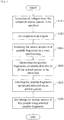
- Figure 1 shows the flow diagram of the animal species identification method according to the present invention.
- the animal species identification method takes the following steps, namely extracting a fibrous protein group from a sample to be identified (step S101), cleaving the fibrous protein groups into peptide fragments by a proteolytic enzyme (protease) (step S102) and analyzing the amino acid sequence of the peptide fragment (step S103). Then, peptide fragments commonly detected in all the animal species to be identified are excluded. (step S104)
- a peptide fragment specifically detected in at least 1 animal species is selected (step S105) and the animal species is identified using the peptide fragment so selected. (step S106)
- the animal skin consists of the epidermal layer, the dermal layer and the underlying subcutaneous connective tissue.
- the epidermal layer consists of 4 layers such as a keratinous layer, a granular layer and so on and these layers are removed because these are useless as leather.
- elastin fibers in the papillary dermis and the subcutaneous tissues are also mostly removed during mechanical processing and chemical processing in the manufacturing process.
- the keratin that constitutes hair is unnecessary for the manufacture of leather except for the case of fur pieces and it is decomposed and removed by liming treatment. Therefore, fibers that constitute leather are mostly collagen fibers.
- the dermis layer is divided into a papillary layer (silver surface layer) and a reticular layer.
- the upper most layer of the dermis layer corresponds to the grain side layer of leathers and this layer has far finer fibers interwoven minutely than that of the netted layer and many of the fibers run horizontally. Because of this, the silver surface layer of leather is finer compared with the reticular dermis and thus the extension and the moisture permeability worsen.
- the amino acid sequence of collagen is more specific compared with those of other proteins.
- the characteristics of the primary structure is the repetition of Gly-X-Y and glycine is present at every 3 residues.
- X and Y are arbitrary amino acids and the frequency of occupying X and Y differs depending on its type.
- the collagen molecule is formed by twisting the 3 polypeptide chains ( ⁇ chain) of about 1000 amino acid residues (molecular weight of about 100,000) consisting of such three sets of repetitions.
- the triple-stranded structure is very strong and not degradable even in enzymes.
- I ⁇ V types and I type trimmer There are at least 6 types (I ⁇ V types and I type trimmer) of molecular species for constituting the collagen structure. Eight kinds of polypeptide chains are known to constitute the collagen molecule and out of those eight kinds, I type collagen quantitatively amounts the largest, reaching to 80 to 90 % of the total collagen.
- the samples for identification were mainly chosen from chrome-tanned leather of deep and shallow colors, having the largest trade volume, regarding the 6 species of animals (a cow, a pig, a sheep, a goat, a horse and a deer) to be displayed on clothing items following the provisions on industrial household goods of the household goods quality labelling act. It should be noted that the samples dyed with deep color dyes or finished with finishing agents, both being difficult to be extracted by processing and the DNA method, were also used in addition to leathers tanned with tannin to make the leather selection clear without a vague history.
- the sample was washed for 2 hours by immersing in diethyl ether (manufactured by Wako Pure Chemical Industries, Ltd.) keeping the circulation more than 6 times per hour. Then the sample was immersed in pure water for 1 hour after being laid so that diethyl ether evaporates. In this step, the bath ratio was set at 100:1 with occasional stirring. After eliminating unnecessary water completely, the sample was laid and dried.
- diethyl ether manufactured by Wako Pure Chemical Industries, Ltd.
- the washed fibers were frozen in liquid nitrogen using a freeze pulverizer (JFC-300, manufactured by Japan Analytical Industry Co., Ltd.) and pulverized for 15 minutes.
- JFC-300 manufactured by Japan Analytical Industry Co., Ltd.
- the sample was transferred to tubes, after weighing to 0.5 mg, 500 ⁇ L of 25mM ammonium hydrogen carbonate (manufactured by Wako Pure Chemical Industries, Ltd.) was added to each tube, treated at 1250 rpm for 1 hour at 60 ° C in an incubator and the tubes were laid for 10 minutes at room temperature.
- a 20 ⁇ g trypsin (Promega, for protein sequencing) was resolved in 25 mM acid ammonium carbonate and the solution was added to each tube.
- An enzyme reaction was performed at 37 ° C and 250 rpm using an incubator for 18 hours.
- the sample (about 550 ⁇ L) was filtrated for 10 minutes at 4900 xg at 4° C using a 0.22 ⁇ m filter (SUPRECTM-01; manufactured by Takara Bio). After that, the sample was frozen at -80 ° C for 10 minutes and the vacuum-freeze drying at -50 ° C was performed overnight using a freeze dryer (EYELAFDU-1200; manufactured by Tokyo Science Instruments Co., Ltd.).
- the sample was dissolved in 0.1% formic acid, vortexed, then slightly centrifuged and sonicated for 5 minutes.
- the sonicated samples were again filtered using a 0.22 ⁇ m filter for 10 minutes at 4900 x g . 2 ⁇ L out of the collected samples were used for LC-MS/MS analysis.
- a formic acid for LCMS was used.
- LCMS-IT-TOF liquid chromatographic ion trap type-flight time type mass spectrometer
- G6460 QQQ LC-MS manufactured by Agilent Technologies
- Peptide fragments characteristic of animal species were searched using Error Tolerant Search (a search allowing differences in mass of precursor ions) included in the LCMS-IT-TOF protein identification software (Mascot).
- Error Tolerant Search a search allowing differences in mass of precursor ions
- cysteine modification alkylation
- Oxidation M
- K Oxidation
- COL1A1, COL1A2 and COL3A1 Three types of collagen (COL1A1, COL1A2 and COL3A1) were mainly detected in the Mascot search conducted after the analysis with LCMS-IT-TOF. Therefore, for each collagen, portions having different amino acid sequences were selected from the 6 animal species.
- the results of COL1A1, COL1A2 and COL3A1 are shown in Tables 1, 2 and 3, respectively. Note that the notation of the item AA in the table below indicates the amino sequence number corresponding to the amino acid sequence of a cow, the item Ox indicates the total number of amino acids to be oxidatively modified, the item m/z shows the ion mass to charge ratio of the mainly detected ions and the item Mr (calc) shows the theoretical molecular weight (mono isotropic mass).
- the amino acid sequence of the detected peptide fragment had high preservability among animal species and showed high stability of collagen molecules. However, the partial amino acid sequencing analysis showed slight differences such as one residue (A) and (V).
- the identification is difficult to achieve due to the damage by the chemical agents at the leather processing steps and also due to contaminants such as dyes and tanning agents.
- these problems mentioned above are solved and there is a high possibility of practical use.
- keratin is extracted from furs such as a fox, a raccoon, a mink so on (Step S101).
- the extracted keratin is degraded with a keratinase (Step S102). Trypsin can be used as the keratinase.
- the amino acid sequence of the peptide fragment is analyzed (Step S103) to exclude peptide fragments commonly detected (Step S104) in all animal species, and peptide fragments specifically detected in animal species concerned are selected (Step S105). And, the animal species is identified using the selected peptide fragments (Step S106).
- the present invention is useful for identifying an animal species of natural leather.
Landscapes
- Life Sciences & Earth Sciences (AREA)
- Health & Medical Sciences (AREA)
- Chemical & Material Sciences (AREA)
- Engineering & Computer Science (AREA)
- Organic Chemistry (AREA)
- Molecular Biology (AREA)
- Biochemistry (AREA)
- General Health & Medical Sciences (AREA)
- Immunology (AREA)
- Proteomics, Peptides & Aminoacids (AREA)
- Physics & Mathematics (AREA)
- Biophysics (AREA)
- Medicinal Chemistry (AREA)
- Zoology (AREA)
- Analytical Chemistry (AREA)
- Biomedical Technology (AREA)
- Bioinformatics & Cheminformatics (AREA)
- Wood Science & Technology (AREA)
- Genetics & Genomics (AREA)
- Biotechnology (AREA)
- Pathology (AREA)
- Hematology (AREA)
- General Physics & Mathematics (AREA)
- Microbiology (AREA)
- Urology & Nephrology (AREA)
- Food Science & Technology (AREA)
- Toxicology (AREA)
- Gastroenterology & Hepatology (AREA)
- Cell Biology (AREA)
- Bioinformatics & Computational Biology (AREA)
- General Engineering & Computer Science (AREA)
- Other Investigation Or Analysis Of Materials By Electrical Means (AREA)
- Peptides Or Proteins (AREA)
- Investigating Or Analysing Biological Materials (AREA)
- Apparatus Associated With Microorganisms And Enzymes (AREA)
- Measuring Or Testing Involving Enzymes Or Micro-Organisms (AREA)
Abstract
Description
- The present invention relates to a technology for objective method of animal species identification, and more particularly to a method for identifying the type of leather.
- Regarding leather bags, clothing, gloves, and furniture, the quality labelling regulations of miscellaneous manufactured goods are stipulated by the Household Goods Quality Labeling Law. Among those miscellaneous manufactured goods, it is mandatory to discriminate 6 species of animals (a cow, a pig, a sheep, a goat, a horse and a deer) that are display objects for clothes manufactured using leather or synthetic leather for the whole or a part of the products.
- In recent years, it is increasingly required that reliable identification of livestock species is performed at the product distribution stage, in order to properly display the quality. However, there are no official laws for such identification at present. Regarding the display concerning these miscellaneous goods, as commonly used identification methods for inspections and tests, an external appearance observation (thickness, size, color and pattern, coat, gloss, feel etc.), a microscope observation (pore arrangement, cross-sectional structure, capillary crust, hair medulla etc.), a device analysis (element, ingredient, dye, drug analysis, etc.) and a DNA identification are listed. (for example, Patent Document 1)
- Here, there are problems that the appearance observation requires a long-term experience and is resultantly unconvincing lacking objective and scientific basis. Although the microscope observation is the current mainstream, there are many cases wherein determination becomes unconvincing when the difference among fiber structures or silver surface patterns is inconspicuous, which is a problem. In addition, the instrumental analysis is just an auxiliary means, and identification only by this method is difficult. Regarding a DNA identification, the practical DNA identification of leather has not been implemented although the DNA identification of meat and cereals is widely implemented because of their high precision and high reproducibility. The reason for this is that the DNA is damaged during the untangling process of leather fiber in the leather manufacturing processes such as lime depilating and recalcification immersion, leading to extraction difficulty which sometimes makes the DNA detection impossible. Also, in the case of chromium tanned leather, for example, de-chromium process for oxygen decomposition promotion can rather damage the DNA. As has been described above, the DNA detection is not easy and the method using the DNA identification has not reached to its day to day operation.
- As a method based on instrumental analysis, a method for identifying natural leather pieces by pyrolysis gas chromatography / mass spectrometry, which detects thermal decomposition products corresponding to dipeptides derived from collagen is known. (refer to Non-patent literature 1) In this identification method, thermal decomposition products, not easily inhibited by decomposition based on contamination, corresponding to dipeptides derived from Hyp, can be detected as indicator substances identifiable as natural leathers, but their thermal decomposition products do not show any remarkable difference according to animal species, making it difficult to identify the animal species.
- [Patent literature 1]
JP 2003-125781 A - [Non-patent literature 1] Kurata Masaharu, "Pyrolysis gas chromatography / Method for identifying natural leather micro pieces by mass spectrometry", BUNSEKI KAGAKU Vol.57, No.7, pp.563-569 (2008)
- In view of the above circumstances, it is an object of the present invention to provide an identification method and an identification device capable of conveniently and accurately identifying animal species with respect to an animal leather sample or so on.
- In order to achieve the above object, the animal species identification method of the present invention comprises a step of analyzing amino acid sequence of peptide fragments after fragmenting the animal fibrous protein group extracted from the identification object sample to peptide fragments by cleavage of the proteolytic enzyme (protease), a step of selecting a peptide fragment specifically detected from at least one animal species after removing the peptide fragments commonly detected for all the animal species to be identified and a step of identifying the animal species of the sample using the selected peptide fragments.
- The sample to be identified is leather of 6 animal species such as a cow, a horse, a pig, a sheep, a goat and a deer, and leather of an ostrich, a salmon, a carp, a crocodile and so on, and also fur of a fox, a raccoon, a mink and so on. Fibrous proteins are more difficult to be modified compared with globular proteins and are known to form connective tissues, tendons, bones, skeletal muscles and so on. Examples of fibrous proteins include collagen, keratin, elastin and so on. The amino acid sequence of the peptide fragment after cleaving the fibrous protein group with a proteolytic enzyme to make a peptide fragment and the amino acid sequence of the peptide is consequently analyzed. Trypsin can be suitably used as a proteolytic enzyme, but it is not limited thereto. As a method for analyzing the amino acid sequence of the peptide fragment, a mass spectrometry, a peptide sequencer and a sequence specific peptide antibody and sod on can be suitably used.
- In the animal species identification method according to the present invention, the animal species of the sample may be identified using the peptide fragment specifically detected in one specific animal species among the selected peptide fragments, first. And consequently, the animal species may be identified using the peptide fragments specifically detected in at least two species of animal species for samples which had not been identifiable.
- First, it becomes possible to identify the animal species of the sample to be identified, efficiently, by identifying the animal species of the sample using peptide fragments specifically detected in one specific animal species. Namely, if there is a peptide fragment specifically detected only in one specific animal species, that one specific kind of animal species can be identified by determining the presence or absence of that peptide fragment and when that peptide fragment is found.
- In the step of analyzing the aforementioned amino acid sequence, in the case wherein the analysis is conducted using a mass spectrometry, more specifically, the mass-to-charge ratio (m/z) of precursor ions and product ions are measured by the tandem mass (MS/MS) analysis using a liquid chromatograph -mass spectrometer (LC-MS) and the amino acid sequence is analyzed to identify the peptide fragments.
- In the animal species identification method according to the present invention, in the case wherein the method is an identification method of animal skin derived from at least one animal selected from the 6 animal species of a cow, a pig, a sheep, a goat, a horse and a deer, the animal species is identified by determining the presence/absence of at least one peptide fragment among the peptide fragments with the amino
acid sequence number 1 to 38, against trypsin decomposed substance of collagen extracted from the sample to be identified. - Namely, 6 species of animal species of a cow, a pig, a sheep, a goat, a horse and a deer are identified by determining the presence or the absence of any peptide fragments among the peptide fragments of GEPGPAGLPGPPGER (SEQ ID NO: 1), GEPGPTGLPGPPGER (SEQ ID NO: 2), GFPGADGVAGPK (SEQ ID NO: 3), GFPGSDGVAGPK (SEQ ID NO: 4), GLTGPIGPPGPAGAPGDKGEAGPSGPAGPTGAR (SEQ ID NO: 5), GLTGPIGPPGPAGAPGDKGETGPSGPAGPTGAR (SEQ ID NO: 6), GETGPAGRPGEVGPPGPPGPAGEK (SEQ ID NO: 7), GETGPAGRPGEAGPPGPPGPAGEK (SEQ ID NO: 8), AGEVGPPGPPGPAGEK (SEQ ID NO: 9), SGDRGETGPAGPAGPIGPVGAR (SEQ ID NO: 10), SGDRGEAGPAGPAGPIGPVGAR (SEQ ID NO: 11), SGDRGETGPAGPAGPVGPVGAR (SEQ ID NO: 12), GIPGPVGAAGATGAR (SEQ ID NO: 13), GIPGPAGAAGATGAR (SEQ ID NO: 14), EGPVGLPGIDGRPGPIGPAGAR (SEQ ID NO: 15), EGPAGLPGIDGRPGPIGPAGAR SEQ ID NO: 16), GEQGPAGPPGFQGLPGPAGTAGEAGKPGER (SEQ ID NO: 17), GEQGPAGPPGFQGLPGPAGTAGEVGKPGER (SEQ ID NO: 18), GIPGEFGLPGPAGAR (SEQ ID NO: 19), GIPGEFGLPGPAGPR (SEQ ID NO: 20), GPPGESGAAGPTGPIGSR (SEQ ID NO: 21), GPPGESGAAGPAGPIGSR (SEQ ID NO: 22), GDGGPPGATGFPGAAGR (SEQ ID NO: 23), GDGGPPGVTGFPGAAGR (SEQ ID NO: 24), GLPGVAGSVGEPGPLGIAGPPGAR (SEQ ID NO: 25), GLPGVAGSLGEPGPLGIAGPPGAR (SEQ ID NO: 26), GEPGPAGAVGPAGAVGPR (SEQ ID NO: 27), GEPGPVGSVGPVGAVGPR (SEQ ID NO: 28), GEPGPAGSVGPAGAVGPR (SEQ ID NO: 29), GEPGPVGAVGPAGAVGPR (SEQ ID NO: 30), IGQPGAVGPAGIR (SEQ ID NO: 31), SGQPGTVGPAGVR (SEQ ID NO: 32), TGQPGAVGPAGIR (SEQ ID NO: 33), GEMGPAGIPGAPGLIGAR (SEQ ID NO: 34), GEMGPAGIPGAPGLMGAR (SEQ ID NO: 35), GAPGPQGPPGAPGPLGIAGLTGAR (SEQ ID NO: 36), GSPGPQGPPGVPGPSGLIGITGAR (SEQ ID NO: 37) and GSPGPQGPPGAPGPGGISGITGAR (SEQ ID NO: 38) which are partial sequences of Collagen Iα1, Collagen I α2, Collagen III α1 (hereinafter abbreviated as col1A1, col1A2, col3A1, respectively).
- The peptide fragments of the base SEQ ID NO: 1 to 38 are not the partial sequence numbers common to all 6 animal species regarding COL1A1, COL1A2 and COL3A1, but a partial sequence existing specifically in at least one kind of animal species. The amino acid sequences of the peptide fragments of SEQ ID NO: 1 to 38 have high storage stability among 6 animal species due to the stability of collagen molecules.
- The animal species identification method according to the present invention, being an identification method of animal skin of at least one kind of animal-derived skin selected from 6 species of animals of a cow, a pig, a sheep, a goat, a horse and a deer, preferably identifies the animal species by determining the presence or absence of at least any peptide fragments among the peptide fragments of the amino acid sequences of SEQ ID NO: 5 to 14, SEQ ID NO: 19 to 22 and SEQ ID NO: 25 to 33 in trypsin decomposed product of collagen extracted from the sample to be identified.
- In the animal species identification method according to the present invention, in the case wherein a cow is an object to be identified, the identification of the presence or the absence of peptide fragments of at least any peptide fragment among peptide fragments of the amino acid sequences of GLTGPIGPPGPAGAPGDKGEAGPSGPAGPTGAR (SEQ ID NO: 5) and IGQPGAVGPAGIR (SEQ ID NO: 31) may be enough to identify the object to be a cow.
- The peptide fragments of the SEQ ID NO: 5 and 31 are peptide fragments specifically found only in a cow among the 6 species of animals and a cow can be identified only by these peptide fragments.
- In the animal species identification method according to the present invention, in the case wherein a horse is an object to be identified, the identification of the presence or the absence of peptide fragments of at least any peptide fragment among peptide fragments of the amino acid sequences of GEPGPTGLPGPPGER (SEQ ID NO: 2), SGDRGEAGPAGPAGPIGPVGAR (SEQ ID NO: 11), GDGGPPGVTGFPGAAGR (SEQ ID NO: 24), GLPGVAGSLGEPGPLGIAGPPGAR (SEQ ID NO: 26), GEPGPVGSVGPVGAVGPR (SEQ ID NO: 28), SGQPGTVGPAGVR (SEQ ID NO: 32) and GSPGPQGPPGVPGPSGLIGITGAR (SEQ ID NO: 37) may be enough to identify the object to be a horse.
- The peptide fragments of the SEQ ID NO: 2, 11, 24, 26, 28, 32 and 37 are peptide fragments specifically found only in a horse among the 6 species of animals of a cow, a pig, a sheep, a goat, a horse and a deer, and a horse can be identified only by these peptide fragments.
- In the animal species identification method according to the present invention, in the case wherein a pig is an object to be identified, the identification of the presence or the absence of peptide fragments of at least any peptide fragment among peptide fragments of the amino acid sequences of GETGPAGRPGEAGPPGPPGPAGEK (SEQ ID NO: 8), SGDRGETGPAGPAGPVGPVGAR (SEQ ID NO: 12), GIPGEFGLPGPAGPR (SEQ ID NO: 20), GEPGPAGSVGPAGAVGPR (SEQ ID NO: 29), GEMGPAGIPGAPGLMGAR (SEQ ID NO: 35) and GSPGPQGPPGAPGPGGISGITGAR (SEQ ID NO: 38) may be enough to identify the object to be a pig.
- The peptide fragments of the SEQ ID NO: 8, 12, 20, 29, 35 and 38 are peptide fragments specifically found only in a pig among the 6 species of animals of a cow, a pig, a sheep, a goat, a horse and a deer, and a pig can be identified only by these peptide fragments.
- In the animal species identification method according to the present invention, in the case wherein a sheep is an object to be identified, the identification of the presence or the absence of peptide fragments of the amino acid sequence of AGEVGPPGPPGPAGEK (SEQ ID NO: 9) may be enough to identify the object to be a sheep.
- The peptide fragments of the SEQ ID NO: 9 are peptide fragments specifically found only in a sheep among the 6 species of animals of a cow, a pig, a sheep, a goat, a horse and a deer, and a sheep can be identified only by these peptide fragments.
- In the animal species identification method according to the present invention, in a case wherein the animal species of the identification object is narrowed down, the animal species may be identified by narrowing the identification object to be either a cow or a deer after determining the presence or the absence of the amino acid sequences of GEPGPAGAVGPAGAVGPR (SEQ ID NO: 27).
- The peptide fragment of the SEQ ID NO: 27 is the peptide fragment specifically found only in a cow and a deer among the 6 species of animals of a cow, a pig, a sheep, a goat, a horse and a deer, and the identification can be narrowed down to either a cow or a deer, or can be identified as a cow or a deer.
- In the animal species identification method according to the present invention, in a case wherein the animal species of the identification object is narrowed down, the animal species may be identified by narrowing the identification object to be either a sheep or a goat after determining the presence or the absence of peptide fragments of at least any peptide fragment among peptide fragments of the amino acid sequences of GEPGPVGAVGPAGAVGPR (SEQ ID NO: 30) and GFPGSDGVAGPK (SEQ ID NO: 4).
- The peptide fragments of the SEQ ID NO: 4 and 30 are the peptide fragments specifically found only in a sheep and a goat among the 6 species of animals of a cow, a pig, a sheep, a goat, a horse and a deer, and the identification can be narrowed down to either a sheep or a goat, or can be identified as a sheep or a goat.
- In the animal species identification method according to the present invention, in a case wherein the animal species of the identification object is narrowed down, the animal species may be identified by narrowing the identification object to be either a horse or a pig after determining the presence or the absence of peptide fragments of at least any peptide fragment among peptide fragments of the amino acid sequences of GIPGPAGAAGATGAR (SEQ ID NO:14) and GEQGPAGPPGFQGLPGPAGTAGEVGKPGER (SEQ ID NO:18).
- The peptide fragments of the SEQ ID NO: 14 and 18 are the peptide fragments specifically found only in a horse and a pig among the 6 species of animals of a cow, a pig, a sheep, a goat, a horse and a deer, and the identification can be narrowed down to either a horse or a pig, or can be identified as a horse or a pig.
- In the animal species identification method according to the present invention, the identification method being an identification of the animal skin derived from at least one animal selected from the 6 species of animals of a cow, a pig, a sheep, a goat, a horse and a deer, and it is preferable to conduct the steps 1) to 5) below against the trypsin decomposed product of the collagen extracted from the sample to be identified.
- 1) a step of identifying a cow by determining the presence or absence of peptide fragments of the amino acids with sequences of SEQ ID NO: 5, SEQ ID NO: 27 and SEQ ID NO: 31.
- 2) a step of identifying a deer by determining the presence or absence of peptide fragments of the amino acids with sequences of SEQ ID NO: 27 and SEQ ID NO: 33.
- 3) a step of identifying a horse by determining the presence or absence of peptide fragments of the amino acids with sequences of SEQ ID NO: 11 or SEQ ID NO: 28.
- 4) a step of identifying a pig by determining the presence or absence of peptide fragments of the amino acids with sequences of SEQ ID NO: 12 or SEQ ID NO: 29.
- 5) a step of identifying a sheep by determining the presence or absence of the peptide fragment of amino acid with the sequence of SEQ ID NO: 9 and a goat by determining the presence or absence of the peptide fragment of amino acid with the sequence of SEQ ID NO: 7 against the remaining samples not yet identified after conducting the steps 1) to 4) above.
- Here, the method of determining the presence or absence of peptide fragments can be conducted by determining the presence or absence of peptide fragments by, for example, measuring the mass to charge ratio (m/z) of the precursor ion and the product ion of the peptide fragment using the tandem mass (MS/MS) analysis using a liquid chromatography-mass spectrometer (LC-MS).
- In the steps 1) to 5) above, an easy identification of the animal species becomes possible by focusing only on the sum of 5 peaks that are 3 peaks of COL1A1 and 2 peaks of COL1A2 at the measurement result of the mass to charge ratio.
- Next, the animal species identification device according to the present invention is described.
- The animal species identification device according to the present invention, being a identification device of at least 1 kind of animal skin derived from an animal selected out of 6 species of animals of a cow, a pig, a sheep, a goat, a horse and a deer, is an animal species identification device for identifying the animal species being furnished with means to determine the presence or absence of at least any one of peptide fragments out of peptide fragments having amino acid sequences of SEQ ID No: 1 to 38 against what is obtained by reducing the reduce collagen from the sample to be identified using trypsin.
- Moreover, the animal species identification device according to the present invention, being an identification device of animal skin of at least one kind of animal-derived skin selected from 6 species of animals of a cow, a pig, a sheep, a goat, a horse and a deer, is characterized by discriminating animal species by having means for determining the presence or absence of at least any peptide fragments among the peptide fragments of the amino acid sequences of SEQ ID NO: 5 to 14, SEQ ID NO: 19 to 22 and SEQ ID NO: 25 to 33 in trypsin decomposed product of collagen extracted from the sample to be identified.
- Here, means for determining the presence or absence of a peptide fragment preferably determines the presence or absence of peptide fragments by measuring a mass-to-charge ratio (m/z) of a precursor ion of a peptide fragment and a product ion using the tandem mass (MS/MS) analysis using a liquid chromatograph-mass spectrometer (LC-MS).
- According to the identification method or the identification device of the present invention, it becomes possible to identify the animal species with ease and high accuracy by analyzing the fibrous protein group extracted from animal leather samples and so on, providing effects such as accurate product quality displays of leather products. The identification method according to the present invention can be utilized as an international standard under the circumstance that miscellaneous manufactured goods including clothes are globally traded, not only complementing the microscope method conventionally utilized as the mainstream of animal identification.
-
- [
FIG. 1] Figure 1 shows the flow diagram of the animal species identification method according to the present invention. - [
FIG. 2] Figure 2 shows the flow diagram (1) of the animal species identification method according toembodiment 1. - [
FIG. 3] Figure 3 shows the flow diagram (2) of the animal species identification method according toembodiment 1. - [
FIG. 4] Figure 4 shows the flow diagram of 6 animal species identification process. - [
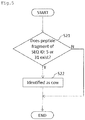
FIG. 5] Figure 5 shows the flow diagram of identification process for a cow. - [
FIG. 6] Figure 6 shows the flow diagram of identification process for a horse. - [
FIG. 7] Figure 7 shows the flow diagram of identification process for a pig. - [
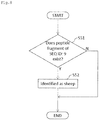
FIG. 8] Figure 8 shows the flow diagram of identification process for a sheep. - [
FIG. 9] Figure 9 shows the flow diagram of identification process for a horse or a deer. - [
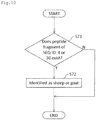
FIG. 10] Figure 10 shows the flow diagram of identification process for a sheep or a goat. - [
FIG. 11] Figure 11 shows the flow diagram of identification process for a horse or a pig. - Embodiments of the present invention will be described in detail below with reference to the drawings. The present invention is not limited to the following embodiment and examples of shown in the figure, and the present invention can be variously changed in design.
-
Figure 1 shows the flow diagram of the animal species identification method according to the present invention. - As was described above, the animal species identification method according to the present invention takes the following steps, namely extracting a fibrous protein group from a sample to be identified (step S101), cleaving the fibrous protein groups into peptide fragments by a proteolytic enzyme (protease) (step S102) and analyzing the amino acid sequence of the peptide fragment (step S103). Then, peptide fragments commonly detected in all the animal species to be identified are excluded. (step S104)
- Now, a peptide fragment specifically detected in at least 1 animal species is selected (step S105) and the animal species is identified using the peptide fragment so selected. (step S106)
- According to the embodiment described here, an example of identifying the animal species regarding the natural leather of 6 species of animals of a cow, a pig, a sheep, a goat, a horse and a deer is explained.
- First, regarding the animal species of natural leather, collagen which is the tissue and also the main fiber of skin is explained. The animal skin consists of the epidermal layer, the dermal layer and the underlying subcutaneous connective tissue. The epidermal layer consists of 4 layers such as a keratinous layer, a granular layer and so on and these layers are removed because these are useless as leather. Also, elastin fibers in the papillary dermis and the subcutaneous tissues are also mostly removed during mechanical processing and chemical processing in the manufacturing process. Furthermore, the keratin that constitutes hair is unnecessary for the manufacture of leather except for the case of fur pieces and it is decomposed and removed by liming treatment. Therefore, fibers that constitute leather are mostly collagen fibers. The dermis layer is divided into a papillary layer (silver surface layer) and a reticular layer. The upper most layer of the dermis layer corresponds to the grain side layer of leathers and this layer has far finer fibers interwoven minutely than that of the netted layer and many of the fibers run horizontally. Because of this, the silver surface layer of leather is finer compared with the reticular dermis and thus the extension and the moisture permeability worsen.
- The amino acid sequence of collagen is more specific compared with those of other proteins. Regarding the amino acid sequence, the characteristics of the primary structure is the repetition of Gly-X-Y and glycine is present at every 3 residues. X and Y are arbitrary amino acids and the frequency of occupying X and Y differs depending on its type. The collagen molecule is formed by twisting the 3 polypeptide chains (α chain) of about 1000 amino acid residues (molecular weight of about 100,000) consisting of such three sets of repetitions. The triple-stranded structure is very strong and not degradable even in enzymes.
- There are at least 6 types (I ∼ V types and I type trimmer) of molecular species for constituting the collagen structure. Eight kinds of polypeptide chains are known to constitute the collagen molecule and out of those eight kinds, I type collagen quantitatively amounts the largest, reaching to 80 to 90 % of the total collagen.
- Next, the sample for identification used in the experiment is explained. The samples for identification were mainly chosen from chrome-tanned leather of deep and shallow colors, having the largest trade volume, regarding the 6 species of animals (a cow, a pig, a sheep, a goat, a horse and a deer) to be displayed on clothing items following the provisions on industrial household goods of the household goods quality labelling act. It should be noted that the samples dyed with deep color dyes or finished with finishing agents, both being difficult to be extracted by processing and the DNA method, were also used in addition to leathers tanned with tannin to make the leather selection clear without a vague history.
- Hereinafter, the flow of the identification method of 6 types of animals regarding the samples to be identified as mentioned above will be explained in detail by referencing the
figure 2 andfigure 3 . - The sample was washed for 2 hours by immersing in diethyl ether (manufactured by Wako Pure Chemical Industries, Ltd.) keeping the circulation more than 6 times per hour. Then the sample was immersed in pure water for 1 hour after being laid so that diethyl ether evaporates. In this step, the bath ratio was set at 100:1 with occasional stirring. After eliminating unnecessary water completely, the sample was laid and dried.
- The washed fibers were frozen in liquid nitrogen using a freeze pulverizer (JFC-300, manufactured by Japan Analytical Industry Co., Ltd.) and pulverized for 15 minutes.
- The sample was transferred to tubes, after weighing to 0.5 mg, 500µL of 25mM ammonium hydrogen carbonate (manufactured by Wako Pure Chemical Industries, Ltd.) was added to each tube, treated at 1250 rpm for 1 hour at 60 ° C in an incubator and the tubes were laid for 10 minutes at room temperature. A 20 µg trypsin (Promega, for protein sequencing) was resolved in 25 mM acid ammonium carbonate and the solution was added to each tube. An enzyme reaction was performed at 37 ° C and 250 rpm using an incubator for 18 hours.
- The sample (about 550 µL) was filtrated for 10 minutes at 4900 xg at 4° C using a 0.22µm filter (SUPRECTM-01; manufactured by Takara Bio). After that, the sample was frozen at -80 ° C for 10 minutes and the vacuum-freeze drying at -50 ° C was performed overnight using a freeze dryer (EYELAFDU-1200; manufactured by Tokyo Science Instruments Co., Ltd.).
- Next, the sample was dissolved in 0.1% formic acid, vortexed, then slightly centrifuged and sonicated for 5 minutes. The sonicated samples were again filtered using a 0.22 µm filter for 10 minutes at 4900 x g . 2 µL out of the collected samples were used for LC-MS/MS analysis. A formic acid for LCMS was used.
- For mass spectrometry, a high speed liquid chromatographic ion trap type-flight time type mass spectrometer (LCMS-IT-TOF; manufactured by Shimadzu Corporation) and a triple quadrupole LCMS/MS system (G6460 QQQ LC-MS; manufactured by Agilent Technologies) were used.
- Peptide fragments characteristic of animal species were searched using Error Tolerant Search (a search allowing differences in mass of precursor ions) included in the LCMS-IT-TOF protein identification software (Mascot). In order to make it possible to search for peptides containing hydroxyl-proline and hydroxyl-lysine, cysteine modification (alkylation) was removed from, and not only Oxidation (M) commonly used but also Oxidation (K) were added to, the parameters of protein posttranslational modification.
- Results whether some specific peptide fragments for 6 species of animals (a cow, a pig, a sheep, a goat, a horse and a deer) exist or not are described below.
- Three types of collagen (COL1A1, COL1A2 and COL3A1) were mainly detected in the Mascot search conducted after the analysis with LCMS-IT-TOF. Therefore, for each collagen, portions having different amino acid sequences were selected from the 6 animal species. The results of COL1A1, COL1A2 and COL3A1 are shown in Tables 1, 2 and 3, respectively. Note that the notation of the item AA in the table below indicates the amino sequence number corresponding to the amino acid sequence of a cow, the item Ox indicates the total number of amino acids to be oxidatively modified, the item m/z shows the ion mass to charge ratio of the mainly detected ions and the item Mr (calc) shows the theoretical molecular weight (mono isotropic mass).
[Table 1] SEQ ID NO: AA Peptide Ox m/z Mr(calc) Cow Horse Pig Sheep Goat Deer 1 472-486 GEPGPAGLPGPPGER 3 718.3 1434.6 ○ × ○ ○ ○ ○ 2 472-486 GEPGPTGLPGPPGER 3 733.3 1464.6 × ○ × × × × 3 493-504 GFPGADGVAGPK 1 544.7 1087.5 ○ ○ O x x O 4 493-504 GFPGSDGVAGPK 1 552.7 1103.5 × × × ○ ○ × 5 763-795 GLTGPIGPPGPAGAPGDKGEAGPSGPAGPTGAR 2 951.8 2852.4 ○ × × × × × 6 763-795 GLTGPIGPPGPAGAPGDKGETGPSGPAGPTGAR 2 961.8 2882.4 × ○ ○ ○ ○ ○ 7 910-933 GETGPAGRPGEVGPPGPPGPAGEK 3 739.3 2215.0 ○ × × × ○ ○ 8 910-933 GETGPAGRPGEAGPPGPPGPAGEK 3 730.0 2187.0 × × ○ × × × 9 918-933 AGEVGPPGPPGPAGEK 2 724.8 1447.6 × × × ○ × × 10 1062-108, SGDRGETGPAGPAGPIGPVGAR 0 659.3 1974.9 ○ × × ○ ○ ○ 11 1062-1083 SGDRGEAGPAGPAGPIGPVGAR 0 649.3 1944.9 × ○ × × × × 12 1062-1083 SGDRGETGPAGPAGPVGPVGAR 0 654.6 1960.9 × × ○ × × × [Table 2] SEQ ID NO: AA Peptide Ox m/z Mr(calc) Cow Horse Pig Sheep Goat Deer 13 326-340 GIPGPVGAAGATGAR 1 634.3 1266.6 ○ × × ○ ○ ○ 14 326-340 GIPGPAGAAGATGAR 1 620.3 1238.6 × ○ ○ × × × 15 463-484 EGPVGLPGIDGRPGPIGPAGAR 1 686.0 2055.0 ○ ○ × × × O 16 463-484 EGPAGLPGIDGRPGPIGPAGAR 1 676.6 2027.0 × × ○ ○ ○ × 17 542-571 GEQGPAGPPGFQGLPGPAGTAGEAGKPGER 3 931.4 2791.3 ○ × × ○ ○ × 18 542-571 GEQGPAGPPGFQGLPGPAGTAGEVGKPGER 3 940.7 2819.3 × ○ Δ × × × 19 572-586 GIPGEFGLPGPAGAR 2 714.3 1426.7 ○ ○ × ○ ○ ○ 20 572-586 GIPGEFGLPGPAGPR 2 727.3 1452.7 × × ○ × × × 21 590-607 GPPGESGAAGPTGPIGSR 1 790.8 1579.7 ○ × × ○ ○ × 22 590-607 GPPGESGAAGPAGPIGSR 1 775.8 1549.7 × ○ ○ × × ○ 23 776-792 GDGGPPGATGFPGAAGR 2 737.3 1472.6 ○ × ○ ○ ○ ○ 24 776-792 GDGGPPGVTGFPGAAGR 2 751.3 1500.6 × ○ × × × × 25 881-904 GLPGVAGSVGEPGPLGIAGPPGAR 3 711.0 2130.1 ○ × ○ ○ ○ ○ 3 1066.0 2130.1 26 881-904 GLPGVAGSLGEPGPLGIAGPPGAR 3 715.7 2144.1 × ○ × × × × 3 1073.0 2144.1 27 977-994 GEPGPAGAVGPAGAVGPR 1 766.8 1531.7 ○ × × × × ○ 28 977-994 GEPGPVGSVGPVGAVGPR 1 802.9 1603.8 × ○ × × × × 29 977-994 GEPGPAGSVGPAGAVGPR 1 774.8 1547.7 × × ○ × × × 30 977-994 GEPGPVGAVGPAGAVGPR 1 780.9 1559.8 × × × O ○ × 31 1066-1078 IGQPGAVGPAGIR 1 604.8 1207.6 ○ × × × × × 32 1066-1078 SGQPGTVGPAGVR 0 591.8 1181.6 × ○ × × × × 33 1066-1078 TGQPGAVGPAGIR 0 590.8 1179.6 × × ○ ○ ○ ○ [Table 3] SEQ ID NO: AA Peptide Ox m/z Mr(calc) Cow Horse Pig Sheep Goat Deer 34 396-413 GEMGPAGIPGAPGLIGAR 2 826.9 1651.8 ○ ○ × ○ ○ ○ 35 396-413 GEMGPAGIPGAPGLMGAR 3 851.8 1701.7 × × ○ × × × 36 933-956 GAPGPQGPPGAPGPLGIAGLTGAR 2 700.0 2097.0 ○ × × ○ ○ × 2 1049.5 2097.0 37 933-956 GSPGPQGPPGVPGPSGLIGITGAR 3 725.3 2173.1 × ○ × × × × 38 933-956 GSPGPQGPPGAPGPGGISGITGAR 3 1045.5 2088.9 × × ○ × × × - The amino acid sequence of the detected peptide fragment had high preservability among animal species and showed high stability of collagen molecules. However, the partial amino acid sequencing analysis showed slight differences such as one residue (A) and (V).
- Note that an amino acid sequence having the same mass-to-charge ratio and the same theoretical molecular weight as SEQ ID NO: 19 exists in the existing database. That is, GLPGEFGLPGPAGAR (SEQ ID NO: 39) of an amino acid sequence different from GIPGEFGLPGPAGAR (SEQ ID NO: 19) exists. This is because leucine (L) and isoleucine (I) have the same molecular weight and there is no difference in mass. Similarly, an amino acid sequence having the same mass to charge ratio and the same theoretical molecular weight as EQ ID NO: 34 exists in the existing database. GEMGPAGIPGAPGLLGAR (SEQ ID NO: 40) of an amino acid sequence different from GEMGPAGIPGAPGLIGAR (SEQ ID NO: 34) exists.
- Among the peptide fragments identifiable with regard to animal species from the LCMS-IT-TOF analysis results, the peptide fragments stably detected by the QQQ LC-MS analysis are shown in Table 4.
[Table 4] SEQ 10 NO: AA Peptide Ox m/z Mr(calc) Cow Horse Pig Sheep Goat Deer 5 763-795 GLTGPIGPPGPAGAPGDKGEAGPSGPAGPTGAR 2 951.8 2852.4 ○ × × × × × 6 763-795 GLTGPIGPPGPAGAPGDKGETGPSGPAGPTGAR 2 961.8 2882.4 × ○ ○ ○ ○ ○ 7 910-933 GETGPAGRPGEVGPPGPPGPAGEK 3 739.3 2215.0 ○ × × × ○ ○ 8 910-933 GETGPAGRPGEAGPPGPPGPAGEK 3 730.0 2187.0 × × ○ × × × 9 918-933 AGEVGPPGPPGPAGEK 2 724.8 1447.6 × × × ○ × × 10 1062-1083 SGDRGETGPAGPAGPIGPVGAR 0 659.3 19 74.9 ○ × × ○ ○ ○ 11 1062-1083 SGDRGEAGPAGPAGPIGPVGAR 0 649.3 1944.9 × ○ × × × × 12 1062-1083 SGDRGETGPAGPAGPVGPVGAR 0 654.6 1960.9 × × ○ × × × 13 326-340 GIPGPVGAAGATGAR 1 634.3 1266.6 ○ × × ○ ○ ○ 14 326-340 GIPGPAGAAGATGAR 1 620.3 1238.6 × ○ ○ × × × 19 572-586 GIPGEFGLPGPAGAR 2 714.3 1426.7 ○ ○ × ○ ○ ○ 20 572-586 GIPGEFGLPGPAGPR 2 727.3 1452.7 × × ○ × × × 21 590-607 GPPGESGAAGPTGPIGSR 1 790.8 1579.7 ○ × × ○ ○ × 22 590-607 GPPGESGAAGPAGPIGSR 1 775.8 1549.7 × ○ ○ × × ○ 25 881-904 GLPGVAGSVGEPGPLGIAGPPGAR 3 711.0 2130.1 ○ × ○ ○ ○ ○ 3 1066.0 2130.1 26 881-904 GLPGVAGSLGEPGPLGIAGPPGAR 3 715.7 2144.1 × ○ × × × × 3 1073.0 2144.1 27 977-994 GEPGPAGAVGPAGAVGPR 1 766.8 1531.7 ○ × × × × ○ 28 977-994 GEPGPVGSVGPVGAVGPR 1 802.9 1603.8 × ○ × × × × 29 977-994 GEPGPAGSVGPAGAVGPR 1 774.8 1547.7 × × ○ × × × 30 977-994 GEPGPVGAVGPAGAVGPR 1 780.9 1559.8 × × × ○ ○ × 31 1066-1078 IGQPGAVGPAGIR 1 604.8 1207.6 ○ × × × × × 32 1066-1078 SGQPGTVGPAGVR 0 591.8 1181.6 × ○ × × × × 33 1066-1078 TGQPGAVGPAGIR 0 590.8 1179.6 × × ○ ○ ○ ○ - When the animal species differentiation test using leather by the QQQ LC-MS is routinely conducted, the identification of the animal species can be simplified by further narrowing down the specific peptide fragments shown in Table 4.
- Examples of procedures for identifying the leather of 6 species of animals of a cow, a pig, a sheep, a goat, a horse and a deer are described as below. In case of the leather of 6 species of animals of a cow, a pig, a sheep, a goat, a horse and a deer, it is easily possible to identify the animal species by paying attention only to 5 peaks in total of 3 peaks of COL1A1 and 2 peaks of COL1A2.
- (1) First of all, a cow is identified by focusing on m/z951.8, 604. 8, and 767 specifically detected in a cow which has the largest distribution volume.
- (2) At this time, m/z767 is detected commonly also in a deer but m/z590.8 is also specific and a deer is identified by the presence or absence of detection of these.
- (3) A horse is identified by focusing on specific m/z 649.3 or m/z 802.9. Note that the presence or absence of m/z591.8 may also be confirmed.
- (4) A pig is identified by focusing on specific m/z 654.7 or m/z 774.8.
- (5) A sheep and a goat are identified focusing on the difference that a sheep shows the specific m/z724.9 and a goat shows the specific m/z739.3.
- The results of animal species identification using the identification procedures (1) to (5) above and the identification results using LCMS-IT-TOF, regarding 6 species of animals (a cow, a pig, a sheep, a goat, a horse and a deer), are compared. 3∼5 types of samples for each animal species were prepared to evaluate the accuracy of the analysis and it was learned that the accuracy of this analysis was as high as almost 100 %.
- According to the analysis based on the DNA identification method and also the MALDI-TOF MS, the identification is difficult to achieve due to the damage by the chemical agents at the leather processing steps and also due to contaminants such as dyes and tanning agents. In the animal species identification method according to the present invention, these problems mentioned above are solved and there is a high possibility of practical use.
- In the present embodiment, examples of identifying animal species are explained regarding furs such as a fox, a raccoon, a mink so on. The flow of the animal species identification method for furs mentioned above follows the flow of
Figure 1 similarly as in the first embodiment. - First, keratin is extracted from furs such as a fox, a raccoon, a mink so on (Step S101). The extracted keratin is degraded with a keratinase (Step S102). Trypsin can be used as the keratinase.
- And then, similarly as in the
embodiment 1, the amino acid sequence of the peptide fragment is analyzed (Step S103) to exclude peptide fragments commonly detected (Step S104) in all animal species, and peptide fragments specifically detected in animal species concerned are selected (Step S105). And, the animal species is identified using the selected peptide fragments (Step S106). -
- (1) When the identification target is a cow, as shown in
Figure 5 , the presence or absence of the peptide fragments of the amino acid sequences of SEQ ID NO: 5 or SEQ ID NO: 31 is discriminated to identify a cow. - (2) When the identification target is a horse, as shown in
figure 6 , the presence or absence of the peptide fragments of the amino acid sequences of SEQ ID NO: 2, SEQ ID NO: 11, SEQ ID NO: 24, SEQ ID NO: 26, SEQ ID NO: 28, SEQ ID NO: 32 or SEQ ID NO: 37 is discriminated to identify a horse. - (3) When the identification target is a pig, the presence or absence of peptide fragments of the amino acid sequences of SEQ ID NO: 8, SEQ ID NO: 12, SEQ ID NO: 20, SEQ ID NO: 29, SEQ ID NO: 35 or SEQ ID NO: 38 is distinguished to identify a pig.
- (4) When the identification target is a sheep, as shown in
Figure 8 , the presence or absence of a peptide fragment having the amino acid sequence of SEQ ID NO: 9 is discriminated to identify a sheep. - (5) When narrowing down the animal species to be identified, as shown in
Figure 9 , the presence or absence of the peptide fragment of the amino acid sequence of SEQ ID NO: 27 can be discriminated and the object to be identified can be narrowed down to a cow or a deer. - (6) When narrowing down the animal species to be identified, as shown in
Figure 10 , the presence or absence of the peptide fragment of the amino acid sequence of SEQ ID NO: 4 or SEQ ID NO: 30 can be discriminated and the object to be identified can be narrowed down to a sheep or a goat. - (7) When narrowing down the animal species to be identified, as shown in
Figure 11 , the presence or absence of a peptide fragment of the amino acid sequence of SEQ ID NO: 14 or SEQ ID NO: 18 can be discriminated and the object to be identified can be narrowed down to a horse or a pig. - The present invention is useful for identifying an animal species of natural leather.


Claims (21)
- An animal species identification method, comprising:a step of analyzing an amino acid sequence of a peptide fragment after cutting the animal fibrous protein group extracted from a sample to be identified with a proteolytic enzyme (protease) into a peptide fragment;a step of preparing in advance the sequence data group selected peptide fragments specifically detected in at least one species of animal species after removing the peptide fragments commonly detected in all animal species to be identified from all the analyzed peptide fragments; anda step of discriminating the animal species of the sample using the peptide fragments contained in the selected sequence data group.
- An animal species identification method as set forth in claim 1, wherein the animal species of the sample is discriminated from the selected peptide fragments based on the peptide fragments specifically detected only in one specific animal species.
- An animal species identification method as set forth in claim 1, wherein the animal species of the sample is discriminated by identifying the animal species being composed of the step of identifying an animal species of the sample based on the peptide fragment specifically detected only in one specific animal species and further identifying the animal species, for the sample not yet identified, employing the peptide fragment specifically detected in at least two or more kinds of animal species.
- An animal species identification method as set forth in either one of claims 1 to 3, further comprising:said animal fibrous protein group being collagen.
- An animal species identification method as set forth in either one of claims 1 to 4, further comprising:said proteolytic enzyme being trypsin.
- An animal species identification method as set forth in either one of claims 1 to 5, further comprising:said step of analyzing the amino acid sequence of peptide fragments being analyzed using mass spectrometry.
- An animal species identification method as set forth in either one of claims 1 to 6, further comprising:said mass analysis being an identification of a peptide fragment by an analysis of an amino acid sequence by measuring the mass-to-charge ratio (m/z) of the pre-cursor ion and the product ion of the peptide fragment by the tandem mass (MS/MS) analysis employing a liquid chromatography mass spectrometer (LC-MS).
- An animal species identification method as set forth in either one of claims 1 to 7, further comprising:said sample to be identified being an animal skin derived from at least one kind of animal selected from six kinds of animals that are a cow, a horse, a pig, a sheep, a goat and a deer.
- An animal species identification method being an identification of animal skin derived from at least one kind of animal selected from six kinds of animals of a cow, a pig, a sheep, a goat, a horse and a deer, comprising:identifying the animal species by determining the presence or absence of at least any peptide fragments among peptide fragments of amino acids with sequences of SEQ ID NO: 1∼38 against the decomposition product of animal skin-derived collagen extracted from a sample to be decomposed using trypsin.
- An animal species identification method as set forth in claim 9, further comprising:identification of an animal species by determining the presence or absence of at least either one peptide fragment among the peptide fragments of amino acids with sequences of SEQ ID NO: 5∼14, SEQ ID NO: 19∼22 and SEQ ID NO: 25∼33.
- An animal species identification method as set forth in claim 8 or 9, further comprising:identification of an animal species by determining the presence or absence of at least either one peptide fragment among the peptide fragments of amino acids with sequences of GLTGPIGPPGPAGAPGDKGEAGPSGPAGPTGAR (SEQ ID NO:5) and IGQPGAVGPAGIR (SEQ ID NO:31) when the subject for identification being a cow.
- An animal species identification method as set forth in claim 9 or 10, further comprising:identification of a horse by determining the presence or absence of at least either one peptide fragment among the peptide fragments of amino acids with sequences of GEPGPTGLPGPPGER (SEQ ID NO: 2), SGDRGEAGPAGPAGPIGPVGAR (SEQ ID NO: 11), GDGGPPGVTGFPGAAGR (SEQ ID NO: 24), GLPGVAGSLGEPGPLGIAGPPGAR (SEQ ID NO: 26), GEPGPVGSVGPVGAVGPR (SEQ ID NO: 28), SGQPGTVGPAGVR (SEQ ID NO: 32) and GSPGPQGPPGVPGPSGLIGITGAR (SEQ ID NO: 37) when the subject for identification being a horse.
- An animal species identification method as set forth in claim 9 or 10, further comprising:identification of a pig by determining the presence or absence of at least either one peptide fragment among the peptide fragments of amino acids with sequences of GETGPAGRPGEAGPPGPPGPAGEK (SEQ ID NO: 8), SGDRGETGPAGPAGPVGPVGAR (SEQ ID NO: 12), GIPGEFGLPGPAGPR (SEQ ID NO: 20), GEPGPAGSVGPAGAVGPR (SEQ ID NO: 29), GEMGPAGIPGAPGLMGAR (SEQ ID NO: 35) and GSPGPQGPPGAPGPGGISGITGAR (SEQ ID NO: 38) when the subject for identification being a pig.
- An animal species identification method as set forth in claim 9 or 10, further comprising:identification of a sheep by determining the presence or absence of the peptide fragment of amino acid with sequence of AGEVGPPGPPGPAGEK (SEQ ID NO: 9) when the subject for identification being a sheep.
- An animal species identification method as set forth in claim 9 or 10, further comprising:identification of animal species by narrowing down the subject to be identified to a cow or a deer by determining the presence or absence of the peptide fragment of amino acid with sequence of GEPGPAGAVGPAGAVGPR (SEQ ID NO: 27) when the animal species of the subject to be identified being narrowed down.
- An animal species identification method as set forth in claim 9 or 10, further comprising:identification of animal species by narrowing down the subject to be identified to a sheep or a goat by determining the presence or absence of at least either one peptide fragment among peptide fragments of amino acids with sequences of GEPGPVGAVGPAGAVGPR (SEQ ID NO: 30) and GFPGSDGVAGPK (SEQ ID NO: 4) when the animal species of the subject to be identified being narrowed down.
- An animal species identification method as set forth in claim 9 or 10, further comprising:identification of animal species by narrowing down the subject to be identified to a horse or a pig by determining the presence or absence of at least either one peptide fragment among peptide fragments of amino acids with sequences of GIPGPAGAAGATGAR (SEQ ID NO: 14) and GEQGPAGPPGFQGLPGPAGTAGEVGKPGER (SEQ ID NO: 18) when the animal species of the subject to be identified being narrowed down.
- An animal species identification method being an identification of an animal skin derived from at least one species of animal selected from six species of animals of a cow, a pig, a sheep, a goat, a horse and a deer, against the decomposition product of animal skin-derived collagen extracted from a sample to be decomposed using trypsin, comprising:1) a step of identifying a cow by determining the presence or absence of peptide fragments of amino acids with sequences of SEQ ID NO: 5, SEQ ID NO: 27 and SEQ ID NO: 31,2) a step of identifying a deer by determining the presence or absence of peptide fragments of amino acids with sequences of SEQ ID NO: 27 and SEQ ID NO: 33,3) a step of identifying a horse by determining the presence or absence of peptide fragment of amino acid with sequence of SEQ ID NO: 11 or SEQ ID NO: 28,4) a step of identifying a pig by determining the presence or absence of peptide fragments of amino acid with sequence of SEQ ID NO: 12 or SEQ ID NO: 29,5) a step of identifying a sheep by determining the presence or absence of peptide fragment of amino acid with sequence of SEQ ID NO: 9 and identifying a goat by determining the presence or absence of peptide fragment of amino acid with sequence of SEQ ID NO: 7.
- An animal species identification method as set forth in either one of claims 9 to 18, further comprising:said determining the presence or absence of peptide fragments being an identification of a peptide fragment by an analysis of an amino acid sequence by measuring the mass-to-charge ratio (m/z) of the pre-cursor ion and the product ion of the peptide fragment by the tandem mass (MS/MS) analysis employing a liquid chromatography mass spectrometer (LC-MS).
- An animal species identification device being an identification of animal skin derived from at least one kind of animal selected from six kinds of animals of a cow, a pig, a sheep, a goat, a horse and a deer, comprising:means of identifying the animal species by determining the presence or absence of at least any peptide fragments among peptide fragments of amino acids with sequences of SEQ ID NO: 1∼38 against the decomposition product of animal skin-derived collagen extracted from a sample to be decomposed using trypsin.
- An animal species identification device being an identification of animal skin derived from at least one kind of animal selected from six kinds of animals of a cow, a pig, a sheep, a goat, a horse and a deer, comprising:means of identifying the animal species by determining the presence or absence of at least either one peptide fragment among the peptide fragments of amino acids with sequences of SEQ ID NO: 5∼14, SEQ ID NO: 19∼22 and SEQ ID NO: 25∼33 against the decomposition product of animal skin-derived collagen extracted from a sample to be decomposed using trypsin.
Applications Claiming Priority (1)
| Application Number | Priority Date | Filing Date | Title |
|---|---|---|---|
| PCT/JP2015/001836 WO2016157250A1 (en) | 2015-03-30 | 2015-03-30 | Animal species distinguishing method and device |
Publications (2)
| Publication Number | Publication Date |
|---|---|
| EP3279334A1 true EP3279334A1 (en) | 2018-02-07 |
| EP3279334A4 EP3279334A4 (en) | 2019-05-22 |
Family
ID=57005158
Family Applications (1)
| Application Number | Title | Priority Date | Filing Date |
|---|---|---|---|
| EP15887407.3A Withdrawn EP3279334A4 (en) | 2015-03-30 | 2015-03-30 | DEVICE AND METHOD FOR DISTINGUISHING ANIMAL SPECIES |
Country Status (4)
| Country | Link |
|---|---|
| EP (1) | EP3279334A4 (en) |
| JP (1) | JP6303205B2 (en) |
| CN (3) | CN107532196B (en) |
| WO (1) | WO2016157250A1 (en) |
Families Citing this family (13)
| Publication number | Priority date | Publication date | Assignee | Title |
|---|---|---|---|---|
| JP6154431B2 (en) * | 2015-06-03 | 2017-06-28 | 一般財団法人日本皮革研究所 | How to determine the animal species of leather |
| CN106589114A (en) * | 2016-12-13 | 2017-04-26 | 山东省食品药品检验研究院 | Porcine-derived characteristic peptide and application processes thereof in pigskin and colla corii asini qualitative detection |
| JP7080034B2 (en) * | 2017-11-13 | 2022-06-03 | 一般財団法人日本皮革研究所 | How to determine the animal species of collagen-derived material |
| CN109557228A (en) * | 2017-12-19 | 2019-04-02 | 中国检验检疫科学研究院 | A method of identifying bird's nest and its adulterant using signature peptide fragment |
| CN109142598B (en) * | 2018-09-10 | 2021-07-30 | 上海市食品药品检验研究院 | A set of donkey-derived characteristic peptides and a method for identifying Ejiao or Ejiao products |
| CN109280077B (en) * | 2018-10-24 | 2022-04-29 | 山东出入境检验检疫局检验检疫技术中心 | Polypeptide for identifying donkey-hide gelatin and pigskin-derived components in donkey-hide gelatin product |
| CN110596283A (en) * | 2019-07-19 | 2019-12-20 | 深圳市计量质量检测研究院(国家高新技术计量站、国家数字电子产品质量监督检验中心) | Liquid chromatography-mass spectrometry method for identifying species attributes of leather products such as pigs, cattle and sheep |
| CN112098578B (en) * | 2020-09-01 | 2021-11-23 | 南京中医药大学 | Characteristic peptide segment capable of distinguishing antler glue and deer skin glue and detection method thereof |
| CN112876556B (en) * | 2021-03-23 | 2022-07-19 | 中国科学院理化技术研究所 | Bovine bone collagen peptide for promoting osteoblast mineralization and application thereof |
| CN114062686B (en) * | 2021-11-25 | 2024-11-01 | 青岛海关技术中心 | Method for identifying salmon by using specific peptide fragment group |
| CN115792243A (en) * | 2022-11-25 | 2023-03-14 | 北京同仁堂(辽宁)科技药业有限公司 | Method for detecting deer glue by using special ion pairs and application |
| CN116284247B (en) * | 2023-01-06 | 2023-10-03 | 山东省食品药品检验研究院 | A characteristic polypeptide for identifying deer antler gum contaminants and its combination method and application |
| CN117990915B (en) * | 2023-10-24 | 2025-10-17 | 浙江大学 | Goat skin species identification method based on immune antibody technology |
Family Cites Families (10)
| Publication number | Priority date | Publication date | Assignee | Title |
|---|---|---|---|---|
| JP3026351B2 (en) * | 1990-07-13 | 2000-03-27 | 壽之 松尾 | Porcine CNP gene and precursor protein |
| US20030054426A1 (en) * | 2001-08-31 | 2003-03-20 | Welsch Dean J. | Peptide biomarker and method of identification |
| JP3896272B2 (en) * | 2001-10-23 | 2007-03-22 | 財団法人日本紡績検査協会 | Judgment method of natural leather products |
| AT500321B1 (en) * | 2003-12-30 | 2006-02-15 | Red Bull Gmbh | Early, prenatal diagnosis of Down syndrome, comprises detecting abnormal levels of specific proteins in fetal cells from amniotic fluid or blood, or in brain tissue |
| EP1953542B9 (en) * | 2005-11-08 | 2013-11-13 | Tohoku University | Method of quantifying membrane protein by using mass spectrometer |
| US8962287B2 (en) * | 2008-10-31 | 2015-02-24 | National University Corporation Kobe University | Scyllo-inositol-producing cell and scyllo-inositol production method using said cells |
| CN103383383B (en) * | 2013-07-12 | 2016-03-23 | 山东东阿阿胶股份有限公司 | The detection method of pig derived component in a kind of glue class Chinese medicine and goods thereof |
| CN103630622A (en) * | 2013-10-28 | 2014-03-12 | 山东东阿阿胶股份有限公司 | Detection substance for tortoise-shell glue and products thereof and LC-MS (Liquid Chromatography-Mass Spectrometry) detection method thereof |
| CN105842375B (en) * | 2016-03-29 | 2017-10-31 | 山东出入境检验检疫局检验检疫技术中心 | The polypeptide of donkey derived component in one group of discriminating donkey-hide gelatin and its product |
| CN109280077B (en) * | 2018-10-24 | 2022-04-29 | 山东出入境检验检疫局检验检疫技术中心 | Polypeptide for identifying donkey-hide gelatin and pigskin-derived components in donkey-hide gelatin product |
-
2015
- 2015-03-30 CN CN201580078920.8A patent/CN107532196B/en not_active Expired - Fee Related
- 2015-03-30 JP JP2017508795A patent/JP6303205B2/en active Active
- 2015-03-30 CN CN202110364982.2A patent/CN113063952A/en active Pending
- 2015-03-30 CN CN202110354603.1A patent/CN112924699A/en active Pending
- 2015-03-30 WO PCT/JP2015/001836 patent/WO2016157250A1/en not_active Ceased
- 2015-03-30 EP EP15887407.3A patent/EP3279334A4/en not_active Withdrawn
Also Published As
| Publication number | Publication date |
|---|---|
| CN113063952A (en) | 2021-07-02 |
| CN112924699A (en) | 2021-06-08 |
| JP6303205B2 (en) | 2018-04-04 |
| EP3279334A4 (en) | 2019-05-22 |
| JPWO2016157250A1 (en) | 2018-02-15 |
| CN107532196A (en) | 2018-01-02 |
| WO2016157250A1 (en) | 2016-10-06 |
| CN107532196B (en) | 2021-07-27 |
Similar Documents
| Publication | Publication Date | Title |
|---|---|---|
| JP6303205B2 (en) | Animal species discrimination method and apparatus | |
| Hollemeyer et al. | Species identification of Oetzi's clothing with matrix‐assisted laser desorption/ionization time‐of‐flight mass spectrometry based on peptide pattern similarities of hair digests | |
| McCabe et al. | Evaluation and refinement of sample preparation methods for extracellular matrix proteome coverage | |
| Mann et al. | Phosphoproteins of the chicken eggshell calcified layer | |
| Hollemeyer et al. | Matrix‐assisted laser desorption/ionization time‐of‐flight mass spectrometry combined with multidimensional scaling, binary hierarchical cluster tree and selected diagnostic masses improves species identification of Neolithic keratin sequences from furs of the Tyrolean Iceman Oetzi | |
| Kirby et al. | Identification of collagen-based materials in cultural heritage | |
| Gauss et al. | Analysis of the mouse proteome.(I) Brain proteins: separation by two‐dimensional electrophoresis and identification by mass spectrometry and genetic variation | |
| Capriotti et al. | Development of an analytical strategy for the identification of potential bioactive peptides generated by in vitro tryptic digestion of fish muscle proteins | |
| CN105273061B (en) | A kind of shared polypeptide in animal glue and its application in the detection | |
| JP7080034B2 (en) | How to determine the animal species of collagen-derived material | |
| Brandt et al. | Taxonomic identification of Danish Viking Age shoes and skin objects by ZooMS (Zooarchaeology by mass spectrometry) | |
| JP6154431B2 (en) | How to determine the animal species of leather | |
| Gao et al. | Proteomics analysis of the secondary hair follicle cycle in Liaoning cashmere goat | |
| Elsayed et al. | UHPLC/ESI-Q-TOF-HRMS analysis for identification of collagen hydrolysates produced from white shavings by locally isolated bacterial strains | |
| Li et al. | A new approach for quantitative characterization of hydrolytic action of proteases to elastin in leather manufacturing | |
| CN113429474A (en) | Method for identifying adulteration of vegetable protein meat sample based on characteristic peptide fragment label | |
| Satoh et al. | Effect of thyroxine on abnormal pancreatic proteomes of the hypothyroid rdw rat | |
| Kaimbayeva et al. | Investigation on autolytic processes and microstructural changes in red deer meat | |
| Атавлиева et al. | Paleoproteomics studies of ancient Caprinae: a review | |
| JP7628288B2 (en) | Method and system for testing the species, variety and/or quality of animal material | |
| Maidment et al. | Comparative analysis of the proteomic profile of cattle hides that produce loose and tight leather using in-gel tryptic digestion followed by LC-MS/MS | |
| CN113501861A (en) | Method for screening characteristic fragments of yak collagen by high-resolution mass spectrometry | |
| JP2022072905A (en) | Protein original breed determination method | |
| CN104655710B (en) | A kind of change in protein degree detecting method and its application | |
| Kuckova et al. | Rapid Determination of Animal Origin and Type of Fish Meat Processing Using Proteomic Species-Specific Markers |
Legal Events
| Date | Code | Title | Description |
|---|---|---|---|
| STAA | Information on the status of an ep patent application or granted ep patent |
Free format text: STATUS: THE INTERNATIONAL PUBLICATION HAS BEEN MADE |
|
| PUAI | Public reference made under article 153(3) epc to a published international application that has entered the european phase |
Free format text: ORIGINAL CODE: 0009012 |
|
| STAA | Information on the status of an ep patent application or granted ep patent |
Free format text: STATUS: REQUEST FOR EXAMINATION WAS MADE |
|
| 17P | Request for examination filed |
Effective date: 20171030 |
|
| AK | Designated contracting states |
Kind code of ref document: A1 Designated state(s): AL AT BE BG CH CY CZ DE DK EE ES FI FR GB GR HR HU IE IS IT LI LT LU LV MC MK MT NL NO PL PT RO RS SE SI SK SM TR |
|
| AX | Request for extension of the european patent |
Extension state: BA ME |
|
| RAP1 | Party data changed (applicant data changed or rights of an application transferred) |
Owner name: NATIONAL UNIVERSITY CORPORATION KOBE UNIVERSITY Owner name: KAKEN TEST CENTER |
|
| RIN1 | Information on inventor provided before grant (corrected) |
Inventor name: MATOZAKI, TAKASHI Inventor name: IZUCHI, YUKARI Inventor name: TAKASHIMA, TSUNEO Inventor name: HATANO, NAOYA |
|
| DAV | Request for validation of the european patent (deleted) | ||
| DAX | Request for extension of the european patent (deleted) | ||
| RIC1 | Information provided on ipc code assigned before grant |
Ipc: C12Q 1/37 20060101ALI20181207BHEP Ipc: G01N 33/44 20060101AFI20181207BHEP Ipc: C07K 14/78 20060101ALI20181207BHEP Ipc: G01N 33/68 20060101ALI20181207BHEP |
|
| A4 | Supplementary search report drawn up and despatched |
Effective date: 20190418 |
|
| RIC1 | Information provided on ipc code assigned before grant |
Ipc: G01N 33/44 20060101AFI20190412BHEP Ipc: C07K 14/78 20060101ALI20190412BHEP Ipc: G01N 33/68 20060101ALI20190412BHEP Ipc: C12Q 1/37 20060101ALI20190412BHEP |
|
| STAA | Information on the status of an ep patent application or granted ep patent |
Free format text: STATUS: EXAMINATION IS IN PROGRESS |
|
| 17Q | First examination report despatched |
Effective date: 20200618 |
|
| STAA | Information on the status of an ep patent application or granted ep patent |
Free format text: STATUS: THE APPLICATION IS DEEMED TO BE WITHDRAWN |
|
| 18D | Application deemed to be withdrawn |
Effective date: 20231003 |