EP3275434A1 - An extended release oral dosage form - Google Patents
An extended release oral dosage form Download PDFInfo
- Publication number
- EP3275434A1 EP3275434A1 EP16181467.8A EP16181467A EP3275434A1 EP 3275434 A1 EP3275434 A1 EP 3275434A1 EP 16181467 A EP16181467 A EP 16181467A EP 3275434 A1 EP3275434 A1 EP 3275434A1
- Authority
- EP
- European Patent Office
- Prior art keywords
- dosage form
- extended release
- veliparib
- form according
- release dosage
- Prior art date
- Legal status (The legal status is an assumption and is not a legal conclusion. Google has not performed a legal analysis and makes no representation as to the accuracy of the status listed.)
- Granted
Links
Images
Classifications
-
- A—HUMAN NECESSITIES
- A61—MEDICAL OR VETERINARY SCIENCE; HYGIENE
- A61K—PREPARATIONS FOR MEDICAL, DENTAL OR TOILETRY PURPOSES
- A61K9/00—Medicinal preparations characterised by special physical form
- A61K9/20—Pills, tablets, discs, rods
- A61K9/2004—Excipients; Inactive ingredients
- A61K9/2022—Organic macromolecular compounds
- A61K9/205—Polysaccharides, e.g. alginate, gums; Cyclodextrin
- A61K9/2054—Cellulose; Cellulose derivatives, e.g. hydroxypropyl methylcellulose
-
- A—HUMAN NECESSITIES
- A61—MEDICAL OR VETERINARY SCIENCE; HYGIENE
- A61K—PREPARATIONS FOR MEDICAL, DENTAL OR TOILETRY PURPOSES
- A61K31/00—Medicinal preparations containing organic active ingredients
- A61K31/33—Heterocyclic compounds
- A61K31/395—Heterocyclic compounds having nitrogen as a ring hetero atom, e.g. guanethidine or rifamycins
- A61K31/41—Heterocyclic compounds having nitrogen as a ring hetero atom, e.g. guanethidine or rifamycins having five-membered rings with two or more ring hetero atoms, at least one of which being nitrogen, e.g. tetrazole
- A61K31/4164—1,3-Diazoles
- A61K31/4184—1,3-Diazoles condensed with carbocyclic rings, e.g. benzimidazoles
-
- A—HUMAN NECESSITIES
- A61—MEDICAL OR VETERINARY SCIENCE; HYGIENE
- A61K—PREPARATIONS FOR MEDICAL, DENTAL OR TOILETRY PURPOSES
- A61K9/00—Medicinal preparations characterised by special physical form
- A61K9/20—Pills, tablets, discs, rods
- A61K9/2004—Excipients; Inactive ingredients
- A61K9/2022—Organic macromolecular compounds
- A61K9/2031—Organic macromolecular compounds obtained otherwise than by reactions only involving carbon-to-carbon unsaturated bonds, e.g. polyethylene glycol, polyethylene oxide, poloxamers
-
- A—HUMAN NECESSITIES
- A61—MEDICAL OR VETERINARY SCIENCE; HYGIENE
- A61K—PREPARATIONS FOR MEDICAL, DENTAL OR TOILETRY PURPOSES
- A61K9/00—Medicinal preparations characterised by special physical form
- A61K9/20—Pills, tablets, discs, rods
- A61K9/28—Dragees; Coated pills or tablets, e.g. with film or compression coating
- A61K9/2806—Coating materials
- A61K9/2833—Organic macromolecular compounds
- A61K9/286—Polysaccharides, e.g. gums; Cyclodextrin
- A61K9/2866—Cellulose; Cellulose derivatives, e.g. hydroxypropyl methylcellulose
Definitions
- the present invention relates to a new extended release oral dosage form for highly soluble and highly permeable pharmaceutically active PARP inhibitors. More particularly, the invention relates to an extended release oral dosage form comprising 2-((R)-2-Methylpyrrolidin-2-yl)-1H-benzimidazole-4-carboxamide (veliparib) and a gel-forming polymer. The invention further relates to processes for preparing the extended release formulation, to the extended release formulation as a medicament for the prevention and/or treatment of cancers and to a dosage regimen for the extended release formulation for the treatment or prevention of cancers.
- PARP is an important protein in DNA repair pathways, especially in the base excision repair, which is involved in repairing DNA with single strand breaks.
- PARP poly(ADP-ribose) polymerase
- single strand breaks can accumulate, eventually turning into double stand breaks.
- Veliparib is the INN for 2-((R)-2-Methylpyrrolidin-2-yl)-1 H-benzimidazole-4-carboxamide. It inhibits PARP-1 and PARP-2 at nanomolar concentrations. Veliparib is administered orally. In vitro, veliparib decreases PAR levels in irradiated cells, reduces survival of cell clones, inhibits DNA repair, and increases apoptosis.
- compositions of veliparib are broadly disclosed in WO 2006/110816 on page 30 and in WO 2009/049111 on page 10. Though there are no concrete examples, in clinical studies yeliparib is dosed twice daily at 400 mg. As a consequence of the 40mg dose of veliparib per capsule, a patient has to swallow ten capsules twice a day. This dosage regimen has been recommended as being safe and efficacious for BRCA-1 and BRCA-2 mutated platinum-refractory ovarian tumors. The twice daily dosage regimen is consistent with an immediate release formulation of a BCS-class 1 drug which is resorbed quickly and which has a short elimination half-life of about 6 hours. When veliparib was administered as an immediate release tablet at 2 x 400 mg per day, side effects like anemia, fatigue, nausea, pain and cough were reported, leaving room for the improvement of how veliparib is to be administered.
- the present invention provides extended release formulations of a PARP-inhibitor, such as veliparib, which enable effective PARP-inhibition at a low daily dose and/or with few individual dosage forms to be administered per day.
- the extended release formulations of the present invention also enable effective treatment of a cancer that is sensitive to PARP-1/2-inhibition with a lower incidence of side effects, for example when compared to veliparib immediate release capsules 400mg twice daily (800mg per day).
- the present invention also relates to a dosage regimen for extended release formulations of veliparib, which dosage regimen reduces the peak-to-through variations of the veliparib plasma concentration, for example when compared to veliparib immediate release capsules 400mg twice daily (800mg per day).
- the present invention also relates to an extended release oral solid dosage form of veliparib, which is a BCS class I drug, further comprising a gel-forming polymer, which extended release dosage form provides a desired release profile.
- the present invention thus reduces the pill burden for patients and/or the drug burden and/or side effects, while at the same time providing an effective treatment of veliparib-sensitive cancer.
- Veliparib (2-((R)-2-Methylpyrrolidin-2-yl)-1 H-benzimidazole-4-carboxamide) as used herein means veliparib as a free base, a pharmaceutically acceptable salt and/or a hydrate or a solvate or veliparib dihydrochloride salt. If quantities are indicated, these quatities relate to the amount of veliparib free base, regardless of whether veliparib is used as its free base form or a salt, solvate or hydrate form.
- extended release oral dosage form shall mean any oral dosage form, which releases the active ingredient at rates, which are sufficient to provide periods of prolonged therapeutic action following each administration of a single dose of such a dosage form.
- An extended release oral dosage form typically comprises one or more release-modifying agents, which change a medicinal product's drug-release pattern to achieve the desired drug plasma profile for a given time.
- release-modifying agents are polymers that differ in solubility, ease of erosion, rate of swelling, or sensitivity to the biological environment in which they are placed. These polymers have been used to fabricate matrix- or membrane-based drug delivery systems for oral, parenteral, transdermal, and other routes of administration.
- Matrix controlled-release drug delivery systems can be classified as hydrophilic eroding matrices, hydrophilic noneroding matrices, or hydrophobic matrices.
- membrane controlled-release drug delivery systems the drug reservoir is coated by a rate-controlling polymeric membrane that may consist of a blend of polymers to control release.
- the term peak plasma concentration is C max in blood plasma observed after administration.
- the term trough plasma concentration is C min in blood plasma observed after administration and just prior to the administration of a subsequent dose in a given dosage regimen.
- the veliparib plasma concentration can be determined according to the approach described in Mostafa et al., Cancer Chemother Pharmacol (2014) 74: 583-591 . Pharmacokinetic terms have the typical meaning as recognized in the art and in case of doubt are to be interpreted according to the European Pharmacopoeia Version 8.8.
- Biopharmaceutical Classification System as used by the FDA on July 1 2016 is relevant for the terms 'good soluble' or 'highly soluble' or "BCS class1".
- peak-to-trough variations is the ratio of the maximum or "peak” plasma concentration (C max ) of a drug observed after its administration to the minimum or “trough” plasma concentration (C min ) of a drug observed after its administration and just prior to the administration of a subsequent dose in a given dosage regimen.
- steady state concentration C ss is the concentration of a drug or chemical in a body fluid - usually plasma - at the time a "steady state" has been achieved, i.e. rates of drug administration and drug elimination are about equal.
- Crystal as used herein defines a solid material whose constituent atoms are distributed in an ordered and repetitive pattern in a long-range positional order. Long-range order e.g. extends over approximately at least 1000 atoms. In powder X-ray diffraction a crystalline material will typically show characteristic reflection patterns.
- dissolution time is the time required for a given amount (or fraction) of veliparib to be released into solution from a solid dosage form in a dissolution experiment using acetate buffer pH 4.5 and the USP paddle method and paddle apparatus. Dissolution time is measured in vitroin experiments in which the amount of veliparib in solution is determined as a function of time.
- AUC is defined as area under the curve, i.e.the area under the plot of the plasma concentration of the drug (linear presentation of the concentration) against time after drug administration.
- the area is conveniently determined by the "trapezoidal rule".
- Dose as used herein is the quantity of drug, or dosage form, administered to a subject at a given time.
- viscosity is defined as per PhEur monograph: 2.2.8. and viscosity is determined by Capillary viscometer method as per PhEur monograph: 2.2.9.
- the present invention provides an extended release dosage form of PARP-inhibitors, which PARP-inhibitor is a BCS-class 1 compound, preferably veliparib.
- the extended release dosage form of present invention is to be administered for at least seven days and the peak plasma concentration at day 7 is at most five times as high as the trough plasma concentration at day 7. It is recommend that the extended release dosage form be administered at least every 12 hours.
- Veliparib has a short elimination half-life of about 6 hours. Given this short half-life immediate release tablets of velaparib have been administered twice daily at 400 mg per administration in clinical studies. This dose of 400 mg is provided in the form of ten individual 40 mg capsules. Consequently a patient has to swallow ten capsules twice a day.
- the extended release dosage form of the present invention for PARP-1 inhibitors which are BCS-class 1 compounds, such as veliparib achieves to lower the overall daily dose of Veliparib. Moreover patients no longer have to swallow 20 capsules over a period of 24 hours.
- the extended release dosage form of the present invention in particular in combination with an at least twice daily administration, achieves lower fluctuations in Veliparib blood plasma levels upon administration when compared to the above described dosage regimen for veliparib immediate release, for example when the extended release dosage form of the present invention is administered in multiples of 2-5 tablets twice a day.
- BCS class I drugs such as veliparib
- Such drugs owing to their solubility and /or permeability, are quickly absorbed in blood plasma and are quickly eliminated.
- Such drugs can show a sharp rise and quick fall in blood plasma concentrations, leading to side effects resulting from such fluctuations. This can become problematic if, during a long-term treatment, the trough concentration of the drug needs to be kept above a certain minimal value so as to assure sustained effectiveness of the treatment, while a high peak concentration might cause side effects.
- the present inventors have realized that the In-vivo plasma concentration profile of veliparib when administered as immediate release dosage forms at 400 mg BID, can be such that the blood plasma fluctuations are quite high.
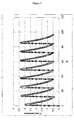
- the C max almost reaches 3.5 ⁇ g/ml whereas C min is just around 0.5 ⁇ g/ml. This is shown in Figure 1 .
- the extended release dosage form of the present invention enables the provision of therapeutically effective trough concentrations at all times without attaining such a high peak concentration.
- the extended release dosage form of the present invention is administered twice daily, even an overall dose reduction can be obtained while at the same time keeping the through concentration above the therapeutic threshold.
- the present invention therefore relates to an extended release dosage form comprising an effective amount of a PARP-inhibitor, which PARP-inhibitor is a BCS-class 1 compound, such as veliparib, for the treatment of a cancer which is sensitive to PARP-inhibition, wherein the extended release dosage form is to be administered for at least seven days and wherein the peak plasma concentration at day 7 is at most five times as high as the trough plasma concentration at day 7, when said extended release dosage form is administered every 12 hours.
- the extended release dosage form of the present invention is to be administered for at least seven days, and at most twice daily, such as once daily or twice daily.
- the extended release dosage form of the present invention comprises veliparib as the PARP-inhibitor.
- the amount of veliparib to be administered per day is preferably at most 750mg, such as from 300mg to 750mg or from 500mg to 700mg.
- the trough plasma concentration at day 7 is preferably at least 400ng veliparib / ml plasma.
- the peak plasma concentration at day 7 is preferably at most 3.5 times as high as the trough plasma concentration at day 7, when said extended release dosage form is administered every 12 hours, more preferably the peak plasma concentration at day 7 is 2.0 times to 3.3 times as high as the trough plasma concentration at day 7.
- the present invention relates to an extended release dosage form comprising Veliparib, a gel forming polymer and optionally other excipients.
- the skilled person is aware that the amount of gel forming polymer required for achieving an extended release effect is dependent on the nature of the gel forming agent.
- low solubility ethyl cellulose produces effective extended release tablets of Veliparib in which the Veliparib : polymer ratio is from 1:0.05 to 1:0.5
- soluble gel formers such as HPMC or polyethylene oxides are effectively used in a drug: polymer ratio of 1:0.5 to 1:10, preferably in a drug: polymer ratio of 1:0.5 to 1:5.
- the optionally further pharmaceutically acceptable excipients can be selected from binders, lubricants, release modifying agents and flow condition agents.
- Veliparib can be employed as the free base, a pharmaceutically acceptable salt, a hydrate or a solvate.
- Veliparib free base is the preferred form of veliparib to be used, in particular crystalline veliparib free base.
- Another preferred form of veliparib is a veliparib hydrochloric acid salt, such as a veliparib dihydrochloride and in particular crystalline veliparib dihydrochloride.
- the amount of Veliparib in the extended release dosage form of the present invention is preferably from 50 mg to 250 mg, preferably from 80 mg to 240 mg, such as from 80 mg to 160 mg. Preparation of a 80 mg tablet is described in the exemplifying section.
- Veliparib can be prepared by proportionately adjusting the inactive ingredients as understood by a person skilled in the art. As veliparib amounts are given for veliparib free base, the skilled person will appreciate that quantities of diluents are to be adjusted whenever a form of veliparib is used having a higher molecular weight than veliparib free base.
- a preferred gel-forming polymer is selected from the group of hydroxymethyl cellulose, hydroxypropyl cellulose, hydroxyethyl cellulose, hydroxypropyl methylcellulose, methyl cellulose, ethyl cellulose, polyvinylpyrrolidone, polyethylene glycols, polyethylene oxide and poloxamers, and as the gel-forming polymer hydroxypropyl methylcellulose (HPMC) is particularly preferred.
- HPMC hydroxypropyl methylcellulose
- the viscosity of the HPMC should be between 3000 and 100000 cP, preferably 7500 and 100000 cP, and most preferably 11250 and 100000 cP (viscosities are provided for a 2% (w/w) aqueous solution at 20°C).
- the viscosity of 2% aqueous solution at 20°C is determined according to:
- the substitution degree for methoxy groups of this cellulose is preferably from 19 to 30 % by weight, such as from 19 to 28%, for example from 19 to 24 % by weight, and the substitution degree of hydroxypropoxy groups is preferably from 4 to 12% by weight, such as from 7 to 12% by weight.
- HPMC is a mixture of HPMC of various grades comprising viscosities of 15 cps, 15000cps, 100000cps.
- the further inactive ingredients that can be used in the extended release dosage forms apart from the gel forming polymers include release modifying agents, binders, lubricants, and/or flow condition agents.
- the release modifying agent is preferably selected from the group of lactose, mannitol, sorbitol, calcium phosphate, aluminum silicate, paraffin, carboxypolymethylene, carboxyvinyl polymer, acrylic acid polymer, ethyl cellulose and polyethylene glycol and any combination thereof.
- the binder is preferably selected from the group of hydroxypropyl cellulose, microcrystalline cellulose, polyvinylpyrrolidone, gelatine, polyethylene glycol, glycerylbehenate, glycerylmonostearate, carnauba wax and any combination thereof.
- the amount of binder in the composition is from 0 to 45 % w/w.
- the ratio of binder to active substance may be from 1:1 to 1:10, preferably from 1:2 to 1:7.
- the lubricant is preferably selected from the group of magnesium stearate, calcium stearate, sodium stearyl fumarate, stearic acid, polyethylene glycol, talc and any combination thereof.
- the flow condition agent is preferably selected from the group of colloidal silicon dioxide, talc and combination thereof.
- the extended release dosage form may be coated or uncoated.
- the coating layer preferably comprises a polymer such as ethyl cellulose, hydroxypropyl cellulose, polyethylene glycol, low viscosity HPMC, acrylic and methacrylic esters, ethyl acrylate and methyl methacrylate or mixtures thereof.
- the coating layer may further comprise plasticizers, colouring agents, taste-masking agents and/or anti-adhesion agents.
- the extended release dosage forms of the present invention can exhibit a specific In-vitro dissolution pattern when measured according to the USP paddle method as described above.
- Time points Time in hrs % Cumulative Release 1 1 hr Less than 50 %, preferably less than 40 % 2 3 hrs Less than 75 %, preferably less than 70 % 3 6 hrs Less than 95 %, preferably less than 90 %
- the above release profile indicate In-vitro dissolution profiles of preferred extended release dosage forms of present invention. It is desired that also a minimum amount of Veliparib be released at each stated point in time.
- the extended release Veliparib dosage form of the present invention thus preferably exhibits the following minimal values in dissolution profiles when measured according to the USP paddle method as described above, at the stated time points as follows: Time points Time in hrs % Cumulative Release 1 1 hr (60 min) More than 5%, preferably more than 10 % 2 3 hrs (180 min) More than 25 %, preferably more than 40 % 3 6 hrs More than 50% preferably more than 60 %
- the extended release dosage form of the present invention exhibits the following In-vitro release profile Time points Time in hrs % Cumulative Release 1 1 hr Around 25 - 30 % 2 3 hrs Around 55 - 60 % 3 6 hrs Around 75 - 80 %
- the extended release dosage form according to the present invention exhibits an in-vitro release in the USP paddle method of about 53.5% Veliparib after 180 min and about 76.7 % after 360 min. This is shown in Figure 4.
- the dosage form may comprise a coating layer.
- This coating layer may optionally have an extended release function and can contain additives for the modification of the release of the pharmaceutically active substance.
- Suitable polymers that can be used in the coating layer are ethyl cellulose, hydroxypropyl cellulose, hydroxypropyl methylcellulose, polyethylene glycol, acrylic and methacrylic esters such as Eudragit RL and RS (Rohm Pharma). Ethyl acrylate and methyl methacrylate such as Eudragit NE (Rohm Pharma) may also be used in the coating layer.
- the coating layer may further comprise binders such as microcrystalline cellulose, hydroxypropyl cellulose and the like, plasticizers such as polyethylene glycol, acetyl tributyl citrate and the like and colour agents such as titanium dioxide, iron oxide and the like. Also, antiadhesion agents such as colloid silicon dioxide, talc and the like may be used in the coating layer.
- the coating layer may additionally comprise taste-masking agents.
- As coating fluid may be used water or alcohols such as ethanol, optionally containing antibacterial agents such as hydrogen peroxide.
- the coating layer may be applied by way of spray coating in a fluidised bed, pan-coating or another coating technique known to a person skilled in the art.
- the extended release dosage form of the present invention is preferably coated.
- Processes for the manufacture of an extended release dosage form according to present invention may comprise the following steps:
- Processes for the manufacture of an extended release dosage form according to present invention may comprise the following steps:
- Processes for the manufacture of an extended release dosage form according to present invention may comprise the following steps:
- Processes for the manufacture of an extended release dosage form according to present invention may comprise the following steps:
- Processes for the manufacture of an extended release dosage form according to present invention may comprise the following steps:
- Processes for the manufacture of an extended release dosage form according to present invention may comprise the following steps:
- the dosage form may be prepared by embedding the active substance in a mixture of gel forming agent and release modifying agent.
- the dosage form may be prepared from a granulated powder.
- the homogeneous powder may be obtained by mixing the active substance, the gel-forming polymers and optionally excipients such as binders in a suitable mixer. Then the mixture may be granulated in a mixer.
- the granulation can be performed in water or another granulation liquid such as an alcohol, e.g. ethanol, methanol, isopropanol, a ketone, e.g. acetone or aqueous mixtures thereof. From an environmental point of view water is preferred.
- the combination of PVP and HPMC in the ratio of 1 to 3, as used in one of the embodiments of the present invention, makes it feasible to use water as the granulation liquid instead of an organic liquid.
- the resultant wet granulation may thereafter be dried in a drying cabinet or in a fluid bed dryer and milled through a screen.
- the granulation may also be performed at elevated temperatures by using meltable binders.
- the cooled granulation may be milled through a screen.
- the dry granulate powder mass is then mixed with the remaining excipients and compressed into a suitable dosage form.
- the dosage form may also be prepared by first compressing the dry granulate powder mass into loose compacts. These loose compacts may be milled through a screen and finally mixed with other excipients such as binders, lubricants and flow condition agents. The dry, homogeneous powder mass may then be manufactured into a suitable dosage form, e.g. compressed into tablets in a tablet machine.
- suitable oral dosage forms are capsules, mini-tablets and the like.
- the extended release oral dosage form composition according to the invention may be used in the prevention and/or treatment of cancer, for example for the prevention and/or treatment of cancers related to but not limiting to bladder, breast, colorectal, liver, lung, Non-Small Cell, Lymphoma, Non-Hodgkin's, ovarian, prostate and unspecified solid tumor, in particular breast neoplasms, carcinoma, hepatocellular carcinoma, Non-Small-Cell Lung cancer, colorectal Neoplasms, Liver Cancer; Liver Neoplasms; Lymphoma; Lymphoma, Non-Hodgkin; Neoplasms, Unknown Primary; Ovarian Cancer; Ovarian Neoplasms; Prostatic Neoplasms; Urinary Bladder Neoplasms.
- cancers related to but not limiting to bladder, breast, colorectal, liver, lung, Non-Small Cell, Lymphoma, Non-Hodgkin's, ovarian, prostate and unspecified solid tumor, in particular breast ne
- this invention relates to a method for the prevention and/or treatment of diseases and disorders and disturbances which are susceptible of PARP 1 and PARP 2 inhibitors.
- the extended release oral dosage form composition according to the invention may thus be used in the prevention and/or treatment of Adamantinoma; Astrocytoma; Brain Neoplasms; Choroid Plexus Neoplasms; Craniopharyngioma; Ependymoma; Glioblastoma; Glioma; Medulloblastoma; Meningioma; Neoplasms; Neuroectodermal Tumors; Neuroectodermal Tumors, Primitive; Oligodendroglioma; Optic Nerve Glioma; Rhabdoid Tumor and Spinal Cord Neoplasms.
- the invention further relates to the following preferred embodiments: 1.
- An extended release dosage form comprising an effective amount of a PARP-inhibitor, which PARP-inhibitor is a BCS-class 1 compound, for the treatment of a cancer which is sensitive to PARP-inhibition, wherein the extended release dosage form is to be administered for at least seven days and wherein the peak plasma concentration at day 7 is at most five times as high as the trough plasma concentration at day 7, when said extended release dosage form is administered every 12 hours.
- An extended release oral dosage form according to embodiments 1 to 7 comprising veliparib and a gel-forming polymer.
- the extended release oral dosage form according to embodiment 8 further comprising pharmaceutically acceptable excipients selected from binders, lubricants, release modifying agents and flow condition agents.
- 10. The extended release oral dosage form according to embodiments 1 to 9, wherein veliparib is present in the form of a free base, a pharmaceutically acceptable salt and/or a hydrate or a solvate.
- veliparib is a veliparib dihydrochloride salt, preferably a crystalline veliparib dihydrochloride salt.
- the gel-forming polymer is selected from the group of hydroxymethyl cellulose, hydroxypropyl cellulose, hydroxyethyl cellulose, hydroxypropyl methylcellulose, methyl cellulose, ethyl cellulose, polyvinylpyrrolidone, polyethylene glycols, polyethylene oxide and poloxamers.
- the gel-forming polymer is HPMC.
- HPMC is mixture of HPMC of various viscosities and has a substitution degree of methoxy groups of said HPMC from 19 to 30% by weight, preferably from 20 to 29% and most preferably from 21 to 29% by weight and a substitution degree of hydroxypropoxy groups of said HPMC from 4 to 12% by weight, most preferably 7 to 12% by weight 16.
- HPMC is mixture of HPMC of various grades comprising viscosities 15 cps, 15000cps, 100000cps. 17.
- the lubricant is selected from the group of magnesium stearate, sodium stearyl fumarate, stearic acid, polyethylene glycol and talc.
- the flow condition agent is colloid silicon dioxide. 21.
- the extended release oral dosage form according to embodiments 1 to 22, wherein the ratio of binder to veliparib is from 1:1 to 1:10, preferably from 1:2 to 1:7. 24.
- the coating layer further comprises plasticizers, colouring agents, pigments, taste-masking agents and anti-adhesion agents.
- the extended release oral dosage form wherein the dissolution of veliparib is according to both embodiments 30 and 31. 33.
- the extended release oral dosage form wherein the dissolution of veliparib is according to all requirements as defined in embodiments 29, 30, 31 and 32.
- 34. The extended release oral dosage form according to any one of embodiments 29 to 33 which is selected from the group consisting of tablets, capsules and oral liquids.
- 35. The extended release oral dosage form according to any one of embodiments 29 to 34 which is a tablet.
- 36. The extended release oral dosage form according to embodiment 35 which is a film coated tablet. 37.
- An extended release film coated tablet comprising 2-((R)-2-Methylpyrrolidin-2-yl)-1H-benzimidazole-4-carboxamide in the form of a free base or in the form of its dihydrochloride salt, wherein the amount of 2-((R)-2-Methylpyrrolidin-2-yl)-1H-benzimidazole-4-carboxamide in the extended release film-coated tablet is from 20 mg to 200mg, wherein 2-((R)-2-Methylpyrrolidin-2-yl)-1H-benzimidazole-4-carboxamide in the form of a free base or its dihydrochloride salt is embedded in a HPMC/Ca-Phosphate matrix and wherein the dissolution of 2-((R)-2-Methylpyrrolidin-2-yl)-1H-benzimidazole-4-carboxamide is 50% after 200 minutes, 75% after 400 minutes, and 100% after 1200 minutes, when measured in a paddle apparatus at
- 40. Use of veliparib and a gel-forming polymer in the preparation an extended release oral dosage form as a medicament for the prevention and/or treatment of cancers.
- 41. The use according to embodiment 40 for the once or twice daily treatment of cancers.
- 42. The use according to embodiments 40 and 41, wherein cancer cells are rendered more susceptible for cancer treatment by blocking PARP protein and preventing the repair of DNA or genetic damage in cancer cell. 43.
- any one of embodiments 40 to 42 for the prevention and/or treatment of cancers related to bladder, breast, colorectal, liver, lung, Non-Small Cell, Lymphoma, Non-Hodgkin's, ovarian, prostate and unspecified solid tumor. 44.
- Processes for the manufacture of an extended release dosage form according to any one of embodiments 1 to 45 comprising one of the following processes
- veliparib 40 mg Capsule 80 mg Capsule Veliparib (API) 40 mg 80 mg Microcrystalline Cellulose (Filler) 9 mg 18 mg Croscarmellose Sodium (First Disintegrant) 14 mg 28 mg Hydroxypropyl Cellulose (Binder) 4 mg 8 mg Colloidal silica (Glidant) 3 mg 6 mg Magnesium Stearate (Lubricant) 2 mg 4 mg
- Veliparib free base, microcrystalline cellulose and croscarmellose sodium are mixed together for 15 min in a standard high shear mixer. Hydroxypropyl cellulose is dissolved in water. Granulation process is performed by adding granulation liquid to the dry mixture under stirring in a standard high shear mixer. The wet granules are sieved over 800 ⁇ m and are then dried in a fluidized bed drier at 40°C for 3 hours. Colloidal silica, Sodium starch glycolate and magnesium stearate are added to the mixture and the final blend is mixed for another 5 minutes. The mixture is filled in commercially available hard gelatin capsules to obtain an immediate release dosage form.
- Extended release dosage form of veliparib Ingredients Weight per Tablet Tablet Core Veliparib free base crystalline (API) 80.00 mg Calcium hydrogen phosphate dihydrate 104.50 mg Hypromellose (gel forming agent) 100.00 mg Povidone (Binder) 12.80 mg Silica, Colloidal Anhydrous (Glidant) 0.50 mg Magnesium Stearate (Lubricant) 2.20 mg Core weight 300 mg Coating Hypromellose (gel forming agent) 4.40 mg Macrogol 6000 0.30 mg Glycerol 0.30 mg Magnesium Stearate (Lubricant) 0.03 mg Titanium dioxide 0.08 mg
- Purified water is heated to 40°C and povidone is added. The mixture is cooled to room temperature. (25 ⁇ 5° C).
- Veliparib free base, calcium phosphate, mixtures of HPMC of various grades (HPMC 15 cps, HPMC 15000cps, HPMC 100000cps) are mixed together for 15 min in a standard high shear mixer. After sieving and blending, the granulation process is performed by spray granulation. The lubricant magnesium stearate is added to the granulate thus obtained and compressed into tablets.
- the tablets are spray-coated in a tablet coating machine using an aqueous coating suspension of HPMC (5 cP), Macrogol 6000 and high speed homogenized suspended titanium dioxide.
- HPMC (15000 cP) has a viscosity within the range of 11250-21000 cP and substitution degree of methoxy groups of 19-24% by weight and hydroxypropoxy groups of 7-12% by weight. The viscosity values are given for 2% (w/w) aqueous solutions at 20°C.
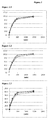
- Figure 2 provides an In-vitro dissolution profile in the above medium.
- Extended release dosage form of Veliparib Ingredients Weight per tablet Tablet Core Veliparib (API) 80.00 mg Microcrystalline cellulose 92.50 mg Polyox WSR 301 NF 120.00 mg Povidone (Binder) 12.80 mg Silica, Colloidal Anhydrous (Glidant) 2.50 mg Magnesium Stearate (Lubricant) 5.00 mg Tablet core 300 mg Coating Hypromellose (gel forming agent) 4.40 mg Macrogol 6000 0.30 mg Glycerol 0.30 mg Magnesium Stearate (Lubricant) 0.03 mg Titanium dioxide 0.08 mg
- Extended release dosage form of Veliparib Ingredients Weight per tablet Tablet Core Veliparib (API) 80.00 mg Calcium hydrogen phosphate dihydrate 104.50 mg Methocel E10 M 90.00 mg Xanthan gum 10.00 mg Povidone (Binder) 12.80 mg Silica, Colloidal Anhydrous (Glidant) 0.50 mg Magnesium Stearate (Lubricant) 2.20 mg Core weight 300 mg Coating Hypromellose (gel forming agent) 4.40 mg Macrogol 6000 0.30 mg Glycerol 0.30 mg Magnesium Stearate (Lubricant) 0.03 mg Titanium dioxide 0.08 mg
- Processes for the manufacture of an extended release dosage form according to this example comprises following steps:
- the calculated blood levels from administration of the extended release dosage form of example 1 is determined in two experiments.
- C min is about 0.6 ⁇ g/ml
Landscapes
- Health & Medical Sciences (AREA)
- Chemical & Material Sciences (AREA)
- Medicinal Chemistry (AREA)
- Pharmacology & Pharmacy (AREA)
- Epidemiology (AREA)
- Life Sciences & Earth Sciences (AREA)
- Animal Behavior & Ethology (AREA)
- General Health & Medical Sciences (AREA)
- Public Health (AREA)
- Veterinary Medicine (AREA)
- Engineering & Computer Science (AREA)
- Bioinformatics & Cheminformatics (AREA)
- Medicinal Preparation (AREA)
- Pharmaceuticals Containing Other Organic And Inorganic Compounds (AREA)
Abstract
Description
- The present invention relates to a new extended release oral dosage form for highly soluble and highly permeable pharmaceutically active PARP inhibitors. More particularly, the invention relates to an extended release oral dosage form comprising 2-((R)-2-Methylpyrrolidin-2-yl)-1H-benzimidazole-4-carboxamide (veliparib) and a gel-forming polymer. The invention further relates to processes for preparing the extended release formulation, to the extended release formulation as a medicament for the prevention and/or treatment of cancers and to a dosage regimen for the extended release formulation for the treatment or prevention of cancers.
- PARP is an important protein in DNA repair pathways, especially in the base excision repair, which is involved in repairing DNA with single strand breaks. By inhibiting poly(ADP-ribose) polymerase (PARP), single strand breaks can accumulate, eventually turning into double stand breaks. Some cancer cells with a defective homologous recombination pathway, like BRCA-deficient cell lines, are susceptible to the impairment of PARP, and inhibitors of PARP can preferentially kill such cancer cells over normal cells. Also, PARP inhibitors increase the cytotoxicity of chemotherapies that induce single strand breaks.
- Veliparib is the INN for 2-((R)-2-Methylpyrrolidin-2-yl)-1 H-benzimidazole-4-carboxamide. It inhibits PARP-1 and PARP-2 at nanomolar concentrations. Veliparib is administered orally. In vitro, veliparib decreases PAR levels in irradiated cells, reduces survival of cell clones, inhibits DNA repair, and increases apoptosis.
- Pharmaceutical compositions of veliparib are broadly disclosed in
WO 2006/110816 on page 30 and inWO 2009/049111 on page 10. Though there are no concrete examples, in clinical studies yeliparib is dosed twice daily at 400 mg. As a consequence of the 40mg dose of veliparib per capsule, a patient has to swallow ten capsules twice a day. This dosage regimen has been recommended as being safe and efficacious for BRCA-1 and BRCA-2 mutated platinum-refractory ovarian tumors. The twice daily dosage regimen is consistent with an immediate release formulation of a BCS-class 1 drug which is resorbed quickly and which has a short elimination half-life of about 6 hours. When veliparib was administered as an immediate release tablet at 2 x 400 mg per day, side effects like anemia, fatigue, nausea, pain and cough were reported, leaving room for the improvement of how veliparib is to be administered. - The present invention provides extended release formulations of a PARP-inhibitor, such as veliparib, which enable effective PARP-inhibition at a low daily dose and/or with few individual dosage forms to be administered per day. The extended release formulations of the present invention also enable effective treatment of a cancer that is sensitive to PARP-1/2-inhibition with a lower incidence of side effects, for example when compared to veliparib immediate release capsules 400mg twice daily (800mg per day). The present invention also relates to a dosage regimen for extended release formulations of veliparib, which dosage regimen reduces the peak-to-through variations of the veliparib plasma concentration, for example when compared to veliparib immediate release capsules 400mg twice daily (800mg per day). The present invention also relates to an extended release oral solid dosage form of veliparib, which is a BCS class I drug, further comprising a gel-forming polymer, which extended release dosage form provides a desired release profile.
- The present invention thus reduces the pill burden for patients and/or the drug burden and/or side effects, while at the same time providing an effective treatment of veliparib-sensitive cancer.
-
-
Figure 1 - Time-Concentration curve showing the blood plasma concentration of veliparib against time. Veliparib is administered as ten individual 40 mg IR capsules (400 mg total / 800mg total per day) twice a day. The Cmax/Cmin ratio is about 7. -
Figure 2 -In -vitro dissolution profile of a Veliparib 80 mg ER tablet prepared in accordance with example 1. The ER tablet is tested in 3 different dissolution media viz. water (Figure 2.1 ), 0.1N HCl (Figure 2.2 ) and acetate buffer of pH 4.5 (Figure 2.3 ) using dissolution type II (paddle) apparatus at 50 RPM. - Veliparib (2-((R)-2-Methylpyrrolidin-2-yl)-1 H-benzimidazole-4-carboxamide) as used herein means veliparib as a free base, a pharmaceutically acceptable salt and/or a hydrate or a solvate or veliparib dihydrochloride salt. If quantities are indicated, these quatities relate to the amount of veliparib free base, regardless of whether veliparib is used as its free base form or a salt, solvate or hydrate form.
- The term 'extended release oral dosage form' shall mean any oral dosage form, which releases the active ingredient at rates, which are sufficient to provide periods of prolonged therapeutic action following each administration of a single dose of such a dosage form. An extended release oral dosage form typically comprises one or more release-modifying agents, which change a medicinal product's drug-release pattern to achieve the desired drug plasma profile for a given time. The majority of release-modifying agents are polymers that differ in solubility, ease of erosion, rate of swelling, or sensitivity to the biological environment in which they are placed. These polymers have been used to fabricate matrix- or membrane-based drug delivery systems for oral, parenteral, transdermal, and other routes of administration. Matrix controlled-release drug delivery systems can be classified as hydrophilic eroding matrices, hydrophilic noneroding matrices, or hydrophobic matrices. In membrane controlled-release drug delivery systems the drug reservoir is coated by a rate-controlling polymeric membrane that may consist of a blend of polymers to control release.
- The term peak plasma concentration is Cmax in blood plasma observed after administration. The term trough plasma concentration is Cmin in blood plasma observed after administration and just prior to the administration of a subsequent dose in a given dosage regimen. The veliparib plasma concentration can be determined according to the approach described in Mostafa et al., Cancer Chemother Pharmacol (2014) 74: 583-591. Pharmacokinetic terms have the typical meaning as recognized in the art and in case of doubt are to be interpreted according to the European Pharmacopoeia Version 8.8.
- The Biopharmaceutical Classification System as used by the FDA on July 1 2016 is relevant for the terms 'good soluble' or 'highly soluble' or "BCS class1".
- The term peak-to-trough variations is the ratio of the maximum or "peak" plasma concentration (Cmax) of a drug observed after its administration to the minimum or "trough" plasma concentration (Cmin) of a drug observed after its administration and just prior to the administration of a subsequent dose in a given dosage regimen.
- The term steady state concentration Css is the concentration of a drug or chemical in a body fluid - usually plasma - at the time a "steady state" has been achieved, i.e. rates of drug administration and drug elimination are about equal.
- The term "Crystalline" as used herein defines a solid material whose constituent atoms are distributed in an ordered and repetitive pattern in a long-range positional order. Long-range order e.g. extends over approximately at least 1000 atoms. In powder X-ray diffraction a crystalline material will typically show characteristic reflection patterns.
- The USP paddle method and the paddle apparatus are as defined in http://www.usp.org/sites/default/files/usp_pdf/EN/USPNF/2011-02-25711DISSOLUTION.pdf
- The term "dissolution time" is the time required for a given amount (or fraction) of veliparib to be released into solution from a solid dosage form in a dissolution experiment using acetate buffer pH 4.5 and the USP paddle method and paddle apparatus. Dissolution time is measured in vitroin experiments in which the amount of veliparib in solution is determined as a function of time.
- The term AUC is defined as area under the curve, i.e.the area under the plot of the plasma concentration of the drug (linear presentation of the concentration) against time after drug administration. The area is conveniently determined by the "trapezoidal rule".
- Dose as used herein is the quantity of drug, or dosage form, administered to a subject at a given time.
- The term "viscosity" is defined as per PhEur monograph: 2.2.8. and viscosity is determined by Capillary viscometer method as per PhEur monograph: 2.2.9.
- The present invention provides an extended release dosage form of PARP-inhibitors, which PARP-inhibitor is a BCS-
class 1 compound, preferably veliparib. The extended release dosage form of present invention is to be administered for at least seven days and the peak plasma concentration at day 7 is at most five times as high as the trough plasma concentration at day 7. It is recommend that the extended release dosage form be administered at least every 12 hours. - Veliparib has a short elimination half-life of about 6 hours. Given this short half-life immediate release tablets of velaparib have been administered twice daily at 400 mg per administration in clinical studies. This dose of 400 mg is provided in the form of ten individual 40 mg capsules. Consequently a patient has to swallow ten capsules twice a day.
- The extended release dosage form of the present invention for PARP-1 inhibitors which are BCS-
class 1 compounds, such as veliparib, achieves to lower the overall daily dose of Veliparib. Moreover patients no longer have to swallow 20 capsules over a period of 24 hours. - Besides, the extended release dosage form of the present invention, in particular in combination with an at least twice daily administration, achieves lower fluctuations in Veliparib blood plasma levels upon administration when compared to the above described dosage regimen for veliparib immediate release, for example when the extended release dosage form of the present invention is administered in multiples of 2-5 tablets twice a day.
- BCS class I drugs, such as veliparib, show high solubility and high permeability. Such drugs, owing to their solubility and /or permeability, are quickly absorbed in blood plasma and are quickly eliminated. Such drugs can show a sharp rise and quick fall in blood plasma concentrations, leading to side effects resulting from such fluctuations. This can become problematic if, during a long-term treatment, the trough concentration of the drug needs to be kept above a certain minimal value so as to assure sustained effectiveness of the treatment, while a high peak concentration might cause side effects.
- The present inventors have realized that the In-vivo plasma concentration profile of veliparib when administered as immediate release dosage forms at 400 mg BID, can be such that the blood plasma fluctuations are quite high. The Cmax almost reaches 3.5 µg/ml whereas Cmin is just around 0.5 µg/ml. This is shown in
Figure 1 . Thus, undesireably high peak concentrations are obtained in order to keep the trough concentration above a therapeutic threshold. In contrast, the extended release dosage form of the present invention enables the provision of therapeutically effective trough concentrations at all times without attaining such a high peak concentration. Moreover, when the extended release dosage form of the present invention is administered twice daily, even an overall dose reduction can be obtained while at the same time keeping the through concentration above the therapeutic threshold. - The present invention therefore relates to an extended release dosage form comprising an effective amount of a PARP-inhibitor, which PARP-inhibitor is a BCS-
class 1 compound, such as veliparib, for the treatment of a cancer which is sensitive to PARP-inhibition, wherein the extended release dosage form is to be administered for at least seven days and wherein the peak plasma concentration at day 7 is at most five times as high as the trough plasma concentration at day 7, when said extended release dosage form is administered every 12 hours. Preferably the extended release dosage form of the present invention is to be administered for at least seven days, and at most twice daily, such as once daily or twice daily. - It is preferred that the extended release dosage form of the present invention comprises veliparib as the PARP-inhibitor. The amount of veliparib to be administered per day is preferably at most 750mg, such as from 300mg to 750mg or from 500mg to 700mg. The trough plasma concentration at day 7 is preferably at least 400ng veliparib / ml plasma. The peak plasma concentration at day 7 is preferably at most 3.5 times as high as the trough plasma concentration at day 7, when said extended release dosage form is administered every 12 hours, more preferably the peak plasma concentration at day 7 is 2.0 times to 3.3 times as high as the trough plasma concentration at day 7.
- In another aspect, the present invention relates to an extended release dosage form comprising Veliparib, a gel forming polymer and optionally other excipients. The skilled person is aware that the amount of gel forming polymer required for achieving an extended release effect is dependent on the nature of the gel forming agent. For example, low solubility ethyl cellulose produces effective extended release tablets of Veliparib in which the Veliparib : polymer ratio is from 1:0.05 to 1:0.5, whereas soluble gel formers such as HPMC or polyethylene oxides are effectively used in a drug: polymer ratio of 1:0.5 to 1:10, preferably in a drug: polymer ratio of 1:0.5 to 1:5.
- The optionally further pharmaceutically acceptable excipients can be selected from binders, lubricants, release modifying agents and flow condition agents.
- Veliparib can be employed as the free base, a pharmaceutically acceptable salt, a hydrate or a solvate. Veliparib free base is the preferred form of veliparib to be used, in particular crystalline veliparib free base. Another preferred form of veliparib is a veliparib hydrochloric acid salt, such as a veliparib dihydrochloride and in particular crystalline veliparib dihydrochloride. The amount of Veliparib in the extended release dosage form of the present invention is preferably from 50 mg to 250 mg, preferably from 80 mg to 240 mg, such as from 80 mg to 160 mg. Preparation of a 80 mg tablet is described in the exemplifying section. Other dosage forms containing 120 mg, 160 mg, 200 mg and 240 mg of Veliparib can be prepared by proportionately adjusting the inactive ingredients as understood by a person skilled in the art. As veliparib amounts are given for veliparib free base, the skilled person will appreciate that quantities of diluents are to be adjusted whenever a form of veliparib is used having a higher molecular weight than veliparib free base.
- A preferred gel-forming polymer is selected from the group of hydroxymethyl cellulose, hydroxypropyl cellulose, hydroxyethyl cellulose, hydroxypropyl methylcellulose, methyl cellulose, ethyl cellulose, polyvinylpyrrolidone, polyethylene glycols, polyethylene oxide and poloxamers, and as the gel-forming polymer hydroxypropyl methylcellulose (HPMC) is particularly preferred. The viscosity of the HPMC should be between 3000 and 100000 cP, preferably 7500 and 100000 cP, and most preferably 11250 and 100000 cP (viscosities are provided for a 2% (w/w) aqueous solution at 20°C).
- The viscosity of 2% aqueous solution at 20°C is determined according to:
- a) PhEur (PhEur monograph: Hypromellose, 2.2.8. Viscosity, and 2.2.9. Capillary viscometer method).
- The substitution degree for methoxy groups of this cellulose is preferably from 19 to 30 % by weight, such as from 19 to 28%, for example from 19 to 24 % by weight, and the substitution degree of hydroxypropoxy groups is preferably from 4 to 12% by weight, such as from 7 to 12% by weight. It is preferred that HPMC is a mixture of HPMC of various grades comprising viscosities of 15 cps, 15000cps, 100000cps.
- The further inactive ingredients that can be used in the extended release dosage forms apart from the gel forming polymers include release modifying agents, binders, lubricants, and/or flow condition agents.
- The release modifying agent is preferably selected from the group of lactose, mannitol, sorbitol, calcium phosphate, aluminum silicate, paraffin, carboxypolymethylene, carboxyvinyl polymer, acrylic acid polymer, ethyl cellulose and polyethylene glycol and any combination thereof.
- The binder is preferably selected from the group of hydroxypropyl cellulose, microcrystalline cellulose, polyvinylpyrrolidone, gelatine, polyethylene glycol, glycerylbehenate, glycerylmonostearate, carnauba wax and any combination thereof. Preferably the amount of binder in the composition is from 0 to 45 % w/w. The ratio of binder to active substance may be from 1:1 to 1:10, preferably from 1:2 to 1:7.
- The lubricant is preferably selected from the group of magnesium stearate, calcium stearate, sodium stearyl fumarate, stearic acid, polyethylene glycol, talc and any combination thereof.
- The flow condition agent is preferably selected from the group of colloidal silicon dioxide, talc and combination thereof.
- The extended release dosage form may be coated or uncoated. In one preferred embodiment to extended release dosage form is coated. The coating layer preferably comprises a polymer such as ethyl cellulose, hydroxypropyl cellulose, polyethylene glycol, low viscosity HPMC, acrylic and methacrylic esters, ethyl acrylate and methyl methacrylate or mixtures thereof. The coating layer may further comprise plasticizers, colouring agents, taste-masking agents and/or anti-adhesion agents.
- The extended release dosage forms of the present invention can exhibit a specific In-vitro dissolution pattern when measured according to the USP paddle method as described above.
Time points Time in hrs % Cumulative Release 1 1 hr Less than 50 %, preferably less than 40 % 2 3 hrs Less than 75 %, preferably less than 70 % 3 6 hrs Less than 95 %, preferably less than 90 % - The above release profile indicate In-vitro dissolution profiles of preferred extended release dosage forms of present invention. It is desired that also a minimum amount of Veliparib be released at each stated point in time. The extended release Veliparib dosage form of the present invention thus preferably exhibits the following minimal values in dissolution profiles when measured according to the USP paddle method as described above, at the stated time points as follows:
Time points Time in hrs % Cumulative Release 1 1 hr (60 min) More than 5%, preferably more than 10 % 2 3 hrs (180 min) More than 25 %, preferably more than 40 % 3 6 hrs More than 50% preferably more than 60 % - In a preferred embodiment, the extended release dosage form of the present invention exhibits the following In-vitro release profile
Time points Time in hrs % Cumulative Release 1 1 hr Around 25 - 30 % 2 3 hrs Around 55 - 60 % 3 6 hrs Around 75 - 80 % - In yet another preferred embodiment, the extended release dosage form according to the present invention exhibits an in-vitro release in the USP paddle method of about 53.5% Veliparib after 180 min and about 76.7 % after 360 min. This is shown in Figure 4.
- The invention the dosage form may comprise a coating layer. This coating layer may optionally have an extended release function and can contain additives for the modification of the release of the pharmaceutically active substance.
Suitable polymers that can be used in the coating layer are ethyl cellulose, hydroxypropyl cellulose, hydroxypropyl methylcellulose, polyethylene glycol, acrylic and methacrylic esters such as Eudragit RL and RS (Rohm Pharma). Ethyl acrylate and methyl methacrylate such as Eudragit NE (Rohm Pharma) may also be used in the coating layer. The coating layer may further comprise binders such as microcrystalline cellulose, hydroxypropyl cellulose and the like, plasticizers such as polyethylene glycol, acetyl tributyl citrate and the like and colour agents such as titanium dioxide, iron oxide and the like. Also, antiadhesion agents such as colloid silicon dioxide, talc and the like may be used in the coating layer. The coating layer may additionally comprise taste-masking agents. As coating fluid may be used water or alcohols such as ethanol, optionally containing antibacterial agents such as hydrogen peroxide. The coating layer may be applied by way of spray coating in a fluidised bed, pan-coating or another coating technique known to a person skilled in the art. The extended release dosage form of the present invention is preferably coated. - The following processes may be used to prepare an extended release dosage form in accordance with the present invention:
- 1) Dry mixing with gel forming polymer - preferred gel former Polyethylene oxide
- 2) Granulation or spray granulation with gel forming polymer - preferred gel former HPMC or ethyl cellulose
- 3) Compaction with gel forming polymer - preferred gel former Polyethylene oxide
- 4) Melt extrusion with gel forming polymer - preferred gel former poloxamer
- 5) Coating of tablet with gel forming polymer - preferred gel former ethyl cellulose or ethyl acrylate methyl methacrylate in combination with HPMC, PVP or other water soluble pore formers.
- Processes for the manufacture of an extended release dosage form according to present invention may comprise the following steps:
- i) mixing the PARP-inhibitor, such as veliparib, with the gel-forming polymers, release modifying agent and optionally binders, lubricants, modifying agents and other excipients to obtain a powder mixture,
- ii) forming the obtained powder mixture into a suitable solid dosage form and
- iii) optionally coating the obtained dosage form.
- Processes for the manufacture of an extended release dosage form according to present invention may comprise the following steps:
- i)
- a. mixing the PARP-inhibitor, such as veliparib, with the gel-forming polymers, release modifying agent and optionally binders and other excipients,
- b. sieving and blending the mixture,
- c. spray granulating said mixture,
- d. optionally drying the obtained granulate,
- e. adding lubricant to the granulate of step d) and sieving,
- f. compressing the granulate powder mass of step e),
- ii) forming the obtained dry powder mixture into a suitable solid dosage form and
- iii) coating the obtained dosage form.
- Processes for the manufacture of an extended release dosage form according to present invention following steps:
- i) mixing the PARP-inhibitor, such as veliparib, with the gel-forming polymers, release modifying agent and optionally binders and other excipients,
- ii) granulating said mixture,
- iii) optionally drying the obtained granulate,
- iv) mixing the granulate with other excipients to obtain a powder mixture,
- v) forming the obtained dry powder mixture into a suitable solid dosage form and
- vi) optionally coating the obtained dosage form.
- Processes for the manufacture of an extended release dosage form according to present invention may comprise the following steps:
- i) mixing the PARP-inhibitor, such as veliparib, with the gel-forming polymers, release modifying agent and
optionally binders and other excipients, - ii) granulating said mixture,
- iii) optionally drying the obtained granulate,
- iv) compressing the granulate powder mass into loose compacts,
- v) milling the compacts and mixing them with other excipients to obtain a powder mixture,
- vi) forming the obtained dry powder mixture into a suitable solid dosage form and
- vii) optionally coating the obtained dosage form.
- Processes for the manufacture of an extended release dosage form according to present invention may comprise the following steps:
- i) mixing the PARP-inhibitor, such as veliparib, with the gel-forming polymers, release modifying agent and
optionally binders and other excipients, - ii) compressing the dry mixed mass into loose compacts,
- v) milling the compacts and mixing them with other excipients to obtain a powder mixture,
- vi) forming the obtained dry powder mixture into a suitable solid dosage form and
- vii) optionally coating the obtained dosage form.
- Processes for the manufacture of an extended release dosage form according to present invention may comprise the following steps:
- i) mixing the PARP-inhibitor, such as veliparib, with the gel-forming polymers, and optionally release modifying agent and binders and other excipients,
- ii) subjecting the mixture to melt extrusion
- iii) drying the extrudates
- iv) sieving / milling the extrudates
- v) mixing the milled granules with extragranular component to obtain blend
- vi) forming the obtained blend into a suitable solid dosage form and
- vii) optionally coating the obtained dosage form.
- Processes for the manufacture of an extended release dosage form according to present invention may comprise the following steps:
- i) mixing the PARP-inhibitor, such as veliparib, with release modifying agent and optionally binders and other excipients,
- ii) subjecting the mixture to granulation / spray granulation / compaction
- iii) drying the granulate
- iv) sieving / milling the extrudates
- v) mixing the milled granules with extragranular component to obtain blend
- vi) forming the obtained blend into a suitable solid dosage form and
- vii) coating the obtained dosage form with gel forming agent selected from the group consisting of ethyl cellulose and ethyl acrylate methyl methacrylate to obtain extended release dosage form.
- The dosage form may be prepared by embedding the active substance in a mixture of gel forming agent and release modifying agent.
- Alternatively, the dosage form may be prepared from a granulated powder. The homogeneous powder may be obtained by mixing the active substance, the gel-forming polymers and optionally excipients such as binders in a suitable mixer. Then the mixture may be granulated in a mixer. The granulation can be performed in water or another granulation liquid such as an alcohol, e.g. ethanol, methanol, isopropanol, a ketone, e.g. acetone or aqueous mixtures thereof. From an environmental point of view water is preferred. The combination of PVP and HPMC in the ratio of 1 to 3, as used in one of the embodiments of the present invention, makes it feasible to use water as the granulation liquid instead of an organic liquid. The resultant wet granulation may thereafter be dried in a drying cabinet or in a fluid bed dryer and milled through a screen. The granulation may also be performed at elevated temperatures by using meltable binders. The cooled granulation may be milled through a screen. The dry granulate powder mass is then mixed with the remaining excipients and compressed into a suitable dosage form.
- Moreover, the dosage form may also be prepared by first compressing the dry granulate powder mass into loose compacts. These loose compacts may be milled through a screen and finally mixed with other excipients such as binders, lubricants and flow condition agents. The dry, homogeneous powder mass may then be manufactured into a suitable dosage form, e.g. compressed into tablets in a tablet machine. Other suitable oral dosage forms are capsules, mini-tablets and the like.
- The extended release oral dosage form composition according to the invention may be used in the prevention and/or treatment of cancer, for example for the prevention and/or treatment of cancers related to but not limiting to bladder, breast, colorectal, liver, lung, Non-Small Cell, Lymphoma, Non-Hodgkin's, ovarian, prostate and unspecified solid tumor, in particular breast neoplasms, carcinoma, hepatocellular carcinoma, Non-Small-Cell Lung cancer, colorectal Neoplasms, Liver Cancer; Liver Neoplasms; Lymphoma; Lymphoma, Non-Hodgkin; Neoplasms, Unknown Primary; Ovarian Cancer; Ovarian Neoplasms; Prostatic Neoplasms; Urinary Bladder Neoplasms.
- In further embodiments, this invention relates to a method for the prevention and/or treatment of diseases and disorders and disturbances which are susceptible of
PARP 1 andPARP 2 inhibitors. The extended release oral dosage form composition according to the invention may thus be used in the prevention and/or treatment of Adamantinoma; Astrocytoma; Brain Neoplasms; Choroid Plexus Neoplasms; Craniopharyngioma; Ependymoma; Glioblastoma; Glioma; Medulloblastoma; Meningioma; Neoplasms; Neuroectodermal Tumors; Neuroectodermal Tumors, Primitive; Oligodendroglioma; Optic Nerve Glioma; Rhabdoid Tumor and Spinal Cord Neoplasms. - The invention further relates to the following preferred embodiments:
1. An extended release dosage form comprising an effective amount of a PARP-inhibitor, which PARP-inhibitor is a BCS-class 1 compound, for the treatment of a cancer which is sensitive to PARP-inhibition, wherein the extended release dosage form is to be administered for at least seven days and wherein the peak plasma concentration at day 7 is at most five times as high as the trough plasma concentration at day 7, when said extended release dosage form is administered every 12 hours.
2. The extended release dosage form according toembodiment 1, wherein the extended release dosage form is to be administered for at least seven days, and at most twice daily.
3. The extended release dosage form according to any one ofembodiment
4. The extended release dosage form according toembodiments 1 to 3, wherein the PARP-inhibitor is veliparib, 2-((R)-2-Methylpyrrolidin-2-yl)-1H-benzimidazole-4-carboxamide.
5. The extended release dosage form according toembodiment 4, wherein the amount of veliparib to be administered per day is at most 750mg.
6. The extended release dosage form according to embodiment 5, wherein the through plasma concentration at day 7 is at least 400ng veliparib / ml plasma.
7. The extended release dosage form according toembodiments 4 to 6, wherein the peak plasma concentration at day 7 is at most 3.5 times as high as the through plasma concentration at day 7, when said extended release dosage form is administered every 12 hours.
8. An extended release oral dosage form according toembodiments 1 to 7 comprising veliparib and a gel-forming polymer.
9. The extended release oral dosage form according to embodiment 8 further comprising pharmaceutically acceptable excipients selected from binders, lubricants, release modifying agents and flow condition agents.
10. The extended release oral dosage form according toembodiments 1 to 9, wherein veliparib is present in the form of a free base, a pharmaceutically acceptable salt and/or a hydrate or a solvate.
11. The extended release oral dosage form according to any one ofembodiments 1 to 10, wherein veliparib is veliparib free base, preferably crystalline veliparib free base.
12. The extended release oral dosage form according to any one ofembodiments 1 to 11 wherein veliparib is a veliparib dihydrochloride salt, preferably a crystalline veliparib dihydrochloride salt.
13. The extended release oral dosage from according to any one ofembodiments 1 to 12, wherein the gel-forming polymer is selected from the group of hydroxymethyl cellulose, hydroxypropyl cellulose, hydroxyethyl cellulose, hydroxypropyl methylcellulose, methyl cellulose, ethyl cellulose, polyvinylpyrrolidone, polyethylene glycols, polyethylene oxide and poloxamers.
14. The extended release oral dosage form according to embodiment 13, wherein the gel-forming polymer is HPMC.
15. The extended release oral dosage form according to embodiment 14, wherein HPMC is mixture of HPMC of various viscosities and has a substitution degree of methoxy groups of said HPMC from 19 to 30% by weight, preferably from 20 to 29% and most preferably from 21 to 29% by weight and a substitution degree of hydroxypropoxy groups of said HPMC from 4 to 12% by weight, most preferably 7 to 12% by weight
16. The extended release oral dosage form according to embodiment 15, wherein HPMC is mixture of HPMC of various grades comprising viscosities 15 cps, 15000cps, 100000cps.
17. The extended release oral dosage form according toembodiments 1 to 16, wherein the binder is selected from the group of microcrystalline cellulose, polyvinylpyrrolidone, glycerylbehenate and hydroxypropyl cellulose or a mixture thereof.
18. The extended release dosage form according toembodiments 1 to 17, where the binder is not HPMC.
19. The extended release oral dosage form according to any one ofembodiments 1 to 18, wherein the lubricant is selected from the group of magnesium stearate, sodium stearyl fumarate, stearic acid, polyethylene glycol and talc.
20. The extended release oral dosage form according to any one of theembodiment 1 to 19, wherein the flow condition agent is colloid silicon dioxide.
21. The extended release oral dosage form according to any one of theembodiment 1 to 20, wherein the release modifying agent is selected from the group of lactose, mannitol, sorbitol, calcium phosphate, aluminum silicate, paraffin, carboxypolymethylene, carboxyvinyl polymer, acrylic acid polymer, ethyl cellulose and polyethylene glycol.
22. The extended release oral dosage form according to any one of theembodiment 1 to 21, wherein the ratio of veliparib to gel-forming polymer is from 1:1.0 to 1:7.0, preferably from 1:2.0 to 1:5.0.
23. The extended release oral dosage form according toembodiments 1 to 22, wherein the ratio of binder to veliparib is from 1:1 to 1:10, preferably from 1:2 to 1:7.
24. The extended release oral dosage form according toembodiments 1 to 23, wherein the amount of veliparib in the dosage form is below 10% w/w, based on the total weight of the dosage form.
25. The extended release oral dosage form according toembodiments 1 to 24, wherein the dosage form is coated.
26. The extended release oral dosage form according toembodiments 1 to 25, wherein the coating layer comprises a polymer such as ethyl cellulose, hydroxypropyl cellulose, polyethylene glycol, low viscosity HPMC, acrylic and methacrylic esters, ethyl acrylate and methyl methacrylate or mixtures thereof.
27. The extended release oral dosage form according to embodiment 26, wherein the coating layer comprises a mixture of hydroxypropyl cellulose and low viscosity ethyl cellulose.
28. The extended release oral dosage form according to embodiments 25 to 27, wherein the coating layer further comprises plasticizers, colouring agents, pigments, taste-masking agents and anti-adhesion agents.
29. The extended release oral dosage form according to any one ofembodiments 1 to 28, wherein the dissolution of 50% veliparib is after 200 minutes, when measured in a paddle apparatus at a rotating speed of 75rpm, at 37°C in 900ml of water having a pH of 1 to 7.
30. The extended release oral dosage form according to any one ofembodiments 1 to 29, wherein the dissolution of 75% veliparib is after 400 minutes, when measured in a paddle apparatus at a rotating speed of 75rpm, at 37°C in 900ml of water having a pH of 1 to 7.
31. The extended release oral dosage form according to any one ofembodiments 1 to 29, wherein the dissolution of 100% veliparib is after 1200 minutes, when measured in a paddle apparatus at a rotating speed of 75rpm, at 37°C in 900ml of water having a pH of 1 to 7.
32. The extended release oral dosage form wherein the dissolution of veliparib is according to both embodiments 30 and 31.
33. The extended release oral dosage form wherein the dissolution of veliparib is according to all requirements as defined in embodiments 29, 30, 31 and 32.
34. The extended release oral dosage form according to any one of embodiments 29 to 33 which is selected from the group consisting of tablets, capsules and oral liquids.
35. The extended release oral dosage form according to any one of embodiments 29 to 34 which is a tablet.
36. The extended release oral dosage form according to embodiment 35 which is a film coated tablet.
37. The extended release oral dosage form according to any one ofembodiments 1 to 36, wherein the amount of veliparib in the dosage form as calculated based on 2-((R)-2-Methylpyrrolidin-2-yl)-1H-benzimidazole-4-carboxamide is from 20mg to 200mg.
38. An extended release film coated tablet comprising 2-((R)-2-Methylpyrrolidin-2-yl)-1H-benzimidazole-4-carboxamide in the form of a free base or in the form of its dihydrochloride salt, wherein the amount of 2-((R)-2-Methylpyrrolidin-2-yl)-1H-benzimidazole-4-carboxamide in the extended release film-coated tablet is from 20 mg to 200mg, wherein 2-((R)-2-Methylpyrrolidin-2-yl)-1H-benzimidazole-4-carboxamide in the form of a free base or its dihydrochloride salt is embedded in a HPMC/Ca-Phosphate matrix and wherein the dissolution of 2-((R)-2-Methylpyrrolidin-2-yl)-1H-benzimidazole-4-carboxamide is 50% after 200 minutes, 75% after 400 minutes, and 100% after 1200 minutes, when measured in a paddle apparatus at a rotating speed of 75rpm, at 37°C in 900ml of water having a pH of 1 to 7.
39. The extended release dosage form according to any one ofembodiments 1 to 38, which is to be administered once or twice daily.
40. Use of veliparib and a gel-forming polymer in the preparation an extended release oral dosage form as a medicament for the prevention and/or treatment of cancers.
41. The use according toembodiment 40 for the once or twice daily treatment of cancers.
42. The use according toembodiments 40 and 41, wherein cancer cells are rendered more susceptible for cancer treatment by blocking PARP protein and preventing the repair of DNA or genetic damage in cancer cell.
43. The use according to any one ofembodiments 40 to 42 for the prevention and/or treatment of cancers related to bladder, breast, colorectal, liver, lung, Non-Small Cell, Lymphoma, Non-Hodgkin's, ovarian, prostate and unspecified solid tumor.
44. The use according to any one ofembodiments 40 to 43 for the prevention and/or treatment of breast neoplasms, carcinoma, hepatocellular, carcinoma, Non-Small-Cell Lung, colorectal Neoplasms, Liver Cancer; Liver Neoplasms; Lymphoma; Lymphoma, Non-Hodgkin; Neoplasms, Unknown Primary; Ovarian Cancer; Ovarian Neoplasms; Prostatic Neoplasms; Urinary Bladder Neoplasms.
45. A method for the prevention and/or treatment of diseases related to Adamantinoma; Astrocytoma; Brain Neoplasms; Choroid Plexus Neoplasms; Craniopharyngioma; Ependymoma; Glioblastoma; Glioma; Medulloblastoma; Meningioma; Neoplasms; Neuroectodermal Tumors; Neuroectodermal Tumors, Primitive; Oligodendroglioma; Optic Nerve Glioma; Rhabdoid Tumor; Spinal Cord Neoplasms and growth control of tumors comprising administering to a mammal in need of such prevention and/or treatment the extended release oral dosage form according to any one of theembodiments 1 to 44.
46. Processes for the manufacture of an extended release dosage form according to any one ofembodiments 1 to 45 comprising one of the following processes - a. Dry mixing with gel forming agent
- b. Granulation with gel forming agent
- c. Spray granulation with gel forming agent
- d. Compaction with gel forming agent
- e. Melt extrusion with gel forming agent
- f. Combination of granulation with gel forming agent followed by compaction.
- Ai)
- a. mixing the veliparib with the gel-forming polymers, release modifying agent and optionally binders and other excipients,
- b. sieving and blending the mixture,
- c. spray granulating said mixture,
- d. optionally drying the obtained granulate,
- e. adding lubricant to the granulate of step d) and sieving,
- f. compressing the granulate powder mass of step e),
- Aii) forming the obtained dry powder mixture into a suitable solid dosage form and
- Aiii) coating the obtained dosage form.
- The following examples are provided to further illustrate the invention. They are not to be construed to limit the scope of the embodiments or claims of the present invention.
- An immediate release dosage formulations of veliparib
40 mg Capsule 80 mg Capsule Veliparib (API) 40 mg 80 mg Microcrystalline Cellulose (Filler) 9 mg 18 mg Croscarmellose Sodium (First Disintegrant) 14 mg 28 mg Hydroxypropyl Cellulose (Binder) 4 mg 8 mg Colloidal silica (Glidant) 3 mg 6 mg Magnesium Stearate (Lubricant) 2 mg 4 mg - Veliparib free base, microcrystalline cellulose and croscarmellose sodium are mixed together for 15 min in a standard high shear mixer. Hydroxypropyl cellulose is dissolved in water. Granulation process is performed by adding granulation liquid to the dry mixture under stirring in a standard high shear mixer. The wet granules are sieved over 800 µm and are then dried in a fluidized bed drier at 40°C for 3 hours. Colloidal silica, Sodium starch glycolate and magnesium stearate are added to the mixture and the final blend is mixed for another 5 minutes. The mixture is filled in commercially available hard gelatin capsules to obtain an immediate release dosage form.
- In order to test the release of the active substance - veliparib - from the dosage form, an in- vitro dissolution of the tablet is carried out by using the USP Paddle method at 50 rpm. (Dissolution test, USP 24 p.1941)
Medium: Acetate buffer pH 4.5
More than 80 -85 % drug is dissolved after 15minutes, more than 90% is dissolved after 30 minutes and 100% drug is dissolved after 60 minutes. - Extended release dosage form of veliparib
Ingredients Weight per Tablet Tablet Core Veliparib free base crystalline (API) 80.00 mg Calcium hydrogen phosphate dihydrate 104.50 mg Hypromellose (gel forming agent) 100.00 mg Povidone (Binder) 12.80 mg Silica, Colloidal Anhydrous (Glidant) 0.50 mg Magnesium Stearate (Lubricant) 2.20 mg Core weight 300 mg Coating Hypromellose (gel forming agent) 4.40 mg Macrogol 6000 0.30 mg Glycerol 0.30 mg Magnesium Stearate (Lubricant) 0.03 mg Titanium dioxide 0.08 mg - Purified water is heated to 40°C and povidone is added. The mixture is cooled to room temperature. (25± 5° C). Veliparib free base, calcium phosphate, mixtures of HPMC of various grades (HPMC 15 cps, HPMC 15000cps, HPMC 100000cps) are mixed together for 15 min in a standard high shear mixer. After sieving and blending, the granulation process is performed by spray granulation. The lubricant magnesium stearate is added to the granulate thus obtained and compressed into tablets.
- The tablets are spray-coated in a tablet coating machine using an aqueous coating suspension of HPMC (5 cP), Macrogol 6000 and high speed homogenized suspended titanium dioxide.
- HPMC (15000 cP) has a viscosity within the range of 11250-21000 cP and substitution degree of methoxy groups of 19-24% by weight and hydroxypropoxy groups of 7-12% by weight. The viscosity values are given for 2% (w/w) aqueous solutions at 20°C.
- In order to test the release of the active substance - veliparib - from the tablet, an in vitro dissolution of the tablet is carried out by using the USP Paddle method at 50 rpm. (Dissolution test, USP 24 p.1941)
Medium: Acetate buffer pH 4.5 -
Figure 2 provides an In-vitro dissolution profile in the above medium. - Extended release dosage form of Veliparib
Ingredients Weight per tablet Tablet Core Veliparib (API) 80.00 mg Microcrystalline cellulose 92.50 mg Polyox WSR 301 NF 120.00 mg Povidone (Binder) 12.80 mg Silica, Colloidal Anhydrous (Glidant) 2.50 mg Magnesium Stearate (Lubricant) 5.00 mg Tablet core 300 mg Coating Hypromellose (gel forming agent) 4.40 mg Macrogol 6000 0.30 mg Glycerol 0.30 mg Magnesium Stearate (Lubricant) 0.03 mg Titanium dioxide 0.08 mg - Preparation:
- i) mixing Veliparib with the gel-forming polymer polyethylene oxide and the release modifying agent, binders, lubricants, modifying agents and other excipients to obtain a powder mixture,
- ii) forming the obtained powder mixture into a suitable solid dosage form and
- iii) coating the obtained dosage form as in example 1.
- Extended release dosage form of Veliparib
Ingredients Weight per tablet Tablet Core Veliparib (API) 80.00 mg Calcium hydrogen phosphate dihydrate 104.50 mg Methocel E10 M 90.00 mg Xanthan gum 10.00 mg Povidone (Binder) 12.80 mg Silica, Colloidal Anhydrous (Glidant) 0.50 mg Magnesium Stearate (Lubricant) 2.20 mg Core weight 300 mg Coating Hypromellose (gel forming agent) 4.40 mg Macrogol 6000 0.30 mg Glycerol 0.30 mg Magnesium Stearate (Lubricant) 0.03 mg Titanium dioxide 0.08 mg - Processes for the manufacture of an extended release dosage form according to this example comprises following steps:
- i) mixing veliparib with the gel-forming polymer which is combination of HPMC and xanthan gum and release modifying agent and mixing
- ii) compressing the dry mixed mass into loose compacts,
- iii) milling the compacts and mixing them with other excipients to obtain a powder mixture,
- iv) forming the obtained dry powder mixture into a suitable solid dosage form and
- v) coating the obtained dosage form as in example 1.
- The calculated blood levels from administration of the extended release dosage form of example 1 is determined in two experiments.
- Example 4 A - In this
experiment 3 tablets containing 80 mg veliparib each prepared in accordance with example 1 are administered twice a day, 12h apart, to meet a daily dose of 480 mg. A plot displaying the pharmacokinetic behaviour is obtained by plotting the blood plasma concentration of veliparib against time. The Cmax/Cmin ratio for veliparib is not more than 3. After 7 days Cmax and cmin are both close to their respective steady state concentrations. Cmin is about 0.5 µg/ml - Example 4 B - In this
experiment 4 tablets containing 80 mg veliparib each prepared in accordance with example 1 are administered twice a day, 12h apart, to meet a daily dose of 640 mg. A plot displaying the pharmacokinetic behaviour is obtained by plotting the blood plasma concentration of veliparib against time. The Cmax/Cmin ratio for veliparib is not more than 3. - After 7 days cmax and cmin are both close to their respective steady state concentrations. Cmin is about 0.6 µg/ml
- In this experiment 10 tablets containing 40 mg veliparib each prepared in accordance with Comparative example 1 are administered twice a day, 12h apart, to meet a daily dose of 800 mg. A plot displaying the pharmacokinetic behaviour of veliparib is obtained by plotting the blood plasma concentration of veliparib against time (
Figure 1 ). Cmin is around 0.5 µg/ml whereas Cmax almost reaches 3.5 µg/ml. The Cmax/Cmin ratio for veliparib is almost 7.
| Time points | Time in hrs | % |
| 1 | 1 hr | Less than 50 %, preferably less than 40 % |
| 2 | 3 hrs | Less than 75 %, preferably less than 70 % |
| 3 | 6 hrs | Less than 95 %, preferably less than 90 % |
| Time points | Time in hrs | % |
| 1 | 1 hr | More than 5%, preferably more than 10 % |
| 2 | 3 hrs | More than 25 %, preferably more than 40 % |
| 3 | 6 hrs | More than 50% preferably more than 60 % |
The extended release dosage form according to any one of
Claims (15)
- An extended release dosage form comprising an effective amount of a PARP-inhibitor, which PARP-inhibitor is a BCS-class 1 compound, for the treatment of a cancer which is sensitive to PARP-inhibition, wherein the extended release dosage form is to be administered for at least seven days and wherein the peak plasma concentration at day 7 is at most five times as high as the through plasma concentration at day 7 when said extended release dosage form is administered every 12 hours.
- The extended release dosage form according to claim 1, wherein the extended release dosage form is to be administered for at least seven days, and at most twice daily.
- The extended release dosage form according to any one of claims 1 or 2, wherein the extended release dosage form is to be administered twice daily.
- The extended release dosage form according to any one of claims 1 to 3, wherein the PARP-inhibitor is veliparib.
- The extended release dosage form according to claim 4, wherein the amount of veliparib to be administered per day is at most 750mg.
- The extended release dosage form according to any one of claims 4 or 5, wherein the through plasma concentration at day 7 is at least 400ng veliparib / ml plasma.
- The extended release dosage form according to any one of claims 4 to 6, wherein the peak plasma concentration at day 7 is at most 3.5 times as high as the through plasma concentration at day 7 when said extended release dosage form is administered every 12 hours.
- An extended release oral dosage form comprising 2-((R)-2-Methylpyrrolidin-2-yl)-1H-benzimidazole-4-carboxamide (veliparib) and a gel-forming polymer.
- The extended release oral dosage form according to claim 8 further comprising pharmaceutically acceptable excipients selected from binders, lubricants, release modifying agents and flow condition agents.
- The extended release oral dosage form according to claims 8 or 9, wherein veliparib is present in the form of a free base, a pharmaceutically acceptable salt and/or a hydrate or a solvate.
- The extended release oral dosage form according to any one of claims 8 to 10, wherein veliparib is veliparib free base, preferably crystalline veliparib free base.
- The extended release oral dosage form according to any one of claims 8 to 10 wherein veliparib is a veliparib dihydrochloride salt, preferably crystalline veliparib dihydrochloride salt.
- The extended release oral dosage from according to any one of claims 8 to 12, wherein the gel-forming polymer is selected from the group of hydroxymethyl cellulose, hydroxypropyl cellulose, hydroxyethyl cellulose, hydroxypropyl methylcellulose, methyl cellulose, ethyl cellulose, polyvinylpyrrolidone, polyethylene glycols, polyethylene oxide and poloxamers.
- The extended release oral dosage form according to any one of the claim 8 to 13, wherein the ratio of veliparib to gel-forming polymer is from 1:1.0 to 1:7.0, preferably from 1:2.0 to 1:5.0.
- Processes for the manufacture of an extended release dosage form according to claim 8 comprising the steps:Ai)a. mixing the veliparib with the gel-forming polymers, release modifying agent and optionally binders and other excipients,b. sieving and blending the mixture,c. spray granulating said mixture,d. optionally drying the obtained granulate,e. adding lubricant to the granulate of step d) and sieving,f. compressing the granulate powder mass of step e),Aii) forming the obtained dry powder mixture into a suitable solid dosage form andAiii) coating the obtained dosage form.
Priority Applications (1)
| Application Number | Priority Date | Filing Date | Title |
|---|---|---|---|
| EP16181467.8A EP3275434B1 (en) | 2016-07-27 | 2016-07-27 | An extended release oral dosage form |
Applications Claiming Priority (1)
| Application Number | Priority Date | Filing Date | Title |
|---|---|---|---|
| EP16181467.8A EP3275434B1 (en) | 2016-07-27 | 2016-07-27 | An extended release oral dosage form |
Publications (2)
| Publication Number | Publication Date |
|---|---|
| EP3275434A1 true EP3275434A1 (en) | 2018-01-31 |
| EP3275434B1 EP3275434B1 (en) | 2020-08-26 |
Family
ID=56555238
Family Applications (1)
| Application Number | Title | Priority Date | Filing Date |
|---|---|---|---|
| EP16181467.8A Not-in-force EP3275434B1 (en) | 2016-07-27 | 2016-07-27 | An extended release oral dosage form |
Country Status (1)
| Country | Link |
|---|---|
| EP (1) | EP3275434B1 (en) |
Cited By (1)
| Publication number | Priority date | Publication date | Assignee | Title |
|---|---|---|---|---|
| CN110035751A (en) * | 2016-12-16 | 2019-07-19 | 苏州苏融生物医药有限公司 | A kind of veliparib sustained and controlled release pharmaceutical composition and use thereof |
Citations (3)
| Publication number | Priority date | Publication date | Assignee | Title |
|---|---|---|---|---|
| CN1733305A (en) * | 2005-08-05 | 2006-02-15 | 孔庆忠 | Anticancer implantation agent |
| WO2006110816A2 (en) | 2005-04-11 | 2006-10-19 | Abbott Laboratories | 1h-benzimidazole-4-carboxamides substituted with a quaternary carbon at the 2-position are potent parp inhibitors |
| WO2009049111A1 (en) | 2007-10-12 | 2009-04-16 | Abbott Laboratories | 2-((r)-2-methylpyrrolidin-2-yl)-1h-benzimidazole-4-carboxamide crystalline form 1 |
Family Cites Families (1)
| Publication number | Priority date | Publication date | Assignee | Title |
|---|---|---|---|---|
| US20190029951A1 (en) * | 2016-02-01 | 2019-01-31 | Abbvie Inc. | Extended release formulations of veliparib for the treatment of cancer |
-
2016
- 2016-07-27 EP EP16181467.8A patent/EP3275434B1/en not_active Not-in-force
Patent Citations (3)
| Publication number | Priority date | Publication date | Assignee | Title |
|---|---|---|---|---|
| WO2006110816A2 (en) | 2005-04-11 | 2006-10-19 | Abbott Laboratories | 1h-benzimidazole-4-carboxamides substituted with a quaternary carbon at the 2-position are potent parp inhibitors |
| CN1733305A (en) * | 2005-08-05 | 2006-02-15 | 孔庆忠 | Anticancer implantation agent |
| WO2009049111A1 (en) | 2007-10-12 | 2009-04-16 | Abbott Laboratories | 2-((r)-2-methylpyrrolidin-2-yl)-1h-benzimidazole-4-carboxamide crystalline form 1 |
Non-Patent Citations (3)
| Title |
|---|
| LANDRUM LISA M ET AL: "A phase I trial of pegylated liposomal doxorubicin (PLD), carboplatin, bevacizumab and veliparib in recurrent, platinum-sensitive ovarian, primary peritoneal, and fallopian tube cancer: An NRG Oncology/Gynecologic Oncology Group study", GYNECOLOGIC ONCOLOGY, ACADEMIC PRESS, LONDON, GB, vol. 140, no. 2, 23 November 2015 (2015-11-23), pages 204 - 209, XP029388377, ISSN: 0090-8258, DOI: 10.1016/J.YGYNO.2015.11.024 * |
| MOSTAFA ET AL., CANCER CHEMOTHER PHARMACOL, vol. 74, 2014, pages 583 - 591 |
| MOSTAFA NAEL M ET AL: "A phase 1 study to evaluate effect of food on veliparib pharmacokinetics and relative bioavailability in subjects with solid tumors", CANCER CHEMOTHERAPY AND PHARMACOLOGY, SPRINGER VERLAG, BERLIN, vol. 74, no. 3, 23 July 2014 (2014-07-23), pages 583 - 591, XP035379519, ISSN: 0344-5704, [retrieved on 20140723], DOI: 10.1007/S00280-014-2529-2 * |
Cited By (1)
| Publication number | Priority date | Publication date | Assignee | Title |
|---|---|---|---|---|
| CN110035751A (en) * | 2016-12-16 | 2019-07-19 | 苏州苏融生物医药有限公司 | A kind of veliparib sustained and controlled release pharmaceutical composition and use thereof |
Also Published As
| Publication number | Publication date |
|---|---|
| EP3275434B1 (en) | 2020-08-26 |
Similar Documents
| Publication | Publication Date | Title |
|---|---|---|
| JP6888226B2 (en) | Oral Sustained Release Pharmaceutical Composition of Olaparib and Its Use | |
| JP7269227B2 (en) | Niraparib formulation | |
| JP4999466B2 (en) | Matrix-type sustained-release preparation containing basic drug or salt thereof and method for producing the same | |
| KR102286501B1 (en) | Oral tablet formulation of lenalidomide | |
| US20190290629A1 (en) | Niraparib sustained and controlled release pharmaceutical composition and use thereof | |
| AU2012340759C1 (en) | Pharmaceutical formulations | |
| CN104902880B (en) | Pharmaceutical composition comprising Hydromorphone and naloxone | |
| US20090124702A1 (en) | Pharmaceutical Compositions of Metformin | |
| CN103118668A (en) | Use of binders for manufacturing storage stable formulations | |
| WO2018108157A1 (en) | Rucaparib oral sustained/controlled release pharmaceutical composition and use thereof | |
| US20160000720A1 (en) | Pharmaceutical compositions comprising Tadalafil | |
| EP2701689B1 (en) | Pharmaceutical compositions of raltegravir, methods of preparation and use thereof | |
| EP3925601B1 (en) | Gastro-resistant formulation containing posaconazole and a polymeric precipitation inhibitor | |
| EP3275434B1 (en) | An extended release oral dosage form | |
| US20150366850A1 (en) | Modified release pharmaceutical compositions of dexmethylphenidate or salts thereof | |
| KR101561345B1 (en) | Controlled-release pharmaceutical composition of propionic acid derivatives | |
| WO2025003956A1 (en) | High drug loading formulations of encorafenib | |
| WO2015063670A1 (en) | Solid oral modified-release composition comprising oxcarbazepine or a pharmaceutically acceptable salt thereof | |
| Phad et al. | Matrix tablet: as a sustained release drug delivery system | |
| EP2663283B1 (en) | High drug load tablet formulation of brivanib alaninate | |
| WO2020038434A1 (en) | Pharmaceutical composition of 2-aminopyrimidine compounds | |
| US20250255822A1 (en) | Triptolide formulations | |
| US20080206338A1 (en) | Controlled release formulations of an alpha-adrenergic receptor antagonist | |
| AU2022410683A1 (en) | A stable extended release pharmaceutical composition of clozapine | |
| WO2026064388A1 (en) | Fixed dose combination of flavoxate and alpha-blockers, and formulations and manufacturing processes thereof |
Legal Events
| Date | Code | Title | Description |
|---|---|---|---|
| PUAI | Public reference made under article 153(3) epc to a published international application that has entered the european phase |
Free format text: ORIGINAL CODE: 0009012 |
|
| STAA | Information on the status of an ep patent application or granted ep patent |
Free format text: STATUS: THE APPLICATION HAS BEEN PUBLISHED |
|
| AK | Designated contracting states |
Kind code of ref document: A1 Designated state(s): AL AT BE BG CH CY CZ DE DK EE ES FI FR GB GR HR HU IE IS IT LI LT LU LV MC MK MT NL NO PL PT RO RS SE SI SK SM TR |
|
| AX | Request for extension of the european patent |
Extension state: BA ME |
|
| STAA | Information on the status of an ep patent application or granted ep patent |
Free format text: STATUS: REQUEST FOR EXAMINATION WAS MADE |
|
| 17P | Request for examination filed |
Effective date: 20180731 |
|
| RBV | Designated contracting states (corrected) |
Designated state(s): AL AT BE BG CH CY CZ DE DK EE ES FI FR GB GR HR HU IE IS IT LI LT LU LV MC MK MT NL NO PL PT RO RS SE SI SK SM TR |
|
| STAA | Information on the status of an ep patent application or granted ep patent |
Free format text: STATUS: EXAMINATION IS IN PROGRESS |
|
| 17Q | First examination report despatched |
Effective date: 20190114 |
|
| GRAP | Despatch of communication of intention to grant a patent |
Free format text: ORIGINAL CODE: EPIDOSNIGR1 |
|
| STAA | Information on the status of an ep patent application or granted ep patent |
Free format text: STATUS: GRANT OF PATENT IS INTENDED |
|
| INTG | Intention to grant announced |
Effective date: 20200219 |
|
| GRAS | Grant fee paid |
Free format text: ORIGINAL CODE: EPIDOSNIGR3 |
|
| GRAA | (expected) grant |
Free format text: ORIGINAL CODE: 0009210 |
|
| STAA | Information on the status of an ep patent application or granted ep patent |
Free format text: STATUS: THE PATENT HAS BEEN GRANTED |
|
| AK | Designated contracting states |
Kind code of ref document: B1 Designated state(s): AL AT BE BG CH CY CZ DE DK EE ES FI FR GB GR HR HU IE IS IT LI LT LU LV MC MK MT NL NO PL PT RO RS SE SI SK SM TR |
|
| REG | Reference to a national code |
Ref country code: GB Ref legal event code: FG4D |
|
| REG | Reference to a national code |
Ref country code: CH Ref legal event code: EP |
|
| REG | Reference to a national code |
Ref country code: AT Ref legal event code: REF Ref document number: 1305680 Country of ref document: AT Kind code of ref document: T Effective date: 20200915 |
|
| REG | Reference to a national code |
Ref country code: IE Ref legal event code: FG4D |
|
| REG | Reference to a national code |
Ref country code: DE Ref legal event code: R096 Ref document number: 602016042632 Country of ref document: DE |
|
| REG | Reference to a national code |
Ref country code: LT Ref legal event code: MG4D |
|
| PG25 | Lapsed in a contracting state [announced via postgrant information from national office to epo] |
Ref country code: FI Free format text: LAPSE BECAUSE OF FAILURE TO SUBMIT A TRANSLATION OF THE DESCRIPTION OR TO PAY THE FEE WITHIN THE PRESCRIBED TIME-LIMIT Effective date: 20200826 Ref country code: LT Free format text: LAPSE BECAUSE OF FAILURE TO SUBMIT A TRANSLATION OF THE DESCRIPTION OR TO PAY THE FEE WITHIN THE PRESCRIBED TIME-LIMIT Effective date: 20200826 Ref country code: BG Free format text: LAPSE BECAUSE OF FAILURE TO SUBMIT A TRANSLATION OF THE DESCRIPTION OR TO PAY THE FEE WITHIN THE PRESCRIBED TIME-LIMIT Effective date: 20201126 Ref country code: NO Free format text: LAPSE BECAUSE OF FAILURE TO SUBMIT A TRANSLATION OF THE DESCRIPTION OR TO PAY THE FEE WITHIN THE PRESCRIBED TIME-LIMIT Effective date: 20201126 Ref country code: PT Free format text: LAPSE BECAUSE OF FAILURE TO SUBMIT A TRANSLATION OF THE DESCRIPTION OR TO PAY THE FEE WITHIN THE PRESCRIBED TIME-LIMIT Effective date: 20201228 Ref country code: GR Free format text: LAPSE BECAUSE OF FAILURE TO SUBMIT A TRANSLATION OF THE DESCRIPTION OR TO PAY THE FEE WITHIN THE PRESCRIBED TIME-LIMIT Effective date: 20201127 Ref country code: HR Free format text: LAPSE BECAUSE OF FAILURE TO SUBMIT A TRANSLATION OF THE DESCRIPTION OR TO PAY THE FEE WITHIN THE PRESCRIBED TIME-LIMIT Effective date: 20200826 Ref country code: SE Free format text: LAPSE BECAUSE OF FAILURE TO SUBMIT A TRANSLATION OF THE DESCRIPTION OR TO PAY THE FEE WITHIN THE PRESCRIBED TIME-LIMIT Effective date: 20200826 |
|
| REG | Reference to a national code |
Ref country code: NL Ref legal event code: MP Effective date: 20200826 |
|
| REG | Reference to a national code |
Ref country code: AT Ref legal event code: MK05 Ref document number: 1305680 Country of ref document: AT Kind code of ref document: T Effective date: 20200826 |
|
| PG25 | Lapsed in a contracting state [announced via postgrant information from national office to epo] |
Ref country code: PL Free format text: LAPSE BECAUSE OF FAILURE TO SUBMIT A TRANSLATION OF THE DESCRIPTION OR TO PAY THE FEE WITHIN THE PRESCRIBED TIME-LIMIT Effective date: 20200826 Ref country code: RS Free format text: LAPSE BECAUSE OF FAILURE TO SUBMIT A TRANSLATION OF THE DESCRIPTION OR TO PAY THE FEE WITHIN THE PRESCRIBED TIME-LIMIT Effective date: 20200826 Ref country code: LV Free format text: LAPSE BECAUSE OF FAILURE TO SUBMIT A TRANSLATION OF THE DESCRIPTION OR TO PAY THE FEE WITHIN THE PRESCRIBED TIME-LIMIT Effective date: 20200826 Ref country code: NL Free format text: LAPSE BECAUSE OF FAILURE TO SUBMIT A TRANSLATION OF THE DESCRIPTION OR TO PAY THE FEE WITHIN THE PRESCRIBED TIME-LIMIT Effective date: 20200826 Ref country code: IS Free format text: LAPSE BECAUSE OF FAILURE TO SUBMIT A TRANSLATION OF THE DESCRIPTION OR TO PAY THE FEE WITHIN THE PRESCRIBED TIME-LIMIT Effective date: 20201226 |
|
| PG25 | Lapsed in a contracting state [announced via postgrant information from national office to epo] |
Ref country code: EE Free format text: LAPSE BECAUSE OF FAILURE TO SUBMIT A TRANSLATION OF THE DESCRIPTION OR TO PAY THE FEE WITHIN THE PRESCRIBED TIME-LIMIT Effective date: 20200826 Ref country code: DK Free format text: LAPSE BECAUSE OF FAILURE TO SUBMIT A TRANSLATION OF THE DESCRIPTION OR TO PAY THE FEE WITHIN THE PRESCRIBED TIME-LIMIT Effective date: 20200826 Ref country code: CZ Free format text: LAPSE BECAUSE OF FAILURE TO SUBMIT A TRANSLATION OF THE DESCRIPTION OR TO PAY THE FEE WITHIN THE PRESCRIBED TIME-LIMIT Effective date: 20200826 Ref country code: RO Free format text: LAPSE BECAUSE OF FAILURE TO SUBMIT A TRANSLATION OF THE DESCRIPTION OR TO PAY THE FEE WITHIN THE PRESCRIBED TIME-LIMIT Effective date: 20200826 Ref country code: SM Free format text: LAPSE BECAUSE OF FAILURE TO SUBMIT A TRANSLATION OF THE DESCRIPTION OR TO PAY THE FEE WITHIN THE PRESCRIBED TIME-LIMIT Effective date: 20200826 |
|
| REG | Reference to a national code |
Ref country code: DE Ref legal event code: R097 Ref document number: 602016042632 Country of ref document: DE |
|
| PG25 | Lapsed in a contracting state [announced via postgrant information from national office to epo] |
Ref country code: ES Free format text: LAPSE BECAUSE OF FAILURE TO SUBMIT A TRANSLATION OF THE DESCRIPTION OR TO PAY THE FEE WITHIN THE PRESCRIBED TIME-LIMIT Effective date: 20200826 Ref country code: AT Free format text: LAPSE BECAUSE OF FAILURE TO SUBMIT A TRANSLATION OF THE DESCRIPTION OR TO PAY THE FEE WITHIN THE PRESCRIBED TIME-LIMIT Effective date: 20200826 Ref country code: AL Free format text: LAPSE BECAUSE OF FAILURE TO SUBMIT A TRANSLATION OF THE DESCRIPTION OR TO PAY THE FEE WITHIN THE PRESCRIBED TIME-LIMIT Effective date: 20200826 |
|
| PG25 | Lapsed in a contracting state [announced via postgrant information from national office to epo] |
Ref country code: SK Free format text: LAPSE BECAUSE OF FAILURE TO SUBMIT A TRANSLATION OF THE DESCRIPTION OR TO PAY THE FEE WITHIN THE PRESCRIBED TIME-LIMIT Effective date: 20200826 |
|
| PLBE | No opposition filed within time limit |
Free format text: ORIGINAL CODE: 0009261 |
|
| STAA | Information on the status of an ep patent application or granted ep patent |
Free format text: STATUS: NO OPPOSITION FILED WITHIN TIME LIMIT |
|
| PG25 | Lapsed in a contracting state [announced via postgrant information from national office to epo] |
Ref country code: IT Free format text: LAPSE BECAUSE OF FAILURE TO SUBMIT A TRANSLATION OF THE DESCRIPTION OR TO PAY THE FEE WITHIN THE PRESCRIBED TIME-LIMIT Effective date: 20200826 |
|
| 26N | No opposition filed |
Effective date: 20210527 |
|
| PG25 | Lapsed in a contracting state [announced via postgrant information from national office to epo] |
Ref country code: SI Free format text: LAPSE BECAUSE OF FAILURE TO SUBMIT A TRANSLATION OF THE DESCRIPTION OR TO PAY THE FEE WITHIN THE PRESCRIBED TIME-LIMIT Effective date: 20200826 |
|
| REG | Reference to a national code |
Ref country code: DE Ref legal event code: R119 Ref document number: 602016042632 Country of ref document: DE |
|
| REG | Reference to a national code |
Ref country code: CH Ref legal event code: PL |
|
| GBPC | Gb: european patent ceased through non-payment of renewal fee |
Effective date: 20210727 |
|
| PG25 | Lapsed in a contracting state [announced via postgrant information from national office to epo] |
Ref country code: MC Free format text: LAPSE BECAUSE OF FAILURE TO SUBMIT A TRANSLATION OF THE DESCRIPTION OR TO PAY THE FEE WITHIN THE PRESCRIBED TIME-LIMIT Effective date: 20200826 |
|
| REG | Reference to a national code |
Ref country code: BE Ref legal event code: MM Effective date: 20210731 |
|
| PG25 | Lapsed in a contracting state [announced via postgrant information from national office to epo] |
Ref country code: LI Free format text: LAPSE BECAUSE OF NON-PAYMENT OF DUE FEES Effective date: 20210731 Ref country code: GB Free format text: LAPSE BECAUSE OF NON-PAYMENT OF DUE FEES Effective date: 20210727 Ref country code: DE Free format text: LAPSE BECAUSE OF NON-PAYMENT OF DUE FEES Effective date: 20220201 Ref country code: CH Free format text: LAPSE BECAUSE OF NON-PAYMENT OF DUE FEES Effective date: 20210731 |
|
| PG25 | Lapsed in a contracting state [announced via postgrant information from national office to epo] |
Ref country code: LU Free format text: LAPSE BECAUSE OF NON-PAYMENT OF DUE FEES Effective date: 20210727 Ref country code: FR Free format text: LAPSE BECAUSE OF NON-PAYMENT OF DUE FEES Effective date: 20210731 |
|
| PG25 | Lapsed in a contracting state [announced via postgrant information from national office to epo] |
Ref country code: IE Free format text: LAPSE BECAUSE OF NON-PAYMENT OF DUE FEES Effective date: 20210727 Ref country code: BE Free format text: LAPSE BECAUSE OF NON-PAYMENT OF DUE FEES Effective date: 20210731 |
|
| PG25 | Lapsed in a contracting state [announced via postgrant information from national office to epo] |
Ref country code: HU Free format text: LAPSE BECAUSE OF FAILURE TO SUBMIT A TRANSLATION OF THE DESCRIPTION OR TO PAY THE FEE WITHIN THE PRESCRIBED TIME-LIMIT; INVALID AB INITIO Effective date: 20160727 |
|
| PG25 | Lapsed in a contracting state [announced via postgrant information from national office to epo] |
Ref country code: CY Free format text: LAPSE BECAUSE OF FAILURE TO SUBMIT A TRANSLATION OF THE DESCRIPTION OR TO PAY THE FEE WITHIN THE PRESCRIBED TIME-LIMIT Effective date: 20200826 |
|
| PG25 | Lapsed in a contracting state [announced via postgrant information from national office to epo] |
Ref country code: MK Free format text: LAPSE BECAUSE OF FAILURE TO SUBMIT A TRANSLATION OF THE DESCRIPTION OR TO PAY THE FEE WITHIN THE PRESCRIBED TIME-LIMIT Effective date: 20200826 |
|
| PG25 | Lapsed in a contracting state [announced via postgrant information from national office to epo] |
Ref country code: MT Free format text: LAPSE BECAUSE OF FAILURE TO SUBMIT A TRANSLATION OF THE DESCRIPTION OR TO PAY THE FEE WITHIN THE PRESCRIBED TIME-LIMIT Effective date: 20200826 |
|
| PG25 | Lapsed in a contracting state [announced via postgrant information from national office to epo] |
Ref country code: TR Free format text: LAPSE BECAUSE OF FAILURE TO SUBMIT A TRANSLATION OF THE DESCRIPTION OR TO PAY THE FEE WITHIN THE PRESCRIBED TIME-LIMIT Effective date: 20200826 |