EP3273314A1 - Speicherprogrammierbare steuerung mit managementsystem - Google Patents
Speicherprogrammierbare steuerung mit managementsystem Download PDFInfo
- Publication number
- EP3273314A1 EP3273314A1 EP16180149.3A EP16180149A EP3273314A1 EP 3273314 A1 EP3273314 A1 EP 3273314A1 EP 16180149 A EP16180149 A EP 16180149A EP 3273314 A1 EP3273314 A1 EP 3273314A1
- Authority
- EP
- European Patent Office
- Prior art keywords
- programmable logic
- logic controller
- sandbox
- control software
- operating system
- Prior art date
- Legal status (The legal status is an assumption and is not a legal conclusion. Google has not performed a legal analysis and makes no representation as to the accuracy of the status listed.)
- Granted
Links
Images

Classifications
-
- G—PHYSICS
- G05—CONTROLLING; REGULATING
- G05B—CONTROL OR REGULATING SYSTEMS IN GENERAL; FUNCTIONAL ELEMENTS OF SUCH SYSTEMS; MONITORING OR TESTING ARRANGEMENTS FOR SUCH SYSTEMS OR ELEMENTS
- G05B19/00—Program-control systems
- G05B19/02—Program-control systems electric
- G05B19/04—Program control other than numerical control, i.e. in sequence controllers or logic controllers
- G05B19/042—Program control other than numerical control, i.e. in sequence controllers or logic controllers using digital processors
- G05B19/0426—Programming the control sequence
-
- G—PHYSICS
- G05—CONTROLLING; REGULATING
- G05B—CONTROL OR REGULATING SYSTEMS IN GENERAL; FUNCTIONAL ELEMENTS OF SUCH SYSTEMS; MONITORING OR TESTING ARRANGEMENTS FOR SUCH SYSTEMS OR ELEMENTS
- G05B19/00—Program-control systems
- G05B19/02—Program-control systems electric
- G05B19/04—Program control other than numerical control, i.e. in sequence controllers or logic controllers
- G05B19/05—Programmable logic controllers, e.g. simulating logic interconnections of signals according to ladder diagrams or function charts
- G05B19/056—Programming the PLC
-
- G—PHYSICS
- G05—CONTROLLING; REGULATING
- G05B—CONTROL OR REGULATING SYSTEMS IN GENERAL; FUNCTIONAL ELEMENTS OF SUCH SYSTEMS; MONITORING OR TESTING ARRANGEMENTS FOR SUCH SYSTEMS OR ELEMENTS
- G05B2219/00—Program-control systems
- G05B2219/10—Plc systems
- G05B2219/12—Plc mp multi processor system
- G05B2219/1204—Multiprocessing, several plc's, distributed logic control
-
- G—PHYSICS
- G05—CONTROLLING; REGULATING
- G05B—CONTROL OR REGULATING SYSTEMS IN GENERAL; FUNCTIONAL ELEMENTS OF SUCH SYSTEMS; MONITORING OR TESTING ARRANGEMENTS FOR SUCH SYSTEMS OR ELEMENTS
- G05B2219/00—Program-control systems
- G05B2219/10—Plc systems
- G05B2219/13—Plc programming
- G05B2219/13004—Programming the plc
-
- Y—GENERAL TAGGING OF NEW TECHNOLOGICAL DEVELOPMENTS; GENERAL TAGGING OF CROSS-SECTIONAL TECHNOLOGIES SPANNING OVER SEVERAL SECTIONS OF THE IPC; TECHNICAL SUBJECTS COVERED BY FORMER USPC CROSS-REFERENCE ART COLLECTIONS [XRACs] AND DIGESTS
- Y02—TECHNOLOGIES OR APPLICATIONS FOR MITIGATION OR ADAPTATION AGAINST CLIMATE CHANGE
- Y02P—CLIMATE CHANGE MITIGATION TECHNOLOGIES IN THE PRODUCTION OR PROCESSING OF GOODS
- Y02P90/00—Enabling technologies with a potential contribution to greenhouse gas [GHG] emissions mitigation
- Y02P90/02—Total factory control, e.g. smart factories, flexible manufacturing systems [FMS] or integrated manufacturing systems [IMS]
Definitions
- the invention relates to programmable logic controllers for the control of field devices in distributed control systems for industrial plants.
- DCS distributed control systems
- PLC programmable logic controllers
- PLC programmable logic controllers
- a common PLC includes a hardware platform and control software tailored to this hardware platform.
- the control software is executed in a hardware-near execution environment on the hardware.
- the PLC is connected horizontally with other PLCs as well as vertically with controlled field devices and higher-level control systems.
- control software is typically specific to a particular hardware platform and the execution environment running thereon. Therefore, the control software must be adapted when changing the PLC. This may be necessary even if the control software has been programmed according to a standard (such as IEC 61131-3) and both the old and new PLCs support this standard, as the current standards do not bind all details of execution behavior.
- a standard such as IEC 61131-3
- the new plant part should also be integrated into the control system. If the specification is that the customer-specific control software should remain untouched, it is only possible to a very limited extent to replace existing PLCs by more powerful ones due to the tight connection of the control software to the PLC. In most cases, the extension must be made with additional PLCs of the same type. It is also difficult to retrofit new functions. The installation of additional PLCs in an existing control system can in turn fail due to lack of space in existing control cabinets.
- a programmable logic controller has been developed for at least one field device in an industrial plant.
- This PLC comprises an operating system, which in turn is designed to execute at least one execution environment in which a control software including the control logic of the programmable logic controller is executable, in at least one process.
- a higher-level management system is additionally provided.
- This management system is designed to run directly on the operating system and execute one or more execution environments each in its own sandbox.
- the management system includes a resource manager configured to allocate to each sandbox access to memory, processing power and communication resources of the hardware platform.
- the resource manager means that the trouble-free execution of an instance of control software no longer depends on the well-being of other simultaneously running control programs. Instead, the control software has predictable resources as if it were running alone on a properly sized hardware platform. The resource manager thus completes the independence of the sandboxes from each other and the protection of the sandboxes from each other.
- the operating system of the PLC can be a real-time operating system.
- the resource manager then has the effect of being able to still guarantee a response time even though several instances of control software are running simultaneously.
- an existing SPS can be additive, i. without affecting existing functionality.
- the control functionality of the PLC can be extended to other similar field devices, for example, if the industrial plant is extended by a new, functionally identical part of the plant.
- the performance of the hardware platform of SPS is usually dimensioned for a certain complexity of the control software, whereby generous consideration is given that a subsequent upgrade of the hardware is usually not possible.
- the hardware of the PLC is oversized for the actual power requested by the control software. The invention thus makes it possible to use such free capacities. So instead of procuring additional PLCs, the dead capital tied up in the existing hardware can first be activated.
- the PLC can be added with significantly less effort completely new functions. So far, this has been difficult even if, without changing the hardware "only" the new functions should be incorporated into the control software. Any change may void validation or similar testing of the control software, in the same way as breaking a warranty seal when opening a device housing. The test must be accepted again with the corresponding amount of work. This is also not unfounded, because in software engineering many cases are known in which a desired improvement at one point surprisingly led to a deterioration of functionality elsewhere. The more complex the control software is, the more difficult such interactions are to survey. If, on the other hand, the additional functionality is outsourced to another instance of control software, the sandboxing of the instances ensures that the existing functionality is not impaired. It is only the newly added program code to test.
- the management system can also be retrofitted in the form of software and is thus an independently salable product.
- the allocation of resources can be statically determined, for example, during the setup (engineering) of the PLC. For a manual determination, the user can, for example, use his experience or test results. However, the allocation can also be defined and / or dynamically adjusted, for example, during the initialization at system start or later during the runtime of the PLC. For the allocation also static or dynamic analyzes of the control software, which give information about the resource requirements, can be used.
- sandboxing For partitioning (sandboxing) the sandboxes against each other, all means can be used that provide the operating system and / or the hardware platform for this purpose.
- a memory management unit (MMU) of the hardware platform can partition the areas of memory allocated to each sandbox.
- the functions of the operating system can be used for partitioning processes between each other, such as the concept that every process has access only to itself and its subprocesses.
- functions of the operating system can be used to monitor and enforce resource allocation, such as the "ulimits" unixoid operating systems or software containers.
- the management system has a redundancy manager which is designed to retrieve and provide the functionality of the controller provided in relation to the field device from a plurality of redundant instances of control software.
- a redundancy manager which is designed to retrieve and provide the functionality of the controller provided in relation to the field device from a plurality of redundant instances of control software.
- the redundancy manager does not necessarily have to be implemented purely in software.
- the redundancy manager, as well as other parts of the management system, may also be implemented wholly or partly in hardware. For example, this can increase performance at the cost of making the management system harder to port to other hardware platforms.
- the integration of the redundancy manager into the management system makes it possible in particular during the initial setup (engineering) of the PLC or at runtime via a configuration interface of the SPS to set the redundancy level for each execution environment and each instance of the control software individually, regardless of whether a possible provision of redundancy is implemented in the actual configuration routine of the control software.
- a required safety integrity level can be achieved with less effort.
- SIL3 can be achieved by combining a first sandbox with SIL1-compliant software and a second sandbox with SIL2-compliant software.
- the redundancy manager may be advantageously designed to input data from the field device to multiple instances of control software forward the data outputs generated by these instances against each other. If, for example, two instances supply data outputs that at least roughly coincide, while the output of a third instance deviates significantly from this, the third instance may work incorrectly. For example, in the part of the working memory responsible for the third instance, a single bit may be upset and ensure that numerical values supplied by the field device are interpreted for a pressure in the unit of measure "pounds per square inch" (psi) instead of "bar". The expenses generated by the third instance will then systematically differ from the expenses of the other two instances.
- psi pounds per square inch
- the redundancy manager may also be advantageously configured to continuously monitor the function of multiple instances of control software, and to restart that instance, and / or its execution environment, in the event of a malfunction or malfunction of an instance, and / or at least one additional instance under an additional execution environment activate in another sandbox.
- a programming error in the control software may mean that in certain situations reserved memory is not released again after use (memory leak), so that at some point the available main memory is completely used up.
- a restart of the control software caused by the redundancy manager does not eliminate the cause of the problem, the new sandbox starts again with a "clean" memory, so that the problem is at least temporarily alleviated.
- the system operator is made aware of the problem in this way and can get to the bottom of it programmatically.
- the redundancy manager can also be designed to control the communication of multiple instances of control software with the field device according to a round-robin method. All instances will be used evenly. If an instance called in turn owes the answer for a specified period of time (timeout), then this instance can be recognized as being defective.
- redundant operation can hereby continue to increase the reliability. The idea behind this is that it is unlikely, for example, that two instances of the control software programmed by different developers according to different concepts will each have errors which have exactly the same effect in the same operating situation.
- control software it is also possible, for example, to execute several instances of control software at the same time in order to test a new version of the control software under development or new, without interrupting the ongoing operation of the previous version and halting the industrial process controlled thereby.
- an instance of the previous control software can be executed together with another instance, which contains only the additionally added functions.
- control programs written for different types of PLCs under different execution environments on the same physical PLC, or, for example, on a server with corresponding communication interfaces.
- the server can then be the same effect with the respectively simulated PLC.
- different execution environments for different customers, between which there is no relationship of trust can be consolidated on one and the same server.
- the functionality of the management system for partitioning the sandboxes among one another can then, for example, be enhanced by security functions for protection against deliberate attacks between sandboxes.
- At least one sandbox contains an abstraction layer which reacts to system calls originating in the execution environment in the same way as the operating system and / or the hardware of a control unit for which the execution environment and / or the associated control software was developed .
- the system calls originating from the control software provided with the PLC at the factory may thus be abstracted from the operating system and / or the hardware platform, so that program code is more widely used on other hardware platforms can be reused.
- the abstraction layer includes at least one runtime environment implementing handlers for the system calls originating from the execution environment using resources provided by the operating system. Similar to the "wine" runtime environment, which runs Windows® programs on unixoid operating systems, the execution environment and associated control software can then run as a native process under the SPS operating system without the need to be virtualized by a hypervisor. Compared to virtualization, this can save system resources of the hardware platform, which instead can be invested in the execution of more instances of the control software.
- the management system contains a hypervisor which is designed to provide its own virtual machine for each sandbox. This consumes more system resources, but is easier to implement than a runtime environment that emulates the treatment for each system call individually. Instead, for example, en bloc the hardware platform can be emulated.
- the hypervisor adapted version of an execution environment, and / or at least one adapted to the hypervisor version of the abstraction layer, paravirtualinstrument by the hypervisor.
- the hypervisor can be simplified so that in the individual sandboxes a higher performance is available.
- the resource manager is designed to redistribute unused allocations for access to main memory, processor power and / or communication resources to at least one second sandbox in at least one first sandbox. This may happen especially when the resources of the second sandbox are overloaded or imminent. In this way, the utilization rate of the hardware platform can be improved. In particular, more functionality for the control of more field devices can be accommodated in a given cabinet volume in the sum. According to the prior art, lack of space in existing cabinets could be a noticeable brake for the expansion of the industrial control system. Furthermore, the specific power consumption of the control system is lower when the hardware of the PLC is better utilized.
- the allocation can also be made dependent on other parameters, such as priorities, or heuristics.
- the resource manager is designed to withdraw the resource of at least one first sandbox in whole or in part and to redistribute it to at least one second sandbox in the event of a shortage of main memory, processor power and / or communication resources.
- the idea behind this is that if, for example, due to a hardware failure, there are not enough resources available for the normal operation of the PLC, the inevitable operational restrictions should at least be foreseeable and their effects on the industrial plant should ideally be minimized. If, for example, a shutdown of the industrial plant can not be avoided, an appropriate set of rules can ensure, for example, that the shutdown of the individual plant components takes place in a generally gentle manner and manner for the industrial plant. For example, in an evacuated system, the vacuum-dependent devices should first be switched off and then the vacuum pump. Furthermore, it may be useful to concentrate the efforts on maintaining the vacuum and switching off more devices elsewhere if the recovery of the vacuum with annealing takes several days.
- the rules in the regulations are staggered according to the effects of the respective deprivation of resources on the industrial plant as a whole. For example, a complete shutdown of the system may be avoided by slowing down time-critical processes. The regulation of these processes then requires less computing time, which can instead be additionally made available for the regulation of time-critical processes.
- the invention also relates to a computer program product with machine-readable instructions which, when executed on a computer and / or on a programmable logic controller, upgrade the computer or the programmable logic controller into a programmable controller according to the invention.
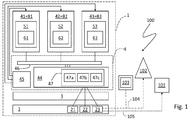
- FIG. 1 shows an example of an industrial plant 100, in the example of a field device 101 is driven by a PLC 1 via an I / O interface 105 .
- the PLC 1 is integrated in a network 104 , which also contains a PLC 102 according to the prior art and a human-machine interface 103 .
- the PLC 1 includes a hardware platform 2 that provides memory 21, processor power 22, and a communications interface 23 for connection to the network 104 .
- the operating system 2 runs on the hardware platform 3.
- the management environment 4 runs with a hypervisor 46 which starts the three sandboxes 41, 42 and 43 in virtual machines 81, 82 and 83 .
- an execution environment 51, 52 and 53 respectively running in each execution environment 51, 52 and 53 is one instance 61, 62 or 63 of the control software to run.
- the resource manager 44 is in particular designed, in the event of a shortage of resources 21, 22 or 23 according to rules 47a, 47b and 47c of one of the virtual machines 81, 82 and 83 , to wholly or partially withdraw the resources 21, 22 and 23 , respectively make them available to another virtual machine 81, 82 and 83 , respectively, which they need more urgently.
- the rules 47a, 47b and 47c in the set of rules 47 are sorted to the extent that the severance of the resources in each case affects the industrial plant 100 as a whole. The performance of the industrial plant 100 thus falls to an acceptable level when resources are scarce, instead of trying in vain to maintain full operation.
- the instances 61, 62 and 63 of the control software are additionally controlled via the redundancy manager 45 in such a way that they provide the functionality of the PLC 1 in a redundant manner relative to the field device 101 .
- This additional feature is implemented in redundancy manager 45 alone.
- the execution environments 51, 52 and 53, as well as the instances 61, 62 and 63, are unchanged from a PLC 1 without management system 4 .
- the management system 4 can also be retrofitted to a PLC 1 , in which the execution environment 51, 52 or 53, and / or the control software 61, 62 or 63, exists only as a compiled binary code.
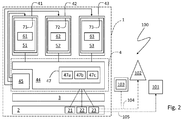
- FIG. 2 shows the same industrial plant 100 as FIG. 1 but with a PLC 1 according to another embodiment of the invention.
- the sandboxes 41, 42 and 43 are not formed as virtual machines. Instead, the execution environments 51, 52 and 53 transit through abstraction layers 71, 72 and 73 , respectively, as normal processes on the operating system 3.
- the abstraction layers 71, 72 and 73 respectively, provide a runtime environment for those emanating from the execution environments 51, 52 and 53 , respectively System calls ready.
- FIG. 3 shows a comparison of the structure of the PLC 102 according to the prior art and the connection of these SPS 102 to the field device 101 and to the network 104.
- the control software 102g run on an execution environment 102a, which in turn runs on an operating system 102b and proprietary hardware driver 102c operated.
- the operating system 102b and the hardware drivers 102c access the proprietary hardware 102d , which includes a first interface 102e for communicating with the field device 101 via the I / O interface 105 and a second interface 102f for integration into the network 104 .
- any change in the hardware 102d requires a change in the hardware drivers 102c .
- At least the change of the hardware 102d to a new hardware architecture also makes changes to the operating system 102b necessary.
- the modified hardware drivers 102c make it necessary to adapt the control software 102g that accesses these hardware driver 102c.
- a change in the operating system 102b due to the hardware architecture change entails further changes to the control software 102g and the execution environment 102a on which this control software 102g is running.
Landscapes
- Physics & Mathematics (AREA)
- General Physics & Mathematics (AREA)
- Engineering & Computer Science (AREA)
- Automation & Control Theory (AREA)
- Programmable Controllers (AREA)
Abstract
Description
- Die Erfindung betrifft speicherprogrammierbare Steuerungen für die Ansteuerung von Feldgeräten in verteilten Steuersystemen für Industrieanlagen.
- Viele Industrieanlagen werden durch verteilte Steuerungssysteme (distributed control systems, DCS) gesteuert. Grundbaustein derartiger Steuerungssysteme sind speicherprogrammierbare Steuerungen (SPS, bzw. englisch "programmable logic controllers", PLC).
- Eine übliche SPS umfasst eine Hardwareplattform und eine genau auf diese Hardwareplattform abgestimmte Steuersoftware. Die Steuersoftware wird in einer hardwarenah programmierten Ausführungsumgebung auf der Hardware ausgeführt. Über Kommunikationsressourcen der Hardwareplattform ist die SPS horizontal mit anderen SPS sowie vertikal mit angesteuerten Feldgeräten sowie übergeordneten Steuersystemen verbunden.
- Die Steuersoftware ist in der Regel spezifisch für eine bestimmte Hardwareplattform und die hierauf laufende Ausführungsumgebung. Daher muss bei einem Wechsel der SPS die Steuersoftware angepasst werden. Dies kann sogar dann erforderlich sein, wenn die Steuersoftware gemäß einem Standard (etwa IEC 61131-3) programmiert wurde und sowohl die alte als auch die neue SPS diesen Standard unterstützen, da die derzeitigen Standards nicht alle Details des Ausführungsverhaltens verbindlich festschreiben.
- Wird nun beispielsweise die Industrieanlage um einen neuen Anlagenteil vergrößert, der die gleiche Funktionalität aufweist wie ein bestehender Anlagenteil, so ist auch der neue Anlagenteil in das Steuerungssystem einzubinden. Wenn hierbei die Vorgabe ist, dass die kundenspezifischen Steuersoftware unangetastet bleiben soll, ist es auf Grund der engen Bindung der Steuersoftware an die SPS nur sehr eingeschränkt möglich, bestehende SPS durch leistungsfähigere zu ersetzen. Meist muss die Erweiterung mit zusätzlichen SPSen des gleichen Typs vorgenommen werden. Auch das Nachrüsten neuer Funktionen ist nur schwierig möglich. Der Einbau zusätzlicher SPSen in ein bestehendes Steuerungssystem kann wiederum an Platzmangel in bestehenden Schaltschränken scheitern.
- Aus der
EP 2 506 098 A1 ist bekannt, die Steuersoftware innerhalb der SPS auf einer virtuellen Maschine auszuführen, so dass ein und dieselbe Steuersoftware auf verschiedenen Typen von SPS ausgeführt werden kann. Auf ein und derselben SPS können mehrere dieser virtuellen Maschinen gleichzeitig ausgeführt werden. Aus derWO 2015/124 320 A1 ist eine weitere dynamische SPS bekannt, auf der mehrere verschiedene Steuerprogramme gleichzeitig ausgeführt werden können. Somit kann einer SPS durch die Hinzufügen eines weiteren Steuerprogramms zusätzliche Funktionalität verliehen werden. - Beim dauerhaften Produktiveinsatz derartiger Lösungen besteht grundsätzlich die Schwierigkeit, dass die störungsfreie Ausführung eines Steuerprogramms auch vom Wohlverhalten der anderen gleichzeitig laufenden Steuerprogramme abhängt.
- Es ist daher die Aufgabe der Erfindung, die Erweiterbarkeit einer einzelnen SPS sowie des Steuerungssystems als Ganzes um zusätzliche Funktionalität zu verbessern.
- Diese Aufgabe wird erfindungsgemäß gelöst durch eine speicherprogrammierbare Steuerung gemäß Hauptanspruch sowie durch ein zugehöriges Computerprogrammprodukt. Weitere vorteilhafte Ausgestaltungen ergeben sich aus den darauf rückbezogenen Unteransprüchen.
- Im Rahmen der Erfindung wurde eine speicherprogrammierbare Steuerung (SPS) für mindestens ein Feldgerät in einer Industrieanlage entwickelt. Diese SPS umfasst ein Betriebssystem, welches wiederum dazu ausgebildet ist, mindestens eine Ausführungsumgebung, innerhalb derer eine die Steuerlogik der speicherprogrammierbaren Steuerung beinhaltende Steuersoftware lauffähig ist, in mindestens einem Prozess auszuführen.
- Erfindungsgemäß ist zusätzlich ein übergeordnetes Managementsystem vorgesehen. Dieses Managementsystem ist dazu ausgebildet, unmittelbar auf dem Betriebssystem zu laufen und eine oder mehrere Ausführungsumgebungen jeweils in einer eigenen Sandbox auszuführen. Das Managementsystem umfasst einen Ressourcenmanager, der dazu ausgebildet ist, einer jeden Sandbox den Zugriff auf Arbeitsspeicher, Prozessorleistung und Kommunikationsressourcen der Hardwareplattform zuzuteilen.
- Der Ressourcenmanager bewirkt, dass die störungsfreie Ausführung einer Instanz von Steuersoftware nun nicht mehr vom Wohlverhalten anderer gleichzeitig laufender Steuerprogramme abhängt. Stattdessen verfügt die Steuersoftware über planbare Ressourcen, so als würde sie alleine auf einer entsprechend dimensionierten Hardwareplattform laufen. Der Ressourcenmanager vervollständigt somit die Unabhängigkeit der Sandboxes voneinander sowie den Schutz der Sandboxes vor gegenseitiger Beeinflussung.
- Dabei kann das Betriebssystem der SPS insbesondere ein echtzeitfähiges Betriebssystem sein. Der Ressourcenmanager hat dann die Wirkung, dass noch eine Garantie für Reaktionszeiten gegeben werden kann, obwohl mehrere Instanzen von Steuersoftware gleichzeitig laufen.
- Durch den Ressourcenmanager kann eine bestehende SPS in mehrerlei Hinsicht additiv, d.h. ohne Beeinträchtigung der vorhandenen Funktionalität, erweitert werden.
- Zum Einen kann mit einer weiteren Instanz der bestehenden Steuersoftware die Steuerfunktionalität der SPS auf weitere gleichartige Feldgeräte ausgedehnt werden, etwa wenn die Industrieanlage um einen neuen funktionsgleichen Anlagenteil erweitert wird. Die Leistungsfähigkeit der Hardwareplattform von SPS wird in der Regel für eine bestimmte Komplexität der Steuersoftware dimensioniert, wobei auch großzügig berücksichtigt wird, dass eine spätere Aufrüstung der Hardware meist nicht möglich ist. Somit ist in vielen Industrieanlagen die Hardware der SPS für die tatsächlich von der Steuersoftware angeforderte Leistung überdimensioniert. Die Erfindung ermöglicht es also, derartige Freikapazitäten zu nutzen. Statt also weitere SPS zu beschaffen, kann zuerst das in der bestehenden Hardware gebundene tote Kapital aktiviert werden.
- Zum Anderen können der SPS auch mit deutlich weniger Aufwand völlig neue Funktionen hinzugefügt werden. Bislang war dies selbst dann schwierig, wenn ohne Wechsel der Hardware "nur" die neuen Funktionen in die Steuersoftware eingepflegt werden sollten. Jegliche Änderung kann eine Validierung oder ähnliche Prüfung der Steuersoftware pauschal ungültig machen, analog dem Bruch eines Garantiesiegels beim Öffnen eines Gerätegehäuses. Die Prüfung muss mit entsprechendem Arbeitsaufwand neu abgenommen werden. Dies ist auch nicht unbegründet, denn in der Softwaretechnik sind viele Fälle bekannt, in denen eine gewollte Verbesserung an einer Stelle überraschenderweise zu einer Beeinträchtigung der Funktionalität an anderer Stelle führte. Je komplexer die Steuersoftware ist, desto schwieriger sind derartige Wechselwirkungen zu überblicken. Wird hingegen die zusätzliche Funktionalität in eine weitere Instanz von Steuersoftware ausgelagert, so ist durch das Sandboxing der Instanzen gegeneinander sichergestellt, dass die bestehende Funktionalität nicht beeinträchtigt wird. Es ist also nur der neu hinzugefügte Programmcode zu testen.
- Weiterhin wird auf diese Weise auch die Schwierigkeit umschifft, dass eine monolithische Steuersoftware nicht beliebig wachsen kann, weil die Architektur der Hardwareplattformen für SPS typischerweise die Komplexität der darauf ausführbaren Software einschränkt. So kann etwa eine Grenze für die maximal zulässige Programmgröße durch die Aufteilung auf zwei Instanzen umgangen werden.
- Schließlich können dank des Managementsystems Fertigungsstraßen im Sinne von "Industrie 4.0" flexibel gestaltet werden. Da nun über das Managementsystem festgelegt werden kann, welche Steuersoftware im Einzelnen auf der SPS läuft, kann die SPS insgesamt zur Laufzeit zu einer ganz anderen Funktion und zur Ansteuerung ganz anderer Feldgeräte umkonfiguriert werden als ursprünglich geplant. Nach dem bisherigen Stand der Technik wären hierfür zusätzliche SPS sowie eine Möglichkeit zum Umschalten zwischen SPS, für die es am Markt aktuell keine Lösung zu kaufen gibt, erforderlich gewesen.
- Somit ist es vorteilhaft, eine neue SPS bereits ab Werk mit dem Managementsystem auszuliefern, auch wenn noch keine parallele Ausführung mehrerer Instanzen von Steuersoftware beabsichtigt ist. Das Managementsystem kann aber auch nachträglich in Form von Software nachgerüstet werden und ist insofern ein eigenständig verkaufbares Produkt.
- Die Zuteilung der Ressourcen kann beispielsweise bei der Einrichtung (Engineering) der SPS statisch festgelegt werden. Für eine manuelle Festlegung kann der Anwender beispielsweise seine Erfahrung oder auch Testergebnisse heranziehen. Die Zuteilung kann aber auch beispielsweise bei der Initialisierung beim Systemstart oder später zur Laufzeit der SPS festgelegt und/oder dynamisch angepasst werden. Für die Zuteilung können auch statische oder dynamische Analysen der Steuerungssoftware, die Aufschluss über den Ressourcenbedarf geben, herangezogen werden.
- Für die Abschottung (Sandboxing) der Sandboxes gegeneinander können alle Mittel eingesetzt werden, die das Betriebssystem und/oder die Hardwareplattform zu diesem Zweck bereitstellen. Beispielsweise kann eine Memory Management Unit (MMU) der Hardwareplattform die Bereiche des Arbeitsspeichers, die den einzelnen Sandboxes zugeteilt sind, untereinander abschotten. Weiterhin können die Funktionen des Betriebssystems für eine Abschottung der Prozesse untereinander verwendet werden, wie etwa das Konzept, dass jeder Prozess nur Zugriff auf sich selbst und seine Unterprozesse hat. Schließlich können auch Funktionen des Betriebssystems für die Überwachung und Durchsetzung der Ressourcenzuteilung, wie beispielsweise die "ulimits" unixoider Betriebssysteme oder Software Container, herangezogen werden.
- In einer besonders vorteilhaften Ausgestaltung der Erfindung weist das Managementsystem einen Redundanzmanager auf, der dazu ausgebildet ist, die im Verhältnis zum Feldgerät vorgesehene Funktionalität der Steuerung aus mehreren redundanten Instanzen von Steuersoftware abzurufen und bereitzustellen. Auf diese Weise kann eine Redundanz insbesondere als reine Softwarelösung nachgerüstet werden, ohne Änderung der bestehenden Steuersoftware. Dies gilt auch dann, wenn bei der Entwicklung der ursprünglichen Steuersoftware eine Redundanz überhaupt nicht in Betracht gezogen wurde.
- Der Redundanzmanager muss jedoch nicht zwingend rein in Software implementiert sein. Der Redundanzmanager, wie auch andere Teile des Managementsystems, können auch ganz oder teilweise in Hardware implementiert sein. Dies kann beispielsweise die Performance steigern um den Preis, dass das Managementsystem schwerer auf andere Hardwareplattformen portierbar ist.
- Die Integration des Redundanzmanagers in das Managementsystem ermöglicht es insbesondere, bei der Ersteinrichtung (Engineering) der SPS oder auch zur Laufzeit über eine Konfigurationsschnittstelle der SPS das Redundanzniveau für jede Ausführungsumgebung und jede Instanz der Steuersoftware individuell festzulegen, unabhängig davon, ob eine mögliche Bereitstellung von Redundanz in der eigentlichen Konfigurationsroutine der Steuersoftware implementiert ist.
- Durch die Bereitstellung von Redundanz kann beispielsweise ein geforderter Sicherheits-Integritäts-Level (SIL) mit geringerem Aufwand erreicht werden. Beispielsweise lässt sich SIL3 durch die Kombination einer ersten Sandbox mit SIL1-konformer Software und einer zweiten Sandbox mit SIL2-konformer Software erreichen.
- Beispielsweise kann der Redundanzmanager vorteilhaft dazu ausgebildet sein, Dateneingaben vom Feldgerät an mehrere Instanzen von Steuersoftware weiterzuleiten und die daraufhin von diesen Instanzen generierten Datenausgaben gegeneinander zu plausibilisieren. Liefern dann beispielsweise zwei Instanzen Datenausgaben, die zumindest in groben Zügen übereinstimmen, während die Ausgabe einer dritten Instanz hiervon deutlich abweicht, arbeitet die dritte Instanz möglicherweise fehlerhaft. Beispielsweise kann im für die dritte Instanz zuständigen Teil des Arbeitsspeichers ein einzelnes Bit umgekippt sein und dafür sorgen, dass vom Feldgerät gelieferte Zahlenwerte für einen Druck in der Maßeinheit "pounds per square inch" (psi) statt richtigerweise "bar" interpretiert werden. Die daraufhin von der dritten Instanz generierten Ausgaben werden dann systematisch von den Ausgaben der beiden anderen Instanzen abweichen.
- Der Redundanzmanager kann beispielsweise auch vorteilhaft dazu ausgebildet sein, die Funktion mehrerer Instanzen von Steuersoftware fortlaufend zu überwachen und bei Ausfall oder Fehlfunktion einer Instanz diese Instanz, und/oder ihre Ausführungsumgebung, neu zu starten, und/oder mindestens eine zusätzliche Instanz unter einer zusätzlichen Ausführungsumgebung in einer weiteren Sandbox zu aktivieren. Beispielsweise kann ein Programmierfehler in der Steuersoftware dazu führen, dass in bestimmten Situationen reservierter Arbeitsspeicher nach Gebrauch nicht wieder freigegeben wird (Speicherleck), so dass irgendwann der zur Verfügung stehende Arbeitsspeicher komplett aufgebraucht ist. Ein durch den Redundanzmanager veranlasster Neustart der Steuersoftware beseitigt dann zwar nicht die Ursache des Problems, aber die neue Sandbox fängt wieder mit einem "sauberen" Arbeitsspeicher an, so dass das Problem zumindest provisorisch gelindert ist. Weiterhin wird auf diese Weise der Anlagenbetreiber auf das Problem aufmerksam gemacht und kann ihm programmtechnisch auf den Grund gehen.
- Der Redundanzmanager kann beispielsweise auch vorteilhaft dazu ausgebildet sein, die Kommunikation mehrerer Instanzen von Steuersoftware mit dem Feldgerät nach einem Rundlaufverfahren (Round-Robin) zu steuern. Es werden dann alle Instanzen gleichmäßig ausgelastet. Bleibt eine turnusmäßig angesprochene Instanz die Antwort für eine vorgegebene Zeitspanne (Timeout) schuldig, so kann diese Instanz als fehlerhaft arbeitend erkannt werden.
- In einer weiteren besonders vorteilhaften Ausgestaltung der Erfindung sind zur Bereitstellung ein und derselben Funktionalität der SPS zwei inhaltlich verschiedene Ausführungsumgebungen, und/oder zwei inhaltlich verschiedene Instanzen von Steuersoftware, vorgesehen. Insbesondere im redundanten Betrieb lässt sich hiermit die Betriebssicherheit weiter erhöhen. Hierhinter steckt der Gedanke, dass es unwahrscheinlich ist, dass beispielsweise zwei von verschiedenen Entwicklern nach unterschiedlichen Konzepten programmierte Instanzen der Steuersoftware jeweils Fehler aufweisen, die sich genau in der gleichen Betriebssituation in gleicher Weise auswirken.
- Es können aber beispielsweise auch mehrere Instanzen von Steuersoftware gleichzeitig ausgeführt werden, um eine in Entwicklung befindliche oder neu erworbene neue Version der Steuersoftware zu testen, ohne dass hierfür der laufende Betrieb der bisherigen Version unterbrochen und der damit gesteuerte industrielle Prozess angehalten werden muss. Weiterhin kann bei einer Erweiterung der Funktionalität eine Instanz der bisherigen Steuersoftware gemeinsam mit einer weiteren Instanz, die nur die zusätzlich hinzugefügten Funktionen enthält, ausgeführt werden.
- Schließlich ist es beispielsweise auch möglich, für verschiedene Typen von SPS geschriebene Steuerprogramme unter verschiedenen Ausführungsumgebungen auf ein und derselben physischen SPS, oder beispielsweise auf einem Server mit entsprechenden Kommunikationsschnittstellen, konsolidiert werden. Der Server kann dann wirkungsgleich mit der jeweils nachgebildeten SPS sein. Prinzipiell können auch verschiedene Ausführungsumgebungen für verschiedene Kunden, zwischen denen kein Vertrauensverhältnis besteht, auf ein und demselben Server konsolidiert sein. Die Funktionalität des Managementsystems zur Abschottung der Sandboxes untereinander kann dann beispielsweise noch um Sicherheitsfunktionen zum Schutz gegen gewollte Übergriffe zwischen Sandboxes erweitert sein.
- In einer besonders vorteilhaften Ausgestaltung der Erfindung enthält mindestens eine Sandbox eine Abstraktionsschicht, die auf von der Ausführungsumgebung ausgehende Systemaufrufe in gleicher Weise reagiert wie das Betriebssystem und/oder die Hardware eines Steuergeräts, für das die Ausführungsumgebung, und/oder die zugehörige Steuersoftware, entwickelt wurde. Beispielsweise können die von der werksseitig mit der SPS mitgelieferten Steuersoftware ausgehenden Systemaufrufe auf diese Weise vom Betriebssystem und/oder von der Hardwareplattform abstrahiert sein, so dass Programmcode in höherem Maße auf anderen Hardwareplattformen wiederverwendet werden kann. Es kann aber auch beispielsweise eine Umgebung bereitgestellt werden, in der eine für ein Steuergerät eines anderen, inkompatiblen Typs entwickelte Steuersoftware auf der SPS lauffähig gemacht wird. Auf diese Weise kann beispielsweise eine vorhandene Steuersoftware auf eine neue SPS mit einer neuen Hardwareplattform migriert werden, ohne dass die Steuersoftware hierfür verändert werden muss.
- Vorteilhaft enthält die Abstraktionsschicht mindestens eine Laufzeitumgebung, die Behandlungsroutinen für die von der Ausführungsumgebung ausgehenden Systemaufrufe unter Verwendung von durch das Betriebssystem bereitgestellten Mitteln implementiert. Analog etwa zu der Laufzeitumgebung "wine", mit der Windows@-Programme unter unixoiden Betriebssystemen lauffähig gemacht werden, können die Ausführungsumgebung und die zugehörige Steuersoftware dann als nativer Prozess unter dem Betriebssystem der SPS laufen, ohne durch einen Hypervisor virtualisiert sein zu müssen. Gegenüber einer Virtualisierung kann dies Systemressourcen der Hardwareplattform einsparen, die stattdessen etwa in die Ausführung von mehr Instanzen der Steuersoftware investiert werden können.
- In einer weiteren vorteilhaften Ausgestaltung der Erfindung enthält das Managementsystem einen Hypervisor, der dazu ausgebildet ist, für jede Sandbox eine eigene virtuelle Maschine bereitzustellen. Dies verbraucht mehr Systemressourcen, ist dafür aber einfacher zu implementieren als eine Laufzeitumgebung, die die Behandlung für jeden Systemaufruf einzeln nachbildet. Stattdessen kann beispielsweise en bloc die Hardwareplattform emuliert werden.
- Vorteilhaft ist mindestens an den Hypervisor angepasste Version einer Ausführungsumgebung, und/oder mindestens eine an den Hypervisor angepasste Version der Abstraktionsschicht, durch den Hypervisor paravirtualisiert. Auf diese Weise kann der Hypervisor dahingehend vereinfacht werden, dass in den einzelnen Sandboxes eine höhere Performance zur Verfügung steht.
- In einer weiteren besonders vorteilhaften Ausgestaltung der Erfindung ist der Ressourcenmanager dazu ausgebildet, in mindestens einer ersten Sandbox nicht genutzte Zuteilungen für den Zugriff auf Arbeitsspeicher, Prozessorleistung und/oder Kommunikationsressourcen an mindestens eine zweite Sandbox umzuverteilen. Dies kann insbesondere dann geschehen, wenn die Ressourcen der zweiten Sandbox überlastet sind oder dies unmittelbar bevorsteht. Auf diese Weise kann der Auslastungsgrad der Hardwareplattform verbessert werden. Insbesondere kann in einem gegebenen Schaltschrankvolumen in der Summe mehr Funktionalität für die Ansteuerung von mehr Feldgeräten untergebracht werden. Nach dem bisherigen Stand der Technik konnte mangelnder Platz in bestehenden Schaltschränken eine spürbare Bremse für den Ausbau des industriellen Steuerungssystems sein. Weiterhin ist der spezifische Energieverbrauch des Steuerungssystems geringer, wenn die Hardware der SPS besser ausgelastet ist. Die Zuteilung kann auch von anderen Parametern, etwa Prioritäten, oder von Heuristiken abhängig gemacht werden.
- In einer weiteren besonders vorteilhaften Ausgestaltung der Erfindung ist der Ressourcenmanager dazu ausgebildet, bei einer Knappheit an Arbeitsspeicher, Prozessorleistung und/oder Kommunikationsressourcen nach Regeln in einem Regelwerk die jeweilige Ressource mindestens einer ersten Sandbox ganz oder teilweise zu entziehen und an mindestens eine zweite Sandbox umzuverteilen. Hierhinter steckt der Gedanke, dass, wenn etwa auf Grund eines Hardwareausfalls nicht mehr genügend Ressourcen für den normalen Betrieb der SPS zur Verfügung stehen, die unausweichlichen Betriebseinschränkungen zumindest vorhersehbar sein und ihre Auswirkungen auf die Industrieanlage idealerweise minimiert werden sollten. Lässt sich beispielsweise ein Herunterfahren der Industrieanlage nicht vermeiden, so kann ein entsprechendes Regelwerk beispielsweise sicherstellen, dass das Herunterfahren der einzelnen Anlagenteile in einer für die Industrieanlage insgesamt schonenden Reihenfolge und Weise erfolgt. Beispielsweise sollte in einer evakuierten Anlage zunächst die auf das Vakuum angewiesenen Geräte abgeschaltet werden und dann die Vakuumpumpe. Weiterhin kann es sinnvoll sein, die Bemühungen auf die Aufrechterhaltung des Vakuums konzentrieren und dafür an anderer Stelle mehr Geräte abzuschalten, wenn die Wiederherstellung des Vakuums mit Ausheizen mehrere Tage dauert.
- Viele Steuerungssysteme nach dem Stand der Technik strebten im Fehlerfall auch dann noch nach einer vollen Wiederherstellung des Anlagenbetriebs, wenn dies objektiv mit den noch vorhandenen Ressourcen nicht mehr möglich war. Mit dem gemäß der Erfindung vorgesehenen Managementsystem kann eine solche Situation erkannt und das Optimierungsziel auf ein schonendes Abspecken oder Stilllegen des Betriebes ("graceful degradation") geändert werden.
- Daher sind in einer weiteren besonders vorteilhaften Ausgestaltung der Erfindung die Regeln in dem Regelwerk entsprechend den Auswirkungen der jeweiligen Entziehung von Ressourcen auf die Industrieanlage als Ganzes gestaffelt. Beispielsweise kann ein vollständiger Stillstand der Anlage möglicherweise vermieden werden, indem nicht zeitkritische Prozesse verlangsamt werden. Die Regelung dieser Prozesse benötigt dann weniger Rechenzeit, die stattdessen für die Regelung zeitkritischer Prozesse zusätzlich zur Verfügung gestellt werden kann.
- Nach dem zuvor Gesagten ist das Managementsystem per Software nachrüstbar. Daher bezieht sich die Erfindung auch auf ein Computerprogrammprodukt mit maschinenlesbaren Anweisungen, die, wenn sie auf einem Computer, und/oder auf einer speicherprogrammierbaren Steuerung, ausgeführt werden, den Computer, bzw. die speicherprogrammierbare Steuerung, zu einer speicherprogrammierbaren Steuerung gemäß der Erfindung aufwerten.
- Nachfolgend wird der Gegenstand der Erfindung anhand von Figuren erläutert, ohne dass der Gegenstand der Erfindung hierdurch beschränkt wird. Es ist gezeigt:
- Figur 1:
- Industrieanlage 100 mit SPS 1 gemäß einem ersten Ausführungsbeispiel mit virtuellen Maschinen 81, 82, 83.
- Figur 2:
- Industrieanlage 100 mit SPS 1 gemäß einem zweiten Ausführungsbeispiel mit Abstraktionsschichten 71, 72, 73.
- Figur 3:
- zum Vergleich SPS 102 gemäß bisherigem Stand der Technik.
-
Figur 1 zeigt beispielhaft eine Industrieanlage 100, in der beispielhaft ein Feldgerät 101 von einer SPS 1 über eine I/O-Schnittstelle 105 angesteuert wird. Zusätzlich ist die SPS 1 in ein Netzwerk 104 eingebunden, das noch eine SPS 102 gemäß dem bisherigen Stand der Technik sowie eine Mensch-Maschine-Schnittstelle 103 enthält. - Die SPS 1 enthält eine Hardwareplattform 2, die Arbeitsspeicher 21, Prozessorleistung 22 und eine Kommunikationsschnittstelle 23 für die Verbindung mit dem Netzwerk 104 bereitstellt. Auf der Hardwareplattform 3 läuft das Betriebssystem 2. Unmittelbar auf dem Betriebssystem 3 läuft die Managementumgebung 4 mit einem Hypervisor 46, die die drei Sandboxen 41, 42 und 43 in virtuellen Maschinen 81, 82 und 83 startet. In jeder virtuellen Maschine 81, 82 bzw. 83 läuft jeweils eine Ausführungsumgebung 51, 52 bzw. 53. In jeder Ausführungsumgebung 51, 52 bzw. 53 ist jeweils eine Instanz 61, 62 bzw. 63 der Steuersoftware lauffähig.
- Aus den virtuellen Maschinen 81, 82 bzw. 83 heraus kann jeweils nur über den Hypervisor 46 auf das Betriebssystem 3 und die Hardwareressourcen 21, 22 und 23 zugegriffen werden. Dieser Zugriff wird über den Ressourcenmanager 44 reglementiert. Der Ressourcenmanager 44 ist insbesondere dazu ausgebildet, bei Knappheit an Ressourcen 21, 22 bzw. 23 nach Regeln 47a, 47b und 47c einer der virtuellen Maschinen 81, 82 bzw. 83 die Ressourcen 21, 22 bzw. 23 ganz oder teilweise zu entziehen, um sie einer anderen virtuellen Maschine 81, 82 bzw. 83 zur Verfügung zu stellen, die sie dringender braucht. Hierzu sind die Regeln 47a, 47b und 47c in dem Regelwerk 47 dahingehend sortiert, wie schwerwiegend sich die Entziehung der Ressourcen jeweils auf die Industrieanlage 100 als Ganzes auswirkt. Die Performance der Industrieanlage 100 sinkt also bei Ressourcenknappheit auf ein akzeptables Niveau, statt dass vergeblich versucht wird, den vollen Betrieb aufrechtzuerhalten.
- Die Instanzen 61, 62 und 63 der Steuersoftware werden zusätzlich über den Redundanzmanager 45 dahingehend angesteuert, dass sie gegenüber dem Feldgerät 101 die Funktionalität der SPS 1 in redundanter Weise bereitstellen. Dieses weitere Feature ist allein im Redundanzmanager 45 implementiert. Die Ausführungsumgebungen 51, 52 und 53, sowie die Instanzen 61, 62 und 63, sind gegenüber einer SPS 1 ohne Managementsystem 4 unverändert.
- Somit lässt sich das Managementsystem 4 auch an einer SPS 1 nachrüsten, bei der die Ausführungsumgebung 51, 52 bzw. 53, und/oder die Steuersoftware 61, 62 bzw. 63, nur als kompilierter Binärcode vorliegt.
-
Figur 2 zeigt die gleiche Industrieanlage 100 wieFigur 1 , jedoch mit einer SPS 1 gemäß einem anderen Ausführungsbeispiel der Erfindung. Im Unterschied zuFigur 1 sind die Sandboxen 41, 42 und 43 nicht als virtuelle Maschinen ausgebildet. Stattdessen laufen die Ausführungsumgebungen 51, 52 und 53 vermittelt durch Abstraktionsschichten 71, 72 bzw. 73 als normale Prozesse auf dem Betriebssystem 3. Die Abstraktionsschichten 71, 72 bzw. 73 stellen jeweils eine Laufzeitumgebung für die von den Ausführungsumgebungen 51, 52 bzw. 53 ausgehenden Systemaufrufe bereit. -
Figur 3 zeigt im Vergleich den Aufbau der SPS 102 gemäß dem bisherigen Stand der Technik und die Anbindung dieser SPS 102 an das Feldgerät 101 und an das Netzwerk 104. Die Steuersoftware 102g läuft auf einer Ausführungsumgebung 102a, die wiederum auf einem Betriebssystem 102b läuft und sich proprietärer Hardwaretreiber 102c bedient. Das Betriebssystem 102b und die Hardwaretreiber 102c greifen auf die proprietäre Hardware 102d zu, die ein erstes Interface 102e für die Kommunikation mit dem Feldgerät 101 über die I/O-Schnittstelle 105 und ein zweites Interface 102f für die Einbindung in das Netzwerk 104 umfasst. - Im Unterschied zu den
Figuren 1 und2 bauen die verschiedenen Komponenten der SPS 102 aufeinander auf und wirken zusammen, sind aber dabei nicht voneinander abstrahiert und gekapselt. Jede Änderung der Hardware 102d macht eine Änderung der Hardwaretreiber 102c erforderlich. Spätestens der Wechsel der Hardware 102d auf eine neue Hardwarearchitektur macht auch Änderungen am Betriebssystem 102b notwendig. Die geänderten Hardwaretreiber 102c machen es notwendig, die Steuersoftware 102g anzupassen, die auf diese Hardwaretreiber 102c zugreift. Ein durch den Wechsel der Hardwarearchitektur fälliger Wechsel des Betriebssystems 102b zieht weitere Änderungen an der Steuersoftware 102g und der Ausführungsumgebung 102a, auf der diese Steuersoftware 102g läuft, nach sich. -
- 1
- speicherprogrammierbare Steuerung, SPS
- 2
- Hardwareplattform der SPS 1
- 21
- Arbeitsspeicher der Hardwareplattform 2
- 22
- Prozessorleistung der Hardwareplattform 2
- 23
- Kommunikationsressourcen der Hardwareplattform 2
- 3
- Betriebssystem der SPS 1
- 4
- Managementsystem der SPS 1
- 41-43
- Sandboxes für Ausführungsumgebungen 51-53
- 44
- Ressourcenmanager in Managementsystem 4
- 45
- Redundanzmanager in Managementsystem 4
- 46
- Hypervisor für virtuelle Maschinen 81-83
- 47
- Regelwerk für Umverteilung von Ressourcen 21-23
- 47a-47c
- Regeln
- 51-53
- Ausführungsumgebungen für Steuersoftware 61-63
- 51'-53'
- für Paravirtualisierung angepasste Umgebungen 51-53
- 61-63
- Steuersoftware
- 61'-63'
- für Paravirtualisierung angepasste Steuersoftware 61-63
- 71-73
- Abstraktionsschichten in Sandboxes 41-43
- 71'-73'
- für Paravirtualisierung angepasste Abstraktionsschichten 71-73
- 81-83
- virtuelle Maschinen als Sandboxes 41-43
- 100
- Industrieanlage
- 101
- Feldgerät in Industrieanlage 100
- 102
- SPS gemäß Stand der Technik
- 102a
- Ausführungsumgebung der SPS 102 für Software 102g
- 102b
- Betriebssystem der SPS 102
- 102c
- proprietäre Hardwaretreiber der SPS 102
- 102d
- proprietäre Hardware der SPS 102
- 102e
- Interface der SPS 102 für I/O-Schnittstelle 105
- 102f
- Interface der SPS 102 zum Netzwerk 104
- 102g
- Steuersoftware der SPS 102
- 103
- Mensch-Maschine-Schnittstelle der Industrieanlage 100
- 104
- Netzwerk der Industrieanlage 100
- 105
- I/O-Schnittstelle
Claims (15)
- Speicherprogrammierbare Steuerung (1) für mindestens ein Feldgerät (101) in einer Industrieanlage (100), umfassend eine Hardwareplattform (2), auf der ein Betriebssystem (3) läuft, wobei das Betriebssystem (3) dazu ausgebildet ist, mindestens eine Ausführungsumgebung (51-53), innerhalb derer eine die Steuerlogik der speicherprogrammierbaren Steuerung (1) beinhaltende Steuersoftware (61-63) lauffähig ist, in mindestens einem Prozess auszuführen,
dadurch gekennzeichnet, dass
ein übergeordnetes Managementsystem (4) vorgesehen ist, welches dazu ausgebildet ist, unmittelbar auf dem Betriebssystem (3) zu laufen und eine oder mehrere Ausführungsumgebungen (51-53) jeweils in einer eigenen Sandbox (41-43) auszuführen, wobei das Managementsystem (4) einen Ressourcenmanager (44) umfasst, der dazu ausgebildet ist, einer jeden Sandbox (41-43) den Zugriff auf Arbeitsspeicher (21), Prozessorleistung (22) und Kommunikationsressourcen (23) der Hardwareplattform (2) zuzuteilen. - Speicherprogrammierbare Steuerung (1) nach Anspruch 1,
dadurch gekennzeichnet, dass
das Managementsystem (4) einen Redundanzmanager (45) aufweist, der dazu ausgebildet ist, die im Verhältnis zum Feldgerät (101) vorgesehene Funktionalität der Steuerung (1) aus mehreren redundanten Instanzen (61-63) von Steuersoftware abzurufen und bereitzustellen. - Speicherprogrammierbare Steuerung (1) nach Anspruch 2,
dadurch gekennzeichnet, dass
der Redundanzmanager (45) dazu ausgebildet ist, Dateneingaben vom Feldgerät (101) an mehrere Instanzen (61-63) von Steuersoftware weiterzuleiten und die daraufhin von diesen Instanzen (61-63) generierten Datenausgaben gegeneinander zu plausibilisieren. - Speicherprogrammierbare Steuerung (1) nach einem der Ansprüche 2 bis 3,
dadurch gekennzeichnet, dass
der Redundanzmanager (45) dazu ausgebildet ist, die Funktion mehrerer Instanzen (61-63) von Steuersoftware fortlaufend zu überwachen und bei Ausfall oder Fehlfunktion einer Instanz (61-63) diese Instanz (61-63), und/oder ihre Ausführungsumgebung (51-53), neu zu starten, und/oder mindestens eine zusätzliche Instanz (61-63) unter einer zusätzlichen Ausführungsumgebung (51-53) in einer weiteren Sandbox (41-43) zu aktivieren. - Speicherprogrammierbare Steuerung (1) nach einem der Ansprüche 2 bis 4,
dadurch gekennzeichnet, dass
der Redundanzmanager (45) dazu ausgebildet ist, die Kommunikation mehrerer Instanzen (61-63) von Steuersoftware mit dem Feldgerät (101) nach einem Rundlaufverfahren zu steuern. - Speicherprogrammierbare Steuerung (1) nach einem der Ansprüche 1 bis 5,
dadurch gekennzeichnet, dass
zur Bereitstellung ein und derselben Funktionalität der Steuerung (1) zwei inhaltlich verschiedene Ausführungsumgebungen (51-53), und/oder zwei inhaltlich verschiedene Instanzen (61-63) von Steuersoftware, vorgesehen sind. - Speicherprogrammierbare Steuerung (1) nach einem der Ansprüche 1 bis 6,
dadurch gekennzeichnet, dass
mindestens eine Sandbox (41-43) eine Abstraktionsschicht (71-73) enthält, die auf von der Ausführungsumgebung (51-53) ausgehende Systemaufrufe in gleicher Weise reagiert wie das Betriebssystem und/oder die Hardware eines Steuergeräts (1, 105), für das die Ausführungsumgebung (51-53), und/oder die zugehörige Steuersoftware (61-63), entwickelt wurde. - Speicherprogrammierbare Steuerung (1) nach Anspruch 7,
dadurch gekennzeichnet, dass
die Abstraktionsschicht (71-73) mindestens eine Laufzeitumgebung enthält, die Behandlungsroutinen für die von der Ausführungsumgebung (51-53) ausgehenden Systemaufrufe unter Verwendung von durch das Betriebssystem (3) bereitgestellten Mitteln implementiert. - Speicherprogrammierbare Steuerung (1) nach einem der Ansprüche 1 bis 8,
dadurch gekennzeichnet, dass
das Managementsystem (4) ausgebildet ist, mit Virtualisierungsfunktionen des Betriebssystems (3) für jede Sandbox (41-43) eine eigene Userspace-Instanz zu erzeugen. - Speicherprogrammierbare Steuerung (1) nach einem der Ansprüche 1 bis 9,
dadurch gekennzeichnet, dass
das Managementsystem (4) einen Hypervisor (46) enthält, der dazu ausgebildet ist, für jede Sandbox (41-43) eine eigene virtuelle Maschine (81-83) bereitzustellen. - Speicherprogrammierbare Steuerung (1) nach einem der Ansprüche 1 bis 10,
dadurch gekennzeichnet, dass
mindestens an den Hypervisor (46) angepasste Version (51'-53') einer Ausführungsumgebung (51-53), und/oder mindestens eine an den Hypervisor (46) angepasste Version (71'-73') der Abstraktionsschicht (71-73), durch den Hypervisor (46) paravirtualisiert ist. - Speicherprogrammierbare Steuerung (1) nach einem der Ansprüche 1 bis 11,
dadurch gekennzeichnet, dass
der Ressourcenmanager (44) dazu ausgebildet ist, in mindestens einer ersten Sandbox (41-43) nicht genutzte Zuteilungen für den Zugriff auf Arbeitsspeicher (21), Prozessorleistung (22) und/oder Kommunikationsressourcen (23) an mindestens eine zweite Sandbox (41-43) umzuverteilen. - Speicherprogrammierbare Steuerung (1) nach einem der Ansprüche 1 bis 12,
dadurch gekennzeichnet, dass
der Ressourcenmanager (44) dazu ausgebildet ist, bei einer Knappheit an Arbeitsspeicher (21), Prozessorleistung (22) und/oder Kommunikationsressourcen (23) nach Regeln (47a-47c) in einem Regelwerk (47) die jeweilige Ressource (21-23) mindestens einer ersten Sandbox (41-43) ganz oder teilweise zu entziehen und an mindestens eine zweite Sandbox (41-43) umzuverteilen. - Speicherprogrammierbare Steuerung (1) nach Anspruch 13,
dadurch gekennzeichnet, dass
die Regeln (47a-47c) in dem Regelwerk entsprechend den Auswirkungen der jeweiligen Entziehung von Ressourcen (21-23) auf die Industrieanlage (100) als Ganzes gestaffelt sind. - Computerprogrammprodukt, enthaltend maschinenlesbare Anweisungen, die, wenn sie auf einem Computer, und/oder auf einer speicherprogrammierbaren Steuerung (1), ausgeführt werden, den Computer, bzw. die speicherprogrammierbare Steuerung, zu einer speicherprogrammierbaren Steuerung (1) nach einem der Ansprüche 1-13 aufwerten.
Priority Applications (4)
| Application Number | Priority Date | Filing Date | Title |
|---|---|---|---|
| EP16180149.3A EP3273314B1 (de) | 2016-07-19 | 2016-07-19 | Speicherprogrammierbare steuerung mit managementsystem |
| CN201780044312.4A CN109478050B (zh) | 2016-07-19 | 2017-07-19 | 具有管理系统的可编程逻辑控制器 |
| PCT/EP2017/068270 WO2018015454A1 (de) | 2016-07-19 | 2017-07-19 | Speicherprogrammierbare steuerung mit managementsystem |
| US16/249,943 US20190146450A1 (en) | 2016-07-19 | 2019-01-17 | Programmable logic controller with management system |
Applications Claiming Priority (1)
| Application Number | Priority Date | Filing Date | Title |
|---|---|---|---|
| EP16180149.3A EP3273314B1 (de) | 2016-07-19 | 2016-07-19 | Speicherprogrammierbare steuerung mit managementsystem |
Publications (2)
| Publication Number | Publication Date |
|---|---|
| EP3273314A1 true EP3273314A1 (de) | 2018-01-24 |
| EP3273314B1 EP3273314B1 (de) | 2023-08-30 |
Family
ID=56464108
Family Applications (1)
| Application Number | Title | Priority Date | Filing Date |
|---|---|---|---|
| EP16180149.3A Active EP3273314B1 (de) | 2016-07-19 | 2016-07-19 | Speicherprogrammierbare steuerung mit managementsystem |
Country Status (4)
| Country | Link |
|---|---|
| US (1) | US20190146450A1 (de) |
| EP (1) | EP3273314B1 (de) |
| CN (1) | CN109478050B (de) |
| WO (1) | WO2018015454A1 (de) |
Cited By (3)
| Publication number | Priority date | Publication date | Assignee | Title |
|---|---|---|---|---|
| CN112292643A (zh) * | 2018-06-01 | 2021-01-29 | 西创同驰系统控制股份公司 | 可编程逻辑控制器以及用于可编程逻辑控制器的运行方法和计算机程序产品 |
| EP4685591A1 (de) | 2024-07-25 | 2026-01-28 | Pilz GmbH & Co. KG | Programmierbare steuerung und verfahren zum steuern einer automatisierten anlage |
| WO2026078108A1 (de) * | 2024-10-09 | 2026-04-16 | Ifm Electronic Gmbh | Steuerungseinheit mit einer sicheren software-komponente |
Families Citing this family (9)
| Publication number | Priority date | Publication date | Assignee | Title |
|---|---|---|---|---|
| EP3444682A1 (de) * | 2017-08-16 | 2019-02-20 | Siemens Aktiengesellschaft | Verfahren zum rechnergestützten koppeln eines verarbeitungsmoduls in ein modulares technisches system und modulares technisches system |
| US11009840B2 (en) * | 2019-06-19 | 2021-05-18 | Honeywell International, Inc. | Control execution environment and container based architecture |
| CN110427297B (zh) * | 2019-07-10 | 2023-08-04 | 西门子工厂自动化工程有限公司 | 诊断信息获取方法、系统及网关和计算机可读介质 |
| DE102019217618A1 (de) * | 2019-11-15 | 2021-06-02 | Robert Bosch Gmbh | Industrielles Steuerungssystem in der Automatisierungstechnik zur Reduktion des Schadens durch Ausführung von Schadsoftware |
| DE102020116714A1 (de) * | 2020-06-25 | 2021-12-30 | Audi Aktiengesellschaft | Steuergerät für ein Fahrzeug, System, Verfahren und Kraftfahrzeug mit einem solchen Steuergerät |
| EP4063974B1 (de) | 2021-03-23 | 2025-10-22 | ABB Schweiz AG | Steuerung eines industriellen prozesses unter verwendung virtualisierter instanzen einer steuerungssoftware |
| US20230018586A1 (en) * | 2021-07-19 | 2023-01-19 | Rockwell Automation Technologies, Inc. | Systems and methods for distributing and executing loadable embedded software extensions in industrial controllers |
| DE102021209362A1 (de) * | 2021-08-26 | 2023-03-02 | Robert Bosch Gesellschaft mit beschränkter Haftung | Verfahren zum Betreiben eines Fahrzeugsteuergeräts |
| CN116700594A (zh) * | 2022-02-24 | 2023-09-05 | 华为技术有限公司 | 存储设备、存储方法、计算设备及存储介质 |
Citations (6)
| Publication number | Priority date | Publication date | Assignee | Title |
|---|---|---|---|---|
| US20090132057A1 (en) * | 2007-11-20 | 2009-05-21 | Abb Research Ltd. | Control system for controlling the movements of a plurality of mechanical units |
| WO2011150929A1 (en) * | 2010-05-31 | 2011-12-08 | Vestas Wind Systems A/S | A computer system and method for controlling and/or monitoring a wind power plant |
| EP2506098A1 (de) | 2011-03-31 | 2012-10-03 | Siemens Aktiengesellschaft | Anordnung und Verfahren für den Betrieb einer industriellen Automatisierungsanordnung mit einer Mehrzahl programmierbarer Automatisierungskomponenten und einer Mehrzahl Automatisierungsprogramme |
| US20130339976A1 (en) * | 2012-06-13 | 2013-12-19 | Robert Bosch Gmbh | Resource Management System for Automation Installations |
| EP2884392A1 (de) * | 2013-12-13 | 2015-06-17 | Thales | Fehlertolerante Rahmenarchitektur mit dreifacher Software-Redundanz |
| WO2015124320A1 (de) | 2014-02-24 | 2015-08-27 | Abb Technology Ag | Dynamisches speicherprogrammierbares steuergerät zum emulieren eines steuergerätes |
Family Cites Families (14)
| Publication number | Priority date | Publication date | Assignee | Title |
|---|---|---|---|---|
| EP1243990B1 (de) * | 2001-03-21 | 2013-10-23 | ABB Research Ltd. | Leit/Steuersystem mit einer speicherprogrammierbaren Steuerung und einer Vielzahl von Aktoren und/oder Sensoren und/oder Eingabeeinheiten und/oder Ausgabeeinheiten und/oder Ein/Ausgabeeinheiten |
| US7693585B2 (en) * | 2004-09-30 | 2010-04-06 | Rockwell Automation Technologies, Inc. | Enabling object oriented capabilities in automation systems |
| KR100810268B1 (ko) * | 2006-04-06 | 2008-03-06 | 삼성전자주식회사 | 모바일 디스플레이 장치에서의 색약자를 위한 구현 방법 |
| CN100409128C (zh) * | 2006-10-17 | 2008-08-06 | 南京科远自动化集团有限公司 | 通用工业控制器 |
| US8166492B2 (en) * | 2007-04-10 | 2012-04-24 | Microsoft Corporation | Application compatibility using a hybrid environment |
| US9081627B1 (en) * | 2007-07-31 | 2015-07-14 | Hewlett-Packard Development Company, L.P. | Workload management with resource transfer sequence planned as a function of ranking of resource allocations |
| US20090076628A1 (en) * | 2007-09-18 | 2009-03-19 | David Mark Smith | Methods and apparatus to upgrade and provide control redundancy in process plants |
| US8458718B2 (en) * | 2009-08-27 | 2013-06-04 | The Boeing Company | Statically partitioning into fixed and independent systems with fixed processing core |
| US9323921B2 (en) * | 2010-07-13 | 2016-04-26 | Microsoft Technology Licensing, Llc | Ultra-low cost sandboxing for application appliances |
| US9891939B2 (en) * | 2011-03-03 | 2018-02-13 | Microsoft Technology Licensing, Llc | Application compatibility with library operating systems |
| BR112014031915A2 (pt) * | 2012-06-21 | 2017-06-27 | Saab Ab | método para gerenciar acesso à memória de sistema de controle de aviônica, sistema de controle de aviônica e programa de computador |
| US20160077850A1 (en) * | 2013-04-19 | 2016-03-17 | The Trustees Of Columbia University In The City Of New York | Methods, systems, and media for binary compatibility |
| US20150081043A1 (en) * | 2013-09-19 | 2015-03-19 | Broadcom Corporation | System for Control Logic Management |
| US20170317948A1 (en) * | 2016-04-28 | 2017-11-02 | Microsoft Technology Licensing, Llc | Hosting apps with native capabilities |
-
2016
- 2016-07-19 EP EP16180149.3A patent/EP3273314B1/de active Active
-
2017
- 2017-07-19 CN CN201780044312.4A patent/CN109478050B/zh active Active
- 2017-07-19 WO PCT/EP2017/068270 patent/WO2018015454A1/de not_active Ceased
-
2019
- 2019-01-17 US US16/249,943 patent/US20190146450A1/en active Pending
Patent Citations (6)
| Publication number | Priority date | Publication date | Assignee | Title |
|---|---|---|---|---|
| US20090132057A1 (en) * | 2007-11-20 | 2009-05-21 | Abb Research Ltd. | Control system for controlling the movements of a plurality of mechanical units |
| WO2011150929A1 (en) * | 2010-05-31 | 2011-12-08 | Vestas Wind Systems A/S | A computer system and method for controlling and/or monitoring a wind power plant |
| EP2506098A1 (de) | 2011-03-31 | 2012-10-03 | Siemens Aktiengesellschaft | Anordnung und Verfahren für den Betrieb einer industriellen Automatisierungsanordnung mit einer Mehrzahl programmierbarer Automatisierungskomponenten und einer Mehrzahl Automatisierungsprogramme |
| US20130339976A1 (en) * | 2012-06-13 | 2013-12-19 | Robert Bosch Gmbh | Resource Management System for Automation Installations |
| EP2884392A1 (de) * | 2013-12-13 | 2015-06-17 | Thales | Fehlertolerante Rahmenarchitektur mit dreifacher Software-Redundanz |
| WO2015124320A1 (de) | 2014-02-24 | 2015-08-27 | Abb Technology Ag | Dynamisches speicherprogrammierbares steuergerät zum emulieren eines steuergerätes |
Non-Patent Citations (2)
| Title |
|---|
| ANONYMOUS: "Sandbox (computer security) - Wikipedia", 5 July 2016 (2016-07-05), XP055339894, Retrieved from the Internet <URL:https://en.wikipedia.org/w/index.php?title=Sandbox_(computer_security)&oldid=728401459> [retrieved on 20170127] * |
| ANONYMOUS: "TenAsys Real-time Hypervisor", 1 August 2006 (2006-08-01), pages 1 - 11, XP055018231, Retrieved from the Internet <URL:http://www.tenasys.com/support/files/TenAsysReal-timeHypervisorBackgrounder.pdf> [retrieved on 20120202] * |
Cited By (5)
| Publication number | Priority date | Publication date | Assignee | Title |
|---|---|---|---|---|
| CN112292643A (zh) * | 2018-06-01 | 2021-01-29 | 西创同驰系统控制股份公司 | 可编程逻辑控制器以及用于可编程逻辑控制器的运行方法和计算机程序产品 |
| US12498689B2 (en) | 2018-06-01 | 2025-12-16 | Selectron Systems Ag | Virtualized programmable logic controllers to allow multiple applications to run in parallel on the same hardware |
| EP4685591A1 (de) | 2024-07-25 | 2026-01-28 | Pilz GmbH & Co. KG | Programmierbare steuerung und verfahren zum steuern einer automatisierten anlage |
| DE102024121185A1 (de) | 2024-07-25 | 2026-01-29 | Pilz Gmbh & Co. Kg | Programmierbare Steuerung und Verfahren zum Steuern einer automatisierten Anlage |
| WO2026078108A1 (de) * | 2024-10-09 | 2026-04-16 | Ifm Electronic Gmbh | Steuerungseinheit mit einer sicheren software-komponente |
Also Published As
| Publication number | Publication date |
|---|---|
| US20190146450A1 (en) | 2019-05-16 |
| WO2018015454A1 (de) | 2018-01-25 |
| CN109478050A (zh) | 2019-03-15 |
| CN109478050B (zh) | 2022-05-24 |
| EP3273314B1 (de) | 2023-08-30 |
Similar Documents
| Publication | Publication Date | Title |
|---|---|---|
| EP3273314B1 (de) | Speicherprogrammierbare steuerung mit managementsystem | |
| EP2422243B1 (de) | Sicherheitssteuerung zum steuern einer automatisierten anlage und verfahren zum erstellen eines anwenderprogramms für eine sicherheitssteuerung | |
| EP2325708B1 (de) | Echtzeit-Laufzeitsystem und Funktionsmodul für ein solches Laufzeitsystem | |
| EP2506098B1 (de) | Anordnung und Verfahren für den Betrieb einer industriellen Automatisierungsanordnung mit einer Mehrzahl programmierbarer Automatisierungskomponenten und einer Mehrzahl Automatisierungsprogramme | |
| EP2422244B1 (de) | Sicherheitssteuerung und verfahren zum steuern einer automatisierten anlage | |
| WO2018015460A1 (de) | Plattform zur weiternutzung bestehender software für die ansteuerung industrieller feldgeräte | |
| EP2422248B1 (de) | System und verfahren zum verteilen von projektdaten einer sicherheitssteuerung einer automatisierten anlage auf die steuerungskomponenten | |
| EP3444682A1 (de) | Verfahren zum rechnergestützten koppeln eines verarbeitungsmoduls in ein modulares technisches system und modulares technisches system | |
| EP3798878A1 (de) | Anordnung und verfahren zur sicheren ausführung eines automatisierungsprogramms in einem cloud-computing-umfeld | |
| WO2015124320A1 (de) | Dynamisches speicherprogrammierbares steuergerät zum emulieren eines steuergerätes | |
| WO2021001376A1 (de) | Laufzeitserver zum gleichzeitigen ausführen mehrerer laufzeitsysteme einer automatisierungsanlage | |
| EP1673696A1 (de) | Verfahren und einrichtung zum betreiben eines sekundär-betriebssystems neben einem primär-betriebssystem | |
| DE69521337T2 (de) | Mechanismus für eine konfigurierung | |
| DE102006052757A1 (de) | Automatisierungsgerät mit einer Verarbeitungseinheit und Verwendung einer Verarbeitungseinheit in einem Automatisierungsgerät | |
| EP4390581A1 (de) | Verfahren und engineeringsystem zur projektierung und programmierung einer industriellen automatisierungsanordnung mit einer anzahl automatisierungskomponenten | |
| DE102006012042A1 (de) | Steuervorrichtung zur fehlersicheren Steuerung einer Maschine | |
| EP2998805A1 (de) | Verfahren und Vorrichtung zur Erzeugung eins Überwachungs-Funktionsbausteins für die Überwachung einer Automatisierungsanordnung | |
| EP2216695B1 (de) | Verfahren zum Betrieb eines Automatisierungssystems, korrespondierendes Computerprogramm und System oder Gerät, das nach dem Verfahren arbeitet | |
| EP2365438A1 (de) | Verfahren zum Betrieb eines Automatisierungssystems | |
| EP3021220A1 (de) | Verfahren und Computer zum Zugriff eines Echtzeit-Betriebssystems auf einen AHCI-Controller | |
| DE102006051188A1 (de) | Flexibles Verschaltungssystem | |
| DE102024121185A1 (de) | Programmierbare Steuerung und Verfahren zum Steuern einer automatisierten Anlage | |
| DE29622133U1 (de) | Automatisierungsgerät | |
| EP2998806A1 (de) | Verfahren und Vorrichtung zur Erzeugung von Programmcode für die Überwachung von Betriebszuständen einer Automatisierungskomponente | |
| DE10012557A1 (de) | Softwarekomponente und Verfahren zum Aufrufen und Betreiben einer Softwarekomponente |
Legal Events
| Date | Code | Title | Description |
|---|---|---|---|
| PUAI | Public reference made under article 153(3) epc to a published international application that has entered the european phase |
Free format text: ORIGINAL CODE: 0009012 |
|
| STAA | Information on the status of an ep patent application or granted ep patent |
Free format text: STATUS: THE APPLICATION HAS BEEN PUBLISHED |
|
| AK | Designated contracting states |
Kind code of ref document: A1 Designated state(s): AL AT BE BG CH CY CZ DE DK EE ES FI FR GB GR HR HU IE IS IT LI LT LU LV MC MK MT NL NO PL PT RO RS SE SI SK SM TR |
|
| AX | Request for extension of the european patent |
Extension state: BA ME |
|
| STAA | Information on the status of an ep patent application or granted ep patent |
Free format text: STATUS: REQUEST FOR EXAMINATION WAS MADE |
|
| 17P | Request for examination filed |
Effective date: 20180704 |
|
| RBV | Designated contracting states (corrected) |
Designated state(s): AL AT BE BG CH CY CZ DE DK EE ES FI FR GB GR HR HU IE IS IT LI LT LU LV MC MK MT NL NO PL PT RO RS SE SI SK SM TR |
|
| STAA | Information on the status of an ep patent application or granted ep patent |
Free format text: STATUS: EXAMINATION IS IN PROGRESS |
|
| 17Q | First examination report despatched |
Effective date: 20200124 |
|
| GRAP | Despatch of communication of intention to grant a patent |
Free format text: ORIGINAL CODE: EPIDOSNIGR1 |
|
| STAA | Information on the status of an ep patent application or granted ep patent |
Free format text: STATUS: GRANT OF PATENT IS INTENDED |
|
| INTG | Intention to grant announced |
Effective date: 20230224 |
|
| GRAS | Grant fee paid |
Free format text: ORIGINAL CODE: EPIDOSNIGR3 |
|
| RAP3 | Party data changed (applicant data changed or rights of an application transferred) |
Owner name: ABB SCHWEIZ AG |
|
| GRAA | (expected) grant |
Free format text: ORIGINAL CODE: 0009210 |
|
| STAA | Information on the status of an ep patent application or granted ep patent |
Free format text: STATUS: THE PATENT HAS BEEN GRANTED |
|
| AK | Designated contracting states |
Kind code of ref document: B1 Designated state(s): AL AT BE BG CH CY CZ DE DK EE ES FI FR GB GR HR HU IE IS IT LI LT LU LV MC MK MT NL NO PL PT RO RS SE SI SK SM TR |
|
| REG | Reference to a national code |
Ref country code: GB Ref legal event code: FG4D Free format text: NOT ENGLISH |
|
| REG | Reference to a national code |
Ref country code: CH Ref legal event code: EP |
|
| REG | Reference to a national code |
Ref country code: DE Ref legal event code: R096 Ref document number: 502016016050 Country of ref document: DE |
|
| REG | Reference to a national code |
Ref country code: IE Ref legal event code: FG4D Free format text: LANGUAGE OF EP DOCUMENT: GERMAN |
|
| REG | Reference to a national code |
Ref country code: LT Ref legal event code: MG9D |
|
| REG | Reference to a national code |
Ref country code: NL Ref legal event code: MP Effective date: 20230830 |
|
| PG25 | Lapsed in a contracting state [announced via postgrant information from national office to epo] |
Ref country code: GR Free format text: LAPSE BECAUSE OF FAILURE TO SUBMIT A TRANSLATION OF THE DESCRIPTION OR TO PAY THE FEE WITHIN THE PRESCRIBED TIME-LIMIT Effective date: 20231201 |
|
| PG25 | Lapsed in a contracting state [announced via postgrant information from national office to epo] |
Ref country code: IS Free format text: LAPSE BECAUSE OF FAILURE TO SUBMIT A TRANSLATION OF THE DESCRIPTION OR TO PAY THE FEE WITHIN THE PRESCRIBED TIME-LIMIT Effective date: 20231230 |
|
| PG25 | Lapsed in a contracting state [announced via postgrant information from national office to epo] |
Ref country code: SE Free format text: LAPSE BECAUSE OF FAILURE TO SUBMIT A TRANSLATION OF THE DESCRIPTION OR TO PAY THE FEE WITHIN THE PRESCRIBED TIME-LIMIT Effective date: 20230830 Ref country code: RS Free format text: LAPSE BECAUSE OF FAILURE TO SUBMIT A TRANSLATION OF THE DESCRIPTION OR TO PAY THE FEE WITHIN THE PRESCRIBED TIME-LIMIT Effective date: 20230830 Ref country code: NO Free format text: LAPSE BECAUSE OF FAILURE TO SUBMIT A TRANSLATION OF THE DESCRIPTION OR TO PAY THE FEE WITHIN THE PRESCRIBED TIME-LIMIT Effective date: 20231130 Ref country code: LV Free format text: LAPSE BECAUSE OF FAILURE TO SUBMIT A TRANSLATION OF THE DESCRIPTION OR TO PAY THE FEE WITHIN THE PRESCRIBED TIME-LIMIT Effective date: 20230830 Ref country code: LT Free format text: LAPSE BECAUSE OF FAILURE TO SUBMIT A TRANSLATION OF THE DESCRIPTION OR TO PAY THE FEE WITHIN THE PRESCRIBED TIME-LIMIT Effective date: 20230830 Ref country code: IS Free format text: LAPSE BECAUSE OF FAILURE TO SUBMIT A TRANSLATION OF THE DESCRIPTION OR TO PAY THE FEE WITHIN THE PRESCRIBED TIME-LIMIT Effective date: 20231230 Ref country code: HR Free format text: LAPSE BECAUSE OF FAILURE TO SUBMIT A TRANSLATION OF THE DESCRIPTION OR TO PAY THE FEE WITHIN THE PRESCRIBED TIME-LIMIT Effective date: 20230830 Ref country code: GR Free format text: LAPSE BECAUSE OF FAILURE TO SUBMIT A TRANSLATION OF THE DESCRIPTION OR TO PAY THE FEE WITHIN THE PRESCRIBED TIME-LIMIT Effective date: 20231201 Ref country code: FI Free format text: LAPSE BECAUSE OF FAILURE TO SUBMIT A TRANSLATION OF THE DESCRIPTION OR TO PAY THE FEE WITHIN THE PRESCRIBED TIME-LIMIT Effective date: 20230830 |
|
| PG25 | Lapsed in a contracting state [announced via postgrant information from national office to epo] |
Ref country code: PL Free format text: LAPSE BECAUSE OF FAILURE TO SUBMIT A TRANSLATION OF THE DESCRIPTION OR TO PAY THE FEE WITHIN THE PRESCRIBED TIME-LIMIT Effective date: 20230830 Ref country code: NL Free format text: LAPSE BECAUSE OF FAILURE TO SUBMIT A TRANSLATION OF THE DESCRIPTION OR TO PAY THE FEE WITHIN THE PRESCRIBED TIME-LIMIT Effective date: 20230830 |
|
| PG25 | Lapsed in a contracting state [announced via postgrant information from national office to epo] |
Ref country code: ES Free format text: LAPSE BECAUSE OF FAILURE TO SUBMIT A TRANSLATION OF THE DESCRIPTION OR TO PAY THE FEE WITHIN THE PRESCRIBED TIME-LIMIT Effective date: 20230830 |
|
| PG25 | Lapsed in a contracting state [announced via postgrant information from national office to epo] |
Ref country code: SM Free format text: LAPSE BECAUSE OF FAILURE TO SUBMIT A TRANSLATION OF THE DESCRIPTION OR TO PAY THE FEE WITHIN THE PRESCRIBED TIME-LIMIT Effective date: 20230830 Ref country code: RO Free format text: LAPSE BECAUSE OF FAILURE TO SUBMIT A TRANSLATION OF THE DESCRIPTION OR TO PAY THE FEE WITHIN THE PRESCRIBED TIME-LIMIT Effective date: 20230830 Ref country code: ES Free format text: LAPSE BECAUSE OF FAILURE TO SUBMIT A TRANSLATION OF THE DESCRIPTION OR TO PAY THE FEE WITHIN THE PRESCRIBED TIME-LIMIT Effective date: 20230830 Ref country code: EE Free format text: LAPSE BECAUSE OF FAILURE TO SUBMIT A TRANSLATION OF THE DESCRIPTION OR TO PAY THE FEE WITHIN THE PRESCRIBED TIME-LIMIT Effective date: 20230830 Ref country code: DK Free format text: LAPSE BECAUSE OF FAILURE TO SUBMIT A TRANSLATION OF THE DESCRIPTION OR TO PAY THE FEE WITHIN THE PRESCRIBED TIME-LIMIT Effective date: 20230830 Ref country code: CZ Free format text: LAPSE BECAUSE OF FAILURE TO SUBMIT A TRANSLATION OF THE DESCRIPTION OR TO PAY THE FEE WITHIN THE PRESCRIBED TIME-LIMIT Effective date: 20230830 Ref country code: PT Free format text: LAPSE BECAUSE OF FAILURE TO SUBMIT A TRANSLATION OF THE DESCRIPTION OR TO PAY THE FEE WITHIN THE PRESCRIBED TIME-LIMIT Effective date: 20240102 Ref country code: SK Free format text: LAPSE BECAUSE OF FAILURE TO SUBMIT A TRANSLATION OF THE DESCRIPTION OR TO PAY THE FEE WITHIN THE PRESCRIBED TIME-LIMIT Effective date: 20230830 |
|
| PG25 | Lapsed in a contracting state [announced via postgrant information from national office to epo] |
Ref country code: IT Free format text: LAPSE BECAUSE OF FAILURE TO SUBMIT A TRANSLATION OF THE DESCRIPTION OR TO PAY THE FEE WITHIN THE PRESCRIBED TIME-LIMIT Effective date: 20230830 |
|
| REG | Reference to a national code |
Ref country code: DE Ref legal event code: R097 Ref document number: 502016016050 Country of ref document: DE |
|
| PLBE | No opposition filed within time limit |
Free format text: ORIGINAL CODE: 0009261 |
|
| STAA | Information on the status of an ep patent application or granted ep patent |
Free format text: STATUS: NO OPPOSITION FILED WITHIN TIME LIMIT |
|
| PG25 | Lapsed in a contracting state [announced via postgrant information from national office to epo] |
Ref country code: SI Free format text: LAPSE BECAUSE OF FAILURE TO SUBMIT A TRANSLATION OF THE DESCRIPTION OR TO PAY THE FEE WITHIN THE PRESCRIBED TIME-LIMIT Effective date: 20230830 |
|
| 26N | No opposition filed |
Effective date: 20240603 |
|
| PG25 | Lapsed in a contracting state [announced via postgrant information from national office to epo] |
Ref country code: BG Free format text: LAPSE BECAUSE OF FAILURE TO SUBMIT A TRANSLATION OF THE DESCRIPTION OR TO PAY THE FEE WITHIN THE PRESCRIBED TIME-LIMIT Effective date: 20230830 |
|
| PG25 | Lapsed in a contracting state [announced via postgrant information from national office to epo] |
Ref country code: BG Free format text: LAPSE BECAUSE OF FAILURE TO SUBMIT A TRANSLATION OF THE DESCRIPTION OR TO PAY THE FEE WITHIN THE PRESCRIBED TIME-LIMIT Effective date: 20230830 |
|
| PG25 | Lapsed in a contracting state [announced via postgrant information from national office to epo] |
Ref country code: MC Free format text: LAPSE BECAUSE OF FAILURE TO SUBMIT A TRANSLATION OF THE DESCRIPTION OR TO PAY THE FEE WITHIN THE PRESCRIBED TIME-LIMIT Effective date: 20230830 |
|
| REG | Reference to a national code |
Ref country code: CH Ref legal event code: PL |
|
| PG25 | Lapsed in a contracting state [announced via postgrant information from national office to epo] |
Ref country code: LU Free format text: LAPSE BECAUSE OF NON-PAYMENT OF DUE FEES Effective date: 20240719 |
|
| PG25 | Lapsed in a contracting state [announced via postgrant information from national office to epo] |
Ref country code: LU Free format text: LAPSE BECAUSE OF NON-PAYMENT OF DUE FEES Effective date: 20240719 |
|
| PG25 | Lapsed in a contracting state [announced via postgrant information from national office to epo] |
Ref country code: CH Free format text: LAPSE BECAUSE OF NON-PAYMENT OF DUE FEES Effective date: 20240731 Ref country code: BE Free format text: LAPSE BECAUSE OF NON-PAYMENT OF DUE FEES Effective date: 20240731 |
|
| PG25 | Lapsed in a contracting state [announced via postgrant information from national office to epo] |
Ref country code: FR Free format text: LAPSE BECAUSE OF NON-PAYMENT OF DUE FEES Effective date: 20240731 |
|
| REG | Reference to a national code |
Ref country code: BE Ref legal event code: MM Effective date: 20240731 |
|
| PG25 | Lapsed in a contracting state [announced via postgrant information from national office to epo] |
Ref country code: IE Free format text: LAPSE BECAUSE OF NON-PAYMENT OF DUE FEES Effective date: 20240719 |
|
| REG | Reference to a national code |
Ref country code: AT Ref legal event code: MM01 Ref document number: 1606232 Country of ref document: AT Kind code of ref document: T Effective date: 20240719 |
|
| PGFP | Annual fee paid to national office [announced via postgrant information from national office to epo] |
Ref country code: DE Payment date: 20250722 Year of fee payment: 10 |
|
| PGFP | Annual fee paid to national office [announced via postgrant information from national office to epo] |
Ref country code: GB Payment date: 20250722 Year of fee payment: 10 |
|
| PG25 | Lapsed in a contracting state [announced via postgrant information from national office to epo] |
Ref country code: AT Free format text: LAPSE BECAUSE OF NON-PAYMENT OF DUE FEES Effective date: 20240719 |
|
| PG25 | Lapsed in a contracting state [announced via postgrant information from national office to epo] |
Ref country code: CY Free format text: LAPSE BECAUSE OF FAILURE TO SUBMIT A TRANSLATION OF THE DESCRIPTION OR TO PAY THE FEE WITHIN THE PRESCRIBED TIME-LIMIT; INVALID AB INITIO Effective date: 20160719 |
|
| PG25 | Lapsed in a contracting state [announced via postgrant information from national office to epo] |
Ref country code: HU Free format text: LAPSE BECAUSE OF FAILURE TO SUBMIT A TRANSLATION OF THE DESCRIPTION OR TO PAY THE FEE WITHIN THE PRESCRIBED TIME-LIMIT; INVALID AB INITIO Effective date: 20160719 |