EP3270364A2 - Detektionsverfahren und -vorrichtung eines status eines parkplatzes und elektronische ausrüstung - Google Patents
Detektionsverfahren und -vorrichtung eines status eines parkplatzes und elektronische ausrüstung Download PDFInfo
- Publication number
- EP3270364A2 EP3270364A2 EP17173215.9A EP17173215A EP3270364A2 EP 3270364 A2 EP3270364 A2 EP 3270364A2 EP 17173215 A EP17173215 A EP 17173215A EP 3270364 A2 EP3270364 A2 EP 3270364A2
- Authority
- EP
- European Patent Office
- Prior art keywords
- blocking
- parking lot
- exists
- detection area
- detection
- Prior art date
- Legal status (The legal status is an assumption and is not a legal conclusion. Google has not performed a legal analysis and makes no representation as to the accuracy of the status listed.)
- Withdrawn
Links
Images



Classifications
-
- G—PHYSICS
- G08—SIGNALLING
- G08G—TRAFFIC CONTROL SYSTEMS
- G08G1/00—Traffic control systems for road vehicles
- G08G1/01—Detecting movement of traffic to be counted or controlled
- G08G1/04—Detecting movement of traffic to be counted or controlled using optical or ultrasonic detectors
-
- G—PHYSICS
- G06—COMPUTING OR CALCULATING; COUNTING
- G06T—IMAGE DATA PROCESSING OR GENERATION, IN GENERAL
- G06T7/00—Image analysis
- G06T7/10—Segmentation; Edge detection
- G06T7/11—Region-based segmentation
-
- G—PHYSICS
- G06—COMPUTING OR CALCULATING; COUNTING
- G06T—IMAGE DATA PROCESSING OR GENERATION, IN GENERAL
- G06T7/00—Image analysis
- G06T7/10—Segmentation; Edge detection
- G06T7/194—Segmentation; Edge detection involving foreground-background segmentation
-
- G—PHYSICS
- G06—COMPUTING OR CALCULATING; COUNTING
- G06T—IMAGE DATA PROCESSING OR GENERATION, IN GENERAL
- G06T7/00—Image analysis
- G06T7/20—Analysis of motion
-
- G—PHYSICS
- G06—COMPUTING OR CALCULATING; COUNTING
- G06V—IMAGE OR VIDEO RECOGNITION OR UNDERSTANDING
- G06V20/00—Scenes; Scene-specific elements
- G06V20/50—Context or environment of the image
- G06V20/52—Surveillance or monitoring of activities, e.g. for recognising suspicious objects
-
- G—PHYSICS
- G06—COMPUTING OR CALCULATING; COUNTING
- G06V—IMAGE OR VIDEO RECOGNITION OR UNDERSTANDING
- G06V20/00—Scenes; Scene-specific elements
- G06V20/50—Context or environment of the image
- G06V20/52—Surveillance or monitoring of activities, e.g. for recognising suspicious objects
- G06V20/54—Surveillance or monitoring of activities, e.g. for recognising suspicious objects of traffic, e.g. cars on the road, trains or boats
-
- G—PHYSICS
- G08—SIGNALLING
- G08G—TRAFFIC CONTROL SYSTEMS
- G08G1/00—Traffic control systems for road vehicles
- G08G1/14—Traffic control systems for road vehicles indicating individual free spaces in parking areas
- G08G1/141—Traffic control systems for road vehicles indicating individual free spaces in parking areas with means giving the indication of available parking spaces
-
- G—PHYSICS
- G08—SIGNALLING
- G08G—TRAFFIC CONTROL SYSTEMS
- G08G1/00—Traffic control systems for road vehicles
- G08G1/14—Traffic control systems for road vehicles indicating individual free spaces in parking areas
- G08G1/145—Traffic control systems for road vehicles indicating individual free spaces in parking areas where the indication depends on the parking areas
- G08G1/146—Traffic control systems for road vehicles indicating individual free spaces in parking areas where the indication depends on the parking areas where the parking area is a limited parking space, e.g. parking garage, restricted space
Definitions
- This application relates to the field of information technologies, and in particular to a detection method and apparatus of a status of a parking lot and electronic equipment.
- a method for quickly and accurately detecting a status of a parking lot in which a moving status of an object in a parking lot is detected, a stable parking lot map is generated for a parking lot with no object, and an image is made clear by post-processing, then the status of the parking lot is determined on the basis of a profilometry and classifier detection.
- an occupied parking lot will be changed into a status of "unoccupied” as no information on vehicle is detected, and such an status of "unoccupied” will last, and a normal occupied status will be back until the stably parked vehicles causing the blocks leave.
- Embodiments of this application provide a detection method and apparatus of a status of a parking lot and electronic equipment, in which whether a parking lot is blocked is determined by detecting blocking detection area around the parking lot, thereby determining a status of the parking lot, and improving accuracy of detection of the status of the parking lot.
- a detection apparatus of a status of a parking lot which detects the status of the parking lot on the basis of a surveillance image of the parking lot, the detection apparatus including:
- a detection method of a status of a parking lot which detects the status of the parking lot on the basis of a surveillance image of the parking lot, the detection method including:
- An advantage of the embodiments of this application exists in that accuracy of detection of the status of the parking lot may be improved.
- Embodiment 1 of this application provides a detection apparatus of a status of a parking lot, which detects the status of the parking lot on the basis of a surveillance image of the parking lot.
- FIG. 1 is a schematic diagram of the detection apparatus of Embodiment 1.
- the detection apparatus 100 may include a parking lot motion detecting unit 101, a blocking motion detecting unit 102, a blocking detecting unit 103 and a parking lot status determining unit 104.
- the parking lot motion detecting unit 101 detects whether there exists a moving object in the parking lot according to the surveillance image of the parking lot; the blocking motion detecting unit 102, when there exists no moving object in the parking lot, detects whether there exists a moving object in a blocking detection area of the parking lot in the surveillance image; wherein, the blocking detection area is adjacent to the parking lot; the blocking detecting unit 103, when there exists no moving object in the blocking detection area, detects whether there exists in the blocking detection area a blocking object blocking the parking lot; and the parking lot status determining unit 104 determines the status of the parking lot according to a detection result of the blocking detecting unit.
- the surveillance image of the parking lot may be obtained by using a prior art.
- it may be obtained by capturing the parking lot by a camera provided at the parking lot.
- the parking lot motion detecting unit 101 may detect whether there exists a moving object in the parking lot according to the prior art.
- the parking lot motion detecting unit 101 may process the surveillance image by using a foreground detection method, so as to detect whether there exists a moving object in the parking lot.
- the moving object in this embodiment may be a moving vehicle, or a moving pedestrian, etc.
- the parking lot motion detecting unit 101 detects that there exists a moving object in the parking lot, it shows that the parking lot is in an unstable status; for example, there is a vehicle entering or leaving from the parking lot.
- the parking lot motion detecting unit 101 detects that there exists no moving object in the parking lot, it shows that the parking lot is in a stable status. As to whether the stable status is that the parking lot is occupied or unoccupied, it needs the parking lot status determining unit 104 to determine.
- the blocking motion detecting unit 102 may further detect whether there exists a moving object in the blocking detection area.
- the blocking detection area may be an area adjacent to the parking lot, and a shape and size of the blocking detection area may be set as demanded.
- the blocking detection area may be located at an entrance and/or exit of the parking lot, and is at an outer side of the parking lot; and the blocking detection area may be of a rectangular shape, and a side length of it may be substantially the same as a width of the parking lot.
- the prior art may be referred to for a method for detecting whether there exists a moving object in the blocking detection area by the blocking motion detecting unit 102, which is not limited in this embodiment.
- the blocking motion detecting unit 102 detects that there exists a moving object in the blocking detection area, it shows that the blocking detection area is in an unstable status; for example, there is a vehicle passing the blocking detection area.
- the blocking motion detecting unit 102 detects that there exists no moving object in the blocking detection area, it shows that the blocking detection area is in a stable status.
- the stable status of the blocking detection area is the status that there exists a blocking object or the status that there exists no blocking object, it needs the blocking detecting unit 103 to detect.
- the blocking detecting unit 103 may detect whether there exists in the blocking detection area a blocking object blocking the parking lot.
- the blocking detecting unit 103 may detect whether there exists a blocking object in the blocking detection area by using multiple methods, description of these methods being going to be given later.
- the parking lot status determining unit 104 may determine the status of the parking lot according to the detection result of the blocking detecting unit 103. For example, when the blocking detecting unit 103 detects that there exists no blocking object in the blocking detection area, the parking lot status determining unit 104 may generate a stable image of the parking lot, and determines the status of the parking lot on the basis of the stable image of the parking lot; and when the blocking detecting unit 103 detects that there exists a blocking object in the blocking detection area, the parking lot status determining unit 104 may determine that the status of the parking lot is unchanged; that is, if the parking lot was determined previously as being occupied, it is still determined as being occupied this time; and if it was determined previously as being unoccupied, it is still determined as being unoccupied this time.
- the above-mentioned application 1 may be referred to for a method for determining the status of the parking lot according to the stable image of the parking lot by the parking lot status determining unit 104, which shall not be described herein any further.
- FIG. 2 is a schematic diagram of the blocking detecting unit of Embodiment 1 of this application.
- the blocking detecting unit 103 may include a foreground detecting unit 201.
- the foreground detecting unit 201 may perform foreground detection on the blocking detection area, and detect whether there exists the blocking object in the blocking detection area according to a result of the foreground detection.
- FIG. 3 is a schematic diagram of the foreground detecting unit of Embodiment 1 of this application. As shown FIG. 3 ,
- the foreground detecting unit 201 may include a foreground detecting sub-unit 301 and a foreground determining sub-unit 302.
- the foreground detecting sub-unit 301 may perform foreground detection for the blocking detection area in the surveillance image on the basis of background modeling, and the foreground determining sub-unit 302 may determine that there exists a blocking object in the blocking detection area when a foreground of the blocking detection area detected by the foreground detecting sub-unit 301 satisfies a predetermined condition.
- the foreground detecting sub-unit 301 may perform background modeling for the blocking detection area in the surveillance image to generate a background, and detect the foreground of the blocking detection area in the surveillance image on the basis of the background.
- background modeling for the blocking detection area in the surveillance image to generate a background
- the prior art may be referred to for a method of background modeling and a method for detecting the foreground by using the background, which shall not be described herein any further.
- the foreground detecting sub-unit 301 may make the background to be updated, and may set a time interval for background update by recording the time period of parking of a vehicle.
- the time interval for background update may be more than ten minutes, etc. If the time interval for background update is too long, a false foreground induced by rays varying along the time may possibly be detected. And if the time interval for background update is too short, it is possible that a foreground cannot be correctly detected due to foreground ablation.
- the foreground detecting unit 201 may further include a down sampling sub-unit 303, and an up sampling sub-unit 304, etc.
- the down sampling sub-unit 303 may perform down sampling for the surveillance image, and input the down sampled surveillance image into the foreground detecting sub-unit 301; and the up sampling sub-unit 304 may perform up sampling for the detection result of the foreground detecting sub-unit 301, and input the processed detection result of the foreground into the foreground determining sub-unit 302.
- an amount of operation of the foreground detection by the foreground detecting sub-unit 301 may be lowered.
- the number of pixels of an original surveillance image is 1920*1080, if foreground detection is directly performed on the original surveillance image, a speed of operation is relatively slow, and a needed memory is relatively large.
- the down sampling of the down sampling sub-unit 303 the number of pixels of the original surveillance image may be converted into 640*480.
- an amount of operation of the foreground detection on the down sampled image is relatively small.
- the up sampling sub-unit 304 may make the detection result of the foreground of the foreground detecting sub-unit 301 to be recovered as having the same number of pixels as the original surveillance image.
- the foreground detecting unit 201 may further include a post-processing unit 305 configured to perform median filtering on the detection result of the foreground of the foreground detecting sub-unit 301, and input a result after the median filtering into the foreground determining sub-unit 302.
- a post-processing unit 305 configured to perform median filtering on the detection result of the foreground of the foreground detecting sub-unit 301, and input a result after the median filtering into the foreground determining sub-unit 302.
- the post-processing unit 305 may be provided after the up sampling sub-unit 304.
- this embodiment is not limited thereto; for example, the post-processing unit 305 may be provided before the up sampling sub-unit 304.
- the foreground determining sub-unit 302 may determine whether there exists a blocking object in the blocking detection area according to the foreground of the blocking detection area detected by the foreground detecting sub-unit 301. For example, when an area of the foreground of the blocking detection area detected by the foreground detecting sub-unit 301 is greater than or equal to a predetermined threshold, it determines that there exists a blocking object in the blocking detection area. Furthermore, the foreground determining sub-unit 302 may determine a position of the blocking object in the blocking detection area according to a position of the foreground.
- the blocking detecting unit 103 may not only detect a blocking object via the foreground detecting unit 201, but also detect a blocking object via other units.
- the blocking detecting unit 103 may include a blocking flatness detecting unit 202 configured to detect whether the blocking detection area in the surveillance image is flat, so as to determine whether there exists a blocking object. For example, when the blocking detection area is flat, it shows that the ground of the blocking detection area is detected, and it is determined that the area is not occupied, that is, there exists no blocking object; and when the blocking detection area is not flat, it shows that the surface of the blocking detection area is detected. For example, such nonflatness may possibly reflect a combination of a vehicle window, a vehicle body and the ground, hence, it is determined that there exists a blocking object in the area.
- the blocking flatness detecting unit 202 may detect whether the blocking detection area in the surveillance image is flat according to a relationship between a mean square error or a mean absolute error of pixel values of a predetermined number of pixels of the blocking detection area in the surveillance image and a predetermined threshold value. For example, when the mean square error is greater than the predetermined threshold value, it is determined that the blocking detection area is not flat; and when the mean square error is less than the predetermined threshold value, it is determined that the blocking detection area is flat.
- a pixel value of a pixel may be a gray scale value of the pixel, or a pixel value of an R channel, or a G channel, or a B channel, etc.
- the predetermined number of pixels may be pixels of a number of a specific occupation percentage. For example, after pixels occupying 10% of a total number of pixels of the blocking detection area starting from a pixel of a highest pixel value and pixels occupying 10% of the total number of pixels of the blocking detection area starting from a pixel of a lowest pixel value are removed, pixels occupying 80% of the total number of pixels of the blocking detection area are remained.
- effects resulted from marks, such as parking lines on the ground, etc., and noises, on the blocking detection area may be eliminated, and accuracy of detection of flatness may be improved.
- the blocking flatness detecting unit 202 may determine the predetermined number of pixels on the basis of a histogram of the pixel values of the blocking detection area in the surveillance image.
- the predetermined threshold value may be determined according to an average pixel value of the predetermined number of pixels of the blocking detection area in the surveillance image.
- the predetermined threshold value may be 10% of the average pixel value.
- the predetermined threshold value may be a dynamic threshold value, which may avoid effects of factors, such as light, etc., in the surveillance image, on the result of detection, and may be advantageous to more accurately detect whether the blocking detection area is flat.
- the blocking flatness detecting unit 202 by providing the blocking flatness detecting unit 202, an effect of light on the detection of blocking may be avoided. Therefore, even in cases of insufficient ray, or nights affected by lamp light, the detection of blocking may be performed accurately.
- the blocking detecting unit 103 may include a blocking gray scale detecting unit 203 configured to determine whether there exists the blocking object according to an average gray scale value of the pixels of the blocking detection area in the surveillance image. For example, when the average gray scale value is greater than a first predetermined value, it is determined that there exists an object in the blocking detection area brighter than the ground of the blocking detection area, and hence, it is determined that there exists the blocking object; and when the average gray scale value is less than a second predetermined value, it is determined that there exists an object in the blocking detection area darker than the ground of the blocking detection area, and hence, it is also determined that there exists the blocking object. Furthermore, the first predetermined value may be greater than the second predetermined value.
- the blocking detection may be quickly performed in a simple manner, thereby improving a speed of the detection.
- the blocking detecting unit 103 may include any one of the foreground detecting unit 201, the blocking flatness detecting unit 202 and the blocking gray scale detecting unit 203; or the blocking detecting unit 103 may include at least two of these units.
- the blocking detecting unit 103 may include the foreground detecting unit 201 and the blocking flatness detecting unit 202, and when the foreground detecting unit 201 detects that there exists a blocking object in the blocking detection area, the blocking flatness detecting unit 202 may further detect whether there exists a blocking object in the blocking detection area, thereby avoiding an effect of a false foreground induced by lamp light on the foreground detecting unit 201.
- the blocking detecting unit 103 may include the foreground detecting unit 201 and the blocking gray scale detecting unit 203, and when the foreground detecting unit 201 detects that there exists a blocking object in the blocking detection area, the blocking gray scale detecting unit 203 may further detect whether there exists a blocking object in the blocking detection area, thereby verifying the detection result of the foreground detecting unit 201 in a fast manner.
- the blocking detecting unit 103 may include the foreground detecting unit 201 and the blocking flatness detecting unit 202.
- FIG. 4 is a schematic diagram of a parking lot which is not blocked of this embodiment. As shown in FIG. 4 , there are five parking lots in the surveillance image 400, which are respectively marked by 400-404 from the left to the right. Parking lots 400 and 402 are occupied, parking lots 401, 403 and 404 are unoccupied, and all the parking lots are not blocked.
- FIG. 5 is a schematic diagram of a parking lot which is blocked of this embodiment. As shown in FIG. 5 , blocking detection areas 500-504 are adjacent to parking lots 400-404, respectively, and parking lot 400 is blocked by vehicle 505.
- FIG. 6 is a schematic diagram of foreground detection to which FIG. 5 corresponds, in which white pixel 601 denotes a foreground of the image. As shown in FIG. 6 , there exists a foreground in blocking detection area 500.
- the foreground detecting unit 201 may determine that there exists a blocking object in blocking detection area 500 on the basis of the schematic diagram of foreground detection shown in FIG. 6 , in which case the blocking flatness detecting unit 202 may further determine whether there exists a blocking object in blocking detection area 500.
- FIG. 7 is an enlarged schematic diagram of blocking detection area 500 of FIG. 5
- FIG. 8 is a histogram of a gray scale of blocking detection area 500 of FIG. 5 . It should be noted that in FIG. 8 , a maximum gray scale value of the histogram of a gray scale is 253 rather than 255, which is resulted from the filtering processing on FIG. 7 .
- the blocking flatness detecting unit 202 calculates the mean square error of the predetermine number of pixels in the blocking detection area 500 on the basis of the histogram of a gray scale of FIG. 8 , so as to determine whether there exists a blocking object in the blocking detection area 500.
- the blocking flatness detecting unit 202 calculates that the mean square error of the gray scale values of the predetermine number of pixels is 18 and the average gray scale value of the predetermine number of pixels is 33, and sets the predetermined threshold value to be 10% of the average gray scale value, i.e. 3.3. As the mean square error is greater than the predetermined threshold value, the blocking flatness detecting unit 202 may determine that there exists a blocking object in blocking detection area 500.
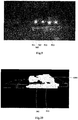
- FIG. 9 is another schematic diagram of the parking lot which is not blocked of this embodiment. As shown in FIG. 9 , there exists no blocking object in blocking detection areas 502 and 503, parking lots 402 and 403 are not blocked, and lights of vehicles in parking lots 402 and 403 are turned on. In FIG. 9 , a white line 901, a black line 902 and a grey line 903 are lines added to the surveillance image artificially, which are used to simulate the marking lines in blocking detection area 502.
- FIG. 10 is a schematic diagram of foreground detection to which FIG. 9 corresponds, in which a white pixel 1001 denotes the foreground of the image. As shown in FIG. 10 , there exist foregrounds resulted from vehicle lights in blocking detection areas 502 and 503.
- the foreground detecting unit 201 may determine that there exist blocking objects in blocking detection areas 502 and 503 on the basis of the schematic diagram of foreground detection in FIG. 10 , in which case the blocking flatness detecting unit 202 further determines whether there exist blocking objects in blocking detection areas 502 and 503.
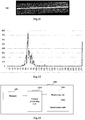
- FIG. 11 is an enlarged schematic diagram of blocking detection area 502 of FIG. 9
- FIG. 12 is a histogram of a gray scale of blocking detection area 502 of FIG. 9
- gray scale values of most pixels are about 73
- the gray scale value 73 is a gray scale value of a road in blocking detection area 502
- the blocking flatness detecting unit 202 calculates the mean square error of the predetermine number of pixels in the blocking detection area 502 on the basis of the histogram of a gray scale of FIG. 12 , so as to determine whether there exists a blocking object in the blocking detection area 502.
- the blocking flatness detecting unit 202 calculates that the mean square error of the gray scale values of the predetermine number of pixels is 6 and the average gray scale value of the predetermine number of pixels is 74, and sets the predetermined threshold value to be 10% of the average gray scale value 74, i.e. 7.4.
- the blocking flatness detecting unit 202 may determine that there exists no blocking object in blocking detection area 502. And furthermore, the blocking flatness detecting unit 202 may determine in the same manner that there exists no blocking object in blocking detection area 503.
- Embodiment 2 of this disclosure provides electronic equipment, including the detection apparatus of a status of a parking lot as described in Embodiment 1.
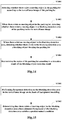
- FIG. 13 is a schematic diagram of a structure of the electronic equipment of Embodiment 2 of this disclosure.
- the electronic equipment 1300 may include a central processing unit (CPU) 1301 and a memory 1302, the memory 1302 being coupled to the central processing unit 1301.
- the memory 1302 may store various data, and furthermore, it may store a program for information processing, and execute the program under control of the central processing unit 1301.
- the functions of the detection apparatus may be integrated into the central processing unit 1301.
- the central processing unit 1301 may be configured to:
- the central processing unit 1301 may further be configured to:
- the central processing unit 1301 may further be configured to:
- the central processing unit 1301 may further be configured to:
- the central processing unit 1301 may further be configured to:
- the central processing unit 1301 may further be configured to:
- the central processing unit 1301 may further be configured to:
- the electronic equipment 1300 may further include an input/output unit 1303, and a displaying unit 1304, etc. Functions of the above components are similar to those in the prior art, and shall not be described herein any further. It should be noted that the electronic equipment 1300 does not necessarily include all the parts shown in FIG. 13 , and furthermore, the electronic equipment 1300 may include parts not shown in FIG. 13 , and the prior art may be referred to.
- Embodiment 3 of this disclosure provides a detection method of a status of a parking lot, which detects the status of the parking lot on the basis of a surveillance image of the parking lot, and corresponds to the detection apparatus 100 in Embodiment 1.
- FIG. 14 is a flowchart of the detection method of this embodiment. As shown in FIG. 14 , the method includes:
- step 1403 may include:
- FIG. 15 is a flowchart of a method for detecting whether there exists a blocking object on the basis of foreground detection. As shown in FIG. 15 , step 14031 includes:
- step 1403 may also include:
- step 14032 may also be carried out as follows: detecting whether the blocking detection area in the surveillance image is flat according to a relationship between a mean square error or an average absolute error of pixel values of a predetermined number of pixels of the blocking detection area in the surveillance image and a predetermined threshold value; wherein, the predetermined threshold value is determined according to an average pixel value of the predetermined number of pixels of the blocking detection area in the surveillance image.
- step 1403 may also include:
- step 14033 when the average gray scale value is greater than a first predetermined value, it is determined that there exists the blocking object; and when the average gray scale value is less than a second predetermined value, it is determined that there exists the blocking object.
- the first predetermined value is greater than the second predetermined value.
- the detection method of a status of a parking lot of this embodiment shall be described below by way of an embodiment.
- FIG. 16 is a flowchart of the detection method of a status of a parking lot of this embodiment.
- Pnum denotes the number of parking lots in the surveillance image
- Cnt denotes a parking lot counting number.
- the detection method includes:
- An embodiment of the present disclosure provides a computer readable program, which, when executed in a detection apparatus or electronic equipment, will cause the detection apparatus or the electronic equipment to carry out the detection method as described in Embodiment 3.
- An embodiment of the present disclosure provides a computer readable medium, including a computer readable program, which will cause a detection apparatus or electronic equipment to carry out the detection method as described in Embodiment 3.
- the detection apparatus described in conjunction with the embodiments of this disclosure may be directly embodied as hardware, software modules executed by a processor, or a combination thereof.
- one or more functional block diagrams and/or one or more combinations of the functional block diagrams shown in FIGs. 1-3 may either correspond to software modules of procedures of a computer program, or correspond to hardware modules.
- Such software modules may respectively correspond to the steps described in Embodiment 3.
- the hardware module for example, may be carried out by firming the soft modules by using a field programmable gate array (FPGA).
- FPGA field programmable gate array
- the soft modules may be located in an RAM, a flash memory, an ROM, an EPROM, and EEPROM, a register, a hard disc, a floppy disc, a CD-ROM, or any memory medium in other forms known in the art.
- a memory medium may be coupled to a processor, so that the processor may be able to read information from the memory medium, and write information into the memory medium; or the memory medium may be a component of the processor.
- the processor and the memory medium may be located in an ASIC.
- the soft modules may be stored in a memory of a mobile terminal, and may also be stored in a memory card of a pluggable mobile terminal.
- the soft modules may be stored in the MEGA-SIM card or the flash memory device of a large capacity.
- One or more functional blocks and/or one or more combinations of the functional blocks in FIGs. 1-3 may be realized as a universal processor, a digital signal processor (DSP), an application-specific integrated circuit (ASIC), a field programmable gate array (FPGA) or other programmable logic devices, discrete gate or transistor logic devices, discrete hardware component or any appropriate combinations thereof carrying out the functions described in this application.
- DSP digital signal processor
- ASIC application-specific integrated circuit
- FPGA field programmable gate array
- the one or more functional block diagrams and/or one or more combinations of the functional block diagrams shown in FIGs. 1-3 may also be realized as a combination of computing equipment, such as a combination of a DSP and a microprocessor, multiple processors, one or more microprocessors in communication combination with a DSP, or any other such configuration.
Landscapes
- Engineering & Computer Science (AREA)
- Physics & Mathematics (AREA)
- General Physics & Mathematics (AREA)
- Theoretical Computer Science (AREA)
- Multimedia (AREA)
- Computer Vision & Pattern Recognition (AREA)
- Traffic Control Systems (AREA)
- Image Analysis (AREA)
Applications Claiming Priority (1)
| Application Number | Priority Date | Filing Date | Title |
|---|---|---|---|
| CN201610540079.6A CN107610499A (zh) | 2016-07-11 | 2016-07-11 | 停车位状态的检测方法、检测装置和电子设备 |
Publications (2)
| Publication Number | Publication Date |
|---|---|
| EP3270364A2 true EP3270364A2 (de) | 2018-01-17 |
| EP3270364A3 EP3270364A3 (de) | 2018-02-14 |
Family
ID=59077796
Family Applications (1)
| Application Number | Title | Priority Date | Filing Date |
|---|---|---|---|
| EP17173215.9A Withdrawn EP3270364A3 (de) | 2016-07-11 | 2017-05-29 | Detektionsverfahren und -vorrichtung eines status eines parkplatzes und elektronische ausrüstung |
Country Status (4)
| Country | Link |
|---|---|
| US (1) | US20180129883A1 (de) |
| EP (1) | EP3270364A3 (de) |
| JP (1) | JP2018010634A (de) |
| CN (1) | CN107610499A (de) |
Cited By (3)
| Publication number | Priority date | Publication date | Assignee | Title |
|---|---|---|---|---|
| CN112669294A (zh) * | 2020-12-30 | 2021-04-16 | 深圳云天励飞技术股份有限公司 | 相机遮挡检测方法、装置、电子设备及存储介质 |
| CN112784794A (zh) * | 2021-01-29 | 2021-05-11 | 深圳市捷顺科技实业股份有限公司 | 一种车辆停放状态检测方法、装置、电子设备及存储介质 |
| US20230222844A1 (en) * | 2020-12-26 | 2023-07-13 | Xi'an Creation Keji Co., Ltd. | Parking lot management and control method based on object activity prediction, and electronic device |
Families Citing this family (9)
| Publication number | Priority date | Publication date | Assignee | Title |
|---|---|---|---|---|
| CN108154709B (zh) * | 2018-02-09 | 2020-06-30 | 京东方科技集团股份有限公司 | 一种获取停车位信息的方法及系统 |
| CN109766799B (zh) * | 2018-12-28 | 2021-02-12 | 百度在线网络技术(北京)有限公司 | 车位识别模型训练方法及装置和车位识别方法及装置 |
| CN109919906B (zh) * | 2019-01-23 | 2021-06-22 | 杭州电子科技大学 | 一种基于图像处理的安全检测方法及系统 |
| CN110852151B (zh) * | 2019-09-26 | 2024-02-20 | 深圳市金溢科技股份有限公司 | 一种路内泊位遮挡检测方法和装置 |
| CN110647858B (zh) * | 2019-09-29 | 2023-06-06 | 上海依图网络科技有限公司 | 一种视频遮挡判断方法、装置和计算机存储介质 |
| CN112965474B (zh) * | 2019-11-27 | 2024-08-09 | 安徽省大富机电技术有限公司 | 自动导向车agv的导航控制方法、系统以及存储介质 |
| US10957198B1 (en) * | 2019-12-23 | 2021-03-23 | Industrial Technology Research Institute | System and method for determining parking space |
| CN112382101B (zh) * | 2020-11-02 | 2022-11-04 | 北京精英路通科技有限公司 | 一种车位管理方法、装置、计算机设备及存储介质 |
| CN115410408B (zh) * | 2022-08-31 | 2024-05-24 | 南京慧尔视智能科技有限公司 | 停车位状态变化的检测方法、装置、设备和介质 |
Family Cites Families (14)
| Publication number | Priority date | Publication date | Assignee | Title |
|---|---|---|---|---|
| CN101414411B (zh) * | 2007-10-17 | 2010-08-25 | 财团法人工业技术研究院 | 影像式的空位侦测系统与方法 |
| CN101430789B (zh) * | 2008-11-19 | 2012-05-09 | 西安电子科技大学 | 基于Fast Slant Stack变换的图像边缘检测方法 |
| CN101656023B (zh) * | 2009-08-26 | 2011-02-02 | 西安理工大学 | 一种视频监视模式下的室内停车场管理方法 |
| CN102110376B (zh) * | 2011-02-18 | 2012-11-21 | 汤一平 | 基于计算机视觉的路边停车位检测装置 |
| CN102509077A (zh) * | 2011-10-28 | 2012-06-20 | 江苏物联网研究发展中心 | 基于光照自动评估的目标识别方法 |
| CN102592472B (zh) * | 2012-02-21 | 2014-06-04 | 北京工业大学 | 基于jpeg压缩图像的车位检测方法 |
| EP2925564B1 (de) * | 2012-11-27 | 2019-08-14 | Cloudparc, Inc. | Steuerung der verwendung eines einzelnen parkraums für mehrere fahrzeuge mit mehreren kameras |
| US11244171B2 (en) * | 2014-01-22 | 2022-02-08 | Conduent Business Services Llc | Video-based system for automated detection of double parking violations |
| US9858816B2 (en) * | 2014-05-21 | 2018-01-02 | Regents Of The University Of Minnesota | Determining parking space occupancy using a 3D representation |
| CN105224285A (zh) * | 2014-05-27 | 2016-01-06 | 北京三星通信技术研究有限公司 | 眼睛开闭状态检测装置和方法 |
| CN104112370B (zh) * | 2014-07-30 | 2016-08-17 | 哈尔滨工业大学深圳研究生院 | 基于监控图像的停车场智能车位识别方法及系统 |
| US20160110999A1 (en) * | 2014-10-15 | 2016-04-21 | Xerox Corporation | Methods and systems for parking monitoring with vehicle identification |
| CN105390021B (zh) * | 2015-11-16 | 2018-03-27 | 北京蓝卡科技股份有限公司 | 车位状态的检测方法及装置 |
| CN107071398A (zh) * | 2015-12-10 | 2017-08-18 | 青岛海信网络科技股份有限公司 | 一种视频质量诊断方法和系统 |
-
2016
- 2016-07-11 CN CN201610540079.6A patent/CN107610499A/zh active Pending
-
2017
- 2017-05-29 EP EP17173215.9A patent/EP3270364A3/de not_active Withdrawn
- 2017-07-06 US US15/642,540 patent/US20180129883A1/en not_active Abandoned
- 2017-07-07 JP JP2017133449A patent/JP2018010634A/ja active Pending
Cited By (6)
| Publication number | Priority date | Publication date | Assignee | Title |
|---|---|---|---|---|
| US20230222844A1 (en) * | 2020-12-26 | 2023-07-13 | Xi'an Creation Keji Co., Ltd. | Parking lot management and control method based on object activity prediction, and electronic device |
| US12266223B2 (en) * | 2020-12-26 | 2025-04-01 | Xi'an Creation Keji Co. ,Ltd. | Parking lot management and control method based on object activity prediction, and electronic device |
| CN112669294A (zh) * | 2020-12-30 | 2021-04-16 | 深圳云天励飞技术股份有限公司 | 相机遮挡检测方法、装置、电子设备及存储介质 |
| CN112669294B (zh) * | 2020-12-30 | 2024-04-02 | 深圳云天励飞技术股份有限公司 | 相机遮挡检测方法、装置、电子设备及存储介质 |
| CN112784794A (zh) * | 2021-01-29 | 2021-05-11 | 深圳市捷顺科技实业股份有限公司 | 一种车辆停放状态检测方法、装置、电子设备及存储介质 |
| CN112784794B (zh) * | 2021-01-29 | 2024-02-02 | 深圳市捷顺科技实业股份有限公司 | 一种车辆停放状态检测方法、装置、电子设备及存储介质 |
Also Published As
| Publication number | Publication date |
|---|---|
| JP2018010634A (ja) | 2018-01-18 |
| EP3270364A3 (de) | 2018-02-14 |
| CN107610499A (zh) | 2018-01-19 |
| US20180129883A1 (en) | 2018-05-10 |
Similar Documents
| Publication | Publication Date | Title |
|---|---|---|
| EP3270364A2 (de) | Detektionsverfahren und -vorrichtung eines status eines parkplatzes und elektronische ausrüstung | |
| KR102441085B1 (ko) | 횡단보도 인식 결과를 이용한 안내 정보 제공 장치 및 방법 | |
| US8391612B2 (en) | Edge detection with adaptive threshold | |
| CN110533950A (zh) | 车位使用状况的检测方法、装置、电子设备及存储介质 | |
| US20170032514A1 (en) | Abandoned object detection apparatus and method and system | |
| KR102521656B1 (ko) | 객체를 인식하는 방법 및 장치 | |
| EP3520024B1 (de) | Detektion und validierung von objekten aus sequentiellen bildern einer kamera mittels homographien | |
| Nur et al. | Vehicle detection based on underneath vehicle shadow using edge features | |
| CN114119955A (zh) | 一种潜在危险目标检测方法及装置 | |
| CN105303157A (zh) | 延伸用于avm停止线检测的检测范围的算法 | |
| DE102016218853A1 (de) | Detektion und Validierung von Objekten aus Bildern einer Kamera | |
| JP5983729B2 (ja) | 白線検出装置、白線検出フィルタ装置及び白線検出方法 | |
| Ghani et al. | Advances in lane marking detection algorithms for all-weather conditions. | |
| CN115861624B (zh) | 摄像头被遮挡的检测方法、装置、设备及存储介质 | |
| CN109409247B (zh) | 交通标志识别方法和装置 | |
| CN114627651B (zh) | 一种行人保护预警方法、装置、电子设备及可读存储介质 | |
| CN113673513B (zh) | 一种车牌识别方法、装置、设备及介质 | |
| CN112183413B (zh) | 一种车位检测方法、装置、存储介质及车辆 | |
| CN114141022B (zh) | 应急车道占用行为检测方法、装置、电子设备及存储介质 | |
| CN112101139A (zh) | 人形检测方法、装置、设备及存储介质 | |
| Dai et al. | A driving assistance system with vision based vehicle detection techniques | |
| CN107452230B (zh) | 一种障碍物检测方法、装置、终端设备及存储介质 | |
| Sampreeth et al. | An Improved Image Enhancement of Road-Lanes and Paint-Signs Using Verilog HDL | |
| Pillai et al. | Detecting tail lights for analyzing traffic during night using image processing techniques | |
| CN116148792A (zh) | 目标检测方法、道路事件检测方法、终端设备及存储介质 |
Legal Events
| Date | Code | Title | Description |
|---|---|---|---|
| PUAI | Public reference made under article 153(3) epc to a published international application that has entered the european phase |
Free format text: ORIGINAL CODE: 0009012 |
|
| PUAL | Search report despatched |
Free format text: ORIGINAL CODE: 0009013 |
|
| AK | Designated contracting states |
Kind code of ref document: A2 Designated state(s): AL AT BE BG CH CY CZ DE DK EE ES FI FR GB GR HR HU IE IS IT LI LT LU LV MC MK MT NL NO PL PT RO RS SE SI SK SM TR |
|
| AX | Request for extension of the european patent |
Extension state: BA ME |
|
| AK | Designated contracting states |
Kind code of ref document: A3 Designated state(s): AL AT BE BG CH CY CZ DE DK EE ES FI FR GB GR HR HU IE IS IT LI LT LU LV MC MK MT NL NO PL PT RO RS SE SI SK SM TR |
|
| AX | Request for extension of the european patent |
Extension state: BA ME |
|
| RIC1 | Information provided on ipc code assigned before grant |
Ipc: G08G 1/14 20060101AFI20180110BHEP |
|
| STAA | Information on the status of an ep patent application or granted ep patent |
Free format text: STATUS: THE APPLICATION IS DEEMED TO BE WITHDRAWN |
|
| 18D | Application deemed to be withdrawn |
Effective date: 20180815 |