EP3266584A1 - Surface-treated metal plate - Google Patents
Surface-treated metal plate Download PDFInfo
- Publication number
- EP3266584A1 EP3266584A1 EP16772500.1A EP16772500A EP3266584A1 EP 3266584 A1 EP3266584 A1 EP 3266584A1 EP 16772500 A EP16772500 A EP 16772500A EP 3266584 A1 EP3266584 A1 EP 3266584A1
- Authority
- EP
- European Patent Office
- Prior art keywords
- resin
- melting point
- metal sheet
- water
- melt adhesive
- Prior art date
- Legal status (The legal status is an assumption and is not a legal conclusion. Google has not performed a legal analysis and makes no representation as to the accuracy of the status listed.)
- Withdrawn
Links
- 229910052751 metal Inorganic materials 0.000 title claims abstract description 72
- 239000002184 metal Substances 0.000 title claims abstract description 72
- 229920005989 resin Polymers 0.000 claims abstract description 75
- 239000011347 resin Substances 0.000 claims abstract description 75
- -1 polypropylene Polymers 0.000 claims abstract description 66
- 229920001155 polypropylene Polymers 0.000 claims abstract description 62
- 239000004743 Polypropylene Substances 0.000 claims abstract description 61
- 238000002844 melting Methods 0.000 claims abstract description 59
- 230000008018 melting Effects 0.000 claims abstract description 59
- 239000004831 Hot glue Substances 0.000 claims abstract description 52
- 239000010410 layer Substances 0.000 claims abstract description 30
- 238000000465 moulding Methods 0.000 claims abstract description 27
- 239000000758 substrate Substances 0.000 claims abstract description 18
- 230000008859 change Effects 0.000 claims abstract description 12
- 239000000805 composite resin Substances 0.000 claims abstract description 11
- 229920005673 polypropylene based resin Polymers 0.000 claims abstract description 7
- XLYOFNOQVPJJNP-UHFFFAOYSA-N water Substances O XLYOFNOQVPJJNP-UHFFFAOYSA-N 0.000 claims description 43
- 239000000126 substance Substances 0.000 claims description 41
- 238000007739 conversion coating Methods 0.000 claims description 28
- 229920001187 thermosetting polymer Polymers 0.000 claims description 22
- 239000006087 Silane Coupling Agent Substances 0.000 claims description 20
- VYPSYNLAJGMNEJ-UHFFFAOYSA-N Silicium dioxide Chemical compound O=[Si]=O VYPSYNLAJGMNEJ-UHFFFAOYSA-N 0.000 claims description 17
- 239000008119 colloidal silica Substances 0.000 claims description 17
- 229920002803 thermoplastic polyurethane Polymers 0.000 claims description 17
- 239000004925 Acrylic resin Substances 0.000 claims description 14
- 229920000178 Acrylic resin Polymers 0.000 claims description 14
- 239000003431 cross linking reagent Substances 0.000 claims description 13
- 239000011342 resin composition Substances 0.000 claims description 13
- 125000003178 carboxy group Chemical group [H]OC(*)=O 0.000 claims description 12
- 229910000831 Steel Inorganic materials 0.000 claims description 10
- 239000010959 steel Substances 0.000 claims description 10
- 239000003822 epoxy resin Substances 0.000 claims description 9
- 229920000647 polyepoxide Polymers 0.000 claims description 9
- 229920001568 phenolic resin Polymers 0.000 claims description 6
- 239000005011 phenolic resin Substances 0.000 claims description 6
- KXGFMDJXCMQABM-UHFFFAOYSA-N 2-methoxy-6-methylphenol Chemical compound [CH]OC1=CC=CC([CH])=C1O KXGFMDJXCMQABM-UHFFFAOYSA-N 0.000 claims description 4
- 238000000576 coating method Methods 0.000 description 17
- 230000000052 comparative effect Effects 0.000 description 17
- 239000011248 coating agent Substances 0.000 description 15
- 239000007788 liquid Substances 0.000 description 13
- 230000001070 adhesive effect Effects 0.000 description 11
- NIXOWILDQLNWCW-UHFFFAOYSA-M Acrylate Chemical compound [O-]C(=O)C=C NIXOWILDQLNWCW-UHFFFAOYSA-M 0.000 description 10
- 239000000853 adhesive Substances 0.000 description 10
- 239000003365 glass fiber Substances 0.000 description 8
- 238000010438 heat treatment Methods 0.000 description 8
- 238000001746 injection moulding Methods 0.000 description 8
- 239000005056 polyisocyanate Substances 0.000 description 8
- 229920001228 polyisocyanate Polymers 0.000 description 8
- 239000007787 solid Substances 0.000 description 8
- 239000012790 adhesive layer Substances 0.000 description 7
- 238000006243 chemical reaction Methods 0.000 description 6
- 239000000839 emulsion Substances 0.000 description 6
- 238000002156 mixing Methods 0.000 description 6
- CERQOIWHTDAKMF-UHFFFAOYSA-N Methacrylic acid Chemical compound CC(=C)C(O)=O CERQOIWHTDAKMF-UHFFFAOYSA-N 0.000 description 5
- 150000001875 compounds Chemical class 0.000 description 5
- 230000002950 deficient Effects 0.000 description 5
- 238000000034 method Methods 0.000 description 5
- 229920005992 thermoplastic resin Polymers 0.000 description 5
- IISBACLAFKSPIT-UHFFFAOYSA-N bisphenol A Chemical compound C=1C=C(O)C=CC=1C(C)(C)C1=CC=C(O)C=C1 IISBACLAFKSPIT-UHFFFAOYSA-N 0.000 description 4
- 239000000203 mixture Substances 0.000 description 4
- 229920000642 polymer Polymers 0.000 description 4
- JVYDLYGCSIHCMR-UHFFFAOYSA-N 2,2-bis(hydroxymethyl)butanoic acid Chemical compound CCC(CO)(CO)C(O)=O JVYDLYGCSIHCMR-UHFFFAOYSA-N 0.000 description 3
- PEDCQBHIVMGVHV-UHFFFAOYSA-N Glycerine Chemical compound OCC(O)CO PEDCQBHIVMGVHV-UHFFFAOYSA-N 0.000 description 3
- 239000002253 acid Substances 0.000 description 3
- 125000003277 amino group Chemical group 0.000 description 3
- VPKDCDLSJZCGKE-UHFFFAOYSA-N carbodiimide group Chemical group N=C=N VPKDCDLSJZCGKE-UHFFFAOYSA-N 0.000 description 3
- 238000005260 corrosion Methods 0.000 description 3
- 230000007797 corrosion Effects 0.000 description 3
- 125000005442 diisocyanate group Chemical group 0.000 description 3
- 239000006185 dispersion Substances 0.000 description 3
- 238000002347 injection Methods 0.000 description 3
- 239000007924 injection Substances 0.000 description 3
- 238000004519 manufacturing process Methods 0.000 description 3
- ISWSIDIOOBJBQZ-UHFFFAOYSA-N phenol group Chemical group C1(=CC=CC=C1)O ISWSIDIOOBJBQZ-UHFFFAOYSA-N 0.000 description 3
- 229920005862 polyol Polymers 0.000 description 3
- 150000003077 polyols Chemical class 0.000 description 3
- 238000004383 yellowing Methods 0.000 description 3
- PTBDIHRZYDMNKB-UHFFFAOYSA-N 2,2-Bis(hydroxymethyl)propionic acid Chemical compound OCC(C)(CO)C(O)=O PTBDIHRZYDMNKB-UHFFFAOYSA-N 0.000 description 2
- SJECZPVISLOESU-UHFFFAOYSA-N 3-trimethoxysilylpropan-1-amine Chemical compound CO[Si](OC)(OC)CCCN SJECZPVISLOESU-UHFFFAOYSA-N 0.000 description 2
- 229920001342 Bakelite® Polymers 0.000 description 2
- 239000004593 Epoxy Substances 0.000 description 2
- LFQSCWFLJHTTHZ-UHFFFAOYSA-N Ethanol Chemical compound CCO LFQSCWFLJHTTHZ-UHFFFAOYSA-N 0.000 description 2
- JOYRKODLDBILNP-UHFFFAOYSA-N Ethyl urethane Chemical compound CCOC(N)=O JOYRKODLDBILNP-UHFFFAOYSA-N 0.000 description 2
- WSFSSNUMVMOOMR-UHFFFAOYSA-N Formaldehyde Chemical compound O=C WSFSSNUMVMOOMR-UHFFFAOYSA-N 0.000 description 2
- 229910001335 Galvanized steel Inorganic materials 0.000 description 2
- 229920003355 Novatec® Polymers 0.000 description 2
- 239000000654 additive Substances 0.000 description 2
- 230000008901 benefit Effects 0.000 description 2
- PXKLMJQFEQBVLD-UHFFFAOYSA-N bisphenol F Chemical compound C1=CC(O)=CC=C1CC1=CC=C(O)C=C1 PXKLMJQFEQBVLD-UHFFFAOYSA-N 0.000 description 2
- 229940106691 bisphenol a Drugs 0.000 description 2
- 239000004566 building material Substances 0.000 description 2
- 238000004132 cross linking Methods 0.000 description 2
- 238000007865 diluting Methods 0.000 description 2
- 230000000694 effects Effects 0.000 description 2
- 238000005516 engineering process Methods 0.000 description 2
- 230000002708 enhancing effect Effects 0.000 description 2
- 230000002349 favourable effect Effects 0.000 description 2
- HYBBIBNJHNGZAN-UHFFFAOYSA-N furfural Chemical compound O=CC1=CC=CO1 HYBBIBNJHNGZAN-UHFFFAOYSA-N 0.000 description 2
- 239000008397 galvanized steel Substances 0.000 description 2
- LNEPOXFFQSENCJ-UHFFFAOYSA-N haloperidol Chemical class C1CC(O)(C=2C=CC(Cl)=CC=2)CCN1CCCC(=O)C1=CC=C(F)C=C1 LNEPOXFFQSENCJ-UHFFFAOYSA-N 0.000 description 2
- 239000012948 isocyanate Substances 0.000 description 2
- 150000002513 isocyanates Chemical class 0.000 description 2
- NLYAJNPCOHFWQQ-UHFFFAOYSA-N kaolin Chemical compound O.O.O=[Al]O[Si](=O)O[Si](=O)O[Al]=O NLYAJNPCOHFWQQ-UHFFFAOYSA-N 0.000 description 2
- RLAWWYSOJDYHDC-BZSNNMDCSA-N lisinopril Chemical compound C([C@H](N[C@@H](CCCCN)C(=O)N1[C@@H](CCC1)C(O)=O)C(O)=O)CC1=CC=CC=C1 RLAWWYSOJDYHDC-BZSNNMDCSA-N 0.000 description 2
- 239000000463 material Substances 0.000 description 2
- 239000002245 particle Substances 0.000 description 2
- 238000007711 solidification Methods 0.000 description 2
- 230000008023 solidification Effects 0.000 description 2
- 239000002904 solvent Substances 0.000 description 2
- DVKJHBMWWAPEIU-UHFFFAOYSA-N toluene 2,4-diisocyanate Chemical compound CC1=CC=C(N=C=O)C=C1N=C=O DVKJHBMWWAPEIU-UHFFFAOYSA-N 0.000 description 2
- 125000000391 vinyl group Chemical group [H]C([*])=C([H])[H] 0.000 description 2
- DTGKSKDOIYIVQL-WEDXCCLWSA-N (+)-borneol Chemical group C1C[C@@]2(C)[C@@H](O)C[C@@H]1C2(C)C DTGKSKDOIYIVQL-WEDXCCLWSA-N 0.000 description 1
- WHOZNOZYMBRCBL-OUKQBFOZSA-N (2E)-2-Tetradecenal Chemical compound CCCCCCCCCCC\C=C\C=O WHOZNOZYMBRCBL-OUKQBFOZSA-N 0.000 description 1
- WYTZZXDRDKSJID-UHFFFAOYSA-N (3-aminopropyl)triethoxysilane Chemical compound CCO[Si](OCC)(OCC)CCCN WYTZZXDRDKSJID-UHFFFAOYSA-N 0.000 description 1
- NNOZGCICXAYKLW-UHFFFAOYSA-N 1,2-bis(2-isocyanatopropan-2-yl)benzene Chemical compound O=C=NC(C)(C)C1=CC=CC=C1C(C)(C)N=C=O NNOZGCICXAYKLW-UHFFFAOYSA-N 0.000 description 1
- FKTHNVSLHLHISI-UHFFFAOYSA-N 1,2-bis(isocyanatomethyl)benzene Chemical compound O=C=NCC1=CC=CC=C1CN=C=O FKTHNVSLHLHISI-UHFFFAOYSA-N 0.000 description 1
- MTZUIIAIAKMWLI-UHFFFAOYSA-N 1,2-diisocyanatobenzene Chemical compound O=C=NC1=CC=CC=C1N=C=O MTZUIIAIAKMWLI-UHFFFAOYSA-N 0.000 description 1
- RTTZISZSHSCFRH-UHFFFAOYSA-N 1,3-bis(isocyanatomethyl)benzene Chemical compound O=C=NCC1=CC=CC(CN=C=O)=C1 RTTZISZSHSCFRH-UHFFFAOYSA-N 0.000 description 1
- VGHSXKTVMPXHNG-UHFFFAOYSA-N 1,3-diisocyanatobenzene Chemical compound O=C=NC1=CC=CC(N=C=O)=C1 VGHSXKTVMPXHNG-UHFFFAOYSA-N 0.000 description 1
- OHLKMGYGBHFODF-UHFFFAOYSA-N 1,4-bis(isocyanatomethyl)benzene Chemical compound O=C=NCC1=CC=C(CN=C=O)C=C1 OHLKMGYGBHFODF-UHFFFAOYSA-N 0.000 description 1
- ALQLPWJFHRMHIU-UHFFFAOYSA-N 1,4-diisocyanatobenzene Chemical compound O=C=NC1=CC=C(N=C=O)C=C1 ALQLPWJFHRMHIU-UHFFFAOYSA-N 0.000 description 1
- SBJCUZQNHOLYMD-UHFFFAOYSA-N 1,5-Naphthalene diisocyanate Chemical compound C1=CC=C2C(N=C=O)=CC=CC2=C1N=C=O SBJCUZQNHOLYMD-UHFFFAOYSA-N 0.000 description 1
- UWFRVQVNYNPBEF-UHFFFAOYSA-N 1-(2,4-dimethylphenyl)propan-1-one Chemical compound CCC(=O)C1=CC=C(C)C=C1C UWFRVQVNYNPBEF-UHFFFAOYSA-N 0.000 description 1
- LFSYUSUFCBOHGU-UHFFFAOYSA-N 1-isocyanato-2-[(4-isocyanatophenyl)methyl]benzene Chemical compound C1=CC(N=C=O)=CC=C1CC1=CC=CC=C1N=C=O LFSYUSUFCBOHGU-UHFFFAOYSA-N 0.000 description 1
- VZSRBBMJRBPUNF-UHFFFAOYSA-N 2-(2,3-dihydro-1H-inden-2-ylamino)-N-[3-oxo-3-(2,4,6,7-tetrahydrotriazolo[4,5-c]pyridin-5-yl)propyl]pyrimidine-5-carboxamide Chemical compound C1C(CC2=CC=CC=C12)NC1=NC=C(C=N1)C(=O)NCCC(N1CC2=C(CC1)NN=N2)=O VZSRBBMJRBPUNF-UHFFFAOYSA-N 0.000 description 1
- VNPMDUDIDCXVCH-UHFFFAOYSA-N 2-[4-[2-(2,3-dihydro-1H-inden-2-ylamino)pyrimidin-5-yl]-3-(3-piperazin-1-ylpropyl)pyrazol-1-yl]-1-(2,4,6,7-tetrahydrotriazolo[4,5-c]pyridin-5-yl)ethanone Chemical compound O=C(CN1C=C(C(CCCN2CCNCC2)=N1)C1=CN=C(NC2CC3=C(C2)C=CC=C3)N=C1)N1CCC2=C(C1)N=NN2 VNPMDUDIDCXVCH-UHFFFAOYSA-N 0.000 description 1
- JQMFQLVAJGZSQS-UHFFFAOYSA-N 2-[4-[2-(2,3-dihydro-1H-inden-2-ylamino)pyrimidin-5-yl]piperazin-1-yl]-N-(2-oxo-3H-1,3-benzoxazol-6-yl)acetamide Chemical compound C1C(CC2=CC=CC=C12)NC1=NC=C(C=N1)N1CCN(CC1)CC(=O)NC1=CC2=C(NC(O2)=O)C=C1 JQMFQLVAJGZSQS-UHFFFAOYSA-N 0.000 description 1
- KUAUJXBLDYVELT-UHFFFAOYSA-N 2-[[2,2-dimethyl-3-(oxiran-2-ylmethoxy)propoxy]methyl]oxirane Chemical compound C1OC1COCC(C)(C)COCC1CO1 KUAUJXBLDYVELT-UHFFFAOYSA-N 0.000 description 1
- ISPYQTSUDJAMAB-UHFFFAOYSA-N 2-chlorophenol Chemical compound OC1=CC=CC=C1Cl ISPYQTSUDJAMAB-UHFFFAOYSA-N 0.000 description 1
- QTWJRLJHJPIABL-UHFFFAOYSA-N 2-methylphenol;3-methylphenol;4-methylphenol Chemical compound CC1=CC=C(O)C=C1.CC1=CC=CC(O)=C1.CC1=CC=CC=C1O QTWJRLJHJPIABL-UHFFFAOYSA-N 0.000 description 1
- IKYAJDOSWUATPI-UHFFFAOYSA-N 3-[dimethoxy(methyl)silyl]propane-1-thiol Chemical compound CO[Si](C)(OC)CCCS IKYAJDOSWUATPI-UHFFFAOYSA-N 0.000 description 1
- ZLAOXGYWRBSWOY-UHFFFAOYSA-N 3-chloropropyl(methoxy)silane Chemical compound CO[SiH2]CCCCl ZLAOXGYWRBSWOY-UHFFFAOYSA-N 0.000 description 1
- OXYZDRAJMHGSMW-UHFFFAOYSA-N 3-chloropropyl(trimethoxy)silane Chemical compound CO[Si](OC)(OC)CCCCl OXYZDRAJMHGSMW-UHFFFAOYSA-N 0.000 description 1
- ULMZOZMSDIOZAF-UHFFFAOYSA-N 3-hydroxy-2-(hydroxymethyl)propanoic acid Chemical compound OCC(CO)C(O)=O ULMZOZMSDIOZAF-UHFFFAOYSA-N 0.000 description 1
- UUEWCQRISZBELL-UHFFFAOYSA-N 3-trimethoxysilylpropane-1-thiol Chemical compound CO[Si](OC)(OC)CCCS UUEWCQRISZBELL-UHFFFAOYSA-N 0.000 description 1
- XDLMVUHYZWKMMD-UHFFFAOYSA-N 3-trimethoxysilylpropyl 2-methylprop-2-enoate Chemical compound CO[Si](OC)(OC)CCCOC(=O)C(C)=C XDLMVUHYZWKMMD-UHFFFAOYSA-N 0.000 description 1
- UPMLOUAZCHDJJD-UHFFFAOYSA-N 4,4'-Diphenylmethane Diisocyanate Chemical compound C1=CC(N=C=O)=CC=C1CC1=CC=C(N=C=O)C=C1 UPMLOUAZCHDJJD-UHFFFAOYSA-N 0.000 description 1
- VPWNQTHUCYMVMZ-UHFFFAOYSA-N 4,4'-sulfonyldiphenol Chemical compound C1=CC(O)=CC=C1S(=O)(=O)C1=CC=C(O)C=C1 VPWNQTHUCYMVMZ-UHFFFAOYSA-N 0.000 description 1
- SXIFAEWFOJETOA-UHFFFAOYSA-N 4-hydroxy-butyl Chemical group [CH2]CCCO SXIFAEWFOJETOA-UHFFFAOYSA-N 0.000 description 1
- 229920000049 Carbon (fiber) Polymers 0.000 description 1
- 239000004970 Chain extender Substances 0.000 description 1
- RYGMFSIKBFXOCR-UHFFFAOYSA-N Copper Chemical compound [Cu] RYGMFSIKBFXOCR-UHFFFAOYSA-N 0.000 description 1
- FBPFZTCFMRRESA-FSIIMWSLSA-N D-Glucitol Natural products OC[C@H](O)[C@H](O)[C@@H](O)[C@H](O)CO FBPFZTCFMRRESA-FSIIMWSLSA-N 0.000 description 1
- VGGSQFUCUMXWEO-UHFFFAOYSA-N Ethene Chemical compound C=C VGGSQFUCUMXWEO-UHFFFAOYSA-N 0.000 description 1
- 239000005977 Ethylene Substances 0.000 description 1
- PIICEJLVQHRZGT-UHFFFAOYSA-N Ethylenediamine Chemical compound NCCN PIICEJLVQHRZGT-UHFFFAOYSA-N 0.000 description 1
- 239000005057 Hexamethylene diisocyanate Substances 0.000 description 1
- 239000005058 Isophorone diisocyanate Substances 0.000 description 1
- VCUFZILGIRCDQQ-KRWDZBQOSA-N N-[[(5S)-2-oxo-3-(2-oxo-3H-1,3-benzoxazol-6-yl)-1,3-oxazolidin-5-yl]methyl]-2-[[3-(trifluoromethoxy)phenyl]methylamino]pyrimidine-5-carboxamide Chemical compound O=C1O[C@H](CN1C1=CC2=C(NC(O2)=O)C=C1)CNC(=O)C=1C=NC(=NC=1)NCC1=CC(=CC=C1)OC(F)(F)F VCUFZILGIRCDQQ-KRWDZBQOSA-N 0.000 description 1
- 229920012564 PP GF40 Polymers 0.000 description 1
- 229920006956 PP-GF40 Polymers 0.000 description 1
- RTAQQCXQSZGOHL-UHFFFAOYSA-N Titanium Chemical compound [Ti] RTAQQCXQSZGOHL-UHFFFAOYSA-N 0.000 description 1
- ZJCCRDAZUWHFQH-UHFFFAOYSA-N Trimethylolpropane Chemical compound CCC(CO)(CO)CO ZJCCRDAZUWHFQH-UHFFFAOYSA-N 0.000 description 1
- YIMQCDZDWXUDCA-UHFFFAOYSA-N [4-(hydroxymethyl)cyclohexyl]methanol Chemical compound OCC1CCC(CO)CC1 YIMQCDZDWXUDCA-UHFFFAOYSA-N 0.000 description 1
- 150000007513 acids Chemical class 0.000 description 1
- 150000001299 aldehydes Chemical class 0.000 description 1
- 239000003513 alkali Substances 0.000 description 1
- 229910052782 aluminium Inorganic materials 0.000 description 1
- XAGFODPZIPBFFR-UHFFFAOYSA-N aluminium Chemical compound [Al] XAGFODPZIPBFFR-UHFFFAOYSA-N 0.000 description 1
- 150000001412 amines Chemical class 0.000 description 1
- 239000004599 antimicrobial Substances 0.000 description 1
- 239000003963 antioxidant agent Substances 0.000 description 1
- 230000015572 biosynthetic process Effects 0.000 description 1
- YXVFYQXJAXKLAK-UHFFFAOYSA-N biphenyl-4-ol Chemical compound C1=CC(O)=CC=C1C1=CC=CC=C1 YXVFYQXJAXKLAK-UHFFFAOYSA-N 0.000 description 1
- 125000000484 butyl group Chemical group [H]C([*])([H])C([H])([H])C([H])([H])C([H])([H])[H] 0.000 description 1
- 229910052799 carbon Inorganic materials 0.000 description 1
- 239000004917 carbon fiber Substances 0.000 description 1
- 150000001732 carboxylic acid derivatives Chemical class 0.000 description 1
- 230000015556 catabolic process Effects 0.000 description 1
- 239000003054 catalyst Substances 0.000 description 1
- PMMYEEVYMWASQN-IMJSIDKUSA-N cis-4-Hydroxy-L-proline Chemical compound O[C@@H]1CN[C@H](C(O)=O)C1 PMMYEEVYMWASQN-IMJSIDKUSA-N 0.000 description 1
- 239000010960 cold rolled steel Substances 0.000 description 1
- 239000002131 composite material Substances 0.000 description 1
- 238000006482 condensation reaction Methods 0.000 description 1
- 238000001816 cooling Methods 0.000 description 1
- 229920001577 copolymer Polymers 0.000 description 1
- 229910052802 copper Inorganic materials 0.000 description 1
- 239000010949 copper Substances 0.000 description 1
- 229930003836 cresol Natural products 0.000 description 1
- 238000006731 degradation reaction Methods 0.000 description 1
- 230000002542 deteriorative effect Effects 0.000 description 1
- WHGNXNCOTZPEEK-UHFFFAOYSA-N dimethoxy-methyl-[3-(oxiran-2-ylmethoxy)propyl]silane Chemical compound CO[Si](C)(OC)CCCOCC1CO1 WHGNXNCOTZPEEK-UHFFFAOYSA-N 0.000 description 1
- 238000009826 distribution Methods 0.000 description 1
- 238000001035 drying Methods 0.000 description 1
- 239000000975 dye Substances 0.000 description 1
- 230000007613 environmental effect Effects 0.000 description 1
- FWDBOZPQNFPOLF-UHFFFAOYSA-N ethenyl(triethoxy)silane Chemical compound CCO[Si](OCC)(OCC)C=C FWDBOZPQNFPOLF-UHFFFAOYSA-N 0.000 description 1
- NKSJNEHGWDZZQF-UHFFFAOYSA-N ethenyl(trimethoxy)silane Chemical compound CO[Si](OC)(OC)C=C NKSJNEHGWDZZQF-UHFFFAOYSA-N 0.000 description 1
- WOXXJEVNDJOOLV-UHFFFAOYSA-N ethenyl-tris(2-methoxyethoxy)silane Chemical compound COCCO[Si](OCCOC)(OCCOC)C=C WOXXJEVNDJOOLV-UHFFFAOYSA-N 0.000 description 1
- 125000001495 ethyl group Chemical group [H]C([H])([H])C([H])([H])* 0.000 description 1
- 238000011156 evaluation Methods 0.000 description 1
- 239000003063 flame retardant Substances 0.000 description 1
- 125000003055 glycidyl group Chemical group C(C1CO1)* 0.000 description 1
- 125000005843 halogen group Chemical group 0.000 description 1
- RRAMGCGOFNQTLD-UHFFFAOYSA-N hexamethylene diisocyanate Chemical compound O=C=NCCCCCCN=C=O RRAMGCGOFNQTLD-UHFFFAOYSA-N 0.000 description 1
- 229920001519 homopolymer Polymers 0.000 description 1
- 238000011835 investigation Methods 0.000 description 1
- 125000000959 isobutyl group Chemical group [H]C([H])([H])C([H])(C([H])([H])[H])C([H])([H])* 0.000 description 1
- IQPQWNKOIGAROB-UHFFFAOYSA-N isocyanate group Chemical group [N-]=C=O IQPQWNKOIGAROB-UHFFFAOYSA-N 0.000 description 1
- NIMLQBUJDJZYEJ-UHFFFAOYSA-N isophorone diisocyanate Chemical compound CC1(C)CC(N=C=O)CC(C)(CN=C=O)C1 NIMLQBUJDJZYEJ-UHFFFAOYSA-N 0.000 description 1
- 238000004898 kneading Methods 0.000 description 1
- 239000000314 lubricant Substances 0.000 description 1
- FPYJFEHAWHCUMM-UHFFFAOYSA-N maleic anhydride Chemical compound O=C1OC(=O)C=C1 FPYJFEHAWHCUMM-UHFFFAOYSA-N 0.000 description 1
- 238000005259 measurement Methods 0.000 description 1
- 238000000691 measurement method Methods 0.000 description 1
- AYLRODJJLADBOB-QMMMGPOBSA-N methyl (2s)-2,6-diisocyanatohexanoate Chemical compound COC(=O)[C@@H](N=C=O)CCCCN=C=O AYLRODJJLADBOB-QMMMGPOBSA-N 0.000 description 1
- 125000002496 methyl group Chemical group [H]C([H])([H])* 0.000 description 1
- 238000012986 modification Methods 0.000 description 1
- 230000004048 modification Effects 0.000 description 1
- 239000000178 monomer Substances 0.000 description 1
- PHQOGHDTIVQXHL-UHFFFAOYSA-N n'-(3-trimethoxysilylpropyl)ethane-1,2-diamine Chemical compound CO[Si](OC)(OC)CCCNCCN PHQOGHDTIVQXHL-UHFFFAOYSA-N 0.000 description 1
- MQWFLKHKWJMCEN-UHFFFAOYSA-N n'-[3-[dimethoxy(methyl)silyl]propyl]ethane-1,2-diamine Chemical compound CO[Si](C)(OC)CCCNCCN MQWFLKHKWJMCEN-UHFFFAOYSA-N 0.000 description 1
- WXZMFSXDPGVJKK-UHFFFAOYSA-N pentaerythritol Chemical compound OCC(CO)(CO)CO WXZMFSXDPGVJKK-UHFFFAOYSA-N 0.000 description 1
- 229940044654 phenolsulfonic acid Drugs 0.000 description 1
- 239000000049 pigment Substances 0.000 description 1
- 229920003023 plastic Polymers 0.000 description 1
- 239000004033 plastic Substances 0.000 description 1
- 239000004014 plasticizer Substances 0.000 description 1
- 229920002647 polyamide Polymers 0.000 description 1
- 229920000768 polyamine Polymers 0.000 description 1
- 229920001223 polyethylene glycol Polymers 0.000 description 1
- 229920002635 polyurethane Polymers 0.000 description 1
- 239000004814 polyurethane Substances 0.000 description 1
- 229920005749 polyurethane resin Polymers 0.000 description 1
- 239000000843 powder Substances 0.000 description 1
- 238000012545 processing Methods 0.000 description 1
- AOHJOMMDDJHIJH-UHFFFAOYSA-N propylenediamine Chemical compound CC(N)CN AOHJOMMDDJHIJH-UHFFFAOYSA-N 0.000 description 1
- 229920005604 random copolymer Polymers 0.000 description 1
- 230000009257 reactivity Effects 0.000 description 1
- 239000012783 reinforcing fiber Substances 0.000 description 1
- GHMLBKRAJCXXBS-UHFFFAOYSA-N resorcinol Chemical compound OC1=CC=CC(O)=C1 GHMLBKRAJCXXBS-UHFFFAOYSA-N 0.000 description 1
- 229960001755 resorcinol Drugs 0.000 description 1
- 229920006395 saturated elastomer Polymers 0.000 description 1
- 239000000243 solution Substances 0.000 description 1
- 239000000600 sorbitol Substances 0.000 description 1
- 238000005507 spraying Methods 0.000 description 1
- 238000003756 stirring Methods 0.000 description 1
- 230000002194 synthesizing effect Effects 0.000 description 1
- 125000003396 thiol group Chemical group [H]S* 0.000 description 1
- 239000010936 titanium Substances 0.000 description 1
- 229910052719 titanium Inorganic materials 0.000 description 1
- RUELTTOHQODFPA-UHFFFAOYSA-N toluene 2,6-diisocyanate Chemical compound CC1=C(N=C=O)C=CC=C1N=C=O RUELTTOHQODFPA-UHFFFAOYSA-N 0.000 description 1
- JXUKBNICSRJFAP-UHFFFAOYSA-N triethoxy-[3-(oxiran-2-ylmethoxy)propyl]silane Chemical compound CCO[Si](OCC)(OCC)CCCOCC1CO1 JXUKBNICSRJFAP-UHFFFAOYSA-N 0.000 description 1
- BPSIOYPQMFLKFR-UHFFFAOYSA-N trimethoxy-[3-(oxiran-2-ylmethoxy)propyl]silane Chemical compound CO[Si](OC)(OC)CCCOCC1CO1 BPSIOYPQMFLKFR-UHFFFAOYSA-N 0.000 description 1
- 235000021122 unsaturated fatty acids Nutrition 0.000 description 1
- 150000004670 unsaturated fatty acids Chemical class 0.000 description 1
- 229920002554 vinyl polymer Polymers 0.000 description 1
- 239000002699 waste material Substances 0.000 description 1
Images

Classifications
-
- C—CHEMISTRY; METALLURGY
- C09—DYES; PAINTS; POLISHES; NATURAL RESINS; ADHESIVES; COMPOSITIONS NOT OTHERWISE PROVIDED FOR; APPLICATIONS OF MATERIALS NOT OTHERWISE PROVIDED FOR
- C09J—ADHESIVES; NON-MECHANICAL ASPECTS OF ADHESIVE PROCESSES IN GENERAL; ADHESIVE PROCESSES NOT PROVIDED FOR ELSEWHERE; USE OF MATERIALS AS ADHESIVES
- C09J7/00—Adhesives in the form of films or foils
- C09J7/20—Adhesives in the form of films or foils characterised by their carriers
- C09J7/28—Metal sheet
-
- B—PERFORMING OPERATIONS; TRANSPORTING
- B29—WORKING OF PLASTICS; WORKING OF SUBSTANCES IN A PLASTIC STATE IN GENERAL
- B29C—SHAPING OR JOINING OF PLASTICS; SHAPING OF MATERIAL IN A PLASTIC STATE, NOT OTHERWISE PROVIDED FOR; AFTER-TREATMENT OF THE SHAPED PRODUCTS, e.g. REPAIRING
- B29C45/00—Injection moulding, i.e. forcing the required volume of moulding material through a nozzle into a closed mould; Apparatus therefor
- B29C45/14—Injection moulding, i.e. forcing the required volume of moulding material through a nozzle into a closed mould; Apparatus therefor incorporating preformed parts or layers, e.g. injection moulding around inserts or for coating articles
- B29C45/14311—Injection moulding, i.e. forcing the required volume of moulding material through a nozzle into a closed mould; Apparatus therefor incorporating preformed parts or layers, e.g. injection moulding around inserts or for coating articles using means for bonding the coating to the articles
-
- B—PERFORMING OPERATIONS; TRANSPORTING
- B29—WORKING OF PLASTICS; WORKING OF SUBSTANCES IN A PLASTIC STATE IN GENERAL
- B29C—SHAPING OR JOINING OF PLASTICS; SHAPING OF MATERIAL IN A PLASTIC STATE, NOT OTHERWISE PROVIDED FOR; AFTER-TREATMENT OF THE SHAPED PRODUCTS, e.g. REPAIRING
- B29C45/00—Injection moulding, i.e. forcing the required volume of moulding material through a nozzle into a closed mould; Apparatus therefor
- B29C45/14—Injection moulding, i.e. forcing the required volume of moulding material through a nozzle into a closed mould; Apparatus therefor incorporating preformed parts or layers, e.g. injection moulding around inserts or for coating articles
-
- B—PERFORMING OPERATIONS; TRANSPORTING
- B32—LAYERED PRODUCTS
- B32B—LAYERED PRODUCTS, i.e. PRODUCTS BUILT-UP OF STRATA OF FLAT OR NON-FLAT, e.g. CELLULAR OR HONEYCOMB, FORM
- B32B15/00—Layered products comprising a layer of metal
- B32B15/04—Layered products comprising a layer of metal comprising metal as the main or only constituent of a layer, which is next to another layer of the same or of a different material
- B32B15/08—Layered products comprising a layer of metal comprising metal as the main or only constituent of a layer, which is next to another layer of the same or of a different material of synthetic resin
- B32B15/085—Layered products comprising a layer of metal comprising metal as the main or only constituent of a layer, which is next to another layer of the same or of a different material of synthetic resin comprising polyolefins
-
- C—CHEMISTRY; METALLURGY
- C09—DYES; PAINTS; POLISHES; NATURAL RESINS; ADHESIVES; COMPOSITIONS NOT OTHERWISE PROVIDED FOR; APPLICATIONS OF MATERIALS NOT OTHERWISE PROVIDED FOR
- C09J—ADHESIVES; NON-MECHANICAL ASPECTS OF ADHESIVE PROCESSES IN GENERAL; ADHESIVE PROCESSES NOT PROVIDED FOR ELSEWHERE; USE OF MATERIALS AS ADHESIVES
- C09J7/00—Adhesives in the form of films or foils
- C09J7/30—Adhesives in the form of films or foils characterised by the adhesive composition
- C09J7/35—Heat-activated
-
- B—PERFORMING OPERATIONS; TRANSPORTING
- B29—WORKING OF PLASTICS; WORKING OF SUBSTANCES IN A PLASTIC STATE IN GENERAL
- B29C—SHAPING OR JOINING OF PLASTICS; SHAPING OF MATERIAL IN A PLASTIC STATE, NOT OTHERWISE PROVIDED FOR; AFTER-TREATMENT OF THE SHAPED PRODUCTS, e.g. REPAIRING
- B29C45/00—Injection moulding, i.e. forcing the required volume of moulding material through a nozzle into a closed mould; Apparatus therefor
- B29C45/14—Injection moulding, i.e. forcing the required volume of moulding material through a nozzle into a closed mould; Apparatus therefor incorporating preformed parts or layers, e.g. injection moulding around inserts or for coating articles
- B29C2045/1486—Details, accessories and auxiliary operations
- B29C2045/14868—Pretreatment of the insert, e.g. etching, cleaning
-
- B—PERFORMING OPERATIONS; TRANSPORTING
- B29—WORKING OF PLASTICS; WORKING OF SUBSTANCES IN A PLASTIC STATE IN GENERAL
- B29K—INDEXING SCHEME ASSOCIATED WITH SUBCLASSES B29B, B29C OR B29D, RELATING TO MOULDING MATERIALS OR TO MATERIALS FOR MOULDS, REINFORCEMENTS, FILLERS OR PREFORMED PARTS, e.g. INSERTS
- B29K2023/00—Use of polyalkenes or derivatives thereof as moulding material
- B29K2023/10—Polymers of propylene
- B29K2023/12—PP, i.e. polypropylene
-
- B—PERFORMING OPERATIONS; TRANSPORTING
- B29—WORKING OF PLASTICS; WORKING OF SUBSTANCES IN A PLASTIC STATE IN GENERAL
- B29K—INDEXING SCHEME ASSOCIATED WITH SUBCLASSES B29B, B29C OR B29D, RELATING TO MOULDING MATERIALS OR TO MATERIALS FOR MOULDS, REINFORCEMENTS, FILLERS OR PREFORMED PARTS, e.g. INSERTS
- B29K2509/00—Use of inorganic materials not provided for in groups B29K2503/00 - B29K2507/00, as filler
- B29K2509/08—Glass
-
- B—PERFORMING OPERATIONS; TRANSPORTING
- B29—WORKING OF PLASTICS; WORKING OF SUBSTANCES IN A PLASTIC STATE IN GENERAL
- B29K—INDEXING SCHEME ASSOCIATED WITH SUBCLASSES B29B, B29C OR B29D, RELATING TO MOULDING MATERIALS OR TO MATERIALS FOR MOULDS, REINFORCEMENTS, FILLERS OR PREFORMED PARTS, e.g. INSERTS
- B29K2705/00—Use of metals, their alloys or their compounds, for preformed parts, e.g. for inserts
-
- B—PERFORMING OPERATIONS; TRANSPORTING
- B29—WORKING OF PLASTICS; WORKING OF SUBSTANCES IN A PLASTIC STATE IN GENERAL
- B29K—INDEXING SCHEME ASSOCIATED WITH SUBCLASSES B29B, B29C OR B29D, RELATING TO MOULDING MATERIALS OR TO MATERIALS FOR MOULDS, REINFORCEMENTS, FILLERS OR PREFORMED PARTS, e.g. INSERTS
- B29K2705/00—Use of metals, their alloys or their compounds, for preformed parts, e.g. for inserts
- B29K2705/08—Transition metals
- B29K2705/12—Iron
-
- B—PERFORMING OPERATIONS; TRANSPORTING
- B32—LAYERED PRODUCTS
- B32B—LAYERED PRODUCTS, i.e. PRODUCTS BUILT-UP OF STRATA OF FLAT OR NON-FLAT, e.g. CELLULAR OR HONEYCOMB, FORM
- B32B2255/00—Coating on the layer surface
- B32B2255/26—Polymeric coating
-
- C—CHEMISTRY; METALLURGY
- C09—DYES; PAINTS; POLISHES; NATURAL RESINS; ADHESIVES; COMPOSITIONS NOT OTHERWISE PROVIDED FOR; APPLICATIONS OF MATERIALS NOT OTHERWISE PROVIDED FOR
- C09J—ADHESIVES; NON-MECHANICAL ASPECTS OF ADHESIVE PROCESSES IN GENERAL; ADHESIVE PROCESSES NOT PROVIDED FOR ELSEWHERE; USE OF MATERIALS AS ADHESIVES
- C09J2423/00—Presence of polyolefin
-
- C—CHEMISTRY; METALLURGY
- C23—COATING METALLIC MATERIAL; COATING MATERIAL WITH METALLIC MATERIAL; CHEMICAL SURFACE TREATMENT; DIFFUSION TREATMENT OF METALLIC MATERIAL; COATING BY VACUUM EVAPORATION, BY SPUTTERING, BY ION IMPLANTATION OR BY CHEMICAL VAPOUR DEPOSITION, IN GENERAL; INHIBITING CORROSION OF METALLIC MATERIAL OR INCRUSTATION IN GENERAL
- C23C—COATING METALLIC MATERIAL; COATING MATERIAL WITH METALLIC MATERIAL; SURFACE TREATMENT OF METALLIC MATERIAL BY DIFFUSION INTO THE SURFACE, BY CHEMICAL CONVERSION OR SUBSTITUTION; COATING BY VACUUM EVAPORATION, BY SPUTTERING, BY ION IMPLANTATION OR BY CHEMICAL VAPOUR DEPOSITION, IN GENERAL
- C23C2222/00—Aspects relating to chemical surface treatment of metallic material by reaction of the surface with a reactive medium
- C23C2222/20—Use of solutions containing silanes
Definitions
- the present invention relates to a surface-treated metal sheet on a surface of which an adhesive layer is laminated and which is used while having been combined with resin by insert molding.
- Patent Literature 1 a composite member produced by applying a urethane-curing type coating agent to a metal sheet, then inserting the metal sheet into a mold for injection molding, and then injecting a polyamide-based resin composition to combine them.
- Patent Literature 2 a method for manufacturing an electronic instrument housing comprising applying an adhesive to a metal sheet and forming a rib part or a boss part from resin by insert molding.
- the present inventors are investigating surface-treated metal sheets for insert molding using polypropylene-based hot-melt adhesive.
- adhesion strength between the hot-melt adhesive and the resin used for the molding might be insufficient after injection molding.
- the challenges of the present invention include to identify the causes of the above problem and to provide a surface-treated metal sheet for insert molding in which a polypropylene-based hot-melt adhesive superior in adhesion for resin for molded articles is laminated.
- the present invention that could solve the above-mentioned problem is a surface-treated metal sheet which is used for insert molding and in which a hot-melt adhesive layer is laminated on at least one side of a metal substrate, which is characterized in:
- a ratio of the high melting point crystalline modified polypropylene and the low melting point crystalline modified polypropylene be from 90 : 10 to 20 : 80 in mass ratio.
- thermosetting resin composition comprising a thermosetting resin and colloidal silica.
- thermosetting resin is a water-based urethane resin, a water-based acrylic-modified epoxy resin, or a water-based phenolic resin and the embodiment that the thermosetting resin is a combination of a water-based carboxyl group-containing acrylic resin and a crosslinking agent capable of reacting with a carboxyl group are favorable.
- the thermosetting resin composition may further comprise a silane coupling agent.
- a chemical conversion coating film is formed between the metal substrate and the hot-melt adhesive layer, the metal substrate is a galvannealed steel sheet, and the chemical conversion coating film is one formed from a water-soluble resin composition comprising a water-soluble resin and colloidal silica is one preferable embodiment of the present invention.
- the water-soluble resin be a water-soluble urethane resin or a water-soluble acrylic resin.
- the present invention also includes a metal sheet-resin composite molded article comprising a surface-treated metal sheet of the present invention, which is combined a polypropylene-based resin by insert molding.
- the present invention has successfully provided a surface-treated metal sheet that can develop enhanced adhesion strength between resin and itself after being combined with the resin by insert molding.
- the present inventors investigated to solve the above problem that adhesion strength between a hot-melt adhesive and a resin for molded articles is insufficient, and as a result, it has been revealed that temperature distribution has been yielded inside the mold. That is, in insert molding, a surface-treated metal sheet is loaded in a mold heated to about 50 to 70°C (this temperature is denoted by T1) and then a liquefied thermoplastic resin heated and melted at a temperature higher than 200°C (this temperature is denoted by T2) is introduced, so that the hot-melt adhesive is heated by the heat given by the thermoplastic resin to a temperature at which it becomes adherable (this temperature is denoted by T3). Thus, adhesion is realized.
- T1 and T2 make it easier to bring the hot-melt adhesive to T3, but if T1 and T2 are made higher, the following problems will arise. That is, when T1 is made higher, the time required for solidification of the thermoplastic resin becomes longer, deteriorating the productivity. On the other hand, when T2 is made higher, there may be an increase in thermal degradation of the thermoplastic resin and decrease in strength or change in color of the resin after solidification. Therefore, it is desirable to determine T1 and T2 which are necessary to attain T3 and are as low as possible.
- the present inventors have accomplished the present invention by finding that even if there are some parts whose temperature is lower than T1 inside the core of the mold, adhesion can be realized stably by adding an appropriate amount of a hot-melt adhesive that becomes adherable at a temperature lower than T3 to a hot-melt adhesive whose adherable temperature is T3.
- the invention is described in detail below.
- the hot-melt adhesive used for the present invention contains two or more crystalline modified polypropylenes (hereinafter, modified PPs). Of the two or more crystalline modified PPs, at least one species is a high melting point crystalline modified PP having a melting point of 120°C or higher. If such a high melting point crystalline modified PP is not contained in a content of 20% by mass or more in 100% by mass of the hot-melt adhesive, the strength of adhesion per se is low.
- modified PPs crystalline modified polypropylenes
- a high melting point crystalline modified PP is not contained in a content of 20% by mass or more because when a liquefied resin for molded articles having been heated and melted is introduced into a mold at the time of insert molding, a hot-melt adhesive layer is forced to flow by pressure during the heating and the introduction and a part where the hot-melt adhesive layer is thinner is formed, leading to defective adhesion.
- a modified polypropylene can be produced by, for example, adding maleic anhydride to polypropylene (PP).
- a modified PP may be selected from the "NOVATEC (registered trademark)” series and the “WINTEC (registered trademark)” series of Japan Polypropylene Corporation, the "Prime Polypro (registered trademark)” series of Prime Polymer Co., Ltd., etc.
- PP may be either a homopolymer or a random copolymer in which ethylene is copolymerized in a small amount (for example, 4% by mass or less).
- the melting point referred to in the present invention is a value measured using a DSC (manufactured by SII NanoTechnology Inc. (currently, Hitachi High-Tech Science Corporation)) at a temperature ramp-up rate of 20°C/minute.
- the hot-melt adhesive of the present invention contains a low melting point crystalline modified PP having a melting point of lower than 120°C as the above-described hot-melt adhesive that becomes adherable at temperatures lower than T3 in a content of 10% by mass or less in 100% by mass of the hot-melt adhesive.
- a low melting point crystalline modified PP having a melting point of lower than 120°C "UNISTOLE H-100" (melting point: 75°C) produced by Mitsui Chemicals, Inc., etc. can be used.
- the ratio of the high melting point crystalline modified PP and the low melting point crystalline modified PP is preferably from 90 : 10 to 20 : 80, more preferably from 80 : 20 to 50 : 50.
- the hot-melt adhesive of the present invention can be obtained by stirring the high melting point crystalline modified PP and the low melting point crystalline modified PP while heating them using a kneading machine such as a kneader.
- the hot-melt adhesive layer can be applied using a method known in the art.
- the hot-melt adhesive layer may be provided on at least one side of the metal substrate or on the entire surface of the chemical conversion coating film or only in a place where that layer is necessary for combining with resin, and it may be provided in the form of some lines or dots, for example.
- the thickness of the hot-melt adhesive layer is adjusted to 10 to 100 ⁇ m. If the thickness is thinner than 10 ⁇ m, sufficient adhesion strength cannot be acquired. This is thought to be due to that the adhesive layer is deformed by the flow of the injection molded resin and only a very thin adhesive layer can remain locally on the metal sheet. On the other hand, it is undesirable that the thickness exceeds 100 ⁇ m because if so, a large amount of deformation is generated in the adhesive layer by external force and even a small stress will cause fracture of the adhesive layer to result in defective adhesion.
- any of aluminum sheet, titanium sheet, copper sheet, hot-rolled steel sheet, cold-rolled steel sheet, hot dip galvanized steel sheet, electro-galvanized steel sheet, galvannealed steel sheet, etc. can be used.
- galvannealed steel sheet is preferred. It is preferred to apply chemical conversion treatment mentioned below to such metal substrates.
- the surface-treated metal sheet of the present invention has a chemical conversion coating film formed from a thermosetting resin composition comprising a thermosetting resin and colloidal silica or has a chemical conversion coating film formed from a water-soluble resin composition comprising a water-soluble resin and colloidal silica, between the metal substrate and the hot-melt adhesive layer. Adhesion strength is thereby enhanced.
- the chemical conversion coating film of the present invention contains colloidal silica. This is because colloidal silica exhibits the effect of increasing corrosion resistance.
- colloidal silica exhibits the effect of increasing corrosion resistance.
- "XS”, “SS”, “40”, “N”, “UP”, etc. from the “Snowtex (registered trademark)” series can be advantageously used as the colloidal silica.
- the amount of colloidal silica is preferably about 50 to 150 parts by mass, more preferably 75 to 125 parts by mass, relative to 100 parts by mass of the thermosetting resin or the water-soluble resin.
- thermosetting resin A water-based urethane resin, a water-based acrylic-modified epoxy resin or a water-based phenolic resin is preferred as the thermosetting resin.
- water-based means being soluble in water or dispersible in water (insoluble in water).
- the water-soluble resin as used herein refers to resin that dissolves in a concentration of 1% by mass or more in water at 25°C, preferably resin that dissolves in a concentration of 5% mass or more. Resin from which a visually homogeneous transparent solution can be formed by adjusting pH to 5 to 9 with an alkali or the like is also included in the water-soluble resin.
- the water-based urethane resin one prepared by reacting a polyisocyanate and a polyol with a dihydroxyalkanoic acid is preferable, and what is more preferable is one prepared by synthesizing a urethane prepolymer from a polyisocyanate, a polyol and a hydroxyalkanoic acid and then making the urethane prepolymer undergo a chain extension reaction.
- polyisocyanate examples include yellowing polyisocyanates such as 4,4'-diphenylmethane diisocyanate, 2,4'-diphenylmethane diisocyanate, 2,2'-diphenylmethane diisocyanate, 2,4-toluene diisocyanate, 2,6-toluene diisocyanate, 4,4-toluene diisocyanate, 1,4-naphthalene diisocyanate, 1,5-naphthalene diisocyanate, 1,2-phenylene diisocyanate, 1,3-phenylene diisocyanate and 1,4-phenylene diisocyanate; yellowing-resistant polyisocyanates such as o-xylylene diisocyanate, p-xylylene diisocyanate and m-xylylene diisocyanate; non-yellowing polyisocyanates such as 4,4'-dicyclomethane diisocyanate, 2,4'-
- polyol examples include 1,4-cyclohexane diol, 1,4-cyclohexane dimethanol, bisphenol A, bisphenol F and bisphenol S.
- dihydroxyalkanoic acids examples include 2,2-dimethylol acetic acid, 2,2-dimethylol propionic acid, 2,2-dimethylol butyric acid and dimethylol butanoic acid, but from perspectives such as reactivity and solubility, the use of dimethylol propionic acid or dimethylol butanoic acid is preferred.
- Examples of preferred chain extenders include polyamines, such as ethylene diamine or propylene diamine.
- Examples of such a water-based urethane resin include "Superflex (registered trademark) 170” and “Superflex (registered trademark) 210” (both of which are produced by Dai-Ichi Kogyo Seiyaku Co., Ltd.).
- the water-based acrylic-modified epoxy resin can be produced by, for example, copolymerizing (meth)acrylic acid with a polymerizable unsaturated group-containing epoxy resin obtained by reacting an epoxy resin with an unsaturated fatty acid or by copolymerizing (meth)acrylic acid with a polymerizable unsaturated group-containing epoxy resin obtained by reacting an epoxy resin, a glycidyl group-containing vinyl monomer and amines.
- water-based acrylic-modified epoxy resins are commercially available, and examples thereof include “Modepics (registered trademark) 301 ", “Modepics (registered trademark) 302", “Modepics (registered trademark) 303” and “Modepics (registered trademark) 304", all of which are manufactured by Arakawa Chemical Industries, Ltd. It is possible to use one of these acrylic-modified epoxy resins, or a combination of two or more types thereof.
- Water-based phenolic resins include products of addition condensation reactions between a compound having a phenolic -OH group, such as phenol, cresol, p-alkylphenol compounds, p-phenylphenol, chlorophenol, bisphenol A, phenolsulfonic acid and resorcin, and an aldehyde, such as formalin or furfural, and there are many types of such water-based phenolic resins.
- a preferred example is the emulsion type "Sumilite Resin (registered trademark) PR-14170" (produced by Sumitomo Bakelite Co., Ltd.).
- thermosetting resin contained in the chemical conversion coating film in the present invention also includes resins obtained by combining a thermoplastic resin and a crosslinking agent, and such a combination is cured and loses thermoplasticity when heated, and can therefore be called a type of thermosetting resin.
- a water-based carboxyl group-containing acrylic resin can be advantageously used in the present invention as this type of resin.
- the water-based carboxyl group-containing acrylic resin is an alkali-neutralized product of a copolymer of 50 mass% or less of an unsaturated carboxylic acid, such as (meth)acrylic acid, and a (meth)acrylic acid ester or the like.
- (meth)acrylic acid esters include methyl (meth)acrylate, ethyl (meth)acrylate, butyl (meth)acrylate, 2-ethylhexyl (meth)acrylate, iso-octyl (meth)acrylate, iso-nonyl (meth)acrylate, isobornyl (meth)acrylate, N,N-dimethylaminoethyl (meth)acrylate, iso-butyl (meth)acrylate and 4-hydroxybutyl (meth)acrylate.
- Commercially available water-based carboxyl group-containing acrylic resins include the water-soluble "Jurymer (registered trademark) ET-410" (produced by Toagosei Co., Ltd.).
- the crosslinking agent to be combined with the water-based carboxyl group-containing acrylic resin is preferably a crosslinking agent capable of reacting with a carboxyl group, and specifically, an epoxy-based crosslinking agent or a carbodiimide compound is preferable.
- epoxy-based crosslinking agents include poly(glycidyl ethers) such as sorbitol poly(glycidyl ether), (poly)glycerol poly(glycidyl ether), pentaerythritol poly(glycidyl ether), trimethylolpropane poly(glycidyl ether), neopentylglycol diglycidyl ether and (poly)ethylene glycol diglycidyl ether, and polyglycidylamines.
- poly(glycidyl ethers) such as sorbitol poly(glycidyl ether), (poly)glycerol poly(glycidyl ether), pentaerythritol poly(glycidyl ether), trimethylolpropane poly(glycidyl ether), neopentylglycol diglycidyl ether and (poly)ethylene glycol diglycidyl ether, and polygly
- the carbodiimide compound can be produced by heating isocyanates in the presence of a carbodiimidation catalyst, and can be rendered water-based (water-soluble, water-emulsifiable or water-dispersible) by means of modification.
- a water-based carbodiimide compound is preferred because it is preferable for the coating liquid used to form the chemical conversion coating film to be water-based.
- a compound containing a plurality of carbodiimide groups per molecule is preferred. If a plurality of carbodiimide groups are present in one molecule, it is possible to further improve corrosion resistance or the like as a result of crosslinking reactions with carboxyl groups in the resin component.
- Examples of commercially available polycarbodiimide compounds include the "Carbodilite (registered trademark)” series, which are polycarbodiimide compounds (polymers having a plurality of carbodiimide groups per molecule) manufactured by Nisshinbo Chemical Inc. Preferred grades of the "Carbodilite (registered trademark)” series include the water-soluble "SV-02", “V-02", “V-02-L2" and “V-04" and the emulsion type "E-01" and "E-02". These carbodiimide compounds can be combined with the urethane resin mentioned above.
- the carbodiimide compound is preferably blended at a quantity of 5 to 20 parts by mass relative to 100 parts by mass of the water-based carboxyl group-containing acrylic resin or the water-based urethane resin.
- a water-soluble urethane resin is preferable, and a water-soluble self-crosslinking type urethane resin having a block isocyanate group is preferable.
- a water-soluble polyurethane resin the "ELASTRON (registered trademark)" series produced by Dai-Ichi Kogyo Seiyaku Co., Ltd. can be mentioned, and especially, "ELASTRON MF-25K” is particularly preferable.
- a water-soluble acrylic resin may be used as the water-soluble resin.
- Acrylic resin is also superior in adhesiveness with plastics and can realize high corrosion resistance.
- Examples of such water-soluble acrylic resin include the "AQUPEC (registered trademark)” series produced by Sumitomo Seika Chemicals Co., Ltd., and especially, "AQUPEC HV-501" is particularly preferable.
- the chemical conversion coating film formed from the water-soluble resin comprising the water-soluble resin and colloidal silica may further contain a water-based resin.
- a water-based urethane resin is preferable in respect of performance, and an aqueous dispersion (emulsion) of urethane resin is favorable because it can be mixed with the water-based resin easily.
- the aqueous dispersion of urethane resin include the above-mentioned "Superflex (registered trademark)" series produced by Dai-Ichi Kogyo Seiyaku Co., Ltd., and especially, "Superflex 170" is preferred.
- aqueous dispersion of urethane resin it is desirable for the aqueous dispersion of urethane resin to be used in combination with a water-soluble urethane resin, and it is preferable to use the water-based resin in an amount of 10 to 50 parts by mass relative to 10 parts by mass of the water-soluble resin. At this time, it is preferable to use the above-described carbodiimide compound in combination as a crosslinking agent.
- silane coupling agents include amino group-containing silane coupling agents such as ⁇ -aminopropyltrimethoxysilane, ⁇ -aminopropyltriethoxysilane, N-( ⁇ -aminoethyl)- ⁇ -aminopropyltrimethoxysilane and N-( ⁇ -aminoethyl)- ⁇ -aminopropylmethyldimethoxysilane; glycidoxy group-containing silane coupling agents such as ⁇ -glycidoxypropyltrimethoxysilane, ⁇ -glycidoxypropylmethyldimethoxysilane, ⁇ -glycidoxypropyltriethoxysilane and ⁇ -glycidoxymethyldimethoxysilane; vinyl group-containing silane coupling agents
- silane coupling agents it is possible to use one of these silane coupling agents, or a combination of two or more types thereof.
- amino group-containing silane coupling agents and glycidoxy group-containing silane coupling agents are preferred from the perspective of achieving good bonding strength of the ultimately obtained metal sheet-resin composite molded article, and amino group-containing silane coupling agents are particularly preferred.
- the quantity of the silane coupling agent be about 5 to 30 parts by mass relative to 100 parts by mass of the total solid content in the coating liquid for forming the chemical conversion coating film.
- thermosetting resin composition is obtained by mixing the above-mentioned thermosetting resin, colloidal silica and, if necessary, a silane coupling agent or a crosslinking agent, and, if necessary, a thermosetting coating liquid for forming a chemical conversion coating film is obtained by diluting that composition with a hydrophilic solvent such as water and alcohol.
- a water-soluble resin composition is obtained by mixing the above-mentioned water-soluble resin, colloidal silica and, if necessary, a silane coupling agent, a water-based resin or a crosslinking agent, and, if necessary, a water-soluble coating liquid for a chemical conversion coating film is obtained by diluting that composition with a hydrophilic solvent such as water and alcohol.
- the attachment of chemical conversion coating film is preferably adjusted to 0.01 to 1 g/m 2 , more preferably adjusted to 0.05 to 0.5 g/m 2 either in the case of thermosetting or in the case of being water-soluble. If the attachment is excessively small, the adhesion strength enhancing effect exerted by the chemical conversion coating film may be insufficient. Attachment in an amount greater than 1 g/m 2 leads to waste of cost because the adhesion strength enhancing effect is saturated.
- the method for forming a chemical conversion coating film on a metal substrate is not particularly limited, and a conventional publicly known coating method may be used, for example, it is possible to apply a coating liquid for forming a chemical conversion coating film on one surface or both surfaces of a metal substrate, such as a galvannealed steel sheet, using a roll coating method, a spray coating method, a curtain flow coating method, or the like, and then heating and drying the liquid. Since the coating liquid for forming a chemical conversion coating film to be used for the present invention is water-based, it is desirable to carry out heating for a period of between several tens of seconds and several minutes at a temperature of approximately 100°C, at which water evaporates.
- the surface-treated metal sheet of the present invention is combined with a resin molding by insert molding.
- the surface-treated metal sheet is processed into the target shape in advance.
- the surface-treated metal sheet is loaded into a mold of an injection molding machine with the adhesive layer on top so that the adhesive layer and the resin for molded articles can come into contact with each other, and the mold is closed and clamped.
- molten resin for molded articles is injected into the mold, and when the resin is cooled and solidified, a metal sheet-resin composite molded article is obtained (insert molding).
- the surface-treated metal sheet of the present invention may be combined with a resin by means of a press molding method, but it is preferable to use an injection molding method because of advantages such as the short period of time required for injection molding and the high efficiency thereof.
- the conditions of injection molding may suitably be changed according to the type of the resin to constitute a molded article; when taking the case that the resin for the molded article is polypropylene as an example, the cylinder temperature can be set to 230 to 250°C, the mold temperature can be set to 45 to 70°C, the injection holding time can be set to 5 to 8 seconds, and the cooling time can be set to about 20 to 30 seconds.
- the cylinder temperature can be set to 230 to 250°C
- the mold temperature can be set to 45 to 70°C
- the injection holding time can be set to 5 to 8 seconds
- the cooling time can be set to about 20 to 30 seconds.
- the resin for molded articles can be any known resin for molded articles and is not particularly limited, but examples of a preferred resin include polypropylene-based resins, etc.
- a preferred resin include polypropylene-based resins, etc.
- reinforcing fibers such as glass fibers or carbon fibers.
- additives known in the art such as pigments and dyes, flame retardants, antimicrobial agents, antioxidants, plasticizers and lubricants.
- the surface-treated metal sheet of the present invention is characterized in that the rate of change of tensile shear adhesion strength measured at 23°C of a metal sheet-resin composite molded article obtained when uniting a polypropylene-based resin and the surface-treated metal sheet by insert molding while varying mold temperature is 2 MPa or less per °C of mold temperature. That the rate of change of tensile shear adhesion strength is greater than 2 MPa per °C of mold temperature means that if the temperature inside the core of the mold varies by 1°C, adhesion strength varies by more than 2 MPa and defective adhesion is prone to occur.
- the rate of change is preferably 1.5 MPa or less, more preferably 1.3 MPa or less, per °C of mold temperature.
- the rate of change of tensile shear adhesion strength is preferably 10 MPa or more as measured by a measurement method described later.
- Japan Patent Application No. 2015-073907 filed on March 31, 2015 .
- the disclosure of the specification of Japan Patent Application No. 2015-073907 is incorporated herein by reference in its entirety.
- Chemically treated metal sheets were obtained by applying a coating liquid for forming a chemical conversion coating film at a coating amount of 0.5 g/m 2 on a surface of a galvannealed steel sheet having a thickness of 1.0 mm (the amount of galvanization: 45 g/m 2 ) using a bar coater, and then heating for 1 minute at 100°C.
- the particulars of the resins and the crosslinking agents are given in Table 1, and the compositions of the coating liquids (the added amounts are in terms of solid content) are given in Table 2.
- the "Superflex”, “Sumilite Resin”, “Modepics”, “Jurymer”, “Elastron”, “AQUPEC”, “Superflex” and “Jurymer” mentioned in Tables 1 and 2 are all registered trademarks held by the respective manufacturers.
- the "ST-40" shown in the Colloidal silica column is “Snowtex (registered trademark) 40” (produced by Nissan Chemical Industries, Ltd.; surface area average particle diameter: 10 to 20 nm)
- the "KBM903" shown in the silane coupling agent column is ⁇ -aminopropyltrimethoxysilane, produced by Shin-Etsu Chemical Co., Ltd.
- Table 3 shows that the surface-treated metal sheets of Examples 1 to 10, which satisfy the requirements of the present invention, are superior in tensile shear adhesion strength.
- the present invention has successfully provided a surface-treated metal sheet that can develop enhanced adhesion strength between resin and itself after being combined with the resin by insert molding. Therefore, the surface-treated metal sheet of the present invention is useful for producing items composed of metal and resin combined together in the fields of household electrical appliances, information instruments, building materials, and materials for transportation vehicles, such as parts for ships and automobiles.
Landscapes
- Engineering & Computer Science (AREA)
- Manufacturing & Machinery (AREA)
- Mechanical Engineering (AREA)
- Chemical & Material Sciences (AREA)
- Organic Chemistry (AREA)
- Laminated Bodies (AREA)
- Injection Moulding Of Plastics Or The Like (AREA)
- Adhesives Or Adhesive Processes (AREA)
Abstract
Description
- The present invention relates to a surface-treated metal sheet on a surface of which an adhesive layer is laminated and which is used while having been combined with resin by insert molding.
- In the fields of household electrical appliances, information instruments, building materials, and materials for transportation vehicles, such as parts for ships and automobiles, members composed of metal and resin combined together are often used. For example, in Patent Literature 1 is disclosed a composite member produced by applying a urethane-curing type coating agent to a metal sheet, then inserting the metal sheet into a mold for injection molding, and then injecting a polyamide-based resin composition to combine them.
- There are many alternative analogous technologies of such insert molding. For example, in Patent Literature 2 is disclosed a method for manufacturing an electronic instrument housing comprising applying an adhesive to a metal sheet and forming a rib part or a boss part from resin by insert molding.
- In recent years, it has been practiced to laminate a polypropylene-based hot-melt adhesive to a surface-treated metal sheet. Many polypropylene-based hot-melt adhesives have been proposed as described in Patent Literature 3 to 8, for example. However, such conventional technologies do not account for insert molding.
-
- Patent Literature 1:
JP-A-2005-67111 - Patent Literature 2:
JP-A-7-124995 - Patent Literature 3:
JP-A-2009-126991 - Patent Literature 4:
JP-A-2000-226561 - Patent Literature 5:
JP-A-6-504082 - Patent Literature 6:
JP-A-8-500134 - Patent Literature 7:
JP-A-4-236288 - Patent Literature 8:
JP-A-2004-284575 - The present inventors are investigating surface-treated metal sheets for insert molding using polypropylene-based hot-melt adhesive. However, there was a problem that adhesion strength between the hot-melt adhesive and the resin used for the molding (resin for molded articles) might be insufficient after injection molding.
- Then, the challenges of the present invention include to identify the causes of the above problem and to provide a surface-treated metal sheet for insert molding in which a polypropylene-based hot-melt adhesive superior in adhesion for resin for molded articles is laminated.
- In the case of using a high melting point crystalline modified polypropylene adhesive alone, the adhesion strength is highly impacted by the mold temperature at the time of injection molding. That is, when the adhesive is not brought to its melting point by the heat from the mold and the heat from the resin injected, sufficient adhesion strength cannot be developed. On the other hand, when making a low melting point crystalline modified polypropylene adhesive to be present together, it is expected to compensate the high melting point adhesive by sufficient melt of the low melting point adhesive. That the strength in Comparative Example 3 is low as compared, for example, with that of Example 1 in Table 3 can be attributed to that the high melting point adhesive was not melted sufficiently and there was no assistance of the low melting point adhesive.
- The present invention that could solve the above-mentioned problem is a surface-treated metal sheet which is used for insert molding and in which a hot-melt adhesive layer is laminated on at least one side of a metal substrate, which is characterized in:
- that the hot-melt adhesive layer has a thickness of 10 to 100 µm;
- that the hot-melt adhesive layer contains two or more crystalline modified polypropylenes differing in melting point;
- that at least one of the crystalline modified polypropylenes is a high melting point crystalline modified polypropylene having a melting point of 120°C or higher and the high melting point crystalline modified polypropylene is contained in a content of 20% by mass or more in the hot-melt adhesive layer;
- that at least one of the crystalline modified polypropylenes is a low melting point crystalline modified polypropylene having a melting point of lower than 120°C and the low melting point crystalline modified polypropylene is contained in a content of 10% by mass or more in the hot-melt adhesive layer; and
- that the rate of change of tensile shear adhesion strength measured at 23°C of a metal sheet-resin composite molded article obtained when uniting a polypropylene-based resin and the surface-treated metal sheet by insert molding while varying mold temperature is 2 MPa or less per °C of mold temperature.
- It is preferable that a ratio of the high melting point crystalline modified polypropylene and the low melting point crystalline modified polypropylene be from 90 : 10 to 20 : 80 in mass ratio.
- It is preferable that a chemical conversion treated coating film be formed between the metal substrate and the hot-melt adhesive layer and the chemical conversion coating film be one formed from a thermosetting resin composition comprising a thermosetting resin and colloidal silica. In this case, both the embodiment that the thermosetting resin is a water-based urethane resin, a water-based acrylic-modified epoxy resin, or a water-based phenolic resin and the embodiment that the thermosetting resin is a combination of a water-based carboxyl group-containing acrylic resin and a crosslinking agent capable of reacting with a carboxyl group are favorable. Moreover, the thermosetting resin composition may further comprise a silane coupling agent.
- The embodiment that a chemical conversion coating film is formed between the metal substrate and the hot-melt adhesive layer, the metal substrate is a galvannealed steel sheet, and the chemical conversion coating film is one formed from a water-soluble resin composition comprising a water-soluble resin and colloidal silica is one preferable embodiment of the present invention. In this case, it is preferable that the water-soluble resin be a water-soluble urethane resin or a water-soluble acrylic resin.
- The present invention also includes a metal sheet-resin composite molded article comprising a surface-treated metal sheet of the present invention, which is combined a polypropylene-based resin by insert molding.
- The present invention has successfully provided a surface-treated metal sheet that can develop enhanced adhesion strength between resin and itself after being combined with the resin by insert molding.
-
-
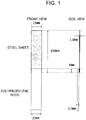
FIG. 1 is a schematic view of a sample for measuring the tensile shear adhesion strength between a surface-treated metal sheet of the present invention and resin after insert molding. -
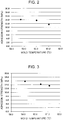
FIG. 2 is a graph representing the relationship between the mold temperature and the tensile shear adhesion strength in Example 1. -
FIG. 3 is a graph representing the relationship between the mold temperature and the tensile shear adhesion strength in Example 2. -
FIG. 4 is a graph representing the relationship between the mold temperature and the tensile shear adhesion strength in Comparative Example 3. - The present inventors investigated to solve the above problem that adhesion strength between a hot-melt adhesive and a resin for molded articles is insufficient, and as a result, it has been revealed that temperature distribution has been yielded inside the mold. That is, in insert molding, a surface-treated metal sheet is loaded in a mold heated to about 50 to 70°C (this temperature is denoted by T1) and then a liquefied thermoplastic resin heated and melted at a temperature higher than 200°C (this temperature is denoted by T2) is introduced, so that the hot-melt adhesive is heated by the heat given by the thermoplastic resin to a temperature at which it becomes adherable (this temperature is denoted by T3). Thus, adhesion is realized.
- Whether the temperature of the hot-melt adhesive can be raised to T3 depends on T1 and T2. Higher T1 and T2 make it easier to bring the hot-melt adhesive to T3, but if T1 and T2 are made higher, the following problems will arise. That is, when T1 is made higher, the time required for solidification of the thermoplastic resin becomes longer, deteriorating the productivity. On the other hand, when T2 is made higher, there may be an increase in thermal degradation of the thermoplastic resin and decrease in strength or change in color of the resin after solidification. Therefore, it is desirable to determine T1 and T2 which are necessary to attain T3 and are as low as possible.
- On the other hand, it has been found by the present inventors that it is unexpectedly difficult to attain a constant T1 throughout a mold. While heating of the mold is practiced by flowing a heat medium such as water or oil at a prescribed temperature through a channel formed inside the wall of the mold or by inserting a plug-in heater into the wall of the mold, a temperature gradient is generated inside the mold because a limited number of channels or heaters are used in these methods. For this reason, there are some parts whose temperature becomes lower than T1 inside the core of the mold and, as a result, it becomes impossible to heat the hot-melt adhesive to T3, so that defective adhesion is expected to occur.
- As a result of earnest investigation for suppressing such partial defective adhesion, the present inventors have accomplished the present invention by finding that even if there are some parts whose temperature is lower than T1 inside the core of the mold, adhesion can be realized stably by adding an appropriate amount of a hot-melt adhesive that becomes adherable at a temperature lower than T3 to a hot-melt adhesive whose adherable temperature is T3. The invention is described in detail below.
- The hot-melt adhesive used for the present invention contains two or more crystalline modified polypropylenes (hereinafter, modified PPs). Of the two or more crystalline modified PPs, at least one species is a high melting point crystalline modified PP having a melting point of 120°C or higher. If such a high melting point crystalline modified PP is not contained in a content of 20% by mass or more in 100% by mass of the hot-melt adhesive, the strength of adhesion per se is low. Moreover, it is undesirable that a high melting point crystalline modified PP is not contained in a content of 20% by mass or more because when a liquefied resin for molded articles having been heated and melted is introduced into a mold at the time of insert molding, a hot-melt adhesive layer is forced to flow by pressure during the heating and the introduction and a part where the hot-melt adhesive layer is thinner is formed, leading to defective adhesion.
- A modified polypropylene can be produced by, for example, adding maleic anhydride to polypropylene (PP).
- As the high melting point crystalline modified PP having a melting point of 120°C or higher, "UNISTOLE (registered trademark) R-300" (melting point: 140°C), "UNISTOLE R-200" (melting point: 145°C), "UNISTOLE R-120K" (melting point: 150°C) (all produced by Mitsui Chemicals, Inc.), etc. can be used. In addition to the above, many products of modified PP have been placed in the market; for example, a modified PP may be selected from the "NOVATEC (registered trademark)" series and the "WINTEC (registered trademark)" series of Japan Polypropylene Corporation, the "Prime Polypro (registered trademark)" series of Prime Polymer Co., Ltd., etc. PP may be either a homopolymer or a random copolymer in which ethylene is copolymerized in a small amount (for example, 4% by mass or less). The melting point referred to in the present invention is a value measured using a DSC (manufactured by SII NanoTechnology Inc. (currently, Hitachi High-Tech Science Corporation)) at a temperature ramp-up rate of 20°C/minute.
- The hot-melt adhesive of the present invention contains a low melting point crystalline modified PP having a melting point of lower than 120°C as the above-described hot-melt adhesive that becomes adherable at temperatures lower than T3 in a content of 10% by mass or less in 100% by mass of the hot-melt adhesive. As the low melting point crystalline modified PP having a melting point of lower than 120°C, "UNISTOLE H-100" (melting point: 75°C) produced by Mitsui Chemicals, Inc., etc. can be used.
- The ratio of the high melting point crystalline modified PP and the low melting point crystalline modified PP is preferably from 90 : 10 to 20 : 80, more preferably from 80 : 20 to 50 : 50. The hot-melt adhesive of the present invention can be obtained by stirring the high melting point crystalline modified PP and the low melting point crystalline modified PP while heating them using a kneading machine such as a kneader.
- The hot-melt adhesive layer can be applied using a method known in the art. The hot-melt adhesive layer may be provided on at least one side of the metal substrate or on the entire surface of the chemical conversion coating film or only in a place where that layer is necessary for combining with resin, and it may be provided in the form of some lines or dots, for example.
- The thickness of the hot-melt adhesive layer is adjusted to 10 to 100 µm. If the thickness is thinner than 10 µm, sufficient adhesion strength cannot be acquired. This is thought to be due to that the adhesive layer is deformed by the flow of the injection molded resin and only a very thin adhesive layer can remain locally on the metal sheet. On the other hand, it is undesirable that the thickness exceeds 100 µm because if so, a large amount of deformation is generated in the adhesive layer by external force and even a small stress will cause fracture of the adhesive layer to result in defective adhesion.
- As the metal substrate to be used for the present invention, any of aluminum sheet, titanium sheet, copper sheet, hot-rolled steel sheet, cold-rolled steel sheet, hot dip galvanized steel sheet, electro-galvanized steel sheet, galvannealed steel sheet, etc. can be used. Especially, galvannealed steel sheet is preferred. It is preferred to apply chemical conversion treatment mentioned below to such metal substrates.
- Preferably, the surface-treated metal sheet of the present invention has a chemical conversion coating film formed from a thermosetting resin composition comprising a thermosetting resin and colloidal silica or has a chemical conversion coating film formed from a water-soluble resin composition comprising a water-soluble resin and colloidal silica, between the metal substrate and the hot-melt adhesive layer. Adhesion strength is thereby enhanced.
- The chemical conversion coating film of the present invention contains colloidal silica. This is because colloidal silica exhibits the effect of increasing corrosion resistance. "XS", "SS", "40", "N", "UP", etc. from the "Snowtex (registered trademark)" series (colloidal silica produced by Nissan Chemical Industries, Ltd.) can be advantageously used as the colloidal silica. The use of "Snowtex-40", which has a surface area average particle diameter of approximately 10 to 20 nm, is particularly preferred. The amount of colloidal silica is preferably about 50 to 150 parts by mass, more preferably 75 to 125 parts by mass, relative to 100 parts by mass of the thermosetting resin or the water-soluble resin.
- A water-based urethane resin, a water-based acrylic-modified epoxy resin or a water-based phenolic resin is preferred as the thermosetting resin. In the present invention, "water-based" means being soluble in water or dispersible in water (insoluble in water). The water-soluble resin as used herein refers to resin that dissolves in a concentration of 1% by mass or more in water at 25°C, preferably resin that dissolves in a concentration of 5% mass or more. Resin from which a visually homogeneous transparent solution can be formed by adjusting pH to 5 to 9 with an alkali or the like is also included in the water-soluble resin.
- As the water-based urethane resin, one prepared by reacting a polyisocyanate and a polyol with a dihydroxyalkanoic acid is preferable, and what is more preferable is one prepared by synthesizing a urethane prepolymer from a polyisocyanate, a polyol and a hydroxyalkanoic acid and then making the urethane prepolymer undergo a chain extension reaction.
- Examples of the polyisocyanate include yellowing polyisocyanates such as 4,4'-diphenylmethane diisocyanate, 2,4'-diphenylmethane diisocyanate, 2,2'-diphenylmethane diisocyanate, 2,4-toluene diisocyanate, 2,6-toluene diisocyanate, 4,4-toluene diisocyanate, 1,4-naphthalene diisocyanate, 1,5-naphthalene diisocyanate, 1,2-phenylene diisocyanate, 1,3-phenylene diisocyanate and 1,4-phenylene diisocyanate; yellowing-resistant polyisocyanates such as o-xylylene diisocyanate, p-xylylene diisocyanate and m-xylylene diisocyanate; non-yellowing polyisocyanates such as 4,4'-dicyclomethane diisocyanate, 2,4'-dicyclomethane diisocyanate, 2,2'-dicyclomethane diisocyanate, hexamethylene diisocyanate, tetramethylxylylene diisocyanate, isophorone diisocyanate and lysine diisocyanate; and polymers such as crude toluene diisocyanate and polyphenylene-polymethylene isocyanate. These polyisocyanates may be adducts. It is possible to use one of these polyisocyanates, or a mixture of two or more types thereof.
- Examples of the polyol include 1,4-cyclohexane diol, 1,4-cyclohexane dimethanol, bisphenol A, bisphenol F and bisphenol S.
- Examples of dihydroxyalkanoic acids include 2,2-dimethylol acetic acid, 2,2-dimethylol propionic acid, 2,2-dimethylol butyric acid and dimethylol butanoic acid, but from perspectives such as reactivity and solubility, the use of dimethylol propionic acid or dimethylol butanoic acid is preferred.
- Examples of preferred chain extenders include polyamines, such as ethylene diamine or propylene diamine.
- Examples of such a water-based urethane resin include "Superflex (registered trademark) 170" and "Superflex (registered trademark) 210" (both of which are produced by Dai-Ichi Kogyo Seiyaku Co., Ltd.).
- The water-based acrylic-modified epoxy resin can be produced by, for example, copolymerizing (meth)acrylic acid with a polymerizable unsaturated group-containing epoxy resin obtained by reacting an epoxy resin with an unsaturated fatty acid or by copolymerizing (meth)acrylic acid with a polymerizable unsaturated group-containing epoxy resin obtained by reacting an epoxy resin, a glycidyl group-containing vinyl monomer and amines.
- In particular, water-based acrylic-modified epoxy resins are commercially available, and examples thereof include "Modepics (registered trademark) 301 ", "Modepics (registered trademark) 302", "Modepics (registered trademark) 303" and "Modepics (registered trademark) 304", all of which are manufactured by Arakawa Chemical Industries, Ltd. It is possible to use one of these acrylic-modified epoxy resins, or a combination of two or more types thereof.
- Water-based phenolic resins include products of addition condensation reactions between a compound having a phenolic -OH group, such as phenol, cresol, p-alkylphenol compounds, p-phenylphenol, chlorophenol, bisphenol A, phenolsulfonic acid and resorcin, and an aldehyde, such as formalin or furfural, and there are many types of such water-based phenolic resins. Of these, a preferred example is the emulsion type "Sumilite Resin (registered trademark) PR-14170" (produced by Sumitomo Bakelite Co., Ltd.).
- The thermosetting resin contained in the chemical conversion coating film in the present invention also includes resins obtained by combining a thermoplastic resin and a crosslinking agent, and such a combination is cured and loses thermoplasticity when heated, and can therefore be called a type of thermosetting resin. A water-based carboxyl group-containing acrylic resin can be advantageously used in the present invention as this type of resin.
- The water-based carboxyl group-containing acrylic resin is an alkali-neutralized product of a copolymer of 50 mass% or less of an unsaturated carboxylic acid, such as (meth)acrylic acid, and a (meth)acrylic acid ester or the like. Specific examples of (meth)acrylic acid esters include methyl (meth)acrylate, ethyl (meth)acrylate, butyl (meth)acrylate, 2-ethylhexyl (meth)acrylate, iso-octyl (meth)acrylate, iso-nonyl (meth)acrylate, isobornyl (meth)acrylate, N,N-dimethylaminoethyl (meth)acrylate, iso-butyl (meth)acrylate and 4-hydroxybutyl (meth)acrylate. Commercially available water-based carboxyl group-containing acrylic resins include the water-soluble "Jurymer (registered trademark) ET-410" (produced by Toagosei Co., Ltd.).
- The crosslinking agent to be combined with the water-based carboxyl group-containing acrylic resin is preferably a crosslinking agent capable of reacting with a carboxyl group, and specifically, an epoxy-based crosslinking agent or a carbodiimide compound is preferable. Examples of epoxy-based crosslinking agents include poly(glycidyl ethers) such as sorbitol poly(glycidyl ether), (poly)glycerol poly(glycidyl ether), pentaerythritol poly(glycidyl ether), trimethylolpropane poly(glycidyl ether), neopentylglycol diglycidyl ether and (poly)ethylene glycol diglycidyl ether, and polyglycidylamines.
- In addition, the carbodiimide compound can be produced by heating isocyanates in the presence of a carbodiimidation catalyst, and can be rendered water-based (water-soluble, water-emulsifiable or water-dispersible) by means of modification. In the present invention, a water-based carbodiimide compound is preferred because it is preferable for the coating liquid used to form the chemical conversion coating film to be water-based. In addition, a compound containing a plurality of carbodiimide groups per molecule is preferred. If a plurality of carbodiimide groups are present in one molecule, it is possible to further improve corrosion resistance or the like as a result of crosslinking reactions with carboxyl groups in the resin component.
- Examples of commercially available polycarbodiimide compounds include the "Carbodilite (registered trademark)" series, which are polycarbodiimide compounds (polymers having a plurality of carbodiimide groups per molecule) manufactured by Nisshinbo Chemical Inc. Preferred grades of the "Carbodilite (registered trademark)" series include the water-soluble "SV-02", "V-02", "V-02-L2" and "V-04" and the emulsion type "E-01" and "E-02". These carbodiimide compounds can be combined with the urethane resin mentioned above. The carbodiimide compound is preferably blended at a quantity of 5 to 20 parts by mass relative to 100 parts by mass of the water-based carboxyl group-containing acrylic resin or the water-based urethane resin.
- As the water-soluble resin, a water-soluble urethane resin is preferable, and a water-soluble self-crosslinking type urethane resin having a block isocyanate group is preferable. As such a water-soluble polyurethane resin, the "ELASTRON (registered trademark)" series produced by Dai-Ichi Kogyo Seiyaku Co., Ltd. can be mentioned, and especially, "ELASTRON MF-25K" is particularly preferable.
- A water-soluble acrylic resin may be used as the water-soluble resin. Acrylic resin is also superior in adhesiveness with plastics and can realize high corrosion resistance. Examples of such water-soluble acrylic resin include the "AQUPEC (registered trademark)" series produced by Sumitomo Seika Chemicals Co., Ltd., and especially, "AQUPEC HV-501" is particularly preferable.
- The chemical conversion coating film formed from the water-soluble resin comprising the water-soluble resin and colloidal silica may further contain a water-based resin. As the water-based resin, a water-based urethane resin is preferable in respect of performance, and an aqueous dispersion (emulsion) of urethane resin is favorable because it can be mixed with the water-based resin easily. Examples of the aqueous dispersion of urethane resin include the above-mentioned "Superflex (registered trademark)" series produced by Dai-Ichi Kogyo Seiyaku Co., Ltd., and especially, "Superflex 170" is preferred. It is desirable for the aqueous dispersion of urethane resin to be used in combination with a water-soluble urethane resin, and it is preferable to use the water-based resin in an amount of 10 to 50 parts by mass relative to 10 parts by mass of the water-soluble resin. At this time, it is preferable to use the above-described carbodiimide compound in combination as a crosslinking agent.
- It is preferable to blend a silane coupling agent in the coating liquid used to form the chemical conversion coating film. It is possible to improve the adhesive properties of the chemical conversion coating film to the metal substrate. Specific examples of silane coupling agents include amino group-containing silane coupling agents such as γ-aminopropyltrimethoxysilane, γ-aminopropyltriethoxysilane, N-(β-aminoethyl)-γ-aminopropyltrimethoxysilane and N-(β-aminoethyl)-γ-aminopropylmethyldimethoxysilane; glycidoxy group-containing silane coupling agents such as γ-glycidoxypropyltrimethoxysilane, γ-glycidoxypropylmethyldimethoxysilane, γ-glycidoxypropyltriethoxysilane and γ-glycidoxymethyldimethoxysilane; vinyl group-containing silane coupling agents such as vinyltrimethoxysilane, vinyltriethoxysilane and vinyl-tris(β-methoxyethoxy)silane; methacryloxy group-containing silane coupling agents such as γ-methacryloxypropyltrimethoxysilane; mercapto group-containing silane coupling agents such as γ-mercaptopropyltrimethoxysilane and γ-mercaptopropylmethyldimethoxysilane; and halogen group-containing silane coupling agents such as γ-chloropropylmethoxysilane and γ-chloropropyltrimethoxysilane. It is possible to use one of these silane coupling agents, or a combination of two or more types thereof. Of these, amino group-containing silane coupling agents and glycidoxy group-containing silane coupling agents are preferred from the perspective of achieving good bonding strength of the ultimately obtained metal sheet-resin composite molded article, and amino group-containing silane coupling agents are particularly preferred. It is preferable that the quantity of the silane coupling agent be about 5 to 30 parts by mass relative to 100 parts by mass of the total solid content in the coating liquid for forming the chemical conversion coating film.
- A thermosetting resin composition is obtained by mixing the above-mentioned thermosetting resin, colloidal silica and, if necessary, a silane coupling agent or a crosslinking agent, and, if necessary, a thermosetting coating liquid for forming a chemical conversion coating film is obtained by diluting that composition with a hydrophilic solvent such as water and alcohol. Additionally, a water-soluble resin composition is obtained by mixing the above-mentioned water-soluble resin, colloidal silica and, if necessary, a silane coupling agent, a water-based resin or a crosslinking agent, and, if necessary, a water-soluble coating liquid for a chemical conversion coating film is obtained by diluting that composition with a hydrophilic solvent such as water and alcohol.
- The attachment of chemical conversion coating film is preferably adjusted to 0.01 to 1 g/m2, more preferably adjusted to 0.05 to 0.5 g/m2 either in the case of thermosetting or in the case of being water-soluble. If the attachment is excessively small, the adhesion strength enhancing effect exerted by the chemical conversion coating film may be insufficient. Attachment in an amount greater than 1 g/m2 leads to waste of cost because the adhesion strength enhancing effect is saturated.
- Other publicly known additives may be added to the coating liquid when forming the chemical conversion coating film. The method for forming a chemical conversion coating film on a metal substrate, such as a galvannealed steel sheet, is not particularly limited, and a conventional publicly known coating method may be used, for example, it is possible to apply a coating liquid for forming a chemical conversion coating film on one surface or both surfaces of a metal substrate, such as a galvannealed steel sheet, using a roll coating method, a spray coating method, a curtain flow coating method, or the like, and then heating and drying the liquid. Since the coating liquid for forming a chemical conversion coating film to be used for the present invention is water-based, it is desirable to carry out heating for a period of between several tens of seconds and several minutes at a temperature of approximately 100°C, at which water evaporates.
- The surface-treated metal sheet of the present invention is combined with a resin molding by insert molding. Here, if processing is required, the surface-treated metal sheet is processed into the target shape in advance. Then, the surface-treated metal sheet is loaded into a mold of an injection molding machine with the adhesive layer on top so that the adhesive layer and the resin for molded articles can come into contact with each other, and the mold is closed and clamped. Then, molten resin for molded articles is injected into the mold, and when the resin is cooled and solidified, a metal sheet-resin composite molded article is obtained (insert molding). Of course, the surface-treated metal sheet of the present invention may be combined with a resin by means of a press molding method, but it is preferable to use an injection molding method because of advantages such as the short period of time required for injection molding and the high efficiency thereof.
- The conditions of injection molding may suitably be changed according to the type of the resin to constitute a molded article; when taking the case that the resin for the molded article is polypropylene as an example, the cylinder temperature can be set to 230 to 250°C, the mold temperature can be set to 45 to 70°C, the injection holding time can be set to 5 to 8 seconds, and the cooling time can be set to about 20 to 30 seconds. By performing injection molding under these conditions, it is possible to obtain a combined member of the present invention in which an adhesive is strongly bonded to a surface-treated metal sheet.
- The resin for molded articles can be any known resin for molded articles and is not particularly limited, but examples of a preferred resin include polypropylene-based resins, etc. In order to increase strength as a molded article, it is possible to add approximately 5 to 60 mass% of reinforcing fibers such as glass fibers or carbon fibers. In addition, it is possible to add a variety of additives known in the art, such as pigments and dyes, flame retardants, antimicrobial agents, antioxidants, plasticizers and lubricants.
- The surface-treated metal sheet of the present invention is characterized in that the rate of change of tensile shear adhesion strength measured at 23°C of a metal sheet-resin composite molded article obtained when uniting a polypropylene-based resin and the surface-treated metal sheet by insert molding while varying mold temperature is 2 MPa or less per °C of mold temperature. That the rate of change of tensile shear adhesion strength is greater than 2 MPa per °C of mold temperature means that if the temperature inside the core of the mold varies by 1°C, adhesion strength varies by more than 2 MPa and defective adhesion is prone to occur. The rate of change is preferably 1.5 MPa or less, more preferably 1.3 MPa or less, per °C of mold temperature. In order to evaluate the performance of a metal sheet-resin composite molded article, it is preferable to measure the rate of change of tensile shear adhesion strength while varying the mold temperature within a range of a target temperature of ±2°C. The value of the tensile shear adhesion strength itself is preferably 10 MPa or more as measured by a measurement method described later.
- The present application claims benefit of the priority based on Japan Patent Application No.
2015-073907 filed on March 31, 2015 2015-073907 - The present invention will now be explained in greater detail through the use of the examples given below, but is not limited to the examples given below, and any change does not deviate from the gist of the present invention is encompassed by the present invention. In the following, "part" means "part by mass" and "%" means "% by mass." The evaluation methods used in Examples are as follows.
- Chemically treated metal sheets were obtained by applying a coating liquid for forming a chemical conversion coating film at a coating amount of 0.5 g/m2 on a surface of a galvannealed steel sheet having a thickness of 1.0 mm (the amount of galvanization: 45 g/m2) using a bar coater, and then heating for 1 minute at 100°C. The particulars of the resins and the crosslinking agents are given in Table 1, and the compositions of the coating liquids (the added amounts are in terms of solid content) are given in Table 2. Moreover, the "Superflex", "Sumilite Resin", "Modepics", "Jurymer", "Elastron", "AQUPEC", "Superflex" and "Jurymer" mentioned in Tables 1 and 2 are all registered trademarks held by the respective manufacturers. In addition, the "ST-40" shown in the Colloidal silica column is "Snowtex (registered trademark) 40" (produced by Nissan Chemical Industries, Ltd.; surface area average particle diameter: 10 to 20 nm), and the "KBM903" shown in the silane coupling agent column is γ-aminopropyltrimethoxysilane, produced by Shin-Etsu Chemical Co., Ltd.
[Table 1] Resin Type Brand Manufacturer Polyurethane emulsion Superflex 170 Solid content: 33% Dai-Ichi Kogyo Seiyaku Co., Ltd. Phenolic resin emulsion Sumilite Resin PR-14170 Solid content: 65% Sumitomo Bakelite Co., Ltd. Acrylic-modified epoxy resin emulsion Modepics 302 Solid content: 33% Arakawa Chemical Industries, Ltd. Water-soluble carboxyl group-containing acrylic resin Jurymer ET-410 Solid content: 30% Toagosei Co., Ltd. Water-soluble urethane resin Elastron MF-25K Solid content: 26% Dai-Ichi Kogyo Seiyaku Co., Ltd. Water-soluble acrylic resin AQUPEC HV-501 powder Sumitomo Seika Chemicals Co., Ltd. Crosslinking agent Type Brand Manufacturer Carbodiimide compound Carbodilite SV-02 Solid content: 40% Nisshinbo Chemical Inc. [Table 2] Coating liquid No. Resin 1 Resin 2 Crosslinking agent Colloidal silica Silane coupling agent Brand Amount (parts) Brand Amount (parts) Brand Amount (parts) Brand Amount (parts) Brand Amount (parts) 1 Superflex 170 45 - - Carbodilite SV-02 5 ST-40 50 KBM903 10 2 Sumilite Resin PR-14170 50 - - - - ST-40 50 KBM903 10 3 Modepics 302 50 - - - - ST-40 50 KBM903 10 4 Jurymer ET-410 45 - - Carbodilite SV-02 5 ST-40 50 KBM903 10 5 Elastron MF-25K 40 - - - - ST-40 50 KBM903 10 6 AQUPEC HV-501 20 - - - - ST-40 70 KBM903 10 7 Elastron MF-25K 20 Superflex 170 17 Carbodilite SV-02 2 ST-40 50 KBM903 10 - To a surface of a chemical conversion treated metal sheet was applied with a bar coater a hot-melt adhesive prepared by blending at a blending ratio shown in Table 3, followed by heating for two minutes such that the maximum sheet temperature would be 220°C. Thus, a surface-treated metal sheet with a 35 µm-thick hot-melt adhesive layer laminated was obtained. R-300 denotes " UNISTOLE R-300" (melting point: 140°C), H-100 denotes " UNISTOLE H-100" (melting point: 75°C), R-200 denotes " UNISTOLE R-200" (melting point: 145°C), and R-120K denotes " UNISTOLE R-120K" (melting point: 150°C) (all produced by Mitsui Chemicals, Inc.).
- A surface-treated steel sheet having a size of 100 mm × 25 mm was mounted to an injection mold and then glass fiber-containing PP in a molten state was introduced thereinto. The glass fiber-containing PP used was one prepared by mixing "PLASTRON (registered trademark) PP-GF40" (produced by Daicel Polymer Ltd., containing 40% of glass fiber) with "NOVATEC (registered trademark) PP BC06C" (produced by a Japan Polypropylene Corporation) to dilute glass fiber to a content of 20%. The temperature of the glass fiber-containing PP in a molten state was adjusted to 230°C and the target mold temperature was set to 60°C except Comparative Examples 4 and 5. In Comparative Examples 4 and 5, since the melting point of the hot-melt adhesive used was high, the target mold temperature was set to 63°C and 65°C, respectively. The volume of a part in the core of the mold into which the glass fiber-containing PP was to be poured was 23 mm in width, 100 mm in length, and 3 mm in thickness, and the hot-melt adhesive layer and the glass fiber-containing PP for molding were configured to come into contact with each other in a region sized 23 mm × 8 mm. In
FIG. 1 are provided a front view and a side view of the specimen obtained. - Strength at break developed when pulling a specimen with a tensile tester at an environmental temperature of 23°C and a tensile rate of 60 mm/min, and the measured value was taken as a tensile shear adhesion strength.
[Table 3] Coating liquid No. Blending ratio of hot-melt adhesives Adhesion strength at target mold temperature: 60°C (MPa) R-300 (Tm140°C) H-100 (Tm75°C) R-200 (Tm145°C) R-120K (Tm150°C) Example 1 1 90 10 - - 13.8 Example 2 80 20 - - 14.3 Example 3 50 50 - - 14.1 Example 4 20 80 - - 10.4 Comparative Example 1 10 90 - - 8.2 Comparative Example 2 - 100 - - 9.0 Comparative Example 3 100 - - - 9.0 Comparative Example 4 - - 100 - 10.31) Comparative Example 5 - - - 100 9.52) Example 5 2 80 20 - - 14.0 Example 6 3 80 20 - - 13.3 Example 7 4 80 20 - - 12.8 Example 8 5 80 20 - - 13.3 Example 9 6 80 20 - - 13.9 Example 10 7 80 20 - - 14.3 1) Target mold temperature: 63°C
2) Target mold temperature: 65°C[Table 4] Substrate Mold temperature (°C) Adhesion strength (MPa) Rate of change of adhesion strength when mold temperature varies by 1°C (MPa) Example 1 58.7 14.2 1.1 60.0 13.8 61.0 11.6 Example 2 59.1 16.0 1.2 60.4 14.3 61.1 13.6 Comparative Example 3 60.0 9.0 3.6 60.8 11.9 61.6 14.8 Comparative Example 4 62.8 9.1 4.0 63.1 10.3 63.5 11.9 Comparative Example 5 64.2 7.3 4.4 64.7 9.5 65.6 13.4 - Table 3 shows that the surface-treated metal sheets of Examples 1 to 10, which satisfy the requirements of the present invention, are superior in tensile shear adhesion strength.
- In contrast, Comparative Example 1, in which the high melting point crystalline modified polypropylene is contained only less than 20% by mass in the hot-melt adhesive layer, was inferior in tensile shear adhesion strength. Moreover, Comparative Example 2, in which only the low melting point crystalline modified polypropylene is contained, was inferior in tensile shear adhesive strength.
- Table 4 shows that the rate of change of adhesion strength developed when mold temperature varied 1°C is as small as 1.1 to 1.2 MPa in the Examples whereas the rate of change of adhesion strength is as large as 3.6 MPa or more in Comparative Examples 3 to 5, in which only the high melting point crystalline modified polypropylene is contained. In
FIG. 2 is provided a graph showing the relationship between mold temperature and tensile shear adhesion strength in Example 1, inFIG. 3 is provided a graph showing the relationship between mold temperature and tensile shear adhesion strength in Example 2, and inFIG. 4 is provided a graph showing the relationship between mold temperature and tensile shear adhesion strength in Comparative Example 3. - The present invention has successfully provided a surface-treated metal sheet that can develop enhanced adhesion strength between resin and itself after being combined with the resin by insert molding. Therefore, the surface-treated metal sheet of the present invention is useful for producing items composed of metal and resin combined together in the fields of household electrical appliances, information instruments, building materials, and materials for transportation vehicles, such as parts for ships and automobiles.
Claims (9)
- A surface-treated metal sheet which is used for insert molding and in which a hot-melt adhesive layer is laminated on at least one side of a metal substrate, wherein
the hot-melt adhesive layer has a thickness of 10 to 100 µm;
the hot-melt adhesive layer contains two or more crystalline modified polypropylenes differing in melting point;
at least one of the crystalline modified polypropylenes is a high melting point crystalline modified polypropylene having a melting point of 120°C or higher, and the high melting point crystalline modified polypropylene is contained in a content of 20% by mass or more in the hot-melt adhesive layer;
at least one of the crystalline modified polypropylenes is a low melting point crystalline modified polypropylene having a melting point of lower than 120°C, and the low melting point crystalline modified polypropylene is contained in a content of 10% by mass or more in the hot-melt adhesive layer; and
the rate of change of tensile shear adhesion strength measured at 23°C of a metal sheet-resin composite molded article obtained when uniting a polypropylene-based resin and the surface-treated metal sheet by insert molding while varying mold temperature is 2 MPa or less per °C of mold temperature. - The surface-treated metal sheet according to claim 1, wherein a ratio of the high melting point crystalline modified polypropylene and the low melting point crystalline modified polypropylene is from 90 : 10 to 20 : 80 in mass ratio.
- The surface-treated metal sheet according to claim 1 or 2, wherein a chemical conversion coating film is formed between the metal substrate and the hot-melt adhesive layer, and the chemical conversion coating film is one formed from a thermosetting resin composition comprising a thermosetting resin and colloidal silica.
- The surface-treated metal sheet according to claim 3, wherein the thermosetting resin is a water-based urethane resin, a water-based acrylic-modified epoxy resin, or a water-based phenolic resin.
- The surface-treated metal sheet according to claim 3, wherein the thermosetting resin is a combination of a water-based carboxyl group-containing acrylic resin and a crosslinking agent which is capable of reacting with a carboxyl group.
- The surface-treated metal sheet according to claim 3, wherein the thermosetting resin composition further comprises a silane coupling agent.
- The surface-treated metal sheet according to claim 1, wherein a chemical conversion coating film is formed between the metal substrate and the hot-melt adhesive layer; the metal substrate is a galvannealed steel sheet; and the chemical conversion coating film is one formed from a water-soluble resin composition comprising a water-soluble resin and colloidal silica.
- The surface-treated metal sheet according to claim 7, wherein the water-soluble resin is a water-soluble urethane resin or a water-soluble acrylic resin.
- A metal sheet-resin composite molded article comprising the surface-treated metal sheet according to claim 1, which is combined with a polypropylene-based resin by insert molding.
Applications Claiming Priority (2)
| Application Number | Priority Date | Filing Date | Title |
|---|---|---|---|
| JP2015073907 | 2015-03-31 | ||
| PCT/JP2016/059235 WO2016158619A1 (en) | 2015-03-31 | 2016-03-23 | Surface-treated metal plate |
Publications (2)
| Publication Number | Publication Date |
|---|---|
| EP3266584A1 true EP3266584A1 (en) | 2018-01-10 |
| EP3266584A4 EP3266584A4 (en) | 2018-12-05 |
Family
ID=57005079
Family Applications (1)
| Application Number | Title | Priority Date | Filing Date |
|---|---|---|---|
| EP16772500.1A Withdrawn EP3266584A4 (en) | 2015-03-31 | 2016-03-23 | Surface-treated metal plate |
Country Status (8)
| Country | Link |
|---|---|
| US (1) | US20180079178A1 (en) |
| EP (1) | EP3266584A4 (en) |
| JP (1) | JP2016193598A (en) |
| KR (1) | KR20170131628A (en) |
| CN (1) | CN107428046A (en) |
| MX (1) | MX2017012415A (en) |
| TW (1) | TWI604028B (en) |
| WO (1) | WO2016158619A1 (en) |
Families Citing this family (1)
| Publication number | Priority date | Publication date | Assignee | Title |
|---|---|---|---|---|
| JP6577361B2 (en) * | 2015-12-24 | 2019-09-18 | 日華化学株式会社 | Water dispersion, coating liquid, and method of manufacturing transmission screen |
Family Cites Families (6)
| Publication number | Priority date | Publication date | Assignee | Title |
|---|---|---|---|---|
| JP2000234179A (en) * | 1999-02-12 | 2000-08-29 | Nisshin Steel Co Ltd | Zinc-aluminum-based alloy-plated rectangular steel pipe excellent in adhesive bonding durability with wood and method for producing the same |
| JP5103184B2 (en) * | 2005-09-20 | 2012-12-19 | 三菱樹脂株式会社 | Gas barrier laminated film |
| JP2009126991A (en) * | 2007-11-27 | 2009-06-11 | Hitachi Kasei Polymer Co Ltd | Hot melt adhesive and hot melt adhesive for automotive interior trim using the same |
| US8906515B2 (en) * | 2009-06-02 | 2014-12-09 | Integran Technologies, Inc. | Metal-clad polymer article |
| JP5912411B2 (en) * | 2011-10-26 | 2016-04-27 | 株式会社カネカ | Laminated adhesive film for insert molding |
| JP6262951B2 (en) * | 2013-07-19 | 2018-01-17 | 日新製鋼株式会社 | Composite and production method thereof |
-
2016
- 2016-03-23 US US15/562,236 patent/US20180079178A1/en not_active Abandoned
- 2016-03-23 CN CN201680017906.1A patent/CN107428046A/en active Pending
- 2016-03-23 EP EP16772500.1A patent/EP3266584A4/en not_active Withdrawn
- 2016-03-23 WO PCT/JP2016/059235 patent/WO2016158619A1/en not_active Ceased
- 2016-03-23 MX MX2017012415A patent/MX2017012415A/en unknown
- 2016-03-23 KR KR1020177030960A patent/KR20170131628A/en not_active Ceased
- 2016-03-28 TW TW105109717A patent/TWI604028B/en not_active IP Right Cessation
- 2016-03-29 JP JP2016064859A patent/JP2016193598A/en active Pending
Also Published As
| Publication number | Publication date |
|---|---|
| US20180079178A1 (en) | 2018-03-22 |
| KR20170131628A (en) | 2017-11-29 |
| JP2016193598A (en) | 2016-11-17 |
| EP3266584A4 (en) | 2018-12-05 |
| TW201710427A (en) | 2017-03-16 |
| CN107428046A (en) | 2017-12-01 |
| TWI604028B (en) | 2017-11-01 |
| MX2017012415A (en) | 2018-01-26 |
| WO2016158619A1 (en) | 2016-10-06 |
Similar Documents
| Publication | Publication Date | Title |
|---|---|---|
| US10399300B2 (en) | Surface-treated metal plate and metal plate-resin composite molded article | |
| KR101795127B1 (en) | Curable electroconductive adhesive composition, electromagnetic shielding film, electroconductive adhesive film, adhesion method, and circuit board | |
| KR101702694B1 (en) | Thermosetting adhesive composition, thermosetting adhesive sheet, method for producing same, and reinforced flexible printed wiring board | |
| EP2293916B1 (en) | Heat activatable adhesives for increasing the bond stability between plastic and metals in die casting components | |
| CN118085741A (en) | Adhesive for flexible display, adhesive sheet, flexible laminate member, and flexible display | |
| WO2018047577A1 (en) | Surface-treated galvanized steel sheet and adhesion joint using same | |
| EP3593993B1 (en) | Surface-treated metal plate for polyolefin bonding, composite member, and method for manufacturing composite member | |
| EP3266584A1 (en) | Surface-treated metal plate | |
| KR102343975B1 (en) | Surface-treated metal plate for adhesion to polyolefin, and composite member | |
| JP4614079B2 (en) | Method for producing decorative laminated sheet and coated molded product | |
| KR100822731B1 (en) | One component adhesive composition for bonding metal film to plated steel sheet | |
| JP2016193513A (en) | Surface-treated metal plate | |
| JP2024074639A (en) | Film, laminated film, article protected by laminated film, crosslinked film, article protected by crosslinked film, method for producing article, and aqueous composition for forming film | |
| JP2017071183A (en) | Complex and method for producing the same |
Legal Events
| Date | Code | Title | Description |
|---|---|---|---|
| PUAI | Public reference made under article 153(3) epc to a published international application that has entered the european phase |
Free format text: ORIGINAL CODE: 0009012 |
|
| STAA | Information on the status of an ep patent application or granted ep patent |
Free format text: STATUS: REQUEST FOR EXAMINATION WAS MADE |
|
| 17P | Request for examination filed |
Effective date: 20171005 |
|
| AK | Designated contracting states |
Kind code of ref document: A1 Designated state(s): AL AT BE BG CH CY CZ DE DK EE ES FI FR GB GR HR HU IE IS IT LI LT LU LV MC MK MT NL NO PL PT RO RS SE SI SK SM TR |
|
| AX | Request for extension of the european patent |
Extension state: BA ME |
|
| DAV | Request for validation of the european patent (deleted) | ||
| DAX | Request for extension of the european patent (deleted) | ||
| A4 | Supplementary search report drawn up and despatched |
Effective date: 20181106 |
|
| RIC1 | Information provided on ipc code assigned before grant |
Ipc: B32B 15/085 20060101ALI20181029BHEP Ipc: B29C 45/14 20060101AFI20181029BHEP |
|
| STAA | Information on the status of an ep patent application or granted ep patent |
Free format text: STATUS: THE APPLICATION IS DEEMED TO BE WITHDRAWN |
|
| 18D | Application deemed to be withdrawn |
Effective date: 20201001 |