EP3265726B1 - Air-conditioning system and system and method for controlling an operation of an air-conditioning system - Google Patents
Air-conditioning system and system and method for controlling an operation of an air-conditioning system Download PDFInfo
- Publication number
- EP3265726B1 EP3265726B1 EP16709830.0A EP16709830A EP3265726B1 EP 3265726 B1 EP3265726 B1 EP 3265726B1 EP 16709830 A EP16709830 A EP 16709830A EP 3265726 B1 EP3265726 B1 EP 3265726B1
- Authority
- EP
- European Patent Office
- Prior art keywords
- model
- airflow
- air
- conditioning system
- stability
- Prior art date
- Legal status (The legal status is an assumption and is not a legal conclusion. Google has not performed a legal analysis and makes no representation as to the accuracy of the status listed.)
- Active
Links
Images




Classifications
-
- F—MECHANICAL ENGINEERING; LIGHTING; HEATING; WEAPONS; BLASTING
- F24—HEATING; RANGES; VENTILATING
- F24F—AIR-CONDITIONING; AIR-HUMIDIFICATION; VENTILATION; USE OF AIR CURRENTS FOR SCREENING
- F24F11/00—Control or safety arrangements
- F24F11/62—Control or safety arrangements characterised by the type of control or by internal processing, e.g. using fuzzy logic, adaptive control or estimation of values
- F24F11/63—Electronic processing
- F24F11/64—Electronic processing using pre-stored data
-
- F—MECHANICAL ENGINEERING; LIGHTING; HEATING; WEAPONS; BLASTING
- F24—HEATING; RANGES; VENTILATING
- F24F—AIR-CONDITIONING; AIR-HUMIDIFICATION; VENTILATION; USE OF AIR CURRENTS FOR SCREENING
- F24F11/00—Control or safety arrangements
- F24F11/62—Control or safety arrangements characterised by the type of control or by internal processing, e.g. using fuzzy logic, adaptive control or estimation of values
-
- F—MECHANICAL ENGINEERING; LIGHTING; HEATING; WEAPONS; BLASTING
- F24—HEATING; RANGES; VENTILATING
- F24F—AIR-CONDITIONING; AIR-HUMIDIFICATION; VENTILATION; USE OF AIR CURRENTS FOR SCREENING
- F24F11/00—Control or safety arrangements
- F24F11/30—Control or safety arrangements for purposes related to the operation of the system, e.g. for safety or monitoring
-
- F—MECHANICAL ENGINEERING; LIGHTING; HEATING; WEAPONS; BLASTING
- F24—HEATING; RANGES; VENTILATING
- F24F—AIR-CONDITIONING; AIR-HUMIDIFICATION; VENTILATION; USE OF AIR CURRENTS FOR SCREENING
- F24F11/00—Control or safety arrangements
- F24F11/30—Control or safety arrangements for purposes related to the operation of the system, e.g. for safety or monitoring
- F24F11/46—Improving electric energy efficiency or saving
-
- F—MECHANICAL ENGINEERING; LIGHTING; HEATING; WEAPONS; BLASTING
- F24—HEATING; RANGES; VENTILATING
- F24F—AIR-CONDITIONING; AIR-HUMIDIFICATION; VENTILATION; USE OF AIR CURRENTS FOR SCREENING
- F24F11/00—Control or safety arrangements
- F24F11/70—Control systems characterised by their outputs; Constructional details thereof
-
- F—MECHANICAL ENGINEERING; LIGHTING; HEATING; WEAPONS; BLASTING
- F24—HEATING; RANGES; VENTILATING
- F24F—AIR-CONDITIONING; AIR-HUMIDIFICATION; VENTILATION; USE OF AIR CURRENTS FOR SCREENING
- F24F11/00—Control or safety arrangements
- F24F11/70—Control systems characterised by their outputs; Constructional details thereof
- F24F11/72—Control systems characterised by their outputs; Constructional details thereof for controlling the supply of treated air, e.g. its pressure
- F24F11/79—Control systems characterised by their outputs; Constructional details thereof for controlling the supply of treated air, e.g. its pressure for controlling the direction of the supplied air
-
- F—MECHANICAL ENGINEERING; LIGHTING; HEATING; WEAPONS; BLASTING
- F24—HEATING; RANGES; VENTILATING
- F24F—AIR-CONDITIONING; AIR-HUMIDIFICATION; VENTILATION; USE OF AIR CURRENTS FOR SCREENING
- F24F11/00—Control or safety arrangements
- F24F11/70—Control systems characterised by their outputs; Constructional details thereof
- F24F11/80—Control systems characterised by their outputs; Constructional details thereof for controlling the temperature of the supplied air
- F24F11/83—Control systems characterised by their outputs; Constructional details thereof for controlling the temperature of the supplied air by controlling the supply of heat-exchange fluids to heat-exchangers
- F24F11/84—Control systems characterised by their outputs; Constructional details thereof for controlling the temperature of the supplied air by controlling the supply of heat-exchange fluids to heat-exchangers using valves
-
- F—MECHANICAL ENGINEERING; LIGHTING; HEATING; WEAPONS; BLASTING
- F24—HEATING; RANGES; VENTILATING
- F24F—AIR-CONDITIONING; AIR-HUMIDIFICATION; VENTILATION; USE OF AIR CURRENTS FOR SCREENING
- F24F11/00—Control or safety arrangements
- F24F11/70—Control systems characterised by their outputs; Constructional details thereof
- F24F11/80—Control systems characterised by their outputs; Constructional details thereof for controlling the temperature of the supplied air
- F24F11/86—Control systems characterised by their outputs; Constructional details thereof for controlling the temperature of the supplied air by controlling compressors within refrigeration or heat pump circuits
-
- G—PHYSICS
- G05—CONTROLLING; REGULATING
- G05B—CONTROL OR REGULATING SYSTEMS IN GENERAL; FUNCTIONAL ELEMENTS OF SUCH SYSTEMS; MONITORING OR TESTING ARRANGEMENTS FOR SUCH SYSTEMS OR ELEMENTS
- G05B13/00—Adaptive control systems, i.e. systems automatically adjusting themselves to have a performance which is optimum according to some preassigned criterion
- G05B13/02—Adaptive control systems, i.e. systems automatically adjusting themselves to have a performance which is optimum according to some preassigned criterion electric
- G05B13/04—Adaptive control systems, i.e. systems automatically adjusting themselves to have a performance which is optimum according to some preassigned criterion electric involving the use of models or simulators
-
- G—PHYSICS
- G05—CONTROLLING; REGULATING
- G05D—SYSTEMS FOR CONTROLLING OR REGULATING NON-ELECTRIC VARIABLES
- G05D23/00—Control of temperature
- G05D23/19—Control of temperature characterised by the use of electric means
- G05D23/1917—Control of temperature characterised by the use of electric means using digital means
-
- F—MECHANICAL ENGINEERING; LIGHTING; HEATING; WEAPONS; BLASTING
- F24—HEATING; RANGES; VENTILATING
- F24F—AIR-CONDITIONING; AIR-HUMIDIFICATION; VENTILATION; USE OF AIR CURRENTS FOR SCREENING
- F24F11/00—Control or safety arrangements
- F24F11/62—Control or safety arrangements characterised by the type of control or by internal processing, e.g. using fuzzy logic, adaptive control or estimation of values
- F24F11/63—Electronic processing
- F24F11/65—Electronic processing for selecting an operating mode
-
- F—MECHANICAL ENGINEERING; LIGHTING; HEATING; WEAPONS; BLASTING
- F24—HEATING; RANGES; VENTILATING
- F24F—AIR-CONDITIONING; AIR-HUMIDIFICATION; VENTILATION; USE OF AIR CURRENTS FOR SCREENING
- F24F2110/00—Control inputs relating to air properties
-
- F—MECHANICAL ENGINEERING; LIGHTING; HEATING; WEAPONS; BLASTING
- F24—HEATING; RANGES; VENTILATING
- F24F—AIR-CONDITIONING; AIR-HUMIDIFICATION; VENTILATION; USE OF AIR CURRENTS FOR SCREENING
- F24F2140/00—Control inputs relating to system states
- F24F2140/60—Energy consumption
-
- G—PHYSICS
- G05—CONTROLLING; REGULATING
- G05B—CONTROL OR REGULATING SYSTEMS IN GENERAL; FUNCTIONAL ELEMENTS OF SUCH SYSTEMS; MONITORING OR TESTING ARRANGEMENTS FOR SUCH SYSTEMS OR ELEMENTS
- G05B17/00—Systems involving the use of models or simulators of said systems
- G05B17/02—Systems involving the use of models or simulators of said systems electric
Definitions
- This invention relates generally to air-conditioning systems, and more particularly to controlling operations of the air-conditioning system.
- Air-conditioning systems such as heating, ventilating and air conditioning (HVAC) system
- HVAC heating, ventilating and air conditioning
- the air-conditioning system can include one or a combination of variable speed compressors, variable position valves, and variable speed fans to the vapor compression cycle to deliver particular amount of heat.
- the command inputs to the vapor compression system that delivers that particular amount of heat are often not unique and the various combinations of components consume different amounts of energy. Therefore, it is desirable to operate the vapor compression system using the combination of inputs that minimizes energy and thereby maximizes efficiency.
- the models of the air-conditioning system often ignore installation-specific characteristics such as room size, causing the model of the air-conditioning system to deviate from operation of the system.
- the knowledge of the airflow produced during an operation of air-conditioning system can be used to optimize the operation of the system.
- the physical model of the airflow is of infinite dimension and too complex to be used in real time control applications.
- the model of the airflow can also change during the operation of the air-conditioning system.
- US 2012/0197444 relates to a system and a method for manipulating environmental conditions in an infrastructure containing a fluid moving device that include identifying correlations between operational settings of the fluid moving device and environmental conditions resulting from changes to the operational settings.
- An environmental condition at a given location may be detected and errors between the detected environmental condition and a reference environmental condition are identified. Based upon the identified correlations and the errors operational settings to achieve the reference environmental condition are determined.
- US 2011/0040392 A1 discloses a method for monitoring, modeling and managing a physical system in which a physical data model of the physical system is provided. Real time data is obtained from the physical system and the physical data model is updated. An analytic model of the physical system is created based on the updated physical data model and the operation of the physical system is controlled based on the analytic model.
- Some embodiments of the invention address a problem of determining and updating the model of the airflow dynamics, such that the model accurately represent the dynamics of the airflow and is able to adapt to the changes in the conditioned environment. Accordingly, some embodiments use the model of low dimension suitable for real time update and control.
- the model includes a reduced order model having a number of parameters less than a physical model of the airflow according to a Boussinesq equation, wherein the Boussinesq equation is a partial differential equation (PDE), and wherein the reduced order model is an ordinary differential equation (ODE).
- PDE partial differential equation
- ODE ordinary differential equation
- some embodiments address a model reduction problem aim to reduce a complex model of, e.g., an infinite dimension to a simpler model of a lesser dimension, e.g., a finite dimension.
- the model reduction problem means determining all parameters or coefficients of the simpler model such that an error between performance measurements of the system according to the complex model and the system according to the simpler model is minimized.
- the model reduction problem can be determining all parameters or coefficients of the simpler model such that an error between performance measurements of the system according to the complex model and the system according to the simpler model is minimized.
- Some embodiments of the invention are based on a realization that the problem of representing a complex model of a system with a simpler model of the system can be transformed into a virtual control problem of controlling the system of the simpler model to track a reference trajectory of the performance measurements determined using the complex model of the system.
- the control inputs include the coefficients of the simpler model, and the output of the virtual control is performance measurement determined for the system according to the simpler model with input coefficients.
- reducing the PDE model to the ODE model can be seen as a virtual control problem where the controlled output is the ODE solution over a given time interval, the reference time-varying output trajectory is the solution of the PDE model, and the control signals are the coefficients of the ODE model.
- control inputs i.e., the coefficients of the simpler model, reducing a cost function representing the tracking error.
- This realization allows using control theory methods to virtually control the virtual control problem to determine the coefficients of the simpler model.
- one embodiment of the invention discloses a method for controlling an operation of an air-conditioning system according to claim 1.
- Another embodiment discloses a system for controlling an operation of an air-conditioning according to claim 10.
- Yet another embodiment discloses an air-conditioning system according to claim 14.
- a "control system” or a “controller” refers to a device or a set of devices to manage, command, direct or regulate the behavior of other devices or systems.
- the control system can be implemented by either software or hardware, and can include one or several modules.
- the control system, including feedback loops, can be implemented using a microprocessor.
- the control system can be an embedded system.
- HVAC heating, ventilating, and air-conditioning
- An "air-conditioning system” or a heating, ventilating, and air-conditioning (HVAC) system refers to a system that uses the vapor compression cycle to move refrigerant through components of the system based on principles of thermodynamics, fluid mechanics, and/or heat transfer.
- the air-conditioning systems span a very broad set of systems, ranging from systems which supply only outdoor air to the occupants of a building, to systems which only control the temperature of a building, to systems which control the temperature and humidity.
- Components of an air-conditioning system refer to any components of the system having an operation controllable by the control systems.
- the components include, but are not limited to, a compressor having a variable speed for compressing and pumping the refrigerant through the system; an expansion valve for providing an adjustable pressure drop between the high-pressure and the low-pressure portions of the system, and an evaporating heat exchanger and a condensing heat exchanger, each of which incorporates a variable speed fan for adjusting the air-flow rate through the heat exchanger.
- An “evaporator” refers to a heat exchanger in the vapor compression system in which the refrigerant passing through the heat exchanger evaporates over the length of the heat exchanger, so that the specific enthalpy of the refrigerant at the outlet of the heat exchanger is higher than the specific enthalpy of the refrigerant at the inlet of the heat exchanger, and the refrigerant generally changes from a liquid to a gas.
- a “condenser” refers to a heat exchanger in the vapor compression system in which the refrigerant passing through the heat exchanger condenses over the length of the heat exchanger, so that the specific enthalpy of the refrigerant at the outlet of the heat exchanger is lower than the specific enthalpy of the refrigerant at the inlet of the heat exchanger, and the refrigerant generally changes from a gas to a liquid.
- Set of control signals refers to specific values of the inputs for controlling the operation of the components of the vapor compression system.
- the set of control signals includes, but are not limited to, values of the speed of the compressor, the position of the expansion valve, the speed of the fan in the evaporator, and the speed of the fan in the condenser.
- setpoint refers to a target value the system, such as the air-conditioning system, aim to reach and maintain as a result of the operation.
- the term setpoint is applied to any particular value of a specific set of control signals and thermodynamic and environmental parameters.
- CPU central processing unit
- processor refers to a computer or a component of a computer that reads and executes software instructions.
- a “module” or a “unit” refers to a basic component in a computer that performs a task or part of a task. It can be implemented by either software or hardware.
- FIG. 1A shows a block diagram of an air-conditioning system 100 according to one embodiment of the invention.
- the system 100 can include one or a combination of components such an evaporator fan 114, a condenser fan 113, an expansion valve 111, and a compressor 112.
- the system can be controlled by a controller 120 responsible for accepting setpoints 115, e.g., from a thermostat, and readings of a sensor 130, and outputting a set of control signals for controlling operation of the components.
- a supervisory controller 120 is operatively connected to a set of control devices for transforming the set of control signals into a set of specific control inputs for corresponding components.
- the supervisory controller is connected to a compressor control device 122, to an expansion valve control device 121, to an evaporator fan control device 124, and to a condenser fan control device 123.
- the supervisory controller is operatively connected to a model of the airflow dynamics 110 connecting values of flow and temperature of air conditioned during the operation of the air-conditioning system. In this manner, the supervisory controller controls operation of the air-conditioning system such that the set-point values are achieved for a given heat load. For example, the supervisory controller determines and/or updates at least one control input for at least one component of the air-conditioning system to optimize a metric of performance determination using the model. Other configurations of the system 100 are possible.
- the system 100 is also controlled by an optimization controller 140 for updating parameters of the model of the airflow dynamics.
- the optimization controller 140 updates the model 140 iteratively, e.g., for each or some steps of control, to reduce an error between values of the airflow determined according to the model and values of the airflow measured by the sensors 130 during the operation of the system 100.
- the supervisory and optimization controller are implemented as a single or separate systems and generally referred herein as a controller.
- the controller can include a memory storing the model 110, and a processor for controlling the operation of the system 100 and for updating the model during the operation.
- one of the objectives of the controller is to optimize the performance of the system measured in accordance with a metric of performance.
- the metric include, but are not limited to, an energy consumed by the system during the operation, and efficiency of the system.
- Figure 1B shows a schematic of an example of air-conditioning a room 160 according to some embodiments of the invention.
- the room 160 has a door 161and at least one window 165.
- the temperature and airflow of the room is controlled by the air-conditioning system, such as the system 100 through ventilation units 101.
- a set of sensors 130 is arranged in the room, such as at least one airflow sensor 131 formeasuring velocity of the air flow at a given point in the room, and at least one temperature sensor 135 for measuring the room temperature.
- Other type of setting can be considered, for example a room with multiple HVAC units, or a house with multiple rooms.
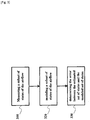
- Figure 1C shows a block diagram of a method for controlling an operation of an air-conditioning system generating airflow in a conditioned environment according to some embodiments of the invention. Steps of the method are performed using at least one processor of the controller.
- the method updates 170 a model 110 of airflow dynamics connecting values of flow and temperature of air conditioner during the operation of the air-conditioning system.
- the updating step 170 iteratively reduces an error between values 175 of the airflow determined according to the model 110 and values 137 of the airflow measured during the operation, e.g., by the sensor 130.
- the updated model 110 is used for modeling 180 the airflow 185, and the operation of the air-conditioning system is controlled 190 using the model airflow 185. Due to iterative nature of the update, the model 110 used to determine the values 175 has been previously updated 170 during the previous iteration and the model 110 used to determine the modeled airflow 185 is updated during the current iteration.
- Figure 1D shows a block diagram of a method for controlling one or combination of a vent angle and room inlet air temperature of the air-conditioning system to maintain set point at certain location in the room according to one embodiment of the invention.
- the online optimizer 195 obtains heat load estimate from the estimator 191, and determines the vent angle using the updated model 110.
- the vent angle optimizes the air flow, which in turn can reduce the setpoint and optimize the efficiency of the air-conditioning system.
- the online optimizer 195 can output a modified set point to the controller 190 and can output a vent angle to the system 100.
- the supervisory controller 120 operates the system 100 at determined inlet temperature to achieve set-point at the given location.
- Some embodiments of the invention address a problem of determining and updating the model of the airflow dynamics, such that the model accurately represent the dynamics of the airflow and is able to adapt to the changes in the conditioned environment, such as a room 160 caused by, e.g. opening and closing of a window or a door. Accordingly, some embodiments use the model of low dimension suitable for real time update and control.
- the model includes a reduced order model having a number of parameters less than a physical model of the airflow according to a Boussinesq equation, wherein the Boussinesq equation is a partial differential equation (PDE), and wherein the reduced order model is an ordinary differential equation (ODE).
- PDE partial differential equation
- ODE ordinary differential equation
- some embodiments address a model reduction problem aim to reduce a complex model of, e.g., an infinite dimension to a simpler model of a lesser dimension, e.g., a finite dimension.
- the model reduction problem determines all parameters or coefficients of the simpler model such that an error between performance measurements of the system according to the complex model and the system according to the simpler model is minimized.
- the model reduction problem determines all parameters or coefficients of the simpler model such that an error between performance measurements of the system according to the complex model and the system according to the simpler model is minimized.
- Such reduction can allow a real-time control of the air flow systems, such as air conditioning systems.
- the physical model of the airflow dynamics can be modeled with PDEs also called Boussinesq equations.
- the Boussinesq equations are difficult to solve in closed-from (nonlinear) and computationally expensive to solve numerically, because their exact solution lies in an infinite dimensional space, but includes all the frequencies or modes of the airflow dynamic.
- T is a temperature scalar variable and u is a velocity vector in three dimensions.
- ⁇ is a viscosity and the reciprocal of the Reynolds number
- k is the heat diffusion coefficient
- p represents the pressure scalar variable.
- the Boussinesq equation describes the coupling between the airflow and the temperature in the room but is of infinite dimensions.
- the Boussinesq equation has uncertain conditions where the boundary conditions of the PDE are changing over time or the case where one of the coefficients involved in the PDE are changing. These mathematical changes actually reflect some real changes in the room. For example, an opening and closing of a window or a door in the room changes the boundary conditions of the Boussinesq PDE.
- weather changes such as daily and and seasonal changes, affect the difference between the temperature in the room and outside of the room, which in turn affect some of the PDE coefficients, e.g. Reynold's number can be affected.
- the available model reduction techniques fail to have a unified approach to obtain a reduced order (or reduced dimension) models of the airflow in a room covering all the above scenarios, i.e., parametric uncertainties as well as boundaries conditions uncertainties.
- Some embodiments of the invention are based on a realization that the problem of representing a complex model of a system with a simpler model of the system can be transformed into a virtual control problem of controlling the system of the simpler model to track a reference trajectory of the performance measurements determined using the complex model of the system.
- the control inputs include the coefficients of the simpler model, and the output of the virtual control is performance measurement determined for the system according to the simpler model with input coefficients.
- reducing the PDE model to the ODE model can be seen as a virtual control problem where the controlled output is the ODE solution over a given time interval, the reference time-varying output trajectory is the solution of the PDE model, and the control signals are the coefficients of the ODE model.
- the solution to the virtual control problem is the control inputs, i.e., the coefficients of the simpler model, minimizing a cost function representing the tracking error.
- This realization allows using model free control optimization methods to virtually control the virtual control problem to determine the coefficients of the simpler model.
- the original states of the system x can be recovered from x r using the following simple algebraic equation x t ⁇ ⁇ x r t , where x is usually a vector of high dimension n >> r, containing the room airflow and room temperature at n desired points or locations of the room, obtained from the spatial discretization of the PDE equation, and ⁇ is a matrix formed by concatenating given vectors called modes or basis vectors of the ROM. These modes differ depending on which model reduction method is used. For example, proper orthogonal decomposition (POD) can be used or dynamic mode decomposition (DMD) method etc.
- POD orthogonal decomposition
- DMD dynamic mode decomposition
- the solution of the ROM model can lead to unstable solution (divergent over a finite time support) which is not reproducing the physics of the original PDE models having a viscous term that makes the solutions always stable, i.e. bounded over a bounded time support.
- some embodiments modifies the reduce order model by adding a stability parameter representing a difference between the reduced order model and the physical model.
- the stability parameter ensures the stability of the simplified model used by some embodiments of the invention and allows updating only the stability parameter in response to detecting the error between values of the airflow determined according to the model and values of the airflow measured during the operation, which simplify the updating 170.
- F is an extra term, i.e., the stability parameter, added to stabilize the solutions of the ROM model.
- This term can be linear or nonlinear function of its arguments.
- K represents a vector of coefficients that should be tuned to ensure the stability as well as the fact that the ROM needs to reproduce the dynamics or solutions of the original PDE model.
- K is a vector of stability coefficients ensuring a stability of the model of the airflow dynamics.
- the coefficients of the vector K can be optimized using an iterative optimization-based tuning.
- Figure 2 shows a block diagram a model reduction method according to some embodiments of the invention.
- one embodiment updates the simplified order model 240 modified with a stability parameter by optimizing 220 a cost function 210 of the error 260 between values of the airflow determined according to the model and values of the airflow measured during the operation subject to stability constraints 225.
- the updating 170 includes the update of only the stability parameter 230 and/or the vector of stability coefficients subject to stability constraints.
- the optimization 220 of the cost function is performed on-line during the operation of the air-conditioning system. For example, one embodiment optimizes the cost function using a gradient descent with numerical evaluation of the gradient of the cost function. Other embodiments use different existing nonlinear programming methods to solve the optimization problem online 220. The solution of the optimization problem leads to optimal coefficients 230, which is used to update the ROM 240 by updating the function F as described above.
- Some embodiments of the invention determine the error between a subset of states of the airflow measured by a set of sensors placed in an environment conditioned by the air-conditioning system and a corresponding subset of states of the airflow determined using the model.
- the cost function 210 is only function of the error 260 between the measured components of x and the corresponding components of the ROM solution vector.
- Figure 3 shows a block diagram of a method for determining the error 260 based on more subset of states of the airflow according to one embodiment of the invention.
- the embodiment determines 310 a subset of states of the airflow measured by a set of sensors placed in an environment conditioned by the air-conditioning system.
- the embodiment models 320 the airflow using the model to produce a modeled subset of states of the airflow corresponding to the subset of measured states and determines 330 the error between the measured subset of states and the modeled subset of states.
- Figure 4 shows a schematic of a method for determining placements of the sensors in the conditioned environment, such as the room 160, according to some embodiment of the invention. These embodiments are based on recognition that it is unrealistic to measure all the components of the vector x of the temperature and flow of the air in the room. Accordingly, these embodiments arrange the placement 430 of the sensors optimally to maximize 420 an observability gramian of the ODE or the PDE 410.
- Figure 5 shows a block diagram of a method for optimization observability gramian according to one embodiment of the invention.
- the embodiment selects a desired observability index 510.
- the embodiment selects the observability index as an observability gramian, which is the rank of the observability matrix, defined as a function of the system PDE or ODE model's coefficients.
- the observability gramian is increased 520, e.g., maximized with respect to the position vector of the sensors.
- the solution of this maximization problem gives the optimal selection of the sensors positions 530.
- Some embodiments of the invention are based on a recognition that the operation of the air-conditioning system in different environments can result in different regimes of the airflow dynamics. For example, if the room doors and windows are closed, the airflow inside of the room has a certain dynamic, if one of the windows is opened, then the airflow has a different dynamic. Accordingly, some embodiments determine which regime is the airflow in at a given time. This regime detection can help selecting the proper parameters of the physical model for the specific regime and then subsequently obtaining the corresponding simplified reduced order model for the particular regime.
- Figure 6 shows a block diagram of a method for selecting a regime of the airflow for controlling the air-conditioning system according to one embodiment.
- the method generates all possible modes 630 of the physical model 640 for all possible regimes, and then compares the modes to the modes reconstructed from the values 610 of the airflow and temperature measured during the operation.
- the real-time mode reconstruction is done using a compressive sensing 620.
- the method selects the reduced order model associated with dominant modes of the physical model.
- the measurements x m are used to solve the following compressive sensing problem Min x r ⁇ x r ⁇ 1 ⁇ x m ⁇ ⁇ x r ⁇ 2 ⁇ tol , where tol is a desired tolerance value.
- the matrix ⁇ is obtained by concatenating all possible modes generated 630 from all possible regimes predicted by the PDE model 640.
- the amplitude of the vector x r components indicate prominent regime at the time where the measurements are done. For example, if the first three elements of the vector x r are much larger than the other elements, then the three first modes are the dominant modes and the associated regime is then selected 650 to be the prominent regime.
- other norms can be used in the definition of the compressive sensing optimization problem, e.g., l p-norm p>1.
- Figure 7 shows a block diagram of a method for selecting ROM for the current regime according to one embodiment of the invention.
- the PDE model 710 is used together with real measurements of the flow and temperature 730 to be fed to a compressive sensing algorithm 750 to detect the present regime 760, and then the associated ROM 720, 740 is selected.
- the selected ROM 790 is then solved and its solution is compared 770 to the real measurements 730, the obtained error 770 is fed to an optimization algorithm 780 to optimize some coefficients of the ROM model 790 and improve the ROM prediction of the airflow and the room temperature.
- the above-described embodiments of the present invention can be implemented in any of numerous ways.
- the embodiments may be implemented using hardware, software or a combination thereof.
- the software code can be executed on any suitable processor or collection of processors, whether provided in a single computer or distributed among multiple computers.
- processors may be implemented as integrated circuits, with one or more processors in an integrated circuit component.
- a processor may be implemented using circuitry in any suitable format.
- the various methods or processes outlined herein may be coded as software that is executable on one or more processors that employ any one of a variety of operating systems or platforms.
- the acts performed as part of the method may be ordered in any suitable way. Accordingly, embodiments may be constructed in which acts are performed in an order different than illustrated, which may include performing some acts simultaneously, even though shown as sequential acts in illustrative embodiments.
Landscapes
- Engineering & Computer Science (AREA)
- Chemical & Material Sciences (AREA)
- Combustion & Propulsion (AREA)
- Mechanical Engineering (AREA)
- General Engineering & Computer Science (AREA)
- Physics & Mathematics (AREA)
- Signal Processing (AREA)
- General Physics & Mathematics (AREA)
- Automation & Control Theory (AREA)
- Mathematical Physics (AREA)
- Fuzzy Systems (AREA)
- Thermal Sciences (AREA)
- Health & Medical Sciences (AREA)
- Artificial Intelligence (AREA)
- Computer Vision & Pattern Recognition (AREA)
- Evolutionary Computation (AREA)
- Medical Informatics (AREA)
- Software Systems (AREA)
- Air Conditioning Control Device (AREA)
Applications Claiming Priority (2)
| Application Number | Priority Date | Filing Date | Title |
|---|---|---|---|
| US14/640,052 US9976765B2 (en) | 2015-03-06 | 2015-03-06 | System and method for controlling operations of air-conditioning system |
| PCT/JP2016/055315 WO2016143510A1 (en) | 2015-03-06 | 2016-02-17 | Air-conditioning system and system and method for controlling an operation of an air-conditioning system |
Publications (2)
| Publication Number | Publication Date |
|---|---|
| EP3265726A1 EP3265726A1 (en) | 2018-01-10 |
| EP3265726B1 true EP3265726B1 (en) | 2019-12-18 |
Family
ID=55527606
Family Applications (1)
| Application Number | Title | Priority Date | Filing Date |
|---|---|---|---|
| EP16709830.0A Active EP3265726B1 (en) | 2015-03-06 | 2016-02-17 | Air-conditioning system and system and method for controlling an operation of an air-conditioning system |
Country Status (5)
| Country | Link |
|---|---|
| US (1) | US9976765B2 (https=) |
| EP (1) | EP3265726B1 (https=) |
| JP (1) | JP6433588B2 (https=) |
| CN (1) | CN107429927B (https=) |
| WO (1) | WO2016143510A1 (https=) |
Families Citing this family (13)
| Publication number | Priority date | Publication date | Assignee | Title |
|---|---|---|---|---|
| US10386800B2 (en) * | 2015-02-24 | 2019-08-20 | Siemens Industry, Inc. | Variable air volume modeling for an HVAC system |
| PE20181198A1 (es) * | 2015-10-26 | 2018-07-23 | Bayer Cropscience Ag | Derivados de heterociclos biciclicos condensados como agentes de control de plagas |
| CN108700327A (zh) * | 2015-12-10 | 2018-10-23 | 艾默生电气公司 | 用于具有多速抽头的电动风扇的自适应控制 |
| JP6562893B2 (ja) | 2016-11-17 | 2019-08-21 | 株式会社東芝 | パラメータ推定装置、空調システム評価装置、パラメータ推定方法およびプログラム |
| CN108361923A (zh) * | 2018-03-02 | 2018-08-03 | 山东三江电子工程有限公司 | 中央空调回水温度稳定值的预测方法 |
| US10619879B2 (en) * | 2018-03-21 | 2020-04-14 | Mitsubishi Electric Research Laboratories, Inc. | System and method for controlling operations of air-conditioning system |
| US11162701B2 (en) * | 2020-02-25 | 2021-11-02 | Mitsubishi Electric Research Laboratories, Inc. | Controlling HVAC system by inversing airflow dynamics |
| US12025341B2 (en) | 2020-05-07 | 2024-07-02 | Ademco Inc. | Individual driving of nebulizers based on HVAC conditions |
| US11808472B2 (en) * | 2021-03-26 | 2023-11-07 | Mitsubishi Electric Research Laboratories Inc. | Controlling thermal state of conditioned environment based on multivariable optimization |
| CN115875807B (zh) * | 2022-05-10 | 2024-10-29 | 东南大学 | 一种自适应调控多区域建筑温度的方法 |
| CN115111647B (zh) * | 2022-06-07 | 2026-03-10 | 青岛海尔空调器有限总公司 | 引流混风空调系统及引流混风方法 |
| CN114935892B (zh) * | 2022-06-10 | 2023-10-03 | 杭州电子科技大学 | 一种空气制水机空气流速自适应控制建模方法 |
| CN119778836B (zh) * | 2025-03-11 | 2025-06-27 | 深圳前海中碳综合能源科技有限公司 | 恒温恒湿空调系统节能控制方法和空调控制装置 |
Family Cites Families (18)
| Publication number | Priority date | Publication date | Assignee | Title |
|---|---|---|---|---|
| US5735134A (en) | 1996-05-30 | 1998-04-07 | Massachusetts Institute Of Technology | Set point optimization in vapor compression cycles |
| US6363316B1 (en) * | 2000-05-13 | 2002-03-26 | Ford Global Technologies, Inc. | Cylinder air charge estimation using observer-based adaptive control |
| CA2599471A1 (en) * | 2007-08-31 | 2009-02-28 | Alexandre Cervinka | Underground communication network system for personal tracking and hvac control |
| US8374725B1 (en) * | 2007-11-27 | 2013-02-12 | Joseph David Ols | Climate control |
| US8306794B2 (en) | 2008-06-26 | 2012-11-06 | International Business Machines Corporation | Techniques for thermal modeling of data centers to improve energy efficiency |
| US9286582B2 (en) * | 2009-06-22 | 2016-03-15 | Johnson Controls Technology Company | Systems and methods for detecting changes in energy usage in a building |
| US8630724B2 (en) | 2009-08-12 | 2014-01-14 | International Business Machines Corporation | Measurement and management technology platform |
| US8738185B2 (en) * | 2009-12-11 | 2014-05-27 | Carrier Corporation | Altitude adjustment for heating, ventilating and air conditioning systems |
| BR112012014622A2 (pt) * | 2009-12-16 | 2019-05-14 | Commonwealth Scientific And Industrial Research Organisation | método de controle de sistema de aquecimento, ventilação e condicionamento de ar (hvac) de um edifício |
| US8744631B2 (en) | 2011-01-28 | 2014-06-03 | Hewlett-Packard Development Company, L.P. | Manipulating environmental conditions in an infrastructure |
| US8725307B2 (en) * | 2011-06-28 | 2014-05-13 | Schneider Electric It Corporation | System and method for measurement aided prediction of temperature and airflow values in a data center |
| US8825184B2 (en) * | 2012-03-26 | 2014-09-02 | Mitsubishi Electric Research Laboratories, Inc. | Multivariable optimization of operation of vapor compression systems |
| US20140222241A1 (en) * | 2013-02-04 | 2014-08-07 | Joseph David Ols | Climate Control |
| JP6157219B2 (ja) * | 2013-05-29 | 2017-07-05 | アズビル株式会社 | 制御装置および制御方法 |
| JP6012868B2 (ja) * | 2013-07-10 | 2016-10-25 | 三菱電機株式会社 | 熱負荷予測装置、配信システム、熱負荷予測方法及びプログラム |
| US10286748B2 (en) * | 2014-05-20 | 2019-05-14 | Mahle International Gmbh | Un-partitioned HVAC module control for multi-zone and high performance operation |
| WO2016130453A1 (en) * | 2015-02-09 | 2016-08-18 | Schneider Electric It Corporation | System and methods for simulation-based optimization of data center cooling equipment |
| WO2017011493A1 (en) * | 2015-07-13 | 2017-01-19 | Truveon Corp. | Systems for calibrating airflow rates in heating, ventilating, and air conditioning (hvac) ducts and hvac systems including the same |
-
2015
- 2015-03-06 US US14/640,052 patent/US9976765B2/en active Active
-
2016
- 2016-02-17 CN CN201680013380.XA patent/CN107429927B/zh active Active
- 2016-02-17 JP JP2017520563A patent/JP6433588B2/ja active Active
- 2016-02-17 WO PCT/JP2016/055315 patent/WO2016143510A1/en not_active Ceased
- 2016-02-17 EP EP16709830.0A patent/EP3265726B1/en active Active
Non-Patent Citations (1)
| Title |
|---|
| None * |
Also Published As
| Publication number | Publication date |
|---|---|
| JP6433588B2 (ja) | 2018-12-05 |
| WO2016143510A1 (en) | 2016-09-15 |
| US9976765B2 (en) | 2018-05-22 |
| EP3265726A1 (en) | 2018-01-10 |
| US20160258644A1 (en) | 2016-09-08 |
| CN107429927B (zh) | 2021-05-11 |
| CN107429927A (zh) | 2017-12-01 |
| JP2017531155A (ja) | 2017-10-19 |
Similar Documents
| Publication | Publication Date | Title |
|---|---|---|
| EP3265726B1 (en) | Air-conditioning system and system and method for controlling an operation of an air-conditioning system | |
| EP3265887B1 (en) | Air-conditioning system and system and method for controlling an operation of an air-conditioning system | |
| EP3769165B1 (en) | System and method for controlling operation of air-conditioning system | |
| JP7664876B2 (ja) | 多変数最適化に基づく空調環境の熱状態の制御 | |
| EP3126760B1 (en) | Extremum seeking controller and method for controlling a vapor compression system | |
| EP4111269B1 (en) | System and method for controlling an operation of heating, ventilating, and air-conditioning (hvac) systems | |
| JP2015232436A (ja) | 蒸気圧縮システムを制御するシステム及び方法 | |
| US20210256184A1 (en) | System and Method for Designing Heating, Ventilating, and Air-Conditioning (HVAC) Systems | |
| US10208971B2 (en) | Navier-stokes based indoor climate control | |
| US20250109877A1 (en) | Building hvac system with model calibration | |
| WO2024075436A1 (en) | System and method for data-driven control of an air-conditioning system | |
| US20250190656A1 (en) | Polytopic Reduced-Order Model for Prediction, Estimation and Control of Partial Differential Equations | |
| US20250264237A1 (en) | Reinforcement Learning Control for High Dimensional Systems Modeled by Partial Differential Equations | |
| Burns et al. | Proportional-integral extremum seeking for optimizing power of vapor compression systems |
Legal Events
| Date | Code | Title | Description |
|---|---|---|---|
| STAA | Information on the status of an ep patent application or granted ep patent |
Free format text: STATUS: THE INTERNATIONAL PUBLICATION HAS BEEN MADE |
|
| PUAI | Public reference made under article 153(3) epc to a published international application that has entered the european phase |
Free format text: ORIGINAL CODE: 0009012 |
|
| STAA | Information on the status of an ep patent application or granted ep patent |
Free format text: STATUS: REQUEST FOR EXAMINATION WAS MADE |
|
| 17P | Request for examination filed |
Effective date: 20170915 |
|
| AK | Designated contracting states |
Kind code of ref document: A1 Designated state(s): AL AT BE BG CH CY CZ DE DK EE ES FI FR GB GR HR HU IE IS IT LI LT LU LV MC MK MT NL NO PL PT RO RS SE SI SK SM TR |
|
| AX | Request for extension of the european patent |
Extension state: BA ME |
|
| DAV | Request for validation of the european patent (deleted) | ||
| DAX | Request for extension of the european patent (deleted) | ||
| STAA | Information on the status of an ep patent application or granted ep patent |
Free format text: STATUS: EXAMINATION IS IN PROGRESS |
|
| 17Q | First examination report despatched |
Effective date: 20180627 |
|
| REG | Reference to a national code |
Ref country code: DE Ref legal event code: R079 Ref document number: 602016026338 Country of ref document: DE Free format text: PREVIOUS MAIN CLASS: F24F0011000000 Ipc: F24F0011300000 |
|
| GRAP | Despatch of communication of intention to grant a patent |
Free format text: ORIGINAL CODE: EPIDOSNIGR1 |
|
| STAA | Information on the status of an ep patent application or granted ep patent |
Free format text: STATUS: GRANT OF PATENT IS INTENDED |
|
| RIC1 | Information provided on ipc code assigned before grant |
Ipc: F24F 11/30 20180101AFI20190523BHEP Ipc: G05B 13/04 20060101ALI20190523BHEP Ipc: F24F 140/60 20180101ALI20190523BHEP Ipc: G05D 23/19 20060101ALI20190523BHEP Ipc: F24F 11/62 20180101ALI20190523BHEP Ipc: F24F 110/00 20180101ALI20190523BHEP Ipc: G05B 17/02 20060101ALI20190523BHEP Ipc: F24F 11/70 20180101ALI20190523BHEP |
|
| INTG | Intention to grant announced |
Effective date: 20190625 |
|
| GRAS | Grant fee paid |
Free format text: ORIGINAL CODE: EPIDOSNIGR3 |
|
| GRAA | (expected) grant |
Free format text: ORIGINAL CODE: 0009210 |
|
| STAA | Information on the status of an ep patent application or granted ep patent |
Free format text: STATUS: THE PATENT HAS BEEN GRANTED |
|
| AK | Designated contracting states |
Kind code of ref document: B1 Designated state(s): AL AT BE BG CH CY CZ DE DK EE ES FI FR GB GR HR HU IE IS IT LI LT LU LV MC MK MT NL NO PL PT RO RS SE SI SK SM TR |
|
| REG | Reference to a national code |
Ref country code: CH Ref legal event code: EP |
|
| REG | Reference to a national code |
Ref country code: IE Ref legal event code: FG4D |
|
| REG | Reference to a national code |
Ref country code: DE Ref legal event code: R096 Ref document number: 602016026338 Country of ref document: DE |
|
| REG | Reference to a national code |
Ref country code: AT Ref legal event code: REF Ref document number: 1215044 Country of ref document: AT Kind code of ref document: T Effective date: 20200115 |
|
| REG | Reference to a national code |
Ref country code: NL Ref legal event code: MP Effective date: 20191218 |
|
| PG25 | Lapsed in a contracting state [announced via postgrant information from national office to epo] |
Ref country code: LT Free format text: LAPSE BECAUSE OF FAILURE TO SUBMIT A TRANSLATION OF THE DESCRIPTION OR TO PAY THE FEE WITHIN THE PRESCRIBED TIME-LIMIT Effective date: 20191218 Ref country code: BG Free format text: LAPSE BECAUSE OF FAILURE TO SUBMIT A TRANSLATION OF THE DESCRIPTION OR TO PAY THE FEE WITHIN THE PRESCRIBED TIME-LIMIT Effective date: 20200318 Ref country code: FI Free format text: LAPSE BECAUSE OF FAILURE TO SUBMIT A TRANSLATION OF THE DESCRIPTION OR TO PAY THE FEE WITHIN THE PRESCRIBED TIME-LIMIT Effective date: 20191218 Ref country code: GR Free format text: LAPSE BECAUSE OF FAILURE TO SUBMIT A TRANSLATION OF THE DESCRIPTION OR TO PAY THE FEE WITHIN THE PRESCRIBED TIME-LIMIT Effective date: 20200319 Ref country code: NO Free format text: LAPSE BECAUSE OF FAILURE TO SUBMIT A TRANSLATION OF THE DESCRIPTION OR TO PAY THE FEE WITHIN THE PRESCRIBED TIME-LIMIT Effective date: 20200318 Ref country code: LV Free format text: LAPSE BECAUSE OF FAILURE TO SUBMIT A TRANSLATION OF THE DESCRIPTION OR TO PAY THE FEE WITHIN THE PRESCRIBED TIME-LIMIT Effective date: 20191218 Ref country code: SE Free format text: LAPSE BECAUSE OF FAILURE TO SUBMIT A TRANSLATION OF THE DESCRIPTION OR TO PAY THE FEE WITHIN THE PRESCRIBED TIME-LIMIT Effective date: 20191218 |
|
| REG | Reference to a national code |
Ref country code: LT Ref legal event code: MG4D |
|
| PG25 | Lapsed in a contracting state [announced via postgrant information from national office to epo] |
Ref country code: RS Free format text: LAPSE BECAUSE OF FAILURE TO SUBMIT A TRANSLATION OF THE DESCRIPTION OR TO PAY THE FEE WITHIN THE PRESCRIBED TIME-LIMIT Effective date: 20191218 Ref country code: HR Free format text: LAPSE BECAUSE OF FAILURE TO SUBMIT A TRANSLATION OF THE DESCRIPTION OR TO PAY THE FEE WITHIN THE PRESCRIBED TIME-LIMIT Effective date: 20191218 |
|
| PG25 | Lapsed in a contracting state [announced via postgrant information from national office to epo] |
Ref country code: AL Free format text: LAPSE BECAUSE OF FAILURE TO SUBMIT A TRANSLATION OF THE DESCRIPTION OR TO PAY THE FEE WITHIN THE PRESCRIBED TIME-LIMIT Effective date: 20191218 |
|
| PG25 | Lapsed in a contracting state [announced via postgrant information from national office to epo] |
Ref country code: NL Free format text: LAPSE BECAUSE OF FAILURE TO SUBMIT A TRANSLATION OF THE DESCRIPTION OR TO PAY THE FEE WITHIN THE PRESCRIBED TIME-LIMIT Effective date: 20191218 Ref country code: RO Free format text: LAPSE BECAUSE OF FAILURE TO SUBMIT A TRANSLATION OF THE DESCRIPTION OR TO PAY THE FEE WITHIN THE PRESCRIBED TIME-LIMIT Effective date: 20191218 Ref country code: CZ Free format text: LAPSE BECAUSE OF FAILURE TO SUBMIT A TRANSLATION OF THE DESCRIPTION OR TO PAY THE FEE WITHIN THE PRESCRIBED TIME-LIMIT Effective date: 20191218 Ref country code: PT Free format text: LAPSE BECAUSE OF FAILURE TO SUBMIT A TRANSLATION OF THE DESCRIPTION OR TO PAY THE FEE WITHIN THE PRESCRIBED TIME-LIMIT Effective date: 20200513 Ref country code: EE Free format text: LAPSE BECAUSE OF FAILURE TO SUBMIT A TRANSLATION OF THE DESCRIPTION OR TO PAY THE FEE WITHIN THE PRESCRIBED TIME-LIMIT Effective date: 20191218 |
|
| PG25 | Lapsed in a contracting state [announced via postgrant information from national office to epo] |
Ref country code: IS Free format text: LAPSE BECAUSE OF FAILURE TO SUBMIT A TRANSLATION OF THE DESCRIPTION OR TO PAY THE FEE WITHIN THE PRESCRIBED TIME-LIMIT Effective date: 20200418 Ref country code: SK Free format text: LAPSE BECAUSE OF FAILURE TO SUBMIT A TRANSLATION OF THE DESCRIPTION OR TO PAY THE FEE WITHIN THE PRESCRIBED TIME-LIMIT Effective date: 20191218 Ref country code: SM Free format text: LAPSE BECAUSE OF FAILURE TO SUBMIT A TRANSLATION OF THE DESCRIPTION OR TO PAY THE FEE WITHIN THE PRESCRIBED TIME-LIMIT Effective date: 20191218 |
|
| REG | Reference to a national code |
Ref country code: DE Ref legal event code: R097 Ref document number: 602016026338 Country of ref document: DE |
|
| REG | Reference to a national code |
Ref country code: CH Ref legal event code: PL |
|
| REG | Reference to a national code |
Ref country code: AT Ref legal event code: MK05 Ref document number: 1215044 Country of ref document: AT Kind code of ref document: T Effective date: 20191218 |
|
| PLBE | No opposition filed within time limit |
Free format text: ORIGINAL CODE: 0009261 |
|
| STAA | Information on the status of an ep patent application or granted ep patent |
Free format text: STATUS: NO OPPOSITION FILED WITHIN TIME LIMIT |
|
| REG | Reference to a national code |
Ref country code: BE Ref legal event code: MM Effective date: 20200229 |
|
| PG25 | Lapsed in a contracting state [announced via postgrant information from national office to epo] |
Ref country code: ES Free format text: LAPSE BECAUSE OF FAILURE TO SUBMIT A TRANSLATION OF THE DESCRIPTION OR TO PAY THE FEE WITHIN THE PRESCRIBED TIME-LIMIT Effective date: 20191218 Ref country code: DK Free format text: LAPSE BECAUSE OF FAILURE TO SUBMIT A TRANSLATION OF THE DESCRIPTION OR TO PAY THE FEE WITHIN THE PRESCRIBED TIME-LIMIT Effective date: 20191218 Ref country code: MC Free format text: LAPSE BECAUSE OF FAILURE TO SUBMIT A TRANSLATION OF THE DESCRIPTION OR TO PAY THE FEE WITHIN THE PRESCRIBED TIME-LIMIT Effective date: 20191218 Ref country code: LU Free format text: LAPSE BECAUSE OF NON-PAYMENT OF DUE FEES Effective date: 20200217 |
|
| 26N | No opposition filed |
Effective date: 20200921 |
|
| PG25 | Lapsed in a contracting state [announced via postgrant information from national office to epo] |
Ref country code: CH Free format text: LAPSE BECAUSE OF NON-PAYMENT OF DUE FEES Effective date: 20200229 Ref country code: SI Free format text: LAPSE BECAUSE OF FAILURE TO SUBMIT A TRANSLATION OF THE DESCRIPTION OR TO PAY THE FEE WITHIN THE PRESCRIBED TIME-LIMIT Effective date: 20191218 Ref country code: AT Free format text: LAPSE BECAUSE OF FAILURE TO SUBMIT A TRANSLATION OF THE DESCRIPTION OR TO PAY THE FEE WITHIN THE PRESCRIBED TIME-LIMIT Effective date: 20191218 Ref country code: LI Free format text: LAPSE BECAUSE OF NON-PAYMENT OF DUE FEES Effective date: 20200229 |
|
| PG25 | Lapsed in a contracting state [announced via postgrant information from national office to epo] |
Ref country code: IE Free format text: LAPSE BECAUSE OF NON-PAYMENT OF DUE FEES Effective date: 20200217 Ref country code: IT Free format text: LAPSE BECAUSE OF FAILURE TO SUBMIT A TRANSLATION OF THE DESCRIPTION OR TO PAY THE FEE WITHIN THE PRESCRIBED TIME-LIMIT Effective date: 20191218 |
|
| PG25 | Lapsed in a contracting state [announced via postgrant information from national office to epo] |
Ref country code: BE Free format text: LAPSE BECAUSE OF NON-PAYMENT OF DUE FEES Effective date: 20200229 Ref country code: PL Free format text: LAPSE BECAUSE OF FAILURE TO SUBMIT A TRANSLATION OF THE DESCRIPTION OR TO PAY THE FEE WITHIN THE PRESCRIBED TIME-LIMIT Effective date: 20191218 |
|
| PG25 | Lapsed in a contracting state [announced via postgrant information from national office to epo] |
Ref country code: TR Free format text: LAPSE BECAUSE OF FAILURE TO SUBMIT A TRANSLATION OF THE DESCRIPTION OR TO PAY THE FEE WITHIN THE PRESCRIBED TIME-LIMIT Effective date: 20191218 Ref country code: MT Free format text: LAPSE BECAUSE OF FAILURE TO SUBMIT A TRANSLATION OF THE DESCRIPTION OR TO PAY THE FEE WITHIN THE PRESCRIBED TIME-LIMIT Effective date: 20191218 Ref country code: CY Free format text: LAPSE BECAUSE OF FAILURE TO SUBMIT A TRANSLATION OF THE DESCRIPTION OR TO PAY THE FEE WITHIN THE PRESCRIBED TIME-LIMIT Effective date: 20191218 |
|
| PG25 | Lapsed in a contracting state [announced via postgrant information from national office to epo] |
Ref country code: MK Free format text: LAPSE BECAUSE OF FAILURE TO SUBMIT A TRANSLATION OF THE DESCRIPTION OR TO PAY THE FEE WITHIN THE PRESCRIBED TIME-LIMIT Effective date: 20191218 |
|
| REG | Reference to a national code |
Ref country code: DE Ref legal event code: R084 Ref document number: 602016026338 Country of ref document: DE |
|
| REG | Reference to a national code |
Ref country code: GB Ref legal event code: 746 Effective date: 20221229 |
|
| P01 | Opt-out of the competence of the unified patent court (upc) registered |
Effective date: 20230512 |
|
| PGFP | Annual fee paid to national office [announced via postgrant information from national office to epo] |
Ref country code: FR Payment date: 20251231 Year of fee payment: 11 |
|
| PGFP | Annual fee paid to national office [announced via postgrant information from national office to epo] |
Ref country code: GB Payment date: 20260106 Year of fee payment: 11 |
|
| PGFP | Annual fee paid to national office [announced via postgrant information from national office to epo] |
Ref country code: DE Payment date: 20251230 Year of fee payment: 11 |