EP3262550B1 - Detection of missing findings for automatic creation of longitudinal finding view - Google Patents
Detection of missing findings for automatic creation of longitudinal finding view Download PDFInfo
- Publication number
- EP3262550B1 EP3262550B1 EP16712072.4A EP16712072A EP3262550B1 EP 3262550 B1 EP3262550 B1 EP 3262550B1 EP 16712072 A EP16712072 A EP 16712072A EP 3262550 B1 EP3262550 B1 EP 3262550B1
- Authority
- EP
- European Patent Office
- Prior art keywords
- measurements
- lesion
- report
- measurement
- identifier
- Prior art date
- Legal status (The legal status is an assumption and is not a legal conclusion. Google has not performed a legal analysis and makes no representation as to the accuracy of the status listed.)
- Active
Links
Images


Classifications
-
- G—PHYSICS
- G16—INFORMATION AND COMMUNICATION TECHNOLOGY [ICT] SPECIALLY ADAPTED FOR SPECIFIC APPLICATION FIELDS
- G16H—HEALTHCARE INFORMATICS, i.e. INFORMATION AND COMMUNICATION TECHNOLOGY [ICT] SPECIALLY ADAPTED FOR THE HANDLING OR PROCESSING OF MEDICAL OR HEALTHCARE DATA
- G16H15/00—ICT specially adapted for medical reports, e.g. generation or transmission thereof
-
- A—HUMAN NECESSITIES
- A61—MEDICAL OR VETERINARY SCIENCE; HYGIENE
- A61B—DIAGNOSIS; SURGERY; IDENTIFICATION
- A61B5/00—Measuring for diagnostic purposes; Identification of persons
- A61B5/72—Signal processing specially adapted for physiological signals or for diagnostic purposes
- A61B5/7271—Specific aspects of physiological measurement analysis
- A61B5/7275—Determining trends in physiological measurement data; Predicting development of a medical condition based on physiological measurements, e.g. determining a risk factor
-
- G—PHYSICS
- G16—INFORMATION AND COMMUNICATION TECHNOLOGY [ICT] SPECIALLY ADAPTED FOR SPECIFIC APPLICATION FIELDS
- G16H—HEALTHCARE INFORMATICS, i.e. INFORMATION AND COMMUNICATION TECHNOLOGY [ICT] SPECIALLY ADAPTED FOR THE HANDLING OR PROCESSING OF MEDICAL OR HEALTHCARE DATA
- G16H30/00—ICT specially adapted for the handling or processing of medical images
- G16H30/40—ICT specially adapted for the handling or processing of medical images for processing medical images, e.g. editing
-
- G—PHYSICS
- G16—INFORMATION AND COMMUNICATION TECHNOLOGY [ICT] SPECIALLY ADAPTED FOR SPECIFIC APPLICATION FIELDS
- G16H—HEALTHCARE INFORMATICS, i.e. INFORMATION AND COMMUNICATION TECHNOLOGY [ICT] SPECIALLY ADAPTED FOR THE HANDLING OR PROCESSING OF MEDICAL OR HEALTHCARE DATA
- G16H50/00—ICT specially adapted for medical diagnosis, medical simulation or medical data mining; ICT specially adapted for detecting, monitoring or modelling epidemics or pandemics
- G16H50/70—ICT specially adapted for medical diagnosis, medical simulation or medical data mining; ICT specially adapted for detecting, monitoring or modelling epidemics or pandemics for mining of medical data, e.g. analysing previous cases of other patients
-
- G—PHYSICS
- G16—INFORMATION AND COMMUNICATION TECHNOLOGY [ICT] SPECIALLY ADAPTED FOR SPECIFIC APPLICATION FIELDS
- G16H—HEALTHCARE INFORMATICS, i.e. INFORMATION AND COMMUNICATION TECHNOLOGY [ICT] SPECIALLY ADAPTED FOR THE HANDLING OR PROCESSING OF MEDICAL OR HEALTHCARE DATA
- G16H30/00—ICT specially adapted for the handling or processing of medical images
- G16H30/20—ICT specially adapted for the handling or processing of medical images for handling medical images, e.g. DICOM, HL7 or PACS
Definitions
- the following generally relates to medical longitudinal tracking systems, and is described with particular application to tracking of lesions or solid tumors.
- Lesion tracking is used to evaluate an effectiveness of a treatment over time and to evaluate how lesions, such as cancerous tumors, respond to treatments. Decisions are made by healthcare practitioners according to guidelines, such as Response Evaluation Criteria in Solid Tumors (RECIST), based on changes in lesions identified as malignant over time. Those decisions can alter treatment for a particular patient based on longitudinally tracked measurements of individual lesions.
- RECIST Response Evaluation Criteria in Solid Tumors
- Measurements of lesions are taken by a healthcare professional from medical images of the patient obtained by an imaging device or scanner, such as a Computed Tomography (CT) scanner.
- CT Computed Tomography
- the healthcare professional or radiologist evaluates the medical images to determine a type of lesion, and with the measurements narrates a report, which describes characteristics of the lesions at the time of the images, e.g. at a treatment interval, and can include comparisons with prior measurements to identify or highlight changes.
- a healthcare practitioner such as a research clinical associate, typically will intercept the report and enter select index lesions in a tracking system such as a spreadsheet program.
- Lesion tracking systems are typically optional. That is, a radiologist can narrate and deliver a report without entering measurements into the tracking system. With multi-organizational practices and time pressures, subsequent practitioners do not revisit prior studies to obtain missing measurements. With missing measurements the utility of the lesion tracking is diminished. Longitudinal tracking computations cannot be made with missing measurements.
- a typical systems approach of requiring entry of values is not practical. For example, enforcement of data entry calls for multi-organizational support and enforcement, and raises system integration issues across organizations.
- Another typical systems approach uses extract, transform and load (ETL) programs used in data loads, such as often used in Data Mining approaches. Data loads are typically performed with structured data at predetermined intervals. Assumptions are made about the data to facilitate loading without professional review of data values. With the reports initiated by different radiology sources, departments, or even different organizations, managing even the sourcing of the reports is a challenge.
- Radiology reports are typically submitted and/or stored electronically.
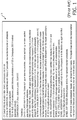
- An example is shown in Figure 1 .
- a separate report is issued for each evaluation point, e.g. a date typically corresponding to a treatment interval of the patient.
- Reports include unstructured narrative 5, which include headings, and typically compare current and prior measurements of each of the lesions.
- the format, organization, unit of measurement and the description of each lesion can vary from one report to the next for the same patient, vary from patient to patient, and vary by healthcare practitioner and/or healthcare provider organization.
- Document WO 2014/155273 discloses a system for generating a context driven summary review of medical findings without a longitudinal tracking system comprising a lesion tracking unit as defined in the appended claims.
- Document WO 2014/030092 discloses a system for extracting context information form a current medical image.
- Document WO2012017418 discloses a system for aiding report authoring in a medical context.
- a longitudinal tracking system includes a lesion tracking unit and a display device.
- the lesion tracking unit constructs a display of characteristic information for at least one longitudinally tracked lesion retrieved according to the patient identifier, and an identifier of at least one missing measurement determined by comparing a temporal identifier of retrieved reports with the characteristic information, and each report includes a narrative with measurements of at least one reported lesion for the patient identifier.
- the display device displays the constructed display of the characteristic information for each longitudinally tracked lesion, and the indicator of the at least one missing measurement.
- a method of longitudinal tracking includes displaying on a display device, in response to a received patient identifier, a constructed display of characteristic information for at least one longitudinally tracked lesion retrieved according to the patient identifier, and an indicator of at least one missing measurement determined by comparing a temporal identifier of retrieved reports with the characteristic information, and each report includes a narrative with measurements of at least one reported lesion for the patient identifier.
- a longitudinal tracking system includes one or more data processors in response to a received patient identifier, display on a display device a constructed display of characteristic information for at least one longitudinally tracked lesion retrieved according to the patient identifier, and an indicator of at least one missing measurement determined by comparing a temporal identifier of retrieved reports with the characteristic information, and each report includes a narrative with measurements of at least one reported lesion for the patient identifier.
- the one or more data processors in response to receiving an indication to find the at least one missing measurement, update the display of the characteristic information for each longitudinally tracked lesion with found measurements corresponding to the at least one missing measurement and the found measurements found in the report narratives.
- finding missing measurements provide more complete longitudinal information about tracked lesions. More complete longitudinal information aides healthcare practitioner review of the longitudinal information and provides for more informed decision making concerning patients with tracked lesions. In one instance, continued optional entry of measurements continues.
- the invention may take form in various components and arrangements of components, and in various steps and arrangements of steps.
- the drawings are only for purposes of illustrating the preferred embodiments and are not to be construed as limiting the invention.
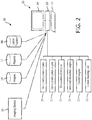
- a report data store 12 includes radiology reports reporting lesions.
- the example report narrative 5 is shown in Figure 1 .
- Each report includes a patient identification and a report temporal identifier of the date of lesion examination or imaging, e.g. a date of an examination from an image of the patient.
- the report is generated based on measurements of patient images 14 from an imaging device 16, such as a CT scanner, a magnetic resonance (MR) scanner, a positron emission tomography (PET) scanner, a single proton emission computed tomography (SPECT), a hybrid, a combination and the like.
- the patient images 14 can be stored in a Picture Archiving and Communication System (PACS), departmental Radiology Information System (RIS), Hospital Information System (HIS), and the like.
- the reports 12 can be stored in the same system, or in a separate data store.
- a lesion tracking data store 18 stores characteristic information about lesions identified for each patient. For each lesion, characteristics of the lesion, such as a description and measurements, are stored with measurements stored according to each temporally indicated period measured. For example, measurements of a hypodense liver lesion measured in a CT image slice with a largest length of 14 mm and a second length orthogonal to the largest length of 13.9 mm are stored with a first date. For a second date, the measurements are 16.9 mm and 15.2 mm respectively. The data recorded for each patient can include multiple lesions.
- the data stores 12, 14, 18 can include data organization, such as a file system, a database management system, an element definition, an object definition and the like.
- the data store includes local and/or remote non-transitory storage medium, such as disk storage, solid state storage, server storage, local storage, cloud storage and the like.
- the data stores are communicatively connected to at least one data processor 20, such as an electronic data processor, optical data processor, microprocessor, computer processor, and the like.
- the data processor 20 comprises a computing device 22, such as a desktop computer, laptop computer, portable computing device, smartphone, body worn computing device, or as a distributed computing device, such as a computing device served by a web server or other type of application server.
- the computing device 22 includes a display device 24 and one or more input devices 26, such as a keyboard, mouse, microphone, and the like.
- the display device 24 and the input device 26 can be combined, such as a touch screen device.
- a 'display' or 'display device' as used herein encompasses an output device or a user interface adapted for displaying images or data.
- a display may output visual, audio, and or tactile data. Examples of a display include, a computer monitor, a television screen, a touch screen, tactile electronic display, Vector display, Flat panel display, Vacuum fluorescent display (VF), Light-emitting diode (LED) displays, Electroluminescent display (ELD), Plasma display panels (PDP), Liquid crystal display (LCD), Organic light-emitting diode displays (OLED), a projector, body-mounted displays, and the like.
- VF Vacuum fluorescent display
- LED Light-emitting diode
- ELD Electroluminescent display
- PDP Plasma display panels
- LCD Liquid crystal display
- OLED Organic light-emitting diode displays
- a lesion tracking unit 28 in response to receiving a patient identifier retrieves the characteristic information about the tracked lesions from the lesion tracking data store 18 for the identified patient and for the temporal identifiers stored, e.g. dates of tracked prior examination measurements.
- the lesion tracking unit 28 receives the reports from the reports data store 12 and identifies the report temporal identifier.
- the report patient identification and the report temporal identifier are located in the file descriptor or metadata and/or in the unstructured narrative of the report. For example, a file name, and/or file metadata can include both the patient identifier and date of the imaging examination.
- the lesion tracking unit 28 identifies missing temporal identifiers in the tracked lesion data based on the identified report temporal identifier of each report received, e.g. a report temporal identifier not found in the tracked lesion data, or a tracked lesion temporal identifier for which no measurements exist.
- the lesion tracking unit 28 constructs a display of the tracked lesions including characteristic data and an identifier of each missing measurement, and displays the constructed display on the display device 24.
- the display can include the measurements for temporal periods which are known, e.g. present in lesion tracking data store 18.
- a document parser engine 30 parses reports corresponding to each missing period of one or more tracked lesions. For example, in response to a command received from the input device 26, the document parser engine 30 selects two reports: a January 1 report and a May 12 report corresponding to missing periods of two lesions, one lesion missing values from January 1 and May 12, and a second lesion missing values from the May 12 report. The document parser engine 39 parses the two reports.
- the document parser engine 30 parses sections, paragraph headings, and/or sentences from the medical narrative.
- the document parser engine 30 can use predetermined section headers and/or paragraph headers, which facilitate processing.
- Section and paragraph headings are recognized and normalized to a pre-determined set.
- a predetermined set of sections headings includes patient information, clinical information, technique, comparison, findings, and impression.
- paragraph headings include anatomical identifiers, such as chest, lungs and pleura, mediastinum and hila, abdomen, liver, biliary tract, spleen, bowel, bones.
- Section and paragraph headers can be nested or hierarchically related.
- a report narrative includes: "LIVER, BILIARY TRACT: Probable diffuse fatty liver. Subtle hypodense soft tissue along the subcapsular portion of the liver segment 7 measures 1.1 x 2.7 cm. Previously 3.2 x 1.3 cm” is parsed by the document parser engine into sentences of "LIVER, BILIARY TRACT: Probable diffuse fatty liver,” “Subtle hypodense soft tissue along the subcapsular portion of the liver segment 7 measures 1.1 x 2.7 cm.” and "Previously 3.2 x 1.3 cm,” “LIVER, BILIARY TRACT” are identified as a header.
- the document parser engine 30 can be implemented using rule-based, machine learning, maximum entropy or other techniques using commercially available products or other products that include header recognition.
- the document parser engine 30 can identify the patient identifier and the report temporal identifier when part of the narrative and not available as part of the file descriptor or metadata.
- the document parser engine 30 can identify related images, such as the images from which the report is based.
- a concept extraction engine 32 recognizes phrases in the parsed sentences and maps the phrases to an external ontology, such as SNOMED, UMLS or RadLex, using a commercially available product, such as MetaMap. For example, the labels of the lesions are recognized from the parsed sentences and mapped to the ontology. Referring to the example of the parsed report fragment, "LIVER, BILIARY TRACT" are mapped to the ontology, which indicates the information is about the LIVER and/or BILIARY TRACT. Phrases, such as "hypodense,” “soft tissue,” “subcapsular” and “liver segment” are mapped to the ontology referring to the mapped liver and biliary tract.
- a measurement engine 34 recognizes measurements in the parsed text and associated with the mapped phrases and normalizes the recognized measurements. The measurements are recognized based on rules and/or pattern matching searching the parsed sentences as character strings for numeric values.
- the measurement engine 34 normalizes the measurements to a standard unit of measure. For example, measurements of the lesions in centimeters (cm) or inches (in) are converted to millimeters (mm), or other unit of measure selected for the tracked characteristics. Referring to the previous example of the parsed sentences: "...measures 1.1 x 2.7 cm” and "Previously 3.2 x 1.3 cm,” the measurement engine recognizes two measurements “.1 x 2.7 cm” and "3.2 x 1.3 cm,” which are normalized to 1 x 27 mm and 32 x 13 mm.
- the normalized unit of measure e.g. mm, can be selectable as a system parameter, e.g. as stored in the lesion tracking data store 18.
- a display parameter for unit of measure can be included in configuration settings for the user and
- a temporal resolution engine 36 identifies temporal periods or identifiers associated with each measurement. For example, in the parsed sentence, "Liver lesion measures 1.2 x 2.3 cm, previously measuring 0.6 x 1.2 cm," the second measurement is temporally associated with a different temporal identifier, e.g. different report, and the first measurement is associated with the report temporal identifier, e.g. current report.
- the temporal resolution engine 36 identifies the corresponding temporal periods of images recognized by the parsing engine, e.g. an image corresponding to the examination being reported on by the current report, or a prior reference image corresponding to a prior examination and/or cross referenced report used to compare.
- the temporal resolution engine 36 includes a classifier trained to determine with which examination or study a measurement is associated.
- the technique uses Regular Expressions (REs) with a statistical decision making layer defined by a maximum entropy model. For example, the order of the reported measurements, and accompanying words such as "previously" can be used to statistically classify the measurement as the same temporal identifier of report or a different report.
- the temporal resolution engine 36 classifies each measurement according to a report temporal identifier, e.g. to which report a measurement corresponds.
- a control engine 38 matches the temporally resolved measurements with the missing periods for each lesion.
- the control engine 38 matches a description or label of the reported lesion to the tracked lesions based on the ontology to identify the corresponding lesion in the tracked lesion.
- the control engine 38 can identify new or missing lesions, e.g. reported and not currently tracked.
- the control engine 38 matches or associates the measurements to the missing measurements based on the temporal resolution, i.e. the identified temporal period for a measurement corresponds to the tracked temporal period that includes missing measurements.
- the control engine 38 can match measurements to other measurements of other temporal identifiers for verification. For example, measurements of identified with prior temporal identifiers are compared with tracked lesion measurements to verify that the measurements are correct and/or use to confirm that the measurement corresponding to prior measurements describe the same lesion, e.g. direct match or ontological match.
- the control engine 38 uses a rule based match, or a statistical method to determine the match, such as a rankings or a maximum likelihood estimate.
- the control engine 38 can report no match.
- various parameters can be used to group the measurements by lesion, including volumetric similarity between measurements, the semantic similarity between the sentence(s) in which the measurements are described, whether the measurements appear in the paragraphs with the same or a similar header, and image slice information identified by the temporal resolution engine 36.
- a similarity score associated with each grouping indicates the confidence level for each cross-report link, e.g. measurements or image referring to a prior examination.
- the lesion tracking unit 28 constructs and/or revises the display of the tracked lesions to include the missing measurements matched by the control engine 38.
- the display is displayed by the display device 22 and can include an identifier of the added or found measurements for the missing measurements, such as bolded or high intensity highlighted values and/or a message asking for confirmation.
- the lesion tracking unit 28 in response to input command by the input device 26, displays the report fragment with the identified measurement.
- the response can include the image referenced in report narrative and temporally resolved by the temporal resolution engine 36.
- the various engines or units 28, 30, 32, 34, 36, 38 are suitably embodied by the data processor 20 configured to execute computer readable instructions stored in a non-transitory computer readable storage medium or computer readable memory, e.g. software.
- the data processor 20 can also execute computer readable instructions carried by a carrier wave, a signal or other transitory medium to perform the disclosed techniques.
- a first report fragment 40 is from a January 1 report identified with a temporal identifier 42 of January 1
- a second report fragment 44 is from a May 12 report fragment with a temporal identifier 46 of May 12
- a third report fragment 48 is from a July 2 report with a temporal identifier 50 of July 2.
- Each report fragment includes measurements for 3 lesions, a liver lesion and two spleen lesions. Measurements and image identifiers, which are temporally related to the report temporal identifier, are underlined and italicized.
- Measurements and image identifiers which are temporally related to a different report, are underlined and not italicized.
- measurements 52 of the liver lesion and measurements 54, 56 of the spleen lesion and a first image reference 58 corresponds to the report temporal identifier 42.
- Other measurements 60 of the liver lesion and other measurements 62, 64 of the spleen lesions correspond to a different temporal identifier, which is not shown or indicated.
- An implied measurement 66 of a prior temporal identifier is shown in the second report fragment 44.
- the sentence, "This is unchanged,” refers both to a measurement "2.7 x 1.1 cm" of the report temporal identifier 46 and to a different report measurement 52 with another temporal identifier 42.
- the temporal identifiers are shown as dates.
- the temporal identifiers can include both time and dates.
- Explicit measurements 68, 70 can be matched with different report measurements 54, 56.
- the different report measures can be used to verify the specific lesion, e.g. measurements referring to lesion in report is same as tracked lesion, and/or verify the accuracy of the measurements.
- Measurements 72 can include image references 74, such as the report temporal identifier or the prior or cross-report temporal identifier.
- the image references 74 can also be used to verify the specific lesion and/or verify the accuracy of the measurements.
- the image references 74 can be used to retrieve the corresponding image from the image data store 14 and display to the healthcare practitioner the source of the measurements to confirm the found measurements correspond correctly to the missing measurements.
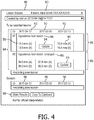
- the display 80 includes a patient identification 82, such as a patient name and patient identifier, e.g. alphanumeric patient identifier.
- the display includes characteristic information 84 of tracked lesions retrieved from the lesion tracking data store 18.
- Each tracked lesion 86 includes a lesion identifier or label 88, and a series of measurements 90, each measurement 90 corresponding to a temporal identifier 92, e.g. date or date-time of imaging/examination.
- the measurement 90 can include one or more values, such as a longest length of the lesion measured in a CT slice image, and an orthogonal longest width.
- the tracked measurements 90 include missing measurements, which are indicated with a missing measurement indicator 94, such as a button.
- the missing measurements are determined from report temporal identifiers and can be displayed as temporal identifiers 96. Additional or missing measurements and/or lesions can be manually added by a healthcare practitioner with measurements from selected images stored in a scratch area, e.g. computer memory.
- the temporal identifiers 96 of reports are determined from reports in the reports data store 12, and compared with the tracked temporal measurements 90 to determine that one or more temporally indicated measurements are missing.
- the temporal identifiers 96 alternatively indicate measurements manually added to a scratch area by the healthcare practitioner taken from one or more images, which correspond to the temporal identifiers 96.
- the healthcare practitioner can find the missing measurements with an input by the input device 26, such as selecting a missing measurement indicator, e.g.
- the system finds the missing measurement from the narrative of the corresponding report based on the temporal identifier, e.g. tracked temporal identifier 92 of missing measurement identifier 94 indicating a report with a corresponding temporal identifier.
- the display 80 is updated with the associated or found measurements, or a new display constructed.
- the display can include displaying the corresponding report fragment and/or referenced image.
- a confirmation identifier 98 such as a "store results” button, is invoked to confirm the associated measurements are to be stored in the lesion tracking data store 18.
- the healthcare practitioner invokes the "store results" button using the input device 26, which sends a signal to the data processor 20.
- the missing measurement indicator 94 can include a single response to find all missing measurements and/or individual responses to find measurements for each missing measurement separately.
- the confirmation identifier 98 can similarly include a single response to update/store all found measurements and/or selective responses to update/store selected found measurements.
- the finding can include identifying new and/or additional lesions. For example, measurements are found for a lesion for which no corresponding lesion characteristic information exists in the tracked lesions data store 18.
- the display can add the lesion with a confirmation to update/store the added lesion and found measurements.
- the healthcare practitioner can add a lesion to the tracked lesions 18 via the display and request finding of the missing measurements.
- a patient identifier is received.
- the patient identifier identifies the reports 12 and the tracked lesions 18 corresponding to the patient.
- the patient identifier can be input by the healthcare practitioner and/or selected from a list of patients.
- missing measurements are identified.
- One or more indicators of the missing measurements are displayed in a constructed display.
- Temporal identifiers of each report 12 are identified and compared with temporal identifiers of the tracked lesions 18. Missing measurements in the tracked lesions are identified, such as where there exist report temporal identifiers for which measurements according to the corresponding temporal identifier are not present in the tracked lesions.
- the missing measurements can include multiple temporal identifiers, e.g. measurements missing for more than one temporal identifier of a tracked lesion.
- the missing measurements can include one or more lesions, e.g. missing for all tracked lesions for a temporal identifier, and/or partial measurements, e.g. missing for some tracked lesions for a temporal identifier.
- Reports are retrieved from the report data store 12 and tracked lesion data from the tracked lesion data store 18.
- one or more reports are parsed into sentences in a step 104. Section and paragraph headers are identified. The reports are selected for parsing based on the temporal identifier. In one embodiment, the report with the temporal identifier corresponding to the temporal identifier of each missing measurement is selected. In another embodiment, reports with the temporal identifier corresponding to the temporal identifier of each missing measurement and a subsequent report are selected, e.g. references in subsequent report to confirm measurements and/or confirm identity of the lesion.
- phrases of the parsed sentences are mapped to an ontology. For example, headers are mapped and phrases used to determine lesion identities are mapped.
- Measurements are identified and normalized in a step 108.
- the normalized measurements are normalized to the tracked lesion measurements. For example, where tracked lesions measurements are stored in millimeters, measurements in centimeters or inches can be converted to millimeters. Relationships between measurements and the corresponding headers and sentences are preserved, e.g. to which lesion the found measurements correspond.
- Temporal distinctions are resolved between measurements in a step 110. Measurements are related to the report temporal identifier or a different report temporal identifier, e.g. cross-report measurement. By analysis of the semantics of the parsed sentences, volumetric information, imaging information, and the like, measurements are identified as corresponding to the report temporal identifier, or corresponding to a prior report temporal identifier. For example, use of words such as "previously” or "previous” can suggest the measurement applies to a different report temporal identifier.
- temporally resolved measurements are associated with missing measurements.
- the association can include displaying the associated or found measurements.
- the display described in reference to FIGURE 4 is updated with the associated measurements and displayed for healthcare practitioner review.
- the display of the associated measurements includes the measurements for one lesion.
- the display includes the report fragment, such as the section, paragraph, or sentence with the measurement.
- the associated measurements can be highlighted, such as high intensity, bold, etc.
- the display can include the confirmation identifier.
- a confirmation is received in a step 114.
- the confirmation indicates from the healthcare practitioner the tracked lesion data store is to be updated with the associated measurement.
- the confirmation can include a rejection of the found measurements.
- the confirmation includes an option for the healthcare practitioner to enter measurements directly, e.g. report is missing.
- the tracked lesion data store 18 is updated with the associated measurements based on the confirmation.
- the tracked lesion data store 18 can include an identifier of the healthcare practitioner, time stamp, or other data tracking information.
- the modules can be embodied by or the steps performed by the configured data processor 20.
- the above may be implemented by way of computer readable instructions, encoded or embedded on computer readable storage medium, which, when executed by a data processor(s) 20, cause the data processor(s) 20 to carry out the described acts. Additionally or alternatively, at least one of the computer readable instructions is carried by a signal, carrier wave or other transitory medium.
Landscapes
- Health & Medical Sciences (AREA)
- Engineering & Computer Science (AREA)
- Medical Informatics (AREA)
- Public Health (AREA)
- General Health & Medical Sciences (AREA)
- Epidemiology (AREA)
- Primary Health Care (AREA)
- Data Mining & Analysis (AREA)
- Life Sciences & Earth Sciences (AREA)
- Biomedical Technology (AREA)
- Pathology (AREA)
- Radiology & Medical Imaging (AREA)
- Nuclear Medicine, Radiotherapy & Molecular Imaging (AREA)
- Databases & Information Systems (AREA)
- Computer Vision & Pattern Recognition (AREA)
- Heart & Thoracic Surgery (AREA)
- Psychiatry (AREA)
- Signal Processing (AREA)
- Physics & Mathematics (AREA)
- Artificial Intelligence (AREA)
- Biophysics (AREA)
- Physiology (AREA)
- Molecular Biology (AREA)
- Surgery (AREA)
- Animal Behavior & Ethology (AREA)
- Veterinary Medicine (AREA)
- Measuring And Recording Apparatus For Diagnosis (AREA)
- Medical Treatment And Welfare Office Work (AREA)
- Machine Translation (AREA)
Applications Claiming Priority (2)
| Application Number | Priority Date | Filing Date | Title |
|---|---|---|---|
| US201562120394P | 2015-02-25 | 2015-02-25 | |
| PCT/IB2016/050958 WO2016135619A1 (en) | 2015-02-25 | 2016-02-23 | Detection of missing findings for automatic creation of longitudinal finding view |
Publications (2)
| Publication Number | Publication Date |
|---|---|
| EP3262550A1 EP3262550A1 (en) | 2018-01-03 |
| EP3262550B1 true EP3262550B1 (en) | 2019-04-10 |
Family
ID=55637395
Family Applications (1)
| Application Number | Title | Priority Date | Filing Date |
|---|---|---|---|
| EP16712072.4A Active EP3262550B1 (en) | 2015-02-25 | 2016-02-23 | Detection of missing findings for automatic creation of longitudinal finding view |
Country Status (7)
| Country | Link |
|---|---|
| US (1) | US20180025132A1 (https=) |
| EP (1) | EP3262550B1 (https=) |
| JP (1) | JP6623227B2 (https=) |
| CN (1) | CN107257977B (https=) |
| ES (1) | ES2734390T3 (https=) |
| TR (1) | TR201908751T4 (https=) |
| WO (1) | WO2016135619A1 (https=) |
Families Citing this family (3)
| Publication number | Priority date | Publication date | Assignee | Title |
|---|---|---|---|---|
| US11475212B2 (en) * | 2017-04-06 | 2022-10-18 | Otsuka Pharmaceutical Development & Commercialization, Inc. | Systems and methods for generating and modifying documents describing scientific research |
| JP7392120B2 (ja) * | 2019-09-06 | 2023-12-05 | エフ. ホフマン-ラ ロシュ アーゲー | 自然言語処理を使用する病理報告内の自動化された情報の抽出及び改良 |
| JP7827513B2 (ja) * | 2022-03-25 | 2026-03-10 | 富士フイルム株式会社 | 情報処理装置、情報処理方法及び情報処理プログラム |
Family Cites Families (10)
| Publication number | Priority date | Publication date | Assignee | Title |
|---|---|---|---|---|
| US8055514B2 (en) * | 2005-07-19 | 2011-11-08 | Koninklijke Philips Electronics N.V. | User-centric methodology for navigating through and accessing databases of medical information management system |
| US10032236B2 (en) * | 2007-04-26 | 2018-07-24 | General Electric Company | Electronic health record timeline and the human figure |
| KR20110097889A (ko) * | 2008-12-23 | 2011-08-31 | 에프. 호프만-라 로슈 아게 | 수집 디바이스 상에서 구동하는 구조화된 수집 절차의 구현, 실행, 데이터 수집, 및 데이터 분석을 위한 관리 방법 및 시스템 |
| JP5349384B2 (ja) * | 2009-09-17 | 2013-11-20 | 富士フイルム株式会社 | 医用画像表示装置および方法並びにプログラム |
| BR112013002534B1 (pt) * | 2010-08-05 | 2020-12-22 | Koninklijke Philips N.V | sistema de auxílio à criação de relatórios, estação de trabalho, e método de auxílio à criação de relatórios |
| EP2645330B1 (en) * | 2012-03-29 | 2017-11-29 | Siemens Healthcare GmbH | Method and system for associating at least two different medical findings with each other |
| US20140006926A1 (en) * | 2012-06-29 | 2014-01-02 | Vijaykalyan Yeluri | Systems and methods for natural language processing to provide smart links in radiology reports |
| US10354049B2 (en) * | 2012-08-22 | 2019-07-16 | Koninklijke Philips N.V. | Automatic detection and retrieval of prior annotations relevant for an imaging study for efficient viewing and reporting |
| US20140073882A1 (en) * | 2012-09-12 | 2014-03-13 | Consuli, Inc. | Clinical diagnosis objects authoring |
| JP6461909B2 (ja) * | 2013-03-29 | 2019-01-30 | コーニンクレッカ フィリップス エヌ ヴェKoninklijke Philips N.V. | 放射線所見のコンテキスト駆動型概要ビュー |
-
2016
- 2016-02-23 CN CN201680012097.5A patent/CN107257977B/zh active Active
- 2016-02-23 ES ES16712072T patent/ES2734390T3/es active Active
- 2016-02-23 US US15/550,887 patent/US20180025132A1/en not_active Abandoned
- 2016-02-23 JP JP2017543985A patent/JP6623227B2/ja active Active
- 2016-02-23 TR TR2019/08751T patent/TR201908751T4/tr unknown
- 2016-02-23 WO PCT/IB2016/050958 patent/WO2016135619A1/en not_active Ceased
- 2016-02-23 EP EP16712072.4A patent/EP3262550B1/en active Active
Non-Patent Citations (1)
| Title |
|---|
| None * |
Also Published As
| Publication number | Publication date |
|---|---|
| JP2018513450A (ja) | 2018-05-24 |
| CN107257977B (zh) | 2021-08-24 |
| CN107257977A (zh) | 2017-10-17 |
| WO2016135619A1 (en) | 2016-09-01 |
| ES2734390T3 (es) | 2019-12-05 |
| US20180025132A1 (en) | 2018-01-25 |
| EP3262550A1 (en) | 2018-01-03 |
| JP6623227B2 (ja) | 2019-12-18 |
| TR201908751T4 (tr) | 2019-07-22 |
Similar Documents
| Publication | Publication Date | Title |
|---|---|---|
| JP6749835B2 (ja) | コンテキスト依存医学データ入力システム | |
| US20140288970A1 (en) | Identifying relevant imaging examination recommendations for a patient from prior medical reports of the patient to facilitate determining a follow up imaging examination(s) for the patient | |
| US10210310B2 (en) | Picture archiving system with text-image linking based on text recognition | |
| US10474742B2 (en) | Automatic creation of a finding centric longitudinal view of patient findings | |
| EP3191991B1 (en) | Image report annotation identification | |
| JP7258772B2 (ja) | 全人的患者放射線医療ビューワ | |
| US20130238363A1 (en) | Medical examination assistance system and method of assisting medical examination | |
| US9904966B2 (en) | Using image references in radiology reports to support report-to-image navigation | |
| JP2015524107A (ja) | 患者情報を臨床基準にマッチングするシステム及び方法 | |
| CN106415555A (zh) | 用于病理学报告与放射学报告的相关联的系统和方法 | |
| US20190108175A1 (en) | Automated contextual determination of icd code relevance for ranking and efficient consumption | |
| US12148521B2 (en) | Closed-loop radiological follow-up recommendation system | |
| EP3262550B1 (en) | Detection of missing findings for automatic creation of longitudinal finding view | |
| US20200058391A1 (en) | Dynamic system for delivering finding-based relevant clinical context in image interpretation environment | |
| US11488698B2 (en) | Facilitated structured measurement management tool progress and compliance analytics solution |
Legal Events
| Date | Code | Title | Description |
|---|---|---|---|
| STAA | Information on the status of an ep patent application or granted ep patent |
Free format text: STATUS: THE INTERNATIONAL PUBLICATION HAS BEEN MADE |
|
| PUAI | Public reference made under article 153(3) epc to a published international application that has entered the european phase |
Free format text: ORIGINAL CODE: 0009012 |
|
| STAA | Information on the status of an ep patent application or granted ep patent |
Free format text: STATUS: REQUEST FOR EXAMINATION WAS MADE |
|
| 17P | Request for examination filed |
Effective date: 20170925 |
|
| AK | Designated contracting states |
Kind code of ref document: A1 Designated state(s): AL AT BE BG CH CY CZ DE DK EE ES FI FR GB GR HR HU IE IS IT LI LT LU LV MC MK MT NL NO PL PT RO RS SE SI SK SM TR |
|
| AX | Request for extension of the european patent |
Extension state: BA ME |
|
| DAV | Request for validation of the european patent (deleted) | ||
| DAX | Request for extension of the european patent (deleted) | ||
| GRAP | Despatch of communication of intention to grant a patent |
Free format text: ORIGINAL CODE: EPIDOSNIGR1 |
|
| STAA | Information on the status of an ep patent application or granted ep patent |
Free format text: STATUS: GRANT OF PATENT IS INTENDED |
|
| INTG | Intention to grant announced |
Effective date: 20181029 |
|
| GRAS | Grant fee paid |
Free format text: ORIGINAL CODE: EPIDOSNIGR3 |
|
| GRAA | (expected) grant |
Free format text: ORIGINAL CODE: 0009210 |
|
| STAA | Information on the status of an ep patent application or granted ep patent |
Free format text: STATUS: THE PATENT HAS BEEN GRANTED |
|
| AK | Designated contracting states |
Kind code of ref document: B1 Designated state(s): AL AT BE BG CH CY CZ DE DK EE ES FI FR GB GR HR HU IE IS IT LI LT LU LV MC MK MT NL NO PL PT RO RS SE SI SK SM TR |
|
| REG | Reference to a national code |
Ref country code: GB Ref legal event code: FG4D |
|
| REG | Reference to a national code |
Ref country code: CH Ref legal event code: EP Ref country code: AT Ref legal event code: REF Ref document number: 1119656 Country of ref document: AT Kind code of ref document: T Effective date: 20190415 |
|
| REG | Reference to a national code |
Ref country code: IE Ref legal event code: FG4D |
|
| REG | Reference to a national code |
Ref country code: DE Ref legal event code: R096 Ref document number: 602016012256 Country of ref document: DE |
|
| REG | Reference to a national code |
Ref country code: NL Ref legal event code: MP Effective date: 20190410 |
|
| REG | Reference to a national code |
Ref country code: LT Ref legal event code: MG4D |
|
| REG | Reference to a national code |
Ref country code: AT Ref legal event code: MK05 Ref document number: 1119656 Country of ref document: AT Kind code of ref document: T Effective date: 20190410 |
|
| PG25 | Lapsed in a contracting state [announced via postgrant information from national office to epo] |
Ref country code: NL Free format text: LAPSE BECAUSE OF FAILURE TO SUBMIT A TRANSLATION OF THE DESCRIPTION OR TO PAY THE FEE WITHIN THE PRESCRIBED TIME-LIMIT Effective date: 20190410 |
|
| PG25 | Lapsed in a contracting state [announced via postgrant information from national office to epo] |
Ref country code: FI Free format text: LAPSE BECAUSE OF FAILURE TO SUBMIT A TRANSLATION OF THE DESCRIPTION OR TO PAY THE FEE WITHIN THE PRESCRIBED TIME-LIMIT Effective date: 20190410 Ref country code: LT Free format text: LAPSE BECAUSE OF FAILURE TO SUBMIT A TRANSLATION OF THE DESCRIPTION OR TO PAY THE FEE WITHIN THE PRESCRIBED TIME-LIMIT Effective date: 20190410 Ref country code: SE Free format text: LAPSE BECAUSE OF FAILURE TO SUBMIT A TRANSLATION OF THE DESCRIPTION OR TO PAY THE FEE WITHIN THE PRESCRIBED TIME-LIMIT Effective date: 20190410 Ref country code: PT Free format text: LAPSE BECAUSE OF FAILURE TO SUBMIT A TRANSLATION OF THE DESCRIPTION OR TO PAY THE FEE WITHIN THE PRESCRIBED TIME-LIMIT Effective date: 20190910 Ref country code: HR Free format text: LAPSE BECAUSE OF FAILURE TO SUBMIT A TRANSLATION OF THE DESCRIPTION OR TO PAY THE FEE WITHIN THE PRESCRIBED TIME-LIMIT Effective date: 20190410 Ref country code: AL Free format text: LAPSE BECAUSE OF FAILURE TO SUBMIT A TRANSLATION OF THE DESCRIPTION OR TO PAY THE FEE WITHIN THE PRESCRIBED TIME-LIMIT Effective date: 20190410 Ref country code: NO Free format text: LAPSE BECAUSE OF FAILURE TO SUBMIT A TRANSLATION OF THE DESCRIPTION OR TO PAY THE FEE WITHIN THE PRESCRIBED TIME-LIMIT Effective date: 20190710 |
|
| PG25 | Lapsed in a contracting state [announced via postgrant information from national office to epo] |
Ref country code: PL Free format text: LAPSE BECAUSE OF FAILURE TO SUBMIT A TRANSLATION OF THE DESCRIPTION OR TO PAY THE FEE WITHIN THE PRESCRIBED TIME-LIMIT Effective date: 20190410 Ref country code: GR Free format text: LAPSE BECAUSE OF FAILURE TO SUBMIT A TRANSLATION OF THE DESCRIPTION OR TO PAY THE FEE WITHIN THE PRESCRIBED TIME-LIMIT Effective date: 20190711 Ref country code: LV Free format text: LAPSE BECAUSE OF FAILURE TO SUBMIT A TRANSLATION OF THE DESCRIPTION OR TO PAY THE FEE WITHIN THE PRESCRIBED TIME-LIMIT Effective date: 20190410 Ref country code: RS Free format text: LAPSE BECAUSE OF FAILURE TO SUBMIT A TRANSLATION OF THE DESCRIPTION OR TO PAY THE FEE WITHIN THE PRESCRIBED TIME-LIMIT Effective date: 20190410 Ref country code: BG Free format text: LAPSE BECAUSE OF FAILURE TO SUBMIT A TRANSLATION OF THE DESCRIPTION OR TO PAY THE FEE WITHIN THE PRESCRIBED TIME-LIMIT Effective date: 20190710 |
|
| REG | Reference to a national code |
Ref country code: ES Ref legal event code: FG2A Ref document number: 2734390 Country of ref document: ES Kind code of ref document: T3 Effective date: 20191205 |
|
| PG25 | Lapsed in a contracting state [announced via postgrant information from national office to epo] |
Ref country code: AT Free format text: LAPSE BECAUSE OF FAILURE TO SUBMIT A TRANSLATION OF THE DESCRIPTION OR TO PAY THE FEE WITHIN THE PRESCRIBED TIME-LIMIT Effective date: 20190410 Ref country code: IS Free format text: LAPSE BECAUSE OF FAILURE TO SUBMIT A TRANSLATION OF THE DESCRIPTION OR TO PAY THE FEE WITHIN THE PRESCRIBED TIME-LIMIT Effective date: 20190810 |
|
| REG | Reference to a national code |
Ref country code: DE Ref legal event code: R097 Ref document number: 602016012256 Country of ref document: DE |
|
| PG25 | Lapsed in a contracting state [announced via postgrant information from national office to epo] |
Ref country code: RO Free format text: LAPSE BECAUSE OF FAILURE TO SUBMIT A TRANSLATION OF THE DESCRIPTION OR TO PAY THE FEE WITHIN THE PRESCRIBED TIME-LIMIT Effective date: 20190410 Ref country code: SK Free format text: LAPSE BECAUSE OF FAILURE TO SUBMIT A TRANSLATION OF THE DESCRIPTION OR TO PAY THE FEE WITHIN THE PRESCRIBED TIME-LIMIT Effective date: 20190410 Ref country code: CZ Free format text: LAPSE BECAUSE OF FAILURE TO SUBMIT A TRANSLATION OF THE DESCRIPTION OR TO PAY THE FEE WITHIN THE PRESCRIBED TIME-LIMIT Effective date: 20190410 Ref country code: DK Free format text: LAPSE BECAUSE OF FAILURE TO SUBMIT A TRANSLATION OF THE DESCRIPTION OR TO PAY THE FEE WITHIN THE PRESCRIBED TIME-LIMIT Effective date: 20190410 Ref country code: EE Free format text: LAPSE BECAUSE OF FAILURE TO SUBMIT A TRANSLATION OF THE DESCRIPTION OR TO PAY THE FEE WITHIN THE PRESCRIBED TIME-LIMIT Effective date: 20190410 |
|
| PLBE | No opposition filed within time limit |
Free format text: ORIGINAL CODE: 0009261 |
|
| STAA | Information on the status of an ep patent application or granted ep patent |
Free format text: STATUS: NO OPPOSITION FILED WITHIN TIME LIMIT |
|
| PG25 | Lapsed in a contracting state [announced via postgrant information from national office to epo] |
Ref country code: IT Free format text: LAPSE BECAUSE OF FAILURE TO SUBMIT A TRANSLATION OF THE DESCRIPTION OR TO PAY THE FEE WITHIN THE PRESCRIBED TIME-LIMIT Effective date: 20190410 Ref country code: SM Free format text: LAPSE BECAUSE OF FAILURE TO SUBMIT A TRANSLATION OF THE DESCRIPTION OR TO PAY THE FEE WITHIN THE PRESCRIBED TIME-LIMIT Effective date: 20190410 |
|
| 26N | No opposition filed |
Effective date: 20200113 |
|
| PGFP | Annual fee paid to national office [announced via postgrant information from national office to epo] |
Ref country code: ES Payment date: 20200323 Year of fee payment: 5 |
|
| PG25 | Lapsed in a contracting state [announced via postgrant information from national office to epo] |
Ref country code: SI Free format text: LAPSE BECAUSE OF FAILURE TO SUBMIT A TRANSLATION OF THE DESCRIPTION OR TO PAY THE FEE WITHIN THE PRESCRIBED TIME-LIMIT Effective date: 20190410 |
|
| PGFP | Annual fee paid to national office [announced via postgrant information from national office to epo] |
Ref country code: TR Payment date: 20200219 Year of fee payment: 5 |
|
| REG | Reference to a national code |
Ref country code: CH Ref legal event code: PL |
|
| REG | Reference to a national code |
Ref country code: BE Ref legal event code: MM Effective date: 20200229 |
|
| PG25 | Lapsed in a contracting state [announced via postgrant information from national office to epo] |
Ref country code: LU Free format text: LAPSE BECAUSE OF NON-PAYMENT OF DUE FEES Effective date: 20200223 Ref country code: MC Free format text: LAPSE BECAUSE OF FAILURE TO SUBMIT A TRANSLATION OF THE DESCRIPTION OR TO PAY THE FEE WITHIN THE PRESCRIBED TIME-LIMIT Effective date: 20190410 |
|
| PG25 | Lapsed in a contracting state [announced via postgrant information from national office to epo] |
Ref country code: CH Free format text: LAPSE BECAUSE OF NON-PAYMENT OF DUE FEES Effective date: 20200229 Ref country code: LI Free format text: LAPSE BECAUSE OF NON-PAYMENT OF DUE FEES Effective date: 20200229 |
|
| PG25 | Lapsed in a contracting state [announced via postgrant information from national office to epo] |
Ref country code: IE Free format text: LAPSE BECAUSE OF NON-PAYMENT OF DUE FEES Effective date: 20200223 |
|
| PG25 | Lapsed in a contracting state [announced via postgrant information from national office to epo] |
Ref country code: BE Free format text: LAPSE BECAUSE OF NON-PAYMENT OF DUE FEES Effective date: 20200229 |
|
| REG | Reference to a national code |
Ref country code: ES Ref legal event code: FD2A Effective date: 20220511 |
|
| PG25 | Lapsed in a contracting state [announced via postgrant information from national office to epo] |
Ref country code: MT Free format text: LAPSE BECAUSE OF FAILURE TO SUBMIT A TRANSLATION OF THE DESCRIPTION OR TO PAY THE FEE WITHIN THE PRESCRIBED TIME-LIMIT Effective date: 20190410 Ref country code: CY Free format text: LAPSE BECAUSE OF FAILURE TO SUBMIT A TRANSLATION OF THE DESCRIPTION OR TO PAY THE FEE WITHIN THE PRESCRIBED TIME-LIMIT Effective date: 20190410 |
|
| PG25 | Lapsed in a contracting state [announced via postgrant information from national office to epo] |
Ref country code: MK Free format text: LAPSE BECAUSE OF FAILURE TO SUBMIT A TRANSLATION OF THE DESCRIPTION OR TO PAY THE FEE WITHIN THE PRESCRIBED TIME-LIMIT Effective date: 20190410 |
|
| PG25 | Lapsed in a contracting state [announced via postgrant information from national office to epo] |
Ref country code: ES Free format text: LAPSE BECAUSE OF NON-PAYMENT OF DUE FEES Effective date: 20210224 |
|
| PGFP | Annual fee paid to national office [announced via postgrant information from national office to epo] |
Ref country code: FR Payment date: 20230223 Year of fee payment: 8 |
|
| PG25 | Lapsed in a contracting state [announced via postgrant information from national office to epo] |
Ref country code: TR Free format text: LAPSE BECAUSE OF NON-PAYMENT OF DUE FEES Effective date: 20210223 |
|
| REG | Reference to a national code |
Ref country code: DE Ref legal event code: R084 Ref document number: 602016012256 Country of ref document: DE |
|
| PG25 | Lapsed in a contracting state [announced via postgrant information from national office to epo] |
Ref country code: FR Free format text: LAPSE BECAUSE OF NON-PAYMENT OF DUE FEES Effective date: 20240229 |
|
| PG25 | Lapsed in a contracting state [announced via postgrant information from national office to epo] |
Ref country code: FR Free format text: LAPSE BECAUSE OF NON-PAYMENT OF DUE FEES Effective date: 20240229 |
|
| PGFP | Annual fee paid to national office [announced via postgrant information from national office to epo] |
Ref country code: GB Payment date: 20260223 Year of fee payment: 11 |
|
| PGFP | Annual fee paid to national office [announced via postgrant information from national office to epo] |
Ref country code: DE Payment date: 20260220 Year of fee payment: 11 |