EP3259274B1 - Triazolopyridines and triazolopyrimidines that lower stress-induced p-tau - Google Patents
Triazolopyridines and triazolopyrimidines that lower stress-induced p-tau Download PDFInfo
- Publication number
- EP3259274B1 EP3259274B1 EP16752995.7A EP16752995A EP3259274B1 EP 3259274 B1 EP3259274 B1 EP 3259274B1 EP 16752995 A EP16752995 A EP 16752995A EP 3259274 B1 EP3259274 B1 EP 3259274B1
- Authority
- EP
- European Patent Office
- Prior art keywords
- tau
- alzheimer
- disease
- triazolopyridine
- triazolopyrimidine
- Prior art date
- Legal status (The legal status is an assumption and is not a legal conclusion. Google has not performed a legal analysis and makes no representation as to the accuracy of the status listed.)
- Active
Links
Images






Classifications
-
- C—CHEMISTRY; METALLURGY
- C07—ORGANIC CHEMISTRY
- C07D—HETEROCYCLIC COMPOUNDS
- C07D487/00—Heterocyclic compounds containing nitrogen atoms as the only ring hetero atoms in the condensed system, not provided for by groups C07D451/00 - C07D477/00
- C07D487/02—Heterocyclic compounds containing nitrogen atoms as the only ring hetero atoms in the condensed system, not provided for by groups C07D451/00 - C07D477/00 in which the condensed system contains two hetero rings
- C07D487/04—Ortho-condensed systems
-
- A—HUMAN NECESSITIES
- A61—MEDICAL OR VETERINARY SCIENCE; HYGIENE
- A61K—PREPARATIONS FOR MEDICAL, DENTAL OR TOILETRY PURPOSES
- A61K31/00—Medicinal preparations containing organic active ingredients
- A61K31/33—Heterocyclic compounds
- A61K31/395—Heterocyclic compounds having nitrogen as a ring hetero atom, e.g. guanethidine or rifamycins
- A61K31/435—Heterocyclic compounds having nitrogen as a ring hetero atom, e.g. guanethidine or rifamycins having six-membered rings with one nitrogen as the only ring hetero atom
- A61K31/4353—Heterocyclic compounds having nitrogen as a ring hetero atom, e.g. guanethidine or rifamycins having six-membered rings with one nitrogen as the only ring hetero atom ortho- or peri-condensed with heterocyclic ring systems
- A61K31/437—Heterocyclic compounds having nitrogen as a ring hetero atom, e.g. guanethidine or rifamycins having six-membered rings with one nitrogen as the only ring hetero atom ortho- or peri-condensed with heterocyclic ring systems the heterocyclic ring system containing a five-membered ring having nitrogen as a ring hetero atom, e.g. indolizine, beta-carboline
-
- A—HUMAN NECESSITIES
- A61—MEDICAL OR VETERINARY SCIENCE; HYGIENE
- A61K—PREPARATIONS FOR MEDICAL, DENTAL OR TOILETRY PURPOSES
- A61K31/00—Medicinal preparations containing organic active ingredients
- A61K31/33—Heterocyclic compounds
- A61K31/395—Heterocyclic compounds having nitrogen as a ring hetero atom, e.g. guanethidine or rifamycins
- A61K31/495—Heterocyclic compounds having nitrogen as a ring hetero atom, e.g. guanethidine or rifamycins having six-membered rings with two or more nitrogen atoms as the only ring heteroatoms, e.g. piperazine or tetrazines
- A61K31/505—Pyrimidines; Hydrogenated pyrimidines, e.g. trimethoprim
- A61K31/519—Pyrimidines; Hydrogenated pyrimidines, e.g. trimethoprim ortho- or peri-condensed with heterocyclic rings
-
- A—HUMAN NECESSITIES
- A61—MEDICAL OR VETERINARY SCIENCE; HYGIENE
- A61K—PREPARATIONS FOR MEDICAL, DENTAL OR TOILETRY PURPOSES
- A61K45/00—Medicinal preparations containing active ingredients not provided for in groups A61K31/00 - A61K41/00
- A61K45/06—Mixtures of active ingredients without chemical characterisation, e.g. antiphlogistics and cardiaca
-
- A—HUMAN NECESSITIES
- A61—MEDICAL OR VETERINARY SCIENCE; HYGIENE
- A61P—SPECIFIC THERAPEUTIC ACTIVITY OF CHEMICAL COMPOUNDS OR MEDICINAL PREPARATIONS
- A61P25/00—Drugs for disorders of the nervous system
- A61P25/28—Drugs for disorders of the nervous system for treating neurodegenerative disorders of the central nervous system, e.g. nootropic agents, cognition enhancers, drugs for treating Alzheimer's disease or other forms of dementia
-
- C—CHEMISTRY; METALLURGY
- C07—ORGANIC CHEMISTRY
- C07D—HETEROCYCLIC COMPOUNDS
- C07D471/00—Heterocyclic compounds containing nitrogen atoms as the only ring hetero atoms in the condensed system, at least one ring being a six-membered ring with one nitrogen atom, not provided for by groups C07D451/00 - C07D463/00
- C07D471/02—Heterocyclic compounds containing nitrogen atoms as the only ring hetero atoms in the condensed system, at least one ring being a six-membered ring with one nitrogen atom, not provided for by groups C07D451/00 - C07D463/00 in which the condensed system contains two hetero rings
- C07D471/04—Ortho-condensed systems
-
- A—HUMAN NECESSITIES
- A61—MEDICAL OR VETERINARY SCIENCE; HYGIENE
- A61K—PREPARATIONS FOR MEDICAL, DENTAL OR TOILETRY PURPOSES
- A61K2300/00—Mixtures or combinations of active ingredients, wherein at least one active ingredient is fully defined in groups A61K31/00 - A61K41/00
Definitions
- AD pathogenesis is complex, compelling genetic and biochemical evidence suggest that overproduction of A ⁇ , or failure to clear this peptide is the earliest event in the amyloid cascade that lead to AD primarily through amyloid deposition, which is presumed to be involved in neurofibrillary tangle formation, neuronal dysfunction and microglia activation, that characterize AD-affected brain tissues.
- AD Alzheimer's Disease
- the level of tau phosphorylation has the closest correlation to cognitive impairment.
- the reversal of tau pathology alone can improve memory, even in the presence of high A ⁇ 42 in J20 mice ( Roberson, et al. (2007) Science, 316(5825): 750-754 ).
- tau - tau pathology
- Tau pathology is "downstream" of A ⁇ formation in that A ⁇ increases expression of glycogen synthase kinase 3beta (GSK-3 ⁇ ), an enzyme that can increase phosphorylation of tau.
- GSK-3 ⁇ glycogen synthase kinase 3beta
- Convergent evidence implicates stress in AD neuropathology ( Carroll, et al. (2011) J. Neurosci. (40): 14436-14449 ). Stress exposure can increase A ⁇ production and induce deficits in hippocampal cell proliferation and contextual memory ( Wilson et al. (2003) Neurology, 61: 1479-1485 ).
- US 6107301 describes compounds and pharmaceutical compositions thereof, and methods of using the same in the treatment of affective disorders, depression, post-traumatic stress disorders, eating disorders, supranuclear palsy, irritable bowel syndrome, immune suppression, Alzheimer's disease, gastrointestinal diseases, anorexia nervosa, drug and alcohol withdrawal symptoms, drug addiction, inflammatory disorders, or fertility problems.
- EP 1293213 A1 describes a pharmaceutical composition for prophylaxis and/or therapy of a postoperative stress, which comprises a CRF antagonist.
- Garner et al., Aust. J. Chem., 2004, 57(5), 393-407 , XP055486582 discuss the chemistry and recent developments for Corticotrophin Releasing Hormone.
- the compound is effective to decrease in corticotropin-releasing factor (CRF-1) induced p-tau.
- the compound is a substantially pure R enantiomer.
- the formulation is a unit dosage formulation.
- the formulation is formulated for administration via a route selected from the group consisting of isophoretic delivery, transdermal delivery, aerosol administration, administration via inhalation, oral administration, intravenous administration, and rectal administration.
- the method comprises decreasing p-tau in a mammal or inhibiting or preventing an increase in p-tau in a mammal, said method comprising:
- the method comprises promoting the processing of amyloid precursor protein (APP) by the non-amyloidogenic pathway in a mammal, said method comprising:
- the method decreases p-tau in said mammal.
- the invention provides a compound of the invention for use in a method of preventing or delaying the onset of a pre-Alzheimer's condition and/or cognitive dysfunction, and/or ameliorating one or more symptoms of a pre-Alzheimer's condition and/or cognitive dysfunction, or preventing or delaying the progression of a pre-Alzheimer's condition or cognitive dysfunction to Alzheimer's disease in a mammal, said method comprising:
- the mammal has a familial risk for having Alzheimer's disease.
- the mammal has a familial Alzheimer's disease (FAD) mutation.
- FAD familial Alzheimer's disease
- said mammal has two copies of the ApoE4 allele.
- said mammal is a human.
- the method comprises preventing or delaying the transition from a cognitively asymptomatic pre-Alzheimer's condition to a pre-Alzheimer's cognitive dysfunction.
- said method is a method of preventing or delaying the onset of a pre-Alzheimer's cognitive dysfunction.
- said method comprises preventing or delaying the progression of a pre-Alzheimer's cognitive dysfunction to Alzheimer's disease.
- said method delays or prevents the progression of MCI to Alzheimer's disease.
- said mammal exhibits biomarker positivity of A ⁇ in a clinically normal human mammal age 50 or older.
- said mammal exhibits asymptomatic cerebral amyloidosis.
- said mammal exhibits cerebral amyloidosis in combination with downstream neurodegeneration and subtle cognitive/behavioral decline.
- said downstream neurodegeneration is determined by one or more elevated markers of neuronal injury selected from the group consisting of tau, and FDG uptake.
- said mammal is a mammal diagnosed with mild cognitive impairment.
- said mammal shows a clinical dementia rating above zero and below about 1.5.
- said administration produces a reduction in the CSF of levels of one or more components selected from the group consisting of total-Tau (tTau), phospho-Tau (pTau), APPneo, soluble A ⁇ 40, pTau/A ⁇ 42 ratio and tTau/A ⁇ 42 ratio, and/or an increase in the CSF of levels of one or more components selected from the group consisting of A ⁇ 42/A ⁇ 40 ratio, A ⁇ 42/A ⁇ 38 ratio, sAPP ⁇ , sAPP ⁇ /sAPP ⁇ ratio, sAPP ⁇ /A ⁇ 40 ratio, and sAPP ⁇ /A ⁇ 42 ratio.
- said administration produces a reduction of the plaque load in the brain of the mammal.
- said administration produces a reduction in the rate of plaque formation in the brain of the mammal.
- said administration produces an improvement in the cognitive abilities of the mammal.
- said administration produces an improvement in, a stabilization of, or a reduction in the rate of decline of the clinical dementia rating (CDR) of the mammal.
- CDR clinical dementia rating
- the mammal is a human and said administration produces a perceived improvement in quality of life by the human.
- the compound(s) are administered via a route selected from the group consisting of oral delivery, isophoretic delivery, transdermal delivery, parenteral delivery, aerosol administration, administration via inhalation, intravenous administration, and rectal administration.
- the compound is administered orally.
- the administering is over a period of at least three weeks.
- the administering is over a period of at least 6 months.
- a compound e.g., to a triazolopyrimidine and/or triazolopyridine as described herein
- a compound should be construed broadly to include pharmaceutically acceptable salts, prodrugs, tautomers, alternate solid forms, non-covalent complexes, and combinations thereof, of a chemical entity of the depicted structure or chemical name.
- references to a certain element such as hydrogen or H is meant to include all isotopes of that element.
- an R group is defined to include hydrogen or H, it also includes deuterium and tritium. Accordingly, isotopically labeled compounds are within the scope of this invention.
- a pharmaceutically acceptable salt is any salt of the parent compound that is suitable for administration to an animal or human.
- a pharmaceutically acceptable salt also refers to any salt which may form in vivo as a result of administration of an acid, another salt, or a prodrug which is converted into an acid or salt.
- a salt comprises one or more ionic forms of the compound, such as a conjugate acid or base, associated with one or more corresponding counterions. Salts can form from or incorporate one or more deprotonated acidic groups (e.g. carboxylic acids), one or more protonated basic groups ( e.g. amines ), or both ( e.g . zwitterions).
- Tautomers are isomers that are in equilibrium with one another.
- tautomers may be related by transfer of a proton, hydrogen atom, or hydride ion.
- Alternate solid forms are different solid forms than those that may result from practicing the procedures described herein.
- alternate solid forms may be polymorphs, different kinds of amorphous solid forms, glasses, and the like.
- alternate solid forms of any of the compounds described herein are contemplated.
- substituted refers to an organic group as defined below (e.g., an alkyl group) in which one or more bonds to a hydrogen atom contained therein are replaced by a bond to non-hydrogen or non-carbon atoms.
- Substituted groups also include groups in which one or more bonds to a carbon(s) or hydrogen(s) atom are replaced by one or more bonds, including double or triple bonds, to a heteroatom.
- a substituted group will be substituted with one or more substituents, unless otherwise specified.
- a substituted group is substituted with 1, 2, 3, 4, 5, or 6 substituents.
- substituent groups include: halogens (i.e., F, Cl, Br, and I); hydroxyls; alkoxy, alkenoxy, alkynoxy, aryloxy, aralkyloxy, heterocyclyloxy, and heterocyclylalkoxy groups; carbonyls (oxo); carboxyls; esters; urethanes; oximes; hydroxylamines; alkoxyamines; aralkoxyamines; thiols; sulfides; sulfoxides; sulfones; sulfonyls; sulfonamides; amines; N-oxides; hydrazines; hydrazides; hydrazones; azides; amides; ureas; amidines; guanidines; enamines; imides; isocyanates; isothiocyanates; cyanates; thiocyanates; imines; nitro groups; nitriles ( i).
- alkyl refers to and covers any and all groups that are known as normal alkyl, branched-chain alkyl, cycloalkyl and also cycloalkyl-alkyl.
- Illustrative alkyl groups include, but are not limited to methyl, ethyl, n-propyl, isopropyl, n-butyl, isobutyl, sec-butyl, t-butyl, octyl, and decyl.
- cycloalkyl refers to cyclic, including polycyclic, saturated hydrocarbyl groups.
- C 1-6 alkyl group refers to a straight chain or branched chain alkyl group having 1 to 6 carbon atoms, and may be exemplified by a methyl group, an ethyl group, an n-propyl group, an isopropyl group, an n-butyl group, an isobutyl group, a tert-butyl group, a sec-butyl group, an n-pentyl group, a tert-amyl group, a 3-methylbutyl group, a neopentyl group, and an n-hexyl group.
- alkylthio as used herein means an alkyl group bound through a single, terminal sulfur atom.
- An "alkylthio” group may be represented as --S-alkyl where alkyl is as defined above.
- arylthio is used similarly, and may be represented as --S-aryl, with aryl as defined below.
- mercapto refers to --SH.
- Aryl groups are cyclic aromatic hydrocarbons that do not contain heteroatoms.
- Aryl groups include monocyclic, bicyclic and polycyclic ring systems.
- aryl groups include, but are not limited to, phenyl, azulenyl, heptalenyl, biphenylenyl, indacenyl, fluorenyl, phenanthrenyl, triphenylenyl, pyrenyl, naphthacenyl, chrysenyl, biphenyl, anthracenyl, indenyl, indanyl, pentalenyl, and naphthyl groups.
- aryl groups contain 6-14 carbons, and in others from 6 to 12 or even 6-10 carbon atoms in the ring portions of the groups.
- aryl groups includes groups containing fused rings, such as fused aromatic-aliphatic ring systems (e.g., indanyl, tetrahydronaphthyl, and the like), it does not include aryl groups that have other groups, such as alkyl or halo groups, bonded to one of the ring members. Rather, groups such as tolyl are referredto as substituted aryl groups.
- Representative substituted aryl groups may be mono-substituted or substituted more than once.
- monosubstituted aryl groups include, but are not limited to, 2-, 3-, 4-, 5-, or 6-substituted phenyl or naphthyl groups, which may be substituted with substituents such as those listed above.
- heteroaryl group refers to a monocyclic or condensed-ring aromatic heterocyclic group containing one or more hetero-atoms selected from O, S and N. If the aromatic heterocyclic group has a condensed ring, it can include a partially hydrogenated monocyclic group.
- a “derivative" of a compound means a chemically modified compound wherein the chemical modification takes place at one or more functional groups of the compound.
- the derivative however, is expected to retain, or enhance, the pharmacological activity of the compound from which it is derived.
- administering refers to local and systemic administration, e.g., including enteral, parenteral, pulmonary, and topical/transdermal administration.
- Routes of administration for agents e.g., triazolopyrimidines and/or triazolopyridines described herein, or a tautomer(s) or stereoisomer(s) thereof, or pharmaceutically acceptable salts or solvates of said compound(s), said stereoisomer(s), or said tautomer(s), or analogues, derivatives, or prodrugs thereof
- agents e.g., triazolopyrimidines and/or triazolopyridines described herein, or a tautomer(s) or stereoisomer(s) thereof, or pharmaceutically acceptable salts or solvates of said compound(s), said stereoisomer(s), or said tautomer(s), or analogues, derivatives, or prodrugs thereof
- agents e.g., triazolopyrimidines and/
- intrathecal (IT) administration administration
- intravenous (“iv”) administration administration
- intraperitoneal (“ip") administration administration
- intramuscular (“im”) administration administration
- intralesional administration or subcutaneous (“sc”) administration
- a slow-release device e.g ., a mini-osmotic pump, a depot formulation, etc.
- Administration can be by any route including parenteral and transmucosal ( e.g ., oral, nasal, vaginal, rectal, or transdermal).
- Parenteral administration includes, e.g ., intravenous, intramuscular, intra-arterial, intradermal, subcutaneous, intraperitoneal, intraventricular, ionophoretic and intracranial.
- Other modes of delivery include, but are not limited to, the use of liposomal formulations, intravenous infusion, transdermal patches, etc.
- systemic administration and “systemically administered” refer to a method of administering the agent(s) described herein or composition to a mammal so that the agent(s) or composition is delivered to sites in the body, including the targeted site of pharmaceutical action, via the circulatory system.
- Systemic administration includes, but is not limited to, oral, intranasal, rectal and parenteral (e.g ., other than through the alimentary tract, such as intramuscular, intravenous, intra-arterial, transdermal and subcutaneous) administration.
- co-administering or “concurrent administration” or “administering in conjunction with” when used, for example with respect to the active agent(s) described herein e.g ., triazolopyrimidine(s) and/or triazolopyridine(s) described herein, or a tautomer(s) or stereoisomer(s) thereof, or pharmaceutically acceptable salts or solvates of said compound(s), said stereoisomer(s), or said tautomer(s), or analogues, derivatives, or prodrugs thereof and a second active agent (e.g ., a cognition enhancer), refers to administration of the agent(s) and/ the second active agent such that both can simultaneously achieve a physiological effect.
- a second active agent e.g ., a cognition enhancer
- co-administering typically results in both agents being simultaneously present in the body (e.g., in the plasma) at a significant fraction (e.g., 20% or greater, preferably 30% or 40% or greater, more preferably 50% or 60% or greater, most preferably 70% or 80% or 90% or greater) of their maximum serum concentration for any given dose.
- causing to be administered refers to the actions taken by a medical professional (e.g ., a physician), or a person controlling medical care of a subject, that control and/or permit the administration of the agent(s) at issue to the subject.
- Causing to be administered can involve diagnosis and/or determination of an appropriate therapeutic or prophylactic regimen, and/or prescribing particular agent(s) for a subject.
- Such prescribing can include, for example, drafting a prescription form, annotating a medical record, and the like.
- treating refers to delaying the onset of, retarding or reversing the progress of, reducing the severity of, or alleviating or preventing either the disease or condition to which the term applies, or one or more symptoms of such disease or condition.
- mitigating refers to reduction or elimination of one or more symptoms of that pathology or disease, and/or a reduction in the rate or delay of onset or severity of one or more symptoms of that pathology or disease, and/or the prevention of that pathology or disease.
- the reduction or elimination of one or more symptoms of pathology or disease can include, but is not limited to, reduction or elimination, or prevention of an increase (e.g ., a stress-induced increase), of one or more markers that are characteristic of the pathology or disease (e.g ., of total-Tau (tTau), phospho-Tau (pTau), APPneo, soluble A ⁇ 40, pTau/A ⁇ 42 ratio and tTau/A ⁇ 42 ratio, and/or an increase in the CSF of levels of one or more components selected from the group consisting of A ⁇ 42/A ⁇ 40 ratio, A ⁇ 42/A ⁇ 38 ratio, sAPP ⁇ , sAPP ⁇ /sAPP ⁇ ratio, sAPP ⁇ /A ⁇ 40 ratio, sAPP ⁇ /A ⁇ 42 ratio, etc. ) and/or reduction, stabilization or reversal of one or more diagnostic criteria (e.g ., clinical dementia rating (CDR)).
- an increase e.g ., a stress-induced increase
- the phrase “consisting essentially of” refers to the genera or species of active pharmaceutical agents recited in a method or composition, and further can include other agents that, on their own do not substantial activity for the recited indication or purpose. In some embodiments, the phrase “consisting essentially of” expressly excludes the inclusion of one or more additional agents that have neuropharmacological activity other than the recited agent(s) (e.g ., other than ASBIs such as galangin, rutin, and analogues, derivatives, or prodrugs thereof).
- the phrase "consisting essentially of” expressly excludes the inclusion of one or more additional active agents other than the active agent(s) described herein (e.g ., other than ASBIs such as galangin, rutin, and analogues, derivatives, or prodrugs thereof). In some embodiments, the phrase “consisting essentially of” expressly excludes the inclusion of one or more acetylcholinesterase inhibitors.
- subject means a mammal, preferably a human or a non-human primate, but also domesticated mammals (e.g ., canine or feline), laboratory mammals (e.g ., mouse, rat, rabbit, hamster, guinea pig) and agricultural mammals (e.g ., equine, bovine, porcine, ovine).
- domesticated mammals e.g ., canine or feline
- laboratory mammals e.g ., mouse, rat, rabbit, hamster, guinea pig
- agricultural mammals e.g ., equine, bovine, porcine, ovine.
- formulation or “drug formulation” or “dosage form” or “pharmaceutical formulation” as used herein refers to a composition containing at least one therapeutic agent or medication for delivery to a subject.
- the dosage form comprises a given "formulation” or “drug formulation” and may be administered to a patient in the form of a lozenge, pill, tablet, capsule, suppository, membrane, strip, liquid, patch, film, gel, spray or other form.
- transmucosal delivery of a drug and the like is meant to encompass all forms of delivery across or through a mucosal membrane.
- bioadhesion refers to the process of adhesion of the dosage form(s) to a biological surface, e.g. , mucosal membranes.
- Controlled drug delivery refers to release or administration of a drug from a given dosage form in a controlled fashion in order to achieve the desired pharmacokinetic profile in vivo.
- An aspect of "controlled” drug delivery is the ability to manipulate the formulation and/or dosage form in order to establish the desired kinetics of drug release.
- sustained drug delivery refers to release or administration of a drug from a source (e.g ., a drug formulation) in a sustained fashion over a protracted yet specific period of time, that may extend from several minutes to a few hours, days, weeks or months.
- a source e.g ., a drug formulation
- sustained will be used to refer to delivery of consistent and/oe substantially constant levels of drug over a time period ranging from a few minutes to a day, with a profile characterized by the absence of an immediate release phase, such as the one obtained from IV administration.
- T max as used herein means the time point of maximum observed plasma concentration.
- C max as used herein means the maximum observed plasma concentration.
- Plasmid t 1/2 as used herein means the observed "plasma half-life" and represents the time required for the drug plasma concentration to reach the 50% of its maximal value (C max ). This facilitates determination of the mean duration of pharmacological effects. In addition, it facilitates direct and meaningful comparisons of the duration of different test articles after delivery via the same or different routes.
- substantially pure means sufficiently homogeneous to appear free of readily detectable impurities as determined by standard methods of analysis, such as thin layer chromatography (TLC), gel electrophoresis and high performance liquid chromatography (HPLC), used by those of skill in the art to assess such purity, or sufficiently pure such that further purification would not detectably alter the physical or chemical properties, of the compound.
- TLC thin layer chromatography
- HPLC high performance liquid chromatography
- Methods for purification of the compounds to produce substantially chemically pure compounds are known to those of skill in the art.
- a substantially chemically pure compound may, however, be a mixture of stereoisomers or isomers. In such instances, further purification might increase the specific activity of the compound.
- substantially pure when used with respect to enantiomers indicates that one particular enantiomer (e.g . an S enantiomer or an R enantiomer) is substantially free of its stereoisomer. In various embodiments substantially pure indicates that a particular enantiomer is at least 70%, or at least 80%, or at least 90%, or at least 95%, or at least 98%, or at least 99% of the purified compound. Methods of producing substantially pure enantiomers are well known to those of skill in the art.
- a single stereoisomer e.g ., an enantiomer, substantially free of its stereoisomer may be obtained by resolution of the racemic mixture using a method such as formation of diastereomers using optically active resolving agents ( Stereochemistry of Carbon Compounds, (1962) by E. L. Eliel, McGraw Hill ; Lochmuller (1975) J. Chromatogr., 113(3): 283-302 ).
- optically active resolving agents Stereochemistry of Carbon Compounds, (1962) by E. L. Eliel, McGraw Hill ; Lochmuller (1975) J. Chromatogr., 113(3): 283-302 .
- Racemic mixtures of chiral compounds of the can be separated and isolated by any suitable method, including, but not limited to: (1) formation of ionic, diastereomeric salts with chiral compounds and separation by fractional crystallization or other methods, (2) formation of diastereomeric compounds with chiral derivatizing reagents, separation of the diastereomers, and conversion to the pure stereoisomers, and (3) separation of the substantially pure or enriched stereoisomers directly under chiral conditions.
- Another approach for separation of the enantiomers is to use a Diacel chiral column and elution using an organic mobile phase such as done by Chiral Technologies (www.chiraltech.com) on a fee for service basis.
- the compounds and/or compounds for use according to the invention are J19 and J03.
- Other comparative compounds are disclosed herein for the purposes of understanding the invention.
- the compounds and/or compounds for use according to the invention are J19 and J03.
- Other comparative compounds are disclosed herein for the purposes of understanding the invention.
- Novel compounds that inhibit corticotropin-releasing factor CRF-1 associated phosphorylation of tau are identified herein. Without being bound to a particular theory, it is believed these compounds show efficacy in the treatment of ongoing Alzheimer's Disease, in the delay or prevention of the onset of Alzheimer's disease, in the onset of mild cognitive impairment (MCI) when mediated by an amyloidogenic process, in the delay of a transition from MCI to AD, and in the delay or prevention of MCI.
- MCI mild cognitive impairment
- AD Alzheimer's disease
- J20 mouse model of AD the level of tau phosphorylation provides the closest correlation to degree of cognitive impairment.
- the reversal of tau pathology alone can improve memory, even in the presence of high A ⁇ 42 in J20 mice Stress and the associated increase in corticotropin-releasing factor CRF-1 is known to increase the phosphorylation of tau.
- these agents can be used to decrease p-tau in a mammal, and/or to inhibit or prevent an increase in p-tau, and/or to prevent or delay the onset of a pre-Alzheimer's cognitive dysfunction, and/or to ameliorate one or more symptoms of a pre-Alzheimer's cognitive dysfunction, and/or to prevent or delay the progression of a pre-Alzheimer's condition or cognitive dysfunction to Alzheimer's disease, and/or to promote the processing of amyloid precursor protein (APP) by the non-amyloidogenic pathway.
- APP amyloid precursor protein
- the claimed compounds for use in therapeutic and/or prophylactic methods are provided that utilize the active agent(s) (triazolopyrimidine(s) and/or triazolopyridines described herein, or a tautomer(s) or stereoisomer(s) thereof, or pharmaceutically acceptable salts or solvates of said triazolopyrimidine(s) and/or triazolopyridine(s), said stereoisomer(s), or said tautomer(s), or analogues, derivatives, or prodrugs thereof) are provided.
- the methods involve administering one or more active agent(s) to a subject (e.g., to a human in need thereof) in an amount sufficient to realize the desired therapeutic or prophylactic result.
- active agent(s) triazolopyrimidine(s) and/or triazolopyridine(s) described herein, or a tautomer(s) or stereoisomer(s) thereof, or pharmaceutically acceptable salts or solvates of said triazolopyrimidine(s) and/or triazolopyridine(s), said stereoisomer(s), or said tautomer(s), or analogues, derivatives, or prodrugs thereof
- active agent(s) triazolopyrimidine(s) and/or triazolopyridine(s) described herein, or a tautomer(s) or stereoisomer(s) thereof, or pharmaceutically acceptable salts or solvates of said triazolopyrimidine(s) and/or triazolopyridine(s), said stereoisomer(s), or said tautomer(s), or analogues, derivatives, or prodrugs thereof
- the active agent(s) can be used to prevent or delay the onset of a pre-Alzheimer's cognitive dysfunction, and/or to ameliorate one more symptoms of a pre-Alzheimer's condition and/or cognitive dysfunction, and/or to prevent or delay the progression of a pre-Alzheimer's condition and/or cognitive dysfunction to Alzheimer's disease.
- the prophylactic methods described herein are contemplated for subjects identified as “at risk” and/or as having evidence of early Alzheimer's Disease (AD) pathological changes, but who do not meet clinical criteria for MCI or dementia.
- AD Alzheimer's Disease
- AD-P AD-pathophysiological process(es)
- Alzheimer's & Dementia 1-13 at risk for progression to AD dementia to biomarker-positive individuals who are already demonstrating very subtle decline but not yet meeting standardized criteria for MCI ( see, e.g., Albert et al. (2011) Alzheimer's and Dementia, 1-10 (doi:10.1016/j.jalz.2011.03.008 ).
- pre-symptomatic AD can also encompass, but is not necessarily limited to, (1) individuals who carry one or more apolipoprotein E (APOE) ⁇ 4 alleles who are known or believed to have an increased risk of developing AD dementia, at the point they are AD-P biomarker-positive, and (2) carriers of autosomal dominant mutations, who are in the presymptomatic biomarker-positive stage of their illness, and who will almost certainly manifest clinical symptoms and progress to dementia.
- APOE apolipoprotein E
- Biomarker model has been proposed in which the most widely validated biomarkers of AD-P become abnormal and likewise reach a ceiling in an ordered manner (see, e.g., Jack et al. (2010) Lancet Neurol., 9: 119-128 .).
- This biomarker model parallels proposed pathophysiological sequence of (pre-AD/AD), and is relevant to tracking the preclinical (asymptomatic) stages of AD ( see, e.g., Figure 3 in Sperling et al. (2011) Alzheimer's & Dementia, 1-13 ).
- Biomarkers of brain amyloidosis include, but are not limited to reductions in CSF A ⁇ 42 and increased amyloid tracer retention on positron emission tomography (PET) imaging.
- Elevated CSF tau is not specific to AD and is thought to be a biomarker of neuronal injury.
- Decreased fluorodeoxyglucose 18F (FDG) uptake on PET with a temporoparietal pattern of hypometabolism is a biomarker of AD-related synaptic dysfunction.
- Brain atrophy on structural magnetic resonance imaging (MRI) in a characteristic pattern involving the medial temporal lobes, paralimbic and temporoparietal cortices is a biomarker of AD-related neurodegeneration.
- Other markers include, but are not limited to volumetric MRI, FDG-PET, or plasma biomarkers ( see, e.g., Vemuri et al. (2009) Neurology, 73: 294-301 ; Yaffe et al. (2011) JAMA 305: 261-266 ).
- the subjects suitable for the prophylactic methods contemplated herein include, but are not limited to, subjects characterized as having asymptomatic cerebral amyloidosis.
- these individuals have biomarker evidence of A ⁇ accumulation with elevated tracer retention on PET amyloid imaging and/or low A ⁇ 42 in CSF assay, but typically no detectable evidence of additional brain alterations suggestive of neurodegeneration or subtle cognitive and/or behavioral symptomatology.
- the subjects suitable for the prophylactic methods contemplated herein include, but are not limited to, subjects characterized as amyloid positive with evidence of synaptic dysfunction and/or early neurodegeneration. In various embodiments these subjects have evidence of amyloid positivity and presence of one or more markers of "downstream" AD- related neuronal injury.
- Illustrative, but non-limiting markers of neuronal injury include, but are not limited to (1) elevated CSF tau or phospho-tau, (2) hypometabolism in an AD-like pattern (i.e ., posterior cingulate, precuneus, and/or temporoparietal cortices) on FDG-PET, and (3) cortical thinning/gray matter loss in a specific anatomic distribution (i.e ., lateral and medial parietal, posterior cingulate, and lateral temporal cortices) and/or hippocampal atrophy on volumetric MRI.
- Other markers include, but are not limited to fMRI measures of default network connectivity.
- early synaptic dysfunction as assessed by functional imaging techniques such as FDG-PET and fMRI, can be detectable before volumetric loss. Without being bound to a particular theory, it is believed that amyloid-positive individuals with evidence of early neurodegeneration may be farther down the trajectory ( i.e ., in later stages of preclinical (asymptomatic) AD).
- the subjects suitable for the prophylactic methods contemplated herein include, but are not limited to, subjects characterized as amyloid positive with evidence of neurodegeneration and subtle cognitive decline.
- subjects characterized as amyloid positive with evidence of neurodegeneration and subtle cognitive decline include, but are not limited to, subjects characterized as amyloid positive with evidence of neurodegeneration and subtle cognitive decline.
- MCI mild cognitive impairment
- more sensitive cognitive measures may detect very subtle cognitive impairment in amyloid-positive individuals.
- criteria include, but are not limited to, self-complaint of memory decline or other subtle neurobehavioral changes.
- subjects/patients amenable to prophylactic methods described herein include individuals at risk of disease (e.g. , a pathology characterized by amyloid plaque formation such as MCI) but not showing symptoms, as well as subjects presently showing certain symptoms or markers. It is known that the risk of MCI and later Alzheimer's disease generally increases with age.
- MCI amyloid plaque formation
- prophylactic application is contemplated for subjects over 50 years of age, or subjects over 55 years of age, or subjects over 60 years of age, or subjects over 65 years of age, or subjects over 70 years of age, or subjects over 75 years of age, or subjects over 80 years of age, in particular to prevent or slow the onset or ultimate severity of mild cognitive impairment (MCI), and/or to slow or prevent the progression from MCI to early stage Alzheimer's disease (AD).
- MCI mild cognitive impairment
- AD Alzheimer's disease
- the methods described herein are especially useful for individuals who do have a known genetic risk of Alzheimer's disease (or other amyloidogenic pathologies), whether they are asymptomatic or showing symptoms of disease.
- individuals include those having relatives who have experienced MCI or AD (e.g ., a parent, a grandparent, a sibling), and those whose risk is determined by analysis of genetic or biochemical markers.
- Genetic markers of risk toward Alzheimer's disease include, for example, mutations in the APP gene, particularly mutations at position 717 and positions 670 and 671 referred to as the Hardy and Swedish mutations respectively (see Hardy (1997) Trends. Neurosci., 20: 154-159 ).
- markers of risk include mutations in the presenilin genes (PS1 and PS2), family history of AD, having the familial Alzheimer's disease (FAD) mutation, the APOE ⁇ 4 allele, hypercholesterolemia or atherosclerosis. Further susceptibility genes for the development of Alzheimer's disease are reviewed, e.g ., in Sleegers, et al. (2010) Trends Genet. 26(2): 84-93 .
- the subject is asymptomatic but has familial and/or genetic risk factors for developing MCI or Alzheimer's disease.
- treatment can begin at any age (e.g ., at about 20, about 30, about 40, about 50 years of age). Usually, however, it is not necessary to begin treatment until a patient reaches at least about 40, or at least about 50, or at least about 55, or at least about 60, or at least about 65, or at least about 70 years of age.
- the subject or patient is diagnosed as having MCI.
- NTP neural thread protein
- ⁇ 2M ⁇ 2-macroglobulin
- CHC complement factor H
- subjects amenable to treatment may have age-associated memory impairment (AAMI), or mild cognitive impairment (MCI).
- AAMI age-associated memory impairment
- MCI mild cognitive impairment
- the methods described herein are particularly well-suited to the prophylaxis and/or treatment of MCI. In such instances, the methods can delay or prevent the onset of MCI, and or reduce one or more symptoms characteristic of MCI and/or delay or prevent the progression from MCI to early-, mid- or late- stage Alzheimer's disease or reduce the ultimate severity of the disease.
- diagnostic criteria for MIC include, but are not limited to those described by Albert et al. (2011) Alzheimer's & Dementia. 1-10 .
- diagnostic criteria include (1) core clinical criteria that could be used by healthcare providers without access to advanced imaging techniques or cerebrospinal fluid analysis, and (2) research criteria that could be used in clinical research settings, including clinical trials.
- the second set of criteria incorporate the use of biomarkers based on imaging and cerebrospinal fluid measures.
- the final set of criteria for mild cognitive impairment due to AD has four levels of certainty, depending on the presence and nature of the biomarker findings.
- AD dementia With respect to impairment in cognitive domain(s), there should be evidence of concern about a change in cognition, in comparison with the person's previous level. There should be evidence of lower performance in one or more cognitive domains that is greater than would be expected for the patient's age and educational background. If repeated assessments are available, then a decline in performance should be evident over time. This change can occur in a variety of cognitive domains, including memory, executive function, attention, language, and visuospatial skills. An impairment in episodic memory (i.e., the ability to learn and retain new information) is seen most commonly in MCI patients who subsequently progress to a diagnosis of AD dementia.
- the cognitive changes should be sufficiently mild that there is no evidence of a significant impairment in social or occupational functioning. If an individual has only been evaluated once, change will be inferred from the history and/or evidence that cognitive performance is impaired beyond what would have been expected for that individual.
- Cognitive testing is optimal for objectively assessing the degree of cognitive impairment for an individual. Scores on cognitive tests for individuals with MCI are typically 1 to 1.5 standard deviations below the mean for their age and education matched peers on culturally appropriate normative data (i.e., for the impaired domain(s), when available).
- domains can be impaired among individuals with MCI. These include, but are not limited to executive functions (e.g ., set-shifting, reasoning, problem-solving, planning), language (e.g ., naming, fluency, expressive speech, and comprehension), visuospatial skills, and attentional control (e.g ., simple and divided attention).
- executive functions e.g ., set-shifting, reasoning, problem-solving, planning
- language e.g ., naming, fluency, expressive speech, and comprehension
- visuospatial skills e.g ., simple and divided attention
- attentional control e.g ., simple and divided attention.
- Many clinical neuropsychological measures are available to assess these cognitive domains, including (but not limited to the Trail Making Test (executive function), the Boston Naming Test, letter and category fluency (language), figure copying (spatial skills), and digit span forward (attention).
- AD dementia As indicated above, genetic factors can be incorporated into the diagnosis of MCI. If an autosomal dominant form of AD is known to be present (i.e., mutation in APP, PS1, PS2), then the development of MCI is most likely the precursor to AD dementia. The large majority of these cases develop early onset AD (i.e., onset below 65 years of age).
- AD dementia there are genetic influences on the development of late onset AD dementia.
- APOE apolipoprotein E
- the presence of one or two ⁇ 4 alleles in the apolipoprotein E (APOE) gene is a genetic variant broadly accepted as increasing risk for late-onset AD dementia.
- Evidence suggests that an individual who meets the clinical, cognitive, and etiologic criteria for MCI, and is also APOE ⁇ 4 positive, is more likely to progress to AD dementia within a few years than an individual without this genetic characteristic.
- additional genes play an important, but smaller role than APOE and also confer changes in risk for progression to AD dementia ( see, e.g., Bertram et al. (2010) Neuron, 21: 270-281 ).
- subjects suitable for the prophylactic methods described herein include, but need not be limited to, subjects identified having one or more of the core clinical criteria described above and/or subjects identified with one or more "research criteria" for MCI, e.g., as described below.
- Research criteria for the identification/prognosis of MCI include, but are not limited to biomarkers that increase the likelihood that MCI syndrome is due to the pathophysiological processes of AD. Without being bound to a particular theory, it is believed that the conjoint application of clinical criteria and biomarkers can result in various levels of certainty that the MCI syndrome is due to AD pathophysiological processes. In certain embodiments, two categories of biomarkers have been the most studied and applied to clinical outcomes are contemplated.
- a ⁇ which includes CSF A ⁇ 42 and/or PET amyloid imaging
- biomarkers of neuronal injury which include, but are not limited to CSF tau/p-tau, hippocampal, or medial temporal lobe atrophy on MRI, and temporoparietal/ precuneus hypometabolism or hypoperfusion on PET or SPECT.
- a positive A ⁇ biomarker and a positive biomarker of neuronal injury provide an indication that the MCI syndrome is due to AD processes and the subject is well suited for the methods described herein.
- a positive A ⁇ biomarker in a situation in which neuronal injury biomarkers have not been or cannot be tested or a positive biomarker of neuronal injury in a situation in which A ⁇ biomarkers have not been or cannot be tested indicate an intermediate likelihood that the MCI syndrome is due to AD.
- Such subjects are believed to be is well suited for the methods described herein
- Negative biomarkers for both A ⁇ and neuronal injury suggest that the MCI syndrome is not due to AD. In such instances the subjects may not be well suited for the methods described herein.
- MCI is typically diagnosed when there is 1) Evidence of memory impairment; 2) Preservation of general cognitive and functional abilities; and 3) Absence of diagnosed dementia.
- MCI and stages of Alzheimer's disease can be identified/categorized, in part by Clinical Dementia Rating (CDR) scores.
- CDR Clinical Dementia Rating
- the CDR is a five point scale used to characterize six domains of cognitive and functional performance applicable to Alzheimer disease and related dementias: Memory, Orientation, Judgment & Problem Solving, Community Affairs, Home & Hobbies, and Personal Care.
- the information to make each rating can be obtained through a semi-structured interview of the patient and a reliable informant or collateral source (e.g ., family member).
- the CDR table provides descriptive anchors that guide the clinician in making appropriate ratings based on interview data and clinical judgment.
- An illustrative CDR table is shown in Table 3.
- Table 3 Illustrative clinical dementia rating (CDR) table.
- Impairment None Questionable Mild Moderate Severe CDR: 0 0.5 1 2 3 Memory No memory loss or slight inconsistent forgetfulness Consistent slight forgetfulness; partial recollection of events' "benign" forgetfulness Moderate memory loss; more marked for recent events; defect interferes with everyday activities Severe memory loss; only highly learned material retained; new material rapidly lost Severe memory loss; only fragments remain Orientation Fully oriented Fully oriented except for slight difficulty with time relationships Moderate difficulty with time relationships; oriented for place at examination; may have geographic disorientation elsewhere Severe difficulty with time relationships; usually disoriented to time, often to place.
- a CDR rating of ⁇ 0.5 or ⁇ 0.5 to 1.0 is often considered clinically relevant MCI. Higher CDR ratings can be indicative of progression into Alzheimer's disease.
- administration of one or more agents described herein is deemed effective when there is a reduction in the CSF of levels of one or more components selected from the group consisting of Tau, phospho-Tau (pTau), APPneo, soluble A ⁇ 40, soluble A ⁇ 42, and/or A ⁇ 42/A ⁇ 40 ratio, and/or when there is a reduction of the plaque load in the brain of the subject, and/or when there is a reduction in the rate of plaque formation in the brain of the subject, and/or when there is an improvement in the cognitive abilities of the
- a diagnosis of MCI can be determined by considering the results of several clinical tests. For example, Grundman, et al. (2004) Arch. Neurol. 61: 59-66 , report that a diagnosis of MCI can be established with clinical efficiency using a simple memory test (paragraph recall) to establish an objective memory deficit, a measure of general cognition (Mini-Mental State Exam (MMSE), discussed in greater detail below) to exclude a broader cognitive decline beyond memory, and a structured clinical interview (CDR) with patients and caregivers to verify the patient's memory complaint and memory loss and to ensure that the patient was not demented.
- MMSE Mini-Mental State Exam
- CDR structured clinical interview
- Patients with MCI perform, on average, less than 1 standard deviation (SD) below normal on nonmemorycognitive measures included in the battery. Tests of learning, attention, perceptual speed, category fluency, and executive function may be impaired in patients with MCI, but these are far less prominent than the memory deficit.
- AD Alzheimer's Disease
- the active agent(s) (triazolopyrimidine(s) and/or triazolopyridine(s) described herein, or a tautomer(s) or stereoisomer(s) thereof, or pharmaceutically acceptable salts, solvates, or clathrates of said triazolopyrimidine and/or triazolopyridine(s), said stereoisomer(s), or said tautomer(s), or analogues, derivatives, or prodrugs thereof) are contemplated for the treatment of Alzheimer's disease.
- the methods described herein are useful in preventing or slowing the onset of Alzheimer's disease (AD), in reducing the severity of AD when the subject has transitioned to clinical AD diagnosis, and/or in mitigating one or more symptoms of Alzheimer's disease.
- the methods can reduce or eliminate one or more symptoms characteristic of AD and/or delay or prevent the progression from MCI to early or later stage Alzheimer's disease.
- Alzheimer's disease can be recognized from characteristic dementia, as well as the presence of risk factors described above.
- diagnostic tests are available for identifying individuals who have AD.
- Individuals presently suffering from Alzheimer's disease can be recognized from characteristic dementia, as well as the presence of risk factors described above.
- diagnostic tests are available for identifying individuals who have AD. These include measurement of CSF Tau, phospho-tau (pTau), sAPP ⁇ , sAPP ⁇ , A ⁇ 40, A ⁇ 42 levels and/or C terminally cleaved APP fragment (APPneo).
- Elevated Tau, pTau, sAPP ⁇ and/or APPneo, and/or decreased sAPP ⁇ , soluble A ⁇ 40 and/or soluble A ⁇ 42 levels, particularly in the context of a differential diagnosis, can signify the presence of AD.
- NINCDS-ADRDA Alzheimer's Criteria specify eight cognitive domains that may be impaired in AD: memory, language, perceptual skills, attention, constructive abilities, orientation, problem solving and functional abilities). These criteria have shown good reliability and validity.
- MMSE Mini-Mental State Exam
- Decreased capacity to perform complex tasks such as marketing, planning dinner for guests, or paying bills and managing finances.
- Reduced memory of personal history The affected individual may seem subdued and withdrawn, especially in socially or mentally challenging situations.
- Moderately severe cognitive decline Major gaps in memory and deficits in cognitive function emerge.
- Some assistance with day-to-day activities becomes essential.
- individuals may: Be unable during a medical interview to recall such important details as their current address, their telephone number, or the name of the college or high school from which they graduated. Become confused about where they are or about the date, day of the week or season. Have trouble with less challenging mental arithmetic; for example, counting backward from 40 by 4s or from 20 by 2s.
- Need help choosing proper clothing for the season or the occasion Usually retain substantial knowledge about themselves and know their own name and the names of their spouse or children. Usually require no assistance with eating or using the toilet. Severe cognitive decline (Moderately severe or mid-stage Alzheimer's disease) Memory difficulties continue to worsen, significant personality changes may emerge, and affected individuals need extensive help with daily activities. At this stage, individuals may: Lose most awareness of recent experiences and events as well as of their surroundings. Recollect their personal history imperfectly, although they generally recall their own name. Occasionally forget the name of their spouse or primary caregiver but generally can distinguish familiar from unfamiliar faces. Need help getting dressed properly; without supervision, may make such errors as putting pajamas over daytime clothes or shoes on wrong feet. Experience disruption of their normal sleep/waking cycle.
- administering to subjects diagnosed with Alzheimer's disease is deemed effective when the there is a reduction in the CSF of levels of one or more components selected from the group consisting of Tau, phospho-Tau (pTau), APPneo, soluble A ⁇ 40, soluble A ⁇ 42, and/or and A ⁇ 42/A ⁇ 40 ratio, and/or when there is a reduction of the plaque load in the brain of the subject, and/or when there is a reduction in the rate of plaque formation in the brain of the subject, and/or when there is an improvement in the cognitive abilities of the subject, and/or when there is a perceived improvement in quality of life by the subject, and/or when there is a significant reduction in clinical dementia rating (CDR) of the subject, and/or when the rate of increase in clinical dementia rating is slowed or stopped and/or when the progression of AD is slowed or stopped (e.g., when the transition from one stage to another as listed in Table 3 is
- CDR clinical dementia rating
- subjects amenable to the present methods generally are free of a neurological disease or disorder other than Alzheimer's disease.
- the subject does not have and is not at risk of developing a neurological disease or disorder such as Parkinson's disease, and/or schizophrenia, and/or psychosis.
- the methods described herein are based, in part, on the discovery that administration of one or more active agents (triazolopyrimidine(s) and/or triazolopyridine(s) described herein, or a tautomer(s) or stereoisomer(s) thereof, or pharmaceutically acceptable salts, solvates, or clathrates of said triazolopyrimidine(s) and/or triazolopyridine(s), said stereoisomer(s), or said tautomer(s), or analogues, derivatives, or prodrugs thereof) are effective to lower tau and/or p-tau, or to prevent the stress-induced (e.g., cortisol-induced) increase in p-tau and find use in the treatment and/or prophylaxis of diseases characterized by amyloid deposits in the brain, for example, mild cognitive impairment, Alzheimer's disease, macular degeneration, and the like.
- active agents triazolopyrimidine(s) and/or triazolopyridine(s
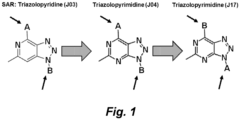
- Triazolopyridine form Substituents A and B reversed on triazolopyridine or triazolopyrimidine J06 Triazolopyridine form Substituents A and B reversed on triazolopyridine or triazolopyrimidine J07 Triazolopyridine form Substituents A and B reversed on triazolopyridine or triazolopyrimidine J08 Triazolopyridine form Substituents A and B reversed on triazolopyridine or triazolopyrimidine J09 Triazolopyridine form Substituents A and B reversed on triazolopyridine or triazolopyrimidine J10 Triazolopyridine form Substituents A and B reversed on triazolopyridine or triazolopyrimidine J10 Triazolopyridine form Substituents A and B reversed on triazolopyridine or triazolopyrimidine J10 Triazolopyridine form Substituents A and B
- the compound described above is effective to decrease in corticotropin-releasing factor (CRF-1) induced p-tau.
- any of the preceding compounds is provided as a racemic mixture.
- any of the preceding compounds is a substantially pure S enantiomer.
- any of the preceding compounds is a substantially pure R enantiomer.
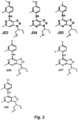
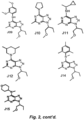
- triazolopyrimidine and/or triazolopyridines are also shown in Figures 2 and 4 .
- pharmaceutically acceptable salts, solvates, clathrates, tautomers, pharmaceutically acceptable salts of a tautomer, enantiomers thereof, and pharmaceutically acceptable salts of an enantiomer are contemplated.
- triazolopyrimidine(s) and/or triazolopyridine(s) such as are described herein are known to those of skill in the art.
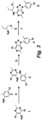
- the relevant triazolopyrimidine and/or triazolopyridine is illustrated in Example 1, below, describing the synthesis of J19.
- the synthesis of J19 involves the preparation of 6-Chloro-N4- substituted pyrimidine-4,5-diamine followed by a cyclisation to the triazolopyrimidine and displacement of the chlorine on the pyrimidine ring to yield the desired analog.
- a similar synthetic pathway would be used for the other analogs described herein.
- a similar synthetic pathway would be used for the triazolopyridine series, the final product would involve separation of the pyridine isomers.
- one or more active agents described herein are administered to a mammal in need thereof, e.g., to a mammal at risk for or suffering from a pathology characterized by abnormal processing of amyloid precursor proteins, a mammal at risk for progression of MCI to Alzheimer's disease, and so forth.
- the active agent(s) are administered to prevent or delay the onset of a pre-Alzheimer's condition and/or cognitive dysfunction, and/or to ameliorate one or more symptoms of a pre-Alzheimer's cognitive dysfunction, and/or to prevent or delay the progression of a pre-Alzheimer's condition or cognitive dysfunction to Alzheimer's disease, and/or to promote the processing of amyloid precursor protein (APP) by a non-amyloidogenic pathway.
- APP amyloid precursor protein
- one or more active agents described herein are administered to a mammal in need thereof, e.g., to a mammal at risk for or suffering from a pathology characterized by abnormal processing of amyloid precursor proteins in conditions other than Alzheimer's disease of MCI.
- Illustrative conditions include, but are not limited to AD-type symptoms of patients with Down's syndrome, glaucoma, macular degeneration (e.g ., age-related macular degeneration (AMD), olfactory impairment. in the treatment of type-II diabetes, including diabetes associated with amyloidogenesis., neurodegenerative diseases such as scrapie, bovine spongiform encaphalopathies (e.g., BSE), , traumatic brain injury ("TBI”), Creutzfeld-Jakob disease and the like, type II diabetes. Other conditions characterized by characterized by amyloid formation/deposition are contemplated.
- the active agent(s) can be administered in the "native" form or, if desired, in the form of salts, esters, amides, prodrugs, derivatives, and the like, provided the salt, ester, amide, prodrug or derivative is suitable pharmacologically, i.e., effective in the present method(s).
- Salts, esters, amides, prodrugs and other derivatives of the active agents can be prepared using standard procedures known to those skilled in the art of synthetic organic chemistry and described, for example, by March (1992) Advanced Organic Chemistry; Reactions, Mechanisms and Structure, 4th Ed. N.Y. Wiley-Interscience , and as described above..
- a pharmaceutically acceptable salt can be prepared for any of the agent(s) described herein having a functionality capable of forming a salt.
- a pharmaceutically acceptable salt is any salt that retains the activity of the parent compound and does not impart any deleterious or untoward effect on the subject to which it is administered and in the context in which it is administered.
- salts can be prepared from the free base using conventional methodology that typically involves reaction with a suitable acid.
- a suitable acid such as methanol or ethanol
- the base form of the drug is dissolved in a polar organic solvent such as methanol or ethanol and the acid is added thereto.
- the resulting salt either precipitates or can be brought out of solution by addition of a less polar solvent.
- Suitable acids for preparing acid addition salts include, but are not limited to both organic acids, e.g ., acetic acid, propionic acid, glycolic acid, pyruvic acid, oxalic acid, malic acid, malonic acid, succinic acid, maleic acid, fumaric acid, tartaric acid, citric acid, benzoic acid, cinnamic acid, mandelic acid, methanesulfonic acid, ethanesulfonic acid, p-toluenesulfonic acid, salicylic acid, and the like, as well as inorganic acids, e.g ., hydrochloric acid, hydrobromic acid, sulfuric acid, nitric acid, phosphoric acid, and the like.
- organic acids e.g acetic acid, propionic acid, glycolic acid, pyruvic acid, oxalic acid, malic acid, malonic acid, succinic acid, maleic acid, fumaric acid, tartaric acid, cit
- An acid addition salt can be reconverted to the free base by treatment with a suitable base.
- Certain particularly preferred acid addition salts of the active agents herein include halide salts, such as may be prepared using hydrochloric or hydrobromic acids.
- preparation of basic salts of the active agents of this invention are prepared in a similar manner using a pharmaceutically acceptable base such as sodium hydroxide, potassium hydroxide, ammonium hydroxide, calcium hydroxide, trimethylamine, or the like.
- Particularly preferred basic salts include alkali metal salts, e.g., the sodium salt, and copper salts.
- the counterion is a pharmaceutically acceptable counterion.
- Suitable anionic salt forms include, but are not limited to acetate, benzoate, benzylate, bitartrate, bromide, carbonate, chloride, citrate, edetate, edisylate, estolate, fumarate, gluceptate, gluconate, hydrobromide, hydrochloride, iodide, lactate, lactobionate, malate, maleate, mandelate, mesylate, methyl bromide, methyl sulfate, mucate, napsylate, nitrate, pamoate (embonate), phosphate and diphosphate, salicylate and disalicylate, stearate, succinate, sulfate, tartrate, tosylate, triethiodide, valerate, and the like, while suitable cationic salt forms include, but are not limited to aluminum, benzathine, calcium, ethylene diamine, lysine
- esters typically involves functionalization of hydroxyl and/or carboxyl groups that are present within the molecular structure of the active agent.
- the esters are typically acyl-substituted derivatives of free alcohol groups, i.e., moieties that are derived from carboxylic acids of the formula RCOOH where R is alky, and preferably is lower alkyl.
- Esters can be reconverted to the free acids, if desired, by using conventional hydrogenolysis or hydrolysis procedures.
- amides can also be prepared using techniques known to those skilled in the art or described in the pertinent literature.
- amides may be prepared from esters, using suitable amine reactants, or they may be prepared from an anhydride or an acid chloride by reaction with ammonia or a lower alkyl amine.
- the active agents described herein can also be combined with a pharmaceutically acceptable carrier (excipient) to form a pharmacological composition.
- Pharmaceutically acceptable carriers can contain one or more physiologically acceptable compound(s) that act, for example, to stabilize the composition or to increase or decrease the absorption of the active agent(s).
- Physiologically acceptable compounds can include, for example, carbohydrates, such as glucose, sucrose, or dextrans, antioxidants, such as ascorbic acid or glutathione, chelating agents, low molecular weight proteins, protection and uptake enhancers such as lipids, compositions that reduce the clearance or hydrolysis of the active agents, or excipients or other stabilizers and/or buffers.
- the compressed product is coated, e.g., using known methods for masking the taste or for enteric dissolution or sustained release.
- Suitable coating materials include, but are not limited to ethyl-cellulose, hydroxymethylcellulose, POLYOX ® yethylene glycol, cellulose acetate phthalate, hydroxypropylmethylcellulose phthalate, and Eudragit (Rohm & Haas, Germany; methacrylic-acrylic copolymer).
- the excipients are sterile and generally free of undesirable matter. These compositions can be sterilized by conventional, well-known sterilization techniques. For various oral dosage form excipients such as tablets and capsules sterility is not required. The USP/NF standard is usually sufficient.
- compositions can be administered in a variety of unit dosage forms depending upon the method of administration.
- suitable unit dosage forms include, but are not limited to powders, tablets, pills, capsules, lozenges, suppositories, patches, nasal sprays, injectibles, implantable sustained-release formulations, mucoadherent films, topical varnishes, lipid complexes, etc.
- compositions can be formulated in a conventional manner using one or more physiologically acceptable carriers, diluents, excipients or auxiliaries that facilitate processing of the active agent(s) into preparations that can be used pharmaceutically. Proper formulation is dependent upon the route of administration chosen.
- the active agents described herein are formulated for oral administration.
- suitable formulations can be readily formulated by combining the active agent(s) with pharmaceutically acceptable carriers suitable for oral delivery well known in the art.
- Such carriers enable the active agent(s) described herein to be formulated as tablets, pills, dragees, caplets, lizenges, gelcaps, capsules, liquids, gels, syrups, slurries, suspensions and the like, for oral ingestion by a patient to be treated.
- disintegrating agents may be added, such as the cross-linked polyvinylpyrrolidone, agar, or alginic acid or a salt thereof such as sodium alginate.
- solid dosage forms may be sugar-coated or enteric-coated using standard techniques. The preparation of enteric-coated particles is disclosed for example in U.S. Pat. Nos. 4,786,505 and 4,853,230 .
- the active agent(s) are conveniently delivered in the form of an aerosol spray from pressurized packs or a nebulizer, with the use of a suitable propellant, e.g ., dichlorodifluoromethane, trichlorofluoromethane, dichlorotetrafluoroethane, carbon dioxide or other suitable gas.
- a suitable propellant e.g ., dichlorodifluoromethane, trichlorofluoromethane, dichlorotetrafluoroethane, carbon dioxide or other suitable gas.
- a suitable propellant e.g ., dichlorodifluoromethane, trichlorofluoromethane, dichlorotetrafluoroethane, carbon dioxide or other suitable gas.
- a suitable propellant e.g ., dichlorodifluoromethane, trichlorofluoromethane, dichlorotetrafluoroethane, carbon dioxide or
- the active agent(s) can be formulated in rectal or vaginal compositions such as suppositories or retention enemas, e.g ., containing conventional suppository bases such as cocoa butter or other glycerides.
- rectal or vaginal compositions such as suppositories or retention enemas, e.g ., containing conventional suppository bases such as cocoa butter or other glycerides.
- Methods of formulating active agents for rectal or vaginal delivery are well known to those of skill in the art ( see, e.g., Allen (2007) Suppositories, Pharmaceutical Press ) and typically involve combining the active agents with a suitable base (e.g ., hydrophilic (PEG), lipophilic materials such as cocoa butter or Witepsol W45, amphiphilic materials such as Suppocire AP and polyglycolized glyceride, and the like).
- the base is selected and compounded for a desired melting/
- the active agent(s) described herein can be formulated as solutions, gels, ointments, creams, suspensions, and the like as are well-known in the art.
- the active agents described herein are formulated for systemic administration (e.g ., as an injectable) in accordance with standard methods well known to those of skill in the art.
- Systemic formulations include, but are not limited to, those designed for administration by injection, e.g . subcutaneous, intravenous, intramuscular, intrathecal or intraperitoneal injection, as well as those designed for transdermal, transmucosal oral or pulmonary administration.
- the active agents described herein can be formulated in aqueous solutions, preferably in physiologically compatible buffers such as Hanks solution, Ringer's solution, or physiological saline buffer and/or in certain emulsion formulations.
- the solution(s) can contain formulatory agents such as suspending, stabilizing and/or dispersing agents.
- the active agent(s) can be provided in powder form for constitution with a suitable vehicle, e.g ., sterile pyrogen-free water, before use.
- a suitable vehicle e.g ., sterile pyrogen-free water
- penetrants appropriate to the barrier to be permeated can be used in the formulation. Such penetrants are generally known in the art.
- Injectable formulations and inhalable formulations are generally provided as a sterile or substantially sterile formulation.
- the active agent(s) may also be formulated as a depot preparations. Such long acting formulations can be administered by implantation (for example subcutaneously or intramuscularly) or by intramuscular injection.
- the active agent(s) may be formulated with suitable polymeric or hydrophobic materials (for example as an emulsion in an acceptable oil) or ion exchange resins, or as sparingly soluble derivatives, for example, as a sparingly soluble salt.
- the active agent(s) described herein can also be delivered through the skin using conventional transdermal drug delivery systems, i.e., transdermal "patches” wherein the active agent(s) are typically contained within a laminated structure that serves as a drug delivery device to be affixed to the skin.
- the drug composition is typically contained in a layer, or "reservoir,” underlying an upper backing layer.
- the term “reservoir” in this context refers to a quantity of "active ingredient(s)" that is ultimately available for delivery to the surface of the skin.
- the "reservoir” may include the active ingredient(s) in an adhesive on a backing layer of the patch, or in any of a variety of different matrix formulations known to those of skill in the art.
- the patch may contain a single reservoir, or it may contain multiple reservoirs.
- the reservoir comprises a polymeric matrix of a pharmaceutically acceptable contact adhesive material that serves to affix the system to the skin during drug delivery.
- suitable skin contact adhesive materials include, but are not limited to, polyethylenes, polysiloxanes, polyisobutylenes, polyacrylates, polyurethanes, and the like.
- the drug-containing reservoir and skin contact adhesive are present as separate and distinct layers, with the adhesive underlying the reservoir which, in this case, may be either a polymeric matrix as described above, or it may be a liquid or hydrogel reservoir, or may take some other form.
- the backing layer in these laminates which serves as the upper surface of the device, preferably functions as a primary structural element of the "patch" and provides the device with much of its flexibility.
- the material selected for the backing layer is preferably substantially impermeable to the active agent(s) and any other materials that are present.
- liposomes emulsions, and microemulsions/nanoemulsions are well known examples of delivery vehicles that may be used to protect and deliver pharmaceutically active compounds.
- Certain organic solvents such as dimethylsulfoxide also can be employed, although usually at the cost of greater toxicity.
- the active agent(s) described herein (triazolopyrimidine(s) and/or triazolopyridine(s) described herein, or a tautomer(s) or stereoisomer(s) thereof, or pharmaceutically acceptable salts, solvates or clathrates of said triazolopyrimidine(s) and/or triazolopyridine(s), said stereoisomer(s), or said tautomer(s), or analogues, derivatives, or prodrugs thereof) are formulated in a nanoemulsion.
- Nanoemulsions include, but are not limited to oil in water (O/W) nanoemulsions, and water in oil (W/O) nanoemulsions.
- Nanoemulsions can be defined as emulsions with mean droplet diameters ranging from about 20 to about 1000 nm. Usually, the average droplet size is between about 20 nm or 50 nm and about 500 nm.
- SME sub-micron emulsion
- mini-emulsion are used as synonyms.
- Illustrative oil in water (O/W) nanoemulsions include, but are not limited to: Surfactant micelles -- micelles composed of small molecules surfactants or detergents (e.g ., SDS/PBS/2-propanol); Polymer micelles -- micelles composed of polymer, copolymer, or block copolymer surfactants (e.g ., Pluronic L64/PBS/2-propanol); Blended micellesmicelles in which there is more than one surfactant component or in which one of the liquid phases (generally an alcohol or fatty acid compound) participates in the formation of the micelle (e.g ., octanoic acid/PBS/EtOH); Integral micelles -- blended micelles in which the active agent(s) serve as an auxiliary surfactant, forming an integral part of the micelle; and Pickering (solid phase) emulsions -- emulsions in which the active agent(s) are associated with the exterior of a solid nanop
- Illustrative water in oil (W/O) nanoemulsions include, but are not limited to: Surfactant micelles -- micelles composed of small molecules surfactants or detergents (e.g. , dioctyl sulfosuccinate/PBS/2-propanol, isopropylmyristate/PBS/2-propanol, etc. ); Polymer micelles -- micelles composed of polymer, copolymer, or block copolymer surfactants (e.g.
- Blended micelles micelles in which there is more than one surfactant component or in which one of the liquid phases (generally an alcohol or fatty acid compound) participates in the formation of the micelle (e.g.
- Integral micelles blended micelles in which the active agent(s) serve as an auxiliary surfactant, forming an integral part of the micelle (e.g ., active agent/PBS/polypropylene glycol); and Pickering (solid phase) emulsions -- emulsions in which the active agent(s) are associated with the exterior of a solid nanoparticle (e.g ., chitosan nanoparticles/no aqueous phase/mineral oil).
- a solid nanoparticle e.g ., chitosan nanoparticles/no aqueous phase/mineral oil
- the nanoemulsions comprise one or more surfactants or detergents.
- the surfactant is a non-anionic detergent (e.g., a polysorbate surfactant, a polyoxyethylene ether, etc.).
- Surfactants that find use in the present invention include, but are not limited to surfactants such as the TWEEN ® , TRITON ® , and TYLOXAPOL ® families of compounds.
- the emulsions further comprise one or more cationic halogen containing compounds, including but not limited to, cetylpyridinium chloride.
- the compositions further comprise one or more compounds that increase the interaction ("interaction enhancers") of the composition with microorganisms (e.g., chelating agents like ethylenediaminetetraacetic acid, or ethylenebis(oxyethylenenitrilo)tetraacetic acid in a buffer).
- the nanoemulsion further comprises an emulsifying agent to aid in the formation of the emulsion.
- Emulsifying agents include compounds that aggregate at the oil/water interface to form a kind of continuous membrane that prevents direct contact between two adjacent droplets.
- Certain embodiments of the present invention feature oil-in-water emulsion compositions that may readily be diluted with water to a desired concentration without impairing their anti-pathogenic properties.
- certain oil-in-water emulsions can also contain other lipid structures, such as small lipid vesicles (e.g. , lipid spheres that often consist of several substantially concentric lipid bilayers separated from each other by layers of aqueous phase), micelles (e.g ., amphiphilic molecules in small clusters of 50-200 molecules arranged so that the polar head groups face outward toward the aqueous phase and the apolar tails are sequestered inward away from the aqueous phase), or lamellar phases (lipid dispersions in which each particle consists of parallel amphiphilic bilayers separated by thin films of water).
- small lipid vesicles e.g. , lipid spheres that often consist of several substantially concentric lipid bilayers separated from each other by layers of aqueous phase
- micelles e.g ., amphiphilic molecules in small clusters of 50-200 molecules arranged so that the polar head groups face outward toward the aqueous
- SLPs surfactant lipid preparations
- the emulsion comprises a discontinuous oil phase distributed in an aqueous phase, a first component comprising an alcohol and/or glycerol, and a second component comprising a surfactant or a halogen-containing compound.
- the aqueous phase can comprise any type of aqueous phase including, but not limited to, water (e.g., dionized water, distilled water, tap water) and solutions (e.g., phosphate buffered saline solution or other buffer systems).
- the oil phase can comprise any type of oil including, but not limited to, plant oils (e.g ., soybean oil, avocado oil, flaxseed oil, coconut oil, cottonseed oil, squalene oil, olive oil, canola oil, corn oil, rapeseed oil, safflower oil, and sunflower oil), animal oils (e.g., fish oil), flavor oil, water insoluble vitamins, mineral oil, and motor oil.
- plant oils e.g ., soybean oil, avocado oil, flaxseed oil, coconut oil, cottonseed oil, squalene oil, olive oil, canola oil, corn oil, rapeseed oil, safflower oil, and sunflower oil
- animal oils e.g., fish oil
- flavor oil water insoluble vitamins, mineral oil, and motor oil.
- the oil phase comprises 30-90 vol % of the oil-in-water emulsion (e.g ., constitutes 30-90% of the total volume of the final emulsion), more preferably 50-80%.
- the surfactant is a polysorbate surfactant (e.g ., TWEEN 20 ® , TWEEN 40 ® , TWEEN 60 ® , and TWEEN 80 ® ), a pheoxypolyethoxyethanol (e.g. , TRITON ® X-100, X-301, X-165, X-102, and X-200, and TYLOXAPOL ® ), or sodium dodecyl sulfate, and the like.
- a polysorbate surfactant e.g ., TWEEN 20 ® , TWEEN 40 ® , TWEEN 60 ® , and TWEEN 80 ®
- a pheoxypolyethoxyethanol e.g. , TRITON ® X-100, X-301, X-165, X-102, and X-200, and TYLOXAPOL ®
- sodium dodecyl sulfate
- a halogen-containing component is present.
- the nature of the halogen-containing compound in some embodiments the halogen-containing compound comprises a chloride salt (e.g., NaCl, KCl, etc. ) , a cetylpyridinium halide, a cetyltrimethylammonium halide, a cetyl dimethyl ethyl ammonium halide, a cetyldimethylbenzylammonium halide, a cetyltributylphosphonium halide, dodecyltrimethylammonium halides, tetradecyltrimethylammonium halides, cetylpyridinium chloride, cetyltrimethylammonium chloride, cetylbenzyldimethylammonium chloride, cetylpyridinium bromide, cetyltrimethylammonium bromide, cetyl dimethyl ethyl ammonium bromide, cetyltribut
- the emulsion comprises a quaternary ammonium compound.
- Quaternary ammonium compounds include, but are not limited to, N-alkyldimethyl benzyl ammonium saccharinate, 1,3,5-Triazine-1,3,5(2H,4H,6H)-triethanol; 1-Decanaminium, N-decyl-N,N-dimethyl-, chloride (or) Didecyl dimethyl ammonium chloride; 2-(2-(p-(Diisobuyl)cresosxy)ethoxy)ethyl dimethyl benzyl ammonium chloride; 2-(2-(p-(Diisobutyl)phenoxy)ethoxy)ethyl dimethyl benzyl ammonium chloride; alkyl 1 or 3 benzyl-1-(2-hydroxethyl)-2-imidazolinium chloride; alkyl bis(2-hydroxyethyl)benzyl ammonium chloride;
- Nanoemulsion formulations and methods of making such are well known to those of skill in the art and described for example in U.S. Patent Nos: 7,476,393 , 7,468,402 , 7,314,624 , 6,998,426 , 6,902,737 , 6,689,371 , 6,541,018 , 6,464,990 , 6,461,625 , 6,419,946 , 6,413,527 , 6,375,960 , 6,335,022 , 6,274,150 , 6,120,778 , 6,039,936 , 5,925,341 , 5,753,241 , 5,698,219 , an d 5,152,923 and in Fanun et al. (2009) Microemulsions: Properties and Applications (Surfactant Science), CRC Press, Boca Ratan Fl .
- one or more active agents described herein can be provided as a "concentrate”, e.g., in a storage container ( e.g., in a premeasured volume) ready for dilution, or in a soluble capsule ready for addition to a volume of water, alcohol, hydrogen peroxide, or other diluent.
- extended release formulations of the active agent(s) described herein are contemplated.
- such extended release formulations are designed to avoid the high peak plasma levels of intravenous and conventional immediate release oral dosage forms.
- sustained-release formulations include, for example, semipermeable matrices of solid polymers containing the therapeutic agent.
- sustained-release materials have been established and are well known by those skilled in the art.
- Sustained-release capsules may, depending on their chemical nature, release the compounds for a few weeks up to over 100 days.
- additional strategies for stabilization can be employed.
- such "extended release" formulations utilize the mucosa and can independently control tablet disintegration (or erosion) and/or drug dissolution and release from the tablet over time to provide a safer delivery profile.
- the oral formulations of active agent(s) described herein e.g., triazolopyrimidine(s) and/or triazolopyridine(s) described herein, or a tautomer(s) or stereoisomer(s) thereof, or pharmaceutically acceptable salts or solvates of said triazolopyrimidine(s) and/or triazolopyridine(s), said stereoisomer(s), or said tautomer(s), or analogues, derivatives, or prodrugs thereof) provide individual, repetitive doses that include a defined amount of the active agent that is delivered over a defined amount of time.
- One illustrative sustained release formulation is a substantially homogeneous composition that comprises about 0.01% to about 99% w/w, or about 0.1% to about 95%, or about 0.1%, or about 1%, or about 2%, or about 5%, or about 10%, or about 15%, or about 20% to about 80%, or to about 90%, or to about 95%, or to about 97%, or to about 98%, or to about 99%1 of the active ingredient(s) (triazolopyrimidine(s) and/or triazolopyridine(s) described herein, or a tautomer(s) or stereoisomer(s) thereof, or pharmaceutically acceptable salts or solvates of said triazolopyrimidine(s) and/or triazolopyridine(s), said stereoisomer(s), or said tautomer(s), or analogues, derivatives, or prodrugs thereof) and one or more mucoadhesives (also referred to herein as "bioadhesives”) that provide
- a sustained release pharmaceutical dosage form for oral transmucosal delivery can be solid or non-solid.
- the dosage form is a solid that turns into a hydrogel following contact with saliva.
- Suitable excipients include, but are not limited to substances added to the formulations that are required to produce a commercial product and can include, but are not limited to: bulking agents, binders, surfactants, bioadhesives, lubricants, disintegrants, stabilizers, solubilizers, glidants, and additives or factors that affect dissolution or disintegration time.
- Suitable excipients are not limited to those above, and other suitable nontoxic pharmaceutically acceptable carriers for use in oral formulations can be found in Remington's Pharmaceutical Sciences, 17th Edition, 1985 .
- extended release formulations of the active agent(s) described herein for oral transmucosal drug delivery include at least one bioadhesive (mucoadhesive) agent or a mixture of several bioadhesives to promote adhesion to the oral mucosa during drug delivery.
- bioadhesive agents may also be effective in controlling the dosage form erosion time and/or, the drug dissolution kinetics over time when the dosage form is wetted.
- Such mucoadhesive drug delivery systems are very beneficial, since they can prolong the residence time of the drug at the site of absorption and increase drug bioavailability.
- the mucoadhesive polymers forming hydrogels are typically hydrophilic and swellable, containing numerous hydrogen bond-forming groups, like hydroxyl, carboxyl or amine, which favor adhesion. When used in a dry form, they attract water from the mucosal surface and swell, leading to polymer/mucus interaction through hydrogen bonding, electrostatic, hydrophobic or van der Waals interaction.
- polyacrylates such as CARBOPOL ® , polycarbophil, etc
- alginates thiol-containing polymers
- POLYOX ® yethylenes polyethylene glycols (PEG) of all molecular weights (preferably between 1000 and 40,000 Da, of any chemistry, linear or branched), dextrans of all molecular weights (preferably between 1000 and 40,000 Da of any source), block copolymers, such as those prepared by combinations of lactic and glycolic acid (PLA, PGA, PLGA of various viscosities, molecular weights and lactic-to-glycolic acid ratios) polyethylene glycol-polypropylene glycol block copolymers of any number and combination of repeating units (such as PLURONICS ® , TEKTRONIX ® or GENAPOL ® block copolymers), combination of the above copolymers either physically or chemically linked units (for example PEG-PLA or PEG-PLGA copolymers) mixture
- the bioadhesive excipient is selected from the group of polyethylene glycols, POLYOX ® yethylenes, polyacrylic acid polymers, such as CARBOPOL ® (such as CARBOPOL ® 71G, 934P, 971P, 974P, and the like) and polycarbophils (such as NOVEON ® AA-1, NOVEON ® CA-1, NOVEON ® CA-2, and the like), cellulose and its derivatives and most preferably it is polyethylene glycol, carbopol, and/or a cellulosic derivative or a combination thereof.
- polyacrylic acid polymers such as CARBOPOL ® (such as CARBOPOL ® 71G, 934P, 971P, 974P, and the like) and polycarbophils (such as NOVEON ® AA-1, NOVEON ® CA-1, NOVEON ® CA-2, and the like)
- cellulose and its derivatives and most preferably it is polyethylene glycol
- the mucoadhesive/bioadhesive excipient is typically present at 1-50% w/w, preferably 1-40% w/w or most preferably between 5-30% w/w.
- a particular formulation may contain one or more different bioadhesives in any combination.
- the formulations for oral transmucosal drug delivery also include a binder or mixture of two or more binders which facilitate binding of the excipients into a single dosage form.
- binders include, binders selected from the group consisting of cellulosic derivatives (such as methylcellulose, carboxymethyl cellulose, hydroxyethyl cellulose, hydroxyethylmethyl cellulose, etc .), polyacrylates (such as CARBOPOL ® , polycarbophil, etc .), POVIDONE ® (all grades), POLYOX ®® of any molecular weight or grade, irradiated or not, starch, polyvinylpyrrolidone (PVP), AVICEL ® , and the like.
- the binder is typically present at 0.5-60% w/w, preferably 1-30% w/w and most preferably 1.5-15% w/w.
- the formulations also include at least one hydrogel-forming excipient.
- hydrogel components may be cross-linked.
- the hydrogel forming excipient(s) are typically present at 0.1-70% w/w, preferably 1-50% w/w or most preferably 1-30% w/w.
- the formulations may also include at least one controlled release modifier which is a substance that upon hydration of the dosage form will preferentially adhere to the drug molecules and thus reduce the rate of its diffusion from the oral dosage form.
- controlled release modifier is a substance that upon hydration of the dosage form will preferentially adhere to the drug molecules and thus reduce the rate of its diffusion from the oral dosage form.
- excipients may also reduce the rate of water uptake by the formulation and thus enable a more prolonged drug dissolution and release from the tablet.
- the selected excipient(s) are lipophilic and capable of naturally complexing to the hydrophobic or lipophilic drugs.
- the degree of association of the release modifier and the drug can be varied by altering the modifier-to-drug ratio in the formulation.
- such interaction may be appropriately enhanced by the appropriate combination of the release modifier with the active drug in the manufacturing process.
- the extended release formulations may also include other conventional components required for the development of oral dosage forms, which are known to those skilled in the art.
- these components may include one or more bulking agents (such as lactose USP, Starch 1500, mannitol, sorbitol, malitol or other non-reducing sugars; microcrystalline cellulose ( e.g ., AVICEL ® ), dibasic calcium phosphate dehydrate, sucrose, and mixtures thereof), at least one solubilizing agent(s) (such as cyclodextrins, pH adjusters, salts and buffers, surfactants, fatty acids, phospholipids, metals of fatty acids etc.
- bulking agents such as lactose USP, Starch 1500, mannitol, sorbitol, malitol or other non-reducing sugars
- microcrystalline cellulose e.g ., AVICEL ®
- solubilizing agent(s) such as cyclodextrins, pH
- metal salts and buffers organic (such as acetate, citrate, tartrate, etc. ) or inorganic (phosphate, carbonate, bicarbonate, borate, sulfate, sulfite, bisulfite, metabisulfite, chloride, etc. ) , salts of metals such as sodium, potassium, calcium, magnesium, etc.
- At least one lubricant such as stearic acid and divalent cations of, such as magnesium stearate, calcium stearate, etc., talc, glycerol monostearate and the like
- one or more glidants such as colloidal silicon dioxide, precipitated silicon dioxide, fumed silica (CAB-O-SIL ® M-5P, trademark of Cabot Corporation), stearowet and sterotex, silicas (such as SILOID ® and SILOX ® silicas - trademarks of Grace Davison Products, Aerosil - trademark of Degussa Pharma), higher fatty acids, the metal salts thereof, hydrogenated vegetable oils and the like), flavors or sweeteners and colorants (such as aspartame, mannitol, lactose, sucrose, other artificial sweeteners; ferric oxides and FD&C lakes), additives to help stabilize the drug substance from chemical of physical degradation (such as anti-oxidants, anti-hydrolytic agents,
- Anti-oxidants may include BHT, BHA, vitamins, citric acid, EDTA, sodium bisulfate, sodium metabisulfate, thiourea, methionine, surfactants, amino-acids, such as arginine, glycine, histidine, methionine salts, pH adjusters, chelating agents and buffers in the dry or solution form), one or more excipients that may affect tablet disintegration kinetics and drug release from the tablet, and thus pharmacokinetics (disintegrants such as those known to those skilled in the art and may be selected from a group consisting of starch, carboxy-methycellulose type or crosslinked polyvinyl pyrrolidone (such as cross-povidone, PVP-XL), alginates, cellulose-based disintegrants (such as purified cellulose, methylcellulose, crosslinked sodium carboxy methylcellulose (Ac-Di-Sol) and carboxy methyl cellulose), low substituted hydroxypropyl ethers
- Exemplary polymer compositions include, but are not limited to, poly anhydrides and co-polymers of lactic acid and glycolic acid, poly(dl-lactide-co- glycolide) (PLGA), poly(lactic acid) (PLA), poly(glycolic acid) (PGA), polyorthoesters, proteins, and polysaccharides.
- PLGA poly(dl-lactide-co- glycolide)
- PLA poly(lactic acid)
- PGA poly(glycolic acid)
- polyorthoesters proteins, and polysaccharides.
- the active agent(s) can be chemically modified to significantly modify the pharmacokinetics in plasma. This may be accomplished for example by conjugation with poly(ethylene glycol) (PEG), including site-specific PEGylation. PEGylation, which may improve drug performance by optimizing pharmacokinetics, decreasing immunogenicity and dosing frequency.
- PEG poly(ethylene glycol)
- Methods of making a formulation of the active agent(s) described herein include the steps of powder grinding, dry powder mixing and tableting via direct compression. Alternatively, a wet granulation process may be used.
- Such a method involves mixing the active ingredient and possibly some excipients in a mixer.
- the binder may be one of the excipients added in the dry mix state or dissolved in the fluid used for granulating.
- the granulating solution or suspension is added to the dry powders in the mixer and mixed until the desired characteristics are achieved. This usually produces a granule that will be of suitable characteristics for producing dosage forms with adequate dissolution time, content uniformity, and other physical characteristics.
- the product is most often dried and/or then milled after drying to get a major percentage of the product within a desired size range.
- the product is dried after being wet sized using a device such as an oscillating granulator, or a mill.
- the dry granulation may then processed to get an acceptable size range by first screening with a sieving device, and then milling the oversized particles.
- the formulation may be manufactured by alternative granulation processes, all known to those skilled in the art, such as spray fluid bed granulation, extrusion and spheronization or fluid bed rotor granulation.
- the tablet dosage form of the active agent(s) described herein may be prepared by coating the primary tablet manufactured as described above with suitable coatings known in the art. Such coatings are meant to protect the active cores against damage (abrasion, breakage, dust formation) against influences to which the cores are exposed during transport and storage (atmospheric humidity, temperature fluctuations), and naturally these film coatings can also be colored.
- the sealing effect of film coats against water vapor is expressed by the water vapor permeability. Coating may be performed by one of the available processes such as Wurster coating, dry coating, film coating, fluid bed coating, pan coating, etc.
- Typical coating materials include polyvinyl pyrrolidone (PVP), polyvinyl pyrrolidone vinyl acetate copolymer (PVPVA), polyvinyl alcohol (PVA), polyvinyl alcohol/polyethylene glycol copolymer (PVA/PEG), cellulose acetate phthalate, ethyl cellulose, gellan gum, maltodextrin, methacrylates, methyl cellulose, hydroxyl propyl methyl cellulose (HPMC of all grades and molecular weights), carrageenan, shellac and the like.
- PVP polyvinyl pyrrolidone
- PVPVA polyvinyl pyrrolidone vinyl acetate copolymer
- PVA polyvinyl alcohol
- PVA/PEG polyvinyl alcohol/polyethylene glycol copolymer
- cellulose acetate phthalate ethyl cellulose, gellan gum, maltodextrin, methacrylates, methyl cellulose,
- the tablet core comprising the active agent(s) described herein can be coated with a bioadhesive and/or pH resistant material to enable material, such as those defined above, to improve bioadhesion of the tablet in the sublingual cavity.
- the active agent(s) described herein (triazolopyrimidine(s) and/or triazolopyridine(s) described herein, or a tautomer(s) or stereoisomer(s) thereof, or pharmaceutically acceptable salts or solvates of said triazolopyrimidine(s) and/or triazolopyridine(s), said stereoisomer(s), or said tautomer(s), or analogues, derivatives, or prodrugs thereof) are formulated as inclusion complexes. While not limited to cyclodextrin inclusion complexes, it is noted that cyclodextrin is the agent most frequently used to form pharmaceutical inclusion complexes.
- Cyclodextrins are cyclic oligomers of glucose, that typically contain 6, 7, or 8 glucose monomers joined by ⁇ -1,4 linkages. These oligomers are commonly called ⁇ -CD, ⁇ -CD, and ⁇ -CD, respectively. Higher oligomers containing up to 12 glucose monomers are known, and contemplated to in the formulations described herein. Functionalized cyclodextrin inclusion complexes are also contemplated.
- Illustrative, but non-limiting functionalized cyclodextrins include, but are not limited to sulfonates, sulfonates and sulfinates, or disulfonates of hydroxybutenyl cyclodextrin; sulfonates, sulfonates and sulfinates, or disulfonates of mixed ethers of cyclodextrins where at least one of the ether substituents is hydroxybutenyl cyclodextrin.
- One advantage of the extended (controlled) release oral (GI or transmucosal) formulations described herein is that they can maintain the plasma drug concentration within a targeted therapeutic window for a longer duration than with immediate-release formulations, whether solid dosage forms or liquid-based dosage forms.
- the high peak plasma levels typically observed for such conventional immediate release formulations will be blunted by the prolonged release of the drug over 1 to 12 hours or longer.
- a rapid decline in plasma levels will be avoided since the drug will continually be crossing from the oral cavity into the bloodstream during the length of time of dissolution of the tablet, thus providing plasma pharmacokinetics with a more stable plateau.
- the dosage forms described herein may improve treatment safety by minimizing the potentially deleterious side effects due to the reduction of the peaks and troughs in the plasma drug pharmacokinetics, which compromise treatment safety.
- bioadhesive oral transmucosal formulations described herein exhibit highly consistent bioavailability and can maintain the plasma drug concentration within a targeted therapeutic window with significantly lower variability for a longer duration than currently available dosage forms, whether solid dosage forms or IV dosage forms.
- a rapid decline in plasma levels is avoided since the drug is continually crossing from the oral cavity or GI tract into the bloodstream during the length of time of dissolution of the tablet or longer, thus providing plasma pharmacokinetics with an extended plateau phase as compared to the conventional immediate release oral dosage forms.
- the dosage forms described herein can improve treatment safety by minimizing the potentially deleterious side effects due to the relative reduction of the peaks and troughs in the plasma drug pharmacokinetics, which compromise treatment safety and is typical of currently available dosage forms.
- bioadhesive formulations described herein can be designed to manipulate and control the pharmacokinetic profile of the active agent(s) described herein.
- the formulations can be adjusted to achieve 'slow' disintegration times (and erosion kinetic profiles) and slow drug release and thus enable very prolonged pharmacokinetic profiles that provide sustained drug action.
- such formulations may be designed to still provide a fast onset, they are mostly intended to enable the sustained drug PK and effect while maintaining the other performance attributes of the tablet such as bioadhesion, reproducibility of action, blunted C max , etc.
- bioadhesive transmucosal formulations of this invention are independent of the manufacturing process.
- a number of conventional, well-established and known in the art processes can be used to manufacture the formulations of the present invention (such as wet and dry granulation, direct compression, etc. ) without impacting the dosage form physicochemical properties or in vivo performance.
- OTTR Optimal Therapeutic Targeting Ratio
- the OTTR is greater than about 15, or greater than about 20, or greater than about 25, or greater than about 30, or greater than about 40, or greater than about 50.
- one or more active agents described herein are administered to a mammal in need thereof, e.g., to a mammal at risk for or suffering from a pathology characterized by abnormal processing of amyloid precursor proteins, a mammal at risk for progression of MCI to Alzheimer's disease, and so forth.
- the active agent(s) are administered to prevent or delay the onset of a pre-Alzheimer's cognitive dysfunction, and/or to ameliorate one or more symptoms of a pre-Alzheimer's cognitive dysfunction, and/or to prevent or delay the progression of a pre-Alzheimer's condition or cognitive dysfunction to Alzheimer's disease, and/or to promote the processing of amyloid precursor protein (APP) by a non-amyloidogenic pathway.
- one or more active agent(s) are administered for the treatment of early stage, mid stage, or late-stage Alzheimer's disease, e.g., to reduce the severity of the disease, and/or to ameliorate one or more symptoms of the disease, and/or to slow the progression of the disease.
- the active agent(s) described herein can be administered by any of a number of routes.
- IV intravenously
- IM intramuscularly
- SQ subcutaneously
- depo-SQ sublingually
- intranasally inhalation
- intrathecally transdermally
- transdermally e.g ., via transdermal patch
- the dosage form is selected to facilitate delivery to the brain (e.g ., passage through the blood brain barrier).
- the compounds described herein are readily delivered to the brain. Dosage forms known to those of skill in the art are suitable for delivery of the compound.
- the active agent(s) are administered in an amount/dosage regimen sufficient to exert a prophylactically and/or therapeutically useful effect in the absence of undesirable side effects on the subject treated (or with the presence of acceptable levels and/or types of side effects).
- the specific amount/dosage regimen will vary depending on the weight, gender, age and health of the individual; the formulation, the biochemical nature, bioactivity, bioavailability and the side effects of the particular compound.
- the therapeutically or prophylactically effective amount may be determined empirically by testing the agent(s) in known in vitro and in vivo model systems for the treated disorder.
- a therapeutically or prophylactically effective dose can be determined by first administering a low dose, and then incrementally increasing until a dose is reached that achieves the desired effect with minimal or no undesired side effects.
- an administered amount of the agent(s) described herein effective to prevent or delay the onset of a pre-Alzheimer's cognitive dysfunction, and/or to ameliorate one or more symptoms of a pre-Alzheimer's cognitive dysfunction, and/or to prevent or delay the progression of a pre-Alzheimer's condition or cognitive dysfunction to Alzheimer's disease, and/or to promote the processing of amyloid precursor protein (APP) by a non-amyloidogenic pathway, and/or to treat or prevent AD ranges from about 0.1 mg/day to about 500 mg/day or about 1,000 mg/day, or from about 0.1 mg/day to about 200 mg/day, for example, from about 1 mg/day to about 100 mg/day, for example, from about 5 mg/day to about 50 mg/day.
- the subject is administered the compound at a dose of about 0.05 to about 0.50 mg/kg, for example, about 0.05 mg/kg, 0.10 mg/kg, 0.20 mg/kg, 0.33 mg/kg, 0.50 mg/kg. It is understood that while a patient may be started at one dose, that dose may be varied (increased or decreased, as appropriate) over time as the patient's condition changes. Depending on outcome evaluations, higher doses may be used.
- up to as much as 1000 mg/day can be administered, e.g ., 5 mg/day, 10 mg/day, 25 mg/day, 50 mg/day, 100 mg/day, 200 mg/day, 300 mg/day, 400 mg/day, 500 mg/day, 600 mg/day, 700 mg/day, 800 mg/day, 900 mg/day or 1000 mg/day.
- active agent(s) described herein can be administered parenterally, for example, by IV, IM, depo-IM, SC, or depo-SC.
- a therapeutically effective amount of about 0.5 to about 100 mg/day, preferably from about 5 to about 50 mg daily can be delivered.
- the dose in certain embodiments can be about 0.5 mg/day to about 50 mg/day, or a monthly dose of from about 15 mg to about 1,500 mg.
- the parenteral dosage form be a depo formulation.
- the active agent(s) described herein can be administered sublingually.
- the compounds and/or analogs thereof when given sublingually, can be given one to four times daily in the amounts described above for IM administration.
- the active agent(s) described herein can be administered intranasally.
- the appropriate dosage forms are a nasal spray or dry powder, as is known to those skilled in the art.
- the dosage of compound and/or analog thereof for intranasal administration is the amount described above for IM administration.
- the active agent(s) described herein can be administered intrathecally.
- the appropriate dosage form can be a parenteral dosage form as is known to those skilled in the art.
- the dosage of compound and/or analog thereof for intrathecal administration is the amount described above for IM administration.
- the active agent(s) described herein can be administered topically.
- the appropriate dosage form is a cream, ointment, or patch.
- the dosage is from about 1.0 mg/day to about 200 mg/day. Because the amount that can be delivered by a patch is limited, two or more patches may be used. The number and size of the patch is not important as long as a therapeutically effective amount of compound be delivered as is known to those skilled in the art.
- the compound can be administered rectally by suppository as is known to those skilled in the art. In certain embodiments, when administered by suppository, the therapeutically effective amount is from about 1.0 mg to about 500 mg.
- the active agent(s) described herein can be administered by implants as is known to those skilled in the art.
- the therapeutically effective amount is the amount described above for depot administration.
- the active agent(s) described herein thereof can be enclosed in multiple or single dose containers.
- the enclosed agent(s) can be provided in kits, for example, including component parts that can be assembled for use.
- an active agent in lyophilized form and a suitable diluent may be provided as separated components for combination prior to use.
- a kit may include an active agent and a second therapeutic agent for co-administration.
- the active agent and second therapeutic agent may be provided as separate component parts.
- a kit may include a plurality of containers, each container holding one or more unit dose of the compounds.
- the containers are preferably adapted for the desired mode of administration, including, but not limited to tablets, gel capsules, sustained-release capsules, and the like for oral administration; depot products, pre-filled syringes, ampules, vials, and the like for parenteral administration; and patches, medipads, creams, and the like for topical administration, e.g ., as described herein..
- the dosage forms can be administered to the subject 1, 2, 3, or 4 times daily. In certain embodiments it is preferred that the compound be administered either three or fewer times, more preferably once or twice daily. In certain embodiments, it is preferred that the agent(s) be administered in oral dosage form.
- compositions and methods are described herein with respect to use in humans, they are also suitable for animal, e.g ., veterinary use.
- animal e.g ., veterinary use.
- certain organisms (subjects) contemplated herein include, but are not limited to humans, non-human primates, canines, equines, felines, porcines, ungulates, largomorphs, and the like.
- the active agent(s) described herein can be used in combination with other therapeutic agents or approaches used to treat or prevent diseases characterized by amyloid deposits in the brain, including MCI and/or AD.
- a pharmaceutical composition comprising at least one active agent described herein (a triazolopyrimidine and/or triazolopyridine described herein, or a tautomer or stereoisomer thereof, or pharmaceutically acceptable salt, solvate, or clathrate of said triazolopyrimidine and/or triazolopyridine, said stereoisomer, or said tautomer, or an analogue, derivative, or prodrug thereof) one together with at least one additional therapeutic agent, and, optionally, a pharmaceutically acceptable carrier or diluent is contemplated.
- a therapeutic or prophylactic method comprising administering at least active agent described herein in conjunction with at least one additional therapeutic agent is contemplated.
- non-limiting examples of additional therapeutic agents include, but are not limited to disulfiram and/or analogues thereof, honokiol and/or analogues thereof, tropisetron and/or analogues thereof, nimetazepam and/or analogues thereof (see, e.g., USSN 13/213,960 (U.S.
- Non-limiting examples of additional therapeutic agents include drugs selected from the group consisting of: (a) drugs useful for the treatment of Alzheimer's disease and/or drugs useful for treating one or more symptoms of Alzheimer's disease, (b) drugs useful for inhibiting the synthesis A ⁇ , and (c) drugs useful for treating neurodegenerative diseases.
- additional therapeutic agents for use in combination with the compounds (e.g ., triazolopyrimidine and/or triazolopyridine) described herein include drugs useful for the treatment, prevention, delay of onset, amelioration of any pathology associated with A ⁇ and/or a symptom thereof.
- Non-limiting examples of pathologies associated with A ⁇ include: Alzheimer's disease, Down's syndrome, Parkinson's disease, memory loss, memory loss associated with Alzheimer's disease, memory loss associated with Parkinson's disease, attention deficit symptoms, attention deficit symptoms associated with Alzheimer's disease, Parkinson's disease, and/or Down's syndrome, dementia, stroke, microgliosis and brain inflammation, pre-senile dementia, senile dementia, dementia associated with Alzheimer's disease, Parkinson's disease, and/or Down's syndrome, progressive supranuclear palsy, cortical basal degeneration, neurodegeneration, olfactory impairment, olfactory impairment associated with Alzheimer's disease, Parkinson's disease, and/or Down's syndrome, ⁇ -amyloid angiopathy, cerebral amyloid angiopathy, hereditary cerebral hemorrhage, mild cognitive impairment (“MCI”), glaucoma, amyloidosis, type II diabetes, hemodialysis complications (from ⁇ .sub.2 microglobulins and complications
- such additional therapeutic agents include, but are not limited to acetylcholinesterase inhibitors (including without limitation, e.g., (-)-phenserine enantiomer, tacrine, ipidacrine, galantamine, donepezil, icopezil, zanapezil, rivastigmine, huperzine A, phenserine, physostigmine, neostigmine, pyridostigmine, ambenonium, demarcarium, edrophonium, ladostigil and ungeremine); NMDA receptor antagonist (including without limitations e.g ., Memantine); muscarinic receptor agonists (including without limitation, e.g ., Talsaclidine, AF-102B, AF-267B (NGX-267)); nicotinic receptor agonists (including without limitation, e.g ., Ispronicline (AZD-3480));
- Netrin Luorenco (2009) Cell Death Differ., 16: 655-663
- Netrin mimetics NGF, NGF mimetics, BDNF and other neurotrophic agents of the future, agents that promote neurogenesis e.g. stem cell therapy.
- additional non-limiting examples of additional therapeutic agents for use in combination with compounds described herein include: muscarinic antagonists (e.g ., m 1 agonists (such as acetylcholine, oxotremorine, carbachol, or McNa343), or m 2 antagonists cholinesterase inhibitors (e.g ., acetyl- and/or butyrylchlolinesterase inhibitors such as donepezil (Aricept ® ), galantamine (RAZADYNE ® ), and rivastigimine (EXELON ® ); N-methyl-D-aspartate receptor antagonists (e.g ., NAMENDA ® (memantine HCl); combinations of cholinesterase inhibitors and N-methyl-D-aspartate receptor antagonists; gamma secretase modulators; gamma secretase inhibitors; non-steroidal anti-inflammatory agents; anti-inflammatory agents that can reduce neurodectase inhibitor
- compositions comprising an effective amount of one or more triazolopyrimidine(s) and/or triazolopyridine(s) described herein and an additional therapeutic agent, and/or a method of treatment or prophylaxis comprising administration of one or more triazolopyrimidine(s) and/or triazolopyridine(s) described herein in conjunction with an additional therapeutic agent where the therapeutic agent in the formulation and/or method is disulfiram and/or analogues thereof (see, e.g., USSN 13/213,960 (U.S. Patent Publication No: US-2012-0071468-A1 ), and PCT/US2011/048472 ( PCT Publication No: WO 2012/024616 )).
- Certain embodiments provide a pharmaceutical composition comprising an effective amount of one or more triazolopyrimidine(s) and/or triazolopyridine(s) described herein and an additional therapeutic agent, and/or a method of treatment or prophylaxis comprising administration of one or more triazolopyrimidine(s) and/or triazolopyridine(s) described herein in conjunction with an additional therapeutic agent where the therapeutic agent in the formulation and/or method is honokiol and/or analogues thereof ( see, e.g., USSN 13/213,960 (U.S. Patent Publication No: US-2012-0071468-A1 ), and PCT/US2011/048472 ( PCT Publication No: WO 2012/024616 )).
- Certain embodiments provide a pharmaceutical composition comprising an effective amount of one or more triazolopyrimidine(s) and/or triazolopyridine(s) described herein and an additional therapeutic agent, and/or a method of treatment or prophylaxis comprising administration of one or more triazolopyrimidine(s) and/or triazolopyridine(s) described herein in conjunction with an additional therapeutic agent where the therapeutic agent in the formulation and/or method is tropisetron and/or analogues thereof ( see, e.g., USSN 13/213,960 (U.S. Patent Publication No: US-2012-0071468-A1 ), and PCT/US2011/048472 ( PCT Publication No: WO 2012/024616 )).
- Certain embodiments provide a pharmaceutical composition comprising an effective amount of one or more triazolopyrimidine(s) and/or triazolopyridine(s) described herein and an additional therapeutic agent, and/or a method of treatment or prophylaxis comprising administration of one or more triazolopyrimidine(s) and/or triazolopyridine(s) described herein in conjunction with an additional therapeutic agent where the therapeutic agent in the formulation and/or method is tropisetron.
- Certain embodiments provide a pharmaceutical composition comprising an effective amount of one or more triazolopyrimidine(s) and/or triazolopyridine(s) described herein and an additional therapeutic agent, and/or a method of treatment or prophylaxis comprising administration of one or more triazolopyrimidine(s) and/or triazolopyridine(s) described herein in conjunction with an additional therapeutic agent where the therapeutic agent in the formulation and/or method is a tropinol ester or related ester ( see, e.g., PCT/US2012/049223 ( WO 2013/019901 A2 ), and USSN 14/235 ).
- Certain embodiments provide a pharmaceutical composition comprising an effective amount of one or more triazolopyrimidine(s) and/or triazolopyridine(s) described herein and an additional therapeutic agent, and/or a method of treatment or prophylaxis comprising administration of one or more triazolopyrimidine(s) and/or triazolopyridine(s) described herein in conjunction with an additional therapeutic agent where the therapeutic agent in the formulation and/or method is a TrkA kinase inhibitor (e.g., ADDN-1351) and/or analogues thereof ( see, e.g., PCT/US2012/051426 ( WO 2013/026021 A2 ).
- TrkA kinase inhibitor e.g., ADDN-1351
- analogues thereof see, e.g., PCT/US2012/051426 ( WO 2013/026021 A2 ).
- Certain embodiments provide a pharmaceutical composition comprising an effective amount of one or more triazolopyrimidine(s) and/or triazolopyridine(s) described herein and an additional therapeutic agent, and/or a method of treatment or prophylaxis comprising administration of one or more triazolopyrimidine(s) and/or triazolopyridine(s) described herein in conjunction with an additional therapeutic agent where the therapeutic agent in the formulation and/or method is a D2 receptor agonists and/or an alpha1-adrenergic receptor antagonists.
- Certain embodiments provide a pharmaceutical composition comprising an effective amount of one or more triazolopyrimidine(s) and/or triazolopyridine(s) described herein and an additional therapeutic agent, and/or a method of treatment or prophylaxis comprising administration of one or more triazolopyrimidine(s) and/or triazolopyridine(s) described herein in conjunction with an additional therapeutic agent where the therapeutic agent in the formulation and/or method is an ASBIs as described and/or claimed in PCT/US2013/032481 ( WO 2013/142370 A1 ) and USSN 14/384,641 including, but not limited to galangin, a galangin prodrug, rutin, and other flavonoids as described or claimed therein.
- Certain embodiments provide a pharmaceutical composition comprising an effective amount of one or more triazolopyrimidine(s) and/or triazolopyridine(s) described herein and an additional therapeutic agent, and/or a method of treatment or prophylaxis comprising administration of one or more triazolopyrimidine(s) and/or triazolopyridine(s) described herein in conjunction with an additional therapeutic agent where the therapeutic agent in the formulation and/or method is one or more cholinesterase inhibitors (e.g ., acetyl- and/or butyrylchlolinesterase inhibitors).
- cholinesterase inhibitors e.g ., acetyl- and/or butyrylchlolinesterase inhibitors.
- Certain embodiments provide a pharmaceutical composition comprising an effective amount of one or more triazolopyrimidine(s) and/or triazolopyridine(s) described herein and an additional therapeutic agent, and/or a method of treatment or prophylaxis comprising administration of one or more triazolopyrimidine(s) and/or triazolopyridine(s) described herein in conjunction with an additional therapeutic agent where the therapeutic agent in the formulation and/or method is one or more muscarinic antagonists (e.g ., m 1 agonists or m 2 antagonists).
- muscarinic antagonists e.g ., m 1 agonists or m 2 antagonists.
- Certain embodiments provide a pharmaceutical composition comprising an effective amount of one or more triazolopyrimidine(s) and/or triazolopyridine(s) described herein and an additional therapeutic agent, and/or a method of treatment or prophylaxis comprising administration of one or more triazolopyrimidine(s) and/or triazolopyridine(s) described herein in conjunction with an additional therapeutic agent where the therapeutic agent in the formulation and/or method is one or more compounds selected from the group consisting of cholinesterase inhibitors (such as, for example, (.+-.)-2,3-dihydro-5,6-dimethoxy-2-[[1-(phenylmethyl)-4-piperidinyl]methy- 1]-1H-inden-1-one hydrochloride, i.e, donepezil hydrochloride, available as the ARICEPT ® brand of donepezil hydrochloride), N-methyl-D-aspartate receptor inhibitors (such as, for example, Namenda
- the effectiveness of treatment can be determined by comparing a baseline measure of a parameter of disease before administration of the agent(s) (triazolopyrimidine(s) and/or triazolopyridine(s) described herein, or a tautomer(s) or stereoisomer(s) thereof, or pharmaceutically acceptable salts or solvates of said triazolopyrimidine and/or triazolopyridine(s), said stereoisomer(s), or said tautomer(s), or analogues, derivatives, or prodrugs thereof) is commenced to the same parameter one or more time points after the agent(s) or analog has been administered.
- a biomarker e.g.
- biomarkers include, but are not limited to sAPP ⁇ , p3 (A ⁇ 17-42 or A ⁇ 17-40), sAPP ⁇ , soluble A ⁇ 40, and/or soluble A ⁇ 42 in the blood, plasma, serum, urine, mucous or cerebrospinal fluid (CSF).
- An important indicator is p-tau and tau.
- a reduction of p-tau and/or tau is an indication of desirable efficacy.
- inhibition in elevation of p-tau e.g ., stress-induced (cortisol-induced) p-tau is also an indication of efficacy.
- detection of increased levels of sAPP ⁇ and/or p3, and decreased levels of sAPP ⁇ and/or APPneo is an indicator that the treatment is effective.
- detection of decreased levels of sAPP ⁇ and/or p3, and/or increased levels of sAPP ⁇ , APPneo, Tau or phospho-Tau (pTau) may be an indicator that the treatment is not effective.
- Amyloid plaques can be determined using any method known in the art, e.g ., as determined by CT, PET, PIB-PET and/or MRI.
- Administration of one or more of the agent(s)) described herein e.g ., triazolopyrimidine(s) and/or triazolopyridine(s), or a tautomer(s) or stereoisomer(s) thereof, or pharmaceutically acceptable salt, solvate, or clathrate said compound(s), said stereoisomer(s), or said tautomer(s), or analogues, derivatives, or prodrugs thereof
- the agent(s)) described herein e.g ., triazolopyrimidine(s) and/or triazolopyridine(s), or a tautomer(s) or stereoisomer(s) thereof, or pharmaceutically acceptable salt, solvate, or clathrate said compound(s), said stereoisomer(s), or said tautomer(s), or
- Effectiveness of treatment can also be determined by observing a stabilization and/or improvement of cognitive abilities of the subject.
- Cognitive abilities can be evaluated using any art-accepted method, including for example, Clinical Dementia Rating (CDR), the mini-mental state examination (MMSE) or Folstein test, evaluative criteria listed in the DSM-IV ( Diagnostic and Statistical Manual of Mental Disorders, Fourth Editi on) or DSM-V, and the like.
- CDR Clinical Dementia Rating
- MMSE mini-mental state examination
- Folstein test evaluative criteria listed in the DSM-IV ( Diagnostic and Statistical Manual of Mental Disorders, Fourth Editi on) or DSM-V, and the like.
- Measurable biomarkers to monitor efficacy include, but are not limited to, monitoring blood, plasma, serum, urine, mucous or cerebrospinal fluid (CSF) levels of sAPP ⁇ , sAPP ⁇ , A ⁇ 42, A ⁇ 40, APPneo and p3 (e.g., A ⁇ 17-42 or A ⁇ 17-40). Detection of increased levels of sAPP ⁇ and/or p3, and decreased levels of sAPP ⁇ and/or APPneo are indicators that the treatment or prevention regime is efficacious.
- CSF cerebrospinal fluid
- biomarkers include Tau and phospho-Tau (pTau). Detection of decreased levels of Tau and pTau are indicators that the treatment or prevention regime is efficacious.
- Efficacy can also be determined by measuring amyloid plaque load in the brain.
- the treatment or prevention regime is considered efficacious when the amyloid plaque load in the brain does not increase or is reduced. Conversely, the treatment or prevention regime is considered inefficacious when the amyloid plaque load in the brain increases.
- Amyloid plaque load can be determined using any method known in the art, e.g ., including CT, PET, PIB-PET and/or MRI.
- Efficacy can also be determined by measuring the cognitive abilities of the subject.
- Cognitive abilities can be measured using any method known in the art. Illustrative tests include assigning a Clinical Dementia Rating (CDR) score or applying the mini mental state examination (MMSE) ( Folstein, et al. (1975) J. Psychiatric Res. 12(3): 189-198 ). Subjects who maintain the same score or who achieve an improved score, e.g ., when applying the CDR or MMSE, indicate that the treatment or prevention regime is efficacious. Conversely, subjects who receive a score indicating diminished cognitive abilities, e.g ., when applying the CDR or MMSE, indicate that the treatment or prevention regime has not been efficacious.
- CDR Clinical Dementia Rating
- MMSE mini mental state examination
- the monitoring methods can entail determining a baseline value of a measurable biomarker or parameter (e.g ., amyloid plaque load or cognitive abilities) in a subject before administering a dosage of the agent(s), and comparing this with a value for the same measurable biomarker or parameter after treatment.
- a measurable biomarker or parameter e.g ., amyloid plaque load or cognitive abilities
- a control value (e.g ., a mean and standard deviation) of the measurable biomarker or parameter is determined for a control population.
- the individuals in the control population have not received prior treatment and do not have AD, MCI, nor are at risk of developing AD or MCI. In such cases, if the value of the measurable biomarker or clinical parameter approaches the control value, then treatment is considered efficacious.
- the individuals in the control population have not received prior treatment and have been diagnosed with AD or MCI. In such cases, if the value of the measurable biomarker or clinical parameter approaches the control value, then treatment is considered inefficacious.
- a subject who is not presently receiving treatment but has undergone a previous course of treatment is monitored for one or more of the biomarkers or clinical parameters to determine whether a resumption of treatment is required.
- the measured value of one or more of the biomarkers or clinical parameters in the subject can be compared with a value previously achieved in the subject after a previous course of treatment.
- the value measured in the subject can be compared with a control value (mean plus standard deviation/ANOVA) determined in population of subjects after undergoing a course of treatment.
- the measured value in the subject can be compared with a control value in populations of prophylactically treated subjects who remain free of symptoms of disease, or populations of therapeutically treated subjects who show amelioration of disease characteristics.
- the tissue sample for analysis is typically blood, plasma, serum, urine, mucous or cerebrospinal fluid from the subject.
- the active agent(s) e.g ., triazolopyrimidine(s) and/or triazolopyridine(s) described herein thereof can be enclosed in multiple or single dose containers.
- the enclosed agent(s) can be provided in kits, for example, including component parts that can be assembled for use.
- an active agent in lyophilized form and a suitable diluent may be provided as separated components for combination prior to use.
- a kit may include an active agent and a second therapeutic agent for co-administration.
- the active agent and second therapeutic agent may be provided as separate component parts.
- a kit may include a plurality of containers, each container holding one or more unit dose of the compounds.
- the containers are preferably adapted for the desired mode of administration, including, but not limited to tablets, gel capsules, sustained-release capsules, and the like for oral administration; depot products, pre-filled syringes, ampules, vials, and the like for parenteral administration; and patches, medipads, creams, and the like for topical administration, e.g., as described herein.
- kits comprising one or more triazolopyrimidine and/or triazolopyridine compounds described herein, or a tautomer or stereoisomer thereof, or pharmaceutically acceptable salt, solvate, or clathrate of said compound, said stereoisomer, or said tautomer, preferably provided as a pharmaceutical composition and in a suitable container or containers and/or with suitable packaging; optionally one or more additional active agents, which if present are preferably provided as a pharmaceutical composition and in a suitable container or containers and/or with suitable packaging; and optionally instructions for use, for example written instructions on how to administer the compound or compositions.
- a kit in another non-claimed embodiment, comprises a single container or multiple containers: (a) a pharmaceutically acceptable composition comprising one or more compounds described herein (e.g ., compounds shown in Figure 2 , or illustrated or described in Table 5, or a tautomer or stereoisomer thereof, or pharmaceutically acceptable salt, solvate, or clathrate of said compound, said stereoisomer, or said tautomer, optionally a pharmaceutically acceptable composition comprising one or more additional therapeutic agents; and optionally instructions for use their use.
- the kit may optionally comprise labeling (e.g ., instructional materials) appropriate to the intended use or uses.
- kits can include instructions for use or other informational material that can advise the user such as, for example, a physician, technician or patient, regarding how to properly administer the composition(s) as prophylactic, therapeutic, or ameliorative treatment of the disease of concern.
- instructions can indicate or suggest a dosing regimen that includes, but is not limited to, actual doses and monitoring procedures.
- the instructions can include informational material indicating that the administering of the compositions can result in adverse reactions including but not limited to allergic reactions such as, for example, anaphylaxis.
- the informational material can indicate that allergic reactions may exhibit only as mild pruritic rashes or may be severe and include erythroderma, vasculitis, anaphylaxis, Steven-Johnson syndrome, and the like.
- the informational material(s) may indicate that anaphylaxis can be fatal and may occur when any foreign protein is introduced into the body.
- instructional materials typically comprise written or printed materials they are not limited to such. Any medium capable of storing such instructions and communicating them to an end user is contemplated herein. Such media include, but are not limited to electronic storage media (e.g ., magnetic discs, tapes, cartridges, chips), optical media (e.g., CD ROM), and the like. Such media may include addresses to internet sites that provide such instructional materials.
- kits can comprise one or more packaging materials such as, for example, a box, bottle, tube, vial, container, sprayer, insufflator, intravenous (I.V.) bag, envelope, and the like; and at least one unit dosage form of an agent comprising active agent(s) described herein and a packaging material.
- the kits also include instructions for using the composition as prophylactic, therapeutic, or ameliorative treatment for the disease of concern.
- the articles of manufacture can comprise one or more packaging materials such as, for example, a box, bottle, tube, vial, container, sprayer, insufflator, intravenous (I.V.) bag, envelope, and the like; and a first composition comprising at least one unit dosage form of an agent comprising one or more triazolopyrimidine(s) and/or triazolopyridines described herein, or a tautomer(s) or stereoisomer(s) thereof, or pharmaceutically acceptable salts, solvates, or clathrates of said triazolopyrimidine(s) and/or triazolopyridine(s), said stereoisomer(s), or said tautomer(s), or analogues, derivatives, or prodrugs thereof within the packaging material, along with a second composition comprising a second agent such as, for example, an agent used in the treatment and/or prophylaxis of Alzheimer's disease ( e.g., as described herein), or any combination of a second agent such
- SHSY-5Y cells are a useful neurological model that differentiate into cells with morphological and biochemical characteristics of mature neurons including mature isoforms of tau.
- the J20 mouse is a model of for Alzheimer's disease. This model overexpresses human APP with two mutations linked to familial Alzheimer's disease (the APP KM670/671NL (Swedish) and SAPP V717F (Indiana) mutations).
- J03 10 mk delivered in a 5 mg/ml DMSO stock, 50 ml
- SQ subcutaneously
- J03 brain levels were low and the brain/plasma ratio was 1:2, but levels stayed up for hours, resulting in good exposure of brain tissue, even from a single injection.
- brain levels were slightly higher at the peak (open grey box), and the brain:plasma ratio was close to 1: 1.
- Figure 12 shows the effect of J03 on p-tau in pilot study #2. Not only was p-tau decreased again here as it was in pilot study #1, the decrease reached statistical significance.
- FIG 13 panels A-F, shows the effect of J03 on p-tau and memory.
- Even vehicle-treated J20 mice showed some novel object preference in the modified protocol, with the erro bar extended to 8 (panel A).
- panel B There was good correlation to p-tau levels (panel B).
- Mice that scored above 8 had significantly lower p-tau levels (panel C).
- Novel location preference was even clearer for J03-treated J20 mice (panel D), and also showed good correlation to p-tau levels (panel E), and mice that scored over 0, therefore showing some novel location preference, had significantly lower p-tau (panel F).
- mice were dosed on the first day of the study and euthanized two hours later.
- brain levels were higher than expected, at 170 ng/g, ( Fig. 9 , left panel) but with great variation between the two mice.
- brain levels were in the expected range of about 35 ng/g ( Fig. 9 , right panel), again with great variation.
- J04 ( see, Figure 2 ) was designed as an analog with replacement of the triazolopyridine with the triazolopyrimidine ring.
- Figure 20 illustrates the effect of J03 and J17 on sAPP ⁇ , tau, and p-tau with increasing concentrations of CRF.
- Figure 21 illustrates in vivo pharmacokinetics of J17.
- SQ Inj subcutaneous injection
- brain levels were low (-400 ng/g) relative to plasma levels (-4000 ng/m) (left).
- plasma levels were only -50 ng/g and plasma levels were once again almost 10-fold higher.
- mice were housed singly and treated with J17 at 10 mkd by oral delivery for 28 days.
- Male and female J20 mice were housed singly and treated with J17 at 10 mkd by oral delivery for 28 days.
- Figure 23 shows the effect of J03 and J17 on sAPP ⁇ , sAPP ⁇ , and the ratio sAPP ⁇ /sAPP ⁇ .
- the sAPP ⁇ results were similar for both genders and showed an increase with J03 but not J17 (top panel).
- sAPP ⁇ results were also similar. There was an decrease with J17 only (one high outlier that was eliminated from the data) (middle panel). There was only a slight increase in the ratio for males with J03, and it was greater with J17, but the two females showed an even greater increase in the ratio, but without statistical significance (bottom panel).
- FIG 26 A 1-42.
- Figure 26 , top When data from all mice are presented (top), there are no significant differences in A ⁇ 1-42 ( Figure 26 , top), but when the low outlier (10-fold lower) from one sibling pair was eliminated, there was a significant reduction in A ⁇ 1-42 in male mice ( Figure 26 , bottom).
- J19 ( see Figure 2 ) is an analog of J03 similar to J17 and is part of the triazolopyrimidine series described herein.
- Figure 30 illustrates the in vivo pharmacokinetics of J19.
- brain levels were ⁇ 190ng/g at the peak 4 hours after injection. Levels remained relatively high until 8 hours (left panel). With oral delivery (right panel), levels were much lower, but again remained detectable from 1 to 6 hours.
Landscapes
- Health & Medical Sciences (AREA)
- Chemical & Material Sciences (AREA)
- Organic Chemistry (AREA)
- Veterinary Medicine (AREA)
- Public Health (AREA)
- General Health & Medical Sciences (AREA)
- Animal Behavior & Ethology (AREA)
- Life Sciences & Earth Sciences (AREA)
- Medicinal Chemistry (AREA)
- Pharmacology & Pharmacy (AREA)
- Epidemiology (AREA)
- Neurology (AREA)
- Neurosurgery (AREA)
- Biomedical Technology (AREA)
- Bioinformatics & Cheminformatics (AREA)
- Engineering & Computer Science (AREA)
- Nuclear Medicine, Radiotherapy & Molecular Imaging (AREA)
- General Chemical & Material Sciences (AREA)
- Chemical Kinetics & Catalysis (AREA)
- Psychiatry (AREA)
- Hospice & Palliative Care (AREA)
- Pharmaceuticals Containing Other Organic And Inorganic Compounds (AREA)
- Nitrogen Condensed Heterocyclic Rings (AREA)
Applications Claiming Priority (2)
| Application Number | Priority Date | Filing Date | Title |
|---|---|---|---|
| US201562117888P | 2015-02-18 | 2015-02-18 | |
| PCT/US2016/018305 WO2016134042A2 (en) | 2015-02-18 | 2016-02-17 | Triazolopyridines and triazolopyrimidines that lower stress-induced p-tau |
Publications (3)
| Publication Number | Publication Date |
|---|---|
| EP3259274A2 EP3259274A2 (en) | 2017-12-27 |
| EP3259274A4 EP3259274A4 (en) | 2018-08-01 |
| EP3259274B1 true EP3259274B1 (en) | 2023-06-28 |
Family
ID=56692299
Family Applications (1)
| Application Number | Title | Priority Date | Filing Date |
|---|---|---|---|
| EP16752995.7A Active EP3259274B1 (en) | 2015-02-18 | 2016-02-17 | Triazolopyridines and triazolopyrimidines that lower stress-induced p-tau |
Country Status (8)
| Country | Link |
|---|---|
| US (2) | US10618899B2 (OSRAM) |
| EP (1) | EP3259274B1 (OSRAM) |
| JP (1) | JP6830895B2 (OSRAM) |
| KR (1) | KR102220260B1 (OSRAM) |
| CN (1) | CN107709326B (OSRAM) |
| AU (1) | AU2016220049C1 (OSRAM) |
| CA (1) | CA2976258C (OSRAM) |
| WO (1) | WO2016134042A2 (OSRAM) |
Families Citing this family (3)
| Publication number | Priority date | Publication date | Assignee | Title |
|---|---|---|---|---|
| WO2016134042A2 (en) | 2015-02-18 | 2016-08-25 | Buck Institute For Research On Aging | Triazolopyridines and triazolopyrimidines that lower stress-induced p-tau |
| US11814734B2 (en) | 2019-05-13 | 2023-11-14 | Ecolab Usa Inc. | 1,2,4-triazolo[1,5-a] pyrimidine derivative as copper corrosion inhibitor |
| ES2932481B2 (es) * | 2021-07-09 | 2023-09-11 | Consejo Superior Investigacion | Compuestos inhibidores de la quinasa de tau y tubulina (ttbk) |
Family Cites Families (13)
| Publication number | Priority date | Publication date | Assignee | Title |
|---|---|---|---|---|
| NZ274978A (en) * | 1993-10-12 | 1998-04-27 | Du Pont Merck Pharma | 1n-alkyl-n-aryl pyrimidinamine derivatives and pharmaceutical compositions thereof |
| US6107300A (en) * | 1996-03-27 | 2000-08-22 | Dupont Pharmaceuticals | Arylamino fused pyrimidines |
| ATE221886T1 (de) | 1997-09-02 | 2002-08-15 | Bristol Myers Squibb Pharma Co | Heterocyclyl-substituierte annellierte pyridine und pyrimidine als antagonisten des corticotropin freisetzenden hormons (crh), verwendbar für die behandlung von cns und stress |
| WO2001058489A1 (en) | 2000-02-14 | 2001-08-16 | Japan Tobacco Inc. | Preventives/remedies for postoperative stress |
| AU2003274652A1 (en) | 2002-10-23 | 2004-05-13 | Obetherapy Biotechnology | Compounds, compositions and methods for modulating fat metabolism |
| WO2007076055A2 (en) | 2005-12-22 | 2007-07-05 | Entremed, Inc. | Compositions and methods comprising proteinase activated receptor antagonists |
| CA2808630A1 (en) | 2010-08-19 | 2012-02-23 | Buck Institute For Age Research | Methods of treating mild cognitive impairment (mci) and related disorders |
| AU2012290116B2 (en) | 2011-08-02 | 2016-11-03 | Buck Institute For Research On Aging | Tropinol esters and related compounds to promote normal processing of APP |
| WO2013026021A2 (en) | 2011-08-18 | 2013-02-21 | Buck Institute For Research On Aging | Trka as a target for inhibiting app cleavage and/or progression of alzheimer's disease |
| CA2867891C (en) | 2012-03-19 | 2021-09-14 | Buck Institute For Research On Aging | App specific bace inhibitors (asbis) and uses thereof |
| US9649317B2 (en) | 2012-09-19 | 2017-05-16 | The Trustees Of The University Of Pennsylvania | Heterocyclic compounds and their use for the treatment of neurodegenerative tauopathies |
| US10202355B2 (en) | 2013-02-12 | 2019-02-12 | Buck Institute For Research On Aging | Hydantoins that modulate bace-mediated app processing |
| WO2016134042A2 (en) | 2015-02-18 | 2016-08-25 | Buck Institute For Research On Aging | Triazolopyridines and triazolopyrimidines that lower stress-induced p-tau |
-
2016
- 2016-02-17 WO PCT/US2016/018305 patent/WO2016134042A2/en not_active Ceased
- 2016-02-17 KR KR1020177025850A patent/KR102220260B1/ko active Active
- 2016-02-17 US US15/548,402 patent/US10618899B2/en active Active
- 2016-02-17 JP JP2017543785A patent/JP6830895B2/ja active Active
- 2016-02-17 CA CA2976258A patent/CA2976258C/en active Active
- 2016-02-17 EP EP16752995.7A patent/EP3259274B1/en active Active
- 2016-02-17 CN CN201680017456.6A patent/CN107709326B/zh active Active
- 2016-02-17 AU AU2016220049A patent/AU2016220049C1/en active Active
-
2020
- 2020-02-21 US US16/797,846 patent/US10844071B2/en active Active
Also Published As
| Publication number | Publication date |
|---|---|
| US20200190094A1 (en) | 2020-06-18 |
| US10618899B2 (en) | 2020-04-14 |
| KR102220260B1 (ko) | 2021-02-25 |
| AU2016220049B2 (en) | 2020-09-24 |
| AU2016220049A1 (en) | 2017-08-24 |
| WO2016134042A2 (en) | 2016-08-25 |
| JP6830895B2 (ja) | 2021-02-17 |
| JP2018505899A (ja) | 2018-03-01 |
| EP3259274A4 (en) | 2018-08-01 |
| KR20170117185A (ko) | 2017-10-20 |
| US20180346466A1 (en) | 2018-12-06 |
| CN107709326A (zh) | 2018-02-16 |
| AU2016220049C1 (en) | 2021-02-25 |
| CN107709326B (zh) | 2021-12-17 |
| EP3259274A2 (en) | 2017-12-27 |
| CA2976258A1 (en) | 2016-08-25 |
| US10844071B2 (en) | 2020-11-24 |
| WO2016134042A3 (en) | 2016-10-13 |
| CA2976258C (en) | 2024-02-20 |
Similar Documents
| Publication | Publication Date | Title |
|---|---|---|
| US11091444B2 (en) | Hydantoins that modulate BACE-mediated app processing | |
| US10835546B2 (en) | App specific BACE inhibitors (ASBIs) and uses thereof | |
| US10844071B2 (en) | Substituted [1,2,3]triazolo[4,5-d]pyrimidines that lower stress-induced p-tau | |
| US20150030683A1 (en) | Formulations and methods for the treatment or prophylaxis of pre-mci and/or pre-alzheimer's conditions | |
| US20220041553A1 (en) | Apoe4-targeted theraputics that increase sirt1 |
Legal Events
| Date | Code | Title | Description |
|---|---|---|---|
| STAA | Information on the status of an ep patent application or granted ep patent |
Free format text: STATUS: THE INTERNATIONAL PUBLICATION HAS BEEN MADE |
|
| PUAI | Public reference made under article 153(3) epc to a published international application that has entered the european phase |
Free format text: ORIGINAL CODE: 0009012 |
|
| STAA | Information on the status of an ep patent application or granted ep patent |
Free format text: STATUS: REQUEST FOR EXAMINATION WAS MADE |
|
| 17P | Request for examination filed |
Effective date: 20170822 |
|
| AK | Designated contracting states |
Kind code of ref document: A2 Designated state(s): AL AT BE BG CH CY CZ DE DK EE ES FI FR GB GR HR HU IE IS IT LI LT LU LV MC MK MT NL NO PL PT RO RS SE SI SK SM TR |
|
| AX | Request for extension of the european patent |
Extension state: BA ME |
|
| DAV | Request for validation of the european patent (deleted) | ||
| DAX | Request for extension of the european patent (deleted) | ||
| A4 | Supplementary search report drawn up and despatched |
Effective date: 20180629 |
|
| RIC1 | Information provided on ipc code assigned before grant |
Ipc: A61K 31/519 20060101ALI20180625BHEP Ipc: A61P 25/00 20060101ALI20180625BHEP Ipc: C07D 487/04 20060101AFI20180625BHEP Ipc: A61P 25/28 20060101ALI20180625BHEP |
|
| STAA | Information on the status of an ep patent application or granted ep patent |
Free format text: STATUS: EXAMINATION IS IN PROGRESS |
|
| 17Q | First examination report despatched |
Effective date: 20200107 |
|
| GRAP | Despatch of communication of intention to grant a patent |
Free format text: ORIGINAL CODE: EPIDOSNIGR1 |
|
| STAA | Information on the status of an ep patent application or granted ep patent |
Free format text: STATUS: GRANT OF PATENT IS INTENDED |
|
| RIC1 | Information provided on ipc code assigned before grant |
Ipc: C07D 471/04 20060101ALI20230307BHEP Ipc: A61K 31/437 20060101ALI20230307BHEP Ipc: A61K 45/06 20060101ALI20230307BHEP Ipc: A61P 25/28 20060101ALI20230307BHEP Ipc: A61P 25/00 20060101ALI20230307BHEP Ipc: A61K 31/519 20060101ALI20230307BHEP Ipc: C07D 487/04 20060101AFI20230307BHEP |
|
| INTG | Intention to grant announced |
Effective date: 20230403 |
|
| GRAS | Grant fee paid |
Free format text: ORIGINAL CODE: EPIDOSNIGR3 |
|
| GRAA | (expected) grant |
Free format text: ORIGINAL CODE: 0009210 |
|
| STAA | Information on the status of an ep patent application or granted ep patent |
Free format text: STATUS: THE PATENT HAS BEEN GRANTED |
|
| P01 | Opt-out of the competence of the unified patent court (upc) registered |
Effective date: 20230505 |
|
| AK | Designated contracting states |
Kind code of ref document: B1 Designated state(s): AL AT BE BG CH CY CZ DE DK EE ES FI FR GB GR HR HU IE IS IT LI LT LU LV MC MK MT NL NO PL PT RO RS SE SI SK SM TR |
|
| REG | Reference to a national code |
Ref country code: CH Ref legal event code: EP |
|
| REG | Reference to a national code |
Ref country code: AT Ref legal event code: REF Ref document number: 1582621 Country of ref document: AT Kind code of ref document: T Effective date: 20230715 |
|
| REG | Reference to a national code |
Ref country code: IE Ref legal event code: FG4D |
|
| REG | Reference to a national code |
Ref country code: DE Ref legal event code: R096 Ref document number: 602016080629 Country of ref document: DE |
|
| REG | Reference to a national code |
Ref country code: LT Ref legal event code: MG9D |
|
| PG25 | Lapsed in a contracting state [announced via postgrant information from national office to epo] |
Ref country code: SE Free format text: LAPSE BECAUSE OF FAILURE TO SUBMIT A TRANSLATION OF THE DESCRIPTION OR TO PAY THE FEE WITHIN THE PRESCRIBED TIME-LIMIT Effective date: 20230628 Ref country code: NO Free format text: LAPSE BECAUSE OF FAILURE TO SUBMIT A TRANSLATION OF THE DESCRIPTION OR TO PAY THE FEE WITHIN THE PRESCRIBED TIME-LIMIT Effective date: 20230928 |
|
| REG | Reference to a national code |
Ref country code: NL Ref legal event code: MP Effective date: 20230628 |
|
| REG | Reference to a national code |
Ref country code: AT Ref legal event code: MK05 Ref document number: 1582621 Country of ref document: AT Kind code of ref document: T Effective date: 20230628 |
|
| PG25 | Lapsed in a contracting state [announced via postgrant information from national office to epo] |
Ref country code: RS Free format text: LAPSE BECAUSE OF FAILURE TO SUBMIT A TRANSLATION OF THE DESCRIPTION OR TO PAY THE FEE WITHIN THE PRESCRIBED TIME-LIMIT Effective date: 20230628 Ref country code: NL Free format text: LAPSE BECAUSE OF FAILURE TO SUBMIT A TRANSLATION OF THE DESCRIPTION OR TO PAY THE FEE WITHIN THE PRESCRIBED TIME-LIMIT Effective date: 20230628 Ref country code: LV Free format text: LAPSE BECAUSE OF FAILURE TO SUBMIT A TRANSLATION OF THE DESCRIPTION OR TO PAY THE FEE WITHIN THE PRESCRIBED TIME-LIMIT Effective date: 20230628 Ref country code: LT Free format text: LAPSE BECAUSE OF FAILURE TO SUBMIT A TRANSLATION OF THE DESCRIPTION OR TO PAY THE FEE WITHIN THE PRESCRIBED TIME-LIMIT Effective date: 20230628 Ref country code: HR Free format text: LAPSE BECAUSE OF FAILURE TO SUBMIT A TRANSLATION OF THE DESCRIPTION OR TO PAY THE FEE WITHIN THE PRESCRIBED TIME-LIMIT Effective date: 20230628 Ref country code: GR Free format text: LAPSE BECAUSE OF FAILURE TO SUBMIT A TRANSLATION OF THE DESCRIPTION OR TO PAY THE FEE WITHIN THE PRESCRIBED TIME-LIMIT Effective date: 20230929 |
|
| PG25 | Lapsed in a contracting state [announced via postgrant information from national office to epo] |
Ref country code: FI Free format text: LAPSE BECAUSE OF FAILURE TO SUBMIT A TRANSLATION OF THE DESCRIPTION OR TO PAY THE FEE WITHIN THE PRESCRIBED TIME-LIMIT Effective date: 20230628 |
|
| PG25 | Lapsed in a contracting state [announced via postgrant information from national office to epo] |
Ref country code: SK Free format text: LAPSE BECAUSE OF FAILURE TO SUBMIT A TRANSLATION OF THE DESCRIPTION OR TO PAY THE FEE WITHIN THE PRESCRIBED TIME-LIMIT Effective date: 20230628 |
|
| PG25 | Lapsed in a contracting state [announced via postgrant information from national office to epo] |
Ref country code: ES Free format text: LAPSE BECAUSE OF FAILURE TO SUBMIT A TRANSLATION OF THE DESCRIPTION OR TO PAY THE FEE WITHIN THE PRESCRIBED TIME-LIMIT Effective date: 20230628 |
|
| PG25 | Lapsed in a contracting state [announced via postgrant information from national office to epo] |
Ref country code: IS Free format text: LAPSE BECAUSE OF FAILURE TO SUBMIT A TRANSLATION OF THE DESCRIPTION OR TO PAY THE FEE WITHIN THE PRESCRIBED TIME-LIMIT Effective date: 20231028 |
|
| PG25 | Lapsed in a contracting state [announced via postgrant information from national office to epo] |
Ref country code: SM Free format text: LAPSE BECAUSE OF FAILURE TO SUBMIT A TRANSLATION OF THE DESCRIPTION OR TO PAY THE FEE WITHIN THE PRESCRIBED TIME-LIMIT Effective date: 20230628 Ref country code: SK Free format text: LAPSE BECAUSE OF FAILURE TO SUBMIT A TRANSLATION OF THE DESCRIPTION OR TO PAY THE FEE WITHIN THE PRESCRIBED TIME-LIMIT Effective date: 20230628 Ref country code: RO Free format text: LAPSE BECAUSE OF FAILURE TO SUBMIT A TRANSLATION OF THE DESCRIPTION OR TO PAY THE FEE WITHIN THE PRESCRIBED TIME-LIMIT Effective date: 20230628 Ref country code: PT Free format text: LAPSE BECAUSE OF FAILURE TO SUBMIT A TRANSLATION OF THE DESCRIPTION OR TO PAY THE FEE WITHIN THE PRESCRIBED TIME-LIMIT Effective date: 20231030 Ref country code: IS Free format text: LAPSE BECAUSE OF FAILURE TO SUBMIT A TRANSLATION OF THE DESCRIPTION OR TO PAY THE FEE WITHIN THE PRESCRIBED TIME-LIMIT Effective date: 20231028 Ref country code: ES Free format text: LAPSE BECAUSE OF FAILURE TO SUBMIT A TRANSLATION OF THE DESCRIPTION OR TO PAY THE FEE WITHIN THE PRESCRIBED TIME-LIMIT Effective date: 20230628 Ref country code: EE Free format text: LAPSE BECAUSE OF FAILURE TO SUBMIT A TRANSLATION OF THE DESCRIPTION OR TO PAY THE FEE WITHIN THE PRESCRIBED TIME-LIMIT Effective date: 20230628 Ref country code: CZ Free format text: LAPSE BECAUSE OF FAILURE TO SUBMIT A TRANSLATION OF THE DESCRIPTION OR TO PAY THE FEE WITHIN THE PRESCRIBED TIME-LIMIT Effective date: 20230628 Ref country code: AT Free format text: LAPSE BECAUSE OF FAILURE TO SUBMIT A TRANSLATION OF THE DESCRIPTION OR TO PAY THE FEE WITHIN THE PRESCRIBED TIME-LIMIT Effective date: 20230628 |
|
| PG25 | Lapsed in a contracting state [announced via postgrant information from national office to epo] |
Ref country code: PL Free format text: LAPSE BECAUSE OF FAILURE TO SUBMIT A TRANSLATION OF THE DESCRIPTION OR TO PAY THE FEE WITHIN THE PRESCRIBED TIME-LIMIT Effective date: 20230628 |
|
| REG | Reference to a national code |
Ref country code: DE Ref legal event code: R097 Ref document number: 602016080629 Country of ref document: DE |
|
| PG25 | Lapsed in a contracting state [announced via postgrant information from national office to epo] |
Ref country code: DK Free format text: LAPSE BECAUSE OF FAILURE TO SUBMIT A TRANSLATION OF THE DESCRIPTION OR TO PAY THE FEE WITHIN THE PRESCRIBED TIME-LIMIT Effective date: 20230628 |
|
| PLBE | No opposition filed within time limit |
Free format text: ORIGINAL CODE: 0009261 |
|
| STAA | Information on the status of an ep patent application or granted ep patent |
Free format text: STATUS: NO OPPOSITION FILED WITHIN TIME LIMIT |
|
| PG25 | Lapsed in a contracting state [announced via postgrant information from national office to epo] |
Ref country code: IT Free format text: LAPSE BECAUSE OF FAILURE TO SUBMIT A TRANSLATION OF THE DESCRIPTION OR TO PAY THE FEE WITHIN THE PRESCRIBED TIME-LIMIT Effective date: 20230628 |
|
| 26N | No opposition filed |
Effective date: 20240402 |
|
| PG25 | Lapsed in a contracting state [announced via postgrant information from national office to epo] |
Ref country code: SI Free format text: LAPSE BECAUSE OF FAILURE TO SUBMIT A TRANSLATION OF THE DESCRIPTION OR TO PAY THE FEE WITHIN THE PRESCRIBED TIME-LIMIT Effective date: 20230628 |
|
| PG25 | Lapsed in a contracting state [announced via postgrant information from national office to epo] |
Ref country code: MC Free format text: LAPSE BECAUSE OF FAILURE TO SUBMIT A TRANSLATION OF THE DESCRIPTION OR TO PAY THE FEE WITHIN THE PRESCRIBED TIME-LIMIT Effective date: 20230628 |
|
| REG | Reference to a national code |
Ref country code: CH Ref legal event code: PL |
|
| PG25 | Lapsed in a contracting state [announced via postgrant information from national office to epo] |
Ref country code: LU Free format text: LAPSE BECAUSE OF NON-PAYMENT OF DUE FEES Effective date: 20240217 |
|
| PG25 | Lapsed in a contracting state [announced via postgrant information from national office to epo] |
Ref country code: CH Free format text: LAPSE BECAUSE OF NON-PAYMENT OF DUE FEES Effective date: 20240229 |
|
| PG25 | Lapsed in a contracting state [announced via postgrant information from national office to epo] |
Ref country code: LU Free format text: LAPSE BECAUSE OF NON-PAYMENT OF DUE FEES Effective date: 20240217 Ref country code: CH Free format text: LAPSE BECAUSE OF NON-PAYMENT OF DUE FEES Effective date: 20240229 |
|
| PG25 | Lapsed in a contracting state [announced via postgrant information from national office to epo] |
Ref country code: BG Free format text: LAPSE BECAUSE OF FAILURE TO SUBMIT A TRANSLATION OF THE DESCRIPTION OR TO PAY THE FEE WITHIN THE PRESCRIBED TIME-LIMIT Effective date: 20230628 |
|
| PG25 | Lapsed in a contracting state [announced via postgrant information from national office to epo] |
Ref country code: BG Free format text: LAPSE BECAUSE OF FAILURE TO SUBMIT A TRANSLATION OF THE DESCRIPTION OR TO PAY THE FEE WITHIN THE PRESCRIBED TIME-LIMIT Effective date: 20230628 |
|
| REG | Reference to a national code |
Ref country code: BE Ref legal event code: MM Effective date: 20240229 |
|
| PG25 | Lapsed in a contracting state [announced via postgrant information from national office to epo] |
Ref country code: BE Free format text: LAPSE BECAUSE OF NON-PAYMENT OF DUE FEES Effective date: 20240229 |
|
| PG25 | Lapsed in a contracting state [announced via postgrant information from national office to epo] |
Ref country code: IE Free format text: LAPSE BECAUSE OF NON-PAYMENT OF DUE FEES Effective date: 20240217 |
|
| PG25 | Lapsed in a contracting state [announced via postgrant information from national office to epo] |
Ref country code: IE Free format text: LAPSE BECAUSE OF NON-PAYMENT OF DUE FEES Effective date: 20240217 Ref country code: BE Free format text: LAPSE BECAUSE OF NON-PAYMENT OF DUE FEES Effective date: 20240229 |
|
| PGFP | Annual fee paid to national office [announced via postgrant information from national office to epo] |
Ref country code: DE Payment date: 20250218 Year of fee payment: 10 |
|
| PGFP | Annual fee paid to national office [announced via postgrant information from national office to epo] |
Ref country code: FR Payment date: 20250221 Year of fee payment: 10 |
|
| PGFP | Annual fee paid to national office [announced via postgrant information from national office to epo] |
Ref country code: GB Payment date: 20250220 Year of fee payment: 10 |
|
| PG25 | Lapsed in a contracting state [announced via postgrant information from national office to epo] |
Ref country code: CY Free format text: LAPSE BECAUSE OF FAILURE TO SUBMIT A TRANSLATION OF THE DESCRIPTION OR TO PAY THE FEE WITHIN THE PRESCRIBED TIME-LIMIT; INVALID AB INITIO Effective date: 20160217 |
|
| PG25 | Lapsed in a contracting state [announced via postgrant information from national office to epo] |
Ref country code: HU Free format text: LAPSE BECAUSE OF FAILURE TO SUBMIT A TRANSLATION OF THE DESCRIPTION OR TO PAY THE FEE WITHIN THE PRESCRIBED TIME-LIMIT; INVALID AB INITIO Effective date: 20160217 |
|
| PG25 | Lapsed in a contracting state [announced via postgrant information from national office to epo] |
Ref country code: TR Free format text: LAPSE BECAUSE OF FAILURE TO SUBMIT A TRANSLATION OF THE DESCRIPTION OR TO PAY THE FEE WITHIN THE PRESCRIBED TIME-LIMIT Effective date: 20230628 |