EP3257829A1 - Cubic boron nitride polycrystal, cutting tool, wear resistant tool, grinding tool, and method for producing cubic boron nitride polycrystal - Google Patents
Cubic boron nitride polycrystal, cutting tool, wear resistant tool, grinding tool, and method for producing cubic boron nitride polycrystal Download PDFInfo
- Publication number
- EP3257829A1 EP3257829A1 EP16748973.1A EP16748973A EP3257829A1 EP 3257829 A1 EP3257829 A1 EP 3257829A1 EP 16748973 A EP16748973 A EP 16748973A EP 3257829 A1 EP3257829 A1 EP 3257829A1
- Authority
- EP
- European Patent Office
- Prior art keywords
- boron nitride
- cubic boron
- polycrystal
- grain size
- tool
- Prior art date
- Legal status (The legal status is an assumption and is not a legal conclusion. Google has not performed a legal analysis and makes no representation as to the accuracy of the status listed.)
- Granted
Links
Classifications
-
- C—CHEMISTRY; METALLURGY
- C04—CEMENTS; CONCRETE; ARTIFICIAL STONE; CERAMICS; REFRACTORIES
- C04B—LIME, MAGNESIA; SLAG; CEMENTS; COMPOSITIONS THEREOF, e.g. MORTARS, CONCRETE OR LIKE BUILDING MATERIALS; ARTIFICIAL STONE; CERAMICS; REFRACTORIES; TREATMENT OF NATURAL STONE
- C04B35/00—Shaped ceramic products characterised by their composition; Ceramics compositions; Processing powders of inorganic compounds preparatory to the manufacturing of ceramic products
- C04B35/515—Shaped ceramic products characterised by their composition; Ceramics compositions; Processing powders of inorganic compounds preparatory to the manufacturing of ceramic products based on non-oxide ceramics
- C04B35/58—Shaped ceramic products characterised by their composition; Ceramics compositions; Processing powders of inorganic compounds preparatory to the manufacturing of ceramic products based on non-oxide ceramics based on borides, nitrides, i.e. nitrides, oxynitrides, carbonitrides or oxycarbonitrides or silicides
- C04B35/583—Shaped ceramic products characterised by their composition; Ceramics compositions; Processing powders of inorganic compounds preparatory to the manufacturing of ceramic products based on non-oxide ceramics based on borides, nitrides, i.e. nitrides, oxynitrides, carbonitrides or oxycarbonitrides or silicides based on boron nitride
- C04B35/5831—Shaped ceramic products characterised by their composition; Ceramics compositions; Processing powders of inorganic compounds preparatory to the manufacturing of ceramic products based on non-oxide ceramics based on borides, nitrides, i.e. nitrides, oxynitrides, carbonitrides or oxycarbonitrides or silicides based on boron nitride based on cubic boron nitrides or Wurtzitic boron nitrides, including crystal structure transformation of powder
-
- B—PERFORMING OPERATIONS; TRANSPORTING
- B23—MACHINE TOOLS; METAL-WORKING NOT OTHERWISE PROVIDED FOR
- B23B—TURNING; BORING
- B23B27/00—Tools for turning or boring machines; Tools of a similar kind in general; Accessories therefor
- B23B27/14—Cutting tools of which the bits or tips or cutting inserts are of special material
-
- B—PERFORMING OPERATIONS; TRANSPORTING
- B23—MACHINE TOOLS; METAL-WORKING NOT OTHERWISE PROVIDED FOR
- B23B—TURNING; BORING
- B23B27/00—Tools for turning or boring machines; Tools of a similar kind in general; Accessories therefor
- B23B27/14—Cutting tools of which the bits or tips or cutting inserts are of special material
- B23B27/18—Cutting tools of which the bits or tips or cutting inserts are of special material with cutting bits or tips or cutting inserts rigidly mounted, e.g. by brazing
- B23B27/20—Cutting tools of which the bits or tips or cutting inserts are of special material with cutting bits or tips or cutting inserts rigidly mounted, e.g. by brazing with diamond bits or cutting inserts
-
- B—PERFORMING OPERATIONS; TRANSPORTING
- B23—MACHINE TOOLS; METAL-WORKING NOT OTHERWISE PROVIDED FOR
- B23B—TURNING; BORING
- B23B51/00—Tools for drilling machines
-
- B—PERFORMING OPERATIONS; TRANSPORTING
- B23—MACHINE TOOLS; METAL-WORKING NOT OTHERWISE PROVIDED FOR
- B23C—MILLING
- B23C5/00—Milling-cutters
- B23C5/16—Milling-cutters characterised by physical features other than shape
-
- C—CHEMISTRY; METALLURGY
- C04—CEMENTS; CONCRETE; ARTIFICIAL STONE; CERAMICS; REFRACTORIES
- C04B—LIME, MAGNESIA; SLAG; CEMENTS; COMPOSITIONS THEREOF, e.g. MORTARS, CONCRETE OR LIKE BUILDING MATERIALS; ARTIFICIAL STONE; CERAMICS; REFRACTORIES; TREATMENT OF NATURAL STONE
- C04B35/00—Shaped ceramic products characterised by their composition; Ceramics compositions; Processing powders of inorganic compounds preparatory to the manufacturing of ceramic products
- C04B35/515—Shaped ceramic products characterised by their composition; Ceramics compositions; Processing powders of inorganic compounds preparatory to the manufacturing of ceramic products based on non-oxide ceramics
- C04B35/58—Shaped ceramic products characterised by their composition; Ceramics compositions; Processing powders of inorganic compounds preparatory to the manufacturing of ceramic products based on non-oxide ceramics based on borides, nitrides, i.e. nitrides, oxynitrides, carbonitrides or oxycarbonitrides or silicides
- C04B35/583—Shaped ceramic products characterised by their composition; Ceramics compositions; Processing powders of inorganic compounds preparatory to the manufacturing of ceramic products based on non-oxide ceramics based on borides, nitrides, i.e. nitrides, oxynitrides, carbonitrides or oxycarbonitrides or silicides based on boron nitride
-
- C—CHEMISTRY; METALLURGY
- C04—CEMENTS; CONCRETE; ARTIFICIAL STONE; CERAMICS; REFRACTORIES
- C04B—LIME, MAGNESIA; SLAG; CEMENTS; COMPOSITIONS THEREOF, e.g. MORTARS, CONCRETE OR LIKE BUILDING MATERIALS; ARTIFICIAL STONE; CERAMICS; REFRACTORIES; TREATMENT OF NATURAL STONE
- C04B35/00—Shaped ceramic products characterised by their composition; Ceramics compositions; Processing powders of inorganic compounds preparatory to the manufacturing of ceramic products
- C04B35/622—Forming processes; Processing powders of inorganic compounds preparatory to the manufacturing of ceramic products
- C04B35/64—Burning or sintering processes
- C04B35/645—Pressure sintering
-
- B—PERFORMING OPERATIONS; TRANSPORTING
- B23—MACHINE TOOLS; METAL-WORKING NOT OTHERWISE PROVIDED FOR
- B23B—TURNING; BORING
- B23B2226/00—Materials of tools or workpieces not comprising a metal
- B23B2226/12—Boron nitride
- B23B2226/125—Boron nitride cubic [CBN]
-
- B—PERFORMING OPERATIONS; TRANSPORTING
- B23—MACHINE TOOLS; METAL-WORKING NOT OTHERWISE PROVIDED FOR
- B23B—TURNING; BORING
- B23B2228/00—Properties of materials of tools or workpieces, materials of tools or workpieces applied in a specific manner
-
- C—CHEMISTRY; METALLURGY
- C04—CEMENTS; CONCRETE; ARTIFICIAL STONE; CERAMICS; REFRACTORIES
- C04B—LIME, MAGNESIA; SLAG; CEMENTS; COMPOSITIONS THEREOF, e.g. MORTARS, CONCRETE OR LIKE BUILDING MATERIALS; ARTIFICIAL STONE; CERAMICS; REFRACTORIES; TREATMENT OF NATURAL STONE
- C04B2235/00—Aspects relating to ceramic starting mixtures or sintered ceramic products
- C04B2235/02—Composition of constituents of the starting material or of secondary phases of the final product
- C04B2235/30—Constituents and secondary phases not being of a fibrous nature
- C04B2235/38—Non-oxide ceramic constituents or additives
- C04B2235/3852—Nitrides, e.g. oxynitrides, carbonitrides, oxycarbonitrides, lithium nitride, magnesium nitride
- C04B2235/386—Boron nitrides
-
- C—CHEMISTRY; METALLURGY
- C04—CEMENTS; CONCRETE; ARTIFICIAL STONE; CERAMICS; REFRACTORIES
- C04B—LIME, MAGNESIA; SLAG; CEMENTS; COMPOSITIONS THEREOF, e.g. MORTARS, CONCRETE OR LIKE BUILDING MATERIALS; ARTIFICIAL STONE; CERAMICS; REFRACTORIES; TREATMENT OF NATURAL STONE
- C04B2235/00—Aspects relating to ceramic starting mixtures or sintered ceramic products
- C04B2235/02—Composition of constituents of the starting material or of secondary phases of the final product
- C04B2235/50—Constituents or additives of the starting mixture chosen for their shape or used because of their shape or their physical appearance
- C04B2235/54—Particle size related information
- C04B2235/5418—Particle size related information expressed by the size of the particles or aggregates thereof
- C04B2235/5445—Particle size related information expressed by the size of the particles or aggregates thereof submicron sized, i.e. from 0,1 to 1 micron
-
- C—CHEMISTRY; METALLURGY
- C04—CEMENTS; CONCRETE; ARTIFICIAL STONE; CERAMICS; REFRACTORIES
- C04B—LIME, MAGNESIA; SLAG; CEMENTS; COMPOSITIONS THEREOF, e.g. MORTARS, CONCRETE OR LIKE BUILDING MATERIALS; ARTIFICIAL STONE; CERAMICS; REFRACTORIES; TREATMENT OF NATURAL STONE
- C04B2235/00—Aspects relating to ceramic starting mixtures or sintered ceramic products
- C04B2235/02—Composition of constituents of the starting material or of secondary phases of the final product
- C04B2235/50—Constituents or additives of the starting mixture chosen for their shape or used because of their shape or their physical appearance
- C04B2235/54—Particle size related information
- C04B2235/5418—Particle size related information expressed by the size of the particles or aggregates thereof
- C04B2235/5454—Particle size related information expressed by the size of the particles or aggregates thereof nanometer sized, i.e. below 100 nm
-
- C—CHEMISTRY; METALLURGY
- C04—CEMENTS; CONCRETE; ARTIFICIAL STONE; CERAMICS; REFRACTORIES
- C04B—LIME, MAGNESIA; SLAG; CEMENTS; COMPOSITIONS THEREOF, e.g. MORTARS, CONCRETE OR LIKE BUILDING MATERIALS; ARTIFICIAL STONE; CERAMICS; REFRACTORIES; TREATMENT OF NATURAL STONE
- C04B2235/00—Aspects relating to ceramic starting mixtures or sintered ceramic products
- C04B2235/70—Aspects relating to sintered or melt-casted ceramic products
- C04B2235/74—Physical characteristics
- C04B2235/78—Grain sizes and shapes, product microstructures, e.g. acicular grains, equiaxed grains, platelet-structures
- C04B2235/781—Nanograined materials, i.e. having grain sizes below 100 nm
-
- C—CHEMISTRY; METALLURGY
- C04—CEMENTS; CONCRETE; ARTIFICIAL STONE; CERAMICS; REFRACTORIES
- C04B—LIME, MAGNESIA; SLAG; CEMENTS; COMPOSITIONS THEREOF, e.g. MORTARS, CONCRETE OR LIKE BUILDING MATERIALS; ARTIFICIAL STONE; CERAMICS; REFRACTORIES; TREATMENT OF NATURAL STONE
- C04B2235/00—Aspects relating to ceramic starting mixtures or sintered ceramic products
- C04B2235/70—Aspects relating to sintered or melt-casted ceramic products
- C04B2235/74—Physical characteristics
- C04B2235/78—Grain sizes and shapes, product microstructures, e.g. acicular grains, equiaxed grains, platelet-structures
- C04B2235/785—Submicron sized grains, i.e. from 0,1 to 1 micron
-
- C—CHEMISTRY; METALLURGY
- C04—CEMENTS; CONCRETE; ARTIFICIAL STONE; CERAMICS; REFRACTORIES
- C04B—LIME, MAGNESIA; SLAG; CEMENTS; COMPOSITIONS THEREOF, e.g. MORTARS, CONCRETE OR LIKE BUILDING MATERIALS; ARTIFICIAL STONE; CERAMICS; REFRACTORIES; TREATMENT OF NATURAL STONE
- C04B2235/00—Aspects relating to ceramic starting mixtures or sintered ceramic products
- C04B2235/70—Aspects relating to sintered or melt-casted ceramic products
- C04B2235/96—Properties of ceramic products, e.g. mechanical properties such as strength, toughness, wear resistance
Definitions
- the present invention relates to a cubic boron nitride polycrystal, a cutting tool, a wear-resistant tool, a grinding tool, and a method of producing the cubic boron nitride polycrystal, in particular, a cubic boron nitride polycrystal, a cutting tool, a wear-resistant tool, a grinding tool, and a method of producing the cubic boron nitride polycrystal, which are useful as cutting tool, wear-resistant tool and grinding tool for an iron-based material.
- Cubic boron nitride (hereinafter, also referred to as "cBN”) has hardness second to diamond and is also excellent in thermal stability and chemical stability. Further, cubic boron nitride is more stable with respect to an iron-based material than diamond, so that a cBN sintered material has been used as a working tool for the iron-based material.
- the cBN sintered material includes about 10 to 40 volume % of a binder, and this binder causes reduction of the strength, heat resistance, and thermal diffusion property of the sintered material. Therefore, particularly when cutting an iron-based material at a high speed, thermal load becomes large and the cutting edge is likely to be chipped and cracked, resulting in a short life of the tool.
- reaction sintering is performed using hexagonal boron nitride (hBN) as a raw material and using magnesium boron nitride (Mg 3 BN 3 ) or the like as a catalyst.
- hBN hexagonal boron nitride
- Mg 3 BN 3 magnesium boron nitride
- the cBN sintered material obtained by this method does not include a binder, so that cBN grains are bonded to each other strongly and thermal conductivity becomes high. Therefore, the cBN sintered material is used for a heat sink material, a TAB (Tape Automated Bonding) bonding tool, or the like.
- a cBN sintered material can be also obtained by directly converting normal pressure type BN (boron nitride) such as hBN into cBN without using a catalyst under ultra-high pressure and high temperature and by sintering it at the same time (direct conversion sintering method).
- normal pressure type BN boron nitride
- Patent Document 2 each of Japanese Patent Laying-Open No. 47-034099 (Patent Document 1) and Japanese Patent Laying-Open No. 03-159964 (Patent Document 2) describes a method of converting hBN into cBN under ultra-high pressure and high temperature so as to obtain a cBN sintered material.
- Patent Document 3 Japanese Patent Laying-Open No. 54-033510
- Patent Document 4 Japanese Patent Laying-Open No. 08-047801
- Patent Document 5 Japanese Examined Patent Publication No. 49-027518
- Patent Document 6 Japanese Patent Laying-Open No. 11-246271
- Patent Document 5 discloses a method of obtaining a cBN sintered material under conditions such as a pressure of 6 GPa and 1100°C.
- the grains of hBN which is a raw material, are of not more than 3 ⁇ m, so that the hBN includes several mass % of boron oxide impurity and adsorption gas. Accordingly, sintering insufficiently proceeds due to influence of the impurity and adsorption gas, and hardness, strength, and heat resistance become low due to the inclusion of oxide, with the result that the cBN sintered material cannot be used as a cutting tool, a wear-resistant tool, and the like.
- Patent Document 6 discloses a synthesis method performed using a low crystalline hexagonal boron nitride as a raw material under conditions of 6 to 7 GPa and 1550 to 2100°C. Moreover, it is disclosed that the cBN polycrystal synthesized by this method has a crystal grain size of about 0.1 to 1 ⁇ m.
- a cubic boron nitride polycrystal according to one embodiment of the present invention includes cubic boron nitride, the cubic boron nitride having an average grain size of not more than 150 nm, the cubic boron nitride polycrystal having a crack generation load of not less than 25 N in a breaking strength test in which an R200 ⁇ m diamond indenter is used to apply a load at a rate of 100 N/min.
- a method of producing a cubic boron nitride polycrystal according to one embodiment of the present invention includes:
- the cubic boron nitride polycrystal includes cubic boron nitride having a fine grain size and is a tough polycrystal.
- a tough cubic boron nitride polycrystal having a fine structure can be obtained by converting hexagonal boron nitride powder having a grain size of not more than 0.5 ⁇ m into cubic boron nitride under high pressure and high temperature.
- present embodiment of the present invention more in detail.
- a cubic boron nitride polycrystal according to the present embodiment includes cubic boron nitride, and the cubic boron nitride has an average grain size of not more than 150 nm. Moreover, the cubic boron nitride polycrystal has a crack generation load of not less than 25 N in a breaking strength test in which an R200 ⁇ m diamond indenter is used to apply a load at a rate of 100 N/min.
- the cubic boron nitride polycrystal according to the present embodiment includes cubic boron nitride.
- an inevitable impurity may be included to such an extent that the effect of the present embodiment is exhibited.
- the inevitable impurity include nitrogen (N 2 ), hydrogen (H 2 ), oxygen (O 2 ), and the like.
- the polycrystal does not substantially include a binder, a sintering additive, a catalyst, and the like, which is one of advantages of the cubic boron nitride polycrystal of the present embodiment. This is because disadvantages can be overcome which result from inclusion of binder, sintering additive, and catalyst as in a conventional cubic boron nitride sintered material.
- the cubic boron nitride polycrystal preferably contains not more than 0.1 volume % of normal pressure type boron nitride. This is because when more than 0.1 volume % of normal pressure type boron nitride is contained, strength may be decreased significantly.
- cubic boron nitride polycrystal is a sintered material, but, in many cases, the term “sintered material” usually implies that a binder is included, so that the term “polycrystal” is used in the present embodiment.
- the cubic boron nitride included in the cubic boron nitride polycrystal of the present embodiment has a small grain size, preferably has an average grain size of not more than 150 nm, and more preferably has an average grain size of not more than 100 nm. Moreover, a smaller average grain size is more preferable and the lower limit thereof therefore does not need to be limited; however, for production, the lower limit thereof is 10 nm.
- the grain sizes in such cubic boron nitride are preferably uniform to attain no stress concentration and high strength, so that the average grain size herein preferably represents a normal distribution.
- the average grain size preferably represents a normal distribution and is preferably uniform.
- the expression "grain size of cubic boron nitride” represents the grain size of a crystal grain of cubic boron nitride of the cubic boron nitride polycrystal.
- the average grain size can be found by an intercept method employing a scanning electron microscope. Specifically, a scanning electron microscope (SEM) is first used to observe the cubic boron nitride polycrystal at a magnification of x1000 to x100000 so as to obtain an SEM image.
- SEM scanning electron microscope
- a circle is drawn on the SEM image and then eight straight lines are drawn from the center of the circle to the outer circumference of the circle in a radial manner (in such a manner that intersecting angles between the straight lines become substantially equal to one another).
- the observation magnification and the diameter of the circle are preferably set such that the number of cubic boron nitride grains (crystal grains) on each straight line becomes about 10 to 50.
- the number of crystal grain boundaries of the cubic boron nitride crossed by each of the straight lines is counted, then, the length of the straight line is divided by the number thereof to find an average intercept length, then, the average intercept length is multiplied by 1.128, and the resulting value is regarded as the average grain size (this method is in compliance with a method of calculating a nominal grain size in the ASTM Standards). It should be noted that more preferably, such an average grain size is suitably obtained in the following manner: an average grain size is found for each of several SEM images through the above-described method, and the average value of the average grain sizes is regarded as the average grain size.
- the grain size of a grain (such as a crystal grain of wurtzite type boron nitride) other than the cubic boron nitride may be included; however, the measured value is regarded as the average grain size of the cubic boron nitride even though the grain size of the other grain is included.
- the cubic boron nitride included in the cubic boron nitride polycrystal of the present embodiment has such a small grain size, it can be employed for a wide range of applications such as an application involving a large load and a micro-processing application when used for a tool or the like.
- the cubic boron nitride polycrystal of the present embodiment may include wurtzite type boron nitride (wBN), and preferably includes not less than 0.01 volume % of such wurtzite type boron nitride. Accordingly, the structure of the polycrystal will become more dense. It should be noted that in view of characteristics of the wurtzite type boron nitride, the upper limit of the content of the wurtzite type boron nitride is not more than 70 volume %.
- wurtzite type boron nitride provides an effect of hindering development of cracks and improving toughness, but the wurtzite type boron nitride is a metastable phase during transition from hexagonal boron nitride to cubic boron nitride and therefore has characteristics such that stability is inferior to that of cubic boron nitride and wear resistance is low.
- a more preferable range of the content of the wurtzite type boron nitride is 0.01 to 20 volume %.
- the cubic boron nitride polycrystal includes the wurtzite type boron nitride
- the cubic boron nitride polycrystal is configured such that a plurality of crystal grains of the cubic boron nitride and a plurality of crystal grains of the wurtzite type boron nitride are distributed to each other.
- the crystal grains of the cubic boron nitride are bonded to one another firmly, the crystal grains of the wurtzite type boron nitride are bonded to one another firmly, and the crystal grains of the cubic boron nitride and wurtzite type boron nitride are bonded to one another firmly, thereby attaining a dense structure.
- the cubic boron nitride polycrystal containing not less than 0.01 volume % of the wurtzite type boron nitride with the remainder being composed of the cubic boron nitride and an inevitable impurity the cubic boron nitride has an average grain size of about 20 nm to 72 nm and the crack generation load in the below-described breaking strength test is not less than 33N.
- the cubic boron nitride polycrystal of the present embodiment may include compressed hexagonal boron nitride, and preferably includes 0.01 to 0.5 volume % of such compressed hexagonal boron nitride. This can provide a function of hindering development of cracks and improving toughness. Moreover, because the existence of the compressed hBN is permitted, sintering can be achieved in a wide temperature range, thus leading to improved productivity. However, if more than 0.5 volume % of the compressed hBN is included, stress concentration in the compressed hBN may become large to decrease the strength. Therefore, when the cubic boron nitride polycrystal further includes the compressed hBN, the upper limit thereof is 0.5 volume %.
- the volume content of the compressed hBN is more preferably not less than 0.01 volume % and not more than 0.1 volume %, and is particularly preferably not less than 0.05 volume % and not more than 0.1 volume %.
- the cubic boron nitride polycrystal of the present embodiment is required to have a crack generation load of not less than 25 N in a breaking strength test in which an R200 ⁇ m diamond indenter is used to apply a load at a rate of 100 N/min.
- This breaking strength test is performed as follows.
- R200 ⁇ m diamond indenter refers to a diamond indenter having a tip shape with a curvature radius of 200 ⁇ m. As long as this condition is satisfied, any diamond indenter can be used without a particular limitation.
- this diamond indenter is brought into abutment with a surface of the cubic boron nitride polycrystal, and is used to apply a load to the cubic boron nitride polycrystal at a rate of 100 N/min. Then, a load at the moment of generation of a crack in the cubic boron nitride polycrystal is measured, and is regarded as the crack generation load. It should be noted that the moment of generation of a crack can be detected using an AE (acoustic emission) sensor.
- AE acoustic emission
- the crack generation load is more preferably not less than 30 N, and is further preferably not less than 40 N. It should be noted that since a larger crack generation load is more preferable, the upper limit thereof is not particularly limited. However, if the crack is not generated even under application of a load of not less than 200 N, the diamond indenter itself may be plastically deformed. Hence, the upper limit value (limiting value) of the crack generation load in this test (measurement method) is 200 N.
- the sample (cubic boron nitride polycrystal) is plastically deformed before generation of a crack, with the result that the strength against cracks cannot be measured precisely.
- the measurement can be performed using an indenter having a larger curvature radius than R200 ⁇ m, a larger load is needed to cause generation of a crack.
- the R200 ⁇ m indenter is used.
- the breaking strength test of the present embodiment is preferably performed under a temperature condition of 23°C ⁇ 5°C. This temperature substantially corresponds to a room temperature, and is employed because a change in strength of the sample due to a temperature is eliminated and measurement variation is suppressed.
- the rate of applying the load is set at 100 N/min as described above, a rate smaller than this may be employed. However, application of a load at a rate of more than 100 N/min is not preferable because a measurement value is more likely to be varied.
- a ratio I (220) /I (111) of X-ray diffraction intensity I (220) at a (220) plane to X-ray diffraction intensity I (111) at a (111) plane is preferably not less than 0.1 and not more than 0.3. Accordingly, the polycrystal becomes isotropic, whereby uneven wear is reduced when applied as a tool or the like.
- the ratio I (220) /I (111) is more preferably not less than 0.15 and not more than 0.25.
- the cubic boron nitride polycrystal of the present embodiment includes cubic boron nitride (crystal grain) having a fine grain size and is tough, it is suitable to use the cubic boron nitride polycrystal for a cutting tool, a wear-resistant tool, a grinding tool, or the like.
- each of the cutting tool, wear-resistant tool, and grinding tool of the present embodiment is provided with the above-described cubic boron nitride polycrystal.
- each of the tools may be entirely constituted of the cubic boron nitride polycrystal, or only a portion thereof (for example, an edge portion in the case of the cutting tool) may be constituted of the cubic boron nitride polycrystal. Moreover, a coating film may be formed on a surface of each of the tools.
- examples of the cutting tool include a drill, an end mill, an indexable cutting insert for drill, an indexable cutting insert for end mill, an indexable cutting insert for milling, an indexable cutting insert for turning, a metal saw, a gear cutting tool, a reamer, a tap, a cutting bite, and the like.
- examples of the wear-resistant tool include a die, a scriber, a scribing wheel, a dresser, and the like.
- examples of the grinding tool include a grinding stone and the like.
- the cubic boron nitride polycrystal described above can be produced.
- the cubic boron nitride polycrystal obtained by this production method includes cubic boron nitride having a fine grain size (i.e., an average grain size of not more than 150 nm) and is a tough polycrystal (namely, with a crack generation load of not less than 25 N in the breaking strength test).
- the grain size of the hexagonal boron nitride powder which is employed as a starting material, may have a slightly larger grain size than the average grain size of the cubic boron nitride of the cubic boron nitride polycrystal to be obtained. This is because during transition from the hexagonal boron nitride to the cubic boron nitride, binding between atoms in the hBN is disconnected and the atoms are rearranged and recombined, with the result that the grain size of the cubic boron nitride becomes smaller than the grain size of the raw material.
- the grain size of the hexagonal boron nitride powder is set at not more than 0.5 ⁇ m and the lower limit value thereof is 0.05 ⁇ m for the sake of production.
- a more preferable grain size is not less than 0.1 ⁇ m and not more than 0.5 ⁇ m.
- the grain size of the hexagonal boron nitride powder refers to an average grain size measured by a laser diffraction scattering method employing laser light.
- such a preparing step is not limited in terms of its manner, and can be performed, for example, in such a manner that hexagonal boron nitride powder can be produced by a conventionally known synthesis method or in such a manner that commercially available hexagonal boron nitride powder can be acquired.
- pressure P (GPa) and temperature T (°C) in the above-described sintering step are required to satisfy the following conditions: P ⁇ ⁇ 7.68 ⁇ 10 ⁇ 9 T 3 + 5.3003 ⁇ 10 ⁇ 5 T 2 ⁇ 0.1224 T + 102.23, T ⁇ 2200, and P ⁇ 25.
- temperature T (°C) is not particularly limited as long as the cubic boron nitride polycrystal can be obtained at the temperature, and the lower limit value thereof does not need to be defined. More preferably, this temperature T (°C) is 1300 to 2100°C.
- pressure P (GPa) is not particularly limited as long as the cubic boron nitride polycrystal can be obtained at the pressure, and the lower limit value thereof does not need to be defined. More preferably, this pressure P (GPa) is 10 to 20 GPa.
- the crack generation load of the obtained cubic boron nitride polycrystal is not less than 25 N.
- the above-described temperature and pressure in the sintering step are applied for 5 to 20 minutes. If it is shorter than 5 minutes, the sintering is insufficient, whereas if it is longer than 20 minutes, there is no difference in sintering state, which is disadvantageous economically. More preferably, they are applied for 10 to 20 minutes.
- a sintering step is a step of converting the hexagonal boron nitride powder into the cubic boron nitride and the wurtzite type boron nitride and sintering the cubic boron nitride and the wurtzite type boron nitride
- the hexagonal boron nitride powder is solely and directly converted into the cubic boron nitride and wurtzite type boron nitride without using a sintering additive and a catalyst and this conversion is normally performed at the same time as the sintering.
- the cubic boron nitride polycrystal obtained by the production method includes the cubic boron nitride having a fine grain size, exhibits an elastic behavior, and is therefore a tough polycrystal improved in chipping resistance.
- the cubic boron nitride polycrystal can be used suitably for a cutting tool, a wear-resistant tool, a grinding tool, and the like, which are employed for high-speed micro-processing involving a large load.
- Each of cubic boron nitride polycrystals according to Examples 1 to 7 was produced by the following method. First, as a starting material, hexagonal boron nitride powder having a grain size of 0.5 ⁇ m (indicated as "Fine-Grain hBN Powder" in the column “Starting Material” in Table 1 below) was prepared (preparing step).
- the hexagonal boron nitride powder prepared as above was introduced into a capsule made of metal having a high melting point, and was held for 20 minutes in temperature and pressure described in Table 1 (column "Synthesis Condition") using a ultra-high pressure/high-temperature generating device, thereby converting the hexagonal boron nitride powder into cubic boron nitride and wurtzite type boron nitride and sintering them (sintering step). Accordingly, the cubic boron nitride polycrystal was obtained.
- a cubic boron nitride polycrystal according to Comparative Example 1 was produced by the following method. First, as a starting material, hexagonal boron nitride powder having a grain size of 0.5 ⁇ m (indicated as "Fine-Grain hBN Powder" in the column “Starting Material” in Table 1 below) was prepared (preparing step).
- the hexagonal boron nitride powder prepared as above was introduced into a capsule made of metal having a high melting point, and was held for 20 minutes in temperature and pressure described in Table 1 (column "Synthesis Condition") using a ultra-high pressure/high-temperature generating device, thereby converting the hexagonal boron nitride powder into cubic boron nitride and sintering it (sintering step). Accordingly, the cubic boron nitride polycrystal was obtained.
- the temperature is 2400°C, which does not satisfy the condition of T ⁇ 2200.
- a cubic boron nitride polycrystal according to Comparative Example 2 was produced by the following method. First, as a starting material, hexagonal boron nitride powder having a grain size of 0.5 ⁇ m (indicated as "Fine-Grain hBN Powder" in the column “Starting Material” in Table 1 below) was prepared (preparing step).
- the hexagonal boron nitride powder prepared as above was introduced into a capsule made of metal having a high melting point, and was held for 20 minutes in temperature and pressure described in Table 1 (column "Synthesis Condition") using an upward/downward pressure-application belt-type high pressure/high-temperature generating device, thereby converting the hexagonal boron nitride powder into cubic boron nitride and wurtzite type boron nitride and sintering them (sintering step). Accordingly, the cubic boron nitride polycrystal was obtained.
- a cubic boron nitride polycrystal according to Comparative Example 3 was produced by the following method. First, as a starting material, hexagonal boron nitride powder having a grain size of not more than 5 ⁇ m (indicated as "Coarse-Grain hBN Powder" in the column “Starting Material” in Table 1 below) was prepared (preparing step).
- the hexagonal boron nitride powder prepared as above was introduced into a capsule made of metal having a high melting point, and was held for 20 minutes in temperature and pressure described in Table 1 (column "Synthesis Condition") using a ultra-high pressure/high-temperature generating device, thereby converting the hexagonal boron nitride powder into cubic boron nitride and wurtzite type boron nitride and sintering them (sintering step). Accordingly, the cubic boron nitride polycrystal was obtained.
- the above-described condition satisfies the relation "P ⁇ -7.68 ⁇ 10 -9 T 3 + 5.3003 ⁇ 10 -5 T 2 - 0.1224T + 102.23" but is different from that in each of the Examples in the following point: the grain size of the starting material is not more than 5 ⁇ m, which is a grain size larger than that of the starting material of each of the Examples.
- a cubic boron nitride sintered material according to Comparative Example 4 was produced by the following method. First, as a starting material, cubic boron nitride powder having an average grain size of not more than 2 ⁇ m and Co-based metal binder powder (indicated as "cBN Powder/Metal Binder Powder” in the column “Starting Material” in Table 1 below) were prepared (preparing step).
- the cubic boron nitride powder and Co-based metal binder powder prepared as above were introduced into a capsule made of metal having a high melting point, and were sintered by holding them for 20 minutes using an ultra-high pressure/high-temperature generating device under temperature and pressure described in Table 1 (column "Synthesis Condition") (sintering step). Accordingly, the cubic boron nitride sintered material was obtained.
- the starting material was different from that of each of the Examples.
- the cubic boron nitride (cBN), compressed hexagonal boron nitride (hBN), and wurtzite type boron nitride (wBN) included in each of the cubic boron nitride polycrystals and the cubic boron nitride sintered material were identified using an X-ray diffraction device. This device had an X-ray radiation source, which was Cu and provided K ⁇ ray having a wavelength of 1.54 ⁇ . The result is shown in the column "Composition" of Table 1.
- the X-ray diffraction device was employed to find a ratio I (220) /I (111) of X-ray diffraction intensity I (220) at a (220) plane to an X-ray diffraction intensity I (111) at a (111) plane.
- This device had an X-ray radiation source, which was Cu and provided K ⁇ ray having a wavelength of 1.54 ⁇ . The result is shown in the column “XRD I (220) /I (111) " of Table 1.
- An intercept method employing a scanning electron microscope was used to find an average grain size of cubic boron nitride included in each of the cubic boron nitride polycrystals and the cubic boron nitride sintered material.
- SEM scanning electron microscope
- a circle was drawn on the SEM image and then eight straight lines are drawn from the center of the circle to the outer circumference of the circle in a radial manner (in such a manner that intersecting angles between the straight lines become substantially equal to one another).
- the observation magnification and the diameter of the circle were set such that the number of cubic boron nitride grains on each straight line became about 10 to 50.
- the number of crystal grain boundaries of the cubic boron nitride crossed by each of the straight lines was counted, then, the length of the straight line was divided by the number thereof to find an average intercept length, then, the average intercept length is multiplied by 1.128, and the resulting value was regarded as the average grain size.
- magnification of the SEM image was x30000. This is because with a magnification equal to or less than this magnification, the number of grains in the circle is increased, it becomes difficult to see grain boundaries, and the number of grain boundaries is wrongly counted, and a plate structure is highly likely to be included when drawing the lines. This is also because with a magnification equal to or more than this, the number of grains in the circle is too small to accurately calculate the average grain size. However, for each of Comparative Examples 1 and 4, the grain size was too large, so that a magnification of x3000 was employed.
- an R200 ⁇ m diamond indenter was prepared as an indenter, was pressed against each of the samples (each of the cubic boron nitride polycrystals and the cubic boron nitride sintered material) to apply a load thereto at 23°C ⁇ 5°C at a rate of 100 N/min until a crack was generated.
- a load upon generation of a crack was measured as the crack generation load. This measurement was performed three times.
- the average value of respective three values of the results of measurements performed three times as described above is determined. The result is shown in the column "Crack Generation Load" in Table 1.
- Examples 1 to 4, 6, and 7 contain 0.6 to 62 volume % of wurtzite type boron nitride (wBN). Moreover, the average grain size of the cubic boron nitride of each of Examples 1 to 7 was 20 to 88 nm. On this occasion, the crack generation loads of Examples 1 to 7 were 27 to 55 N.
- wBN wurtzite type boron nitride
- the average grain size of the cubic boron nitride of Comparative Example 1 was 1240 nm, which was larger than those of Examples 1 to 7. Moreover, the crack generation load of Comparative Example 1 is 17 N, which is lower than those of Examples 1 to 7. Hence, the strength thereof is apparently low.
- ratio I (220) /I (111) is 0.03 in the X-ray diffraction of the cubic boron nitride. Hence, orientation is high to result in non-isotropy. Moreover, the crack generation load of Comparative Example 2 is 15 N, which is lower than those of Examples 1 to 7. Hence, the strength thereof is apparently low.
- Comparative Example 3 which employed the hexagonal boron nitride powder having a grain size of 5 ⁇ m as the raw material, had an average grain size of 165 nm, which was larger than that of each of Examples 1 to 7. On this occasion, the crack generation load is 21 N, which is lower than those of Examples 1 to 7. Hence, the strength thereof is apparently low.
- the cubic boron nitride powder and the binder are used for the raw material of Comparative Example 4.
- the crack generation load thereof is 10 N, which is lower than those of Examples 1 to 7. Hence, the strength thereof is apparently low.
- each of the cubic boron nitride polycrystals and cubic boron nitride sintered material of each of the Examples and the Comparative Examples was attached to the tip of a ball end mill tool having a tip diameter of 0.5 mm, and then cutting performance thereof was evaluated.
- a hardened steel of HRC60 was prepared as a material to be cut, and was cut by 24 m under conditions that a rotating speed was 60000 rpm, a cutting speed was 200 mm/min, a cut-in amount was 5 ⁇ m, and a feed amount was 3 ⁇ m.
- a wear amount of the tool upon completion of the cutting is shown as "Tool Wear Relative Ratio" in Table 2.
- Example 7 Assuming that Example 7 providing the smallest wear amount was a reference, the wear amounts of the Examples were 1 to 2.0 as shown in Table 2. On the other hand, in Comparative Examples 1 and 2, great chippings took place at cutting lengths of 12 m and 10 m respectively and therefore the processing was discontinued. Moreover, Comparative Examples 3 and 4 were worn greatly, specifically, their respective wear amounts were 3.5 times and 8.1 times as large as that of Example 7. Thus, it was confirmed that the cubic boron nitride polycrystal of each of the Examples was tougher than the cubic boron nitride polycrystals and cubic boron nitride sintered material of the Comparative Examples.
Landscapes
- Engineering & Computer Science (AREA)
- Chemical & Material Sciences (AREA)
- Ceramic Engineering (AREA)
- Mechanical Engineering (AREA)
- Manufacturing & Machinery (AREA)
- Organic Chemistry (AREA)
- Materials Engineering (AREA)
- Structural Engineering (AREA)
- Crystallography & Structural Chemistry (AREA)
- Inorganic Chemistry (AREA)
- Ceramic Products (AREA)
- Cutting Tools, Boring Holders, And Turrets (AREA)
- Drilling Tools (AREA)
Abstract
Description
- The present invention relates to a cubic boron nitride polycrystal, a cutting tool, a wear-resistant tool, a grinding tool, and a method of producing the cubic boron nitride polycrystal, in particular, a cubic boron nitride polycrystal, a cutting tool, a wear-resistant tool, a grinding tool, and a method of producing the cubic boron nitride polycrystal, which are useful as cutting tool, wear-resistant tool and grinding tool for an iron-based material.
- Cubic boron nitride (hereinafter, also referred to as "cBN") has hardness second to diamond and is also excellent in thermal stability and chemical stability. Further, cubic boron nitride is more stable with respect to an iron-based material than diamond, so that a cBN sintered material has been used as a working tool for the iron-based material.
- However, the cBN sintered material includes about 10 to 40 volume % of a binder, and this binder causes reduction of the strength, heat resistance, and thermal diffusion property of the sintered material. Therefore, particularly when cutting an iron-based material at a high speed, thermal load becomes large and the cutting edge is likely to be chipped and cracked, resulting in a short life of the tool.
- As a method of solving this problem, there is a method of producing a cBN sintered material using a catalyst without using a binder. In this method, reaction sintering is performed using hexagonal boron nitride (hBN) as a raw material and using magnesium boron nitride (Mg3BN3) or the like as a catalyst. The cBN sintered material obtained by this method does not include a binder, so that cBN grains are bonded to each other strongly and thermal conductivity becomes high. Therefore, the cBN sintered material is used for a heat sink material, a TAB (Tape Automated Bonding) bonding tool, or the like. However, because a small amount of the catalyst remains in the sintered material, a fine crack is likely to be caused under application of heat due to a difference in thermal expansion between the catalyst and the cBN and the cBN sintered material is therefore not suitable for a cutting tool. Moreover, because the grain size is large, specifically, about 10 µm, the thermal conductivity is high but the strength is weak and the cBN sintered material is therefore incapable of applications for cutting involving a large load or the like.
- On the other hand, a cBN sintered material can be also obtained by directly converting normal pressure type BN (boron nitride) such as hBN into cBN without using a catalyst under ultra-high pressure and high temperature and by sintering it at the same time (direct conversion sintering method). For example, each of Japanese Patent Laying-Open No.
47-034099 03-159964 54-033510 08-047801 - Each of Japanese Examined Patent Publication No.
49-027518 11-246271 -
- PTD 1: Japanese Patent Laying-Open No.
47-034099 - PTD 2: Japanese Patent Laying-Open No.
03-159964 - PTD 3: Japanese Patent Laying-Open No.
54-033510 - PTD 4: Japanese Patent Laying-Open No.
08-047801 - PTD 5: Japanese Examined Patent Publication No.
49-027518 - PTD 6: Japanese Patent Laying-Open No.
11-246271 - Patent Document 5 discloses a method of obtaining a cBN sintered material under conditions such as a pressure of 6 GPa and 1100°C. In this method, the grains of hBN, which is a raw material, are of not more than 3 µm, so that the hBN includes several mass % of boron oxide impurity and adsorption gas. Accordingly, sintering insufficiently proceeds due to influence of the impurity and adsorption gas, and hardness, strength, and heat resistance become low due to the inclusion of oxide, with the result that the cBN sintered material cannot be used as a cutting tool, a wear-resistant tool, and the like.
- In order to solve the problem, Patent Document 6 discloses a synthesis method performed using a low crystalline hexagonal boron nitride as a raw material under conditions of 6 to 7 GPa and 1550 to 2100°C. Moreover, it is disclosed that the cBN polycrystal synthesized by this method has a crystal grain size of about 0.1 to 1 µm.
- However, when the sintering temperature is made low in order to obtain a cBN polycrystal having a small grain size useful for finish machining, precision processing, and the like, sinterability becomes low, which leads to low strength of the polycrystal. Furthermore, a small grain size leads to low toughness, with the result that a tool is readily chipped, disadvantageously.
- In view of the above problem, it is an object to provide a tough cubic boron nitride polycrystal having a small grain size.
- A cubic boron nitride polycrystal according to one embodiment of the present invention includes cubic boron nitride, the cubic boron nitride having an average grain size of not more than 150 nm, the cubic boron nitride polycrystal having a crack generation load of not less than 25 N in a breaking strength test in which an R200µm diamond indenter is used to apply a load at a rate of 100 N/min.
- Further, a method of producing a cubic boron nitride polycrystal according to one embodiment of the present invention includes:
- preparing, as a starting material, hexagonal boron nitride powder having a grain size of not more than 0.5 µm; and
- converting the hexagonal boron nitride powder into cubic boron nitride and wurtzite type boron nitride and sintering the cubic boron nitride and the wurtzite type boron nitride under temperature and pressure satisfying the following conditions:


- According to the description above, the cubic boron nitride polycrystal includes cubic boron nitride having a fine grain size and is a tough polycrystal.
- First, embodiments of the present invention are listed and described.
- As a result of diligent study to solve the above-described problem, the present inventors have found that a tough cubic boron nitride polycrystal having a fine structure can be obtained by converting hexagonal boron nitride powder having a grain size of not more than 0.5 µm into cubic boron nitride under high pressure and high temperature.
- [1] Specifically, a cubic boron nitride polycrystal according to one embodiment of the present invention includes cubic boron nitride, the cubic boron nitride having an average grain size of not more than 150 nm, the cubic boron nitride polycrystal having a crack generation load of not less than 25 N in a breaking strength test in which an R200µm diamond indenter is used to apply a load at a rate of 100 N/min. This cubic boron nitride polycrystal includes cubic boron nitride having a fine grain size and is a tough polycrystal.
- [2] The cubic boron nitride preferably has an average grain size of not more than 100 nm. By further decreasing the average grain size in this way, the cubic boron nitride polycrystal becomes more suitable for applications requiring a small grain size.
- [3] The cubic boron nitride polycrystal preferably includes not less than 0.01 volume % of wurtzite type boron nitride. Accordingly, the structure of the polycrystal will become more dense.
- [4] The cubic boron nitride polycrystal preferably includes 0.01 to 0.5 volume % of compressed hexagonal boron nitride. Accordingly, crack can be prevented from being developed and toughness can be improved.
- [5] For X-ray diffraction in the cubic boron nitride, a ratio I(220)/I(111) of X-ray diffraction intensity I(220) at a (220) plane to X-ray diffraction intensity I(111) at a (111) plane is preferably not less than 0.1 and not more than 0.3. Accordingly, the polycrystal becomes isotropic, whereby uneven wear is reduced when applied as a tool or the like.
- [6] A cutting tool according to one embodiment of the present invention includes the cubic boron nitride polycrystal described above. This cutting tool is useful to cut an iron-based material.
- [7] A wear-resistant tool according to one embodiment of the present invention includes the cubic boron nitride polycrystal described above. This wear-resistant tool is useful to process an iron-based material.
- [8] A grinding tool according to one embodiment of the present invention includes the cubic boron nitride polycrystal described above. This grinding tool is useful to grind an iron-based material.
- [9] A method of producing a cubic boron nitride polycrystal according to one embodiment of the present invention includes:
- preparing, as a starting material, hexagonal boron nitride powder having a grain size of not more than 0.5 µm; and
- converting the hexagonal boron nitride powder into cubic boron nitride and wurtzite type boron nitride and sintering the cubic boron nitride and the wurtzite type boron nitride under temperature and pressure satisfying the following conditions:


- The following describes an embodiment (hereinafter, referred to as "present embodiment") of the present invention more in detail.
- A cubic boron nitride polycrystal according to the present embodiment includes cubic boron nitride, and the cubic boron nitride has an average grain size of not more than 150 nm. Moreover, the cubic boron nitride polycrystal has a crack generation load of not less than 25 N in a breaking strength test in which an R200µm diamond indenter is used to apply a load at a rate of 100 N/min.
- Thus, the cubic boron nitride polycrystal according to the present embodiment includes cubic boron nitride. As long as cubic boron nitride is included, an inevitable impurity may be included to such an extent that the effect of the present embodiment is exhibited. Examples of the inevitable impurity include nitrogen (N2), hydrogen (H2), oxygen (O2), and the like. The polycrystal does not substantially include a binder, a sintering additive, a catalyst, and the like, which is one of advantages of the cubic boron nitride polycrystal of the present embodiment. This is because disadvantages can be overcome which result from inclusion of binder, sintering additive, and catalyst as in a conventional cubic boron nitride sintered material.
- Moreover, the cubic boron nitride polycrystal preferably contains not more than 0.1 volume % of normal pressure type boron nitride. This is because when more than 0.1 volume % of normal pressure type boron nitride is contained, strength may be decreased significantly.
- It should be noted that the cubic boron nitride polycrystal is a sintered material, but, in many cases, the term "sintered material" usually implies that a binder is included, so that the term "polycrystal" is used in the present embodiment.
- The cubic boron nitride included in the cubic boron nitride polycrystal of the present embodiment has a small grain size, preferably has an average grain size of not more than 150 nm, and more preferably has an average grain size of not more than 100 nm. Moreover, a smaller average grain size is more preferable and the lower limit thereof therefore does not need to be limited; however, for production, the lower limit thereof is 10 nm.
- The grain sizes in such cubic boron nitride are preferably uniform to attain no stress concentration and high strength, so that the average grain size herein preferably represents a normal distribution. When grains having large and small grain sizes are included, stress is concentrated thereon and strength accordingly becomes low, so that the average grain size preferably represents a normal distribution and is preferably uniform. It should be noted that, in the present application, the expression "grain size of cubic boron nitride" represents the grain size of a crystal grain of cubic boron nitride of the cubic boron nitride polycrystal.
- The average grain size can be found by an intercept method employing a scanning electron microscope. Specifically, a scanning electron microscope (SEM) is first used to observe the cubic boron nitride polycrystal at a magnification of x1000 to x100000 so as to obtain an SEM image.
- Next, a circle is drawn on the SEM image and then eight straight lines are drawn from the center of the circle to the outer circumference of the circle in a radial manner (in such a manner that intersecting angles between the straight lines become substantially equal to one another). In this case, the observation magnification and the diameter of the circle are preferably set such that the number of cubic boron nitride grains (crystal grains) on each straight line becomes about 10 to 50.
- Then, the number of crystal grain boundaries of the cubic boron nitride crossed by each of the straight lines is counted, then, the length of the straight line is divided by the number thereof to find an average intercept length, then, the average intercept length is multiplied by 1.128, and the resulting value is regarded as the average grain size (this method is in compliance with a method of calculating a nominal grain size in the ASTM Standards). It should be noted that more preferably, such an average grain size is suitably obtained in the following manner: an average grain size is found for each of several SEM images through the above-described method, and the average value of the average grain sizes is regarded as the average grain size. It should be also noted that in the measurement by the above-described method, the grain size of a grain (such as a crystal grain of wurtzite type boron nitride) other than the cubic boron nitride may be included; however, the measured value is regarded as the average grain size of the cubic boron nitride even though the grain size of the other grain is included.
- Because the cubic boron nitride included in the cubic boron nitride polycrystal of the present embodiment has such a small grain size, it can be employed for a wide range of applications such as an application involving a large load and a micro-processing application when used for a tool or the like.
- The cubic boron nitride polycrystal of the present embodiment may include wurtzite type boron nitride (wBN), and preferably includes not less than 0.01 volume % of such wurtzite type boron nitride. Accordingly, the structure of the polycrystal will become more dense. It should be noted that in view of characteristics of the wurtzite type boron nitride, the upper limit of the content of the wurtzite type boron nitride is not more than 70 volume %. Existence of the wurtzite type boron nitride provides an effect of hindering development of cracks and improving toughness, but the wurtzite type boron nitride is a metastable phase during transition from hexagonal boron nitride to cubic boron nitride and therefore has characteristics such that stability is inferior to that of cubic boron nitride and wear resistance is low. A more preferable range of the content of the wurtzite type boron nitride is 0.01 to 20 volume %.
- When the cubic boron nitride polycrystal includes the wurtzite type boron nitride, the cubic boron nitride polycrystal is configured such that a plurality of crystal grains of the cubic boron nitride and a plurality of crystal grains of the wurtzite type boron nitride are distributed to each other. Moreover, the crystal grains of the cubic boron nitride are bonded to one another firmly, the crystal grains of the wurtzite type boron nitride are bonded to one another firmly, and the crystal grains of the cubic boron nitride and wurtzite type boron nitride are bonded to one another firmly, thereby attaining a dense structure.
- It should be noted that in the cubic boron nitride polycrystal containing not less than 0.01 volume % of the wurtzite type boron nitride with the remainder being composed of the cubic boron nitride and an inevitable impurity, the cubic boron nitride has an average grain size of about 20 nm to 72 nm and the crack generation load in the below-described breaking strength test is not less than 33N.
- The cubic boron nitride polycrystal of the present embodiment may include compressed hexagonal boron nitride, and preferably includes 0.01 to 0.5 volume % of such compressed hexagonal boron nitride. This can provide a function of hindering development of cracks and improving toughness. Moreover, because the existence of the compressed hBN is permitted, sintering can be achieved in a wide temperature range, thus leading to improved productivity. However, if more than 0.5 volume % of the compressed hBN is included, stress concentration in the compressed hBN may become large to decrease the strength. Therefore, when the cubic boron nitride polycrystal further includes the compressed hBN, the upper limit thereof is 0.5 volume %. The volume content of the compressed hBN is more preferably not less than 0.01 volume % and not more than 0.1 volume %, and is particularly preferably not less than 0.05 volume % and not more than 0.1 volume %.
- The cubic boron nitride polycrystal of the present embodiment is required to have a crack generation load of not less than 25 N in a breaking strength test in which an R200µm diamond indenter is used to apply a load at a rate of 100 N/min. This breaking strength test is performed as follows.
- First, the R200µm diamond indenter is prepared. The term "R200µm diamond indenter" refers to a diamond indenter having a tip shape with a curvature radius of 200 µm. As long as this condition is satisfied, any diamond indenter can be used without a particular limitation.
- Next, this diamond indenter is brought into abutment with a surface of the cubic boron nitride polycrystal, and is used to apply a load to the cubic boron nitride polycrystal at a rate of 100 N/min. Then, a load at the moment of generation of a crack in the cubic boron nitride polycrystal is measured, and is regarded as the crack generation load. It should be noted that the moment of generation of a crack can be detected using an AE (acoustic emission) sensor.
- It is indicated that strength is higher as this crack generation load is larger. Hence, the crack generation load is more preferably not less than 30 N, and is further preferably not less than 40 N. It should be noted that since a larger crack generation load is more preferable, the upper limit thereof is not particularly limited. However, if the crack is not generated even under application of a load of not less than 200 N, the diamond indenter itself may be plastically deformed. Hence, the upper limit value (limiting value) of the crack generation load in this test (measurement method) is 200 N.
- When this crack generation load is less than 25 N, chipping tends to occur readily during cutting or the like. Hence, such a cubic boron nitride polycrystal is not suitable for applications such as cutting.
- It should be noted that when the above-described curvature radius is smaller than R200 µm, the sample (cubic boron nitride polycrystal) is plastically deformed before generation of a crack, with the result that the strength against cracks cannot be measured precisely. Moreover, although the measurement can be performed using an indenter having a larger curvature radius than R200 µm, a larger load is needed to cause generation of a crack. Hence, in the breaking strength test for the cubic boron nitride polycrystal of the present embodiment, the R200µm indenter is used.
- Moreover, the breaking strength test of the present embodiment is preferably performed under a temperature condition of 23°C ±5°C. This temperature substantially corresponds to a room temperature, and is employed because a change in strength of the sample due to a temperature is eliminated and measurement variation is suppressed. Moreover, although the rate of applying the load is set at 100 N/min as described above, a rate smaller than this may be employed. However, application of a load at a rate of more than 100 N/min is not preferable because a measurement value is more likely to be varied.
- For X-ray diffraction in the cubic boron nitride included in the cubic boron nitride polycrystal of the present embodiment, a ratio I(220)/I(111) of X-ray diffraction intensity I(220) at a (220) plane to X-ray diffraction intensity I(111) at a (111) plane is preferably not less than 0.1 and not more than 0.3. Accordingly, the polycrystal becomes isotropic, whereby uneven wear is reduced when applied as a tool or the like.
- When the ratio I(220)/I(111) falls out of the above-described range, orientation is achieved in the polycrystal, resulting in anisotropy in the polycrystal. In this case, there is distribution in strength in the polycrystal, thus providing a surface having high strength and a surface having weak strength. Therefore, it is inappropriate to use the polycrystal for a tool. Particularly, in the case of a rotation tool such as an end mill, the surfaces thereof are divided into a surface that is readily worn or is readily chipped and a surface that is unlikely worn or is unlikely chipped, thus resulting in uneven wear. In order to overcome such a shortcoming, it is preferable to achieve isotropy in the polycrystal.
- The ratio I(220)/I(111) is more preferably not less than 0.15 and not more than 0.25.
- Because the cubic boron nitride polycrystal of the present embodiment includes cubic boron nitride (crystal grain) having a fine grain size and is tough, it is suitable to use the cubic boron nitride polycrystal for a cutting tool, a wear-resistant tool, a grinding tool, or the like. In other words, each of the cutting tool, wear-resistant tool, and grinding tool of the present embodiment is provided with the above-described cubic boron nitride polycrystal.
- It should be noted that each of the tools may be entirely constituted of the cubic boron nitride polycrystal, or only a portion thereof (for example, an edge portion in the case of the cutting tool) may be constituted of the cubic boron nitride polycrystal. Moreover, a coating film may be formed on a surface of each of the tools.
- Here, examples of the cutting tool include a drill, an end mill, an indexable cutting insert for drill, an indexable cutting insert for end mill, an indexable cutting insert for milling, an indexable cutting insert for turning, a metal saw, a gear cutting tool, a reamer, a tap, a cutting bite, and the like.
- Further, examples of the wear-resistant tool include a die, a scriber, a scribing wheel, a dresser, and the like.
- Further, examples of the grinding tool include a grinding stone and the like.
- A method of producing the cubic boron nitride polycrystal according to the present embodiment includes:
- a step (hereinafter, also referred to as "preparing step") of preparing, as a starting material, hexagonal boron nitride powder having a grain size of not more than 0.5 µm; and
- a step (hereinafter, also referred to as "sintering step") of converting the hexagonal boron nitride powder into cubic boron nitride and wurtzite type boron nitride and sintering the cubic boron nitride and the wurtzite type boron nitride under temperature and pressure satisfying the following conditions:


- With the above production method, the cubic boron nitride polycrystal described above can be produced. Specifically, the cubic boron nitride polycrystal obtained by this production method includes cubic boron nitride having a fine grain size (i.e., an average grain size of not more than 150 nm) and is a tough polycrystal (namely, with a crack generation load of not less than 25 N in the breaking strength test).
- In the preparing step, the grain size of the hexagonal boron nitride powder, which is employed as a starting material, may have a slightly larger grain size than the average grain size of the cubic boron nitride of the cubic boron nitride polycrystal to be obtained. This is because during transition from the hexagonal boron nitride to the cubic boron nitride, binding between atoms in the hBN is disconnected and the atoms are rearranged and recombined, with the result that the grain size of the cubic boron nitride becomes smaller than the grain size of the raw material. However, when the grain size of the raw material is small, there occur a large number of grain boundaries having no intrinsic binding between the atoms in the hBN, with the result that the grain size of the cubic boron nitride after the conversion becomes small. Conversely, when the grain size of the raw material is large, the grain size of the cubic boron nitride becomes large. Therefore, the grain size of the hexagonal boron nitride powder is set at not more than 0.5 µm and the lower limit value thereof is 0.05 µm for the sake of production. A more preferable grain size is not less than 0.1 µm and not more than 0.5 µm.
- It should be noted that the grain size of the hexagonal boron nitride powder refers to an average grain size measured by a laser diffraction scattering method employing laser light.
- As long as the above-described hexagonal boron nitride powder is prepared, such a preparing step is not limited in terms of its manner, and can be performed, for example, in such a manner that hexagonal boron nitride powder can be produced by a conventionally known synthesis method or in such a manner that commercially available hexagonal boron nitride powder can be acquired.
- Moreover, because problems such as grain growth taking place when the temperature is high and unconverted hBN remaining when the temperature is low lead to decreased strength, pressure P (GPa) and temperature T (°C) in the above-described sintering step are required to satisfy the following conditions:

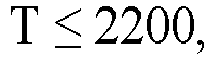

- Here, temperature T (°C) is not particularly limited as long as the cubic boron nitride polycrystal can be obtained at the temperature, and the lower limit value thereof does not need to be defined. More preferably, this temperature T (°C) is 1300 to 2100°C.
- Likewise, pressure P (GPa) is not particularly limited as long as the cubic boron nitride polycrystal can be obtained at the pressure, and the lower limit value thereof does not need to be defined. More preferably, this pressure P (GPa) is 10 to 20 GPa.
- When the sintering step employing the temperature and pressure in the respective suitable ranges and satisfying the above-described relational expressions is performed, the crack generation load of the obtained cubic boron nitride polycrystal is not less than 25 N.
- It should be noted that the above-described temperature and pressure in the sintering step are applied for 5 to 20 minutes. If it is shorter than 5 minutes, the sintering is insufficient, whereas if it is longer than 20 minutes, there is no difference in sintering state, which is disadvantageous economically. More preferably, they are applied for 10 to 20 minutes.
- While such a sintering step is a step of converting the hexagonal boron nitride powder into the cubic boron nitride and the wurtzite type boron nitride and sintering the cubic boron nitride and the wurtzite type boron nitride, the hexagonal boron nitride powder is solely and directly converted into the cubic boron nitride and wurtzite type boron nitride without using a sintering additive and a catalyst and this conversion is normally performed at the same time as the sintering.
- The cubic boron nitride polycrystal obtained by the production method includes the cubic boron nitride having a fine grain size, exhibits an elastic behavior, and is therefore a tough polycrystal improved in chipping resistance. Hence, the cubic boron nitride polycrystal can be used suitably for a cutting tool, a wear-resistant tool, a grinding tool, and the like, which are employed for high-speed micro-processing involving a large load.
- While the present invention will be described in more detail with reference to Examples, the present invention is not limited thereto.
- Each of cubic boron nitride polycrystals according to Examples 1 to 7 was produced by the following method. First, as a starting material, hexagonal boron nitride powder having a grain size of 0.5 µm (indicated as "Fine-Grain hBN Powder" in the column "Starting Material" in Table 1 below) was prepared (preparing step).
- Next, the hexagonal boron nitride powder prepared as above was introduced into a capsule made of metal having a high melting point, and was held for 20 minutes in temperature and pressure described in Table 1 (column "Synthesis Condition") using a ultra-high pressure/high-temperature generating device, thereby converting the hexagonal boron nitride powder into cubic boron nitride and wurtzite type boron nitride and sintering them (sintering step). Accordingly, the cubic boron nitride polycrystal was obtained.
- It should be noted that the temperature and pressure in Table 1 satisfy the following condition: P ≥ -7.68 × 10⁻⁹T3 + 5.3003 × 10⁻⁵T2 - 0.1224T + 102.23.
- A cubic boron nitride polycrystal according to Comparative Example 1 was produced by the following method. First, as a starting material, hexagonal boron nitride powder having a grain size of 0.5 µm (indicated as "Fine-Grain hBN Powder" in the column "Starting Material" in Table 1 below) was prepared (preparing step).
- Next, the hexagonal boron nitride powder prepared as above was introduced into a capsule made of metal having a high melting point, and was held for 20 minutes in temperature and pressure described in Table 1 (column "Synthesis Condition") using a ultra-high pressure/high-temperature generating device, thereby converting the hexagonal boron nitride powder into cubic boron nitride and sintering it (sintering step). Accordingly, the cubic boron nitride polycrystal was obtained.
- Regarding the above-described conditions, the temperature is 2400°C, which does not satisfy the condition of T ≤ 2200.
- A cubic boron nitride polycrystal according to Comparative Example 2 was produced by the following method. First, as a starting material, hexagonal boron nitride powder having a grain size of 0.5 µm (indicated as "Fine-Grain hBN Powder" in the column "Starting Material" in Table 1 below) was prepared (preparing step).
- Next, the hexagonal boron nitride powder prepared as above was introduced into a capsule made of metal having a high melting point, and was held for 20 minutes in temperature and pressure described in Table 1 (column "Synthesis Condition") using an upward/downward pressure-application belt-type high pressure/high-temperature generating device, thereby converting the hexagonal boron nitride powder into cubic boron nitride and wurtzite type boron nitride and sintering them (sintering step). Accordingly, the cubic boron nitride polycrystal was obtained.
- It should be noted that the above-described condition does not satisfy the relation "P ≥ -7.68 × 10⁻⁹T3 + 5.3003 × 10⁻⁵T2 - 0.1224T + 102.23", and does not satisfy the relation "ratio I(220)/I(111) of X-ray diffraction intensity I(220) is not less than 0.1 and not more than 0.3".
- A cubic boron nitride polycrystal according to Comparative Example 3 was produced by the following method. First, as a starting material, hexagonal boron nitride powder having a grain size of not more than 5 µm (indicated as "Coarse-Grain hBN Powder" in the column "Starting Material" in Table 1 below) was prepared (preparing step).
- Next, the hexagonal boron nitride powder prepared as above was introduced into a capsule made of metal having a high melting point, and was held for 20 minutes in temperature and pressure described in Table 1 (column "Synthesis Condition") using a ultra-high pressure/high-temperature generating device, thereby converting the hexagonal boron nitride powder into cubic boron nitride and wurtzite type boron nitride and sintering them (sintering step). Accordingly, the cubic boron nitride polycrystal was obtained.
- It should be noted that the above-described condition satisfies the relation "P ≥-7.68 × 10⁻⁹T3 + 5.3003 × 10⁻⁵T2 - 0.1224T + 102.23" but is different from that in each of the Examples in the following point: the grain size of the starting material is not more than 5 µm, which is a grain size larger than that of the starting material of each of the Examples.
- A cubic boron nitride sintered material according to Comparative Example 4 was produced by the following method. First, as a starting material, cubic boron nitride powder having an average grain size of not more than 2 µm and Co-based metal binder powder (indicated as "cBN Powder/Metal Binder Powder" in the column "Starting Material" in Table 1 below) were prepared (preparing step).
- Next, the cubic boron nitride powder and Co-based metal binder powder prepared as above were introduced into a capsule made of metal having a high melting point, and were sintered by holding them for 20 minutes using an ultra-high pressure/high-temperature generating device under temperature and pressure described in Table 1 (column "Synthesis Condition") (sintering step). Accordingly, the cubic boron nitride sintered material was obtained.
- Regarding the conditions above, the starting material was different from that of each of the Examples.
- A technique described below was employed to measure composition, X-ray diffraction, grain size, and crack generation load in each of the cubic boron nitride polycrystals of Examples 1 to 7 and Comparative Examples 1 to 3 and the cubic boron nitride sintered material of Comparative Example 4, which had been obtained in the manners described above.
- The cubic boron nitride (cBN), compressed hexagonal boron nitride (hBN), and wurtzite type boron nitride (wBN) included in each of the cubic boron nitride polycrystals and the cubic boron nitride sintered material were identified using an X-ray diffraction device. This device had an X-ray radiation source, which was Cu and provided Kα ray having a wavelength of 1.54 Å. The result is shown in the column "Composition" of Table 1.
- For cubic boron nitride included in each of the cubic boron nitride polycrystals and the cubic boron nitride sintered material, the X-ray diffraction device was employed to find a ratio I(220)/I(111) of X-ray diffraction intensity I(220) at a (220) plane to an X-ray diffraction intensity I(111) at a (111) plane. This device had an X-ray radiation source, which was Cu and provided Kα ray having a wavelength of 1.54 Å. The result is shown in the column "XRD I(220)/I(111)" of Table 1.
- An intercept method employing a scanning electron microscope was used to find an average grain size of cubic boron nitride included in each of the cubic boron nitride polycrystals and the cubic boron nitride sintered material.
- Specifically, a scanning electron microscope (SEM) was first used to observe each cross section of the cubic boron nitride polycrystals and the cubic boron nitride sintered material so as to obtain an SEM image.
- Next, a circle was drawn on the SEM image and then eight straight lines are drawn from the center of the circle to the outer circumference of the circle in a radial manner (in such a manner that intersecting angles between the straight lines become substantially equal to one another). In this case, the observation magnification and the diameter of the circle were set such that the number of cubic boron nitride grains on each straight line became about 10 to 50.
- Then, the number of crystal grain boundaries of the cubic boron nitride crossed by each of the straight lines was counted, then, the length of the straight line was divided by the number thereof to find an average intercept length, then, the average intercept length is multiplied by 1.128, and the resulting value was regarded as the average grain size.
- It should be noted that the magnification of the SEM image was x30000. This is because with a magnification equal to or less than this magnification, the number of grains in the circle is increased, it becomes difficult to see grain boundaries, and the number of grain boundaries is wrongly counted, and a plate structure is highly likely to be included when drawing the lines. This is also because with a magnification equal to or more than this, the number of grains in the circle is too small to accurately calculate the average grain size. However, for each of Comparative Examples 1 and 4, the grain size was too large, so that a magnification of x3000 was employed.
- Moreover, three SEM images captured in one sample at separate portions were used for each of the Examples and Comparative Examples, an average grain size was found by the above-described method for each SEM image, and the average value of the three average grain sizes obtained was regarded as an average grain size. The result is shown in the column "Average Grain Size" in Table 1.
- For each of the cubic boron nitride polycrystals and the cubic boron nitride sintered material, in order to measure the crack generation load, a breaking strength test was performed under the following conditions.
- Specifically, an R200µm diamond indenter was prepared as an indenter, was pressed against each of the samples (each of the cubic boron nitride polycrystals and the cubic boron nitride sintered material) to apply a load thereto at 23°C±5°C at a rate of 100 N/min until a crack was generated. A load upon generation of a crack was measured as the crack generation load. This measurement was performed three times. Moreover, as the crack generation load of each sample, the average value of respective three values of the results of measurements performed three times as described above is determined. The result is shown in the column "Crack Generation Load" in Table 1.
[Table 1] Starting Material Synthesis Condition Composition (Volume %) XRD I(220)/I(111) Average Grain Size (nm) Crack Generation Load (N) Pressure (GPa) Temperature (°C) cBN Compressed wBN Example 1 Fine-Grain hBN Powder 25 1100 38 0 62 0.17 20 32 Example 2 Fine-Grain hBN Powder 20 1300 45 0 55 0.14 30 41 Example 3 Fine-Grain hBN Powder 15 1500 91.5 0 8.5 0.29 48 35 Example 4 Fine-Grain hBN Powder 10 1700 97.5 0.1 2.4 0.15 55 51 Example 5 Fine-Grain hBN Powder 8 2200 100 0 0 0.20 88 27 Example 6 Fine-Grain hBN Powder 22 2100 99 0 1.0 0.25 72 33 Example 7 Fine-Grain hBN Powder 16 1900 99.4 0 0.6 0.17 69 55 Comparative Example 1 Fine-Grain hBN Powder 10 2400 100 0 0 0.20 1240 17 Comparative Example 2 Fine-Grain hBN Powder 7.5 2200 98.9 1.1 0 0.03 288 15 Comparative Example 3 Coarse-Grain hBN Powder 10 2100 98.5 0 1.5 0.21 165 21 Comparative Example 4 cBN Powder/Metal Binder Powder 7 1800 100 (Excluding Binder) 0 0 - 2000 10 - As shown in Table 1, it was confirmed that Examples 1 to 4, 6, and 7 contain 0.6 to 62 volume % of wurtzite type boron nitride (wBN). Moreover, the average grain size of the cubic boron nitride of each of Examples 1 to 7 was 20 to 88 nm. On this occasion, the crack generation loads of Examples 1 to 7 were 27 to 55 N.
- On the other hand, the average grain size of the cubic boron nitride of Comparative Example 1 was 1240 nm, which was larger than those of Examples 1 to 7. Moreover, the crack generation load of Comparative Example 1 is 17 N, which is lower than those of Examples 1 to 7. Hence, the strength thereof is apparently low.
- Moreover, in Comparative Example 2, ratio I(220)/I(111) is 0.03 in the X-ray diffraction of the cubic boron nitride. Hence, orientation is high to result in non-isotropy. Moreover, the crack generation load of Comparative Example 2 is 15 N, which is lower than those of Examples 1 to 7. Hence, the strength thereof is apparently low.
- Moreover, Comparative Example 3, which employed the hexagonal boron nitride powder having a grain size of 5 µm as the raw material, had an average grain size of 165 nm, which was larger than that of each of Examples 1 to 7. On this occasion, the crack generation load is 21 N, which is lower than those of Examples 1 to 7. Hence, the strength thereof is apparently low.
- Moreover, for the raw material of Comparative Example 4, the cubic boron nitride powder and the binder are used. The crack generation load thereof is 10 N, which is lower than those of Examples 1 to 7. Hence, the strength thereof is apparently low.
- Further, each of the cubic boron nitride polycrystals and cubic boron nitride sintered material of each of the Examples and the Comparative Examples was attached to the tip of a ball end mill tool having a tip diameter of 0.5 mm, and then cutting performance thereof was evaluated. A hardened steel of HRC60 was prepared as a material to be cut, and was cut by 24 m under conditions that a rotating speed was 60000 rpm, a cutting speed was 200 mm/min, a cut-in amount was 5 µm, and a feed amount was 3 µm. A wear amount of the tool upon completion of the cutting is shown as "Tool Wear Relative Ratio" in Table 2.
[Table 2] Tool Wear Relative Ratio Example 1 1.4 Example 2 1.5 Example 3 1.2 Example 4 1.1 Example 5 1.5 Example 6 2.0 Example 7 1 Comparative Example 1 Cutting Edge Greatly Chipped; Processing Discontinued Comparative Example 2 Cutting Edge Greatly Chipped; Processing Discontinued Comparative Example 3 3.5 Comparative Example 4 8.1 - Assuming that Example 7 providing the smallest wear amount was a reference, the wear amounts of the Examples were 1 to 2.0 as shown in Table 2. On the other hand, in Comparative Examples 1 and 2, great chippings took place at cutting lengths of 12 m and 10 m respectively and therefore the processing was discontinued. Moreover, Comparative Examples 3 and 4 were worn greatly, specifically, their respective wear amounts were 3.5 times and 8.1 times as large as that of Example 7. Thus, it was confirmed that the cubic boron nitride polycrystal of each of the Examples was tougher than the cubic boron nitride polycrystals and cubic boron nitride sintered material of the Comparative Examples.
- Heretofore, the embodiments and examples of the present invention have been illustrated, but it has been initially expected to appropriately combine the configurations of the embodiments and examples and modify them in various manners.
- The embodiments and examples disclosed herein are illustrative and non-restrictive in any respect. The scope of the present invention is defined by the terms of the claims, rather than the embodiments and examples described above, and is intended to include any modifications within the scope and meaning equivalent to the terms of the claims.
Claims (9)
- A cubic boron nitride polycrystal comprising cubic boron nitride,
the cubic boron nitride having an average grain size of not more than 150 nm,
the cubic boron nitride polycrystal having a crack generation load of not less than 25 N in a breaking strength test in which an R200µm diamond indenter is used to apply a load at a rate of 100 N/min. - The cubic boron nitride polycrystal according to claim 1, wherein the cubic boron nitride has an average grain size of not more than 100 nm.
- The cubic boron nitride polycrystal according to claim 1 or claim 2, wherein the cubic boron nitride polycrystal includes not less than 0.01 volume % of wurtzite type boron nitride.
- The cubic boron nitride polycrystal according to any one of claim 1 to claim 3, wherein the cubic boron nitride polycrystal includes 0.01 to 0.5 volume % of compressed hexagonal boron nitride.
- The cubic boron nitride polycrystal according to any one of claim 1 to claim 4, wherein for X-ray diffraction in the cubic boron nitride, a ratio I(220)/I(111) of X-ray diffraction intensity I(220) at a (220) plane to X-ray diffraction intensity I(111) at a (111) plane is not less than 0.1 and not more than 0.3.
- A cutting tool comprising the cubic boron nitride polycrystal recited in any one of claim 1 to claim 5.
- A wear-resistant tool comprising the cubic boron nitride polycrystal recited in any one of claim 1 to claim 5.
- A grinding tool comprising the cubic boron nitride polycrystal recited in any one of claim 1 to claim 5.
- A method of producing a cubic boron nitride polycrystal, the method comprising:preparing, as a starting material, hexagonal boron nitride powder having a grain size of not more than 0.5 µm; andconverting the hexagonal boron nitride powder into cubic boron nitride and wurtzite type boron nitride and sintering the cubic boron nitride and the wurtzite type boron nitride under temperature and pressure satisfying the following conditions:



Applications Claiming Priority (2)
| Application Number | Priority Date | Filing Date | Title |
|---|---|---|---|
| JP2015023244A JP6447205B2 (en) | 2015-02-09 | 2015-02-09 | Cubic boron nitride polycrystal, cutting tool, wear-resistant tool, grinding tool, and method for producing cubic boron nitride polycrystal |
| PCT/JP2016/051221 WO2016129328A1 (en) | 2015-02-09 | 2016-01-18 | Cubic boron nitride polycrystal, cutting tool, wear resistant tool, grinding tool, and method for producing cubic boron nitride polycrystal |
Publications (3)
| Publication Number | Publication Date |
|---|---|
| EP3257829A1 true EP3257829A1 (en) | 2017-12-20 |
| EP3257829A4 EP3257829A4 (en) | 2018-07-25 |
| EP3257829B1 EP3257829B1 (en) | 2021-03-03 |
Family
ID=56614487
Family Applications (1)
| Application Number | Title | Priority Date | Filing Date |
|---|---|---|---|
| EP16748973.1A Active EP3257829B1 (en) | 2015-02-09 | 2016-01-18 | Cubic boron nitride polycrystal, cutting tool, wear resistant tool, grinding tool, and method of producing cubic boron nitride polycrystal |
Country Status (5)
| Country | Link |
|---|---|
| US (1) | US10519068B2 (en) |
| EP (1) | EP3257829B1 (en) |
| JP (1) | JP6447205B2 (en) |
| CN (1) | CN107207364B (en) |
| WO (1) | WO2016129328A1 (en) |
Cited By (2)
| Publication number | Priority date | Publication date | Assignee | Title |
|---|---|---|---|---|
| EP3333141A4 (en) * | 2016-10-06 | 2019-05-01 | Sumitomo Electric Industries, Ltd. | PROCESS FOR PRODUCING BORON NITRIDE POLYCRYSTAL, BORON NITRIDE POLYCRYSTAL, CUTTING TOOL, WEAR RESISTANT TOOL AND GRINDING TOOL |
| EP4035809A4 (en) * | 2019-09-25 | 2022-11-02 | Sumitomo Electric Industries, Ltd. | POLYCRYSTALLINE CUBIC CRYSTAL BORON NITRIDE AND TOOL |
Families Citing this family (27)
| Publication number | Priority date | Publication date | Assignee | Title |
|---|---|---|---|---|
| JP6447197B2 (en) | 2015-02-04 | 2019-01-09 | 住友電気工業株式会社 | Cubic boron nitride polycrystal, cutting tool, wear-resistant tool, grinding tool, and method for producing cubic boron nitride polycrystal |
| US11041791B2 (en) * | 2017-08-10 | 2021-06-22 | Sumitomo Electric Industries, Ltd. | Indenter made of polycrystalline diamond, and method and apparatus using the same for evaluating crack initiation load |
| KR102580073B1 (en) | 2018-06-18 | 2023-09-18 | 스미또모 덴꼬오 하드메탈 가부시끼가이샤 | Cubic boron nitride polycrystal and method for producing the same |
| JPWO2020009117A1 (en) * | 2018-07-03 | 2021-07-08 | 住友電工ハードメタル株式会社 | Cutting insert and its manufacturing method |
| EP3932890A4 (en) * | 2019-02-28 | 2022-04-27 | Sumitomo Electric Hardmetal Corp. | Polycrystalline cubic boron nitride and production method therefor |
| WO2020174922A1 (en) * | 2019-02-28 | 2020-09-03 | 住友電工ハードメタル株式会社 | Polycrystalline cubic boron nitride and production method therefor |
| WO2020174923A1 (en) * | 2019-02-28 | 2020-09-03 | 住友電工ハードメタル株式会社 | Polycrystalline cubic boron nitride and production method therefor |
| JP7204558B2 (en) * | 2019-03-27 | 2023-01-16 | 京セラ株式会社 | Boron nitride sintered bodies, inserts and cutting tools |
| DE112020003057B4 (en) | 2019-06-27 | 2026-04-30 | Kyocera Corporation | Insert and cutting tool |
| US20210032934A1 (en) * | 2019-07-29 | 2021-02-04 | Saudi Arabian Oil Company | Milling tools from new wurtzite boron nitride (w-bn) superhard material |
| CN110467469B (en) * | 2019-08-28 | 2023-04-25 | 郑州中南杰特超硬材料有限公司 | Preparation method of precursor for synthesizing polycrystalline cubic boron nitride |
| EP4079708B1 (en) * | 2019-12-16 | 2025-09-03 | Sumitomo Electric Hardmetal Corp. | Cubic boron nitride sintered body |
| JP6940110B1 (en) * | 2019-12-27 | 2021-09-22 | 住友電工ハードメタル株式会社 | Cubic boron nitride sintered body and its manufacturing method |
| US11866372B2 (en) | 2020-05-28 | 2024-01-09 | Saudi Arabian Oil Company | Bn) drilling tools made of wurtzite boron nitride (W-BN) |
| CA3185734A1 (en) | 2020-06-02 | 2021-12-09 | Saudi Arabian Oil Company | Producing catalyst-free pdc cutters |
| US12617015B2 (en) | 2020-06-02 | 2026-05-05 | Saudi Arabian Oil Company | Producing hydro-efflux hammer using catalyst-free PDC cutters |
| JP7259137B2 (en) * | 2020-08-20 | 2023-04-17 | デンカ株式会社 | Boron nitride particles, boron nitride powder, resin composition, and method for producing resin composition |
| WO2022070402A1 (en) | 2020-10-02 | 2022-04-07 | 住友電工ハードメタル株式会社 | Cubic boron nitride sintered body tool |
| CN116568435B (en) * | 2020-12-25 | 2026-04-21 | 京瓷株式会社 | blades and cutting tools |
| US12024470B2 (en) | 2021-02-08 | 2024-07-02 | Saudi Arabian Oil Company | Fabrication of downhole drilling tools |
| US11572752B2 (en) | 2021-02-24 | 2023-02-07 | Saudi Arabian Oil Company | Downhole cable deployment |
| US11727555B2 (en) | 2021-02-25 | 2023-08-15 | Saudi Arabian Oil Company | Rig power system efficiency optimization through image processing |
| US11846151B2 (en) | 2021-03-09 | 2023-12-19 | Saudi Arabian Oil Company | Repairing a cased wellbore |
| US11624265B1 (en) | 2021-11-12 | 2023-04-11 | Saudi Arabian Oil Company | Cutting pipes in wellbores using downhole autonomous jet cutting tools |
| US11867012B2 (en) | 2021-12-06 | 2024-01-09 | Saudi Arabian Oil Company | Gauge cutter and sampler apparatus |
| US12643146B2 (en) | 2022-01-03 | 2026-06-02 | Saudi Arabian Oil Company | Producing polycrystalline diamond compact (PDC) drill bits with catalyst-free and substrate-free PDC cutters |
| US12203366B2 (en) | 2023-05-02 | 2025-01-21 | Saudi Arabian Oil Company | Collecting samples from wellbores |
Family Cites Families (17)
| Publication number | Priority date | Publication date | Assignee | Title |
|---|---|---|---|---|
| JPS4927518B1 (en) * | 1970-05-23 | 1974-07-18 | ||
| JPS515660B2 (en) | 1972-07-11 | 1976-02-21 | ||
| IN150013B (en) | 1977-07-01 | 1982-06-26 | Gen Electric | |
| JP2590413B2 (en) | 1989-11-17 | 1997-03-12 | 科学技術庁無機材質研究所長 | Method for producing translucent high-purity cubic boron nitride sintered body |
| JP3472630B2 (en) | 1994-08-05 | 2003-12-02 | 電気化学工業株式会社 | Cubic boron nitride sintered body for cutting tools and cutting tools |
| JPH08336705A (en) | 1995-06-07 | 1996-12-24 | Mitsubishi Materials Corp | Cutting tool made of cubic boron nitride sintered body showing excellent wear resistance on rake face of cutting edge |
| JP4106574B2 (en) | 1998-02-28 | 2008-06-25 | 住友電気工業株式会社 | Cubic boron nitride sintered body and method for producing the same |
| JP2007217281A (en) * | 2007-05-22 | 2007-08-30 | Sumitomo Electric Ind Ltd | Cubic boron nitride sintered body and method for producing the same |
| JP2008019164A (en) * | 2007-08-08 | 2008-01-31 | National Institute For Materials Science | Ultrafine particle cBN sintered body |
| JP5648178B2 (en) | 2011-01-19 | 2015-01-07 | 名古屋市 | Method for producing hexagonal boron nitride sintered body and hexagonal boron nitride sintered body |
| WO2012141171A1 (en) * | 2011-04-11 | 2012-10-18 | 住友電気工業株式会社 | Cutting tool and process for producing same |
| EP2752398B1 (en) | 2011-08-30 | 2019-02-06 | Sumitomo Electric Industries, Ltd. | Cubic boron nitride complex polycrystalline substance, method for manufacturing same, cutting tool, wire-drawing die, and grinding tool |
| JP6159064B2 (en) * | 2012-08-08 | 2017-07-05 | 住友電気工業株式会社 | Cubic boron nitride composite polycrystal and cutting tool, wire drawing die, and grinding tool |
| JP2014080322A (en) * | 2012-10-16 | 2014-05-08 | Sumitomo Electric Ind Ltd | Cubic boron nitride composite polycrystal, production method thereof, and cutting tool, abrasion resistance tool and grinding tool each equipped with the cubic boron nitride composite polycrystal |
| GB201305873D0 (en) | 2013-03-31 | 2013-05-15 | Element Six Abrasives Sa | Superhard constructions & method of making same |
| JP6256169B2 (en) * | 2014-04-14 | 2018-01-10 | 住友電気工業株式会社 | Cubic boron nitride composite sintered body, method for producing the same, cutting tool, wear-resistant tool, and grinding tool |
| JP6447197B2 (en) * | 2015-02-04 | 2019-01-09 | 住友電気工業株式会社 | Cubic boron nitride polycrystal, cutting tool, wear-resistant tool, grinding tool, and method for producing cubic boron nitride polycrystal |
-
2015
- 2015-02-09 JP JP2015023244A patent/JP6447205B2/en active Active
-
2016
- 2016-01-18 CN CN201680009499.XA patent/CN107207364B/en active Active
- 2016-01-18 WO PCT/JP2016/051221 patent/WO2016129328A1/en not_active Ceased
- 2016-01-18 EP EP16748973.1A patent/EP3257829B1/en active Active
- 2016-01-18 US US15/549,783 patent/US10519068B2/en active Active
Cited By (2)
| Publication number | Priority date | Publication date | Assignee | Title |
|---|---|---|---|---|
| EP3333141A4 (en) * | 2016-10-06 | 2019-05-01 | Sumitomo Electric Industries, Ltd. | PROCESS FOR PRODUCING BORON NITRIDE POLYCRYSTAL, BORON NITRIDE POLYCRYSTAL, CUTTING TOOL, WEAR RESISTANT TOOL AND GRINDING TOOL |
| EP4035809A4 (en) * | 2019-09-25 | 2022-11-02 | Sumitomo Electric Industries, Ltd. | POLYCRYSTALLINE CUBIC CRYSTAL BORON NITRIDE AND TOOL |
Also Published As
| Publication number | Publication date |
|---|---|
| JP2016145131A (en) | 2016-08-12 |
| US20180029942A1 (en) | 2018-02-01 |
| CN107207364A (en) | 2017-09-26 |
| EP3257829A4 (en) | 2018-07-25 |
| CN107207364B (en) | 2021-09-28 |
| JP6447205B2 (en) | 2019-01-09 |
| EP3257829B1 (en) | 2021-03-03 |
| WO2016129328A1 (en) | 2016-08-18 |
| US10519068B2 (en) | 2019-12-31 |
Similar Documents
| Publication | Publication Date | Title |
|---|---|---|
| EP3257829B1 (en) | Cubic boron nitride polycrystal, cutting tool, wear resistant tool, grinding tool, and method of producing cubic boron nitride polycrystal | |
| US10562822B2 (en) | Cubic boron nitride polycrystalline material, cutting tool, wear resistant tool, grinding tool, and method of manufacturing cubic boron nitride polycrystalline material | |
| EP2942341B1 (en) | Cubic boron nitride complex polycrystalline substance, method for manufacturing same, cutting tool, wire-drawing die, and grinding tool | |
| US20150298290A1 (en) | Cubic boron nitride polycrystal, cutting tool, wear-resistant tool, grinding tool, and method of producing cubic boron nitride polycrystal | |
| EP3333141B1 (en) | Method for producing boron nitride polycrystal, boron nitride polycrystal, cutting tool, wear-resistant tool, and grinding tool | |
| EP3266756B1 (en) | Polycrystalline diamond body, cutting tool, wear-resistant tool, and grinding tool | |
| US9663371B2 (en) | Polycrystalline diamond body, cutting tool, wear-resistant tool, grinding tool, and method for producing polycrystalline diamond body | |
| EP3862336B1 (en) | Polycrystalline diamond, tool provided with polycrystalline diamond, and polycrystalline diamond production method | |
| EP3825293A1 (en) | Diamond polycrystal and tool provided with same | |
| JP6720816B2 (en) | Method for producing boron nitride polycrystal, boron nitride polycrystal, cutting tool, wear resistant tool and grinding tool | |
| WO2020017039A1 (en) | Diamond polycrystal and tool provided with same |
Legal Events
| Date | Code | Title | Description |
|---|---|---|---|
| STAA | Information on the status of an ep patent application or granted ep patent |
Free format text: STATUS: THE INTERNATIONAL PUBLICATION HAS BEEN MADE |
|
| PUAI | Public reference made under article 153(3) epc to a published international application that has entered the european phase |
Free format text: ORIGINAL CODE: 0009012 |
|
| STAA | Information on the status of an ep patent application or granted ep patent |
Free format text: STATUS: REQUEST FOR EXAMINATION WAS MADE |
|
| 17P | Request for examination filed |
Effective date: 20170803 |
|
| AK | Designated contracting states |
Kind code of ref document: A1 Designated state(s): AL AT BE BG CH CY CZ DE DK EE ES FI FR GB GR HR HU IE IS IT LI LT LU LV MC MK MT NL NO PL PT RO RS SE SI SK SM TR |
|
| AX | Request for extension of the european patent |
Extension state: BA ME |
|
| DAV | Request for validation of the european patent (deleted) | ||
| DAX | Request for extension of the european patent (deleted) | ||
| A4 | Supplementary search report drawn up and despatched |
Effective date: 20180625 |
|
| RIC1 | Information provided on ipc code assigned before grant |
Ipc: B23B 27/14 20060101ALI20180618BHEP Ipc: B23B 51/00 20060101ALI20180618BHEP Ipc: C04B 35/583 20060101AFI20180618BHEP Ipc: C04B 35/645 20060101ALI20180618BHEP Ipc: B23B 27/20 20060101ALI20180618BHEP Ipc: B23C 5/16 20060101ALI20180618BHEP |
|
| STAA | Information on the status of an ep patent application or granted ep patent |
Free format text: STATUS: EXAMINATION IS IN PROGRESS |
|
| 17Q | First examination report despatched |
Effective date: 20190122 |
|
| GRAP | Despatch of communication of intention to grant a patent |
Free format text: ORIGINAL CODE: EPIDOSNIGR1 |
|
| STAA | Information on the status of an ep patent application or granted ep patent |
Free format text: STATUS: GRANT OF PATENT IS INTENDED |
|
| INTG | Intention to grant announced |
Effective date: 20201023 |
|
| GRAS | Grant fee paid |
Free format text: ORIGINAL CODE: EPIDOSNIGR3 |
|
| GRAA | (expected) grant |
Free format text: ORIGINAL CODE: 0009210 |
|
| STAA | Information on the status of an ep patent application or granted ep patent |
Free format text: STATUS: THE PATENT HAS BEEN GRANTED |
|
| AK | Designated contracting states |
Kind code of ref document: B1 Designated state(s): AL AT BE BG CH CY CZ DE DK EE ES FI FR GB GR HR HU IE IS IT LI LT LU LV MC MK MT NL NO PL PT RO RS SE SI SK SM TR |
|
| REG | Reference to a national code |
Ref country code: GB Ref legal event code: FG4D |
|
| REG | Reference to a national code |
Ref country code: AT Ref legal event code: REF Ref document number: 1367034 Country of ref document: AT Kind code of ref document: T Effective date: 20210315 Ref country code: CH Ref legal event code: EP |
|
| REG | Reference to a national code |
Ref country code: DE Ref legal event code: R096 Ref document number: 602016053585 Country of ref document: DE |
|
| REG | Reference to a national code |
Ref country code: IE Ref legal event code: FG4D |
|
| REG | Reference to a national code |
Ref country code: SE Ref legal event code: TRGR |
|
| REG | Reference to a national code |
Ref country code: LT Ref legal event code: MG9D |
|
| PG25 | Lapsed in a contracting state [announced via postgrant information from national office to epo] |
Ref country code: HR Free format text: LAPSE BECAUSE OF FAILURE TO SUBMIT A TRANSLATION OF THE DESCRIPTION OR TO PAY THE FEE WITHIN THE PRESCRIBED TIME-LIMIT Effective date: 20210303 Ref country code: GR Free format text: LAPSE BECAUSE OF FAILURE TO SUBMIT A TRANSLATION OF THE DESCRIPTION OR TO PAY THE FEE WITHIN THE PRESCRIBED TIME-LIMIT Effective date: 20210604 Ref country code: FI Free format text: LAPSE BECAUSE OF FAILURE TO SUBMIT A TRANSLATION OF THE DESCRIPTION OR TO PAY THE FEE WITHIN THE PRESCRIBED TIME-LIMIT Effective date: 20210303 Ref country code: NO Free format text: LAPSE BECAUSE OF FAILURE TO SUBMIT A TRANSLATION OF THE DESCRIPTION OR TO PAY THE FEE WITHIN THE PRESCRIBED TIME-LIMIT Effective date: 20210603 Ref country code: LT Free format text: LAPSE BECAUSE OF FAILURE TO SUBMIT A TRANSLATION OF THE DESCRIPTION OR TO PAY THE FEE WITHIN THE PRESCRIBED TIME-LIMIT Effective date: 20210303 Ref country code: BG Free format text: LAPSE BECAUSE OF FAILURE TO SUBMIT A TRANSLATION OF THE DESCRIPTION OR TO PAY THE FEE WITHIN THE PRESCRIBED TIME-LIMIT Effective date: 20210603 |
|
| REG | Reference to a national code |
Ref country code: NL Ref legal event code: MP Effective date: 20210303 |
|
| REG | Reference to a national code |
Ref country code: AT Ref legal event code: MK05 Ref document number: 1367034 Country of ref document: AT Kind code of ref document: T Effective date: 20210303 |
|
| PG25 | Lapsed in a contracting state [announced via postgrant information from national office to epo] |
Ref country code: RS Free format text: LAPSE BECAUSE OF FAILURE TO SUBMIT A TRANSLATION OF THE DESCRIPTION OR TO PAY THE FEE WITHIN THE PRESCRIBED TIME-LIMIT Effective date: 20210303 Ref country code: LV Free format text: LAPSE BECAUSE OF FAILURE TO SUBMIT A TRANSLATION OF THE DESCRIPTION OR TO PAY THE FEE WITHIN THE PRESCRIBED TIME-LIMIT Effective date: 20210303 Ref country code: PL Free format text: LAPSE BECAUSE OF FAILURE TO SUBMIT A TRANSLATION OF THE DESCRIPTION OR TO PAY THE FEE WITHIN THE PRESCRIBED TIME-LIMIT Effective date: 20210303 |
|
| PG25 | Lapsed in a contracting state [announced via postgrant information from national office to epo] |
Ref country code: NL Free format text: LAPSE BECAUSE OF FAILURE TO SUBMIT A TRANSLATION OF THE DESCRIPTION OR TO PAY THE FEE WITHIN THE PRESCRIBED TIME-LIMIT Effective date: 20210303 |
|
| PG25 | Lapsed in a contracting state [announced via postgrant information from national office to epo] |
Ref country code: SM Free format text: LAPSE BECAUSE OF FAILURE TO SUBMIT A TRANSLATION OF THE DESCRIPTION OR TO PAY THE FEE WITHIN THE PRESCRIBED TIME-LIMIT Effective date: 20210303 Ref country code: AT Free format text: LAPSE BECAUSE OF FAILURE TO SUBMIT A TRANSLATION OF THE DESCRIPTION OR TO PAY THE FEE WITHIN THE PRESCRIBED TIME-LIMIT Effective date: 20210303 Ref country code: EE Free format text: LAPSE BECAUSE OF FAILURE TO SUBMIT A TRANSLATION OF THE DESCRIPTION OR TO PAY THE FEE WITHIN THE PRESCRIBED TIME-LIMIT Effective date: 20210303 Ref country code: CZ Free format text: LAPSE BECAUSE OF FAILURE TO SUBMIT A TRANSLATION OF THE DESCRIPTION OR TO PAY THE FEE WITHIN THE PRESCRIBED TIME-LIMIT Effective date: 20210303 |
|
| PG25 | Lapsed in a contracting state [announced via postgrant information from national office to epo] |
Ref country code: IS Free format text: LAPSE BECAUSE OF FAILURE TO SUBMIT A TRANSLATION OF THE DESCRIPTION OR TO PAY THE FEE WITHIN THE PRESCRIBED TIME-LIMIT Effective date: 20210703 Ref country code: SK Free format text: LAPSE BECAUSE OF FAILURE TO SUBMIT A TRANSLATION OF THE DESCRIPTION OR TO PAY THE FEE WITHIN THE PRESCRIBED TIME-LIMIT Effective date: 20210303 Ref country code: RO Free format text: LAPSE BECAUSE OF FAILURE TO SUBMIT A TRANSLATION OF THE DESCRIPTION OR TO PAY THE FEE WITHIN THE PRESCRIBED TIME-LIMIT Effective date: 20210303 Ref country code: PT Free format text: LAPSE BECAUSE OF FAILURE TO SUBMIT A TRANSLATION OF THE DESCRIPTION OR TO PAY THE FEE WITHIN THE PRESCRIBED TIME-LIMIT Effective date: 20210705 |
|
| REG | Reference to a national code |
Ref country code: DE Ref legal event code: R097 Ref document number: 602016053585 Country of ref document: DE |
|
| PLBE | No opposition filed within time limit |
Free format text: ORIGINAL CODE: 0009261 |
|
| STAA | Information on the status of an ep patent application or granted ep patent |
Free format text: STATUS: NO OPPOSITION FILED WITHIN TIME LIMIT |
|
| PG25 | Lapsed in a contracting state [announced via postgrant information from national office to epo] |
Ref country code: ES Free format text: LAPSE BECAUSE OF FAILURE TO SUBMIT A TRANSLATION OF THE DESCRIPTION OR TO PAY THE FEE WITHIN THE PRESCRIBED TIME-LIMIT Effective date: 20210303 Ref country code: AL Free format text: LAPSE BECAUSE OF FAILURE TO SUBMIT A TRANSLATION OF THE DESCRIPTION OR TO PAY THE FEE WITHIN THE PRESCRIBED TIME-LIMIT Effective date: 20210303 Ref country code: DK Free format text: LAPSE BECAUSE OF FAILURE TO SUBMIT A TRANSLATION OF THE DESCRIPTION OR TO PAY THE FEE WITHIN THE PRESCRIBED TIME-LIMIT Effective date: 20210303 |
|
| 26N | No opposition filed |
Effective date: 20211206 |
|
| PG25 | Lapsed in a contracting state [announced via postgrant information from national office to epo] |
Ref country code: SI Free format text: LAPSE BECAUSE OF FAILURE TO SUBMIT A TRANSLATION OF THE DESCRIPTION OR TO PAY THE FEE WITHIN THE PRESCRIBED TIME-LIMIT Effective date: 20210303 |
|
| PG25 | Lapsed in a contracting state [announced via postgrant information from national office to epo] |
Ref country code: IT Free format text: LAPSE BECAUSE OF FAILURE TO SUBMIT A TRANSLATION OF THE DESCRIPTION OR TO PAY THE FEE WITHIN THE PRESCRIBED TIME-LIMIT Effective date: 20210303 |
|
| PG25 | Lapsed in a contracting state [announced via postgrant information from national office to epo] |
Ref country code: IS Free format text: LAPSE BECAUSE OF FAILURE TO SUBMIT A TRANSLATION OF THE DESCRIPTION OR TO PAY THE FEE WITHIN THE PRESCRIBED TIME-LIMIT Effective date: 20210703 |
|
| PG25 | Lapsed in a contracting state [announced via postgrant information from national office to epo] |
Ref country code: MC Free format text: LAPSE BECAUSE OF FAILURE TO SUBMIT A TRANSLATION OF THE DESCRIPTION OR TO PAY THE FEE WITHIN THE PRESCRIBED TIME-LIMIT Effective date: 20210303 |
|
| REG | Reference to a national code |
Ref country code: CH Ref legal event code: PL |
|
| GBPC | Gb: european patent ceased through non-payment of renewal fee |
Effective date: 20220118 |
|
| REG | Reference to a national code |
Ref country code: BE Ref legal event code: MM Effective date: 20220131 |
|
| PG25 | Lapsed in a contracting state [announced via postgrant information from national office to epo] |
Ref country code: LU Free format text: LAPSE BECAUSE OF NON-PAYMENT OF DUE FEES Effective date: 20220118 Ref country code: GB Free format text: LAPSE BECAUSE OF NON-PAYMENT OF DUE FEES Effective date: 20220118 |
|
| PG25 | Lapsed in a contracting state [announced via postgrant information from national office to epo] |
Ref country code: FR Free format text: LAPSE BECAUSE OF NON-PAYMENT OF DUE FEES Effective date: 20220131 Ref country code: BE Free format text: LAPSE BECAUSE OF NON-PAYMENT OF DUE FEES Effective date: 20220131 |
|
| PG25 | Lapsed in a contracting state [announced via postgrant information from national office to epo] |
Ref country code: LI Free format text: LAPSE BECAUSE OF NON-PAYMENT OF DUE FEES Effective date: 20220131 Ref country code: CH Free format text: LAPSE BECAUSE OF NON-PAYMENT OF DUE FEES Effective date: 20220131 |
|
| P01 | Opt-out of the competence of the unified patent court (upc) registered |
Effective date: 20230515 |
|
| PG25 | Lapsed in a contracting state [announced via postgrant information from national office to epo] |
Ref country code: HU Free format text: LAPSE BECAUSE OF FAILURE TO SUBMIT A TRANSLATION OF THE DESCRIPTION OR TO PAY THE FEE WITHIN THE PRESCRIBED TIME-LIMIT; INVALID AB INITIO Effective date: 20160118 |
|
| PG25 | Lapsed in a contracting state [announced via postgrant information from national office to epo] |
Ref country code: MK Free format text: LAPSE BECAUSE OF FAILURE TO SUBMIT A TRANSLATION OF THE DESCRIPTION OR TO PAY THE FEE WITHIN THE PRESCRIBED TIME-LIMIT Effective date: 20210303 Ref country code: CY Free format text: LAPSE BECAUSE OF FAILURE TO SUBMIT A TRANSLATION OF THE DESCRIPTION OR TO PAY THE FEE WITHIN THE PRESCRIBED TIME-LIMIT Effective date: 20210303 |
|
| PG25 | Lapsed in a contracting state [announced via postgrant information from national office to epo] |
Ref country code: TR Free format text: LAPSE BECAUSE OF FAILURE TO SUBMIT A TRANSLATION OF THE DESCRIPTION OR TO PAY THE FEE WITHIN THE PRESCRIBED TIME-LIMIT Effective date: 20210303 |
|
| PG25 | Lapsed in a contracting state [announced via postgrant information from national office to epo] |
Ref country code: MT Free format text: LAPSE BECAUSE OF FAILURE TO SUBMIT A TRANSLATION OF THE DESCRIPTION OR TO PAY THE FEE WITHIN THE PRESCRIBED TIME-LIMIT Effective date: 20210303 |
|
| PGFP | Annual fee paid to national office [announced via postgrant information from national office to epo] |
Ref country code: SE Payment date: 20251210 Year of fee payment: 11 |
|
| PGFP | Annual fee paid to national office [announced via postgrant information from national office to epo] |
Ref country code: IE Payment date: 20251209 Year of fee payment: 11 |
|
| PGFP | Annual fee paid to national office [announced via postgrant information from national office to epo] |
Ref country code: DE Payment date: 20251203 Year of fee payment: 11 |