EP3255004A2 - Elevator calling operation based on wrist wearable smart device - Google Patents
Elevator calling operation based on wrist wearable smart device Download PDFInfo
- Publication number
- EP3255004A2 EP3255004A2 EP17167625.7A EP17167625A EP3255004A2 EP 3255004 A2 EP3255004 A2 EP 3255004A2 EP 17167625 A EP17167625 A EP 17167625A EP 3255004 A2 EP3255004 A2 EP 3255004A2
- Authority
- EP
- European Patent Office
- Prior art keywords
- passenger
- elevator
- elevator calling
- information
- calling operation
- Prior art date
- Legal status (The legal status is an assumption and is not a legal conclusion. Google has not performed a legal analysis and makes no representation as to the accuracy of the status listed.)
- Granted
Links
Images

Classifications
-
- B—PERFORMING OPERATIONS; TRANSPORTING
- B66—HOISTING; LIFTING; HAULING
- B66B—ELEVATORS; ESCALATORS OR MOVING WALKWAYS
- B66B1/00—Control systems of elevators in general
- B66B1/02—Control systems without regulation, i.e. without retroactive action
- B66B1/06—Control systems without regulation, i.e. without retroactive action electric
- B66B1/14—Control systems without regulation, i.e. without retroactive action electric with devices, e.g. push-buttons, for indirect control of movements
-
- B—PERFORMING OPERATIONS; TRANSPORTING
- B66—HOISTING; LIFTING; HAULING
- B66B—ELEVATORS; ESCALATORS OR MOVING WALKWAYS
- B66B1/00—Control systems of elevators in general
- B66B1/34—Details, e.g. call counting devices, data transmission from car to control system, devices giving information to the control system
- B66B1/46—Adaptations of switches or switchgear
- B66B1/468—Call registering systems
-
- B—PERFORMING OPERATIONS; TRANSPORTING
- B66—HOISTING; LIFTING; HAULING
- B66B—ELEVATORS; ESCALATORS OR MOVING WALKWAYS
- B66B1/00—Control systems of elevators in general
- B66B1/34—Details, e.g. call counting devices, data transmission from car to control system, devices giving information to the control system
- B66B1/3415—Control system configuration and the data transmission or communication within the control system
- B66B1/3446—Data transmission or communication within the control system
- B66B1/3461—Data transmission or communication within the control system between the elevator control system and remote or mobile stations
-
- G—PHYSICS
- G06—COMPUTING OR CALCULATING; COUNTING
- G06F—ELECTRIC DIGITAL DATA PROCESSING
- G06F3/00—Input arrangements for transferring data to be processed into a form capable of being handled by the computer; Output arrangements for transferring data from processing unit to output unit, e.g. interface arrangements
- G06F3/01—Input arrangements or combined input and output arrangements for interaction between user and computer
- G06F3/011—Arrangements for interaction with the human body, e.g. for user immersion in virtual reality
- G06F3/015—Input arrangements based on nervous system activity detection, e.g. brain waves [EEG] detection, electromyograms [EMG] detection, electrodermal response detection
-
- G—PHYSICS
- G06—COMPUTING OR CALCULATING; COUNTING
- G06F—ELECTRIC DIGITAL DATA PROCESSING
- G06F3/00—Input arrangements for transferring data to be processed into a form capable of being handled by the computer; Output arrangements for transferring data from processing unit to output unit, e.g. interface arrangements
- G06F3/01—Input arrangements or combined input and output arrangements for interaction between user and computer
- G06F3/03—Arrangements for converting the position or the displacement of a member into a coded form
- G06F3/033—Pointing devices displaced or positioned by the user, e.g. mice, trackballs, pens or joysticks; Accessories therefor
- G06F3/0346—Pointing devices displaced or positioned by the user, e.g. mice, trackballs, pens or joysticks; Accessories therefor with detection of the device orientation or free movement in a three-dimensional [3D] space, e.g. 3D mice, 6-DOF [six degrees of freedom] pointers using gyroscopes, accelerometers or tilt-sensors
-
- H—ELECTRICITY
- H04—ELECTRIC COMMUNICATION TECHNIQUE
- H04W—WIRELESS COMMUNICATION NETWORKS
- H04W4/00—Services specially adapted for wireless communication networks; Facilities therefor
- H04W4/80—Services using short range communication, e.g. near-field communication [NFC], radio-frequency identification [RFID] or low energy communication
-
- B—PERFORMING OPERATIONS; TRANSPORTING
- B66—HOISTING; LIFTING; HAULING
- B66B—ELEVATORS; ESCALATORS OR MOVING WALKWAYS
- B66B2201/00—Aspects of control systems of elevators
- B66B2201/10—Details with respect to the type of call input
-
- B—PERFORMING OPERATIONS; TRANSPORTING
- B66—HOISTING; LIFTING; HAULING
- B66B—ELEVATORS; ESCALATORS OR MOVING WALKWAYS
- B66B2201/00—Aspects of control systems of elevators
- B66B2201/10—Details with respect to the type of call input
- B66B2201/104—Call input for a preferential elevator car or indicating a special request
-
- B—PERFORMING OPERATIONS; TRANSPORTING
- B66—HOISTING; LIFTING; HAULING
- B66B—ELEVATORS; ESCALATORS OR MOVING WALKWAYS
- B66B2201/00—Aspects of control systems of elevators
- B66B2201/40—Details of the change of control mode
- B66B2201/405—Details of the change of control mode by input of special passenger or passenger group
-
- B—PERFORMING OPERATIONS; TRANSPORTING
- B66—HOISTING; LIFTING; HAULING
- B66B—ELEVATORS; ESCALATORS OR MOVING WALKWAYS
- B66B2201/00—Aspects of control systems of elevators
- B66B2201/40—Details of the change of control mode
- B66B2201/46—Switches or switchgear
- B66B2201/4607—Call registering systems
- B66B2201/4653—Call registering systems wherein the call is registered using portable devices
-
- B—PERFORMING OPERATIONS; TRANSPORTING
- B66—HOISTING; LIFTING; HAULING
- B66B—ELEVATORS; ESCALATORS OR MOVING WALKWAYS
- B66B2201/00—Aspects of control systems of elevators
- B66B2201/40—Details of the change of control mode
- B66B2201/46—Switches or switchgear
- B66B2201/4607—Call registering systems
- B66B2201/4661—Call registering systems for priority users
- B66B2201/4669—Call registering systems for priority users using passenger condition detectors
-
- B—PERFORMING OPERATIONS; TRANSPORTING
- B66—HOISTING; LIFTING; HAULING
- B66B—ELEVATORS; ESCALATORS OR MOVING WALKWAYS
- B66B2201/00—Aspects of control systems of elevators
- B66B2201/40—Details of the change of control mode
- B66B2201/46—Switches or switchgear
- B66B2201/4607—Call registering systems
- B66B2201/4676—Call registering systems for checking authorization of the passengers
Definitions
- the present invention falls within the technical field of elevator control, and relates to an elevator calling operation based on a wrist-wearable smart device, and in particular, to an elevator calling operation system capable of recognizing which passenger initiates an elevator calling request for an elevator calling operation as well as an elevator control apparatus used thereby, a wrist-wearable smart device and an elevator calling operation method.
- the present invention provides the following technical solutions.
- an elevator calling operation system comprising: an elevator control apparatus, and a wrist-wearable smart device wirelessly connected to the elevator control apparatus; the wrist-wearable smart device comprising:
- the elevator calling operation system according to one or more embodiments of the present invention, wherein the elevator calling operation recognition module is further configured to determine, according to the elevator calling motion information from the motion sensor, the number of times of an elevator calling operation by the same passenger, and ignore, according to the number of times of the elevator calling operation, unnecessary elevator calling requests of the passenger.
- the elevator calling operation recognition module is further configured to determine, according to the elevator calling motion information from the motion sensor, the number of times of an elevator calling operation by the same passenger, and judge, according to the number of times of the elevator calling operation, whether to provide a special dispatch service.
- the elevator calling operation system according to one or more embodiments of the present invention, wherein the elevator calling operation recognition module is further configured to provide the passenger with the special dispatch service of priority dispatching when the number of times of the elevator calling operation by the same passenger is greater than or equal to a certain pre-set value.
- the elevator calling operation system according to one or more embodiments of the present invention, wherein the passenger identity recognition module is further configured to judge, based on the identity identification information or passenger identity information, whether to authorize the passenger to make an elevator calling request.
- the elevator calling operation system according to one or more embodiments of the present invention, wherein the elevator control apparatus is further configured to judge, based on the recognized passenger identity information, whether to provide the passenger with a customized service.
- the customized service comprises assigning a dedicated elevator to the passenger, wherein the dedicated elevator at least does not accept, on an elevator riding path from an initial floor to a destination floor of the passenger, an elevator calling request with the same elevator riding direction from other passengers going from the initial floor to the destination floor.
- the elevator calling operation system according to one or more embodiments of the present invention, wherein the elevator control apparatus and the wrist-wearable smart device are wirelessly connected by Bluetooth or near field communication or radio-frequency wireless communication, wherein when the passenger performs an elevator calling operation, a wireless connection is automatically established between the elevator control apparatus and the wrist-wearable smart device.
- the wrist-wearable smart device further comprises a biological characteristic information collection module which is used for collecting biological characteristic information about the passenger; and the elevator control apparatus further comprises a passenger physical status detection module which acquires, at least according to the biological characteristic information from the biological characteristic information collection module, physical status information about the corresponding passenger, so as to judge whether to initiate the corresponding special service.
- the passenger physical status detection module is further configured to judge, at least according to the physical status information about the passenger, whether the passenger has diseases that need rescue, and automatically initiate the special service triggering a rescue service request when it is judged to be "yes".
- the passenger physical status detection module is further configured to acquire or receive other motion information collected by the motion sensor apart from the elevator calling motion information, and judge, based on the other motion information, whether the corresponding passenger has the diseases that need rescue.
- the passenger identity recognition module is further configured to acquire or receive the biological characteristic information collected by the biological characteristic information collection module and perform, based on the biological characteristic information, identity authentication on the recognized passenger identity information.
- the biological characteristic information comprises heart rate, blood pressure, body temperature, oxygen content of blood and/or vein distribution characteristic information.
- the wrist-wearable smart device is a smart band.
- the motion sensor comprises an acceleration sensor and/or a gyroscope.
- an elevator control apparatus configured to be capable of establishing a wireless connection with a wrist-wearable smart device worn by a passenger, and acquiring or receiving identity identification information about the passenger, in association with elevator calling motion information when the passenger performs an elevator calling operation, from the wrist-wearable smart device; wherein the elevator control apparatus comprises:
- the elevator calling operation recognition module is further configured to determine, according to the elevator calling motion information, the number of times of an elevator calling operation by the same passenger, and ignore, according to the number of times of the elevator calling operation, unnecessary elevator calling requests of the passenger.
- the elevator calling operation recognition module is further configured to determine, according to the elevator calling motion information, the number of times of an elevator calling operation by the same passenger, and judge, according to the number of times of the elevator calling operation, whether to provide a special dispatch service.
- the elevator calling operation recognition module is further configured to provide the passenger with the special dispatch service of priority dispatching when the number of times of the elevator calling operation by the same passenger is greater than or equal to a certain pre-set value.
- the passenger identity recognition module is further configured to judge, based on the identity identification information or passenger identity information, whether to authorize the passenger to make an elevator calling request.
- the elevator control apparatus according to one or more embodiments of the present invention, wherein the elevator control apparatus is further configured to judge, based on passenger information in an elevator calling request corresponding to the recognized passenger, whether to provide the passenger with a customized service.
- the customized service comprises assigning a dedicated elevator to the passenger, wherein the dedicated elevator at least does not accept, on an elevator riding path from an initial floor to a destination floor of the passenger, an elevator calling request with the same elevator riding direction from other passengers going from the initial floor to the destination floor.
- the elevator control apparatus according to one or more embodiments of the present invention, wherein the elevator control apparatus and the wrist-wearable smart device are wirelessly connected by Bluetooth or near field communication or radio-frequency wireless communication, wherein when the passenger performs an elevator calling operation, a wireless connection is automatically established between the elevator control apparatus and the wrist-wearable smart device.
- the elevator control apparatus further comprises a passenger physical status detection module which acquires, at least according to biological characteristic information from a biological characteristic information collection module of the wrist-wearable smart device, physical status information about the corresponding passenger, so as to judge whether to initiate the corresponding special service.
- the passenger physical status detection module is further configured to judge, according to the physical status information about the passenger, whether the passenger has diseases that need rescue, and automatically initiate the special service triggering a rescue service request when it is judged to be "yes".
- the passenger physical status detection module is further configured to acquire or receive other motion information collected by the wrist-wearable smart device apart from the elevator calling motion information, and judge, based on the other motion information, whether the corresponding passenger has the diseases that need rescue.
- the passenger identity recognition module is further configured to acquire or receive the biological characteristic information collected by the wrist-wearable smart device and perform, based on the biological characteristic information, identity authentication on the recognized passenger identity information.
- a wrist-wearable smart device configured to be capable of establishing a wireless connection with an elevator control apparatus; the wrist-wearable smart device comprising:
- the wrist-wearable smart device according to an embodiment of the present invention, wherein the wrist-wearable smart device further comprises a biological characteristic information collection module which is used for collecting biological characteristic information about the passenger.
- the biological characteristic information comprises heart rate, blood pressure, body temperature, oxygen content of blood and/or vein distribution characteristic information.
- the wrist-wearable smart device according to one or more embodiments of the present invention, wherein the wrist-wearable smart device is a smart band.
- the motion sensor comprises an acceleration sensor and/or a gyroscope.
- an elevator calling operation method comprising the steps of:
- the elevator calling operation method according to one or more embodiments of the present invention, wherein the method further comprises the steps of:
- the elevator calling operation method further comprises the step of:
- the elevator calling operation method wherein when the passenger performs an elevator calling operation, a wireless connection is automatically established between the wrist-wearable smart device and the elevator control apparatus.
- the elevator calling operation method according to one or more embodiments of the present invention, wherein the method further comprises the step of: judging, based on the identity identification information or passenger identity information, whether to authorize the passenger to make an elevator calling request.
- the elevator calling operation method according to one or more embodiments of the present invention, wherein the method further comprises the step of: judging, based on passenger identity information in an elevator calling request corresponding to the recognized passenger, whether to provide the passenger with a customized dispatch service.
- the elevator calling operation method according to one or more embodiments of the present invention, wherein the method further comprises the step of: collecting biological characteristic information about the passenger by the wrist-wearable smart device carried by the passenger.
- the elevator calling operation method according to one or more embodiments of the present invention, wherein the method further comprises the step of: acquiring, at least according to the biological characteristic information from a biological characteristic information collection module, physical status information about the corresponding passenger, so as to judge whether to initiate the corresponding special service.
- the step of acquiring physical status information about the corresponding passenger it is judged, at least according to the physical status information about the passenger, whether the passenger has diseases that need rescue, and the special service triggering a rescue service request is automatically initiated when it is judged to be "yes".
- other motion information from the wrist-wearable smart device apart from the elevator calling motion information is acquired or received, and it is judged, based on the other motion information, whether the corresponding passenger has the diseases that need rescue.
- the elevator calling operation method according to one or more embodiments of the present invention, wherein the method further comprises the step of: performing, based on the biological characteristic information, identity authentication on the recognized passenger.
- the present invention can achieve more convenient and faster elevator calling operations and is capable of recognizing which passenger initiates an elevator calling request for an elevator calling operation, which significantly helps to improve the intelligence degree of the elevator calling operation and has good passenger experience.
- the "elevator calling operation” comprises the operation of inputting a destination floor location by a passenger outside an elevator car, and also comprises the operation of inputting the destination floor location by a passenger inside the elevator car, and the operations are generally completed by pushing buttons with fingers.
- the destination floor location indicates a floor where the passenger needs to reach by taking the elevator.
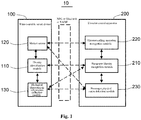
- Fig. 1 shows a structural block diagram of an elevator calling operation system according to an embodiment of the present invention.
- the elevator calling operation system 10 comprises a wrist-wearable smart device 100 worn at a passenger end and an elevator control apparatus 200 at an elevator end, wherein the wrist-wearable smart device 100 may be any smart device, such as a smart band or smart watch, that can be worn at a passenger's wrist or any place near the wrist.
- a wireless connection is established between the wrist-wearable smart device 100 worn at the passenger end and the elevator control apparatus 200 at the elevator end, so as to facilitate information exchange with each other.
- a wireless communication module such as a Bluetooth module or NFC (near field communication) module or radio-frequency communication (RADIF) module, is provided in each of the wrist-wearable smart device 100 and the elevator control apparatus 200 at the elevator end, and accordingly, a wireless connection can be established by, but not limited to, Bluetooth or near field communication or RADIF between the elevator control apparatus 200 and the wrist-wearable smart device 100, and in this way, at least when a passenger wants to perform an elevator calling operation, the passenger approaches the elevator control apparatus 200 and is within a distance range (such as within one meter) where the wireless connection can be established, and the wireless connection is automatically established between the wrist-wearable smart device 100 and the elevator control apparatus 200.
- a wireless communication module such as a Bluetooth module or NFC (near field communication) module or radio-frequency communication (RADIF) module
- the wrist-wearable smart device 100 is provided with an identity identification module 110 which can store identity identification information, such as a token or string code, representing the passenger, and according to a relationship between the identity identification information and a passenger identity preliminarily registered and based on the identity identification information, it can be judged which passenger owns the wrist-wearable smart device 100.
- identity identification information such as a token or string code
- the elevator control apparatus 200 is provided with a passenger identity recognition module 210, wherein the passenger identity recognition module 210 can directly or directly acquire the identity identification information from the identity identification module 110 of the wrist-wearable smart device 100, so as to be capable of recognizing, based on the identity identification information, a passenger currently interacting with the elevator control apparatus 200.
- the passenger identity recognition module 210 can preliminarily register and store a relationship table between the identity identification information and the passenger identity, and can quickly and correspondingly recognize a passenger based on the stored relationship table, wherein the identity identification information can be actively sent by the identity identification module 110, and can also be actively acquired by the passenger identity recognition module 210 from the identity identification module 110.
- the wrist-wearable smart device 100 is provided with a motion sensor 120 which can recognize and acquire elevator calling motion information when the passenger performs the elevator calling operation.
- the elevator calling motion information has a certain regularity, for example, an elevator calling motion of a passenger performing elevator calling mainly comprising raising the hand, pressing and releasing, and the motion sensor 120 can detect these motions and record the same as the elevator calling motion information.
- the motion sensor 120 might not be restrictive to acquiring the elevator calling motion information during the elevator calling operation, and can also, for example, acquire other motion information about the passenger's hand, and the motion sensor 120 can recognize and acquire the elevator calling motion information from multiple pieces of motion information according to the regularity characteristics of the elevator calling motion information.
- the motion sensor 120 can be, but is not limited to, an acceleration sensor or a gyroscope, etc., and any sensor that can quickly and accurately detect the elevator calling motion information can all be applied to the wrist-wearable smart device 100.
- the elevator calling motion information is transmitted, in association with the identity identification information in the identity identification module 110, for example to the elevator control apparatus 200.
- the elevator control apparatus 200 can learn which wrist-wearable smart device 100 correspondingly sends the elevator calling motion information currently received.
- the identity identification information and the elevator calling motion information can be transmitted at the same time or successively.
- the elevator control apparatus 200 is provided with an elevator calling operation recognition module 220, wherein the elevator calling operation recognition module 220 can acquire the elevator calling motion information from the motion sensor 120; meanwhile, the passenger identity recognition module 210 acquires the identity identification information (that is, identity identification information in the identity identification module 110 of the wrist-wearable smart device 100 where the motion sensor 120 is located) which is sent in association with the elevator calling motion information, wherein the identity identification information can be sent to the passenger identity recognition module 210, so that a passenger corresponding to the elevator calling motion information can be recognized; and the elevator calling operation recognition module 220 recognizes an elevator calling operation of the passenger based on the elevator calling motion information, and when one elevator calling operation is detected, it is indicated that the passenger completes one elevator calling operation.
- the elevator calling operation recognition module 220 can acquire the elevator calling motion information from the motion sensor 120; meanwhile, the passenger identity recognition module 210 acquires the identity identification information (that is, identity identification information in the identity identification module 110 of the wrist-wearable smart device 100 where the motion sensor 120 is located) which is sent
- the elevator control apparatus 200 When the passenger completes one elevator calling operation (for example, pressing an elevator calling button), the elevator control apparatus 200 will receive an elevator calling request according to the triggering of the elevator calling button.
- the elevator control apparatus 200 further makes the elevator calling request corresponding to the elevator calling operation (detected by the elevator calling operation recognition module 220) correspond to recognized passenger identity information (recognized by the passenger identity recognition module 210), that is, associates the elevator calling request with the passenger identity information.
- the elevator calling operation recognition module 220 not only can detect the elevator calling operation, but also can recognize which passenger an elevator calling request instruction of the elevator calling operation belongs to.
- the elevator calling operation recognition module 220 can extract, when detecting the elevator calling operation of the passenger based on the elevator calling motion information, hand movement trajectory characteristics, etc. from the elevator calling motion information, and recognize the elevator calling operation of the passenger based on a trajectory characteristics rule of the elevator calling operation.
- the passenger identity recognition module 210 is further configured to judge, based on the identity identification information, whether to authorize the passenger corresponding thereto to make an elevator calling request, that is, the passenger identity recognition module can authorize whether the elevator calling request is allowed to perform.
- the passenger may perform an elevator calling operation freely; however, if the identity identification information about the passenger fails to pass authentication by the passenger identity recognition module 210, it is indicated that the passenger is not allowed to enter the corresponding floor, and the elevator calling operation is invalid, that is, an elevator calling request for the elevator calling operation is rejected, and a dispatch system of the elevator control apparatus 200 will not respond to the elevator calling request. Therefore, the unauthorized passenger cannot enter the corresponding floor of the building.
- the elevator control apparatus 200 can further provide the passenger with a customized service using passenger information corresponding to the elevator calling request instruction, wherein the elevator control apparatus 200 judges, based on the passenger identity information in the elevator calling request corresponding to the recognized passenger, whether to provide the passenger with a customized dispatch service.
- the elevator control apparatus 200 can provide the passenger with a VIP customized dispatch service; when the dispatch system of the elevator control apparatus 200 receives the elevator calling request instruction corresponding to the VIP passenger, a dedicated elevator can be assigned to the VIP passenger, wherein the dedicated elevator at least does not accept, on an elevator riding path from an initial floor to a destination floor of the passenger, an elevator calling request with the same elevator riding direction (for example, "upwards” or “downwards”) from other passengers going from the initial floor to the destination floor, and in this way, it can be assured that the VIP passenger takes the elevator alone during the elevator riding and reaches the destination floor quickly.
- a dedicated elevator can be assigned to the VIP passenger, wherein the dedicated elevator at least does not accept, on an elevator riding path from an initial floor to a destination floor of the passenger, an elevator calling request with the same elevator riding direction (for example, "upwards" or “downwards”) from other passengers going from the initial floor to the destination floor, and in this way, it can be assured that the VIP passenger takes the elevator alone during the elevator riding and reaches
- the customized service provided by the elevator control apparatus 200 is not limited to the above illustrative customized dispatch service, and further comprises, for example, assigning different types of elevators, turning on an illumination lamp when the passenger enters the elevator car, displaying greetings to particular users, giving the voice prompt upon arrival (for example, "Hello Mr./Ms. XXX, it is the third floor"), etc. That is to say, the elevator control apparatus 200 can provide the passenger with various pre-set customized services when knowing who sends an elevator calling request command, which helps to improve passenger experience.
- the wrist-wearable smart device 100 is provided with a biological characteristic information collection module 130, wherein the biological characteristic information collection module 130 can collect biological characteristic information about the passenger regularly or in real time, and the biological characteristic information can be, but is not limited to, heart rate, blood pressure, body temperature and/or oxygen content of blood, etc.; and in consideration of the wrist-wearable smart device 100 further realizing other functions related to the elevator, the types of biological characteristic information collected are not restrictive, and the ways for collection are also not restrictive.
- the elevator control apparatus 200 is provided with a passenger physical status detection module 230 which acquires, at least according to the biological characteristic information from the biological characteristic information collection module 130, physical status information about the corresponding passenger, so as to judge whether to initiate the corresponding special service. In one embodiment, it is judged, according to the physical status information about the passenger, whether the passenger has diseases that need rescue, and a rescue service request is automatically triggered when it is judged to be "yes". In this way, when the passenger is waiting for or taking the elevator, for a seriously ill passenger, there is a quick response to provide a rescue service.
- the specific types of the above diseases that need rescue can be, but are not limited to, various diseases that need emergency rescue, such as epilepsy, hypertension and stroke, myocardial infarction and cerebral infarction; the determination methods for the diseases and biological characteristic information required for the determination are set and stored in the passenger physical status detection module 230 in advance; the biological characteristic information collection module 130 keeps collecting these pieces of biological characteristic information required (for example, heart rate, blood pressure, body temperature and oxygen content of blood) and sending the same to the passenger physical status detection module 230; and the passenger physical status detection module 230 dynamically performs disease determination based on these pieces of information and determination methods.
- the above rescue services can be, but are not limited to, automatically controlling the elevator to take the passenger to the floor where the rescue room is located, sending an alarm signal, etc.
- the corresponding special services initiated and provided by the elevator control apparatus 200 are not limited to the above illustrative automatic initiating and triggering of a rescue service request, and specifically, the various corresponding special services that can be provided by an elevator system can be set in advance according to various pieces of physical status information.
- the passenger physical status detection module 230 of the elevator control apparatus 200 can further acquire or receive other motion information, such as the trembling amplitude and frequency of hand movements, collected by the motion sensor 120 of the wrist-wearable smart device 100 apart from the elevator calling motion information, and thus further judge, based on the motion information, whether the corresponding passenger has diseases that need rescue.
- the disease determination may be more accurate, and there may be more types of diseases that can be determined. For example, with regard to the epilepsy, the disease determination can be performed relatively more accurately based on the motion information collected by the motion sensor 120.
- the biological characteristic information collected by the biological characteristic information collection module 130 of the wrist-wearable smart device 100 can be used, and not limited thereto, determine the diseases of the passenger in the above embodiment, but can be further used to perform identity authentication on the passenger.
- the wrist-wearable smart device 100 acquires or receives the biological characteristic information, such as vein distribution characteristic information, from the biological characteristic information collection module 130; and since vein distribution characteristic information about the wrist of each passenger is distinct and unique, the recognized passenger identity information can be authenticated based on the biological characteristic information, and if the authentication is passed, it is indicated that the passenger carrying the wrist-wearable smart device 100 is the owner of the wrist-wearable smart device 100, instead of other people.
- the passenger identity recognition module 210 authorizes the passenger to make an elevator calling request, otherwise, rejects the elevator calling request of the passenger for the elevator calling operation. In this way, other passengers using the wrist-wearable smart device 100 of the authorized passenger to make an elevator calling request is prevented.
- the biological characteristic information used for identity authentication is not limited to the above illustrations, and other distinct and unique biological characteristic information of the passenger can also be used for identity authentication. According to the types of the biological characteristic information, different types of components can be provided in the biological characteristic information collection module 130. Moreover, the above biological characteristic information used for authentication of the passenger identity can be stored in the passenger identity recognition module 210 of the elevator control apparatus 200 during the registration and authentication phase of the wrist-wearable smart device 100.
- the elevator control apparatus 200 can be used to count the number of times of an elevator calling request from a certain floor, for example, count how many people are calling the elevator based on the number of times that an elevator calling request instruction has been sent, and adjust an elevator dispatching operation strategy based on the number of times, for example, adjust the elevator dispatching operation strategy to be a peak time operation strategy if there are too many passengers sending the elevator calling request at the certain floor.
- each of elevator calling operations of the passenger is determined as one elevator calling request no matter whether the operations are from the same passenger; however, it is often that the same passenger performs multiple unnecessary elevator calling operations, and thus information about the number of people calling the elevator collected above tends to be inaccurate.
- the elevator calling operation recognition module 220 is configured to determine the number of times of an elevator calling operation of a certain passenger according to the elevator calling motion information from the motion sensor 120, for example, counting each elevator calling operation of the same passenger for the same passenger (since the passenger has been recognized), and ignoring, according to the number of times of the elevator calling operation, unnecessary elevator calling requests of the passenger, for example, taking elevator calling requests corresponding to elevator calling operations when the number of times of the elevator calling operation is greater than one as unnecessary elevator calling requests; the elevator calling operation recognition module 220 automatically ignores or rejects the requests, and in this way, the dispatch system of the elevator control apparatus 200 does not receive the elevator calling request command and can accurately count the actual number of passengers who need to take the elevator.
- a passenger for example, security personnel
- some adjustments may be made to the elevator assigning priority of the elevator assigning system based on an elevator calling request of the passenger, and the urgency of this person is properly taken care of in software settings of a dispatch system; for example, when the passenger performs ten elevator calling operations in one minute, the elevator calling operation recognition module 220 triggers the provision of the passenger with a dispatch service in priority.
- Fig. 2 shows a schematic diagram of an elevator calling operation based on a wrist-wearable smart device.
- the carried wrist-wearable smart device 100 approaches the elevator control apparatus 200, and accordingly the two can be automatically connected by, for example, NFC, and data is transmitted therebetween.
- the wrist-wearable smart device 100 can, at the same time, sense an elevator calling motion of an elevator calling operation of the passenger pressing and calling a floor.
- the elevator calling operation is performed based on the wrist-wearable smart device 100, and a destination floor is input (for example, choosing a button) from the elevator control apparatus 200 of the elevator hall.
- the wrist-wearable smart device 100 performs the elevator calling operation at the same time, only an elevator calling operation such as "upwards” or “downwards” is input from the elevator control apparatus 200 of the elevator hall, and then, based on the wrist-wearable smart device 100, a destination floor is input (for example, choosing a button) from the elevator control apparatus 200 of the elevator car.
- the above elevator calling operation system based on the wrist-wearable smart device can achieve more convenient and faster elevator calling operations and is capable of recognizing which passenger initiates an elevator calling request for an elevator calling operation, and the elevator control apparatus can further perform intelligent dispatch processing.
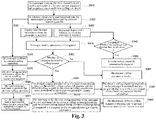
- Fig. 3 shows a schematic flowchart of an elevator calling operation method according to an embodiment of the present invention.
- Fig. 3 shows a process where a passenger wearing the wrist-wearable smart device 100 performs an elevator calling operation.
- the process of the elevator calling operation method according to the embodiments of the present invention are described in detail with reference to Fig. 1 to Fig. 3 .
- step S310 the passenger carrying the wrist-wearable smart device 100 approaches the elevator control apparatus 200 and prepares to make an elevator calling operation.
- the wrist-wearable smart device 100 and the elevator control apparatus 200 are close to each other to a certain extent, a wireless connection is automatically established between the wrist-wearable smart device 100 and the elevator control apparatus 200, that is, step S320.
- the passenger performs the elevator calling operation, that is, step S341
- the passenger identity recognition module 210 of the elevator control apparatus 200 acquires identity identification information about the passenger from the identity identification module 110 of the wrist-wearable smart device 100, that is, step S331.
- the identity identification information can be sent, in association with elevator calling motion information acquired in step S351, to the elevator control apparatus 200; furthermore, the passenger identity recognition module 210 and the passenger physical status detection module 230 of the elevator control apparatus 200 continuously or discontinuously acquires biological characteristic information about the passenger from the biological characteristic information collection module 130 of the wrist-wearable smart device 100, that is, step S332.
- step S340 passenger identity information is recognized based on the identity identification information and the biological characteristic information, and in this step, a process where identity authentication is performed on the recognized passenger based on the biological characteristic information is included.
- step S350 an elevator calling request of the passenger for the elevator calling operation is received, and it is judged whether to authorize the elevator calling request, that is, step S350.
- whether to authorize the elevator calling request of the passenger for the elevator calling operation is determined depending on whether the passenger identity information is recognized.
- step S381 is entered, the elevator calling operation is invalid, and it is indicated that the current passenger is not an authorized passenger.
- step S360 is entered.
- step S351 the elevator calling motion information about the elevator calling operation is acquired via the motion sensor 120 of the wrist-wearable smart device 100.
- the elevator calling motion information is sent to the elevator calling operation recognition module 220 of the elevator control apparatus 200, and step S360 is entered; the elevator calling operation of the passenger is recognized based on the elevator calling motion information, and the elevator calling request for the elevator calling operation is made correspond to the recognized passenger, that is, the elevator calling request is associated with the passenger.
- the elevator calling request of the passenger can correspond to the passenger identity information, that is, the elevator calling request can comprise the passenger identity information, and accordingly, the elevator control apparatus 200 can recognize which passenger initiates this elevator calling request.
- step S382 the elevator calling request corresponding to the passenger is accepted, and it is judged whether to provide a customized service based on passenger information.
- the dispatch system of the elevator control apparatus 200 will accept an elevator calling request instruction of the passenger, and can know which passenger initiates the elevator calling request instruction, and can thus judge whether to provide the passenger with the customized service.
- the elevator control apparatus 200 can provide the passenger with a VIP service; for example, when the dispatch system of the elevator control apparatus 200 receives the elevator calling request instruction corresponding to the VIP passenger, a dedicated elevator can be assigned to the VIP passenger, wherein the dedicated elevator at least does not accept, on an elevator riding path from an initial floor to a destination floor of the passenger, an elevator calling request with the same elevator riding direction (for example, "upwards” or “downwards") from other passengers going from the initial floor to the destination floor, and in this way, it can be assured that the VIP passenger takes the elevator alone during the elevator riding and reaches the destination floor quickly.
- a dedicated elevator can be assigned to the VIP passenger, wherein the dedicated elevator at least does not accept, on an elevator riding path from an initial floor to a destination floor of the passenger, an elevator calling request with the same elevator riding direction (for example, "upwards" or “downwards”) from other passengers going from the initial floor to the destination floor, and in this way, it can be assured that the VIP passenger takes the elevator alone during the elevator riding and
- step S361 is entered, that is, the same passenger continues to perform the elevator calling operation.
- the motion sensor 120 of the wrist-wearable smart device 100 continues to acquire the elevator calling motion information about the elevator calling operation, that is, step S371.
- the detection of the elevator calling operation of the passenger is continued based on the elevator calling motion information, and the elevator calling request for the elevator calling operation is continued to correspond to the recognized passenger, that is, step S370.
- the specific operations of step S371 and step S370 above are the same as those of step S351 and step S360, respectively.
- step S383 is entered, and the unnecessary elevator calling requests of the passenger are ignored.
- each elevator calling operation of the same passenger is counted for the same passenger (since the passenger has been recognized), and according to the number of times of the elevator calling operation, unnecessary elevator calling requests of the passenger are ignored, for example, when the number of times of the elevator calling operation is greater than one and less than ten, elevator calling requests corresponding to the elevator calling operations when the number of times is greater than one are taken as unnecessary elevator calling requests; the elevator calling operation recognition module 220 automatically ignores the requests, and in this way, the dispatch system of the elevator control apparatus 200 does not receive the elevator calling request command and can accurately count the actual number of passengers who need to take the elevator.
- the number of times of the elevator calling operation is greater than or equal to ten, it is indicated that the passenger is in a hurry or has urgent affairs, and the passenger can be provided with a special dispatch service of priority dispatching.
- the biological characteristic information about the passenger acquired in step S332 can be further used to judge whether the passenger has diseases that need rescue, that is, step S342 is entered, and in this step, the passenger physical status detection module 230 acquires physical status information about the corresponding passenger based on the biological characteristic information such as heart rate and blood pressure, so as to judge whether the corresponding passenger has diseases that need rescue.
- whether the corresponding passenger has diseases that need rescue can also be judged in conjunction with or based on other motion information collected by the motion sensor 120 of the wrist-wearable smart device 100 apart from the elevator calling motion information.
- step S352 is entered, and a rescue service request is automatically triggered, so as to perform timely and effective rescue treatment on the passenger.
- step S342 to step S352 the physical status information about the corresponding passenger can also be acquired based on a dispatch service, and it is judged whether to initiate other corresponding special services apart from the service triggering a rescue service request, which are not described with examples one by one.
- the above elevator calling operation method process is targeted at one passenger, and with regard to multiple passengers, elevator calling operations are performed based on the same process above and can be performed at the same time.
- the above elevator calling operation method process is convenient and fast, and has high intelligence.
Landscapes
- Engineering & Computer Science (AREA)
- Automation & Control Theory (AREA)
- Computer Networks & Wireless Communication (AREA)
- General Engineering & Computer Science (AREA)
- Theoretical Computer Science (AREA)
- General Physics & Mathematics (AREA)
- Physics & Mathematics (AREA)
- Human Computer Interaction (AREA)
- Signal Processing (AREA)
- Biomedical Technology (AREA)
- Neurosurgery (AREA)
- Neurology (AREA)
- General Health & Medical Sciences (AREA)
- Dermatology (AREA)
- Health & Medical Sciences (AREA)
- Elevator Control (AREA)
- Indicating And Signalling Devices For Elevators (AREA)
Abstract
Description
- The present invention falls within the technical field of elevator control, and relates to an elevator calling operation based on a wrist-wearable smart device, and in particular, to an elevator calling operation system capable of recognizing which passenger initiates an elevator calling request for an elevator calling operation as well as an elevator control apparatus used thereby, a wrist-wearable smart device and an elevator calling operation method.
- There are mainly two management methods for the current elevator calling operations on an elevator, among which one is that passengers may perform an elevator calling operation freely to send an elevator calling request command of going to a certain floor or in a certain direction (for example, upwards or downwards), and another is that an elevator administrator gives an IC card to the corresponding passenger, and only passengers with the IC card can perform an elevator calling operation and send an elevator calling request command. The second method above can prevent foreign irrelevant people from freely taking the elevator; however, the way of performing elevator calling using the IC card cannot recognize which passenger initiates an elevator calling request for the elevator calling operation, and it is also inconvenient to carry the IC card, and the elevator calling operation is thus inconvenient.
- In order to solve the above or other technical problem in the prior art, the present invention provides the following technical solutions.
- According to one aspect of the present invention, an elevator calling operation system is provided, the elevator calling operation system comprising: an elevator control apparatus, and a wrist-wearable smart device wirelessly connected to the elevator control apparatus;
the wrist-wearable smart device comprising: - an identity identification module which stores identity identification information about a passenger; and
- a motion sensor which is used for acquiring elevator calling motion information about the passenger performing an elevator calling operation;
- wherein the wrist-wearable smart device is configured to transmit the elevator calling motion information, in association with the identity identification information, to the elevator control apparatus;
- and the elevator control apparatus comprising:
- a passenger identity recognition module which is used for recognizing passenger identity information at least according to the identity identification information; and
- an elevator calling operation recognition module which is used for recognizing an elevator calling operation of the passenger according to the elevator calling motion information from the motion sensor, so as to make an elevator calling request for the elevator calling operation correspond to the recognized passenger identity information.
- The elevator calling operation system according to one or more embodiments of the present invention, wherein the elevator calling operation recognition module is further configured to determine, according to the elevator calling motion information from the motion sensor, the number of times of an elevator calling operation by the same passenger, and ignore, according to the number of times of the elevator calling operation, unnecessary elevator calling requests of the passenger.
- In one embodiment, the elevator calling operation recognition module is further configured to determine, according to the elevator calling motion information from the motion sensor, the number of times of an elevator calling operation by the same passenger, and judge, according to the number of times of the elevator calling operation, whether to provide a special dispatch service.
- The elevator calling operation system according to one or more embodiments of the present invention, wherein the elevator calling operation recognition module is further configured to provide the passenger with the special dispatch service of priority dispatching when the number of times of the elevator calling operation by the same passenger is greater than or equal to a certain pre-set value.
- The elevator calling operation system according to one or more embodiments of the present invention, wherein the passenger identity recognition module is further configured to judge, based on the identity identification information or passenger identity information, whether to authorize the passenger to make an elevator calling request.
- The elevator calling operation system according to one or more embodiments of the present invention, wherein the elevator control apparatus is further configured to judge, based on the recognized passenger identity information, whether to provide the passenger with a customized service.
- The elevator calling operation system according to an embodiment of the present invention, wherein the customized service comprises assigning a dedicated elevator to the passenger, wherein the dedicated elevator at least does not accept, on an elevator riding path from an initial floor to a destination floor of the passenger, an elevator calling request with the same elevator riding direction from other passengers going from the initial floor to the destination floor.
- The elevator calling operation system according to one or more embodiments of the present invention, wherein the elevator control apparatus and the wrist-wearable smart device are wirelessly connected by Bluetooth or near field communication or radio-frequency wireless communication, wherein when the passenger performs an elevator calling operation, a wireless connection is automatically established between the elevator control apparatus and the wrist-wearable smart device.
- The elevator calling operation system according to one or more embodiments of the present invention, wherein the wrist-wearable smart device further comprises a biological characteristic information collection module which is used for collecting biological characteristic information about the passenger; and
the elevator control apparatus further comprises a passenger physical status detection module which acquires, at least according to the biological characteristic information from the biological characteristic information collection module, physical status information about the corresponding passenger, so as to judge whether to initiate the corresponding special service. - In one embodiment, the passenger physical status detection module is further configured to judge, at least according to the physical status information about the passenger, whether the passenger has diseases that need rescue, and automatically initiate the special service triggering a rescue service request when it is judged to be "yes".
- In one embodiment, the passenger physical status detection module is further configured to acquire or receive other motion information collected by the motion sensor apart from the elevator calling motion information, and judge, based on the other motion information, whether the corresponding passenger has the diseases that need rescue.
- In one or more embodiments, the passenger identity recognition module is further configured to acquire or receive the biological characteristic information collected by the biological characteristic information collection module and perform, based on the biological characteristic information, identity authentication on the recognized passenger identity information.
- In one or more embodiments, the biological characteristic information comprises heart rate, blood pressure, body temperature, oxygen content of blood and/or vein distribution characteristic information.
- In the elevator calling operation system according to any of the foregoing embodiments, the wrist-wearable smart device is a smart band.
- In the elevator calling operation system according to any of the foregoing embodiments, the motion sensor comprises an acceleration sensor and/or a gyroscope.
- According to another aspect of the present invention, an elevator control apparatus is provided, configured to be capable of establishing a wireless connection with a wrist-wearable smart device worn by a passenger, and acquiring or receiving identity identification information about the passenger, in association with elevator calling motion information when the passenger performs an elevator calling operation, from the wrist-wearable smart device;
wherein the elevator control apparatus comprises: - a passenger identity recognition module which is used for recognizing passenger identity information at least according to the identity identification information; and
- an elevator calling operation recognition module which is used for recognizing an elevator calling operation of the passenger according to the elevator calling motion information, so as to make an elevator calling request for the elevator calling operation correspond to the recognized passenger identity information.
- The elevator control apparatus according to one or more embodiments of the present invention, wherein the elevator calling operation recognition module is further configured to determine, according to the elevator calling motion information, the number of times of an elevator calling operation by the same passenger, and ignore, according to the number of times of the elevator calling operation, unnecessary elevator calling requests of the passenger.
- In one or more embodiments, the elevator calling operation recognition module is further configured to determine, according to the elevator calling motion information, the number of times of an elevator calling operation by the same passenger, and judge, according to the number of times of the elevator calling operation, whether to provide a special dispatch service.
- In one embodiment, the elevator calling operation recognition module is further configured to provide the passenger with the special dispatch service of priority dispatching when the number of times of the elevator calling operation by the same passenger is greater than or equal to a certain pre-set value.
- The elevator control apparatus according to one or more embodiments of the present invention, wherein the passenger identity recognition module is further configured to judge, based on the identity identification information or passenger identity information, whether to authorize the passenger to make an elevator calling request.
- The elevator control apparatus according to one or more embodiments of the present invention, wherein the elevator control apparatus is further configured to judge, based on passenger information in an elevator calling request corresponding to the recognized passenger, whether to provide the passenger with a customized service.
- In one embodiment, the customized service comprises assigning a dedicated elevator to the passenger, wherein the dedicated elevator at least does not accept, on an elevator riding path from an initial floor to a destination floor of the passenger, an elevator calling request with the same elevator riding direction from other passengers going from the initial floor to the destination floor.
- The elevator control apparatus according to one or more embodiments of the present invention, wherein the elevator control apparatus and the wrist-wearable smart device are wirelessly connected by Bluetooth or near field communication or radio-frequency wireless communication, wherein when the passenger performs an elevator calling operation, a wireless connection is automatically established between the elevator control apparatus and the wrist-wearable smart device.
- The elevator control apparatus according to one or more embodiments of the present invention, wherein the elevator control apparatus further comprises a passenger physical status detection module which acquires, at least according to biological characteristic information from a biological characteristic information collection module of the wrist-wearable smart device, physical status information about the corresponding passenger, so as to judge whether to initiate the corresponding special service.
- In one embodiment, the passenger physical status detection module is further configured to judge, according to the physical status information about the passenger, whether the passenger has diseases that need rescue, and automatically initiate the special service triggering a rescue service request when it is judged to be "yes".
- In one embodiment, the passenger physical status detection module is further configured to acquire or receive other motion information collected by the wrist-wearable smart device apart from the elevator calling motion information, and judge, based on the other motion information, whether the corresponding passenger has the diseases that need rescue.
- In one or more embodiments, the passenger identity recognition module is further configured to acquire or receive the biological characteristic information collected by the wrist-wearable smart device and perform, based on the biological characteristic information, identity authentication on the recognized passenger identity information.
- According to another aspect of the present invention, a wrist-wearable smart device is provided, configured to be capable of establishing a wireless connection with an elevator control apparatus;
the wrist-wearable smart device comprising: - an identity identification module which stores identity identification information about a passenger; and
- a motion sensor which is used for acquiring elevator calling motion information about the passenger performing an elevator calling operation;
- wherein the wrist-wearable smart device is configured to transmit the elevator calling motion information, in association with the identity identification information, to the elevator control apparatus.
- The wrist-wearable smart device according to an embodiment of the present invention, wherein the wrist-wearable smart device further comprises a biological characteristic information collection module which is used for collecting biological characteristic information about the passenger.
- Specifically, the biological characteristic information comprises heart rate, blood pressure, body temperature, oxygen content of blood and/or vein distribution characteristic information.
- The wrist-wearable smart device according to one or more embodiments of the present invention, wherein the wrist-wearable smart device is a smart band.
- The wrist-wearable smart device according to one or more embodiments of the present invention, wherein the motion sensor comprises an acceleration sensor and/or a gyroscope.
- According to another aspect of the present invention, an elevator calling operation method is provided, the method comprising the steps of:
- acquiring, by a wrist-wearable smart device carried by a passenger, identity identification information about the passenger and elevator calling motion information about the passenger performing an elevator calling operation;
- transmitting the elevator calling motion information, in association with the identity identification information, to an elevator control apparatus;
- recognizing passenger identity information at least according to the identity identification information; and
- recognizing the elevator calling operation of the passenger based on the elevator calling motion information, and making an elevator calling request for the elevator calling operation correspond to the recognized passenger identity information.
- The elevator calling operation method according to one or more embodiments of the present invention, wherein the method further comprises the steps of:
- determining, according to the elevator calling motion information from the motion sensor, the number of times of an elevator calling operation by the same passenger; and
- ignoring, according to the number of times of the elevator calling operation, unnecessary elevator calling requests of the passenger.
- In one embodiment, the elevator calling operation method further comprises the step of:
- determining, according to the elevator calling motion information from the motion sensor, the number of times of an elevator calling operation by the same passenger, and judging, according to the number of times of the elevator calling operation, whether to provide a special dispatch service.
- The elevator calling operation method according to one or more embodiments of the present invention, wherein when the passenger performs an elevator calling operation, a wireless connection is automatically established between the wrist-wearable smart device and the elevator control apparatus.
- The elevator calling operation method according to one or more embodiments of the present invention, wherein the method further comprises the step of: judging, based on the identity identification information or passenger identity information, whether to authorize the passenger to make an elevator calling request.
- The elevator calling operation method according to one or more embodiments of the present invention, wherein the method further comprises the step of: judging, based on passenger identity information in an elevator calling request corresponding to the recognized passenger, whether to provide the passenger with a customized dispatch service.
- The elevator calling operation method according to one or more embodiments of the present invention, wherein the method further comprises the step of: collecting biological characteristic information about the passenger by the wrist-wearable smart device carried by the passenger.
- The elevator calling operation method according to one or more embodiments of the present invention, wherein the method further comprises the step of: acquiring, at least according to the biological characteristic information from a biological characteristic information collection module, physical status information about the corresponding passenger, so as to judge whether to initiate the corresponding special service.
- In one embodiment, in the step of acquiring physical status information about the corresponding passenger, it is judged, at least according to the physical status information about the passenger, whether the passenger has diseases that need rescue, and the special service triggering a rescue service request is automatically initiated when it is judged to be "yes".
- In one embodiment, other motion information from the wrist-wearable smart device apart from the elevator calling motion information is acquired or received, and it is judged, based on the other motion information, whether the corresponding passenger has the diseases that need rescue.
- The elevator calling operation method according to one or more embodiments of the present invention, wherein the method further comprises the step of: performing, based on the biological characteristic information, identity authentication on the recognized passenger.
- The present invention can achieve more convenient and faster elevator calling operations and is capable of recognizing which passenger initiates an elevator calling request for an elevator calling operation, which significantly helps to improve the intelligence degree of the elevator calling operation and has good passenger experience.
- The following detailed description in conjunction with the accompanying drawings explains the above and other objectives and advantages of the present invention more completely and clearly, wherein the same or similar elements are denoted by the same reference numerals.
-
Fig. 1 is a structural block diagram of an elevator calling operation system according to an embodiment of the present invention. -
Fig. 2 is a schematic diagram of an elevator calling operation based on a wrist-wearable smart device. -
Fig. 3 is a schematic flowchart of an elevator calling operation method according to an embodiment of the present invention. - The present invention will now be fully described with reference of the accompanying drawings, and exemplary embodiments of the present invention are shown in the accompanying drawings. The present invention may, however, be implemented in many different forms and should not be construed as being limited to the embodiments set forth herein. Rather, these embodiments are provided so that this disclosure will become thorough and complete, and will fully convey the concept of the present invention to a person skilled in the art.
- The block diagrams shown in the accompanying drawings are function entities, and do not necessarily have to correspond to physically or logically independent entities. These function entities may be implemented in a form of software, or these function entities may be implemented in one or more hardware modules or integrated circuits, or these function entities may be implemented in different networks and/or processor devices and/or microcontroller devices.
- In this context, the "elevator calling operation" comprises the operation of inputting a destination floor location by a passenger outside an elevator car, and also comprises the operation of inputting the destination floor location by a passenger inside the elevator car, and the operations are generally completed by pushing buttons with fingers. The destination floor location indicates a floor where the passenger needs to reach by taking the elevator.
-
Fig. 1 shows a structural block diagram of an elevator calling operation system according to an embodiment of the present invention. As shown inFig. 1 , the elevator callingoperation system 10 comprises a wrist-wearablesmart device 100 worn at a passenger end and anelevator control apparatus 200 at an elevator end, wherein the wrist-wearablesmart device 100 may be any smart device, such as a smart band or smart watch, that can be worn at a passenger's wrist or any place near the wrist. A wireless connection is established between the wrist-wearablesmart device 100 worn at the passenger end and theelevator control apparatus 200 at the elevator end, so as to facilitate information exchange with each other. In one embodiment, a wireless communication module, such as a Bluetooth module or NFC (near field communication) module or radio-frequency communication (RADIF) module, is provided in each of the wrist-wearablesmart device 100 and theelevator control apparatus 200 at the elevator end, and accordingly, a wireless connection can be established by, but not limited to, Bluetooth or near field communication or RADIF between theelevator control apparatus 200 and the wrist-wearablesmart device 100, and in this way, at least when a passenger wants to perform an elevator calling operation, the passenger approaches theelevator control apparatus 200 and is within a distance range (such as within one meter) where the wireless connection can be established, and the wireless connection is automatically established between the wrist-wearablesmart device 100 and theelevator control apparatus 200. - Continued as shown in
Fig. 1 , the wrist-wearablesmart device 100 is provided with anidentity identification module 110 which can store identity identification information, such as a token or string code, representing the passenger, and according to a relationship between the identity identification information and a passenger identity preliminarily registered and based on the identity identification information, it can be judged which passenger owns the wrist-wearablesmart device 100. - Correspondingly, the
elevator control apparatus 200 is provided with a passengeridentity recognition module 210, wherein the passengeridentity recognition module 210 can directly or directly acquire the identity identification information from theidentity identification module 110 of the wrist-wearablesmart device 100, so as to be capable of recognizing, based on the identity identification information, a passenger currently interacting with theelevator control apparatus 200. In one embodiment, the passengeridentity recognition module 210 can preliminarily register and store a relationship table between the identity identification information and the passenger identity, and can quickly and correspondingly recognize a passenger based on the stored relationship table, wherein the identity identification information can be actively sent by theidentity identification module 110, and can also be actively acquired by the passengeridentity recognition module 210 from theidentity identification module 110. - Continued as shown in
Fig. 1 , the wrist-wearablesmart device 100 is provided with amotion sensor 120 which can recognize and acquire elevator calling motion information when the passenger performs the elevator calling operation. Generally, the elevator calling motion information has a certain regularity, for example, an elevator calling motion of a passenger performing elevator calling mainly comprising raising the hand, pressing and releasing, and themotion sensor 120 can detect these motions and record the same as the elevator calling motion information. It should be understood that themotion sensor 120 might not be restrictive to acquiring the elevator calling motion information during the elevator calling operation, and can also, for example, acquire other motion information about the passenger's hand, and themotion sensor 120 can recognize and acquire the elevator calling motion information from multiple pieces of motion information according to the regularity characteristics of the elevator calling motion information. - The
motion sensor 120 can be, but is not limited to, an acceleration sensor or a gyroscope, etc., and any sensor that can quickly and accurately detect the elevator calling motion information can all be applied to the wrist-wearablesmart device 100. - In the embodiment, in the wrist-wearable
smart device 100, the elevator calling motion information is transmitted, in association with the identity identification information in theidentity identification module 110, for example to theelevator control apparatus 200. In this way, theelevator control apparatus 200 can learn which wrist-wearablesmart device 100 correspondingly sends the elevator calling motion information currently received. During the transmission in an association manner, the identity identification information and the elevator calling motion information can be transmitted at the same time or successively. - Correspondingly, the
elevator control apparatus 200 is provided with an elevator callingoperation recognition module 220, wherein the elevator callingoperation recognition module 220 can acquire the elevator calling motion information from themotion sensor 120; meanwhile, the passengeridentity recognition module 210 acquires the identity identification information (that is, identity identification information in theidentity identification module 110 of the wrist-wearablesmart device 100 where themotion sensor 120 is located) which is sent in association with the elevator calling motion information, wherein the identity identification information can be sent to the passengeridentity recognition module 210, so that a passenger corresponding to the elevator calling motion information can be recognized; and the elevator callingoperation recognition module 220 recognizes an elevator calling operation of the passenger based on the elevator calling motion information, and when one elevator calling operation is detected, it is indicated that the passenger completes one elevator calling operation. - When the passenger completes one elevator calling operation (for example, pressing an elevator calling button), the
elevator control apparatus 200 will receive an elevator calling request according to the triggering of the elevator calling button. Theelevator control apparatus 200 further makes the elevator calling request corresponding to the elevator calling operation (detected by the elevator calling operation recognition module 220) correspond to recognized passenger identity information (recognized by the passenger identity recognition module 210), that is, associates the elevator calling request with the passenger identity information. In this way, the elevator callingoperation recognition module 220 not only can detect the elevator calling operation, but also can recognize which passenger an elevator calling request instruction of the elevator calling operation belongs to. Even it is possible that multiple passengers each wear different wrist-wearablesmart devices 100, and are all within a distance range for an automatic wireless connection with theelevator control apparatus 200 and automatically connected with theelevator control apparatus 200, since each piece of elevator calling motion information will be sent together with the identity identification information from theidentity identification module 110, the identity of an operating passenger corresponding to the elevator calling motion information is recognized, and which passenger an elevator calling request instruction of the elevator calling operation belongs to can thus be certainly recognized. - The elevator calling
operation recognition module 220 can extract, when detecting the elevator calling operation of the passenger based on the elevator calling motion information, hand movement trajectory characteristics, etc. from the elevator calling motion information, and recognize the elevator calling operation of the passenger based on a trajectory characteristics rule of the elevator calling operation. - In one embodiment, the passenger
identity recognition module 210 is further configured to judge, based on the identity identification information, whether to authorize the passenger corresponding thereto to make an elevator calling request, that is, the passenger identity recognition module can authorize whether the elevator calling request is allowed to perform. The passenger may perform an elevator calling operation freely; however, if the identity identification information about the passenger fails to pass authentication by the passengeridentity recognition module 210, it is indicated that the passenger is not allowed to enter the corresponding floor, and the elevator calling operation is invalid, that is, an elevator calling request for the elevator calling operation is rejected, and a dispatch system of theelevator control apparatus 200 will not respond to the elevator calling request. Therefore, the unauthorized passenger cannot enter the corresponding floor of the building. - In one embodiment, the
elevator control apparatus 200 can further provide the passenger with a customized service using passenger information corresponding to the elevator calling request instruction, wherein theelevator control apparatus 200 judges, based on the passenger identity information in the elevator calling request corresponding to the recognized passenger, whether to provide the passenger with a customized dispatch service. For example, if the elevator calling request instruction is initiated by a VIP passenger, theelevator control apparatus 200 can provide the passenger with a VIP customized dispatch service; when the dispatch system of theelevator control apparatus 200 receives the elevator calling request instruction corresponding to the VIP passenger, a dedicated elevator can be assigned to the VIP passenger, wherein the dedicated elevator at least does not accept, on an elevator riding path from an initial floor to a destination floor of the passenger, an elevator calling request with the same elevator riding direction (for example, "upwards" or "downwards") from other passengers going from the initial floor to the destination floor, and in this way, it can be assured that the VIP passenger takes the elevator alone during the elevator riding and reaches the destination floor quickly. Of course, the customized service provided by theelevator control apparatus 200 is not limited to the above illustrative customized dispatch service, and further comprises, for example, assigning different types of elevators, turning on an illumination lamp when the passenger enters the elevator car, displaying greetings to particular users, giving the voice prompt upon arrival (for example, "Hello Mr./Ms. XXX, it is the third floor"), etc. That is to say, theelevator control apparatus 200 can provide the passenger with various pre-set customized services when knowing who sends an elevator calling request command, which helps to improve passenger experience. - Continued as shown in
Fig. 1 , the wrist-wearablesmart device 100 is provided with a biological characteristicinformation collection module 130, wherein the biological characteristicinformation collection module 130 can collect biological characteristic information about the passenger regularly or in real time, and the biological characteristic information can be, but is not limited to, heart rate, blood pressure, body temperature and/or oxygen content of blood, etc.; and in consideration of the wrist-wearablesmart device 100 further realizing other functions related to the elevator, the types of biological characteristic information collected are not restrictive, and the ways for collection are also not restrictive. - Correspondingly, the
elevator control apparatus 200 is provided with a passenger physicalstatus detection module 230 which acquires, at least according to the biological characteristic information from the biological characteristicinformation collection module 130, physical status information about the corresponding passenger, so as to judge whether to initiate the corresponding special service. In one embodiment, it is judged, according to the physical status information about the passenger, whether the passenger has diseases that need rescue, and a rescue service request is automatically triggered when it is judged to be "yes". In this way, when the passenger is waiting for or taking the elevator, for a seriously ill passenger, there is a quick response to provide a rescue service. - It should be noted that the specific types of the above diseases that need rescue can be, but are not limited to, various diseases that need emergency rescue, such as epilepsy, hypertension and stroke, myocardial infarction and cerebral infarction; the determination methods for the diseases and biological characteristic information required for the determination are set and stored in the passenger physical
status detection module 230 in advance; the biological characteristicinformation collection module 130 keeps collecting these pieces of biological characteristic information required (for example, heart rate, blood pressure, body temperature and oxygen content of blood) and sending the same to the passenger physicalstatus detection module 230; and the passenger physicalstatus detection module 230 dynamically performs disease determination based on these pieces of information and determination methods. The above rescue services can be, but are not limited to, automatically controlling the elevator to take the passenger to the floor where the rescue room is located, sending an alarm signal, etc. - It should be noted that the corresponding special services initiated and provided by the
elevator control apparatus 200 are not limited to the above illustrative automatic initiating and triggering of a rescue service request, and specifically, the various corresponding special services that can be provided by an elevator system can be set in advance according to various pieces of physical status information. - In one embodiment, the passenger physical
status detection module 230 of theelevator control apparatus 200 can further acquire or receive other motion information, such as the trembling amplitude and frequency of hand movements, collected by themotion sensor 120 of the wrist-wearablesmart device 100 apart from the elevator calling motion information, and thus further judge, based on the motion information, whether the corresponding passenger has diseases that need rescue. The disease determination may be more accurate, and there may be more types of diseases that can be determined. For example, with regard to the epilepsy, the disease determination can be performed relatively more accurately based on the motion information collected by themotion sensor 120. - In another embodiment, the biological characteristic information collected by the biological characteristic
information collection module 130 of the wrist-wearablesmart device 100 can be used, and not limited thereto, determine the diseases of the passenger in the above embodiment, but can be further used to perform identity authentication on the passenger. Specifically, the wrist-wearablesmart device 100 acquires or receives the biological characteristic information, such as vein distribution characteristic information, from the biological characteristicinformation collection module 130; and since vein distribution characteristic information about the wrist of each passenger is distinct and unique, the recognized passenger identity information can be authenticated based on the biological characteristic information, and if the authentication is passed, it is indicated that the passenger carrying the wrist-wearablesmart device 100 is the owner of the wrist-wearablesmart device 100, instead of other people. After the identity authentication is passed, the passengeridentity recognition module 210 authorizes the passenger to make an elevator calling request, otherwise, rejects the elevator calling request of the passenger for the elevator calling operation. In this way, other passengers using the wrist-wearablesmart device 100 of the authorized passenger to make an elevator calling request is prevented. - It should be understood that the biological characteristic information used for identity authentication is not limited to the above illustrations, and other distinct and unique biological characteristic information of the passenger can also be used for identity authentication. According to the types of the biological characteristic information, different types of components can be provided in the biological characteristic
information collection module 130. Moreover, the above biological characteristic information used for authentication of the passenger identity can be stored in the passengeridentity recognition module 210 of theelevator control apparatus 200 during the registration and authentication phase of the wrist-wearablesmart device 100. - In another embodiment, the
elevator control apparatus 200 can be used to count the number of times of an elevator calling request from a certain floor, for example, count how many people are calling the elevator based on the number of times that an elevator calling request instruction has been sent, and adjust an elevator dispatching operation strategy based on the number of times, for example, adjust the elevator dispatching operation strategy to be a peak time operation strategy if there are too many passengers sending the elevator calling request at the certain floor. The inventor has noted that, in the existing elevator calling operation system, each of elevator calling operations of the passenger is determined as one elevator calling request no matter whether the operations are from the same passenger; however, it is often that the same passenger performs multiple unnecessary elevator calling operations, and thus information about the number of people calling the elevator collected above tends to be inaccurate. Therefore, in an embodiment of the present invention, the elevator callingoperation recognition module 220 is configured to determine the number of times of an elevator calling operation of a certain passenger according to the elevator calling motion information from themotion sensor 120, for example, counting each elevator calling operation of the same passenger for the same passenger (since the passenger has been recognized), and ignoring, according to the number of times of the elevator calling operation, unnecessary elevator calling requests of the passenger, for example, taking elevator calling requests corresponding to elevator calling operations when the number of times of the elevator calling operation is greater than one as unnecessary elevator calling requests; the elevator callingoperation recognition module 220 automatically ignores or rejects the requests, and in this way, the dispatch system of theelevator control apparatus 200 does not receive the elevator calling request command and can accurately count the actual number of passengers who need to take the elevator. - In another embodiment, when the elevator calling
operation recognition module 220 determines the number of times of an elevator calling operation of a certain passenger according to the elevator calling motion information from themotion sensor 120, if the determined number of times of an elevator calling operation of the same passenger is greater than or equal to a pre-set value M (for example, M = 10), it is possible that there is an emergency, and an emergency elevator-assigning service is required; and the elevator callingoperation recognition module 220 can automatically trigger the provision of the special dispatch service, for example, assigning an elevator in priority to the elevator calling request of the passenger. - In specific use scenarios, if a passenger (for example, security personnel) performs elevator calling operations by frequently pressing a button in an elevator waiting hall, it is indicated that the passenger is in a hurry or has urgent affairs; thus, some adjustments may be made to the elevator assigning priority of the elevator assigning system based on an elevator calling request of the passenger, and the urgency of this person is properly taken care of in software settings of a dispatch system; for example, when the passenger performs ten elevator calling operations in one minute, the elevator calling
operation recognition module 220 triggers the provision of the passenger with a dispatch service in priority. -
Fig. 2 shows a schematic diagram of an elevator calling operation based on a wrist-wearable smart device. As shown inFig. 2 , when the passenger performs an elevator calling operation, the carried wrist-wearablesmart device 100 approaches theelevator control apparatus 200, and accordingly the two can be automatically connected by, for example, NFC, and data is transmitted therebetween. The wrist-wearablesmart device 100 can, at the same time, sense an elevator calling motion of an elevator calling operation of the passenger pressing and calling a floor. In one embodiment, in the elevator hall, the elevator calling operation is performed based on the wrist-wearablesmart device 100, and a destination floor is input (for example, choosing a button) from theelevator control apparatus 200 of the elevator hall. In another embodiment, in the elevator hall, the wrist-wearablesmart device 100 performs the elevator calling operation at the same time, only an elevator calling operation such as "upwards" or "downwards" is input from theelevator control apparatus 200 of the elevator hall, and then, based on the wrist-wearablesmart device 100, a destination floor is input (for example, choosing a button) from theelevator control apparatus 200 of the elevator car. - The above elevator calling operation system based on the wrist-wearable smart device can achieve more convenient and faster elevator calling operations and is capable of recognizing which passenger initiates an elevator calling request for an elevator calling operation, and the elevator control apparatus can further perform intelligent dispatch processing.
-
Fig. 3 shows a schematic flowchart of an elevator calling operation method according to an embodiment of the present invention.Fig. 3 shows a process where a passenger wearing the wrist-wearablesmart device 100 performs an elevator calling operation. The process of the elevator calling operation method according to the embodiments of the present invention are described in detail with reference toFig. 1 to Fig. 3 . - Firstly, in step S310, the passenger carrying the wrist-wearable
smart device 100 approaches theelevator control apparatus 200 and prepares to make an elevator calling operation. When the wrist-wearablesmart device 100 and theelevator control apparatus 200 are close to each other to a certain extent, a wireless connection is automatically established between the wrist-wearablesmart device 100 and theelevator control apparatus 200, that is, step S320. - By this time, on the one hand, the passenger performs the elevator calling operation, that is, step S341, and on the other hand, the passenger
identity recognition module 210 of theelevator control apparatus 200 acquires identity identification information about the passenger from theidentity identification module 110 of the wrist-wearablesmart device 100, that is, step S331. In step S332, the identity identification information can be sent, in association with elevator calling motion information acquired in step S351, to theelevator control apparatus 200; furthermore, the passengeridentity recognition module 210 and the passenger physicalstatus detection module 230 of theelevator control apparatus 200 continuously or discontinuously acquires biological characteristic information about the passenger from the biological characteristicinformation collection module 130 of the wrist-wearablesmart device 100, that is, step S332. - Furthermore, in step S340, passenger identity information is recognized based on the identity identification information and the biological characteristic information, and in this step, a process where identity authentication is performed on the recognized passenger based on the biological characteristic information is included.
- Furthermore, an elevator calling request of the passenger for the elevator calling operation is received, and it is judged whether to authorize the elevator calling request, that is, step S350. In the judging step, whether to authorize the elevator calling request of the passenger for the elevator calling operation is determined depending on whether the passenger identity information is recognized. When it is judged to be "no", then step S381 is entered, the elevator calling operation is invalid, and it is indicated that the current passenger is not an authorized passenger. When it is judged to be "yes", then step S360 is entered.
- At the same time, in step S351, the elevator calling motion information about the elevator calling operation is acquired via the
motion sensor 120 of the wrist-wearablesmart device 100. The elevator calling motion information is sent to the elevator callingoperation recognition module 220 of theelevator control apparatus 200, and step S360 is entered; the elevator calling operation of the passenger is recognized based on the elevator calling motion information, and the elevator calling request for the elevator calling operation is made correspond to the recognized passenger, that is, the elevator calling request is associated with the passenger. In this step, the elevator calling request of the passenger can correspond to the passenger identity information, that is, the elevator calling request can comprise the passenger identity information, and accordingly, theelevator control apparatus 200 can recognize which passenger initiates this elevator calling request. - Furthermore, in step S382, the elevator calling request corresponding to the passenger is accepted, and it is judged whether to provide a customized service based on passenger information. In this step, the dispatch system of the
elevator control apparatus 200 will accept an elevator calling request instruction of the passenger, and can know which passenger initiates the elevator calling request instruction, and can thus judge whether to provide the passenger with the customized service. For example, if the elevator calling request instruction is initiated by a VIP passenger, theelevator control apparatus 200 can provide the passenger with a VIP service; for example, when the dispatch system of theelevator control apparatus 200 receives the elevator calling request instruction corresponding to the VIP passenger, a dedicated elevator can be assigned to the VIP passenger, wherein the dedicated elevator at least does not accept, on an elevator riding path from an initial floor to a destination floor of the passenger, an elevator calling request with the same elevator riding direction (for example, "upwards" or "downwards") from other passengers going from the initial floor to the destination floor, and in this way, it can be assured that the VIP passenger takes the elevator alone during the elevator riding and reaches the destination floor quickly. - If the passenger continues to perform multiple unnecessary elevator calling operations during the elevator calling operation process, step S361 is entered, that is, the same passenger continues to perform the elevator calling operation. Thus, the
motion sensor 120 of the wrist-wearablesmart device 100 continues to acquire the elevator calling motion information about the elevator calling operation, that is, step S371. Then, the detection of the elevator calling operation of the passenger is continued based on the elevator calling motion information, and the elevator calling request for the elevator calling operation is continued to correspond to the recognized passenger, that is, step S370. The specific operations of step S371 and step S370 above are the same as those of step S351 and step S360, respectively. - Furthermore, step S383 is entered, and the unnecessary elevator calling requests of the passenger are ignored. In this step, each elevator calling operation of the same passenger is counted for the same passenger (since the passenger has been recognized), and according to the number of times of the elevator calling operation, unnecessary elevator calling requests of the passenger are ignored, for example, when the number of times of the elevator calling operation is greater than one and less than ten, elevator calling requests corresponding to the elevator calling operations when the number of times is greater than one are taken as unnecessary elevator calling requests; the elevator calling
operation recognition module 220 automatically ignores the requests, and in this way, the dispatch system of theelevator control apparatus 200 does not receive the elevator calling request command and can accurately count the actual number of passengers who need to take the elevator. In other embodiments, if the number of times of the elevator calling operation is greater than or equal to ten, it is indicated that the passenger is in a hurry or has urgent affairs, and the passenger can be provided with a special dispatch service of priority dispatching. - In this embodiment, the biological characteristic information about the passenger acquired in step S332 can be further used to judge whether the passenger has diseases that need rescue, that is, step S342 is entered, and in this step, the passenger physical
status detection module 230 acquires physical status information about the corresponding passenger based on the biological characteristic information such as heart rate and blood pressure, so as to judge whether the corresponding passenger has diseases that need rescue. In other embodiments, whether the corresponding passenger has diseases that need rescue can also be judged in conjunction with or based on other motion information collected by themotion sensor 120 of the wrist-wearablesmart device 100 apart from the elevator calling motion information. When it is judged to be "yes", step S352 is entered, and a rescue service request is automatically triggered, so as to perform timely and effective rescue treatment on the passenger. It should be noted that, in other embodiments, in the above step S342 to step S352, the physical status information about the corresponding passenger can also be acquired based on a dispatch service, and it is judged whether to initiate other corresponding special services apart from the service triggering a rescue service request, which are not described with examples one by one. - The above elevator calling operation method process is targeted at one passenger, and with regard to multiple passengers, elevator calling operations are performed based on the same process above and can be performed at the same time. The above elevator calling operation method process is convenient and fast, and has high intelligence.
- It is to be understood that when it is said that a component is "connected" or "coupled" to another component, the component can be directly connected or coupled to the other component, or there may be an intermediate component.
- The above examples mainly describe the elevator calling operation system of the present invention and the elevator calling operation method therefor, as well as the elevator control apparatus and the wrist-wearable smart device used in the elevator calling operation system. Although only some implementations of the present invention are described, a person of ordinary skill in the art should understand that the present invention can be implemented in many other forms without departing from the spirit and scope of the present invention. Therefore, the examples and implementations shown herein are considered as illustrative and not restrictive, and the present invention may cover various modifications and replacements without departing from the spirit and scope of the present invention as defined by the appended claims.
Claims (15)
- An elevator calling operation system comprising: an elevator control apparatus, and a wrist-wearable smart device wirelessly connected to the elevator control apparatus;
the wrist-wearable smart device comprising:an identity identification module which stores identity identification information about a passenger; anda motion sensor which is used for acquiring elevator calling motion information about the passenger performing an elevator calling operation;wherein the wrist-wearable smart device is configured to transmit the elevator calling motion information, in association with the identity identification information, to the elevator control apparatus;and the elevator control apparatus comprising:a passenger identity recognition module which is used for recognizing passenger identity information at least according to the identity identification information; andan elevator calling operation recognition module which is used for recognizing an elevator calling operation of the passenger according to the elevator calling motion information from the motion sensor, so as to make an elevator calling request for the elevator calling operation correspond to the recognized passenger identity information. - The elevator calling operation system according to claim 1, wherein
the wrist-wearable smart device further comprises a biological characteristic information collection module which is used for collecting biological characteristic information about the passenger; and
the elevator control apparatus further comprises a passenger physical status detection module which acquires, at least according to the biological characteristic information from the biological characteristic information collection module, physical status information about the corresponding passenger, so as to judge whether to initiate the corresponding special service. - An elevator control apparatus being configured to be capable of establishing a wireless connection with a wrist-wearable smart device worn by a passenger, and acquiring or receiving identity identification information about the passenger, in association with elevator calling motion information when the passenger performs an elevator calling operation, from the wrist-wearable smart device;
wherein the elevator control apparatus comprises:a passenger identity recognition module which is used for recognizing passenger identity information at least according to the identity identification information; andan elevator calling operation recognition module which is used for recognizing an elevator calling operation of the passenger according to the elevator calling motion information, so as to make an elevator calling request for the elevator calling operation correspond to the recognized passenger identity information,wherein optionally the elevator calling operation recognition module is further configured to determine, according to the elevator calling motion information, the number of times of an elevator calling operation by the same passenger, and:ignore, according to the number of times of the elevator calling operation, unnecessary elevator calling requests of the passenger; and/orjudge, according to the number of times of the elevator calling operation, whether to provide a special dispatch service, and optionallythe elevator calling operation recognition module is further configured to provide the passenger with the special dispatch service of priority dispatching when the number of times of the elevator calling operation by the same passenger is greater than or equal to a certain pre-set value. - The elevator calling operation system or control apparatus according to any preceding claim, wherein:(i) the passenger identity recognition module is further configured to judge, based on the identity identification information or passenger identity information, whether to authorize the passenger to make an elevator calling request; and/or(ii) the elevator control apparatus is further configured to judge, based on passenger information in an elevator calling request corresponding to the recognized passenger, whether to provide the passenger with a customized service, and optionally
the customized service comprises assigning a dedicated elevator to the passenger, wherein the dedicated elevator at least does not accept, on an elevator riding path from an initial floor to a destination floor of the passenger, an elevator calling request with the same elevator riding direction from other passengers going from the initial floor to the destination floor; and/or(iii) the passenger identity recognition module is further configured to acquire or receive the biological characteristic information collected by the biological characteristic information collection module of the wrist-wearable smart device and perform, based on the biological characteristic information, identity authentication on the recognized passenger identity information. - The elevator calling operation system or control apparatus according to any preceding claim, wherein the elevator control apparatus and the wrist-wearable smart device are wirelessly connected by Bluetooth or near field communication or radio-frequency wireless communication, wherein when the passenger performs an elevator calling operation, a wireless connection is automatically established between the elevator control apparatus and the wrist-wearable smart device.
- The elevator calling operation system or control apparatus according to any preceding claim, wherein the elevator control apparatus further comprises a passenger physical status detection module which acquires, at least according to biological characteristic information from a biological characteristic information collection module of the wrist-wearable smart device, physical status information about the corresponding passenger, so as to judge whether to initiate the corresponding special service, and optionally
the passenger physical status detection module is further configured to judge, at least according to the physical status information about the passenger, whether the passenger has diseases that need rescue, and automatically initiate the special service triggering a rescue service request when it is judged to be "yes", and further optionally
the passenger physical status detection module is further configured to acquire or receive other motion information collected by the wrist-wearable smart device apart from the elevator calling motion information, and judge, based on the other motion information, whether the corresponding passenger has the diseases that need rescue. - A wrist-wearable smart device being configured to be capable of establishing a wireless connection with an elevator control apparatus;
the wrist-wearable smart device comprising:an identity identification module which stores identity identification information about a passenger; anda motion sensor which is used for acquiring elevator calling motion information about the passenger performing an elevator calling operation;wherein the wrist-wearable smart device is configured to transmit the elevator calling motion information, in association with the identity identification information, to the elevator control apparatus; and
wherein optionally the wrist-wearable smart device further comprises a biological characteristic information collection module which is used for collecting biological characteristic information about the passenger. - The elevator calling operation system, elevator control apparatus or wrist-wearable smart device according to claim 2, 6 or 7, wherein the biological characteristic information comprises heart rate, blood pressure, body temperature, oxygen content of blood and/or vein distribution characteristic information.
- The elevator calling operation system, elevator control apparatus or wrist-wearable smart device according to any preceding claim, wherein the wrist-wearable smart device is a smart band, and/or
the motion sensor comprises an acceleration sensor and/or a gyroscope. - An elevator calling operation method, comprising the steps of:acquiring, by a wrist-wearable smart device carried by a passenger, identity identification information about the passenger and elevator calling motion information about the passenger performing an elevator calling operation;transmitting the elevator calling motion information, in association with the identity identification information, to an elevator control apparatus;recognizing passenger identity information at least according to the identity identification information; andrecognizing the elevator calling operation of the passenger based on the elevator calling motion information, and making an elevator calling request for the elevator calling operation correspond to the recognized passenger identity information.
- The method according to claim 10, further comprising the steps of:determining, according to the elevator calling motion information from the motion sensor, the number of times of an elevator calling operation by the same passenger; andignoring, according to the number of times of the elevator calling operation, unnecessary elevator calling requests of the passenger; and/ordetermining, according to the elevator calling motion information from the motion sensor, the number of times of an elevator calling operation by the same passenger; andjudging, according to the number of times of the elevator calling operation, whether to provide a special dispatch service.
- The method according to claim 10 or 11, wherein, when the passenger performs an elevator calling operation, a wireless connection is automatically established between the wrist-wearable smart device and the elevator control apparatus.
- The method according to any of claims 10-12, further comprising the step of:judging, based on the identity identification information or passenger identity information, whether to authorize the passenger to make an elevator calling request; and/orjudging, based on passenger identity information in an elevator calling request corresponding to the recognized passenger, whether to provide the passenger with a customized dispatch service.
- The method according to any of claims 10-13, further comprising the step of:collecting biological characteristic information about the passenger by the wrist-wearable smart device carried by the passenger; and optionally:acquiring, at least according to the biological characteristic information from a biological characteristic information collection module, physical status information about the corresponding passenger, so as to judge whether to initiate the corresponding special service; and further optionally:in the step of acquiring physical status information about the corresponding passenger, judging, at least according to the physical status information about the passenger, whether the passenger has diseases that need rescue, and automatically initiating the special service triggering a rescue service request when it is judged to be "yes"; and preferablyacquiring or receiving other motion information from the wrist-wearable smart device apart from the elevator calling motion information, and judging, based on the other motion information, whether the corresponding passenger has the diseases that need rescue.
- The method according to claim 14, further comprising the step of: performing, based on the biological characteristic information, identity authentication on the recognized passenger.
Applications Claiming Priority (1)
| Application Number | Priority Date | Filing Date | Title |
|---|---|---|---|
| CN201610249602.XA CN107304017B (en) | 2016-04-21 | 2016-04-21 | Call operation based on wrist wearable intelligent device |
Publications (3)
| Publication Number | Publication Date |
|---|---|
| EP3255004A2 true EP3255004A2 (en) | 2017-12-13 |
| EP3255004A3 EP3255004A3 (en) | 2018-02-28 |
| EP3255004B1 EP3255004B1 (en) | 2020-07-01 |
Family
ID=58606148
Family Applications (1)
| Application Number | Title | Priority Date | Filing Date |
|---|---|---|---|
| EP17167625.7A Active EP3255004B1 (en) | 2016-04-21 | 2017-04-21 | Elevator calling operation based on wrist wearable smart device |
Country Status (3)
| Country | Link |
|---|---|
| US (1) | US11401134B2 (en) |
| EP (1) | EP3255004B1 (en) |
| CN (1) | CN107304017B (en) |
Families Citing this family (21)
| Publication number | Priority date | Publication date | Assignee | Title |
|---|---|---|---|---|
| EP3365630B1 (en) * | 2015-10-19 | 2024-01-24 | KONE Corporation | Smartwatch and elevator and guide system |
| CN108002152A (en) * | 2017-12-18 | 2018-05-08 | 广东卓梅尼技术股份有限公司 | A kind of wearable elevator VIP control devices, system and method |
| CN108002153A (en) * | 2017-12-18 | 2018-05-08 | 广东卓梅尼技术股份有限公司 | A kind of wearable automatic elevator calling device, system and method |
| CN109969878A (en) * | 2017-12-27 | 2019-07-05 | 奥的斯电梯公司 | The determination of improper call request in automatic call Request System |
| GB201811821D0 (en) * | 2018-07-19 | 2018-09-05 | Deregallera Holdings Ltd | Suspension and steering systems for a vehicle |
| US11535489B2 (en) | 2018-08-10 | 2022-12-27 | Otis Elevator Company | Elevator calls from a wearable based on health profile |
| WO2020065763A1 (en) * | 2018-09-26 | 2020-04-02 | 三菱電機ビルテクノサービス株式会社 | Elevator system and portable terminal |
| US11724909B2 (en) * | 2019-04-18 | 2023-08-15 | Otis Elevator Company | Elevator car assignment based on a detected number of waiting passengers |
| CN110316622A (en) * | 2019-07-16 | 2019-10-11 | 广东卓梅尼技术股份有限公司 | Intelligent priority elevator control method, device and equipment and readable storage medium |
| CN112551287B (en) * | 2019-09-25 | 2024-04-26 | 奥的斯电梯公司 | Elevator control device, elevator system and elevator control method |
| US11993488B2 (en) * | 2019-09-27 | 2024-05-28 | Otis Elevator Company | Processing service requests in a conveyance system |
| CN111039106A (en) * | 2019-12-31 | 2020-04-21 | 广东伟邦科技股份有限公司 | Call calling method for forming special elevator on first floor |
| CN111170104A (en) * | 2020-01-06 | 2020-05-19 | 北京时代凌宇科技股份有限公司 | Elevator inspection monitoring system and method based on block chain |
| CN111634767B (en) * | 2020-05-06 | 2022-04-05 | 浙江科技学院 | A kind of non-contact elevator auxiliary button device and button method |
| CN111517191A (en) * | 2020-05-14 | 2020-08-11 | 温州大学 | Non-contact elevator key and elevator calling method |
| CN112374305B (en) * | 2020-10-22 | 2023-01-24 | 日立楼宇技术(广州)有限公司 | Interactive control method, device, equipment and medium for elevator |
| US20220177265A1 (en) * | 2020-12-04 | 2022-06-09 | Otis Elevator Company | Voice activated elevator system interface that provides a customized response |
| CN112950825A (en) * | 2021-02-08 | 2021-06-11 | 北京易云达科技有限公司 | A intelligent bracelet for opening door and taking advantage of ladder |
| CN115043273B (en) * | 2022-06-02 | 2024-04-05 | 北京声智科技有限公司 | Calling method, calling device, electronic equipment and computer storage medium |
| USD1119997S1 (en) * | 2022-11-02 | 2026-03-24 | Otis Elevator Company | Display screen or portion thereof with transitional graphical user interface for displaying elevator information |
| CN117303155B (en) * | 2023-11-29 | 2025-02-11 | 中国计量大学 | High-speed elevator passenger comfort detection method and system based on electrocardiogram and skin conductivity |
Family Cites Families (24)
| Publication number | Priority date | Publication date | Assignee | Title |
|---|---|---|---|---|
| ATE232503T1 (en) | 1997-05-22 | 2003-02-15 | Inventio Ag | INPUT DEVICE AND METHOD FOR ACOUSTIC COMMAND ENTRY FOR AN ELEVATOR SYSTEM |
| SG124246A1 (en) | 2001-11-26 | 2006-08-30 | Inventio Ag | System for security control and/or transportation of persons with an elevator installation, method of operating this system, and method of retro-fitting an elevator installation with this system |
| KR100760226B1 (en) | 2003-10-24 | 2007-09-20 | 도시바 엘리베이터 가부시키가이샤 | Security system for elevator |
| FI20050130A0 (en) | 2005-02-04 | 2005-02-04 | Kone Corp | Elevator system |
| JP4796431B2 (en) * | 2006-04-20 | 2011-10-19 | 株式会社日立製作所 | elevator |
| US20090006846A1 (en) | 2007-06-27 | 2009-01-01 | Apple Inc. | Bluetooth device as security access key |
| US8693737B1 (en) | 2008-02-05 | 2014-04-08 | Bank Of America Corporation | Authentication systems, operations, processing, and interactions |
| WO2009107206A1 (en) | 2008-02-27 | 2009-09-03 | 三菱電機株式会社 | Elevator call registration system and elevator call registration processor |
| KR101314479B1 (en) | 2009-12-11 | 2013-10-07 | 미쓰비시덴키 가부시키가이샤 | Elevator system |
| CN103068709B (en) | 2010-08-19 | 2016-05-04 | 通力股份公司 | passenger flow management system |
| FI122597B (en) | 2010-09-07 | 2012-04-13 | Kone Corp | Lift arrangement |
| US20130194066A1 (en) * | 2011-06-10 | 2013-08-01 | Aliphcom | Motion profile templates and movement languages for wearable devices |
| US9580274B2 (en) | 2011-11-08 | 2017-02-28 | Inventio Ag | Information exchange between elevator systems and building systems |
| RU2014131316A (en) | 2012-02-28 | 2016-04-20 | Отис Элевэйтор Компани | SYSTEM AND METHOD FOR PASSENGER LIFT MONITORING |
| FI124003B (en) * | 2012-06-04 | 2014-01-31 | Kone Corp | Lift arrangement |
| FI124131B (en) | 2012-11-14 | 2014-03-31 | Kone Corp | Lift arrangement |
| US20140337621A1 (en) | 2013-05-07 | 2014-11-13 | Serguei Nakhimov | Wearable communication device, security complex and user interface |
| CN103508274B (en) | 2013-09-23 | 2015-09-23 | 广州日滨科技发展有限公司 | Visitor's certification elevator doorway control system |
| WO2015119620A1 (en) * | 2014-02-07 | 2015-08-13 | Otis Elevator Company | Smart watch for elevator use |
| WO2015157670A1 (en) | 2014-04-10 | 2015-10-15 | Medelius Pedro J | Wearable environmental interaction unit |
| US20170217727A1 (en) | 2014-07-24 | 2017-08-03 | Otis Elevator Company | Elevator passenger entry detection |
| CN105160455A (en) * | 2015-07-21 | 2015-12-16 | 中能柔性光电(滁州)有限公司 | Visitor management system |
| EP3365630B1 (en) * | 2015-10-19 | 2024-01-24 | KONE Corporation | Smartwatch and elevator and guide system |
| CN105540361B (en) * | 2016-03-01 | 2017-11-10 | 广州日滨科技发展有限公司 | Intelligence calls terraced control method and system together |
-
2016
- 2016-04-21 CN CN201610249602.XA patent/CN107304017B/en active Active
-
2017
- 2017-04-19 US US15/491,288 patent/US11401134B2/en active Active
- 2017-04-21 EP EP17167625.7A patent/EP3255004B1/en active Active
Non-Patent Citations (1)
| Title |
|---|
| None |
Also Published As
| Publication number | Publication date |
|---|---|
| CN107304017B (en) | 2021-06-25 |
| US20170305715A1 (en) | 2017-10-26 |
| EP3255004B1 (en) | 2020-07-01 |
| EP3255004A3 (en) | 2018-02-28 |
| US11401134B2 (en) | 2022-08-02 |
| CN107304017A (en) | 2017-10-31 |
Similar Documents
| Publication | Publication Date | Title |
|---|---|---|
| EP3255004B1 (en) | Elevator calling operation based on wrist wearable smart device | |
| CN110342355B (en) | An intelligent building elevator dispatching platform system and its working method | |
| US10304105B2 (en) | Shopping guide robot system and customer identification notification method of shopping guide robot | |
| JP6742962B2 (en) | Elevator system, image recognition method and operation control method | |
| CN116327145B (en) | Systems and methods for health monitoring and providing emergency support | |
| EP2526628B1 (en) | Apparatus and method for motion detecting in mobile communication terminal | |
| WO2018179600A1 (en) | Information processing device, information processing method and information processing system | |
| CN109052084B (en) | Elevator with a movable elevator car | |
| JP2006059053A (en) | Facility information providing system and facility information providing method | |
| JP2021018762A (en) | Vehicle authentication method and vehicle authentication device | |
| JP5975807B2 (en) | Elevator system | |
| JP6058742B2 (en) | Elevator system | |
| CN112119029A (en) | elevator control device | |
| WO2015178070A1 (en) | Information processing system, storage medium, and information processing method | |
| JP5886389B1 (en) | Elevator system | |
| JP2017210355A (en) | Call registration device and elevator system | |
| KR20170075302A (en) | Bus stop button control system using smart device | |
| CN115818378A (en) | Elevator appointment calling method and system | |
| US20190062107A1 (en) | Remote call & mobile access extension for controlling an elevator or a door key | |
| KR20210071688A (en) | Notification system for bus pregnant women seat using mobile application | |
| JP6825942B2 (en) | Information providing device and information providing program | |
| WO2022018838A1 (en) | Server device, elevator system, elevator calling method, and storage medium | |
| CN117262938A (en) | Elevator control method, device, storage medium and elevator | |
| EP3129969A1 (en) | Monitoring system | |
| JP2016124635A (en) | Elevator control device and elevator control method |
Legal Events
| Date | Code | Title | Description |
|---|---|---|---|
| PUAI | Public reference made under article 153(3) epc to a published international application that has entered the european phase |
Free format text: ORIGINAL CODE: 0009012 |
|
| STAA | Information on the status of an ep patent application or granted ep patent |
Free format text: STATUS: THE APPLICATION HAS BEEN PUBLISHED |
|
| AK | Designated contracting states |
Kind code of ref document: A2 Designated state(s): AL AT BE BG CH CY CZ DE DK EE ES FI FR GB GR HR HU IE IS IT LI LT LU LV MC MK MT NL NO PL PT RO RS SE SI SK SM TR |
|
| AX | Request for extension of the european patent |
Extension state: BA ME |
|
| PUAL | Search report despatched |
Free format text: ORIGINAL CODE: 0009013 |
|
| AK | Designated contracting states |
Kind code of ref document: A3 Designated state(s): AL AT BE BG CH CY CZ DE DK EE ES FI FR GB GR HR HU IE IS IT LI LT LU LV MC MK MT NL NO PL PT RO RS SE SI SK SM TR |
|
| AX | Request for extension of the european patent |
Extension state: BA ME |
|
| RIC1 | Information provided on ipc code assigned before grant |
Ipc: B66B 1/46 20060101AFI20180124BHEP Ipc: B66B 1/34 20060101ALI20180124BHEP |
|
| STAA | Information on the status of an ep patent application or granted ep patent |
Free format text: STATUS: REQUEST FOR EXAMINATION WAS MADE |
|
| 17P | Request for examination filed |
Effective date: 20180824 |
|
| RBV | Designated contracting states (corrected) |
Designated state(s): AL AT BE BG CH CY CZ DE DK EE ES FI FR GB GR HR HU IE IS IT LI LT LU LV MC MK MT NL NO PL PT RO RS SE SI SK SM TR |
|
| GRAP | Despatch of communication of intention to grant a patent |
Free format text: ORIGINAL CODE: EPIDOSNIGR1 |
|
| STAA | Information on the status of an ep patent application or granted ep patent |
Free format text: STATUS: GRANT OF PATENT IS INTENDED |
|
| INTG | Intention to grant announced |
Effective date: 20190910 |
|
| GRAJ | Information related to disapproval of communication of intention to grant by the applicant or resumption of examination proceedings by the epo deleted |
Free format text: ORIGINAL CODE: EPIDOSDIGR1 |
|
| STAA | Information on the status of an ep patent application or granted ep patent |
Free format text: STATUS: REQUEST FOR EXAMINATION WAS MADE |
|
| GRAP | Despatch of communication of intention to grant a patent |
Free format text: ORIGINAL CODE: EPIDOSNIGR1 |
|
| STAA | Information on the status of an ep patent application or granted ep patent |
Free format text: STATUS: GRANT OF PATENT IS INTENDED |
|
| INTC | Intention to grant announced (deleted) | ||
| INTG | Intention to grant announced |
Effective date: 20200206 |
|
| GRAS | Grant fee paid |
Free format text: ORIGINAL CODE: EPIDOSNIGR3 |
|
| GRAA | (expected) grant |
Free format text: ORIGINAL CODE: 0009210 |
|
| STAA | Information on the status of an ep patent application or granted ep patent |
Free format text: STATUS: THE PATENT HAS BEEN GRANTED |
|
| AK | Designated contracting states |
Kind code of ref document: B1 Designated state(s): AL AT BE BG CH CY CZ DE DK EE ES FI FR GB GR HR HU IE IS IT LI LT LU LV MC MK MT NL NO PL PT RO RS SE SI SK SM TR |
|
| REG | Reference to a national code |
Ref country code: CH Ref legal event code: EP Ref country code: AT Ref legal event code: REF Ref document number: 1286008 Country of ref document: AT Kind code of ref document: T Effective date: 20200715 |
|
| REG | Reference to a national code |
Ref country code: IE Ref legal event code: FG4D |
|
| REG | Reference to a national code |
Ref country code: DE Ref legal event code: R096 Ref document number: 602017018884 Country of ref document: DE |
|
| REG | Reference to a national code |
Ref country code: LT Ref legal event code: MG4D |
|
| PG25 | Lapsed in a contracting state [announced via postgrant information from national office to epo] |
Ref country code: BG Free format text: LAPSE BECAUSE OF FAILURE TO SUBMIT A TRANSLATION OF THE DESCRIPTION OR TO PAY THE FEE WITHIN THE PRESCRIBED TIME-LIMIT Effective date: 20201001 |
|
| REG | Reference to a national code |
Ref country code: NL Ref legal event code: MP Effective date: 20200701 |
|
| REG | Reference to a national code |
Ref country code: AT Ref legal event code: MK05 Ref document number: 1286008 Country of ref document: AT Kind code of ref document: T Effective date: 20200701 |
|
| PG25 | Lapsed in a contracting state [announced via postgrant information from national office to epo] |
Ref country code: LT Free format text: LAPSE BECAUSE OF FAILURE TO SUBMIT A TRANSLATION OF THE DESCRIPTION OR TO PAY THE FEE WITHIN THE PRESCRIBED TIME-LIMIT Effective date: 20200701 Ref country code: AT Free format text: LAPSE BECAUSE OF FAILURE TO SUBMIT A TRANSLATION OF THE DESCRIPTION OR TO PAY THE FEE WITHIN THE PRESCRIBED TIME-LIMIT Effective date: 20200701 Ref country code: HR Free format text: LAPSE BECAUSE OF FAILURE TO SUBMIT A TRANSLATION OF THE DESCRIPTION OR TO PAY THE FEE WITHIN THE PRESCRIBED TIME-LIMIT Effective date: 20200701 Ref country code: GR Free format text: LAPSE BECAUSE OF FAILURE TO SUBMIT A TRANSLATION OF THE DESCRIPTION OR TO PAY THE FEE WITHIN THE PRESCRIBED TIME-LIMIT Effective date: 20201002 Ref country code: FI Free format text: LAPSE BECAUSE OF FAILURE TO SUBMIT A TRANSLATION OF THE DESCRIPTION OR TO PAY THE FEE WITHIN THE PRESCRIBED TIME-LIMIT Effective date: 20200701 Ref country code: SE Free format text: LAPSE BECAUSE OF FAILURE TO SUBMIT A TRANSLATION OF THE DESCRIPTION OR TO PAY THE FEE WITHIN THE PRESCRIBED TIME-LIMIT Effective date: 20200701 Ref country code: NO Free format text: LAPSE BECAUSE OF FAILURE TO SUBMIT A TRANSLATION OF THE DESCRIPTION OR TO PAY THE FEE WITHIN THE PRESCRIBED TIME-LIMIT Effective date: 20201001 Ref country code: ES Free format text: LAPSE BECAUSE OF FAILURE TO SUBMIT A TRANSLATION OF THE DESCRIPTION OR TO PAY THE FEE WITHIN THE PRESCRIBED TIME-LIMIT Effective date: 20200701 Ref country code: CZ Free format text: LAPSE BECAUSE OF FAILURE TO SUBMIT A TRANSLATION OF THE DESCRIPTION OR TO PAY THE FEE WITHIN THE PRESCRIBED TIME-LIMIT Effective date: 20200701 Ref country code: PT Free format text: LAPSE BECAUSE OF FAILURE TO SUBMIT A TRANSLATION OF THE DESCRIPTION OR TO PAY THE FEE WITHIN THE PRESCRIBED TIME-LIMIT Effective date: 20201102 |
|
| PG25 | Lapsed in a contracting state [announced via postgrant information from national office to epo] |
Ref country code: RS Free format text: LAPSE BECAUSE OF FAILURE TO SUBMIT A TRANSLATION OF THE DESCRIPTION OR TO PAY THE FEE WITHIN THE PRESCRIBED TIME-LIMIT Effective date: 20200701 Ref country code: PL Free format text: LAPSE BECAUSE OF FAILURE TO SUBMIT A TRANSLATION OF THE DESCRIPTION OR TO PAY THE FEE WITHIN THE PRESCRIBED TIME-LIMIT Effective date: 20200701 Ref country code: LV Free format text: LAPSE BECAUSE OF FAILURE TO SUBMIT A TRANSLATION OF THE DESCRIPTION OR TO PAY THE FEE WITHIN THE PRESCRIBED TIME-LIMIT Effective date: 20200701 Ref country code: IS Free format text: LAPSE BECAUSE OF FAILURE TO SUBMIT A TRANSLATION OF THE DESCRIPTION OR TO PAY THE FEE WITHIN THE PRESCRIBED TIME-LIMIT Effective date: 20201101 |
|
| PG25 | Lapsed in a contracting state [announced via postgrant information from national office to epo] |
Ref country code: NL Free format text: LAPSE BECAUSE OF FAILURE TO SUBMIT A TRANSLATION OF THE DESCRIPTION OR TO PAY THE FEE WITHIN THE PRESCRIBED TIME-LIMIT Effective date: 20200701 |
|
| REG | Reference to a national code |
Ref country code: DE Ref legal event code: R097 Ref document number: 602017018884 Country of ref document: DE |
|
| PG25 | Lapsed in a contracting state [announced via postgrant information from national office to epo] |
Ref country code: RO Free format text: LAPSE BECAUSE OF FAILURE TO SUBMIT A TRANSLATION OF THE DESCRIPTION OR TO PAY THE FEE WITHIN THE PRESCRIBED TIME-LIMIT Effective date: 20200701 Ref country code: DK Free format text: LAPSE BECAUSE OF FAILURE TO SUBMIT A TRANSLATION OF THE DESCRIPTION OR TO PAY THE FEE WITHIN THE PRESCRIBED TIME-LIMIT Effective date: 20200701 Ref country code: IT Free format text: LAPSE BECAUSE OF FAILURE TO SUBMIT A TRANSLATION OF THE DESCRIPTION OR TO PAY THE FEE WITHIN THE PRESCRIBED TIME-LIMIT Effective date: 20200701 Ref country code: EE Free format text: LAPSE BECAUSE OF FAILURE TO SUBMIT A TRANSLATION OF THE DESCRIPTION OR TO PAY THE FEE WITHIN THE PRESCRIBED TIME-LIMIT Effective date: 20200701 Ref country code: SM Free format text: LAPSE BECAUSE OF FAILURE TO SUBMIT A TRANSLATION OF THE DESCRIPTION OR TO PAY THE FEE WITHIN THE PRESCRIBED TIME-LIMIT Effective date: 20200701 |
|
| PLBE | No opposition filed within time limit |
Free format text: ORIGINAL CODE: 0009261 |
|
| STAA | Information on the status of an ep patent application or granted ep patent |
Free format text: STATUS: NO OPPOSITION FILED WITHIN TIME LIMIT |
|
| PG25 | Lapsed in a contracting state [announced via postgrant information from national office to epo] |
Ref country code: AL Free format text: LAPSE BECAUSE OF FAILURE TO SUBMIT A TRANSLATION OF THE DESCRIPTION OR TO PAY THE FEE WITHIN THE PRESCRIBED TIME-LIMIT Effective date: 20200701 |
|
| 26N | No opposition filed |
Effective date: 20210406 |
|
| PG25 | Lapsed in a contracting state [announced via postgrant information from national office to epo] |
Ref country code: SK Free format text: LAPSE BECAUSE OF FAILURE TO SUBMIT A TRANSLATION OF THE DESCRIPTION OR TO PAY THE FEE WITHIN THE PRESCRIBED TIME-LIMIT Effective date: 20200701 |
|
| PG25 | Lapsed in a contracting state [announced via postgrant information from national office to epo] |
Ref country code: SI Free format text: LAPSE BECAUSE OF FAILURE TO SUBMIT A TRANSLATION OF THE DESCRIPTION OR TO PAY THE FEE WITHIN THE PRESCRIBED TIME-LIMIT Effective date: 20200701 |
|
| PG25 | Lapsed in a contracting state [announced via postgrant information from national office to epo] |
Ref country code: MC Free format text: LAPSE BECAUSE OF FAILURE TO SUBMIT A TRANSLATION OF THE DESCRIPTION OR TO PAY THE FEE WITHIN THE PRESCRIBED TIME-LIMIT Effective date: 20200701 |
|
| GBPC | Gb: european patent ceased through non-payment of renewal fee |
Effective date: 20210421 |
|
| PG25 | Lapsed in a contracting state [announced via postgrant information from national office to epo] |
Ref country code: LU Free format text: LAPSE BECAUSE OF NON-PAYMENT OF DUE FEES Effective date: 20210421 |
|
| REG | Reference to a national code |
Ref country code: BE Ref legal event code: MM Effective date: 20210430 |
|
| PG25 | Lapsed in a contracting state [announced via postgrant information from national office to epo] |
Ref country code: LI Free format text: LAPSE BECAUSE OF NON-PAYMENT OF DUE FEES Effective date: 20210430 Ref country code: CH Free format text: LAPSE BECAUSE OF NON-PAYMENT OF DUE FEES Effective date: 20210430 Ref country code: GB Free format text: LAPSE BECAUSE OF NON-PAYMENT OF DUE FEES Effective date: 20210421 |
|
| PG25 | Lapsed in a contracting state [announced via postgrant information from national office to epo] |
Ref country code: IE Free format text: LAPSE BECAUSE OF NON-PAYMENT OF DUE FEES Effective date: 20210421 |
|
| PG25 | Lapsed in a contracting state [announced via postgrant information from national office to epo] |
Ref country code: IS Free format text: LAPSE BECAUSE OF FAILURE TO SUBMIT A TRANSLATION OF THE DESCRIPTION OR TO PAY THE FEE WITHIN THE PRESCRIBED TIME-LIMIT Effective date: 20201101 |
|
| PG25 | Lapsed in a contracting state [announced via postgrant information from national office to epo] |
Ref country code: BE Free format text: LAPSE BECAUSE OF NON-PAYMENT OF DUE FEES Effective date: 20210430 |
|
| PG25 | Lapsed in a contracting state [announced via postgrant information from national office to epo] |
Ref country code: HU Free format text: LAPSE BECAUSE OF FAILURE TO SUBMIT A TRANSLATION OF THE DESCRIPTION OR TO PAY THE FEE WITHIN THE PRESCRIBED TIME-LIMIT; INVALID AB INITIO Effective date: 20170421 |
|
| PG25 | Lapsed in a contracting state [announced via postgrant information from national office to epo] |
Ref country code: CY Free format text: LAPSE BECAUSE OF FAILURE TO SUBMIT A TRANSLATION OF THE DESCRIPTION OR TO PAY THE FEE WITHIN THE PRESCRIBED TIME-LIMIT Effective date: 20200701 |
|
| PG25 | Lapsed in a contracting state [announced via postgrant information from national office to epo] |
Ref country code: MK Free format text: LAPSE BECAUSE OF FAILURE TO SUBMIT A TRANSLATION OF THE DESCRIPTION OR TO PAY THE FEE WITHIN THE PRESCRIBED TIME-LIMIT Effective date: 20200701 |
|
| PG25 | Lapsed in a contracting state [announced via postgrant information from national office to epo] |
Ref country code: MT Free format text: LAPSE BECAUSE OF FAILURE TO SUBMIT A TRANSLATION OF THE DESCRIPTION OR TO PAY THE FEE WITHIN THE PRESCRIBED TIME-LIMIT Effective date: 20200701 |
|
| PGFP | Annual fee paid to national office [announced via postgrant information from national office to epo] |
Ref country code: DE Payment date: 20250319 Year of fee payment: 9 |
|
| PG25 | Lapsed in a contracting state [announced via postgrant information from national office to epo] |
Ref country code: TR Free format text: LAPSE BECAUSE OF FAILURE TO SUBMIT A TRANSLATION OF THE DESCRIPTION OR TO PAY THE FEE WITHIN THE PRESCRIBED TIME-LIMIT Effective date: 20200701 |
|
| PGFP | Annual fee paid to national office [announced via postgrant information from national office to epo] |
Ref country code: FR Payment date: 20260319 Year of fee payment: 10 |