EP3254486B1 - Netzwerkabonnement für ein neues gerät - Google Patents
Netzwerkabonnement für ein neues gerät Download PDFInfo
- Publication number
- EP3254486B1 EP3254486B1 EP16703824.9A EP16703824A EP3254486B1 EP 3254486 B1 EP3254486 B1 EP 3254486B1 EP 16703824 A EP16703824 A EP 16703824A EP 3254486 B1 EP3254486 B1 EP 3254486B1
- Authority
- EP
- European Patent Office
- Prior art keywords
- subscriber
- network
- landing page
- identifier
- subscriber module
- Prior art date
- Legal status (The legal status is an assumption and is not a legal conclusion. Google has not performed a legal analysis and makes no representation as to the accuracy of the status listed.)
- Active
Links
Images



Classifications
-
- H—ELECTRICITY
- H04—ELECTRIC COMMUNICATION TECHNIQUE
- H04W—WIRELESS COMMUNICATION NETWORKS
- H04W8/00—Network data management
- H04W8/26—Network addressing or numbering for mobility support
- H04W8/265—Network addressing or numbering for mobility support for initial activation of new user
-
- H—ELECTRICITY
- H04—ELECTRIC COMMUNICATION TECHNIQUE
- H04W—WIRELESS COMMUNICATION NETWORKS
- H04W76/00—Connection management
- H04W76/10—Connection setup
- H04W76/11—Allocation or use of connection identifiers
-
- H—ELECTRICITY
- H04—ELECTRIC COMMUNICATION TECHNIQUE
- H04W—WIRELESS COMMUNICATION NETWORKS
- H04W8/00—Network data management
- H04W8/18—Processing of user or subscriber data, e.g. subscribed services, user preferences or user profiles; Transfer of user or subscriber data
-
- H—ELECTRICITY
- H04—ELECTRIC COMMUNICATION TECHNIQUE
- H04W—WIRELESS COMMUNICATION NETWORKS
- H04W8/00—Network data management
- H04W8/18—Processing of user or subscriber data, e.g. subscribed services, user preferences or user profiles; Transfer of user or subscriber data
- H04W8/183—Processing at user equipment or user record carrier
-
- H—ELECTRICITY
- H04—ELECTRIC COMMUNICATION TECHNIQUE
- H04W—WIRELESS COMMUNICATION NETWORKS
- H04W8/00—Network data management
- H04W8/18—Processing of user or subscriber data, e.g. subscribed services, user preferences or user profiles; Transfer of user or subscriber data
- H04W8/20—Transfer of user or subscriber data
- H04W8/205—Transfer to or from user equipment or user record carrier
-
- H—ELECTRICITY
- H04—ELECTRIC COMMUNICATION TECHNIQUE
- H04W—WIRELESS COMMUNICATION NETWORKS
- H04W8/00—Network data management
- H04W8/22—Processing or transfer of terminal data, e.g. status or physical capabilities
Definitions
- the present invention relates to a method and system for initiating the configuration of mobile devices so that they may subscribe to a subscriber network.
- OEMs Consumer Device Manufacturers or Original Equipment Manufacturers (OEMs) who produced devices that require mobile connectivity would like to make it easier for their customers to connect to a network (e.g. the internet) shortly after acquiring the device.
- OEMs may distribute their devices to many different countries.
- One way of providing their customers with a simple "out of the box" experience is to ship devices with a traditional SIM that will immediately work in the end user's country. This requires purchasing SIMs from different companies (OpCos) specific to each country or region and so requires a prediction of how many devices will be sold in each country. This prediction can be difficult because the reaction of the market to each device may be different, especially in light of alternative options provided by competitors.
- devices may be re-shipped between countries and so the devices may contain a SIM that is not suitable for the eventual country.
- re-shipping devices to another country may lead to SIMs that don't work (and can result in a very negative customer experience) or require devices to be shipped back to a factory to un-pack the devices, remove the wrong SIM, install a correct SIM, pack the devices and then ship them to the new country. This can lead to additional costs and lost time for the OEM.
- WO 2013/097177 describes a method of obtaining a virtual SIM for a mobile device.
- EP 2,632,196 describes the initial personalisation of smartcard coupled with a communication device of a user who is not yet a subscriber of any telecommunication network.
- a method and system that allow products or devices (e.g. tablets, e-readers, laptop computers, vehicle communication systems, home automation systems, etc.) that require network connectivity (e.g. to a subscriber network or internet connectivity over a cellular network) to be delivered to customers together with a SIM or other subscriber module.
- the devices may have a subscriber identity that can switch or transform from an initial identity to a final identity (manually or automatically). This may be by swapping the subscriber module or by using a single subscriber module with a transformable identifier.
- a local subscriber network e.g. a local cellular network
- this initial connection may be a roaming connection, for example (the initial subscriber module identifier may include a subscriber network identifier different to local subscriber network that the SIM is in communication with).
- the user may have previously connected but the process may not have completed for some reason. Therefore, the process may restart from where it left off. For example, the SIM may still have its initial identity (not yet transformed).
- the device may make a request to register the user or other indication that the device has connected with a subscriber network, access a network (e.g. the subscriber network or the internet) or request to become a subscriber of the network.
- a network e.g. the subscriber network or the internet
- the initial or first subscriber network identifier e.g. IMSI of the initial SIM identitifier
- Other information may be included such as a unique identifier of the device (e.g. IMEI).
- the first subscriber network identifier may be registered within a system for managing devices or may be included in a range of identities provided to the system in advance. This information may be registered together with the subscriber network identity (e.g. a particular OpCo). Particular identifiers (or ranges of identifiers) may be associated with a particular web landing page (or instructions for configuring or building a web landing page). Therefore, when the indication or request is received the system can determine what particular web landing page to send to the device. Preferably, this web landing page only needs to be sent once (i.e. before transformation) to initiate network configuration of the device. Network configuration may involve different steps or processes for each OpCo (or for different countries where particular OpCos operate). These different steps may be included in the functionality of the web landing page.
- transformation of the subscriber identity of the device may require a physical replacement of the subscriber module or SIM. Therefore, the web landing page that matches parameters derived from the device and/or message can provide instructions to the user to visit a store to replace the SIM.
- the subscriber module is allowed to be transformable within the device (i.e. no replacement is needed as the device can transform the subscriber module from a first subscriber module identifier to a second subscriber module identifier) with no or few user details being required or registered. In some countries the user's name or other specific details are required or registered before this transformation is allowed.
- the web landing page can be configured to meet specific local requirements that match the subscriber network (and/or country) where the device will operate.
- one web landing page can be customised or made for a particular device that uses a first subscriber module identifier (or group of devices with a particular set of first subscriber module identifiers) and particular subscriber network. Therefore, the network configuration can be tailored for a particular device type, network where the device will operate, and/or country of operation. This can aid usability of the device and simplify the set-up procedure. This can be further beneficial before subscriber identity transformation as the registration procedure may operate whilst the device is effectively roaming and a simplified set-up will require less data or time on a roaming network. Initiating the network configuration may start a procedure for configuring the device to access the network and may also proceed to complete the configuration enabling network access.
- Providing access to the subscriber network and network configuration may comprise registering the device and/or user with the subscriber network.
- the indication received from the device may be an explicit or implicit request to become a subscriber.
- the request may take the form of a brief signal or message that the device has been initiated and connected to the network (communicate with a network base station) for the first time, at a time before registration as a subscriber to the network has taken place and/or before transformation of the subscriber identity (e.g. SIM identity).
- the subscriber network access request or indication of connection is received over that same subscriber network.
- the subscriber network identity may be determined from the carrier details.
- the subscriber network identity may be determined from the subscriber module of the device. If the indication or request was made over a different network then access may be denied (or registration may fail).
- the method may further comprise the step of determining a unique device identifier, wherein the set of parameters further includes the unique device identifier and/or the country of the subscriber network.
- the particular web landing page may be matched against device id (or determined to fall within a range of device ids), device id (or determined to fall within a range of device ids), first subscriber module identifier (or determined to fall within a range of first subscriber module identifiers) and subscriber network (that the device is connected to).
- An advantage of checking the device id is that this can also be used to prevent a user for taking the subscriber module identifier (e.g.
- an error message may replace the web landing page (or a web landing page is provided that prevents configuration of the device with the network or prevents registration, for example).
- the provided web landing page may indicate an action to be taken by a user to transform the subscriber identity from the first subscriber module identifier to the second subscriber module identifier.
- the device may have a subscriber identity transformable from the first subscriber module identifier to a second subscriber module identifier.
- the connection is initiated with the first subscriber module identifier. Therefore, at this stage the device is effectively roaming and so not yet a subscriber to the network over. However, this at least provides connectivity to provide the web landing page and subsequent subscription and/or registration.
- the method may further comprise the step of subscribing the device to the subscriber network by transforming the subscriber identity from the first subscriber module identifier to the second subscriber module identifier, wherein the second subscriber module identifier belongs to (or contains an identifier of) the subscriber network.
- the indicated action may be replacement of a subscriber module.
- the web landing page may prompt the user to physically change or swap their subscriber module (e.g. SIM). This may be done by themselves or within a store (the user may be prompted to visit a store). In a store environment the store may carry out identity and other checks and register the user and/or device, for example.
- SIM subscriber module
- the subscriber identity of the device may be stored within a subscriber module that has a transformable subscriber module identifier.
- This may be a transformable subscriber module (e.g. SIM) that stores more than one identifier.
- initiating the network configuration of the device may further comprise the step of transforming the subscriber module identifier within the subscriber module from the first subscriber module identifier to the second subscriber module identifier.
- the subscriber module may receive a signal or command to transform whilst remaining installed within the device. This may be part of a registration process (with the subscriber network) or separate from this process. No physical replacement of the subscriber module (e.g. SIM) is required in this embodiment.
- the method may further comprise the step of preventing the web landing page from being provided to the device if the subscriber module identifier has transformed from the first subscriber module identifier to the second subscriber module identifier. Therefore, a check can be made to confirm that the transformation hasn't taken place before the web landing page is provided. This check can be made at any point but preferably directly after the indication or request to subscribe to the network is received.
- the provided web landing page may provide any one or more of:
- the step of providing the device with a web landing page may further comprise the steps of configuring the web landing page by modifying a template landing page. This simplifies the building of the page.
- different versions of the web landing page may be stored and selected instead.
- configuring the web landing page may further comprise the step of determining a set of configuration instructions.
- Scripts, configuration files, database parameters or other elements may form the configuration instructions, for example.
- the set of configuration instructions may be selected based on the first subscriber module identifier falling within a range of subscriber module identifiers.
- the subscriber module identifier of the device may be an IMSI. Other identifiers may be used.
- the method may further comprise the step of registering the device with an operating company of the subscriber network.
- the use may also be registered with the device.
- the device may be registered with the operating company via the landing page. This may be achieved over the internet, for example.
- the web landing page initiates or enables access to the internet over the subscriber network.
- the method described above may be implemented as a system (computer, network, server or group of computers) that implement the method or any described variation in the method.
- This system may provide an interface for receiving the data and a data store for saving the data, parameters, web landing page(s) and configurations.
- the configuration of the web landing page may be used to configure one or more template landing pages or may be multiple versions (with different attributes) of web landing pages themselves, for example.
- the logic may be further configured to: receive data defining one or more device identifiers and the stored set of parameters may further include the data defining the one or more device identifiers.
- the logic may be further configured to:
- the details of the received indication to be matched with the stored set of parameters may further include a device identifier (e.g. IMEI, WiFi identifier, MAC address, etc).
- a device identifier e.g. IMEI, WiFi identifier, MAC address, etc.
- the logic may be further configured to transform the subscriber module identifier within a subscriber module of the device from the first subscriber module identifier to the second subscriber module identifier.
- the transformation may be achieved directly or indirectly from the logic (e.g. the device carries out the transformation prompted by the logic).
- the logic may be further configured to register the device using the web landing page.
- Some subscriber networks or countries require that successful registration must occur before the transformation can take place.
- the configuration of the web landing page may be a set of customisation settings for a template web landing page.
- separate complete stored landing pages may be selected and served.
- the initialisation of the network configuration and/or the network configuration procedure itself may be customised by providing a specific web landing page to the device dependent on its particular parameters.
- a method for managing a plurality of devices comprising the steps of:
- the method may further comprise the steps of:
- the methods described above may be implemented as a computer program comprising program instructions to operate a computer.
- the computer program may be stored on a computer-readable medium.
- the computer system may include a processor such as a central processing unit (CPU).
- the processor may execute logic in the form of a software program.
- the computer system may include a memory including volatile and non-volatile storage medium.
- a computer-readable medium may be included to store the logic or program instructions.
- the different parts of the system may be connected using a network (e.g. wireless networks and wired networks).
- the computer system may include one or more interfaces.
- the computer system may contain a suitable operating system such as UNIX, Windows (RTM) or Linux, for example.
- FIG. 1 shows a flowchart (at a high level) of a method 10 for initiating a network configuration for a device.
- a message is received that requests access to the network. This message may be received over a Radio Access Network (RAN) operated by a subscriber network (e.g. an operating company or OpCo). Whilst figure 1 shows a request being made at step 20, this may also be an indication that the device has connected to the network.
- RAN Radio Access Network
- a subscriber network e.g. an operating company or OpCo
- a first subscriber module identifier is determined. This is an initial identity or identifier (e.g. number) of a subscriber module that is transformable from a first identity to a second identity.
- the subscriber module is a SIM.
- the subscriber network identity (or OpCo) over which the request is received is determined at step 40.
- the device is provided with a web landing page that is specific to the combination of the determined subscriber module identifier (initial identity) and the determined subscriber network identity. Other parameters may also be matched to provide a specific web landing page for that combination.
- the web landing page may be presented on a screen of the device in a browser or in another form. The web landing page initiates network configuration of the device.
- FIG. 2 shows a flowchart of a method 200 for managing a plurality of devices.
- managing the plurality of device involves setting up configurations of devices or providing facilities for configuring those devices, to access a network such as the internet.
- data is received describing the first or initial subscriber module identifier. This may be a single identifier, a range of identifiers, or a plurality of separate identifiers, for example.
- these subscriber module identifier(s) and a subscriber network identity are included in a set of parameters that are stored.
- a configuration of a web landing page is received. This is associated with the particular stored set of parameters at step 240.
- particular web landing page configurations are stored or associated with particular parameters that include at least one or more first subscriber module identifiers and a subscriber network identity (over which a request to access a network is received according to method 10).
- FIG. 3 shows a schematic diagram of a system 100 for implementing method 200.
- One or more devices 110 each include a SIM 120 that is transferable from a first subscriber module identifier (ID1) to a second subscriber module identifier (ID2). Each of these IDs in their separate SIMs 120 are different and unique.
- ID1 subscriber module identifier
- ID2 subscriber module identifier
- SCE simple out of the box experience
- the SCE 140 may also contain or be in communication with a database for storing parameters and configuration parameters for web landing pages described with reference to figure 2 .
- a user or operator within in an OpCo may add SIM identifiers 160, configuration details for web landing pages 170 and templates for the web landing page 180 as a data input 190, which may be stored in the database 150. This same system 100 may then be used to process requests to access the network according to the method 10 described with reference to figure 1 .
- the SCE 140 has the ability to integrate multiple Operating Companies (OpCos) and at the same time and the ability to integrate to multiple SIM transformation services, which allow SIMs 120 to transform from using one OpCo (e.g. a Global OpCo) to another OpCo (e.g. local OpCo).
- OpCos Operating Companies
- SIM transformation services which allow SIMs 120 to transform from using one OpCo (e.g. a Global OpCo) to another OpCo (e.g. local OpCo).
- the SIM transformation may take place. Transforming the SIM from a global to a local SIM allows the ruse of the local OpCo legal interception, content filtering, support and billing systems in this way provides a more consistent user experience, customizable per OpCo and per device, with the same tariff options, across different SIM assets which may belong to different OpCos.
- Different operating companies may also specify their own marketing or technical messages in their own language to the customer using the global and local SIM attributes together in a single platform.
- accepting the offer leads the customer to be prompted for and/or provide the registration details, assigns a local target SIM and initiates SIM transformation.
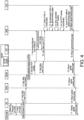
- Figure 4 shows a sequence diagram of an example method leading to the display of the web landing page on the device. The following steps occur:
- the configuration of the SCE 140 can happen as early as required in the process by specifying the product name and the countries where the product will work, and then a batch of Group SIMs may be added or stored (this is possible once the group SIMs are manufactured and sent to the OEM).
- the device identifiers e.g. IMEIs
- All configurations can happen well in advance of the devices becoming available in the market, which reduces the need to implement manual activities when the devices arrive to the shops.
- SCE 140 captures the information about where the device is connecting from in the database 150 and is able to detect when the customer switches country (e.g. the subscriber identity module transforms) in the middle of a registration process.
- the first and second subscriber identity module may include network and/or country identifiers that may be different pre and post transformation.
- Displaying the web landing page relies on the SCE 140.
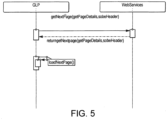
- further functions of the SCE 140 may include: An http request coming in from the MSP, may be mapped to an intercepting servlet, which may in turn forward it to a controller, which may retrieves any or all information such as IMSI, IMEI, ICCID, etc. from the request, and construct DeviceDetails (shown in figure 5 ). DeviceDetails may then be used as a parameter to getNextPage() call to SCE 140.
- GLPServlet may be done in GLPServlet as follows:
- jsp pages in the GLP may be loaded dynamically, based on the user requested actions. This may follow the sequence shown in figure 5 .
- the MSP may also provide a white-listing feature which allows backend services on the devices to reach its target and the customer does NOT see the results of these backend services.
- Device X may send a message to its servers to check if the device is stolen or not, and the SCE 140 may allow this traffic to work normally by white-listing the target IP on MSP.
- the above interactions preferably occur before SIM transformation (while the SIM is still a GDSP SIM - ID1). Once SIM transformation happens, the SIM becomes a local SIM (ID2) and will go to the local OpCo landing page directly like other normal OpCo SIMs, without passing through the above process or the SCE 140.
- Figure 6 shows a screen shot of an example web landing page. This figure highlights features that may be customised including text, images, data tariffs, buttons and functions.
- the post-transformation subscriber module identifier may be used as the stored parameters or to determine and serve the web landing page (or otherwise configure the web landing page).
- the web landing page may have different offers for different devices and/or OpCos.
- the different offers may include any one or more of free data for a period of time (e.g. one week), a specific data quota (e.g. 100MB per month), pricing plan for data (e.g. £1/10MB), etc.
Landscapes
- Engineering & Computer Science (AREA)
- Computer Networks & Wireless Communication (AREA)
- Signal Processing (AREA)
- Databases & Information Systems (AREA)
- Telephonic Communication Services (AREA)
- Mobile Radio Communication Systems (AREA)
Claims (15)
- Verfahren, durchgeführt durch ein System zur Verwaltung von Vorrichtungen, zum Einleiten einer Netzwerkkonfiguration für eine Vorrichtung (110), wobei das Verfahren die Schritte umfasst von:Registrieren einer ersten Teilnehmernetzkennung und einer Teilnehmernetzidentität;Zuordnen von Teilnehmernetzkennungen oder Bereichen von Teilnehmernetzkennungen zu einer bestimmten Webzielseite;Empfangen, von der Vorrichtung (110), eines Hinweises, dass die Vorrichtung (110) eine Verbindung mit einem Teilnehmernetz (130) hergestellt hat, wobei der empfangene Hinweis die Teilnehmernetzidentität des Teilnehmernetzes (130) beinhaltet, mit dem die Vorrichtung (110) eine Verbindung hergestellt hat, und wobei die erste Teilnehmernetzkennung mit oder in dem empfangenen Hinweis enthalten ist; Bestimmen der Teilnehmernetzidentität über den empfangenen Hinweis;Bestimmen einer ersten Teilnehmermodulkennung als IMSI, die von der Vorrichtung (110) verwendet wird; undBereitstellen einer Webzielseite, die spezifisch für eine Reihe von Parametern beinhaltend die Teilnehmernetzidentität und die erste Teilnehmermodulkennung ist, für die Vorrichtung (110), wobei die Webzielseite Logik bereitstellt, die zum Einleiten der Netzkonfiguration für die Vorrichtung (110) konfiguriert ist, indem ein Signal gesendet wird, das veranlasst, dass die innerhalb eines Teilnehmermoduls (120) gespeicherte erste Teilnehmermodulkennung in eine zweite Teilnehmermodulkennung umgewandelt wird,wobei die erste Teilnehmermodulkennung die erste Teilnehmernetzkennung beinhaltet, undwobei es sich bei dem Teilnehmernetz (130) um ein zellulares Netz handelt.
- Verfahren nach Anspruch 1, wobei der Hinweis über das Teilnehmernetz (130) empfangen wird.
- Verfahren nach Anspruch 1 oder Anspruch 2, wobei der Hinweis eine eindeutige Vorrichtungskennung beinhaltet, wobei das Verfahren ferner den Schritt des Bestimmens der eindeutigen Vorrichtungskennung umfasst, wobei die Reihe von Parametern ferner die eindeutige Vorrichtungskennung und/oder das Land des Teilnehmernetzes (130) beinhaltet.
- Verfahren nach Anspruch 1, ferner umfassend den Schritt des Anmeldens der Vorrichtung (110) in dem Teilnehmernetz (130), indem die Teilnehmeridentität von der ersten Teilnehmermodulkennung in die zweite Teilnehmermodulkennung umgewandelt wird, wobei die zweite Teilnehmermodulkennung zu dem Teilnehmernetz (130) gehört.
- Verfahren nach Anspruch 4, wobei die bereitgestellte Webzielseite eine Aktion angibt, die ein Benutzer durchzuführen hat, um die Teilnehmeridentität von der ersten Teilnehmermodulkennung in die zweite Teilnehmermodulkennung umzuwandeln.
- Verfahren nach Anspruch 4, wobei die Teilnehmeridentität der Vorrichtung (110) in einem Teilnehmermodul (120) gespeichert ist, das über eine umwandelbare Teilnehmermodulkennung verfügt.
- Verfahren nach einem der Ansprüche 1 bis 6, ferner umfassend den Schritt des Verhinderns, dass die Webzielseite der Vorrichtung (110) bereitgestellt wird, wenn die Teilnehmermodulkennung von der ersten Teilnehmermodulkennung in die zweite Teilnehmermodulkennung umgewandelt wurde.
- Verfahren nach einem vorstehenden Anspruch, wobei der Schritt des Bereitstellens der Webzielseite für die Vorrichtung den Schritt des Bereitstellens, über die Webzielseite, eines oder mehrerer umfasst von:einer Benutzerregistrierungseinrichtung für den Zugriff auf das Netz; Preisinformationen für den Zugriff auf das Netz;Informationen in einer Sprache, die spezifisch für ein Land des Teilnehmernetzes (130) ist; undAnweisungen für die Konfiguration der Vorrichtung zum Anmelden bei dem Teilnehmernetz (130).
- Verfahren nach einem vorstehenden Anspruch, wobei der Schritt des Bereitstellens einer Webzielseite für die Vorrichtung ferner die Schritte des Konfigurierens der Webzielseite umfasst, indem eine Vorlagenzielseite geändert wird, wobei das Konfigurieren der Webzielseite ferner den Schritt des Bestimmens einer Reihe von Konfigurationsanweisungen umfasst, wobei die Reihe von Konfigurationsanweisungen basierend darauf ausgewählt wird, dass die erste Teilnehmermodulkennung innerhalb eines Bereichs von Teilnehmermodulkennungen liegt.
- Verfahren nach einem vorstehenden Anspruch, ferner umfassend den Schritt des Registrierens der Vorrichtung (110) bei einem Betreiberunternehmen des Teilnehmernetzes (130), wobei die Vorrichtung über die Zielseite bei dem Betreiberunternehmen registriert wird.
- Verfahren nach einem vorstehenden Anspruch, wobei die Webzielseite über das Teilnehmernetz (130) den Zugriff auf das Internet für die Vorrichtung (110) ermöglicht.
- System zum Verwalten einer Vielzahl an Vorrichtungen (110), wobei das System Mittel umfasst, die zum Ausführen des Verfahrens nach einem der Ansprüche 1 bis 11 konfiguriert sind.
- System nach Anspruch 12, wobei die Mittel ferner zum Registrieren der Vorrichtung (110) mittels der Webzielseite konfiguriert sind.
- Computerprogramm umfassend Anweisungen, die bei Ausführung des Programms durch einen Computer veranlassen, dass der Computer die Schritte des Verfahrens nach einem der Ansprüche 1 bis 11 ausführt.
- Computerlesbares Medium umfassend Anweisungen, die bei Ausführung durch einen Computer veranlassen, dass der Computer die Schritte des Verfahrens nach einem der Ansprüche 1 bis 11 ausführt.
Applications Claiming Priority (2)
| Application Number | Priority Date | Filing Date | Title |
|---|---|---|---|
| GB1501974.8A GB2534920A (en) | 2015-02-06 | 2015-02-06 | Network subscription for a new device |
| PCT/GB2016/000025 WO2016124884A1 (en) | 2015-02-06 | 2016-02-04 | Network subscription for a new device |
Publications (2)
| Publication Number | Publication Date |
|---|---|
| EP3254486A1 EP3254486A1 (de) | 2017-12-13 |
| EP3254486B1 true EP3254486B1 (de) | 2024-09-11 |
Family
ID=52746224
Family Applications (1)
| Application Number | Title | Priority Date | Filing Date |
|---|---|---|---|
| EP16703824.9A Active EP3254486B1 (de) | 2015-02-06 | 2016-02-04 | Netzwerkabonnement für ein neues gerät |
Country Status (4)
| Country | Link |
|---|---|
| US (1) | US11089639B2 (de) |
| EP (1) | EP3254486B1 (de) |
| GB (1) | GB2534920A (de) |
| WO (1) | WO2016124884A1 (de) |
Citations (1)
| Publication number | Priority date | Publication date | Assignee | Title |
|---|---|---|---|---|
| GB2544099A (en) * | 2015-11-06 | 2017-05-10 | Vodafone Ip Licensing Ltd | Device configuration |
Family Cites Families (30)
| Publication number | Priority date | Publication date | Assignee | Title |
|---|---|---|---|---|
| US6603968B2 (en) * | 2001-06-22 | 2003-08-05 | Level Z, L.L.C. | Roaming in wireless networks with dynamic modification of subscriber identification |
| US7551913B1 (en) * | 2001-12-05 | 2009-06-23 | At&T Mobility Ii Llc | Methods and apparatus for anonymous user identification and content personalization in wireless communication |
| WO2004001624A1 (en) * | 2002-06-19 | 2003-12-31 | Nokia Corporation | Method and device for generating a mobile homepage in accordance with context relatd information |
| WO2004075598A1 (en) * | 2003-02-18 | 2004-09-02 | Roamware, Inc. | Providing multiple msisdn numbers in a mobile device with a single imsi |
| US20040192386A1 (en) * | 2003-03-26 | 2004-09-30 | Naveen Aerrabotu | Method and apparatus for multiple subscriber identities in a mobile communication device |
| DE602004010391T2 (de) * | 2003-05-22 | 2008-10-16 | Axalto S.A. | Fern-Simkarten-Austausch und Aktivierungsprozess |
| JP4786190B2 (ja) * | 2005-02-01 | 2011-10-05 | 株式会社エヌ・ティ・ティ・ドコモ | 認証ベクトル生成装置、加入者認証モジュール、無線通信システム、認証ベクトル生成方法、演算方法及び加入者認証方法 |
| US9307397B2 (en) * | 2005-04-29 | 2016-04-05 | Jasper Technologies, Inc. | Method for enabling a wireless device with customer-specific services |
| GB0604573D0 (en) * | 2006-03-07 | 2006-04-19 | Ghost Telecom Ltd | Method and apparatus of interfacing and connecting a wireless devices(s) and a wireless network for in-and out-going SMS, voice-and data-call(s) routing |
| US20080020755A1 (en) * | 2006-05-16 | 2008-01-24 | Mino Holdings, Inc. | Method and system for international roaming using virtual sim card |
| US20080020773A1 (en) * | 2006-07-21 | 2008-01-24 | Motorola, Inc. | Wireless communication device and method for managing the call routing for multiple services each respectively associated with a corresponding one of multiple sets of stored subscriber identity information |
| US20090234858A1 (en) * | 2008-03-15 | 2009-09-17 | Microsoft Corporation | Use Of A Single Service Application Instance For Multiple Data Center Subscribers |
| GB0807976D0 (en) * | 2008-05-01 | 2008-06-11 | Romalon Plc | Improvements relating to multi-jurisdictional telecommunications services |
| KR100985397B1 (ko) * | 2008-06-30 | 2010-10-05 | 삼성전자주식회사 | 이동통신 단말기에서 이동 가입 식별자의 유효성 판단 방법및 장치 |
| EP2150026A1 (de) * | 2008-07-31 | 2010-02-03 | Nokia Siemens Networks OY | Konfiguration einer Kommunikationsvorrichtung |
| US20110154213A1 (en) * | 2009-12-18 | 2011-06-23 | Nokia Corporation | Method and apparatus for presenting content download progress |
| CN101827311A (zh) * | 2010-02-10 | 2010-09-08 | 北京播思软件技术有限公司 | 一种实现移动通信终端在ad-hoc网络中互联的方法 |
| US9210557B2 (en) * | 2011-04-12 | 2015-12-08 | Yahoo! Inc. | SMS-initiated mobile registration |
| CN104205891B (zh) | 2011-12-30 | 2019-02-26 | 瑞典爱立信有限公司 | 虚拟sim卡云平台 |
| EP2632196A1 (de) * | 2012-02-24 | 2013-08-28 | Alcatel Lucent | Erste Chipkartenpersonalisierung |
| US9379756B2 (en) | 2012-05-17 | 2016-06-28 | Liveu Ltd. | Multi-modem communication using virtual identity modules |
| US20140120925A1 (en) * | 2012-11-01 | 2014-05-01 | Qualcomm Incorporated | Mobile station with multi-sim and tune away methods |
| US20140214671A1 (en) * | 2013-01-31 | 2014-07-31 | Mahi deSilva | Server side mobile payment processing and authentication |
| EP2770766B1 (de) | 2013-02-25 | 2015-11-25 | Vodafone Holding GmbH | Anzeige von gespeicherten Daten während der Provisionierung von Dienstfunktionalitäten eines mobilen Endgeräts |
| US9401735B2 (en) * | 2013-06-28 | 2016-07-26 | Telefonaktiebolaget Lm Ericsson (Publ) | Soft changing of mobile communication system |
| WO2015069160A1 (en) * | 2013-11-07 | 2015-05-14 | Telefonaktiebolaget Lm Ericsson (Publ) | Methods, network control nodes and communication devices for routing signalling requests in a communication system |
| US9392457B2 (en) * | 2013-11-27 | 2016-07-12 | Cellco Partnership | Method and apparatus for self-activating a mobile device |
| US9941954B2 (en) * | 2014-12-19 | 2018-04-10 | Futurewei Technologies, Inc. | System and method for radio link sharing |
| CN114549264B (zh) * | 2015-06-10 | 2025-07-01 | 株式会社宙连 | 用于利用多张sim卡的管理方法及管理服务器 |
| CN113301623A (zh) * | 2015-12-23 | 2021-08-24 | 柏思科技有限公司 | 用于选择sim卡的方法和系统 |
-
2015
- 2015-02-06 GB GB1501974.8A patent/GB2534920A/en not_active Withdrawn
-
2016
- 2016-02-04 EP EP16703824.9A patent/EP3254486B1/de active Active
- 2016-02-04 US US15/548,491 patent/US11089639B2/en active Active
- 2016-02-04 WO PCT/GB2016/000025 patent/WO2016124884A1/en not_active Ceased
Patent Citations (1)
| Publication number | Priority date | Publication date | Assignee | Title |
|---|---|---|---|---|
| GB2544099A (en) * | 2015-11-06 | 2017-05-10 | Vodafone Ip Licensing Ltd | Device configuration |
Also Published As
| Publication number | Publication date |
|---|---|
| GB2534920A (en) | 2016-08-10 |
| US20180242380A1 (en) | 2018-08-23 |
| EP3254486A1 (de) | 2017-12-13 |
| WO2016124884A1 (en) | 2016-08-11 |
| US11089639B2 (en) | 2021-08-10 |
| GB201501974D0 (en) | 2015-03-25 |
Similar Documents
| Publication | Publication Date | Title |
|---|---|---|
| US12081968B2 (en) | Automated credential porting for mobile devices | |
| US10798564B2 (en) | Machine-readable code-based embedded subscriber identity module (ESIM) profile download | |
| EP3068152B1 (de) | Verfahren und endgerät zur übertragung von datendiensten | |
| US10278062B2 (en) | Apparatuses, methods and systems for implementing a system-on-chip with integrated reprogrammable cellular network connectivity | |
| CN103095830B (zh) | 网络信息推送方法和平台 | |
| US9723481B2 (en) | Access data provisioning apparatus and methods | |
| US20090203371A1 (en) | Device, system and method for selecting number and opening account for prepaid subscriber | |
| CN102196413B (zh) | 实现空中配号的方法、系统、服务器和用户身份识别卡 | |
| US11109201B2 (en) | Device and method for provisioning services to mobile communication device | |
| CN103186853A (zh) | 一种服务器端和客户端移动支付方法、装置及系统 | |
| EP2656572B1 (de) | System, Verfahren, Netzwerkeinheit und Vorrichtung zur Verbinden einer Vorrichtung mit einem Kommunikationsnetz | |
| US20170257490A1 (en) | Charging control apparatus, method, and system | |
| US11089639B2 (en) | Network subscription for a new device | |
| US20190090311A1 (en) | Virtual network system, management device, and virtual network management method | |
| EP3688952B1 (de) | Verwaltung eines heim-gateways mit mobiler konnektivität zu einem weitbereichsnetzwerk | |
| WO2017077339A1 (en) | Device configuration | |
| FI118029B (fi) | Operaattoririippumattoman SIM-kortin toteuttava menetelmä ja laite | |
| CN116032573A (zh) | 多用户共享切片服务的方法、终端、平台、设备及介质 |
Legal Events
| Date | Code | Title | Description |
|---|---|---|---|
| STAA | Information on the status of an ep patent application or granted ep patent |
Free format text: STATUS: THE INTERNATIONAL PUBLICATION HAS BEEN MADE |
|
| PUAI | Public reference made under article 153(3) epc to a published international application that has entered the european phase |
Free format text: ORIGINAL CODE: 0009012 |
|
| STAA | Information on the status of an ep patent application or granted ep patent |
Free format text: STATUS: REQUEST FOR EXAMINATION WAS MADE |
|
| 17P | Request for examination filed |
Effective date: 20170831 |
|
| AK | Designated contracting states |
Kind code of ref document: A1 Designated state(s): AL AT BE BG CH CY CZ DE DK EE ES FI FR GB GR HR HU IE IS IT LI LT LU LV MC MK MT NL NO PL PT RO RS SE SI SK SM TR |
|
| AX | Request for extension of the european patent |
Extension state: BA ME |
|
| DAV | Request for validation of the european patent (deleted) | ||
| DAX | Request for extension of the european patent (deleted) | ||
| STAA | Information on the status of an ep patent application or granted ep patent |
Free format text: STATUS: EXAMINATION IS IN PROGRESS |
|
| 17Q | First examination report despatched |
Effective date: 20200211 |
|
| P01 | Opt-out of the competence of the unified patent court (upc) registered |
Effective date: 20230519 |
|
| GRAP | Despatch of communication of intention to grant a patent |
Free format text: ORIGINAL CODE: EPIDOSNIGR1 |
|
| STAA | Information on the status of an ep patent application or granted ep patent |
Free format text: STATUS: GRANT OF PATENT IS INTENDED |
|
| INTG | Intention to grant announced |
Effective date: 20240405 |
|
| GRAS | Grant fee paid |
Free format text: ORIGINAL CODE: EPIDOSNIGR3 |
|
| GRAA | (expected) grant |
Free format text: ORIGINAL CODE: 0009210 |
|
| STAA | Information on the status of an ep patent application or granted ep patent |
Free format text: STATUS: THE PATENT HAS BEEN GRANTED |
|
| AK | Designated contracting states |
Kind code of ref document: B1 Designated state(s): AL AT BE BG CH CY CZ DE DK EE ES FI FR GB GR HR HU IE IS IT LI LT LU LV MC MK MT NL NO PL PT RO RS SE SI SK SM TR |
|
| REG | Reference to a national code |
Ref country code: GB Ref legal event code: FG4D |
|
| REG | Reference to a national code |
Ref country code: CH Ref legal event code: EP |
|
| REG | Reference to a national code |
Ref country code: DE Ref legal event code: R096 Ref document number: 602016089337 Country of ref document: DE |
|
| REG | Reference to a national code |
Ref country code: IE Ref legal event code: FG4D |
|
| REG | Reference to a national code |
Ref country code: LT Ref legal event code: MG9D |
|
| PG25 | Lapsed in a contracting state [announced via postgrant information from national office to epo] |
Ref country code: NO Free format text: LAPSE BECAUSE OF FAILURE TO SUBMIT A TRANSLATION OF THE DESCRIPTION OR TO PAY THE FEE WITHIN THE PRESCRIBED TIME-LIMIT Effective date: 20241211 |
|
| REG | Reference to a national code |
Ref country code: NL Ref legal event code: MP Effective date: 20240911 |
|
| PG25 | Lapsed in a contracting state [announced via postgrant information from national office to epo] |
Ref country code: GR Free format text: LAPSE BECAUSE OF FAILURE TO SUBMIT A TRANSLATION OF THE DESCRIPTION OR TO PAY THE FEE WITHIN THE PRESCRIBED TIME-LIMIT Effective date: 20241212 Ref country code: FI Free format text: LAPSE BECAUSE OF FAILURE TO SUBMIT A TRANSLATION OF THE DESCRIPTION OR TO PAY THE FEE WITHIN THE PRESCRIBED TIME-LIMIT Effective date: 20240911 |
|
| PG25 | Lapsed in a contracting state [announced via postgrant information from national office to epo] |
Ref country code: BG Free format text: LAPSE BECAUSE OF FAILURE TO SUBMIT A TRANSLATION OF THE DESCRIPTION OR TO PAY THE FEE WITHIN THE PRESCRIBED TIME-LIMIT Effective date: 20240911 |
|
| PG25 | Lapsed in a contracting state [announced via postgrant information from national office to epo] |
Ref country code: LV Free format text: LAPSE BECAUSE OF FAILURE TO SUBMIT A TRANSLATION OF THE DESCRIPTION OR TO PAY THE FEE WITHIN THE PRESCRIBED TIME-LIMIT Effective date: 20240911 |
|
| PG25 | Lapsed in a contracting state [announced via postgrant information from national office to epo] |
Ref country code: HR Free format text: LAPSE BECAUSE OF FAILURE TO SUBMIT A TRANSLATION OF THE DESCRIPTION OR TO PAY THE FEE WITHIN THE PRESCRIBED TIME-LIMIT Effective date: 20240911 |
|
| PG25 | Lapsed in a contracting state [announced via postgrant information from national office to epo] |
Ref country code: ES Free format text: LAPSE BECAUSE OF FAILURE TO SUBMIT A TRANSLATION OF THE DESCRIPTION OR TO PAY THE FEE WITHIN THE PRESCRIBED TIME-LIMIT Effective date: 20240911 Ref country code: RS Free format text: LAPSE BECAUSE OF FAILURE TO SUBMIT A TRANSLATION OF THE DESCRIPTION OR TO PAY THE FEE WITHIN THE PRESCRIBED TIME-LIMIT Effective date: 20241211 |
|
| PG25 | Lapsed in a contracting state [announced via postgrant information from national office to epo] |
Ref country code: RS Free format text: LAPSE BECAUSE OF FAILURE TO SUBMIT A TRANSLATION OF THE DESCRIPTION OR TO PAY THE FEE WITHIN THE PRESCRIBED TIME-LIMIT Effective date: 20241211 Ref country code: NO Free format text: LAPSE BECAUSE OF FAILURE TO SUBMIT A TRANSLATION OF THE DESCRIPTION OR TO PAY THE FEE WITHIN THE PRESCRIBED TIME-LIMIT Effective date: 20241211 Ref country code: LV Free format text: LAPSE BECAUSE OF FAILURE TO SUBMIT A TRANSLATION OF THE DESCRIPTION OR TO PAY THE FEE WITHIN THE PRESCRIBED TIME-LIMIT Effective date: 20240911 Ref country code: HR Free format text: LAPSE BECAUSE OF FAILURE TO SUBMIT A TRANSLATION OF THE DESCRIPTION OR TO PAY THE FEE WITHIN THE PRESCRIBED TIME-LIMIT Effective date: 20240911 Ref country code: GR Free format text: LAPSE BECAUSE OF FAILURE TO SUBMIT A TRANSLATION OF THE DESCRIPTION OR TO PAY THE FEE WITHIN THE PRESCRIBED TIME-LIMIT Effective date: 20241212 Ref country code: FI Free format text: LAPSE BECAUSE OF FAILURE TO SUBMIT A TRANSLATION OF THE DESCRIPTION OR TO PAY THE FEE WITHIN THE PRESCRIBED TIME-LIMIT Effective date: 20240911 Ref country code: ES Free format text: LAPSE BECAUSE OF FAILURE TO SUBMIT A TRANSLATION OF THE DESCRIPTION OR TO PAY THE FEE WITHIN THE PRESCRIBED TIME-LIMIT Effective date: 20240911 Ref country code: BG Free format text: LAPSE BECAUSE OF FAILURE TO SUBMIT A TRANSLATION OF THE DESCRIPTION OR TO PAY THE FEE WITHIN THE PRESCRIBED TIME-LIMIT Effective date: 20240911 |
|
| REG | Reference to a national code |
Ref country code: AT Ref legal event code: MK05 Ref document number: 1723748 Country of ref document: AT Kind code of ref document: T Effective date: 20240911 |
|
| PG25 | Lapsed in a contracting state [announced via postgrant information from national office to epo] |
Ref country code: NL Free format text: LAPSE BECAUSE OF FAILURE TO SUBMIT A TRANSLATION OF THE DESCRIPTION OR TO PAY THE FEE WITHIN THE PRESCRIBED TIME-LIMIT Effective date: 20240911 |
|
| PG25 | Lapsed in a contracting state [announced via postgrant information from national office to epo] |
Ref country code: IS Free format text: LAPSE BECAUSE OF FAILURE TO SUBMIT A TRANSLATION OF THE DESCRIPTION OR TO PAY THE FEE WITHIN THE PRESCRIBED TIME-LIMIT Effective date: 20250111 Ref country code: PT Free format text: LAPSE BECAUSE OF FAILURE TO SUBMIT A TRANSLATION OF THE DESCRIPTION OR TO PAY THE FEE WITHIN THE PRESCRIBED TIME-LIMIT Effective date: 20250113 |
|
| PG25 | Lapsed in a contracting state [announced via postgrant information from national office to epo] |
Ref country code: SM Free format text: LAPSE BECAUSE OF FAILURE TO SUBMIT A TRANSLATION OF THE DESCRIPTION OR TO PAY THE FEE WITHIN THE PRESCRIBED TIME-LIMIT Effective date: 20240911 Ref country code: RO Free format text: LAPSE BECAUSE OF FAILURE TO SUBMIT A TRANSLATION OF THE DESCRIPTION OR TO PAY THE FEE WITHIN THE PRESCRIBED TIME-LIMIT Effective date: 20240911 |
|
| PG25 | Lapsed in a contracting state [announced via postgrant information from national office to epo] |
Ref country code: AT Free format text: LAPSE BECAUSE OF FAILURE TO SUBMIT A TRANSLATION OF THE DESCRIPTION OR TO PAY THE FEE WITHIN THE PRESCRIBED TIME-LIMIT Effective date: 20240911 Ref country code: EE Free format text: LAPSE BECAUSE OF FAILURE TO SUBMIT A TRANSLATION OF THE DESCRIPTION OR TO PAY THE FEE WITHIN THE PRESCRIBED TIME-LIMIT Effective date: 20240911 |
|
| PG25 | Lapsed in a contracting state [announced via postgrant information from national office to epo] |
Ref country code: PL Free format text: LAPSE BECAUSE OF FAILURE TO SUBMIT A TRANSLATION OF THE DESCRIPTION OR TO PAY THE FEE WITHIN THE PRESCRIBED TIME-LIMIT Effective date: 20240911 Ref country code: CZ Free format text: LAPSE BECAUSE OF FAILURE TO SUBMIT A TRANSLATION OF THE DESCRIPTION OR TO PAY THE FEE WITHIN THE PRESCRIBED TIME-LIMIT Effective date: 20240911 |
|
| PG25 | Lapsed in a contracting state [announced via postgrant information from national office to epo] |
Ref country code: SK Free format text: LAPSE BECAUSE OF FAILURE TO SUBMIT A TRANSLATION OF THE DESCRIPTION OR TO PAY THE FEE WITHIN THE PRESCRIBED TIME-LIMIT Effective date: 20240911 Ref country code: IT Free format text: LAPSE BECAUSE OF FAILURE TO SUBMIT A TRANSLATION OF THE DESCRIPTION OR TO PAY THE FEE WITHIN THE PRESCRIBED TIME-LIMIT Effective date: 20240911 |
|
| REG | Reference to a national code |
Ref country code: DE Ref legal event code: R097 Ref document number: 602016089337 Country of ref document: DE |
|
| PG25 | Lapsed in a contracting state [announced via postgrant information from national office to epo] |
Ref country code: DK Free format text: LAPSE BECAUSE OF FAILURE TO SUBMIT A TRANSLATION OF THE DESCRIPTION OR TO PAY THE FEE WITHIN THE PRESCRIBED TIME-LIMIT Effective date: 20240911 |
|
| PLBE | No opposition filed within time limit |
Free format text: ORIGINAL CODE: 0009261 |
|
| STAA | Information on the status of an ep patent application or granted ep patent |
Free format text: STATUS: NO OPPOSITION FILED WITHIN TIME LIMIT |
|
| 26N | No opposition filed |
Effective date: 20250612 |
|
| PG25 | Lapsed in a contracting state [announced via postgrant information from national office to epo] |
Ref country code: SE Free format text: LAPSE BECAUSE OF FAILURE TO SUBMIT A TRANSLATION OF THE DESCRIPTION OR TO PAY THE FEE WITHIN THE PRESCRIBED TIME-LIMIT Effective date: 20240911 |
|
| PG25 | Lapsed in a contracting state [announced via postgrant information from national office to epo] |
Ref country code: MC Free format text: LAPSE BECAUSE OF FAILURE TO SUBMIT A TRANSLATION OF THE DESCRIPTION OR TO PAY THE FEE WITHIN THE PRESCRIBED TIME-LIMIT Effective date: 20240911 |
|
| REG | Reference to a national code |
Ref country code: CH Ref legal event code: PL |
|
| PG25 | Lapsed in a contracting state [announced via postgrant information from national office to epo] |
Ref country code: LU Free format text: LAPSE BECAUSE OF NON-PAYMENT OF DUE FEES Effective date: 20250204 |
|
| PG25 | Lapsed in a contracting state [announced via postgrant information from national office to epo] |
Ref country code: CH Free format text: LAPSE BECAUSE OF NON-PAYMENT OF DUE FEES Effective date: 20250228 |
|
| REG | Reference to a national code |
Ref country code: BE Ref legal event code: MM Effective date: 20250228 |
|
| PG25 | Lapsed in a contracting state [announced via postgrant information from national office to epo] |
Ref country code: BE Free format text: LAPSE BECAUSE OF NON-PAYMENT OF DUE FEES Effective date: 20250228 |
|
| PG25 | Lapsed in a contracting state [announced via postgrant information from national office to epo] |
Ref country code: IE Free format text: LAPSE BECAUSE OF NON-PAYMENT OF DUE FEES Effective date: 20250204 |
|
| PGFP | Annual fee paid to national office [announced via postgrant information from national office to epo] |
Ref country code: GB Payment date: 20260219 Year of fee payment: 11 |
|
| PGFP | Annual fee paid to national office [announced via postgrant information from national office to epo] |
Ref country code: DE Payment date: 20260218 Year of fee payment: 11 |
|
| PGFP | Annual fee paid to national office [announced via postgrant information from national office to epo] |
Ref country code: FR Payment date: 20260218 Year of fee payment: 11 |