EP3252998A1 - Method and apparatus for controlling smart home device to upload data, method and apparatus for acquiring data uploaded by smart home device - Google Patents
Method and apparatus for controlling smart home device to upload data, method and apparatus for acquiring data uploaded by smart home device Download PDFInfo
- Publication number
- EP3252998A1 EP3252998A1 EP16194386.5A EP16194386A EP3252998A1 EP 3252998 A1 EP3252998 A1 EP 3252998A1 EP 16194386 A EP16194386 A EP 16194386A EP 3252998 A1 EP3252998 A1 EP 3252998A1
- Authority
- EP
- European Patent Office
- Prior art keywords
- smart home
- home device
- operation status
- status data
- data
- Prior art date
- Legal status (The legal status is an assumption and is not a legal conclusion. Google has not performed a legal analysis and makes no representation as to the accuracy of the status listed.)
- Granted
Links
Images


Classifications
-
- H—ELECTRICITY
- H04—ELECTRIC COMMUNICATION TECHNIQUE
- H04L—TRANSMISSION OF DIGITAL INFORMATION, e.g. TELEGRAPHIC COMMUNICATION
- H04L67/00—Network arrangements or protocols for supporting network services or applications
- H04L67/01—Protocols
- H04L67/02—Protocols based on web technology, e.g. hypertext transfer protocol [HTTP]
- H04L67/025—Protocols based on web technology, e.g. hypertext transfer protocol [HTTP] for remote control or remote monitoring of applications
-
- H—ELECTRICITY
- H04—ELECTRIC COMMUNICATION TECHNIQUE
- H04L—TRANSMISSION OF DIGITAL INFORMATION, e.g. TELEGRAPHIC COMMUNICATION
- H04L12/00—Data switching networks
- H04L12/28—Data switching networks characterised by path configuration, e.g. LAN [Local Area Networks] or WAN [Wide Area Networks]
- H04L12/2803—Home automation networks
- H04L12/2816—Controlling appliance services of a home automation network by calling their functionalities
- H04L12/282—Controlling appliance services of a home automation network by calling their functionalities based on user interaction within the home
-
- H—ELECTRICITY
- H04—ELECTRIC COMMUNICATION TECHNIQUE
- H04L—TRANSMISSION OF DIGITAL INFORMATION, e.g. TELEGRAPHIC COMMUNICATION
- H04L12/00—Data switching networks
- H04L12/28—Data switching networks characterised by path configuration, e.g. LAN [Local Area Networks] or WAN [Wide Area Networks]
-
- G—PHYSICS
- G05—CONTROLLING; REGULATING
- G05B—CONTROL OR REGULATING SYSTEMS IN GENERAL; FUNCTIONAL ELEMENTS OF SUCH SYSTEMS; MONITORING OR TESTING ARRANGEMENTS FOR SUCH SYSTEMS OR ELEMENTS
- G05B15/00—Systems controlled by a computer
- G05B15/02—Systems controlled by a computer electric
-
- G—PHYSICS
- G05—CONTROLLING; REGULATING
- G05B—CONTROL OR REGULATING SYSTEMS IN GENERAL; FUNCTIONAL ELEMENTS OF SUCH SYSTEMS; MONITORING OR TESTING ARRANGEMENTS FOR SUCH SYSTEMS OR ELEMENTS
- G05B19/00—Program-control systems
- G05B19/02—Program-control systems electric
- G05B19/418—Total factory control, i.e. centrally controlling a plurality of machines, e.g. direct or distributed numerical control [DNC], flexible manufacturing systems [FMS], integrated manufacturing systems [IMS] or computer integrated manufacturing [CIM]
- G05B19/4185—Total factory control, i.e. centrally controlling a plurality of machines, e.g. direct or distributed numerical control [DNC], flexible manufacturing systems [FMS], integrated manufacturing systems [IMS] or computer integrated manufacturing [CIM] characterised by the network communication
- G05B19/41855—Total factory control, i.e. centrally controlling a plurality of machines, e.g. direct or distributed numerical control [DNC], flexible manufacturing systems [FMS], integrated manufacturing systems [IMS] or computer integrated manufacturing [CIM] characterised by the network communication by local area network [LAN], network structure
-
- H—ELECTRICITY
- H04—ELECTRIC COMMUNICATION TECHNIQUE
- H04L—TRANSMISSION OF DIGITAL INFORMATION, e.g. TELEGRAPHIC COMMUNICATION
- H04L12/00—Data switching networks
- H04L12/28—Data switching networks characterised by path configuration, e.g. LAN [Local Area Networks] or WAN [Wide Area Networks]
- H04L12/2803—Home automation networks
- H04L12/2807—Exchanging configuration information on appliance services in a home automation network
-
- H—ELECTRICITY
- H04—ELECTRIC COMMUNICATION TECHNIQUE
- H04L—TRANSMISSION OF DIGITAL INFORMATION, e.g. TELEGRAPHIC COMMUNICATION
- H04L12/00—Data switching networks
- H04L12/28—Data switching networks characterised by path configuration, e.g. LAN [Local Area Networks] or WAN [Wide Area Networks]
- H04L12/2803—Home automation networks
- H04L12/2816—Controlling appliance services of a home automation network by calling their functionalities
- H04L12/2818—Controlling appliance services of a home automation network by calling their functionalities from a device located outside both the home and the home network
-
- H—ELECTRICITY
- H04—ELECTRIC COMMUNICATION TECHNIQUE
- H04L—TRANSMISSION OF DIGITAL INFORMATION, e.g. TELEGRAPHIC COMMUNICATION
- H04L12/00—Data switching networks
- H04L12/28—Data switching networks characterised by path configuration, e.g. LAN [Local Area Networks] or WAN [Wide Area Networks]
- H04L12/2803—Home automation networks
- H04L12/2823—Reporting information sensed by appliance or service execution status of appliance services in a home automation network
- H04L12/2825—Reporting to a device located outside the home and the home network
-
- H—ELECTRICITY
- H04—ELECTRIC COMMUNICATION TECHNIQUE
- H04L—TRANSMISSION OF DIGITAL INFORMATION, e.g. TELEGRAPHIC COMMUNICATION
- H04L67/00—Network arrangements or protocols for supporting network services or applications
- H04L67/01—Protocols
- H04L67/12—Protocols specially adapted for proprietary or special-purpose networking environments, e.g. medical networks, sensor networks, networks in vehicles or remote metering networks
-
- H—ELECTRICITY
- H04—ELECTRIC COMMUNICATION TECHNIQUE
- H04L—TRANSMISSION OF DIGITAL INFORMATION, e.g. TELEGRAPHIC COMMUNICATION
- H04L67/00—Network arrangements or protocols for supporting network services or applications
- H04L67/2866—Architectures; Arrangements
- H04L67/30—Profiles
- H04L67/306—User profiles
-
- G—PHYSICS
- G05—CONTROLLING; REGULATING
- G05B—CONTROL OR REGULATING SYSTEMS IN GENERAL; FUNCTIONAL ELEMENTS OF SUCH SYSTEMS; MONITORING OR TESTING ARRANGEMENTS FOR SUCH SYSTEMS OR ELEMENTS
- G05B2219/00—Program-control systems
- G05B2219/20—Pc systems
- G05B2219/26—Pc applications
- G05B2219/2642—Domotique, domestic, home control, automation, smart house
-
- H—ELECTRICITY
- H04—ELECTRIC COMMUNICATION TECHNIQUE
- H04L—TRANSMISSION OF DIGITAL INFORMATION, e.g. TELEGRAPHIC COMMUNICATION
- H04L12/00—Data switching networks
- H04L12/28—Data switching networks characterised by path configuration, e.g. LAN [Local Area Networks] or WAN [Wide Area Networks]
- H04L12/2803—Home automation networks
- H04L2012/284—Home automation networks characterised by the type of medium used
- H04L2012/2841—Wireless
-
- H—ELECTRICITY
- H04—ELECTRIC COMMUNICATION TECHNIQUE
- H04L—TRANSMISSION OF DIGITAL INFORMATION, e.g. TELEGRAPHIC COMMUNICATION
- H04L12/00—Data switching networks
- H04L12/28—Data switching networks characterised by path configuration, e.g. LAN [Local Area Networks] or WAN [Wide Area Networks]
- H04L12/2803—Home automation networks
- H04L2012/2847—Home automation networks characterised by the type of home appliance used
- H04L2012/285—Generic home appliances, e.g. refrigerators
-
- H—ELECTRICITY
- H04—ELECTRIC COMMUNICATION TECHNIQUE
- H04L—TRANSMISSION OF DIGITAL INFORMATION, e.g. TELEGRAPHIC COMMUNICATION
- H04L63/00—Network architectures or network communication protocols for network security
- H04L63/08—Network architectures or network communication protocols for network security for authentication of entities
-
- H—ELECTRICITY
- H04—ELECTRIC COMMUNICATION TECHNIQUE
- H04L—TRANSMISSION OF DIGITAL INFORMATION, e.g. TELEGRAPHIC COMMUNICATION
- H04L63/00—Network architectures or network communication protocols for network security
- H04L63/10—Network architectures or network communication protocols for network security for controlling access to devices or network resources
Definitions
- the present disclosure generally relates to the field of computer communication technology, and more particularly, to a method and an apparatus for controlling a smart home device to upload data and a method and an apparatus for acquiring data uploaded by a smart home device.
- an application installed in a user terminal may be used to control the smart device remotely.
- the user may control remotely the smart home device, view current working status of the device and the like via the application installed in the user terminal.
- a substantial proportion of control instructions are forwarded by an application server provided by an application operator.
- data uploaded by the user terminal is stored in the application server provided by the application operator, so that the application server may perform a data analysis or provide data querying service by using the acquired data of the smart home device.
- the present disclosure provides a method and an apparatus for controlling a smart home device to upload data and a method and an apparatus for acquiring data uploaded by a smart home device, thereby realizing data sharing of the smart home device.
- a method for controlling a smart home device to upload data which includes:
- acquiring operation status data of the smart home device includes:
- acquiring operation status data of the smart home device includes:
- the at least two application servers bound to the smart home device authorize account permissions to each other.
- a method for acquiring data uploaded by a smart home device which includes:
- the method for acquiring data uploaded by a smart home device further includes:
- the method for acquiring data uploaded by a smart home device further includes:
- the method for acquiring data uploaded by a smart home device further includes:
- an apparatus for controlling a smart home device to upload data which includes:
- the acquiring module includes at least one of:
- the acquiring module includes:
- the at least two application servers bound to the smart home device authorize account permissions to each other.
- an apparatus for acquiring data uploaded by a smart home device which includes:
- the apparatus for acquiring data uploaded by a smart home device further includes:
- the apparatus for acquiring data uploaded by a smart home device further includes:
- the bound application servers of the smart home device and other application servers authorize account permissions to each other.
- a smart home device which includes: a processor; and a memory configured to store an instruction executable by the processor; in which the processor is configured to:
- an application server which includes: a processor; and a memory configured to store an instruction executable by the processor; in which the processor is configured to:
- the smart home device may send the acquired operation status data to the plurality of application servers bound to the smart home device, such that each application server may collect relevant data of the smart home device to form big data, and the application server may perform a data analysis or provide corresponding data querying service according to the big data, thereby providing references for improving the performance of the smart home device and the quality of service, and improving the user experience of the smart home device.
- the method for acquiring the operation status data by the smart home device may include but is not limited to the following ways: determining the operation status data of the smart home device according to the device's working status information acquired regularly or in real-time; receiving the status querying information sent by the application server, and acquiring the working status information of the smart home device, and further determining the operation status data; after receiving the control instruction for the smart home device, acquiring the feedback information that is generated by the smart home device according to the implementation situation of the control instruction, and using the feedback information as the operation status data.
- the smart home device may send the operation status data acquired in the above ways to the application servers, such that each application server may get more abundant operation data of the smart home device, and then the application server may acquire more accurate reference information based on the above data, thereby providing services more appropriate (i.e. suitable) to the user habit and improving the user experience of the smart home device.
- the smart home device when it receives and performs the control instruction, it may record the performing process as one user control information record, and generate the operation status data according to the above user control information record and send the operation status data to each application server, such that each application server may acquire more detailed information, thereby enriching user operation data of the smart home device in each application server, further making the application server provide application reference information more appropriate to the user habit.
- the application servers bound to the smart home device may authorize account permissions to each other, thereby facilitating the user in controlling the smart home device. Accordingly, the terminal device may send the operation status data satisfying different requirements to respective application server according to the relationships between the login account in the control instruction and the application servers and according to requirements of different application server providers.
- first and second are used for description of various information in the present disclosure, these information are not limited to these terms. These terms are only used for distinguishing information with the same type.
- first information may also be referred to as the second information; similarly, the second information may also be referred to as the first information.
- the words in the use of "if” can be interpreted as "when! or "when! or “response to define”.
- the related implementation subject may include: a user terminal, a smart home device, and at least two application servers.
- the above user terminal may be a smart phone, a personal digital assistant, or a wearable device such as a smart watch and a smart bracelet, etc.
- the above smart home device may be a home device with a communication module such as a Wi-Fi (Wireless Fidelity) module, for example, an air conditioner, a television, a refrigerator, a water heater and a rice cooker or the like.
- the Wi-Fi communication connection may be established between the smart home device and a router through the Wi-Fi module.
- the router as a network access device in home, connects the smart home devices which access to the router respectively to the Internet.
- the user terminal, the smart home device and the application server are independent of and interrelated with each other, and achieve commonly technical solutions provided in the present disclosure.
- the user terminal, the smart home device and the application server are distinct devices which cooperate with each other in order to achieve the invention.
- Fig. 1 is a flow chart showing a method for controlling a smart home device to upload data according to an example embodiment of the present disclosure. The method is implemented by the smart home device and includes the following steps.
- step 11 operation status data of the smart home device is acquired.
- the operation status data of the smart home device may include: time of turning on/off, device operation parameters set by a user, device maintenance parameters and the like. Assuming that the smart home device is a smart air conditioner, the operation status data may include: time of turning on/off, set temperature, wind power, maintenance frequency and the like. Software or hardware engineers may further optimize products and improve the quality and user experience of the smart home device according to the above operation status data of the smart home device.
- the smart home device may acquire the operation status data by adopting at least one of following ways.
- the communication module such as the built-in Wi-Fi communication module in the smart home device may send request information for acquiring the device's working status to the processor of the smart home device, so as to acquire the working status information of the smart home device; and then the operation status data is generated according to the working status information.
- the working status information may be data detected by various built-in sensors in the smart home device, for example, geo-location mapping data acquired by a GPS positioning device, personnel information in the neighborhood detected by an infrared sensor, ambient temperature in the neighborhood detected by a temperature sensor, or other information.
- the smart home device may receive the status querying information sent by the application server in the cloud.
- the status querying information is configured to query the usage situation, operation situation or other information of the smart home device bound to the application server.
- the smart home device may acquire the working status information according to the status querying information, and further use the working status information as the operation status data.
- the user may use the APP installed in the terminal, such as "smart home” APP installed in the smart phone, to directly send the control instruction to the smart home device via a near field communication technology (such as Wi-Fi, Bluetooth, ZigBee, etc.), or to forward the control instruction to the smart home device via public network (such as mobile cellular network, Internet, etc.).
- the smart home device receives the control instruction, and then may perform or refuse to perform a corresponding operation.
- the smart home device may generate a piece of feedback information according to the implementation situation of the control instruction, and use the feedback information as the operation status data.
- control instruction is "turning on the smart air conditioner R" or "adjusting the room temperature to 25 °C”
- the corresponding module of the smart air conditioner may perform the corresponding control operation, and then generate the feedback information according to the implementation situation of the control operation, for example the feedback information may be "successfully turning on the smart air conditioner R", “failing to respond, the turning on operation being not performed", or “successfully setting temperature to 25 °C”; etc.
- the smart home device may record the related operation information performed after receiving the control instruction as one user control information record; and use the user control information record as the operation status data.
- the user control information record includes at least one of: a user identifier (such as account information registered in the APP), an identifier of a device sending the control instruction (such as a device identifier of the user terminal or a device identifier of the application server), instruction content, and information of control operation process.
- step 12 according to binding relationships of the smart home device with application servers, the operation status data is sent to all bound application servers.
- the smart home device is bound to at least two application servers.
- one smart home device has binding relationships with the application servers corresponding to at least two APPs. That is, the user may use at least two APPs to control the smart home device, i.e. the user may use two APPs installed in the user terminal to realize the control of a smart home device. Assuming that the smart home device may perform a network communication via the built-in Wi-Fi communication module, the Wi-Fi communication module may have at least two smart device communication protocols. Each smart device communication protocol supports the communication of the smart home device with an application server.
- the smart home device may send the acquired operation status data to all bound application servers via the above Wi-Fi communication module.
- the at least two application servers bound to the same smart home device may have a relationship of authorizing account permissions to each other.
- Fig. 2 is a schematic diagram illustrating an application scenario in which a smart home device is controlled to upload data according to an example embodiment of the present disclosure, and taking the smart air conditioner 400 being the smart home device as an example still, it is assumed that the smart air conditioner 400 has binding relationships with two application servers.
- the application servers include a first application server 200 and a second application server 300.
- the user may use the phone 100 to login to a first account and control the smart air conditioner 400 intelligently via the application interface provided by the first application server 200; the user also may use the phone 100 to login to a second account and control the smart air conditioner 400 intelligently via the application interface provided by the second application server 300.
- the smart air conditioner 400 may send the acquired operation status data to the first application server 200 and to the second application server 300.
- the first application server 200 and the second application server 300 authorize account permissions to each other, this means that the user may use the first account to login to the application interface provided by the second application server 300 so as to realize the intelligent control of the smart air conditioner, or the user may use the second account to login to the application interface provided by the first application server 200 so as to realize the intelligent control of the smart air conditioner 400.
- the first account is a master account for logging in to the first application server 200
- the second account is a slave account for logging in to the first application server 200
- the second account is a master account for logging in to the second application server 300 and the first account is a slave account for logging in to the second application server 300.
- the user may use a preset account to login to the smart home APP in the phone 100, and further send the control instruction to the smart home device 400 via the first application server 200.
- the control instruction at least includes a login account and a device identifier of the application server, and may further include a terminal identifier of the user terminal.
- step 12 may include the following steps.
- step 121 the relationships between the login account in the control instruction and the application servers are determined.
- the application server may be the first application server 200.
- the relationship between the account currently logged in and the first application server 200 is then determined. In particular, it is determined whether the account currently logged in on the first application server 200 is the master account or the slave account.
- step 122 if the login account is the master account of the application server, first operation status data is sent to the application server and second operation status data is sent to another related application server.
- the second operation status data belongs to a part of the first operation status data.
- the related application server is another application server bound to the smart air conditioner.
- the second operation status data is a part extracted from the first operation status data according to a predetermined strategy.
- the second operation status data does not include any information not included in the first operation status data.
- the smart air conditioner 400 detects that the operation status data is acquired under a control mode that the user uses the first account to login to the first application server 200, the smart air conditioner 400 records the above complete user control information as the first operation status data and then sends it to the first application server 200.
- the smart air conditioner 400 may select a part of data from the user control information according to the predetermined strategy as the second operation status data and send it to the second application server 300.
- step 123 if the login account is the slave account of the application server, the operation status data is sent to all bound application servers.
- each application server provides the most versatile application interface only when detecting the master account.
- Fig. 4A and Fig. 4B are schematic diagrams illustrating application scenarios in which the smart home device is controlled to upload data according to an example embodiment of the present disclosure.
- Fig. 4A illustrates the master application interface for controlling the smart air conditioner provided by the first application server, and the user may intelligently control the turning on/off, a parameter (such as temperature, humidity, wind direction, etc.) of the smart air conditioner via this master application interface.
- Fig. 4B illustrates the slave application interface for controlling the smart air conditioner provided by the first application server, and the slave application interface only includes the turning on/off operation and temperature adjusting interface.
- the mode in which the user controls the smart air conditioner via the master application interface is called as a master user operation mode
- the mode in which the user controls the smart air conditioner via the slave application interface is called as a slave user operation mode.
- information of control operation process acquired by the smart air conditioner under the slave user operation mode is relatively small, and the corresponding operation status data is less.
- the smart air conditioner may send the operation status data acquired under the slave user operation mode to each bound application server.
- the smart home device may send the acquired operation status data to all the application servers bound to the smart home device, thereby realizing the purpose of sharing data of the smart home device by operators which provide different application servers.
- the data may include: performance parameters of the device itself or user behavior data.
- a data analysis may be performed on the big data and the acquired analysis result is configured to provide the reference for improving the product quality of the smart home device or providing better service, thereby improving the user experience of the smart home device.
- embodiments of the present disclosure also provide a method for acquiring data uploaded by a smart home device.
- This method is applied in an application server, and includes: receiving operation status data sent by a smart home device, the smart home device being bound to at least two application servers, and the operation status data being response data of the smart home device to any one of bound application servers.
- the application server which receives the operation status data may be any application server having a binding relationship with the smart home device.
- the above application server may be the first application server 200, also may be the second application server 300.
- Fig. 5 is a flow chart showing a method for acquiring data uploaded by a smart home device according to an example embodiment of the present disclosure, the method includes the following steps.
- step 21 the operation status data sent by the bound smart home device is received.
- the smart home device is bound to at least two application servers.
- the operation status data is response data of the smart home device to any one of the bound application servers.
- step 22 an account corresponding to the smart home device is queried according to a device identifier of the smart home device.
- each application server has a list of controlled devices stored therein.
- the list of controlled devices includes: correspondences between user identifiers and device identifiers of smart home devices, which is shown as follows. Table 1 user identifier device identifier of smart home device first account smart air conditioner M1 smart air purifier R1 smart lamp L1
- the operation status data received by the application server at least includes the device identifier of the smart home device, and the device identifier is assumed as M1.
- the preset list such as Table 1 of controlled devices is queried according to the device identifier M1 of the smart air conditioner, and then it is determined that the user identifier is the first account. That is, after the user logs in to the application server using the first account, the application server may provide the application interface for controlling the smart home device.
- step 23 the operation status data is sent to a user terminal on which the account is logged in.
- the device identifier of the user terminal currently having the binding relationship with the account is queried according to the account information.
- the application server also may send the operation status data of the smart home device to the corresponding user terminal, so that the user knows timely the current operation status and other information of the smart home device, thereby improving the user experience of the user terminal.
- Fig. 6 is a flow chart showing another method for acquiring data uploaded by a smart home device according to an example embodiment of the present disclosure, the method further includes the following steps before step 21.
- step 201 a control instruction for the smart home device sent by a user terminal is received.
- the control instruction at least includes: a user identifier i.e. login account information, a device identifier of the smart home device, a device identifier of the application server, and instruction content.
- step 202 the control instruction is sent to the smart home device.
- the application server receives the control instruction for the smart home device.
- the control instruction is sent by the user via the user terminal.
- the above control instruction is forwarded to the smart home device, so that the smart home device may perform the corresponding operation according to the control instruction, and generate the operation status data according to the implementation situation of the instruction, and then send the operation status data to the application server.
- Figs. 5 and 6 describe the present disclosure based on the situation that one application server only provides authorization for one account and then provides the application interface for the smart home device.
- the at least two application servers bound to the smart home device also may authorize account permissions to each other.
- the account permission authorization has been described in detail with reference to the schematic diagram of the application scenario shown in Fig. 2 , which is not repeated herein. In the application scenario, there may be three conditions about the application server acquiring the user operation data.
- the first condition corresponding to the embodiment shown in Fig. 3 , if the current application server which receives the operation status data sends the control instruction to the smart home device in advance, and the login account in the control instruction is the master account of the current application server, the operation status data received by the application server may include more information, i.e. the first operation status data described above.
- the second condition corresponding to the embodiment shown in Fig. 3 , if the current application server which receives the operation status data sends the control instruction to the smart home device in advance, and the login account in the control instruction is the slave account of the current application server, the application server may receive the operation status data including less information, i.e. the second operation status data described above.
- the third condition if the operation status data is acquired in the above fourth way and the current application server does not send the control instruction to the smart home device, the operation status data received by the application server may include relatively less information.
- the present disclosure also provides apparatus embodiments and terminal embodiments of application function realization.
- Fig. 7 is a block diagram illustrating an apparatus for controlling a smart home device to upload data according to an example embodiment of the present disclosure, the apparatus is dispoed in the smart home device and includes an acquiring module 31 and a sending module 32.
- the acquiring module 31 is configured to acquire operation status data of the smart home device.
- the sending module 32 is configured to, according to binding relationships of the smart home device with application servers, send the operation status data to all bound application servers, wherein the smart home device is bound to at least two application servers.
- the acquiring module 31 may include at least one of a first acquiring sub module 311, a second acquiring sub module 312 and a third acquiring sub module 313.
- the first acquiring sub module 311 is configured to acquire regularly or in real-time working status information of the smart home device as the operation status data.
- the second acquiring sub module 312 is configured to, after receiving status querying information for the smart home device, acquire working status information of the smart home device as the operation status data.
- the third acquiring sub module 313 is configured to, after receiving a control instruction for the smart home device, acquire feedback information that is generated according to an implementation situation of the control instruction as the operation status data.
- the acquiring module 31 may include a recording sub module 314 and a data generating sub module 315.
- the recording sub module 314 is configured to generate a user control information record according to the control instruction, the user control information record including: a user identifier, an identifier of a device sending the control instruction, instruction content, and information of a control operation process.
- the data generating sub module 315 is configured to use the user control information record as the operation status data.
- the at least two application servers bound to the smart home device authorize account permissions to each other.
- the sending module 32 may include a determining sub module 321, a first sending sub module 322 and a second sending sub module 323.
- the determining sub module 321 is configured to determine the relationships between the login account in the control instruction and the application servers.
- the first sending sub module 322 is configured to send first operation status data to an application server and to send second operation status data to another related application server, if the login account is the master account of the application server.
- the second operation status data belongs to a part of the first operation status data.
- the related application server is another application server bound to the smart air conditioner.
- the second sending sub module 323 is configured to send the operation status data to all bound application servers if the login account is the slave account of the application server.
- the present disclosure also provides an apparatus for acquiring data uploaded by a smart home device, and the apparatus is disposed in an application server.
- Fig. 11 which is a block diagram illustrating an apparatus for acquiring data uploaded by a smart home device according to an example embodiment of the present disclosure, the apparatus may include: a receiving module 41.
- the receiving module 41 is configured to receive operation status data sent by thesmart home device, the smart home device being bound to at least two application servers, and the operation status data being response data of the smart home device to any one of bound application servers.
- Fig. 12 is a block diagram illustrating another apparatus for acquiring data uploaded by a smart home device according to an example embodiment of the present disclosure, and based on the embodiment of the present disclosure shown in Fig. 11 , the apparatus may further include a querying module 42, and a sending module 43.
- the querying module 42 is configured to query an account corresponding to the smart home device according to a device identifier of the smart home device.
- the sending module 43 is configured to send the operation status data to a user terminal on which the account is logged in.
- FIG. 13 is a block diagram illustrating another apparatus for acquiring data uploaded by a smart home device according to an example embodiment of the present disclosure, and based on the embodiment of the present disclosure shown in Fig. 11 , besides the receiving module 41, the apparatus may further include an instruction receiving module 401 and an instruction sending module 402.
- the instruction receiving module 401 is configured to receive a control instruction for the smart home device sent by a user terminal.
- the instruction sending module 402 is configured to send the control instruction to the smart home device.
- a smart home device including a processor; and a memory configured to store an instruction executable by the processor; in which the processor is configured to:
- an application server including: a processor; and a memory configured to store an instruction executable by the processor; in which the processor is configured to:
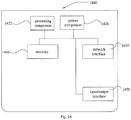
- Fig. 14 is a block diagram illustrating a device 1400 for controlling a smart home device to upload data according to an example embodiment of the present disclosure.
- the device 1400 may be an application server or a smart home device.
- the device 1400 may include a processing component 1422 (which further includes one or more processors), and memory resources represented by a memory 1416 for storing instructions executed by the processing component 1422, e.g., application programs.
- the application programs stored in the memory 1416 may include one or more modules. Each module may include a set of instructions.
- the processing component 1422 may be configured to execute instructions, so as to perform the above methods for controlling the smart home device.
- the device 1400 may also include a power component 1426 configured to execute power management of the device 1400, a wired or wireless network interface 1450 configured to connect the device 1400 to the network, an input/output interface 1458.
- the device 1400 may also operate based on the operating system stored in the memory 1416, such as Windows ServerTM, Mac OS XTM, UnixTM, LinuxTM, FreeBSDTM, or the like.
- non-transitory computer readable storage medium including instructions, such as the memory 1416 including instructions.
- the above instructions are executable by the processing component 1422 in the device 1400, for performing the above-described methods.
- the non-transitory computer-readable storage medium may be a ROM, a RAM, a CD-ROM, a magnetic tape, a floppy disc, an optical data storage device, and the like.
Landscapes
- Engineering & Computer Science (AREA)
- Automation & Control Theory (AREA)
- Computer Networks & Wireless Communication (AREA)
- Signal Processing (AREA)
- Human Computer Interaction (AREA)
- General Physics & Mathematics (AREA)
- General Engineering & Computer Science (AREA)
- Physics & Mathematics (AREA)
- Medical Informatics (AREA)
- General Health & Medical Sciences (AREA)
- Manufacturing & Machinery (AREA)
- Quality & Reliability (AREA)
- Health & Medical Sciences (AREA)
- Computing Systems (AREA)
- Information Transfer Between Computers (AREA)
- Telephonic Communication Services (AREA)
- Selective Calling Equipment (AREA)
Abstract
Description
- The present disclosure generally relates to the field of computer communication technology, and more particularly, to a method and an apparatus for controlling a smart home device to upload data and a method and an apparatus for acquiring data uploaded by a smart home device.
- As increasing smart devices go into people's lives, an application (APP for short) installed in a user terminal may be used to control the smart device remotely. Taking a smart home device as an example, the user may control remotely the smart home device, view current working status of the device and the like via the application installed in the user terminal. In the related art, for the control of the smart home, a substantial proportion of control instructions are forwarded by an application server provided by an application operator. Further, in the default setting, data uploaded by the user terminal is stored in the application server provided by the application operator, so that the application server may perform a data analysis or provide data querying service by using the acquired data of the smart home device.
- To this end, the present disclosure provides a method and an apparatus for controlling a smart home device to upload data and a method and an apparatus for acquiring data uploaded by a smart home device, thereby realizing data sharing of the smart home device.
- According to a first aspect of embodiments of the present disclosure, a method for controlling a smart home device to upload data is provided, which includes:
- acquiring operation status data of the smart home device; and
- according to binding relationships of the smart home device with application servers, sending the operation status data to all bound application servers;
- In one embodiment, acquiring operation status data of the smart home device includes:
- acquiring regularly or in real-time working status information of the smart home device as the operation status data; or
- after receiving status querying information for the smart home device, acquiring working status information of the smart home device as the operation status data; or
- after receiving a control instruction for the smart home device, acquiring feedback information that is generated according to an implementation situation of the control instruction as the operation status data.
- In one embodiment, acquiring operation status data of the smart home device includes:
- generating a user control information record according to the control instruction, the user control information record including: a user identifier, an identifier of a device sending the control instruction, instruction content, and information of a control operation process; and
- configuring the user control information record as the operation status data.
- In one embodiment, the at least two application servers bound to the smart home device authorize account permissions to each other.
- According to a second aspect of embodiments of the present disclosure, a method for acquiring data uploaded by a smart home device is provided, which includes:
- receiving operation status data sent by the smart home device, the smart home device being bound to at least two application servers, and the operation status data being response data of the smart home device to any one of bound application servers.
- In one embodiment, the method for acquiring data uploaded by a smart home device further includes:
- querying an account corresponding to the smart home device according to a device identifier of the smart home device; and
- sending the operation status data to a user terminal on which the account is logged in.
- In one embodiment, the method for acquiring data uploaded by a smart home device further includes:
- receiving a control instruction for the smart home device sent by a user terminal; and
- sending the control instruction to the smart home device.
- In one embodiment, the method for acquiring data uploaded by a smart home device further includes:
- authorizing account permissions to each other by the bound application servers of the smart home device and other application servers.
- According to a third aspect of embodiments of the present disclosure, an apparatus for controlling a smart home device to upload data is provided, which includes:
- an acquiring module, configured to acquire operation status data of the smart home device; and
- a sending module, configured to, according to binding relationships of the smart home device with application servers, send the operation status data to all bound application servers, wherein the smart home device is bound to at least two application servers.
- In one embodiment, the acquiring module includes at least one of:
- a first acquiring sub module, configured to acquire regularly or in real-time working status information of the smart home device as the operation status data;
- a second acquiring sub module, configured to, after receiving status querying information for the smart home device, acquire working status information of the smart home device as the operation status data; and
- a third acquiring sub module, configured to, after receiving a control instruction for the smart home device, acquire feedback information that is generated according to an implementation situation of the control instruction as the operation status data.
- In one embodiment, the acquiring module includes:
- a recording sub module, configured to generate a user control information record according to the control instruction, the user control information record including: a user identifier, an identifier of a device sending the control instruction, instruction content, and information of a control operation process; and
- a data generating sub module, configured to configure the user control information record as the operation status data.
- In one embodiment, the at least two application servers bound to the smart home device authorize account permissions to each other.
- According to a fourth aspect of embodiments of the present disclosure, an apparatus for acquiring data uploaded by a smart home device is provided, which includes:
- a receiving module, configured to receive operation status data sent by the smart home device, the smart home device being bound to at least two application servers, and the operation status data being response data of the smart home device to any one of bound application servers.
- In one embodiment, the apparatus for acquiring data uploaded by a smart home device further includes:
- a querying module, configured to query an account corresponding to the smart home device according to a device identifier of the smart home device; and
- a sending module, configured to send the operation status data to a user terminal on which the account is logged in.
- In one embodiment, the apparatus for acquiring data uploaded by a smart home device further includes:
- an instruction receiving module, configured to receive a control instruction for the smart home device sent by a user terminal; and
- an instruction sending module, configured to send the control instruction to the smart home device.
- In one embodiment, the bound application servers of the smart home device and other application servers authorize account permissions to each other.
- According to a fifth aspect of embodiments of the present disclosure, a smart home device is provided, which includes: a processor; and a memory configured to store an instruction executable by the processor; in which the processor is configured to:
- acquire operation status data of the smart home device; and
- according to binding relationships of the smart home device with application servers, send the operation status data to all bound application servers;
- According to a sixth aspect of embodiments of the present disclosure, an application server is provided, which includes: a processor; and a memory configured to store an instruction executable by the processor; in which the processor is configured to:
- receive operation status data sent by a smart home device, the smart home device being bound to at least two application servers, and the operation status data being response data of the smart home device to any one of bound application servers.
- The technical solutions provided in embodiments of the present disclosure may have following advantageous effects.
- In the present disclosure, the smart home device may send the acquired operation status data to the plurality of application servers bound to the smart home device, such that each application server may collect relevant data of the smart home device to form big data, and the application server may perform a data analysis or provide corresponding data querying service according to the big data, thereby providing references for improving the performance of the smart home device and the quality of service, and improving the user experience of the smart home device.
- In the present disclosure, the method for acquiring the operation status data by the smart home device may include but is not limited to the following ways: determining the operation status data of the smart home device according to the device's working status information acquired regularly or in real-time; receiving the status querying information sent by the application server, and acquiring the working status information of the smart home device, and further determining the operation status data; after receiving the control instruction for the smart home device, acquiring the feedback information that is generated by the smart home device according to the implementation situation of the control instruction, and using the feedback information as the operation status data. The smart home device may send the operation status data acquired in the above ways to the application servers, such that each application server may get more abundant operation data of the smart home device, and then the application server may acquire more accurate reference information based on the above data, thereby providing services more appropriate (i.e. suitable) to the user habit and improving the user experience of the smart home device.
- In the present disclosure, when the smart home device receives and performs the control instruction, it may record the performing process as one user control information record, and generate the operation status data according to the above user control information record and send the operation status data to each application server, such that each application server may acquire more detailed information, thereby enriching user operation data of the smart home device in each application server, further making the application server provide application reference information more appropriate to the user habit. In the present disclosure, the application servers bound to the smart home device may authorize account permissions to each other, thereby facilitating the user in controlling the smart home device. Accordingly, the terminal device may send the operation status data satisfying different requirements to respective application server according to the relationships between the login account in the control instruction and the application servers and according to requirements of different application server providers.
- It is to be understood that both the foregoing general description and the following detailed description are exemplary and explanatory only and are not restrictive of the present disclosure.
- Accompanying drawings herein are incorporated in and constitute a part of the specification, and illustrate example embodiments in line with the present disclosure, and serve to explain the principle of the present disclosure together with the description.
-
Fig. 1 is a flow chart showing a method for controlling a smart home device to upload data according to an example embodiment of the present disclosure; -
Fig. 2 is a schematic diagram illustrating an application scenario in which a smart home device is controlled to upload data according to an example embodiment of the present disclosure; -
Fig. 3 is a flow chart showing another method for controlling a smart home device to upload data according to an example embodiment of the present disclosure; -
Fig. 4A is a schematic diagram illustrating another application scenario in which a smart home device is controlled to upload data according to an example embodiment of the present disclosure; -
Fig. 4B is a schematic diagram illustrating another application scenario in which a smart home device is controlled to upload data according to an example embodiment of the present disclosure; -
Fig. 5 is a flow chart showing a method for acquiring data uploaded by a smart home device according to an example embodiment of the present disclosure; -
Fig. 6 is a flow chart showing another method for acquiring data uploaded by a smart home device according to an example embodiment of the present disclosure; -
Fig. 7 is a block diagram illustrating an apparatus for controlling a smart home device to upload data according to an example embodiment of the present disclosure; -
Fig. 8 is a block diagram illustrating another apparatus for controlling a smart home device to upload data according to an example embodiment of the present disclosure; -
Fig. 9 is a block diagram illustrating another apparatus for controlling a smart home device to upload data according to an example embodiment of the present disclosure; -
Fig. 10 is a block diagram illustrating another apparatus for controlling a smart home device to upload data according to an example embodiment of the present disclosure; -
Fig. 11 is a block diagram illustrating an apparatus for acquiring data uploaded by a smart home device according to an example embodiment of the present disclosure; -
Fig. 12 is a block diagram illustrating another apparatus for acquiring data uploaded by a smart home device according to an example embodiment of the present disclosure; -
Fig. 13 is a block diagram illustrating another apparatus for acquiring data uploaded by a smart home device according to an example embodiment of the present disclosure; and -
Fig. 14 is a block diagram illustrating a device for controlling a smart home device to upload data according to an example embodiment of the present disclosure. - Reference will now be made in detail to example embodiments, examples of which are illustrated in the accompanying drawings. The following description refers to the accompanying drawings in which the same numbers in different drawings represent the same or similar elements unless otherwise represented. The implementations set forth in the following description of example embodiments do not represent all implementations consistent with the invention. Instead, they are merely examples of apparatuses and methods consistent with aspects related to the invention as recited in the appended claims.
- Terms used herein in the description of the present disclosure are only for the purpose of describing specific embodiments, but should not be construed to limit the present disclosure. As used in the description of the present disclosure and the appended claims, "a" and "the" in singular forms mean including plural forms, unless clearly indicated in the context otherwise. It should also be understood that, as used herein, the term "and/or" represents and contains any one and all possible combinations of one or more associated listed items.
- It is to be understood that, although terms of "first" "second" and "third" are used for description of various information in the present disclosure, these information are not limited to these terms. These terms are only used for distinguishing information with the same type. For example, without departing from the scope of the present disclosure, the first information may also be referred to as the second information; similarly, the second information may also be referred to as the first information. Depending on the context, such as the words in the use of "if" can be interpreted as "when..." or "when..." or "response to define".
- In embodiments of the present disclosure, the related implementation subject may include: a user terminal, a smart home device, and at least two application servers. The above user terminal may be a smart phone, a personal digital assistant, or a wearable device such as a smart watch and a smart bracelet, etc. The above smart home device may be a home device with a communication module such as a Wi-Fi (Wireless Fidelity) module, for example, an air conditioner, a television, a refrigerator, a water heater and a rice cooker or the like. The Wi-Fi communication connection may be established between the smart home device and a router through the Wi-Fi module. The router, as a network access device in home, connects the smart home devices which access to the router respectively to the Internet. In the specific implementation, the user terminal, the smart home device and the application server are independent of and interrelated with each other, and achieve commonly technical solutions provided in the present disclosure. In other words, in this implementation, the user terminal, the smart home device and the application server are distinct devices which cooperate with each other in order to achieve the invention.
-
Fig. 1 is a flow chart showing a method for controlling a smart home device to upload data according to an example embodiment of the present disclosure. The method is implemented by the smart home device and includes the following steps. - In
step 11, operation status data of the smart home device is acquired. - In the present disclosure, the operation status data of the smart home device may include: time of turning on/off, device operation parameters set by a user, device maintenance parameters and the like. Assuming that the smart home device is a smart air conditioner, the operation status data may include: time of turning on/off, set temperature, wind power, maintenance frequency and the like. Software or hardware engineers may further optimize products and improve the quality and user experience of the smart home device according to the above operation status data of the smart home device.
- In embodiments of the present disclosure, the smart home device may acquire the operation status data by adopting at least one of following ways.
- First way: working status information of the smart home device is acquired regularly or in real-time, and the working status information is used as the operation status data.
- The communication module such as the built-in Wi-Fi communication module in the smart home device may send request information for acquiring the device's working status to the processor of the smart home device, so as to acquire the working status information of the smart home device; and then the operation status data is generated according to the working status information. The working status information may be data detected by various built-in sensors in the smart home device, for example, geo-location mapping data acquired by a GPS positioning device, personnel information in the neighborhood detected by an infrared sensor, ambient temperature in the neighborhood detected by a temperature sensor, or other information.
- Second way: after receiving status querying information for the smart home device, working status information of the smart home device is acquired and the working status information is used as the operation status data.
- In embodiments of the present disclosure, the smart home device may receive the status querying information sent by the application server in the cloud. The status querying information is configured to query the usage situation, operation situation or other information of the smart home device bound to the application server. The smart home device may acquire the working status information according to the status querying information, and further use the working status information as the operation status data.
- Third way: after receiving a control instruction for the smart home device, feedback information that is generated according to an implementation situation of the control instruction is acquired, and the feedback information is used as the operation status data.
- According to relevant knowledge, the user may use the APP installed in the terminal, such as "smart home" APP installed in the smart phone, to directly send the control instruction to the smart home device via a near field communication technology (such as Wi-Fi, Bluetooth, ZigBee, etc.), or to forward the control instruction to the smart home device via public network (such as mobile cellular network, Internet, etc.). The smart home device receives the control instruction, and then may perform or refuse to perform a corresponding operation. The smart home device may generate a piece of feedback information according to the implementation situation of the control instruction, and use the feedback information as the operation status data. For example, the control instruction is "turning on the smart air conditioner R" or "adjusting the room temperature to 25 °C", and the corresponding module of the smart air conditioner may perform the corresponding control operation, and then generate the feedback information according to the implementation situation of the control operation, for example the feedback information may be "successfully turning on the smart air conditioner R", "failing to respond, the turning on operation being not performed", or "successfully setting temperature to 25 °C"; etc.
- Fourth way: in another embodiment of the present disclosure, the smart home device may record the related operation information performed after receiving the control instruction as one user control information record; and use the user control information record as the operation status data. The user control information record includes at least one of: a user identifier (such as account information registered in the APP), an identifier of a device sending the control instruction (such as a device identifier of the user terminal or a device identifier of the application server), instruction content, and information of control operation process.
- In
step 12, according to binding relationships of the smart home device with application servers, the operation status data is sent to all bound application servers. The smart home device is bound to at least two application servers. - In embodiments of the present disclosure, one smart home device has binding relationships with the application servers corresponding to at least two APPs. That is, the user may use at least two APPs to control the smart home device, i.e. the user may use two APPs installed in the user terminal to realize the control of a smart home device. Assuming that the smart home device may perform a network communication via the built-in Wi-Fi communication module, the Wi-Fi communication module may have at least two smart device communication protocols. Each smart device communication protocol supports the communication of the smart home device with an application server.
- Accordingly, the smart home device may send the acquired operation status data to all bound application servers via the above Wi-Fi communication module.
- In another embodiment of the present disclosure, the at least two application servers bound to the same smart home device may have a relationship of authorizing account permissions to each other.
- Referring to
Fig. 2 , which is a schematic diagram illustrating an application scenario in which a smart home device is controlled to upload data according to an example embodiment of the present disclosure, and taking thesmart air conditioner 400 being the smart home device as an example still, it is assumed that thesmart air conditioner 400 has binding relationships with two application servers. The application servers include afirst application server 200 and asecond application server 300. Under normal circumstances, the user may use thephone 100 to login to a first account and control thesmart air conditioner 400 intelligently via the application interface provided by thefirst application server 200; the user also may use thephone 100 to login to a second account and control thesmart air conditioner 400 intelligently via the application interface provided by thesecond application server 300. - The
smart air conditioner 400 may send the acquired operation status data to thefirst application server 200 and to thesecond application server 300. - If the
first application server 200 and thesecond application server 300 authorize account permissions to each other, this means that the user may use the first account to login to the application interface provided by thesecond application server 300 so as to realize the intelligent control of the smart air conditioner, or the user may use the second account to login to the application interface provided by thefirst application server 200 so as to realize the intelligent control of thesmart air conditioner 400. That is, the first account is a master account for logging in to thefirst application server 200, and the second account is a slave account for logging in to thefirst application server 200. Similarly, the second account is a master account for logging in to thesecond application server 300 and the first account is a slave account for logging in to thesecond application server 300. - At the side of
smart air conditioner 400, for the above fourth way of acquiring the operation status data, in reference toFig. 2 , the user may use a preset account to login to the smart home APP in thephone 100, and further send the control instruction to thesmart home device 400 via thefirst application server 200. The control instruction at least includes a login account and a device identifier of the application server, and may further include a terminal identifier of the user terminal. - Referring to
Fig. 3 , which is a flow chart showing another method for controlling a smart home device to upload data according to an example embodiment of the present disclosure,step 12 may include the following steps. - In
step 121, the relationships between the login account in the control instruction and the application servers are determined. - For example, as shown in
Fig. 2 , the application server may be thefirst application server 200. The relationship between the account currently logged in and thefirst application server 200 is then determined. In particular, it is determined whether the account currently logged in on thefirst application server 200 is the master account or the slave account. - In
step 122, if the login account is the master account of the application server, first operation status data is sent to the application server and second operation status data is sent to another related application server. The second operation status data belongs to a part of the first operation status data. The related application server is another application server bound to the smart air conditioner. - That is, the second operation status data is a part extracted from the first operation status data according to a predetermined strategy. The second operation status data does not include any information not included in the first operation status data.
- As shown in
Fig. 2 , if thesmart air conditioner 400 detects that the operation status data is acquired under a control mode that the user uses the first account to login to thefirst application server 200, thesmart air conditioner 400 records the above complete user control information as the first operation status data and then sends it to thefirst application server 200. Thesmart air conditioner 400 may select a part of data from the user control information according to the predetermined strategy as the second operation status data and send it to thesecond application server 300. - In
step 123, if the login account is the slave account of the application server, the operation status data is sent to all bound application servers. - In embodiments of the present disclosure, each application server provides the most versatile application interface only when detecting the master account.
- Function realizations (shown in
Fig. 4B ) in the slave application interface provided by the first application server when the user logs in to the first application server using the second account are less than function realizations (shown inFig. 4A ) in the master application interface provided by the first application server when the user logs in to the first application server using the first account.Fig. 4A andFig. 4B are schematic diagrams illustrating application scenarios in which the smart home device is controlled to upload data according to an example embodiment of the present disclosure.Fig. 4A illustrates the master application interface for controlling the smart air conditioner provided by the first application server, and the user may intelligently control the turning on/off, a parameter (such as temperature, humidity, wind direction, etc.) of the smart air conditioner via this master application interface.Fig. 4B illustrates the slave application interface for controlling the smart air conditioner provided by the first application server, and the slave application interface only includes the turning on/off operation and temperature adjusting interface. - It is assumed that the mode in which the user controls the smart air conditioner via the master application interface is called as a master user operation mode, and the mode in which the user controls the smart air conditioner via the slave application interface is called as a slave user operation mode. Correspondingly, compared to the master user operation mode, information of control operation process acquired by the smart air conditioner under the slave user operation mode is relatively small, and the corresponding operation status data is less.
- The smart air conditioner may send the operation status data acquired under the slave user operation mode to each bound application server.
- It can be seen that, by adopting the method for controlling a smart home device to upload data according to embodiments of the present disclosure, the smart home device may send the acquired operation status data to all the application servers bound to the smart home device, thereby realizing the purpose of sharing data of the smart home device by operators which provide different application servers. The data may include: performance parameters of the device itself or user behavior data. After the operation status data gradually forms big data, a data analysis may be performed on the big data and the acquired analysis result is configured to provide the reference for improving the product quality of the smart home device or providing better service, thereby improving the user experience of the smart home device.
- Correspondingly, embodiments of the present disclosure also provide a method for acquiring data uploaded by a smart home device. This method is applied in an application server, and includes: receiving operation status data sent by a smart home device, the smart home device being bound to at least two application servers, and the operation status data being response data of the smart home device to any one of bound application servers.
- In embodiments of the present disclosure, the application server which receives the operation status data may be any application server having a binding relationship with the smart home device. For example, in the application scenario shown in
Fig. 2 , the above application server may be thefirst application server 200, also may be thesecond application server 300. - Referring to
Fig. 5 , which is a flow chart showing a method for acquiring data uploaded by a smart home device according to an example embodiment of the present disclosure, the method includes the following steps. - In
step 21, the operation status data sent by the bound smart home device is received. The smart home device is bound to at least two application servers. The operation status data is response data of the smart home device to any one of the bound application servers. - In
step 22, an account corresponding to the smart home device is queried according to a device identifier of the smart home device. - After the configuration of intelligent control information of the smart home device is completed, each application server has a list of controlled devices stored therein. The list of controlled devices includes: correspondences between user identifiers and device identifiers of smart home devices, which is shown as follows.
Table 1 user identifier device identifier of smart home device first account smart air conditioner M1 smart air purifier R1 smart lamp L1 - The operation status data received by the application server at least includes the device identifier of the smart home device, and the device identifier is assumed as M1. The preset list such as Table 1 of controlled devices is queried according to the device identifier M1 of the smart air conditioner, and then it is determined that the user identifier is the first account. That is, after the user logs in to the application server using the first account, the application server may provide the application interface for controlling the smart home device.
- In
step 23, the operation status data is sent to a user terminal on which the account is logged in. - In embodiments of the present disclosure, the device identifier of the user terminal currently having the binding relationship with the account is queried according to the account information. After the user terminal is determined, the application server also may send the operation status data of the smart home device to the corresponding user terminal, so that the user knows timely the current operation status and other information of the smart home device, thereby improving the user experience of the user terminal.
- Referring to
Fig. 6 , which is a flow chart showing another method for acquiring data uploaded by a smart home device according to an example embodiment of the present disclosure, the method further includes the following steps beforestep 21. - In
step 201, a control instruction for the smart home device sent by a user terminal is received. - The control instruction at least includes: a user identifier i.e. login account information, a device identifier of the smart home device, a device identifier of the application server, and instruction content.
- In
step 202, the control instruction is sent to the smart home device. - Corresponding to the above-described fourth way, the application server receives the control instruction for the smart home device. The control instruction is sent by the user via the user terminal. Then, the above control instruction is forwarded to the smart home device, so that the smart home device may perform the corresponding operation according to the control instruction, and generate the operation status data according to the implementation situation of the instruction, and then send the operation status data to the application server.
- The embodiments shown in
Figs. 5 and6 describe the present disclosure based on the situation that one application server only provides authorization for one account and then provides the application interface for the smart home device. In another embodiment of the present disclosure, the at least two application servers bound to the smart home device also may authorize account permissions to each other. The account permission authorization has been described in detail with reference to the schematic diagram of the application scenario shown inFig. 2 , which is not repeated herein. In the application scenario, there may be three conditions about the application server acquiring the user operation data. - The first condition, corresponding to the embodiment shown in
Fig. 3 , if the current application server which receives the operation status data sends the control instruction to the smart home device in advance, and the login account in the control instruction is the master account of the current application server, the operation status data received by the application server may include more information, i.e. the first operation status data described above. - The second condition, corresponding to the embodiment shown in
Fig. 3 , if the current application server which receives the operation status data sends the control instruction to the smart home device in advance, and the login account in the control instruction is the slave account of the current application server, the application server may receive the operation status data including less information, i.e. the second operation status data described above. - The third condition, if the operation status data is acquired in the above fourth way and the current application server does not send the control instruction to the smart home device, the operation status data received by the application server may include relatively less information.
- With respect to the foregoing method embodiments, for ease of description, a series of action combinations are given for description. However, those skilled in the art should be aware of that the present disclosure is not limited to the described action sequence, because some steps may be performed in other sequence or simultaneously according to the present disclosure.
- In addition, those skilled in the art should also be aware of that embodiments described in the specification are exemplary embodiments, and the involved actions and modules are not necessarily mandatory the present disclosure.
- Corresponding to method embodiments of application function realization, the present disclosure also provides apparatus embodiments and terminal embodiments of application function realization.
-
Fig. 7 is a block diagram illustrating an apparatus for controlling a smart home device to upload data according to an example embodiment of the present disclosure, the apparatus is dispoed in the smart home device and includes an acquiringmodule 31 and a sendingmodule 32. - The acquiring
module 31 is configured to acquire operation status data of the smart home device. - The sending
module 32 is configured to, according to binding relationships of the smart home device with application servers, send the operation status data to all bound application servers, wherein the smart home device is bound to at least two application servers. - Referring to
Fig. 8 , which is a block diagram illustrating another apparatus for controlling a smart home device to upload data according to an example embodiment of the present disclosure, and based on the embodiment shown inFig. 7 , the acquiringmodule 31 may include at least one of a first acquiringsub module 311, a second acquiringsub module 312 and a third acquiringsub module 313. - The first acquiring
sub module 311 is configured to acquire regularly or in real-time working status information of the smart home device as the operation status data. - The second acquiring
sub module 312 is configured to, after receiving status querying information for the smart home device, acquire working status information of the smart home device as the operation status data. - The third acquiring
sub module 313 is configured to, after receiving a control instruction for the smart home device, acquire feedback information that is generated according to an implementation situation of the control instruction as the operation status data. - Referring to
Fig. 9 , which is a block diagram illustrating another apparatus for controlling a smart home device to upload data according to an example embodiment of the present disclosure, and based on the embodiment shown inFig. 8 , the acquiringmodule 31 may include arecording sub module 314 and a data generatingsub module 315. - The
recording sub module 314 is configured to generate a user control information record according to the control instruction, the user control information record including: a user identifier, an identifier of a device sending the control instruction, instruction content, and information of a control operation process. - The data generating
sub module 315 is configured to use the user control information record as the operation status data. In another embodiment of the present disclosure, the at least two application servers bound to the smart home device authorize account permissions to each other. Referring toFig. 10 , which is a block diagram illustrating another apparatus for controlling a smart home device to upload data according to an example embodiment of the present disclosure, and based on the embodiment shown inFig. 9 , the sendingmodule 32 may include a determiningsub module 321, a first sendingsub module 322 and a second sendingsub module 323. - The determining
sub module 321 is configured to determine the relationships between the login account in the control instruction and the application servers. - The first sending
sub module 322 is configured to send first operation status data to an application server and to send second operation status data to another related application server, if the login account is the master account of the application server. The second operation status data belongs to a part of the first operation status data. The related application server is another application server bound to the smart air conditioner. - The second
sending sub module 323 is configured to send the operation status data to all bound application servers if the login account is the slave account of the application server. - Correspondingly, the present disclosure also provides an apparatus for acquiring data uploaded by a smart home device, and the apparatus is disposed in an application server. Referring to
Fig. 11 , which is a block diagram illustrating an apparatus for acquiring data uploaded by a smart home device according to an example embodiment of the present disclosure, the apparatus may include: a receivingmodule 41. - The receiving
module 41 is configured to receive operation status data sent by thesmart home device, the smart home device being bound to at least two application servers, and the operation status data being response data of the smart home device to any one of bound application servers. - Referring to
Fig. 12 , which is a block diagram illustrating another apparatus for acquiring data uploaded by a smart home device according to an example embodiment of the present disclosure, and based on the embodiment of the present disclosure shown inFig. 11 , the apparatus may further include aquerying module 42, and a sendingmodule 43. - The
querying module 42 is configured to query an account corresponding to the smart home device according to a device identifier of the smart home device. - The sending
module 43 is configured to send the operation status data to a user terminal on which the account is logged in. - Referring to
Fig. 13 , which is a block diagram illustrating another apparatus for acquiring data uploaded by a smart home device according to an example embodiment of the present disclosure, and based on the embodiment of the present disclosure shown inFig. 11 , besides the receivingmodule 41, the apparatus may further include aninstruction receiving module 401 and aninstruction sending module 402. - The
instruction receiving module 401 is configured to receive a control instruction for the smart home device sent by a user terminal. - The
instruction sending module 402 is configured to send the control instruction to the smart home device. - For the apparatus embodiments, since they substantially correspond to the method embodiments, concerning related parts of the device embodiments, reference is made to corresponding parts of the method embodiments. The above-described apparatus embodiments are merely illustrative, in which a unit as a separate component may or may not be physically separated, a component displayed as a unit may or may not be a physical unit, i.e. may be located at a place, or be distributed on multiple network units. A part or all of the modules may be selected according to practical needs so as to achieve the object of the solution of the present disclosure, which may be understood and implemented by those skilled in the art without creative labor.
- Correspondingly, on one side, embodiments of the present disclosure provide a smart home device including a processor; and a memory configured to store an instruction executable by the processor; in which the processor is configured to:
- acquire operation status data of the smart home device; and
- according to binding relationships of the smart home device with application servers, send the operation status data to all bound application servers; in which the smart home device is bound to at least two application servers.
- On the other side, embodiments of the present disclosure provide an application server including: a processor; and a memory configured to store an instruction executable by the processor; in which the processor is configured to:
- receive operation status data sent by a smart home device, the smart home device being bound to at least two application servers, and the operation status data being response data of the smart home device to any one of bound application servers.
- As shown in
Fig. 14, Fig. 14 is a block diagram illustrating adevice 1400 for controlling a smart home device to upload data according to an example embodiment of the present disclosure. For example, thedevice 1400 may be an application server or a smart home device. Referring toFig. 14 , thedevice 1400 may include a processing component 1422 (which further includes one or more processors), and memory resources represented by amemory 1416 for storing instructions executed by theprocessing component 1422, e.g., application programs. The application programs stored in thememory 1416 may include one or more modules. Each module may include a set of instructions. Further, theprocessing component 1422 may be configured to execute instructions, so as to perform the above methods for controlling the smart home device. - The
device 1400 may also include apower component 1426 configured to execute power management of thedevice 1400, a wired orwireless network interface 1450 configured to connect thedevice 1400 to the network, an input/output interface 1458. Thedevice 1400 may also operate based on the operating system stored in thememory 1416, such as Windows ServerTM, Mac OS XTM, UnixTM, LinuxTM, FreeBSDTM, or the like. - In example embodiments, there is also provided a non-transitory computer readable storage medium including instructions, such as the
memory 1416 including instructions. The above instructions are executable by theprocessing component 1422 in thedevice 1400, for performing the above-described methods. For example, the non-transitory computer-readable storage medium may be a ROM, a RAM, a CD-ROM, a magnetic tape, a floppy disc, an optical data storage device, and the like. - Other embodiments of the invention will be apparent to those skilled in the art from consideration of the specification and practice of the invention disclosed here. This application is intended to cover any variations, uses, or adaptations of the invention following the general principles thereof and including such departures from the present disclosure as come within known or customary practice in the art.
Claims (15)
- A method for controlling a smart home device to upload data, comprising:acquiring (11) operation status data of the smart home device; andaccording to binding relationships of the smart home device with application servers, sending (12) the operation status data to all bound application servers;wherein the smart home device is bound to at least two application servers.
- The method according to claim 1, wherein acquiring (11) operation status data of the smart home device comprises:acquiring regularly or in real-time working status information of the smart home device as the operation status data; orafter receiving status querying information for the smart home device, acquiring working status information of the smart home device as the operation status data; orafter receiving a control instruction for the smart home device, acquiring feedback information generated according to an implementation situation of the control instruction as the operation status data.
- The method according to claim 2, wherein acquiring (11) operation status data of the smart home device comprises:generating a user control information record according to the control instruction, the user control information record comprising: a user identifier, an identifier of a device sending the control instruction, instruction content, and information of a control operation process; andconfiguring the user control information record as the operation status data.
- The method according to claim 1, wherein the at least two application servers bound to the smart home device authorize account permissions to each other.
- A method for acquiring data uploaded by a smart home device, comprising:receiving (21) operation status data sent by the smart home device, the smart home device being bound to at least two application servers, and the operation status data being response data of the smart home device to any one of bound application servers.
- The method according to claim 5, further comprising:querying (22) an account corresponding to the smart home device according to a device identifier of the smart home device; andsending (23) the operation status data to a user terminal on which the account is logged in.
- The method according to claim 5, further comprising:receiving (201) a control instruction for the smart home device sent by a user terminal; andsending (202) the control instruction to the smart home device.
- The method according to claim 5, further comprising:authorizing account permissions to each other by the bound application servers of the smart home device and other application servers.
- An apparatus for controlling a smart home device to upload data, comprising:an acquiring module (31), configured to acquire operation status data of the smart home device; anda sending module (32), configured to, according to binding relationships of the smart home device with application servers, send the operation status data to all bound application servers, wherein the smart home device is bound to at least two application servers.
- The apparatus according to claim 9, wherein the acquiring module (31) comprises at least one of:a first acquiring sub module (311), configured to acquire regularly or in real-time working status information of the smart home device as the operation status data;a second acquiring sub module (312), configured to, after receiving status querying information for the smart home device, acquire working status information of the smart home device as the operation status data; anda third acquiring sub module (313), configured to, after receiving a control instruction for the smart home device, acquire feedback information generated according to an implementation situation of the control instruction as the operation status data.
- The apparatus according to claim 10, wherein the acquiring module (31) comprises:a recording sub module (314), configured to generate a user control information record according to the control instruction, the user control information record comprising: a user identifier, an identifier of a device sending the control instruction, instruction content, and information of a control operation process; anda data generating sub module (315), configured to configure the user control information record as the operation status data.
- The apparatus according to claim 9, wherein the at least two application servers bound to the smart home device authorize account permissions to each other.
- An apparatus for acquiring data uploaded by a smart home device, comprising:a receiving module (41), configured to receive operation status data sent by the smart home device, the smart home device being bound to at least two application servers, and the operation status data being response data of the smart home device to any one of bound application servers.
- The apparatus according to claim 13, further comprising:a querying module (42), configured to query an account corresponding to the smart home device according to a device identifier of the smart home device; anda sending module (43), configured to send the operation status data to a user terminal on which the account is logged in.
- The apparatus according to claim 13, further comprising:an instruction receiving module (401), configured to receive a control instruction for the smart home device sent by a user terminal; andan instruction sending module (402), configured to send the control instruction to the smart home device.
Applications Claiming Priority (1)
| Application Number | Priority Date | Filing Date | Title |
|---|---|---|---|
| CN201610379293.8A CN105871671B (en) | 2016-05-31 | 2016-05-31 | Method and device for controlling and acquiring uploading data of intelligent household equipment |
Publications (2)
| Publication Number | Publication Date |
|---|---|
| EP3252998A1 true EP3252998A1 (en) | 2017-12-06 |
| EP3252998B1 EP3252998B1 (en) | 2019-03-06 |
Family
ID=56643020
Family Applications (1)
| Application Number | Title | Priority Date | Filing Date |
|---|---|---|---|
| EP16194386.5A Active EP3252998B1 (en) | 2016-05-31 | 2016-10-18 | Method and apparatus for controlling smart home device to upload data, method and apparatus for acquiring data uploaded by smart home device |
Country Status (6)
| Country | Link |
|---|---|
| US (1) | US9998297B2 (en) |
| EP (1) | EP3252998B1 (en) |
| JP (1) | JP6513816B2 (en) |
| CN (1) | CN105871671B (en) |
| RU (1) | RU2681351C1 (en) |
| WO (1) | WO2017206312A1 (en) |
Cited By (2)
| Publication number | Priority date | Publication date | Assignee | Title |
|---|---|---|---|---|
| CN110691135A (en) * | 2019-09-29 | 2020-01-14 | 深圳开立生物医疗科技股份有限公司 | Device data uploading method, system, IoT module and storage medium |
| EP3923522A4 (en) * | 2019-03-22 | 2022-03-02 | Huawei Technologies Co., Ltd. | COMMUNICATION METHOD, APPARATUS AND SYSTEM |
Families Citing this family (23)
| Publication number | Priority date | Publication date | Assignee | Title |
|---|---|---|---|---|
| CN104333498B (en) * | 2014-11-28 | 2018-10-02 | 小米科技有限责任公司 | Control the method and device of smart home device |
| CN112929247A (en) * | 2015-12-22 | 2021-06-08 | 小米科技有限责任公司 | Method, device and system for accessing intelligent household electrical appliance to multiple servers |
| CN107991893A (en) * | 2017-11-14 | 2018-05-04 | 美的集团股份有限公司 | Realize method, gesture identification module, main control module and the home appliance of communication |
| CN107919988A (en) * | 2017-11-17 | 2018-04-17 | 北京小米移动软件有限公司 | Data statistical approach and device |
| CN107888458A (en) * | 2017-12-11 | 2018-04-06 | 北京小米移动软件有限公司 | Smart machine condition processing method and device |
| CN108375916B (en) * | 2018-01-17 | 2021-09-14 | 深圳市博孚机电有限公司 | Use method of electric curtain based on Bluetooth module |
| CN110320825A (en) * | 2018-03-28 | 2019-10-11 | 北京京东尚科信息技术有限公司 | A kind of method and apparatus counting equipment state |
| JP7326731B2 (en) | 2018-11-30 | 2023-08-16 | 株式会社リコー | Information processing device, information processing system, information processing method and information processing program |
| EP3884653B1 (en) * | 2018-12-24 | 2025-03-26 | Samsung Electronics Co., Ltd. | Method and apparatus for controlling smart device to perform corresponding operations |
| CN113330724A (en) * | 2019-04-12 | 2021-08-31 | 深圳市欢太科技有限公司 | Intelligent home scheduling method, device, system, server and storage medium |
| CN110209639B (en) * | 2019-04-16 | 2022-05-20 | 深圳绿米联创科技有限公司 | Information processing method, device and system |
| CN110262272B (en) * | 2019-07-12 | 2022-06-28 | 四川虹美智能科技有限公司 | Intelligent household equipment control method, device and system |
| CN110768992A (en) * | 2019-10-30 | 2020-02-07 | 广东美的制冷设备有限公司 | Shared device operation monitoring method, device, server and storage medium |
| CN111208743B (en) * | 2020-03-17 | 2024-07-19 | 珠海格力节能环保制冷技术研究中心有限公司 | Intelligent household equipment, control method thereof and intelligent household system |
| CN111930020B (en) * | 2020-08-10 | 2024-04-05 | 广东沐光智能照明有限公司 | Equipment control system, method, device, terminal and readable storage medium |
| CN112130459A (en) * | 2020-09-16 | 2020-12-25 | 青岛海尔科技有限公司 | State information display method, device, storage medium and electronic device |
| CN112367229B (en) * | 2020-11-11 | 2022-05-03 | 深圳市欧瑞博科技股份有限公司 | Control method and device of intelligent household equipment, electronic equipment and storage medium |
| CN112614333A (en) * | 2020-12-17 | 2021-04-06 | 杭州当贝网络科技有限公司 | Remote controller retrieving method and system |
| CN112817248B (en) * | 2020-12-24 | 2023-06-09 | 青岛海尔科技有限公司 | A shared device management method, device, storage medium and electronic device |
| CN115567231A (en) * | 2021-07-02 | 2023-01-03 | 珠海格力电器股份有限公司 | Device control method, module, device and computer readable medium |
| CN115586726A (en) * | 2021-07-05 | 2023-01-10 | 中国科学院半导体研究所 | Family housekeeper processing method, device and electronic equipment based on intelligent housekeeper system |
| CN113867161A (en) * | 2021-09-17 | 2021-12-31 | 霍敏凯 | Intelligent home control system and control method based on big data |
| CN116339156A (en) * | 2021-12-16 | 2023-06-27 | 中兴通讯股份有限公司 | Smart home control method, device and storage medium |
Citations (3)
| Publication number | Priority date | Publication date | Assignee | Title |
|---|---|---|---|---|
| CN105259875A (en) * | 2015-10-15 | 2016-01-20 | 珠海格力电器股份有限公司 | Binding method, device and system of intelligent household equipment |
| US20160119354A1 (en) * | 2012-09-22 | 2016-04-28 | Google Inc. | Multi-tiered authentication methods for facilitating communications amongst smart home devices and cloud-based servers |
| US20160127145A1 (en) * | 2014-10-29 | 2016-05-05 | Xiaomi Inc. | Method and server for controlling smart devices based on predefined scenario mode |
Family Cites Families (14)
| Publication number | Priority date | Publication date | Assignee | Title |
|---|---|---|---|---|
| CN101218790A (en) * | 2005-07-04 | 2008-07-09 | Sk电信股份有限公司 | Home network system and control method thereof, method of setting residential gateway of home network system, and method of processing event protocol of home network system |
| JP4336721B2 (en) * | 2007-04-10 | 2009-09-30 | シャープ株式会社 | Control system, program, computer-readable recording medium, image device control system |
| CN102273323B (en) * | 2009-01-07 | 2014-09-10 | 皇家飞利浦电子股份有限公司 | Intelligent controllable lighting networks and schemata therefore |
| US8301270B2 (en) * | 2009-01-27 | 2012-10-30 | Eldon Technology Ltd. | Systems and methods for facilitating home automation |
| RU108611U1 (en) * | 2011-01-12 | 2011-09-20 | Юрий Эдуардович Галанин | INTELLIGENT SYSTEM OF AUTOMATION OF MEANS OF LIFE SUPPORT |
| US9960929B2 (en) * | 2012-09-21 | 2018-05-01 | Google Llc | Environmental sensing with a doorbell at a smart-home |
| US9307040B2 (en) * | 2013-01-03 | 2016-04-05 | Verizon Patent And Licensing Inc. | Boundary-less M2M service layer |
| US9871865B2 (en) * | 2013-07-11 | 2018-01-16 | Neura, Inc. | Physical environment profiling through internet of things integration platform |
| CN103616860B (en) * | 2013-11-08 | 2017-02-15 | 海信集团有限公司 | Method and device for remote control of household appliances |
| CN104144093A (en) * | 2014-03-12 | 2014-11-12 | 腾讯科技(深圳)有限公司 | Intelligent device control method, relevant device and system |
| US9813308B2 (en) * | 2014-06-04 | 2017-11-07 | Verizon Patent And Licensing Inc. | Statistical monitoring of customer devices |
| CN104460328B (en) * | 2014-10-29 | 2019-05-10 | 小米科技有限责任公司 | Smart machine control method and device based on set scene mode |
| CN105242548A (en) * | 2015-08-31 | 2016-01-13 | 广东美的环境电器制造有限公司 | Control system of household appliance |
| US20170098354A1 (en) * | 2015-10-01 | 2017-04-06 | Michael R. Loeb | System and method to protect users via light fixture networks |
-
2016
- 2016-05-31 CN CN201610379293.8A patent/CN105871671B/en active Active
- 2016-08-02 RU RU2018100818A patent/RU2681351C1/en active
- 2016-08-02 WO PCT/CN2016/092865 patent/WO2017206312A1/en not_active Ceased
- 2016-08-02 JP JP2017541261A patent/JP6513816B2/en active Active
- 2016-10-18 EP EP16194386.5A patent/EP3252998B1/en active Active
- 2016-10-21 US US15/299,476 patent/US9998297B2/en active Active
Patent Citations (3)
| Publication number | Priority date | Publication date | Assignee | Title |
|---|---|---|---|---|
| US20160119354A1 (en) * | 2012-09-22 | 2016-04-28 | Google Inc. | Multi-tiered authentication methods for facilitating communications amongst smart home devices and cloud-based servers |
| US20160127145A1 (en) * | 2014-10-29 | 2016-05-05 | Xiaomi Inc. | Method and server for controlling smart devices based on predefined scenario mode |
| CN105259875A (en) * | 2015-10-15 | 2016-01-20 | 珠海格力电器股份有限公司 | Binding method, device and system of intelligent household equipment |
Cited By (3)
| Publication number | Priority date | Publication date | Assignee | Title |
|---|---|---|---|---|
| EP3923522A4 (en) * | 2019-03-22 | 2022-03-02 | Huawei Technologies Co., Ltd. | COMMUNICATION METHOD, APPARATUS AND SYSTEM |
| US11601517B2 (en) | 2019-03-22 | 2023-03-07 | Huawei Technologies Co., Ltd. | Communications method, and communications apparatus and system |
| CN110691135A (en) * | 2019-09-29 | 2020-01-14 | 深圳开立生物医疗科技股份有限公司 | Device data uploading method, system, IoT module and storage medium |
Also Published As
| Publication number | Publication date |
|---|---|
| WO2017206312A1 (en) | 2017-12-07 |
| CN105871671A (en) | 2016-08-17 |
| EP3252998B1 (en) | 2019-03-06 |
| CN105871671B (en) | 2020-03-03 |
| RU2681351C1 (en) | 2019-03-06 |
| JP2018524645A (en) | 2018-08-30 |
| US20170346649A1 (en) | 2017-11-30 |
| JP6513816B2 (en) | 2019-05-15 |
| US9998297B2 (en) | 2018-06-12 |
Similar Documents
| Publication | Publication Date | Title |
|---|---|---|
| EP3252998B1 (en) | Method and apparatus for controlling smart home device to upload data, method and apparatus for acquiring data uploaded by smart home device | |
| US20240364600A1 (en) | Topology hiding in 5gc with roaming | |
| US20240235996A1 (en) | Deterministic network entity for communications networks | |
| CN119014125A (en) | Method for exposing data/analysis of communication network in roaming scene | |
| CN113794996B (en) | Device communication, device control method, device, electronic device, and storage medium | |
| US20260075060A1 (en) | Security for AI/ML Model Storage and Sharing | |
| CN107360065B (en) | Information push method and device | |
| EP4427509B1 (en) | Measurement time ranges for timing advance (ta) validation for small data transmission (sdt) | |
| US12581282B2 (en) | Virtual network (VN) group automation for dynamic shared data in 5G core network (5GC) | |
| CN120153640A (en) | Differentiated transmission of QoE reports and RVQoE reports | |
| CN118575494A (en) | Routing indicator update via UE parameter update UPU procedure | |
| US20260052418A1 (en) | Minimization drive test measurements area configuration for non-public networks | |
| WO2024235213A1 (en) | Method and apparatus for eas discovery and synchronization across edns for application group | |
| WO2026074361A1 (en) | UE Selection and Reports Correlation For MDT | |
| WO2026033313A1 (en) | Systems and methods for vertical federated learning training for inference for artificial intelligence and/or machine learning models | |
| WO2025172940A1 (en) | User equipmemt initiated beam reporting based on beam prediction | |
| WO2025136192A1 (en) | Minimization of drive test area configuration | |
| CN121336450A (en) | MDT information recording | |
| WO2025168737A1 (en) | Selecting user equipment to provide measurements for network training of ai/ml models | |
| EP4728702A1 (en) | Authorizing model retrieval via an intermediary | |
| JP2024530923A (en) | Signaling-based drive test minimization setting availability | |
| CN120937408A (en) | Method and apparatus for network function discovery | |
| WO2025214951A1 (en) | Sending and receiving validation information for an access token | |
| CN120455999A (en) | Method for an edge computing client to obtain and use an identifier of a user device hosting the client | |
| CN119769119A (en) | Method and apparatus for user plane function selection |
Legal Events
| Date | Code | Title | Description |
|---|---|---|---|
| PUAI | Public reference made under article 153(3) epc to a published international application that has entered the european phase |
Free format text: ORIGINAL CODE: 0009012 |
|
| STAA | Information on the status of an ep patent application or granted ep patent |
Free format text: STATUS: THE APPLICATION HAS BEEN PUBLISHED |
|
| AK | Designated contracting states |
Kind code of ref document: A1 Designated state(s): AL AT BE BG CH CY CZ DE DK EE ES FI FR GB GR HR HU IE IS IT LI LT LU LV MC MK MT NL NO PL PT RO RS SE SI SK SM TR |
|
| AX | Request for extension of the european patent |
Extension state: BA ME |
|
| STAA | Information on the status of an ep patent application or granted ep patent |
Free format text: STATUS: REQUEST FOR EXAMINATION WAS MADE |
|
| 17P | Request for examination filed |
Effective date: 20180605 |
|
| RBV | Designated contracting states (corrected) |
Designated state(s): AL AT BE BG CH CY CZ DE DK EE ES FI FR GB GR HR HU IE IS IT LI LT LU LV MC MK MT NL NO PL PT RO RS SE SI SK SM TR |
|
| GRAP | Despatch of communication of intention to grant a patent |
Free format text: ORIGINAL CODE: EPIDOSNIGR1 |
|
| STAA | Information on the status of an ep patent application or granted ep patent |
Free format text: STATUS: GRANT OF PATENT IS INTENDED |
|
| RIC1 | Information provided on ipc code assigned before grant |
Ipc: H04L 29/06 20060101ALI20180904BHEP Ipc: H04L 12/28 20060101AFI20180904BHEP |
|
| INTG | Intention to grant announced |
Effective date: 20181002 |
|
| GRAS | Grant fee paid |
Free format text: ORIGINAL CODE: EPIDOSNIGR3 |
|
| GRAA | (expected) grant |
Free format text: ORIGINAL CODE: 0009210 |
|
| STAA | Information on the status of an ep patent application or granted ep patent |
Free format text: STATUS: THE PATENT HAS BEEN GRANTED |
|
| AK | Designated contracting states |
Kind code of ref document: B1 Designated state(s): AL AT BE BG CH CY CZ DE DK EE ES FI FR GB GR HR HU IE IS IT LI LT LU LV MC MK MT NL NO PL PT RO RS SE SI SK SM TR |
|
| REG | Reference to a national code |
Ref country code: GB Ref legal event code: FG4D |
|
| REG | Reference to a national code |
Ref country code: CH Ref legal event code: EP Ref country code: AT Ref legal event code: REF Ref document number: 1106066 Country of ref document: AT Kind code of ref document: T Effective date: 20190315 |
|
| REG | Reference to a national code |
Ref country code: DE Ref legal event code: R096 Ref document number: 602016010645 Country of ref document: DE |
|
| REG | Reference to a national code |
Ref country code: IE Ref legal event code: FG4D |
|
| REG | Reference to a national code |
Ref country code: NL Ref legal event code: MP Effective date: 20190306 |
|
| REG | Reference to a national code |
Ref country code: LT Ref legal event code: MG4D |
|
| PG25 | Lapsed in a contracting state [announced via postgrant information from national office to epo] |
Ref country code: NO Free format text: LAPSE BECAUSE OF FAILURE TO SUBMIT A TRANSLATION OF THE DESCRIPTION OR TO PAY THE FEE WITHIN THE PRESCRIBED TIME-LIMIT Effective date: 20190606 Ref country code: SE Free format text: LAPSE BECAUSE OF FAILURE TO SUBMIT A TRANSLATION OF THE DESCRIPTION OR TO PAY THE FEE WITHIN THE PRESCRIBED TIME-LIMIT Effective date: 20190306 Ref country code: LT Free format text: LAPSE BECAUSE OF FAILURE TO SUBMIT A TRANSLATION OF THE DESCRIPTION OR TO PAY THE FEE WITHIN THE PRESCRIBED TIME-LIMIT Effective date: 20190306 Ref country code: FI Free format text: LAPSE BECAUSE OF FAILURE TO SUBMIT A TRANSLATION OF THE DESCRIPTION OR TO PAY THE FEE WITHIN THE PRESCRIBED TIME-LIMIT Effective date: 20190306 |
|
| PG25 | Lapsed in a contracting state [announced via postgrant information from national office to epo] |
Ref country code: RS Free format text: LAPSE BECAUSE OF FAILURE TO SUBMIT A TRANSLATION OF THE DESCRIPTION OR TO PAY THE FEE WITHIN THE PRESCRIBED TIME-LIMIT Effective date: 20190306 Ref country code: BG Free format text: LAPSE BECAUSE OF FAILURE TO SUBMIT A TRANSLATION OF THE DESCRIPTION OR TO PAY THE FEE WITHIN THE PRESCRIBED TIME-LIMIT Effective date: 20190606 Ref country code: NL Free format text: LAPSE BECAUSE OF FAILURE TO SUBMIT A TRANSLATION OF THE DESCRIPTION OR TO PAY THE FEE WITHIN THE PRESCRIBED TIME-LIMIT Effective date: 20190306 Ref country code: LV Free format text: LAPSE BECAUSE OF FAILURE TO SUBMIT A TRANSLATION OF THE DESCRIPTION OR TO PAY THE FEE WITHIN THE PRESCRIBED TIME-LIMIT Effective date: 20190306 Ref country code: HR Free format text: LAPSE BECAUSE OF FAILURE TO SUBMIT A TRANSLATION OF THE DESCRIPTION OR TO PAY THE FEE WITHIN THE PRESCRIBED TIME-LIMIT Effective date: 20190306 |
|
| REG | Reference to a national code |
Ref country code: AT Ref legal event code: MK05 Ref document number: 1106066 Country of ref document: AT Kind code of ref document: T Effective date: 20190306 |
|
| PG25 | Lapsed in a contracting state [announced via postgrant information from national office to epo] |
Ref country code: SK Free format text: LAPSE BECAUSE OF FAILURE TO SUBMIT A TRANSLATION OF THE DESCRIPTION OR TO PAY THE FEE WITHIN THE PRESCRIBED TIME-LIMIT Effective date: 20190306 Ref country code: EE Free format text: LAPSE BECAUSE OF FAILURE TO SUBMIT A TRANSLATION OF THE DESCRIPTION OR TO PAY THE FEE WITHIN THE PRESCRIBED TIME-LIMIT Effective date: 20190306 Ref country code: IT Free format text: LAPSE BECAUSE OF FAILURE TO SUBMIT A TRANSLATION OF THE DESCRIPTION OR TO PAY THE FEE WITHIN THE PRESCRIBED TIME-LIMIT Effective date: 20190306 Ref country code: PT Free format text: LAPSE BECAUSE OF FAILURE TO SUBMIT A TRANSLATION OF THE DESCRIPTION OR TO PAY THE FEE WITHIN THE PRESCRIBED TIME-LIMIT Effective date: 20190706 Ref country code: AL Free format text: LAPSE BECAUSE OF FAILURE TO SUBMIT A TRANSLATION OF THE DESCRIPTION OR TO PAY THE FEE WITHIN THE PRESCRIBED TIME-LIMIT Effective date: 20190306 Ref country code: CZ Free format text: LAPSE BECAUSE OF FAILURE TO SUBMIT A TRANSLATION OF THE DESCRIPTION OR TO PAY THE FEE WITHIN THE PRESCRIBED TIME-LIMIT Effective date: 20190306 Ref country code: RO Free format text: LAPSE BECAUSE OF FAILURE TO SUBMIT A TRANSLATION OF THE DESCRIPTION OR TO PAY THE FEE WITHIN THE PRESCRIBED TIME-LIMIT Effective date: 20190306 Ref country code: ES Free format text: LAPSE BECAUSE OF FAILURE TO SUBMIT A TRANSLATION OF THE DESCRIPTION OR TO PAY THE FEE WITHIN THE PRESCRIBED TIME-LIMIT Effective date: 20190306 |
|
| PG25 | Lapsed in a contracting state [announced via postgrant information from national office to epo] |
Ref country code: SM Free format text: LAPSE BECAUSE OF FAILURE TO SUBMIT A TRANSLATION OF THE DESCRIPTION OR TO PAY THE FEE WITHIN THE PRESCRIBED TIME-LIMIT Effective date: 20190306 Ref country code: PL Free format text: LAPSE BECAUSE OF FAILURE TO SUBMIT A TRANSLATION OF THE DESCRIPTION OR TO PAY THE FEE WITHIN THE PRESCRIBED TIME-LIMIT Effective date: 20190306 |
|
| REG | Reference to a national code |
Ref country code: DE Ref legal event code: R097 Ref document number: 602016010645 Country of ref document: DE |
|
| PG25 | Lapsed in a contracting state [announced via postgrant information from national office to epo] |
Ref country code: AT Free format text: LAPSE BECAUSE OF FAILURE TO SUBMIT A TRANSLATION OF THE DESCRIPTION OR TO PAY THE FEE WITHIN THE PRESCRIBED TIME-LIMIT Effective date: 20190306 Ref country code: IS Free format text: LAPSE BECAUSE OF FAILURE TO SUBMIT A TRANSLATION OF THE DESCRIPTION OR TO PAY THE FEE WITHIN THE PRESCRIBED TIME-LIMIT Effective date: 20190706 |
|
| PLBE | No opposition filed within time limit |
Free format text: ORIGINAL CODE: 0009261 |
|
| STAA | Information on the status of an ep patent application or granted ep patent |
Free format text: STATUS: NO OPPOSITION FILED WITHIN TIME LIMIT |
|
| PG25 | Lapsed in a contracting state [announced via postgrant information from national office to epo] |
Ref country code: DK Free format text: LAPSE BECAUSE OF FAILURE TO SUBMIT A TRANSLATION OF THE DESCRIPTION OR TO PAY THE FEE WITHIN THE PRESCRIBED TIME-LIMIT Effective date: 20190306 |
|
| 26N | No opposition filed |
Effective date: 20191209 |
|
| PG25 | Lapsed in a contracting state [announced via postgrant information from national office to epo] |
Ref country code: SI Free format text: LAPSE BECAUSE OF FAILURE TO SUBMIT A TRANSLATION OF THE DESCRIPTION OR TO PAY THE FEE WITHIN THE PRESCRIBED TIME-LIMIT Effective date: 20190306 |
|
| PG25 | Lapsed in a contracting state [announced via postgrant information from national office to epo] |
Ref country code: TR Free format text: LAPSE BECAUSE OF FAILURE TO SUBMIT A TRANSLATION OF THE DESCRIPTION OR TO PAY THE FEE WITHIN THE PRESCRIBED TIME-LIMIT Effective date: 20190306 |
|
| PG25 | Lapsed in a contracting state [announced via postgrant information from national office to epo] |
Ref country code: MC Free format text: LAPSE BECAUSE OF FAILURE TO SUBMIT A TRANSLATION OF THE DESCRIPTION OR TO PAY THE FEE WITHIN THE PRESCRIBED TIME-LIMIT Effective date: 20190306 |
|
| REG | Reference to a national code |
Ref country code: CH Ref legal event code: PL |
|
| PG25 | Lapsed in a contracting state [announced via postgrant information from national office to epo] |
Ref country code: LI Free format text: LAPSE BECAUSE OF NON-PAYMENT OF DUE FEES Effective date: 20191031 Ref country code: CH Free format text: LAPSE BECAUSE OF NON-PAYMENT OF DUE FEES Effective date: 20191031 Ref country code: LU Free format text: LAPSE BECAUSE OF NON-PAYMENT OF DUE FEES Effective date: 20191018 |
|
| REG | Reference to a national code |
Ref country code: BE Ref legal event code: MM Effective date: 20191031 |
|
| PG25 | Lapsed in a contracting state [announced via postgrant information from national office to epo] |
Ref country code: BE Free format text: LAPSE BECAUSE OF NON-PAYMENT OF DUE FEES Effective date: 20191031 |
|
| PG25 | Lapsed in a contracting state [announced via postgrant information from national office to epo] |
Ref country code: IE Free format text: LAPSE BECAUSE OF NON-PAYMENT OF DUE FEES Effective date: 20191018 |
|
| PG25 | Lapsed in a contracting state [announced via postgrant information from national office to epo] |
Ref country code: CY Free format text: LAPSE BECAUSE OF FAILURE TO SUBMIT A TRANSLATION OF THE DESCRIPTION OR TO PAY THE FEE WITHIN THE PRESCRIBED TIME-LIMIT Effective date: 20190306 |
|
| PG25 | Lapsed in a contracting state [announced via postgrant information from national office to epo] |
Ref country code: GR Free format text: LAPSE BECAUSE OF FAILURE TO SUBMIT A TRANSLATION OF THE DESCRIPTION OR TO PAY THE FEE WITHIN THE PRESCRIBED TIME-LIMIT Effective date: 20190306 |
|
| PG25 | Lapsed in a contracting state [announced via postgrant information from national office to epo] |
Ref country code: MT Free format text: LAPSE BECAUSE OF FAILURE TO SUBMIT A TRANSLATION OF THE DESCRIPTION OR TO PAY THE FEE WITHIN THE PRESCRIBED TIME-LIMIT Effective date: 20190306 Ref country code: HU Free format text: LAPSE BECAUSE OF FAILURE TO SUBMIT A TRANSLATION OF THE DESCRIPTION OR TO PAY THE FEE WITHIN THE PRESCRIBED TIME-LIMIT; INVALID AB INITIO Effective date: 20161018 |
|
| PG25 | Lapsed in a contracting state [announced via postgrant information from national office to epo] |
Ref country code: MK Free format text: LAPSE BECAUSE OF FAILURE TO SUBMIT A TRANSLATION OF THE DESCRIPTION OR TO PAY THE FEE WITHIN THE PRESCRIBED TIME-LIMIT Effective date: 20190306 |
|
| REG | Reference to a national code |
Ref country code: DE Ref legal event code: R082 Ref document number: 602016010645 Country of ref document: DE Representative=s name: CBDL PATENTANWAELTE GBR, DE Ref country code: DE Ref legal event code: R082 Ref document number: 602016010645 Country of ref document: DE Representative=s name: CBDL PATENTANWAELTE EGBR, DE |
|
| P01 | Opt-out of the competence of the unified patent court (upc) registered |
Effective date: 20230523 |
|
| PGFP | Annual fee paid to national office [announced via postgrant information from national office to epo] |
Ref country code: DE Payment date: 20251021 Year of fee payment: 10 |
|
| PGFP | Annual fee paid to national office [announced via postgrant information from national office to epo] |
Ref country code: GB Payment date: 20251024 Year of fee payment: 10 |
|
| PGFP | Annual fee paid to national office [announced via postgrant information from national office to epo] |
Ref country code: FR Payment date: 20251030 Year of fee payment: 10 |