EP3252033A1 - Zweistufige synthese von n-biarylverbindungen - Google Patents
Zweistufige synthese von n-biarylverbindungen Download PDFInfo
- Publication number
- EP3252033A1 EP3252033A1 EP17173890.9A EP17173890A EP3252033A1 EP 3252033 A1 EP3252033 A1 EP 3252033A1 EP 17173890 A EP17173890 A EP 17173890A EP 3252033 A1 EP3252033 A1 EP 3252033A1
- Authority
- EP
- European Patent Office
- Prior art keywords
- alkyl
- cycloalkyl
- process step
- phenol
- radicals
- Prior art date
- Legal status (The legal status is an assumption and is not a legal conclusion. Google has not performed a legal analysis and makes no representation as to the accuracy of the status listed.)
- Granted
Links
- -1 biaryl compounds Chemical class 0.000 title description 13
- 230000015572 biosynthetic process Effects 0.000 title description 5
- 238000003786 synthesis reaction Methods 0.000 title description 5
- 238000000034 method Methods 0.000 claims abstract description 86
- 239000002904 solvent Substances 0.000 claims abstract description 19
- ISWSIDIOOBJBQZ-UHFFFAOYSA-N Phenol Chemical compound OC1=CC=CC=C1 ISWSIDIOOBJBQZ-UHFFFAOYSA-N 0.000 claims abstract description 15
- 229910052739 hydrogen Inorganic materials 0.000 claims abstract description 14
- 230000008878 coupling Effects 0.000 claims abstract description 11
- 238000010168 coupling process Methods 0.000 claims abstract description 11
- 238000005859 coupling reaction Methods 0.000 claims abstract description 11
- 239000001257 hydrogen Substances 0.000 claims abstract description 10
- 125000002887 hydroxy group Chemical group [H]O* 0.000 claims abstract description 9
- KJCVRFUGPWSIIH-UHFFFAOYSA-N 1-naphthol Chemical compound C1=CC=C2C(O)=CC=CC2=C1 KJCVRFUGPWSIIH-UHFFFAOYSA-N 0.000 claims abstract description 8
- DWAQJAXMDSEUJJ-UHFFFAOYSA-M Sodium bisulfite Chemical compound [Na+].OS([O-])=O DWAQJAXMDSEUJJ-UHFFFAOYSA-M 0.000 claims abstract description 8
- 125000003277 amino group Chemical group 0.000 claims abstract description 7
- 125000001997 phenyl group Chemical group [H]C1=C([H])C([H])=C(*)C([H])=C1[H] 0.000 claims abstract description 7
- 150000003839 salts Chemical class 0.000 claims abstract description 7
- 235000010267 sodium hydrogen sulphite Nutrition 0.000 claims abstract description 7
- XLYOFNOQVPJJNP-UHFFFAOYSA-N water Substances O XLYOFNOQVPJJNP-UHFFFAOYSA-N 0.000 claims abstract description 7
- 125000005184 naphthylamino group Chemical group C1(=CC=CC2=CC=CC=C12)N* 0.000 claims abstract description 6
- 229910052760 oxygen Inorganic materials 0.000 claims abstract description 6
- 229940079827 sodium hydrogen sulfite Drugs 0.000 claims abstract description 6
- 239000001301 oxygen Substances 0.000 claims abstract description 4
- QVGXLLKOCUKJST-UHFFFAOYSA-N atomic oxygen Chemical compound [O] QVGXLLKOCUKJST-UHFFFAOYSA-N 0.000 claims abstract description 3
- 125000004435 hydrogen atom Chemical class [H]* 0.000 claims abstract 4
- 125000002924 primary amino group Chemical class [H]N([H])* 0.000 claims abstract 2
- 238000006243 chemical reaction Methods 0.000 claims description 16
- 125000000217 alkyl group Chemical group 0.000 claims description 6
- 125000001424 substituent group Chemical group 0.000 claims description 6
- 229910021397 glassy carbon Inorganic materials 0.000 claims description 5
- 125000000753 cycloalkyl group Chemical group 0.000 claims description 4
- FIMHASWLGDDANN-UHFFFAOYSA-M methyl sulfate;tributyl(methyl)azanium Chemical compound COS([O-])(=O)=O.CCCC[N+](C)(CCCC)CCCC FIMHASWLGDDANN-UHFFFAOYSA-M 0.000 claims description 4
- BYEAHWXPCBROCE-UHFFFAOYSA-N 1,1,1,3,3,3-hexafluoropropan-2-ol Chemical compound FC(F)(F)C(O)C(F)(F)F BYEAHWXPCBROCE-UHFFFAOYSA-N 0.000 claims description 3
- 150000001412 amines Chemical class 0.000 claims description 3
- 150000001875 compounds Chemical class 0.000 claims description 3
- CIUQDSCDWFSTQR-UHFFFAOYSA-N [C]1=CC=CC=C1 Chemical compound [C]1=CC=CC=C1 CIUQDSCDWFSTQR-UHFFFAOYSA-N 0.000 claims description 2
- XEKOWRVHYACXOJ-UHFFFAOYSA-N Ethyl acetate Chemical compound CCOC(C)=O XEKOWRVHYACXOJ-UHFFFAOYSA-N 0.000 description 71
- XDTMQSROBMDMFD-UHFFFAOYSA-N Cyclohexane Chemical compound C1CCCCC1 XDTMQSROBMDMFD-UHFFFAOYSA-N 0.000 description 38
- IAZDPXIOMUYVGZ-WFGJKAKNSA-N Dimethyl sulfoxide Chemical compound [2H]C([2H])([2H])S(=O)C([2H])([2H])[2H] IAZDPXIOMUYVGZ-WFGJKAKNSA-N 0.000 description 38
- 239000000047 product Substances 0.000 description 32
- 239000000203 mixture Substances 0.000 description 25
- YMWUJEATGCHHMB-UHFFFAOYSA-N Dichloromethane Chemical compound ClCCl YMWUJEATGCHHMB-UHFFFAOYSA-N 0.000 description 24
- IJKVHSBPTUYDLN-UHFFFAOYSA-N dihydroxy(oxo)silane Chemical compound O[Si](O)=O IJKVHSBPTUYDLN-UHFFFAOYSA-N 0.000 description 20
- GVRPFOISEZNPLT-AWEZNQCLSA-N n-[(1s)-1-phenylethyl]naphthalen-2-amine Chemical compound C1([C@@H](NC=2C=C3C=CC=CC3=CC=2)C)=CC=CC=C1 GVRPFOISEZNPLT-AWEZNQCLSA-N 0.000 description 18
- 230000008569 process Effects 0.000 description 18
- 238000005868 electrolysis reaction Methods 0.000 description 15
- 238000004440 column chromatography Methods 0.000 description 13
- 150000005002 naphthylamines Chemical class 0.000 description 12
- 238000001644 13C nuclear magnetic resonance spectroscopy Methods 0.000 description 10
- 238000005160 1H NMR spectroscopy Methods 0.000 description 10
- 241001655883 Adeno-associated virus - 1 Species 0.000 description 10
- 238000000526 short-path distillation Methods 0.000 description 10
- 239000007787 solid Substances 0.000 description 10
- 239000003480 eluent Substances 0.000 description 9
- 238000006880 cross-coupling reaction Methods 0.000 description 8
- JWAZRIHNYRIHIV-UHFFFAOYSA-N 2-naphthol Chemical compound C1=CC=CC2=CC(O)=CC=C21 JWAZRIHNYRIHIV-UHFFFAOYSA-N 0.000 description 7
- 229910052799 carbon Inorganic materials 0.000 description 7
- 125000000999 tert-butyl group Chemical group [H]C([H])([H])C(*)(C([H])([H])[H])C([H])([H])[H] 0.000 description 7
- CSCPPACGZOOCGX-UHFFFAOYSA-N Acetone Chemical compound CC(C)=O CSCPPACGZOOCGX-UHFFFAOYSA-N 0.000 description 6
- 150000002431 hydrogen Chemical class 0.000 description 6
- 238000011097 chromatography purification Methods 0.000 description 5
- 238000010438 heat treatment Methods 0.000 description 5
- 230000005526 G1 to G0 transition Effects 0.000 description 4
- 238000005481 NMR spectroscopy Methods 0.000 description 4
- VYPSYNLAJGMNEJ-UHFFFAOYSA-N Silicium dioxide Chemical compound O=[Si]=O VYPSYNLAJGMNEJ-UHFFFAOYSA-N 0.000 description 4
- HEDRZPFGACZZDS-MICDWDOJSA-N Trichloro(2H)methane Chemical compound [2H]C(Cl)(Cl)Cl HEDRZPFGACZZDS-MICDWDOJSA-N 0.000 description 4
- 239000012159 carrier gas Substances 0.000 description 4
- 239000007789 gas Substances 0.000 description 4
- 150000002989 phenols Chemical class 0.000 description 4
- 150000003254 radicals Chemical class 0.000 description 4
- 239000000126 substance Substances 0.000 description 4
- ILASIIGKRFKNQC-UHFFFAOYSA-N 4-methoxy-3-methylphenol Chemical compound COC1=CC=C(O)C=C1C ILASIIGKRFKNQC-UHFFFAOYSA-N 0.000 description 3
- MASVZROQIZUYIM-UHFFFAOYSA-N 7-(4-methoxyphenyl)-10,10-dimethyl-7,9,11,12-tetrahydronaphtho[1,2-b]quinolin-8-one Chemical compound C1=CC(OC)=CC=C1C1C(C=CC=2C3=CC=CC=2)=C3NC2=C1C(=O)CC(C)(C)C2 MASVZROQIZUYIM-UHFFFAOYSA-N 0.000 description 3
- 229950011260 betanaphthol Drugs 0.000 description 3
- 239000006227 byproduct Substances 0.000 description 3
- 239000003054 catalyst Substances 0.000 description 3
- 239000003153 chemical reaction reagent Substances 0.000 description 3
- 230000005611 electricity Effects 0.000 description 3
- 239000007800 oxidant agent Substances 0.000 description 3
- 238000000746 purification Methods 0.000 description 3
- 239000010453 quartz Substances 0.000 description 3
- 231100000331 toxic Toxicity 0.000 description 3
- 230000002588 toxic effect Effects 0.000 description 3
- RQEUFEKYXDPUSK-ZETCQYMHSA-N (1S)-1-phenylethanamine Chemical compound C[C@H](N)C1=CC=CC=C1 RQEUFEKYXDPUSK-ZETCQYMHSA-N 0.000 description 2
- MRBKEAMVRSLQPH-UHFFFAOYSA-N 3-tert-butyl-4-hydroxyanisole Chemical compound COC1=CC=C(O)C(C(C)(C)C)=C1 MRBKEAMVRSLQPH-UHFFFAOYSA-N 0.000 description 2
- 0 CC(C)CC1(C(*)C1)c1ccccc1 Chemical compound CC(C)CC1(C(*)C1)c1ccccc1 0.000 description 2
- UFHFLCQGNIYNRP-UHFFFAOYSA-N Hydrogen Chemical compound [H][H] UFHFLCQGNIYNRP-UHFFFAOYSA-N 0.000 description 2
- 125000005841 biaryl group Chemical group 0.000 description 2
- 238000005516 engineering process Methods 0.000 description 2
- 230000007717 exclusion Effects 0.000 description 2
- 238000001819 mass spectrum Methods 0.000 description 2
- 125000000956 methoxy group Chemical group [H]C([H])([H])O* 0.000 description 2
- 239000011734 sodium Substances 0.000 description 2
- 238000001228 spectrum Methods 0.000 description 2
- 239000007858 starting material Substances 0.000 description 2
- 238000004809 thin layer chromatography Methods 0.000 description 2
- 239000002699 waste material Substances 0.000 description 2
- RUFPHBVGCFYCNW-UHFFFAOYSA-N 1-naphthylamine Chemical compound C1=CC=C2C(N)=CC=CC2=C1 RUFPHBVGCFYCNW-UHFFFAOYSA-N 0.000 description 1
- ICKWICRCANNIBI-UHFFFAOYSA-N 2,4-di-tert-butylphenol Chemical compound CC(C)(C)C1=CC=C(O)C(C(C)(C)C)=C1 ICKWICRCANNIBI-UHFFFAOYSA-N 0.000 description 1
- LZHCVNIARUXHAL-UHFFFAOYSA-N 2-tert-butyl-4-ethylphenol Chemical compound CCC1=CC=C(O)C(C(C)(C)C)=C1 LZHCVNIARUXHAL-UHFFFAOYSA-N 0.000 description 1
- IKEHOXWJQXIQAG-UHFFFAOYSA-N 2-tert-butyl-4-methylphenol Chemical compound CC1=CC=C(O)C(C(C)(C)C)=C1 IKEHOXWJQXIQAG-UHFFFAOYSA-N 0.000 description 1
- YTSNJJYJQIYXJT-UHFFFAOYSA-N 3-iodo-4-methoxyphenol Chemical compound COC1=CC=C(O)C=C1I YTSNJJYJQIYXJT-UHFFFAOYSA-N 0.000 description 1
- ZOXJGFHDIHLPTG-UHFFFAOYSA-N Boron Chemical compound [B] ZOXJGFHDIHLPTG-UHFFFAOYSA-N 0.000 description 1
- WKBOTKDWSSQWDR-UHFFFAOYSA-N Bromine atom Chemical compound [Br] WKBOTKDWSSQWDR-UHFFFAOYSA-N 0.000 description 1
- ZDOYKKDPFHVOBW-SFHVURJKSA-N C[C@@H](c1ccccc1)Nc(ccc1c2cccc1)c2-c1cc(C)cc(OC)c1O Chemical compound C[C@@H](c1ccccc1)Nc(ccc1c2cccc1)c2-c1cc(C)cc(OC)c1O ZDOYKKDPFHVOBW-SFHVURJKSA-N 0.000 description 1
- VTLYFUHAOXGGBS-UHFFFAOYSA-N Fe3+ Chemical compound [Fe+3] VTLYFUHAOXGGBS-UHFFFAOYSA-N 0.000 description 1
- 208000033962 Fontaine progeroid syndrome Diseases 0.000 description 1
- 238000013459 approach Methods 0.000 description 1
- 150000004982 aromatic amines Chemical class 0.000 description 1
- 230000033558 biomineral tissue development Effects 0.000 description 1
- 238000009835 boiling Methods 0.000 description 1
- 229910052796 boron Inorganic materials 0.000 description 1
- GDTBXPJZTBHREO-UHFFFAOYSA-N bromine Substances BrBr GDTBXPJZTBHREO-UHFFFAOYSA-N 0.000 description 1
- 229910052794 bromium Inorganic materials 0.000 description 1
- MEXSQFDSPVYJOM-UHFFFAOYSA-J cerium(4+);disulfate;tetrahydrate Chemical compound O.O.O.O.[Ce+4].[O-]S([O-])(=O)=O.[O-]S([O-])(=O)=O MEXSQFDSPVYJOM-UHFFFAOYSA-J 0.000 description 1
- 230000008859 change Effects 0.000 description 1
- 238000012512 characterization method Methods 0.000 description 1
- 239000007795 chemical reaction product Substances 0.000 description 1
- 238000004587 chromatography analysis Methods 0.000 description 1
- 239000007819 coupling partner Substances 0.000 description 1
- 239000012043 crude product Substances 0.000 description 1
- 238000002425 crystallisation Methods 0.000 description 1
- 230000008025 crystallization Effects 0.000 description 1
- 230000007812 deficiency Effects 0.000 description 1
- 230000006735 deficit Effects 0.000 description 1
- 238000001514 detection method Methods 0.000 description 1
- 239000011903 deuterated solvents Substances 0.000 description 1
- 238000010586 diagram Methods 0.000 description 1
- 238000004821 distillation Methods 0.000 description 1
- 239000007772 electrode material Substances 0.000 description 1
- 238000000132 electrospray ionisation Methods 0.000 description 1
- 238000010828 elution Methods 0.000 description 1
- 230000007613 environmental effect Effects 0.000 description 1
- RTZKZFJDLAIYFH-UHFFFAOYSA-N ether Substances CCOCC RTZKZFJDLAIYFH-UHFFFAOYSA-N 0.000 description 1
- 238000001704 evaporation Methods 0.000 description 1
- 238000002474 experimental method Methods 0.000 description 1
- 238000007306 functionalization reaction Methods 0.000 description 1
- 238000004817 gas chromatography Methods 0.000 description 1
- 238000007429 general method Methods 0.000 description 1
- 238000001052 heteronuclear multiple bond coherence spectrum Methods 0.000 description 1
- 238000005570 heteronuclear single quantum coherence Methods 0.000 description 1
- 238000011835 investigation Methods 0.000 description 1
- 150000002500 ions Chemical class 0.000 description 1
- 238000004949 mass spectrometry Methods 0.000 description 1
- 238000005259 measurement Methods 0.000 description 1
- 229910052751 metal Inorganic materials 0.000 description 1
- 239000002184 metal Substances 0.000 description 1
- VNWKTOKETHGBQD-UHFFFAOYSA-N methane Chemical compound C VNWKTOKETHGBQD-UHFFFAOYSA-N 0.000 description 1
- 150000004780 naphthols Chemical class 0.000 description 1
- 230000003647 oxidation Effects 0.000 description 1
- 238000007254 oxidation reaction Methods 0.000 description 1
- 230000001590 oxidative effect Effects 0.000 description 1
- 239000002244 precipitate Substances 0.000 description 1
- 238000002360 preparation method Methods 0.000 description 1
- 238000004262 preparative liquid chromatography Methods 0.000 description 1
- 150000003141 primary amines Chemical class 0.000 description 1
- 125000006239 protecting group Chemical group 0.000 description 1
- 239000002994 raw material Substances 0.000 description 1
- 239000011541 reaction mixture Substances 0.000 description 1
- 230000009257 reactivity Effects 0.000 description 1
- 229910052703 rhodium Inorganic materials 0.000 description 1
- 239000010948 rhodium Substances 0.000 description 1
- MHOVAHRLVXNVSD-UHFFFAOYSA-N rhodium atom Chemical compound [Rh] MHOVAHRLVXNVSD-UHFFFAOYSA-N 0.000 description 1
- 238000000926 separation method Methods 0.000 description 1
- 241000894007 species Species 0.000 description 1
- 238000010186 staining Methods 0.000 description 1
- QAOWNCQODCNURD-UHFFFAOYSA-N sulfuric acid Substances OS(O)(=O)=O QAOWNCQODCNURD-UHFFFAOYSA-N 0.000 description 1
- 230000009466 transformation Effects 0.000 description 1
- 238000000844 transformation Methods 0.000 description 1
- 229910052723 transition metal Inorganic materials 0.000 description 1
- 150000003624 transition metals Chemical class 0.000 description 1
- 239000003643 water by type Substances 0.000 description 1
Classifications
-
- C—CHEMISTRY; METALLURGY
- C07—ORGANIC CHEMISTRY
- C07C—ACYCLIC OR CARBOCYCLIC COMPOUNDS
- C07C215/00—Compounds containing amino and hydroxy groups bound to the same carbon skeleton
- C07C215/74—Compounds containing amino and hydroxy groups bound to the same carbon skeleton having hydroxy groups and amino groups bound to carbon atoms of six-membered aromatic rings of the same carbon skeleton
- C07C215/84—Compounds containing amino and hydroxy groups bound to the same carbon skeleton having hydroxy groups and amino groups bound to carbon atoms of six-membered aromatic rings of the same carbon skeleton having amino groups bound to carbon atoms of six-membered aromatic rings being part of condensed ring systems
- C07C215/86—Compounds containing amino and hydroxy groups bound to the same carbon skeleton having hydroxy groups and amino groups bound to carbon atoms of six-membered aromatic rings of the same carbon skeleton having amino groups bound to carbon atoms of six-membered aromatic rings being part of condensed ring systems being formed by two rings
-
- C—CHEMISTRY; METALLURGY
- C07—ORGANIC CHEMISTRY
- C07C—ACYCLIC OR CARBOCYCLIC COMPOUNDS
- C07C209/00—Preparation of compounds containing amino groups bound to a carbon skeleton
- C07C209/04—Preparation of compounds containing amino groups bound to a carbon skeleton by substitution of functional groups by amino groups
- C07C209/14—Preparation of compounds containing amino groups bound to a carbon skeleton by substitution of functional groups by amino groups by substitution of hydroxy groups or of etherified or esterified hydroxy groups
- C07C209/18—Preparation of compounds containing amino groups bound to a carbon skeleton by substitution of functional groups by amino groups by substitution of hydroxy groups or of etherified or esterified hydroxy groups with formation of amino groups bound to carbon atoms of six-membered aromatic rings or from amines having nitrogen atoms bound to carbon atoms of six-membered aromatic rings
-
- C—CHEMISTRY; METALLURGY
- C07—ORGANIC CHEMISTRY
- C07C—ACYCLIC OR CARBOCYCLIC COMPOUNDS
- C07C213/00—Preparation of compounds containing amino and hydroxy, amino and etherified hydroxy or amino and esterified hydroxy groups bound to the same carbon skeleton
- C07C213/08—Preparation of compounds containing amino and hydroxy, amino and etherified hydroxy or amino and esterified hydroxy groups bound to the same carbon skeleton by reactions not involving the formation of amino groups, hydroxy groups or etherified or esterified hydroxy groups
-
- C—CHEMISTRY; METALLURGY
- C07—ORGANIC CHEMISTRY
- C07C—ACYCLIC OR CARBOCYCLIC COMPOUNDS
- C07C217/00—Compounds containing amino and etherified hydroxy groups bound to the same carbon skeleton
- C07C217/78—Compounds containing amino and etherified hydroxy groups bound to the same carbon skeleton having amino groups and etherified hydroxy groups bound to carbon atoms of six-membered aromatic rings of the same carbon skeleton
-
- C—CHEMISTRY; METALLURGY
- C07—ORGANIC CHEMISTRY
- C07C—ACYCLIC OR CARBOCYCLIC COMPOUNDS
- C07C217/00—Compounds containing amino and etherified hydroxy groups bound to the same carbon skeleton
- C07C217/78—Compounds containing amino and etherified hydroxy groups bound to the same carbon skeleton having amino groups and etherified hydroxy groups bound to carbon atoms of six-membered aromatic rings of the same carbon skeleton
- C07C217/94—Compounds containing amino and etherified hydroxy groups bound to the same carbon skeleton having amino groups and etherified hydroxy groups bound to carbon atoms of six-membered aromatic rings of the same carbon skeleton having amino groups bound to carbon atoms of six-membered aromatic rings being part of condensed ring systems and etherified hydroxy groups bound to carbon atoms of six-membered aromatic rings of the same carbon skeleton
-
- C—CHEMISTRY; METALLURGY
- C25—ELECTROLYTIC OR ELECTROPHORETIC PROCESSES; APPARATUS THEREFOR
- C25B—ELECTROLYTIC OR ELECTROPHORETIC PROCESSES FOR THE PRODUCTION OF COMPOUNDS OR NON-METALS; APPARATUS THEREFOR
- C25B11/00—Electrodes; Manufacture thereof not otherwise provided for
- C25B11/04—Electrodes; Manufacture thereof not otherwise provided for characterised by the material
- C25B11/042—Electrodes formed of a single material
- C25B11/043—Carbon, e.g. diamond or graphene
-
- C—CHEMISTRY; METALLURGY
- C25—ELECTROLYTIC OR ELECTROPHORETIC PROCESSES; APPARATUS THEREFOR
- C25B—ELECTROLYTIC OR ELECTROPHORETIC PROCESSES FOR THE PRODUCTION OF COMPOUNDS OR NON-METALS; APPARATUS THEREFOR
- C25B3/00—Electrolytic production of organic compounds
- C25B3/20—Processes
- C25B3/29—Coupling reactions
-
- C—CHEMISTRY; METALLURGY
- C07—ORGANIC CHEMISTRY
- C07C—ACYCLIC OR CARBOCYCLIC COMPOUNDS
- C07C211/00—Compounds containing amino groups bound to a carbon skeleton
- C07C211/43—Compounds containing amino groups bound to a carbon skeleton having amino groups bound to carbon atoms of six-membered aromatic rings of the carbon skeleton
- C07C211/57—Compounds containing amino groups bound to a carbon skeleton having amino groups bound to carbon atoms of six-membered aromatic rings of the carbon skeleton having amino groups bound to carbon atoms of six-membered aromatic rings being part of condensed ring systems of the carbon skeleton
- C07C211/58—Naphthylamines; N-substituted derivatives thereof
Definitions
- the following invention relates to a two-step synthesis of N-biaryl compounds, as well as N-biaryl compounds, which were prepared using the new synthesis route.
- a major disadvantage of the above-mentioned methods for preparing chiral naphthylamine derivatives and phenol-naphthylamine cross-coupling is the frequent need for dry solvents and exclusion of air. Furthermore, often large amounts of partially toxic oxidizing agents are used. During the reaction often occur toxic by-products, which must be separated from the desired product consuming and expensive to dispose of. With scarce raw materials (such as boron and bromine in the case of transition-metal-catalyzed cross-coupling) and the increasing relevance of environmental protection, the price of such transformations is increasing. Especially when using multi-level sequences, a change of different solvents is necessary.
- the object of the present invention was to provide a process in which chiral naphthylamine derivatives can be prepared, and which does not have the disadvantages described in the prior art.
- the object is achieved by a method according to claim 1.
- the or-linking of the two coupling variants should be understood to mean that only one of the two couplings takes place in the reaction of a naphthylamine derivative molecule with a phenol molecule.
- both coupling variants can run side by side.
- the invention establishes a simple and cost effective method of preparing chiral naphthylamine derivatives using the Bucherer reaction.
- the derivatives obtained can be subsequently cross-coupled with a wide variety of phenols with efficient use of electricity. Reagent waste is avoided and the amount of by-products formed is low.
- O coupling uses only electricity, which leads to the removal of protons from the molecules used.
- reaction in process step a) takes place at a temperature in the range from 80.degree. C. to 120.degree.
- reaction in process step a) takes place at a temperature in the range from 90.degree. C. to 110.degree.
- the sodium hydrogen sulfite is added in process step a) in an amount of 2 to 8 equivalents, based on the naphthol.
- the sodium hydrogensulfite is added in process step a) in an amount of 4 to 6 equivalents, based on the naphthol.
- R 1 is -H.
- R 1 , R 3 , R 4 , R 5 , R 6 , R 7 , R 8 are each -H.
- R 11 is a phenyl radical.
- R 10 is - (C 1 -C 12 ) -alkyl.
- R 10 is -CH 3 .
- R 9 is -H.
- a glassy carbon electrode is used in step b) as anode and cathode.
- 1,1,1,3,3,3-hexafluoroisopropanol is used as solvent in process step b).
- the conductive salt used in process step b) is tributylmethylammonium methylsulfate.
- the phenol in process step b) is added in excess to the naphthylamine derivative.
- the phenol is added in process step b) to the naphthylamine derivative in 2 to 4-fold excess.
- R 13 is -OMe.
- R 15 is -OMe.
- R 13 is -Me.
- R 15 is -Me.
- R 15 is tert- butyl.
- R 14 is -H or -Me.
- R 14 is -Me.
- the process according to the invention enables the selective oxidation of a chiral naphthylamine component A, which was previously prepared by Bucherer reaction. This is able to be attacked nucleophilically by component B by the high reactivity of the formed radical species.
- the process of the present invention establishes a simple and cost effective method of preparing chiral naphthylamine derivatives using the Bucherer reaction.
- the derivatives obtained can be subsequently cross-coupled with a wide variety of phenols with efficient use of electricity. Reagent waste is avoided and the amount of by-products formed is low. Unreacted starting materials can be recovered by distillation and used for further electrolysis.
- the methods presented here describe, for the first time, the access to chiral naphthylamine derivatives by Bucherer reaction, as well as the electrochemical approach to targeted phenol-naphthylamine cross-coupling. This eliminates the need for a leaving or protecting group strategy in the synthesis, and eliminates the need for expensive or toxic transition metal catalysts.
- Preparative liquid chromatography for the separation of mixtures was carried out using silica gel 60 M (0.040-0.063 mm) from Machery-Nagel GmbH & Co. KG. KG, Düren. All technical grade eluents (ethyl acetate, technical grade, cyclohexane, technical grade) were pre-distilled on a rotary evaporator.
- TLC Thin-layer chromatography
- the NMR spectroscopic investigations were carried out on multicore resonance spectrometers of the type Avance III HD 300 or Avance II 400 from Bruker, Analytical Messtechnik, Düsseldorf.
- the solvent used was CDCl3.
- the 1 H and 13 C spectra were calibrated according to the residual content of non-deuterated solvent according to the NMR Solvent Data Chart from Cambridge Isotopes Laboratories, USA.
- the assignment of the 1 H and 13 C signals was carried out in part by means of H, H-COZY, H, H-NOESY, H, C-HSQC and H, C-HMBC spectra.
- the chemical shifts are given as ⁇ values in ppm.
- AAV1 Electrochemical cross-coupling in a beaker cell
- the cell contents are transferred into a 100 ml round-bottomed flask and the solvent is removed under reduced pressure on a rotary evaporator at 50 ° C., 70-200 mbar.
- Mineralization products and the conductive salt contained are separated by elution with ethyl acetate: cyclohexane (1: 9 about 400 mL) over 50 g of silica gel 60. Unreacted educt is recovered by short path distillation (100 ° C, 10-3 mbar). The resulting reaction products are separated by column chromatography as indicated.
- the electrolysis is carried out according to AAV1 at 50 ° C with 1.87 g (7.57 mmol, 2.0 equiv.) Of (S) - (-) - 2- ⁇ -methylbenzylaminonaphthalene and 680 mg (3.78 mmol, 1.0 equiv.) 3- ( 1,1-dimethylethyl) -4-hydroxyanisole.
- the crude product was prepurified by column chromatography on silica gel 60 with a mobile phase mixture of 9: 1 (cyclohexane: ethyl acetate).
Landscapes
- Chemical & Material Sciences (AREA)
- Organic Chemistry (AREA)
- Chemical Kinetics & Catalysis (AREA)
- Engineering & Computer Science (AREA)
- Electrochemistry (AREA)
- Materials Engineering (AREA)
- Metallurgy (AREA)
- Organic Low-Molecular-Weight Compounds And Preparation Thereof (AREA)
Abstract
Description
- Die folgende Erfindung betrifft eine zweistufige Synthese von N-Biarylverbindungen, sowie N-Biarylverbindungen, welche mit Hilfe der neuen Syntheseroute hergestellt wurden.
- Die Darstellung chiraler Naphthylaminderivate mittels Bucherer-Reaktion sowie das elektrochemische Verfahren zur Kreuzkupplung von ungeschützten Phenolen mit chiralen Naphthylaminderivaten sind bisher nicht literaturbekannt. Lediglich die direkte Kreuzkupplung ungeschützter Phenole mit nicht chiralen Naphthylaminderivate ist bisher für nur sehr wenige Beispiele beschrieben. Hierzu ist jedoch die Verwendung von Rhodium als Katalysator sowie TFA als Lösungsmittel notwendig (K. Matsumoto, M. Yoshida, M. Shindo, Angew. Chem. Int. Ed, 2016, 55, 5272-5276).
- Andere Syntheserouten zur Darstellung unsymmetrischer Biarylverbindungen umfassten entweder das Schützen der Aminogruppe verschiedener Arylamine vor der oxidativen Kreuzkupplung oder die nachträgliche Funktionalisierung jener, sowie die überstöchiometrische Verwendung von Oxidationsmitteln wie z.B. Fe(III) (K. Ding, H. Guo, X. Li, Y. Yuan, Y. Wang, Top Catal, 2005, 35, 105-116; G.-Q. Li, H. Gao, C. Keene, M. Devonas, D. H. Ess, L. Kürti, J. Am. Chem. Soc. 2013, 135, 7414-7417).
- Ein großer Nachteil der oben genannten Methoden zur Darstellung chiraler Naphthylaminederivate sowie der Phenol-Naphthylamin-Kreuzkupplung ist die häufige Notwendigkeit trockener Lösungsmittel und eines Luftausschlusses. Weiterhin werden oft große Mengen teils giftiger Oxidationsmittel verwendet. Während der Reaktion treten oft toxische Nebenprodukte auf, die vom gewünschten Produkt aufwendig abgetrennt und teuer entsorgt werden müssen. Durch knapper werdende Rohstoffe (z.B. Bor und Brom im Falle der übergangsmetallkatalysierten Kreuzkupplung) und die steigende Relevanz des Umweltschutzes steigt der Preis für solche Transformationen. Vor allem bei der Nutzung von mehrstufigen Sequenzen ist ein Wechsel von verschiedenen Lösungsmitteln notwendig.
- Die Aufgabe der folgenden Erfindung bestand darin, ein Verfahren bereitzustellen, bei dem chirale Naphthylaminderivate hergestellt werden können, und welches die im Stand der Technik beschriebenen Nachteile nicht aufweist.
- Die Aufgabe wird gelöst durch ein Verfahren nach Anspruch 1.
- Verfahren umfassend die Verfahrensschritte:
- a) Umsetzung eines Naphthols, welches in ortho-Position zur OH-Gruppe einen Wasserstoff aufweist, mit einem chiralen primären Amin in Gegenwart von Wasser und unter Zusatz von Natriumhydrogensulfit, so dass ein sekundäres Naphthylaminderivate entsteht,
- b) elektrochemische Kupplung des sekundären Naphthylaminderivats aus a) unter Verwendung eines Lösungsmittels und eines Leitsalzes mit einem Phenol, welches in ortho-Position zur OH-Gruppe einen Wasserstoff aufweist, so dass
- entweder eine direkte Kupplung des Phenylrings des Phenols in ortho-Position zur OH-Gruppe mit dem Naphthylringsystem in ortho-Positon zur Aminogruppe erfolgt, oder
- der Sauerstoff des Phenols an das Naphthylringsystem in ortho-Positon zur Aminogruppe gekuppelt wird.
- Die oder-Verknüpfung der beiden Kupplungsvarianten ist so zu verstehen, dass bei der Reaktion eines Naphthylaminderivats-Moleküs mit einem Phenol-Molekül nur eine der beiden Kupplungen stattfindet. In einem Reaktionsansatz / -gefäß, welcher eine Vielzahl von Molekülen aufweist, können beide Kupplungsvarianten nebeneinander ablaufen.
- Durch die Erfindung wird eine einfache und kosteneffiziente Methode zur Darstellung chiraler Naphthylaminderivate unter Verwendung der Bucherer-Reaktion etabliert. Die erhaltenen Derivate können im Anschluss mit unterschiedlichsten Phenolen unter effizienter Stromnutzung zur Kreuzkupplung gebracht werden. Reagenzabfälle werden vermieden und die Menge gebildeter Nebenprodukte ist gering. Bei dieser direkten C,C-bzw. C,O-Kupplung wird lediglich Elektrizität verwendet, was zur Abspaltung von Protonen aus den verwendeten Molekülen führt.
- In einer Variante des Verfahrens erfolgt die Umsetzung im Verfahrensschritt a) bei einer Temperatur im Bereich von 80 °C bis 120 °C.
- In einer bevorzugten Variante des Verfahrens erfolgt die Umsetzung im Verfahrensschritt a) bei einer Temperatur im Bereich von 90 °C bis 110 °C.
- In einer Variante des Verfahrens wird das Natriumhydrogensulfit in Verfahrensschritt a) in einer Menge von 2 bis 8 Äquivalenten bezogen auf das Naphthol zugesetzt.
- In einer bevorzugten Variante des Verfahrens wird das Natriumhydrogensulfit in Verfahrensschritt a) in einer Menge von 4 bis 6 Äquivalenten bezogen auf das Naphthol zugesetzt.
- In einer Variante des Verfahrens weist das Naphthol in Verfahrensschritt a) eine Struktur gemäß der allgemeinen Formel I auf:

R1, R3, R4, R5, R6, R7, R8 jeweils unabhängig voneinander ausgewählt sind aus: -H, -(C1-C12)-Alkyl, -O-(C1-C12)-Alkyl, -(C3-C12)-Cycloalkyl,
mindestens einer der Reste R1, R3 für -H steht, und die Alkyl- und Cycloalkyl-Reste jeweils unabhängig voneinander mit einem oder mehreren Substituenten ausgewählt aus: - -(C1-C12)-Alkyl, -(C3-C12)-Cycloalkyl, -O-(C1-C12)-Alkyl, -O-(C3-C12)-Cycloalkyl, substituiert sein können.
- In einer Variante des Verfahrens steht R1 für -H.
- In einer Variante des Verfahrens stehen R1, R3, R4, R5, R6, R7, R8 jeweils für -H.
- In einer Variante des Verfahrens weist das Amin in Verfahrensschritt a) eine Struktur gemäß der allgemeinen Formel II auf:

R9, R10, R11 jeweils unabhängig voneinander ausgewählt sind aus: -H, -(C1-C12)-Alkyl, -O-(C1-C12)-Alkyl, -(C3-C12)-Cycloalkyl, Phenyl;
und die Alkyl-, Cycloalkyl-, Phenyl-Reste jeweils unabhängig voneinander mit einem oder mehreren Substituenten ausgewählt aus: - -(C1-C12)-Alkyl, -(C3-C12)-Cycloalkyl, -O-(C1-C12)-Alkyl, -O-(C3-C12)-Cycloalkyl, substituiert sein können,
- In einer Variante des Verfahrens steht R11 für einen Phenylrest steht.
- In einer Variante des Verfahrens steht R10 für -(C1-C12)-Alkyl steht.
- In einer Variante des Verfahrens steht R10 für -CH3 steht.
- In einer Variante des Verfahrens steht R9 für -H steht.
- In einer Variante des Verfahrens wird im Verfahrensschritt b) als Anode und Kathode jeweils eine Glaskohlenstoffelektrode verwendet.
- In einer Variante des Verfahrens wird als Lösungsmittel im Verfahrensschritt b) 1,1,1,3,3,3-Hexafluorisopropanol verwendet.
- In einer Variante des Verfahrens wird als Leitsalz im Verfahrensschritt b) Tributylmethylammoniummethylsulfat verwendet.
- In einer Variante des Verfahrens wird das Phenol im Verfahrensschritt b) gegenüber dem Naphthylaminderivat im Überschuss zugesetzt.
- In einer bevorzugten Variante des Verfahrens wird das Phenol im Verfahrensschritt b) gegenüber dem Naphthylaminderivat im 2- bis 4-fachen Überschuss zugesetzt.
- In einer Variante des Verfahrens weist das Phenol in Verfahrensschritt b) eine Struktur gemäß der allgemeinen Formel III auf:

R12, R13, R14, R15 jeweils unabhängig voneinander ausgewählt sind aus: -H, -(C1-C12)-Alkyl, -O-(C1-C12)-Alkyl, -(C3-C12)-Cycloalkyl, Phenyl;
und die Alkyl-, Cycloalkyl-, Phenyl-Reste jeweils unabhängig voneinander mit einem oder mehreren Substituenten ausgewählt aus: - -(C1-C12)-Alkyl, -(C3-C12)-Cycloalkyl, -O-(C1-C12)-Alkyl, -O-(C3-C12)-Cycloalkyl, substituiert sein können.
- In einer Variante des Verfahrens steht R13 für -OMe.
- In einer Variante des Verfahrens steht R15 für -OMe.
- In einer Variante des Verfahrens steht R13 für -Me.
- In einer Variante des Verfahrens steht R15 für -Me.
- In einer Variante des Verfahrens steht R13 für -tert-Butyl.
- In einer Variante des Verfahrens steht R15 für -tert-Butyl.
- In einer Variante des Verfahrens steht R14 für -H oder -Me.
- In einer Variante des Verfahrens steht R14 für -Me.
- Neben dem Verfahren werden auch jene Verbindungen beansprucht, welche eine der folgenden Formel aufweisen:


- Im Folgenden soll die Erfindung anhand von Ausführungsbeispielen näher erläutert werden.
- 1. Stufe: Durch Umsetzung von 2-Naphthol mit chiralen Aminen in einer Bucherer-Reaktion können unter einfachen Reaktionsbedingungen ohne die Notwendigkeit von Metallkatalysatoren chirale Naphthylaminderivate erhalten werden.
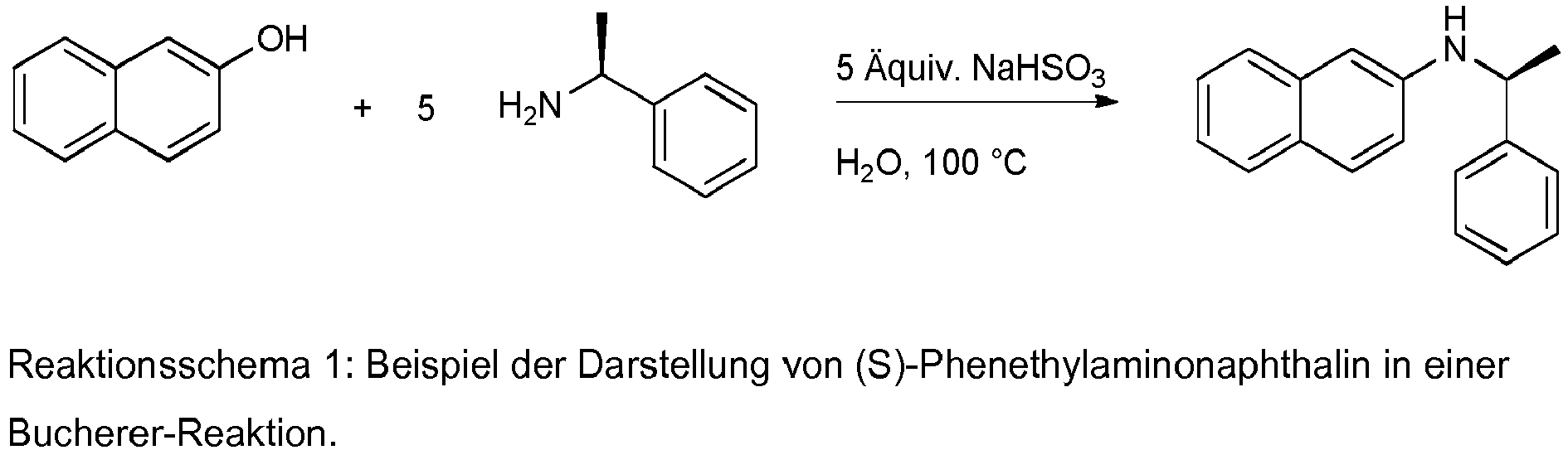
- 2. Stufe: Durch eine anschließende elektrochemische Behandlung mit einer Phenoleinheit kann das Produkt aus der ersten Stufe in ein unsymmetrisches Biaryl bzw. einen Biarylether überführt werden, ohne dass Oxidationsmittel zugegeben, unter Feuchtigkeitsausschluss gearbeitet oder anaerobe Reaktionsführungen eingehalten werden müssen. Durch die Kombination aus Bucherer-Reaktion und direkter C,C- und C,O-Kreuzkupplung wird ein kostengünstiger und umweltschonender Zugang zu diesen Verbindungsklassen eröffnet.

- Das erfindungsgemäße Verfahren ermöglicht die selektive Oxidation einer chiralen Naphthylaminkomponente A, welche zuvor mittels Bucherer-Reaktion dargestellt wurde. Diese ist durch die hohe Reaktivität der gebildeten Radikalspezies in der Lage nukleophil von Komponente B angegriffen zu werden.

- Durch das erfindungsgemäße Verfahren wird eine einfache und kosteneffiziente Methode zur Darstellung chiraler Naphthylaminderivate unter Verwendung der Bucherer-Reaktion etabliert. Die erhaltenen Derivate können im Anschluss mit unterschiedlichsten Phenolen unter effizienter Stromnutzung zur Kreuzkupplung gebracht werden. Reagenzabfälle werden vermieden und die Menge gebildeter Nebenprodukte ist gering. Nicht umgesetzte Edukte können destillativ zurückgewonnen und für weitere Elektrolysen verwendet werden.
- Die hier vorgestellten Methoden beschreiben zum ersten Mal den Zugang zu chiralen Naphthylaminderivaten mittels Bucherer-Reaktion, sowie den elektrochemischen Zugang zur gezielten Phenol-Naphthylamin-Kreuzkupplung. Hierdurch bedarf es bei der Synthese keiner Abgangs- oder Schutzgruppenstrategie und die Verwendung von teuren oder giftigen Übergangsmetallkatalysatoren entfällt.
-
Verbindung Ausbeute 
70% 
48% 
32% 
26% 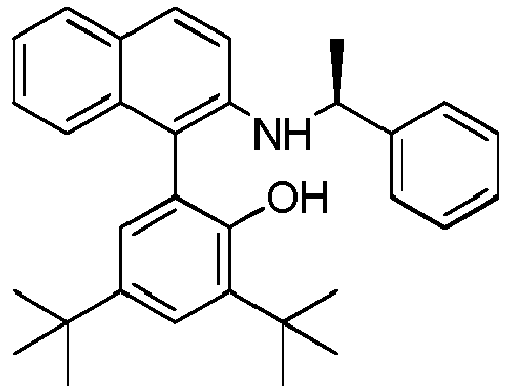
40% 
25% 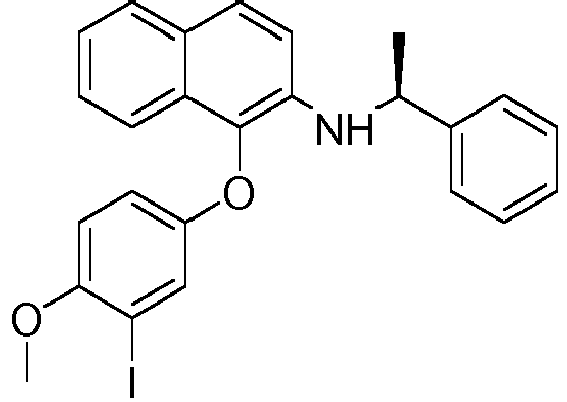
8% 
12% 
23% 
21% - Präparative Flüssigchromatographie zur Auftrennung von Stoffgemischen wurde unter Verwendung von Kieselgel 60 M (0.040-0.063 mm) der Firma Machery-Nagel GmbH & CO. KG, Düren durchgeführt. Alle verwendeten Eluenten technischer Qualität (Essigsäureethylester, technische Qualität; Cyclohexan, technische Qualität) wurden vorab destillativ am Rotationsverdampfer gereinigt.
- Dünnschichtchromatographie (DC) wurde an PSC-Fertigplatten Kieselgel 60 F254 der Firma Merck KGaA, Darmstadt durchgeführt. Detektion der verschiedenen Substanzen erfolgte zunächst unter UV-Licht und anschließend durch Anfärben mittels Cer-Molybdatophosphorsäure-Reagenz (5.6 g Molybdatophosphorsäure, 2.2 g Cer(IV)-sulfat-Tetrahydrat und 13.3 g konz. Schwefelsäure auf 200 mL Wasser) und anschließendem Erhitzen durch einen Heißluftfön.
- Die gaschromatographischen Untersuchungen (GC) von Produktgemischen und Reinsubstanzen erfolgte mit Hilfe des Gaschromatographen GC-2010 der Firma Shimadzu, Japan. Es wird an einer Quarzkapillarsäule HP-5 der Firma Agilent Technologies, USA (Länge: 30 m; Innendurchmesser: 0.25 mm; Filmdicke der kovalent gebundenen stationären Phase: 0.25 µm; Trägergas: Wasserstoff; Injektortemperatur: 250 °C; Detektortemperatur: 310 °C; Programm: Methode "hart": 50 °C Starttemperatur für 1 min, Heizrate: 15 °C/min, 290 °C Endtemperatur für 8 min) bzw. ZB5-MSi der Firma Phenomenex, USA (Länge: 30 m; Innendurchmesser: 0.25 mm; Filmdicke der kovalent gebundenen stationären Phase: 0.25 µm; Trägergas: Wasserstoff; Injektortemperatur: 250 °C; Detektortemperatur: 310 °C; Programm: Methode "methode1lang": 100 °C Starttemperatur für 1 min, Heizrate: 15 °C/min, 290 °C Endtemperatur für 30 min) gemessen.
- Gaschromatographische Massenspektren (GCMS) von Produktgemischen und Reinsubstanzen wurden mit Hilfe des Gaschromatographen GC-2010 kombiniert mit dem Massendetektor GCMS-QP2010 der Firma Shimadzu, Japan aufgenommen. Es wird an einer Quarzkapillarsäule HP-1 der Firma Agilent Technologies, USA (Länge: 30 m; Innendurchmesser: 0.25 mm; Filmdicke der kovalent gebundenen stationären Phase: 0.25 µm; Trägergas: Wasserstoff; Injektortemperatur: 250 °C; Detektortemperatur: 310 °C; Programm: Methode "hart": 50 °C Starttemperatur für 1 min, Heizrate: 15 °C/min, 290 °C Endtemperatur für 8 min; GCMS: Temperatur der Ionenquelle: 200 °C) oder an einer Quarzkapillarsäule ZB-5 der Firma Phenomenex, USA (Länge: 30 m; Innendurchmesser: 0.25 mm; Filmdicke der kovalent gebundenen stationären Phase: 0.25 µm; Trägergas: Wasserstoff; Injektortemperatur: 250 °C; Detektortemperatur: 310 °C; Programm: "methode1lang" 100 °C Starttemperatur für 1 min, Heizrate: 15 °C/min, 290 °C Endtemperatur für 30 min) gemessen.
- Alle Elektrosprayionisation-Messungen (ESI+) wurden an einem QTof Ultima 3 der Firma Waters Micromasses, Milford, Massachusetts durchgeführt. El-Massenspektren sowie die hochaufgelösten EI-Spektren wurden an einem Gerät des Typs MAT 95 XL Sektorfeldgerät der Firma Thermo Finnigan, Bremen, gemessen.
- Die NMR-spektroskopischen Untersuchungen wurden an Multikernresonanzspektrometern des Typs Avance III HD 300 oder Avance II 400 der Firma Bruker, Analytische Messtechnik, Karlsruhe, durchgeführt. Als Lösungsmittel wurde CDCl3 verwendet. Die 1 H- und 13C-Spektren wurden gemäß dem Restgehalt an nicht deuteriertem Lösungsmittel nach der NMR Solvent Data Chart der Fa. Cambridge Isotopes Laboratories, USA, kalibriert. Die Zuordnung der 1 H- und 13C-Signale erfolgte teilweise mit Hilfe von H,H-COSY, H,H-NOESY, H,C-HSQC und H,C-HMBC-Spektren. Die chemischen Verschiebungen sind als δ-Werte in ppm angegeben. Für die Multiplizitäten der NMR-Signale wurden folgende Abkürzungen verwendet: s (Singulett), bs (breites Singulett), d (Dublett), t (Triplett), q (Quartett), m (Multiplett), dd (Dublett von Dublett), dt (Dublett von Triplett), tq (Triplett von Quartett). Alle Kopplungskonstanten J wurden mit der Anzahl der eingeschlossenen Bindungen in Hertz (Hz) angegeben. Die bei der Signalzuordnung angegebene Nummerierung entspricht der in den Formelschemata angegebenen Bezifferung.
- 3.80 mmol der zu oxidierenden Spezies A (Unterschusskomponente) werden mit einem 2 bis 3-fachen Überschuss (7.6-11.4 mmol) des Kupplungspartners B in 25 mL 1,1,1,3,3,3 Hexafluorisopropanol (HFIP) in einer Becherglaszelle an Glaskohlenstoff Elektroden umgesetzt. Als Leitsalz wird Tributylmethylammoniummethylsulfat (MTBS) mit einer Konzentration von 0.09 M verwendet. Die Elektrolyse erfolgt galvanostatisch. Die Elektrolyse wird bei 22-50 °C durchgeführt. Verdampfendes HFIP wird mit Hilfe eines Dimrothkühlers redestilliert und der Elektrolyse zugeführt. Nach Ende der Elektrolyse wird der Zellinhalt in einen 100 mL Rundhalskolben überführt und das Lösungsmittel unter vermindertem Druck am Rotationsverdampfer bei 50 °C, 70-200 mbar entfernt. Mineralisationsprodukte sowie das enthaltene Leitsalz werden durch Elution mittels Essigsäureethylester: Cyclohexan (1:9 ca. 400 mL) über 50 g Kieselgel 60 abgetrennt. Nicht umgesetztes Edukt wird mittels Kurzwegdestillation zurückerhalten (100 °C, 10-3 mbar). Die entstandenen Reaktionsprodukte werden wie jeweils angegeben säulenchromatographisch getrennt.
-
Anode: Glaskohlenstoff Kathode: Glaskohlenstoff -
Temperatur: 22-50 °C Stromdichte: 2.8 mA/cm2 Ladungsmenge: 2.0 F bezogen auf die Unterschusskomponente -

- 6.0 g (42 mmol, 1.0 Äquiv.) 2-Naphthol werden mit 21.6 g (210 mmol, 5.0 Äquiv.) Natriumhydrogensulfit und 27.0 mL (S)-1-Phenylethylamin (210 mmol, 5.0 Äquiv.) sowie 50 mL Wasser in ein 150 mL Druckrohr gegeben und für 21 h bei 100 °C zur Reaktion gebracht. Die Reaktionslösung wird mit Wasser versetzt und der entstandene Niederschlag abgesaugt. Kristallisation in der Siedehitze aus Cyclohexan (2mL/g) liefert das gewünschte Produkt als leicht gelblichen Feststoff.
- Ausbeute: 70% (7.2 g, 29.11 mmol)
- Charakterisierung:
- GC (Methode "hart", Säule: HP-5): tR = 15.9 min
- Rf (CH:EE = 9:1): 0.58
- Drehwert (Aceton, 578 nm, c = 3·10-3 g/mL): [α]24: -176°
- Drehwert Literatur (Aceton, 578 nm): [α]24: -178[x]

- 1H-NMR (400 MHz, DMSO-d6) δ[ppm] = 1.46 (d, 3J12-H,11-H = 6.8 Hz, 3H, 10-H), 4.59 (m, 1 H, 9-H), 6.49 (d, 3JNH,11-H = 7.1 Hz, 1 H, NH), 6.51 (d, 4J1-H,3-H = 2.2 Hz, 1 H, 1-H), 7.01-7.06 (m, 2H), 7.15-7.23 (m, 2H), 7.26-7.30 (m, 2H, 13-H,16-H), 7.36 (m, 1H), 7.41-7.43 (m, 2H, 12-H,16-H), 7.56 (m, 2H).
- 13C-NMR (101 MHz, DMSO-d6) δ[ppm] = 24.58 (10-C), 52.00 (9-C), 103.74 (1-C), 118.46 (3-C), 120.98, 125.30, 125.87 (14-C), 125.94 (12-C, 16-C), 126.31, 126.48, 127.33, 128.18 (4-C), 128.33 (13-C, 15-C), 134.81 (8a-C), 145.73 (2-C), 145.80 (11-C).
- Die Durchführung der Elektrolyse erfolgt gemäß der AAV1 bei 50 °C mit 1.87 g (7.57 mmol, 2.0 Äquiv.) (S)-(-)-2-α-Methylbenzylaminonaphthalin und 680 mg (3.78 mmol, 1.0 Äquiv.) 3-(1,1-Dimethylethyl)-4-hydroxyanisol. Die Stromdichte beträgt 2.8 mA/cm2 und die Ladungsmenge 2.0 F pro 3-(1,1-Dimethylethyl)-4-hydroxyanisol (Q = 731 C). Das Rohprodukt wurde säulenchromatographisch an Kieselgel 60 mit einem Laufmittelgemisch von 9:1 (Cyclohexan:Ethylacetat) vorgereinigt. Die erhaltenen Fraktionen wurden auf Vorhandensein des Produktes geprüft, Edukte durch Kurzwegdestillation (100 °C, 10 -3 mbar) entfernt und der Rückstand erneut an Kieselgel 60 eluiert (Cyclohexan:Ethylacetat = 9:1). Als Produkt wird ein roter, glasartiger Feststoff erhalten.

- Ausbeute Diastereomerengemisch (1:1): 775 mg (1.82 mmol, 48%) GC (Methode hart, HP-5): tR = 19.7 min
- Rf (Cyclohexan:Ethylacetat = 9:1): 0.52
- 1 H-NMR des Diastereomerengemischs (400 MHz, DMSO-d6) δ[ppm] = 1.29/1.34 (d, 3J10-H,9-H = 6.6/6.7 Hz, 3H, 10-H), 1.43/1.44 (s, 9H, 8a'-H), 3.68/3.69 (s, 3H, 7'-H), 4.25/4.45 (d, 3JNH,9-H =7.0/7.7 Hz, NH, 1 H), 4.65/4.74 (m, 1 H, 9-H), 6.45/6.47 (d, 4J6'-H,4'-H = 3.1/3.1 Hz, 1 H, 6'-H), 6.89 (m, 1 H, 4'-H), 6.96/7.00 (d, 3J3-H,4-H = 9.0/9.1 Hz, 1H, 3-H), 7.13-7.20 (m, 3H), 7.25-7.31 (m, 4H, 12-H, 16-H, 13-H, 15-H), 7.41 (d, J = 7.2 Hz, 1 H), 7.43/7.57(s, 1 H), 7.65-7.70 (m, 2H, 4-H).
- 13C-NMR des Diastereomerengemischs (101 MHz, DMSO-d6) δ[ppm] = 24.54/24.88 (10-C), 29.42/29.44 (8a'-C), 34.87/34.91 (8'-C), 52.15/52.75 (9-C), 55.16/55.18 (7'-C), 112.90, 113.16/113.48 (6'-C), 113.64, 115.23, 115.38, 115.58, 121.40, 123.70, 123.85, 123.88, 124.70, 125.77/125.90 (12-C, 16-C), 125.94, 126.05, 126.63, 126.73, 127.07, 127.10, 127.81, 128.33, 128.38/128.46 (13-C, 15-C), 128.63/128.71 (4-C), 133.53/133.61 (2-C), 138.80/139.20 (3'-C), 142.18, 142.88, 145.36/145.51 (11-C), 147.13/147.17 (2'-C), 152.38/152.47 (5'-C).
HRMS (ESI, pos. mode): m/z für C29H31NO2 [M+H+]: berechnet: 426.2428 gefunden: 426.2431 - Die Elektrolyse wird gemäß AAV1 bei 50 °C mit 1.87 g (11.36 mmol, 3.0 Äquiv.) 2-(1,1-Dimethylethyl)-4-methylphenol und 936 mg (3.80 mmol, 1.0 Äquiv.) (S)-(-)-2-α-Methylbenzylaminonaphthalin durchgeführt. Die Stromdichte beträgt 2.8 mA/cm2 und die Ladungsmenge 2.0 F pro (S)-(-)-2-α-Methylbenzylaminonaphthalin (Q = 731 C). Nach Abtrennung des Lösungsmittels wird die Produktmischung säulenchromatographisch an Kieselgel 60 mit einem Eluenten von 9:1 (Cyclohexan:Ethylacetat) vorgereinigt. Die Fraktionen werden auf Produkt geprüft und enthaltene Edukte durch Kurzwegdestillation entfernt (100 °C, 10-3 mbar). Eine weitere säulenchromatographische Aufreinigung an Kieselgel 60 mit einem Laufmittel-Gradienten von 100:00 auf 70:30 (Cyclohexan:Dichlormethan) liefert das gewünschte Produkt als leicht gelblichen Feststoff.

- Ausbeute Diastereomerengemisch (1:1): 500 mg (1.20 mmol, 32%)
- GC (Methode "methode1lang", ZB-5): tR = 21.0 min
- Rf (Cyclohexan:Ethylacetat = 9:1): 0.71
- 1 H-NMR des Diastereomerengemischs (400 MHz, DMSO-d6) δ [ppm] = 1.27/1.33 (d, 3J10-H,9-H = 6.7/6.7 Hz, 3H, 10-H), 1.44/1.44 (s, 9H, 8a'-H), 2.27/2.28 (s, 3H, 7'-H), 4.16/4.36 (d, 3JNH,9-H = 7.0/7.6 Hz, 1 H, NH), 4.65/4.73 (m, 1 H, 9-H), 6.67/6.72 (dd, 4;4J6'-H,4'-H;6'-H,7'-H = 2.3, 0.8/ 2.2/0.9, 1 H, 6'-H), 6.96/7.00 (d, 3J3-H,4-H = 9.0/9.0 Hz, 1 H, 3-H), 7.12-7.30 (m, 8H), 7.39-7.42 (m, 1 H), 7.60/7.72 (s, 1 H, OH), 7.64-7.70 (m, 2H).
- 13C-NMR des Diastereomerengemischs (101 MHz, DMSO-d6) δ [ppm] = 20.58/20.60 (7'-C), 24.48/24.84 (10-C), 29.55/29.55 (8a'-C), 34.65/34.68 (8'-C), 52.10/52.91 (9-C), 115.19, 115.28, 115.35, 115.45, 121.34, 121.38, 123.05, 123.75, 123.77, 123.89, 125.74, 125.86, 125.96, 126.62, 126.73, 127.08, 127.16, 127.20, 127.79, 128.13, 128.27, 128.37, 128.45, 128.58, 128.64, 130.07/130.23 (5'-C), 133.64/133.76, 136.94/137.28 (3'-C), 142.27/143.02, 145.33/145.43 (11-C), 151.01/151.11 (2'-C).
HRMS (ESI, pos. mode): m/z für C29H31 NO (M+H+): berechnet: 410.2478 gefunden: 410.2472 - Die Elektrolyse wird gemäß AAV1 bei 50 °C mit 1.57 g (11.36 mmol, 3.0 Äquiv.) 4-Methylguajakol und 936 mg (3.80 mmol, 1.0 Äquiv.) (S)-(-)-2-α-Methylbenzylaminonaphthalin durchgeführt. Die Stromdichte beträgt 2.8 mA/cm2 und die Ladungsmenge 2.0 F pro (S)-(-)-2-α-Methylbenzylaminonaphthalin (Q = 731 C). Nach Abtrennung des Lösungsmittels wird die Produktmischung säulenchromatographisch an Kieselgel 60 mit einem Eluenten von 9:1 (Cyclohexan:Ethylacetat) vorgereinigt. Die Fraktionen werden auf Produkt geprüft und enthaltene Edukte durch Kurzwegdestillation entfernt (100 °C, 10-3 mbar). Eine weitere säulenchromatographische Aufreinigung an Kieselgel 60 mit einem Laufmittel-Gradienten von 100:00 auf 70:30 (Cyclohexan:Dichlormethan) liefert das gewünschte Produkt als roten Feststoff.

- Ausbeute Diastereomerengemisch (1:1): 384 mg (1.00 mmol, 26%)
- GC (Methode "methode1lang", ZB-5): tR = 22.3 min
- Rf (Cyclohexan:Ethylacetat = 9:1): 0.23
- 1 H-NMR (400 MHz, CDCl3) δ [ppm] = 1.30/1.33 (d, 3J10-H,9-H = 6.7/6.7 Hz, 3H, 10-H), 2.31/2.31 (s, 3H, 7'-H), 3.90/3.89 (s, 3H, 8'-H), 4.24/4.14 (d, 3JNH,9-H = 7.7/7.5 Hz, 1H, NH), 4.73/4.73 (m, 1 H, 9-H), 6.49/6.40 (dd, 4;4J6'-H,4'-H; 6'-H,7'-H = 1.9, 0.9/2.0, 1.0,1 H, 6'-H), 6.88/7.02 (d, J3-H,4-H = 9.0/8.8 Hz, 1H, 3-H), 6.93/6.93 (d, 4J4'-H, 6'-H = 2.0/1.9 Hz, 1H, 4'-H), 7.04-7.13 (m, 2H), 7.14-7.21 (m, 2H), 7.22-7.30 (m, 2H), 7.36-7.41 (m, 2H), 7.58/ 7.62 (d, 3J4-H,3-H = 8.9/9.0 Hz, 1 H, 4-H), 7.63-7.65 (m, 1 H) 8.39/8.26 (s, 1 H, OH).
- 13C-NMR (100 MHz, DMSO-d6) δ [ppm] = 20.73/20.79 (7'-C), 25.08/24.49 (10-C), 52.12/52.72 (9-C), 55.65/55.69 (8'-C), 112.12/112.20 (4'-C), 114.83/115.30 (3-C), 116.34, 116.76, 121.10, 121.28, 122.40, 122.32, 123.57, 123.90, 123.96, 125.64, 125.69, 125.81, 125.92, 126.47, 126.49, 126.67, 126.69, 127.58, 127.58, 127.76, 127.84, 128.31, 128.41, 128.44, 128.47, 128.47, 133.14, 133.04, 141.92, 142.22, 142.39, 142.41 (2'-C), 145.53/145.49 (11-C), 148.00/148.00 (3'-C).
HRMS (ESI, pos. mode): m/z für C26H25NO2 (M+Na+): berechnet: 406.1778 gefunden: 406.1785 - Die Elektrolyse wird gemäß AAV1 bei Raumtemperatur mit 2.34 g (11.36 mmol, 3.0 Äquiv.) 2,4-Bis-(1,1-dimethylethyl)phenol und 936 mg (3.80 mmol, 1.0 Äquiv.) (S)-(-)-2-α-Methylbenzylaminonaphthalin durchgeführt. Die Stromdichte beträgt 2.8 mA/cm2 und die Ladungsmenge 2.0 F pro (S)-(-)-2-α-Methylbenzylaminonaphthalin (Q = 731 C). Nach Abtrennung des Lösungsmittels wird die Produktmischung säulenchromatographisch an Kieselgel 60 mit einem Eluenten von 9:1 (Cyclohexan:Ethylacetat) vorgereinigt. Die Fraktionen werden auf Produkt geprüft und enthaltene Edukte durch Kurzwegdestillation entfernt (100 °C, 10-3 mbar). Eine weitere säulenchromatographische Aufreinigung an Kieselgel 60 mit einem Laufmittel-Gradienten von 100:00 auf 70:30 (Cyclohexan:Dichlormethan) liefert das gewünschte Produkt als leicht gelblichen Feststoff.

- Ausbeute Diastereomerengemisch (1:1): 693 mg (1.50 mmol, 40%)
- GC (Methode "methode1lang", ZB-5): tR = 22.3 min
- Rf (Cyclohexan:Ethylacetat = 9:1): 0.68
- 1 H-NMR des Diastereomerengemischs (400 MHz, DMSO-d6) δ [ppm] = 1.25-1.31 (m, 12H, 10-H, 7a'-H), 1.46/1.46 (s, 9H, 8a'-H), 4.19/4.42 (d, 3JNH,9-H = 7.7/7.7 Hz, 1H, NH), 4.62/4.77 (m, 1 H, 9-H), 6.90/6.93 (d, 4J6'-H,4'-H = 2.44/2.44 Hz, 1 H, 6'-H), 7.00/7.04 (d, 3J3-H,4-H = 9.0/9.0 Hz, 1 H, 3-H), 7.10-7.30 (m, 7H), 7.33-7.39 (m, 2H), 7.60/7.72 (s, 1 H, OH), 7.64-7.71 (m, 2H).
- 13C-NMR des Diastereomerengemischs (101 MHz, DMSO-d6) δ [ppm] = 24.71/24.71 (10-C), 29.61/29.64 (8a'-C), 31.51/31.51 (7a'-C), 34.02/34.02 (7'-C), 34.93/34.95 (8'-C), 52.38/52.46 (9-C), 115.48, 115.61, 115.75, 116.16, 121.38, 121,47, 122.56, 122.76, 122.91, 123.29, 123.67, 123.86, 125.70, 125.88, 126.03, 126.29, 126.61, 126.68, 126.75, 127.15, 127.25, 127.84, 127.85, 128.38, 128.41, 128.60, 128.63, 133.59, 133.63, 136.26/136.61 (3'-C), 141.46/141.52 (5'-C), 142.57/142.98, 145.27/145.49 (11-C), 151.11/151.11 (2'-C).
HRMS (ESI, pos. mode): m/z für C32H37NO (M+H+): berechnet: 452.2948 gefunden: 452.2948 - Die Elektrolyse wird gemäß AAV1 bei Raumtemperatur mit 2.02 g (11.36 mmol, 3.0 Äquiv.) 2-(1,1-Dimethylethyl)-4-ethylphenol und 936 mg (3.80 mmol, 1.0 Äquiv.) (S)-(-)-2-α-Methylbenzylaminonaphthalin durchgeführt. Die Stromdichte beträgt 2.8 mA/cm2 und die Ladungsmenge 2.0 F pro (S)-(-)-2-α-Methylbenzylaminonaphthalin (Q = 731 C). Nach Abtrennung des Lösungsmittels wird die Produktmischung säulenchromatographisch an Kieselgel 60 mit einem Eluenten von 9:1 (Cyclohexan:Ethylacetat) vorgereinigt. Die Fraktionen werden auf Produkt geprüft und enthaltene Edukte durch Kurzwegdestillation entfernt (100 °C, 10-3 mbar). Eine weitere säulenchromatographische Aufreinigung an Kieselgel 60 mit einem Laufmittel-Gradienten von 100:00 auf 70:30 (Cyclohexan:Dichlormethan) liefert das gewünschte Produkt als leicht gelblichen Feststoff.

- Ausbeute Diastereomerengemisch (70:30): 407 mg (0.90 mmol, 25%)
- GC (Methode "methode1lang", ZB-5): tR = 18.7 min
- Rf (Cyclohexan:Ethylacetat = 9:1): 0.71
- 1 H-NMR des Diastereomerengemischs (400 MHz, DMSO-d6) δ [ppm] = 1.16-1.22 (m, 3H, 7a'-H), 1.27/1.32 (d, 3J10-H,9-H = 6.6/6.6 Hz, 3H, 10-H), 1.45/1.45 (s, 9H, 8a'), 2.55-2.63 (m, 2H, 7'-H), 4.17/4.38 (d, 3JNH,9-H = 7.3/7.6 Hz, 1 H, NH), 4.62/4.77 (p, J = 6.8 Hz, 1 H, 9-H), 6.71/6.75 (d, 4J6'-H, 4'-H = 2.2/2.1 Hz, 1 H, 6'-H), 6.98/7.02 (d, 3J3-H,4-H = 9.0/9.0 Hz, 1H, 3-H), 7.11-7.41 (m, 9H), 7.60/7.70 (s, 1H, OH), 7.64-7.69 (m, 2H).
- 13C-NMR des Diastereomerengemischs (101 MHz, DMSO-d6) δ [ppm] = 15.76/15.87 (7a'-C), 24.54/24.78 (10-C), 27.63/27.66 (7'-C), 29.54/29.52 (8a'-C), 34.70/34.73 (7'-C), 52.21/52.75 (9-C), 115.36, 115.43, 115.48, 115.62, 121.37, 123.72, 123.87, 125.73, 125.86, 125.98, 126.01, 126.64, 126.73, 127.13, 127.16, 127.80, 128.37, 128.42, 128.55, 128.58, 128.63, 128.81, 133.62, 133.69, 134.58, 134.58, 134.47, 136.89, 137.25, 142.38, 143.02, 145.31, 145.45, 151.25, 151.29.
HRMS (ESI, pos. mode): m/z für C30H30NO (M+H+): berechnet: 424.2635 gefunden: 424.2633 - Die Elektrolyse wird gemäß AAV1 bei 50 °C mit 2.84 g (11.36 mmol, 3.0 Äquiv.) 3-lod-4-methoxyphenol und 936 mg (3.80 mmol, 1.0 Äquiv.) (S)-(-)-2-α-Methylbenzylaminonaphthalin durchgeführt. Die Stromdichte beträgt 2.8 mA/cm2 und die Ladungsmenge 2.0 F pro (S)-(-)-2-α-Methylbenzylaminonaphthalin (Q = 731 C). Nach Abtrennung des Lösungsmittels wird die Produktmischung säulenchromatographisch an Kieselgel 60 mit einem Eluenten von 9:1 (Cyclohexan:Ethylacetat) vorgereinigt. Die Fraktionen werden auf Produkt geprüft und enthaltene Edukte durch Kurzwegdestillation entfernt (100 °C, 10-3 mbar). Eine weitere säulenchromatographische Aufreinigung an Kieselgel 60 mit einem Laufmittel-Gradienten von 100:00 auf 70:30 (Cyclohexan:Dichlormethan) liefert das gewünschte Produkt als leicht gelblichen Feststoff.

- Ausbeute: 155 mg (0.30 mmol, 8%)
- GC (Methode "methode1lang", ZB-5): tR = 24.5 min
- Rf (Cyclohexan:Ethylacetat = 9:1): 0.46
- 1 H-NMR (400 MHz, DMSO-d6) δ [ppm] = 1.43 (d,3J10-H,9-H= 6.7 Hz, 3H, 10-H), 3.77 (s, 3H, 7'-H), 4.80 (m, 1 H, 9-H), 5.60 (d, 3JNH,9-H = 7.9 Hz, 1 H, NH), 6.87 (dd, 3;4J6'-H,5'-H;6'-H,2'-H = 9.0, 2.9 Hz, 1 H, 6'-H), 6.95 (d, 3J5'-H,6'-H = 9.0 Hz, 1 H, 5'-H), 7.09 (d, 3J3-H,4-H = 9.0 Hz, 1 H, 3-H), 7.13-7.19 (m, 2H), 7.21 (d, 4J2'-H,6'-H = 2.9 Hz, 1 H, 2'-H), 7.24-7.36 (m, 5H), 7.46 (dd, J = 8.4, 1.1 Hz, 1 H), 7.56 (d, 3J4-H,3-H = 9.0 Hz, 1 H, 4-H), 7.70 (dd, J = 8.2, 1.0 Hz, 1 H).
- 13C-NMR (101 MHz, DMSO-d6) δ [ppm] = 24.43 (C-10), 51.98 (9-C), 56.74 (7'-C), 86.21 (3'-C), 112,13 (5'-C), 115.91 (3-C), 116.04 (6'-C), 119.17 (5-C oder 8-C), 121.92 (6-C oder 7-C), 125.21 (2'-C), 125.86 (Phenyl-C), 125.95 (4-C), 126.61 (Phenyl-C), 126.70 (6-C oder 7-C), 127.61, 127.93, 128.41, 128.73 (5-C oder 8-C), 131.85(1-C), 137.60, 145.73 (11-C), 152.20 (1'-C), 153.04 (4'-C).
HRMS (ESI, pos. mode): m/z für C25H22INO (M+H+): berechnet: 496.0768 gefunden: 496.0762 - Die Elektrolyse wird gemäß AAV1 bei 50 °C mit 1.57 g (11.36 mmol, 3.0 Äquiv.) 3-Methyl-4-methoxyphenol und 936 mg (3.80 mmol, 1.0 Äquiv.) (S)-(-)-2-α-Methylbenzylaminonaphthalin durchgeführt. Die Stromdichte beträgt 2.8 mA/cm2 und die Ladungsmenge 2.0 F pro (S)-(-)-2-α-Methylbenzylaminonaphthalin (Q = 731 C). Nach Abtrennung des Lösungsmittels wird die Produktmischung säulenchromatographisch an Kieselgel 60 mit einem Eluenten von 9:1 (Cyclohexan:Ethylacetat) vorgereinigt. Die Fraktionen werden auf Produkt geprüft und enthaltene Edukte durch Kurzwegdestillation entfernt (100 °C, 10-3 mbar). Eine weitere säulenchromatographische Aufreinigung an Kieselgel 60 mit einem Laufmittel-Gradienten von 100:00 auf 70:30 (Cyclohexan:Dichlormethan) liefert das gewünschte Produkt als leicht rötlichen Feststoff.

- Ausbeute: 170 mg (0.40 mmol, 12%)
- GC (Methode "methode1lang", ZB-5): tR = 24.5 min
- Rf (Cyclohexan:Ethylacetat = 9:1): 0.51
- 1 H-NMR (400 MHz, DMSO-d6) δ [ppm] = 1.41 (d,3J10-H,9-H = 6.7 Hz, 3H, 10-H), 2.09 (s, 3H, 3a'-H), 3.72 (s, 3H, 4a'-H), 4.80 (m, 1 H, 9-H), 5.35 (d, 3JNH,9-H = 8.1 Hz, 1 H, NH), 6.55 (dd, 3;4J 6'-H,2'-H;6'-H,5'-H = 8.9, 3.0 Hz, 1 H, 6'-H), 6.73 (dd, 4;4J2'-H,6'-H, 2'-H,3a'-H = 3.1, 0.88 Hz, 1 H, 2'-H), 6.82 (d, 3J5'-H,6'-H = 8.9, 5'-H), 7.10 (d, 3J3-H,4-H = 9.0 Hz, 3-H), 7.12-7.18 (m, 2H), 7.22-7.34 (m, 5H), 7.48 (dd, J = 8.5, 1.1 Hz, 1H), 7.54 (d, 3J4-H,3-H = 9.0 Hz, 1 H, 4-H), 7.70 (dd, J = 8.1, 1.0 Hz, 1 H).
- 13C-NMR (101 MHz, DMSO-d6) δ [ppm] = 16.70 (3a'-C), 24.91 (10-C), 52.46 (9-C), 56.02 (4a'-C), 111.57(5'-C), 112.93 (6'-C), 116.39 (3-C), 117.88 (2'-C), 119.94 (5-C, 8-C), 122.30, 126.01 (4-C), 126.34, 126.81, 127.09, 127.29, 128.32, 128.79, 132.83, 138.07, 146.12, 151,79, 152.77 (4'-C).
HRMS (ESI, pos. mode): m/z für C26H25NO2 (M+H+): berechnet: 384.1958 gefunden: 384.1968 - Die Elektrolyse wird gemäß AAV1 bei 50 °C mit 1.57 g (11.36 mmol, 3.0 Äquiv.) 3-Methyl-4-methoxyphenol und 936 mg (3.80 mmol, 1.0 Äquiv.) (S)-(-)-2-α-Methylbenzylaminonaphthalin durchgeführt. Die Stromdichte beträgt 2.8 mA/cm2 und die Ladungsmenge 2.0 F pro (S)-(-)-2-α-Methylbenzylaminonaphthalin (Q = 731 C). Nach Abtrennung des Lösungsmittels wird die Produktmischung säulenchromatographisch an Kieselgel 60 mit einem Eluenten von 9:1 (Cyclohexan:Ethylacetat) vorgereinigt. Die Fraktionen werden auf Produkt geprüft und enthaltene Edukte durch Kurzwegdestillation entfernt (100 °C, 10-3 mbar). Eine weitere säulenchromatographische Aufreinigung an Kieselgel 60 mit einem Laufmittel-Gradienten von 100:00 auf 70:30 (Cyclohexan:Dichlormethan) liefert das gewünschte Produkt als leicht rötlichen Feststoff.
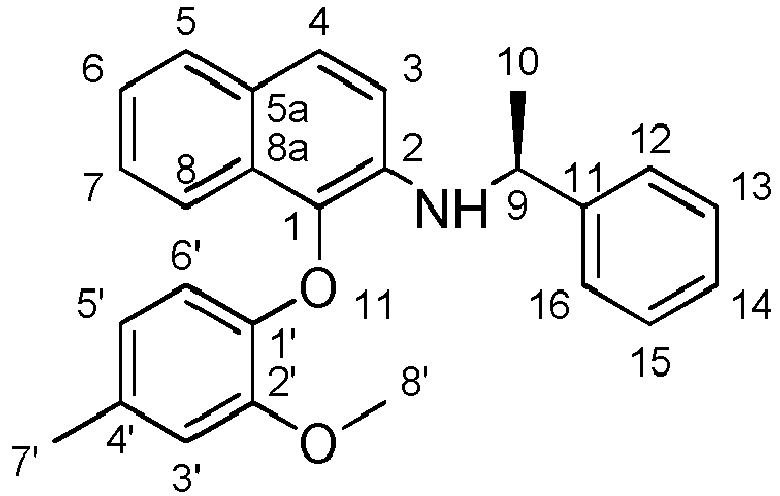
- Ausbeute: 340 mg (0.88 mmol, 23%)
- GC (Methode hart, HP-5): tR = 18.5 min
- Rf (Cyclohexan:Ethylacetat = 9:1) = 0.38
- 1H-NMR (400 MHz, DMSO-d6) δ [ppm] = 1.40 (d, 3J10-H,9-H = 7.4 Hz, 3H, 10-H), 2.26 (s, 3H, 8'-H), 3.97 (s, 3H, 7'-H), 4.76(m, 1 H, 9-H), 5.35 (d, 3JNH,9-H = 8.0 Hz, 1 H, NH), 6.20 (d, 3J6'-H,5'-H = 8.1 Hz, 1 H, 6'-H), 6.51 (ddd, 3;4;4J5'-H,6'-H,5'-H,3'-H,5'-H,7'-H = 8.2, 2.0, 0.9 Hz , 1 H, 5'-H), 7.01 (d, 4J3'-H,5'-H = 2.1 Hz, 1 H, 3'-H), 7.06 (d, 3J3-H,4-H = 9.0 Hz, 1H, 3-H), 7.13-7.18 (m, 2H), 7.21-7.27 (m, 4H, 12-H,13-H,15-H,16-H), 7.30-7.34 (m, 1 H), 7.52-7.55 (m, 2H, 4-H), 7.69 (d, J=8.0 Hz, 1 H).
- 13C-NMR (100 MHz, DMSO-d6) δ [ppm] = 20.70 (8'-C), 24.45 (10-C), 51.88 (9-C), 55.70 (7'-C), 113.39 (3'-C), 114.97, 115.79 (6'-C), 119.31, 120.74, 121.89 (5'-C), 125.46, 125.82 (12-C, 16-C), 126.51, 126.65, 126.69, 127.79, 127.97, 128.34 (13-C, C-15), 131.89(4'-C), 133.67(1-C), 137.38 (2-C), 144.69(1'-C), 145.51(11-C), 148.64(2'-C).
HRMS (ESI, pos. mode): m/z für C26H25NO2 (M+Na+): berechnet: 406.1778 gefunden: 406.1779 - Die Elektrolyse wird gemäß AAV1 bei 50 °C mit 1.57 g (11.36 mmol, 3.0 Äquiv.) 3-Methyl-4-methoxyphenol und 936 mg (3.80 mmol, 1.0 Äquiv.) (S)-(-)-2-α-Methylbenzylaminonaphthalin durchgeführt. Die Stromdichte beträgt 2.8 mA/cm2, die Ladungsmenge 2.0 F pro (S)-(-)-2-α-Methylbenzylaminonaphthalin (Q = 731 C). Nach Abtrennung des Lösungsmittels wird die Produktmischung säulenchromatographisch an Kieselgel 60 mit einem Eluenten von 9:1 (Cyclohexan:Ethylacetat) vorgereinigt. Die Fraktionen werden auf Produkt geprüft und enthaltene Edukte durch Kurzwegdestillation entfernt (100 °C, 10-3 mbar). Eine weitere säulenchromatographische Aufreinigung an Kieselgel 60 mit einem Laufmittel-Gradienten von 100:00 auf 70:30 (Cyclohexan:Dichlormethan) liefert das gewünschte Produkt als leicht rötlichen Feststoff.

- Ausbeute: 320 mg (0.78 mmol, 21%)
- GC (Methode "methode1lang", ZB-5): tR = 21.8 min
- Rf (Cyclohexan:Ethylacetat = 9:1) = 0.80
- 1H-NMR (400 MHz, DMSO-d6) δ[ppm] = 1.24 (s, 9H, 7a'-H), 1.42 (d, 3J10-H,9-H = 6.7 Hz, 3H, 10-H), 2.57 (s, 3H, 8'-H), 4.81 (m, 1 H, 9-H), 5.36 (d, 3JNH,9-H = 8.0 Hz, 1H, NH), 6.04 (d, 3J6'-H,5'-H = 8.5 Hz, 1 H, 6'-H), 6.94 (dd, 3;4J5'-H,6'-H; 5'-H;3'-H = 8.6, 2.3 Hz, 1H, 5'-H), 7.10-7.18 (m, 3H), 7.23-7.37 (m, 7H), 7.55 (d, 3J4-H,3-H = 9.0 Hz, 1H, 4-H), 7.70 (d, J = 8.3 Hz, 1 H).
- 13C-NMR (101 MHz, DMSO-d6) δ[ppm] = 16.62 (8'-C), 24.43 (10-C), 31.37 (7a'-C), 33.78 (7'-C), 52.12 (9-C), 111.98 (6'-C), 115.94, 119.29, 121.87, 123.34 (5'-C), 124.86, 125.55, 125.87, 126.48, 126.63, 126.88, 127.62, 127.85, 128.06, 128.32, 123.29, 137.64 (2-C), 143.60 (4'-C), 145.67 (11-C), 153.68 (1'-C).
HRMS (ESI, pos. mode): m/z für C29H31 NO (M+H+): berechnet: 410.2478 gefunden: 410.2475 - Die Durchgeführten Versuche zeigen, dass die Aufgabe durch das erfindungsgemäße Verfahren gelöst wird.
Claims (15)
- Verfahren umfassend die Verfahrensschritte:a) Umsetzung eines Naphthols, welches in ortho-Position zur OH-Gruppe einen Wasserstoff aufweist, mit einem chiralen primären Amin in Gegenwart von Wasser und unter Zusatz von Natriumhydrogensulfit, so dass ein sekundäres Naphthylaminderivate entsteht,b) elektrochemische Kupplung des sekundären Naphthylaminderivats aus a) unter Verwendung eines Lösungsmittels und eines Leitsalzes mit einem Phenol, welches in ortho-Position zur OH-Gruppe einen Wasserstoff aufweist, so dass- entweder eine direkte Kupplung des Phenylrings des Phenols in ortho-Position zur OH-Gruppe mit dem Naphthylringsystem in ortho-Positon zur Aminogruppe erfolgt, oder- der Sauerstoff des Phenols an das Naphthylringsystem in ortho-Positon zur Aminogruppe gekuppelt wird.
- Verfahren nach Anspruch 1,
wobei die Umsetzung im Verfahrensschritt a) bei einer Temperatur im Bereich von 80 °C bis 120 °C erfolgt. - Verfahren nach Anspruch 1 oder 2,
wobei das Natriumhydrogensulfit in Verfahrensschritt a) in einer Menge von 2 bis 8 Äquivalenten bezogen auf das Naphthol zugesetzt wird. - Verfahren nach einem der Ansprüche 1 bis 3,
wobei das Naphthol in Verfahrensschritt a) eine Struktur gemäß der allgemeinen Formel I aufweist:
R1, R3, R4, R5, R6, R7, R8 jeweils unabhängig voneinander ausgewählt sind aus: -H, - (C1-C12)-Alkyl, -O-(C1-C12)-Alkyl, -(C3-C12)-Cycloalkyl,
mindestens einer der Reste R1, R3 für -H steht,
und die Alkyl- und Cycloalkyl-Reste jeweils unabhängig voneinander mit einem oder mehreren Substituenten ausgewählt aus:-(C1-C12)-Alkyl, -(C3-C12)-Cycloalkyl, -O-(C1-C12)-Alkyl, -O-(C3-C12)-Cycloalkyl, substituiert sein können. - Verfahren nach einem der Ansprüche 1 bis 4,
wobei R1 für -H steht. - Verfahren nach einem der Ansprüche 1 bis 5,
wobei R1, R3, R4, R5, R6, R7, R8 jeweils für -H stehen. - Verfahren nach einem der Ansprüche 1 bis 6,
wobei das Amin in Verfahrensschritt a) eine Struktur gemäß der allgemeinen Formel II aufweist: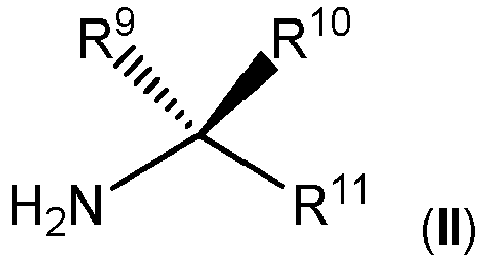
R9, R10, R11 jeweils unabhängig voneinander ausgewählt sind aus: -H, -(C1-C12)-Alkyl, - O-(C1-C12)-Alkyl, -(C3-C12)-Cycloalkyl, Phenyl;
und die Alkyl-, Cycloalkyl-, Phenyl-Reste jeweils unabhängig voneinander mit einem oder mehreren Substituenten ausgewählt aus:-(C1-C12)-Alkyl, -(C3-C12)-Cycloalkyl, -O-(C1-C12)-Alkyl, -O-(C3-C12)-Cycloalkyl, substituiert sein können,und sich jeder der drei Reste R9, R10, R11 jeweils von den beiden anderen Resten unterscheidet. - Verfahren nach einem der Ansprüche 1 bis 7,
wobei R11 für einen Phenylrest steht. - Verfahren nach einem der Ansprüche 1 bis 8,
wobei R10 für -(C1-C12)-Alkyl steht. - Verfahren nach einem der Ansprüche 1 bis 9,
wobei R9 für -H steht. - Verfahren nach einem der Ansprüche 1 bis 10,
wobei im Verfahrensschritt b) als Anode und Kathode jeweils eine Glaskohlenstoffelektrode verwendet wird. - Verfahren nach einem der Ansprüche 1 bis 11,
wobei als Lösungsmittel im Verfahrensschritt b) 1,1,1,3,3,3-Hexafluorisopropanol verwendet wird. - Verfahren nach einem der Ansprüche 1 bis 12,
wobei als Leitsalz im Verfahrensschritt b) Tributylmethylammoniummethylsulfat verwendet wird. - Verfahren nach einem der Ansprüche 1 bis 13,
wobei das Phenol in Verfahrensschritt b) eine Struktur gemäß der allgemeinen Formel III aufweist:
R12 R13 , R14 , R15 jeweils unabhängig voneinander ausgewählt sind aus: -H, -(C1-C12)-Alkyl, -O-(C1-C12)-Alkyl, -(C3-C12)-Cycloalkyl, Phenyl;
und die Alkyl-, Cycloalkyl-, Phenyl-Reste jeweils unabhängig voneinander mit einem oder mehreren Substituenten ausgewählt aus:-(C1-C12)-Alkyl, -(C3-C12)-Cycloalkyl, -O-(C1-C12)-Alkyl, -O-(C3-C12)-Cycloalkyl, substituiert sein können. - Verbindung, welche eine der folgenden Formel aufweist:


Applications Claiming Priority (1)
| Application Number | Priority Date | Filing Date | Title |
|---|---|---|---|
| DE102016209814.4A DE102016209814A1 (de) | 2016-06-03 | 2016-06-03 | Zweistufige Synthese von N-Biarylverbindungen |
Publications (2)
| Publication Number | Publication Date |
|---|---|
| EP3252033A1 true EP3252033A1 (de) | 2017-12-06 |
| EP3252033B1 EP3252033B1 (de) | 2018-06-27 |
Family
ID=59101260
Family Applications (1)
| Application Number | Title | Priority Date | Filing Date |
|---|---|---|---|
| EP17173890.9A Not-in-force EP3252033B1 (de) | 2016-06-03 | 2017-06-01 | Zweistufige synthese von n-biarylverbindungen |
Country Status (2)
| Country | Link |
|---|---|
| EP (1) | EP3252033B1 (de) |
| DE (1) | DE102016209814A1 (de) |
Cited By (1)
| Publication number | Priority date | Publication date | Assignee | Title |
|---|---|---|---|---|
| EP3489390A1 (de) * | 2017-11-27 | 2019-05-29 | Evonik Degussa GmbH | Elektrochemisches verfahren zur o-c-kupplung von ungeschützten phenolen mit optisch reinen arylaminen |
Families Citing this family (1)
| Publication number | Priority date | Publication date | Assignee | Title |
|---|---|---|---|---|
| CN111270259B (zh) * | 2020-02-18 | 2021-07-16 | 广西师范大学 | 一种电化学合成六氟异丙氧基苯胺化合物的方法 |
Citations (1)
| Publication number | Priority date | Publication date | Assignee | Title |
|---|---|---|---|---|
| WO2014135371A1 (de) * | 2013-03-07 | 2014-09-12 | Evonik Industries Ag | Elektrochemisches verfahren zur kupplung von phenol mit anilin |
Family Cites Families (1)
| Publication number | Priority date | Publication date | Assignee | Title |
|---|---|---|---|---|
| DE102008013500A1 (de) * | 2008-03-10 | 2009-09-17 | Evonik Degussa Gmbh | Neue chirale Selektoren und stationäre Phasen zur Trennung von Enantiomerengemischen |
-
2016
- 2016-06-03 DE DE102016209814.4A patent/DE102016209814A1/de not_active Withdrawn
-
2017
- 2017-06-01 EP EP17173890.9A patent/EP3252033B1/de not_active Not-in-force
Patent Citations (1)
| Publication number | Priority date | Publication date | Assignee | Title |
|---|---|---|---|---|
| WO2014135371A1 (de) * | 2013-03-07 | 2014-09-12 | Evonik Industries Ag | Elektrochemisches verfahren zur kupplung von phenol mit anilin |
Non-Patent Citations (2)
| Title |
|---|
| MATSUMOTO, K.; YOSHIDA, M.; SHINDO, M.: "Heterogeneous Rhodium-Catalyzed Aerobic Oxidative Dehydrogenative Cross-Coupling: Nonsymmetrical Biaryl Amines", ANGEWANDTE CHEMIE, vol. 55, 21 March 2016 (2016-03-21), pages 5272 - 5276, XP002774333 * |
| PIRKLE W H ET AL: "PREPARATION OF N-(2-NAPHTHYL)-2-AMINO ACIDS AND ESTERS OF HIGH ENANTIOMERIC PURITY", THE JOURNAL OF ORGANIC CHEMISTRY, AMERICAN CHEMICAL SOCIETY, US, vol. 51, no. 1, 1 January 1986 (1986-01-01), pages 102 - 105, XP002061135, ISSN: 0022-3263, DOI: 10.1021/JO00351A024 * |
Cited By (1)
| Publication number | Priority date | Publication date | Assignee | Title |
|---|---|---|---|---|
| EP3489390A1 (de) * | 2017-11-27 | 2019-05-29 | Evonik Degussa GmbH | Elektrochemisches verfahren zur o-c-kupplung von ungeschützten phenolen mit optisch reinen arylaminen |
Also Published As
| Publication number | Publication date |
|---|---|
| DE102016209814A1 (de) | 2017-12-07 |
| EP3252033B1 (de) | 2018-06-27 |
Similar Documents
| Publication | Publication Date | Title |
|---|---|---|
| EP2964810B1 (de) | Elektrochemisches verfahren zur kupplung von phenol mit anilin | |
| Fujioka et al. | One-pot synthesis of imidazolines from aldehydes: detailed study about solvents and substrates | |
| EP3029044B1 (de) | Bisphosphite die einen unsymmetrischen biaryl-zentral-baustein aufweisen | |
| DE102013203865A1 (de) | Elektrochemische Kupplung zweier Phenole, welche sich in ihrem Oxidationspotential unterscheiden | |
| WO2014135405A1 (de) | Elektrochemische kupplung von anilinen | |
| EP3252033B1 (de) | Zweistufige synthese von n-biarylverbindungen | |
| DE112020001032T5 (de) | Verfahren zur Herstellung von Levoamphetamin | |
| Xie et al. | The oxidation of alcohols with O-iodoxybenzoic acid (IBX) in aqueous nanomicelles at room temperature | |
| EP2964812B1 (de) | Elektrochemische kupplung eines phenols mit einem naphthol | |
| Avenoza et al. | Diastereoselective Synthesis of (S)-and (R)-α-Phenylserine by a Sulfinimine-Mediated Strecker Reaction | |
| EP3029050B1 (de) | Bisphosphite die eine Naphthyl-Phenyl-Einheit als Flügel-Baustein aufweisen | |
| TW201625519A (zh) | 具有兩個二級胺之2,2’-二胺基聯芳烴類 | |
| EP3133189A1 (de) | Verfahren zur herstellung von unsymmetrischen oco-pincerliganden aus der gruppe der m-terphenylverbindungen | |
| Dabdoub et al. | Synthesis of (Z)-1-Organylthiobut-1-en-3-ynes: Hydrothiolation of Symmetrical and Unsymmetrical Buta-1, 3-diynes | |
| DE3887603T2 (de) | Chemisches Verfahren. | |
| EP3189034A1 (de) | 2,2'-diaminobiaryle mit phthaloyl-gruppe oder succinoyl-gruppe | |
| EP3489390A1 (de) | Elektrochemisches verfahren zur o-c-kupplung von ungeschützten phenolen mit optisch reinen arylaminen | |
| DE102014217538A1 (de) | 2,2‘-Diaminobiaryle mit einem primären und einem sekundären Amin | |
| EP3507274B1 (de) | Verfahren zur herstellung chiraler aminonitrile | |
| DE69001397T2 (de) | Sulfoniertes Polystyrol. | |
| EP0427125A1 (de) | Benzylselenobenzamide von Anilinen und Benzylaminen | |
| EP3133054B1 (de) | Verfahren zur herstellung von symmetrischen pincerliganden aus der gruppe der m-terphenylverbindungen | |
| DE102015215998A1 (de) | Verfahren zur Herstellung von OCN-Pincerliganden aus der Gruppe der m-Terphenylverbindungen | |
| EP0816343A1 (de) | Verfahren zur Herstellung chiraler, nicht racemischer (4-Aryl-2,5-dioxoimidazolidin-1-yl)-essigsäuren | |
| EP0340708A2 (de) | Verfahren zur Herstellung von 3-(3,4,5,6-Tetrahydrophthalimido)-benzaldehyden |
Legal Events
| Date | Code | Title | Description |
|---|---|---|---|
| PUAI | Public reference made under article 153(3) epc to a published international application that has entered the european phase |
Free format text: ORIGINAL CODE: 0009012 |
|
| STAA | Information on the status of an ep patent application or granted ep patent |
Free format text: STATUS: REQUEST FOR EXAMINATION WAS MADE |
|
| 17P | Request for examination filed |
Effective date: 20170601 |
|
| AK | Designated contracting states |
Kind code of ref document: A1 Designated state(s): AL AT BE BG CH CY CZ DE DK EE ES FI FR GB GR HR HU IE IS IT LI LT LU LV MC MK MT NL NO PL PT RO RS SE SI SK SM TR |
|
| AX | Request for extension of the european patent |
Extension state: BA ME |
|
| GRAP | Despatch of communication of intention to grant a patent |
Free format text: ORIGINAL CODE: EPIDOSNIGR1 |
|
| STAA | Information on the status of an ep patent application or granted ep patent |
Free format text: STATUS: GRANT OF PATENT IS INTENDED |
|
| RIC1 | Information provided on ipc code assigned before grant |
Ipc: C25B 11/12 20060101ALI20180206BHEP Ipc: C25B 3/10 20060101ALI20180206BHEP Ipc: C07C 217/94 20060101ALI20180206BHEP Ipc: C07C 215/86 20060101ALI20180206BHEP Ipc: C07C 213/08 20060101ALI20180206BHEP Ipc: C07C 211/58 20060101ALI20180206BHEP Ipc: C07C 217/78 20060101ALI20180206BHEP Ipc: C07C 209/18 20060101AFI20180206BHEP |
|
| INTG | Intention to grant announced |
Effective date: 20180228 |
|
| GRAS | Grant fee paid |
Free format text: ORIGINAL CODE: EPIDOSNIGR3 |
|
| GRAA | (expected) grant |
Free format text: ORIGINAL CODE: 0009210 |
|
| STAA | Information on the status of an ep patent application or granted ep patent |
Free format text: STATUS: THE PATENT HAS BEEN GRANTED |
|
| AK | Designated contracting states |
Kind code of ref document: B1 Designated state(s): AL AT BE BG CH CY CZ DE DK EE ES FI FR GB GR HR HU IE IS IT LI LT LU LV MC MK MT NL NO PL PT RO RS SE SI SK SM TR |
|
| REG | Reference to a national code |
Ref country code: GB Ref legal event code: FG4D Free format text: NOT ENGLISH |
|
| REG | Reference to a national code |
Ref country code: AT Ref legal event code: REF Ref document number: 1012181 Country of ref document: AT Kind code of ref document: T Effective date: 20180715 |
|
| REG | Reference to a national code |
Ref country code: IE Ref legal event code: FG4D Free format text: LANGUAGE OF EP DOCUMENT: GERMAN |
|
| REG | Reference to a national code |
Ref country code: DE Ref legal event code: R096 Ref document number: 502017000063 Country of ref document: DE |
|
| PG25 | Lapsed in a contracting state [announced via postgrant information from national office to epo] |
Ref country code: LT Free format text: LAPSE BECAUSE OF FAILURE TO SUBMIT A TRANSLATION OF THE DESCRIPTION OR TO PAY THE FEE WITHIN THE PRESCRIBED TIME-LIMIT Effective date: 20180627 Ref country code: FI Free format text: LAPSE BECAUSE OF FAILURE TO SUBMIT A TRANSLATION OF THE DESCRIPTION OR TO PAY THE FEE WITHIN THE PRESCRIBED TIME-LIMIT Effective date: 20180627 Ref country code: BG Free format text: LAPSE BECAUSE OF FAILURE TO SUBMIT A TRANSLATION OF THE DESCRIPTION OR TO PAY THE FEE WITHIN THE PRESCRIBED TIME-LIMIT Effective date: 20180927 Ref country code: SE Free format text: LAPSE BECAUSE OF FAILURE TO SUBMIT A TRANSLATION OF THE DESCRIPTION OR TO PAY THE FEE WITHIN THE PRESCRIBED TIME-LIMIT Effective date: 20180627 Ref country code: NO Free format text: LAPSE BECAUSE OF FAILURE TO SUBMIT A TRANSLATION OF THE DESCRIPTION OR TO PAY THE FEE WITHIN THE PRESCRIBED TIME-LIMIT Effective date: 20180927 |
|
| REG | Reference to a national code |
Ref country code: NL Ref legal event code: MP Effective date: 20180627 |
|
| REG | Reference to a national code |
Ref country code: LT Ref legal event code: MG4D |
|
| PG25 | Lapsed in a contracting state [announced via postgrant information from national office to epo] |
Ref country code: GR Free format text: LAPSE BECAUSE OF FAILURE TO SUBMIT A TRANSLATION OF THE DESCRIPTION OR TO PAY THE FEE WITHIN THE PRESCRIBED TIME-LIMIT Effective date: 20180928 Ref country code: RS Free format text: LAPSE BECAUSE OF FAILURE TO SUBMIT A TRANSLATION OF THE DESCRIPTION OR TO PAY THE FEE WITHIN THE PRESCRIBED TIME-LIMIT Effective date: 20180627 Ref country code: HR Free format text: LAPSE BECAUSE OF FAILURE TO SUBMIT A TRANSLATION OF THE DESCRIPTION OR TO PAY THE FEE WITHIN THE PRESCRIBED TIME-LIMIT Effective date: 20180627 Ref country code: LV Free format text: LAPSE BECAUSE OF FAILURE TO SUBMIT A TRANSLATION OF THE DESCRIPTION OR TO PAY THE FEE WITHIN THE PRESCRIBED TIME-LIMIT Effective date: 20180627 |
|
| PG25 | Lapsed in a contracting state [announced via postgrant information from national office to epo] |
Ref country code: NL Free format text: LAPSE BECAUSE OF FAILURE TO SUBMIT A TRANSLATION OF THE DESCRIPTION OR TO PAY THE FEE WITHIN THE PRESCRIBED TIME-LIMIT Effective date: 20180627 |
|
| PG25 | Lapsed in a contracting state [announced via postgrant information from national office to epo] |
Ref country code: CZ Free format text: LAPSE BECAUSE OF FAILURE TO SUBMIT A TRANSLATION OF THE DESCRIPTION OR TO PAY THE FEE WITHIN THE PRESCRIBED TIME-LIMIT Effective date: 20180627 Ref country code: SK Free format text: LAPSE BECAUSE OF FAILURE TO SUBMIT A TRANSLATION OF THE DESCRIPTION OR TO PAY THE FEE WITHIN THE PRESCRIBED TIME-LIMIT Effective date: 20180627 Ref country code: RO Free format text: LAPSE BECAUSE OF FAILURE TO SUBMIT A TRANSLATION OF THE DESCRIPTION OR TO PAY THE FEE WITHIN THE PRESCRIBED TIME-LIMIT Effective date: 20180627 Ref country code: PL Free format text: LAPSE BECAUSE OF FAILURE TO SUBMIT A TRANSLATION OF THE DESCRIPTION OR TO PAY THE FEE WITHIN THE PRESCRIBED TIME-LIMIT Effective date: 20180627 Ref country code: EE Free format text: LAPSE BECAUSE OF FAILURE TO SUBMIT A TRANSLATION OF THE DESCRIPTION OR TO PAY THE FEE WITHIN THE PRESCRIBED TIME-LIMIT Effective date: 20180627 Ref country code: IS Free format text: LAPSE BECAUSE OF FAILURE TO SUBMIT A TRANSLATION OF THE DESCRIPTION OR TO PAY THE FEE WITHIN THE PRESCRIBED TIME-LIMIT Effective date: 20181027 |
|
| PG25 | Lapsed in a contracting state [announced via postgrant information from national office to epo] |
Ref country code: IT Free format text: LAPSE BECAUSE OF FAILURE TO SUBMIT A TRANSLATION OF THE DESCRIPTION OR TO PAY THE FEE WITHIN THE PRESCRIBED TIME-LIMIT Effective date: 20180627 Ref country code: SM Free format text: LAPSE BECAUSE OF FAILURE TO SUBMIT A TRANSLATION OF THE DESCRIPTION OR TO PAY THE FEE WITHIN THE PRESCRIBED TIME-LIMIT Effective date: 20180627 Ref country code: ES Free format text: LAPSE BECAUSE OF FAILURE TO SUBMIT A TRANSLATION OF THE DESCRIPTION OR TO PAY THE FEE WITHIN THE PRESCRIBED TIME-LIMIT Effective date: 20180627 |
|
| REG | Reference to a national code |
Ref country code: DE Ref legal event code: R097 Ref document number: 502017000063 Country of ref document: DE |
|
| PLBE | No opposition filed within time limit |
Free format text: ORIGINAL CODE: 0009261 |
|
| STAA | Information on the status of an ep patent application or granted ep patent |
Free format text: STATUS: NO OPPOSITION FILED WITHIN TIME LIMIT |
|
| PG25 | Lapsed in a contracting state [announced via postgrant information from national office to epo] |
Ref country code: DK Free format text: LAPSE BECAUSE OF FAILURE TO SUBMIT A TRANSLATION OF THE DESCRIPTION OR TO PAY THE FEE WITHIN THE PRESCRIBED TIME-LIMIT Effective date: 20180627 |
|
| 26N | No opposition filed |
Effective date: 20190328 |
|
| PG25 | Lapsed in a contracting state [announced via postgrant information from national office to epo] |
Ref country code: SI Free format text: LAPSE BECAUSE OF FAILURE TO SUBMIT A TRANSLATION OF THE DESCRIPTION OR TO PAY THE FEE WITHIN THE PRESCRIBED TIME-LIMIT Effective date: 20180627 |
|
| PG25 | Lapsed in a contracting state [announced via postgrant information from national office to epo] |
Ref country code: AL Free format text: LAPSE BECAUSE OF FAILURE TO SUBMIT A TRANSLATION OF THE DESCRIPTION OR TO PAY THE FEE WITHIN THE PRESCRIBED TIME-LIMIT Effective date: 20180627 |
|
| REG | Reference to a national code |
Ref country code: DE Ref legal event code: R119 Ref document number: 502017000063 Country of ref document: DE |
|
| PG25 | Lapsed in a contracting state [announced via postgrant information from national office to epo] |
Ref country code: MC Free format text: LAPSE BECAUSE OF FAILURE TO SUBMIT A TRANSLATION OF THE DESCRIPTION OR TO PAY THE FEE WITHIN THE PRESCRIBED TIME-LIMIT Effective date: 20180627 |
|
| REG | Reference to a national code |
Ref country code: BE Ref legal event code: MM Effective date: 20190630 |
|
| PG25 | Lapsed in a contracting state [announced via postgrant information from national office to epo] |
Ref country code: TR Free format text: LAPSE BECAUSE OF FAILURE TO SUBMIT A TRANSLATION OF THE DESCRIPTION OR TO PAY THE FEE WITHIN THE PRESCRIBED TIME-LIMIT Effective date: 20180627 |
|
| PG25 | Lapsed in a contracting state [announced via postgrant information from national office to epo] |
Ref country code: IE Free format text: LAPSE BECAUSE OF NON-PAYMENT OF DUE FEES Effective date: 20190601 Ref country code: DE Free format text: LAPSE BECAUSE OF NON-PAYMENT OF DUE FEES Effective date: 20200101 |
|
| PG25 | Lapsed in a contracting state [announced via postgrant information from national office to epo] |
Ref country code: BE Free format text: LAPSE BECAUSE OF NON-PAYMENT OF DUE FEES Effective date: 20190630 Ref country code: LU Free format text: LAPSE BECAUSE OF NON-PAYMENT OF DUE FEES Effective date: 20190601 |
|
| PG25 | Lapsed in a contracting state [announced via postgrant information from national office to epo] |
Ref country code: FR Free format text: LAPSE BECAUSE OF NON-PAYMENT OF DUE FEES Effective date: 20190630 Ref country code: PT Free format text: LAPSE BECAUSE OF FAILURE TO SUBMIT A TRANSLATION OF THE DESCRIPTION OR TO PAY THE FEE WITHIN THE PRESCRIBED TIME-LIMIT Effective date: 20181029 |
|
| REG | Reference to a national code |
Ref country code: CH Ref legal event code: PL |
|
| PG25 | Lapsed in a contracting state [announced via postgrant information from national office to epo] |
Ref country code: CH Free format text: LAPSE BECAUSE OF NON-PAYMENT OF DUE FEES Effective date: 20200630 Ref country code: LI Free format text: LAPSE BECAUSE OF NON-PAYMENT OF DUE FEES Effective date: 20200630 |
|
| PG25 | Lapsed in a contracting state [announced via postgrant information from national office to epo] |
Ref country code: CY Free format text: LAPSE BECAUSE OF FAILURE TO SUBMIT A TRANSLATION OF THE DESCRIPTION OR TO PAY THE FEE WITHIN THE PRESCRIBED TIME-LIMIT Effective date: 20180627 |
|
| PG25 | Lapsed in a contracting state [announced via postgrant information from national office to epo] |
Ref country code: MT Free format text: LAPSE BECAUSE OF FAILURE TO SUBMIT A TRANSLATION OF THE DESCRIPTION OR TO PAY THE FEE WITHIN THE PRESCRIBED TIME-LIMIT Effective date: 20180627 Ref country code: HU Free format text: LAPSE BECAUSE OF FAILURE TO SUBMIT A TRANSLATION OF THE DESCRIPTION OR TO PAY THE FEE WITHIN THE PRESCRIBED TIME-LIMIT; INVALID AB INITIO Effective date: 20170601 |
|
| GBPC | Gb: european patent ceased through non-payment of renewal fee |
Effective date: 20210601 |
|
| PG25 | Lapsed in a contracting state [announced via postgrant information from national office to epo] |
Ref country code: GB Free format text: LAPSE BECAUSE OF NON-PAYMENT OF DUE FEES Effective date: 20210601 |
|
| PG25 | Lapsed in a contracting state [announced via postgrant information from national office to epo] |
Ref country code: MK Free format text: LAPSE BECAUSE OF FAILURE TO SUBMIT A TRANSLATION OF THE DESCRIPTION OR TO PAY THE FEE WITHIN THE PRESCRIBED TIME-LIMIT Effective date: 20180627 |
|
| REG | Reference to a national code |
Ref country code: AT Ref legal event code: MM01 Ref document number: 1012181 Country of ref document: AT Kind code of ref document: T Effective date: 20220601 |
|
| PG25 | Lapsed in a contracting state [announced via postgrant information from national office to epo] |
Ref country code: AT Free format text: LAPSE BECAUSE OF NON-PAYMENT OF DUE FEES Effective date: 20220601 |