EP3238934B1 - Verfahren zur bestimmung des aushärtungsgrades von mindestens einer auf einer holzwerkstoffplatte angeordneten wärmehärtbaren formaldehydhaltigen harzschicht - Google Patents
Verfahren zur bestimmung des aushärtungsgrades von mindestens einer auf einer holzwerkstoffplatte angeordneten wärmehärtbaren formaldehydhaltigen harzschicht Download PDFInfo
- Publication number
- EP3238934B1 EP3238934B1 EP16166988.2A EP16166988A EP3238934B1 EP 3238934 B1 EP3238934 B1 EP 3238934B1 EP 16166988 A EP16166988 A EP 16166988A EP 3238934 B1 EP3238934 B1 EP 3238934B1
- Authority
- EP
- European Patent Office
- Prior art keywords
- formaldehyde
- resin layer
- containing resin
- wood composite
- degree
- Prior art date
- Legal status (The legal status is an assumption and is not a legal conclusion. Google has not performed a legal analysis and makes no representation as to the accuracy of the status listed.)
- Active
Links
Images

Classifications
-
- G—PHYSICS
- G01—MEASURING; TESTING
- G01N—INVESTIGATING OR ANALYSING MATERIALS BY DETERMINING THEIR CHEMICAL OR PHYSICAL PROPERTIES
- G01N21/00—Investigating or analysing materials by the use of optical means, i.e. using sub-millimetre waves, infrared, visible or ultraviolet light
- G01N21/84—Systems specially adapted for particular applications
- G01N21/8422—Investigating thin films, e.g. matrix isolation method
-
- B—PERFORMING OPERATIONS; TRANSPORTING
- B32—LAYERED PRODUCTS
- B32B—LAYERED PRODUCTS, i.e. PRODUCTS BUILT-UP OF STRATA OF FLAT OR NON-FLAT, e.g. CELLULAR OR HONEYCOMB, FORM
- B32B21/00—Layered products comprising a layer of wood, e.g. wood board, veneer, wood particle board
- B32B21/04—Layered products comprising a layer of wood, e.g. wood board, veneer, wood particle board comprising wood as the main or only constituent of a layer, which is next to another layer of the same or of a different material
- B32B21/06—Layered products comprising a layer of wood, e.g. wood board, veneer, wood particle board comprising wood as the main or only constituent of a layer, which is next to another layer of the same or of a different material of paper or cardboard
-
- B—PERFORMING OPERATIONS; TRANSPORTING
- B32—LAYERED PRODUCTS
- B32B—LAYERED PRODUCTS, i.e. PRODUCTS BUILT-UP OF STRATA OF FLAT OR NON-FLAT, e.g. CELLULAR OR HONEYCOMB, FORM
- B32B21/00—Layered products comprising a layer of wood, e.g. wood board, veneer, wood particle board
- B32B21/04—Layered products comprising a layer of wood, e.g. wood board, veneer, wood particle board comprising wood as the main or only constituent of a layer, which is next to another layer of the same or of a different material
- B32B21/08—Layered products comprising a layer of wood, e.g. wood board, veneer, wood particle board comprising wood as the main or only constituent of a layer, which is next to another layer of the same or of a different material of synthetic resin
-
- B—PERFORMING OPERATIONS; TRANSPORTING
- B32—LAYERED PRODUCTS
- B32B—LAYERED PRODUCTS, i.e. PRODUCTS BUILT-UP OF STRATA OF FLAT OR NON-FLAT, e.g. CELLULAR OR HONEYCOMB, FORM
- B32B21/00—Layered products comprising a layer of wood, e.g. wood board, veneer, wood particle board
- B32B21/14—Layered products comprising a layer of wood, e.g. wood board, veneer, wood particle board comprising wood board or veneer
-
- B—PERFORMING OPERATIONS; TRANSPORTING
- B32—LAYERED PRODUCTS
- B32B—LAYERED PRODUCTS, i.e. PRODUCTS BUILT-UP OF STRATA OF FLAT OR NON-FLAT, e.g. CELLULAR OR HONEYCOMB, FORM
- B32B27/00—Layered products comprising a layer of synthetic resin
- B32B27/18—Layered products comprising a layer of synthetic resin characterised by the use of special additives
-
- B—PERFORMING OPERATIONS; TRANSPORTING
- B32—LAYERED PRODUCTS
- B32B—LAYERED PRODUCTS, i.e. PRODUCTS BUILT-UP OF STRATA OF FLAT OR NON-FLAT, e.g. CELLULAR OR HONEYCOMB, FORM
- B32B27/00—Layered products comprising a layer of synthetic resin
- B32B27/42—Layered products comprising a layer of synthetic resin comprising condensation resins of aldehydes, e.g. with phenols, ureas or melamines
-
- B—PERFORMING OPERATIONS; TRANSPORTING
- B32—LAYERED PRODUCTS
- B32B—LAYERED PRODUCTS, i.e. PRODUCTS BUILT-UP OF STRATA OF FLAT OR NON-FLAT, e.g. CELLULAR OR HONEYCOMB, FORM
- B32B7/00—Layered products characterised by the relation between layers; Layered products characterised by the relative orientation of features between layers, or by the relative values of a measurable parameter between layers, i.e. products comprising layers having different physical, chemical or physicochemical properties; Layered products characterised by the interconnection of layers
- B32B7/04—Interconnection of layers
- B32B7/12—Interconnection of layers using interposed adhesives or interposed materials with bonding properties
-
- G—PHYSICS
- G01—MEASURING; TESTING
- G01N—INVESTIGATING OR ANALYSING MATERIALS BY DETERMINING THEIR CHEMICAL OR PHYSICAL PROPERTIES
- G01N21/00—Investigating or analysing materials by the use of optical means, i.e. using sub-millimetre waves, infrared, visible or ultraviolet light
- G01N21/17—Systems in which incident light is modified in accordance with the properties of the material investigated
- G01N21/25—Colour; Spectral properties, i.e. comparison of effect of material on the light at two or more different wavelengths or wavelength bands
- G01N21/31—Investigating relative effect of material at wavelengths characteristic of specific elements or molecules, e.g. atomic absorption spectrometry
- G01N21/35—Investigating relative effect of material at wavelengths characteristic of specific elements or molecules, e.g. atomic absorption spectrometry using infrared light
- G01N21/3563—Investigating relative effect of material at wavelengths characteristic of specific elements or molecules, e.g. atomic absorption spectrometry using infrared light for analysing solids; Preparation of samples therefor
-
- G—PHYSICS
- G01—MEASURING; TESTING
- G01N—INVESTIGATING OR ANALYSING MATERIALS BY DETERMINING THEIR CHEMICAL OR PHYSICAL PROPERTIES
- G01N21/00—Investigating or analysing materials by the use of optical means, i.e. using sub-millimetre waves, infrared, visible or ultraviolet light
- G01N21/17—Systems in which incident light is modified in accordance with the properties of the material investigated
- G01N21/25—Colour; Spectral properties, i.e. comparison of effect of material on the light at two or more different wavelengths or wavelength bands
- G01N21/31—Investigating relative effect of material at wavelengths characteristic of specific elements or molecules, e.g. atomic absorption spectrometry
- G01N21/35—Investigating relative effect of material at wavelengths characteristic of specific elements or molecules, e.g. atomic absorption spectrometry using infrared light
- G01N21/359—Investigating relative effect of material at wavelengths characteristic of specific elements or molecules, e.g. atomic absorption spectrometry using infrared light using near infrared light
-
- B—PERFORMING OPERATIONS; TRANSPORTING
- B32—LAYERED PRODUCTS
- B32B—LAYERED PRODUCTS, i.e. PRODUCTS BUILT-UP OF STRATA OF FLAT OR NON-FLAT, e.g. CELLULAR OR HONEYCOMB, FORM
- B32B21/00—Layered products comprising a layer of wood, e.g. wood board, veneer, wood particle board
-
- B—PERFORMING OPERATIONS; TRANSPORTING
- B32—LAYERED PRODUCTS
- B32B—LAYERED PRODUCTS, i.e. PRODUCTS BUILT-UP OF STRATA OF FLAT OR NON-FLAT, e.g. CELLULAR OR HONEYCOMB, FORM
- B32B2255/00—Coating on the layer surface
- B32B2255/10—Coating on the layer surface on synthetic resin layer or on natural or synthetic rubber layer
-
- B—PERFORMING OPERATIONS; TRANSPORTING
- B32—LAYERED PRODUCTS
- B32B—LAYERED PRODUCTS, i.e. PRODUCTS BUILT-UP OF STRATA OF FLAT OR NON-FLAT, e.g. CELLULAR OR HONEYCOMB, FORM
- B32B2260/00—Layered product comprising an impregnated, embedded, or bonded layer wherein the layer comprises an impregnation, embedding, or binder material
- B32B2260/02—Composition of the impregnated, bonded or embedded layer
- B32B2260/028—Paper layer
-
- B—PERFORMING OPERATIONS; TRANSPORTING
- B32—LAYERED PRODUCTS
- B32B—LAYERED PRODUCTS, i.e. PRODUCTS BUILT-UP OF STRATA OF FLAT OR NON-FLAT, e.g. CELLULAR OR HONEYCOMB, FORM
- B32B2260/00—Layered product comprising an impregnated, embedded, or bonded layer wherein the layer comprises an impregnation, embedding, or binder material
- B32B2260/04—Impregnation, embedding, or binder material
- B32B2260/046—Synthetic resin
-
- B—PERFORMING OPERATIONS; TRANSPORTING
- B32—LAYERED PRODUCTS
- B32B—LAYERED PRODUCTS, i.e. PRODUCTS BUILT-UP OF STRATA OF FLAT OR NON-FLAT, e.g. CELLULAR OR HONEYCOMB, FORM
- B32B2262/00—Composition or structural features of fibres which form a fibrous or filamentary layer or are present as additives
- B32B2262/02—Synthetic macromolecular fibres
-
- B—PERFORMING OPERATIONS; TRANSPORTING
- B32—LAYERED PRODUCTS
- B32B—LAYERED PRODUCTS, i.e. PRODUCTS BUILT-UP OF STRATA OF FLAT OR NON-FLAT, e.g. CELLULAR OR HONEYCOMB, FORM
- B32B2262/00—Composition or structural features of fibres which form a fibrous or filamentary layer or are present as additives
- B32B2262/06—Vegetal fibres
- B32B2262/062—Cellulose fibres, e.g. cotton
-
- B—PERFORMING OPERATIONS; TRANSPORTING
- B32—LAYERED PRODUCTS
- B32B—LAYERED PRODUCTS, i.e. PRODUCTS BUILT-UP OF STRATA OF FLAT OR NON-FLAT, e.g. CELLULAR OR HONEYCOMB, FORM
- B32B2262/00—Composition or structural features of fibres which form a fibrous or filamentary layer or are present as additives
- B32B2262/06—Vegetal fibres
- B32B2262/062—Cellulose fibres, e.g. cotton
- B32B2262/065—Lignocellulosic fibres, e.g. jute, sisal, hemp, flax, bamboo
-
- B—PERFORMING OPERATIONS; TRANSPORTING
- B32—LAYERED PRODUCTS
- B32B—LAYERED PRODUCTS, i.e. PRODUCTS BUILT-UP OF STRATA OF FLAT OR NON-FLAT, e.g. CELLULAR OR HONEYCOMB, FORM
- B32B2262/00—Composition or structural features of fibres which form a fibrous or filamentary layer or are present as additives
- B32B2262/06—Vegetal fibres
- B32B2262/062—Cellulose fibres, e.g. cotton
- B32B2262/067—Wood fibres
-
- B—PERFORMING OPERATIONS; TRANSPORTING
- B32—LAYERED PRODUCTS
- B32B—LAYERED PRODUCTS, i.e. PRODUCTS BUILT-UP OF STRATA OF FLAT OR NON-FLAT, e.g. CELLULAR OR HONEYCOMB, FORM
- B32B2264/00—Composition or properties of particles which form a particulate layer or are present as additives
- B32B2264/10—Inorganic particles
-
- B—PERFORMING OPERATIONS; TRANSPORTING
- B32—LAYERED PRODUCTS
- B32B—LAYERED PRODUCTS, i.e. PRODUCTS BUILT-UP OF STRATA OF FLAT OR NON-FLAT, e.g. CELLULAR OR HONEYCOMB, FORM
- B32B2264/00—Composition or properties of particles which form a particulate layer or are present as additives
- B32B2264/10—Inorganic particles
- B32B2264/102—Oxide or hydroxide
-
- B—PERFORMING OPERATIONS; TRANSPORTING
- B32—LAYERED PRODUCTS
- B32B—LAYERED PRODUCTS, i.e. PRODUCTS BUILT-UP OF STRATA OF FLAT OR NON-FLAT, e.g. CELLULAR OR HONEYCOMB, FORM
- B32B2307/00—Properties of the layers or laminate
- B32B2307/50—Properties of the layers or laminate having particular mechanical properties
- B32B2307/554—Wear resistance
-
- B—PERFORMING OPERATIONS; TRANSPORTING
- B32—LAYERED PRODUCTS
- B32B—LAYERED PRODUCTS, i.e. PRODUCTS BUILT-UP OF STRATA OF FLAT OR NON-FLAT, e.g. CELLULAR OR HONEYCOMB, FORM
- B32B2307/00—Properties of the layers or laminate
- B32B2307/70—Other properties
- B32B2307/732—Dimensional properties
-
- B—PERFORMING OPERATIONS; TRANSPORTING
- B32—LAYERED PRODUCTS
- B32B—LAYERED PRODUCTS, i.e. PRODUCTS BUILT-UP OF STRATA OF FLAT OR NON-FLAT, e.g. CELLULAR OR HONEYCOMB, FORM
- B32B2419/00—Buildings or parts thereof
- B32B2419/04—Tiles for floors or walls
-
- B—PERFORMING OPERATIONS; TRANSPORTING
- B32—LAYERED PRODUCTS
- B32B—LAYERED PRODUCTS, i.e. PRODUCTS BUILT-UP OF STRATA OF FLAT OR NON-FLAT, e.g. CELLULAR OR HONEYCOMB, FORM
- B32B29/00—Layered products comprising a layer of paper or cardboard
-
- G—PHYSICS
- G01—MEASURING; TESTING
- G01N—INVESTIGATING OR ANALYSING MATERIALS BY DETERMINING THEIR CHEMICAL OR PHYSICAL PROPERTIES
- G01N21/00—Investigating or analysing materials by the use of optical means, i.e. using sub-millimetre waves, infrared, visible or ultraviolet light
- G01N21/84—Systems specially adapted for particular applications
- G01N2021/8411—Application to online plant, process monitoring
-
- G—PHYSICS
- G01—MEASURING; TESTING
- G01N—INVESTIGATING OR ANALYSING MATERIALS BY DETERMINING THEIR CHEMICAL OR PHYSICAL PROPERTIES
- G01N21/00—Investigating or analysing materials by the use of optical means, i.e. using sub-millimetre waves, infrared, visible or ultraviolet light
- G01N21/84—Systems specially adapted for particular applications
- G01N2021/8411—Application to online plant, process monitoring
- G01N2021/8416—Application to online plant, process monitoring and process controlling, not otherwise provided for
-
- G—PHYSICS
- G01—MEASURING; TESTING
- G01N—INVESTIGATING OR ANALYSING MATERIALS BY DETERMINING THEIR CHEMICAL OR PHYSICAL PROPERTIES
- G01N21/00—Investigating or analysing materials by the use of optical means, i.e. using sub-millimetre waves, infrared, visible or ultraviolet light
- G01N21/84—Systems specially adapted for particular applications
- G01N21/8422—Investigating thin films, e.g. matrix isolation method
- G01N2021/8427—Coatings
-
- G—PHYSICS
- G01—MEASURING; TESTING
- G01N—INVESTIGATING OR ANALYSING MATERIALS BY DETERMINING THEIR CHEMICAL OR PHYSICAL PROPERTIES
- G01N2201/00—Features of devices classified in G01N21/00
- G01N2201/12—Circuits of general importance; Signal processing
- G01N2201/129—Using chemometrical methods
-
- G—PHYSICS
- G01—MEASURING; TESTING
- G01N—INVESTIGATING OR ANALYSING MATERIALS BY DETERMINING THEIR CHEMICAL OR PHYSICAL PROPERTIES
- G01N35/00—Automatic analysis not limited to methods or materials provided for in any single one of groups G01N1/00 - G01N33/00; Handling materials therefor
- G01N35/00584—Control arrangements for automatic analysers
- G01N35/00594—Quality control, including calibration or testing of components of the analyser
- G01N35/00613—Quality control
Definitions
- the present invention relates to a method for determining the degree of cure of at least one arranged on a wood-based panel thermosetting formaldehyde-containing resin layer according to claim 1 and the use of an NIR detector for performing the method according to claim 13.
- Wood-based panels as support materials are used in various fields and are widely used.
- wood-based panels are known, inter alia, from the use as floor panels, for example in the form of laminate floors.
- Such material plates are usually made of wood fibers, wood chips or strands.
- laminate floors for example, made of wood fibers
- HDF plates are provided with a variety of decors.
- Decorative resin-impregnated papers can be pressed onto the surface of the material plate for this purpose, or laminates which are first pressed from a plurality of resin-impregnated papers into a laminate can be glued onto a wooden material.
- Decors can also be applied directly to the wood-based panel, which are then sealed with a resin or varnish.
- the resin used for these decorative surfaces is usually a melamine resin. This is produced in a condensation reaction of melamine and formaldehyde. It is known that the determination of the curing of a melamine resin which has been cured in a pressing process is an important instrument for determining the surface quality. Excessive curing leads to embrittlement, which can lead to tears during further processing steps (sawing, drilling, milling, etc.). Too little cure can lead to poor surface properties in terms of resistance to chemicals and / or wear. This applies all the more more, when the probability that the surface will be more exposed to a specific load is greater.
- the surface is for a defined period of time with a dilute mineral acid (4 molar hydrochloric acid) claimed. Subsequently, the gloss level and / or color change is assessed. The curing is the stronger the less gloss / color loss is observed. However, this examination also takes time, which leads to the production of products that are not suitable for quality until the test result is available. Again, a sample must first be cut out of a larger plate (format: up to 2800 x 2070 mm). The plate from which the sample has been cut must be fed because of the cutout of the second choice or reject. In addition, the handling of a semi-concentrated mineral acid is not without problems.
- the conventional methods for determining the degree of curing of a resin applied to a material plate thus have a number of disadvantages: loss of time, health hazards from acid, not always safe and repeatable results, an invasive wood-based panel destructive test, high cost and low to no flexibility.
- the invention is therefore based on the technical object to develop a method that allows fast and repeatable statements about the curing of a deposited on a material plate polymer layer, such as a melamine resin layer.
- the process should work as non-destructively as possible and avoid the use of toxic chemicals. Also, effects caused by surface texture or embrittlement should not interfere with the measurement.
- the present method therefore makes it possible to determine the degree of cure of a polymer layer arranged on a carrier plate, for example in the form of a resin, the degree of curing in particular being a function of the degree of condensation or degree of polymerization or degree of crosslinking of the polymer used.
- the present method also allows a continuous measurement, so that it can be timely responded to changes in the precursors (eg plate temperature, new batch, impregnates, etc.) or in the production conditions (eg temperature, thermal oil press, pressing times, etc.).
- the present method of determining the degree of cure of a polymer layer disposed on a backing plate using NIR spectroscopy offers an alternative to the time-consuming and costly tests of the degree of cure described above.
- the determination of the degree of cure using an NIR meter is done in less than a minute, which allows a high sample throughput.
- the measurement is non-destructive.
- the measurement results are stored automatically in electronic form and are available for possible further use.
- samples from several plants can be tested for the degree of hardening in a short time.
- An essential aspect is that the degree of curing of the polymer layer provided on the carrier plate is determined after curing of the polymer layer, ie in particular after pressing the at least one polymer layer with the carrier plate.
- an NIR detector an NIR spectrum of the polymer layer applied to the carrier plate and having peaks specific to the polymer layer is generated with the aid of the NIR radiation.
- the NIR radiation is directed to the sample to be analyzed during the measurement, where it interacts with the constituents of the polymer layer sample and is reflected or scattered.
- An NIR detector captures the reflected NIR radiation and generates an NIR spectrum that includes the chemical information of the sample. In this measurement dozens of NIR measurements are performed in one second, so that a statistical protection of the values is guaranteed.
- the present method for determining the degree of cure of a polymer layer on a support plate using an NIR detector exploits the fact that the NIR radiation does not penetrate through the entire material plate, that is, through the polymer layer and support plate, but on the surface of the Material plate is reflected.
- the NIR radiation penetrates in the present process only and exclusively through the polymer layer, for example, resin layer and is reflected by the surface of the wood-based panel.
- the reflected NIR radiation is detected by the NIR detector and the determined NIR spectrum is used to determine the degree of cure.
- the NIR spectrum of a sample coated, for example, with melamine-formaldehyde resin has a distinct broad absorption band with an absorption maximum at approximately 1490 nm.
- This band corresponds to the first harmonic of NH groups.
- a first harmonic of the OH bond of the water can be seen.
- the absorption band at 1590 nm corresponds to the 1st harmonic of the OH groups of cellulose of the wood fiber. Because of the overlap of the three absorption bands mentioned, the water band appears as the left shoulder and the cellulose band as the right shoulder of the broad band. Furthermore, one recognizes an absorption band at 1210 nm. This band corresponds to the 2nd harmonic of the CH bonds.
- a comparison and the interpretation of the NIR spectra is carried out according to the invention over the entire recorded spectral range. This is done with the multivariate data analysis MDA.
- MDA multivariate data analysis
- multivariate analysis methods several statistical variables are typically examined simultaneously. For this purpose, the number of variables contained in a data set is reduced without at the same time reducing the information contained therein.
- multivariate data analysis is performed using the partial least squares (PLS) regression method, which allows the creation of a suitable calibration model.
- PLS partial least squares
- the evaluation of the data obtained is preferably carried out with a suitable analysis software such as with the analysis software SIMCA-P from Umetrics AB or The Unscrambler the company CAMO.
- the degree of curing of the at least one polymer layer is determined after curing or pressing of the polymer layer with the carrier plate within a production line of the material plate (in-line measurement).
- in-line measurement therefore, the degree of cure in the ongoing production process. This allows direct control and intervention in the production process.
- the measuring head which picks up the spectra, can be positioned anywhere on the production line. It delivers several measurements per plate / laminate, etc. By traversing the measuring head over a plate width, differences can also be detected here. Thus, unlike the conventional "acid test" described above, a large number of measured values can be generated during production. Also, changes in the cure due to temperature changes in the press, changes in the impregnates, etc. are detected promptly and can be intercepted by adjusting the process parameters, etc.
- the degree of curing of the at least one polymer layer after curing or pressing of the polymer layer with the carrier plate outside a production line of the material plate is determined (off-line measurement).
- a finished pressed and hardened material plate is removed from the production line or discharged and off-line, e.g. measured in a separate laboratory as part of a routine quality control.
- both mobile and stationary NIR measuring devices can be used.
- the use of mobile NIR measuring devices allows a test of the hardening in the installed state of the wood-based panel (eg worktop, floor, etc.) This saves time and costs and avoids the destruction of defect-free products.
- the alternative would be the removal of a component or floor element followed by a destructive examination in the laboratory.
- the degree of curing of the at least one polymer layer after curing or pressing of the polymer layer with the carrier plate inside and outside a production line of the material plate is determined (combination of in-line and off-line measurement).
- a combination of in-line (within the production line) and off-line (outside the production line, for example, as a laboratory measurement) thus takes place. It is advantageous that the permanently controllable interventions that are possible with the in-line measurement within the ongoing production process undergo a kind of counterchecking / verification with the downstream laboratory measurement. This is of particular importance in complex processes.
- the reference sample with known degree of cure of the polymer layer comprises a polymer layer (or a polymer layer pressed with the carrier plate) applied to a carrier plate, wherein the carrier plate and polymer layer of the reference sample are similar to the sample of carrier plate and polymer layer to be measured; i.e. the composition of the sample to be measured and the reference sample are similar.
- the determination of the degree of cure of the at least one polymer layer of the at least one reference sample after hardening or pressing of the polymer layer with the carrier plate takes place on the basis of at least one individual sample taken from the cured reference sample. It is preferred if the degree of cure of the polymer layer of the reference sample is determined on the basis of at least one, preferably at least two, three, four or more, the reference samples taken individual samples according to the acid test with 4 M hydrochloric acid.
- the calibration is performed by recording an NIR spectrum from a cured reference sample, which is then tested for cure by acid testing.
- various reference samples are provided with differently cured polymer layers, wherein the degree of cure can be varied by different pressing times and pressing temperatures.
- the NIR spectra are recorded a few seconds after the pressing process directly on the production line. Subsequently, the plate is at the points where the NIR spectra were recorded by means of a conventional Curing test, such as the acid test, tested for cure. From the results of the acid test for a plate, an average is formed and assigned to the spectrum of this plate.
- an average value is formed, which is assigned to the respective NIR spectrum.
- several reference spectra of coated plates with different color decors and different degrees of cure are recorded. From the reference spectra, a calibration model is created, which can be used to determine the degree of cure of an unknown sample. In the (in-line or off-line) NIR measurement, the result of the acid test or the quality of the curing is then directly predicted.
- the creation of the calibration model is carried out by means of multivariate data analysis (MDA), whereby a comparison and the interpretation of the NIR spectra is usefully made over the entire recorded spectral range.
- MDA multivariate data analysis
- several statistical variables are typically examined simultaneously. For this purpose, the number of variables contained in a data record is reduced without at the same time reducing the information contained therein.
- multivariate data analysis is performed using the partial least squares (PLS regression) method, which allows a suitable calibration model to be created.
- the evaluation of the data obtained is preferably carried out with a suitable analysis software, such as with the analysis software SIMCA-P from Umetrix AB or The Unscrambler from CAMO.
- this program makes it possible to use different pretreatment techniques of the spectral data to produce various interference factors on the measurement Such as surface texture of the samples, infrared-inactive fillers in the coating or different colors of the samples and more, to minimize.
- the at least one polymer layer is selected from the group comprising at least one thermosetting resin layer.
- the polymer layer to be measured can be arranged directly on the surface of an untreated or mechanically (eg by means of grinding) treated carrier plate. However, it is possible that the polymer layer to be measured is provided on a pigmented layer (eg primer layer), primer layer (UV or ESH filler) or decorative layer (direct printing or decor paper layer).
- a thermosetting formaldehyde-containing resin layer is used as the polymer layer. This may in particular consist of a melamine-formaldehyde resin, a melamine-urea-formaldehyde resin or a urea-formaldehyde resin.
- the at least one thermosetting resin layer may also be present as a liquid overlay or as an impregnate of a paper layer.
- the liquid, thermosetting resin is applied in one or more layers to the carrier plate and then cured.
- the at least one heat-curable resin layer used as an overlay may comprise at least two layers, preferably at least three successively applied layers.
- the order quantity of the layers is the same or different and can be between 1 and 50 g / m 2 , preferably between 2 and 30 g / m 2 , in particular between 5 and 15 g / m 2 .
- the thermosetting resin layer used as an overlay may also contain abrasion-resistant particles, natural and / or synthetic fibers and also other additives.
- aluminum oxides eg corundum
- boron carbides silicon dioxides (eg glass spheres)
- silicon carbides can be used.
- natural or synthetic fibers the use of wood fibers, cellulose fibers, partially bleached cellulose fibers, wool fibers, hemp fibers and organic or inorganic polymer fibers is conceivable. Flame retardants and / or luminescent substances can be added as further additives.
- a method for applying a liquid overlay with additives in multiple layers is described in, inter alia EP 233 86 93 A1 described.
- a first upper, abrasion-resistant particles eg corundum particles
- drying this first resin layer for example, to a residual moisture content of 3-6 wt%
- applying a second, cellulose fiber-containing resin layer to the wood material board repeated drying or drying of the second resin layer, for example, to a residual moisture content of 3-6 wt%
- applying a at least third glass particle-containing resin layer on the wood-based panel with subsequent drying of the third resin layer eg also to a residual moisture of 3-6% by weight and a final compression of the layer structure under pressure and temperature influence.
- a paper layer impregnated with the thermosetting resin this may be an overlay paper layer, decorative paper layer or also a counterpunch paper.
- the at least one polymer layer to be measured by means of the present method may have a thickness between 10 and 150 ⁇ m, preferably between 20 and 100 ⁇ m, particularly preferably between 30 and 80 ⁇ m.
- a wood-based board in particular a medium-density fiber (MDF), high-density fiber (HDF), coarse chipboard (OSB) or plywood board, or a wood-plastic board, in particular a wood plastic composite (WPC) board, is used as the carrier board.
- MDF medium-density fiber
- HDF high-density fiber
- OSB coarse chipboard
- WPC wood plastic composite
- the primer layer preferably used here comprises a composition of casein as binder and inorganic pigments, in particular inorganic color pigments.
- color pigments white pigments such as titanium dioxide can be used in the primer layer, or else further color pigments, such as calcium carbonate, barium sulfate or barium carbonate.
- the primer may contain water as a solvent in addition to the color pigments and casein. It is also preferred if the applied pigmented base layer of at least one, preferably from at least two, more preferably from at least four successively applied layers or orders, wherein the order quantity between the layers or orders may be the same or different.
- At least one primer layer in the case of the application of at least one primer layer to the support plate, subsequently to the same, at least one primer layer, e.g. be applied in the form of a UV or ESH spatula.
- the above-mentioned decorative layer can be applied by direct printing.
- direct printing the application of a water-based, pigmented ink by gravure or digital printing, wherein the water-based pigmented ink is applied in more than one layer, e.g. in the form of two to ten layers, preferably three to eight layers.
- the application of the at least one decorative layer takes place as mentioned by means of an analogue gravure printing and / or a digital printing process.
- the gravure printing process is a printing technique in which the elements to be imaged are present as depressions of a printing form, which is inked before printing.
- the ink is located primarily in the recesses and is due to the pressure of the printing plate and adhesive forces on the object to be printed, such as. a wood fiber support plate, transferred.
- digital printing the print image is transferred directly from a computer to a printing press, such as a press. transmit a laser printer or inkjet printer. This eliminates the use of a static printing form.
- Both methods allow the use of aqueous inks and inks or UV-based colorants. It is also conceivable to combine the mentioned printing techniques from gravure and digital printing. A suitable combination of the printing techniques can be done either directly on the support plate or the layer to be printed or even before printing by adjusting the electronic records used.
- the carrier plate provided with a polymer layer in the form of a thermosetting resin layer can likewise be provided with a 3D embossing structure, the surface structure preferably being impressed in a short-cycle press optionally synchronously with the decor.
- the 3D structure is preferably by means of suitable embossing structures impressed or impressed.
- the structuring can be carried out using structured rollers, structured calenders or structured press plates.
- thermosetting resin-impregnated paper sheet such as e.g. a decorative paper layer
- this is laminated using at least one adhesive, in particular a polyurethane adhesive or a thermoplastic adhesive, on the support plate. This usually happens in a laminating plant.
- At least one impregnated overlay paper layer can be arranged on the at least one impregnated decorative paper ply (preferably following the lamination of the impregnated paper ply) and the construction of carrier plate, decorative paper ply and toplayer paper layer can follow with at least one on the opposite side of the Support plate provided Martinezzug be pressed in a short-cycle press.
- the NIR detector is thus part of the production line, whereas in the second variant (off-line) the NIR detector is separate from the production line e.g. is provided in a suitable test laboratory.
- a combination of these two variants is also conceivable, according to which at least one first NIR detector within the production line and at least one second NIR detector can be provided outside the production line.
- Calibration is performed by taking an NIR spectrum from a cured sample, which is then tested for cure by acid testing, and performed as follows.
- HDF plates (207 cm x 280 cm) printed with various decors are coated on the coating unit from above with liquid melamine-formaldehyde resin or with an MF resin-impregnated overlay paper and then in a short-cycle press at 190-210 ° C and 40 bar pressed for 8 to 36 seconds.
- the protective layer is cured. By varying the pressing time and pressing temperature, samples with differently cured protective layers are achieved.
- the NIR spectra are recorded a few seconds after the pressing process directly on the production line. Subsequently, the plate is tested for cure at the locations where the NIR spectra were recorded by means of an acid test. From the results of the acid test for a plate, an average is formed and assigned to the spectrum of this plate.
- the acid test is carried out as follows. On a plate cooled to room temperature, add 3 drops of 4 M HCl. After a reaction time of 25 minutes, the acid is rinsed off with water. On the basis of the optical and haptic assessment of the surface at the contact point, a statement about the quality of the curing is made.
- the result of the test is correlated with spectral data.
- the calibration model is created by multivariate data analysis. This is done with a suitable analysis software z. B. with The Unscrambler the company CAMO. This program enables, among other things, special pretreatment techniques spectral data various interference factors on the measurement such as surface texture of the samples, infrared-inactive fillers in the coating or different colors of the samples and more, to minimize.
- the influence of color on the NIR measurement can be additionally solved by the formation of decorative groups which have a similar color classification
- a calibration model is created, which can be used to determine (predict) the curing of an unknown sample.
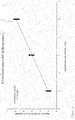
- FIG. 2 shows a graphical representation of a PLS calibration model for determining the setting of a decorative group I, which includes decors with a similar bright color division.
- This model is used to determine the curing of three unknown samples with a decoration that is assigned to Decor Group I according to its color scheme. After the three samples have been measured using an NIR laboratory instrument, the result of the acid test or the quality of the curing is calculated with the aid of the calibration model.
- the NIR measurement or recording of the NIR spectra takes place directly at the production facility, immediately after the curing of the resin coating.
Landscapes
- Physics & Mathematics (AREA)
- Life Sciences & Earth Sciences (AREA)
- Spectroscopy & Molecular Physics (AREA)
- Pathology (AREA)
- General Physics & Mathematics (AREA)
- Health & Medical Sciences (AREA)
- Chemical & Material Sciences (AREA)
- Analytical Chemistry (AREA)
- Biochemistry (AREA)
- General Health & Medical Sciences (AREA)
- Engineering & Computer Science (AREA)
- Immunology (AREA)
- Wood Science & Technology (AREA)
- Mathematical Physics (AREA)
- Laminated Bodies (AREA)
- Chemical And Physical Treatments For Wood And The Like (AREA)
- Investigating Or Analysing Materials By Optical Means (AREA)
Priority Applications (5)
| Application Number | Priority Date | Filing Date | Title |
|---|---|---|---|
| PT161669882T PT3238934T (pt) | 2016-04-26 | 2016-04-26 | Processo para a determinação do grau de endurecimento de, pelo menos, uma camada de resina contendo formaldeído, endurecível a quente, disposta sobre um painel de derivados de madeira |
| PL16166988T PL3238934T3 (pl) | 2016-04-26 | 2016-04-26 | Sposób określania stopnia utwardzenia co najmniej jednej warstwy żywicy termoutwardzalnej zawierającej formaldehyd, usytuowanej na płycie drewnopochodnej |
| TR2018/08760T TR201808760T4 (tr) | 2016-04-26 | 2016-04-26 | Ahşap esaslı bir plaka üzerinde düzenlenen ısıl sertleşebilen formaldehit içeren en az bir reçine katmanının kürlenme derecesinin belirlenmesi için yöntem. |
| ES16166988.2T ES2673494T3 (es) | 2016-04-26 | 2016-04-26 | Procedimiento para la determinación del grado de curado de al menos una capa de resina que contiene formaldehído, puede curarse por calor y está dispuesta sobre una placa de materia derivada de la madera |
| EP16166988.2A EP3238934B1 (de) | 2016-04-26 | 2016-04-26 | Verfahren zur bestimmung des aushärtungsgrades von mindestens einer auf einer holzwerkstoffplatte angeordneten wärmehärtbaren formaldehydhaltigen harzschicht |
Applications Claiming Priority (1)
| Application Number | Priority Date | Filing Date | Title |
|---|---|---|---|
| EP16166988.2A EP3238934B1 (de) | 2016-04-26 | 2016-04-26 | Verfahren zur bestimmung des aushärtungsgrades von mindestens einer auf einer holzwerkstoffplatte angeordneten wärmehärtbaren formaldehydhaltigen harzschicht |
Publications (2)
| Publication Number | Publication Date |
|---|---|
| EP3238934A1 EP3238934A1 (de) | 2017-11-01 |
| EP3238934B1 true EP3238934B1 (de) | 2018-04-18 |
Family
ID=55970785
Family Applications (1)
| Application Number | Title | Priority Date | Filing Date |
|---|---|---|---|
| EP16166988.2A Active EP3238934B1 (de) | 2016-04-26 | 2016-04-26 | Verfahren zur bestimmung des aushärtungsgrades von mindestens einer auf einer holzwerkstoffplatte angeordneten wärmehärtbaren formaldehydhaltigen harzschicht |
Country Status (5)
| Country | Link |
|---|---|
| EP (1) | EP3238934B1 (pl) |
| ES (1) | ES2673494T3 (pl) |
| PL (1) | PL3238934T3 (pl) |
| PT (1) | PT3238934T (pl) |
| TR (1) | TR201808760T4 (pl) |
Cited By (1)
| Publication number | Priority date | Publication date | Assignee | Title |
|---|---|---|---|---|
| EP4427919A1 (de) | 2023-03-10 | 2024-09-11 | Flooring Technologies Ltd. | Verfahren zur steuerung einer presse zum verpressen eines trägermaterials mit mindestens einer auf dem trägermaterial angeordneten harzschicht |
Families Citing this family (6)
| Publication number | Priority date | Publication date | Assignee | Title |
|---|---|---|---|---|
| PL4191230T3 (pl) * | 2020-03-27 | 2024-12-16 | Flooring Technologies Ltd. | Sposób jednoczesnego określania parametrów co najmniej jednej warstwy żywicy naniesionej na co najmniej jeden materiał nośny |
| CN111474123B (zh) * | 2020-04-27 | 2023-12-29 | 广东劳卡家具有限公司 | 浸渍胶膜纸饰面板材的检测方法 |
| CN112903622B (zh) * | 2021-01-25 | 2023-01-20 | 中国科学院上海光学精密机械研究所 | 一种多光子聚合物的局部聚合度测量方法 |
| EP4080195B1 (de) * | 2021-04-19 | 2023-06-07 | Flooring Technologies Ltd. | Verfahren zur bestimmung der klebstoff-penetration in holz mittels nah-infrarot-spektroskopie |
| JP7803690B2 (ja) * | 2021-11-10 | 2026-01-21 | 株式会社ディスコ | 乾燥検出方法及び乾燥検出装置 |
| DE102022204371B4 (de) | 2022-05-04 | 2025-12-04 | Continental Automotive Technologies GmbH | Vorrichtung zur Prüfung des Aushärtungszustandes von KTL beschichteten Bauteilen |
Family Cites Families (8)
| Publication number | Priority date | Publication date | Assignee | Title |
|---|---|---|---|---|
| US6414312B1 (en) * | 1998-03-05 | 2002-07-02 | Akzo Nobel N.V. | Method for controlling a process for the production of a cellulose fiber containing product |
| DK1060382T3 (da) * | 1998-03-05 | 2008-04-07 | Akzo Nobel Nv | Fremgangsmåde til at kontrollere en proces til fremstilling af et cellulosefiberholdigt produkt |
| AU2005206522B2 (en) * | 2004-01-12 | 2010-03-11 | James Hardie Technology Limited | Composite fiber cement article with radiation curable component |
| DE102005036643A1 (de) * | 2005-08-04 | 2007-02-08 | Fraunhofer-Gesellschaft zur Förderung der angewandten Forschung e.V. | Verfahren und Vorrichtung zur Ermittlung des Reifezustandes von Duroplast-Zusammensetzungen |
| US20070039678A1 (en) * | 2005-08-18 | 2007-02-22 | Akzo Nobel Coatings International B.V. | Method for production of layered substrates |
| US20070222100A1 (en) * | 2006-03-21 | 2007-09-27 | Huber Engineered Woods L.L.C. | Method and system using NIR spectroscopy for in-line monitoring and controlling content in continuous production of engineered wood products |
| EP2338693B1 (de) | 2009-12-23 | 2012-06-06 | Flooring Technologies Ltd. | Verfahren und Vorrichtung zum Veredeln einer Holzwerkstoffplatte |
| ES2567596T3 (es) * | 2013-05-30 | 2016-04-25 | Flooring Technologies Ltd. | Procedimiento para la determinación del contenido de humedad de una capa de resina sobre una placa de soporte |
-
2016
- 2016-04-26 TR TR2018/08760T patent/TR201808760T4/tr unknown
- 2016-04-26 EP EP16166988.2A patent/EP3238934B1/de active Active
- 2016-04-26 PT PT161669882T patent/PT3238934T/pt unknown
- 2016-04-26 ES ES16166988.2T patent/ES2673494T3/es active Active
- 2016-04-26 PL PL16166988T patent/PL3238934T3/pl unknown
Non-Patent Citations (1)
| Title |
|---|
| TOM SCHERZER ET AL: "Process Control of UV and EB Curing of Acrylates by In-line NIR Reflection Spectroscopy", 2004 UV & EB TECHNICAL CONFERENCE PROCEEDINGS, 30 April 2004 (2004-04-30), XP055310210, Retrieved from the Internet <URL:http://www.radtechmembers.org/archive-proceedings/2004/papers/064.pdf> [retrieved on 20161012] * |
Cited By (2)
| Publication number | Priority date | Publication date | Assignee | Title |
|---|---|---|---|---|
| EP4427919A1 (de) | 2023-03-10 | 2024-09-11 | Flooring Technologies Ltd. | Verfahren zur steuerung einer presse zum verpressen eines trägermaterials mit mindestens einer auf dem trägermaterial angeordneten harzschicht |
| WO2024188737A1 (de) | 2023-03-10 | 2024-09-19 | Flooring Technologies Ltd. | Verfahren zur steuerung einer presse zum verpressen eines trägermaterials mit mindestens einer auf dem trägermaterial angeordneten harzschicht |
Also Published As
| Publication number | Publication date |
|---|---|
| EP3238934A1 (de) | 2017-11-01 |
| PT3238934T (pt) | 2018-05-25 |
| PL3238934T3 (pl) | 2018-10-31 |
| TR201808760T4 (tr) | 2018-07-23 |
| ES2673494T3 (es) | 2018-06-22 |
Similar Documents
| Publication | Publication Date | Title |
|---|---|---|
| EP3280998B1 (de) | Verfahren zur bestimmung der abriebfestigkeit von mindestens einer auf einer trägerplatte angeordneten verschleissschicht | |
| EP2808636B1 (de) | Verfahren zur Bestimmung des Feuchtegehaltes einer Harzschicht auf einer Trägerplatte | |
| EP3238934A1 (de) | Verfahren zur bestimmung des aushärtungsgrades von mindestens einer auf einer trägerplatte angeordneten polymerschicht | |
| EP4191230B1 (de) | Verfahren zur gleichzeitigen bestimmung von parametern von mindestens einer auf mindestens einem trägermaterial aufgetragenen harzschicht | |
| EP2915658B1 (de) | Verfahren zur Bestimmung des Feuchtegehaltes einer Harzschicht auf einer mit einem faserhaltigen Trägermaterial beschichteten Holzwerkstoffplatte | |
| EP3327424B1 (de) | Verfahren zur bestimmung des vernetzungsgrades von mindestens einer auf einer trägerplatte vorgesehen harzschicht | |
| WO2022112173A1 (de) | Verfahren zur erstellung und zum vergleich von farbprofilen | |
| EP3428619B1 (de) | Verfahren zur bestimmung der menge einer auf einer holzwerkstoffplatte aufgetragenen flüssigen harzschicht | |
| EP4327074A1 (de) | Verfahren zur bestimmung der klebstoff-penetration in holz mittels nah-infrarot-spektroskopie | |
| EP4050325B1 (de) | Verfahren zur bestimmung der harzpenetration in holz mittels nahinfrarotspektroskopie | |
| EP4427919B1 (de) | Verfahren zur steuerung einer presse zum verpressen eines trägermaterials mit mindestens einer auf dem trägermaterial angeordneten harzschicht und produktionslinie dafür | |
| EP3757508B1 (de) | Verfahren zur bestimmung der menge einer auf einer trägerplatte aufgetragenen schicht, insbesondere einer grundierungsschicht | |
| EP4080196B1 (de) | Verfahren zur bestimmung des quantitativen verhältnisses von melamin-formaldehyd-harz und harnstoff-formaldehyd-harz in mindestens einer mit einer mischung aus diesen harzen imprägnierten papierlage | |
| EP4303565B1 (de) | Verfahren zur bestimmung der menge und/oder der zusammensetzung von einer auf ein trägermaterial aufgetragenen pulverförmigen harzschicht | |
| EP4737884A1 (de) | Verfahren zur vorhersage der benetzbarkeit der oberfläche einer holzwerkstoffplatte | |
| EP3336521B1 (de) | Verfahren zur bestimmung des gehaltes an anorganischen feststoffpartikeln in einer harzlösung |
Legal Events
| Date | Code | Title | Description |
|---|---|---|---|
| PUAI | Public reference made under article 153(3) epc to a published international application that has entered the european phase |
Free format text: ORIGINAL CODE: 0009012 |
|
| REG | Reference to a national code |
Ref country code: DE Ref legal event code: R079 Ref document number: 502016000883 Country of ref document: DE Free format text: PREVIOUS MAIN CLASS: B32B0021000000 Ipc: G01N0021359000 |
|
| 17P | Request for examination filed |
Effective date: 20170112 |
|
| AK | Designated contracting states |
Kind code of ref document: A1 Designated state(s): AL AT BE BG CH CY CZ DE DK EE ES FI FR GB GR HR HU IE IS IT LI LT LU LV MC MK MT NL NO PL PT RO RS SE SI SK SM TR |
|
| AX | Request for extension of the european patent |
Extension state: BA ME |
|
| GRAP | Despatch of communication of intention to grant a patent |
Free format text: ORIGINAL CODE: EPIDOSNIGR1 |
|
| RIC1 | Information provided on ipc code assigned before grant |
Ipc: G01N 21/3563 20140101ALI20171027BHEP Ipc: G01N 21/359 20140101AFI20171027BHEP Ipc: G01N 21/84 20060101ALI20171027BHEP |
|
| INTG | Intention to grant announced |
Effective date: 20171121 |
|
| GRAS | Grant fee paid |
Free format text: ORIGINAL CODE: EPIDOSNIGR3 |
|
| GRAA | (expected) grant |
Free format text: ORIGINAL CODE: 0009210 |
|
| AK | Designated contracting states |
Kind code of ref document: B1 Designated state(s): AL AT BE BG CH CY CZ DE DK EE ES FI FR GB GR HR HU IE IS IT LI LT LU LV MC MK MT NL NO PL PT RO RS SE SI SK SM TR |
|
| REG | Reference to a national code |
Ref country code: GB Ref legal event code: FG4D Free format text: NOT ENGLISH |
|
| REG | Reference to a national code |
Ref country code: CH Ref legal event code: EP |
|
| REG | Reference to a national code |
Ref country code: DE Ref legal event code: R096 Ref document number: 502016000883 Country of ref document: DE |
|
| REG | Reference to a national code |
Ref country code: AT Ref legal event code: REF Ref document number: 991013 Country of ref document: AT Kind code of ref document: T Effective date: 20180515 |
|
| REG | Reference to a national code |
Ref country code: IE Ref legal event code: FG4D Free format text: LANGUAGE OF EP DOCUMENT: GERMAN |
|
| REG | Reference to a national code |
Ref country code: PT Ref legal event code: SC4A Ref document number: 3238934 Country of ref document: PT Date of ref document: 20180525 Kind code of ref document: T Free format text: AVAILABILITY OF NATIONAL TRANSLATION Effective date: 20180521 |
|
| REG | Reference to a national code |
Ref country code: FR Ref legal event code: PLFP Year of fee payment: 3 |
|
| PG25 | Lapsed in a contracting state [announced via postgrant information from national office to epo] |
Ref country code: RS Free format text: LAPSE BECAUSE OF FAILURE TO SUBMIT A TRANSLATION OF THE DESCRIPTION OR TO PAY THE FEE WITHIN THE PRESCRIBED TIME-LIMIT Effective date: 20180418 |
|
| REG | Reference to a national code |
Ref country code: ES Ref legal event code: FG2A Ref document number: 2673494 Country of ref document: ES Kind code of ref document: T3 Effective date: 20180622 |
|
| REG | Reference to a national code |
Ref country code: CH Ref legal event code: NV Representative=s name: SCHMAUDER AND PARTNER AG PATENT- UND MARKENANW, CH |
|
| REG | Reference to a national code |
Ref country code: NL Ref legal event code: FP |
|
| REG | Reference to a national code |
Ref country code: LT Ref legal event code: MG4D |
|
| PG25 | Lapsed in a contracting state [announced via postgrant information from national office to epo] |
Ref country code: BG Free format text: LAPSE BECAUSE OF FAILURE TO SUBMIT A TRANSLATION OF THE DESCRIPTION OR TO PAY THE FEE WITHIN THE PRESCRIBED TIME-LIMIT Effective date: 20180718 Ref country code: LT Free format text: LAPSE BECAUSE OF FAILURE TO SUBMIT A TRANSLATION OF THE DESCRIPTION OR TO PAY THE FEE WITHIN THE PRESCRIBED TIME-LIMIT Effective date: 20180418 Ref country code: NO Free format text: LAPSE BECAUSE OF FAILURE TO SUBMIT A TRANSLATION OF THE DESCRIPTION OR TO PAY THE FEE WITHIN THE PRESCRIBED TIME-LIMIT Effective date: 20180718 Ref country code: FI Free format text: LAPSE BECAUSE OF FAILURE TO SUBMIT A TRANSLATION OF THE DESCRIPTION OR TO PAY THE FEE WITHIN THE PRESCRIBED TIME-LIMIT Effective date: 20180418 Ref country code: AL Free format text: LAPSE BECAUSE OF FAILURE TO SUBMIT A TRANSLATION OF THE DESCRIPTION OR TO PAY THE FEE WITHIN THE PRESCRIBED TIME-LIMIT Effective date: 20180418 Ref country code: SE Free format text: LAPSE BECAUSE OF FAILURE TO SUBMIT A TRANSLATION OF THE DESCRIPTION OR TO PAY THE FEE WITHIN THE PRESCRIBED TIME-LIMIT Effective date: 20180418 |
|
| PG25 | Lapsed in a contracting state [announced via postgrant information from national office to epo] |
Ref country code: HR Free format text: LAPSE BECAUSE OF FAILURE TO SUBMIT A TRANSLATION OF THE DESCRIPTION OR TO PAY THE FEE WITHIN THE PRESCRIBED TIME-LIMIT Effective date: 20180418 Ref country code: GR Free format text: LAPSE BECAUSE OF FAILURE TO SUBMIT A TRANSLATION OF THE DESCRIPTION OR TO PAY THE FEE WITHIN THE PRESCRIBED TIME-LIMIT Effective date: 20180719 Ref country code: LV Free format text: LAPSE BECAUSE OF FAILURE TO SUBMIT A TRANSLATION OF THE DESCRIPTION OR TO PAY THE FEE WITHIN THE PRESCRIBED TIME-LIMIT Effective date: 20180418 |
|
| REG | Reference to a national code |
Ref country code: DE Ref legal event code: R097 Ref document number: 502016000883 Country of ref document: DE |
|
| REG | Reference to a national code |
Ref country code: IE Ref legal event code: MM4A |
|
| PG25 | Lapsed in a contracting state [announced via postgrant information from national office to epo] |
Ref country code: RO Free format text: LAPSE BECAUSE OF FAILURE TO SUBMIT A TRANSLATION OF THE DESCRIPTION OR TO PAY THE FEE WITHIN THE PRESCRIBED TIME-LIMIT Effective date: 20180418 Ref country code: CZ Free format text: LAPSE BECAUSE OF FAILURE TO SUBMIT A TRANSLATION OF THE DESCRIPTION OR TO PAY THE FEE WITHIN THE PRESCRIBED TIME-LIMIT Effective date: 20180418 Ref country code: MC Free format text: LAPSE BECAUSE OF FAILURE TO SUBMIT A TRANSLATION OF THE DESCRIPTION OR TO PAY THE FEE WITHIN THE PRESCRIBED TIME-LIMIT Effective date: 20180418 Ref country code: LU Free format text: LAPSE BECAUSE OF NON-PAYMENT OF DUE FEES Effective date: 20180426 Ref country code: EE Free format text: LAPSE BECAUSE OF FAILURE TO SUBMIT A TRANSLATION OF THE DESCRIPTION OR TO PAY THE FEE WITHIN THE PRESCRIBED TIME-LIMIT Effective date: 20180418 Ref country code: DK Free format text: LAPSE BECAUSE OF FAILURE TO SUBMIT A TRANSLATION OF THE DESCRIPTION OR TO PAY THE FEE WITHIN THE PRESCRIBED TIME-LIMIT Effective date: 20180418 |
|
| PLBE | No opposition filed within time limit |
Free format text: ORIGINAL CODE: 0009261 |
|
| STAA | Information on the status of an ep patent application or granted ep patent |
Free format text: STATUS: NO OPPOSITION FILED WITHIN TIME LIMIT |
|
| PG25 | Lapsed in a contracting state [announced via postgrant information from national office to epo] |
Ref country code: SM Free format text: LAPSE BECAUSE OF FAILURE TO SUBMIT A TRANSLATION OF THE DESCRIPTION OR TO PAY THE FEE WITHIN THE PRESCRIBED TIME-LIMIT Effective date: 20180418 |
|
| 26N | No opposition filed |
Effective date: 20190121 |
|
| PG25 | Lapsed in a contracting state [announced via postgrant information from national office to epo] |
Ref country code: IE Free format text: LAPSE BECAUSE OF NON-PAYMENT OF DUE FEES Effective date: 20180426 |
|
| PG25 | Lapsed in a contracting state [announced via postgrant information from national office to epo] |
Ref country code: MT Free format text: LAPSE BECAUSE OF FAILURE TO SUBMIT A TRANSLATION OF THE DESCRIPTION OR TO PAY THE FEE WITHIN THE PRESCRIBED TIME-LIMIT Effective date: 20180418 |
|
| PG25 | Lapsed in a contracting state [announced via postgrant information from national office to epo] |
Ref country code: HU Free format text: LAPSE BECAUSE OF FAILURE TO SUBMIT A TRANSLATION OF THE DESCRIPTION OR TO PAY THE FEE WITHIN THE PRESCRIBED TIME-LIMIT; INVALID AB INITIO Effective date: 20160426 Ref country code: MK Free format text: LAPSE BECAUSE OF NON-PAYMENT OF DUE FEES Effective date: 20180418 Ref country code: CY Free format text: LAPSE BECAUSE OF FAILURE TO SUBMIT A TRANSLATION OF THE DESCRIPTION OR TO PAY THE FEE WITHIN THE PRESCRIBED TIME-LIMIT Effective date: 20180418 |
|
| PG25 | Lapsed in a contracting state [announced via postgrant information from national office to epo] |
Ref country code: IS Free format text: LAPSE BECAUSE OF FAILURE TO SUBMIT A TRANSLATION OF THE DESCRIPTION OR TO PAY THE FEE WITHIN THE PRESCRIBED TIME-LIMIT Effective date: 20180818 |
|
| PG25 | Lapsed in a contracting state [announced via postgrant information from national office to epo] |
Ref country code: SI Free format text: LAPSE BECAUSE OF NON-PAYMENT OF DUE FEES Effective date: 20180426 |
|
| REG | Reference to a national code |
Ref country code: DE Ref legal event code: R082 Ref document number: 502016000883 Country of ref document: DE Representative=s name: MAIKOWSKI & NINNEMANN PATENTANWAELTE PARTNERSC, DE Ref country code: DE Ref legal event code: R081 Ref document number: 502016000883 Country of ref document: DE Owner name: FLOORING TECHNOLOGIES LTD., KALKARA, MT Free format text: FORMER OWNER: SWISS KRONO TEC AG, LUZERN, CH |
|
| REG | Reference to a national code |
Ref country code: CH Ref legal event code: PUE Owner name: FLOORING TECHNOLOGIES LTD., MT Free format text: FORMER OWNER: SWISS KRONO TEC AG, CH |
|
| REG | Reference to a national code |
Ref country code: NL Ref legal event code: PD Owner name: FLOORING TECHNOLOGIES LTD.; MT Free format text: DETAILS ASSIGNMENT: CHANGE OF OWNER(S), ASSIGNMENT; FORMER OWNER NAME: SWISS KRONO TEC AG Effective date: 20210226 |
|
| REG | Reference to a national code |
Ref country code: ES Ref legal event code: PC2A Owner name: FLOORING TECHNOLOGIES LTD. Effective date: 20210317 |
|
| REG | Reference to a national code |
Ref country code: SK Ref legal event code: PC4A Ref document number: E 27439 Country of ref document: SK Owner name: FLOORING TECHNOLOGIES LTD., KALKARA, MT Free format text: FORMER OWNER: SWISS KRONO TEC AG, LUZERN, CH Effective date: 20210331 |
|
| REG | Reference to a national code |
Ref country code: BE Ref legal event code: PD Owner name: FLOORING TECHNOLOGIES LTD.; MT Free format text: DETAILS ASSIGNMENT: CHANGE OF OWNER(S), ASSIGNMENT; FORMER OWNER NAME: SWISS KRONO TEC AG Effective date: 20210208 |
|
| REG | Reference to a national code |
Ref country code: GB Ref legal event code: 732E Free format text: REGISTERED BETWEEN 20210325 AND 20210331 |
|
| REG | Reference to a national code |
Ref country code: AT Ref legal event code: PC Ref document number: 991013 Country of ref document: AT Kind code of ref document: T Owner name: FLOORING TECHNOLOGIES LTD., MT Effective date: 20210505 |
|
| PGFP | Annual fee paid to national office [announced via postgrant information from national office to epo] |
Ref country code: NL Payment date: 20250422 Year of fee payment: 10 |
|
| PGFP | Annual fee paid to national office [announced via postgrant information from national office to epo] |
Ref country code: PL Payment date: 20250411 Year of fee payment: 10 Ref country code: DE Payment date: 20250402 Year of fee payment: 10 |
|
| PGFP | Annual fee paid to national office [announced via postgrant information from national office to epo] |
Ref country code: ES Payment date: 20250519 Year of fee payment: 10 |
|
| PGFP | Annual fee paid to national office [announced via postgrant information from national office to epo] |
Ref country code: BE Payment date: 20250422 Year of fee payment: 10 Ref country code: IT Payment date: 20250430 Year of fee payment: 10 |
|
| PGFP | Annual fee paid to national office [announced via postgrant information from national office to epo] |
Ref country code: PT Payment date: 20250417 Year of fee payment: 10 |
|
| PGFP | Annual fee paid to national office [announced via postgrant information from national office to epo] |
Ref country code: FR Payment date: 20250424 Year of fee payment: 10 |
|
| PGFP | Annual fee paid to national office [announced via postgrant information from national office to epo] |
Ref country code: CH Payment date: 20250501 Year of fee payment: 10 |
|
| PGFP | Annual fee paid to national office [announced via postgrant information from national office to epo] |
Ref country code: AT Payment date: 20250416 Year of fee payment: 10 |
|
| PGFP | Annual fee paid to national office [announced via postgrant information from national office to epo] |
Ref country code: TR Payment date: 20250418 Year of fee payment: 10 Ref country code: SK Payment date: 20250422 Year of fee payment: 10 |
|
| PGFP | Annual fee paid to national office [announced via postgrant information from national office to epo] |
Ref country code: GB Payment date: 20260324 Year of fee payment: 11 |
|
| REG | Reference to a national code |
Ref country code: CH Ref legal event code: U11 Free format text: ST27 STATUS EVENT CODE: U-0-0-U10-U11 (AS PROVIDED BY THE NATIONAL OFFICE) Effective date: 20260501 |