EP3238816A1 - Verfahren zur herstellung von mikrokapseln - Google Patents
Verfahren zur herstellung von mikrokapseln Download PDFInfo
- Publication number
- EP3238816A1 EP3238816A1 EP16197703.8A EP16197703A EP3238816A1 EP 3238816 A1 EP3238816 A1 EP 3238816A1 EP 16197703 A EP16197703 A EP 16197703A EP 3238816 A1 EP3238816 A1 EP 3238816A1
- Authority
- EP
- European Patent Office
- Prior art keywords
- microcapsules
- oil
- emulsion
- methyl
- dispersion
- Prior art date
- Legal status (The legal status is an assumption and is not a legal conclusion. Google has not performed a legal analysis and makes no representation as to the accuracy of the status listed.)
- Granted
Links
Images

Classifications
-
- B—PERFORMING OPERATIONS; TRANSPORTING
- B01—PHYSICAL OR CHEMICAL PROCESSES OR APPARATUS IN GENERAL
- B01J—CHEMICAL OR PHYSICAL PROCESSES, e.g. CATALYSIS OR COLLOID CHEMISTRY; THEIR RELEVANT APPARATUS
- B01J13/00—Colloid chemistry, e.g. the production of colloidal materials or their solutions, not otherwise provided for; Making microcapsules or microballoons
- B01J13/02—Making microcapsules or microballoons
- B01J13/06—Making microcapsules or microballoons by phase separation
- B01J13/14—Polymerisation; cross-linking
-
- B—PERFORMING OPERATIONS; TRANSPORTING
- B01—PHYSICAL OR CHEMICAL PROCESSES OR APPARATUS IN GENERAL
- B01J—CHEMICAL OR PHYSICAL PROCESSES, e.g. CATALYSIS OR COLLOID CHEMISTRY; THEIR RELEVANT APPARATUS
- B01J13/00—Colloid chemistry, e.g. the production of colloidal materials or their solutions, not otherwise provided for; Making microcapsules or microballoons
- B01J13/02—Making microcapsules or microballoons
- B01J13/06—Making microcapsules or microballoons by phase separation
- B01J13/14—Polymerisation; cross-linking
- B01J13/18—In situ polymerisation with all reactants being present in the same phase
-
- B—PERFORMING OPERATIONS; TRANSPORTING
- B01—PHYSICAL OR CHEMICAL PROCESSES OR APPARATUS IN GENERAL
- B01J—CHEMICAL OR PHYSICAL PROCESSES, e.g. CATALYSIS OR COLLOID CHEMISTRY; THEIR RELEVANT APPARATUS
- B01J13/00—Colloid chemistry, e.g. the production of colloidal materials or their solutions, not otherwise provided for; Making microcapsules or microballoons
- B01J13/02—Making microcapsules or microballoons
- B01J13/20—After-treatment of capsule walls, e.g. hardening
- B01J13/206—Hardening; drying
-
- C—CHEMISTRY; METALLURGY
- C11—ANIMAL OR VEGETABLE OILS, FATS, FATTY SUBSTANCES OR WAXES; FATTY ACIDS THEREFROM; DETERGENTS; CANDLES
- C11D—DETERGENT COMPOSITIONS; USE OF SINGLE SUBSTANCES AS DETERGENTS; SOAP OR SOAP-MAKING; RESIN SOAPS; RECOVERY OF GLYCEROL
- C11D3/00—Other compounding ingredients of detergent compositions covered in group C11D1/00
- C11D3/50—Perfumes
- C11D3/502—Protected perfumes
- C11D3/505—Protected perfumes encapsulated or adsorbed on a carrier, e.g. zeolite or clay
Definitions
- the invention is in the field of encapsulation of active ingredients and relates to a new method by means of which, in particular, the process control with respect to stability and size of the particles can be improved.
- capsule is generally understood by the person skilled in the art to mean fine-dispersed liquid or solid phases coated with film-forming polymers, during the preparation of which the polymers precipitate on the material to be enveloped after emulsification and coacervation or interfacial polymerization.
- microcapsules which have diameters in the range from about 0.0001 to 5, preferably 0.001 to 0.5 and in particular 0.005 to 0.1 mm.
- the first industrial production of microcapsules dates back to 1957, when it first commercialized copy paper containing the dyes in a microencapsulated fashion.
- Today, countless types of microcapsules are commercially available and used in a wide variety of fields.
- An important segment is the finishing of fibers and textiles with microencapsulated agents, which are applied either during finishing or during the washing process. When worn, the capsules break open due to mechanical stress and release the fragrance over a longer period of time.
- microcapsules include those of the aminoplast type.
- the preparation of these capsules is carried out in a simplified manner by first preparing under high shear and in the presence of emulsifiers an O / W emulsion containing the water-soluble monomer, a so-called amine-formaldehyde precondensate, and the water-insoluble active ingredient, such as a perfume oil ,
- the polycondensation is initiated by a pH change, for example by adjusting the pH to about 3.5 by addition of acid.
- the polycondensates deposit on the oil droplets in the emulsion and gradually envelop them. After completion of the polycondensation, a microcapsule dispersion has developed from the emulsion.
- the capsules still have a soft, elastic shell, which does not yet provide the necessary diffusion stability and texture properties. It follows therefore the third step, in which one raises the temperature to about 60 ° C, which leads to a cross-linking of the polymers in the wall and to the curing of the capsules.
- a corresponding method is for example from the EP 2111214 B1 (GIVAUDAN) known.
- Subject of the EP 2669835 A1 is a process for producing microcapsules.
- the characteristic of these capsules is a specific particle size distribution which has at least two maxima, the main maximum of the particle size being in the range of 5 to 100 ⁇ m and the volume occupied by the microcapsules whose particle size is less than or equal to 1 ⁇ 4 the particle size of the main maximum or equal to about 20% of the total volume of the microcapsules.
- the capsule wall may consist of a methylated melamine-formaldehyde resin and / or urea-formaldehyde resin and / or reaction products of aldehydes with thiourea, N-alkylurea, guanidine, acetoguanamine, benzoguanamine, caprionoguanamine, cyanamine, dicyandiamide and / or alkyl / arylsulfonamide.
- a first important aspect of microencapsulation concerns the particle size distribution. The closer this distribution can be produced in the emulsion process, the more accurate the properties of the capsules can be adjusted.
- the capsule size adjustment has a direct impact on the fracture properties of the capsules and thus also on the sensory performance of the technology in the final application.
- the second essential aspect is the stabilization of the emulsion.
- appropriate surfactants or protective colloids must be matched to the prepolymers used.
- the selection of a wrong protective colloid can lead to a faulty encapsulation.
- the complex object of the present problem has therefore been to improve the state of the art with respect to the production of microcapsules, especially of aminoplast microcapsules, in such a way that the average diameter of the capsules is reduced and unified.
- a possible monodisperse particle size distribution is sought, which has a more pronounced maximum at smaller diameters.
- the proposed process should also allow to get by with less shear force due to higher emulsion stability, thus releasing less disruptive polymer grit from destroyed capsules.
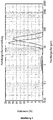
- illustration 1 shows a particle size distribution in the production of aminoplast microcapsules once with the addition of 1 wt .-% SymDiol ® 68 (1,2-hexanediol: 1,2-octanediol 1: 1) (left) and once without the addition of the diol (right) , It can be seen that the maximum is more pronounced and shifted to smaller particle diameters.
- the particle size distribution is in the process of the prior art, for example in that which in the EP 2111214 B1 is described, 10 to 80 microns. By adding diols, these can be reduced to about 10 to 35 ⁇ m. This narrower distribution allows you to make capsule systems that can be more easily optimized in your sensory performance. There are also advantages in stabilizing the capsule systems in the final application.
- the size of the capsules flows according to Strok's law into the separation speed. A more uniform distribution makes it possible, for example, to tailor the density of the perfume oils in a detergent base more accurately.
- the speed of the stirrer in this case can be reduced by 200 to 260 rpm, which corresponds to an average reduction of about 15%.
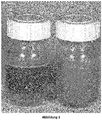
- Figure 3 shows two microcapsule dispersions: the left was prepared by the standard method and has an average particle diameter of about 50 microns, the right one was prepared with the addition of 1,2-diols and has an average particle diameter of about 22 microns.
- the microcapsules are homogeneously dispersed in the sample according to the invention, while they have fallen to the ground in the comparative sample.
- the addition of the diols leads to an optimized and controlled polymer deposition, whereby the shell strength can be reduced. In particular, the risk that the precondensate is not completely deposited on the shell is minimized.
- Microbiological stabilization of products is also a very important factor in microencapsulation.
- sufficient formaldehyde is included to protect the dispersions against microbial attack.
- Market and legislation require a reduction in the formaldehyde concentration, with the reduction of the shell thicknesses additionally reducing the proportion of formaldehyde-containing precondensates.
- the products are not sufficiently stabilized to prevent microbial contamination.
- diols since they are antimicrobially effective, products are obtained which are sufficiently stabilized without the need for the addition of further preservatives.
- Preferred prepolymers in the context of the invention are so-called amine-formaldehyde precondensates (AFP). These form in a preferred embodiment the Material which by polycondensation finally forms the shell or wall of the capsule and encloses the active ingredient.
- AFP amine-formaldehyde precondensates
- the amine component of the AFP is usually urea or especially melamine.
- the preferred AFP are therefore Alkyl michss cons of melamine with short-chain alcohols and in particular the so-called high or partially alkoxylated and possibly also alkylated melamines, such as those offered in skysrigmethanolischer formaldehyde solution under the name Luracoll ®, especially Luracoll ® SD by BASF.
- the amine component of the AFP is usually urea or especially melamine.
- the preferred AFP are therefore Alkyl michss cons of melamine with short-chain alcohols and in particular the so-called high or partially alkoxylated and possibly also alkylated melamines, such as those offered in skysrigmethanolischer formaldehyde solution under the name Luracoll ®, especially Luracoll ® SD by BASF.
- prepolymers optionally alkylated mono- and polymethylol-urea and mono- and polymethylol melamine precondensates, such as those sold under the name URAC (Cytec Corp.) or partially methylated mono- and polymethylol -1,3,5-triamino-2,4,6-triazine precondensates commercially available under the name CYMEL (Cytec Corp.).
- mono- and polyalkylolbenzoguanamine or mono- and polyalkylol glycuril precondensates are also suitable. As far as these precondensates have alkyl groups, they are less reactive and can be stored for longer.
- the preferred precondensates include the polymethylolmelamines and the polymethylol-1- (3,5-dihydroxy-methylbenzyl) -3,5-triamino-2,4,6-triazine.
- poly [N- (2,2-dimethoxy-1-hydroxy)] polyamines such as di- [N- (2,2-dimethoxy-1-hydroxy)] urea, tri- [N- (2 , 2-dimethoxy-1-hydroxy)] melamine, tetra- [N- (2,2-dimethoxy-1-hydroxy)] glycouryl and di- [N- (2,2-dimethoxy-1-hydroxy)] benzoguanidine and their mixtures.
- prepolymers are dialdehydes and resorcinol.
- Aromas, fragrances or else biogenic principles are preferably suitable as active ingredients, as are:
- Typical examples of flavors that can be encapsulated within the meaning of the invention include: acetophenone, allyl capronate, alpha-ionone, beta-ionone, anisaldehyde, anisylacetate, anisylformate, benzaldehyde, benzothiazole, benzylacetate, benzylalcohol, benzylbenzoate, beta-ionone, butylbutyrate, Butylcapronate, butylidenephthalide, carvone, camphene, caryophyllene, cineole, cinnamylacetate, citral, citronellol, citronellal, citronellylacetate, cyclohexylacetate, cymene, damascone, decalactone, dihydrocoumarin, dimethylanthranilate, dimethylanthranilate, dodecalactone, ethoxyethylacetate, ethylbutyric
- Hydrocarbons such as. 3-carene; a-pinene; beta pinene; alpha-terpinene; gamma-terpinene; p-cymene; bisabolene; camphene; caryophyllene; cedrene; farnesene; limonene; longifolene; myrcene; ocimene; valencene; ( E, Z ) -1,3,5-undecatriene;
- Aliphatic alcohols such as. Hexanol; octanol; 3-octanol; 2,6-dimethylheptanol; 2-methylheptanol, 2-methyl-octanol; ( E ) -2-hexenol; (E) - and (Z) -3-hexenol; 1-octene-3-ol; Mixture of 3,4,5,6,6-pentamethyl-3/4-hepten-2-ol and 3,5,6,6-tetramethyl-4-methyleneheptan-2-ol; ( E, Z ) -2,6-nonadienol; 3,7-dimethyl-7-methoxyoctane-2-ol; 9-decenol; 10-undecenol; 4-methyl-3-decen-5-ol;
- Aliphatic aldehydes and their acetals such as. Hexanal; heptanal; octanal; nonanal; decanal; undecanal; dodecanal; tridecanal; 2-methyloctanal; 2-methyl nonanal; ( E ) -2-hexenal; ( Z ) -4-heptenal; 2,6-dimethyl-5-heptenal; 10-undecenal; ( E ) -4-decenal; 2-dodecenal; 2,6,10-trimethyl-5,9-undecadienal; Heptanal diethyl; 1,1-dimethoxy-2,2,5-trimethyl-4-hexene; citronellyloxyacetaldehyde;
- Aliphatic ketones and their oximes such as.
- Aliphatic sulfur-containing compounds such as. For example, 3-methylthiohexanol; 3-Methylthiohexylacetat; 3-mercaptohexanol; 3-mercaptohexyl acetate; 3-mercaptohexyl butyrate; 3-acetylthiohexyl acetate, 1-menthene-8-thiol;
- Aliphatic nitriles such as. B. 2-nonenitrile; 2-Tridecen Textrenitril; 2,12-Tridecen Acid Citril; 3,7-dimethyl-2,6-octadien Acidklarenitril; 3,7-dimethyl-6-octen Aciditril;
- Aliphatic carboxylic acids and their esters such as. B.
- Acyclic terpene alcohols such as. Citronellol; geraniol; nerol; linalool; Lavadulol; nerolidol; farnesol; tetrahydrolinalool; tetrahydrogeraniol; 2,6-dimethyl-7-octene-2-ol; 2,6-dimethyl octane-2-ol; 2-methyl-6-methylene-7-octen-2-ol; 2,6-dimethyl-5,7-octadiene-2-ol; 2,6-dimethyl-3,5-octadiene-2-ol; 3,7-dimethyl-4,6-octadiene-3-ol; 3,7-dimethyl-1,5,7-octatriene-3-ol; 2,6-dimethyl-2,5,7-octatriene-I-ol; as well as their formates, acetates, propionates, isobutyrates
- Acyclic terpene aldehydes and ketones such as. B. Geranial; neral; citronellal; 7-hydroxy-3,7-dimethyloctanal; 7-methoxy-3,7-dimethyloctanal; 2,6,10-trimethyl-9-undecenal; geranyl acetone; and the dimethyl and diethyl acetals of geranial, neral, 7-hydroxy-3,7-dimethyloctanal;
- Cyclic terpene alcohols such as. Menthol; isopulegol; a-terpineol; Terpinenol-4; Menthane-8-ol; Menthane-1-ol; Menthane-7-ol; borneol; soborneol; linalool; monopoly; cedrol; ambrinol; Vetyverol; guaiol; as well as their formates, acetates, propionates, isobutyrates, butyrates, isovalerates, pentanoates, hexanoates, crotonates, tiglinates, 3-methyl-2-butenoates;
- Cyclic terpene aldehydes and ketones such as. Eg menthone; menthone; 8-mercaptomenthan-3-one; carvone; camphor; fenchon; a-ionone; beta-ionone; an-methyl ionone; beta -n-methyl ionone; a-isomethylionone; beta-isomethylionone; a-Iron; a-damascone; beta damascone; beta -demascenone; ?
- Cyclic alcohols such as. B. 4- tert- butylcyclohexanol; 3,3,5-trimethylcyclohexanol; 3-isocamphylcyclohexanol; 2,6,9-trimethyl- ( Z 2, Z 5, E 9) -cyclododecatrien-1-ol; 2-isobutyl-4-methyl tetrahydro-2 H -pyran-4-ol; from the group of cycloaliphatic alcohols such. B.
- Cyclic and cycloaliphatic ethers such as. Cineol; cedryl methyl ether; cyclododecyl; (Ethoxymethoxy) cyclododecane; a-Cedrenepoxid; 3a, 6,6,9a-tetramethyl-dodecahydronaphtho [2,1-b] furan; 3a-ethyl-6,6,9a-trimethyl-dodecahydronaph-tho [2,1-b] furan; 1,5,9-trimethyl-13-oxabicyclo [10.1.0] trideca-4,8-diene; rose oxide; 2- (2,4-dimethyl-3-cyclohexen-1-yl) -5-methyl-5- (1-methylpropyl) -1,3-dioxane;
- Cyclic ketones such as. B. 4- tert- butylcyclohexanone; 2,2,5-trimethyl-5-pentylcyclopentanone; 2-heptylcyclopentanone; 2-pentylcyclopentanone; 2-hydroxy-3-methyl-2-cyclopenten-1-one; 3-methyl-cis-2-penten-1-yl-2-cyclopenten-1-one; 3-methyl-2-pentyl-2-cyclopenten-1-one; 3-methyl-4-cyclopentadecenone; 3-methyl-5-cyclopentadecenone; 3-methylcyclopentadecanone; 4- (1-ethoxyvinyl) -3,3,5,5-tetramethylcyclohexanone; 4- tert- pentylcyclohexanone; 5-cyclohexadecen-1-one; 6,7-Dihydro-1,1,2,3,3-pentamethyl-4 (5 H) -indanon; 9-cycloheptadecen-1-one;
- Cycloaliphatic aldehydes such as. B. 2,4-dimethyl-3-cyclohexene carbaldehyde; 2-methyl-4- (2,2,6-trimethyl-cyclohexen-1-yl) -2-butenal; 4- (4-hydroxy-4-methylpentyl) -3-cyclohexene carbaldehyde; 4- (4-methyl-3-penten-1-yl) -3-cyclohexene carbaldehyde;
- Cycloaliphatic ketones such as. B. 1- (3,3-dimethylcyclohexyl) -4-penten-1-one; 1- (5,5-dimethyl-2-cyclohexen-1-yl) -4-penten-1-one; 2,3,8,8-tetramethyl-1,2,3,4,5,6,7,8-octahydro-2-naphtalenylmethylketon; Methyl-2,6,10-trimethyl-2,5,9-cyclododecatrienylketon; tert- butyl (2,4-dimethyl-3-cyclohexen-1-yl) ketone;
- Esters of cyclic alcohols such as. B. 2- tert- butylcyclohexyl acetate; 4- tert -butylcyclohexyl acetate; 2- tert- pentylcyclohexyl acetate; 4- tert- pentylcyclohexyl acetate; Decahydro-2-naphthyl acetate; 3-pentyltetrahydro-2 H -pyran-4-yl acetate; Decahydro-2,5,5,8a-tetramethyl-2-naphthyl acetate; 4,7-Methano-3a, 4,5,6,7,7a-hexahydro-5- or -6-indenyl acetate; 4,7-methano-3a, 4,5,6,7,7a-hexahydro-5- or -6-indenylpropionate; 4,7-methano-3a, 4,5,6,7,7a-hexahydro
- Esters of cycloaliphatic carboxylic acids such as. For example, allyl-3-cyclohexylpropionate; Allylcyclohexyloxyacetat; methyldihydrojasmonate; methyl jasmonate; Methyl-2-hexyl-3-oxocyclopentanecarboxylate; Ethyl 2-ethyl-6,6-dimethyl-2-cyclohexenecarboxylate; Ethyl 2,3,6,6-tetramethyl-2-cyclohexenecarboxylate; Ethyl-2-methyl-1,3-dioxolan-2-acetate;
- Aromatic hydrocarbons such as. Styrene and diphenylmethane
- Araliphatic alcohols such as. B. benzyl alcohol; 1-phenylethyl; 2-phenylethyl; 3-phenylpropanol; 2-phenylpropanol; 2-phenoxyethanol; 2,2-dimethyl-3-phenylpropanol; 2,2-dimethyl-3- (3-methylphenyl) propanol; 1,1-dimethyl-2-phenyl-ethyl alcohol; 1,1-dimethyl-3-phenylpropanol; 1-ethyl-1-methyl-3-phenylpropanol; 2-methyl-5-phenylpentanol; 3-methyl-5-phenylpentanol; 3-phenyl-2-propen-1-ol; 4-methoxybenzyl; 1- (4-isopropylphenyl) ethanol;
- Esters of araliphatic alcohols and aliphatic carboxylic acids such as. B. benzyl acetate; benzylpropionate; benzyl isobutyrate; Benzylisovalerianat; 2-phenylethyl acetate; 2-phenylethyl propionate; 2-Phenylethylisobutyrat; 2-Phenylethylisovalerianat; 1-phenylethyl acetate; a-Trichlormethylbenzylacetat; a, a-Dimethylphenylethylacetat; a, a-dimethyl-phenylethylbutyrat; cinnamyl; 2-phenoxyethyl isobutyrate; 4-methoxybenzyl acetate;
- Araliphatic ethers such as. B. 2-phenylethyl methyl ether; 2-Phenylethylisoamylether; 2-phenylethyl-1-ethoxyethyl ether; phenylacetaldehyde; Phenylacetaldehyde diethyl; Hydratropaaldehyd dimethyl; Phenylacetaldehyde glycerinacetal; 2,4,6-trimethyl-4-phenyl-1,3-dioxane; 4,4a, 5,9b-tetrahydroindeno [1,2-d] -m-dioxin; 4,4a, 5,9b-tetrahydro-2,4-dimethylindeno [1,2-d] -m-dioxin;
- Aromatic and araliphatic aldehydes such as. B. benzaldehyde; phenylacetaldehyde; 3-phenylpropanal; Hydratropaaldehyd; 4-methylbenzaldehyde; 4-methylphenylacetaldehyde; 3- (4-ethylphenyl) -2,2-dimethylpropanal; 2-methyl-3- (4-isopropylphenyl) -propanal; 2-methyl-3- (4- tert- butylphenyl) propanal; 3- (4- tert- butylphenyl) propanal; cinnamic aldehyde; a-Butylzimtaldehyd; a-amyl cinnamic aldehyde; a-hexyl cinnamic aldehyde; 3-methyl-5-phenylpentanal; 4-methoxybenzaldehyde; 4-Hydroxy-3-methoxybenz
- Aromatic and araliphatic ketones such as. Acetophenone; 4-methylacetophenone; 4-methoxyacetophenone; 4- tert- butyl-2,6-dimethylacetophenone; 4-phenyl-2-butanone; 4- (4-hydroxyphenyl) -2-butanone; 1- (2-naphthalenyl) ethanone; benzophenone; 1,1,2,3,3,6-hexamethyl-5-indanyl methyl ketone; 6- tert- butyl-1,1-dimethyl-4-indanylmethyl-ketone; 1- [2,3-dihydro-1,1,2,6-tetramethyl-3- (1-methylethyl) -1H-5-indenyl] ethanone; 8'-hexamethyl-2-acetonaphthone, 5 ', 6', 7 ', 8'-tetrahydro-3', 5 ', 5', 6 ', 8';
- Aromatic and araliphatic carboxylic acids and their esters such as.
- Nitrogen-containing aromatic compounds such as. B. 2,4,6-trinitro-1,3-dimethyl-5- tert- butylbenzene; 3,5-dinitro-2,6-dimethyl-4- tert- butylacetophenone; cinnamic acid; 5-phenyl-3-methyl-2-penten Aciditril; 5-phenyl-3-methylpentan Aciditril; methyl anthranilate; Methyl N-methylanthranilate; Schiff bases of methyl anthranilate with 7-hydroxy-3,7-dimethyloctanal, 2-methyl-3- (4- tert- butylphenyl) propanal or 2,4-dimethyl-3-cyclohexene carbaldehyde; 6-Isopropyl; 6-Isobutylchinolin; 6 sec -butylquinoline; indole; skatol; 2-methoxy-3-isopropylpyrazine; 2-isobutyl-3
- Phenols, phenyl ethers and phenyl esters such as. Eg estragole; anethole; eugenol; Eugenylmethylether; isoeugenol; Isöugenylmethylether; thymol; carvacrol; diphenyl ether; beta-naphthyl methyl ether; beta-naphthylethyl ether; beta-naphthyl isobutyl ether; 1,4-dimethoxybenzene; Eugenylacetat; 2-methoxy-4-methyl phenol; 2-ethoxy-5- (1-propenyl) phenol; p-Kresylphenylacetat; from the group of heterocyclic compounds such.
- Lactones such as B. 1,4-octanolide; 3-methyl-1,4-octanolide; 1,4-nonanolide; 1,4-decanolide; 8-decen-1,4-olide; 1,4-undecanolide; 1,4-dodecanolide; 1,5-decanolide; 1,5-dodecanolide; 1.15 pentadecanolide; cis- and trans-11-pentadecene-1,15-olide; cis and trans-12-pentadecene-1,15-olide; 1,16-hexadecanolide; 9-hexadecene-1,16-olide; 10-oxa-1,16-hexadecanolide; 11-oxa-1,16-hexadecanolide; 12-oxa-1,16-hexadecanolide; Ethylene-1,12-dodecanedioate; Ethylene-1,13-tridecandi
- Biogenic principles are understood to mean active substances having biological activity, for example tocopherol, tocopherol acetate, tocopherol palmitate, ascorbic acid, carnotine, carnosine, caffeine, (deoxy) ribonucleic acid and their fragmentation products, ⁇ -glucans, retinol, bisabolol, allantoin, phytantriol, panthenol, AHA Acids, amino acids, ceramides, pseudoceramides, essential oils, plant extracts, as well as vitamin complexes.
- the 1,2-diols which are used according to the invention in the emulsion formation, stabilize the emulsion and thereby promote the formation of comparatively smaller droplets and thus also corresponding microcapsules and similar in their behavior protective colloids.
- the 1,2-diols may be 1,2-pentanediol, 1,2-hexanediol, 1,2-octanediol, 1,2-decanediol, 1,2-dodecanediol and any mixtures of two, three or more of these Substances act.
- a mixture of 1,2-hexanediol and 1,2-octanediol is used (SymDeo ® 68, Symrise AG);
- one or both components can be completely or partially be replaced by 1,2-pentanediol (hydro Lite ® 5).
- the diols are preferably added to the emulsions in an amount of about 1 to about 10% by weight, preferably about 2 to about 5% by weight, based in each case on the emulsion.
- emulsifiers preferably W / O emulsifiers, are required which enable a homogeneous distribution of the oil droplets in the aqueous phase.
- Alkoxylates The addition products of ethylene oxide and / or of propylene oxide onto fatty alcohols, fatty acids, alkylphenols or castor oil are known, commercially available products. These are mixtures of homologues whose average degree of alkoxylation corresponds to the ratio of the amounts of ethylene oxide and / or propylene oxide and substrate, with which the addition reaction is carried out corresponds. C 12/18 fatty acid mono- and diesters of addition products of ethylene oxide with glycerol are known as refatting agents for cosmetic preparations.
- Alkyl and / or alkenyl oligoglycoside Alkyl and / or alkenyl oligoglycosides, their preparation and their use are known from the prior art. They are prepared in particular by reacting glucose or oligosaccharides with primary alcohols having 8 to 18 carbon atoms. With regard to the glycoside radical, both monoglycosides in which a cyclic sugar residue is glycosidically linked to the fatty alcohol and oligomeric glycosides having a degree of oligomerization of preferably approximately 8 are suitable. The degree of oligomerization is a statistical mean, which is based on a homolog distribution typical for such technical products.
- Partial glycerides Typical examples of suitable partial glycerides are hydroxystearic hydroxystearic acid diglyceride, isostearic acid, Isostea-rinklarediglycerid monoglyceride, oleic acid diglyceride, Ricinolklaremoglycerid, Ricinolklarediglycerid, Linolklaremonoglycerid, Linolklarediglycerid, Linolenchuremonoglycerid, Linolenchurediglycerid, Erucaklaklamonoglycerid, Erucaklakladiglycerid, Weinklaremonoglycerid, Weinklarediglycerid, Citronenklamonoglycerid, Citronendiglycerid, ⁇ pfelklamonoglycerid, malic acid diglyceride and technical-grade Mixtures that may contain minor amounts of triglyceride subordinate to the manufacturing process. Also suitable are addition products of 1 to 30, preferably 5 to 10
- Sorbitan As sorbitan sorbitan, sorbitan sesquiisostearate, sorbitan diisostearate, sorbitan triisostearate, sorbitan monooleate, sorbitan dioleate, trioleate, Sorbitanmonoerucat, Sorbitansesquierucat, Sorbitandierucat, Sorbitantrierucat, Sorbitanmonoricinoleat, Sorbitansesquiricinoleat, Sorbitandiricinoleat, Sorbitantriricinoleat, Sorbitanmonohydroxystearat, Sorbitansesquihydroxystearat, Sorbitandihydroxystearat, Sorbitantrihydroxystearat, Sorbitanmonotartrat, Sorbitansesqui come tartrate, sorbitan ditartrate, sorbitan tritartrate, sorbitan monocitrate, sorbitan sesquiterate, Sorbitan citrate, sorb
- polyglycerol Typical examples of suitable polyglycerol esters are polyglyceryl-2 dipolyhydroxystearates (Dehymuls® PGPH), polyglycerol-3-diisostearates (Lameform® TGI), polyglyceryl-4 isostearates (Isolan® GI 34), polyglyceryl-3 oleates, diisostearoyl polyglyceryl-3 diisostearates (Isolan ® PDI), Polyglyceryl-3 Methylglucose Distearate (Tego Care® 450), Polyglyceryl-3 Beeswax (Cera Bellina®), Polyglyceryl-4 Caprate (Polyglycerol Caprate T2010 / 90), Polyglyceryl-3 Cetyl Ether (Chimexane® NL), Polyglyceryl -3 distearates (Cremophor® GS 32) and polyglyceryl polyricinoleates (Admul® WOL 1403)
- polystyrene resin examples include the mono-, di- and triesters of trimethylolpropane or pentaerythritol with lauric acid, coconut fatty acid, tallow fatty acid, palmitic acid, stearic acid, oleic acid, behenic acid and the like, which are optionally reacted with from 1 to 30 mol of ethylene oxide.
- Anionic emulsifiers are aliphatic fatty acids having 12 to 22 carbon atoms, such as palmitic acid, stearic acid or behenic acid, and dicarboxylic acids having 12 to 22 carbon atoms, such as azelaic acid or sebacic acid.
- zwitterionic surfactants are those surface-active compounds which carry at least one quaternary ammonium group and at least one carboxylate and one sulfonate group in the molecule.
- Particularly suitable zwitterionic surfactants are the so-called betaines such as the N-alkyl-N, N-dimethylammoniumglycinate, for example Kokosalkyldimethylammoniumglycinat, N-acylaminopropyl-N, N-dimethylammoniumglycinate, for example Kokosacylaminopropyldimethyl-ammoniumglycinat, and 2-alkyl-3-carboxylmethyl-3 -hydroxyethylimidazolines each having 8 to 18 carbon atoms in the alkyl or acyl group and cocoacylaminoethylhydroxyethylcarboxymethylglycinate.
- betaines such as the N-alkyl-N, N-dimethylammoniumglycinate, for example Kokosalkyldimethylammoniumglycinat, N-acylaminopropyl-N, N-dimethylammoniumglycinate, for example Kokosacyla
- fatty acid amide derivative known under the CTFA name Cocamidopropyl Betaine.
- ampholytic surfactants are understood as meaning those surface-active compounds which, apart from a C 8/18 -alkyl or acyl group in the molecule, contain at least one free amino group and at least one -COOH or -SO 3 H group and are capable of forming internal salts.
- ampholytic surfactants are N-alkylglycines, N-alkylpropionic acids, N-alkylaminobutyric acids, N-alkyliminodipropionic acids, N-hydroxyethyl-N-alkylamidopropylglycines, N-alkyltaurines, N-alkylsarcosines, 2-alkylaminopropionic acids and alkylaminoacetic acids each having about 8 to 18 C In the alkyl group.
- Particularly preferred ampholytic surfactants are N-cocoalkylaminopropionate, cocoacylaminoethylaminopropionate and C 12/18 acylsarcosine.
- cationic surfactants are also suitable as emulsifiers, those of the esterquat type, preferably methyl-quaternized difatty acid triethanolamine ester salts, being particularly preferred.
- the emulsifiers may be added in amounts of about 0.5 to about 10% by weight and preferably about 1 to about 5% by weight, based in each case on the emulsion.
- the emulsions also contain stabilizers or protective colloids.
- Suitable examples include, in particular acrylic copolymers that have sulfonate groups, such as LUPASOL ® PA140 or LUPASOL VFR ® (BASF).
- copolymers of acrylamides and acrylic acid copolymers of alkyl acrylates and N-vinylpyrrolidone such as LUVISKOL ® K15, K30 or K90 (BASF);
- the preferred stabilizers are the above-mentioned representatives of LUPASOL ® series, in particular in combination with the AFP LURACOLL ® type.
- the amount of stabilizers used may range from about 1 to about 10 weight percent, and more preferably from about 2 to about 5 weight percent, based on the emulsion.
- a characteristic of the method according to the invention is that the entire reaction sequence is carried out with vigorous stirring.
- an aqueous emulsion is first prepared which comprises the amine-formaldehyde precondensate, the active ingredient and also the diol component and optionally emulsifiers and / or stabilizers. These components are mixed intensively, wherein the proportion of water in the mixture is about 50 to 60 wt .-% and the loading of the active ingredient, so for example the perfume oil from 30 to 40 wt .-%. Diols, emulsifiers and stabilizers are used in the amounts indicated above. The emulsion formation is carried out up to this point at room temperature or slightly elevated temperature (maximum 35 ° C) and under high shear.
- the polycondensation is triggered by a pH change.
- an acid for example formic acid or acetic acid
- a pH of about 1.0 to 4.0, preferably about 3.0 to 3.5 is set.
- the stirring power is reduced, for example, to about 600 to 900 rpm in order not to smash the capsules forming again immediately.
- the polycondensates settle on the finely divided oil droplets and begin to trap them. In the end, the emulsion has turned into a microcapsule dispersion.
- the still soft capsules must cure in the dispersion by crosslinking the constituents of the capsule shell. This is triggered by a change in temperature by gradually increasing it to 50 to 70 ° C. In addition, it is recommended to add more melamine to the solution, which can be incorporated into the shell and reinforces it.
- the dispersion may contain cleaved and unreacted formaldehyde, which is unacceptable for continued use in contact with human skin.
- a formaldehyde scavenger for example an amine and in particular urea, is added to the dispersion.
- the aqueous dispersion can be dried, however, it is customary to set it to an alkaline pH and to apply a thickener, which supports a homogeneous distribution of the capsules in the dispersion and counteracts sedimentation.
- Another object of the invention relates to the use of 1,2-diols are selected from the group formed on 1,2-pentanediol, 1,2-hexanediol, 1,2-octanediol, 1,2-decanediol, 1, 2-Dodecanediol and any mixtures of two, three or more of these substances as additives in the production of microcapsules and especially the use as additives for regulating the particle size in the production of microcapsules according to the above-described inventive method.
- the components of the capsule shell were crosslinked. This was done by gradually raising the reaction temperature from 35 ° C to 60 ° C over a period of about 30 minutes, the stirring speed was thereby increased to 1,000 rpm.
- 33 g of a melamine dispersion was added, resulting in further solidification of the shell. Thereafter, the dispersion was stirred for a further 4 hours.
- 35 g of a 40 wt .-% aqueous urea solution was added to trap split-off formaldehyde and stirred for a further hour at a lower speed further.
- the resulting capsule dispersion was adjusted to a pH of about 8 with NaOH and stabilized by addition of a cationic polymeric thickener so that the capsules did not settle.
- the oil content of the capsules was 35.8% by weight.
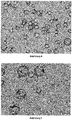
- Figure 4 shows a photomicrograph of the aqueous microcapsule dispersion
- Figure 5 shows the same dispersion, which was obtained without the addition of 1,2-diols. It can be seen that the dispersion according to the invention contains substantially smaller particles and less polymer grit.
Landscapes
- Chemical & Material Sciences (AREA)
- Organic Chemistry (AREA)
- Dispersion Chemistry (AREA)
- Chemical Kinetics & Catalysis (AREA)
- Life Sciences & Earth Sciences (AREA)
- Engineering & Computer Science (AREA)
- Oil, Petroleum & Natural Gas (AREA)
- Wood Science & Technology (AREA)
- Manufacturing Of Micro-Capsules (AREA)
- Fats And Perfumes (AREA)
- Cosmetics (AREA)
- Emulsifying, Dispersing, Foam-Producing Or Wetting Agents (AREA)
Abstract
Description
- Die Erfindung befindet sich auf dem Gebiet der Verkapselung von Wirkstoffen und betrifft ein neues Verfahren mit dessen Hilfe sich insbesondere die Prozessführung hinsichtlich Stabilität und Größe der Partikel verbessern lässt.
- Unter dem Begriff "Kapsel" versteht der Fachmann im Allgemeinen um mit filmbildenden Polymeren umhüllte feindisperse flüssige oder feste Phasen, bei deren Herstellung sich die Polymere nach Emulgierung und Koazervation oder Grenzflächenpolymerisation auf dem einzuhüllenden Material niederschlagen.
- Von besonderem Interesse sind dabei so genannte Mikrokapseln, die Durchmesser im Bereich von etwa 0,0001 bis 5, vorzugsweise 0,001 bis 0,5 und insbesondere 0,005 bis 0,1 mm aufweisen. Die erste industrielle Herstellung von Mikrokapseln geht auf das Jahr 1957 zurück, in dem erstmals Kopierpapier auf den Markt gebracht wurde, welches die Farbstoffe in mikroverkapselter Weise enthielt. Heute sind zahllose Typen von Mikrokapseln im Handel und werden in den unterschiedlichsten Bereichen eingesetzt. Ein wichtiges Segment ist die Ausrüstung von Fasern und Textilien mit mikroverkapselten Wirkstoffen, die entweder beim Ausrüsten oder im Verlauf des Waschprozesses aufgebracht werden. Beim Tragen brechen die Kapseln infolge der mechanischen Belastung auf und setzen den Duftstoff über einen längeren Zeitraum frei.
- Zu den wichtigsten Mikrokapseln zählen solche vom Aminoplast-Typ. Die Herstellung dieser Kapseln erfolgt vereinfacht dadurch, dass man zunächst unter starker Scherung und in Gegenwart von Emulgatoren eine O/W-Emulsion herstellt, welche das wasserlösliche Monomer, ein so genanntes Amin-Formaldehyd-Prekondensat, und den wasserunlöslichen Wirkstoff, etwa ein Parfümöl enthält. Die Polykondensation wird durch einen pH-Wert Wechsel initiiert, beispielsweise indem man den pH-Wert durch Säurezugabe auf etwa 3,5 einstellt. Die Polykondensate scheiden sich auf den Öltröpfchen in der Emulsion ab und hüllen sie allmählich ein. Nach Abschluss der Polykondensation ist aus der Emulsion eine Mikrokapseldispersion entstanden. Die Kapseln besitzen jedoch noch eine weiche, elastische Hülle, welche noch nicht die nötige Diffusionstabilität und Textureigenschaften liefert. Es folgt daher der dritte Schritt, bei dem man die Temperatur auf etwa 60 °C anhebt, was zu einer Vernetzung der Polymere in der Wandung und zur Aushärtung der Kapseln führt. Ein entsprechendes Verfahren ist beispielsweise aus der
EP 2111214 B1 (GIVAUDAN) bekannt. - Aus der
DE 23 03 866 A1 (FUJI) ist ein stabiles konzentriertes Gemisch zur Herstellung von Mikrokapseln bekannt, enthaltend (a) ein Epoxypropyltrialkylammommiumsalz sowie (b) ein oder mehrere organische Losungsmittel, wobei diese Zubereitungen zusätzlich ein Alkylsulfosuccinat, das Alkylgruppen mit 6 bis 16 Kohlenstoffatomen besitzt, oder ein Alkylsulfosuccinamat, dessen Carbonsäureamidgruppe mit einer Alkylgruppe mit 8 bis 20 Kohlenstoffatomen substituiert ist, sowie ein mit Wasser mischbares Lösungsmittel als Komponente b) enthalten. - Gegenstand der
EP 2669835 A1 (KOEHLER) ist ein Verfahren zur Herstellung von Mikrokapseln. Das Kennzeichen dieser Kapseln ist eine spezielle Teilchengrößenverteilung, die mindestens zwei Maxima aufweist, wobei das Hauptmaximum der Teilchengröße im Bereich von 5 bis 100 µm liegt und wobei das von den Mikrokapseln, deren Teilchengröße kleiner oder gleich ¼ der Teilchengröße des Hauptmaximums beträgt, eingenommene Volumen größer oder gleich etwa 20 % des Gesamtvolumens der Mikrokapseln ist. Die Kapselwandung kann dabei aus einem methylierten Melamin-Formaldehydharz und/oder Harnstoff-Formaldehydharz und/oder Reaktionsprodukten von Aldehyden mit Thioharnstoff, N-Alkylharnstoff, Guanidin, Acetoguanamin, Benzoguanamin, Caprionoguanamin, Cyanamin, Dicyandiamid und/oder Alkyl-/Arylsulfonamid bestehen. - Ein erster wesentlicher Aspekt bei der Mikroverkapselung betrifft die Partikelgrößenverteilung. Je enger diese Verteilung im Emulsionsprozess erzeugt werden kann umso exakter können die Eigenschaften der Kapseln eingestellt werden. Die Einstellung der Kapselgröße hat einen direkten Einfluss auf die Brucheigenschaften der Kapseln und damit auch auf die sensorische Performance der Technologie in der finalen Anwendung.
- Der zweite wesentliche Aspekt ist die Stabilisierung der Emulsion. Hier müssen entsprechende Tenside bzw. Schutzkolloide auf die verwendeten Prepolymere abgestimmt werden. Die Auswahl eines falschen Schutzkolloides kann zu einer fehlerhaften Verkapselung führen.
- Schließlich besteht der Wunsch, die Emulsion mit möglichst geringen Scherkräften realisieren zu können. Der Grund hierfür liegt auf der Hand, da bei hohen Scherkräften die gerade gebildete dünne Hülle zerstört werden kann und damit ein erhöhter Anteil Polymergrieß im Produkt auftritt. Je nach Rührergeometrie kann es zusätzlich zu einem hohen Lufteintrag ins System und in der Folge zur Verkapselung von Luftblasen kommen.
- Die komplexe Aufgabe der vorliegenden Problematik hat daher darin bestanden, den Stand der Technik bezüglich der Herstellung von Mikrokapseln, speziell von Aminoplast-Mikrokapseln dahingehend zu verbessern, dass der mittlere Durchmesser der Kapseln verkleinert und vereinheitlicht wird. Mit anderen Worten wird eine möglichst monodisperse Teilchengrößenverteilung angestrebt, die ein ausgeprägteres Maximum bei kleineren Durchmessern aufweist. Das gesuchte Verfahren sollte es zudem erlauben, infolge höherer Emulsionsstabilität mit geringerer Scherkraft auszukommen, um auf diese Weise weniger störenden Polymergrieß aus zerstörten Kapseln freizusetzen.
- Ein erster Gegenstand der Erfindung betrifft ein Verfahren zur Herstellung von Mikrokapseln, speziell Aminoplast-Mikrokapseln, umfassend die folgenden Schritte:
- (a) Bereitstellung einer ersten wässrigen Zubereitung enthaltend mindestens ein Pre-Polymer;
- (b) Bereitstellen einer zweiten nicht-wässrigen Zubereitung enthaltend den zu verkapselnden Wirkstoff;
- (c) Vermischen der wässrigen und der nicht-wässrigen Phase in Gegenwart mindestens eines Emulgators und/oder Stabilisators unter Ausbildung einer Emulsion;
- (d) Polymerisieren des in der Emulsion aus Schritt (c) enthaltenen mindestens einen Pre-Polymers unter Erhalt einer Dispersion von Mikrokapseln, die den Wirkstoff einschließen;
- (e) Härten und Vernetzen der im Schritt (d) erhaltenen Mikrokapseln sowie gegebenenfalls
- (f) Abtrennen und Trocknen der Mikrokapseln aus der Dispersion,
- Überraschenderweise wurde gefunden, dass der Zusatz von 1,2-Diolen während der Bildung der O/W-Emulsion zu einer deutlichen Reduzierung der Partikelgröße, hin zu Partikelgrößenverteilungen mit kleinerem Mittelwert führt. Gleichzeitig wird eine Stabilisierung der Emulsion erreicht und damit in der Folge eine Verminderung der Rührgeschwindigkeit möglich.
- Die Erfindung wird an Hand der beiden Abbildungen 1 und 2 näher erläutert.
-
Abbildung 1 zeigt eine Partikelgrößenverteilung bei der Herstellung von Aminoplast-Mikrokapseln einmal unter Zugabe von 1 Gew.-% SymDiol® 68 (1,2-Hexandiol:1,2-Octandiol 1:1) (links) und einmal ohne Zusatz des Diols (rechts). Man erkennt, dass das Maximum ausgeprägter und zu kleineren Teilchendurchmessern verschoben ist. - Eine ähnliche Darstellung liefert
Abbildung 2 ; die linke Kurve entspricht wieder dem Zusatz von 1 Gew.-% SymDiol® 68, die mittlere Kurve dem Zusatz von 1,2-Pentandiol (Hydrolite® 5) und die rechte Kurve ohne Zusatzstoff. - Die Partikelgrößenverteilung beträgt im Verfahren des Stands der Technik, beispielsweise in dem, der in der
EP 2111214 B1 beschrieben wird, 10 bis 80 µm. Durch Zugabe von Diolen lässt sich diese auf etwa 10 bis 35 µm reduzieren. Diese engere Verteilung ermöglicht die Herstellung von Kapselsystemen, die in Ihrer sensorischen Leistung leichter optimiert werden können. Hinzu kommen Vorteile bei der Stabilisierung der Kapselsysteme in der finalen Applikation. Die Größe der Kapseln fließt nach dem Strok'schen Gesetz mit in die Separationsgeschwindigkeit ein. Eine gleichmäßigere Verteilung ermöglicht es beispielsweise, die Dichte der Parfümöle bei einer Waschmittelbase genauer zuzuschneiden. Damit ist die Verteilung der Kapseln in der Applikation homogener und ermöglicht stabilere Formulierungen. Die Drehzahl der Rührer kann in diesem Fall um 200 bis 260 U/min reduziert werden, was einer durchschnittlichen Verminderung um etwa 15 % entspricht. - Der Kapseldurchmesser besitzt darüber hinaus auch einen Einfluss auf die Dichte gemäß der folgenden Formel:

-
Abbildung 3 zeigt zwei Mikrokapseldispersionen: die linke wurde nach dem Standardverfahren hergestellt und weist einen mittleren Teilchendurchmesser von etwa 50 µm auf, die rechte wurde unter Zugabe von 1,2-Diolen hergestellt und weist einen mittleren Teilchendurchmesser von etwa 22 µm auf. Wie man sieht, liegen die Mikrokapseln in der erfindungsgemäßen Probe homogen dispergiert vor, während sie in der Vergleichsprobe zu Boden gesunken sind. - Des Weiteren ist die Polymerabscheidung bei den sogenannten Phasenseparationsprozessen der Verkapselung einer der entscheidenden Punkte, um eine stabile Verkapselung zu erzeugen. Im Prozess kommt es gerade bei einer Konzentrationsänderung von Prekondensaten häufig zu Abscheidungsproblem. Diese äußeren sich in einem Anstieg der Viskosität. Es kann auch zu Polymerausfällungen und einem kompletten polymerisieren des Ansatzes führen. Die Kondensatausfällungen sorgen für einen erhöhten Feinanteil in der Slurry. Dies ist aus den folgenden Gründen äußerst nachteilig:
- Der Feinanteil führt zu einer erhöhten Trübung beispielsweise in der Waschmittel-oder Weichspüler-Base, was vom Verbraucher als Qualitätsminderung angesehen wird,
- ausgefälltes Polymer steht nicht zur Verfügung um die Kapselhülle auf die benötigte Stärke zu bringen, und
- der Feinanteil kann zu einem Bodensatz in der Applikation führen und sorgt zusätzlich für einen negativen visuellen Effekt im Endprodukt.
- Der Zusatz der Diole führt zu einer optimierten und gesteuerten Polymerabscheidung, wodurch die Hüllenstärke reduziert werden kann. Insbesondere wird das Risiko, dass das Prekondensat nicht vollständig auf der Hülle abgeschieden wird, minimiert.
- Im Bereich der Mikroverkapselung ist die mikrobiologische Stabilisierung der Produkte ebenfalls ein sehr wichtiger Faktor. Je nach verwendetem chemischem System ist genügend Formaldehyd enthalten, um die Dispersionen gegen Keimbefall zu schützen. Markt und Gesetzgebung erfordern allerdings eine Absenkung der Formaldehyd Konzentration wobei die Reduzierung der Hüllstärken den Anteil an Formaldehyd haltigen Prekondensaten zusätzlich vermindert. Dies führt dazu, dass die Produkte nicht ausreichend stabilisiert sind, um eine Verkeimung zu verhindern. Hier besteht ein weiterer Vorteil der Mitverwendung von Diolen: da diese antimikrobiell wirksam sind, werden Produkte erhalten, die ausreichend stabilisiert sind, ohne dass es des Zusatzes von weiteren Konservierungsmitteln bedarf.
- Bevorzugte Pre-Polymere im Sinne der Erfindung sind so genannte Amin-Formaldehyd-Prekondensate (AFP). Diese bilden in einer bevorzugten Ausführungsform das Material, welches durch Polykondensation schließlich die Hülle oder Wandung der Kapsel bildet und den Wirkstoff einschließt.
- Bei der Aminkomponente der AFP handelt es sich üblicherweise um Harnstoff oder insbesondere Melamin. Da die Polykondensation jedoch thermisch gesteuert wird, ist deren Kontrolle mitunter schwierig. Die bevorzugten AFP sind daher Alkylierungssprodukte des Melamins mit kurzkettigen Alkoholen und insbesondere die so genannten hoch oder teilweise alkoxylierte und gegebenenfalls auch noch alkylierte Melamine, wie sie in wässrigmethanolischer Formaldehydlösung unter der Bezeichnung Luracoll®, insbesondere Luracoll® SD von der BASF angeboten werden.
- Bei der Aminkomponente der AFP handelt es sich üblicherweise um Harnstoff oder insbesondere Melamin. Da die Polykondensation jedoch thermisch gesteuert wird, ist deren Kontrolle mitunter schwierig. Die bevorzugten AFP sind daher Alkylierungssprodukte des Melamins mit kurzkettigen Alkoholen und insbesondere die so genannten hoch oder teilweise alkoxylierte und gegebenenfalls auch noch alkylierte Melamine, wie sie in wässrigmethanolischer Formaldehydlösung unter der Bezeichnung Luracoll®, insbesondere Luracoll® SD von der BASF angeboten werden.
- Die Reaktion zwischen Melamin und Formaldehyd wurde beispielsweise schon von J. Liebig im Jahre 1834 entdeckt und wird seit 1936 industriell genutzt. Sie kann durch folgendes Schema beschrieben werden:

- Vorzugsweise kommen als Pre-Polymere in Betracht: gegebenenfalls alkylierte Mono-und Polymethylol-Harnstoff- sowie Mono- und Polymethylol-Melamin-Prekondensate, wie sie beispielsweise unter der Bezeichnung URAC (Cytec Corp.) vertrieben werden oder auch partiell methylierte Mono- und Polymethylol-1,3,5-triamino-2,4,6-triazin-Prekondensate, die im Handel unter der Bezeichnung CYMEL (Cytec Corp.) erhältlich sind. Schließlich kommen auch Mono- und Polyalkylolbenzoguanamin- bzw. Mono- und Polyalkylolglycuril-Prekondensate in Betracht. Soweit diese Prekondensate über Alkylgruppen verfügen, sind sie weniger reaktiv und länger lagerbar. Die bevorzugten Prekondensate umfassen die Polymethylolmelamine sowie das Polymethylol-1-(3,5-dihydroxy-methylbenzyl)-3,5-triamino-2,4,6-triazin.
- Ebenfalls eingesetzt werden können Poly[N-(2,2-dimethoxy-1-hydroxy)]-polyamine wie beispielsweise Di-[N-(2,2-dimethoxy-1-hydroxy)]harnstoff, Tri-[N-(2,2-dimethoxy-1-hydroxy)]melamin, Tetra-[N-(2,2-dimethoxy-1-hydroxy)]glycouryl sowie Di-[N-(2,2-dimethoxy-1-hydroxy)]benzoguanidin und deren Mischungen.
- Weiterhin bevorzugte Pre-Polymere sind Dialdehyde sowie Resorcin.
- Die Natur der Wirkstoffe, die verkapselt werden sollen, ist weitgehend unkritisch, solange diese hinreichend wasserunlöslich sind, da sich andernfalls keine Emulsionen bilden, auf der Tröpfchenoberfläche die Abscheidung der Polykondensate erfolgen kann. Vorzugsweise kommen als Wirkstoffe Aromen, Duftstoffe oder auch biogene Prinzipien in Betracht, als da sind:
- Typische Beispiele für Aromen, die im Sinne der Erfindung verkapselt werden können, umfassen: Acetophenon, Allylcapronat, alpha-Ionon, beta-Ionon, Anisaldehyd, Anisylacetat, Anisylformiat, Benzaldehyd, Benzothiazol, Benzylacetat, Benzylalkohol, Benzylbenzoat, beta-Ionon, Butylbutyrat, Butylcapronat, Butylidenphthalid, Carvon, Camphen, Caryophyllen, Cineol, Cinnamylacetat, Citral, Citronellol, Citronellal, Citronellylacetat, Cyclohexylacetat, Cymol, Damascon, Decalacton, Dihydrocumarin, Dimethylanthranilat, Dimethylanthranilat, Dodecalacton, Ethoxyethylacetat, Ethylbuttersäure, Ethylbutyrat, Ethylcaprinat, Ethylcapronat, Ethylcrotonat, Ethylfuraneol, Ethylguajakol, Ethylisobutyrat, Ethylisovalerianat, Ethyllactat, Ethylmethylbutyrat, Ethylpropionat, Eucalyptol, Eugenol, Ethylheptylat, 4-(p-Hydroxyphenyl)-2-butanon, gamma-Decalacton, Geraniol, Geranylacetat, Geranylacetat, Grapefruitaldehyd, Methyldihydrojasmonat (z.B. Hedion®), Heliotropin, 2-Heptanon, 3-Heptanon, 4-Heptanon, trans-2-Heptenal, cis-4-Heptenal, trans-2-Hexenal, cis-3-Hexenol, trans-2-Hexensäure, trans-3-Hexensäure, cis-2-Hexenylacetat, cis-3-Hexenylacetat, cis-3-Hexenylcapronat, trans-2-Hexenylcapronat, cis-3-Hexenylformiat, cis-2-Hexylacetat, cis-3-Hexylacetat, trans-2-Hexylacetat, cis-3-Hexylformiat, para-Hydroxybenzylaceton, Isoamylalkohol, Isoamylisovalerianat, Isobutylbutyrat, Isobutyraldehyd, Isoeugenolmethylether, Isopropylmethylthiazol, Laurinsäure, Leavulinsäure, Linalool, Linalooloxid, Linalylacetat, Menthol, Menthofuran, Methylanthranilat, Methylbutanol, Methylbuttersäure, 2-Methylbutylacetat, Methylcapronat, Methylcinnamat, 5-Methylfurfural, 3,2,2-Methylcyclopentenolon, 6,5,2-Methylheptenon, Methyldihydrojasmonat, Methyljasmonat, 2-Methylmethylbutyrat, 2-Methyl-2-Pentenolsäure, Methylthiobutyrat, 3,1-Methylthiohexanol, 3-Methylthiohexylacetat, Nerol, Nerylacetat, trans,trans-2,4-Nonadienal, 2,4-Nonadienol, 2,6-Nonadienol, 2,4-Nonadienol, Nootkaton, delta Octalacton, gamma Octalacton, 2-Octanol, 3-Octanol, 1,3-Octenol, 1-Octylacetat, 3-Octylacetat, Palmitinsäure, Paraldehyd, Phellandren, Pentandion, Phenylethylacetat, Phenylethylalkohol, Phenylethylalkohol, Phenylethylisovalerianat, Piperonal, Propionaldehyd, Propylbutyrat, Pulegon, Pulegol, Sinensal, Sulfurol, Terpinen, Terpineol, Terpinolen, 8,3-Thiomenthanon, 4,4,2-Thiomethylpentanon, Thymol, delta-Undecalacton, gamma-Undecalacton, Valencen, Valeriansäure, Vanillin, Acetoin, Ethylvanillin, Ethylvanillinisobutyrat (= 3-Ethoxy-4-isobutyryloxybenzaldehyd), 2,5-Dimethyl-4-hydroxy-3(2H)-furanon und dessen Abkömmlinge (dabei vorzugsweise Homofuraneol (= 2-Ethyl-4-hydroxy-5-methyl-3(2H)-furanon), Homofuronol (= 2-Ethyl-5-methyl-4-hydroxy-3(2H)-furanon und 5-Ethyl-2-methyl-4-hydroxy-3(2H)-furanon), Maltol und Maltol-Abkömmlinge (dabei vorzugsweise Ethylmaltol), Cumarin und Cumarin-Abkömmlinge, gamma-Lactone (dabei vorzugsweise gamma-Undecalacton, gamma-Nonalacton, gamma-Decalacton), delta-Lactone (dabei vorzugsweise 4-Methyldeltadecalacton, Massoilacton, Deltadecalacton, Tuberolacton), Methylsorbat, Divanillin, 4-Hydroxy-2(oder 5)-ethyl-5(oder 2)-methyl-3(2H)furanon, 2-Hydroxy-3-methyl-2-cyclopentenon, 3-Hydroxy-4,5-dimethyl-2(5H)-furanon, Essigsäureisoamylester, Buttersäureethylester, Buttersäure-n-butylester, Buttersäureisoamylester, 3-Methyl-buttersäureethylester, n-Hexansäureethylester, n-Hexansäureallylester, n-Hexansäure-n-butylester, n-Octansäureethylester, Ethyl-3-methyl-3-phenylglycidat, Ethyl-2-trans-4-cis-decadienoat, 4-(p-Hydroxyphenyl)-2-butanon, 1,1-Dimethoxy-2,2,5-trimethyl-4-hexan, 2,6-Dimethyl-5-hepten-1-al und Phenylacetaldehyd, 2-Methyl-3-(methylthio)furan, 2-Methyl-3-furanthiol, bis(2-Methyl-3-furyl)disulfid, Furfurylmercaptan, Methional, 2-Acetyl-2-thiazolin, 3-Mercapto-2-pentanon, 2,5-Dimethyl-3-furanthiol, 2,4,5-Trimethylthiazol, 2-Acetylthiazol, 2,4-Dimethyl-5-ethylthiazol, 2-Acetyl-1-pyrrolin, 2-Methyl-3-ethylpyrazin, 2-Ethyl-3,5-dimethylpyrazin, 2-Ethyl-3,6-dimethylpyrazin, 2,3-Diethyl-5-methylpyrazin, 3-Isopropyl-2-methoxypyrazin, 3-Isobutyl-2-methoxypyrazin, 2-Acetylpyrazin, 2-Pentylpyridin, (E,E)-2,4-Decadienal, (E,E)-2,4-Nonadienal, (E)-2-Octenal, (E)-2-Nonenal, 2-Undecenal, 12-Methyltridecanal, 1-Penten-3-on, 4-Hydroxy-2,5-dimethyl-3(2H)-furanon, Guajakol, 3-Hydroxy-4,5-dimethyl-2(5H)-furanon, 3-Hydroxy-4-methyl-5-ethyl-2(5H)-furanon, Zimtaldehyd, Zimtalkohol, Methylsalicylat, Isopulegol sowie (hier nicht explizit genannte) Stereoisomere, Enantiomere, Stellungsisomere, Diastereomere, cis/trans-Isomere bzw. Epimere dieser Substanzen.
- Extrakte aus natürlichen Rohstoffen, wie Etherische Öle, Concretes, Absolüs, Resine, Resinoide, Balsame, Tinkturen wie z. B. Ambratinktur; Amyrisöl; Angelicasamenöl; Angelicawurzelöl; Anisöl; Baldrianöl; Basilikumöl; Baummoos-Absolü; Bayöl; Beifussöl; Benzöresin; Bergamotteöl; Bienenwachs-Absolü; Birkenteeröl; Bittermandelöl; Bohnenkrautöl; Buccoblätteröl; Cabreuvaöl; Cadeöl; Calmusöl; Campheröl; Canangaöl; Cardamomenöl; Cascarillaöl; Cassiaöl; Cassie-Absolü; Castoreum-Absolü; Cedernblätteröl; Cedernholzöl; Cistusöl; Citronellöl; Citronenöl; Copaivabalsam; Copaivabalsamöl; Corianderöl; Costuswurzelöl; Cuminöl; Cypressenöl; Davanaöl; Dillkrautöl; Dillsamenöl; Eau de brouts-Absolü; Eichenmoos-Absolü; Elemiöl; Estragonöl; Eucalyptus-Citriodora-öl; Eucalyptusöl; Fenchelöl; Fichtennadelöl; Galbanumöl; Galbanumresin; Geraniumöl; Grapefruitöl; Guajakholzöl; Gurjunbalsam; Gurjunbalsamöl, Helichrysum-Absolü; Helichrysumöl; Ingweröl; Iriswurzel-Absolü; Iriswurzelöl; Jasmin-Absolü; Kalmusöl; Kamillenöl blau; Kamillenöl römisch; Karottensamenöl; Kaskarillaöl; Kiefernadelöl; Krauseminzöl; Kümmelöl; Labdanumöl; Labdanum-Absolü; Labdanumresin; Lavandin-Absolü; Lavandinöl; Lavendel-Absolü; Lavendelöl; Lemongrasöl; Liebstocköl; Limetteöl destilliert; Limetteöl gepresst; Linalööl; Litsea-Cubeba-öl; Lorbeerblätteröl; Macisöl; Majoranöl; Mandarinenöl; Massoirindenöl; Mimosa-Absolü; Moschuskörneröl; Moschustinktur; Muskateller-Salbei-öl; Muskatnussöl; Myrrhen-Absolü; Myrrhenöl; Myrtenöl; Nelkenblätteröl; Nelkenblütenöl; Neroliöl; Olibanum-Absolü; Olibanumöl; Opopanaxöl; Orangenblüten-Absolü; Orangenöl; Origanumöl; Palmarosaöl; Patchouliöl; Perillaöl; Perubalsamöl; Petersilienblätteröl; Petersiliensamenöl; Petitgrainöl; Pfefferminzöl; Pfefferöl; Pimentöl; Pineöl; Poleyöl; Rosen-Absolü; Rosenholzöl; Rosenöl; Rosmarinöl; Salbeiöl dalmatinisch; Salbeiöl spanisch; Sandelholzöl; Selleriesamenöl; Spiklavendelöl; Sternanisöl; Styraxöl; Tagetesöl; Tannennadelöl; Tea-Tree-öl; Terpentinöl; Thymianöl; Tolubalsam; Tonka-Absolü; Tuberosen-Absolü; Vanilleextrakt; Veilchenblätter-Absolü; Verbenaöl; Vetiveröl; Wacholderbeeröl; Weinhefenöl; Wermutöl; Wintergrünöl; Ylangöl; Ysopöl; Zibet-Absolü; Zimtblätteröl; Zimtrindenöl; sowie Fraktionen davon bzw. daraus isolierte Inhaltsstoffe;
- Kohlenwasserstoffe, wie z. B. 3-Caren; a-Pinen; beta -Pinen; alpha-Terpinen; gamma-Terpinen; p-Cymol; Bisabolen; Camphen; Caryophyllen; Cedren; Farnesen; Limonen; Longifolen; Myrcen; Ocimen; Valencen; (E,Z)-1,3,5-Undecatrien;
- Aliphatische Alkohole, wie z. B. Hexanol; Octanol; 3-Octanol; 2,6-Dimethylheptanol; 2-Methylheptanol, 2-Methyloctanol; (E)-2-Hexenol; (E)- und (Z)-3-Hexenol; 1-Octen-3-ol; Gemisch von 3,4,5,6,6-Pentamethyl-3/4-hepten-2-ol und 3,5,6,6-Tetramethyl-4-methyleneheptan-2-ol; (E,Z)-2,6-Nonadienol; 3,7-Dimethyl-7-methoxyoctan-2-ol; 9-Decenol; 10-Undecenol; 4-Methyl-3-decen-5-ol;
- Aliphatische Aldehyde und deren Acetale, wie z. B. Hexanal; Heptanal; Octanal; Nonanal; Decanal; Undecanal; Dodecanal; Tridecanal; 2-Methyloctanal; 2-Methylnonanal; (E)-2-Hexenal; (Z)-4-Heptenal; 2,6-Dimethyl-5-heptenal; 10-Undecenal; (E)-4-Decenal; 2-Dodecenal; 2,6,10-Trimethyl-5,9-undecadienal; Heptanal-diethylacetal; 1,1-Dimethoxy-2,2,5-trimethyl-4-hexen; Citronellyloxyacetaldehyd;
- Aliphatische Ketone und deren Oxime, wie z. B. 2-Heptanon; 2-Octanon; 3-Octanon; 2-Nonanon; 5-Methyl-3-heptanon; 5-Methyl-3-heptanonoxim; 2,4,4,7-Tetramethyl-6-octen-3-on;
- Aliphatische schwefelhaltige Verbindungen, wie z. B. 3-Methylthiohexanol; 3-Methylthiohexylacetat; 3-Mercaptohexanol; 3-Mercaptohexylacetat; 3-Mercaptohexylbutyrat; 3-Acetylthiohexylacetat; 1-Menthen-8-thiol;
- Aliphatische Nitrile, wie z. B. 2-Nonensäurenitril; 2-Tridecensäurenitril; 2,12-Tridecensäurenitril; 3,7-Dimethyl-2,6-octadiensäurenitril; 3,7-Dimethyl-6-octensäurenitril;
- Aliphatische Carbonsäuren und deren Ester, wie z. B. (E)- und (Z)-3-Hexenylformiat; Ethylacetoacetat; Isoamylacetat; Hexylacetat; 3,5,5-Trimethylhexylacetat; 3-Methyl-2-butenylacetat; (E)-2-Hexenylacetat; (E)- und (Z)-3-Hexenylacetat; Octylacetat; 3-Octylacetat; 1-Octen-3-ylacetat; Ethylbutyrat; Butylbutyrat; Isoamylbutyrat; Hexylbutyrat; (E)- und (Z)-3-Hexenylisobutyrat; Hexylcrotonat; Ethylisovalerianat; Ethyl-2-methylpentanoat; Ethylhexanoat; Allylhexanoat; Ethylheptanoat; Allylheptanoat; Ethyloctanoat; Ethyl-(E,Z)-2,4-decadienoat; Methyl-2-octinat; Methyl-2-noninat; Allyl-2-isoamyloxyacetat; Methyl-3,7-dimethyl-2,6-octadienoat;
- Acyclische Terpenalkohole, wie z. B. Citronellol; Geraniol; Nerol; Linalool; Lavadulol; Nerolidol; Farnesol; Tetrahydrolinalool; Tetrahydrogeraniol; 2,6-Dimethyl-7-octen-2-ol; 2,6-Dimethyloctan-2-ol; 2-Methyl-6-methylen-7-octen-2-ol; 2,6-Dimethyl-5,7-octadien-2-ol; 2,6-Dimethyl-3,5-octadien-2-ol; 3,7-Dimethyl-4,6-octadien-3-ol; 3,7-Dimethyl-1,5,7-octatrien-3-ol; 2,6-Dimethyl-2,5,7-octatrien-I-ol; sowie deren Formiate, Acetate, Propionate, Isobutyrate, Butyrate, Isovalerianate, Pentanoate, Hexanoate, Crotonate, Tiglinate, 3-Methyl-2-butenoate;
- Acyclische Terpenaldehyde und -ketone, wie z. B. Geranial; Neral; Citronellal; 7-Hydroxy-3,7-dimethyloctanal; 7-Methoxy-3,7-dimethyloctanal; 2,6,10-Trimethyl-9-undecenal; Geranylaceton; sowie die Dimethyl- und Diethylacetale von Geranial, Neral, 7-Hydroxy-3,7-dimethyloctanal;
- Cyclische Terpenalkohole, wie z. B. Menthol; Isopulegol; a-Terpineol; Terpinenol-4; Menthan-8-ol; Menthan-1-ol; Menthan-7-ol; Borneol; Isoborneol; Linalooloxid; Nopol; Cedrol; Ambrinol; Vetiverol; Guajol; sowie deren Formiate, Acetate, Propionate, Isobutyrate, Butyrate, Isovalerianate, Pentanoate, Hexanoate, Crotonate, Tiglinate, 3-Methyl-2-butenoate;
- Cyclische Terpenaldehyde und -ketone, wie z. B. Menthon; Isomenthon; 8-Mercaptomenthan-3-on; Carvon; Campher; Fenchon; a-Ionon; beta -Ionon; a-n-Methylionon; beta -n-Methylionon; a-Isomethylionon; beta -Isomethylionon; a-Iron; a-Damascon; beta -Damascon; beta -Damascenon; ?-Damascon; d-Damascon; 1-(2,4,4-Trimethyl-2-cyclohexen-1-yl)-2-buten-1-on; 1,3,4,6,7,8a-Hexahydro-1,1,5,5-tetramethyl-2H-2,4a-methanonaphthalen-8(5H)-on; Nootkaton; Dihydronootkaton; a-Sinensal; beta - Sinensal; acetyliertes Cedernholzöl (Methylcedrylketon);
- Cyclische Alkohole, wie z. B. 4-tert-Butylcyclohexanol; 3,3,5-Trimethylcyclohexanol; 3-Isocamphylcyclohexanol; 2,6,9-Trimethyl-(Z2,Z5,E9)-cyclododecatrien-1-ol; 2-Isobutyl-4-methyltetrahydro-2H-pyran-4-ol; aus der Gruppe der cycloaliphatischen Alkohole wie z. B. a,3,3-Trimethyl-cyclohexylmethanol; 2-Methyl-4-(2,2,3-trimethyl-3-cyclopent-1-yl)butanol; 2-Methyl-4-(2,2,3-trimethyl-3-cyclopent-1-yl)-2-buten-1-ol; 2-Ethyl-4-(2,2,3-trimethyl-3-cyclopent-1-yl)-2-buten-1-ol; 3-Methyl-5-(2,2,3-trimethyl-3-cyclopent-1-yl)-pentan-2-ol; 3-Methyl-5-(2,2,3-trimethyl-3-cyclopent-1-yl)-4-penten-2-ol; 3,3-Dimethyl-5-(2,2,3-trimethyl-3-cyclopent-1-yl)-4-penten-2-ol; 1-(2,2,6-Trimethylcyclohexyl)pentan-3-ol; 1-(2,2,6-Trimethylcyclohexyl)hexan-3-ol;
- Cyclische und cycloaliphatische Ether, wie z. B. Cineol; Cedrylmethylether; Cyclododecylmethylether; (Ethoxymethoxy)cyclododecan; a-Cedrenepoxid; 3a,6,6,9a-Tetramethyldodecahydronaphtho[2,1-b]furan; 3a-Ethyl-6,6,9a-trimethyl-dodecahydronaph-tho[2,1-b]furan; 1,5,9-Trimethyl-13-oxabicyclo[10.1.0]trideca-4,8-dien; Rosenoxid; 2-(2,4-Dimethyl-3-cyclohexen-1-yl)-5-methyl-5-(1-methylpropyl)-1,3-dioxan;
- Cyclische Ketone, wie z. B. 4-tert-Butylcyclohexanon; 2,2,5-Trimethyl-5-pentylcyclopentanon; 2-Heptylcyclopentanon; 2-Pentylcyclopentanon; 2-Hydroxy-3-methyl-2-cyclopenten-1-on; 3-Methyl-cis-2-penten-1-yl-2-cyclopenten-1-on; 3-Methyl-2-pentyl-2-cyclopenten-1-on; 3-Methyl-4-cyclopentadecenon; 3-Methyl-5-cyclopentadecenon; 3-Methylcyclopentadecanon; 4-(1-Ethoxyvinyl)-3,3,5,5-tetramethylcyclohexanon; 4-tert-Pentylcyclohexanon; 5-Cyclohexadecen-1-on; 6,7-Dihydro-1,1,2,3,3-pentamethyl-4(5H)-indanon; 9-Cycloheptadecen-1-on; Cyclopentadecanon; Cyclohexadecanon;
- Cycloaliphatische Aldehyde, wie z. B. 2,4-Dimethyl-3-cyclohexencarbaldehyd; 2-Methyl-4-(2,2,6-trimethyl-cyclohexen-1-yl)-2-butenal; 4-(4-Hydroxy-4-methylpentyl)-3-cyclohexencarbaldehyd; 4-(4-Methyl-3-penten-1-yl)-3-cyclohexencarbaldehyd;
- Cycloaliphatische Ketone, wie z. B. 1-(3,3-Dimethylcyclohexyl)-4-penten-1-on; 1-(5,5-Dimethyl-2-cyclohexen-1-yl)-4-penten-1-on; 2,3,8,8-Tetramethyl-1,2,3,4,5,6,7,8-octahydro-2-naphtalenylmethylketon; Methyl-2,6,10-trimethyl-2,5,9-cyclododecatrienylketon; tert-Butyl-(2,4-dimethyl-3-cyclohexen-1-yl)keton;
- Ester cyclischer Alkohole, wie z. B. 2-tert-Butylcyclohexylacetat; 4-tert-Butylcyclo-hexylacetat; 2-tert-Pentylcyclohexylacetat; 4-tert-Pentylcyclohexylacetat; Decahydro-2-naphthylacetat; 3-Pentyltetrahydro-2H-pyran-4-ylacetat; Decahydro-2,5,5,8a-tetramethyl-2-naphthylacetat; 4,7-Methano-3a,4,5,6,7,7a-hexahydro-5- bzw. -6-indenylacetat; 4,7-Methano-3a,4,5,6,7,7a-hexahydro-5- bzw. -6-indenylpropionat; 4,7-Methano-3a,4,5,6,7,7a-hexahydro-5- bzw. -6-indenylisobutyrat; 4,7-Methanooctahydro-5- bzw. -6-indenylacetat;
- Ester cycloaliphatischer Carbonsäuren, wie z. B. Allyl-3-cyclohexylpropionat; Allylcyclohexyloxyacetat; Methyldihydrojasmonat; Methyljasmonat; Methyl-2-hexyl-3-oxocyclopentancarboxylat; Ethyl-2-ethyl-6,6-dimethyl-2-cyclohexencarboxylat; Ethyl-2,3,6,6-tetramethyl-2-cyclohexencarboxylat; Ethyl-2-methyl-1,3-dioxolan-2-acetat;
- Aromatische Kohlenwasserstoffe, wie z. B. Styrol und Diphenylmethan;
- Araliphatische Alkohole, wie z. B. Benzylalkohol; 1-Phenylethylalkohol; 2-Phenylethylalkohol; 3-Phenylpropanol; 2-Phenylpropanol; 2-Phenoxyethanol; 2,2-Dimethyl-3-phenylpropanol; 2,2-Dimethyl-3-(3-methylphenyl)propanol; 1,1-Dimethyl-2-phenyl-ethylalkohol; 1,1-Dimethyl-3-phenylpropanol; 1-Ethyl-1-methyl-3-phenylpropanol; 2-Methyl-5-phenylpentanol; 3-Methyl-5-phenylpentanol; 3-Phenyl-2-propen-1-ol; 4-Methoxybenzylalkohol; 1-(4-Isopropylphenyl)ethanol;
- Ester von araliphatischen Alkoholen und aliphatischen Carbonsäuren, wie z. B. Benzylacetat; Benzylpropionat; Benzylisobutyrat; Benzylisovalerianat; 2-Phenylethylacetat; 2-Phenylethylpropionat; 2-Phenylethylisobutyrat; 2-Phenylethylisovalerianat; 1-Phenylethylacetat; a-Trichlormethylbenzylacetat; a,a-Dimethylphenylethylacetat; a,a-Dimethyl-phenylethylbutyrat; Cinnamylacetat; 2-Phenoxyethylisobutyrat; 4-Methoxybenzylacetat;
- Araliphatischen Ether, wie z. B. 2-Phenylethylmethylether; 2-Phenylethylisoamylether; 2-Phenylethyl-1-ethoxyethylether; Phenylacetaldehyddimethylacetal; Phenylacetaldehyd-diethylacetal; Hydratropaaldehyd-dimethylacetal; Phenylacetaldehyd-glycerinacetal; 2,4,6-Trimethyl-4-phenyl-1,3-dioxane; 4,4a,5,9b-Tetrahydroindeno[1,2-d]-m-dioxin; 4,4a,5,9b-Tetrahydro-2,4-dimethylindeno[1,2-d]-m-dioxin;
- Aromatische und araliphatische Aldehyde, wie z. B. Benzaldehyd; Phenylacetaldehyd; 3-Phenylpropanal; Hydratropaaldehyd; 4-Methylbenzaldehyd; 4-Methylphenylacetaldehyd; 3-(4-Ethylphenyl)-2,2-dimethylpropanal; 2-Methyl-3-(4-isopropylphenyl)-propanal; 2-Methyl-3-(4-tert-butylphenyl)propanal; 3-(4-tert-Butylphenyl)propanal; Zimtaldehyd; a-Butylzimtaldehyd; a-Amylzimtaldehyd; a-Hexylzimtaldehyd; 3-Methyl-5-phenylpentanal; 4-Methoxybenzaldehyd; 4-Hydroxy-3-methoxybenzaldehyd; 4-Hydroxy-3-ethoxybenzaldehyd; 3,4-Methylendioxybenzaldehyd; 3,4-Dimethoxybenzaldehyd; 2-Methyl-3-(4-methoxyphenyl)propanal; 2-Methyl-3-(4-methylendioxyphenyl)propanal;
- Aromatische und araliphatische Ketone, wie z. B. Acetophenon; 4-Methylacetophenon; 4-Methoxyacetophenon; 4-tert-Butyl-2,6-dimethylacetophenon; 4-Phenyl-2-butanon; 4-(4-Hydroxyphenyl)-2-butanon; 1-(2-Naphthalenyl)ethanon; Benzophenon; 1,1,2,3,3,6-Hexamethyl-5-indanylmethylketon; 6-tert-Butyl-1,1-dimethyl-4-indanylmethyl-keton; 1-[2,3-dihydro-1,1,2,6-tetramethyl-3-(1-methylethyl)-1H-5-indenyl]ethanon; 5',6',7',8'-Tetrahydro-3',5',5',6',8',8'-hexamethyl-2-acetonaphthon;
- Aromatische und araliphatische Carbonsäuren und deren Ester, wie z. B. Benzoesäure; Phenylessigsäure; Methylbenzoat; Ethylbenzoat; Hexylbenzoat; Benzylbenzoat; Methylphenylacetat; Ethylphenylacetat; Geranylphenylacetat; Phenylethyl-phenylacetat; Methylcinnamat; Ethylcinnamat; Benzylcinnamat; Phenylethylcinnamat; Cinnamylcinnamat; Allylphenoxyacetat; Methylsalicylat; Isoamylsalicylat; Hexylsalicylat; Cyclohexylsalicylat; cis-3-Hexenylsalicylat; Benzylsalicylat; Phenylethylsalicylat; Methyl-2,4-dihydroxy-3,6-dimethylbenzoat; Ethyl-3-phenylglycidat; Ethyl-3-methyl-3-phenylglycidat;
- Stickstoffhaltige aromatische Verbindungen, wie z. B. 2,4,6-Trinitro-1,3-dimethyl-5-tert-butylbenzol; 3,5-Dinitro-2,6-dimethyl-4-tert-butylacetophenon; Zimtsäurenitril; 5-Phenyl-3-methyl-2-pentensäurenitril; 5-Phenyl-3-methylpentansäurenitril; Methylanthranilat; Methy-N-methylanthranilat; Schiff'sche Basen von Methylanthranilat mit 7-Hydroxy-3,7-dimethyloctanal, 2-Methyl-3-(4-tert-butylphenyl)propanal oder 2,4-Dimethyl-3-cyclohexencarbaldehyd; 6-Isopropylchinolin; 6-Isobutylchinolin; 6-sec-Butylchinolin; Indol; Skatol; 2-Methoxy-3-isopropylpyrazin; 2-Isobutyl-3-methoxypyrazin; 4-(4,8-Dimethyl-3,7-nonadienyl)-pyridin;
- Phenole, Phenylether und Phenylester, wie z. B. Estragol; Anethol; Eugenol; Eugenylmethylether; Isöugenol; Isöugenylmethylether; Thymol; Carvacrol; Diphenylether; beta - Naphthylmethylether; beta -Naphthylethylether; beta -Naphthylisobutylether; 1,4-Dimethoxybenzol; Eugenylacetat; 2-Methoxy-4-methylphenol; 2-Ethoxy-5-(1-propenyl)phenol; p-Kresylphenylacetat; aus der Gruppe der heterocyclischen Verbindungen wie z. B. 2,5-Dimethyl-4-hydroxy-2H-furan-3-on; 2-Ethyl-4-hydroxy-5-methyl-2H-furan-3-on; 3-Hydroxy-2-methyl-4H-pyran-4-on; 2-Ethyl-3-hydroxy-4H-pyran-4-on;
- Lactone, wie z. B. 1,4-Octanolid; 3-Methyl-1,4-octanolid; 1,4-Nonanolid; 1,4-Decanolid; 8-Decen-1,4-olid; 1,4-Undecanolid; 1,4-Dodecanolid; 1,5-Decanolid; 1,5-Dodecanolid; 1,15-Pentadecanolid; cis- und trans-11-Pentadecen-1,15-olid; cis- und trans-12-Pentadecen-1,15-olid; 1,16-Hexadecanolid; 9-Hexadecen-1,16-olid; 10-Oxa-1,16-hexadecanolid; 11-Oxa-1,16-hexadecanolid; 12-Oxa-1,16-hexadecanolid; Ethylen-1,12-dodecandioat; Ethylen-1,13-tridecandioat; Cumarin; 2,3-Dihydrocumarin; Octahydrocumarin.
- Unter biogenen Prinzipien sind Wirkstoffe mit biologischer Aktivität zu verstehen, beispielsweise Tocopherol, Tocopherolacetat, Tocopherolpalmitat, Ascorbinsäure, Carnotin, Carnosin, Koffein, (Desoxy)Ribonucleinsäure und deren Fragmentierungsprodukte, β-Glucane, Retinol, Bisabolol, Allantoin, Phytantriol, Panthenol, AHA-Säuren, Aminosäuren, Ceramide, Pseudoceramide, essentielle Öle, Pflanzenextrakte, sowie Vitaminkomplexe zu verstehen.
- Die 1,2-Diole, die erfindungsgemäß bei der Emulsionsbildung mitverwendet werden, stabilisieren die Emulsion und begünstigen dabei die Bildung vergleichsweise kleinerer Tröpfen und damit auch entsprechender Mikrokapseln und ähneln dabei in ihrem Verhalten Schutzkolloiden.
- Bei den 1,2-Diolen kann es sich um 1,2-Pentandiol, 1,2-Hexandiol, 1,2-Octandiol, 1,2-Decandiol, 1,2-Dodecandiol sowie beliebigen Mischungen von zwei, drei oder mehreren dieser Stoffe handeln. Vorzugsweise wird eine Mischung von 1,2-Hexandiol und 1,2-Octandiol eingesetzt (SymDeo® 68, Symrise AG); alternativ kann eine oder beide Komponenten vollständig oder anteilig durch 1,2-Pentandiol (Hydrolite® 5) ersetzt werden.
- Vorzugsweise setzt man die Diole den Emulsionen in einer Menge von etwa 1 bis etwa 10 Gew.-%, vorzugsweise etwa 2 bis etwa 5 Gew.-% - jeweils bezogen auf die Emulsion - zu.
- Im Sinne des erfindungsgemäßen Verfahrens werden Emulgatoren, vorzugsweise W/O-Emulgatoren benötigt, die eine homogene Verteilung der Öltröpfchen in der wässrigen Phase ermöglichen.
- Als Emulgatoren kommen beispielsweise nichtionogene Tenside aus mindestens einer der folgenden Gruppen in Frage:
- Anlagerungsprodukte von 2 bis 30 Mol Ethylenoxid und/ oder 0 bis 5 Mol Propylenoxid an lineare Fettalkohole mit 8 bis 22 C-Atomen, an Fettsäuren mit 12 bis 22 C-Atomen, an Alkylphenole mit 8 bis 15 C-Atomen in der Alkylgruppe sowie Alkylamine mit 8 bis 22 Kohlenstoffatomen im Alkylrest;
- Alkyl- und/oder Alkenyloligoglykoside mit 8 bis 22 Kohlenstoffatomen im Alk(en)ylrest und deren ethoxylierte Analoga;
- Anlagerungsprodukte von 1 bis 15 Mol Ethylenoxid an Ricinusöl und/oder gehärtetes Ricinusöl;
- Anlagerungsprodukte von 15 bis 60 Mol Ethylenoxid an Ricinusöl und/oder gehärtetes Ricinusöl;
- Partialester von Glycerin und/oder Sorbitan mit ungesättigten, linearen oder gesättigten, verzweigten Fettsäuren mit 12 bis 22 Kohlenstoffatomen und/oder Hydroxycarbonsäuren mit 3 bis 18 Kohlenstoffatomen sowie deren Addukte mit 1 bis 30 Mol Ethylenoxid;
- Partialester von Polyglycerin (durchschnittlicher Eigenkondensationsgrad 2 bis 8), Polyethylenglycol (Molekulargewicht 400 bis 5000), Trimethylolpropan, Pentaerythrit, Zuckeralkoholen (z.B. Sorbit), Alkylglucosiden (z.B. Methylglucosid, Butylglucosid, Laurylglucosid) sowie Polyglucosiden (z.B. Cellulose) mit gesättigten und/oder ungesättigten, linearen oder verzweigten Fettsäuren mit 12 bis 22 Kohlenstoffatomen und/oder Hydroxycarbonsäuren mit 3 bis 18 Kohlenstoffatomen sowie deren Addukte mit 1 bis 30 Mol Ethylenoxid;
- Mischester aus Pentaerythrit, Fettsäuren, Citronensäure und Fettalkohol und/oder Mischester von Fettsäuren mit 6 bis 22 Kohlenstoffatomen, Methylglucose und Polyolen, vorzugsweise Glycerin oder Polyglycerin.
- Mono-, Di- und Trialkylphosphate sowie Mono-, Di- und/oder Tri-PEG-alkylphosphate und deren Salze;
- Wollwachsalkohole;
- Polysiloxan-Polyalkyl-Polyether-Copolymere bzw. entsprechende Derivate;
- Block-Copolymere z.B. Polyethylenglycol-30 Dipolyhydroxystearate;
- Polymeremulgatoren, z.B. Pemulen-Typen (TR-1,TR-2) von Goodrich oder Cosmedia® SP von Cognis;
- Polyalkylenglycole sowie
- Glycerincarbonat.
- Im Folgenden werden besonders geeignete Emulgatoren näher erläutert:
- Alkoxylate. Die Anlagerungsprodukte von Ethylenoxid und/oder von Propylenoxid an Fettalkohole, Fettsäuren, Alkylphenole oder an Ricinusöl stellen bekannte, im Handel erhältliche Produkte dar. Es handelt sich dabei um Homologengemische, deren mittlerer Alkoxylierungsgrad dem Verhältnis der Stoffmengen von Ethylenoxid und/ oder Propylenoxid und Substrat, mit denen die Anlagerungsreaktion durchgeführt wird, entspricht. C12/18-Fettsäuremono- und -diester von Anlagerungsprodukten von Ethylenoxid an Glycerin sind als Rückfettungsmittel für kosmetische Zubereitungen bekannt.
- Alkyl- und/oder Alkenyloligoglykosid. Alkyl- und/oder Alkenyloligoglycoside, ihre Herstellung und ihre Verwendung sind aus dem Stand der Technik bekannt. Ihre Herstellung erfolgt insbesondere durch Umsetzung von Glucose oder Oligosacchariden mit primären Alkoholen mit 8 bis 18 Kohlenstoffatomen. Bezüglich des Glycosidrestes gilt, daß sowohl Monoglycoside, bei denen ein cyclischer Zuckerrest glycosidisch an den Fettalkohol gebunden ist, als auch oligomere Glycoside mit einem Oligomerisationsgrad bis vorzugsweise etwa 8 geeignet sind. Der Oligomerisierungsgrad ist dabei ein statistischer Mittelwert, dem eine für solche technischen Produkte übliche Homologenverteilung zugrunde liegt.
- Partialglyceride. Typische Beispiele für geeignete Partialglyceride sind Hydroxystearinsäuremonoglycerid, Hydroxystearinsäurediglycerid, Isostearinsäuremonoglycerid, Isostea-rinsäurediglycerid, Ölsäuremonoglycerid, Ölsäurediglycerid, Ricinolsäuremoglycerid, Ricinolsäurediglycerid, Linolsäuremonoglycerid, Linolsäurediglycerid, Linolensäuremonoglycerid, Linolensäurediglycerid, Erucasäuremonoglycerid, Erucasäurediglycerid, Weinsäuremonoglycerid, Weinsäurediglycerid, Citronensäuremonoglycerid, Citronendiglycerid, Äpfelsäuremonoglycerid, Äpfelsäurediglycerid sowie deren technische Gemische, die untergeordnet aus dem Herstellungsprozeß noch geringe Mengen an Triglycerid enthalten können. Ebenfalls geeignet sind Anlagerungsprodukte von 1 bis 30, vorzugsweise 5 bis 10 Mol Ethylenoxid an die genannten Partialglyceride.
- Sorbitanester. Als Sorbitanester kommen Sorbitanmonoisostearat, Sorbitansesquiisostearat, Sorbitan-diisostearat, Sorbitantriisostearat, Sorbitanmonooleat, Sorbitansesquioleat, Sorbitan-dioleat, Sorbitantrioleat, Sorbitanmonoerucat, Sorbitansesquierucat, Sorbitandierucat, Sorbitantrierucat, Sorbitanmonoricinoleat, Sorbitansesquiricinoleat, Sorbitandiricinoleat, Sorbitantriricinoleat, Sorbitanmonohydroxystearat, Sorbitansesquihydroxystearat, Sorbitandihydroxystearat, Sorbitantrihydroxystearat, Sorbitanmonotartrat, Sorbitansesqui-tartrat, Sorbitanditartrat, Sorbitantritartrat, Sorbitanmonocitrat, Sorbitansesquicitrat, Sorbitandicitrat, Sorbitantricitrat, Sorbitanmonomaleat, Sorbitansesquimaleat, Sorbitan-dimaleat, Sorbitantrimaleat sowie deren technische Gemische. Ebenfalls geeignet sind Anlagerungsprodukte von 1 bis 30, vorzugsweise 5 bis 10 Mol Ethylenoxid an die genannten Sorbitanester.
- Polyglycerinester. Typische Beispiele für geeignete Polyglycerinester sind Polyglyceryl-2 Dipolyhydroxystearate (Dehymuls® PGPH), Polyglycerin-3-Diisostearate (Lameform® TGI), Polyglyceryl-4 Isostearate (Isolan® GI 34), Polyglyceryl-3 Oleate, Diisostearoyl Polyglyceryl-3 Diisostearate (Isolan® PDI), Polyglyceryl-3 Methylglucose Distearate (Tego Care® 450), Polyglyceryl-3 Beeswax (Cera Bellina®), Polyglyceryl-4 Caprate (Polyglycerol Caprate T2010/90), Polyglyceryl-3 Cetyl Ether (Chimexane® NL), Polyglyceryl-3 Distearate (Cremophor® GS 32) und Polyglyceryl Polyricinoleate (Admul® WOL 1403) Polyglyceryl Dimerate Isostearate sowie deren Gemische. Beispiele für weitere geeignete Polyolester sind die gegebenenfalls mit 1 bis 30 Mol Ethylenoxid umgesetzten Mono-, Di- und Triester von Trimethylolpropan oder Pentaerythrit mit Laurinsäure, Kokosfettsäure, Talgfettsäure, Palmitinsäure, Stearinsäure, Ölsäure, Behensäure und dergleichen.
- Anionische Emulgatoren. Typische anionische Emulgatoren sind aliphatische Fettsäuren mit 12 bis 22 Kohlenstoffatomen, wie beispielsweise Palmitinsäure, Stearinsäure oder Behensäure, sowie Dicarbonsäuren mit 12 bis 22 Kohlenstoffatomen, wie beispielsweise Azelainsäure oder Sebacinsäure.
- Amphotere und kationische Emulgatoren. Weiterhin können als Emulgatoren zwitterionische Tenside verwendet werden. Als zwitterionische Tenside werden solche oberflächenaktiven Verbindungen bezeichnet, die im Molekül mindestens eine quartäre Ammoniumgruppe und mindestens eine Carboxylat- und eine Sulfonatgruppe tragen. Besonders geeignete zwitterionische Tenside sind die sogenannten Betaine wie die N-Alkyl-N,N-dimethylammoniumglycinate, beispielsweise das Kokosalkyldimethylammoniumglycinat, N-Acylaminopropyl-N,N-dimethylammoniumglycinate, beispielsweise das Kokosacylaminopropyldimethyl-ammoniumglycinat, und 2-Alkyl-3-carboxylmethyl-3-hydroxyethylimidazoline mit jeweils 8 bis 18 C-Atomen in der Alkyl- oder Acylgruppe sowie das Kokosacylaminoethylhydroxyethylcarboxymethylglycinat. Besonders bevorzugt ist das unter der CTFA-Bezeichnung Cocamidopropyl Betaine bekannte Fettsäureamid-Derivat. Ebenfalls geeignete Emulgatoren sind ampholytische Tenside. Unter ampholytischen Tensiden werden solche oberflächenaktiven Verbindungen verstanden, die außer einer C8/18-Alkyl- oder Acylgruppe im Molekül mindestens eine freie Aminogruppe und mindestens eine -COOH- oder -SO3H-Gruppe enthalten und zur Ausbildung innerer Salze befähigt sind. Beispiele für geeignete ampholytische Tenside sind N-Alkylglycine, N-Alkylpropionsäuren, N-Alkylaminobuttersäuren, N-Alkyliminodipropionsäuren, N-Hydroxyethyl-N-alkylamidopropylglycine, N-Alkyltaurine, N-Alkylsarcosine, 2-Alkylaminopropionsäuren und Alkylaminoessigsäuren mit jeweils etwa 8 bis 18 C-Atomen in der Alkylgruppe.. Besonders bevorzugte ampholytische Tenside sind das N-Kokosalkylaminopropionat, das Kokosacylaminoethylaminopropionat und das C12/18-Acylsarcosin. Schließlich kommen auch Kationtenside als Emulgatoren in Betracht, wobei solche vom Typ der Esterquats, vorzugsweise methylquaternierte Difettsäuretriethanolaminester-Salze, besonders bevorzugt sind.
- Die Emulgatoren können in Mengen von etwa 0,5 bis etwa 10 Gew.-% und vorzugsweise etwa 1 bis etwa 5 Gew.-% - jeweils bezogen auf die Emulsion - zugesetzt werden.
- Vorzugsweise enthalten die Emulsionen zudem Stabilisatoren oder Schutzkolloide. Geeignete Beispiel umfassen vor allem Acrylcopolymere, die über Sulfonatgruppen verfügen, wie beispielsweise LUPASOL® PA140 oder LUPASOL® VFR (BASF). Ebenfalls geeignet sind Copolymere von Acrylamiden und Acrylsäure, Copolymere von Alkylacrylaten und N-Vinylpyrrolidon wie beispielsweise LUVISKOL® K15, K30 oder K90 (BASF); Natriumpolycarboxylate, Natriumpolystyrolsulfonate, Vinyl- und Methylvinylether-Maleinsäureanhydrid Copolymere sowie Ethylen-, Isobutylen- oder Styrol-Maleinsäureanhydrid-Copolymere.
- Die bevorzugten Stabilisatoren sind die oben genannten Vertreter der LUPASOL®-Reihe, insbesondere in Kombination mit AFP vom LURACOLL®-Typ.
- Die Einsatzmenge der Stabilisatoren kann im Bereich von etwa 1 bis etwa 10 Gew.-% und insbesondere etwa 2 bis etwa 5 Gew.-% - bezogen auf die Emulsion - liegen.
- Ein Kennzeichen des erfindungsgemäßen Verfahrens ist es, dass die ganze Reaktionssequenz unter intensivem Rühren durchgeführt wird.
- Im Sinne des erfindungsgemäßen Verfahrens wird als erstes eine wässrige Emulsion hergestellt, die das Amin-Formaldehyd-Prekondensat, den Wirkstoff sowie die Diol-Komponente und gegebenenfalls Emulgatoren und/oder Stabilisatoren enthalten. Diese Komponenten werden intensiv gemischt, wobei der Anteil des Wassers an der Mischung etwa 50 bis 60 Gew.-% ausmacht und die Beladung mit dem Wirkstoff, also beispielsweise dem Parfümöl 30 bis 40 Gew.-%. Diole, Emulgatoren und Stabilisatoren werden in den oben angegebenen Mengen eingesetzt. Die Emulsionsbildung erfolgt bis hierhin bei Raumtemperatur bzw. leicht erhöhter Temperatur (Maximum 35 °C) und unter starker Scherung.
- Die Polykondensation wird durch einen pH-Wert-Wechsel ausgelöst. Hierzu wird der Lösung eine Säure, beispielsweise Ameisensäure oder Essigsäure zugesetzt und ein pH von etwa 1,0 bis 4,0 vorzugsweise von etwa 3,0 bis 3,5 eingestellt. Gleichzeitig wird die Rührleistung zurückgenommen, beispielsweise auf etwa 600 bis 900 Upm, um die sich bildenden Kapseln nicht gleich wieder zu zerschlagen. Die Polykondensate lagern sich auf den fein verteilten Öltröpfchen ab und beginnen diese einzuschließen. Am Ende hat sich die Emulsion in eine Mikrokapseldispersion umgewandelt.
- Nach dem Ende der Polykondensation müssen die noch weichen Kapseln in der Dispersion aushärten, indem die Bestandteile der Kapselhülle vernetzen. Dies wird durch eine Temperaturänderung ausgelöst, indem man diese schrittweise auf 50 bis 70 °C anhebt. Zusätzlich empfiehlt es sich, der Lösung weiteres Melamin zuzusetzen, das in die Hülle eingebaut werden kann und sie verstärkt.
- Die Dispersion kann abgespaltenes und nicht-abreagiertes Formaldehyd enthalten, was für die weitere Verwendung, bei der Kontakt zur menschlichen Haut besteht, nicht akzeptabel ist. Abschließend wird der Dispersion eine geringe Menge eines Formaldehydfängers, beispielsweise ein Amin und insbesondere Harnstoff zugegeben.
- Die wässrige Dispersion kann getrocknet werden, üblich ist hingegen sie auf einen alkalischen pH-Wert einzustellen und mit einem Verdickungsmittel zu beaufschlagen, welches eine homogene Verteilung der Kapseln in der Dispersion unterstützt und der Sedimentation entgegenwirkt.
- Ein weiterer Gegenstand der Erfindung betrifft die Verwendung von 1,2-Diolen ausgewählt sind aus der Gruppe, die gebildet wird on 1,2-Pentandiol, 1,2-Hexandiol, 1,2-Octandiol, 1,2-Decandiol, 1,2-Dodecandiol sowie beliebigen Mischungen von zwei, drei oder mehreren dieser Stoffe als Additive in der Herstellung von Mikrokapseln und speziell die Verwendung als Additive zur Regulierung der Teilchengröße in der Herstellung von Mikrokapseln nach dem oben geschilderten erfindungsgemäßen Verfahren.
- Bezüglich der bevorzugten 1,2-Diole und deren Einsatzmengen wird auf die obigen Ausführungen verwiesen, die hier mitgelten, so dass sich eine Wiederholung erübrigt.
- In einem 1-I-Dreihalskolben mit Intensivrührer, Thermometer und Tropftrichter wurde zunächst
24 g Stabilisator (Lupasol® PA140, 20 Gew.-%ig in Wasser, BASF),
27 g Methoxy-methyloliertes Melamin-Formaldehyd-Prekondensat (Luracoll® SD, 70 Gew.-%ig in Wasser, BASF),
4 g einer 1:1 Mischung von 1,2-Hexandiol und 1,2-Octadiol (SymDiol® 68, Symrise) sowie 160 g VE-Wasser
vorgelegt. Die Lösung wurde allmählich auf 35 °C erwärmt und mit einer Geschwindigkeit von 850 Upm gerührt. Anschließend wurden über den Tropftrichter portionsweise 180 g eines wasserunlöslichen Parfümöls (TomCap) zugegeben, bis sich eine O/W-Emulsion gebildet hatte. Um die Polykondensation des Melamin-Formaldehyd-Prekondensats und die Abscheidung des Polymers auf den Parfümöltröpfchen in der Emulsion auszulösen, wurde der Lösung 8 g 10 Gew.-%ige Ameisensäure zugegeben, wobei sich ein pH-Wert von 3,5 einstellte. Die Lösung wurde bei der eingestellten Temperatur etwa 30 Minuten weiter gerührt. - Im Zuge der Polykondensation schieden sich die noch mit einer elastischen Hülle versehenen Mikrokapseln ab und wurden durch beständiges Rühren in der wässrigen Phase dispergiert. Um die Kapseln zu härten wurden die Bestandteile der Kapselhülle vernetzt. Dies erfolgte durch allmähliches Anheben der Reaktionstemperatur von 35°C auf 60 °C innerhalb eines Zeitraums von etwa 30 Minuten, die Rührgeschwindigkeit wurde dabei auf 1.000 Upm gesteigert. Gegen Ende wurden 33 g einer Melamin-Dispersion hinzugegeben, was zu einer weiteren Verfestigung der Hülle führte. Daraufhin wurde die Dispersion weitere 4 Stunden gerührt. Anschließend wurden 35 g einer 40 Gew.-%igen wässrigen Harnstofflösung hinzugefügt, um abgespaltetes Formaldehyd abzufangen und eine weitere Stunden bei geringerer Drehzahl weiter gerührt.
- Die resultierende Kapseldispersion wurde mit NaOH auf einen pH-Wert von etwa 8 eingestellt und durch Zugabe eines kationischen polymeren Verdickungsmittels stabilisiert, so dass sich die Kapseln nicht absetzten. Der Ölgehalt der Kapseln betrug 35,8 Gew.-%.
-
Abbildung 4 zeigt eine Mikrofotografie der wässrigen Mikrokapseldispersion, Abbildung 5 die gleiche Dispersion, die jedoch ohne Zusatz der 1,2-Diole erhalten wurde. Man erkennt, dass die erfindungsgemäße Dispersion wesentlich kleinere Teilchen und weniger Polymergries enthält. - Das Muster aus Beispiel 1 wurde einem Sterilitätstest gemäß Europäischem Arzneibuch 2011; 5.1.3 (= DAB VIII.14) unterzogen. Nach der Inokulierung wurde die Keimzahlbestimmung im Abstand von 2, 7, 14 und 28 Tagen durchgeführt. Die Ergebnisse sind in Tabelle 1 zusammengefasst:
Tabelle 1 Koloniebildende Einheiten/g Produkt nach Inokulation mit: Inkubationszeit (d) Staphyllococcus aureus Pseudomonas aeruginosa Escherichia coli Candida albicans Aspergillus brasilensis 0 3,4E+05 5,3E+05 4,2E+05 4,3E+05 4,3E+05 2 < 10 < 10 < 10 < 10 < 10 7 < 10 < 10 < 10 < 10 < 10 14 < 10 < 10 < 10 < 10 < 10 28 < 10 < 10 < 10 < 10 < 10 - Die Reduktion aller Testkeime erfüllte die A-Kriterien (empfohlene Wirksamkeit) der Anforderungen des Europäischen Arzneibuchs für Zubereitungen zur kutanen Anwendung.
Claims (15)
- Verfahren zur Herstellung von Mikrokapseln, umfassend die folgenden Schritte:(a) Bereitstellung einer ersten wässrigen Zubereitung enthaltend mindestens ein Pre-Polymer;(b) Bereitstellen einer zweiten nicht-wässrigen Zubereitung enthaltend den zu verkapselnden Wirkstoff;(c) Vermischen der wässrigen und der nicht-wässrigen Phase in Gegenwart mindestens eines Emulgators und/oder Stabilisators unter Ausbildung einer Emulsion;(d) Polymerisieren des in der Emulsion aus Schritt (c) enthaltenen mindestens einen Pre-Polymers unter Erhalt einer Dispersion von Mikrokapseln, die den Wirkstoff einschließen;(e) Härten und Vernetzen der im Schritt (d) erhaltenen Mikrokapseln sowie gegebenenfalls(f) Abtrennen und Trocknen der Mikrokapseln aus der Dispersion,dadurch gekennzeichnet, dass die Bildung der Emulsion in Schritt (c) in Gegenwart von mindestens einem 1,2-Diol erfolgt.
- Verfahren nach Anspruch 1, dadurch gekennzeichnet, dass man Pre-Polymere einsetzt, die ausgewählt sind aus der Gruppe, die gebildet wird von gegebenenfalls alkylierten Mono- und Polymethylol-Harnstoff- oder Mono- und Polymethylol-Melamin-Prekondensaten, partiell methylierten Mono- und Polymethylol-1,3,5-triamino-2,4,6-triazin-Prekondensaten, Mono- und Polyalkylolbenzoguanamin- sowie Mono- und Polyalkylolglycuril-Prekondensaten, Poly[N-(2,2-dimethoxy-1-hydroxy)]-polyaminen, Dialdehyde sowie Resorcin und deren Mischungen.
- Verfahren nach den Ansprüchen 1 und/oder 2, dadurch gekennzeichnet, dass man als zu verkapselnden Wirkstoff mindestens ein Aroma, mindestens einen Duftstoff oder mindestens ein biogenes Prinzip einsetzt.
- Verfahren nach mindestens einem der Ansprüche 1 bis 3, dadurch gekennzeichnet, dass man als Emulgatoren 1,2-Diole einsetzt, die ausgewählt sind aus der Gruppe, die gebildet wird on 1,2-Pentandiol, 1,2-Hexandiol, 1,2-Octandiol, 1,2-Decandiol, 1,2-Dodecandiol sowie beliebigen Mischungen von zwei, drei oder mehreren dieser Stoffe.
- Verfahren nach Anspruch 4, dadurch gekennzeichnet, dass man als 1,2-Diol eine Mischung von 1,2-Hexandiol und 1,2-Octandiol einsetzt.
- Verfahren nach mindestens einem der Ansprüche 1 bis 5, dadurch gekennzeichnet, dass man die Diole in Mengen von etwa 0,1 bis etwa 10 Gew.-% - bezogen auf die Emulsion einsetzt.
- Verfahren nach mindestens einem der Ansprüche 1 bis 6, dadurch gekennzeichnet, dass man Stabilisatoren einsetzt, die ausgewählt sind aus der Gruppe, die gebildet wird von sulfonierten Acrylcopolymeren, Copolymeren von Acrylamiden und Acrylsäure, Copolymeren von Alkylacrylaten und N-Vinylpyrrolidon, Natriumpolycarboxylaten, Natriumpolystyrolsulfonaten, Vinyl- und Methylvinylether-Maleinsäureanhydrid Copolymeren sowie Ethylen-, Isobutylen- oder Styrol-Maleinsäureanhydrid-Copolymeren und deren Gemischen.
- Verfahren nach mindestens einem der Ansprüche 1 bis 7, dadurch gekennzeichnet, dass man Emulgatoren und Stabilisatoren jeweils in einer Gesamtmenge von etwa 1 bis etwa 10 Gew.-% - bezogen auf die Emulsion - einsetzt.
- Verfahren nach mindestens einem der Ansprüche 1 bis 8, dadurch gekennzeichnet, dass man die Polykondensation der Amin-Formaldehyd-Prekondensate auslöst, indem man den pH-Wert der Emulsion auf etwa 1.0 bis etwa 5,8 einstellt.
- Verfahren nach mindestens einem der Ansprüche 1 bis 9, dadurch gekennzeichnet, dass man die Mikrokapseln härtet bzw. vernetzt, indem man die Temperatur der Dispersion auf etwa 50 bis etwa 90°C einstellt. (Der Temperaturbereich hat den Effekt das mehr Kapseln den Herstellungsprozess überstehen und weniger Kapseln zerstört werden.
- Verfahren nach mindestens einem der Ansprüche 1 bis 9, dadurch gekennzeichnet, dass man die Mikrokapseln härtet, indem man der Dispersion Melamin zusetzt.
- Verfahren nach mindestens einem der Ansprüche 1 bis 7, dadurch gekennzeichnet, dass man die gesamte Reaktion unter intensivem Rühren durchführt.
- Verfahren nach mindestens einem der Ansprüche 1 bis 7, dadurch gekennzeichnet, dass man der Dispersion nach der Härtung der Kapseln einen Formaldehydfänger zusetzt.
- Verwendung von 1,2-Diolen ausgewählt sind aus der Gruppe, die gebildet wird on 1,2-Pentandiol, 1,2-Hexandiol, 1,2-Octandiol, 1,2-Decandiol, 1,2-Dodecandiol sowie beliebigen Mischungen von zwei, drei oder mehreren dieser Stoffe als Additive in der Herstellung von Mikrokapseln.
- Verwendung von 1,2-Diolen als Additive zur Regulierung der Teilchengröße in der Herstellung von Mikrokapseln nach einem Verfahren gemäß Anspruch 1.
Priority Applications (5)
| Application Number | Priority Date | Filing Date | Title |
|---|---|---|---|
| US16/097,007 US10835885B2 (en) | 2016-04-29 | 2017-04-22 | Method for producing microcapsules |
| JP2018556420A JP6901499B2 (ja) | 2016-04-29 | 2017-04-22 | マイクロカプセルの製造方法 |
| PCT/EP2017/059581 WO2017186604A1 (de) | 2016-04-29 | 2017-04-22 | Verfahren zur herstellung von mikrokapseln |
| CN201780026167.7A CN109310974B (zh) | 2016-04-29 | 2017-04-22 | 用于制备微胶囊的方法 |
| BR112018071766-5A BR112018071766A2 (pt) | 2016-04-29 | 2017-04-22 | método para a produção de microcápsulas |
Applications Claiming Priority (1)
| Application Number | Priority Date | Filing Date | Title |
|---|---|---|---|
| EP16167763 | 2016-04-29 |
Publications (2)
| Publication Number | Publication Date |
|---|---|
| EP3238816A1 true EP3238816A1 (de) | 2017-11-01 |
| EP3238816B1 EP3238816B1 (de) | 2019-10-09 |
Family
ID=55910156
Family Applications (1)
| Application Number | Title | Priority Date | Filing Date |
|---|---|---|---|
| EP16197703.8A Active EP3238816B1 (de) | 2016-04-29 | 2016-11-08 | Verfahren zur herstellung von mikrokapseln |
Country Status (6)
| Country | Link |
|---|---|
| US (1) | US10835885B2 (de) |
| EP (1) | EP3238816B1 (de) |
| JP (1) | JP6901499B2 (de) |
| CN (1) | CN109310974B (de) |
| BR (1) | BR112018071766A2 (de) |
| WO (1) | WO2017186604A1 (de) |
Cited By (3)
| Publication number | Priority date | Publication date | Assignee | Title |
|---|---|---|---|---|
| WO2020164705A1 (de) | 2019-02-13 | 2020-08-20 | Symrise Ag | Verfahren zur herstellung von mikrokapseln |
| WO2021110273A1 (de) | 2019-12-05 | 2021-06-10 | Symrise Ag | Verkapselte riechstoffe auf natürlicher aminosäurebasis |
| CN121059437A (zh) * | 2025-11-07 | 2025-12-05 | 杭州纽龙日尚生物制品有限公司 | 一种活性成分微囊化组合物及其制备方法与应用 |
Families Citing this family (8)
| Publication number | Priority date | Publication date | Assignee | Title |
|---|---|---|---|---|
| FR3092502A1 (fr) | 2019-02-12 | 2020-08-14 | Européenne D'application Des Cristaux Liquides | Formulation de microcapsules à membrane aminoplaste renforcée |
| US20230021302A9 (en) | 2019-05-16 | 2023-01-19 | Gem Innov | Method for preparing biodegradable microcapsules and microcapsules obtained in this manner |
| ES2985530T3 (es) * | 2020-08-06 | 2024-11-06 | Symrise Ag | Microcápsulas de poliurea/poliuretano |
| FR3116212B1 (fr) | 2020-11-18 | 2022-12-30 | Gem Innov | Procede de preparation de microcapsules biodegradables et microcapsules ainsi obtenues |
| CN113462221A (zh) * | 2021-07-02 | 2021-10-01 | 钱惠昌 | 用聚甘油-四葵酸酯制作多功能低粘度微胶囊涂料的方法 |
| US12593840B2 (en) | 2022-01-24 | 2026-04-07 | Optimally Balanced Corp. | Pesticidal or repellant composition and method of use |
| WO2023186333A1 (en) | 2022-03-30 | 2023-10-05 | Symrise Ag | Paper roll as fragrance control release system |
| CN116098231B (zh) * | 2022-12-26 | 2025-06-03 | 福建森美达生物科技有限公司 | 一种饲料添加剂及其制备方法和使用方法 |
Citations (6)
| Publication number | Priority date | Publication date | Assignee | Title |
|---|---|---|---|---|
| DE2303866A1 (de) | 1972-01-26 | 1973-08-16 | Fuji Photo Film Co Ltd | Verfahren zur herstellung von mikrokapseln |
| EP2204155A1 (de) * | 2008-12-30 | 2010-07-07 | Takasago International Corporation | Duftstoffzusammensetzung für Kernhüllenmikrokapseln |
| EP2111214B1 (de) | 2007-02-13 | 2011-04-13 | Givaudan SA | Mikrokapseln |
| EP2669835A1 (de) | 2011-01-28 | 2013-12-04 | Ntt Docomo, Inc. | Tragbares informationsendgerät und verfahren zum speichern von greifmerkmalen dafür |
| EP2689835A1 (de) * | 2012-07-26 | 2014-01-29 | Papierfabrik August Koehler AG | Duftölverkapselung |
| EP2757146A1 (de) * | 2013-01-22 | 2014-07-23 | The Procter & Gamble Company | Behandlungsmittel enthaltend Mikrokapseln, primäre und sekundäre Amine und Formaldehydfänger |
Family Cites Families (4)
| Publication number | Priority date | Publication date | Assignee | Title |
|---|---|---|---|---|
| CN1120745C (zh) * | 1998-10-29 | 2003-09-10 | 株式会社成和化成 | 含有核心材料的微胶囊及其生产方法 |
| AR066862A1 (es) * | 2007-06-11 | 2009-09-16 | Procter & Gamble | Particula de suministro que contiene agentes beneficos |
| CN103874758A (zh) * | 2011-09-13 | 2014-06-18 | 宝洁公司 | 包封物 |
| EP2829263B1 (de) * | 2012-02-24 | 2020-10-28 | FUJIFILM Corporation | Öl-in-wasser-emulsionsverbindung |
-
2016
- 2016-11-08 EP EP16197703.8A patent/EP3238816B1/de active Active
-
2017
- 2017-04-22 CN CN201780026167.7A patent/CN109310974B/zh active Active
- 2017-04-22 WO PCT/EP2017/059581 patent/WO2017186604A1/de not_active Ceased
- 2017-04-22 BR BR112018071766-5A patent/BR112018071766A2/pt not_active Application Discontinuation
- 2017-04-22 US US16/097,007 patent/US10835885B2/en active Active
- 2017-04-22 JP JP2018556420A patent/JP6901499B2/ja active Active
Patent Citations (6)
| Publication number | Priority date | Publication date | Assignee | Title |
|---|---|---|---|---|
| DE2303866A1 (de) | 1972-01-26 | 1973-08-16 | Fuji Photo Film Co Ltd | Verfahren zur herstellung von mikrokapseln |
| EP2111214B1 (de) | 2007-02-13 | 2011-04-13 | Givaudan SA | Mikrokapseln |
| EP2204155A1 (de) * | 2008-12-30 | 2010-07-07 | Takasago International Corporation | Duftstoffzusammensetzung für Kernhüllenmikrokapseln |
| EP2669835A1 (de) | 2011-01-28 | 2013-12-04 | Ntt Docomo, Inc. | Tragbares informationsendgerät und verfahren zum speichern von greifmerkmalen dafür |
| EP2689835A1 (de) * | 2012-07-26 | 2014-01-29 | Papierfabrik August Koehler AG | Duftölverkapselung |
| EP2757146A1 (de) * | 2013-01-22 | 2014-07-23 | The Procter & Gamble Company | Behandlungsmittel enthaltend Mikrokapseln, primäre und sekundäre Amine und Formaldehydfänger |
Cited By (6)
| Publication number | Priority date | Publication date | Assignee | Title |
|---|---|---|---|---|
| WO2020164705A1 (de) | 2019-02-13 | 2020-08-20 | Symrise Ag | Verfahren zur herstellung von mikrokapseln |
| US12220677B2 (en) | 2019-02-13 | 2025-02-11 | Symrise Ag | Process for the preparation of microcapsules |
| WO2021110273A1 (de) | 2019-12-05 | 2021-06-10 | Symrise Ag | Verkapselte riechstoffe auf natürlicher aminosäurebasis |
| US12453693B2 (en) | 2019-12-05 | 2025-10-28 | Symrise Ag | Encapsulated fragrance compounds based on natural amino acids |
| CN121059437A (zh) * | 2025-11-07 | 2025-12-05 | 杭州纽龙日尚生物制品有限公司 | 一种活性成分微囊化组合物及其制备方法与应用 |
| CN121059437B (zh) * | 2025-11-07 | 2026-03-03 | 杭州纽龙日尚生物制品有限公司 | 一种活性成分微囊化组合物及其制备方法与应用 |
Also Published As
| Publication number | Publication date |
|---|---|
| WO2017186604A1 (de) | 2017-11-02 |
| EP3238816B1 (de) | 2019-10-09 |
| CN109310974A (zh) | 2019-02-05 |
| US10835885B2 (en) | 2020-11-17 |
| CN109310974B (zh) | 2022-07-19 |
| JP6901499B2 (ja) | 2021-07-14 |
| JP2019514675A (ja) | 2019-06-06 |
| US20190134592A1 (en) | 2019-05-09 |
| BR112018071766A2 (pt) | 2019-02-19 |
Similar Documents
| Publication | Publication Date | Title |
|---|---|---|
| EP3238816B1 (de) | Verfahren zur herstellung von mikrokapseln | |
| US20220387268A1 (en) | Oil-in-water macroemulsion | |
| EP2689835B1 (de) | Duftölverkapselung | |
| EP3969164A1 (de) | Verfahren zur herstellung von mikrokapseln | |
| EP3423028B1 (de) | Verfahren zur herstellung von riechstoffkapseln mit verbesserter tensidstabilität | |
| EP3969165B1 (de) | Bioabbaubare polyharnstoff/polyurethan-mikrokapseln | |
| EP3924102B1 (de) | Verfahren zur herstellung von mikrokapseln | |
| EP4282853A1 (de) | Verfahren zur herstellung von estern der mesaconsäure | |
| EP2960235B1 (de) | Tetrahydrofuranderivate als riechstoffe | |
| EP3969163B1 (de) | Bioabbaubare polyharnstoff/polyurethan-mikrokapseln | |
| WO2020114975A1 (de) | Mikrokapseln | |
| EP3969162B1 (de) | Polyharnstoff/polyurethan-mikrokapseln | |
| EP4069412A1 (de) | Verkapselte riechstoffe auf natürlicher aminosäurebasis | |
| WO2023147889A1 (de) | Verfahren zur herstellung von mikrokapseln | |
| EP3999126A1 (de) | Flüssigkeitshaltige koaxialfasern | |
| DE202023002916U1 (de) | Pflanzenprotein-basierte Mikrokapseln |
Legal Events
| Date | Code | Title | Description |
|---|---|---|---|
| PUAI | Public reference made under article 153(3) epc to a published international application that has entered the european phase |
Free format text: ORIGINAL CODE: 0009012 |
|
| STAA | Information on the status of an ep patent application or granted ep patent |
Free format text: STATUS: THE APPLICATION HAS BEEN PUBLISHED |
|
| AK | Designated contracting states |
Kind code of ref document: A1 Designated state(s): AL AT BE BG CH CY CZ DE DK EE ES FI FR GB GR HR HU IE IS IT LI LT LU LV MC MK MT NL NO PL PT RO RS SE SI SK SM TR |
|
| AX | Request for extension of the european patent |
Extension state: BA ME |
|
| STAA | Information on the status of an ep patent application or granted ep patent |
Free format text: STATUS: REQUEST FOR EXAMINATION WAS MADE |
|
| 17P | Request for examination filed |
Effective date: 20180406 |
|
| RBV | Designated contracting states (corrected) |
Designated state(s): AL AT BE BG CH CY CZ DE DK EE ES FI FR GB GR HR HU IE IS IT LI LT LU LV MC MK MT NL NO PL PT RO RS SE SI SK SM TR |
|
| GRAP | Despatch of communication of intention to grant a patent |
Free format text: ORIGINAL CODE: EPIDOSNIGR1 |
|
| STAA | Information on the status of an ep patent application or granted ep patent |
Free format text: STATUS: GRANT OF PATENT IS INTENDED |
|
| INTG | Intention to grant announced |
Effective date: 20190524 |
|
| GRAS | Grant fee paid |
Free format text: ORIGINAL CODE: EPIDOSNIGR3 |
|
| GRAA | (expected) grant |
Free format text: ORIGINAL CODE: 0009210 |
|
| STAA | Information on the status of an ep patent application or granted ep patent |
Free format text: STATUS: THE PATENT HAS BEEN GRANTED |
|
| AK | Designated contracting states |
Kind code of ref document: B1 Designated state(s): AL AT BE BG CH CY CZ DE DK EE ES FI FR GB GR HR HU IE IS IT LI LT LU LV MC MK MT NL NO PL PT RO RS SE SI SK SM TR |
|
| REG | Reference to a national code |
Ref country code: GB Ref legal event code: FG4D Free format text: NOT ENGLISH |
|
| REG | Reference to a national code |
Ref country code: CH Ref legal event code: EP |
|
| REG | Reference to a national code |
Ref country code: DE Ref legal event code: R096 Ref document number: 502016006989 Country of ref document: DE |
|
| REG | Reference to a national code |
Ref country code: IE Ref legal event code: FG4D Free format text: LANGUAGE OF EP DOCUMENT: GERMAN |
|
| REG | Reference to a national code |
Ref country code: AT Ref legal event code: REF Ref document number: 1188135 Country of ref document: AT Kind code of ref document: T Effective date: 20191115 |
|
| REG | Reference to a national code |
Ref country code: NL Ref legal event code: MP Effective date: 20191009 |
|
| REG | Reference to a national code |
Ref country code: LT Ref legal event code: MG4D |
|
| PG25 | Lapsed in a contracting state [announced via postgrant information from national office to epo] |
Ref country code: NO Free format text: LAPSE BECAUSE OF FAILURE TO SUBMIT A TRANSLATION OF THE DESCRIPTION OR TO PAY THE FEE WITHIN THE PRESCRIBED TIME-LIMIT Effective date: 20200109 Ref country code: PL Free format text: LAPSE BECAUSE OF FAILURE TO SUBMIT A TRANSLATION OF THE DESCRIPTION OR TO PAY THE FEE WITHIN THE PRESCRIBED TIME-LIMIT Effective date: 20191009 Ref country code: ES Free format text: LAPSE BECAUSE OF FAILURE TO SUBMIT A TRANSLATION OF THE DESCRIPTION OR TO PAY THE FEE WITHIN THE PRESCRIBED TIME-LIMIT Effective date: 20191009 Ref country code: LT Free format text: LAPSE BECAUSE OF FAILURE TO SUBMIT A TRANSLATION OF THE DESCRIPTION OR TO PAY THE FEE WITHIN THE PRESCRIBED TIME-LIMIT Effective date: 20191009 Ref country code: NL Free format text: LAPSE BECAUSE OF FAILURE TO SUBMIT A TRANSLATION OF THE DESCRIPTION OR TO PAY THE FEE WITHIN THE PRESCRIBED TIME-LIMIT Effective date: 20191009 Ref country code: PT Free format text: LAPSE BECAUSE OF FAILURE TO SUBMIT A TRANSLATION OF THE DESCRIPTION OR TO PAY THE FEE WITHIN THE PRESCRIBED TIME-LIMIT Effective date: 20200210 Ref country code: GR Free format text: LAPSE BECAUSE OF FAILURE TO SUBMIT A TRANSLATION OF THE DESCRIPTION OR TO PAY THE FEE WITHIN THE PRESCRIBED TIME-LIMIT Effective date: 20200110 Ref country code: SE Free format text: LAPSE BECAUSE OF FAILURE TO SUBMIT A TRANSLATION OF THE DESCRIPTION OR TO PAY THE FEE WITHIN THE PRESCRIBED TIME-LIMIT Effective date: 20191009 Ref country code: LV Free format text: LAPSE BECAUSE OF FAILURE TO SUBMIT A TRANSLATION OF THE DESCRIPTION OR TO PAY THE FEE WITHIN THE PRESCRIBED TIME-LIMIT Effective date: 20191009 Ref country code: FI Free format text: LAPSE BECAUSE OF FAILURE TO SUBMIT A TRANSLATION OF THE DESCRIPTION OR TO PAY THE FEE WITHIN THE PRESCRIBED TIME-LIMIT Effective date: 20191009 Ref country code: BG Free format text: LAPSE BECAUSE OF FAILURE TO SUBMIT A TRANSLATION OF THE DESCRIPTION OR TO PAY THE FEE WITHIN THE PRESCRIBED TIME-LIMIT Effective date: 20200109 |
|
| PG25 | Lapsed in a contracting state [announced via postgrant information from national office to epo] |
Ref country code: RS Free format text: LAPSE BECAUSE OF FAILURE TO SUBMIT A TRANSLATION OF THE DESCRIPTION OR TO PAY THE FEE WITHIN THE PRESCRIBED TIME-LIMIT Effective date: 20191009 Ref country code: HR Free format text: LAPSE BECAUSE OF FAILURE TO SUBMIT A TRANSLATION OF THE DESCRIPTION OR TO PAY THE FEE WITHIN THE PRESCRIBED TIME-LIMIT Effective date: 20191009 Ref country code: IS Free format text: LAPSE BECAUSE OF FAILURE TO SUBMIT A TRANSLATION OF THE DESCRIPTION OR TO PAY THE FEE WITHIN THE PRESCRIBED TIME-LIMIT Effective date: 20200224 |
|
| PG25 | Lapsed in a contracting state [announced via postgrant information from national office to epo] |
Ref country code: AL Free format text: LAPSE BECAUSE OF FAILURE TO SUBMIT A TRANSLATION OF THE DESCRIPTION OR TO PAY THE FEE WITHIN THE PRESCRIBED TIME-LIMIT Effective date: 20191009 |
|
| REG | Reference to a national code |
Ref country code: CH Ref legal event code: PL |
|
| REG | Reference to a national code |
Ref country code: DE Ref legal event code: R097 Ref document number: 502016006989 Country of ref document: DE |
|
| PG2D | Information on lapse in contracting state deleted |
Ref country code: IS |
|
| PG25 | Lapsed in a contracting state [announced via postgrant information from national office to epo] |
Ref country code: MC Free format text: LAPSE BECAUSE OF FAILURE TO SUBMIT A TRANSLATION OF THE DESCRIPTION OR TO PAY THE FEE WITHIN THE PRESCRIBED TIME-LIMIT Effective date: 20191009 Ref country code: CH Free format text: LAPSE BECAUSE OF NON-PAYMENT OF DUE FEES Effective date: 20191130 Ref country code: DK Free format text: LAPSE BECAUSE OF FAILURE TO SUBMIT A TRANSLATION OF THE DESCRIPTION OR TO PAY THE FEE WITHIN THE PRESCRIBED TIME-LIMIT Effective date: 20191009 Ref country code: LU Free format text: LAPSE BECAUSE OF NON-PAYMENT OF DUE FEES Effective date: 20191108 Ref country code: LI Free format text: LAPSE BECAUSE OF NON-PAYMENT OF DUE FEES Effective date: 20191130 Ref country code: EE Free format text: LAPSE BECAUSE OF FAILURE TO SUBMIT A TRANSLATION OF THE DESCRIPTION OR TO PAY THE FEE WITHIN THE PRESCRIBED TIME-LIMIT Effective date: 20191009 Ref country code: CZ Free format text: LAPSE BECAUSE OF FAILURE TO SUBMIT A TRANSLATION OF THE DESCRIPTION OR TO PAY THE FEE WITHIN THE PRESCRIBED TIME-LIMIT Effective date: 20191009 Ref country code: RO Free format text: LAPSE BECAUSE OF FAILURE TO SUBMIT A TRANSLATION OF THE DESCRIPTION OR TO PAY THE FEE WITHIN THE PRESCRIBED TIME-LIMIT Effective date: 20191009 Ref country code: IS Free format text: LAPSE BECAUSE OF FAILURE TO SUBMIT A TRANSLATION OF THE DESCRIPTION OR TO PAY THE FEE WITHIN THE PRESCRIBED TIME-LIMIT Effective date: 20200209 |
|
| PLBE | No opposition filed within time limit |
Free format text: ORIGINAL CODE: 0009261 |
|
| STAA | Information on the status of an ep patent application or granted ep patent |
Free format text: STATUS: NO OPPOSITION FILED WITHIN TIME LIMIT |
|
| REG | Reference to a national code |
Ref country code: BE Ref legal event code: MM Effective date: 20191130 |
|
| PG25 | Lapsed in a contracting state [announced via postgrant information from national office to epo] |
Ref country code: SK Free format text: LAPSE BECAUSE OF FAILURE TO SUBMIT A TRANSLATION OF THE DESCRIPTION OR TO PAY THE FEE WITHIN THE PRESCRIBED TIME-LIMIT Effective date: 20191009 Ref country code: SM Free format text: LAPSE BECAUSE OF FAILURE TO SUBMIT A TRANSLATION OF THE DESCRIPTION OR TO PAY THE FEE WITHIN THE PRESCRIBED TIME-LIMIT Effective date: 20191009 Ref country code: IT Free format text: LAPSE BECAUSE OF FAILURE TO SUBMIT A TRANSLATION OF THE DESCRIPTION OR TO PAY THE FEE WITHIN THE PRESCRIBED TIME-LIMIT Effective date: 20191009 |
|
| 26N | No opposition filed |
Effective date: 20200710 |
|
| PG25 | Lapsed in a contracting state [announced via postgrant information from national office to epo] |
Ref country code: IE Free format text: LAPSE BECAUSE OF NON-PAYMENT OF DUE FEES Effective date: 20191108 |
|
| PG25 | Lapsed in a contracting state [announced via postgrant information from national office to epo] |
Ref country code: SI Free format text: LAPSE BECAUSE OF FAILURE TO SUBMIT A TRANSLATION OF THE DESCRIPTION OR TO PAY THE FEE WITHIN THE PRESCRIBED TIME-LIMIT Effective date: 20191009 Ref country code: BE Free format text: LAPSE BECAUSE OF NON-PAYMENT OF DUE FEES Effective date: 20191130 |
|
| PG25 | Lapsed in a contracting state [announced via postgrant information from national office to epo] |
Ref country code: CY Free format text: LAPSE BECAUSE OF FAILURE TO SUBMIT A TRANSLATION OF THE DESCRIPTION OR TO PAY THE FEE WITHIN THE PRESCRIBED TIME-LIMIT Effective date: 20191009 |
|
| PG25 | Lapsed in a contracting state [announced via postgrant information from national office to epo] |
Ref country code: MT Free format text: LAPSE BECAUSE OF FAILURE TO SUBMIT A TRANSLATION OF THE DESCRIPTION OR TO PAY THE FEE WITHIN THE PRESCRIBED TIME-LIMIT Effective date: 20191009 Ref country code: HU Free format text: LAPSE BECAUSE OF FAILURE TO SUBMIT A TRANSLATION OF THE DESCRIPTION OR TO PAY THE FEE WITHIN THE PRESCRIBED TIME-LIMIT; INVALID AB INITIO Effective date: 20161108 |
|
| PG25 | Lapsed in a contracting state [announced via postgrant information from national office to epo] |
Ref country code: TR Free format text: LAPSE BECAUSE OF FAILURE TO SUBMIT A TRANSLATION OF THE DESCRIPTION OR TO PAY THE FEE WITHIN THE PRESCRIBED TIME-LIMIT Effective date: 20191009 |
|
| PG25 | Lapsed in a contracting state [announced via postgrant information from national office to epo] |
Ref country code: MK Free format text: LAPSE BECAUSE OF FAILURE TO SUBMIT A TRANSLATION OF THE DESCRIPTION OR TO PAY THE FEE WITHIN THE PRESCRIBED TIME-LIMIT Effective date: 20191009 |
|
| REG | Reference to a national code |
Ref country code: AT Ref legal event code: MM01 Ref document number: 1188135 Country of ref document: AT Kind code of ref document: T Effective date: 20211108 |
|
| PG25 | Lapsed in a contracting state [announced via postgrant information from national office to epo] |
Ref country code: AT Free format text: LAPSE BECAUSE OF NON-PAYMENT OF DUE FEES Effective date: 20211108 |
|
| PGFP | Annual fee paid to national office [announced via postgrant information from national office to epo] |
Ref country code: DE Payment date: 20251118 Year of fee payment: 10 |
|
| PGFP | Annual fee paid to national office [announced via postgrant information from national office to epo] |
Ref country code: GB Payment date: 20251120 Year of fee payment: 10 |
|
| PGFP | Annual fee paid to national office [announced via postgrant information from national office to epo] |
Ref country code: FR Payment date: 20251120 Year of fee payment: 10 |