EP3233098B1 - Cvs transplantation for treatment of bacterial vaginosis - Google Patents
Cvs transplantation for treatment of bacterial vaginosis Download PDFInfo
- Publication number
- EP3233098B1 EP3233098B1 EP15819964.6A EP15819964A EP3233098B1 EP 3233098 B1 EP3233098 B1 EP 3233098B1 EP 15819964 A EP15819964 A EP 15819964A EP 3233098 B1 EP3233098 B1 EP 3233098B1
- Authority
- EP
- European Patent Office
- Prior art keywords
- cvs
- vaginal
- women
- formulation
- healthy
- Prior art date
- Legal status (The legal status is an assumption and is not a legal conclusion. Google has not performed a legal analysis and makes no representation as to the accuracy of the status listed.)
- Revoked
Links
Images




Classifications
-
- A—HUMAN NECESSITIES
- A61—MEDICAL OR VETERINARY SCIENCE; HYGIENE
- A61K—PREPARATIONS FOR MEDICAL, DENTAL OR TOILETRY PURPOSES
- A61K35/00—Medicinal preparations containing materials or reaction products thereof with undetermined constitution
- A61K35/66—Microorganisms or materials therefrom
- A61K35/74—Bacteria
- A61K35/741—Probiotics
- A61K35/744—Lactic acid bacteria, e.g. enterococci, pediococci, lactococci, streptococci or leuconostocs
- A61K35/747—Lactobacilli, e.g. L. acidophilus or L. brevis
-
- A—HUMAN NECESSITIES
- A61—MEDICAL OR VETERINARY SCIENCE; HYGIENE
- A61K—PREPARATIONS FOR MEDICAL, DENTAL OR TOILETRY PURPOSES
- A61K9/00—Medicinal preparations characterised by special physical form
-
- A—HUMAN NECESSITIES
- A61—MEDICAL OR VETERINARY SCIENCE; HYGIENE
- A61K—PREPARATIONS FOR MEDICAL, DENTAL OR TOILETRY PURPOSES
- A61K9/00—Medicinal preparations characterised by special physical form
- A61K9/0012—Galenical forms characterised by the site of application
- A61K9/0034—Urogenital system, e.g. vagina, uterus, cervix, penis, scrotum, urethra, bladder; Personal lubricants
-
- A—HUMAN NECESSITIES
- A61—MEDICAL OR VETERINARY SCIENCE; HYGIENE
- A61K—PREPARATIONS FOR MEDICAL, DENTAL OR TOILETRY PURPOSES
- A61K9/00—Medicinal preparations characterised by special physical form
- A61K9/0087—Galenical forms not covered by A61K9/02 - A61K9/7023
- A61K9/0095—Drinks; Beverages; Syrups; Compositions for reconstitution thereof, e.g. powders or tablets to be dispersed in a glass of water; Veterinary drenches
-
- A—HUMAN NECESSITIES
- A61—MEDICAL OR VETERINARY SCIENCE; HYGIENE
- A61K—PREPARATIONS FOR MEDICAL, DENTAL OR TOILETRY PURPOSES
- A61K9/00—Medicinal preparations characterised by special physical form
- A61K9/14—Particulate form, e.g. powders, Processes for size reducing of pure drugs or the resulting products, Pure drug nanoparticles
- A61K9/19—Particulate form, e.g. powders, Processes for size reducing of pure drugs or the resulting products, Pure drug nanoparticles lyophilised, i.e. freeze-dried, solutions or dispersions
-
- A—HUMAN NECESSITIES
- A61—MEDICAL OR VETERINARY SCIENCE; HYGIENE
- A61P—SPECIFIC THERAPEUTIC ACTIVITY OF CHEMICAL COMPOUNDS OR MEDICINAL PREPARATIONS
- A61P15/00—Drugs for genital or sexual disorders; Contraceptives
- A61P15/02—Drugs for genital or sexual disorders; Contraceptives for disorders of the vagina
Definitions
- the present invention is generally in the field of treatment of infections of the vagina and sexually transmitted diseases.
- BV bacterial vaginosis
- HSV herpes
- gonorrhea chlamydia
- other viral, bacterial, and protozoan pathogens STI transmission rates from women to men are higher if the woman has BV.
- Pregnant women with BV are much more susceptible to miscarriage, premature delivery, and post-partum endometriosis. Strong links have also been established between BV and increased incidence of pelvic inflammatory disease and urinary tract infections.
- Lactobacillus crispatus CTV-05 has been demonstrated to achieve colonization in the vaginas of women without BV and was demonstrated as safe and tolerable in a Phase 2 trial in women with BV.
- Fecal transplants have been demonstrated to be safe, and have had as high as 94% effectiveness at eradicating C . difficile infection in clinical studies.
- Probiotic products have also been used, as reported by Antonio MA, et al.
- Obstet and Gynecol. 33(2) 195-199 (1968 ) describes the prevalence of BV amongst women who have sex with women. They found that of 58 monogamous couples, 95% were concordant for the presence or absence of BV, which was statistically very distinct from the normal distribution expected in the female population. This would indicate that vaginal microbiota transfer must occur as a result of transfer of vaginal fluids. Marrazzo et al. JID. 185:1307-13 (2002 ) described BV relapse rates of up to 70% one month after antibiotic treatment. See also Larsson and Forsum, APMIS. 113: 305-16 (2005 ).
- WO 2010/133761 A1 is entitled "Intravaginal delivery system comprising one or more therapeutically active substances capable of preventing and/or treating vaginal infections".
- the invention relates to a formulation for use in a method for treating bacterial vaginosis comprising administering the formulation to the vagina, wherein the formulation is an isolated cervicovaginal secretion (CVS) comprising healthy vaginal microbiota, wherein at least 50% of the healthy vaginal microbiota is Lactobacillus crispatus, having no evidence of sexually transmitted disease and having an acidic pH ⁇ 4.0.
- CVS isolated cervicovaginal secretion
- CVS cervicovaginal secretions
- cervicovaginal secretions from one or more women with Lactobacillus crispatus- dominated (>50%) vaginal microbiota is transplanted to women with BV as a method for restoring beneficial vaginal microbial communities and/or increasing resistance to sexually transmitted disease.
- Efficacy can be enhanced, or the properties of the endogenous CVS improved, through administration of an acidifying agent, before and/or after transplantation, such as lactic acid.
- the CVS can also be filtered for sterility and to remove particles, aggregates and cells, for administration as a filtrate, or spray dried or lyophilized and, optionally, packaged into single dosage unit applicators.
- the method is based on the following: Only certain lactobacillus communities are truly healthy and protective against vaginal infection and should be transplanted to women after treatment for bacterial vaginosis.
- Components of cervicovaginal mucus itself are beneficial to bacterial growth and survival, indicating that the mucus itself is the ideal vehicle for introduction of microbiota into the vagina.
- Vaginal microbiota transplantation can be supported by repeated vaginal delivery of lactic acid or other similar compounds.
- Examples demonstrate the role of healthy CVS in disease resistance, and the effect of pH on CVS properties.
- the examples also describe the collection and transplantation of healthy beneficial CVS into women at risk for, or after treatment for, BV.
- Probiotic utilizes the World Health Organization's 2001 definition of "live micro-organisms which, when administered in adequate amounts, confer a health benefit on the host". Probiotics must be alive when administered, have viability and reproducibility based on in vivo testing, and during use and storage.
- Microbial flora refers to the microorganisms that normally live in the gastrointestinal tract, skin, nose, etc.
- the internal tissues e.g. blood, brain, muscle, etc.
- the surface tissues i.e., skin and mucous membranes
- Bacteria are the most numerous microbial components of the normal flora.
- Microbiota a term created by Jeffrey Gordon, refers to the collection of microbial species that form a microbial community. This includes the normal flora and “harmful” ones. "Microbiome,” refers to the collection of genes present in the genomes of microbial species present in a community.
- BV Bacterial vaginosis
- Cervicovaginal secretions refers to the mixture of mucus secreted by the cervix, shed epithelial cells, vaginal transudate, and bacteria found in the vagina of a woman.
- STD sexually transmitted diseases
- diseases or infections such as syphilis, gonorrhea, chlamydia, and genital herpes
- STD sexually transmitted diseases
- the materials for transplant are secretions collected using standard techniques from women with Lactobacillus crispatus-dominated (>50%) vaginal microbiota, who are healthy, free of sexually transmitted disease, and have a low pH in the secretions. As described in Example 1, these can be collected using commercially available materials such as Instead Soft Cup menstrual fluid device, beaker, syringe, or absorbent matrix.
- the secretions are preferably stored in the refrigerator at 4°C for up to 1 week, or in certain cases, immediately frozen after collection and stored for up to several months, before being implanted into the recipient. Samples must maintain at least 20% viable bacteria prior to use.
- the identity and relative abundance of bacteria in the CVS are determined by 16S rRNA pyrosequencing.
- the sequencing data is then used to identify a community state, and only samples classified within the Lactobacillus crispatus community state will be considered for transplant. This community state often includes other species of Lactobacillus in smaller fractions. Genetic sequencing techniques and assignment of community states have been defined by the laboratory of Jacques Ravel at the University of Maryland.
- the recipient may also receive daily vaginal treatment with a food acid such as a lactic acid gel, spray or powder before and/or after transplantation to encourage Lactobacillus growth.
- a food acid such as a lactic acid gel, spray or powder
- Daily treatment may occur for up to 1 week before and/or after transplantation.
- the preferred concentration range of lactic acid to promote Lactobacillus survival is 1-1.5% lactic acid.
- Lactic acid is preferred to other types of food acid such as vinegar, lemon juice, and acetic acid, although these may also be utilized.
- lactobacillus and compositions of vaginal microbial communities confer stability and resistance to bacterial vaginosis (BV). These are obtained from women with Lactobacillus crispatus-dominated (>50%) vaginal microbiota, who are healthy, free of sexually transmitted disease, and have a low pH in the secretions. These are administered to women with BV, as identified clinically with Amsel's criteria, and confirmed in the laboratory by Nugent scoring. In a preferred embodiment, women with recurrent BV (requiring >3 treatment courses in 1 year) will first be treated with standard antibiotic treatment to reduce the bacterial load in the vagina. Twenty-four hours after the final antibiotic dose, the recipient will then receive a CVS transplant.
- BV bacterial vaginosis
- vaginal swabs will be collected from the recipient before transplant, after transplant, and at standard intervals (1 month, 2 months) after transplant. Characterization of vaginal microbiota will be done by 1) Amsel's criteria, 2) Nugent score, and 3) 16S rRNA sequencing. "Success” will be defined as a lack of BV relapse at 1 and 2 months after transplant, as assessed by Amsel's criteria and Nugent score. 16S rRNA sequencing will reveal the relative abundance of vaginal bacteria, and the degree of similarity to the composition of the transplanted sample.
- CVS transplants also have barrier properties to sexually transmitted pathogens such as HIV are compromised in BV.
- these mucus barrier properties do not appear to be restored, even after successful antibiotic treatment, which is likely because the lactobacillus species most commonly associated with BV ( L. iners ) also have a negative impact on the vaginal mucus barrier.
- Transplantation of more beneficial lactobacillus types, including the vaginal microbial community and the mucus environment in which they live, is a promising method for re-establishing healthy bacterial communities that do not compromise the structural and adhesive properties of CVS in the vaginas of women with recurrent BV.
- CVS or a sterile filtered and pH adjusted CVS can be packaged into single dosage units for ease of administration. Typically these would be in a dispenser or applicator, sterile packaged, which has a tip for insertion into the vagina, and a plunger to expel the packaged formulation.
- the CVS can be lyophilized or spray dried and stored frozen or in a sterile container, for resuspension immediately prior to use.
- the CVS can be resuspended with sterile water, a weak acidic solution, gel, or buffer.
- the spray dried formulation can be formulated as a disk or wafer, which is inserted into the vagina where it hydrates and repopulates the vaginal mucosa.
- dyes, perfumes, pH buffering agents, drying or resuspending agents, or other materials standard in the probiotic field can be incorporated into the formulations.
- bacteria in the "donor" sample must be in an environment that is beneficial to their survival. Lactobacilli thrive in an acidic environment with high lactic acid concentration, which is inhospitable to many other types of bacteria, including those commonly associated with BV. Thus, it is important that, upon mixing with the vaginal secretions of a woman with BV, the environment must become acidified.
- the Percentage of HIV with Logic (MSD) values at a time scale of 1 s in CVS from women collected before and after antibiotic treatment for BV were calculated.
- Figure 1 shows results obtained using multiple particle tracking (a quantitative fluorescent microscopy technique) and fluorescently labeled nanoparticles or HIV virions.
- Figure 1A the structural properties of BV-CVS are investigated.
- the mucins in CVS normally form a mesh or net that can sterically trap pathogens and particles.
- BV-CVS it was observed that non-adhesive nanoparticles (polyethylene glycol-coated polystyrene nanoparticles, termed mucus-penetrating particles or MPP) of similar size to bacteria (1 ⁇ m in diameter) could more rapidly diffuse in BV-CVS.
- MPP mucus-penetrating particles
- Figure 1B illustrates that BV-CVS also has reduced adhesive properties compared to CVS from women with healthy microbiota. HIV is small enough in size (-120 nm) to be able to diffuse through the pores in the mucin net in CVS, yet it was observed that healthy CVS normally traps HIV. Thus, the interactions must be adhesive in nature. However, HIV diffuses rapidly in BV-CVS, indicating reduced adhesive interactions with pathogens. It is believed that BV-associated bacteria modify mucins (e.g. enzymatic cleavage of sugar binding sites), so they are no longer adhesive to pathogens.
- mucins e.g. enzymatic cleavage of sugar binding sites
- Figure 1C illustrates that the reduced adhesion of CVS to HIV virions remains, even 1 month after antibiotic treatment for BV. It is believed that the type of bacteria most likely to colonize the vagina after BV, Lactobacillus iners, also produces enzymes that modify mucins. Samples were obtained from numerous women that were previously treated for BV that are L . iners-dominated, and HIV readily penetrates through their CVS. It appears that only CVS transplants can recolonize the vagina with healthy lactobacillus species, such as Lactobacillus crispatus. Even "successful" antibiotic treatment will lead to colonization by L. iners, because it is the main lactobacillus type that can survive the BV environment, whereas L . crispatus is typically not present after an episode of BV.
- Figure 2 shows that colonization by L. iners, which is the most likely after antibiotic treatment (if BV relapse does not occur), is associated with CVS with impaired barrier properties.
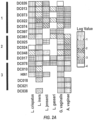
- Figure 2A is an example of the heat map showing the relative abundance of bacteria in different CVS samples using 16S rRNA sequencing techniques (Dr. Jacques Ravel).
- Figure 2B a low concentration of D-lactic acid is associated with dominance by L. iners, which is then associated with increased mobility of HIV in the CVS. This further supports the hypothesis that even "successful" antibiotic treatment for BV (which may occur in only 50-70% of cases) is not enough to restore healthy barrier properties in CVS. Thus, only CVS transplants can successfully restore the most protective vaginal microbiota to women with BV.
- CVS with pathogen trapping ability was mixed 1: 1 with CVS that did not trap pathogens (one participant on hormonal contraceptives (HC), and one participant with BV).
- bacteria in the "donor" sample must be in an environment that is beneficial to their survival. Lactobacilli thrive in an acidic environment with high lactic acid concentration, which is inhospitable to many other types of bacteria, including those commonly associated with BV. Thus, it is important that, upon mixing with the vaginal secretions of a woman with BV, the environment must become acidified.
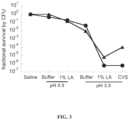
- buffer and 1% lactic acid (LA) at pH 4.5 had little effect.
- 1% lactic acid at pH 3.5 was potent at inactivating BV-associated bacteria in BV-CVS.
- the supernatant of an L. crispatus-dominated CVS sample produced a 5-log reduction in BV-associated bacteria.
- the supernatant of an L . iners -dominated CVS sample was less effective than the supernatant from the L. crispatus sample or 1% LA at pH 3.5.
- CF-L-CVS was further pipetted into dialysis chambers and sealed with a square of 1K MWCO dialysis membrane. Chambers were floated in a medium with one of the following dialysates for 2 hours, the dialysates being saline (normal saline, 0.9% sodium chloride, pH 7), saline (containing 25 mM glycylglycine buffer and adjusted with hydrochloric acid and sodium hydroxide as needed) with pH to match the CF-L-CVS (sample pH ranges ⁇ 3-4), or saline (containing 25 mM glycylglycine buffer and adjusted with hydrochloric acid and sodium hydroxide as needed) with matching pH and matching lactic concentration as the CF-L-CVS (sample ranges 0.5-1.5% lactic acid).
- saline normal saline, 0.9% sodium chloride, pH 7
- saline containing 25 mM glycylglycine buffer
- Both saline buffers contained adjusted sodium chloride such that each buffer had the same osmolality.
- the dialysis was sufficient to reduce the lactic acid concentration of CVS by -95%, unless the dialysate was supplemented with matching concentration of lactic acid.
- BV-CVS was diluted 1:100 into one of the following media, (i) saline, (ii) CF-L-CVS, (iii) CF-L-CVS that was dialyzed against saline, (iv) CF-L-CVS that was dialyzed against saline with matching pH as the CF-L-CVS, or (v) CF-L-CVS that was dialyzed against saline with matching pH and matching lactic concentration as the CF-L-CVS.
- BV-CVS Diluted BV-CVS in a medium was incubated under anaerobic conditions at 37°C before being plated onto Brucella broth 5% sheep blood plates and incubated anaerobically for 2-3 days, before colony forming units (CFUs) were counted.
- FIG. 5A incubation of BV-CVS with CF-L-CVS from individuals with lactobacilli for two hours greatly reduced the number of CFUs compared to incubating BV-CVS with saline.
- Figure 5B shows that dialysis of CF-L-CVS against saline prevented its ability to inactivate BV-bacteria. Since dialysis against a lactic acid saline solution retains the concentration of lactic acid in a dialyzed CVS and since lactic acid is only a potent microbicide at an acidic pH, the concentration of lactic acid and the pH of the lactic acid saline solution were matched to those of the CF-L-CVS.
- BV vaginal microbiota
- intermediate BV vaginal microbiota
- HSV herpes
- gonorrhea chlamydia
- other viral, bacterial, and protozoan pathogens STI transmission rates from women to men are also higher if the woman has BV.
- BV Pregnant women with BV are much more susceptible to miscarriage, premature delivery, and post-partum endometriosis. Strong links have also been established between BV and increased incidence of pelvic inflammatory disease and urinary tract infections.
- the current clinical treatment for BV includes vaginal or oral antibiotic treatment.
- Current experimental methods for treating BV include lactic acid gels/washes and vaginal probiotics, and have had minimal success.
- CVS transplants should be effective to cure or reduce symptoms or severity of BV, thereby having a major impact on women's sexual and reproductive health.
- Donor participants will be recruited from the Johns Hopkins hospital area. They will be asked to provide CVS samples and vaginal swabs on the initial visit for screening. If they are selected as a donor, the donor candidate will be asked to return for a more thorough screening visit that involves a routine gynecological exam, blood samples to screen for HIV and other infectious diseases, and vaginal swabs for sexually transmitted infection screening. Donor participants will agree to abstain from sexual contact between the screening visit and returning to provide a CVS sample for donation to a recipient candidate. Donor participants, due to the nature of their CVS, are at a markedly reduced risk of acquiring sexually transmitted infections.
- CVS samples are obtained by insertion of an INSTEAD SOFT CUP ® menstrual fluid device (as described in active protocols HIRB00000526, NA_00038105, and NA_00090758).
- Collected donor CVS samples are loaded into a syringe and inserted into the vagina; similar procedures are used to administer and collect fluid (cervicovaginal lavage collection) as described in active protocol NA_00036496.
- Control subjects receive a standard vaginal applicator loaded with vaginal placebo gel (hydroxyethylcellulose, HEC).
- the recipient will be asked to remain supine for 1 h after the procedure. After the procedure, the recipients will be counseled about the benefits of condom use and the negative impacts of vaginal products on the success of the transplant.
- the recipients will be given journals for logging information about sexual activity and vaginal product use, as well as swabs for taking twice weekly self-samples.
- the recipient will be scheduled to return for 1 month and 2 month follow-up visits and instructed to bring their swab samples and journals to these visits.
- the follow up visits will involve a routine gynecological exam and the same sample collections as the initial visit and will take about 1 h.
- Donor participants will be removed from the study at any visit that they do not fulfill the criteria (bacterial flora type, lack of sexually transmitted infections, no gynecological abnormalities, no high-risk sexual behavior) for providing CVS donor samples. Recipients will not be removed from the study if they do not follow the counseled suggestions for condom use, as the impact of sexual behavior is of interest for the relative success of the CVS transplants. Even if the recipients become pregnant, the visits at month 1 and 2 are simply observational rather than interventional, and therefore do not pose a risk to the recipient participants. In the event that the recipients have BV relapse or acquire a sexually transmitted infection, they will be referred back to the clinic where they were originally treated, and will be followed through the 2 month window.
- CVS transplants are not intended as an ongoing therapy at this time.
- the primary outcome will be whether the recipient participations are classified as having BV as assessed by standard Amsel's criteria in the clinic and by Nugent scoring at the 1 month and 2 month follow up visits.
- the secondary outcome will be the composition of the recipient participant's vaginal microbiota at the 1 month and 2 month follow-up visits, which will be determined by RNA analysis of the vaginal swabs collected.
- the recipient participants can benefit by improved rates and longer duration of BV resolution, as standard antibiotic treatment often leads to relapse within a month. As such, the women that receive only standard treatment will likely have recurrent BV symptoms in addition to the numerous sexual and reproductive risks associated with BV. In contrast, a successfully CVS transplant could provide prolonged resolution of symptoms and resistance to relapse.
Landscapes
- Health & Medical Sciences (AREA)
- Life Sciences & Earth Sciences (AREA)
- Pharmacology & Pharmacy (AREA)
- Animal Behavior & Ethology (AREA)
- Veterinary Medicine (AREA)
- Public Health (AREA)
- Chemical & Material Sciences (AREA)
- General Health & Medical Sciences (AREA)
- Medicinal Chemistry (AREA)
- Epidemiology (AREA)
- Microbiology (AREA)
- Mycology (AREA)
- Gynecology & Obstetrics (AREA)
- Reproductive Health (AREA)
- Bioinformatics & Cheminformatics (AREA)
- Engineering & Computer Science (AREA)
- Urology & Nephrology (AREA)
- Molecular Biology (AREA)
- General Chemical & Material Sciences (AREA)
- Nuclear Medicine, Radiotherapy & Molecular Imaging (AREA)
- Organic Chemistry (AREA)
- Chemical Kinetics & Catalysis (AREA)
- Endocrinology (AREA)
- Medicines Containing Material From Animals Or Micro-Organisms (AREA)
- Medicinal Preparation (AREA)
Description
- This invention was made with Government Support under NIH grants R01HD062844, R21/R33AI094519, and R21/R33AI079740 by the National Institutes of Health. The Government has certain rights in the invention.
- The present invention is generally in the field of treatment of infections of the vagina and sexually transmitted diseases.
- Approximately one-third of all women currently have bacterial vaginosis (BV), a condition where the vaginal microbiota is not dominated by lactobacilli. Another one-third of women have mixed vaginal microbiota ("intermediate BV"), and only one-third of women have healthy, lactobacilli-dominated microbiota. Women with BV are known to have >2-6-fold increased susceptibility to numerous sexually transmitted infections (STI), including HIV, herpes (HSV), gonorrhea, chlamydia, and other viral, bacterial, and protozoan pathogens. STI transmission rates from women to men are higher if the woman has BV. Pregnant women with BV are much more susceptible to miscarriage, premature delivery, and post-partum endometriosis. Strong links have also been established between BV and increased incidence of pelvic inflammatory disease and urinary tract infections.
- Perhaps most alarming, few people have heard of BV, and even fewer know how to identify if they have it. The standard of care is vaginal or oral antibiotics. However, the effectiveness of antibiotics is limited by mutation leading to antibiotic-resistance, and estimates of BV relapse 4 weeks after antibiotic treatment are as high as 70%. Although BV is an incredibly important global women's health issue, there is currently no known long-term cure. Several attempts have been made to colonize the vagina with large doses of specific probiotic strains of lactobacilli, but the results have been disappointingly modest. In contrast to probiotic strategies in which a single strain of dormant lactobacilli is placed into an environment that is detrimental to its survival, isolating one important player in a complex mix of factors appears to be too simplistic of an approach to be fully effective.
- Studies have been conducted involving the introduction of probiotic lactobacillus strains in isolation, which have demonstrated modest results. One strain in particular, Lactobacillus crispatus CTV-05, has been demonstrated to achieve colonization in the vaginas of women without BV and was demonstrated as safe and tolerable in a
Phase 2 trial in women with BV. Fecal transplants have been demonstrated to be safe, and have had as high as 94% effectiveness at eradicating C. difficile infection in clinical studies. Probiotic products have also been used, as reported by Antonio MA, et al. J Infectious Dis 199(10); 1506-1513 (2009), who studied microbial composition over time, and demonstrates that pregnant women that have healthy, term pregnancies are more likely to have Lactobacillus crispatus-dominated microbiota, and their microbial communities are more stable over time. Romero et al. Microbiome, 2:4 http://www.microbiomejournal.com/content/2/1/4 (2014) was the first report of the temporal dynamics of vaginal microbiota in healthy, reproductive age women. This paper discusses that Lactobacillus crispatus dominated communities are more stable, and therefore, less often associated with transitions to a state of bacterial vaginosis (BV). Gajer et al. Science Translational Medicine, 4(132) 132ra52 (2012) demonstrated in pregnant women that L. crispatus colonization is more stable, and that L. iners is more conducive to the development of BV. Verstraelen et al. BMC Microbiology 9(116) (2009) describes the first, and now unethical, studies of BV-associated bacteria, with pregnant women. Gardnerella vaginalis alone was insufficient in initiating BV in 12 out of 13 women with lactobacillus-dominated vaginal microbiota. However, 11 of 15 women inoculated with cervicovaginal fluid from women infected with G. vaginalis developed symptoms, indicating that other environmental factors were needed for the bacteria to thrive. Criswell et al. Obstet and Gynecol. 33(2) 195-199 (1968) describes the prevalence of BV amongst women who have sex with women. They found that of 58 monogamous couples, 95% were concordant for the presence or absence of BV, which was statistically very distinct from the normal distribution expected in the female population. This would indicate that vaginal microbiota transfer must occur as a result of transfer of vaginal fluids. Marrazzo et al. JID. 185:1307-13 (2002) described BV relapse rates of up to 70% one month after antibiotic treatment. See also Larsson and Forsum, APMIS. 113: 305-16 (2005). - Ravel et al. (2011) is entitled "Vaginal microbiome of reproductive-age women"; Proceedings of the National Academy of Sciences; 108: 4680-4687.
- Mirmonsef et al. (2014) is entitled "Free glycogen in vaginal fluids is associated with Lactobacillus colonization and low vaginal pH"; PLOS ONE; 9(7): e102467.
- Zhou et al. (2009) is entitled "Vaginal Microbiota of Women with Frequent Vulvovaginal Candidiasis"; Infection and Immunity; 77(9): 4130-4135.
- Xu et al. (2008) is entitled "Antagonistic Potential against Pathogenic Microorganisms and Hydrogen Peroxide Production of Indigenous Lactobacilli Isolated from Vagina of Chinese Pregnant Women"; Biomedical and Environmental Sciences, Academic Press; 21(5): 365-371.
- Ghartey et al. (2014) is entitled "Lactobacillus crispatus Dominant Vaginal Microbiome Is Associated with Inhibitory Activity of Female Genital Tract Secretions against Escherichia coli"; PLOS ONE; 9(5): e96659.
-
WO 2010/133761 A1 is entitled "Intravaginal delivery system comprising one or more therapeutically active substances capable of preventing and/or treating vaginal infections". - The introduction of beneficial bacterial communities within the environmental milieu that supports their survival appears to be more effective than introducing isolated bacterial strains. No such communities have been identified or tested for treatment of BV, however.
- It is therefore an object of the present disclosure to provide a method and materials for treating BV.
- It is another object of the present disclosure to identify "donor" participants with the characteristics necessary for providing donor samples for treatment and prevention of BV.
- It is another object of the present disclosure to provide methods and materials for CVS transplants to increase the effectiveness of standard antibiotic treatments for treating bacterial vaginosis.
- The invention relates to a formulation for use in a method for treating bacterial vaginosis comprising administering the formulation to the vagina, wherein the formulation is an isolated cervicovaginal secretion (CVS) comprising healthy vaginal microbiota, wherein at least 50% of the healthy vaginal microbiota is Lactobacillus crispatus, having no evidence of sexually transmitted disease and having an acidic pH <4.0.
- Instead of isolating and purifying a particular strain, cervicovaginal secretions ("CVS") from one or more women with Lactobacillus crispatus-dominated (>50%) vaginal microbiota is transplanted to women with BV as a method for restoring beneficial vaginal microbial communities and/or increasing resistance to sexually transmitted disease. Efficacy can be enhanced, or the properties of the endogenous CVS improved, through administration of an acidifying agent, before and/or after transplantation, such as lactic acid. The CVS can also be filtered for sterility and to remove particles, aggregates and cells, for administration as a filtrate, or spray dried or lyophilized and, optionally, packaged into single dosage unit applicators.
- The method is based on the following:
Only certain lactobacillus communities are truly healthy and protective against vaginal infection and should be transplanted to women after treatment for bacterial vaginosis. - The whole bacterial communities must be introduced in the vaginal environment to establish colonization, rather than isolated bacterial strains.
- Components of cervicovaginal mucus itself are beneficial to bacterial growth and survival, indicating that the mucus itself is the ideal vehicle for introduction of microbiota into the vagina.
- Vaginal microbiota transplantation can be supported by repeated vaginal delivery of lactic acid or other similar compounds.
- Examples demonstrate the role of healthy CVS in disease resistance, and the effect of pH on CVS properties. The examples also describe the collection and transplantation of healthy beneficial CVS into women at risk for, or after treatment for, BV.
-
-
Figures 1A and 1B are graphs of the ensemble-averaged geometric mean square displacements (<MSD>) as a function of time scale for (A) 1000 nm MPP (carboxylate-modified polystyrene nanoparticles with 2 kDa polyethylene glycol chemical conjugated to the surface to produce a mucoinert surface coating), which diffuse similarly in CVS from women with healthy vaginal microbiota and from women with BV (Figure 1A ), and (B) HIV, which diffuses rapidly in BV CVS, but is immediately trapped in CVS from women with healthy microflora (Figure 1B ). W=diffusion rate in water.Figure 1C is a graph of the percentage of HIV with Logic (MSD) values at a time scale of 1 s. Minimal difference can be seen before and after antibiotic treatment despite resolution of BV symptoms. -
Figures 2A-2C are graphs.Figure 2A is an abbreviated heat map showing relative abundance of select bacterial species in CVS samples: group 1: L. crispatus-dominated; group 2: L. iners dominated; group 3: BV samples.Figure 2B is a plot illustrating that the percentage of D-lactic acid in CVS decreases as the percentage of L. iners (calculated in A) increases.Figure 2C is a plot demonstrating that HIV mobility (score of 5 = 100% mobility, score of 0 = 0% mobility) increases as the amount of D-lactic acid decreases. -
Figure 3 is a graph of the survival of BV-associated bacteria in BV-CVS. Treatment with buffer or 1% lactic acid (LA) at pH 4.5 has minimal effect on BV-associated bacteria. In contrast, 1% LA at pH 3.5 (mimicking the healthy vagina) or the supernatant of a healthy L. crispatus-dominated CVS sample, resulted in 5-log reduction in BV-associated bacteria survival. In contrast, the L. iners-dominated CVS sample was far less effective (only ~2-log reduction) at killing BV-associated bacteria in BV-CVS, and less effective than 1% LA alone. -
Figures 4A-4H are graphs of the ensemble-averaged geometric mean square displacements (<MSD>) as a function of time scale for HIV in CVS samples that do and do not trap HIV, and mixtures of trapping and non-trapping CVS samples. It was observed that mixing a non-trapping sample with a healthy trapping sample leads to complete HIV trapping in the mixture, highlighting the ability of the healthy CVS to provide a beneficial pH environment for healthy microbiota, that also provides efficient pathogen trapping. -
Figures 5A is a bar graph showing numbers of colony forming units (CFUs, in log scale) formed from BV-CVS incubated with saline or with cell-free, sterile-filtered CVS (CF-L-CVS) for two hours at 37 °C.Figure 5B is a bar graph showing reduction in the number of CFUs formed from BV-CVS incubated with undialyzed CF-L-CVS, CF-L-CVS dialyzed against saline with a matched pH, or CF-L-CVS dialyzed against saline with a matched pH and lactic acid (LA) concentration, as compared to that formed from BV-CVS incubated with saline. ** indicates p < 0.01. - Probiotic, as used herein, utilizes the World Health Organization's 2001 definition of "live micro-organisms which, when administered in adequate amounts, confer a health benefit on the host". Probiotics must be alive when administered, have viability and reproducibility based on in vivo testing, and during use and storage.
- Microbial flora refers to the microorganisms that normally live in the gastrointestinal tract, skin, nose, etc. In a healthy human, the internal tissues, e.g. blood, brain, muscle, etc., are normally free of microorganisms. However, the surface tissues, i.e., skin and mucous membranes, are constantly in contact with environmental organisms and become readily colonized by various microbial species. The mixture of organisms regularly found at any anatomical site is referred to as the normal flora, except by researchers in the field who prefer the term "indigenous microbiota". Bacteria are the most numerous microbial components of the normal flora.
- Microbiota, a term created by Jeffrey Gordon, refers to the collection of microbial species that form a microbial community. This includes the normal flora and "harmful" ones. "Microbiome," refers to the collection of genes present in the genomes of microbial species present in a community.
- Bacterial vaginosis ("BV"), as used herein, refers to the overgrowth of one of several non-Lactobacillus types of bacteria normally present in the vagina, upsetting the natural balance of vaginal bacteria.
- Cervicovaginal secretions refers to the mixture of mucus secreted by the cervix, shed epithelial cells, vaginal transudate, and bacteria found in the vagina of a woman.
- Sexually transmitted diseases ("STD") are any of various diseases or infections (such as syphilis, gonorrhea, chlamydia, and genital herpes) that are usually transmitted by direct sexual contact and include some (as hepatitis B and AIDS) that may be contracted by other than sexual means.
- The materials for transplant are secretions collected using standard techniques from women with Lactobacillus crispatus-dominated (>50%) vaginal microbiota, who are healthy, free of sexually transmitted disease, and have a low pH in the secretions. As described in Example 1, these can be collected using commercially available materials such as Instead Soft Cup menstrual fluid device, beaker, syringe, or absorbent matrix.
- The secretions are preferably stored in the refrigerator at 4°C for up to 1 week, or in certain cases, immediately frozen after collection and stored for up to several months, before being implanted into the recipient. Samples must maintain at least 20% viable bacteria prior to use.
- The identity and relative abundance of bacteria in the CVS are determined by 16S rRNA pyrosequencing. The sequencing data is then used to identify a community state, and only samples classified within the Lactobacillus crispatus community state will be considered for transplant. This community state often includes other species of Lactobacillus in smaller fractions. Genetic sequencing techniques and assignment of community states have been defined by the laboratory of Jacques Ravel at the University of Maryland.
- In a preferred embodiment, the recipient may also receive daily vaginal treatment with a food acid such as a lactic acid gel, spray or powder before and/or after transplantation to encourage Lactobacillus growth. Daily treatment may occur for up to 1 week before and/or after transplantation. The preferred concentration range of lactic acid to promote Lactobacillus survival is 1-1.5% lactic acid. Lactic acid is preferred to other types of food acid such as vinegar, lemon juice, and acetic acid, although these may also be utilized.
- Certain types of lactobacillus and compositions of vaginal microbial communities confer stability and resistance to bacterial vaginosis (BV). These are obtained from women with Lactobacillus crispatus-dominated (>50%) vaginal microbiota, who are healthy, free of sexually transmitted disease, and have a low pH in the secretions. These are administered to women with BV, as identified clinically with Amsel's criteria, and confirmed in the laboratory by Nugent scoring. In a preferred embodiment, women with recurrent BV (requiring >3 treatment courses in 1 year) will first be treated with standard antibiotic treatment to reduce the bacterial load in the vagina. Twenty-four hours after the final antibiotic dose, the recipient will then receive a CVS transplant. The recipient will remain supine for at least 1 hour. Vaginal swabs will be collected from the recipient before transplant, after transplant, and at standard intervals (1 month, 2 months) after transplant. Characterization of vaginal microbiota will be done by 1) Amsel's criteria, 2) Nugent score, and 3) 16S rRNA sequencing. "Success" will be defined as a lack of BV relapse at 1 and 2 months after transplant, as assessed by Amsel's criteria and Nugent score. 16S rRNA sequencing will reveal the relative abundance of vaginal bacteria, and the degree of similarity to the composition of the transplanted sample.
- CVS transplants also have barrier properties to sexually transmitted pathogens such as HIV are compromised in BV. However, these mucus barrier properties do not appear to be restored, even after successful antibiotic treatment, which is likely because the lactobacillus species most commonly associated with BV (L. iners) also have a negative impact on the vaginal mucus barrier. Transplantation of more beneficial lactobacillus types, including the vaginal microbial community and the mucus environment in which they live, is a promising method for re-establishing healthy bacterial communities that do not compromise the structural and adhesive properties of CVS in the vaginas of women with recurrent BV.
- Several samples have been obtained with high Nugent scores and pH > 4.5 (together indicating BV) which look normal to the naked eye or are very thick in consistency, which may be a further reflection of the diversity of BV-associated microbiota and their effects on CVS. Changes in the local microstructure of BV samples, as probed by 1000 nm mucus penetrating particles (MPP) (
Fig 1A ), revealed a relative degradation of the CVS structure in BV. Additionally, due to the high pH (>4.5) of BV-CVS, HIV diffuses rapidly in BV-CVS (Fig 1B ). BV-CVS has a similar lack of barrier properties to HSV. The effectiveness of treatment for BV and the barrier properties of CVS change after treatment with antibiotics. HIV rapidly diffused in CVS from women after antibiotic treatment, despite BV symptom (pH, consistency, odor) resolution, indicating that women that have ever been treated for BV may have increased susceptibility to STIs. - Although the CVS samples were acidic after treatment, it was found that the LID lactic acid ratios were similar to when the participants had BV. This further supports the belief that L. iners, the type of lactobacilli most commonly present in the vagina after BV treatment, may not be associated with increased protective benefits in the vagina.
- The CVS or a sterile filtered and pH adjusted CVS can be packaged into single dosage units for ease of administration. Typically these would be in a dispenser or applicator, sterile packaged, which has a tip for insertion into the vagina, and a plunger to expel the packaged formulation.
- In other embodiments, the CVS can be lyophilized or spray dried and stored frozen or in a sterile container, for resuspension immediately prior to use. The CVS can be resuspended with sterile water, a weak acidic solution, gel, or buffer.
- In yet another embodiment, the spray dried formulation can be formulated as a disk or wafer, which is inserted into the vagina where it hydrates and repopulates the vaginal mucosa.
- In all of these embodiments, dyes, perfumes, pH buffering agents, drying or resuspending agents, or other materials standard in the probiotic field can be incorporated into the formulations.
- The present invention will be further understood by reference to the following examples.
- For CVS transplants to be successful, bacteria in the "donor" sample must be in an environment that is beneficial to their survival. Lactobacilli thrive in an acidic environment with high lactic acid concentration, which is inhospitable to many other types of bacteria, including those commonly associated with BV. Thus, it is important that, upon mixing with the vaginal secretions of a woman with BV, the environment must become acidified.
- Ensemble-averaged geometric mean square displacements (<MSD>) as a function of time scale for 1000 nm MPP, which diffuse more rapidly in CVS from women with BV than from women with healthy microbiota, and for HIV, were measured in BV-CVS as well as in CVS from women with healthy microbiota (not on hormonal contraceptives). W = theoretical MPP/HIV diffusion rate in water.
- The Percentage of HIV with Logic (MSD) values at a time scale of 1 s in CVS from women collected before and after antibiotic treatment for BV were calculated.
-
Figure 1 shows results obtained using multiple particle tracking (a quantitative fluorescent microscopy technique) and fluorescently labeled nanoparticles or HIV virions. InFigure 1A , the structural properties of BV-CVS are investigated. The mucins in CVS normally form a mesh or net that can sterically trap pathogens and particles. In BV-CVS, it was observed that non-adhesive nanoparticles (polyethylene glycol-coated polystyrene nanoparticles, termed mucus-penetrating particles or MPP) of similar size to bacteria (1 µm in diameter) could more rapidly diffuse in BV-CVS. Thus,Figure 1A demonstrates the structural degradation of CVS caused by BV-associated bacteria. -
Figure 1B illustrates that BV-CVS also has reduced adhesive properties compared to CVS from women with healthy microbiota. HIV is small enough in size (-120 nm) to be able to diffuse through the pores in the mucin net in CVS, yet it was observed that healthy CVS normally traps HIV. Thus, the interactions must be adhesive in nature. However, HIV diffuses rapidly in BV-CVS, indicating reduced adhesive interactions with pathogens. It is believed that BV-associated bacteria modify mucins (e.g. enzymatic cleavage of sugar binding sites), so they are no longer adhesive to pathogens. -
Figure 1C illustrates that the reduced adhesion of CVS to HIV virions remains, even 1 month after antibiotic treatment for BV. It is believed that the type of bacteria most likely to colonize the vagina after BV, Lactobacillus iners, also produces enzymes that modify mucins. Samples were obtained from numerous women that were previously treated for BV that are L. iners-dominated, and HIV readily penetrates through their CVS. It appears that only CVS transplants can recolonize the vagina with healthy lactobacillus species, such as Lactobacillus crispatus. Even "successful" antibiotic treatment will lead to colonization by L. iners, because it is the main lactobacillus type that can survive the BV environment, whereas L. crispatus is typically not present after an episode of BV. -
Figure 2 shows that colonization by L. iners, which is the most likely after antibiotic treatment (if BV relapse does not occur), is associated with CVS with impaired barrier properties.Figure 2A is an example of the heat map showing the relative abundance of bacteria in different CVS samples using 16S rRNA sequencing techniques (Dr. Jacques Ravel). As shown inFigure 2B , a low concentration of D-lactic acid is associated with dominance by L. iners, which is then associated with increased mobility of HIV in the CVS. This further supports the hypothesis that even "successful" antibiotic treatment for BV (which may occur in only 50-70% of cases) is not enough to restore healthy barrier properties in CVS. Thus, only CVS transplants can successfully restore the most protective vaginal microbiota to women with BV. - Mixing experiments were performed to demonstrate killing of BV-associated bacteria in freshly obtained BV-CVS. In these experiments, the "supernatant" (the fluid containing bacteria, soluble factors, etc. after centrifuging a CVS sample to separate the large molecular weight mucin components and cells) of healthy CVS samples was mixed with BV-CVS. The mixture was then plated to determine the effectiveness of the BV-associated bacteria "killing".
- Mixing experiments were performed in which CVS with pathogen trapping ability was mixed 1: 1 with CVS that did not trap pathogens (one participant on hormonal contraceptives (HC), and one participant with BV).
- For CVS transplants to be successful, bacteria in the "donor" sample must be in an environment that is beneficial to their survival. Lactobacilli thrive in an acidic environment with high lactic acid concentration, which is inhospitable to many other types of bacteria, including those commonly associated with BV. Thus, it is important that, upon mixing with the vaginal secretions of a woman with BV, the environment must become acidified.
- As shown in
Figure 3 , buffer and 1% lactic acid (LA) at pH 4.5 (the vaginal pH cutoff commonly defined for BV) had little effect. In contrast, 1% lactic acid at pH 3.5 (mimicking the healthy vaginal environment) was potent at inactivating BV-associated bacteria in BV-CVS. Similarly, the supernatant of an L. crispatus-dominated CVS sample produced a 5-log reduction in BV-associated bacteria. In contrast, the supernatant of an L. iners-dominated CVS sample was less effective than the supernatant from the L. crispatus sample or 1% LA at pH 3.5. This result supports two hypotheses: 1) healthy CVS, when mixed with BV-CVS, can sufficiently alter the local environment to both kill BV-associated bacteria and promote lactobacillus growth, and 2) L. crispatus-dominated CVS is much more potent than L. iners-dominated CVS at killing BV-associated bacteria. - As shown in
Figures 4A-4H , both CVS mixtures had moderate trapping ability immediately after mixing (MSD distribution shifted to the left, but still a small percentage of rapidly diffusing HIV), likely because of the immediate drop in pH after mixing (compare values in Tables 1 and 2 between starting samples and mixtures). The mixtures completely trapped the virus after anaerobic incubation overnight.Table 1: Sample pH L/D ratio HIV tracking 1 (HC) 4.34 1.6 mobile 2 (BV) 4.78 3.3 mobile 3 (healthy) 3.93 0.8 trapped 4 (healthy) 3.80 1.0 trapped Table 2: Mix pH (10 min) pH (18 h) L/D ratio (18 h) 1 + 3 4.08 3.57 0.7 2 + 4 3.99 3.71 1.1 - This experiment was conducted with 3 other sample combinations, with similar results: the pH of the CVS mixture immediately after mixing was in the range ideal for lactobacillus growth, the CVS mixtures completely trapped virus after incubation overnight, and the LID ratio decreased to a level similar to the healthy CVS sample.
- Whole CVS from individuals with lactobacilli was centrifuged at 20,000 x g for 2 minutes. The collected supernatant was then spun again over a 0.2 micron spin filter.
- CF-L-CVS was further pipetted into dialysis chambers and sealed with a square of 1K MWCO dialysis membrane. Chambers were floated in a medium with one of the following dialysates for 2 hours, the dialysates being saline (normal saline, 0.9% sodium chloride, pH 7), saline (containing 25 mM glycylglycine buffer and adjusted with hydrochloric acid and sodium hydroxide as needed) with pH to match the CF-L-CVS (sample pH ranges ~3-4), or saline (containing 25 mM glycylglycine buffer and adjusted with hydrochloric acid and sodium hydroxide as needed) with matching pH and matching lactic concentration as the CF-L-CVS (sample ranges 0.5-1.5% lactic acid). Both saline buffers contained adjusted sodium chloride such that each buffer had the same osmolality. The dialysis was sufficient to reduce the lactic acid concentration of CVS by -95%, unless the dialysate was supplemented with matching concentration of lactic acid.
- BV-CVS was diluted 1:100 into one of the following media, (i) saline, (ii) CF-L-CVS, (iii) CF-L-CVS that was dialyzed against saline, (iv) CF-L-CVS that was dialyzed against saline with matching pH as the CF-L-CVS, or (v) CF-L-CVS that was dialyzed against saline with matching pH and matching lactic concentration as the CF-L-CVS. Diluted BV-CVS in a medium was incubated under anaerobic conditions at 37°C before being plated onto
Brucella broth 5% sheep blood plates and incubated anaerobically for 2-3 days, before colony forming units (CFUs) were counted. - As shown in
Figure 5A , incubation of BV-CVS with CF-L-CVS from individuals with lactobacilli for two hours greatly reduced the number of CFUs compared to incubating BV-CVS with saline.Figure 5B shows that dialysis of CF-L-CVS against saline prevented its ability to inactivate BV-bacteria. Since dialysis against a lactic acid saline solution retains the concentration of lactic acid in a dialyzed CVS and since lactic acid is only a potent microbicide at an acidic pH, the concentration of lactic acid and the pH of the lactic acid saline solution were matched to those of the CF-L-CVS. Despite being dialyzed, retention of lactic acid in the CF-L-CVS inactivated BV-associated bacteria similarly to undialyzed CF-L-CVS (Figure 5B ). Taken together, these results show that a high concentration of lactic in CVS from individuals with predominant lactobacilli microbiota inactivates BV-associated bacteria in CVS from individuals with BV. - Approximately one-third of all women currently have BV, a condition where the vaginal microbiota is not dominated by lactobacilli. Another one-third of women have mixed vaginal microbiota ("intermediate BV"), and only one-third of women have healthy, lactobacilli-dominated microbiota. Women with BV have >2-6-fold increased susceptibility to numerous sexually transmitted infections (STI), including HIV, herpes (HSV), gonorrhea, chlamydia, and other viral, bacterial, and protozoan pathogens. STI transmission rates from women to men are also higher if the woman has BV. Pregnant women with BV are much more susceptible to miscarriage, premature delivery, and post-partum endometriosis. Strong links have also been established between BV and increased incidence of pelvic inflammatory disease and urinary tract infections. The current clinical treatment for BV includes vaginal or oral antibiotic treatment. Current experimental methods for treating BV include lactic acid gels/washes and vaginal probiotics, and have had minimal success.
- A method for transplantation of CVS from a woman with healthy vaginal microbiota to a woman with BV as a means for restoring healthy vaginal microbiota has been developed. CVS transplants should be effective to cure or reduce symptoms or severity of BV, thereby having a major impact on women's sexual and reproductive health.
- Donor participants will be recruited from the Johns Hopkins hospital area. They will be asked to provide CVS samples and vaginal swabs on the initial visit for screening. If they are selected as a donor, the donor candidate will be asked to return for a more thorough screening visit that involves a routine gynecological exam, blood samples to screen for HIV and other infectious diseases, and vaginal swabs for sexually transmitted infection screening. Donor participants will agree to abstain from sexual contact between the screening visit and returning to provide a CVS sample for donation to a recipient candidate. Donor participants, due to the nature of their CVS, are at a markedly reduced risk of acquiring sexually transmitted infections.
- CVS samples are obtained by insertion of an INSTEAD SOFT CUP® menstrual fluid device (as described in active protocols HIRB00000526, NA_00038105, and NA_00090758).
- "Recipient" participants will be recruited from the Johns Hopkins Outpatient Center (JHOC). The recipients will be prescribed antibiotic treatment by a medical professional at the clinic. On the seventh (final) day of antibiotic treatment, the recipient will undergo a routine gynecological exam, provide vaginal swab and CVS samples, and then receive the CVS transplant.
- Collected donor CVS samples are loaded into a syringe and inserted into the vagina; similar procedures are used to administer and collect fluid (cervicovaginal lavage collection) as described in active protocol NA_00036496.
- Control subjects receive a standard vaginal applicator loaded with vaginal placebo gel (hydroxyethylcellulose, HEC). The recipient will be asked to remain supine for 1 h after the procedure. After the procedure, the recipients will be counseled about the benefits of condom use and the negative impacts of vaginal products on the success of the transplant. The recipients will be given journals for logging information about sexual activity and vaginal product use, as well as swabs for taking twice weekly self-samples. The recipient will be scheduled to return for 1 month and 2 month follow-up visits and instructed to bring their swab samples and journals to these visits. The follow up visits will involve a routine gynecological exam and the same sample collections as the initial visit and will take about 1 h.
- Donor participants will be removed from the study at any visit that they do not fulfill the criteria (bacterial flora type, lack of sexually transmitted infections, no gynecological abnormalities, no high-risk sexual behavior) for providing CVS donor samples. Recipients will not be removed from the study if they do not follow the counseled suggestions for condom use, as the impact of sexual behavior is of interest for the relative success of the CVS transplants. Even if the recipients become pregnant, the visits at
month - The primary outcome will be whether the recipient participations are classified as having BV as assessed by standard Amsel's criteria in the clinic and by Nugent scoring at the 1 month and 2 month follow up visits.
- The secondary outcome will be the composition of the recipient participant's vaginal microbiota at the 1 month and 2 month follow-up visits, which will be determined by RNA analysis of the vaginal swabs collected.
- The recipient participants can benefit by improved rates and longer duration of BV resolution, as standard antibiotic treatment often leads to relapse within a month. As such, the women that receive only standard treatment will likely have recurrent BV symptoms in addition to the numerous sexual and reproductive risks associated with BV. In contrast, a successfully CVS transplant could provide prolonged resolution of symptoms and resistance to relapse.
Claims (5)
- A formulation for use in a method for treating bacterial vaginosis comprising administering the formulation to the vagina, wherein the formulation is an isolated cervicovaginal secretion (CVS) comprising healthy vaginal microbiota, wherein at least 50% of the healthy vaginal microbiota is Lactobacillus crispatus, having no evidence of sexually transmitted disease and having an acidic pH <4.0.
- The formulation for use according to claim 1 wherein the method further comprises the step of daily vaginal treatment with a food acid before and/or after administration of the formulation.
- The formulation for use according to claim 2 wherein the food acid is lactic acid.
- The formulation for use according to claim 3 wherein the lactic acid is subsequently administered daily to the vagina as one to five ml of a 1-1.5% lactic acid gel, spray or powder (pH < 4.0) for up to one week after administration of the isolated cervicovaginal secretion.
- The formulation for use according to claim 1 wherein the bacterial vaginosis has been treated with antibiotics prior to administration of the formulation.
Applications Claiming Priority (2)
| Application Number | Priority Date | Filing Date | Title |
|---|---|---|---|
| US201462091970P | 2014-12-15 | 2014-12-15 | |
| PCT/US2015/065002 WO2016100086A1 (en) | 2014-12-15 | 2015-12-10 | Cvs transplantation for treatment of bacterial vaginosis |
Publications (2)
| Publication Number | Publication Date |
|---|---|
| EP3233098A1 EP3233098A1 (en) | 2017-10-25 |
| EP3233098B1 true EP3233098B1 (en) | 2024-05-29 |
Family
ID=55069120
Family Applications (1)
| Application Number | Title | Priority Date | Filing Date |
|---|---|---|---|
| EP15819964.6A Revoked EP3233098B1 (en) | 2014-12-15 | 2015-12-10 | Cvs transplantation for treatment of bacterial vaginosis |
Country Status (3)
| Country | Link |
|---|---|
| US (2) | US10398742B2 (en) |
| EP (1) | EP3233098B1 (en) |
| WO (2) | WO2016100086A1 (en) |
Families Citing this family (15)
| Publication number | Priority date | Publication date | Assignee | Title |
|---|---|---|---|---|
| US11260086B2 (en) | 2016-07-11 | 2022-03-01 | The Brigham And Women's Hospital, Inc. | Medicinal vaginal lactobacillus cocktail |
| WO2019010281A1 (en) * | 2017-07-07 | 2019-01-10 | Osel, Inc. | Use of vaginal lactobacilli for improving the success rate of in vitro fertilization |
| EP3427745A1 (en) | 2017-07-12 | 2019-01-16 | Nederlandse Organisatie voor toegepast- natuurwetenschappelijk onderzoek TNO | New probiotic composition for prevention of bacterial vaginosis |
| BE1025643B1 (en) * | 2017-10-13 | 2019-05-15 | Van Lidth De Jeude Jehan Lienart | COMPOSITION COMPRISING AT LEAST ONE COMPONENT OF A PROBIOTIC BACTERIUM OF THE FIRMICUTES DIVISION AND INTENDED FOR USE IN THE TREATMENT OF UROGENITAL DISEASES |
| EP4021463A1 (en) * | 2019-08-27 | 2022-07-06 | Yeda Research and Development Co. Ltd | Treatment of bacterial vaginosis |
| IT202000004663A1 (en) * | 2020-03-05 | 2021-09-05 | Marca Antonio La | New use of probiotics |
| US20240066078A1 (en) * | 2021-01-05 | 2024-02-29 | Lactobio A/S | Strains, compositions and methods of use |
| JP2024509846A (en) * | 2021-03-03 | 2024-03-05 | フレイヤ バイオサイエンシーズ アーペーエス | Vaginal microbiota related methods, compositions and devices |
| CN114432583B (en) * | 2022-04-11 | 2022-07-08 | 杭州谷禾信息技术有限公司 | Microecological transplanting device for vagina |
| WO2024052864A1 (en) * | 2022-09-08 | 2024-03-14 | Freya Biosciences Aps | Vaginal microbiota compositions for use in infertility |
| IT202200022404A1 (en) * | 2022-10-31 | 2024-05-01 | Probionova Sa | Strains of bacteria for the treatment of gynecological disorders, their compositions and related uses |
| EP4658285A1 (en) * | 2023-02-02 | 2025-12-10 | Freya Biosciences ApS | Vaginal microbiota compositions for treating recurrent pregnancy loss |
| WO2024226446A2 (en) * | 2023-04-22 | 2024-10-31 | Arizona Board Of Regents On Behalf Of The University Of Arizona | Phenyllactic acid compositions and related methods of use |
| CN117701462A (en) * | 2023-12-25 | 2024-03-15 | 江南大学 | Anti-infection lactobacillus crispatus capable of promoting vaginal sIgA and IgG expression and metagen thereof both orally and externally |
| WO2025199444A1 (en) | 2024-03-21 | 2025-09-25 | The Johns Hopkins University | Vaginal probiotic gel-forming formulations, methods of making ands uses thereof |
Family Cites Families (24)
| Publication number | Priority date | Publication date | Assignee | Title |
|---|---|---|---|---|
| CA1072413A (en) | 1976-07-13 | 1980-02-26 | West Laboratories | Poloxamer gel systems with gelling temperatures higher than room temperature |
| SE9301877D0 (en) | 1993-06-02 | 1993-06-02 | Kabi Pharmacia Ab | IN SITU GEL FOR THERAPEUTIC USE |
| EP1034207B1 (en) | 1997-10-03 | 2005-03-02 | Macromed Inc. | BIODEGRADABLE LOW MOLECULAR WEIGHT TRIBLOCK POLY(LACTIDE-co-GLYCOLIDE) POLYETHYLENE GLYCOL COPOLYMERS HAVING REVERSE THERMAL GELATION PROPERTIES |
| AU4905300A (en) | 1999-05-25 | 2000-12-12 | Andrew W. Bruce | Oral administration of lactobacillus for the maintenance of health in women |
| US6225356B1 (en) | 2000-01-20 | 2001-05-01 | Jones, Iii Tudor | Cromolyn sodium containing composition and method of treatment for vilvar vestibulitis interstitial cystitis vukvar vaginitis and vaginitis dynea |
| EP1441027A1 (en) * | 2003-01-22 | 2004-07-28 | Chr. Hansen A/S | Storage stable frozen lactic acid bacteria |
| SE528382C2 (en) * | 2004-10-05 | 2006-10-31 | Probi Ab | Probiotic lactobacillus strains for improved vaginal health |
| US20090196844A1 (en) | 2006-02-01 | 2009-08-06 | Samyang Corporation | Composition for inhibiting adhesion |
| WO2009055312A1 (en) | 2007-10-22 | 2009-04-30 | Dfb Pharmaceuticals, Inc. | Process for producing a poloxamer gel |
| FI20095550A0 (en) | 2009-05-19 | 2009-05-19 | Bayer Schering Pharma Oy | Vaginal delivery system |
| US20120070476A1 (en) | 2009-05-29 | 2012-03-22 | Moench Thomas R | Compositions and Methods for Inactivation of Pathogens at Genital Tract Surfaces |
| EP2490722A4 (en) | 2009-10-21 | 2014-03-05 | Otonomy Inc | Modulation of gel temperature of poloxamer-containing formulations |
| US20140107173A1 (en) | 2011-02-03 | 2014-04-17 | Gnt, Llc | Compositions and Methods for Treatment of Glaucoma |
| US20140163080A1 (en) | 2011-02-03 | 2014-06-12 | Gnt, Llc | Compositions and Methods for Treatment of Glaucoma |
| EP2804632B1 (en) | 2012-01-19 | 2019-09-18 | The Johns Hopkins University | Nanoparticle formulations with enhanced mucosal penetration |
| US8962577B2 (en) | 2012-03-16 | 2015-02-24 | The Johns Hopkins University | Controlled release formulations for the delivery of HIF-1 inhibitors |
| JP6138904B2 (en) | 2012-03-16 | 2017-05-31 | ザ・ジョンズ・ホプキンス・ユニバーシティー | Nonlinear multiblock copolymer drug conjugates for delivery of active agents |
| ITRM20120404A1 (en) | 2012-08-09 | 2014-02-10 | Univ Roma | USE OF KGF IN THE TREATMENT OF MENOPAUSE DISORDERS |
| WO2014039185A1 (en) | 2012-09-05 | 2014-03-13 | Creighton University | Polymeric nanoparticles in a thermosensitive gel for coital-independent vaginal prophylaxis of hiv |
| WO2015127368A1 (en) | 2014-02-23 | 2015-08-27 | The Johns Hopkins University | Hypotonic microbicidal formulations and methods of use |
| CA2957764C (en) | 2014-08-13 | 2019-07-02 | The Johns Hopkins University | Glucocorticoid-loaded nanoparticles for prevention of corneal allograft rejection and neovascularization |
| US9470676B2 (en) * | 2014-12-19 | 2016-10-18 | Good Clean Love, Inc. | Systems and methods for bio-matching gels, creams and lotions |
| KR20240126072A (en) | 2015-01-27 | 2024-08-20 | 더 존스 홉킨스 유니버시티 | Hypotonic hydrogel formulations for enhanced transport of active agents at mucosal surfaces |
| WO2016183535A1 (en) * | 2015-05-14 | 2016-11-17 | University Of Puerto Rico | Methods for restoring microbiota of newborns |
-
2015
- 2015-12-10 EP EP15819964.6A patent/EP3233098B1/en not_active Revoked
- 2015-12-10 US US15/536,297 patent/US10398742B2/en active Active
- 2015-12-10 WO PCT/US2015/065002 patent/WO2016100086A1/en not_active Ceased
-
2016
- 2016-06-06 US US15/174,540 patent/US12005089B2/en active Active
-
2017
- 2017-06-06 WO PCT/US2017/036154 patent/WO2017214146A1/en not_active Ceased
Non-Patent Citations (18)
| Title |
|---|
| ANKE HEMMERLING, WILLIAM HARRISON, ADRIENNE SCHROEDER, JEANNA PARK, ABNER KORN, STEPHEN SHIBOSKI, ANNE FOSTER-ROSALES, CRAIG R. CO: "Phase 2a Study Assessing Colonization Efficiency, Safety, and Acceptability of Lactobacillus crispatus CTV-05 in Women With Bacterial Vaginosis :", SEXUALLY TRANSMITTED DISEASES., LIPPINCOTT CO., PHILADELPHIA., US, vol. 37, no. 12, 1 December 2010 (2010-12-01), US , pages 745 - 750, XP055470324, ISSN: 0148-5717, DOI: 10.1097/OLQ.0b013e3181e50026 |
| ANONYMOUS: "Vaginal flora", WIKIPEDIA (ACCESSED VIA THE WAYBACK MACHINE), 15 September 2013 (2013-09-15), XP093264543, Retrieved from the Internet <URL:https://web.archive.org/web/20130915185520/http://en.wikipedia.org/wiki/Vaginal_flora> |
| CAROL A. SPIEGEL, DAVID A. ESCHENBACH, RICHARD AMSEL, KING K. HOLMES: "Curved Anaerobic Bacteria in Bacterial (Nonspecific) Vaginosis", THE JOURNAL OF INFECTIOUS DISEASES, THE UNIVERSITY OF CHICAGO PRESS, UNITED STATES, vol. 148, no. 5, 1 November 1983 (1983-11-01), United States, pages 817 - 822, XP009560358, ISSN: 0022-1899, DOI: 10.1093/infdis/148.5.817 |
| DECENA DITAS CRISTINA, CO JENNIFER T., MANALASTAS RICARDO M., PALAYPAYON EVELYN P., PADOLINA CHRISTIA S., SISON JUDITH M., DANCEL : "Metronidazole with Lactacyd vaginal gel in bacterial vaginosis", JOURNAL OF OBSTETRICS AND GYNAECOLOGY RESEARCH, WILEY-BLACKWELL PUBLISHING ASIA, JP, vol. 32, no. 2, 1 April 2006 (2006-04-01), JP , pages 243 - 251, XP093264528, ISSN: 1341-8076, DOI: 10.1111/j.1447-0756.2006.00383.x |
| HADASSAH MEDICAL ORGANIZATION: "Vaginal Flora for Treatment of Bacterial Vaginosis (VFT) - NCT02236429", CLINICAL TRIALS, CLINICALTRIALS.GOV, 9 September 2014 (2014-09-09), XP093264539, Retrieved from the Internet <URL:https://clinicaltrials.gov/study/NCT02236429?term=NCT02236429&rank=1&tab=history&a=1#version-content-panel> |
| HEMMERLING ANKE; HARRISON WILLIAM ; SCHROEDER ADRIENNE; PARK JEANNA ; KORN ABNER ; SHIBOSKI STEPHEN ; COHEN CRAIG R.: "Phase 1 dose-ranging safety trial of Lactobacillus crispatus CTV-05 for the prevention of bacterial vaginosis.", SEXUALLY TRANSMITTED DISEASES., LIPPINCOTT CO., PHILADELPHIA., US, vol. 36, no. 9, 1 September 2009 (2009-09-01), US , pages 564 - 569, XP002631584, ISSN: 0148-5717, DOI: 10.1097/olq.0b013e3181a74924 |
| HERMAN L. GARDNER, CHARLES D. DUKES: "Haemophilus vaginalis vaginitis: A newly defined specific infection previously classified "nonspecific" vaginitis", AMERICAN JOURNAL OF OBSTETRICS & GYNECOLOGY, MOSBY, ST LOUIS, MO, US, vol. 69, no. 5, 1 May 1955 (1955-05-01), US , pages 962 - 976, XP009560359, ISSN: 0002-9378, DOI: 10.1016/0002-9378(55)90095-8 |
| J. RAVEL, P. GAJER, Z. ABDO, G. M. SCHNEIDER, S. S. K. KOENIG, S. L. MCCULLE, S. KARLEBACH, R. GORLE, J. RUSSELL, C. O. TACKET, R.: "Vaginal microbiome of reproductive-age women", PROCEEDINGS OF THE NATIONAL ACADEMY OF SCIENCES, NATIONAL ACADEMY OF SCIENCES, vol. 108, no. Supplement_1, 15 March 2011 (2011-03-15), pages 4680 - 4687, XP055083668, ISSN: 00278424, DOI: 10.1073/pnas.1002611107 |
| JACQUES RAVEL;REBECCA M BROTMAN;PAWEL GAJER;BING MA;MELISSA NANDY;DOUGLAS W FADROSH;JOYCE SAKAMOTO;SARA SK KOENIG;LI FU;XIA ZHOU;R: "Daily temporal dynamics of vaginal microbiota before, during and after episodes of bacterial vaginosis", MICROBIOME, BIOMED CENTRAL LTD, LONDON, UK, vol. 1, no. 1, 2 December 2013 (2013-12-02), London, UK , pages 29, XP021170537, ISSN: 2049-2618, DOI: 10.1186/2049-2618-1-29 |
| JANNEKE H. H. M. VAN DE WIJGERT, HANNEKE BORGDORFF, RITA VERHELST, TANIA CRUCITTI, SUZANNA FRANCIS, HANS VERSTRAELEN, VICKY JESPER: "The Vaginal Microbiota: What Have We Learned after a Decade of Molecular Characterization?", PLOS ONE, vol. 9, no. 8, pages e105998, XP055252384, DOI: 10.1371/journal.pone.0105998 |
| JENNIFER M. FETTWEIS; MYRNA G. SERRANO; PHILIPPE H. GIRERD; KIMBERLY K. JEFFERSON; GREGORY A. BUCK: "A New Era of the Vaginal Microbiome: Advances Using Next‐Generation Sequencing", CHEMISTRY & BIODIVERSITY, HELVETICA CHIMICA ACTA, ZUERICH, CH, vol. 9, no. 5, 16 May 2012 (2012-05-16), CH , pages 965 - 976, XP072356043, ISSN: 1612-1872, DOI: 10.1002/cbdv.201100359 |
| MICHAELT. FRANCE;BING MA;PAWEL GAJER;SARAH BROWN;MICHAELS. HUMPHRYS;JOHANNAB. HOLM;L.ELAINE WAETJEN;REBECCAM. BROTMAN;JACQUES RAVE: "VALENCIA: a nearest centroid classification method for vaginal microbial communities based on composition", MICROBIOME, BIOMED CENTRAL LTD, LONDON, UK, vol. 8, no. 1, 23 November 2020 (2020-11-23), London, UK , pages 1 - 15, XP021284781, DOI: 10.1186/s40168-020-00934-6 |
| MULI F, STRUTHERS J. K: "Use of a continuous-culture biofilm system to study the antimicrobial susceptibilities of Gardnerella vaginalis and Lactobacillus acidophilus", ANTIMICROBIAL AGENTS AND CHEMOTHERAPY, AMERICAN SOCIETY FOR MICROBIOLOGY, US, vol. 42, no. 6, 1 June 1998 (1998-06-01), US , pages 1428 - 1432, XP093264537, ISSN: 0066-4804, DOI: 10.1128/aac.42.6.1428 |
| O’HANLON DEIRDRE E., MOENCH THOMAS R., CONE RICHARD A.: "Vaginal pH and Microbicidal Lactic Acid When Lactobacilli Dominate the Microbiota", PLOS ONE, PUBLIC LIBRARY OF SCIENCE, US, vol. 8, no. 11, US , pages e80074, XP093264526, ISSN: 1932-6203, DOI: 10.1371/journal.pone.0080074 |
| PATTERSON, J.L. GIRERD, P.H. KARJANE, N.W. JEFFERSON, K.K.: "Effect of biofilm phenotype on resistance of Gardnerella vaginalis to hydrogen peroxide and lactic acid", AMERICAN JOURNAL OF OBSTETRICS & GYNECOLOGY, MOSBY, ST LOUIS, MO, US, vol. 197, no. 2, 6 August 2007 (2007-08-06), US , pages 170.e1 - 170.e7, XP022181282, ISSN: 0002-9378, DOI: 10.1016/j.ajog.2007.02.027 |
| PLUMMER ERICA L., BRADSHAW CATRIONA S., DOYLE MICHELLE, FAIRLEY CHRISTOPHER K., MURRAY GERALD L., BATESON DEBORAH, MASSON LINDI, S: "Lactic acid-containing products for bacterial vaginosis and their impact on the vaginal microbiota: A systematic review", PLOS ONE, PUBLIC LIBRARY OF SCIENCE, US, vol. 16, no. 2, 11 February 2021 (2021-02-11), US , pages e0246953, XP093252133, ISSN: 1932-6203, DOI: 10.1371/journal.pone.0246953 |
| SOBEL JACK D: "Vaginitis", THE NEW ENGLAND JOURNAL OF MEDICINE, MASSACHUSETTS MEDICAL SOCIETY, US, vol. 337, no. 26, 1 December 1997 (1997-12-01), US , pages 1896 - 1903, XP009560357, ISSN: 0028-4793, DOI: 10.1056/NEJM199712253372607 |
| SWIDSINSKI ALEXANDER, MENDLING WERNER, LOENING-BAUCKE VERA, LADHOFF AXEL, SWIDSINSKI SONJA, HALE LAURA P., LOCHS HERBERT: "Adherent Biofilms in Bacterial Vaginosis ", OBSTETRICS AND GYNECOLOGY, LIPPINCOTT WILLIAMS & WILKINS, US, vol. 106, no. 5, Part 1, 1 November 2005 (2005-11-01), US , pages 1013 - 1023, XP093264535, ISSN: 0029-7844, DOI: 10.1097/01.AOG.0000183594.45524.d2 |
Also Published As
| Publication number | Publication date |
|---|---|
| WO2017214146A1 (en) | 2017-12-14 |
| WO2016100086A1 (en) | 2016-06-23 |
| US10398742B2 (en) | 2019-09-03 |
| EP3233098A1 (en) | 2017-10-25 |
| US20160279182A1 (en) | 2016-09-29 |
| US12005089B2 (en) | 2024-06-11 |
| US20180036354A1 (en) | 2018-02-08 |
Similar Documents
| Publication | Publication Date | Title |
|---|---|---|
| EP3233098B1 (en) | Cvs transplantation for treatment of bacterial vaginosis | |
| US20240156885A1 (en) | Vaginal microbiota-associated methods, compositions, and devices | |
| KR100336183B1 (en) | Virus killing, bactericidal and spermicide suppositories | |
| Petersen et al. | Efficacy and safety of Vitamin C vaginal tablets in the treatment of non-specific vaginitis: a randomised, double blind, placebo-controlled study | |
| Marcone et al. | Effectiveness of vaginal administration of Lactobacillus rhamnosus following conventional metronidazole therapy: how to lower the rate of bacterial vaginosis recurrences. | |
| JP2021505667A (en) | Bacteriophage treatment for pimples and biofilms | |
| EP2343088A1 (en) | Antimycotic and prebiotic pharmaceutical composition and a method for treating candidal vaginitis | |
| EP3355894B1 (en) | Composition comprising sugar for maintaining lactobacillus dominance in the urogenital area | |
| US20040022775A1 (en) | Methods of treating viral infections in mammals | |
| EP3941499A1 (en) | A composition for competitive inhibition of pathogens and restoration of microbial ecological balance | |
| KR20080070482A (en) | Lubricant composition comprising immunopotentiator with mucosal immunity and preparation method thereof | |
| WO2004014408A1 (en) | Intravaginal washing agent | |
| EP4247334B1 (en) | Pharmaceutical composition for use in the prevention or treatment of a condition associated with a reduction in the number of lactobacilli in the vagina | |
| CN110101655A (en) | A kind of composition repaired uterine neck and prevent bacterial vaginitis | |
| RU2240781C1 (en) | Method for treatment of vulva and vagina inflammatory process | |
| RU2827718C2 (en) | Composition for maintaining dominance of lactic acid bacilli | |
| AU2009247064B2 (en) | Medicinal agent exhibiting antiprotozoal activity to Trichomonas vaginalis in an in-vitro model system | |
| WO2009088125A1 (en) | A composition for sanitary supplies comprising mucosal immunoadjuvant and a preparation method thereof | |
| CN118909831A (en) | Preparation method and application of lactobacillus biomembrane based on gel cell growth | |
| CN115135332A (en) | Clostridium difficile proliferation inhibitor | |
| Tau | Molecular and cellular analysis of Chlamydia trachomatis: Persistence and reactivation | |
| Potočnik et al. | EVALUATION OF ROXITHROMYCIN IN THE TREATMENT OF UROGENITAL CHLAMYDIAL, INFECTIONS | |
| Jena | Studies on the incidence of Trichomonas vaginalis amongst pregnant women in Jos area of Plateau State, Nigeria. By CIC Ogbonna, IB Enweani, AA Ogbonna and JC Anosike | |
| CN104644533A (en) | Preparation method of feminine care lotion |
Legal Events
| Date | Code | Title | Description |
|---|---|---|---|
| STAA | Information on the status of an ep patent application or granted ep patent |
Free format text: STATUS: THE INTERNATIONAL PUBLICATION HAS BEEN MADE |
|
| PUAI | Public reference made under article 153(3) epc to a published international application that has entered the european phase |
Free format text: ORIGINAL CODE: 0009012 |
|
| STAA | Information on the status of an ep patent application or granted ep patent |
Free format text: STATUS: REQUEST FOR EXAMINATION WAS MADE |
|
| 17P | Request for examination filed |
Effective date: 20170714 |
|
| AK | Designated contracting states |
Kind code of ref document: A1 Designated state(s): AL AT BE BG CH CY CZ DE DK EE ES FI FR GB GR HR HU IE IS IT LI LT LU LV MC MK MT NL NO PL PT RO RS SE SI SK SM TR |
|
| AX | Request for extension of the european patent |
Extension state: BA ME |
|
| DAV | Request for validation of the european patent (deleted) | ||
| DAX | Request for extension of the european patent (deleted) | ||
| STAA | Information on the status of an ep patent application or granted ep patent |
Free format text: STATUS: EXAMINATION IS IN PROGRESS |
|
| 17Q | First examination report despatched |
Effective date: 20190206 |
|
| GRAP | Despatch of communication of intention to grant a patent |
Free format text: ORIGINAL CODE: EPIDOSNIGR1 |
|
| STAA | Information on the status of an ep patent application or granted ep patent |
Free format text: STATUS: GRANT OF PATENT IS INTENDED |
|
| GRAJ | Information related to disapproval of communication of intention to grant by the applicant or resumption of examination proceedings by the epo deleted |
Free format text: ORIGINAL CODE: EPIDOSDIGR1 |
|
| STAA | Information on the status of an ep patent application or granted ep patent |
Free format text: STATUS: EXAMINATION IS IN PROGRESS |
|
| INTG | Intention to grant announced |
Effective date: 20231113 |
|
| GRAP | Despatch of communication of intention to grant a patent |
Free format text: ORIGINAL CODE: EPIDOSNIGR1 |
|
| STAA | Information on the status of an ep patent application or granted ep patent |
Free format text: STATUS: GRANT OF PATENT IS INTENDED |
|
| INTC | Intention to grant announced (deleted) | ||
| INTG | Intention to grant announced |
Effective date: 20231219 |
|
| P01 | Opt-out of the competence of the unified patent court (upc) registered |
Effective date: 20231221 |
|
| GRAS | Grant fee paid |
Free format text: ORIGINAL CODE: EPIDOSNIGR3 |
|
| GRAA | (expected) grant |
Free format text: ORIGINAL CODE: 0009210 |
|
| STAA | Information on the status of an ep patent application or granted ep patent |
Free format text: STATUS: THE PATENT HAS BEEN GRANTED |
|
| AK | Designated contracting states |
Kind code of ref document: B1 Designated state(s): AL AT BE BG CH CY CZ DE DK EE ES FI FR GB GR HR HU IE IS IT LI LT LU LV MC MK MT NL NO PL PT RO RS SE SI SK SM TR |
|
| REG | Reference to a national code |
Ref country code: GB Ref legal event code: FG4D |
|
| REG | Reference to a national code |
Ref country code: CH Ref legal event code: EP |
|
| REG | Reference to a national code |
Ref country code: IE Ref legal event code: FG4D |
|
| REG | Reference to a national code |
Ref country code: DE Ref legal event code: R096 Ref document number: 602015088863 Country of ref document: DE |
|
| REG | Reference to a national code |
Ref country code: LT Ref legal event code: MG9D |
|
| REG | Reference to a national code |
Ref country code: NL Ref legal event code: MP Effective date: 20240529 |
|
| PG25 | Lapsed in a contracting state [announced via postgrant information from national office to epo] |
Ref country code: IS Free format text: LAPSE BECAUSE OF FAILURE TO SUBMIT A TRANSLATION OF THE DESCRIPTION OR TO PAY THE FEE WITHIN THE PRESCRIBED TIME-LIMIT Effective date: 20240929 |
|
| PG25 | Lapsed in a contracting state [announced via postgrant information from national office to epo] |
Ref country code: BG Free format text: LAPSE BECAUSE OF FAILURE TO SUBMIT A TRANSLATION OF THE DESCRIPTION OR TO PAY THE FEE WITHIN THE PRESCRIBED TIME-LIMIT Effective date: 20240529 |
|
| PG25 | Lapsed in a contracting state [announced via postgrant information from national office to epo] |
Ref country code: FI Free format text: LAPSE BECAUSE OF FAILURE TO SUBMIT A TRANSLATION OF THE DESCRIPTION OR TO PAY THE FEE WITHIN THE PRESCRIBED TIME-LIMIT Effective date: 20240529 Ref country code: HR Free format text: LAPSE BECAUSE OF FAILURE TO SUBMIT A TRANSLATION OF THE DESCRIPTION OR TO PAY THE FEE WITHIN THE PRESCRIBED TIME-LIMIT Effective date: 20240529 |
|
| PG25 | Lapsed in a contracting state [announced via postgrant information from national office to epo] |
Ref country code: GR Free format text: LAPSE BECAUSE OF FAILURE TO SUBMIT A TRANSLATION OF THE DESCRIPTION OR TO PAY THE FEE WITHIN THE PRESCRIBED TIME-LIMIT Effective date: 20240830 |
|
| REG | Reference to a national code |
Ref country code: AT Ref legal event code: MK05 Ref document number: 1690077 Country of ref document: AT Kind code of ref document: T Effective date: 20240529 |
|
| PG25 | Lapsed in a contracting state [announced via postgrant information from national office to epo] |
Ref country code: ES Free format text: LAPSE BECAUSE OF FAILURE TO SUBMIT A TRANSLATION OF THE DESCRIPTION OR TO PAY THE FEE WITHIN THE PRESCRIBED TIME-LIMIT Effective date: 20240529 |
|
| PG25 | Lapsed in a contracting state [announced via postgrant information from national office to epo] |
Ref country code: AT Free format text: LAPSE BECAUSE OF FAILURE TO SUBMIT A TRANSLATION OF THE DESCRIPTION OR TO PAY THE FEE WITHIN THE PRESCRIBED TIME-LIMIT Effective date: 20240529 |
|
| PG25 | Lapsed in a contracting state [announced via postgrant information from national office to epo] |
Ref country code: PL Free format text: LAPSE BECAUSE OF FAILURE TO SUBMIT A TRANSLATION OF THE DESCRIPTION OR TO PAY THE FEE WITHIN THE PRESCRIBED TIME-LIMIT Effective date: 20240529 |
|
| PG25 | Lapsed in a contracting state [announced via postgrant information from national office to epo] |
Ref country code: LV Free format text: LAPSE BECAUSE OF FAILURE TO SUBMIT A TRANSLATION OF THE DESCRIPTION OR TO PAY THE FEE WITHIN THE PRESCRIBED TIME-LIMIT Effective date: 20240529 |
|
| PG25 | Lapsed in a contracting state [announced via postgrant information from national office to epo] |
Ref country code: PL Free format text: LAPSE BECAUSE OF FAILURE TO SUBMIT A TRANSLATION OF THE DESCRIPTION OR TO PAY THE FEE WITHIN THE PRESCRIBED TIME-LIMIT Effective date: 20240529 Ref country code: NO Free format text: LAPSE BECAUSE OF FAILURE TO SUBMIT A TRANSLATION OF THE DESCRIPTION OR TO PAY THE FEE WITHIN THE PRESCRIBED TIME-LIMIT Effective date: 20240829 Ref country code: LV Free format text: LAPSE BECAUSE OF FAILURE TO SUBMIT A TRANSLATION OF THE DESCRIPTION OR TO PAY THE FEE WITHIN THE PRESCRIBED TIME-LIMIT Effective date: 20240529 Ref country code: IS Free format text: LAPSE BECAUSE OF FAILURE TO SUBMIT A TRANSLATION OF THE DESCRIPTION OR TO PAY THE FEE WITHIN THE PRESCRIBED TIME-LIMIT Effective date: 20240929 Ref country code: HR Free format text: LAPSE BECAUSE OF FAILURE TO SUBMIT A TRANSLATION OF THE DESCRIPTION OR TO PAY THE FEE WITHIN THE PRESCRIBED TIME-LIMIT Effective date: 20240529 Ref country code: GR Free format text: LAPSE BECAUSE OF FAILURE TO SUBMIT A TRANSLATION OF THE DESCRIPTION OR TO PAY THE FEE WITHIN THE PRESCRIBED TIME-LIMIT Effective date: 20240830 Ref country code: FI Free format text: LAPSE BECAUSE OF FAILURE TO SUBMIT A TRANSLATION OF THE DESCRIPTION OR TO PAY THE FEE WITHIN THE PRESCRIBED TIME-LIMIT Effective date: 20240529 Ref country code: ES Free format text: LAPSE BECAUSE OF FAILURE TO SUBMIT A TRANSLATION OF THE DESCRIPTION OR TO PAY THE FEE WITHIN THE PRESCRIBED TIME-LIMIT Effective date: 20240529 Ref country code: BG Free format text: LAPSE BECAUSE OF FAILURE TO SUBMIT A TRANSLATION OF THE DESCRIPTION OR TO PAY THE FEE WITHIN THE PRESCRIBED TIME-LIMIT Effective date: 20240529 Ref country code: AT Free format text: LAPSE BECAUSE OF FAILURE TO SUBMIT A TRANSLATION OF THE DESCRIPTION OR TO PAY THE FEE WITHIN THE PRESCRIBED TIME-LIMIT Effective date: 20240529 Ref country code: RS Free format text: LAPSE BECAUSE OF FAILURE TO SUBMIT A TRANSLATION OF THE DESCRIPTION OR TO PAY THE FEE WITHIN THE PRESCRIBED TIME-LIMIT Effective date: 20240829 |
|
| PG25 | Lapsed in a contracting state [announced via postgrant information from national office to epo] |
Ref country code: NL Free format text: LAPSE BECAUSE OF FAILURE TO SUBMIT A TRANSLATION OF THE DESCRIPTION OR TO PAY THE FEE WITHIN THE PRESCRIBED TIME-LIMIT Effective date: 20240529 |
|
| PG25 | Lapsed in a contracting state [announced via postgrant information from national office to epo] |
Ref country code: NL Free format text: LAPSE BECAUSE OF FAILURE TO SUBMIT A TRANSLATION OF THE DESCRIPTION OR TO PAY THE FEE WITHIN THE PRESCRIBED TIME-LIMIT Effective date: 20240529 |
|
| PG25 | Lapsed in a contracting state [announced via postgrant information from national office to epo] |
Ref country code: DK Free format text: LAPSE BECAUSE OF FAILURE TO SUBMIT A TRANSLATION OF THE DESCRIPTION OR TO PAY THE FEE WITHIN THE PRESCRIBED TIME-LIMIT Effective date: 20240529 |
|
| PGFP | Annual fee paid to national office [announced via postgrant information from national office to epo] |
Ref country code: GB Payment date: 20241227 Year of fee payment: 10 |
|
| PGFP | Annual fee paid to national office [announced via postgrant information from national office to epo] |
Ref country code: FR Payment date: 20241226 Year of fee payment: 10 |
|
| PG25 | Lapsed in a contracting state [announced via postgrant information from national office to epo] |
Ref country code: EE Free format text: LAPSE BECAUSE OF FAILURE TO SUBMIT A TRANSLATION OF THE DESCRIPTION OR TO PAY THE FEE WITHIN THE PRESCRIBED TIME-LIMIT Effective date: 20240529 |
|
| PG25 | Lapsed in a contracting state [announced via postgrant information from national office to epo] |
Ref country code: CZ Free format text: LAPSE BECAUSE OF FAILURE TO SUBMIT A TRANSLATION OF THE DESCRIPTION OR TO PAY THE FEE WITHIN THE PRESCRIBED TIME-LIMIT Effective date: 20240529 |
|
| PG25 | Lapsed in a contracting state [announced via postgrant information from national office to epo] |
Ref country code: RO Free format text: LAPSE BECAUSE OF FAILURE TO SUBMIT A TRANSLATION OF THE DESCRIPTION OR TO PAY THE FEE WITHIN THE PRESCRIBED TIME-LIMIT Effective date: 20240529 Ref country code: SK Free format text: LAPSE BECAUSE OF FAILURE TO SUBMIT A TRANSLATION OF THE DESCRIPTION OR TO PAY THE FEE WITHIN THE PRESCRIBED TIME-LIMIT Effective date: 20240529 |
|
| PG25 | Lapsed in a contracting state [announced via postgrant information from national office to epo] |
Ref country code: SM Free format text: LAPSE BECAUSE OF FAILURE TO SUBMIT A TRANSLATION OF THE DESCRIPTION OR TO PAY THE FEE WITHIN THE PRESCRIBED TIME-LIMIT Effective date: 20240529 |
|
| PG25 | Lapsed in a contracting state [announced via postgrant information from national office to epo] |
Ref country code: SM Free format text: LAPSE BECAUSE OF FAILURE TO SUBMIT A TRANSLATION OF THE DESCRIPTION OR TO PAY THE FEE WITHIN THE PRESCRIBED TIME-LIMIT Effective date: 20240529 Ref country code: SK Free format text: LAPSE BECAUSE OF FAILURE TO SUBMIT A TRANSLATION OF THE DESCRIPTION OR TO PAY THE FEE WITHIN THE PRESCRIBED TIME-LIMIT Effective date: 20240529 Ref country code: RO Free format text: LAPSE BECAUSE OF FAILURE TO SUBMIT A TRANSLATION OF THE DESCRIPTION OR TO PAY THE FEE WITHIN THE PRESCRIBED TIME-LIMIT Effective date: 20240529 Ref country code: EE Free format text: LAPSE BECAUSE OF FAILURE TO SUBMIT A TRANSLATION OF THE DESCRIPTION OR TO PAY THE FEE WITHIN THE PRESCRIBED TIME-LIMIT Effective date: 20240529 Ref country code: DK Free format text: LAPSE BECAUSE OF FAILURE TO SUBMIT A TRANSLATION OF THE DESCRIPTION OR TO PAY THE FEE WITHIN THE PRESCRIBED TIME-LIMIT Effective date: 20240529 Ref country code: CZ Free format text: LAPSE BECAUSE OF FAILURE TO SUBMIT A TRANSLATION OF THE DESCRIPTION OR TO PAY THE FEE WITHIN THE PRESCRIBED TIME-LIMIT Effective date: 20240529 |
|
| PG25 | Lapsed in a contracting state [announced via postgrant information from national office to epo] |
Ref country code: IT Free format text: LAPSE BECAUSE OF FAILURE TO SUBMIT A TRANSLATION OF THE DESCRIPTION OR TO PAY THE FEE WITHIN THE PRESCRIBED TIME-LIMIT Effective date: 20240529 |
|
| REG | Reference to a national code |
Ref country code: DE Ref legal event code: R026 Ref document number: 602015088863 Country of ref document: DE |
|
| PLBI | Opposition filed |
Free format text: ORIGINAL CODE: 0009260 |
|
| PLAX | Notice of opposition and request to file observation + time limit sent |
Free format text: ORIGINAL CODE: EPIDOSNOBS2 |
|
| 26 | Opposition filed |
Opponent name: MAIWALD GMBH Effective date: 20250227 |
|
| PGFP | Annual fee paid to national office [announced via postgrant information from national office to epo] |
Ref country code: DE Payment date: 20241227 Year of fee payment: 10 |
|
| PG25 | Lapsed in a contracting state [announced via postgrant information from national office to epo] |
Ref country code: SI Free format text: LAPSE BECAUSE OF FAILURE TO SUBMIT A TRANSLATION OF THE DESCRIPTION OR TO PAY THE FEE WITHIN THE PRESCRIBED TIME-LIMIT Effective date: 20240529 |
|
| PG25 | Lapsed in a contracting state [announced via postgrant information from national office to epo] |
Ref country code: MC Free format text: LAPSE BECAUSE OF FAILURE TO SUBMIT A TRANSLATION OF THE DESCRIPTION OR TO PAY THE FEE WITHIN THE PRESCRIBED TIME-LIMIT Effective date: 20240529 |
|
| PLBB | Reply of patent proprietor to notice(s) of opposition received |
Free format text: ORIGINAL CODE: EPIDOSNOBS3 |
|
| REG | Reference to a national code |
Ref country code: CH Ref legal event code: PL |
|
| PG25 | Lapsed in a contracting state [announced via postgrant information from national office to epo] |
Ref country code: LU Free format text: LAPSE BECAUSE OF NON-PAYMENT OF DUE FEES Effective date: 20241210 |
|
| PG25 | Lapsed in a contracting state [announced via postgrant information from national office to epo] |
Ref country code: SE Free format text: LAPSE BECAUSE OF FAILURE TO SUBMIT A TRANSLATION OF THE DESCRIPTION OR TO PAY THE FEE WITHIN THE PRESCRIBED TIME-LIMIT Effective date: 20240529 |
|
| REG | Reference to a national code |
Ref country code: BE Ref legal event code: MM Effective date: 20241231 |
|
| PG25 | Lapsed in a contracting state [announced via postgrant information from national office to epo] |
Ref country code: BE Free format text: LAPSE BECAUSE OF NON-PAYMENT OF DUE FEES Effective date: 20241231 |
|
| RDAF | Communication despatched that patent is revoked |
Free format text: ORIGINAL CODE: EPIDOSNREV1 |
|
| REG | Reference to a national code |
Ref country code: DE Ref legal event code: R064 Ref document number: 602015088863 Country of ref document: DE Ref country code: DE Ref legal event code: R103 Ref document number: 602015088863 Country of ref document: DE |
|
| PG25 | Lapsed in a contracting state [announced via postgrant information from national office to epo] |
Ref country code: CH Free format text: LAPSE BECAUSE OF NON-PAYMENT OF DUE FEES Effective date: 20241231 |
|
| PG25 | Lapsed in a contracting state [announced via postgrant information from national office to epo] |
Ref country code: IE Free format text: LAPSE BECAUSE OF NON-PAYMENT OF DUE FEES Effective date: 20241210 |
|
| RDAG | Patent revoked |
Free format text: ORIGINAL CODE: 0009271 |
|
| STAA | Information on the status of an ep patent application or granted ep patent |
Free format text: STATUS: PATENT REVOKED |
|
| REG | Reference to a national code |
Ref country code: CH Ref legal event code: N12 Free format text: ST27 STATUS EVENT CODE: U-0-0-N10-N12 (AS PROVIDED BY THE NATIONAL OFFICE) Effective date: 20260128 |
|
| 27W | Patent revoked |
Effective date: 20251020 |
|
| GBPR | Gb: patent revoked under art. 102 of the ep convention designating the uk as contracting state |
Effective date: 20251020 |