EP3232806B1 - Lösung von denaturiertem erbsenprotein und verwendungen davon zur formung von mikrokugeln - Google Patents
Lösung von denaturiertem erbsenprotein und verwendungen davon zur formung von mikrokugeln Download PDFInfo
- Publication number
- EP3232806B1 EP3232806B1 EP15831137.3A EP15831137A EP3232806B1 EP 3232806 B1 EP3232806 B1 EP 3232806B1 EP 15831137 A EP15831137 A EP 15831137A EP 3232806 B1 EP3232806 B1 EP 3232806B1
- Authority
- EP
- European Patent Office
- Prior art keywords
- pea protein
- solution
- denatured
- protein solution
- nozzle
- Prior art date
- Legal status (The legal status is an assumption and is not a legal conclusion. Google has not performed a legal analysis and makes no representation as to the accuracy of the status listed.)
- Active
Links
Images





Classifications
-
- A—HUMAN NECESSITIES
- A23—FOODS OR FOODSTUFFS; TREATMENT THEREOF, NOT COVERED BY OTHER CLASSES
- A23J—PROTEIN COMPOSITIONS FOR FOODSTUFFS; WORKING-UP PROTEINS FOR FOODSTUFFS; PHOSPHATIDE COMPOSITIONS FOR FOODSTUFFS
- A23J1/00—Obtaining protein compositions for foodstuffs; Bulk opening of eggs and separation of yolks from whites
- A23J1/14—Obtaining protein compositions for foodstuffs; Bulk opening of eggs and separation of yolks from whites from leguminous or other vegetable seeds; from press-cake or oil-bearing seeds
-
- A—HUMAN NECESSITIES
- A23—FOODS OR FOODSTUFFS; TREATMENT THEREOF, NOT COVERED BY OTHER CLASSES
- A23J—PROTEIN COMPOSITIONS FOR FOODSTUFFS; WORKING-UP PROTEINS FOR FOODSTUFFS; PHOSPHATIDE COMPOSITIONS FOR FOODSTUFFS
- A23J3/00—Working-up of proteins for foodstuffs
- A23J3/14—Vegetable proteins
-
- A—HUMAN NECESSITIES
- A23—FOODS OR FOODSTUFFS; TREATMENT THEREOF, NOT COVERED BY OTHER CLASSES
- A23J—PROTEIN COMPOSITIONS FOR FOODSTUFFS; WORKING-UP PROTEINS FOR FOODSTUFFS; PHOSPHATIDE COMPOSITIONS FOR FOODSTUFFS
- A23J3/00—Working-up of proteins for foodstuffs
- A23J3/22—Working-up of proteins for foodstuffs by texturising
- A23J3/26—Working-up of proteins for foodstuffs by texturising using extrusion or expansion
-
- A—HUMAN NECESSITIES
- A23—FOODS OR FOODSTUFFS; TREATMENT THEREOF, NOT COVERED BY OTHER CLASSES
- A23L—FOODS, FOODSTUFFS OR NON-ALCOHOLIC BEVERAGES, NOT OTHERWISE PROVIDED FOR; PREPARATION OR TREATMENT THEREOF
- A23L5/00—Preparation or treatment of foods or foodstuffs, in general; Food or foodstuffs obtained thereby; Materials therefor
- A23L5/30—Physical treatment, e.g. electrical or magnetic means, wave energy or irradiation
- A23L5/32—Physical treatment, e.g. electrical or magnetic means, wave energy or irradiation using phonon wave energy, e.g. sound or ultrasonic waves
-
- A—HUMAN NECESSITIES
- A23—FOODS OR FOODSTUFFS; TREATMENT THEREOF, NOT COVERED BY OTHER CLASSES
- A23P—SHAPING OR WORKING OF FOODSTUFFS, NOT FULLY COVERED BY A SINGLE OTHER SUBCLASS
- A23P10/00—Shaping or working of foodstuffs characterised by the products
- A23P10/30—Encapsulation of particles, e.g. foodstuff additives
-
- A—HUMAN NECESSITIES
- A23—FOODS OR FOODSTUFFS; TREATMENT THEREOF, NOT COVERED BY OTHER CLASSES
- A23P—SHAPING OR WORKING OF FOODSTUFFS, NOT FULLY COVERED BY A SINGLE OTHER SUBCLASS
- A23P30/00—Shaping or working of foodstuffs characterised by the process or apparatus
- A23P30/20—Extruding
-
- A—HUMAN NECESSITIES
- A23—FOODS OR FOODSTUFFS; TREATMENT THEREOF, NOT COVERED BY OTHER CLASSES
- A23V—INDEXING SCHEME RELATING TO FOODS, FOODSTUFFS OR NON-ALCOHOLIC BEVERAGES AND LACTIC OR PROPIONIC ACID BACTERIA USED IN FOODSTUFFS OR FOOD PREPARATION
- A23V2002/00—Food compositions, function of food ingredients or processes for food or foodstuffs
-
- A—HUMAN NECESSITIES
- A23—FOODS OR FOODSTUFFS; TREATMENT THEREOF, NOT COVERED BY OTHER CLASSES
- A23V—INDEXING SCHEME RELATING TO FOODS, FOODSTUFFS OR NON-ALCOHOLIC BEVERAGES AND LACTIC OR PROPIONIC ACID BACTERIA USED IN FOODSTUFFS OR FOOD PREPARATION
- A23V2250/00—Food ingredients
- A23V2250/54—Proteins
- A23V2250/548—Vegetable protein
-
- A—HUMAN NECESSITIES
- A23—FOODS OR FOODSTUFFS; TREATMENT THEREOF, NOT COVERED BY OTHER CLASSES
- A23V—INDEXING SCHEME RELATING TO FOODS, FOODSTUFFS OR NON-ALCOHOLIC BEVERAGES AND LACTIC OR PROPIONIC ACID BACTERIA USED IN FOODSTUFFS OR FOOD PREPARATION
- A23V2300/00—Processes
- A23V2300/08—Denaturation, e.g. denaturation of protein
-
- A—HUMAN NECESSITIES
- A23—FOODS OR FOODSTUFFS; TREATMENT THEREOF, NOT COVERED BY OTHER CLASSES
- A23V—INDEXING SCHEME RELATING TO FOODS, FOODSTUFFS OR NON-ALCOHOLIC BEVERAGES AND LACTIC OR PROPIONIC ACID BACTERIA USED IN FOODSTUFFS OR FOOD PREPARATION
- A23V2300/00—Processes
- A23V2300/16—Extrusion
Definitions
- the invention relates to a denatured pea protein solution.
- the invention relates to a method of making a denatured pea protein solution that is suitable for forming microparticles suitable for oral administration to a mammal and delivery intact to the mammalian small intestine.
- the invention also relates to methods of making microparticles, and microparticles formed according to the methods of the invention.
- Animal proteins (whey proteins, gelatin, casein) extracted from animal derived products (milk, collagen) are widely used for encapsulation of active substances. These natural polymers present clear advantages: biocompatibility, biodegradability, good amphiphilic and functional properties such as water solubility, and emulsifying and foaming capacity.
- cost, allergenicity and market limitations represent some shortfalls for animal derived proteins.
- the two techniques mainly used for microencapsulation of active material by vegetable proteins are spray-drying and coacervation. Both processes share the aspect of "green chemistry" with vegetable proteins as renewable and biodegradable resources, plus, the two techniques do not need the use of organic solvents. Other processes such as solvent evaporation techniques can be also considered; however other excipient and polysaccharides need to be introduced to generate a defined structure.
- Spray-drying is a continuous process to convert an initial liquid into a solid powder of microparticles. It is a very common dehydration process used to form a continuous matrix surrounding the active substances. This technology offers several advantages: it is simple, relatively inexpensive and rapid. The important factor for successful microencapsulation by spray- drying is a high solubility of shell material in water and a low viscosity at high solid content. Disadvantages of this technique are the loss of a significant amount of product (due to adhesion of the microparticles to the wall of the spray-dryer) and the possibility of degradation of sensitive products at high drying temperatures.
- Microencapsulation by coacervation is carried out by precipitation of wall forming materials around the active core under the effect of one of the following factors: change of pH or temperature, addition of a non-solvent or electrolyte compound
- Coacervation occurs either via a simple or complex method.
- Simple coacervation involves only one colloidal solute and thus formation of a single polymer envelope.
- Complex coacervation is generated by mixing two oppositely charged polyelectrolytes in order to allow shell formation around an active core.
- Ducel et al. (2004) examined the use of pea globulin (isoelectric point in a pH range 4.4-4.6) for triglyceride microencapsulation by complex coacervation plus the influence of pH and polymer concentration on the microcapsule size.
- microcapsule size For example, at pH 3.5, microcapsule diameters varied from 28 ⁇ m to 97 ⁇ m with a concentration change of 1 g/L to 10 g/L respectively.
- Lazko et al. (2004a) observed a decrease of coacervate size with an increase of soy protein concentration.
- the mean diameter of microparticles obtained decreased from 153 ⁇ m to 88 ⁇ m as the protein concentration increased from 0.5 g/L to 5 g/L respectively. This discordance between published results was probably due to coacervation process differences.
- Klemmer et al International Journal of Food Science and Technology 2011, 46, 2248-2256 describes a pea protein solution and its use to make probiotic bacteria containing capsules.
- the method of Klemmer involves dissolving a pea protein isolate in an alkali solvent, heating the solution to denature the protein and then cooling the denatured protein. Alginate is then added to the denatured protein solution and the biopolymer mixture is then subjected to further heating and cooling steps, prior to addition of the probiotic bacteria and extrusion of the mixture through a needle to produce droplets which are cross-linked in a calcium bath to form capsules having an average diameter of about 2mm.
- pea/alginate solution as a matrix for encapsulation is problematical for oral digestion as the pea/alginate matrix does not survive gastric transit, but break-up in the stomach releasing the probiotic bacteria where they are destroyed in the acidic conditions.
- addition of alginate to the pea protein solution increases the viscosity of the biopolymer mixture to the extent that it is difficult for it to be processed into microdroplets, meaning that the resultant capsules are large and not microbeads or microcapsules.
- US Patent Specification No. 2014/314944 describes a method for preparing pea protein hydrolysates rather than denatured pea protein solutions while Chavan et al. (Food Chemistry, vol. 74, no. 2, 1 August 2001 (2001-08-01), pages 177-187 ) discloses a method for preparing a beach pea protein solution and Diaeldin M.
- Ragab et al. Food Chemistry, vol. 84, no. 2, 1 February 2004 (2004-02-01), pages 207-212 ) describes a method for preparing a cowpea protein solution.
- the invention results in a solution of denatured pea protein having a very high content of soluble pea protein (i.e greater than 90% using the method described below) and which has a sufficiently low viscosity to enable it to be extruded or sprayed through a nozzle (inclusive of spray-drying nozzles and atomisation wheels) during the formation of microbeads.
- soluble denatured pea protein provides for an efficient process in which the use of the pea protein substrate is maximised
- a denatured pea protein solution formed according to the method of the invention, and having a pea protein concentration of about 6-9% (w/v) can be efficiently polymerised in acid to form micro-sized microparticles without the need for additional biopolymers in the matrix, and the formed microparticles are capable of gastric transit intact and small intestinal release., specifically ileal release.
- a method of producing a denatured pea protein solution comprising the steps of:
- the invention therefore provides a method for producing pea protein microparticles that are spherical, typically have a homogenous size distribution, and are capable of surviving passage through a mammalian stomach intact and subsequently breaking up in the small intestine, specifically the ileum. This allows the microparticles to deliver acid-sensitive active agents to the small intestine without damage. Moreover, the spherical shape of the microparticles and the homogenous size distribution allows for controlled and repeatable active agent release kinetics.
- the method for the production of the microparticles involves forming droplets of the denatured pea protein solution of the invention, and then cold gelation of the droplets in an acidic bath.
- the pea protein is solubilised prior to resting by chemical or physical means as defined in the appended claims.
- Chemical solubilisation involves mixing the pea protein with alkali, to provide an alkali pea protein solution having a pH of 10 or more.
- Physical solubilisation involves treating a dispersion (or part dispersion part solution) of the protein in solvent with sonication.
- the solvent is generally an aqueous solvent, for example a phosphate buffer or a borate buffer.
- the solvent has a pH of about 6-9. Ideally, the buffer has a pH of about 7-8.
- the pea protein is mixed with an alkali solvent to provide a 6-9% pea protein solution (w/v) having a pH of at least 7, in one embodiment at least 10.
- the pea protein is mixed with an alkali solvent to provide a pea protein solution having a pH of 7 to 10.
- the cooled denatured pea protein solution is clarified to remove insoluble matter.
- the solution is clarified by centrifugation.
- the pea protein solution is rested for at least 30 minutes. Ideally, the pea protein solution is rested for at least 40 minutes. In one embodiment, the pea protein solution is rested for at least 45, 50, 60, 70, 80, 90, 100, 110, 120 minutes.
- the invention provides a denatured pea protein solution comprising 1-10% denatured pea protein (w/v) in a solvent, in which at least 90% of the pea protein in the denatured pea protein solution is soluble.
- the solvent is an alkali solvent and the solution has a pH of at least 10.
- the denatured pea protein solution comprises 6-9% denatured pea protein (w/v).
- the denatured pea protein solution comprises 6.5-8.5% denatured pea protein (w/v).
- at least 95% of the pea protein in the denatured pea protein solution is soluble.
- the denatured pea protein solution has a viscosity that is sufficiently low to allow the solution be extruded into microdroplets.
- the invention provides a method of producing microparticles having a denatured pea protein matrix, the method comprising the steps of:
- the step of treating the denatured pea protein solution to form microdroplets comprises the step of extruding the solution through a nozzle assembly to form microdroplets.
- an active agent is added to the denatured pea protein solution prior to the microdroplet forming step, and optionally after the heating step, wherein the nozzle assembly typically comprises a single nozzle, and wherein the microparticles are microbeads having a continuous denatured pea protein matrix with active agent distributed throughout the denatured pea protein matrix.
- the nozzle is heated.
- the nozzle assembly comprises an outer nozzle disposed concentrically around an inner nozzle, in which the denatured pea protein solution is extruded through the outer nozzle and an active agent solution comprising active agent is extruded through the inner nozzle, and wherein the microparticles are microcapsules having a denatured pea protein shell and a core comprising active agent.
- the nozzle assembly comprises an electrostatic voltage system configured to apply an electrical potential between the nozzle and an electrode disposed beneath the nozzle.
- the nozzle can also represent a typical nozzle encountered in a spray-drier.
- the invention provides a method of producing microparticles, typically spherical microparticles, and ideally spherical microparticles having a homogenous size distribution, having a denatured pea protein matrix, the method comprising the steps of:
- the disclosure also relates to microcapsule having a shell and a core comprising native protein.
- the native protein is native vegetable protein.
- the native protein is pea protein.
- the microcapsule is gastric resistant (it can pass through the mammalian (especially human) stomach intact).
- the microcapsule is capable of releasing the core in the mammalian (especially human) small intestine, preferably the ileum, ideally the proximal ileum.
- the shell is denatured protein.
- the shell is denatured pea protein.
- the microcapsule is coated with chitosan or gelatin.
- the disclosure also relates to a microbead having a continuous matrix formed of polymerised polymer and an active agent dispersed throughout the polymerised polymer matrix.
- the microbead is gastric resistant.
- the microbad is capable of releasing the active agent in the mammalian (especially human) small intestine, preferably the ileum, ideally the proximal ileum.
- the polymerised polymer is denatured protein.
- the denatured protein is denatured pea protein.
- the microbead is coated with chitosan or gelatin.
- the disclosure also relates to microparticles formed according to a method of the invention.
- the microparticles of the present disclosure or formed according to the method of the present disclosure i.e. microbeads or microcapsules
- a chitosan bath comprises 0.5 to 2.0% chitosan (w/v) in a weak organic acid solvent (i.e. acetic acid).
- a gelatin bath comprises 0.5 to 5.0% gelatin (w/v) in a weak organic acid (i.e. acetic acid) or aqueous solvent.
- the methods of the invention include an additional step of coating the microparticles in a chitosan or gelatin solution, optionally by immersion of the microparticles in a gelatin or chitosan bath.
- Pea protein should be understood to mean a source of pea protein, for example total pea protein.
- the pea protein is pea protein isolate (PPI), pea protein concentrate (PPC), or a combination of either.
- the pea protein has a purity of at least 70% (i.e. at least 90% by weight of the source of pea protein is pea protein.
- the pea protein has a purity of at least 80%.
- the pea protein has a purity of at least 90%. Examples of pea protein having a high purity include materials with low ash content.
- Partially solubilise means that the pea protein is substantially, but not fully, solubilised in a suitable solvent. Generally, up to 60% or 70% of the pea protein is solubilised. Partial solubilisation is generally achieved with chemical means (i.e. alkali solubilisation) or physical means (for example, sonication). A resting step is required to achieve more complete solubilisation, for example solubilisation for 90% or more of the pea protein.
- Alkali solvent means an aqueous solution of a suitable base for example NaOH or KOH.
- the alkali solvent comprises an aqueous solution of 0.05-0.2M base, more preferably 0.05-0.15.
- the alkali solvent comprises an aqueous solution of 0.075-0.125 M base.
- the alkali solvent is an aqueous solution of NaOH, for example 0.05-0.2M NaOH.
- the alkali solvent comprises an aqueous solution of 0.05-0.2M NaOH or KOH, more preferably 0.05-0.15 NaOH or KOH.
- the alkali solvent comprises an aqueous solution of 0.075-0.125 M NaOH or KOH.
- pH of at least 10 means a pH of greater than 10, typically a pH of 10-13 or 10-12. Ideally, the pH of the pea protein solution is 10.5 to 11.
- Sonication means application of sound energy to partially solubilise and hydrate the pea protein. The process generally involves preparing a dispersion/solution of pea protein, and then applying sound energy, generally sound of ultrasonic frequencies, to the dispersion/solution for a sufficient period of time to solubilise and hydrate the pea protein. Sonicators are commercially available from Qsonica LLC and SinapTec.
- Pea protein solution means a liquid pea protein composition comprising soluble pea protein and optionally insoluble pea protein.
- the methods of the invention provide for pea protein solutions comprising high levels of soluble pea protein, typically greater than 90%, or 95% (for example, 95-98% soluble pea protein).
- the amount of soluble pea protein will gradually increase during the resting step until high levels of the pea protein is solubilised, at which point the pea protein solution is heat-denatured. This results in a solution of denatured pea protein having very high levels of denatured pea protein present in the form of soluble denatured pea protein aggregates.
- soluble or “solubilised” as applied to pea protein (or denatured pea protein) should be understood to mean that the pea protein is present as a soluble pea protein aggregate. Typically, the terms mean that the soluble aggregates will not come out of solution upon centrifugation at 10,000 ⁇ g for 30 minutes at 4°C.
- “Resting the pea protein solution” means leaving the pea protein solution rest for a period of time to allow the pea protein solubilise in the alkali solvent. Generally, the pea protein solution is allowed to rest for at least 20, 25, 30, 35, 40, or 45 minutes. Typically, the pea protein solution is rested at room temperature. Typically, the pea protein solution is rested for a period of time until at least 90% of the pea protein has been solubilised. Before being rested, the pea protein solution tends to be cloudy and opaque and contains sediment, but after a period of resting the cloudiness dissipates as the amount of solubilised pea protein increases. As an example, the resting step can increase the % of solubilised protein from 60% to 90% or higher.
- Constants sufficient to heat-denature the pea protein without causing gelation of the pea protein solution means a temperature and time treatment that denatures at least 90%
- the solution may be treated at a temperature of 80-90°C for 20-30 minutes (or preferably 85°C for 25 minutes). However, it will be appreciated that higher temperatures and shorter times may also be employed.
- Rapid cooling the denatured pea protein solution means actively cooling the solution to accelerate cooling compared with simply allowing the solution to cool at room temperature which the Applicant has discovered causes the solution to gel. Rapid cooling can be achieved by placing the solution in a fridge or freezer, or on slushed ice, until the temperature of the solution has been reduced to at least room temperature.
- At least 90% (w/w) of the pea protein in the denatured pea protein solution is soluble means that at least 90% by weight of the total pea protein in the solution is in a solubilised form. Preferably at least 95% (w/w), and ideally from 95% to 98% of the pea protein is solubilised.
- the method of measuring solubility is the shake flask method described below.
- Treating to remove soluble matter means a separation or clarification step to remove soluble matter such as insoluble pea protein from the pea protein solution.
- centrifugation is employed (10,000 ⁇ g for 30 minutes at 4°C) is employed, but other methods will be apparent to the skilled person such as, for example, filtration or the like.
- Solution of denatured pea protein means a solution of pea protein in which at least 90%, 95% or 99% of the total pea protein is denatured.
- a method of determining the % of denatured pea protein in a pea protein solution is provided below.
- Treating a denatured pea protein solution to form microdroplets typically means passing the solution through a small orifice whereby the solution is broken up into micro-size droplets. Preferably, the solution is extruded through an orifice.
- Various methods will be apparent to the skilled person for generating droplets, for example prilling and spraying (ie spray drying).
- a preferred method of producing the microbeads is a vibrating nozzle technique, in which the suspension is sprayed (extruded) through a nozzle and laminar break-up of the sprayed jet is induced by applying a sinusoidal frequency with defined amplitude to the spray from the nozzle.
- the spray nozzle has an aperture of between 50 and 600 microns, preferably between 50 and 200 microns, suitably 50-200 microns, typically 50-150 microns, and ideally about 80 - 150 microns.
- the frequency of operation of the vibrating nozzle is from 900 to 3000 Hz.
- the electrostatic potential between nozzle and acidification bath is 0.85 to 1.3 V.
- the amplitude is from 4.7kV to 7kV.
- the falling distance is less than 50cm, preferably less than 40cm, suitably between 20 and 40cm, preferably between 25 and 35cm, and ideally about 30cm.
- the flow rate of suspension is typically from 3.0 to 10 ml/min; an ideal flow rate is dependent upon the nozzle size utilized within the process.
- Immediately gelling the droplets in an acidic gelling bath to form microbeads means that the droplets gel instantaneously upon immersion in the acidic bath. This is important as it ensures that the droplets have a spherical shape and homogenous size distribution.
- instantaneous gelation is achieved by employing an acidic bath having a pH less than the pI of the pea protein, for example a pH of 3.8 to 4.2.
- Acidic gelling bath means a bath having a pH below the pI of the pea protein that is capable of instantaneously gelling the droplets.
- the acidic gelling bath has a pH of less than 4.3, for example 3.5 to 4.2, 3.7 to 4.2, or 4.0 to 4.2.
- the acidic gelling bath is generally formed from an organic acid.
- the acid is citric acid.
- the acidic gelling bath has an acid concentration of 0.1M to 1.0M, preferably 0.3M to 0.7M, and more preferably 0.4M to 0.6M.
- the acidic gelling bath has a citric acid concentration of 0.1M to 1.0M, preferably 0.3M to 0.7M, and more preferably 0.4M to 0.6M.
- the acidic gelling bath comprises 0.4 to 0.6M citric acid and has a pH of less than 4.3, typically 4.0 to 4.2.
- Microparticles should be understood to mean generally spherical particles comprising gelled polymer for example denatured protein for example denatured pea protein and having an average diameter of 50 to 500 microns as determined using the light microscopy method described below.
- the microparticles have an average diameter of 50-200 microns as determined using the light microscopy method described below.
- the microparticles have an average diameter of 80-200 microns as determined using the light microscopy method described below.
- the microparticles have an average diameter of 80-150 microns as determined using the light microscopy method described below.
- the microparticles may be microbeads or microcapsules.
- Merobeads means micro-sized particles that are generally spherical and have a continuous polymerised matrix for example denatured protein matrix for example denatured pea protein matrix, and optionally an active agent dispersed throughout the pea protein matrix.
- Microcapsules means micro-sized particles that are generally spherical and have a shell formed of gelled polymer for example denatured protein for example denatured pea protein and a core within the shell.
- the core may be a liquid or a solid, or indeed a gas.
- the core comprises native protein, for example native pea protein.
- Active agent means any component suitable for delivery to the mammalian small intestine or ileum, but typically means a component that is sensitive to an external condition for example heat, pH, pressure, chemical stress or enzymes.
- the active component may be sensitive to pH, enzymes (i.e. protease enzymes), high pressure, high shear, and temperature abuse during storage.
- the active component is a cell, typically a bacterial cell, and ideally a probiotic cell. Such cells are sensitive to low pH conditions, such as would be encountered in the stomach, and as such need to be shielded from gastric pH and bile salt environments.
- Probiotic bacteria and indeed other types of cells, are also sensitive to high shear or high pressure, such as are employed in conventional methods of generating micron-sized polymer beads.
- Other types of active components which may be encapsulated in the microbeads of the invention include micronutrients, vitamins, minerals, enzymes, starter bacteria, cell extracts, proteins and polypeptides (native or denatured), sugars and sugar derivatives, nucleic acids and nucleic acid constructs, pharmaceutically-active agents, imaging dyes and ligands, antibodies and antibody fragments, phytochemicals and the like.
- Active agent solution means an active agent contained within a suitable liquid carrier in the form of a solution, dispersion or suspension.
- Nozzle assembly means an apparatus comprising at least one nozzle that is configured for extruding the pea protein solution through the at least one nozzle.
- nozzle assembly comprises a single nozzle, whereby a mixture of active agent and pea protein solution may be extruded the single nozzle to form droplets which when gelled form microbeads.
- the nozzle assembly comprises an outer nozzle concentrically arranged around an inner nozzle, and in which the pea protein solution is extruded through the outer nozzle and an active agent solution/suspension/dispersion is extruded through the inner nozzle to droplets which when gelled form microencapsulates with a gelled pea protein shell and an active agent containing core.
- “Cured in the acidic gelling bath” means that the microbeads are allowed to remain in the gelling bath for a period of time sufficient to cure (harden) the microbeads.
- the period of time varies depending on the microbeads, but typically a curing time of at least 30 minutes is employed.
- Hielscher 1000hd sonicator currently located near BFE in Teagasc Moorepark.
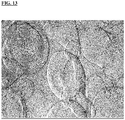
- Microbeads are produced according to Example 3, but using a denatured pea protein solution that was not rested prior to heat denaturation. The resultant microbeads are shown in Fig. 13 .
- the protein- (nitrogen ⁇ 6.25) was determined using standard methods (AOAC, 1990). Protein isolates (200 mg) were suspended in 20 ml deionized water and the pH of the suspensions were adjusted between 2.0 and 9.0 using 0.1 N HCl or NaOH solutions. These suspensions were magnetically stirred for 1 h; pH was checked and adjusted if required, then centrifuged at 8,000 ⁇ g for 10 min. The protein content (N ⁇ 6.25) of supernatant was calculated by estimating nitrogen content (Kjeldahl method).
- Zeta Potential ⁇ and Surface Hydrophobicity was determined for the pea protein microbead and microcapsules.
- the zeta potential ( ⁇ ) of the protein isolates was measured using Zetasizer Nano ZS (Malvern Instrument Ltd., UK). Freshly prepared protein microbeads and microcapsules were suspended in de-ionized water prior to analysis.
- Surface hydrophobicity (Ho) pea protein micro-beads / microcapsules were estimated using ANS-hydrophobic probe following the method of Kato and Nakai, 1980 (Hydrophobicity determined by a fluorescence probe method and its correlation with surface properties of proteins, Biochim Biophys Acta. 1980 Jul 24;624(1):13-20 ).
- FI fluorescence intensity
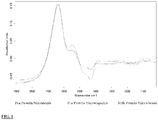
- Infrared spectra pea protein microbeads and microcapsules were recorded using FTIR spectrometer (Vertex 70, Bruker Optics Inc., Germany) equipped with Attenuated Total Reflectance (ATR) cell (PIKE Technology Inc., USA). Protein micro-capsules/ micro beads were stored in desiccators over P 2 O 5 for more than two week in order to remove moisture. The moisture-free isolates were placed on the ATR crystal and pressed down to ensure good contact. The spectrometer was continuously purged with dry air. The spectra in the range of 4000-600 cm -1 were recorded (average of 120 spectra at 4 cm -1 resolution) and referenced against that of an empty cell.
- FIG. 4 illustrates the contrast in secondary structure of microbeads and micro capsules made from pea protein.
- the graph also illustrates the difference between milk protein micro-beads relative to those composed of pea protein. Hence the secondary structure is different and the polymerization of the material will also be different during encapsulation.
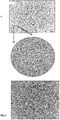
- Figure 5 illustrates the homogenous size distribution of pea protein microcapsules (average diameter 150 microns).
- Figure 5b further shows the encapsulation of probiotics in a pea protein microbead with preferable cell distribution throughout the entire microbead.
- Confocal was also utilised to demonstrate the even distribution of bioactive material i.e. Lacotbacillus rhamnosus GG ) within a microcapsule after the production process.
- Figure 6 demonstrates that the process of microencapsulation is not detrimental to the survival of probiotics.
- Confocal analysis was conducted by illumination using an argon laser (488 nm laser excitation) and red-green-blue images (24 bit), 512 by 512 pixels, were acquired using a zoom factor of 2.0, giving a final pixel resolution of 0.2 ⁇ m /pixel.
- FIG. 7 illustrates the surface topography of a pea protein micro-bead ( Fig. 7A ) and a pea protein microcapsule ( Fig.7B ). It is clear that the surface of a microbead has more cervices and possible pores relative to the surface of a micro-capsule. Hence, the pea protein capsule will potentially have a great ability to resist diffusion and mass transfer effects i.e. water uptake. Micorcapsules also illustrates the ability to protect krill oil and fatty acids (DHA and ARA) against oxidation
- DHA and ARA krill oil and fatty acids
- thermodynamic aqueous compound solubility is the shake flask method. Solubility studies of pea protein were determined by equilibrating excess amount of pea protein in buffer solutions of pH 1.2, 4.5, 6.8, 7.5 and purified water. Assays were performed in plastic flasks with a capacity of 50 mL. In each flask were added 10 mL of media/ water and the respective amount of pea protein separately. The amount was sufficient to saturate each media, which was characterised by depositing of substance not solubilised. An incubator shaker was used to maintain samples at 37°C during the test with agitation at 150 rpm for 72 hours (until an equilibrium condition was achieved).
- the dose:solubility ratio was calculated, which is obtained by dividing the commercially acceptable dose of the pea protein (in milligrams) by the solubility (in milligrams per millilitre) obtained in the tests. The values of the dose:solubility ratio are then compared with the criteria established by the ingredient manufacturer guidance to verify if the protein is highly soluble or not.
- the pea protein concentration was determined by reverse phase HPLC using a SourceTM 5RPC column (Amersham Biosciences UK limited).
- the HPLC system consisted of a Waters 2695 separation module with a Waters 2487 dual wavelength absorbance detector.
- C t is the native pea protein concentration at time t
- C 0 is the initial pea protein concentration
- Logging decay data such as this equalises the data per unit time and reduces error when solving the equations.
- the reaction orders and rates were determined by fitting the experimental data to Equation 1. All experimental points were included in the curve fit; this is reasonable considering the rapid heating-up time of the protein solution. Introducing a lag-time to the data did not significantly alter the results obtained.
- High pressure size exclusion chromatography was used to study the disulphide linked aggregates.
- the aggregates formed during the heating stage were treated with a buffer comprising of 20mM Bis-tris pH 7.0, 5% SDS and 50mM iodoacetamide (IAA).
- the treated aggregates were stirred overnight at room temperature and filtered through a 0.45 ⁇ m syringe filter prior to analysis.
- An ⁇ KTA Purifier chromatography system (Amersham Bioscience UK limited) with a TSK G2000 and a TSK G3000 columns (TosoHaas, Montogomeryville, PA. USA) in series were used for the separation.
- the eluent was 20mM sodium phosphate buffer at pH 7.0 containing 1% SDS.
- TNBS 2,4,6-trinitrobenzene 1-sulfonic acid
- Two-dimensional electrophoresis was performed according to previously described methods ( Laemmli U.K. (1970). Cleavage of structural proteins during the assembly of the head of bacteriophage T4. Nature 227(5259): 680-5 .) .
- the running buffer used was free from ⁇ -mercaptoethanol due the disassociating effect it has on the protein. This caused the break-up of protein aggregates by reducing intra- and intermolecular disulphide bonds.
- the gel strip was placed on top of a separating gel consisting of 12% acrylamide and a 4% stacking gel, both containing 0.1% SDS.
- the electrophoresis was carried out using a constant voltage of 155V in a Mini Protean II system (Bio-Rad, Alpha Technologies, Dublin, Ireland).
- the gels were stained in a 0.5% Coomassie brilliant blue R-250, 25% isopropanol, 10% acetic acid solution.
- the turbidity of the denatured pea protein solutions were measured using a Varian Cary1 UV/visible spectrophotometer (JVA Analytical, Dublin, Ireland) at a wavelength of 590nm. As the size and/or number of the aggregates increased, more light was scattered leading to an increase in the apparent absorbance of the solutions; hence correlated with the denaturation kinetics.
- Dynamic light scattering (Malvern Zetamaster; model 7EM; Malvern Instruments Ltd, Worcester, UK) was also used to measure the sizes of the aggregates formed during the heating step of pea protein. The scattered light was detected at a fixed angle of 90°. The cumulative method was used to find the mean average (z-average) or the size of a particle that corresponded to the mean of the intensity distribution.
- pea protein microbeads / microcapsules In order to determine the efficiency of pea protein microbeads / microcapsules as a delivery vehicle, it is important to elucidate their resistance to gastric conditions and subsequent digestion in intestinal conditions.
- gastrointestinal studies were conducted using stomach and intestinal contents obtained from slaughtered pigs ( ex vivo conditions.) Stomach conditions were pH 1.6 and pepsin enzyme activity was measured (44.46 ⁇ 2.34 umol Tyrosine equivalents). Intestinal contents were obtained from the proximal ileum and enzyme activity was further investigated. Trypsin activity was measured at 21.39 umol ⁇ 2.13 and chymotrypsin activity was measured at 319.43 ⁇ 23.85 umol.
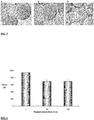
- Figure 8 illustrates the acid stability of pea protein micro-beads / microcapsules during ex vivo porcine stomach digestion during 3 hours incubation.
- the microbeads / microcapsules remain robust and after 3 hours the surface begins to shrink, possibly in response to an acid gradient between the core of the bead and the external environment.
- Fig.8A and 8B show the visual change in the microbead appearance during 3-hour incubation; however the structure remains intact.
- Fig 8C illustrates the digestion of these microbeads during intestinal incubation in the presence of trypsin, chymotrypsin and other typical intestinal enzymes.
- Fig.10 The strength of the micro - beads during stomach incubation is shown in Fig.10 and illustrates that microbead strength decreases during stomach incubation; however, the overall strength of the micro-bead remains relatively high (632.32g ⁇ 24.32g). Intestinal digestion of the pea protein microbeads is visualized in Fig. 10 where the Gel permeation chromatography screens for peptide release.
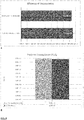
- a probiotic strain was encapsulated within pea protein micro-beads and cell survival was evaluated during i) the encapsulation process ( Fig. 10 ); heat stress ( Fig.11 ).
- Figure 10 illustrates the mild conditions utilised for encapsulation of probiotics in pea protein.
- Figure 11 illustrate the survival of probiotics in the presence of heat stress. This graph illustrates the heat protection provided by encapsulation (structure of a microbead), which is significantly higher than that provided by pea protein alone.
Landscapes
- Life Sciences & Earth Sciences (AREA)
- Chemical & Material Sciences (AREA)
- Engineering & Computer Science (AREA)
- Polymers & Plastics (AREA)
- Food Science & Technology (AREA)
- Health & Medical Sciences (AREA)
- Nutrition Science (AREA)
- Biochemistry (AREA)
- Manufacturing & Machinery (AREA)
- General Preparation And Processing Of Foods (AREA)
- Manufacturing Of Micro-Capsules (AREA)
- Peptides Or Proteins (AREA)
- Medicinal Preparation (AREA)
- Coloring Foods And Improving Nutritive Qualities (AREA)
Claims (15)
- Verfahren zur Herstellung einer Lösung von denaturiertem Erbsenprotein, das die folgenden Schritte umfasst:wesentliches, doch nicht vollständiges Lösen von Erbsenprotein in einem alkalischen Lösungsmittel bei pH 10 oder größer oder durch Ultraschallbehandlung einer Dispersion oder Teildispersion/Teillösung des Proteins in einem Lösungsmittel, das einen pH von etwa 6-9 aufweist, um eine 6-9 %ige Erbsenproteinlösung (m/V) bereitzustellen;Ruhenlassen der Lösung von gelöstem Erbsenprotein für mindestens 15 Minuten, um das Erbsenprotein weiter zu lösen und zu hydratisieren;Erwärmen der ruhengelassenen Erbsenproteinlösung unter Bedingungen, die zur Denaturierung durch Wärme von mindestens 90 % des Erbsenproteins hinreichend sind, während die Lösung in einer Form gehalten wird, die für das Verspritzen geeignet ist; undaktives Abkühlen der Lösung von denaturiertem Erbsenprotein, um das Abkühlen zu beschleunigen und Gelierung zu verhindern;wobei mindestens 90 Gewichts-% des Erbsenproteins in der Lösung von denaturiertem Erbsenprotein als lösliches Erbsenproteinaggregat vorliegt, wie durch das Shake-Flask-Verfahren bestimmt wird, wie vorstehend unter "Method of determining solubility of pea protein solution" beschrieben ist.
- Verfahren nach Anspruch 1, in dem das Erbsenprotein wesentlich, doch nicht vollständig in einem alkalischen Lösungsmittel gelöst wird, um eine Erbsenproteinlösung bereitzustellen, die einen pH von mindestens 10 aufweist.
- Verfahren nach Anspruch 1 oder 2, in dem das Erbsenprotein wesentlich, doch nicht vollständig in einem alkalischen Lösungsmittel gelöst wird, um eine Erbsenproteinlösung bereitzustellen, die einen pH von 10 bis 11 aufweist.
- Verfahren nach einem vorstehenden Anspruch, in dem die abgekühlte Lösung von denaturiertem Erbsenprotein zentrifugiert wird, um unlösliches Material zu entfernen.
- Verfahren nach einem vorstehenden Anspruch, in dem das Erbsenprotein durch Ultraschallbehandlung gelöst wird, in dem das Erbsenprotein in deionisiertem Wasser, Phosphat- oder Boratpuffer vor der Ultraschallbehandlung dispergiert wird.
- Verfahren nach einem vorstehenden Anspruch, in dem das Erbsenprotein aus Erbsenproteinisolat (PPI) oder Erbsenproteinkonzentrat (PPC) ausgewählt wird.
- Lösung von denaturiertem Erbsenprotein, die gemäß dem Verfahren nach einem der Ansprüche 1 bis 6 hergestellt wird, die 6-9 % denaturiertes Erbsenprotein (m/V) umfasst, in der mindestens 90 % (m/m) des Erbsenproteins in der Lösung von denaturiertem Erbsenprotein als lösliches Erbsenproteinaggregat vorliegt, wie durch das Shake-Flask-Verfahren bestimmt wird, wie vorstehend unter "Method of determining solubility of pea protein solution" beschrieben ist, wobei die Lösung eine Viskosität aufweist, die hinreichend niedrig ist, um zu ermöglichen, dass die Lösung zu Mikrotröpfchen verspritzt wird.
- Lösung von denaturiertem Erbsenprotein nach Anspruch 7, in der mindestens 95 % (m/m) des Erbsenproteins in der Lösung von denaturiertem Erbsenprotein als lösliches Erbsenproteinaggregat vorliegt, wie durch das Shake-Flask-Verfahren bestimmt wird, wie vorstehend unter "Method of determining solubility of pea protein solution" beschrieben ist.
- Verfahren zur Herstellung von Mikropartikeln, die eine denaturierte Erbsenproteinmatrix aufweisen, wobei das Verfahren die folgenden Schritte umfasst:Bereitstellen einer Lösung von denaturiertem Erbsenprotein nach Anspruch 7 oder Anspruch 8;Behandeln der Lösung von denaturiertem Erbsenprotein, um Mikrotröpfchen zu bilden; undVernetzen und Chelatisieren der Mikrotröpfchen, um Mikropartikel zu bilden, in dem der Schritt des Vernetzens und Chelatisierens der Mikrotröpfchen die unmittelbare Gelierung der Mikrotröpfchen in einem sauren Gelierungsbad umfasst, das einen pH aufweist, der kleiner ist als der pI des Erbsenproteins, um Mikropartikel zu bilden.
- Verfahren nach Anspruch 9, in dem der Schritt des Behandelns der Lösung von denaturiertem Erbsenprotein, um Mikrotröpfchen zu bilden, den Schritt des Verspritzens der Lösung durch eine Düsenanordnung umfasst, um die Mikrotröpfchen zu bilden.
- Verfahren nach Anspruch 10, in dem ein Wirkstoff zu der Lösung von denaturiertem Erbsenprotein vor dem Schritt des Bildens von Mikrotröpfchen und optional nach dem Erwärmungsschritt zugegeben wird.
- Verfahren nach Anspruch 10, in dem die Düsenanordnung eine Einzeldüse umfasst und wobei die Mikropartikel Mikrokügelchen sind, die eine ununterbrochene denaturierte Erbsenproteinmatrix aufweisen, wobei ein Wirkstoff durchgehend in der denaturierten Erbsenproteinmatrix verteilt ist.
- Verfahren nach Anspruch 10, in dem die Düsenanordnung eine äußere Düse umfasst, die konzentrisch um eine innere Düse angeordnet ist, in dem die Lösung von denaturiertem Erbsenprotein durch die äußere Düse verspritzt wird und eine Wirkstofflösung, die den Wirkstoff umfasst, gleichzeitig durch die innere Düse verspritzt wird, und wobei die Mikropartikel Mikrokapseln sind, die eine Hülle von denaturiertem Erbsenprotein und einen Kern, der den Wirkstoff umfasst, aufweisen.
- Verfahren nach Anspruch 13, in dem die Düsenanordnung ein elektrostatisches Spannungssystem umfasst, das zum Anlegen eines elektrischen Potenzials zwischen der Düse und einer Elektrode, die unter der Düse angeordnet ist, konfiguriert ist.
- Verfahren nach einem der Ansprüche 9 bis 14, das einen zusätzlichen Schritt des Beschichtens der gebildeten Mikropartikel, Mikrokügelchen oder Mikrokapseln in Chitosan oder Gelatine einschließt, in dem das Beschichten durch Eintauchen der Mikropartikel, Mikrokügelchen oder Mikrokapseln in einem Chitosan- oder Gelatinebad durchgeführt wird.
Priority Applications (1)
| Application Number | Priority Date | Filing Date | Title |
|---|---|---|---|
| EP19203958.4A EP3628168B1 (de) | 2014-12-15 | 2015-12-15 | Lösung von denaturiertem erbsenprotein und verwendungen davon zur formung von mikropartikeln |
Applications Claiming Priority (2)
| Application Number | Priority Date | Filing Date | Title |
|---|---|---|---|
| EP14198051.6A EP3042571A1 (de) | 2014-12-15 | 2014-12-15 | Lösung von denaturiertem Erbsenprotein und Verwendungen davon zur Formung von Mikrokugeln |
| PCT/EP2015/079903 WO2016096929A1 (en) | 2014-12-15 | 2015-12-15 | A solution of denatured pea protein, and uses thereof to form microparticles |
Related Child Applications (2)
| Application Number | Title | Priority Date | Filing Date |
|---|---|---|---|
| EP19203958.4A Division EP3628168B1 (de) | 2014-12-15 | 2015-12-15 | Lösung von denaturiertem erbsenprotein und verwendungen davon zur formung von mikropartikeln |
| EP19203958.4A Division-Into EP3628168B1 (de) | 2014-12-15 | 2015-12-15 | Lösung von denaturiertem erbsenprotein und verwendungen davon zur formung von mikropartikeln |
Publications (2)
| Publication Number | Publication Date |
|---|---|
| EP3232806A1 EP3232806A1 (de) | 2017-10-25 |
| EP3232806B1 true EP3232806B1 (de) | 2020-08-26 |
Family
ID=52102570
Family Applications (3)
| Application Number | Title | Priority Date | Filing Date |
|---|---|---|---|
| EP14198051.6A Withdrawn EP3042571A1 (de) | 2014-12-15 | 2014-12-15 | Lösung von denaturiertem Erbsenprotein und Verwendungen davon zur Formung von Mikrokugeln |
| EP15831137.3A Active EP3232806B1 (de) | 2014-12-15 | 2015-12-15 | Lösung von denaturiertem erbsenprotein und verwendungen davon zur formung von mikrokugeln |
| EP19203958.4A Active EP3628168B1 (de) | 2014-12-15 | 2015-12-15 | Lösung von denaturiertem erbsenprotein und verwendungen davon zur formung von mikropartikeln |
Family Applications Before (1)
| Application Number | Title | Priority Date | Filing Date |
|---|---|---|---|
| EP14198051.6A Withdrawn EP3042571A1 (de) | 2014-12-15 | 2014-12-15 | Lösung von denaturiertem Erbsenprotein und Verwendungen davon zur Formung von Mikrokugeln |
Family Applications After (1)
| Application Number | Title | Priority Date | Filing Date |
|---|---|---|---|
| EP19203958.4A Active EP3628168B1 (de) | 2014-12-15 | 2015-12-15 | Lösung von denaturiertem erbsenprotein und verwendungen davon zur formung von mikropartikeln |
Country Status (9)
| Country | Link |
|---|---|
| US (2) | US20170367373A1 (de) |
| EP (3) | EP3042571A1 (de) |
| CN (1) | CN107404899B (de) |
| AU (1) | AU2015367632B2 (de) |
| CA (1) | CA2970975C (de) |
| DK (1) | DK3232806T3 (de) |
| ES (2) | ES2837173T3 (de) |
| PL (1) | PL3628168T3 (de) |
| WO (1) | WO2016096929A1 (de) |
Families Citing this family (24)
| Publication number | Priority date | Publication date | Assignee | Title |
|---|---|---|---|---|
| US11582987B2 (en) | 2017-06-07 | 2023-02-21 | Whitewave Services, Inc. | Systems and methods using physical energy technology to produce non-dairy protein base and value-added utilization of the co-product |
| AU2019232145B2 (en) | 2018-03-07 | 2024-08-08 | Teagasc - The Agriculture And Food Development Authority | A composition for type II diabetics and for use in providing sustained energy release over time |
| WO2020033554A1 (en) * | 2018-08-08 | 2020-02-13 | Spirulinex, Llc | Encapsulated cannabinoid comestible noble metal compositions and products, methods of preparing same |
| US12048755B2 (en) | 2018-12-18 | 2024-07-30 | International Flavors & Fragrances Inc. | Microcapsule compositions prepared from polysaccharides |
| CN113438939B (zh) * | 2018-12-18 | 2025-09-16 | 国际香料和香精公司 | 蛋白质微胶囊及其制备方法 |
| WO2020131890A1 (en) | 2018-12-18 | 2020-06-25 | International Flavors & Fragrances Inc. | Microcapsule compositions |
| GB201903090D0 (en) | 2019-03-07 | 2019-04-24 | Cambridge Entpr Ltd | Plant based functional materials |
| CN113950315B (zh) * | 2019-04-12 | 2024-08-02 | 国际香料和香精公司 | 具有受控释放的可生物降解的核壳微胶囊组合物的消费品 |
| CN113993499B (zh) * | 2019-04-12 | 2024-07-23 | 国际香料和香精公司 | 用交联剂的组合制备的可持续性核壳微胶囊 |
| EP3952648A4 (de) * | 2019-04-12 | 2023-01-04 | International Flavors & Fragrances Inc. | Biologisch abbaubare kern-schale-mikrokapsel-zusammensetzungen mit kontrollierter freisetzung |
| US12390783B2 (en) * | 2019-04-15 | 2025-08-19 | International Flavors & Fragrances Inc. | Protein microcapsules and method of preparing the same |
| EP3965740A1 (de) * | 2019-05-10 | 2022-03-16 | KetoSwiss AG | In mikrokugeln eingeschlossene ketonkörper |
| CN120052554A (zh) * | 2019-10-16 | 2025-05-30 | 科劳弗股份有限公司 | 营养组合物和药物组合物的蛋白质包封 |
| WO2021141595A1 (en) * | 2020-01-10 | 2021-07-15 | Advanced Microbubbles Laboratories Llc | Preparation and preservation of collagen microbubbles |
| US20230080017A1 (en) | 2020-02-19 | 2023-03-16 | Zantebio Limited | Coated microcapsules and methods for the production thereof |
| US20230088499A1 (en) * | 2020-02-20 | 2023-03-23 | Firmenich Sa | Powdered composition |
| GB202011598D0 (en) | 2020-07-27 | 2020-09-09 | Anabio Tech Limited | A pharmaceutical composition in oral dosage form |
| EP3967157A1 (de) * | 2020-09-09 | 2022-03-16 | Xampla Limited | Mikrokapseln auf pflanzlicher basis |
| AU2022315496A1 (en) | 2021-07-17 | 2023-12-07 | Ketoswiss Ag | Combination of a ketone body or ketogenic compound with an analgesic or antioxidant |
| GB202201084D0 (en) * | 2022-01-27 | 2022-03-16 | Insucaps Ltd | Oil in water nanoemulsion microparticles and methods of production and use thereof |
| GB2615103A (en) * | 2022-01-27 | 2023-08-02 | Anabio Tech Limited | A method of forming a composition comprising a probiotic micro-encapsulated in a denatured plant protein matrix |
| US20260096991A1 (en) | 2022-09-26 | 2026-04-09 | Xampla Limited | Biodegradable microcapsules and method for their preparation |
| GB202403584D0 (en) | 2024-03-12 | 2024-04-24 | Anabio Tech Limited | An enumeration method |
| WO2025202246A1 (en) | 2024-03-25 | 2025-10-02 | Innovative Food Technologies LLC | Microencapsulates and uses thereof |
Family Cites Families (7)
| Publication number | Priority date | Publication date | Assignee | Title |
|---|---|---|---|---|
| DE602005017925D1 (de) * | 2004-09-17 | 2010-01-07 | Nisshin Seifun Group Inc | Verfahren zur abschätzung der sekundären verarbeitungseigenschaften von weizen auf der anzuchtstufe |
| CN102417599B (zh) * | 2010-09-27 | 2013-06-05 | 浙江大学 | 一种溶解丝蛋白的方法 |
| FR2975259B1 (fr) * | 2011-05-16 | 2014-01-31 | Roquette Freres | Procede industriel de preparation d'hydrolysats alcalins de proteines vegetales |
| US20130202740A1 (en) * | 2012-02-08 | 2013-08-08 | Pepsico, Inc. | Acidic Aqueous Product Comprising Oil-Containing Microcapsules and Method for the Manufacture Thereof |
| WO2014198787A1 (en) * | 2013-06-12 | 2014-12-18 | Anabio Technologies Limited | A process for producing microcapsules comprising an active component encapsulated, protected and stabilised within a protein shell |
| CN103551569B (zh) * | 2013-11-04 | 2015-08-19 | 同济大学 | 牛血清白蛋白包覆金纳米粒子的制备方法 |
| CN203955203U (zh) * | 2014-05-21 | 2014-11-26 | 宁波宝成生物科技发展有限公司 | 一种可无菌操作的微胶囊生产装置 |
-
2014
- 2014-12-15 EP EP14198051.6A patent/EP3042571A1/de not_active Withdrawn
-
2015
- 2015-12-15 PL PL19203958.4T patent/PL3628168T3/pl unknown
- 2015-12-15 ES ES15831137T patent/ES2837173T3/es active Active
- 2015-12-15 AU AU2015367632A patent/AU2015367632B2/en active Active
- 2015-12-15 DK DK15831137.3T patent/DK3232806T3/da active
- 2015-12-15 ES ES19203958T patent/ES2982907T3/es active Active
- 2015-12-15 CA CA2970975A patent/CA2970975C/en active Active
- 2015-12-15 WO PCT/EP2015/079903 patent/WO2016096929A1/en not_active Ceased
- 2015-12-15 EP EP15831137.3A patent/EP3232806B1/de active Active
- 2015-12-15 CN CN201580076105.8A patent/CN107404899B/zh active Active
- 2015-12-15 EP EP19203958.4A patent/EP3628168B1/de active Active
- 2015-12-15 US US15/536,303 patent/US20170367373A1/en not_active Abandoned
-
2023
- 2023-01-12 US US18/096,404 patent/US20230354849A1/en active Pending
Non-Patent Citations (1)
| Title |
|---|
| RAUL IANCHICI ET AL: "THE INFLUENCE OF THE METHOD OF EXTRACTION AND DRYING OF PROTEINS FROM PEA SEEDS ON THEIR SOLUBILITY UTICAJ METODA EKSTRAKCIJE I SUSENJA NA RASTVORLJIVOST PROTEINA SEMENA GRASKA", JOURNAL ON PROCESSING AND ENERGY IN AGRICULTURE, 1 January 2011 (2011-01-01), pages 87 - 89, XP055270373, Retrieved from the Internet <URL:http://scindeks-clanci.ceon.rs/data/pdf/1821-4487/2011/1821-44871102087I.pdf> [retrieved on 20160503] * |
Also Published As
| Publication number | Publication date |
|---|---|
| EP3042571A1 (de) | 2016-07-13 |
| CN107404899B (zh) | 2021-12-07 |
| PL3628168T3 (pl) | 2024-10-28 |
| AU2015367632B2 (en) | 2019-09-26 |
| US20230354849A1 (en) | 2023-11-09 |
| CA2970975A1 (en) | 2016-06-23 |
| EP3628168C0 (de) | 2024-03-27 |
| ES2837173T3 (es) | 2021-06-29 |
| EP3628168B1 (de) | 2024-03-27 |
| EP3628168A1 (de) | 2020-04-01 |
| EP3232806A1 (de) | 2017-10-25 |
| WO2016096929A1 (en) | 2016-06-23 |
| AU2015367632A1 (en) | 2017-08-03 |
| US20170367373A1 (en) | 2017-12-28 |
| CN107404899A (zh) | 2017-11-28 |
| ES2982907T3 (es) | 2024-10-18 |
| DK3232806T3 (da) | 2020-11-30 |
| CA2970975C (en) | 2025-03-11 |
Similar Documents
| Publication | Publication Date | Title |
|---|---|---|
| US20230354849A1 (en) | Solution of denatured pea protein, and uses thereof to form microparticles | |
| Doherty et al. | Development and characterisation of whey protein micro-beads as potential matrices for probiotic protection | |
| Mendanha et al. | Microencapsulation of casein hydrolysate by complex coacervation with SPI/pectin | |
| Chen et al. | Alginate–whey protein granular microspheres as oral delivery vehicles for bioactive compounds | |
| Chen et al. | Food protein-based materials as nutraceutical delivery systems | |
| Bokkhim et al. | In-vitro digestion of different forms of bovine lactoferrin encapsulated in alginate micro-gel particles | |
| Su et al. | A novel complex coacervate formed by gliadin and sodium alginate: Relationship to encapsulation and controlled release properties | |
| US10271569B2 (en) | Compositions and methods of producing microbeads | |
| Bagheri et al. | Spray-dried alginate microparticles carrying caffeine-loaded and potentially bioactive nanoparticles | |
| Kurukji et al. | Fabrication of sub-micron protein-chitosan electrostatic complexes for encapsulation and pH-Modulated delivery of model hydrophilic active compounds | |
| Zhu et al. | Ultrasonic microencapsulation of oil-soluble vitamins by hen egg white and green tea for fortification of food | |
| Nesterenko et al. | The effect of vegetable protein modifications on the microencapsulation process | |
| Zhang et al. | Stability and in vitro digestion simulation of soy protein isolate-vitamin D3 nanocomposites | |
| Quintero Quiroz et al. | Vegetable proteins as potential encapsulation agents: a review | |
| AU2026200643A1 (en) | A method of forming a composition comprising a probiotic micro-encapsulated in a denatured plant protein matrix | |
| Zhu et al. | Insight into the structural, chemical and surface properties of proteins for the efficient ultrasound assisted co-encapsulation and delivery of micronutrients | |
| CA3168755A1 (en) | Coated microcapsules and methods for the production thereof | |
| Nourbakhsh et al. | Antioxidant peptidic particles for delivery of gallic acid | |
| EP3554479B1 (de) | Verfahren zur herstellung von kügelchen | |
| Mannai et al. | Encapsulation of sunflower and flaxseed oils using Opuntia (Cactaceae) mucilage as a core-shell material through coacervation methods: A study on formulation, characterization, and in vitro digestion | |
| Kim et al. | Nanofood and its materials as nutrient delivery system (NDS) | |
| Karaca | Nanostructured proteins | |
| Brodkorb et al. | WO 2018/114971 A1 A method for producing beads | |
| Kim | Food protein-based materials as nutraceutical delivery systems |
Legal Events
| Date | Code | Title | Description |
|---|---|---|---|
| STAA | Information on the status of an ep patent application or granted ep patent |
Free format text: STATUS: THE INTERNATIONAL PUBLICATION HAS BEEN MADE |
|
| PUAI | Public reference made under article 153(3) epc to a published international application that has entered the european phase |
Free format text: ORIGINAL CODE: 0009012 |
|
| STAA | Information on the status of an ep patent application or granted ep patent |
Free format text: STATUS: REQUEST FOR EXAMINATION WAS MADE |
|
| 17P | Request for examination filed |
Effective date: 20170714 |
|
| AK | Designated contracting states |
Kind code of ref document: A1 Designated state(s): AL AT BE BG CH CY CZ DE DK EE ES FI FR GB GR HR HU IE IS IT LI LT LU LV MC MK MT NL NO PL PT RO RS SE SI SK SM TR |
|
| AX | Request for extension of the european patent |
Extension state: BA ME |
|
| DAV | Request for validation of the european patent (deleted) | ||
| DAX | Request for extension of the european patent (deleted) | ||
| STAA | Information on the status of an ep patent application or granted ep patent |
Free format text: STATUS: EXAMINATION IS IN PROGRESS |
|
| 17Q | First examination report despatched |
Effective date: 20180620 |
|
| GRAP | Despatch of communication of intention to grant a patent |
Free format text: ORIGINAL CODE: EPIDOSNIGR1 |
|
| STAA | Information on the status of an ep patent application or granted ep patent |
Free format text: STATUS: GRANT OF PATENT IS INTENDED |
|
| RIC1 | Information provided on ipc code assigned before grant |
Ipc: A23P 30/20 20160101ALI20200214BHEP Ipc: A23J 3/26 20060101ALI20200214BHEP Ipc: A23J 3/14 20060101AFI20200214BHEP Ipc: A23L 5/00 20160101ALI20200214BHEP Ipc: A23P 10/30 20160101ALI20200214BHEP Ipc: A23L 5/30 20160101ALI20200214BHEP Ipc: A23J 1/14 20060101ALI20200214BHEP |
|
| INTG | Intention to grant announced |
Effective date: 20200318 |
|
| GRAS | Grant fee paid |
Free format text: ORIGINAL CODE: EPIDOSNIGR3 |
|
| GRAA | (expected) grant |
Free format text: ORIGINAL CODE: 0009210 |
|
| STAA | Information on the status of an ep patent application or granted ep patent |
Free format text: STATUS: THE PATENT HAS BEEN GRANTED |
|
| AK | Designated contracting states |
Kind code of ref document: B1 Designated state(s): AL AT BE BG CH CY CZ DE DK EE ES FI FR GB GR HR HU IE IS IT LI LT LU LV MC MK MT NL NO PL PT RO RS SE SI SK SM TR |
|
| REG | Reference to a national code |
Ref country code: GB Ref legal event code: FG4D |
|
| REG | Reference to a national code |
Ref country code: CH Ref legal event code: EP |
|
| REG | Reference to a national code |
Ref country code: AT Ref legal event code: REF Ref document number: 1305497 Country of ref document: AT Kind code of ref document: T Effective date: 20200915 |
|
| REG | Reference to a national code |
Ref country code: IE Ref legal event code: FG4D |
|
| REG | Reference to a national code |
Ref country code: DE Ref legal event code: R096 Ref document number: 602015058119 Country of ref document: DE |
|
| REG | Reference to a national code |
Ref country code: DK Ref legal event code: T3 Effective date: 20201124 |
|
| REG | Reference to a national code |
Ref country code: CH Ref legal event code: NV Representative=s name: VALIPAT S.A. C/O BOVARD SA NEUCHATEL, CH |
|
| REG | Reference to a national code |
Ref country code: LT Ref legal event code: MG4D |
|
| PG25 | Lapsed in a contracting state [announced via postgrant information from national office to epo] |
Ref country code: LT Free format text: LAPSE BECAUSE OF FAILURE TO SUBMIT A TRANSLATION OF THE DESCRIPTION OR TO PAY THE FEE WITHIN THE PRESCRIBED TIME-LIMIT Effective date: 20200826 Ref country code: BG Free format text: LAPSE BECAUSE OF FAILURE TO SUBMIT A TRANSLATION OF THE DESCRIPTION OR TO PAY THE FEE WITHIN THE PRESCRIBED TIME-LIMIT Effective date: 20201126 Ref country code: HR Free format text: LAPSE BECAUSE OF FAILURE TO SUBMIT A TRANSLATION OF THE DESCRIPTION OR TO PAY THE FEE WITHIN THE PRESCRIBED TIME-LIMIT Effective date: 20200826 Ref country code: FI Free format text: LAPSE BECAUSE OF FAILURE TO SUBMIT A TRANSLATION OF THE DESCRIPTION OR TO PAY THE FEE WITHIN THE PRESCRIBED TIME-LIMIT Effective date: 20200826 Ref country code: SE Free format text: LAPSE BECAUSE OF FAILURE TO SUBMIT A TRANSLATION OF THE DESCRIPTION OR TO PAY THE FEE WITHIN THE PRESCRIBED TIME-LIMIT Effective date: 20200826 Ref country code: NO Free format text: LAPSE BECAUSE OF FAILURE TO SUBMIT A TRANSLATION OF THE DESCRIPTION OR TO PAY THE FEE WITHIN THE PRESCRIBED TIME-LIMIT Effective date: 20201126 Ref country code: GR Free format text: LAPSE BECAUSE OF FAILURE TO SUBMIT A TRANSLATION OF THE DESCRIPTION OR TO PAY THE FEE WITHIN THE PRESCRIBED TIME-LIMIT Effective date: 20201127 Ref country code: PT Free format text: LAPSE BECAUSE OF FAILURE TO SUBMIT A TRANSLATION OF THE DESCRIPTION OR TO PAY THE FEE WITHIN THE PRESCRIBED TIME-LIMIT Effective date: 20201228 |
|
| REG | Reference to a national code |
Ref country code: NL Ref legal event code: MP Effective date: 20200826 |
|
| REG | Reference to a national code |
Ref country code: AT Ref legal event code: MK05 Ref document number: 1305497 Country of ref document: AT Kind code of ref document: T Effective date: 20200826 |
|
| PG25 | Lapsed in a contracting state [announced via postgrant information from national office to epo] |
Ref country code: IS Free format text: LAPSE BECAUSE OF FAILURE TO SUBMIT A TRANSLATION OF THE DESCRIPTION OR TO PAY THE FEE WITHIN THE PRESCRIBED TIME-LIMIT Effective date: 20201226 Ref country code: RS Free format text: LAPSE BECAUSE OF FAILURE TO SUBMIT A TRANSLATION OF THE DESCRIPTION OR TO PAY THE FEE WITHIN THE PRESCRIBED TIME-LIMIT Effective date: 20200826 Ref country code: LV Free format text: LAPSE BECAUSE OF FAILURE TO SUBMIT A TRANSLATION OF THE DESCRIPTION OR TO PAY THE FEE WITHIN THE PRESCRIBED TIME-LIMIT Effective date: 20200826 Ref country code: PL Free format text: LAPSE BECAUSE OF FAILURE TO SUBMIT A TRANSLATION OF THE DESCRIPTION OR TO PAY THE FEE WITHIN THE PRESCRIBED TIME-LIMIT Effective date: 20200826 Ref country code: NL Free format text: LAPSE BECAUSE OF FAILURE TO SUBMIT A TRANSLATION OF THE DESCRIPTION OR TO PAY THE FEE WITHIN THE PRESCRIBED TIME-LIMIT Effective date: 20200826 |
|
| PG25 | Lapsed in a contracting state [announced via postgrant information from national office to epo] |
Ref country code: EE Free format text: LAPSE BECAUSE OF FAILURE TO SUBMIT A TRANSLATION OF THE DESCRIPTION OR TO PAY THE FEE WITHIN THE PRESCRIBED TIME-LIMIT Effective date: 20200826 Ref country code: SM Free format text: LAPSE BECAUSE OF FAILURE TO SUBMIT A TRANSLATION OF THE DESCRIPTION OR TO PAY THE FEE WITHIN THE PRESCRIBED TIME-LIMIT Effective date: 20200826 Ref country code: RO Free format text: LAPSE BECAUSE OF FAILURE TO SUBMIT A TRANSLATION OF THE DESCRIPTION OR TO PAY THE FEE WITHIN THE PRESCRIBED TIME-LIMIT Effective date: 20200826 Ref country code: CZ Free format text: LAPSE BECAUSE OF FAILURE TO SUBMIT A TRANSLATION OF THE DESCRIPTION OR TO PAY THE FEE WITHIN THE PRESCRIBED TIME-LIMIT Effective date: 20200826 |
|
| REG | Reference to a national code |
Ref country code: DE Ref legal event code: R097 Ref document number: 602015058119 Country of ref document: DE |
|
| PG25 | Lapsed in a contracting state [announced via postgrant information from national office to epo] |
Ref country code: AT Free format text: LAPSE BECAUSE OF FAILURE TO SUBMIT A TRANSLATION OF THE DESCRIPTION OR TO PAY THE FEE WITHIN THE PRESCRIBED TIME-LIMIT Effective date: 20200826 Ref country code: AL Free format text: LAPSE BECAUSE OF FAILURE TO SUBMIT A TRANSLATION OF THE DESCRIPTION OR TO PAY THE FEE WITHIN THE PRESCRIBED TIME-LIMIT Effective date: 20200826 |
|
| PG25 | Lapsed in a contracting state [announced via postgrant information from national office to epo] |
Ref country code: SK Free format text: LAPSE BECAUSE OF FAILURE TO SUBMIT A TRANSLATION OF THE DESCRIPTION OR TO PAY THE FEE WITHIN THE PRESCRIBED TIME-LIMIT Effective date: 20200826 |
|
| PLBE | No opposition filed within time limit |
Free format text: ORIGINAL CODE: 0009261 |
|
| STAA | Information on the status of an ep patent application or granted ep patent |
Free format text: STATUS: NO OPPOSITION FILED WITHIN TIME LIMIT |
|
| 26N | No opposition filed |
Effective date: 20210527 |
|
| PG25 | Lapsed in a contracting state [announced via postgrant information from national office to epo] |
Ref country code: SI Free format text: LAPSE BECAUSE OF FAILURE TO SUBMIT A TRANSLATION OF THE DESCRIPTION OR TO PAY THE FEE WITHIN THE PRESCRIBED TIME-LIMIT Effective date: 20200826 Ref country code: MC Free format text: LAPSE BECAUSE OF FAILURE TO SUBMIT A TRANSLATION OF THE DESCRIPTION OR TO PAY THE FEE WITHIN THE PRESCRIBED TIME-LIMIT Effective date: 20200826 |
|
| REG | Reference to a national code |
Ref country code: BE Ref legal event code: MM Effective date: 20201231 |
|
| PG25 | Lapsed in a contracting state [announced via postgrant information from national office to epo] |
Ref country code: LU Free format text: LAPSE BECAUSE OF NON-PAYMENT OF DUE FEES Effective date: 20201215 |
|
| REG | Reference to a national code |
Ref country code: GB Ref legal event code: 732E Free format text: REGISTERED BETWEEN 20211007 AND 20211013 |
|
| PG25 | Lapsed in a contracting state [announced via postgrant information from national office to epo] |
Ref country code: TR Free format text: LAPSE BECAUSE OF FAILURE TO SUBMIT A TRANSLATION OF THE DESCRIPTION OR TO PAY THE FEE WITHIN THE PRESCRIBED TIME-LIMIT Effective date: 20200826 Ref country code: MT Free format text: LAPSE BECAUSE OF FAILURE TO SUBMIT A TRANSLATION OF THE DESCRIPTION OR TO PAY THE FEE WITHIN THE PRESCRIBED TIME-LIMIT Effective date: 20200826 Ref country code: CY Free format text: LAPSE BECAUSE OF FAILURE TO SUBMIT A TRANSLATION OF THE DESCRIPTION OR TO PAY THE FEE WITHIN THE PRESCRIBED TIME-LIMIT Effective date: 20200826 |
|
| REG | Reference to a national code |
Ref country code: GB Ref legal event code: 732E Free format text: REGISTERED BETWEEN 20220519 AND 20220525 |
|
| PG25 | Lapsed in a contracting state [announced via postgrant information from national office to epo] |
Ref country code: MK Free format text: LAPSE BECAUSE OF FAILURE TO SUBMIT A TRANSLATION OF THE DESCRIPTION OR TO PAY THE FEE WITHIN THE PRESCRIBED TIME-LIMIT Effective date: 20200826 |
|
| PG25 | Lapsed in a contracting state [announced via postgrant information from national office to epo] |
Ref country code: BE Free format text: LAPSE BECAUSE OF NON-PAYMENT OF DUE FEES Effective date: 20201231 |
|
| P01 | Opt-out of the competence of the unified patent court (upc) registered |
Effective date: 20230907 |
|
| REG | Reference to a national code |
Ref country code: CH Ref legal event code: U11 Free format text: ST27 STATUS EVENT CODE: U-0-0-U10-U11 (AS PROVIDED BY THE NATIONAL OFFICE) Effective date: 20260101 |
|
| PGFP | Annual fee paid to national office [announced via postgrant information from national office to epo] |
Ref country code: GB Payment date: 20251205 Year of fee payment: 11 |
|
| PGFP | Annual fee paid to national office [announced via postgrant information from national office to epo] |
Ref country code: IT Payment date: 20251218 Year of fee payment: 11 Ref country code: DK Payment date: 20251222 Year of fee payment: 11 |
|
| PGFP | Annual fee paid to national office [announced via postgrant information from national office to epo] |
Ref country code: FR Payment date: 20251223 Year of fee payment: 11 |
|
| PGFP | Annual fee paid to national office [announced via postgrant information from national office to epo] |
Ref country code: IE Payment date: 20251205 Year of fee payment: 11 |
|
| PGFP | Annual fee paid to national office [announced via postgrant information from national office to epo] |
Ref country code: ES Payment date: 20260122 Year of fee payment: 11 |
|
| PGFP | Annual fee paid to national office [announced via postgrant information from national office to epo] |
Ref country code: DE Payment date: 20251229 Year of fee payment: 11 |
|
| PGFP | Annual fee paid to national office [announced via postgrant information from national office to epo] |
Ref country code: CH Payment date: 20260101 Year of fee payment: 11 |