EP3227948B1 - Bioenergetisches system zur leistungserzeugung - Google Patents
Bioenergetisches system zur leistungserzeugung Download PDFInfo
- Publication number
- EP3227948B1 EP3227948B1 EP15866019.1A EP15866019A EP3227948B1 EP 3227948 B1 EP3227948 B1 EP 3227948B1 EP 15866019 A EP15866019 A EP 15866019A EP 3227948 B1 EP3227948 B1 EP 3227948B1
- Authority
- EP
- European Patent Office
- Prior art keywords
- energy
- diploid organism
- organism strain
- enhanced
- homogenate
- Prior art date
- Legal status (The legal status is an assumption and is not a legal conclusion. Google has not performed a legal analysis and makes no representation as to the accuracy of the status listed.)
- Active
Links
Images














Classifications
-
- H—ELECTRICITY
- H01—ELECTRIC ELEMENTS
- H01M—PROCESSES OR MEANS, e.g. BATTERIES, FOR THE DIRECT CONVERSION OF CHEMICAL ENERGY INTO ELECTRICAL ENERGY
- H01M8/00—Fuel cells; Manufacture thereof
- H01M8/16—Biochemical fuel cells, i.e. cells in which microorganisms function as catalysts
-
- H—ELECTRICITY
- H01—ELECTRIC ELEMENTS
- H01M—PROCESSES OR MEANS, e.g. BATTERIES, FOR THE DIRECT CONVERSION OF CHEMICAL ENERGY INTO ELECTRICAL ENERGY
- H01M8/00—Fuel cells; Manufacture thereof
- H01M8/20—Indirect fuel cells, e.g. fuel cells with redox couple being irreversible
-
- H—ELECTRICITY
- H02—GENERATION; CONVERSION OR DISTRIBUTION OF ELECTRIC POWER
- H02N—ELECTRIC MACHINES NOT OTHERWISE PROVIDED FOR
- H02N11/00—Generators or motors not provided for elsewhere; Alleged perpetua mobilia obtained by electric or magnetic means
- H02N11/002—Generators
-
- H—ELECTRICITY
- H02—GENERATION; CONVERSION OR DISTRIBUTION OF ELECTRIC POWER
- H02N—ELECTRIC MACHINES NOT OTHERWISE PROVIDED FOR
- H02N99/00—Subject matter not provided for in other groups of this subclass
-
- Y—GENERAL TAGGING OF NEW TECHNOLOGICAL DEVELOPMENTS; GENERAL TAGGING OF CROSS-SECTIONAL TECHNOLOGIES SPANNING OVER SEVERAL SECTIONS OF THE IPC; TECHNICAL SUBJECTS COVERED BY FORMER USPC CROSS-REFERENCE ART COLLECTIONS [XRACs] AND DIGESTS
- Y02—TECHNOLOGIES OR APPLICATIONS FOR MITIGATION OR ADAPTATION AGAINST CLIMATE CHANGE
- Y02E—REDUCTION OF GREENHOUSE GAS [GHG] EMISSIONS, RELATED TO ENERGY GENERATION, TRANSMISSION OR DISTRIBUTION
- Y02E60/00—Enabling technologies; Technologies with a potential or indirect contribution to GHG emissions mitigation
- Y02E60/30—Hydrogen technology
- Y02E60/50—Fuel cells
Definitions
- the disclosed invention generally relates to bio-energetics. More specifically, the disclosed process and method involves enhancing primary bio-energy systems, such as fruit fly colonies, and harvesting a high yield of electrons, protons, and ATP from the enhanced bio-energy system. The harvested energy can then immediately be made available or it can be stored for future human use.
- primary bio-energy systems such as fruit fly colonies
- Dispersed energy production such as with fuel cell, solar, and wind technologies, has limitations with respect to the grid because the energy produced is not maximized at one site or locality and is thus not immediately available to the grid. Instead, energy produced is local and fragmented.
- sources of energy such as oil, coal, gas, nuclear, and hydroelectric because the energy is produced at one locality, a power plant.
- sources of energy such as oil, coal, gas, nuclear, and hydroelectric because the energy is produced at one locality, a power plant.
- sources of energy such as oil, coal, gas, nuclear, and hydroelectric because the energy is produced at one locality, a power plant.
- one major drawback is that these energy sources may not be renewable and pose great environmental challenges. Therefore, a source of safe, renewable and environmentally-friendly energy is needed that is energy rich, can be produced at one locality, and can be made available as it is needed.
- the disclosed methods for operating a bio-energy power system can increase bio-energy availability for human use through a technique that does not harm humans or the environment. Additionally, the bio-energy can be generated in one location.
- the system is based on a renewable biological process (selected, breeding fruit fly strains) that primarily store high levels of energy. This energy can be made available for human use as needed in an efficient way that is analogous to fossil fuels and independent of environmental conditions.
- the type of selection pressure placed on fruit flies is severe nutritional stress, with NAD as a selective agent, and the electron transport chain (ETC) as the target of selection. Relaxed selection can be used to ensure continuity of generations.
- the fruit fly strains can be cultured in a vac system (i.e., cultured in a Faraday cage with specific electromagnetic fields), and select crosses can be made between selection strains and parental strains. The strains can be monitored over time and strains that have enhanced energy availability as indicated by decreased development time and enhanced survival can be selected for.
- the selected fruit flies with their enhanced energy availability act as the primary energy storage, similar to fossil fuels.
- the energy in the fruit flies can then be harvested for use via any of the described systems.
- One system uses fruit flies with enhanced energy availability to create one of four types of energy-rich homogenate that is then integrated with any of the following discrete entities or processes to produce electrical energy: fuel cells, solar panels, linear accelerators, or ETC energy system (HPLC plus coulometric technology).
- a second system uses fruit flies with enhanced energy availability in a stand-alone, whole organism energy system. This system keeps cultures in a Faraday cage with specific electromagnetic fields, electromagnetic field shielding, a solid-state quartz system acting as a chip, and purified water.
- the disclosed system transfers electrons and protons from a biological organism to the grid or to a storage device.
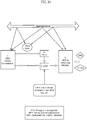
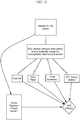
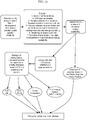
- This transfer may take place through one of two main processes, both illustrated in FIGS. 15 and 16 .
- the second process involves the use of a stand-alone, whole organism energy system, illustrated in FIGS. 6-12 , wherein the fruit fly strain is kept alive in a standard Faraday cage along with a pure quartz-water system that collects the energy produced.
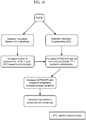
- the first process involves a selection process, briefly illustrated in FIG. 18 , extraction process, illustrated in FIGS. 19-23 , and transfer process providing immediate energy available for human use or direct access to the grid and storage devices.
- the selection process generally, involves placing selection pressures on biological organisms to enhance their energy availability. These selected biological organisms will be the primary storage of energy.
- the extraction process generally, involves extracting energy, in the form of electrons, protons and ATP, from the biological organisms.
- the transfer process generally, involves transferring the energy from the biological organisms and either (1) providing immediate energy available for human use or (2) transferring the energy to the grid or a storage device.
- the disclosed selection process involves using two strains of an organism, each strain having different development times; severe nutritional stress; continuous multiple generations of selection; use of supplemental NAD and the target of selection (ex: the ETC); relaxed selection to ensure generational continuity; use of the "vac" system, which is a culture in a Faraday cage with specific EMFs; crosses between selected strains and parental strains in various permutations based on decreased development time and increased energy availability; monitoring of selected strains, parental strains, and combined strains over time; and determination of strains with decreased development time and increased energy availability.
- a diploid organism is used as the bio-energy source.
- Drosophila melanogaster a diploid organism commonly known as the fruit fly
- Materials used in the selection process include, but are not limited to, fruit fly strains, culture equipment, food, bottles, vials, a growth cabinet, Faraday cages, and electronic devices.
- the procedure involves using two fruit fly strains with differing developmental rates, strain F (fast development time) and strain S (slow development time); applying a bio-energy selection model; focusing on the ETC as the target of selection, the standard energy output of which is illustrated in FIG.
- each portion of the process can increase energy availability in the fruit fly. Additionally, the selection process can result in a fruit fly strain that has increased bio-energy availability, as indicated by a decreased development time, and increased fitness. The selected fruit fly strains can then act as the primary source of energy storage.
- EMFs random electromagnetic fields
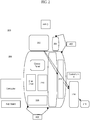
- FIG. 1 illustrates the energy flow in metabolism.
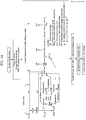
- FIG. 24 illustrates the metabolic energy flow in the disclosed system.
- Nutrients such as carbon or glucose, are consumed by the system and, when metabolized, the co-enzyme nicotinamide adenine dinucleotide (NAD) is available.
- NAD co-enzyme nicotinamide adenine dinucleotide
- NAD is a direct participant in the ETC where ATP (i.e., energy) is produced.
- NAD is also a cofactor for many dehydrogenases, including alcohol dehydrogenase (ADH) and glycerol-3-phosphate dehydrogenase (GPDH) and is, thus, considered a molecule of broad metabolic and physiological function.
- ADH alcohol dehydrogenase
- GPDH glycerol-3-phosphate dehydrogenase
- FIG. 1 illustrates the central role of NAD in energy metabolism. Specifically, it illustrates the central role in the collection of electrons in energy metabolism and the transfer of electrons to the ETC.
- NAD alters the ETC in larval fruit flies as follows: NAD supplementation modifies the NAD pool, causing it to become relatively oxidized. This effect enhances electron transfer to the ETC from: (1) the NAD pool and (2) electron availability in a fruit fly homogenate as a consequence of conditions that lead to metabolic stasis and absent or limited glycolytic and citric acid cycle activity.
- the enhanced electron transfer modifies the redox potential causing accelerated electron transport through the ETC and increased proton pumping and energy availability. This effect can increase the proton motor force (PMF) across the inner mitochondrial membrane, subsequently modifying cytosolic phosphorylation status. As noted, decreased development time is associated with an increase in energy availability and an increase in the ATP/ADP ratio.
- PMF proton motor force
- the disclosed selection process is a novel stress-selection-stabilization model that produces biological material with enhanced bio-energy availability.
- the selection process utilizes the entire genome of the biological organism and population level processes with no mutagenesis or cloning. The energy can then be transferred from the biological organism to the grid or to storage for human use.
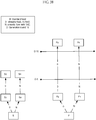
- two fruit fly strains are used for selection, as illustrated in FIG. 38 , to increase genetic diversity and, therefore, enhance energy availability.
- the two strains can differ in development time, energy availability, and genetic variability.
- Intense selection for increased energy availability can be carried out for a number of generations (for example, G1 through G5), utilizing, where necessary, relaxed selection to maintain population continuity. Because an increase in energy availability, the ATP/ADP ratio, and ETC activity leads to a decrease in development time, changes in development time can be used as an indicator of increased energy availability.
- the parental strain of adult flies can be cultured on stressful food supplemented with NAD and removed after their eggs have been laid.
- Stressful food can include water, yeast, and agar.
- those emerging flies can then be collected and cultured on standard food and removed from the standard food culture after their eggs have been laid.
- Standard food can be instant dry food and water.
- the G1 flies have now been hatched on stressful food supplemented with NAD, have been relocated to a standard food culture, and have laid eggs on standard food. When they are removed from the standard food culture, they are placed back on the stressful food supplemented with NAD to lay eggs in that culture.
- the emerging flies from the standard food condition, the offspring of G1 can then be used as substitutes for G1 to establish the next generation of selection by being placed on the stressful food supplemented with NAD.
- the emerging flies will then complete the same process of the G1 flies, wherein once they hatch, they will be removed to the standard food culture to lay eggs and then transferred back to the stressful food supplemented with NAD to lay eggs, which, if they hatch, become the G3 flies.
- each generation of adults can be given a two-day oviposition period on the stressful food supplemented with NAD. These adults can then be removed and the vials of experimental food can be cultured at 18 degrees Celsius. When all surviving offspring from the experimental food vials have been collected, they can be transferred to a standard food vial for 24 hours. These offspring can then be transferred to the experimental food for a two-day oviposition period to establish the next generation. If there are too few surviving offspring from the experimental food, other progeny of the surviving adults, held on the standard food for 24 hours, can be used to re-establish the offspring generation held on experimental food.
- the parent generation can have offspring (G1) that hatch on stressful food supplemented with NAD; G1, once hatched, are then moved to standard food; G1 lays "back-up” eggs on standard food; G1 is moved back to stressful food supplemented with NAD; G1 lays eggs on stressful food supplemented with NAD; G1 is removed from stressful food supplemented with NAD; G1 offspring hatch on the stressful food supplemented with NAD (G2) and are moved to standard food; G2 lays "back-up” eggs on standard food; G2 is moved back to stressful food supplemented with NAD; G2 lays eggs on stressful food supplemented with NAD; G2 is removed from stressful food supplemented with NAD; G2 offspring hatch on the stressful food supplemented with NAD (G3) and are moved to standard food; G3 lays "back-up” eggs on standard food; G3 is moved back to stressful food supplemented with NAD; G3 lays eggs on stressful food supplemented with NAD; G3 lays eggs on stressful food
- Each generation can be conditionally selected based on the ability of the initial surviving flies to establish the next generation. This process ensures continuity of the energy selection process and preserves the changes in energy metabolism and changes in the underlying genetic structure.
- a vac system can be used and can provide a stabilizing effect on survival.
- a vac system is a culture in a Faraday cage with specific electromagnetic fields.
- a standard Faraday cage includes a copper mesh screen enclosing a certain spatial volume. It is electrically grounded so that the electromagnetic waves of wavelength larger than the mesh size, which impinge the screen, will leak off to the ground and only minimally penetrate the interior space. Thus, the interior space has a greatly reduced electromagnetic integrated power density in the wavelength range larger than the copper mesh spacing.
- a layer of copper mesh cages can be expected to reduce the EM field strength by a factor of approximately ten.
- the parental and selection strains with the greatest bio-energy availability can be maintained on standard food and strain performance can be monitored. Decreased larval development time in the presence of NAD can be attributed to increased bio-energy availability.
- hybridization leads to heterosis, hybrid vigor, the masking of deleterious recessive genes, and an increase in heterozygosity and variability. Segregation over time will destabilize the above and result in an increase in development time.
- strains After some strains exhibit enhanced bio-energy availability, they can be selected and combined with other successful strains. For example, several successful selection strains can be combined to create a new strain. Alternatively, only two successful selection strains can be combined to create a new strain.
- the new strain can then be combined with a selected strain from a different line (example, three strains that started and evolved from strain F can be combined with a strain that started and evolved from strain S).
- This new strain can then be combined with both parent strains to create a final strain, which is maintained in discrete generations over time. Even though random genetic segregation may occur over time, the final strain can consistently exhibit enhanced energy availability as indicated by decreased development time and large numbers of adult survivors in comparison to all other strains.
- the selection procedures can enable the establishment of the selection regime and stress levels that can fulfill the need to increase bio-energy availability, determine ETC activity, and increase the availability of electrons and protons. These generations can then be subsequently coupled to other systems. For later generations, the selection procedures can be used to maximize coupling ability with other systems.
- the first step in the disclosed selection process is to use alternating stressful and non-stressful food conditions, measure energy availability, select strains with enhanced energy availability, stabilize and combine these strains over time, allow the selected strains to vary in energy availability over time as a consequence of population level genetic segregation, combine strains with enhanced energy availability at different times, and select and combine strains that have exhibited enhanced energy availability throughout the timeframe.
- the energy they store can be made accessible to humans in various ways. Disclosed herein are five different ways to obtain the energy, four of which involve using the fruit flies to make an energy rich homogenate and one of which involves direct use of the fruit flies in a stand-alone, whole organism energy system 600.
- the four ways that involve making an energy rich homogenate from the fruit flies all initially proceed using an extraction process, described below and illustrated in FIGS. 19-23 . Thereafter, the energy rich homogenate can be used in a fuel cell, a solar panel, a linear accelerator, or an ETC energy system to make the energy available for human use or for transfer to a grid or storage.
- the extraction process provides energy rich solutions that can be used in a number of ways to provide energy for human use (1) as a component of the fuel cell (2), as a component of the solar panel, (3) in combination with components of the linear accelerator, or (4) by using the ETC energy system, described below.
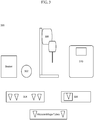
- Materials that comprise the extraction system 300 are illustrated in FIG. 3 and can include, but are not limited to, a sample tray 302, microcentrifuges 304, a refrigerated energy rich homogenate holder 306, pH meters and standards, weighing balance, a refrigerated centrifuge 310, homogenizer 308, test tubes, spatulas, glassware, pipettes, liquid nitrogen, storage and distribution equipment, and at least one low temperature bio-extraction apparatus.
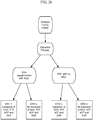
- the extraction process results in two forms of energy rich homogenates, untreated homogenate and homogenate treated with supplemental NAD, both of which can be further treated in two ways: no extraction of NAD, ATP, ADP, and AMP or extraction of NAD, ATP, ADP, and AMP using formic acid (for example, 4.2 M) and ammonium hydroxide (for example, 4.2 M) and freeze-thaw of homogenate. Therefore, as illustrated in FIG. 28 , there are four energy rich homogenates available to enable assessment of the relative energy yield: (1) untreated with no extraction; (2) untreated with extraction; (3) treated with no extraction; and (4) treated with extraction.
- FIG. 19 illustrates the process for the F strain.
- FIGS. 20 and 22 illustrate the process for F strain larvae hatched from eggs laid by adults that, at 3-5 days old, were transferred to standard food, given a five-day oviposition period on the standard food to lay the eggs, and then removed.
- FIG. 21 illustrates the process for F and S strain larvae hatched from eggs laid by adults that, at 3-5 days old, were transferred to stressful food supplemented with NAD and NAD plus glucose, given a five-day oviposition period on the supplemented stressful food to lay the eggs, and then removed.
- FIG. 23 illustrates the process for F and S strain larvae hatched from eggs laid by adults that laid the eggs on the standard food.
- Larvae can be homogenized in pure water (around 500 microL in some embodiments) at 0-3C. Smaller portions of the homogenate, for example 100 microL portions, can be obtained from the initial combination and immediately transferred to centrifuge tubes on ice. In one embodiment, the tubes are initially empty before the homogenate is added to them. In another embodiment, the tubes are initially supplemented with distilled water. In a third embodiment, the tubes are initially supplemented with NAD. The amount of water or NAD in the tubes can vary, but in some embodiments, is 100 microL. The homogenate portion and the supplement, if any, can be mixed and stored on ice for a period of time (for example, 10 minutes) to facilitate metabolic activity.
- a period of time for example, 10 minutes
- extraction may take place using single larval homogenates prepared from the third instar larvae of single cultures.
- Larvae can be transferred to microcentrifuge tubes, weighed, and homogenized in various amounts of ice-cold pure water (for example, 250 microL).
- NAD or pure water can be added to the microcentrifuge tubes in various amounts or concentrations (for example, 250 microL of 0.01 M NAD or pure water).
- nothing can be added to the microcentrifuge tubes.
- the solutions can then be mixed and stored on ice for a period of time (for example, 40 minutes) to facilitate metabolic activity.
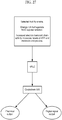
- the energy rich homogenate from the tubes described above in either embodiment can be immediately transferred to an assay/electron transfer system, as described below and illustrated in FIGS. 29 and 30 , or can be used in fuel cells, solar panels, or linear accelerators, as illustrated in FIGS. 29 and 31 .
- NAD, ATP, ADP, or AMP can be extracted from the energy rich homogenate in the tubes described above by using formic acid and ammonium hydroxide (for example, 4.2 M formic acid and 4.2 M ammonium hydroxide).
- metabolic activity is stopped in the energy rich homogenate.
- the remaining energy rich homogenate can then be transferred to an assay/electron transfer system, as illustrated in FIGS. 24 , 25 , 29 and 30 , or can be used in fuel cells, solar panels, or linear accelerators as energy for human use, as illustrated in FIGS. 25 , 29 , and 31 .
- the energy rich homogenate can be directly transferred to an electrochemical/coulometric instrument/detector via a high-pressure liquid chromatography (HPLC) pump 208 or via a full HPLC set-up 206 and the output voltage can be assessed.
- HPLC high-pressure liquid chromatography
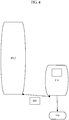
- a full HPLC set up 206 includes an HPLC pump 208, separation column 212, mobile phase equipment 204, gradient creator, PDA detector 202, tubing 402, voltmeter 216, and a computing system.
- Coulometry determines the amount of matter transformed during an electrolysis reaction by measuring the amount of electricity (in coulombs) consumed or produced.
- the coulometric device 214 can detect and quantify biomolecules in homogenates or solutions by measuring the amount of electricity consumed or produced during an electrolysis reaction. Therefore, the coulometric device 214 can access and transfer the electrons available in the energy-rich homogenate. Additionally, the coulometric device 214 can output information to a voltmeter 216 to show that energy has been produced.
- the HPLC pump 208 or full HPLC set up 206 can be connected to a coulometric device 214, which couples biologically-determined, enhanced ETC activity, a chemiosmotic process, to a complex electrochemical process in order to help transfer the energy (i.e., electrons and protons) from the fruit fly to the grid or to a storage device for human use.
- a coulometric device 214 which couples biologically-determined, enhanced ETC activity, a chemiosmotic process, to a complex electrochemical process in order to help transfer the energy (i.e., electrons and protons) from the fruit fly to the grid or to a storage device for human use.
- the transfer process generally, starts with one of the four forms of energy rich homogenate, described above: (1) untreated with no extraction; (2) untreated with extraction; (3) treated with no extraction; and (4) treated with extraction.
- the energy rich homogenates can be directly transferred to a coulometric device 214 in one of two ways.
- the first way is via an HPLC pump 208.
- the second way is via a full HPLC set up 206, which includes the HPLC pump 208, location for homogenate samples 210, a separation column 212, mobile phase equipment 204, a gradient creator, and a PDA detector 202.
- the output voltage can then be assessed and the specific energy molecules collected for subsequent use.
- the HPLC set up 206 can incorporate an ion exchange column with a mobile phase or pre-programmed gradient.
- a gradient is 0.033 M sodium formate titrated to pH 4.5 with phosphoric acid and 0.5 M sodium phosphate titrated to pH 2.7 with formic acid.
- a second example of a gradient is 0.05 M sodium phosphate monobasic and 0.5 M sodium phosphate monobasic, titrated to pH 2.8 with formic acid.
- the coulometric device 214 can use a cell where the reactive bio-molecules in the eluent flow though a porous graphite electrode, rather than flowing by an electrode. Therefore, with this design, almost all of the reactive bio-molecules can be oxidized or reduced. Alternatively, in one embodiment, the reactive bio-molecules in the eluent can flow by the electrode. However, the preferred embodiment results in a larger amount of reactive biomolecules (10-20 times as much). The current that is produced is directly related to the concentration of the species of interest.
- the homogenate can be injected manually with an injection valve.
- a flow rate of 1 ml/min is used.
- the HPLC pump 208 should be thoroughly primed and should deliver a consistent flow rate.
- the HPLC pump 208 may need backpressure (for example, approximately 1000-psi) to function efficiently. If a separation column 212 is used, the separation column 212 can create this backpressure. Otherwise, a long piece of narrow bore tubing can create a backpressure coil.
- a full HPLC set-up 206 which is fully automated for sample injections, could be used to transfer the homogenate to a coulometric device 214.
- the coulometric device 214 There are two types of output from the coulometric device 214: electrical output and digital signal output, illustrated in FIG. 27 .
- the most important initial output from the coulometric device 214 is from a Bayonet-Neill-Concelman (BNC) connector, since open wires to the voltmeter 216 can show that energy is produced and, therefore, that the coulometric device 214 works. All other outputs, briefly described below, explain how to send the electrical signal from the coulometric device 214 to an A/D convertor and onto a computer for quantification and analytical purposes only; no electrons or protons would be provided as energy for human use. Depending on the software, the signal can be analyzed in various ways.
- BNC Bayonet-Neill-Concelman
- the BNC connector can be attached to a voltmeter 216 and a coaxial cable, which can be connected to an analog-digital convertor, which can be attached to a personal computer.
- Software on the computer can be used to record the output information.
- RS-232 can be connected to a USB, which can connect to an A/D converter box, which can connect to a personal computer running specific software such as, but not limited to, Thermofisher/Dionex software or Waters software.
- Chromeleon software can be used, but would require an interface box to digitize the signal coming from the detector to the computer.
- the user can run an Ethernet cable from the coulometric device 214 to an interface box, bypassing the BNC, and then to the computer to utilize the software.
- the energy rich homogenate can be used directly in a fuel cell as a novel reactive matrix.
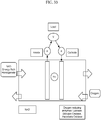
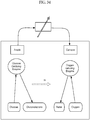
- a set-up similar to an enzymatic biofuel cell, illustrated in FIGS. 32 and 34 is used that includes an anode and a cathode.
- a traditional fuel cell can have a positively charged electrode (i.e., cathode) and a negatively charged electrode (i.e., anode) separated by an electrolyte, such as, but not limited to, ceramics or plastic membranes, or by a proton exchange membrane or polymer electrolyte membrane (PEM).
- an electrolyte such as, but not limited to, ceramics or plastic membranes, or by a proton exchange membrane or polymer electrolyte membrane (PEM).
- PEM proton exchange membrane or polymer electrolyte membrane
- a standard fuel cell combines a fuel with an oxidizer to make electricity and heat.
- hydrogen the fuel
- the fuel passes over the anode, where it is split into electrons and hydrogen ions, which are protons with a platinum catalyst.
- the electrons pass through an external circuit where their energy is used to run an electrical device, before migrating to the cathode.
- the positively charged ions Once the positively charged ions have passed through the PEM at the fuel cell center, they are combined with oxygen, the oxidizer, at the cathode to produce water using a platinum catalyst.
- the PEM fuel cell is like a battery in that the two electrodes are separated by an electrolyte. However, in the fuel cell, unlike in a battery, the electrode is not consumed. Therefore, this is a fuel cell that will continue to produce electricity as long as it is continuously fueled with hydrogen and oxygen. Heat and water are the only byproducts of this fuel cell.
- Electrodes can be immersed in an electrolyte and the fuel (i.e., hydrogen) can be supplied to one electrode while the oxidizer (i.e., oxygen) is supplied to the other electrode. Electrode reactions can occur leading to oxidation of the fuel with the production of an electric current.
- Fuel cells can produce electricity from the reaction of fuel and an oxidizer. Unlike a battery, the cells and its electrodes are unchanged.
- the fuel hydrogen is pumped through the negative electrode into a solution, electrolyte, where it reacts with charged particles ions to produce water.
- oxygen renews the ions so that there is a net flow between the electrodes, creating a potential difference, a voltage in a circuit connecting the electrodes.
- the type of fuel cell used is a modified enzymatic biofuel cell.
- the anode of the enzymatic biofuel cell can be catalyzed by oxidases suitable for conversion of bio-fuels or can be catalyzed by a complex of such enzymes for a complete oxidation of bio-fuels.
- the bio-fuel to be oxidized can be glucose
- the catalysts can include the fuel oxidizing enzymes glucose oxidase, glucose dehydrogenase and alcohol dehydrogenase.
- the cathode of the enzymatic biofuel cell can include an oxidoreductase that uses molecular oxygen as the ultimate electron acceptor and catalyzes reduction to water in neutral or slightly acidic media.
- the disclosed system includes a selection process for fruit flies with increased energy availability and extraction procedures yielding energy rich homogenates, as described above.
- the energy rich homogenates can act as the bio-fuel and NAD can be used as a catalyst to replace currently used enzymes.
- the energy rich homogenates can supplement the fuel and NAD can supplement the enzymes.
- a third option includes the use of oxygen as the substrate, NAD as the catalyst, and the energy rich homogenates as the source of electrons.
- the anode and electrode can further be separated by the PEM.
- the energy rich homogenate can also be used directly in a solar panel as a novel reactive matrix.
- the disclosed system can couple to a solar voltaic cell.
- Standard solar voltaic cells include two silicon semiconductors between metal contacts, protected by a grid. One semiconductor may tend to collect positive charge, while the other semiconductor may tend to collect negative charge.
- One semiconductor may tend to collect positive charge, while the other semiconductor may tend to collect negative charge.
- Light photons hit the junction between the semiconductors which is a p-type silicon crystal coated with an n-type silicon crystal, they can displace electrons that are attracted to the positive semiconductor.
- Metal contacts can connect the two charged areas, exploiting the potential difference and creating a current. Absorption of photons by atoms and molecules can cause excitation or ionization.
- a solar voltaic cell can be integrated with the disclosed system by coupling the energy rich homogenate to the junction between the semiconductors.
- NAD is added to the energy rich homogenate
- the NAD pool in the energy rich homogenate becomes relatively oxidized. Therefore, electron transport is enhanced from the oxidized NAD pool.
- Electron transport is also enhanced from the energy rich homogenate because of its metabolic stasis and absent or limited glycolytic and citric acid cycle activity. The enhanced electron transfer modifies the redox potential of the solar voltaic cell causing accelerated electron transport between the two silicon semiconductors.
- the energy rich homogenate can also be used directly with components of a linear accelerator that collect the particles that are generated.
- Linear accelerators are, essentially, large electromagnets. Generally, particles are collided with each other in the linear accelerator to yield smaller particles, which are detected by components of the linear accelerator. Electrons and protons are considered larger particles than those traditionally under study in the linear accelerator. Therefore, when the energy rich homogenates are combined with the linear accelerator components, electrons and protons may be readily transferred from the energy rich homogenates to storage devices or the grid. In sum, this process can extract electrons and protons from the energy rich homogenates by reversing the direction of flow through the system as it is normally used.
- the stand-alone, whole organism energy system 600 is one of the five different ways to obtain energy from the desired, energy enhanced fruit fly strains, with the other four ways all using an energy rich homogenate created from the fruit flies.
- This system 600 includes a refrigerated growth cabinet 608, a device with electromagnetic field (EMF) shielding 700, specific EMFs, a light source 604, a solid-state quartz system 706 that acts as a chip, purified water 606, and at least one energy enhanced fruit fly colony 602, as illustrated in FIG. 6 .
- EMF electromagnetic field
- It is a stand-alone source of bio-energy. However, based on the use of the quartz system 706, this device may be integrated with a solar panel.
- the device with EMF shielding 700 includes a standard Faraday cage 708 and Faraday cage lid 702 with a copper mesh screen enclosing an interior space, as illustrated in FIG. 7 .
- the Faraday cage 708 and lid 702 can be grounded so the electromagnetic waves of wavelengths larger than the mesh size will leak off to the ground and only minimally penetrate the interior space. Therefore, the interior space can have a greatly reduced electromagnetic integrated power density in the wavelengths larger than the copper mesh spacing.
- a copper mesh cage with dimensions of 40 cm by 40 cm by 30 cm can reduce the EMF strength by a factor between 10 and 50.
- Electronic devices 704 can be located in the interior space.
- One electronic device 704 can be a triple oscillator devise producing frequencies of, for example, 5.0, 8.0, and 9.3 MHz.
- the output power of the electronic devices 704 at the exposure distance can be less than 1 microwatt.
- the electronic device 704 can be an electronic device that has not been exposed to human informational influences or it can be an electronic device that has been exposed to human informational influences. Inclusion of both types of electronic devices 704 in the interior space can increase the ATP/ADP ratio and decrease development time in the fruit fly strains.
- the interior space of the Faraday cage 708 can hold an electronic device 704 not exposed to human informational influences, a selected fruit fly colony 602 in a bottle culture, pure quartz test tubes containing pure water 706, and an electronic device 704 exposed to human information influences, as illustrated in FIGS 7 and 9-12 .
- the standard Faraday cage which includes the copper mesh screen enclosing the interior space with other components, can be grounded and located in a growth cabinet at a defined temperature, such as 18 degrees Celsius. The shielding and specific EMFs of this system facilitate transfer of bio-energy from the energy enhanced fruit fly strains to the pure quartz-water system.
- the bio-energy (ex: NAD, ATP, ADP, and AMP) and the electrical energy (electrons and protons) from the energy enhanced fruit fly strains are stored primarily in those selected fruit fly strains, similar to how energy from fossil fuels is stored in fossil fuels.
- the bio-energy and the electrical energy from the energy enhanced fruit fly strains can be released during the extraction and transfer process.
- the five ways to directly and immediately use the energy stored in the fruit flies there are five ways to directly and immediately use the energy stored in the fruit flies.
- Four of the five ways involve extracting bio-energy, electrons and protons from any of the four types of energy rich homogenates via a fuel cell, solar panel, linear accelerator, or ETC energy system, illustrated in FIGS. 24-25 and 27 , and immediately using that electrical energy.
- the fifth way involves extracting electrons and protons via the stand-alone, whole organism energy system 600 for immediate use.
- the energy can be stored in, for example, capacitors, additional fuel cells, power plants, solar panels, or other systems.
- the energy is derived from the fruit flies, as described above, and stored in the form of hydrogen.
- excess electrical energy from the fruit flies can be fed into an electrolyser to split water into its constituent parts, oxygen and hydrogen.
- the hydrogen can then be stored in any type of fuel cell, which operates as the most efficient means of converting hydrogen back to electricity.
- electrolysers and fuel cells are complementary technologies. Therefore, when energy is needed, the fuel cell can release the stored energy back to the grid.
- the stored hydrogen can be diverted for sale to fuel cell electric vehicle owners, who use proton exchange membrane fuel cells to power their vehicles.
- the energy is derived from the fruit flies, as described above, converted to hydrogen, and stored in quinone-based flow batteries.
- the energy derived from the fruit flies can be converted into heat and the heat can be captured in thermal storage banks.
- thermal storage bank is where the converted thermal energy from the fruit flies is stored in molten salt, which can absorb extremely high temperatures without changing state.
Landscapes
- Life Sciences & Earth Sciences (AREA)
- Chemical & Material Sciences (AREA)
- Engineering & Computer Science (AREA)
- Manufacturing & Machinery (AREA)
- Sustainable Development (AREA)
- Sustainable Energy (AREA)
- Chemical Kinetics & Catalysis (AREA)
- Electrochemistry (AREA)
- General Chemical & Material Sciences (AREA)
- Biochemistry (AREA)
- Microbiology (AREA)
- Micro-Organisms Or Cultivation Processes Thereof (AREA)
Claims (15)
- Verfahren zur Erzeugung eines energiereichen Homogenisats in einem Bioenergiesystem, gekennzeichnet durch:
einen Auswahlprozess zum Erzeugen eines ersten, energieverstärkten, diploiden Organismusstamms, wobei der Auswahlprozess Folgendes umfasst:Anwenden eines Ernährungsstresses auf eine Vielzahl von Generationen eines ersten diploiden Organismusstamms, wobei:Erwachsene aus jeder Generation des ersten diploiden Organismusstamms auf einer nährstoffarmen Nahrung, die mit Nicotinamidadenindinukleotid ergänzt ist, kultiviert werden;die Erwachsene jeder Generation des ersten diploiden Organismus-Stammes Nachkommen auf der nährstoffarmen Nahrung produzieren, die mit Nicotinamid-Adenin-Dinukleotid ergänzt ist;die Nachkommen jeder Generation des ersten diploiden Organismusstamms von der nährstoffarmen Nahrung, die mit Nicotinamidadenindinukleotid ergänzt wird, auf eine Standardnährstoffnahrung umgestellt werden;überlebende Nachkommen jeder Generation des ersten diploiden Organismusstamms auf der nährstoffarmen Nahrung, die mit Nicotinamidadenindinukleotid ergänzt ist, kultiviert und gezüchtet werden; undwobei der Ernährungsstress, der auf die Vielzahl von Generationen des ersten diploiden Organismusstamms angewendet wird, den ersten, energieverstärkten, diploiden Organismusstamm erzeugt, wobei der erste, energieverstärkte, diploide Organismusstamm, der aus Organismen besteht, eine verkürzte Entwicklungszeit als Folge höherer Mengen an bewegten Elektronen und Protonen ersten diploiden Organismusstamm und höhere Transferniveaus der bewegten Elektronen und Protonen durch eine Elektronentransportkette im Vergleich zum ersten diploiden Organismusstamm aufweist;einen Extraktionsprozess zum Erzeugen eines energiereichen Homogenisats aus dem ersten, energieverstärkten, diploiden Organismusstamm, wobei der Extraktionsprozess Folgendes umfasst:Kultivieren des ersten, energieverstärkten, diploiden Organismusstamms auf der Standardnährstoffnahrung;Ermöglichen, dass der erste energieverstärkte diploide Organismusstamm eine Vielzahl von energieverstärkten Nachkommen auf der Standardnährstoffnahrung erzeugt;Homogenisieren mindestens eines Teils der Vielzahl der energieverstärkten Nachkommen in Flüssigkeit, um ein Homogenisat zu erzeugen; undErgänzen des Homogenisats mit Nicotinamidadenindinukleotid, um die metabolische Aktivität zu steigern und aufrechtzuerhalten und ein energiereiches Homogenisat zu erzeugen. - Verfahren nach Anspruch 1, ferner umfassend:
einen entspannten Auswahlprozess für den ersten, energieverstärkten, diploiden Organismusstamm, um die Kontinuität der Generationen des ersten, energieverstärkten, diploiden Organismusstamms sicherzustellen. - Verfahren nach Anspruch 1, wobei der Auswahlprozess in einem Faradayschen Käfig abgeschlossen wird, der ein vorbestimmtes elektromagnetisches Feld zum Abschirmen der Nachkommen der mehreren Generationen des ersten diploiden Organismusstamms und der Nachkommen des ersten energieverstärkten diploiden Organismus vor zufälligen elektromagnetischen Feldern hat.
- Verfahren nach Anspruch 1, wobei der erste energieverstärkte diploide Organismusstamm in einem Faradayschen Käfig kultiviert wird, der ein vorbestimmtes elektromagnetisches Feld zum Abschirmen von Nachkommen des ersten, energieverstärkten, diploiden Organismusstamms vor zufälligen elektromagnetischen Feldern hat.
- Verfahren nach Anspruch 4, wobei der Faradaysche Käfig aus einem Kupfermaschensieb besteht, das einen Innenraum mit einem Festkörperquarzsystem, gereinigtem Wasser und dem ersten energieverstärkten diploiden Organismusstamm umschließt.
- Verfahren nach Anspruch 1, ferner umfassend:
einen Transferprozess, bei dem das energiereiche Homogenisat zu einem Elektronentransfersystem transferiert wird. - Verfahren nach Anspruch 1, ferner umfassend:
einen Transferprozess, wobei das energiereiche Homogenisat zu einer Vorrichtung transferiert wird. - Verfahren nach Anspruch 7, wobei der Transferprozess Folgendes umfasst:
Koppeln des energiereichen Homogenisats an eine Hochdruckflüssigkeitschromatographiepumpe, die mit einer coulometrischen Vorrichtung verbunden ist. - Verfahren nach Anspruch 7, wobei die Vorrichtung aus der Gruppe ausgewählt ist, die aus einem Energienetz und einer Speichervorrichtung besteht.
- Verfahren nach Anspruch 9, wobei die Speichervorrichtung ausgewählt ist aus der Gruppe bestehend aus einer Brennstoffzelle, einer Durchflussbatterie und geschmolzenem Salz.
- Verfahren nach Anspruch 8, wobei der Transferprozess ferner Folgendes umfasst:
sekundäres Koppeln des energiereichen Homogenisats an eine Brennstoffzelle, ein Solarpanel und/oder einen Linearbeschleuniger. - Verfahren nach Anspruch 1, wobei der Auswahlprozess ferner Folgendes umfasst:Kreuzen von Organismen aus dem ersten, energieverstärkten, diploiden Organismusstamm mit Organismen aus einer ersten Generation des ersten diploiden Organismusstamms, um Nachkommen zu erzeugen; undKultivieren der Nachkommen auf der Standardnährstoffnahrung.
- Verfahren nach Anspruch 1, wobei der Auswahlprozess zu einem zweiten energieverstärkten diploiden Organismusstamm führt, der mit dem ersten energieverstärkten diploiden Organismusstamm gekreuzt wird, um einen dritten energieverstärkten diploiden Organismusstamm zu erzeugen.
- Verfahren nach Anspruch 13, wobei Organismen aus dem dritten, energieverstärkten, diploiden Organismenstamm mit Organismen aus einer ersten Generation des ersten diploiden Organismusstamms gekreuzt werden, um einen vierten, hybriden, energieverstärkten, diploiden Organismus zu erzeugen, der Heterosis entwickelt hat.
- Verfahren nach Anspruch 1, wobei der Extraktionsprozess ferner Folgendes umfasst:
Anhalten der Stoffwechselaktivität im Homogenisat nach einer vorbestimmten Zeitdauer, um das energiereiche Homogenisat zu erzeugen.
Applications Claiming Priority (2)
| Application Number | Priority Date | Filing Date | Title |
|---|---|---|---|
| US201462088349P | 2014-12-05 | 2014-12-05 | |
| PCT/US2015/063632 WO2016090090A1 (en) | 2014-12-05 | 2015-12-03 | Bio-energy power system |
Publications (3)
| Publication Number | Publication Date |
|---|---|
| EP3227948A1 EP3227948A1 (de) | 2017-10-11 |
| EP3227948A4 EP3227948A4 (de) | 2018-06-20 |
| EP3227948B1 true EP3227948B1 (de) | 2021-09-15 |
Family
ID=56092435
Family Applications (1)
| Application Number | Title | Priority Date | Filing Date |
|---|---|---|---|
| EP15866019.1A Active EP3227948B1 (de) | 2014-12-05 | 2015-12-03 | Bioenergetisches system zur leistungserzeugung |
Country Status (6)
| Country | Link |
|---|---|
| US (1) | US10673087B2 (de) |
| EP (1) | EP3227948B1 (de) |
| CN (1) | CN107210471B (de) |
| AU (1) | AU2015358482B2 (de) |
| CA (1) | CA2969858C (de) |
| WO (1) | WO2016090090A1 (de) |
Families Citing this family (4)
| Publication number | Priority date | Publication date | Assignee | Title |
|---|---|---|---|---|
| US20220037691A1 (en) * | 2019-04-18 | 2022-02-03 | Kohane Technologies, Llc | Interconnected photosynthesis matrix and bio-energy production systems |
| CN113766831A (zh) * | 2019-04-18 | 2021-12-07 | 科哈奈技术有限责任公司 | 互连互联光合作用基质矩阵和生物能量生产系统 |
| WO2022173617A1 (en) * | 2021-02-12 | 2022-08-18 | Kohane Technologies, Llc | Interconnected photosynthesis matrix and bio-energy production systems |
| US20230121360A1 (en) * | 2021-02-12 | 2023-04-20 | Kohane Technologies, Llc | Interconnected photosynthesis matrix and bio-energy production systems |
Family Cites Families (7)
| Publication number | Priority date | Publication date | Assignee | Title |
|---|---|---|---|---|
| US7410709B2 (en) * | 2004-06-24 | 2008-08-12 | Purdue Research Foundation | Bio-battery |
| WO2007129327A1 (en) | 2006-05-08 | 2007-11-15 | Abhishek Narain Singh | A photo bio-reactor for cultivating and harvesting a bio-mass and a method thereof |
| CN102118965A (zh) * | 2008-07-24 | 2011-07-06 | 德克萨斯A&M大学体系 | 高粱和甘蔗之间的属间杂种植物及其生产方法 |
| US20110014527A1 (en) * | 2009-07-17 | 2011-01-20 | Leroy James Ohlsen | Polyoxometalate flow-cell power system |
| US20120131701A1 (en) * | 2009-08-05 | 2012-05-24 | Chromocell Corporation | Improved plants, microbes, and organisms |
| JP5904491B2 (ja) * | 2012-03-22 | 2016-04-13 | ユニ・チャーム株式会社 | 生物燃料電池 |
| WO2014144308A2 (en) * | 2013-03-15 | 2014-09-18 | Tauriga Sciences, Inc. | Sensor and performance and usage data array for electrogenic bioreactor |
-
2015
- 2015-12-03 CA CA2969858A patent/CA2969858C/en active Active
- 2015-12-03 WO PCT/US2015/063632 patent/WO2016090090A1/en not_active Ceased
- 2015-12-03 CN CN201580075425.1A patent/CN107210471B/zh active Active
- 2015-12-03 US US15/533,224 patent/US10673087B2/en active Active
- 2015-12-03 AU AU2015358482A patent/AU2015358482B2/en active Active
- 2015-12-03 EP EP15866019.1A patent/EP3227948B1/de active Active
Also Published As
| Publication number | Publication date |
|---|---|
| AU2015358482A1 (en) | 2017-07-27 |
| CN107210471A (zh) | 2017-09-26 |
| US20170365871A1 (en) | 2017-12-21 |
| EP3227948A1 (de) | 2017-10-11 |
| WO2016090090A1 (en) | 2016-06-09 |
| AU2015358482B2 (en) | 2020-09-24 |
| CA2969858C (en) | 2021-03-02 |
| US10673087B2 (en) | 2020-06-02 |
| CA2969858A1 (en) | 2016-06-09 |
| EP3227948A4 (de) | 2018-06-20 |
| WO2016090090A4 (en) | 2016-07-28 |
| CN107210471B (zh) | 2020-04-14 |
Similar Documents
| Publication | Publication Date | Title |
|---|---|---|
| US11891646B2 (en) | Bioprocess and microbe engineering for total carbon utilization in biofuel production | |
| Lewis et al. | Hydrogen production from switchgrass via an integrated pyrolysis–microbial electrolysis process | |
| Gong et al. | Synthetic biology for CO2 fixation | |
| Steinbusch et al. | Bioelectrochemical ethanol production through mediated acetate reduction by mixed cultures | |
| Miran et al. | Conversion of orange peel waste biomass to bioelectricity using a mediator-less microbial fuel cell | |
| Kondaveeti et al. | Microalgae Scenedesmus obliquus as renewable biomass feedstock for electricity generation in microbial fuel cells (MFCs) | |
| Inoue et al. | Electricity generation from cattle manure slurry by cassette-electrode microbial fuel cells | |
| Ameen et al. | Effect of electroactive biofilm formation on acetic acid production in anaerobic sludge driven microbial electrosynthesis | |
| US10673087B2 (en) | Bio-energy power system | |
| Gu et al. | Electro-fermentation enhances H2 and ethanol co-production by regulating electron transfer and substrate transmembrane transport | |
| Salar-García et al. | Microalgae as substrate in low cost terracotta-based microbial fuel cells: novel application of the catholyte produced | |
| Zheng et al. | Internal driving mechanism of microbial community and metabolic pathway for psychrophilic anaerobic digestion by microbial electrolysis cell | |
| Yan et al. | Electricity and H2 generation from hemicellulose by sequential fermentation and microbial fuel/electrolysis cell | |
| Noori et al. | Microbial electrosynthesis of multi-carbon volatile fatty acids under the influence of different imposed potentials | |
| Zheng et al. | Boosting anaerobic digestion of long chain fatty acid with microbial electrolysis cell combining metal organic framework as cathode: biofilm construction and metabolic pathways | |
| Wang et al. | Self-replicating biophotoelectrochemistry system for sustainable CO methanation | |
| CN104701562B (zh) | 微藻生物直驱发电电池 | |
| Liang et al. | Efficient Semi‐Artificial Photosynthesis of Ethylene by a Self‐Assembled InP‐Cyanobacterial Biohybrid System | |
| Kalagbor Ihesinachi et al. | I. Electricity generation from waste tropical fruits—watermelon (Citrullus lanatus) and paw-paw (Carica papaya) using single chamber microbial fuel cells | |
| Xie et al. | Research progress in SO2 depolarized electrolysis at INET | |
| US20220037691A1 (en) | Interconnected photosynthesis matrix and bio-energy production systems | |
| WO2022173617A1 (en) | Interconnected photosynthesis matrix and bio-energy production systems | |
| AU2020257275A1 (en) | Interconnected photosynthesis matrix and bio-energy production systems | |
| MUNFARIDA et al. | THE The Role of EM4 (Effective Microorganisms) in Solid Waste-Powered Microbial Fuel Cells: Investigating Voltage Output and Electrical Conductivity For Bioelectricity Generation | |
| US20230121360A1 (en) | Interconnected photosynthesis matrix and bio-energy production systems |
Legal Events
| Date | Code | Title | Description |
|---|---|---|---|
| STAA | Information on the status of an ep patent application or granted ep patent |
Free format text: STATUS: THE INTERNATIONAL PUBLICATION HAS BEEN MADE |
|
| PUAI | Public reference made under article 153(3) epc to a published international application that has entered the european phase |
Free format text: ORIGINAL CODE: 0009012 |
|
| STAA | Information on the status of an ep patent application or granted ep patent |
Free format text: STATUS: REQUEST FOR EXAMINATION WAS MADE |
|
| 17P | Request for examination filed |
Effective date: 20170703 |
|
| AK | Designated contracting states |
Kind code of ref document: A1 Designated state(s): AL AT BE BG CH CY CZ DE DK EE ES FI FR GB GR HR HU IE IS IT LI LT LU LV MC MK MT NL NO PL PT RO RS SE SI SK SM TR |
|
| AX | Request for extension of the european patent |
Extension state: BA ME |
|
| DAV | Request for validation of the european patent (deleted) | ||
| DAX | Request for extension of the european patent (deleted) | ||
| A4 | Supplementary search report drawn up and despatched |
Effective date: 20180517 |
|
| RIC1 | Information provided on ipc code assigned before grant |
Ipc: H01M 8/16 20060101AFI20180511BHEP |
|
| GRAP | Despatch of communication of intention to grant a patent |
Free format text: ORIGINAL CODE: EPIDOSNIGR1 |
|
| STAA | Information on the status of an ep patent application or granted ep patent |
Free format text: STATUS: GRANT OF PATENT IS INTENDED |
|
| INTG | Intention to grant announced |
Effective date: 20210426 |
|
| GRAS | Grant fee paid |
Free format text: ORIGINAL CODE: EPIDOSNIGR3 |
|
| GRAA | (expected) grant |
Free format text: ORIGINAL CODE: 0009210 |
|
| STAA | Information on the status of an ep patent application or granted ep patent |
Free format text: STATUS: THE PATENT HAS BEEN GRANTED |
|
| AK | Designated contracting states |
Kind code of ref document: B1 Designated state(s): AL AT BE BG CH CY CZ DE DK EE ES FI FR GB GR HR HU IE IS IT LI LT LU LV MC MK MT NL NO PL PT RO RS SE SI SK SM TR |
|
| REG | Reference to a national code |
Ref country code: GB Ref legal event code: FG4D Ref country code: CH Ref legal event code: EP |
|
| REG | Reference to a national code |
Ref country code: DE Ref legal event code: R096 Ref document number: 602015073407 Country of ref document: DE |
|
| REG | Reference to a national code |
Ref country code: IE Ref legal event code: FG4D |
|
| REG | Reference to a national code |
Ref country code: AT Ref legal event code: REF Ref document number: 1431228 Country of ref document: AT Kind code of ref document: T Effective date: 20211015 |
|
| REG | Reference to a national code |
Ref country code: LT Ref legal event code: MG9D |
|
| REG | Reference to a national code |
Ref country code: NL Ref legal event code: MP Effective date: 20210915 |
|
| PG25 | Lapsed in a contracting state [announced via postgrant information from national office to epo] |
Ref country code: HR Free format text: LAPSE BECAUSE OF FAILURE TO SUBMIT A TRANSLATION OF THE DESCRIPTION OR TO PAY THE FEE WITHIN THE PRESCRIBED TIME-LIMIT Effective date: 20210915 Ref country code: SE Free format text: LAPSE BECAUSE OF FAILURE TO SUBMIT A TRANSLATION OF THE DESCRIPTION OR TO PAY THE FEE WITHIN THE PRESCRIBED TIME-LIMIT Effective date: 20210915 Ref country code: RS Free format text: LAPSE BECAUSE OF FAILURE TO SUBMIT A TRANSLATION OF THE DESCRIPTION OR TO PAY THE FEE WITHIN THE PRESCRIBED TIME-LIMIT Effective date: 20210915 Ref country code: LT Free format text: LAPSE BECAUSE OF FAILURE TO SUBMIT A TRANSLATION OF THE DESCRIPTION OR TO PAY THE FEE WITHIN THE PRESCRIBED TIME-LIMIT Effective date: 20210915 Ref country code: BG Free format text: LAPSE BECAUSE OF FAILURE TO SUBMIT A TRANSLATION OF THE DESCRIPTION OR TO PAY THE FEE WITHIN THE PRESCRIBED TIME-LIMIT Effective date: 20211215 Ref country code: NO Free format text: LAPSE BECAUSE OF FAILURE TO SUBMIT A TRANSLATION OF THE DESCRIPTION OR TO PAY THE FEE WITHIN THE PRESCRIBED TIME-LIMIT Effective date: 20211215 Ref country code: FI Free format text: LAPSE BECAUSE OF FAILURE TO SUBMIT A TRANSLATION OF THE DESCRIPTION OR TO PAY THE FEE WITHIN THE PRESCRIBED TIME-LIMIT Effective date: 20210915 |
|
| REG | Reference to a national code |
Ref country code: AT Ref legal event code: MK05 Ref document number: 1431228 Country of ref document: AT Kind code of ref document: T Effective date: 20210915 |
|
| PG25 | Lapsed in a contracting state [announced via postgrant information from national office to epo] |
Ref country code: LV Free format text: LAPSE BECAUSE OF FAILURE TO SUBMIT A TRANSLATION OF THE DESCRIPTION OR TO PAY THE FEE WITHIN THE PRESCRIBED TIME-LIMIT Effective date: 20210915 Ref country code: GR Free format text: LAPSE BECAUSE OF FAILURE TO SUBMIT A TRANSLATION OF THE DESCRIPTION OR TO PAY THE FEE WITHIN THE PRESCRIBED TIME-LIMIT Effective date: 20211216 |
|
| PG25 | Lapsed in a contracting state [announced via postgrant information from national office to epo] |
Ref country code: AT Free format text: LAPSE BECAUSE OF FAILURE TO SUBMIT A TRANSLATION OF THE DESCRIPTION OR TO PAY THE FEE WITHIN THE PRESCRIBED TIME-LIMIT Effective date: 20210915 |
|
| PG25 | Lapsed in a contracting state [announced via postgrant information from national office to epo] |
Ref country code: IS Free format text: LAPSE BECAUSE OF FAILURE TO SUBMIT A TRANSLATION OF THE DESCRIPTION OR TO PAY THE FEE WITHIN THE PRESCRIBED TIME-LIMIT Effective date: 20220115 Ref country code: SM Free format text: LAPSE BECAUSE OF FAILURE TO SUBMIT A TRANSLATION OF THE DESCRIPTION OR TO PAY THE FEE WITHIN THE PRESCRIBED TIME-LIMIT Effective date: 20210915 Ref country code: SK Free format text: LAPSE BECAUSE OF FAILURE TO SUBMIT A TRANSLATION OF THE DESCRIPTION OR TO PAY THE FEE WITHIN THE PRESCRIBED TIME-LIMIT Effective date: 20210915 Ref country code: RO Free format text: LAPSE BECAUSE OF FAILURE TO SUBMIT A TRANSLATION OF THE DESCRIPTION OR TO PAY THE FEE WITHIN THE PRESCRIBED TIME-LIMIT Effective date: 20210915 Ref country code: PT Free format text: LAPSE BECAUSE OF FAILURE TO SUBMIT A TRANSLATION OF THE DESCRIPTION OR TO PAY THE FEE WITHIN THE PRESCRIBED TIME-LIMIT Effective date: 20220117 Ref country code: PL Free format text: LAPSE BECAUSE OF FAILURE TO SUBMIT A TRANSLATION OF THE DESCRIPTION OR TO PAY THE FEE WITHIN THE PRESCRIBED TIME-LIMIT Effective date: 20210915 Ref country code: NL Free format text: LAPSE BECAUSE OF FAILURE TO SUBMIT A TRANSLATION OF THE DESCRIPTION OR TO PAY THE FEE WITHIN THE PRESCRIBED TIME-LIMIT Effective date: 20210915 Ref country code: ES Free format text: LAPSE BECAUSE OF FAILURE TO SUBMIT A TRANSLATION OF THE DESCRIPTION OR TO PAY THE FEE WITHIN THE PRESCRIBED TIME-LIMIT Effective date: 20210915 Ref country code: EE Free format text: LAPSE BECAUSE OF FAILURE TO SUBMIT A TRANSLATION OF THE DESCRIPTION OR TO PAY THE FEE WITHIN THE PRESCRIBED TIME-LIMIT Effective date: 20210915 Ref country code: CZ Free format text: LAPSE BECAUSE OF FAILURE TO SUBMIT A TRANSLATION OF THE DESCRIPTION OR TO PAY THE FEE WITHIN THE PRESCRIBED TIME-LIMIT Effective date: 20210915 Ref country code: AL Free format text: LAPSE BECAUSE OF FAILURE TO SUBMIT A TRANSLATION OF THE DESCRIPTION OR TO PAY THE FEE WITHIN THE PRESCRIBED TIME-LIMIT Effective date: 20210915 |
|
| REG | Reference to a national code |
Ref country code: DE Ref legal event code: R097 Ref document number: 602015073407 Country of ref document: DE |
|
| PLBE | No opposition filed within time limit |
Free format text: ORIGINAL CODE: 0009261 |
|
| STAA | Information on the status of an ep patent application or granted ep patent |
Free format text: STATUS: NO OPPOSITION FILED WITHIN TIME LIMIT |
|
| PG25 | Lapsed in a contracting state [announced via postgrant information from national office to epo] |
Ref country code: MC Free format text: LAPSE BECAUSE OF FAILURE TO SUBMIT A TRANSLATION OF THE DESCRIPTION OR TO PAY THE FEE WITHIN THE PRESCRIBED TIME-LIMIT Effective date: 20210915 Ref country code: DK Free format text: LAPSE BECAUSE OF FAILURE TO SUBMIT A TRANSLATION OF THE DESCRIPTION OR TO PAY THE FEE WITHIN THE PRESCRIBED TIME-LIMIT Effective date: 20210915 |
|
| REG | Reference to a national code |
Ref country code: CH Ref legal event code: PL |
|
| 26N | No opposition filed |
Effective date: 20220616 |
|
| PG25 | Lapsed in a contracting state [announced via postgrant information from national office to epo] |
Ref country code: SI Free format text: LAPSE BECAUSE OF FAILURE TO SUBMIT A TRANSLATION OF THE DESCRIPTION OR TO PAY THE FEE WITHIN THE PRESCRIBED TIME-LIMIT Effective date: 20210915 |
|
| REG | Reference to a national code |
Ref country code: BE Ref legal event code: MM Effective date: 20211231 |
|
| PG25 | Lapsed in a contracting state [announced via postgrant information from national office to epo] |
Ref country code: LU Free format text: LAPSE BECAUSE OF NON-PAYMENT OF DUE FEES Effective date: 20211203 Ref country code: IE Free format text: LAPSE BECAUSE OF NON-PAYMENT OF DUE FEES Effective date: 20211203 |
|
| PG25 | Lapsed in a contracting state [announced via postgrant information from national office to epo] |
Ref country code: BE Free format text: LAPSE BECAUSE OF NON-PAYMENT OF DUE FEES Effective date: 20211231 |
|
| PG25 | Lapsed in a contracting state [announced via postgrant information from national office to epo] |
Ref country code: LI Free format text: LAPSE BECAUSE OF NON-PAYMENT OF DUE FEES Effective date: 20211231 Ref country code: CH Free format text: LAPSE BECAUSE OF NON-PAYMENT OF DUE FEES Effective date: 20211231 |
|
| PG25 | Lapsed in a contracting state [announced via postgrant information from national office to epo] |
Ref country code: IT Free format text: LAPSE BECAUSE OF FAILURE TO SUBMIT A TRANSLATION OF THE DESCRIPTION OR TO PAY THE FEE WITHIN THE PRESCRIBED TIME-LIMIT Effective date: 20210915 |
|
| PG25 | Lapsed in a contracting state [announced via postgrant information from national office to epo] |
Ref country code: HU Free format text: LAPSE BECAUSE OF FAILURE TO SUBMIT A TRANSLATION OF THE DESCRIPTION OR TO PAY THE FEE WITHIN THE PRESCRIBED TIME-LIMIT; INVALID AB INITIO Effective date: 20151203 |
|
| PG25 | Lapsed in a contracting state [announced via postgrant information from national office to epo] |
Ref country code: CY Free format text: LAPSE BECAUSE OF FAILURE TO SUBMIT A TRANSLATION OF THE DESCRIPTION OR TO PAY THE FEE WITHIN THE PRESCRIBED TIME-LIMIT Effective date: 20210915 |
|
| PG25 | Lapsed in a contracting state [announced via postgrant information from national office to epo] |
Ref country code: MK Free format text: LAPSE BECAUSE OF FAILURE TO SUBMIT A TRANSLATION OF THE DESCRIPTION OR TO PAY THE FEE WITHIN THE PRESCRIBED TIME-LIMIT Effective date: 20210915 |
|
| PG25 | Lapsed in a contracting state [announced via postgrant information from national office to epo] |
Ref country code: MT Free format text: LAPSE BECAUSE OF FAILURE TO SUBMIT A TRANSLATION OF THE DESCRIPTION OR TO PAY THE FEE WITHIN THE PRESCRIBED TIME-LIMIT Effective date: 20210915 |
|
| PGFP | Annual fee paid to national office [announced via postgrant information from national office to epo] |
Ref country code: GB Payment date: 20241220 Year of fee payment: 10 |
|
| PGFP | Annual fee paid to national office [announced via postgrant information from national office to epo] |
Ref country code: FR Payment date: 20241227 Year of fee payment: 10 |
|
| PGFP | Annual fee paid to national office [announced via postgrant information from national office to epo] |
Ref country code: DE Payment date: 20241219 Year of fee payment: 10 |
|
| PG25 | Lapsed in a contracting state [announced via postgrant information from national office to epo] |
Ref country code: TR Free format text: LAPSE BECAUSE OF FAILURE TO SUBMIT A TRANSLATION OF THE DESCRIPTION OR TO PAY THE FEE WITHIN THE PRESCRIBED TIME-LIMIT Effective date: 20210915 |