EP3224980B1 - Method for re-enabling data frame aggregation after bluetooth session - Google Patents
Method for re-enabling data frame aggregation after bluetooth session Download PDFInfo
- Publication number
- EP3224980B1 EP3224980B1 EP15795077.5A EP15795077A EP3224980B1 EP 3224980 B1 EP3224980 B1 EP 3224980B1 EP 15795077 A EP15795077 A EP 15795077A EP 3224980 B1 EP3224980 B1 EP 3224980B1
- Authority
- EP
- European Patent Office
- Prior art keywords
- wireless device
- session
- frame
- sta1
- wireless
- Prior art date
- Legal status (The legal status is an assumption and is not a legal conclusion. Google has not performed a legal analysis and makes no representation as to the accuracy of the status listed.)
- Active
Links
Images


Classifications
-
- H—ELECTRICITY
- H04—ELECTRIC COMMUNICATION TECHNIQUE
- H04L—TRANSMISSION OF DIGITAL INFORMATION, e.g. TELEGRAPHIC COMMUNICATION
- H04L1/00—Arrangements for detecting or preventing errors in the information received
- H04L1/12—Arrangements for detecting or preventing errors in the information received by using return channel
- H04L1/16—Arrangements for detecting or preventing errors in the information received by using return channel in which the return channel carries supervisory signals, e.g. repetition request signals
- H04L1/1607—Details of the supervisory signal
- H04L1/1621—Group acknowledgement, i.e. the acknowledgement message defining a range of identifiers, e.g. of sequence numbers
-
- H—ELECTRICITY
- H04—ELECTRIC COMMUNICATION TECHNIQUE
- H04W—WIRELESS COMMUNICATION NETWORKS
- H04W4/00—Services specially adapted for wireless communication networks; Facilities therefor
- H04W4/80—Services using short range communication, e.g. near-field communication [NFC], radio-frequency identification [RFID] or low energy communication
-
- H—ELECTRICITY
- H04—ELECTRIC COMMUNICATION TECHNIQUE
- H04L—TRANSMISSION OF DIGITAL INFORMATION, e.g. TELEGRAPHIC COMMUNICATION
- H04L1/00—Arrangements for detecting or preventing errors in the information received
- H04L1/12—Arrangements for detecting or preventing errors in the information received by using return channel
- H04L1/16—Arrangements for detecting or preventing errors in the information received by using return channel in which the return channel carries supervisory signals, e.g. repetition request signals
- H04L1/1607—Details of the supervisory signal
- H04L1/1628—List acknowledgements, i.e. the acknowledgement message consisting of a list of identifiers, e.g. of sequence numbers
-
- H—ELECTRICITY
- H04—ELECTRIC COMMUNICATION TECHNIQUE
- H04L—TRANSMISSION OF DIGITAL INFORMATION, e.g. TELEGRAPHIC COMMUNICATION
- H04L1/00—Arrangements for detecting or preventing errors in the information received
- H04L1/12—Arrangements for detecting or preventing errors in the information received by using return channel
- H04L1/16—Arrangements for detecting or preventing errors in the information received by using return channel in which the return channel carries supervisory signals, e.g. repetition request signals
- H04L1/1607—Details of the supervisory signal
- H04L1/1635—Cumulative acknowledgement, i.e. the acknowledgement message applying to all previous messages
-
- H—ELECTRICITY
- H04—ELECTRIC COMMUNICATION TECHNIQUE
- H04L—TRANSMISSION OF DIGITAL INFORMATION, e.g. TELEGRAPHIC COMMUNICATION
- H04L1/00—Arrangements for detecting or preventing errors in the information received
- H04L1/12—Arrangements for detecting or preventing errors in the information received by using return channel
- H04L1/16—Arrangements for detecting or preventing errors in the information received by using return channel in which the return channel carries supervisory signals, e.g. repetition request signals
- H04L1/1607—Details of the supervisory signal
- H04L1/1671—Details of the supervisory signal the supervisory signal being transmitted together with control information
-
- H—ELECTRICITY
- H04—ELECTRIC COMMUNICATION TECHNIQUE
- H04W—WIRELESS COMMUNICATION NETWORKS
- H04W16/00—Network planning, e.g. coverage or traffic planning tools; Network deployment, e.g. resource partitioning or cells structures
- H04W16/14—Spectrum sharing arrangements between different networks
Definitions
- the present embodiments relate generally to wireless networks, and specifically block acknowledgment sessions in wireless networks.
- a wireless local area network may be formed by one or more access points (APs) that provide a shared wireless communication medium for use by a number of client devices or stations (STAs).
- Each AP which may correspond to a Basic Service Set (BSS), periodically broadcasts beacon frames to enable any STAs within wireless range of the AP to establish and/or maintain a communication link with the WLAN.
- BSS Basic Service Set
- the AP and the STA may exchange data frames.
- the STA receives a data frame from the AP, the STA is to transmit an acknowledgment (ACK) frame back to the AP to acknowledge receipt of the data frame.
- ACK acknowledgment
- a block acknowledgement (BA) session may allow the STA to acknowledge receipt of multiple data frames using a single ACK frame. More specifically, the STA may use a block acknowledgment frame to acknowledge receipt of a plurality of data frames and/or a number of aggregated data frames (e.g., rather than confirming receipt of each data frame with a corresponding ACK frame). In this manner, the BA session may reduce the number of ACK frames transmitted to the AP, which in turn may reduce congestion of the wireless medium.
- BT Bluetooth
- Wi-Fi Wi-Fi
- SCO Synchronous Connection Oriented
- the STA may terminate the BA session so that an AP (or other transmitting device) stops transmitting aggregated data frames to the STA.
- the SCO call is terminated, and thus there is a reduced interference between BT and Wi-Fi signals, it would be desirable for the STA to restart the BA session and resume the transmission of aggregated data frames.
- current provisions of the IEEE 802.11 standards do not provide a mechanism for the STA to restart the BA session.
- Patent publication US2010/195584 discloses parallel operation of LTE and Bluetooth, wherein ACK/NACK for Bluetooth transmissions are scheduled during LTE-inactive periods.
- Wi-Fi wireless local area network
- Wi-Fi wireless local area network
- Bluetooth wireless personal area network
- HiperLAN a set of wireless standards, comparable to the IEEE 802.11 standards, used primarily in Europe
- the present embodiments may be applied to the exchange of any data unit, packet, and/or frame between wireless devices.
- data frame may include any frame, packet, or data unit such as, for example, protocol data units (PDUs), MAC protocol data units (MPDUs), and physical layer convergence procedure protocol data units (PPDUs).
- PDUs protocol data units
- MPDUs MAC protocol data units
- PPDUs physical layer convergence procedure protocol data units
- A-MPDU may refer to aggregated MPDUs.
- the IEEE 802.11e standards may improve efficiency of the wireless medium by allowing a receiving device to confirm receipt of a plurality of frames from a transmitting device using a single block ACK frame. As a result, the transmitting device may continuously transmit a plurality of frames (rather than waiting for an ACK frame every time one data frame is transmitted to the receiving device).
- the IEEE 802.11n standards support frame aggregation, which allows the transmitting device to aggregate a plurality of MAC frames into an A-MPDU frame and then transmit the A-MPDU frame at higher transmission rates. The receiving device may use a block ACK frame to confirm receipt of each of the aggregated frames transmitted within the A-MPDU frame.
- the wireless devices Before a pair of wireless devices may use block ACK frames to confirm receipt of each other's data transmissions, the wireless devices first enter a block acknowledgement setup phase during which capability information (e.g., buffer size and block acknowledgement policies) are negotiated with each other. Once the setup phase is completed, the wireless devices may then send multiple frames to each other without waiting for individual ACK frames; instead, the receiving device may acknowledge receipt of a plurality of data frames using a single block ACK frame.
- the block acknowledgement agreement may be torn down (e.g., terminated) by sending a Delete Block Acknowledgment (DELBA) frame to the other wireless device.
- DELBA Delete Block Acknowledgment
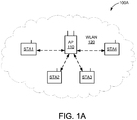
- FIG. 1A is a block diagram of a wireless network system 100A within which the present embodiments may be implemented.
- the system 100A is shown to include four wireless stations STA1-STA4, a wireless access point (AP) 110, and a wireless local area network (WLAN) 120.
- the WLAN 120 may be formed by a plurality of Wi-Fi access points (APs) that may operate according to the IEEE 802.11 family of standards (or according to other suitable wireless protocols).
- APs Wi-Fi access points
- the AP 110 is assigned a unique MAC address that is programmed therein by, for example, the manufacturer of the access point.
- each of STA1-STA4 is also assigned a unique MAC address.
- stations STA1-STA4 may be any suitable Wi-Fi enabled wireless devices including, for example, cell phones, personal digital assistants (PDAs), tablet devices, laptop computers, or the like.
- stations STA1-STA4 may include a transceiver, one or more processing resources (e.g., processors and/or ASICs), one or more memory resources, and a power source (e.g., a battery).
- the memory resources may include a non-transitory computer-readable medium (e.g., one or more nonvolatile memory elements, such as EPROM, EEPROM, Flash memory, a hard drive, etc.) that stores instructions for performing operations described below with respect to FIGS. 5A , 5B , and 6 .
- the AP 110 may be any suitable device that allows one or more wireless devices to connect to a network (e.g., a local area network (LAN), wide area network (WAN), metropolitan area network (MAN), and/or the Internet) via AP 110 using Wi-Fi, Bluetooth, or any other suitable wireless communication standards.
- a network e.g., a local area network (LAN), wide area network (WAN), metropolitan area network (MAN), and/or the Internet
- AP 110 may include a transceiver, a network interface, one or more processing resources, and one or more memory sources.
- the memory resources may include a non-transitory computer-readable medium (e.g., one or more nonvolatile memory elements, such as EPROM, EEPROM, Flash memory, a hard drive, etc.) that stores instructions for performing operations described below with respect to FIGS. 5A , 5B , and 6 .
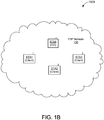
- FIG. 1B is a block diagram of another wireless network system 100B within which the present embodiments may be implemented.
- the system 100B is shown to include four wireless stations STA1-STA4 associated with a peer-to-peer (P2P) network 130.
- P2P peer-to-peer
- the P2P network which may also be referred to as an ad-hoc network, an independent basic service set (IBSS) network, or a Wi-Fi Direct network, may operate according to the IEEE 802.11 family of standards (or according to other suitable wireless protocols).
- IBSS independent basic service set
- Wi-Fi Direct network may operate according to the IEEE 802.11 family of standards (or according to other suitable wireless protocols).
- station STA4 is designated as the Group Owner (GO)
- stations STA1-STA3 are designated as P2P clients.
- STA4 may serve as a gateway for the P2P clients (e.g., to another network), and perform many of the functions as the AP 110 of FIG. 1A including, for example, setting up and tearing down the P2P network 130, admitting new members to the P2P network 130, broadcasting beacon frames, and so on.
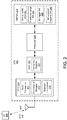
- FIG. 2 shows a STA 200 that is one embodiment of at least one of the stations STA1-STA4 of FIGS. 1A and 1B .
- the STA 200 may include a PHY device 210, a MAC device 220, a processor 230, and a memory 240.
- the PHY device 210 may include at least a Wi-Fi transceiver 211, a Bluetooth (BT) transceiver 212, and a co-existence manager 213.
- the MAC device 220 may include at least a number of contention engines 221.
- the Wi-Fi transceiver 211 may be used to transmit signals to and receive signals from AP 110 via an antenna ANT (see also FIG.
- the BT transceiver 212 may be used to transmit BT signals to and receive signals via antenna ANT from a BT accessory device 280 (e.g., which may be an audio headsets, wireless speakers, a wireless printer, and so on), may be used to scan the surrounding environment to detect and identify other devices with which to pair.
- a BT accessory device 280 e.g., which may be an audio headsets, wireless speakers, a wireless printer, and so on
- STA 200 may include any number of antennas, for example, to provide multiple-input multiple-output (MIMO) functionality.
- MIMO multiple-input multiple-output
- the co-existence manager 213 may receive transmit/receive information from the Wi-Fi transceiver 211 and/or the BT transceiver 212.
- the co-existence manager 213 may receive Wi-Fi and/or BT transmit/receive information from processor 230.
- MAC device 220 is shown in FIG. 2 as being coupled between PHY device 210 and processor 230.
- PHY device 210, MAC device 220, processor 230, and/or memory 240 may be connected together using one or more buses (not shown for simplicity).
- the co-existence manager 213 is shown in FIG. 2 as part of PHY 210, for other embodiments, the co-existence manager 213 may be included within other portions of STA 200 (e.g., in processor 230), or may be a separate component (e.g., a software module stored in memory 240).
- the contention engines 221 may contend for access to the shared wireless medium, and may also store packets for transmission over the shared wireless medium.
- the STA 200 may include one or more contention engines 221 for each of the plurality of different access categories.
- the contention engines 221 may be separate from MAC device 220.
- the contention engines 221 may be implemented as one or more software modules (e.g., stored in memory 240 or stored in memory provided within MAC device 220) containing instructions that, when executed by processor 230, perform the functions of contention engines 221.
- Memory 240 may include a profile data store 241 that stores profile information for a plurality of devices such as APs and/or other STAs.
- the profile information for a particular device may include information including, for example, the device's SSID, channel information, RSSI values, supported data rates, BA session information, BA suspend and resume codes, and any other suitable information pertaining to or describing the operation of the device.
- memory 240 may include a medium access parameters table and a number of packet queues.
- the medium access parameters table may store a number of medium access parameters including, for example, transmission schedules, contention windows, contention window sizes, back-off periods, random back-off numbers, and/or other information associated with contending for and/or controlling access to the wireless medium of the WLAN 120 of FIG. 1A and/or the P2P network 130 of FIG. 1B .
- the packet queues may store packets to be transmitted from STA 200 to an associated AP (or other STAs).
- the memory 240 may include one or more packet queues for each of a plurality of different priority levels or access categories.
- Memory 240 may also include a non-transitory computer-readable medium (e.g., one or more nonvolatile memory elements, such as EPROM, EEPROM, Flash memory, a hard drive, and so on) that can store the following software modules:
- a non-transitory computer-readable medium e.g., one or more nonvolatile memory elements, such as EPROM, EEPROM, Flash memory, a hard drive, and so on
- Each software module includes instructions that, when executed by processor 230, cause STA 200 to perform the corresponding functions.
- the non-transitory computer-readable medium of memory 240 thus includes instructions for performing all or a portion of the operations depicted in FIGS. 5A , 5B , and 6 .
- Processor 230 which is shown in the example of FIG. 2 as coupled to PHY device 210 and transceiver 211, to MAC device 220 and contention engines 221, and to memory 240, may be any suitable processor capable of executing scripts or instructions of one or more software programs stored in STA 200 (e.g., within memory 240).
- processor 230 may execute frame exchange software module 242 to facilitate the exchange of frames (e.g., ADDBA requests, ADDBA responses, DELBA frames, action frames, management frames, data frames, ACK frames, probe requests, beacon frames, association frames, control frames, and so on).
- frames e.g., ADDBA requests, ADDBA responses, DELBA frames, action frames, management frames, data frames, ACK frames, probe requests, beacon frames, association frames, control frames, and so on).
- Processor 230 may also execute block acknowledgement (BA) trigger software module 244 to send frames to another device (e.g., an AP or another STA) that cause or instruct a BA session to be terminated or suspended (e.g., in response to the STA facilitating a Bluetooth operation such as a SCO call) and/or that cause or instruct a BA session to be restarted or resumed (e.g., in response to termination of the Bluetooth operation).
- Processor 230 may also execute block acknowledgement (BA) suspend/resume software module 246 to receive frames from another device instructing STA 200 to suspend or resume a BA session, and to send frames to another device to suspend or resume the BA session.
- BA block acknowledgement
- the IEEE 802 standards allow wireless devices to acknowledge receipt of multiple data frames using a single block ACK frame.
- the AP 110 may initiate a block ACK session with STA1 by transmitting an add block acknowledgment (ADDBA) request to STA1.
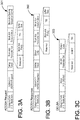
- the ADDBA request is an action frame defined in the IEEE 802.11e standards, and typically has frame format 301 as depicted in FIG. 3A .
- STA1 may transmit an ADDBA response back to the AP 110.
- the ADDBA response is an action frame defined in the IEEE 802.11e standards, and typically has frame format 302 as depicted in FIG. 3B .
- the STA1 may indicate acceptance of the ADDBA request by setting the Status Code to "success" in the ADDBA response, and may indicate denial of the ADDBA request by setting the Status Code to "declined" in the ADDBA response.
- the BA session is established, and the AP 110 may thereafter transmit aggregated data frames to STA1, and STA1 may confirm receipt of the aggregated data frames using a single block ACK frame.
- the AP 110 and STA1 may store BA session information that includes, for example, buffer sizes, BA policies, status of the BA session, and so on.
- STA1 When STA1 wants to end the BA session (e.g., because STA1 commences a SCO call via a BT headset and wants to minimize interference between BT and Wi-Fi signals), STA1 may transmit a DELBA frame to the AP 110.
- the DELBA frame is an action frame defined in the IEEE 802.11e standards, and typically has frame format 303 as depicted in FIG. 3C .
- the AP 110 may tear-down the BA session, and thereafter stop aggregating data frames for transmission to STA1.
- the AP 110 may not be able to establish (or re-establish) the BA session. For example, while STA1 is conducting the SCO call, the AP 110 may continue sending ADDBA requests to STA1 in an attempt to establish a new BA session with STA1. However, because STA1 is using its BT transceiver 212 to facilitate the SCO call, the STA's co-existence manager 213 may cause STA1 to reject the ADDBA requests (e.g., by transmitting ADDBA responses containing a status code set to "decline”), thereby reducing interference of the BT signals by reducing incoming Wi-Fi traffic to STA1.
- the STA1 does not, at present, have any mechanism to restart the BA session.
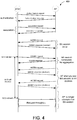
- the AP 110 may restart the BA session, repeated ADDBA request rejections from the STA1 may cause the AP 110 to stop attempting to start a new BA session (e.g., the AP 110 may stop attempting to start new BA sessions after a number of prior "rejections" from STA1). This scenario is depicted in the sequence diagram 400 of FIG. 4 .
- STA1 initiates an authentication procedure to identify itself to the AP 110, for example, by sending an authentication request to the AP 110.
- the AP 110 responds by sending an authentication response back to STA1.
- STA1 may associate with AP 110 to gain full access to the WLAN 120.
- the STA1 may initiate the association procedure by sending an association request to the AP 110.
- the association request may include information such as the STA's SSID, supported data rates, capabilities, and the like.
- the AP 110 responds by sending an association response to STA1.
- the association response includes an association identifier (AID) for STA1, and may include other information such as the AP's SSID, supported data rates, capabilities, and the like.
- AID association identifier
- the AP 110 may initiate a BA session, for example, by sending an ADDBA request to STA1.
- the ADDBA request may include information including, for example, aggregation buffer sizes, BA policies, status of the BA session, and so on.
- STA1 may accept the BA request by sending an ADDBA response having a status code set to "success.”
- the BA session between STA1 and AP 110 is now active, and AP 110 may transmit aggregated data frames to STA1, and STA1 may confirm receipt of the aggregated data frames using a single block ACK frame.
- STA1 When STA1 commences an SCO call via its Bluetooth transceiver 212 (or any other BT operation), its co-existence manager 213 may reduce interference on the BT audio signals resulting from concurrent transmission/reception of Wi-Fi signals by terminating the BA session. By terminating the BA session, the AP 110 may no longer transmit aggregated data frames to STA1, which in turn may reduce jitter in the BT audio signals resulting from interference by the Wi-Fi signals. More specifically, to terminate the BA session, STA1 transmits a DELBA request to the AP 110. The AP 110 responds by sending a DELBA response to STA1, and tears down the BA session. The BA session is terminated, and the AP 110 no longer sends aggregated data frames to STA1.
- the AP 110 may attempt to initiate new BA sessions with STA1 (e.g., the AP 110 may not know that STA1 is facilitating an SCO call and does not want to receive aggregated frames) by sending a number of DELBA requests to STA1 (only two are shown in FIG. 4 for simplicity).
- the STA1 declines the BA session requests by sending ADDBA responses including a status code set to "declined.”
- the AP 110 stops attempting to initiate new BA sessions with STA1 (even after STA1 completes the SCO call).
- the AP 110 may no longer attempt to initiate a new BA session.
- the STA1 is no longer able to receive aggregated data frames or to acknowledge receipt of multiple data frames with a single block ACK frame.
- throughput between the AP 110 and STA1 may be relatively low (e.g., as compared with throughput during BA sessions).
- STA1 may cause the AP 110 to restart or resume the BA session (e.g., after completion of an SCO call and/or other BT operation) by sending a frame including an instruction or trigger for the AP 110 to send another ADDBA request.
- the frame including the instruction or trigger may be any suitable frame including, for example, a DELBA frame with a reason code containing the instruction, a vendor specific action frame containing the instruction, an action frame having a vendor specific information element (VSIE) containing the instruction, or a probe request containing the instruction.
- VSIE vendor specific information element
- the AP 110 receives the frame including the instruction or trigger, and decodes instruction or trigger to determine that STA1 desires to restart or resume the BA session.
- the AP 110 may send an ADDBA request to STA1, which may accept the BA session request by sending an ADDBA response including a status code set to "success.”
- STA1 may use the AP 110 as a proxy to resume the BA session (which is consistent with current IEEE 802.11 standards). Allowing STA1 to instruct the AP 110 to resume the BA session is important because, for example, STA1 knows when the SCO call (or other BT operation) is complete, and therefore knows when it is able to resume receiving aggregated data frames. Otherwise, the AP 110 may have to repeatedly guess as to when the STA's BT operation is complete, and may eventually stop attempting to initiate or restore the BA session.
- FIG. 5A is a sequence diagram 501 depicting an example suspension and resumption of a BA session in accordance with some embodiments.
- the sequence diagram 501 is described below with respect to a first wireless device (D1) and a second wireless device (D2).
- device D1 may be a STA and device D2 may be an AP in an infrastructure mode wireless network (e.g., WLAN 120 of FIG. 1A ).
- device D1 may be a first STA and device D2 may be a second STA in an ad-hoc, P2P, or IBSS wireless network (e.g., P2P network 130 of FIG. 1B ).
- device D1 corresponds to a receiving device
- device D2 corresponds to a transmitting device.
- Device D2 initiates a BA session by sending an ADDBA request to device D1.
- Device D1 accepts the BA request by sending an ADDBA response having a status code set to "success.”
- the BA session between devices D1 and D2 is now active, and device D2 may transmit aggregated data frames to device D1.
- device D1 may reduce interference on the BT audio signals by terminating the BA session so that device D2 does not transmit aggregated data frames to device D1. More specifically, device D1 transmits a DELBA request to device D2, which responds by sending a DELBA response to device D1 and tearing down the BA session. The BA session is terminated, and device D2 no longer sends aggregated frames to device D1. For at least some embodiments, device D2 may respond to the DELBA request from device D1 by suspending the BA session rather than terminating the BA session. When device D2 suspends the BA session, device D2 (and device D1) may maintain information corresponding to the BA session (e.g., TID values, BA policies, buffer sizes, lists of devices enabled for the BA session, and so on).
- the BA session e.g., TID values, BA policies, buffer sizes, lists of devices enabled for the BA session, and so on.
- device D2 may attempt to initiate new BA sessions with device D1 by sending a number of ADDBA requests to device D1 (only two are shown in FIG. 5A for simplicity).
- Device D1 declines the BA session requests by sending ADDBA responses including a status code set to "declined.”
- device D1 stops attempting to initiate new BA sessions with device D1.
- device D1 may desire to resume the BA session. Because device D1 may not, as a receiving device under current IEEE 802.11 standards, initiate the BA session, device D1 may send a frame including an instruction or trigger for device D2 to send another ADDBA request.
- the frame including the instruction or trigger may be any suitable frame including, for example, a DELBA frame with a reason code containing the instruction, a vendor specific action frame containing the instruction, an action frame having a vendor specific information element (VSIE) containing the instruction, or a probe request containing the instruction.
- VSIE vendor specific information element
- Device D2 receives the frame including the instruction or trigger, and decodes instruction or trigger to determine that device D1 desires to restart or resume the BA session. In response thereto, device D2 may send an ADDBA request to device D1, which accepts the BA session request by sending an ADDBA response including a status code set to "success.” In this manner, device D1 may use device D2 as a proxy to resume the BA session.
- FIG. 5B is a sequence diagram 502 depicting an example suspension and resumption of a BA session in accordance with other embodiments.
- the sequence diagram 502 is described below with respect to a first wireless device (D1) and a second wireless device (D2).
- device D1 may be a STA and device D2 may be an AP in an infrastructure mode wireless network (e.g., WLAN 120 of FIG. 1A ).
- device D1 may be a first STA and device D2 may be a second STA in an ad-hoc, P2P, or IBSS wireless network (e.g., P2P network 130 of FIG. 1B ).
- device D1 corresponds to a receiving device
- device D2 corresponds to a transmitting device.
- Device D2 initiates a BA session by sending an ADDBA request to device D1.
- Device D1 accepts the BA request by sending an ADDBA response having a status code set to "success.”
- the BA session between devices D1 and D2 is now active, and device D2 may transmit aggregated data frames to device D1.
- device D1 may reduce interference on the BT audio signals by suspending the BA session so that device D2 does not transmit aggregated data frames to device D1. More specifically, device D1 transmits an action frame to device D2, the action frame including an instruction for device D2 to suspend the BA session and stop frame aggregation. In response thereto, device D2 stops transmitting aggregated data frames, and suspends the BA session. For at least one embodiment, device D2 maintains the BA session information (e.g., TID values, BA policies, buffer sizes, lists of devices enabled for the BA session, and so on) while the BA session is suspended.
- the BA session information e.g., TID values, BA policies, buffer sizes, lists of devices enabled for the BA session, and so on
- device D2 does not attempt to initiate new BA sessions with device D1 because device D2 has suspended the BA session, thereby reducing network traffic associated with the transmission of ADDBA frames between devices D1 and D2 (e.g., as compared to the example embodiment of FIG. 5A ) in an attempt to restart the BA session during the SCO call.
- device D1 may desire to resume the BA session. Because D1 may not, as a receiving device under current IEEE 802.11 standards, initiate the BA session, device D1 may send an action frame including an instruction for device D2 to resume the BA session. In response thereto, device D2 resumes the transmission of aggregated data frames, and is therefore able to resume the BA session without having to send an ADDBA request to device D1.
- the ability to resume the BA session without exchanging ADDBA frames reduces network traffic associated with the transmission of ADDBA frames between devices D1 and D2 (e.g., as compared to the example embodiment of FIG. 5A ).
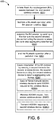
- FIG. 6 shows a flow chart 600 depicting an example operation in accordance with the present embodiments.
- a first wireless device e.g., device D1 of FIGS. 5A-5B
- a second wireless device e.g., device D2 of FIGS. 5A-5B
- the first wireless device may facilitate a Bluetooth operation while the BA session is active (602), and may suspend the BA session by sending a first frame to the second wireless device instructing the second wireless device to stop aggregating data frames (604).
- the first wireless device may end the Bluetooth operation after a period of time (606).
- the first wireless device may cause resumption of the BA session by sending a second frame to the second wireless device instructing the second wireless device to resume aggregating data frames (608).
- the BA session information is maintained in the first wireless device and/or the second wireless device while the BA session is suspended (or terminated).
- the second frame instructs the second wireless device to send an ADDBA request to the first wireless device (608A).
- the first wireless device receives the ADDBA request (608B), and responds by sending an ADDBA response to the second wireless device (608C).
Landscapes
- Engineering & Computer Science (AREA)
- Computer Networks & Wireless Communication (AREA)
- Signal Processing (AREA)
- Mobile Radio Communication Systems (AREA)
Priority Applications (2)
| Application Number | Priority Date | Filing Date | Title |
|---|---|---|---|
| PL15795077T PL3224980T3 (pl) | 2014-11-24 | 2015-10-29 | Sposób do ponownego włączania agregacji ramki danych po sesji Bluetooth |
| EP18167957.2A EP3386133B1 (en) | 2014-11-24 | 2015-10-29 | Method for re-enabling data frame aggregation after bluetooth session |
Applications Claiming Priority (2)
| Application Number | Priority Date | Filing Date | Title |
|---|---|---|---|
| US14/552,119 US9226102B1 (en) | 2014-11-24 | 2014-11-24 | Method for re-enabling aggregation after bluetooth session |
| PCT/US2015/058084 WO2016085613A1 (en) | 2014-11-24 | 2015-10-29 | Method for re-enabling data frame aggregation after bluetooth session |
Related Child Applications (1)
| Application Number | Title | Priority Date | Filing Date |
|---|---|---|---|
| EP18167957.2A Division EP3386133B1 (en) | 2014-11-24 | 2015-10-29 | Method for re-enabling data frame aggregation after bluetooth session |
Publications (2)
| Publication Number | Publication Date |
|---|---|
| EP3224980A1 EP3224980A1 (en) | 2017-10-04 |
| EP3224980B1 true EP3224980B1 (en) | 2018-04-25 |
Family
ID=54545489
Family Applications (2)
| Application Number | Title | Priority Date | Filing Date |
|---|---|---|---|
| EP15795077.5A Active EP3224980B1 (en) | 2014-11-24 | 2015-10-29 | Method for re-enabling data frame aggregation after bluetooth session |
| EP18167957.2A Active EP3386133B1 (en) | 2014-11-24 | 2015-10-29 | Method for re-enabling data frame aggregation after bluetooth session |
Family Applications After (1)
| Application Number | Title | Priority Date | Filing Date |
|---|---|---|---|
| EP18167957.2A Active EP3386133B1 (en) | 2014-11-24 | 2015-10-29 | Method for re-enabling data frame aggregation after bluetooth session |
Country Status (12)
| Country | Link |
|---|---|
| US (1) | US9226102B1 (enExample) |
| EP (2) | EP3224980B1 (enExample) |
| JP (2) | JP6235191B1 (enExample) |
| KR (2) | KR101851373B1 (enExample) |
| CN (2) | CN107005366B (enExample) |
| AU (2) | AU2015354674B2 (enExample) |
| BR (1) | BR112017010796B1 (enExample) |
| CA (1) | CA2964271C (enExample) |
| ES (1) | ES2681293T3 (enExample) |
| HU (1) | HUE038810T2 (enExample) |
| PL (1) | PL3224980T3 (enExample) |
| WO (1) | WO2016085613A1 (enExample) |
Families Citing this family (12)
| Publication number | Priority date | Publication date | Assignee | Title |
|---|---|---|---|---|
| US10721026B2 (en) | 2018-02-09 | 2020-07-21 | Marvell Asia Pte, Ltd. | Block ACK frame with flow control |
| US10763997B2 (en) | 2018-03-15 | 2020-09-01 | Marvell Asia Pte., Ltd. | Action frame to indicate change in block acknowledgment procedure |
| CN112469012A (zh) * | 2019-09-06 | 2021-03-09 | 华为技术有限公司 | 一种蓝牙通信方法及相关装置 |
| KR20210053798A (ko) * | 2019-11-04 | 2021-05-12 | 현대자동차주식회사 | 무선랜 시스템에서 블록 ack의 송수신을 위한 방법 및 장치 |
| CN113261221B (zh) * | 2019-12-12 | 2023-04-11 | 北京小米移动软件有限公司 | 块确认反馈控制方法、装置、通信设备及存储介质 |
| CN111416874B (zh) | 2020-04-02 | 2025-07-04 | 腾讯科技(深圳)有限公司 | 用于会话重建或共享的方法、装置及系统 |
| CN111770493B (zh) * | 2020-05-11 | 2022-06-17 | 烽火通信科技股份有限公司 | 一种AP加入Mesh网络的方法及系统 |
| US11553506B2 (en) * | 2020-07-10 | 2023-01-10 | Apple Inc. | Multi-radio coexistence aware intelligent WiFi data aggregation |
| CN118120336A (zh) * | 2021-10-27 | 2024-05-31 | Oppo广东移动通信有限公司 | 块确认会话删除方法、装置、多链路设备及存储介质 |
| US20230254897A1 (en) * | 2022-02-09 | 2023-08-10 | Sony Group Corporation | Block acknowledgement agreement for latency sensitive traffic stream |
| CN118555617A (zh) * | 2023-02-24 | 2024-08-27 | 华为技术有限公司 | 通信方法以及相关装置 |
| WO2025184869A1 (zh) * | 2024-03-07 | 2025-09-12 | 北京小米移动软件有限公司 | 通信方法、通信设备及通信系统 |
Family Cites Families (21)
| Publication number | Priority date | Publication date | Assignee | Title |
|---|---|---|---|---|
| US7453936B2 (en) * | 2001-11-09 | 2008-11-18 | Sony Corporation | Transmitting apparatus and method, receiving apparatus and method, program and recording medium, and transmitting/receiving system |
| US20050111416A1 (en) * | 2003-11-24 | 2005-05-26 | Boris Ginzburg | Method, system and device of fragmentation with group acknowledgement in wireless networks |
| US7882412B2 (en) * | 2004-10-05 | 2011-02-01 | Sanjiv Nanda | Enhanced block acknowledgement |
| US9686049B2 (en) * | 2007-09-12 | 2017-06-20 | Avago Technologies General Ip (Singapore) Pte. Ltd | Method and system for Bluetooth (BT) delayed acknowledgement (ACK) |
| US7945206B2 (en) * | 2009-02-04 | 2011-05-17 | Telefonaktiebolaget L M Ericsson (Publ) | Data packet transmission scheduling in a mobile communication system |
| EP2441201A4 (en) * | 2009-06-13 | 2017-06-21 | Nokia Technologies Oy | Use of block acknowledgement policy for wireless networks |
| US8654746B2 (en) * | 2010-04-26 | 2014-02-18 | Intel Corporation | Method, apparatus and system for fast session transfer for multiple frequency band wireless communication |
| US8879580B2 (en) * | 2010-06-17 | 2014-11-04 | Texas Instruments Incorporated | Enhancing packet aggregation performance in coexisting wireless networks |
| JP5645609B2 (ja) | 2010-11-04 | 2014-12-24 | キヤノン株式会社 | 通信装置、通信装置の制御方法、およびプログラム |
| EP2719110B1 (en) | 2011-06-07 | 2022-11-02 | HMD Global Oy | Controlling retransmissions |
| US8731572B2 (en) | 2011-11-02 | 2014-05-20 | Broadcom Corporation | Localized dynamic channel time allocation |
| US20130223419A1 (en) * | 2012-02-29 | 2013-08-29 | Nokia Corporation | Method, apparatus, and computer program product for power saving enhancements in wireless communication |
| US9154430B2 (en) * | 2012-10-31 | 2015-10-06 | Broadcom Corporation | Buffer relay management within single user, multiple user, multiple access, and/or MIMO wireless communications |
| US9525520B2 (en) * | 2012-12-21 | 2016-12-20 | Qualcomm Incorporated | Block acknowledgement selection rules |
| US9807691B2 (en) | 2013-02-28 | 2017-10-31 | Qualcomm Incorporated | Polling beacon |
| US9420490B2 (en) * | 2013-03-08 | 2016-08-16 | Qualcomm Incorporated | Systems and methods for seamless data stream transfer during band switch between wireless stations |
| KR20140112907A (ko) | 2013-03-14 | 2014-09-24 | 삼성전자주식회사 | 근거리통신 연결시스템, 장치 및 방법 |
| US9204244B2 (en) * | 2013-04-08 | 2015-12-01 | Nokia Technologies Oy | Method, apparatus, and computer program product for synchronization packet transmitter selection in a wireless network |
| US20140321317A1 (en) * | 2013-04-26 | 2014-10-30 | Nokia Corporation | Method, apparatus, and computer program product for network type determination |
| US20140351832A1 (en) * | 2013-05-21 | 2014-11-27 | Samsung Electronics Co., Ltd. | Electronic device using framework interface for communication |
| CN103795737B (zh) * | 2014-03-12 | 2017-03-01 | 西安电子科技大学 | 社交网络中基于交换加密的隐私匹配方法 |
-
2014
- 2014-11-24 US US14/552,119 patent/US9226102B1/en active Active
-
2015
- 2015-10-29 EP EP15795077.5A patent/EP3224980B1/en active Active
- 2015-10-29 CA CA2964271A patent/CA2964271C/en active Active
- 2015-10-29 AU AU2015354674A patent/AU2015354674B2/en active Active
- 2015-10-29 KR KR1020177013456A patent/KR101851373B1/ko active Active
- 2015-10-29 PL PL15795077T patent/PL3224980T3/pl unknown
- 2015-10-29 EP EP18167957.2A patent/EP3386133B1/en active Active
- 2015-10-29 CN CN201580063243.2A patent/CN107005366B/zh active Active
- 2015-10-29 BR BR112017010796-1A patent/BR112017010796B1/pt active IP Right Grant
- 2015-10-29 WO PCT/US2015/058084 patent/WO2016085613A1/en not_active Ceased
- 2015-10-29 KR KR1020187010864A patent/KR102229144B1/ko active Active
- 2015-10-29 JP JP2017527556A patent/JP6235191B1/ja active Active
- 2015-10-29 ES ES15795077.5T patent/ES2681293T3/es active Active
- 2015-10-29 HU HUE15795077A patent/HUE038810T2/hu unknown
- 2015-10-29 CN CN201810751505.XA patent/CN108923893B/zh active Active
-
2017
- 2017-10-25 JP JP2017206202A patent/JP6766025B2/ja active Active
-
2018
- 2018-05-15 AU AU2018203414A patent/AU2018203414B2/en active Active
Non-Patent Citations (1)
| Title |
|---|
| None * |
Also Published As
| Publication number | Publication date |
|---|---|
| CN108923893A (zh) | 2018-11-30 |
| KR102229144B1 (ko) | 2021-03-16 |
| JP2018067921A (ja) | 2018-04-26 |
| BR112017010796A2 (pt) | 2018-01-09 |
| KR20180041778A (ko) | 2018-04-24 |
| CA2964271C (en) | 2019-10-29 |
| EP3386133B1 (en) | 2025-08-20 |
| JP2018501702A (ja) | 2018-01-18 |
| CN107005366A (zh) | 2017-08-01 |
| AU2018203414B2 (en) | 2020-02-06 |
| CN108923893B (zh) | 2021-04-02 |
| BR112017010796B1 (pt) | 2024-02-06 |
| JP6766025B2 (ja) | 2020-10-07 |
| CA2964271A1 (en) | 2016-06-02 |
| HUE038810T2 (hu) | 2018-11-28 |
| US9226102B1 (en) | 2015-12-29 |
| EP3224980A1 (en) | 2017-10-04 |
| AU2015354674B2 (en) | 2018-02-15 |
| PL3224980T3 (pl) | 2018-10-31 |
| AU2018203414A1 (en) | 2018-06-07 |
| EP3386133A1 (en) | 2018-10-10 |
| CN107005366B (zh) | 2018-06-26 |
| WO2016085613A1 (en) | 2016-06-02 |
| KR20170060161A (ko) | 2017-05-31 |
| AU2015354674A1 (en) | 2017-04-27 |
| ES2681293T3 (es) | 2018-09-12 |
| KR101851373B1 (ko) | 2018-04-23 |
| JP6235191B1 (ja) | 2017-11-22 |
Similar Documents
| Publication | Publication Date | Title |
|---|---|---|
| AU2018203414B2 (en) | Method for re-enabling data frame aggregation after bluetooth session | |
| US20170055300A1 (en) | Block acknowledgment mechanism | |
| CN118402309A (zh) | 多链路操作(mlo)期间的受限目标唤醒时间(r-twt)的低时延解决方案 | |
| WO2020215335A1 (zh) | 天线面板的应用方法、装置及存储介质 | |
| US10334614B1 (en) | Method and system for mitigating interference between different radio access technologies utilized by a communication device | |
| US20160112935A1 (en) | Reducing a connection time for saved-profile access points | |
| US20160143072A1 (en) | Support for peer-to-peer discovery in 5 ghz band | |
| HK40000094A (en) | Method, device and medium for re-enabling data frame aggregation after bluetooth session | |
| EP3043621B1 (en) | Wireless termination point and control method and system thereof and wireless control point | |
| HK40000094B (zh) | 在蓝牙会话之後重新启用数据帧聚合的方法、设备和介质 | |
| HK1240718A1 (en) | Method, device and medium for re-enabling data frame aggregation after bluetooth session | |
| WO2024254784A1 (en) | Preemption request and grant | |
| HK1240718B (en) | Method, device and medium for re-enabling data frame aggregation after bluetooth session | |
| US20250227741A1 (en) | Low Latency Session Setup and Use | |
| US20250081091A1 (en) | Preemption of Downlink Data for Uplink Data or Coexistence Events | |
| US20250310749A1 (en) | Retrieving Buffered Downlink Data Across a Roaming Transition | |
| US12507229B2 (en) | WLAN enhancements for co-existence | |
| WO2024254790A1 (en) | Configuration information for determining whether to preempt | |
| WO2021114103A1 (zh) | 建立双连接的方法和通信装置 | |
| WO2015165011A1 (zh) | 一种数据传输发射端设备、接收端设备和方法 | |
| WO2025049872A1 (en) | Preemption of downlink data for uplink data or coexistence events | |
| WO2023070661A1 (zh) | 数据传输方法、终端设备、计算机存储介质及程序产品 | |
| CN118160394A (zh) | 考虑sl drx活动时间的sl数据传输 |
Legal Events
| Date | Code | Title | Description |
|---|---|---|---|
| STAA | Information on the status of an ep patent application or granted ep patent |
Free format text: STATUS: THE INTERNATIONAL PUBLICATION HAS BEEN MADE |
|
| PUAI | Public reference made under article 153(3) epc to a published international application that has entered the european phase |
Free format text: ORIGINAL CODE: 0009012 |
|
| STAA | Information on the status of an ep patent application or granted ep patent |
Free format text: STATUS: REQUEST FOR EXAMINATION WAS MADE |
|
| 17P | Request for examination filed |
Effective date: 20170419 |
|
| AK | Designated contracting states |
Kind code of ref document: A1 Designated state(s): AL AT BE BG CH CY CZ DE DK EE ES FI FR GB GR HR HU IE IS IT LI LT LU LV MC MK MT NL NO PL PT RO RS SE SI SK SM TR |
|
| AX | Request for extension of the european patent |
Extension state: BA ME |
|
| GRAP | Despatch of communication of intention to grant a patent |
Free format text: ORIGINAL CODE: EPIDOSNIGR1 |
|
| STAA | Information on the status of an ep patent application or granted ep patent |
Free format text: STATUS: GRANT OF PATENT IS INTENDED |
|
| INTG | Intention to grant announced |
Effective date: 20180104 |
|
| DAV | Request for validation of the european patent (deleted) | ||
| DAX | Request for extension of the european patent (deleted) | ||
| GRAS | Grant fee paid |
Free format text: ORIGINAL CODE: EPIDOSNIGR3 |
|
| GRAA | (expected) grant |
Free format text: ORIGINAL CODE: 0009210 |
|
| STAA | Information on the status of an ep patent application or granted ep patent |
Free format text: STATUS: THE PATENT HAS BEEN GRANTED |
|
| AK | Designated contracting states |
Kind code of ref document: B1 Designated state(s): AL AT BE BG CH CY CZ DE DK EE ES FI FR GB GR HR HU IE IS IT LI LT LU LV MC MK MT NL NO PL PT RO RS SE SI SK SM TR |
|
| REG | Reference to a national code |
Ref country code: GB Ref legal event code: FG4D |
|
| REG | Reference to a national code |
Ref country code: CH Ref legal event code: EP |
|
| REG | Reference to a national code |
Ref country code: AT Ref legal event code: REF Ref document number: 993961 Country of ref document: AT Kind code of ref document: T Effective date: 20180515 |
|
| REG | Reference to a national code |
Ref country code: IE Ref legal event code: FG4D |
|
| REG | Reference to a national code |
Ref country code: DE Ref legal event code: R096 Ref document number: 602015010527 Country of ref document: DE |
|
| REG | Reference to a national code |
Ref country code: NL Ref legal event code: FP |
|
| REG | Reference to a national code |
Ref country code: LT Ref legal event code: MG4D |
|
| REG | Reference to a national code |
Ref country code: ES Ref legal event code: FG2A Ref document number: 2681293 Country of ref document: ES Kind code of ref document: T3 Effective date: 20180912 |
|
| REG | Reference to a national code |
Ref country code: FR Ref legal event code: PLFP Year of fee payment: 4 |
|
| PG25 | Lapsed in a contracting state [announced via postgrant information from national office to epo] |
Ref country code: LT Free format text: LAPSE BECAUSE OF FAILURE TO SUBMIT A TRANSLATION OF THE DESCRIPTION OR TO PAY THE FEE WITHIN THE PRESCRIBED TIME-LIMIT Effective date: 20180425 Ref country code: NO Free format text: LAPSE BECAUSE OF FAILURE TO SUBMIT A TRANSLATION OF THE DESCRIPTION OR TO PAY THE FEE WITHIN THE PRESCRIBED TIME-LIMIT Effective date: 20180725 Ref country code: BG Free format text: LAPSE BECAUSE OF FAILURE TO SUBMIT A TRANSLATION OF THE DESCRIPTION OR TO PAY THE FEE WITHIN THE PRESCRIBED TIME-LIMIT Effective date: 20180725 Ref country code: SE Free format text: LAPSE BECAUSE OF FAILURE TO SUBMIT A TRANSLATION OF THE DESCRIPTION OR TO PAY THE FEE WITHIN THE PRESCRIBED TIME-LIMIT Effective date: 20180425 |
|
| REG | Reference to a national code |
Ref country code: HU Ref legal event code: AG4A Ref document number: E038810 Country of ref document: HU |
|
| PG25 | Lapsed in a contracting state [announced via postgrant information from national office to epo] |
Ref country code: GR Free format text: LAPSE BECAUSE OF FAILURE TO SUBMIT A TRANSLATION OF THE DESCRIPTION OR TO PAY THE FEE WITHIN THE PRESCRIBED TIME-LIMIT Effective date: 20180726 Ref country code: HR Free format text: LAPSE BECAUSE OF FAILURE TO SUBMIT A TRANSLATION OF THE DESCRIPTION OR TO PAY THE FEE WITHIN THE PRESCRIBED TIME-LIMIT Effective date: 20180425 Ref country code: RS Free format text: LAPSE BECAUSE OF FAILURE TO SUBMIT A TRANSLATION OF THE DESCRIPTION OR TO PAY THE FEE WITHIN THE PRESCRIBED TIME-LIMIT Effective date: 20180425 Ref country code: LV Free format text: LAPSE BECAUSE OF FAILURE TO SUBMIT A TRANSLATION OF THE DESCRIPTION OR TO PAY THE FEE WITHIN THE PRESCRIBED TIME-LIMIT Effective date: 20180425 |
|
| REG | Reference to a national code |
Ref country code: AT Ref legal event code: MK05 Ref document number: 993961 Country of ref document: AT Kind code of ref document: T Effective date: 20180425 |
|
| PG25 | Lapsed in a contracting state [announced via postgrant information from national office to epo] |
Ref country code: PT Free format text: LAPSE BECAUSE OF FAILURE TO SUBMIT A TRANSLATION OF THE DESCRIPTION OR TO PAY THE FEE WITHIN THE PRESCRIBED TIME-LIMIT Effective date: 20180827 |
|
| REG | Reference to a national code |
Ref country code: DE Ref legal event code: R097 Ref document number: 602015010527 Country of ref document: DE |
|
| PG25 | Lapsed in a contracting state [announced via postgrant information from national office to epo] |
Ref country code: CZ Free format text: LAPSE BECAUSE OF FAILURE TO SUBMIT A TRANSLATION OF THE DESCRIPTION OR TO PAY THE FEE WITHIN THE PRESCRIBED TIME-LIMIT Effective date: 20180425 Ref country code: RO Free format text: LAPSE BECAUSE OF FAILURE TO SUBMIT A TRANSLATION OF THE DESCRIPTION OR TO PAY THE FEE WITHIN THE PRESCRIBED TIME-LIMIT Effective date: 20180425 Ref country code: SK Free format text: LAPSE BECAUSE OF FAILURE TO SUBMIT A TRANSLATION OF THE DESCRIPTION OR TO PAY THE FEE WITHIN THE PRESCRIBED TIME-LIMIT Effective date: 20180425 Ref country code: DK Free format text: LAPSE BECAUSE OF FAILURE TO SUBMIT A TRANSLATION OF THE DESCRIPTION OR TO PAY THE FEE WITHIN THE PRESCRIBED TIME-LIMIT Effective date: 20180425 Ref country code: EE Free format text: LAPSE BECAUSE OF FAILURE TO SUBMIT A TRANSLATION OF THE DESCRIPTION OR TO PAY THE FEE WITHIN THE PRESCRIBED TIME-LIMIT Effective date: 20180425 Ref country code: AT Free format text: LAPSE BECAUSE OF FAILURE TO SUBMIT A TRANSLATION OF THE DESCRIPTION OR TO PAY THE FEE WITHIN THE PRESCRIBED TIME-LIMIT Effective date: 20180425 |
|
| PG25 | Lapsed in a contracting state [announced via postgrant information from national office to epo] |
Ref country code: SM Free format text: LAPSE BECAUSE OF FAILURE TO SUBMIT A TRANSLATION OF THE DESCRIPTION OR TO PAY THE FEE WITHIN THE PRESCRIBED TIME-LIMIT Effective date: 20180425 |
|
| PLBE | No opposition filed within time limit |
Free format text: ORIGINAL CODE: 0009261 |
|
| STAA | Information on the status of an ep patent application or granted ep patent |
Free format text: STATUS: NO OPPOSITION FILED WITHIN TIME LIMIT |
|
| 26N | No opposition filed |
Effective date: 20190128 |
|
| REG | Reference to a national code |
Ref country code: CH Ref legal event code: PL |
|
| REG | Reference to a national code |
Ref country code: BE Ref legal event code: MM Effective date: 20181031 |
|
| PG25 | Lapsed in a contracting state [announced via postgrant information from national office to epo] |
Ref country code: MC Free format text: LAPSE BECAUSE OF FAILURE TO SUBMIT A TRANSLATION OF THE DESCRIPTION OR TO PAY THE FEE WITHIN THE PRESCRIBED TIME-LIMIT Effective date: 20180425 Ref country code: LU Free format text: LAPSE BECAUSE OF NON-PAYMENT OF DUE FEES Effective date: 20181029 |
|
| REG | Reference to a national code |
Ref country code: IE Ref legal event code: MM4A |
|
| PG25 | Lapsed in a contracting state [announced via postgrant information from national office to epo] |
Ref country code: LI Free format text: LAPSE BECAUSE OF NON-PAYMENT OF DUE FEES Effective date: 20181031 Ref country code: BE Free format text: LAPSE BECAUSE OF NON-PAYMENT OF DUE FEES Effective date: 20181031 Ref country code: CH Free format text: LAPSE BECAUSE OF NON-PAYMENT OF DUE FEES Effective date: 20181031 |
|
| PG25 | Lapsed in a contracting state [announced via postgrant information from national office to epo] |
Ref country code: IE Free format text: LAPSE BECAUSE OF NON-PAYMENT OF DUE FEES Effective date: 20181029 |
|
| PG25 | Lapsed in a contracting state [announced via postgrant information from national office to epo] |
Ref country code: AL Free format text: LAPSE BECAUSE OF FAILURE TO SUBMIT A TRANSLATION OF THE DESCRIPTION OR TO PAY THE FEE WITHIN THE PRESCRIBED TIME-LIMIT Effective date: 20180425 |
|
| PG25 | Lapsed in a contracting state [announced via postgrant information from national office to epo] |
Ref country code: MT Free format text: LAPSE BECAUSE OF NON-PAYMENT OF DUE FEES Effective date: 20181029 |
|
| PG25 | Lapsed in a contracting state [announced via postgrant information from national office to epo] |
Ref country code: TR Free format text: LAPSE BECAUSE OF FAILURE TO SUBMIT A TRANSLATION OF THE DESCRIPTION OR TO PAY THE FEE WITHIN THE PRESCRIBED TIME-LIMIT Effective date: 20180425 |
|
| PG25 | Lapsed in a contracting state [announced via postgrant information from national office to epo] |
Ref country code: MK Free format text: LAPSE BECAUSE OF NON-PAYMENT OF DUE FEES Effective date: 20180425 Ref country code: CY Free format text: LAPSE BECAUSE OF FAILURE TO SUBMIT A TRANSLATION OF THE DESCRIPTION OR TO PAY THE FEE WITHIN THE PRESCRIBED TIME-LIMIT Effective date: 20180425 |
|
| PG25 | Lapsed in a contracting state [announced via postgrant information from national office to epo] |
Ref country code: IS Free format text: LAPSE BECAUSE OF FAILURE TO SUBMIT A TRANSLATION OF THE DESCRIPTION OR TO PAY THE FEE WITHIN THE PRESCRIBED TIME-LIMIT Effective date: 20180825 |
|
| PG25 | Lapsed in a contracting state [announced via postgrant information from national office to epo] |
Ref country code: SI Free format text: LAPSE BECAUSE OF NON-PAYMENT OF DUE FEES Effective date: 20181029 |
|
| PGFP | Annual fee paid to national office [announced via postgrant information from national office to epo] |
Ref country code: DE Payment date: 20240913 Year of fee payment: 10 |
|
| PGFP | Annual fee paid to national office [announced via postgrant information from national office to epo] |
Ref country code: IT Payment date: 20241011 Year of fee payment: 10 Ref country code: ES Payment date: 20241113 Year of fee payment: 10 |
|
| PGFP | Annual fee paid to national office [announced via postgrant information from national office to epo] |
Ref country code: FI Payment date: 20250926 Year of fee payment: 11 |
|
| PGFP | Annual fee paid to national office [announced via postgrant information from national office to epo] |
Ref country code: PL Payment date: 20250917 Year of fee payment: 11 Ref country code: NL Payment date: 20250916 Year of fee payment: 11 |
|
| PGFP | Annual fee paid to national office [announced via postgrant information from national office to epo] |
Ref country code: GB Payment date: 20250911 Year of fee payment: 11 |
|
| PGFP | Annual fee paid to national office [announced via postgrant information from national office to epo] |
Ref country code: FR Payment date: 20250912 Year of fee payment: 11 |
|
| PGFP | Annual fee paid to national office [announced via postgrant information from national office to epo] |
Ref country code: HU Payment date: 20251008 Year of fee payment: 11 |