EP3221689B1 - Verfahren zur beobachtung mehrerer proben und zugehörige vorrichtung - Google Patents
Verfahren zur beobachtung mehrerer proben und zugehörige vorrichtung Download PDFInfo
- Publication number
- EP3221689B1 EP3221689B1 EP15798090.5A EP15798090A EP3221689B1 EP 3221689 B1 EP3221689 B1 EP 3221689B1 EP 15798090 A EP15798090 A EP 15798090A EP 3221689 B1 EP3221689 B1 EP 3221689B1
- Authority
- EP
- European Patent Office
- Prior art keywords
- ind
- organisms
- sample
- culture medium
- indicator
- Prior art date
- Legal status (The legal status is an assumption and is not a legal conclusion. Google has not performed a legal analysis and makes no representation as to the accuracy of the status listed.)
- Active
Links
Images


Classifications
-
- G—PHYSICS
- G01—MEASURING; TESTING
- G01N—INVESTIGATING OR ANALYSING MATERIALS BY DETERMINING THEIR CHEMICAL OR PHYSICAL PROPERTIES
- G01N21/00—Investigating or analysing materials by the use of optical means, i.e. using sub-millimetre waves, infrared, visible or ultraviolet light
- G01N21/17—Systems in which incident light is modified in accordance with the properties of the material investigated
- G01N21/47—Scattering, i.e. diffuse reflection
- G01N21/4788—Diffraction
-
- B—PERFORMING OPERATIONS; TRANSPORTING
- B01—PHYSICAL OR CHEMICAL PROCESSES OR APPARATUS IN GENERAL
- B01L—CHEMICAL OR PHYSICAL LABORATORY APPARATUS FOR GENERAL USE
- B01L3/00—Containers or dishes for laboratory use, e.g. laboratory glassware; Droppers
- B01L3/50—Containers for the purpose of retaining a material to be analysed, e.g. test tubes
- B01L3/508—Rigid containers without fluid transport within
- B01L3/5085—Rigid containers without fluid transport within for multiple samples, e.g. microtitration plates
- B01L3/50853—Rigid containers without fluid transport within for multiple samples, e.g. microtitration plates with covers or lids
-
- G—PHYSICS
- G01—MEASURING; TESTING
- G01N—INVESTIGATING OR ANALYSING MATERIALS BY DETERMINING THEIR CHEMICAL OR PHYSICAL PROPERTIES
- G01N21/00—Investigating or analysing materials by the use of optical means, i.e. using sub-millimetre waves, infrared, visible or ultraviolet light
- G01N21/17—Systems in which incident light is modified in accordance with the properties of the material investigated
- G01N21/25—Colour; Spectral properties, i.e. comparison of effect of material on the light at two or more different wavelengths or wavelength bands
- G01N21/251—Colorimeters; Construction thereof
- G01N21/253—Colorimeters; Construction thereof for batch operation, i.e. multisample apparatus
-
- G—PHYSICS
- G03—PHOTOGRAPHY; CINEMATOGRAPHY; ANALOGOUS TECHNIQUES USING WAVES OTHER THAN OPTICAL WAVES; ELECTROGRAPHY; HOLOGRAPHY
- G03H—HOLOGRAPHIC PROCESSES OR APPARATUS
- G03H1/00—Holographic processes or apparatus using light, infrared or ultraviolet waves for obtaining holograms or for obtaining an image from them; Details peculiar thereto
- G03H1/04—Processes or apparatus for producing holograms
- G03H1/0443—Digital holography, i.e. recording holograms with digital recording means
-
- B—PERFORMING OPERATIONS; TRANSPORTING
- B01—PHYSICAL OR CHEMICAL PROCESSES OR APPARATUS IN GENERAL
- B01L—CHEMICAL OR PHYSICAL LABORATORY APPARATUS FOR GENERAL USE
- B01L2300/00—Additional constructional details
- B01L2300/06—Auxiliary integrated devices, integrated components
- B01L2300/0627—Sensor or part of a sensor is integrated
- B01L2300/0654—Lenses; Optical fibres
-
- B—PERFORMING OPERATIONS; TRANSPORTING
- B01—PHYSICAL OR CHEMICAL PROCESSES OR APPARATUS IN GENERAL
- B01L—CHEMICAL OR PHYSICAL LABORATORY APPARATUS FOR GENERAL USE
- B01L2300/00—Additional constructional details
- B01L2300/08—Geometry, shape and general structure
- B01L2300/0809—Geometry, shape and general structure rectangular shaped
- B01L2300/0829—Multi-well plates; Microtitration plates
-
- G—PHYSICS
- G01—MEASURING; TESTING
- G01N—INVESTIGATING OR ANALYSING MATERIALS BY DETERMINING THEIR CHEMICAL OR PHYSICAL PROPERTIES
- G01N21/00—Investigating or analysing materials by the use of optical means, i.e. using sub-millimetre waves, infrared, visible or ultraviolet light
- G01N21/17—Systems in which incident light is modified in accordance with the properties of the material investigated
- G01N2021/1765—Method using an image detector and processing of image signal
- G01N2021/177—Detector of the video camera type
- G01N2021/1772—Array detector
-
- G—PHYSICS
- G01—MEASURING; TESTING
- G01N—INVESTIGATING OR ANALYSING MATERIALS BY DETERMINING THEIR CHEMICAL OR PHYSICAL PROPERTIES
- G01N2201/00—Features of devices classified in G01N21/00
- G01N2201/06—Illumination; Optics
- G01N2201/064—Stray light conditioning
-
- G—PHYSICS
- G03—PHOTOGRAPHY; CINEMATOGRAPHY; ANALOGOUS TECHNIQUES USING WAVES OTHER THAN OPTICAL WAVES; ELECTROGRAPHY; HOLOGRAPHY
- G03H—HOLOGRAPHIC PROCESSES OR APPARATUS
- G03H1/00—Holographic processes or apparatus using light, infrared or ultraviolet waves for obtaining holograms or for obtaining an image from them; Details peculiar thereto
- G03H1/04—Processes or apparatus for producing holograms
- G03H1/0443—Digital holography, i.e. recording holograms with digital recording means
- G03H2001/0447—In-line recording arrangement
Definitions
- observation system 10 The operation of the observation system 10 is described with reference to an example implementation of a method for observing the sample 12.
- the process includes seven steps referenced by a letter below.
- the method comprises a first step a) of illuminating the sample 12 with a light beam emitted by the light source 20.
- the method also includes a second step b) of acquiring a first image of the sample 12 at a first time t 1 .
- the first image I 1 comprises a plurality of diffraction patterns. Each of said diffraction patterns is generated by the interaction of the light beam emitted by the light source 20 with at least one organism 14 of the set of organisms 32.
- Acquisition step b) is implemented using detector 26.
- the first indicator Ind is representative of the quantity of organisms 14 present in the sample 12 at the first time t 1 .
- a quantity is representative of the quantity of organisms 14 present in sample 12 when there is a mathematical link between the quantity and the quantity of organisms 14 present in sample 12.
- step c) of obtaining the first indicator Ind 1 several distinct embodiments are possible.
- step c) of obtaining the first indicator Ind comprises a step of analyzing the first image I 1 .
- Such an analysis usually includes the identification of each diffraction pattern present in the first image I 1 and the study of at least one property of each of the identified patterns.
- the second image 12 comprises a plurality of diffraction patterns, each of said diffraction patterns being generated by the interaction of said light beam with at least one organism 14 of the set of organisms 32.
- each of the images I 1 , I 2 presents a spatial distribution of intensity, that is to say that each of the images I 1 , I 2 presents a spatial distribution of intensity levels of the pixels constituting the image considered.
- Steps c) and e) of obtaining an indicator Ind 1 , ind 2 from a corresponding image I 1 , I 2 include a step of applying a function k to the corresponding image I 1 , I 2 to obtain a result. This means that the image by the function k of an image I 1 , I 2 is the result.
- the function k applied to an image is the kurtosis, that is to say the moment of order 4 of said intensity distribution of the image considered.
- the result obtained by the function k is directly the indicator Ind 1 , Ind 2 to obtain.
- Such functions have the advantage of obtaining indicators Ind 1 , ind 2 which are scalar indicators. This makes it easier to implement step f) of comparison between the two indicators Ind 1 and ind 2 .
- the function consists of a count of the different diffraction patterns present in the image I 1 , I 2 considered.
- step a) is made possible by the fact that the light source 20 is adapted to emit a light beam and that the support 24 is adapted to accommodate the sample 12 so that the sample 12 is illuminated by the light beam that the light source 20 is adapted to emit.
- the detector 26 is capable of implementing acquisition steps b) and d).
- the detector 26 is adapted to acquire the first image I 1 at the first time t 1 and the second image I 2 at the second time t 2 .
- the calculator 28 is adapted to implement steps c) and e) of obtaining, step f) of comparison and step g) of determination. Also, the calculator 28 is adapted to obtain a first indicator Ind, from the first image I1, to obtain a second indicator lnd 2 from the second image I2, to compare the first indicator Ind, and the second indicator Ind 2 and determine at least one characteristic relating to the set of organisms 32 from the result of the comparison of the first indicator Ind, with the second indicator Ind 2 .
- the light source 20 is a white light source 42 and an optical fiber 44.
- the light source 42 being connected to the optical fiber 44 so that part of the light emitted by the light source 42 is injected at the input of the optical fiber 44.
- the light source 20 is placed a few centimeters from the sample 12, for example between 2 cm (centimeters) and 10 cm.
- a quantity X is between two values A and B when, on the one hand, the quantity
- the distance between the light source 20 and the sample 12 is, for example, defined as the smallest Euclidean distance between two points belonging to the light source 20 and the sample 12.
- the light source 20 is temporally inconsistent.
- a light source 20 is considered temporally incoherent when the temporal coherence length of the light source 20 is less than the distance between the light source 20 and the sample 12.
- a light-emitting diode also referred to by the English acronym LED for “Light-Emitting Diode”, is another example of a light source that is incoherent from a temporal point of view.
- the light source 20 is temporally coherent, i.e. the temporal coherence length of the light source 20 is greater than the distance between the light source 20 and the sample 12.
- the light source 20 is a laser diode.
- the detector 26 is, for example, a CMOS type sensor, that is to say a sensor formed using CMOS technology.
- CMOS refers to the English expression “Complementary Metal Oxide Semiconductor”.
- the detector 26 is capable of acquiring transmission images of the sample 12.
- the detector 26 is placed at a distance from the sample 12 less than or equal to 1 cm, or even less than or equal to 5 mm (millimeters).
- Such a distance limits the effect of interference between the different diffraction patterns generated by each of the organisms 14 of the sample 12. Otherwise stated, such a distance makes it possible to obtain, on each image, usable diffraction patterns.
- the distance between detector 26 and sample 12 is, for example, defined as the smallest Euclidean distance between two points belonging to detector 26 and sample 12.
- the distance between detector 26 and sample 12 is defined as the largest Euclidean distance between two points belonging to detector 26 and sample 12.
- the distance between the detector 26 and the sample 12 is defined as the Euclidean distance between a point belonging to the detector 26 and the geometric center of the enclosure 30 of the sample 12.
- the calculator 28 is in the form of a microprocessor comprising a memory comprising instructions allowing the implementation of steps c), e), f) and g) of the method.
- the enclosure 30 is, in the case of the figure 1 , a petri dish.
- the wall 34 of the enclosure 30 is at least formed by the bottom 38 and the first side wall 48.
- the bottom 38 is transparent and is intended to be placed opposite the detector 26, so that the detector 26 collects the light signal transmitted by the sample 12.
- the bottom part 46 has a cylindrical shape with a circular base.
- the cover 52 is transparent.
- the system 10 can also be used for other samples 12, and in particular, for a plurality of samples 12.
- the light source 20 can be common to all of the enclosures 30, or moved, for example using a translation in a plane parallel to the main surface 64.
- each enclosure 30 is a well of an identification test card.
- This type of card is commonly available.
- the Vitek card is known, a registered trademark, marketed by the company Biomérieux.
- Each enclosure 30 comprises a culture medium, for example liquid comprising a set of organisms 32.
- each culture medium 16 is a liquid medium.
- a first enclosure 30 comprises a first concentration of said antibiotic while a second enclosure 30 comprises a second concentration of said antibiotic, the second concentration being different from the first concentration.
- the method then makes it possible to determine the minimum inhibitory concentration of the antibiotic with respect to the organism 14 considered, that is to say the concentration beyond which the organism 14 ceases to develop.
- each enclosure 30 can comprise the same culture medium 16 to which is added, depending on the enclosure 30 considered, different antibiotics.
- a first enclosure 30 comprises a first antibiotic while a second enclosure 30 comprises a second antibiotic, the second antibiotic being different from the first antibiotic.
- the mask 70 serves to limit the illumination artifacts introduced by the illumination of the plate 60.
- the presence of the mask 70 prevents the propagation of light in the wall 34 of each enclosure 30, which makes it possible to avoid the formation of light parasite. This results in an increase in the signal-to-noise ratio.
- the masking step ensures that the light beam does not illuminate the wall 34 of each enclosure 30 before reaching the culture medium 16. It is thus avoided that the wall 34 redirects part of the light, to which the wall 34 is exposed, in sample 12 analyzed. Experience shows that the images thus obtained lead to better results.
- plate 60 of the figure 2 further comprises such a mask 70.
- the opaque part 72 is arranged spatially to prevent, when the plate 60 is illuminated by a light beam, the side wall 40 of each enclosure 30 is illuminated by part of the light beam. having not interacted with the culture medium 16 that the interior space 36 of the enclosure 30 considered is intended to accommodate.
- the mask 70 is, according to the example of the figure 2 , made of aluminum foil.
- the mask 70 rests on the main surface 62 of the plate 62.
- the plate 60 comprises a removable cover, capable of enclosing each well.
- the mask 70 can be integrated into the cover of the plate 60.
- the cover then has an opaque part 72, delimiting transparent zones, such that each transparent zone is facing the contents of an enclosure 30, while the opaque part 72 covers a part of the side wall 34 of said enclosure 30 extending perpendicular to said cover.
- the observation system 10 comprises the plate 60 of the figure 2 .
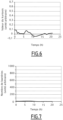
- the observation system 10 of the Figure 3 allows experiments to be carried out, the results of which are shown to figures 4 to 7 .
- Bacteria are introduced into thirty-two wells of plate 60.
- the thirty-two wells are divided into eight groups. Each group has four enclosures containing the same culture medium.
- the first group corresponds to the AMY culture medium (the acronym meaning amygdalin)
- the second group corresponds to the MEL culture medium (the acronym meaning melibiose)
- the third group corresponds to the SAC culture medium (the acronym meaning sucrose)
- the fourth group corresponds to the RHA culture medium (the acronym meaning rhamnose)
- the fifth group corresponds to the SOR culture medium (the acronym meaning sorbitol)
- the sixth group corresponds to the INO culture medium (the acronym meaning inositol )
- the seventh group corresponds to the culture medium MAN (the acronym meaning mannitol)
- the eighth group corresponds to the culture medium GLU (the acronym meaning glucose).
- organisms 14 at a first concentration are inserted into two wells and organisms at a second concentration into the other two wells.
- the first concentration is 2.10 4 cfu (acronym for “ colony-forming unit ”) and the second concentration is 2.10 3 cfu.
- kurtosis varies in a similar manner. This corresponds to the fact that kurtosis is a measure of the degree of uniformity of a surface. The higher the kurtosis value, the more the surface presents peaks and valleys of high amplitude and steep slopes. As the number of bacteria increases, the number of diffraction patterns increases, corresponding to the appearance of more peaks and valleys.
- test is declared positive when the bacterial population develops in the culture medium 16.
- test is declared negative when the bacterial population stagnates or decreases in the culture medium 16.
- the parameter is equal to a first value when the first indicator Ind 1 is strictly greater than the second indicator Ind 2 and the parameter is equal to a second value when the first indicator Ind 1 is less than or equal to the second indicator Ind 2 , the first value and the second value being distinct.
- the parameter is equal to the first value, this means that the bacterial population develops in the culture medium 16 while when the parameter is equal to the second value, the bacterial population stagnates or decreases in the culture medium 16.
- Table 1 The results presented in Table 1 were compared with the reference method, consisting of observing the change in color of each culture medium in the event of development of bacterial growth.
- the method is, moreover, simple to implement since the system 10 is a lensless system.
Landscapes
- Chemical & Material Sciences (AREA)
- Health & Medical Sciences (AREA)
- Physics & Mathematics (AREA)
- General Physics & Mathematics (AREA)
- Analytical Chemistry (AREA)
- General Health & Medical Sciences (AREA)
- Pathology (AREA)
- Immunology (AREA)
- Life Sciences & Earth Sciences (AREA)
- Biochemistry (AREA)
- Clinical Laboratory Science (AREA)
- Chemical Kinetics & Catalysis (AREA)
- Hematology (AREA)
- Engineering & Computer Science (AREA)
- Computing Systems (AREA)
- Theoretical Computer Science (AREA)
- Spectroscopy & Molecular Physics (AREA)
- Apparatus Associated With Microorganisms And Enzymes (AREA)
- Measuring Or Testing Involving Enzymes Or Micro-Organisms (AREA)
- Investigating Or Analysing Materials By Optical Means (AREA)
Claims (10)
- Verfahren zum Beobachten einer Vielzahl von Proben (12), wobei jede Probe (12) umfasst:- eine Einfassung (30), die einen Schacht bildet und eine Wand (34) umfasst, die zumindest teilweise einen Innenraum (36) begrenzt, wobei die Wand (34) jeder Einfassung (30) eine Seitenwand (40) aufweist,- einen Satz von Organismen (32), der eine Vielzahl von Organismen (14) umfasst, und- ein Kulturmedium (16), wobei das Kulturmedium (16) den Satz von Organismen (32) umfasst, wobei das Kulturmedium (16) in dem Innenraum (36) enthalten ist,wobei jede Probe (12) Organismen (14) enthält, die zur selben Art gehören,wobei das Verfahren für jede Probe (12) die folgenden Schritte umfasst:a) Beleuchten der Probe (12) mit einem Lichtstrahl, der von einer Lichtquelle (20) ausgesendet wird,b) Erfassen eines ersten Bildes (I1) der Probe (12) zu einem ersten Zeitpunkt (t1), wobei das erste Bild (I1) eine Vielzahl von Beugungsmustern umfasst, wobei jedes der Beugungsmuster durch die Wechselwirkung des Lichtstrahls mit mindestens einem Organismus (14) aus dem Satz von Organismen (32) erzeugt wird,c) Erhalten eines ersten Indikators (Ind1) aus dem ersten Bild (I1), wobei der erste Indikator (Ind1) repräsentativ für die Menge an Organismen (14) ist, die in der Probe (12) zum ersten Zeitpunkt (t1) vorhanden sind,d) Erfassen eines zweiten Bildes (l2) der Probe (12) zu einem zweiten Zeitpunkt (t2), wobei das zweite Bild (I2) eine Vielzahl von Beugungsmustern umfasst, wobei jedes der Beugungsmuster durch die Wechselwirkung des Lichtstrahls mit mindestens einem Organismus (14) aus dem Satz von Organismen (32) erzeugt wird, wobei der zweite Zeitpunkt (t2) nach dem ersten Zeitpunkt (t1) liegt,e) Erhalten eines zweiten Indikators (Ind2) aus dem zweiten Bild (I2), wobei der zweite Indikator (Ind2) repräsentativ für die Menge an Organismen (14) ist, die in der Probe (12) zum zweiten Zeitpunkt (t2) vorhanden sindf) Vergleich des ersten Indikators (Ind1) und des zweiten Indikators (lnd2), undg) Bestimmen mindestens eines Merkmals, das sich auf den Satz von Organismen (32) bezieht, aus dem Ergebnis des Vergleichsschritts, wobei jedes Merkmal das in Schritt g) bestimmt wurde, die Fähigkeit eines Organismus (14) aus dem Satz von Organismen (32) ist, in dem Kulturmedium (16) zu wachsen,wobei das Verfahren so beschaffen ist, dass mindestens eine der beiden folgenden Aussagen überprüft wird:dadurch gekennzeichnet, dass das Verfahren ferner folgenden Schritt umfasst:- das Kulturmedium (16) variiert in Abhängigkeit von der jeweiligen Probe (12), wobei ein in Schritt g) bestimmtes Merkmal die Art der Organismen (14) ist, und- das Kulturmedium (16) jeder Probe (12) enthält ein Antibiotikum, wobei die Konzentration des Antibiotikums in dem Kulturmedium (16) je nach betrachteter Probe (12) variiert, wobei ein in Schritt g) bestimmtes Merkmal die minimale Hemmkonzentration des Organismus (14) gegenüber dem Antibiotikum ist,- Maskieren eines Teils der Seitenwand (40) jeder Einfassung (30) durch Einfügen einer Maske (70) zwischen die Lichtquelle (20) und jede Probe (12), wobei die Maske (70) einen lichtundurchlässigen Teil (72) umfasst, wobei der lichtundurchlässige Teil (72) räumlich so angeordnet ist, dass verhindert wird, dass in Schritt a) die Seitenwand (40) durch einen Teil des von der Lichtquelle (20) emittierten Lichtstrahls beleuchtet wird, der nicht mit dem Kulturmedium (16) der Probe (12) interagiert hat.
- Verfahren nach Anspruch 1, wobei mindestens ein Kulturmedium (16) ein flüssiges Medium ist.
- Verfahren nach Anspruch 1 oder 2, wobei jedes Kulturmedium (16) ein flüssiges Medium ist.
- Verfahren nach einem der Ansprüche 1 bis 3, wobei die in Schritt a) verwendete Lichtquelle (20) zeitlich inkohärent ist.
- Verfahren nach Anspruch 4, bei dem die Lichtquelle (20) eine lichtemittierende Diode ist.
- Verfahren nach einem der Ansprüche 1 bis 5, bei dem die Fähigkeit eines Organismus (14) aus dem Satz von Organismen (32), auf dem Kulturmedium (16) zu wachsen, durch Auswertung eines Parameters bestimmt wird, wobei der Parameter gleich einem ersten Wert ist, wenn der erste Indikator (Ind1) strikt größer als der zweite Indikator (Ind2) ist, und der Parameter gleich einem zweiten Wert ist, wenn der erste Indikator (Ind1) kleiner oder gleich dem zweiten Indikator (lnd2) ist, wobei der erste Wert und der zweite Wert verschieden sind.
- Verfahren nach einem der Ansprüche 1 bis 6, wobei jedes Bild (I1, I2) eine räumliche Intensitätsverteilung aufweist, wobei jeder Schritt des Erhaltens eines Indikators (Ind1, Ind2) aus einem entsprechenden Bild (I1, I2) einem Schritt entspricht, der Folgendes umfasst:- Anwenden einer Funktion (k) auf das entsprechende Bild (I1, I2), wobei die Funktion (k) zu einem Moment der Ordnung n der räumlichen Intensitätsverteilung des entsprechenden Bildes (I1, I2) führt, wenn die Funktion (k) auf das entsprechende Bild (I1, I2) angewendet wird, wobei n eine ganze Zahl größer oder gleich 1, vorzugsweise gleich 4, ist.
- Verfahren nach einem der Ansprüche 1 bis 6, wobei jeder Schritt des Erhaltens eines Indikators (Ind1, Ind2) aus einem entsprechenden Bild (I1, I2) einem Schritt entspricht, der Folgendes umfasst:- Identifikation jedes Beugungsmusters, das in dem entsprechenden (I1, I2) Bild (I1, I2) vorhanden ist, und- Bestimmung der Fläche jedes identifizierten Beugungsmusters.
- Verfahren nach einem der Ansprüche 1 bis 6, wobei jeder Schritt des Erhaltens eines Indikators (Ind1, Ind2) aus einem entsprechenden Bild (I1, I2) einem Schritt entspricht, der Folgendes umfasst:- Identifizierung jedes Beugungsmusters, das in dem entsprechenden Bild (I1, I2) vorhanden ist, und- Bestimmung der Anzahl der identifizierten Beugungsmuster.
- Beobachtungssystem (10) einer Vielzahl von Proben (12), wobei jede Probe (12) umfasst:- eine Einfassung (30), die einen Schacht bildet, der eine Wand umfasst, die zumindest teilweise einen Innenraum (36) begrenzt,- einen Satz von Organismen (32), der eine Vielzahl von Organismen (14) umfasst, und- ein Kulturmedium (16), wobei das Kulturmedium (16) den Satz von Organismen (32) umfasst, wobei das Kulturmedium (16) in dem Innenraum (36) enthalten ist,wobei jede Probe (12) Organismen (14) enthält, die zur selben Art gehören,das Beobachtungssystem (10) umfassend:- eine Lichtquelle (20), die dazu geeignet ist, einen Lichtstrahl auszusenden,- einen Halter (24), der dazu geeignet ist, die Proben s(12) so aufzunehmen, dass eine der Proben (12) durch den Lichtstrahl beleuchtet wird, den die Lichtquelle (20) auszusenden geeignet ist,- einen Detektor (26), der geeignet ist, zu erfassen:∘ ein erstes Bild (I1) der Probe (12) zu einem ersten Zeitpunkt (t1), wobei das erste Bild (I1) eine Vielzahl von Beugungsmustern umfasst, wobei jedes der Beugungsmuster durch die Wechselwirkung des Lichtstrahls, den die Lichtquelle (20) auszusenden vermag, mit mindestens einem Organismus (14) aus dem Satz von Organismen (32) erzeugt wird, und∘ ein zweites Bild (I2) der Probe (12) zu einem zweiten Zeitpunkt (t2), wobei das zweite Bild (I2) eine Vielzahl von Beugungsmustern umfasst, wobei jedes der Beugungsmuster erzeugt wird durch die Wechselwirkung des Lichtstrahls, den die Lichtquelle (20) auszusenden vermag, mit mindestens einem Organismus (14) aus dem Satz von Organismen (32), wobei der zweite Zeitpunkt (t2) nach dem ersten Zeitpunkt (t1) liegt, und- einen Rechner (28), der zu Folgendem geeignet ist:∘ Erhalten eines ersten Indikators (Ind1) aus dem ersten Bild (I1), das der Detektor (26) zu erhalten geeignet ist, wobei der erste Indikator (Ind1) repräsentativ für die Menge an Organismen (14) ist, die in der Probe (12) zum ersten Zeitpunkt (t1) vorhanden sind,∘ Erhalten eines zweiten Indikators (lnd2) aus dem zweiten Bild (I2), wobei der zweite Indikator (Ind2) repräsentativ für die Menge an Organismen (14) ist, die in der Probe (12) zum zweiten Zeitpunkt (t2) vorhanden sind,∘ den ersten Indikator (Ind1) und den zweiten Indikator (Ind2) vergleichen und∘ Bestimmen mindestens eines Merkmals bezüglich des Satzes von Organismen (32) aus dem Ergebnis des Vergleichs des ersten Indikators (Ind1) mit dem zweiten Indikator (Ind2), wobei jedes ermittelte Merkmal die Fähigkeit eines Organismus (14) aus dem Satz von Organismen (32) ist, in dem Kulturmedium (16) zu wachsen,wobei das Beobachtungssystem (10) so beschaffen ist, dass mindestens eine der beiden folgenden Aussagen erfüllt wird:- das Kulturmedium (16) je nach betrachteter Probe (12) variiert, wobei ein bestimmtes Merkmal die Art der Organismen (14) ist, und- das Kulturmedium (16) jeder Probe (12) ein Antibiotikum enthält, wobei die Konzentration des Antibiotikums in dem Kulturmedium (16) je nach betrachteter Probe (12) variiert, wobei ein bestimmtes Merkmal die minimale Hemmkonzentration des Organismus (14) gegenüber dem Antibiotikum ist,das Beobachtungssystem (10) eine Platte (60) zum Beobachten der Vielzahl von Proben (12) umfasst, wobei die Platte (60) umfasst:- die Vielzahl von Einfassungen (30), wobei die Wand (34) jeder Einfassung (30) eine Seitenwand (40) aufweist,wobei das Beobachtungssystem (10) dadurch gekennzeichnet ist, dass das Beobachtungssystem (10) außerdem umfasst:- eine Maske (70) mit einem lichtundurchlässigen Abschnitt (72), wobei der lichtundurchlässige Abschnitt (72) räumlich so angeordnet ist, dass er verhindert, dass, wenn die Platte (60) durch den Lichtstrahl beleuchtet wird, den die Lichtquelle (20) zu emittieren geeignet ist, die Seitenwand (40) jeder Einfassung (30) durch einen Teil des Lichtstrahls, den die Lichtquelle (20) auszusenden vermag, beleuchtet wird, wobei der Teil des Lichtstrahls nicht mit dem Kulturmedium (16), das in dem Innenraum (36) der betreffenden Einfassung (30) enthalten ist, in Wechselwirkung getreten ist.
Applications Claiming Priority (2)
| Application Number | Priority Date | Filing Date | Title |
|---|---|---|---|
| FR1461250A FR3028865B1 (fr) | 2014-11-20 | 2014-11-20 | Procede d'observation d'au moins un echantillon et dispositifs associes |
| PCT/EP2015/077262 WO2016079316A1 (fr) | 2014-11-20 | 2015-11-20 | Procede d'observation d'une pluralite d'echantillons et dispositifs associes |
Publications (2)
| Publication Number | Publication Date |
|---|---|
| EP3221689A1 EP3221689A1 (de) | 2017-09-27 |
| EP3221689B1 true EP3221689B1 (de) | 2024-07-10 |
Family
ID=52684364
Family Applications (1)
| Application Number | Title | Priority Date | Filing Date |
|---|---|---|---|
| EP15798090.5A Active EP3221689B1 (de) | 2014-11-20 | 2015-11-20 | Verfahren zur beobachtung mehrerer proben und zugehörige vorrichtung |
Country Status (3)
| Country | Link |
|---|---|
| EP (1) | EP3221689B1 (de) |
| FR (1) | FR3028865B1 (de) |
| WO (1) | WO2016079316A1 (de) |
Family Cites Families (4)
| Publication number | Priority date | Publication date | Assignee | Title |
|---|---|---|---|---|
| US3928140A (en) * | 1974-05-10 | 1975-12-23 | Philip J Wyatt | Apparatus and process for testing microparticle response to its environment |
| JP2000304689A (ja) * | 1999-04-21 | 2000-11-02 | Hiroyuki Ogawa | 投影観察方法、微生物検査方法および投影検出装置 |
| US20070132831A1 (en) * | 2005-12-13 | 2007-06-14 | Bio-Rad Laboratories, Inc. | Masking to prevent overexposure and light spillage in microarray scanning |
| US8787633B2 (en) * | 2007-01-16 | 2014-07-22 | Purdue Research Foundation | System and method of organism identification |
-
2014
- 2014-11-20 FR FR1461250A patent/FR3028865B1/fr active Active
-
2015
- 2015-11-20 EP EP15798090.5A patent/EP3221689B1/de active Active
- 2015-11-20 WO PCT/EP2015/077262 patent/WO2016079316A1/fr not_active Ceased
Also Published As
| Publication number | Publication date |
|---|---|
| EP3221689A1 (de) | 2017-09-27 |
| FR3028865B1 (fr) | 2018-10-05 |
| FR3028865A1 (fr) | 2016-05-27 |
| WO2016079316A1 (fr) | 2016-05-26 |
Similar Documents
| Publication | Publication Date | Title |
|---|---|---|
| EP2556164B1 (de) | Verfahren für den nachweis von clustern aus biologischen partikeln | |
| EP2821786B1 (de) | Verfahren und System zur Charakterisierung der Agglutination von in einer Flüssigkeit enthaltenen Teilchen | |
| FR3054037A1 (fr) | Dispositif d’observation d’un echantillon | |
| EP3208599B1 (de) | Einsatzverfahren einer tauchsonde in abhängigkeit einer partikelkonzentration | |
| EP3221688B1 (de) | Linsenloses bildgebungssystem mit einer diode, membran und diffusor zwischen der diode und der membran | |
| WO2017216190A1 (fr) | Procédé et système d'identification du type de gram d'une bactérie | |
| EP3129461B1 (de) | Inkubations- und detektionsvorrichtung | |
| EP2997349B1 (de) | Verfahren zur beobachtung von organismen und zugehöriges system | |
| EP4232946B1 (de) | Verfahren zur klassifizierung einer sequenz von eingabebildern, die ein teilchen in einer probe im laufe der zeit darstellen | |
| EP3111195A1 (de) | Verfahren zur bestimmung einer konzentration von lipiden in einem mikroorganismus | |
| EP3161145A1 (de) | Verfahren zur erkennung des vorhandenseins oder des fehlens biologischer partikel | |
| WO2022064147A1 (fr) | Procede d'analyse d'un echantillon biologique avec determination de la repartition spatiale de biomasse le long de l'axe optique | |
| EP3722439B1 (de) | Frühzeitiges beobachtungsverfahren von mikroorganismus-kolonien | |
| EP3054284B1 (de) | Verfahren zum korrigieren eines von einer probe zurückgestreuten raman signals, und entsprechende vorrichtung | |
| FR3018603A1 (fr) | Dispositif d'analyse et d'imagerie d'une surface par deflectometrie et procede correspondant | |
| EP3230713A1 (de) | Verfahren zur erzeugung eines bildes einer probe und zugehöriges linsenfreies bildgebungssystem | |
| WO2016079316A1 (fr) | Procede d'observation d'une pluralite d'echantillons et dispositifs associes | |
| WO2015132360A1 (fr) | Procédé et système de caractérisation d'un état d'adhésion de particules, telles que des cellules | |
| EP4217712B1 (de) | Verfahren zur analyse einer biologischen probe mit artefaktmaskierung | |
| WO2019135060A1 (fr) | Système d'imagerie holographique et procédé d'analyse par imagerie holographique avec détection de défauts dans la chambre d'observation | |
| WO2025103907A1 (fr) | Procede d'imagerie par visualisation de variations d'un contraste de tavelure |
Legal Events
| Date | Code | Title | Description |
|---|---|---|---|
| STAA | Information on the status of an ep patent application or granted ep patent |
Free format text: STATUS: THE INTERNATIONAL PUBLICATION HAS BEEN MADE |
|
| PUAI | Public reference made under article 153(3) epc to a published international application that has entered the european phase |
Free format text: ORIGINAL CODE: 0009012 |
|
| STAA | Information on the status of an ep patent application or granted ep patent |
Free format text: STATUS: REQUEST FOR EXAMINATION WAS MADE |
|
| 17P | Request for examination filed |
Effective date: 20170518 |
|
| AK | Designated contracting states |
Kind code of ref document: A1 Designated state(s): AL AT BE BG CH CY CZ DE DK EE ES FI FR GB GR HR HU IE IS IT LI LT LU LV MC MK MT NL NO PL PT RO RS SE SI SK SM TR |
|
| AX | Request for extension of the european patent |
Extension state: BA ME |
|
| DAV | Request for validation of the european patent (deleted) | ||
| DAX | Request for extension of the european patent (deleted) | ||
| STAA | Information on the status of an ep patent application or granted ep patent |
Free format text: STATUS: EXAMINATION IS IN PROGRESS |
|
| 17Q | First examination report despatched |
Effective date: 20210618 |
|
| GRAP | Despatch of communication of intention to grant a patent |
Free format text: ORIGINAL CODE: EPIDOSNIGR1 |
|
| STAA | Information on the status of an ep patent application or granted ep patent |
Free format text: STATUS: GRANT OF PATENT IS INTENDED |
|
| RIC1 | Information provided on ipc code assigned before grant |
Ipc: G03H 1/04 20060101ALI20240131BHEP Ipc: G01N 21/17 20060101ALI20240131BHEP Ipc: B01L 3/00 20060101ALI20240131BHEP Ipc: G01N 21/25 20060101ALI20240131BHEP Ipc: G01N 21/47 20060101AFI20240131BHEP |
|
| INTG | Intention to grant announced |
Effective date: 20240221 |
|
| GRAS | Grant fee paid |
Free format text: ORIGINAL CODE: EPIDOSNIGR3 |
|
| GRAA | (expected) grant |
Free format text: ORIGINAL CODE: 0009210 |
|
| STAA | Information on the status of an ep patent application or granted ep patent |
Free format text: STATUS: THE PATENT HAS BEEN GRANTED |
|
| AK | Designated contracting states |
Kind code of ref document: B1 Designated state(s): AL AT BE BG CH CY CZ DE DK EE ES FI FR GB GR HR HU IE IS IT LI LT LU LV MC MK MT NL NO PL PT RO RS SE SI SK SM TR |
|
| REG | Reference to a national code |
Ref country code: CH Ref legal event code: EP |
|
| REG | Reference to a national code |
Ref country code: DE Ref legal event code: R096 Ref document number: 602015089188 Country of ref document: DE |
|
| RAP4 | Party data changed (patent owner data changed or rights of a patent transferred) |
Owner name: COMMISSARIAT A L'ENERGIE ATOMIQUE ET AUX ENERGIESALTERNATIVES |
|
| REG | Reference to a national code |
Ref country code: LT Ref legal event code: MG9D |
|
| REG | Reference to a national code |
Ref country code: NL Ref legal event code: MP Effective date: 20240710 |
|
| PG25 | Lapsed in a contracting state [announced via postgrant information from national office to epo] |
Ref country code: PT Free format text: LAPSE BECAUSE OF FAILURE TO SUBMIT A TRANSLATION OF THE DESCRIPTION OR TO PAY THE FEE WITHIN THE PRESCRIBED TIME-LIMIT Effective date: 20241111 |
|
| REG | Reference to a national code |
Ref country code: AT Ref legal event code: MK05 Ref document number: 1702440 Country of ref document: AT Kind code of ref document: T Effective date: 20240710 |
|
| PG25 | Lapsed in a contracting state [announced via postgrant information from national office to epo] |
Ref country code: NL Free format text: LAPSE BECAUSE OF FAILURE TO SUBMIT A TRANSLATION OF THE DESCRIPTION OR TO PAY THE FEE WITHIN THE PRESCRIBED TIME-LIMIT Effective date: 20240710 |
|
| PG25 | Lapsed in a contracting state [announced via postgrant information from national office to epo] |
Ref country code: PT Free format text: LAPSE BECAUSE OF FAILURE TO SUBMIT A TRANSLATION OF THE DESCRIPTION OR TO PAY THE FEE WITHIN THE PRESCRIBED TIME-LIMIT Effective date: 20241111 Ref country code: NL Free format text: LAPSE BECAUSE OF FAILURE TO SUBMIT A TRANSLATION OF THE DESCRIPTION OR TO PAY THE FEE WITHIN THE PRESCRIBED TIME-LIMIT Effective date: 20240710 |
|
| PG25 | Lapsed in a contracting state [announced via postgrant information from national office to epo] |
Ref country code: NO Free format text: LAPSE BECAUSE OF FAILURE TO SUBMIT A TRANSLATION OF THE DESCRIPTION OR TO PAY THE FEE WITHIN THE PRESCRIBED TIME-LIMIT Effective date: 20241010 |
|
| PG25 | Lapsed in a contracting state [announced via postgrant information from national office to epo] |
Ref country code: PL Free format text: LAPSE BECAUSE OF FAILURE TO SUBMIT A TRANSLATION OF THE DESCRIPTION OR TO PAY THE FEE WITHIN THE PRESCRIBED TIME-LIMIT Effective date: 20240710 Ref country code: FI Free format text: LAPSE BECAUSE OF FAILURE TO SUBMIT A TRANSLATION OF THE DESCRIPTION OR TO PAY THE FEE WITHIN THE PRESCRIBED TIME-LIMIT Effective date: 20240710 Ref country code: GR Free format text: LAPSE BECAUSE OF FAILURE TO SUBMIT A TRANSLATION OF THE DESCRIPTION OR TO PAY THE FEE WITHIN THE PRESCRIBED TIME-LIMIT Effective date: 20241011 |
|
| PG25 | Lapsed in a contracting state [announced via postgrant information from national office to epo] |
Ref country code: BG Free format text: LAPSE BECAUSE OF FAILURE TO SUBMIT A TRANSLATION OF THE DESCRIPTION OR TO PAY THE FEE WITHIN THE PRESCRIBED TIME-LIMIT Effective date: 20240710 |
|
| PG25 | Lapsed in a contracting state [announced via postgrant information from national office to epo] |
Ref country code: LV Free format text: LAPSE BECAUSE OF FAILURE TO SUBMIT A TRANSLATION OF THE DESCRIPTION OR TO PAY THE FEE WITHIN THE PRESCRIBED TIME-LIMIT Effective date: 20240710 |
|
| PG25 | Lapsed in a contracting state [announced via postgrant information from national office to epo] |
Ref country code: IS Free format text: LAPSE BECAUSE OF FAILURE TO SUBMIT A TRANSLATION OF THE DESCRIPTION OR TO PAY THE FEE WITHIN THE PRESCRIBED TIME-LIMIT Effective date: 20241110 Ref country code: AT Free format text: LAPSE BECAUSE OF FAILURE TO SUBMIT A TRANSLATION OF THE DESCRIPTION OR TO PAY THE FEE WITHIN THE PRESCRIBED TIME-LIMIT Effective date: 20240710 |
|
| PG25 | Lapsed in a contracting state [announced via postgrant information from national office to epo] |
Ref country code: HR Free format text: LAPSE BECAUSE OF FAILURE TO SUBMIT A TRANSLATION OF THE DESCRIPTION OR TO PAY THE FEE WITHIN THE PRESCRIBED TIME-LIMIT Effective date: 20240710 |
|
| PG25 | Lapsed in a contracting state [announced via postgrant information from national office to epo] |
Ref country code: ES Free format text: LAPSE BECAUSE OF FAILURE TO SUBMIT A TRANSLATION OF THE DESCRIPTION OR TO PAY THE FEE WITHIN THE PRESCRIBED TIME-LIMIT Effective date: 20240710 Ref country code: RS Free format text: LAPSE BECAUSE OF FAILURE TO SUBMIT A TRANSLATION OF THE DESCRIPTION OR TO PAY THE FEE WITHIN THE PRESCRIBED TIME-LIMIT Effective date: 20241010 |
|
| PG25 | Lapsed in a contracting state [announced via postgrant information from national office to epo] |
Ref country code: RS Free format text: LAPSE BECAUSE OF FAILURE TO SUBMIT A TRANSLATION OF THE DESCRIPTION OR TO PAY THE FEE WITHIN THE PRESCRIBED TIME-LIMIT Effective date: 20241010 Ref country code: PL Free format text: LAPSE BECAUSE OF FAILURE TO SUBMIT A TRANSLATION OF THE DESCRIPTION OR TO PAY THE FEE WITHIN THE PRESCRIBED TIME-LIMIT Effective date: 20240710 Ref country code: NO Free format text: LAPSE BECAUSE OF FAILURE TO SUBMIT A TRANSLATION OF THE DESCRIPTION OR TO PAY THE FEE WITHIN THE PRESCRIBED TIME-LIMIT Effective date: 20241010 Ref country code: LV Free format text: LAPSE BECAUSE OF FAILURE TO SUBMIT A TRANSLATION OF THE DESCRIPTION OR TO PAY THE FEE WITHIN THE PRESCRIBED TIME-LIMIT Effective date: 20240710 Ref country code: IS Free format text: LAPSE BECAUSE OF FAILURE TO SUBMIT A TRANSLATION OF THE DESCRIPTION OR TO PAY THE FEE WITHIN THE PRESCRIBED TIME-LIMIT Effective date: 20241110 Ref country code: HR Free format text: LAPSE BECAUSE OF FAILURE TO SUBMIT A TRANSLATION OF THE DESCRIPTION OR TO PAY THE FEE WITHIN THE PRESCRIBED TIME-LIMIT Effective date: 20240710 Ref country code: GR Free format text: LAPSE BECAUSE OF FAILURE TO SUBMIT A TRANSLATION OF THE DESCRIPTION OR TO PAY THE FEE WITHIN THE PRESCRIBED TIME-LIMIT Effective date: 20241011 Ref country code: FI Free format text: LAPSE BECAUSE OF FAILURE TO SUBMIT A TRANSLATION OF THE DESCRIPTION OR TO PAY THE FEE WITHIN THE PRESCRIBED TIME-LIMIT Effective date: 20240710 Ref country code: ES Free format text: LAPSE BECAUSE OF FAILURE TO SUBMIT A TRANSLATION OF THE DESCRIPTION OR TO PAY THE FEE WITHIN THE PRESCRIBED TIME-LIMIT Effective date: 20240710 Ref country code: BG Free format text: LAPSE BECAUSE OF FAILURE TO SUBMIT A TRANSLATION OF THE DESCRIPTION OR TO PAY THE FEE WITHIN THE PRESCRIBED TIME-LIMIT Effective date: 20240710 Ref country code: AT Free format text: LAPSE BECAUSE OF FAILURE TO SUBMIT A TRANSLATION OF THE DESCRIPTION OR TO PAY THE FEE WITHIN THE PRESCRIBED TIME-LIMIT Effective date: 20240710 |
|
| REG | Reference to a national code |
Ref country code: DE Ref legal event code: R097 Ref document number: 602015089188 Country of ref document: DE |
|
| PG25 | Lapsed in a contracting state [announced via postgrant information from national office to epo] |
Ref country code: DK Free format text: LAPSE BECAUSE OF FAILURE TO SUBMIT A TRANSLATION OF THE DESCRIPTION OR TO PAY THE FEE WITHIN THE PRESCRIBED TIME-LIMIT Effective date: 20240710 Ref country code: RO Free format text: LAPSE BECAUSE OF FAILURE TO SUBMIT A TRANSLATION OF THE DESCRIPTION OR TO PAY THE FEE WITHIN THE PRESCRIBED TIME-LIMIT Effective date: 20240710 Ref country code: SM Free format text: LAPSE BECAUSE OF FAILURE TO SUBMIT A TRANSLATION OF THE DESCRIPTION OR TO PAY THE FEE WITHIN THE PRESCRIBED TIME-LIMIT Effective date: 20240710 |
|
| PG25 | Lapsed in a contracting state [announced via postgrant information from national office to epo] |
Ref country code: EE Free format text: LAPSE BECAUSE OF FAILURE TO SUBMIT A TRANSLATION OF THE DESCRIPTION OR TO PAY THE FEE WITHIN THE PRESCRIBED TIME-LIMIT Effective date: 20240710 |
|
| PG25 | Lapsed in a contracting state [announced via postgrant information from national office to epo] |
Ref country code: CZ Free format text: LAPSE BECAUSE OF FAILURE TO SUBMIT A TRANSLATION OF THE DESCRIPTION OR TO PAY THE FEE WITHIN THE PRESCRIBED TIME-LIMIT Effective date: 20240710 |
|
| PG25 | Lapsed in a contracting state [announced via postgrant information from national office to epo] |
Ref country code: IT Free format text: LAPSE BECAUSE OF FAILURE TO SUBMIT A TRANSLATION OF THE DESCRIPTION OR TO PAY THE FEE WITHIN THE PRESCRIBED TIME-LIMIT Effective date: 20240710 Ref country code: SK Free format text: LAPSE BECAUSE OF FAILURE TO SUBMIT A TRANSLATION OF THE DESCRIPTION OR TO PAY THE FEE WITHIN THE PRESCRIBED TIME-LIMIT Effective date: 20240710 |
|
| PLBE | No opposition filed within time limit |
Free format text: ORIGINAL CODE: 0009261 |
|
| STAA | Information on the status of an ep patent application or granted ep patent |
Free format text: STATUS: NO OPPOSITION FILED WITHIN TIME LIMIT |
|
| 26N | No opposition filed |
Effective date: 20250411 |
|
| REG | Reference to a national code |
Ref country code: CH Ref legal event code: PL |
|
| PG25 | Lapsed in a contracting state [announced via postgrant information from national office to epo] |
Ref country code: MC Free format text: LAPSE BECAUSE OF FAILURE TO SUBMIT A TRANSLATION OF THE DESCRIPTION OR TO PAY THE FEE WITHIN THE PRESCRIBED TIME-LIMIT Effective date: 20240710 |
|
| PG25 | Lapsed in a contracting state [announced via postgrant information from national office to epo] |
Ref country code: LU Free format text: LAPSE BECAUSE OF NON-PAYMENT OF DUE FEES Effective date: 20241120 |
|
| REG | Reference to a national code |
Ref country code: CH Ref legal event code: PL |
|
| PG25 | Lapsed in a contracting state [announced via postgrant information from national office to epo] |
Ref country code: CH Free format text: LAPSE BECAUSE OF NON-PAYMENT OF DUE FEES Effective date: 20241130 |
|
| REG | Reference to a national code |
Ref country code: BE Ref legal event code: MM Effective date: 20241130 |
|
| PG25 | Lapsed in a contracting state [announced via postgrant information from national office to epo] |
Ref country code: SE Free format text: LAPSE BECAUSE OF FAILURE TO SUBMIT A TRANSLATION OF THE DESCRIPTION OR TO PAY THE FEE WITHIN THE PRESCRIBED TIME-LIMIT Effective date: 20240710 |
|
| PG25 | Lapsed in a contracting state [announced via postgrant information from national office to epo] |
Ref country code: BE Free format text: LAPSE BECAUSE OF NON-PAYMENT OF DUE FEES Effective date: 20241130 |
|
| PG25 | Lapsed in a contracting state [announced via postgrant information from national office to epo] |
Ref country code: IE Free format text: LAPSE BECAUSE OF NON-PAYMENT OF DUE FEES Effective date: 20241120 |
|
| PGFP | Annual fee paid to national office [announced via postgrant information from national office to epo] |
Ref country code: DE Payment date: 20251118 Year of fee payment: 11 |
|
| PGFP | Annual fee paid to national office [announced via postgrant information from national office to epo] |
Ref country code: GB Payment date: 20251125 Year of fee payment: 11 |
|
| PGFP | Annual fee paid to national office [announced via postgrant information from national office to epo] |
Ref country code: FR Payment date: 20251125 Year of fee payment: 11 |
|
| PG25 | Lapsed in a contracting state [announced via postgrant information from national office to epo] |
Ref country code: HU Free format text: LAPSE BECAUSE OF FAILURE TO SUBMIT A TRANSLATION OF THE DESCRIPTION OR TO PAY THE FEE WITHIN THE PRESCRIBED TIME-LIMIT; INVALID AB INITIO Effective date: 20151120 |
|
| PG25 | Lapsed in a contracting state [announced via postgrant information from national office to epo] |
Ref country code: CY Free format text: LAPSE BECAUSE OF FAILURE TO SUBMIT A TRANSLATION OF THE DESCRIPTION OR TO PAY THE FEE WITHIN THE PRESCRIBED TIME-LIMIT; INVALID AB INITIO Effective date: 20151120 |