EP3218007B1 - Methods and pharmaceutical compositions for the treatment of cancer - Google Patents
Methods and pharmaceutical compositions for the treatment of cancer Download PDFInfo
- Publication number
- EP3218007B1 EP3218007B1 EP15794141.0A EP15794141A EP3218007B1 EP 3218007 B1 EP3218007 B1 EP 3218007B1 EP 15794141 A EP15794141 A EP 15794141A EP 3218007 B1 EP3218007 B1 EP 3218007B1
- Authority
- EP
- European Patent Office
- Prior art keywords
- cancer
- methyl
- carbonyl
- oxy
- carbonitrile
- Prior art date
- Legal status (The legal status is an assumption and is not a legal conclusion. Google has not performed a legal analysis and makes no representation as to the accuracy of the status listed.)
- Not-in-force
Links
Images

Classifications
-
- A—HUMAN NECESSITIES
- A61—MEDICAL OR VETERINARY SCIENCE; HYGIENE
- A61K—PREPARATIONS FOR MEDICAL, DENTAL OR TOILETRY PURPOSES
- A61K31/00—Medicinal preparations containing organic active ingredients
- A61K31/33—Heterocyclic compounds
- A61K31/395—Heterocyclic compounds having nitrogen as a ring hetero atom, e.g. guanethidine or rifamycins
- A61K31/435—Heterocyclic compounds having nitrogen as a ring hetero atom, e.g. guanethidine or rifamycins having six-membered rings with one nitrogen as the only ring hetero atom
- A61K31/47—Quinolines; Isoquinolines
-
- A—HUMAN NECESSITIES
- A61—MEDICAL OR VETERINARY SCIENCE; HYGIENE
- A61K—PREPARATIONS FOR MEDICAL, DENTAL OR TOILETRY PURPOSES
- A61K31/00—Medicinal preparations containing organic active ingredients
- A61K31/33—Heterocyclic compounds
- A61K31/395—Heterocyclic compounds having nitrogen as a ring hetero atom, e.g. guanethidine or rifamycins
- A61K31/435—Heterocyclic compounds having nitrogen as a ring hetero atom, e.g. guanethidine or rifamycins having six-membered rings with one nitrogen as the only ring hetero atom
-
- A—HUMAN NECESSITIES
- A61—MEDICAL OR VETERINARY SCIENCE; HYGIENE
- A61K—PREPARATIONS FOR MEDICAL, DENTAL OR TOILETRY PURPOSES
- A61K31/00—Medicinal preparations containing organic active ingredients
- A61K31/33—Heterocyclic compounds
- A61K31/395—Heterocyclic compounds having nitrogen as a ring hetero atom, e.g. guanethidine or rifamycins
- A61K31/435—Heterocyclic compounds having nitrogen as a ring hetero atom, e.g. guanethidine or rifamycins having six-membered rings with one nitrogen as the only ring hetero atom
- A61K31/47—Quinolines; Isoquinolines
- A61K31/472—Non-condensed isoquinolines, e.g. papaverine
-
- A—HUMAN NECESSITIES
- A61—MEDICAL OR VETERINARY SCIENCE; HYGIENE
- A61K—PREPARATIONS FOR MEDICAL, DENTAL OR TOILETRY PURPOSES
- A61K31/00—Medicinal preparations containing organic active ingredients
- A61K31/33—Heterocyclic compounds
- A61K31/395—Heterocyclic compounds having nitrogen as a ring hetero atom, e.g. guanethidine or rifamycins
- A61K31/55—Heterocyclic compounds having nitrogen as a ring hetero atom, e.g. guanethidine or rifamycins having seven-membered rings, e.g. azelastine, pentylenetetrazole
- A61K31/551—Heterocyclic compounds having nitrogen as a ring hetero atom, e.g. guanethidine or rifamycins having seven-membered rings, e.g. azelastine, pentylenetetrazole having two nitrogen atoms, e.g. dilazep
-
- A—HUMAN NECESSITIES
- A61—MEDICAL OR VETERINARY SCIENCE; HYGIENE
- A61K—PREPARATIONS FOR MEDICAL, DENTAL OR TOILETRY PURPOSES
- A61K31/00—Medicinal preparations containing organic active ingredients
- A61K31/33—Heterocyclic compounds
- A61K31/395—Heterocyclic compounds having nitrogen as a ring hetero atom, e.g. guanethidine or rifamycins
- A61K31/55—Heterocyclic compounds having nitrogen as a ring hetero atom, e.g. guanethidine or rifamycins having seven-membered rings, e.g. azelastine, pentylenetetrazole
- A61K31/551—Heterocyclic compounds having nitrogen as a ring hetero atom, e.g. guanethidine or rifamycins having seven-membered rings, e.g. azelastine, pentylenetetrazole having two nitrogen atoms, e.g. dilazep
- A61K31/5513—1,4-Benzodiazepines, e.g. diazepam or clozapine
-
- A—HUMAN NECESSITIES
- A61—MEDICAL OR VETERINARY SCIENCE; HYGIENE
- A61K—PREPARATIONS FOR MEDICAL, DENTAL OR TOILETRY PURPOSES
- A61K45/00—Medicinal preparations containing active ingredients not provided for in groups A61K31/00 - A61K41/00
- A61K45/06—Mixtures of active ingredients without chemical characterisation, e.g. antiphlogistics and cardiaca
-
- A—HUMAN NECESSITIES
- A61—MEDICAL OR VETERINARY SCIENCE; HYGIENE
- A61P—SPECIFIC THERAPEUTIC ACTIVITY OF CHEMICAL COMPOUNDS OR MEDICINAL PREPARATIONS
- A61P35/00—Antineoplastic agents
Definitions
- the present disclosure is in the field of medicine, in particular oncology.
- the orexins (hypocretins) comprise two neuropeptides produced in the hypothalamus: the orexin A (OX-A) (a 33 amino acid peptide) and the orexin B (OX-B) (a 28 amino acid peptide) ( Sakurai T. et al., Cell, 1998, 92, 573-585 ). Orexins are found to stimulate food consumption in rats suggesting a physiological role for these peptides as mediators in the central feedback mechanism that regulates feeding behaviour. Orexins regulate states of sleep and wakefulness opening potentially novel therapeutic approaches for narcoleptic or insomniac patients. Orexins have also been indicated as playing a role in arousal, reward, learning and memory.
- orexin receptors Two orexin receptors have been cloned and characterized in mammals. They belong to the super family of G-protein coupled receptors (7-transmembrane spanning receptor) ( Sakurai T. et al., Cell, 1998, 92, 573-585 ): the orexin-1 receptor (OX1R or HCTR1) is more selective for OX-A than OX-B and the orexin-2 receptor (OX2R or HCTR2) binds OX-A as well as OX-B.
- G-protein coupled receptors (7-transmembrane spanning receptor)
- OX1R promotes apoptosis in the cancer cell lines through a mechanism which is not related to Gq-mediated phopholipase C activation and cellular calcium transients.
- Orexins induce indeed tyrosine phosphorylation of 2 tyrosine-based motifs in OX1R, ITIM and ITSM, resulting in the recruitment of the phosphotyrosine phosphatase SHP-2, the activation of which is responsible for mitochondrial apoptosis ( Laburthe, M., T. Voisin, and A. El Firar.
- WO2000047577 discloses phenyl urea and phenyl thiourea derivatives which are non-peptide antagonists of human orexin receptors, in particular orexin-1 receptors. Said compounds are disclosed for the treatment of cancer pain.
- the present invention is defined by the claims.
- the present invention relates to at least one OX1R antagonist for use in the treatment of cancer in subject in need thereof.
- orexin i.e. the natural OX1R agonist
- the antagonists of the prior art are also able to trigger apoptosis in pancreatic and colorectal cancer cell lines.
- the present disclosure relates to a method for triggering apoptosis in a population of cancer cells comprising contacting the population of cancer cells with an amount of at least one OX1R antagonist. More particularly, the present disclosure relates to a method of treating cancer in subject in need thereof comprising administering the subject with a therapeutically effective amount of at least one OX1R antagonist.
- treatment is an approach for obtaining beneficial or desired results including clinical results.
- beneficial or desired clinical results include, but are not limited to, one or more of the following: alleviating one or more symptoms resulting from the disease, diminishing the extent of the disease, stabilizing the disease (e.g., preventing or delaying the worsening of the disease), preventing or delaying the spread (e.g., metastasis) of the disease, preventing or delaying the recurrence of the disease, delay or slowing the progression of the disease, ameliorating the disease state, providing a remission (partial or total) of the disease, decreasing the dose of one or more other medications required to treat the disease, delaying the progression of the disease, increasing the quality of life, and/or prolonging survival.
- treatment is a reduction of pathological consequence of cancer. The methods of the present disclosure contemplate any one or more of these aspects of treatment.
- the cancer may be selected from the group consisting of bile duct cancer (e.g. periphilar cancer, distal bile duct cancer, intrahepatic bile duct cancer), bladder cancer, bone cancer (e.g. osteoblastoma, osteochrondroma, hemangioma, chondromyxoid fibroma, osteosarcoma, chondrosarcoma, fibrosarcoma, malignant fibrous histiocytoma, giant cell tumor of the bone, chordoma, lymphoma, multiple myeloma), brain and central nervous system cancer (e.g.
- bile duct cancer e.g. periphilar cancer, distal bile duct cancer, intrahepatic bile duct cancer
- bladder cancer e.g. osteoblastoma, osteochrondroma, hemangioma, chondromyxoid fibroma, osteosarcoma, chondrosarcoma, fibro
- meningioma astocytoma, oligodendrogliomas, ependymoma, gliomas, medulloblastoma, ganglioglioma, Schwannoma, germinoma, craniopharyngioma), breast cancer (e.g. ductal carcinoma in situ, infiltrating ductal carcinoma, infiltrating, lobular carcinoma, lobular carcinoma in, situ, gynecomastia), Castleman disease (e.g. giant lymph node hyperplasia, angiofollicular lymph node hyperplasia), cervical cancer, colorectal cancer, endometrial cancer (e.g.
- lung cancer e.g. small cell lung cancer, non-small cell lung cancer
- mesothelioma plasmacytoma, nasal cavity and paranasal sinus cancer (e.g. esthesioneuroblastoma, midline granuloma), nasopharyngeal cancer, neuroblastoma, oral cavity and oropharyngeal cancer, ovarian cancer, pancreatic cancer, penile cancer, pituitary cancer, prostate cancer, retinoblastoma, rhabdomyosarcoma (e.g.
- rhabdomyosarcoma embryonal rhabdomyosarcoma, alveolar rhabdomyosarcoma, pleomorphic rhabdomyosarcoma), salivary gland cancer, skin cancer (e.g. melanoma, nonmelanoma skin cancer), stomach cancer, testicular cancer (e.g. seminoma, nonseminoma germ cell cancer), thymus cancer, thyroid cancer (e.g. follicular carcinoma, anaplastic carcinoma, poorly differentiated carcinoma, medullary thyroid carcinoma, thyroid lymphoma), vaginal cancer, vulvar cancer, and uterine cancer (e.g. uterine leiomyosarcoma).
- skin cancer e.g. melanoma, nonmelanoma skin cancer
- stomach cancer testicular cancer (e.g. seminoma, nonseminoma germ cell cancer), thymus cancer, thyroid cancer (e.g. follicular carcinoma, anaplastic carcinoma
- epithelial cancer refers to any malignant process that has an epithelial origin.
- epithelial cancers include, but are not limited to, a gynecological cancer such as endometrial cancer, ovarian cancer, cervical cancer, vulvar cancer, uterine cancer or fallopian tube cancer, breast cancer, prostate cancer, lung cancer, pancreatic cancer, urinary cancer, bladder cancer, head and neck cancer, oral cancer and liver cancer.
- An epithelial cancer may be at different stages as well as varying degrees of grading.
- the epithelial cancer is selected from the group consisting of breast cancer, prostate cancer, lung cancer, pancreatic cancer, bladder cancer and ovarian cancer.
- the epithelial cancer is a liver cancer, in particular a hepatocellular carcinoma.
- the epithelial cancer is breast cancer.
- the epithelial cancer is ovarian cancer.
- the epithelial cancer is prostate cancer, in particular advanced prostate cancer.
- the epithelial cancer is lung cancer.
- the epithelial cancer is head and neck cancer.
- the epithelial cancer is head and neck squamous cell carcinoma.
- pancreatic cancer or “pancreas cancer” as used herein relates to cancer which is derived from pancreatic cells.
- pancreatic cancer included pancreatic adenocarcinoma (e.g., pancreatic ductal adenocarcinoma) as well as other tumors of the exocrine pancreas (e.g., serous cystadenomas), acinar cell cancers, intraductal papillary mucinous neoplasms (IPMN) and pancreatic neuroendocrine tumors (such as insulinomas).
- pancreatic adenocarcinoma e.g., pancreatic ductal adenocarcinoma
- other tumors of the exocrine pancreas e.g., serous cystadenomas
- IPMN intraductal papillary mucinous neoplasms
- pancreatic neuroendocrine tumors such as insulinomas.
- hepatocellular carcinoma has its general meaning in the art and refers to the cancer developed in hepatocytes.
- liver cancer indicates hepatocellular carcinoma in large.
- HCC may be caused by an infectious agent such as hepatitis B virus (HBV, hereinafter may be referred to as HBV) or hepatitis C virus (HCV, hereinafter may be referred to as HCV).
- HBV hepatitis B virus
- HCV hepatitis C virus
- HCC results from alcoholic steatohepatitis or non-alcoholic steatohepatitis (hereinafter may be abbreviated to as "NASH").
- the HCC is early stage HCC, non-metastatic HCC, primary HCC, advanced HCC, locally advanced HCC, metastatic HCC, HCC in remission, or recurrent HCC.
- the HCC is localized resectable (i.e., tumors that are confined to a portion of the liver that allows for complete surgical removal), localized unresectable (i.e., the localized tumors may be unresectable because crucial blood vessel structures are involved or because the liver is impaired), or unresectable (i.e., the tumors involve all lobes of the liver and/or has spread to involve other organs (e.g., lung, lymph nodes, bone).
- organs e.g., lung, lymph nodes, bone
- the HCC is, according to TNM classifications, a stage I tumor (single tumor without vascular invasion), a stage II tumor (single tumor with vascular invasion, or multiple tumors, none greater than 5 cm), a stage III tumor (multiple tumors, any greater than 5 cm, or tumors involving major branch of portal or hepatic veins), a stage IV tumor (tumors with direct invasion of adjacent organs other than the gallbladder, or perforation of visceral peritoneum), N1 tumor (regional lymph node metastasis), or M1 tumor (distant metastasis).
- the HCC is, according to AJCC (American Joint Commission on Cancer) staging criteria, stage T1, T2, T3, or T4 HCC.
- prostate cancer has its general meaning in the art.
- “Castration resistant prostate cancer,” “CaP,” “androgen-receptor dependent prostate cancer,” “androgen-independent prostate cancer,” are used interchangeably to refer to prostate cancer in which prostate cancer cells “grow” ⁇ i.e., increase in number) in the absence of androgens and/or in the absence of expression of androgen receptors on the cancer cells.
- OX1R has its general meaning in the art and refers to the 7-transmembrane spanning receptor OX1R for orexins.
- OX1R antagonist has its general meaning in the art and refers to any compound that is able to inhibit the calcium-dependent signalling pathway induced by Orexin. It is known that binding of the orexin to its receptor triggers an influx of calcium, which is coupled to activation of Erk. The receptors also couple to a phospholipase C (PLC)-mediated pathway that releases intracellular calcium stores.
- PLC phospholipase C
- OX1 receptor antagonistic activity of the compounds of the present disclosure was determined in accordance with the following experimental method.
- Chinese hamster ovary (CHO) cells expressing the rat orexin- 1 receptor are grown in Iscove's modified DMEM containing 2 mM L-glutamine, 0.5 g/ml G418, 1% hypoxanthine-thymidine supplement, 100 U/ml penicillin, 100 ug/ml streptomycin and 10 % heat-inactivated fetal calf serum (FCS).
- FCS heat-inactivated fetal calf serum
- the cells are seeded at 20,000 cells / well into Becton-Dickinson black 384-well clear bottom sterile plates coated with poly-D- lysine. All reagents were from GIBCO-Invitrogen Corp. The seeded plates are incubated overnight at 37°C and 5% C02. Ala-6,12 human orexin-A as the agonist is prepared as a 1 mM stock solution in 1% bovine serum albumin (BSA) and diluted in assay buffer (HBSS containing 20 mM HEPES, 0.1% BSA and 2.5mM probenecid, pH7.4) for use in the assay at a final concentration of 70pM.
- BSA bovine serum albumin
- Test compounds are prepared as 10 mM stock solution in DMSO, then diluted in 384-well plates, first in DMSO, then assay buffer. On the day of the assay, cells are washed 3 times with 100 ul assay buffer and then incubated for 60 min (37° C, 5% C02) in 60 ul assay buffer containing 1 uM Fluo-4AM ester, 0.02 % pluronic acid, and 1 % BSA. The dye loading solution is then aspirated and cells are washed 3 times with 100 ul assay buffer. 30 ul of that same buffer is left in each well.
- test compounds are added to the plate in a volume of 25 ul, incubated for 5 min and finally 25 ul of agonist is added. Fluorescence is measured for each well at 1 second intervals for 5 minutes and the height of each fluorescence peak is compared to the height of the fluorescence peak induced by 70 pM Ala-6,12 orexin-A with buffer in place of antagonist. For each antagonist, IC50 value (the concentration of compound needed to inhibit 50 % of the agonist response) is determined.
- compound potency can be assessed by a radioligand binding assay (described in Bergman et. al. Bioorg. Med. Chem. Lett. 2008, 18, 1425 - 1430 ) in which the inhibition constant is determined in membranes prepared from CHO cells expressing the OX1 receptor.
- the intrinsic orexin receptor antagonist activity of a compound which may be used in the present disclosure may be determined by these assays.
- OX1R antagonists are well known to the skilled person who may easily identify such antagonists from the following literature:
- OX1R antagonists are also described in the following patent publications:
- the OX1R antagonist of the present disclosure is SB408124 which is:
- the OX1R antagonist of the present disclosure is selected from the group consisting of: and
- OX1R antagonist of the present disclosure is selected from the group consisting of:
- OX1R antagonist of the present disclosure is selected from the group consisting of:
- the OX1R antagonist of the present disclosure is selected from 2-pyridyloxy-3-substituted-4-nitrile orexin receptor antagonists that are disclosed in WO 2014066196 .
- the OX1R antagonist of the present disclosure is selected from the group consisting of:
- the OX1R antagonist of the present disclosure is selected from 2-pyridylamino-4-nitrile-piperidinyl orexin receptor antagonists that are disclosed in WO 2014085208 A1 .
- the OX1R antagonist of the present disclosure is selected from the group consisting of:
- the OX1R antagonist of the present disclosure is selected from 2-pyridyloxy-4-nitrile orexin receptor antagonists that are disclosed in WO 2013059222 A1 .
- the OX1R antagonist of the present disclosure is selected from the group consisting of
- the OX1R antagonist of the present disclosure is selected from 2-pyridyloxy-4-ester orexin receptor antagonists that are disclosed in WO 2014099696 A1 .
- the OX1R antagonist of the present disclosure is selected from the group consisting of:
- the OX1R antagonist of the present disclosure is selected from tertiary amide orexin receptor antagonists that are disclosed in WO 2011053522 A1 .
- the OX1R antagonist of the present disclosure are selected from the group consisting of:
- the OX1R antagonist of the present disclosure is selected from 3-ester-4-substituted orexin receptor antagonists that are disclosed in WO 2014099697 A1 .
- the OX1R antagonist of the present disclosure is selected from the group consisting of:
- the OX1R antagonist of the present disclosure is selected from the group consisting of 2,5-disubstituted thiomorpholine orexin receptor antagonists that are disclosed in WO 2013059163 A1 .
- the OX1R antagonist of the present disclosure is selected from the group consisting of:
- the OX1R antagonist of the present disclosure is selected from piperidinyl alkyne orexin receptor antagonists that are disclosed in WO 2013062857 A1 .
- the OX1R antagonist of the present disclosure is selected from the group consisting of:
- the OX1R antagonist of the present disclosure is selected from 2-pyridyloxy-3-nitrile-4-substituted orexin receptor antagonists that are disclosed in WO 2014099698 A1 .
- the OX1R antagonist of the present disclosure is selected from the group consisting of:
- a “therapeutically effective amount” is meant a sufficient amount of OX1R antagonist of the present disclosure to treat cancer at a reasonable benefit/risk ratio applicable to any medical treatment. It will be understood that the total daily usage of the compounds and compositions of the present disclosure will be decided by the attending physician within the scope of sound medical judgment.
- the specific therapeutically effective dose level for any particular subject will depend upon a variety of factors including the disorder being treated and the severity of the disorder; activity of the specific compound employed; the specific composition employed, the age, body weight, general health, sex and diet of the subject; the time of administration, route of administration, and rate of excretion of the specific compound employed; the duration of the treatment; drugs used in combination or coincidental with the specific polypeptide employed; and like factors well known in the medical arts.
- the daily dosage of the products may be varied over a wide range from 0.01 to 1,000 mg per adult per day.
- the compositions contain 0.01, 0.05, 0.1, 0.5, 1.0, 2.5, 5.0, 10.0, 15.0, 25.0, 50.0, 100, 250 and 500 mg of the active ingredient for the symptomatic adjustment of the dosage to the subject to be treated.
- a medicament typically contains from about 0.01 mg to about 500 mg of the active ingredient, in particular from 1 mg to about 100 mg of the active ingredient.
- An effective amount of the drug is ordinarily supplied at a dosage level from 0.0002 mg/kg to about 20 mg/kg of body weight per day, especially from about 0.001 mg/kg to 7 mg/kg of body weight per day.
- the OX1R antagonist of the present disclosure is administered in combination with a chemotherapeutic agent.
- chemotherapeutic agent refers to chemical compounds that are effective in inhibiting tumor growth.
- examples of chemotherapeutic agents include alkylating agents such as thiotepa and cyclosphosphamide; alkyl sulfonates such as busulfan, improsulfan and piposulfan; aziridines such as benzodopa, carboquone, meturedopa, and uredopa; ethylenimines and methylamelamines including altretamine, triethylenemelamine, trietylenephosphoramide, triethylenethiophosphaorarnide and trimethylolomelamine; acetogenins (especially bullatacin and bullatacinone); a carnptothecin (including the synthetic analogue topotecan); bryostatin; callystatin; CC-1065 (including its a
- calicheamicin especially calicheamicin (11 and calicheamicin 211, see, e.g., Agnew Chem Intl. Ed. Engl. 33:183-186 (1994 ); dynemicin, including dynemicin A; an esperamicin; as well as neocarzinostatin chromophore and related chromoprotein enediyne antiobiotic chromomophores), aclacinomysins, actinomycin, authramycin, azaserine, bleomycins, cactinomycin, carabicin, canninomycin, carzinophilin, chromomycins, dactinomycin, daunorubicin, detorubicin, 6-diazo-5-oxo-L-norleucine, doxorubicin (including morpholino-doxorubicin, cyanomorpholino-doxorubicin, 2-pyrrolin
- paclitaxel TAXOL ® , Bristol-Myers Squibb Oncology, Princeton, N.].
- doxetaxel TAXOTERE ® , Rhone-Poulenc Rorer, Antony, France
- chlorambucil gemcitabine
- 6-thioguanine mercaptopurine
- methotrexate platinum analogs such as cisplatin and carboplatin; vinblastine; platinum; etoposide (VP-16); ifosfamide; mitomycin C; mitoxantrone; vincristine; vinorelbine; navelbine; novantrone; teniposide; daunomycin; aminopterin; xeloda; ibandronate; CPT-1 1 ; topoisomerase inhibitor RFS 2000; difluoromethylornithine (DMFO); retinoic acid; capecitabine; and pharmaceutically acceptable salts, acids or derivatives of any of the above.
- antihormonal agents that act to regulate or inhibit honnone action on tumors
- anti-estrogens including for example tamoxifen, raloxifene, aromatase inhibiting 4(5)-imidazoles, 4-hydroxytamoxifen, trioxifene, keoxifene, LY117018, onapristone, and toremifene (Fareston); and anti-androgens such as flutamide, nilutamide, bicalutamide, leuprolide, and goserelin; and pharmaceutically acceptable salts, acids or derivatives of any of the above.
- Targeted cancer therapies are drugs or other substances that block the growth and spread of cancer by interfering with specific molecules ("molecular targets") that are involved in the growth, progression, and spread of cancer.
- Targeted cancer therapies are sometimes called “molecularly targeted drugs,” “molecularly targeted therapies,” “precision medicines,” or similar names.
- the targeted therapy consists of administering the subject with a tyrosine kinase inhibitor.
- tyrosine kinase inhibitor refers to any of a variety of therapeutic agents or drugs that act as selective or non-selective inhibitors of receptor and/or non-receptor tyrosine kinases.
- Tyrosine kinase inhibitors and related compounds are well known in the art and described in U.S Patent Publication 2007/0254295 .. It will be appreciated by one of skill in the art that a compound related to a tyrosine kinase inhibitor will recapitulate the effect of the tyrosine kinase inhibitor, e.g., the related compound will act on a different member of the tyrosine kinase signaling pathway to produce the same effect as would a tyrosine kinase inhibitor of that tyrosine kinase.
- tyrosine kinase inhibitors and related compounds suitable for use in methods of embodiments of the present disclosure include, but are not limited to, dasatinib (BMS-354825), PP2, BEZ235, saracatinib, gefitinib (Iressa), sunitinib (Sutent; SU11248), erlotinib (Tarceva; OSI-1774), lapatinib (GW572016; GW2016), canertinib (CI 1033), semaxinib (SU5416), vatalanib (PTK787/ZK222584), sorafenib (BAY 43-9006), imatinib (Gleevec; STI571), leflunomide (SU101), vandetanib (Zactima; ZD6474), MK-2206 (8-[4-aminocyclobutyl)phenyl]-9-phenyl-1,2,4-triazolo[3,4-f
- the tyrosine kinase inhibitor is a small molecule kinase inhibitor that has been orally administered and that has been the subject of at least one Phase I clinical trial, more preferably at least one Phase II clinical, even more preferably at least one Phase III clinical trial, and most preferably approved by the FDA for at least one hematological or oncological indication.
- inhibitors include, but are not limited to, Gefitinib, Erlotinib, Lapatinib, Canertinib, BMS-599626 (AC-480), Neratinib, KRN-633, CEP-11981, Imatinib, Nilotinib, Dasatinib, AZM-475271, CP-724714, TAK-165, Sunitinib, Vatalanib, CP-547632, Vandetanib, Bosutinib, Lestaurtinib, Tandutinib, Midostaurin, Enzastaurin, AEE-788, Pazopanib, Axitinib, Motasenib, OSI-930, Cediranib, KRN-951, Dovitinib, Seliciclib, SNS-032, PD-0332991, MKC-I (Ro-317453; R-440), Sorafenib, ABT-869
- the OX1R antagonist of the present disclosure is administered in combination with an immunotherapeutic agent.
- immunotherapeutic agent refers to a compound, composition or treatment that indirectly or directly enhances, stimulates or increases the body's immune response against cancer cells and/or that decreases the side effects of other anticancer therapies.
- Immunotherapy is thus a therapy that directly or indirectly stimulates or enhances the immune system's responses to cancer cells and/or lessens the side effects that may have been caused by other anti-cancer agents.
- Immunotherapy is also referred to in the art as immunologic therapy, biological therapy biological response modifier therapy and biotherapy.
- immunotherapeutic agents examples include, but are not limited to, cytokines, cancer vaccines, monoclonal antibodies and non-cytokine adjuvants.
- the immunotherapeutic treatment may consist of administering the subject with an amount of immune cells (T cells, NK, cells, dendritic cells, B cells).
- Immunotherapeutic agents can be non-specific, i.e. boost the immune system generally so that the human body becomes more effective in fighting the growth and/or spread of cancer cells, or they can be specific, i.e. targeted to the cancer cells themselves immunotherapy regimens may combine the use of non-specific and specific immunotherapeutic agents.
- Non-specific immunotherapeutic agents are substances that stimulate or indirectly improve the immune system.
- Non-specific immunotherapeutic agents have been used alone as a main therapy for the treatment of cancer, as well as in addition to a main therapy, in which case the non-specific immunotherapeutic agent functions as an adjuvant to enhance the effectiveness of other therapies (e.g. cancer vaccines).
- Non-specific immunotherapeutic agents can also function in this latter context to reduce the side effects of other therapies, for example, bone marrow suppression induced by certain chemotherapeutic agents.
- Non-specific immunotherapeutic agents can act on key immune system cells and cause secondary responses, such as increased production of cytokines and immunoglobulins. Alternatively, the agents can themselves comprise cytokines.
- Non-specific immunotherapeutic agents are generally classified as cytokines or non-cytokine adjuvants.
- cytokines have found application in the treatment of cancer either as general non-specific immunotherapies designed to boost the immune system, or as adjuvants provided with other therapies. Suitable cytokines include, but are not limited to, interferons, interleukins and colony-stimulating factors. Interferons (IFNs) contemplated by the present disclosure include the common types of IFNs, IFN-alpha (IFN- ⁇ ), IFN-beta (IFN- ⁇ ) and IFN-gamma (IFN- ⁇ ). IFNs can act directly on cancer cells, for example, by slowing their growth, promoting their development into cells with more normal behaviour and/or increasing their production of antigens thus making the cancer cells easier for the immune system to recognise and destroy.
- IFNs Interferons
- IFN- ⁇ IFN-alpha
- IFN- ⁇ IFN-beta
- IFNs can also act indirectly on cancer cells, for example, by slowing down angiogenesis, boosting the immune system and/or stimulating natural killer (NK) cells, T cells and macrophages.
- Recombinant IFN-alpha is available commercially as Roferon (Roche Pharmaceuticals) and Intron A (Schering Corporation).
- Interleukins contemplated by the present disclosure include IL-2, IL-4, IL-11 and IL-12. Examples of commercially available recombinant interleukins include Proleukin ® (IL-2; Chiron Corporation) and Neumega ® (IL-12; Wyeth Pharmaceuticals). Zymogenetics, Inc.
- Colony-stimulating factors contemplated by the present disclosure include granulocyte colony stimulating factor (G-CSF or filgrastim), granulocyte-macrophage colony stimulating factor (GM-CSF or sargramostim) and erythropoietin (epoetin alfa, darbepoietin). Treatment with one or more growth factors can help to stimulate the generation of new blood cells in subjects undergoing traditional chemotherapy.
- CSFs can be helpful in decreasing the side effects associated with chemotherapy and can allow for higher doses of chemotherapeutic agents to be used.
- Various-recombinant colony stimulating factors are available commercially, for example, Neupogen ® (G-CSF; Amgen), Neulasta (pelfilgrastim; Amgen), Leukine (GM-CSF; Berlex), Procrit (erythropoietin; Ortho Biotech), Epogen (erythropoietin; Amgen), Arnesp (erytropoietin).
- immunotherapeutic agents can be active, i.e. stimulate the body's own immune response, or they can be passive, i.e.
- Passive specific immunotherapy typically involves the use of one or more monoclonal antibodies that are specific for a particular antigen found on the surface of a cancer cell or that are specific for a particular cell growth factor.
- Monoclonal antibodies may be used in the treatment of cancer in a number of ways, for example, to enhance a subject's immune response to a specific type of cancer, to interfere with the growth of cancer cells by targeting specific cell growth factors, such as those involved in angiogenesis, or by enhancing the delivery of other anticancer agents to cancer cells when linked or conjugated to agents such as chemotherapeutic agents, radioactive particles or toxins.
- Monoclonal antibodies currently used as cancer immunotherapeutic agents that are suitable for inclusion in the combinations of the present disclosure include, but are not limited to, rituximab (Rituxan ® ), trastuzumab (Herceptin ® ), ibritumomab tiuxetan (Zevalin ® ), tositumomab (Bexxar ® ), cetuximab (C-225, Erbitux ® ), bevacizumab (Avastin ® ), gemtuzumab ozogamicin (Mylotarg ® ), alemtuzumab (Campath ® ), and BL22.
- Other examples include anti-CTLA4 antibodies (e.g.
- antibodies include B cell depleting antibodies.
- Typical B cell depleting antibodies include but are not limited to anti-CD20 monoclonal antibodies [e.g.
- anti-BAFF-R antibodies e.g. Belimumab, GlaxoSmithKline
- anti-APRIL antibodies e.g. anti-human APRIL antibody, ProSci inc.
- anti-IL-6 antibodies e.g. previously described by De Benedetti et al., J Immunol (2001) 166: 4334-4340 and by Suzuki et al., Europ J of Immunol (1992) 22 (8) 1989-1993 ].
- the immunotherapeutic treatment may also consist of allografting, in particular, allograft with hematopoietic stem cell HSC.
- the immunotherapeutic treatment may also consist in an adoptive immunotherapy as described by Nicholas P. Restifo, Mark E. Dudley and Steven A.
- NK cells circulating lymphocytes
- the activated lymphocytes or NK cells are most preferably be the subject's own cells that were earlier isolated from a blood or tumor sample and activated (or "expanded") in vitro.
- the OX1R antagonist of the present disclosure is administered in combination with a radiotherapeutic agent.
- a radiotherapeutic agent as used herein, is intended to refer to any radiotherapeutic agent known to one of skill in the art to be effective to treat or ameliorate cancer, without limitation.
- the radiotherapeutic agent can be an agent such as those administered in brachytherapy or radionuclide therapy.
- Such methods can optionally further comprise the administration of one or more additional cancer therapies, such as, but not limited to, chemotherapies, and/or another radiotherapy.
- the OX1R antagonist of the present disclosure is administered to the subject in the form of a pharmaceutical composition.
- the OX1R antagonist of the present disclosure may be combined with pharmaceutically acceptable excipients, and optionally sustained-release matrices, such as biodegradable polymers, to form therapeutic compositions.
- pharmaceutically acceptable excipients such as a pharmaceutically acceptable graft copolymer, graft copolymer, graft copolymer, and graft copolymer, or graft copolymer, or graft copolymer, or graft copolymer, graft copolymer, graft copolymer, graft copolymer, graft copolymer, graft copolymer, graft copolymer, graft copolymer, graft copolymer, graft copolymer, graft copolymer, graft copolymer, graft copolymer, graft copolymer,
- the active principle in the pharmaceutical compositions of the present disclosure for oral, sublingual, subcutaneous, intramuscular, intravenous, transdermal, local or rectal administration, can be administered in a unit administration form, as a mixture with conventional pharmaceutical supports, to animals and human beings.
- Suitable unit administration forms comprise oral-route forms such as tablets, gel capsules, powders, granules and oral suspensions or solutions, sublingual and buccal administration forms, aerosols, implants, subcutaneous, transdermal, topical, intraperitoneal, intramuscular, intravenous, subdermal, transdermal, intrathecal and intranasal administration forms and rectal administration forms.
- the pharmaceutical compositions contain vehicles which are pharmaceutically acceptable for a formulation capable of being injected.
- vehicles which are pharmaceutically acceptable for a formulation capable of being injected.
- These may be in particular isotonic, sterile, saline solutions (monosodium or disodium phosphate, sodium, potassium, calcium or magnesium chloride and the like or mixtures of such salts), or dry, especially freeze-dried compositions which upon addition, depending on the case, of sterilized water or physiological saline, permit the constitution of injectable solutions.
- the pharmaceutical forms suitable for injectable use include sterile aqueous solutions or dispersions; formulations including sesame oil, peanut oil or aqueous propylene glycol; and sterile powders for the extemporaneous preparation of sterile injectable solutions or dispersions.
- the form In all cases, the form must be sterile and must be fluid to the extent that easy syringability exists. It must be stable under the conditions of manufacture and storage and must be preserved against the contaminating action of microorganisms, such as bacteria and fungi.
- Solutions comprising compounds of the present disclosure as free base or pharmacologically acceptable salts can be prepared in water suitably mixed with a surfactant, such as hydroxypropylcellulose. Dispersions can also be prepared in glycerol, liquid polyethylene glycols, and mixtures thereof and in oils. Under ordinary conditions of storage and use, these preparations contain a preservative to prevent the growth of microorganisms.
- the OX1R antagonist of the present disclosure can be formulated into a composition in a neutral or salt form.
- Pharmaceutically acceptable salts include the acid addition salts (formed with the free amino groups of the protein) and which are formed with inorganic acids such as, for example, hydrochloric or phosphoric acids, or such organic acids as acetic, oxalic, tartaric, mandelic, and the like. Salts formed with the free carboxyl groups can also be derived from inorganic bases such as, for example, sodium, potassium, ammonium, calcium, or ferric hydroxides, and such organic bases as isopropylamine, trimethylamine, histidine, procaine and the like.
- inorganic acids such as, for example, hydrochloric or phosphoric acids, or such organic acids as acetic, oxalic, tartaric, mandelic, and the like.
- Salts formed with the free carboxyl groups can also be derived from inorganic bases such as, for example, sodium, potassium, ammonium, calcium, or ferric hydroxides, and such organic bases as isopropylamine, trimethylamine,
- the carrier can also be a solvent or dispersion medium containing, for example, water, ethanol, polyol (for example, glycerol, propylene glycol, and liquid polyethylene glycol, and the like), suitable mixtures thereof, and vegetables oils.
- the proper fluidity can be maintained, for example, by the use of a coating, such as lecithin, by the maintenance of the required particle size in the case of dispersion and by the use of surfactants.
- the prevention of the action of microorganisms can be brought about by various antibacterial and antifungal agents, for example, parabens, chlorobutanol, phenol, sorbic acid, thimerosal, and the like.
- isotonic agents for example, sugars or sodium chloride.
- Prolonged absorption of the injectable compositions can be brought about by the use in the compositions of agents delaying absorption, for example, aluminium monostearate and gelatin.
- Sterile injectable solutions are prepared by incorporating the active compounds in the required amount in the appropriate solvent with several of the other ingredients enumerated above, as required, followed by filtered sterilization.
- dispersions are prepared by incorporating the various sterilized active ingredients into a sterile vehicle which contains the basic dispersion medium and the required other ingredients from those enumerated above.
- sterile powders for the preparation of sterile injectable solutions the typical methods of preparation are vacuum-drying and freeze-drying techniques which yield a powder of the active ingredient plus any additional desired ingredient from a previously sterile-filtered solution thereof.
- the preparation of more, or highly concentrated solutions for direct injection is also contemplated, where the use of DMSO as solvent is envisioned to result in extremely rapid penetration, delivering high concentrations of the active agents to a small tumor area.
- solutions Upon formulation, solutions will be administered in a manner compatible with the dosage formulation and in such amount as is therapeutically effective.
- the formulations are easily administered in a variety of dosage forms, such as the type of injectable solutions described above, but drug release capsules and the like can also be employed.
- aqueous solutions For parenteral administration in an aqueous solution, for example, the solution should be suitably buffered if necessary and the liquid diluent first rendered isotonic with sufficient saline or glucose.
- aqueous solutions are especially suitable for intravenous, intramuscular, subcutaneous and intraperitoneal administration.
- sterile aqueous media which can be employed will be known to those of skill in the art in light of the present disclosure. Some variation in dosage will necessarily occur depending on the condition of the subject being treated. The person responsible for administration will, in any event, determine the appropriate dose for the individual subject.
- a further object of the present disclosure relates to a method for treating a cancer in a subject in thereof comprising the steps consisting of i) determining the expression level of OX1R in a tumour tissue sample obtained from the subject, ii) comparing the expression level determined at step i) with a reference value and iii) administering the subject with a therapeutically effective amount of an OX1R antagonist when the level determined at step i) is higher than the reference value.
- the expression level of OX1R may be determined by any well known method in the art. For example methods for determining the quantity of mRNA are well known in the art.
- the nucleic acid contained in the samples e.g., cell or tissue prepared from the patient
- the extracted mRNA is then detected by hybridization (e. g., Northern blot analysis) and/or amplification (e.g., RT-PCR).
- hybridization e. g., Northern blot analysis
- amplification e.g., RT-PCR
- RT-PCR e.g., RT-PCR
- quantitative or semi-quantitative RT-PCR is preferred. Real-time quantitative or semi-quantitative RT-PCR is particularly advantageous.
- IHC immunohistochemistry
- OX1R targets of interest
- a sample is fixed with formalin, embedded in paraffin and cut into sections for staining and subsequent inspection by light microscopy.
- Current methods of IHC use either direct labeling or secondary antibody-based or hapten-based labeling.
- IHC systems include, for example, EnVision(TM) (DakoCytomation), Powervision(R) (Immunovision, Springdale, AZ), the NBA(TM) kit (Zymed Laboratories Inc., South San Francisco, CA), HistoFine(R) (Nichirei Corp, Tokyo, Japan).
- a tumor tissue section may be mounted on a slide or other support after incubation with antibodies directed against OX1R. Then, microscopic inspections in the sample mounted on a suitable solid support may be performed.
- sections comprising samples may be mounted on a glass slide or other planar support, to highlight by selective staining the presence of the proteins of interest.
- a “reference value” can be a “threshold value” or a “cut-off value”. Typically, a “threshold value” or “cut-off value” can be determined experimentally, empirically, or theoretically.
- a threshold value can also be arbitrarily selected based upon the existing experimental and/or clinical conditions, as would be recognized by a person of ordinary skilled in the art. The threshold value has to be determined in order to obtain the optimal sensitivity and specificity according to the function of the test and the benefit/risk balance (clinical consequences of false positive and false negative). Typically, the optimal sensitivity and specificity (and so the threshold value) can be determined using a Receiver Operating Characteristic (ROC) curve based on experimental data.
- ROC Receiver Operating Characteristic
- the threshold value is derived from the OX1R expression level (or ratio, or score) determined in a tumor tissue sample derived from one or more subjects having sufficient amount of OX1R level to get an efficient treatment with the OX1R agonist. Furthermore, retrospective measurement of the OX1R expression levels (or ratio, or scores) in properly banked historical subject samples may be used in establishing these threshold values.
- FIGURES are a diagrammatic representation of FIGURES.
- HEK cells expressing recombinant native OX1R (HEK-OX1R) cells were seeded in 96-wells plate, grown and maintained at 37°C in a humidified 5% CO 2 /air incubator. 80,000 cells/well were incubated with FluoForte probe according to FluoForte calcium assay kit (ENZO life Sciences, Farmingdale, NY, USA) for 45 min. at 37°C and then incubated with or without 1 ⁇ M of SB408124 antagonist for 1h at 37°C. After pre-incubation, 1 ⁇ M of OxA was added and fluorescence was determined using TECAN Infinite 200 fluorospectrophotometer.
- HEK-OX1R cells or colon adenocarcinoma HT-29 cells were seeded, grown and maintained at 37°C in a humidified 5% CO 2 /air incubator. After 24 hr culture, cells were treated with or without Orexin-A peptide or SB408124 antagonist, previously dissolved in DMSO, to be tested at the concentration indicated in the figure legends. After 48 hr of treatment, adherent cells were harvested by TriplE (Life Technologies, Saint Aubin, France) and manually counted. Apoptosis was determined using the Guava PCA system and the Guava nexin kit.
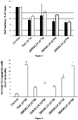
- OxA induced a strong inhibition of cellular growth of HEK-OX1R and HT-29 cells.
- SB408124 antagonist induced also a strong inhibition in a dose-dependent manner of cellular growth of HEK-OX1R and HT-29 cells.
- orexins were able to trigger an inhibition of cellular growth by induction of mitochondrial apoptosis.
- OxA induced an apoptotic effect in HT-29 cells ( Figure 3 ).
- SB408124 antagonist was also able to induce in a dose-dependent manner cell apoptosis in HT-29 cells.
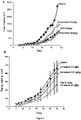
- nude mice bearing human colon cancer xenografts treated with OX1R antagonists Suvorexant and Almorexant similarly to mice treated with OxA developed significantly smaller tumors that control mice treated with PBS. Accordingly, the inventors demonstrated that OX1R antagonists and OxA inhibit tumor growth.
- OX1R antagonist Almorexant was also able to induce in a dose-dependent manner tumor growth inhibition ( Figure 4B ).
Landscapes
- Health & Medical Sciences (AREA)
- Veterinary Medicine (AREA)
- Public Health (AREA)
- General Health & Medical Sciences (AREA)
- Animal Behavior & Ethology (AREA)
- Life Sciences & Earth Sciences (AREA)
- Pharmacology & Pharmacy (AREA)
- Medicinal Chemistry (AREA)
- Chemical & Material Sciences (AREA)
- Epidemiology (AREA)
- Chemical Kinetics & Catalysis (AREA)
- General Chemical & Material Sciences (AREA)
- Nuclear Medicine, Radiotherapy & Molecular Imaging (AREA)
- Organic Chemistry (AREA)
- Pharmaceuticals Containing Other Organic And Inorganic Compounds (AREA)
Description
- The present disclosure is in the field of medicine, in particular oncology.
- The orexins (hypocretins) comprise two neuropeptides produced in the hypothalamus: the orexin A (OX-A) (a 33 amino acid peptide) and the orexin B (OX-B) (a 28 amino acid peptide) (Sakurai T. et al., Cell, 1998, 92, 573-585). Orexins are found to stimulate food consumption in rats suggesting a physiological role for these peptides as mediators in the central feedback mechanism that regulates feeding behaviour. Orexins regulate states of sleep and wakefulness opening potentially novel therapeutic approaches for narcoleptic or insomniac patients. Orexins have also been indicated as playing a role in arousal, reward, learning and memory. Two orexin receptors have been cloned and characterized in mammals. They belong to the super family of G-protein coupled receptors (7-transmembrane spanning receptor) (Sakurai T. et al., Cell, 1998, 92, 573-585): the orexin-1 receptor (OX1R or HCTR1) is more selective for OX-A than OX-B and the orexin-2 receptor (OX2R or HCTR2) binds OX-A as well as OX-B. A recent study shows that activation of OX1R by orexin can promote robust in vitro and in vivo apoptosis in colon cancer cells even when they are resistant to the most commonly used drug in colon cancer chemotherapy (Voisin T, El Firar A, Fasseu M, Rouyer-Fessard C, Descatoire V, Walker F, Paradis V, Bedossa P, Henin D, Lehy T, Laburthe M. Aberrant expression of OX1 receptors for orexins in colon cancers and liver metastases: an openable gate to apoptosis. Cancer Res. 2011 May 1;71(9):3341-51). In particular, it was shown that OX1R promotes apoptosis in the cancer cell lines through a mechanism which is not related to Gq-mediated phopholipase C activation and cellular calcium transients. Orexins induce indeed tyrosine phosphorylation of 2 tyrosine-based motifs in OX1R, ITIM and ITSM, resulting in the recruitment of the phosphotyrosine phosphatase SHP-2, the activation of which is responsible for mitochondrial apoptosis (Laburthe, M., T. Voisin, and A. El Firar. "Orexins/hypocretins and orexin receptors in apoptosis: a mini - review." Acta physiologica 198.3 (2010): 393-402; Voisin T, El Firar A, Rouyer-Fessard C, Gratio V, Laburthe M. A hallmark of immunoreceptor, the tyrosine-based inhibitory motif ITIM, is present in the G protein-coupled receptor OX1R for orexins and drives apoptosis: a novel mechanism. FASEB J. 2008 Jun;22(6): 1993-2002.;El Firar A, Voisin T, Rouyer-Fessard C, Ostuni MA, Couvineau A, Laburthe M. Discovery of a functional immunoreceptor tyrosine-based switch motif in a 7-transmembrane-spanning receptor: role in the orexin receptor OX1R-driven apoptosis. FASEB J. 2009 Dec;23(12):4069-80. doi: 10.1096/fj.09-131367. Epub 2009 Aug 6.). Remarkably, all primary colorectal tumors regardless of their localization and Duke's stages expressed OX1R while adjacent normal colonocytes as well as control normal tissues were negative. Besides, expression of OX1R has been recently confirmed in pancreatic cancer, hepatocarcimomas, and advanced prostate cancer. Accordingly the prior art supports that OX1R is an Achilles's heel of cancers (even chemoresistance) and suggests that OX1R is a relevant target for cancer therapy.
-
WO2000047577 discloses phenyl urea and phenyl thiourea derivatives which are non-peptide antagonists of human orexin receptors, in particular orexin-1 receptors. Said compounds are disclosed for the treatment of cancer pain. - The present invention is defined by the claims. In particular" the present invention relates to at least one OX1R antagonist for use in the treatment of cancer in subject in need thereof.
- The prior art teaches that orexin (i.e. the natural OX1R agonist) are suitable for triggering apoptosis in cancer cells. Surprisingly, the inventors demonstrate that the antagonists of the prior art (as defined hereinafter) are also able to trigger apoptosis in pancreatic and colorectal cancer cell lines.
- Accordingly, the present disclosure relates to a method for triggering apoptosis in a population of cancer cells comprising contacting the population of cancer cells with an amount of at least one OX1R antagonist. More particularly, the present disclosure relates to a method of treating cancer in subject in need thereof comprising administering the subject with a therapeutically effective amount of at least one OX1R antagonist.
- As used herein, "treatment" or "treating" is an approach for obtaining beneficial or desired results including clinical results. For purposes of this disclosure, beneficial or desired clinical results include, but are not limited to, one or more of the following: alleviating one or more symptoms resulting from the disease, diminishing the extent of the disease, stabilizing the disease (e.g., preventing or delaying the worsening of the disease), preventing or delaying the spread (e.g., metastasis) of the disease, preventing or delaying the recurrence of the disease, delay or slowing the progression of the disease, ameliorating the disease state, providing a remission (partial or total) of the disease, decreasing the dose of one or more other medications required to treat the disease, delaying the progression of the disease, increasing the quality of life, and/or prolonging survival. Also encompassed by "treatment" is a reduction of pathological consequence of cancer. The methods of the present disclosure contemplate any one or more of these aspects of treatment.
- Typically, the cancer may be selected from the group consisting of bile duct cancer (e.g. periphilar cancer, distal bile duct cancer, intrahepatic bile duct cancer), bladder cancer, bone cancer (e.g. osteoblastoma, osteochrondroma, hemangioma, chondromyxoid fibroma, osteosarcoma, chondrosarcoma, fibrosarcoma, malignant fibrous histiocytoma, giant cell tumor of the bone, chordoma, lymphoma, multiple myeloma), brain and central nervous system cancer (e.g. meningioma, astocytoma, oligodendrogliomas, ependymoma, gliomas, medulloblastoma, ganglioglioma, Schwannoma, germinoma, craniopharyngioma), breast cancer (e.g. ductal carcinoma in situ, infiltrating ductal carcinoma, infiltrating, lobular carcinoma, lobular carcinoma in, situ, gynecomastia), Castleman disease (e.g. giant lymph node hyperplasia, angiofollicular lymph node hyperplasia), cervical cancer, colorectal cancer, endometrial cancer (e.g. endometrial adenocarcinoma, adenocanthoma, papillary serous adnocarcinroma, clear cell), esophagus cancer, gallbladder cancer (mucinous adenocarcinoma, small cell carcinoma), gastrointestinal carcinoid tumors (e.g. choriocarcinoma, chorioadenoma destruens), Hodgkin's disease, non-Hodgkin's lymphoma, Kaposi's sarcoma, kidney cancer (e.g. renal cell cancer), laryngeal and hypopharyngeal cancer, liver cancer (e.g. hemangioma, hepatic adenoma, focal nodular hyperplasia, hepatocellular carcinoma), lung cancer (e.g. small cell lung cancer, non-small cell lung cancer), mesothelioma, plasmacytoma, nasal cavity and paranasal sinus cancer (e.g. esthesioneuroblastoma, midline granuloma), nasopharyngeal cancer, neuroblastoma, oral cavity and oropharyngeal cancer, ovarian cancer, pancreatic cancer, penile cancer, pituitary cancer, prostate cancer, retinoblastoma, rhabdomyosarcoma (e.g. embryonal rhabdomyosarcoma, alveolar rhabdomyosarcoma, pleomorphic rhabdomyosarcoma), salivary gland cancer, skin cancer (e.g. melanoma, nonmelanoma skin cancer), stomach cancer, testicular cancer (e.g. seminoma, nonseminoma germ cell cancer), thymus cancer, thyroid cancer (e.g. follicular carcinoma, anaplastic carcinoma, poorly differentiated carcinoma, medullary thyroid carcinoma, thyroid lymphoma), vaginal cancer, vulvar cancer, and uterine cancer (e.g. uterine leiomyosarcoma).
- In particular, the subject suffers from an epithelial cancer. As used herein, the term "epithelial cancer" refers to any malignant process that has an epithelial origin. Examples of epithelial cancers include, but are not limited to, a gynecological cancer such as endometrial cancer, ovarian cancer, cervical cancer, vulvar cancer, uterine cancer or fallopian tube cancer, breast cancer, prostate cancer, lung cancer, pancreatic cancer, urinary cancer, bladder cancer, head and neck cancer, oral cancer and liver cancer. An epithelial cancer may be at different stages as well as varying degrees of grading. In particular, the epithelial cancer is selected from the group consisting of breast cancer, prostate cancer, lung cancer, pancreatic cancer, bladder cancer and ovarian cancer. In particular, the epithelial cancer is a liver cancer, in particular a hepatocellular carcinoma. In particular, the epithelial cancer is breast cancer. In particular, the epithelial cancer is ovarian cancer. In particular, the epithelial cancer is prostate cancer, in particular advanced prostate cancer. In particular, the epithelial cancer is lung cancer. In particular, the epithelial cancer is head and neck cancer. In particular, the epithelial cancer is head and neck squamous cell carcinoma.
- As used herein the term "pancreatic cancer" or "pancreas cancer" as used herein relates to cancer which is derived from pancreatic cells. In particular, pancreatic cancer included pancreatic adenocarcinoma (e.g., pancreatic ductal adenocarcinoma) as well as other tumors of the exocrine pancreas (e.g., serous cystadenomas), acinar cell cancers, intraductal papillary mucinous neoplasms (IPMN) and pancreatic neuroendocrine tumors (such as insulinomas).
- As used herein the term "hepatocellular carcinoma" has its general meaning in the art and refers to the cancer developed in hepatocytes. In general, liver cancer indicates hepatocellular carcinoma in large. HCC may be caused by an infectious agent such as hepatitis B virus (HBV, hereinafter may be referred to as HBV) or hepatitis C virus (HCV, hereinafter may be referred to as HCV). In particular, HCC results from alcoholic steatohepatitis or non-alcoholic steatohepatitis (hereinafter may be abbreviated to as "NASH"). In particular, the HCC is early stage HCC, non-metastatic HCC, primary HCC, advanced HCC, locally advanced HCC, metastatic HCC, HCC in remission, or recurrent HCC. In particular, the HCC is localized resectable (i.e., tumors that are confined to a portion of the liver that allows for complete surgical removal), localized unresectable (i.e., the localized tumors may be unresectable because crucial blood vessel structures are involved or because the liver is impaired), or unresectable (i.e., the tumors involve all lobes of the liver and/or has spread to involve other organs (e.g., lung, lymph nodes, bone). In particular, the HCC is, according to TNM classifications, a stage I tumor (single tumor without vascular invasion), a stage II tumor (single tumor with vascular invasion, or multiple tumors, none greater than 5 cm), a stage III tumor (multiple tumors, any greater than 5 cm, or tumors involving major branch of portal or hepatic veins), a stage IV tumor (tumors with direct invasion of adjacent organs other than the gallbladder, or perforation of visceral peritoneum), N1 tumor (regional lymph node metastasis), or M1 tumor (distant metastasis). In particular, the HCC is, according to AJCC (American Joint Commission on Cancer) staging criteria, stage T1, T2, T3, or T4 HCC.
- As used herein the term "advanced prostate cancer" has its general meaning in the art. "Castration resistant prostate cancer," "CaP," "androgen-receptor dependent prostate cancer," "androgen-independent prostate cancer," are used interchangeably to refer to prostate cancer in which prostate cancer cells "grow" {i.e., increase in number) in the absence of androgens and/or in the absence of expression of androgen receptors on the cancer cells.
- As used herein, the tem "OX1R" has its general meaning in the art and refers to the 7-transmembrane spanning receptor OX1R for orexins.
- As used herein the term "OX1R antagonist" has its general meaning in the art and refers to any compound that is able to inhibit the calcium-dependent signalling pathway induced by Orexin. It is known that binding of the orexin to its receptor triggers an influx of calcium, which is coupled to activation of Erk. The receptors also couple to a phospholipase C (PLC)-mediated pathway that releases intracellular calcium stores. The utility of the compounds in accordance with the present disclosure as orexin receptor OX1R antagonists may be readily determined without undue experimentation by methodology well known in the art, including the "FLIPR Ca2+ Flux Assay" (Okumura et al, Biochem. Biophys. Res. Comm. 280:976-981, 2001). In a typical experiment the OX1 receptor antagonistic activity of the compounds of the present disclosure was determined in accordance with the following experimental method. For intracellular calcium measurements, Chinese hamster ovary (CHO) cells expressing the rat orexin- 1 receptor are grown in Iscove's modified DMEM containing 2 mM L-glutamine, 0.5 g/ml G418, 1% hypoxanthine-thymidine supplement, 100 U/ml penicillin, 100 ug/ml streptomycin and 10 % heat-inactivated fetal calf serum (FCS). The cells are seeded at 20,000 cells / well into Becton-Dickinson black 384-well clear bottom sterile plates coated with poly-D- lysine. All reagents were from GIBCO-Invitrogen Corp. The seeded plates are incubated overnight at 37°C and 5% C02. Ala-6,12 human orexin-A as the agonist is prepared as a 1 mM stock solution in 1% bovine serum albumin (BSA) and diluted in assay buffer (HBSS containing 20 mM HEPES, 0.1% BSA and 2.5mM probenecid, pH7.4) for use in the assay at a final concentration of 70pM. Test compounds are prepared as 10 mM stock solution in DMSO, then diluted in 384-well plates, first in DMSO, then assay buffer. On the day of the assay, cells are washed 3 times with 100 ul assay buffer and then incubated for 60 min (37° C, 5% C02) in 60 ul assay buffer containing 1 uM Fluo-4AM ester, 0.02 % pluronic acid, and 1 % BSA. The dye loading solution is then aspirated and cells are washed 3 times with 100 ul assay buffer. 30 ul of that same buffer is left in each well. Within the Fluorescent Imaging Plate Reader (FLIPR, Molecular Devices), test compounds are added to the plate in a volume of 25 ul, incubated for 5 min and finally 25 ul of agonist is added. Fluorescence is measured for each well at 1 second intervals for 5 minutes and the height of each fluorescence peak is compared to the height of the fluorescence peak induced by 70 pM Ala-6,12 orexin-A with buffer in place of antagonist. For each antagonist, IC50 value (the concentration of compound needed to inhibit 50 % of the agonist response) is determined. Alternatively, compound potency can be assessed by a radioligand binding assay (described in Bergman et. al. Bioorg. Med. Chem. Lett. 2008, 18, 1425 - 1430) in which the inhibition constant is determined in membranes prepared from CHO cells expressing the OX1 receptor. The intrinsic orexin receptor antagonist activity of a compound which may be used in the present disclosure may be determined by these assays.
- OX1R antagonists are well known to the skilled person who may easily identify such antagonists from the following literature:
- Boss C, Roch-Brisbare C, Steiner MA, Treiber A, Dietrich H, Jenck F, von Raumer M, Sifferlen T, Brotschi C, Heidmann B, Williams JT, Aissaoui H, Siegrist R, Gatfield J. Structure-Activity Relationship, Biological, and Pharmacological Characterization of the Proline Sulfonamide ACT-462206: a Potent, Brain-.
- Christopher JA. Orexin receptor antagonists. Pharm Pat Anal. 2012 Jul;1(3):329-46.
- Coleman PJ, Schreier JD, Cox CD, Breslin MJ, Whitman DB, Bogusky MJ, McGaughey GB, Bednar RA, Lemaire W, Doran SM, Fox SV, Garson SL, Gotter AL, Harrell CM, Reiss DR, Cabalu TD, Cui D, Prueksaritanont T, Stevens J, Tannenbaum PL, Ball RG, Stellabott J, Young SD, Hartman GD, Winrow CJ, Renger JJ. Discovery of [(2R,5R)-5-{[(5-fluoropyridin-2-yl)oxy]methyl}-2-methylpiperidin-1-yl][5-methyl-2-(pyrimidin-2-yl)phenyl]methanone (MK-6096): a dual orexin receptor antagonist with potent sleep-promoting properties. ChemMedChem. 2012 .
- Cox CD, Breslin MJ, Whitman DB, Schreier JD, McGaughey GB, Bogusky MJ, Roecker AJ, Mercer SP, Bednar RA, Lemaire W, Bruno JG, Reiss DR, Harrell CM, Murphy KL, Garson SL, Doran SM, Prueksaritanont T, Anderson WB, Tang C, Roller S, Cabalu TD, Cui D, Hartman GD, Young SD, Koblan KS, Winrow CJ, Renger JJ, Coleman PJ. Discovery of the dual orexin receptor antagonist [(7R)-4-(5-chloro-1,3-benzoxazol-2-yl)-7-methyl-1,4-diazepan-1-yl][5-methyl-2-(2H-1,2,3-triazol-2-yl)phenyl]methanone (MK-4305) for the treatment of insomnia. J Med Chem. 2010 Jul 22;53(14):5320-32.
- Jiaqiang Cai , Fiona E Cooke , Bradley S Sherborne Antagonists of the orexin receptors Expert Opinion on Therapeutic Patents May 2006, Vol. 16, No. 5, Pages 631-646: 631-646.
-
John A Christopher , Miles S Congreve Treatment and prevention of various therapeutic conditions using OX receptor antagonistic activity (WO2012081692 ) Expert Opinion on Therapeutic Patents Feb 2013, Vol. 23, No. 2, Pages 273-277: 273-277. - Langmead CJ, Jerman JC, Brough SJ, Scott C, Porter RA, Herdon HJ. Characterisation of the binding of [3H]-SB-674042, a novel nonpeptide antagonist, to the human orexin-1 receptor. Br J Pharmacol. 2004 Jan;141(2):340-6. Epub 2003 Dec 22.
- Paul J Coleman, John J Renger Orexin receptor antagonists: a review of promising compounds patented since 2006 Expert Opinion on Therapeutic Patents Mar 2010, Vol. 20, No. 3, Pages 307-324: 307-324.
- Perrey DA, German NA, Gilmour BP, Li JX, Harris DL, Thomas BF, Zhang Y. Substituted tetrahydroisoquinolines as selective antagonists for the .
- Perrey DA, Gilmour BP, Runyon SP, Thomas BF, Zhang Y. Diaryl urea analogues of SB-334867 as orexin-1 receptor antagonists. Bioorg Med Chem Lett. 2011 May 15;21(10):2980-5.
- Porter RA, Chan WN, Coulton S, Johns A, Hadley MS, Widdowson K, Jerman JC, Brough SJ, Coldwell M, Smart D, Jewitt F, Jeffrey P, Austin N. 1,3-Biarylureas as selective non-peptide antagonists of the orexin-1 receptor. Bioorg Med Chem Lett. 2001 Jul 23;11(14): 1907-10.
- Roecker AJ, Coleman PJ (2008). "Orexin receptor antagonists: medicinal chemistry and therapeutic potential". Curr Top Med Chem 8 (11): 977-87.
- Roecker AJ, Coleman PJ. Orexin receptor antagonists: medicinal chemistry and therapeutic potential. Curr Top Med Chem. 2008;8(11):977-87.
- Roecker AJ, Mercer SP, Harrell CM, Garson SL, Fox SV, Gotter AL, Prueksaritanont T, Cabalu TD, Cui D, Lemaire W, Winrow CJ, Renger JJ, Coleman PJ. Discovery of dual orexin receptor antagonists with rat sleep efficacy enabled by expansion of the acetonitrile-assisted/diphosgene-mediated 2,4-dichloropyrimidine synthesis. Bioorg Med Chem Lett. 2014 May 1;24(9):2079-85.
- Smart D, Sabido-David C, Brough SJ, Jewitt F, Johns A, Porter RA, Jerman JC. SB-334867-A: the first selective orexin-1 receptor antagonist. Br J Pharmacol. 2001 Mar;132(6): 1179-82.
- Whitman DB, Cox CD, Breslin MJ, Brashear KM, Schreier JD, Bogusky MJ, Bednar RA, Lemaire W, Bruno JG, Hartman GD, Reiss DR, Harrell CM, Kraus RL, Li Y, Garson SL, Doran SM, Prueksaritanont T, Li C, Winrow CJ, Koblan KS, Renger JJ, Coleman PJ. Discovery of a potent, CNS-penetrant orexin receptor antagonist based on an n,n-disubstituted-1,4-diazepane scaffold that promotes sleep in rats. ChemMedChem. 2009 Jul;4(7): 1069-74.
- Yoshida Y, Terauchi T, Naoe Y, Kazuta Y, Ozaki F, Beuckmann CT, Nakagawa M, Suzuki M, Kushida I, Takenaka O, Ueno T, Yonaga M. Design, synthesis, and structure-activity relationships of a series of novel N-aryl-2-phenylcyclopropanecarboxamide that are potent and orally active orexin receptor antagonists. Bioorg Med Chem. 2014 .
- Other examples of OX1R antagonists are also described in the following patent publications:
-
EP0849361 -
US20080132490 -
US20090163485 -
US6309854 -
WO 2014099698 -
WO00047576 -
WO00047577 -
WO00047580 -
WO01000787 -
WO01068609 -
WO01085693 -
WO01096302 -
WO02044172 -
WO02051232 -
WO02051838 -
WO02089800 -
WO02090355 -
WO03002559 -
WO03002561 -
WO03032991 -
WO03037847 -
WO03041711 -
WO03051368 -
WO03051871 -
WO03051872 -
WO03051873 -
WO19909024 -
WO19958533 -
WO2003002561 -
WO2003051872 -
WO2004004733 -
WO2004026866 -
WO2004033418 -
WO2004041791 -
WO2004041807 -
WO2004041816 -
WO2004052876 -
WO2004085403 -
WO2004096780 -
WO2005060959 -
WO2005075458 -
WO2005118548 -
WO2005118548 -
WO2006067224 -
WO2006110626 -
WO2006127550 -
WO2007019234 -
WO2007025069 -
WO2007061763 -
WO2007085718 -
WO2007122591 -
WO2007126934 -
WO2007126935 -
WO2008008517 -
WO2008008518 -
WO2008008551 -
WO2008020405 -
WO2008026149 -
WO2008038251 -
WO2008065626 -
WO2008078291 -
WO2008081399 -
WO2008107335 -
WO2008110488 -
WO2008117241 -
WO2008143856 -
WO2008147518 -
WO2008150364 -
WO2009003993 -
WO2009003997 -
WO2009004585 -
WO2009011775 -
WO2009016087 -
WO2009016564 -
WO2009020642 -
WO2009022311 -
WO2009034133 -
WO2009058238 -
WO2009079637 -
WO2011053522 -
WO2013059163 -
WO2013059222 -
WO2013062857 -
WO2013062858 -
WO2014066196 -
WO2014085208 -
WO2014099696 - and
WO2014099697 . - In particular, the OX1R antagonist of the present disclosure is SB408124 which is:

- In particular, the OX1R antagonist of the present disclosure is selected from the group consisting of:


- In particular, the OX1R antagonist of the present disclosure is selected from the group consisting of:


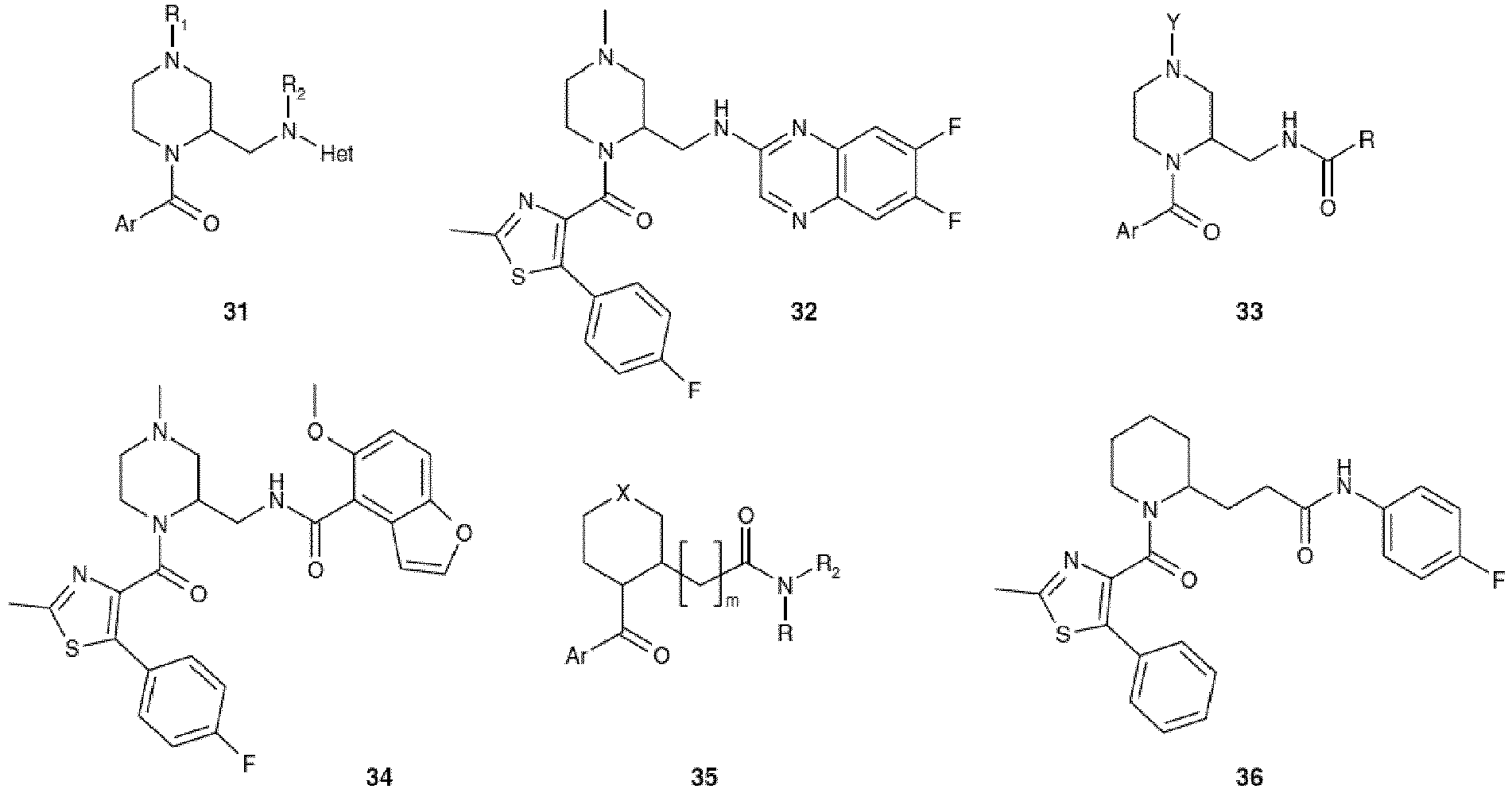
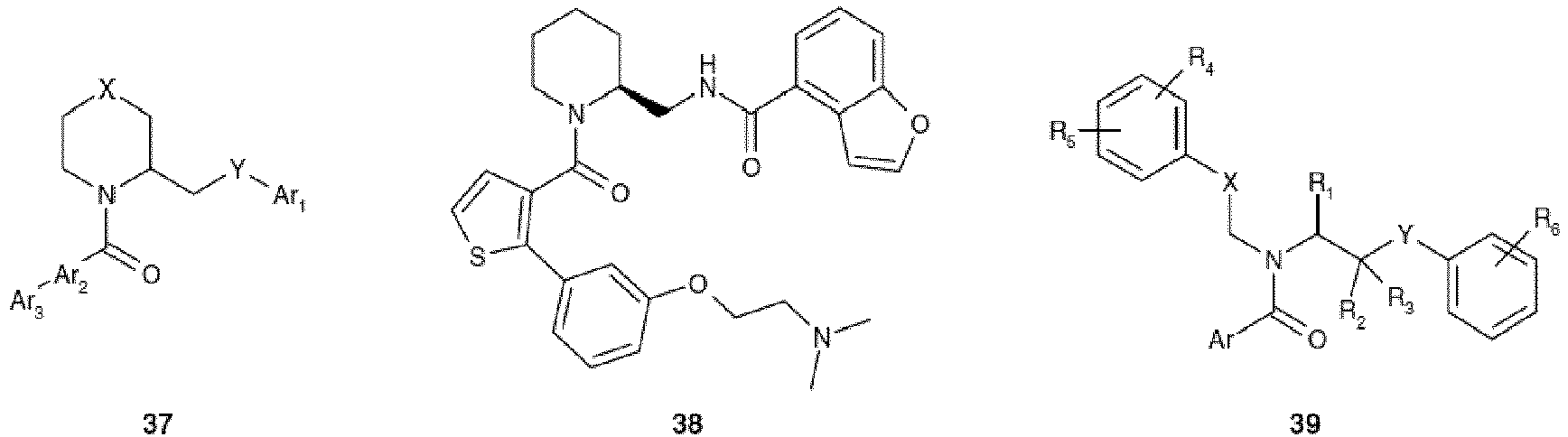


- In particular, the OX1R antagonist of the present disclosure is selected from the group consisting of:


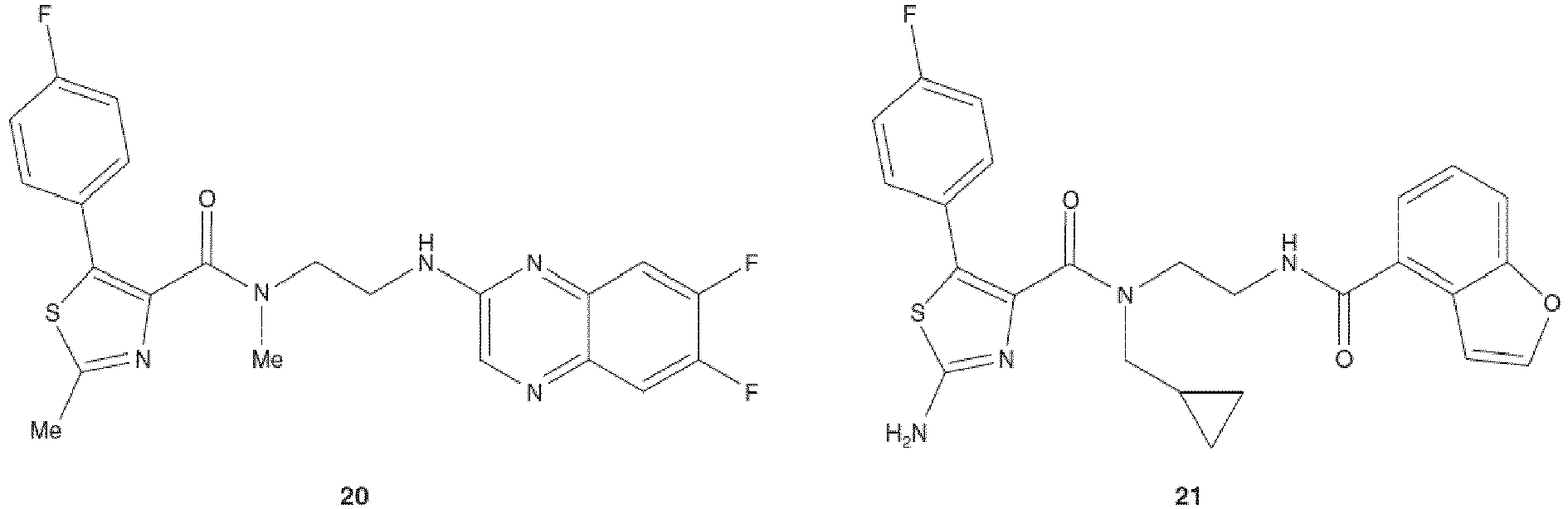


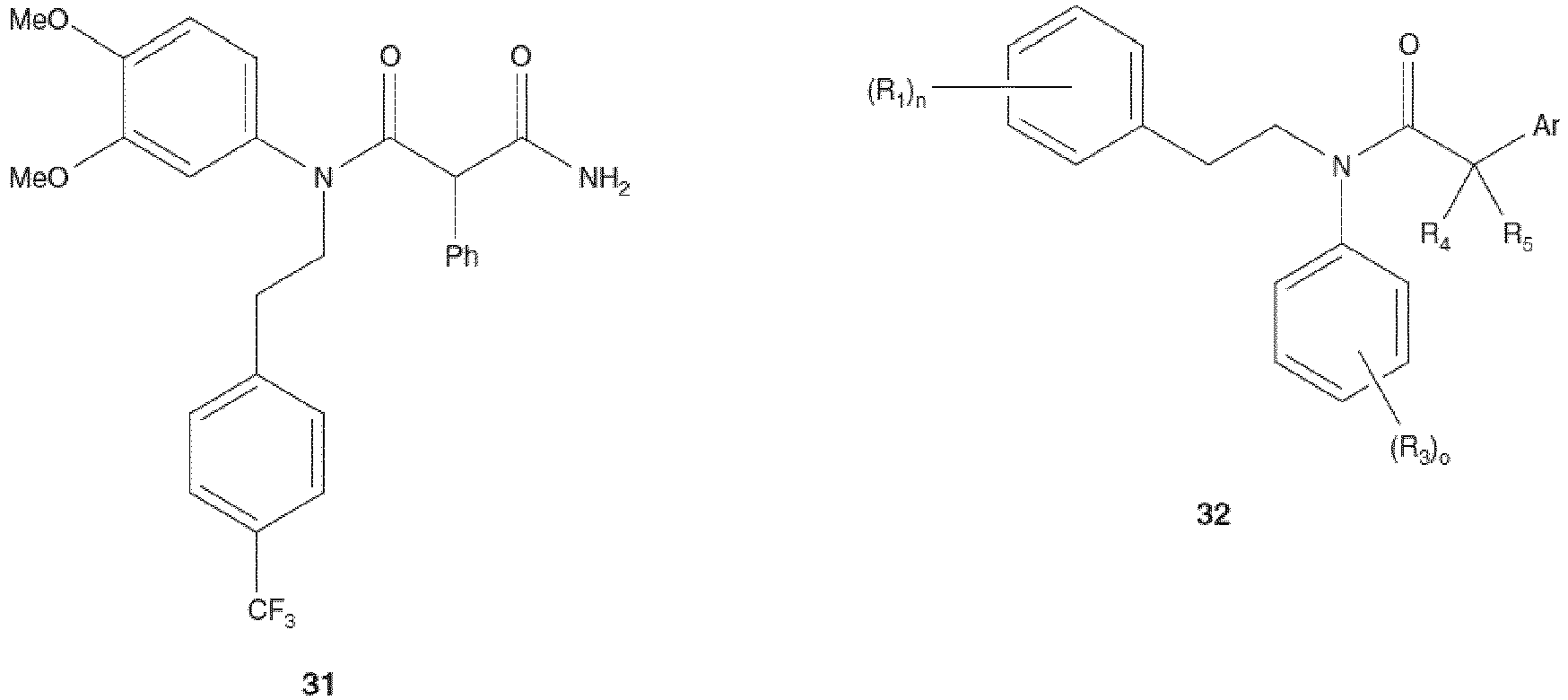


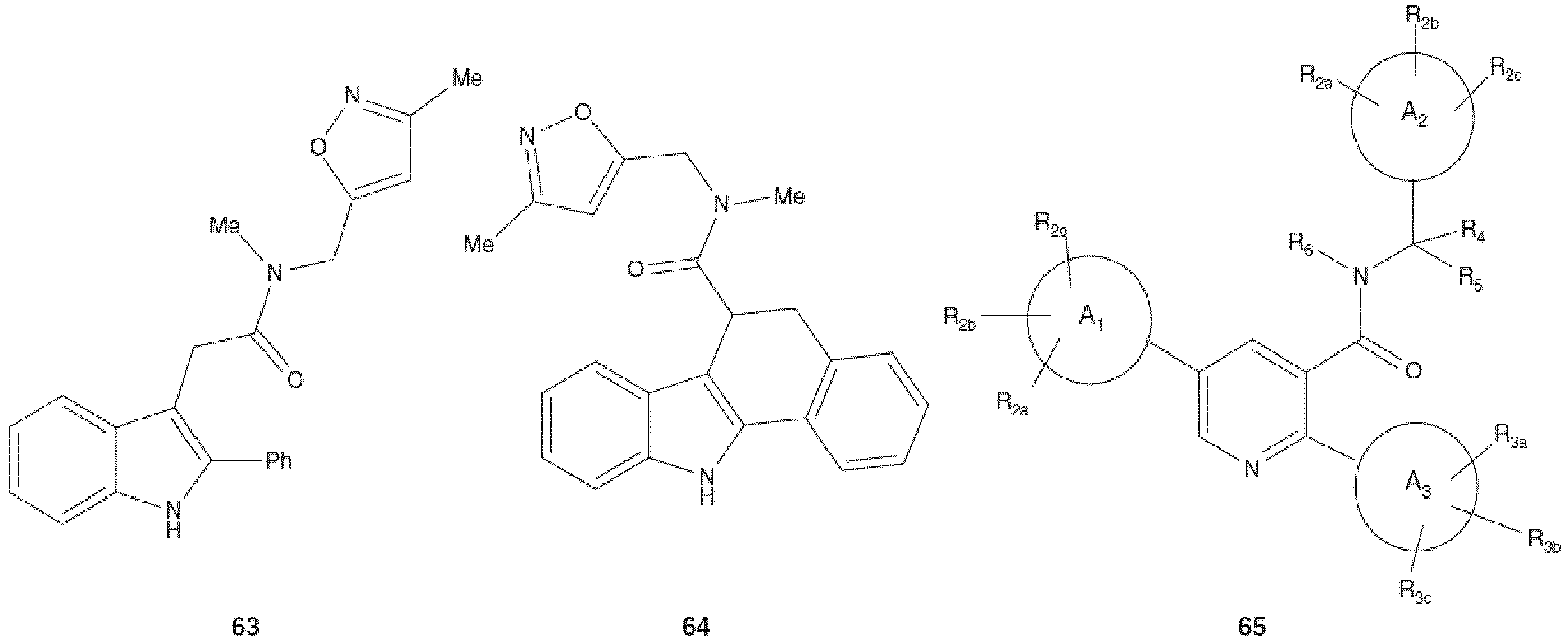


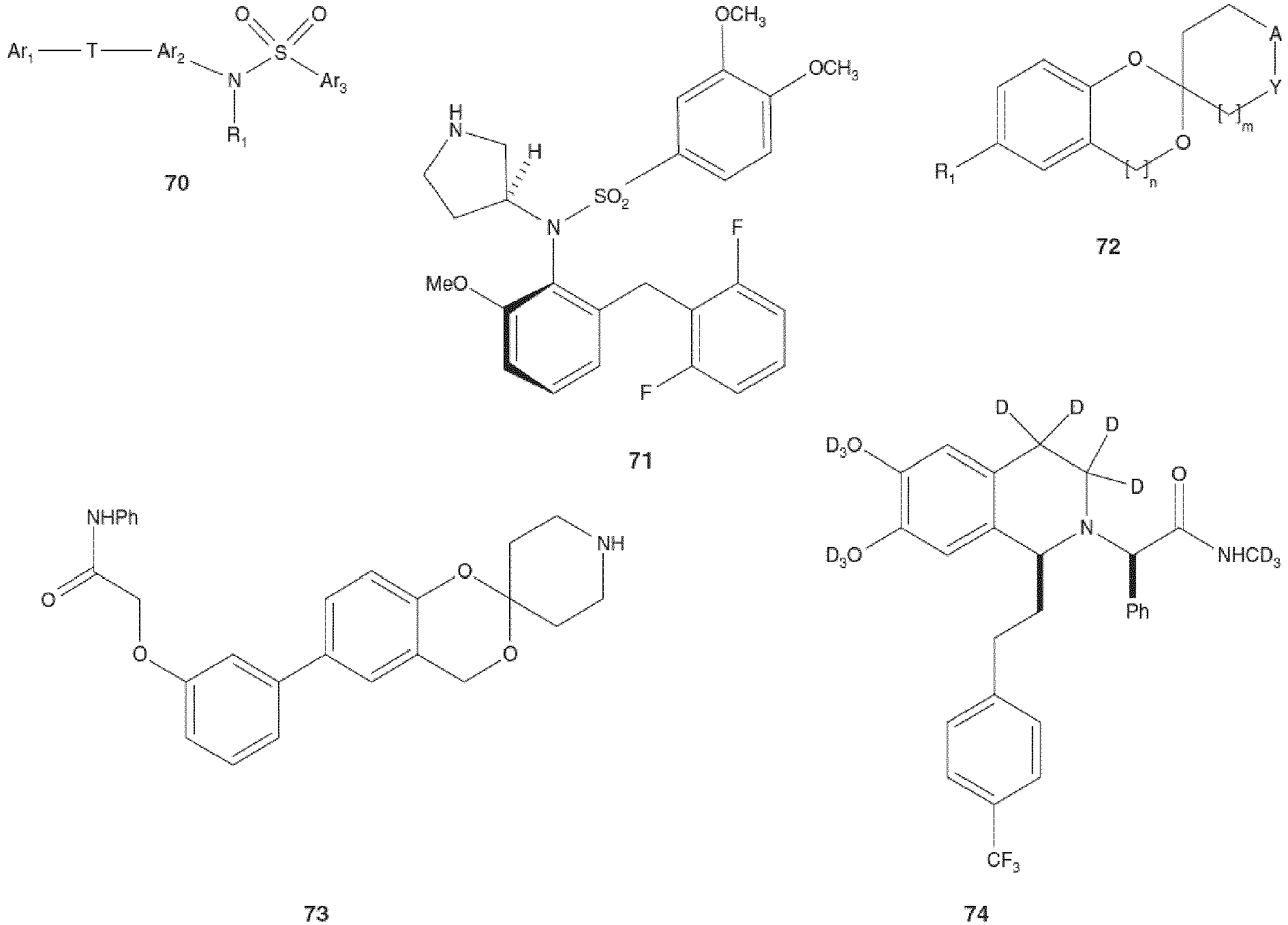
- In particular, the OX1R antagonist of the present disclosure is selected from 2-pyridyloxy-3-substituted-4-nitrile orexin receptor antagonists that are disclosed in
WO 2014066196 . In particular, the OX1R antagonist of the present disclosure is selected from the group consisting of: - 3-methyl-2-{[(3R,6R)-6-methyl-1-{[2-(2H-1,2,3-triazol-2-1)phenyl]carbonyl}piperidin-3-yl] oxy } pyridine-4-carbonitrile;
- 2- {[(3R,6R)-1-{[6-methoxy-2-(2H-1,2,3-triazol-2-yl)pyridin-3-yl]carbonyl}-6-methylpiperidin- 3- yl]oxy}-3-methylpyridine-4-carbonitrile;
- 2-{[(3R,6R)-1-{[5-chloro-2-(2H-1,2,3-triazol-2-yl)phenyl]carbonyl}-6-ethylpiperidin-3-yl]oxy}-3-methylpyridine-4-carbonitrile;
- 2-{[(3R,6R)-1-{[4-chloro-2-(2H-1,2,3-triazol-2-yl)phenyl]carbonyl}-6-ethylpiperidin-3-yl]oxy}-3-methylpyridine-4-carbonitrile;
- 2- ({(3R,6R)-1-[(2-cyclopropyl-6-methoxypyridin-3-yl)carbonyl]-6-methylpiperidin-3-yl}oxy)- 3- methylpyridine-4-carbonitrile;
- 3-methyl-2-{[(3R,6R)-6-methyl-1-{[5-methyl-2-(2H-1,2,3-triazol-2-yl)phenyl]carbonyl}pipendin-3-yl]oxy}pyridine-4-carbonitnle;
- 2-{[(3R,6R)-1-{[4-methoxy-2-(2H-1,2,3-triazol-2-yl)phenyl]carbonyl}-6-methylpiperidin-3-yl]oxy}-3-methylpyridine-4-carbonitrile;
- 3-methyl-2-{[(3R,6R)-6-methyl-1-{[4-methyl-2-(2H-1,2,3-triazol-2-yl)phenyl]carbonyl}piperidin-3-yl]oxy}pyridine-4-carbonitrile;
- 2- {[(3R,6R)-1-{[4-fluoro-2-(2H-1,2,3-triazol-2-yl)phenyl]carbonyl}-6-methylpiperidin-3-yl]oxy} -3 -methylpyridine-4-carbonitrile;
- 3- methyl-2-{[(3R,6R)-6-methyl-1-{[4-(2H-1,2,3 riazol-2-yl)pyridin-3-yl]carbonyl}piperidin-3-yl] oxy } pyridine-4-carbonitrile;
- 2-{[(3R,6R)-1-{[2-fluoro-6-(2H-1,2,3-triazol-2-yl)phenyl]carbonyl}-6-methylpiperidin-3-yl]oxy} -3 -methylpyridine-4-carbonitrile;
- 2-{[(3R,6R)-1-{[3-fluoro-2-(2H-1,2,3-triazol-2-yl)phenyl]carbonyl}-6-methylpiperidin-3-yl]oxy} -3 -methylpyridine-4-carbonitrile;
- 3 -methyl-2- { [(3R,6R)-6-methyl- 1 - { [3 -methyl-2-(2H- 1 ,2,3 -triazol-2-yl)phenyl]carbonyl}piperidin-3-yl]oxy}pyridine-4-carbonitrile;
- 2- {[(3R,6R)-1-{[2-methoxy-6-(2H-1,2,3-triazol-2-yl)phenyl]carbonyl}-6-methylpiperidin-3-yl]oxy} -3 -methylpyridine-4-carbonitrile;
- 3- methyl-2-{[(3R,6R)-6-methyl-1-{[2-methyl-6-(2H-1,2,3-triazol-2-yl)phenyl]carbonyl}piperidin-3-yl]oxy}pyridine-4-carbonitrile;
- 2- ({(3R,6R)-1-[(2-cyclopropylphenyl)carbonyl]-6-methylpiperidin-3-yl}oxy)-3-methylpyridine- 4- carbonitrile;
- 3- methyl-2-{[(3R,6R)-6-methyl-1-{[2-(trifluoromethyl)phenyl]carbonyl}piperidin-3-yl] oxy } pyridine-4-carbonitrile;
- 2-{[(3R,6R)-1-{[2-fluoro-6-(1,3-thiazol-2-yl)phenyl]carbonyl}-6-methylpiperidin-3-yl]oxy}-3-methylpyridine-4-carbonitrile;
- 2- ({(3R,6R)-1-[(2-ethoxyphenyl)carbonyl]-6-methylpiperidin-3-yl}oxy)-3-methylpyridine-4-carbonitrile;
- 3- methyl-2-({(3R,6R)-6-methyl-1-[(4-phenylisothiazol-5-yl)carbonyl]piperidin-3-yl} oxy)pyridine-4-carbonitrile;
- 3- methyl-2-{[(3R,6R)-6-methyl-1-{[2-(1-methylethoxy)phenyl]carbonyl}piperidin-3-yl] oxy } pyridine-4-carbonitrile;
- 2- {[(3R,6R)-1-{[2-fluoro-6-(1,3-thiazol-4-yl)phenyl]carbonyl}-6-methylpiperidin-3-yl]oxy}-3-methylpyridine-4-carbonitrile;
- 3 -methyl-2-( {(3R,6R)-6-methyl- 1 -[(3 -phenylpyridin-4-yl)carbonyl]piperidin-3 -yl} oxy)pyridine- 4- carbonitrile;
- 3- methyl-2- {[(3R,6R)-6-methyl-1-{[3-(1,3-thiazol-4-yl)pyridin-2-yl]carbonyl}piperidin-3-yl]oxy } pyridine-4-carbonitrile;
- 2- { [(3R,6R)- 1 - { [2-fluoro-5-(1 ,3 -thiazol-5-yl)pyridin-4-yl]carbonyl} -6-methylpiperidin-3-yl]oxy} -3 -methylpyridine-4-carbonitrile;
- 2- {[(3R,6R)-1-{[5-fluoro-2-(1,3-thiazol-4-yl)phenyl]carbonyl}-6-methylpiperidin-3-yl]oxy}-3 methylpyridine-4-carbonitrile;
- 3- methyl-2-{[(3R,6R)-6-methyl-1-{[2-(1,3-oxazol-2-yl)phenyl]carbonyl}piperidin-3-yl] oxy } pyridine-4-carbonitrile;
- 2-{[(3R,6R)-1-{[5-fluoro-2-(1,3-thiazol-2-yl)phenyl]carbonyl}-6-methylpiperidin-3-yl]oxy}-3 methylpyridine-4-carbonitrile;
- 3 -methyl-2-( {(3R,6R)-6-methyl- 1 -[(2-pyrrolidin-1-ylphenyl)carbonyl]piperidin-3-yl} oxy)pyridine-4-carbonitrile;
- 3 -methyl-2-( {(3R,6R)-6-methyl- 1 -[(2-phenoxyphenyl)carbonyl]piperidin-3-yl}oxy)pyridine-4-carbonitrile;
- 3 -methyl-2- { [(3R,6R)-6-methyl- 1 -{[2-(1,3-thiazol-4-yl)thiophen-3-yl]carbonyl}piperidin-3-yl] oxy } pyridine-4-carbonitrile;
- 3 -methyl-2- { [(3R,6R)-6-methyl- 1 -{[2-(1,3-thiazol-2-yl)thiophen-3-yl]carbonyl}piperidin-3-yl] oxy } pyridine-4-carbonitrile;
- 3 -methyl-2- { [(3 R,6R)-6-methyl- 1 - { [2-( 1 ,3 -thiazol-4-yl)phenyl]carbonyl}piperidin-3-yl] oxy } pyridine-4-carbonitrile;
- 2-{[(3R,6R)-1-{[4-fluoro-2-(1,3-thiazol-2-yl)phenyl]carbonyl}-6-methylpiperidin-3-yl]oxy}-3 methylpyridine-4-carbonitrile;
- 2- { [(3R,6R)- 1 - { [5 -fluoro-2-(1 ,3 -thiazol-2-yl)pyridin-3 -yl]carbonyl } -6-methylpiperidin-3 -yl]oxy}-3-methylpyridine-4-carbonitrile;
- 3 -methyl-2- { [(3 R,6R)-6-methyl- 1 - { [2-(1 -methyl- 1 H-pyrazol-4-yl)phenyl]carbonyl} piperidin-3 yl] oxy } pyridine-4-carbonitrile;
- 3 -methyl-2- { [(3 R,6R)-6-methyl- 1 - { [3 -( 1 ,3 -thiazol-2-yl)thiophen-2-yl]carbonyl} piperidin-3 -yl] oxy } pyridine-4-carbonitrile;
- 3 -methyl-2- { [(3 R,6R)-6-methyl- 1 - { [3 -( 1 ,3 -thiazol-4-yl)thiophen-2-yl]carbonyl} piperidin-3 -yl] oxy } pyridine-4-carbonitrile;
- 3- methyl-2-{[(3R,6R)-6-methyl-1-{[2-(2H-1,2,3-triazol-2-yl)thiophen-3-yljcarbonyl}piperidin 3-yl]oxy}pyridine-4-carbonitrile;
- 3-methyl-2-{[(3R,6R)-6-methyl-1-{[2-(5-methyl-2H-tetrazol-2-yl)phenyl]carbonyl}piperidin-3yl] oxy } pyridine-4-carbonitrile;
- 2-{[(3R,6R)-1-{[5-(4-fluorophenyl)-2-methyl-1,3-thiazol-4-yl]carbonyl}-6-methylpiperidin-3-yl]oxy}-3-methylpyridine-4-carbonitrile;
- 3 -methyl-2- { [(3R,6R)-6-methyl- 1 - { [2-(5-methyl- 1 ,2,4-oxadiazol-3 - yl)phenyl]carbonyl}piperidin-3-yl]oxy}pyridine-4-carbonitrile;
- 3 -methyl-2-{[(3R,6R)-6-methyl-1-{[2-(4-methyl-1H-pyrazol-1-yl)phenyl]carbonyl}piperidin-3-yl] oxy } pyridine-4-carbonitrile;
- 3 -methyl-2-{[(3R,6R)-6-methyl-1-{[2-(1,3-thiazol-2-yl)phenyl]carbonyl}piperidin-3-yl] oxy } pyridine-4-carbonitrile;
- 3-methyl-2-({(3R,6R)-6-methyl-1-[(1-methyl-3-phenyl-1H-pyrazol-4-yl)carbonyl]piperidin-3-yl} oxy)pyridine-4-carbonitrile;
- 3 -methyl-2- { [(3R,6R)-6-methyl- 1 - { [1 -methyl-3 -(1 ,3 -thiazol-2-yl)- 1 H-pyrazol-4-yl]carbonyl}piperidin-3-yl]oxy}pyridine-4-carbonitrile;
- 3-methyl-2-({(3R,6R)-6-methyl-1-[(3-methyl-5-phenylisothiazol-4-yl)carbonyl]piperidin-3-yl} oxy)pyridine-4-carbonitrile;
- 2-({(3R,6R)-1-[(6-methoxy-2,4'-bipyridin-3-yl)carbonyl]-6-methylpiperidin-3-yl}oxy)-3-methylpyridine-4-carbonitrile;
- 2- {[(3R,6R)-1-{[2-(6-methoxypyridin-3-yl)phenyl]carbonyl}-6-methylpiperidin-3-yl]oxy}-3-methylpyridine-4-carbonitrile;
- 3- methyl-2-({(3R,6R)-6-methyl-1-[(4-phenylisothiazol-3-yl)carbonyl]piperidin-3-yl} oxy)pyridine-4-carbonitrile;
- 2-({(3R,6R)-1-[(2-cyclopropyl-4-methylphenyl)carbonyl]-6-methylpiperidin-3-yl}oxy)-3-methylpyridine-4-carbonitrile;
- 2-({(3R,6R)-1-[(2-cyclopropyl-4-methoxyphenyl)carbonyl]-6-methylpiperidin-3-yl}oxy)-3-methylpyridine-4-carbonitrile;
- 2-({(3R,6R)-1-[(2-cyclopropyl-4-fluorophenyl)carbonyl]-6-methylpiperidin-3-yl}oxy)-3-methylpyridine-4-carbonitrile;
- 2- {[(3R,6R)-1-{[5-(hydroxymethyl)biphenyl-2-yl]carbonyl}-6-methylpiperidin-3 -yl]oxy}-3-methylpyridine-4-carbonitrile;
- 3- methyl-2-{[(3R,6R)-6-methyl-1-{[4-(2H-1,2,3-triazol-2-yl)isothiazol-3-yl]carbonyl}piperidin-3-yl]oxy}pyridine-4-carbonitrile;
- 2- ({(3R,6R)-1-[(5-fluoro-2-pyridin-2-ylphenyl)carbonyl]-6-methylpiperidin-3-yl}oxy)-3-methylpyridine-4-carbonitrile;
- 3- methyl-2-({(3R,6R)-6-methyl-1-[(2-methyl-5-phenyl-1,3-thiazol-4-yl)carbonyl]piperidin-3-yl} oxy)pyridine-4-carbonitrile;
- 3 -methyl-2- { [(3R,6R)-6-methyl- 1 - { [2-(3-methyl- 1 ,2,4-oxadiazol-5-yl)phenyl]carbonyl}piperidin-3-yl]oxy}pyridine-4-carbonitrile;
- 2-({(3R,6R)-1-[(2-ethylphenyl)carbonyl]-6-methylpiperidin-3-yl}oxy)-3-methylpyridine-4-carbonitrile;
- 3 -methyl-2-( {(3R,6R)-6-methyl- 1 -[(2-phenylpyridin-3 - yl)carbonyl]piperidin-3 -yl} oxy)pyridine-4-carbonitrile;
- 3 -methyl-2- { [(3R,6R)-6-methyl- 1 - { [2-(methylsulfanyl)phenyl]carbonyl}piperidin-3 -yl] oxy } pyridine-4-carbonitrile;
- 3 -methyl-2- { [(3R,6R)-6-methyl- 1 - { [2-(trifluoromethoxy)phenyl]carbonyl}piperidin-3 -yl] oxy } pyridine-4-carbonitrile;
- 3 -methyl-2-( {(3 R,6R)-6-methyl- 1 - [(2-pyridin-2-ylcyclopent- 1 -en- 1-yl)carbonyl]piperidin-3 -yl} oxy)pyridine-4-carbonitrile;
- 2-{[(3R,6R)-1-{[4-(fluoromethoxy)-2-(2H-1,2,3-triazol-2-yl)phenyl]carbonyl}-6-methylpiperidin-3-yl]oxy}-3-methylpyridine-4-carbonitrile;
- 2-{[(3R,6R)-1-{[4-(difluoromethoxy)-2-(2H-1,2,3-triazol-2-yl)phenyl]carbonyl}-6-methylpiperidin-3-yl]oxy}-3-methylpyridine-4-carbonitrile;
- 2-({(3R,6R)-1-[(2-cyclobutyl-6-methoxypyridin-3-yl)carbonyl]-6-methylpiperidin-3-yl}oxy)-3-methylpyridine-4-carbonitrile;
- 2- { [(3R,6R)- 1 - { [6-chloro-4-(2H- 1,2,3 -triazol-2-yl)pyridin-3 -yl]carbonyl } -6-methylpiperidin-3 -yl]oxy}-3 -methylpyridine-4-carbonitrile;
- 2-({(3R,6R)-1-[(2-ethoxypyridin-3-yl)carbonyl]-6-methylpiperidin-3-yl}oxy)-3-methylpyridine-4-carbonitrile;
- 2- {[(3R,6R)-1-{[5-fluoro-2-(2H-1,2,3-triazol-2-yl)phenyl]carbonyl}-6-methylpiperidin-3-yl]oxy} -3 -methylpyridine-4-carbonitrile;
- 3 - methyl-2- {[(3R, 6R)-6-methyl-1-{[2-(2H-tetrazol-2-yl)phenyl]carbonyl}piperidin-3-yl] oxy } pyridine-4-carbonitrile;
- 2-{[(3R,6R)-1-{[5-cyano-2-(2H-1,2,3-triazol-2-yl)phenyl]carbonyl}-6-methylpiperidin-3-yl]oxy}-3-methylpyridine-4-carbonitrile;
- 2- { [(3R,6R)- 1 - { [6-chloro-2-(2H- 1,2,3 -triazol-2-yl)pyridin-3 -yl]carbonyl } -6-methylpiperidin-3 -yl]oxy}-3-methylpyridine-4-carbonitrile;
- 2- ({(3R,6R)-1-[(2,6-dimethoxypyridin-3-yl)carbonyl]-6-methylpiperidin-3-yl}oxy)-3-methylpyridine-4-carbonitrile;
- 3- methyl-2-{[(3R,6R)-6-methyl-1-{[2-(pyrimidin-2-yl)phenyl]carbonyl}piperidin-3-yl] oxy } pyridine-4-carbonitrile;
- 3-methyl-2-({(3R,6R)-6-methyl-1-[(3-pyrimidin-2-ylthiophen-2-yl)carbonyl]piperidin-3-yl} oxy)pyridine-4-carbonitrile;
- 3-methyl-2-({(3R,6R)-6-methyl-1-[(4-methyl-2-yrimidin-2-ylphenyl)carbonyl]piperidin-3-yl} oxy)pyridine-4-carbonitrile;
- 3-methyl-2-({(3R,6R)-6-methyl-1-[(2-yrimidin-2-ylthiophen-3-yl)carbonyl]piperidin-3-yl} oxy)pyridine-4-carbonitrile;
- 2-({(3R,6R)-1-[(6-methoxy-2-phenylpyridin-3-yl)carbonyl]-6-methylpiperidin-3-yl}oxy)-3-methylpyridine-4-carbonitrile;
- 2-{[(3R,6R)-1-{[6-methoxy-2-(1-methyl-1H-pyrazol-5-yl)pyridin-3-yl]carbonyl}-6-methylpiperidin-3-yl]oxy}-3-methylpyridine-4-carbonitrile;
- 2-{[(3R,6R)-1-{[6-methoxy-2-(1-methyl-1H-pyrazol-4-yl)pyridin-3-yl]carbonyl}-6-methylpiperidin-3-yl]oxy}-3-methylpyridine-4-carbonitrile;
- 2-{[(3R,6R)-1-{[6-methoxy-2-(1-methyl-1H-pyrazol-3-yl)pyridin-3-yl]carbonyl}-6-methylpiperidin-3-yl]oxy}-3-methylpyridine-4-carbonitrile;
- 2-({(3R,6R)-1-[(6-methoxy-2,3'-bipyridin-3-yl)carbonyl]-6-methylpiperidin-3-yl}oxy)-3-methylpyridine-4-carbonitrile;
- 2-({(3R,6R)-1-[(6-methoxy-2,2'-bipyridin-3-yl)carbonyl]-6-methylpiperidin-3-yl}oxy)-3-methylpyridine-4-carbonitrile;
- 2- { [(3R,6R)- 1 - { [6-Methoxy-2-(methylsulfanyl)pyridin-3-yl]carbonyl} -6-methylpiperidin-3 -yl]oxy}-3 -methylpyridine-4-carbonitrile;
- 2- {[(3R,6R)-1-{[6-methoxy-4-(2H-1,2,3 riazol-2-yl)pyridin-3-yl]carbonyl}-6-methylpiperidin
- 3- yl]oxy}-3-methylpyridine-4-carbonitrile;
- 3-methyl-2-{[(3R,6R)-6-methyl -{[6-(methylsulfanyl)-2-(2H-1,2,3-triazol-2-yl)pyridin-3-yl]carbonyl}piperidin-3-yl]oxy}pyridine-4-carbonitrile;
- 2-{[(3R,6R)-1-{[2-(dimethylamino)-6-methoxypyridin-3-yl]carbonyl}-6-methylpiperidin-3-yl]oxy} -3 -methylpyridine-4-carbonitrile;
- 2-{[(3R,6R)-1-{[6-(fluoromethoxy)-2-(2H-1,2,3-triazol-2-yl)pyridin-3-yl]carbonyl}-6-methylpiperidin-3-yl]oxy}-3-methylpyridine-4-carbonitrile;
- 2-{[(3R,6R)-1-{[6-bromo-2-(2H-1,2,3-triazol-2-yl)pyridin-3-yl]carbonyl}-6-methylpiperidin-3 yl]oxy} -3 -methylpyridine-4-carbonitrile;
- 2- {[(3R,6R)-1-{[6-ethenyl-2-(2H-1,2,3 riazol-2-yl)pyridin-3-yl]carbonyl}-6-methylpiperidin-yl]oxy} -3 -methylpyridine-4-carbonitrile;
- 3 -chloro-2- { [(3R,6R)-6-methyl- 1 - { [2-(2H- 1,2,3 -triazol-2-yl)phenyl]carbonyl} piperidin-3 -yl] oxy } pyridine-4-carbonitrile;
- 3- cyclopropyl-2-{[(3R,6R)-6-methyl-1-{[2-(2H-1,2,3-triazol-2-yl)phenyl]carbonyl}piperidin-3yl] oxy } pyridine-4-carbonitrile;
- 3 -ethyl-2-{[(3R,6R)-6-methyl-1-{[2-(2H-1,2,3-triazol-2-yl)phenyl]carbonyl}piperidin-3-yl] oxy } pyridine-4-carbonitrile;
- 2-{[(3R,6R)-6-methyl-1-{[2-(2H-1,2,3-triazol-2-yl)phenyl]carbonyl}piperidin-3-yl]oxy}pyridine-3,4-dicarbonitrile;
- 3 -(methylsulfanyl)-2- { [(3R,6R)-6-methyl- 1 - { [2-(2H- 1 ,2,3-triazol-2-yl)phenyl]carbonyl}piperidin-3-yl]oxy}pyridine-4-carbonitrile;
- 3 -methoxy-2- { [(3R,6R)-6-methyl- 1 - { [2-(2H- 1 ,2,3 -triazol-2-yl)phenyl]carbonyl} piperidin-3 -yl] oxy } pyridine-4-carbonitrile;
- 2-{[(3R,6R)-1-{[3-fluoro-2-(2H-1,2,3-triazol-2-yl)phenyl]carbonyl}-6-methylpiperidin-3-yl]oxy}-3-methoxypyridine-4-carbonitrile;
- 2-{[(3R,6R)-1-{[4-fluoro-2-(2H-1,2,3-triazol-2-yl)phenyl]carbonyl}-6-methylpiperidin-3-yl]oxy}-3-methoxypyridine-4-carbonitrile;
- 2-{[(3R,6R)-1-{[5-fluoro-2-(2H-1,2,3-triazol-2-yl)phenyl]carbonyl}-6-methylpiperidin-3-yl]oxy}-3-methoxypyridine-4-carbonitrile;
- 2- {[(3R,6R)-1-{[2-fluoro-6-(2H-1,2,3-triazol-2-yl)phenyl]carbonyl}-6-methylpiperidin-3-yl]oxy}-3-methoxypyridine-4-carbonitrile;
- 3 -methoxy-2- { [(3 R,6R)-6-methyl- 1 - { [3 -methyl-2-(2H- 1 ,2,3 -triazol-2-yl)phenyl]carbonyl}piperidin-3-yl]oxy}pyridine-4-carbonitrile;
- 3 -methoxy-2- { [(3 R,6R)-6-methyl- 1 - { [4-methyl-2-(2H- 1 ,2,3 -triazol-2-yl)phenyl]carbonyl}piperidin-3-yl]oxy}pyridine-4-carbonitrile;
- 3 -methoxy-2- { [(3 R,6R)-6-methyl- 1 - { [5-methyl-2-(2H- 1 ,2,3 -triazol-2-yl)phenyl]carbonyl}piperidin-3-yl]oxy}pyridine-4-carbonitrile;
- 3- methoxy-2- {[(3R,6R)-1-{[6-methoxy-2-(2H-1,2,3-triazol-2-yl)pyridin-3-yl]carbonyl}-6-methylpiperidin-3-yl]oxy}pyridine-4-carbonitrile;
- 2- ({(3R,6R)-1-[(2-cyclobutylphenyl)carbonyl]-6-methylpiperidin-3-yl}oxy)-3-methoxypyridine- 4- carbonitrile;
- 3 -methoxy-2- { [(3R,6R)-6-methyl- 1 - { [2-(2H- 1 ,2,3-triazol-2-yl)thiophen-3 -yl]carbonyl}piperidin-3-yl]oxy}pyridine-4-carbonitrile;
- 3- methoxy-2-({(3R,6R)-6-methyl-1-[(2-pyrimidin-2-ylphenyl)carbonyl]piperidin-3-yl} oxy)pyridine-4-carbonitrile;
- 3-methoxy-2-({(3R,6R)-6-methyl-1-[(2-pyrimidin-2-ylthiophen-3-1 yl)carbonyl]piperidin-3-yl} oxy)pyridine-4-carbonitrile;
- methyl 4-cyano-2- { [(3R,6R)- 1 - { [3 -fluoro-2-(pyrimidin-2-yl)phenyl]carbonyl} -6-methylpiperidin-3-yl]oxy}pyridine-3-carboxylate
- 2-({(3R,6R)-1-[(4-fluoro-2^yrimidin-2-ylphenyl)carbonyl]-6-methylpiperidin-3-yl}oxy)-3-methoxypyridine-4-carbonitrile;
- 2- ({(3R,6R)-1-[(5-fluoro-2^yrimidin-2-ylphenyl)carbonyl]-6-methylpiperidin-3-yl}oxy)-3-methoxypyridine-4-carbonitrile;
- 2-({(3R,6R)-1-[(2-fluoro-6^yrimidin-2-ylphenyl)carbonyl]-6-methylpiperidin-3-yl}oxy)-3-methoxypyridine-4-carbonitrile;
- 3- methoxy-2-({(3R,6R)-1-[(6-methoxy-2-pyrimidin-2-ylpyridin-3-yl)carbonyl]-6-methylpiperidin-3-yl}oxy)pyridine-4-carbonitrile;
- 3-methyl-2- {[(3R,6R)-6-methyl-1- {[2-(1-methylethoxy)pyridin-3-yl]carbonyl}piperidin-3-yl]oxy}pyridine-4-carbonitrile; and
- 3-methoxy-2- {[(3R,6R)-6-methyl-1- {[2-(2H-tetrazol-2-yl)phenyl]carbonyl}piperidin-3-yl] oxy } pyridine-4-carbonitrile;
- and pharmaceutically acceptable salts thereof.
- In particular, the OX1R antagonist of the present disclosure is selected from 2-pyridylamino-4-nitrile-piperidinyl orexin receptor antagonists that are disclosed in
WO 2014085208 A1 . In particular, the OX1R antagonist of the present disclosure is selected from the group consisting of: - 2-(((3R,6R)-1-(2-(2H-1,2,3-triazol-2-yl)benzoyl)-6-methylpiperidin-3-yl)amino)isonicotinonitrile;
- 3 -methoxy-2- { [(3R,6R)-6-methyl- 1 - { [2-(2H- 1 ,2,3 -triazol-2-yl)phenyl]carbonyl} piperidin-3 -yl] amino} pyridine-4-carbonitrile;
- 2-(((3R,6R)-1-(2-(2H etrazol-2-yl)benzoyl)-6-methylpiperidin-3-yl)amino)isonicotinonitrile;
- 2- (((3R,6R)-1-(2-(2H-1,2,3-triazol-2-yl)benzoyl)-6-methylpiperidin-3-yl)amino)-3-methylisonicotinonitrile;
- 3- methyl-2- {[(3R,6R)-6-methyl-1-{[2-(2H-tetrazol-2-yl)phenyl]carbonyl}piperidin-3-yl] amino} pyridine-4-carbonitrile;
- 2- ((3R,6R)-1-(2-(2H-1,2,3-triazol-2-yl)thiophene-3-carbonyl)-6-methylpiperidin-3-ylamino)-3 methoxyisonicotinonitrile;
- 3- methoxy-2-((3R,6R)-6-methyl-1-(2-( yrimidin-2-yl)thiophene-3-carbonyl)piperidin-3-ylamino)isonicotinonitrile;
- 2-(((3R,6R)-1-(2-(2H-1,2,3-triazol-2-yl)benzoyl)-6-methylpiperidin-3-yl)(methyl)amino)isonicotinonitrile;
- 2- {methyl[(3R,6R)-6-methyl-1- {[2-(2H-tetrazol-2-yl)phenyl]carbonyl}piperidin-3-yl] amino} pyridine-4-carbonitrile;
- 3- methoxy-2- {methyl[(3R,6R)-6-methyl-1- {[2-(2H-1,2,3-triazol-2-yl)thiophen-3-yl]carbonyl}piperidin-3-yl]amino}pyridine-4-carbonitrile;
- 3 -methoxy-2-(methyl {(3R,6R)-6-methyl- 1 -[(2-pyrimidin-2-ylthiophen-3 - yl)carbonyl]piperidin3-yl}amino)pyridine-4-carbonitrile;
- 2- {ethyl[(3R,6R)-6-methyl- 1 - { [2-(2H- 1 ,2,3 -triazol-2-yl)phenyl]carbonyl}piperidin-3-yl] amino} pyridine-4-carbonitrile;
- 2- {[(3R,6R)-6-methyl-1- {[2-(2H-1,2,3-triazol-2-yl)phenyl]carbonyl}piperidin-3-yl](prop-2-en- 1- yl)amino}pyridine-4-carbonitrile;
- 2- {[(3R,6R)-6-methyl-1- {[2-(2H-1,2,3-triazol-2-yl)phenyl]carbonyl}piperidin-3-yl] (propyl)amino } pyridine-4-carbonitrile;
- N-((3R,6R)-1-(2-(2H-1,2,3-triazol-2-yl)benzoyl)-6-methylpiperidin-3-yl)-N-(4-cyanopyridin-2 yl)acetamide;
- methyl 4-cyano-2-{[(3R,6R)-6-methyl-1- {[2-(2H-1,2,3-triazol-2-yl)phenyl]carbonyl}piperidine-3 - yl] amino }pyridine-3 -carboxylate;
- methyl 4-cyano-2-({(3R,6R)-6-methyl-1-[(2-pyrimidin-2-ylphenyl)carbonyl]piperidin-3-yl}amino)pyridine-3-carboxylate;
- and pharmaceutically acceptable salts thereof.
- In particular, the OX1R antagonist of the present disclosure is selected from 2-pyridyloxy-4-nitrile orexin receptor antagonists that are disclosed in
WO 2013059222 A1 . In particular, the OX1R antagonist of the present disclosure is selected from the group consisting of - 2- {[(3R,6R)-6-methyl- 1 - { [2-(2H-1 ,2,3-triazol-2-yl)phenyl]carbonyl}piperidin-3-yl]oxy}pyridine-4-carbonitrile;
- 2-({(3R,6R)-6-methyl-1-[(2-pyrimidin-2-ylphenyl)carbonyl]piperidin-3-yl}oxy)pyridine-4-carbonitrile;
- 2- {[(3R,6R)-6-methyl- 1 - { [2-(5-methyl- 1 ,2,4-oxadiazol-3-yl)phenyl]carbonyl}piperidin-3-yl]oxy}pyridine-4-carbonitrile;
- 2-{[(3R,6R)-6-methyl-1-{[2-methyl-6-(2H-1,2,3-triazol-2-yl)phenyl]carbonyl}piperidin-3-yl]oxy}pyridine-4-carbonitrile;
- 2-{[(3R,6R)-6-methyl-1-{[3-methyl-2-(2H-1,2,3-triazol-2-yl)phenyl]carbonyl}piperidin-3-yl]oxy}pyridine-4-carbonitrile;
- 2- {[(3R,6R)- 1 - {[3-fluoro-2-(2H- 1 ,2,3-triazol-2-yl)phenyl]carbonyl} -6-methylpiperidin-3-yl]oxy}pyridine-4-carbonitrile;
- 2- {[(3R,6R)- 1 - {[4-chloro-2-(2H- 1 ,2,3-triazol-2-yl)phenyl]carbonyl} -6-methylpiperidin-3-yl]oxy}pyridine-4-carbonitrile;
- 2- {[(3R,6R)- 1 - {[4-fluoro-2-(2H- 1 ,2,3-triazol-2-yl)phenyl]carbonyl} -6-methylpiperidin-3-yl]oxy}pyridine-4-carbonitrile;
- 2-{[(3R,6R)-6-methyl-1-{[4-methyl-2-(2H-1,2,3-triazol-2-yl)phenyl]carbonyl}piperidin-3-yl]oxy}pyridine-4-carbonitrile;
- 2-{[(3R,6R)-6-methyl-1-{[2-(2H-1,2,3-triazol-2-yl)thiophen-3-yl]carbonyl}piperidin-3-yl]oxy}pyridine-4-carbonitrile;
- 2-{[(3R,6R)-6-methyl-1-{[4-(2H-1,2,3-triazol-2-yl)isothiazol-3-yl]carbonyl}piperidin-3-yl]oxy}pyridine-4-carbonitrile;
- 2- { [(3R,6R)-6-methyl- 1 - { [1 -methyl-3 -(2H- 1 ,2,3-triazol-2-yl)- 1 H-pyrazol-4-yl]carbonyl}piperidin-3-yl]oxy}pyridine-4-carbonitrile;
- 2- {[(3R,6R)-6-methyl-1-{[3-methyl-5-(2H-1,2,3-triazol-2-yl)isothiazol-4-yl]carbonyl}piperidin-3 - yl]oxy} pyridine -4-carbonitrile;
- 2-{[(3R,6R)-6-methyl-1-{[3-(2H-1,2,3-triazol-2-yl)thiophen-2-yl]carbonyl}piperidin-3-yl]oxy}pyridine-4-carbonitrile;
- 2- {[(3R,6R)- 1 - {[5-bromo-2-(2H- 1 ,2,3-triazol-2-yl)phenyl]carbonyl} -6-methylpiperidin-3-yl]oxy}pyridine-4-carbonitrile;
- 2- {[(3R,6R)- 1 - {[5-chloro-2-(2H- 1 ,2,3-triazol-2-yl)phenyl]carbonyl} -6-methylpiperidin-3-yl]oxy}pyridine-4-carbonitrile;
- 2- { [(3R,6R)- 1 - { [6-methoxy-2-(2H- 1 ,2,3-triazol-2-yl)pyridin-3-yl]carbonyl} -6-methylpiperidin-3 - yl]oxy} pyridine -4-carbonitrile;
- 3- ({(2R,5R)-5-[(4-cyanopyridin-2-yl)oxy]-2-methylpiperidin-1-yl}carbonyl)-4-(2H-1,2,3-triazol-2-yl)benzamide;
- 2-{[(3R,6R)-1-{[4-cyano-2-(2H-1,2,3-triazol-2-yl)phenyl]carbonyl}-6-methylpiperidin-3-yl]oxy}pyridine-4-carbonitrile;
- 2-({(3R,6R)-1-[(2-cyclopropyl-6-methoxypyridin-3-yl)carbonyl]-6-methylpiperidin-3-yl} oxy)pyridine-4-carbonitrile;
- 2- {[(3R,6R)- 1 - {[4-ethoxy-2-(2H- 1 ,2,3-triazol-2-yl)phenyl]carbonyl} -6-methylpiperidin-3-yl]oxy}pyridine-4-carbonitrile;
- 2- {[(3R,6R)- 1 - {[2-fluoro-6-(2H- 1 ,2,3-triazol-2-yl)phenyl]carbonyl} -6-methylpiperidin-3-yl]oxy}pyridine-4-carbonitrile;
- 2- { [(3R,6R)- 1 - { [4-(fluoromethoxy)-2-(2H- 1 ,2,3-triazol-2-yl)phenyl]carbonyl} -6-methylpiperidin-3-yl]oxy}pyridine-4-carbonitrile;
- 2- { [(3R,6R)- 1 - { [4-(difluoromethoxy)-2-(2H- 1 ,2,3-triazol-2-yl)phenyl]carbonyl} -6-methylpiperidin-3-yl]oxy}pyridine-4-carbonitrile;
- 2- { [(3R,6R)- 1 - { [4-(2-hydroxyethoxy)-2-(2H- 1 ,2,3-triazol-2-yl)phenyl]carbonyl} -6-methylpiperidin-3-yl]oxy}pyridine-4-carbonitrile;
- 2-{[(3R,6R)-6-methyl-1-{[6-methyl-2-(2H-1,2,3-triazol-2-yl)pyridin-3-yl]carbonyl}piperidin-3 yl]oxy}pyridine-4-carbonitrile;
- 2- { [(3R,6R)-6-methyl- 1 - { [2-(2H- 1 ,2,3-triazol-2-yl)-6-(trifluoromethyl)pyridin-3-yl]carbonyl}piperidin-3-yl]oxy}pyridine-4-carbonitrile;
- 2-({(3R,6R)-1-[(2-chloro-6-methoxypyridin-3-yl)carbonyl]-6-methylpiperidin-3-yl} oxy)pyridine-4-carbonitrile;
- 2- {[(3R,6R)- 1 - {[4-chloro-2-(2H- 1 ,2,3-triazol-2-yl)phenyl]carbonyl} -6-methylpiperidin-3-yl]oxy}pyridine-4-carbonitrile;
- 2-{[(3R,6R)-6-methyl-1-{[2-(2H-tetrazol-2-yl)phenyl]carbonyl}piperidin-3-yl]oxy}pyridine-4-carbonitrile;
- 2-({(3R,6R)-6-methyl-1-[(3-pyrimidin-2-ylthiophen-2-yl)carbonyl]piperidin-3-yl}oxy)pyridine-4-carbonitrile;
- 2-({(3R,6R)-6-methyl-1-[(2-pyrimidin-2-ylthiophen-3-yl)carbonyl]piperidin-3-yl}oxy)pyridine-4-carbonitrile;
- 2-({(3R,6R)-1-[(3-fluoro-2-pyrimidin-2-ylphenyl)carbonyl]-6-methylpiperidin-3-yl} oxy)pyridine-4-carbonitrile;
- 2-({(3R,6R)-1-[(4-fluoro-2-pyrimidin-2-ylphenyl)carbonyl]-6-methylpiperidin-3-yl} oxy)pyridine-4-carbonitrile;
- 2-({(3R,6R)-1-[(5-fluoro-2-pyrimidin-2-ylphenyl)carbonyl]-6-methylpiperidin-3-yl} oxy)pyridine-4-carbonitrile; and
- 2-({(3R,6R)-1-[(2-fluoro-6-pyrimidin-2-ylphenyl)carbonyl]-6-methylpiperidin-3-yl} oxy)pyridine-4-carbonitrile;
- and pharmaceutically acceptable salts thereof.
- In particular, the OX1R antagonist of the present disclosure is selected from 2-pyridyloxy-4-ester orexin receptor antagonists that are disclosed in
WO 2014099696 A1 . In particular, the OX1R antagonist of the present disclosure is selected from the group consisting of: - methyl 2- {[(3R,6R)-6-methyl- 1 - { [2-(2H- 1,2,3-triazol-2-yl)phenyl]carbonyl}piperidin-3-yl]oxy}pyridine-4-carboxylate;
- 2- {[(3R,6R)-6-methyl-1-{[2-(2H-1,2,3-triazol-2-yl)phenyl]carbonyl}piperidin-3-yl] oxy } pyridine-4-carboxylic acid;
- methyl 2- {[(3R,6R)-6-methyl- 1 - { [2-(2H- 1,2,3-triazol-2-yl)phenyl]carbonyl}piperidin-3-yl]oxy}-5-(trifluoromethyl)pyridine-4-carboxylate;
- methyl 5-bromo-2-{[(3R,6R)-6-methyl-1-{[2-(2H-1,2,3-triazol-2-yl)phenyl]carbonyl}piperidin- 3- yl]oxy}pyridine-4-carboxylate;
- methyl 3-chloro-2-{[(3R,6R)-6-methyl-1-{[2-(2H-1,2,3-triazol-2-yl)phenyl]carbonyl}piperidin-3-yl]oxy}pyridine-4-carboxylate;
- dimethyl 2-{[(3R,6R)-6-methyl-1-{[2-(2H-1,2,3-triazol-2-yl)phenyl]carbonyl}piperidin-3-yl]oxy}pyridine-3,4-dicarboxylate;
- methyl 2-methyl-6- {[(3R,6R)-6-methyl-1- {[2-(2H-1,2,3-triazol-2-yl)phenyl]carbonyl}piperidin-3-yl]oxy}pyridine-4-carboxylate;
- methyl 3-fluoro-2- {[(3R,6R)-6-methyl-1- {[2-(2H-1,2,3-triazol-2-yl)phenyl]carbonyl}piperidin-3-yl]oxy}pyridine-4-carboxylate;
- methyl 2- {[(3R,6R)-1- { [6-methoxy-2-(2H-1,2,3-triazol-2-yl)pyridin-3-yl]carbonyl}-6-methylpiperidin-3-yl]oxy}pyridine-4-carboxylate;
- methyl 5-methoxy-2- {[(3R,6R)-6-methyl-1- {[2-(2H-1,2,3-triazol-2-yl)phenyl]carbonyl}piperidin-3-yl]oxy}pyridine-4-carboxylate;
- methyl 5-methyl-2- {[(3R,6R)-6-methyl-1- {[2-(2H-1,2,3-triazol-2-yl)phenyl]carbonyl}piperidin-3-yl]oxy}pyridine-4-carboxylate;
- methyl 2-({(3R,6R)-1-[(6-methoxy-2-pyrimidin-2-ylpyridin-3-yl)carbonyl]-6-methylpiperidin-3-yl} oxy)pyridine-4-carboxylate;
- and pharmaceutically acceptable salts thereof.
- In particular, the OX1R antagonist of the present disclosure is selected from tertiary amide orexin receptor antagonists that are disclosed in
WO 2011053522 A1 . In particular, the OX1R antagonist of the present disclosure are selected from the group consisting of: - N-[2-(5 ,6 -dimethoxy-3 ~pyridinyl)ethyl] -N- [3 -(4-methoxyphenyl)- 1-methylpropyl] -6-methyl -2- pyridinecarboxamide ;
- 6-chloro-N-[2-(5,6-dimethoxypyridinecarboxamide;
- N-f2-(5s6-dimethoxy-2-pyridinyl)ethyi]-6-methyl-N-(1-methyl-3-phenylpropyl)-2- pyridinecarboxamide;
- N- [2-(5 ,6-dimethoxypyridin-2-yl)ethyl] -6-(dimethylamino)-N- [4-(4-methoxyphenyl)butan-2- yl]pyridine-2-carboxamide ;
- 6-chloro-N-[2-(5,6-dimethoxypyridin-2-yl)ethyl]-N-(4-phenylbutan-2-yl)pyridine-2-carboxamide
- N-[2-(5}6-dimethoxypyridin-2-yI)ethyl]-3-methyl-N-(4-phenylbutan~2-yl)benzamide;
- 6-bromo-N-[2-(5,6-dimethoxypyridin-2-yl)ethyl]-N-(4-phenylbutan-2-yl)pyridine-2- carboxamide;
- N-[2-(5,6-dimethoxypyridin-2-yl)ethyl]-6-fluoro-N-(4-phenylbutan-2-yl)pyridine-2- carboxamide;
- N-[2-(5,6-dimethoxypyridin-2-yl)ethyl]-N-(4-phenylbutan-2-yl)-6-(propan-2-yl)pyridine-2- carboxamide;
- 6-cyano-N-[2-(5,6-dimethoxypyridin-2-yl)ethyl]-N-(4-phenylbutan-2-yl)pyridine-2-carboxamide
- 6-cyclopropyl-N-[2-(5,6-dimethoxypyridin-2-yl)ethyl]-N-(4-phenylbutan-2-yl)pyridine-2- carboxamide;
- N-[2-(5,6-dimethoxypyridin-2-yl)ethyl]~6-ethyl-N-(4-phenylbutan-2-yl)pyridine-2-carboxamide
- N-[2-(5,6-dimethoxypyridin-2-yl)ethyl]-6-methylcarboxamide;
- 6-chloro-N-[2-(5,6-dimethoxypyridin-2-yl)methylcarboxamide;
- and pharmaceutically acceptable salts thereof,
- In particular, the OX1R antagonist of the present disclosure is selected from 3-ester-4-substituted orexin receptor antagonists that are disclosed in
WO 2014099697 A1 . In particular, the OX1R antagonist of the present disclosure is selected from the group consisting of: - ethyl 4-methyl-2- {[(3R,6R)-6-methyl-1- {[2-(2H-1,2,3-triazol-2-yl)phenyl]carbonyl}piperidin-3-yl] oxy } pyridine-3 -carboxylate;
- methyl 4-methyl-2-{[(3R,6R)-6-methyl-1-{[2-(2H-1,2,3-triazol-2-yl)phenyl]carbonyl}piperidin 3-yl]oxy}pyridine-3-carboxylate;
- methyl 4-(methylsulfanyl)-2- { [(3R,6R)-6-methyl- 1 - { [2-(2H-1,2,3-triazol-2-yl)phenyl]carbonyl}piperidin-3-yl]oxy}pyridine-3-carboxylate;
- methyl 2-({(3R,6R)-6-methyl-1-[(2-pyrimidin-2-ylphenyl)carbonyl]piperidin-3-yl}oxy)-4-(methylsulfanyl)pyridine-3-carboxylate;
- methyl 2-({(3R,6R)-1-[(5-fluoro-2-pyrimidin-2-ylphenyl)carbonyl]-6-methylpiperidin-3-yl}oxy)-4-(methylsulfanyl)pyridine-3-carboxylate;
- methyl 2-({(3R,6R)-1-[(4-fluoro-2-pyrimidin-2-ylphenyl)carbonyl]-6-methylpiperidin-3-yl}oxy)-4-(methylsulfanyl)pyridine-3-carboxylate;
- methyl 2-({(3R,6R)-1-[(3-fluoro-2-pyrimidin-2-ylphenyl)carbonyl]-6-methylpiperidin-3-yl}oxy)-4-(methylsulfanyl)pyridine-3-carboxylate;
- methyl 4-azetidin-1-yl-2-{[(3R,6R)-6-methyl-1-{[2-(2H-1,2,3-triazol-2-yl)phenyl]carbonyl}piperidin-3-yl]oxy}pyridine-3-carboxylate;
- methyl 4-(4-methylpiperazin- 1 -yl)-2- { [(3R,6R)-6-methyl- 1 - { [2-(2H- 1 ,2,3 -triazol-2-yl)phenyl]carbonyl}-piperidin-3-yl]oxy}pyridine-3-carboxylate;
- methyl 4-ethyl-2-{[(3R,6R)-6-methyl-1-{[2-(2H-1,2,3-triazol-2-yl)phenyl]carbonyl}piperidin-3yl] oxy } pyridine-3 -carboxylate;
- methyl 4-tert-butyl-2- { [(3R,6R)-6-methyl- 1 - { [2-(2H- 1 ,2,3-triazol-2-yl)phenyl]carbonyl}piperidin-3-yl]oxy}pyridine-3-carboxylate;
- methyl 4-(1-methylethyl)-2- { [(3R,6R)-6-methyl- 1 - { [2-(2H- 1 ,2,3 -triazol-2-yl)phenyl]carbonyl}piperidin-3-yl]oxy}pyridine-3-carboxylate;
- methyl 4-cyclopropyl-2- { [(3R,6R)-6-methyl- 1 - { [2-(2H- 1 ,2,3-triazol-2-yl)phenyl]carbonyl}piperidin-3-yl]oxy}pyridine-3-carboxylate;
- methyl 4-cyclobutyl-2- { [(3R,6R)-6-methyl- 1 - { [2-(2H- 1 ,2,3-triazol-2-yl)phenyl]carbonyl}piperidin-3-yl]oxy}pyridine-3-carboxylate;
- methyl 2-methyl-6-{[(3R,6R)-6-methyl-1-{[2-(2H-1,2,3-triazol-2-yl)phenyl]carbonyl}piperidin 3-yl]oxy}benzoate;
- methyl 2-(1- methylethyl)-6- { [(3R,6R)-6-methyl- 1 - { [2-(2H- 1 ,2,3-triazol-2-yl)phenyl]carbonyl}piperidin-3-yl]oxy}benzoate; and
- ethyl 4-ethyl-2-{[(3R,6R)-6-methyl-1-{[2-(2H-1,2,3-triazol-2-yl)phenyl]carbonyl}piperidin-3-yl] oxy } pyridine-3 -carboxylate;
- and pharmaceutically acceptable salts thereof.
- In particular, the OX1R antagonist of the present disclosure is selected from the group consisting of 2,5-disubstituted thiomorpholine orexin receptor antagonists that are disclosed in
WO 2013059163 A1 . In particular, the OX1R antagonist of the present disclosure is selected from the group consisting of: - [(2R, 5R)-2-{[(5-fluoropyridin-2-yl)oxy]methyl}-5-methylthiomorpholin-4-yl][5-methyl-2-(2H-1,2,3-triazol-2-yl)phenyl]methanone;
- (2R,5R)-5-methyl-2-[(pyridin-2-yloxy)methyl]-4-{[2-(2H-1,2,3-triazol-2-yl)phenyl] carbonyl} thiomorpholine;
- (2R,5R)-2-{ [(5-fluoropyridin-2-yl)oxy]methyl}-5-methyl-4-{[2-(2H-1,2,3-triazol-2-yl)phenyl] carbonyl} thiomorpholine;
- (2R,5R)-5-methyl-2-{[(5-methylpyridin-2-yl)oxy]methyl}-4-{[2-(2H-1,2,3-triazol-2-yl)phenyl] carbonyl} thiomorpholine;
- (2R,5R)-2-{ [(5-chloropyridin-2-yl)oxy]methyl}-5-methyl-4-{[2-(2H-1,2,3-triazol-2-yl)phenyl] carbonyl} thiomorpholine;
- 6-{[(2R,5R)-5-methyl-4-{[2-(2H-1,2,3-triazol-2-yl)phenyl]carbonyl}thiomorpholin-2-yljmethoxy} pyridine-3 -carbonitrile;
- (2R,5R)-5-methyl-4-{ [2-(2H-1,2,3-triazol-2-yl)phenyl]carbonyl}-2-({[5-(trifluoromethyl)pyridin-2-yl]oxy}methyl)thiomorpholine;
- (2R, 5R)-2-{[(3-chloropyridin-2-yl)oxy] methyl}-5-methyl-4-{[2-(2H-1,2,3-triazol-2-yl)phenyl] carbonyl} thiomorpholine;
- 2-{[(2R,5R)-5-methyl-4-{[2-(2H-1,2,3-triazol-2-yl)phenyl]carbonyl}thiomorpholin-2-yljmethoxy } pyridine-3 -carbonitrile;
- (2R,5R)-5-methyl-2-{[(4-methylpyridin-2-yl)oxy]methyl}-4-{[2-(2H-1,2,3-triazol-2-yl)phenyl] carbonyl} thiomorpholine;
- (2R,5R)-5-methyl-2-[(pyrimidin-2-yloxy)methyl]-4-{[2-(2H-1,2,3-triazol-2-yl)phenyl] carbonyl} thiomorpholine;
- (2R,5R)-2-{[(5-chloro-4-methylpyrimidin-2-yl)oxy]methyl}-5-methyl-4-{[2-(2H-1,2,3-triazol-2-yl)phenyl] carbonyl} thiomorpholine;
- (2R,5R)-2-{[(4-chloro-5-methylpyrimidin-2-yl)oxy]methyl}-5-methyl-4-{[2-(2H ,2,3-M yl)phenyl] carbonyl} thiomorpholine;
- (2R,5R)-2-{[(4-chloro-5-methoxypyrimidin-2-yl)oxy]methyl}-5-methyl-4-{[2-(2H-1,22-yl)phenyl]carbonyl}thiomorpholine;
- [(2R, 5R)-2-{[(5-fluoropyridin-2-yl)oxy]methyl}-5-methyl-1-oxidothiomorpholin-4-1,2,3-triazol-2-yl)phenyl]methanone;
- [(2R, 5R)-2-{[(5-fluoropyridin-2-yl)oxy]methyl}-5-m(2H- 1 ,2,3-triazol-2-yl)phenyl]methanone; and
- {(2R, 5R)-5-methyl-2-[(pyridine-2-ylsulfanyl)methyl]thiomorpholin-4-yl} [2-(2H-1,2,3-triazol- 2-yl)phenyl]methanone;
- and pharmaceutically acceptable salt thereof.
- In particular, the OX1R antagonist of the present disclosure is selected from piperidinyl alkyne orexin receptor antagonists that are disclosed in
WO 2013062857 A1 . In particular, the OX1R antagonist of the present disclosure is selected from the group consisting of: - [(2R,5R)-2-memyl-5-( yridin-2-ylemynyl)piperidin-1-yl][2-(2H-1,2,3-triyl)phenyl]methanone;
- 2- {[(3S,6R)-6-methyl-1-{[2-(2H-1,2,3-triazol-2-yl)phenyl]carbonyl}piperidin-3-yl] ethynyl } pyridine;
- 4-{[(3S,6R)-6-memyl-1-{[2-(2H ,253-tria2ol-2-yl)phenyl]carbonyl}piperidin-3-yl] ethynyl } pyridine;
- 3 - { [(3 S,6R)-6-methyl-1- { [2-(2H- 1,2,3 -triazol-2-yl)phenyl] carbonyl } piperidin-3-yl] ethynyl } pyridine ;
- 3- { [(3 S,6R)-6-methyl- 1 - { [2-(2H- 1 ,2,3 -triazol-2-yl)phenyl]carbonyl}piperidin-3-yl] ethynyl } pyridin-2-ol;
- 3- { [(3S,6R)-6-methyl-l - { [2-(2H- 1 ,2}3-triazol-2-yl)phenyl]carbonyl}piperidin-3-yl]ethynyl}pyridin-4-ol;
- (5-{[(3S,6R)-6-merayl-1-{[2-(2H-1,2,3-triayl]ethynyl}pyridin-2-yl)methanol;
- (6-{[(3 S,6R)-6-methyl-l - { [2-(2H- 1 ,2,3-triazol-2-yl)phenyl]carbonyl}piperidin-3-y 1] ethynyl } pyridin-3 -yl)methanol ;
- (6-{[(3S,6R)-6-methyl-1-{[2-(2H-1,2,3-triazol-2-yl)phenyl]carbonyl}piperidin-3-yl] ethynyl } pyridin-2-yl)methanol;
- (2-{[(3S,6R)-6-memyl-l-{[2-(2H ,2,3-triazol-2-yl)phenyl]carbonyl}piperidin-3-yl]ethynyl}pyridin-4-yl)methanol;
- (4-{[(3S,6R)-6-methyl-1-{[2-(2H-1,2J3-triazol-2-yl)phenyl]carbonyl}piperidin-4-yl] ethynyl} pyridin-2-yl)methanol;
- {(2R.5S)-5-[(5-fluoropyridin-2-yl)ethynyl]-2-methylpiperidin-1-yl} [5-methyl-2-(2H-1,2,3-triazol-2-yl)phenyl]methanone ;
- [5-methyl-2-(2H-1,2,3- azol-2-yl)phenyl][2-(phenylelhynyl)piperidin-l-yl 1-{ [5-methyl-2-(2H- 1 ,2,3 -triazol-2-yl)phenyl]carbonyl } -2-(phenylethynyl)piperidine;
- 5 -fluoro-2- [(1 - { [5 -methyl-2-(2H- 1,2,3 -triazol-2-yl)phenyl]carbonyl} piperidin-2-yl)ethynyl]pyridine;
- 2-[(4-fluorophenyl)ethynyl]-1-{[5-methyl-2-(2H-1,2,3-1xiazol-2-yl)phenyl]2-[(1-{ [5-methyl-2-(2H-1J2,3-triazol-2-yl)phenyl]carbonyl}piperidin-2-yl)ethynyl]quinoline;
- 1 - { [5-methyl-2-(2H- 1 ,2,3-triazol-2-yl)phenyl] carbonyl } -2-(naphthalen-2-ylethynyl)piperidine ;
- (2-merayl-5 -phenyl- 1 ,3 -thiazol-4-yl) [2-(phenylethynyl)piperidin- 1-yl]methanone;
- 1 -[(2-methyl-5-phenyl- 1 ,3-thiazol-4-yl)carbonyl] -2-(phenylethynyl)piperidine;
- and pharmaceutically acceptable salts thereof.
- In particular, the OX1R antagonist of the present disclosure is selected from 2-pyridyloxy-3-nitrile-4-substituted orexin receptor antagonists that are disclosed in
WO 2014099698 A1 . In particular, the OX1R antagonist of the present disclosure is selected from the group consisting of: - 4-(Methylsulfanyl)-2-{[(3R,6R)-6-methyl-1-{[2-(2H-1,2,3-triazol-2-yl)phenyl]carbonyl}-piperidin-3-yl]oxy}pyridine-3-carbonitrile;
- 4-Methyl-2- { [(3R,6R)-6-methyl- 1 - { [2-(2H- 1 ,2,3 -triazol-2-yl)phenyl]carbonyl}piperidin-3-yl] oxy } pyridine-3 -carbonitrile;
- 2- { [(3R,6R)- 1 - { [4-Chloro-2-(2H- 1 ,2,3 -triazol-2-yl)phenyl]carbonyl} -6-methylpiperidin-3 -yl]oxy}-4-methylpyridine-3 -carbonitrile;
- 4-methyl-2-{[(3R,6R)-6-methyl-1-{[4-(2H-1,2,3-triazol-2-yl)pyridin-3-yl]carbonyl}piperidin-3 yl] oxy } pyridine-3 -carbonitrile;
- 2- { [(3R,6R)- 1 - { [2-fluoro-6-(2H- 1 ,2,3-triazol-2-yl)phenyl]carbonyl} -6-methylpiperidin-3-yl]oxy}-4-methylpyridine-3 -carbonitrile;
- 2- { [(3R,6R)- 1 - { [2-methoxy-6-(2H- 1 ,2,3 -triazol-2-yl)phenyl]carbonyl}-6-methylpiperidin-3-yl]oxy}-4-methylpyridine-3 -carbonitrile;
- 4-methyl-2- {[(3R,6R)-6-methyl-1-{[3-methyl-2-(2H-1,2,3-triazol-2-yl)phenyl]carbonyl}piperidin-3-yl]oxy}pyridine-3-carbonitrile;
- 2- { [(3R,6R)- 1 - { [4-fluoro-2-(2H- 1 ,2,3-triazol-2-yl)phenyl]carbonyl} -6-methylpiperidin-3-yl]oxy} -4-methylpyridine-3 -carbonitrile;
- 2- { [(3R,6R)- 1 - { [4-methoxy-2-(2H- 1 ,2,3 -triazol-2-yl)phenyl]carbonyl}-6-methylpiperidin-3-yl]oxy} -4-methylpyridine-3 -carbonitrile;
- 2- { [(3R,6R)- 1 - { [3 -fluoro-2-(2H- 1 ,2,3-triazol-2-yl)phenyl]carbonyl} -6-methylpiperidin-3-yl]oxy}-4-methylpyridine-3 -carbonitrile;
- 4-methyl-2- {[(3R,6R)-6-methyl-l- {[5-methyl-2-(2H-1,2,3-triazol-2-yl)phenyl]carbonyl}piperidin-3-yl]oxy}pyridine-3-carbonitrile;
- 2- {[(3R,6R)-1-{[6-methoxy-2-(2H-1,2,3-triazol-2-yl)pyridin-3-yl]carbonyl}-6-methylpiperidin-3 -yl] oxy } -4-methylpyridine-3 -carbonitrile;
- and pharmaceutically acceptable salts thereof.
- By a "therapeutically effective amount" is meant a sufficient amount of OX1R antagonist of the present disclosure to treat cancer at a reasonable benefit/risk ratio applicable to any medical treatment. It will be understood that the total daily usage of the compounds and compositions of the present disclosure will be decided by the attending physician within the scope of sound medical judgment. The specific therapeutically effective dose level for any particular subject will depend upon a variety of factors including the disorder being treated and the severity of the disorder; activity of the specific compound employed; the specific composition employed, the age, body weight, general health, sex and diet of the subject; the time of administration, route of administration, and rate of excretion of the specific compound employed; the duration of the treatment; drugs used in combination or coincidental with the specific polypeptide employed; and like factors well known in the medical arts. For example, it is well within the skill of the art to start doses of the compound at levels lower than those required to achieve the desired therapeutic effect and to gradually increase the dosage until the desired effect is achieved. However, the daily dosage of the products may be varied over a wide range from 0.01 to 1,000 mg per adult per day. In particular, the compositions contain 0.01, 0.05, 0.1, 0.5, 1.0, 2.5, 5.0, 10.0, 15.0, 25.0, 50.0, 100, 250 and 500 mg of the active ingredient for the symptomatic adjustment of the dosage to the subject to be treated. A medicament typically contains from about 0.01 mg to about 500 mg of the active ingredient, in particular from 1 mg to about 100 mg of the active ingredient. An effective amount of the drug is ordinarily supplied at a dosage level from 0.0002 mg/kg to about 20 mg/kg of body weight per day, especially from about 0.001 mg/kg to 7 mg/kg of body weight per day.
- In particular, the OX1R antagonist of the present disclosure is administered in combination with a chemotherapeutic agent. The term "chemotherapeutic agent" refers to chemical compounds that are effective in inhibiting tumor growth. Examples of chemotherapeutic agents include alkylating agents such as thiotepa and cyclosphosphamide; alkyl sulfonates such as busulfan, improsulfan and piposulfan; aziridines such as benzodopa, carboquone, meturedopa, and uredopa; ethylenimines and methylamelamines including altretamine, triethylenemelamine, trietylenephosphoramide, triethylenethiophosphaorarnide and trimethylolomelamine; acetogenins (especially bullatacin and bullatacinone); a carnptothecin (including the synthetic analogue topotecan); bryostatin; callystatin; CC-1065 (including its adozelesin, carzelesin and bizelesin synthetic analogues); cryptophycins (particularly cryptophycin 1 and cryptophycin 8); dolastatin; duocarmycin (including the synthetic analogues, KW-2189 and CBI-TMI); eleutherobin; pancratistatin; a sarcodictyin; spongistatin; nitrogen mustards such as chlorambucil, chlornaphazine, cholophosphamide, estrarnustine, ifosfamide, mechlorethamine, mechlorethamine oxide hydrochloride, melphalan, novembichin, phenesterine, prednimus tine, trofosfamide, uracil mustard; nitrosureas such as carmustine, chlorozotocin, fotemustine, lomustine, nimustine, ranimustine; antibiotics such as the enediyne antibiotics (e.g. calicheamicin, especially calicheamicin (11 and calicheamicin 211, see, e.g., Agnew Chem Intl. Ed. Engl. 33:183-186 (1994); dynemicin, including dynemicin A; an esperamicin; as well as neocarzinostatin chromophore and related chromoprotein enediyne antiobiotic chromomophores), aclacinomysins, actinomycin, authramycin, azaserine, bleomycins, cactinomycin, carabicin, canninomycin, carzinophilin, chromomycins, dactinomycin, daunorubicin, detorubicin, 6-diazo-5-oxo-L-norleucine, doxorubicin (including morpholino-doxorubicin, cyanomorpholino-doxorubicin, 2-pyrrolino-doxorubicin and deoxydoxorubicin), epirubicin, esorubicin, idanrbicin, marcellomycin, mitomycins, mycophenolic acid, nogalarnycin, olivomycins, peplomycin, potfiromycin, puromycin, quelamycin, rodorubicin, streptomgrin, streptozocin, tubercidin, ubenimex, zinostatin, zorubicin; anti-metabolites such as methotrexate and 5-fluorouracil (5-FU); folic acid analogues such as denopterin, methotrexate, pteropterin, trimetrexate; purine analogs such as fludarabine, 6-mercaptopurine, thiamiprine, thioguanine; pyrimidine analogs such as ancitabine, azacitidine, 6-azauridine, carmofur, cytarabine, dideoxyuridine, doxifluridine, enocitabine, floxuridine, 5-FU; androgens such as calusterone, dromostanolone propionate, epitiostanol, mepitiostane, testolactone; anti-adrenals such as aminoglutethimide, mitotane, trilostane; folic acid replenisher such as frolinic acid; aceglatone; aldophospharnide glycoside; aminolevulinic acid; amsacrine; bestrabucil; bisantrene; edatraxate; defofamine; demecolcine; diaziquone; elfornithine; elliptinium acetate; an epothilone; etoglucid; gallium nitrate; hydroxyurea; lentinan; lonidamine; maytansinoids such as maytansine and ansamitocins; mitoguazone; mitoxantrone; mopidamol; nitracrine; pento statin; phenamet; pirarubicin; podophyllinic acid; 2-ethylhydrazide; procarbazine; PSK®; razoxane; rhizoxin; sizofiran; spirogennanium; tenuazonic acid; triaziquone; 2,2',2"-trichlorotriethylarnine; trichothecenes (especially T-2 toxin, verracurin A, roridinA and anguidine); urethan; vindesine; dacarbazine; mannomustine; mitobromtol; mitolactol; pipobroman; gacytosine; arabinoside ("Ara-C"); cyclophosphamide; thiotepa; taxoids, e.g. paclitaxel (TAXOL®, Bristol-Myers Squibb Oncology, Princeton, N.].) and doxetaxel (TAXOTERE®, Rhone-Poulenc Rorer, Antony, France); chlorambucil; gemcitabine; 6-thioguanine; mercaptopurine; methotrexate; platinum analogs such as cisplatin and carboplatin; vinblastine; platinum; etoposide (VP-16); ifosfamide; mitomycin C; mitoxantrone; vincristine; vinorelbine; navelbine; novantrone; teniposide; daunomycin; aminopterin; xeloda; ibandronate; CPT-1 1 ; topoisomerase inhibitor RFS 2000; difluoromethylornithine (DMFO); retinoic acid; capecitabine; and pharmaceutically acceptable salts, acids or derivatives of any of the above. Also included in this definition are antihormonal agents that act to regulate or inhibit honnone action on tumors such as anti-estrogens including for example tamoxifen, raloxifene, aromatase inhibiting 4(5)-imidazoles, 4-hydroxytamoxifen, trioxifene, keoxifene, LY117018, onapristone, and toremifene (Fareston); and anti-androgens such as flutamide, nilutamide, bicalutamide, leuprolide, and goserelin; and pharmaceutically acceptable salts, acids or derivatives of any of the above.
- In particular, the OX1R antagonist of the present disclosure is administered in combination with a targeted cancer therapy. Targeted cancer therapies are drugs or other substances that block the growth and spread of cancer by interfering with specific molecules ("molecular targets") that are involved in the growth, progression, and spread of cancer. Targeted cancer therapies are sometimes called "molecularly targeted drugs," "molecularly targeted therapies," "precision medicines," or similar names. In particular, the targeted therapy consists of administering the subject with a tyrosine kinase inhibitor. The term "tyrosine kinase inhibitor" refers to any of a variety of therapeutic agents or drugs that act as selective or non-selective inhibitors of receptor and/or non-receptor tyrosine kinases. Tyrosine kinase inhibitors and related compounds are well known in the art and described in
U.S Patent Publication 2007/0254295 .. It will be appreciated by one of skill in the art that a compound related to a tyrosine kinase inhibitor will recapitulate the effect of the tyrosine kinase inhibitor, e.g., the related compound will act on a different member of the tyrosine kinase signaling pathway to produce the same effect as would a tyrosine kinase inhibitor of that tyrosine kinase. Examples of tyrosine kinase inhibitors and related compounds suitable for use in methods of embodiments of the present disclosure include, but are not limited to, dasatinib (BMS-354825), PP2, BEZ235, saracatinib, gefitinib (Iressa), sunitinib (Sutent; SU11248), erlotinib (Tarceva; OSI-1774), lapatinib (GW572016; GW2016), canertinib (CI 1033), semaxinib (SU5416), vatalanib (PTK787/ZK222584), sorafenib (BAY 43-9006), imatinib (Gleevec; STI571), leflunomide (SU101), vandetanib (Zactima; ZD6474), MK-2206 (8-[4-aminocyclobutyl)phenyl]-9-phenyl-1,2,4-triazolo[3,4-f][1,6]naphthyridin-3(2H)-one hydrochloride) derivatives thereof, analogs thereof, and combinations thereof. Additional tyrosine kinase inhibitors and related compounds suitable for use in the present disclosure are described in, for example,U.S Patent Publication 2007/0254295 ,U.S. Pat. Nos. 5,618,829 ,5,639,757 ,5,728,868 ,5,804,396 ,6,100,254 ,6,127,374 ,6,245,759 ,6,306,874 ,6,313,138 ,6,316,444 ,6,329,380 ,6,344,459 ,6,420,382 ,6,479,512 ,6,498,165 ,6,544,988 ,6,562,818 ,6,586,423 ,6,586,424 ,6,740,665 ,6,794,393 ,6,875,767 ,6,927,293 , and6,958,340 . In certain embodiments, the tyrosine kinase inhibitor is a small molecule kinase inhibitor that has been orally administered and that has been the subject of at least one Phase I clinical trial, more preferably at least one Phase II clinical, even more preferably at least one Phase III clinical trial, and most preferably approved by the FDA for at least one hematological or oncological indication. Examples of such inhibitors include, but are not limited to, Gefitinib, Erlotinib, Lapatinib, Canertinib, BMS-599626 (AC-480), Neratinib, KRN-633, CEP-11981, Imatinib, Nilotinib, Dasatinib, AZM-475271, CP-724714, TAK-165, Sunitinib, Vatalanib, CP-547632, Vandetanib, Bosutinib, Lestaurtinib, Tandutinib, Midostaurin, Enzastaurin, AEE-788, Pazopanib, Axitinib, Motasenib, OSI-930, Cediranib, KRN-951, Dovitinib, Seliciclib, SNS-032, PD-0332991, MKC-I (Ro-317453; R-440), Sorafenib, ABT-869, Brivanib (BMS-582664), SU-14813, Telatinib, SU-6668, (TSU-68), L-21649, MLN-8054, AEW-541, and PD-0325901. - In particular, the OX1R antagonist of the present disclosure is administered in combination with an immunotherapeutic agent. The term "immunotherapeutic agent," as used herein, refers to a compound, composition or treatment that indirectly or directly enhances, stimulates or increases the body's immune response against cancer cells and/or that decreases the side effects of other anticancer therapies. Immunotherapy is thus a therapy that directly or indirectly stimulates or enhances the immune system's responses to cancer cells and/or lessens the side effects that may have been caused by other anti-cancer agents. Immunotherapy is also referred to in the art as immunologic therapy, biological therapy biological response modifier therapy and biotherapy. Examples of common immunotherapeutic agents known in the art include, but are not limited to, cytokines, cancer vaccines, monoclonal antibodies and non-cytokine adjuvants. Alternatively the immunotherapeutic treatment may consist of administering the subject with an amount of immune cells (T cells, NK, cells, dendritic cells, B cells...). Immunotherapeutic agents can be non-specific, i.e. boost the immune system generally so that the human body becomes more effective in fighting the growth and/or spread of cancer cells, or they can be specific, i.e. targeted to the cancer cells themselves immunotherapy regimens may combine the use of non-specific and specific immunotherapeutic agents. Non-specific immunotherapeutic agents are substances that stimulate or indirectly improve the immune system. Non-specific immunotherapeutic agents have been used alone as a main therapy for the treatment of cancer, as well as in addition to a main therapy, in which case the non-specific immunotherapeutic agent functions as an adjuvant to enhance the effectiveness of other therapies (e.g. cancer vaccines). Non-specific immunotherapeutic agents can also function in this latter context to reduce the side effects of other therapies, for example, bone marrow suppression induced by certain chemotherapeutic agents. Non-specific immunotherapeutic agents can act on key immune system cells and cause secondary responses, such as increased production of cytokines and immunoglobulins. Alternatively, the agents can themselves comprise cytokines. Non-specific immunotherapeutic agents are generally classified as cytokines or non-cytokine adjuvants. A number of cytokines have found application in the treatment of cancer either as general non-specific immunotherapies designed to boost the immune system, or as adjuvants provided with other therapies. Suitable cytokines include, but are not limited to, interferons, interleukins and colony-stimulating factors. Interferons (IFNs) contemplated by the present disclosure include the common types of IFNs, IFN-alpha (IFN-α), IFN-beta (IFN-β) and IFN-gamma (IFN-γ). IFNs can act directly on cancer cells, for example, by slowing their growth, promoting their development into cells with more normal behaviour and/or increasing their production of antigens thus making the cancer cells easier for the immune system to recognise and destroy. IFNs can also act indirectly on cancer cells, for example, by slowing down angiogenesis, boosting the immune system and/or stimulating natural killer (NK) cells, T cells and macrophages. Recombinant IFN-alpha is available commercially as Roferon (Roche Pharmaceuticals) and Intron A (Schering Corporation). Interleukins contemplated by the present disclosure include IL-2, IL-4, IL-11 and IL-12. Examples of commercially available recombinant interleukins include Proleukin® (IL-2; Chiron Corporation) and Neumega® (IL-12; Wyeth Pharmaceuticals). Zymogenetics, Inc. (Seattle, Wash.) is currently testing a recombinant form of IL-21, which is also contemplated for use in the combinations of the present disclosure. Colony-stimulating factors (CSFs) contemplated by the present disclosure include granulocyte colony stimulating factor (G-CSF or filgrastim), granulocyte-macrophage colony stimulating factor (GM-CSF or sargramostim) and erythropoietin (epoetin alfa, darbepoietin). Treatment with one or more growth factors can help to stimulate the generation of new blood cells in subjects undergoing traditional chemotherapy. Accordingly, treatment with CSFs can be helpful in decreasing the side effects associated with chemotherapy and can allow for higher doses of chemotherapeutic agents to be used. Various-recombinant colony stimulating factors are available commercially, for example, Neupogen® (G-CSF; Amgen), Neulasta (pelfilgrastim; Amgen), Leukine (GM-CSF; Berlex), Procrit (erythropoietin; Ortho Biotech), Epogen (erythropoietin; Amgen), Arnesp (erytropoietin). In addition to having specific or non-specific targets, immunotherapeutic agents can be active, i.e. stimulate the body's own immune response, or they can be passive, i.e. comprise immune system components that were generated external to the body. Passive specific immunotherapy typically involves the use of one or more monoclonal antibodies that are specific for a particular antigen found on the surface of a cancer cell or that are specific for a particular cell growth factor. Monoclonal antibodies may be used in the treatment of cancer in a number of ways, for example, to enhance a subject's immune response to a specific type of cancer, to interfere with the growth of cancer cells by targeting specific cell growth factors, such as those involved in angiogenesis, or by enhancing the delivery of other anticancer agents to cancer cells when linked or conjugated to agents such as chemotherapeutic agents, radioactive particles or toxins. Monoclonal antibodies currently used as cancer immunotherapeutic agents that are suitable for inclusion in the combinations of the present disclosure include, but are not limited to, rituximab (Rituxan®), trastuzumab (Herceptin®), ibritumomab tiuxetan (Zevalin®), tositumomab (Bexxar®), cetuximab (C-225, Erbitux®), bevacizumab (Avastin®), gemtuzumab ozogamicin (Mylotarg®), alemtuzumab (Campath®), and BL22. Other examples include anti-CTLA4 antibodies (e.g. Ipilimumab), anti-PD1 antibodies, anti-PDL1 antibodies, anti-TIMP3 antibodies, anti-LAG3 antibodies, anti-B7H3 antibodies, anti-B7H4 antibodies or anti-B7H6 antibodies. In particular, antibodies include B cell depleting antibodies. Typical B cell depleting antibodies include but are not limited to anti-CD20 monoclonal antibodies [e.g. Rituximab (Roche), Ibritumomab tiuxetan (Bayer Schering), Tositumomab (GlaxoSmithKline), AME-133v (Applied Molecular Evolution), Ocrelizumab (Roche), Ofatumumab (HuMax-CD20, Gemnab), TRU-015 (Trubion) and IMMU-106 (Immunomedics)], an anti-CD22 antibody [e.g. Epratuzumab, Leonard et al., Clinical Cancer Research (Z004) 10: 53Z7-5334], anti-CD79a antibodies, anti-CD27 antibodies, or anti-CD19 antibodies (e.g.
U.S. Pat. No. 7,109,304 ), anti-BAFF-R antibodies (e.g. Belimumab, GlaxoSmithKline), anti-APRIL antibodies (e.g. anti-human APRIL antibody, ProSci inc.), and anti-IL-6 antibodies [e.g. previously described by De Benedetti et al., J Immunol (2001) 166: 4334-4340 and by Suzuki et al., Europ J of Immunol (1992) 22 (8) 1989-1993]. The immunotherapeutic treatment may also consist of allografting, in particular, allograft with hematopoietic stem cell HSC. The immunotherapeutic treatment may also consist in an adoptive immunotherapy as described by Nicholas P. Restifo, Mark E. Dudley and Steven A. Rosenberg "Adoptive immunotherapy for cancer: harnessing the T cell response, Nature Reviews Immunology, Volume 12, April 2012). In adoptive immunotherapy, the subject's circulating lymphocytes, NK cells, are isolated amplified in vitro and readministered to the subject. The activated lymphocytes or NK cells are most preferably be the subject's own cells that were earlier isolated from a blood or tumor sample and activated (or "expanded") in vitro. - In particular, the OX1R antagonist of the present disclosure is administered in combination with a radiotherapeutic agent. The term "radiotherapeutic agent" as used herein, is intended to refer to any radiotherapeutic agent known to one of skill in the art to be effective to treat or ameliorate cancer, without limitation. For instance, the radiotherapeutic agent can be an agent such as those administered in brachytherapy or radionuclide therapy. Such methods can optionally further comprise the administration of one or more additional cancer therapies, such as, but not limited to, chemotherapies, and/or another radiotherapy.
- In particular, the OX1R antagonist of the present disclosure is administered to the subject in the form of a pharmaceutical composition. Typically, the OX1R antagonist of the present disclosure may be combined with pharmaceutically acceptable excipients, and optionally sustained-release matrices, such as biodegradable polymers, to form therapeutic compositions. "Pharmaceutically" or "pharmaceutically acceptable" refer to molecular entities and compositions that do not produce an adverse, allergic or other untoward reaction when administered to a mammal, especially a human, as appropriate. A pharmaceutically acceptable carrier or excipient refers to a non-toxic solid, semi-solid or liquid filler, diluent, encapsulating material or formulation auxiliary of any type. In the pharmaceutical compositions of the present disclosure for oral, sublingual, subcutaneous, intramuscular, intravenous, transdermal, local or rectal administration, the active principle, alone or in combination with another active principle, can be administered in a unit administration form, as a mixture with conventional pharmaceutical supports, to animals and human beings. Suitable unit administration forms comprise oral-route forms such as tablets, gel capsules, powders, granules and oral suspensions or solutions, sublingual and buccal administration forms, aerosols, implants, subcutaneous, transdermal, topical, intraperitoneal, intramuscular, intravenous, subdermal, transdermal, intrathecal and intranasal administration forms and rectal administration forms. Typically, the pharmaceutical compositions contain vehicles which are pharmaceutically acceptable for a formulation capable of being injected. These may be in particular isotonic, sterile, saline solutions (monosodium or disodium phosphate, sodium, potassium, calcium or magnesium chloride and the like or mixtures of such salts), or dry, especially freeze-dried compositions which upon addition, depending on the case, of sterilized water or physiological saline, permit the constitution of injectable solutions. The pharmaceutical forms suitable for injectable use include sterile aqueous solutions or dispersions; formulations including sesame oil, peanut oil or aqueous propylene glycol; and sterile powders for the extemporaneous preparation of sterile injectable solutions or dispersions. In all cases, the form must be sterile and must be fluid to the extent that easy syringability exists. It must be stable under the conditions of manufacture and storage and must be preserved against the contaminating action of microorganisms, such as bacteria and fungi. Solutions comprising compounds of the present disclosure as free base or pharmacologically acceptable salts can be prepared in water suitably mixed with a surfactant, such as hydroxypropylcellulose. Dispersions can also be prepared in glycerol, liquid polyethylene glycols, and mixtures thereof and in oils. Under ordinary conditions of storage and use, these preparations contain a preservative to prevent the growth of microorganisms. The OX1R antagonist of the present disclosure can be formulated into a composition in a neutral or salt form. Pharmaceutically acceptable salts include the acid addition salts (formed with the free amino groups of the protein) and which are formed with inorganic acids such as, for example, hydrochloric or phosphoric acids, or such organic acids as acetic, oxalic, tartaric, mandelic, and the like. Salts formed with the free carboxyl groups can also be derived from inorganic bases such as, for example, sodium, potassium, ammonium, calcium, or ferric hydroxides, and such organic bases as isopropylamine, trimethylamine, histidine, procaine and the like. The carrier can also be a solvent or dispersion medium containing, for example, water, ethanol, polyol (for example, glycerol, propylene glycol, and liquid polyethylene glycol, and the like), suitable mixtures thereof, and vegetables oils. The proper fluidity can be maintained, for example, by the use of a coating, such as lecithin, by the maintenance of the required particle size in the case of dispersion and by the use of surfactants. The prevention of the action of microorganisms can be brought about by various antibacterial and antifungal agents, for example, parabens, chlorobutanol, phenol, sorbic acid, thimerosal, and the like. In many cases, it will be preferable to include isotonic agents, for example, sugars or sodium chloride. Prolonged absorption of the injectable compositions can be brought about by the use in the compositions of agents delaying absorption, for example, aluminium monostearate and gelatin. Sterile injectable solutions are prepared by incorporating the active compounds in the required amount in the appropriate solvent with several of the other ingredients enumerated above, as required, followed by filtered sterilization. Generally, dispersions are prepared by incorporating the various sterilized active ingredients into a sterile vehicle which contains the basic dispersion medium and the required other ingredients from those enumerated above. In the case of sterile powders for the preparation of sterile injectable solutions, the typical methods of preparation are vacuum-drying and freeze-drying techniques which yield a powder of the active ingredient plus any additional desired ingredient from a previously sterile-filtered solution thereof. The preparation of more, or highly concentrated solutions for direct injection is also contemplated, where the use of DMSO as solvent is envisioned to result in extremely rapid penetration, delivering high concentrations of the active agents to a small tumor area. Upon formulation, solutions will be administered in a manner compatible with the dosage formulation and in such amount as is therapeutically effective. The formulations are easily administered in a variety of dosage forms, such as the type of injectable solutions described above, but drug release capsules and the like can also be employed. For parenteral administration in an aqueous solution, for example, the solution should be suitably buffered if necessary and the liquid diluent first rendered isotonic with sufficient saline or glucose. These particular aqueous solutions are especially suitable for intravenous, intramuscular, subcutaneous and intraperitoneal administration. In this connection, sterile aqueous media which can be employed will be known to those of skill in the art in light of the present disclosure. Some variation in dosage will necessarily occur depending on the condition of the subject being treated. The person responsible for administration will, in any event, determine the appropriate dose for the individual subject.
- A further object of the present disclosure relates to a method for treating a cancer in a subject in thereof comprising the steps consisting of i) determining the expression level of OX1R in a tumour tissue sample obtained from the subject, ii) comparing the expression level determined at step i) with a reference value and iii) administering the subject with a therapeutically effective amount of an OX1R antagonist when the level determined at step i) is higher than the reference value.
- The expression level of OX1R may be determined by any well known method in the art. For example methods for determining the quantity of mRNA are well known in the art. Typically the nucleic acid contained in the samples (e.g., cell or tissue prepared from the patient) is first extracted according to standard methods, for example using lytic enzymes or chemical solutions or extracted by nucleic-acid-binding resins following the manufacturer's instructions. The extracted mRNA is then detected by hybridization (e. g., Northern blot analysis) and/or amplification (e.g., RT-PCR). Preferably quantitative or semi-quantitative RT-PCR is preferred. Real-time quantitative or semi-quantitative RT-PCR is particularly advantageous. Alternatively an immunohistochemistry (IHC) method may be used. IHC specifically provides a method of detecting targets in a sample or tissue specimen in situ. The overall cellular integrity of the sample is maintained in IHC, thus allowing detection of both the presence and location of the targets of interest (i.e. OX1R). Typically a sample is fixed with formalin, embedded in paraffin and cut into sections for staining and subsequent inspection by light microscopy. Current methods of IHC use either direct labeling or secondary antibody-based or hapten-based labeling. Examples of known IHC systems include, for example, EnVision(TM) (DakoCytomation), Powervision(R) (Immunovision, Springdale, AZ), the NBA(TM) kit (Zymed Laboratories Inc., South San Francisco, CA), HistoFine(R) (Nichirei Corp, Tokyo, Japan). In particular embodiment, a tumor tissue section may be mounted on a slide or other support after incubation with antibodies directed against OX1R. Then, microscopic inspections in the sample mounted on a suitable solid support may be performed. For the production of photomicrographs, sections comprising samples may be mounted on a glass slide or other planar support, to highlight by selective staining the presence of the proteins of interest.
- A "reference value" can be a "threshold value" or a "cut-off value". Typically, a "threshold value" or "cut-off value" can be determined experimentally, empirically, or theoretically. A threshold value can also be arbitrarily selected based upon the existing experimental and/or clinical conditions, as would be recognized by a person of ordinary skilled in the art. The threshold value has to be determined in order to obtain the optimal sensitivity and specificity according to the function of the test and the benefit/risk balance (clinical consequences of false positive and false negative). Typically, the optimal sensitivity and specificity (and so the threshold value) can be determined using a Receiver Operating Characteristic (ROC) curve based on experimental data. Typically, the threshold value is derived from the OX1R expression level (or ratio, or score) determined in a tumor tissue sample derived from one or more subjects having sufficient amount of OX1R level to get an efficient treatment with the OX1R agonist. Furthermore, retrospective measurement of the OX1R expression levels (or ratio, or scores) in properly banked historical subject samples may be used in establishing these threshold values.
- The present disclosure will be further illustrated by the following figures and examples. However, these examples and figures should not be interpreted in any way as limiting the scope of the present disclosure.
-
-
Figure 1 : Effect of orexin-A and SB408124 antagonist on Ca2+ mobilization in HEK-OX1R cells. Top, HEK-OX1R cells were incubated with fluorescence probe (FluoForte) for 45 min. at 37°C according to FluoForte calcium assay kit (Enzo Life Sciences). 1µM of OxA was added to cells and fluorescence emission was measured onTECAN Infinite 200 fluorospectrophotometer. Bottom, HEK-OX1R cells were incubated with fluorescence probe (FluoForte) for 45 min. at 37°C and then incubated with 1µM of SB408124 for 1h at 37°C. After pre-incubation, 1µM of OxA was added to cells and fluorescence emission was measured. -
Figure 2 : Determination of the inhibition of cellular growth of HEK-OX1R cells and colon adenocarcinoma cells (HT-29) induced by 0.1µM of OxA or various concentrations of SB408124 antagonist. HEK-OX1R cells (black column) and HT-29 cells (white column) were incubated with 0.1 µM of OxA and indicated increasing concentration of SB408124, and cells were counted after 48hr incubation. Results are expressed as the percentage of total viable cells. -
Figure 3 : Effect of orexin-A and SB408124 antagonist on apoptosis in OX1R expressing colon adenocarcinoma cells, HT-29. HT-29 cells were challenged with 1 µM orexin-A or various concentration of SB408124 for 48h. Apoptosis was measured by determination of annexin V-PE binding, and results are expressed as the percentage of apoptotic cells. Results are means ± SE of three experiments. ∗∗∗P < 0.001. -
Figure 4 : Effect of ip inoculation of OxA (▲), Suvorexant (○) and Almorexant (Δ) on the growth of tumors developed by xenografting human colon cancer cells in nude mice. A. LoVo cells were inoculated in the flank of nude mice atday 0. Mice were injected 2 times/week intraperitoneally with 100 µg of OxA, Suvorexant or Almorexant in 100 µ1 solutions or with 100 µl of PBS (●) for controls. After 48 days of treatment, mice were sacrificed and tumor volume and weight were then recorded. The development of tumors was followed by caliper measurement. B. treatment (2 injections/week) with various doses of Almorexant (1mg/kg (□), 2.5 mg/kg (Δ) or 5 mg/kg (○)) compared to OxA treatment (5 mg/kg, ▲). Control was performed by injection of 100 µl PBS (●). - Ca2+ mobilization assay: HEK cells expressing recombinant native OX1R (HEK-OX1R) cells were seeded in 96-wells plate, grown and maintained at 37°C in a humidified 5% CO2/air incubator. 80,000 cells/well were incubated with FluoForte probe according to FluoForte calcium assay kit (ENZO life Sciences, Farmingdale, NY, USA) for 45 min. at 37°C and then incubated with or without 1µM of SB408124 antagonist for 1h at 37°C. After pre-incubation, 1µM of OxA was added and fluorescence was determined using
TECAN Infinite 200 fluorospectrophotometer. - Cells growth determination and apoptosis assay: HEK-OX1R cells or colon adenocarcinoma HT-29 cells were seeded, grown and maintained at 37°C in a humidified 5% CO2/air incubator. After 24 hr culture, cells were treated with or without Orexin-A peptide or SB408124 antagonist, previously dissolved in DMSO, to be tested at the concentration indicated in the figure legends. After 48 hr of treatment, adherent cells were harvested by TriplE (Life Technologies, Saint Aubin, France) and manually counted. Apoptosis was determined using the Guava PCA system and the Guava nexin kit.
- As shown in
figure 1 , OxA induced a large and transient Ca2+ mobilization in HEK-OX1R cells. In contrast, the preincubation of cells with 1µM of SB408124 antagonist totally abolished the induced-Ca2+ mobilization (Figure 1 ) confirming the antagonist effect of SB408124 on intracellular calcium release mediated by OX1R trough Gq and phospholipase C pathway. In the second phase, we determined the antagonist or agonist effect of SB408124 on cellular growth and apoptosis of HEK-OX1R cells and colon cancer cell line, HT-29. As shown inFigure 2 , OxA induced a strong inhibition of cellular growth of HEK-OX1R and HT-29 cells. Surprisingly, SB408124 antagonist induced also a strong inhibition in a dose-dependent manner of cellular growth of HEK-OX1R and HT-29 cells. As previously shown, orexins were able to trigger an inhibition of cellular growth by induction of mitochondrial apoptosis. As expected, OxA induced an apoptotic effect in HT-29 cells (Figure 3 ). Likewise, SB408124 antagonist was also able to induce in a dose-dependent manner cell apoptosis in HT-29 cells. Taken together these results demonstrated that SB408124 was a full antagonist for OX1R-mediated calcium mobilization but a full agonist for OX1R-mediated mitochondrial apoptosis in colon cancer cell line. - The inventors investigated the effect of intraperitoneal inoculation of OxA, Suvorexant and Almorexant on the growth of tumors developed by xenografting human colon cancer cells (LoVo cells) in nude mice. As shown in
Figure 4A , nude mice bearing human colon cancer xenografts treated with OX1R antagonists Suvorexant and Almorexant similarly to mice treated with OxA developed significantly smaller tumors that control mice treated with PBS. Accordingly, the inventors demonstrated that OX1R antagonists and OxA inhibit tumor growth. Likewise, OX1R antagonist Almorexant was also able to induce in a dose-dependent manner tumor growth inhibition (Figure 4B ). - Throughout this application, various references describe the state of the art to which this the present disclosure pertains.
Claims (15)
- At least one OX1R antagonist for use in the treatment of cancer in subject in need thereof.
- The at least one OX1R antagonist for use according to claim 1 wherein the subject suffers from a cancer selected from the group consisting of bile duct cancer, bladder cancer, bone cancer, brain and central nervous system cancer, breast cancer, Castleman disease, cervical cancer, colorectal cancer, endometrial cancer, esophagus cancer, gallbladder cancer, gastrointestinal carcinoid tumors, Hodgkin's disease, non-Hodgkin's lymphoma, Kaposi's sarcoma, kidney cancer, laryngeal and hypopharyngeal cancer, liver cancer, lung cancer, mesothelioma, plasmacytoma, nasal cavity and paranasal sinus cancer, nasopharyngeal cancer, neuroblastoma, oral cavity and oropharyngeal cancer, ovarian cancer, pancreatic cancer, penile cancer, pituitary cancer, prostate cancer, retinoblastoma, rhabdomyosarcoma, salivary gland cancer, skin cancer, stomach cancer, testicular cancer, thymus cancer, thyroid cancer, vaginal cancer, vulvar cancer, and uterine cancer.
- The at least one OX1R antagonist for use according to claim 1 wherein the subject suffers from an epithelial cancer.
- The at least one OX1R antagonist for use according to claim 1 wherein the subject suffers from an epithelial cancer selected from the group consisting of a gynecological cancer such as endometrial cancer, ovarian cancer, cervical cancer, vulvar cancer, uterine cancer or fallopian tube cancer, breast cancer, prostate cancer, lung cancer, pancreatic cancer, urinary cancer, bladder cancer, head and neck cancer, oral cancer and liver cancer.
- The at least one OX1R antagonist for use according to claim 1 wherein the subject suffers from an epithelial cancer selected from the group consisting of breast cancer, prostate cancer, lung cancer, pancreatic cancer, bladder cancer and ovarian cancer.
- The at least one OX1R antagonist for use according to claim 1 wherein the subject suffers from a colorectal cancer.
- The at least one OX1R antagonist for use according to claim 1 wherein the subject suffers from a liver cancer, in particular a hepatocellular carcinoma.
- The at least one OX1R antagonist for use according to claim 1 wherein the subject suffers from a prostate cancer, in particular advanced prostate cancer.
- The at least one OX1R antagonist for use according to claim 1 wherein the subject suffers from a pancreatic cancer.
- The at least one OX1R antagonist for use according to claims 1 wherein the OX1R antagonist is selected from the group consisting of SB408124, Suvorexant and Almorexant.
- The at least one OX1R antagonist for use according to claim 1 wherein the OX1R antagonist is administered in combination with a chemotherapeutic agent.
- The at least one OX1R antagonist for use according to claim 11 wherein the chemotherapeutic agent is selected from the group consisting of alkylating agents such as thiotepa and cyclosphosphamide; alkyl sulfonates such as busulfan, improsulfan and piposulfan; aziridines such as benzodopa, carboquone, meturedopa, and uredopa; ethylenimines and methylamelamines including altretamine, triethylenemelamine, trietylenephosphoramide, triethylenethiophosphaorarnide and trimethylolomelamine; acetogenins; a carnptothecin; bryostatin; callystatin; CC-1065; cryptophycins; dolastatin; duocarmycin; eleutherobin; pancratistatin; a sarcodictyin; spongistatin; nitrogen mustards such as chlorambucil, chlornaphazine, cholophosphamide, estrarnustine, ifosfamide, mechlorethamine, mechlorethamine oxide hydrochloride, melphalan, novembichin, phenesterine, prednimus tine, trofosfamide, uracil mustard; nitrosureas such as carmustine, chlorozotocin, fotemustine, lomustine, nimustine, ranimustine; antibiotics such as the enediyne antibiotics, aclacinomysins, actinomycin, authramycin, azaserine, bleomycins, cactinomycin, carabicin, canninomycin, carzinophilin, chromomycins, dactinomycin, daunorubicin, detorubicin, 6-diazo-5-oxo-L-norleucine, doxorubicin, epirubicin, esorubicin, idanrbicin, marcellomycin, mitomycins, mycophenolic acid, nogalarnycin, olivomycins, peplomycin, potfiromycin, puromycin, quelamycin, rodorubicin, streptomgrin, streptozocin, tubercidin, ubenimex, zinostatin, zorubicin; anti-metabolites such as methotrexate and 5-fluorouracil (5-FU); folic acid analogues such as denopterin, methotrexate, pteropterin, trimetrexate; purine analogs such as fludarabine, 6-mercaptopurine, thiamiprine, thioguanine; pyrimidine analogs such as ancitabine, azacitidine, 6-azauridine, carmofur, cytarabine, dideoxyuridine, doxifluridine, enocitabine, floxuridine, 5-FU; androgens such as calusterone, dromostanolone propionate, epitiostanol, mepitiostane, testolactone; anti-adrenals such as aminoglutethimide, mitotane, trilostane; folic acid replenisher such as frolinic acid; aceglatone; aldophospharnide glycoside; aminolevulinic acid; amsacrine; bestrabucil; bisantrene; edatraxate; defofamine; demecolcine; diaziquone; elfornithine; elliptinium acetate; an epothilone; etoglucid; gallium nitrate; hydroxyurea; lentinan; lonidamine; maytansinoids such as maytansine and ansamitocins; mitoguazone; mitoxantrone; mopidamol; nitracrine; pento statin; phenamet; pirarubicin; podophyllinic acid; 2-ethylhydrazide; procarbazine; PSK®; razoxane; rhizoxin; sizofiran; spirogennanium; tenuazonic acid; triaziquone; 2,2',2"-trichlorotriethylarnine; trichothecenes; urethan; vindesine; dacarbazine; mannomustine; mitobromtol; mitolactol; pipobroman; gacytosine; arabinoside; cyclophosphamide; thiotepa; taxoids,; chlorambucil; gemcitabine; 6-thioguanine; mercaptopurine; methotrexate; platinum analogs such as cisplatin and carboplatin; vinblastine; platinum; etoposide; ifosfamide; mitomycin C; mitoxantrone; vincristine; vinorelbine; navelbine; novantrone; teniposide; daunomycin; aminopterin; xeloda; ibandronate; CPT-1 1 ; topoisomerase inhibitor RFS 2000; difluoromethylornithine (DMFO); retinoic acid; capecitabine; and pharmaceutically acceptable salts, acids or derivatives of any of the above.
- The at least one OX1R antagonist for use according to claim 1 wherein the OX1R antagonist is administered in combination with a tyrosine kinase inhibitor selected from the group consisting of dasatinib (BMS-354825), PP2, BEZ235, saracatinib, gefitinib (Iressa), sunitinib (Sutent; SU11248), erlotinib (Tarceva; OSI-1774), lapatinib (GW572016; GW2016), canertinib (CI 1033), semaxinib (SU5416), vatalanib (PTK787/ZK222584), sorafenib (BAY 43-9006), imatinib (Gleevec; STI571), leflunomide (SU101), vandetanib (Zactima; ZD6474), and MK-2206 (8-[4-aminocyclobutyl)phenyl]-9-phenyl-1,2,4-triazolo[3,4-f][1,6]naphthyridin-3(2H)-one hydrochloride).
- The at least one OX1R antagonist for use according to claim 1 wherein the OX1R antagonist is administered in combination with an immunotherapeutic agent or/and with a radiotherapeutic agent.
- The at least one OX1R antagonist for use according to claim 14 wherein immunotherapeutic agent is an antibody selected from the group consisting of rituximab (Rituxan®), trastuzumab (Herceptin®), ibritumomab tiuxetan (Zevalin®), tositumomab (Bexxar®), cetuximab (C-225, Erbitux®), bevacizumab (Avastin®), gemtuzumab ozogamicin (Mylotarg®), alemtuzumab (Campath®), and BL22
Applications Claiming Priority (2)
| Application Number | Priority Date | Filing Date | Title |
|---|---|---|---|
| EP14306798 | 2014-11-12 | ||
| PCT/EP2015/076199 WO2016075134A1 (en) | 2014-11-12 | 2015-11-10 | Methods and pharmaceutical compositions for the treatment of cancer |
Publications (2)
| Publication Number | Publication Date |
|---|---|
| EP3218007A1 EP3218007A1 (en) | 2017-09-20 |
| EP3218007B1 true EP3218007B1 (en) | 2022-04-06 |
Family
ID=51951762
Family Applications (1)
| Application Number | Title | Priority Date | Filing Date |
|---|---|---|---|
| EP15794141.0A Not-in-force EP3218007B1 (en) | 2014-11-12 | 2015-11-10 | Methods and pharmaceutical compositions for the treatment of cancer |
Country Status (3)
| Country | Link |
|---|---|
| US (1) | US10894042B2 (en) |
| EP (1) | EP3218007B1 (en) |
| WO (1) | WO2016075134A1 (en) |
Families Citing this family (1)
| Publication number | Priority date | Publication date | Assignee | Title |
|---|---|---|---|---|
| EP3267969A1 (en) * | 2015-03-09 | 2018-01-17 | King's College London | Combination therapy with rar alpha agonists for enhancing th1 response |
Family Cites Families (1)
| Publication number | Priority date | Publication date | Assignee | Title |
|---|---|---|---|---|
| US6699879B1 (en) * | 1999-02-12 | 2004-03-02 | Smithkline Beecham P.L.C. | Phenyl urea and phenyl thiourea derivatives as orexin receptor antagonists |
-
2015
- 2015-11-10 US US15/525,771 patent/US10894042B2/en not_active Expired - Fee Related
- 2015-11-10 WO PCT/EP2015/076199 patent/WO2016075134A1/en not_active Ceased
- 2015-11-10 EP EP15794141.0A patent/EP3218007B1/en not_active Not-in-force
Also Published As
| Publication number | Publication date |
|---|---|
| US20180296549A1 (en) | 2018-10-18 |
| US10894042B2 (en) | 2021-01-19 |
| WO2016075134A1 (en) | 2016-05-19 |
| EP3218007A1 (en) | 2017-09-20 |
Similar Documents
| Publication | Publication Date | Title |
|---|---|---|
| AU2023282168B2 (en) | Preservation of immune response during chemotherapy regimens | |
| US8927576B2 (en) | HCV inhibitor and therapeutic agent combinations | |
| US20240189318A1 (en) | Therapeutic regimens of an inhibitor of the enzymatic activity of brg1 and brm | |
| US8969388B1 (en) | Substituted pyrazolone compounds and methods of use | |
| TWI620565B (en) | Methods of treating and preventing graft versus host disease | |
| US20150342945A1 (en) | Substituted quinoline compounds and methods of use | |
| TWI414288B (en) | Hcv inhibitor and therapeutic agent combinations | |
| US8975282B2 (en) | Substituted pyrazolone compounds and methods of use | |
| KR20160013204A (en) | Treatment of cancers using pi3 kinase isoform modulators | |
| KR20150079929A (en) | Treatment of cancers using pi3 kinase isoform modulators | |
| CN112472699A (en) | Combination methods for improving the therapeutic benefit of bisantrene and derivatives | |
| CA2929715A1 (en) | Methods for inhibiting tie2 kinase useful in the treatment of cancer | |
| Tan et al. | Therapeutic targeting of death pathways in cancer: mechanisms for activating cell death in cancer cells | |
| CA2982125A1 (en) | Compositions and methods for the treatment of hbv infection | |
| EP2416765B1 (en) | Hcv inhibitor and therapeutic agent combinations | |
| JP6978251B2 (en) | Cancer treatment | |
| US10894042B2 (en) | Methods and pharmaceutical compositions for the treatment of cancer | |
| WO2024084013A1 (en) | Combination therapy for the treatment of cancer | |
| Wagner | Investigation of a Novel Small Molecule TRAIL Inducer, ONC201: Pre-clinical Anti-cancer Efficacy, Anti-metastasis Effects, Tumor Immunity; and the Structure-activity Relationships (SAR) and Mechanism of Action of Potential Analogues | |
| Tan et al. | Therapeutic targeting of death pathways in cancer | |
| KR20240167654A (en) | Combination therapy comprising GDC-6036 and GDC-0077 for the treatment of cancer | |
| Vouri | The role of TAM receptors in brain tumour cell signalling and behaviour | |
| NZ617243B2 (en) | Combinations of akt and mek inhibitor compounds, and methods of use | |
| NZ617243A (en) | Combinations of akt and mek inhibitor compounds, and methods of use |
Legal Events
| Date | Code | Title | Description |
|---|---|---|---|
| STAA | Information on the status of an ep patent application or granted ep patent |
Free format text: STATUS: THE INTERNATIONAL PUBLICATION HAS BEEN MADE |
|
| PUAI | Public reference made under article 153(3) epc to a published international application that has entered the european phase |
Free format text: ORIGINAL CODE: 0009012 |
|
| STAA | Information on the status of an ep patent application or granted ep patent |
Free format text: STATUS: REQUEST FOR EXAMINATION WAS MADE |
|
| 17P | Request for examination filed |
Effective date: 20170511 |
|
| AK | Designated contracting states |
Kind code of ref document: A1 Designated state(s): AL AT BE BG CH CY CZ DE DK EE ES FI FR GB GR HR HU IE IS IT LI LT LU LV MC MK MT NL NO PL PT RO RS SE SI SK SM TR |
|
| AX | Request for extension of the european patent |
Extension state: BA ME |
|
| DAV | Request for validation of the european patent (deleted) | ||
| DAX | Request for extension of the european patent (deleted) | ||
| STAA | Information on the status of an ep patent application or granted ep patent |
Free format text: STATUS: EXAMINATION IS IN PROGRESS |
|
| 17Q | First examination report despatched |
Effective date: 20190604 |
|
| RAP1 | Party data changed (applicant data changed or rights of an application transferred) |
Owner name: UNIVERSITE DE PARIS Owner name: INSERM (INSTITUT NATIONAL DE LA SANTE ET DE LA RECHERCHE MEDICALE) |
|
| GRAP | Despatch of communication of intention to grant a patent |
Free format text: ORIGINAL CODE: EPIDOSNIGR1 |
|
| STAA | Information on the status of an ep patent application or granted ep patent |
Free format text: STATUS: GRANT OF PATENT IS INTENDED |
|
| INTG | Intention to grant announced |
Effective date: 20211118 |
|
| GRAS | Grant fee paid |
Free format text: ORIGINAL CODE: EPIDOSNIGR3 |
|
| GRAA | (expected) grant |
Free format text: ORIGINAL CODE: 0009210 |
|
| STAA | Information on the status of an ep patent application or granted ep patent |
Free format text: STATUS: THE PATENT HAS BEEN GRANTED |
|
| AK | Designated contracting states |
Kind code of ref document: B1 Designated state(s): AL AT BE BG CH CY CZ DE DK EE ES FI FR GB GR HR HU IE IS IT LI LT LU LV MC MK MT NL NO PL PT RO RS SE SI SK SM TR |
|
| REG | Reference to a national code |
Ref country code: GB Ref legal event code: FG4D |
|
| REG | Reference to a national code |
Ref country code: CH Ref legal event code: EP |
|
| REG | Reference to a national code |
Ref country code: AT Ref legal event code: REF Ref document number: 1480680 Country of ref document: AT Kind code of ref document: T Effective date: 20220415 |
|
| REG | Reference to a national code |
Ref country code: DE Ref legal event code: R096 Ref document number: 602015078070 Country of ref document: DE |
|
| REG | Reference to a national code |
Ref country code: IE Ref legal event code: FG4D |
|
| RAP4 | Party data changed (patent owner data changed or rights of a patent transferred) |
Owner name: UNIVERSITE PARIS CITE Owner name: INSERM (INSTITUT NATIONAL DE LA SANTE ET DE LA RECHERCHE MEDICALE) |
|
| REG | Reference to a national code |
Ref country code: DE Ref legal event code: R081 Ref document number: 602015078070 Country of ref document: DE Owner name: UNIVERSITE PARIS CITE, FR Free format text: FORMER OWNERS: INSERM (INSTITUT NATIONAL DE LA SANTE ET DE LA RECHERCHE MEDICALE), PARIS, FR; UNIVERSITE DE PARIS, PARIS, FR Ref country code: DE Ref legal event code: R081 Ref document number: 602015078070 Country of ref document: DE Owner name: INSERM (INSTITUT NATIONAL DE LA SANTE ET DE LA, FR Free format text: FORMER OWNERS: INSERM (INSTITUT NATIONAL DE LA SANTE ET DE LA RECHERCHE MEDICALE), PARIS, FR; UNIVERSITE DE PARIS, PARIS, FR |
|
| REG | Reference to a national code |
Ref country code: LT Ref legal event code: MG9D |
|
| REG | Reference to a national code |
Ref country code: NL Ref legal event code: MP Effective date: 20220406 |
|
| REG | Reference to a national code |
Ref country code: AT Ref legal event code: MK05 Ref document number: 1480680 Country of ref document: AT Kind code of ref document: T Effective date: 20220406 |
|
| PG25 | Lapsed in a contracting state [announced via postgrant information from national office to epo] |
Ref country code: NL Free format text: LAPSE BECAUSE OF FAILURE TO SUBMIT A TRANSLATION OF THE DESCRIPTION OR TO PAY THE FEE WITHIN THE PRESCRIBED TIME-LIMIT Effective date: 20220406 |
|
| PG25 | Lapsed in a contracting state [announced via postgrant information from national office to epo] |
Ref country code: SE Free format text: LAPSE BECAUSE OF FAILURE TO SUBMIT A TRANSLATION OF THE DESCRIPTION OR TO PAY THE FEE WITHIN THE PRESCRIBED TIME-LIMIT Effective date: 20220406 Ref country code: PT Free format text: LAPSE BECAUSE OF FAILURE TO SUBMIT A TRANSLATION OF THE DESCRIPTION OR TO PAY THE FEE WITHIN THE PRESCRIBED TIME-LIMIT Effective date: 20220808 Ref country code: NO Free format text: LAPSE BECAUSE OF FAILURE TO SUBMIT A TRANSLATION OF THE DESCRIPTION OR TO PAY THE FEE WITHIN THE PRESCRIBED TIME-LIMIT Effective date: 20220706 Ref country code: LT Free format text: LAPSE BECAUSE OF FAILURE TO SUBMIT A TRANSLATION OF THE DESCRIPTION OR TO PAY THE FEE WITHIN THE PRESCRIBED TIME-LIMIT Effective date: 20220406 Ref country code: HR Free format text: LAPSE BECAUSE OF FAILURE TO SUBMIT A TRANSLATION OF THE DESCRIPTION OR TO PAY THE FEE WITHIN THE PRESCRIBED TIME-LIMIT Effective date: 20220406 Ref country code: GR Free format text: LAPSE BECAUSE OF FAILURE TO SUBMIT A TRANSLATION OF THE DESCRIPTION OR TO PAY THE FEE WITHIN THE PRESCRIBED TIME-LIMIT Effective date: 20220707 Ref country code: FI Free format text: LAPSE BECAUSE OF FAILURE TO SUBMIT A TRANSLATION OF THE DESCRIPTION OR TO PAY THE FEE WITHIN THE PRESCRIBED TIME-LIMIT Effective date: 20220406 Ref country code: ES Free format text: LAPSE BECAUSE OF FAILURE TO SUBMIT A TRANSLATION OF THE DESCRIPTION OR TO PAY THE FEE WITHIN THE PRESCRIBED TIME-LIMIT Effective date: 20220406 Ref country code: BG Free format text: LAPSE BECAUSE OF FAILURE TO SUBMIT A TRANSLATION OF THE DESCRIPTION OR TO PAY THE FEE WITHIN THE PRESCRIBED TIME-LIMIT Effective date: 20220706 Ref country code: AT Free format text: LAPSE BECAUSE OF FAILURE TO SUBMIT A TRANSLATION OF THE DESCRIPTION OR TO PAY THE FEE WITHIN THE PRESCRIBED TIME-LIMIT Effective date: 20220406 |
|
| PG25 | Lapsed in a contracting state [announced via postgrant information from national office to epo] |
Ref country code: RS Free format text: LAPSE BECAUSE OF FAILURE TO SUBMIT A TRANSLATION OF THE DESCRIPTION OR TO PAY THE FEE WITHIN THE PRESCRIBED TIME-LIMIT Effective date: 20220406 Ref country code: PL Free format text: LAPSE BECAUSE OF FAILURE TO SUBMIT A TRANSLATION OF THE DESCRIPTION OR TO PAY THE FEE WITHIN THE PRESCRIBED TIME-LIMIT Effective date: 20220406 Ref country code: LV Free format text: LAPSE BECAUSE OF FAILURE TO SUBMIT A TRANSLATION OF THE DESCRIPTION OR TO PAY THE FEE WITHIN THE PRESCRIBED TIME-LIMIT Effective date: 20220406 Ref country code: IS Free format text: LAPSE BECAUSE OF FAILURE TO SUBMIT A TRANSLATION OF THE DESCRIPTION OR TO PAY THE FEE WITHIN THE PRESCRIBED TIME-LIMIT Effective date: 20220806 |
|
| PGFP | Annual fee paid to national office [announced via postgrant information from national office to epo] |
Ref country code: FR Payment date: 20221021 Year of fee payment: 8 |
|
| REG | Reference to a national code |
Ref country code: DE Ref legal event code: R097 Ref document number: 602015078070 Country of ref document: DE |
|
| REG | Reference to a national code |
Ref country code: AT Ref legal event code: HC Ref document number: 1480680 Country of ref document: AT Kind code of ref document: T Owner name: UNIVERSITE PARIS CITE, FR Effective date: 20221213 Ref country code: AT Ref legal event code: HC Ref document number: 1480680 Country of ref document: AT Kind code of ref document: T Owner name: INSERM (INSTITUT NATIONAL DE LA SANTE ET DE LA, FR Effective date: 20221213 |
|
| PG25 | Lapsed in a contracting state [announced via postgrant information from national office to epo] |
Ref country code: SM Free format text: LAPSE BECAUSE OF FAILURE TO SUBMIT A TRANSLATION OF THE DESCRIPTION OR TO PAY THE FEE WITHIN THE PRESCRIBED TIME-LIMIT Effective date: 20220406 Ref country code: SK Free format text: LAPSE BECAUSE OF FAILURE TO SUBMIT A TRANSLATION OF THE DESCRIPTION OR TO PAY THE FEE WITHIN THE PRESCRIBED TIME-LIMIT Effective date: 20220406 Ref country code: RO Free format text: LAPSE BECAUSE OF FAILURE TO SUBMIT A TRANSLATION OF THE DESCRIPTION OR TO PAY THE FEE WITHIN THE PRESCRIBED TIME-LIMIT Effective date: 20220406 Ref country code: EE Free format text: LAPSE BECAUSE OF FAILURE TO SUBMIT A TRANSLATION OF THE DESCRIPTION OR TO PAY THE FEE WITHIN THE PRESCRIBED TIME-LIMIT Effective date: 20220406 Ref country code: DK Free format text: LAPSE BECAUSE OF FAILURE TO SUBMIT A TRANSLATION OF THE DESCRIPTION OR TO PAY THE FEE WITHIN THE PRESCRIBED TIME-LIMIT Effective date: 20220406 Ref country code: CZ Free format text: LAPSE BECAUSE OF FAILURE TO SUBMIT A TRANSLATION OF THE DESCRIPTION OR TO PAY THE FEE WITHIN THE PRESCRIBED TIME-LIMIT Effective date: 20220406 |
|
| PGFP | Annual fee paid to national office [announced via postgrant information from national office to epo] |
Ref country code: GB Payment date: 20221021 Year of fee payment: 8 Ref country code: DE Payment date: 20221020 Year of fee payment: 8 |
|
| PLBE | No opposition filed within time limit |
Free format text: ORIGINAL CODE: 0009261 |
|
| STAA | Information on the status of an ep patent application or granted ep patent |
Free format text: STATUS: NO OPPOSITION FILED WITHIN TIME LIMIT |
|
| 26N | No opposition filed |
Effective date: 20230110 |
|
| PG25 | Lapsed in a contracting state [announced via postgrant information from national office to epo] |
Ref country code: AL Free format text: LAPSE BECAUSE OF FAILURE TO SUBMIT A TRANSLATION OF THE DESCRIPTION OR TO PAY THE FEE WITHIN THE PRESCRIBED TIME-LIMIT Effective date: 20220406 |
|
| PG25 | Lapsed in a contracting state [announced via postgrant information from national office to epo] |
Ref country code: SI Free format text: LAPSE BECAUSE OF FAILURE TO SUBMIT A TRANSLATION OF THE DESCRIPTION OR TO PAY THE FEE WITHIN THE PRESCRIBED TIME-LIMIT Effective date: 20220406 |
|
| PG25 | Lapsed in a contracting state [announced via postgrant information from national office to epo] |
Ref country code: MC Free format text: LAPSE BECAUSE OF FAILURE TO SUBMIT A TRANSLATION OF THE DESCRIPTION OR TO PAY THE FEE WITHIN THE PRESCRIBED TIME-LIMIT Effective date: 20220406 |
|
| REG | Reference to a national code |
Ref country code: CH Ref legal event code: PL |
|
| REG | Reference to a national code |
Ref country code: BE Ref legal event code: MM Effective date: 20221130 |
|
| PG25 | Lapsed in a contracting state [announced via postgrant information from national office to epo] |
Ref country code: LI Free format text: LAPSE BECAUSE OF NON-PAYMENT OF DUE FEES Effective date: 20221130 Ref country code: CH Free format text: LAPSE BECAUSE OF NON-PAYMENT OF DUE FEES Effective date: 20221130 |
|
| PG25 | Lapsed in a contracting state [announced via postgrant information from national office to epo] |
Ref country code: LU Free format text: LAPSE BECAUSE OF NON-PAYMENT OF DUE FEES Effective date: 20221110 |
|
| PG25 | Lapsed in a contracting state [announced via postgrant information from national office to epo] |
Ref country code: IE Free format text: LAPSE BECAUSE OF NON-PAYMENT OF DUE FEES Effective date: 20221110 |
|
| PG25 | Lapsed in a contracting state [announced via postgrant information from national office to epo] |
Ref country code: BE Free format text: LAPSE BECAUSE OF NON-PAYMENT OF DUE FEES Effective date: 20221130 |
|
| PG25 | Lapsed in a contracting state [announced via postgrant information from national office to epo] |
Ref country code: IT Free format text: LAPSE BECAUSE OF FAILURE TO SUBMIT A TRANSLATION OF THE DESCRIPTION OR TO PAY THE FEE WITHIN THE PRESCRIBED TIME-LIMIT Effective date: 20220406 |
|
| PG25 | Lapsed in a contracting state [announced via postgrant information from national office to epo] |
Ref country code: HU Free format text: LAPSE BECAUSE OF FAILURE TO SUBMIT A TRANSLATION OF THE DESCRIPTION OR TO PAY THE FEE WITHIN THE PRESCRIBED TIME-LIMIT; INVALID AB INITIO Effective date: 20151110 |
|
| PG25 | Lapsed in a contracting state [announced via postgrant information from national office to epo] |
Ref country code: CY Free format text: LAPSE BECAUSE OF FAILURE TO SUBMIT A TRANSLATION OF THE DESCRIPTION OR TO PAY THE FEE WITHIN THE PRESCRIBED TIME-LIMIT Effective date: 20220406 |
|
| PG25 | Lapsed in a contracting state [announced via postgrant information from national office to epo] |
Ref country code: MK Free format text: LAPSE BECAUSE OF FAILURE TO SUBMIT A TRANSLATION OF THE DESCRIPTION OR TO PAY THE FEE WITHIN THE PRESCRIBED TIME-LIMIT Effective date: 20220406 |
|
| REG | Reference to a national code |
Ref country code: DE Ref legal event code: R119 Ref document number: 602015078070 Country of ref document: DE |
|
| GBPC | Gb: european patent ceased through non-payment of renewal fee |
Effective date: 20231110 |
|
| PG25 | Lapsed in a contracting state [announced via postgrant information from national office to epo] |
Ref country code: MT Free format text: LAPSE BECAUSE OF FAILURE TO SUBMIT A TRANSLATION OF THE DESCRIPTION OR TO PAY THE FEE WITHIN THE PRESCRIBED TIME-LIMIT Effective date: 20220406 |
|
| PG25 | Lapsed in a contracting state [announced via postgrant information from national office to epo] |
Ref country code: DE Free format text: LAPSE BECAUSE OF NON-PAYMENT OF DUE FEES Effective date: 20240601 |
|
| PG25 | Lapsed in a contracting state [announced via postgrant information from national office to epo] |
Ref country code: GB Free format text: LAPSE BECAUSE OF NON-PAYMENT OF DUE FEES Effective date: 20231110 |
|
| PG25 | Lapsed in a contracting state [announced via postgrant information from national office to epo] |
Ref country code: FR Free format text: LAPSE BECAUSE OF NON-PAYMENT OF DUE FEES Effective date: 20231130 |
|
| PG25 | Lapsed in a contracting state [announced via postgrant information from national office to epo] |
Ref country code: GB Free format text: LAPSE BECAUSE OF NON-PAYMENT OF DUE FEES Effective date: 20231110 Ref country code: FR Free format text: LAPSE BECAUSE OF NON-PAYMENT OF DUE FEES Effective date: 20231130 Ref country code: DE Free format text: LAPSE BECAUSE OF NON-PAYMENT OF DUE FEES Effective date: 20240601 |
|
| PG25 | Lapsed in a contracting state [announced via postgrant information from national office to epo] |
Ref country code: BG Free format text: LAPSE BECAUSE OF FAILURE TO SUBMIT A TRANSLATION OF THE DESCRIPTION OR TO PAY THE FEE WITHIN THE PRESCRIBED TIME-LIMIT Effective date: 20220406 |
|
| PG25 | Lapsed in a contracting state [announced via postgrant information from national office to epo] |
Ref country code: BG Free format text: LAPSE BECAUSE OF FAILURE TO SUBMIT A TRANSLATION OF THE DESCRIPTION OR TO PAY THE FEE WITHIN THE PRESCRIBED TIME-LIMIT Effective date: 20220406 |
|
| PG25 | Lapsed in a contracting state [announced via postgrant information from national office to epo] |
Ref country code: TR Free format text: LAPSE BECAUSE OF FAILURE TO SUBMIT A TRANSLATION OF THE DESCRIPTION OR TO PAY THE FEE WITHIN THE PRESCRIBED TIME-LIMIT Effective date: 20220406 |