EP3207133B1 - Plattformübergreifende transformation von genexpressionsdaten - Google Patents
Plattformübergreifende transformation von genexpressionsdaten Download PDFInfo
- Publication number
- EP3207133B1 EP3207133B1 EP15797426.2A EP15797426A EP3207133B1 EP 3207133 B1 EP3207133 B1 EP 3207133B1 EP 15797426 A EP15797426 A EP 15797426A EP 3207133 B1 EP3207133 B1 EP 3207133B1
- Authority
- EP
- European Patent Office
- Prior art keywords
- expression data
- sample
- model
- platform
- data
- Prior art date
- Legal status (The legal status is an assumption and is not a legal conclusion. Google has not performed a legal analysis and makes no representation as to the accuracy of the status listed.)
- Active
Links
Images





Classifications
-
- G—PHYSICS
- G16—INFORMATION AND COMMUNICATION TECHNOLOGY [ICT] SPECIALLY ADAPTED FOR SPECIFIC APPLICATION FIELDS
- G16B—BIOINFORMATICS, i.e. INFORMATION AND COMMUNICATION TECHNOLOGY [ICT] SPECIALLY ADAPTED FOR GENETIC OR PROTEIN-RELATED DATA PROCESSING IN COMPUTATIONAL MOLECULAR BIOLOGY
- G16B50/00—ICT programming tools or database systems specially adapted for bioinformatics
- G16B50/30—Data warehousing; Computing architectures
-
- C—CHEMISTRY; METALLURGY
- C12—BIOCHEMISTRY; BEER; SPIRITS; WINE; VINEGAR; MICROBIOLOGY; ENZYMOLOGY; MUTATION OR GENETIC ENGINEERING
- C12N—MICROORGANISMS OR ENZYMES; COMPOSITIONS THEREOF; PROPAGATING, PRESERVING, OR MAINTAINING MICROORGANISMS; MUTATION OR GENETIC ENGINEERING; CULTURE MEDIA
- C12N15/00—Mutation or genetic engineering; DNA or RNA concerning genetic engineering, vectors, e.g. plasmids, or their isolation, preparation or purification; Use of hosts therefor
- C12N15/09—Recombinant DNA-technology
- C12N15/10—Processes for the isolation, preparation or purification of DNA or RNA
- C12N15/1034—Isolating an individual clone by screening libraries
- C12N15/1089—Design, preparation, screening or analysis of libraries using computer algorithms
-
- G—PHYSICS
- G06—COMPUTING OR CALCULATING; COUNTING
- G06F—ELECTRIC DIGITAL DATA PROCESSING
- G06F16/00—Information retrieval; Database structures therefor; File system structures therefor
- G06F16/20—Information retrieval; Database structures therefor; File system structures therefor of structured data, e.g. relational data
- G06F16/25—Integrating or interfacing systems involving database management systems
- G06F16/258—Data format conversion from or to a database
-
- G—PHYSICS
- G06—COMPUTING OR CALCULATING; COUNTING
- G06N—COMPUTING ARRANGEMENTS BASED ON SPECIFIC COMPUTATIONAL MODELS
- G06N20/00—Machine learning
-
- G—PHYSICS
- G16—INFORMATION AND COMMUNICATION TECHNOLOGY [ICT] SPECIALLY ADAPTED FOR SPECIFIC APPLICATION FIELDS
- G16B—BIOINFORMATICS, i.e. INFORMATION AND COMMUNICATION TECHNOLOGY [ICT] SPECIALLY ADAPTED FOR GENETIC OR PROTEIN-RELATED DATA PROCESSING IN COMPUTATIONAL MOLECULAR BIOLOGY
- G16B25/00—ICT specially adapted for hybridisation; ICT specially adapted for gene or protein expression
- G16B25/10—Gene or protein expression profiling; Expression-ratio estimation or normalisation
-
- G—PHYSICS
- G16—INFORMATION AND COMMUNICATION TECHNOLOGY [ICT] SPECIALLY ADAPTED FOR SPECIFIC APPLICATION FIELDS
- G16B—BIOINFORMATICS, i.e. INFORMATION AND COMMUNICATION TECHNOLOGY [ICT] SPECIALLY ADAPTED FOR GENETIC OR PROTEIN-RELATED DATA PROCESSING IN COMPUTATIONAL MOLECULAR BIOLOGY
- G16B40/00—ICT specially adapted for biostatistics; ICT specially adapted for bioinformatics-related machine learning or data mining, e.g. knowledge discovery or pattern finding
- G16B40/10—Signal processing, e.g. from mass spectrometry [MS] or from PCR
-
- G—PHYSICS
- G16—INFORMATION AND COMMUNICATION TECHNOLOGY [ICT] SPECIALLY ADAPTED FOR SPECIFIC APPLICATION FIELDS
- G16B—BIOINFORMATICS, i.e. INFORMATION AND COMMUNICATION TECHNOLOGY [ICT] SPECIALLY ADAPTED FOR GENETIC OR PROTEIN-RELATED DATA PROCESSING IN COMPUTATIONAL MOLECULAR BIOLOGY
- G16B50/00—ICT programming tools or database systems specially adapted for bioinformatics
-
- G—PHYSICS
- G16—INFORMATION AND COMMUNICATION TECHNOLOGY [ICT] SPECIALLY ADAPTED FOR SPECIFIC APPLICATION FIELDS
- G16H—HEALTHCARE INFORMATICS, i.e. INFORMATION AND COMMUNICATION TECHNOLOGY [ICT] SPECIALLY ADAPTED FOR THE HANDLING OR PROCESSING OF MEDICAL OR HEALTHCARE DATA
- G16H50/00—ICT specially adapted for medical diagnosis, medical simulation or medical data mining; ICT specially adapted for detecting, monitoring or modelling epidemics or pandemics
- G16H50/50—ICT specially adapted for medical diagnosis, medical simulation or medical data mining; ICT specially adapted for detecting, monitoring or modelling epidemics or pandemics for simulation or modelling of medical disorders
Definitions
- Embodiments of the present invention relate generally to the use of gene expression data, and in particular to the use of gene expression data across different profiling platforms.
- a number of methods have been proposed to handle cross-platform compatibility of expression data.
- One approach involves mapping probes/reads to common genomic targets, then calling platform-level expression (RMA for microarray and RPKM for RNA-Seq) for each target, and finally applying quantile normalization, assuming that the expression distributions across platforms only differ by a sample-specific scaling factor.
- Another approach involves the application of gene-by-gene factor analysis to obtain a unified expression measure from multiple platforms using expectation-maximization (EM) algorithms.
- EM expectation-maximization
- Yet another approach uses a system of functional measurement error models to model gene expression measurements and calibrate platforms using the allegedly more reliable but low-throughput qRT-PCR expressions for a subset of the genes.
- BAUER MICHAEL A ET AL "Leveraging the new with the old: providing a framework for the integration of historic microarray studies with next generation sequencing", BMC BIOINFORMATICS, (20141001), vol. 15, no. Suppl. 11 , describes features of a suite of software tools for integrating, exploring, discovering and validating profiling data from different modalities with one another.
- SHWETA S CHAVAN ET AL "Towards the integration, annotation and association of historical microarray experiments with RNA-seq", BMC BIOINFORMATICS, BIOMED CENTRAL, LONDON, GB, (20131009), vol. 14, no. Suppl 14, doi:10.1186/1471-2105-14-S14-S4, ISSN 1471-2105, pages 1 - 11 , describes software approaches for integrating, cross-referencing and associating microarray and RNA-seq gene expression datasets.
- aspects of the present invention relate to a data-driven generalized regression-based framework that supports the transformation of measurements, applicable but not limited to gene expressions, from one platform to another over a wide dynamic range, with selected summary statistics / feature values as predictors for the model parameters.
- the framework consists of primary model training and transformation, and additional levels of categorical regression and transformation processes.
- Embodiments of the present invention eliminate the unnecessary re-profiling of samples for the sake of combined analysis, solve the backward compatibility problem, and facilitate the adoption of new profiling technologies by allowing legacy data to be readily transformed for use with data from newer platforms. Furthermore, platform-specific gene signatures can be extended for use on the expression data from multiple platforms, either by transforming the input data to the primary platform or by adapting the parameters of a signature to the alternative platforms.
- embodiments of the present invention relate to a method for facilitating direct combination, for computational analysis, of gene expression data generated by heterogeneous platforms according to claim 1.
- constructing the model further includes generating at least one set of expression data using a profiling platform, the at least one set of expression data being at least one of the first and second sets of expression data.
- the method includes transforming the sample expression data using the constructed primary model. In some embodiments, the method includes constructing a categorical model by regression analysis from at least one of: (a) at least some of the transformed sample expression data and (b) at least some of the common expressions. In some embodiments, at least one of the: (a) selection of at least some of the transformed sample expression data and (b) selection of at least some of the common expressions, is based on phenotypic data or any factor known to introduce cross-platform bias. In some embodiments, the method includes iterating this process using the categorical model constructed from the transformed sample expression data to transform the transformed sample expression data and constructing another categorical model therefrom. In some embodiments, the method includes transforming a set of expression data from the first profiling platform to the second profiling platform by applying the constructed categorical models in the order of their construction.
- the first profiling platform or the second profiling platform is selected from the group consisting of but not restricted to Agilent Gene Expression Microarrays, Affymetrix Gene Profiling Array cGMP U133 P2 / Human Genome U133 Plus 2.0 /U133A 2.0, Illumina Genome Analyzer/MiSeq/NextSeq/HiSeq, NanoString nCounter SPRINT/MAX/FLEX, and Oxford Nanopore MinION/PromethION/GridION.
- the at least one common expression is identified by at least one of matching genomic positions, matching exons, matching isoforms, and matching transcripts.
- the at least one candidate feature is selected from the group consisting of mean transcript expression, mean normalized probe intensity, number of detected genes, total number of reads per sample, average numbers of reads per exon/gene/isoform, read coverage, and any other appropriate statistics of each sample.
- each of the models is selected from the group consisting of a linear model, a logarithmic model, a piecewise linear model, and any other appropriate regression model.
- embodiments of the present invention relate to an apparatus for facilitating direct combination, for computational analysis, of gene expression data generated by heterogeneous platforms according to claim 11.
- the interface is configured to receive at least one set of expression data from a profiling platform, the at least one set of expression data being at least one of the first and second sets of expression data.
- the apparatus further includes computer executable instructions operative on said processor for transforming the sample expression data using the constructed primary model. In some embodiments, the apparatus further includes computer executable instructions operative on said processor for constructing a categorical model by regression analysis from at least one of: (a) at least some of the transformed sample expression data and (b) at least some of the common expressions. In some embodiments, at least one of the: (a) selection of at least some of the transformed sample expression data and (b) selection of at least some of the common expressions, is based on phenotypic data or any other factor known to introduce cross-platform bias.
- the apparatus further includes computer executable instructions operative on said process for iterating this process using the categorical model constructed from the transformed sample expression data to transform the transformed sample expression data and construct another categorical model therefrom.
- the apparatus further includes computer executable instructions operative on said processor for transforming a set of expression data from the first profiling platform to the second profiling platform by applying the constructed categorical models in the order of their construction.
- the first profiling platform or the second profiling platform is selected from the group consisting of but not restricted to Agilent Gene Expression Microarrays, Affymetrix Gene Profiling Array cGMP U133 P2 / Human Genome U133 Plus 2.0 /U133A 2.0, Illumina Genome Analyzer/MiSeq/NextSeq/HiSeq, NanoString nCounter SPRINT/MAX/FLEX, and Oxford Nanopore MinION/PromethION/GridION.
- the computer executable instructions for identifying at least one common expression include computer executable instructions for identifying at least one common expression by at least one of matching genomic positions, matching exomes, matching isoforms, and matching transcripts.
- the at least one candidate feature is selected from the group consisting of mean transcript expression, mean normalized probe intensity, number of detected genes, number of reads per sample, average number of reads per exon/gene/isofrom, read coverage, and any other appropriate statistics of each sample.
- each of the models is selected from the group consisting of a logarithmic model, a linear model, a piecewise linear model, and a regression model.
- Breaking platform barriers means saving the cost of re-profiling of samples in order to perform combined analysis. It can also solve the backward compatibility problem and facilitate the adoption of new profiling technologies by allowing legacy data to be readily transformed for use with data from newer platforms.
- NGS next-generation sequencing
- Embodiments of the present invention facilitate cross-platform compatibility of gene expression data using models that transform expression data from one platform to another. These embodiments can also, in the clinical research setting, be applied across different cohorts available to a clinical researcher in order to evaluate many signatures on a new cohort, either by transforming the input data to the primary platform or by adapting the parameters of a signature to the alternative platforms.
- one embodiment of a method in accord with the present invention for transforming gene expression data begins with the construction of a primary model (Step 100) for directly transforming expression data from a first profiling platform to a second profiling platform without an intermediate transformation.
- the primary model may then be used to transform expression data from the first platform to the second platform (Step 104).
- the model construction process may include additional levels of iteration.
- an additional model e.g., a categorical regression model
- This additional model may be used, in turn, to transform additional expression data (Step 104).
- This process may be iterated through additional rounds of categorical model construction (Step 108) and the application of those categorical models to transform expression data (Step 104), which may then be used to construct additional categorical models (Step 108) and so on.
- the models are applied in the order of their construction - i.e., the first model constructed is the first model used to transform data, the second model constructed is used to transform the data transformed by the first model, and so on.
- the targets could be mapped from set to another by their genomic positions.
- the source data are RNA-Seq exon expressions and the destination data are microarray gene expressions, then exons that overlap with the microarray probe-sets can be identified and summarized into gene expressions before applying regression.
- the target model for the regression process is assumed a priori to be defined by M parameters.
- any regression model can be chosen that results in the least error, such as non-linear, logarithmic, LOESS (local regression) or errors-in-variables (EiV) models.
- an optimization function can be applied to choose a model with the least error. This choice may be the decision of a human operator, or it may be the outcome of an automated or a semi-automated process.
- candidate features f are selected from the data generated by Platform X that can be good predictors for the regression parameters (Step 208). For example, if Platform X is a microarray platform, the candidates f may include mean expression, mean normalized probe intensity, etc. If Platform X is an RNA-Seq platform, the candidates f may include mean expression, number of detected genes, total number of reads, read coverage, etc. As with the choice of regression model, the identification of candidate features f may be performed by a human operator or by an automated or semi-automated process.
- features from the target data may have good performance in predicting the regression parameters.
- target platform features may also be included in the model and, e.g., assigned with the mean value of the feature in the training data for the transformation process.
- the predictive features may be identified by means of, e.g., stepwise regression or other automated, manual, or semi-automated methods. If the goal is to select a single predictive feature for each parameter instead of a subset, the feature with the highest correlation with the parameter can be selected.
- the output of the model construction process consists of the identified predictive features f k and their corresponding models ⁇ k for the prediction of the regression model parameters r i for each sample S, (Step 216).
- the expression data for a particular platform (e.g,. x i for Platform X, y i for Platform Y, etc.) with appropriate normalization is generated for the training samples ⁇ S i ⁇ (not shown) prior to the identification of the common expressions (Step 200).
- the primary model may be used to transform subsequent samples from Platform X to Platform Y .
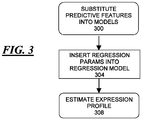
- the transformation of the new data associated with P n begins with the substitution of the predictive feature values ⁇ v k ⁇ n into their respective models ⁇ ⁇ k ⁇ , resulting in the regression model parameters r n for S i (Step 300).
- the primary model may suffice to transform expression data between profiling platforms.
- additional levels of categorical modeling and transformation may be employed to convert data between platforms.
- categories can be defined based on gene models as well as natural groupings across samples (e.g. normal vs. tumor, different clinical staging, different subtypes, different outcomes, etc.).
- gene symbol can be a useful factor for the transformation of gene expressions between microarray and RNA-Seq platforms due to the non-uniform distributions of microarray probe-sets along each gene and alternative splicings. If genes within a category show strong correlation with each other, multi-variate regression can be applied so that each transformed expression value is based on the group of coexpressed genes.
- the categorical modeling process begins with the receipt of transformed data, either from the primary model or from a prior level of categorical modeling (Step 400).
- regression stratified by the categories is performed on all the received transformed values (Step 404).
- those models that significantly improve accuracy e.g., root-mean-square error
- the identification of those models yields additional sets of regression parameters ⁇ q m ⁇ l for each of the categories that can enhance the accuracy of the transformed data (Step 412).
- This process of categorical modeling and transformation of the training data shown in FIGS. 4 and 5 can be repeated for multiple independent factors to enhance transformation accuracy.
- the result is a "stack" of order-dependent regression models, with the primary sample-wise regression at the bottom and additional layers for each categorical factor on top of each other.
- FIG. 6 presents one example of such an arrangement for O independent factors. It should be noted that, when applying a stack of transformation models, the order of the models applied must be the same as the order of construction followed in the model construction process.
- a system and method for the transformation of gene expression data (in log 2 scale) from Affymetrix GeneChip HT Human Genome U133 Array Plat Set (RMA) to Illumina HiSeq 1000 RNA-Seq (RSEM) using 545 TCGA samples that have data generated on each of the respective platforms.
- RMA Affymetrix GeneChip HT Human Genome U133 Array Plat Set
- RSEM Illumina HiSeq 1000 RNA-Seq
- RNA-Seq vs. microarray expressions By generating scatterplots of RNA-Seq vs. microarray expressions for each sample, it can be seen that their relationship can be suitably approximated by a piecewise linear model.
- the 'lm' function for linear regression and the 'segmented' function of the 'segmented' package are applied for breakpoint ( x b ) estimation.
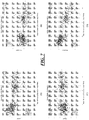
- FIGS. 8(A) and 8(B) show the piecewise-linear models based on direct regression and a prediction method for two samples, i.e., cross-platform scatterplot with the regressed and predicted models for two TCGA samples.
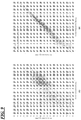
- FIGS. 9(A) and 9(B) show the relationship between the transformed expression and the original microarray expression after respectively the first-level sample-wise transformation and the second-level gene-wise transformation for one sample.
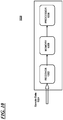
- the system 1000 includes a receiver 1002 for receiving sample expression data 1004, a memory 1006 configured to store the received sample expression data 1004 and a processor 1008.
- Processor 1008 is configured as discussed above to build primary and categorical models for transforming gene expression data from a first profiling platform to a second profiling platform such that the overall distribution of the transformed data resembles that of the second platform.
- Embodiments of the present invention may be extended to compute unified expressions from data measured by multiple platforms. For instance, all data may be transformed to one specific platform using, e.g., an EiV regression model, and then for each target combine the transformed values with weighted averaging using weights that are inversely proportional to the estimated noise variances of the respective source platforms.
- all data may be transformed to one specific platform using, e.g., an EiV regression model, and then for each target combine the transformed values with weighted averaging using weights that are inversely proportional to the estimated noise variances of the respective source platforms.
- a reference to "A and/or B,” when used in conjunction with open-ended language such as “comprising” can refer, in one embodiment, to A without B (optionally including elements other than B); in another embodiment, to B without A (optionally including elements other than A); in yet another embodiment, to both A and B (optionally including other elements); etc.
- the phrase "at least one,” in reference to a list of one or more elements, should be understood to mean at least one element selected from any one or more of the elements in the list of elements, but not necessarily including at least one of each and every element specifically listed within the list of elements and not excluding any combinations of elements in the list of elements.
- This definition also allows that elements may optionally be present other than the elements specifically identified within the list of elements to which the phrase "at least one" refers, whether related or unrelated to those elements specifically identified.
- At least one of A and B can refer, in one embodiment, to at least one, optionally including more than one, A, with no B present (and optionally including elements other than B); in another embodiment, to at least one, optionally including more than one, B, with no A present (and optionally including elements other than A); in yet another embodiment, to at least one, optionally including more than one, A, and at least one, optionally including more than one, B (and optionally including other elements); etc.
Landscapes
- Engineering & Computer Science (AREA)
- Health & Medical Sciences (AREA)
- Life Sciences & Earth Sciences (AREA)
- Physics & Mathematics (AREA)
- Theoretical Computer Science (AREA)
- Medical Informatics (AREA)
- General Engineering & Computer Science (AREA)
- Databases & Information Systems (AREA)
- Bioinformatics & Cheminformatics (AREA)
- Biotechnology (AREA)
- Chemical & Material Sciences (AREA)
- General Health & Medical Sciences (AREA)
- Genetics & Genomics (AREA)
- Bioinformatics & Computational Biology (AREA)
- Biophysics (AREA)
- Biomedical Technology (AREA)
- Spectroscopy & Molecular Physics (AREA)
- Data Mining & Analysis (AREA)
- Software Systems (AREA)
- Evolutionary Biology (AREA)
- Organic Chemistry (AREA)
- Zoology (AREA)
- Wood Science & Technology (AREA)
- Bioethics (AREA)
- Molecular Biology (AREA)
- Public Health (AREA)
- General Physics & Mathematics (AREA)
- Evolutionary Computation (AREA)
- Artificial Intelligence (AREA)
- Computer Vision & Pattern Recognition (AREA)
- Plant Pathology (AREA)
- Microbiology (AREA)
- Crystallography & Structural Chemistry (AREA)
- Analytical Chemistry (AREA)
- Biochemistry (AREA)
- Epidemiology (AREA)
- Computing Systems (AREA)
- Mathematical Physics (AREA)
- Pathology (AREA)
- Primary Health Care (AREA)
Claims (20)
- Eine auf einem Computer umzusetzende Methode für das direkte Kombinieren von Genexpressionsdaten, die von heterogenen Plattformen erzeugt wurden, wobei die Methode das Umwandeln der Genexpressionsdaten sowie folgende Schritte umfasst:Konstruieren eines primären Modells für das Umwandeln von Genexpressionsdaten von einer ersten Profilierungsplattform zu einer zweiten Profilierungsplattform mithilfe von Probenexpressionsdaten,wobei das Konstruieren des primären Modells folgende Schritte umfasst:Ermitteln mindestens einer gemeinsamen Expression zwischen einem ersten Satz von Nukleinsäureexpressionsdaten, die mithilfe einer ersten Profilierungsplattform abgeleitet wurden, und einem zweiten Satz von Nukleinsäureexpressionsdaten, die mithilfe einer zweiten Profilierungsplattform abgeleitet wurden, wobei die einzelnen gemeinsamen Expressionen jeweils einer Probe zugeordnet sind, die sowohl im ersten Satz als auch im zweiten Satz vorhanden ist;Durchführen einer Regressionsanalyse für die mindestens eine gemeinsame Expression, um jeweils einen Satz von Regressionsparametern für die einzelnen Proben zu erhalten;Auswählen mindestens eines Kandidatenmerkmals von der ersten Profilierungsplattform, das den mindestens einen Satz von Regressionsparametern vorhersagt; undErmitteln eines primären Modells, das den einzelnen der mindestens einen ausgewählten Kandidatenmerkmale zugeordnet ist, wobei das primäre Modell die Daten der einzelnen Proben umwandelt, um die Genexpressionsdaten der ersten Profilierungsplattform in umgewandelte Daten umzuwandeln, die eine Verteilung aufweisen, die derjenigen der zweiten Profilierungsplattform ähnelt.
- Die Methode gemäß Anspruch 1, die zudem das Erzeugen mindestens eines Satzes von Expressionsdaten mithilfe einer Profilierungsplattform umfasst, wobei es sich beim mindestens einen Satz von Expressionsdaten jeweils mindestens um den ersten und dem zweiten Satz von Expressionsdaten handelt.
- Die Methode gemäß Anspruch 1, die zudem folgende Schritte umfasst:Umwandeln der Probenexpressionsdaten mithilfe des konstruierten primären Modells; undKonstruieren eines kategorialen Modells mithilfe einer Regressionsanalyse, die jeweils mindestens Folgendes umfasst: (a) mindestens einige der umgewandelten Probenexpressionsdaten und (b) mindestens einige der gemeinsamen Ausdrücke.
- Die Methode gemäß Anspruch 3, wobei jeweils mindestens: (a) das Auswählen mindestens einiger der umgewandelten Probenexpressionsdaten und (b) das Auswählen mindestens einiger der gemeinsamen Ausdrücke auf phänotypischen Daten oder einem beliebigen Faktor beruht, von dem bekannt ist, dass er eine plattformübergreifende Verzerrung hervorruft.
- Die Methode gemäß Anspruch 3, die zudem das Wiederholen von Anspruch 4 mithilfe des kategorialen Modells umfasst, das aus den umgewandelten Probenexpressionsdaten konstruiert wurde, um die umgewandelten Probenexpressionsdaten umzuwandeln und daraus ein weiteres kategoriales Modell zu konstruieren.
- Die Methode gemäß Anspruch 5, die zudem das Umwandeln eines Satzes von Expressionsdaten von der ersten Profilierungsplattform zur zweiten Profilierungsplattform umfasst, indem die konstruierten kategorischen Modelle in der Reihenfolge ihrer Konstruktion angewandt werden.
- Die Methode gemäß Anspruch 1, wobei die erste Profilierungsplattform oder die zweite Profilierungsplattform aus der folgenden Gruppe ausgewählt wird: Agilent-Genexpressions-Mikroarrays, Affymetrix-Genprofilierungs-Array cGMP U133 P2/menschliches Genom U133 Plus 2.0/U133A 2.0, Illumina-Genom-Analyseeinheit/MiSeq/NextSeq/HiSeq, NanoString nCounter SPRINT/MAX/FLEX und Oxford Nanopore MinION/PromethION/GridION.
- Die Methode gemäß Anspruch 1, wobei die mindestens eine gemeinsame Expression anhand mindestens eines der folgenden übereinstimmenden Aspekte ermittelt wird: Positionen, Exone, Isoformen und Transkripte.
- Die Methode gemäß Anspruch 1, wobei das mindestens eine Kandidatenmerkmal aus folgender Gruppe ausgewählt wird: mittlere Transkript-Expression, mittlere normalisierte Sondenintensität, Anzahl der erkannten Gene, Anzahl der Auslesungen pro Probe, durchschnittliche Anzahl der Auslesungen pro Exon/Gen/Isoform, Leseabdeckung und Probenstatistik.
- Die Methode gemäß Anspruch 5, wobei die einzelnen Modelle aus folgender Gruppe ausgewählt werden: lineares Modell, logarithmisches Modell, stückweise lineares Modell und Regressionsmodell.
- Ein Gerät für das direkte Kombinieren der von heterogenen Plattformen erzeugten Genexpressionsdaten durch Umwandeln der Genexpressionsdaten, um eine computergestützte Analyse durchzuführen, wobei das Gerät Folgendes umfasst:einen Prozessor;eine Schnittstelle; undvon einem Computer ausführbare Anweisungen, die auf dem Prozessor umgesetzt werden, um folgende Schritte durchzuführen:Konstruieren eines primären Modells für das Umwandeln von Genexpressionsdaten von einer ersten Profilierungsplattform zu einer zweiten Profilierungsplattform mithilfe von Probenexpressionsdaten, sodass die Gesamtverteilung der umgewandelten Daten derjenigen der zweiten Plattform ähnelt,wobei die auf einem Computer ausführbaren Anweisungen für das Konstruieren des primären Modells das Berechnen von ausführbaren Anweisungen für folgende Schritte umfasst:Ermitteln mindestens einer gemeinsamen Expression zwischen einem ersten Satz von Nukleinsäureexpressionsdaten, die mithilfe einer ersten Profilierungsplattform abgeleitet wurden, und einem zweiten Satz von Nukleinsäureexpressionsdaten, die mithilfe einer zweiten Profilierungsplattform abgeleitet wurden, wobei die einzelnen gemeinsamen Expressionen jeweils einer Probe zugeordnet sind, die sowohl im ersten Satz als auch im zweiten Satz vorhanden ist;Durchführen einer Regressionsanalyse für die mindestens eine gemeinsame Expression, um jeweils einen Satz von Regressionsparametern für die einzelnen Proben zu erhalten;Auswählen mindestens eines Kandidatenmerkmals von der ersten Profilierungsplattform, das den mindestens einen Satz von Regressionsparametern vorhersagt; undErmitteln eines primären Modells, das den einzelnen der mindestens einen ausgewählten Kandidatenmerkmale zugeordnet ist, wobei das primäre Modell die Daten der einzelnen Proben umwandelt, um die Genexpressionsdaten der ersten Profilierungsplattform in umgewandelte Daten umzuwandeln, die eine Verteilung aufweisen, die derjenigen der zweiten Profilierungsplattform ähnelt.
- Das Gerät gemäß Anspruch 11, wobei die Schnittstelle zudem mindestens einen Satz von Expressionsdaten von einer Profilierungsplattform abruft, wobei es sich beim mindestens einen Satz von Expressionsdaten jeweils mindestens um den ersten und dem zweiten Satz von Expressionsdaten handelt.
- Das Gerät gemäß Anspruch 11, das zudem von einem Computer ausführbare Anweisungen umfasst, die auf dem Prozessor umgesetzt werden, um folgende Schritte durchzuführen:Umwandeln der Probenexpressionsdaten mithilfe des konstruierten primären Modells; undKonstruieren eines kategorialen Modells mithilfe einer Regressionsanalyse, die jeweils mindestens Folgendes umfasst: (a) mindestens einige der umgewandelten Probenexpressionsdaten und (b) mindestens einige der gemeinsamen Ausdrücke.
- Das Gerät gemäß Anspruch 13, wobei jeweils mindestens: (a) das Auswählen mindestens einiger der umgewandelten Probenexpressionsdaten und (b) das Auswählen mindestens einiger der gemeinsamen Ausdrücke auf phänotypischen Daten oder einem beliebigen Faktor beruht, von dem bekannt ist, dass er eine plattformübergreifende Verzerrung hervorruft.
- Das Gerät gemäß Anspruch 13, das zudem auf einem Computer ausführbare und auf dem Prozessor umgesetzte Anweisungen zum Wiederholen von Anspruch 13 mithilfe des kategorialen Modells umfasst, das aus den umgewandelten Probenexpressionsdaten konstruiert wurde, um die umgewandelten Probenexpressionsdaten umzuwandeln und daraus ein weiteres kategoriales Modell zu konstruieren.
- Das Gerät gemäß Anspruch 15, das zudem auf einem Computer ausführbare und auf dem Prozessor umgesetzte Anweisungen zum Umwandeln eines Satzes von Expressionsdaten von der ersten Profilierungsplattform zur zweiten Profilierungsplattform umfasst, indem die konstruierten kategorischen Modelle in der Reihenfolge ihrer Konstruktion angewandt werden.
- Das Gerät gemäß Anspruch 11, wobei die erste Profilierungsplattform oder die zweite Profilierungsplattform aus der folgenden Gruppe ausgewählt wird: Agilent-Genexpressions-Mikroarrays, Affymetrix-Genprofilierungs-Array cGMP U133 P2/menschliches Genom U133 Plus 2.0/U133A 2.0, Illumina-Genom-Analyseeinheit/MiSeq/NextSeq/HiSeq, NanoString nCounter SPRINT/MAX/FLEX und Oxford Nanopore MinION/PromethION/GridION.
- Das Gerät gemäß Anspruch 11, wobei die auf einem Computer ausführbaren Anweisungen zum Ermitteln mindestens einer gemeinsamen Expression von einem Computer ausführbare Anweisungen zum Ermitteln mindestens einer gemeinsamen Expression anhand mindestens eines der folgenden übereinstimmenden Aspekte umfasst: Positionen, Exone, Isoformen und Transkripte.
- Das Gerät gemäß Anspruch 11, wobei das mindestens eine Kandidatenmerkmal aus folgender Gruppe ausgewählt wird: mittlere Transkript-Expression, mittlere normalisierte Sondenintensität, Anzahl der erkannten Gene, Anzahl der Auslesungen pro Probe, durchschnittliche Anzahl der Auslesungen pro Exon/Gen/Isoform, Leseabdeckung und Probenstatistik.
- Das Gerät gemäß Anspruch 15, wobei die einzelnen Modelle aus folgender Gruppe ausgewählt werden: lineares Modell, logarithmisches Modell, stückweise lineares Modell und Regressionsmodell.
Applications Claiming Priority (2)
| Application Number | Priority Date | Filing Date | Title |
|---|---|---|---|
| US201462065367P | 2014-10-17 | 2014-10-17 | |
| PCT/IB2015/057952 WO2016059604A1 (en) | 2014-10-17 | 2015-10-16 | Cross-platform transformation of gene expression data |
Publications (2)
| Publication Number | Publication Date |
|---|---|
| EP3207133A1 EP3207133A1 (de) | 2017-08-23 |
| EP3207133B1 true EP3207133B1 (de) | 2021-05-05 |
Family
ID=54601845
Family Applications (1)
| Application Number | Title | Priority Date | Filing Date |
|---|---|---|---|
| EP15797426.2A Active EP3207133B1 (de) | 2014-10-17 | 2015-10-16 | Plattformübergreifende transformation von genexpressionsdaten |
Country Status (4)
| Country | Link |
|---|---|
| US (1) | US20170249422A1 (de) |
| EP (1) | EP3207133B1 (de) |
| CN (1) | CN107075510B (de) |
| WO (1) | WO2016059604A1 (de) |
Families Citing this family (1)
| Publication number | Priority date | Publication date | Assignee | Title |
|---|---|---|---|---|
| CN111918797B (zh) | 2018-02-01 | 2022-04-26 | 斯特拉泰克安全公司 | 用于为车辆提供基于蓝牙的被动进入和被动启动(peps)的方法和系统 |
Family Cites Families (2)
| Publication number | Priority date | Publication date | Assignee | Title |
|---|---|---|---|---|
| JP2010157214A (ja) * | 2008-12-02 | 2010-07-15 | Sony Corp | 遺伝子クラスタリングプログラム、遺伝子クラスタリング方法及び遺伝子クラスター解析装置 |
| CN102789550B (zh) * | 2011-05-17 | 2015-11-25 | 中国科学院上海生命科学研究院 | 一种利用跨物种相似性的元分析方法 |
-
2015
- 2015-10-16 WO PCT/IB2015/057952 patent/WO2016059604A1/en not_active Ceased
- 2015-10-16 CN CN201580056231.7A patent/CN107075510B/zh active Active
- 2015-10-16 EP EP15797426.2A patent/EP3207133B1/de active Active
- 2015-10-16 US US15/518,257 patent/US20170249422A1/en not_active Abandoned
Also Published As
| Publication number | Publication date |
|---|---|
| CN107075510A (zh) | 2017-08-18 |
| WO2016059604A1 (en) | 2016-04-21 |
| EP3207133A1 (de) | 2017-08-23 |
| US20170249422A1 (en) | 2017-08-31 |
| CN107075510B (zh) | 2021-03-23 |
Similar Documents
| Publication | Publication Date | Title |
|---|---|---|
| Teschendorff et al. | Statistical and integrative system-level analysis of DNA methylation data | |
| Breslin et al. | HIrisPlex-S system for eye, hair, and skin color prediction from DNA: Massively parallel sequencing solutions for two common forensically used platforms | |
| Hebestreit et al. | Detection of significantly differentially methylated regions in targeted bisulfite sequencing data | |
| JP7299169B2 (ja) | 体細胞突然変異のクローン性を決定するための方法及びシステム | |
| Sun et al. | Base resolution methylome profiling: considerations in platform selection, data preprocessing and analysis | |
| Jiang et al. | FetalQuant: deducing fractional fetal DNA concentration from massively parallel sequencing of DNA in maternal plasma | |
| Joo et al. | Multiple testing correction in linear mixed models | |
| US20200327957A1 (en) | Detection of deletions and copy number variations in dna sequences | |
| Gao et al. | HEFT: eQTL analysis of many thousands of expressed genes while simultaneously controlling for hidden factors | |
| Drier et al. | Do two machine-learning based prognostic signatures for breast cancer capture the same biological processes? | |
| EP3884502B1 (de) | Methode und computerprogramm produkt zur analyse fötaler dna durch massives sequenzieren | |
| Sauk et al. | NIPTmer: rapid k-mer-based software package for detection of fetal aneuploidies | |
| Leung et al. | Microarray-based DNA methylation profiling: validation considerations for clinical testing | |
| Nariai et al. | Efficient prioritization of multiple causal eQTL variants via sparse polygenic modeling | |
| Lucas et al. | A Bayesian analysis strategy for cross-study translation of gene expression biomarkers | |
| Chen et al. | Precise inference of copy number alterations in tumor samples from SNP arrays | |
| Morganella et al. | Finding recurrent copy number alterations preserving within-sample homogeneity | |
| Jiang et al. | MethylGenotyper: accurate estimation of SNP genotypes and genetic relatedness from DNA methylation data | |
| US20140324359A1 (en) | Predicting the molecular complexity of sequencing libraries | |
| US20170249422A1 (en) | Cross platform transformation of gene expression data | |
| Fan et al. | Methods for Copy Number Aberration Detection from Single-cell DNA Sequencing Data | |
| Chong et al. | SeqControl: process control for DNA sequencing | |
| Li et al. | Multi-platform and cross-methodological reproducibility of transcriptome profiling by RNA-seq in the ABRF next-generation sequencing study | |
| Brown et al. | Quantification of sources of variation and accuracy of sequence discrimination in a replicated microarray experiment | |
| JP2023552015A (ja) | 遺伝子変異を検出するためのシステム及び方法 |
Legal Events
| Date | Code | Title | Description |
|---|---|---|---|
| STAA | Information on the status of an ep patent application or granted ep patent |
Free format text: STATUS: THE INTERNATIONAL PUBLICATION HAS BEEN MADE |
|
| PUAI | Public reference made under article 153(3) epc to a published international application that has entered the european phase |
Free format text: ORIGINAL CODE: 0009012 |
|
| STAA | Information on the status of an ep patent application or granted ep patent |
Free format text: STATUS: REQUEST FOR EXAMINATION WAS MADE |
|
| 17P | Request for examination filed |
Effective date: 20170517 |
|
| AK | Designated contracting states |
Kind code of ref document: A1 Designated state(s): AL AT BE BG CH CY CZ DE DK EE ES FI FR GB GR HR HU IE IS IT LI LT LU LV MC MK MT NL NO PL PT RO RS SE SI SK SM TR |
|
| AX | Request for extension of the european patent |
Extension state: BA ME |
|
| DAV | Request for validation of the european patent (deleted) | ||
| DAX | Request for extension of the european patent (deleted) | ||
| STAA | Information on the status of an ep patent application or granted ep patent |
Free format text: STATUS: EXAMINATION IS IN PROGRESS |
|
| 17Q | First examination report despatched |
Effective date: 20181024 |
|
| RAP1 | Party data changed (applicant data changed or rights of an application transferred) |
Owner name: KONINKLIJKE PHILIPS N.V. |
|
| GRAP | Despatch of communication of intention to grant a patent |
Free format text: ORIGINAL CODE: EPIDOSNIGR1 |
|
| STAA | Information on the status of an ep patent application or granted ep patent |
Free format text: STATUS: GRANT OF PATENT IS INTENDED |
|
| INTG | Intention to grant announced |
Effective date: 20201204 |
|
| GRAS | Grant fee paid |
Free format text: ORIGINAL CODE: EPIDOSNIGR3 |
|
| GRAA | (expected) grant |
Free format text: ORIGINAL CODE: 0009210 |
|
| STAA | Information on the status of an ep patent application or granted ep patent |
Free format text: STATUS: THE PATENT HAS BEEN GRANTED |
|
| AK | Designated contracting states |
Kind code of ref document: B1 Designated state(s): AL AT BE BG CH CY CZ DE DK EE ES FI FR GB GR HR HU IE IS IT LI LT LU LV MC MK MT NL NO PL PT RO RS SE SI SK SM TR |
|
| REG | Reference to a national code |
Ref country code: GB Ref legal event code: FG4D |
|
| REG | Reference to a national code |
Ref country code: CH Ref legal event code: EP |
|
| REG | Reference to a national code |
Ref country code: AT Ref legal event code: REF Ref document number: 1389866 Country of ref document: AT Kind code of ref document: T Effective date: 20210515 |
|
| REG | Reference to a national code |
Ref country code: IE Ref legal event code: FG4D |
|
| REG | Reference to a national code |
Ref country code: DE Ref legal event code: R096 Ref document number: 602015069037 Country of ref document: DE |
|
| REG | Reference to a national code |
Ref country code: LT Ref legal event code: MG9D |
|
| REG | Reference to a national code |
Ref country code: AT Ref legal event code: MK05 Ref document number: 1389866 Country of ref document: AT Kind code of ref document: T Effective date: 20210505 |
|
| PG25 | Lapsed in a contracting state [announced via postgrant information from national office to epo] |
Ref country code: BG Free format text: LAPSE BECAUSE OF FAILURE TO SUBMIT A TRANSLATION OF THE DESCRIPTION OR TO PAY THE FEE WITHIN THE PRESCRIBED TIME-LIMIT Effective date: 20210805 Ref country code: AT Free format text: LAPSE BECAUSE OF FAILURE TO SUBMIT A TRANSLATION OF THE DESCRIPTION OR TO PAY THE FEE WITHIN THE PRESCRIBED TIME-LIMIT Effective date: 20210505 Ref country code: HR Free format text: LAPSE BECAUSE OF FAILURE TO SUBMIT A TRANSLATION OF THE DESCRIPTION OR TO PAY THE FEE WITHIN THE PRESCRIBED TIME-LIMIT Effective date: 20210505 Ref country code: FI Free format text: LAPSE BECAUSE OF FAILURE TO SUBMIT A TRANSLATION OF THE DESCRIPTION OR TO PAY THE FEE WITHIN THE PRESCRIBED TIME-LIMIT Effective date: 20210505 Ref country code: LT Free format text: LAPSE BECAUSE OF FAILURE TO SUBMIT A TRANSLATION OF THE DESCRIPTION OR TO PAY THE FEE WITHIN THE PRESCRIBED TIME-LIMIT Effective date: 20210505 |
|
| PG25 | Lapsed in a contracting state [announced via postgrant information from national office to epo] |
Ref country code: GR Free format text: LAPSE BECAUSE OF FAILURE TO SUBMIT A TRANSLATION OF THE DESCRIPTION OR TO PAY THE FEE WITHIN THE PRESCRIBED TIME-LIMIT Effective date: 20210806 Ref country code: LV Free format text: LAPSE BECAUSE OF FAILURE TO SUBMIT A TRANSLATION OF THE DESCRIPTION OR TO PAY THE FEE WITHIN THE PRESCRIBED TIME-LIMIT Effective date: 20210505 Ref country code: IS Free format text: LAPSE BECAUSE OF FAILURE TO SUBMIT A TRANSLATION OF THE DESCRIPTION OR TO PAY THE FEE WITHIN THE PRESCRIBED TIME-LIMIT Effective date: 20210905 Ref country code: PT Free format text: LAPSE BECAUSE OF FAILURE TO SUBMIT A TRANSLATION OF THE DESCRIPTION OR TO PAY THE FEE WITHIN THE PRESCRIBED TIME-LIMIT Effective date: 20210906 Ref country code: PL Free format text: LAPSE BECAUSE OF FAILURE TO SUBMIT A TRANSLATION OF THE DESCRIPTION OR TO PAY THE FEE WITHIN THE PRESCRIBED TIME-LIMIT Effective date: 20210505 Ref country code: NO Free format text: LAPSE BECAUSE OF FAILURE TO SUBMIT A TRANSLATION OF THE DESCRIPTION OR TO PAY THE FEE WITHIN THE PRESCRIBED TIME-LIMIT Effective date: 20210805 Ref country code: RS Free format text: LAPSE BECAUSE OF FAILURE TO SUBMIT A TRANSLATION OF THE DESCRIPTION OR TO PAY THE FEE WITHIN THE PRESCRIBED TIME-LIMIT Effective date: 20210505 Ref country code: SE Free format text: LAPSE BECAUSE OF FAILURE TO SUBMIT A TRANSLATION OF THE DESCRIPTION OR TO PAY THE FEE WITHIN THE PRESCRIBED TIME-LIMIT Effective date: 20210505 |
|
| REG | Reference to a national code |
Ref country code: NL Ref legal event code: MP Effective date: 20210505 |
|
| PG25 | Lapsed in a contracting state [announced via postgrant information from national office to epo] |
Ref country code: NL Free format text: LAPSE BECAUSE OF FAILURE TO SUBMIT A TRANSLATION OF THE DESCRIPTION OR TO PAY THE FEE WITHIN THE PRESCRIBED TIME-LIMIT Effective date: 20210505 |
|
| PG25 | Lapsed in a contracting state [announced via postgrant information from national office to epo] |
Ref country code: ES Free format text: LAPSE BECAUSE OF FAILURE TO SUBMIT A TRANSLATION OF THE DESCRIPTION OR TO PAY THE FEE WITHIN THE PRESCRIBED TIME-LIMIT Effective date: 20210505 Ref country code: RO Free format text: LAPSE BECAUSE OF FAILURE TO SUBMIT A TRANSLATION OF THE DESCRIPTION OR TO PAY THE FEE WITHIN THE PRESCRIBED TIME-LIMIT Effective date: 20210505 Ref country code: SM Free format text: LAPSE BECAUSE OF FAILURE TO SUBMIT A TRANSLATION OF THE DESCRIPTION OR TO PAY THE FEE WITHIN THE PRESCRIBED TIME-LIMIT Effective date: 20210505 Ref country code: SK Free format text: LAPSE BECAUSE OF FAILURE TO SUBMIT A TRANSLATION OF THE DESCRIPTION OR TO PAY THE FEE WITHIN THE PRESCRIBED TIME-LIMIT Effective date: 20210505 Ref country code: CZ Free format text: LAPSE BECAUSE OF FAILURE TO SUBMIT A TRANSLATION OF THE DESCRIPTION OR TO PAY THE FEE WITHIN THE PRESCRIBED TIME-LIMIT Effective date: 20210505 Ref country code: DK Free format text: LAPSE BECAUSE OF FAILURE TO SUBMIT A TRANSLATION OF THE DESCRIPTION OR TO PAY THE FEE WITHIN THE PRESCRIBED TIME-LIMIT Effective date: 20210505 Ref country code: EE Free format text: LAPSE BECAUSE OF FAILURE TO SUBMIT A TRANSLATION OF THE DESCRIPTION OR TO PAY THE FEE WITHIN THE PRESCRIBED TIME-LIMIT Effective date: 20210505 |
|
| REG | Reference to a national code |
Ref country code: DE Ref legal event code: R097 Ref document number: 602015069037 Country of ref document: DE |
|
| PLBE | No opposition filed within time limit |
Free format text: ORIGINAL CODE: 0009261 |
|
| STAA | Information on the status of an ep patent application or granted ep patent |
Free format text: STATUS: NO OPPOSITION FILED WITHIN TIME LIMIT |
|
| 26N | No opposition filed |
Effective date: 20220208 |
|
| REG | Reference to a national code |
Ref country code: CH Ref legal event code: PL |
|
| PG25 | Lapsed in a contracting state [announced via postgrant information from national office to epo] |
Ref country code: IS Free format text: LAPSE BECAUSE OF FAILURE TO SUBMIT A TRANSLATION OF THE DESCRIPTION OR TO PAY THE FEE WITHIN THE PRESCRIBED TIME-LIMIT Effective date: 20210905 Ref country code: AL Free format text: LAPSE BECAUSE OF FAILURE TO SUBMIT A TRANSLATION OF THE DESCRIPTION OR TO PAY THE FEE WITHIN THE PRESCRIBED TIME-LIMIT Effective date: 20210505 |
|
| REG | Reference to a national code |
Ref country code: BE Ref legal event code: MM Effective date: 20211031 |
|
| GBPC | Gb: european patent ceased through non-payment of renewal fee |
Effective date: 20211016 |
|
| PG25 | Lapsed in a contracting state [announced via postgrant information from national office to epo] |
Ref country code: MC Free format text: LAPSE BECAUSE OF FAILURE TO SUBMIT A TRANSLATION OF THE DESCRIPTION OR TO PAY THE FEE WITHIN THE PRESCRIBED TIME-LIMIT Effective date: 20210505 |
|
| PG25 | Lapsed in a contracting state [announced via postgrant information from national office to epo] |
Ref country code: LU Free format text: LAPSE BECAUSE OF NON-PAYMENT OF DUE FEES Effective date: 20211016 Ref country code: IT Free format text: LAPSE BECAUSE OF FAILURE TO SUBMIT A TRANSLATION OF THE DESCRIPTION OR TO PAY THE FEE WITHIN THE PRESCRIBED TIME-LIMIT Effective date: 20210505 Ref country code: GB Free format text: LAPSE BECAUSE OF NON-PAYMENT OF DUE FEES Effective date: 20211016 Ref country code: BE Free format text: LAPSE BECAUSE OF NON-PAYMENT OF DUE FEES Effective date: 20211031 |
|
| PG25 | Lapsed in a contracting state [announced via postgrant information from national office to epo] |
Ref country code: LI Free format text: LAPSE BECAUSE OF NON-PAYMENT OF DUE FEES Effective date: 20211031 Ref country code: CH Free format text: LAPSE BECAUSE OF NON-PAYMENT OF DUE FEES Effective date: 20211031 |
|
| PG25 | Lapsed in a contracting state [announced via postgrant information from national office to epo] |
Ref country code: FR Free format text: LAPSE BECAUSE OF NON-PAYMENT OF DUE FEES Effective date: 20211031 |
|
| PG25 | Lapsed in a contracting state [announced via postgrant information from national office to epo] |
Ref country code: IE Free format text: LAPSE BECAUSE OF NON-PAYMENT OF DUE FEES Effective date: 20211016 |
|
| PG25 | Lapsed in a contracting state [announced via postgrant information from national office to epo] |
Ref country code: HU Free format text: LAPSE BECAUSE OF FAILURE TO SUBMIT A TRANSLATION OF THE DESCRIPTION OR TO PAY THE FEE WITHIN THE PRESCRIBED TIME-LIMIT; INVALID AB INITIO Effective date: 20151016 |
|
| PG25 | Lapsed in a contracting state [announced via postgrant information from national office to epo] |
Ref country code: CY Free format text: LAPSE BECAUSE OF FAILURE TO SUBMIT A TRANSLATION OF THE DESCRIPTION OR TO PAY THE FEE WITHIN THE PRESCRIBED TIME-LIMIT Effective date: 20210505 |
|
| REG | Reference to a national code |
Ref country code: DE Ref legal event code: R084 Ref document number: 602015069037 Country of ref document: DE |
|
| PG25 | Lapsed in a contracting state [announced via postgrant information from national office to epo] |
Ref country code: MK Free format text: LAPSE BECAUSE OF FAILURE TO SUBMIT A TRANSLATION OF THE DESCRIPTION OR TO PAY THE FEE WITHIN THE PRESCRIBED TIME-LIMIT Effective date: 20210505 |
|
| PG25 | Lapsed in a contracting state [announced via postgrant information from national office to epo] |
Ref country code: MT Free format text: LAPSE BECAUSE OF FAILURE TO SUBMIT A TRANSLATION OF THE DESCRIPTION OR TO PAY THE FEE WITHIN THE PRESCRIBED TIME-LIMIT Effective date: 20210505 |
|
| PGFP | Annual fee paid to national office [announced via postgrant information from national office to epo] |
Ref country code: DE Payment date: 20241029 Year of fee payment: 10 |
|
| PG25 | Lapsed in a contracting state [announced via postgrant information from national office to epo] |
Ref country code: TR Free format text: LAPSE BECAUSE OF FAILURE TO SUBMIT A TRANSLATION OF THE DESCRIPTION OR TO PAY THE FEE WITHIN THE PRESCRIBED TIME-LIMIT Effective date: 20210505 |