EP3201361B1 - Methods of quantifying cell-free dna - Google Patents
Methods of quantifying cell-free dna Download PDFInfo
- Publication number
- EP3201361B1 EP3201361B1 EP15848055.8A EP15848055A EP3201361B1 EP 3201361 B1 EP3201361 B1 EP 3201361B1 EP 15848055 A EP15848055 A EP 15848055A EP 3201361 B1 EP3201361 B1 EP 3201361B1
- Authority
- EP
- European Patent Office
- Prior art keywords
- cfdna
- sample
- dna
- length
- amplicon
- Prior art date
- Legal status (The legal status is an assumption and is not a legal conclusion. Google has not performed a legal analysis and makes no representation as to the accuracy of the status listed.)
- Active
Links
Images


Classifications
-
- C—CHEMISTRY; METALLURGY
- C12—BIOCHEMISTRY; BEER; SPIRITS; WINE; VINEGAR; MICROBIOLOGY; ENZYMOLOGY; MUTATION OR GENETIC ENGINEERING
- C12Q—MEASURING OR TESTING PROCESSES INVOLVING ENZYMES, NUCLEIC ACIDS OR MICROORGANISMS; COMPOSITIONS OR TEST PAPERS THEREFOR; PROCESSES OF PREPARING SUCH COMPOSITIONS; CONDITION-RESPONSIVE CONTROL IN MICROBIOLOGICAL OR ENZYMOLOGICAL PROCESSES
- C12Q1/00—Measuring or testing processes involving enzymes, nucleic acids or microorganisms; Compositions therefor; Processes of preparing such compositions
- C12Q1/68—Measuring or testing processes involving enzymes, nucleic acids or microorganisms; Compositions therefor; Processes of preparing such compositions involving nucleic acids
- C12Q1/6844—Nucleic acid amplification reactions
- C12Q1/686—Polymerase chain reaction [PCR]
Definitions
- cfDNA chimeric cell-free DNA
- cfDNA that comprises normal genomic DNA from a patient and DNA from another individual or DNA from patient tissue or cells that differ from normal genomic DNA
- standardization suffers from obstacles, such as low concentrations and fragmentation of cfDNA.
- Digital PCR enables a high precision in quantification, but thorough error control is needed for reliable measurements. This invention addresses the need for improved quantification for digital PCR methods that assess chimeric cf DNA.
- the present invention provides a method of quantifying chimeric cfDNA in a sample from a patient, the method comprising:
- described herein is a method of estimating the proportion of DNA in a cfDNA sample that is amplifiable in a PCR reaction, the method comprising:
- the first and second amplicons differ in length by 100 nucleotides or more. In some embodiments, the longer of the two amplicons is from 150 to 600 base pairs in length, or from 150 to 400 base pairs in length, and the shorter of the two amplicons is from 50 to 150 base pairs in length.
- the cfDNA samples can be from any number of patients.
- the cfDNA sample is from a transplant patient, a cancer patient, or a pregnant patient.
- the patient is a human.
- cell-free DNA or "cfDNA” as used herein means free DNA molecules of 25 nucleotides or longer that are not contained within any intact cells.
- cfDNA is typically evaluated in human blood, e.g., can be obtained from human serum or plasma.
- chimeric or “mosaic” in the context of cfDNA is used herein to refer to cfDNA in a patient that comprises normal DNA and DNA that is not normal to the patient, i.e., the DNA is from another individual, such as a transplant donor or fetal DNA; or is from the patient, but not from a normal tissue, e.g ., DNA from cancer cells.
- cfDNA is fragmented. For example, three distinct peaks are regularly observed in human cfDNA resembling the first three shortest moieties of apoptotic DNA fragmentation.
- the "proportion of amplifiable DNA” or “fraction of amplifiable DNA” in a cfDNA sample refers to the amount of DNA in a sample that can provide an amplified product of a size of interest, as a fraction of the total present DNA of the same region that could be amplified if no fragmentation was present.
- a "graft” as used herein refers to tissue material, from a donor that is transplanted into a recipient.
- a graft may be from liver, heart, kidney, or any other organ.
- primer refers to an oligonucleotide that acts as a point of initiation of DNA synthesis under conditions in which synthesis of a primer extension product complementary to a nucleic acid strand is induced, i.e., in the presence of four different nucleoside triphosphates and an agent for polymerization (i.e., DNA polymerase or reverse transcriptase) in an appropriate buffer and at a suitable temperature.
- a primer is preferably a single-stranded oligodeoxyribonucleotide.
- the primer includes a "hybridizing region" exactly or substantially complementary to the target sequence, preferably about 15 to about 35 nucleotides in length.
- a primer oligonucleotide can either consist entirely of the hybridizing region or can contain additional features which allow for the detection, immobilization, or manipulation of the amplified product, but which do not alter the ability of the primer to serve as a starting reagent for DNA synthesis.
- a nucleic acid sequence tail can be included at the 5' end of the primer that hybridizes to a capture oligonucleotide.
- probe refers to an oligonucleotide that selectively hybridizes to a target nucleic acid under suitable conditions.
- a probe for detection of the biomarker sequences described herein can be any length, e.g., from 15-500 bp in length. Typically, in probe-based assays, hybridization probes that are less than 50 bp are preferred.
- target sequence or "target region” refers to a region of a nucleic acid that is to be analyzed and comprises the sequence of interest, e.g., a region containing a SNP biomarker.
- nucleic acid refers to primers, probes, and oligomer fragments.
- the terms are not limited by length and are generic to linear polymers of polydeoxyribonucleotides (containing 2-deoxy-D-ribose), polyribonucleotides (containing D-ribose), and any other N-glycoside of a purine or pyrimidine base, or modified purine or pyrimidine bases. These terms include double- and single-stranded DNA, as well as double- and single-stranded RNA.
- Oligonucleotides for use in the invention may be used as primers and/or probes.
- a nucleic acid, polynucleotide or oligonucleotide can comprise phosphodiester linkages or modified linkages including, but not limited to phosphotriester, phosphoramidate, siloxane, carbonate, carboxymethylester, acetamidate, carbamate, thioether, bridged phosphoramidate, bridged methylene phosphonate, phosphorothioate, methylphosphonate, phosphorodithioate, bridged phosphorothioate or sulfone linkages, and combinations of such linkages.
- a nucleic acid, polynucleotide or oligonucleotide can comprise the five biologically occurring bases (adenine, guanine, thymine, cytosine and uracil) and/or bases other than the five biologically occurring bases. These bases may serve a number of purposes, e.g., to stabilize or destabilize hybridization; to promote or inhibit probe degradation; or as attachment points for detectable moieties or quencher moieties.
- bases may serve a number of purposes, e.g., to stabilize or destabilize hybridization; to promote or inhibit probe degradation; or as attachment points for detectable moieties or quencher moieties.
- a polynucleotide can contain one or more modified, non-standard, or derivatized base moieties, including, but not limited to, N6-methyl-adenine, N6-tert-butyl-benzyl-adenine, imidazole, substituted imidazoles, 5-fluorouracil, 5 bromouracil, 5-chlorouracil, 5-iodouracil, hypoxanthine, xanthine, 4-acetylcytosine, 5 (carboxyhydroxymethyl)uracil, 5 carboxymethylaminomethyl-2-thiouridine, 5 carboxymethylaminomethyluracil, dihydrouracil, beta-D-galactosylqueosine, inosine, N6 isopentenyladenine, 1-methylguanine, 1-methylinosine, 2,2-dimethylguanine, 2-methyladenine, 2-methylguanine, 3-methylcytosine, 5-methylcytosine, N6-methyladenine,
- nucleic acid, polynucleotide or oligonucleotide can comprise one or more modified sugar moieties including, but not limited to, arabinose, 2-fluoroarabinose, xylulose, and a hexose.
- Repetitive sequences refer to highly repeated DNA elements present in a genome. These sequences are usually categorized in sequence families and are broadly classified as interspersed repetitive DNA (see, e.g., Jelinek and Schmid, Ann. Rev. Biochem. 51:831-844, 1982 ; Hardman, Biochem J. 234:1-11, 1986 ; and Vogt, Hum. Genet. 84:301-306, 1990 ) or tandemly repeated DNA. Repetitive elements include satellite, minisatellite, and microsatellite DNA. In humans, interspersed repetitive DNA includes Alu sequences, short interspersed nuclear elements (SINES) and long interspersed nuclear elements (LINES), and endogenous retroviruses (ERVs).
- SINES short interspersed nuclear elements
- LINES long interspersed nuclear elements
- ERPs endogenous retroviruses
- a "unique sequence” as used herein is a sequence that is free of repeated DNA that can be localized to a single site on a genome.
- a "unique" sequence in the context of this invention is equivalent to a single-copy sequence.
- the present invention is based, in part, on the discovery of a method for more accurately quantifying cfDNA, in particular chimeric cfDNA is a sample from a patient.
- the methods of the invention comprise performing multiple PCR control reactions that result in at least two amplicons of different length (a "long” and a “short” amplicon) to control for the portion of DNA in a sample that can be amplified by PCR.
- the amplicons are generated by amplifying unique sequences present on the genome.
- the fraction of one (or both) of the amplicons obtained in the reaction is then used to determine the fraction of DNA that can be amplified by PCR, i.e., the fraction that can be amplified by a PCR of a desired length.
- the method comprises performing a digital PCR on a cfDNA sample obtained from a patient.
- the cfDNA is isolated from blood, serum, or plasma.
- a digital PCR is performed that includes at least two amplification reactions to provide amplicons of a desired length where the two amplicons differ in length by at least 50 base pairs, and typically differ in length by at least 75 or 100 base pairs.
- a factor can be calculated to correct for the amplifiable fraction of the PCR, i.e., the fraction that can be amplified by the diagnostic PCR that is being assessed in the analysis, to quantify the cfDNA concentration.
- control two-length PCR reaction is performed separately on a cfDNA sample from the patient, typically prior to, a quantitative PCR for diagnosis, .e.g., a SNP analysis to determine the status of a transplant organ, in a multiplex PCR.
- the control PCR may further comprise a "spike-in" DNA, i.e., control DNA added to the starting sample obtained from a patient, e.g., a blood, plasma, or serum sample, to control for the efficiency of extraction of the cfDNA from the patient sample.
- a "spike-in" DNA i.e., control DNA added to the starting sample obtained from a patient, e.g., a blood, plasma, or serum sample, to control for the efficiency of extraction of the cfDNA from the patient sample.
- a unique sequence is selected from the genome to serve as a target sequence for use to generate a long or a short amplicon as a control.
- the target unique sequence to generate the long amplicon is different from the target unique sequence that is used to generate the short amplicon. Any unique sequence on the genome may be used. The only criterion for selection is that the sequence is localized to a single locus and that amplification primers can be used to selectively amplify the unique sequence to provide an amplicon of a desired length.
- the short and the long amplicons that are used to estimate the cfDNA that can be amplified by PCR typically vary by at least 100 bp or more in length.
- the short amplicon is less than 150 base pairs, but greater than 30 base pairs in length
- the long amplicon is at least 150 base pairs in length and may be up to 250 or greater base pairs in length.
- the long amplicon is less than 600 base pairs in length and is frequently less than 400 or 300 base pairs in length.
- PCR primers may be designed using standard primer design computer software techniques known to individuals skilled in the art.
- the variables considered during PCR primer design may include primer length, GC pair content, melting temperature, and size of the target nucleic acid amplified by the primer pair.
- Amplification reactions are performed on cfDNA obtained a sample, typically blood, serum, or plasma, from a patient.
- the amplification reactions performed in accordance with the invention comprise digital PCR.
- Digital PCR is a technique where a limiting dilution of the sample is made across a large number of separate PCR reactions so that most of the reactions have no template molecules and give a negative amplification result. Those reactions that are positive at the reaction endpoint are counted as individual template molecules present in the original sample in a 1 to 1 relationship.
- Quantitative partitioning is assumed, and the dynamic range is governed by the number of containers available for stochastic separation.
- a digital PCR may be a microfluidics-based digital PCR.
- a droplet digital PCR may be employed.
- the amplifiable fraction can be determined by assessing the amount of long or short amplicon obtained in the digital PCR. This can be calculated using any number of calculation parameters.
- a PCR on a cfDNA samples that provides a working range of between 25 and 200 base pairs for Lamp is typically considered to be acceptable for diagnostic evaluation of the cfDNA sample by using the equations given in [0032].
- a control PCR in accordance with the invention for determining the amplifiable fraction of a cfDNA sample can be used with any number of diagnostic PCRs performed on sample to quantify chimeric (or mosaic) cfDNA.
- the cfDNA sample is from a transplant patient that is to be analyzed for the presence, or proportion, of DNA in the sample that originates from a graft donor (see, e.g., PCT/US2014/040055 ).
- the cfDNA is a maternal cfDNA sample to evaluate fetal DNA.
- the cfDNA is from a cancer patient that is to be analyzed for the presence, or proportion, of DNA in the sample that originates from the malignant cells.
- a "patient” in the context of this invention is any individual that is to be evaluated using a diagnostic cfDNA assay.
- the patient is a human.
- the patient is a mammal, e.g ., a murine, bovine, equine, canine, feline, porcine, ovine, caprine, or a primate.
- a system for analyzing circulating cell-free DNA comprising: (1) a sample analyzer for executing the method of analyzing cfDNA in a patient's blood, serum or plasma using a two-length PCR to calculate the amplifiable fraction of a cfDNA sample as described above; (2) a computer system for automatically receiving and analyzing data obtained in step (1) to provide a correction factor to calculate the fraction of amplifiable DNA in the cfDNA.
- the computer-based analysis function can be implemented in any suitable language and/or browsers. For example, it may be implemented with C language and preferably using object-oriented high-level programming languages such as Visual Basic, SmallTalk, C++, and the like.
- the application can be written to suit environments such as the Microsoft WindowsTM environment including WindowsTM 8, WindowsTM 7, WindowsTM 98, WindowsTM 2000, WindowsTM NT, and the like.
- the application can also be written for the MacIntoshTM, SUNTM, UNIX or LINUX environment.
- the functional steps can also be implemented using a universal or platform-independent programming language.
- multi-platform programming languages include, but are not limited to, hypertext markup language (HTML), JAVATM, JavaScriptTM, Flash programming language, common gateway interface/structured query language (CGI/SQL), practical extraction report language (PERL), AppleScriptTM and other system script languages, programming language/structured query language (PL/SQL), and the like.
- JavaTM- or JavaScriptTM-enabled browsers such as HotJavaTM or MicrosoftTM ExplorerTM can be used.
- active content web pages may include JavaTM applets or ActiveXTM controls or other active content technologies.
- the analysis function can also be embodied in computer program products and used in the systems described above or other computer- or internet-based systems. Accordingly, also described herein is a computer program product comprising a computer-usable medium having computer-readable program codes or instructions embodied thereon for enabling a processor to carry out the analysis and correlating functions as described above.
- These computer program instructions may be loaded onto a computer or other programmable apparatus to produce a machine, such that the instructions which execute on the computer or other programmable apparatus create means for implementing the functions or steps described above.
- These computer program instructions may also be stored in a computer-readable memory or medium that can direct a computer or other programmable apparatus to function in a particular manner, such that the instructions stored in the computer-readable memory or medium produce an article of manufacture including instruction means which implement the analysis.
- the computer program instructions may also be loaded onto a computer or other programmable apparatus to cause a series of operational steps to be performed on the computer or other programmable apparatus to produce a computer implemented process such that the instructions which execute on the computer or other programmable apparatus provide steps for implementing the functions or steps described above.
- LTx liver transplantation
- cfDNA was extracted using Roches High Pure Viral Extraction Large Volume (LV) Kit (ROCHE LV, Roche Applied Science, Mannheim, Germany.
- R simulation 1 Simulations of cfDNA profiles for PCR amplification efficiency. Simulations of cfDNA profiles were calculated in R statistical programming language (http address www.r-project.org/). The extremes of the simulation were set to those that have been observed by capillary electrophoretic separations of plasma DNA. Parameters were as follows: First peak: size as 180bp ⁇ 20 (relative amount: 33 to 99%), second peak: size as 360bp ⁇ 30 (relative amount: 5 to 50%), third peak: size as 560bp ⁇ 40 (0 to 33%). Peaks were assumed to be Gaussian distributed with the given parameters. The three peaks were concatenated into one cfDNA profile and the amplifiable fraction ⁇ Amp was calculated according to the formula given in the text.
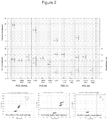
- a length index (ddPCR-LI) of cfDNA was assessed by a four-plex ddPCR performed in 20 ⁇ L of 1x QX200 ddPCR EvaGreen Supermix. In order to increase the number of positive droplets two short amplicons (92 bp and 94 bp) and two long amplicons (248 bp and 250 bp) were combined. See Figure 2 for details of assay with four different amplicons. ddPCR-LI was defined as fractional abundance of the long amplicons.
- the cfDNA size distribution resembles the apoptotic DNA ladder pattern, with three characteristic length fractions around 180 bp, 360 bp and 540 bp and with most molecules present in the 180 bp fraction.
- a ddPCR assay using the EvaGreen mastermix and amplicons of two different lengths (94 bp and 249 bp) was used to assess the size distribution of cfDNA fragments present in a particular sample.
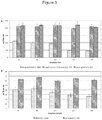
- the ddPCR length index (ddPCR-LI) reflects the fractional abundance of the two longer amplicons and was first determined for a set of 10 cfDNA test samples for which the fragmentation profile was also determined using the Agilent Bioanalyzer.
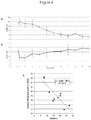
- High ddPCR-LIs were detected immediately (15 min) after engraftment, indicative of necrotic graft DNA that emerged during cold ischemia.
- ddPCR-LI started to decrease and reached a minimum at 24h. This minimum is explained by the dominating effect of the GcfDNA released during and immediately after surgery, after 24 h most of these fragments are degraded into the mononucleosomal fraction and thereby account for the low ddPCR-LI ( Figure 4 ).
- the final cfDNA concentration after correction for both, extraction and ⁇ Amp which may be as close to the true values as achievable with reasonable efforts, is found to be 2.1-fold (95% CI: 1.7 to 3.3) higher than the raw concentrations given by the QX100/200.
- This example thus illustrates the development and use of a two-length assay for quantifying digital PCR.
- the following steps of error control were applied for quanitifcation: Extraction efficiency was controlled by use of a spike-in artificial DNA; Fragmentation pattern of cfDNA was assessed by a 2-length assay (ddPCR-LI) and used to assess the amplifiable fraction ⁇ Amp ; pre-amplification was compared with direct PCR to assess the inherent error.
- the Roche and Qiagen extraction kits performed at 70-90% cfDNA recovery, which was corrected by the spike-in DNA.
- Different cfDNA fragmentation patterns occur in clinical samples contributing to ⁇ 20% imprecision, which is eliminated by ddPCR-LI derived ⁇ Amp .
- Concentrations of cfDNA after correcting for these two effects were on average 2.1 fold (1.7 to 3.2) higher than raw values.
- Preamplification doubles the imprecision of results, the dead-volume of the QX200 ( ⁇ 40%) contributes to about 30% of the total error.
- Multiplex ddPCR assays for GcfDNA without preamplification gave the most reliable results and quantifies cfDNA traces of 0.25% with an imprecision of ⁇ 10%.
- This example demonstrates a reliable assay system to quantify low amounts of chimeric cfDNA, with total process control and minimized random error. Quantification bias was greatly reduced by taking measurable sources of inaccuracy into account.
Landscapes
- Chemical & Material Sciences (AREA)
- Organic Chemistry (AREA)
- Life Sciences & Earth Sciences (AREA)
- Health & Medical Sciences (AREA)
- Zoology (AREA)
- Wood Science & Technology (AREA)
- Engineering & Computer Science (AREA)
- Chemical Kinetics & Catalysis (AREA)
- Proteomics, Peptides & Aminoacids (AREA)
- Molecular Biology (AREA)
- Immunology (AREA)
- Microbiology (AREA)
- Biotechnology (AREA)
- Biochemistry (AREA)
- Bioinformatics & Cheminformatics (AREA)
- General Engineering & Computer Science (AREA)
- General Health & Medical Sciences (AREA)
- Genetics & Genomics (AREA)
- Analytical Chemistry (AREA)
- Biophysics (AREA)
- Physics & Mathematics (AREA)
- Measuring Or Testing Involving Enzymes Or Micro-Organisms (AREA)
Priority Applications (3)
| Application Number | Priority Date | Filing Date | Title |
|---|---|---|---|
| SI201531200T SI3201361T1 (sl) | 2014-10-01 | 2015-09-30 | Metode kvantificiranja brezcelične DNK |
| HRP20200764TT HRP20200764T1 (hr) | 2014-10-01 | 2015-09-30 | Metode za kvantifikaciju cirkulirajuće slobodne dnk |
| PL15848055T PL3201361T3 (pl) | 2014-10-01 | 2015-09-30 | Sposoby ilościowego oznaczania pozakomórkowego DNA |
Applications Claiming Priority (2)
| Application Number | Priority Date | Filing Date | Title |
|---|---|---|---|
| US201462058261P | 2014-10-01 | 2014-10-01 | |
| PCT/US2015/053304 WO2016054255A1 (en) | 2014-10-01 | 2015-09-30 | Methods of quantifying cell-free dna |
Publications (3)
| Publication Number | Publication Date |
|---|---|
| EP3201361A1 EP3201361A1 (en) | 2017-08-09 |
| EP3201361A4 EP3201361A4 (en) | 2018-04-18 |
| EP3201361B1 true EP3201361B1 (en) | 2020-02-12 |
Family
ID=55631452
Family Applications (1)
| Application Number | Title | Priority Date | Filing Date |
|---|---|---|---|
| EP15848055.8A Active EP3201361B1 (en) | 2014-10-01 | 2015-09-30 | Methods of quantifying cell-free dna |
Country Status (12)
| Country | Link |
|---|---|
| US (1) | US10570443B2 (da) |
| EP (1) | EP3201361B1 (da) |
| CY (1) | CY1122952T1 (da) |
| DK (1) | DK3201361T3 (da) |
| ES (1) | ES2791328T3 (da) |
| HR (1) | HRP20200764T1 (da) |
| HU (1) | HUE049094T2 (da) |
| LT (1) | LT3201361T (da) |
| PL (1) | PL3201361T3 (da) |
| PT (1) | PT3201361T (da) |
| SI (1) | SI3201361T1 (da) |
| WO (1) | WO2016054255A1 (da) |
Families Citing this family (22)
| Publication number | Priority date | Publication date | Assignee | Title |
|---|---|---|---|---|
| US10683538B2 (en) * | 2015-04-17 | 2020-06-16 | The Translational Genomics Research Institute | Quality assessment of circulating cell-free DNA using multiplexed droplet digital PCR |
| WO2017190067A1 (en) | 2016-04-28 | 2017-11-02 | Impact Genomics, Inc. | Methods of assessing and monitoring tumor load |
| US20210277457A1 (en) * | 2016-08-12 | 2021-09-09 | Grail, Inc. | Method for accurate quantification of genomic copies in cell-free dna |
| WO2018081130A1 (en) | 2016-10-24 | 2018-05-03 | The Chinese University Of Hong Kong | Methods and systems for tumor detection |
| SG11201906397UA (en) | 2017-01-25 | 2019-08-27 | Univ Hong Kong Chinese | Diagnostic applications using nucleic acid fragments |
| CN111051536A (zh) | 2017-07-26 | 2020-04-21 | 香港中文大学 | 利用不含细胞的病毒核酸改善癌症筛选 |
| WO2019028462A1 (en) | 2017-08-04 | 2019-02-07 | Billiontoone, Inc. | TARGET-ASSOCIATED MOLECULES FOR CHARACTERIZATION ASSOCIATED WITH BIOLOGICAL TARGETS |
| US11519024B2 (en) | 2017-08-04 | 2022-12-06 | Billiontoone, Inc. | Homologous genomic regions for characterization associated with biological targets |
| CN111094583A (zh) | 2017-08-04 | 2020-05-01 | 十亿至一公司 | 与生物靶相关的定量中利用靶相关分子的测序输出确定和分析 |
| EP4650456A3 (en) | 2018-01-05 | 2026-01-21 | BillionToOne, Inc. | Quality control templates for ensuring validity of sequencing-based assays |
| DE202019005627U1 (de) | 2018-04-02 | 2021-05-31 | Grail, Inc. | Methylierungsmarker und gezielte Methylierungssondenpanels |
| EP3833776A4 (en) | 2018-08-06 | 2022-04-27 | Billiontoone, Inc. | DILUTION MARKER FOR QUANTIFICATION OF BIOLOGICAL TARGETS |
| WO2020060994A1 (en) | 2018-09-17 | 2020-03-26 | The University Of North Carolina At Chapel Hill | Method for quantifying dna fragments in a sample by size |
| WO2020069350A1 (en) | 2018-09-27 | 2020-04-02 | Grail, Inc. | Methylation markers and targeted methylation probe panel |
| EP3969616A2 (en) * | 2019-05-17 | 2022-03-23 | The Johns Hopkins University | Rapid aneuploidy detection |
| US11475981B2 (en) | 2020-02-18 | 2022-10-18 | Tempus Labs, Inc. | Methods and systems for dynamic variant thresholding in a liquid biopsy assay |
| US11211144B2 (en) | 2020-02-18 | 2021-12-28 | Tempus Labs, Inc. | Methods and systems for refining copy number variation in a liquid biopsy assay |
| US11211147B2 (en) | 2020-02-18 | 2021-12-28 | Tempus Labs, Inc. | Estimation of circulating tumor fraction using off-target reads of targeted-panel sequencing |
| EP4127214A4 (en) * | 2020-03-27 | 2024-05-29 | Chronix Biomedical | METHODS FOR ACCURATE AND UNBIASED QUANTIFICATION OF FREE CIRCULATING DNA |
| EP4409031A4 (en) * | 2021-09-29 | 2025-07-02 | Chronix Biomedical | METHODS FOR UNBIASED QUANTIFICATION OF RNA |
| KR20250019610A (ko) | 2022-03-21 | 2025-02-10 | 빌리언투원, 인크. | 치료 모니터링을 위한 메틸화된 세포 유리 dna의 분자 계수 |
| CN121443754A (zh) * | 2024-02-01 | 2026-01-30 | 迈克生物股份有限公司 | 特异性评估目标核酸的片段化程度的方法 |
Family Cites Families (9)
| Publication number | Priority date | Publication date | Assignee | Title |
|---|---|---|---|---|
| US5955589A (en) | 1991-12-24 | 1999-09-21 | Isis Pharmaceuticals Inc. | Gapped 2' modified oligonucleotides |
| YU187991A (sh) | 1990-12-11 | 1994-09-09 | Hoechst Aktiengesellschaft | 3-(2)-amino-ali tiol-modifikovani, s fluorescentnom bojom vezani nukleozidi, nukleotidi i oligonukleotidi, postupak za njihovo dobijanje i njihova upotreba |
| US5652099A (en) | 1992-02-12 | 1997-07-29 | Conrad; Michael J. | Probes comprising fluorescent nucleosides and uses thereof |
| US5446137B1 (en) | 1993-12-09 | 1998-10-06 | Behringwerke Ag | Oligonucleotides containing 4'-substituted nucleotides |
| DE4415370A1 (de) | 1994-05-02 | 1995-11-09 | Hoechst Ag | Modifizierte Oligonukleotide, deren Herstellung sowie deren Verwendung |
| DE4438918A1 (de) | 1994-11-04 | 1996-05-09 | Hoechst Ag | Modifizierte Oligonukleotide, deren Herstellung sowie deren Verwendung |
| EP0866071B1 (en) | 1997-03-20 | 2004-10-20 | F. Hoffmann-La Roche Ag | Modified primers |
| US6440706B1 (en) | 1999-08-02 | 2002-08-27 | Johns Hopkins University | Digital amplification |
| US9267174B2 (en) * | 2010-10-26 | 2016-02-23 | Stanford University | Method of simultaneously screening for multiple genotypes and/or mutations |
-
2015
- 2015-09-30 DK DK15848055.8T patent/DK3201361T3/da active
- 2015-09-30 EP EP15848055.8A patent/EP3201361B1/en active Active
- 2015-09-30 PL PL15848055T patent/PL3201361T3/pl unknown
- 2015-09-30 SI SI201531200T patent/SI3201361T1/sl unknown
- 2015-09-30 HU HUE15848055A patent/HUE049094T2/hu unknown
- 2015-09-30 WO PCT/US2015/053304 patent/WO2016054255A1/en not_active Ceased
- 2015-09-30 ES ES15848055T patent/ES2791328T3/es active Active
- 2015-09-30 PT PT158480558T patent/PT3201361T/pt unknown
- 2015-09-30 US US15/516,014 patent/US10570443B2/en active Active
- 2015-09-30 HR HRP20200764TT patent/HRP20200764T1/hr unknown
- 2015-09-30 LT LTEP15848055.8T patent/LT3201361T/lt unknown
-
2020
- 2020-05-12 CY CY20201100440T patent/CY1122952T1/el unknown
Non-Patent Citations (1)
| Title |
|---|
| None * |
Also Published As
| Publication number | Publication date |
|---|---|
| CY1122952T1 (el) | 2021-10-29 |
| EP3201361A1 (en) | 2017-08-09 |
| LT3201361T (lt) | 2020-06-10 |
| SI3201361T1 (sl) | 2020-07-31 |
| PT3201361T (pt) | 2020-05-13 |
| ES2791328T3 (es) | 2020-11-03 |
| PL3201361T3 (pl) | 2020-09-07 |
| HUE049094T2 (hu) | 2020-09-28 |
| US10570443B2 (en) | 2020-02-25 |
| US20170327869A1 (en) | 2017-11-16 |
| HRP20200764T1 (hr) | 2020-07-24 |
| WO2016054255A1 (en) | 2016-04-07 |
| EP3201361A4 (en) | 2018-04-18 |
| DK3201361T3 (da) | 2020-05-18 |
Similar Documents
| Publication | Publication Date | Title |
|---|---|---|
| EP3201361B1 (en) | Methods of quantifying cell-free dna | |
| US20220333213A1 (en) | Breast cancer associated circulating nucleic acid biomarkers | |
| US11155872B2 (en) | Detection and quantification of donor cell-free DNA in the circulation of organ transplant recipients | |
| McKiernan et al. | Molecular diagnostic applications in forensic science | |
| US11220716B2 (en) | Methods for predicting the prognosis of breast cancer patient | |
| US20190185928A1 (en) | Prostate cancer associated circulating nucleic acid biomarkers | |
| JP5926183B2 (ja) | 疾患関連kirハプロタイプの決定 | |
| EP3283657B1 (en) | Quality assessment of circulating cell-free dna using multiplexed droplet digital pcr | |
| KR20130016010A (ko) | 보습 피부 타입 유전자 다형성 마커 및 이의 용도 | |
| US20180216198A1 (en) | Methods for predicting effectiveness of chemotherapy for a breast cancer patient | |
| CN111868262A (zh) | 检测癌症中微卫星不稳定性的生物标志物组和方法 | |
| EP3755811B1 (en) | Methods and kits for determining the efficiency of plasma separation from whole blood | |
| US20230121271A1 (en) | Methods for precise and bias-free quantification of cell-free dna | |
| JP2017500032A (ja) | 配列不明の二本鎖線形核酸の全長増幅のための方法 | |
| WO2019012543A1 (en) | DNA TARGETS AS SPECIFIC TISSUE METHYLATION MARKERS | |
| AU2022202281A1 (en) | Preparation Of Nucleic Acid Libraries From RNA And DNA | |
| US20240401120A1 (en) | Methods for bias-free quantification of rna | |
| DE10328033A1 (de) | Verfahren und ArthritisChip zur Diagnostik, Verlaufskontrolle sowie zur Charakterisierung der rheumatoiden Arthritis und der Osteoarthrose | |
| WO2024027961A1 (en) | Method for the detection of sars-cov-2 by digital pcr | |
| EP3907739A1 (en) | Method for determining fetal fraction in maternal sample | |
| AU2024331615A1 (en) | Fragmentomics-based plasma separation assays | |
| JP2026016403A (ja) | 核酸配列濃度の決定 | |
| EP4685242A1 (en) | Method for obtaining useful data for the prediction of a subject's response to platelet-rich plasma treatment | |
| Jackson et al. | in Hematopathology |
Legal Events
| Date | Code | Title | Description |
|---|---|---|---|
| STAA | Information on the status of an ep patent application or granted ep patent |
Free format text: STATUS: THE INTERNATIONAL PUBLICATION HAS BEEN MADE |
|
| PUAI | Public reference made under article 153(3) epc to a published international application that has entered the european phase |
Free format text: ORIGINAL CODE: 0009012 |
|
| STAA | Information on the status of an ep patent application or granted ep patent |
Free format text: STATUS: REQUEST FOR EXAMINATION WAS MADE |
|
| 17P | Request for examination filed |
Effective date: 20170419 |
|
| AK | Designated contracting states |
Kind code of ref document: A1 Designated state(s): AL AT BE BG CH CY CZ DE DK EE ES FI FR GB GR HR HU IE IS IT LI LT LU LV MC MK MT NL NO PL PT RO RS SE SI SK SM TR |
|
| AX | Request for extension of the european patent |
Extension state: BA ME |
|
| DAV | Request for validation of the european patent (deleted) | ||
| DAX | Request for extension of the european patent (deleted) | ||
| A4 | Supplementary search report drawn up and despatched |
Effective date: 20180321 |
|
| RIC1 | Information provided on ipc code assigned before grant |
Ipc: G01N 33/48 20060101ALI20180315BHEP Ipc: C12Q 1/68 20060101AFI20180315BHEP Ipc: C12Q 1/686 20180101ALI20180315BHEP |
|
| STAA | Information on the status of an ep patent application or granted ep patent |
Free format text: STATUS: EXAMINATION IS IN PROGRESS |
|
| 17Q | First examination report despatched |
Effective date: 20190115 |
|
| GRAP | Despatch of communication of intention to grant a patent |
Free format text: ORIGINAL CODE: EPIDOSNIGR1 |
|
| STAA | Information on the status of an ep patent application or granted ep patent |
Free format text: STATUS: GRANT OF PATENT IS INTENDED |
|
| INTG | Intention to grant announced |
Effective date: 20190906 |
|
| GRAS | Grant fee paid |
Free format text: ORIGINAL CODE: EPIDOSNIGR3 |
|
| GRAA | (expected) grant |
Free format text: ORIGINAL CODE: 0009210 |
|
| STAA | Information on the status of an ep patent application or granted ep patent |
Free format text: STATUS: THE PATENT HAS BEEN GRANTED |
|
| AK | Designated contracting states |
Kind code of ref document: B1 Designated state(s): AL AT BE BG CH CY CZ DE DK EE ES FI FR GB GR HR HU IE IS IT LI LT LU LV MC MK MT NL NO PL PT RO RS SE SI SK SM TR |
|
| REG | Reference to a national code |
Ref country code: GB Ref legal event code: FG4D |
|
| REG | Reference to a national code |
Ref country code: CH Ref legal event code: EP |
|
| REG | Reference to a national code |
Ref country code: AT Ref legal event code: REF Ref document number: 1232169 Country of ref document: AT Kind code of ref document: T Effective date: 20200215 |
|
| REG | Reference to a national code |
Ref country code: IE Ref legal event code: FG4D |
|
| REG | Reference to a national code |
Ref country code: DE Ref legal event code: R096 Ref document number: 602015047034 Country of ref document: DE |
|
| REG | Reference to a national code |
Ref country code: HR Ref legal event code: TUEP Ref document number: P20200764T Country of ref document: HR |
|
| REG | Reference to a national code |
Ref country code: PT Ref legal event code: SC4A Ref document number: 3201361 Country of ref document: PT Date of ref document: 20200513 Kind code of ref document: T Free format text: AVAILABILITY OF NATIONAL TRANSLATION Effective date: 20200506 |
|
| REG | Reference to a national code |
Ref country code: CH Ref legal event code: NV Representative=s name: VENI GMBH, CH |
|
| REG | Reference to a national code |
Ref country code: DK Ref legal event code: T3 Effective date: 20200512 |
|
| REG | Reference to a national code |
Ref country code: NL Ref legal event code: FP |
|
| REG | Reference to a national code |
Ref country code: SE Ref legal event code: TRGR |
|
| REG | Reference to a national code |
Ref country code: NO Ref legal event code: T2 Effective date: 20200212 |
|
| REG | Reference to a national code |
Ref country code: GR Ref legal event code: EP Ref document number: 20200401300 Country of ref document: GR Effective date: 20200716 |
|
| REG | Reference to a national code |
Ref country code: HR Ref legal event code: T1PR Ref document number: P20200764 Country of ref document: HR |
|
| PG25 | Lapsed in a contracting state [announced via postgrant information from national office to epo] |
Ref country code: FI Free format text: LAPSE BECAUSE OF FAILURE TO SUBMIT A TRANSLATION OF THE DESCRIPTION OR TO PAY THE FEE WITHIN THE PRESCRIBED TIME-LIMIT Effective date: 20200212 Ref country code: RS Free format text: LAPSE BECAUSE OF FAILURE TO SUBMIT A TRANSLATION OF THE DESCRIPTION OR TO PAY THE FEE WITHIN THE PRESCRIBED TIME-LIMIT Effective date: 20200212 |
|
| PG25 | Lapsed in a contracting state [announced via postgrant information from national office to epo] |
Ref country code: BG Free format text: LAPSE BECAUSE OF FAILURE TO SUBMIT A TRANSLATION OF THE DESCRIPTION OR TO PAY THE FEE WITHIN THE PRESCRIBED TIME-LIMIT Effective date: 20200512 |
|
| REG | Reference to a national code |
Ref country code: HU Ref legal event code: AG4A Ref document number: E049094 Country of ref document: HU |
|
| REG | Reference to a national code |
Ref country code: HR Ref legal event code: ODRP Ref document number: P20200764 Country of ref document: HR Payment date: 20200824 Year of fee payment: 6 |
|
| PG25 | Lapsed in a contracting state [announced via postgrant information from national office to epo] |
Ref country code: SK Free format text: LAPSE BECAUSE OF FAILURE TO SUBMIT A TRANSLATION OF THE DESCRIPTION OR TO PAY THE FEE WITHIN THE PRESCRIBED TIME-LIMIT Effective date: 20200212 Ref country code: SM Free format text: LAPSE BECAUSE OF FAILURE TO SUBMIT A TRANSLATION OF THE DESCRIPTION OR TO PAY THE FEE WITHIN THE PRESCRIBED TIME-LIMIT Effective date: 20200212 Ref country code: EE Free format text: LAPSE BECAUSE OF FAILURE TO SUBMIT A TRANSLATION OF THE DESCRIPTION OR TO PAY THE FEE WITHIN THE PRESCRIBED TIME-LIMIT Effective date: 20200212 |
|
| REG | Reference to a national code |
Ref country code: ES Ref legal event code: FG2A Ref document number: 2791328 Country of ref document: ES Kind code of ref document: T3 Effective date: 20201103 |
|
| REG | Reference to a national code |
Ref country code: DE Ref legal event code: R097 Ref document number: 602015047034 Country of ref document: DE |
|
| PLBE | No opposition filed within time limit |
Free format text: ORIGINAL CODE: 0009261 |
|
| STAA | Information on the status of an ep patent application or granted ep patent |
Free format text: STATUS: NO OPPOSITION FILED WITHIN TIME LIMIT |
|
| 26N | No opposition filed |
Effective date: 20201113 |
|
| REG | Reference to a national code |
Ref country code: AT Ref legal event code: UEP Ref document number: 1232169 Country of ref document: AT Kind code of ref document: T Effective date: 20200212 |
|
| REG | Reference to a national code |
Ref country code: HR Ref legal event code: ODRP Ref document number: P20200764 Country of ref document: HR Payment date: 20210913 Year of fee payment: 7 |
|
| PG25 | Lapsed in a contracting state [announced via postgrant information from national office to epo] |
Ref country code: TR Free format text: LAPSE BECAUSE OF FAILURE TO SUBMIT A TRANSLATION OF THE DESCRIPTION OR TO PAY THE FEE WITHIN THE PRESCRIBED TIME-LIMIT Effective date: 20200212 |
|
| PG25 | Lapsed in a contracting state [announced via postgrant information from national office to epo] |
Ref country code: MK Free format text: LAPSE BECAUSE OF FAILURE TO SUBMIT A TRANSLATION OF THE DESCRIPTION OR TO PAY THE FEE WITHIN THE PRESCRIBED TIME-LIMIT Effective date: 20200212 |
|
| REG | Reference to a national code |
Ref country code: HR Ref legal event code: ODRP Ref document number: P20200764 Country of ref document: HR Payment date: 20220921 Year of fee payment: 8 |
|
| P01 | Opt-out of the competence of the unified patent court (upc) registered |
Effective date: 20230404 |
|
| REG | Reference to a national code |
Ref country code: HR Ref legal event code: ODRP Ref document number: P20200764 Country of ref document: HR Payment date: 20230731 Year of fee payment: 9 |
|
| REG | Reference to a national code |
Ref country code: HR Ref legal event code: ODRP Ref document number: P20200764 Country of ref document: HR Payment date: 20240726 Year of fee payment: 10 |
|
| PGFP | Annual fee paid to national office [announced via postgrant information from national office to epo] |
Ref country code: NL Payment date: 20250814 Year of fee payment: 11 |
|
| REG | Reference to a national code |
Ref country code: CH Ref legal event code: U11 Free format text: ST27 STATUS EVENT CODE: U-0-0-U10-U11 (AS PROVIDED BY THE NATIONAL OFFICE) Effective date: 20251001 |
|
| PGFP | Annual fee paid to national office [announced via postgrant information from national office to epo] |
Ref country code: PT Payment date: 20250926 Year of fee payment: 11 |
|
| PGFP | Annual fee paid to national office [announced via postgrant information from national office to epo] |
Ref country code: LT Payment date: 20250828 Year of fee payment: 11 Ref country code: DE Payment date: 20250805 Year of fee payment: 11 Ref country code: DK Payment date: 20250911 Year of fee payment: 11 |
|
| REG | Reference to a national code |
Ref country code: HR Ref legal event code: ODRP Ref document number: P20200764 Country of ref document: HR Payment date: 20250807 Year of fee payment: 11 |
|
| PGFP | Annual fee paid to national office [announced via postgrant information from national office to epo] |
Ref country code: GR Payment date: 20250818 Year of fee payment: 11 Ref country code: NO Payment date: 20250909 Year of fee payment: 11 Ref country code: MC Payment date: 20250828 Year of fee payment: 11 |
|
| PGFP | Annual fee paid to national office [announced via postgrant information from national office to epo] |
Ref country code: IT Payment date: 20250825 Year of fee payment: 11 Ref country code: LU Payment date: 20250912 Year of fee payment: 11 Ref country code: PL Payment date: 20250731 Year of fee payment: 11 |
|
| PGFP | Annual fee paid to national office [announced via postgrant information from national office to epo] |
Ref country code: HU Payment date: 20250828 Year of fee payment: 11 Ref country code: BE Payment date: 20250818 Year of fee payment: 11 Ref country code: GB Payment date: 20250807 Year of fee payment: 11 |
|
| PGFP | Annual fee paid to national office [announced via postgrant information from national office to epo] |
Ref country code: HR Payment date: 20250807 Year of fee payment: 11 |
|
| PGFP | Annual fee paid to national office [announced via postgrant information from national office to epo] |
Ref country code: AL Payment date: 20250915 Year of fee payment: 11 Ref country code: FR Payment date: 20250808 Year of fee payment: 11 Ref country code: AT Payment date: 20250827 Year of fee payment: 11 |
|
| PGFP | Annual fee paid to national office [announced via postgrant information from national office to epo] |
Ref country code: MT Payment date: 20250917 Year of fee payment: 11 Ref country code: SE Payment date: 20250812 Year of fee payment: 11 |
|
| PGFP | Annual fee paid to national office [announced via postgrant information from national office to epo] |
Ref country code: CZ Payment date: 20250923 Year of fee payment: 11 Ref country code: IE Payment date: 20250812 Year of fee payment: 11 |
|
| PGFP | Annual fee paid to national office [announced via postgrant information from national office to epo] |
Ref country code: RO Payment date: 20250828 Year of fee payment: 11 |
|
| PGFP | Annual fee paid to national office [announced via postgrant information from national office to epo] |
Ref country code: IS Payment date: 20250915 Year of fee payment: 11 |
|
| PGFP | Annual fee paid to national office [announced via postgrant information from national office to epo] |
Ref country code: LV Payment date: 20250721 Year of fee payment: 11 |
|
| PGFP | Annual fee paid to national office [announced via postgrant information from national office to epo] |
Ref country code: SI Payment date: 20250724 Year of fee payment: 11 |
|
| PGFP | Annual fee paid to national office [announced via postgrant information from national office to epo] |
Ref country code: CH Payment date: 20251001 Year of fee payment: 11 |
|
| PGFP | Annual fee paid to national office [announced via postgrant information from national office to epo] |
Ref country code: CY Payment date: 20250912 Year of fee payment: 11 |
|
| PGFP | Annual fee paid to national office [announced via postgrant information from national office to epo] |
Ref country code: ES Payment date: 20251017 Year of fee payment: 11 |