EP3200813B1 - Pulmonary administration of pyocins for treating bacterial respiratory infections - Google Patents
Pulmonary administration of pyocins for treating bacterial respiratory infections Download PDFInfo
- Publication number
- EP3200813B1 EP3200813B1 EP15767472.2A EP15767472A EP3200813B1 EP 3200813 B1 EP3200813 B1 EP 3200813B1 EP 15767472 A EP15767472 A EP 15767472A EP 3200813 B1 EP3200813 B1 EP 3200813B1
- Authority
- EP
- European Patent Office
- Prior art keywords
- pyocin
- pyocins
- type
- infection
- mice
- Prior art date
- Legal status (The legal status is an assumption and is not a legal conclusion. Google has not performed a legal analysis and makes no representation as to the accuracy of the status listed.)
- Active
Links
Images


Classifications
-
- C—CHEMISTRY; METALLURGY
- C07—ORGANIC CHEMISTRY
- C07K—PEPTIDES
- C07K14/00—Peptides having more than 20 amino acids; Gastrins; Somatostatins; Melanotropins; Derivatives thereof
- C07K14/195—Peptides having more than 20 amino acids; Gastrins; Somatostatins; Melanotropins; Derivatives thereof from bacteria
- C07K14/21—Peptides having more than 20 amino acids; Gastrins; Somatostatins; Melanotropins; Derivatives thereof from bacteria from Pseudomonadaceae (F)
-
- A—HUMAN NECESSITIES
- A61—MEDICAL OR VETERINARY SCIENCE; HYGIENE
- A61K—PREPARATIONS FOR MEDICAL, DENTAL OR TOILETRY PURPOSES
- A61K38/00—Medicinal preparations containing peptides
- A61K38/16—Peptides having more than 20 amino acids; Gastrins; Somatostatins; Melanotropins; Derivatives thereof
- A61K38/164—Peptides having more than 20 amino acids; Gastrins; Somatostatins; Melanotropins; Derivatives thereof from bacteria
-
- A—HUMAN NECESSITIES
- A61—MEDICAL OR VETERINARY SCIENCE; HYGIENE
- A61P—SPECIFIC THERAPEUTIC ACTIVITY OF CHEMICAL COMPOUNDS OR MEDICINAL PREPARATIONS
- A61P11/00—Drugs for disorders of the respiratory system
-
- A—HUMAN NECESSITIES
- A61—MEDICAL OR VETERINARY SCIENCE; HYGIENE
- A61P—SPECIFIC THERAPEUTIC ACTIVITY OF CHEMICAL COMPOUNDS OR MEDICINAL PREPARATIONS
- A61P31/00—Antiinfectives, i.e. antibiotics, antiseptics, chemotherapeutics
- A61P31/04—Antibacterial agents
-
- A—HUMAN NECESSITIES
- A61—MEDICAL OR VETERINARY SCIENCE; HYGIENE
- A61P—SPECIFIC THERAPEUTIC ACTIVITY OF CHEMICAL COMPOUNDS OR MEDICINAL PREPARATIONS
- A61P31/00—Antiinfectives, i.e. antibiotics, antiseptics, chemotherapeutics
- A61P31/12—Antivirals
- A61P31/14—Antivirals for RNA viruses
- A61P31/18—Antivirals for RNA viruses for HIV
-
- A—HUMAN NECESSITIES
- A61—MEDICAL OR VETERINARY SCIENCE; HYGIENE
- A61P—SPECIFIC THERAPEUTIC ACTIVITY OF CHEMICAL COMPOUNDS OR MEDICINAL PREPARATIONS
- A61P35/00—Antineoplastic agents
-
- A—HUMAN NECESSITIES
- A61—MEDICAL OR VETERINARY SCIENCE; HYGIENE
- A61P—SPECIFIC THERAPEUTIC ACTIVITY OF CHEMICAL COMPOUNDS OR MEDICINAL PREPARATIONS
- A61P37/00—Drugs for immunological or allergic disorders
- A61P37/02—Immunomodulators
-
- A—HUMAN NECESSITIES
- A61—MEDICAL OR VETERINARY SCIENCE; HYGIENE
- A61P—SPECIFIC THERAPEUTIC ACTIVITY OF CHEMICAL COMPOUNDS OR MEDICINAL PREPARATIONS
- A61P43/00—Drugs for specific purposes, not provided for in groups A61P1/00-A61P41/00
-
- A—HUMAN NECESSITIES
- A61—MEDICAL OR VETERINARY SCIENCE; HYGIENE
- A61P—SPECIFIC THERAPEUTIC ACTIVITY OF CHEMICAL COMPOUNDS OR MEDICINAL PREPARATIONS
- A61P9/00—Drugs for disorders of the cardiovascular system
- A61P9/04—Inotropic agents, i.e. stimulants of cardiac contraction; Drugs for heart failure
-
- A—HUMAN NECESSITIES
- A61—MEDICAL OR VETERINARY SCIENCE; HYGIENE
- A61K—PREPARATIONS FOR MEDICAL, DENTAL OR TOILETRY PURPOSES
- A61K38/00—Medicinal preparations containing peptides
-
- A—HUMAN NECESSITIES
- A61—MEDICAL OR VETERINARY SCIENCE; HYGIENE
- A61K—PREPARATIONS FOR MEDICAL, DENTAL OR TOILETRY PURPOSES
- A61K9/00—Medicinal preparations characterised by special physical form
- A61K9/0012—Galenical forms characterised by the site of application
- A61K9/007—Pulmonary tract; Aromatherapy
- A61K9/0073—Sprays or powders for inhalation; Aerolised or nebulised preparations generated by other means than thermal energy
-
- Y—GENERAL TAGGING OF NEW TECHNOLOGICAL DEVELOPMENTS; GENERAL TAGGING OF CROSS-SECTIONAL TECHNOLOGIES SPANNING OVER SEVERAL SECTIONS OF THE IPC; TECHNICAL SUBJECTS COVERED BY FORMER USPC CROSS-REFERENCE ART COLLECTIONS [XRACs] AND DIGESTS
- Y02—TECHNOLOGIES OR APPLICATIONS FOR MITIGATION OR ADAPTATION AGAINST CLIMATE CHANGE
- Y02A—TECHNOLOGIES FOR ADAPTATION TO CLIMATE CHANGE
- Y02A50/00—TECHNOLOGIES FOR ADAPTATION TO CLIMATE CHANGE in human health protection, e.g. against extreme weather
- Y02A50/30—Against vector-borne diseases, e.g. mosquito-borne, fly-borne, tick-borne or waterborne diseases whose impact is exacerbated by climate change
Definitions
- the invention relates to the treatment of bacterial respiratory infections, and in particular to the use of the bacterially-originating antibiotics known as pyocins to treat such infections.
- aeruginosa to form multidrug resistant biofilms during chronic infection and the appearance of antibiotic resistant phenotypic variants during prolonged antibiotic therapy can render this pathogen essentially untreatable with existing antibiotics 5-7 .
- Chronic infection of the lower respiratory tract with P. aeruginosa is the leading cause of mortality in patients with cystic fibrosis, who despite receiving intensive antibiotic therapy have a median predicted survival of 41.5 years (2011) 8 .
- infection with P. aeruginosa is a major and growing cause of nosocomial infections such as ventilator-associated pneumonia.
- P. aeruginosa infection is also linked with the pathogenesis of chronic obstructive pulmonary disease, a leading cause of death in the Western world 9-12 . Consequently, there is an urgent need to consider alternative strategies for antibiotic development, to bolster a developmental pipeline that in recent decades has yielded few novel small molecule antibiotics active against these difficult to treat bacteria 13-15 .
- cytotoxic activity most commonly taking the form of a nuclease activity targeting DNA, rRNA or tRNA, or a pore-forming activity targeting the cytoplasmic membrane 17 .
- pyocins S1, S2, S3 and AP41 display DNase activity
- pyocin S4 is a tRNase
- pyocin S5 is a pore-forming toxin 16 .
- lectin-like pyocin L1 the mechanism of cell killing is unknown.
- pyocins display unmatched potency against P . aeruginosa, and pyocin S2 is active in an invertebrate model of P. aeruginosa infection 25 , pyocins have not previously been suggested or shown to be good candidates for clinical use. As bacterially-derived polypeptides, they would appear particularly unsuitable for use in treating conditions affecting the respiratory tract, since the presence of bacterial proteins in the lung would be expected to provoke an immune response which could be very damaging to the sensitive respiratory tissue.
- S-type pyocins can be successfully delivered to the lung, providing a dramatic reduction in bacterial load, but without provoking an immune response or causing other tissue damage.
- the invention provides an S-type pyocin for use in a method of prophylaxis or treatment of a Pseudomonas respiratory infection, wherein the pyocin is delivered by pulmonary administration.
- the infecting bacteria comprise Pseudomonas species, such as Pseudomonas aeruginosa.
- the subject to be treated may have, or may be at risk of developing a bacterial pneumonia as a result of the infection.
- the S-type pyocins may be used for the prophylaxis and/or treatment of bacterial pneumonia.
- the subject to be treated may have compromised respiratory tract function and/or compromised immune function.
- the subject to be treated may be suffering from cystic fibrosis or chronic obstructive pulmonary disease (COPD).
- the subject may be a cancer patient (especially one undergoing chemotherapy), or a patient affected by congestive heart failure or AIDS.
- the subject to be treated may have, or be at risk of developing, community-acquired pneumonia and nosocomial infections such as ventilator-associated pneumonia and hospital-acquired pneumonia.
- S-type pyocins comprise a targeting portion and an effector portion.
- the S-type pyocin may, for example, comprise an S2, SD2, S5 or AP41 targeting portion.
- the pyocin comprises an S5 targeting portion.
- the S-type pyocin may, for example, comprise an S2, SD2, S5 or AP41 effector portion. Alternatively it may comprise a cytotoxic domain from a colicin, e.g. from an E2 or E3 colicin. In some embodiments, the pyocin comprises an S5 effector portion.
- the S-type pyocin is an S2, SD2, S5, AP41 or L1 pyocin, e.g. an S5 pyocin.
- the combination may comprise S-type pyocins having at least two different receptor specificities and/or effector activities.
- the combination may comprise an S5 pyocin.
- the combination may comprise an L1 pyocin.
- the combination may comprise an S2 pyocin.
- the combination may comprise an AP41 pyocin.
- the combination may comprise an SD2 pyocin.
- the combination may comprise an L1 pyocin and an S2 pyocin; an L1 pyocin and an AP41 pyocin; an S2 pyocin and an AP41 pyocin; or an L1 pyocin, an S2 pyocin and an AP41 pyocin. Any of these combinations may additionally comprise an S5 pyocin and/or an SD2 pyocin. Whichever other pyocins are present, it may be desirable that the combination comprises an S5 pyocin.
- the disclosure further provides a method of preparing a medicament for the prophylaxis or treatment of bacterial respiratory infection comprising providing an S-type pyocin and formulating said S-type pyocin for pulmonary administration.
- the S-type pyocin may have been expressed by recombinant methods.
- the method may comprise the steps of recombinantly expressing the S-type pyocin and optionally isolating the S-type pyocin.
- the invention further provides a device for pulmonary administration of an active agent to a subject, the device comprising an S-type pyocin.
- the device may, for example, be an inhaler (e.g. metered-dose inhaler, dry powder inhaler) or nebuliser (e.g. ultrasonic nebuliser, jet nebuliser, vibrating mesh nebuliser).
- inhaler e.g. metered-dose inhaler, dry powder inhaler
- nebuliser e.g. ultrasonic nebuliser, jet nebuliser, vibrating mesh nebuliser.
- Pyocins are proteinaceous anti-microbial toxins produced by and effective against Pseudomonas species, especially P . aeruginosa.
- Pyocins generally fall into three classes, namely S-type, R-type and F-type.
- R-type (rod-like) and F-type (flexible and non-contractile) pyocins are both related to phage tail proteins (from P2 phage and lambda phage respectively) and act by forming pores in the bacterial membrane.
- S-type (soluble) pyocins have characteristic multi-domain structures similar to colicins (to which they are believed to be evolutionarily related).
- the term "pyocin” is used in this specification to refer to S-type pyocins except where the context demands otherwise.
- Organisms which produce S-type pyocins are normally unaffected by their own pyocins because they also produce "immunity proteins" which act as antagonists to the corresponding pyocins.
- S-type pyocins comprise a targeting portion and an effector portion.
- the targeting portion is at the N-terminal end of the molecule and the effector portion at the C-terminal end.
- the order of these portions may not be essential for function.
- use of pyocin molecules having an N-terminal effector portion and a C-terminal targeting portion is also contemplated.
- the effector portion may constitute a single independently folded domain.
- the targeting portion may also constitute a single independently folded domain or may be sub-divided into two or more independently folded domains.
- the targeting portion binds to a receptor at the surface of the target organism (i.e. at the Gram negative outer membrane) and mediates translocation of the pyocin across the outer membrane.
- a receptor i.e. at the Gram negative outer membrane
- the term "receptor” is used simply to designate the molecule on the target organism to which the targeting portion binds, and should not be taken to imply a cooperative receptor-ligand interaction in the sense usually intended for a pair of molecules expressed by a single organism.
- the targeting portion of the pyocin determines the species and strain specificity (or tropism) of the pyocin.
- the receptors to which they bind are often specific to pseudomonads, e.g. to Pseudomonas, or even to P. aeruginosa or strains thereof.
- the targeting portions of most naturally occurring S-type pyocins have a characteristic modular structure containing up to three identifiable sub-regions, each of which may represent an separately folded domain or may lack recognisable secondary structure and thus form a flexible region of the molecule.
- These sub-regions are often referred to in the literature as a receptor binding region, a region of unknown function, and a translocation region, and typically (although not exclusively) occur in that order in an N- to C-terminal direction.
- these proteins are not well characterised and the ascribed functions may not be correct. These regions will therefore be referred to herein as regions I, II and III of the targeting portion respectively.
- regions I, II and III may be interchangeable between pyocin molecules, at least to some extent, and that region II may be dispensable in whole or in part.
- the targeting portion may comprise at least a region I sequence and a region III sequence, optionally separated by a region II sequence, a fragment thereof, or a peptide linker. It may be desirable that region I, region II or fragment or linker (if present), and region III occur in that order in an N- to C-terminal direction.
- the effector portion typically has cell-killing activity once across the outer membrane. It may act in the periplasm or may require transport to the cytoplasm to exert its cell-killing effect. Regardless of mechanism, the effector portion may be referred to as a "cytotoxic" portion of the pyocin molecule.
- the effector or cytotoxic portions of pyocin molecules are typically pore-forming or enzymatic.
- Pore-forming pyocins e.g. pyocin S5
- Enzymatic pyocins typically act as nucleases in the cytoplasm and include those with DNase activity (e.g. pyocins S1, S2, SD2, S3 and AP41) and tRNase activity (e.g. pyocin S4).
- the targets on which the effector portions act tend to be highly conserved across the bacterial kingdom and their mechanisms of action are similar to those of other anti-bacterial toxins such as the effector domains of colicins.
- chimeric pyocins containing a targeting portion from an S1 or S2 pyocin linked to an effector portion from either an E2 or E3 colicin have been demonstrated to retain pseudomonad-killing activity 37 .
- the pyocin may comprise any suitable anti-bacterial protein or protein domain as an effector portion, as long as the protein or domain retains cytotoxic activity against one or more pseudomonad organisms.
- the effector component may be a cytotoxic domain from a colicin, such as (but not limited to) an E2 or E3 colicin.
- the targeting domains of S2 pyocins bind to the TonB-dependent iron-siderophore receptor FpvAI.
- S2 effector domains have DNase activity.
- S2 pyocin has the sequence:
- the targeting portion of the S2 pyocin has the sequence:
- Region I of the S2 targeting portion has the sequence:
- Region II of the S2 targeting portion has the sequence:
- Region III of the S2 targeting portion has the sequence:
- the effector portion of the S2 pyocin has the sequence:
- a prototypical SD2 pyocin sequence is described by McCaughey et al. (in press).
- the targeting domains of SD2 pyocins bind to lipopolysaccharide (LPS) from P. aeruginosa and more specifically to the common polysaccharide antigen (CPA) within LPS, which is predominantly a homo-polymer of D-rhamnose. although specific binding may not be required for killing.
- LPS lipopolysaccharide
- CPA common polysaccharide antigen
- An example of an SD2 pyocin has the sequence:
- the targeting portion of the SD2 pyocin has the sequence:
- Region I of the SD2 targeting portion has the sequence:
- Region II of said pyocin SD2 targeting portion is a region II of said pyocin SD2 targeting portion
- Region III of the SD2 targeting portion has the sequence:
- the effector portion of SD2 pyocin has the sequence:
- S5 pyocins bind to the TonB-dependent iron-siderophore receptor FptA.
- S5 effector domains have pore-forming activity.
- region III may occur N-terminal of region I, and that region II may be absent.
- S5 pyocin has the sequence:
- the targeting portion of the S5 pyocin has the sequence:
- Region I of the S5 targeting portion has the sequence:
- Region III of the S5 targeting portion has the sequence:
- the effector portion of the S5 pyocin has the sequence:
- the effector domains of AP41 pyocins have DNase activity.
- An example of an AP41 pyocin has the sequence:
- the targeting portion of the AP41 pyocin has the sequence:
- Region I of the AP41 targeting portion has the sequence:
- Region II of the AP41 targeting portion has the sequence:
- Region III of the AP41 targeting portion has the sequence:
- the effector portion of the AP41 pyocin has the sequence:
- Pyocin L1 can be regarded as a "lectin-like" pyocin, which binds to carbohydrate moieties on the bacterial surface. Its receptor on P. aeruginosa is believed to be LPS, and more specifically the common polysaccharide antigen (CPA) within LPS, which is predominantly a homo-polymer of D-rhamnose.
- CPA common polysaccharide antigen
- L1 pyocin has the sequence:
- An L1 pyocin typically comprises one, two, three or four carbohydrate-binding motifs having the consensus sequence Q-X-D-X-N/D-X-V/G-Y/F.
- the S-type pyocin for use in the present invention comprises a targeting portion which may comprise:
- the targeting portion may have at least 80% sequence identity, e.g. at least 85%, 90%, 95%, 96%, 97%, 98% or 99% sequence identity to the targeting portion sequence from pyocin S2, SD2, S5 or AP41 (SEQ ID NOs: 2, 8, 14 and 19 respectively).
- Such targeting portions may be described as S2, SD2, S5 and AP41 targeting portions respectively. Typically they will bind to the same receptor as the exemplary sequences provided here.
- the S-type pyocin for use in the present invention comprises an effector portion which may have at least 80% sequence identity, e.g. at least 85%, 90%, 95%, 96%, 97%, 98% or 99% sequence identity to the effector region sequence from pyocin S2, SD2, S5 or AP41 (SEQ ID NOs: 6, 12, 17 and 23 respectively).
- effector portions may be described as S2, SD2, S5 and AP41 effector portions respectively.
- they have the same cytotoxic activity as the exemplary sequences provided, i.e. DNase (S2, SD2, AP41) or pore-forming (S5) .
- the effector portion may be a cytotoxic domain from a colicin (e.g. a cytotoxic domain from colicin E1, E3, E9, D, la, E2, E7, E8, E4, E6, E5, A, B, N, M or S4.
- a colicin e.g. a cytotoxic domain from colicin E1, E3, E9, D, la, E2, E7, E8, E4, E6, E5, A, B, N, M or S4.
- exemplary sequences are provided in WO2014/009744 ) or any other suitable cytotoxic protein.
- the pyocin molecule may have at least 80% sequence identity, e.g. at least 85%, 90%, 95%, 96%, 97%, 98% or 99% sequence identity to the exemplary sequences of pyocin S2, SD2, S5, AP41 or L1 provided above (SEQ ID NOs: 1, 7, 13, 18 and 24 respectively). Such molecules may be described as S2, SD2, S5, AP41 or L1 pyocins respectively. Typically, they bind to the same receptors and have the same cytotoxic activity as the exemplary sequences provided.
- An L1 pyocin typically comprises one, two, three or four carbohydrate binding motifs which each conform to the consensus sequence shown above. An In some embodiments, an L1 pyocin comprises one, two, three or all four of the specific carbohydrate binding motifs underlined in SEQ ID NO: 24 above.
- Percent (%) amino acid sequence identity with respect to a reference sequence is defined as the percentage of amino acid residues in a candidate sequence that are identical with the amino acid residues in the reference sequence, after aligning the sequences and introducing gaps, if necessary, to achieve the maximum percent sequence identity, and not considering any conservative substitutions as part of the sequence identity.
- a % amino acid sequence identity value is determined by the number of matching identical residues as determined by WU-BLAST-2, divided by the total number of residues of the reference sequence (gaps introduced by WU-BLAST-2 into the reference sequence to maximize the alignment score being ignored), multiplied by 100.
- Pyocin proteins may be synthesised or purified by any appropriate method. For example, they may be purified from organisms ( Pseudomonas sp.) which naturally express them, they may be synthesised by chemical methods, they may be expressed in cell-free systems, or they may be expressed by non- Pseudomonas host cells comprising nucleic acid encoding the relevant pyocin.
- the host cell may be prokaryotic or eukaryotic, although prokaryotic hosts may be preferred since the pyocins are themselves bacterial proteins.
- Prokaryotic hosts may be gram-positive or gram-negative.
- E. coli is an example of a common gram-positive host cell which can readily be engineered to express pyocins by introduction of nucleic acid encoding the desired pyocin, e.g. as described in the Examples below.
- Pyocins are typically encoded on plasmids.
- host cells may be engineered for pyocin production by introducing a plasmid encoding a pyocin, although other expression vectors or constructs may be employed, including chromosomally-integrated expression constructs.
- the host cell may be sensitive to the pyocin.
- the host cell also comprises nucleic acid encoding a complementary immunity protein (i.e. one capable of antagonising the activity of the pyocin) and is capable of expressing that immunity protein.
- a complementary immunity protein i.e. one capable of antagonising the activity of the pyocin
- the host cell also comprises nucleic acid encoding a complementary immunity protein (i.e. one capable of antagonising the activity of the pyocin) and is capable of expressing that immunity protein.
- a complementary immunity protein i.e. one capable of antagonising the activity of the pyocin
- a complementary immunity protein i.e. one capable of antagonising the activity of the pyocin
- Pyocins L1 and S5 can typically be expressed in E. coli in the absence of an immunity protein.
- the pyocin and the immunity protein may be encoded on the
- immunity protein sequences include the following:
- pyocins When expressed in non- Pseudomonas host cells, certain pyocins may be naturally secreted and thus may be recovered from the culture medium. For other pyocins, it may be convenient to recover the pyocin from the cell itself, e.g. by an appropriate lysis and purification procedure. The skilled person is well able to design suitable protocols according to their particular needs and the specific cells and proteins involved.
- the materials and methods of the present invention are suitable for prophylaxis and/or treatment of infection by Pseudomonas, especially Pseudomonas aeruginosa, and the bacterial pneumonia associated with such infection.
- the infection may be acute or chronic.
- P. aeruginosa infection of the lower respiratory tract is particularly common in patients with cystic fibrosis (where it represents the leading cause of mortality) and chronic obstructive pulmonary disease (COPD).
- cystic fibrosis where it represents the leading cause of mortality
- COPD chronic obstructive pulmonary disease
- Other patients with compromised respiratory tract function and/or compromised immune function may also be susceptible to infection, including patients with congestive heart failure, AIDS patients, and patients taking immunosuppressive medications or undergoing other immunosuppressive therapy, e.g.
- Acute conditions associated with or caused by Pseudomonas infection include community-acquired pneumonia and nosocomial infections such as ventilator-associated pneumonia and hospital-acquired pneumonia.
- the pyocin to be administered should be effective against one or more of the infecting strains of P. aeruginosa. Thus it may be desirable to provide a sample of the infecting strain or strains from a subject, determine the identity of said strain or strains, and select the pyocin(s) to be administered accordingly.
- the infection comprises strain P5, it may be desirable to administer a pyocin other than S2.
- the infection comprises strain E2
- the infection comprises strain P17, it may be desirable to administer a pyocin other than L1.
- any infection may involve more than one strain of bacterium, it may still be desirable to include these pyocins as part of a cocktail comprising a plurality of pyocins. However, it will usually be advisable also to administer one or more pyocins having activity against the predominant species or strain(s).
- the methods described above may comprise the step of obtaining the sample from the subject, or may utilise a sample already obtained.
- the subject to be treated is a mammal.
- the subject is typically human, but may be any other primate (great ape, old world monkey or new world monkey), or a domestic, laboratory or livestock animal, such as a mouse, rat, guinea pig, lagomorph (e.g. rabbit), cat, dog, pig, cow, horse, sheep or goat.
- primate greater ape, old world monkey or new world monkey
- a domestic, laboratory or livestock animal such as a mouse, rat, guinea pig, lagomorph (e.g. rabbit), cat, dog, pig, cow, horse, sheep or goat.
- pulmonary administration is intended to encompass any suitable delivery method by which the active agent is delivered to the lungs via the respiratory tract.
- pulmonary administration is oral and/or nasal inhalation.
- intra-tracheal instillation may be employed, although this is typically not considered a suitable route for clinical administration to human subjects.
- the active agents i.e. S-type pyocins
- S-type pyocins are typically provided in therapeutic compositions or pharmaceutically acceptable compositions. They may be formulated for pulmonary administration in any suitable manner, e.g. in a liquid or solid (typically powder) form. Formulations may be delivered by any suitable mechanism or delivery device including an inhaler (e.g. metered-dose inhaler, dry powder inhaler) nebuliser (e.g. ultrasonic nebuliser, jet nebuliser, vibrating mesh nebuliser), etc.
- inhaler e.g. metered-dose inhaler, dry powder inhaler
- nebuliser e.g. ultrasonic nebuliser, jet nebuliser, vibrating mesh nebuliser
- the invention further provides a device for pulmonary administration of a therapeutic composition to a subject, the composition comprising an S-type pyocin as described elsewhere in this specification.
- the device may be an inhaler (e.g. metered-dose inhaler, dry powder inhaler) or nebuliser (e.g. ultrasonic nebuliser, jet nebuliser, vibrating mesh nebuliser).
- compositions for delivery may comprise, in addition to one or more of the active agents, a pharmaceutically acceptable excipient, carrier, buffer, stabiliser or other materials well known to those skilled in the art. Such materials should be non-toxic and should not interfere with the efficacy of the active ingredient.
- a pharmaceutically acceptable excipient such materials should be non-toxic and should not interfere with the efficacy of the active ingredient.
- the precise nature of the carrier or other material may depend on the precise nature of the formulation and delivery device to be employed.
- Liquid compositions generally include an aqueous carrier such as water or physiological saline solution. Dextrose or other saccharide solutions or glycols such as ethylene glycol, propylene glycol or polyethylene glycol may be included.
- Emulsions and nano-particle encapsulations both employing lipids, may also be employed.
- Solid (e.g. powder) preparations may utilise carriers such as sugars, cyclodextrins, etc. They may be prepared by any suitable method including spray drying, spray freeze drying, solvent precipitation, jet milling, etc..
- preservatives may be included, as required.
- Administration is preferably in a "prophylactically effective amount” or a “therapeutically effective amount” (as the case may be, although prophylaxis may be considered therapy), this being sufficient to show benefit to the individual.
- the actual amount administered, and rate and time-course of administration, will depend on the nature and severity of what is being treated. Prescription of treatment, e.g. decisions on dosage etc., is within the responsibility of general practitioners and other medical doctors, and typically takes account of the disorder to be treated, the condition of the individual patient, the site of delivery, the method of administration and other factors known to practitioners. Examples of the techniques and protocols mentioned above can be found in Remington's Pharmaceutical Sciences, 20th Edition, 2000, pub. Lippincott, Williams & Wilkins .
- a course of treatment may comprise or consist of a single administration or of multiple administrations.
- a multiple dose regime may comprise or consist of two, three, four, five, or even more individual administrations, e.g. up to ten administrations.
- Consecutive doses may independently be spaced by any appropriate time interval, e.g. up to 12 hours, up to one day, up to one week, up to 2 weeks, or up to one month.
- a composition may be administered alone or in combination with other treatments, either simultaneously or sequentially dependent upon the condition to be treated.
- mice were culled when required as determined by a scoring system or culled at the pre-determined 24 h time point. All mice, including outliers were included in the statistical analysis. Experiments were either carried out once only or repeated once (defined for each experiment).
- the genes encoding pyocin AP41 and its immunity protein (ImAP41) were amplified from the genomic DNA of P. aeruginosa C763 by PCR using primers designed to introduce an NdeI site at the start of the pyocin encoding gene (ACA GAT CAT ATG AGC GAC GTT TTT GAC CTT GG) and an XhoI in place of the stop codon of the ImAP41 encoding gene (ACA GAT CTC GAG GCC AGC CTT GAA GCC AGG G).
- the PCR product was digested with NdeI and XhoI and ligated into the corresponding sites of the E.
- coli expression vector pET21a to give pETPyoAP41, which was used for the production of the pyocin AP41-ImAP41 complex in which ImAP41 carries a C-terminal His 6 -tag.
- the gene encoding pyocin S5 was similarly amplified from the genomic DNA of strain PAO1 using primers designed to introduce and NdeI site at the start of the gene (GAG ACA TAT GTC CAA TGA CAA CGA AGT AC) and an XhoI site after the stop codon (TTT GAC GTC TCG AGT TAA ATG GAT ATT ACA AGA TTG TTT GC) and the digested PCR product ligated into pET15b to give pETPyoS5, which encodes pyocin S5 with an N-terminal His 6 -tag.
- the cell-free lysate was applied to a 5-ml His Trap HP column (GE Healthcare) equilibrated in 20 mM Tris-HCl, 500 mM NaCl, 5 mM imidazole (pH 7.5) and eluted over a 5 - 500 mM imidazole gradient. Remaining contaminants were removed by gel filtration chromatography on a Superdex S200 26/600 column (GE Healthcare). Pyocin L1 and the pyocin S2-ImS2 complex were purified as described previously ( 25,32 ).
- Pyocins were concentrated using a centrifugal concentrator (Vivaspin 20) with a molecular weight cut off of 5 kDa and dialysed overnight into phosphate buffered saline, pH 7.3. Contaminating lippopolysaccharide (LPS) was removed using 1 ml gravity flow endotoxin removal columns (Thermo Scientific) and proteins were filter sterilised using a 0.2 ⁇ M syringe filter. Pyocins were aliquoted and stored at -80 °C until required.
- Pyocin sensitivity assays overlay spot plate method.
- Soft agar overlay spot plates were performed using the method of 35 .
- 5 ⁇ l of bacteriocin, lung homogenate or blood at varying concentrations was spotted onto the plates and incubated for 24 h at 37 °C.
- H&E staining was carried out by the Veterinary Diagnostic Services Laboratory within the School of Veterinary Medicine at the University of Glasgow. High-resolution whole slide images were captured on the Leica SCN400 slide scanner and slides were scored blind by two independent assessors for peribronchial infiltrate and alveolar involvement.
- mice Female C57/BL6 mice were inoculated intranasally with 25 ⁇ l of bacterial culture containing approximately 10 7 CFU of the selected P. aeruginosa strain 36 . Antibiotic treatments were administered at either 6 h pre-infection or 1 h post-infection and were administered only once. Pyocins or tobramycin dissolved in PBS were administered via intranasal administration as described above. Two different end-points were used in these experiments. In order to determine a reduction in the bacterial load of the lungs compared to the untreated controls, all mice in the experiment were culled by carbon dioxide asphyxiation at the same time; 4-6 h post infection.
- mice were monitored closely, culled by carbon dioxide asphyxiation when required as determined by a scoring system or culled at the pre-determined 24 h time point. Uninfected mice, treated with pyocins, were used as controls in the first series of experiments in order to ensure no adverse effects from pyocin treatment. These controls were stopped in later experiments in order to reduce the number of animals used, once it was clear that the pyocins were not harmful. For CFU determination, lungs were removed aseptically and kept on ice in 750 ⁇ l of PBS until homogenised.
- aeruginosa P8 (I.N group infected with 1.4x10 7 CFU, I.P group infected with 5.0x10 6 CFU) and treated intranasally one hour post-infection with 75 ⁇ g of pyocin S5 or PBS, as described previously.
- mice were washed three times with phosphate buffered saline + 0.05% TWEEN20 (PBST) and then blocked for 1 h at 37°C with 150 ⁇ l of blocking buffer (1% bovine serum albumin (BSA) in PBS). After washing, five-fold serially diluted samples were added, starting at a dilution of 1/50 in blocking buffer, and incubated for 2 h at 37°C. Serum from mice given pyocin S5 + Freunds complete/incomplete subcutaneously three times over four weeks was used as a positive control and uncoated wells were used as negative controls. Serum from individual mice were analysed and replicate samples were carried out on separate days.
- blocking buffer 1% bovine serum albumin (BSA) in PBS
- Pyocins are stable in the murine lung and do not cause inflammation or tissue damage
- pyocins S2, S5, AP41 and L1 were administered intranasally to healthy C57/BL6 mice. After a 24 h incubation period, the postcaval lobe was removed from treated mice, homogenized and tested for the presence of active pyocin by spotting onto a growing lawn of P. aeruginosa (strain P8 for most pyocins and P17 for pyocin S2) . Killing of P.
- aeruginosa was detected with lung homogenates from pyocin L1, S2 and S5 treated mice, but was not observed in homogenates from pyocin AP41 or PBS treated mice (data not shown). These data indicate that pyocins are well distributed through the lung after intranasal administration and in the case of pyocins L1, S2 and S5 are stable in this environment. For pyocin AP41, activity was not detected. This could be due to the sensitivity of the P . aeruginosa indicator strain or could indicate that this pyocin may be more rapidly degraded than the other tested pyocins in vivo.
- pyocins were again administered intranasally and after 24 h pyocin treated lungs were fixed. Lung tissues visualised using hematoxylin and eosin staining were then scored for peribronchial infiltrate and alveolar macrophage involvement. The pyocin treated lungs showed no signs of such features, and were indistinguishable from the PBS treated tissue, indicating that the administration of a single high-concentration dose of any of this diverse group of protein antibiotics does not lead to overt inflammation or tissue damage (data not shown).
- Pyocins can afford protection against lethal P. aeruginosa infections
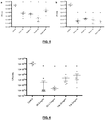
- pyocins S2, S5, AP41 and L1 (3 mg ml -1 ), or PBS for control mice, were administered intranasally 6 h pre-infection with a normally lethal dose of P. aeruginosa P8 (approx 10 7 CFU). All mice were culled 4 h post-infection and viable bacterial counts from lung homogenates determined ( Figure 1a ). All pyocins reduced bacterial load, although at this time point differences in efficacy were noted, with pyocins S2, AP41 and L1 reducing bacterial numbers by approximately 25-fold, 650-fold and 1500-fold, respectively. In the case of pyocin S5, no viable bacteria were recovered.
- mice were similarly pre-treated with pyocins 6 h pre-infection with P. aeruginosa P8, monitored for sickness and culled on reaching a pre-determined severity of illness clinical score.
- Five out of six of the PBS control mice were culled at 5 h post-infection whereas all pyocin treated mice survived to the endpoint of the experiment at 24 h.
- Viable bacterial counts at this time point indicated a similar killing activity for pyocins S2, AP41 and L1, which all significantly reduced bacterial counts more than 10,000-fold. Again, at this time point no viable bacteria were recovered from pyocin S5 treated mice ( Figure 1b ).
- mice P . aeruginosa P8 infected mice were treated 1 h post-infection with pyocins S2, S5, AP41 and L1 at 3 mg ml -1 . In these experiments mice were culled at 4.5 h post-infection and bacterial counts from lung homogenates were compared to PBS treated controls. Similar to the pre-treatment experiments, pyocin S5 showed greatest efficacy in reducing bacterial numbers, although in this experiment viable bacteria were recovered from three out of six S5 treated mice.
- mice were similarly infected with P. aeruginosa P8 and treated 1 h post-infection with pyocins S2, S5, AP41 and pyocin L1 at 3 mg ml -1 . Infected mice were monitored for sickness and culled if sufficient clinical score were reached, or alternatively at the endpoint of the experiment, 24 h post-infection. All PBS treated mice were culled at 4.5 h post-infection and all pyocin treated mice survived to the endpoint of the experiment at 24 h.
- aeruginosa E2-infected AP41-treated mice contained high levels of viable bacteria, reduced only 10-fold relative to control mice (Table 1). Pyocin AP41 treatment, however, was successful for P . aeruginosa P5 infected mice and for five out of six of the P . aeruginosa P17 infected mice. Thus, pyocins show strong efficacy against diverse strains of P. aeruginosa with pyocin S5 treatment displaying the largest effect on reducing bacterial load. Table 1. Pyocin treatment for a range of P. aeruginosa isolates. Mice were infected with a lethal dose of P . aeruginosa.
- mice Untreated mice were culled 4 h-5.5 h post infection. Pyocin treated mice (3 mg ml -1 ) survived to 24 h. ⁇ Mice culled at same time as control. + 1 mouse coughed up AP41 treatment and was culled at 4 h post-infection, bacterial count 1.3x10 5 CFU/lung. X - Pyocin was not used against this strain.
- Pyocin S5 shows improved killing of P. aeruginosa in the murine lung compared to tobramycin
- Pyocin Lowest active concentration tested Corresponding molarity Pyocin L1 30 ⁇ g ml -1 1.06 ⁇ M Pyocin S2 30 ⁇ g ml -1 358 nM Pyocin AP41 30 ⁇ g ml -1 319 nM Pyocin S5 30 ng ml -1 535 pM Tobramycin 300 ⁇ g ml -1 641 ⁇ M
- the minimum effective concentration of pyocins S2 and AP41 is ⁇ 30 ⁇ g ml -1 and the minimum effective concentration of pyocin L1 is between 30 and 300 ⁇ g ml -1 .
- Table S1 shows that all pyocins tested in vivo displayed a potency that was comparable to or greater than tobramycin.
- PBS control mice were culled 4.5 h post-infection and all pyocin treated mice survived until 24 h.
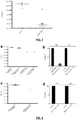
- Viable bacteria were recovered at a low level from pyocin treated mice and for the combination of L1/S2/AP41, bacteria were recovered from only one of six treated mice, indicating that pyocin combinations show enhanced efficacy over the use of individual pyocins ( Figure 4 ). No pyocin resistance or tolerance was observed for bacteria recovered after treatment with multiple pyocins.
- Pyocin S5 can afford protection against lethal P. aeruginosa infections in the presence of pyocin S5 antibodies
- mice were repeatedly exposed to pyocin S5 to induce an antibody response and the efficacy of pyocin treatment was determined as before after infection with P. aeruginosa P8.
- Pyocin S5 was administered three times, with two weeks between each administration, either via the intranasal route (I.N.) or the intraperitoneal (I.P.) route.
- mice treated with pyocin S5 intranasally post-infection all survived to the 24 h time-point and PBS-treated mice were culled 5 h post-infection due to the severity of symptoms.
- the bacterial load of the lungs was determined and no viable bacteria were recovered from any of the pyocin S5 treated mice ( Figure 8c ).
- pyocin S5-specific IgG levels were very low in the pyocin S5 only group (1000-fold less than the Freunds complete/incomplete control group) and no pyocin S5-specific IgA was detected ( Figure 8d ).
- pyocin S5 shows strong efficacy after repeated administration and in the presence of pyocin-S5 specific antibodies.
- pyocins are highly effective in reducing bacterial load and affording protection in a lethal model of acute P. aeruginosa lung infection when delivered directly to the lung.
- pyocin S5 was shown to afford protection at a concentration that is at least 100-fold lower than the minimum effective concentration of tobramycin, an antibiotic that is widely used to treat P . aeruginosa lung infections.
- All pyocins tested in vivo displayed a potency that was comparable to or greater than tobramycin.
- the administration of these highly stable, chromosomally encoded pyocins at high concentrations did not lead to overt inflammation or tissue damage in the lung.
- pyocins have the potential to make useful therapeutics for the treatment of P . aeruginosa lung infections. These include P. aeruginosa infections associated with cystic fibrosis, hospital-acquired and ventilator-associated pneumonia and chronic obstructive pulmonary disease (COPD), all of which are areas of current unmet medical need 10,11 . Indeed, related colicin-like and lectin-like bacteriocins may also make useful therapeutics for the treatment of respiratory infections with frequently antibiotic-resistant pathogens such as Klebsiella pneumoniae and Burkholderia spp.
- an additional advantage of the colicin-like bacteriocins is their narrow spectrum of killing. This allows for the possibility of successfully treating bacterial infections while leaving the normal bacterial flora intact.
- Well-established complications associated with the use of broad-spectrum antibiotics and dysbiosis include antibiotic-associated diarrhea and Clostridium difficile infection 26,27 .
- More recently, microbial imbalances have been suggested to play a role in a range of chronic diseases such as Crohn's disease, diabetes, obesity and rheumatoid arthritis 28-31 .
- the receptors for pyocins S2 and S5 are known to be the TonB-dependent iron-siderophore receptors FpvAI and FptA, respectively 21,22 and the receptor for pyocin L1 has recently been shown to be the common polysaccharide antigen (CPA) of lipopolysaccharide 32 .
- CPA polysaccharide antigen
- FptA and the CPA are known to be widely distributed among strains of P. aeruginosa 33 and interestingly CPA production by P .
- aeruginosa has been shown to be up-regulated in the cystic fibrosis lung 34 , meaning that pyocin L1 may be active against strains in vivo for which no in vitro activity can be detected.
- pyocin L1 may be active against strains in vivo for which no in vitro activity can be detected.
- Using a 'cocktail' of pyocins that target different cell surface receptors will reduce the chances of acquired pyocin resistance and also reduce the probability of resistance imparted by the presence of a pyocin-specific immunity protein genes in pyocin-producing strains.
- inherent pyocin-specific immunity is not a great limitation of these antimicrobials as pyocins AP41 and S5 are active against 87% of strains in a collection of diverse environmental and clinical isolates.
Landscapes
- Health & Medical Sciences (AREA)
- Chemical & Material Sciences (AREA)
- Life Sciences & Earth Sciences (AREA)
- Medicinal Chemistry (AREA)
- General Health & Medical Sciences (AREA)
- Organic Chemistry (AREA)
- Pharmacology & Pharmacy (AREA)
- Animal Behavior & Ethology (AREA)
- Public Health (AREA)
- Veterinary Medicine (AREA)
- Engineering & Computer Science (AREA)
- Bioinformatics & Cheminformatics (AREA)
- General Chemical & Material Sciences (AREA)
- Nuclear Medicine, Radiotherapy & Molecular Imaging (AREA)
- Chemical Kinetics & Catalysis (AREA)
- Gastroenterology & Hepatology (AREA)
- Proteomics, Peptides & Aminoacids (AREA)
- Immunology (AREA)
- Molecular Biology (AREA)
- Epidemiology (AREA)
- Biochemistry (AREA)
- Biophysics (AREA)
- Genetics & Genomics (AREA)
- Pulmonology (AREA)
- Cardiology (AREA)
- Virology (AREA)
- Communicable Diseases (AREA)
- Oncology (AREA)
- Otolaryngology (AREA)
- Tropical Medicine & Parasitology (AREA)
- AIDS & HIV (AREA)
- Hospice & Palliative Care (AREA)
- Heart & Thoracic Surgery (AREA)
- Medicines That Contain Protein Lipid Enzymes And Other Medicines (AREA)
- Peptides Or Proteins (AREA)
- Medicinal Preparation (AREA)
- Pharmaceuticals Containing Other Organic And Inorganic Compounds (AREA)
Applications Claiming Priority (2)
| Application Number | Priority Date | Filing Date | Title |
|---|---|---|---|
| GBGB1416788.6A GB201416788D0 (en) | 2014-09-23 | 2014-09-23 | Therapeutic applications for pyocins |
| PCT/EP2015/071768 WO2016046218A1 (en) | 2014-09-23 | 2015-09-22 | Pulmonary administration of pyocins for treating bacterial respiratory infections |
Publications (2)
| Publication Number | Publication Date |
|---|---|
| EP3200813A1 EP3200813A1 (en) | 2017-08-09 |
| EP3200813B1 true EP3200813B1 (en) | 2021-04-07 |
Family
ID=51869352
Family Applications (1)
| Application Number | Title | Priority Date | Filing Date |
|---|---|---|---|
| EP15767472.2A Active EP3200813B1 (en) | 2014-09-23 | 2015-09-22 | Pulmonary administration of pyocins for treating bacterial respiratory infections |
Country Status (7)
| Country | Link |
|---|---|
| US (2) | US11643442B2 (cg-RX-API-DMAC7.html) |
| EP (1) | EP3200813B1 (cg-RX-API-DMAC7.html) |
| JP (1) | JP6836506B2 (cg-RX-API-DMAC7.html) |
| CN (1) | CN107073073B (cg-RX-API-DMAC7.html) |
| CA (1) | CA2962117C (cg-RX-API-DMAC7.html) |
| GB (1) | GB201416788D0 (cg-RX-API-DMAC7.html) |
| WO (1) | WO2016046218A1 (cg-RX-API-DMAC7.html) |
Families Citing this family (7)
| Publication number | Priority date | Publication date | Assignee | Title |
|---|---|---|---|---|
| CN111770687A (zh) * | 2017-12-14 | 2020-10-13 | 拜克多科利尔私人控股有限公司 | 治疗性细菌素 |
| WO2020093057A1 (en) * | 2018-11-02 | 2020-05-07 | The Rockefeller University | Compositions and methods comprising lysocins as bioengineered antimicrobials for use in targeting gram-negative bacteria |
| CN113227790A (zh) * | 2018-11-19 | 2021-08-06 | 拜尔阿斯特公司 | 用于多重结合实验的方法及试剂 |
| JP2022536068A (ja) * | 2019-06-06 | 2022-08-12 | ノマド バイオサイエンス ゲゼルシャフト ミット ベシュレンクテル ハフツング | クレブシエラの制御のためのクレビシン |
| EP4248987A1 (en) * | 2022-03-21 | 2023-09-27 | Nomad Bioscience GmbH | Chimeric bacteriocins and method for the control of pseudomonas |
| CN121135836A (zh) * | 2024-06-14 | 2025-12-16 | 无锡佰翱得生物科学股份有限公司 | 一种绿脓杆菌免疫蛋白及其应用 |
| CN121135834A (zh) * | 2024-06-14 | 2025-12-16 | 无锡佰翱得生物科学股份有限公司 | 一种绿脓杆菌InA蛋白及其应用 |
Family Cites Families (11)
| Publication number | Priority date | Publication date | Assignee | Title |
|---|---|---|---|---|
| US4861754A (en) | 1986-05-28 | 1989-08-29 | Farkas Himsley Hannah | Bacteriocins and compositions thereof in anti-viral treatment |
| JP3655645B2 (ja) * | 1992-02-28 | 2005-06-02 | 中外製薬株式会社 | 経粘膜投与剤 |
| AU730546B2 (en) | 1996-11-15 | 2001-03-08 | Pathogenesis Corporation | Pure biologically active colistin, its components and a colistin formulation for treatment of pulmonary infections |
| WO2001014579A2 (en) * | 1999-08-26 | 2001-03-01 | Vion Pharmaceuticals, Inc. | Compositions and methods for delivery of an agent using attenuated salmonella containing phage |
| US20060229244A1 (en) * | 2004-09-27 | 2006-10-12 | Robert Dorit | Engineered bacteriocins and bacteriocin combinations and methods for treating bacterial based infections |
| BRPI0711969A2 (pt) * | 2006-05-15 | 2012-01-24 | Avidbiotics Corp | bacteriocinas modificadas e métodos para seu uso |
| US7700729B2 (en) * | 2006-05-15 | 2010-04-20 | Avidbiotics Corporation | Modified bacteriocins and methods for their use |
| US20110129438A1 (en) * | 2006-06-28 | 2011-06-02 | James Robert Swartz | Immunogenic protein constructs |
| US20080286236A1 (en) * | 2007-05-14 | 2008-11-20 | Avidbiotics Corporation | Inhibition of yersinia pestis |
| CN103635584B (zh) * | 2011-04-12 | 2017-10-27 | 冈戈根股份有限公司 | 嵌合抗菌多肽 |
| GB201116234D0 (en) * | 2011-09-20 | 2011-11-02 | Aseptika Ltd | Biomarkers for respiratory infection |
-
2014
- 2014-09-23 GB GBGB1416788.6A patent/GB201416788D0/en not_active Ceased
-
2015
- 2015-09-22 CA CA2962117A patent/CA2962117C/en active Active
- 2015-09-22 JP JP2017535141A patent/JP6836506B2/ja active Active
- 2015-09-22 EP EP15767472.2A patent/EP3200813B1/en active Active
- 2015-09-22 WO PCT/EP2015/071768 patent/WO2016046218A1/en not_active Ceased
- 2015-09-22 US US15/512,548 patent/US11643442B2/en active Active
- 2015-09-22 CN CN201580057704.5A patent/CN107073073B/zh active Active
-
2023
- 2023-02-23 US US18/173,333 patent/US12162911B2/en active Active
Non-Patent Citations (1)
| Title |
|---|
| None * |
Also Published As
| Publication number | Publication date |
|---|---|
| US20170240602A1 (en) | 2017-08-24 |
| GB201416788D0 (en) | 2014-11-05 |
| JP6836506B2 (ja) | 2021-03-03 |
| JP2017529398A (ja) | 2017-10-05 |
| WO2016046218A1 (en) | 2016-03-31 |
| CA2962117A1 (en) | 2016-03-31 |
| US12162911B2 (en) | 2024-12-10 |
| US20230303636A1 (en) | 2023-09-28 |
| CN107073073B (zh) | 2021-07-09 |
| CA2962117C (en) | 2023-04-25 |
| US11643442B2 (en) | 2023-05-09 |
| CN107073073A (zh) | 2017-08-18 |
| EP3200813A1 (en) | 2017-08-09 |
Similar Documents
| Publication | Publication Date | Title |
|---|---|---|
| US12162911B2 (en) | Pulmonary administration of pyocins for treating bacterial respiratory infections | |
| Lee et al. | Biology of Acinetobacter baumannii: pathogenesis, antibiotic resistance mechanisms, and prospective treatment options | |
| Waters et al. | Cystic fibrosis microbiology: advances in antimicrobial therapy | |
| Totsika et al. | Uropathogenic Escherichia coli mediated urinary tract infection | |
| Lee et al. | Klebsiella pneumoniae secretes outer membrane vesicles that induce the innate immune response | |
| Zalewska-Piątek et al. | Alternative treatment approaches of urinary tract infections caused by uropathogenic Escherichia coli strains-Review | |
| CN116077630A (zh) | 具有对抗革兰氏阴性菌的活性的溶素多肽 | |
| JP2024010053A (ja) | シュードモナス・エルギノーサに対する殺菌活性を有する溶解素及びその誘導体の特定 | |
| Egan et al. | Bacteriocins: antibiotics in the age of the microbiome | |
| US11207378B2 (en) | Compositions for inhibiting formation of and/or disrupting bacterial biofilms and methods of use therefor | |
| Yang et al. | PA0833 is an OmpA C-like protein that confers protection against Pseudomonas aeruginosa infection | |
| US20220401514A1 (en) | Antimicrobial, bacteriophage-derived polypeptides and their use against gram-negative and acid-fast bacteria | |
| US20220288183A1 (en) | Vaccine constructs and uses thereof against staphylococcus infections | |
| WO2014009744A1 (en) | Colicins for treating bacterial infections | |
| JP2026031930A (ja) | クレブシエラの制御のためのクレビシン | |
| Pieterse et al. | Mode of action and in vitro susceptibility of mastitis pathogens to macedocin ST91KM and preparation of a teat seal containing the bacteriocin | |
| US20210330738A1 (en) | Antimicrobial, bacteriophage-derived polypeptides and their use against gram-negative bacteria | |
| JP5934225B2 (ja) | 抗微生物タンパク質 | |
| HK1241754B (en) | Pulmonary administration of pyocins for treating bacterial respiratory infections | |
| Sharma et al. | Antimicrobial Resistance in Acinetobacter baumannii: A Challenge to Clinical Settings | |
| Lee | Lee JH, Park M, Park KS, Bae IK, Kim YB, Cha CJ, Jeong BC and Lee SH (2017) Biology of Acinetobacter baumannii: Pathogenesis, Antibiotic Resistance Mechanisms, and Prospective Treatment Options | |
| Paškevičius | Development and synthesis of plant-derived recombinant biopharmaceutical proteins active against gram-negative pathogenic bacteria | |
| Tümmler | aeruginosa [version 1; peer review: 2 approved] | |
| Costa et al. | Evaluation of the activity of potential antimicrobials against lactic acid bacteria isolated from spoiled food sauces in media with or without added sucrose | |
| Weber | Characterization of the Type VI Secretion System in the Bacterial Pathogen Acinetobacter baumannii |
Legal Events
| Date | Code | Title | Description |
|---|---|---|---|
| STAA | Information on the status of an ep patent application or granted ep patent |
Free format text: STATUS: THE INTERNATIONAL PUBLICATION HAS BEEN MADE |
|
| PUAI | Public reference made under article 153(3) epc to a published international application that has entered the european phase |
Free format text: ORIGINAL CODE: 0009012 |
|
| STAA | Information on the status of an ep patent application or granted ep patent |
Free format text: STATUS: REQUEST FOR EXAMINATION WAS MADE |
|
| 17P | Request for examination filed |
Effective date: 20170418 |
|
| AK | Designated contracting states |
Kind code of ref document: A1 Designated state(s): AL AT BE BG CH CY CZ DE DK EE ES FI FR GB GR HR HU IE IS IT LI LT LU LV MC MK MT NL NO PL PT RO RS SE SI SK SM TR |
|
| AX | Request for extension of the european patent |
Extension state: BA ME |
|
| DAV | Request for validation of the european patent (deleted) | ||
| DAX | Request for extension of the european patent (deleted) | ||
| REG | Reference to a national code |
Ref country code: HK Ref legal event code: DE Ref document number: 1241754 Country of ref document: HK |
|
| STAA | Information on the status of an ep patent application or granted ep patent |
Free format text: STATUS: EXAMINATION IS IN PROGRESS |
|
| 17Q | First examination report despatched |
Effective date: 20180618 |
|
| GRAP | Despatch of communication of intention to grant a patent |
Free format text: ORIGINAL CODE: EPIDOSNIGR1 |
|
| STAA | Information on the status of an ep patent application or granted ep patent |
Free format text: STATUS: GRANT OF PATENT IS INTENDED |
|
| INTG | Intention to grant announced |
Effective date: 20190116 |
|
| GRAJ | Information related to disapproval of communication of intention to grant by the applicant or resumption of examination proceedings by the epo deleted |
Free format text: ORIGINAL CODE: EPIDOSDIGR1 |
|
| STAA | Information on the status of an ep patent application or granted ep patent |
Free format text: STATUS: EXAMINATION IS IN PROGRESS |
|
| GRAP | Despatch of communication of intention to grant a patent |
Free format text: ORIGINAL CODE: EPIDOSNIGR1 |
|
| STAA | Information on the status of an ep patent application or granted ep patent |
Free format text: STATUS: GRANT OF PATENT IS INTENDED |
|
| INTC | Intention to grant announced (deleted) | ||
| INTG | Intention to grant announced |
Effective date: 20191009 |
|
| GRAJ | Information related to disapproval of communication of intention to grant by the applicant or resumption of examination proceedings by the epo deleted |
Free format text: ORIGINAL CODE: EPIDOSDIGR1 |
|
| STAA | Information on the status of an ep patent application or granted ep patent |
Free format text: STATUS: EXAMINATION IS IN PROGRESS |
|
| INTC | Intention to grant announced (deleted) | ||
| GRAP | Despatch of communication of intention to grant a patent |
Free format text: ORIGINAL CODE: EPIDOSNIGR1 |
|
| STAA | Information on the status of an ep patent application or granted ep patent |
Free format text: STATUS: GRANT OF PATENT IS INTENDED |
|
| INTG | Intention to grant announced |
Effective date: 20200723 |
|
| GRAS | Grant fee paid |
Free format text: ORIGINAL CODE: EPIDOSNIGR3 |
|
| GRAA | (expected) grant |
Free format text: ORIGINAL CODE: 0009210 |
|
| STAA | Information on the status of an ep patent application or granted ep patent |
Free format text: STATUS: THE PATENT HAS BEEN GRANTED |
|
| AK | Designated contracting states |
Kind code of ref document: B1 Designated state(s): AL AT BE BG CH CY CZ DE DK EE ES FI FR GB GR HR HU IE IS IT LI LT LU LV MC MK MT NL NO PL PT RO RS SE SI SK SM TR |
|
| REG | Reference to a national code |
Ref country code: GB Ref legal event code: FG4D |
|
| REG | Reference to a national code |
Ref country code: AT Ref legal event code: REF Ref document number: 1378797 Country of ref document: AT Kind code of ref document: T Effective date: 20210415 Ref country code: CH Ref legal event code: EP |
|
| REG | Reference to a national code |
Ref country code: DE Ref legal event code: R096 Ref document number: 602015067806 Country of ref document: DE |
|
| REG | Reference to a national code |
Ref country code: IE Ref legal event code: FG4D |
|
| REG | Reference to a national code |
Ref country code: LT Ref legal event code: MG9D |
|
| REG | Reference to a national code |
Ref country code: NL Ref legal event code: MP Effective date: 20210407 Ref country code: AT Ref legal event code: MK05 Ref document number: 1378797 Country of ref document: AT Kind code of ref document: T Effective date: 20210407 |
|
| PG25 | Lapsed in a contracting state [announced via postgrant information from national office to epo] |
Ref country code: FI Free format text: LAPSE BECAUSE OF FAILURE TO SUBMIT A TRANSLATION OF THE DESCRIPTION OR TO PAY THE FEE WITHIN THE PRESCRIBED TIME-LIMIT Effective date: 20210407 Ref country code: NL Free format text: LAPSE BECAUSE OF FAILURE TO SUBMIT A TRANSLATION OF THE DESCRIPTION OR TO PAY THE FEE WITHIN THE PRESCRIBED TIME-LIMIT Effective date: 20210407 Ref country code: LT Free format text: LAPSE BECAUSE OF FAILURE TO SUBMIT A TRANSLATION OF THE DESCRIPTION OR TO PAY THE FEE WITHIN THE PRESCRIBED TIME-LIMIT Effective date: 20210407 Ref country code: AT Free format text: LAPSE BECAUSE OF FAILURE TO SUBMIT A TRANSLATION OF THE DESCRIPTION OR TO PAY THE FEE WITHIN THE PRESCRIBED TIME-LIMIT Effective date: 20210407 Ref country code: BG Free format text: LAPSE BECAUSE OF FAILURE TO SUBMIT A TRANSLATION OF THE DESCRIPTION OR TO PAY THE FEE WITHIN THE PRESCRIBED TIME-LIMIT Effective date: 20210707 Ref country code: HR Free format text: LAPSE BECAUSE OF FAILURE TO SUBMIT A TRANSLATION OF THE DESCRIPTION OR TO PAY THE FEE WITHIN THE PRESCRIBED TIME-LIMIT Effective date: 20210407 |
|
| PG25 | Lapsed in a contracting state [announced via postgrant information from national office to epo] |
Ref country code: GR Free format text: LAPSE BECAUSE OF FAILURE TO SUBMIT A TRANSLATION OF THE DESCRIPTION OR TO PAY THE FEE WITHIN THE PRESCRIBED TIME-LIMIT Effective date: 20210708 Ref country code: LV Free format text: LAPSE BECAUSE OF FAILURE TO SUBMIT A TRANSLATION OF THE DESCRIPTION OR TO PAY THE FEE WITHIN THE PRESCRIBED TIME-LIMIT Effective date: 20210407 Ref country code: IS Free format text: LAPSE BECAUSE OF FAILURE TO SUBMIT A TRANSLATION OF THE DESCRIPTION OR TO PAY THE FEE WITHIN THE PRESCRIBED TIME-LIMIT Effective date: 20210807 Ref country code: NO Free format text: LAPSE BECAUSE OF FAILURE TO SUBMIT A TRANSLATION OF THE DESCRIPTION OR TO PAY THE FEE WITHIN THE PRESCRIBED TIME-LIMIT Effective date: 20210707 Ref country code: PT Free format text: LAPSE BECAUSE OF FAILURE TO SUBMIT A TRANSLATION OF THE DESCRIPTION OR TO PAY THE FEE WITHIN THE PRESCRIBED TIME-LIMIT Effective date: 20210809 Ref country code: PL Free format text: LAPSE BECAUSE OF FAILURE TO SUBMIT A TRANSLATION OF THE DESCRIPTION OR TO PAY THE FEE WITHIN THE PRESCRIBED TIME-LIMIT Effective date: 20210407 Ref country code: RS Free format text: LAPSE BECAUSE OF FAILURE TO SUBMIT A TRANSLATION OF THE DESCRIPTION OR TO PAY THE FEE WITHIN THE PRESCRIBED TIME-LIMIT Effective date: 20210407 Ref country code: SE Free format text: LAPSE BECAUSE OF FAILURE TO SUBMIT A TRANSLATION OF THE DESCRIPTION OR TO PAY THE FEE WITHIN THE PRESCRIBED TIME-LIMIT Effective date: 20210407 |
|
| REG | Reference to a national code |
Ref country code: DE Ref legal event code: R097 Ref document number: 602015067806 Country of ref document: DE |
|
| PG25 | Lapsed in a contracting state [announced via postgrant information from national office to epo] |
Ref country code: DK Free format text: LAPSE BECAUSE OF FAILURE TO SUBMIT A TRANSLATION OF THE DESCRIPTION OR TO PAY THE FEE WITHIN THE PRESCRIBED TIME-LIMIT Effective date: 20210407 Ref country code: CZ Free format text: LAPSE BECAUSE OF FAILURE TO SUBMIT A TRANSLATION OF THE DESCRIPTION OR TO PAY THE FEE WITHIN THE PRESCRIBED TIME-LIMIT Effective date: 20210407 Ref country code: EE Free format text: LAPSE BECAUSE OF FAILURE TO SUBMIT A TRANSLATION OF THE DESCRIPTION OR TO PAY THE FEE WITHIN THE PRESCRIBED TIME-LIMIT Effective date: 20210407 Ref country code: SM Free format text: LAPSE BECAUSE OF FAILURE TO SUBMIT A TRANSLATION OF THE DESCRIPTION OR TO PAY THE FEE WITHIN THE PRESCRIBED TIME-LIMIT Effective date: 20210407 Ref country code: SK Free format text: LAPSE BECAUSE OF FAILURE TO SUBMIT A TRANSLATION OF THE DESCRIPTION OR TO PAY THE FEE WITHIN THE PRESCRIBED TIME-LIMIT Effective date: 20210407 Ref country code: RO Free format text: LAPSE BECAUSE OF FAILURE TO SUBMIT A TRANSLATION OF THE DESCRIPTION OR TO PAY THE FEE WITHIN THE PRESCRIBED TIME-LIMIT Effective date: 20210407 Ref country code: ES Free format text: LAPSE BECAUSE OF FAILURE TO SUBMIT A TRANSLATION OF THE DESCRIPTION OR TO PAY THE FEE WITHIN THE PRESCRIBED TIME-LIMIT Effective date: 20210407 |
|
| PLBE | No opposition filed within time limit |
Free format text: ORIGINAL CODE: 0009261 |
|
| STAA | Information on the status of an ep patent application or granted ep patent |
Free format text: STATUS: NO OPPOSITION FILED WITHIN TIME LIMIT |
|
| 26N | No opposition filed |
Effective date: 20220110 |
|
| REG | Reference to a national code |
Ref country code: CH Ref legal event code: PL |
|
| REG | Reference to a national code |
Ref country code: BE Ref legal event code: MM Effective date: 20210930 |
|
| PG25 | Lapsed in a contracting state [announced via postgrant information from national office to epo] |
Ref country code: IS Free format text: LAPSE BECAUSE OF FAILURE TO SUBMIT A TRANSLATION OF THE DESCRIPTION OR TO PAY THE FEE WITHIN THE PRESCRIBED TIME-LIMIT Effective date: 20210807 Ref country code: MC Free format text: LAPSE BECAUSE OF FAILURE TO SUBMIT A TRANSLATION OF THE DESCRIPTION OR TO PAY THE FEE WITHIN THE PRESCRIBED TIME-LIMIT Effective date: 20210407 Ref country code: AL Free format text: LAPSE BECAUSE OF FAILURE TO SUBMIT A TRANSLATION OF THE DESCRIPTION OR TO PAY THE FEE WITHIN THE PRESCRIBED TIME-LIMIT Effective date: 20210407 |
|
| PG25 | Lapsed in a contracting state [announced via postgrant information from national office to epo] |
Ref country code: LU Free format text: LAPSE BECAUSE OF NON-PAYMENT OF DUE FEES Effective date: 20210922 Ref country code: IT Free format text: LAPSE BECAUSE OF FAILURE TO SUBMIT A TRANSLATION OF THE DESCRIPTION OR TO PAY THE FEE WITHIN THE PRESCRIBED TIME-LIMIT Effective date: 20210407 Ref country code: IE Free format text: LAPSE BECAUSE OF NON-PAYMENT OF DUE FEES Effective date: 20210922 Ref country code: BE Free format text: LAPSE BECAUSE OF NON-PAYMENT OF DUE FEES Effective date: 20210930 |
|
| PG25 | Lapsed in a contracting state [announced via postgrant information from national office to epo] |
Ref country code: LI Free format text: LAPSE BECAUSE OF NON-PAYMENT OF DUE FEES Effective date: 20210930 Ref country code: CH Free format text: LAPSE BECAUSE OF NON-PAYMENT OF DUE FEES Effective date: 20210930 |
|
| PG25 | Lapsed in a contracting state [announced via postgrant information from national office to epo] |
Ref country code: HU Free format text: LAPSE BECAUSE OF FAILURE TO SUBMIT A TRANSLATION OF THE DESCRIPTION OR TO PAY THE FEE WITHIN THE PRESCRIBED TIME-LIMIT; INVALID AB INITIO Effective date: 20150922 |
|
| PG25 | Lapsed in a contracting state [announced via postgrant information from national office to epo] |
Ref country code: CY Free format text: LAPSE BECAUSE OF FAILURE TO SUBMIT A TRANSLATION OF THE DESCRIPTION OR TO PAY THE FEE WITHIN THE PRESCRIBED TIME-LIMIT Effective date: 20210407 |
|
| PG25 | Lapsed in a contracting state [announced via postgrant information from national office to epo] |
Ref country code: MK Free format text: LAPSE BECAUSE OF FAILURE TO SUBMIT A TRANSLATION OF THE DESCRIPTION OR TO PAY THE FEE WITHIN THE PRESCRIBED TIME-LIMIT Effective date: 20210407 |
|
| PG25 | Lapsed in a contracting state [announced via postgrant information from national office to epo] |
Ref country code: MT Free format text: LAPSE BECAUSE OF FAILURE TO SUBMIT A TRANSLATION OF THE DESCRIPTION OR TO PAY THE FEE WITHIN THE PRESCRIBED TIME-LIMIT Effective date: 20210407 |
|
| PGFP | Annual fee paid to national office [announced via postgrant information from national office to epo] |
Ref country code: DE Payment date: 20250924 Year of fee payment: 11 |
|
| PGFP | Annual fee paid to national office [announced via postgrant information from national office to epo] |
Ref country code: GB Payment date: 20250924 Year of fee payment: 11 |
|
| PGFP | Annual fee paid to national office [announced via postgrant information from national office to epo] |
Ref country code: FR Payment date: 20250923 Year of fee payment: 11 |
|
| PG25 | Lapsed in a contracting state [announced via postgrant information from national office to epo] |
Ref country code: TR Free format text: LAPSE BECAUSE OF FAILURE TO SUBMIT A TRANSLATION OF THE DESCRIPTION OR TO PAY THE FEE WITHIN THE PRESCRIBED TIME-LIMIT Effective date: 20210407 |