EP3198442B1 - Spekulative und iterative ausführung verzögerter datenflussdiagramme - Google Patents
Spekulative und iterative ausführung verzögerter datenflussdiagramme Download PDFInfo
- Publication number
- EP3198442B1 EP3198442B1 EP15766835.1A EP15766835A EP3198442B1 EP 3198442 B1 EP3198442 B1 EP 3198442B1 EP 15766835 A EP15766835 A EP 15766835A EP 3198442 B1 EP3198442 B1 EP 3198442B1
- Authority
- EP
- European Patent Office
- Prior art keywords
- actor
- actors
- execution
- data flow
- clock
- Prior art date
- Legal status (The legal status is an assumption and is not a legal conclusion. Google has not performed a legal analysis and makes no representation as to the accuracy of the status listed.)
- Active
Links
Images

Classifications
-
- G—PHYSICS
- G06—COMPUTING OR CALCULATING; COUNTING
- G06F—ELECTRIC DIGITAL DATA PROCESSING
- G06F13/00—Interconnection of, or transfer of information or other signals between, memories, input/output devices or central processing units
- G06F13/14—Handling requests for interconnection or transfer
- G06F13/20—Handling requests for interconnection or transfer for access to input/output bus
- G06F13/24—Handling requests for interconnection or transfer for access to input/output bus using interrupt
-
- G—PHYSICS
- G06—COMPUTING OR CALCULATING; COUNTING
- G06F—ELECTRIC DIGITAL DATA PROCESSING
- G06F1/00—Details not covered by groups G06F3/00 - G06F13/00 and G06F21/00
- G06F1/04—Generating or distributing clock signals or signals derived directly therefrom
- G06F1/10—Distribution of clock signals, e.g. skew
-
- G—PHYSICS
- G06—COMPUTING OR CALCULATING; COUNTING
- G06F—ELECTRIC DIGITAL DATA PROCESSING
- G06F11/00—Error detection; Error correction; Monitoring
- G06F11/07—Responding to the occurrence of a fault, e.g. fault tolerance
- G06F11/16—Error detection or correction of the data by redundancy in hardware
- G06F11/1629—Error detection by comparing the output of redundant processing systems
- G06F11/165—Error detection by comparing the output of redundant processing systems with continued operation after detection of the error
-
- G—PHYSICS
- G06—COMPUTING OR CALCULATING; COUNTING
- G06F—ELECTRIC DIGITAL DATA PROCESSING
- G06F8/00—Arrangements for software engineering
- G06F8/40—Transformation of program code
-
- G—PHYSICS
- G06—COMPUTING OR CALCULATING; COUNTING
- G06F—ELECTRIC DIGITAL DATA PROCESSING
- G06F9/00—Arrangements for program control, e.g. control units
- G06F9/06—Arrangements for program control, e.g. control units using stored programs, i.e. using an internal store of processing equipment to receive or retain programs
- G06F9/46—Multiprogramming arrangements
- G06F9/48—Program initiating; Program switching, e.g. by interrupt
- G06F9/4806—Task transfer initiation or dispatching
- G06F9/4843—Task transfer initiation or dispatching by program, e.g. task dispatcher, supervisor, operating system
- G06F9/4881—Scheduling strategies for dispatcher, e.g. round robin, multi-level priority queues
- G06F9/4887—Scheduling strategies for dispatcher, e.g. round robin, multi-level priority queues involving deadlines, e.g. rate based, periodic
-
- G—PHYSICS
- G06—COMPUTING OR CALCULATING; COUNTING
- G06F—ELECTRIC DIGITAL DATA PROCESSING
- G06F9/00—Arrangements for program control, e.g. control units
- G06F9/06—Arrangements for program control, e.g. control units using stored programs, i.e. using an internal store of processing equipment to receive or retain programs
- G06F9/46—Multiprogramming arrangements
- G06F9/52—Program synchronisation; Mutual exclusion, e.g. by means of semaphores
- G06F9/526—Mutual exclusion algorithms
- G06F9/528—Mutual exclusion algorithms by using speculative mechanisms
-
- G—PHYSICS
- G06—COMPUTING OR CALCULATING; COUNTING
- G06F—ELECTRIC DIGITAL DATA PROCESSING
- G06F11/00—Error detection; Error correction; Monitoring
- G06F11/30—Monitoring
- G06F11/34—Recording or statistical evaluation of computer activity, e.g. of down time, of input/output operation ; Recording or statistical evaluation of user activity, e.g. usability assessment
- G06F11/3447—Performance evaluation by modeling
-
- G—PHYSICS
- G06—COMPUTING OR CALCULATING; COUNTING
- G06F—ELECTRIC DIGITAL DATA PROCESSING
- G06F15/00—Digital computers in general; Data processing equipment in general
- G06F15/76—Architectures of general purpose stored program computers
- G06F15/82—Architectures of general purpose stored program computers data or demand driven
- G06F15/825—Dataflow computers
-
- G—PHYSICS
- G06—COMPUTING OR CALCULATING; COUNTING
- G06F—ELECTRIC DIGITAL DATA PROCESSING
- G06F30/00—Computer-aided design [CAD]
- G06F30/30—Circuit design
- G06F30/32—Circuit design at the digital level
- G06F30/33—Design verification, e.g. functional simulation or model checking
-
- G—PHYSICS
- G06—COMPUTING OR CALCULATING; COUNTING
- G06F—ELECTRIC DIGITAL DATA PROCESSING
- G06F8/00—Arrangements for software engineering
- G06F8/30—Creation or generation of source code
- G06F8/35—Creation or generation of source code model driven
-
- G—PHYSICS
- G06—COMPUTING OR CALCULATING; COUNTING
- G06F—ELECTRIC DIGITAL DATA PROCESSING
- G06F8/00—Arrangements for software engineering
- G06F8/40—Transformation of program code
- G06F8/41—Compilation
- G06F8/43—Checking; Contextual analysis
- G06F8/433—Dependency analysis; Data or control flow analysis
-
- G—PHYSICS
- G06—COMPUTING OR CALCULATING; COUNTING
- G06F—ELECTRIC DIGITAL DATA PROCESSING
- G06F9/00—Arrangements for program control, e.g. control units
- G06F9/06—Arrangements for program control, e.g. control units using stored programs, i.e. using an internal store of processing equipment to receive or retain programs
- G06F9/44—Arrangements for executing specific programs
- G06F9/455—Emulation; Interpretation; Software simulation, e.g. virtualisation or emulation of application or operating system execution engines
-
- G—PHYSICS
- G06—COMPUTING OR CALCULATING; COUNTING
- G06F—ELECTRIC DIGITAL DATA PROCESSING
- G06F9/00—Arrangements for program control, e.g. control units
- G06F9/06—Arrangements for program control, e.g. control units using stored programs, i.e. using an internal store of processing equipment to receive or retain programs
- G06F9/46—Multiprogramming arrangements
- G06F9/48—Program initiating; Program switching, e.g. by interrupt
- G06F9/4806—Task transfer initiation or dispatching
- G06F9/4812—Task transfer initiation or dispatching by interrupt, e.g. masked
Definitions
- the present invention relates to the execution of data flow graphs with distributed calculations. More specifically, it concerns the execution of data flow graphs when uncertainty exists in the execution of certain actors in the graph.
- workstation processors already have a significant number of cores per physical processor: between 8 and 16 at present. If this trend continues, in the coming years the number of cores per chip will exceed a few dozen. In fact, there are already some processors with several hundred cores per chip. For example, the MPPA-256 processor from Kalray which has 256 computing cores and around twenty cores for managing parallelism and inputs/outputs.
- Such processors are called manycoeurs , a contraction of the English word many, which means many or a large number, and the French asphalt.
- the distinction between multi-core and many-core is not just reduced to the number of cores. The most striking difference is more specifically linked to the way the processor cores communicate.
- the cores In a classic multicore, the cores have a shared bus to access the main memory. In principle, the shared bus allows good perception of memory accesses from all cores. It is thus relatively easy to implement memory coherence processes in order to ensure that all the cores have the same vision of the central memory of the system.
- These principles are still in force within the processors commonly available today, using a bus hierarchy which brings some nuances to the previous diagram.
- workstation processors with 8 or 16 cores are designated by the English acronym NUMA, for Non Uniform Memory Access or Non-Uniform Memory Access. For these processors, memory access is not uniform between computing cores, but data consistency remains achievable.
- Connectivity is another important aspect of current technological developments. More and more smart mobile devices, from smart sensors to smartphones, have the ability to be constantly connected to each other. Each of these mobile devices can be connected to remote servers or embedded systems, such as a car's on-board system. Atzori, A. lera, and G. Morabito. 54(15):2787-2805, Oct. 2010. The internet of things: A survey. Comput. Netw discloses a swarm of mobile calculators creating a global, highly parallel and mutable computing platform. This article foreshadows ubiquitous and distributed computing capacity.
- actor model A Universal Modular Actor Formalism for Artificial Intelligence. IJCAI .
- actor model Within the framework of this concept and the associated mathematical model called the actor model, actors are the only primitive functions necessary for concurrent programming. The actors communicate by exchanging messages. In response to a message, an actor can for example perform local processing, create other actors, or send other messages.
- KPN Kahn Parallel Network
- Kahn Parallel Network in French The basic principle of KPN (English acronym meaning Kahn Parallel Network, Kahn Parallel Network in French) is based on a graph whose nodes are communicating processes and whose links are files (more commonly called FIFO, from the acronym English First In First Out, or Premier Entré Premier Sorti, in French). Processes can read data from input channels and write the results of their calculations to output channels.
- FIFO from the acronym English First In First Out, or Premier Entré Premier Sorti, in French.
- Processes can read data from input channels and write the results of their calculations to output channels.
- the granularity of the data exchanged is denoted by tokens and the number of tokens produced and consumed are positive or zero integers.
- Reads on input channels are blocking, meaning that if a process requires more tokens than are present on one of its inputs, it will be blocked until the required number of tokens are present on that input. Processes are allowed to have internal state and can dynamically change the number of tokens expected as input or produced as output.
- Kahn's model is powerful, gives deterministic results (the same inputs produce the same outputs), local (therefore without the need for memory coherence mechanisms), but it lacks properties to be able to use it with complete confidence in the framework of embedded computing. In particular, it is impossible to know in advance whether a network of Kahn processes is without blockages or whether it will be able to execute in bounded memory.
- the patent FR 28166730 describes a security method making the real-time execution of multitasking applications deterministic. It describes in particular the sequences of calls and system interrupts, clocks, and management of interruptions at the microkernel level allowing a task to be executed in real time in a deterministic manner.
- the patent US 5745687 describes a data flow management system implemented on a computer.
- This system includes in particular an organization service, intended to identify, among a set of agents, the most appropriate agent to carry out each of the tasks of the data flow graph.
- the patent US 6397192 describes a method for synchronizing one or more data flow graphs. In particular, it describes how to pause and start/restart the execution of the data flow graph depending on whether tasks have been completed or not.
- the document US 2005/138485 discloses a system for compiling source code and verification code. It discloses in particular a system consisting of iteratively executing the generated code in order to detect an error in one or more executions.
- the document EP 1 672 501 discloses a computer capable of detecting execution faults, while allowing execution to continue.
- This computer includes at least two processors, associated with an execution fault detector. It is capable of separating reparable faults from irreparable faults. The faults, repairable and irreparable in execution, are noted for each of the two processors. When the two processors are no longer synchronized, a comparison of the errors makes it possible to favor the execution of one of the two processors, rather than stopping the execution of both.
- the patent FR 28166730 makes it possible to obtain a deterministic response time for a real-time task, but does not address the problem of the possible failure of certain actors.
- the patent US 5745687 does not address this problem and the patent US 6397192 describes a mechanism for synchronization in which tasks are waiting for the completion of execution of other tasks, but does not describe a mechanism to overcome the failure of these.
- the subject of the invention is a method for compiling a data flow graph, and an execution system comprising means adapted to execute a data flow graph, as defined in the attached claims.
- the system according to the invention thus makes it possible to execute a data flow graph while ensuring that it obtains a result in a limited time in a deterministic manner, while reserving the possibility of obtaining a more efficient result if it is available.
- a system for executing a data flow graph according to the invention is robust to unforeseen events, such as network failures or loss of GPS signals.
- a system for executing a data flow graph according to the invention makes it possible to execute data graphs on many-core processors.
- a system for executing a data flow graph according to the invention makes it possible to obtain great flexibility in the rules for selecting the best result, and to generate errors in the event of failure to obtain a calculation result. .
- a system for executing a data flow graph according to the invention makes it possible to make the most of iterative calculation algorithms.
- it makes it possible to select the best result provided by an iterative calculation algorithm at a given date, to compare this result to that produced by other iterative or non-iterative algorithms, and to end its execution earlier if the iterative algorithm has completed their processing before the initially scheduled deadline.
- a method for compiling a data flow graph according to the invention makes it possible to ensure that a result will be obtained within a limited time in a deterministic manner.
- the implementation of the invention is illustrated by examples relating to the execution of CSDF type data flow graphs. It should however be noted that the invention is not restricted to CSDF type graphs. The invention is particularly applicable to types of graphs for which it is possible to determine the latency of each branch offline, for example at compilation; for which it is possible to demonstrate the absence of deadlocks and which can be executed in limited memory. The invention is thus applicable, for example, to “Core Functional Dataflow” type graphs.
- Second generation digital standard for mobile telephony Particularly suitable for carrying voice and includes means of location between the antennas and a mobile phone.
- Distributed computing model NUMA Non-Uniform Memory Access Non-Uniform Memory Access. Refers to multi-core processors in which access to the memory shared by the different computing cores is not uniform.
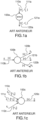
- FIG. 1a represents an example of a simple actor 100a according to the state of the art.
- This actor has two functions f 0 , f 1 .
- the function f 0 consumes n 0 E 110a tokens on the input channel and produces n 0 S 120a on the output channel.
- the function consumes n 1 E 111a tokens on the input channel and produces n 1 S 121a tokens on the output channel.
- Tokens allow you to synchronize the execution of the graph. Indeed, the execution of functions linked to an actor, for example f 0 and f 1 for actor 100a, starts when all the tokens are received on the input channel. Conversely, the production of tokens on the output channel triggers the execution of the following actors.
- Such an actor represents, in the CSDF model, the basic element of a calculation module or a computer program.
- the functions f 0 , f 1 of the actor can carry out, between its input and its output, local calculation processing, network communication, or any other computer operation.
- Other simple actors may have one, three, four or a plurality of inputs, outputs and calculation functions.
- FIG. 1b represents a second example of actor 100b of a CSDF graph according to the state of the art.
- This actor called “Duplicate” is used to duplicate the content of an input channel 110b comprising n elements into several output channels 120b, 121b, 122b comprising the same n elements.
- Other examples of "Duplicate” actors may include two or more output channels.
- Data duplication can be carried out in different ways, for example by sending memory addresses pointing to the same set of data, by copying the contents of a memory into several separate locations, or by sending data to different recipients on a network.
- a similar actor, called “Split” separates the n elements of an input channel into several output channels each receiving a subset of the n elements of the input channel.
- FIG. 1c represents a third example of actor 100c of a CSDF graph according to the state of the art.
- This actor called “Join”, is used to concatenate data sets from three input channels 110c, 111c and 112c into an output channel 120c.
- Other examples of “Join” actors may include two or more input channels.
- This graph allows you to reorganize data.
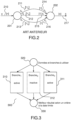
- the “Split” actor 201 separates the n data of the input channel 210 into three output channels 211, 212, 213.
- the “Join” actor 202 combines the three channels of 214, 215, 216 into an output channel 217. This allows data to be accessed in a different order, for example a matrix transposition.
- CSDF graphs find their place in some real-time problems: streaming data processing, signal and video processing. They indeed have many desirable properties for real-time applications, such as execution determinism, and the possibility of demonstrating the absence of blocking. It is thus possible to find schedules that allow CSDF graphs to be compatible with real-time constraints. In particular, it is possible to guarantee the latency of a CSDF calculation chain via the actors and communication queues.
- CSDFs have difficulty adapting to a large class of real-time applications, because in CSDF type graphs, it is assumed that all parts of the system are always functional. Indeed, a failure in an actor in the CSDF graph blocks the execution of the entire graph.
- the CSDFs are therefore unsuitable as such to deal with these cases.
- the KPNs could in principle deal with them.
- the use of state-of-the-art KPN does not provide assurance on the fundamental properties of these systems: the absence of blocking and the possibility of executing in limited memory or with a scheduling that respects time constraints.
- the invention makes it possible to overcome these limitations of the prior art.
- the at least two first actors 310, 311 include means for independently executing the calculation of the same data or the same set of data, and producing a quality descriptor on the result obtained.
- the calculated data or set of data can be of very diverse types. By way of non-limiting example, this may involve the location of an individual, or the coding of an image in a video compression application.
- the quality descriptor then depends on the type of application chosen. For example, in the case of actors intended to locate a user, the quality descriptor can be the estimated precision of the location. In the case of coding an image in a video application, this may be an estimate of the weight/quality ratio of the video. If the video encoding application allocates a fixed, predefined weight to each frame, this may be a quality index on the image.
- these at least two actors include local calculation functions using algorithms and variable complexities.
- certain actors can use remote calculation means, or data located on a remote machine or data received via a connection. For example, in the case of a location application, it is possible to have a first actor calculating the position of a user thanks to a local calculation by odometry (estimation of a new position by application of a displacement vector from a previous position), a second actor calculating the same position thanks to the reception of GPS signals.
- each of the calculations is carried out by a branch comprising several actors, and which can be compiled as a graph according to the state of the art, for example a CSDF graph.
- computation branch or “independent calculation branch” a subset of the graph intended to produce a calculation result and a quality descriptor on said result, then send these two elements to a fourth actor 330, the execution of which is triggered by a third actor 320.
- Each of these branches includes at least one actor.
- the third actor 320 makes it possible to synchronize the execution of the graph, by synchronizing the start of the at least two first actors 310, 311, and by initializing a clock configured to emit an interrupt signal when a duration has elapsed.
- This duration corresponds to the maximum execution time authorized to obtain a calculation result for at least one actor while respecting real-time constraints. In one embodiment of the invention, this duration is fixed. For example, in the case of video compression, if the video is encoded at 25 frames per second, and a 300 graph is executed to compress each frame of the video, then the clock will need to be set to a fixed duration of 1/25th of a second to meet real-time constraints. It is also possible to configure the clock with a variable duration depending on internal or external constraints of the application.
- the fourth actor 330 makes it possible to select, at the latest at the interrupt signal of the clock initialized by the actor 320, the actor among the at least two first actors 310, 311 having the most favorable quality descriptor and transfer the output data of this sensor as the output data of the calculation.
- the graph makes it possible to select, in a determined time to ensure real-time constraints, the best possible calculation result.
- the fourth actor can then transfer the most favorable output data, for example to another actor, another graph or a set of the graph.
- the fourth actor can send the user's position as output data to an actor whose function is to display the user's position on a map.
- At least one of the first two actors has a deterministic execution time less than or equal to the duration of the clock. This ensures that a result will be available in a limited time, while reserving the possibility of obtaining a better quality result.
- a first actor to perform compression of each image according to an algorithm having a deterministic calculation time, for example less than 1/25th of a second, and a second actor to perform a more efficient compression algorithm, but whose execution time varies depending on the characteristics of each image.
- the first actor has necessarily completed his calculation.
- the second actor has not completed his.
- the fourth actor 330 selects the result provided by the first actor, which is the only one available.
- the second actor has completed its calculation, with a quality descriptor, and therefore an image quality with equal weight, superior to that provided by the first actor.
- the fourth actor selects the calculation result provided by this second actor.
- a first actor can calculate the user's location by odometry. This makes it possible, thanks to a local calculation in limited time, to reliably provide location coordinates to the clock interrupt signal, even with a high margin of error.
- a second actor can be configured to locate the user using GPS signals. This positioning is much more precise, but can fail in the event of poor reception of GPS signals. It can also provide a more or less accurate result depending on the number of satellites providing a signal.
- the fourth actor is able to select, depending on the execution context, the most precise location, while being certain of having at least one location measurement.
- the third actor can trigger, depending on an external parameter, the execution of only a subset of the at least two first actors. For example, it is possible to only execute an actor 312 intended to calculate the same data as actors 310 and 311 in certain cases, or to only execute actor 310 depending on the execution context of the graph .
- the execution or not of certain actors may, for example, depend on the availability of calculation resources. For example, if an actor performs part of its calculations on a remote platform, it can be deactivated if the means of connection to this platform are unavailable. Whether the actors execute or not may also depend on the availability of means of calculation or communication.
- an actor calculating a location using a GPS system may be disabled if GPS signals are unavailable, or if a limited number of satellites are available.
- the actors are activated or deactivated depending on the available or desired computing power.
- a graph 300 according to the invention can be compiled and executed as an independent graph. It can also be compiled and executed as a module of a larger graph. We can then speak of “module of a graph according to the invention” or “module according to the invention”.
- a graph comprising a module 300 according to the invention may include other elements according to the state of the art, the rest of the graph being able for example to be a classic CSDF graph or to contain other modules 300 according to the invention.
- a module 300 of a graph according to the invention is called “TransactionModule”.
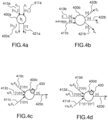
- THE figures 4a, 4b, 4c, 4d represent four examples of actors of a graph according to the invention. These actors are non-limiting examples making it possible to implement the invention, other actors being also possible.
- FIG. 4a represents an example of actor 400a of a graph according to the invention.
- This actor 400a can for example form one of the calculation branches, or one of the at least two first actors comprising means for independently executing the calculation of the same data.
- This actor includes two input channels 410a, 411a. All integer numbers greater than or equal to 1 of input channels are of course possible. It is for example possible to have 1, 2, 3, 4 or a plurality of input channels.
- the actor 400a may include means for carrying out any type of computer processing, for example a local calculation, a distributed calculation on a remote machine, recovering data from a network or carrying out a calculation requiring external data obtained using 'a captor.
- the actor 400a includes a first output channel 420a, containing the calculated data.
- the first output channel 420a can contain coordinates of the user, according to different frames of reference.
- the first output channel 420a can contain the compressed data, or a memory address of the compressed data.
- the actor 400a also includes a second output channel 421a, containing a quality descriptor on the calculated data produced on the channel 420a.
- This descriptor is generic, and many quality representations are possible.
- the quality representation might be a percentage. It can also be data linked to the application considered, for example an uncertainty on the position if the actor 400a is intended to calculate a position, or a weight/quality ratio if the actor 400a is intended to encode a video image .
- the execution of an actor 400a is triggered by a synchronization mechanism.
- the synchronization mechanisms are described generically by the different data flow models, in particular by the principle of messages between the different actors. Many synchronization mechanisms and implementations thereof are available.
- the synchronization mechanism of the actor 400a is a semaphore.
- said semaphore includes a token.
- the execution of actor 400a then starts when a token is available in the semaphore, and actor 400a seizes it.
- the actor 400a has a timestamping system allowing it to notify other actors of the end of the transfer of all of its input data.
- FIG. 4b represents an example of actor 400b of a graph according to the invention.
- This actor 400b can for example form the third actor 320 of a graph according to the invention.
- This actor called “SelectDuplicate”, has two inputs 410b and 411b, and one output per calculation branch.
- This actor is intended to duplicate input data in order to provide identical calculation parameters to each of the at least two first actors 310, 311 of a calculation branch. It also makes it possible to synchronize the execution of these at least two first actors 310, 311 and to initialize a clock to synchronize the end of their execution.
- This actor 400b includes a first input channel 410b.
- This input channel contains the data to be provided to the different branches of calculation. For example, in the case of a video coding application, it may be an image to compress. It also includes one output channel per branch, each including the duplicated data. It therefore includes at least two output channels 420b and 421b, as well as optional output channels, for example channel 422b.
- Actor 400b also includes a second input 411b.
- This entry contains an external parameter indicating a subset of the at least two first actors 310, 311 to be executed.
- This input can for example take the form of an array of Booleans whose size is equal to the number of output channels, the actor 400b only triggering the calculation of the actors connected to an output channel whose value is “true” in the input channel 411b.
- the data in input channel 411b indicating which actors to execute may depend on numerous parameters or application contexts. For example, they can come from a user configuration file indicating the calculation means to be used or not in an application.
- the subset of actors to be executed described in the data of the input channel 411b may also include those for which the appropriate calculation means are available. This subset can also depend on the execution context of the graph. For example, in the case of a graph intended for the location of an individual, if one actor calculates the position by odometry and a second using GPS signals, the second entry 411b can indicate to execute only the actor using odometry if GPS signals are unavailable.
- the actor 400b transfers identical data to at least two first actors 310, 311 prior to initialization of the clock.
- the actor 400b triggers the execution of at least two first actors 310, 311 by donating a token in a semaphore.
- each of the at least two first actors 310, 311 produces a timestamp at the end of the data transfer representing the calculation parameters, and the actor 400b triggers the initialization of the clock after receiving at least two timestamps.
- This actor 400b is given by way of example only, and other actors can occupy the place of an actor 320 in a graph according to the invention.
- an actor 320 solely intended to initialize the calculation of the actors 310, 311 and a clock for the synchronization of the end of it.
- the second input channel 411b is not necessary.
- the actor is then a “Duplicate” according to the state of the art represented in figure 1b which initializes a clock at the end of the data transfer.
- an actor 320 can include as many output channels as there are calculation branches.
- FIG. 4c represents an example of actor 400c of a graph according to the invention.
- This actor also called “Transaction”
- Transaction is intended to select, from a set of input channels, the one whose quality descriptor is the most favorable, and to transfer the result associated with an output channel. It can thus fulfill the role of a fourth actor 330 of a graph according to the invention.
- the actor 400c comprises at least two input channels 410c, 411c. It can include as many input channels as there are calculation branches in the graph. For example, it may include a third input channel 412c. Each of the input channels has a set of input data and a quality descriptor thereon. These input data and quality descriptor correspond to the output of the at least two first actors 310, 311 or calculation branches.
- the actor 400c selects the channel among the at least two input channels 410c, 411c presenting the most favorable quality descriptor and transfers its data output to its 420c output channel.
- the fourth actor 330 for example a “Transaction” actor 430, comprises means for generating an error when, at the clock interrupt signal, the number among the at least two first actors having produced a quality descriptor is less than a predefined threshold.
- this threshold depends on operational characteristics. For example, in a geo-location application, a measurement can be considered reliable if a choice between the result of at least two branches is made.
- the actor 400c includes means for generating an error when, at the clock interrupt signal, less than two input channels present a quality descriptor.
- the real-time constraints imply having a result on at least one calculation branch at the clock interrupt signal. This is for example the case in a graph intended to encode a video in real time with for example 25 images to encode per second.
- an actor 400c may include means for generating an error if no result is available to the clock interrupt signal.
- the selection by a fourth actor 330 for example a “Transaction” actor 400c, of the actor or branch whose quality criterion has the most favorable value is carried out. to the clock interrupt signal.
- this selection can take place before the clock interrupt signal.
- this selection can take place when at least a predefined number among the at least two first actors have produced a quality descriptor.
- the selection can take place if all of the input channels 410c, 411c, 412c, etc. of a “Transaction” actor 400c have produced a quality descriptor, and therefore if all the at least two first actors 310, 311... have completed their calculation.
- a graph may be configured to select the most favorable outcome if at least a certain number of branches have completed their calculation.
- the “Transaction” actor 400c is given as an example only of a fourth actor 330 of a graph according to the invention.
- FIG. 4d represents an example of actor 400d of a graph according to the invention.
- This actor called “IterativeTransaction”, is a specialization of a 400c “Transaction” actor.
- This 400d actor is largely similar to the 400c actor. It notably includes as many input channels as there are calculation branches, with at least two input channels 410d and 411d, and for example a third input channel 412d. It also includes an output channel 420d and selects the most favorable result among its input channels having produced a quality descriptor no later than the interrupt signal of the clock 430.
- the actor 400d differs from the actor 400c in that at least one among the at least two first actors 310, 311 linked to the input channel, for example the channel 411d, produces an update of its data or of its dataset, as well as its associated quality descriptor.
- said actor produces successive results and quality descriptors, and gives a token to a semaphore when its execution is completed.
- the “IterativeTransaction” actor 400d At the clock interrupt signal, the “IterativeTransaction” actor 400d considers the latest results and quality descriptor provided by said actor to select the best result among its input channels. In one embodiment of the invention, on the clock interrupt signal, the “IterativeTransaction” actor 400d checks the presence of a calculation result and a quality descriptor on an associated input channel to an actor producing results iteratively, for example channel 411d, to check the number of results available.
- the “IterativeTransaction” actor 411d triggers the selection of the most favorable result before the clock interrupt signal if the number of tokens received in a semaphore from the input channels is at least equal to a predefined threshold.
- a graph according to the invention allows, at a predefined date, to retrieve the last result produced by the iterative algorithm, which is therefore the best available at that date.
- a graph according to the invention is also capable of comparing results produced by iterative and non-iterative algorithms.
- a graph according to the invention is capable of completing data processing earlier if the iterative algorithm has completed its processing, which is by nature unpredictable.
- the actor 400d is given as an example only of an actor 330 intended to select the most favorable calculation result at the latest at the interrupt signal of a clock 430 while taking as input data from actors producing updates of their output data and quality descriptors.
- FIG. 5 represents an example of a graph according to the invention, in which the branches of the module comprise two input channels.
- This graph includes three branches for calculating output data, each consisting of an actor 510, 511, 512.
- Each actor includes two input channels and two output channels and is similar to actor 400a. It also includes an actor 520 comprising means for triggering the execution of the calculation of a subset of the actors 510, 511 and 512 following a list of branches to be executed obtained on its input channel. He also includes means for initializing a clock 540 to emit an interrupt signal when a duration has elapsed.
- the actor 520 provides the list of branches to be executed to two actors 521, 522 of type “SelectDuplicate” 400b, each of these actors duplicating input data for each of the actors 510, 511, 512 to be executed.
- the actors 510, 511, 512 to be executed have two sets of identical input data.
- each of the actors 521, 522 gives a token to a semaphore linked to each of the actors 510, 511, 512, and the execution of each of the actors 510, 511, 512 starts when its semaphore received as many tokens as it has input channels.
- Each of the actors 510, 511, 512 produces a calculation result and an output quality descriptor.
- each branch 510, 511 and 512 is independent, and can consist of a single actor or a classic CSDF graph. It is thus possible to determine, for each of these graphs, an execution time, and therefore to predict, for example at compilation, an execution time for certain branches. For branches whose execution time depends on the type of input data, it may be possible to provide a minimum and/or maximum execution time. Finally, it is possible to identify branches for which no failure is expected to occur (for example, branches comprising only local calculations), and branches for which a risk of failure exists (for example, if the capacity of calculation depends on receiving signals or if part of the calculation is performed on a remote platform).
- a last actor 530 of "Transaction" type 400c selects, at the latest at the interrupt signal from the clock 540, the actor among the actors 510, 511, 512 having produced the most favorable quality descriptor and transfers its result to the graph output channel.
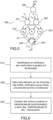
- FIG. 6 represents an example of a method for compiling a graph according to the invention.
- This method aims to analyze a graph, such as for example graph 500, and to convert it into system actors in order to be able to execute it, while validating certain constraints of real-time execution.
- step 610 may consist of detecting the “TransactionModule” 300 within a CSDF graph.
- a compilation method makes it possible to go directly to step 620.
- a method of compiling a graph according to the invention notably comprises a step of creating at least two first groups of instructions of a computer code corresponding to the at least two first actors 310, 311 to independently execute the calculation of the same data or the same set of data, and to produce a quality descriptor on the result obtained, the execution of the calculation by the at least two first groups of instructions of a computer code being triggered by a synchronization system.
- These at least two first actors 310, 311 can constitute in themselves an independent calculation branch, or be part of an independent calculation branch for the calculation of a piece of data or a set of data. In the latter case the independent branch can be compiled following a state-of-the-art method, for example as a branch of a CSDF graph.
- Step 620 consists of identifying, as part of the normal execution of the graph, the latency of each actor or independent branch. This step ensures that the graph is capable of producing a result real-time calculation. It can for example consist of a step of verifying that at least one among the at least two first groups of instructions of a computer code is capable of executing its calculation in a deterministic manner within a predefined duration. The latency calculation can also be applied to an independent branch, for example compiled as a classic CSDF graph. This step can be executed before or after the creation of the at least two first actors 310, 311.
- the compilation algorithm returns a compilation error when none of the at least two groups of instructions of a computer code meets this criterion.
- Step 630 which can for example be executed once step 620 is validated, includes the creation of system actors and synchronization mechanisms.
- It may in particular comprise a step of creating a third group of instructions of a computer code corresponding to a third actor 320 to trigger the execution of the calculation by each of said at least two first groups of instructions of a computer code , and initialize a clock configured to emit an interrupt signal when said predefined duration is over.
- It can also include a step of creating a fourth group of instructions of a computer code corresponding to a fourth actor 330 to execute, at the latest on the clock interrupt signal: the selection, from the set of the at least two first groups of instructions of a computer code having produced a quality descriptor, of the one whose descriptor has the most favorable value; the transfer of the data or the set of data calculated by the group of instructions of a selected computer code.
- a system for executing a graph compiled by a method according to the invention may include a suitable support system service.
- This support system service may in particular include means for data transfer.
- Many implementations are possible for data transfer. For example, this could be a memory copy, sending a memory address, complex protocols on a dedicated bus, or network protocols. It is also possible to have several implementations of data transfer for the same graph depending on the actors involved.
- the support system service may also include means for time and interruption management. For example, these means may include creating a clock or configuring an interrupt.
- these means may include creating a clock or configuring an interrupt.
- the graph according to the invention comprises several inputs, it is possible to increment a counter each time an input is taken into account, and to configure the clock or the interrupt as soon as the counter reaches the number of inputs to produce an interrupt signal after a predefined duration. If each branch signifies the end of its calculation using a semaphore, the support system service can trigger the selection of the best result at the interrupt signal by filling all the semaphores linked to the different branches.
- the support system service can also reset all the actors in the module at the end of the transaction. To do this, it can in particular interrupt all the actors of the module, reset them as well as the semaphores and the parameters of the system service. Thus, a new transaction can take place with new parameters.
- a system for executing a graph according to the invention can also include specific system actors, which are created during the compilation of a module.
- the compilation of an “IterativeTranscation” actor 400d is similar to that of a “Transaction” actor 400c, with the difference that the “BranchOutputTrigger” is replaced by an “IterativeBranchOutputTrigger” for each iterative branch.
- the “IterativeBranchOutputTriger” has in addition to the “BranchOutputTrigger” a validation input for iterative results.
- Algorithm 1 allows, from a data flow graph, to identify all of the graphs according to the invention, called here TransactionModule.
- Algorithm 2 given in the appendix, makes it possible to identify and verify the entries of this graph.
- Algorithm 3 in the appendix, includes the identification and verification of graph outputs, as well as the identification of actors on a path between an input and an output.
- a graph according to the invention can constitute part of a larger CSDF graph. However, apart from these main entrances and exits it should preferably not contain an external connection to one of the actors in the graph.
- Algorithm 4 a code example of which is provided in the appendix, makes it possible to verify this property.
- this algorithm comprises, prior to the step of creating at least two groups of instructions of a computer code corresponding to at least two first actors: a step of verifying the existence of the at least two first actors, of third actor and the fourth actor; a step of verifying that the input channels of the at least two first actors are connected to the third actor; a step of verifying that the output channels of the at least two first actors are connected to the fourth actor, a step of verifying that the output channels of the third actor are connected to the at least two first actors; a step of verifying that the input channels of the fourth actor are connected to the at least two first actors.
- Algorithm 5 a code example of which is provided in the appendix, makes it possible to construct the actors for each of the branches and to verify that the branches are indeed independent.
- FIG. 7 represents an example of a graph according to the invention for the processing of real-time images in the context of assistance in driving a vehicle.
- This application performs image processing with real-time constraints, in the context of an advanced vehicle driving assistance system (ADAS or Advanced Driver Assistance System). for the identification of traffic signs (indications, speed limits, prohibitions).
- the application reads images of maximum size WxH, where W (Width) represents the width of the image and H its height, from an external source (sensor, video camera) at a frequency of 1/x, where x represents the frame playback frequency.
- W Width
- x represents the frame playback frequency.
- Each image is processed by a suite of signal processing algorithms.
- This application must produce a plurality of descriptors of identified traffic signs within a limited time from the acquisition of the image.
- Graph 7 for image processing is executed for each new image to be analyzed. In the case where 25 images are produced by second, it must execute in 1/25th of a second. We will note in the example t the maximum time authorized for the execution of the graph.
- Graph 7 receives, for each image, input data “I” 700. This data can for example include the raw data of an image captured by the camera.
- a first algorithmic actor “E” 710 consists of improving the input image. As part of the graph, this actor is surrounded by three actors “Duplicate” 701, “SelectDuplicate” 702 and “IterativeTransaction” 711. The “IterativeTransaction” actor 711 is linked to a clock ensuring that the improvement step of the image executes at most in a duration a.
- a second algorithmic actor “D” 720 makes it possible to identify areas of interest, in this case traffic signs. These actors can be compiled and executed as a CSDF graph according to the state of the art.
- a module “I” 730 of the graph according to the invention is responsible for analyzing the areas of interest in order to identify and extract information from the traffic signs.
- Information extraction algorithms are complex to implement, and their execution time varies depending on a quality parameter.
- a graph according to the invention is implemented. The maximum duration authorized for the analysis of areas of interest will be noted b.
- This graph includes a plurality of actors “Tq 0 ” 731, “Tq 1 ” 732 ... “Tq N ” 733 allowing the panels to be analyzed according to different quality parameters. These actors run in parallel and make it possible to obtain a more or less reliable analysis, as well as an associated quality descriptor. In order to guarantee the provision of a result in due time, at least one among the plurality of actors, for example the actor “Tq 0 ” 731, has a deterministic and bounded latency less than the duration b.
- the graph module 730 also includes a “Duplicate” actor 734 and a “SelectDuplicate” actor 735 to provide the areas of interest and input parameters to the plurality of actors 731, 732, ..., 733, as well as to initialize a clock which must produce an interrupt signal at the end of duration b.
- a “Transaction” actor 736 selects, at the latest on the clock interrupt signal, the actor from the plurality of actors 731, 732, ..., 733 having completed its processing and produced the most favorable quality descriptor, and transfers its calculation results to output “O” 740.
- a graph according to the invention therefore makes it possible, in this case, to maintain real-time constraints and to provide a calculation result at the desired time. It also allows you to select, on a deadline, the processing loop that has completed its calculation and provided the best quality result available. It therefore makes it possible to guarantee the availability of a calculation result in real time, while reserving the possibility of having the calculation result presenting the best possible quality within the allotted time.
Landscapes
- Engineering & Computer Science (AREA)
- Theoretical Computer Science (AREA)
- General Engineering & Computer Science (AREA)
- Physics & Mathematics (AREA)
- General Physics & Mathematics (AREA)
- Software Systems (AREA)
- Quality & Reliability (AREA)
- Devices For Executing Special Programs (AREA)
- Position Fixing By Use Of Radio Waves (AREA)
- Processing Or Creating Images (AREA)
Claims (14)
- Verfahren zum Kompilieren eines Datenflussgraphen, wobei das Verfahren Folgendes umfasst:- einen Schritt des Erzeugens von mindestens zwei Befehlsgruppen eines Computercodes entsprechend mindestens zwei ersten Akteuren (310, 311), um unabhängig die Berechnung eines gleichen Datensatzes, der mindestens ein Datenelement umfasst, auszuführen und einen Qualitätsdeskriptor des Datensatzes zu produzieren, wobei die Ausführung der Berechnung durch jede der mindestens zwei Befehlsgruppen eines Computercodes durch ein Synchronisationssystem ausgelöst wird;- einen Schritt des Verifizierens, dass mindestens eine der mindestens zwei Befehlsgruppen eines Computercodes ihre Berechnung auf deterministische Weise innerhalb einer vordefinierten Dauer ausführen kann (620);- einen Schritt des Erzeugens einer dritten Befehlsgruppe eines Computercodes entsprechend einem dritten Akteur (320), um die Ausführung der Berechnung durch jede der mindestens zwei Befehlsgruppen eines Computercodes auszulösen und einen Zeitgeber zu initialisieren, der zum Senden eines Unterbrechungssignals konfiguriert ist, wenn die vordefinierte Dauer verstrichen ist;- einen Schritt des Erzeugens einer vierten Befehlsgruppe eines Computercodes entsprechend einem vierten Akteur (330), um spätestens beim Unterbrechungssignal des Zeitgebers Folgendes auszuführen:- Auswählen, aus dem Satz der mindestens zwei Befehlsgruppen eines Computercodes, der einen Qualitätsdeskriptor produziert hat, derjenigen, deren Deskriptor den günstigsten Wert aufweist;- Übertragen des von der ausgewählten Befehlsgruppe des Computercodes berechneten Datensatzes.
- Verfahren nach Anspruch 1, das vor dem Schritt des Erzeugens von mindestens zwei Befehlsgruppen eines Computercodes entsprechend mindestens zwei ersten Akteuren Folgendes umfasst:- einen Schritt des Verifizierens der Existenz der mindestens zwei ersten Akteure, des dritten Akteurs und des vierten Akteurs;- einen Schritt des Verifizierens, dass die Eingangskanäle der mindestens zwei ersten Akteure mit dem dritten Akteur verbunden sind;- einen Schritt des Verifizierens, dass die Ausgangskanäle der mindestens zwei ersten Akteure mit dem vierten Akteur verbunden sind;- einen Schritt des Verifizierens, dass die Ausgangskanäle des dritten Akteurs mit den mindestens zwei ersten Akteuren verbunden sind;- einen Schritt des Verifizierens, dass die Eingangskanäle des vierten Akteurs mit den mindestens zwei ersten Akteuren verbunden sind.
- Verfahren nach einem der Ansprüche 1 und 2, wobei ein Kompilierungsfehler erzeugt wird, wenn keine der mindestens zwei ersten Befehlsgruppen eines Computercodes entsprechend mindestens zwei ersten Akteuren (310, 311) ihre Berechnung auf deterministische Weise innerhalb einer vordefinierten Dauer ausführen kann.
- Ausführungssystem, das Mittel umfasst, die zum Ausführen eines nach den Schritten eines der vorhergehenden Ansprüche kompilierten Datenflussgraphs (300) ausgelegt sind, wobei der Datenflussgraph (300) Folgendes umfasst:- mindestens zwei erste Akteure (310, 311), die jeweils Mittel zum unabhängigen Ausführen einer Berechnung eines gleichen Datensatzes, der mindestens ein Datenelement umfasst, und zum Produzieren eines Qualitätsdeskriptors des Datensatzes umfasst, wobei die Ausführung der Berechnung durch jeden der mindestens zwei ersten Akteure durch ein Synchronisationssystem ausgelöst wird;- einen dritten Akteur (320), der Mittel zum Auslösen der Ausführung der Berechnung durch jeden der mindestens zwei ersten Akteure und zum Initialisieren eines Zeitgebers umfasst, der zum Aussenden eines Unterbrechungssignals konfiguriert ist, wenn eine Dauer verstrichen ist;- einen vierten Akteur (330), der Mittel umfasst, um spätestens beim Unterbrechungssignal des Zeitgebers Folgendes auszuführen:- Auswählen, aus dem Satz der mindestens zwei ersten Akteure, die einen Qualitätsdeskriptor produziert haben, desjenigen, dessen Deskriptor den günstigsten Wert aufweist;- Übertragen des von dem ausgewählten Akteur berechneten Datensatzes.
- Ausführungssystem, das Mittel umfasst, die zum Ausführen eines Datenflussgraphen nach Anspruch 4 ausgelegt sind, wobei mindestens einer der beiden ersten Akteure (310, 311) zum Ausführen auf eine deterministische Weise in einer Zeit konfiguriert ist, die gleich oder kleiner als die Dauer des Zeitgebers ist.
- Ausführungssystem, das Mittel umfasst, die zum Ausführen eines Datenflussgraphen nach einem der Ansprüche 4 bis 5 ausgelegt sind, wobei das Synchronisationssystem jedes der mindestens zwei ersten Akteure (310, 311) ein Semaphor ist und der dritte Akteur (320) die Ausführung der Berechnung durch jeden der mindestens zwei ersten Akteure (310, 311) durch die Gabe eines Tokens an den Semaphor auslöst.
- Ausführungssystem, das Mittel umfasst, die zum Ausführen eines Datenflussgraphen nach einem der Ansprüche 4 bis 6 ausgelegt sind, wobei der dritte Akteur (320) Mittel zum Übertragen von Daten umfasst, die identische Rechenparameter (420b, 421b, 422b) zu jedem der mindestens zwei ersten Akteure (310, 311) repräsentieren, vor der Initialisierung des Zeitgebers.
- Ausführungssystem, das Mittel umfasst, die zum Ausführen eines Datenflussgraphen nach Anspruch 7 ausgelegt sind, wobei jeder der mindestens zwei ersten Akteure (310, 311) am Ende der Übertragung von Daten, die Berechnungsparameter darstellen, einen Zeitstempel erzeugt, und der dritte Akteur (320) nach Empfang der mindestens zwei Zeitstempel die Initialisierung des Zeitgebers auslöst.
- Ausführungssystem, das Mittel umfasst, die zum Ausführen eines Datenflussgraphen nach einem der Ansprüche 4 bis 8 ausgelegt sind, wobei der dritte Akteur (320) zum Auslösen der Ausführung nur einer Teilmenge der mindestens zwei ersten Akteure in Abhängigkeit von einem Parameter außerhalb des dritten Akteurs konfiguriert ist, der die Teilmenge der mindestens zwei ersten auszuführenden Akteure angibt (411b).
- Ausführungssystem, das Mittel umfasst, die zum Ausführen eines Datenflussgraphen nach Anspruch 9 ausgelegt sind, wobei die Teilmenge der mindestens zwei ersten auszuführenden Akteure (311, 311) alle diejenigen umfasst, für die geeignete Rechenmittel zur Verfügung stehen.
- Ausführungssystem, das Mittel umfasst, die zum Ausführen eines Datenflussgraphen nach einem der Ansprüche 4 bis 10 ausgelegt sind, wobei der vierte Akteur (340) Mittel zum Erzeugen eines Fehlers umfasst, wenn bei dem Unterbrechungssignal des Zeitgebers die Anzahl unter den mindestens zwei ersten Akteuren (310, 311), die einen Qualitätsdeskriptor produziert haben, unter einem vordefinierten Schwellenwert liegt.
- Ausführungssystem, das Mittel umfasst, die zum Ausführen eines Datenflussgraphen nach einem der Ansprüche 4 bis 11 ausgelegt sind, wobei der vierte Akteur zum Auswählen des Akteurs konfiguriert ist, dessen Qualitätskriterium beim Unterbrechungssignal des Zeitgebers den günstigsten Wert aufweist.
- Ausführungssystem, das Mittel umfasst, die zum Ausführen eines Datenflussgraphen nach einem der Ansprüche 4 bis 11 ausgelegt sind, wobei der vierte Akteur zum Auswählen des Akteurs konfiguriert ist, dessen Qualitätskriterium vor dem Unterbrechungssignal des Zeitgebers den günstigsten Wert aufweist, wenn mindestens eine vordefinierte Zahl unter den mindestens zwei ersten Akteuren einen Qualitätsdeskriptor erzeugt hat.
- Ausführungssystem, das Mittel umfasst, die zum Ausführen eines Datenflussgraphen nach einem der Ansprüche 4 bis 13 ausgelegt sind, wobei mindestens einer der mindestens zwei ersten Akteure zum Erzeugen einer Aktualisierung der Berechnung seines Datensatzes und seines Qualitätsdeskriptors konfiguriert ist.
Applications Claiming Priority (2)
| Application Number | Priority Date | Filing Date | Title |
|---|---|---|---|
| FR1458979A FR3026205B1 (fr) | 2014-09-23 | 2014-09-23 | Execution speculative et iterative de graphes de flot de donnees temporises |
| PCT/EP2015/071692 WO2016046187A1 (fr) | 2014-09-23 | 2015-09-22 | Exécution spéculative et itérative de graphes de flot de données temporisés |
Publications (2)
| Publication Number | Publication Date |
|---|---|
| EP3198442A1 EP3198442A1 (de) | 2017-08-02 |
| EP3198442B1 true EP3198442B1 (de) | 2023-11-01 |
Family
ID=52807855
Family Applications (1)
| Application Number | Title | Priority Date | Filing Date |
|---|---|---|---|
| EP15766835.1A Active EP3198442B1 (de) | 2014-09-23 | 2015-09-22 | Spekulative und iterative ausführung verzögerter datenflussdiagramme |
Country Status (4)
| Country | Link |
|---|---|
| US (1) | US10394729B2 (de) |
| EP (1) | EP3198442B1 (de) |
| FR (1) | FR3026205B1 (de) |
| WO (1) | WO2016046187A1 (de) |
Families Citing this family (4)
| Publication number | Priority date | Publication date | Assignee | Title |
|---|---|---|---|---|
| US10146581B2 (en) | 2017-01-13 | 2018-12-04 | Salesforce.Com, Inc. | Dynamically configuring a process based on environmental characteristics monitored by a mobile device |
| FR3093208B1 (fr) * | 2019-02-27 | 2021-12-03 | Commissariat Energie Atomique | Procédé de validation d’un système flots de données |
| US12189570B2 (en) * | 2022-05-25 | 2025-01-07 | SambaNova Systems, Inc. | Low latency nodes fusion in a reconfigurable data processor |
| CN115755790B (zh) * | 2022-11-04 | 2025-05-30 | 深圳镁伽科技有限公司 | 自动化流程的管理方法、装置、电子设备及存储介质 |
Family Cites Families (10)
| Publication number | Priority date | Publication date | Assignee | Title |
|---|---|---|---|---|
| US5021947A (en) * | 1986-03-31 | 1991-06-04 | Hughes Aircraft Company | Data-flow multiprocessor architecture with three dimensional multistage interconnection network for efficient signal and data processing |
| US5745687A (en) | 1994-09-30 | 1998-04-28 | Hewlett-Packard Co | System for distributed workflow in which a routing node selects next node to be performed within a workflow procedure |
| US6397192B1 (en) | 1998-06-05 | 2002-05-28 | I2 Technologies Us, Inc. | Synchronizing one or more workflows using one or more synchronization-join activities that include synchronization logic |
| US6859887B2 (en) * | 2001-05-31 | 2005-02-22 | Hewlett-Packard Development Company, L.P. | Method to invoke wide-area objects in distributed computer systems |
| US7584405B2 (en) * | 2003-12-03 | 2009-09-01 | Hewlett-Packard Development Company, L.P. | Fault-detecting computer system |
| JP4117684B2 (ja) * | 2004-12-20 | 2008-07-16 | 日本電気株式会社 | フォルトトレラント・二重化コンピュータシステムとその制御方法 |
| US20060274659A1 (en) * | 2005-05-06 | 2006-12-07 | Battelle Memorial Institute | Method and system for generating synthetic digital network traffic |
| US20070203871A1 (en) * | 2006-01-23 | 2007-08-30 | Tesauro Gerald J | Method and apparatus for reward-based learning of improved systems management policies |
| GB0613275D0 (en) * | 2006-07-04 | 2006-08-16 | Codeplay Software Ltd | Distributed computer system |
| US7859706B2 (en) * | 2006-09-26 | 2010-12-28 | Sap Portals Israel Ltd. | Method and apparatus for model driven testing |
-
2014
- 2014-09-23 FR FR1458979A patent/FR3026205B1/fr active Active
-
2015
- 2015-09-22 WO PCT/EP2015/071692 patent/WO2016046187A1/fr not_active Ceased
- 2015-09-22 EP EP15766835.1A patent/EP3198442B1/de active Active
- 2015-09-22 US US15/509,836 patent/US10394729B2/en active Active
Also Published As
| Publication number | Publication date |
|---|---|
| WO2016046187A1 (fr) | 2016-03-31 |
| FR3026205B1 (fr) | 2016-11-04 |
| FR3026205A1 (fr) | 2016-03-25 |
| EP3198442A1 (de) | 2017-08-02 |
| US20170308489A1 (en) | 2017-10-26 |
| US10394729B2 (en) | 2019-08-27 |
Similar Documents
| Publication | Publication Date | Title |
|---|---|---|
| EP3924878B1 (de) | Unterabtastung von trainingsdaten während des trainierens eines künstlichen neuronalen netzes | |
| EP1805611B1 (de) | Task-verarbeitungs-einteilungsverfahren und einrichtung zu seiner implementierung | |
| CN109951547B (zh) | 事务请求并行处理方法、装置、设备和介质 | |
| CN107870845A (zh) | 面向微服务架构应用的管理方法及系统 | |
| US10614594B2 (en) | Cross-device supervisory computer vision system | |
| US12488051B2 (en) | Failure tolerant and explainable state machine driven hypergraph execution | |
| US11281935B2 (en) | 3D object detection from calibrated 2D images | |
| CN114238055B (zh) | 任务数据处理方法、装置、电子设备及存储介质 | |
| EP3198442A1 (de) | Spekulative und iterative ausführung verzögerter datenflussdiagramme | |
| US20260010570A1 (en) | Failure tolerant graph execution | |
| CN113343312A (zh) | 基于前端埋点技术的页面防篡改方法及系统 | |
| Diamantis et al. | ASML: Algorithm-agnostic architecture for scalable machine learning | |
| Wang et al. | Real-Time Video-Based Human Action Recognition on Embedded Platforms | |
| US20220327526A1 (en) | Method for enabling efficient evaluation of transactions in a distributed ledger network | |
| CN109783272B (zh) | 磁盘快照处理方法、装置和设备 | |
| CN110085237B (zh) | 交互过程的恢复方法、装置及设备 | |
| EP4650941A1 (de) | Plattformübergreifender gegenseitiger ausschluss | |
| CN117370473B (zh) | 基于完整性攻击的数据处理方法、装置、设备及存储介质 | |
| US12608818B1 (en) | Edge-deployed automated target recognition and tracking system with distributed processing architecture | |
| CN120020718B (zh) | 服务调度方法、装置、设备及存储介质 | |
| US20260056815A1 (en) | Configuration distribution health evaluation for computing resources | |
| US20250306793A1 (en) | Hybrid data replication | |
| CN117036751B (zh) | 一种多阈值特征点匹配的图像处理方法及装置 | |
| US20260100954A1 (en) | Dynamic reauthorization thresholds for cloud resource allocation | |
| US20260044366A1 (en) | Dynamic job routing and data consolidation |
Legal Events
| Date | Code | Title | Description |
|---|---|---|---|
| STAA | Information on the status of an ep patent application or granted ep patent |
Free format text: STATUS: THE INTERNATIONAL PUBLICATION HAS BEEN MADE |
|
| PUAI | Public reference made under article 153(3) epc to a published international application that has entered the european phase |
Free format text: ORIGINAL CODE: 0009012 |
|
| STAA | Information on the status of an ep patent application or granted ep patent |
Free format text: STATUS: REQUEST FOR EXAMINATION WAS MADE |
|
| 17P | Request for examination filed |
Effective date: 20170420 |
|
| AK | Designated contracting states |
Kind code of ref document: A1 Designated state(s): AL AT BE BG CH CY CZ DE DK EE ES FI FR GB GR HR HU IE IS IT LI LT LU LV MC MK MT NL NO PL PT RO RS SE SI SK SM TR |
|
| AX | Request for extension of the european patent |
Extension state: BA ME |
|
| DAV | Request for validation of the european patent (deleted) | ||
| DAX | Request for extension of the european patent (deleted) | ||
| STAA | Information on the status of an ep patent application or granted ep patent |
Free format text: STATUS: EXAMINATION IS IN PROGRESS |
|
| 17Q | First examination report despatched |
Effective date: 20210303 |
|
| REG | Reference to a national code |
Ref country code: DE Ref legal event code: R079 Ref document number: 602015086354 Country of ref document: DE Free format text: PREVIOUS MAIN CLASS: G06F0011160000 Ipc: G06F0008400000 Ref country code: DE Ref legal event code: R079 Free format text: PREVIOUS MAIN CLASS: G06F0011160000 Ipc: G06F0008400000 |
|
| GRAP | Despatch of communication of intention to grant a patent |
Free format text: ORIGINAL CODE: EPIDOSNIGR1 |
|
| STAA | Information on the status of an ep patent application or granted ep patent |
Free format text: STATUS: GRANT OF PATENT IS INTENDED |
|
| RIC1 | Information provided on ipc code assigned before grant |
Ipc: G06F 8/40 20180101AFI20230522BHEP |
|
| INTG | Intention to grant announced |
Effective date: 20230621 |
|
| GRAS | Grant fee paid |
Free format text: ORIGINAL CODE: EPIDOSNIGR3 |
|
| GRAA | (expected) grant |
Free format text: ORIGINAL CODE: 0009210 |
|
| STAA | Information on the status of an ep patent application or granted ep patent |
Free format text: STATUS: THE PATENT HAS BEEN GRANTED |
|
| AK | Designated contracting states |
Kind code of ref document: B1 Designated state(s): AL AT BE BG CH CY CZ DE DK EE ES FI FR GB GR HR HU IE IS IT LI LT LU LV MC MK MT NL NO PL PT RO RS SE SI SK SM TR |
|
| REG | Reference to a national code |
Ref country code: GB Ref legal event code: FG4D Free format text: NOT ENGLISH |
|
| REG | Reference to a national code |
Ref country code: CH Ref legal event code: EP |
|
| REG | Reference to a national code |
Ref country code: IE Ref legal event code: FG4D Free format text: LANGUAGE OF EP DOCUMENT: FRENCH |
|
| REG | Reference to a national code |
Ref country code: DE Ref legal event code: R096 Ref document number: 602015086354 Country of ref document: DE |
|
| REG | Reference to a national code |
Ref country code: LT Ref legal event code: MG9D |
|
| REG | Reference to a national code |
Ref country code: NL Ref legal event code: MP Effective date: 20231101 |
|
| PG25 | Lapsed in a contracting state [announced via postgrant information from national office to epo] |
Ref country code: GR Free format text: LAPSE BECAUSE OF FAILURE TO SUBMIT A TRANSLATION OF THE DESCRIPTION OR TO PAY THE FEE WITHIN THE PRESCRIBED TIME-LIMIT Effective date: 20240202 |
|
| PG25 | Lapsed in a contracting state [announced via postgrant information from national office to epo] |
Ref country code: IS Free format text: LAPSE BECAUSE OF FAILURE TO SUBMIT A TRANSLATION OF THE DESCRIPTION OR TO PAY THE FEE WITHIN THE PRESCRIBED TIME-LIMIT Effective date: 20240301 |
|
| PG25 | Lapsed in a contracting state [announced via postgrant information from national office to epo] |
Ref country code: LT Free format text: LAPSE BECAUSE OF FAILURE TO SUBMIT A TRANSLATION OF THE DESCRIPTION OR TO PAY THE FEE WITHIN THE PRESCRIBED TIME-LIMIT Effective date: 20231101 |
|
| REG | Reference to a national code |
Ref country code: AT Ref legal event code: MK05 Ref document number: 1627977 Country of ref document: AT Kind code of ref document: T Effective date: 20231101 |
|
| PG25 | Lapsed in a contracting state [announced via postgrant information from national office to epo] |
Ref country code: NL Free format text: LAPSE BECAUSE OF FAILURE TO SUBMIT A TRANSLATION OF THE DESCRIPTION OR TO PAY THE FEE WITHIN THE PRESCRIBED TIME-LIMIT Effective date: 20231101 |
|
| PG25 | Lapsed in a contracting state [announced via postgrant information from national office to epo] |
Ref country code: AT Free format text: LAPSE BECAUSE OF FAILURE TO SUBMIT A TRANSLATION OF THE DESCRIPTION OR TO PAY THE FEE WITHIN THE PRESCRIBED TIME-LIMIT Effective date: 20231101 |
|
| PG25 | Lapsed in a contracting state [announced via postgrant information from national office to epo] |
Ref country code: ES Free format text: LAPSE BECAUSE OF FAILURE TO SUBMIT A TRANSLATION OF THE DESCRIPTION OR TO PAY THE FEE WITHIN THE PRESCRIBED TIME-LIMIT Effective date: 20231101 |
|
| PG25 | Lapsed in a contracting state [announced via postgrant information from national office to epo] |
Ref country code: NL Free format text: LAPSE BECAUSE OF FAILURE TO SUBMIT A TRANSLATION OF THE DESCRIPTION OR TO PAY THE FEE WITHIN THE PRESCRIBED TIME-LIMIT Effective date: 20231101 Ref country code: LT Free format text: LAPSE BECAUSE OF FAILURE TO SUBMIT A TRANSLATION OF THE DESCRIPTION OR TO PAY THE FEE WITHIN THE PRESCRIBED TIME-LIMIT Effective date: 20231101 Ref country code: IS Free format text: LAPSE BECAUSE OF FAILURE TO SUBMIT A TRANSLATION OF THE DESCRIPTION OR TO PAY THE FEE WITHIN THE PRESCRIBED TIME-LIMIT Effective date: 20240301 Ref country code: GR Free format text: LAPSE BECAUSE OF FAILURE TO SUBMIT A TRANSLATION OF THE DESCRIPTION OR TO PAY THE FEE WITHIN THE PRESCRIBED TIME-LIMIT Effective date: 20240202 Ref country code: ES Free format text: LAPSE BECAUSE OF FAILURE TO SUBMIT A TRANSLATION OF THE DESCRIPTION OR TO PAY THE FEE WITHIN THE PRESCRIBED TIME-LIMIT Effective date: 20231101 Ref country code: BG Free format text: LAPSE BECAUSE OF FAILURE TO SUBMIT A TRANSLATION OF THE DESCRIPTION OR TO PAY THE FEE WITHIN THE PRESCRIBED TIME-LIMIT Effective date: 20240201 Ref country code: AT Free format text: LAPSE BECAUSE OF FAILURE TO SUBMIT A TRANSLATION OF THE DESCRIPTION OR TO PAY THE FEE WITHIN THE PRESCRIBED TIME-LIMIT Effective date: 20231101 Ref country code: PT Free format text: LAPSE BECAUSE OF FAILURE TO SUBMIT A TRANSLATION OF THE DESCRIPTION OR TO PAY THE FEE WITHIN THE PRESCRIBED TIME-LIMIT Effective date: 20240301 |
|
| PG25 | Lapsed in a contracting state [announced via postgrant information from national office to epo] |
Ref country code: SE Free format text: LAPSE BECAUSE OF FAILURE TO SUBMIT A TRANSLATION OF THE DESCRIPTION OR TO PAY THE FEE WITHIN THE PRESCRIBED TIME-LIMIT Effective date: 20231101 Ref country code: RS Free format text: LAPSE BECAUSE OF FAILURE TO SUBMIT A TRANSLATION OF THE DESCRIPTION OR TO PAY THE FEE WITHIN THE PRESCRIBED TIME-LIMIT Effective date: 20231101 Ref country code: PL Free format text: LAPSE BECAUSE OF FAILURE TO SUBMIT A TRANSLATION OF THE DESCRIPTION OR TO PAY THE FEE WITHIN THE PRESCRIBED TIME-LIMIT Effective date: 20231101 Ref country code: NO Free format text: LAPSE BECAUSE OF FAILURE TO SUBMIT A TRANSLATION OF THE DESCRIPTION OR TO PAY THE FEE WITHIN THE PRESCRIBED TIME-LIMIT Effective date: 20240201 Ref country code: LV Free format text: LAPSE BECAUSE OF FAILURE TO SUBMIT A TRANSLATION OF THE DESCRIPTION OR TO PAY THE FEE WITHIN THE PRESCRIBED TIME-LIMIT Effective date: 20231101 Ref country code: HR Free format text: LAPSE BECAUSE OF FAILURE TO SUBMIT A TRANSLATION OF THE DESCRIPTION OR TO PAY THE FEE WITHIN THE PRESCRIBED TIME-LIMIT Effective date: 20231101 |
|
| PG25 | Lapsed in a contracting state [announced via postgrant information from national office to epo] |
Ref country code: DK Free format text: LAPSE BECAUSE OF FAILURE TO SUBMIT A TRANSLATION OF THE DESCRIPTION OR TO PAY THE FEE WITHIN THE PRESCRIBED TIME-LIMIT Effective date: 20231101 |
|
| PG25 | Lapsed in a contracting state [announced via postgrant information from national office to epo] |
Ref country code: CZ Free format text: LAPSE BECAUSE OF FAILURE TO SUBMIT A TRANSLATION OF THE DESCRIPTION OR TO PAY THE FEE WITHIN THE PRESCRIBED TIME-LIMIT Effective date: 20231101 |
|
| PG25 | Lapsed in a contracting state [announced via postgrant information from national office to epo] |
Ref country code: SK Free format text: LAPSE BECAUSE OF FAILURE TO SUBMIT A TRANSLATION OF THE DESCRIPTION OR TO PAY THE FEE WITHIN THE PRESCRIBED TIME-LIMIT Effective date: 20231101 |
|
| PG25 | Lapsed in a contracting state [announced via postgrant information from national office to epo] |
Ref country code: SM Free format text: LAPSE BECAUSE OF FAILURE TO SUBMIT A TRANSLATION OF THE DESCRIPTION OR TO PAY THE FEE WITHIN THE PRESCRIBED TIME-LIMIT Effective date: 20231101 Ref country code: SK Free format text: LAPSE BECAUSE OF FAILURE TO SUBMIT A TRANSLATION OF THE DESCRIPTION OR TO PAY THE FEE WITHIN THE PRESCRIBED TIME-LIMIT Effective date: 20231101 Ref country code: RO Free format text: LAPSE BECAUSE OF FAILURE TO SUBMIT A TRANSLATION OF THE DESCRIPTION OR TO PAY THE FEE WITHIN THE PRESCRIBED TIME-LIMIT Effective date: 20231101 Ref country code: IT Free format text: LAPSE BECAUSE OF FAILURE TO SUBMIT A TRANSLATION OF THE DESCRIPTION OR TO PAY THE FEE WITHIN THE PRESCRIBED TIME-LIMIT Effective date: 20231101 Ref country code: EE Free format text: LAPSE BECAUSE OF FAILURE TO SUBMIT A TRANSLATION OF THE DESCRIPTION OR TO PAY THE FEE WITHIN THE PRESCRIBED TIME-LIMIT Effective date: 20231101 Ref country code: DK Free format text: LAPSE BECAUSE OF FAILURE TO SUBMIT A TRANSLATION OF THE DESCRIPTION OR TO PAY THE FEE WITHIN THE PRESCRIBED TIME-LIMIT Effective date: 20231101 Ref country code: CZ Free format text: LAPSE BECAUSE OF FAILURE TO SUBMIT A TRANSLATION OF THE DESCRIPTION OR TO PAY THE FEE WITHIN THE PRESCRIBED TIME-LIMIT Effective date: 20231101 |
|
| REG | Reference to a national code |
Ref country code: DE Ref legal event code: R097 Ref document number: 602015086354 Country of ref document: DE |
|
| PLBE | No opposition filed within time limit |
Free format text: ORIGINAL CODE: 0009261 |
|
| STAA | Information on the status of an ep patent application or granted ep patent |
Free format text: STATUS: NO OPPOSITION FILED WITHIN TIME LIMIT |
|
| 26N | No opposition filed |
Effective date: 20240802 |
|
| PG25 | Lapsed in a contracting state [announced via postgrant information from national office to epo] |
Ref country code: SI Free format text: LAPSE BECAUSE OF FAILURE TO SUBMIT A TRANSLATION OF THE DESCRIPTION OR TO PAY THE FEE WITHIN THE PRESCRIBED TIME-LIMIT Effective date: 20231101 |
|
| PG25 | Lapsed in a contracting state [announced via postgrant information from national office to epo] |
Ref country code: SI Free format text: LAPSE BECAUSE OF FAILURE TO SUBMIT A TRANSLATION OF THE DESCRIPTION OR TO PAY THE FEE WITHIN THE PRESCRIBED TIME-LIMIT Effective date: 20231101 |
|
| PG25 | Lapsed in a contracting state [announced via postgrant information from national office to epo] |
Ref country code: MC Free format text: LAPSE BECAUSE OF FAILURE TO SUBMIT A TRANSLATION OF THE DESCRIPTION OR TO PAY THE FEE WITHIN THE PRESCRIBED TIME-LIMIT Effective date: 20231101 |
|
| REG | Reference to a national code |
Ref country code: CH Ref legal event code: PL |
|
| PG25 | Lapsed in a contracting state [announced via postgrant information from national office to epo] |
Ref country code: LU Free format text: LAPSE BECAUSE OF NON-PAYMENT OF DUE FEES Effective date: 20240922 |
|
| REG | Reference to a national code |
Ref country code: BE Ref legal event code: MM Effective date: 20240930 |
|
| PG25 | Lapsed in a contracting state [announced via postgrant information from national office to epo] |
Ref country code: BE Free format text: LAPSE BECAUSE OF NON-PAYMENT OF DUE FEES Effective date: 20240930 |
|
| PG25 | Lapsed in a contracting state [announced via postgrant information from national office to epo] |
Ref country code: CH Free format text: LAPSE BECAUSE OF NON-PAYMENT OF DUE FEES Effective date: 20240930 |
|
| PG25 | Lapsed in a contracting state [announced via postgrant information from national office to epo] |
Ref country code: IE Free format text: LAPSE BECAUSE OF NON-PAYMENT OF DUE FEES Effective date: 20240922 |
|
| PG25 | Lapsed in a contracting state [announced via postgrant information from national office to epo] |
Ref country code: FI Free format text: LAPSE BECAUSE OF FAILURE TO SUBMIT A TRANSLATION OF THE DESCRIPTION OR TO PAY THE FEE WITHIN THE PRESCRIBED TIME-LIMIT Effective date: 20231101 |
|
| PGFP | Annual fee paid to national office [announced via postgrant information from national office to epo] |
Ref country code: DE Payment date: 20250919 Year of fee payment: 11 |
|
| PGFP | Annual fee paid to national office [announced via postgrant information from national office to epo] |
Ref country code: GB Payment date: 20250923 Year of fee payment: 11 |
|
| PGFP | Annual fee paid to national office [announced via postgrant information from national office to epo] |
Ref country code: FR Payment date: 20250923 Year of fee payment: 11 |
|
| PG25 | Lapsed in a contracting state [announced via postgrant information from national office to epo] |
Ref country code: CY Free format text: LAPSE BECAUSE OF FAILURE TO SUBMIT A TRANSLATION OF THE DESCRIPTION OR TO PAY THE FEE WITHIN THE PRESCRIBED TIME-LIMIT; INVALID AB INITIO Effective date: 20150922 |
|
| PG25 | Lapsed in a contracting state [announced via postgrant information from national office to epo] |
Ref country code: HU Free format text: LAPSE BECAUSE OF FAILURE TO SUBMIT A TRANSLATION OF THE DESCRIPTION OR TO PAY THE FEE WITHIN THE PRESCRIBED TIME-LIMIT; INVALID AB INITIO Effective date: 20150922 |