EP3195108B1 - System and method for integrating an authentication service within a network architecture - Google Patents
System and method for integrating an authentication service within a network architecture Download PDFInfo
- Publication number
- EP3195108B1 EP3195108B1 EP15841530.7A EP15841530A EP3195108B1 EP 3195108 B1 EP3195108 B1 EP 3195108B1 EP 15841530 A EP15841530 A EP 15841530A EP 3195108 B1 EP3195108 B1 EP 3195108B1
- Authority
- EP
- European Patent Office
- Prior art keywords
- authentication
- gateway
- authentication server
- user
- client
- Prior art date
- Legal status (The legal status is an assumption and is not a legal conclusion. Google has not performed a legal analysis and makes no representation as to the accuracy of the status listed.)
- Active
Links
Images



Classifications
-
- H—ELECTRICITY
- H04—ELECTRIC COMMUNICATION TECHNIQUE
- H04L—TRANSMISSION OF DIGITAL INFORMATION, e.g. TELEGRAPHIC COMMUNICATION
- H04L63/00—Network architectures or network communication protocols for network security
- H04L63/08—Network architectures or network communication protocols for network security for authentication of entities
- H04L63/0884—Network architectures or network communication protocols for network security for authentication of entities by delegation of authentication, e.g. a proxy authenticates an entity to be authenticated on behalf of this entity vis-à-vis an authentication entity
-
- H—ELECTRICITY
- H04—ELECTRIC COMMUNICATION TECHNIQUE
- H04L—TRANSMISSION OF DIGITAL INFORMATION, e.g. TELEGRAPHIC COMMUNICATION
- H04L63/00—Network architectures or network communication protocols for network security
- H04L63/02—Network architectures or network communication protocols for network security for separating internal from external traffic, e.g. firewalls
- H04L63/0272—Virtual private networks
-
- H—ELECTRICITY
- H04—ELECTRIC COMMUNICATION TECHNIQUE
- H04L—TRANSMISSION OF DIGITAL INFORMATION, e.g. TELEGRAPHIC COMMUNICATION
- H04L63/00—Network architectures or network communication protocols for network security
- H04L63/02—Network architectures or network communication protocols for network security for separating internal from external traffic, e.g. firewalls
- H04L63/0281—Proxies
-
- H—ELECTRICITY
- H04—ELECTRIC COMMUNICATION TECHNIQUE
- H04L—TRANSMISSION OF DIGITAL INFORMATION, e.g. TELEGRAPHIC COMMUNICATION
- H04L63/00—Network architectures or network communication protocols for network security
- H04L63/08—Network architectures or network communication protocols for network security for authentication of entities
-
- H—ELECTRICITY
- H04—ELECTRIC COMMUNICATION TECHNIQUE
- H04L—TRANSMISSION OF DIGITAL INFORMATION, e.g. TELEGRAPHIC COMMUNICATION
- H04L63/00—Network architectures or network communication protocols for network security
- H04L63/08—Network architectures or network communication protocols for network security for authentication of entities
- H04L63/0807—Network architectures or network communication protocols for network security for authentication of entities using tickets, e.g. Kerberos
-
- H—ELECTRICITY
- H04—ELECTRIC COMMUNICATION TECHNIQUE
- H04L—TRANSMISSION OF DIGITAL INFORMATION, e.g. TELEGRAPHIC COMMUNICATION
- H04L63/00—Network architectures or network communication protocols for network security
- H04L63/08—Network architectures or network communication protocols for network security for authentication of entities
- H04L63/0823—Network architectures or network communication protocols for network security for authentication of entities using certificates
-
- H—ELECTRICITY
- H04—ELECTRIC COMMUNICATION TECHNIQUE
- H04L—TRANSMISSION OF DIGITAL INFORMATION, e.g. TELEGRAPHIC COMMUNICATION
- H04L63/00—Network architectures or network communication protocols for network security
- H04L63/08—Network architectures or network communication protocols for network security for authentication of entities
- H04L63/083—Network architectures or network communication protocols for network security for authentication of entities using passwords
- H04L63/0838—Network architectures or network communication protocols for network security for authentication of entities using passwords using one-time-passwords
-
- H—ELECTRICITY
- H04—ELECTRIC COMMUNICATION TECHNIQUE
- H04L—TRANSMISSION OF DIGITAL INFORMATION, e.g. TELEGRAPHIC COMMUNICATION
- H04L63/00—Network architectures or network communication protocols for network security
- H04L63/10—Network architectures or network communication protocols for network security for controlling access to devices or network resources
-
- H—ELECTRICITY
- H04—ELECTRIC COMMUNICATION TECHNIQUE
- H04L—TRANSMISSION OF DIGITAL INFORMATION, e.g. TELEGRAPHIC COMMUNICATION
- H04L63/00—Network architectures or network communication protocols for network security
- H04L63/16—Implementing security features at a particular protocol layer
- H04L63/166—Implementing security features at a particular protocol layer at the transport layer
Definitions
- This invention relates generally to the field of data processing systems. More particularly, the invention relates to a system and method for integrating an authentication service within a network architecture.
- Patent Application No. 2011/0082801 (“'801 Application”) describes a framework for user registration and authentication on a network which provides strong authentication (e.g., protection against identity theft and phishing), secure transactions (e.g., protection against "malware in the browser” and “man in the middle” attacks for transactions), and enrollment/management of client authentication tokens (e.g., fingerprint readers, facial recognition devices, smartcards, trusted platform modules, etc).
- the Co-Pending applications describe authentication techniques in which a user enrolls with authentication devices (or Authenticators) such as biometric devices (e.g., fingerprint sensors) on a client device.
- authentication devices or Authenticators
- biometric devices e.g., fingerprint sensors
- biometric reference data is captured (e.g., by swiping a finger, snapping a picture, recording a voice, etc).
- the user may subsequently register/provision the authentication devices with one or more servers over a network (e.g., Websites or other relying parties equipped with secure transaction/authentication services as described in the Co-Pending Applications); and subsequently authenticate with those servers using data exchanged during the registration process (e.g., cryptographic keys provisioned into the authentication devices).
- the user is permitted to perform one or more online transactions with a Website or other relying party.
- sensitive information such as fingerprint data and other data which can be used to uniquely identify the user, may be retained locally on the user's authentication device to protect a user's privacy.
- the '504 Application describes a variety of additional techniques including techniques for designing composite authenticators, intelligently generating authentication assurance levels, using non-intrusive user verification, transferring authentication data to new authentication devices, augmenting authentication data with client risk data, and adaptively applying authentication policies, and creating trust circles, to name just a few.
- Augmenting a Relying Party's web-based or other network enabled application to leverage the remote authentication techniques described in the co-pending applications typically requires the application to integrate directly with an authentication server. This poses a barrier to the adoption of such authentication, as Relying Parties will need to expend effort to update their applications to integrate with an authentication server in order to gain the authentication flexibility provided by the techniques described in the co-pending applications.
- the Relying Party may have already integrated with federation solutions, and thus a simple integration path is to simply integrate online authentication support into the federation solution.
- this approach does not address other legacy systems (such as VPNs, Windows Kerberos deployments) that either lack awareness of federation protocols (and thus could be front-ended by a federation server augmented with online authentication functionality), or lack sufficient extensibility to enable direct integration of online authentication functionality.
- legacy systems such as VPNs, Windows Kerberos deployments
- a key problem that must be solved for certain Relying Party applications is finding a way to enable them to integrate online authentication systems, without requiring the code for the applications themselves to be modified.
- Prior art document US 8 584 224 B1 discloses a system for authenticating a user to a relying party.
- a user sends an access request to a relying party web application.
- the application sends a page with JavaScript that detects a plug-in at the user and detects the relying party domain.
- the plug-in uses its device certificate or other pre-established credentials to sign a challenge along with other site and user information including the site domain, the authentication service URL and user identifier, and send it, along with the data including the domain and the user identifier, to an authentication service.
- the service authenticates the information and sends back to the plug-in a short ticket that can be passed on to the relying party, which can validate it using the Radius protocol and an authentication service call, thereby authenticating the user.
- Prior art document US 2014/189828 A1 discloses a system, apparatus, method, and machine readable for transparently requesting a new random challenge from a server within an authentication framework.
- a method comprises: transmitting a random challenge and an indication of a timeout period associated with the random challenge from a server to a client within the context of a network registration or authentication process using authentication devices communicatively coupled to the client; automatically detecting that the random challenge is no longer valid based on the timeout period; and responsively transmitting a request for a new random challenge from the client to a server, wherein transmitting is performed transparently to a user of the client.
- the embodiments of the invention discussed below involve authentication devices with user verification capabilities such as biometric modalities or PIN entry. These devices are sometimes referred to herein as “tokens,” “authentication devices,” or “authenticators.” While certain embodiments focus on facial recognition hardware/software (e.g., a camera and associated software for recognizing a user's face and tracking a user's eye movement), some embodiments may utilize additional biometric devices including, for example, fingerprint sensors, voice recognition hardware/software (e.g., a microphone and associated software for recognizing a user's voice), and optical recognition capabilities (e.g., an optical scanner and associated software for scanning the retina of a user).
- the user verification capabilities may also include non-biometric modalities, like PIN entry.
- the authenticators might use devices like trusted platform modules (TPMs), smartcards and secure elements for cryptographic operations and key storage.
- TPMs trusted platform modules
- the biometric device may be remote from the relying party.
- the term "remote" means that the biometric sensor is not part of the security boundary of the computer it is communicatively coupled to (e.g., it is not embedded into the same physical enclosure as the relying party computer).
- the biometric device may be coupled to the relying party via a network (e.g., the Internet, a wireless network link, etc) or via a peripheral input such as a USB port.
- the relying party may know if the device is one which is authorized by the relying party (e.g., one which provides an acceptable level of authentication strength and integrity protection) and/or whether a hacker has compromised or even replaced the biometric device. Confidence in the biometric device depends on the particular implementation of the device.
- the term "local” is used herein to refer to the fact that the user is completing a transaction in person, at a particular location such as at an automatic teller machine (ATM) or a point of sale (POS) retail checkout location.
- ATM automatic teller machine
- POS point of sale
- the authentication techniques employed to authenticate the user may involve non-location components such as communication over a network with remote servers and/or other data processing devices.
- specific embodiments are described herein (such as an ATM and retail location) it should be noted that the underlying principles of the invention may be implemented within the context of any system in which a transaction is initiated locally by an end user.
- relying party is sometimes used herein to refer, not merely to the entity with which a user transaction is attempted (e.g., a Website or online service performing user transactions), but also to the secure transaction servers (sometimes referred to as "au implemented on behalf of that entity which may performed the underlying authentication techniques described herein.
- the secure transaction servers may be owned and/or under the control of the relying party or may be under the control of a third party offering secure transaction services to the relying party as part of a business arrangement.
- server is used herein to refer to software executed on a hardware platform (or across multiple hardware platforms) that receives requests over a network from a client, responsively performs one or more operations, and transmits a response to the client, typically including the results of the operations.
- the server responds to client requests to provide, or help to provide, a network "service" to the clients.
- a server is not limited to a single computer (e.g., a single hardware device for executing the server software) and may, in fact, be spread across multiple hardware platforms, potentially at multiple geographical locations.
- Figures 1A-B illustrate two embodiments of a system architecture comprising client-side and server-side components for registering authentication devices (also sometimes referred to as "provisioning") and authenticating a user.
- the embodiment shown in Figure 1A uses a web browser plugin-based architecture for communicating with a website while the embodiment shown in Figure 1B does not require a web browser.
- the various techniques described herein such as enrolling a user with authentication devices, registering the authentication devices with a secure server, and verifying a user may be implemented on either of these system architectures.
- the illustrated embodiment includes a client 100 equipped with one or more authentication devices 110-112 (sometimes referred to in the art as authentication “tokens” or “Authenticators”) for enrolling and verifying an end user.
- the authentication devices 110-112 may include biometric device such as fingerprint sensors, voice recognition hardware/software (e.g., a microphone and associated software for recognizing a user's voice), facial recognition hardware/software (e.g., a camera and associated software for recognizing a user's face), and optical recognition capabilities (e.g., an optical scanner and associated software for scanning the retina of a user) and support for non-biometric modalities, such as PIN verification.
- the authentication devices might use trusted platform modules (TPMs), smartcards or secure elements for cryptographic operations and key storage.
- TPMs trusted platform modules
- the authentication devices 110-112 are communicatively coupled to the client through an interface 102 (e.g., an application programming interface or API) exposed by a secure transaction service 101.
- the secure transaction service 101 is a secure application for communicating with one or more secure transaction servers 132-133 over a network and for interfacing with a secure transaction plugin 105 executed within the context of a web browser 104.
- the Interface 102 may also provide secure access to a secure storage device 120 on the client 100 which stores information related to each of the authentication devices 110-112 such as a device identification code, user identification code, user enrollment data (e.g., scanned fingerprint or other biometric data) protected by he authentication device, and keys wrapped by the authentication device used to perform the secure authentication techniques described herein. For example, as discussed in detail below, a unique key may be stored into each of the authentication devices and used when communicating to servers 130 over a network such as the Internet.
- the secure transaction plugin 105 is initiated in response to specific HTML tags inserted into the HTML code of a web page by the web server 131 within the secure enterprise or Web destination 130 (sometimes simply referred to below as "server 130"). In response to detecting such a tag, the secure transaction plugin 105 may forward transactions to the secure transaction service 101 for processing. In addition, for certain types of transactions (e.g., such as secure key exchange) the secure transaction service 101 may open a direct communication channel with the on-premises transaction server 132 (i.e., co-located with the website) or with an off-premises transaction server 133.
- the on-premises transaction server 132 i.e., co-located with the website
- an off-premises transaction server 133 i.e., co-located with the website
- the secure transaction servers 132-133 are coupled to a secure transaction database 120 for storing user data, authentication device data, keys and other secure information needed to support the secure authentication transactions described below. It should be noted, however, that the underlying principles of the invention do not require the separation of logical components within the secure enterprise or web destination 130 shown in Figure 1A .
- the website 131 and the secure transaction servers 132-133 may be implemented within a single physical server or separate physical servers.
- the website 131 and transaction servers 132-133 may be implemented within an integrated software module executed on one or more servers for performing the functions described below.
- Figure 1B illustrates an alternate implementation in which a stand-alone application 154 utilizes the functionality provided by the secure transaction service 101 to authenticate a user over a network.
- the application 154 is designed to establish communication sessions with one or more network services 151 which rely on the secure transaction servers 132-133 for performing the user/client authentication techniques described in detail below.
- the secure transaction servers 132-133 may generate the keys which are then securely transmitted to the secure transaction service 101 and stored into the authentication devices within the secure storage 120. Additionally, the secure transaction servers 132-133 manage the secure transaction database 120 on the server side.
- FIG 2 illustrates a series of transactions for registering authentication devices on a client (such as devices 110-112 on client 100 in Figures 1A-B ) (sometimes referred to as “provisioning" authentication devices).
- a client such as devices 110-112 on client 100 in Figures 1A-B
- provisioning authentication devices
- the secure transaction service 101 and interface 102 are combined together as authentication client 201 and the secure enterprise or web destination 130 including the secure transaction servers 132-133 are represented as a relying party 202.
- a key associated with the authenticator is shared between the authentication client 201 and the relying party 202.
- the key may be stored within the secure storage 120 of the client 100 and the secure transaction database 120 used by the secure transaction servers 132-133.
- the key is a symmetric key generated by one of the secure transaction servers 132-133.
- asymmetric keys are be used.
- the public/private key pair may be generated by the secure transaction servers 132-133.
- the public key may then be stored by the secure transaction servers 132-133 and the related private key may be stored in the secure storage 120 on the client.
- the key(s) may be generated on the client 100 (e.g., by the authentication device or the authentication device interface rather than the secure transaction servers 132-133).
- the underlying principles of the invention are not limited to any particular types of keys or manner of generating the keys.
- a secure key provisioning protocol is employed in one embodiment to share the key with the client over a secure communication channel.
- a key provisioning protocol is the Dynamic Symmetric Key Provisioning Protocol (DSKPP) (see, e.g., Request for Comments (RFC) 6063).
- DSKPP Dynamic Symmetric Key Provisioning Protocol
- RRC Request for Comments
- the client generates a public/private key pair and sends the public key to the server, which may be attested with an attestation key.
- the relying party 202 to initiate the registration process, the relying party 202 generates a randomly generated challenge (e.g., a cryptographic nonce) that must be presented by the authentication client 201 during device registration.
- the random challenge may be valid for a limited period of time.
- the authentication client 201 initiates an out-of-band secure connection with the relying party 202 (e.g., an out-of-band transaction) and communicates with the relying party 202 using the key provisioning protocol (e.g., the DSKPP protocol mentioned above).
- the authentication client 201 may provide the random challenge back to the relying party 202 (potentially with a signature generated over the random challenge).
- the authentication client 201 may transmit the identity of the user (e.g., a user ID or other code) and the identity of the authentication device(s) to be provisioned registered (e.g., using the authentication attestation ID (AAID) which uniquely identify the type of authentication device(s) being provisioned).
- AAID authentication attestation ID
- the relying party locates the user with the user name or ID code (e.g., in a user account database), validates the random challenge (e.g., using the signature or simply comparing the random challenge to the one that was sent), validates the authentication device's authentication code if one was sent (e.g., the AAID), and creates a new entry in a secure transaction database (e.g., database 120 in Figures 1A-B ) for the user and the authentication device(s).
- the relying party maintains a database of authentication devices which it accepts for authentication. It may query this database with the AAID (or other authentication device(s) code) to determine if the authentication device(s) being provisioned are acceptable for authentication. If so, then it will proceed with the registration process.
- the relying party 202 generates an authentication key for each authentication device being provisioned. It writes the key to the secure database and sends the key back to the authentication client 201 using the key provisioning protocol. Once complete, the authentication device and the relying party 202 share the same key if a symmetric key was used or different keys if asymmetric keys were used. For example, if asymmetric keys were used, then the relying party 202 may store the public key and provide the private key to the authentication client 201. Upon receipt of the private key from the relying party 202, the authentication client 201 provisions the key into the authentication device (storing it within secure storage associated with the authentication device). It may then use the key during authentication of the user (as described below).
- the key(s) are generated by the authentication client 201 and the key provisioning protocol is used to provide the key(s) to the relying party 202. In either case, once provisioning is complete, the authentication client 201 and relying party 202 each have a key and the authentication client 201 notifies the relying party of the completion.
- Figure 3 illustrates a series of transactions for user authentication with the provisioned authentication devices.
- the relying party 202 will accept an authentication response (sometimes referred to as a "token") generated by the local authentication device on the client as a valid authentication response.
- an authentication response sometimes referred to as a "token”
- the relying party 202 in response to the user initiating a transaction with the relying party 202 which requires authentication (e.g., initiating payment from the relying party's website, accessing private user account data, etc), the relying party 202 generates an authentication request which includes a random challenge (e.g., a cryptographic nonce).
- the random challenge has a time limit associated with it (e.g., it is valid for a specified period of time).
- the relying party may also identify the authenticator to be used by the authentication client 201 for authentication.
- the relying party may provision each authentication device available on the client and stores a public key for each provisioned authenticator. Thus, it may use the public key of an authenticator or may use an authenticator ID (e.g., AAID) to identify the authenticator to be used. Alternatively, it may provide the client with a list of authentication options from which the user may select.
- the user may be presented with a graphical user interface (GUI) requesting authentication (e.g., in the form of a web page or a GUI of an authentication application/app).
- GUI graphical user interface
- the user then performs the authentication (e.g., swiping a finger on a fingerprint reader, etc).
- the authentication client 201 generates an authentication response containing a signature over the random challenge with the private key associated with the authenticator. It may also include other relevant data such as the user ID code in the authentication response.
- the relying party may validate the signature over the random challenge (e.g., using the public key associated with the authenticator) and confirm the identity of the user. Once authentication is complete, the user is permitted to enter into secure transactions with the relying party, as illustrated.
- a secure communication protocol such as Transport Layer Security (TLS) or Secure Sockets Layer (SSL) may be used to establish a secure connection between the relying party 201 and the authentication client 202 for any or all of the transactions illustrated in Figures 2-3 .
- TLS Transport Layer Security
- SSL Secure Sockets Layer
- SSL secure sockets layer
- VPN virtual private network
- OTPs One Time Passwords
- Kerberos allow the user to authenticate to a network or service using a digital certificate.
- FIG. 4 illustrates an OTP validation server 425 configured to operate in combination with an SSL VPN gateway 415.
- the user opens a web browser 410 and navigates to the SSL VPN gateway 415 which renders an HTML-based login form 411 containing a user ID field 412 and password field 413.
- the user may enter a user ID in the UID field 412 and the OTP in the password field 413 (either by itself or appended to the user's static password).
- the user submits the results to the SSL VPN gateway 415.
- the SSL VPN gateway 415 validates the username and password against a user store 420 (e.g., verifying the user name exists and that the correct password was entered) and validates the OTP by providing the OTP entered by the user to the OTP validation server 425. If the OTP validation server 425 provides an affirmative response, validating the OTP, the SSL VPN gateway 415 grants the user access to the protected internal network 430.
- the SSL VPN gateway 415 may render a separate form element to enable input of the OTP while, in other cases, the SSL VPN gateway 415 may simply rely on the user appending their OTP to the password in the form's password field. In addition, the SSL VPN gateway 415 may immediately reject access if the primary username and password are not accepted by the user store 420 validation. Communication between the SSL VPN gateway 415 and the OTP validation server 425 may be facilitated by a plugin provided by either the SSL VPN gateway vendor or the OTP validation server vendor.
- RADIUS Remote Authentication Dial In User Service
- one embodiment of the invention relies on existing features of the SSL VPN gateway 515 to integrate online authentication techniques (e.g., such as those described above with respect to Figures 1A-B and 3 ) without altering the network infrastructure.
- this embodiment includes an authentication server 202 communicatively coupled to the SSL VPN gateway 515, potentially in the same (or a similar) manner as the OTP validation server 425 described above.
- the authentication server 202 is also communicatively coupled to a client device 510 with an authentication client 201 for authenticating a user using one or more authentication devices 110-112 (e.g., fingerprint authenticators, voice authenticators, retinal scanning authenticators, etc). While the authentication server 202 is coupled to the authentication client 201 via a browser in Figure 5 (e.g., in a similar manner as the embodiment shown in Figure 1A ), the underlying principles of the invention are not limited to a browser-based implementation.
- the interaction between the SSL VPN gateway 515, browser 510, and authentication server 202 is as follows.
- a user opens the web browser 510 and navigates to the SSL VPN gateway 515 which renders a web page 511 containing browser-executable code 512 such as JavaScript.
- the browser-executable code 512 triggers authentication by establishing a communication channel with the authentication server 202 and triggering the authentication client 201 to authenticate the user.
- the authentication server 202 and client 201 enter into a series of authentication transactions such as those described above with respect to Figure 3 .
- the authentication server 202 may generate an authentication request which includes a random challenge (e.g., a cryptographic nonce) and may (or may not) identify the authenticator 110-112 to be used by the authentication client 201 for authentication.
- a random challenge e.g., a cryptographic nonce
- the user may be presented with a graphical user interface (GUI) requesting authentication (e.g., in the form of a web page or a GUI of an authentication application/app).
- GUI graphical user interface
- the user then performs the authentication (e.g., swiping a finger on a fingerprint reader, etc).
- the authentication client 201 generates an authentication response containing a signature over the random challenge with the private key associated with the authenticator. It may also include other relevant data such as the user ID code in the authentication response.
- the authentication server 202 Upon receipt of the authentication response, the authentication server 202 validates the signature over the random challenge (e.g., using the public key associated with the authenticator) and confirms the identity of the user.
- the JavaScript or other browser executable code 512 passes the above authentication messages between the authentication server 202 and authentication client 201.
- the authentication server 202 in response to a successful authentication, the authentication server 202 generates and passes a cryptographic data structure, referred to herein as a "ticket," to the browser 510.
- the ticket comprises a random string of digits or other form of one time password (OTP) capable of being submitted to the SSL VPN gateway 515 via the fields of the HTML form 511.
- OTP one time password
- a separate field may be defined in the HTML form 511 for the ticket or the ticket may be appended to the end of the user's static password.
- the JavaScript or other browser executable code 512 submits ticket to the SSL VPN gateway 515.
- the SSL VPN gateway 515 validates the ticket via communication with the authentication server 202 (e.g., providing the ticket to the authentication server and receiving a communication indicating that the ticket is valid). For example, upon receipt of the ticket and other user data from the SSL VPN gateway 515 (e.g., the user ID or other form of identifier), the authentication server 202 may compare the ticket with the ticket provided to the browser 510. If the tickets match, then the authentication server 202 sends an "authentication success" message to the SSL VPN gateway 515. If the tickets do not match, then the authentication server sends an "authentication failure" message to the SSL VPN gateway 515. In one embodiment, the SSL VPN gateway 515 validates the ticket against the authentication server 202 using RADIUS (although the underlying principles of the invention are not limited to any specific protocol). Once validated, the SSL VPN gateway 515 grants the user access to the protected internal network 530.
- RADIUS although the underlying principles of the invention are not limited to any specific protocol.
- the transactions between the SSL VPN gateway 515 and authentication server 202 may be implemented in the same manner (e.g., using the same protocols and data fields) as the success/failure messages provided by the OTP validation server 425.
- the SSL VPN gateway 515 does not need to be reconfigured to implement the embodiments of the invention described herein, thereby simplifying the implementation and reducing the time and expense associated therewith.
- the SSL VPN login page 511 may be customized to include custom JavaScript or other browser executable code 512 to trigger the authentication.
- alternate embodiments may be implemented in the event that the user does not have the authentication client 201 installed.
- communication with the SSL VPN gateway 515 by the JavaScript or other browser executable code 512 may be facilitated through the same HTML form 511 that the user would normally use to authenticate to the SSL VPN gateway 515.
- the goal would be to pass the ticket obtained by the JavaScript or other executable code using the existing password or OTP fields in the default SSL VPN's HTML form 511 (once again, simplifying and reducing the time and expense associated with implementing the above techniques).
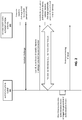
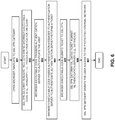
- FIG. 6 A method in accordance with one embodiment of the invention is illustrated in Figure 6 .
- the method may be implemented within the context of the architecture shown in Figure 5 , but is not limited to any specific system architecture.
- the user opens a browser and navigates to the SSL VPN gateway.
- the SSL VPN gateway renders the page containing browser-executable code to trigger authentication on the client.
- the browser-executable code establishes a connection with an authentication server to trigger authentication of the user.
- the browser-executable code exchanges messages between the authentication client and authentication server to authenticate the user (see, e.g., description above with respect to Figures 1A-B , 3 , and 5 ). Once authenticated, the authentication server returns a ticket.
- the browser-executable code submits the ticket to the SSL VPN gateway and, at 606, the SSL VPN gateway validates the ticket against the authentication server. As mentioned above, this may involve the authentication server comparing the ticket to the ticket returned in operation 604 to confirm the validity of the ticket (e.g., via RADIUS).
- the SSL VPN gateway grants the user access to the protected internal network.
- elements of the authentication client 201 are integrated into the legacy solution's client side software to achieve the integration; however, as before, no server-side integration is necessary.
- the authentication client 201 is equipped with a credential provider component 711 for managing signed certificates, which it uses to gain access to network resources via a Kerberos infrastructure 730.
- the authentication client 201 may be integrated into the Windows® operating system via the Credential Provider Framework using the credential provider component 730. It should be noted, however, that the underlying principles of the invention are not limited to a Kerberos implementation or any particular type of operating system.
- This embodiment also relies on communication between the authentication server 725 and authentication client 201 which enter into a series of authentication transactions to authenticate the end user (e.g., as described above with respect to Figures 1B and 3 ).
- the active directory 735 and Kerberos infrastructure 730 are configured to trust the root certificate held by the authentication server 725.
- the authentication server 725 issues a short-lived certificate comprising a cryptographic public/private key pair which it signs using a root certificate held by the authentication server 725 (e.g., signing the short-lived certificate with the private key of the root certificate).
- the public key of the short-lived certificate is signed with the private key of the root certificate.
- the short-lived certificate may also include timestamp/timeout data indicating a length of time for which the short-lived certificate is valid (e.g., 5 minutes, 1 hour, etc).
- the credential provider 711 receives the signed short-lived certificate from the authentication server, it enters into a challenge response transaction with the Kerberos infrastructure 730 involving the short-lived certificate.
- the Kerberos infrastructure sends a challenge (e.g., random data such as a nonce) to the credential provider 711 which then signs the challenge using the private key of the short-lived certificate. It then sends the short-lived certificate to the Kerberos infrastructure which (1) validates the signature on the short-lived certificate using the public key of the root certificate provided by the authentication server 725 (which it has been configured to trust); and (2) validates the signature over the challenge using the public key from the short-lived certificate. If both signatures are valid, then the Kerberos infrastructure issues a Kerberos ticket to the credential provider 711 which it may then use to gain access to network resources such as file servers, email accounts, etc, managed by the Kerberos infrastructure.
- a challenge e.g., random data such as a nonce
- the authentication server 725 and client 201 may be integrated without significant modification to the existing active directory 735 and Kerberos infrastructure 730. Rather, all that is required is that the active directory 735/Kerberos infrastructure are configured to trust the root certificate held by the authentication server 725.
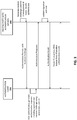
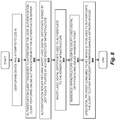
- Figure 8 illustrates one embodiment of a method for integrating an online authentication infrastructure with a legacy system. The method may be implemented within the context of the architecture shown in Figure 7 , but is not limited to any particular system architecture.
- the user opens a device such as a Windows device and attempts to log in.
- an authentication client is triggered to authenticate the user.
- the authentication client performs online authentication with an authentication server.
- the authentication client may have previously registered one or more authentication devices with the server (e.g., a fingerprint authentication device, a voice authentication device, etc). It may then authenticate with the server using a series of transactions such as those described above with respect to Figures 1A-B and 3 .
- the authentication server may send the authentication client an authentication request with a random challenge, which the authentication client signs using a private key associated with the authentication device used. The authentication server may then use the public key to validate the signature.
- the authentication server if authentication is successful, then at 803, the authentication server returns a short-lived digital certificate to the authentication client which is signed using a private key of a root certificate maintained by the authentication server.
- the root certificate is trusted by the active directory/Kerberos infrastructure.
- the authentication client then uses the short-lived digital certificate to authenticate to the Kerberos infrastructure.
- the Kerberos infrastructure may send a challenge (e.g., random data such as a nonce) to the authentication client which then signs the challenge using the private key of the short-lived certificate. It then sends the short-lived certificate to the Kerberos infrastructure which, at 805, validates the signature on the short-lived certificate using the public key of the root certificate provided by the authentication server (which it has been configured to trust); and validates the signature over the challenge using the public key from the short-lived certificate. If both signatures are valid, then the Kerberos infrastructure issues a Kerberos ticket to the authentication client which, at 806, it may then use to gain access to network resources such as file servers, email accounts, etc, managed by the Kerberos infrastructure.
- a Kerberos ticket e.g., a Kerberos ticket
- Reduction in initial integration effort Allows a Relying Party to deploy online authentication without re-writing their application to incorporate the online authentication functionality, or to enable integration with a third-party federation server.
- Simplification of policy administration By expressing the authentication policy outside of code, this approach allows the organization to easily update their authentication policies without requiring code changes. Changes to reflect new interpretations of regulatory mandates, or to respond to attacks on existing authentication mechanisms become a simple change in the policy, and can be effected quickly.
- Enablement of future refinement As new authentication devices and mechanisms become available, an organization can evaluate the appropriateness of the devices/mechanisms when addressing new or emerging risks. Integrating a newly-available authentication device only requires adding the device to a policy; no new code has to be written to deploy the new capability immediately, even to legacy applications.
- OTP approaches typically require an IT administrator to provision the end user's token with the OTP validation server; software-based desktop OTP generators still require helpdesk intervention during initial deployment.
- the online authentication approach can dramatically reduce the deployment costs by leveraging capabilities already available on the end user's device, and delivering a self-service enrollment model for deployment.
- OTP approaches require the user to not only carry their OTP generator (which many forget, resulting in additional helpdesk costs to enable temporary access) but also to manually input the OTP into the application.
- the FIDO approach can dramatically reduce the impact of authentication on the end user by replacing user name / password and OTP entry with something simpler, like swiping a finger over a fingerprint sensor.
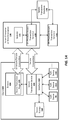
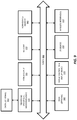
- Figure 9 is a block diagram illustrating an exemplary clients and servers which may be used in some embodiments of the invention. It should be understood that while Figure 9 illustrates various components of a computer system, it is not intended to represent any particular architecture or manner of interconnecting the components as such details are not germane to the present invention. It will be appreciated that other computer systems that have fewer components or more components may also be used with the present invention.
- the computer system 900 which is a form of a data processing system, includes the bus(es) 950 which is coupled with the processing system 920, power supply 925, memory 930, and the nonvolatile memory 940 (e.g., a hard drive, flash memory, Phase-Change Memory (PCM), etc.).
- the bus(es) 950 may be connected to each other through various bridges, controllers, and/or adapters as is well known in the art.
- the processing system 920 may retrieve instruction(s) from the memory 930 and/or the nonvolatile memory 940, and execute the instructions to perform operations as described above.
- the bus 950 interconnects the above components together and also interconnects those components to the optional dock 960, the display controller & display device 990, Input/Output devices 980 (e.g., NIC (Network Interface Card), a cursor control (e.g., mouse, touchscreen, touchpad, etc.), a keyboard, etc.), and the optional wireless transceiver(s) 990 (e.g., Bluetooth, WiFi, Infrared, etc.).
- NIC Network Interface Card
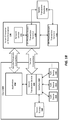
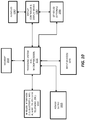
- Figure 10 is a block diagram illustrating an exemplary data processing system which may be used in some embodiments of the invention.
- the data processing system 1000 may be a handheld computer, a personal digital assistant (PDA), a mobile telephone, a portable gaming system, a portable media player, a tablet or a handheld computing device which may include a mobile telephone, a media player, and/or a gaming system.
- the data processing system 1000 may be a network computer or an embedded processing device within another device.
- the exemplary architecture of the data processing system 1000 may be used for the mobile devices described above.
- the data processing system 1000 includes the processing system 1020, which may include one or more microprocessors and/or a system on an integrated circuit.
- the processing system 1020 is coupled with a memory 1010, a power supply 1025 (which includes one or more batteries) an audio input/output 1040, a display controller and display device 1060, optional input/output 1050, input device(s) 1070, and wireless transceiver(s) 1030.
- additional components not shown in Figure 10
- one or more buses, not shown in Figure 10 may be used to interconnect the various components as is well known in the art.
- the memory 1010 may store data and/or programs for execution by the data processing system 1000.
- the audio input/output 1040 may include a microphone and/or a speaker to, for example, play music and/or provide telephony functionality through the speaker and microphone.
- the display controller and display device 1060 may include a graphical user interface (GUI).
- the wireless (e.g., RF) transceivers 1030 e.g., a WiFi transceiver, an infrared transceiver, a Bluetooth transceiver, a wireless cellular telephony transceiver, etc.
- the one or more input devices 1070 allow a user to provide input to the system. These input devices may be a keypad, keyboard, touch panel, multi touch panel, etc.
- the optional other input/output 1050 may be a connector for a dock.
- Embodiments of the invention may include various steps as set forth above.
- the steps may be embodied in machine-executable instructions which cause a general-purpose or special-purpose processor to perform certain steps.
- these steps may be performed by specific hardware components that contain hardwired logic for performing the steps, or by any combination of programmed computer components and custom hardware components.
- Elements of the present invention may also be provided as a machine-readable medium for storing the machine-executable program code.
- the machine-readable medium may include, but is not limited to, floppy diskettes, optical disks, CD-ROMs, and magneto-optical disks, ROMs, RAMs, EPROMs, EEPROMs, magnetic or optical cards, or other type of media/machine-readable medium suitable for storing electronic program code.
- Embodiments of the invention may include various steps as set forth above.
- the steps may be embodied in machine-executable instructions which cause a general-purpose or special-purpose processor to perform certain steps.
- these steps may be performed by specific hardware components that contain hardwired logic for performing the steps, or by any combination of programmed computer components and custom hardware components.
Landscapes
- Engineering & Computer Science (AREA)
- Computer Security & Cryptography (AREA)
- Computer Hardware Design (AREA)
- Computing Systems (AREA)
- General Engineering & Computer Science (AREA)
- Computer Networks & Wireless Communication (AREA)
- Signal Processing (AREA)
- Computer And Data Communications (AREA)
- Data Exchanges In Wide-Area Networks (AREA)
- Storage Device Security (AREA)
- Financial Or Insurance-Related Operations Such As Payment And Settlement (AREA)
- Telephonic Communication Services (AREA)
Applications Claiming Priority (2)
| Application Number | Priority Date | Filing Date | Title |
|---|---|---|---|
| US14/487,992 US9736154B2 (en) | 2014-09-16 | 2014-09-16 | System and method for integrating an authentication service within a network architecture |
| PCT/US2015/050348 WO2016044373A1 (en) | 2014-09-16 | 2015-09-16 | System and method for integrating an authentication service within a network architecture |
Publications (3)
| Publication Number | Publication Date |
|---|---|
| EP3195108A1 EP3195108A1 (en) | 2017-07-26 |
| EP3195108A4 EP3195108A4 (en) | 2018-04-25 |
| EP3195108B1 true EP3195108B1 (en) | 2020-01-01 |
Family
ID=55533778
Family Applications (1)
| Application Number | Title | Priority Date | Filing Date |
|---|---|---|---|
| EP15841530.7A Active EP3195108B1 (en) | 2014-09-16 | 2015-09-16 | System and method for integrating an authentication service within a network architecture |
Country Status (6)
| Country | Link |
|---|---|
| US (1) | US9736154B2 (enExample) |
| EP (1) | EP3195108B1 (enExample) |
| JP (1) | JP6689828B2 (enExample) |
| KR (1) | KR102420969B1 (enExample) |
| CN (1) | CN107111478B (enExample) |
| WO (1) | WO2016044373A1 (enExample) |
Families Citing this family (45)
| Publication number | Priority date | Publication date | Assignee | Title |
|---|---|---|---|---|
| US10032011B2 (en) | 2014-08-12 | 2018-07-24 | At&T Intellectual Property I, L.P. | Method and device for managing authentication using an identity avatar |
| FR3030817B1 (fr) * | 2014-12-22 | 2017-01-13 | Oberthur Technologies | Procede d'authentification d'un utilisateur, module securise, appareil electronique et systeme associes |
| US20160253664A1 (en) * | 2015-02-27 | 2016-09-01 | Samsung Electronics Co., Ltd | Attestation by proxy |
| US9692757B1 (en) * | 2015-05-20 | 2017-06-27 | Amazon Technologies, Inc. | Enhanced authentication for secure communications |
| US11057364B2 (en) | 2015-06-15 | 2021-07-06 | Airwatch Llc | Single sign-on for managed mobile devices |
| US10944738B2 (en) * | 2015-06-15 | 2021-03-09 | Airwatch, Llc. | Single sign-on for managed mobile devices using kerberos |
| US10171447B2 (en) | 2015-06-15 | 2019-01-01 | Airwatch Llc | Single sign-on for unmanaged mobile devices |
| US10812464B2 (en) | 2015-06-15 | 2020-10-20 | Airwatch Llc | Single sign-on for managed mobile devices |
| US10171439B2 (en) * | 2015-09-24 | 2019-01-01 | International Business Machines Corporation | Owner based device authentication and authorization for network access |
| US10454917B2 (en) * | 2015-11-05 | 2019-10-22 | Red Hat, Inc. | Enabling single sign-on authentication for accessing protected network services |
| US9906531B2 (en) * | 2015-11-23 | 2018-02-27 | International Business Machines Corporation | Cross-site request forgery (CSRF) prevention |
| US10171457B2 (en) * | 2015-12-29 | 2019-01-01 | International Business Machines Corporation | Service provider initiated additional authentication in a federated system |
| US11025618B2 (en) * | 2016-06-09 | 2021-06-01 | Logmein, Inc. | Mobile device access to a protected account associated with a website |
| JP6487392B2 (ja) * | 2016-08-15 | 2019-03-20 | 日本電信電話株式会社 | クライアント端末認証システム及びクライアント端末認証方法 |
| US10771451B2 (en) * | 2016-09-13 | 2020-09-08 | Queralt, Inc. | Mobile authentication and registration for digital certificates |
| US10887113B2 (en) | 2016-09-13 | 2021-01-05 | Queralt, Inc. | Mobile authentication interoperability for digital certificates |
| US11431509B2 (en) | 2016-09-13 | 2022-08-30 | Queralt, Inc. | Bridging digital identity validation and verification with the FIDO authentication framework |
| US10397215B2 (en) * | 2016-09-27 | 2019-08-27 | Visa International Service Assocation | Secure element installation and provisioning |
| US20180167383A1 (en) * | 2016-12-12 | 2018-06-14 | Qualcomm Incorporated | Integration of password-less authentication systems with legacy identity federation |
| DE102017000768A1 (de) | 2017-01-27 | 2018-08-02 | Giesecke+Devrient Mobile Security Gmbh | Verfahren zum Durchführen einer Zweifaktorauthentifizierung |
| US9992029B1 (en) * | 2017-04-05 | 2018-06-05 | Stripe, Inc. | Systems and methods for providing authentication to a plurality of devices |
| CN107547205A (zh) * | 2017-07-01 | 2018-01-05 | 郑州云海信息技术有限公司 | 一种在Linux系统下自动建立CA server的方法 |
| TWI647942B (zh) * | 2017-12-28 | 2019-01-11 | 中華電信股份有限公司 | 電子證件認證授權存取系統及方法 |
| US10999081B2 (en) * | 2018-04-12 | 2021-05-04 | Microsoft Technology Licensing, Llc | Dynamic certificate management for a distributed authentication system |
| US10999080B2 (en) * | 2018-06-22 | 2021-05-04 | Okta, Inc. | Dynamically analyzing third-party application website certificates across users to detect malicious activity |
| WO2020092245A1 (en) * | 2018-10-29 | 2020-05-07 | Zorday IP, LLC | Network-enabled electronic cigarette |
| US10846701B1 (en) | 2019-05-10 | 2020-11-24 | Bank Of America Corporation | Multi-vector authentication unit (MVAU) |
| US11876798B2 (en) * | 2019-05-20 | 2024-01-16 | Citrix Systems, Inc. | Virtual delivery appliance and system with remote authentication and related methods |
| US11296862B2 (en) | 2019-08-29 | 2022-04-05 | Visa International Service Association | Provisioning method and system with message conversion |
| JP7338386B2 (ja) * | 2019-10-04 | 2023-09-05 | 富士フイルムビジネスイノベーション株式会社 | 情報処理装置、情報処理システム及びプログラム |
| US11310059B2 (en) * | 2020-06-02 | 2022-04-19 | Microsoft Technology Licensing, Llc | Ephemeral cryptography keys for authenticating computing services |
| CN112202710B (zh) * | 2020-08-25 | 2023-08-04 | 奇安信科技集团股份有限公司 | 一种防止数据泄露的方法、装置、电子设备和存储介质 |
| SE544580C2 (en) * | 2020-09-04 | 2022-07-26 | Mideye Ab | Methods and authentication server for authentication of users requesting access to a restricted data resource |
| WO2022088094A1 (zh) * | 2020-10-30 | 2022-05-05 | 华为技术有限公司 | 一种安全通信方法及装置 |
| US11258617B1 (en) * | 2020-12-04 | 2022-02-22 | Salesforce.Com, Inc. | Device identity using key agreement |
| CN112954675B (zh) * | 2021-03-02 | 2023-03-24 | 西安电子科技大学 | 多网关认证方法、系统、存储介质、计算机设备、终端 |
| US11736445B2 (en) | 2021-03-12 | 2023-08-22 | Journey.ai | Personalized secure communication session management |
| CZ2021366A3 (cs) * | 2021-08-04 | 2023-02-15 | Aducid S.R.O. | Systém a způsob pro řízený přístup k cílové aplikaci |
| KR102444356B1 (ko) * | 2021-11-19 | 2022-09-16 | 주식회사 제론소프트엔 | 보안 강화 인트라넷 접속 방법 및 시스템 |
| CN114221759B (zh) * | 2021-11-29 | 2024-04-12 | 成都卫士通信息产业股份有限公司 | 一种远程监控部署方法、装置、电子设备及存储介质 |
| US12634286B2 (en) | 2022-08-16 | 2026-05-19 | Microsoft Technology Licensing, Llc | Granular secure user access to private resources |
| US12500883B2 (en) * | 2022-08-16 | 2025-12-16 | Microsoft Technology Licensing, Llc | Intelligent secure user access to private resources |
| CN115550022B (zh) * | 2022-09-26 | 2025-02-18 | 上海乐普云智科技股份有限公司 | 一种微服务架构系统的服务申请处理方法 |
| US20240250806A1 (en) * | 2023-01-23 | 2024-07-25 | Capital One Services, Llc | Multi-modal access to an online service using hierarchical cryptographic keys for user authentication of accounts and subaccounts |
| CN117614726B (zh) * | 2023-11-30 | 2026-07-07 | 新华三信息安全技术有限公司 | 一种身份认证方法及装置 |
Family Cites Families (264)
| Publication number | Priority date | Publication date | Assignee | Title |
|---|---|---|---|---|
| US5280527A (en) | 1992-04-14 | 1994-01-18 | Kamahira Safe Co., Inc. | Biometric token for authorizing access to a host system |
| US5764789A (en) | 1994-11-28 | 1998-06-09 | Smarttouch, Llc | Tokenless biometric ATM access system |
| US6088450A (en) | 1996-04-17 | 2000-07-11 | Intel Corporation | Authentication system based on periodic challenge/response protocol |
| US6377691B1 (en) | 1996-12-09 | 2002-04-23 | Microsoft Corporation | Challenge-response authentication and key exchange for a connectionless security protocol |
| US6378072B1 (en) | 1998-02-03 | 2002-04-23 | Compaq Computer Corporation | Cryptographic system |
| US6618806B1 (en) | 1998-04-01 | 2003-09-09 | Saflink Corporation | System and method for authenticating users in a computer network |
| US6178511B1 (en) | 1998-04-30 | 2001-01-23 | International Business Machines Corporation | Coordinating user target logons in a single sign-on (SSO) environment |
| JP2000092046A (ja) | 1998-09-11 | 2000-03-31 | Mitsubishi Electric Corp | 遠隔認証システム |
| US7047416B2 (en) | 1998-11-09 | 2006-05-16 | First Data Corporation | Account-based digital signature (ABDS) system |
| US7505941B2 (en) | 1999-08-31 | 2009-03-17 | American Express Travel Related Services Company, Inc. | Methods and apparatus for conducting electronic transactions using biometrics |
| US6842896B1 (en) | 1999-09-03 | 2005-01-11 | Rainbow Technologies, Inc. | System and method for selecting a server in a multiple server license management system |
| US7085931B1 (en) | 1999-09-03 | 2006-08-01 | Secure Computing Corporation | Virtual smart card system and method |
| US7260724B1 (en) | 1999-09-20 | 2007-08-21 | Security First Corporation | Context sensitive dynamic authentication in a cryptographic system |
| US7444368B1 (en) | 2000-02-29 | 2008-10-28 | Microsoft Corporation | Methods and systems for selecting methodology for authenticating computer systems on a per computer system or per user basis |
| US7698565B1 (en) | 2000-03-30 | 2010-04-13 | Digitalpersona, Inc. | Crypto-proxy server and method of using the same |
| US7263506B2 (en) | 2000-04-06 | 2007-08-28 | Fair Isaac Corporation | Identification and management of fraudulent credit/debit card purchases at merchant ecommerce sites |
| US7487112B2 (en) | 2000-06-29 | 2009-02-03 | Barnes Jr Melvin L | System, method, and computer program product for providing location based services and mobile e-commerce |
| WO2002013434A1 (en) | 2000-08-04 | 2002-02-14 | First Data Corporation | Method and apparatus for access authentication entity |
| US7689832B2 (en) | 2000-09-11 | 2010-03-30 | Sentrycom Ltd. | Biometric-based system and method for enabling authentication of electronic messages sent over a network |
| US20020040344A1 (en) | 2000-10-04 | 2002-04-04 | Preiser Randall F. | Check guarantee, verification, processing, credit reports and collection system and method awarding purchase points for usage of checks |
| US7356704B2 (en) | 2000-12-07 | 2008-04-08 | International Business Machines Corporation | Aggregated authenticated identity apparatus for and method therefor |
| FI115098B (fi) | 2000-12-27 | 2005-02-28 | Nokia Corp | Todentaminen dataviestinnässä |
| US7941669B2 (en) | 2001-01-03 | 2011-05-10 | American Express Travel Related Services Company, Inc. | Method and apparatus for enabling a user to select an authentication method |
| US20020112170A1 (en) | 2001-01-03 | 2002-08-15 | Foley James M. | Method and apparatus for using one financial instrument to authenticate a user for accessing a second financial instrument |
| AU2002339746A1 (en) | 2001-05-18 | 2002-12-03 | Imprivata Inc. | System and method for authentication using biometrics |
| SG124290A1 (en) | 2001-07-23 | 2006-08-30 | Ntt Docomo Inc | Electronic payment method, system, and devices |
| US7042988B2 (en) * | 2001-09-28 | 2006-05-09 | Bluesocket, Inc. | Method and system for managing data traffic in wireless networks |
| JP2003132160A (ja) | 2001-10-23 | 2003-05-09 | Nec Corp | 個人情報管理システムと個人情報管理装置、及び個人情報管理プログラム |
| US20030115142A1 (en) | 2001-12-12 | 2003-06-19 | Intel Corporation | Identity authentication portfolio system |
| US7155035B2 (en) | 2002-02-05 | 2006-12-26 | Matsushita Electric Industrial Co., Ltd. | Personal authentication method, personal authentication apparatus and image capturing device |
| GB0210692D0 (en) | 2002-05-10 | 2002-06-19 | Assendon Ltd | Smart card token for remote authentication |
| US20030226036A1 (en) | 2002-05-30 | 2003-12-04 | International Business Machines Corporation | Method and apparatus for single sign-on authentication |
| US7322043B2 (en) | 2002-06-20 | 2008-01-22 | Hewlett-Packard Development Company, L.P. | Allowing an electronic device accessing a service to be authenticated |
| US20160072787A1 (en) | 2002-08-19 | 2016-03-10 | Igor V. Balabine | Method for creating secure subnetworks on a general purpose network |
| EP1431907B1 (fr) | 2002-11-20 | 2006-08-16 | STMicroelectronics S.A. | Evaluation de la netteté d'une image d'iris d'oeil |
| US7353533B2 (en) | 2002-12-18 | 2008-04-01 | Novell, Inc. | Administration of protection of data accessible by a mobile device |
| JP4374904B2 (ja) | 2003-05-21 | 2009-12-02 | 株式会社日立製作所 | 本人認証システム |
| JP2005025337A (ja) * | 2003-06-30 | 2005-01-27 | Sony Corp | 機器登録システム、機器登録サーバ、機器登録方法、機器登録プログラム、記憶媒体、及び端末機器 |
| US7716469B2 (en) | 2003-07-25 | 2010-05-11 | Oracle America, Inc. | Method and system for providing a circle of trust on a network |
| EP1664687A4 (en) | 2003-09-12 | 2009-01-14 | Rsa Security Inc | SYSTEM AND METHOD FOR AUTHENTICATION TO RISK BASIS |
| JP2005092614A (ja) * | 2003-09-18 | 2005-04-07 | Toda Constr Co Ltd | 生体認証システム、プログラムおよび情報記憶媒体 |
| US20050080716A1 (en) | 2003-09-25 | 2005-04-14 | Boris Belyi | Data validation systems and methods for use in financial transactions |
| US9130921B2 (en) * | 2003-09-30 | 2015-09-08 | Ca, Inc. | System and method for bridging identities in a service oriented architectureprofiling |
| WO2005052765A2 (en) | 2003-11-25 | 2005-06-09 | Ultra-Scan Corporation | Biometric authorization method and system |
| US20050125295A1 (en) | 2003-12-09 | 2005-06-09 | Tidwell Lisa C. | Systems and methods for obtaining payor information at a point of sale |
| US7263717B1 (en) | 2003-12-17 | 2007-08-28 | Sprint Communications Company L.P. | Integrated security framework and privacy database scheme |
| US9191215B2 (en) | 2003-12-30 | 2015-11-17 | Entrust, Inc. | Method and apparatus for providing authentication using policy-controlled authentication articles and techniques |
| JP4257250B2 (ja) | 2004-03-30 | 2009-04-22 | 富士通株式会社 | 生体情報照合装置並びに生体特徴情報絞込み装置,生体特徴情報絞込みプログラムおよび同プログラムを記録したコンピュータ読取可能な記録媒体 |
| US8762283B2 (en) | 2004-05-03 | 2014-06-24 | Visa International Service Association | Multiple party benefit from an online authentication service |
| US20050278253A1 (en) | 2004-06-15 | 2005-12-15 | Microsoft Corporation | Verifying human interaction to a computer entity by way of a trusted component on a computing device or the like |
| CN101199187A (zh) * | 2004-07-23 | 2008-06-11 | 茨特里克斯系统公司 | 用于网络节点之间通信最优化的系统和方法 |
| US7194763B2 (en) | 2004-08-02 | 2007-03-20 | Cisco Technology, Inc. | Method and apparatus for determining authentication capabilities |
| US7298873B2 (en) | 2004-11-16 | 2007-11-20 | Imageware Systems, Inc. | Multimodal biometric platform |
| WO2006063118A2 (en) | 2004-12-07 | 2006-06-15 | Pure Networks, Inc. | Network management |
| US8239937B2 (en) | 2004-12-16 | 2012-08-07 | Pinoptic Limited | User validation using images |
| US8060922B2 (en) | 2004-12-20 | 2011-11-15 | Emc Corporation | Consumer internet authentication device |
| US7844816B2 (en) | 2005-06-08 | 2010-11-30 | International Business Machines Corporation | Relying party trust anchor based public key technology framework |
| US8079079B2 (en) | 2005-06-29 | 2011-12-13 | Microsoft Corporation | Multimodal authentication |
| US20070077915A1 (en) | 2005-09-30 | 2007-04-05 | Black Greg R | Method and apparatus for module authentication |
| CA2624623A1 (en) | 2005-10-11 | 2007-04-26 | Citrix Systems, Inc. | Systems and methods for facilitating distributed authentication |
| US8407146B2 (en) | 2005-10-28 | 2013-03-26 | Microsoft Corporation | Secure storage |
| US7623659B2 (en) | 2005-11-04 | 2009-11-24 | Cisco Technology, Inc. | Biometric non-repudiation network security systems and methods |
| US8458465B1 (en) | 2005-11-16 | 2013-06-04 | AT&T Intellectual Property II, L. P. | Biometric authentication |
| WO2008048304A2 (en) | 2005-12-01 | 2008-04-24 | Firestar Software, Inc. | System and method for exchanging information among exchange applications |
| US20080005562A1 (en) | 2005-12-13 | 2008-01-03 | Microsoft Corporation | Public key infrastructure certificate entrustment |
| US8511547B2 (en) | 2005-12-22 | 2013-08-20 | Mastercard International Incorporated | Methods and systems for two-factor authentication using contactless chip cards or devices and mobile devices or dedicated personal readers |
| CN1992596A (zh) | 2005-12-27 | 2007-07-04 | 国际商业机器公司 | 用户验证设备和用户验证方法 |
| US7941835B2 (en) | 2006-01-13 | 2011-05-10 | Authenticor Identity Protection Services, Inc. | Multi-mode credential authorization |
| WO2007092715A2 (en) | 2006-02-06 | 2007-08-16 | Solidus Networks, Inc. | Method and system for providing online authentication utilizing biometric data |
| US9112705B2 (en) | 2006-02-15 | 2015-08-18 | Nec Corporation | ID system and program, and ID method |
| US20100107222A1 (en) | 2006-03-02 | 2010-04-29 | Avery Glasser | Method and apparatus for implementing secure and adaptive proxies |
| US7818264B2 (en) | 2006-06-19 | 2010-10-19 | Visa U.S.A. Inc. | Track data encryption |
| JP4929803B2 (ja) | 2006-04-10 | 2012-05-09 | 富士通株式会社 | 認証方法、認証装置、および、認証プログラム |
| WO2007122726A1 (ja) | 2006-04-21 | 2007-11-01 | Mitsubishi Denki Kabushiki Kaisha | 認証サーバ装置及び端末装置及び認証システム及び認証方法 |
| US9002018B2 (en) | 2006-05-09 | 2015-04-07 | Sync Up Technologies Corporation | Encryption key exchange system and method |
| US8259647B2 (en) | 2006-06-12 | 2012-09-04 | Samsung Electronics Co., Ltd. | System and method for wireless communication of uncompressed video having a link control and bandwidth reservation scheme for control/management message exchanges and asynchronous traffic |
| US20100242102A1 (en) * | 2006-06-27 | 2010-09-23 | Microsoft Corporation | Biometric credential verification framework |
| US7512567B2 (en) | 2006-06-29 | 2009-03-31 | Yt Acquisition Corporation | Method and system for providing biometric authentication at a point-of-sale via a mobile device |
| CN101106452B (zh) | 2006-07-12 | 2010-12-08 | 华为技术有限公司 | 移动ip密钥的产生及分发方法和系统 |
| US20080025234A1 (en) | 2006-07-26 | 2008-01-31 | Qi Zhu | System and method of managing a computer network using hierarchical layer information |
| US7966489B2 (en) | 2006-08-01 | 2011-06-21 | Cisco Technology, Inc. | Method and apparatus for selecting an appropriate authentication method on a client |
| US8689287B2 (en) | 2006-08-17 | 2014-04-01 | Northrop Grumman Systems Corporation | Federated credentialing system and method |
| EP2080142B1 (en) | 2006-08-31 | 2014-09-24 | International Business Machines Corporation | Attestation of computing platforms |
| US8239677B2 (en) | 2006-10-10 | 2012-08-07 | Equifax Inc. | Verification and authentication systems and methods |
| US9135444B2 (en) | 2006-10-19 | 2015-09-15 | Novell, Inc. | Trusted platform module (TPM) assisted data center management |
| US7986786B2 (en) | 2006-11-30 | 2011-07-26 | Hewlett-Packard Development Company, L.P. | Methods and systems for utilizing cryptographic functions of a cryptographic co-processor |
| US9055107B2 (en) * | 2006-12-01 | 2015-06-09 | Microsoft Technology Licensing, Llc | Authentication delegation based on re-verification of cryptographic evidence |
| EP1933522B1 (en) | 2006-12-11 | 2013-10-23 | Sap Ag | Method and system for authentication |
| JP2008176407A (ja) | 2007-01-16 | 2008-07-31 | Toshiba Corp | 生体認証システム、装置及びプログラム |
| JP2008181295A (ja) | 2007-01-24 | 2008-08-07 | Sony Corp | 認証システム、情報処理装置および方法、プログラム、並びに記録媒体 |
| GB0703759D0 (en) | 2007-02-27 | 2007-04-04 | Skype Ltd | A Communication system |
| US20120084544A1 (en) | 2010-10-04 | 2012-04-05 | Ralph Robert Farina | Methods and systems for providing and controlling cryptographically secure communications across unsecured networks between a secure virtual terminal and a remote system |
| US8302196B2 (en) | 2007-03-20 | 2012-10-30 | Microsoft Corporation | Combining assessment models and client targeting to identify network security vulnerabilities |
| US8413221B2 (en) | 2007-03-23 | 2013-04-02 | Emc Corporation | Methods and apparatus for delegated authentication |
| US20080271150A1 (en) | 2007-04-30 | 2008-10-30 | Paul Boerger | Security based on network environment |
| US8627409B2 (en) | 2007-05-15 | 2014-01-07 | Oracle International Corporation | Framework for automated dissemination of security metadata for distributed trust establishment |
| US8359045B1 (en) | 2007-05-31 | 2013-01-22 | United Services Automobile Association (Usaa) | Method and system for wireless device communication |
| US7627522B2 (en) | 2007-06-04 | 2009-12-01 | Visa U.S.A. Inc. | System, apparatus and methods for comparing fraud parameters for application during prepaid card enrollment and transactions |
| US9003488B2 (en) | 2007-06-06 | 2015-04-07 | Datavalet Technologies | System and method for remote device recognition at public hotspots |
| US7913086B2 (en) | 2007-06-20 | 2011-03-22 | Nokia Corporation | Method for remote message attestation in a communication system |
| US8782801B2 (en) | 2007-08-15 | 2014-07-15 | Samsung Electronics Co., Ltd. | Securing stored content for trusted hosts and safe computing environments |
| US20090089870A1 (en) | 2007-09-28 | 2009-04-02 | Mark Frederick Wahl | System and method for validating interactions in an identity metasystem |
| FR2922396B1 (fr) | 2007-10-12 | 2009-12-25 | Compagnie Ind Et Financiere Dingenierie Ingenico | Procede d'authentification biometrique, programme d'ordinateur, serveur d'authentification, terminal et objet portatif correspondants |
| US20090204964A1 (en) | 2007-10-12 | 2009-08-13 | Foley Peter F | Distributed trusted virtualization platform |
| WO2009070430A2 (en) | 2007-11-08 | 2009-06-04 | Suridx, Inc. | Apparatus and methods for providing scalable, dynamic, individualized credential services using mobile telephones |
| US8347374B2 (en) | 2007-11-15 | 2013-01-01 | Red Hat, Inc. | Adding client authentication to networked communications |
| US8978117B2 (en) | 2007-11-19 | 2015-03-10 | Avaya Inc. | Authentication frequency and challenge type based on environmental and physiological properties |
| TWI350486B (en) | 2007-11-26 | 2011-10-11 | Ind Tech Res Inst | Biometrics method and apparatus and biometric data encryption method thereof |
| US8312269B2 (en) | 2007-11-28 | 2012-11-13 | Hitachi Global Storage Technologies Netherlands, B.V. | Challenge and response access control providing data security in data storage devices |
| US9575558B2 (en) | 2007-12-05 | 2017-02-21 | Hewlett-Packard Development Company, L.P. | System and method for electronically assisting a customer at a product retail location |
| US8650616B2 (en) | 2007-12-18 | 2014-02-11 | Oracle International Corporation | User definable policy for graduated authentication based on the partial orderings of principals |
| US8220032B2 (en) * | 2008-01-29 | 2012-07-10 | International Business Machines Corporation | Methods, devices, and computer program products for discovering authentication servers and establishing trust relationships therewith |
| US8635662B2 (en) | 2008-01-31 | 2014-01-21 | Intuit Inc. | Dynamic trust model for authenticating a user |
| US8175276B2 (en) | 2008-02-04 | 2012-05-08 | Freescale Semiconductor, Inc. | Encryption apparatus with diverse key retention schemes |
| US8639630B2 (en) | 2008-02-15 | 2014-01-28 | Ddn Ip Holdings Limited | Distribution of digital content |
| US8353016B1 (en) | 2008-02-29 | 2013-01-08 | Adobe Systems Incorporated | Secure portable store for security skins and authentication information |
| US8555078B2 (en) | 2008-02-29 | 2013-10-08 | Adobe Systems Incorporated | Relying party specifiable format for assertion provider token |
| US8302167B2 (en) | 2008-03-11 | 2012-10-30 | Vasco Data Security, Inc. | Strong authentication token generating one-time passwords and signatures upon server credential verification |
| US20090327131A1 (en) | 2008-04-29 | 2009-12-31 | American Express Travel Related Services Company, Inc. | Dynamic account authentication using a mobile device |
| US8799984B2 (en) | 2008-05-27 | 2014-08-05 | Open Invention Network, Llc | User agent to exercise privacy control management in a user-centric identity management system |
| US8229812B2 (en) | 2009-01-28 | 2012-07-24 | Headwater Partners I, Llc | Open transaction central billing system |
| US20090307140A1 (en) | 2008-06-06 | 2009-12-10 | Upendra Mardikar | Mobile device over-the-air (ota) registration and point-of-sale (pos) payment |
| US20100010932A1 (en) | 2008-07-09 | 2010-01-14 | Simon Law | Secure wireless deposit system and method |
| US8250627B2 (en) | 2008-07-28 | 2012-08-21 | International Business Machines Corporation | Transaction authorization |
| US20100029300A1 (en) | 2008-07-30 | 2010-02-04 | Arima Communications Corp. | Method for inquiring real-time travel-related information using a mobile communication device |
| US20100042848A1 (en) | 2008-08-13 | 2010-02-18 | Plantronics, Inc. | Personalized I/O Device as Trusted Data Source |
| US20130125222A1 (en) | 2008-08-19 | 2013-05-16 | James D. Pravetz | System and Method for Vetting Service Providers Within a Secure User Interface |
| US8666904B2 (en) | 2008-08-20 | 2014-03-04 | Adobe Systems Incorporated | System and method for trusted embedded user interface for secure payments |
| US8880036B2 (en) | 2008-09-08 | 2014-11-04 | Qualcomm Incorporated | Retrieving data wirelessly from a mobile device |
| US20100083000A1 (en) | 2008-09-16 | 2010-04-01 | Validity Sensors, Inc. | Fingerprint Sensor Device and System with Verification Token and Methods of Using |
| US7933836B2 (en) | 2008-09-30 | 2011-04-26 | Avaya Inc. | Proxy-based, transaction authorization system |
| US8494482B2 (en) | 2008-10-24 | 2013-07-23 | Centurylink Intellectual Property Llc | Telecommunications system and method for monitoring the body temperature of a user |
| EP2359526B1 (en) * | 2008-11-04 | 2017-08-02 | SecureKey Technologies Inc. | System and methods for online authentication |
| WO2010053899A2 (en) | 2008-11-06 | 2010-05-14 | Visa International Service Association | Online challenge-response |
| US8245030B2 (en) | 2008-12-19 | 2012-08-14 | Nai-Yu Pai | Method for authenticating online transactions using a browser |
| US20100169650A1 (en) | 2008-12-31 | 2010-07-01 | Brickell Ernest F | Storage minimization technique for direct anonymous attestation keys |
| US8961619B2 (en) | 2009-01-06 | 2015-02-24 | Qualcomm Incorporated | Location-based system permissions and adjustments at an electronic device |
| US20100186072A1 (en) | 2009-01-21 | 2010-07-22 | Akshay Kumar | Distributed secure telework |
| US8284043B2 (en) | 2009-01-23 | 2012-10-09 | Honeywell International Inc. | Method of formulating response to expired timer for data link message |
| US8590021B2 (en) | 2009-01-23 | 2013-11-19 | Microsoft Corporation | Passive security enforcement |
| EP2401838B1 (en) | 2009-02-19 | 2013-12-11 | SecureKey Technologies Inc. | System and methods for online authentication |
| US9015789B2 (en) | 2009-03-17 | 2015-04-21 | Sophos Limited | Computer security lock down methods |
| WO2010111439A2 (en) | 2009-03-25 | 2010-09-30 | Pacid Technologies, Llc | Method and system for securing communication |
| US8291468B1 (en) | 2009-03-30 | 2012-10-16 | Juniper Networks, Inc. | Translating authorization information within computer networks |
| US9105027B2 (en) | 2009-05-15 | 2015-08-11 | Visa International Service Association | Verification of portable consumer device for secure services |
| US20100325684A1 (en) | 2009-06-17 | 2010-12-23 | Microsoft Corporation | Role-based security for messaging administration and management |
| US8452960B2 (en) | 2009-06-23 | 2013-05-28 | Netauthority, Inc. | System and method for content delivery |
| KR20100137655A (ko) | 2009-06-23 | 2010-12-31 | 삼성전자주식회사 | 전자 프로그램 가이드를 표시하는 방법 및 이를 위한 장치 |
| US20110022835A1 (en) | 2009-07-27 | 2011-01-27 | Suridx, Inc. | Secure Communication Using Asymmetric Cryptography and Light-Weight Certificates |
| US7865937B1 (en) | 2009-08-05 | 2011-01-04 | Daon Holdings Limited | Methods and systems for authenticating users |
| US8756661B2 (en) | 2009-08-24 | 2014-06-17 | Ufp Identity, Inc. | Dynamic user authentication for access to online services |
| US8429404B2 (en) | 2009-09-30 | 2013-04-23 | Intel Corporation | Method and system for secure communications on a managed network |
| IL201351A0 (en) | 2009-10-01 | 2010-05-31 | Michael Feldbau | Device and method for electronic signature via proxy |
| US20110083018A1 (en) | 2009-10-06 | 2011-04-07 | Validity Sensors, Inc. | Secure User Authentication |
| US8621460B2 (en) | 2009-11-02 | 2013-12-31 | International Business Machines Corporation | Endpoint-hosted hypervisor management |
| US8719905B2 (en) | 2010-04-26 | 2014-05-06 | Authentify Inc. | Secure and efficient login and transaction authentication using IPhones™ and other smart mobile communication devices |
| US8713325B2 (en) | 2011-04-19 | 2014-04-29 | Authentify Inc. | Key management using quasi out of band authentication architecture |
| US8769784B2 (en) | 2009-11-02 | 2014-07-08 | Authentify, Inc. | Secure and efficient authentication using plug-in hardware compatible with desktops, laptops and/or smart mobile communication devices such as iPhones |
| KR20110048974A (ko) | 2009-11-04 | 2011-05-12 | 삼성전자주식회사 | 무선통신 시스템에서 마스터 세션 키를 갱신하기 위한 장치 및 방법 |
| US8949978B1 (en) * | 2010-01-06 | 2015-02-03 | Trend Micro Inc. | Efficient web threat protection |
| CN102763111B (zh) | 2010-01-22 | 2015-08-05 | 交互数字专利控股公司 | 用于可信联合身份管理和数据接入授权的方法和设备 |
| US9070146B2 (en) | 2010-02-04 | 2015-06-30 | Playspan Inc. | Method and system for authenticating online transactions |
| US20110197267A1 (en) | 2010-02-05 | 2011-08-11 | Vivianne Gravel | Secure authentication system and method |
| US20110219427A1 (en) | 2010-03-04 | 2011-09-08 | RSSBus, Inc. | Smart Device User Authentication |
| WO2011110539A1 (en) | 2010-03-08 | 2011-09-15 | Gemalto Sa | System and method for using a portable security device to cryptographically sign a document in response to signature requests from a relying party to a digital signature service |
| US8930713B2 (en) | 2010-03-10 | 2015-01-06 | Dell Products L.P. | System and method for general purpose encryption of data |
| CN102196407B (zh) | 2010-03-18 | 2015-09-16 | 中兴通讯股份有限公司 | 锚定鉴权器重定位方法及系统 |
| JP2011199458A (ja) | 2010-03-18 | 2011-10-06 | Brother Industries Ltd | 無線通信システム |
| US8826030B2 (en) | 2010-03-22 | 2014-09-02 | Daon Holdings Limited | Methods and systems for authenticating users |
| US9171306B1 (en) | 2010-03-29 | 2015-10-27 | Bank Of America Corporation | Risk-based transaction authentication |
| JP2013524352A (ja) | 2010-03-31 | 2013-06-17 | セキュリティー ファースト コーポレイション | 移動中のデータをセキュア化するためのシステムおよび方法 |
| US9356916B2 (en) | 2010-04-30 | 2016-05-31 | T-Central, Inc. | System and method to use a cloud-based platform supported by an API to authenticate remote users and to provide PKI- and PMI-based distributed locking of content and distributed unlocking of protected content |
| US8926335B2 (en) | 2010-05-12 | 2015-01-06 | Verificient Technologies, Inc. | System and method for remote test administration and monitoring |
| US8973125B2 (en) | 2010-05-28 | 2015-03-03 | Alcatel Lucent | Application layer authentication in packet networks |
| US20110314549A1 (en) | 2010-06-16 | 2011-12-22 | Fujitsu Limited | Method and apparatus for periodic context-aware authentication |
| US8832461B2 (en) | 2010-06-25 | 2014-09-09 | Microsoft Corporation | Trusted sensors |
| WO2012005730A1 (en) | 2010-07-08 | 2012-01-12 | Hewlett-Packard Development Company L. P. | System and method for document policy enforcement |
| US8412158B2 (en) | 2010-08-17 | 2013-04-02 | Qualcomm Incorporated | Mobile device having increased security that is less obtrusive |
| EP2424185B1 (en) | 2010-08-23 | 2014-10-22 | 3M Innovative Properties Co. | Method and device for challenge-response authentication |
| US8590014B1 (en) | 2010-09-13 | 2013-11-19 | Zynga Inc. | Network application security utilizing network-provided identities |
| US9183683B2 (en) | 2010-09-28 | 2015-11-10 | Sony Computer Entertainment Inc. | Method and system for access to secure resources |
| US8819437B2 (en) * | 2010-09-30 | 2014-08-26 | Microsoft Corporation | Cryptographic device that binds an additional authentication factor to multiple identities |
| US8566915B2 (en) | 2010-10-22 | 2013-10-22 | Microsoft Corporation | Mixed-mode authentication |
| US8904472B2 (en) | 2010-11-12 | 2014-12-02 | Riaz Ahmed SHAIKH | Validation of consistency and completeness of access control policy sets |
| CN103283204B (zh) | 2010-11-24 | 2015-12-16 | 西班牙电信公司 | 对受保护内容的访问进行授权的方法 |
| US8555355B2 (en) | 2010-12-07 | 2013-10-08 | Verizon Patent And Licensing Inc. | Mobile pin pad |
| US8955035B2 (en) | 2010-12-16 | 2015-02-10 | Microsoft Corporation | Anonymous principals for policy languages |
| US8549145B2 (en) | 2011-02-08 | 2013-10-01 | Aventura Hq, Inc. | Pre-access location-based rule initiation in a virtual computing environment |
| US8595507B2 (en) | 2011-02-16 | 2013-11-26 | Novell, Inc. | Client-based authentication |
| US20130144785A1 (en) | 2011-03-29 | 2013-06-06 | Igor Karpenko | Social network payment authentication apparatuses, methods and systems |
| US8810368B2 (en) | 2011-03-29 | 2014-08-19 | Nokia Corporation | Method and apparatus for providing biometric authentication using distributed computations |
| US9092605B2 (en) | 2011-04-11 | 2015-07-28 | NSS Lab Works LLC | Ongoing authentication and access control with network access device |
| US8584224B1 (en) | 2011-04-13 | 2013-11-12 | Symantec Corporation | Ticket based strong authentication with web service |
| US9600679B2 (en) | 2011-04-29 | 2017-03-21 | Micro Focus Software Inc. | Techniques for resource operation based on usage, sharing, and recommendations with modular authentication |
| EP2712454A4 (en) | 2011-05-10 | 2015-04-15 | Bionym Inc | SYSTEM AND METHOD FOR ENABLING CONTINUOUS OR MOMENTARY IDENTITY DETECTIONS BASED ON PHYSIOLOGICAL BIOMETRIC SIGNALS |
| US8839395B2 (en) | 2011-05-13 | 2014-09-16 | Cch Incorporated | Single sign-on between applications |
| US8561152B2 (en) | 2011-05-17 | 2013-10-15 | Microsoft Corporation | Target-based access check independent of access request |
| EP2716094A4 (en) | 2011-06-03 | 2014-12-03 | Blackberry Ltd | SYSTEM AND METHOD FOR ACCESSING PRIVATE NETWORKS |
| US8843649B2 (en) | 2011-06-07 | 2014-09-23 | Microsoft Corporation | Establishment of a pairing relationship between two or more communication devices |
| US20120313746A1 (en) | 2011-06-10 | 2012-12-13 | Aliphcom | Device control using sensory input |
| US8800056B2 (en) | 2011-08-12 | 2014-08-05 | Palo Alto Research Center Incorporated | Guided implicit authentication |
| US8713314B2 (en) | 2011-08-30 | 2014-04-29 | Comcast Cable Communications, Llc | Reoccuring keying system |
| US8590018B2 (en) | 2011-09-08 | 2013-11-19 | International Business Machines Corporation | Transaction authentication management system with multiple authentication levels |
| US8838982B2 (en) | 2011-09-21 | 2014-09-16 | Visa International Service Association | Systems and methods to secure user identification |
| US20130133054A1 (en) | 2011-09-24 | 2013-05-23 | Marc E. Davis | Relationship Based Trust Verification Schema |
| US9621404B2 (en) | 2011-09-24 | 2017-04-11 | Elwha Llc | Behavioral fingerprinting with social networking |
| US9965614B2 (en) | 2011-09-29 | 2018-05-08 | Oracle International Corporation | Mobile application, resource management advice |
| US20140053234A1 (en) | 2011-10-11 | 2014-02-20 | Citrix Systems, Inc. | Policy-Based Application Management |
| US20130090939A1 (en) | 2011-10-11 | 2013-04-11 | Robert N. Robinson | Sytem and method for preventing healthcare fraud |
| US9021565B2 (en) * | 2011-10-13 | 2015-04-28 | At&T Intellectual Property I, L.P. | Authentication techniques utilizing a computing device |
| US20140189807A1 (en) | 2011-10-18 | 2014-07-03 | Conor P. Cahill | Methods, systems and apparatus to facilitate client-based authentication |
| US20130104187A1 (en) | 2011-10-18 | 2013-04-25 | Klaus Helmut Weidner | Context-dependent authentication |
| US9246903B2 (en) | 2011-10-31 | 2016-01-26 | Money And Data Protection Lizenz Gmbh & Co. Kg | Authentication method |
| CN104040555B (zh) | 2011-11-14 | 2017-02-22 | 威斯科数据安全国际有限公司 | 具有安全记录特征的智能卡读取器 |
| US8607319B2 (en) | 2011-11-22 | 2013-12-10 | Daon Holdings Limited | Methods and systems for determining biometric data for use in authentication transactions |
| WO2013082190A1 (en) | 2011-11-28 | 2013-06-06 | Visa International Service Association | Transaction security graduated seasoning and risk shifting apparatuses, methods and systems |
| US8863297B2 (en) | 2012-01-06 | 2014-10-14 | Mobile Iron, Inc. | Secure virtual file management system |
| US8958599B1 (en) | 2012-01-06 | 2015-02-17 | Google Inc. | Input method and system based on ambient glints |
| EP3697110A1 (en) | 2012-01-08 | 2020-08-19 | ImagiStar LLC | Portable item containers which identify missing and/or extra container contents |
| US9247424B2 (en) | 2012-02-14 | 2016-01-26 | Apple Inc. | Methods and apparatus for large scale distribution of electronic access clients |
| AU2013200916B2 (en) | 2012-02-20 | 2014-09-11 | Kl Data Security Pty Ltd | Cryptographic Method and System |
| US20130239173A1 (en) | 2012-03-12 | 2013-09-12 | Stephen T. Dispensa | Computer program and method for administering secure transactions using secondary authentication |
| CN104205722B (zh) | 2012-03-28 | 2018-05-01 | 英特尔公司 | 基于设备验证的有条件的有限服务授权 |
| US8850588B2 (en) | 2012-05-01 | 2014-09-30 | Taasera, Inc. | Systems and methods for providing mobile security based on dynamic attestation |
| US9130837B2 (en) | 2012-05-22 | 2015-09-08 | Cisco Technology, Inc. | System and method for enabling unconfigured devices to join an autonomic network in a secure manner |
| US20140007215A1 (en) * | 2012-06-15 | 2014-01-02 | Lockheed Martin Corporation | Mobile applications platform |
| US20130346176A1 (en) | 2012-06-20 | 2013-12-26 | Zachery Alolabi | System and method for payment incentivizing |
| US20140013422A1 (en) | 2012-07-03 | 2014-01-09 | Scott Janus | Continuous Multi-factor Authentication |
| TW201417598A (zh) | 2012-07-13 | 2014-05-01 | Interdigital Patent Holdings | 安全性關聯特性 |
| US10771448B2 (en) | 2012-08-10 | 2020-09-08 | Cryptography Research, Inc. | Secure feature and key management in integrated circuits |
| US9088891B2 (en) | 2012-08-13 | 2015-07-21 | Wells Fargo Bank, N.A. | Wireless multi-factor authentication with captive portals |
| WO2014036021A1 (en) | 2012-08-28 | 2014-03-06 | Visa International Service Association | Secure device service enrollment |
| US8955067B2 (en) | 2012-09-12 | 2015-02-10 | Capital One, Na | System and method for providing controlled application programming interface security |
| US9215249B2 (en) | 2012-09-29 | 2015-12-15 | Intel Corporation | Systems and methods for distributed trust computing and key management |
| US9172544B2 (en) | 2012-10-05 | 2015-10-27 | General Electric Company | Systems and methods for authentication between networked devices |
| US20140250523A1 (en) | 2012-10-11 | 2014-09-04 | Carnegie Mellon University | Continuous Authentication, and Methods, Systems, and Software Therefor |
| US8910239B2 (en) * | 2012-10-15 | 2014-12-09 | Citrix Systems, Inc. | Providing virtualized private network tunnels |
| US9176838B2 (en) | 2012-10-19 | 2015-11-03 | Intel Corporation | Encrypted data inspection in a network environment |
| US8584219B1 (en) | 2012-11-07 | 2013-11-12 | Fmr Llc | Risk adjusted, multifactor authentication |
| US9166962B2 (en) | 2012-11-14 | 2015-10-20 | Blackberry Limited | Mobile communications device providing heuristic security authentication features and related methods |
| US8935808B2 (en) | 2012-12-18 | 2015-01-13 | Bank Of America Corporation | Identity attribute exchange and validation broker |
| US9083689B2 (en) | 2012-12-28 | 2015-07-14 | Nok Nok Labs, Inc. | System and method for implementing privacy classes within an authentication framework |
| US9219732B2 (en) | 2012-12-28 | 2015-12-22 | Nok Nok Labs, Inc. | System and method for processing random challenges within an authentication framework |
| US9306754B2 (en) | 2012-12-28 | 2016-04-05 | Nok Nok Labs, Inc. | System and method for implementing transaction signing within an authentication framework |
| US9015482B2 (en) | 2012-12-28 | 2015-04-21 | Nok Nok Labs, Inc. | System and method for efficiently enrolling, registering, and authenticating with multiple authentication devices |
| US20140189835A1 (en) | 2012-12-28 | 2014-07-03 | Pitney Bowes Inc. | Systems and methods for efficient authentication of users |
| US9172687B2 (en) | 2012-12-28 | 2015-10-27 | Nok Nok Labs, Inc. | Query system and method to determine authentication capabilities |
| US9374369B2 (en) * | 2012-12-28 | 2016-06-21 | Lookout, Inc. | Multi-factor authentication and comprehensive login system for client-server networks |
| US8856541B1 (en) | 2013-01-10 | 2014-10-07 | Google Inc. | Liveness detection |
| US9143506B2 (en) | 2013-02-13 | 2015-09-22 | Daniel Duncan | Systems and methods for identifying biometric information as trusted and authenticating persons using trusted biometric information |
| JP6069039B2 (ja) * | 2013-03-11 | 2017-01-25 | 日立オートモティブシステムズ株式会社 | ゲートウェイ装置及びサービス提供システム |
| EP3975014B1 (en) | 2013-03-15 | 2025-04-23 | INTEL Corporation | Technologies for secure storage and use of biometric authentication information |
| US20140282868A1 (en) | 2013-03-15 | 2014-09-18 | Micah Sheller | Method And Apparatus To Effect Re-Authentication |
| US10270748B2 (en) | 2013-03-22 | 2019-04-23 | Nok Nok Labs, Inc. | Advanced authentication techniques and applications |
| US10706132B2 (en) | 2013-03-22 | 2020-07-07 | Nok Nok Labs, Inc. | System and method for adaptive user authentication |
| CN105144656A (zh) | 2013-04-26 | 2015-12-09 | 交互数字专利控股公司 | 用于实现要求的认证确保级别的多因素认证 |
| US8646060B1 (en) | 2013-07-30 | 2014-02-04 | Mourad Ben Ayed | Method for adaptive authentication using a mobile device |
| US10366391B2 (en) | 2013-08-06 | 2019-07-30 | Visa International Services Association | Variable authentication process and system |
| US20150142628A1 (en) | 2013-11-20 | 2015-05-21 | Bank Of America Corporation | Detecting structured transactions |
| US20150180869A1 (en) | 2013-12-23 | 2015-06-25 | Samsung Electronics Company, Ltd. | Cloud-based scalable authentication for electronic devices |
| US9652354B2 (en) | 2014-03-18 | 2017-05-16 | Microsoft Technology Licensing, Llc. | Unsupervised anomaly detection for arbitrary time series |
| US9654463B2 (en) | 2014-05-20 | 2017-05-16 | Airwatch Llc | Application specific certificate management |
| US9992207B2 (en) | 2014-09-23 | 2018-06-05 | Qualcomm Incorporated | Scalable authentication process selection based upon sensor inputs |
| US10387882B2 (en) | 2015-07-01 | 2019-08-20 | Klarna Ab | Method for using supervised model with physical store |
-
2014
- 2014-09-16 US US14/487,992 patent/US9736154B2/en active Active
-
2015
- 2015-09-16 EP EP15841530.7A patent/EP3195108B1/en active Active
- 2015-09-16 WO PCT/US2015/050348 patent/WO2016044373A1/en not_active Ceased
- 2015-09-16 KR KR1020177007634A patent/KR102420969B1/ko active Active
- 2015-09-16 JP JP2017514840A patent/JP6689828B2/ja active Active
- 2015-09-16 CN CN201580049696.XA patent/CN107111478B/zh active Active
Non-Patent Citations (1)
| Title |
|---|
| None * |
Also Published As
| Publication number | Publication date |
|---|---|
| CN107111478B (zh) | 2020-12-01 |
| WO2016044373A1 (en) | 2016-03-24 |
| EP3195108A4 (en) | 2018-04-25 |
| US20170034168A1 (en) | 2017-02-02 |
| EP3195108A1 (en) | 2017-07-26 |
| KR102420969B1 (ko) | 2022-07-13 |
| US9736154B2 (en) | 2017-08-15 |
| JP2017535837A (ja) | 2017-11-30 |
| KR20170056566A (ko) | 2017-05-23 |
| CN107111478A (zh) | 2017-08-29 |
| JP6689828B2 (ja) | 2020-04-28 |
Similar Documents
| Publication | Publication Date | Title |
|---|---|---|
| US9736154B2 (en) | System and method for integrating an authentication service within a network architecture | |
| JP7798572B2 (ja) | 効率的なチャレンジ応答認証のためのシステム及び方法 | |
| EP3175414B1 (en) | System and method for authenticating a client to a device | |
| EP3175367B1 (en) | System and method for implementing a hosted authentication service | |
| US9577999B1 (en) | Enhanced security for registration of authentication devices | |
| KR102382474B1 (ko) | 보안 전송 프로토콜을 사용하여 신뢰를 설정하기 위한 시스템 및 방법 | |
| US20170109751A1 (en) | System and method for carrying strong authentication events over different channels | |
| HK1237073A1 (en) | System and method for integrating an authentication service within a network architecture | |
| HK1237073B (en) | System and method for integrating an authentication service within a network architecture | |
| HK1236637B (en) | System and method for implementing a hosted authentication service | |
| HK1236637A1 (en) | System and method for implementing a hosted authentication service |
Legal Events
| Date | Code | Title | Description |
|---|---|---|---|
| STAA | Information on the status of an ep patent application or granted ep patent |
Free format text: STATUS: THE INTERNATIONAL PUBLICATION HAS BEEN MADE |
|
| PUAI | Public reference made under article 153(3) epc to a published international application that has entered the european phase |
Free format text: ORIGINAL CODE: 0009012 |
|
| STAA | Information on the status of an ep patent application or granted ep patent |
Free format text: STATUS: REQUEST FOR EXAMINATION WAS MADE |
|
| 17P | Request for examination filed |
Effective date: 20170331 |
|
| AK | Designated contracting states |
Kind code of ref document: A1 Designated state(s): AL AT BE BG CH CY CZ DE DK EE ES FI FR GB GR HR HU IE IS IT LI LT LU LV MC MK MT NL NO PL PT RO RS SE SI SK SM TR |
|
| AX | Request for extension of the european patent |
Extension state: BA ME |
|
| DAV | Request for validation of the european patent (deleted) | ||
| DAX | Request for extension of the european patent (deleted) | ||
| A4 | Supplementary search report drawn up and despatched |
Effective date: 20180326 |
|
| RIC1 | Information provided on ipc code assigned before grant |
Ipc: H04L 29/06 20060101ALI20180320BHEP Ipc: G06F 7/04 20060101AFI20180320BHEP |
|
| STAA | Information on the status of an ep patent application or granted ep patent |
Free format text: STATUS: EXAMINATION IS IN PROGRESS |
|
| 17Q | First examination report despatched |
Effective date: 20190208 |
|
| GRAP | Despatch of communication of intention to grant a patent |
Free format text: ORIGINAL CODE: EPIDOSNIGR1 |
|
| STAA | Information on the status of an ep patent application or granted ep patent |
Free format text: STATUS: GRANT OF PATENT IS INTENDED |
|
| INTG | Intention to grant announced |
Effective date: 20190719 |
|
| GRAS | Grant fee paid |
Free format text: ORIGINAL CODE: EPIDOSNIGR3 |
|
| GRAA | (expected) grant |
Free format text: ORIGINAL CODE: 0009210 |
|
| STAA | Information on the status of an ep patent application or granted ep patent |
Free format text: STATUS: THE PATENT HAS BEEN GRANTED |
|
| AK | Designated contracting states |
Kind code of ref document: B1 Designated state(s): AL AT BE BG CH CY CZ DE DK EE ES FI FR GB GR HR HU IE IS IT LI LT LU LV MC MK MT NL NO PL PT RO RS SE SI SK SM TR |
|
| RAP1 | Party data changed (applicant data changed or rights of an application transferred) |
Owner name: NOK NOK LABS, INC. |
|
| REG | Reference to a national code |
Ref country code: GB Ref legal event code: FG4D |
|
| RIN1 | Information on inventor provided before grant (corrected) |
Inventor name: WILSON, BRENDON J. Inventor name: BAGHDASARYAN, DAVIT |
|
| REG | Reference to a national code |
Ref country code: CH Ref legal event code: EP Ref country code: AT Ref legal event code: REF Ref document number: 1220644 Country of ref document: AT Kind code of ref document: T Effective date: 20200115 |
|
| REG | Reference to a national code |
Ref country code: IE Ref legal event code: FG4D |
|
| REG | Reference to a national code |
Ref country code: DE Ref legal event code: R096 Ref document number: 602015044871 Country of ref document: DE |
|
| REG | Reference to a national code |
Ref country code: NL Ref legal event code: MP Effective date: 20200101 |
|
| REG | Reference to a national code |
Ref country code: LT Ref legal event code: MG4D |
|
| PG25 | Lapsed in a contracting state [announced via postgrant information from national office to epo] |
Ref country code: FI Free format text: LAPSE BECAUSE OF FAILURE TO SUBMIT A TRANSLATION OF THE DESCRIPTION OR TO PAY THE FEE WITHIN THE PRESCRIBED TIME-LIMIT Effective date: 20200101 Ref country code: LT Free format text: LAPSE BECAUSE OF FAILURE TO SUBMIT A TRANSLATION OF THE DESCRIPTION OR TO PAY THE FEE WITHIN THE PRESCRIBED TIME-LIMIT Effective date: 20200101 Ref country code: RS Free format text: LAPSE BECAUSE OF FAILURE TO SUBMIT A TRANSLATION OF THE DESCRIPTION OR TO PAY THE FEE WITHIN THE PRESCRIBED TIME-LIMIT Effective date: 20200101 Ref country code: NO Free format text: LAPSE BECAUSE OF FAILURE TO SUBMIT A TRANSLATION OF THE DESCRIPTION OR TO PAY THE FEE WITHIN THE PRESCRIBED TIME-LIMIT Effective date: 20200401 Ref country code: NL Free format text: LAPSE BECAUSE OF FAILURE TO SUBMIT A TRANSLATION OF THE DESCRIPTION OR TO PAY THE FEE WITHIN THE PRESCRIBED TIME-LIMIT Effective date: 20200101 Ref country code: CZ Free format text: LAPSE BECAUSE OF FAILURE TO SUBMIT A TRANSLATION OF THE DESCRIPTION OR TO PAY THE FEE WITHIN THE PRESCRIBED TIME-LIMIT Effective date: 20200101 Ref country code: PT Free format text: LAPSE BECAUSE OF FAILURE TO SUBMIT A TRANSLATION OF THE DESCRIPTION OR TO PAY THE FEE WITHIN THE PRESCRIBED TIME-LIMIT Effective date: 20200527 |
|
| PG25 | Lapsed in a contracting state [announced via postgrant information from national office to epo] |
Ref country code: HR Free format text: LAPSE BECAUSE OF FAILURE TO SUBMIT A TRANSLATION OF THE DESCRIPTION OR TO PAY THE FEE WITHIN THE PRESCRIBED TIME-LIMIT Effective date: 20200101 Ref country code: BG Free format text: LAPSE BECAUSE OF FAILURE TO SUBMIT A TRANSLATION OF THE DESCRIPTION OR TO PAY THE FEE WITHIN THE PRESCRIBED TIME-LIMIT Effective date: 20200401 Ref country code: GR Free format text: LAPSE BECAUSE OF FAILURE TO SUBMIT A TRANSLATION OF THE DESCRIPTION OR TO PAY THE FEE WITHIN THE PRESCRIBED TIME-LIMIT Effective date: 20200402 Ref country code: LV Free format text: LAPSE BECAUSE OF FAILURE TO SUBMIT A TRANSLATION OF THE DESCRIPTION OR TO PAY THE FEE WITHIN THE PRESCRIBED TIME-LIMIT Effective date: 20200101 Ref country code: IS Free format text: LAPSE BECAUSE OF FAILURE TO SUBMIT A TRANSLATION OF THE DESCRIPTION OR TO PAY THE FEE WITHIN THE PRESCRIBED TIME-LIMIT Effective date: 20200501 Ref country code: SE Free format text: LAPSE BECAUSE OF FAILURE TO SUBMIT A TRANSLATION OF THE DESCRIPTION OR TO PAY THE FEE WITHIN THE PRESCRIBED TIME-LIMIT Effective date: 20200101 |
|
| REG | Reference to a national code |
Ref country code: DE Ref legal event code: R097 Ref document number: 602015044871 Country of ref document: DE |
|
| PG25 | Lapsed in a contracting state [announced via postgrant information from national office to epo] |
Ref country code: RO Free format text: LAPSE BECAUSE OF FAILURE TO SUBMIT A TRANSLATION OF THE DESCRIPTION OR TO PAY THE FEE WITHIN THE PRESCRIBED TIME-LIMIT Effective date: 20200101 Ref country code: SK Free format text: LAPSE BECAUSE OF FAILURE TO SUBMIT A TRANSLATION OF THE DESCRIPTION OR TO PAY THE FEE WITHIN THE PRESCRIBED TIME-LIMIT Effective date: 20200101 Ref country code: ES Free format text: LAPSE BECAUSE OF FAILURE TO SUBMIT A TRANSLATION OF THE DESCRIPTION OR TO PAY THE FEE WITHIN THE PRESCRIBED TIME-LIMIT Effective date: 20200101 Ref country code: DK Free format text: LAPSE BECAUSE OF FAILURE TO SUBMIT A TRANSLATION OF THE DESCRIPTION OR TO PAY THE FEE WITHIN THE PRESCRIBED TIME-LIMIT Effective date: 20200101 Ref country code: SM Free format text: LAPSE BECAUSE OF FAILURE TO SUBMIT A TRANSLATION OF THE DESCRIPTION OR TO PAY THE FEE WITHIN THE PRESCRIBED TIME-LIMIT Effective date: 20200101 Ref country code: EE Free format text: LAPSE BECAUSE OF FAILURE TO SUBMIT A TRANSLATION OF THE DESCRIPTION OR TO PAY THE FEE WITHIN THE PRESCRIBED TIME-LIMIT Effective date: 20200101 |
|
| PLBE | No opposition filed within time limit |
Free format text: ORIGINAL CODE: 0009261 |
|
| STAA | Information on the status of an ep patent application or granted ep patent |
Free format text: STATUS: NO OPPOSITION FILED WITHIN TIME LIMIT |
|
| REG | Reference to a national code |
Ref country code: AT Ref legal event code: MK05 Ref document number: 1220644 Country of ref document: AT Kind code of ref document: T Effective date: 20200101 |
|
| 26N | No opposition filed |
Effective date: 20201002 |
|
| PG25 | Lapsed in a contracting state [announced via postgrant information from national office to epo] |
Ref country code: IT Free format text: LAPSE BECAUSE OF FAILURE TO SUBMIT A TRANSLATION OF THE DESCRIPTION OR TO PAY THE FEE WITHIN THE PRESCRIBED TIME-LIMIT Effective date: 20200101 Ref country code: AT Free format text: LAPSE BECAUSE OF FAILURE TO SUBMIT A TRANSLATION OF THE DESCRIPTION OR TO PAY THE FEE WITHIN THE PRESCRIBED TIME-LIMIT Effective date: 20200101 |
|
| PG25 | Lapsed in a contracting state [announced via postgrant information from national office to epo] |
Ref country code: PL Free format text: LAPSE BECAUSE OF FAILURE TO SUBMIT A TRANSLATION OF THE DESCRIPTION OR TO PAY THE FEE WITHIN THE PRESCRIBED TIME-LIMIT Effective date: 20200101 Ref country code: SI Free format text: LAPSE BECAUSE OF FAILURE TO SUBMIT A TRANSLATION OF THE DESCRIPTION OR TO PAY THE FEE WITHIN THE PRESCRIBED TIME-LIMIT Effective date: 20200101 |
|
| PG25 | Lapsed in a contracting state [announced via postgrant information from national office to epo] |
Ref country code: MC Free format text: LAPSE BECAUSE OF FAILURE TO SUBMIT A TRANSLATION OF THE DESCRIPTION OR TO PAY THE FEE WITHIN THE PRESCRIBED TIME-LIMIT Effective date: 20200101 |
|
| REG | Reference to a national code |
Ref country code: CH Ref legal event code: PL |
|
| REG | Reference to a national code |
Ref country code: BE Ref legal event code: MM Effective date: 20200930 |
|
| PG25 | Lapsed in a contracting state [announced via postgrant information from national office to epo] |
Ref country code: LU Free format text: LAPSE BECAUSE OF NON-PAYMENT OF DUE FEES Effective date: 20200916 |
|
| PG25 | Lapsed in a contracting state [announced via postgrant information from national office to epo] |
Ref country code: FR Free format text: LAPSE BECAUSE OF NON-PAYMENT OF DUE FEES Effective date: 20200930 |
|
| PG25 | Lapsed in a contracting state [announced via postgrant information from national office to epo] |
Ref country code: LI Free format text: LAPSE BECAUSE OF NON-PAYMENT OF DUE FEES Effective date: 20200930 Ref country code: IE Free format text: LAPSE BECAUSE OF NON-PAYMENT OF DUE FEES Effective date: 20200916 Ref country code: CH Free format text: LAPSE BECAUSE OF NON-PAYMENT OF DUE FEES Effective date: 20200930 Ref country code: BE Free format text: LAPSE BECAUSE OF NON-PAYMENT OF DUE FEES Effective date: 20200930 |
|
| PG25 | Lapsed in a contracting state [announced via postgrant information from national office to epo] |
Ref country code: TR Free format text: LAPSE BECAUSE OF FAILURE TO SUBMIT A TRANSLATION OF THE DESCRIPTION OR TO PAY THE FEE WITHIN THE PRESCRIBED TIME-LIMIT Effective date: 20200101 Ref country code: MT Free format text: LAPSE BECAUSE OF FAILURE TO SUBMIT A TRANSLATION OF THE DESCRIPTION OR TO PAY THE FEE WITHIN THE PRESCRIBED TIME-LIMIT Effective date: 20200101 Ref country code: CY Free format text: LAPSE BECAUSE OF FAILURE TO SUBMIT A TRANSLATION OF THE DESCRIPTION OR TO PAY THE FEE WITHIN THE PRESCRIBED TIME-LIMIT Effective date: 20200101 |
|
| PG25 | Lapsed in a contracting state [announced via postgrant information from national office to epo] |
Ref country code: MK Free format text: LAPSE BECAUSE OF FAILURE TO SUBMIT A TRANSLATION OF THE DESCRIPTION OR TO PAY THE FEE WITHIN THE PRESCRIBED TIME-LIMIT Effective date: 20200101 Ref country code: AL Free format text: LAPSE BECAUSE OF FAILURE TO SUBMIT A TRANSLATION OF THE DESCRIPTION OR TO PAY THE FEE WITHIN THE PRESCRIBED TIME-LIMIT Effective date: 20200101 |
|
| PGFP | Annual fee paid to national office [announced via postgrant information from national office to epo] |
Ref country code: DE Payment date: 20250929 Year of fee payment: 11 |
|
| PGFP | Annual fee paid to national office [announced via postgrant information from national office to epo] |
Ref country code: GB Payment date: 20250929 Year of fee payment: 11 |
|
| REG | Reference to a national code |
Ref country code: CH Ref legal event code: S20 Free format text: ST27 STATUS EVENT CODE: U-0-0-S10-S20 (AS PROVIDED BY THE NATIONAL OFFICE) Effective date: 20251124 |
|
| REG | Reference to a national code |
Ref country code: CH Ref legal event code: Y10 Free format text: ST27 STATUS EVENT CODE: U-0-0-Y10-Y00 (AS PROVIDED BY THE NATIONAL OFFICE) Effective date: 20251125 |
|
| REG | Reference to a national code |
Ref country code: GB Ref legal event code: 732E Free format text: REGISTERED BETWEEN 20251030 AND 20251105 |