EP3190211A1 - Cold-rolled steel sheet, method for producing cold-rolled steel sheet, automobile member, and equipment for producing cold-rolled steel sheet - Google Patents
Cold-rolled steel sheet, method for producing cold-rolled steel sheet, automobile member, and equipment for producing cold-rolled steel sheet Download PDFInfo
- Publication number
- EP3190211A1 EP3190211A1 EP15839041.9A EP15839041A EP3190211A1 EP 3190211 A1 EP3190211 A1 EP 3190211A1 EP 15839041 A EP15839041 A EP 15839041A EP 3190211 A1 EP3190211 A1 EP 3190211A1
- Authority
- EP
- European Patent Office
- Prior art keywords
- steel sheet
- cold
- acid
- rolled steel
- pickling
- Prior art date
- Legal status (The legal status is an assumption and is not a legal conclusion. Google has not performed a legal analysis and makes no representation as to the accuracy of the status listed.)
- Granted
Links
Images
Classifications
-
- C—CHEMISTRY; METALLURGY
- C23—COATING METALLIC MATERIAL; COATING MATERIAL WITH METALLIC MATERIAL; CHEMICAL SURFACE TREATMENT; DIFFUSION TREATMENT OF METALLIC MATERIAL; COATING BY VACUUM EVAPORATION, BY SPUTTERING, BY ION IMPLANTATION OR BY CHEMICAL VAPOUR DEPOSITION, IN GENERAL; INHIBITING CORROSION OF METALLIC MATERIAL OR INCRUSTATION IN GENERAL
- C23G—CLEANING OR DE-GREASING OF METALLIC MATERIAL BY CHEMICAL METHODS OTHER THAN ELECTROLYSIS
- C23G1/00—Cleaning or pickling metallic material with solutions or molten salts
-
- C—CHEMISTRY; METALLURGY
- C21—METALLURGY OF IRON
- C21D—MODIFYING THE PHYSICAL STRUCTURE OF FERROUS METALS; GENERAL DEVICES FOR HEAT TREATMENT OF FERROUS OR NON-FERROUS METALS OR ALLOYS; MAKING METAL MALLEABLE, e.g. BY DECARBURISATION OR TEMPERING
- C21D9/00—Heat treatment, e.g. annealing, hardening, quenching or tempering, adapted for particular articles; Furnaces therefor
- C21D9/46—Heat treatment, e.g. annealing, hardening, quenching or tempering, adapted for particular articles; Furnaces therefor for sheet metals
-
- C—CHEMISTRY; METALLURGY
- C22—METALLURGY; FERROUS OR NON-FERROUS ALLOYS; TREATMENT OF ALLOYS OR NON-FERROUS METALS
- C22C—ALLOYS
- C22C38/00—Ferrous alloys, e.g. steel alloys
- C22C38/005—Ferrous alloys, e.g. steel alloys containing rare earths, i.e. Sc, Y, Lanthanides
-
- C—CHEMISTRY; METALLURGY
- C22—METALLURGY; FERROUS OR NON-FERROUS ALLOYS; TREATMENT OF ALLOYS OR NON-FERROUS METALS
- C22C—ALLOYS
- C22C38/00—Ferrous alloys, e.g. steel alloys
- C22C38/02—Ferrous alloys, e.g. steel alloys containing silicon
-
- C—CHEMISTRY; METALLURGY
- C22—METALLURGY; FERROUS OR NON-FERROUS ALLOYS; TREATMENT OF ALLOYS OR NON-FERROUS METALS
- C22C—ALLOYS
- C22C38/00—Ferrous alloys, e.g. steel alloys
- C22C38/04—Ferrous alloys, e.g. steel alloys containing manganese
-
- C—CHEMISTRY; METALLURGY
- C22—METALLURGY; FERROUS OR NON-FERROUS ALLOYS; TREATMENT OF ALLOYS OR NON-FERROUS METALS
- C22C—ALLOYS
- C22C38/00—Ferrous alloys, e.g. steel alloys
- C22C38/06—Ferrous alloys, e.g. steel alloys containing aluminium
-
- C—CHEMISTRY; METALLURGY
- C22—METALLURGY; FERROUS OR NON-FERROUS ALLOYS; TREATMENT OF ALLOYS OR NON-FERROUS METALS
- C22C—ALLOYS
- C22C38/00—Ferrous alloys, e.g. steel alloys
- C22C38/08—Ferrous alloys, e.g. steel alloys containing nickel
-
- C—CHEMISTRY; METALLURGY
- C22—METALLURGY; FERROUS OR NON-FERROUS ALLOYS; TREATMENT OF ALLOYS OR NON-FERROUS METALS
- C22C—ALLOYS
- C22C38/00—Ferrous alloys, e.g. steel alloys
- C22C38/12—Ferrous alloys, e.g. steel alloys containing tungsten, tantalum, molybdenum, vanadium, or niobium
-
- C—CHEMISTRY; METALLURGY
- C22—METALLURGY; FERROUS OR NON-FERROUS ALLOYS; TREATMENT OF ALLOYS OR NON-FERROUS METALS
- C22C—ALLOYS
- C22C38/00—Ferrous alloys, e.g. steel alloys
- C22C38/14—Ferrous alloys, e.g. steel alloys containing titanium or zirconium
-
- C—CHEMISTRY; METALLURGY
- C22—METALLURGY; FERROUS OR NON-FERROUS ALLOYS; TREATMENT OF ALLOYS OR NON-FERROUS METALS
- C22C—ALLOYS
- C22C38/00—Ferrous alloys, e.g. steel alloys
- C22C38/16—Ferrous alloys, e.g. steel alloys containing copper
-
- C—CHEMISTRY; METALLURGY
- C22—METALLURGY; FERROUS OR NON-FERROUS ALLOYS; TREATMENT OF ALLOYS OR NON-FERROUS METALS
- C22C—ALLOYS
- C22C38/00—Ferrous alloys, e.g. steel alloys
- C22C38/18—Ferrous alloys, e.g. steel alloys containing chromium
- C22C38/32—Ferrous alloys, e.g. steel alloys containing chromium with boron
-
- C—CHEMISTRY; METALLURGY
- C22—METALLURGY; FERROUS OR NON-FERROUS ALLOYS; TREATMENT OF ALLOYS OR NON-FERROUS METALS
- C22C—ALLOYS
- C22C38/00—Ferrous alloys, e.g. steel alloys
- C22C38/18—Ferrous alloys, e.g. steel alloys containing chromium
- C22C38/34—Ferrous alloys, e.g. steel alloys containing chromium with more than 1.5% by weight of silicon
-
- C—CHEMISTRY; METALLURGY
- C22—METALLURGY; FERROUS OR NON-FERROUS ALLOYS; TREATMENT OF ALLOYS OR NON-FERROUS METALS
- C22C—ALLOYS
- C22C38/00—Ferrous alloys, e.g. steel alloys
- C22C38/18—Ferrous alloys, e.g. steel alloys containing chromium
- C22C38/40—Ferrous alloys, e.g. steel alloys containing chromium with nickel
- C22C38/58—Ferrous alloys, e.g. steel alloys containing chromium with nickel with more than 1.5% by weight of manganese
-
- C—CHEMISTRY; METALLURGY
- C23—COATING METALLIC MATERIAL; COATING MATERIAL WITH METALLIC MATERIAL; CHEMICAL SURFACE TREATMENT; DIFFUSION TREATMENT OF METALLIC MATERIAL; COATING BY VACUUM EVAPORATION, BY SPUTTERING, BY ION IMPLANTATION OR BY CHEMICAL VAPOUR DEPOSITION, IN GENERAL; INHIBITING CORROSION OF METALLIC MATERIAL OR INCRUSTATION IN GENERAL
- C23G—CLEANING OR DE-GREASING OF METALLIC MATERIAL BY CHEMICAL METHODS OTHER THAN ELECTROLYSIS
- C23G1/00—Cleaning or pickling metallic material with solutions or molten salts
- C23G1/02—Cleaning or pickling metallic material with solutions or molten salts with acid solutions
- C23G1/08—Iron or steel
-
- C—CHEMISTRY; METALLURGY
- C23—COATING METALLIC MATERIAL; COATING MATERIAL WITH METALLIC MATERIAL; CHEMICAL SURFACE TREATMENT; DIFFUSION TREATMENT OF METALLIC MATERIAL; COATING BY VACUUM EVAPORATION, BY SPUTTERING, BY ION IMPLANTATION OR BY CHEMICAL VAPOUR DEPOSITION, IN GENERAL; INHIBITING CORROSION OF METALLIC MATERIAL OR INCRUSTATION IN GENERAL
- C23G—CLEANING OR DE-GREASING OF METALLIC MATERIAL BY CHEMICAL METHODS OTHER THAN ELECTROLYSIS
- C23G1/00—Cleaning or pickling metallic material with solutions or molten salts
- C23G1/02—Cleaning or pickling metallic material with solutions or molten salts with acid solutions
- C23G1/08—Iron or steel
- C23G1/081—Iron or steel solutions containing H2SO4
-
- C—CHEMISTRY; METALLURGY
- C23—COATING METALLIC MATERIAL; COATING MATERIAL WITH METALLIC MATERIAL; CHEMICAL SURFACE TREATMENT; DIFFUSION TREATMENT OF METALLIC MATERIAL; COATING BY VACUUM EVAPORATION, BY SPUTTERING, BY ION IMPLANTATION OR BY CHEMICAL VAPOUR DEPOSITION, IN GENERAL; INHIBITING CORROSION OF METALLIC MATERIAL OR INCRUSTATION IN GENERAL
- C23G—CLEANING OR DE-GREASING OF METALLIC MATERIAL BY CHEMICAL METHODS OTHER THAN ELECTROLYSIS
- C23G1/00—Cleaning or pickling metallic material with solutions or molten salts
- C23G1/02—Cleaning or pickling metallic material with solutions or molten salts with acid solutions
- C23G1/08—Iron or steel
- C23G1/085—Iron or steel solutions containing HNO3
-
- C—CHEMISTRY; METALLURGY
- C23—COATING METALLIC MATERIAL; COATING MATERIAL WITH METALLIC MATERIAL; CHEMICAL SURFACE TREATMENT; DIFFUSION TREATMENT OF METALLIC MATERIAL; COATING BY VACUUM EVAPORATION, BY SPUTTERING, BY ION IMPLANTATION OR BY CHEMICAL VAPOUR DEPOSITION, IN GENERAL; INHIBITING CORROSION OF METALLIC MATERIAL OR INCRUSTATION IN GENERAL
- C23G—CLEANING OR DE-GREASING OF METALLIC MATERIAL BY CHEMICAL METHODS OTHER THAN ELECTROLYSIS
- C23G1/00—Cleaning or pickling metallic material with solutions or molten salts
- C23G1/02—Cleaning or pickling metallic material with solutions or molten salts with acid solutions
- C23G1/08—Iron or steel
- C23G1/086—Iron or steel solutions containing HF
-
- C—CHEMISTRY; METALLURGY
- C23—COATING METALLIC MATERIAL; COATING MATERIAL WITH METALLIC MATERIAL; CHEMICAL SURFACE TREATMENT; DIFFUSION TREATMENT OF METALLIC MATERIAL; COATING BY VACUUM EVAPORATION, BY SPUTTERING, BY ION IMPLANTATION OR BY CHEMICAL VAPOUR DEPOSITION, IN GENERAL; INHIBITING CORROSION OF METALLIC MATERIAL OR INCRUSTATION IN GENERAL
- C23G—CLEANING OR DE-GREASING OF METALLIC MATERIAL BY CHEMICAL METHODS OTHER THAN ELECTROLYSIS
- C23G1/00—Cleaning or pickling metallic material with solutions or molten salts
- C23G1/14—Cleaning or pickling metallic material with solutions or molten salts with alkaline solutions
- C23G1/19—Iron or steel
-
- C—CHEMISTRY; METALLURGY
- C23—COATING METALLIC MATERIAL; COATING MATERIAL WITH METALLIC MATERIAL; CHEMICAL SURFACE TREATMENT; DIFFUSION TREATMENT OF METALLIC MATERIAL; COATING BY VACUUM EVAPORATION, BY SPUTTERING, BY ION IMPLANTATION OR BY CHEMICAL VAPOUR DEPOSITION, IN GENERAL; INHIBITING CORROSION OF METALLIC MATERIAL OR INCRUSTATION IN GENERAL
- C23G—CLEANING OR DE-GREASING OF METALLIC MATERIAL BY CHEMICAL METHODS OTHER THAN ELECTROLYSIS
- C23G3/00—Apparatus for cleaning or pickling metallic material
- C23G3/02—Apparatus for cleaning or pickling metallic material for cleaning wires, strips, filaments continuously
Definitions
- the present invention relates to a cold-rolled steel sheet, and a method of manufacturing a cold-rolled steel sheet.
- the present invention also relates to a facility for manufacturing the cold-rolled steel sheet.
- the present invention relates to a cold-rolled steel sheet having excellent chemical convertibility and, at the same time, corrosion resistance after coating which is evaluated by a hot brine dipping test and a composite cycle corrosion test, a method of manufacturing the cold-rolled steel sheet, and an automobile member.
- the cold-rolled steel sheet of the present invention can be preferably used as a high-strength cold-rolled steel sheet containing Si and having a tensile strength TS of 590MPa or more.
- patent literature 1 proposes a high strength cold-rolled steel sheet where a slab is heated at a temperature of 1200°c or above at the time of hot rolling, descaling is performed at a high pressure, a surface of the hot-rolled steel sheet is ground by nylon brush containing abrasive grains before pickling, the sheet is dipped into a 9% hydrochloric acid tank twice to perform pickling so as to lower Si concentration on a surface of the steel sheet.
- Patent literature 2 proposes a high strength cold-rolled steel sheet where corrosion resistance is enhanced by setting a line width of a filamentous oxide containing Si which is observed at a depth of 1 to 10 ⁇ m from a surface of the steel sheet to 300nm or less.
- Patent literature 3 proposes a technique for enhancing an oxide removing ability of a steel sheet by setting an iron ion concentration (divalent) in a hydrochloric acid to a value which falls within a range of 0.5 to 18%.
- SiO 2 is insoluble in a hydrochloric acid and hence, even when iron ion concentration is set to a value which falls within a range of 0.5 to 18%, SiO 2 cannot be removed.
- patent literature 4 discloses a technique which can enhance chemical convertibility by increasing reactivity of a steel sheet with a chemical conversion treatment solution by removing an Si containing oxide concentrated on a surface of the steel sheet in an annealing step or the like by pickling and by further imparting an S-based compound to such a surface.
- Patent literature 5 discloses a technique where a P-based compound is imparted in place of an S-based compound described in patent literature 4.
- Patent literature 6 discloses, as a technique which can overcome the above-mentioned drawbacks, a technique which enhances chemical convertibility by increasing reactivity with chemical conversion treatment solution.
- SiO 2 is removed by performing pickling using an oxidizing acid in a first stage and a Fe-based oxide formed in the first-stage pickling is removed by performing pickling using a non-oxidizing acid in a subsequent second stage.
- the present invention has been made in view of such circumstances, and it is an object of the present invention to provide a cold-rolled steel sheet which is excellent in not only chemical convertibility but also in corrosion resistance after coating, a method of manufacturing the cold-rolled steel sheet, and an automobile member. It is still another object of the present invention to provide a facility for manufacturing such a cold-rolled steel sheet.
- inventors of the present invention have carried out a detailed analysis of a steel sheet surface characteristic after annealing, and have made extensive studies with respect to a method of increasing reactivity between a surface of a steel sheet and a chemical conversion treatment solution.
- the inventors of the present invention have found that it is extremely important to apply strong pickling to a surface of a steel sheet which is continuously annealed after cold-rolling, to remove an Si containing oxide layer formed on a surface layer of the steel sheet during annealing, to reduce a steel sheet surface coverage of an iron-based oxide formed on the surface of the steel sheet by the above-mentioned strong pickling and to subsequently neutralize a residue of an acidic solution by an alkaline solution after strong pickling for enhancing corrosion resistance after coating by preventing the occurrence of point rust during storage of a cold-rolled steel sheet, and the inventors have completed the present invention.
- the present invention has been made based on the above-mentioned finding, and the gist of the present invention is as follows.
- a cold-rolled steel sheet being excellent in chemical convertibility as well as corrosion resistance after coating. Further, according to the manufacturing method of the present invention, a cold-rolled steel sheet having favorable chemical convertibility and favorable corrosion resistance after coating can be manufactured easily and in a stable manner through usual cold-rolling step and pickling step by merely adjusting a pickling condition.
- a cold-rolled steel sheet being excellent in chemical convertibility even in a case where chemical conversion treatment solution having a low temperature is used and also being excellent in corrosion resistance after coating even in a severe corrosion environment such as a hot brine dipping test or a composite cycle corrosion test even when the cold-rolled steel sheet contains 0.5 to 3.0mass% Si.
- chemical convertibility and corrosion resistance after coating of a high strength cold-rolled steel sheet containing a large amount of Si thus having a tensile strength TS of 590MPa or more can be largely improved and hence, the high strength cold-rolled steel sheet can be preferably used as a reinforcing member of a vehicle body of an automobile or the like.
- a non-oxidizing gas or a reducing gas is usually used as an atmospheric gas, and a dew point is strictly controlled. Accordingly, in an ordinary general-use cold-rolled steel sheet having a low alloy content, oxidation of a surface of the steel sheet is suppressed.
- Si, Mn or the like which is easily oxidized compared to Fe is oxidized so that the formation of an Si containing oxide such as an Si oxide (SiO 2 ) or an Si-Mn based composite oxide on a surface of a steel sheet cannot be avoided.
- Si containing oxide such as an Si oxide (SiO 2 ) or an Si-Mn based composite oxide on a surface of a steel sheet.
- the Si containing oxide is formed not only on a surface of a steel sheet but also in the inside of a base steel and hence, an etching property of the surface of the steel sheet in chemical conversion treatment (zinc phosphate treatment) which is performed as a surface treatment for electrodeposition coating is impaired thus adversely affecting the formation of a sound chemical conversion treatment film.
- the inventors of the present invention have made studies with respect to a method of enhancing chemical convertibility of a steel sheet. As a result, the inventors have found that a method is effective where a surface of a cold-rolled steel sheet after continuous annealing is subjected to strong pickling using a nitric acid or the like as a pickling solution thus removing an Si containing oxide layer on a surface layer of the steel sheet formed by continuous annealing or the like after cold rolling.
- Si containing oxide means SiO 2 or an Si-Mn based composite oxide formed along a surface of the steel sheet or a grain boundary in the inside of the steel sheet at heating of a slab, after hot rolling or at annealing after cold rolling.
- a thickness of a layer where the Si containing oxide is present changes depending on the composition of the steel sheet or an annealing condition (temperature, time, atmosphere), the thickness is usually approximately 1 ⁇ m from a surface of the steel sheet.
- removing an Si containing oxide layer means that the Si containing oxide layer is removed by pickling to a level that a peak of Si and a peak of O do not appear when the surface of the steel sheet is analyzed in a depth direction by GDS (glow discharge atomic emission spectrochemical analysis).
- the inventors have made novel finding that although an Si-based oxide layer is removed by the above-mentioned strong pickling using a nitric acid or the like, Fe which is dissolved from a surface of a steel sheet by pickling forms an iron-based oxide, and this iron-based oxide is deposited and precipitates on the surface of the steel sheet and covers the surface of the steel sheet thus lowering chemical convertibility, and when a residue of a pickling solution remains, a spot rust occurrence ratio during storage of a cold-rolled steel sheet is increased so that the cold-rolled steel sheet exhibits inferior corrosion resistance after coating.
- the inventors have made further studies and, as a result of the studies, have found that, to reduce an adverse effect which affects chemical convertibility, it is important to suppress the formation of an iron-based oxide on a surface of a steel sheet so as to set a surface coverage of the iron-based oxide present on the surface of the steel sheet to 40% or less.
- the inventors also have found that an iron-based oxide present on the surface of the steel sheet can be dissolved and removed by performing pickling using a non-oxidizing acid after performing strong pickling.
- the inventors also have found that it is important to remove a residue of an acidic solution which remains after pickling performed two times by performing neutralizing treatment using an alkaline solution after performing pickling using a non-oxidizing acid.
- strong pickling is performed as first pickling so as to suppress the formation of an iron-based oxide on a surface of a steel sheet and to remove an Si containing oxide layer present on a surface of the steel sheet.
- pickling is performed using a non-oxidizing acid as second pickling so as to set a surface coverage of the iron-based oxide present on the surface of the steel sheet to 40% or less.
- neutralizing treatment is applied to the steel sheet using an alkaline solution.
- the inventors also have found that when a coverage of an iron-based oxide formed on a surface of a steel sheet by pickling is set to 40% or less and, further, a maximum thickness of the iron-based oxide is set to 150nm or less, chemical convertibility is further improved and corrosion resistance is also improved and, as a means to achieve such effects, it is effective to properly set a pickling condition (concentration, temperature, time) and a non-oxidizing pickling condition (acid concentration, temperature, time).
- iron-based oxide means an oxide which contains iron as a main component where an atomic percentage of iron among elements other than oxygen which constitute oxides is set to 30% or more.
- the iron-based oxide is an oxide which is present on a surface of a steel sheet with a non-uniform thickness and differs from a natural oxide film having a uniform thickness of several nm and being present as a layer. Further, it is understood that an iron-based oxide formed on a surface of a cold-rolled steel sheet is amorphous based on the observation using a transmission type electron microscope (TEM) or a result of analysis of a diffraction pattern obtained by an electron beam diffraction.
- TEM transmission type electron microscope
- the present invention has been completed by making further studies based on the above-mentioned novel findings.
- the present invention is characterized in that first pickling is applied to a steel sheet which is produced by applying heating, hot rolling, cold rolling and continuous annealing to a steel material (slab) containing 0.5 to 3.0% Si, for example, and second pickling is applied to the steel sheet subsequently and, thereafter, neutralizing treatment is applied to the steel sheet using an alkaline solution.
- first pickling is applied to a steel sheet which is produced by applying heating, hot rolling, cold rolling and continuous annealing to a steel material (slab) containing 0.5 to 3.0% Si, for example
- second pickling is applied to the steel sheet subsequently and, thereafter, neutralizing treatment is applied to the steel sheet using an alkaline solution.
- an Si containing oxide such as SiO 2 or an Si-Mn based composite oxide is formed on a surface layer of a steel sheet. If this state is maintained as it is, chemical convertibility and corrosion resistance after coating are extremely lowered.
- an Si containing oxide layer formed on a surface of the steel sheet is removed together with a base steel.
- an Si-Mn based composite oxide is easily dissolved by an acid among Si containing oxides, SiO 2 exhibits insolubility against an acid. Accordingly, to remove an Si containing oxide including SiO 2 , it is necessary to remove an oxide layer together with a base steel of a steel sheet by strong pickling. Accordingly, in the present invention, as an acid which can be used as an acidic solution, a nitric acid which is a strong oxidizing acid can be favorably used. Further, provided that an acid can remove an Si containing oxide layer, the acid may be a hydrofluoric acid, a hydrochloric acid, a sulfuric acid or the like. That is, a kind of acid is not particularly specified. Further, an acid prepared by mixing these two or more of acids may be used. It is also effective to accelerate dissolving of a base steel by adding a pickling accelerating agent to an acidic solution or by using electrolytic treatment in combination with the use of an acid.
- Fe which is dissolved from a surface of a steel sheet by pickling forms an iron-based oxide, and this iron-based oxide is deposited and precipitates on the surface of the steel sheet and covers the surface of the steel sheet thus giving rise to a possibility that chemical convertibility is lowered.
- the acidic solution contain the nitric acid and the hydrochloric acid such that the concentration of nitric acid be set to a value which falls within a range of more than 50g/L to 200g/L or less, and a ratio R1 (hydrochloric acid/nitric acid) of the concentration of hydrochloric acid having an oxide film breaking effect to the concentration of nitric acid be set to a value which falls within a range of 0.01 to 0.25, and the concentration of Fe ion (sum of bivalence and trivalence) be set to a value which falls within a range of 3 to 50g/L.
- R1 hydroochloric acid/nitric acid
- the concentration of nitric acid be set to a value which falls within a range of 100g/L to 200g/L. It is more preferable that the above-mentioned R1 be set to a value which falls within a range of 0.02 to 0.15. It is more preferable that the concentration of Fe ion be set to a value which falls within a range of 3 to 25g/L.
- the acidic solution contains the nitric acid and the hydrofluoric acid such that the concentration of nitric acid be set to a value which falls within a range of more than 50g/L to 200g/L or less, and a ratio R2 (hydrofluoric acid/nitric acid) of the concentration of hydrofluoric acid having an oxide film breaking effect to the concentration of nitric acid be set to a value which falls within a range of 0.01 to 0.25, and the concentration of Fe ion (sum of bivalence and trivalence) be set to a value which falls within a range of 3 to 50g/L.
- the concentration of nitric acid be set to a value which falls within a range of 100g/L to 200g/L. It is more preferable that the above-mentioned R2 be set to a value which falls within a range of 0.02 to 0.15. It is more preferable that the concentration of Fe ion be set to a value which falls within a range of 3 to 25g/L.
- R1 and R2 are larger than 0.25 or when the concentration of Fe ion (the sum of bivalence and trivalance) is less than 3g/L, a desired pickling speed cannot be acquired and hence, an Si containing oxide cannot be efficiently removed.
- R1 and R2 are smaller than 0.01 or when the concentration of Fe ion is larger than 50g/L, although a desired pickling speed can be acquired, an amount of Fe ion in an acidic solution is large and hence, a large amount of Fe-based oxide is formed on a surface of the steel sheet whereby an Fe-based oxide cannot be completely removed by the second pickling. Accordingly, chemical convertibility and corrosion resistance cannot be improved.
- methods are considered including a method where when the concentration of Fe ion exceeds 50g/L, an acidic solution is diluted, a method where a nitric acid or a hydrochloric acid is additionally charged, and a method where an iron component in an acid is lowered by an iron removing device.
- a maximum thickness of an iron-based oxide can be set to 150nm or less by properly setting a pickling condition (concentration, temperature, time).
- a pickling condition concentration, temperature, time
- the maximum thickness of the iron based oxide becomes 150nm or less and hence, chemical convertibility is further improved and the corrosion resistance is also further improved.
- second pickling is performed.
- the second pickling is preferably performed using an acidic solution made of a non-oxidizing acid, and an iron-based oxide is removed by dissolving by second pickling.
- non-oxidizing acid one kind or two or more kinds selected from a group consisting of a hydrochloric acid, a sulfuric acid, a phosphoric acid, a pyrophosphoric acid, a formic acid, an acetic acid, a citric acid, a hydrofluoric acid, and an oxalic acid are preferably used.
- a hydrochloric acid and a sulfuric acid which are used commonly in a steel making industry may be preferably used.
- a hydrochloric acid can be preferably used since a hydrochloric acid is a volatile acid so that a residue such as a sulfate group minimally remains on a surface of a steel sheet after water cleaning unlike a sulfuric acid, and an oxide breaking effect by chloride ion is large and the like. Further, a mixed acid prepared by mixing a hydrochloride acid and a sulfuric acid may be used.
- a hydrochloric acid having the concentration of 0.1 to 50g/L a sulfuric acid having the concentration of 0.1 to 150g/L
- the second pickling be performed in a state where a temperature of an acidic solution is set to 20 to 70°C and a pickling time is 1 to 30 seconds.
- a temperature of an acidic solution is set to 20°C or above and a treatment time is 1 second or more, it is sufficient to remove an iron-based oxide remaining on a surface of a steel sheet.
- a treatment time is 30 seconds or less, a surface of a steel sheet is not excessively dissolved so that there is no possibility that a new surface oxide film will be formed.
- a pickling time is more preferable to set to a value which falls within a range of 2 to 20 seconds.
- the concentration of an acidic solution consisting of a non-oxidizing acid is preferably set to a value which falls within a range of 3 to 50g/L.
- the concentration of sulfuric acid is preferably set to a value which falls within a range of 8 to 150g/L.
- a pickling solution prepared by mixing a hydrochloric acid and a sulfuric acid it is preferable to use an acid prepared by mixing a hydrochloric acid having the concentration of 3 to 20g/L and a sulfuric acid having the concentration of 8 to 60g/L.
- a thickness of an iron-based oxide can be surely decreased to 150nm or below and hence, chemical convertibility and corrosion resistance after coating can be enhanced.
- a surface of a steel sheet is not excessively resolved so that there is no possibility that a new surface oxide film is formed.
- the present invention is characterized in that neutralizing treatment is further performed using an alkaline solution after second pickling is performed.
- pH when pH is less than 9.5, a residue of a pickling solution cannot be completely neutralized.
- condensed phosphate for example, sodium pyrophosphate, sodium polyphosphate and the like are named.
- the above-mentioned pH is more preferably set to a value which falls within a range of 10.0 to 12.0.
- a temperature of the alkaline solution be set to a value which falls within a range of 20 to 70°C, and a treatment time be set to a value which falls within a range of 1 to 30 seconds.
- a solution temperature of the alkaline solution is set to 20°C or above and the treatment time is set to 1 second or more, a residue of a pickling solution is sufficiently neutralized.
- a temperature of a pickling solution exceeds 70°C, an alkaline fume is generated.
- a treatment time exceeds 30 seconds, a length of a facility is elongated so that a huge facility cost becomes necessary.
- a temperature of the alkaline solution is more preferably set to a value which falls within a range of 30 to 50°C. It is more preferable to set a treatment time to a value which falls within a range of 2 to 20 seconds.
- a steel sheet is subjected to first pickling and second pickling and, then, the steel sheet is subjected to neutralizing treatment using an alkaline solution. Thereafter, the steel sheet is formed into a product sheet (cold-rolled steel sheet) through usual treatment steps such as temper rolling.
- a pickling method that is, a method of bringing a steel sheet into contact with an acidic solution described in the present invention is not particularly limited.
- a method in which an acidic solution is sprayed to a steel sheet, a method in which a steel sheet is dipped into an acidic solution and the like are named.
- first pickling and second pickling are continuously performed.
- first pickling and the second pickling are continuously performed.
- water cleaning treatment may be performed after first pickling, after second pickling and after neutralizing treatment respectively. Further, in performing first pickling, second pickling, neutralizing treatment and water cleaning treatment respectively, additional water cleaning may be further performed on an inlet side and/or on an outlet side of the respective treatments using a water cleaning spray. It is preferable that drying treatment is performed using a dryer or the like after water cleaning treatment.
- the steel sheet has the composition which allows the steel sheet to have a high strength such that the steel sheet can be used for forming a suspension member of an automobile and also has favorable chemical convertibility.
- the content of Si is preferably set to a value which falls within a range of 0.5 to 3.0%.
- Si is an element highly effective in increasing strength of steel (solid solution strengthening ability) without largely deteriorating workability of steel and hence, Si is an effective element in achieving high strengthening of steel.
- Si is also an element which adversely affects chemical convertibility and corrosion resistance after coating. Due to such reasons, while it is preferable to add 0.5% or more of Si, when the content of Si exceeds 3.0%, hot rolling property and cold rolling property are largely lowered thus giving rise to a possibility that productivity is adversely affected or ductility of a steel sheet per se is lowered.
- the content of Si is preferably set to a value which falls within a range of 0.5 to 3.0%.
- the content of Si is more preferably set to a value which falls within a range of 0.8 to 2.5%.
- the cold-rolled steel sheet contains components other than the above-mentioned components within the component range of the ordinary cold-rolled steel sheet.
- the cold-rolled steel sheet of the present invention to a high strength cold-rolled steel sheet having a tensile strength TS of 590MPa or more which is used for forming a vehicle body of an automobile or the like, it is preferable to set the contents of desired components other than the above-mentioned components as follows.
- C is an element which is effective in increasing strength of steel.
- C is also an element effective in forming residual austenite having TRIP (Transformation Induced Plasticity) effect, bainite or martensite.
- TRIP Transformation Induced Plasticity
- the content of C to be added is preferably set to a value which falls within a range of 0.01 to 0.30%, and the content of C is more preferably set to a value which falls within a range of 0.10 to 0.20%.
- Mn is an element which has a function of increasing strength of steel by solid solution strengthening of steel, a function of enhancing hardenability and a function of accelerating formation of residual austenite, bainite or martensite. Such an effect can be realized by adding 1.0% or more Mn.
- the content of Mn to be added is preferably set to a value which falls within a range of 1.0 to 7.5%, and the content of Mn is more preferably set to a value which falls within a range of 2.0 to 5.0%.
- P is an element which does not deteriorate a drawability although P has a large solid solution strengthening ability and is also an element effective for acquiring a high strength. Accordingly, the content of P is preferably set to 0.005% or more. Although P is an element which deteriorates a spot weldability, there arises no problem provided that the content of P is set to 0.05% or less. Accordingly, the content of P is preferably set to 0.05% or less, and the content of P is more preferably set to 0.02% or less.
- S is an impurity element which is unavoidably mixed into steel.
- S is a harmful component which precipitates as MnS in steel and lowers the stretch-flangeability of the steel sheet.
- the content of S is preferably set to 0.01% or less.
- the content of S is more preferably set to 0.005% or less, and the content of S is still further preferably set to 0.003% or less.
- A1 is an element to be added as a deoxidizing agent in a steel making step. Further, A1 is an element effective in separating non-metallic inclusion which lowers the stretch-flangeability as a slag. Accordingly, the content of A1 is preferably set to 0.01% or more. When the content of A1 is 0.06% or less, the above-mentioned effects can be obtained without increasing a cost of raw material. Accordingly, the content of A1 is preferably set to 0.06% or less. The content of A1 is more preferably set to a value which falls within a range of 0.02 to 0.06%.
- the cold-rolled steel sheet of the present invention may contain one or two or more of elements selected from a group consisting of 0.3% or less Nb, 0.3% or less Ti, 0.3% or less V, 1.0% or less Mo, 1.0% or less Cr, 0.006% or less B and 0.008% or less N in addition to the above-mentioned components.
- Nb, Ti and V are elements which form carbide and nitride, make the microstructure fine by suppressing the growth of ferrite in a heating step during annealing, and enhance formability, particularly the stretch-flangeability.
- Mo, Cr and B are elements which enhance hardenability of steel and accelerate formation of bainite or martensite. Accordingly, Nb, Ti, V, Mo, Cr, and B may be added to the steel within the above-mentioned ranges.
- N is an element which forms nitride with Nb, Ti and V or is dissolved in steel in a solid solution state and hence, N contributes to increasing of strength of steel.
- the cold-rolled steel sheet of the present invention may also contain one or two or more selected from a group consisting of 2.0% or less Ni, 2.0% or less Cu, 0.1% or less Ca and 0.1% or less REM in addition to the above-mentioned composition of components.
- Ni and Cu are elements effective in accelerating formation of a low temperature transformation phase and increasing a strength of steel. Accordingly, Ni and Cu which fall within the above-mentioned ranges may be added to the steel sheet.
- Ca and REM are elements which control a morphology of sulfide-based inclusion and enhance the stretch-flangeability of the steel sheet. Accordingly, Ca and REM which fall within the above-mentioned ranges may be added to the steel sheet.
- a cold-rolled steel sheet according to the present invention has a steel sheet surface from which an Si containing oxide layer such as SiO 2 and an Si-Mn based composite oxide formed on a surface layer of the steel sheet during annealing is removed.
- an Si containing oxide layer such as SiO 2 and an Si-Mn based composite oxide formed on a surface layer of the steel sheet during annealing is removed.
- To acquire such a cold-rolled steel sheet it is necessary to perform neutralizing treatment using an alkaline solution after the first pickling and the second pickling.
- the above-mentioned surface coverage of an iron-based oxide is obtained as follows.
- a surface of a steel sheet after pickling is observed using a scanning electron microscope (ULV-SEM) of an extremely low acceleration voltage which can detect extreme surface layer information at approximately five fields of view with an acceleration voltage of 2kV, a working distance of 3.0mm and a magnification of approximately 1000 times, and a spectroscopic analysis is performed using an energy dispersion type X-ray spectrometer (EDX) thus obtaining a reflection electron image.
- UUV-SEM scanning electron microscope
- EDX energy dispersion type X-ray spectrometer
- a binary coded processing is applied to the reflected electron image using an image analysis software, for example, Image J thus measuring an area ratio of a black-colored portion, and a surface coverage of an iron-based oxide can be obtained by averaging measured values of the respective fields of view.
- an image analysis software for example, Image J
- Image J image analysis software
- UUV-SEM scanning electron microscope
- ULTRA55 extremely low acceleration voltage
- SEISS Inc. SEISS Inc.
- EDX energy dispersion type X-ray spectrometer
- NSS312E made by Thermo Fisher Inc.
- a steel slab having a steel symbol G shown in Table 3 of an example described later was subjected to hot rolling, cold rolling and continuous annealing under a condition indicated at No. 93 of Table 4 in the example described later in the same manner so that the steel slab was formed into a cold-rolled steel sheet having a sheet thickness of 1.8mm.
- the cold-rolled steel sheet after continuous annealing was subjected to pickling, water cleaning and drying under a condition shown in Table 1 and, thereafter, the cold-rolled steel sheet was subjected to temper rolling with elongation of 0.7% thus manufacturing two kinds of cold-rolled steel sheets No. a and No.
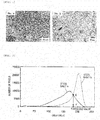
- Fig. 1 shows reflection electron image photographs of the steel sheets No. a and No. b
- Fig. 2 shows a histogram of the number of pixels with respect to gray values of the reflection electron image photographs of the steel sheets No. a and No. b.
- a gray value (Y point) which corresponds to an intersection (X point) of the histograms of No. a and No. b shown in Fig. 2 was set as a threshold value.
- the surface coverage of an iron-based oxide was obtained with respect to the steel sheets No. a and No. b using the above-mentioned threshold value, the surface coverage of the steel sheet No. a was 85.3% and the surface coverage of the steel sheet No. b was 25.8%.
- a maximum thickness of the iron-based oxide be 150nm or less. This is because when the maximum thickness of the iron-based oxide is 150nm or less, there is no possibility that a dissolving reaction of iron by chemical conversion treatment is locally impaired, so that the precipitation of chemically converted crystals such as zinc phosphate cannot be locally suppressed.
- the maximum thickness of an iron-based oxide may preferably set to 130nm or less.
- the maximum thickness of an iron-based oxide is obtained as follows.
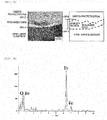
- Fig. 3 shows a photograph obtained by observing a cross section of a coating layer formed by first pickling present on a surface of a steel sheet by a transmission electron microscope (TEM), and Fig. 4 shows a result of an EDX analysis of the coating layer.
- the coating layer is formed of an iron-based oxide and hence, a distance between a line A indicating a base steel of the steel sheet and a line B indicating the most largest portion of the iron-based oxide layer shown in the photograph of the cross section in Fig. 3 was measured with respect to all of ten replicas, and the maximum thickness among the measured maximum thicknesses is assumed as the maximum thickness of the iron-based oxide.
- the sizes and the number of the above-mentioned replicas, measurement conditions by the TEM and the like are provided as only one example, and may be changed as desired.
- the cold-rolled steel sheet obtained by the above-mentioned method exhibits excellent chemical convertibility and also exhibits excellent corrosion resistance after coating which is evaluated by a hot brine dipping test and a composite cycle corrosion test and hence, the cold-rolled steel sheet can be preferably used for producing automobile member.
- Steel having the composition containing 0.125% C, 1.5% Si, 2.6% Mn, 0.019% P, 0.008% S and 0.040% A1 and comprising Fe and unavoidable impurities as a balance was manufactured in such a manner that molten steel was produced by an ordinary refining process including a converter treatment, a degassing treatment and the like and molten steel was formed into steel materials (slabs) by continuous casting.
- the slabs were reheated to a temperature of 1150 to 1170°C and, thereafter, were subjected to hot rolling where a finish rolling completion temperature is set to a value which falls within a range of 850 to 880°C, and were wound up into coils at a temperature of 500 to 550°C thus forming hot-rolled steel sheets having a thickness of 3 to 4mm.
- scales were removed from the steel sheets by applying pickling to these hot-rolled steel sheets and, thereafter, cold rolling was applied to the steel sheets thus obtaining cold-rolled steel sheets having a thickness of 1.8mm.
- Specimens were sampled from the above-mentioned respective cold-rolled steel sheets. Surfaces of the steel sheets were observed using a scanning electron microscope (ULV-SEM; made by SEISS Inc.; ULTRA55) at an extremely low acceleration voltage at five fields of view with an acceleration voltage of 2kV, a working distance of 3.0mm and a magnification of 1000 times, and spectroscopic analysis was performed using an energy dispersion type X-ray spectrometer (EDX; made by Thermo Fisher Inc.; NSS312E) thus obtaining reflected electron images.
- UUV-SEM scanning electron microscope
- EDX energy dispersion type X-ray spectrometer
- a binary coded processing was applied to the reflected electron images using an image analysis software (Image J) while setting gray values (Y points) corresponding to intersection points (X points) of histogram of the above-mentioned standard samples No. a and No. b as threshold values thus measuring area ratios of black-colored portions, and an average value of the area ratios at five fields of view was obtained and the average value was set as a surface coverage of an iron-based oxide.
- Image J image analysis software
- specimens were sampled from the above-mentioned respective cold-rolled steel sheets, and spot rust generation evaluation of the cold-rolled steel sheets was carried out under the following conditions. After a chemical conversion treatment and a coating treatment were applied to the specimens under the following conditions, specimens were subjected to three kinds of corrosion tests consisting of a hot brine dipping test, a salt water spraying test and a composite cycle corrosion test, and then, the corrosion resistance after coating was evaluated. Further, the distribution of O, Si, Mn and Fe in the depth direction on surfaces of the specimens sampled from the respective cold-rolled steel sheets were measured using a GDS.
- a chemical conversion treatment was applied to specimens sampled from the above-mentioned respective cold-rolled steel sheets using a degreasing agent: FC-E2011, a surface conditioner: PL-X and a chemical conversion treatment agent: palbond PB-L3065 made by Nihon Parkerizing Co., Ltd. such that a coating weight of chemical conversion treatment coating was set to 1.7 to 3.0g/m 2 under two conditions, that is, the standard condition and the comparison condition under a low temperature by lowering a temperature of a chemical conversion treatment solution.
- Degreasing step treatment temperature 40°C, treatment time 120 seconds
- Spray degreasing and surface adjustment steps pH 9.5, treatment temperature room temperature, treatment time 20 seconds
- Chemical conversion treatment step temperature of chemical conversion treatment solution 35°C, treatment time 120 seconds
- Electrodeposition coating was applied to surfaces of the specimens to which the above-mentioned chemical conversion treatment had been applied by electrodeposition paint: V-50 made by NIPPONPAINT Co., Ltd. such that a film thickness of electrodeposition coating is set to 25 ⁇ m, and the specimens were subjected to the following three kinds of corrosion tests.
- Steels A to O containing compositions shown in Table 3 were manufactured in such a manner that molten steel was produced by an ordinary refining process including a converter treatment, a degassing treatment and the like, and molten steel was formed into steel slabs by continuous casting. Hot rolling was applied to these steel slabs under hot rolling conditions shown in Table 4, and the steel slabs are formed into hot-rolled steel sheet having a thickness of 3 to 4mm, scales were removed from surfaces of the steel sheets by applying pickling to these hot-rolled steel sheets and, thereafter, cold rolling was applied to the steel sheets thus obtaining cold-rolled steel sheets having a thickness of 1.8mm.
- Specimens were sampled from the above-mentioned respective cold rolled steel sheets obtained in such a manner and, in the same manner as the example 1, after surface coverage of the iron-based oxide on the surface of the steel sheet after pickling was measured, the specimen is subjected to the following tensile test and the corrosion resistance test after coating. Further, the distribution of O, Si, Mn and Fe in the depth direction on surfaces of the specimens sampled from the respective cold-rolled steel sheets was measured using a GDS.
- Specimens were prepared by applying chemical conversion treatment and electrodeposition coating to specimens sampled from the respective cold-rolled steel sheet under the same condition as the example 1.
- the specimens were subjected to three kinds of corrosion tests consisting of a hot brine dipping test, a salt water spraying test (SST) and a composite cycle corrosion test (CCT) and, then, the corrosion resistance after coating was evaluated.
- SST salt water spraying test
- CCT composite cycle corrosion test
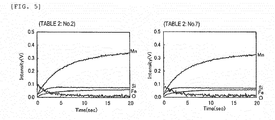
- the high strength cold-rolled steel sheet of the present invention example where the steel sheet contains 0.5% or more Si, and a surface coverage of iron-based oxide on the surface of the steel sheet to which neutralizing treatment is performed by applying pickling twice under the condition which conforms to the present invention is set to 40% or less not only is excellent in chemical convertibility and corrosion resistance after coating but also has a high strength of 590MPa or more of tensile strength TS. It is ascertained from the result obtained by measuring the distribution of O, Si, Mn and Fe in the depth direction by a GDS that a peak of Si and a peak of O did not appear in any steel sheets which were subjected to pickling under the conditions which conform to the present invention so that an Si containing oxide layer was sufficiently removed.
- Steel having the composition containing 0.125% C, 1.5% Si, 2.6% Mn, 0.019% P, 0.008% S and 0.040% Al and comprising Fe and unavoidable impurities as a balance was manufactured in such a manner that molten steel was formed into steel materials (slabs) by continuous casting.
- the slabs were reheated to a temperature of 1150 to 1170°C and, thereafter, were subjected to hot rolling where a finish rolling completion temperature is set to a value which falls within a range of 850 to 880°C, and were wound up at a temperature of 500 to 550°C thus forming hot-rolled steel sheets having a thickness of 3 to 4mm.
- first pickling and second pickling were applied to surfaces of the steel sheets under conditions shown in Table 6-1 to Table 6-2 (hereinafter, Table 6-1 and Table 6-2 being also collectively referred to as Table 6) and, then, the steel sheets were washed with water, neutralizing treatment was applied to the steel sheets, and the steel sheets was washed with water and was dried. Thereafter, temper rolling was applied to the steel sheets at a rate of elongation of 0.7% thus obtaining cold-rolled steel sheets No.108 to No.162 shown in Table 6.
- Specimens were sampled from the above-mentioned respective cold-rolled steel sheets and, using the above-mentioned method, a surface coverage of iron-based oxide generated on the surface of the steel sheets by pickling and a maximum thickness were measured.
- specimens were sampled from the above-mentioned respective cold-rolled steel sheets, and spot rust generation evaluation during storage of the cold-rolled steel sheets was carried out under the following conditions and, after a chemical conversion treatment and a coating treatment were applied to the specimens under the following conditions, specimens were subjected to three kinds of corrosion tests consisting of a hot brine dipping test, a salt water spraying test and a composite cycle corrosion test, and then, the corrosion resistance after coating was evaluated. Further, the distribution of O, Si, Mn and Fe in the depth direction on surfaces of the specimens sampled from the respective cold-rolled steel sheets was measured using a GDS.
- a chemical conversion treatment was applied to specimens sampled from the above-mentioned respective cold-rolled steel sheets using a degreasing agent FC-E2011, a surface conditioner: PL-X and a chemical conversion treatment agent: palbond PB-L3065 made by Nihon Parkerizing Co., Ltd. such that a coating weight of chemical conversion treatment film was set to 1.7 to 3.0g/m 2 under two conditions, that is, the standard condition and the comparison condition under a low temperature by lowering a temperature of a chemical conversion treatment solution.
- Degreasing step treatment temperature 40°C, treatment time 120 seconds
- Spray degreasing and surface adjustment steps pH 9.5, treatment temperature room temperature, treatment time 20 seconds
- Chemical conversion treatment step temperature of chemical conversion treatment solution 35°C, treatment time 120 seconds
- Electrodeposition coating was applied to surfaces of the specimens to which the above-mentioned chemical conversion treatment had been applied by electrodeposition paint: V-50 made by NIPPONPAINT Co., Ltd. such that a film thickness of electrodeposition coating is set to 25 ⁇ m, and the specimens were subjected to the following three kinds of corrosion tests under more severe condition than the example 1.
- a cold-rolled steel sheet manufactured by the present invention can possess not only excellent chemical convertibility and corrosion resistance after coating but also a high strength and hence, the cold-rolled steel sheet can be preferably used as a raw material for forming automobile members and also as a raw material for forming members which are required to possess the substantially similar property as the automobile member in other fields such as household electric appliances and architecture.
Landscapes
- Chemical & Material Sciences (AREA)
- Engineering & Computer Science (AREA)
- Materials Engineering (AREA)
- Mechanical Engineering (AREA)
- Metallurgy (AREA)
- Organic Chemistry (AREA)
- Chemical Kinetics & Catalysis (AREA)
- General Chemical & Material Sciences (AREA)
- Physics & Mathematics (AREA)
- Thermal Sciences (AREA)
- Crystallography & Structural Chemistry (AREA)
- Cleaning And De-Greasing Of Metallic Materials By Chemical Methods (AREA)
- Heat Treatment Of Sheet Steel (AREA)
- Application Of Or Painting With Fluid Materials (AREA)
Abstract
Description
- The present invention relates to a cold-rolled steel sheet, and a method of manufacturing a cold-rolled steel sheet. The present invention also relates to a facility for manufacturing the cold-rolled steel sheet. Particularly, the present invention relates to a cold-rolled steel sheet having excellent chemical convertibility and, at the same time, corrosion resistance after coating which is evaluated by a hot brine dipping test and a composite cycle corrosion test, a method of manufacturing the cold-rolled steel sheet, and an automobile member. The cold-rolled steel sheet of the present invention can be preferably used as a high-strength cold-rolled steel sheet containing Si and having a tensile strength TS of 590MPa or more.
- Recently, from a viewpoint of protecting a global environment, there has been a strong demand for improving fuel economy of automobiles. Further, from a viewpoint of securing safety of an occupant at the time of collision, there has been also a strong demand for the acquisition of high strength in a vehicle body of an automobile. In order to meet these demands, efforts have been positively made so as to impart high strength to a cold-rolled steel sheet which becomes a raw material for an automobile member and to reduce a thickness of the cold-rolled steel sheet thus achieving simultaneously the reduction in weight and the acquisition of a high strength in a vehicle body of an automobile. Also, many automobile members are manufactured by applying forming to a steel sheet and hence, the steel sheet which becomes a raw material in such forming is required to possess excellent formability in addition to a high strength.
- There have been proposed various methods for increasing a strength of a cold-rolled steel sheet. As an effective means for acquiring high strength without largely impairing formability, a solid solution strengthening method with addition of Si is named. However, a case has been known where when a large amount of Si, particularly 0.5mass% or more Si is added to a cold-rolled steel sheet, a large amount of Si containing oxide such as SiO2 or an Si-Mn based compound oxide is formed on an interface between a surface of the steel sheet and an oxide scale at the time of heating a slab, at the time of hot rolling or during annealing afterward. This Si containing oxide remarkably lowers chemical convertibility. Further, when the cold-rolled steel sheet is exposed to a severe corrosion environment such as a salt water spraying test or a composite cycle corrosion test where moistening and drying are repeated after electrodeposition coating, peeling of a coated film is liable to occur thus giving a rise to a drawback that a cold-rolled steel sheet exhibits inferior corrosion resistance after coating.
- To cope with the drawback that the Si containing steel sheet has, for example,
patent literature 1 proposes a high strength cold-rolled steel sheet where a slab is heated at a temperature of 1200°c or above at the time of hot rolling, descaling is performed at a high pressure, a surface of the hot-rolled steel sheet is ground by nylon brush containing abrasive grains before pickling, the sheet is dipped into a 9% hydrochloric acid tank twice to perform pickling so as to lower Si concentration on a surface of the steel sheet. -
Patent literature 2 proposes a high strength cold-rolled steel sheet where corrosion resistance is enhanced by setting a line width of a filamentous oxide containing Si which is observed at a depth of 1 to 10µm from a surface of the steel sheet to 300nm or less. -
Patent literature 3 proposes a technique for enhancing an oxide removing ability of a steel sheet by setting an iron ion concentration (divalent) in a hydrochloric acid to a value which falls within a range of 0.5 to 18%. - However, in the high strength cold-rolled steel sheet described in
patent literature 1, even when Si concentration in the surface of the steel sheet is lowered before cold rolling, an Si containing oxide is formed in the surface of the steel sheet by annealing performed after cold rolling and hence, the improvement of corrosion resistance after coating cannot be expected. - In the high strength cold-rolled steel sheet described in
patent literature 2, no problem arises with respect to corrosion resistance in a corrosion environment such as a salt water spraying test stipulated in JIS Z2371. However, the cold-rolled steel sheet cannot acquire sufficient corrosion resistance after coating in a severe corrosion environment such as a hot brine dipping test and a composite cycle corrosion test. - That is, with the mere lowering of Si concentration in a surface of a steel sheet after hot rolling or the mere reduction of an amount of filamentous oxide containing Si, a high strength cold-rolled steel sheet having excellent corrosion resistance after coating cannot be acquired.
- In the technique described in
patent literature 3, SiO2 is insoluble in a hydrochloric acid and hence, even when iron ion concentration is set to a value which falls within a range of 0.5 to 18%, SiO2 cannot be removed. - In view of the above, as a technique which overcomes the above-mentioned drawbacks, patent literature 4 discloses a technique which can enhance chemical convertibility by increasing reactivity of a steel sheet with a chemical conversion treatment solution by removing an Si containing oxide concentrated on a surface of the steel sheet in an annealing step or the like by pickling and by further imparting an S-based compound to such a surface.
-
Patent literature 5 discloses a technique where a P-based compound is imparted in place of an S-based compound described in patent literature 4. - Patent literature 6 discloses, as a technique which can overcome the above-mentioned drawbacks, a technique which enhances chemical convertibility by increasing reactivity with chemical conversion treatment solution. In this technique, SiO2 is removed by performing pickling using an oxidizing acid in a first stage and a Fe-based oxide formed in the first-stage pickling is removed by performing pickling using a non-oxidizing acid in a subsequent second stage.
-
- PTL 1: Japanese Unexamined Patent Application Publication No.
2004-204350 - PTL 2: Japanese Unexamined Patent Application Publication No.
2004-244698 - PTL 3: Japanese Unexamined Patent Application Publication No.
64-62485 - PTL 4: Japanese Unexamined Patent Application Publication No.
2007-217743 - PTL 5: Japanese Unexamined Patent Application Publication No.
2007-246951 - PTL 6: Japanese Unexamined Patent Application Publication No.
2012-132092 - Recently, with the aim of lowering of industrial waste (suppression of generation of sludge) and the reduction in running cost, lowering of a temperature of chemical conversion treatment solution has been in progress. As a result, compared to a conventional chemical conversion treatment condition, reactivity of the steel sheet with a chemical conversion treatment solution with applied to a steel sheet has been largely lowered. Lowering of a temperature of a chemical conversion treatment solution does not cause any problem because of the improvement in a surface adjusting technique performed before chemical conversion treatment with respect to an ordinary steel sheet which has been conventionally used and contains a small amount of alloy. However, with respect to a high-strength cold-rolled steel sheet to which a large amount of Si is added, reactivity of the steel sheet with a chemical conversion treatment solution is remarkably lowered due to the influence of Si containing oxide formed on a surface layer of the steel sheet during an annealing step and hence, it is necessary to increase reactivity from a steel sheet side using any means. However, with the techniques disclosed in
patent literatures 4 and 5, even when a chemical conversion treatment solution is effective with respect to a conventional ordinary steel sheet, a sufficient improvement effect capable of coping with lowering of a temperature of a chemical conversion treatment solution cannot be expected with respect to a high-strength cold-rolled steel sheet containing a large amount of Si. On the other hand, it has been known that with the use of the technique disclosed in patent literature 6, the technique can cope with lowering of a temperature of a chemical conversion treatment solution even with respect to a high-strength cold-rolled steel sheet containing a large amount of Si. However, with the technique disclosed in patent literature 6, when the concentration of Fe is low, a pickling speed is slow so that an ability of removing an Si containing oxide becomes insufficient, and when the concentration of Fe is high, an iron based oxide is formed so that chemical convertibility and eventually corrosion resistance after coating are also deteriorated. Further, with the technique disclosed in patent literature 6, reactivity between a chemical conversion treatment solution and a surface of a steel sheet is high so that it is considered that a rate of occurrence of spot rust is increased during storage of a cold-rolled steel sheet for a long period. - The present invention has been made in view of such circumstances, and it is an object of the present invention to provide a cold-rolled steel sheet which is excellent in not only chemical convertibility but also in corrosion resistance after coating, a method of manufacturing the cold-rolled steel sheet, and an automobile member. It is still another object of the present invention to provide a facility for manufacturing such a cold-rolled steel sheet.
- To overcome the above-mentioned drawbacks, inventors of the present invention have carried out a detailed analysis of a steel sheet surface characteristic after annealing, and have made extensive studies with respect to a method of increasing reactivity between a surface of a steel sheet and a chemical conversion treatment solution. As a result, the inventors of the present invention have found that it is extremely important to apply strong pickling to a surface of a steel sheet which is continuously annealed after cold-rolling, to remove an Si containing oxide layer formed on a surface layer of the steel sheet during annealing, to reduce a steel sheet surface coverage of an iron-based oxide formed on the surface of the steel sheet by the above-mentioned strong pickling and to subsequently neutralize a residue of an acidic solution by an alkaline solution after strong pickling for enhancing corrosion resistance after coating by preventing the occurrence of point rust during storage of a cold-rolled steel sheet, and the inventors have completed the present invention.
- The present invention has been made based on the above-mentioned finding, and the gist of the present invention is as follows.
- [1] A method of manufacturing a cold-rolled steel sheet where first pickling is applied to a steel sheet which is continuously annealed after cold rolling, second pickling is applied to the steel sheet subsequently and, thereafter, neutralizing treatment is applied to the steel sheet using an alkaline solution.
- [2] The method of manufacturing a cold-rolled steel sheet described in [1] where the alkaline solution has pH of 9.5 or more, and one or two or more selected from a group consisting of sodium hydroxide, sodium carbonate, sodium hydrogen carbonate, orthophosphate and condensed phosphate are mixed into the alkaline solution.
- [3] The method of manufacturing a cold-rolled steel sheet described in [1] or [2] where the neutralizing treatment is performed in a state that a temperature of the alkaline solution is set to a value which falls within a range of 20 to 70°C, and a treatment time is set to a value which falls within a range of 1 to 30 seconds.
- [4] The method of manufacturing a cold-rolled steel sheet described in any one of [1] to [3] where the first pickling is performed using any one of a nitric acid, a hydrochloric acid, a hydrofluoric acid, a sulfuric acid and a mixture of two or more of these acids.
- [5] The method of manufacturing a cold-rolled steel sheet described in any one of [1] to [4] where the first pickling is performed using either one of the following acidic solutions (a) and (b).
- (a) The acidic solution containing a nitric acid and a hydrochloric acid, wherein concentration of nitric acid is more than 50g/L and 200g/L or less, a ratio R1 of the concentration of hydrochloric acid to the concentration of nitric acid (hydrochloric acid/nitric acid) is set to a value which falls within a range of 0.01 to 0.25, and the concentration of Fe ion is set to a value which falls within a range of 3 to 50g/L.
- (b) The acidic solution containing a nitric acid and hydrofluoric acid, wherein concentration of nitric acid is more than 50g/L and 200g/L or less, a ratio R2 of the concentration of hydrofluoric acid to the concentration of nitric acid (hydrofluoric acid/nitric acid) is set to a value which falls within a range of 0.01 to 0.25, and the concentration of Fe ion is set to a value which falls within a range of 3 to 50g/L.
- [6] The method of manufacturing a cold-rolled steel sheet described in any one of [1] to [5] where a non-oxidizing acid is used in the second pickling.
- [7] The method of manufacturing a cold-rolled steel sheet described in [6] where the non-oxidizing acid is any one of a hydrochloric acid, a sulfuric acid, a phosphoric acid, a pyrophosphoric acid, a formic acid, an acetic acid, a citric acid, a hydrofluoric acid, an oxalic acid, and an acid which is a mixture of two or more of these acids.
- [8] The method of manufacturing a cold-rolled steel sheet described in [6] or [7] where the non-oxidizing acid is any one of hydrochloric acid having the concentration of 0.1 to 50g/L, a sulfuric acid having the concentration of 0.1 to 150g/L and an acid which is a mixture of a hydrochloric acid having the concentration of 0.1 to 20g/L and a sulfuric acid having the concentration of 0.1 to 60g/L.
- [9] The method of manufacturing a cold-rolled steel sheet described in any one of [1] to [8] where the second pickling is performed in a state that a temperature of the acidic solution is set to a value which falls within a range of 20°C to 70°C, and a pickling time is set to a value which falls within a range of 1 to 30 seconds.
- [10] The method of manufacturing a cold-rolled steel sheet described in any one of [1] to [9] where the steel sheet contains, as a component of the composition thereof, 0.5 to 3.0mass% Si.
- [11] The method of manufacturing a cold-rolled steel sheet described in [10] where the steel sheet further contains, as components of the composition thereof: 0.01 to 0.30mass% C, 1.0 to 7.5mass% Mn, 0.05mass% or less P, 0.01mass% or less S, 0.06mass% or less A1, and Fe and unavoidable impurities as a balance.
- [12] The method of manufacturing a cold-rolled steel sheet described in [11] where the steel sheet further contains, as components of the composition thereof, one or two or more of elements selected from a group consisting of 0.3mass% or less Nb, 0.3mass% or less Ti, 0.3mass% or less V, 1.0mass% or less Mo, 1.0mass% or less Cr, 0.006mass% or less B and 0.008mass% or less N.
- [13] The method of manufacturing a cold-rolled steel sheet described in [11] or [12] where the steel sheet further contains, as the components of the composition, one or two or more of elements selected from a group consisting of 2.0mass% or less Ni, 2.0mass% or less Cu, 0.1mass% or less Ca, and 0.1mass% or less REM.
- [14] A cold-rolled steel sheet manufactured by the method of manufacturing a cold-rolled steel sheet described in any one of [1] to [13] where an Si containing oxide layer formed on a surface layer of the steel sheet is removed, and a surface coverage of an iron-based oxide existing on a surface of the steel sheet is 40% or less.
- [15] The cold-rolled steel sheet described in [14] where a maximum thickness of the iron-based oxide existing on the surface of the steel sheet is 150nm or less.
- [16] An automobile member formed by using the cold-rolled steel sheet described in [14] or [15].
- [17] A facility for manufacturing a cold-rolled steel sheet where a first pickling device, a second pickling device, an acid neutralizing treatment device, and a drying device are arranged in this order on a rear stage of a continuous annealing device.
- [18] The facility for manufacturing a cold-rolled steel sheet described in [17] where a water cleaning device is arranged on a rear stage of the first pickling device, the second pickling device, and the acid neutralizing treatment device.
- [19] The facility for manufacturing a cold-rolled steel sheet described in [17] or [18] where a water cleaning spray device is arranged on an inlet side and/or an outlet side of one or more devices selected from a group consisting of the first pickling device, the second pickling device, the acid neutralizing treatment device and the water cleaning device.
- According to the present invention, it is possible to obtain a cold-rolled steel sheet being excellent in chemical convertibility as well as corrosion resistance after coating. Further, according to the manufacturing method of the present invention, a cold-rolled steel sheet having favorable chemical convertibility and favorable corrosion resistance after coating can be manufactured easily and in a stable manner through usual cold-rolling step and pickling step by merely adjusting a pickling condition.
- It is possible to provide a cold-rolled steel sheet being excellent in chemical convertibility even in a case where chemical conversion treatment solution having a low temperature is used and also being excellent in corrosion resistance after coating even in a severe corrosion environment such as a hot brine dipping test or a composite cycle corrosion test even when the cold-rolled steel sheet contains 0.5 to 3.0mass% Si. In this manner, according to the present invention, chemical convertibility and corrosion resistance after coating of a high strength cold-rolled steel sheet containing a large amount of Si thus having a tensile strength TS of 590MPa or more can be largely improved and hence, the high strength cold-rolled steel sheet can be preferably used as a reinforcing member of a vehicle body of an automobile or the like.
-
- [
Fig. 1] Fig. 1 is a view showing reflection electron images of surfaces of steel sheets which are cold-rolled steel sheet standard samples No. a and No. b prepared for obtaining a surface coverage of an iron-based oxide. - [
Fig. 2] Fig. 2 is a histogram of the number of pixels with respect to gray values of reflection electron image photographs of the cold-rolled steel sheet standard samples No. a and No. b. - [
Fig. 3] Fig. 3 is a view showing a result of observation of a cross section of a steel sheet surface covering material after a surface of a steel sheet is pickled using a non-oxidizing acid by a transmission-type electron microscope. - [
Fig. 4] Fig. 4 is a graph showing a result of an energy distribution type X-ray (EDX) analysis of an iron-based oxide observed inFig. 3 . - [
Fig. 5] Fig. 5 is a graph showing a result obtained by measuring the distribution of O, Si, Mn and Fe in the depth direction on a surface of a specimen shown in Table 2 by GDS. - The detail of the present invention is described hereinafter. In the description made hereinafter, a unit of contents of the respective elements of the composition of steel is set to "mass%", and "mass%" is expressed simply as "%" unless otherwise specified.
- In an annealing step using a continuous annealing furnace which is performed for imparting desired structure, desired strength and desired formability to the cold-rolled steel sheet obtained through cold rolling by recrystallizing the cold-rolled steel sheet, a non-oxidizing gas or a reducing gas is usually used as an atmospheric gas, and a dew point is strictly controlled. Accordingly, in an ordinary general-use cold-rolled steel sheet having a low alloy content, oxidation of a surface of the steel sheet is suppressed. However, in a steel sheet containing 0.5% or more Si or Mn, even when the component or a dew point of an atmospheric gas is strictly controlled during annealing, Si, Mn or the like which is easily oxidized compared to Fe is oxidized so that the formation of an Si containing oxide such as an Si oxide (SiO2) or an Si-Mn based composite oxide on a surface of a steel sheet cannot be avoided. Although the structures of these oxides change depending on components of a steel sheet, an annealing atmosphere or the like, in general, it is often the case where the structures of these oxides change depending on a mixture of components of a steel sheet and an annealing atmosphere. Further, it has been known that the Si containing oxide is formed not only on a surface of a steel sheet but also in the inside of a base steel and hence, an etching property of the surface of the steel sheet in chemical conversion treatment (zinc phosphate treatment) which is performed as a surface treatment for electrodeposition coating is impaired thus adversely affecting the formation of a sound chemical conversion treatment film.
- On the other hand, recently, with the aim of reducing an amount of sludge generated at the time of chemical conversion treatment and a running cost, lowering of a temperature of a chemical conversion treatment solution has been in progress. As a result, compared to a conventional art, chemical conversion treatment can be performed in a state where reactivity of a chemical conversion treatment solution with a steel sheet is extremely low. Such a change in chemical conversion treatment condition does not cause any particular problem due to the improvement of a surface adjustment technique or the like with respect to an ordinary steel sheet which has been used conventionally and contains a small amount of alloy. However, with respect to a steel sheet which contains a large amount of alloy component, particularly with respect to a high strength cold rolled steel sheet which aims at a higher strength by containing a large amount of Si, the influence exerted by the above-mentioned change in chemical conversion treatment condition, that is, lowering of a temperature of a chemical conversion treatment solution is extremely large. To cope with this situation, with respect to a cold rolled steel sheet containing a large amount of Si, it is considered necessary to increase reactivity of the steel sheet with a chemical conversion treatment solution by activating a surface of the steel sheet per se corresponding to worsening of a chemical conversion treatment condition.
- To cope with the above-mentioned worsening of the chemical conversion treatment condition, the inventors of the present invention have made studies with respect to a method of enhancing chemical convertibility of a steel sheet. As a result, the inventors have found that a method is effective where a surface of a cold-rolled steel sheet after continuous annealing is subjected to strong pickling using a nitric acid or the like as a pickling solution thus removing an Si containing oxide layer on a surface layer of the steel sheet formed by continuous annealing or the like after cold rolling. Here, "Si containing oxide" means SiO2 or an Si-Mn based composite oxide formed along a surface of the steel sheet or a grain boundary in the inside of the steel sheet at heating of a slab, after hot rolling or at annealing after cold rolling. Although a thickness of a layer where the Si containing oxide is present changes depending on the composition of the steel sheet or an annealing condition (temperature, time, atmosphere), the thickness is usually approximately 1µm from a surface of the steel sheet. Further, in the present invention, "removing an Si containing oxide layer" means that the Si containing oxide layer is removed by pickling to a level that a peak of Si and a peak of O do not appear when the surface of the steel sheet is analyzed in a depth direction by GDS (glow discharge atomic emission spectrochemical analysis).
- The reason a strong acid such as a nitric acid is used as a above-mentioned pickling solution is that although an Si-Mn based composite oxide is easily dissolved by an acid among Si containing oxides, SiO2 exhibits insolubility and hence, to remove SiO2, it is necessary to remove an Si containing oxide formed on a surface of a steel sheet together with a base steel.
- However, according to the studies made by the inventors, although chemical convertibility is largely improved by removing an Si containing oxide layer present on a surface of a steel sheet by performing strong pickling using a nitric acid or the like after continuous annealing, it is revealed that there are some cases where a steel sheet exhibits inferior chemical convertibility. When the inventors have investigated a cause of the occurrence of such cases, the inventors have made novel finding that although an Si-based oxide layer is removed by the above-mentioned strong pickling using a nitric acid or the like, Fe which is dissolved from a surface of a steel sheet by pickling forms an iron-based oxide, and this iron-based oxide is deposited and precipitates on the surface of the steel sheet and covers the surface of the steel sheet thus lowering chemical convertibility, and when a residue of a pickling solution remains, a spot rust occurrence ratio during storage of a cold-rolled steel sheet is increased so that the cold-rolled steel sheet exhibits inferior corrosion resistance after coating.
- The inventors have made further studies and, as a result of the studies, have found that, to reduce an adverse effect which affects chemical convertibility, it is important to suppress the formation of an iron-based oxide on a surface of a steel sheet so as to set a surface coverage of the iron-based oxide present on the surface of the steel sheet to 40% or less. The inventors also have found that an iron-based oxide present on the surface of the steel sheet can be dissolved and removed by performing pickling using a non-oxidizing acid after performing strong pickling. The inventors also have found that it is important to remove a residue of an acidic solution which remains after pickling performed two times by performing neutralizing treatment using an alkaline solution after performing pickling using a non-oxidizing acid.
- Based on such findings, in the present invention, strong pickling is performed as first pickling so as to suppress the formation of an iron-based oxide on a surface of a steel sheet and to remove an Si containing oxide layer present on a surface of the steel sheet. Next, pickling is performed using a non-oxidizing acid as second pickling so as to set a surface coverage of the iron-based oxide present on the surface of the steel sheet to 40% or less. Subsequently, neutralizing treatment is applied to the steel sheet using an alkaline solution.
- The inventors also have found that when a coverage of an iron-based oxide formed on a surface of a steel sheet by pickling is set to 40% or less and, further, a maximum thickness of the iron-based oxide is set to 150nm or less, chemical convertibility is further improved and corrosion resistance is also improved and, as a means to achieve such effects, it is effective to properly set a pickling condition (concentration, temperature, time) and a non-oxidizing pickling condition (acid concentration, temperature, time).
- In the present invention, "iron-based oxide" means an oxide which contains iron as a main component where an atomic percentage of iron among elements other than oxygen which constitute oxides is set to 30% or more. The iron-based oxide is an oxide which is present on a surface of a steel sheet with a non-uniform thickness and differs from a natural oxide film having a uniform thickness of several nm and being present as a layer. Further, it is understood that an iron-based oxide formed on a surface of a cold-rolled steel sheet is amorphous based on the observation using a transmission type electron microscope (TEM) or a result of analysis of a diffraction pattern obtained by an electron beam diffraction.
- The present invention has been completed by making further studies based on the above-mentioned novel findings.
- Next, a method of manufacturing a cold-rolled steel sheet according to the present invention is described.
- The present invention is characterized in that first pickling is applied to a steel sheet which is produced by applying heating, hot rolling, cold rolling and continuous annealing to a steel material (slab) containing 0.5 to 3.0% Si, for example, and second pickling is applied to the steel sheet subsequently and, thereafter, neutralizing treatment is applied to the steel sheet using an alkaline solution. By performing such pickling and neutralizing treatment, chemical convertibility and corrosion resistance after coating can be remarkably enhanced.
- After continuous annealing, a large amount of an Si containing oxide such as SiO2 or an Si-Mn based composite oxide is formed on a surface layer of a steel sheet. If this state is maintained as it is, chemical convertibility and corrosion resistance after coating are extremely lowered. In view of the above, according to the manufacturing method of the present invention, it is preferable to apply, as the first pickling, strong pickling to a cold-rolled steel sheet after annealing using an acidic solution containing a nitric acid and a hydrochloric acid or an acidic solution containing a nitric acid and a hydrofluoric acid. By performing first pickling, an Si containing oxide layer formed on a surface of the steel sheet is removed together with a base steel.
- Although an Si-Mn based composite oxide is easily dissolved by an acid among Si containing oxides, SiO2 exhibits insolubility against an acid. Accordingly, to remove an Si containing oxide including SiO2, it is necessary to remove an oxide layer together with a base steel of a steel sheet by strong pickling. Accordingly, in the present invention, as an acid which can be used as an acidic solution, a nitric acid which is a strong oxidizing acid can be favorably used. Further, provided that an acid can remove an Si containing oxide layer, the acid may be a hydrofluoric acid, a hydrochloric acid, a sulfuric acid or the like. That is, a kind of acid is not particularly specified. Further, an acid prepared by mixing these two or more of acids may be used. It is also effective to accelerate dissolving of a base steel by adding a pickling accelerating agent to an acidic solution or by using electrolytic treatment in combination with the use of an acid.
- Further, as described previously, Fe which is dissolved from a surface of a steel sheet by pickling forms an iron-based oxide, and this iron-based oxide is deposited and precipitates on the surface of the steel sheet and covers the surface of the steel sheet thus giving rise to a possibility that chemical convertibility is lowered. To reducing a load of second pickling by avoiding such lowering of chemical convertibility, it is preferable to suppress an amount of iron-based oxide formed on a surface of a steel sheet. Due to the reasons described above, it is preferable to set the following pickling condition.
- To remove an Si containing oxide efficiently, in a case where an acidic solution containing a nitric acid and a hydrochloric acid is used, it is preferable that the acidic solution contain the nitric acid and the hydrochloric acid such that the concentration of nitric acid be set to a value which falls within a range of more than 50g/L to 200g/L or less, and a ratio R1 (hydrochloric acid/nitric acid) of the concentration of hydrochloric acid having an oxide film breaking effect to the concentration of nitric acid be set to a value which falls within a range of 0.01 to 0.25, and the concentration of Fe ion (sum of bivalence and trivalence) be set to a value which falls within a range of 3 to 50g/L. It is more preferable that the concentration of nitric acid be set to a value which falls within a range of 100g/L to 200g/L. It is more preferable that the above-mentioned R1 be set to a value which falls within a range of 0.02 to 0.15. It is more preferable that the concentration of Fe ion be set to a value which falls within a range of 3 to 25g/L. In a case where an acidic solution containing a nitric acid and a hydrofluoric acid is used, it is preferable that the acidic solution contains the nitric acid and the hydrofluoric acid such that the concentration of nitric acid be set to a value which falls within a range of more than 50g/L to 200g/L or less, and a ratio R2 (hydrofluoric acid/nitric acid) of the concentration of hydrofluoric acid having an oxide film breaking effect to the concentration of nitric acid be set to a value which falls within a range of 0.01 to 0.25, and the concentration of Fe ion (sum of bivalence and trivalence) be set to a value which falls within a range of 3 to 50g/L. It is more preferable that the concentration of nitric acid be set to a value which falls within a range of 100g/L to 200g/L. It is more preferable that the above-mentioned R2 be set to a value which falls within a range of 0.02 to 0.15. It is more preferable that the concentration of Fe ion be set to a value which falls within a range of 3 to 25g/L. When R1 and R2 are larger than 0.25 or when the concentration of Fe ion (the sum of bivalence and trivalance) is less than 3g/L, a desired pickling speed cannot be acquired and hence, an Si containing oxide cannot be efficiently removed. On the other hand, when R1 and R2 are smaller than 0.01 or when the concentration of Fe ion is larger than 50g/L, although a desired pickling speed can be acquired, an amount of Fe ion in an acidic solution is large and hence, a large amount of Fe-based oxide is formed on a surface of the steel sheet whereby an Fe-based oxide cannot be completely removed by the second pickling. Accordingly, chemical convertibility and corrosion resistance cannot be improved.
- Further, as a method of maintaining the concentration of Fe ion (the sum of bivalence and trivalence) at a value which falls within a range of 3 to 50g/L, methods are considered including a method where when the concentration of Fe ion exceeds 50g/L, an acidic solution is diluted, a method where a nitric acid or a hydrochloric acid is additionally charged, and a method where an iron component in an acid is lowered by an iron removing device.
- Further, a maximum thickness of an iron-based oxide can be set to 150nm or less by properly setting a pickling condition (concentration, temperature, time). By performing the first pickling in a state where a temperature of an acidic solution is set to 20 to 70°C and a pickling time is 3 to 30 seconds, the maximum thickness of the iron based oxide becomes 150nm or less and hence, chemical convertibility is further improved and the corrosion resistance is also further improved.
- With mere strong pickling which is performed as the first pickling, it is difficult to control a surface coverage of an iron-based oxide formed on a surface of a steel sheet to 40% or less in a stable manner. In view of the above, according to the present invention, to more surely reduce an amount of iron based oxide formed on a surface of a steel sheet by the above-mentioned first pickling, second pickling is performed. In the present invention, the second pickling is preferably performed using an acidic solution made of a non-oxidizing acid, and an iron-based oxide is removed by dissolving by second pickling.
- As a non-oxidizing acid, one kind or two or more kinds selected from a group consisting of a hydrochloric acid, a sulfuric acid, a phosphoric acid, a pyrophosphoric acid, a formic acid, an acetic acid, a citric acid, a hydrofluoric acid, and an oxalic acid are preferably used. Although any acid may be used, a hydrochloric acid and a sulfuric acid which are used commonly in a steel making industry may be preferably used. Among these acids, a hydrochloric acid can be preferably used since a hydrochloric acid is a volatile acid so that a residue such as a sulfate group minimally remains on a surface of a steel sheet after water cleaning unlike a sulfuric acid, and an oxide breaking effect by chloride ion is large and the like. Further, a mixed acid prepared by mixing a hydrochloride acid and a sulfuric acid may be used.
- Among these acids, from a viewpoint of preventing an insufficient removal of an iron-based oxide and the degradation of a surface property of a steel sheet due to an excessive pickling, it is preferable to use any one of a hydrochloric acid having the concentration of 0.1 to 50g/L, a sulfuric acid having the concentration of 0.1 to 150g/L, and a mixed acid prepared by mixing a hydrochloric acid having the concentration of 0.1 to 20g/L and a sulfuric acid having the concentration of 0.1 to 60g/L.
- It is preferable that the second pickling be performed in a state where a temperature of an acidic solution is set to 20 to 70°C and a pickling time is 1 to 30 seconds. When a temperature of an acidic solution is set to 20°C or above and a treatment time is 1 second or more, it is sufficient to remove an iron-based oxide remaining on a surface of a steel sheet. On the other hand, when the temperature of an acidic solution is set to 70°C or below and a treatment time is 30 seconds or less, a surface of a steel sheet is not excessively dissolved so that there is no possibility that a new surface oxide film will be formed. It is more preferable to set a temperature of an acidic solution to a value which falls within a range of 30 to 50°C. Further, it is more preferable to set a pickling time to a value which falls within a range of 2 to 20 seconds.
- Further, to acquire a steel sheet which is more excellent in chemical convertibility and corrosion resistance, it is preferable to surely decrease a maximum thickness of an iron-based oxide present on a surface of a steel sheet after the above-mentioned pickling to 150nm or less. For this end, it is preferable to properly increase the concentration of an acidic solution consisting of a non-oxidizing acid. For example, when a hydrochloric acid is used, the concentration of hydrochloric acid is preferably set to a value which falls within a range of 3 to 50g/L. When a sulfuric acid is used, the concentration of sulfuric acid is preferably set to a value which falls within a range of 8 to 150g/L. Further, when a pickling solution prepared by mixing a hydrochloric acid and a sulfuric acid is used, it is preferable to use an acid prepared by mixing a hydrochloric acid having the concentration of 3 to 20g/L and a sulfuric acid having the concentration of 8 to 60g/L. Provided that the concentration of a pickling solution falls within the above-mentioned concentration range, a thickness of an iron-based oxide can be surely decreased to 150nm or below and hence, chemical convertibility and corrosion resistance after coating can be enhanced. Further, provided that the concentration of a pickling solution falls within the above-mentioned concentration range, a surface of a steel sheet is not excessively resolved so that there is no possibility that a new surface oxide film is formed.
- The present invention is characterized in that neutralizing treatment is further performed using an alkaline solution after second pickling is performed.
- When reactivity of a surface of a steel sheet is increased by removing an oxide formed during annealing by pickling, a residue of a pickling solution remains and hence, there is a possibility that point rust occurs during storage of a cold-rolled steel sheet. To suppress the occurrence of such spot rust, in the neutralizing treatment performed after pickling and re-pickling, it is preferable to perform neutralizing treatment using an alkaline solution having pH of 9.5 or more in which one kind or two or more kinds selected from a group consisting of sodium hydroxide, sodium carbonate, sodium hydrogen carbonate, orthophosphate and condensed phosphate are mixed. Such an alkaline solution is used for removing a residue of the pickling solution by neutralization. Also, when pH is less than 9.5, a residue of a pickling solution cannot be completely neutralized. As the condensed phosphate, for example, sodium pyrophosphate, sodium polyphosphate and the like are named. The above-mentioned pH is more preferably set to a value which falls within a range of 10.0 to 12.0.
- In performing neutralizing treatment using the above-mentioned alkaline solution, it is preferable that a temperature of the alkaline solution be set to a value which falls within a range of 20 to 70°C, and a treatment time be set to a value which falls within a range of 1 to 30 seconds. When a solution temperature of the alkaline solution is set to 20°C or above and the treatment time is set to 1 second or more, a residue of a pickling solution is sufficiently neutralized. On the other hand, when a temperature of a pickling solution exceeds 70°C, an alkaline fume is generated. Further, when a treatment time exceeds 30 seconds, a length of a facility is elongated so that a huge facility cost becomes necessary. A temperature of the alkaline solution is more preferably set to a value which falls within a range of 30 to 50°C. It is more preferable to set a treatment time to a value which falls within a range of 2 to 20 seconds.
- As described above, after continuous annealing, a steel sheet is subjected to first pickling and second pickling and, then, the steel sheet is subjected to neutralizing treatment using an alkaline solution. Thereafter, the steel sheet is formed into a product sheet (cold-rolled steel sheet) through usual treatment steps such as temper rolling.
- In the present invention, a pickling method, that is, a method of bringing a steel sheet into contact with an acidic solution described in the present invention is not particularly limited. As such a method, a method in which an acidic solution is sprayed to a steel sheet, a method in which a steel sheet is dipped into an acidic solution and the like are named.
- Further, it is preferable that first pickling and second pickling are continuously performed. By performing the first pickling and the second pickling continuously, it is possible to prevent natural oxidation of a steel sheet after the first pickling and hence, the steel sheet can be formed into a final product at a stroke whereby the product can be manufactured at a low cost.
- Also, in the present invention, water cleaning treatment may be performed after first pickling, after second pickling and after neutralizing treatment respectively. Further, in performing first pickling, second pickling, neutralizing treatment and water cleaning treatment respectively, additional water cleaning may be further performed on an inlet side and/or on an outlet side of the respective treatments using a water cleaning spray. It is preferable that drying treatment is performed using a dryer or the like after water cleaning treatment.
- Next, the composition of the cold-rolled steel sheet according to the present invention is described.
- In the present invention, it is preferable that the steel sheet has the composition which allows the steel sheet to have a high strength such that the steel sheet can be used for forming a suspension member of an automobile and also has favorable chemical convertibility.
- In the composition of the cold-rolled steel sheet, the content of Si is preferably set to a value which falls within a range of 0.5 to 3.0%. Si is an element highly effective in increasing strength of steel (solid solution strengthening ability) without largely deteriorating workability of steel and hence, Si is an effective element in achieving high strengthening of steel. However, Si is also an element which adversely affects chemical convertibility and corrosion resistance after coating. Due to such reasons, while it is preferable to add 0.5% or more of Si, when the content of Si exceeds 3.0%, hot rolling property and cold rolling property are largely lowered thus giving rise to a possibility that productivity is adversely affected or ductility of a steel sheet per se is lowered. Accordingly, when Si is added as a component of the composition, the content of Si is preferably set to a value which falls within a range of 0.5 to 3.0%. The content of Si is more preferably set to a value which falls within a range of 0.8 to 2.5%.
- It is permissible that the cold-rolled steel sheet contains components other than the above-mentioned components within the component range of the ordinary cold-rolled steel sheet. However, in applying the cold-rolled steel sheet of the present invention to a high strength cold-rolled steel sheet having a tensile strength TS of 590MPa or more which is used for forming a vehicle body of an automobile or the like, it is preferable to set the contents of desired components other than the above-mentioned components as follows.
- C is an element which is effective in increasing strength of steel. C is also an element effective in forming residual austenite having TRIP (Transformation Induced Plasticity) effect, bainite or martensite. When the content of C is set to 0.01% or more, the above-mentioned effects can be obtained. On the other hand, when the content of C is 0.30% or less, lowering of weldability does not occur. Accordingly, the content of C to be added is preferably set to a value which falls within a range of 0.01 to 0.30%, and the content of C is more preferably set to a value which falls within a range of 0.10 to 0.20%.
- Mn is an element which has a function of increasing strength of steel by solid solution strengthening of steel, a function of enhancing hardenability and a function of accelerating formation of residual austenite, bainite or martensite. Such an effect can be realized by adding 1.0% or more Mn. On the other hand, when the content of Mn is 7.5% or less, the above-mentioned advantageous effect can be obtained without the increase of cost. Accordingly, the content of Mn to be added is preferably set to a value which falls within a range of 1.0 to 7.5%, and the content of Mn is more preferably set to a value which falls within a range of 2.0 to 5.0%.
- P is an element which does not deteriorate a drawability although P has a large solid solution strengthening ability and is also an element effective for acquiring a high strength. Accordingly, the content of P is preferably set to 0.005% or more. Although P is an element which deteriorates a spot weldability, there arises no problem provided that the content of P is set to 0.05% or less. Accordingly, the content of P is preferably set to 0.05% or less, and the content of P is more preferably set to 0.02% or less.
- S is an impurity element which is unavoidably mixed into steel. S is a harmful component which precipitates as MnS in steel and lowers the stretch-flangeability of the steel sheet. To prevent the stretch-flangeability from being lowered, the content of S is preferably set to 0.01% or less. The content of S is more preferably set to 0.005% or less, and the content of S is still further preferably set to 0.003% or less.
- A1 is an element to be added as a deoxidizing agent in a steel making step. Further, A1 is an element effective in separating non-metallic inclusion which lowers the stretch-flangeability as a slag. Accordingly, the content of A1 is preferably set to 0.01% or more. When the content of A1 is 0.06% or less, the above-mentioned effects can be obtained without increasing a cost of raw material. Accordingly, the content of A1 is preferably set to 0.06% or less. The content of A1 is more preferably set to a value which falls within a range of 0.02 to 0.06%.
- The cold-rolled steel sheet of the present invention may contain one or two or more of elements selected from a group consisting of 0.3% or less Nb, 0.3% or less Ti, 0.3% or less V, 1.0% or less Mo, 1.0% or less Cr, 0.006% or less B and 0.008% or less N in addition to the above-mentioned components.
- Nb, Ti and V are elements which form carbide and nitride, make the microstructure fine by suppressing the growth of ferrite in a heating step during annealing, and enhance formability, particularly the stretch-flangeability. Further, Mo, Cr and B are elements which enhance hardenability of steel and accelerate formation of bainite or martensite. Accordingly, Nb, Ti, V, Mo, Cr, and B may be added to the steel within the above-mentioned ranges. Further, N is an element which forms nitride with Nb, Ti and V or is dissolved in steel in a solid solution state and hence, N contributes to increasing of strength of steel. When the content of N is set to 0.008mass% or less, a large amount of nitride is not formed and hence, breakage due to the formation of void at press forming is suppressed whereby the above-mentioned effects can be obtained.
- The cold-rolled steel sheet of the present invention may also contain one or two or more selected from a group consisting of 2.0% or less Ni, 2.0% or less Cu, 0.1% or less Ca and 0.1% or less REM in addition to the above-mentioned composition of components.
- Ni and Cu are elements effective in accelerating formation of a low temperature transformation phase and increasing a strength of steel. Accordingly, Ni and Cu which fall within the above-mentioned ranges may be added to the steel sheet. Also, Ca and REM are elements which control a morphology of sulfide-based inclusion and enhance the stretch-flangeability of the steel sheet. Accordingly, Ca and REM which fall within the above-mentioned ranges may be added to the steel sheet.
- In the cold-rolled steel sheet according to the present invention, a balance other than the above-mentioned components is Fe and unavoidable impurities. However, cases are not denied where the cold-rolled steel sheet according to the present invention contains other components unless such components impair the effects of the present invention.
- Next, a surface characteristic of a cold-rolled steel sheet according to the present invention is described. As described previously, a cold-rolled steel sheet according to the present invention has a steel sheet surface from which an Si containing oxide layer such as SiO2 and an Si-Mn based composite oxide formed on a surface layer of the steel sheet during annealing is removed. To acquire such a cold-rolled steel sheet, it is necessary to perform neutralizing treatment using an alkaline solution after the first pickling and the second pickling.
- Further, in acquiring the cold-rolled steel sheet according to the present invention, it is necessary to decrease a surface coverage of an iron-based oxide present on a surface of a steel sheet to 40% or less besides the removal of the Si containing oxide layer. This is because when the surface coverage exceeds 40%, an iron dissolving reaction generated by chemical conversion treatment is obstructed so that a growth of chemical conversion crystals such as zinc phosphate or the like is suppressed. However, in a case where a chemical conversion treatment solution having a low temperature is used, particularly with respect to a cold-rolled steel sheet used in an application where extremely severe corrosion resistance after coating is required as in the case of a suspension member of a vehicle which is exposed to severe corrosion, a coverage of 40% or less is insufficient, and it is necessary to further decrease the coverage to 35% or less. It is preferable to set the coverage to 35% or less.
- In the present invention, the above-mentioned surface coverage of an iron-based oxide is obtained as follows. A surface of a steel sheet after pickling is observed using a scanning electron microscope (ULV-SEM) of an extremely low acceleration voltage which can detect extreme surface layer information at approximately five fields of view with an acceleration voltage of 2kV, a working distance of 3.0mm and a magnification of approximately 1000 times, and a spectroscopic analysis is performed using an energy dispersion type X-ray spectrometer (EDX) thus obtaining a reflection electron image. A binary coded processing is applied to the reflected electron image using an image analysis software, for example, Image J thus measuring an area ratio of a black-colored portion, and a surface coverage of an iron-based oxide can be obtained by averaging measured values of the respective fields of view. In addition, as the above-mentioned scanning electron microscope (ULV-SEM) of an extremely low acceleration voltage, for example, ULTRA55 made by SEISS Inc. may be named. Further, as the energy dispersion type X-ray spectrometer (EDX), for example, NSS312E made by Thermo Fisher Inc. may be named.
- Here, a threshold value used in the above-mentioned binary coded processing is described. A steel slab having a steel symbol G shown in Table 3 of an example described later was subjected to hot rolling, cold rolling and continuous annealing under a condition indicated at No. 93 of Table 4 in the example described later in the same manner so that the steel slab was formed into a cold-rolled steel sheet having a sheet thickness of 1.8mm. Next, the cold-rolled steel sheet after continuous annealing was subjected to pickling, water cleaning and drying under a condition shown in Table 1 and, thereafter, the cold-rolled steel sheet was subjected to temper rolling with elongation of 0.7% thus manufacturing two kinds of cold-rolled steel sheets No. a and No. b which differ from each other in an amount of an iron-based oxide on a surface of the steel sheet. Then, while using the cold-rolled steel sheet No. a as a standard sample having a large amount of iron-based oxide and the cold-rolled steel sheet No. b as a standard sample having a small amount of iron-based oxide, a reflection electron image was obtained with respect to the respective steel sheets under the above-mentioned conditions using a scanning electron microscope.
Fig. 1 shows reflection electron image photographs of the steel sheets No. a and No. b, andFig. 2 shows a histogram of the number of pixels with respect to gray values of the reflection electron image photographs of the steel sheets No. a and No. b. In the present invention, a gray value (Y point) which corresponds to an intersection (X point) of the histograms of No. a and No. b shown inFig. 2 was set as a threshold value. When surface coverage of an iron-based oxide was obtained with respect to the steel sheets No. a and No. b using the above-mentioned threshold value, the surface coverage of the steel sheet No. a was 85.3% and the surface coverage of the steel sheet No. b was 25.8%.[Table 1] Steel sheet First pickling condition Second pickling condition Surface coverage of iron-based oxide (%) Acid concentration (g/l) Temperature (°C) Treatment time (sec.) Acid concentration (g/l) Temperature (°C) Treatment time (sec.) a nitric acid: 250 +hydrochloric acid: 25 40 10 - - - 85.3 b nitric acid: 150 +hydrochloric acid:15 40 10 hydrochloric acid:10 40 30 25.8 - To further enhance chemical convertibility and eventually corrosion resistance after coating, it is preferable that, in addition to the condition that a surface coverage of an iron oxide on a surface of a steel sheet after second pickling is 40% or below, a maximum thickness of the iron-based oxide be 150nm or less. This is because when the maximum thickness of the iron-based oxide is 150nm or less, there is no possibility that a dissolving reaction of iron by chemical conversion treatment is locally impaired, so that the precipitation of chemically converted crystals such as zinc phosphate cannot be locally suppressed. The maximum thickness of an iron-based oxide may preferably set to 130nm or less.
- The maximum thickness of an iron-based oxide is obtained as follows.
- Firstly, 10 pieces of extraction replicas by which a cross section of a steel sheet having a length of approximately 8µm with respect to a width direction of the steel sheet can be observed were prepared by focused ion beam (FIB) working from a surface of the steel sheet after pickling. Next, using a transmission electron microscope (TEM) equipped with an energy dispersion type X-ray spectrometer (EDX) capable of investigating local information of the cross section, the cross sections of 8µm of the respective replicas were continuously photographed with an acceleration voltage of 200kV and at a magnification of 100,000. As one example,
Fig. 3 shows a photograph obtained by observing a cross section of a coating layer formed by first pickling present on a surface of a steel sheet by a transmission electron microscope (TEM), andFig. 4 shows a result of an EDX analysis of the coating layer. It is understood fromFig. 4 that the coating layer is formed of an iron-based oxide and hence, a distance between a line A indicating a base steel of the steel sheet and a line B indicating the most largest portion of the iron-based oxide layer shown in the photograph of the cross section inFig. 3 was measured with respect to all of ten replicas, and the maximum thickness among the measured maximum thicknesses is assumed as the maximum thickness of the iron-based oxide. Further, it is needless to say that the sizes and the number of the above-mentioned replicas, measurement conditions by the TEM and the like are provided as only one example, and may be changed as desired. - The cold-rolled steel sheet obtained by the above-mentioned method exhibits excellent chemical convertibility and also exhibits excellent corrosion resistance after coating which is evaluated by a hot brine dipping test and a composite cycle corrosion test and hence, the cold-rolled steel sheet can be preferably used for producing automobile member.
- The present invention is described in more detail by reference to examples.
- Steel having the composition containing 0.125% C, 1.5% Si, 2.6% Mn, 0.019% P, 0.008% S and 0.040% A1 and comprising Fe and unavoidable impurities as a balance was manufactured in such a manner that molten steel was produced by an ordinary refining process including a converter treatment, a degassing treatment and the like and molten steel was formed into steel materials (slabs) by continuous casting. Next, the slabs were reheated to a temperature of 1150 to 1170°C and, thereafter, were subjected to hot rolling where a finish rolling completion temperature is set to a value which falls within a range of 850 to 880°C, and were wound up into coils at a temperature of 500 to 550°C thus forming hot-rolled steel sheets having a thickness of 3 to 4mm. Next, scales were removed from the steel sheets by applying pickling to these hot-rolled steel sheets and, thereafter, cold rolling was applied to the steel sheets thus obtaining cold-rolled steel sheets having a thickness of 1.8mm. Next, continuous annealing was performed where these cold-rolled steel sheets were heated to a soaking temperature of 750 to 780°C and were held for 40 to 50 seconds and, thereafter, these steel sheets were cooled to a cooling stop temperature of 350 to 400°C from the soaking temperature at a cooling rate of 20 to 30°C/second and were held for 100 to 120 seconds at a cooling stop temperature range. Thereafter, pickling, water cleaning and drying were applied to surfaces of the steel sheets under conditions shown in Table 2-1 to Table 2-2 (hereinafter, Table 2-1 and Table 2-2 being also collectively referred to as Table 2). Thereafter, temper rolling was applied to the steel sheets at a rate of elongation of 0.7% thus obtaining cold-rolled steel sheets No.1 to No. 82 shown in Table 2.
- Specimens were sampled from the above-mentioned respective cold-rolled steel sheets. Surfaces of the steel sheets were observed using a scanning electron microscope (ULV-SEM; made by SEISS Inc.; ULTRA55) at an extremely low acceleration voltage at five fields of view with an acceleration voltage of 2kV, a working distance of 3.0mm and a magnification of 1000 times, and spectroscopic analysis was performed using an energy dispersion type X-ray spectrometer (EDX; made by Thermo Fisher Inc.; NSS312E) thus obtaining reflected electron images. A binary coded processing was applied to the reflected electron images using an image analysis software (Image J) while setting gray values (Y points) corresponding to intersection points (X points) of histogram of the above-mentioned standard samples No. a and No. b as threshold values thus measuring area ratios of black-colored portions, and an average value of the area ratios at five fields of view was obtained and the average value was set as a surface coverage of an iron-based oxide.
- Further, specimens were sampled from the above-mentioned respective cold-rolled steel sheets, and spot rust generation evaluation of the cold-rolled steel sheets was carried out under the following conditions. After a chemical conversion treatment and a coating treatment were applied to the specimens under the following conditions, specimens were subjected to three kinds of corrosion tests consisting of a hot brine dipping test, a salt water spraying test and a composite cycle corrosion test, and then, the corrosion resistance after coating was evaluated. Further, the distribution of O, Si, Mn and Fe in the depth direction on surfaces of the specimens sampled from the respective cold-rolled steel sheets were measured using a GDS.
- After anti-rust oil was applied to the above-mentioned respective cold-rolled steel sheets, the cold-rolled steel sheets were left outdoors while preventing influences from external factors such as dusts. Presence or non-presence of generation of spot rust on the cold-rolled steel sheets was checked after approximately one month elapsed from starting the test. The evaluation "O" is given to cases where the specimens had no spot rust, and the evaluation "X" is given to cases where the specimens had spot rust.
- A chemical conversion treatment was applied to specimens sampled from the above-mentioned respective cold-rolled steel sheets using a degreasing agent: FC-E2011, a surface conditioner: PL-X and a chemical conversion treatment agent: palbond PB-L3065 made by Nihon Parkerizing Co., Ltd. such that a coating weight of chemical conversion treatment coating was set to 1.7 to 3.0g/m2 under two conditions, that is, the standard condition and the comparison condition under a low temperature by lowering a temperature of a chemical conversion treatment solution.
- Spray degreasing and surface adjustment steps: pH 9.5, treatment temperature room temperature,
treatment time 20 seconds - Chemical conversion treatment step: temperature of chemical conversion treatment solution 35°C, treatment time 120 seconds
- Condition where a temperature of chemical conversion treatment solution in the above-mentioned standard condition was lowered to 33°C
- Electrodeposition coating was applied to surfaces of the specimens to which the above-mentioned chemical conversion treatment had been applied by electrodeposition paint: V-50 made by NIPPONPAINT Co., Ltd. such that a film thickness of electrodeposition coating is set to 25µm, and the specimens were subjected to the following three kinds of corrosion tests.
- A crosscut flaw having a length of 45mm is formed by a cutter on a surface of the above-mentioned specimen (n=1, "n=1" meaning that the number of specimens is 1) to which chemical conversion treatment and electrodeposition coating were applied and thereafter, the specimen was dipped into 5mass% NaCl aqueous solution (60°C) for 360 hours. Then, the specimen was cleaned with water, was dried, and an adhesive tape was adhered to the cut flaw portion. Thereafter, a tape peeling test in which the adhesive tape is peeled was performed, and a maximum total width of peeling including left and right sides of the cut flaw portion was measured. When the maximum peeling total width is 6. 0mm or less, it is determined that the specimen is not defective. When the maximum total width of peeling is 5.0mm or less, it can be evaluated that corrosion resistance of the specimen in the hot brine dipping test is favorable.
- A crosscut flaw having a length of 45mm is formed by a cutter on a surface of the above-mentioned specimen (n=1) to which chemical conversion treatment and electrodeposition coating were applied and, thereafter, the specimen was subjected to a salt water spraying test for 1200 hours in accordance with a neutral salt water spraying test stipulated in JIS Z2371:2000 using 5mass% NaCl aqueous solution. Thereafter, a tape peeling test was carried out with respect to the crosscut flaw portion, and a maximum total width of peeling including left and right sides of the cut flaw portion was measured. When the maximum total width of peeling is 5. 2mm or less, it is determined that the specimen is not defective. When the maximum total width of peeling is 4.0mm or less, it can be evaluated that corrosion resistance of the specimen in the salt water spraying test is favorable.
- A crosscut flaw having a length of 45mm is formed by a cutter on a surface of the above-mentioned specimen (n=1) to which chemical conversion treatment and electrodeposition coating were applied and, thereafter, the specimen was subjected to a corrosion test where one cycle formed of salt water spraying (5mass% NaCl aqueous solution: 35°C, relative humidity: 98%) × 2 hours → drying (60°C, relative humidity: 30%) × 2 hours → wetting (50°C, relative humidity: 95%) × 2 hours was repeated 120 times, was cleaned with water and, thereafter, was dried. Then, a tape peeling test was carried out with respect to the cut flaw portion, and a maximum total width of peeling including left and right sides of the cut flaw portion was measured. When the maximum total width of peeling is 7.8mm or less, it is determined that the specimen is not defective. When the maximum total width of peeling is 6.0mm or less, it can be evaluated that the corrosion resistance of the specimen in the composite cycle corrosion test is favorable.
- The result of the above-mentioned test is shown in Table 2 together with the condition for the test.


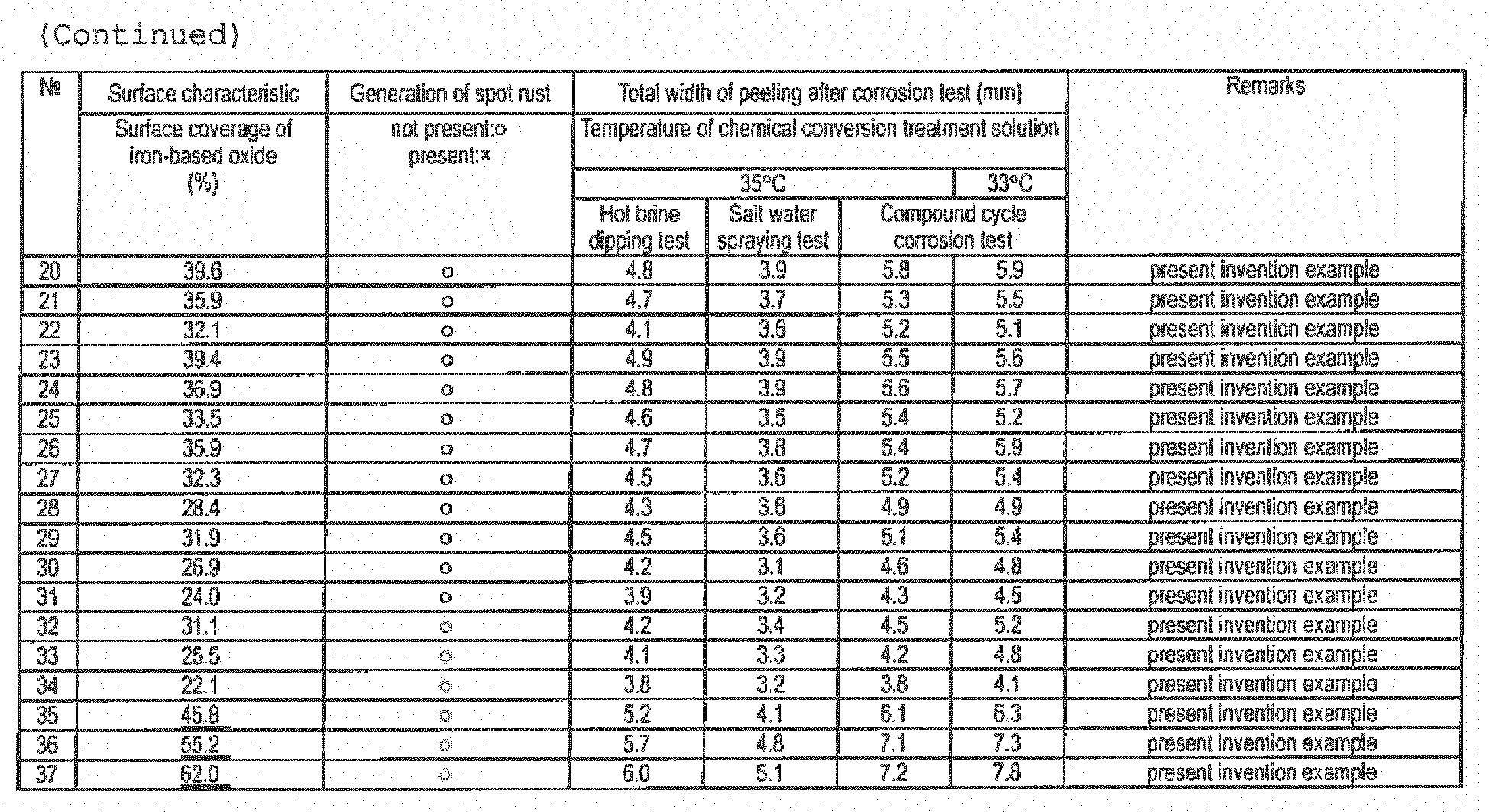


- From Table 2, it is understood that the steel sheets of the present invention examples where pickling was performed under the conditions which conform to the present invention after continuous annealing exhibit favorable chemical convertibility and favorable corrosion resistance after coating such that the generation of spot rust is suppressed, and the maximum total width of peeling is small in all of the hot brine dipping test, the salt water spraying test and the composite cycle corrosion test. Particularly, it is understood that all cold-rolled steel sheets where a surface coverage of an iron-based oxide is 40% or less exhibit excellent corrosion resistance after coating in a severe corrosion environment. It is ascertained from the result obtained by measuring the distribution of O, Si, Mn and Fe in the depth direction in surfaces of the respective steel sheets on Table 2 by a GDS that a peak of Si and a peak of O did not appear in the steel sheets which were subjected to pickling under the conditions which conform to the present invention so that an Si containing oxide layer was sufficiently removed. As references, profiles of O, Si, Mn and Fe in the depth direction when a surface analysis was performed by the GDS with respect to the specimens of the present invention example No. 2 and the present invention example No. 7 on Table 2 are shown in
Fig. 5 . - Steels A to O containing compositions shown in Table 3 were manufactured in such a manner that molten steel was produced by an ordinary refining process including a converter treatment, a degassing treatment and the like, and molten steel was formed into steel slabs by continuous casting. Hot rolling was applied to these steel slabs under hot rolling conditions shown in Table 4, and the steel slabs are formed into hot-rolled steel sheet having a thickness of 3 to 4mm, scales were removed from surfaces of the steel sheets by applying pickling to these hot-rolled steel sheets and, thereafter, cold rolling was applied to the steel sheets thus obtaining cold-rolled steel sheets having a thickness of 1.8mm. Next, after first pickling and second pickling were applied to the cold-rolled steel sheet under conditions shown in Table 5 after continuous annealing performed under conditions shown in Table 4 in the same manner, the steel sheet was cleaned with water, and neutralizing treatment was applied to the steel sheet, water cleaning and drying were applied to the steel sheet. Temper rolling with elongation of 0.7% was applied to the steel sheet thus obtaining cold-rolled steel sheets No. 84 to No.107.
- Specimens were sampled from the above-mentioned respective cold rolled steel sheets obtained in such a manner and, in the same manner as the example 1, after surface coverage of the iron-based oxide on the surface of the steel sheet after pickling was measured, the specimen is subjected to the following tensile test and the corrosion resistance test after coating. Further, the distribution of O, Si, Mn and Fe in the depth direction on surfaces of the specimens sampled from the respective cold-rolled steel sheets was measured using a GDS.
- A tensile test is performed in accordance with the stipulation of JIS Z 2241: 1998 using a JIS No.5 tensile test specimen (n=1) stipulated in JIS Z 2201: 1998 sampled from a direction orthogonal to the rolling direction (C direction) thus measuring a tensile strength TS.
- After anti-rust oil was applied to the above-mentioned respective cold-rolled steel sheets, the cold-rolled steel sheets were left outdoors while preventing influences from external factors such as dusts. Presence or non-presence of generation of spot rust on the cold-rolled steel sheets after approximately one month was checked. The evaluation "O" is given to cases where the specimens had no spot rust, and the evaluation "X" is given to cases where the specimens had spot rust.
- Specimens were prepared by applying chemical conversion treatment and electrodeposition coating to specimens sampled from the respective cold-rolled steel sheet under the same condition as the example 1. In the same manner as the example 1, the specimens were subjected to three kinds of corrosion tests consisting of a hot brine dipping test, a salt water spraying test (SST) and a composite cycle corrosion test (CCT) and, then, the corrosion resistance after coating was evaluated.
- The result of the above-mentioned test is shown in Table 5.
[Table 3] Steel symbol Steel component (mass.%) Remarks C Si Mn P S Al Si/Mn A 0.11 1.25 1.55 0.018 0.001 0.032 0.81 present invention steel B 0.15 1.30 1.80 0.019 0.002 0.033 0.72 present invention steel C 0.15 1.20 1.95 0.017 0.001 0.033 0.62 present invention steel D 0.09 1.45 1.40 0.017 0.002 0.028 1.04 present invention steel E 0.18 1.11 1.36 0.018 0.001 0.032 0.82 present invention steel F 0.16 1.41 1.23 0.017 0.001 0.041 1.15 present invention steel G 0.14 1.65 1.33 0.018 0.002 0.035 1.24 present invention steel H 0.12 1.45 2.10 0.017 0.001 0.042 0.69 present invention steel I 0.17 0.90 1.40 0.017 0.002 0.044 0.64 present invention steel J 0.13 1.20 1.89 0.018 0.001 0.041 0.63 present invention steel K 0.15 1.20 1.85 0.017 0.001 0.034 0.65 present invention steel L 0.03 1.25 3.25 0.018 0.001 0.005 0.38 present invention steel M 0.22 3.30 1.15 0.018 0.001 0.027 2.87 present invention steel C Si Mn P S Al Nb Ti V Mo Cr B N Ni Cu Ca Si/Mn N 0.13 1.13 1.25 0.023 0.006 0.052 0.11 0.05 0.04 0.05 0.06 0.007 0.007 0.01 0.01 0.01 0.90 present invention steel O 0.11 1.12 1.26 0.031 0.004 0.026 0.01 0.01 0.01 0.01 0.01 0.01 0.01 0.21 0.25 0.018 0.89 present invention steel [Table 4] Nº Steel symbol Heating temperature (°C) Hot rolling condition Cold rolling reduction (%) Continuous annealing condition Strength Remarks Finish temperature (°C) Cooling rate (°C/sec.) Winding temperature (°C) Heating temperature (°C) Holding time (sec.) Cooling rate (°C/sec.) Cooling stop temperature (°C) Holdings time (sec.) Cooling rate (°C/sec.) TS (MPa) 86 A 1150 850 25 620 60 780 45 20 350 100 40 625 present invention example 87 B 1150 820 31 400 60 780 40 20 400 100 50 821 present invention example 88 B 1150 820 31 400 60 780 40 20 400 100 50 819 present invention example 89 C 1140 850 26 600 60 760 50 20 350 100 45 814 present invention example 90 D 1150 840 33 530 60 730 40 20 350 110 40 623 present invention example 91 E 1150 850 30 580 55 750 35 20 400 110 50 836 present invention example 92 F 1150 850 25 620 60 750 50 20 350 120 50 634 present invention example 93 G 1150 850 33 550 60 750 30 20 400 100 50 632 comparison example 94 G 1150 850 33 550 60 750 30 20 400 100 50 635 present invention example 95 G 1150 850 33 550 60 750 30 20 400 100 50 631 present invention example 96 G 1150 850 33 550 60 750 30 20 400 100 50 633 present invention example 97 G 1150 850 33 550 60 750 30 20 400 100 50 634 comparison example 98 H 1130 820 28 570 60 780 50 15 370 150 50 840 present invention example 99 I 1150 840 34 530 55 780 50 15 350 120 55 812 present invention example 100 J 1140 850 28 600 60 770 60 20 300 100 45 836 present invention example 101 K 1150 850 25 620 60 780 45 20 350 100 40 650 present invention example 102 L 1100 850 33 550 60 750 50 20 450 150 50 960 comparison example 103 L 1100 850 33 550 60 750 50 20 450 150 50 959 present invention example 104 L 1100 850 33 550 60 750 50 20 450 150 50 963 present invention example 105 L 1100 850 33 550 60 750 50 20 450 150 50 962 present invention example 106 L 1100 850 33 550 60 750 50 20 450 150 50 961 comparison example 107 M 1120 830 31 550 55 720 50 15 410 190 50 1124 comparison example 84 N 1150 850 30 580 55 750 35 20 400 110 50 828 present invention example 85 O 1150 850 30 580 55 750 35 20 400 110 50 826 present invention example [Table 5] Nº Steel symbol First pickling condition Second pickling condition Neutralization condition Acid concentration (g/l) Fe ion concentration (g/l) Temperature (°C) Treatment time (sec.) Acid concentration (g/l) Temperature (°C) Treatment time (sec.) Alkali pH Temperature (°C) Treatment time (sec.) 86 A nitric acid:150 +hydrochloric acid: 15 12.1 40 10 hydrochloric acid: 10 40 10 sodium pyrophosphate pH11.0 40 10 87 B 40 10 hydrochloric acid: 10 40 10 40 10 88 B nitric acid:50 +hydrofluoric acid:50 7.8 40 10 hydrochloric acid: 10 40 10 40 10 89 C nitric acid:150 +hydrochloric acid: 15 8.3 40 10 hydrochloric acid: 10 40 10 40 10 90 D 40 10 hydrochloric acid: 10 40 10 40 10 91 E 40 10 hydrochloric acid: 10 40 10 40 10 92 F 40 10 hydrochloric acid: 10 40 10 40 10 93 G 40 10 hydrochloric acid: 10 10 1 - - - 94 G 40 10 hydrochloric acid:10 40 1 sodium polyphosphate pH9.7 40 10 95 G 40 10 hydrochloric acid: 10 40 30 40 10 96 G 40 10 sulfuric acid: 75 40 30 40 10 97 G 40 10 hydrochloric acid: 100 40 10 - - - 98 H 40 10 hydrochloric acid: 10 40 10 sodium carbonate pH10.3 40 10 99 I 40 10 hydrochloric acid: 10 40 10 40 10 100 J 40 10 hydrochloric acid: 10 40 10 40 10 101 K 40 10 hydrochloric acid: 10 40 10 40 10 102 L 40 10 sulfuric acid: 75 10 1 - - - 103 L 40 10 sulfuric acid: 75 40 1 sodium hydrogen carbonate pH9.6 40 10 104 L 40 10 sulfuric acid: 75 40 30 40 10 105 L 40 10 hydrochloric acid: 10 40 30 40 10 106 L 40 10 sulfuric acid: 200 40 10 - - - 107 M 40 10 hydrochloric acid: 10 40 10 - - - 84 N nitric acid:150 +hydrochloric acid:15 8.2 40 10 hydrochloric acid: 10 40 10 sodium pyrophosphate pH9.9 40 40 85 O 10 10 hydrochloric acid: 10 40 10 10 10 Nº Surface characteristic Generation of spot rust Total width of peeling after corrosion test (mm) Remarks Surface coverage of iron-based oxide (%) not present:o present:× Temperature of chemical conversion treatment solution: 35°C 33°C Hot brine dipping test Salt water spraying test Compound cycle corrosion test 86 29.9 o 4.5 3.8 4.7 5.0 present invention example 87 30.4 o 4.4 3.8 4.5 5.1 present invention example 88 30.1 o 4.4 3.7 4.9 5.2 present invention example 89 29.7 o 4.4 3.6 4.6 5.1 present invention example 90 30.5 o 4.5 3.8 4.7 5.2 present invention example 91 30.3 o 4.4 3.9 4.7 5.2 present invention example 92 30.2 o 4.3 3.6 4.8 5.1 present invention example 93 74.3 × 6.5 5.3 7.7 8.0 comparison example 94 35.4 o 4.4 3.8 5.1 5.4 present invention example 95 25.9 o 4.2 3.5 4.6 4.7 present invention example 96 26.3 o 4.1 3.2 4.7 4.8 present invention example 97 54.5 × 5.7 4.7 7.1 7.4 comparison example 98 30.3 o 4.3 3.8 4.9 5.1 present invention example 99 30.9 o 4.3 3.7 4.9 5.1 present invention example 100 30.1 o 4.3 3.8 4.9 5.1 present invention example 101 29.7 o 4.2 3.8 4.6 5.0 present invention example 102 75.2 × 6.4 5.5 7.8 8.2 comparison example 103 34.9 o 4.5 3.8 5.2 5.3 present invention example 104 25.3 o 4.4 3.5 4.9 5.2 present invention example 105 25.4 o 4.2 3.1 5.1 5.1 present invention example 106 550 × 5.7 4.7 7.1 7.4 comparison example 107 41.2 × 5.2 4.1 6.3 6.5 comparison example 84 27.3 o 4.3 3.8 4.7 5.2 present invention example 85 26.2 o 44 3.9 4.6 5.3 present invention example - It is understood from Table 5 that the high strength cold-rolled steel sheet of the present invention example where the steel sheet contains 0.5% or more Si, and a surface coverage of iron-based oxide on the surface of the steel sheet to which neutralizing treatment is performed by applying pickling twice under the condition which conforms to the present invention is set to 40% or less not only is excellent in chemical convertibility and corrosion resistance after coating but also has a high strength of 590MPa or more of tensile strength TS. It is ascertained from the result obtained by measuring the distribution of O, Si, Mn and Fe in the depth direction by a GDS that a peak of Si and a peak of O did not appear in any steel sheets which were subjected to pickling under the conditions which conform to the present invention so that an Si containing oxide layer was sufficiently removed.
- Steel having the composition containing 0.125% C, 1.5% Si, 2.6% Mn, 0.019% P, 0.008% S and 0.040% Al and comprising Fe and unavoidable impurities as a balance was manufactured in such a manner that molten steel was formed into steel materials (slabs) by continuous casting. The slabs were reheated to a temperature of 1150 to 1170°C and, thereafter, were subjected to hot rolling where a finish rolling completion temperature is set to a value which falls within a range of 850 to 880°C, and were wound up at a temperature of 500 to 550°C thus forming hot-rolled steel sheets having a thickness of 3 to 4mm. Scales were removed from the steel sheets by applying pickling to these hot-rolled steel sheets and, thereafter, cold rolling was applied to the steel sheets thus obtaining cold-rolled steel sheets having a thickness of 1.8mm. Next, continuous annealing was performed where these cold-rolled steel sheets were heated to a soaking temperature of 750 to 780°C and were held for 40 to 50 seconds and, thereafter, these steel sheets were cooled to a cooling stop temperature of 350 to 400°C from the above-mentioned soaking temperature at a cooling rate of 20 to 30°C/second and were held for 100 to 120 seconds at a cooling stop temperature range. Thereafter, first pickling and second pickling were applied to surfaces of the steel sheets under conditions shown in Table 6-1 to Table 6-2 (hereinafter, Table 6-1 and Table 6-2 being also collectively referred to as Table 6) and, then, the steel sheets were washed with water, neutralizing treatment was applied to the steel sheets, and the steel sheets was washed with water and was dried. Thereafter, temper rolling was applied to the steel sheets at a rate of elongation of 0.7% thus obtaining cold-rolled steel sheets No.108 to No.162 shown in Table 6.
- Specimens were sampled from the above-mentioned respective cold-rolled steel sheets and, using the above-mentioned method, a surface coverage of iron-based oxide generated on the surface of the steel sheets by pickling and a maximum thickness were measured.
- Further, specimens were sampled from the above-mentioned respective cold-rolled steel sheets, and spot rust generation evaluation during storage of the cold-rolled steel sheets was carried out under the following conditions and, after a chemical conversion treatment and a coating treatment were applied to the specimens under the following conditions, specimens were subjected to three kinds of corrosion tests consisting of a hot brine dipping test, a salt water spraying test and a composite cycle corrosion test, and then, the corrosion resistance after coating was evaluated. Further, the distribution of O, Si, Mn and Fe in the depth direction on surfaces of the specimens sampled from the respective cold-rolled steel sheets was measured using a GDS.
- After anti-rust oil was applied to the above-mentioned respective cold-rolled steel sheets, the cold-rolled steel sheets were left outdoors while preventing influences from external factors such as dusts. Presence or non-presence of generation of spot rust on the cold-rolled steel sheets after approximately one month was checked. The evaluation "O" is given to cases where the specimens had no spot rust, and the evaluation "X" is given to cases where the specimens had spot rust.
- A chemical conversion treatment was applied to specimens sampled from the above-mentioned respective cold-rolled steel sheets using a degreasing agent FC-E2011, a surface conditioner: PL-X and a chemical conversion treatment agent: palbond PB-L3065 made by Nihon Parkerizing Co., Ltd. such that a coating weight of chemical conversion treatment film was set to 1.7 to 3.0g/m2 under two conditions, that is, the standard condition and the comparison condition under a low temperature by lowering a temperature of a chemical conversion treatment solution.
- Spray degreasing and surface adjustment steps: pH 9.5, treatment temperature room temperature,
treatment time 20 seconds
Chemical conversion treatment step: temperature of chemical conversion treatment solution 35°C, treatment time 120 seconds - Condition where a temperature of chemical conversion treatment solution in the above-mentioned standard condition was lowered to 33°C
- Electrodeposition coating was applied to surfaces of the specimens to which the above-mentioned chemical conversion treatment had been applied by electrodeposition paint: V-50 made by NIPPONPAINT Co., Ltd. such that a film thickness of electrodeposition coating is set to 25µm, and the specimens were subjected to the following three kinds of corrosion tests under more severe condition than the example 1.
- A crosscut flaw having a length of 45mm is formed by a cutter on a surface of the above-mentioned specimen (n=1) to which chemical conversion treatment and electrodeposition coating were applied and thereafter, the specimen was dipped into 5mass% NaCl aqueous solution (60°C) for 480 hours. Then, the specimen was cleaned with water, was dried, and an adhesive tape was adhered to the cut flaw portion. Thereafter, a tape peeling test in which the adhesive tape is peeled was performed, and a maximum total width of peeling including left and right sides of the cut flaw portion was measured. When the maximum peeling total width is 6.0mm or less, it is determined that the specimen is not defective. When the maximum peeling total width is 5.0mm or less, it can be evaluated that corrosion resistance of the specimen in the hot brine dipping test is favorable.
- A crosscut flaw having a length of 45mm is formed by a cutter on a surface of the above-mentioned specimen (n=1) to which chemical conversion treatment and electrodeposition coating were applied and, thereafter, the specimen was subjected to a salt water spraying test for 1400 hours in accordance with a neutral salt water spraying test stipulated in JIS Z2371:2000 using 5mass% NaCl aqueous solution. Thereafter, a tape peeling test was carried out with respect to the crosscut flaw portion, and a maximum total width of peeling including left and right sides of the cut flaw portion was measured. When the maximum total width of peeling is 5. 2mm or less, it is determined that the specimen is not defective. When the maximum total width of peeling is 4.0mm or less, it can be evaluated that corrosion resistance of the specimen in the salt water spraying test is favorable.
- A crosscut flaw having a length of 45mm is formed by a cutter on a surface of the above-mentioned specimen (n=1) to which chemical conversion treatment and electrodeposition coating were applied and, thereafter, the specimen was subjected to a corrosion test where one cycle formed of salt water spraying (5mass% NaCl aqueous solution: 35°C, relative humidity: 98%) × 2 hours → drying (60°C, relative humidity: 30%) × 2 hours → wetting (50°C, relative humidity: 95%) × 2 hours was repeated 150 times, was cleaned with water and, thereafter, was dried. Then, a tape peeling test was carried out with respect to the cut flaw portion, and a maximum total width of peeling including left and right sides of the cut flaw portion was measured. When the maximum total width of peeling is 7.8mm or less, it is determined that specimen is not defective. When the maximum total width of peeling is 6.0mm or less, it can be evaluated that the corrosion resistance of the specimen in the composite cycle corrosion test is favorable.
- The result of the above-mentioned test is shown in Table 6.

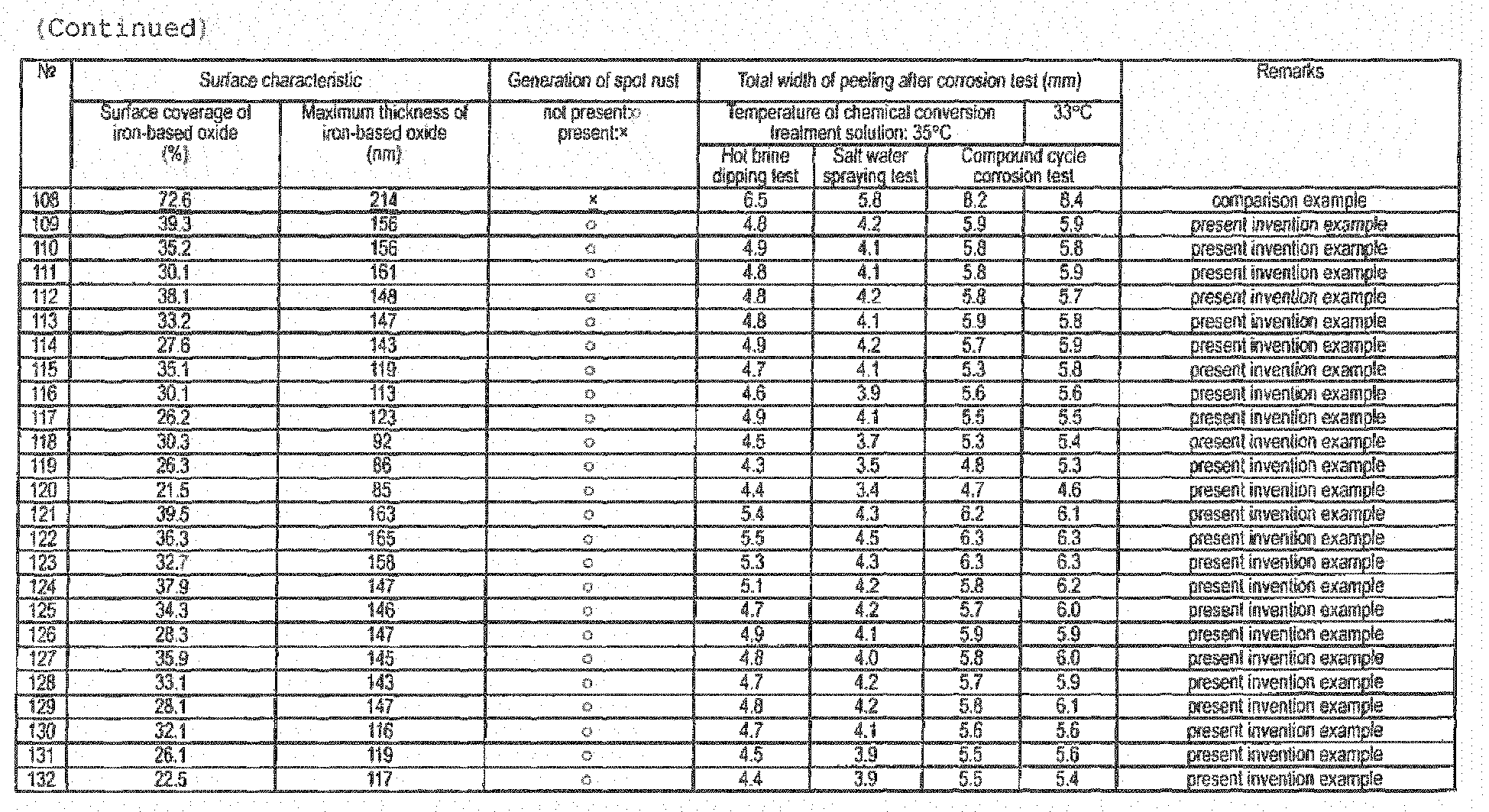


- It is understood from Table 6 that the steel sheet of the present invention example where pickling is applied to the surface of the steel sheet after annealing under a condition that a surface coverage of iron-based oxide on the surface of the steel plate after re-pickling is set to 40% or less, and a maximum thickness of the iron-based oxide is 150nm or less had a small maximum total width of peeling in any of the hot brine dipping test, the salt water spraying test and the composite cycle corrosion test which were performed under the conditions where the test times were long and the test environments were severe compared to the example 1 and hence, the steel sheets exhibit extremely favorable corrosion resistance after coating. Further, it is ascertained from the result obtained by measuring the distribution of O, Si, Mn and Fe in the depth direction by a GDS that a peak of Si and a peak of O did not appear in the steel sheets which were subjected to pickling under the conditions which conform to the present invention so that an Si containing oxide layer was sufficiently removed.
- A cold-rolled steel sheet manufactured by the present invention can possess not only excellent chemical convertibility and corrosion resistance after coating but also a high strength and hence, the cold-rolled steel sheet can be preferably used as a raw material for forming automobile members and also as a raw material for forming members which are required to possess the substantially similar property as the automobile member in other fields such as household electric appliances and architecture.
Claims (19)
- A method of manufacturing a cold-rolled steel sheet, wherein first pickling is applied to a steel sheet which is continuously annealed after cold rolling, second pickling is applied to the steel sheet subsequently and, thereafter, neutralizing treatment is applied to the steel sheet using an alkaline solution.
- The method of manufacturing a cold-rolled steel sheet according to claim 1, wherein the alkaline solution has pH of 9.5 or more, and one or two or more selected from a group consisting of sodium hydroxide, sodium carbonate, sodium hydrogen carbonate, orthophosphate and condensed phosphate are mixed into the alkaline solution.
- The method of manufacturing a cold-rolled steel sheet according to claim 1 or 2, wherein the neutralizing treatment is performed in a state that a temperature of the alkaline solution is set to a value which falls within a range of 20 to 70°C, and a treatment time is set to a value which falls within a range of 1 to 30 seconds.
- The method of manufacturing a cold-rolled steel sheet according to any one of claims 1 to 3, wherein the first pickling is performed using any one of a nitric acid, a hydrochloric acid, a hydrofluoric acid, a sulfuric acid and a mixture of two or more of these acids.
- The method of manufacturing a cold-rolled steel sheet according to any one of claims 1 to 4, wherein the first pickling is performed using either one of the following acidic solutions (a) and (b).(a) The acidic solution containing a nitric acid and a hydrochloric acid, wherein concentration of the nitric acid is more than 50g/L and 200g/L or less, a ratio R1 of the concentration of the hydrochloric acid to the concentration of the nitric acid (hydrochloric acid/nitric acid) is set to a value which falls within a range of 0.01 to 0.25, and the concentration of Fe ion is set to a value which falls within a range of 3 to 50g/L.(b) The acidic solution containing a nitric acid and hydrofluoric acid, wherein concentration of the nitric acid is more than 50g/L and 200g/L or less, a ratio R2 of the concentration of the hydrofluoric acid to the concentration of the nitric acid (hydrofluoric acid/nitric acid) is set to a value which falls within a range of 0.01 to 0.25, and the concentration of Fe ion is set to a value which falls within a range of 3 to 50g/L.
- The method of manufacturing a cold-rolled steel sheet according to any one of claims 1 to 5, wherein a non-oxidizing acid is used in the second pickling.
- The method of manufacturing a cold-rolled steel sheet according to claim 6, wherein the non-oxidizing acid is any one of a hydrochloric acid, a sulfuric acid, a phosphoric acid, a pyrophosphoric acid, a formic acid, an acetic acid, a citric acid, a hydrofluoric acid, an oxalic acid, and an acid which is a mixture of two or more of these acids.
- The method of manufacturing a cold-rolled steel sheet according to claim 6 or 7, wherein the non-oxidizing acid is any one of hydrochloric acid having the concentration of 0.1 to 50g/L, a sulfuric acid having the concentration of 0.1 to 150g/L and an acid which is a mixture of a hydrochloric acid having the concentration of 0.1 to 20g/L and a sulfuric acid having the concentration of 0.1 to 60g/L.
- The method of manufacturing a cold-rolled steel sheet according to any one of claims 1 to 8, wherein the second pickling is performed in a state that a temperature of the acidic solution is set to a value which falls within a range of 20°C to 70°C, and a pickling time is set to a value which falls within a range of 1 to 30 seconds.
- The method of manufacturing a cold-rolled steel sheet according to any one of claims 1 to 9, wherein the steel sheet contains, as a component of the composition thereof, 0.5 to 3.0mass% Si.
- The method of manufacturing a cold-rolled steel sheet according to claim 10, wherein the steel sheet further contains, as components of the composition thereof: 0.01 to 0.30mass% C, 1.0 to 7.5mass% Mn, 0.05mass% or less P, 0.01mass% or less S, 0.06mass% or less Al, and Fe and unavoidable impurities as a balance.
- The method of manufacturing a cold-rolled steel sheet according to claim 11, wherein the steel sheet further contains, as components of the composition thereof, one or two or more of elements selected from a group consisting of 0.3mass% or less Nb, 0.3mass% or less Ti, 0.3mass% or less V, 1.0mass% or less Mo, 1.0mass% or less Cr, 0.006mass% or less B and 0.008mass% or less N.
- The method of manufacturing a cold-rolled steel sheet according to claim 11 or 12, wherein the steel sheet further contains, as components of the composition thereof, one or two or more of elements selected from a group consisting of 2.0mass% or less Ni, 2.0mass% or less Cu, 0.1mass% or less Ca, and 0.1mass% or less REM.
- A cold-rolled steel sheet manufactured by the method of manufacturing a cold-rolled steel sheet described in any one of claims 1 to 13, wherein an Si containing oxide layer formed on a surface layer of the steel sheet is removed, and a surface coverage of an iron-based oxide existing on a surface of the steel sheet is 40% or less.
- The cold-rolled steel sheet according to claim 14, wherein a maximum thickness of the iron-based oxide existing on the surface of the steel sheet is 150nm or less.
- An automobile member formed by using the cold-rolled steel sheet described in claim 14 or 15.
- A facility for manufacturing a cold-rolled steel sheet, wherein a first pickling device, a second pickling device, an acid neutralizing treatment device, and a drying device are arranged in this order on a rear stage of a continuous annealing device.
- The facility for manufacturing a cold-rolled steel sheet according to claim 17, wherein a water cleaning device is arranged on a rear stage of the first pickling device, the second pickling device, and the acid neutralizing treatment device.
- The facility for manufacturing a cold-rolled steel sheet according to claim 17 or 18, wherein a water cleaning spray device is arranged on an inlet side and/or an outlet side of one or more devices selected from a group consisting of the first pickling device, the second pickling device, the acid neutralizing treatment device and the water cleaning device.
Applications Claiming Priority (2)
| Application Number | Priority Date | Filing Date | Title |
|---|---|---|---|
| JP2014177913A JP6137089B2 (en) | 2014-09-02 | 2014-09-02 | Cold rolled steel sheet manufacturing method and cold rolled steel sheet manufacturing equipment |
| PCT/JP2015/004043 WO2016035261A1 (en) | 2014-09-02 | 2015-08-12 | Cold-rolled steel sheet, method for producing cold-rolled steel sheet, automobile member, and equipment for producing cold-rolled steel sheet |
Publications (3)
| Publication Number | Publication Date |
|---|---|
| EP3190211A1 true EP3190211A1 (en) | 2017-07-12 |
| EP3190211A4 EP3190211A4 (en) | 2017-10-11 |
| EP3190211B1 EP3190211B1 (en) | 2021-11-10 |
Family
ID=55439351
Family Applications (1)
| Application Number | Title | Priority Date | Filing Date |
|---|---|---|---|
| EP15839041.9A Not-in-force EP3190211B1 (en) | 2014-09-02 | 2015-08-12 | Cold-rolled steel sheet, method for producing cold-rolled steel sheet, automobile member, and equipment for producing cold-rolled steel sheet |
Country Status (10)
| Country | Link |
|---|---|
| US (1) | US20170306507A1 (en) |
| EP (1) | EP3190211B1 (en) |
| JP (1) | JP6137089B2 (en) |
| KR (1) | KR20170032469A (en) |
| CN (1) | CN106605010A (en) |
| AR (1) | AR101727A1 (en) |
| BR (1) | BR112017004145B1 (en) |
| MX (1) | MX2017002726A (en) |
| TW (1) | TWI586840B (en) |
| WO (1) | WO2016035261A1 (en) |
Families Citing this family (15)
| Publication number | Priority date | Publication date | Assignee | Title |
|---|---|---|---|---|
| WO2015133077A1 (en) * | 2014-03-04 | 2015-09-11 | Jfeスチール株式会社 | Cold-rolled steel sheet, manufacturing method therefor, and car part |
| CN105921547A (en) * | 2016-05-04 | 2016-09-07 | 浙江久鼎机械有限公司 | Production process of specially-shaped pipe |
| PL3327153T3 (en) * | 2016-11-23 | 2021-05-17 | Outokumpu Oyj | Method for manufacturing a complex-formed component |
| TWI613297B (en) * | 2017-03-27 | 2018-02-01 | Nippon Steel & Sumitomo Metal Corp | Steel plate manufacturing method |
| JP6699633B2 (en) * | 2017-07-25 | 2020-05-27 | Jfeスチール株式会社 | High-strength cold-rolled steel sheet excellent in corrosion resistance after painting and delayed fracture resistance and method for producing the same |
| CN107620084B (en) * | 2017-10-31 | 2019-07-02 | 江油市丰威新材料有限责任公司 | System is washed in a kind of combination of silicon strip soda acid and technique is washed in combination |
| JP6806128B2 (en) * | 2018-01-09 | 2021-01-06 | Jfeスチール株式会社 | Judgment method of cold-rolled steel sheet and manufacturing method of cold-rolled steel sheet |
| US10443135B1 (en) | 2018-05-11 | 2019-10-15 | Macdermid Enthone Inc. | Near neutral pH pickle on multi-metals |
| US11034921B2 (en) | 2018-05-16 | 2021-06-15 | Adam Mason PRINCE | Method, kit, and composition for corrosion removal |
| CN109183049A (en) * | 2018-10-10 | 2019-01-11 | 高飞 | A kind of pickling solution and application method removing chromansil material surface oxidation film |
| CN109207978A (en) * | 2018-10-10 | 2019-01-15 | 高飞 | A kind of surface oxidation treatment method of chrome-carbon steel containing manganese |
| KR102255818B1 (en) * | 2019-06-24 | 2021-05-25 | 주식회사 포스코 | High strength steel for a structure having excellent corrosion resistance and manufacturing method for the same |
| CN112226775A (en) * | 2020-09-16 | 2021-01-15 | 江苏华久辐条制造有限公司 | Cold-rolled steel pickling process |
| KR102904997B1 (en) * | 2021-02-02 | 2025-12-30 | 닛폰세이테츠 가부시키가이샤 | steel plate |
| CN115386703B (en) * | 2022-08-12 | 2023-10-27 | 武汉钢铁有限公司 | Technological method for improving pretreatment quality of cold-rolled quenched ductile steel automobile coating |
Family Cites Families (31)
| Publication number | Priority date | Publication date | Assignee | Title |
|---|---|---|---|---|
| GB191413703A (en) * | 1914-06-05 | 1915-07-29 | Otto Graef | Improvements in the Manufacture of Silicon Steel Sheets. |
| JPS588742B2 (en) | 1973-10-03 | 1983-02-17 | 三菱電機株式会社 | Hiyoumen Kensa Sochi |
| CA1137394A (en) * | 1979-12-05 | 1982-12-14 | Hajime Nitto | Process for continuously annealing a cold-rolled low carbon steel strip |
| JPS6417883A (en) * | 1987-07-13 | 1989-01-20 | Kawasaki Steel Co | Method for rinsing color rolled and annealed stainless steel strip after pickling |
| AT406486B (en) * | 1998-12-22 | 2000-05-25 | Andritz Patentverwaltung | METHOD FOR STAINLESSING STAINLESS STEEL |
| CN1117882C (en) * | 1999-04-19 | 2003-08-13 | 住友金属工业株式会社 | Stainless steel material for solid polymer fuel battery |
| JP3365385B2 (en) * | 2000-01-31 | 2003-01-08 | 住友金属工業株式会社 | Method for producing stainless steel material for separator of polymer electrolyte fuel cell |
| JP2004115900A (en) * | 2002-09-30 | 2004-04-15 | Sanyo Special Steel Co Ltd | Strip steel production method |
| US8192556B2 (en) * | 2002-10-15 | 2012-06-05 | Henkel Kgaa | Pickling or brightening/passivating solution and process for steel and stainless steel |
| JP3990349B2 (en) | 2002-12-10 | 2007-10-10 | 新日本製鐵株式会社 | Good workability, high strength cold-rolled steel sheet with excellent corrosion resistance after painting |
| JP4739653B2 (en) | 2003-02-17 | 2011-08-03 | 株式会社神戸製鋼所 | High strength cold-rolled steel sheet |
| WO2004091823A1 (en) * | 2003-04-11 | 2004-10-28 | Jfe Steel Corporation | Tube with high dimensional accuracy, and method and device for manufacturing the tube |
| JP4289163B2 (en) * | 2004-01-29 | 2009-07-01 | Jfeスチール株式会社 | High-formability high-strength cold-rolled steel sheet for chemical conversion treatment with excellent corrosion resistance after chemical electrodeposition coating and method for producing the same |
| FR2867991B1 (en) * | 2004-03-25 | 2007-05-04 | Ugine Et Alz France Sa | AUSTENITIC STAINLESS STEEL STRIP BANDS MATT SURFACE |
| JP5168793B2 (en) * | 2006-02-16 | 2013-03-27 | Jfeスチール株式会社 | Manufacturing method of high-strength cold-rolled steel sheet with excellent corrosion resistance after painting |
| JP4725374B2 (en) | 2006-03-14 | 2011-07-13 | Jfeスチール株式会社 | High-strength cold-rolled steel sheet excellent in formability, chemical conversion treatment and post-coating corrosion resistance, and method for producing the same |
| ITMI20062187A1 (en) * | 2006-11-14 | 2008-05-15 | Sviluppo Materiali Spa | ANNEALING AND PICKLING PROCESS |
| KR100777123B1 (en) * | 2007-04-18 | 2007-11-19 | 현대하이스코 주식회사 | Stainless steel separator plate for fuel cell and manufacturing method thereof |
| JP5211642B2 (en) * | 2007-10-31 | 2013-06-12 | Jfeスチール株式会社 | Production equipment for hot dip galvanized steel sheet and method for producing hot dip galvanized steel sheet |
| JP2009185371A (en) * | 2008-02-08 | 2009-08-20 | Jfe Steel Corp | Pretreatment apparatus and method for metal product processing |
| JP5233346B2 (en) * | 2008-03-19 | 2013-07-10 | Jfeスチール株式会社 | High-strength cold-rolled steel sheet excellent in chemical conversion treatment and post-coating corrosion resistance and method for producing the same |
| JP5729211B2 (en) * | 2010-08-31 | 2015-06-03 | Jfeスチール株式会社 | Cold rolled steel sheet manufacturing method, cold rolled steel sheet and automobile member |
| JP5835558B2 (en) * | 2010-08-31 | 2015-12-24 | Jfeスチール株式会社 | Cold rolled steel sheet manufacturing method |
| JP5637530B2 (en) * | 2010-10-26 | 2014-12-10 | Jfeスチール株式会社 | Ultra-high strength cold-rolled steel sheet with a tensile strength of 780 MPa or more that has high ductility and excellent chemical conversion properties |
| JP5707177B2 (en) * | 2011-03-02 | 2015-04-22 | 新日鐵住金株式会社 | Manufacturing method of steel wire for cold forging |
| JP5919920B2 (en) * | 2011-03-28 | 2016-05-18 | Jfeスチール株式会社 | Method and apparatus for producing Si-containing cold-rolled steel sheet |
| JP5482968B2 (en) * | 2012-01-18 | 2014-05-07 | Jfeスチール株式会社 | How to prevent yellowing of steel plate surface after pickling |
| JP2013173976A (en) * | 2012-02-24 | 2013-09-05 | Jfe Steel Corp | Method for manufacturing cold rolled steel sheet and manufacturing facility of the same |
| US10174430B2 (en) * | 2012-02-28 | 2019-01-08 | Jfe Steel Corporation | Si-containing high strength cold rolled steel sheet, method of producing the same, and automotive members |
| EP2826878B1 (en) * | 2012-03-13 | 2017-05-10 | JFE Steel Corporation | Ferritic stainless steel |
| CN104046977B (en) * | 2013-03-12 | 2017-02-22 | 富准精密工业(深圳)有限公司 | Magnesium alloy forming method |
-
2014
- 2014-09-02 JP JP2014177913A patent/JP6137089B2/en active Active
-
2015
- 2015-08-06 TW TW104125503A patent/TWI586840B/en not_active IP Right Cessation
- 2015-08-12 BR BR112017004145-6A patent/BR112017004145B1/en not_active IP Right Cessation
- 2015-08-12 WO PCT/JP2015/004043 patent/WO2016035261A1/en not_active Ceased
- 2015-08-12 KR KR1020177005871A patent/KR20170032469A/en not_active Ceased
- 2015-08-12 US US15/507,601 patent/US20170306507A1/en not_active Abandoned
- 2015-08-12 MX MX2017002726A patent/MX2017002726A/en unknown
- 2015-08-12 CN CN201580047106.XA patent/CN106605010A/en active Pending
- 2015-08-12 EP EP15839041.9A patent/EP3190211B1/en not_active Not-in-force
- 2015-08-31 AR ARP150102785A patent/AR101727A1/en active IP Right Grant
Also Published As
| Publication number | Publication date |
|---|---|
| BR112017004145B1 (en) | 2022-01-18 |
| WO2016035261A1 (en) | 2016-03-10 |
| EP3190211B1 (en) | 2021-11-10 |
| AR101727A1 (en) | 2017-01-11 |
| CN106605010A (en) | 2017-04-26 |
| JP2016050354A (en) | 2016-04-11 |
| BR112017004145A2 (en) | 2017-12-05 |
| US20170306507A1 (en) | 2017-10-26 |
| TWI586840B (en) | 2017-06-11 |
| MX2017002726A (en) | 2017-05-09 |
| JP6137089B2 (en) | 2017-05-31 |
| KR20170032469A (en) | 2017-03-22 |
| EP3190211A4 (en) | 2017-10-11 |
| TW201610235A (en) | 2016-03-16 |
Similar Documents
| Publication | Publication Date | Title |
|---|---|---|
| EP3190211B1 (en) | Cold-rolled steel sheet, method for producing cold-rolled steel sheet, automobile member, and equipment for producing cold-rolled steel sheet | |
| KR101502213B1 (en) | Method for producing cold-rolled steel sheet, cold-rolled steel sheet, and vehicle member | |
| EP2612956B1 (en) | Method of producing cold-rolled steel sheet as well as cold-rolled steel sheet and members for automobile | |
| EP3418417B1 (en) | High-strength cold-rolled steel sheet | |
| EP3399064B1 (en) | High-strength cold-rolled steel sheet | |
| WO2019021695A1 (en) | High-strength cold-rolled steel sheet and manufacturing method therefor | |
| JP5835545B2 (en) | Method for producing Si-containing hot-rolled steel sheet | |
| JP6160655B2 (en) | Hot rolled steel sheet and manufacturing method thereof | |
| EP3115482B1 (en) | Cold-rolled steel sheet, manufacturing method therefor, and car part | |
| JP2024500471A (en) | Steel plate with excellent phosphate reactivity and its manufacturing method |
Legal Events
| Date | Code | Title | Description |
|---|---|---|---|
| STAA | Information on the status of an ep patent application or granted ep patent |
Free format text: STATUS: THE INTERNATIONAL PUBLICATION HAS BEEN MADE |
|
| PUAI | Public reference made under article 153(3) epc to a published international application that has entered the european phase |
Free format text: ORIGINAL CODE: 0009012 |
|
| STAA | Information on the status of an ep patent application or granted ep patent |
Free format text: STATUS: REQUEST FOR EXAMINATION WAS MADE |
|
| 17P | Request for examination filed |
Effective date: 20170222 |
|
| AK | Designated contracting states |
Kind code of ref document: A1 Designated state(s): AL AT BE BG CH CY CZ DE DK EE ES FI FR GB GR HR HU IE IS IT LI LT LU LV MC MK MT NL NO PL PT RO RS SE SI SK SM TR |
|
| AX | Request for extension of the european patent |
Extension state: BA ME |
|
| A4 | Supplementary search report drawn up and despatched |
Effective date: 20170911 |
|
| RIC1 | Information provided on ipc code assigned before grant |
Ipc: C23G 1/08 20060101AFI20170901BHEP Ipc: C22C 38/00 20060101ALI20170901BHEP Ipc: C22C 38/02 20060101ALI20170901BHEP Ipc: C22C 38/34 20060101ALI20170901BHEP Ipc: C21D 9/46 20060101ALI20170901BHEP Ipc: C23G 3/02 20060101ALI20170901BHEP Ipc: C22C 38/58 20060101ALI20170901BHEP |
|
| DAV | Request for validation of the european patent (deleted) | ||
| DAX | Request for extension of the european patent (deleted) | ||
| STAA | Information on the status of an ep patent application or granted ep patent |
Free format text: STATUS: EXAMINATION IS IN PROGRESS |
|
| 17Q | First examination report despatched |
Effective date: 20190531 |
|
| REG | Reference to a national code |
Ref country code: DE Ref legal event code: R079 Ref document number: 602015074951 Country of ref document: DE Free format text: PREVIOUS MAIN CLASS: C23G0001080000 Ipc: C23G0001000000 |
|
| GRAP | Despatch of communication of intention to grant a patent |
Free format text: ORIGINAL CODE: EPIDOSNIGR1 |
|
| STAA | Information on the status of an ep patent application or granted ep patent |
Free format text: STATUS: GRANT OF PATENT IS INTENDED |
|
| RIC1 | Information provided on ipc code assigned before grant |
Ipc: C23G 1/00 20060101AFI20210526BHEP Ipc: C22C 38/04 20060101ALI20210526BHEP Ipc: C22C 38/06 20060101ALI20210526BHEP Ipc: C22C 38/08 20060101ALI20210526BHEP Ipc: C22C 38/12 20060101ALI20210526BHEP Ipc: C22C 38/14 20060101ALI20210526BHEP Ipc: C22C 38/16 20060101ALI20210526BHEP Ipc: C22C 38/32 20060101ALI20210526BHEP Ipc: C23G 1/08 20060101ALI20210526BHEP Ipc: C23G 3/02 20060101ALI20210526BHEP Ipc: C22C 38/00 20060101ALI20210526BHEP Ipc: C21D 9/46 20060101ALI20210526BHEP Ipc: C22C 38/02 20060101ALI20210526BHEP Ipc: C22C 38/34 20060101ALI20210526BHEP |
|
| INTG | Intention to grant announced |
Effective date: 20210618 |
|
| GRAS | Grant fee paid |
Free format text: ORIGINAL CODE: EPIDOSNIGR3 |
|
| GRAA | (expected) grant |
Free format text: ORIGINAL CODE: 0009210 |
|
| STAA | Information on the status of an ep patent application or granted ep patent |
Free format text: STATUS: THE PATENT HAS BEEN GRANTED |
|
| AK | Designated contracting states |
Kind code of ref document: B1 Designated state(s): AL AT BE BG CH CY CZ DE DK EE ES FI FR GB GR HR HU IE IS IT LI LT LU LV MC MK MT NL NO PL PT RO RS SE SI SK SM TR |
|
| REG | Reference to a national code |
Ref country code: GB Ref legal event code: FG4D |
|
| REG | Reference to a national code |
Ref country code: AT Ref legal event code: REF Ref document number: 1446169 Country of ref document: AT Kind code of ref document: T Effective date: 20211115 Ref country code: CH Ref legal event code: EP |
|
| REG | Reference to a national code |
Ref country code: DE Ref legal event code: R096 Ref document number: 602015074951 Country of ref document: DE |
|
| REG | Reference to a national code |
Ref country code: IE Ref legal event code: FG4D |
|
| REG | Reference to a national code |
Ref country code: LT Ref legal event code: MG9D |
|
| REG | Reference to a national code |
Ref country code: NL Ref legal event code: MP Effective date: 20211110 |
|
| REG | Reference to a national code |
Ref country code: AT Ref legal event code: MK05 Ref document number: 1446169 Country of ref document: AT Kind code of ref document: T Effective date: 20211110 |
|
| PG25 | Lapsed in a contracting state [announced via postgrant information from national office to epo] |
Ref country code: RS Free format text: LAPSE BECAUSE OF FAILURE TO SUBMIT A TRANSLATION OF THE DESCRIPTION OR TO PAY THE FEE WITHIN THE PRESCRIBED TIME-LIMIT Effective date: 20211110 Ref country code: LT Free format text: LAPSE BECAUSE OF FAILURE TO SUBMIT A TRANSLATION OF THE DESCRIPTION OR TO PAY THE FEE WITHIN THE PRESCRIBED TIME-LIMIT Effective date: 20211110 Ref country code: FI Free format text: LAPSE BECAUSE OF FAILURE TO SUBMIT A TRANSLATION OF THE DESCRIPTION OR TO PAY THE FEE WITHIN THE PRESCRIBED TIME-LIMIT Effective date: 20211110 Ref country code: BG Free format text: LAPSE BECAUSE OF FAILURE TO SUBMIT A TRANSLATION OF THE DESCRIPTION OR TO PAY THE FEE WITHIN THE PRESCRIBED TIME-LIMIT Effective date: 20220210 Ref country code: AT Free format text: LAPSE BECAUSE OF FAILURE TO SUBMIT A TRANSLATION OF THE DESCRIPTION OR TO PAY THE FEE WITHIN THE PRESCRIBED TIME-LIMIT Effective date: 20211110 |
|
| PG25 | Lapsed in a contracting state [announced via postgrant information from national office to epo] |
Ref country code: IS Free format text: LAPSE BECAUSE OF FAILURE TO SUBMIT A TRANSLATION OF THE DESCRIPTION OR TO PAY THE FEE WITHIN THE PRESCRIBED TIME-LIMIT Effective date: 20220310 Ref country code: SE Free format text: LAPSE BECAUSE OF FAILURE TO SUBMIT A TRANSLATION OF THE DESCRIPTION OR TO PAY THE FEE WITHIN THE PRESCRIBED TIME-LIMIT Effective date: 20211110 Ref country code: PT Free format text: LAPSE BECAUSE OF FAILURE TO SUBMIT A TRANSLATION OF THE DESCRIPTION OR TO PAY THE FEE WITHIN THE PRESCRIBED TIME-LIMIT Effective date: 20220310 Ref country code: PL Free format text: LAPSE BECAUSE OF FAILURE TO SUBMIT A TRANSLATION OF THE DESCRIPTION OR TO PAY THE FEE WITHIN THE PRESCRIBED TIME-LIMIT Effective date: 20211110 Ref country code: NO Free format text: LAPSE BECAUSE OF FAILURE TO SUBMIT A TRANSLATION OF THE DESCRIPTION OR TO PAY THE FEE WITHIN THE PRESCRIBED TIME-LIMIT Effective date: 20220210 Ref country code: NL Free format text: LAPSE BECAUSE OF FAILURE TO SUBMIT A TRANSLATION OF THE DESCRIPTION OR TO PAY THE FEE WITHIN THE PRESCRIBED TIME-LIMIT Effective date: 20211110 Ref country code: LV Free format text: LAPSE BECAUSE OF FAILURE TO SUBMIT A TRANSLATION OF THE DESCRIPTION OR TO PAY THE FEE WITHIN THE PRESCRIBED TIME-LIMIT Effective date: 20211110 Ref country code: HR Free format text: LAPSE BECAUSE OF FAILURE TO SUBMIT A TRANSLATION OF THE DESCRIPTION OR TO PAY THE FEE WITHIN THE PRESCRIBED TIME-LIMIT Effective date: 20211110 Ref country code: GR Free format text: LAPSE BECAUSE OF FAILURE TO SUBMIT A TRANSLATION OF THE DESCRIPTION OR TO PAY THE FEE WITHIN THE PRESCRIBED TIME-LIMIT Effective date: 20220211 Ref country code: ES Free format text: LAPSE BECAUSE OF FAILURE TO SUBMIT A TRANSLATION OF THE DESCRIPTION OR TO PAY THE FEE WITHIN THE PRESCRIBED TIME-LIMIT Effective date: 20211110 |
|
| PG25 | Lapsed in a contracting state [announced via postgrant information from national office to epo] |
Ref country code: SM Free format text: LAPSE BECAUSE OF FAILURE TO SUBMIT A TRANSLATION OF THE DESCRIPTION OR TO PAY THE FEE WITHIN THE PRESCRIBED TIME-LIMIT Effective date: 20211110 Ref country code: SK Free format text: LAPSE BECAUSE OF FAILURE TO SUBMIT A TRANSLATION OF THE DESCRIPTION OR TO PAY THE FEE WITHIN THE PRESCRIBED TIME-LIMIT Effective date: 20211110 Ref country code: RO Free format text: LAPSE BECAUSE OF FAILURE TO SUBMIT A TRANSLATION OF THE DESCRIPTION OR TO PAY THE FEE WITHIN THE PRESCRIBED TIME-LIMIT Effective date: 20211110 Ref country code: EE Free format text: LAPSE BECAUSE OF FAILURE TO SUBMIT A TRANSLATION OF THE DESCRIPTION OR TO PAY THE FEE WITHIN THE PRESCRIBED TIME-LIMIT Effective date: 20211110 Ref country code: DK Free format text: LAPSE BECAUSE OF FAILURE TO SUBMIT A TRANSLATION OF THE DESCRIPTION OR TO PAY THE FEE WITHIN THE PRESCRIBED TIME-LIMIT Effective date: 20211110 Ref country code: CZ Free format text: LAPSE BECAUSE OF FAILURE TO SUBMIT A TRANSLATION OF THE DESCRIPTION OR TO PAY THE FEE WITHIN THE PRESCRIBED TIME-LIMIT Effective date: 20211110 |
|
| REG | Reference to a national code |
Ref country code: DE Ref legal event code: R097 Ref document number: 602015074951 Country of ref document: DE |
|
| PLBE | No opposition filed within time limit |
Free format text: ORIGINAL CODE: 0009261 |
|
| STAA | Information on the status of an ep patent application or granted ep patent |
Free format text: STATUS: NO OPPOSITION FILED WITHIN TIME LIMIT |
|
| 26N | No opposition filed |
Effective date: 20220811 |
|
| PG25 | Lapsed in a contracting state [announced via postgrant information from national office to epo] |
Ref country code: AL Free format text: LAPSE BECAUSE OF FAILURE TO SUBMIT A TRANSLATION OF THE DESCRIPTION OR TO PAY THE FEE WITHIN THE PRESCRIBED TIME-LIMIT Effective date: 20211110 |
|
| PG25 | Lapsed in a contracting state [announced via postgrant information from national office to epo] |
Ref country code: SI Free format text: LAPSE BECAUSE OF FAILURE TO SUBMIT A TRANSLATION OF THE DESCRIPTION OR TO PAY THE FEE WITHIN THE PRESCRIBED TIME-LIMIT Effective date: 20211110 |
|
| REG | Reference to a national code |
Ref country code: DE Ref legal event code: R119 Ref document number: 602015074951 Country of ref document: DE |
|
| PG25 | Lapsed in a contracting state [announced via postgrant information from national office to epo] |
Ref country code: MC Free format text: LAPSE BECAUSE OF FAILURE TO SUBMIT A TRANSLATION OF THE DESCRIPTION OR TO PAY THE FEE WITHIN THE PRESCRIBED TIME-LIMIT Effective date: 20211110 |
|
| REG | Reference to a national code |
Ref country code: CH Ref legal event code: PL |
|
| GBPC | Gb: european patent ceased through non-payment of renewal fee |
Effective date: 20220812 |
|
| PG25 | Lapsed in a contracting state [announced via postgrant information from national office to epo] |
Ref country code: LU Free format text: LAPSE BECAUSE OF NON-PAYMENT OF DUE FEES Effective date: 20220812 Ref country code: LI Free format text: LAPSE BECAUSE OF NON-PAYMENT OF DUE FEES Effective date: 20220831 Ref country code: CH Free format text: LAPSE BECAUSE OF NON-PAYMENT OF DUE FEES Effective date: 20220831 |
|
| REG | Reference to a national code |
Ref country code: BE Ref legal event code: MM Effective date: 20220831 |
|
| PG25 | Lapsed in a contracting state [announced via postgrant information from national office to epo] |
Ref country code: IT Free format text: LAPSE BECAUSE OF FAILURE TO SUBMIT A TRANSLATION OF THE DESCRIPTION OR TO PAY THE FEE WITHIN THE PRESCRIBED TIME-LIMIT Effective date: 20211110 |
|
| PG25 | Lapsed in a contracting state [announced via postgrant information from national office to epo] |
Ref country code: IE Free format text: LAPSE BECAUSE OF NON-PAYMENT OF DUE FEES Effective date: 20220812 Ref country code: FR Free format text: LAPSE BECAUSE OF NON-PAYMENT OF DUE FEES Effective date: 20220831 Ref country code: DE Free format text: LAPSE BECAUSE OF NON-PAYMENT OF DUE FEES Effective date: 20230301 |
|
| PG25 | Lapsed in a contracting state [announced via postgrant information from national office to epo] |
Ref country code: BE Free format text: LAPSE BECAUSE OF NON-PAYMENT OF DUE FEES Effective date: 20220831 |
|
| PG25 | Lapsed in a contracting state [announced via postgrant information from national office to epo] |
Ref country code: GB Free format text: LAPSE BECAUSE OF NON-PAYMENT OF DUE FEES Effective date: 20220812 |
|
| PG25 | Lapsed in a contracting state [announced via postgrant information from national office to epo] |
Ref country code: HU Free format text: LAPSE BECAUSE OF FAILURE TO SUBMIT A TRANSLATION OF THE DESCRIPTION OR TO PAY THE FEE WITHIN THE PRESCRIBED TIME-LIMIT; INVALID AB INITIO Effective date: 20150812 |
|
| PG25 | Lapsed in a contracting state [announced via postgrant information from national office to epo] |
Ref country code: CY Free format text: LAPSE BECAUSE OF FAILURE TO SUBMIT A TRANSLATION OF THE DESCRIPTION OR TO PAY THE FEE WITHIN THE PRESCRIBED TIME-LIMIT Effective date: 20211110 |
|
| PG25 | Lapsed in a contracting state [announced via postgrant information from national office to epo] |
Ref country code: MK Free format text: LAPSE BECAUSE OF FAILURE TO SUBMIT A TRANSLATION OF THE DESCRIPTION OR TO PAY THE FEE WITHIN THE PRESCRIBED TIME-LIMIT Effective date: 20211110 |
|
| PG25 | Lapsed in a contracting state [announced via postgrant information from national office to epo] |
Ref country code: TR Free format text: LAPSE BECAUSE OF FAILURE TO SUBMIT A TRANSLATION OF THE DESCRIPTION OR TO PAY THE FEE WITHIN THE PRESCRIBED TIME-LIMIT Effective date: 20211110 |
|
| PG25 | Lapsed in a contracting state [announced via postgrant information from national office to epo] |
Ref country code: MT Free format text: LAPSE BECAUSE OF FAILURE TO SUBMIT A TRANSLATION OF THE DESCRIPTION OR TO PAY THE FEE WITHIN THE PRESCRIBED TIME-LIMIT Effective date: 20211110 |