EP3190142A1 - Method for preparing polyarylene sulfide (pas) monomer - Google Patents
Method for preparing polyarylene sulfide (pas) monomer Download PDFInfo
- Publication number
- EP3190142A1 EP3190142A1 EP17150910.2A EP17150910A EP3190142A1 EP 3190142 A1 EP3190142 A1 EP 3190142A1 EP 17150910 A EP17150910 A EP 17150910A EP 3190142 A1 EP3190142 A1 EP 3190142A1
- Authority
- EP
- European Patent Office
- Prior art keywords
- group
- cationic
- following formula
- compound
- phenyl
- Prior art date
- Legal status (The legal status is an assumption and is not a legal conclusion. Google has not performed a legal analysis and makes no representation as to the accuracy of the status listed.)
- Granted
Links
- 0 C*(*[N+](C)[O-])ICC* Chemical compound C*(*[N+](C)[O-])ICC* 0.000 description 5
- VGQUKRJIKHSALZ-UMEJXRAUSA-N CS(c(cc1)ccc1S/C=C/C=C\C=C)=O Chemical compound CS(c(cc1)ccc1S/C=C/C=C\C=C)=O VGQUKRJIKHSALZ-UMEJXRAUSA-N 0.000 description 1
- JPWMOMLZYHIDLP-UHFFFAOYSA-N CS(c(cc1)ccc1Sc1ccccc1)=O Chemical compound CS(c(cc1)ccc1Sc1ccccc1)=O JPWMOMLZYHIDLP-UHFFFAOYSA-N 0.000 description 1
Images




Classifications
-
- C—CHEMISTRY; METALLURGY
- C07—ORGANIC CHEMISTRY
- C07C—ACYCLIC OR CARBOCYCLIC COMPOUNDS
- C07C319/00—Preparation of thiols, sulfides, hydropolysulfides or polysulfides
- C07C319/14—Preparation of thiols, sulfides, hydropolysulfides or polysulfides of sulfides
-
- C—CHEMISTRY; METALLURGY
- C07—ORGANIC CHEMISTRY
- C07C—ACYCLIC OR CARBOCYCLIC COMPOUNDS
- C07C381/00—Compounds containing carbon and sulfur and having functional groups not covered by groups C07C301/00 - C07C337/00
- C07C381/12—Sulfonium compounds
-
- C—CHEMISTRY; METALLURGY
- C08—ORGANIC MACROMOLECULAR COMPOUNDS; THEIR PREPARATION OR CHEMICAL WORKING-UP; COMPOSITIONS BASED THEREON
- C08G—MACROMOLECULAR COMPOUNDS OBTAINED OTHERWISE THAN BY REACTIONS ONLY INVOLVING UNSATURATED CARBON-TO-CARBON BONDS
- C08G75/00—Macromolecular compounds obtained by reactions forming a linkage containing sulfur with or without nitrogen, oxygen, or carbon in the main chain of the macromolecule
- C08G75/02—Polythioethers
- C08G75/0204—Polyarylenethioethers
-
- C—CHEMISTRY; METALLURGY
- C08—ORGANIC MACROMOLECULAR COMPOUNDS; THEIR PREPARATION OR CHEMICAL WORKING-UP; COMPOSITIONS BASED THEREON
- C08G—MACROMOLECULAR COMPOUNDS OBTAINED OTHERWISE THAN BY REACTIONS ONLY INVOLVING UNSATURATED CARBON-TO-CARBON BONDS
- C08G75/00—Macromolecular compounds obtained by reactions forming a linkage containing sulfur with or without nitrogen, oxygen, or carbon in the main chain of the macromolecule
- C08G75/02—Polythioethers
- C08G75/0204—Polyarylenethioethers
- C08G75/0227—Polyarylenethioethers derived from monomers containing two or more aromatic rings
-
- C—CHEMISTRY; METALLURGY
- C08—ORGANIC MACROMOLECULAR COMPOUNDS; THEIR PREPARATION OR CHEMICAL WORKING-UP; COMPOSITIONS BASED THEREON
- C08G—MACROMOLECULAR COMPOUNDS OBTAINED OTHERWISE THAN BY REACTIONS ONLY INVOLVING UNSATURATED CARBON-TO-CARBON BONDS
- C08G75/00—Macromolecular compounds obtained by reactions forming a linkage containing sulfur with or without nitrogen, oxygen, or carbon in the main chain of the macromolecule
- C08G75/02—Polythioethers
- C08G75/0204—Polyarylenethioethers
- C08G75/025—Preparatory processes
-
- C—CHEMISTRY; METALLURGY
- C08—ORGANIC MACROMOLECULAR COMPOUNDS; THEIR PREPARATION OR CHEMICAL WORKING-UP; COMPOSITIONS BASED THEREON
- C08G—MACROMOLECULAR COMPOUNDS OBTAINED OTHERWISE THAN BY REACTIONS ONLY INVOLVING UNSATURATED CARBON-TO-CARBON BONDS
- C08G75/00—Macromolecular compounds obtained by reactions forming a linkage containing sulfur with or without nitrogen, oxygen, or carbon in the main chain of the macromolecule
- C08G75/02—Polythioethers
- C08G75/0204—Polyarylenethioethers
- C08G75/025—Preparatory processes
- C08G75/0272—Preparatory processes using other sulfur sources
Definitions
- the technical field relates to a method for preparing polyarylene sulfide (PAS) monomer.
- PAS polyarylene sulfide
- PAS Polyarylene sulfide
- PPS polyphenylene sulfide
- PAS polyphenylene sulfide
- PAS is a material with good mechanical properties and excellent thermal and chemical resistance compared to metals of the electronic and automobile industry. PAS is also useful in spinning fibers of filters, connectors, coating material, and electronic components.
- the preparation of PAS was formed by reacting p -dichlorobenzene and sodium sulfide as monomers.
- a massive byproduct of alkali metal halide resided in the PAS resin, so the PAS resin needed some purification steps.
- the purification by removal of the byproduct increases the production cost, degrades the quality, and decreases the efficiency of the production of PAS resin.
- JP 07-304872 A discloses that the monomeric cationic intermediate of polyphenylene sulfide (PPS), including a sulfonium group, was prepared by combining thioanisole and methylphenyl sulfoxide by an electrophilic substitution mechanism in an acidic condition, and this intermediate was demethylated to obtain a neutral dithioether compound as shown by (1) in the reaction scheme below. Subsequently, Br 2 and KHCO 3 were introduced to oxidate the neutral dithioether compound to obtain a PPS monomer with a sulfoxide group after purification as shown by (1) in the reaction scheme below. Then, the PPS monomer is reacted in an acid to obtain a polysulfonium intermediate, and the polysulfonium intermediate is demethylated to obtain a neutral PAS resin as shown by (2) in the reaction scheme below.
- PPS polyphenylene sulfide
- halogen such as Br 2 for oxidation
- the halogen results in increased cost due to the additional steps needed to purify the PAS resin.
- the halogen is not environmentally friendly. Therefore, an industry-wide need exists for a method of preparing a polyarylene sulfide monomer without a halogen.
- the disclosed embodiments relate to methods of preparing a PAS monomer without a halogen. More specifically, in the disclosed embodiments, a selective oxidation process in producing the PAS monomer prevents the formation of byproducts of sulfones and sulfoxides due to different oxidation states.
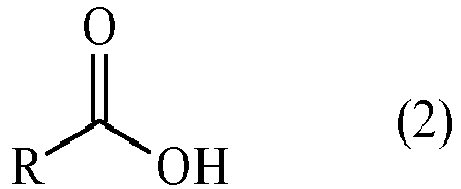
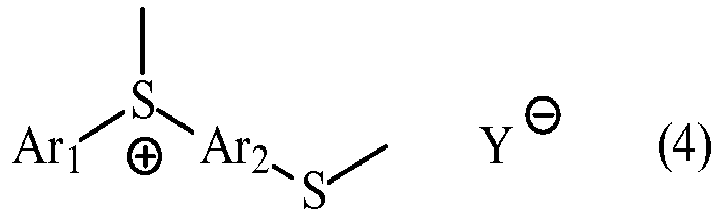
- the first embodiment is directed to a method for preparing a cationic sulfoxide intermediate having the following formula (1): wherein Ar 1 and Ar 2 are substituted or unsubstituted aryl group that are the same or different, comprising reacting hydrogen peroxide with (i) a compound having the following formula (2) or sulfonic acid R'SO 3 H (wherein R' is CH 3 , CF 3 , phenyl, toluene, or OH) and (ii) a cationic thioether intermediate having the following formula (4) to obtain the cationic sulfoxide intermediate: wherein R is a substituted or unsubstituted C 1 -C 6 alkyl group; and wherein Ar 1 and Ar 2 are as defined above and Y is an anion.
- the second embodiment is directed to a method for preparing a polyarylene sulfide monomer having the following formula (7): wherein Ar 1 and Ar 2 are substituted or unsubstituted aryl groups that are the same or different.
- the method comprises the method for preparing a cationic sulfoxide intermediate as discussed above and as represented by formula (1) and demethylating the cationic sulfoxide intermediate to obtain the polyarylene sulfide monomer of formula (7).
- the third embodiment is directed to a method for preparing a polyarylene sulfide having the following formula (8):
- the method comprises polymerizing a polyarylene sulfide monomer as discussed above and as represented by formula (7).
- Ar 1 and Ar 2 are substituted or unsubstituted aryl groups that may be the same or different, and n is 1 to 1000.
- a first embodiment is directed to a method for preparing a cationic sulfoxide intermediate having the following formula (1): wherein Ar 1 and Ar 2 are substituted or unsubstituted aryl groups that are the same or different and may be a phenyl group, a biphenyl group, a naphthyl group, a thienyl group, a tolyl group, a xylyl group, an indolyl group, a tetrahydronaphthyl group, a phenanthrenyl group, a biphenylenyl group, an indenyl group, an anthracenyl group, or a fluorenyl group.
- the aryl group may have a single ring, two fused rings, or three fused rings. In one embodiment, the aryl group may be a phenyl or biphenyl group.
- the method for preparing the cationic sulfoxide intermediate comprises reacting hydrogen peroxide with (i) a compound having the following formula (2) or sulfonic acid R'SO 3 H (wherein R' is CH 3 , CF 3 , phenyl, toluene, or OH) and (ii) a cationic thioether intermediate having the following formula (4) to obtain the cationic sulfoxide intermediate: wherein R is a substituted or unsubstituted C 1 -C 6 alkyl group; and wherein Ar 1 and Ar 2 are as defined above and Y is an anion.
- Y is represented by such as HSO 4 , CH 3 SO 3 , PhSO 3 , p -tolSO 3 or CF 3 SO 3 .
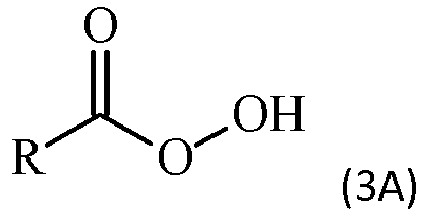
- the method for preparing the cationic sulfoxide intermediate may comprise reacting hydrogen peroxide with the compound having the formula (2) to obtain a compound having the following formula (3A): wherein R is a substituted or unsubstituted C 1 -C 6 alkyl group; and reacting the compound having the formula (3A) with the cationic thioether intermediate (4).
- the method for preparing the cationic sulfoxide intermediate may comprise reacting hydrogen peroxide with sulfonic acid R'SO 3 H to obtain a compound having the following formula (3B): wherein R' is CH 3 , CF 3 , phenyl, toluene, or OH; and reacting the compound having the formula (3B) with the cationic thioether intermediate (4).
- the molar ratio of hydrogen peroxide to the compound having the formula (2) may be 2:1 to 4:1.
- the molar ratio of hydrogen peroxide to sulfonic acid R'SO 3 H may be 2:1 to 4:1.
- R may be a methyl group.
- R may be linear or a cyclic alkyl group from C1 to C6.
- the cationic thioether intermediate (4) may be first mixed with the compound having the formula (2), and then, hydrogen peroxide may be added.
- the reaction may proceed at about 20°C to 25°C for 80 minutes to 90 minutes.
- the cationic thioether intermediate may be prepared by a method of reacting the compound having the formula (5): and the compound having the following formula (6): in acidic conditions wherein Ar 1 and Ar 2 is defined the same as Ar 1 and Ar 2 above.
- Ar 1 and Ar 2 may be phenyl or biphenyl groups.
- the compound of formula (5) may be thioanisole or methyl biphenyl sulfide.
- the compound of formula (6) may be methyl phenyl sulfoxide.
- the acidic conditions may be produced by adding sulfonic acid R'SO 3 H wherein R' is CH 3 , CF 3 , phenyl, toluene, or OH.
- the acidic conditions may be produced by adding methanesulfonic acid, benzenesulfonic acid, p-toluenesulfonic acid, sulfuric acid, or trifluoromethane sulfonic acid.
- the same parts by mole of thioanisole and methyl phenyl sulfoxide are mixed and reacted in acidic condition from 0 to 25°C in 1 atm.
- the compounds of formula (5) and formula (6) may be combined at about 0°C, and the temperature may be raised to room temperature (i.e., about 18°C to 25°C) after an acid is added. In one embodiment, the reaction may continue for about 10 hours to 30 hours (i.e., about 20 hours).
- a second embodiment is directed to a method for preparing a polyarylene sulfide monomer having the following formula (7): wherein Ar 1 and Ar 2 are aryl groups that may be the same or different and may be a phenyl group, a biphenyl group, a naphthyl group, a thienyl group, a tolyl group, a xylyl group, an indolyl group, a tetrahydronaphthyl group, a phenanthrenyl group, a biphenylenyl group, an indenyl group, an anthracenyl group, or a fluorenyl group.
- Ar 1 and Ar 2 are aryl groups that may be the same or different and may be a phenyl group, a biphenyl group, a naphthyl group, a thienyl group, a tolyl group, a xylyl group, an indolyl group,
- the aryl group may have a single ring, two fused rings, or three fused rings.
- the aryl group may be a phenyl or biphenyl group.
- the polyarylene sulfide monomer may be methyl 4-(phenylthio)phenyl sulfoxide. This method may not use a halogen.
- the first step for preparing the polyarylene sulfide monomer comprises the method for preparing a cationic sulfoxide intermediate as discussed above.
- the cationic sulfoxide intermediate is demethylated to obtain the polyarylene sulfide monomer of formula (7).
- the efficient nucleophiles are chosen for demethylation of the cationic thioether intermediate (4), and the nucleophiles may be substituted or unsubstituted amine, amide, pyridine, or halide compounds from about 20°C to 150°C in 1 atm. In one embodiment, the reaction may proceed for about 20 minutes to 6 hours.
- a third embodiment is directed to a method for preparing a polyarylene sulfide having the following structure according to formula (8): wherein
- the PAS is prepared by polymerizing the polyarylene sulfide monomer prepared by the method discussed above.
- the same parts by mole of thioanisole and methyl phenyl sulfoxide may be mixed and reacted in acidic condition from about 0°C to 25°C in about 1 atm, and the used acid may be sulfonic acid R'SO 3 H wherein R' is CH 3 , CF 3 , phenyl, toluene, or OH.
- the used acid may be methanesulfonic acid, benzenesulfonic acid, p-toluenesulfonic acid, sulfuric acid, or trifluoromethane sulfonic acid.
- the cationic sulfoxide intermediate may be demethylated to obtain the polyarylene sulfide monomer of formula (7).
- the efficient nucleophiles are chosen for demethylation of the cationic thioether intermediate (4), and the nucleophiles may be substituted or unsubstituted amine, amide, pyridine, or halide compounds from 20 to 150°C in 1 atm. In one embodiment, the reaction proceeds for 20 minutes to 6 hours.
- the polyarylene sulfide monomer is reacted with an acid to obtain a pulysulfonium intermediate having the following structure according to formula (9): wherein
- the acid may be sulfonic acid R'SO 3 H wherein R' is CH 3 , CF 3 , phenyl, toluene, or OH.
- the acid may be sulfuric acid, methanesulfonic acid, benzenesulfonic acid, p- toluenesulfonic acid, or trifluoromethanesulfonic acid.
- the polyarylene sulfide monomer and the acid may be reacted at about 0°C for about 30 minutes to 1 hour, and then, the temperature of the reaction may be raised to room temperature (i.e., about 18°C to 25°C) for about 10 hours to 30 hours (i.e., about 20 hours).
- the polysulfonium intermediate (9) is demethylated to obtain the polyarylene sulfide (8).
- the polysulfonium intermediate may be demethylated with a nucleophile.
- the nucleophile may be aqueous HCl, HBr, HI, amines, amides or pyridines.
- the acidity of the acid used for demethylation may be stronger than the acid used to obtain the polysulfonium intermediate.
- the polysulfonium intermediate may be demethylated in an organic solvent.
- the organic solvent may be at least one selected from the group consisting of water, ketones, nitriles, sulfones and amides.
- the organic solvent may be a mixed solvent with water. In another embodiment, the organic solvent may be a mixed solvent of water and acetone.
- the efficient nucleophiles are chosen for demethylation of the polysulfonium intermediate, and the nucleophiles may be substituted or unsubstituted amine, amide, pyridine, or halide compounds from about 20°C to 150°C in about 1 atm. In one embodiment, the reaction proceeds for about 4 hours to 72 hours. In another embodiment, the reaction may proceed for about 20 hours to 24 hours at a temperature of room temperature up to 100°C. Room temperature is defined as being about 18°C to 25°C.
- reaction scheme of the disclosed embodiment is shown below wherein a cationic intermediate with a sulfonium group is obtained by reacting thioanisole and methylphenyl sulfoxide in an acidic condition. Subsequently, a moderate oxidant is selected to oxidate the thioether group rather than the sulfonium group as shown in Scheme (3). Then, the PPS monomer is obtained after demethylation. Next, polymerization of the PPS monomer occurs as shown in Scheme (4).
- oxidation step of the disclosed embodiment is shown below wherein the cationic thioether intermediate is oxidized with acetic peroxide to obtain a cationic sulfoxide intermediate.
- the acetic peroxide may be obtained by mixing hydrogen peroxide and acetic acid.
- the acetic peroxide may be prepared by mixing hydrogen peroxide and acetic acid.
- the acetic peroxide may then be used to oxidize the cationic thioether intermediate.
- the methyl group and positive charge on the sulfonic group provides a steric and electric hindrance for selective oxidation on the thioether group.
- the sulfonium group has a positive charge and a steric blocked group (i.e., an alkyl group) that prevents the sulfonium group from being oxidized when one or more than one oxidant exists.
- a moderate oxidant may be selected to oxidize the thioether group without oxidizing the sulfonium group to obtain an intermediate of a PAS monomer. Subsequently, the PAS monomer can be prepared after demethylating the sulfonium group.
- the disclosed embodiment may conduct the oxidation step prior to the demethylation step.
- conventional methods perform the demethylation step followed by the oxidation step.
- FIG. 5 shows the NMR spectrum of the compound.
- 1 H NMR 400MHz, ppm, CDCl 3 ): 2.72 (-CH 3 , s), 7.38-7.63 (aromatic H, 13H, m).
- the m/z signals of methyl 4-(phenylthio)biphenyl sulfoxide were 325(M + H + ), 347(M + Na + ) and 671(2*M + Na + ) as shown in FIG. 6 .
Landscapes
- Chemical & Material Sciences (AREA)
- Organic Chemistry (AREA)
- Health & Medical Sciences (AREA)
- Chemical Kinetics & Catalysis (AREA)
- Medicinal Chemistry (AREA)
- Polymers & Plastics (AREA)
- Polymers With Sulfur, Phosphorus Or Metals In The Main Chain (AREA)
- Organic Low-Molecular-Weight Compounds And Preparation Thereof (AREA)
Abstract

Description
- This non-provisional application claims the benefit under 35 U.S.C. §119(e) to
U.S. Provisional Application No. 62/277,091, filed on January 11, 2016 - The technical field relates to a method for preparing polyarylene sulfide (PAS) monomer.
- Polyarylene sulfide (PAS), specifically polyphenylene sulfide (PPS), is a material with good mechanical properties and excellent thermal and chemical resistance compared to metals of the electronic and automobile industry. PAS is also useful in spinning fibers of filters, connectors, coating material, and electronic components. Conventionally, the preparation of PAS was formed by reacting p-dichlorobenzene and sodium sulfide as monomers. A massive byproduct of alkali metal halide resided in the PAS resin, so the PAS resin needed some purification steps. However, the purification by removal of the byproduct increases the production cost, degrades the quality, and decreases the efficiency of the production of PAS resin.
-
JP 07-304872 A 
- However, the use of a halogen such as Br2 for oxidation is disadvantageous. Specifically, the halogen results in increased cost due to the additional steps needed to purify the PAS resin. In addition, the halogen is not environmentally friendly. Therefore, an industry-wide need exists for a method of preparing a polyarylene sulfide monomer without a halogen.
- The disclosed embodiments relate to methods of preparing a PAS monomer without a halogen. More specifically, in the disclosed embodiments, a selective oxidation process in producing the PAS monomer prevents the formation of byproducts of sulfones and sulfoxides due to different oxidation states.
- The first embodiment is directed to a method for preparing a cationic sulfoxide intermediate having the following formula (1):


- The second embodiment is directed to a method for preparing a polyarylene sulfide monomer having the following formula (7):

- The third embodiment is directed to a method for preparing a polyarylene sulfide having the following formula (8):

- Further scope of applicability of the disclosed embodiments will become apparent from the detailed description given hereinafter. However, it should be understood that the detailed description and specific examples, while indicating alternative embodiments of the disclosed embodiments, are given by way of illustration only, since various changes and modifications within the spirit and scope of the disclosed embodiments will become apparent to one of ordinary skill in the art from this detailed description.
- The disclosed embodiments will become more fully understood from the detailed description given below and the accompanying drawings that are given by way of illustration only and are thus not limitative of the disclosed embodiments.
-
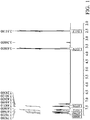
FIG. 1 is a nuclear magnetic resonance (NMR) spectrum of the methylphenyl[4-(methylthio)phenyl]sulfonium perchlorate produced in the examples. -
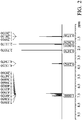
FIG. 2 is a nuclear magnetic resonance (NMR) spectrum of the methyl 4-(phenylthio)phenyl sulfoxide produced in the examples. -
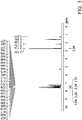
FIG. 3 is a nuclear magnetic resonance (NMR) spectrum of the methyl phenyl [4-(methylthio)biphenyl]sulfonium perchlorate produced in the examples. -
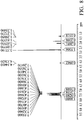
FIG. 4 is a liquid chromatography-mass spectrometry (LC-MS) spectrum of the methyl phenyl [4-(methylthio)biphenyl]sulfonium perchlorate produced in the examples. -
FIG. 5 is a nuclear magnetic resonance (NMR) spectrum of the methyl 4-(phenylthio)biphenyl sulfoxide produced in the examples. -
FIG. 6 is a liquid chromatography-mass spectrometry (LC-MS) spectrum of the methyl 4-(phenylthio)biphenyl sulfoxide produced in the examples. -
FIG. 7 is a differential scanning calorimetry (DSC) spectrum of the polyphenylene sulfide produced in the examples. -
FIG. 8 is a nuclear magnetic resonance (NMR) spectrum of the methyl 4-(phenylthio)phenyl sulfoxide produced in the examples. - In the following detailed description, for purposes of explanation, numerous specific details are set forth in order to provide a thorough understanding of the disclosed embodiments. It will be apparent, however, that one or more embodiments may be practiced without these specific details. The inventive concept may be embodied in various forms without being limited to the exemplary embodiments set forth herein.
- A first embodiment is directed to a method for preparing a cationic sulfoxide intermediate having the following formula (1):

- The method for preparing the cationic sulfoxide intermediate comprises reacting hydrogen peroxide with (i) a compound having the following formula (2) or sulfonic acid R'SO3H
(wherein R' is CH3, CF3, phenyl, toluene, or OH) and (ii) a cationic thioether intermediate having the following formula (4) to obtain the cationic sulfoxide intermediate:

- In one embodiment, the method for preparing the cationic sulfoxide intermediate may comprise reacting hydrogen peroxide with the compound having the formula (2) to obtain a compound having the following formula (3A):
- In one embodiment, the method for preparing the cationic sulfoxide intermediate may comprise reacting hydrogen peroxide with sulfonic acid R'SO3H to obtain a compound having the following formula (3B):

- In one embodiment, the molar ratio of hydrogen peroxide to the compound having the formula (2) may be 2:1 to 4:1. Similarly, the molar ratio of hydrogen peroxide to sulfonic acid R'SO3H may be 2:1 to 4:1.
- In one embodiment, R may be a methyl group. R may be linear or a cyclic alkyl group from C1 to C6.
- In one embodiment, the cationic thioether intermediate (4) may be first mixed with the compound having the formula (2), and then, hydrogen peroxide may be added.
- In one embodiment, the reaction may proceed at about 20°C to 25°C for 80 minutes to 90 minutes.
- The cationic thioether intermediate may be prepared by a method of reacting the compound having the formula (5):


- The first embodiment, using a compound having the formula (2), is represented in the following reaction scheme:

- The first embodiment, using a sulfonic acid R'SO3H, is represented in the following reaction scheme:

- A second embodiment is directed to a method for preparing a polyarylene sulfide monomer having the following formula (7):

- The first step for preparing the polyarylene sulfide monomer comprises the method for preparing a cationic sulfoxide intermediate as discussed above.
- In the next step, the cationic sulfoxide intermediate is demethylated to obtain the polyarylene sulfide monomer of formula (7).
- The efficient nucleophiles are chosen for demethylation of the cationic thioether intermediate (4), and the nucleophiles may be substituted or unsubstituted amine, amide, pyridine, or halide compounds from about 20°C to 150°C in 1 atm. In one embodiment, the reaction may proceed for about 20 minutes to 6 hours.
- The second embodiment is represented in the following reaction scheme:

- A third embodiment is directed to a method for preparing a polyarylene sulfide having the following structure according to formula (8):

- Ar1 and Ar2 are aryl groups that may be the same or different and may be a phenyl group, a biphenyl group, a naphthyl group, a thienyl group, a tolyl group, a xylyl group, an indolyl group, a tetrahydronaphthyl group, a phenanthrenyl group, a biphenylenyl group, an indenyl group, an anthracenyl group, or a fluorenyl group. The aryl group may have a single ring, two fused rings, or three fused rings. In one embodiment, the aryl group may be a phenyl group. As such, the polyarylene sulfide may be polyphenylene sulfide.
- n is an integer ranging from 1 to 1000 or from 2 to 1000.
- The PAS is prepared by polymerizing the polyarylene sulfide monomer prepared by the method discussed above.
- In one embodiment, the same parts by mole of thioanisole and methyl phenyl sulfoxide may be mixed and reacted in acidic condition from about 0°C to 25°C in about 1 atm, and the used acid may be sulfonic acid R'SO3H wherein R' is CH3, CF3, phenyl, toluene, or OH. In other words, the used acid may be methanesulfonic acid, benzenesulfonic acid, p-toluenesulfonic acid, sulfuric acid, or trifluoromethane sulfonic acid. In the next step, the cationic sulfoxide intermediate may be demethylated to obtain the polyarylene sulfide monomer of formula (7). The efficient nucleophiles are chosen for demethylation of the cationic thioether intermediate (4), and the nucleophiles may be substituted or unsubstituted amine, amide, pyridine, or halide compounds from 20 to 150°C in 1 atm. In one embodiment, the reaction proceeds for 20 minutes to 6 hours.
- In one embodiment, the polyarylene sulfide monomer is reacted with an acid to obtain a pulysulfonium intermediate having the following structure according to formula (9):

- Ar1 and Ar2 are aryl groups that may be the same or different and may be a phenyl group, a biphenyl group, a naphthyl group, a thienyl group, a tolyl group, a xylyl group, an indolyl group, a tetrahydronaphthyl group, a phenanthrenyl group, a biphenylenyl group, an indenyl group, an anthracenyl group, or a fluorenyl group. The aryl group may have a single ring, two fused rings, or three fused rings. In one embodiment, the aryl group may be a phenyl group.
- n is an integer ranging from 1 to 1000 or from 2 to 1000.
- Y is represented by anions, such as HSO4 -, CH3SO3 -, PhSO3 -, p-tolSO3 - or CF3SO3 -.
- The acid may be sulfonic acid R'SO3H wherein R' is CH3, CF3, phenyl, toluene, or OH. In other words, the acid may be sulfuric acid, methanesulfonic acid, benzenesulfonic acid, p-toluenesulfonic acid, or trifluoromethanesulfonic acid.
- In one embodiment, the polyarylene sulfide monomer and the acid may be reacted at about 0°C for about 30 minutes to 1 hour, and then, the temperature of the reaction may be raised to room temperature (i.e., about 18°C to 25°C) for about 10 hours to 30 hours (i.e., about 20 hours).
- In the next step, the polysulfonium intermediate (9) is demethylated to obtain the polyarylene sulfide (8). The polysulfonium intermediate may be demethylated with a nucleophile. The nucleophile may be aqueous HCl, HBr, HI, amines, amides or pyridines. In this regard, the acidity of the acid used for demethylation may be stronger than the acid used to obtain the polysulfonium intermediate. The polysulfonium intermediate may be demethylated in an organic solvent. The organic solvent may be at least one selected from the group consisting of water, ketones, nitriles, sulfones and amides. In one embodiment, the organic solvent may be a mixed solvent with water. In another embodiment, the organic solvent may be a mixed solvent of water and acetone. The efficient nucleophiles are chosen for demethylation of the polysulfonium intermediate, and the nucleophiles may be substituted or unsubstituted amine, amide, pyridine, or halide compounds from about 20°C to 150°C in about 1 atm. In one embodiment, the reaction proceeds for about 4 hours to 72 hours. In another embodiment, the reaction may proceed for about 20 hours to 24 hours at a temperature of room temperature up to 100°C. Room temperature is defined as being about 18°C to 25°C.
- The third embodiment is represented in the following reaction scheme:

- One example of a reaction scheme of the disclosed embodiment is shown below wherein a cationic intermediate with a sulfonium group is obtained by reacting thioanisole and methylphenyl sulfoxide in an acidic condition. Subsequently, a moderate oxidant is selected to oxidate the thioether group rather than the sulfonium group as shown in Scheme (3). Then, the PPS monomer is obtained after demethylation. Next, polymerization of the PPS monomer occurs as shown in Scheme (4).

- One example of the oxidation step of the disclosed embodiment is shown below wherein the cationic thioether intermediate is oxidized with acetic peroxide to obtain a cationic sulfoxide intermediate. The acetic peroxide may be obtained by mixing hydrogen peroxide and acetic acid.

- In contrast, conventional methods do not use selective oxidation because a different oxidant, specifically a halogen, is used. However, this type of oxidation may oxidize the sulfonium group. To avoid these problems of conventional methods, the disclosed embodiment does not use a halogen.
- In addition, unlike conventional methods, the disclosed embodiment may conduct the oxidation step prior to the demethylation step. In contrast, conventional methods perform the demethylation step followed by the oxidation step.
- The disclosed embodiment will hereinafter be described with reference to exemplary embodiments, which are written to be understood only as examples and are not intended to limit the scope of the present application.
-

- 2.9ml thioanisole and 3.5g methylphenyl sulfoxide were mixed in a double-necked round-bottom flask with a stirrer and cooled to 0°C. Subsequently, 50ml methanesulfonic acid was added dropwise, and then the temperature was raised to room temperature. The reaction continued for 20hr, and the raw product was poured into 100ml 70% HClO4 and stirred for another 1hr. Extraction was operated with water and dichloromethane, and the product, thioether sulfonium intermediate, was obtained (yield: 90%). The NMR spectrum of
FIG. 1 showed the following values: 1H NMR (400MHz, ppm, CDCl3): 2.5 (-CH3, s), 3.7 (S-CH3, s), 7.4 (phenyl, 2H, d), 7.6 (phenyl, 3H, t), 7.7-7.8 (phenyl, 4H, m). -

- 1 g methylphenyl[4-(methylthio)phenyl] sulfonium perchlorate and 3ml glacial acetic acid were mixed in a double-necked round-bottom flask with a stirrer. The mixture was stirred in a water bath at 20°C, and 0.9
ml 30% hydrogen peroxide was introduced dropwise. Subsequently, the reaction proceeded continuously for 80min. After the reaction was finished, organic solvent was utilized to extract the cationic sulfoxide intermediate with water. 0.97g of intermediate was obtained. The cationic sulfoxide intermediate was dissolved in 10ml acetonitrile, and 30ml 10% KCl was introduced dropwise. The mixture was refluxed for 6hr, and extraction was operated by water and dichloromethane triply. 0.63g PPS monomer was obtained (yield: 88%). The NMR spectrum ofFIG. 2 showed the following values: 1H NMR (400MHz, ppm, CDCl3): 2.73 (-CH3, s), 7.35-7.56 (phenyl, 9H, m). -

- 1g methyl biphenyl sulfide and 0.7g methylphenyl sulfoxide were mixed in a double-necked round-bottom flask with a stirrer and cooled to 0°C. Subsequently, 10ml methanesulfonic acid was added dropwise, and then, the temperature was raised to room temperature. The reaction continued for 20hr, and a brown raw product was poured into 40ml 70% HClO4 and stirred for another 1hr. Extraction was operated with water and dichloromethane, and the product, thioether sulfonium intermediate, was prepared (yield: 92%). The scheme is shown above.
FIG. 3 shows the NMR spectrum of the compound, and the m/z of methyl phenyl [4-(methylthio)biphenyl] sulfonium in the LC-MS spectrum was 323 as shown inFIG. 4 . 1H NMR (400MHz, ppm, CDCl3): 2.48 (-CH3, s), 3.67 (sulfonium-CH3, s), 7.40-7.94 (aromatic H, 13H, m). -

- 1.9g methyl phenyl [4-(methylthio)biphenyl] sulfonium perchlorate and 30ml glacial acetic acid were mixed in a double-necked round-bottom flask with a stirrer. The mixture was stirred in a water bath at 20°C, and 2.02
ml 30% hydrogen peroxide was introduced dropwise. Subsequently, the reaction proceeded continuously for 90min. After the reaction was finished, organic solvent was utilized to extract the cationic sulfoxide intermediate with water to obtain an orange intermediate. The cationic sulfoxide intermediate was dissolved in 10ml 4-picoline. The reaction proceeded for 30min and was refluxed continuously for another 20min. Extraction was operated subsequently by water and dichloromethane triply to obtain 1g PPS monomer (yield: 69%).FIG. 5 shows the NMR spectrum of the compound. 1H NMR (400MHz, ppm, CDCl3): 2.72 (-CH3, s), 7.38-7.63 (aromatic H, 13H, m). The m/z signals of methyl 4-(phenylthio)biphenyl sulfoxide were 325(M + H+), 347(M + Na+) and 671(2*M + Na+) as shown inFIG. 6 . -

- 1g methyl-4-(phenylthio)phenyl sulfoxide was added in a double-necked round-bottom flask with a stirrer and cooled to 0°C. Subsequently, 5ml trifluoromethanesulfonic acid was added dropwise at 0°C, and then the temperature was raised to room temperature slowly during a period of 0.5-1 hour. The reaction continued for 20 hours, and the raw product was washed with 100ml ice water several times and dried in vacuum. A white precipitate (1.4g, yield: 95%) of a polycationic intermediate was obtained.
- 0.95g of the polycationic intermediate was added to a double-necked round-bottom flask with a stirrer. 10ml 4-picoline was added dropwise, and the reaction continued for 1 hour. The temperature was raised to 100°C, and the reaction processed for about 20 hours. A white powder of PPS was obtained (0.37g, 70%), and the excess 4-picoline solution was quenched with 200ml 10% methanol solution. According to the DSC spectrum of
FIG. 7 , the melting point of the PPS was 280°C. -

- 2.66g thioanisole and 3g methylphenyl sulfoxide were mixed in a double-necked round-bottom flask with a stirrer and cooled to 0°C. Subsequently, 3ml 97% sulfuric acid was added dropwise, and then the temperature was raised to room temperature. The reaction continued for 20 hours, and then 30ml water and 2.44
g 30% hydrogen peroxide was induced for another 4 hours at room temperature. Subsequently, 45ml 30% ammonia was induced for 4 hours at room temperature. Extraction was operated with water and ethyl acetate, and methyl 4-(phenylthio)phenyl sulfoxide was obtained (yield: 90.6%). The NMR spectrum ofFIG. 8 showed the following values: 1H NMR (400MHz, ppm, CDCl3): 2.72 (-CH3, s), 7.34-7.55 (phenyl, 9H, m). - It will be apparent to those skilled in the art that various modifications and variations can be made to the disclosed embodiments. It is intended that the specification and examples be considered as exemplary only with a true scope of the disclosure being indicated by the following claims and their equivalents.
Claims (12)
- A method for preparing a cationic sulfoxide intermediate having the following formula (1):
 reacting hydrogen peroxide with (i) a compound having the following formula (2) or sulfonic acid R'SO3H, wherein R' is CH3, CF3, phenyl, toluene, or OH, and (ii) a cationic thioether intermediate having the following formula (4) to obtain the cationic sulfoxide intermediate:

- The method of claim 1, wherein the cationic thioether intermediate is prepared by the method comprising:reacting a compound having the following formula (5):


- A method for preparing a polyarylene sulfide monomer having the following formula (7):
 the method for preparing a cationic sulfoxide intermediate according to claim 1; anddemethylating the cationic sulfoxide intermediate to obtain the polyarylene sulfide monomer.
 - A method for preparing a polyarylene sulfide having the following formula (8):
 polymerizing a polyarylene sulfide monomer prepared by the method according to claim 3;wherein Ar1 and Ar2 are substituted or unsubstituted aryl groups that are the same or different and n is 1 to 1000.
 - The method according to claim 1 or 2, wherein Ar1 and Ar2 are phenyl groups.
- The method according to any of claims 1, 2 or 5, wherein R is a methyl group.
- The method according to claim 3 or 4, wherein the method does not use a halogen.
- The method of claim 2, wherein the compound having the formula (5) is thioanisole or methyl biphenyl sulfide.
- The method of claim 2, wherein the compound having the formula (6) is methylphenyl sulfoxide.
- The method of any of claims 1, 2 or 5 to 9, wherein a molar ratio of hydrogen peroxide to the compound having the formula (2) is 2:1 to 4:1.
- The method of any of claims 2 or 5 to 10, wherein the acidic conditions are produced by adding methanesulfonic acid, benzenesulfonic acid, p-toluenesulfonic acid, sulfuric acid, or trifluoromethane sulfonic acid.
- The method of any of claims 1, 2 or 5 to 11, wherein a molar ratio of hydrogen peroxide to the sulfonic acid is 2:1 to 4:1.
Applications Claiming Priority (2)
| Application Number | Priority Date | Filing Date | Title |
|---|---|---|---|
| US201662277091P | 2016-01-11 | 2016-01-11 | |
| US15/388,215 US10377705B2 (en) | 2016-01-11 | 2016-12-22 | Method for preparing polyarylene sulfide (PAS) monomer |
Publications (2)
| Publication Number | Publication Date |
|---|---|
| EP3190142A1 true EP3190142A1 (en) | 2017-07-12 |
| EP3190142B1 EP3190142B1 (en) | 2022-05-04 |
Family
ID=57914688
Family Applications (1)
| Application Number | Title | Priority Date | Filing Date |
|---|---|---|---|
| EP17150910.2A Active EP3190142B1 (en) | 2016-01-11 | 2017-01-10 | Method for preparing polyarylene sulfide (pas) monomer |
Country Status (5)
| Country | Link |
|---|---|
| US (1) | US10377705B2 (en) |
| EP (1) | EP3190142B1 (en) |
| JP (1) | JP6313484B2 (en) |
| CN (2) | CN111875525A (en) |
| TW (1) | TWI606997B (en) |
Cited By (2)
| Publication number | Priority date | Publication date | Assignee | Title |
|---|---|---|---|---|
| EP3438092A1 (en) * | 2017-08-01 | 2019-02-06 | Industrial Technology Research Institute | Method for preparing compound and method for preparing polymer employing the same |
| JP2019048798A (en) * | 2017-08-01 | 2019-03-28 | 財團法人工業技術研究院Industrial Technology Research Institute | Manufacturing method of compound, and manufacturing method of polymer using the same |
Families Citing this family (2)
| Publication number | Priority date | Publication date | Assignee | Title |
|---|---|---|---|---|
| CN109608638A (en) * | 2018-11-19 | 2019-04-12 | 太原理工大学 | A kind of synthetic method of high molecular weight linear polyphenylene sulfide |
| US12365765B2 (en) * | 2019-10-15 | 2025-07-22 | Solvay Specialty Polymers Usa, Llc | Poly(arylene sulfide) polymers and corresponding polymer compositions and articles |
Citations (7)
| Publication number | Priority date | Publication date | Assignee | Title |
|---|---|---|---|---|
| JPH0178993U (en) * | 1987-11-16 | 1989-05-26 | ||
| JPH07304872A (en) | 1994-05-11 | 1995-11-21 | Hidetoshi Tsuchida | Production of sulfonated polyarylene sulfide compound |
| JPH10182823A (en) * | 1996-12-27 | 1998-07-07 | Kagaku Gijutsu Shinko Jigyodan | Method for producing poly (thioarylene) compound |
| US6111143A (en) * | 1998-07-16 | 2000-08-29 | Korea Kumbo Petrochemical Co., Ltd. | Sulfonium salt and its manufacturing method |
| KR20070036776A (en) * | 2007-01-15 | 2007-04-03 | 도레이 가부시끼가이샤 | Polyarylene sulfide oxides, solid articles and methods of making the same |
| WO2015033938A1 (en) * | 2013-09-03 | 2015-03-12 | Dic株式会社 | Polyarylene sulfide resin, manufacturing method therefor, and molding |
| WO2015033936A1 (en) * | 2013-09-03 | 2015-03-12 | Dic株式会社 | Polyarylene sulfide resin and manufacturing method therefor, poly(arylene sulfonium salt) and manufacturing method therefor, and sulfoxide |
Family Cites Families (31)
| Publication number | Priority date | Publication date | Assignee | Title |
|---|---|---|---|---|
| US2739991A (en) | 1952-07-30 | 1956-03-27 | Universal Oil Prod Co | Production of benzene |
| US2843643A (en) | 1956-05-14 | 1958-07-15 | Universal Oil Prod Co | Rubber containing demethylated wood tar distillate |
| US3354129A (en) | 1963-11-27 | 1967-11-21 | Phillips Petroleum Co | Production of polymers from aromatic compounds |
| US3642772A (en) | 1968-09-04 | 1972-02-15 | Boehringer Mannheim Gmbh | Process for preparing s-adenosyl homocysteine |
| US3775485A (en) | 1970-09-14 | 1973-11-27 | Shell Oil Co | Production of hydroxyaryl thioethers |
| JPS5029511A (en) | 1973-07-11 | 1975-03-25 | ||
| US3987016A (en) | 1975-01-16 | 1976-10-19 | The United States Of America As Represented By The Secretary Of The Air Force | Method for the preparation of polyarylene sulfides containing pendant cyano groups by polymerizing m-benzenedithiol, dibromobenzene, and 2,4-dichlorobenzonitrile |
| DE2649590C3 (en) | 1975-11-05 | 1979-02-08 | Seitetsu Kagaku Co., Ltd., Hyogo (Japan) | Process for the preparation of alkylphenyl sulfides |
| US4786713A (en) | 1987-11-06 | 1988-11-22 | Eastman Kodak Company | Copoly(arylene sulfidex-disulfide) |
| JP3108891B2 (en) | 1991-12-27 | 2000-11-13 | 財団法人生産開発科学研究所 | Method for producing polyarylene thioether derivative |
| JP3123724B2 (en) | 1992-02-29 | 2001-01-15 | 財団法人生産開発科学研究所 | Poly (alkyl-P-thiophenoxyphenylsulfonium salt) compound |
| DE69526822T2 (en) | 1994-02-23 | 2003-01-23 | Kyowa Hakko Kogyo K.K., Tokio/Tokyo | Xanthine derivatives |
| JP3535210B2 (en) | 1994-04-08 | 2004-06-07 | 住友精化株式会社 | Method for producing alkylphenyl sulfide |
| US5618981A (en) | 1995-05-19 | 1997-04-08 | Phillips Petroleum Company | Process for producing aromatic sulfides |
| JPH0948854A (en) | 1995-08-08 | 1997-02-18 | Res Dev Corp Of Japan | Poly (aryl-P-arylene sulfonium salt) compound, method for producing the compound, and aromatic polymer compound containing sulfonium group |
| JP3160214B2 (en) | 1996-12-27 | 2001-04-25 | 科学技術振興事業団 | Method for producing poly (arylene sulfonium salt) compound |
| US7462481B2 (en) | 2000-10-30 | 2008-12-09 | Verdia, Inc. | Glyphosate N-acetyltransferase (GAT) genes |
| JP2002265603A (en) | 2001-03-12 | 2002-09-18 | Idemitsu Petrochem Co Ltd | Method for producing polyaryrene sulfide |
| JP3878520B2 (en) | 2002-07-18 | 2007-02-07 | 本田技研工業株式会社 | Proton conducting polymer solid electrolyte and method for producing the same |
| JP2005330185A (en) | 2004-05-18 | 2005-12-02 | Takasago Internatl Corp | Dithia-s-indacene derivative |
| TWI259754B (en) | 2004-05-18 | 2006-08-01 | Quanta Comp Inc | Extended fin array |
| CN100567371C (en) | 2004-07-23 | 2009-12-09 | 东丽株式会社 | Polyarylene sulfide oxide, solid article, and method for producing the same |
| US8445629B2 (en) | 2006-08-17 | 2013-05-21 | Dic Corporation | Method for producing polyarylene sulfide |
| KR101183780B1 (en) | 2006-08-24 | 2012-09-17 | 에스케이케미칼주식회사 | Manufacturing process for Polyarylene sulfide |
| EP2115035B1 (en) | 2007-01-04 | 2018-04-25 | SK Chemicals Co., Ltd. | Polyarylene sulfide resin with excellent luminosity and preparation method thereof |
| TWI466925B (en) | 2007-01-05 | 2015-01-01 | Sk Chemicals Co Ltd | Method for production of polyarylene sulfide resin with excellent luminosity and the polyarylene sulfide resin |
| JP2010059159A (en) | 2008-09-04 | 2010-03-18 | Nippon Chem Ind Co Ltd | 2,2',6,6'-tetrahydroxy-3,3',5,5'-tetrasubstituted biphenyl ligand and method for synthesizing the same |
| WO2010058713A1 (en) | 2008-11-21 | 2010-05-27 | Dic株式会社 | Method for manufacturing polyarylene sulfide resin |
| KR101780404B1 (en) | 2010-02-01 | 2017-09-21 | 에스케이케미칼 주식회사 | Process for preparing polyarylene sulfide having lower content of iodine |
| JP5752232B2 (en) | 2010-03-31 | 2015-07-22 | ブリストル−マイヤーズ スクイブ カンパニーBristol−Myers Squibb Company | Substituted pyrrolotriazine compounds as protein kinase inhibitors |
| CN104058911B (en) * | 2014-07-10 | 2016-06-08 | 联化科技股份有限公司 | A kind of method utilizing micro passage reaction to prepare sulfoxide or sulfone |
-
2016
- 2016-12-22 US US15/388,215 patent/US10377705B2/en active Active
- 2016-12-29 TW TW105143831A patent/TWI606997B/en active
-
2017
- 2017-01-10 EP EP17150910.2A patent/EP3190142B1/en active Active
- 2017-01-10 JP JP2017002101A patent/JP6313484B2/en active Active
- 2017-01-11 CN CN202010688859.1A patent/CN111875525A/en active Pending
- 2017-01-11 CN CN201710017862.9A patent/CN106986803A/en active Pending
Patent Citations (10)
| Publication number | Priority date | Publication date | Assignee | Title |
|---|---|---|---|---|
| JPH0178993U (en) * | 1987-11-16 | 1989-05-26 | ||
| JPH07304872A (en) | 1994-05-11 | 1995-11-21 | Hidetoshi Tsuchida | Production of sulfonated polyarylene sulfide compound |
| JP2988827B2 (en) * | 1994-05-11 | 1999-12-13 | オルガノ株式会社 | Method for producing sulfonated polyarylene sulfide compound |
| JPH10182823A (en) * | 1996-12-27 | 1998-07-07 | Kagaku Gijutsu Shinko Jigyodan | Method for producing poly (thioarylene) compound |
| US6111143A (en) * | 1998-07-16 | 2000-08-29 | Korea Kumbo Petrochemical Co., Ltd. | Sulfonium salt and its manufacturing method |
| KR20070036776A (en) * | 2007-01-15 | 2007-04-03 | 도레이 가부시끼가이샤 | Polyarylene sulfide oxides, solid articles and methods of making the same |
| WO2015033938A1 (en) * | 2013-09-03 | 2015-03-12 | Dic株式会社 | Polyarylene sulfide resin, manufacturing method therefor, and molding |
| WO2015033936A1 (en) * | 2013-09-03 | 2015-03-12 | Dic株式会社 | Polyarylene sulfide resin and manufacturing method therefor, poly(arylene sulfonium salt) and manufacturing method therefor, and sulfoxide |
| EP3034542A1 (en) * | 2013-09-03 | 2016-06-22 | DIC Corporation | Polyarylene sulfide resin, manufacturing method therefor, and molding |
| EP3042924A1 (en) * | 2013-09-03 | 2016-07-13 | DIC Corporation | Polyarylene sulfide resin and manufacturing method therefor, poly(arylene sulfonium salt) and manufacturing method therefor, and sulfoxide |
Non-Patent Citations (11)
| Title |
|---|
| EISHUN TSUCHIDA ET AL: "First Phenylene Polymers Linked by Sulfonium Groups", ANGEWANDTE CHEMIE. INTERNATIONAL EDITION., vol. 35, no. 2324, 1 December 1996 (1996-12-01), DE, pages 2843 - 2845, XP055355340, ISSN: 0570-0833, DOI: 10.1002/anie.199628431 * |
| EISHUN TSUCHIDA ET AL: "SYNTHESIS OF HIGH MOLECULAR WEIGHT POLY(PHENYLENE SULFIDE) BY OXIDATIVE POLYMERIZATION VIA POLY(SULFONIUM CATION) FROM METHYL PHENYL SULFOXIDE", MACROMOLECULES, AMERICAN CHEMICAL SOCIETY, US, vol. 26, no. 26, 20 December 1993 (1993-12-20), pages 7144 - 7148, XP000416281, ISSN: 0024-9297, DOI: 10.1021/MA00078A005 * |
| GABLER R ET AL: "NEUE POLYPHENYLENSULFONE REAKTIONEN AN FESTEN POLYMEREN", CHIMIA INTERNATIONAL JOURNAL FOR CHEMISTRY,, vol. 28, no. 9, 1 September 1974 (1974-09-01), pages 567 - 575, XP002024564, ISSN: 0009-4293 * |
| JILEK J ET AL: "POTENTIAL METABOLITES OF THE NEUROLEPTIC AGENTS BELONGING TO THE 8-METHYLTHIO-10-PIPERAZINO-10,11-DIHYDRODIBENZO ÄB,FÜTHIEPIN SERIES; SYNTHESIS OF 2-HYDROXY AND 3-HYDROXY DERIVATIVES", COLLECTION SYMPOSIUM SERIES (XIIITH SYMPOSIUM ON CHEMISTRY OF NUCLEIC ACID COMPONENTS SPINDLERUV MLYN, CZECH REPUBLIC; SEPTEMBER 03 -09, 2005); [COLLECTION SYMPOSIUM SERIES], XX, XX, vol. 50, no. 10, 1 January 1985 (1985-01-01), pages 2179 - 2190, XP008080353, ISSN: 0010-0765, ISBN: 978-80-86241-25-8 * |
| KIMIHISA YAMAMOTO ET AL: "Aryl sulfide bond formation using the sulfoxide-acid system for synthesis of poly(p-phenylene sulfide) via poly(sulfonium cation) as a precursor", JOURNAL OF THE AMERICAN CHEMICAL SOCIETY, vol. 115, no. 13, 1 June 1993 (1993-06-01), pages 5819 - 5820, XP055355371, ISSN: 0002-7863, DOI: 10.1021/ja00066a058 * |
| KIMIHISA YAMAMOTO ET AL: "Oxidative Coupling of Methyl Phenyl Sulfide via Sulfonium Formation Using an Oxovanadium Complex", THE JOURNAL OF ORGANIC CHEMISTRY, vol. 61, no. 6, 22 March 1996 (1996-03-22), pages 1912 - 1913, XP055355508, ISSN: 0022-3263, DOI: 10.1021/jo951490u * |
| KIMIHISA YAMAMOTO ET AL: "Synthesis of Poly(sulfonium cation) by Oxidative Polymerization of Aryl Alkyl Sulfides", THE JOURNAL OF ORGANIC CHEMISTRY, vol. 60, no. 2, 1 January 1995 (1995-01-01), pages 452 - 453, XP055355369, ISSN: 0022-3263, DOI: 10.1021/jo00107a027 * |
| KLAUS HARTKE ET AL: "Zur Reaktion von Thioanisol mit Antimonpentachlorid", ARCHIV DER PHARMAZIE, vol. 315, no. 2, 1 January 1982 (1982-01-01), Weinheim, pages 153 - 156, XP055355498, ISSN: 0365-6233, DOI: 10.1002/ardp.19823150210 * |
| SATOSHI OGAWA ET AL: "Polyphenylenesulfide no Shinki Goseiho no Kaihatsu", ABSTRACTS OF THE 37TH SYMPOSIUM ON MAIN GROUP ELEMENT CHEMISTRY,, vol. 37, 1 January 2010 (2010-01-01), pages 301 - 302, XP008182801 * |
| TSUCHIDA E ET AL: "Photochemical recycling of polyarylene sulphide", CHEMICAL COMMUNICATIONS - CHEMCOM,, no. 17, 7 September 1996 (1996-09-07), pages 2091 - 2092, XP002229278, ISSN: 1359-7345, DOI: 10.1039/CC9960002091 * |
| UKAI SHIGEO ET AL: "Die Reaktion der Phenolderivate mit Sulfoxiden. IV (einschlieBlich der von Sulfiden und Wasserstoffperoxid ausgehenden Reaktion). Die Synthese von 4-Thiosubstituierten-1, 2-Naphthochinonderivaten", CHEMICAL AND PHARMACEUTICAL BULLETIN, vol. 16, no. 4, 1 January 1968 (1968-01-01), JP, pages 606 - 612, XP055355506, ISSN: 0009-2363, DOI: 10.1248/cpb.16.606 * |
Cited By (3)
| Publication number | Priority date | Publication date | Assignee | Title |
|---|---|---|---|---|
| EP3438092A1 (en) * | 2017-08-01 | 2019-02-06 | Industrial Technology Research Institute | Method for preparing compound and method for preparing polymer employing the same |
| JP2019048798A (en) * | 2017-08-01 | 2019-03-28 | 財團法人工業技術研究院Industrial Technology Research Institute | Manufacturing method of compound, and manufacturing method of polymer using the same |
| US10723841B2 (en) | 2017-08-01 | 2020-07-28 | Industrial Technology Research | Method for preparing compound and method for preparing polymer employing the same |
Also Published As
| Publication number | Publication date |
|---|---|
| US20170197913A1 (en) | 2017-07-13 |
| US10377705B2 (en) | 2019-08-13 |
| TW201726610A (en) | 2017-08-01 |
| TWI606997B (en) | 2017-12-01 |
| CN106986803A (en) | 2017-07-28 |
| EP3190142B1 (en) | 2022-05-04 |
| JP6313484B2 (en) | 2018-04-18 |
| CN111875525A (en) | 2020-11-03 |
| JP2017125014A (en) | 2017-07-20 |
Similar Documents
| Publication | Publication Date | Title |
|---|---|---|
| EP3190142B1 (en) | Method for preparing polyarylene sulfide (pas) monomer | |
| EP2011791B1 (en) | Process for production of methylene disulfonate compound | |
| JP5130728B2 (en) | Epoxy resin purification method | |
| US20020193619A1 (en) | Diaryliodonium salt catalysts made from iodotoluene and a method for preparing them | |
| EP3190143B1 (en) | Polymerization process of polyarylene sulfide | |
| TWI646128B (en) | Method for preparing a polymer | |
| KR20190118525A (en) | Method for preparing lithium bis(fluorosulfonyl) imide | |
| JP2006188449A (en) | Method for producing cyclic disulfonic acid ester | |
| CN109320443B (en) | Preparation method of compound and preparation method of polymer comprising the same | |
| EP3190141B1 (en) | Polymer | |
| US10287396B2 (en) | Polymer | |
| EP3190140B1 (en) | Method for preparing a polymer | |
| KR20120081615A (en) | Method for producing organo-oligo silsesquioxanes | |
| US10184028B2 (en) | Method for preparing a polymer | |
| JP6800920B2 (en) | Method for producing compound and method for producing polymer using it | |
| EP0340826A1 (en) | Method of manufacturing conductive heterocyclic polymers, new heterocyclic conductive polymers, new intermediate products for the preparation of the polymers, and synthesis of the intermediate products | |
| JP6665292B2 (en) | Method for producing 1,1,2,2-tetrakis (4-hydroxyphenyl) ethane compound | |
| JPS6332063B2 (en) | ||
| KR101316093B1 (en) | A preparation method of polythiopene derivatives | |
| TW201910310A (en) | Method for preparing compound and method for preparing polymer employing the same | |
| JPH04353510A (en) | Production of alkyl-substituted biphenol novolak |
Legal Events
| Date | Code | Title | Description |
|---|---|---|---|
| PUAI | Public reference made under article 153(3) epc to a published international application that has entered the european phase |
Free format text: ORIGINAL CODE: 0009012 |
|
| STAA | Information on the status of an ep patent application or granted ep patent |
Free format text: STATUS: THE APPLICATION HAS BEEN PUBLISHED |
|
| AK | Designated contracting states |
Kind code of ref document: A1 Designated state(s): AL AT BE BG CH CY CZ DE DK EE ES FI FR GB GR HR HU IE IS IT LI LT LU LV MC MK MT NL NO PL PT RO RS SE SI SK SM TR |
|
| AX | Request for extension of the european patent |
Extension state: BA ME |
|
| STAA | Information on the status of an ep patent application or granted ep patent |
Free format text: STATUS: REQUEST FOR EXAMINATION WAS MADE |
|
| 17P | Request for examination filed |
Effective date: 20171113 |
|
| RBV | Designated contracting states (corrected) |
Designated state(s): AL AT BE BG CH CY CZ DE DK EE ES FI FR GB GR HR HU IE IS IT LI LT LU LV MC MK MT NL NO PL PT RO RS SE SI SK SM TR |
|
| STAA | Information on the status of an ep patent application or granted ep patent |
Free format text: STATUS: EXAMINATION IS IN PROGRESS |
|
| 17Q | First examination report despatched |
Effective date: 20180321 |
|
| GRAP | Despatch of communication of intention to grant a patent |
Free format text: ORIGINAL CODE: EPIDOSNIGR1 |
|
| STAA | Information on the status of an ep patent application or granted ep patent |
Free format text: STATUS: GRANT OF PATENT IS INTENDED |
|
| INTG | Intention to grant announced |
Effective date: 20220107 |
|
| GRAS | Grant fee paid |
Free format text: ORIGINAL CODE: EPIDOSNIGR3 |
|
| GRAA | (expected) grant |
Free format text: ORIGINAL CODE: 0009210 |
|
| STAA | Information on the status of an ep patent application or granted ep patent |
Free format text: STATUS: THE PATENT HAS BEEN GRANTED |
|
| AK | Designated contracting states |
Kind code of ref document: B1 Designated state(s): AL AT BE BG CH CY CZ DE DK EE ES FI FR GB GR HR HU IE IS IT LI LT LU LV MC MK MT NL NO PL PT RO RS SE SI SK SM TR |
|
| REG | Reference to a national code |
Ref country code: GB Ref legal event code: FG4D |
|
| REG | Reference to a national code |
Ref country code: CH Ref legal event code: EP |
|
| REG | Reference to a national code |
Ref country code: AT Ref legal event code: REF Ref document number: 1489007 Country of ref document: AT Kind code of ref document: T Effective date: 20220515 |
|
| REG | Reference to a national code |
Ref country code: IE Ref legal event code: FG4D Ref country code: DE Ref legal event code: R096 Ref document number: 602017056772 Country of ref document: DE |
|
| REG | Reference to a national code |
Ref country code: LT Ref legal event code: MG9D |
|
| REG | Reference to a national code |
Ref country code: NL Ref legal event code: MP Effective date: 20220504 |
|
| REG | Reference to a national code |
Ref country code: AT Ref legal event code: MK05 Ref document number: 1489007 Country of ref document: AT Kind code of ref document: T Effective date: 20220504 |
|
| PG25 | Lapsed in a contracting state [announced via postgrant information from national office to epo] |
Ref country code: SE Free format text: LAPSE BECAUSE OF FAILURE TO SUBMIT A TRANSLATION OF THE DESCRIPTION OR TO PAY THE FEE WITHIN THE PRESCRIBED TIME-LIMIT Effective date: 20220504 Ref country code: PT Free format text: LAPSE BECAUSE OF FAILURE TO SUBMIT A TRANSLATION OF THE DESCRIPTION OR TO PAY THE FEE WITHIN THE PRESCRIBED TIME-LIMIT Effective date: 20220905 Ref country code: NO Free format text: LAPSE BECAUSE OF FAILURE TO SUBMIT A TRANSLATION OF THE DESCRIPTION OR TO PAY THE FEE WITHIN THE PRESCRIBED TIME-LIMIT Effective date: 20220804 Ref country code: NL Free format text: LAPSE BECAUSE OF FAILURE TO SUBMIT A TRANSLATION OF THE DESCRIPTION OR TO PAY THE FEE WITHIN THE PRESCRIBED TIME-LIMIT Effective date: 20220504 Ref country code: LT Free format text: LAPSE BECAUSE OF FAILURE TO SUBMIT A TRANSLATION OF THE DESCRIPTION OR TO PAY THE FEE WITHIN THE PRESCRIBED TIME-LIMIT Effective date: 20220504 Ref country code: HR Free format text: LAPSE BECAUSE OF FAILURE TO SUBMIT A TRANSLATION OF THE DESCRIPTION OR TO PAY THE FEE WITHIN THE PRESCRIBED TIME-LIMIT Effective date: 20220504 Ref country code: GR Free format text: LAPSE BECAUSE OF FAILURE TO SUBMIT A TRANSLATION OF THE DESCRIPTION OR TO PAY THE FEE WITHIN THE PRESCRIBED TIME-LIMIT Effective date: 20220805 Ref country code: FI Free format text: LAPSE BECAUSE OF FAILURE TO SUBMIT A TRANSLATION OF THE DESCRIPTION OR TO PAY THE FEE WITHIN THE PRESCRIBED TIME-LIMIT Effective date: 20220504 Ref country code: ES Free format text: LAPSE BECAUSE OF FAILURE TO SUBMIT A TRANSLATION OF THE DESCRIPTION OR TO PAY THE FEE WITHIN THE PRESCRIBED TIME-LIMIT Effective date: 20220504 Ref country code: BG Free format text: LAPSE BECAUSE OF FAILURE TO SUBMIT A TRANSLATION OF THE DESCRIPTION OR TO PAY THE FEE WITHIN THE PRESCRIBED TIME-LIMIT Effective date: 20220804 Ref country code: AT Free format text: LAPSE BECAUSE OF FAILURE TO SUBMIT A TRANSLATION OF THE DESCRIPTION OR TO PAY THE FEE WITHIN THE PRESCRIBED TIME-LIMIT Effective date: 20220504 |
|
| PG25 | Lapsed in a contracting state [announced via postgrant information from national office to epo] |
Ref country code: RS Free format text: LAPSE BECAUSE OF FAILURE TO SUBMIT A TRANSLATION OF THE DESCRIPTION OR TO PAY THE FEE WITHIN THE PRESCRIBED TIME-LIMIT Effective date: 20220504 Ref country code: PL Free format text: LAPSE BECAUSE OF FAILURE TO SUBMIT A TRANSLATION OF THE DESCRIPTION OR TO PAY THE FEE WITHIN THE PRESCRIBED TIME-LIMIT Effective date: 20220504 Ref country code: LV Free format text: LAPSE BECAUSE OF FAILURE TO SUBMIT A TRANSLATION OF THE DESCRIPTION OR TO PAY THE FEE WITHIN THE PRESCRIBED TIME-LIMIT Effective date: 20220504 Ref country code: IS Free format text: LAPSE BECAUSE OF FAILURE TO SUBMIT A TRANSLATION OF THE DESCRIPTION OR TO PAY THE FEE WITHIN THE PRESCRIBED TIME-LIMIT Effective date: 20220904 |
|
| PG25 | Lapsed in a contracting state [announced via postgrant information from national office to epo] |
Ref country code: SM Free format text: LAPSE BECAUSE OF FAILURE TO SUBMIT A TRANSLATION OF THE DESCRIPTION OR TO PAY THE FEE WITHIN THE PRESCRIBED TIME-LIMIT Effective date: 20220504 Ref country code: SK Free format text: LAPSE BECAUSE OF FAILURE TO SUBMIT A TRANSLATION OF THE DESCRIPTION OR TO PAY THE FEE WITHIN THE PRESCRIBED TIME-LIMIT Effective date: 20220504 Ref country code: RO Free format text: LAPSE BECAUSE OF FAILURE TO SUBMIT A TRANSLATION OF THE DESCRIPTION OR TO PAY THE FEE WITHIN THE PRESCRIBED TIME-LIMIT Effective date: 20220504 Ref country code: EE Free format text: LAPSE BECAUSE OF FAILURE TO SUBMIT A TRANSLATION OF THE DESCRIPTION OR TO PAY THE FEE WITHIN THE PRESCRIBED TIME-LIMIT Effective date: 20220504 Ref country code: DK Free format text: LAPSE BECAUSE OF FAILURE TO SUBMIT A TRANSLATION OF THE DESCRIPTION OR TO PAY THE FEE WITHIN THE PRESCRIBED TIME-LIMIT Effective date: 20220504 Ref country code: CZ Free format text: LAPSE BECAUSE OF FAILURE TO SUBMIT A TRANSLATION OF THE DESCRIPTION OR TO PAY THE FEE WITHIN THE PRESCRIBED TIME-LIMIT Effective date: 20220504 |
|
| REG | Reference to a national code |
Ref country code: DE Ref legal event code: R097 Ref document number: 602017056772 Country of ref document: DE |
|
| PLBE | No opposition filed within time limit |
Free format text: ORIGINAL CODE: 0009261 |
|
| STAA | Information on the status of an ep patent application or granted ep patent |
Free format text: STATUS: NO OPPOSITION FILED WITHIN TIME LIMIT |
|
| PG25 | Lapsed in a contracting state [announced via postgrant information from national office to epo] |
Ref country code: AL Free format text: LAPSE BECAUSE OF FAILURE TO SUBMIT A TRANSLATION OF THE DESCRIPTION OR TO PAY THE FEE WITHIN THE PRESCRIBED TIME-LIMIT Effective date: 20220504 |
|
| 26N | No opposition filed |
Effective date: 20230207 |
|
| PG25 | Lapsed in a contracting state [announced via postgrant information from national office to epo] |
Ref country code: SI Free format text: LAPSE BECAUSE OF FAILURE TO SUBMIT A TRANSLATION OF THE DESCRIPTION OR TO PAY THE FEE WITHIN THE PRESCRIBED TIME-LIMIT Effective date: 20220504 |
|
| REG | Reference to a national code |
Ref country code: CH Ref legal event code: PL |
|
| GBPC | Gb: european patent ceased through non-payment of renewal fee |
Effective date: 20230110 |
|
| PG25 | Lapsed in a contracting state [announced via postgrant information from national office to epo] |
Ref country code: LU Free format text: LAPSE BECAUSE OF NON-PAYMENT OF DUE FEES Effective date: 20230110 |
|
| REG | Reference to a national code |
Ref country code: BE Ref legal event code: MM Effective date: 20230131 |
|
| PG25 | Lapsed in a contracting state [announced via postgrant information from national office to epo] |
Ref country code: LI Free format text: LAPSE BECAUSE OF NON-PAYMENT OF DUE FEES Effective date: 20230131 Ref country code: GB Free format text: LAPSE BECAUSE OF NON-PAYMENT OF DUE FEES Effective date: 20230110 Ref country code: CH Free format text: LAPSE BECAUSE OF NON-PAYMENT OF DUE FEES Effective date: 20230131 |
|
| PG25 | Lapsed in a contracting state [announced via postgrant information from national office to epo] |
Ref country code: FR Free format text: LAPSE BECAUSE OF NON-PAYMENT OF DUE FEES Effective date: 20230131 Ref country code: BE Free format text: LAPSE BECAUSE OF NON-PAYMENT OF DUE FEES Effective date: 20230131 |
|
| PG25 | Lapsed in a contracting state [announced via postgrant information from national office to epo] |
Ref country code: IT Free format text: LAPSE BECAUSE OF FAILURE TO SUBMIT A TRANSLATION OF THE DESCRIPTION OR TO PAY THE FEE WITHIN THE PRESCRIBED TIME-LIMIT Effective date: 20220504 Ref country code: IE Free format text: LAPSE BECAUSE OF NON-PAYMENT OF DUE FEES Effective date: 20230110 |
|
| PG25 | Lapsed in a contracting state [announced via postgrant information from national office to epo] |
Ref country code: MC Free format text: LAPSE BECAUSE OF FAILURE TO SUBMIT A TRANSLATION OF THE DESCRIPTION OR TO PAY THE FEE WITHIN THE PRESCRIBED TIME-LIMIT Effective date: 20220504 |
|
| PG25 | Lapsed in a contracting state [announced via postgrant information from national office to epo] |
Ref country code: MC Free format text: LAPSE BECAUSE OF FAILURE TO SUBMIT A TRANSLATION OF THE DESCRIPTION OR TO PAY THE FEE WITHIN THE PRESCRIBED TIME-LIMIT Effective date: 20220504 |
|
| PG25 | Lapsed in a contracting state [announced via postgrant information from national office to epo] |
Ref country code: BG Free format text: LAPSE BECAUSE OF FAILURE TO SUBMIT A TRANSLATION OF THE DESCRIPTION OR TO PAY THE FEE WITHIN THE PRESCRIBED TIME-LIMIT Effective date: 20220504 |
|
| PG25 | Lapsed in a contracting state [announced via postgrant information from national office to epo] |
Ref country code: BG Free format text: LAPSE BECAUSE OF FAILURE TO SUBMIT A TRANSLATION OF THE DESCRIPTION OR TO PAY THE FEE WITHIN THE PRESCRIBED TIME-LIMIT Effective date: 20220504 |
|
| PG25 | Lapsed in a contracting state [announced via postgrant information from national office to epo] |
Ref country code: CY Free format text: LAPSE BECAUSE OF FAILURE TO SUBMIT A TRANSLATION OF THE DESCRIPTION OR TO PAY THE FEE WITHIN THE PRESCRIBED TIME-LIMIT; INVALID AB INITIO Effective date: 20170110 |
|
| PG25 | Lapsed in a contracting state [announced via postgrant information from national office to epo] |
Ref country code: HU Free format text: LAPSE BECAUSE OF FAILURE TO SUBMIT A TRANSLATION OF THE DESCRIPTION OR TO PAY THE FEE WITHIN THE PRESCRIBED TIME-LIMIT; INVALID AB INITIO Effective date: 20170110 |
|
| PG25 | Lapsed in a contracting state [announced via postgrant information from national office to epo] |
Ref country code: TR Free format text: LAPSE BECAUSE OF FAILURE TO SUBMIT A TRANSLATION OF THE DESCRIPTION OR TO PAY THE FEE WITHIN THE PRESCRIBED TIME-LIMIT Effective date: 20220504 |
|
| PGFP | Annual fee paid to national office [announced via postgrant information from national office to epo] |
Ref country code: DE Payment date: 20260128 Year of fee payment: 10 |