EP3188705B1 - Photo-chemically activated micro-bubble based root canal disinfection - Google Patents
Photo-chemically activated micro-bubble based root canal disinfection Download PDFInfo
- Publication number
- EP3188705B1 EP3188705B1 EP15838860.3A EP15838860A EP3188705B1 EP 3188705 B1 EP3188705 B1 EP 3188705B1 EP 15838860 A EP15838860 A EP 15838860A EP 3188705 B1 EP3188705 B1 EP 3188705B1
- Authority
- EP
- European Patent Office
- Prior art keywords
- micro
- solution
- canal
- bubble
- photoactive
- Prior art date
- Legal status (The legal status is an assumption and is not a legal conclusion. Google has not performed a legal analysis and makes no representation as to the accuracy of the status listed.)
- Active
Links
Images










Classifications
-
- A—HUMAN NECESSITIES
- A61—MEDICAL OR VETERINARY SCIENCE; HYGIENE
- A61C—DENTISTRY; APPARATUS OR METHODS FOR ORAL OR DENTAL HYGIENE
- A61C5/00—Filling or capping teeth
- A61C5/50—Implements for filling root canals; Methods or instruments for medication of tooth nerve channels
-
- A—HUMAN NECESSITIES
- A61—MEDICAL OR VETERINARY SCIENCE; HYGIENE
- A61K—PREPARATIONS FOR MEDICAL, DENTAL OR TOILETRY PURPOSES
- A61K41/00—Medicinal preparations obtained by treating materials with wave energy or particle radiation ; Therapies using these preparations
- A61K41/0057—Photodynamic therapy with a photosensitizer, i.e. agent able to produce reactive oxygen species upon exposure to light or radiation, e.g. UV or visible light; photocleavage of nucleic acids with an agent
-
- A—HUMAN NECESSITIES
- A61—MEDICAL OR VETERINARY SCIENCE; HYGIENE
- A61K—PREPARATIONS FOR MEDICAL, DENTAL OR TOILETRY PURPOSES
- A61K6/00—Preparations for dentistry
- A61K6/20—Protective coatings for natural or artificial teeth, e.g. sealings, dye coatings or varnish
-
- A—HUMAN NECESSITIES
- A61—MEDICAL OR VETERINARY SCIENCE; HYGIENE
- A61K—PREPARATIONS FOR MEDICAL, DENTAL OR TOILETRY PURPOSES
- A61K6/00—Preparations for dentistry
- A61K6/50—Preparations specially adapted for dental root treatment
- A61K6/52—Cleaning; Disinfecting
-
- A—HUMAN NECESSITIES
- A61—MEDICAL OR VETERINARY SCIENCE; HYGIENE
- A61K—PREPARATIONS FOR MEDICAL, DENTAL OR TOILETRY PURPOSES
- A61K6/00—Preparations for dentistry
- A61K6/60—Preparations for dentistry comprising organic or organo-metallic additives
- A61K6/62—Photochemical radical initiators
-
- A—HUMAN NECESSITIES
- A61—MEDICAL OR VETERINARY SCIENCE; HYGIENE
- A61M—DEVICES FOR INTRODUCING MEDIA INTO, OR ONTO, THE BODY; DEVICES FOR TRANSDUCING BODY MEDIA OR FOR TAKING MEDIA FROM THE BODY; DEVICES FOR PRODUCING OR ENDING SLEEP OR STUPOR
- A61M37/00—Other apparatus for introducing media into the body; Percutany, i.e. introducing medicines into the body by diffusion through the skin
- A61M37/0092—Other apparatus for introducing media into the body; Percutany, i.e. introducing medicines into the body by diffusion through the skin using ultrasonic, sonic or infrasonic vibrations, e.g. phonophoresis
-
- A—HUMAN NECESSITIES
- A61—MEDICAL OR VETERINARY SCIENCE; HYGIENE
- A61N—ELECTROTHERAPY; MAGNETOTHERAPY; RADIATION THERAPY; ULTRASOUND THERAPY
- A61N5/00—Radiation therapy
- A61N5/06—Radiation therapy using light
- A61N5/0601—Apparatus for use inside the body
- A61N5/0603—Apparatus for use inside the body for treatment of body cavities
-
- A—HUMAN NECESSITIES
- A61—MEDICAL OR VETERINARY SCIENCE; HYGIENE
- A61N—ELECTROTHERAPY; MAGNETOTHERAPY; RADIATION THERAPY; ULTRASOUND THERAPY
- A61N5/00—Radiation therapy
- A61N5/06—Radiation therapy using light
- A61N5/0613—Apparatus adapted for a specific treatment
- A61N5/062—Photodynamic therapy, i.e. excitation of an agent
-
- A—HUMAN NECESSITIES
- A61—MEDICAL OR VETERINARY SCIENCE; HYGIENE
- A61N—ELECTROTHERAPY; MAGNETOTHERAPY; RADIATION THERAPY; ULTRASOUND THERAPY
- A61N5/00—Radiation therapy
- A61N5/06—Radiation therapy using light
- A61N5/0613—Apparatus adapted for a specific treatment
- A61N5/0624—Apparatus adapted for a specific treatment for eliminating microbes, germs, bacteria on or in the body
-
- A—HUMAN NECESSITIES
- A61—MEDICAL OR VETERINARY SCIENCE; HYGIENE
- A61P—SPECIFIC THERAPEUTIC ACTIVITY OF CHEMICAL COMPOUNDS OR MEDICINAL PREPARATIONS
- A61P1/00—Drugs for disorders of the alimentary tract or the digestive system
- A61P1/02—Stomatological preparations, e.g. drugs for caries, aphtae, periodontitis
-
- A—HUMAN NECESSITIES
- A61—MEDICAL OR VETERINARY SCIENCE; HYGIENE
- A61P—SPECIFIC THERAPEUTIC ACTIVITY OF CHEMICAL COMPOUNDS OR MEDICINAL PREPARATIONS
- A61P31/00—Antiinfectives, i.e. antibiotics, antiseptics, chemotherapeutics
- A61P31/02—Local antiseptics
-
- A—HUMAN NECESSITIES
- A61—MEDICAL OR VETERINARY SCIENCE; HYGIENE
- A61N—ELECTROTHERAPY; MAGNETOTHERAPY; RADIATION THERAPY; ULTRASOUND THERAPY
- A61N5/00—Radiation therapy
- A61N5/06—Radiation therapy using light
- A61N5/0601—Apparatus for use inside the body
- A61N5/0603—Apparatus for use inside the body for treatment of body cavities
- A61N2005/0606—Mouth
-
- A—HUMAN NECESSITIES
- A61—MEDICAL OR VETERINARY SCIENCE; HYGIENE
- A61N—ELECTROTHERAPY; MAGNETOTHERAPY; RADIATION THERAPY; ULTRASOUND THERAPY
- A61N5/00—Radiation therapy
- A61N5/06—Radiation therapy using light
- A61N2005/0635—Radiation therapy using light characterised by the body area to be irradiated
- A61N2005/0643—Applicators, probes irradiating specific body areas in close proximity
- A61N2005/0644—Handheld applicators
-
- A—HUMAN NECESSITIES
- A61—MEDICAL OR VETERINARY SCIENCE; HYGIENE
- A61N—ELECTROTHERAPY; MAGNETOTHERAPY; RADIATION THERAPY; ULTRASOUND THERAPY
- A61N5/00—Radiation therapy
- A61N5/06—Radiation therapy using light
- A61N2005/065—Light sources therefor
- A61N2005/0651—Diodes
-
- A—HUMAN NECESSITIES
- A61—MEDICAL OR VETERINARY SCIENCE; HYGIENE
- A61N—ELECTROTHERAPY; MAGNETOTHERAPY; RADIATION THERAPY; ULTRASOUND THERAPY
- A61N5/00—Radiation therapy
- A61N5/06—Radiation therapy using light
- A61N2005/065—Light sources therefor
- A61N2005/0654—Lamps
-
- A—HUMAN NECESSITIES
- A61—MEDICAL OR VETERINARY SCIENCE; HYGIENE
- A61N—ELECTROTHERAPY; MAGNETOTHERAPY; RADIATION THERAPY; ULTRASOUND THERAPY
- A61N5/00—Radiation therapy
- A61N5/06—Radiation therapy using light
- A61N5/067—Radiation therapy using light using laser light
Definitions
- the present disclosure relates to a micro-bubble solution for use in a method of disinfecting a shaped root canal.
- Apical periodontitis is defined as an inflammatory process around the tooth root-apex, and is primarily a sequel to microbial infection (mainly bacteria) of the root-canal space of the tooth.
- Infection of the root canal and associated regions of tooth, generally known as root canal infection/endodontic infection, is a widespread problem all over the world. It represents a localized infection where bacteria have been recognized as the main etiological agent.
- the clinical manifestation of the disease is due to the combined action of microorganisms and host immune response.
- the main objective of the clinical management of apical periodontitis is to eliminate bacteria from the root canal system. If the periodontitis cannot be managed, the tooth will be lost and will need to be extracted.
- Traditional root canal treatment aims to disinfect the root canal by removing the infected tissue and the disease causing bacteria by means of 'chemo-mechanical' preparation. Complete disinfection of the root canal is rarely achieved, although in most cases the disease symptoms recede.
- the first is the bacterial biofilm itself.
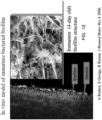
- the biofilm comprised of bacteria and their products, covers the root canal wall and fills the dentinal microtubules.
- the biofilm (especially the biofilm in the microtubules) thus can be difficult to target chemically or to mechanically disrupt effectively.
- Chemicals, such as sodium hypochlorite are fairly effective at disinfecting the root canal.
- sodium hypochlorite can react with tissue remnants and the dentin in the canal, and can adversely affect the canal if left in the canal for too long.
- the longer duration required to effectively disinfect the canal must be weighed against the effect the sodium hypochlorite will have on the tooth structure.
- Other factors include the dentinal tubules, the dentin composition, and the complexities of the root canal structure itself.
- RCT root canal therapy
- the root canal is initially shaped by an instrumentation procedure (with root canal reamers and files) and then cleaned using root canal irrigants (liquid chemicals) and disinfected using medicaments to achieve a "bacteria free" root canal system.
- the chemicals most commonly employed for cleaning and disinfecting are sodium hypochlorite (NaClO), chlorhexidine (N,N""1,6-Hexanediylbis[N'-(4-chlorophenyl)(imidodicarbon-imidic diamide)]) and EDTA, while calcium hydroxide (CaOH) is also used as an effective intracanal medicament.
- NaClO sodium hypochlorite
- chlorhexidine N,N""1,6-Hexanediylbis[N'-(4-chlorophenyl)(imidodicarbon-imidic diamide)]
- CaOH calcium hydroxide
- this method of bacterial elimination is not an instantaneous process and is found to be least effective in the anatomical complexities of the root canals.
- efforts were made to use higher concentrations of chemicals to achieve effective bacterial elimination were not examined.
- the effectiveness of these chemicals (such as root canal irrigants) at various depths inside the dentinal tubule is not clear. It has been demonstrated that the effective penetration of these chemicals into the dentinal tubules is limited, and therefore, bacteria remained viable at greater depths in the dentinal tubules at all levels in the root canal. Also, long-term use of such chemicals and medicaments can lead to the development of resistance to the chemicals and medicaments in the target organisms.
- PDT photodynamic therapy
- This drug is administered either intravenously or topically to the malignant site, as in the case of certain skin cancers.
- light of a specific wavelength which can be absorbed by the PDT photosensitizer, is applied.
- the PDT drug absorbs this light producing a reactive oxygen species that can destroy the tumor.
- the photosensitizing compound is activated at a specific wavelength of light to destroy the target cell via a strong oxidizer, which causes cellular damage, membrane lysis and protein inactivation.
- PDT relies on the greater affinity of the PDT drug for malignant cells.
- the light activation process of a PDT drug is initiated by the absorption of light to produce an excited singlet state (S1 or often written as 1 P*, where P* represents the excited photosensitizer) which then populates a long-lived triplet state T1 (or 3P*) by intersystem crossing. It is the long-lived triplet state that predominantly generates the reactive oxygen species.
- S1 an excited singlet state
- P* represents the excited photosensitizer
- T1 or 3P*
- Two types of processes have been proposed to produce reactive species that oxidize the cellular components (hence produce photooxidation) (Ochsner M, 1997).
- PDT photodynamic therapy
- an anionic micro-bubble solution when activated with ultrasonic/sonic frequency or agitation will result in bubble (created by agitation) - bubble (in the solution) interaction and bubble-root canal wall interaction, which would facilitate the physical/mechanical effect of micro-bubbles.
- This physical/mechanical effect between micro-bubbles and root canal wall should significantly favor debridement and further enhance biofilm disruption.
- hydrogen peroxide in the micro-bubble should interact with the organic debris within the root canal leading to the formation of oxygen, which allows the micro-bubbles to grow and propel towards the root canal wall (to further improve debridement).
- the presence of micro-bubbles in the solution should act as a scatterer, allowing light to penetrate laterally into the dentinal tubules/anatomical complexities of the root canal.
- the solutions described therein appeared to provide excellent results in tests, a system for introducing the solutions into the root canal and activating the root canal is necessary.
- compositions for use in a method of disinfecting root canals wherein the compositions comprise nano-bubbles including a drug such as oxidizing agents.
- the nano-bubbles have a diameter up to 500 nm.
- US 2008/255498 discloses the disinfection of root canals.
- a transducer produces elevated temperatures which form microbubbles which are sonically activated at the treatment site.
- the micro-bubble solution comprises an oxygen carrier, an oxidizing agent and a surfactant, and is used in a method comprising delivering a photosensitizing solution (hereinafter also referred to as a photoactive solution) into a shaped canal.
- the photosensitizing solution comprises a photosensitizing compound dissolved in an alcohol carrier solution.
- the canal is flushed with, or otherwise exposed to, the photosensitizing solution for about 60 seconds to about 900 seconds, and preferably, for about 60 seconds to about 300 seconds, to allow the photosensitizing compound to penetrate dentin and uninstrumented areas of the canal.
- the canal is then filled with the micro-bubble solution.
- the micro-bubble solution is mechanically, sonically or ultrasonically activated in the canal and light is introduced into the canal, for example, by means of a fiber optic cable sized to extend to the working end of the canal.
- the fiber optic cable can be sonically or ultrasonically energized such that it is the fiber optic cable that activates the micro-bubble solution.
- the illuminating tip of the fiber optic may be a bare fiber tip, or with modifications (diffuser, microlens) or may be tapered.
- the duration of light illumination will be standardized based on the dosimetry of light energy (10 J/cm 2 to 60 J/cm 2 ) achieved. In this case, the power of the light is inversely related to the duration of illumination.
- the light used for illumination can be any type of light.
- the light source can be, for example, a tungsten halogen light, a Light Emitting Diode (i.e., LED) or a laser.
- the wavelength of a laser if a laser is used, corresponds to the absorption maxima of the employed photosensitizer (for example, Methylene blue (MB) is activated with a laser having a of wavelength 660 nm).
- the micro-bubble solution When the micro-bubble solution is mechanically, sonically or ultrasonically, the micro-bubble solution releases oxygen bubbles. This rapid release of oxygen bubble and energy imparted to the micro-bubble solution by the sonic/ultrasonic activation markedly increases the rate of release of singlet oxygen, which in turn enhances the antimicrobial efficacy of photodynamic therapy.
- the sonic/ultrasonic activation of the micro-bubble solution in the root canal generates bubble/canal wall interactions throughout the axial length of the canal to mechanically disrupt the biofilm and canal debris. Additionally, the micro-bubbles scatter the light within the canal and introduce or otherwise direct light into the dentinal tubules and lateral canals, which would not otherwise be exposed to axially directed light.
- the light will reach, and be absorbed by, the photosensitizing compound, not only in the main canal, but also in dentinal tubules and lateral canals, and other areas, which would not otherwise be reached by axially directed light.
- the photosensitizing compound absorbs the light, it is activated by the light, and the activated photosensitizing compound passes energy to the oxygen molecules, converting the oxygen molecules (O 2 ) to singlet oxygen (1 P*).
- the singlet oxygen reacts with substances in the cells (i.e., in the bacteria) to destroy the cells. That is, the cells are destroyed by oxidative damage.
- the micro-bubbles in the solution will also interact with the micro-bubbles in the solution to produce stable bubbles exerting significant lateral wall shear stress to facilitate deeper penetration, significant debridement, and anti-biofilm ability.
- a micro-bubble solution for use in a method of disinfecting a shaped root canal.
- the micro-bubble solution is comprised of an oxygen carrier, an oxidizing agent and a surfactant, wherein the oxygen carrier is chosen from the group consisting of perfluorodecahydro naphthalene, perfluorodecalin, perfluorohexane, octafluoropropane, perfluorobutane, perfluorooctane, perfluoromethyldecalin and trans -carbonylchlorobis(triphenylphosphine)iridium(I) (O 2 IrCl(CO)P[C 6 H 5 ] 3 ) 2 ), and combinations thereof; wherein the oxidizing agent is chosen from the group consisting of hydrogen peroxide (H 2 O 2 ), dilute sodium hypochlorite, dimethyl sulfoxide and chlorine dioxide and combinations thereof; and wherein, the surfactant is chosen
- the method of disinfecting a shaped root canal comprises (a) introducing a photoactive solution into the root canal, the photoactive solution containing a photoactive compound dissolved in an alcohol carrier solution; (b) removing excess photoactive solution from the root canal; (c) introducing the micro-bubble solution into the root canal after completion of step b); (d) mechanically, sonically or ultrasonically activating the micro-bubble solution in the canal to generate dissolved oxygen bubbles in the canal, wherein the surfactant stabilizes the micro-bubbles; and (e) introducing light into the canal after or simultaneously with step d) to activate the photoactive compound, the activated photoactive compound releasing energy to the oxygen molecules to convert the oxygen molecules to singlet oxygen.
- the step of introducing the photoactive solution into the root canal can comprise flushing the root canal with the photoactive solution for at least 60 seconds.
- the root canal is flushed with the photoactive solution for about 60 seconds to about 600 seconds, and preferably for about 60 seconds to about 180 seconds.
- the step of removing excess photoactive solution is performed after the root canal has been exposed to the photoactive solution for at least about 60 seconds, and preferably after the root canal has been exposed to the photoactive solution for about 60 seconds to about 180 seconds.
- the micro-bubble solution is mechanically activated in the canal for at least about 60 seconds, and preferably for about 60 seconds to about 180 seconds.
- the light used to activate the photosensitive solution is from a halogen lamp, an LED or a laser. If the light is from a laser, the laser is matched according to the photosensitizing compound used.
- the photoactive compound can be methylene blue, in which case, the laser operates at 660nm.
- the light is from a laser being matched according to the photoactive compound used.
- the photoactive compound is methylene blue, and the laser operates at 660nm.
- step (d) and the step of introducing light into the root canal to activate the photoactive compound are performed simultaneously.
- the photoactive compound of the photoactive solution is chosen from the group consisting of toluidine blue (TBO), methylene blue (MB), rose bengal (RB) arianor steel blue, tryptan blue, crystal violet, azure blue cert, azure B chloride, azure 2, azure A chloride, azure B tetrafluoroborate, thionin, azure A eosinate, azure B eosinate, azure mix sicc, azure II eosinate, haematoporphyrin HCl, haematoporphyrin ester, aluminum disulphonated phthalocyanine, chlorins, photoactive fullerenes (e.g., TBO), methylene blue (MB), rose bengal (RB) arianor steel blue, tryptan blue, crystal violet, azure blue cert, azure B chloride, azure 2, azure A
- the photoactive compound is methylene blue or rose bengal arianor steel blue.
- the alcohol carrier solution in the photoactive solution comprises polyethylene glycol and/or ethano; or the alcohol carrier solution in the photoactive solution comprises polyethylene glycol, ethanol and water.
- the polyethylene glycol is glycerol.
- the polyethylene glycol, ethanol, and water are mixed in a ratio so that the final mixture has a refractive index close to that of dentin and at the same time had the ability to penetrate into the dentinal tubules.
- polyethylene glycol, ethanol, and water of the alcohol carrier solution are combined in a ratio of about 1:1:1 to about 3:1:2.
- polyethylene glycol, ethanol, and water of the alcohol carrier solution are combined in a ratio of about 30:20:50 (or 3:2:5).
- the photoactive compound in the photoactive solution has a concentration of about 2 micro molar to about 100 micro molar in the photoactive solution, preferably about 100 micro molar.
- the oxidizing agent of the micro-bubble solution is of hydrogen peroxide (H 2 O 2 ).
- the concentration of the hydrogen peroxide (H 2 O 2 ) used is about 3% to about 40% H 2 O 2 .
- the concentration of the hydrogen peroxide (H 2 O 2 ) used is about 35%.
- the surfactant of the micro-bubble solution is a nonionic polyoxyethylene surfactant.
- the oxygen carrier, oxidizing agent and surfactant of the micro-bubble solution are combined in a ratio of about 73:26.5:0.5 to about 75:24:1 by volume; or the oxygen carrier, oxidizing agent and surfactant of the micro-bubble solution are combined in a ratio of 75:24.5:0.5 by volume.
- the root canal disinfection method initially involves preparing and shaping the canal. This can be accomplished using conventional cleaning and shaping tools, such as files, reamers, etc.
- the canal is rinsed with a photosensitive solution, comprising a photosensitive compound dissolved in a carrier solution.
- the carrier solution enables the photosensitive compound to penetrate the dentin up to a distance of 1-2 mm, and the photosensitive compound will adhere to the biofilm and bacteria in the biofilm throughout the root canal system (including in microtubules).
- the root canal is flushed with (rather than simply soaked in) the photosensitive solution.
- Flushing/application with the photosensitive solution can be for about 60 - 600 seconds, and preferably about 60 to about 300 seconds. Excess photosensitive solution is then removed from the canal using, for example, paper points. Importantly, after removal of the excess photosensitive solution, there is still a thin layer of photosensitizing solution in the canal that has bound to the canal surfaces and to the biofilms/ tissue remnants in the canal.
- the canal is filled with a micro-bubble solution which is comprised of an oxidizing agent, an oxygen carrier and a surfactant.
- the surfactant can be neutral, anionic or cationic.
- the micro-bubble solution is then mechanically, sonically or ultrasonically activated, in the canal, and light is introduced into the canal.
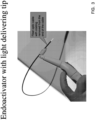
- the solution can be mechanically activated using an EndoActivator ® driver and tip which is available from Dentsply Tulsa Dental.
- the tool used to mechanically activate the micro-bubble solution also introduces light into the canal to achieve ultrasonic/sonically activated photodynamic therapy.
- a prototype device is shown in FIG.
- micro-bubble solution in which a fiber optic thread is secured to the head of an EndoActivator ® driver to be sonically driven.
- Activation of the micro-bubble solution generates dissolved oxygen bubbles (and causes or induces acoustic microstreaming) in the canal.
- These bubbles will interact with and produce significant bubble/canal wall interaction (micro-bubbles bouncing from the walls of the canal), which mechanically disrupts the biofilm, and removes debris and smear layer from the root canal wall.
- the micro-bubbles scatter the light introduced into the canal, so that the light does not merely pass axially through the canal.
- the light will impact, and activate, the photosensitive compound throughout the root canal system, including photosensitive compound that is adhered to biofilm and/or bacteria in dentinal tubules, lateral canals, etc.
- the activated photosensitive compound releases energy to the oxygen molecules, converting the oxygen molecules to singlet oxygen (S1 or 1P*).
- the singlet oxygen is highly reactive, and destroys the biofilm and bacteria via oxidative damage.
- the micro-bubble solution can be mechanically activated in the canal for about 60 to about 600 seconds, and preferably about 60 to about 180 seconds. As will be discussed more fully below, this method disrupts and destroys the biofilm, resulting in a canal that is substantially free of biofilm, as shown in FIGS. 20 and 22 . Additionally, as will be discussed below, the photosensitive compound reaches uninstrumented portions of the canal, and via the photo-chemically enhanced micro-bubble activated disinfection, destroys bacteria in these uninstrumented areas of the canal. This method thus has applicability to minimally invasive endodontic (MIE) procedures or treatment.
- MIE minimally invasive endodontic
- Photosensitive Solution also referred to as Photoactive Solution
- the photosensitive solution comprises a photosensitive compound, which is dissolved in a alcohol carrier solution.
- the photosensitive compound can be one or more of the following: toluidine blue (TBO), methylene blue (MB), rose bengal (RB), arianor steel blue, tryptan blue, crystal violet, azure blue cert, azure B chloride, azure 2, azure A chloride, azure B tetrafluoroborate, thionin, azure A eosinate, azure B eosinate, azure mix sicc, azure II eosinate, haematoporphyrin HCl, haematoporphyrin ester, aluminum disulphonated phthalocyanine, chlorins, photoactive fullerenes (e.g.
- a preferred photosensitive compound is methylene blue (MB).
- the photosensitive solution is described in US 2011/0027384 and US 2009/0285766 .
- the carrier solution in which the photosensitizing compound is dissolved is an alcohol carrier solution. Alcohol solutions tend to enable the photosensitive compound to penetrate more deeply into the dentin.
- the alcohol solution can comprise polyethylene glycol and/or ethanol.
- the photosensitizing compound carrier solution comprises a polyethylene glycol, ethanol and water.
- the polyethylene glycol can be glycerol.
- the polyethylene glycol, alcohol and water can be combined in a ratio of about 1:1:1 to about 3:1:2 by volume. In a preferred embodiment, the polyethylene glycol, alcohol and water are combined in a ratio of 30:20:50 (or 3:2:5) by volume.
- the ratio 30:20:50 by volume was arrived at by adding the refractive indices of the components so that the final mixture has a refractive index close to that of dentin and at the same time had the ability to penetrate into the dentinal tubules.
- the ethanol used to prepare the carrier solution can be about 30% to about 100% ethanol.
- the ethanol is of a concentration which when mixed with the polyethylene glycol and water produces a mixture that is about 30% ethanol.
- the photosensitizing compound in the photosensitizing solution is present in a concentration of less than about 100 micro-molar, and preferably between about 2 micro-molar to about 100 micro-molar. When the concentration of the photosensitizing compound in the photosensitizing solution exceeded 100 micro molar, there was marked aggregation of the photosensitizing compound in the photosensitizing solution, which impaired photodynamic effect. However, the degree of singlet oxygen release is proportional to concentration or the photosensitizing compound.
- the preferred concentration of photosensitizing compound in the photosensitizing solution is about 100 micro-molar.
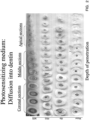
- FIG. 2 shows a comparison of the penetration of different photosensitizing solutions as follows: (1) methylene blue (MB) in water, (2) MB in glycerol (Gly), (3) MB in polyethylene glycol (PEG), and (4) MB in a water/glycerol/PEG solution (MIX).
- MB methylene blue
- Gly glycerol
- PEG polyethylene glycol
- MIX water/glycerol/PEG solution
- the MB had very little penetration into the dentin when mixed only in water. The penetration was better for Gly and PEG. However, as seen, the penetration of the MB into the dentin was substantially better when the MB was dissolved in the polyethylene glycol, ethanol and water mixture. In the PEG/ethanol/water carrier solution, the methylene blue penetrated up to 2 mm into the dentin. This substantial penetration of the photosensitizing compound into the dentin enables the photosensitizing compound to contact and adhere to biofilm deep with the anatomical complexities of the root canal. As will become more apparent, this is one of the features of my method that enables minimally invasive endodontics.
- the micro-bubble solution is described in US 2011/0027384 and US 2009/0285766 .
- the micro-bubble solution comprises an oxygen carrier, an oxidizing agent and a surfactant.
- the oxygen carrier is chosen from the group consisting of perfluorodecahydro naphthalene, perfluorodecalin, perfluorohexane, octafluoropropane, perfluorobutane, perfluorooctane, perfluoromethyldecalin and O 2 IrCl(CO)P[C 6 H 5 ] 3 ) 2 , and combinations thereof.
- the preferred oxygen carrier is a perfluorocarbon (PFC).
- the oxidizing agent is chosen from the group consisting of hydrogen peroxide (H 2 O 2 ), dilute sodium hypochlorite, dimethyl sulfoxide (DMSO) and chlorine dioxide, and combinations thereof.
- the preferred oxidizing agent is hydrogen peroxide (H 2 O 2 ).
- the surfactant is chosen from the group consisting of mineral oil, glycerol, polyethylene glycol, non-ionic detergent, polypropylene glycol, sodium dodecyl sulfate (SDS), a nonionic polyoxyethylene surfactant (such as Triton TM X or Triton TM X-100), cetrimide (an antibacterial detergent, being a mixture of different quaternary ammonium salts including Cetrimonium bromide), and combinations thereof.
- the nonionic detergent may be Triton TM X, and even more preferably, Triton TM X-100 (available from Sigma-Aldrich).
- CMC critical micelle concentration
- Triton X-100 has the following formula: where n is about 9.5
- the oxygen carrier, oxidizing agent and surfactant are combined in a ratio of about 60:35:5 to about 75:24.5:0.5 by volume. In a preferred embodiment, the oxygen carrier, oxidizing agent and surfactant are combined in a ratio of 75.0:24.5:0.5 by volume.
- Micro-bubbles released from the micro-bubble solution are anionic, gas-filled bubbles having a size of about 2-4 microns.
- the gas core of the micro-bubbles contains most of the unit volume.
- Micro-bubbles in aqueous media are inherently unstable owing to surface tension effects, and therefore require a stabilizing shell.
- the surfactant of the carrier solution thus serves to stabilize the micro-bubbles.
- the micro-bubble solution is mechanically, sonically or ultrasonically activated, in the prepared tooth root canal. Additionally, as the micro-bubble solution is being agitated, light is introduced into the canal, for example, by means of a fiber optic cable. In fact, the fiber optic cable can be sonically or ultrasonically driven in the root canal. Light can be delivered into the canal using a fiber optic cable, and the light source can be an LED, a laser, or other light source. Preferably, the light source is a laser. The source (type) of the laser depends upon the type of photosensitizer used in the micro-bubble solution. In tests, methylene blue was used as a photosensitizer, hence the light source wavelength was 660 nm.
- the power of the laser tested ranged from 22 mW to 100 mW. Since the effectiveness of photodynamic effect depends on the dose of light, which is directly related to the power of the light source and duration of illumination, for a lower power source, longer duration of illumination can be used. Light doses ranging from 2J/cm 2 to 60J/cm 2 for about 60 to about 180 seconds was tested.
- the fiber optic cable has no coating at the end which is received in the root canal to enable light to escape from the cable both through the sides (radially) and from the end (axially) of the cable. Such fiber optic cables are shown, for example, in FIGS. 3 and 4 .
- FIG. 5C schematically shows light escaping from the fiber optic cable both axially and radially.
- the fiber optic cable is sized to extend to the working end of the prepared root canal, and thus has a diameter of about 0.5mm or less.
- the fiber optic cable is used to mechanically activate the micro-bubble solution.
- the fiber optic cable is mounted to an irrigant activator, such as an EndoActivator ® driver (available from Dentsply Tulsa Dental), and which is described in US Pat. Nos. 7261561 , 8235719 , 8328552 , and 8388345 .
- This modified EndoActivator ® driver was used in the testing of my method.
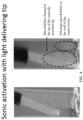
- FIG. 4 shows, on the right, sonic activation of the micro-bubble solution in a clear vial using a fiber optic cable in which the end of the cable is not coated (i.e., is stripped of its coating).
- the left hand picture shows the fiber optic cable in the micro-bubble solution.
- the light emanating from the cable can be seen to be picked up by the micro bubbles.
- the right hand picture shows the fiber optic cable sonically activating the micro-bubble solution.
- a high degree of activity is shown around the tip of the cable itself.
- activity can also be seen at the wall of the vial in which the test is conducted. This demonstrates that sonic activation will produce activity at the root canal wall.
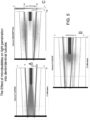
- FIG. 5 Numerical modeling of the penetration of light into dentin is shown schematically in FIG. 5 .
- the converging red lines mark the edges of the dentin, and thus of the shaped canal.
- FIG. 5A schematically shows the penetration of light in a canal without the micro-bubble solution. As seen, the light emanating from the end of the fiber optic passes generally axially through the canal, and very little of the light even reaches the canal wall.
- FIG. 5B shows the canal with the micro-bubble solution. As seen, the light is scattered and reaches the canal walls. However, the light reaches the canal walls only in the vicinity of the end of the fiber optic cable.
- FIG. 5C shows the effect of activating the micro-bubble solution on light penetration. As seen, the light is scattered; it reaches axially well beyond the end of the fiber optic cable; and, the light penetrates well into the dentin to reach photosensitizing compound in the dentinal tubules and lateral canal.
- the light Because the light penetrates the dentin, the light will reach the photosensitive compound adhered to biofilm and bacteria within the dentin (i.e., in dentinal tubules) in addition to biofilm and bacteria in the main canal and lateral canals, to activate the photoactive compound within the dentinal tubules, lateral canals, and all other aspects of the root canal system.
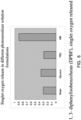
- FIG. 6 is a chart showing the amount of singlet oxygen released during agitation of the micro-bubble solution in the root canal for four different carrier solutions: (1) water; (2) Glycerol, (3) PEG, and (4) a H 2 O/Gly/PEG mixture (MIX).
- the singlet oxygen release was measured using 1, 3-diphenylisobenzofuran (DPBF).
- DPBF is a chemical used to study the degree of release of singlet oxygen; it is not actually part of the micro-bubble solution or the photosensitizing solution. As is known, DPBF undergoes bleaching with singlet oxygen and this can be calorimetrically quantified.
- FIG. 7 shows increased concentration of DPBF, and thus increased concentration of oxygen singlets for varying photosensitizing solution formulations. In this test, four different photosensitizing formulations in micro-bubbles were tested for oxidation potential/singlet oxygen generation as follows:
- the micro-bubble solution is mechanically, sonically or ultrasonically activated in the canal.
- syringe irrigation The fluid dynamics of syringe irrigation is shown schematically in FIG. 8 .
- irrigation fluid is ejected from the end of the syringe.
- the flow of fluid adjacent the syringe is generally laminar.
- due to the coronally directed reflux near the canal walls much of this turbulence does not reach the canal wall. This results in a zone of active fluid circulation above the end of the syringe, and a zone of passive fluid circulation below the end of the syringe.
- My disinfection method allows for the combination of the physical benefits of sonic agitation (physically displacing fluid/micro-bubbles towards the walls of the root canal) and the antibacterial effect of PDT (produced by singlet oxygen release). Larger and deeper penetration of singlet or reactive oxygen aids in marked elimination of biofilm bacteria.
- inertial (cavitational) and non-inertial bubble dynamics are produced in the canal.
- the inertial bubbles (which result from cavitation) will collapse and release energy resulting in heat and shear forces in the canal. These shear forces produce a hydrodynamic effect.
- the non-inertial (non-cavitational) bubbles oscillate in the fluid, and thus do not collapse, as do the inertial (cavitational) bubbles. These non-inertial bubbles move rapidly around mechanically activated files or tips and produce shear forces that are capable of dislodging materials (i.e., the biofilm) from the canal wall.
- the gas cores of the bubbles expand during the rarefaction phase of the pressure wave and contracts during the compression phase.
- Enhanced micro-bubble/micro-bubble interaction also occurs during the ultrasonic/sonic activation of micro-bubble solution. This will increase the antibacterial effect of the photodynamic therapy.
- the higher antibacterial/anti-biofilm effect of photodynamic therapy is explained by the availability of oxygen carrier/oxidizing agent in the micro-bubbles and the activation energy supplied by the ultrasonic/sonic agitation. The above factors will lead to the marked production of singlet/reactive oxygen species, which are responsible for biofilm disruption, which is shown by the graphs of FIGS. 6 and 7 .
- micro-bubble solution in the root canal results in the generation of anionic, stable and transient micro-bubbles.
- These micro-bubbles, during ultrasonic/sonic agitation, will yield improved micro-bubble/root canal wall interaction (physical effects of root canal disinfectant).
- the ultrasonic/sonic assisted irrigation produced the highest wall shear stress on the root canal wall and the highest turbulence intensity of fluid flow coronally from the ultrasonic/sonic tip.
- the lateral movement of the micro-bubbles displayed has an important implication to enhance the physical effect of stable micro-bubbles to disrupt root canal biofilms.
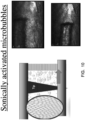
- FIG. 10 contains photomicrographs and a schematic drawing showing the micro-bubbles that are produced in a root canal upon sonic/ultrasonic activation of the micro-bubble solution in the canal.
- the oxidizing agent and the oxygen carrier when activated, produce a significant amount of oxygen, which is released as the micro bubbles in the root canal.
- the micro-bubble interaction enhances the photodynamic effect of the PDT.
- the micro-bubble solution is mechanically activated, there is an interaction between the stable (anionic) bubbles and the canal wall. This micro-bubble/canal wall interaction generates electrostatic and physical/mechanical shear stresses which mechanically disrupt the biofilm.
- the mechanically activated micro-bubble solution thus 3-dimensionally improves the physical/mechanical effect within the root canal.
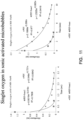
- FIG. 11 contains graphs showing singlet oxygen yield of methylene blue (on the left hand graph) and rose bengal (on the right hand graph) both with (square data points) and without (diamond data points) sonic activation.
- the methylene blue graph (on the left hand side) shows that the initial absorbance of light is substantially higher when the micro-bubble solution is sonically activated. The absorbance of the light of the sonically activated micro-bubble solution then falls off much more rapidly than the absorbance of the solution without sonic activation.
- the rose bengal (RB) graph shows an absorbance level higher at all times for the test without sonic activation. However, as seen, in the sonically activated test, the absorbance fell off much more quickly than in the non-activated sample.
- FIG. 14 schematically demonstrates the strategy of my enhanced light activated disinfection method.
- the oxygen carrier ensures that there is a sufficient concentration of O 2 in the root canal, because there usually is little to no O 2 in a root canal.
- the oxidizer enhances the oxidation potential of the photosensitizing compound, and hence increases the number of oxygen singlets in the canal.
- the hydrogen peroxide in the micro-bubble solution (1) is activated by the low-energy level light and (2) will interact with organic debris within the root canal to form more free radicals which interact with gas within the micro-bubbles resulting in their growth and propulsion towards the root canal wall, as shown in FIGS. 24 and 25 , in which the organic cell remnants are stained blue. Please note that the micro-bubbles expand to larger bubbles in proximity to organic remnants. This phenomenon allows the micro-bubbles to propel towards the organic materials. thereby facilitating debridement.
- the teeth were cut axially to expose the canal of each tooth.
- Specimens of the root canal surface were taken and placed in Brain Heart Infusion (BHI) growth media to monitor the colony forming units. The samples were checked at four hours and again at twenty-four hours.
- BHI Brain Heart Infusion
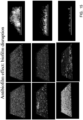
- FIG. 15 demonstrates the effectiveness of my disinfecting method.
- the first two columns of FIG. 15 contain images which show one week old bacterial biofilms of Enterococcus faecalis before and after treatment for the different groups. Each of the six images in the first two columns show active and dead bacteria, with the active bacteria being shown in green and the dead bacteria being shown in red.
- the two lefthand columns of FIG. 15 contains, images showing the three-dimensional confocal laser scanning microscopy reconstruction of the Enterococcus faecalis biofilms subjected to different treatments (60 ⁇ ).
- the left column shows the biofilm receiving no treatment (top), methylene blue (photosensitizer) (100 ⁇ mol/L) treatment (middle) and PF4 micro-bubble solution treatment (bottom).
- the middle column shows the biofilm subjected to light (660nm) irradiation alone (top), methylene blue + light (660nm) irradiation (middle) and PF4 micro-bubble solution treatment + light (660nm).
- right-hand column shows the sagittal section of the treatment groups as described in the middle column MB.
- Group 1 Control 7.147 ( ⁇ 0.601) 100%
- Group 2 RCT (Instrumentation with Protaper ® F2 and sodium hypochlorite and EDTA irrigation) 0.0 60%
- Group 3 Conventional-LAD (After instrumentation, methylene blue 80 micro molar solution was used to photosensitized and light activation (36J)) 5.639 ( ⁇ 0.066) 100%
- Group 4 SAMP (After instrumentation, photosensitized with MB (5 min) and micro-bubbles were added and sonically activated with EndoActivator ® driver for 5 min 0.0 0%
- Group 5 RCT+SAMP (combination of steps in groups 2 and 4) 0.0 0%
- the root samples were split into two halves. One half of the root was used for microbiological culture analysis (shown above) and described just below, and the other half was used for SEM analysis described below in conjunction with FIGS. 16-19 . Eight tooth samples were used for microbiological culture analysis while four samples were used for SEM analysis under each group.
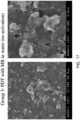
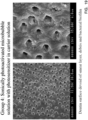
- FIGS. 16-19 contain scanning electron photomicrographs of the treated root canals of teeth from Groups 1, 3 (two variations) and 4.
- FIG. 16 contains photomicrographs of a tooth from Group 1 (control). As seen, the biofilm is still present.
- FIG. 17 contains photomicrographs of a tooth from Group 3 (PDT with MB in water without activation). As seen, there is some disruption of the biofilm, but the biofilm is still, in large measure, present on the root canal surface.
- FIG. 18 demonstrates the effect of the micro-bubble solution on conventional light activated disinfection (LAD). As seen, the biofilm is disrupted to a greater extent than in the photomicrographs of FIG. 17 . However, the biofilm is still present.
- FIGS. 20-22 contain color-enhanced images of a root canal comparing a control tooth with root canals treated via photoactivation of methylene blue in water in the presence of activated micro-bubble solution and photoactivation of methylene blue in water, ethanol and polyethylene glycol in the presence of activated micro-bubble solution, to demonstrate the effectiveness of the water/alcohol/PEG carrier solution.
- active bacteria are shown in green and dead bacteria as shown in red.
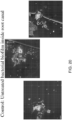
- FIG. 20 contains photomicrographs of a control tooth. These pictures show a significant amount of active bacteria (in green).
- the control biofilms show multilayered biofilm structure of more than 45 microns thickness adherent to the root dentin substrate FIG.
- FIG. 21 contains photomicrographs of a tooth treated with MB in a water carrier and then subject to sonic and light activation of the micro-bubble solution
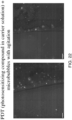
- FIG. 22 contains photomicrographs of a tooth treated with MB in the polyethylene glycol, alcohol and water carrier solution, and then subject to sonic and light activation of the micro-bubble solution.
- FIGS. 21 and 22 show that substantially all of the active bacteria have been eliminated. These two figures also show that effect of the micro-bubble solution.
- use of the polyethylene glycol- alcohol-water carrier solution for the MB allows for better penetration of the MB into the dentin, the sonic and light activation of the micro-bubble solution compensates for this, and in both groups ( FIGS. 21 and 22 ), the biofilm is substantially completely disrupted. Dead bacteria are noted even within the dentinal tubules.
- a photoactive compound i.e., the methylene blue
- the utilization of the micro-bubble solution produces a greater degree (more than 3x) of reactive oxygen (i.e., oxygen singlets), allows for better penetration of light into the dentin, improves the physical/mechanical effects of the micro-bubbles (pulsating/propelling), and thus increases the anti-biofilm efficacy of PDT.
- My enhanced micro-bubble based light activated disinfection disrupts and substantially eliminates the biofilm from the root canal system, and even in uninstrumented portions of the root canal.
- the disclosed method provides for a substantially better disinfection of the root canal than has been obtained with standard or conventional root canal treatment. This better disinfection of the canal allows for better results, and should result in fewer retreatments. Further, because uninstrumented portions of the canal are disinfected, SAMP allows for effective MIE.
Landscapes
- Health & Medical Sciences (AREA)
- Life Sciences & Earth Sciences (AREA)
- Engineering & Computer Science (AREA)
- General Health & Medical Sciences (AREA)
- Animal Behavior & Ethology (AREA)
- Public Health (AREA)
- Veterinary Medicine (AREA)
- Biomedical Technology (AREA)
- Nuclear Medicine, Radiotherapy & Molecular Imaging (AREA)
- Oral & Maxillofacial Surgery (AREA)
- Radiology & Medical Imaging (AREA)
- Pathology (AREA)
- Epidemiology (AREA)
- Biophysics (AREA)
- Chemical & Material Sciences (AREA)
- Heart & Thoracic Surgery (AREA)
- Hematology (AREA)
- Anesthesiology (AREA)
- Medical Informatics (AREA)
- Dermatology (AREA)
- Dentistry (AREA)
- Pharmacology & Pharmacy (AREA)
- Medicinal Chemistry (AREA)
- Chemical Kinetics & Catalysis (AREA)
- Organic Chemistry (AREA)
- General Chemical & Material Sciences (AREA)
- Molecular Biology (AREA)
- Biochemistry (AREA)
- Communicable Diseases (AREA)
- Oncology (AREA)
- Optics & Photonics (AREA)
- Physics & Mathematics (AREA)
- Bioinformatics & Cheminformatics (AREA)
- Pharmaceuticals Containing Other Organic And Inorganic Compounds (AREA)
- Acyclic And Carbocyclic Compounds In Medicinal Compositions (AREA)
- Medicinal Preparation (AREA)
- Dental Tools And Instruments Or Auxiliary Dental Instruments (AREA)
- Apparatus For Disinfection Or Sterilisation (AREA)
- Radiation-Therapy Devices (AREA)
- Medicines That Contain Protein Lipid Enzymes And Other Medicines (AREA)
Applications Claiming Priority (2)
| Application Number | Priority Date | Filing Date | Title |
|---|---|---|---|
| US14/477,682 US9987200B2 (en) | 2014-09-04 | 2014-09-04 | Activated micro-bubble based root canal disinfection |
| PCT/US2015/047245 WO2016036579A1 (en) | 2014-09-04 | 2015-08-27 | Photo-chemically activated micro-bubble based root canal disinfection |
Publications (4)
| Publication Number | Publication Date |
|---|---|
| EP3188705A1 EP3188705A1 (en) | 2017-07-12 |
| EP3188705A4 EP3188705A4 (en) | 2018-11-14 |
| EP3188705B1 true EP3188705B1 (en) | 2024-08-07 |
| EP3188705C0 EP3188705C0 (en) | 2024-08-07 |
Family
ID=55436462
Family Applications (1)
| Application Number | Title | Priority Date | Filing Date |
|---|---|---|---|
| EP15838860.3A Active EP3188705B1 (en) | 2014-09-04 | 2015-08-27 | Photo-chemically activated micro-bubble based root canal disinfection |
Country Status (12)
| Country | Link |
|---|---|
| US (2) | US9987200B2 (pl) |
| EP (1) | EP3188705B1 (pl) |
| JP (1) | JP2017534412A (pl) |
| KR (1) | KR20170048446A (pl) |
| CN (1) | CN107072884B (pl) |
| AU (1) | AU2015312212A1 (pl) |
| BR (1) | BR112017004324A2 (pl) |
| CA (1) | CA2959981C (pl) |
| MX (1) | MX2017002901A (pl) |
| PL (1) | PL3188705T3 (pl) |
| RU (1) | RU2017110543A (pl) |
| WO (1) | WO2016036579A1 (pl) |
Families Citing this family (30)
| Publication number | Priority date | Publication date | Assignee | Title |
|---|---|---|---|---|
| EP2015698B1 (en) | 2006-04-20 | 2017-11-15 | Sonendo, Inc. | Apparatus for treating root canals of teeth |
| US10835355B2 (en) | 2006-04-20 | 2020-11-17 | Sonendo, Inc. | Apparatus and methods for treating root canals of teeth |
| US7980854B2 (en) | 2006-08-24 | 2011-07-19 | Medical Dental Advanced Technologies Group, L.L.C. | Dental and medical treatments and procedures |
| US12114924B2 (en) | 2006-08-24 | 2024-10-15 | Pipstek, Llc | Treatment system and method |
| BRPI0811530B1 (pt) | 2007-05-14 | 2019-01-02 | Research Foundation Of State Univ Of New York | composição compreendendo indutor(es) de resposta fisiológica à dispersão ácido decanóico, superfície, solução, método ex vivo de tratamento ou inibição da formação de um biofilme sobre uma superfície |
| JP5902096B2 (ja) | 2009-11-13 | 2016-04-13 | ソネンド インコーポレイテッド | 歯科治療のための液体噴射装置および方法 |
| CA2815219A1 (en) | 2010-10-21 | 2012-04-26 | Sonendo, Inc. | Apparatus, methods, and compositions for endodontic treatments |
| AU2013235347B2 (en) | 2012-03-22 | 2017-11-09 | Sonendo, Inc. | Apparatus and methods for cleaning teeth |
| US10631962B2 (en) | 2012-04-13 | 2020-04-28 | Sonendo, Inc. | Apparatus and methods for cleaning teeth and gingival pockets |
| EP2934364B1 (en) | 2012-12-20 | 2019-04-03 | Sonendo, Inc. | Apparatus for cleaning teeth and root canals |
| US10363120B2 (en) | 2012-12-20 | 2019-07-30 | Sonendo, Inc. | Apparatus and methods for cleaning teeth and root canals |
| US10722325B2 (en) | 2013-05-01 | 2020-07-28 | Sonendo, Inc. | Apparatus and methods for treating teeth |
| US9877801B2 (en) | 2013-06-26 | 2018-01-30 | Sonendo, Inc. | Apparatus and methods for filling teeth and root canals |
| EP3166648B1 (en) * | 2014-07-08 | 2025-02-19 | University of Maryland, Baltimore | Compositions and delivery methods for treating dental infections, inflammation, sensitivity, and for use in dental restorations |
| EP3708111B1 (en) * | 2016-03-22 | 2025-09-24 | DENTSPLY SIRONA Inc. | Method and arrangement for cleaning of a canal |
| US10806544B2 (en) | 2016-04-04 | 2020-10-20 | Sonendo, Inc. | Systems and methods for removing foreign objects from root canals |
| US11090135B2 (en) | 2016-04-05 | 2021-08-17 | Syact, Llp | Synergistic ultrasonic, sonic or electric energy and light transmitting probe for disinfection of root canals during an endodontic procedure |
| US12201848B2 (en) * | 2016-08-03 | 2025-01-21 | Yosef Krespi | Device and methods for use in removal of bio-film and treatment of halitosis |
| US11918823B2 (en) * | 2016-10-07 | 2024-03-05 | Research Foundation Of The City University Of New York | Singlet oxygen generating device for selective destruction of pathogens |
| JP7062901B2 (ja) * | 2017-09-22 | 2022-05-09 | 東ソー株式会社 | 目的細胞の検出方法 |
| US11541105B2 (en) | 2018-06-01 | 2023-01-03 | The Research Foundation For The State University Of New York | Compositions and methods for disrupting biofilm formation and maintenance |
| RU2695070C1 (ru) * | 2018-11-21 | 2019-07-19 | федеральное государственное бюджетное образовательное учреждение высшего образования "Башкирский государственный медицинский университет" Министерства здравоохранения Российской Федерации | Способ лечения хронического апикального периодонтита с использованием высокоинтенсивного лазерного облучения системы корневых каналов и инъекционного введения тромбоцитарной аутоплазмы |
| KR102291528B1 (ko) * | 2019-09-02 | 2021-08-19 | 아주대학교산학협력단 | 초음파와 버블 생성 물질 주입장치를 이용한 광학 치료장치 |
| CN110448702A (zh) * | 2019-09-05 | 2019-11-15 | 北京大学 | 一种生物膜抑制和清除方法 |
| US11191428B1 (en) | 2020-07-16 | 2021-12-07 | Syact, Llp | Medical/dental handpiece |
| USD997355S1 (en) | 2020-10-07 | 2023-08-29 | Sonendo, Inc. | Dental treatment instrument |
| CN113171498A (zh) * | 2021-05-08 | 2021-07-27 | 西南大学 | Sds-la/plga/aptes抗菌涂层 |
| US11622835B1 (en) * | 2022-05-31 | 2023-04-11 | Cao Group, Inc. | Laser endodontic procedures utilizing alcohol based indocyanine green solutions |
| CN116421722B (zh) * | 2022-12-07 | 2025-09-12 | 南京中医药大学 | 一种用于诱导细胞凋亡和改善光动力治疗的氧纳米气泡、制备方法及应用 |
| CN117462676B (zh) * | 2023-11-02 | 2025-08-19 | 温州医科大学附属口腔医院 | 一种基于光动力/no联合疗法的新型根管冲洗系统及其构建方法 |
Family Cites Families (20)
| Publication number | Priority date | Publication date | Assignee | Title |
|---|---|---|---|---|
| WO2000074587A1 (en) * | 1999-06-04 | 2000-12-14 | Denfotex Ltd. | Method and apparatus for filling a dental root canal |
| FR2838048B1 (fr) * | 2002-04-03 | 2005-05-27 | Prod Dentaires Pierre Rolland | Produit dentaire reticulable/dereticulable |
| US20060019220A1 (en) | 2004-07-22 | 2006-01-26 | Ondine International Ltd. | Sonophotodynamic therapy for dental applications |
| US8388345B2 (en) | 2005-04-13 | 2013-03-05 | Clifford J. Ruddle | Method for cleaning a root canal system |
| US8235719B2 (en) | 2005-04-13 | 2012-08-07 | Endo Inventions, Llc | Apparatus for cleaning a root canal system |
| EP1906947A4 (en) | 2005-06-13 | 2012-11-14 | Univ Singapore | LIGHT-SENSITIVE COMPOSITION AND ITS USES |
| US7261561B2 (en) | 2005-07-15 | 2007-08-28 | Ruddle Clifford J | Vibrational driver for endodontic activators |
| EP1933941A2 (en) * | 2005-08-25 | 2008-06-25 | Philip R. Houle | Treatment systems for delivery of sensitizer solutions |
| US7833016B2 (en) * | 2006-05-23 | 2010-11-16 | Dentatek Corporation | Root canal filling materials and methods |
| US20100330539A1 (en) * | 2006-08-24 | 2010-12-30 | Medical Dental Advance Technologies Group | Periodontal treatment system and method |
| US7980854B2 (en) * | 2006-08-24 | 2011-07-19 | Medical Dental Advanced Technologies Group, L.L.C. | Dental and medical treatments and procedures |
| WO2009064947A1 (en) * | 2007-11-16 | 2009-05-22 | James Edwin Bollinger | Method and apparatus for disinfecting or sterilizing a root canal system using lasers targeting water |
| SG191641A1 (en) | 2008-04-04 | 2013-07-31 | Univ Singapore | A photosensitising composition and its uses |
| US20090287566A1 (en) | 2008-05-15 | 2009-11-19 | Mcafee Randolph Preston | User experience of advertisements by allowing users to identify advertisements that users dislike |
| EP2514387B1 (en) * | 2009-12-16 | 2018-03-21 | National Center for Geriatrics and Gerontology | Ultrasonic drug delivery system for dental use |
| CA2815219A1 (en) * | 2010-10-21 | 2012-04-26 | Sonendo, Inc. | Apparatus, methods, and compositions for endodontic treatments |
| US20130084544A1 (en) * | 2011-09-29 | 2013-04-04 | Biolase, Inc. | Cavitation Medication Delivery System |
| US20130084545A1 (en) * | 2011-09-30 | 2013-04-04 | Biolase, Inc. | Pressure Wave Root Canal Cleaning System |
| EP2934364B1 (en) * | 2012-12-20 | 2019-04-03 | Sonendo, Inc. | Apparatus for cleaning teeth and root canals |
| US10130450B2 (en) * | 2013-05-14 | 2018-11-20 | Ipg Photonics Corporation | Method and apparatus for laser induced thermo-acoustical streaming of liquid |
-
2014
- 2014-09-04 US US14/477,682 patent/US9987200B2/en active Active
-
2015
- 2015-08-27 RU RU2017110543A patent/RU2017110543A/ru not_active Application Discontinuation
- 2015-08-27 KR KR1020177008214A patent/KR20170048446A/ko not_active Ceased
- 2015-08-27 PL PL15838860.3T patent/PL3188705T3/pl unknown
- 2015-08-27 CN CN201580060180.5A patent/CN107072884B/zh active Active
- 2015-08-27 MX MX2017002901A patent/MX2017002901A/es unknown
- 2015-08-27 EP EP15838860.3A patent/EP3188705B1/en active Active
- 2015-08-27 JP JP2017531966A patent/JP2017534412A/ja active Pending
- 2015-08-27 WO PCT/US2015/047245 patent/WO2016036579A1/en not_active Ceased
- 2015-08-27 BR BR112017004324A patent/BR112017004324A2/pt not_active Application Discontinuation
- 2015-08-27 AU AU2015312212A patent/AU2015312212A1/en not_active Abandoned
- 2015-08-27 CA CA2959981A patent/CA2959981C/en active Active
-
2018
- 2018-05-08 US US15/974,546 patent/US20180256455A1/en not_active Abandoned
Also Published As
| Publication number | Publication date |
|---|---|
| WO2016036579A1 (en) | 2016-03-10 |
| US20180256455A1 (en) | 2018-09-13 |
| EP3188705A1 (en) | 2017-07-12 |
| CN107072884B (zh) | 2022-02-08 |
| CN107072884A (zh) | 2017-08-18 |
| CA2959981C (en) | 2023-12-12 |
| MX2017002901A (es) | 2017-10-23 |
| RU2017110543A (ru) | 2018-10-08 |
| US9987200B2 (en) | 2018-06-05 |
| JP2017534412A (ja) | 2017-11-24 |
| US20160067149A1 (en) | 2016-03-10 |
| PL3188705T3 (pl) | 2024-10-21 |
| EP3188705A4 (en) | 2018-11-14 |
| EP3188705C0 (en) | 2024-08-07 |
| BR112017004324A2 (pt) | 2017-12-05 |
| RU2017110543A3 (pl) | 2019-04-04 |
| KR20170048446A (ko) | 2017-05-08 |
| CA2959981A1 (en) | 2016-03-10 |
| AU2015312212A1 (en) | 2017-03-23 |
Similar Documents
| Publication | Publication Date | Title |
|---|---|---|
| EP3188705B1 (en) | Photo-chemically activated micro-bubble based root canal disinfection | |
| Gomes et al. | Irrigants and irrigation activation systems in Endodontics | |
| Sarda et al. | Antimicrobial efficacy of photodynamic therapy, diode laser, and sodium hypochlorite and their combinations on endodontic pathogens | |
| Neelakantan et al. | Photoactivation of curcumin and sodium hypochlorite to enhance antibiofilm efficacy in root canal dentin | |
| Lee et al. | Photo‐activated disinfection of the root canal: a new role for lasers in endodontics | |
| Jaju et al. | Newer root canal irrigants in horizon: a review | |
| Olivi | Laser use in endodontics: evolution from direct laser irradiation to laser-activated irrigation | |
| Meire et al. | Evaluation of Nd: YAG and Er: YAG irradiation, antibacterial photodynamic therapy and sodium hypochlorite treatment on Enterococcus faecalis biofilms | |
| Muhammad et al. | Photodynamic therapy versus ultrasonic irrigation: interaction with endodontic microbial biofilm, an ex vivo study | |
| US20200197519A1 (en) | Photosensitising composition and its uses | |
| Singh et al. | Photodynamic therapy: An adjunct to conventional root canal disinfection strategies | |
| Diogo et al. | Photodynamic antimicrobial chemotherapy for root canal system asepsis: a narrative literature review | |
| Ensafi et al. | Comparative effects of SWEEPS technique and antimicrobial photodynamic therapy by using curcumin and nano-curcumin on Enterococcus faecalis biofilm in root canal treatment | |
| Haapasalo et al. | Current therapeutic options for endodontic biofilms | |
| Teed et al. | Synchronized microbubble photodynamic activation to disinfect minimally prepared root canals | |
| Merigo et al. | Bactericidal effect of Er, Cr: YSGG laser irradiation on endodontic biofilm: An ex vivo study | |
| Yang et al. | In vitro effects of Er: YAG laser-activated photodynamic therapy on Enterococcus faecalis in root canal treatment | |
| Souza et al. | Association of calcium hypochlorite, reciprocating instrumentation and photodynamic therapy: Antimicrobial analysis and effects on root dentin structure | |
| Bonsor | Disinfection of the root canal system: what should the protocol be? | |
| Alkhudhairy et al. | Chitosan nanoparticles, Rose Bengal-chitosan activated photodynamic therapy as final irrigant on pushout bond strength, smear layer removal efficacy and antibacterial effectiveness against E. faecalis | |
| George et al. | Laser-assisted endodontics | |
| Erben et al. | Evaluation of the bactericidal potential of 2780-nm ER, CR: YSGG and 940-nm diode lasers in the root canal system | |
| Kohli et al. | Comparative evaluation of photoactivated disinfection and sonic irrigation as an adjunct to conventional irrigation on Enterococcus faecalis in root canals: An: in vitro: study | |
| Haskiyal et al. | Evaluation of efficacy of photodynamic disinfection against enterococcus faecalis and compare it with the effect of different endodontic irrigant activation techniques. | |
| Vivek | An In-vitro Study to Evaluate the Effectiveness of Photodynamic Therapy, Near Infra-Red Diode Laser and Passive Ultra-Sonic Agitated Aqueous Ozone Against Endopathogenic Microorganism in a Rootcanal Biofilm Model |
Legal Events
| Date | Code | Title | Description |
|---|---|---|---|
| STAA | Information on the status of an ep patent application or granted ep patent |
Free format text: STATUS: THE INTERNATIONAL PUBLICATION HAS BEEN MADE |
|
| PUAI | Public reference made under article 153(3) epc to a published international application that has entered the european phase |
Free format text: ORIGINAL CODE: 0009012 |
|
| STAA | Information on the status of an ep patent application or granted ep patent |
Free format text: STATUS: REQUEST FOR EXAMINATION WAS MADE |
|
| 17P | Request for examination filed |
Effective date: 20170404 |
|
| AK | Designated contracting states |
Kind code of ref document: A1 Designated state(s): AL AT BE BG CH CY CZ DE DK EE ES FI FR GB GR HR HU IE IS IT LI LT LU LV MC MK MT NL NO PL PT RO RS SE SI SK SM TR |
|
| AX | Request for extension of the european patent |
Extension state: BA ME |
|
| DAV | Request for validation of the european patent (deleted) | ||
| DAX | Request for extension of the european patent (deleted) | ||
| RIC1 | Information provided on ipc code assigned before grant |
Ipc: A61K 6/00 20060101AFI20180413BHEP Ipc: A61N 5/06 20060101ALI20180413BHEP Ipc: A61M 37/00 20060101ALI20180413BHEP Ipc: A61C 5/50 20170101ALI20180413BHEP Ipc: A61N 5/067 20060101ALI20180413BHEP |
|
| A4 | Supplementary search report drawn up and despatched |
Effective date: 20181016 |
|
| RIC1 | Information provided on ipc code assigned before grant |
Ipc: A61K 6/00 20060101AFI20181010BHEP Ipc: A61M 37/00 20060101ALI20181010BHEP Ipc: A61N 5/06 20060101ALI20181010BHEP Ipc: A61C 5/50 20170101ALI20181010BHEP Ipc: A61N 5/067 20060101ALI20181010BHEP |
|
| STAA | Information on the status of an ep patent application or granted ep patent |
Free format text: STATUS: EXAMINATION IS IN PROGRESS |
|
| 17Q | First examination report despatched |
Effective date: 20210329 |
|
| RAP1 | Party data changed (applicant data changed or rights of an application transferred) |
Owner name: SYACT INTERNATIONAL, LLC |
|
| REG | Reference to a national code |
Ref legal event code: R079 Ref country code: DE Ref legal event code: R079 Ref document number: 602015089477 Country of ref document: DE Free format text: PREVIOUS MAIN CLASS: A61K0006000000 Ipc: A61N0005060000 |
|
| GRAP | Despatch of communication of intention to grant a patent |
Free format text: ORIGINAL CODE: EPIDOSNIGR1 |
|
| STAA | Information on the status of an ep patent application or granted ep patent |
Free format text: STATUS: GRANT OF PATENT IS INTENDED |
|
| RIC1 | Information provided on ipc code assigned before grant |
Ipc: A61P 31/02 20060101ALI20240219BHEP Ipc: A61P 1/02 20060101ALI20240219BHEP Ipc: A61K 6/62 20200101ALI20240219BHEP Ipc: A61K 6/52 20200101ALI20240219BHEP Ipc: A61K 6/20 20200101ALI20240219BHEP Ipc: A61C 5/50 20170101ALI20240219BHEP Ipc: A61M 37/00 20060101ALI20240219BHEP Ipc: A61N 5/067 20060101ALI20240219BHEP Ipc: A61N 5/06 20060101AFI20240219BHEP |
|
| INTG | Intention to grant announced |
Effective date: 20240305 |
|
| GRAS | Grant fee paid |
Free format text: ORIGINAL CODE: EPIDOSNIGR3 |
|
| GRAA | (expected) grant |
Free format text: ORIGINAL CODE: 0009210 |
|
| STAA | Information on the status of an ep patent application or granted ep patent |
Free format text: STATUS: THE PATENT HAS BEEN GRANTED |
|
| AK | Designated contracting states |
Kind code of ref document: B1 Designated state(s): AL AT BE BG CH CY CZ DE DK EE ES FI FR GB GR HR HU IE IS IT LI LT LU LV MC MK MT NL NO PL PT RO RS SE SI SK SM TR |
|
| REG | Reference to a national code |
Ref country code: GB Ref legal event code: FG4D |
|
| REG | Reference to a national code |
Ref country code: CH Ref legal event code: EP |
|
| REG | Reference to a national code |
Ref country code: DE Ref legal event code: R096 Ref document number: 602015089477 Country of ref document: DE |
|
| REG | Reference to a national code |
Ref country code: IE Ref legal event code: FG4D |
|
| U01 | Request for unitary effect filed |
Effective date: 20240828 |
|
| U07 | Unitary effect registered |
Designated state(s): AT BE BG DE DK EE FI FR IT LT LU LV MT NL PT RO SE SI Effective date: 20240904 |
|
| U20 | Renewal fee for the european patent with unitary effect paid |
Year of fee payment: 10 Effective date: 20241016 |
|
| PG25 | Lapsed in a contracting state [announced via postgrant information from national office to epo] |
Ref country code: NO Free format text: LAPSE BECAUSE OF FAILURE TO SUBMIT A TRANSLATION OF THE DESCRIPTION OR TO PAY THE FEE WITHIN THE PRESCRIBED TIME-LIMIT Effective date: 20241107 |
|
| PG25 | Lapsed in a contracting state [announced via postgrant information from national office to epo] |
Ref country code: GR Free format text: LAPSE BECAUSE OF FAILURE TO SUBMIT A TRANSLATION OF THE DESCRIPTION OR TO PAY THE FEE WITHIN THE PRESCRIBED TIME-LIMIT Effective date: 20241108 |
|
| PG25 | Lapsed in a contracting state [announced via postgrant information from national office to epo] |
Ref country code: IS Free format text: LAPSE BECAUSE OF FAILURE TO SUBMIT A TRANSLATION OF THE DESCRIPTION OR TO PAY THE FEE WITHIN THE PRESCRIBED TIME-LIMIT Effective date: 20241207 |
|
| PG25 | Lapsed in a contracting state [announced via postgrant information from national office to epo] |
Ref country code: HR Free format text: LAPSE BECAUSE OF FAILURE TO SUBMIT A TRANSLATION OF THE DESCRIPTION OR TO PAY THE FEE WITHIN THE PRESCRIBED TIME-LIMIT Effective date: 20240807 |
|
| PG25 | Lapsed in a contracting state [announced via postgrant information from national office to epo] |
Ref country code: RS Free format text: LAPSE BECAUSE OF FAILURE TO SUBMIT A TRANSLATION OF THE DESCRIPTION OR TO PAY THE FEE WITHIN THE PRESCRIBED TIME-LIMIT Effective date: 20241107 Ref country code: ES Free format text: LAPSE BECAUSE OF FAILURE TO SUBMIT A TRANSLATION OF THE DESCRIPTION OR TO PAY THE FEE WITHIN THE PRESCRIBED TIME-LIMIT Effective date: 20240807 |
|
| PG25 | Lapsed in a contracting state [announced via postgrant information from national office to epo] |
Ref country code: RS Free format text: LAPSE BECAUSE OF FAILURE TO SUBMIT A TRANSLATION OF THE DESCRIPTION OR TO PAY THE FEE WITHIN THE PRESCRIBED TIME-LIMIT Effective date: 20241107 Ref country code: NO Free format text: LAPSE BECAUSE OF FAILURE TO SUBMIT A TRANSLATION OF THE DESCRIPTION OR TO PAY THE FEE WITHIN THE PRESCRIBED TIME-LIMIT Effective date: 20241107 Ref country code: IS Free format text: LAPSE BECAUSE OF FAILURE TO SUBMIT A TRANSLATION OF THE DESCRIPTION OR TO PAY THE FEE WITHIN THE PRESCRIBED TIME-LIMIT Effective date: 20241207 Ref country code: HR Free format text: LAPSE BECAUSE OF FAILURE TO SUBMIT A TRANSLATION OF THE DESCRIPTION OR TO PAY THE FEE WITHIN THE PRESCRIBED TIME-LIMIT Effective date: 20240807 Ref country code: GR Free format text: LAPSE BECAUSE OF FAILURE TO SUBMIT A TRANSLATION OF THE DESCRIPTION OR TO PAY THE FEE WITHIN THE PRESCRIBED TIME-LIMIT Effective date: 20241108 Ref country code: ES Free format text: LAPSE BECAUSE OF FAILURE TO SUBMIT A TRANSLATION OF THE DESCRIPTION OR TO PAY THE FEE WITHIN THE PRESCRIBED TIME-LIMIT Effective date: 20240807 |
|
| PG25 | Lapsed in a contracting state [announced via postgrant information from national office to epo] |
Ref country code: SM Free format text: LAPSE BECAUSE OF FAILURE TO SUBMIT A TRANSLATION OF THE DESCRIPTION OR TO PAY THE FEE WITHIN THE PRESCRIBED TIME-LIMIT Effective date: 20240807 |
|
| PG25 | Lapsed in a contracting state [announced via postgrant information from national office to epo] |
Ref country code: CZ Free format text: LAPSE BECAUSE OF FAILURE TO SUBMIT A TRANSLATION OF THE DESCRIPTION OR TO PAY THE FEE WITHIN THE PRESCRIBED TIME-LIMIT Effective date: 20240807 |
|
| PG25 | Lapsed in a contracting state [announced via postgrant information from national office to epo] |
Ref country code: SK Free format text: LAPSE BECAUSE OF FAILURE TO SUBMIT A TRANSLATION OF THE DESCRIPTION OR TO PAY THE FEE WITHIN THE PRESCRIBED TIME-LIMIT Effective date: 20240807 |
|
| PLBE | No opposition filed within time limit |
Free format text: ORIGINAL CODE: 0009261 |
|
| STAA | Information on the status of an ep patent application or granted ep patent |
Free format text: STATUS: NO OPPOSITION FILED WITHIN TIME LIMIT |
|
| PG25 | Lapsed in a contracting state [announced via postgrant information from national office to epo] |
Ref country code: MC Free format text: LAPSE BECAUSE OF FAILURE TO SUBMIT A TRANSLATION OF THE DESCRIPTION OR TO PAY THE FEE WITHIN THE PRESCRIBED TIME-LIMIT Effective date: 20240807 |
|
| 26N | No opposition filed |
Effective date: 20250508 |
|
| PG25 | Lapsed in a contracting state [announced via postgrant information from national office to epo] |
Ref country code: IE Free format text: LAPSE BECAUSE OF NON-PAYMENT OF DUE FEES Effective date: 20240827 |
|
| U20 | Renewal fee for the european patent with unitary effect paid |
Year of fee payment: 11 Effective date: 20250827 |
|
| PGFP | Annual fee paid to national office [announced via postgrant information from national office to epo] |
Ref country code: PL Payment date: 20250731 Year of fee payment: 11 |
|
| PGFP | Annual fee paid to national office [announced via postgrant information from national office to epo] |
Ref country code: GB Payment date: 20250827 Year of fee payment: 11 |
|
| PGFP | Annual fee paid to national office [announced via postgrant information from national office to epo] |
Ref country code: CH Payment date: 20250901 Year of fee payment: 11 |