EP3174334B1 - Vorrichtung und verfahren zur datenbereitstellung in einem verzögerungstoleranten netzwerk (dtn) - Google Patents
Vorrichtung und verfahren zur datenbereitstellung in einem verzögerungstoleranten netzwerk (dtn) Download PDFInfo
- Publication number
- EP3174334B1 EP3174334B1 EP15824390.7A EP15824390A EP3174334B1 EP 3174334 B1 EP3174334 B1 EP 3174334B1 EP 15824390 A EP15824390 A EP 15824390A EP 3174334 B1 EP3174334 B1 EP 3174334B1
- Authority
- EP
- European Patent Office
- Prior art keywords
- dtn
- data
- bundles
- node
- bundle
- Prior art date
- Legal status (The legal status is an assumption and is not a legal conclusion. Google has not performed a legal analysis and makes no representation as to the accuracy of the status listed.)
- Active
Links
Images



Classifications
-
- H—ELECTRICITY
- H04—ELECTRIC COMMUNICATION TECHNIQUE
- H04W—WIRELESS COMMUNICATION NETWORKS
- H04W28/00—Network traffic management; Network resource management
- H04W28/02—Traffic management, e.g. flow control or congestion control
- H04W28/10—Flow control between communication endpoints
- H04W28/14—Flow control between communication endpoints using intermediate storage
-
- H—ELECTRICITY
- H04—ELECTRIC COMMUNICATION TECHNIQUE
- H04W—WIRELESS COMMUNICATION NETWORKS
- H04W28/00—Network traffic management; Network resource management
- H04W28/02—Traffic management, e.g. flow control or congestion control
- H04W28/10—Flow control between communication endpoints
-
- H—ELECTRICITY
- H04—ELECTRIC COMMUNICATION TECHNIQUE
- H04L—TRANSMISSION OF DIGITAL INFORMATION, e.g. TELEGRAPHIC COMMUNICATION
- H04L67/00—Network arrangements or protocols for supporting network services or applications
- H04L67/01—Protocols
- H04L67/02—Protocols based on web technology, e.g. hypertext transfer protocol [HTTP]
-
- H—ELECTRICITY
- H04—ELECTRIC COMMUNICATION TECHNIQUE
- H04L—TRANSMISSION OF DIGITAL INFORMATION, e.g. TELEGRAPHIC COMMUNICATION
- H04L67/00—Network arrangements or protocols for supporting network services or applications
- H04L67/34—Network arrangements or protocols for supporting network services or applications involving the movement of software or configuration parameters
-
- H—ELECTRICITY
- H04—ELECTRIC COMMUNICATION TECHNIQUE
- H04W—WIRELESS COMMUNICATION NETWORKS
- H04W28/00—Network traffic management; Network resource management
- H04W28/02—Traffic management, e.g. flow control or congestion control
- H04W28/0231—Traffic management, e.g. flow control or congestion control based on communication conditions
- H04W28/0236—Traffic management, e.g. flow control or congestion control based on communication conditions radio quality, e.g. interference, losses or delay
-
- H—ELECTRICITY
- H04—ELECTRIC COMMUNICATION TECHNIQUE
- H04W—WIRELESS COMMUNICATION NETWORKS
- H04W28/00—Network traffic management; Network resource management
- H04W28/02—Traffic management, e.g. flow control or congestion control
- H04W28/06—Optimizing the usage of the radio link, e.g. header compression, information sizing, discarding information
-
- H—ELECTRICITY
- H04—ELECTRIC COMMUNICATION TECHNIQUE
- H04W—WIRELESS COMMUNICATION NETWORKS
- H04W84/00—Network topologies
- H04W84/02—Hierarchically pre-organised networks, e.g. paging networks, cellular networks, WLAN [Wireless Local Area Network] or WLL [Wireless Local Loop]
- H04W84/10—Small scale networks; Flat hierarchical networks
-
- H—ELECTRICITY
- H04—ELECTRIC COMMUNICATION TECHNIQUE
- H04W—WIRELESS COMMUNICATION NETWORKS
- H04W84/00—Network topologies
- H04W84/18—Self-organising networks, e.g. ad-hoc networks or sensor networks
Definitions
- the disclosure of the present description relates to a Delay/Disruption/Disconnect Tolerant Network (DTN), in particular, to data delivery in a DTN.
- DTN Delay/Disruption/Disconnect Tolerant Network
- a Delay Tolerant Network is a wireless multi-hop network that includes a plurality of communication nodes.
- the Delay Tolerant Network can also be called as a Disruption Tolerant Network or a Disconnect Tolerant Network.
- the Delay/Disruption/Disconnect Tolerant Network is collectively referred to as the DTN.
- the DTN presumes occurrences of temporary or intermittent communication disruptions. In other words, the DTN presumes no stable communication path between a transmission source node and a destination node at least at a certain point of time.
- each node in the DTN (hereinafter, referred to as the DTN node) performs a store and forward operation.
- a plurality of DTN nodes achieve data delivery between a transmission source node and a destination node by autonomously relaying data bundles.
- the bundle is a protocol data unit (PDU) of a bundle protocol.
- the bundle protocol (a bundle layer) is located in between an application layer and a transport layer, and provides communications of a store and forward approach that is necessary for the DTN.
- One side or both sides of the transmission source node and the destination node for bundles may be a node belonging to the DTN (the DTN node) or a node belonging to another network (for example, the Internet).
- the transmission source node and the destination node is(are) a node(s) belonging to another network
- any one of the DTN nodes operates as a gateway or a proxy for relaying contents between the DTN and the another network.
- PLT 1 discloses a proxy node that is disposed at a boundary between a DTN and an Internet Protocol (IP) network.
- IP Internet Protocol
- the proxy node disclosed in PLT 1 receives, for example, IP packets relating to a Hypertext Transfer Protocol (HTTP) transaction (a web transaction) from an HTTP server, generates bundles that store the IP packets in payloads, and transmits the bundles to the DTN for transmitting to the destination node in the DTN.
- HTTP Hypertext Transfer Protocol
- PLT 2 discloses a DTN node that has a cache function.
- the DTN node disclosed in PLT 2 caches data (contents) included in the payloads of bundles that are delivered in the DTN. Subsequently, the DTN node exchanges lists of cached contents with other DTN nodes, thereby recognizes the contents cached in a plurality of the DTN nodes in the DTN.
- US 2011/135021 A1 relates to a channel state information compressing apparatus including a time-to-frequency region converter that converts a region for channel state information which indicates a state of each communication channel from a time region to a frequency region; and an adaptive selector that selects each frequency component to be included in compressed data based on electric power of the frequency component from among frequency region data obtained by the time-to-frequency region converter.
- the channel state information compressing apparatus outputs the compressed data consisting of each selected frequency component, and information for identifying each frequency component which forms the compressed data.
- WO 2014/092974 A1 relates to an apparatus and method for wireless communication including receiving, at a compressor component, a data packet flow and determining information associated with the data packet flow from one or more data packets associated with the data packet flow, wherein the determined information includes source or destination information corresponding to the one or more data packets of the data packet flow; classifying the data packet flow as a compressible or an uncompressed data packet flow based on the determined information, and compressing or skipping compressing of the one or more data packets associated with the data packet flow based on the classification of the data packet flow.
- US 2010/135415 A1 relates to an apparatus and method of lossless compression and restoration of selective image information.
- US 2010/265951 A1 relates to a routing protocol unit of each node in a delay tolerant network that calculates the probability of distribution to the destination node based on the log of end-to-end paths to the destination node from the past to the present registered in a routing table.
- a DTN forward unit of a source node determines a next hop node to be used to forward forwarding data, based on the calculated distribution probability of each node with respect to the destination node.
- US 2004/090989 relates to a packet compression system comprising: a reception unit for receiving at least one uncompressed packet, the uncompressed packet including a header and a payload of a second OSI layer, the payload of the second OSI layer including a header and a payload of a third OSI layer, the payload of the third OSI layer including a header and a payload of a fourth OSI layer, the payload of the fourth OSI layer including a codec signal; a compression unit for generating a compressed packet in which at least one the codec signal is inserted into the payload of the second layer without interposition of the third OSI layer and the fourth OSI layer by deleting the header of the third OSI layer and the header of the fourth OSI layer from the uncompressed packet; and a transmission unit for transmitting the compressed packet.
- the DTN presumes temporary or intermittent communication disruptions. Therefore, the communication status of the DTN is not uniform over the entire network, but often varies locally. In addition, the communication status of the DTN also largely varies over time. It should be noted that the communication status of the DTN may be, for example, communication quality (for example, Received Signal Strength Indicator (RSSI), Signal to Noise ratio (SNR), Bit Error Rate (BER), or throughput). Alternatively, the communication status of the DTN may be the delivery predictability of bundles. The delivery predictability of bundles is a metric used in a routing protocol for DTN, such as Probabilistic Routing Protocol using History of Encounters and Transitivity (PROPHET). The delivery Predictability, P (A, B), represents a probability in which DTN node A delivers bundles to DTN node B.
- RSSI Received Signal Strength Indicator
- SNR Signal to Noise ratio
- BER Bit Error Rate
- throughput throughput
- the communication status of the DTN may be the delivery predict
- a proxy or a gateway may decrease the size of contents to be transmitted to the DTN (for example, compression of image data or video data, deletion of a part of data).
- a gateway that mediates the Internet and a cellular communication network often compresses image data.
- this cellular communication network example presumes that the dispersion in local communication quality in the wireless network is small or the gateway can appropriately and consecutively recognize the quality of the wireless network.
- the communication status largely varies over the DTN network in terms of location and time.
- the DTN presumes no end-to-end stable communication path between the transmission source node and the destination node, it is difficult to recognize a local communication status (for example, communication quality or delivery predictability) in the DTN at a proxy or a gateway in an appropriate and timely manner. For this reason, it is not easy to determine an appropriate data compression rate at a proxy or a gateway in the DTN.
- a proxy or a gateway in the DTN may need to adopt a large data compression rate in consideration of the lowest communication quality that can be assumed.
- one objective to be achieved by the example embodiment disclosed in the present description is to provide an improved DTN node, a method, and a program for being possible to adjust amount of data delivered in the DTN in accordance with the local communication status in the DTN.
- Other objectives or targets and novel features will be clarified in the description and the appended drawings.
- a Delay-Tolerant network (DTN) node includes: a memory; and a processor coupled to the memory and configured to execute data transfer processing for a DTN.
- the data transfer processing includes:
- a data transfer method performed by a Delay-Tolerant network includes:
- a program includes a group of instructions for causing a computer to perform the above-mentioned data transfer method.
- a Delay-Tolerant network (DTN) node includes: a memory; and a processor coupled to the memory and configured to execute data transmission processing for a DTN.
- the data transmission processing includes:
- a data transmission method performed by a Delay-Tolerant network includes:
- a program includes a group of instructions for causing a computer to perform the above-mentioned data transmission method.
- an improved DTN node, a method, and a program for being possible to adjust amount of data delivered in the DTN in accordance with the local communication status in the DTN can be provided.
- Fig. 1 is a block diagram illustrating an example of the configuration example of a Delay/Disruption/Disconnect Tolerant Network (DTN) 1 according to a first example embodiment.
- the DTN 1 illustrated in Fig. 1 includes four DTN nodes 11 to 14. It should be noted that the number of DTN nodes included in the DTN 1 illustrated in Fig. 1 is an example.
- the DTN 1 may include three or less DTN nodes, or may include five or more DTN nodes.
- the DTN nodes 11 to 14 achieve delivery of messages between a transmission source node and a destination node by autonomously relaying bundles to one another.
- the DTN nodes 11 to 12 respectively have processors 21 to 24 and memories 31 to 34.
- the memories 31 to 34 are used to temporarily retain the bundles delivered over the DTN 1, contributing a store and forward operation for the bundles.
- the memories 31 to 34 may also be used for storing software that is executed by the processors 21 to 24.
- the memories 31 to 34 are each configured by a combination of transitory memories and non-transitory memories.
- the transitory memory may be, for example, a static random access memory (SRAM), a dynamic RAM (DRAM), or a combination thereof.
- the non-transitory memory may be, for example, a mask read only memory (MROM), a programmable ROM (PROM), a flash memory, a hard disk drive, or a combination thereof.
- the processors 21 to 24 are respectively coupled to the memories 31 to 34.
- the processors 21 to 24 operate as bundle routers that transfer bundles by executing a variety of software (computer programs). That is, the processors 21 to 24 perform generation of bundles, routing and forwarding of bundles, managing of the memories 31 to 34 as bundle buffers (storing bundles, deleting bundles), and the like.
- Each of the processors 21 to 24 may include one or a plurality of processors.
- Each of the processors 21 to 24 may be, for example, a Digital Signal Processor (DSP), a micro-processor, a Micro-Processing Unit (MPU), a Central Processing Unit (CPU), or a combination thereof.
- DSP Digital Signal Processor
- MPU Micro-Processing Unit
- CPU Central Processing Unit
- This example assumes a case where a content relating to a web transaction based on a Hypertext Transfer Protocol (HTTP) are transmitted from a web server in an IP network 5 to the DTN node 14 via the DTN 1.
- HTTP Hypertext Transfer Protocol
- the DTN node 11 is located at a boundary between the DTN 1 and the IP network 5.
- the DTN node 11 operates as a gateway that transfers data between the DTN 1 and the IP network 5.
- the DTN node 11 further operates as a proxy (a web proxy) that performs web transactions (HTTP transactions) with the web server 51 in place of the DTN node 14.
- the DTN nodes 11 to 14 illustrated in Fig. 1 operate as follows so that the DTN node 14 acquires a web content.
- the DTN node 14 transmits a bundle (a request bundle), which has a payload storing a message for requesting a web content.
- the destination of the request bundle is the DTN node 14.
- the DTN node 14 may use HTTP to request a web content, or may use another protocol, such as, a special content request protocol for DTN.
- the request bundle transmitted from the DTN node 14 reaches the DTN node 11 via the DTN nodes 12 and 13. That is, the DTN nodes 12 and 13 operate as intermediate nodes contributing to the delivery of the request bundle.
- the DTN node 11 as a proxy performs HTTP transactions with the web server 51.
- the HTTP transactions include transmission of a plurality of HTTP requests and reception of a plurality of HTTP responses. That is, first, the DTN node 11 as a proxy transmits an HTTP request for requesting Hypertext Markup Language (HTML) data and receives an HTTP response that includes the HTML data. Next, the DTN node 11 analyzes the received HTML data, and transmits additional one or a plurality of HTTP requests for acquiring resource data (for example, image, audio, or video) specified by a Uniform Resource Identifier (URI) written in the HTML data.
- resource data for example, image, audio, or video
- URI Uniform Resource Identifier
- a destination of the additional one or a plurality of HTTP requests may be a different another server than the web server 51.
- the DTN node 11 further receives one or a plurality of HTTP responses that are replied to the additional one or a plurality of HTTP requests, and acquires the resource data (for example, image, audio, or video) thereby.
- the DTN node 11 generates a plurality of bundles (response bundles) for transmitting a web content, that is, HTML data and resource data (for example, image, audio, or video), to the DTN node 14.
- the payloads of a plurality of response bundles store data segments that are acquired by dividing the web content.
- the plurality of response bundles are transmitted from the DTN node 11 and reach the DTN node 14 via the intermediate nodes (that is, the DTN nodes 12 and 13).
- the DTN node 14 retrieves and uses the web content (HTML data and resource data) from the received response bundles.
- a general web proxy can cache web contents that are acquired from prior web access and reply the cached web contents at subsequent web access.
- the DTN node 11 as a proxy may cache web contents that are acquired by prior web access in the memory 31 and, then, transmit the cached web contents to the DTN node 14 in response to the request from the DTN node 14.
- Fig. 2 is a diagram illustrating an example of a protocol stack of the DTN 1.
- the bundle protocol agent software 61 to 64 is respectively executed by the processors 21 to 24 of the DTN nodes 11 to 14, and causes the processors 21 to 24 to perform communications of a store and forward approach based on the bundle protocol thereby.
- the bundle protocol defines a format of bundles (PDU) that is necessary for communications of a store and forward approach. Further, the bundle protocol may define rules, such as, the routing algorithm of bundles and the management of bundle buffers.
- Known bundle routing algorithms for DTN include Epidemic routing, Spray and Wait, PROPHET, and the like. In these routing algorithms, each DTN node manages information called a summary vector.
- the summary vector indicates an identifier of a bundle that is stored in the bundle buffer of each DTN node.
- Each DTN node exchanges summary vectors in communication with adjacent DTN nodes, identifies bundles that the DTN node does not have, and acquires the identified bundles from the adjacent DTN nodes.
- HTTP proxy software 71 is executed by the processor 21 of the DTN node 11, and causes the processor 21 to perform HTTP proxy processing.
- the HTTP proxy processing includes communicating with HTTP client software 74, communicating with HTTP server software 75, and caching web contents.
- HTTP client software 74 is executed by the processor 24 of the DTN node 14, and causes the processor 24 to perform web access (acquisition of web contents) based on HTTP. It should be noted that, as described above, the DTN node 14 may use a protocol, which is different from HTTP (for example, a special content request protocol for DTN), to acquire web contents.
- Fig. 3 is a flowchart illustrating an example of a bundle generation procedure performed by the DTN node 11. The procedure of Fig. 3 is performed by the processor 21 executing bundle protocol agent software 61.
- the DTN node 11 (that is, the processor 21) divides the data of a content (for example, a web content) to be transmitted to the destination node (for example, the DTN node 14) in the DTN into a plurality of data segments.
- the plurality of data segments may have the same or different data sizes.
- the DTN node 11 generates a plurality of bundles, each of which has the payload storing any of the plurality of data units.
- the DTN node 11 generates a configuration information bundle that stores configuration information indicating each attribute of the plurality of bundles generated at step S12.
- the configuration information or each bundle's attribute stored in the configuration information is used for selecting a bundle to be deleted or a bundle, of which payload is to be compressed, at an intermediate node (that is, the DTN nodes 12 and 13) as will be described later.
- each bundle's attribute may indicate whether or not deletion of the bundle or compression of the payload is allowed for each of the bundles at an intermediate node in the DTN 1.
- each bundle's attribute may indicate the classification of a data segment (that is, a fragment of the content) stored in the payload.
- each bundle's attribute may indicate whether the data segment stored in the payload corresponds to HTML data or resource data (for example, image, audio, or video).
- Each bundle's attribute may further indicate which one of a plurality of classifications of resource data (for example, image, audio, or video) the data segment stored in the payload corresponds to.
- the configuration information may further include information for identifying a plurality of bundles that carry a plurality of data segments relating to a single content (for example, a web content including HTML data and resource data).
- the configuration information may specify respective identifiers (bundle IDs) of a plurality of bundles.
- the configuration information may further be rewritten at an intermediate node in response to deletion of the bundle or compression of a payload at the intermediate node (that is, the intermediate nodes 12 and 13) in the DTN 1.
- Alteration of a bundle or the payload of a bundle includes at least one of deletion of the bundle, deletion of the payload, and rewriting of the payload data.
- the intermediate node may record the bundle ID of a bundle as a subject of deletion or payload compression in the configuration information. In this way, other DTN nodes can identify the bundle that is subjected to deletion or payload compression at any of the nodes in the DTN 1.
- the DTN node 11 transmits a plurality of bundles that carry the data segments of the content and the configuration information bundle to the DTN 1 for transmitting to the DTN node 14.
- Fig. 4 is a flowchart illustrating an example of a procedure of bundle deletion or payload compression at the intermediate node (the DTN nodes 12 and 13).
- the procedure of Fig. 4 is performed by the processor 22 or 23 executing bundle protocol agent software 62 or 63.
- the DTN node 12 (13) receives, on the DTN 1, a plurality of bundles to be transferred to the same destination node (the DTN node 14).
- the plurality of bundles include a plurality of bundles that carry the data segments of the content and the configuration information bundle, which are described with reference to Fig. 3 .
- the DTN node 12 (13) deletes a part of the bundles among the plurality of bundles without transferring to any other node or compresses the data size of the payload of a part of the bundles.
- compression of the data size of a payload may be performed by replacing the data segment stored in the payload with dummy data.
- the data size of the dummy data should be sufficiently small (for example, zero).
- compression of the data size of a payload may be performed by deleting the data segment stored in the payload.
- the compression of the data size of the payload may perform compression processing for the data segment.
- the communication status of the DTN 1 may include at least one of local communication quality in the DTN 1 and the success prospect of delivery (Delivery Predictability) of the plurality of bundles to the destination node (the DTN node 14).
- the communication status of the DTN 1 may include history of local communication quality or delivery predictability, namely, past communication quality or past delivery predictability, of the DTN 1. This is because the measurement values of the communication quality or the delivery predictability is in general acquired by observing the history of the past communication results.
- the communication status of the DTN 1 may include the history of the communication quality of the DTN 1 that is long enough to detect the cyclic changes of the communication quality.
- the local communication quality of the DTN 1 may be evaluated, for example, using RSSI, SNR, BER, or throughput at the intermediate node (the DTN node 12 or 13). That is, the DTN node 12 or 13 as the intermediate node may delete or compress a part of a plurality of bundles when the DTN node 12 or 13 determines that appropriate delivery of all the plurality of bundles to the destination node is difficult due to low local communication quality or delivery predictability, which the DTN node 12 or 13 recognizes, of the past or present DTN 1.
- the DTN node 12 or 13 may delete or compress a part of a plurality of bundles when the local communication quality or delivery predictability, which the DTN node 12 or 13 recognizes, of the past or present DTN 1 is lower than a predetermined threshold level.
- the intermediate node may determine a bundle to be subjected to deletion or compression based on the bundle's attribute indicated by the configuration information stored in the configuration information bundle.
- the intermediate node may handle a bundle, of which bundle deletion or payload compression is allowed in the bundle's attribute, as a subject of deletion or compression.
- the intermediate node may handle a bundle other than the configuration information bundle and bundles that store HTML data, namely, a bundle that stores resource data, such as image and video, as a subject of deletion or compression.
- the intermediate node may determine the importance of data stored in the payload of each bundle, based on each bundle's attribute indicated by the configuration information bundle. Then, the intermediate node (the DTN node 12 or 13) should exclude the bundles that carry relatively important data (for example, configuration information and HTML data) from the subject of deletion or compression and handle the bundles that carry relatively unimportant data (for example, resource data, such as image and video) as the subject of deletion or compression.
- relatively important data for example, configuration information and HTML data
- resource data such as image and video
- the intermediate node (the DTN node 12 or 13) may record the bundle ID of the bundle determined as the subject of deletion or payload compression in the configuration information. In this way, other DTN nodes can identify a bundle that is subjected to deletion or payload compression at any of the nodes in the DTN 1.
- the DTN node 12 (13) transmits either the rest of the bundles excluding the deleted part of the bundles or the plurality of bundles including a part of the bundles which have compressed payload to the DTN 1 for transmitting to the destination node (the DTN node 14).
- Fig. 5 is a flowchart illustrating an example of a bundle restoration procedure at the intermediate node (the DTN nodes 12 and 13). The procedure of Fig. 5 is performed by the processor 22 or 23 executing the bundle protocol agent software 62 or 63.
- the DTN node 13 (12) receives, on the DTN 1, a plurality of bundles to be transferred to the same destination node (the DTN node 14).
- the plurality of bundles include a plurality of bundles that carry the data segments of a content and the configuration information bundle, which are described with reference to Fig. 3 . It should be noted that the part of the plurality of bundles that carry the data segments may be deleted or compressed at another intermediate node in accordance with the procedure that is described with reference to Fig. 4 .
- the DTN node 13 (12) detects that a bundle relating to the delivery of the content is deleted at any of the nodes in the DTN 1 or the payload of the bundle is compressed at any of the nodes in the DTN 1.
- the detection may be performed, for example, by referring to the bundle ID of the bundle that is subjected to deletion or compression recorded in the configuration information bundle.
- step S33 when the DTN node 13 (12) caches data corresponding to at least one deleted or compressed data segment in the memory 33 (32) of itself, the DTN node 13 (12) restores the original bundle prior to deletion or compression by using the cached data.
- the DTN node 13 (12) may determine whether to restore the bundle or not based on the communication status of the DTN 1. That is, the DTN node 13 (12) may restore the original bundle prior to deletion or compression by using the cached data when the DTN node 13 (12) determines that the probability of appropriately delivering the plurality of bundles including the bundle after restoration to the destination node is high due to high local communication quality or high delivery predictability that the DTN node 13 (12) recognizes.
- the DTN node 13 (12) may restore the bundle, for example, when the local communication quality or delivery predictability, which the DTN node 13 (12) recognizes, of the DTN 1 exceeds a predetermined threshold level.
- the DTN node 13 (12) transmits the plurality of bundles including the restored bundle to the DTN 1 for transmitting to the destination node (the DTN node 14).
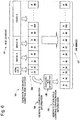
- Fig. 6 illustrates a specific example of a bundle generation operation performed by the DTN node 11.
- a web content 101 is configured with HTML data, images A and B, and a video C.
- the DTN node 11 divides the web content 101 into a plurality of data segments and generates a plurality of bundles 103 (102).
- the plurality of bundles 103 include (N - 2) number of bundles #3 to #N.
- the DTN node 11 generates configuration information 105 of the plurality of bundles 103 that carry the web content 101 (104).
- the configuration information 105 indicates respective attributes of the plurality of bundles 103.
- the configuration information 105 may include information for identifying the plurality of bundles 103.
- the configuration information 105 may specify respective identifiers (bundle IDs) of the plurality of bundles 103.
- the DTN node 11 generates a configuration information bundle that carries the configuration information 105 (105).
- the configuration information 105 is divided into two segments that are respectively stored in the payloads of the bundles #1 and #2.
- the DTN node 11 transmits N number of bundles including the configuration information bundles #1 and #2 that carry the configuration information 105 and the bundles #3 to #N that carry the web content 101 to the DTN 1 for transmitting to the DTN node 14 (107).
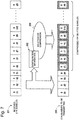
- Fig. 7 illustrates a specific example of bundle deletion or payload compression that is performed by the DTN node 12.
- the DTN node 12 receives N number of bundles #1 to #10 from the DTN node 11 (201).
- the DTN node 12 retrieves the configuration information 202 from the configuration information bundles #1 and #2.
- the DTN node 12 deletes the bundles #5 to #N that carry the resource data (that is, images A and B, as well as, a video C) or compresses the payloads of these bundles by referring the configuration information 202 (203).
- the DTN node 12 transmits either the rest of the bundles #1 to #4 excluding the deleted part of the bundles #5 to #N or the bundles #1 to #N including the part of the bundles #5 to #N, which have compressed payloads, to the DTN 1 for transmitting to the DTN node 14 (204).
- Fig. 8 illustrates a specific example of a bundle restoration procedure performed by the DTN node 13.
- the DTN node 13 receives either the rest of the bundles #1 to #4 excluding the deleted part of the bundles #5 to #N or the bundles #1 to #N including the part of the bundles #5 to #N, which have compressed payloads, from the DTN node 12 (301).
- the DTN node 13 retrieves the configuration information 302 from the configuration information bundles #1 and #2.
- the configuration information 302 records that the bundles #5 to #N are deleted or compressed by the DTN node 12.
- the DTN node 13 caches the image A corresponding to a fragment of the web content 101 in the memory 33.
- the DTN node 13 restores the bundles #5 and #6 by using the cached image A (303). Then, the DTN node 13 transmits either the rest of the bundles #1 to #6 excluding the deleted part of the bundles #7 to #N or the bundles #1 to #N including the part of the bundles #7 to #N, which have compressed payloads, to the DTN 1 for transmitting to the DTN node 14 (304).
- the intermediate node (for example, the DTN node 12 or 13) that is involved in delivery of DTN bundles to the destination node (for example, the DTN node 14) receives a plurality of bundles that carry a plurality of data segments acquired by dividing the data of a content (for example, a web content). Then, the intermediate node is configured to delete a part of the bundles from among the plurality of bundles without transferring to another node or compress the data size of the payload of the part of the bundles in accordance with the communication status of the DTN 1.
- the intermediate node (for example, the DTN node 12 or 13) can reduce the data amount to be transmitted in the DTN 1 based on the local communication status, which the intermediate node recognizes, in the DTN 1. Accordingly, the present example embodiment can adjust the data amount that is delivered in the DTN 1 in accordance with the local communication status in the DTN 1.
- the DTN node 11 may generate and transmit the configuration information bundle that stores the configuration information indicating the attributes of a plurality of DTN bundles. Further, the configuration information bundle may record the identifier of a bundle that is subjected to deletion or compression at the intermediate node. In this way, the intermediate node (for example, the DTN node 12 or 13) and the destination node (for example, the DTN node 14) in the DTN 1 can easily recognize the bundle that can be a subject of deletion or compression.
- the intermediate node for example, the DTN node 12 or 13
- the destination node for example, the DTN node 14
- the intermediate node for example, the DTN node 12 or 13
- the destination node for example, the DTN node 14
- the intermediate node (for example, the DTN node 12 or 13) in the DTN 1 may restore the bundle that is deleted or compressed by any other DTN node by using data that is cached in the intermediate node itself.
- This restoration may preferably be performed under condition that the local communication status of the DTN 1 is satisfactory. In this way, a content that is lost or degraded due to locally deteriorated communication quality in a certain area in the DTN 1 can be restored ex post.
- the first example embodiment describes an example of generating the configuration information bundle that carries the configuration information indicating the attributes of DTN bundles.
- the DTN node 11 does not need to generate the configuration information bundle.
- the DTN node 11 may record the respective attributes of a plurality of bundles, which store the fragments of a contents (data segments) in the payload, in the headers of the respective bundles.
- the restoration of bundles that is described with the first example embodiment may not be performed.
- the restoration of bundles may not be performed when the DTN employs an architecture where each DTN node does not cache contents.
- the first example embodiment describes an example where the DTN node 11 operates as a web proxy and generates a plurality of bundles for carrying a web content.
- application of the technical idea described in the first example embodiment is not limited to the example of web access.
- the DTN node 11 may not be a proxy.
- the technical idea described in the first example embodiment can be widely applied when contents are transmitted from a transmission source node to a destination node over a DTN.
- the bundle generation procedure, bundle deletion or compression procedure, and bundle restoration procedure described with the first example embodiment may be realized by causing a computer system to execute a program.
- one or a plurality of programs including groups of instructions for causing a computer system to perform an algorithm that is described herein using the sequence diagrams and the like may be created and the programs may be supplied to a computer system.
- the bundle protocol agent software 61 to 63 including groups of instructions for causing a computer to perform these procedures may be created.
- Such a program can be stored using various types of non-transitory computer readable medium and be supplied to a computer.
- the non-transitory computer readable medium includes various types of tangible storage medium. Examples of the non-transitory computer readable medium include a magnetic recording medium (for example, a flexible disk, a magnetic tape, and a hard disk drive), a magneto optical recording medium (for example, an optical magnetic disk), a Compact Disc Read Only Memory (CD-ROM), a CD Recordable (CD-R), a CD-Re-Writable (CD-R/W), and a semiconductor memory (for example, a mask ROM, a Programmable ROM (PROM), an Erasable PROM (EPROM), a flash ROM, and a Random Access Memory (RAM)).
- a magnetic recording medium for example, a flexible disk, a magnetic tape, and a hard disk drive
- a magneto optical recording medium for example, an optical magnetic disk
- CD-ROM Compact Disc Read Only Memory
- CD-R CD Recordable
- the program may be supplied to the computer through various types of transitory computer readable medium.
- Examples of the transitory computer readable medium include electric signals, optical signals, and electromagnetic waves.
- the transitory computer readable medium can supply the program to the computer via a wired channel, such as electric cables or optical fibers, or a wireless channel.
Landscapes
- Engineering & Computer Science (AREA)
- Computer Networks & Wireless Communication (AREA)
- Signal Processing (AREA)
- Information Transfer Between Computers (AREA)
- Data Exchanges In Wide-Area Networks (AREA)
- Computer And Data Communications (AREA)
- Mobile Radio Communication Systems (AREA)
Claims (24)
- Verzögerungstoleranter Netzwerk-, DTN-, Knoten (11, 12, 13), der in einem verzögerungstoleranten Netzwerk (1), DTN, verwendet wird, wobei das DTN ein drahtloses Mehrsprungnetzwerk ist, das mehrere der DTN-Knoten (11, 12, 13, 14) aufweist, die einen Speicher- und Weiterleitungsbetrieb durchführen und eine Datenübermittlung untereinander erreichen, indem eine Protokolldateneinheit unabhängig weitergeleitet wird, der aufweist:einen Speicher (31); undeinen Prozessor (21), der mit dem Speicher (31) gekoppelt ist und konfiguriert ist, um die Datenüberführungsverarbeitung für das DTN (1) auszuführen,wobeidie Datenüberführungsverarbeitung aufweist:Empfangen mehrerer Bündel (103), wobei die Bündel die Protokolldateneinheit eines Bündelprotokolls sind, wobei das Bündelprotokoll in einer Schicht zwischen einer Anwendungsschicht und einer Transportschicht in einem Open-System-Interconnection-Referenzmodell angeordnet ist, und Bereitstellen der Kommunikation des Speicher- und Weiterleitungsbetriebs der DTN-Knoten (11, 12, 13, 14), die an einen gleichen DTN-Zielknoten (14) auf dem DTN (1) überführt werden soll, wobei jedes der mehreren Bündel (103) eines von mehreren Datensegmenten aufweist, die durch Teilen von Daten eines Inhalts erhalten werden;gemäß einem Kommunikationsstatus des DTN (1) entweder Löschen eines Teils der Bündel aus den mehreren Bündeln (103), ohne Überführen an einen anderen DTN-Knoten oder Komprimieren einer Datengröße einer Nutzlast des Teils der Bündel (103); undÜbertragen entweder eines Rests der Bündel ohne den gelöschten Teil der Bündel (103) oder der mehreren Bündel (103), die den Teil der Bündel mit den komprimierten Nutzlasten aufweisen, an das DTN (1) zum Übertragen an den DTN-Zielknoten (14),wobei jedes der mehreren Bündel (103) Informationen aufweist, die ein Attribut jedes Bündels anzeigen, unddas Löschen oder das Komprimieren das Auswählen des Teils der Bündel aus den mehreren Bündeln (10) basierend auf den Informationen aufweist.
- DTN-Knoten (11) nach Anspruch 1, wobei
das Komprimieren der Datengröße der Nutzlast den Austausch des in der Nutzlast gespeicherten Datensegments durch Blinddaten aufweist, deren Größe kleiner als das Datensegment ist. - DTN-Knoten (11) nach Anspruch 1 oder 2, wobei
die Datenüberführungsverarbeitung ferner aufweist:Empfangen eines Konfigurationsinformationsbündels, das an den DTN-Zielknoten (14) übertragen werden soll, wobeidas Konfigurationsinformationsbündel Konfigurationsinformationen (105) speichert, die jedes Attribut der mehreren Bündel (103) anzeigen, undwobei das Löschen oder Komprimieren das Auswählen des Teils der Bündel aus den mehreren Bündeln (103) basierend auf den Konfigurationsinformationen (105) aufweist. - DTN-Knoten (11) nach Anspruch 3, wobei
das Attribut anzeigt, ob die Löschung oder Kompression jedes Bündels an einem Zwischenknoten (12, 13) in dem DTN (1) erlaubt ist oder nicht. - DTN-Knoten (11) nach Anspruch 3 oder 4, wobei
der Inhalt ein Inhalt ist, der eine auf dem Hypertext-Transfer-Protocol, HTTP, basierende Web-Transaktion betrifft und Hypertext-Markup-Language-, HTML-, Daten und Ressourcendaten aufweist, die durch einen Uniform-Resource-Identifier, URI, spezifiziert werden, der in den HTML-Daten geschrieben ist, wobei
das Attribut anzeigt, ob jedes in jeder Nutzlast der mehreren Bündel (103) enthaltene Datensegment den HTML-Daten oder den Ressourcendaten entspricht. - DTN-Knoten (11) nach Anspruch 5, wobei
das Attribut anzeigt, ob jedes in der Nutzlast jedes der mehreren Bündel (103) enthaltene Datensegment in den Ressourcendaten enthaltenen Bilddaten entspricht oder nicht. - DTN-Knoten (11) nach einem der Ansprüche 3 bis 6, wobei
die Datenüberführungsverarbeitung ferner aufweist:Aktualisieren der Konfigurationsinformationen (105), um anzuzeigen, dass die Löschung oder Kompression für den Teil der Bündel durchgeführt wird; undÜbertragen des Konfigurationsinformations- (105) Bündels, das die aktualisierten Konfigurationsinformationen aufweist, an das DTN (1). - DTN-Knoten nach Anspruch 1 oder 2, wobei
das Attribut anzeigt, ob die Löschung oder Kompression jedes Bündels an einem Zwischenknoten (12, 13) in dem DTN (1) erlaubt ist oder nicht. - DTN-Knoten (11) nach Anspruch 1 oder 8, wobei
der Inhalt ein Inhalt ist, der eine auf dem Hypertext-Transfer-Protocol, HTTP, basierende Web-Transaktion betrifft und Hypertext-Markup-Language-, HTML-, Daten und Ressourcendaten aufweist, die durch einen Uniform-Resource-Identifier, URI, spezifiziert werden, der in den HTML-Daten geschrieben ist; und
das Attribut anzeigt, ob jedes in der Nutzlast jedes der mehreren Bündel (103) enthaltene Datensegment den HTML-Daten oder den Ressourcendaten entspricht. - DTN-Knoten (11) nach einem der Ansprüche 1 bis 9, wobei
das Löschen die Löschung des Teils der Bündel aufweist oder das Komprimieren die Kompression der Nutzlast des Teils der Bündel aufweist, wenn der Kommunikationsstatus des DTN (1) niedriger als eine erste Stufe ist. - DTN-Knoten (11) nach einem der Ansprüche 1 bis 10, wobei
der Kommunikationsstatus des DTN (1) die lokale Kommunikationsqualität in dem DTN (1) und/oder die Erfolgsaussicht der Übermittlung der mehreren Bündel (105) an den DTN-Zielknoten (14) aufweist. - DTN-Knoten (11) nach einem der Ansprüche 1 bis 11, wobei
die Datenüberführungsverarbeitung ferner aufweist:wenn die Löschung wenigstens eines Datensegments in einem ersten Bündel, das mehrere Datensegmente in der Nutzlast aufweist, durch einen anderen DTN-Knoten erfasst wird oder die Kompression der Nutzlast des ersten Bündels durch einen anderen DTN-Knoten erfasst wird und das Datensegment, das den gelöschten oder komprimierten Datensegmenten in dem DTN-Knoten entspricht, in den Cachespeicher aufgenommen wird,Wiederherstellen des in den Cachespeicher aufgenommenen Datensegments in dem ersten Bündel; undÜbertragen des ersten Bündels, das mit dem in dem in den Cachespeicher aufgenommenen Datensegment wiederhergestellt wurde, an das DTN zum Übertragen an den DTN-Zielknoten. - DTN-Knoten (11) nach Anspruch 12, wobei
das Wiederherstellen die Wiederherstellung des ersten Bündels aufweist, wenn der Kommunikationsstatus des DTN (1) eine zweite Stufe überschreitet. - DTN-Knoten (11) nach einem der Ansprüche 1 bis 13,
wobei die Datenüberführungsverarbeitung ferner aufweist:wenn die Löschung wenigstens eines Datensegments in einem ersten Bündel, das mehrere Datensegmente in der Nutzlast aufweist, an einem anderen DTN-Knoten erfasst wird oder die Kompression der Nutzlast des ersten Bündels durch einen anderen DTN-Knoten erfasst wird und ein ursprüngliches Bündel des Datensegments, das dem gelöschten Datensegment oder komprimierten Datensegmenten in dem DTN-Knoten (11, 12, 13) zum Übertragen an den Zielknoten entspricht, in den Cachespeicher aufgenommen wird,Wiederherstellen des in den Cachespeicher aufgenommenen ursprünglichen Bündels des Datensegments in dem ersten Bündel; undÜbertragen des ersten Bündels, das mit dem in dem in den Cachespeicher aufgenommenen ursprünglichen Bündel wiederhergestellt wurde, an den DTN-Knoten (11, 12, 13) zum Übertragen an den DTN-Zielknoten (14). - Datenüberführungsverfahren, das von einem verzögerungstoleranten Netzwerk-, DTN-, Knoten (11, 12, 13), durchgeführt wird, wobei das DTN ein drahtloses Mehrsprungnetzwerk ist, das mehrere der DTN-Knoten aufweist, die einen Speicher- und Weiterleitungsbetrieb durchführen und eine Datenübermittlung untereinander erreichen, indem eine Protokolldateneinheit unabhängig weitergeleitet wird, wobei das Verfahren aufweist:Empfangen mehrerer Bündel (S21), wobei die Bündel die Protokolldateneinheit eines Bündelprotokolls sind, wobei das Bündelprotokoll in einer Schicht zwischen einer Anwendungsschicht und einer Transportschicht in einem Open-System-Interconnection-Referenzmodell angeordnet ist, und Bereitstellen der Kommunikation des Speicher- und Weiterleitungsbetriebs der DTN-Knoten, die an einen gleichen DTN-Zielknoten auf dem verzögerungstoleranten Netzwerk, DTN, überführt werden soll, wobei jedes der mehreren Bündel eines von mehreren Datensegmenten aufweist, die durch Teilen von Daten eines Inhalts erhalten werden;gemäß einem Kommunikationsstatus des DTN entweder Löschen eines Teils der Bündel (S22) aus den mehreren Bündeln, ohne Überführen an einen anderen DTN-Knoten oder Komprimieren einer Datengröße einer Nutzlast des Teils der Bündel; undÜbertragen (S23) entweder eines Rests der Bündel ohne den gelöschten Teil der Bündel oder der mehreren Bündel, die den Teil der Bündel mit den komprimierten Nutzlasten aufweisen, an das DTN zum Übertragen an den DTN-Zielknoten,wobei jedes der mehreren Bündel (103) Informationen aufweist, die ein Attribut jedes Bündels anzeigen, undwobei das Löschen oder das Komprimieren das Auswählen des Teils der Bündel aus den mehreren Bündeln (10) basierend auf den Informationen aufweist.
- Datenüberführungsverfahren nach Anspruch 15, wobei
das Komprimieren der Datengröße der Nutzlast den Austausch des in der Nutzlast gespeicherten Datensegments durch Blinddaten aufweist, deren Größe kleiner als das Datensegment ist. - Datenüberführungsverfahren nach Anspruch 15 oder 16, das ferner aufweist:Empfangen eines Konfigurationsinformationsbündels, das an den DTN-Zielknoten übertragen werden soll, wobeidas Konfigurationsinformationsbündel Konfigurationsinformationen speichert, die jedes Attribut der mehreren Bündel anzeigen, undwobei das Löschen oder Komprimieren das Auswählen des Teils der Bündel aus den mehreren Bündeln basierend auf den Konfigurationsinformationen aufweist.
- Datenüberführungsverfahren nach Anspruch 17, wobei
das Attribut anzeigt, ob die Löschung oder Kompression jedes Bündels an einem Zwischenknoten in dem DTN erlaubt ist oder nicht. - Datenüberführungsverfahren nach Anspruch 17 oder 18, wobei
der Inhalt ein Inhalt ist, der eine auf dem Hypertext-Transfer-Protocol, HTTP, basierende Web-Transaktion betrifft und Hypertext-Markup-Language-, HTML-, Daten und Ressourcendaten aufweist, die durch einen Uniform-Resource-Identifier, URI, spezifiziert werden, der in den HTML-Daten geschrieben ist, wobei
das Attribut anzeigt, ob jedes in jeder Nutzlast der mehreren Bündel enthaltene Datensegment den HTML-Daten oder den Ressourcendaten entspricht. - Datenüberführungsverfahren nach Anspruch 19, wobei
das Attribut anzeigt, ob jedes in der Nutzlast jedes der mehreren Bündel enthaltene Datensegment in den Ressourcendaten enthaltenen Bilddaten entspricht oder nicht. - Datenüberführungsverfahren nach einem der Ansprüche 17 bis 20, das ferner aufweist:Aktualisieren der Konfigurationsinformationen, um anzuzeigen, dass die Löschung oder Kompression für den Teil der Bündel durchgeführt wird; undÜbertragen des Konfigurationsinformationsbündels, das die aktualisierten Konfigurationsinformationen aufweist, an das DTN.
- Datenüberführungsverfahren nach einem der Ansprüche 15 bis 21, das ferner aufweist:wenn die Löschung wenigstens eines Datensegments in einem ersten Bündel, das mehrere Datensegmente in der Nutzlast aufweist, durch einen anderen DTN-Knoten erfasst wird oder die Kompression der Nutzlast des ersten Bündels durch einen anderen DTN-Knoten erfasst wird und das Datensegment, das den gelöschten oder komprimierten Datensegmenten in dem DTN-Knoten entspricht, in den Cachespeicher aufgenommen wird,Wiederherstellen des in den Cachespeicher aufgenommenen Datensegments in dem ersten Bündel; undÜbertragen des ersten Bündels, das mit dem in dem in den Cachespeicher aufgenommenen Datensegment wiederhergestellt wurde, an das DTN zum Übertragen an den DTN-Zielknoten.
- Datenüberführungsverfahren nach einem der Ansprüche 15 bis 22, wobei die Datenüberführungsverarbeitung ferner aufweist:wenn die Löschung wenigstens eines Datensegments in einem ersten Bündel, das mehrere Datensegmente in der Nutzlast aufweist, an einem anderen DTN-Knoten erfasst wird oder die Kompression der Nutzlast des ersten Bündels durch einen anderen DTN-Knoten erfasst wird und ein ursprüngliches Bündel des Datensegments, das dem gelöschten Datensegment oder komprimierten Datensegmenten in dem DTN-Knoten (11, 12, 13) zum Übertragen an den Zielknoten entspricht, in den Cachespeicher aufgenommen wird,Wiederherstellen des in den Cachespeicher aufgenommenen ursprünglichen Bündels des Datensegments in dem ersten Bündel; undÜbertragen des ersten Bündels, das mit dem in dem in den Cachespeicher aufgenommenen ursprünglichen Bündel wiederhergestellt wurde, an den DTN-Knoten (11, 12, 13) zum Übertragen an den DTN-Zielknoten (14).
- Programm, um zu bewirken, dass ein Computer das Verfahren nach einem der Ansprüche 15 bis 23 durchführt.
Priority Applications (1)
| Application Number | Priority Date | Filing Date | Title |
|---|---|---|---|
| EP18214341.2A EP3493587B1 (de) | 2014-07-24 | 2015-05-27 | Vorrichtung und verfahren zur datenbereitstellung in einem verzögerungstoleranten netzwerk (dtn) |
Applications Claiming Priority (2)
| Application Number | Priority Date | Filing Date | Title |
|---|---|---|---|
| JP2014150407 | 2014-07-24 | ||
| PCT/JP2015/002673 WO2016013139A1 (ja) | 2014-07-24 | 2015-05-27 | Delay-Tolerant network(DTN)内でのデータ配送のための装置及び方法 |
Related Child Applications (2)
| Application Number | Title | Priority Date | Filing Date |
|---|---|---|---|
| EP18214341.2A Division EP3493587B1 (de) | 2014-07-24 | 2015-05-27 | Vorrichtung und verfahren zur datenbereitstellung in einem verzögerungstoleranten netzwerk (dtn) |
| EP18214341.2A Division-Into EP3493587B1 (de) | 2014-07-24 | 2015-05-27 | Vorrichtung und verfahren zur datenbereitstellung in einem verzögerungstoleranten netzwerk (dtn) |
Publications (3)
| Publication Number | Publication Date |
|---|---|
| EP3174334A1 EP3174334A1 (de) | 2017-05-31 |
| EP3174334A4 EP3174334A4 (de) | 2018-07-04 |
| EP3174334B1 true EP3174334B1 (de) | 2021-01-13 |
Family
ID=55162690
Family Applications (2)
| Application Number | Title | Priority Date | Filing Date |
|---|---|---|---|
| EP15824390.7A Active EP3174334B1 (de) | 2014-07-24 | 2015-05-27 | Vorrichtung und verfahren zur datenbereitstellung in einem verzögerungstoleranten netzwerk (dtn) |
| EP18214341.2A Active EP3493587B1 (de) | 2014-07-24 | 2015-05-27 | Vorrichtung und verfahren zur datenbereitstellung in einem verzögerungstoleranten netzwerk (dtn) |
Family Applications After (1)
| Application Number | Title | Priority Date | Filing Date |
|---|---|---|---|
| EP18214341.2A Active EP3493587B1 (de) | 2014-07-24 | 2015-05-27 | Vorrichtung und verfahren zur datenbereitstellung in einem verzögerungstoleranten netzwerk (dtn) |
Country Status (8)
| Country | Link |
|---|---|
| US (2) | US10375605B2 (de) |
| EP (2) | EP3174334B1 (de) |
| JP (1) | JP6344474B2 (de) |
| KR (1) | KR101887835B1 (de) |
| CN (2) | CN110708397B (de) |
| AU (1) | AU2015291916B2 (de) |
| IL (1) | IL249846B (de) |
| WO (1) | WO2016013139A1 (de) |
Families Citing this family (8)
| Publication number | Priority date | Publication date | Assignee | Title |
|---|---|---|---|---|
| KR20160099610A (ko) * | 2014-03-04 | 2016-08-22 | 닛본 덴끼 가부시끼가이샤 | DTN(Disruption/Delay/Disconnect Tolerant Network)에서 이용되는 노드 장치 및 통신 방법 |
| US10178601B2 (en) * | 2016-05-18 | 2019-01-08 | Veniam, Inc. | Systems and methods for managing the routing and replication of data in the upload direction in a network of moving things |
| US10057742B2 (en) * | 2016-05-18 | 2018-08-21 | Veniam, Inc. | Systems and methods for managing the routing and replication of data in the download direction in a network of moving things |
| WO2020010088A1 (en) * | 2018-07-02 | 2020-01-09 | Convida Wireless, Llc | 5g delay tolerant data services |
| CN110138432B (zh) * | 2019-05-16 | 2021-06-29 | 哈尔滨工业大学(深圳) | 基于网络编码和中继缓存辅助的dtn数据传输方法 |
| CN110557294A (zh) * | 2019-09-25 | 2019-12-10 | 南昌航空大学 | 一种基于网络变化度的psn网络的时间切片方法 |
| CN111510385B (zh) * | 2020-06-18 | 2020-09-25 | 中国人民解放军国防科技大学 | 基于行为相似模型的容滞网络端到端时延改善方法及装置 |
| KR20260012927A (ko) | 2024-07-19 | 2026-01-27 | 인천대학교 산학협력단 | 사물 인터넷 네트워크에서의 혼잡 인식 처리를 위한 네트워크 시스템 |
Citations (1)
| Publication number | Priority date | Publication date | Assignee | Title |
|---|---|---|---|---|
| US20040090989A1 (en) * | 2002-11-08 | 2004-05-13 | Nec Infrontia Corporation | Packet compression system, packet restoration system, packet compression method, and packet restoration method |
Family Cites Families (30)
| Publication number | Priority date | Publication date | Assignee | Title |
|---|---|---|---|---|
| US6226277B1 (en) * | 1997-10-14 | 2001-05-01 | Lucent Technologies Inc. | Method for admitting new connections based on usage priorities in a multiple access system for communications networks |
| GB9813390D0 (en) | 1998-06-23 | 1998-08-19 | Koninkl Philips Electronics Nv | Telecommunication system with channel sharing |
| WO2000062541A1 (en) * | 1999-04-08 | 2000-10-19 | Matsushita Electric Industrial Co., Ltd. | Digital video signal recorder/reproducer and transmitter |
| US7012893B2 (en) * | 2001-06-12 | 2006-03-14 | Smartpackets, Inc. | Adaptive control of data packet size in networks |
| US7197685B2 (en) * | 2003-01-02 | 2007-03-27 | Samsung Electronics, Co., Ltd. | Robust signal transmission in digital television broadcasting |
| KR20040096363A (ko) * | 2003-05-09 | 2004-11-16 | 삼성전자주식회사 | 이동 통신 시스템의 기지국에서의 트래픽 스케줄링 장치및 방법 |
| US7974191B2 (en) * | 2004-03-10 | 2011-07-05 | Alcatel-Lucent Usa Inc. | Method, apparatus and system for the synchronized combining of packet data |
| US7873065B1 (en) * | 2006-02-01 | 2011-01-18 | F5 Networks, Inc. | Selectively enabling network packet concatenation based on metrics |
| JP4803066B2 (ja) | 2007-02-21 | 2011-10-26 | 日本電気株式会社 | ルーティング方法およびノード |
| CN101031062B (zh) * | 2007-03-21 | 2010-05-26 | 中兴通讯股份有限公司 | 一种移动多媒体广播电子业务指南的传输方法 |
| US9109928B2 (en) * | 2007-08-16 | 2015-08-18 | International Business Machines Corporation | Methods and apparatus for efficient and adaptive transmission of data in data collection networks |
| US8149716B2 (en) * | 2007-08-20 | 2012-04-03 | Raytheon Bbn Technologies Corp. | Systems and methods for adaptive routing in mobile ad-hoc networks and disruption tolerant networks |
| WO2009078427A1 (ja) | 2007-12-17 | 2009-06-25 | Nec Corporation | 経路制御方法およびノード |
| EP2347552A4 (de) * | 2008-11-14 | 2015-10-14 | Raytheon Co | Automatischer aufruf eines dtn-bündelprotokolls |
| KR101539260B1 (ko) * | 2008-12-02 | 2015-07-29 | 삼성전자주식회사 | 선택적 영상정보 무손실 압축, 복원 장치 및 방법 |
| JP5417141B2 (ja) * | 2009-12-08 | 2014-02-12 | Kddi株式会社 | チャネル情報圧縮装置及び方法、コンピュータプログラム、受信機 |
| US20110227757A1 (en) * | 2010-03-16 | 2011-09-22 | Telcordia Technologies, Inc. | Methods for context driven disruption tolerant vehicular networking in dynamic roadway environments |
| US20110228716A1 (en) * | 2010-03-17 | 2011-09-22 | Qualcomm Incorporated | Methods and systems for multiplexing multiple service components into one flow in a forward link only network |
| CN102271089B (zh) * | 2011-08-29 | 2014-02-05 | 北京航空航天大学 | 一种基于时间预测和定向确认的容迟网络缓存清理方法 |
| US9344514B2 (en) * | 2011-10-26 | 2016-05-17 | Viagenie | Method and proxy for transporting IP payloads over a delay-tolerant network (DTN) |
| GB2496862B (en) * | 2011-11-22 | 2016-06-01 | Canon Kk | Communication of data blocks over a communication system |
| KR20130093745A (ko) * | 2011-12-27 | 2013-08-23 | 연세대학교 산학협력단 | 최적 분할 패킷 수를 이용한 지연 허용 네트워크 시스템 및 데이터 전송 방법 |
| CN102752799B (zh) * | 2012-06-29 | 2015-07-22 | 中国联合网络通信集团有限公司 | 容迟网络路由方法、设备及系统 |
| US20140032730A1 (en) * | 2012-07-26 | 2014-01-30 | Qualcomm Incorporated | Delay-tolerant web transaction delegations |
| US8867447B2 (en) | 2012-08-28 | 2014-10-21 | Verizon Patent And Licensing Inc. | Dynamic header compression based on attributes of traffic |
| CN102883397B (zh) * | 2012-09-07 | 2015-07-08 | 航天恒星科技有限公司 | 一种面向空间环境dtn网络的数据转发方法 |
| US9350676B2 (en) * | 2012-12-11 | 2016-05-24 | Qualcomm Incorporated | Method and apparatus for classifying flows for compression |
| JP6145276B2 (ja) | 2013-02-01 | 2017-06-07 | 日立マクセル株式会社 | 携帯情報端末 |
| US9419920B1 (en) * | 2013-02-04 | 2016-08-16 | The United States Of America, As Represented By The Secretary Of The Navy | Gateway router and method for application-aware automatic network selection |
| US9887974B2 (en) * | 2013-11-27 | 2018-02-06 | Architecture Technology Corporation | Method for network communication past encryption devices |
-
2015
- 2015-05-27 EP EP15824390.7A patent/EP3174334B1/de active Active
- 2015-05-27 KR KR1020177004823A patent/KR101887835B1/ko active Active
- 2015-05-27 EP EP18214341.2A patent/EP3493587B1/de active Active
- 2015-05-27 JP JP2016535629A patent/JP6344474B2/ja active Active
- 2015-05-27 CN CN201911114677.7A patent/CN110708397B/zh active Active
- 2015-05-27 US US15/324,035 patent/US10375605B2/en active Active
- 2015-05-27 WO PCT/JP2015/002673 patent/WO2016013139A1/ja not_active Ceased
- 2015-05-27 CN CN201580041006.6A patent/CN106664608B/zh active Active
- 2015-05-27 AU AU2015291916A patent/AU2015291916B2/en active Active
-
2016
- 2016-12-29 IL IL249846A patent/IL249846B/en active IP Right Grant
-
2018
- 2018-12-12 US US16/217,160 patent/US10708820B2/en active Active
Patent Citations (1)
| Publication number | Priority date | Publication date | Assignee | Title |
|---|---|---|---|---|
| US20040090989A1 (en) * | 2002-11-08 | 2004-05-13 | Nec Infrontia Corporation | Packet compression system, packet restoration system, packet compression method, and packet restoration method |
Also Published As
| Publication number | Publication date |
|---|---|
| IL249846A0 (en) | 2017-03-30 |
| EP3493587A1 (de) | 2019-06-05 |
| AU2015291916B2 (en) | 2018-01-18 |
| US20190116523A1 (en) | 2019-04-18 |
| IL249846B (en) | 2020-08-31 |
| KR20170033413A (ko) | 2017-03-24 |
| AU2015291916A1 (en) | 2017-02-02 |
| EP3174334A1 (de) | 2017-05-31 |
| US20170208503A1 (en) | 2017-07-20 |
| CN106664608A (zh) | 2017-05-10 |
| CN110708397B (zh) | 2022-10-21 |
| CN110708397A (zh) | 2020-01-17 |
| KR101887835B1 (ko) | 2018-08-10 |
| CN106664608B (zh) | 2020-03-03 |
| JP6344474B2 (ja) | 2018-06-20 |
| US10708820B2 (en) | 2020-07-07 |
| EP3493587B1 (de) | 2022-04-13 |
| JPWO2016013139A1 (ja) | 2017-05-25 |
| EP3174334A4 (de) | 2018-07-04 |
| US10375605B2 (en) | 2019-08-06 |
| WO2016013139A1 (ja) | 2016-01-28 |
Similar Documents
| Publication | Publication Date | Title |
|---|---|---|
| EP3174334B1 (de) | Vorrichtung und verfahren zur datenbereitstellung in einem verzögerungstoleranten netzwerk (dtn) | |
| US11558302B2 (en) | Data transmission method and apparatus | |
| JP5740449B2 (ja) | データ伝送方法および装置 | |
| CN106716951B (zh) | 用于优化隧道流量的方法和装置 | |
| US8638797B2 (en) | Ordered and duplicate-free delivery of wireless data frames | |
| US10798199B2 (en) | Network traffic accelerator | |
| CN110943917B (zh) | 一种减少多路由网络中冗余报文的方法 | |
| US20130258843A1 (en) | Network system and apparatis | |
| US8259724B2 (en) | Data transmitting apparatus and data retransmitting method | |
| US7822056B2 (en) | LCR switch with header compression | |
| CN111629416A (zh) | 消息传输方法、系统、终端设备及计算机可读存储介质 | |
| US8238335B2 (en) | Multi-route transmission of packets within a network | |
| CN109428684B (zh) | 一种数据传输方法、rlc实体及pdcp实体 | |
| CN117394961A (zh) | 一种反馈报文发送、处理方法、接收端、发送端及装置 | |
| US12425252B2 (en) | Event-based reporting from a network function in a service based architecture network | |
| Matsuzono et al. | Efficient Pull-based Mobile Video Streaming leveraging In-Network Functions | |
| CN107968755B (zh) | 基于mmt协议的媒体内容存储转发的路由选择方法及系统 | |
| CN116566973A (zh) | 一种基于对等网络的文件传输系统 | |
| CN116963133A (zh) | 告警消息的处理方法及装置 | |
| CN110418164A (zh) | 数据传输方法及装置 | |
| US20110149976A1 (en) | Distributing cells on an ima logical link having inactive ima sub-links |
Legal Events
| Date | Code | Title | Description |
|---|---|---|---|
| STAA | Information on the status of an ep patent application or granted ep patent |
Free format text: STATUS: THE INTERNATIONAL PUBLICATION HAS BEEN MADE |
|
| PUAI | Public reference made under article 153(3) epc to a published international application that has entered the european phase |
Free format text: ORIGINAL CODE: 0009012 |
|
| STAA | Information on the status of an ep patent application or granted ep patent |
Free format text: STATUS: REQUEST FOR EXAMINATION WAS MADE |
|
| 17P | Request for examination filed |
Effective date: 20170224 |
|
| AK | Designated contracting states |
Kind code of ref document: A1 Designated state(s): AL AT BE BG CH CY CZ DE DK EE ES FI FR GB GR HR HU IE IS IT LI LT LU LV MC MK MT NL NO PL PT RO RS SE SI SK SM TR |
|
| AX | Request for extension of the european patent |
Extension state: BA ME |
|
| DAV | Request for validation of the european patent (deleted) | ||
| DAX | Request for extension of the european patent (deleted) | ||
| RIC1 | Information provided on ipc code assigned before grant |
Ipc: H04L 12/951 20130101ALI20180227BHEP Ipc: H04W 28/10 20090101AFI20180227BHEP Ipc: H04W 84/18 20090101ALI20180227BHEP Ipc: H04L 12/801 20130101ALI20180227BHEP |
|
| A4 | Supplementary search report drawn up and despatched |
Effective date: 20180606 |
|
| RIC1 | Information provided on ipc code assigned before grant |
Ipc: H04W 28/10 20090101AFI20180530BHEP Ipc: H04W 84/18 20090101ALI20180530BHEP Ipc: H04L 12/951 20130101ALI20180530BHEP Ipc: H04L 12/801 20130101ALI20180530BHEP |
|
| STAA | Information on the status of an ep patent application or granted ep patent |
Free format text: STATUS: EXAMINATION IS IN PROGRESS |
|
| 17Q | First examination report despatched |
Effective date: 20190327 |
|
| GRAP | Despatch of communication of intention to grant a patent |
Free format text: ORIGINAL CODE: EPIDOSNIGR1 |
|
| STAA | Information on the status of an ep patent application or granted ep patent |
Free format text: STATUS: GRANT OF PATENT IS INTENDED |
|
| RIC1 | Information provided on ipc code assigned before grant |
Ipc: H04L 12/801 20130101ALI20200714BHEP Ipc: H04L 29/08 20060101ALI20200714BHEP Ipc: H04W 28/10 20090101AFI20200714BHEP |
|
| INTG | Intention to grant announced |
Effective date: 20200731 |
|
| GRAS | Grant fee paid |
Free format text: ORIGINAL CODE: EPIDOSNIGR3 |
|
| GRAA | (expected) grant |
Free format text: ORIGINAL CODE: 0009210 |
|
| STAA | Information on the status of an ep patent application or granted ep patent |
Free format text: STATUS: THE PATENT HAS BEEN GRANTED |
|
| AK | Designated contracting states |
Kind code of ref document: B1 Designated state(s): AL AT BE BG CH CY CZ DE DK EE ES FI FR GB GR HR HU IE IS IT LI LT LU LV MC MK MT NL NO PL PT RO RS SE SI SK SM TR |
|
| REG | Reference to a national code |
Ref country code: GB Ref legal event code: FG4D |
|
| REG | Reference to a national code |
Ref country code: CH Ref legal event code: EP |
|
| REG | Reference to a national code |
Ref country code: IE Ref legal event code: FG4D |
|
| REG | Reference to a national code |
Ref country code: DE Ref legal event code: R096 Ref document number: 602015064802 Country of ref document: DE |
|
| REG | Reference to a national code |
Ref country code: AT Ref legal event code: REF Ref document number: 1355467 Country of ref document: AT Kind code of ref document: T Effective date: 20210215 |
|
| REG | Reference to a national code |
Ref country code: AT Ref legal event code: MK05 Ref document number: 1355467 Country of ref document: AT Kind code of ref document: T Effective date: 20210113 |
|
| REG | Reference to a national code |
Ref country code: NL Ref legal event code: MP Effective date: 20210113 |
|
| REG | Reference to a national code |
Ref country code: LT Ref legal event code: MG9D |
|
| PG25 | Lapsed in a contracting state [announced via postgrant information from national office to epo] |
Ref country code: BG Free format text: LAPSE BECAUSE OF FAILURE TO SUBMIT A TRANSLATION OF THE DESCRIPTION OR TO PAY THE FEE WITHIN THE PRESCRIBED TIME-LIMIT Effective date: 20210413 Ref country code: NL Free format text: LAPSE BECAUSE OF FAILURE TO SUBMIT A TRANSLATION OF THE DESCRIPTION OR TO PAY THE FEE WITHIN THE PRESCRIBED TIME-LIMIT Effective date: 20210113 Ref country code: FI Free format text: LAPSE BECAUSE OF FAILURE TO SUBMIT A TRANSLATION OF THE DESCRIPTION OR TO PAY THE FEE WITHIN THE PRESCRIBED TIME-LIMIT Effective date: 20210113 Ref country code: GR Free format text: LAPSE BECAUSE OF FAILURE TO SUBMIT A TRANSLATION OF THE DESCRIPTION OR TO PAY THE FEE WITHIN THE PRESCRIBED TIME-LIMIT Effective date: 20210414 Ref country code: HR Free format text: LAPSE BECAUSE OF FAILURE TO SUBMIT A TRANSLATION OF THE DESCRIPTION OR TO PAY THE FEE WITHIN THE PRESCRIBED TIME-LIMIT Effective date: 20210113 Ref country code: LT Free format text: LAPSE BECAUSE OF FAILURE TO SUBMIT A TRANSLATION OF THE DESCRIPTION OR TO PAY THE FEE WITHIN THE PRESCRIBED TIME-LIMIT Effective date: 20210113 Ref country code: PT Free format text: LAPSE BECAUSE OF FAILURE TO SUBMIT A TRANSLATION OF THE DESCRIPTION OR TO PAY THE FEE WITHIN THE PRESCRIBED TIME-LIMIT Effective date: 20210513 Ref country code: NO Free format text: LAPSE BECAUSE OF FAILURE TO SUBMIT A TRANSLATION OF THE DESCRIPTION OR TO PAY THE FEE WITHIN THE PRESCRIBED TIME-LIMIT Effective date: 20210413 |
|
| PG25 | Lapsed in a contracting state [announced via postgrant information from national office to epo] |
Ref country code: SE Free format text: LAPSE BECAUSE OF FAILURE TO SUBMIT A TRANSLATION OF THE DESCRIPTION OR TO PAY THE FEE WITHIN THE PRESCRIBED TIME-LIMIT Effective date: 20210113 Ref country code: AT Free format text: LAPSE BECAUSE OF FAILURE TO SUBMIT A TRANSLATION OF THE DESCRIPTION OR TO PAY THE FEE WITHIN THE PRESCRIBED TIME-LIMIT Effective date: 20210113 Ref country code: LV Free format text: LAPSE BECAUSE OF FAILURE TO SUBMIT A TRANSLATION OF THE DESCRIPTION OR TO PAY THE FEE WITHIN THE PRESCRIBED TIME-LIMIT Effective date: 20210113 Ref country code: RS Free format text: LAPSE BECAUSE OF FAILURE TO SUBMIT A TRANSLATION OF THE DESCRIPTION OR TO PAY THE FEE WITHIN THE PRESCRIBED TIME-LIMIT Effective date: 20210113 Ref country code: PL Free format text: LAPSE BECAUSE OF FAILURE TO SUBMIT A TRANSLATION OF THE DESCRIPTION OR TO PAY THE FEE WITHIN THE PRESCRIBED TIME-LIMIT Effective date: 20210113 |
|
| PG25 | Lapsed in a contracting state [announced via postgrant information from national office to epo] |
Ref country code: IS Free format text: LAPSE BECAUSE OF FAILURE TO SUBMIT A TRANSLATION OF THE DESCRIPTION OR TO PAY THE FEE WITHIN THE PRESCRIBED TIME-LIMIT Effective date: 20210513 |
|
| REG | Reference to a national code |
Ref country code: DE Ref legal event code: R097 Ref document number: 602015064802 Country of ref document: DE |
|
| PG25 | Lapsed in a contracting state [announced via postgrant information from national office to epo] |
Ref country code: CZ Free format text: LAPSE BECAUSE OF FAILURE TO SUBMIT A TRANSLATION OF THE DESCRIPTION OR TO PAY THE FEE WITHIN THE PRESCRIBED TIME-LIMIT Effective date: 20210113 Ref country code: EE Free format text: LAPSE BECAUSE OF FAILURE TO SUBMIT A TRANSLATION OF THE DESCRIPTION OR TO PAY THE FEE WITHIN THE PRESCRIBED TIME-LIMIT Effective date: 20210113 Ref country code: SM Free format text: LAPSE BECAUSE OF FAILURE TO SUBMIT A TRANSLATION OF THE DESCRIPTION OR TO PAY THE FEE WITHIN THE PRESCRIBED TIME-LIMIT Effective date: 20210113 |
|
| PLBE | No opposition filed within time limit |
Free format text: ORIGINAL CODE: 0009261 |
|
| STAA | Information on the status of an ep patent application or granted ep patent |
Free format text: STATUS: NO OPPOSITION FILED WITHIN TIME LIMIT |
|
| PG25 | Lapsed in a contracting state [announced via postgrant information from national office to epo] |
Ref country code: DK Free format text: LAPSE BECAUSE OF FAILURE TO SUBMIT A TRANSLATION OF THE DESCRIPTION OR TO PAY THE FEE WITHIN THE PRESCRIBED TIME-LIMIT Effective date: 20210113 Ref country code: SK Free format text: LAPSE BECAUSE OF FAILURE TO SUBMIT A TRANSLATION OF THE DESCRIPTION OR TO PAY THE FEE WITHIN THE PRESCRIBED TIME-LIMIT Effective date: 20210113 Ref country code: RO Free format text: LAPSE BECAUSE OF FAILURE TO SUBMIT A TRANSLATION OF THE DESCRIPTION OR TO PAY THE FEE WITHIN THE PRESCRIBED TIME-LIMIT Effective date: 20210113 |
|
| 26N | No opposition filed |
Effective date: 20211014 |
|
| REG | Reference to a national code |
Ref country code: CH Ref legal event code: PL |
|
| PG25 | Lapsed in a contracting state [announced via postgrant information from national office to epo] |
Ref country code: AL Free format text: LAPSE BECAUSE OF FAILURE TO SUBMIT A TRANSLATION OF THE DESCRIPTION OR TO PAY THE FEE WITHIN THE PRESCRIBED TIME-LIMIT Effective date: 20210113 Ref country code: CH Free format text: LAPSE BECAUSE OF NON-PAYMENT OF DUE FEES Effective date: 20210531 Ref country code: LI Free format text: LAPSE BECAUSE OF NON-PAYMENT OF DUE FEES Effective date: 20210531 Ref country code: LU Free format text: LAPSE BECAUSE OF NON-PAYMENT OF DUE FEES Effective date: 20210527 Ref country code: MC Free format text: LAPSE BECAUSE OF FAILURE TO SUBMIT A TRANSLATION OF THE DESCRIPTION OR TO PAY THE FEE WITHIN THE PRESCRIBED TIME-LIMIT Effective date: 20210113 Ref country code: ES Free format text: LAPSE BECAUSE OF FAILURE TO SUBMIT A TRANSLATION OF THE DESCRIPTION OR TO PAY THE FEE WITHIN THE PRESCRIBED TIME-LIMIT Effective date: 20210113 |
|
| REG | Reference to a national code |
Ref country code: BE Ref legal event code: MM Effective date: 20210531 |
|
| PG25 | Lapsed in a contracting state [announced via postgrant information from national office to epo] |
Ref country code: SI Free format text: LAPSE BECAUSE OF FAILURE TO SUBMIT A TRANSLATION OF THE DESCRIPTION OR TO PAY THE FEE WITHIN THE PRESCRIBED TIME-LIMIT Effective date: 20210113 |
|
| PG25 | Lapsed in a contracting state [announced via postgrant information from national office to epo] |
Ref country code: IT Free format text: LAPSE BECAUSE OF FAILURE TO SUBMIT A TRANSLATION OF THE DESCRIPTION OR TO PAY THE FEE WITHIN THE PRESCRIBED TIME-LIMIT Effective date: 20210113 Ref country code: IE Free format text: LAPSE BECAUSE OF NON-PAYMENT OF DUE FEES Effective date: 20210527 |
|
| PG25 | Lapsed in a contracting state [announced via postgrant information from national office to epo] |
Ref country code: IS Free format text: LAPSE BECAUSE OF FAILURE TO SUBMIT A TRANSLATION OF THE DESCRIPTION OR TO PAY THE FEE WITHIN THE PRESCRIBED TIME-LIMIT Effective date: 20210513 |
|
| PG25 | Lapsed in a contracting state [announced via postgrant information from national office to epo] |
Ref country code: BE Free format text: LAPSE BECAUSE OF NON-PAYMENT OF DUE FEES Effective date: 20210531 |
|
| PG25 | Lapsed in a contracting state [announced via postgrant information from national office to epo] |
Ref country code: HU Free format text: LAPSE BECAUSE OF FAILURE TO SUBMIT A TRANSLATION OF THE DESCRIPTION OR TO PAY THE FEE WITHIN THE PRESCRIBED TIME-LIMIT; INVALID AB INITIO Effective date: 20150527 |
|
| PG25 | Lapsed in a contracting state [announced via postgrant information from national office to epo] |
Ref country code: CY Free format text: LAPSE BECAUSE OF FAILURE TO SUBMIT A TRANSLATION OF THE DESCRIPTION OR TO PAY THE FEE WITHIN THE PRESCRIBED TIME-LIMIT Effective date: 20210113 |
|
| PG25 | Lapsed in a contracting state [announced via postgrant information from national office to epo] |
Ref country code: MK Free format text: LAPSE BECAUSE OF FAILURE TO SUBMIT A TRANSLATION OF THE DESCRIPTION OR TO PAY THE FEE WITHIN THE PRESCRIBED TIME-LIMIT Effective date: 20210113 |
|
| PG25 | Lapsed in a contracting state [announced via postgrant information from national office to epo] |
Ref country code: TR Free format text: LAPSE BECAUSE OF FAILURE TO SUBMIT A TRANSLATION OF THE DESCRIPTION OR TO PAY THE FEE WITHIN THE PRESCRIBED TIME-LIMIT Effective date: 20210113 |
|
| PG25 | Lapsed in a contracting state [announced via postgrant information from national office to epo] |
Ref country code: MT Free format text: LAPSE BECAUSE OF FAILURE TO SUBMIT A TRANSLATION OF THE DESCRIPTION OR TO PAY THE FEE WITHIN THE PRESCRIBED TIME-LIMIT Effective date: 20210113 |
|
| PGFP | Annual fee paid to national office [announced via postgrant information from national office to epo] |
Ref country code: DE Payment date: 20250521 Year of fee payment: 11 |
|
| PGFP | Annual fee paid to national office [announced via postgrant information from national office to epo] |
Ref country code: GB Payment date: 20250521 Year of fee payment: 11 |
|
| PGFP | Annual fee paid to national office [announced via postgrant information from national office to epo] |
Ref country code: FR Payment date: 20250528 Year of fee payment: 11 |