EP3174268A1 - Method and apparatus for using network exhaustive resource - Google Patents
Method and apparatus for using network exhaustive resource Download PDFInfo
- Publication number
- EP3174268A1 EP3174268A1 EP15824942.5A EP15824942A EP3174268A1 EP 3174268 A1 EP3174268 A1 EP 3174268A1 EP 15824942 A EP15824942 A EP 15824942A EP 3174268 A1 EP3174268 A1 EP 3174268A1
- Authority
- EP
- European Patent Office
- Prior art keywords
- environment
- trustable
- service operation
- exhaustible
- environments
- Prior art date
- Legal status (The legal status is an assumption and is not a legal conclusion. Google has not performed a legal analysis and makes no representation as to the accuracy of the status listed.)
- Granted
Links
Images


Classifications
-
- H—ELECTRICITY
- H04—ELECTRIC COMMUNICATION TECHNIQUE
- H04L—TRANSMISSION OF DIGITAL INFORMATION, e.g. TELEGRAPHIC COMMUNICATION
- H04L63/00—Network architectures or network communication protocols for network security
- H04L63/08—Network architectures or network communication protocols for network security for authentication of entities
- H04L63/0876—Network architectures or network communication protocols for network security for authentication of entities based on the identity of the terminal or configuration, e.g. MAC address, hardware or software configuration or device fingerprint
-
- H—ELECTRICITY
- H04—ELECTRIC COMMUNICATION TECHNIQUE
- H04L—TRANSMISSION OF DIGITAL INFORMATION, e.g. TELEGRAPHIC COMMUNICATION
- H04L47/00—Traffic control in data switching networks
- H04L47/70—Admission control; Resource allocation
- H04L47/80—Actions related to the user profile or the type of traffic
-
- G—PHYSICS
- G06—COMPUTING OR CALCULATING; COUNTING
- G06F—ELECTRIC DIGITAL DATA PROCESSING
- G06F21/00—Security arrangements for protecting computers, components thereof, programs or data against unauthorised activity
- G06F21/30—Authentication, i.e. establishing the identity or authorisation of security principals
- G06F21/31—User authentication
-
- H—ELECTRICITY
- H04—ELECTRIC COMMUNICATION TECHNIQUE
- H04L—TRANSMISSION OF DIGITAL INFORMATION, e.g. TELEGRAPHIC COMMUNICATION
- H04L63/00—Network architectures or network communication protocols for network security
- H04L63/02—Network architectures or network communication protocols for network security for separating internal from external traffic, e.g. firewalls
-
- H—ELECTRICITY
- H04—ELECTRIC COMMUNICATION TECHNIQUE
- H04L—TRANSMISSION OF DIGITAL INFORMATION, e.g. TELEGRAPHIC COMMUNICATION
- H04L63/00—Network architectures or network communication protocols for network security
- H04L63/08—Network architectures or network communication protocols for network security for authentication of entities
- H04L63/083—Network architectures or network communication protocols for network security for authentication of entities using passwords
-
- H—ELECTRICITY
- H04—ELECTRIC COMMUNICATION TECHNIQUE
- H04L—TRANSMISSION OF DIGITAL INFORMATION, e.g. TELEGRAPHIC COMMUNICATION
- H04L63/00—Network architectures or network communication protocols for network security
- H04L63/14—Network architectures or network communication protocols for network security for detecting or protecting against malicious traffic
-
- H—ELECTRICITY
- H04—ELECTRIC COMMUNICATION TECHNIQUE
- H04L—TRANSMISSION OF DIGITAL INFORMATION, e.g. TELEGRAPHIC COMMUNICATION
- H04L67/00—Network arrangements or protocols for supporting network services or applications
- H04L67/50—Network services
- H04L67/51—Discovery or management thereof, e.g. service location protocol [SLP] or web services
-
- G—PHYSICS
- G06—COMPUTING OR CALCULATING; COUNTING
- G06F—ELECTRIC DIGITAL DATA PROCESSING
- G06F2221/00—Indexing scheme relating to security arrangements for protecting computers, components thereof, programs or data against unauthorised activity
- G06F2221/21—Indexing scheme relating to G06F21/00 and subgroups addressing additional information or applications relating to security arrangements for protecting computers, components thereof, programs or data against unauthorised activity
- G06F2221/2111—Location-sensitive, e.g. geographical location, GPS
-
- G—PHYSICS
- G06—COMPUTING OR CALCULATING; COUNTING
- G06F—ELECTRIC DIGITAL DATA PROCESSING
- G06F2221/00—Indexing scheme relating to security arrangements for protecting computers, components thereof, programs or data against unauthorised activity
- G06F2221/21—Indexing scheme relating to G06F21/00 and subgroups addressing additional information or applications relating to security arrangements for protecting computers, components thereof, programs or data against unauthorised activity
- G06F2221/2131—Lost password, e.g. recovery of lost or forgotten passwords
Definitions
- the present application relates to usage of network resources, and more particularly, to methods and apparatuses for using exhaustible network resources.
- the download times of a valuable document may be regarded as a type of a resource.
- the download times When the download times are within a limit, network users can download the document freely. When the download times reach the preset limit, the network users are unauthorized to download.
- Such resources on a network may be classified by analogy into renewable resources and non-renewable resources. The non-renewable resources cannot be repeatedly regenerated within a certain period (or can only be acquired again through a relatively complex procedure). This type of resources may also be referred to as exhaustible resources.
- embodiments of the present application provide a method for using exhaustible network resources and a corresponding apparatus thereof. It may reduce or avoid the impact on normal service operation caused by malicious consumption of the exhaustible network resources.
- the present disclosure is directed to a method for using exhaustible network resources.
- the method may include determining a type of the current service operation environment, the type including a trustable environment and an untrustable environment.
- the current service operation may be able to influence the resource value of the exhaustible network resource.
- the method may also include limiting the resource value of the exhaustible network resource of the current service operation within a first-grade resource value.
- the method may further include limiting the resource value of the exhaustible network resource of the current service operation within a second-grade resource value, the second-grade resource value being larger than the first-grade resource value.
- the trustable environment may include: a determined operation environment corresponding to an operation of an exhaustible network resource performed by a proper operator; a corresponding operation environment during recovery of the second-grade resource value; or a determined operation environment corresponding to a normal operation.
- the operations of determining the type of the current service operation environment may include establishing a pool of trustable environments containing information of trustable environments.
- the operations of determining the type of the current service operation environment may include determining the current service operation environment as a trustable environment.
- the operations of determining the type of the current service operation environment may also include determining the current service operation environment is an untrustable environment.
- the operations of establishing the pool of trustable environments containing information of trustable environments may include recording information of service operation environments, and writing the information of service operation environments into the pool of trustable environments.
- the operations of establishing the pool of trustable environments may include removing the information of the service operation environment from the pool of trustable environments.
- the operations of establishing the pool of trustable environments containing information of trustable environments may include determining elements of the information of trustable environments concerned by the pool of trustable environments.
- the operations of establishing the pool of trustable environments may also include determining the weight of each element in accordance with the significance of the element of the information of trustable environments to the determination of a trustable environment.
- the operations of establishing the pool of trustable environments may further include calculating a weighted value of the recorded information of the operation environment in accordance with the elements. When the weighted value is larger than a pre-set value, the operations of establishing the pool of trustable environments may include writing the information of the operation environment into the pool of trustable environments.
- the operations of limiting the resource value of the exhaustible network resource of the current service operation within the first-grade resource value may include updating the resource value of the exhaustible network resource when an operation of the current service operation fails.
- the operations of limiting the resource value of the exhaustible network resource of the current service operation within the first-grade resource value may include limiting any further operation of the current service operation.
- the method may include limiting the operation of the next service operation when the operation environment of the next service operation is an untrustable environment.
- the method may also include limiting the maximum failure times of the operation of the next service operation as the difference between the second-grade resource value and the first-grade resource value of the resource value of the exhaustible network resource when the operation environment of the next service operation is a trustable environment.
- the operations of limiting the resource value of the exhaustible network resource of the current service operation within the second-grade resource value may include updating the resource value of the exhaustible network resource when an operation of the current service operation fails.
- the operations of limiting the resource value of the exhaustible network resource of the current service operation within the second-grade resource value may include limiting any further operation of the current service operation.
- the present disclosure is directed to an apparatus for using an exhaustible network resource.
- the apparatus may include a type determining unit determining a type of the current service operation environment.
- the type may include a trustable environment and an untrustable environment.
- the current service operation may be able to influence the resource value of the exhaustible network resource.
- the apparatus may also include a first limiting unit limiting the resource value of the exhaustible network resource of the current service operation within a first-grade resource value when the type of the current service operation environment is an untrustable environment.
- the apparatus may further include a second limiting unit limiting the resource value of the exhaustible network resource of the current service operation within a second-grade resource value when the type of the current service operation environment is a trustable environment, the second-grade resource value being larger than the first-grade resource value.
- the apparatus may include a pool of trustable environments storing information of trustable environments.
- the type determining unit may include a determining sub-unit that determines the current service operation environment as a trustable environment when the information of the current service operation environment matches with the information of trustable environments in the pool of trustable environments.
- the determining sub-unit may also determine the current service operation environment is an untrustable environment when the information of the current service operation environment does not match with the information of trustable environments in the pool of trustable environments.
- the first limiting unit may include an updating sub-unit updating the resource value of the exhaustible network resource when an operation of the current service operation fails.
- the limiting sub-unit may limit any further operation of the current service operation when the updated resource value of the exhaustible network resource reaches the first-grade resource.
- a service operation environment is classified into a trustable environment and an untrustable environment.
- a resource value of an exhaustible network resource corresponding to the current service operation is limited by different grades according to different types of the operation environments. Accordingly, it may reduce or avoid the impact on normal service operation caused by malicious consumption of the exhaustible network resources.
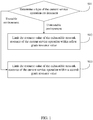
- Fig. 1 is an illustrative flow chart of an exemplary method for using exhaustible network resources, according to an embodiment of the present application.
- the method may include:
- Step S 11 Determine a type of the current service operation environment.
- the type may include a trustable environment and an untrustable environment.
- the current service operation may be able to influence the resource value of the exhaustible network resource.
- the method may also include performing Step S12.
- the method may include performing Step S 13.
- a network user usually needs to perform a service operation according to related requirements in order to access service functions provided by a network service provider. For example, a network user needs to perform a login operation in order to log in to a system, perform an operation of identity authentication in order to use a specific service provided by a network service provider, or perform a download operation in order to acquire some data from the network side.
- These service operations have one common characteristic that network resources exist correspondingly to these operations.
- the operation process of each service operation may influence the resource value of the corresponding network resource.
- This type of resources is usually exhaustible during a service operation. In other words, once the resources exhausted during a service operation process, these resources not allowed to be used in other related operations. These resources are referred to as exhaustible network resources.
- the operations of entering a user name, entering a password, and pressing a login button belong to service operations for completing a login service.
- a network resource of incorrect password attempts exists in the service operation.
- the resource is pre-allocated by the email system.
- the service operation process of a network user may influence the resource value of the resource. Every time a password is entered incorrectly, the pre-allocated incorrect password attempts are reduced by one. Once a password is entered correctly, the previous incorrect attempts are eliminated and the number of times is reset. If the incorrect password attempts reach the pre-allocated incorrect password attempts in a service operation, the pre-allocated resource is exhausted.
- the account is temporarily or permanently locked. Accordingly, the subsequent operations cannot be performed in this service operation.
- a service operation has a corresponding service operation environment.
- the service operation environment may have two properties according to actual situations, including a trustable environment and an untrustable environment.
- the trustable environment may include: a determined operation environment corresponding to an operation of an exhaustible network resource performed by a proper operator; a corresponding operation environment during recovery of the second-grade resource value; or a determined operation environment corresponding to a normal operation.
- a service operation environment opposite to the above situations or similar situations may be regarded as an untrustable environment.
- a service operation performed in a trustable environment is usually considered to be secure. The problem of malicious use of the exhaustible network resources may not occur.
- Step S 12 may be performed.
- Step S 13 may be performed. The two steps provide different usages of the resource value of the exhaustible network resources corresponding to the current service operation.
- Step S12 Limit the resource value of the exhaustible network resource of the current service operation within a first-grade resource value.
- Step S13 Limit the resource value of the exhaustible network resource of the current service operation within a second-grade resource value.
- the second-grade resource value may be larger than the first-grade resource value.
- the service operation corresponds to a certain service function and is a general concept relating to the specific operation.
- the login to an email system may be considered as a service operation, through which the purpose of entering an email system is achieved.
- the service operation is not a specific motion and is generally constituted by a series of specific operations, such as entering a user name, entering a password, and clicking a login button.
- the download service operation serves as a general service operation and includes specific operations, such as selecting a download object, clicking a download button, selecting a storage destination, and confirming download.
- the service in a service operation has a wide range, not limited to a specific type. It may be a login service, an identity authentication service, a download service or a transmission service. In other words, any service capable of achieving a certain function and provided by a network service provider to a user may be considered as a service operation.
- Another concept is exhaustible network resources.
- the property of a network resource is defined as exhaustible, but different from a common natural resource which is absolutely not renewable once exhausted. Based on the repeatability (inexhaustibility) characteristic of electronic information, an exhausted network resource may actually be acquired again through a specific routine (procedure). Therefore, the concept of exhaustible resource highlighted in the present application stands for relative meaning.
- a current service operation environment may be classified into a trustable environment and an untrustable environment.
- Such classification of the environment types conforms to the realistic situation.
- Operations performed in a trustable environment may be trustable.
- the consumption of exhaustible network resources in a trustable environment is considered to be normal instead of malicious. For example, when a valid user of an account intends to log in to an email system, an incorrect password attempt is considered as being caused by misoperation or vague memory of the user.
- Operations performed in an untrustable environment are untrustable.
- the consumption of exhaustible network resources in this condition may be caused by the facts that an improper user performs a login using the account intentionally enters a wrong password to attack the account, or even performs a password decryption operation by using a password dictionary.
- the consumption of the exhaustible network resources may bring trouble to the valid user.
- a corresponding measure may be adopted to exclude abnormal consumption of the exhaustible network resources in the present application.
- the valid user has to go through a complex procedure of providing related materials for identity authentication, answering some authentication problems, analyzing the degree of correlation with other users and the like before acquiring a resource reallocated by the system. For example, an unlocking process of a currently locked QQ number may require a user to go through these steps. It may waste a lot of time and energy of the user and largely degrade the user experience. It may also consume the CPU resource of the system, increase the cost and reduce the efficiency of the system because of the establishment of a resource reallocation mechanism, response to a reallocation request from the valid user, and reallocation of the exhaustible network resources.
- the resource value of the exhaustible network resources is classified into a first-grade resource value and a second-grade resource value.
- Different grades correspond to different resource values and cause different limitation degrees on service operations. Because the resource values of exhaustible network resources are classified by grades, whether the property of the current service operation environment is a trustable environment or an untrustable environment becomes a critical factor for deciding utilization of exhaustible network resources. In an untrustable environment, the consumption of the exhaustible resources is limited even if malicious consumption of the exhaustible network resources occurs. The exhaustible resources may be consumed to the first-grade resource value at the most. The exhaustible resources would not be truly exhausted. A valid user at least has a chance to use the exhaustible resource.
- At least the valid user may be able to attempt the number of times equal to the difference between the second-grade resource value and the first-grade resource value. Therefore, the malicious consumption behavior of an invalid user may have no substantial impact on the service operation of the valid user.
- the second-grade resource value is equal to the resource value found in other systems that do not have the embodiments described in this application.
- the incorrect password attempts could be set to three in both the above embodiment of the present disclosure and in these other systems.
- a valid user that is in a trustable environment may normally use the exhaustible network resources unconsciously (having three chances of entering a password incorrectly). That is, for the valid user, the above embodiment achieves smooth transition to the solution from these other systems. No influence is caused by the fact that in addition to the second-grade resource value equal to the resource value in these other systems, the present application sets the first-grade resource value.
- the first-grade resource value is less than the second-grade resource value
- an invalid user that is in an untrustable environment no longer has three chances of malicious consumption as in these other systems, but has less than three chances. It may avoid to a certain extent the impact caused by malicious consumption of the network resource.
- the second-grade resource value is greater than the resource value in other systems that do not have the embodiments described in this application.
- the first-grade resource value is three, which is equal to the resource value in these other systems, while the second-grade resource value is five.
- a valid user has two more chances of entering a password incorrectly, in addition to the normal number of chances for the exhaustible network resources in these other systems (that is, having three chances of entering a password incorrectly). It may improve the user experience.
- Steps S12 and S13 in the basic embodiment may not both appear in one embodiment. That is, only Steps S11 and S 12 are performed, or only Steps S11 and S 13 are performed.
- the modified embodiment has obviously wider application scenarios than the above embodiment.
- the method focuses on the operations when the current operation environment is an untrustable environment. Only such an environment may have negative effects on exhaustible network resources.
- a valid user from a trustable environment may use exhaustible network resources in the same manner as in other systems that do not have the embodiments described in this application.
- the method focuses on the operations when the current operation environment is a trustable environment. Only the consumption of exhaustible network resources by the operations in the trustable environment is effective. Malicious consumption by the operations in an untrustable environment is excluded from the range of the second-grade resource value. Therefore, no matter whether the second-grade resource value is identical to or different from the resource value in the prior art, this solution is superior to the approach of the prior art in which the consumption of a network resource is considered to be done by a valid user no matter in a trustable environment or an untrustable environment.
- the method may include matching the acquired information of the current operation environment with the information of trustable environment stored in the pool of trustable environments. When there is a match, the method may include determining that the current operation environment is a trustable environment. Otherwise, the method may include determining that the current operation environment is an untrustable environment. The matching may be in a completely equal or containing mode.
- the information of a trustable operation environment in the pool of trustable environments may include: using an N operating system, an address of a network device being 0FFE, and an IP address being 168.192.03.4.
- the current operation environment is determined to be a trustable environment in a completely equal mode.
- the information of the current operation environment includes: using an N operating system, and an IP address being 168.192.03.4.
- There is no complete matching. Whether the current operation environment is determined to be a trustable environment or an untrustable environment may depend on a preset matching threshold. When a preset matching degree only requires that any two elements are identical, the current operation environment may be determined as a trustable environment. This kind of matching is a containing mode.
- the approach to establishing a pool of trustable environments may be further illustrated by two exemplary methods provided below.
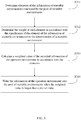
- Fig. 2 is an illustrative flow chart of an exemplary method for establishing a pool of trustable environments, according to an embodiment of the present application.
- S211 Record information of service operation environments, and write the information of service operation environments into the pool of trustable environments.
- the recorded information of operation environments may include information of all the operation environments including some operation environments that may actually be untrustable.
- this step is mainly for initialization of the pool of trustable environments.
- the operation environment may be recorded in the pool of trustable environments and specifically marked. All specifically marked operation environments may not need to go through the subsequent screening process.
- Step S212 Determine whether the pool of trustable environments contains the following information of service operation environments: information of a determined service operation environment corresponding to an operation of an exhaustible network resource performed by an improper operator, or information of a determined service operation environment corresponding to a theft operation.
- the method may include performing Step S213.
- the operation environments in the pool of trustable environments are screened in this step.
- the screening rules may be diversified. An operation environment in the pool of trustable environments satisfying a preset screening rule shall be retained in the pool of trustable environments. Otherwise, the operation environment is removed from the pool of trustable environments through Step S213.
- the screening rule may include: the information of the determined service operation environment corresponding to an operation of an exhaustible network resource performed by an improper operation. This screening rule may determine whether an operation environment is trustable or untrustable in accordance with the identity of an operator of the operation environment. When the operator is an improper operator (for example, an invalid operator or unauthorized operator) of the exhaustible network resources, the operation environment is determined to be an untrustable operation environment.
- the screening rule may further include: the information of the determined service operation environment corresponding to a theft operation. This screening rule may determine whether the operation environment is trustable or untrustable from the aspect of the operation. For example, if a user provides related information in the correspondence to successfully change or retrieve the password, the operation environment in which the password was correctly entered last time is a theft operation environment. It may be determined to be an untrustable operation environment.
- Fig. 3 is an illustrative flow chart of another exemplary method for establishing a pool of trustable environments, according to an embodiment of the present application.
- Step 5311 Determine elements of the information of trustable environments concerned by the pool of trustable environments.
- Step S312 Determine the weight of each element in accordance with the significance of the element of the information of trustable environments to the determination of a trustable environment.
- Step S313 Calculate a weighted value of the recorded information of the operation environment in accordance with the elements.
- Step S314 Write the information of the operation environment into the pool of trustable environments when the weighted value is larger than a pre-set value.
- Steps S12 and S13 in the basic embodiment have their own specific implementation manners.
- the step of limiting the resource value of the exhaustible network resource of the current service operation within the first-grade resource value may include: updating the resource value of the exhaustible network resource when an operation of the current service operation fails.
- the step may include limiting any further operation of the current service operation.
- the step of limiting the resource value of the exhaustible network resource of the current service operation within the second-grade resource value may include: updating the resource value of the exhaustible network resource when an operation of the current service operation fails.
- the step may include limiting any further operation of the current service operation.
- a service operation may be performed again, and the approach to limiting the service operation may differ in accordance with the property type of the next service operation environment.
- the operation environment of the next service operation is an untrustable environment, it indicates that the network resource is likely to be maliciously consumed because the locking of the exhaustible network resources is caused by the previous operation in an untrustable environment. Therefore, the next operation of the current service operation must be limited to stop the behavior of an operator of malicious intention.
- the service operation is performed by a valid user. If the utilization of the exhaustible network resources by the valid user is limited, it is unfair to the valid user. The plot of the invalid user succeeds. Therefore, the maximum failure times of the specific operation of the service operation should be increased.
- the valid user at least has chances. The number of chances may equal to the difference between the second-grade resource value and the first-grade resource value of the exhaustible network resources.
- Fig. 4 illustrates the flow chart of an exemplary method for using exhaustible network resources, according to an embodiment of the present application.
- Step S41 Start a service operation of an account.
- Step S42 Acquire information of the service operation environment of the current service operation, and send the account ID and the information of service operation environment to a pool of trustable environments.
- Step S43 Match the service operation environment with a trustable operation environment corresponding to the account in the pool of trustable environments. If there is no match, perform Step S44. If there is a match, perform Step S49.
- Step S44 Determine whether the account is locked. If yes, perform Step S54. If not, perform Step S45.
- Step S45 Perform a password entering operation. If the password is entered correctly, perform Step S46. If the password is entered incorrectly, perform Step S47.
- Step S46 Reset the incorrect password attempts, and end the process.
- Step S47 Increase the incorrect password attempts by 1, and perform Step S48.
- Step S48 Determine whether the incorrect password attempts reach C1. If yes, perform S48a to lock the account and end the process. If not, return to Step S45.
- Step S49 Determine whether the account is deeply locked. If yes, perform Step S54. If not, perform Step S50.
- Step S50 Perform a password entering operation. If the password is entered correctly, perform Step S51. If the password is entered incorrectly, perform Step S52.
- Step S51 Reset the incorrect password attempts, and end the process.
- Step S52 Increase the incorrect password attempts by 1, and perform Step S53.
- Step S53 Determine whether the incorrect password attempts reach C2. If yes, perform Step S53a to deeply lock the account number and end the process. If not, return to Step S50.
- Step S54 Prompt that the operation fails, and end the process.
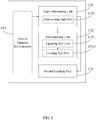
- Fig. 5 illustrates a structural block diagram of an exemplary apparatus for using exhaustible network resources, according to an embodiment of the present application.
- the apparatus may include a type determining unit U51, a first limiting unit U52, and a second limiting unit U53.
- Type determining unit U51 is configured to determine the type of the current service operation environment.
- the type may include a trustable environment and an untrustable environment.
- the current service operation may be able to influence the resource value of the exhaustible network resource.
- First limiting unit U52 is configured to limit the resource value of the exhaustible network resource of the current service operation within a first-grade resource value when the type of the current service operation environment is an untrustable environment.
- Second limiting unit U53 is configured to limit the resource value of the exhaustible network resource of the current service operation within a second-grade resource value when the type of the current service operation environment is a trustable environment.
- the second-grade resource value may be larger than the first-grade resource value.
- type determining unit U51 determines the type of the current service operation environment.
- first limiting unit U52 is triggered to limit the resource value of the exhaustible network resources of the current service operation within the first-grade resource value.
- second limiting unit U53 is triggered to limit the resource value of the exhaustible network resources of the current service operation within the second-grade resource value.
- the apparatus embodiment can achieve the same technical effects as the method embodiments.
- the apparatus embodiment can reduce or avoid the impact on the normal service operation of a valid user resulting from the use of exhaustible network resources by a user of malicious intention.
- the detailed steps and operations may refer to that of the above method embodiments.
- first limiting unit U52 and second limiting unit U53 in the apparatus embodiment may be both provided, or either of them is provided.
- the apparatus embodiment may further include a pool of trustable environments U54 for storing information of trustable environment.
- Type determining unit U51 may include a determining sub-unit U511 for determining the current service operation environment as a trustable environment when the information of the current service operation environment matches with the information of trustable environments in the pool of trustable environments. When the information of the current service operation environment does not match with the information of trustable environments in the pool of trustable environments, determining sub-unit U511 determines the current service operation environment as an untrustable environment.
- First limiting unit U52 may include an updating sub-unit U521 and a limiting sub-unit U522.
- Updating sub-unit U521 may be configured to update the resource value of the exhaustible network resource when an operation of the current service operation fails.
- Limiting sub-unit U522 may be configured to limit any further operation of the current service operation when the updated resource value of the exhaustible network resource reaches the first-grade resource.
Landscapes
- Engineering & Computer Science (AREA)
- Computer Security & Cryptography (AREA)
- Computer Networks & Wireless Communication (AREA)
- Signal Processing (AREA)
- Computer Hardware Design (AREA)
- General Engineering & Computer Science (AREA)
- Computing Systems (AREA)
- Theoretical Computer Science (AREA)
- Physics & Mathematics (AREA)
- General Physics & Mathematics (AREA)
- Software Systems (AREA)
- Power Engineering (AREA)
- Information Transfer Between Computers (AREA)
- Computer And Data Communications (AREA)
- Management, Administration, Business Operations System, And Electronic Commerce (AREA)
- Telephonic Communication Services (AREA)
- Data Exchanges In Wide-Area Networks (AREA)
Abstract
Description
- The present application relates to usage of network resources, and more particularly, to methods and apparatuses for using exhaustible network resources.
- Various types of resources exist on networks. In general, some specific operations are allowed to be performed only in the presence of certain resources, thereby achieving specific objectives through these specific operations. For example, the download times of a valuable document may be regarded as a type of a resource. When the download times are within a limit, network users can download the document freely. When the download times reach the preset limit, the network users are unauthorized to download. Like natural resources, such resources on a network may be classified by analogy into renewable resources and non-renewable resources. The non-renewable resources cannot be repeatedly regenerated within a certain period (or can only be acquired again through a relatively complex procedure). This type of resources may also be referred to as exhaustible resources.
- Based on the above characteristics of the exhaustible resources, malicious use of these resources may exist on the network. Once the exhaustible resources are exhausted due to malicious use, the normal use process is limited. Taking times of password errors as an example, a network service provider usually provides a number of times that a password is allowed to be entered incorrectly. The number of times is assumed to set as 3. When a user of malicious intention arbitrarily enters a password that turns out to be incorrect for three times, the resource allowed times of password errors allocated by the network service provider is exhausted. When a valid user of the network service intends to use the service, the user name and password are locked. It could affect the normal utilization of the service by the network user.
- To solve the above technical problem, embodiments of the present application provide a method for using exhaustible network resources and a corresponding apparatus thereof. It may reduce or avoid the impact on normal service operation caused by malicious consumption of the exhaustible network resources.
- In one aspect, the present disclosure is directed to a method for using exhaustible network resources. The method may include determining a type of the current service operation environment, the type including a trustable environment and an untrustable environment. The current service operation may be able to influence the resource value of the exhaustible network resource. When the type of the current service operation environment is an untrustable environment, the method may also include limiting the resource value of the exhaustible network resource of the current service operation within a first-grade resource value. When the type of the current service operation environment is a trustable environment, the method may further include limiting the resource value of the exhaustible network resource of the current service operation within a second-grade resource value, the second-grade resource value being larger than the first-grade resource value.
- The trustable environment may include: a determined operation environment corresponding to an operation of an exhaustible network resource performed by a proper operator; a corresponding operation environment during recovery of the second-grade resource value; or a determined operation environment corresponding to a normal operation.
- The operations of determining the type of the current service operation environment may include establishing a pool of trustable environments containing information of trustable environments. When the information of the current service operation environment matches with the information of trustable environments in the pool of trustable environments, the operations of determining the type of the current service operation environment may include determining the current service operation environment as a trustable environment. When the information of the current service operation environment does not match with the information of trustable environments in the pool of trustable environments, the operations of determining the type of the current service operation environment may also include determining the current service operation environment is an untrustable environment.
- The operations of establishing the pool of trustable environments containing information of trustable environments may include recording information of service operation environments, and writing the information of service operation environments into the pool of trustable environments. When the pool of trustable environments contains information of a determined service operation environment corresponding to an operation of an exhaustible network resource performed by an improper operator, or information of a determined service operation environment corresponding to a theft operation, the operations of establishing the pool of trustable environments may include removing the information of the service operation environment from the pool of trustable environments.
- In some embodiments, the operations of establishing the pool of trustable environments containing information of trustable environments may include determining elements of the information of trustable environments concerned by the pool of trustable environments. The operations of establishing the pool of trustable environments may also include determining the weight of each element in accordance with the significance of the element of the information of trustable environments to the determination of a trustable environment. The operations of establishing the pool of trustable environments may further include calculating a weighted value of the recorded information of the operation environment in accordance with the elements. When the weighted value is larger than a pre-set value, the operations of establishing the pool of trustable environments may include writing the information of the operation environment into the pool of trustable environments.
- The operations of limiting the resource value of the exhaustible network resource of the current service operation within the first-grade resource value may include updating the resource value of the exhaustible network resource when an operation of the current service operation fails. When the updated resource value of the exhaustible network resource reaches the first-grade resource value, the operations of limiting the resource value of the exhaustible network resource of the current service operation within the first-grade resource value may include limiting any further operation of the current service operation.
- After the updated resource value of the exhaustible network resource reaches the first-grade resource value, the method may include limiting the operation of the next service operation when the operation environment of the next service operation is an untrustable environment. The method may also include limiting the maximum failure times of the operation of the next service operation as the difference between the second-grade resource value and the first-grade resource value of the resource value of the exhaustible network resource when the operation environment of the next service operation is a trustable environment.
- The operations of limiting the resource value of the exhaustible network resource of the current service operation within the second-grade resource value may include updating the resource value of the exhaustible network resource when an operation of the current service operation fails. When the updated resource value of the exhaustible network resource reaches the second-grade resource value, the operations of limiting the resource value of the exhaustible network resource of the current service operation within the second-grade resource value may include limiting any further operation of the current service operation.
- In another aspect, the present disclosure is directed to an apparatus for using an exhaustible network resource. The apparatus may include a type determining unit determining a type of the current service operation environment. The type may include a trustable environment and an untrustable environment. The current service operation may be able to influence the resource value of the exhaustible network resource. The apparatus may also include a first limiting unit limiting the resource value of the exhaustible network resource of the current service operation within a first-grade resource value when the type of the current service operation environment is an untrustable environment. The apparatus may further include a second limiting unit limiting the resource value of the exhaustible network resource of the current service operation within a second-grade resource value when the type of the current service operation environment is a trustable environment, the second-grade resource value being larger than the first-grade resource value.
- In addition, the apparatus may include a pool of trustable environments storing information of trustable environments. The type determining unit may include a determining sub-unit that determines the current service operation environment as a trustable environment when the information of the current service operation environment matches with the information of trustable environments in the pool of trustable environments. The determining sub-unit may also determine the current service operation environment is an untrustable environment when the information of the current service operation environment does not match with the information of trustable environments in the pool of trustable environments.
- Furthermore, the first limiting unit may include an updating sub-unit updating the resource value of the exhaustible network resource when an operation of the current service operation fails. The limiting sub-unit may limit any further operation of the current service operation when the updated resource value of the exhaustible network resource reaches the first-grade resource.
- In the embodiments of the present application, a service operation environment is classified into a trustable environment and an untrustable environment. A resource value of an exhaustible network resource corresponding to the current service operation is limited by different grades according to different types of the operation environments. Accordingly, it may reduce or avoid the impact on normal service operation caused by malicious consumption of the exhaustible network resources.
- To illustrate the technical solutions according to the embodiments of the present application clearly, the accompanying drawings required for describing the embodiments are introduced briefly in the following. Apparently, the accompanying drawings in the following are only some embodiments of the present application. Persons of ordinary skill in the art can derive other drawings from the accompanying drawings without creative efforts.
-
Fig. 1 is an illustrative flow chart of an exemplary method for using exhaustible network resources, according to an embodiment of the present application. -
Fig. 2 is an illustrative flow chart of an exemplary method for establishing a pool of trustable environments, according to an embodiment of the present application. -
Fig. 3 is an illustrative flow chart of another exemplary method for establishing a pool of trustable environments, according to an embodiment of the present application. -
Fig. 4 is an illustrative flow chart of an exemplary method for using exhaustible network resources, according to an embodiment of the present application. -
Fig. 5 is an illustrative structural block diagram of an exemplary apparatus for using exhaustible network resources, according to an embodiment of the present application. - To make persons skilled in the art better understand the technical solutions of the present application, the technical solutions in the embodiments of the present application are described clearly and completely with reference to the accompanying drawings in the embodiments of the present application. The described embodiments are merely some rather than all of the embodiments of the present application. Based on the embodiments of the present application, all other embodiments derived by persons of ordinary skill in the art without any creative efforts shall fall within the protection scope of the present application.
-
Fig. 1 is an illustrative flow chart of an exemplary method for using exhaustible network resources, according to an embodiment of the present application. The method may include: - Step S 11: Determine a type of the current service operation environment. The type may include a trustable environment and an untrustable environment. The current service operation may be able to influence the resource value of the exhaustible network resource. When the type of the current service operation environment is an untrustable environment, the method may also include performing Step S12. When the type of the current service operation environment is a trustable environment, the method may include performing
Step S 13. - A network user usually needs to perform a service operation according to related requirements in order to access service functions provided by a network service provider. For example, a network user needs to perform a login operation in order to log in to a system, perform an operation of identity authentication in order to use a specific service provided by a network service provider, or perform a download operation in order to acquire some data from the network side. These service operations have one common characteristic that network resources exist correspondingly to these operations. The operation process of each service operation may influence the resource value of the corresponding network resource. This type of resources is usually exhaustible during a service operation. In other words, once the resources exhausted during a service operation process, these resources not allowed to be used in other related operations. These resources are referred to as exhaustible network resources.
- Taking the login to an email system as an example, the operations of entering a user name, entering a password, and pressing a login button belong to service operations for completing a login service. A network resource of incorrect password attempts exists in the service operation. In other words, the maximum number of attempts that an incorrect password is allowed to be entered is a set value of the incorrect password attempts. The resource is pre-allocated by the email system. The service operation process of a network user may influence the resource value of the resource. Every time a password is entered incorrectly, the pre-allocated incorrect password attempts are reduced by one. Once a password is entered correctly, the previous incorrect attempts are eliminated and the number of times is reset. If the incorrect password attempts reach the pre-allocated incorrect password attempts in a service operation, the pre-allocated resource is exhausted. The account is temporarily or permanently locked. Accordingly, the subsequent operations cannot be performed in this service operation.
- A service operation has a corresponding service operation environment. The service operation environment may have two properties according to actual situations, including a trustable environment and an untrustable environment. The trustable environment may include: a determined operation environment corresponding to an operation of an exhaustible network resource performed by a proper operator; a corresponding operation environment during recovery of the second-grade resource value; or a determined operation environment corresponding to a normal operation. A service operation environment opposite to the above situations or similar situations may be regarded as an untrustable environment. A service operation performed in a trustable environment is usually considered to be secure. The problem of malicious use of the exhaustible network resources may not occur. It is very likely that an operator in an untrustable environment is determined as an improper user of the service operation (a proper user includes a valid user and an authorized user of the service operation). In this case, the problem of the malicious use of the exhaustible network resources may occur. After the exhaustible network resources are maliciously exhausted, the proper user of the service operation has to retrieve the exhaustible resources through a complex procedure. He might need to request an allocator of the exhaustible resource for reallocation. It may even be impossible to retrieve the resources. This may affect the utilization of the service by the network user. For example, the incorrect password attempts are used as exhaustible network resources. When a user with malicious intention to use up the incorrect password attempts allocated by the system, the account number is locked. A valid user of the email account has to unlock the account through a manual or self-service provided by the email service system and acquire renewed incorrect password attempts in a next service operation.
- Because the service operation environment is classified into a trustable environment and an untrustable environment, the determination of the type of the current service operation environment may lead to two results: one is that the current service operation environment is an untrustable environment, and the other is that the current service operation environment is a trustable environment. In the former condition,
Step S 12 may be performed. In the latter condition,Step S 13 may be performed. The two steps provide different usages of the resource value of the exhaustible network resources corresponding to the current service operation. - Step S12: Limit the resource value of the exhaustible network resource of the current service operation within a first-grade resource value.
- Step S13: Limit the resource value of the exhaustible network resource of the current service operation within a second-grade resource value. The second-grade resource value may be larger than the first-grade resource value.
- To illustrate the technical solution in the embodiment of the present application clearly and explicitly, several concepts are briefly described below. One is service operation and specific operation. The service operation corresponds to a certain service function and is a general concept relating to the specific operation. For example, the login to an email system may be considered as a service operation, through which the purpose of entering an email system is achieved. The service operation, however, is not a specific motion and is generally constituted by a series of specific operations, such as entering a user name, entering a password, and clicking a login button. Moreover, as for a download service operation, similarly, the download service operation serves as a general service operation and includes specific operations, such as selecting a download object, clicking a download button, selecting a storage destination, and confirming download. It also needs to be noted that, the service in a service operation has a wide range, not limited to a specific type. It may be a login service, an identity authentication service, a download service or a transmission service. In other words, any service capable of achieving a certain function and provided by a network service provider to a user may be considered as a service operation. Another concept is exhaustible network resources. In this application, the property of a network resource is defined as exhaustible, but different from a common natural resource which is absolutely not renewable once exhausted. Based on the repeatability (inexhaustibility) characteristic of electronic information, an exhausted network resource may actually be acquired again through a specific routine (procedure). Therefore, the concept of exhaustible resource highlighted in the present application stands for relative meaning. That is, as for a service operation, once the exhaustible resource is used up in the service operation process, the proceeding of some operations is limited. Taking the login to an email system as an example, when the incorrect password attempts pre-allocated by the system are used up in a service operation process, the email login operation cannot be performed any more. It is needed to unlock the account and acquire renewed times of incorrect password attempts for login to the email again. In this way, the incorrect password attempts as resources are exhaustible in this service operation and are exhaustible network resources.
- According to the above introduction of the process of the method for using exhaustible network resources in the present application and the description of the related terms, persons of ordinary skill in the art may find that the above embodiment has the following technical effects.
- Firstly, in the above embodiment, a current service operation environment may be classified into a trustable environment and an untrustable environment. Such classification of the environment types conforms to the realistic situation. Operations performed in a trustable environment may be trustable. The consumption of exhaustible network resources in a trustable environment is considered to be normal instead of malicious. For example, when a valid user of an account intends to log in to an email system, an incorrect password attempt is considered as being caused by misoperation or vague memory of the user. Operations performed in an untrustable environment are untrustable. The consumption of exhaustible network resources in this condition may be caused by the facts that an improper user performs a login using the account intentionally enters a wrong password to attack the account, or even performs a password decryption operation by using a password dictionary. In this case, the consumption of the exhaustible network resources may bring trouble to the valid user. In the above embodiment, through the determination of the property type of the current service operation environment, a corresponding measure may be adopted to exclude abnormal consumption of the exhaustible network resources in the present application. However, in prior art, it is unaware that a close relationship may exist between an operation environment and exhaustible network resources. Therefore, these two properties of the current service operation environment are not identified and distinguished. Any behavior resulting in the consumption of a network resource is considered to be done by a valid user. It could lead to a serious result because the exhaustible network resources belonging to a valid user are maliciously consumed. To retrieve the resources (request the system for reallocation), the valid user has to go through a complex procedure of providing related materials for identity authentication, answering some authentication problems, analyzing the degree of correlation with other users and the like before acquiring a resource reallocated by the system. For example, an unlocking process of a currently locked QQ number may require a user to go through these steps. It may waste a lot of time and energy of the user and largely degrade the user experience. It may also consume the CPU resource of the system, increase the cost and reduce the efficiency of the system because of the establishment of a resource reallocation mechanism, response to a reallocation request from the valid user, and reallocation of the exhaustible network resources.
- In addition, in the above embodiment, the resource value of the exhaustible network resources is classified into a first-grade resource value and a second-grade resource value. Different grades correspond to different resource values and cause different limitation degrees on service operations. Because the resource values of exhaustible network resources are classified by grades, whether the property of the current service operation environment is a trustable environment or an untrustable environment becomes a critical factor for deciding utilization of exhaustible network resources. In an untrustable environment, the consumption of the exhaustible resources is limited even if malicious consumption of the exhaustible network resources occurs. The exhaustible resources may be consumed to the first-grade resource value at the most. The exhaustible resources would not be truly exhausted. A valid user at least has a chance to use the exhaustible resource. At least the valid user may be able to attempt the number of times equal to the difference between the second-grade resource value and the first-grade resource value. Therefore, the malicious consumption behavior of an invalid user may have no substantial impact on the service operation of the valid user. The following two circumstances exist in a trustable environment.
- By way of comparison, one case is that the second-grade resource value is equal to the resource value found in other systems that do not have the embodiments described in this application. For example, the incorrect password attempts could be set to three in both the above embodiment of the present disclosure and in these other systems. Thus, a valid user that is in a trustable environment may normally use the exhaustible network resources unconsciously (having three chances of entering a password incorrectly). That is, for the valid user, the above embodiment achieves smooth transition to the solution from these other systems. No influence is caused by the fact that in addition to the second-grade resource value equal to the resource value in these other systems, the present application sets the first-grade resource value. In this case, because the first-grade resource value is less than the second-grade resource value, an invalid user that is in an untrustable environment no longer has three chances of malicious consumption as in these other systems, but has less than three chances. It may avoid to a certain extent the impact caused by malicious consumption of the network resource.
- Another case is that the second-grade resource value is greater than the resource value in other systems that do not have the embodiments described in this application. For example, it is assumed that the first-grade resource value is three, which is equal to the resource value in these other systems, while the second-grade resource value is five. In this scenario, a valid user has two more chances of entering a password incorrectly, in addition to the normal number of chances for the exhaustible network resources in these other systems (that is, having three chances of entering a password incorrectly). It may improve the user experience.
- Although the above embodiment (referred to as a basic embodiment hereinafter) can achieve good technical effects as compared with the prior art, the technical solution in the above embodiment is not unmodifiable. Persons skilled in the art can make various simple or complex variations or improvements to the above embodiment upon actual requirements according to the spirit of the above embodiment. It is possible to obtain more embodiments of the present application and achieve better technical effects.
- For example, in another embodiment, Steps S12 and S13 in the basic embodiment may not both appear in one embodiment. That is, only Steps S11 and
S 12 are performed, or only Steps S11 andS 13 are performed. The modified embodiment has obviously wider application scenarios than the above embodiment. In the former situation (a technical solution including Steps S11 and S12), the method focuses on the operations when the current operation environment is an untrustable environment. Only such an environment may have negative effects on exhaustible network resources. For an operation in a trustable environment, a valid user from a trustable environment may use exhaustible network resources in the same manner as in other systems that do not have the embodiments described in this application. Accordingly, the complexity and implementing difficulty of the whole technical solution are largely reduced, and the occupation of the system resource is also largely reduced. On the other hand, in the latter situation (a technical solution including Steps S11 and S13), the method focuses on the operations when the current operation environment is a trustable environment. Only the consumption of exhaustible network resources by the operations in the trustable environment is effective. Malicious consumption by the operations in an untrustable environment is excluded from the range of the second-grade resource value. Therefore, no matter whether the second-grade resource value is identical to or different from the resource value in the prior art, this solution is superior to the approach of the prior art in which the consumption of a network resource is considered to be done by a valid user no matter in a trustable environment or an untrustable environment. - In another embodiment of the present application, an exemplary method described below may be adopted to perform
Step S 11 in the basic embodiment - (determining the type of the current operation environment): establishing a pool of trustable environments including information of trustable environment. When determining the type of the current operation environment, the method may include matching the acquired information of the current operation environment with the information of trustable environment stored in the pool of trustable environments. When there is a match, the method may include determining that the current operation environment is a trustable environment. Otherwise, the method may include determining that the current operation environment is an untrustable environment. The matching may be in a completely equal or containing mode. For example, the information of a trustable operation environment in the pool of trustable environments may include: using an N operating system, an address of a network device being 0FFE, and an IP address being 168.192.03.4. When the information of the current operation environment also includes: using an N operating system, an address of a network device being 0FFE, and an IP address being 168.192.03.4, the current operation environment is determined to be a trustable environment in a completely equal mode. When the information of the current operation environment includes: using an N operating system, and an IP address being 168.192.03.4. There is no complete matching. Whether the current operation environment is determined to be a trustable environment or an untrustable environment may depend on a preset matching threshold. When a preset matching degree only requires that any two elements are identical, the current operation environment may be determined as a trustable environment. This kind of matching is a containing mode.
- In some embodiments, the approach to establishing a pool of trustable environments may be further illustrated by two exemplary methods provided below.
-
Fig. 2 is an illustrative flow chart of an exemplary method for establishing a pool of trustable environments, according to an embodiment of the present application. - S211: Record information of service operation environments, and write the information of service operation environments into the pool of trustable environments.
- The recorded information of operation environments may include information of all the operation environments including some operation environments that may actually be untrustable. Thus, this step is mainly for initialization of the pool of trustable environments. In some embodiments, when an operation environment is certainly determined to be a trustable environment in this step, the operation environment may be recorded in the pool of trustable environments and specifically marked. All specifically marked operation environments may not need to go through the subsequent screening process.
- S212: Determine whether the pool of trustable environments contains the following information of service operation environments: information of a determined service operation environment corresponding to an operation of an exhaustible network resource performed by an improper operator, or information of a determined service operation environment corresponding to a theft operation. When the pool of trustable environments contains one of the two kinds of information, the method may include performing Step S213.
- The operation environments in the pool of trustable environments are screened in this step. The screening rules may be diversified. An operation environment in the pool of trustable environments satisfying a preset screening rule shall be retained in the pool of trustable environments. Otherwise, the operation environment is removed from the pool of trustable environments through Step S213. In some embodiments, the screening rule may include: the information of the determined service operation environment corresponding to an operation of an exhaustible network resource performed by an improper operation. This screening rule may determine whether an operation environment is trustable or untrustable in accordance with the identity of an operator of the operation environment. When the operator is an improper operator (for example, an invalid operator or unauthorized operator) of the exhaustible network resources, the operation environment is determined to be an untrustable operation environment. Otherwise, the operation environment is determined to be a trustable operation environment. The screening rule may further include: the information of the determined service operation environment corresponding to a theft operation. This screening rule may determine whether the operation environment is trustable or untrustable from the aspect of the operation. For example, if a user provides related information in the correspondence to successfully change or retrieve the password, the operation environment in which the password was correctly entered last time is a theft operation environment. It may be determined to be an untrustable operation environment.
- S213: Remove the information of the service operation environment from the pool of trustable environments.
-
Fig. 3 is an illustrative flow chart of another exemplary method for establishing a pool of trustable environments, according to an embodiment of the present application. - Step 5311: Determine elements of the information of trustable environments concerned by the pool of trustable environments.
- Step S312: Determine the weight of each element in accordance with the significance of the element of the information of trustable environments to the determination of a trustable environment.
- Step S313: Calculate a weighted value of the recorded information of the operation environment in accordance with the elements.
- Step S314: Write the information of the operation environment into the pool of trustable environments when the weighted value is larger than a pre-set value.
- In another embodiment of the present application, Steps S12 and S13 in the basic embodiment have their own specific implementation manners. For example, the step of limiting the resource value of the exhaustible network resource of the current service operation within the first-grade resource value may include: updating the resource value of the exhaustible network resource when an operation of the current service operation fails. When the updated resource value of the exhaustible network resource reaches the first-grade resource value, the step may include limiting any further operation of the current service operation. Likewise, the step of limiting the resource value of the exhaustible network resource of the current service operation within the second-grade resource value may include: updating the resource value of the exhaustible network resource when an operation of the current service operation fails. When the updated resource value of the exhaustible network resource reaches the second-grade resource value, the step may include limiting any further operation of the current service operation. In the above situation, when locking has been caused due to untrustable environments, the following situation may occur. A service operation may be performed again, and the approach to limiting the service operation may differ in accordance with the property type of the next service operation environment. When the operation environment of the next service operation is an untrustable environment, it indicates that the network resource is likely to be maliciously consumed because the locking of the exhaustible network resources is caused by the previous operation in an untrustable environment. Therefore, the next operation of the current service operation must be limited to stop the behavior of an operator of malicious intention. When the operation environment of the next service operation is a trustable environment, the service operation is performed by a valid user. If the utilization of the exhaustible network resources by the valid user is limited, it is unfair to the valid user. The plot of the invalid user succeeds. Therefore, the maximum failure times of the specific operation of the service operation should be increased. The valid user at least has chances. The number of chances may equal to the difference between the second-grade resource value and the first-grade resource value of the exhaustible network resources.
- Variations or improvements are made to the basic embodiment in various aspects to obtain a series of new embodiments. To further illustrate the technical solution of the present application, a specific example is given below for description. In this example, it is assumed that the service operation is login to an account. The exhaustible network resources are incorrect password attempts. The first-grade resource value is C1, and the second-grade resource value is C2.
Fig. 4 illustrates the flow chart of an exemplary method for using exhaustible network resources, according to an embodiment of the present application. - Step S41: Start a service operation of an account.
- Step S42: Acquire information of the service operation environment of the current service operation, and send the account ID and the information of service operation environment to a pool of trustable environments.
- Step S43: Match the service operation environment with a trustable operation environment corresponding to the account in the pool of trustable environments. If there is no match, perform Step S44. If there is a match, perform Step S49.
- Step S44: Determine whether the account is locked. If yes, perform Step S54. If not, perform Step S45.
- Step S45: Perform a password entering operation. If the password is entered correctly, perform Step S46. If the password is entered incorrectly, perform Step S47.
- Step S46: Reset the incorrect password attempts, and end the process.
- Step S47: Increase the incorrect password attempts by 1, and perform Step S48.
- Step S48: Determine whether the incorrect password attempts reach C1. If yes, perform S48a to lock the account and end the process. If not, return to Step S45.
- Step S49: Determine whether the account is deeply locked. If yes, perform Step S54. If not, perform Step S50.
- Step S50: Perform a password entering operation. If the password is entered correctly, perform Step S51. If the password is entered incorrectly, perform Step S52.
- Step S51: Reset the incorrect password attempts, and end the process.
- Step S52: Increase the incorrect password attempts by 1, and perform Step S53.
- Step S53: Determine whether the incorrect password attempts reach C2. If yes, perform Step S53a to deeply lock the account number and end the process. If not, return to Step S50.
- Step S54: Prompt that the operation fails, and end the process.
- The embodiment of the method for using exhaustible network resources according to the present application is described above in detail. In another aspect, the present application further discloses an exemplary embodiment of an apparatus for using exhaustible network resources.
Fig. 5 illustrates a structural block diagram of an exemplary apparatus for using exhaustible network resources, according to an embodiment of the present application. The apparatus may include a type determining unit U51, a first limiting unit U52, and a second limiting unit U53. - Type determining unit U51 is configured to determine the type of the current service operation environment. The type may include a trustable environment and an untrustable environment. The current service operation may be able to influence the resource value of the exhaustible network resource.
- First limiting unit U52 is configured to limit the resource value of the exhaustible network resource of the current service operation within a first-grade resource value when the type of the current service operation environment is an untrustable environment.
- Second limiting unit U53 is configured to limit the resource value of the exhaustible network resource of the current service operation within a second-grade resource value when the type of the current service operation environment is a trustable environment. The second-grade resource value may be larger than the first-grade resource value.
- The working process of the apparatus embodiment is as follows: type determining unit U51 determines the type of the current service operation environment. When the current operation environment is an untrustable environment, first limiting unit U52 is triggered to limit the resource value of the exhaustible network resources of the current service operation within the first-grade resource value. When the type of the current service operation environment is a trustable environment, second limiting unit U53 is triggered to limit the resource value of the exhaustible network resources of the current service operation within the second-grade resource value.
- The apparatus embodiment can achieve the same technical effects as the method embodiments. In brief, the apparatus embodiment can reduce or avoid the impact on the normal service operation of a valid user resulting from the use of exhaustible network resources by a user of malicious intention. The detailed steps and operations may refer to that of the above method embodiments.
- On the basis of the apparatus embodiment, persons skilled in the art can make various modifications. For example, first limiting unit U52 and second limiting unit U53 in the apparatus embodiment may be both provided, or either of them is provided. The apparatus embodiment may further include a pool of trustable environments U54 for storing information of trustable environment. Type determining unit U51 may include a determining sub-unit U511 for determining the current service operation environment as a trustable environment when the information of the current service operation environment matches with the information of trustable environments in the pool of trustable environments. When the information of the current service operation environment does not match with the information of trustable environments in the pool of trustable environments, determining sub-unit U511 determines the current service operation environment as an untrustable environment. First limiting unit U52 may include an updating sub-unit U521 and a limiting sub-unit U522. Updating sub-unit U521 may be configured to update the resource value of the exhaustible network resource when an operation of the current service operation fails. Limiting sub-unit U522 may be configured to limit any further operation of the current service operation when the updated resource value of the exhaustible network resource reaches the first-grade resource.
- It should be noted that, the above embodiments of the specification and various alternative implementations of the embodiments focus on the differences from the other embodiments or alternative implementations. Reference may be made to each other for the identical or similar parts in various circumstances. Especially, being substantially similar to the method embodiment, some variations of the apparatus embodiment are described simply. Reference may be made to the corresponding descriptions in the method embodiments for the related parts. The units in the apparatus embodiments described above may be or may not be physically separated, and may be arranged in one place or distributed to multiple network environments. In the actual application, some or all of the units may be selected to achieve the objective of the solution of the embodiment according to actual demands. Persons of ordinary skill in the art can understand and implement the present disclosure without creative efforts.
- The above descriptions are merely specific implementations of the present application. It should be noted that persons of ordinary skill in the art may make various modifications and variations without departing from the principle of the present application. All such modifications and variations shall fall within the protection scope of the present application.
Claims (11)
- A method for using an exhaustible network resource, the method comprising:determining a type of a current service operation environment, the type including a trustable environment and an untrustable environment, the current service operation being able to influence the resource value of the exhaustible network resource;when the type of the current service operation environment is an untrustable environment, limiting the resource value of the exhaustible network resource of the current service operation within a first-grade resource value; and/orwhen the type of the current service operation environment is a trustable environment, limiting the resource value of the exhaustible network resource of the current service operation within a second-grade resource value, the second-grade resource value being larger than the first-grade resource value.
- The method of claim 1, wherein determining the type of the current service operation environment includes:establishing a pool of trustable environments containing information of trustable environments; andwhen the information of the current service operation environment matches with the information of trustable environments in the pool of trustable environments, determining the current service operation environment as a trustable environment; orwhen the information of the current service operation environment does not match with the information of trustable environments in the pool of trustable environments, determining the current service operation environment is an untrustable environment.
- The method of claim 2, wherein establishing the pool of trustable environments containing information of trustable environments includes:recording information of service operation environments, and writing the information of service operation environments into the pool of trustable environments; andwhen the pool of trustable environments contains information of a determined service operation environment corresponding to an operation of an exhaustible network resource performed by an improper operator, or information of a determined service operation environment corresponding to a theft operation, removing the information of the service operation environment from the pool of trustable environments.
- The method of claim 2, wherein establishing the pool of trustable environments containing information of trustable environments includes:determining elements of the information of trustable environments concerned by the pool of trustable environments;determining the weight of each element in accordance with the significance of the element of the information of trustable environments to the determination of a trustable environment;calculating a weighted value of the recorded information of the operation environment in accordance with the elements; andwhen the weighted value is larger than a pre-set value, writing the information of the operation environment into the pool of trustable environments.
- The method of claim 1, wherein limiting the resource value of the exhaustible network resource of the current service operation within the first-grade resource value includes:updating the resource value of the exhaustible network resource when an operation of the current service operation fails; andwhen the updated resource value of the exhaustible network resource reaches the first-grade resource value, limiting any further operation of the current service operation.
- The method of claim 5, wherein after the updated resource value of the exhaustible network resource reaches the first-grade resource value:when the operation environment of the next service operation is an untrustable environment, limiting the operation of the next service operation; and/orwhen the operation environment of the next service operation is a trustable environment, limiting the maximum failure times of the operation of the next service operation as the difference between the second-grade resource value and the first-grade resource value of the resource value of the exhaustible network resource.
- The method of claim 1, wherein limiting the resource value of the exhaustible network resource of the current service operation within the second-grade resource value includes:updating the resource value of the exhaustible network resource when an operation of the current service operation fails; andwhen the updated resource value of the exhaustible network resource reaches the second-grade resource value, limiting any further operation of the current service operation.
- The method of any one of claims 1 to 7, wherein the trustable environment includes:a determined operation environment corresponding to an operation of an exhaustible network resource performed by a proper operator;a corresponding operation environment during recovery of the second-grade resource value; ora determined operation environment corresponding to a normal operation.
- An apparatus for using an exhaustible network resource, the apparatus comprising:the type determining unit determining a type of the current service operation environment, the type including a trustable environment and an untrustable environment, the current service operation being able to influence the resource value of the exhaustible network resource;a first limiting unit limiting the resource value of the exhaustible network resource of the current service operation within a first-grade resource value when the type of the current service operation environment is an untrustable environment; and/ora second limiting unit limiting the resource value of the exhaustible network resource of the current service operation within a second-grade resource value when the type of the current service operation environment is a trustable environment, the second-grade resource value being larger than the first-grade resource value.
- The apparatus of claim 9, further comprising
a pool of trustable environments storing information of trustable environments, wherein the type determining unit includes:a determining sub-unit that:determines the current service operation environment as a trustable environment when the information of the current service operation environment matches with the information of trustable environments in the pool of trustable environments; ordetermines the current service operation environment is an untrustable environment when the information of the current service operation environment does not match with the information of trustable environments in the pool of trustable environments. - The apparatus of claim 9, wherein the first limiting unit includes:a updating sub-unit updating the resource value of the exhaustible network resource when an operation of the current service operation fails; andthe limiting sub-unit limiting any further operation of the current service operation when the updated resource value of the exhaustible network resource reaches the first-grade resource.
Priority Applications (1)
| Application Number | Priority Date | Filing Date | Title |
|---|---|---|---|
| PL15824942T PL3174268T3 (en) | 2014-07-24 | 2015-07-03 | Method and apparatus for using network exhaustive resource |
Applications Claiming Priority (2)
| Application Number | Priority Date | Filing Date | Title |
|---|---|---|---|
| CN201410356190.0A CN105376265B (en) | 2014-07-24 | 2014-07-24 | A method and device for using network exhaustive resources |
| PCT/CN2015/083251 WO2016011884A1 (en) | 2014-07-24 | 2015-07-03 | Method and apparatus for using network exhaustive resource |
Publications (3)
| Publication Number | Publication Date |
|---|---|
| EP3174268A1 true EP3174268A1 (en) | 2017-05-31 |
| EP3174268A4 EP3174268A4 (en) | 2017-06-07 |
| EP3174268B1 EP3174268B1 (en) | 2020-10-07 |
Family
ID=55162496
Family Applications (1)
| Application Number | Title | Priority Date | Filing Date |
|---|---|---|---|
| EP15824942.5A Active EP3174268B1 (en) | 2014-07-24 | 2015-07-03 | Method and apparatus for using network exhaustive resource |
Country Status (8)
| Country | Link |
|---|---|
| US (1) | US20170208018A1 (en) |
| EP (1) | EP3174268B1 (en) |
| JP (1) | JP6674443B2 (en) |
| KR (1) | KR102179854B1 (en) |
| CN (1) | CN105376265B (en) |
| ES (1) | ES2834400T3 (en) |
| PL (1) | PL3174268T3 (en) |
| WO (1) | WO2016011884A1 (en) |
Families Citing this family (3)
| Publication number | Priority date | Publication date | Assignee | Title |
|---|---|---|---|---|
| CN107154999B (en) * | 2017-03-31 | 2020-06-02 | 捷开通讯(深圳)有限公司 | Terminal and unlocking method and storage device based on environmental information |
| CN107330319B (en) * | 2017-06-29 | 2020-12-18 | 广东源泉科技有限公司 | Interaction control method, equipment and computer readable storage medium |
| CN112019505A (en) * | 2020-07-22 | 2020-12-01 | 北京达佳互联信息技术有限公司 | Login method, device, server, electronic equipment and storage medium |
Family Cites Families (29)
| Publication number | Priority date | Publication date | Assignee | Title |
|---|---|---|---|---|
| US5699514A (en) * | 1995-12-26 | 1997-12-16 | Lucent Technologies Inc. | Access control system with lockout |
| JP2001318892A (en) * | 2000-05-11 | 2001-11-16 | Cyber Sign Japan Inc | Individual identification method for on-line service and on-line service providing device |
| JP2002183734A (en) * | 2000-12-15 | 2002-06-28 | Toshiba Corp | Face authentication device and face authentication method |
| KR20010044823A (en) * | 2001-03-29 | 2001-06-05 | 이종우 | Method and System for Protecting Data Requiring User's Authentication at Computer |
| JP4082028B2 (en) * | 2001-12-28 | 2008-04-30 | ソニー株式会社 | Information processing apparatus, information processing method, and program |
| US6938167B2 (en) * | 2002-12-18 | 2005-08-30 | America Online, Inc. | Using trusted communication channel to combat user name/password theft |
| GB2409069B (en) * | 2003-12-11 | 2007-03-07 | Hewlett Packard Development Co | Administration of computing entities in a network |
| JP2005316836A (en) * | 2004-04-30 | 2005-11-10 | Nippon Telegraph & Telephone West Corp | Content protection system, content protection method, and computer program therefor |
| US8443049B1 (en) * | 2004-08-20 | 2013-05-14 | Sprint Spectrum L.P. | Call processing using trust scores based on messaging patterns of message source |
| CN100498641C (en) * | 2004-11-12 | 2009-06-10 | 上海电气集团股份有限公司 | Cipher safe protecting method for preventing intelligent device input cipher from being decrypted |
| JP4814599B2 (en) * | 2004-11-26 | 2011-11-16 | 株式会社ソニー・コンピュータエンタテインメント | Authentication apparatus, authentication target apparatus, and authentication method |
| US20070136573A1 (en) * | 2005-12-05 | 2007-06-14 | Joseph Steinberg | System and method of using two or more multi-factor authentication mechanisms to authenticate online parties |
| JP5492370B2 (en) * | 2006-12-07 | 2014-05-14 | 株式会社タイトー | SNS server, SNS control program |
| CN1975789A (en) * | 2006-12-22 | 2007-06-06 | 重庆交通大学 | Multifunction entrance guard, monitoring and alarming comprehensive system |
| US8347358B2 (en) * | 2007-06-25 | 2013-01-01 | Microsoft Corporation | Open enhanced federation security techniques |
| CN101162992B (en) * | 2007-09-29 | 2010-05-19 | 中国人民解放军信息工程大学 | Intrusion-tolerant cryptographic protocol security operation protection method and system |
| US8225106B2 (en) * | 2008-04-02 | 2012-07-17 | Protegrity Corporation | Differential encryption utilizing trust modes |
| JP4931881B2 (en) * | 2008-08-13 | 2012-05-16 | 日本電信電話株式会社 | Server allocation system and method using white list |
| US20100306821A1 (en) * | 2009-05-29 | 2010-12-02 | Google, Inc. | Account-recovery technique |
| US9081958B2 (en) * | 2009-08-13 | 2015-07-14 | Symantec Corporation | Using confidence about user intent in a reputation system |
| EP2667579B1 (en) * | 2011-03-11 | 2017-11-15 | Ntt Docomo, Inc. | Mobile information terminal and gripping-feature authentication method |
| US9177125B2 (en) * | 2011-05-27 | 2015-11-03 | Microsoft Technology Licensing, Llc | Protection from unfamiliar login locations |
| CN102880560A (en) * | 2011-07-11 | 2013-01-16 | 三星电子(中国)研发中心 | User privacy data protection method and mobile terminal using user privacy data protection method |
| JP2013073416A (en) * | 2011-09-28 | 2013-04-22 | Hitachi Ltd | Authentication repeating apparatus, authentication repeating system and authentication repeating method |
| US8898752B2 (en) * | 2012-02-01 | 2014-11-25 | Microsoft Corporation | Efficiently throttling user authentication |
| US9317689B2 (en) * | 2012-06-15 | 2016-04-19 | Visa International Service Association | Method and apparatus for secure application execution |
| US10110578B1 (en) * | 2013-03-12 | 2018-10-23 | Amazon Technologies, Inc. | Source-inclusive credential verification |
| CN103853986B (en) * | 2014-01-03 | 2017-02-15 | 李凤华 | Access control method and device |
| CN103813334A (en) * | 2014-02-24 | 2014-05-21 | 宇龙计算机通信科技(深圳)有限公司 | Right control method and right control device |
-
2014
- 2014-07-24 CN CN201410356190.0A patent/CN105376265B/en active Active
-
2015
- 2015-07-03 US US15/328,857 patent/US20170208018A1/en not_active Abandoned
- 2015-07-03 ES ES15824942T patent/ES2834400T3/en active Active
- 2015-07-03 WO PCT/CN2015/083251 patent/WO2016011884A1/en not_active Ceased
- 2015-07-03 PL PL15824942T patent/PL3174268T3/en unknown
- 2015-07-03 EP EP15824942.5A patent/EP3174268B1/en active Active
- 2015-07-03 KR KR1020177005245A patent/KR102179854B1/en active Active
- 2015-07-03 JP JP2017503928A patent/JP6674443B2/en active Active
Also Published As
| Publication number | Publication date |
|---|---|
| JP6674443B2 (en) | 2020-04-01 |
| US20170208018A1 (en) | 2017-07-20 |
| EP3174268A4 (en) | 2017-06-07 |
| PL3174268T3 (en) | 2021-05-04 |
| ES2834400T3 (en) | 2021-06-17 |
| CN105376265B (en) | 2019-04-02 |
| EP3174268B1 (en) | 2020-10-07 |
| JP2017527018A (en) | 2017-09-14 |
| CN105376265A (en) | 2016-03-02 |
| HK1218355A1 (en) | 2017-02-10 |
| KR20170051423A (en) | 2017-05-11 |
| WO2016011884A1 (en) | 2016-01-28 |
| KR102179854B1 (en) | 2020-11-18 |
Similar Documents
| Publication | Publication Date | Title |
|---|---|---|
| US11658992B2 (en) | Lateral movement candidate detection in a computer network | |
| EP2884715B1 (en) | Correlation based security risk identification | |
| US8549314B2 (en) | Password generation methods and systems | |
| CN106034149B (en) | Account identification method and device | |
| KR20200045529A (en) | Identity authentication methods, devices, servers and computer readable media | |
| RU2622883C2 (en) | System and method for managing access to personal data | |
| US11019494B2 (en) | System and method for determining dangerousness of devices for a banking service | |
| CN107046516B (en) | A risk control method and device for identifying the identity of a mobile terminal | |
| KR102130582B1 (en) | Web-based brute force attack blocking device and method using machine learning | |
| CN113614718A (en) | Abnormal user session detector | |
| CN117319212B (en) | Multi-tenant isolated password resource automatic scheduling system and method in cloud environment | |
| EP3174268A1 (en) | Method and apparatus for using network exhaustive resource | |
| US10140443B2 (en) | Authentication source selection | |
| US10255558B1 (en) | Managing knowledge-based authentication systems | |
| CN109583177B (en) | System and method for identifying new devices during user interaction with banking services | |
| WO2019159809A1 (en) | Access analysis system and access analysis method | |
| CN111371761B (en) | Information processing method and device based on risk identification | |
| CN112685716A (en) | Decentralized identity authentication system and authentication method | |
| US10581846B2 (en) | User authentication via device characteristics | |
| CN111784359B (en) | Multi-mode wind control grading disaster recovery method and device | |
| KR20230099501A (en) | Apparatus for endpoint detection and response based on ai behavior analysis | |
| CN113032765B (en) | A password authentication method, device and equipment | |
| EP3441930A1 (en) | System and method of identifying potentially dangerous devices during the interaction of a user with banking services | |
| WO2021059519A1 (en) | Analysis system, method, and program | |
| CN109583183B (en) | Client management method and device |
Legal Events
| Date | Code | Title | Description |
|---|---|---|---|
| STAA | Information on the status of an ep patent application or granted ep patent |
Free format text: STATUS: THE INTERNATIONAL PUBLICATION HAS BEEN MADE |
|
| PUAI | Public reference made under article 153(3) epc to a published international application that has entered the european phase |
Free format text: ORIGINAL CODE: 0009012 |
|
| STAA | Information on the status of an ep patent application or granted ep patent |
Free format text: STATUS: REQUEST FOR EXAMINATION WAS MADE |
|
| 17P | Request for examination filed |
Effective date: 20170222 |
|
| AK | Designated contracting states |
Kind code of ref document: A1 Designated state(s): AL AT BE BG CH CY CZ DE DK EE ES FI FR GB GR HR HU IE IS IT LI LT LU LV MC MK MT NL NO PL PT RO RS SE SI SK SM TR |
|
| AX | Request for extension of the european patent |
Extension state: BA ME |
|
| A4 | Supplementary search report drawn up and despatched |
Effective date: 20170509 |
|
| RIC1 | Information provided on ipc code assigned before grant |
Ipc: H04L 29/08 20060101AFI20170502BHEP Ipc: H04L 29/06 20060101ALI20170502BHEP |
|
| DAV | Request for validation of the european patent (deleted) | ||
| DAX | Request for extension of the european patent (deleted) | ||
| STAA | Information on the status of an ep patent application or granted ep patent |
Free format text: STATUS: EXAMINATION IS IN PROGRESS |
|
| 17Q | First examination report despatched |
Effective date: 20190319 |
|
| GRAP | Despatch of communication of intention to grant a patent |
Free format text: ORIGINAL CODE: EPIDOSNIGR1 |
|
| STAA | Information on the status of an ep patent application or granted ep patent |
Free format text: STATUS: GRANT OF PATENT IS INTENDED |
|
| INTG | Intention to grant announced |
Effective date: 20200513 |
|
| GRAS | Grant fee paid |
Free format text: ORIGINAL CODE: EPIDOSNIGR3 |
|
| GRAA | (expected) grant |
Free format text: ORIGINAL CODE: 0009210 |
|
| STAA | Information on the status of an ep patent application or granted ep patent |
Free format text: STATUS: THE PATENT HAS BEEN GRANTED |
|
| AK | Designated contracting states |
Kind code of ref document: B1 Designated state(s): AL AT BE BG CH CY CZ DE DK EE ES FI FR GB GR HR HU IE IS IT LI LT LU LV MC MK MT NL NO PL PT RO RS SE SI SK SM TR |
|
| REG | Reference to a national code |
Ref country code: GB Ref legal event code: FG4D |
|
| REG | Reference to a national code |
Ref country code: CH Ref legal event code: EP Ref country code: AT Ref legal event code: REF Ref document number: 1322401 Country of ref document: AT Kind code of ref document: T Effective date: 20201015 |
|
| REG | Reference to a national code |
Ref country code: DE Ref legal event code: R096 Ref document number: 602015060243 Country of ref document: DE |
|
| REG | Reference to a national code |
Ref country code: IE Ref legal event code: FG4D |
|
| REG | Reference to a national code |
Ref country code: DE Ref legal event code: R081 Ref document number: 602015060243 Country of ref document: DE Owner name: ADVANCED NEW TECHNOLOGIES CO., LTD., GEORGE TO, KY Free format text: FORMER OWNER: ALIBABA GROUP HOLDING LIMITED, GRAND CAYMAN, KY |
|
| REG | Reference to a national code |
Ref country code: FI Ref legal event code: FGE |
|
| RAP2 | Party data changed (patent owner data changed or rights of a patent transferred) |
Owner name: ADVANCED NEW TECHNOLOGIES CO., LTD. |
|
| REG | Reference to a national code |
Ref country code: CH Ref legal event code: NV Representative=s name: MICHELI AND CIE SA, CH |
|
| REG | Reference to a national code |
Ref country code: NO Ref legal event code: T2 Effective date: 20201007 |
|
| REG | Reference to a national code |
Ref country code: NL Ref legal event code: FP Ref country code: NL Ref legal event code: PD Owner name: ADVANCED NEW TECHNOLOGIES CO., LTD.; KY Free format text: DETAILS ASSIGNMENT: CHANGE OF OWNER(S), ASSIGNMENT; FORMER OWNER NAME: ALIBABA GROUP HOLDING LIMITED Effective date: 20201209 |
|
| REG | Reference to a national code |
Ref country code: AT Ref legal event code: MK05 Ref document number: 1322401 Country of ref document: AT Kind code of ref document: T Effective date: 20201007 |
|
| PG25 | Lapsed in a contracting state [announced via postgrant information from national office to epo] |
Ref country code: GR Free format text: LAPSE BECAUSE OF FAILURE TO SUBMIT A TRANSLATION OF THE DESCRIPTION OR TO PAY THE FEE WITHIN THE PRESCRIBED TIME-LIMIT Effective date: 20210108 Ref country code: PT Free format text: LAPSE BECAUSE OF FAILURE TO SUBMIT A TRANSLATION OF THE DESCRIPTION OR TO PAY THE FEE WITHIN THE PRESCRIBED TIME-LIMIT Effective date: 20210208 Ref country code: RS Free format text: LAPSE BECAUSE OF FAILURE TO SUBMIT A TRANSLATION OF THE DESCRIPTION OR TO PAY THE FEE WITHIN THE PRESCRIBED TIME-LIMIT Effective date: 20201007 |
|
| REG | Reference to a national code |
Ref country code: LT Ref legal event code: MG4D |
|
| REG | Reference to a national code |
Ref country code: GB Ref legal event code: 732E Free format text: REGISTERED BETWEEN 20210415 AND 20210421 |
|
| PG25 | Lapsed in a contracting state [announced via postgrant information from national office to epo] |
Ref country code: AT Free format text: LAPSE BECAUSE OF FAILURE TO SUBMIT A TRANSLATION OF THE DESCRIPTION OR TO PAY THE FEE WITHIN THE PRESCRIBED TIME-LIMIT Effective date: 20201007 Ref country code: BG Free format text: LAPSE BECAUSE OF FAILURE TO SUBMIT A TRANSLATION OF THE DESCRIPTION OR TO PAY THE FEE WITHIN THE PRESCRIBED TIME-LIMIT Effective date: 20210107 Ref country code: LV Free format text: LAPSE BECAUSE OF FAILURE TO SUBMIT A TRANSLATION OF THE DESCRIPTION OR TO PAY THE FEE WITHIN THE PRESCRIBED TIME-LIMIT Effective date: 20201007 Ref country code: SE Free format text: LAPSE BECAUSE OF FAILURE TO SUBMIT A TRANSLATION OF THE DESCRIPTION OR TO PAY THE FEE WITHIN THE PRESCRIBED TIME-LIMIT Effective date: 20201007 Ref country code: IS Free format text: LAPSE BECAUSE OF FAILURE TO SUBMIT A TRANSLATION OF THE DESCRIPTION OR TO PAY THE FEE WITHIN THE PRESCRIBED TIME-LIMIT Effective date: 20210207 |
|
| REG | Reference to a national code |
Ref country code: ES Ref legal event code: FG2A Ref document number: 2834400 Country of ref document: ES Kind code of ref document: T3 Effective date: 20210617 |
|
| PG25 | Lapsed in a contracting state [announced via postgrant information from national office to epo] |
Ref country code: HR Free format text: LAPSE BECAUSE OF FAILURE TO SUBMIT A TRANSLATION OF THE DESCRIPTION OR TO PAY THE FEE WITHIN THE PRESCRIBED TIME-LIMIT Effective date: 20201007 |
|
| REG | Reference to a national code |
Ref country code: DE Ref legal event code: R097 Ref document number: 602015060243 Country of ref document: DE |
|
| PG25 | Lapsed in a contracting state [announced via postgrant information from national office to epo] |
Ref country code: RO Free format text: LAPSE BECAUSE OF FAILURE TO SUBMIT A TRANSLATION OF THE DESCRIPTION OR TO PAY THE FEE WITHIN THE PRESCRIBED TIME-LIMIT Effective date: 20201007 Ref country code: SK Free format text: LAPSE BECAUSE OF FAILURE TO SUBMIT A TRANSLATION OF THE DESCRIPTION OR TO PAY THE FEE WITHIN THE PRESCRIBED TIME-LIMIT Effective date: 20201007 Ref country code: LT Free format text: LAPSE BECAUSE OF FAILURE TO SUBMIT A TRANSLATION OF THE DESCRIPTION OR TO PAY THE FEE WITHIN THE PRESCRIBED TIME-LIMIT Effective date: 20201007 Ref country code: SM Free format text: LAPSE BECAUSE OF FAILURE TO SUBMIT A TRANSLATION OF THE DESCRIPTION OR TO PAY THE FEE WITHIN THE PRESCRIBED TIME-LIMIT Effective date: 20201007 Ref country code: CZ Free format text: LAPSE BECAUSE OF FAILURE TO SUBMIT A TRANSLATION OF THE DESCRIPTION OR TO PAY THE FEE WITHIN THE PRESCRIBED TIME-LIMIT Effective date: 20201007 Ref country code: EE Free format text: LAPSE BECAUSE OF FAILURE TO SUBMIT A TRANSLATION OF THE DESCRIPTION OR TO PAY THE FEE WITHIN THE PRESCRIBED TIME-LIMIT Effective date: 20201007 |
|
| PLBE | No opposition filed within time limit |
Free format text: ORIGINAL CODE: 0009261 |
|
| STAA | Information on the status of an ep patent application or granted ep patent |
Free format text: STATUS: NO OPPOSITION FILED WITHIN TIME LIMIT |
|
| PG25 | Lapsed in a contracting state [announced via postgrant information from national office to epo] |
Ref country code: DK Free format text: LAPSE BECAUSE OF FAILURE TO SUBMIT A TRANSLATION OF THE DESCRIPTION OR TO PAY THE FEE WITHIN THE PRESCRIBED TIME-LIMIT Effective date: 20201007 |
|
| 26N | No opposition filed |
Effective date: 20210708 |
|
| PG25 | Lapsed in a contracting state [announced via postgrant information from national office to epo] |
Ref country code: AL Free format text: LAPSE BECAUSE OF FAILURE TO SUBMIT A TRANSLATION OF THE DESCRIPTION OR TO PAY THE FEE WITHIN THE PRESCRIBED TIME-LIMIT Effective date: 20201007 |
|
| REG | Reference to a national code |
Ref country code: DE Ref legal event code: R079 Ref document number: 602015060243 Country of ref document: DE Free format text: PREVIOUS MAIN CLASS: H04L0029080000 Ipc: H04L0065000000 |
|
| PG25 | Lapsed in a contracting state [announced via postgrant information from national office to epo] |
Ref country code: SI Free format text: LAPSE BECAUSE OF FAILURE TO SUBMIT A TRANSLATION OF THE DESCRIPTION OR TO PAY THE FEE WITHIN THE PRESCRIBED TIME-LIMIT Effective date: 20201007 |
|
| PG25 | Lapsed in a contracting state [announced via postgrant information from national office to epo] |
Ref country code: MC Free format text: LAPSE BECAUSE OF FAILURE TO SUBMIT A TRANSLATION OF THE DESCRIPTION OR TO PAY THE FEE WITHIN THE PRESCRIBED TIME-LIMIT Effective date: 20201007 |
|
| REG | Reference to a national code |
Ref country code: BE Ref legal event code: MM Effective date: 20210731 |
|
| PG25 | Lapsed in a contracting state [announced via postgrant information from national office to epo] |
Ref country code: IS Free format text: LAPSE BECAUSE OF FAILURE TO SUBMIT A TRANSLATION OF THE DESCRIPTION OR TO PAY THE FEE WITHIN THE PRESCRIBED TIME-LIMIT Effective date: 20210207 Ref country code: LU Free format text: LAPSE BECAUSE OF NON-PAYMENT OF DUE FEES Effective date: 20210703 |
|
| PG25 | Lapsed in a contracting state [announced via postgrant information from national office to epo] |
Ref country code: IE Free format text: LAPSE BECAUSE OF NON-PAYMENT OF DUE FEES Effective date: 20210703 Ref country code: BE Free format text: LAPSE BECAUSE OF NON-PAYMENT OF DUE FEES Effective date: 20210731 |
|
| PGFP | Annual fee paid to national office [announced via postgrant information from national office to epo] |
Ref country code: TR Payment date: 20220624 Year of fee payment: 8 |
|
| PG25 | Lapsed in a contracting state [announced via postgrant information from national office to epo] |
Ref country code: HU Free format text: LAPSE BECAUSE OF FAILURE TO SUBMIT A TRANSLATION OF THE DESCRIPTION OR TO PAY THE FEE WITHIN THE PRESCRIBED TIME-LIMIT; INVALID AB INITIO Effective date: 20150703 |
|
| PG25 | Lapsed in a contracting state [announced via postgrant information from national office to epo] |
Ref country code: CY Free format text: LAPSE BECAUSE OF FAILURE TO SUBMIT A TRANSLATION OF THE DESCRIPTION OR TO PAY THE FEE WITHIN THE PRESCRIBED TIME-LIMIT Effective date: 20201007 |
|
| P01 | Opt-out of the competence of the unified patent court (upc) registered |
Effective date: 20230530 |
|
| PG25 | Lapsed in a contracting state [announced via postgrant information from national office to epo] |
Ref country code: MK Free format text: LAPSE BECAUSE OF FAILURE TO SUBMIT A TRANSLATION OF THE DESCRIPTION OR TO PAY THE FEE WITHIN THE PRESCRIBED TIME-LIMIT Effective date: 20201007 |
|
| PG25 | Lapsed in a contracting state [announced via postgrant information from national office to epo] |
Ref country code: MT Free format text: LAPSE BECAUSE OF FAILURE TO SUBMIT A TRANSLATION OF THE DESCRIPTION OR TO PAY THE FEE WITHIN THE PRESCRIBED TIME-LIMIT Effective date: 20201007 |
|
| PGFP | Annual fee paid to national office [announced via postgrant information from national office to epo] |
Ref country code: IT Payment date: 20240612 Year of fee payment: 10 |
|
| PGFP | Annual fee paid to national office [announced via postgrant information from national office to epo] |
Ref country code: FI Payment date: 20240712 Year of fee payment: 10 |
|
| PGFP | Annual fee paid to national office [announced via postgrant information from national office to epo] |
Ref country code: CH Payment date: 20240801 Year of fee payment: 10 Ref country code: ES Payment date: 20240801 Year of fee payment: 10 |
|
| PGFP | Annual fee paid to national office [announced via postgrant information from national office to epo] |
Ref country code: PL Payment date: 20240703 Year of fee payment: 10 |
|
| PGFP | Annual fee paid to national office [announced via postgrant information from national office to epo] |
Ref country code: NO Payment date: 20240709 Year of fee payment: 10 |
|
| PGFP | Annual fee paid to national office [announced via postgrant information from national office to epo] |
Ref country code: NL Payment date: 20250526 Year of fee payment: 11 |
|
| PGFP | Annual fee paid to national office [announced via postgrant information from national office to epo] |
Ref country code: GB Payment date: 20250522 Year of fee payment: 11 |
|
| PGFP | Annual fee paid to national office [announced via postgrant information from national office to epo] |
Ref country code: FR Payment date: 20250523 Year of fee payment: 11 |
|
| PGFP | Annual fee paid to national office [announced via postgrant information from national office to epo] |
Ref country code: DE Payment date: 20250521 Year of fee payment: 11 |
|
| REG | Reference to a national code |
Ref country code: CH Ref legal event code: H13 Free format text: ST27 STATUS EVENT CODE: U-0-0-H10-H13 (AS PROVIDED BY THE NATIONAL OFFICE) Effective date: 20260224 |
|
| PG25 | Lapsed in a contracting state [announced via postgrant information from national office to epo] |
Ref country code: NO Free format text: LAPSE BECAUSE OF NON-PAYMENT OF DUE FEES Effective date: 20250731 |
|
| PG25 | Lapsed in a contracting state [announced via postgrant information from national office to epo] |
Ref country code: FI Free format text: LAPSE BECAUSE OF NON-PAYMENT OF DUE FEES Effective date: 20250703 |
|
| PG25 | Lapsed in a contracting state [announced via postgrant information from national office to epo] |
Ref country code: CH Free format text: LAPSE BECAUSE OF NON-PAYMENT OF DUE FEES Effective date: 20250731 |