EP3173504A1 - Method for manufacturing an austenitic steel component and use of the component - Google Patents
Method for manufacturing an austenitic steel component and use of the component Download PDFInfo
- Publication number
- EP3173504A1 EP3173504A1 EP15193575.6A EP15193575A EP3173504A1 EP 3173504 A1 EP3173504 A1 EP 3173504A1 EP 15193575 A EP15193575 A EP 15193575A EP 3173504 A1 EP3173504 A1 EP 3173504A1
- Authority
- EP
- European Patent Office
- Prior art keywords
- component
- annealing
- weight
- steel
- carried out
- Prior art date
- Legal status (The legal status is an assumption and is not a legal conclusion. Google has not performed a legal analysis and makes no representation as to the accuracy of the status listed.)
- Pending
Links
Images
Classifications
-
- C—CHEMISTRY; METALLURGY
- C21—METALLURGY OF IRON
- C21D—MODIFYING THE PHYSICAL STRUCTURE OF FERROUS METALS; GENERAL DEVICES FOR HEAT TREATMENT OF FERROUS OR NON-FERROUS METALS OR ALLOYS; MAKING METAL MALLEABLE, e.g. BY DECARBURISATION OR TEMPERING
- C21D9/00—Heat treatment, e.g. annealing, hardening, quenching or tempering, adapted for particular articles; Furnaces therefor
- C21D9/52—Heat treatment, e.g. annealing, hardening, quenching or tempering, adapted for particular articles; Furnaces therefor for wires; for strips ; for rods of unlimited length
- C21D9/525—Heat treatment, e.g. annealing, hardening, quenching or tempering, adapted for particular articles; Furnaces therefor for wires; for strips ; for rods of unlimited length for wire, for rods
-
- C—CHEMISTRY; METALLURGY
- C21—METALLURGY OF IRON
- C21D—MODIFYING THE PHYSICAL STRUCTURE OF FERROUS METALS; GENERAL DEVICES FOR HEAT TREATMENT OF FERROUS OR NON-FERROUS METALS OR ALLOYS; MAKING METAL MALLEABLE, e.g. BY DECARBURISATION OR TEMPERING
- C21D6/00—Heat treatment of ferrous alloys
- C21D6/005—Heat treatment of ferrous alloys containing Mn
-
- C—CHEMISTRY; METALLURGY
- C21—METALLURGY OF IRON
- C21D—MODIFYING THE PHYSICAL STRUCTURE OF FERROUS METALS; GENERAL DEVICES FOR HEAT TREATMENT OF FERROUS OR NON-FERROUS METALS OR ALLOYS; MAKING METAL MALLEABLE, e.g. BY DECARBURISATION OR TEMPERING
- C21D1/00—General methods or devices for heat treatment, e.g. annealing, hardening, quenching or tempering
- C21D1/18—Hardening; Quenching with or without subsequent tempering
-
- C—CHEMISTRY; METALLURGY
- C21—METALLURGY OF IRON
- C21D—MODIFYING THE PHYSICAL STRUCTURE OF FERROUS METALS; GENERAL DEVICES FOR HEAT TREATMENT OF FERROUS OR NON-FERROUS METALS OR ALLOYS; MAKING METAL MALLEABLE, e.g. BY DECARBURISATION OR TEMPERING
- C21D1/00—General methods or devices for heat treatment, e.g. annealing, hardening, quenching or tempering
- C21D1/26—Methods of annealing
-
- C—CHEMISTRY; METALLURGY
- C21—METALLURGY OF IRON
- C21D—MODIFYING THE PHYSICAL STRUCTURE OF FERROUS METALS; GENERAL DEVICES FOR HEAT TREATMENT OF FERROUS OR NON-FERROUS METALS OR ALLOYS; MAKING METAL MALLEABLE, e.g. BY DECARBURISATION OR TEMPERING
- C21D1/00—General methods or devices for heat treatment, e.g. annealing, hardening, quenching or tempering
- C21D1/34—Methods of heating
-
- C—CHEMISTRY; METALLURGY
- C21—METALLURGY OF IRON
- C21D—MODIFYING THE PHYSICAL STRUCTURE OF FERROUS METALS; GENERAL DEVICES FOR HEAT TREATMENT OF FERROUS OR NON-FERROUS METALS OR ALLOYS; MAKING METAL MALLEABLE, e.g. BY DECARBURISATION OR TEMPERING
- C21D6/00—Heat treatment of ferrous alloys
- C21D6/004—Heat treatment of ferrous alloys containing Cr and Ni
-
- C—CHEMISTRY; METALLURGY
- C21—METALLURGY OF IRON
- C21D—MODIFYING THE PHYSICAL STRUCTURE OF FERROUS METALS; GENERAL DEVICES FOR HEAT TREATMENT OF FERROUS OR NON-FERROUS METALS OR ALLOYS; MAKING METAL MALLEABLE, e.g. BY DECARBURISATION OR TEMPERING
- C21D8/00—Modifying the physical properties of ferrous metals or ferrous alloys by deformation combined with, or followed by, heat treatment
- C21D8/02—Modifying the physical properties of ferrous metals or ferrous alloys by deformation combined with, or followed by, heat treatment during manufacturing of plates or strips
-
- C—CHEMISTRY; METALLURGY
- C21—METALLURGY OF IRON
- C21D—MODIFYING THE PHYSICAL STRUCTURE OF FERROUS METALS; GENERAL DEVICES FOR HEAT TREATMENT OF FERROUS OR NON-FERROUS METALS OR ALLOYS; MAKING METAL MALLEABLE, e.g. BY DECARBURISATION OR TEMPERING
- C21D8/00—Modifying the physical properties of ferrous metals or ferrous alloys by deformation combined with, or followed by, heat treatment
- C21D8/02—Modifying the physical properties of ferrous metals or ferrous alloys by deformation combined with, or followed by, heat treatment during manufacturing of plates or strips
- C21D8/0247—Modifying the physical properties of ferrous metals or ferrous alloys by deformation combined with, or followed by, heat treatment during manufacturing of plates or strips characterised by the heat treatment
-
- C—CHEMISTRY; METALLURGY
- C21—METALLURGY OF IRON
- C21D—MODIFYING THE PHYSICAL STRUCTURE OF FERROUS METALS; GENERAL DEVICES FOR HEAT TREATMENT OF FERROUS OR NON-FERROUS METALS OR ALLOYS; MAKING METAL MALLEABLE, e.g. BY DECARBURISATION OR TEMPERING
- C21D8/00—Modifying the physical properties of ferrous metals or ferrous alloys by deformation combined with, or followed by, heat treatment
- C21D8/06—Modifying the physical properties of ferrous metals or ferrous alloys by deformation combined with, or followed by, heat treatment during manufacturing of rods or wires
-
- C—CHEMISTRY; METALLURGY
- C21—METALLURGY OF IRON
- C21D—MODIFYING THE PHYSICAL STRUCTURE OF FERROUS METALS; GENERAL DEVICES FOR HEAT TREATMENT OF FERROUS OR NON-FERROUS METALS OR ALLOYS; MAKING METAL MALLEABLE, e.g. BY DECARBURISATION OR TEMPERING
- C21D9/00—Heat treatment, e.g. annealing, hardening, quenching or tempering, adapted for particular articles; Furnaces therefor
- C21D9/46—Heat treatment, e.g. annealing, hardening, quenching or tempering, adapted for particular articles; Furnaces therefor for sheet metals
-
- C—CHEMISTRY; METALLURGY
- C22—METALLURGY; FERROUS OR NON-FERROUS ALLOYS; TREATMENT OF ALLOYS OR NON-FERROUS METALS
- C22C—ALLOYS
- C22C38/00—Ferrous alloys, e.g. steel alloys
- C22C38/001—Ferrous alloys, e.g. steel alloys containing N
-
- C—CHEMISTRY; METALLURGY
- C22—METALLURGY; FERROUS OR NON-FERROUS ALLOYS; TREATMENT OF ALLOYS OR NON-FERROUS METALS
- C22C—ALLOYS
- C22C38/00—Ferrous alloys, e.g. steel alloys
- C22C38/04—Ferrous alloys, e.g. steel alloys containing manganese
-
- C—CHEMISTRY; METALLURGY
- C22—METALLURGY; FERROUS OR NON-FERROUS ALLOYS; TREATMENT OF ALLOYS OR NON-FERROUS METALS
- C22C—ALLOYS
- C22C38/00—Ferrous alloys, e.g. steel alloys
- C22C38/08—Ferrous alloys, e.g. steel alloys containing nickel
-
- C—CHEMISTRY; METALLURGY
- C22—METALLURGY; FERROUS OR NON-FERROUS ALLOYS; TREATMENT OF ALLOYS OR NON-FERROUS METALS
- C22C—ALLOYS
- C22C38/00—Ferrous alloys, e.g. steel alloys
- C22C38/18—Ferrous alloys, e.g. steel alloys containing chromium
- C22C38/40—Ferrous alloys, e.g. steel alloys containing chromium with nickel
- C22C38/58—Ferrous alloys, e.g. steel alloys containing chromium with nickel with more than 1.5% by weight of manganese
-
- C—CHEMISTRY; METALLURGY
- C21—METALLURGY OF IRON
- C21D—MODIFYING THE PHYSICAL STRUCTURE OF FERROUS METALS; GENERAL DEVICES FOR HEAT TREATMENT OF FERROUS OR NON-FERROUS METALS OR ALLOYS; MAKING METAL MALLEABLE, e.g. BY DECARBURISATION OR TEMPERING
- C21D1/00—General methods or devices for heat treatment, e.g. annealing, hardening, quenching or tempering
- C21D1/34—Methods of heating
- C21D1/40—Direct resistance heating
-
- C—CHEMISTRY; METALLURGY
- C21—METALLURGY OF IRON
- C21D—MODIFYING THE PHYSICAL STRUCTURE OF FERROUS METALS; GENERAL DEVICES FOR HEAT TREATMENT OF FERROUS OR NON-FERROUS METALS OR ALLOYS; MAKING METAL MALLEABLE, e.g. BY DECARBURISATION OR TEMPERING
- C21D1/00—General methods or devices for heat treatment, e.g. annealing, hardening, quenching or tempering
- C21D1/34—Methods of heating
- C21D1/42—Induction heating
-
- C—CHEMISTRY; METALLURGY
- C21—METALLURGY OF IRON
- C21D—MODIFYING THE PHYSICAL STRUCTURE OF FERROUS METALS; GENERAL DEVICES FOR HEAT TREATMENT OF FERROUS OR NON-FERROUS METALS OR ALLOYS; MAKING METAL MALLEABLE, e.g. BY DECARBURISATION OR TEMPERING
- C21D2211/00—Microstructure comprising significant phases
- C21D2211/001—Austenite
-
- C—CHEMISTRY; METALLURGY
- C21—METALLURGY OF IRON
- C21D—MODIFYING THE PHYSICAL STRUCTURE OF FERROUS METALS; GENERAL DEVICES FOR HEAT TREATMENT OF FERROUS OR NON-FERROUS METALS OR ALLOYS; MAKING METAL MALLEABLE, e.g. BY DECARBURISATION OR TEMPERING
- C21D2211/00—Microstructure comprising significant phases
- C21D2211/005—Ferrite
-
- Y—GENERAL TAGGING OF NEW TECHNOLOGICAL DEVELOPMENTS; GENERAL TAGGING OF CROSS-SECTIONAL TECHNOLOGIES SPANNING OVER SEVERAL SECTIONS OF THE IPC; TECHNICAL SUBJECTS COVERED BY FORMER USPC CROSS-REFERENCE ART COLLECTIONS [XRACs] AND DIGESTS
- Y02—TECHNOLOGIES OR APPLICATIONS FOR MITIGATION OR ADAPTATION AGAINST CLIMATE CHANGE
- Y02P—CLIMATE CHANGE MITIGATION TECHNOLOGIES IN THE PRODUCTION OR PROCESSING OF GOODS
- Y02P10/00—Technologies related to metal processing
- Y02P10/25—Process efficiency
Definitions
- the present invention relates to a method for manufacturing a component with high work hardening rate and to the use of the component especially in the automotive, car and truck industry.
- the ductile materials do not fulfil the strength levels which are required to reach the safety standards and the required car body stiffness.
- Lower strength materials have to manufacture with higher thicknesses which make them more cost-intensive, and which increase the weight of the car body and thereby increase the CO 2 -emissions and mileage.
- the EP publication 2264193A1 and the US publication 2012006089A1 describe the so-called tailored-tempering during a hot-forming process with tempered areas of a press hardening tool. Accordingly, the ferritic/martensitic microstructure of a 22MnB5 steel is modified during a modified hot-forming process by preventing locally an (complete) austenitization.
- the DE publication 102008027460A1 describes a hot-forming / press-hardening process to make a hardening with the initial material which can be a 22MnB5 steel or a TWIP steel or a TRIP steel.
- the way for influencing to the hardening level is a special heating up and temperature level.
- the US publication 2013048150 describes a method for producing a workpiece having properties which are adjustable across a wall or a strip thickness by a special decarburizing annealing process, using the TRIP hardening effect of a high-manganese alloyed steel.
- the WO publication 2014/180456 describes a method for producing with only one material, austenitic lightweight construction steel, a component which has different material properties.
- the core is reached by a specific forming, where the austenitic lightweight construction steel has a temperature-dependent transformation induced plasticity (TRIP) and/or twinning induced plasticity effect (TWIP) during transformation
- TRIP temperature-dependent transformation induced plasticity
- TWIP twinning induced plasticity effect
- a cryogenic treatment is described also in the US publication 2014328715 in a method for producing a TWIP and nano twinned austenitic stainless steel containing less than 0.018 weight % C, 0.25-0.75 weight % Si, 1.5-2 weight % Mn, 17.80-19.60 weight % Cr, 24.00-25.25 weight % Ni, 3.75-4.85 weight % Mo, 1.26-2.78 weight % Cu, 0.04-0.15 weight % N the rest being Fe and unavoidable impurities.
- the TWIP (Twinning-Induced Plasticity) effect depends on the chemical composition, austenitic microstructure hardening effect and the stacking fault energy (20-30mJ/m 2 ).
- the twinning causes a high value of instantaneous hardening rate when the microstructure becomes finer and finer.
- the resultant twin boundaries act like grain boundaries and strengthen the steel.
- the hardening rate value increases to a value of 0,4 at an approximate engineering strain of 30 % and then remains constant until both the uniform elongation and the total elongation reach 50 %.
- the method for manufacturing of steel grades having the TWIP effect with different chemical compositions is also described for instance in the CN publication 103556052 , in the CN publication 102312158 , in the EP publication 2649214 , in the KR publication 20100028310 and in the KR publication 20100009222 .
- the WO publication 2014/097184 relates to a use of the austenitic stainless steel with TWIP effect containing in weight % 0,01-0,50 % C, 0,001-0,5 % Si, 6-12 % Mn, 11-20 % Cr, 0,01-6,0 % Ni, 0.01-2.0 % Mo, 0.01-2.0 Co, 0.01-6.0 % Cu, 0.11-0.50 % N, 0.001-0.5 % Nb, 0.001-2.0 % Al, the rest being Fe and unavoidable impurities, for manufacturing automobile components with complex geometry for energy absorption, structural reinforcements and/or applications by deep drawing wherein corrosion resistance is requested.
- the object of the present invention is to eliminate drawbacks of the prior art and to achieve an improved method for manufacturing a component with high work hardening rate and its use especially in the automotive, car and truck industry.
- the essential features of the present patent application are enlisted in the appended claims.
- the material in the method for manufacturing a component is a steel with an austenitic microstructure and with a TWIP (Twinning Induced Plasticity), TRIP/TWIP or TRIP (Transformation Induced Plasticity) hardening effect.
- the material according to the invention is a steel which fulfils the microstructure effect and which has been specific cold work hardened during the manufacturing of the steel.
- the starting material is in the shape of a sheet, coil, panel, plate, tube, profile, rivet or wire, and according to the invention the material is heat treated to create at least one softened area with high ductility and lower strength than the initial high strength material by heat treating the part of the component material required for the softened area at the temperature range 800 - 1250 °C, preferably 900 - 1150 °C.
- the steel to be used as the material in the method of the invention has the defined stacking fault energy between 20 - 30 mJ/m 2 which makes the desired effect reversible under retention of stable full austenitic microstructure.
- a steel with a TWIP hardening effect has the manganese content 10 - 25 weight %, preferably 15 - 20 weight %, and a metastable austenitic stainless steel which fulfils the TRIP microstructure effect has the nickel content: 4.0 - 9.5 weight %, preferably 4.5 - 6.5 weight %, and further, a steel which fulfils the TWIP microstructure effect is defined alloyed with interstitial disengaged nitrogen and carbon atoms with a sum (C+N) content: 0.4 - 0.8 weight %.
- the TWIP effect a large amount of deformation is driven by the formation of deformation twins.
- the twinning causes a high value of instantaneous hardening rate when the microstructure becomes finer and finer.
- the resultant twin boundaries act like grain boundaries and strengthen the steel.
- the hardening rate value increases to a value of 0,4 at an approximate engineering strain of 30 % and then remains constant until both the uniform elongation and the total elongation reach 50 %.
- the TRIP effect refers to the transformation of metastable retained austenite to martensite during plastic deformation as a result of imposed stress or strain. This property allows stainless steels having the TRIP effect to have a high formability, while retaining excellent strength.
- annealed areas are created in the component in order to remove twins from the microstructure of the steel in the annealed areas.
- annealed areas are softened areas with high ductility and lower strength and hardness than the initial high strength material.
- the annealing according to the invention can be carried out during a forming process of the material to a desired shape when a heated forming tool is used.
- the annealing according to the invention can for instance be combined with a subsequent cathodic dip coating hardening in a furnace at the temperature range of 180 - 220 0 C.
- the annealing when manufacturing the component can be carried out also between two forming steps in which case areas softened by annealing are again formed. Multi-forming with the annealing step are used for very complex components as well as for thin components having a thickness of less than 0.6 mm.
- the annealing according to the invention can be realized in connection with welding by a resistance, beam or arc welding process, by inductive heating as well as by conductive heating with current conduction, in a heat treatment furnace during press hardening or during laser or electron beam machining of the component.
- the component manufactured by the method of the invention has improved properties, such an increased fatigue behavior, a decreased crack growth affinity, an increased energy absorption potential, a designed local areas with higher intrusion level and a control of the component intrusion and designed specific weak points in the component.
- the component manufactured according to the invention thus combines the benefits of high strength steel with the benefits of softer and more ductile material by annealing at least partly a component made of high strength austenitic steel.
- the component manufactured by the method of the invention can be advantageously used as a fatigue relevant component in an automotive car body, such as a chassis-part, control arm or a shock absorber.
- the component can be also used as a crash relevant, safety component in an automotive car body, such as a bumper, a crashbox, a cross member, a pillar and a channel.
- the component manufactured by the method of the invention can be used as a hydroformed part in transport applications with locally annealed properties like a hydroformed A-pillar tube.
- the component can be used as a complex, thin or multi-forming-step part in an automotive car body such as a strut dome, a wheelhouse or a back-seat-structure and, still, as crimping and feather edged parts.
- the component can be used as formed sheets, tubes or profiles in building and steel constructions with local different mechanical-technological properties by annealing after forming the component.
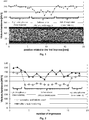
- a heat input for annealing a part of a component at the temperature over 900°C is carried out in connection with spot welding of two parts of the component.
- the annealing leads to a decrease of the high strength material in the heat input area which is shown in Fig. 1 by the markings "HAZ" (Heat Affecting Zone) and "Weld nugget".
- HZ Heating Affecting Zone
- Weld nugget This heat input area is softened by means of welding and has a high ductility with high energy absorption potential.
- a cap profile is manufactured out of austenitic TWIP steel having the manganese content of 16 weight %.
- a softened area is consisting of the areas "HAZ" and "Weld seam” which are is achieved by welding with TIG.
- Hardness is measured in the surroundings of the welding area before (lower graph) and after a crash (upper graph). It is noticed that hardness of the cap profile is much higher after the crash forming.
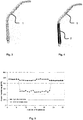
- FIG. 3 an A-pillar 1 to be used in an automotive car body is manufactured by hydroforming a tube which is made of austenitic TWIP steel. During hydroforming the A-pillar 1 has been work hardened and the hardness of the A-pillar is shown in Fig. 5 as "hydroformed tube”.
- Fig. 4 shows the A-pillar 1 after a part 2 of the A-pillar has been heat treated according to the invention at areas where a higher energy absorption and a volitional intrusion is required. In Fig. 5 the wording "local annealed area" shows slower hardness values in the heat treated part 2 of the A-pillar 1.
Landscapes
- Chemical & Material Sciences (AREA)
- Engineering & Computer Science (AREA)
- Organic Chemistry (AREA)
- Mechanical Engineering (AREA)
- Materials Engineering (AREA)
- Metallurgy (AREA)
- Thermal Sciences (AREA)
- Physics & Mathematics (AREA)
- Crystallography & Structural Chemistry (AREA)
- Manufacturing & Machinery (AREA)
- Heat Treatment Of Articles (AREA)
- Heat Treatment Of Sheet Steel (AREA)
- Heat Treatment Of Steel (AREA)
Abstract
Description
- The present invention relates to a method for manufacturing a component with high work hardening rate and to the use of the component especially in the automotive, car and truck industry.
- In transport system manufacturing, especially automotive car body manufacturing, soft areas are needed beside high strength parts. The softer und more ductile materials have benefits during manufacturing the components by forming like lower springback, lower tool wear and reaching higher forming levels when complex parts are needed. Benefits during lifetime of component with a ductile material are a better fatigue behavior, lower crack growth affinity and a better energy absorption when compared with high strength steels.
- But the ductile materials do not fulfil the strength levels which are required to reach the safety standards and the required car body stiffness. Lower strength materials have to manufacture with higher thicknesses which make them more cost-intensive, and which increase the weight of the car body and thereby increase the CO2-emissions and mileage.
- The
EP publication 2264193A1 and theUS publication 2012006089A1 describe the so-called tailored-tempering during a hot-forming process with tempered areas of a press hardening tool. Accordingly, the ferritic/martensitic microstructure of a 22MnB5 steel is modified during a modified hot-forming process by preventing locally an (complete) austenitization. TheDE publication 102008027460A1 describes a hot-forming / press-hardening process to make a hardening with the initial material which can be a 22MnB5 steel or a TWIP steel or a TRIP steel. The way for influencing to the hardening level is a special heating up and temperature level. - The
US publication 2013048150 describes a method for producing a workpiece having properties which are adjustable across a wall or a strip thickness by a special decarburizing annealing process, using the TRIP hardening effect of a high-manganese alloyed steel. - The
WO publication 2014/180456 describes a method for producing with only one material, austenitic lightweight construction steel, a component which has different material properties. The core is reached by a specific forming, where the austenitic lightweight construction steel has a temperature-dependent transformation induced plasticity (TRIP) and/or twinning induced plasticity effect (TWIP) during transformation The component is made to obtain high toughness during a temperature 40-160 °C above the room temperature and to obtain high strength during the temperature -65 °C to 0 °C below the room temperature. A cryogenic treatment is described also in theUS publication 2014328715 in a method for producing a TWIP and nano twinned austenitic stainless steel containing less than 0.018 weight % C, 0.25-0.75 weight % Si, 1.5-2 weight % Mn, 17.80-19.60 weight % Cr, 24.00-25.25 weight % Ni, 3.75-4.85 weight % Mo, 1.26-2.78 weight % Cu, 0.04-0.15 weight % N the rest being Fe and unavoidable impurities. - The TWIP (Twinning-Induced Plasticity) effect depends on the chemical composition, austenitic microstructure hardening effect and the stacking fault energy (20-30mJ/m2). In the TWIP effect a large amount of deformation is driven by the formation of deformation twins. The twinning causes a high value of instantaneous hardening rate when the microstructure becomes finer and finer. The resultant twin boundaries act like grain boundaries and strengthen the steel. The hardening rate value increases to a value of 0,4 at an approximate engineering strain of 30 % and then remains constant until both the uniform elongation and the total elongation reach 50 %.
- The method for manufacturing of steel grades having the TWIP effect with different chemical compositions is also described for instance in the
CN publication 103556052 , in theCN publication 102312158 , in theEP publication 2649214 , in theKR publication 20100028310 KR publication 20100009222 - The
WO publication 2014/097184 relates to a use of the austenitic stainless steel with TWIP effect containing in weight % 0,01-0,50 % C, 0,001-0,5 % Si, 6-12 % Mn, 11-20 % Cr, 0,01-6,0 % Ni, 0.01-2.0 % Mo, 0.01-2.0 Co, 0.01-6.0 % Cu, 0.11-0.50 % N, 0.001-0.5 % Nb, 0.001-2.0 % Al, the rest being Fe and unavoidable impurities, for manufacturing automobile components with complex geometry for energy absorption, structural reinforcements and/or applications by deep drawing wherein corrosion resistance is requested. - The prior art is concentrated to describe how to produce or manufacture a steel with a TWIP hardening effect and what is their specific chemical analysis for the steel. Even though the
WO publication 2014/097184 just mentions the use of the steel for automotive components, theWO publication 2014/097184 does not describe how the components are manufactured. - The object of the present invention is to eliminate drawbacks of the prior art and to achieve an improved method for manufacturing a component with high work hardening rate and its use especially in the automotive, car and truck industry. The essential features of the present patent application are enlisted in the appended claims.
- According to the invention the material in the method for manufacturing a component is a steel with an austenitic microstructure and with a TWIP (Twinning Induced Plasticity), TRIP/TWIP or TRIP (Transformation Induced Plasticity) hardening effect. Further, the material according to the invention is a steel which fulfils the microstructure effect and which has been specific cold work hardened during the manufacturing of the steel. In the manufacturing method of a component the starting material is in the shape of a sheet, coil, panel, plate, tube, profile, rivet or wire, and according to the invention the material is heat treated to create at least one softened area with high ductility and lower strength than the initial high strength material by heat treating the part of the component material required for the softened area at the temperature range 800 - 1250 °C, preferably 900 - 1150 °C.
- The steel to be used as the material in the method of the invention has the defined stacking fault energy between 20 - 30 mJ/m2 which makes the desired effect reversible under retention of stable full austenitic microstructure. According to the invention a steel with a TWIP hardening effect has the manganese content 10 - 25 weight %, preferably 15 - 20 weight %, and a metastable austenitic stainless steel which fulfils the TRIP microstructure effect has the nickel content: 4.0 - 9.5 weight %, preferably 4.5 - 6.5 weight %, and further, a steel which fulfils the TWIP microstructure effect is defined alloyed with interstitial disengaged nitrogen and carbon atoms with a sum (C+N) content: 0.4 - 0.8 weight %.
- In the TWIP effect a large amount of deformation is driven by the formation of deformation twins. The twinning causes a high value of instantaneous hardening rate when the microstructure becomes finer and finer. The resultant twin boundaries act like grain boundaries and strengthen the steel. The hardening rate value increases to a value of 0,4 at an approximate engineering strain of 30 % and then remains constant until both the uniform elongation and the total elongation reach 50 %. The TRIP effect refers to the transformation of metastable retained austenite to martensite during plastic deformation as a result of imposed stress or strain. This property allows stainless steels having the TRIP effect to have a high formability, while retaining excellent strength. By means of the heat treating step carried out by for instance by annealing according to the present invention annealed areas are created in the component in order to remove twins from the microstructure of the steel in the annealed areas. Thus annealed areas are softened areas with high ductility and lower strength and hardness than the initial high strength material.
- The annealing according to the invention can be carried out during a forming process of the material to a desired shape when a heated forming tool is used. The annealing according to the invention can for instance be combined with a subsequent cathodic dip coating hardening in a furnace at the temperature range of 180 - 220 0C. The annealing when manufacturing the component can be carried out also between two forming steps in which case areas softened by annealing are again formed. Multi-forming with the annealing step are used for very complex components as well as for thin components having a thickness of less than 0.6 mm. Further, the annealing according to the invention can be realized in connection with welding by a resistance, beam or arc welding process, by inductive heating as well as by conductive heating with current conduction, in a heat treatment furnace during press hardening or during laser or electron beam machining of the component.
- When using the method of the invention in manufacturing of a component it is reduced springback during the forming process as well as tool wear is reduced during the forming process because of the reduced yield strength. Further, an additional drawback of cold hardened austenitic TWIP steels with their ultra high strength can be solved with the method of the invention. With the annealing of local areas, the twin density in these areas of TWIP steels declines, and then also the strength declines. This makes possible to use the method for manufactruing of a component according to the invention so that with the combination of a local annealing and after that a "break-trough" process like drilling, clinching, riveting or stamping.
- The component manufactured by the method of the invention has improved properties, such an increased fatigue behavior, a decreased crack growth affinity, an increased energy absorption potential, a designed local areas with higher intrusion level and a control of the component intrusion and designed specific weak points in the component. The component manufactured according to the invention thus combines the benefits of high strength steel with the benefits of softer and more ductile material by annealing at least partly a component made of high strength austenitic steel.
- The component manufactured by the method of the invention can be advantageously used as a fatigue relevant component in an automotive car body, such as a chassis-part, control arm or a shock absorber. The component can be also used as a crash relevant, safety component in an automotive car body, such as a bumper, a crashbox, a cross member, a pillar and a channel. As one solution the component manufactured by the method of the invention can be used as a hydroformed part in transport applications with locally annealed properties like a hydroformed A-pillar tube. Further, the component can be used as a complex, thin or multi-forming-step part in an automotive car body such as a strut dome, a wheelhouse or a back-seat-structure and, still, as crimping and feather edged parts. In addition thereto, the component can be used as formed sheets, tubes or profiles in building and steel constructions with local different mechanical-technological properties by annealing after forming the component.
- The invention is described in more details referring to the attached drawings, where
-
Fig. 1 shows measurement results for a component manufactured by the method of the invention, -
Fig. 2 shows measurement results for another component manufactured by the method of the invention, -
Fig. 3 shows an A-pillar to be heat treated according to the invention, -
Fig. 4 shows the A-pillar ofFig. 4 as a desired embodiment of the invention after the heat treatment according to the invention, and -
Fig. 5 shows the hardness in the embodiment ofFigs. 3 and 4 . - In
Fig. 1 a heat input for annealing a part of a component at the temperature over 900°C is carried out in connection with spot welding of two parts of the component. The annealing leads to a decrease of the high strength material in the heat input area which is shown inFig. 1 by the markings "HAZ" (Heat Affecting Zone) and "Weld nugget". This heat input area is softened by means of welding and has a high ductility with high energy absorption potential. - In
Fig. 2 a cap profile is manufactured out of austenitic TWIP steel having the manganese content of 16 weight %. A softened area is consisting of the areas "HAZ" and "Weld seam" which are is achieved by welding with TIG. A crash forming is focused to the softened area with values: drop height = 2.50m, drop weight = 57.90kg and speed v0 = 24.50km/h. Hardness is measured in the surroundings of the welding area before (lower graph) and after a crash (upper graph). It is noticed that hardness of the cap profile is much higher after the crash forming. -
Fig. 3 an A-pillar 1 to be used in an automotive car body is manufactured by hydroforming a tube which is made of austenitic TWIP steel. During hydroforming the A-pillar 1 has been work hardened and the hardness of the A-pillar is shown inFig. 5 as "hydroformed tube".Fig. 4 shows the A-pillar 1 after apart 2 of the A-pillar has been heat treated according to the invention at areas where a higher energy absorption and a volitional intrusion is required. InFig. 5 the wording "local annealed area" shows slower hardness values in the heat treatedpart 2 of the A-pillar 1.
Claims (22)
- Method for manufacturing a component with high work hardening rate made of a material having austenitic microstructure, characterized in that a cold work hardened material for a component (1) is heat treated to create at least one softened area (2) with high ductility and lower strength than the initial high strength material by heat treating a part of the component material required for the softened area (2).
- Method according to the claim 1, characterized in that the material is work hardened by a TWIP effect.
- Method according to the claim 1, characterized in that the material is work hardened by a combination of TWIP and TRIP effect.
- Method according to the claim 1, characterized in that the material is work hardened by a TRIP effect.
- Method according to any of the preceding claims, characterized in that the heat treatment is carried out by annealing at the temperature range 800 - 1250 0C, preferably, 900 - 1150 °C.
- Method according to any of the preceding claims 1 - 5, characterized in that the annealing is combined with a subsequent cathodic dip coating hardening in a furnace at the temperature range of 180 - 220 °C.
- Method according to any of the preceding claims 1 - 5, characterized in that the annealing is carried out between two forming steps in which case areas softened by annealing are again formed.
- Method according to any of the preceding claims 1 - 5, characterized in that the annealing is carried out in connection with welding by a resistance, beam or arc welding process.
- Method according to any of the preceding claims 1 - 5, characterized in that the annealing is carried out by inductive heating or by conductive heating.
- Method according to any of the preceding claims 1 - 5, characterized in that the annealing is carried out in a heat treatment furnace during press hardening.
- Method according to any of the preceding claims 1 - 5, characterized in that the annealing is carried out during laser or electron beam machining of the component.
- Method according to any of the preceding claims, characterized in that the material is in the shape of a sheet, coil, panel, plate, tube, profile, rivet or wire.
- Method according to any of the preceding claims, characterized in that the material is a steel having manganese content 10 - 25 weight %, preferably 15 - 20 weight %.
- Method according to any of the preceding claims, characterized in that the material is a steel having nickel content 4.0 - 9.5 weight %, preferably 4.5 - 6.5 weight %.
- Method according to any of the preceding claims, characterized in that the material is a steel having nitrogen and carbon contents with a sum (C+N) content: 0.4 - 0.8 weight %.
- Method according to any of the preceding claims, characterized in that the material is a stainless steel having chromium content 12 - 20 weight %, preferably 14 - 16 weight %.
- Use of the component manufactured according to the method of the claim 1 as a fatigue relevant component or the like in an automotive car body, such as a chassis-part, control arm or a shock absorber.
- Use of the component manufactured according to the method of the claim 1 as a crash relevant, safety component in an automotive car body, such as a bumper, a crashbox, a cross member, a pillar and a channel.
- Use of the component manufactured according to the method of the claim 1 as a complex, thin or multi-forming-step part in an automotive car body such as a strut dome, a wheelhouse or a back-seat-structure or as crimping and feather edged parts.
- Use of the component manufactured according to the method of the claim 1 as a hydroformed part in transport applications with locally annealed properties.
- Use of the component manufactured according to the method of the claim 1 as formed sheets, tubes or profiles in building and steel constructions.
- Use of the component manufactured according to the method of the claim 1 with the combination of a local annealing and after that a "break-trough" process like drilling, clinching, riveting or stamping.
Priority Applications (11)
| Application Number | Priority Date | Filing Date | Title |
|---|---|---|---|
| EP15193575.6A EP3173504A1 (en) | 2015-11-09 | 2015-11-09 | Method for manufacturing an austenitic steel component and use of the component |
| PCT/EP2016/077128 WO2017081072A1 (en) | 2015-11-09 | 2016-11-09 | Method for manufacturing an austenitic steel component and use of the component |
| CA3003098A CA3003098A1 (en) | 2015-11-09 | 2016-11-09 | Method for manufacturing an austenitic steel component and use of the component |
| JP2018523417A JP2018538439A (en) | 2015-11-09 | 2016-11-09 | Method for producing austenitic steel member and use of member |
| US15/771,627 US12241139B2 (en) | 2015-11-09 | 2016-11-09 | Method for manufacturing an austenitic steel component and use of the component |
| KR1020187016051A KR20180079439A (en) | 2015-11-09 | 2016-11-09 | Method of manufacturing an austenitic steel component and use of said component |
| BR112018009379A BR112018009379A8 (en) | 2015-11-09 | 2016-11-09 | Method for Fabricating an Austenitic Steel Component and Using the Component |
| MX2018005716A MX2018005716A (en) | 2015-11-09 | 2016-11-09 | Method for manufacturing an austenitic steel component and use of the component. |
| CN201680065294.3A CN108350547A (en) | 2015-11-09 | 2016-11-09 | The purposes of method and the component for manufacturing austenitic steel component |
| EA201890939A EA201890939A1 (en) | 2015-11-09 | 2016-11-09 | METHOD OF OBTAINING DETAILS FROM AUSTENITE STEEL AND APPLICATION OF THIS DETAIL |
| AU2016351899A AU2016351899A1 (en) | 2015-11-09 | 2016-11-09 | Method for manufacturing an austenitic steel component and use of the component |
Applications Claiming Priority (1)
| Application Number | Priority Date | Filing Date | Title |
|---|---|---|---|
| EP15193575.6A EP3173504A1 (en) | 2015-11-09 | 2015-11-09 | Method for manufacturing an austenitic steel component and use of the component |
Publications (1)
| Publication Number | Publication Date |
|---|---|
| EP3173504A1 true EP3173504A1 (en) | 2017-05-31 |
Family
ID=54540885
Family Applications (1)
| Application Number | Title | Priority Date | Filing Date |
|---|---|---|---|
| EP15193575.6A Pending EP3173504A1 (en) | 2015-11-09 | 2015-11-09 | Method for manufacturing an austenitic steel component and use of the component |
Country Status (11)
| Country | Link |
|---|---|
| US (1) | US12241139B2 (en) |
| EP (1) | EP3173504A1 (en) |
| JP (1) | JP2018538439A (en) |
| KR (1) | KR20180079439A (en) |
| CN (1) | CN108350547A (en) |
| AU (1) | AU2016351899A1 (en) |
| BR (1) | BR112018009379A8 (en) |
| CA (1) | CA3003098A1 (en) |
| EA (1) | EA201890939A1 (en) |
| MX (1) | MX2018005716A (en) |
| WO (1) | WO2017081072A1 (en) |
Families Citing this family (3)
| Publication number | Priority date | Publication date | Assignee | Title |
|---|---|---|---|---|
| CN109182679B (en) * | 2018-09-20 | 2020-10-09 | 浙江工业大学 | A kind of laser transient annealing softening method |
| EP3877554A4 (en) * | 2018-11-05 | 2022-06-22 | Magna International Inc | LOCALIZED RESISTANCE ANNEALING PROCESS |
| JP7063260B2 (en) * | 2018-12-28 | 2022-05-09 | トヨタ自動車株式会社 | Vehicle center pillar heating method and heating device |
Citations (14)
| Publication number | Priority date | Publication date | Assignee | Title |
|---|---|---|---|---|
| DE102008027460A1 (en) | 2008-06-09 | 2009-12-17 | Voestalpine Stahl Gmbh | Method for producing a sheet steel component with regions of different ductility |
| KR20100009222A (en) | 2008-07-18 | 2010-01-27 | 현대자동차주식회사 | Ultra-high strength twip steel sheets and the method thereof |
| KR20100028310A (en) | 2008-09-04 | 2010-03-12 | 현대자동차주식회사 | Method for manufacturing twinnning induced plasticity type ultra-high strength steel sheet |
| EP2264193A1 (en) | 2009-05-29 | 2010-12-22 | Bayerische Motoren Werke Aktiengesellschaft | Production of a partially press-hardened metal sheet component |
| CN102312158A (en) | 2011-09-13 | 2012-01-11 | 上海交通大学 | Nb, Ti alloyed low-carbon high-intensity high-plasticity TWIP steel and preparation method thereof |
| US20120006089A1 (en) | 2010-01-06 | 2012-01-12 | Benteler Automobiltechnik Gmbh | Method and apparatus for hot forming and hardening a blank |
| US20130048150A1 (en) | 2010-03-16 | 2013-02-28 | Salzgitter Flachstahl Gmbh | Method for producing workpieces from lightweight steel having material properties that are adjustable across the wall thickness |
| US20130125607A1 (en) * | 2010-05-12 | 2013-05-23 | Voestalpine Stahl Gmbh | Method for producing a structural part from an iron-manganese steel sheet |
| EP2649214A2 (en) | 2010-12-07 | 2013-10-16 | Centro Sviluppo Materiali S.p.A. | Process for manufacturing high manganese content steel with high mechanical resistance and formability, and steel so obtainable |
| CN103556052A (en) | 2013-11-08 | 2014-02-05 | 武汉钢铁(集团)公司 | Automotive high manganese steel and manufacturing method thereof |
| WO2014097184A2 (en) | 2012-12-19 | 2014-06-26 | Centro Sviluppo Materiali S.P.A. | Austenitic stainless steel with high twinning induced plasticity, process for the production thereof and use thereof in the mechanical industry |
| US20140328715A1 (en) | 2011-09-29 | 2014-11-06 | Sandvik Intellectual Property Ab | Twip and nano-twinned austenitic stainless steel and method of producing the same |
| WO2014180456A1 (en) | 2013-05-06 | 2014-11-13 | Salzgitter Flachstahl Gmbh | Method for producing components from lightweight steel |
| DE102013108163A1 (en) * | 2013-07-30 | 2015-02-05 | Benteler Defense Gmbh & Co. Kg | Method for producing an armor component for a motor vehicle |
Family Cites Families (10)
| Publication number | Priority date | Publication date | Assignee | Title |
|---|---|---|---|---|
| JP4356147B2 (en) * | 1999-08-05 | 2009-11-04 | マツダ株式会社 | Body frame structure and method for forming the same |
| DE10201009C1 (en) * | 2002-01-11 | 2003-10-16 | Salzgitter Flachstahl Gmbh | Method of manufacturing a steel product and product made thereafter |
| DE102005030413C5 (en) * | 2005-06-28 | 2009-12-10 | Technische Universität Bergakademie Freiberg | High-strength austenitic-martensitic lightweight steel and its use |
| JP5544633B2 (en) * | 2007-07-30 | 2014-07-09 | 新日鐵住金ステンレス株式会社 | Austenitic stainless steel sheet for structural members with excellent shock absorption characteristics |
| DE102007038215A1 (en) * | 2007-08-13 | 2009-02-19 | Nano-X Gmbh | Process for producing an active corrosion protection coating on steel components |
| ES2704643T3 (en) * | 2009-09-21 | 2019-03-19 | Aperam | Stainless steel with local variations of mechanical resistance |
| JP5597006B2 (en) * | 2010-03-26 | 2014-10-01 | 新日鐵住金ステンレス株式会社 | High strength and high ductility austenitic stainless steel sheet for structural members and method for producing the same |
| KR20160005795A (en) * | 2011-03-01 | 2016-01-15 | 신닛테츠스미킨 카부시키카이샤 | Metal plate for laser processing and method for producing stainless steel plate for laser processing |
| DE102012006941B4 (en) | 2012-03-30 | 2013-10-17 | Salzgitter Flachstahl Gmbh | Method for producing a steel component by hot forming |
| PL2924131T3 (en) * | 2014-03-28 | 2020-02-28 | Outokumpu Oyj | Austenitic high-manganese stainless steel |
-
2015
- 2015-11-09 EP EP15193575.6A patent/EP3173504A1/en active Pending
-
2016
- 2016-11-09 CA CA3003098A patent/CA3003098A1/en not_active Abandoned
- 2016-11-09 EA EA201890939A patent/EA201890939A1/en unknown
- 2016-11-09 AU AU2016351899A patent/AU2016351899A1/en not_active Abandoned
- 2016-11-09 CN CN201680065294.3A patent/CN108350547A/en active Pending
- 2016-11-09 BR BR112018009379A patent/BR112018009379A8/en not_active Application Discontinuation
- 2016-11-09 JP JP2018523417A patent/JP2018538439A/en active Pending
- 2016-11-09 KR KR1020187016051A patent/KR20180079439A/en not_active Withdrawn
- 2016-11-09 WO PCT/EP2016/077128 patent/WO2017081072A1/en not_active Ceased
- 2016-11-09 MX MX2018005716A patent/MX2018005716A/en unknown
- 2016-11-09 US US15/771,627 patent/US12241139B2/en active Active
Patent Citations (14)
| Publication number | Priority date | Publication date | Assignee | Title |
|---|---|---|---|---|
| DE102008027460A1 (en) | 2008-06-09 | 2009-12-17 | Voestalpine Stahl Gmbh | Method for producing a sheet steel component with regions of different ductility |
| KR20100009222A (en) | 2008-07-18 | 2010-01-27 | 현대자동차주식회사 | Ultra-high strength twip steel sheets and the method thereof |
| KR20100028310A (en) | 2008-09-04 | 2010-03-12 | 현대자동차주식회사 | Method for manufacturing twinnning induced plasticity type ultra-high strength steel sheet |
| EP2264193A1 (en) | 2009-05-29 | 2010-12-22 | Bayerische Motoren Werke Aktiengesellschaft | Production of a partially press-hardened metal sheet component |
| US20120006089A1 (en) | 2010-01-06 | 2012-01-12 | Benteler Automobiltechnik Gmbh | Method and apparatus for hot forming and hardening a blank |
| US20130048150A1 (en) | 2010-03-16 | 2013-02-28 | Salzgitter Flachstahl Gmbh | Method for producing workpieces from lightweight steel having material properties that are adjustable across the wall thickness |
| US20130125607A1 (en) * | 2010-05-12 | 2013-05-23 | Voestalpine Stahl Gmbh | Method for producing a structural part from an iron-manganese steel sheet |
| EP2649214A2 (en) | 2010-12-07 | 2013-10-16 | Centro Sviluppo Materiali S.p.A. | Process for manufacturing high manganese content steel with high mechanical resistance and formability, and steel so obtainable |
| CN102312158A (en) | 2011-09-13 | 2012-01-11 | 上海交通大学 | Nb, Ti alloyed low-carbon high-intensity high-plasticity TWIP steel and preparation method thereof |
| US20140328715A1 (en) | 2011-09-29 | 2014-11-06 | Sandvik Intellectual Property Ab | Twip and nano-twinned austenitic stainless steel and method of producing the same |
| WO2014097184A2 (en) | 2012-12-19 | 2014-06-26 | Centro Sviluppo Materiali S.P.A. | Austenitic stainless steel with high twinning induced plasticity, process for the production thereof and use thereof in the mechanical industry |
| WO2014180456A1 (en) | 2013-05-06 | 2014-11-13 | Salzgitter Flachstahl Gmbh | Method for producing components from lightweight steel |
| DE102013108163A1 (en) * | 2013-07-30 | 2015-02-05 | Benteler Defense Gmbh & Co. Kg | Method for producing an armor component for a motor vehicle |
| CN103556052A (en) | 2013-11-08 | 2014-02-05 | 武汉钢铁(集团)公司 | Automotive high manganese steel and manufacturing method thereof |
Non-Patent Citations (1)
| Title |
|---|
| T. NIENDORF ET AL: "The Deformation Behavior of Functionally Graded TWIP Steel under Monotonic Loading at Ambient Temperature", MATERIALS RESEARCH LETTERS, vol. 1, no. 2, 19 March 2013 (2013-03-19), pages 96 - 101, XP055264241, DOI: 10.1080/21663831.2013.782075 * |
Also Published As
| Publication number | Publication date |
|---|---|
| MX2018005716A (en) | 2018-09-17 |
| BR112018009379A8 (en) | 2019-02-26 |
| US12241139B2 (en) | 2025-03-04 |
| US20180334735A1 (en) | 2018-11-22 |
| AU2016351899A1 (en) | 2018-05-17 |
| JP2018538439A (en) | 2018-12-27 |
| EA201890939A1 (en) | 2018-11-30 |
| BR112018009379A2 (en) | 2018-11-13 |
| KR20180079439A (en) | 2018-07-10 |
| CN108350547A (en) | 2018-07-31 |
| WO2017081072A1 (en) | 2017-05-18 |
| CA3003098A1 (en) | 2017-05-18 |
Similar Documents
| Publication | Publication Date | Title |
|---|---|---|
| KR101921441B1 (en) | Steel for press hardening and press hardened part manufactured from such steel | |
| RU2732711C1 (en) | Method of making parts out of steel with high mechanical strength and high viscosity and parts produced by method thereof | |
| JP4443910B2 (en) | Steel materials for automobile structural members and manufacturing method thereof | |
| EP2824196B1 (en) | Method for manufacturing press-formed product and press-formed product | |
| CN110651062B (en) | High-strength steel sheet and method for producing same | |
| EP2516151B1 (en) | High strength hot dip galvanised steel strip | |
| US8252125B2 (en) | Method for producing a workpiece and a workpiece | |
| US20100086803A1 (en) | Hot-formed profile | |
| CN112585284A (en) | Sheet metal formed part made of steel and having high tensile strength, and method for producing same | |
| US11400690B2 (en) | High performance press-hardened steel assembly | |
| JP2017214648A (en) | High strength steel plate and manufacturing method thereof | |
| CA3014626A1 (en) | Hot-pressing steel plate, press-molded article, and method for manufacturing press-molded article | |
| EP3045550A1 (en) | Method for manufacturing press-molded article, and press-molded article | |
| CN114026014B (en) | Shock absorbing member, method for producing the shock absorbing member, and method for producing steel sheet for cold plastic working | |
| KR100697905B1 (en) | High-strength hot-dip galvanized steel sheet with excellent spot weldability and stability of material properties and manufacturing method thereof | |
| KR20210011904A (en) | Method for welding coated steel sheets | |
| WO2017208759A1 (en) | High-strength steel sheet and method for producing same | |
| US20190211417A1 (en) | Method for producing a re-shaped component from a manganese-containing flat steel product and such a component | |
| US12241139B2 (en) | Method for manufacturing an austenitic steel component and use of the component | |
| US11214846B2 (en) | Method for producing a shaped component from a medium-manganese flat steel product and such a component | |
| JP5894469B2 (en) | Steel sheet for hot pressing, press-formed product, and method for producing press-formed product | |
| US20230140215A1 (en) | Methods to improve the toughness of press hardening steel | |
| CN116897217A (en) | Steel plates, components and their manufacturing methods | |
| HK1127630A (en) | Low carbon alloy steel tube having ultra high strength and excellent toughness at low temperature and method of manufacturing the same |
Legal Events
| Date | Code | Title | Description |
|---|---|---|---|
| PUAI | Public reference made under article 153(3) epc to a published international application that has entered the european phase |
Free format text: ORIGINAL CODE: 0009012 |
|
| STAA | Information on the status of an ep patent application or granted ep patent |
Free format text: STATUS: THE APPLICATION HAS BEEN PUBLISHED |
|
| PUAB | Information related to the publication of an a document modified or deleted |
Free format text: ORIGINAL CODE: 0009199EPPU |
|
| PUAI | Public reference made under article 153(3) epc to a published international application that has entered the european phase |
Free format text: ORIGINAL CODE: 0009012 |
|
| AK | Designated contracting states |
Kind code of ref document: A1 Designated state(s): AL AT BE BG CH CY CZ DE DK EE ES FI FR GB GR HR HU IE IS IT LI LT LU LV MC MK MT NL NO PL PT RO RS SE SI SK SM TR |
|
| AX | Request for extension of the european patent |
Extension state: BA ME |
|
| STAA | Information on the status of an ep patent application or granted ep patent |
Free format text: STATUS: REQUEST FOR EXAMINATION WAS MADE |
|
| 17P | Request for examination filed |
Effective date: 20180409 |
|
| RBV | Designated contracting states (corrected) |
Designated state(s): AL AT BE BG CH CY CZ DE DK EE ES FI FR GB GR HR HU IE IS IT LI LT LU LV MC MK MT NL NO PL PT RO RS SE SI SK SM TR |
|
| STAA | Information on the status of an ep patent application or granted ep patent |
Free format text: STATUS: EXAMINATION IS IN PROGRESS |
|
| 17Q | First examination report despatched |
Effective date: 20201117 |