EP3166338A1 - Akustische vorrichtung und zugehörige verfahren - Google Patents
Akustische vorrichtung und zugehörige verfahren Download PDFInfo
- Publication number
- EP3166338A1 EP3166338A1 EP15193289.4A EP15193289A EP3166338A1 EP 3166338 A1 EP3166338 A1 EP 3166338A1 EP 15193289 A EP15193289 A EP 15193289A EP 3166338 A1 EP3166338 A1 EP 3166338A1
- Authority
- EP
- European Patent Office
- Prior art keywords
- graphene oxide
- layers
- piezoelectric diaphragm
- stack
- sound input
- Prior art date
- Legal status (The legal status is an assumption and is not a legal conclusion. Google has not performed a legal analysis and makes no representation as to the accuracy of the status listed.)
- Granted
Links
Images

Classifications
-
- H—ELECTRICITY
- H04—ELECTRIC COMMUNICATION TECHNIQUE
- H04R—LOUDSPEAKERS, MICROPHONES, GRAMOPHONE PICK-UPS OR LIKE ACOUSTIC ELECTROMECHANICAL TRANSDUCERS; ELECTRIC HEARING AIDS; PUBLIC ADDRESS SYSTEMS
- H04R17/00—Piezoelectric transducers; Electrostrictive transducers
-
- H—ELECTRICITY
- H04—ELECTRIC COMMUNICATION TECHNIQUE
- H04R—LOUDSPEAKERS, MICROPHONES, GRAMOPHONE PICK-UPS OR LIKE ACOUSTIC ELECTROMECHANICAL TRANSDUCERS; ELECTRIC HEARING AIDS; PUBLIC ADDRESS SYSTEMS
- H04R7/00—Diaphragms for electromechanical transducers; Cones
- H04R7/02—Diaphragms for electromechanical transducers; Cones characterised by the construction
- H04R7/04—Plane diaphragms
- H04R7/06—Plane diaphragms comprising a plurality of sections or layers
-
- H—ELECTRICITY
- H04—ELECTRIC COMMUNICATION TECHNIQUE
- H04R—LOUDSPEAKERS, MICROPHONES, GRAMOPHONE PICK-UPS OR LIKE ACOUSTIC ELECTROMECHANICAL TRANSDUCERS; ELECTRIC HEARING AIDS; PUBLIC ADDRESS SYSTEMS
- H04R2307/00—Details of diaphragms or cones for electromechanical transducers, their suspension or their manufacture covered by H04R7/00 or H04R31/003, not provided for in any of its subgroups
- H04R2307/023—Diaphragms comprising ceramic-like materials, e.g. pure ceramic, glass, boride, nitride, carbide, mica and carbon materials
-
- H—ELECTRICITY
- H04—ELECTRIC COMMUNICATION TECHNIQUE
- H04R—LOUDSPEAKERS, MICROPHONES, GRAMOPHONE PICK-UPS OR LIKE ACOUSTIC ELECTROMECHANICAL TRANSDUCERS; ELECTRIC HEARING AIDS; PUBLIC ADDRESS SYSTEMS
- H04R2400/00—Loudspeakers
- H04R2400/01—Transducers used as a loudspeaker to generate sound aswell as a microphone to detect sound
-
- H—ELECTRICITY
- H04—ELECTRIC COMMUNICATION TECHNIQUE
- H04R—LOUDSPEAKERS, MICROPHONES, GRAMOPHONE PICK-UPS OR LIKE ACOUSTIC ELECTROMECHANICAL TRANSDUCERS; ELECTRIC HEARING AIDS; PUBLIC ADDRESS SYSTEMS
- H04R7/00—Diaphragms for electromechanical transducers; Cones
- H04R7/02—Diaphragms for electromechanical transducers; Cones characterised by the construction
Definitions
- the present disclosure relates particularly to acoustic devices, associated methods and apparatus.
- Certain embodiments specifically concern an apparatus comprising a graphene oxide-based piezoelectric diaphragm configured to have one or more of a sound output mode and a sound input.
- Certain aspects/embodiments may relate to portable electronic devices, in particular, so-called hand-portable electronic devices which may be hand-held in use (although they may be placed in a cradle in use).
- hand-portable electronic devices include so-called Personal Digital Assistants (PDAs) and tablet PCs.
- the portable electronic devices/apparatus may provide one or more audio/text/video communication functions (e.g. tele-communication, video-communication, and/or text transmission, Short Message Service (SMS)/ Multimedia Message Service (MMS)/emailing functions, interactive/non-interactive viewing functions (e.g. web-browsing, navigation, TV/program viewing functions), music recording/playing functions (e.g. MP3 or other format and/or (FM/AM) radio broadcast recording/playing), downloading/sending of data functions, image capture function (e.g. using a (e.g. in-built) digital camera), and gaming functions.
- audio/text/video communication functions e.g. tele-communication, video-communication, and/or text transmission, Short Message Service (SMS)/ Multimedia Message Service (MMS)/emailing functions, interactive/non-interactive viewing functions (e.g. web-browsing, navigation, TV/program viewing functions), music recording/playing functions (e.g. MP3
- an apparatus comprising a piezoelectric diaphragm positioned between opposing first and second electrodes, the piezoelectric diaphragm comprising a stack of graphene oxide layers between respective electrode-engaging layers of reduced graphene oxide, wherein the apparatus is configured to have one or more of a sound output mode and a sound input mode such that:
- the electrode-engaging layers of reduced graphene oxide may be formed from one or more outer layers of graphene oxide on opposing sides of the stack which have been reduced.
- the graphene oxide stack may comprise up to 10, 20, 30, 40 or 50 layers of graphene oxide, and the electrode-engaging layers may be formed from the outermost 1-5 layers on opposing sides of the stack.
- each of the layers of the stack may be formed from graphene oxide.
- the graphene oxide stack may comprise one or more (intermediate) layers which are not graphene oxide. These layers may be configured to increase the piezoelectric effect or provide further properties (e.g. improved strength or resilience).
- the additional layers of material may comprise corona-charged porous and non-porous polytetrafluoroethylene (PTFE), polypropylene (PP) and polyurethane (PU) films because of their light weight and piezoelectricity. This may help to reach higher frequencies and provide additional mechanical support, especially for piezoelectric diaphragms with larger surface areas/diameters.
- the graphene oxide stack may comprise two or more sub-stacks each comprising a plurality of graphene oxide layers (e.g. up to 10, 20, 30, 40 or 50 layers).
- the two or more sub-stacks may or may not be separated from one another by one or more intermediate non-graphene oxide layers.
- the piezoelectric diaphragm may have a total thickness of less than or equal to 10nm, 20nm or 30nm.
- One or more of the graphene oxide layers may have a clamped or unzipped structural configuration.
- the graphene oxide layers in the clamped configuration may have a carbon/oxygen ratio of 2:1 or 4:1, and the graphene oxide layers in the unzipped configuration may have a carbon/oxygen ratio of 4:1 or 8:1.
- the apparatus may be configured such that, in the sound output mode, the generated electric field is substantially perpendicular to the layers of graphene oxide.
- the apparatus may be configured such that, in the sound output mode, the generated electric field is perpendicular to the basal plane of the graphene oxide layers.
- One or more of the sound input wave and the sound output wave may have a frequency of up to 20kHz, 100kHz, 1 MHz, 10MHz, 100MHz, 1GHz and 10GHz.
- the apparatus may be one or more of an electronic device, a portable electronic device, a portable telecommunications device, a mobile phone, a personal digital assistant, a tablet, a phablet, a desktop computer, a laptop computer, a server, a smartphone, a smartwatch, smart eyewear, a wearable device, a loudspeaker, a microphone, an ultrasonic device, a sensor, a range finder, an identification tag, an identification tag reader, an imaging system, an acoustic microscope, a medical device, a sonicator, a transmitter, a receiver, and a module for one or more of the same.
- a method of using an apparatus comprising a piezoelectric diaphragm positioned between opposing first and second electrodes, the piezoelectric diaphragm comprising a stack of graphene oxide layers between respective electrode-engaging layers of reduced graphene oxide, the method comprising one or more of:
- a method of making an apparatus comprising:
- Forming the electrode-engaging layers of reduced graphene oxide may comprise reducing one or more outer layers of graphene oxide on opposing sides of the stack by at least one of chemical, thermal and electrochemical reduction.
- descriptors relating to relative orientation and position such as “top”, “bottom”, “upper”, “lower”, “above” and “below”, as well as any adjective and adverb derivatives thereof, are used in the sense of the orientation of the apparatus as presented in the drawings. However, such descriptors are not intended to be in any way limiting to an intended use of the described or claimed invention.
- One or more of the computer programs may, when run on a computer, cause the computer to configure any apparatus, including a circuit, controller, or device disclosed herein or perform any method disclosed herein.
- One or more of the computer programs may be software implementations, and the computer may be considered as any appropriate hardware, including a digital signal processor, a microcontroller, and an implementation in read only memory (ROM), erasable programmable read only memory (EPROM) or electronically erasable programmable read only memory (EEPROM), as non-limiting examples.
- the software may be an assembly program.
- One or more of the computer programs may be provided on a computer readable medium, which may be a physical computer readable medium such as a disc or a memory device, or may be embodied as a transient signal.
- a transient signal may be a network download, including an internet download.
- the present disclosure includes one or more corresponding aspects, example embodiments or features in isolation or in various combinations whether or not specifically stated (including claimed) in that combination or in isolation.
- Corresponding means for performing one or more of the discussed functions are also within the present disclosure.
- a loudspeaker is an electroacoustic transducer that converts an electrical signal into sound.
- the speaker vibrates in accordance with variations in the electrical signal, causing the air particles around it to move.
- the air pressure increases and decreases accordingly.
- the speaker sends a wave of pressure fluctuation through the air as a travelling disturbance.
- the fluctuation reaches our ears it causes the eardrum to vibrate back and forth, a motion which our brains interpret as sound.
- Air pressure level is the amplitude of the sound wave, which determines how loud the sound is. Sound waves with greater amplitudes move our ear drums more, and we register this sensation as a higher volume.
- Loudspeakers are the most variable elements in a modern audio system and are usually responsible for most distortion and audible differences when comparing sound systems.
- Figure 1 a shows a conventional loudspeaker.
- the speaker comprises a diaphragm 101, a frame 102, a suspension 103, a magnet 104, a voice coil 105, an audio signal input 106, a dust cap 107, and an enclosure 108.
- the speaker produces sound waves by rapidly vibrating the diaphragm 101.
- the diaphragm 101 is flexible (usually made of paper, plastic or metal) and is attached at its wide end to the suspension 103.
- the suspension 103 is a rim of flexible material that allows the diaphragm 101 to move, and is attached to the frame 102 of the speaker.
- the narrow end of the diaphragm 101 is connected to the voice coil 105, which itself is attached to the frame 102 by a ring of flexible material called a spider (not shown).
- the spider holds the voice coil 105 in position, but allows it to move back and forth freely.
- the dust cap 107 simply prevents dust particles from reaching the components of the loudspeaker.
- the voice coil 105 is positioned in the constant magnetic field of the magnet 104.
- a force acts upon the voice coil, the direction of which depends upon the direction of the current in accordance with Fleming's left hand rule.
- an alternating current in the voice coil 105 can be used to reverse the force between the voice coil 105 and the magnet 104 repeatedly. This pushes the voice coil 105 back and forth rapidly like a piston.
- the coil 105 When the coil 105 moves, it pushes and pulls on the diaphragm 101 (as indicated by the arrows 109). This causes vibration of the air in front of (and behind) the speaker, creating sound waves.
- the electrical audio signal can also be interpreted as a wave. The frequency and amplitude of this wave, which represents the recorded sound wave, dictates the rate and distance that the voice coil 105 moves. This in turn determines the frequency and amplitude of the sound waves produced by the diaphragm 101.
- loudspeaker units typically divide a wide frequency range between multiple speakers.
- the largest speakers are called “woofers”, and are designed to produce low frequency sounds.
- “Tweeters” are much smaller units designed to produce the highest frequencies.
- Midrange speakers produce a range of frequencies in the middle of the sound spectrum. To faithfully reproduce the recorded sound, the audio signal needs to be broken up into the different frequency ranges that are handled by each type of speaker. This is performed by the speaker crossover circuit.
- a loudspeaker enclosure 108 is a purpose-built cabinet in which the speakers (drivers) and associated electronic hardware (such as the crossover circuit and amplifiers) are mounted. Enclosures 108 may vary in design, from simple wooden boxes, to complex cabinets that incorporate specialised materials, internal baffles, ports, and acoustic insulation.
- the primary role of the enclosure 108 is to prevent sound waves generated by the rear-facing surface of the diaphragm 101 from interacting with sound waves generated by the front-facing surface of the diaphragm 101. Since the forward and rearward generated sounds are out of phase with one another, any interaction between the two results in cancellation of the acoustic output at low frequencies, producing an approximately 6dB roll-off per octave below a cut-off frequency at which the path-length between the rear and front of the diaphragm is approximately one-quarter wavelength.
- the enclosure 108 also plays a role in managing vibration induced by the speaker frame 102 and moving air mass within the enclosure 108, as well as heat generated by the voice coil 105 and amplifiers.
- FIG. 1b shows another type of speaker known as an electrostatic loudspeaker.
- Electrostatic loudspeakers vibrate air with a large, thin, conductive diaphragm 101.
- the diaphragm 101 is suspended between two stationary conductive panels 110, 111 that are statically charged with opposite polarities.
- the panels 110, 111 create an electric field between them.
- the audio signal 112 causes a current to flow through the diaphragm 101 in alternating directions, rapidly switching the polarity of the diaphragm 101.
- the diaphragm 101 When the diaphragm 101 is positively charged, it is drawn (as indicated by the arrows 109) towards the negative panel 110.
- the diaphragm 101 is negatively charged, it is drawn towards the positive panel 111.
- the diaphragm 101 rapidly vibrates the air adjacent to it.
- some electrostatic speakers apply the audio signal 112 to the stationary panels 110, 111 and keep the polarity of the diaphragm 101 constant.
- the diaphragm 101 Since the diaphragm 101 has such a low mass, it responds very quickly and precisely to changes in the audio signal 112. This makes for clear and accurate sound reproduction.
- the diaphragm 101 does not move a great distance, however. As a result, it is relatively ineffective at producing lower frequency sounds, although increasing the diaphragm area can compensate for this. For this reason, electrostatic speakers are usually paired with a woofer to boost the low frequency range.
- FIG. 1c shows a further type of speaker called a piezoelectric loudspeaker.
- piezoelectric loudspeakers use the (reverse) piezoelectric effect to generate sound.
- the speaker comprises a layer of piezoelectric material 113 attached to a mechanical diaphragm 101 (typically made of metal).
- a voltage is applied to the piezoelectric material 113, the resulting electric field creates strain in the material 113 causing the attached diaphragm 101 to bend 114a. If the voltage is then reversed, the diaphragm 101 is bent 114b in the opposite direction. In this way, an alternating voltage 115 can be used to cause vibration of the diaphragm 101 to produce an audible sound wave.
- Piezoelectric speakers are simpler in construction that their conventional and electrostatic counterparts, and are therefore relatively cheap and easy to manufacture. They are also less prone to mechanical failure due to the smaller number of components. Nevertheless, existing piezoelectric speakers tend to have a poorer frequency response (at least in comparison to conventional loudspeakers) and are therefore generally limited to less-critical high frequency applications, such as tweeters, watches and buzzers.
- FIG. 2 illustrates schematically a conventional microphone.
- Microphones are structurally similar to loudspeakers, but they operate in reverse.
- a conventional microphone comprises a diaphragm 201, a coil 205 and a permanent magnet 204 contained within an acoustically transparent casing 216.
- the coil 205 is wound around the permanent magnet 204 and is attached to the diaphragm 201.
- Incoming sound waves are carried by vibrations in the air through the casing 216 to the diaphragm 201 causing the diaphragm 201 to vibrate.
- the coil 205 Since the coil 205 is attached to the diaphragm 201, it moves back and forth through the magnetic field of the permanent magnet 204 generating an electrical current 217 in the coil 205 via Faraday's law. The electrical current 217 then flows from the microphone casing 216 to an amplifier or recording device (not shown). The incoming sound wave is therefore converted into a corresponding electrical signal 217.
- many different types of microphone currently exist (including electrostatic and piezoelectric microphones).
- FIG 3 shows one example of the present apparatus 318.
- the apparatus 318 comprises a piezoelectric diaphragm 301 positioned between opposing first 319 and second 320 electrodes, and is configured to operate in one or more of a sound output mode (e.g. as a loudspeaker) and a sound input mode (e.g. as a microphone).
- the piezoelectric diaphragm 301 comprises a stack of graphene oxide layers 321 between respective electrode-engaging layers 322 of reduced graphene oxide (sometimes referred to as graphene).
- the first 319 and second 320 electrodes may be formed from a metal (e.g. gold, silver or copper), alloy (e.g. silver nickel or silver copper nickel) or conductive ceramic (e.g. indium tin oxide, silver tin oxide or silver cadmium oxide).
- the first 319 and second 320 electrodes are configured to apply a voltage to the reduced graphene oxide layers 322 to generate an electric field across the graphene oxide stack 321.
- the generated electric field causes vibration of the piezoelectric diaphragm 301 to produce a sound output wave corresponding to the applied voltage.
- the reduced graphene oxide layers 322 are configured to collect electrical charge which is induced in the graphene oxide layers 321 by vibration of the piezoelectric diaphragm 301 in response to a sound input wave.
- the collected electrical charge creates a voltage between the first 319 and second 320 electrodes corresponding to the sound input wave.
- the present apparatus 318 may be reconfigurable between the sound output and sound input modes (e.g. on user selection with appropriate circuit elements and/or software associated with the apparatus).
- the present apparatus 318 takes advantage of the piezoelectric nature of graphene oxide 321.
- Graphene oxide 321 is a two-dimensional material which is stronger and lighter than the ceramic materials used in current piezoelectric loudspeakers. This provides for a more compact structure which is suitable for use in smaller/thinner electronic devices.
- the strength and weight of graphene oxide 321 also enables the transduction of a broader range of frequencies than existing loudspeakers and microphones.
- the electrode-engaging layers 322 of reduced graphene oxide enable the generation of a substantially uniform electric field across the graphene oxide stack 321 in the sound output mode, and the collection of electrical charge from different points on the upper and lower surfaces of the graphene oxide stack 321 in the sound input mode. These aspects provide for more efficient audio output/input.
- the electrode-engaging layers 322 of reduced graphene oxide may advantageously be formed from one or more outer layers of graphene oxide 321 on opposing sides of the stack which have been reduced.
- the graphene oxide stack 321 may comprise up to 10, 20, 30, 40 or 50 layers of graphene oxide (with or without one or more non-graphene oxide layers), and the electrode-engaging layers 322 may be formed from the outermost 1-5 layers on opposing sides of the stack 322.
- the resulting piezoelectric diaphragm 301 would typically have a total thickness of no more than 30nm (possibly less than or equal to 10 or 20nm, depending on the number of layers in the stack 321).
- Reduction of the graphene oxide 321 may be achieved using one or more of chemical, thermal and electrochemical reduction. Suitable techniques involve: treating the graphene oxide 321 with hydrazine hydrate and maintaining the solution at 100°C for 24 hours; exposing the graphene oxide 321 to hydrogen plasma for a few seconds; exposing the graphene oxide 321 to pulsed light from a xenon flashtube; heating the graphene oxide 321 in distilled water (at various temperatures and times); combining the graphene oxide 321 with an expansion-reduction agent such as urea and heating the solution to release reducing gases; directly heating the graphene oxide 321 to temperatures of over 1000°C in a furnace; and linear sweep voltammetry.
- an expansion-reduction agent such as urea
- Linear sweep voltammetry in particular has been found to produce high quality reduced graphene oxide 322 almost identical in structure to pristine graphene.
- This process involves passing a current through the plane of the graphene oxide layer(s) 321 at various voltages in a sodium phosphate buffer.
- the resulting electrochemically reduced graphene oxide 322 has shown a very high carbon/oxygen ratio and electronic conductivity readings higher than silver.
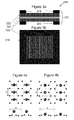
- Figures 4a and 4b respectively illustrate the unit cells of the clamped and unzipped configurations with a carbon/oxygen ratio of 4:1 ( Z. Chang et al, Appl. Phys. Lett., 105, 023103 (2014 )).
- the carbon and oxygen atoms are represented by the smaller and larger spheres, respectively, and the unit cells are depicted by dotted lines with in-plane lattice parameters shown as "a" and "b".
- the key difference between the two structures is that the C-C bond below the oxygen atom in the clamped configuration is broken in the unzipped configuration.
- in-plane strain and strain piezoelectric coefficient d31 i.e. strain vs electric field
- the clamped graphene oxide has demonstrated a greater strain and d31 coefficient than its unzipped counterpart.
- the strain and d31 coefficient have been found to increase with increasing oxygen content for the clamped configuration but decrease for the unzipped configuration. For example, a greater piezoelectric effect has been observed with clamped C 2 O compared with clamped C 4 O, and with unzipped C 8 O compared with unzipped C 4 O.
- clamped graphene oxide with a carbon/oxygen ratio of >4, and unzipped graphene oxide with a carbon/oxygen ratio of ⁇ 4 have been found to be chemically unstable.
- the present apparatus may comprise graphene oxide having a clamped configuration with a carbon/oxygen ratio of 2:1 or 4:1, or an unzipped configuration with a carbon/oxygen ratio of 4:1 or 8:1.
- the apparatus may be configured such that, in the sound output mode, the generated electric field is substantially perpendicular to the layers of graphene oxide (and in some cases, substantially perpendicular to the basal plane of the graphene oxide layers).
- the present apparatus may provide a solution.
- the low mass and low spring constant of the graphene-based diaphragm in combination with high air damping, provides a high-fidelity broadband frequency response with greater power efficiency.
- the present apparatus may be able to handle sound input waves (e.g. as a microphone) and sound output waves (e.g.
- the apparatus may form part of an ultrasonic device, such as a sensor (e.g. motion sensor or flow meter), a range finder (e.g. sonar), an identification tag/reader (e.g. ultrasonic identification, USID), an imaging system (e.g. industrial non-destructive testing or quality control), an acoustic microscope, a medical device (e.g. for sonography or physical therapy), a sonicator (e.g. ultrasonic cleaner or disintegrator), or a transmitter/receiver (e.g. for underwater communications).
- a sensor e.g. motion sensor or flow meter
- a range finder e.g. sonar
- an identification tag/reader e.g. ultrasonic identification, USID
- an imaging system e.g. industrial non-destructive testing or quality control
- an acoustic microscope e.g. for sonography or physical therapy
- a sonicator e.g. ultrasonic cleaner or disintegrator
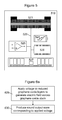
- FIG. 5 shows another example of the present apparatus 518.
- the apparatus 518 may be one or more of an electronic device, a portable electronic device, a portable telecommunications device, a mobile phone, a personal digital assistant, a tablet, a phablet, a desktop computer, a laptop computer, a server, a smartphone, a smartwatch, smart eyewear, a wearable device, a (piezoelectric) loudspeaker, a (piezoelectric) microphone, an above-mentioned ultrasonic device, and a module for one or more of the same.
- the apparatus 518 comprises the various components described previously (denoted collectively by reference numeral 523), a power source 524, an amplifier 525, a processor 526 and a storage medium 527, which are electrically connected to one another by a data bus 528.
- the processor 526 is configured for general operation of the apparatus 518 by providing signalling to, and receiving signalling from, the other components to manage their operation.
- the storage medium 527 is configured to store computer code configured to perform, control or enable operation of the apparatus 518.
- the storage medium 527 may also be configured to store settings for the other components.
- the processor 526 may access the storage medium 527 to retrieve the component settings in order to manage the operation of the other components.
- the power source 524 (under the control of the processor 526) is configured to apply a voltage to the reduced graphene oxide layers via the first and second electrodes to generate an electric field across the graphene oxide stack.
- the voltage applied to the reduced graphene oxide layers is driven by an electrical audio signal, which may have been amplified by the amplifier 525 prior to transduction.
- the electrical audio signal may be stored in the storage medium 527 (e.g. as a music file), or it may be received from a remote device (e.g. incoming voice signal as part of a telephone call) or a microphone (e.g. in a public address system).
- the apparatus 518 may further comprise an antenna for communicating with the remote device and/or a microphone for direct audio input (not shown).
- the piezoelectric diaphragm and electrodes used for sound output may also be used for sound input (thus avoiding the need for a separate microphone).
- the apparatus may also comprise appropriate circuit elements and software (not shown) to allow for switching between the sound output and sound input modes (e.g. based on user selection).
- the generated electric field causes vibration of the piezoelectric diaphragm to produce a sound output wave corresponding to the applied voltage/electrical audio signal.
- the reduced graphene oxide layers are configured to collect electrical charge which is induced in the graphene oxide layers by vibration of the piezoelectric diaphragm in response to a sound input wave.
- the collected electrical charge creates a voltage between the first and second electrodes corresponding to the sound input wave, which may be amplified by the amplifier 525.
- the voltage forms an electrical audio signal which can be stored in the storage medium 527 (e.g. voice recordal), transmitted to a remote device (e.g. outgoing voice signal as part of a telephone call) or passed to a loudspeaker (e.g. in a public address system).
- the apparatus 518 may further comprise an antenna for communicating with the remote device and/or a loudspeaker for direct audio output (not shown).
- the piezoelectric diaphragm and electrodes used for sound input may also be used for sound output (thus avoiding the need for a separate loudspeaker).
- the apparatus may also comprise appropriate circuit elements and software (not shown) to allow for switching between the sound input and sound output modes (e.g. based on user selection).
- the processor 526 may be a microprocessor, including an Application Specific Integrated Circuit (ASIC).
- the storage medium 527 may be a temporary storage medium such as a volatile random access memory.
- the storage medium 527 may be a permanent storage medium 527 such as a hard disk drive, a flash memory, or a non-volatile random access memory.
- the power source 524 may comprise one or more of a primary battery, a secondary battery, a capacitor, a supercapacitor and a battery-capacitor hybrid.
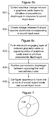
- Figure 6a shows schematically the main steps 629-630 of a method of using the present apparatus in the sound output mode.
- the method generally comprises: applying a voltage, using the first and second electrodes, to the reduced graphene oxide layers to generate an electric field across the graphene oxide stack 629; and producing a sound output wave corresponding to the applied voltage using the vibration of the piezoelectric diaphragm caused by the generated electric field 630.
- Figure 6b shows schematically the main steps 631-632 of a method of using the present apparatus in the sound input mode.
- the method generally comprises: collecting electrical charge, using the reduced graphene oxide layers, which is induced in the graphene oxide layers by vibration of the piezoelectric diaphragm in response to a sound input wave 631; and creating a voltage between the first and second electrodes corresponding to the sound input wave using the collected electrical charge 632.
- Figure 6c shows schematically the main steps 633-635 of a method of making the present apparatus.
- the method generally comprises: forming an electrode-engaging layer of reduced graphene oxide on opposing sides of a stack of graphene oxide layers to produce a piezoelectric diaphragm 633; positioning the piezoelectric diaphragm between opposing first and second electrodes 634; and configuring the apparatus to have one or more of a sound output mode and a sound input mode 635.
- Figure 7 illustrates schematically a computer/processor readable medium 736 providing a computer program according to one embodiment.
- the computer program may comprise computer code configured to perform, control or enable one or more of the method steps 629-635 of Figures 6a-6c .
- the computer/processor readable medium 736 is a disc such as a digital versatile disc (DVD) or a compact disc (CD).
- DVD digital versatile disc
- CD compact disc
- the computer/processor readable medium 736 may be any medium that has been programmed in such a way as to carry out an inventive function.
- the computer/processor readable medium 736 may be a removable memory device such as a memory stick or memory card (SD, mini SD, micro SD or nano SD).
- feature number 1 can also correspond to numbers 101, 201, 301 etc. These numbered features may appear in the figures but may not have been directly referred to within the description of these particular embodiments. These have still been provided in the figures to aid understanding of the further embodiments, particularly in relation to the features of similar earlier described embodiments.
- any mentioned apparatus/device and/or other features of particular mentioned apparatus/device may be provided by apparatus arranged such that they become configured to carry out the desired operations only when enabled, e.g. switched on, or the like. In such cases, they may not necessarily have the appropriate software loaded into the active memory in the non-enabled (e.g. switched off state) and only load the appropriate software in the enabled (e.g. on state).
- the apparatus may comprise hardware circuitry and/or firmware.
- the apparatus may comprise software loaded onto memory.
- Such software/computer programs may be recorded on the same memory/processor/functional units and/or on one or more memories/processors/functional units.
- a particular mentioned apparatus/device may be pre-programmed with the appropriate software to carry out desired operations, and wherein the appropriate software can be enabled for use by a user downloading a "key", for example, to unlock/enable the software and its associated functionality.
- Advantages associated with such embodiments can include a reduced requirement to download data when further functionality is required for a device, and this can be useful in examples where a device is perceived to have sufficient capacity to store such pre-programmed software for functionality that may not be enabled by a user.
- any mentioned apparatus/circuitry/elements/processor may have other functions in addition to the mentioned functions, and that these functions may be performed by the same apparatus/circuitry/elements/processor.
- One or more disclosed aspects may encompass the electronic distribution of associated computer programs and computer programs (which may be source/transport encoded) recorded on an appropriate carrier (e.g. memory, signal).
- any "computer” described herein can comprise a collection of one or more individual processors/processing elements that may or may not be located on the same circuit board, or the same region/position of a circuit board or even the same device. In some embodiments one or more of any mentioned processors may be distributed over a plurality of devices. The same or different processor/processing elements may perform one or more functions described herein.
- signal may refer to one or more signals transmitted as a series of transmitted and/or received signals.
- the series of signals may comprise one, two, three, four or even more individual signal components or distinct signals to make up said signalling. Some or all of these individual signals may be transmitted/received simultaneously, in sequence, and/or such that they temporally overlap one another.
- processors and memory may comprise a computer processor, Application Specific Integrated Circuit (ASIC), field-programmable gate array (FPGA), and/or other hardware components that have been programmed in such a way to carry out the inventive function.
- ASIC Application Specific Integrated Circuit
- FPGA field-programmable gate array
Landscapes
- Engineering & Computer Science (AREA)
- Physics & Mathematics (AREA)
- Acoustics & Sound (AREA)
- Signal Processing (AREA)
- Multimedia (AREA)
- Piezo-Electric Transducers For Audible Bands (AREA)
Priority Applications (4)
| Application Number | Priority Date | Filing Date | Title |
|---|---|---|---|
| EP15193289.4A EP3166338B1 (de) | 2015-11-05 | 2015-11-05 | Akustische vorrichtung und zugehörige verfahren |
| US15/771,229 US10531203B2 (en) | 2015-11-05 | 2016-10-07 | Acoustic apparatus and associated methods |
| PCT/FI2016/050702 WO2017077176A1 (en) | 2015-11-05 | 2016-10-07 | An acoustic apparatus and associated methods |
| CN201680077799.1A CN108432268A (zh) | 2015-11-05 | 2016-10-07 | 声学装置及相关的方法 |
Applications Claiming Priority (1)
| Application Number | Priority Date | Filing Date | Title |
|---|---|---|---|
| EP15193289.4A EP3166338B1 (de) | 2015-11-05 | 2015-11-05 | Akustische vorrichtung und zugehörige verfahren |
Publications (2)
| Publication Number | Publication Date |
|---|---|
| EP3166338A1 true EP3166338A1 (de) | 2017-05-10 |
| EP3166338B1 EP3166338B1 (de) | 2019-08-21 |
Family
ID=54477887
Family Applications (1)
| Application Number | Title | Priority Date | Filing Date |
|---|---|---|---|
| EP15193289.4A Not-in-force EP3166338B1 (de) | 2015-11-05 | 2015-11-05 | Akustische vorrichtung und zugehörige verfahren |
Country Status (4)
| Country | Link |
|---|---|
| US (1) | US10531203B2 (de) |
| EP (1) | EP3166338B1 (de) |
| CN (1) | CN108432268A (de) |
| WO (1) | WO2017077176A1 (de) |
Cited By (1)
| Publication number | Priority date | Publication date | Assignee | Title |
|---|---|---|---|---|
| WO2020216040A1 (zh) * | 2019-04-24 | 2020-10-29 | 维沃移动通信有限公司 | 终端设备 |
Families Citing this family (7)
| Publication number | Priority date | Publication date | Assignee | Title |
|---|---|---|---|---|
| WO2016148860A1 (en) * | 2015-03-16 | 2016-09-22 | The Regents Of The University Of California | Ultrasonic microphone and ultrasonic acoustic radio |
| US11368791B2 (en) * | 2016-03-04 | 2022-06-21 | Goertek Inc. | Speaker vibration diaphragm and method for manufacturing the same, and moving-coil speaker |
| CN109489804B (zh) * | 2018-12-07 | 2021-09-28 | 翟如选 | 一种声波探测器 |
| CN109579977B (zh) * | 2018-12-07 | 2020-12-11 | 金华伏安光电科技有限公司 | 一种基于石墨烯的微弱声波探测器 |
| CN109688494B (zh) * | 2019-01-04 | 2021-07-02 | 南京粒子声学科技有限公司 | 声学传感器及其制造方法 |
| CN112279213B (zh) * | 2019-07-22 | 2024-02-13 | 安徽奥飞声学科技有限公司 | 一种mems结构 |
| CN115190399B (zh) * | 2022-07-08 | 2025-05-06 | 松山湖材料实验室 | 平面振膜组件及其制备方法以及平面振膜扬声器 |
Citations (1)
| Publication number | Priority date | Publication date | Assignee | Title |
|---|---|---|---|---|
| WO2013049794A1 (en) * | 2011-09-30 | 2013-04-04 | Clean Energy Labs, Llc | Electrically conductive membrane transducer and methods to make and use same |
Family Cites Families (6)
| Publication number | Priority date | Publication date | Assignee | Title |
|---|---|---|---|---|
| CN102957994B (zh) * | 2012-10-26 | 2015-01-07 | 山东师范大学 | 石墨烯薄膜式扬声器及其制备方法 |
| WO2014100012A1 (en) | 2012-12-20 | 2014-06-26 | The Regents Of The University Of California | Electrostatic graphene speaker |
| US9516428B2 (en) * | 2013-03-14 | 2016-12-06 | Infineon Technologies Ag | MEMS acoustic transducer, MEMS microphone, MEMS microspeaker, array of speakers and method for manufacturing an acoustic transducer |
| US9264795B2 (en) * | 2014-01-22 | 2016-02-16 | Clean Energy Labs, Llc | Electrically conductive membrane pump/transducer and methods to make and use same |
| CN204104134U (zh) | 2014-05-28 | 2015-01-14 | 福建省辉锐材料科技有限公司 | 一种压电式扬声器振膜 |
| FR3034256B1 (fr) * | 2015-03-24 | 2017-04-14 | Commissariat Energie Atomique | Dispositif piezoelectrique |
-
2015
- 2015-11-05 EP EP15193289.4A patent/EP3166338B1/de not_active Not-in-force
-
2016
- 2016-10-07 CN CN201680077799.1A patent/CN108432268A/zh active Pending
- 2016-10-07 US US15/771,229 patent/US10531203B2/en active Active
- 2016-10-07 WO PCT/FI2016/050702 patent/WO2017077176A1/en not_active Ceased
Patent Citations (1)
| Publication number | Priority date | Publication date | Assignee | Title |
|---|---|---|---|---|
| WO2013049794A1 (en) * | 2011-09-30 | 2013-04-04 | Clean Energy Labs, Llc | Electrically conductive membrane transducer and methods to make and use same |
Non-Patent Citations (2)
| Title |
|---|
| CHANG ZHENYUE ET AL: "Piezoelectric properties of graphene oxide: A first-principles computational study", APPLIED PHYSICS LETTERS, A I P PUBLISHING LLC, US, vol. 105, no. 2, 14 July 2014 (2014-07-14), XP012188016, ISSN: 0003-6951, [retrieved on 19010101], DOI: 10.1063/1.4890385 * |
| Z. CHANG ET AL., APPL. PHYS. LETT., vol. 105, 2014, pages 023103 |
Cited By (2)
| Publication number | Priority date | Publication date | Assignee | Title |
|---|---|---|---|---|
| WO2020216040A1 (zh) * | 2019-04-24 | 2020-10-29 | 维沃移动通信有限公司 | 终端设备 |
| US11838722B2 (en) | 2019-04-24 | 2023-12-05 | Vivo Mobile Communication Co., Ltd. | Terminal device |
Also Published As
| Publication number | Publication date |
|---|---|
| US10531203B2 (en) | 2020-01-07 |
| CN108432268A (zh) | 2018-08-21 |
| EP3166338B1 (de) | 2019-08-21 |
| US20190058955A1 (en) | 2019-02-21 |
| WO2017077176A1 (en) | 2017-05-11 |
Similar Documents
| Publication | Publication Date | Title |
|---|---|---|
| US10531203B2 (en) | Acoustic apparatus and associated methods | |
| CN102859998B (zh) | 一种装置和相关方法 | |
| US10567880B2 (en) | Display apparatus | |
| US9712921B2 (en) | High aspect ratio microspeaker having a two-plane suspension | |
| CN102959991B (zh) | 振荡器 | |
| JP5949557B2 (ja) | 電子機器 | |
| US8447053B2 (en) | Flat speaker apparatus with heat dissipating structure and method for heat dissipation of flat speaker | |
| US9288582B2 (en) | Suspension system for micro-speakers | |
| WO2015003017A1 (en) | Sound generator | |
| US8411882B2 (en) | Electronic device with electret electro-acoustic transducer | |
| US9271084B2 (en) | Suspension system for micro-speakers | |
| JP5054749B2 (ja) | エレクトレット電気音響変換器を備えた電子機器 | |
| CN101742388B (zh) | 具有驻极体式电声换能器的电子装置 | |
| JP2013153314A (ja) | 圧電型電気音響変換器、それを用いた電子機器および電気音響変換方法 | |
| CN101778326B (zh) | 柔性冷光电声致动器及使用该电声致动器的电子装置 | |
| JP2014233027A (ja) | 圧電型電気音響変換器及び電子機器 | |
| JP2012029080A (ja) | 発振装置及び電子機器 | |
| JP2014229919A (ja) | 圧電型電気音響変換器及び電子機器 | |
| JP2014233026A (ja) | 圧電型電気音響変換器及び電子機器 |
Legal Events
| Date | Code | Title | Description |
|---|---|---|---|
| PUAI | Public reference made under article 153(3) epc to a published international application that has entered the european phase |
Free format text: ORIGINAL CODE: 0009012 |
|
| STAA | Information on the status of an ep patent application or granted ep patent |
Free format text: STATUS: THE APPLICATION HAS BEEN PUBLISHED |
|
| AK | Designated contracting states |
Kind code of ref document: A1 Designated state(s): AL AT BE BG CH CY CZ DE DK EE ES FI FR GB GR HR HU IE IS IT LI LT LU LV MC MK MT NL NO PL PT RO RS SE SI SK SM TR |
|
| AX | Request for extension of the european patent |
Extension state: BA ME |
|
| STAA | Information on the status of an ep patent application or granted ep patent |
Free format text: STATUS: REQUEST FOR EXAMINATION WAS MADE |
|
| 17P | Request for examination filed |
Effective date: 20171031 |
|
| RBV | Designated contracting states (corrected) |
Designated state(s): AL AT BE BG CH CY CZ DE DK EE ES FI FR GB GR HR HU IE IS IT LI LT LU LV MC MK MT NL NO PL PT RO RS SE SI SK SM TR |
|
| STAA | Information on the status of an ep patent application or granted ep patent |
Free format text: STATUS: EXAMINATION IS IN PROGRESS |
|
| 17Q | First examination report despatched |
Effective date: 20180425 |
|
| GRAP | Despatch of communication of intention to grant a patent |
Free format text: ORIGINAL CODE: EPIDOSNIGR1 |
|
| STAA | Information on the status of an ep patent application or granted ep patent |
Free format text: STATUS: GRANT OF PATENT IS INTENDED |
|
| INTG | Intention to grant announced |
Effective date: 20190301 |
|
| GRAS | Grant fee paid |
Free format text: ORIGINAL CODE: EPIDOSNIGR3 |
|
| GRAA | (expected) grant |
Free format text: ORIGINAL CODE: 0009210 |
|
| STAA | Information on the status of an ep patent application or granted ep patent |
Free format text: STATUS: THE PATENT HAS BEEN GRANTED |
|
| AK | Designated contracting states |
Kind code of ref document: B1 Designated state(s): AL AT BE BG CH CY CZ DE DK EE ES FI FR GB GR HR HU IE IS IT LI LT LU LV MC MK MT NL NO PL PT RO RS SE SI SK SM TR |
|
| REG | Reference to a national code |
Ref country code: GB Ref legal event code: FG4D |
|
| REG | Reference to a national code |
Ref country code: CH Ref legal event code: EP |
|
| RAP2 | Party data changed (patent owner data changed or rights of a patent transferred) |
Owner name: NOKIA TECHNOLOGIES OY |
|
| REG | Reference to a national code |
Ref country code: DE Ref legal event code: R096 Ref document number: 602015036179 Country of ref document: DE |
|
| REG | Reference to a national code |
Ref country code: AT Ref legal event code: REF Ref document number: 1171105 Country of ref document: AT Kind code of ref document: T Effective date: 20190915 |
|
| REG | Reference to a national code |
Ref country code: IE Ref legal event code: FG4D |
|
| REG | Reference to a national code |
Ref country code: LT Ref legal event code: MG4D |
|
| REG | Reference to a national code |
Ref country code: NL Ref legal event code: MP Effective date: 20190821 |
|
| PG25 | Lapsed in a contracting state [announced via postgrant information from national office to epo] |
Ref country code: SE Free format text: LAPSE BECAUSE OF FAILURE TO SUBMIT A TRANSLATION OF THE DESCRIPTION OR TO PAY THE FEE WITHIN THE PRESCRIBED TIME-LIMIT Effective date: 20190821 Ref country code: BG Free format text: LAPSE BECAUSE OF FAILURE TO SUBMIT A TRANSLATION OF THE DESCRIPTION OR TO PAY THE FEE WITHIN THE PRESCRIBED TIME-LIMIT Effective date: 20191121 Ref country code: NL Free format text: LAPSE BECAUSE OF FAILURE TO SUBMIT A TRANSLATION OF THE DESCRIPTION OR TO PAY THE FEE WITHIN THE PRESCRIBED TIME-LIMIT Effective date: 20190821 Ref country code: NO Free format text: LAPSE BECAUSE OF FAILURE TO SUBMIT A TRANSLATION OF THE DESCRIPTION OR TO PAY THE FEE WITHIN THE PRESCRIBED TIME-LIMIT Effective date: 20191121 Ref country code: LT Free format text: LAPSE BECAUSE OF FAILURE TO SUBMIT A TRANSLATION OF THE DESCRIPTION OR TO PAY THE FEE WITHIN THE PRESCRIBED TIME-LIMIT Effective date: 20190821 Ref country code: FI Free format text: LAPSE BECAUSE OF FAILURE TO SUBMIT A TRANSLATION OF THE DESCRIPTION OR TO PAY THE FEE WITHIN THE PRESCRIBED TIME-LIMIT Effective date: 20190821 Ref country code: PT Free format text: LAPSE BECAUSE OF FAILURE TO SUBMIT A TRANSLATION OF THE DESCRIPTION OR TO PAY THE FEE WITHIN THE PRESCRIBED TIME-LIMIT Effective date: 20191223 Ref country code: HR Free format text: LAPSE BECAUSE OF FAILURE TO SUBMIT A TRANSLATION OF THE DESCRIPTION OR TO PAY THE FEE WITHIN THE PRESCRIBED TIME-LIMIT Effective date: 20190821 |
|
| PG25 | Lapsed in a contracting state [announced via postgrant information from national office to epo] |
Ref country code: LV Free format text: LAPSE BECAUSE OF FAILURE TO SUBMIT A TRANSLATION OF THE DESCRIPTION OR TO PAY THE FEE WITHIN THE PRESCRIBED TIME-LIMIT Effective date: 20190821 Ref country code: AL Free format text: LAPSE BECAUSE OF FAILURE TO SUBMIT A TRANSLATION OF THE DESCRIPTION OR TO PAY THE FEE WITHIN THE PRESCRIBED TIME-LIMIT Effective date: 20190821 Ref country code: IS Free format text: LAPSE BECAUSE OF FAILURE TO SUBMIT A TRANSLATION OF THE DESCRIPTION OR TO PAY THE FEE WITHIN THE PRESCRIBED TIME-LIMIT Effective date: 20191221 Ref country code: GR Free format text: LAPSE BECAUSE OF FAILURE TO SUBMIT A TRANSLATION OF THE DESCRIPTION OR TO PAY THE FEE WITHIN THE PRESCRIBED TIME-LIMIT Effective date: 20191122 Ref country code: RS Free format text: LAPSE BECAUSE OF FAILURE TO SUBMIT A TRANSLATION OF THE DESCRIPTION OR TO PAY THE FEE WITHIN THE PRESCRIBED TIME-LIMIT Effective date: 20190821 Ref country code: ES Free format text: LAPSE BECAUSE OF FAILURE TO SUBMIT A TRANSLATION OF THE DESCRIPTION OR TO PAY THE FEE WITHIN THE PRESCRIBED TIME-LIMIT Effective date: 20190821 |
|
| REG | Reference to a national code |
Ref country code: AT Ref legal event code: MK05 Ref document number: 1171105 Country of ref document: AT Kind code of ref document: T Effective date: 20190821 |
|
| PG25 | Lapsed in a contracting state [announced via postgrant information from national office to epo] |
Ref country code: TR Free format text: LAPSE BECAUSE OF FAILURE TO SUBMIT A TRANSLATION OF THE DESCRIPTION OR TO PAY THE FEE WITHIN THE PRESCRIBED TIME-LIMIT Effective date: 20190821 |
|
| PG25 | Lapsed in a contracting state [announced via postgrant information from national office to epo] |
Ref country code: AT Free format text: LAPSE BECAUSE OF FAILURE TO SUBMIT A TRANSLATION OF THE DESCRIPTION OR TO PAY THE FEE WITHIN THE PRESCRIBED TIME-LIMIT Effective date: 20190821 Ref country code: DK Free format text: LAPSE BECAUSE OF FAILURE TO SUBMIT A TRANSLATION OF THE DESCRIPTION OR TO PAY THE FEE WITHIN THE PRESCRIBED TIME-LIMIT Effective date: 20190821 Ref country code: EE Free format text: LAPSE BECAUSE OF FAILURE TO SUBMIT A TRANSLATION OF THE DESCRIPTION OR TO PAY THE FEE WITHIN THE PRESCRIBED TIME-LIMIT Effective date: 20190821 Ref country code: PL Free format text: LAPSE BECAUSE OF FAILURE TO SUBMIT A TRANSLATION OF THE DESCRIPTION OR TO PAY THE FEE WITHIN THE PRESCRIBED TIME-LIMIT Effective date: 20190821 Ref country code: IT Free format text: LAPSE BECAUSE OF FAILURE TO SUBMIT A TRANSLATION OF THE DESCRIPTION OR TO PAY THE FEE WITHIN THE PRESCRIBED TIME-LIMIT Effective date: 20190821 Ref country code: RO Free format text: LAPSE BECAUSE OF FAILURE TO SUBMIT A TRANSLATION OF THE DESCRIPTION OR TO PAY THE FEE WITHIN THE PRESCRIBED TIME-LIMIT Effective date: 20190821 |
|
| PG25 | Lapsed in a contracting state [announced via postgrant information from national office to epo] |
Ref country code: IS Free format text: LAPSE BECAUSE OF FAILURE TO SUBMIT A TRANSLATION OF THE DESCRIPTION OR TO PAY THE FEE WITHIN THE PRESCRIBED TIME-LIMIT Effective date: 20200224 Ref country code: CZ Free format text: LAPSE BECAUSE OF FAILURE TO SUBMIT A TRANSLATION OF THE DESCRIPTION OR TO PAY THE FEE WITHIN THE PRESCRIBED TIME-LIMIT Effective date: 20190821 Ref country code: SK Free format text: LAPSE BECAUSE OF FAILURE TO SUBMIT A TRANSLATION OF THE DESCRIPTION OR TO PAY THE FEE WITHIN THE PRESCRIBED TIME-LIMIT Effective date: 20190821 Ref country code: SM Free format text: LAPSE BECAUSE OF FAILURE TO SUBMIT A TRANSLATION OF THE DESCRIPTION OR TO PAY THE FEE WITHIN THE PRESCRIBED TIME-LIMIT Effective date: 20190821 |
|
| REG | Reference to a national code |
Ref country code: DE Ref legal event code: R119 Ref document number: 602015036179 Country of ref document: DE |
|
| REG | Reference to a national code |
Ref country code: CH Ref legal event code: PL |
|
| PLBE | No opposition filed within time limit |
Free format text: ORIGINAL CODE: 0009261 |
|
| STAA | Information on the status of an ep patent application or granted ep patent |
Free format text: STATUS: NO OPPOSITION FILED WITHIN TIME LIMIT |
|
| PG2D | Information on lapse in contracting state deleted |
Ref country code: IS |
|
| PG25 | Lapsed in a contracting state [announced via postgrant information from national office to epo] |
Ref country code: CH Free format text: LAPSE BECAUSE OF NON-PAYMENT OF DUE FEES Effective date: 20191130 Ref country code: LI Free format text: LAPSE BECAUSE OF NON-PAYMENT OF DUE FEES Effective date: 20191130 Ref country code: LU Free format text: LAPSE BECAUSE OF NON-PAYMENT OF DUE FEES Effective date: 20191105 Ref country code: MC Free format text: LAPSE BECAUSE OF FAILURE TO SUBMIT A TRANSLATION OF THE DESCRIPTION OR TO PAY THE FEE WITHIN THE PRESCRIBED TIME-LIMIT Effective date: 20190821 |
|
| 26N | No opposition filed |
Effective date: 20200603 |
|
| REG | Reference to a national code |
Ref country code: BE Ref legal event code: MM Effective date: 20191130 |
|
| PG25 | Lapsed in a contracting state [announced via postgrant information from national office to epo] |
Ref country code: SI Free format text: LAPSE BECAUSE OF FAILURE TO SUBMIT A TRANSLATION OF THE DESCRIPTION OR TO PAY THE FEE WITHIN THE PRESCRIBED TIME-LIMIT Effective date: 20190821 |
|
| GBPC | Gb: european patent ceased through non-payment of renewal fee |
Effective date: 20191121 |
|
| PG25 | Lapsed in a contracting state [announced via postgrant information from national office to epo] |
Ref country code: FR Free format text: LAPSE BECAUSE OF NON-PAYMENT OF DUE FEES Effective date: 20191130 Ref country code: DE Free format text: LAPSE BECAUSE OF NON-PAYMENT OF DUE FEES Effective date: 20200603 Ref country code: GB Free format text: LAPSE BECAUSE OF NON-PAYMENT OF DUE FEES Effective date: 20191121 Ref country code: IE Free format text: LAPSE BECAUSE OF NON-PAYMENT OF DUE FEES Effective date: 20191105 |
|
| PG25 | Lapsed in a contracting state [announced via postgrant information from national office to epo] |
Ref country code: BE Free format text: LAPSE BECAUSE OF NON-PAYMENT OF DUE FEES Effective date: 20191130 |
|
| PG25 | Lapsed in a contracting state [announced via postgrant information from national office to epo] |
Ref country code: CY Free format text: LAPSE BECAUSE OF FAILURE TO SUBMIT A TRANSLATION OF THE DESCRIPTION OR TO PAY THE FEE WITHIN THE PRESCRIBED TIME-LIMIT Effective date: 20190821 |
|
| PG25 | Lapsed in a contracting state [announced via postgrant information from national office to epo] |
Ref country code: MT Free format text: LAPSE BECAUSE OF FAILURE TO SUBMIT A TRANSLATION OF THE DESCRIPTION OR TO PAY THE FEE WITHIN THE PRESCRIBED TIME-LIMIT Effective date: 20190821 Ref country code: HU Free format text: LAPSE BECAUSE OF FAILURE TO SUBMIT A TRANSLATION OF THE DESCRIPTION OR TO PAY THE FEE WITHIN THE PRESCRIBED TIME-LIMIT; INVALID AB INITIO Effective date: 20151105 |
|
| PG25 | Lapsed in a contracting state [announced via postgrant information from national office to epo] |
Ref country code: MK Free format text: LAPSE BECAUSE OF FAILURE TO SUBMIT A TRANSLATION OF THE DESCRIPTION OR TO PAY THE FEE WITHIN THE PRESCRIBED TIME-LIMIT Effective date: 20190821 |