EP3165768A1 - Swash plate and method of manufacturing swash plate - Google Patents
Swash plate and method of manufacturing swash plate Download PDFInfo
- Publication number
- EP3165768A1 EP3165768A1 EP16158743.1A EP16158743A EP3165768A1 EP 3165768 A1 EP3165768 A1 EP 3165768A1 EP 16158743 A EP16158743 A EP 16158743A EP 3165768 A1 EP3165768 A1 EP 3165768A1
- Authority
- EP
- European Patent Office
- Prior art keywords
- swash plate
- casting
- primary
- content
- present disclosure
- Prior art date
- Legal status (The legal status is an assumption and is not a legal conclusion. Google has not performed a legal analysis and makes no representation as to the accuracy of the status listed.)
- Granted
Links
Images


Classifications
-
- F—MECHANICAL ENGINEERING; LIGHTING; HEATING; WEAPONS; BLASTING
- F04—POSITIVE - DISPLACEMENT MACHINES FOR LIQUIDS; PUMPS FOR LIQUIDS OR ELASTIC FLUIDS
- F04B—POSITIVE-DISPLACEMENT MACHINES FOR LIQUIDS; PUMPS
- F04B27/00—Multi-cylinder pumps specially adapted for elastic fluids and characterised by number or arrangement of cylinders
- F04B27/08—Multi-cylinder pumps specially adapted for elastic fluids and characterised by number or arrangement of cylinders having cylinders coaxial with, or parallel or inclined to, main shaft axis
- F04B27/10—Multi-cylinder pumps specially adapted for elastic fluids and characterised by number or arrangement of cylinders having cylinders coaxial with, or parallel or inclined to, main shaft axis having stationary cylinders
- F04B27/1036—Component parts, details, e.g. sealings, lubrication
-
- B—PERFORMING OPERATIONS; TRANSPORTING
- B22—CASTING; POWDER METALLURGY
- B22C—FOUNDRY MOULDING
- B22C9/00—Moulds or cores; Moulding processes
- B22C9/22—Moulds for peculiarly-shaped castings
- B22C9/24—Moulds for peculiarly-shaped castings for hollow articles
-
- B—PERFORMING OPERATIONS; TRANSPORTING
- B22—CASTING; POWDER METALLURGY
- B22D—CASTING OF METALS; CASTING OF OTHER SUBSTANCES BY THE SAME PROCESSES OR DEVICES
- B22D13/00—Centrifugal casting; Casting by using centrifugal force
-
- B—PERFORMING OPERATIONS; TRANSPORTING
- B22—CASTING; POWDER METALLURGY
- B22D—CASTING OF METALS; CASTING OF OTHER SUBSTANCES BY THE SAME PROCESSES OR DEVICES
- B22D13/00—Centrifugal casting; Casting by using centrifugal force
- B22D13/04—Centrifugal casting; Casting by using centrifugal force of shallow solid or hollow bodies, e.g. wheels or rings, in moulds rotating around their axis of symmetry
-
- B—PERFORMING OPERATIONS; TRANSPORTING
- B22—CASTING; POWDER METALLURGY
- B22D—CASTING OF METALS; CASTING OF OTHER SUBSTANCES BY THE SAME PROCESSES OR DEVICES
- B22D18/00—Pressure casting; Vacuum casting
- B22D18/04—Low pressure casting, i.e. making use of pressures up to a few bars to fill the mould
-
- B—PERFORMING OPERATIONS; TRANSPORTING
- B22—CASTING; POWDER METALLURGY
- B22D—CASTING OF METALS; CASTING OF OTHER SUBSTANCES BY THE SAME PROCESSES OR DEVICES
- B22D21/00—Casting non-ferrous metals or metallic compounds so far as their metallurgical properties are of importance for the casting procedure; Selection of compositions therefor
- B22D21/002—Castings of light metals
- B22D21/007—Castings of light metals with low melting point, e.g. Al 659 degrees C, Mg 650 degrees C
-
- B—PERFORMING OPERATIONS; TRANSPORTING
- B22—CASTING; POWDER METALLURGY
- B22D—CASTING OF METALS; CASTING OF OTHER SUBSTANCES BY THE SAME PROCESSES OR DEVICES
- B22D29/00—Removing castings from moulds, not restricted to casting processes covered by a single main group; Removing cores; Handling ingots
- B22D29/001—Removing cores
-
- C—CHEMISTRY; METALLURGY
- C22—METALLURGY; FERROUS OR NON-FERROUS ALLOYS; TREATMENT OF ALLOYS OR NON-FERROUS METALS
- C22C—ALLOYS
- C22C21/00—Alloys based on aluminium
- C22C21/12—Alloys based on aluminium with copper as the next major constituent
- C22C21/14—Alloys based on aluminium with copper as the next major constituent with silicon
-
- F—MECHANICAL ENGINEERING; LIGHTING; HEATING; WEAPONS; BLASTING
- F04—POSITIVE - DISPLACEMENT MACHINES FOR LIQUIDS; PUMPS FOR LIQUIDS OR ELASTIC FLUIDS
- F04B—POSITIVE-DISPLACEMENT MACHINES FOR LIQUIDS; PUMPS
- F04B27/00—Multi-cylinder pumps specially adapted for elastic fluids and characterised by number or arrangement of cylinders
- F04B27/08—Multi-cylinder pumps specially adapted for elastic fluids and characterised by number or arrangement of cylinders having cylinders coaxial with, or parallel or inclined to, main shaft axis
- F04B27/0804—Multi-cylinder pumps specially adapted for elastic fluids and characterised by number or arrangement of cylinders having cylinders coaxial with, or parallel or inclined to, main shaft axis having rotary cylinder block
- F04B27/0821—Multi-cylinder pumps specially adapted for elastic fluids and characterised by number or arrangement of cylinders having cylinders coaxial with, or parallel or inclined to, main shaft axis having rotary cylinder block component parts, details, e.g. valves, sealings, lubrication
- F04B27/086—Multi-cylinder pumps specially adapted for elastic fluids and characterised by number or arrangement of cylinders having cylinders coaxial with, or parallel or inclined to, main shaft axis having rotary cylinder block component parts, details, e.g. valves, sealings, lubrication swash plate
-
- F—MECHANICAL ENGINEERING; LIGHTING; HEATING; WEAPONS; BLASTING
- F04—POSITIVE - DISPLACEMENT MACHINES FOR LIQUIDS; PUMPS FOR LIQUIDS OR ELASTIC FLUIDS
- F04B—POSITIVE-DISPLACEMENT MACHINES FOR LIQUIDS; PUMPS
- F04B27/00—Multi-cylinder pumps specially adapted for elastic fluids and characterised by number or arrangement of cylinders
- F04B27/08—Multi-cylinder pumps specially adapted for elastic fluids and characterised by number or arrangement of cylinders having cylinders coaxial with, or parallel or inclined to, main shaft axis
- F04B27/10—Multi-cylinder pumps specially adapted for elastic fluids and characterised by number or arrangement of cylinders having cylinders coaxial with, or parallel or inclined to, main shaft axis having stationary cylinders
- F04B27/1036—Component parts, details, e.g. sealings, lubrication
- F04B27/1054—Actuating elements
-
- F—MECHANICAL ENGINEERING; LIGHTING; HEATING; WEAPONS; BLASTING
- F04—POSITIVE - DISPLACEMENT MACHINES FOR LIQUIDS; PUMPS FOR LIQUIDS OR ELASTIC FLUIDS
- F04B—POSITIVE-DISPLACEMENT MACHINES FOR LIQUIDS; PUMPS
- F04B39/00—Component parts, details, or accessories, of pumps or pumping systems specially adapted for elastic fluids, not otherwise provided for in, or of interest apart from, groups F04B25/00 - F04B37/00
-
- F—MECHANICAL ENGINEERING; LIGHTING; HEATING; WEAPONS; BLASTING
- F16—ENGINEERING ELEMENTS AND UNITS; GENERAL MEASURES FOR PRODUCING AND MAINTAINING EFFECTIVE FUNCTIONING OF MACHINES OR INSTALLATIONS; THERMAL INSULATION IN GENERAL
- F16H—GEARING
- F16H23/00—Wobble-plate gearings; Oblique-crank gearings
- F16H23/10—Wobble-plate gearings; Oblique-crank gearings with rotary wobble-plates with plane surfaces
-
- F—MECHANICAL ENGINEERING; LIGHTING; HEATING; WEAPONS; BLASTING
- F05—INDEXING SCHEMES RELATING TO ENGINES OR PUMPS IN VARIOUS SUBCLASSES OF CLASSES F01-F04
- F05C—INDEXING SCHEME RELATING TO MATERIALS, MATERIAL PROPERTIES OR MATERIAL CHARACTERISTICS FOR MACHINES, ENGINES OR PUMPS OTHER THAN NON-POSITIVE-DISPLACEMENT MACHINES OR ENGINES
- F05C2201/00—Metals
- F05C2201/04—Heavy metals
- F05C2201/0469—Other heavy metals
- F05C2201/0475—Copper or alloys thereof
-
- F—MECHANICAL ENGINEERING; LIGHTING; HEATING; WEAPONS; BLASTING
- F05—INDEXING SCHEMES RELATING TO ENGINES OR PUMPS IN VARIOUS SUBCLASSES OF CLASSES F01-F04
- F05C—INDEXING SCHEME RELATING TO MATERIALS, MATERIAL PROPERTIES OR MATERIAL CHARACTERISTICS FOR MACHINES, ENGINES OR PUMPS OTHER THAN NON-POSITIVE-DISPLACEMENT MACHINES OR ENGINES
- F05C2203/00—Non-metallic inorganic materials
- F05C2203/06—Silicon
-
- F—MECHANICAL ENGINEERING; LIGHTING; HEATING; WEAPONS; BLASTING
- F05—INDEXING SCHEMES RELATING TO ENGINES OR PUMPS IN VARIOUS SUBCLASSES OF CLASSES F01-F04
- F05C—INDEXING SCHEME RELATING TO MATERIALS, MATERIAL PROPERTIES OR MATERIAL CHARACTERISTICS FOR MACHINES, ENGINES OR PUMPS OTHER THAN NON-POSITIVE-DISPLACEMENT MACHINES OR ENGINES
- F05C2253/00—Other material characteristics; Treatment of material
- F05C2253/12—Coating
Definitions
- the present disclosure relates to a swash plate suitable for use in a fixed or variable air-conditioning compressor and a method of manufacturing the swash plate and, more particularly, to a swash plate and a method of manufacturing the swash plate, in which the swash plate has superior physical properties, including high strength and wear resistance and reduced weight.
- a swash plate-type compressor suitable for an air-conditioning system for a vehicle is used such that a gaseous refrigerant, which is discharged at a low pressure from an evaporator, is compressed at a high pressure so as to be readily liquefied, and is then fed into a condenser.
- the inside of the swash plate-type compressor is provided with a piston that compresses the refrigerant in the compression chamber of the compressor while performing reciprocal movement due to the rotation of the swash plate.
- the swash plate which rotates in a state of being inclined relative to the drive shaft, is configured such that the sliding surface thereof is in contact with the shoe of the piston, and thus the piston is reciprocally moved in the bore of a cylinder when the swash plate is rotated.
- the swash plate has to possess lubricating properties on the sliding surface that is in contact with the shoe, as well as mechanical properties including wear resistance.
- the hypereutectic aluminum-silicon alloy for use in a fixed air-conditioning compressor is manufactured in a manner in which silicon particles are fined at a high cooling rate in the continuous casting process, and then forged.
- a self-lubricating tin (Sn) coating process is applied.
- the self-lubricating coating process is a coating technique using a material that reduces friction resistance even without the use of a friction material.
- the hypereutectic aluminum-silicon alloy is expensive compared to typical aluminum products because continuous casting and forging is carried out, rather than typical gravity casting or sand casting due to the difficulty in controlling the size of silicon particles. Also, the seizure stress of the hypereutectic aluminum-silicon alloy is less than half that of the copper alloy or cast iron, making it difficult to apply the hypereutectic aluminum-silicon alloy to variable air-conditioning compressors which are subjected to high surface pressure and severe driving conditions.
- the copper alloy and cast iron may be used as material for the swash plate for use in a variable air-conditioning compressor.
- the copper alloy is expensive compared to conventional cast iron material or aluminum forged material, and the cast iron material suffers from the same seizure problems when driven because the sliding surface is made of the same material as in the shoe that comes into contact therewith, and a special resin coating must be essentially provided at the interface therebetween.
- an object of the present disclosure is to provide a swash plate, made of an aluminum alloy that is lightweight and has strength and wear resistance equal to or higher than conventional copper alloys, and a method of manufacturing the same.
- An embodiment of the present disclosure provides a swash plate, comprising: 34.5 to 43.0 wt% of copper (Cu) and 0.5 to 2.8 wt% of silicon (Si), with the remainder of aluminum (Al) and other inevitable impurities.
- the swash plate preferably includes a plurality of core pin holes, the core pin holes being formed toward the center along the outer circumferential surface thereof.
- the core pin holes may have a diameter of 1/2 or less of a thickness of the swash plate.
- the swash plate may have a primary Al 2 Cu phase and an Al-Al 2 Cu lamella structure.
- the swash plate may have a primary Al 2 Cu phase fraction of 10 to 50 vol% and an elastic modulus of 120 GPa or more.
- Another embodiment of the present disclosure provides a method of manufacturing a swash plate, comprising: preparing an aluminum alloy melt comprising 34.5 to 43.0 wt% of copper (Cu) and 0.5 to 2.8 wt% of silicon (Si), with the remainder of aluminum (Al) and other inevitable impurities; casting the aluminum alloy melt using a mold having a plurality of core pins; and removing the core pins from the mold and separating the swash plate from the mold.
- the casting may be performed through gravity casting or centrifugal casting.
- the casting is preferably performed at a temperature of 595 to 625°C, and the core pins may have a thickness of 1/2 or less of a thickness of the swash plate.
- the swash plate may have a primary Al 2 Cu phase fraction of 10 to 50 vol% and an elastic modulus of 120 GPa or more.
- aluminum (Al) is added with an excess of copper (Cu) and silicon (Si), thus forming a primary phase (Al 2 Cu) and a lamella structure, thereby ensuring tensile strength and elasticity equal to or superior to those of conventional copper alloys.
- overlays can be removed using core pins in the casting process, thereby realizing lightweight products.
- a swash plate 100 may be composed mainly of Al and includes 34.5 to 43.0 wt% of Cu, 0.5 to 2.8 wt% of Si, and other inevitable impurities.
- the aluminum alloy according to the present disclosure may be different from the hypereutectic aluminum alloy used for a conventional swash plate because it includes a Cu content of 34.5 wt% or more and a Si content of 0.5 to 2.8 wt%, which is notably lower than the 12.6 wt% or more of Si in the conventional hypereutectic aluminum alloy.
- the Cu content of the swash plate according to the present disclosure may be preferably set within the range of 34.5 to 43.0 wt%.
- the Cu content is less than 34.5 wt%, the elastic modulus of 120 GPa or more may not be not ensured.
- the Cu content exceeds 43.0 wt%, the primary Al 2 Cu phase corresponding to an intermetallic compound may be formed in an amount of 50% or more in the microstructure, and thus the properties of the intermetallic compound may be exhibited, undesirably incurring problems related to brittleness and processability and making it impossible to apply the resultant aluminum alloy to a swash plate.
- Si may be added to enhance the strength of the aluminum alloy, which may contain an excess of Cu.
- Si content falls in the range of 0.5 to 2.8 wt%, a tensile strength of 400 to 550 MPa may be ensured. If the Si content is less than 0.5 wt% or exceeds 2.8 wt%, a tensile strength of less than 400 MPa may result, making it impossible to ensure high strength.
- the Si content is preferably set within the range from 0.5 to 2.8 wt%.
- FIG. 1 illustrates the swash plate 100 according to an embodiment of the present disclosure.
- the swash plate according to the embodiment of the present disclosure may be configured such that a plurality of core pin holes 110 is formed toward the center along the outer circumferential surface thereof.
- the diameter of the core pin holes is preferably set to 1/2 or less of the thickness of the swash plate. If the diameter of the core pin holes, which are formed to realize lightweightness, exceeds 1/2 of the thickness of the swash plate, structural stability may not be ensured.
- the number of core pin holes may fall in the range of 2 to 36, and the diameter thereof may be 1/2 or less of the thickness of the swash plate, and the angle defined between adjacent core pin holes may be in the range of 10 to 180°.
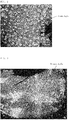
- FIG. 2 illustrates a microstructure of the swash plate according to an embodiment of the present disclosure
- FIG. 3 illustrates an agglomeration and coarse growth of primary Al 2 Cu phase in the microstructure of the aluminum alloy having a Cu content that exceeds 43.0 wt%.
- the primary Al 2 Cu phase may be uniformly formed so as to have a phase fraction of 10 to 50 vol%, thereby ensuring superior elastic modulus and tensile strength. If the Cu content exceeds 43.0 wt%, agglomeration and coarse growth may occur, thus causing brittleness of the material and deteriorating processability (i.e. potentially damaging tools).
- a method of manufacturing the swash plate according to an embodiment of the present disclosure may include preparing an aluminum alloy melt, casting the aluminum alloy melt to form a swash plate, and separating the swash plate from a mold.
- the aluminum alloy melt preferably comprises 34.5 to 43.0 wt% of Cu, and 0.5 to 2.8 wt% of Si, with the remainder of Al and other inevitable impurities.
- Cu content (wt%) Elastic modulus (GPa) Primary Al 2 Cu phase fraction (vol%) C.Ex. 1 33 - 0 C.Ex. 2 34 119 5 Ex. 1 35 123 10 Ex. 2 37 130 20 Ex. 3 39 137 30 Ex. 4 41 145 40 Ex. 5 43 154 50 C.Ex. 3 45 163 60
- Table 1 shows the primary Al 2 Cu phase fraction and elastic modulus depending on the Cu content, in the examples and comparative examples.
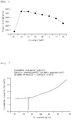
- FIG. 4 is a graph illustrating changes in the elastic modulus depending on the Cu content
- FIG. 5 is a graph illustrating changes in the primary Al 2 Cu phase fraction depending on the Cu content.
- the Cu content may be set within the range from 34.5 to 43 wt%.
- Si content (wt%) Tensile strength (MPa) C.Ex. A 0 65 Ex. A 0.5 540 Ex. B 1.0 540 Ex. C 1.5 500 Ex. D 2.0 470 Ex. E 2.5 430 C.Ex. B 3.0 380 C.Ex. C 4.0 260
- Table 2 shows changes in tensile strength depending on the Si content in the examples and comparative examples
- FIG. 6 is a graph illustrating changes in tensile strength depending on the Si content.
- the Si content falls in the range from 0.5 to 2.8 wt%, superior tensile strength of 400 MPa or more may be ensured. In contrast, if the Si content is less than 0.5 wt% or exceeds 2.8 wt%, tensile strength may be drastically reduced to a level lower than 400 MPa. Hence, the Si content is preferably set within the range from 0.5 to 2.8 wt%.
- the swash plate may be formed through casting.
- the casting process according to an embodiment of the present disclosure is preferably gravity casting or centrifugal casting. Alternatively, a sand casting process may be applied.
- the aluminum alloy melt used in the method of manufacturing the swash plate according to the present disclosure may have a low liquidus temperature of 550 to 575°C compared to conventional hypereutectic aluminum alloys, coarse growth of the microstructure may not readily occur with a decrease in cooling rate, and thus gravity casting or high-pressure casting may be applied.
- the casting process is preferably carried out at a temperature of 595 to 625°C.
- the liquidus temperature of the aluminum alloy melt used in the present disclosure may be a maximum of 575°C.
- the casting process is preferably performed at a minimum of 595°C, which is at least 20°C higher than the liquidus temperature.
- the casting temperature is more than 50°C higher than the liquidus temperature, the size of the resulting primary Al 2 Cu phase may increase, and the high strength and wear resistance of the product may deteriorate due to the generation of pores by the hydrogen gas.
- the casting temperature is preferably set to a range of 595 to 625°C.
- FIG. 7 is a graph illustrating the castability evaluation factor (C) depending on the Cu content.
- the castability evaluation factor according to the examples of the present disclosure may be as high as 2.0 or more, and the agglomeration and coarse growth of the resulting primary Al 2 Cu phase may be prevented from occurring, thereby ensuring high strength and wear resistance and exhibiting superior processability.
Landscapes
- Engineering & Computer Science (AREA)
- Mechanical Engineering (AREA)
- General Engineering & Computer Science (AREA)
- Chemical & Material Sciences (AREA)
- Materials Engineering (AREA)
- Metallurgy (AREA)
- Organic Chemistry (AREA)
- Compressors, Vaccum Pumps And Other Relevant Systems (AREA)
Abstract
Description
- The present disclosure relates to a swash plate suitable for use in a fixed or variable air-conditioning compressor and a method of manufacturing the swash plate and, more particularly, to a swash plate and a method of manufacturing the swash plate, in which the swash plate has superior physical properties, including high strength and wear resistance and reduced weight.
- Generally, a swash plate-type compressor suitable for an air-conditioning system for a vehicle is used such that a gaseous refrigerant, which is discharged at a low pressure from an evaporator, is compressed at a high pressure so as to be readily liquefied, and is then fed into a condenser.
- The inside of the swash plate-type compressor is provided with a piston that compresses the refrigerant in the compression chamber of the compressor while performing reciprocal movement due to the rotation of the swash plate.
- The swash plate, which rotates in a state of being inclined relative to the drive shaft, is configured such that the sliding surface thereof is in contact with the shoe of the piston, and thus the piston is reciprocally moved in the bore of a cylinder when the swash plate is rotated.
- Therefore, the swash plate has to possess lubricating properties on the sliding surface that is in contact with the shoe, as well as mechanical properties including wear resistance.
- Materials for the swash plate are largely classified into hypereutectic aluminum alloys, copper alloys, and cast iron.
- The hypereutectic aluminum-silicon alloy for use in a fixed air-conditioning compressor is manufactured in a manner in which silicon particles are fined at a high cooling rate in the continuous casting process, and then forged. In order to increase the surface lubricating properties, a self-lubricating tin (Sn) coating process is applied.
- For reference, the self-lubricating coating process is a coating technique using a material that reduces friction resistance even without the use of a friction material.
- However, the hypereutectic aluminum-silicon alloy is expensive compared to typical aluminum products because continuous casting and forging is carried out, rather than typical gravity casting or sand casting due to the difficulty in controlling the size of silicon particles. Also, the seizure stress of the hypereutectic aluminum-silicon alloy is less than half that of the copper alloy or cast iron, making it difficult to apply the hypereutectic aluminum-silicon alloy to variable air-conditioning compressors which are subjected to high surface pressure and severe driving conditions.
- In addition, the copper alloy and cast iron may be used as material for the swash plate for use in a variable air-conditioning compressor.
- These two materials have superior mechanical properties, wear resistance, and seizure stress, and are thus currently applied to almost all variable air-conditioning compressors.
- However, the copper alloy is expensive compared to conventional cast iron material or aluminum forged material, and the cast iron material suffers from the same seizure problems when driven because the sliding surface is made of the same material as in the shoe that comes into contact therewith, and a special resin coating must be essentially provided at the interface therebetween.
- In consideration thereof, there is a need to develop a swash plate using a novel aluminum alloy, which is inexpensive and enables greater processing freedom compared to conventional hypereutectic aluminum-silicon alloys but exhibits wear resistance and seizure stress equal to or superior to those of copper alloys or cast iron materials.
- The foregoing is intended merely to aid in the understanding of the background of the present disclosure, and is not intended to mean that the present disclosure falls within the purview of the related art that is already known to those skilled in the art.
- Accordingly, the present disclosure has been made keeping in mind the above problems encountered in the related art, and an object of the present disclosure is to provide a swash plate, made of an aluminum alloy that is lightweight and has strength and wear resistance equal to or higher than conventional copper alloys, and a method of manufacturing the same.
- An embodiment of the present disclosure provides a swash plate, comprising: 34.5 to 43.0 wt% of copper (Cu) and 0.5 to 2.8 wt% of silicon (Si), with the remainder of aluminum (Al) and other inevitable impurities.
- The swash plate preferably includes a plurality of core pin holes, the core pin holes being formed toward the center along the outer circumferential surface thereof.
- The core pin holes may have a diameter of 1/2 or less of a thickness of the swash plate.
- The swash plate may have a primary Al2Cu phase and an Al-Al2Cu lamella structure.
- The swash plate may have a primary Al2Cu phase fraction of 10 to 50 vol% and an elastic modulus of 120 GPa or more.
- The swash plate preferably has a tensile strength of 400 MPa or more and a castability evaluation factor (C) of 2.0 or more, as defined by Equation 1 below:

- Another embodiment of the present disclosure provides a method of manufacturing a swash plate, comprising: preparing an aluminum alloy melt comprising 34.5 to 43.0 wt% of copper (Cu) and 0.5 to 2.8 wt% of silicon (Si), with the remainder of aluminum (Al) and other inevitable impurities; casting the aluminum alloy melt using a mold having a plurality of core pins; and removing the core pins from the mold and separating the swash plate from the mold.
- The casting may be performed through gravity casting or centrifugal casting.
- The casting is preferably performed at a temperature of 595 to 625°C, and the core pins may have a thickness of 1/2 or less of a thickness of the swash plate.
- The swash plate may have a primary Al2Cu phase fraction of 10 to 50 vol% and an elastic modulus of 120 GPa or more.
- The swash plate preferably has a tensile strength of 400 MPa or more and a castability evaluation factor (C) of 2.0 or more, as defined by Equation 1 below:

- According to embodiments of the present disclosure, aluminum (Al) is added with an excess of copper (Cu) and silicon (Si), thus forming a primary phase (Al2Cu) and a lamella structure, thereby ensuring tensile strength and elasticity equal to or superior to those of conventional copper alloys.
- Also, overlays can be removed using core pins in the casting process, thereby realizing lightweight products.
- The above and other objects, features and advantages of the present disclosure will be more clearly understood from the following detailed description taken in conjunction with the accompanying drawings, in which:
-
FIG. 1 illustrates a swash plate according to an embodiment of the present disclosure; -
FIG. 2 illustrates a microstructure of the swash plate according to an embodiment of the present disclosure; -
FIG. 3 illustrates the agglomeration and coarse growth of primary Al2Cu phase in the microstructure of an aluminum alloy having a Cu content that exceeds 43.0 wt%; -
FIG. 4 is a graph illustrating changes in an elastic modulus depending on the Cu content; -
FIG. 5 is a graph illustrating a primary Al2Cu phase fraction depending on the Cu content; -
FIG. 6 is a graph illustrating changes in a tensile strength depending on the Si content; and -
FIG. 7 is a graph illustrating a castability evaluation factor (C) depending on the Cu content. - Hereinafter, a detailed description will be given of preferred embodiments of the present disclosure with reference to the appended drawings, but such embodiments are not to be construed as limiting the present disclosure. Throughout the drawings, the same reference numerals refer to the same or like parts, and may be described with reference to contents depicted in the other drawings. Furthermore, descriptions which are deemed to be readily apparent to those skilled in the art or repetitive may be omitted.
- According to an embodiment of the present disclosure, a
swash plate 100 may be composed mainly of Al and includes 34.5 to 43.0 wt% of Cu, 0.5 to 2.8 wt% of Si, and other inevitable impurities. - The aluminum alloy according to the present disclosure may be different from the hypereutectic aluminum alloy used for a conventional swash plate because it includes a Cu content of 34.5 wt% or more and a Si content of 0.5 to 2.8 wt%, which is notably lower than the 12.6 wt% or more of Si in the conventional hypereutectic aluminum alloy.
- Therefore, both wear resistance and high strength required for the swash plate may be satisfied.
- More specifically, the Cu content of the swash plate according to the present disclosure may be preferably set within the range of 34.5 to 43.0 wt%.
- If the Cu content is less than 34.5 wt%, the elastic modulus of 120 GPa or more may not be not ensured. In contrast, if the Cu content exceeds 43.0 wt%, the primary Al2Cu phase corresponding to an intermetallic compound may be formed in an amount of 50% or more in the microstructure, and thus the properties of the intermetallic compound may be exhibited, undesirably incurring problems related to brittleness and processability and making it impossible to apply the resultant aluminum alloy to a swash plate.
- Meanwhile, Si may be added to enhance the strength of the aluminum alloy, which may contain an excess of Cu. When the Si content falls in the range of 0.5 to 2.8 wt%, a tensile strength of 400 to 550 MPa may be ensured. If the Si content is less than 0.5 wt% or exceeds 2.8 wt%, a tensile strength of less than 400 MPa may result, making it impossible to ensure high strength.
- Hence, the Si content is preferably set within the range from 0.5 to 2.8 wt%.
-
FIG. 1 illustrates theswash plate 100 according to an embodiment of the present disclosure. - As illustrated in
FIG. 1 , the swash plate according to the embodiment of the present disclosure may be configured such that a plurality ofcore pin holes 110 is formed toward the center along the outer circumferential surface thereof. - The diameter of the core pin holes is preferably set to 1/2 or less of the thickness of the swash plate. If the diameter of the core pin holes, which are formed to realize lightweightness, exceeds 1/2 of the thickness of the swash plate, structural stability may not be ensured. The plurality of core pin holes is disposed radially toward the center along the outer circumferential surface of the swash plate, and the maximum number thereof may be 36 (such that the angle defined between adjacent core pin holes = 10°).
- The number of core pin holes may fall in the range of 2 to 36, and the diameter thereof may be 1/2 or less of the thickness of the swash plate, and the angle defined between adjacent core pin holes may be in the range of 10 to 180°.
-
FIG. 2 illustrates a microstructure of the swash plate according to an embodiment of the present disclosure, andFIG. 3 illustrates an agglomeration and coarse growth of primary Al2Cu phase in the microstructure of the aluminum alloy having a Cu content that exceeds 43.0 wt%. - As illustrated in
FIGS. 2 and 3 , when the swash plate according to an embodiment of the present disclosure comprises 34.5 to 43.0 wt% of Cu and 0.5 to 2.8 wt% of Si, the primary Al2Cu phase may be uniformly formed so as to have a phase fraction of 10 to 50 vol%, thereby ensuring superior elastic modulus and tensile strength. If the Cu content exceeds 43.0 wt%, agglomeration and coarse growth may occur, thus causing brittleness of the material and deteriorating processability (i.e. potentially damaging tools). - In addition, a method of manufacturing the swash plate according to an embodiment of the present disclosure may include preparing an aluminum alloy melt, casting the aluminum alloy melt to form a swash plate, and separating the swash plate from a mold.
- In the preparation step, the aluminum alloy melt preferably comprises 34.5 to 43.0 wt% of Cu, and 0.5 to 2.8 wt% of Si, with the remainder of Al and other inevitable impurities.
[Table 1] Cu content (wt%) Elastic modulus (GPa) Primary Al2Cu phase fraction (vol%) C.Ex. 1 33 - 0 C.Ex. 2 34 119 5 Ex. 1 35 123 10 Ex. 2 37 130 20 Ex. 3 39 137 30 Ex. 4 41 145 40 Ex. 5 43 154 50 C.Ex. 3 45 163 60 - Table 1 shows the primary Al2Cu phase fraction and elastic modulus depending on the Cu content, in the examples and comparative examples.
FIG. 4 is a graph illustrating changes in the elastic modulus depending on the Cu content, andFIG. 5 is a graph illustrating changes in the primary Al2Cu phase fraction depending on the Cu content. - As shown in Table 1 and
FIGS. 4 and 5 , if the Cu content is less than 34.5 wt%, the primary Al2Cu phase fraction is decreased, and thus the elastic modulus may be less than 120 GPa, which does not satisfy the required elastic modulus. In contrast, if the Cu content exceeds 43 wt%, the primary Al2Cu phase fraction is greater than 50%, thus causing agglomeration and coarse growth thereof, undesirably resulting in brittleness and poor processability. Hence, the Cu content may be set within the range from 34.5 to 43 wt%.[Table 2] Si content (wt%) Tensile strength (MPa) C.Ex. A 0 65 Ex. A 0.5 540 Ex. B 1.0 540 Ex. C 1.5 500 Ex. D 2.0 470 Ex. E 2.5 430 C.Ex. B 3.0 380 C.Ex. C 4.0 260 - Table 2 shows changes in tensile strength depending on the Si content in the examples and comparative examples, and
FIG. 6 is a graph illustrating changes in tensile strength depending on the Si content. - As is apparent from Table 2 and
FIG. 6 , when the Si content falls in the range from 0.5 to 2.8 wt%, superior tensile strength of 400 MPa or more may be ensured. In contrast, if the Si content is less than 0.5 wt% or exceeds 2.8 wt%, tensile strength may be drastically reduced to a level lower than 400 MPa. Hence, the Si content is preferably set within the range from 0.5 to 2.8 wt%. - After the preparation of the aluminum alloy melt, the swash plate may be formed through casting. The casting process according to an embodiment of the present disclosure is preferably gravity casting or centrifugal casting. Alternatively, a sand casting process may be applied.
- Since the aluminum alloy melt used in the method of manufacturing the swash plate according to the present disclosure may have a low liquidus temperature of 550 to 575°C compared to conventional hypereutectic aluminum alloys, coarse growth of the microstructure may not readily occur with a decrease in cooling rate, and thus gravity casting or high-pressure casting may be applied.
- In the present disclosure, the casting process is preferably carried out at a temperature of 595 to 625°C.
- The liquidus temperature of the aluminum alloy melt used in the present disclosure may be a maximum of 575°C. In order to ensure fluidity of the melt, the casting process is preferably performed at a minimum of 595°C, which is at least 20°C higher than the liquidus temperature.
- If the casting temperature is more than 50°C higher than the liquidus temperature, the size of the resulting primary Al2Cu phase may increase, and the high strength and wear resistance of the product may deteriorate due to the generation of pores by the hydrogen gas. Hence, the casting temperature is preferably set to a range of 595 to 625°C.
[Table 3] Al (wt%) Cu (wt%) Liquidus Temp. K (°C) Heat capacity (J/gK) Latent heat (J/g) Quantity of heat Q (Latent heat/Heat capacity) Composition F (Cu/Al) Castability evaluation factor C C.Ex.1 67 33 545 0.733 381 520 0.49 1.89 C.Ex.2 66 34 550 0.728 381 523 0.52 1.96 Ex.1 65 35 554 0.723 381 527 0.54 2.05 Ex.2 63 37 556 0.713 381 534 0.59 2.31 Ex.3 61 39 567 0.702 381 543 0.64 2.58 Ex.4 59 41 574 0.693 380 548 0.69 2.59 Ex.5 57 43 580 0.682 380 557 0.75 3.63 C.Ex.3 55 45 587 0.672 380 565 0.82 4.72 - Table 3 shows the results of calculation of the castability evaluation factor in the examples and comparative examples, and
FIG. 7 is a graph illustrating the castability evaluation factor (C) depending on the Cu content. - The castability evaluation factor (C) is calculated by the following Equation 1.

- As is apparent from Table 3 and
FIG. 7 , the castability evaluation factor according to the examples of the present disclosure may be as high as 2.0 or more, and the agglomeration and coarse growth of the resulting primary Al2Cu phase may be prevented from occurring, thereby ensuring high strength and wear resistance and exhibiting superior processability. - Although the preferred embodiments of the present disclosure have been disclosed for illustrative purposes, those skilled in the art will appreciate that various modifications, additions and substitutions are possible, without departing from the scope and spirit of the disclosure as disclosed in the accompanying claims.
Claims (12)
- A swash plate, comprising:34.5 to 43.0 wt% of copper (Cu) and 0.5 to 2.8 wt% of silicon (Si), with a remainder of aluminum (Al) and other inevitable impurities.
- The swash plate of claim 1, wherein the swash plate includes a plurality of core pin holes, the core pin holes being formed toward a center along an outer circumferential surface thereof.
- The swash plate of claim 2, wherein the core pin holes comprise a diameter of 1/2 or less of a thickness of the swash plate.
- The swash plate of claim 1, wherein the swash plate has a primary Al2Cu phase and an Al-Al2Cu lamella structure.
- The swash plate of claim 4, wherein the swash plate has a primary Al2Cu phase fraction of 10 to 50 vol% and an elastic modulus of 120 GPa or more.
- The swash plate of claim 1, wherein the swash plate has a tensile strength of 400 MPa or more and a castability evaluation factor (C) of 2.0 or more, as defined by Equation 1 below:

- A method of manufacturing a swash plate, comprising:preparing an aluminum alloy melt comprising 34.5 to 43.0 wt% of copper (Cu) and 0.5 to 2.8 wt% of silicon (Si), with a remainder of aluminum (Al) and other inevitable impurities;casting the aluminum alloy melt using a mold having a plurality of core pins; andremoving the core pins from the mold and separating the swash plate from the mold.
- The method of claim 7, wherein the casting is performed through gravity casting or centrifugal casting.
- The method of claim 7, wherein the casting is performed at a temperature of 595 to 625°C.
- The method of claim 7, wherein the core pins have a thickness of 1/2 or less of a thickness of the swash plate.
- The method of claim 7, wherein the swash plate has a primary Al2Cu phase fraction of 10 to 50 vol% and an elastic modulus of 120 GPa or more.
- The method of claim 7, wherein the swash plate has a tensile strength of 400 MPa or more and a castability evaluation factor (C) of 2.0 or more, as defined by Equation 1 below:

Applications Claiming Priority (1)
| Application Number | Priority Date | Filing Date | Title |
|---|---|---|---|
| KR1020150155223A KR101836575B1 (en) | 2015-11-05 | 2015-11-05 | Swash plate and method for manufacturing thereof |
Publications (2)
| Publication Number | Publication Date |
|---|---|
| EP3165768A1 true EP3165768A1 (en) | 2017-05-10 |
| EP3165768B1 EP3165768B1 (en) | 2020-01-01 |
Family
ID=55456715
Family Applications (1)
| Application Number | Title | Priority Date | Filing Date |
|---|---|---|---|
| EP16158743.1A Active EP3165768B1 (en) | 2015-11-05 | 2016-03-04 | Swash plate and method of manufacturing swash plate |
Country Status (5)
| Country | Link |
|---|---|
| US (1) | US10408202B2 (en) |
| EP (1) | EP3165768B1 (en) |
| JP (1) | JP6795893B2 (en) |
| KR (1) | KR101836575B1 (en) |
| CN (1) | CN106676349B (en) |
Citations (4)
| Publication number | Priority date | Publication date | Assignee | Title |
|---|---|---|---|---|
| US4307998A (en) * | 1978-06-14 | 1981-12-29 | Kabushiki Kaisha Toyoda Jidoshokki Seisakusho | Swash-plate-type compressor for air-conditioning vehicles |
| US5056417A (en) * | 1988-11-11 | 1991-10-15 | Kabushiki Kaisha Toyoda Jidoshokki Seisakusho | Swash plate type compressor having a surface coating layer on the surface of swash plate |
| US6541127B1 (en) * | 1999-07-09 | 2003-04-01 | Taiho Kogyo Co., Ltd | Swash plate of swash plate type compressor |
| US20030106425A1 (en) * | 2001-12-06 | 2003-06-12 | Masayuki Kuribara | Swash plate-type compressor |
Family Cites Families (9)
| Publication number | Priority date | Publication date | Assignee | Title |
|---|---|---|---|---|
| JP2694395B2 (en) | 1991-04-17 | 1997-12-24 | 三菱電機株式会社 | Semiconductor device and manufacturing method thereof |
| GB2270086A (en) * | 1992-08-28 | 1994-03-02 | Marconi Gec Ltd | Aluminium base alloys |
| JP2740112B2 (en) * | 1993-06-21 | 1998-04-15 | 株式会社豊田自動織機製作所 | Swash plate compressor |
| JP2002249844A (en) | 2001-02-22 | 2002-09-06 | Taiho Kogyo Co Ltd | Copper alloy for sliding parts |
| KR100539399B1 (en) | 2004-01-20 | 2005-12-27 | (유)해송피앤씨 | Method of Surface Finishing of the Swash Plate |
| JP2008114254A (en) * | 2006-11-06 | 2008-05-22 | Hanano Shoji Kk | Core pin |
| KR101052517B1 (en) | 2008-11-04 | 2011-07-29 | 주식회사 씨제이씨 | High strength aluminum alloy casting |
| JP5691477B2 (en) | 2010-12-15 | 2015-04-01 | いすゞ自動車株式会社 | Al-Si alloy and method for producing the same |
| KR101327059B1 (en) | 2011-03-09 | 2013-11-07 | 현대자동차주식회사 | Swash plate and method for manufacturing thereof |
-
2015
- 2015-11-05 KR KR1020150155223A patent/KR101836575B1/en active Active
-
2016
- 2016-02-10 JP JP2016023253A patent/JP6795893B2/en not_active Expired - Fee Related
- 2016-02-26 US US15/055,268 patent/US10408202B2/en active Active
- 2016-03-04 EP EP16158743.1A patent/EP3165768B1/en active Active
- 2016-03-25 CN CN201610178119.7A patent/CN106676349B/en active Active
Patent Citations (4)
| Publication number | Priority date | Publication date | Assignee | Title |
|---|---|---|---|---|
| US4307998A (en) * | 1978-06-14 | 1981-12-29 | Kabushiki Kaisha Toyoda Jidoshokki Seisakusho | Swash-plate-type compressor for air-conditioning vehicles |
| US5056417A (en) * | 1988-11-11 | 1991-10-15 | Kabushiki Kaisha Toyoda Jidoshokki Seisakusho | Swash plate type compressor having a surface coating layer on the surface of swash plate |
| US6541127B1 (en) * | 1999-07-09 | 2003-04-01 | Taiho Kogyo Co., Ltd | Swash plate of swash plate type compressor |
| US20030106425A1 (en) * | 2001-12-06 | 2003-06-12 | Masayuki Kuribara | Swash plate-type compressor |
Also Published As
| Publication number | Publication date |
|---|---|
| JP6795893B2 (en) | 2020-12-02 |
| CN106676349B (en) | 2021-04-27 |
| KR20170052998A (en) | 2017-05-15 |
| EP3165768B1 (en) | 2020-01-01 |
| KR101836575B1 (en) | 2018-03-08 |
| US20170130709A1 (en) | 2017-05-11 |
| CN106676349A (en) | 2017-05-17 |
| JP2017088996A (en) | 2017-05-25 |
| US10408202B2 (en) | 2019-09-10 |
Similar Documents
| Publication | Publication Date | Title |
|---|---|---|
| EP2631312A1 (en) | Magnesium-alloy member, compressor for use in air conditioner, and method for manufacturing magnesium-alloy member | |
| US9650700B2 (en) | Swash plate and method of manufacturing the same | |
| JP6905388B2 (en) | Aluminum alloy | |
| US5845560A (en) | Swash-plate type compressor with an abrasion resistant projecting portion on the cylinder block | |
| EP0992683B1 (en) | Swash plate of swash plate compressor | |
| KR20200072618A (en) | Aluminum alloy having excellent strength and wear resistance | |
| JP4517095B2 (en) | High strength titanium alloy automotive engine valve | |
| EP3165768B1 (en) | Swash plate and method of manufacturing swash plate | |
| CN1320145C (en) | Self-lubricating high-wear-proof hypereutectic Al-Si alloy | |
| US6572816B1 (en) | Free-machinable hyper-eutectic Al-Si alloy | |
| JP2022048993A (en) | Aluminum alloy | |
| US5630355A (en) | Reciprocating type compressor with improved cylinder block | |
| JP5314507B2 (en) | Method for producing copper alloy used for sliding material for motor | |
| US20010037845A1 (en) | Piston for swash-plate type compressor and manufacturing method of the same | |
| KR20190054825A (en) | Abrasion-resistant copper alloy and its manufacturing method thereof | |
| JPH0434621B2 (en) | ||
| KR102107585B1 (en) | Copper alloy material with excellent wear resistance and method for producing same | |
| JP6787752B2 (en) | Aluminum alloy member | |
| JP3690512B2 (en) | Combination of aluminum alloy sliding member and mating sliding member | |
| KR100448535B1 (en) | free machinability eutectic Al-Si alloy | |
| JP7318283B2 (en) | Aluminum alloys for compressor sliding parts and forgings for compressor sliding parts | |
| JPH03111531A (en) | Rotor made of aluminum alloy | |
| JPS60208444A (en) | Slant plate type compressor | |
| JPS60211038A (en) | Aluminum alloy rotor for rotary compressor | |
| CN104404359A (en) | Compression mechanism, preparation method of compression mechanism, compressor and refrigeration device |
Legal Events
| Date | Code | Title | Description |
|---|---|---|---|
| PUAI | Public reference made under article 153(3) epc to a published international application that has entered the european phase |
Free format text: ORIGINAL CODE: 0009012 |
|
| STAA | Information on the status of an ep patent application or granted ep patent |
Free format text: STATUS: THE APPLICATION HAS BEEN PUBLISHED |
|
| AK | Designated contracting states |
Kind code of ref document: A1 Designated state(s): AL AT BE BG CH CY CZ DE DK EE ES FI FR GB GR HR HU IE IS IT LI LT LU LV MC MK MT NL NO PL PT RO RS SE SI SK SM TR |
|
| AX | Request for extension of the european patent |
Extension state: BA ME |
|
| STAA | Information on the status of an ep patent application or granted ep patent |
Free format text: STATUS: REQUEST FOR EXAMINATION WAS MADE |
|
| 17P | Request for examination filed |
Effective date: 20171109 |
|
| RBV | Designated contracting states (corrected) |
Designated state(s): AL AT BE BG CH CY CZ DE DK EE ES FI FR GB GR HR HU IE IS IT LI LT LU LV MC MK MT NL NO PL PT RO RS SE SI SK SM TR |
|
| GRAP | Despatch of communication of intention to grant a patent |
Free format text: ORIGINAL CODE: EPIDOSNIGR1 |
|
| STAA | Information on the status of an ep patent application or granted ep patent |
Free format text: STATUS: GRANT OF PATENT IS INTENDED |
|
| INTG | Intention to grant announced |
Effective date: 20190723 |
|
| RIN1 | Information on inventor provided before grant (corrected) |
Inventor name: KANG, HEE SAM |
|
| GRAS | Grant fee paid |
Free format text: ORIGINAL CODE: EPIDOSNIGR3 |
|
| GRAA | (expected) grant |
Free format text: ORIGINAL CODE: 0009210 |
|
| STAA | Information on the status of an ep patent application or granted ep patent |
Free format text: STATUS: THE PATENT HAS BEEN GRANTED |
|
| AK | Designated contracting states |
Kind code of ref document: B1 Designated state(s): AL AT BE BG CH CY CZ DE DK EE ES FI FR GB GR HR HU IE IS IT LI LT LU LV MC MK MT NL NO PL PT RO RS SE SI SK SM TR |
|
| REG | Reference to a national code |
Ref country code: GB Ref legal event code: FG4D |
|
| REG | Reference to a national code |
Ref country code: CH Ref legal event code: EP Ref country code: AT Ref legal event code: REF Ref document number: 1220086 Country of ref document: AT Kind code of ref document: T Effective date: 20200115 |
|
| REG | Reference to a national code |
Ref country code: IE Ref legal event code: FG4D |
|
| REG | Reference to a national code |
Ref country code: DE Ref legal event code: R096 Ref document number: 602016027131 Country of ref document: DE |
|
| REG | Reference to a national code |
Ref country code: NL Ref legal event code: MP Effective date: 20200101 |
|
| REG | Reference to a national code |
Ref country code: LT Ref legal event code: MG4D |
|
| PG25 | Lapsed in a contracting state [announced via postgrant information from national office to epo] |
Ref country code: CZ Free format text: LAPSE BECAUSE OF FAILURE TO SUBMIT A TRANSLATION OF THE DESCRIPTION OR TO PAY THE FEE WITHIN THE PRESCRIBED TIME-LIMIT Effective date: 20200101 Ref country code: PT Free format text: LAPSE BECAUSE OF FAILURE TO SUBMIT A TRANSLATION OF THE DESCRIPTION OR TO PAY THE FEE WITHIN THE PRESCRIBED TIME-LIMIT Effective date: 20200527 Ref country code: NO Free format text: LAPSE BECAUSE OF FAILURE TO SUBMIT A TRANSLATION OF THE DESCRIPTION OR TO PAY THE FEE WITHIN THE PRESCRIBED TIME-LIMIT Effective date: 20200401 Ref country code: RS Free format text: LAPSE BECAUSE OF FAILURE TO SUBMIT A TRANSLATION OF THE DESCRIPTION OR TO PAY THE FEE WITHIN THE PRESCRIBED TIME-LIMIT Effective date: 20200101 Ref country code: LT Free format text: LAPSE BECAUSE OF FAILURE TO SUBMIT A TRANSLATION OF THE DESCRIPTION OR TO PAY THE FEE WITHIN THE PRESCRIBED TIME-LIMIT Effective date: 20200101 Ref country code: NL Free format text: LAPSE BECAUSE OF FAILURE TO SUBMIT A TRANSLATION OF THE DESCRIPTION OR TO PAY THE FEE WITHIN THE PRESCRIBED TIME-LIMIT Effective date: 20200101 Ref country code: FI Free format text: LAPSE BECAUSE OF FAILURE TO SUBMIT A TRANSLATION OF THE DESCRIPTION OR TO PAY THE FEE WITHIN THE PRESCRIBED TIME-LIMIT Effective date: 20200101 |
|
| PG25 | Lapsed in a contracting state [announced via postgrant information from national office to epo] |
Ref country code: IS Free format text: LAPSE BECAUSE OF FAILURE TO SUBMIT A TRANSLATION OF THE DESCRIPTION OR TO PAY THE FEE WITHIN THE PRESCRIBED TIME-LIMIT Effective date: 20200501 Ref country code: GR Free format text: LAPSE BECAUSE OF FAILURE TO SUBMIT A TRANSLATION OF THE DESCRIPTION OR TO PAY THE FEE WITHIN THE PRESCRIBED TIME-LIMIT Effective date: 20200402 Ref country code: HR Free format text: LAPSE BECAUSE OF FAILURE TO SUBMIT A TRANSLATION OF THE DESCRIPTION OR TO PAY THE FEE WITHIN THE PRESCRIBED TIME-LIMIT Effective date: 20200101 Ref country code: SE Free format text: LAPSE BECAUSE OF FAILURE TO SUBMIT A TRANSLATION OF THE DESCRIPTION OR TO PAY THE FEE WITHIN THE PRESCRIBED TIME-LIMIT Effective date: 20200101 Ref country code: LV Free format text: LAPSE BECAUSE OF FAILURE TO SUBMIT A TRANSLATION OF THE DESCRIPTION OR TO PAY THE FEE WITHIN THE PRESCRIBED TIME-LIMIT Effective date: 20200101 Ref country code: BG Free format text: LAPSE BECAUSE OF FAILURE TO SUBMIT A TRANSLATION OF THE DESCRIPTION OR TO PAY THE FEE WITHIN THE PRESCRIBED TIME-LIMIT Effective date: 20200401 |
|
| REG | Reference to a national code |
Ref country code: DE Ref legal event code: R097 Ref document number: 602016027131 Country of ref document: DE |
|
| PG25 | Lapsed in a contracting state [announced via postgrant information from national office to epo] |
Ref country code: DK Free format text: LAPSE BECAUSE OF FAILURE TO SUBMIT A TRANSLATION OF THE DESCRIPTION OR TO PAY THE FEE WITHIN THE PRESCRIBED TIME-LIMIT Effective date: 20200101 Ref country code: MC Free format text: LAPSE BECAUSE OF FAILURE TO SUBMIT A TRANSLATION OF THE DESCRIPTION OR TO PAY THE FEE WITHIN THE PRESCRIBED TIME-LIMIT Effective date: 20200101 Ref country code: EE Free format text: LAPSE BECAUSE OF FAILURE TO SUBMIT A TRANSLATION OF THE DESCRIPTION OR TO PAY THE FEE WITHIN THE PRESCRIBED TIME-LIMIT Effective date: 20200101 Ref country code: ES Free format text: LAPSE BECAUSE OF FAILURE TO SUBMIT A TRANSLATION OF THE DESCRIPTION OR TO PAY THE FEE WITHIN THE PRESCRIBED TIME-LIMIT Effective date: 20200101 Ref country code: RO Free format text: LAPSE BECAUSE OF FAILURE TO SUBMIT A TRANSLATION OF THE DESCRIPTION OR TO PAY THE FEE WITHIN THE PRESCRIBED TIME-LIMIT Effective date: 20200101 Ref country code: SK Free format text: LAPSE BECAUSE OF FAILURE TO SUBMIT A TRANSLATION OF THE DESCRIPTION OR TO PAY THE FEE WITHIN THE PRESCRIBED TIME-LIMIT Effective date: 20200101 Ref country code: SM Free format text: LAPSE BECAUSE OF FAILURE TO SUBMIT A TRANSLATION OF THE DESCRIPTION OR TO PAY THE FEE WITHIN THE PRESCRIBED TIME-LIMIT Effective date: 20200101 |
|
| REG | Reference to a national code |
Ref country code: CH Ref legal event code: PL |
|
| PLBE | No opposition filed within time limit |
Free format text: ORIGINAL CODE: 0009261 |
|
| STAA | Information on the status of an ep patent application or granted ep patent |
Free format text: STATUS: NO OPPOSITION FILED WITHIN TIME LIMIT |
|
| REG | Reference to a national code |
Ref country code: AT Ref legal event code: MK05 Ref document number: 1220086 Country of ref document: AT Kind code of ref document: T Effective date: 20200101 |
|
| 26N | No opposition filed |
Effective date: 20201002 |
|
| REG | Reference to a national code |
Ref country code: BE Ref legal event code: MM Effective date: 20200331 |
|
| PG25 | Lapsed in a contracting state [announced via postgrant information from national office to epo] |
Ref country code: LU Free format text: LAPSE BECAUSE OF NON-PAYMENT OF DUE FEES Effective date: 20200304 |
|
| PG25 | Lapsed in a contracting state [announced via postgrant information from national office to epo] |
Ref country code: IT Free format text: LAPSE BECAUSE OF FAILURE TO SUBMIT A TRANSLATION OF THE DESCRIPTION OR TO PAY THE FEE WITHIN THE PRESCRIBED TIME-LIMIT Effective date: 20200101 Ref country code: LI Free format text: LAPSE BECAUSE OF NON-PAYMENT OF DUE FEES Effective date: 20200331 Ref country code: AT Free format text: LAPSE BECAUSE OF FAILURE TO SUBMIT A TRANSLATION OF THE DESCRIPTION OR TO PAY THE FEE WITHIN THE PRESCRIBED TIME-LIMIT Effective date: 20200101 Ref country code: IE Free format text: LAPSE BECAUSE OF NON-PAYMENT OF DUE FEES Effective date: 20200304 Ref country code: CH Free format text: LAPSE BECAUSE OF NON-PAYMENT OF DUE FEES Effective date: 20200331 |
|
| PG25 | Lapsed in a contracting state [announced via postgrant information from national office to epo] |
Ref country code: BE Free format text: LAPSE BECAUSE OF NON-PAYMENT OF DUE FEES Effective date: 20200331 Ref country code: SI Free format text: LAPSE BECAUSE OF FAILURE TO SUBMIT A TRANSLATION OF THE DESCRIPTION OR TO PAY THE FEE WITHIN THE PRESCRIBED TIME-LIMIT Effective date: 20200101 Ref country code: PL Free format text: LAPSE BECAUSE OF FAILURE TO SUBMIT A TRANSLATION OF THE DESCRIPTION OR TO PAY THE FEE WITHIN THE PRESCRIBED TIME-LIMIT Effective date: 20200101 |
|
| PGFP | Annual fee paid to national office [announced via postgrant information from national office to epo] |
Ref country code: GB Payment date: 20220221 Year of fee payment: 7 |
|
| PG25 | Lapsed in a contracting state [announced via postgrant information from national office to epo] |
Ref country code: TR Free format text: LAPSE BECAUSE OF FAILURE TO SUBMIT A TRANSLATION OF THE DESCRIPTION OR TO PAY THE FEE WITHIN THE PRESCRIBED TIME-LIMIT Effective date: 20200101 Ref country code: MT Free format text: LAPSE BECAUSE OF FAILURE TO SUBMIT A TRANSLATION OF THE DESCRIPTION OR TO PAY THE FEE WITHIN THE PRESCRIBED TIME-LIMIT Effective date: 20200101 Ref country code: CY Free format text: LAPSE BECAUSE OF FAILURE TO SUBMIT A TRANSLATION OF THE DESCRIPTION OR TO PAY THE FEE WITHIN THE PRESCRIBED TIME-LIMIT Effective date: 20200101 |
|
| PGFP | Annual fee paid to national office [announced via postgrant information from national office to epo] |
Ref country code: FR Payment date: 20220223 Year of fee payment: 7 |
|
| PG25 | Lapsed in a contracting state [announced via postgrant information from national office to epo] |
Ref country code: MK Free format text: LAPSE BECAUSE OF FAILURE TO SUBMIT A TRANSLATION OF THE DESCRIPTION OR TO PAY THE FEE WITHIN THE PRESCRIBED TIME-LIMIT Effective date: 20200101 Ref country code: AL Free format text: LAPSE BECAUSE OF FAILURE TO SUBMIT A TRANSLATION OF THE DESCRIPTION OR TO PAY THE FEE WITHIN THE PRESCRIBED TIME-LIMIT Effective date: 20200101 |
|
| P01 | Opt-out of the competence of the unified patent court (upc) registered |
Effective date: 20230511 |
|
| GBPC | Gb: european patent ceased through non-payment of renewal fee |
Effective date: 20230304 |
|
| PG25 | Lapsed in a contracting state [announced via postgrant information from national office to epo] |
Ref country code: GB Free format text: LAPSE BECAUSE OF NON-PAYMENT OF DUE FEES Effective date: 20230304 |
|
| PG25 | Lapsed in a contracting state [announced via postgrant information from national office to epo] |
Ref country code: GB Free format text: LAPSE BECAUSE OF NON-PAYMENT OF DUE FEES Effective date: 20230304 Ref country code: FR Free format text: LAPSE BECAUSE OF NON-PAYMENT OF DUE FEES Effective date: 20230331 |
|
| PGFP | Annual fee paid to national office [announced via postgrant information from national office to epo] |
Ref country code: DE Payment date: 20260220 Year of fee payment: 11 |