EP3164709B1 - Identifizierung von verbindungen zur modifizierung eines zellularen phänotyps - Google Patents
Identifizierung von verbindungen zur modifizierung eines zellularen phänotyps Download PDFInfo
- Publication number
- EP3164709B1 EP3164709B1 EP15745390.3A EP15745390A EP3164709B1 EP 3164709 B1 EP3164709 B1 EP 3164709B1 EP 15745390 A EP15745390 A EP 15745390A EP 3164709 B1 EP3164709 B1 EP 3164709B1
- Authority
- EP
- European Patent Office
- Prior art keywords
- cells
- support
- array
- gel
- state
- Prior art date
- Legal status (The legal status is an assumption and is not a legal conclusion. Google has not performed a legal analysis and makes no representation as to the accuracy of the status listed.)
- Active
Links
Images



Classifications
-
- G—PHYSICS
- G01—MEASURING; TESTING
- G01N—INVESTIGATING OR ANALYSING MATERIALS BY DETERMINING THEIR CHEMICAL OR PHYSICAL PROPERTIES
- G01N33/00—Investigating or analysing materials by specific methods not covered by groups G01N1/00 - G01N31/00
- G01N33/48—Biological material, e.g. blood, urine; Haemocytometers
- G01N33/50—Chemical analysis of biological material, e.g. blood, urine; Testing involving biospecific ligand binding methods; Immunological testing
- G01N33/5005—Chemical analysis of biological material, e.g. blood, urine; Testing involving biospecific ligand binding methods; Immunological testing involving human or animal cells
- G01N33/5008—Chemical analysis of biological material, e.g. blood, urine; Testing involving biospecific ligand binding methods; Immunological testing involving human or animal cells for testing or evaluating the effect of chemical or biological compounds, e.g. drugs, cosmetics
- G01N33/5011—Chemical analysis of biological material, e.g. blood, urine; Testing involving biospecific ligand binding methods; Immunological testing involving human or animal cells for testing or evaluating the effect of chemical or biological compounds, e.g. drugs, cosmetics for testing antineoplastic activity
-
- A—HUMAN NECESSITIES
- A61—MEDICAL OR VETERINARY SCIENCE; HYGIENE
- A61K—PREPARATIONS FOR MEDICAL, DENTAL OR TOILETRY PURPOSES
- A61K31/00—Medicinal preparations containing organic active ingredients
- A61K31/33—Heterocyclic compounds
- A61K31/395—Heterocyclic compounds having nitrogen as a ring hetero atom, e.g. guanethidine or rifamycins
- A61K31/435—Heterocyclic compounds having nitrogen as a ring hetero atom, e.g. guanethidine or rifamycins having six-membered rings with one nitrogen as the only ring hetero atom
- A61K31/47—Quinolines; Isoquinolines
- A61K31/4738—Quinolines; Isoquinolines ortho- or peri-condensed with heterocyclic ring systems
- A61K31/4745—Quinolines; Isoquinolines ortho- or peri-condensed with heterocyclic ring systems condensed with ring systems having nitrogen as a ring hetero atom, e.g. phenantrolines
-
- A—HUMAN NECESSITIES
- A61—MEDICAL OR VETERINARY SCIENCE; HYGIENE
- A61K—PREPARATIONS FOR MEDICAL, DENTAL OR TOILETRY PURPOSES
- A61K31/00—Medicinal preparations containing organic active ingredients
- A61K31/33—Heterocyclic compounds
- A61K31/395—Heterocyclic compounds having nitrogen as a ring hetero atom, e.g. guanethidine or rifamycins
- A61K31/495—Heterocyclic compounds having nitrogen as a ring hetero atom, e.g. guanethidine or rifamycins having six-membered rings with two or more nitrogen atoms as the only ring heteroatoms, e.g. piperazine or tetrazines
- A61K31/505—Pyrimidines; Hydrogenated pyrimidines, e.g. trimethoprim
- A61K31/513—Pyrimidines; Hydrogenated pyrimidines, e.g. trimethoprim having oxo groups directly attached to the heterocyclic ring, e.g. cytosine
-
- A—HUMAN NECESSITIES
- A61—MEDICAL OR VETERINARY SCIENCE; HYGIENE
- A61K—PREPARATIONS FOR MEDICAL, DENTAL OR TOILETRY PURPOSES
- A61K31/00—Medicinal preparations containing organic active ingredients
- A61K31/33—Heterocyclic compounds
- A61K31/395—Heterocyclic compounds having nitrogen as a ring hetero atom, e.g. guanethidine or rifamycins
- A61K31/495—Heterocyclic compounds having nitrogen as a ring hetero atom, e.g. guanethidine or rifamycins having six-membered rings with two or more nitrogen atoms as the only ring heteroatoms, e.g. piperazine or tetrazines
- A61K31/505—Pyrimidines; Hydrogenated pyrimidines, e.g. trimethoprim
- A61K31/519—Pyrimidines; Hydrogenated pyrimidines, e.g. trimethoprim ortho- or peri-condensed with heterocyclic rings
-
- A—HUMAN NECESSITIES
- A61—MEDICAL OR VETERINARY SCIENCE; HYGIENE
- A61K—PREPARATIONS FOR MEDICAL, DENTAL OR TOILETRY PURPOSES
- A61K31/00—Medicinal preparations containing organic active ingredients
- A61K31/33—Heterocyclic compounds
- A61K31/555—Heterocyclic compounds containing heavy metals, e.g. hemin, hematin, melarsoprol
-
- A—HUMAN NECESSITIES
- A61—MEDICAL OR VETERINARY SCIENCE; HYGIENE
- A61K—PREPARATIONS FOR MEDICAL, DENTAL OR TOILETRY PURPOSES
- A61K31/00—Medicinal preparations containing organic active ingredients
- A61K31/70—Carbohydrates; Sugars; Derivatives thereof
- A61K31/7028—Compounds having saccharide radicals attached to non-saccharide compounds by glycosidic linkages
- A61K31/7034—Compounds having saccharide radicals attached to non-saccharide compounds by glycosidic linkages attached to a carbocyclic compound, e.g. phloridzin
- A61K31/704—Compounds having saccharide radicals attached to non-saccharide compounds by glycosidic linkages attached to a carbocyclic compound, e.g. phloridzin attached to a condensed carbocyclic ring system, e.g. sennosides, thiocolchicosides, escin, daunorubicin
-
- C—CHEMISTRY; METALLURGY
- C07—ORGANIC CHEMISTRY
- C07K—PEPTIDES
- C07K16/00—Immunoglobulins [IG], e.g. monoclonal or polyclonal antibodies
- C07K16/18—Immunoglobulins [IG], e.g. monoclonal or polyclonal antibodies against material from animals or humans
- C07K16/28—Immunoglobulins [IG], e.g. monoclonal or polyclonal antibodies against material from animals or humans against receptors, cell surface antigens or cell surface determinants
- C07K16/2863—Immunoglobulins [IG], e.g. monoclonal or polyclonal antibodies against material from animals or humans against receptors, cell surface antigens or cell surface determinants against receptors for growth factors, growth regulators
-
- G—PHYSICS
- G01—MEASURING; TESTING
- G01N—INVESTIGATING OR ANALYSING MATERIALS BY DETERMINING THEIR CHEMICAL OR PHYSICAL PROPERTIES
- G01N33/00—Investigating or analysing materials by specific methods not covered by groups G01N1/00 - G01N31/00
- G01N33/48—Biological material, e.g. blood, urine; Haemocytometers
- G01N33/50—Chemical analysis of biological material, e.g. blood, urine; Testing involving biospecific ligand binding methods; Immunological testing
- G01N33/5005—Chemical analysis of biological material, e.g. blood, urine; Testing involving biospecific ligand binding methods; Immunological testing involving human or animal cells
- G01N33/5008—Chemical analysis of biological material, e.g. blood, urine; Testing involving biospecific ligand binding methods; Immunological testing involving human or animal cells for testing or evaluating the effect of chemical or biological compounds, e.g. drugs, cosmetics
Definitions
- the present invention relates to a method and tools for extracting information relating to the influence on a cellular phenotype or cellular property influenced by a compound or a combination of compounds.
- the method relates to a semi solid support that through multiple phase shifts allow loading of compounds and cells into the support and testing the influence of said compounds on the cellular system.
- the method of the invention may be used as a very efficient procedure for testing or discovering the influence of a library of compounds on a cellular process, for example in connection with screening for new drugs, testing the efficacy or resistance of individual or combinations of compounds on patient cells, testing of compounds for toxicity, identifying drug targets for known or novel compounds.
- Other valuable uses of the method and technology of the invention will be apparent to the skilled person on the basis of the following disclosure.
- Primary cells are susceptible, and should therefore only be subjected to as few handling steps as possible. Furthermore, access to primary cells is frequently limited and in order to avoid unnecessary loss of cell material as few handling steps as possible are desirable. Further to ensure that the primary cells show behaviour as close as possible to the behaviour of cells in-vivo it is preferred that the cells are tested shortly after removal from the intact organism (ex. patients).
- the present invention provides methods useful for in-vitro testing of how cells react to a panel of compounds or composition of compounds, wherein the methods require very few handling steps. Furthermore, the methods allow testing a large panel of different compounds or combinations of compounds using only a limited number of cells. Thus, the methods are particularly useful for testing of cells susceptible to many handling steps or cells, with a limited supply.
- the methods provides means for in-vitro testing the influence of a large panel of compounds/combinations of compounds in a manner, which recapitulates the physiological and pathophysiological behaviour of primary cells in-vitro by cultivating the cells in three-dimensional cultures.
- the methods allow preparing arrays comprising compounds/combinations of compounds to be tested, wherein the arrays can be packaged and transported in a ready-to-use format.
- the methods may be very simple to perform for the user.
- the methods ensure that cells appear in a narrow field of view allowing easy imaging-based testing.
- the invention provides methods of identifying a compound or a combination of compounds that modify a least one cellular phenotype, said method comprising the steps of:
- the invention also provides methods of identifying a compound or a combination of compounds that modify a least one cellular phenotype, said methods comprising the steps of:
- Such an array is particularly useful in the methods of the present invention.
- kit-of-parts comprising an array according to the invention and information for performing the methods for identifying a compound or a combination of compounds according to the invention.
- library member refers to either one compound or a combination of more than one compound. Each library member may thus be one compound or one specific combination of compounds.
- living cell is used to indicate a cell which is considered living according to standard criteria for that particular type of cell. In general a cell is considered to be living, when normal membrane potential is maintained, cell membrane integrity is maintained and/or normal energy metabolism is maintained.
- sol-gel refers to a support, which reversibly can shift between a "sol-state” and a "gel-state". It can be determined whether a support is in the "sol-state” or "gel-state” by placing the support in a conventional test tube.
- the test tube is turned upside down, in the case where the interface (meniscus) between the support and air is deformed (including a case wherein the solution flows out from the test tube) due to the weight of the solution per se, the support is defined as being in the "sol state”.
- the above support is defined as being in the "gel state”.
- approved drug describes a compound or a combination of compounds that are approved by at least one national authority for use in treatment humans and/or animals.
- composition comprising compound X, may comprise compound X and optionally additional compounds.
- library should be understood as a collection of library members comprising at least 2 different library members.
- small organic molecules or compounds refers herein to non-oligomeric, carbon containing compounds producible by chemical synthesis and generally having a size of less than 600 mass units.
- spheroid refers to a plurality of cells attached to each other.
- a spheroid comprises at least 10 cells, such as at least 50 cells, for example at least 100 cells attached to each other.
- the spheroid is essentially ball-shaped; however, spheroids may also adopt other 3D shapes.
- treatment may refer to curative or ameliorating treatment.
- the present invention relates to methods for identifying a compound or a combination of compounds that modify a least one cellular phenotype.
- the methods comprises incubating a plurality of library members with cells, followed by detection of whether the library member modifies the cellular phenotype.
- the methods comprise the steps of:
- steps iii) and iv) are performed in the following order:
- the cellular phenotype may be any of the cellular phenotypes described herein below in the section "Cellular phenotype".
- the cellular phenotype can be directly detected by visual inspection of the cells, for example by visual inspection using a microscope.
- Such cellular phenotypes may be for example be cell proliferation or cell death.
- the cells may be provided in the form of spheroids, and the cellular phenotype may be growth of said spheroids. Such growth can be directly detected by visual inspection.
- the invention provides methods for identifying compounds or combination of compounds capable of inhibiting proliferation and/or growth of cells, said methods comprising the steps of:
- steps iii) and iv) are performed in the following order:
- the array comprises a plurality of spaces, wherein various spaces comprises different library members.
- Said library members may be any of the library members described in the section "Library" herein below.
- the invention provides methods for identifying compounds or combination of compounds capable of inhibiting proliferation and/or growth of cells, said methods comprising the steps of:
- the array comprises a plurality of spaces, wherein various spaces comprises different library members.
- Said library members may be any of the library members described in the section "Library" herein below.
- the methods of the present invention involve a step of providing a library of library members or providing an array comprising library members.
- the invention also relates to arrays comprising library members useful for the methods of the invention.
- the library is a collection of library members. Each library member is a compound or a specific combination of compound(s).
- the library or the array may preferably comprises at least 10, such as at least 20, for example at least 40, such as at least 50, for example at least 60, such as at least 70, for example at least 80, for example at least 90 different library members.
- at least 10, such as at least 20, for example at least 40, such as at least 50, for example at least 60, such as at least 70, for example at least 80, for example at least 90 library members may be provided and used with the methods of the invention.
- the range of 10 to 100 such as in the range of 20 to 100, for example in the range of 40 to 100, such as in the range of 50 to 100, for example in the range of 60 to 100, such as in the range of 70 to 100, for example, in the range of 10 to 80, such as in the range of 20 to 80, for example in the range of 40 to 80, such as in the range of 50 to 80, for example in the range of 10 to 50, such as in the range of 20 to 50 different library members are used with the methods of the invention.
- the arrays to be used with the present invention comprise a plurality of spaces, which may comprise different library members.
- each space may comprise a different library member.
- several spaces of an array may comprise the same library member, for example several spaces of an array may comprise the same library member in different concentration.
- an array may comprise the same library member in in the range of 1 to 20, such as in the range of 1 to 15, for example in the range of 1 to 10, such as in the range of 1 to 5 different concentrations.
- the several spaces of the array may comprise the same library member in the same concentration.
- each library member may be a compound or a combination of compounds.
- Said compounds may for example be small organic molecules, non-oligomeric, carbon containing compounds, or oligomers.
- the oligomers may for example be peptides, glycopeptides, lipopeptides, nucleic acids (DNA or RNA), oligosaccharides, or proteins
- the library comprises or even consists of library members comprising drugs useful for treatment of a clinical condition.
- the library member may be a drug or a combination of drugs useful for treatment of a clinical condition.
- the library may comprise or even consist of library members comprising drug(s) useful for treatment of said clinical condition.
- the cells are cancer cells, for example the cells are primary cancer cells, then the library may comprise or consist of library members comprising drug(s) useful for treatment of cancer.
- said library members may be a drug or a combination of drugs useful for treatment of cancer.
- Drugs useful for treatment of cancer includes chemotherapy compounds, cytotoxic compounds, sensitizing compounds, antibodies specifically targeting cancer cells, angiogenesis inhibitors, immune modulating compounds or hormones for hormone therapy,.
- Cytotoxic compounds are compounds toxic to at least one cell type.
- Many conventional drugs for treatment of cancer are cytotoxic compounds.
- Sensitizing compounds are compounds, which may sensitize cancer cells to another treatment, for example to irradiation. Thus, sensitizing compounds may be compounds, which alone has no effect on cancer, but which in combination with another treatment can enhance the effect of said treatment.
- Said drug useful for treatment of a clinical condition may be approved drugs.
- drugs useful for treatment of cancer are described onhttp://www.cancer.gov/cancertopics/druginfo/alphalist.
- the drug useful for treatment of cancer may for example be selected from the group consisting of the following approved drugs.
- the library may comprise one or more library members comprising one or more drugs useful for treatment of cancer selected from the group consisting of drug Abiraterone Acetate, Abitrexate (Methotrexate),Abraxane (Paclitaxel Albumin-stabilized Nanoparticle Formulation), ABVD, ABVE, ABVE-PC, AC, AC-T, Adcetris (Brentuximab Vedotin), ADE, Ado-Trastuzumab Emtansine, Adriamycin (Doxorubicin Hydrochloride), Adrucil (Fluorouracil), Afatinib Dimaleate, Afinitor (Everolimus), Aldara (Imiquimod), Aldesleukin, Alemtuzumab, Alimta (Pemetrexed Disodium), Aloxi (Palonosetron Hydrochloride), Ambochlorin (Chlorambucil), Amboclorin (Chlorambucil), Aminolevulin
- the library may also be a combinatorial library.
- combinatorial libraries that may be used with the present invention and methods of producing such libraries are given in: Comprehensive Survey of Combinatorial Library Synthesis: 1998 Roland E. Dolle and Kingsley H. Nelson, Jr. J. Comb. Chem., 1999, pp 235 - 282 ; Comprehensive Survey of Combinatorial Library Synthesis: 1999 Roland E. Dolle J. Comb. Chem., 2000, pp 383 - 433 ; Comprehensive Survey of Combinatorial Library Synthesis: 2000 Roland E. Dolle J. Comb. Chem.,2001, pp 477 - 517 ; Comprehensive Survey of Combinatorial Library Synthesis: 2001 Roland E. Dolle J. Comb.
- the library may comprise library members comprising or consisting of natural oligomers (oligomers of building blocks occurring in Nature) such as peptides, glycopeptides, lipopeptides, nucleic acids (DNA or RNA), or oligosaccharides.
- a natural oligomer may be any peptide consisting of naturally occurring amino acid, even if said peptide comprises a sequence not present in nature.
- the libraries may also comprise polymers, such as polypeptides, or proteins, for example the library may comprise antibodies.
- the libraries may comprise different natural oligomers or the libraries may comprise only one kind of natural oligomer, for example the library may be a peptide library.
- they can be unnatural oligomers (oligomers comprising one or more building blocks not occurring in Nature) such as chemically modified peptides, glycopeptides, nucleic acids (DNA or RNA), or, oligosaccharides, and the like.
- Said chemical modification may for example be the use of unnatural building blocks connected by the natural bond linking the units (for example, a peptide amide linkage), the use of natural building blocks with modified linking units (for example, oligoureas as discussed in Boeijen et al, 2001, J. Org.
- Unnatural oligomers may comprise a mixture of naturally occurring and unnatural building blocks linked to each other by naturally occurring bonds.
- the oligomer may comprise naturally occurring amino acids and unnatural building blocks linked by peptide bonds f.x. PNA or LNA.Thus, in one embodiment of the invention preferred oligomers comprise modified amino acids or amino acid (mimics).
- unnatural oligomers include, for example oligoureas, poly azatides, aromatic C-C linked oligomers and aromatic C-N linked oligomers. Still other preferred oligomers comprise a mixture of natural and unnatural building blocks and natural and unnatural linking bonds.
- the unnatural oligomer may be any of the oligomers mentioned in recent reviews see: Graven et al., 2001, J. Comb. Chem., 3: 441-52 ; St. Hilaire et al., 2000, Angew. Chem. Int. Ed. Engl., 39: 1162-79 ; James, 2001, Curr. Opin.
- the libraries of the invention may also comprise cyclic oligomers.
- the molecular entities may comprise non-oligomeric molecules such as peptidomimetics or other small organic molecules.
- Peptidomimetics are compounds that mimic the action of a peptidic messenger, such as bicyclic thiazolidine lactam peptidomimetics of L-proplyl-L-leucyl-glycinamide ( Khalil et al, 1999, J. Med. Chem., 42: 2977-87 ).
- the library comprises or even more preferably consists of small organic molecules.
- Small organic molecules are non-oligomeric compounds of less than about 600 mass units containing any of a variety of possible functional groups and are the product of chemical synthesis, or isolated from nature, or isolated from nature and then chemically modified.
- Small organic compounds may for example be selected from the group consisting of alcohols, ethers, carboxylic acids, aryloxy, acyloxy, thiol, alkylthio, arylthio, heteroarylthio, sulphonyl, sulphoxy, amino, alkylamino, dialkylamino, acylamino, diacylamino, alkoxycarbonylamino, amides, alkyl, branched alkyl, aryl, heteroaryl, nitro, cyano, halogeno, silyloxy, keto, heterocycles, fused ring systems, fused heterocycles and mixtures thereof, wherein each of the aforementioned may be substituted independently on each position with one or more groups selected from the group consisting of -H,
- Non-limiting examples of small organic molecule libraries that may be used with the present invention and methods of producing them may for example be found in the reviews Thompson et al., 1996, Chem. Rev., 96: 555-600 ; Al-Obeidi et al., 1998, Mol. Biotechnol., 9: 205-23 ; Nefzi et al., 2001, Biopolymers, 60: 212-9 ; Dolle, 2002, J. Comb. Chem., 4: 369-418 .
- the library members may be added to the spaces of the array in their free form. However, it is also comprises within the invention that the library members may be linked to or associated with other compounds, when they are added to the spaces of the array. For example, the library members may be linked to or associated with particles, such as nano-particles. In one embodiment the library members are encapsulated in particles, e.g. encapsulated in nano-particles.
- the methods of the present invention involve testing compounds for modifying a cellular phenotype. To this end, cells having said phenotype are provided or cells, which may acquire said phenotype are provided.
- the cells are mammalian cells.
- the cells may be human cells.
- mammalian cell is intended to indicate any cell of mammalian origin.
- the cell may be an established cell line, many of which are available from The American Type Culture Collection (ATCC, Virginia, USA) or a primary cell with a limited life span derived from a mammalian tissue, including tissues derived from a transgenic animal.
- the mammalin cells may also be newly established immortal cell lines derived from a mammalian tissue including transgenic tissues, or a hybrid cell or cell line derived by fusing different celltypes of mammalian origin e.g. hybridoma cell lines.
- the cells may optionally express one or more non-native gene products, e.g. receptors.
- the term "cell line” is meant to cover a group of cells, wherein the cells of that group are essentially genetically indistinguishable from each other. The cells of a cell line are thus all progeny of the same cell.
- the cells may be cells capable of growing in suspension or they may be adherent cells.
- the cells have been genetically or otherwise modified in order to enhance their usability with the present invention.
- the modification may be stable or only transient or a mixture of both.
- the cells may have been modified to contain one or more of the reporter systems, useful for detecting the cellular phenotype.
- the cells are primary cells.
- Primary cells are cells with a limited life span that preferably are derived from a mammalian tissue.
- the mammalian tissue may for example be a human tissue, such as healthy or diseased tissue.
- the cells may be cells resected from a human being.
- the methods of the invention are performed relatively short time after the cells have been obtained from said human or animal. Preferably the methods are performed within 2 weeks, such as within one week after obtaining the cells from said human or animal.
- the cells are derived from a neoplastic tissue, for example a neoplastic tissue removed from a patient by surgery or neoplastic tissue removed from a patient as a biopsy.
- the cells may be primary cancer cells, such as cancer cells removed from a cancer patient by surgery or as a biopsy.
- Said cancer cells may be cells of any cancer, for example any of the cancers described herein below in the section "Clinical condition".
- the cells may be cells of a cancer selected from the group consisting of melanoma, breast cancer, colon cancer, pancreas cancer, prostate cancer, head and neck cancer and lung cancer,
- the cells may be cancer cells removed from a cancer patient by surgery.
- the methods may then be used to identify a compound r a composition of compounds, which are useful in the continued treatment of said cancer patient.
- the cells are usually provided in the form of a suspension of cells. Even in embodiments of the invention wherein the cells are adherent cells, they may be provided in the form of a suspension. In one preferred embodiment of the invention the cells are provided in the form of spheroids. Spheroids are a plurality of cells attached to each other. The cells may also be provided in the form of organoids.
- the cells may also be hypertrophic cells, such as cardiac myocytes.
- More than one type of cell may be provided and incubated in the array. For example, at least 2, such as at least 3, for example at 4, such as at least 5 different cell types may be provided an incubated in the support. Because the support generally is in the gel-state during incubation of the cells, the cells can grow in 3D and can thus form 3D structures. If different cell types are provides, said 3D structures may comprise different cell types, and thus they may even represent organoids. All different cell types may be obtained from one individual, or a mixture of cells from different individuals may be provided and incubated with the array. It is also comprised within the invention that a mixture of primary cells from one individual and cell lines are provided.
- a mixture of endothial cells and cancer cells may be provided in order to test whether library members can affect angiogenesis. Said cells may be obtained from the same individual.
- immune cells for example T-cells may be provided in order to test whether library members can affect said immune cells. This may in particular be relevant in embodiments of the invention relating to methods for identifying library members for treatment of immune diseases.
- the invention relates to methods of identifying compounds or combinations of compounds modulating a cellular phenotype.
- the compounds or combination of compounds may be compounds, which enhances or inhibits a cellular phenotype.
- the cellular phenotype is cell proliferation and cell death.
- the cells are neoplastic cells, such as in embodiments of the invention wherein the cells are cancer cells
- the cellular phenotype may be cell proliferation.
- the methods of the invention may be methods of identifying a compounds or combination of compounds capable of inhibiting cell proliferation, e.g. capable of inhibiting cancer cell proliferation.
- Cell proliferation such as cancer cell proliferation
- the number of cells after incubation in the presence of a library member may be counted. If the number of cells after incubation is less than the number of cells expected for the particular cell type after the given time of incubation, then the library member is capable of inhibiting cell proliferation. In particular the number of living cells after incubation may be counted. If the number of living cells after incubation is less than the number of living cells expected for the particular cell type after the given time of incubation, then the library member is capable of inhibiting cell proliferation.
- the library member is capable of inhibiting cell proliferation.
- the number of (living) cells expected may be determined by a control experiment performed under the same condition in the absence of any library member.
- the library member is capable of completely inhibiting cell proliferation.
- cell proliferation may be determined by counting the number of cells before and after incubation with the library member. If the number of cells after incubation does not significantly exceed the number of cells before incubation, said library member is capable of completely inhibiting cell proliferation.
- Cancer cell proliferation may also be determined by determining growth of a spheroid.
- spheroid designates a plurality of cells which are attached to each other.
- the longest cross section of a spheroid after incubation may be determined. If the longest cross section after incubation is less than the expected longest cross section for the particular cell type after the given time of incubation, then the library member is capable of inhibiting cell proliferation.
- the area of the largest cross section of a spheroid after incubation may be determined. If the area of the largest cross section after incubation is less than the expected area of the largest cross section for the particular cell type after the given time of incubation, then the library member is capable of inhibiting cell proliferation.
- the longest cross section or the area of the largest cross section of a spheroid after incubation is at the most 70%, such as at the most 60%, for example at the most 50%, such as at the most 40%, for example at the most 30%, such as at the most 20%, for example at the most 5% of the expected longest cross section for the particular cell type after the given time of incubation, then the library member is capable of inhibiting cell proliferation.
- the expected longest cross section or the expected area of the largest cross section may be determined by a control experiment performed under the same condition in the absence of any library member.
- longest cross section refers to the length of the cross section of the spheroid, wherein said cross section is made at the place, where the spheroid is thickest. If the spheroid is completely circular, the longest cross section corresponds to the diameter.
- the cellular phenotype may be inhibition of angiogenesis.
- angiogenesis typically a mixture of cells is provided, wherein the mixture contains both cancer cells and endothelial cells.
- the cells are incubated under conditions allowing for angiogenesis in the absence of a library member, and library members reducing or inhibiting angiogenesis are identified.
- the cellular phenotype may be mediated through interaction between cellular molecules, such as intracellular molecules.
- the cellular molecules may for example be components of a signal transduction pathway, and thus the cellular phenotype may be activation or repression of a signal transduction pathway.
- Such cellular phenotypes may be any of the cellular responses described in international patent applications WO 2005/116643 or WO2005/116656 .
- modulations of signal transduction pathway includes:
- the modulation of a signal transduction pathway can for example be monitored by measuring:
- Methods for monitoring modulation of a signal transduction pathway include the methods described in the section "Reporter system” and "Detectable output” in international patent applications WO 2005/116643 or WO2005/116656 .
- the methods of the invention involves use of a cell compatible support, wherein the support reversible can change between a sol-state and a gel-state.
- the arrays of the invention comprise such a support.
- cell compatible refers to the support that when being in contact with cellular systems do not produce an adverse effect on the cells.
- the support should preferably be able to support maintenance and/or growth of cells.
- a support is capable of supporting maintenance and/or growth of cells, if cells can reside in contact with said support and either stay alive and/or proliferate.
- the support may be a support capable of supporting growth of 3D cell cultures.
- 3D cultures are embedded in a polymer, for example a hydrogel like Matrigel (BD MatrigelTM), PuraMatrixTM (3D Matrix Medical Technology), alginate or gelatin that upon a temperature change can shift between a sol-state and a gel-state without major disturbance to embedded cells.
- BD MatrigelTM Matrigel
- PuraMatrixTM PuraMatrixTM (3D Matrix Medical Technology)
- alginate or gelatin that upon a temperature change can shift between a sol-state and a gel-state without major disturbance to embedded cells.
- the support is a temperature reversible gel, i.e. a gel, which reversible can change between the sol-state and the gel-state dependent on the temperature.
- the support is a cell compatible sol-gel.
- the support comprises one or more polymers.
- the sol-gel may comprise or consist of a hydrogel, e.g. a cell compatible hydrogel.
- the sol-gel may also be a mixture of different hydrogels.
- a hydrogel according to the present invention generally consists of one or more polymers and a dispersion liquid.
- Said polymer(s) are herein referred to as "hydrogel polymers".
- the hydrogel polymer may be a polymer, which has a crosslinking or network structure, and has a property such that it can form a hydrogel by retaining water (in the inside thereof) on the basis of such a structure.
- the hydrogel may also comprise a combination of two or more different hydrogel polymers.
- the term "hydrogel” refers to a gel which comprise, at least a crosslinked or network structure comprising a hydrogel polymer, and a dispersion liquid supported or retained by such a structure.
- the "dispersion liquid” is typically an aqueous liquid useful for cultivation of cells.
- the dispersion liquid may be a cell cultivation medium.
- Cell cultivation media comprises the compounds required for maintenance and/or growth of cells, such as nutrients, hormones and growth factors.
- the cell cultivation medium should be compatible with the particular cell type used in the methods of the invention.
- the skilled person will be able to select a useful cell cultivation medium for a given type of cell.
- the support may be a sol-gel, which reversibly can switch between the "sol state", and the "gel state". Different factors may influence whether the sol-gel is in the "sol-state” or the "gel-state". Thus, for example the state of the sol-gel may be dependent on pH, temperature or the presence of specific ions.
- the state of the sol-gel is dependent on pH.
- the sol-gel may be in the gel-state, whereas at pH below a given pH the sol-gel may be in the sol-state. It is also possible that at a pH above a given pH the sol-gel may be in the sol-state, whereas at pH below a given pH the sol-gel may be in the sol-state.
- a non-limiting example of such a sol-gel includes Puramatrix gel available from BD Biosciences.
- the sol-gel may be in the gel-state, above a certain concentration of a compound, for example above a certain concentration of an ion.
- Said ion may for example be selected from the group consisting of Ca 2+ and Na + .
- the sol-gel changes between the sol-state and the gel-state based on temperature.
- the sol-gel may be a sol-gel, which reversibly can switch between the "sol state", and the "gel state” at the "sol-gel transition temperature”.
- the state of a sol-gel transition may preferably be determined as follows. 1 ml of a sol-gel in a sol state is poured into a test tube having an inside diameter of 1 cm, and is left standing for a predetermined time, e.g. 12 hours.
- the above sol-gel is defined as a "sol state”.
- the above sol-gel is defined as a "gell state”.
- the state of the sol-gel may be determined at particular temperatures, to determine the sol-gel transition temperature, at different pH or using other varying conditions.
- the sol-gel transition temperature may be determined by performing above method while gradually increasing the above “predetermined temperature” (e.g., in 1 degrees C. increment), and determing the temperature at which the "sol state" is converted into the “gel state”.
- predetermined temperature e.g., in 1 degrees C. increment
- Determination and measurement of the "sol state,” “gel state,” and “sol-gel transition temperature” may also be carried out as mentioned below according to the definition and method described in a publication ( H. Yoshioka et al., Journal of Macromolecular Science, A31(1), 113 (1994 )).
- the dynamic elastic modulus of a sample at an observed frequency of 1 Hz is determined by gradually shifting the temperature from a low temperature side to a high temperature side (1 degrees C./1 min).
- the sol-gel transition temperature is defined as a temperature at which the storage elastic modulus (G', elastic term) of the sample exceeds the loss elastic modulus (G", viscous term).
- the sol state is defined as a state in which G">G' is satisfied
- the gel state is defined as a state in which G" ⁇ G' is satisfied.
- a method of measuring elastic modulus is e.g. described in: "Modern Industrial Chemistry" (Kindai Kyogyo Kagaku) No. 19, edited by Ryohei Oda, et al., Page 359, published by Asakura Shoten, 1985 ).
- the support to be used with the present invention is a sol-gel with a sol-gel transition temperature in the range of 0 to 35°C, such as in the range 5 to 35°C, for example in the range of 10 to 35°C.
- the sol-gel may for example be selected from the group consisting of gelatinous gels and copolymers.
- the support may in particular be a sol-gel, and said sol-gel may for example be a hydrogel.
- the hydrogel usable for the support according to the present invention is not particularly limited, however preferably hydrogel exhibits the above-mentioned reversible sol-gel transition, such as a thermo reversible sol-gel transition (that is, preferably it has a sol-gel transition temperature).
- hydrogel polymers includes e.g., polyalkylene-oxide block copolymer represented by block copolymers comprising polypropylene oxide portions and polyethylene oxide portions; etherified (or ether group-containing) celluloses such as methyl cellulose and hydroxypropyl cellulose; chitosan derivatives, e.g. such as described by K. R. Holme. et al. Macromolecules, 24, 3828 (1991 ).
- the hydrogel polymer may preferably comprise a combination of plural hydrophobic blocks having a cloud point, and a hydrophilic block bonded thereto.
- the hydrophobic block may comprise or consist of hydrophobic monomers, whereas the hydrophilic block may comprise or consist of hydrophilic monomers.
- the cloud point based on the hydrophobic bonds preferably corresponds to the above-mentioned sol-gel transition temperature of the hydrogel.
- such a polymer having a cloud point may be one selected from the group consisting of: polypropylene oxide, copolymers comprising propylene oxide and another alkylene oxide, poly N-substituted acrylamide derivatives, poly N-substituted methacrylamide derivatives, copolymers comprising an N-substituted acrylamide derivative and an N-substituted methacrylamide derivative, polyvinyl methyl ether, and partially-acetylated product of polyvinyl alcohol.
- poly N-substituted acrylamide derivatives and poly N-substituted methacrylamide derivatives includes e.g. Poly-N-acryloyl piperidine, Poly-N-n-propyl methacrylamide, Poly-N-isopropyl acrylamide, Poly-N,N-diethyl acrylamide, Poly-N-isopropyl methacrylamide, Poly-N-cyclopropyl acrylamide, Poly-N-acryloyl pyrrolidine, Poly-N,N-ethyl methyl acrylamide, Poly-N-cyclopropyl methacrylamide or Poly-N-ethyl acrylamide.
- Poly-N-acryloyl piperidine Poly-N-n-propyl methacrylamide
- Poly-N-isopropyl acrylamide Poly-N,N-diethyl acrylamide
- Poly-N-isopropyl methacrylamide Poly-N-cyclopropyl acrylamide
- hydrophilic monomer may include: N-vinyl pyrrolidone, vinyl pyridine, acrylamide, methacrylamide, N-methyl acrylamide, hydroxyethyl methacrylate, hydroxyethyl acrylate, hydroxymethyl methacrylate, hydroxymethyl acrylate, methacrylic acid and acrylic acid having an acidic group, and salts of these acids, vinyl sulfonic acid, styrenesulfonic acid, etc., and derivatives having a basic group such as N,N-dimethylaminoethyl methacrylate, N,N-diethylaminoethyl methacrylate, N,N-dimethylaminopropyl acrylamide, salts of these derivatives, etc.
- the hydrophilic monomer to be usable in the present invention is not restricted to these specific examples.
- hydrophobic monomer may include: acrylate derivatives and methacrylate derivatives such as ethyl acrylate, methyl methacrylate, and glycidyl methacrylate; N-substituted alkyl methacrylamide derivatives such as N-n-butyl methacrylamide; vinyl chloride, acrylonitrile, styrene, vinyl acetate, etc.
- the hydrophobic monomer to be usable in the present invention is not restricted to these specific examples.
- hydrophilic block to be combined with (or bonded to) the above-mentioned block having a cloud point may include: methyl cellulose, dextran, polyethylene oxide, polyvinyl alcohol, poly N-vinyl pyrrolidone, polyvinyl pyridine, polyacrylamide, polymethacrylamide, poly N-methyl acrylamide, polyhydroxymethyl acrylate, polyacrylic acid, polymethacrylic acid, polyvinyl sulfonic acid, polystyrene sulfonic acid, and salts of these acids; poly N,N-dimethylaminoethyl methacrylate, poly N,N-diethylaminoethyl methacrylate, poly N,N-dimethylaminopropyl acrylamide, and salts of these, etc.
- the hydrogel polymer may also comprise poly(ethylene glycol) (PEG), (poly (propylene oxide) and/or poly(ethylene oxide).
- the hydrogel polymer may also comprise a natural polymer.
- natural polymer refers to naturally occurring polymers as well as polymers consisting of natural building blocks.
- natural polymers may for example be polypeptides or polysaccharides.
- the hydrogel may consist of said natural polymer or polymer consisting of natural building blocks, or the hydrogel may comprise both synthetic polymer(s) and natural polymers, which optionally may be covalently linked to each other.
- Said natural polymer may for example be a polypeptide that mimic collagenase substrates, it may be extracellular matrices, fibrinogen, HA, alginate or chitosan.
- the process for combining the above block having a cloud point with the hydrophilic block is not particularly limited.
- a 10 percent -aqueous solution of the above hydrogel polymer may preferably show a viscosity of 10-3,000 Pa*s (10-3,000 centipoises), more preferably, 50-1,000 Pa*s (50-1,000 centipoises) at 5 degrees C.
- hydrogel- polymer which can be converted into a gel state at a concentration of 20 percent or less (more preferably 15 percent or less, particularly 10 percent or less), wherein the concentration is ⁇ (polymer)/(polymer+dispersion liquid) ⁇ .
- the support may also comprise additional components, for example components beneficial for maintenance and/or growth of cells.
- additional components for example components beneficial for maintenance and/or growth of cells.
- the support in addition to the dispersion liquid and the hydrogel polymer, the support may also comprise additional components.
- Said additional components may for example be antibiotics, ECM such as collagen or gelatin, hormones such as insulin and growth factors, and other cells or tissues capable of secreting same, or fatty acid derivatives such as prostaglandins.
- the support may also be a co-polymer, for example a co-polymer selected from the group consisting of pluronic lecithin organogels and alginate hydrogels.
- the cell-compatible hydrogel to be used with the invention may for example be a gelatinous gell.
- gelatinous gels include MatrigelTM and PuragelTM.
- useful cell-compatible hydrogels to be used with the invention and methods for designing same are described by Seliktar, 2012, Science, 336:1124-1128 .
- Specific examples of useful hydrogels to be used with the present invention may be selected from the group consisting of h9e, MatrigelTM, PuragelTM, Pluronic, Puramatrix, and alginate hydrogel. Further examples of useful hydrogels are provided in Tables 1 and 2 below. Table 1.
- Directly mix (pipette, has to be very fast, within 1 min, to shorten the contact time of cell with acidic peptide solution); cells is isolated from medium and prepared in 10% sucrose solution before peptide solution is added Directly mix with chilled pipette (need to chill everything before experiment because temperature is the trigger for gelation) Immediately centrifuge after the firming buffer added (for better cell distribution) Cell recovery Pipette, dilute the hydrogel with cell medium 1:15 folds and centrifuge Pipette to disturb the gel structure and centrifuge Add cell recovery solution or lowing temperature or centrifugation to disrupt the gel matrix Add dissolving buffer Table 2.
- APS ammonium persulfate
- TEMDA N,N,N',N' -tetramethylethylenediamine
- PEG poly(ethylene glycol);
- HA hyaluronic acid
- Irgacure 2959 2-hydroxy-1-[4-(hydroxyethoxy) phenol]-2-methyl-1-propanone
- ECM extracellular matrix
- MSCs mesenchymal stem cells
- MMPs metalloproteinases
- DMEM Dulbecco's modified Eagle's medium
- ELP Elastin-like peptides
- PLA poly(lactic acid); PCL: poly(8-caprolactone);
- NVP N -vinylpyrrolidone;
- OPF oligo(polyethylene glycol) fumarate.
- the standard handling of Matrigel is to keep it at low temperature (e.g. in the range of 0 to 8°C, for example at a temperature in the range of 0 to 5°C) while adding cells. After the cells are embedded in the gel, the temperature is raised to in the range of 20°C to 40°C, such as in the range of 22°C to 37°C and Matrigel will gel (enter gel-phase). The cells will now be allowed to grow in the 3D structure.
- Other hydrogels having a sol-gel transition temperature in the range of 10 to 35°C may be handled in a similar manner.
- the arrays to be used with the present invention comprise a plurality of spaces, which each may comprise a support and a library member.
- the arrays may also comprise spaces, which do not comprise support or library member.
- the array may also comprise spaces only comprising a support. Such spaces may be used as controls.
- the array comprises discrete spaces, such that the support of one space cannot readily be mixed with the support of another space.
- the array may comprise the support as spots or regions on a surface or a plated gel or a membrane.
- a spot or a region is a discrete space on said surface, where the support is positioned.
- the support is maintained within the space even when in the sol-state, e.g. due to surface tension.
- each spot may comprise specific library members, which are confined to said spot.
- Other components e.g. the cell suspension
- the cell suspension may be distributed over the entire array. In that manner, the cellular phenotype in response to different library members can be tested at the different spots, but at the same time, addition of the cell suspension does not require excessive pipetting, which may be harmful to cells.
- the volume of support placed in each space is very small.
- Said surface could for example be a silicium wafer, a glass surface, a plastic surface or a gel.
- Plastic surface may for example be prepared from polystyrene, polycarbonate polypropylene, ethylene and/or teflon.
- Gels could be prepared from for example poly acrylamid or PEGA.
- the array comprises spaces, which are separated from each other by physical barriers.
- the array may comprise a plurality of wells.
- the array comprises a plurality of compartments, which are each connected to a reservoir.
- Said plurality of compartments may for example be wells.
- each well may comprise specific compounds, e.g. library members, which are confined to said well, whereas as other components (e.g. the cell suspension) may be added to the reservoir and from there be distributed to each well.
- the cell suspension does not require excessive pipetting, which may be harmful to cells and/or result in loss of cells.
- the array may comprise as many spaces, e.g. as many wells as desired. In general the array should comprise sufficient spaces (e.g. wells) so that each library member can be testing in a discrete space or well.
- the array may comprise least 10, such as at least 20, for example at least 40, such as at least 50, for example at least 60, such as at least 70, for example at least 80, for example at least 90 spaces or wells.
- the array may comprise in the range of 10 to 100, such as in the range of 20 to 100, for example in the range of 40 to 100, such as in the range of 50 to 100, for example in the range of 60 to 100, such as in the range of 70 to 100 spaces or wells.
- Each space or well may comprise a different library member, wherein it is preferred that at least one space or well comprises no library member and thus can serve as control. It is also comprised within the invention that several spaces or wells comprise the same library member, but in different concentrations. In that manner, a doseresponse curve may be established in order to determine whether the library member modifies the cellular response. It is preferred that at least two, such as at least 10, such as at least 20, for example at least 40, such as at least 50, for example at least 60, such as at least 70, for example at least 80, for example at least 90 spaces, wells or compartments comprises different library members.
- each space may be very small enabling easy testing of numerous library members optionally in varying concentrations.
- the array may comprise compartments or wells, wherein each compartment or well has a volume of at the most 50 ⁇ L, preferably at the most 40 ⁇ L, more preferably at the most 30 ⁇ L, for example at the most 20 ⁇ L, for example each compartment or well may have a volume in the range of 10 to 25 ⁇ L.
- the wells or compartments of the array may be of different size, but it is preferred that all wells or compartments of an array are of the same size.
- the array may comprise at least two compartments or wells, which are separated by a physical barrier having a thickness of at the most 2 mm, such as at the most 1 mm. It is preferred that the distance between any compartment or well and its neighbouring compartment or well is at the most 2 mm, such as at the most 1 mm.
- the array may be prepared from any useful material, such as from a plastic.
- the array may be a device that can be mass-produced by injection moulding.
- the array is prepared in a manner, so that it is known which library member is contained in which space/compartment/well. Also it is preferred that the concentration the library member in a given space/well/compartment is known. In that manner, after incubation the array may be inspected for spaces/wells/compartments, where the cellular phenotype has been modified, and then the compounds or combination of compounds modifying the cellular phenotype can be directly determined.
- the array may be prepared and supplied to a user in a manner, where the array is ready to use, so that the user should only add the cell suspension and incubate the array. After incubation the cells are inspected to determine the cellular phenotype and base on the knowledge of which space/compartment/well comprises which library member, the compounds or combination of compounds modifying the cellular phenotype may be determined.
- each space/well/compartment comprises a random library member.
- the library member contained in said space/well/compartment may be determined. This may be done by mass spectrometry, NMR or any other method useful to determine the structure of a chemical compound. Methods of determining the structure of a compound are for example described in international patent application WO2005/116656 the section "Identification of compound" starting on p. 61.
- the library may also have been prepared by parallel synthesis using a tag to enable identification of, what chemical synthesis steps the individual library member has been submitted to. This may for example be done by IRORI or radiofrequency tag. Alternatively, chemical synthesis steps may be performed in parallel to preparing a polymeric tag. Identification of the tag will thus provide knowledge of the compound.
- the invention comprises use of arrays comprising a support comprising library members.
- the spaces/wells/compartments of the array comprise different library members mixed with the support.
- Said library members may be evenly distributed in the support, however it is not a requirement that the the library members are evenly distributed.
- the library members are located more frequently at the bottom of the space/well/compartments, for example in embodiments, when the library members are encapsulated in particles.
- This may be accomplished by mixing the support with the library member, while the support is in the sol-state. In principle this may be achieved in one of the following ways:
- the support may be brought into the sol-state by a number of methods.
- the support is a sol-gel with a transition temperature
- this is accomplished by transferring the array to a temperature, wherein the sol-gel is in the sol-state.
- this is accomplished by transferring the array to a temperature below the transition temperature of said sol-gel.
- the library members are added to the support while the support is in the sol-state.
- the library members will be passively linked to the support and subsequently affecting the cellular phenotype after passive diffusion.
- library members is encapsulated into particulate nano-structures like e.g. small molecules, peptides, proteins, nucleotides (for reviews see e.g. Nagarwal et al. 2009, J Control. Release 136, 2-13 ; Gasco 2007, Adv. Drug Delivery Rev. 59, 377-378 ) these structures are inserted into the support, while the support is being in its sol-state before the addition of cells.
- the compound(s) will in most cases have to be released from the nano-structures in order to exert their biological activity. Such release can occur in the extra-cellular space or after entry of the nano-structures into the cells.
- Such release can be controlled by a number of different stimuli e.g. light, pH change, temperature, ultra sound, enzymes, and change in redox potential.
- library members will be covalently linked to the support.
- specific library members are positioned in the array in a manner where the location of the specific space describes the identity of the library member.
- the array is designed such that the cellular phenotype can be monitored using an optical device like a microscope. Further, the array is designed such that the cells are added in suspension and the cells will distribute to each of multiple spaces of the array holding a specific library member.
- the methods of the invention involve a step of incubating an array, which may be any of the arrays described herein above with cells. After incubation the array is inspected to identify which spaces/wells/compartments comprise cells, where the cellular phenotype has been modified. Once the spaces/wells/compartments have been identified, then the library members contained in said spaces/wells/compartments can be identified.
- the cells are provided in the form of a suspension. Even if said cells do not naturally grow in a suspension, then for the purposes of the present invention, the cells are generally added in the form of a suspension.
- cell suspensions may be prepared by enzymatic treatment and/or physical separation.
- the cell suspension may be prepared by physical separation followed by treatment with one or more enzymes capable of degrading components involved in cellular attachment. Said enzymes may for example be proteolytic enzymes, for example trypsin or collagenase.
- the cell suspension may comprise cells more or less completely detached from each other, or at least some of the cells may be in the form of spheroids. For example, at least 70%, such as at least 80%, for example at least 90%, such as all of cells may be in the form of spheroids.
- the cell suspension is then added to the array, wherein the support (e.g. the hydrogel) is in the gel-state (e.g. the hydrogel is in the gel-phase).
- the support e.g. the hydrogel
- the hydrogel is in the gel-phase.
- the cells are simply added to said reservoir.
- the cells are allowed to settle into the wells/compartments, and excess liquid may be removed. I.e. the cells are may be allowed to settle into the wells/compartments by gravity, and the liquid of the cell suspension in the reservoir may be removed.
- the support is brought to the sol-state.
- the support may be brought into the sol-state by a number of methods.
- this is accomplished by transferring the array to a temperature, wherein the sol-gel is in the sol-state.
- this is accomplished by transferring the array to a temperature below the transition temperature of said sol-gel.
- the cells are allowed to flow into the support. This may be accomplished by gravity. When the cells are in a desired position the support is brought into the gel-state thereby entrapping the cells in the support.
- the cells are allowed to settle in a narrow field, which may facilitate monitoring the cells using an optical device like a microscope.
- the cells are allowed to settle in a field sufficiently narrow to allow inspection of the cells with a microscope, wherein essentially all cells can be inspected without the need to change focus of said microscope.
- the cells are allowed to settle at the bottom of the well/compartment.
- the support may be brought into the gel-state by a number of methods. In embodiments of the invention, wherein the support is a sol-gel with a transition temperature, then this is accomplished by transferring the array to a temperature, wherein the sol-gel is in the gel state. Typically, this is accomplished by transferring the array to a temperature above the transition temperature of said sol-gel.
- Said temperature is preferably also a temperature allowing maintenance and/or growth of cells.
- said temperature is in the range of 30 to 40°C, such as in the range of 35 to 38°C, for example around 37°C.
- Said temperatures are in particular useful, when the cells are mammalian cells, such as human cells.
- the array with the cells in then allowed to incubate of a time sufficient to monitor, whether the library member can modify the cellular phenotype.
- the array with the cells is allowed to incubate for in the range to 1 to 20 days, such as in the range of 2 to 10 days.
- the array with the cells is allowed to incubate for in the range to 5 to 20 days, such as in the range of 5 to 10 days.
- the condition for incubation depends on the specific cells. Thus the incubation should be performed under conditions allowing maintenance and/or growth of the particular type of cells. For a large number of mammalian cells, such conditions comprise high humidity, preferably close to 100%, approximately 5% CO 2 and around 37°C.
- the arrays contain a hydrogel comprising a dispersion liquid, which is a cell cultivation medium.
- a cell cultivation medium may not be required.
- the array After incubation the array may be investigated for spaces/wells/compartments comprising cells, where the cellular phenotype has been modified, and the library member of these spaces/cells/compartments may be identified.
- the invention relates to methods for treatment of a clinical condition.
- the methods of the invention are useful for determining a useful treatment regime for a particular individual.
- cells obtained from an individual may be tested against a number of library members in order to identify a library member, which is useful for treatment of said particular individual.
- cancer cells may be obtained from said individual.
- a library of drugs and combinations of drugs useful in cancer treatment may then be added to the array, and a drug or a combination of drugs inhibiting or at least reducing proliferation of said cancer cells may be determined.
- Said individual may then be treated with said drug or combination of drugs.
- the invention relates to methods for predicting the efficacy of a treatment of a clinical condition.
- the methods of the invention are useful for determining whether a treatment regime may be useful for a particular individual.
- cells obtained from an individual may be tested against a number of library members in order to test whether any of the library members may be useful for treatment of said particular individual.
- the methods of the invention may thus comprise testing cells from an individual suffering from a clinical condition against a number of library members in order to identify library members that can reduce or inhibit a cellular phenotype associated with the clinical condition.
- drugs and combinations of drugs useful in treatment of said clinical condition may be added to the array, and it may be tested if any of the drugs or combinations of drugs are able to inhibit or at least reduce a cellular phenotype associated with the clinical condition. If none of the library members are able to inhibit or at least reduce the cellular phenotype, then it is predicted that treatment with any of the library members have little efficacy and another treatment should be sought. If one the other hand one or more library members are able to inhibit or at least reduce the cellular phenotype, then said library members may be selected for treatment of said individual.
- cancer cells may be obtained from said individual.
- a library of drugs and combinations of drugs useful in cancer treatment may then be added to the array, and it may be tested if any of the drugs or combinations of drugs are able to inhibit or at least reduce proliferation of said cancer cells. If none of the library members are able to inhibit or at least reduce proliferation of said cancer cells, then it is predicted that treatment with any of the library members have little efficacy and another treatment should be sought. If one the other hand one or more library members are able to inhibit or at least reduce proliferation of said cancer cells, then said library members may be selected for treatment of said individual.
- the invention relates to a compound or a combination of compounds for treatment of a clinical condition in an individual in need thereof, wherein the clinical condition is associated with at least one cellular phenotype, and wherein the individual comprises cells associated with the clinical condition, in which said compound or combination of compounds are capable of modifying said cellular phenotype, wherein the compound or combination of compounds have been identified by the methods of the invention.
- the invention may relate to a compound or a combination of compounds for treatment of a clinical condition in an individual in need thereof, wherein the clinical condition is associated with at least one cellular phenotype, and wherein the individual comprises cells associated with the clinical condition, in which said compound or combination of compounds are capable of modifying said cellular phenotype, wherein the compound or combination of compounds have been identified by the method comprising the steps of
- steps iv) and v) are performed in the following order:
- the invention may relate to a drug or a combination of drugs for treatment of cancer in an individual in need thereof, wherein the drug or combination of drugs have been identified by the method comprising the steps of
- steps iv) and v) are performed in the following order:
- said methods involve use of cells obtained from an individual suffering from a clinical condition.
- the cells are causative of said clinical condition.
- the cells are cancer cells, such as primary cancer cells of said individual.
- Such primary cancer cells may be obtained after surgery or by biopsy.
- a mixture of cells may be provided. In such cases it is preferred that at least one type of cells are causative of the clinical conditions, and at least one other type of cell is involved in the clinical condition.
- the cells preferably are neoplastic cells.
- the clinical condition may be a condition caused by or involving neoplastic cell growth, such as benign tumors, cancer, inflammatory disease and immunological disease, autoimmune disease, or infectious diseases.
- the clinical condition is cancer.
- Cancer malignant neoplasm
- a group of cells display the traits of uncontrolled growth (growth and division beyond the normal limits), invasion (intrusion on and destruction of adjacent tissues), and sometimes metastasis (spread to other locations in the body via lymph or blood).
- metastasis spread to other locations in the body via lymph or blood.
- a non-limiting group of cancers given as examples of cancers that may be treated, managed and/or where treatment efficacy may be prediction by the methods of the present invention include: colon carcinoma, breast cancer, pancreatic cancer, ovarian cancer, prostate cancer, fibrosarcoma, myxosarcoma, liposarcoma, chondrosarcoma, osteogenic sarcoma, chordoma, angiosarcoma, endotheliosarcoma, lymphangeosarcoma, lymphangeoendothelia sarcoma, synovioma, mesothelioma, Ewing's sarcoma, leiomyosarcoma, rhabdomyosarcoma, squamous cell carcinoma, basal cell carcinoma, adenocarcinoma, sweat gland carcinoma, sebaceous gland carcinoma, papillary carcinoma, papillary adenocarcinomas, cystandeocarcinoma, medullary carcinoma, bronchogenic carcinoma,
- the cancer may be selected from the group consisting of melanoma, breast cancer, colon cancer, pancreas cancer, prostate cancer, head and neck cancer and lung cancer.
- Fluid is used to indicate that the support is in the sol-state
- Solid is used to indicate that the support is in the gel-state.
- Compounds, Matrigel® and arrays are kept at 5°C (cooling device) throughout the process when not in the freezer.
- Nano-particles, Matrigel® and arrays were kept at 5°C (cooling block) throughout the process when not in the freezer.
- Compounds, Matrigel® and arrays are kept at 5°C (cooling device) throughout the process when not in the freezer.
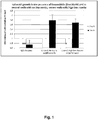
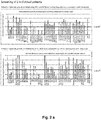
- FIG 2a and 2b shows growth inhibition by a panel of standard chemo-therapies in increasing concentrations.
- cancer cell proliferation as evidenced by spheroid (micro-tumour) growth was considered inhibited if the spheroid had grown to less than 1.5x the original size after 7 days of incubation at least at the highest concentrations tested.
- FIG 2a in patient 1 cancer cell proliferation is inhibited by 5FU and SN38, but not by Oxaliplatine, Leucovorine and Cetuximab.
- patient 2 cancer cell proliferation is inhibited by 5FU, SN38 and Oxaliplatin, but not by Leucovorine and Cetuximab.
- the screening results are in accordance with the individual patient's response to therapy.
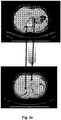
- CT scanning of the patient showing moderate sensitivity show correspondence to the screening results (shown in figure 2b ) in that tumor remission is observed after treatment with compounds predicted to be effective in the screening test.
- FIG 3 shows an example of time trace of micro-tumour (spheroid) growth in the presence of absence of Irinotecan.
- Irinotecan clearly inhibited cancer cell proliferation.
- micro-tumour growth is shown in figure 4 . Images of micro-tumours (spheroids) at day 0, 3, 5 and 7 grown in the absence and presence of Irinotcan were taken under a microscope. As can be seen, Irinotecan inhibits proliferation of these cancer cells.
Landscapes
- Health & Medical Sciences (AREA)
- Life Sciences & Earth Sciences (AREA)
- Chemical & Material Sciences (AREA)
- Engineering & Computer Science (AREA)
- Medicinal Chemistry (AREA)
- General Health & Medical Sciences (AREA)
- Immunology (AREA)
- Biomedical Technology (AREA)
- Molecular Biology (AREA)
- Animal Behavior & Ethology (AREA)
- Veterinary Medicine (AREA)
- Public Health (AREA)
- Epidemiology (AREA)
- Pharmacology & Pharmacy (AREA)
- Hematology (AREA)
- Urology & Nephrology (AREA)
- Biochemistry (AREA)
- Food Science & Technology (AREA)
- General Physics & Mathematics (AREA)
- Pathology (AREA)
- Toxicology (AREA)
- Tropical Medicine & Parasitology (AREA)
- Biotechnology (AREA)
- Cell Biology (AREA)
- Bioinformatics & Cheminformatics (AREA)
- Microbiology (AREA)
- Analytical Chemistry (AREA)
- Physics & Mathematics (AREA)
- Organic Chemistry (AREA)
- Proteomics, Peptides & Aminoacids (AREA)
- Genetics & Genomics (AREA)
- Biophysics (AREA)
- Measuring Or Testing Involving Enzymes Or Micro-Organisms (AREA)
- Investigating Or Analysing Biological Materials (AREA)
Claims (16)
- Verfahren zum Identifizieren einer Verbindung oder einer Kombination von Verbindungen, die wenigstens einen zellularen Phänotyp modifizieren, wobei das Verfahren die folgenden Schritte umfasst:i) Bereitstellen einer Bibliothek, die eine Vielzahl von Bibliothekselementen enthält, wobei jedes Bibliothekselement eine Verbindung oder eine Kombination von Verbindungen ist;ii) Bereitstellen einer Suspension von Zellen, die den zellularen Phänotyp erlangen könnten;iii) Bereitstellen eines zellkompatiblen Trägers, wobei der Träger reversibel zwischen einem Sol-Zustand und einem Gel-Zustand wechseln kanniv) Bereitstellen einer Anordnung, die eine Vielzahl von Räumen enthältv) Hinzufügen des Trägers in Sol-Zustand zu den Räumen der Anordnungvi) Hinzufügen von Bibliothekselementen in die Räume der Anordnung, wobei wenigstens zwei verschiedene Bibliothekselemente in zwei verschiedene Räume hinzugefügt werden,
wobei die Schritte v) und vi) gleichzeitig oder in jeglicher Reihenfolge aufeinanderfolgend durchgeführt werden können,vii) Versetzen des Trägers in den Gel-Zustand;viii) In-Kontakt-Bringen der Räume der Anordnung mit der Suspension von Zellen, undix) Versetzen des Trägers in den Sol-Zustand
wobei die Schritte viii) und ix) gleichzeitig oder in jeglicher Reihenfolge aufeinanderfolgend durchgeführt werden können; undx) Versetzen des Trägers in den Gel-Zustand, dadurch Einschließen von Zellen in dem Träger; undxi) Inkubieren der Anordnung unter Bedingungen, die ein Erhalten und/oder ein Wachstum der Zellen ermöglichenxii) Detektieren des zellularen Phänotyps in den Zellen,xiii) Identifizieren von Bibliothekselementen, die den zellularen Phänotyp modifizieren,dadurch Identifizieren einer Verbindung oder einer Kombination von Verbindungen, die den zellularen Phänotyp modifizieren. - Verfahren nach Anspruch 1, wobei mehr als eine Zellart bereitgestellt wird.
- Verfahren nach Anspruch 1, wobei der Träger ein temperaturreversibles Gel ist.
- Verfahren nach Ansprüche 1 bis 2, wobei der Träger ein Sol-Gel mit einer Sol-Gel-Übergangstemperatur im Bereich von 0 bis 35 °C ist.
- Verfahren nach einem der vorhergehenden Ansprüche, wobei der Träger ein Hydrogel ist ausgewählt aus der Gruppe bestehend aus gelatineartigen Gelen und Copolymeren.
- Verfahren nach einem der vorhergehenden Ansprüche, wobei die Anordnung ein Behälter ist, der eine Vielzahl von Kammern umfasst, die durch physikalische Barrieren getrennt sind.
- Verfahren nach Anspruch 5, wobei die Schritte v) und vi) ein Hinzufügen des Trägers und der Bibliothekelemente in die Kammern oder Vertiefungen umfassen, wobei wenigstens zwei verschiedene Bibliothekselemente in zwei verschiedene Kammern oder Vertiefungen hinzugefügt werden.
- Verfahren nach einem der vorhergehenden Ansprüche, wobei die Zellen primäre Krebszellen sind.
- Verfahren nach einem der vorhergehenden Ansprüche, wobei der zellulare Phänotyp ausgewählt ist aus der Gruppe bestehend aus Zellproliferation und Zelltod.
- Verfahren nach einem der Ansprüche 7 bis 8, wobei die Zellen Krebszellen sind, die wenigstens teilweise in der Form von Sphäroiden bereitgestellt sind, und wobei der zellulare Phänotyp ein In-vitro-Wachstum der Sphäroide ist.
- Verfahren zum Identifizieren einer Verbindung oder einer Kombination von Verbindungen, die wenigstens einen zellularen Phänotyp modifizieren, wobei das Verfahren die folgenden Schritte umfasst:i) Bereitstellen einer Anordnung, die eine Vielzahl von Räumen umfasst, wobei jeder Raum einen zellkompatiblen Träger umfasst, wobei der Träger reversibel zwischen einem Sol-Zustand und einem Gel-Zustand wechseln kann; und
wobei wenigstens 2 Räume ferner verschiedene Bibliothekselemente umfassen; und
wobei jedes Bibliothekselement eine Verbindung oder eine Kombination von Verbindungen ist,
und wobei der Träger in dem Gel-Zustand istii) Bereitstellen einer Suspension von Zellen, die den zellularen Phänotyp erlangen könnten;iii) In-Kontakt-Bringen der Räume der Anordnung mit der Suspension von Zellen; undiv) Versetzen des Trägers in den Sol-Zustand wobei die Schritte iii) und iv) gleichzeitig oder in jeglicher Reihenfolge aufeinanderfolgend durchgeführt werden können; undv) Versetzen des Trägers in den Gel-Zustand, dadurch Einschließen von Zellen in dem Träger; undvi) Inkubieren der Anordnung unter Bedingungen, die ein Erhalten und/oder ein Wachstum der Zellen ermöglichenvii) Detektieren des zellularen Phänotyps in den Zellen,viii) Identifizieren von Bibliothekselementen, die den zellularen Phänotyp modifizieren,dadurch Identifizieren einer Verbindung oder einer Kombination von Verbindungen, die den zellularen Phänotyp modifizieren. - Verfahren zum Vorhersagen der Wirksamkeit der Behandlung eines klinischen Zustands mit jedem einer Vielzahl von Bibliothekselementen bei einem Individuum, das an dem klinischen Zustand leidet, wobei der klinische Zustand gekennzeichnet ist durch wenigstens einen zellularen Phänotyp, und wobei jedes Bibliothekselement eine Verbindung oder eine Kombination von Verbindungen ist, wobei das Verfahren die folgenden Schritte umfasst:i) Bereitstellen einer Probe, die Zellen umfasst, die mit dem klinischen Zustand assoziiert sind, von einem Individuum, das an dem klinischen Zustand leidet,ii) Bestimmen, ob die Bibliothekselemente den zellularen Phänotyp modifizieren, durch ein Durchführen des Verfahrens nach einem der Ansprüche 1 bis 10,wobei eine Modifikation des zellularen Phänotyps durch die Bibliothekselemente eine Wirksamkeit der Behandlung des klinischen Zustands bei dem Individuum anzeigt.
- Verfahren nach Anspruch 12, wobei die Zellen ursächlich für den klinischen Zustand sind.
- Verfahren nach Anspruch 12, wobei der klinische Zustand Krebs ist.
- Verfahren nach Anspruch 12, wobei ein oder mehrere Bibliothekselemente Medikamente, die nützlich in der Krebsbehandlung sind, oder eine Kombination von Medikamenten, die nützlich in der Krebsbehandlung sind, sind.
- Verfahren nach Anspruch 12, wobei das Verfahren ein Verfahren zum Vorhersagen der Wirksamkeit der Behandlung eines Krebses bei einem Individuum ist, das der Behandlung bedarf, wobei das Verfahren die folgenden Schritte umfasst:i) Bereitstellen einer Anordnung, die eine Vielzahl von Räumen umfasst, wobei jeder Raum einen zellkompatiblen Träger umfasst, wobei der Träger reversibel zwischen einem Sol-Zustand und einem Gel-Zustand wechseln kann; und
wobei wenigstens 2 Räume ferner verschiedene Bibliothekselemente umfassen; und
wobei jedes Bibliothekselement ein Medikament oder eine Kombination von Medikamenten ist, die nützlich in der Behandlung von Krebs sind,
und wobei der Träger in dem Gel-Zustand istii) Bereitstellen einer Suspension von Krebszellen oder von Krebszellen in Sphäroiden, die von dem Individuum erhalten wurden;iii) Versetzen des Trägers in den Gel-Zustand;iv) In-Kontakt-Bringen der Räume der Anordnung mit der Suspension von Zellen; undv) Versetzen des Trägers in den Sol-Zustand wobei die Schritte iv) und v) gleichzeitig oder in jeglicher Reihenfolge aufeinanderfolgend durchgeführt werden können; undvi) Versetzen des Träger in den Gel-Zustand, dadurch Einschließen von Zellen in dem Träger; undvii) Inkubieren der Anordnung unter Bedingungen, die ein Wachstum der Zellen ermöglichenviii) Detektieren einer Krebszellproliferation und/oder einem Wachstum von Krebszellsphäroiden,ix) Identifizieren von Bibliothekselementen, die eine Proliferation von Krebszellen und/oder ein Wachstum von Krebszellsphäroiden hemmen
wobei bei Bibliothekselementen, die eine Proliferation von Krebszellen und/oder ein Wachstum von Krebszellsphäroiden hemmen, vorhergesagt wird, dass sie wirksam in der Krebsbehandlung des Individuums wären.
Priority Applications (1)
| Application Number | Priority Date | Filing Date | Title |
|---|---|---|---|
| PL15745390T PL3164709T3 (pl) | 2014-07-02 | 2015-07-01 | Identyfikacja związków modyfikujących fenotyp komórek |
Applications Claiming Priority (2)
| Application Number | Priority Date | Filing Date | Title |
|---|---|---|---|
| DKPA201400357 | 2014-07-02 | ||
| PCT/DK2015/050197 WO2016000721A2 (en) | 2014-07-02 | 2015-07-01 | Identifying compounds modifying a cellular phenotype |
Publications (2)
| Publication Number | Publication Date |
|---|---|
| EP3164709A2 EP3164709A2 (de) | 2017-05-10 |
| EP3164709B1 true EP3164709B1 (de) | 2018-09-12 |
Family
ID=53776268
Family Applications (1)
| Application Number | Title | Priority Date | Filing Date |
|---|---|---|---|
| EP15745390.3A Active EP3164709B1 (de) | 2014-07-02 | 2015-07-01 | Identifizierung von verbindungen zur modifizierung eines zellularen phänotyps |
Country Status (8)
| Country | Link |
|---|---|
| US (2) | US10371695B2 (de) |
| EP (1) | EP3164709B1 (de) |
| AU (3) | AU2015283320B2 (de) |
| CA (1) | CA2953876C (de) |
| DK (1) | DK3164709T3 (de) |
| ES (1) | ES2701339T3 (de) |
| PL (1) | PL3164709T3 (de) |
| WO (1) | WO2016000721A2 (de) |
Cited By (1)
| Publication number | Priority date | Publication date | Assignee | Title |
|---|---|---|---|---|
| WO2024115569A1 (en) | 2022-11-29 | 2024-06-06 | Oncosyne As | Compositions and methods |
Families Citing this family (1)
| Publication number | Priority date | Publication date | Assignee | Title |
|---|---|---|---|---|
| CN116685849A (zh) | 2020-12-29 | 2023-09-01 | 2克莱思股份有限公司 | 结肠癌治疗的疗效或耐药性的预测 |
Family Cites Families (3)
| Publication number | Priority date | Publication date | Assignee | Title |
|---|---|---|---|---|
| US4089748A (en) * | 1976-08-27 | 1978-05-16 | Analytical Products, Inc. | Microorganism growth process and cell |
| ATE418074T1 (de) * | 2004-05-25 | 2009-01-15 | 2Curex | Identifizierung von eine zelluläre antwort modifizierenden verbindungen |
| WO2008130623A1 (en) * | 2007-04-19 | 2008-10-30 | Brandeis University | Manipulation of fluids, fluid components and reactions in microfluidic systems |
-
2015
- 2015-07-01 PL PL15745390T patent/PL3164709T3/pl unknown
- 2015-07-01 DK DK15745390.3T patent/DK3164709T3/en active
- 2015-07-01 CA CA2953876A patent/CA2953876C/en active Active
- 2015-07-01 US US15/321,888 patent/US10371695B2/en active Active
- 2015-07-01 EP EP15745390.3A patent/EP3164709B1/de active Active
- 2015-07-01 ES ES15745390T patent/ES2701339T3/es active Active
- 2015-07-01 WO PCT/DK2015/050197 patent/WO2016000721A2/en not_active Ceased
- 2015-07-01 AU AU2015283320A patent/AU2015283320B2/en active Active
-
2019
- 2019-08-05 US US16/531,840 patent/US20190353641A1/en not_active Abandoned
- 2019-12-19 AU AU2019283917A patent/AU2019283917A1/en not_active Abandoned
-
2021
- 2021-12-23 AU AU2021290324A patent/AU2021290324A1/en not_active Abandoned
Cited By (1)
| Publication number | Priority date | Publication date | Assignee | Title |
|---|---|---|---|---|
| WO2024115569A1 (en) | 2022-11-29 | 2024-06-06 | Oncosyne As | Compositions and methods |
Also Published As
| Publication number | Publication date |
|---|---|
| US10371695B2 (en) | 2019-08-06 |
| EP3164709A2 (de) | 2017-05-10 |
| US20170131263A1 (en) | 2017-05-11 |
| AU2015283320A1 (en) | 2017-02-02 |
| DK3164709T3 (en) | 2019-01-14 |
| CA2953876C (en) | 2022-10-25 |
| WO2016000721A2 (en) | 2016-01-07 |
| AU2019283917A1 (en) | 2020-01-16 |
| CA2953876A1 (en) | 2016-01-07 |
| AU2021290324A1 (en) | 2022-01-27 |
| WO2016000721A3 (en) | 2016-02-25 |
| US20190353641A1 (en) | 2019-11-21 |
| ES2701339T3 (es) | 2019-02-21 |
| PL3164709T3 (pl) | 2019-04-30 |
| AU2015283320B2 (en) | 2019-10-03 |
Similar Documents
| Publication | Publication Date | Title |
|---|---|---|
| Liang et al. | A cell-instructive hydrogel to regulate malignancy of 3D tumor spheroids with matrix rigidity | |
| Beier et al. | Collagen matrices from sponge to nano: new perspectives for tissue engineering of skeletal muscle | |
| Wang et al. | Matrix stiffness differentially regulates cellular uptake behavior of nanoparticles in two breast cancer cell lines | |
| JP2023126246A (ja) | 血管オルガノイド、オルガノイドの製造及び使用方法 | |
| US11054413B2 (en) | Materials and methods for assaying living cells | |
| Zustiak et al. | Hydrolytically degradable poly (ethylene glycol) hydrogel scaffolds as a cell delivery vehicle: characterization of PC12 cell response | |
| US20200347361A1 (en) | Methods of Primary Tissue Culture and Drug Screening Using Autologous Serum and Fluids | |
| CN102046188A (zh) | 在皮肤伤口愈合中使用干细胞的组合物和方法 | |
| Zhou et al. | Poly (glutamic acid‐lysine) hydrogels with alternating sequence resist the foreign body response in rodents and non‐human primates | |
| CN109069874A (zh) | 用于在体内捕获转移性乳腺癌细胞的植入式支架 | |
| AU2021290324A1 (en) | Identifying compounds modifying a cellular phenotype | |
| Wei et al. | Strategy for improving cell-mediated vascularized soft tissue formation in a hydrogen peroxide-triggered chemically-crosslinked hydrogel | |
| Daviran et al. | Characterizing the dynamic rheology in the pericellular region by human mesenchymal stem cell re-engineering in PEG-peptide hydrogel scaffolds | |
| Keshavarz et al. | Gelatin‐Mediated Vascular Self‐Assembly via a YAP‐MMP Signaling Axis | |
| Aguilar-Cázarez et al. | A protocol for explant cultures of IDH1-mutant diffuse low-grade gliomas | |
| Lai | Carbodiimide cross-linking of amniotic membranes in the presence of amino acid bridges | |
| HK1237870B (en) | Identifying compounds modifying a cellular phenotype | |
| HK1237870A1 (en) | Identifying compounds modifying a cellular phenotype | |
| EP3210024A1 (de) | Materialien und verfahren zum testen von lebenden zellen | |
| KR20130055591A (ko) | 암 조직 유래 세포괴 또는 암 세포 응집괴로부터 얻어지는 암 치료용 조성물과 그것을 이용한 면역요법제의 제조 방법 및 면역요법 효과 평가 방법 | |
| CN116669754A (zh) | 纤维蛋白水凝胶 | |
| Binder et al. | The role of integrin αv and CD44 in GBM migration in human brain | |
| US20220175954A1 (en) | Hypoxia-inducing cryogels | |
| Gemignani | GelMA-based hydrogels for 3D modeling of metastatic Colorectal Cancer patient-derived organoids | |
| Childs | Immunomodulatory Matrix for Ligament Healing |
Legal Events
| Date | Code | Title | Description |
|---|---|---|---|
| STAA | Information on the status of an ep patent application or granted ep patent |
Free format text: STATUS: THE INTERNATIONAL PUBLICATION HAS BEEN MADE |
|
| PUAI | Public reference made under article 153(3) epc to a published international application that has entered the european phase |
Free format text: ORIGINAL CODE: 0009012 |
|
| STAA | Information on the status of an ep patent application or granted ep patent |
Free format text: STATUS: REQUEST FOR EXAMINATION WAS MADE |
|
| 17P | Request for examination filed |
Effective date: 20170202 |
|
| AK | Designated contracting states |
Kind code of ref document: A2 Designated state(s): AL AT BE BG CH CY CZ DE DK EE ES FI FR GB GR HR HU IE IS IT LI LT LU LV MC MK MT NL NO PL PT RO RS SE SI SK SM TR |
|
| AX | Request for extension of the european patent |
Extension state: BA ME |
|
| DAV | Request for validation of the european patent (deleted) | ||
| DAX | Request for extension of the european patent (deleted) | ||
| GRAP | Despatch of communication of intention to grant a patent |
Free format text: ORIGINAL CODE: EPIDOSNIGR1 |
|
| STAA | Information on the status of an ep patent application or granted ep patent |
Free format text: STATUS: GRANT OF PATENT IS INTENDED |
|
| REG | Reference to a national code |
Ref country code: HK Ref legal event code: DE Ref document number: 1237870 Country of ref document: HK |
|
| INTG | Intention to grant announced |
Effective date: 20180404 |
|
| GRAS | Grant fee paid |
Free format text: ORIGINAL CODE: EPIDOSNIGR3 |
|
| GRAA | (expected) grant |
Free format text: ORIGINAL CODE: 0009210 |
|
| STAA | Information on the status of an ep patent application or granted ep patent |
Free format text: STATUS: THE PATENT HAS BEEN GRANTED |
|
| AK | Designated contracting states |
Kind code of ref document: B1 Designated state(s): AL AT BE BG CH CY CZ DE DK EE ES FI FR GB GR HR HU IE IS IT LI LT LU LV MC MK MT NL NO PL PT RO RS SE SI SK SM TR |
|
| REG | Reference to a national code |
Ref country code: GB Ref legal event code: FG4D |
|
| REG | Reference to a national code |
Ref country code: CH Ref legal event code: EP |
|
| REG | Reference to a national code |
Ref country code: IE Ref legal event code: FG4D |
|
| REG | Reference to a national code |
Ref country code: DE Ref legal event code: R096 Ref document number: 602015016174 Country of ref document: DE |
|
| REG | Reference to a national code |
Ref country code: AT Ref legal event code: REF Ref document number: 1041225 Country of ref document: AT Kind code of ref document: T Effective date: 20181015 |
|
| REG | Reference to a national code |
Ref country code: CH Ref legal event code: NV Representative=s name: DENNEMEYER AG, CH |
|
| REG | Reference to a national code |
Ref country code: SE Ref legal event code: TRGR |
|
| REG | Reference to a national code |
Ref country code: NL Ref legal event code: FP |
|
| REG | Reference to a national code |
Ref country code: DK Ref legal event code: T3 Effective date: 20190106 |
|
| REG | Reference to a national code |
Ref country code: LT Ref legal event code: MG4D |
|
| PG25 | Lapsed in a contracting state [announced via postgrant information from national office to epo] |
Ref country code: RS Free format text: LAPSE BECAUSE OF FAILURE TO SUBMIT A TRANSLATION OF THE DESCRIPTION OR TO PAY THE FEE WITHIN THE PRESCRIBED TIME-LIMIT Effective date: 20180912 Ref country code: GR Free format text: LAPSE BECAUSE OF FAILURE TO SUBMIT A TRANSLATION OF THE DESCRIPTION OR TO PAY THE FEE WITHIN THE PRESCRIBED TIME-LIMIT Effective date: 20181213 Ref country code: BG Free format text: LAPSE BECAUSE OF FAILURE TO SUBMIT A TRANSLATION OF THE DESCRIPTION OR TO PAY THE FEE WITHIN THE PRESCRIBED TIME-LIMIT Effective date: 20181212 Ref country code: LT Free format text: LAPSE BECAUSE OF FAILURE TO SUBMIT A TRANSLATION OF THE DESCRIPTION OR TO PAY THE FEE WITHIN THE PRESCRIBED TIME-LIMIT Effective date: 20180912 |
|
| REG | Reference to a national code |
Ref country code: NO Ref legal event code: T2 Effective date: 20180912 |
|
| REG | Reference to a national code |
Ref country code: ES Ref legal event code: FG2A Ref document number: 2701339 Country of ref document: ES Kind code of ref document: T3 Effective date: 20190221 |
|
| PG25 | Lapsed in a contracting state [announced via postgrant information from national office to epo] |
Ref country code: HR Free format text: LAPSE BECAUSE OF FAILURE TO SUBMIT A TRANSLATION OF THE DESCRIPTION OR TO PAY THE FEE WITHIN THE PRESCRIBED TIME-LIMIT Effective date: 20180912 Ref country code: AL Free format text: LAPSE BECAUSE OF FAILURE TO SUBMIT A TRANSLATION OF THE DESCRIPTION OR TO PAY THE FEE WITHIN THE PRESCRIBED TIME-LIMIT Effective date: 20180912 Ref country code: LV Free format text: LAPSE BECAUSE OF FAILURE TO SUBMIT A TRANSLATION OF THE DESCRIPTION OR TO PAY THE FEE WITHIN THE PRESCRIBED TIME-LIMIT Effective date: 20180912 |
|
| PG25 | Lapsed in a contracting state [announced via postgrant information from national office to epo] |
Ref country code: CZ Free format text: LAPSE BECAUSE OF FAILURE TO SUBMIT A TRANSLATION OF THE DESCRIPTION OR TO PAY THE FEE WITHIN THE PRESCRIBED TIME-LIMIT Effective date: 20180912 Ref country code: RO Free format text: LAPSE BECAUSE OF FAILURE TO SUBMIT A TRANSLATION OF THE DESCRIPTION OR TO PAY THE FEE WITHIN THE PRESCRIBED TIME-LIMIT Effective date: 20180912 Ref country code: EE Free format text: LAPSE BECAUSE OF FAILURE TO SUBMIT A TRANSLATION OF THE DESCRIPTION OR TO PAY THE FEE WITHIN THE PRESCRIBED TIME-LIMIT Effective date: 20180912 Ref country code: IS Free format text: LAPSE BECAUSE OF FAILURE TO SUBMIT A TRANSLATION OF THE DESCRIPTION OR TO PAY THE FEE WITHIN THE PRESCRIBED TIME-LIMIT Effective date: 20190112 |
|
| PG25 | Lapsed in a contracting state [announced via postgrant information from national office to epo] |
Ref country code: SK Free format text: LAPSE BECAUSE OF FAILURE TO SUBMIT A TRANSLATION OF THE DESCRIPTION OR TO PAY THE FEE WITHIN THE PRESCRIBED TIME-LIMIT Effective date: 20180912 Ref country code: PT Free format text: LAPSE BECAUSE OF FAILURE TO SUBMIT A TRANSLATION OF THE DESCRIPTION OR TO PAY THE FEE WITHIN THE PRESCRIBED TIME-LIMIT Effective date: 20190112 Ref country code: SM Free format text: LAPSE BECAUSE OF FAILURE TO SUBMIT A TRANSLATION OF THE DESCRIPTION OR TO PAY THE FEE WITHIN THE PRESCRIBED TIME-LIMIT Effective date: 20180912 |
|
| REG | Reference to a national code |
Ref country code: DE Ref legal event code: R097 Ref document number: 602015016174 Country of ref document: DE |
|
| PLBE | No opposition filed within time limit |
Free format text: ORIGINAL CODE: 0009261 |
|
| STAA | Information on the status of an ep patent application or granted ep patent |
Free format text: STATUS: NO OPPOSITION FILED WITHIN TIME LIMIT |
|
| 26N | No opposition filed |
Effective date: 20190613 |
|
| PG25 | Lapsed in a contracting state [announced via postgrant information from national office to epo] |
Ref country code: SI Free format text: LAPSE BECAUSE OF FAILURE TO SUBMIT A TRANSLATION OF THE DESCRIPTION OR TO PAY THE FEE WITHIN THE PRESCRIBED TIME-LIMIT Effective date: 20180912 |
|
| PG25 | Lapsed in a contracting state [announced via postgrant information from national office to epo] |
Ref country code: TR Free format text: LAPSE BECAUSE OF FAILURE TO SUBMIT A TRANSLATION OF THE DESCRIPTION OR TO PAY THE FEE WITHIN THE PRESCRIBED TIME-LIMIT Effective date: 20180912 |
|
| PG25 | Lapsed in a contracting state [announced via postgrant information from national office to epo] |
Ref country code: CY Free format text: LAPSE BECAUSE OF FAILURE TO SUBMIT A TRANSLATION OF THE DESCRIPTION OR TO PAY THE FEE WITHIN THE PRESCRIBED TIME-LIMIT Effective date: 20180912 |
|
| PG25 | Lapsed in a contracting state [announced via postgrant information from national office to epo] |
Ref country code: HU Free format text: LAPSE BECAUSE OF FAILURE TO SUBMIT A TRANSLATION OF THE DESCRIPTION OR TO PAY THE FEE WITHIN THE PRESCRIBED TIME-LIMIT; INVALID AB INITIO Effective date: 20150701 Ref country code: MT Free format text: LAPSE BECAUSE OF FAILURE TO SUBMIT A TRANSLATION OF THE DESCRIPTION OR TO PAY THE FEE WITHIN THE PRESCRIBED TIME-LIMIT Effective date: 20180912 |
|
| REG | Reference to a national code |
Ref country code: AT Ref legal event code: UEP Ref document number: 1041225 Country of ref document: AT Kind code of ref document: T Effective date: 20180912 |
|
| PG25 | Lapsed in a contracting state [announced via postgrant information from national office to epo] |
Ref country code: MK Free format text: LAPSE BECAUSE OF FAILURE TO SUBMIT A TRANSLATION OF THE DESCRIPTION OR TO PAY THE FEE WITHIN THE PRESCRIBED TIME-LIMIT Effective date: 20180912 |
|
| PGFP | Annual fee paid to national office [announced via postgrant information from national office to epo] |
Ref country code: PL Payment date: 20250624 Year of fee payment: 11 |
|
| PGFP | Annual fee paid to national office [announced via postgrant information from national office to epo] |
Ref country code: NL Payment date: 20250721 Year of fee payment: 11 Ref country code: LU Payment date: 20250721 Year of fee payment: 11 |
|
| PGFP | Annual fee paid to national office [announced via postgrant information from national office to epo] |
Ref country code: ES Payment date: 20250826 Year of fee payment: 11 Ref country code: FI Payment date: 20250725 Year of fee payment: 11 |
|
| PGFP | Annual fee paid to national office [announced via postgrant information from national office to epo] |
Ref country code: DK Payment date: 20250725 Year of fee payment: 11 Ref country code: DE Payment date: 20250722 Year of fee payment: 11 |
|
| PGFP | Annual fee paid to national office [announced via postgrant information from national office to epo] |
Ref country code: MC Payment date: 20250723 Year of fee payment: 11 Ref country code: NO Payment date: 20250703 Year of fee payment: 11 |
|
| PGFP | Annual fee paid to national office [announced via postgrant information from national office to epo] |
Ref country code: IT Payment date: 20250724 Year of fee payment: 11 |
|
| PGFP | Annual fee paid to national office [announced via postgrant information from national office to epo] |
Ref country code: BE Payment date: 20250721 Year of fee payment: 11 Ref country code: GB Payment date: 20250722 Year of fee payment: 11 |
|
| PGFP | Annual fee paid to national office [announced via postgrant information from national office to epo] |
Ref country code: FR Payment date: 20250725 Year of fee payment: 11 Ref country code: AT Payment date: 20250722 Year of fee payment: 11 |
|
| PGFP | Annual fee paid to national office [announced via postgrant information from national office to epo] |
Ref country code: SE Payment date: 20250722 Year of fee payment: 11 Ref country code: CH Payment date: 20250801 Year of fee payment: 11 |
|
| PGFP | Annual fee paid to national office [announced via postgrant information from national office to epo] |
Ref country code: IE Payment date: 20250723 Year of fee payment: 11 |