EP3151998B1 - Verwendung einer ionischen flüssigkeit als lötflussmittel - Google Patents
Verwendung einer ionischen flüssigkeit als lötflussmittel Download PDFInfo
- Publication number
- EP3151998B1 EP3151998B1 EP15733861.7A EP15733861A EP3151998B1 EP 3151998 B1 EP3151998 B1 EP 3151998B1 EP 15733861 A EP15733861 A EP 15733861A EP 3151998 B1 EP3151998 B1 EP 3151998B1
- Authority
- EP
- European Patent Office
- Prior art keywords
- solder
- mixture
- ionic liquid
- flux
- chloride
- Prior art date
- Legal status (The legal status is an assumption and is not a legal conclusion. Google has not performed a legal analysis and makes no representation as to the accuracy of the status listed.)
- Active
Links
Images






Classifications
-
- B—PERFORMING OPERATIONS; TRANSPORTING
- B23—MACHINE TOOLS; METAL-WORKING NOT OTHERWISE PROVIDED FOR
- B23K—SOLDERING OR UNSOLDERING; WELDING; CLADDING OR PLATING BY SOLDERING OR WELDING; CUTTING BY APPLYING HEAT LOCALLY, e.g. FLAME CUTTING; WORKING BY LASER BEAM
- B23K35/00—Rods, electrodes, materials, or media, for use in soldering, welding, or cutting
- B23K35/22—Rods, electrodes, materials, or media, for use in soldering, welding, or cutting characterised by the composition or nature of the material
- B23K35/36—Selection of non-metallic compositions, e.g. coatings or fluxes; Selection of soldering or welding materials, conjoint with selection of non-metallic compositions, both selections being of interest
- B23K35/362—Selection of compositions of fluxes
-
- B—PERFORMING OPERATIONS; TRANSPORTING
- B23—MACHINE TOOLS; METAL-WORKING NOT OTHERWISE PROVIDED FOR
- B23K—SOLDERING OR UNSOLDERING; WELDING; CLADDING OR PLATING BY SOLDERING OR WELDING; CUTTING BY APPLYING HEAT LOCALLY, e.g. FLAME CUTTING; WORKING BY LASER BEAM
- B23K1/00—Soldering, e.g. brazing, or unsoldering
- B23K1/0008—Soldering, e.g. brazing, or unsoldering specially adapted for particular articles or work
- B23K1/0016—Soldering of electronic components
-
- B—PERFORMING OPERATIONS; TRANSPORTING
- B23—MACHINE TOOLS; METAL-WORKING NOT OTHERWISE PROVIDED FOR
- B23K—SOLDERING OR UNSOLDERING; WELDING; CLADDING OR PLATING BY SOLDERING OR WELDING; CUTTING BY APPLYING HEAT LOCALLY, e.g. FLAME CUTTING; WORKING BY LASER BEAM
- B23K35/00—Rods, electrodes, materials, or media, for use in soldering, welding, or cutting
- B23K35/02—Rods, electrodes, materials, or media, for use in soldering, welding, or cutting characterised by mechanical features, e.g. shape
- B23K35/0222—Rods, electrodes, materials, or media, for use in soldering, welding, or cutting characterised by mechanical features, e.g. shape for use in soldering or brazing
- B23K35/0227—Rods or wires
-
- B—PERFORMING OPERATIONS; TRANSPORTING
- B23—MACHINE TOOLS; METAL-WORKING NOT OTHERWISE PROVIDED FOR
- B23K—SOLDERING OR UNSOLDERING; WELDING; CLADDING OR PLATING BY SOLDERING OR WELDING; CUTTING BY APPLYING HEAT LOCALLY, e.g. FLAME CUTTING; WORKING BY LASER BEAM
- B23K35/00—Rods, electrodes, materials, or media, for use in soldering, welding, or cutting
- B23K35/02—Rods, electrodes, materials, or media, for use in soldering, welding, or cutting characterised by mechanical features, e.g. shape
- B23K35/0222—Rods, electrodes, materials, or media, for use in soldering, welding, or cutting characterised by mechanical features, e.g. shape for use in soldering or brazing
- B23K35/0244—Powders, particles or spheres; Preforms made therefrom
- B23K35/025—Pastes, creams or slurries
-
- B—PERFORMING OPERATIONS; TRANSPORTING
- B23—MACHINE TOOLS; METAL-WORKING NOT OTHERWISE PROVIDED FOR
- B23K—SOLDERING OR UNSOLDERING; WELDING; CLADDING OR PLATING BY SOLDERING OR WELDING; CUTTING BY APPLYING HEAT LOCALLY, e.g. FLAME CUTTING; WORKING BY LASER BEAM
- B23K35/00—Rods, electrodes, materials, or media, for use in soldering, welding, or cutting
- B23K35/22—Rods, electrodes, materials, or media, for use in soldering, welding, or cutting characterised by the composition or nature of the material
- B23K35/36—Selection of non-metallic compositions, e.g. coatings or fluxes; Selection of soldering or welding materials, conjoint with selection of non-metallic compositions, both selections being of interest
- B23K35/3601—Selection of non-metallic compositions, e.g. coatings or fluxes; Selection of soldering or welding materials, conjoint with selection of non-metallic compositions, both selections being of interest with inorganic compounds as principal constituents
- B23K35/3602—Carbonates, basic oxides or hydroxides
-
- B—PERFORMING OPERATIONS; TRANSPORTING
- B23—MACHINE TOOLS; METAL-WORKING NOT OTHERWISE PROVIDED FOR
- B23K—SOLDERING OR UNSOLDERING; WELDING; CLADDING OR PLATING BY SOLDERING OR WELDING; CUTTING BY APPLYING HEAT LOCALLY, e.g. FLAME CUTTING; WORKING BY LASER BEAM
- B23K35/00—Rods, electrodes, materials, or media, for use in soldering, welding, or cutting
- B23K35/22—Rods, electrodes, materials, or media, for use in soldering, welding, or cutting characterised by the composition or nature of the material
- B23K35/36—Selection of non-metallic compositions, e.g. coatings or fluxes; Selection of soldering or welding materials, conjoint with selection of non-metallic compositions, both selections being of interest
- B23K35/3601—Selection of non-metallic compositions, e.g. coatings or fluxes; Selection of soldering or welding materials, conjoint with selection of non-metallic compositions, both selections being of interest with inorganic compounds as principal constituents
- B23K35/3603—Halide salts
- B23K35/3605—Fluorides
-
- B—PERFORMING OPERATIONS; TRANSPORTING
- B23—MACHINE TOOLS; METAL-WORKING NOT OTHERWISE PROVIDED FOR
- B23K—SOLDERING OR UNSOLDERING; WELDING; CLADDING OR PLATING BY SOLDERING OR WELDING; CUTTING BY APPLYING HEAT LOCALLY, e.g. FLAME CUTTING; WORKING BY LASER BEAM
- B23K35/00—Rods, electrodes, materials, or media, for use in soldering, welding, or cutting
- B23K35/22—Rods, electrodes, materials, or media, for use in soldering, welding, or cutting characterised by the composition or nature of the material
- B23K35/36—Selection of non-metallic compositions, e.g. coatings or fluxes; Selection of soldering or welding materials, conjoint with selection of non-metallic compositions, both selections being of interest
- B23K35/3601—Selection of non-metallic compositions, e.g. coatings or fluxes; Selection of soldering or welding materials, conjoint with selection of non-metallic compositions, both selections being of interest with inorganic compounds as principal constituents
- B23K35/3606—Borates or B-oxides
-
- B—PERFORMING OPERATIONS; TRANSPORTING
- B23—MACHINE TOOLS; METAL-WORKING NOT OTHERWISE PROVIDED FOR
- B23K—SOLDERING OR UNSOLDERING; WELDING; CLADDING OR PLATING BY SOLDERING OR WELDING; CUTTING BY APPLYING HEAT LOCALLY, e.g. FLAME CUTTING; WORKING BY LASER BEAM
- B23K35/00—Rods, electrodes, materials, or media, for use in soldering, welding, or cutting
- B23K35/22—Rods, electrodes, materials, or media, for use in soldering, welding, or cutting characterised by the composition or nature of the material
- B23K35/36—Selection of non-metallic compositions, e.g. coatings or fluxes; Selection of soldering or welding materials, conjoint with selection of non-metallic compositions, both selections being of interest
- B23K35/3601—Selection of non-metallic compositions, e.g. coatings or fluxes; Selection of soldering or welding materials, conjoint with selection of non-metallic compositions, both selections being of interest with inorganic compounds as principal constituents
- B23K35/3611—Phosphates
-
- B—PERFORMING OPERATIONS; TRANSPORTING
- B23—MACHINE TOOLS; METAL-WORKING NOT OTHERWISE PROVIDED FOR
- B23K—SOLDERING OR UNSOLDERING; WELDING; CLADDING OR PLATING BY SOLDERING OR WELDING; CUTTING BY APPLYING HEAT LOCALLY, e.g. FLAME CUTTING; WORKING BY LASER BEAM
- B23K35/00—Rods, electrodes, materials, or media, for use in soldering, welding, or cutting
- B23K35/22—Rods, electrodes, materials, or media, for use in soldering, welding, or cutting characterised by the composition or nature of the material
- B23K35/36—Selection of non-metallic compositions, e.g. coatings or fluxes; Selection of soldering or welding materials, conjoint with selection of non-metallic compositions, both selections being of interest
- B23K35/3612—Selection of non-metallic compositions, e.g. coatings or fluxes; Selection of soldering or welding materials, conjoint with selection of non-metallic compositions, both selections being of interest with organic compounds as principal constituents
- B23K35/3618—Carboxylic acids or salts
-
- H—ELECTRICITY
- H05—ELECTRIC TECHNIQUES NOT OTHERWISE PROVIDED FOR
- H05K—PRINTED CIRCUITS; CASINGS OR CONSTRUCTIONAL DETAILS OF ELECTRIC APPARATUS; MANUFACTURE OF ASSEMBLAGES OF ELECTRICAL COMPONENTS
- H05K3/00—Apparatus or processes for manufacturing printed circuits
- H05K3/30—Assembling printed circuits with electric components, e.g. with resistors
- H05K3/32—Assembling printed circuits with electric components, e.g. with resistors electrically connecting electric components or wires to printed circuits
- H05K3/34—Assembling printed circuits with electric components, e.g. with resistors electrically connecting electric components or wires to printed circuits by soldering
-
- H—ELECTRICITY
- H05—ELECTRIC TECHNIQUES NOT OTHERWISE PROVIDED FOR
- H05K—PRINTED CIRCUITS; CASINGS OR CONSTRUCTIONAL DETAILS OF ELECTRIC APPARATUS; MANUFACTURE OF ASSEMBLAGES OF ELECTRICAL COMPONENTS
- H05K3/00—Apparatus or processes for manufacturing printed circuits
- H05K3/30—Assembling printed circuits with electric components, e.g. with resistors
- H05K3/32—Assembling printed circuits with electric components, e.g. with resistors electrically connecting electric components or wires to printed circuits
- H05K3/34—Assembling printed circuits with electric components, e.g. with resistors electrically connecting electric components or wires to printed circuits by soldering
- H05K3/3489—Composition of fluxes; Application thereof; Other processes of activating the contact surfaces
Definitions
- PCBs printed circuit boards
- the join between two pieces of metal is formed by running the molten solder/braze between the metal such that when this sets there exists a solid metal to metal bond. This is often incorrectly referred to as welding. However, welding is done at much higher temperatures using electrical discharge or flame.
- soldering is used as a key process step for assembly of components onto PCBs but also for sub-assembly of complex components such as sensors, accelerometers, and chips.
- assembly is often achieved using wave soldering machines in which the boards are subjected to the molten solder prior to component attachment.
- wave soldering machines in which the boards are subjected to the molten solder prior to component attachment.
- metal-metal bonding There are often several stages of metal-metal bonding in such technologies many of which are facilitated by solder/braze joins.
- solder/braze fluxes are commonly formulated from plant-extract resins (Rosin), or inorganic metal salts and have various activators that decompose at soldering/brazing temperatures liberating corrosive vapours such as hydrochloric acid.
- the flux itself often decomposes producing characteristic and noxious gasses (flux-fumes) as well as decomposition residues that have to be removed with organic solvents.
- flux-fumes characteristic and noxious gasses
- decomposition residues that have to be removed with organic solvents.
- ionic residues on PCB surfaces remain a major concern for the industry with respect to extended life and failure mechanisms.
- DES Deep Eutectic Solvents
- the DES according to the present invention are compatible with the already existing manufacturing infrastructure and can be used for wave or reflow soldering/brazing and thus can provide a simpler, cleaner, greener and generic technology that has low toxicity, lower cost and lower environmental impact.
- DES fluxes of the present invention reduce post-assembly cleaning requirements, which leads to production cost reductions and improved in-service reliability.
- Ionic liquids constitute a class of chemical species which can be described in many ways (see, for example, Abbot et al. What is an ionic liquid? Application of Hole theory to define ionic liquids by their transport properties. J Phys. Chem B, 111: 4910-4, 2007 ), in which it has been suggested that most ionic systems can be described by an equilibrium: or potentially: with the majority falling under the category of the former case. This also applies to some ionic liquids that are thought of as having a discrete anion, for example:
- Type III Deep Eutectic Solvents are types of ionic liquids which do not include metallic species in the bulk liquid but use a hydrogen bond donor (HBD), such as urea or ethylene glycol to complex the anion from the salt (see, for example, Abbott et al. Novel solvent properties of choline chloride/urea mixtures. Chem. Comm., 70, 2003 ; and Abbott et al. Deep Eutectic solvents formed between choline chloride and carboxylic acids, J. Am. Chem. Soc., 26: 9142, 2004 ).
- HBD hydrogen bond donor
- metal salts such as AlCl 3 and ZnCl 2 have been found to disproportionate to give both anionic and cationic metal containing species (see, for example, Abood et al, Do all ionic liquids need organic cations?, Chem. Comm., 47: 3523-3527, 2011 ). See, for example:
- metal hydrate salts can be used with HBDs to formulate active ingredients.
- HBDs metal hydrate salts
- soldering/brazing flux comprising at least one ionic liquid and at least one additive which improves flux functionality.
- soldering and brazing would be understood by the skilled person to mean processes in which two or more metal substrates are joined together by melting and flowing a filler metal (solder/braze) into the joint, the filler metal having a lower melting point than the adjoining metal.
- Metals which are typically used in soldering/brazing processes include, but are not limited to: iron, lead, copper, chromium, antimony, nickel, magnesium, tin, stainless steel, cast iron steel, mild steel, silver, platinum, gold, palladium, aluminium, cobalt, indium, bismuth, zinc, cadmium and generally alloys containing these metals.
- Solder generally falls in to one of three types, a lead alloy solder, a lead-free solder or a silver alloy solder.
- Lead based solder is solder that is made from an alloy of tin and lead, sometimes with other metals as well.
- Lead alloy solder has been the standard solder used for decades, but the health issues associated with lead have necessitated a move away from lead based solders. Silver alloy solder can be either lead-free or combined with lead. Silver was originally added to lead alloy solder to prevent an effect known as silver migration when silver plated components where soldered.
- the ionic liquid is a Deep Eutectic Solvent (DES) selected from at least one of the following:
- DES Deep Eutectic Solvent
- the DES of the invention comprises:
- component (a) is a mixture of two or more compounds of formula (I) or, particularly, a compound of formula (I).
- R + may be a quaternary phosphonium cation or, particularly, a primary, secondary, tertiary, quaternary or unsubstituted ammonium cation.
- Anion X n- is any monovalent, bivalent or trivalent anion.
- Embodiments of the invention include those in which X n- is an anion selected from the list comprising halide, chlorate, perchlorate, bromate, nitrate, nitrite, cyanide, cyanate, thiocyanate, hydrogencarbonate, carbonate, sulfate, hydrogensulfate, pyrosulfate, sulfite, hydrogensulfite, phosphate, monohydrogenphosphate, dihydrogenphosphate, metaphosphate, pyrophosphate, hexafluorophosphate, tetrafluoroborate, borate, diborate, triborate, tetraborate, carboxylate (e.g.
- X n- is a monovalent anion (i.e. where n is 1), such as a monovalent anion selected from the list above (e.g. an anion selected from the list comprising fluoride, chloride, bromide, iodide, nitrate and acetate (such as bromide or, particularly, chloride)).
- a monovalent anion selected from the list above e.g. an anion selected from the list comprising fluoride, chloride, bromide, iodide, nitrate and acetate (such as bromide or, particularly, chloride)
- Particular embodiments of the invention include those in which the compound of formula (I) is an ammonium salt or a primary, secondary, tertiary or, particularly, quaternary ammonium salt.
- the anion(s) present in the salt(s) may be halide ions.
- quaternary ammonium salts that may be mentioned include those selected from the list comprising benzyltrimethylammonium halide, tetrabutylammonium halide, ethylmethylimidazolium halide, acetylcholine halide and choline halide (wherein halide is fluoride, iodide, bromide or, particularly, chloride).
- organic will be well understood by those skilled in the art. Thus, when used herein, the term “organic” includes references to uncharged chemical compounds (other than carbon, oxides of carbon, or acids of (bi)carbonate, cyanide, cyanate, thiocyanate or fulminate), whose molecules contain carbon.
- a compound contains a hydrogen atom that is capable of forming a hydrogen bond with X n- will either be evident to those skilled or can be determined by methods known to those skilled in the art (see, for example, Paul D. Beer, Philip A. Gale and David K. Smith, Supramolecular Chemistry (Oxford Chemistry Primers), Oxford University Press, Oxford, 1999, and especially Chapter 3 (pages 31 to 42 ) and the references cited therein).
- a titration can be conducted in which anion X n- is added to the dissolved compound and changes in a physical property connected with the H-atoms of the compound (e.g. a spectroscopic signal, such as an infrared or 1 H n.m.r. signal) are monitored.
- the compound in question may be dissolved in a deuterated solvent (such as deuterated chloroform, dichloromethane or acetonitrile) and changes in the 1 H n.m.r. signals from that compound monitored when aliquots of a quaternary ammonium salt (such as a tetrabutylammonium salt) having X n- as anion are added to the solution.
- a deuterated solvent such as deuterated chloroform, dichloromethane or acetonitrile
- component (b) is one or more compounds selected from the list comprising benzamide, acetamide, N -methylurea, N , N '-dimethylurea urea, glycerol, mannitol, xylitol, ethylene glycol and propylene glycol (e.g.
- the DES is a Type II DES and is selected from:
- the DES is a Type III DES and is selected from:
- the additive which comprises flux functionality is selected from at least one of:
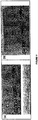
- FIG 11 (a) shows three samples of liquid that have been placed on a copper substrate. These are Glyceline 200 (left), Glyceline 200 with added CTAB bromide (centre) and Glyceline 200 with added polyoxyethylene octyl phenyl ether (Triton X100) wetting agent (right). Each of these droplets has the same surface area in contact with the substrate, a side on view shows that the pure liquid has a much higher wetting angle compared to those where wetting agents are present. This means that a much larger volume of liquid is required to cover the same surface area of sample and that more flux would be required to solder a given surface area.
- Figure 11(b) shows what happens when this copper coupon is tilted slightly.
- the pure Glyceline droplet has nearly flowed off the side of the coupon, whereas the Glyceline with added CTAB has remained in place and has spread out slightly to cover even more surface area.
- the practical implications for soldering are that much less solder flux is required in order to solder a given region and that the flux will remain at the surface for a longer time.
- the wetting agent is selected from, but not limited to, cetyltrimethylammonium bromide, cetyltrimethylammonium chloride, polyoxyethylene octyl phenyl ether, sodium laureth sulfate, cetylpyridinium chloride, benzalkonium chloride, benzethonium chloride, ammonium laureth sulfate, sodium stearate, dioctyl sodium sulfosuccinate, sodium perfluorobutylsulfonate, polyoxyethylene glycol ethers, polyoxypropylene glycol alkyl ethers and polyoxyethylene glycol alkyl phenol ethers.
- chloride salts the anion may be that of any simple inorganic salt.
- surfactants is not intended to be limiting and that numerous other surfactants can also be used.
- the flux comprises a wetting agent improver which is an acid or salt.
- wetting agent improver the skilled person understands this to mean additives to improve solder wetting on difficult substrates.
- stainless steels, nickel alloys or aluminium and its alloys for example, stainless steels, nickel alloys or aluminium and its alloys.
- Additives for soldering of stainless steel and nickel-based alloys include, but are not limited to hydrochloric acid, hydrobromic acid, hydroiodic acid, sulphuric acid and phosphoric acid.
- the additive which improves solder flux functionality is a rheology modifier and is selected from one or more of:
- the rheology modifier serves to maintain the fluidity of the solder flux at low temperatures (i.e. below room temperature).
- ethylene glycol and glycerol were added to reline.
- Other examples would be: Glycerol added to Ethaline 200, glycerol added to Reline 200, ethylene glycol added to Reline 200, mixtures of propylene glycol added to Ethaline 200, Glyceline 200 and Reline 200.
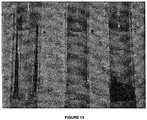
- Xylitol and polyethyleneglycol 400 have been added to the Glyceline to improve the persistence of the flux at these high temperatures. Presence of these additives means that the PCB panels can be HASL coated using these fluxes, ensuring that no solder dross is present on the surface of the PCB panel when it is removed from the HASL coater ( Figure 12 (b) ).
- Other examples are erythritol, arabitol, ribitol, sorbitol, mannitol and benzamide.
- additives which ensure solder flux paste compatibility.
- solder fluxes are sold in "gel” format.
- these are multi component systems where the flux has been gelled using a substance such as petroleum jelly (a wax made from medium to long chain hydrocarbons).
- petroleum jelly a wax made from medium to long chain hydrocarbons.
- this system is usually incompatible; while the two will mix together they will readily phase separate into wax and liquid respectively.
- solder paste is one of the most common materials used in automated soldering processes. Electronics assembly is typically performed by producing solder joints between components and the printed circuit board. This is achieved through the selective printing of a solder paste onto the printed circuit board through screen printing through a stencil.
- a hydrophilic polymer additive is used in order to form a gel when mixed with the deep eutectic solvent. This can then be mixed with solder powder to form a solder paste.
- Other examples are poly(N-isopropylacrylamide), poly(2-oxazoline), polyethylenimine, poly(acrylic acid), poly(vinyl alcohol), poly(vinylpyrrolidinone), poly(allylamine), poly(vinylsulfonic acid) and glycerol propoxylate.
- the above mixtures additionally comprise one or more additives selected from alkali metal halides or alkali metal hydroxides (such as sodium hydroxide and lithium chloride); polymers (such as polyethylene glycol (PEG) and xanthan gum); cationic, anionic or neutral surfactants (such as sodium dodecyl sulphate (SDS)); and organic compounds (such as oxalic acid, ethylenediamine and ethylenediaminetetraacetic acid).
- alkali metal halides or alkali metal hydroxides such as sodium hydroxide and lithium chloride
- polymers such as polyethylene glycol (PEG) and xanthan gum
- cationic, anionic or neutral surfactants such as sodium dodecyl sulphate (SDS)
- organic compounds such as oxalic acid, ethylenediamine and ethylenediaminetetraacetic acid.
- the flux is formulated from non-toxic bulk commodity chemicals selected from choline chloride, ethylene glycol, propylene glycol or glycerol and so will represent a greener and more sustainable future prospect for PCB manufacturing and assembly.
- the flux according to the present invention is in the form of a liquid or a paste.
- the DES flux may be diluted with a solvent (including but not limited to water, alcohols, esters, glycols, carbonates and other common solvents).
- a solvent including but not limited to water, alcohols, esters, glycols, carbonates and other common solvents.
- a composite cored solder/braze comprising a hollow cylinder of solder/braze, said hollow containing a flux, wherein said flux comprises one or more ionic liquids.
- soldering/brazing a metal comprising applying a solder/braze comprising a flux to a surface of the metal and heating said metal to a desired soldering/brazing temperature, wherein the soldering/brazing flux comprises one or more ionic liquids.
- the solder/braze has a melting point below that of the metal and is used to join metal workpieces.
- the heating of the filler metal can be accomplished by various methods, including hot plate, induction, torch and furnace.
- soldering / brazing temperature when used in relation to the soldering/brazing methods described herein refers to:
- soldering/brazing temperature will depend on the metals/alloys being used, and also depend on the application for which they are being used.
- the DES based fluxes can also be used to bond reactive metals such as Al for applications in heat sink bonding.
- the DES ionic liquids are also a good electrolyte medium offering a wide electrochemical window, high current efficiency and good solubility for metal salts.
- DES have a high thermal stability, high miscibility with water and a high solubility of bulk metal oxides and other metal salts often found in surface residues as well as organic adsorbates.
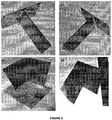
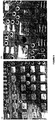
- Examples 1 - 6 Soldering on a variety of substrates using the DES Reline 200 (see Figures 1-3 , Table 1).
- Table 1 Qualitative investigation of utility of the DES Reline 200 as a solder flux for a variety of different substrates.
- Table 2 Qualitative investigation of utility of the DES Reline 200 diluted 50% v/v with water as a solder flux for a variety of common PCB surface finishes.
- Example Liquid Surface finish Outcome 9 Reline Copper Uniform solder bond formed 10 Reline Electroless nickel immersion gold Uniform solder bond formed 11 Reline Organic Soldering Preservative Uniform solder bond formed 12 Reline Immersion Silver Uniform solder bond formed 13 Reline Immersion Tin Uniform solder bond formed 14 Reline Tin Hot Air Solder Levelling Uniform solder bond formed 15 Reline Lead Hot Air Solder Levelling Uniform solder bond formed Examples 16 ( Figure 5 ) and 17 ( Figure 6 ): Use of the DES Reline 200 for the soldering of a variety of different PCB mounting methodologies (see Table 3).
- Table 3 Qualitative investigation of utility of the DES Reline 200 for a variety of common PCB mount methodologies.
- Example Liquid Mount method Outcome 16 Reline Plated through holes Uniform solder bond formed 17 Reline Ball grid array (BGA) Uniform solder bond formed
- BGA Ball grid array
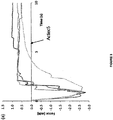
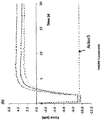
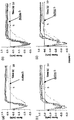
- Examples 18- 23 Solder wetting balance trials testing the efficacy of the DES Reline 200 as a solder flux for copper wire at a variety of dilutions with water (see Figure 7 and Table 4).
- Table 4 Summation of solder wetting balance results for various dilutions of the DES Reline 200 with water.
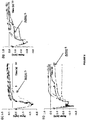
- Example 27 Use of DES as a flux for hot air solder levelling of copper and electroless nickel substrates (see Figure 9 ).
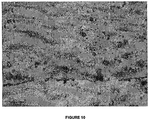
- Examples 28 Use of additives to improve solderability of difficult substrates - KOH in Reline for soldering of aluminium (see Figure 10 ).
- the DES fluxes of the present invention are inexpensive, have low environmental impact and contain no noxious or toxic materials.
- DES solders can be formulated to solder unconventional materials such as stainless steel, carbon steel and aluminium for light engineering construction as well as electronics. This presents a unique opportunity for Cu/AI heat-sink bonding methods as well as fabrication of light weight mechanical or electrically conducting architectures. Normally, these metals cannot be joined using soldering methods with conventional flux materials without the use of specialist solders.
- PCB cleanliness is a critical requirement of many electronic products. Residues from the flux constituents and their breakdown products can cause in-service failures via corrosion or electro-migration mechanisms and so must be removed. The nature of these residues is such that extensive cleaning is often required and various aqueous-based, organic solvent-based or other cleaning systems are common.
- the DES fluxes do not breakdown to produce baked-on, hard to remove residues and are readily soluble in water so cleaning, when required, should be easier. This will reduce costs and improve environmental impact. Some fluxes, or formulation variants, can be used to solder join reactive and difficult metals such as aluminium. In the PCB industry bonding technologies are in high demand for the reliable and durable joining of Al heat sink components directly to copper track PCB assemblies for efficient heat transfer.
Landscapes
- Engineering & Computer Science (AREA)
- Mechanical Engineering (AREA)
- Chemical & Material Sciences (AREA)
- Inorganic Chemistry (AREA)
- Manufacturing & Machinery (AREA)
- Microelectronics & Electronic Packaging (AREA)
- Electric Connection Of Electric Components To Printed Circuits (AREA)
Claims (12)
- Verwendung einer ionischen Flüssigkeit als Löt-/Hartlötflussmittel, wobei die ionische Flüssigkeit mindestens ein Additiv umfasst, das die Flussmittelfunktionalität verbessert, ausgewählt aus mindestens einem von Folgendem:i. ein Benetzungsmittel, das ein kationisches, anionisches oder nichtionisches Tensid ist;ii. ein Benetzungsverbesserer, der eine Säure oder ein Salz ist; oderiiii. ein Rheologiemodifizierer, der aus einem oder mehreren von Folgendem ausgewählt wird:oder Kombinationen davon, wobei die ionische Flüssigkeit ein starkes eutektisches Lösungsmittel (Deep Eutectic Solvent, DES) ist, ausgewählt aus mindestens einem von Folgendem:a. Ethylenglykol, Glycerin und Gemischen davon;b. ein hydrophiles Polymer, ausgewählt aus Poly(N-isopropylacrylamid), Poly(2-oxazolin), Polyethylenimin, Poly(acrylsäure), Poly(vinylalkohol), Poly(vinylpyrrolidinon), Poly(allylamin), Poly(vinylsulfonsäure) und Glycerolpropoxylat;c. ein Polyol, ausgewählt aus Xylit, Erythrit, Arabitol, Ribitol, Sorbital und Mannitol(iv) Metallsalz + Cholinchlorid(v) Metallsalzhydrat + Cholinchlorid(vi) Cholinchlorid + Wasserstoffbrückendonor(vii) Metallsalzhydrat + Wasserstoffbrückendonor, ausgewählt aus der Gruppe bestehend aus einem Aluminiumtrichlorid:Acetamid-Gemisch, einem Aluminiumtrichlorid:Harnstoff-Gemisch, und einem Zinnchlorid-Dihydrat:Ethylenglykol-Gemisch, wobei das DES umfasst:(a) ein Gemisch aus zwei oder mehr Verbindungen der Formel (I),
(R+)n(xn-) (I)
oder ein Hydrat davon, wobein 1,2 oder 3 ist,R+ ein primäres, sekundäres, tertiäres, quaternäres oder unsubstituiertes Ammoniumkation oder ein quaternäres Phosphoniumkation ist,Xn- ein einwertiges, zweiwertiges oder dreiwertiges Anion ist, und(b) eine oder mehrere Verbindungen der Formel (IIIa) und/oder eine oder mehrere Verbindungen der Formel (IIIb) ist,
HO-Y-OH (IIIb),
wobei:R8 für:H;C1-10-Alkyl, gegebenenfalls substituiert mit einem oder mehren F-Atomen; Phenyl, gegebenenfalls substituiert mit einem oder mehreren Substituenten, ausgewählt aus Halogen, C1-10-Alkyl und C1-10-Alkoxy; oderN(R9)R10 steht,R8a für H oder C1-10-Alkyl steht, gegebenenfalls substituiert mit einem oder mehreren F-Atomen,R9 und R10 unabhängig voneinander für H oder C1-10-Alkyl stehen, gegebenenfalls substituiert mit einem oder mehreren F-Atomen,Y für C2-10-Alkylen oder C4-8-Cycloalkylen steht, gegebenenfalls(i) substituiert mit einem oder mehreren aus F ausgewählten Substituenten;
OH;
SH;
N(R11)R12,
und C1-10-Alkyl, gegebenenfalls substituiert mit einem oder mehreren Substituenten, ausgewählt aus F und OH, und/oder(ii) unterbrochen durch eine oder mehrere Gruppen, ausgewählt aus O, S und NR13, und wobei R11 bis R13 unabhängig für H oder C1-10-Alkyl stehen, gegebenenfalls substituiert mit einem oder mehreren Substituenten, ausgewählt aus F und OH. - Verwendung einer ionischen Flüssigkeit nach Anspruch 1, wobei in der Komponente (a) R+ ein quaternäres Phosphoniumkation oder insbesondere ein primäres, sekundäres, tertiäres, quaternäres oder unsubstituiertes Ammoniumkation sein kann.
- Verwendung einer ionischen Flüssigkeit nach Anspruch 1, wobei in Komponente (a) Xn- ein Anion ist, ausgewählt aus der Liste, umfassend Halogenid, Chlorat, Perchlorat, Bromat, Nitrat, Nitrit, Cyanid, Cyanat, Thiocyanat, Hydrogencarbonat, Carbonat, Sulfat, Hydrogensulfat, Pyrosulfat, Sulfit, Hydrogensulfit, Phosphat, Monohydrogenphosphat, Dihydrogenphosphat, Metaphosphat, Pyrophosphat, Hexafluorophosphat, Tetrafluorborat, Borat, Diborat, Triborat, Tetraborat, Carboxylat und Sulfonat, wobei das Anion aus der Liste umfassend Fluorid, Chlorid, Bromid, Jodid, Nitrat und Acetat ausgewählt ist.
- Verwendung einer ionischen Flüssigkeit nach Anspruch 1, wobei die oder jede Verbindung bildende Komponente (b) ein Amid oder Polyol ist, wobei Komponente (b) vorzugsweise eine oder mehrere Verbindungen ist, die aus der Liste ausgewählt sind, die Benzamid, Acetamid, N-Methylharnstoff, N, N'-Dimethylharnstoff Harnstoff, Glycerin, Mannit, Xylit, Ethylenglykol und Propylenglykol umfasst.
- Verwendung einer ionischen Flüssigkeit nach Anspruch 1, wobei das DES ein Gemisch aus Folgendem ist:(a) eine oder mehrere Verbindungen ausgewählt aus der Liste, umfassend Benzyltrimethylammoniumhalogenid, Tetrabutylammoniumhalogenid, Ethylmethylimidazoliumhalogenid, Acetylcholinhalogenid und Cholinhalogenid; und(b) eine oder mehr Verbindungen ausgewählt aus der Liste, umfassend Benzamid, Acetamid, N-methylharnstoff, N, N'-dimethylharnstoff, Harnstoff, Glycerin, Mannitol, Xylitol und Propylenglykol.
- Verwendung einer ionischen Flüssigkeit nach Anspruch 1, wobei das DES aus einem oder mehreren der folgenden DES ausgewählt ist: Zinkchlorid:Cholinchlorid-Gemisch, Chromtrichlorid-Hexahydrat:Cholinchlorid-Gemisch, Kupferchlorid-Dihydrat:Cholinchlorid-Gemisch, Zinnchlorid-Dihydrat:Cholinchlorid-Gemisch, Relin, Ethalin, Propylen, Butalin, Glycelin, Acetal, Malin, Cholinchlorid:Glucose-Gemisch Cholinchlorid:Fructose-Gemisch, Cholinchlorid:Xylit-Gemisch, Cholinchlorid:Erythrit-Gemisch, Aluminiumtrichlorid :Acetamid-Gemisch, Aluminiumtrichlorid:Harnstoff-Gemisch und Zinnchlorid-Dihydrat:Ethylenglykol.
- Verwendung einer ionischen Flüssigkeit nach Anspruch 1, wobei das Benetzungsmittel ausgewählt ist aus Cetyltrimethylammoniumbromid, Cetyltrimethylammoniumchlorid, Polyoxyethylenoctylphenylether, Natriumlaurethsulfat, Cetylpyridiniumchlorid, Benzalkoniumchlorid, Benzethoniumchlorid, Ammoniumlaurethsulfat, Natriumstearat, ausgewählt Dioctyl Natriumsulfosuccinat, Natrium Perfluorbutylsulfonat, Polyoxyethylenglykolether, Polyoxypropylenglykol Alklylethern und Polyoxyethylenglykol Alkylphenolethern.
- Verwendung einer ionischen Flüssigkeit nach Anspruch 1, wobei der Verbesserer für das Benetzungsmittel eine Säure ist, ausgewählt aus Bromwasserstoffsäure, Hydrojodsäure, Schwefelsäure und Phosphorsäure, oder wobei der Benetzungsverbesserer ein fluoridhaltiges Salz ist, wobei vorzugsweise das fluoridhaltige Salz ausgewählt ist aus Natriumtetrafluorborat, Ammoniumtetrafluorborat, Kaliumfluorid, Natriumhexafluorphosphat und Tetrafluorborsäure.
- Verwendung einer ionischen Flüssigkeit nach einem der Ansprüche 1 bis 8, wobei das Flussmittel in Form einer Flüssigkeit oder einer Paste vorliegt.
- Verwendung einer ionischen Flüssigkeit nach den Ansprüchen 1 bis 9, wobei das Flussmittel mit einem Lösungsmittel auf 2,5 Gew.-% verdünnt wird.
- Verwendung einer ionischen Flüssigkeit nach einem der Ansprüche 1 bis 6, umfassend das Aufbringen des Löt-/Hartlötflussmittels auf eine Oberfläche des Metalls und das Erhitzen des Metalls auf eine gewünschte Löt-/Hartlöttemperatur.
- Verwendung einer ionischen Flüssigkeit nach einem der Ansprüche 1 bis 10, umfassend das Herstellen leichtgewichtiger mechanischer oder elektrisch leitender Architekturen unter Verwendung des Löt-/Hartlötflussmittels, wobei die Architektur eine Leiterplatte ist.
Applications Claiming Priority (2)
| Application Number | Priority Date | Filing Date | Title |
|---|---|---|---|
| GBGB1410093.7A GB201410093D0 (en) | 2014-06-06 | 2014-06-06 | Solder flux |
| PCT/GB2015/051655 WO2015185946A1 (en) | 2014-06-06 | 2015-06-05 | Solder flux |
Publications (2)
| Publication Number | Publication Date |
|---|---|
| EP3151998A1 EP3151998A1 (de) | 2017-04-12 |
| EP3151998B1 true EP3151998B1 (de) | 2019-05-01 |
Family
ID=51266824
Family Applications (1)
| Application Number | Title | Priority Date | Filing Date |
|---|---|---|---|
| EP15733861.7A Active EP3151998B1 (de) | 2014-06-06 | 2015-06-05 | Verwendung einer ionischen flüssigkeit als lötflussmittel |
Country Status (6)
| Country | Link |
|---|---|
| US (1) | US10835999B2 (de) |
| EP (1) | EP3151998B1 (de) |
| AU (1) | AU2015270251B2 (de) |
| CA (1) | CA2953238C (de) |
| GB (1) | GB201410093D0 (de) |
| WO (1) | WO2015185946A1 (de) |
Families Citing this family (9)
| Publication number | Priority date | Publication date | Assignee | Title |
|---|---|---|---|---|
| US9957459B2 (en) * | 2014-11-03 | 2018-05-01 | Exxonmobil Research And Engineering Company | Low transition temperature mixtures or deep eutectic solvents and processes for preparation thereof |
| CN106366005B (zh) * | 2016-08-08 | 2018-10-16 | 河南工业大学 | 一种球磨制备低共熔溶剂的方法 |
| US10793801B2 (en) | 2017-02-06 | 2020-10-06 | Exxonmobil Chemical Patents Inc. | Low transition temperature mixtures and lubricating oils containing the same |
| DE102018112982A1 (de) * | 2018-05-30 | 2019-12-05 | STANNOL GmbH & Co. KG | Aktivator für Flussmittelsysteme sowie Lötmittel zum Weichlöten von Aluminium |
| GB201812664D0 (en) | 2018-08-03 | 2018-09-19 | Imperial Innovations Ltd | Recycling of lead-and tin-based materials |
| CN109570825B (zh) * | 2018-11-22 | 2021-07-13 | 东莞市绿志岛金属有限公司 | 一种低温无卤无铅焊锡膏及其制备方法 |
| CN111253520B (zh) * | 2018-12-03 | 2021-07-02 | 华南理工大学 | 自修复材料用可聚合低共熔溶剂、导电弹性体及制备方法 |
| CN113681199B (zh) * | 2021-07-31 | 2024-01-09 | 浙江大学山东工业技术研究院 | 一种不含强酸的高性能无机助焊剂及其制备方法 |
| CN115070259A (zh) * | 2022-07-15 | 2022-09-20 | 深圳市同方电子新材料有限公司 | 一种新型超细焊锡粉的环保无铅焊锡膏 |
Family Cites Families (3)
| Publication number | Priority date | Publication date | Assignee | Title |
|---|---|---|---|---|
| US3436278A (en) * | 1966-08-08 | 1969-04-01 | Ibm | Glycol soldering fluxes |
| GB0513804D0 (en) | 2005-07-06 | 2005-08-10 | Univ Leicester | New mixture |
| JP2011096900A (ja) * | 2009-10-30 | 2011-05-12 | Fujitsu Ltd | 導電体およびプリント配線板並びにそれらの製造方法 |
-
2014
- 2014-06-06 GB GBGB1410093.7A patent/GB201410093D0/en not_active Ceased
-
2015
- 2015-06-05 AU AU2015270251A patent/AU2015270251B2/en active Active
- 2015-06-05 EP EP15733861.7A patent/EP3151998B1/de active Active
- 2015-06-05 US US15/316,608 patent/US10835999B2/en active Active
- 2015-06-05 WO PCT/GB2015/051655 patent/WO2015185946A1/en not_active Ceased
- 2015-06-05 CA CA2953238A patent/CA2953238C/en active Active
Non-Patent Citations (1)
| Title |
|---|
| None * |
Also Published As
| Publication number | Publication date |
|---|---|
| EP3151998A1 (de) | 2017-04-12 |
| CA2953238C (en) | 2023-02-21 |
| WO2015185946A1 (en) | 2015-12-10 |
| AU2015270251B2 (en) | 2020-04-30 |
| US20170157717A1 (en) | 2017-06-08 |
| AU2015270251A1 (en) | 2016-12-22 |
| GB201410093D0 (en) | 2014-07-23 |
| US10835999B2 (en) | 2020-11-17 |
| CA2953238A1 (en) | 2015-12-10 |
Similar Documents
| Publication | Publication Date | Title |
|---|---|---|
| EP3151998B1 (de) | Verwendung einer ionischen flüssigkeit als lötflussmittel | |
| EP1681131B1 (de) | Halbleiter | |
| EP1088615B1 (de) | Sn-Ag-Cu Lot und dessen Anwendung zur Oberfläschebehandlung und Bestückung von Bauteilen | |
| EP3038790B1 (de) | Aluminiumbindung | |
| JP6138846B2 (ja) | はんだ組成物およびそれを用いた電子基板の製造方法 | |
| Efzan et al. | A review of solder evolution in electronic application | |
| Vaynman et al. | Flux development for lead-free solders containing zinc | |
| JP4322948B2 (ja) | ハンダ付け用フラックス、クリームハンダ、ハンダ付け方法、食品用容器および電子部品 | |
| JP2005021958A (ja) | 鉛フリーソルダペースト | |
| KR20160080014A (ko) | Bi-코팅된 무연 솔더 볼 및 이의 제조방법 | |
| US20040129764A1 (en) | Reducing surface tension and oxidation potential of tin-based solders | |
| JP2006181635A (ja) | 鉛フリーはんだの黒化防止方法およびソルダペースト | |
| KR100431090B1 (ko) | 저융점 도금층을 이용한 무연솔더 | |
| JP2004156094A (ja) | Sn又はSn合金に対する表面処理剤及び表面処理方法 | |
| JP3815997B2 (ja) | はんだペースト | |
| Vaynman et al. | Fluxes for Lead-Free Solders Containing Zinc | |
| JP2024139686A (ja) | フラックス組成物、およびはんだ組成物、並びに、電子基板の製造方法 | |
| Kim et al. | Drop impact reliability of Cu-Zn/Sn-Ag-Cu/Cu-Zn solder joints | |
| JP2007096125A (ja) | はんだ接合方法、及び、これによって製造した実装回路基板 |
Legal Events
| Date | Code | Title | Description |
|---|---|---|---|
| STAA | Information on the status of an ep patent application or granted ep patent |
Free format text: STATUS: THE INTERNATIONAL PUBLICATION HAS BEEN MADE |
|
| PUAI | Public reference made under article 153(3) epc to a published international application that has entered the european phase |
Free format text: ORIGINAL CODE: 0009012 |
|
| STAA | Information on the status of an ep patent application or granted ep patent |
Free format text: STATUS: REQUEST FOR EXAMINATION WAS MADE |
|
| 17P | Request for examination filed |
Effective date: 20161206 |
|
| AK | Designated contracting states |
Kind code of ref document: A1 Designated state(s): AL AT BE BG CH CY CZ DE DK EE ES FI FR GB GR HR HU IE IS IT LI LT LU LV MC MK MT NL NO PL PT RO RS SE SI SK SM TR |
|
| AX | Request for extension of the european patent |
Extension state: BA ME |
|
| DAV | Request for validation of the european patent (deleted) | ||
| DAX | Request for extension of the european patent (deleted) | ||
| STAA | Information on the status of an ep patent application or granted ep patent |
Free format text: STATUS: EXAMINATION IS IN PROGRESS |
|
| 17Q | First examination report despatched |
Effective date: 20180307 |
|
| REG | Reference to a national code |
Ref country code: DE Ref legal event code: R079 Ref document number: 602015029306 Country of ref document: DE Free format text: PREVIOUS MAIN CLASS: B23K0035362000 Ipc: B23K0001000000 |
|
| GRAP | Despatch of communication of intention to grant a patent |
Free format text: ORIGINAL CODE: EPIDOSNIGR1 |
|
| STAA | Information on the status of an ep patent application or granted ep patent |
Free format text: STATUS: GRANT OF PATENT IS INTENDED |
|
| RIC1 | Information provided on ipc code assigned before grant |
Ipc: H05K 3/34 20060101ALI20180712BHEP Ipc: B23K 35/362 20060101ALI20180712BHEP Ipc: B23K 1/00 20060101AFI20180712BHEP Ipc: B23K 35/36 20060101ALI20180712BHEP Ipc: B23K 35/02 20060101ALI20180712BHEP |
|
| INTG | Intention to grant announced |
Effective date: 20180727 |
|
| GRAJ | Information related to disapproval of communication of intention to grant by the applicant or resumption of examination proceedings by the epo deleted |
Free format text: ORIGINAL CODE: EPIDOSDIGR1 |
|
| STAA | Information on the status of an ep patent application or granted ep patent |
Free format text: STATUS: EXAMINATION IS IN PROGRESS |
|
| GRAP | Despatch of communication of intention to grant a patent |
Free format text: ORIGINAL CODE: EPIDOSNIGR1 |
|
| STAA | Information on the status of an ep patent application or granted ep patent |
Free format text: STATUS: GRANT OF PATENT IS INTENDED |
|
| INTC | Intention to grant announced (deleted) | ||
| INTG | Intention to grant announced |
Effective date: 20181205 |
|
| GRAS | Grant fee paid |
Free format text: ORIGINAL CODE: EPIDOSNIGR3 |
|
| GRAA | (expected) grant |
Free format text: ORIGINAL CODE: 0009210 |
|
| STAA | Information on the status of an ep patent application or granted ep patent |
Free format text: STATUS: THE PATENT HAS BEEN GRANTED |
|
| AK | Designated contracting states |
Kind code of ref document: B1 Designated state(s): AL AT BE BG CH CY CZ DE DK EE ES FI FR GB GR HR HU IE IS IT LI LT LU LV MC MK MT NL NO PL PT RO RS SE SI SK SM TR |
|
| REG | Reference to a national code |
Ref country code: GB Ref legal event code: FG4D |
|
| REG | Reference to a national code |
Ref country code: CH Ref legal event code: EP Ref country code: AT Ref legal event code: REF Ref document number: 1126267 Country of ref document: AT Kind code of ref document: T Effective date: 20190515 |
|
| REG | Reference to a national code |
Ref country code: DE Ref legal event code: R096 Ref document number: 602015029306 Country of ref document: DE Ref country code: IE Ref legal event code: FG4D |
|
| REG | Reference to a national code |
Ref country code: NL Ref legal event code: MP Effective date: 20190501 |
|
| REG | Reference to a national code |
Ref country code: LT Ref legal event code: MG4D |
|
| PG25 | Lapsed in a contracting state [announced via postgrant information from national office to epo] |
Ref country code: FI Free format text: LAPSE BECAUSE OF FAILURE TO SUBMIT A TRANSLATION OF THE DESCRIPTION OR TO PAY THE FEE WITHIN THE PRESCRIBED TIME-LIMIT Effective date: 20190501 Ref country code: NO Free format text: LAPSE BECAUSE OF FAILURE TO SUBMIT A TRANSLATION OF THE DESCRIPTION OR TO PAY THE FEE WITHIN THE PRESCRIBED TIME-LIMIT Effective date: 20190801 Ref country code: LT Free format text: LAPSE BECAUSE OF FAILURE TO SUBMIT A TRANSLATION OF THE DESCRIPTION OR TO PAY THE FEE WITHIN THE PRESCRIBED TIME-LIMIT Effective date: 20190501 Ref country code: NL Free format text: LAPSE BECAUSE OF FAILURE TO SUBMIT A TRANSLATION OF THE DESCRIPTION OR TO PAY THE FEE WITHIN THE PRESCRIBED TIME-LIMIT Effective date: 20190501 Ref country code: HR Free format text: LAPSE BECAUSE OF FAILURE TO SUBMIT A TRANSLATION OF THE DESCRIPTION OR TO PAY THE FEE WITHIN THE PRESCRIBED TIME-LIMIT Effective date: 20190501 Ref country code: ES Free format text: LAPSE BECAUSE OF FAILURE TO SUBMIT A TRANSLATION OF THE DESCRIPTION OR TO PAY THE FEE WITHIN THE PRESCRIBED TIME-LIMIT Effective date: 20190501 Ref country code: AL Free format text: LAPSE BECAUSE OF FAILURE TO SUBMIT A TRANSLATION OF THE DESCRIPTION OR TO PAY THE FEE WITHIN THE PRESCRIBED TIME-LIMIT Effective date: 20190501 Ref country code: SE Free format text: LAPSE BECAUSE OF FAILURE TO SUBMIT A TRANSLATION OF THE DESCRIPTION OR TO PAY THE FEE WITHIN THE PRESCRIBED TIME-LIMIT Effective date: 20190501 Ref country code: PT Free format text: LAPSE BECAUSE OF FAILURE TO SUBMIT A TRANSLATION OF THE DESCRIPTION OR TO PAY THE FEE WITHIN THE PRESCRIBED TIME-LIMIT Effective date: 20190901 |
|
| PG25 | Lapsed in a contracting state [announced via postgrant information from national office to epo] |
Ref country code: BG Free format text: LAPSE BECAUSE OF FAILURE TO SUBMIT A TRANSLATION OF THE DESCRIPTION OR TO PAY THE FEE WITHIN THE PRESCRIBED TIME-LIMIT Effective date: 20190801 Ref country code: GR Free format text: LAPSE BECAUSE OF FAILURE TO SUBMIT A TRANSLATION OF THE DESCRIPTION OR TO PAY THE FEE WITHIN THE PRESCRIBED TIME-LIMIT Effective date: 20190802 Ref country code: LV Free format text: LAPSE BECAUSE OF FAILURE TO SUBMIT A TRANSLATION OF THE DESCRIPTION OR TO PAY THE FEE WITHIN THE PRESCRIBED TIME-LIMIT Effective date: 20190501 Ref country code: RS Free format text: LAPSE BECAUSE OF FAILURE TO SUBMIT A TRANSLATION OF THE DESCRIPTION OR TO PAY THE FEE WITHIN THE PRESCRIBED TIME-LIMIT Effective date: 20190501 |
|
| REG | Reference to a national code |
Ref country code: AT Ref legal event code: MK05 Ref document number: 1126267 Country of ref document: AT Kind code of ref document: T Effective date: 20190501 |
|
| PG25 | Lapsed in a contracting state [announced via postgrant information from national office to epo] |
Ref country code: IS Free format text: LAPSE BECAUSE OF FAILURE TO SUBMIT A TRANSLATION OF THE DESCRIPTION OR TO PAY THE FEE WITHIN THE PRESCRIBED TIME-LIMIT Effective date: 20190901 |
|
| PG25 | Lapsed in a contracting state [announced via postgrant information from national office to epo] |
Ref country code: SK Free format text: LAPSE BECAUSE OF FAILURE TO SUBMIT A TRANSLATION OF THE DESCRIPTION OR TO PAY THE FEE WITHIN THE PRESCRIBED TIME-LIMIT Effective date: 20190501 Ref country code: RO Free format text: LAPSE BECAUSE OF FAILURE TO SUBMIT A TRANSLATION OF THE DESCRIPTION OR TO PAY THE FEE WITHIN THE PRESCRIBED TIME-LIMIT Effective date: 20190501 Ref country code: CZ Free format text: LAPSE BECAUSE OF FAILURE TO SUBMIT A TRANSLATION OF THE DESCRIPTION OR TO PAY THE FEE WITHIN THE PRESCRIBED TIME-LIMIT Effective date: 20190501 Ref country code: MC Free format text: LAPSE BECAUSE OF FAILURE TO SUBMIT A TRANSLATION OF THE DESCRIPTION OR TO PAY THE FEE WITHIN THE PRESCRIBED TIME-LIMIT Effective date: 20190501 Ref country code: DK Free format text: LAPSE BECAUSE OF FAILURE TO SUBMIT A TRANSLATION OF THE DESCRIPTION OR TO PAY THE FEE WITHIN THE PRESCRIBED TIME-LIMIT Effective date: 20190501 Ref country code: EE Free format text: LAPSE BECAUSE OF FAILURE TO SUBMIT A TRANSLATION OF THE DESCRIPTION OR TO PAY THE FEE WITHIN THE PRESCRIBED TIME-LIMIT Effective date: 20190501 Ref country code: AT Free format text: LAPSE BECAUSE OF FAILURE TO SUBMIT A TRANSLATION OF THE DESCRIPTION OR TO PAY THE FEE WITHIN THE PRESCRIBED TIME-LIMIT Effective date: 20190501 |
|
| REG | Reference to a national code |
Ref country code: CH Ref legal event code: PL |
|
| REG | Reference to a national code |
Ref country code: DE Ref legal event code: R097 Ref document number: 602015029306 Country of ref document: DE |
|
| PG25 | Lapsed in a contracting state [announced via postgrant information from national office to epo] |
Ref country code: IT Free format text: LAPSE BECAUSE OF FAILURE TO SUBMIT A TRANSLATION OF THE DESCRIPTION OR TO PAY THE FEE WITHIN THE PRESCRIBED TIME-LIMIT Effective date: 20190501 Ref country code: SM Free format text: LAPSE BECAUSE OF FAILURE TO SUBMIT A TRANSLATION OF THE DESCRIPTION OR TO PAY THE FEE WITHIN THE PRESCRIBED TIME-LIMIT Effective date: 20190501 |
|
| PLBE | No opposition filed within time limit |
Free format text: ORIGINAL CODE: 0009261 |
|
| STAA | Information on the status of an ep patent application or granted ep patent |
Free format text: STATUS: NO OPPOSITION FILED WITHIN TIME LIMIT |
|
| REG | Reference to a national code |
Ref country code: BE Ref legal event code: MM Effective date: 20190630 |
|
| PG25 | Lapsed in a contracting state [announced via postgrant information from national office to epo] |
Ref country code: TR Free format text: LAPSE BECAUSE OF FAILURE TO SUBMIT A TRANSLATION OF THE DESCRIPTION OR TO PAY THE FEE WITHIN THE PRESCRIBED TIME-LIMIT Effective date: 20190501 |
|
| 26N | No opposition filed |
Effective date: 20200204 |
|
| PG25 | Lapsed in a contracting state [announced via postgrant information from national office to epo] |
Ref country code: PL Free format text: LAPSE BECAUSE OF FAILURE TO SUBMIT A TRANSLATION OF THE DESCRIPTION OR TO PAY THE FEE WITHIN THE PRESCRIBED TIME-LIMIT Effective date: 20190501 Ref country code: IE Free format text: LAPSE BECAUSE OF NON-PAYMENT OF DUE FEES Effective date: 20190605 |
|
| PG25 | Lapsed in a contracting state [announced via postgrant information from national office to epo] |
Ref country code: BE Free format text: LAPSE BECAUSE OF NON-PAYMENT OF DUE FEES Effective date: 20190630 Ref country code: LU Free format text: LAPSE BECAUSE OF NON-PAYMENT OF DUE FEES Effective date: 20190605 Ref country code: LI Free format text: LAPSE BECAUSE OF NON-PAYMENT OF DUE FEES Effective date: 20190630 Ref country code: SI Free format text: LAPSE BECAUSE OF FAILURE TO SUBMIT A TRANSLATION OF THE DESCRIPTION OR TO PAY THE FEE WITHIN THE PRESCRIBED TIME-LIMIT Effective date: 20190501 Ref country code: CH Free format text: LAPSE BECAUSE OF NON-PAYMENT OF DUE FEES Effective date: 20190630 |
|
| PG25 | Lapsed in a contracting state [announced via postgrant information from national office to epo] |
Ref country code: CY Free format text: LAPSE BECAUSE OF FAILURE TO SUBMIT A TRANSLATION OF THE DESCRIPTION OR TO PAY THE FEE WITHIN THE PRESCRIBED TIME-LIMIT Effective date: 20190501 |
|
| PG25 | Lapsed in a contracting state [announced via postgrant information from national office to epo] |
Ref country code: MT Free format text: LAPSE BECAUSE OF FAILURE TO SUBMIT A TRANSLATION OF THE DESCRIPTION OR TO PAY THE FEE WITHIN THE PRESCRIBED TIME-LIMIT Effective date: 20190501 Ref country code: HU Free format text: LAPSE BECAUSE OF FAILURE TO SUBMIT A TRANSLATION OF THE DESCRIPTION OR TO PAY THE FEE WITHIN THE PRESCRIBED TIME-LIMIT; INVALID AB INITIO Effective date: 20150605 |
|
| PG25 | Lapsed in a contracting state [announced via postgrant information from national office to epo] |
Ref country code: MK Free format text: LAPSE BECAUSE OF FAILURE TO SUBMIT A TRANSLATION OF THE DESCRIPTION OR TO PAY THE FEE WITHIN THE PRESCRIBED TIME-LIMIT Effective date: 20190501 |
|
| P01 | Opt-out of the competence of the unified patent court (upc) registered |
Effective date: 20230424 |
|
| PGFP | Annual fee paid to national office [announced via postgrant information from national office to epo] |
Ref country code: FR Payment date: 20240815 Year of fee payment: 11 |
|
| PGFP | Annual fee paid to national office [announced via postgrant information from national office to epo] |
Ref country code: DE Payment date: 20240816 Year of fee payment: 11 |
|
| PGFP | Annual fee paid to national office [announced via postgrant information from national office to epo] |
Ref country code: GB Payment date: 20250411 Year of fee payment: 11 |