EP3150208A1 - Theobromine or its derivatives for the treatment or prevention of renal lithiasis - Google Patents
Theobromine or its derivatives for the treatment or prevention of renal lithiasis Download PDFInfo
- Publication number
- EP3150208A1 EP3150208A1 EP15724334.6A EP15724334A EP3150208A1 EP 3150208 A1 EP3150208 A1 EP 3150208A1 EP 15724334 A EP15724334 A EP 15724334A EP 3150208 A1 EP3150208 A1 EP 3150208A1
- Authority
- EP
- European Patent Office
- Prior art keywords
- uric acid
- theobromine
- use according
- renal lithiasis
- composition
- Prior art date
- Legal status (The legal status is an assumption and is not a legal conclusion. Google has not performed a legal analysis and makes no representation as to the accuracy of the status listed.)
- Granted
Links
Images



Classifications
-
- A—HUMAN NECESSITIES
- A61—MEDICAL OR VETERINARY SCIENCE; HYGIENE
- A61K—PREPARATIONS FOR MEDICAL, DENTAL OR TOILETRY PURPOSES
- A61K31/00—Medicinal preparations containing organic active ingredients
- A61K31/33—Heterocyclic compounds
- A61K31/395—Heterocyclic compounds having nitrogen as a ring hetero atom, e.g. guanethidine or rifamycins
- A61K31/495—Heterocyclic compounds having nitrogen as a ring hetero atom, e.g. guanethidine or rifamycins having six-membered rings with two or more nitrogen atoms as the only ring heteroatoms, e.g. piperazine or tetrazines
- A61K31/505—Pyrimidines; Hydrogenated pyrimidines, e.g. trimethoprim
- A61K31/519—Pyrimidines; Hydrogenated pyrimidines, e.g. trimethoprim ortho- or peri-condensed with heterocyclic rings
- A61K31/52—Purines, e.g. adenine
- A61K31/522—Purines, e.g. adenine having oxo groups directly attached to the heterocyclic ring, e.g. hypoxanthine, guanine, acyclovir
-
- A—HUMAN NECESSITIES
- A23—FOODS OR FOODSTUFFS; TREATMENT THEREOF, NOT COVERED BY OTHER CLASSES
- A23L—FOODS, FOODSTUFFS OR NON-ALCOHOLIC BEVERAGES, NOT OTHERWISE PROVIDED FOR; PREPARATION OR TREATMENT THEREOF
- A23L33/00—Modifying nutritive qualities of foods; Dietetic products; Preparation or treatment thereof
- A23L33/10—Modifying nutritive qualities of foods; Dietetic products; Preparation or treatment thereof using additives
-
- A—HUMAN NECESSITIES
- A61—MEDICAL OR VETERINARY SCIENCE; HYGIENE
- A61P—SPECIFIC THERAPEUTIC ACTIVITY OF CHEMICAL COMPOUNDS OR MEDICINAL PREPARATIONS
- A61P13/00—Drugs for disorders of the urinary system
- A61P13/04—Drugs for disorders of the urinary system for urolithiasis
-
- A—HUMAN NECESSITIES
- A61—MEDICAL OR VETERINARY SCIENCE; HYGIENE
- A61P—SPECIFIC THERAPEUTIC ACTIVITY OF CHEMICAL COMPOUNDS OR MEDICINAL PREPARATIONS
- A61P13/00—Drugs for disorders of the urinary system
- A61P13/12—Drugs for disorders of the urinary system of the kidneys
-
- A—HUMAN NECESSITIES
- A61—MEDICAL OR VETERINARY SCIENCE; HYGIENE
- A61P—SPECIFIC THERAPEUTIC ACTIVITY OF CHEMICAL COMPOUNDS OR MEDICINAL PREPARATIONS
- A61P19/00—Drugs for skeletal disorders
- A61P19/06—Antigout agents, e.g. antihyperuricemic or uricosuric agents
-
- A—HUMAN NECESSITIES
- A23—FOODS OR FOODSTUFFS; TREATMENT THEREOF, NOT COVERED BY OTHER CLASSES
- A23V—INDEXING SCHEME RELATING TO FOODS, FOODSTUFFS OR NON-ALCOHOLIC BEVERAGES AND LACTIC OR PROPIONIC ACID BACTERIA USED IN FOODSTUFFS OR FOOD PREPARATION
- A23V2002/00—Food compositions, function of food ingredients or processes for food or foodstuffs
-
- A—HUMAN NECESSITIES
- A23—FOODS OR FOODSTUFFS; TREATMENT THEREOF, NOT COVERED BY OTHER CLASSES
- A23V—INDEXING SCHEME RELATING TO FOODS, FOODSTUFFS OR NON-ALCOHOLIC BEVERAGES AND LACTIC OR PROPIONIC ACID BACTERIA USED IN FOODSTUFFS OR FOOD PREPARATION
- A23V2200/00—Function of food ingredients
- A23V2200/30—Foods, ingredients or supplements having a functional effect on health
Definitions
- the present invention refers to the use of theobromine or its derivatives as an inhibitor of uric acid crystallisation to avoid the formation of uric acid crystals in urine and as a consequence uric acid renal lithiasis.
- uric acid renal lithiasis is based on the implementation of dietary measures to reduce uric acid levels in the urine and in turn increase urinary pH levels. This is why it is recommended to reduce the excessive consumption of animal protein (red meat, seafood, oily fish, offal, etc.) and alcoholic drinks and to increase the consumption of fruit (mainly citrus) and vegetables, as well as carbonated drinks.
- animal protein red meat, seafood, oily fish, offal, etc.
- alcoholic drinks to increase the consumption of fruit (mainly citrus) and vegetables, as well as carbonated drinks.
- the only pharmaceutical drugs currently used to treat uric acid renal lithiasis are citrate as a urinary basifying agent and, in those cases where hyperuricemia is detected, the synthesis of uric acid in the plasma is reduced through oral administration of allopurinol or febuxostat in order to inhibit the xanthine oxidase enzyme, which is responsible for the synthesis of uric acid ( Grases F et al., Urol. Int. 1999; 62(4):201-4 ; Ngo TC, el al. Rev. Urol. 2007; 9(1):17-27 ).
- the objective of the new invention is to present a new product for the treatment of uric acid renal lithiasis based on the discovery of a new and potent uric acid crystallisation inhibitor.
- This product will be a xanthine derivative, with the 3 and 7 positions modified by a linear or branched chain containing alkyl groups of one to six carbon atoms, the chains may be identical or different from each other.
- R 1 and R 2 groups as methyl groups, a dimethylxanthine called theobromine.
- the theobromine (C 7 H 8 N 4 O 2 , chemical name 3,7-dimethylxanthine or 3,7-dihydro-3,7-dimethyl-1H-purine-2,6-dione) is an alkaloid from the methylxanthine family, a family that also includes theophylline and caffeine.
- Theobromine has two methyl groups in comparison with the three groups that caffeine contains.
- a primary aspect of the present invention relates to the use of a compound with the general formula (I): where: R 1 and R 2 are identical or different and represent an alkyl group (C 1 -C 6 ) or any of their pharmaceutically acceptable salts for the production of a composition for the treatment and/or prevention of renal lithiasis, preferably uric acid renal lithiasis.
- alkyl in the present invention refers to linear or branched saturated hydrocarbon chains that have 1 to 6 carbon atoms, for example, methyl, ethyl, n -propyl, i -propyl, n -butyl, tert -butyl, sec -butyl, n -pentyl, n -hexyl, etc. more preferably of 1 to 3 carbon atoms and more preferably it is a methyl.
- R 1 is an alkyl group (C 1 -C 3 ), more preferably R 1 is a methyl.
- R 2 is an alkyl group (C 1 -C 3 ), more preferably R 2 is a methyl.
- R 1 and R 2 are both a methyl group.
- compounds with general formula (I) are uric acid crystallisation inhibitors
- the compound with formula (I) is used to produce a composition intended to reduce risks and improve the health status of patients with diseases related to the crystallisation of uric acid, such as, for example, uric acid renal lithiasis.
- Theobromine is found in fairly high concentrations in chocolate.
- a 50 g piece of black or bitter chocolate which contains a minimum of 34% up to a maximum of 98% cocoa, may contain an average of 378 mg theobromine.
- This amount of chocolate is obviously safe and can be eaten without any type of side effects.
- a dose of over 1000 mg has been safely used in clinical trials without secondary or toxic effects, although it can cause mild stomach upset.
- a great amount of cocoa must be eaten for theobromine to have any harmful effects on humans.
- theobromine does not cause harmful effects in humans it is highly toxic to some domestic animals, including dogs and cats.
- a low dose of theobromine in animals can cause cardiac arrhythmias, convulsions and even death.
- the present invention refers to the use of a preparation of a compound with formula (I), more preferably of theobromine, for its use in a composition (pharmaceutical or nutraceutical composition, functional food or dietary supplement) for the treatment or prevention of renal lithiasis, preferably uric acid renal lithiasis.
- a composition pharmaceutical or nutraceutical composition, functional food or dietary supplement
- the dose used varies between 100 mg/day up to 380 mg/day.
- Renal lithiasis refers to the disorder caused by the presence of calculi or stones inside the kidneys or the urinary tract (ureters, bladder). Renal calculi are composed of substances normally found in urine (calcium salts, uric acid, cysteine, etc.) that for different reasons have become concentrated and precipitated out forming fragments of varying size.
- uric acid crystals or "uric acid calculi” includes all those processes or conditions that involve / induce the formation of precipitated solids in the urine that this substance is involved in.
- composition is a pharmaceutical or nutraceutical composition or functional food.
- a "nutraceutical composition” or “functional food” is understood as a food that has a beneficial effect on health.
- nutraceutical can be applied to extracts or chemical compounds obtained from common foods. Examples of foods that have been attributed nutraceutical properties are olive oil, red wine, broccoli, soybeans, etc.
- Nutraceuticals are normally used in nutritional mixtures and in the pharmaceutical industry. Just as some foods can be classified as nutraceuticals it is also possible to classify some nutritional supplements in the same way, such as, for example, fatty acids such as omega-3 derived from fish oil and from some vegetables or antioxidants and vitamins.
- the compound with formula (I), and particularly theobromine can be administered in solid form (including granules, powder or suppositories) or in liquid form (such as solutions, suspensions or emulsions). It can be administered in this way or even after being subjected to operations such as sterilisation or the addition of preservatives, stabilisers or emulsifiers.
- the administration of the compound with formula (I), and particularly theobromine can be combined with one or more compounds that facilitate its absorption through a selected administration route. It can, therefore, be administered with lactose, sucrose, talc, magnesium stearate, cellulose, calcium salts, gelatine, fatty acids, as well as other similar substances.
- compositions are the adjuvants and vehicles known to experts in the field and are commonly used in preparing therapeutic compositions.
- the compound with formula (I), particularly theobromine is in a pharmaceutically acceptable form or is substantially pure, that is, that it has a pharmaceutically acceptable level of purity excluding the normal pharmaceutical additives, such as diluents and carriers, and is free from any materials considered toxic at normal dosage levels.
- the purity levels for the active substance are preferably above 50%, more preferably above 70%, and still more preferably above 90%.
- the levels of the compound with formula (I), or its salts or solvates are above 95%.
- the induction time time when crystals begin to appear
- increases considerable with increased theobromine concentration indicating that this substance acts as a uric acid nucleation inhibitor.
- the uric acid crystals' morphology becomes much narrower and more elongated with increasing theobromine concentrations. This indicates that the inhibitor acts on the crystals' lateral faces, preventing growth in that area. Therefore, in addition to being an inhibitor of uric acid nucleation it also acts as an inhibitor of crystal growth.
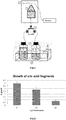
- the solution resulting from the mixing of the uric acid and synthetic urine solutions is passed through a chamber containing a uric acid calculus of know weight (2), the chamber was located within an oven at 37°C (1). The flow system is maintained for 48 hours. At the end of this time the calculi are dried in an oven and weighed again. The % increase in mass is then calculated.
- FIG. 5 shows the percentage increase in mass in relation to the concentration of theobromine. A total of 5 calculi were used for each theobromine concentration. As can be seen, as the theobromine concentration increases the % in mass of the calculus fragments decreases, with the increase in mass practically zero at 20 mg/l theobromine.
Landscapes
- Health & Medical Sciences (AREA)
- Life Sciences & Earth Sciences (AREA)
- Chemical & Material Sciences (AREA)
- Veterinary Medicine (AREA)
- Public Health (AREA)
- Medicinal Chemistry (AREA)
- General Health & Medical Sciences (AREA)
- Animal Behavior & Ethology (AREA)
- Pharmacology & Pharmacy (AREA)
- Engineering & Computer Science (AREA)
- Epidemiology (AREA)
- General Chemical & Material Sciences (AREA)
- Nuclear Medicine, Radiotherapy & Molecular Imaging (AREA)
- Chemical Kinetics & Catalysis (AREA)
- Organic Chemistry (AREA)
- Bioinformatics & Cheminformatics (AREA)
- Mycology (AREA)
- Polymers & Plastics (AREA)
- Food Science & Technology (AREA)
- Nutrition Science (AREA)
- Urology & Nephrology (AREA)
- Physical Education & Sports Medicine (AREA)
- Rheumatology (AREA)
- Pain & Pain Management (AREA)
- Pharmaceuticals Containing Other Organic And Inorganic Compounds (AREA)
- Medicinal Preparation (AREA)
- Medicines Containing Material From Animals Or Micro-Organisms (AREA)
Abstract
Description
- The present invention refers to the use of theobromine or its derivatives as an inhibitor of uric acid crystallisation to avoid the formation of uric acid crystals in urine and as a consequence uric acid renal lithiasis.
- It is current knowledge that the fundamental problem of uric acid renal lithiasis lies in the more or less persistent existence of urinary pH values below 5.5. Urinary supersaturation with uric acid linked to the excretion of this substance is important but there are almost no cases where it has been demonstrated to be a decisive factor in the development of urolithiasis. Intuitively, it seems likely that the presence of uric acid crystallisation inhibitors must be relevant, since in individuals with the same urinary pH values and concentrations of uric acid some form uric acid calculi and others do not. However, although some in vitro studies of potential uric acid crystallisation inhibitors have been performed, which have shown that sapponins, glycosaminoglycans and glycoproteins exhibit a remarkable ability to inhibit the crystallisation of uric acid, there is no known clinical study on this subject.
- Currently, the prophylactic treatment of uric acid renal lithiasis is based on the implementation of dietary measures to reduce uric acid levels in the urine and in turn increase urinary pH levels. This is why it is recommended to reduce the excessive consumption of animal protein (red meat, seafood, oily fish, offal, etc.) and alcoholic drinks and to increase the consumption of fruit (mainly citrus) and vegetables, as well as carbonated drinks. The only pharmaceutical drugs currently used to treat uric acid renal lithiasis are citrate as a urinary basifying agent and, in those cases where hyperuricemia is detected, the synthesis of uric acid in the plasma is reduced through oral administration of allopurinol or febuxostat in order to inhibit the xanthine oxidase enzyme, which is responsible for the synthesis of uric acid (Grases F et al., Urol. Int. 1999; 62(4):201-4; Ngo TC, el al. Rev. Urol. 2007; 9(1):17-27).
- Therefore, the therapeutic arsenal available for the treatment of uric acid renal lithiasis is still very limited, prompting interest in new therapeutic strategies that provide new solutions to this pathology.
- The objective of the new invention is to present a new product for the treatment of uric acid renal lithiasis based on the discovery of a new and potent uric acid crystallisation inhibitor. This product will be a xanthine derivative, with the 3 and 7 positions modified by a linear or branched chain containing alkyl groups of one to six carbon atoms, the chains may be identical or different from each other. For example, with the R1 and R2 groups as methyl groups, a dimethylxanthine called theobromine.
- The theobromine (C7H8N4O2,
chemical name 3,7-dimethylxanthine or 3,7-dihydro-3,7-dimethyl-1H-purine-2,6-dione) is an alkaloid from the methylxanthine family, a family that also includes theophylline and caffeine. Theobromine has two methyl groups in comparison with the three groups that caffeine contains. - Therefore, a primary aspect of the present invention relates to the use of a compound with the general formula (I):

- The term "alkyl" in the present invention refers to linear or branched saturated hydrocarbon chains that have 1 to 6 carbon atoms, for example, methyl, ethyl, n-propyl, i-propyl, n-butyl, tert-butyl, sec-butyl, n-pentyl, n-hexyl, etc. more preferably of 1 to 3 carbon atoms and more preferably it is a methyl.
- In a preferred embodiment, R1 is an alkyl group (C1-C3), more preferably R1 is a methyl.
- In another preferred embodiment, R2 is an alkyl group (C1-C3), more preferably R2 is a methyl.
- In a more preferred embodiment, R1 and R2 are both a methyl group.
- Given that it has been demonstrated with the present invention that compounds with general formula (I) are uric acid crystallisation inhibitors, in another preferred embodiment, the compound with formula (I), as previously described, is used to produce a composition intended to reduce risks and improve the health status of patients with diseases related to the crystallisation of uric acid, such as, for example, uric acid renal lithiasis.
- Theobromine is found in fairly high concentrations in chocolate. A 50 g piece of black or bitter chocolate, which contains a minimum of 34% up to a maximum of 98% cocoa, may contain an average of 378 mg theobromine. This amount of chocolate is obviously safe and can be eaten without any type of side effects. A dose of over 1000 mg has been safely used in clinical trials without secondary or toxic effects, although it can cause mild stomach upset. A great amount of cocoa must be eaten for theobromine to have any harmful effects on humans. Although theobromine does not cause harmful effects in humans it is highly toxic to some domestic animals, including dogs and cats. A low dose of theobromine in animals can cause cardiac arrhythmias, convulsions and even death.
- Therefore, in a preferred embodiment the present invention refers to the use of a preparation of a compound with formula (I), more preferably of theobromine, for its use in a composition (pharmaceutical or nutraceutical composition, functional food or dietary supplement) for the treatment or prevention of renal lithiasis, preferably uric acid renal lithiasis. The dose used varies between 100 mg/day up to 380 mg/day.
- The terms "renal lithiasis", "urolithiasis" or "nephrolithiasis" refer to the disorder caused by the presence of calculi or stones inside the kidneys or the urinary tract (ureters, bladder). Renal calculi are composed of substances normally found in urine (calcium salts, uric acid, cysteine, etc.) that for different reasons have become concentrated and precipitated out forming fragments of varying size.
- The term "uric acid crystals" or "uric acid calculi" includes all those processes or conditions that involve / induce the formation of precipitated solids in the urine that this substance is involved in.
- In a preferred embodiment the composition is a pharmaceutical or nutraceutical composition or functional food.
- In the present invention, a "nutraceutical composition" or "functional food" is understood as a food that has a beneficial effect on health. Similarly, the term nutraceutical can be applied to extracts or chemical compounds obtained from common foods. Examples of foods that have been attributed nutraceutical properties are olive oil, red wine, broccoli, soybeans, etc. Nutraceuticals are normally used in nutritional mixtures and in the pharmaceutical industry. Just as some foods can be classified as nutraceuticals it is also possible to classify some nutritional supplements in the same way, such as, for example, fatty acids such as omega-3 derived from fish oil and from some vegetables or antioxidants and vitamins.
- The compound with formula (I), and particularly theobromine, can be administered in solid form (including granules, powder or suppositories) or in liquid form (such as solutions, suspensions or emulsions). It can be administered in this way or even after being subjected to operations such as sterilisation or the addition of preservatives, stabilisers or emulsifiers.
- The administration of the compound with formula (I), and particularly theobromine, can be combined with one or more compounds that facilitate its absorption through a selected administration route. It can, therefore, be administered with lactose, sucrose, talc, magnesium stearate, cellulose, calcium salts, gelatine, fatty acids, as well as other similar substances.
- The pharmaceutically acceptable adjuvants and vehicles that can be used in said compositions are the adjuvants and vehicles known to experts in the field and are commonly used in preparing therapeutic compositions.
- For therapeutic use, it is preferable if the compound with formula (I), particularly theobromine, is in a pharmaceutically acceptable form or is substantially pure, that is, that it has a pharmaceutically acceptable level of purity excluding the normal pharmaceutical additives, such as diluents and carriers, and is free from any materials considered toxic at normal dosage levels. The purity levels for the active substance are preferably above 50%, more preferably above 70%, and still more preferably above 90%. In a preferred embodiment, the levels of the compound with formula (I), or its salts or solvates, are above 95%.
- Throughout the description and the claims the word "comprise" and its variations are not intended to exclude other technical characteristics, additives, components or steps. For the experts in the field, other objects, advantages and characteristics of the invention will arise partly from the description and partly from practice with the invention. The following examples and figures are provided by way of illustration and are not intended to be limiting of the present invention.
-
-
FIG.1 . Kinetics curves for the crystallisation of uric acid (400 mg/l) in synthetic urine at pH=4.67, at different theobromine concentrations. The absorbance (at 550 nm) is plotted against time (in minutes). -
FIG.2 . Graphical representation of the induction periods (in minutes) for a solution of 400 mg/l uric acid in synthetic urine, for different pH values and concentrations of theobromine. -
FIG.3 . Uric acid crystals observed using scanning electron microscopy, obtained in synthetic urine at pH=4.67 in the absence of theobromine (A) and the presence of 20 mg/l (B) and 40 mg/l (C) theobromine. -
FIG.4 . Flow diagram of the system used, consisting of a synthetic urine solution and a uric acid solution each driven by a peristaltic pump with a different flow rate, a T-shaped connection and a chamber containing the uric acid calculus. -
FIG.5 . Percentage increase in mass (with standard deviation bar) in vitro of renal uric acid calculi fragments from a single patient, obtained after extracorporeal shock wave lithotripsy, when subjected to a constant flow of synthetic urine for 48 hours in the presence of different concentrations of theobromine. -
FIG.6 . Scanning electron microscope image of fragments of renal uric acid calculi that have grown in contact with synthetic urine without theobromine (A) and with 20 mg/l theobromine (B). - A turbidimeter was used to obtain the kinetic curves for uric acid crystallisation corresponding to a solution of 400 mg/l uric acid in synthetic urine (average composition similar to urine) at different pH and theobromine concentrations.
FIG. 1 shows the kinetic curves for uric acid (without theobromine) at pH=4.67 and for the same uric acid concentration with 10 mg/l, 20 mg/l and 40 mg/l theobromine added. As can be seen, the induction time (time when crystals begin to appear) increases considerable with increased theobromine concentration, indicating that this substance acts as a uric acid nucleation inhibitor. - The induction times were therefore calculated for 400 mg/l of uric acid in synthetic urine for different pHs and different theobromine concentrations (Table 2). As can be seen in the graphs in
FIG. 2 ., the induction times increase with increased theobromine concentrations. In addition, the inhibitory effect is much more pronounced with increased urinary pH.Table 1. Induction times (and standard deviation (SD)) for a solution of 400 mg/l uric acid in synthetic urine at different pH and theobromine concentrations. Theobromine conc. (mg/l) Induction time (min) SD pH=4.39 0 2.3 0.07 10 4.3 0.4 20 6.8 0 40 15 2.8 pH=4.50 0 3 0 10 3.9 0.5 20 6.9 0.14 40 14.8 1 pH=4.67 0 6 0.6 10 13 3 20 23 3 40 38 4 - The precipitate generated during the turbidimetry experiment was vacuum filtered, the crystals were allowed to dry and they were then examined under a scanning electron microscope to see if there were any morphological differences between the crystals formed under differing theobromine concentrations.
FIG. 3 shows the crystals generated in a 400 mg/l solution in synthetic urine at pH=4.67, without theobromine and with 20 mg/l and 40 mg/l theobromine. As can be seen, the uric acid crystals' morphology becomes much narrower and more elongated with increasing theobromine concentrations. This indicates that the inhibitor acts on the crystals' lateral faces, preventing growth in that area. Therefore, in addition to being an inhibitor of uric acid nucleation it also acts as an inhibitor of crystal growth. - The last experiment performed was a study on the effect of theobromine as an inhibitor of uric acid crystal growth. In order to do this, fragments of uric acid calculi from the same patient (obtained by extracorporeal shock wave lithotripsy) were placed in a flow of synthetic urine with 400 mg/l uric acid and different concentrations of theobromine using a flow system as shown in
FIG. 4 . This system had two peristaltic pumps. One of them pumped the synthetic urine without uric acid, at pH=3.00 (4-A). The other pumped a 2 g/l solution of uric acid at pH=10.70 (4-B). The temperature of both solutions was regulated at 37°C (5). For the phases studying the effects of theobromine it was dissolved in the synthetic urine solution. These solutions (synthetic urine and uric acid) were mixed in the T-shaped connection (3), to produce synthetic urine with 400 mg/l uric acid at a pH or around 5.40. The peristaltic pumps had different flow rates as the final synthetic urine had to have 400 mg/l uric acid and the total daily volume had to be 750 ml, which is the mean volume of urine that passes through a kidney. - The solution resulting from the mixing of the uric acid and synthetic urine solutions is passed through a chamber containing a uric acid calculus of know weight (2), the chamber was located within an oven at 37°C (1). The flow system is maintained for 48 hours. At the end of this time the calculi are dried in an oven and weighed again. The % increase in mass is then calculated.
-
FIG. 5 . shows the percentage increase in mass in relation to the concentration of theobromine. A total of 5 calculi were used for each theobromine concentration. As can be seen, as the theobromine concentration increases the % in mass of the calculus fragments decreases, with the increase in mass practically zero at 20 mg/l theobromine. - A total of two fragments were examined using scanning electron microscopy in order to see if there were any morphological differences between the calculi in relation to theobromine concentration after the calculi were exposed to the flow process (
FIG. 6 ). It can be seen that when there is no inhibitor the fragments that have grown on the surface of the calculi are larger than when theobromine is present. - All the previous experiments demonstrate theobromine's high capacity to inhibit uric acid crystal nucleation and growth, with a potential application in the treatment and prevention of renal lithiasis.
Claims (11)
- Use of a compound with general formula (I)

- Use according to claim 1, where R1 is an alkyl group (C1-C3).
- Use according to claim 2, where R1 is a methyl.
- Use according to any of claims 1 to 3, where R2 is an alkyl group (C1-C3).
- Use according to claim 4, where R2 is a methyl.
- Use according to any of claims 1 to 5, where R1 and R2 are a methyl group.
- Use according to any of claims 1 to 6, where the renal lithiasis is uric acid renal lithiasis.
- Use of the compound with general formula (I) described in any of the claims 1 to 6, for the manufacture of a composition intended to reduce the risks and improve the health status of patients with diseases related to the crystallisation of uric acid.
- Use according to any of claims 1 to 8, where the composition is a pharmaceutical composition, functional food, nutraceutical product or food supplement.
- Use according to any of claims 1 to 9, where the compound of general formula (I) is present in a dose suitable for its administration of between 100 mg/day and 380 mg/day.
- Use according to any of claims 1 to 10, where the composition, in addition to the compound with formula (I) contains lactose, sucrose, talc, magnesium stearate, cellulose, calcium salts, gelatine or fatty acids.
Applications Claiming Priority (2)
| Application Number | Priority Date | Filing Date | Title |
|---|---|---|---|
| ES201430819A ES2552706B1 (en) | 2014-05-29 | 2014-05-29 | THEOBOBROMINE AND ITS DERIVATIVES FOR THE TREATMENT OR PREVENTION OF RENAL LITHIASIS |
| PCT/ES2015/070301 WO2015181412A1 (en) | 2014-05-29 | 2015-04-15 | Theobromine or its derivatives for the treatment or prevention of renal lithiasis |
Publications (2)
| Publication Number | Publication Date |
|---|---|
| EP3150208A1 true EP3150208A1 (en) | 2017-04-05 |
| EP3150208B1 EP3150208B1 (en) | 2023-08-16 |
Family
ID=53264679
Family Applications (1)
| Application Number | Title | Priority Date | Filing Date |
|---|---|---|---|
| EP15724334.6A Active EP3150208B1 (en) | 2014-05-29 | 2015-04-15 | Theobromine or its derivatives for the treatment or prevention of uric acid renal lithiasis |
Country Status (9)
| Country | Link |
|---|---|
| US (1) | US10149851B2 (en) |
| EP (1) | EP3150208B1 (en) |
| JP (1) | JP6661551B2 (en) |
| KR (1) | KR20170005020A (en) |
| CN (1) | CN106456646B (en) |
| CA (1) | CA2950036A1 (en) |
| ES (2) | ES2552706B1 (en) |
| MX (1) | MX2016015577A (en) |
| WO (1) | WO2015181412A1 (en) |
Families Citing this family (5)
| Publication number | Priority date | Publication date | Assignee | Title |
|---|---|---|---|---|
| EP3397640B1 (en) | 2015-12-29 | 2021-08-04 | INSERM - Institut National de la Santé et de la Recherche Médicale | Xanthine derivative inhibitors of bet proteins |
| ES2728434B2 (en) * | 2018-04-20 | 2020-02-24 | Univ Illes Balears | Xanthine Crystallization Inhibitors |
| EP4497439A1 (en) * | 2023-07-28 | 2025-01-29 | Universitat de les Illes Balears | Compounds for the treatment or prevention of gout |
| WO2025172340A1 (en) | 2024-02-12 | 2025-08-21 | Freeox Biotech, S.L. | Crystalline polymorph of uric acid |
| WO2025189007A1 (en) | 2024-03-07 | 2025-09-12 | The Regents Of The University Of California | Defining a caffeine demethylation system for improved decaffeination |
Family Cites Families (6)
| Publication number | Priority date | Publication date | Assignee | Title |
|---|---|---|---|---|
| US3624205A (en) * | 1967-04-25 | 1971-11-30 | Burroughs Wellcome Co | Treatment of hyperuricemia in humans |
| GB2284761A (en) | 1993-12-03 | 1995-06-21 | Euro Celtique Sa | Prophylactic treatment of asthma |
| HUP9700654A2 (en) * | 1997-03-26 | 1999-09-28 | Dezső Korbonits | Antitussive compositions containing theobromine |
| GB0719544D0 (en) * | 2007-10-08 | 2007-11-14 | Barry Callebaut Ag | Cocoa extract and use thereof |
| WO2011144545A1 (en) | 2010-05-19 | 2011-11-24 | Unilever Nv | Theobromine for increasing hdl-cholesterol |
| JP5978216B2 (en) * | 2010-09-10 | 2016-08-24 | タケダ ファーマシューティカルズ ユー.エス.エー. インコーポレイティド | Methods for combination therapy of theophylline and febuxostat |
-
2014
- 2014-05-29 ES ES201430819A patent/ES2552706B1/en active Active
-
2015
- 2015-04-15 US US15/313,269 patent/US10149851B2/en active Active
- 2015-04-15 CA CA2950036A patent/CA2950036A1/en not_active Abandoned
- 2015-04-15 CN CN201580026766.XA patent/CN106456646B/en active Active
- 2015-04-15 EP EP15724334.6A patent/EP3150208B1/en active Active
- 2015-04-15 WO PCT/ES2015/070301 patent/WO2015181412A1/en not_active Ceased
- 2015-04-15 JP JP2016569697A patent/JP6661551B2/en active Active
- 2015-04-15 KR KR1020167032807A patent/KR20170005020A/en not_active Withdrawn
- 2015-04-15 MX MX2016015577A patent/MX2016015577A/en unknown
- 2015-04-15 ES ES15724334T patent/ES2965278T3/en active Active
Non-Patent Citations (2)
| Title |
|---|
| None * |
| See also references of WO2015181412A1 * |
Also Published As
| Publication number | Publication date |
|---|---|
| US20170143724A1 (en) | 2017-05-25 |
| WO2015181412A1 (en) | 2015-12-03 |
| ES2552706B1 (en) | 2016-09-13 |
| US10149851B2 (en) | 2018-12-11 |
| JP6661551B2 (en) | 2020-03-11 |
| JP2017516791A (en) | 2017-06-22 |
| EP3150208B1 (en) | 2023-08-16 |
| CN106456646A (en) | 2017-02-22 |
| ES2965278T3 (en) | 2024-04-11 |
| KR20170005020A (en) | 2017-01-11 |
| CN106456646B (en) | 2020-03-27 |
| MX2016015577A (en) | 2018-03-01 |
| CA2950036A1 (en) | 2015-12-03 |
| ES2552706A1 (en) | 2015-12-01 |
Similar Documents
| Publication | Publication Date | Title |
|---|---|---|
| US12030863B2 (en) | Prodrugs of urolithins and uses thereof | |
| JP6998929B2 (en) | Noble gas-rich liquids and methods for their preparation and use | |
| EP3150208B1 (en) | Theobromine or its derivatives for the treatment or prevention of uric acid renal lithiasis | |
| CN103619842A (en) | Crystal of pyrroloquinolinequinone disodium salt, and method for producing same | |
| EP3130352B1 (en) | Combination of a urinary acidifier and a calcium phosphate crystallisation inhibitor for the treatment or prevention of renal lithiasis | |
| WO2018081118A1 (en) | Delaying latency to seizure by combinations of ketone supplements | |
| JP5281268B2 (en) | Strength improver | |
| EP3130337B1 (en) | Combination of a urinary basifying agent and an uric acid crystallisation inhibitor for the treatment or prevention of renal lithiasis | |
| JPH07223940A (en) | Active oxygen eliminating agent and composition containing the same | |
| KR20120056243A (en) | Composition for preventing and treating inflammatory disease comprising piperine or pharmaceutically acceptable salt thereof as an active ingredient | |
| WO2017210467A1 (en) | Methods and compositions for treatment of hypercalciuria and nephrolithiasis | |
| JP2006256985A (en) | Calcium salt crystallization-inhibiting protein obtained from seashell, method for producing the same, and use thereof | |
| KR101913326B1 (en) | Pharmaceutical composition for preventing or treating renal ischemia reperfusion injury comprising cilastatin | |
| KR101890870B1 (en) | A compositon for preventing, alleviating or treating rheumatoid arthritis comprising alpha-iso-cubebene or pharmaceutically acceptable salts thereof | |
| KR101729078B1 (en) | Composition for anti-obesity containing enmides | |
| JPH06199693A (en) | Agent for amelioration and treatment of ischemic disease | |
| JP2010248182A (en) | A composition for improving, mitigating or preventing presbyopia and presbyopia, comprising an animal-derived extract as an active ingredient | |
| KR101890858B1 (en) | A compositon for preventing, alleviating or treating rheumatoid arthritis comprising alpha-iso-cubebenol or pharmaceutically acceptable salts thereof | |
| KR20220150749A (en) | Pharmaceutical composition for preventing or treating myelosuppression comprising an imidazoline derivative compound as an active ingredient | |
| KR20260008957A (en) | Composition for inhibiting ferroptosis | |
| JP2026077615A (en) | Oral composition | |
| WO2006129353A1 (en) | Novel agent for suppressing blood pressure elevation | |
| JP2002020280A (en) | Neutral fat and lipid peroxide production inhibitors | |
| JP2008031054A (en) | Immunomodulatory agent | |
| JP2012131761A (en) | Anti-inflammatory agent |
Legal Events
| Date | Code | Title | Description |
|---|---|---|---|
| STAA | Information on the status of an ep patent application or granted ep patent |
Free format text: STATUS: THE INTERNATIONAL PUBLICATION HAS BEEN MADE |
|
| PUAI | Public reference made under article 153(3) epc to a published international application that has entered the european phase |
Free format text: ORIGINAL CODE: 0009012 |
|
| STAA | Information on the status of an ep patent application or granted ep patent |
Free format text: STATUS: REQUEST FOR EXAMINATION WAS MADE |
|
| 17P | Request for examination filed |
Effective date: 20170102 |
|
| AK | Designated contracting states |
Kind code of ref document: A1 Designated state(s): AL AT BE BG CH CY CZ DE DK EE ES FI FR GB GR HR HU IE IS IT LI LT LU LV MC MK MT NL NO PL PT RO RS SE SI SK SM TR |
|
| AX | Request for extension of the european patent |
Extension state: BA ME |
|
| DAV | Request for validation of the european patent (deleted) | ||
| DAX | Request for extension of the european patent (deleted) | ||
| STAA | Information on the status of an ep patent application or granted ep patent |
Free format text: STATUS: EXAMINATION IS IN PROGRESS |
|
| 17Q | First examination report despatched |
Effective date: 20200107 |
|
| GRAP | Despatch of communication of intention to grant a patent |
Free format text: ORIGINAL CODE: EPIDOSNIGR1 |
|
| STAA | Information on the status of an ep patent application or granted ep patent |
Free format text: STATUS: GRANT OF PATENT IS INTENDED |
|
| RIC1 | Information provided on ipc code assigned before grant |
Ipc: A23L 33/105 20160101ALI20230228BHEP Ipc: A61P 13/04 20060101ALI20230228BHEP Ipc: A61K 31/522 20060101AFI20230228BHEP |
|
| INTG | Intention to grant announced |
Effective date: 20230317 |
|
| GRAS | Grant fee paid |
Free format text: ORIGINAL CODE: EPIDOSNIGR3 |
|
| GRAA | (expected) grant |
Free format text: ORIGINAL CODE: 0009210 |
|
| STAA | Information on the status of an ep patent application or granted ep patent |
Free format text: STATUS: THE PATENT HAS BEEN GRANTED |
|
| P01 | Opt-out of the competence of the unified patent court (upc) registered |
Effective date: 20230623 |
|
| AK | Designated contracting states |
Kind code of ref document: B1 Designated state(s): AL AT BE BG CH CY CZ DE DK EE ES FI FR GB GR HR HU IE IS IT LI LT LU LV MC MK MT NL NO PL PT RO RS SE SI SK SM TR |
|
| REG | Reference to a national code |
Ref country code: GB Ref legal event code: FG4D |
|
| REG | Reference to a national code |
Ref country code: CH Ref legal event code: EP |
|
| REG | Reference to a national code |
Ref country code: DE Ref legal event code: R096 Ref document number: 602015085152 Country of ref document: DE |
|
| REG | Reference to a national code |
Ref country code: IE Ref legal event code: FG4D |
|
| REG | Reference to a national code |
Ref country code: LT Ref legal event code: MG9D |
|
| REG | Reference to a national code |
Ref country code: NL Ref legal event code: MP Effective date: 20230816 |
|
| REG | Reference to a national code |
Ref country code: AT Ref legal event code: MK05 Ref document number: 1599366 Country of ref document: AT Kind code of ref document: T Effective date: 20230816 |
|
| PG25 | Lapsed in a contracting state [announced via postgrant information from national office to epo] |
Ref country code: GR Free format text: LAPSE BECAUSE OF FAILURE TO SUBMIT A TRANSLATION OF THE DESCRIPTION OR TO PAY THE FEE WITHIN THE PRESCRIBED TIME-LIMIT Effective date: 20231117 |
|
| PG25 | Lapsed in a contracting state [announced via postgrant information from national office to epo] |
Ref country code: IS Free format text: LAPSE BECAUSE OF FAILURE TO SUBMIT A TRANSLATION OF THE DESCRIPTION OR TO PAY THE FEE WITHIN THE PRESCRIBED TIME-LIMIT Effective date: 20231216 |
|
| PG25 | Lapsed in a contracting state [announced via postgrant information from national office to epo] |
Ref country code: SE Free format text: LAPSE BECAUSE OF FAILURE TO SUBMIT A TRANSLATION OF THE DESCRIPTION OR TO PAY THE FEE WITHIN THE PRESCRIBED TIME-LIMIT Effective date: 20230816 Ref country code: RS Free format text: LAPSE BECAUSE OF FAILURE TO SUBMIT A TRANSLATION OF THE DESCRIPTION OR TO PAY THE FEE WITHIN THE PRESCRIBED TIME-LIMIT Effective date: 20230816 Ref country code: PT Free format text: LAPSE BECAUSE OF FAILURE TO SUBMIT A TRANSLATION OF THE DESCRIPTION OR TO PAY THE FEE WITHIN THE PRESCRIBED TIME-LIMIT Effective date: 20231218 Ref country code: NO Free format text: LAPSE BECAUSE OF FAILURE TO SUBMIT A TRANSLATION OF THE DESCRIPTION OR TO PAY THE FEE WITHIN THE PRESCRIBED TIME-LIMIT Effective date: 20231116 Ref country code: NL Free format text: LAPSE BECAUSE OF FAILURE TO SUBMIT A TRANSLATION OF THE DESCRIPTION OR TO PAY THE FEE WITHIN THE PRESCRIBED TIME-LIMIT Effective date: 20230816 Ref country code: LV Free format text: LAPSE BECAUSE OF FAILURE TO SUBMIT A TRANSLATION OF THE DESCRIPTION OR TO PAY THE FEE WITHIN THE PRESCRIBED TIME-LIMIT Effective date: 20230816 Ref country code: LT Free format text: LAPSE BECAUSE OF FAILURE TO SUBMIT A TRANSLATION OF THE DESCRIPTION OR TO PAY THE FEE WITHIN THE PRESCRIBED TIME-LIMIT Effective date: 20230816 Ref country code: IS Free format text: LAPSE BECAUSE OF FAILURE TO SUBMIT A TRANSLATION OF THE DESCRIPTION OR TO PAY THE FEE WITHIN THE PRESCRIBED TIME-LIMIT Effective date: 20231216 Ref country code: HR Free format text: LAPSE BECAUSE OF FAILURE TO SUBMIT A TRANSLATION OF THE DESCRIPTION OR TO PAY THE FEE WITHIN THE PRESCRIBED TIME-LIMIT Effective date: 20230816 Ref country code: GR Free format text: LAPSE BECAUSE OF FAILURE TO SUBMIT A TRANSLATION OF THE DESCRIPTION OR TO PAY THE FEE WITHIN THE PRESCRIBED TIME-LIMIT Effective date: 20231117 Ref country code: FI Free format text: LAPSE BECAUSE OF FAILURE TO SUBMIT A TRANSLATION OF THE DESCRIPTION OR TO PAY THE FEE WITHIN THE PRESCRIBED TIME-LIMIT Effective date: 20230816 Ref country code: AT Free format text: LAPSE BECAUSE OF FAILURE TO SUBMIT A TRANSLATION OF THE DESCRIPTION OR TO PAY THE FEE WITHIN THE PRESCRIBED TIME-LIMIT Effective date: 20230816 |
|
| PG25 | Lapsed in a contracting state [announced via postgrant information from national office to epo] |
Ref country code: PL Free format text: LAPSE BECAUSE OF FAILURE TO SUBMIT A TRANSLATION OF THE DESCRIPTION OR TO PAY THE FEE WITHIN THE PRESCRIBED TIME-LIMIT Effective date: 20230816 |
|
| REG | Reference to a national code |
Ref country code: ES Ref legal event code: FG2A Ref document number: 2965278 Country of ref document: ES Kind code of ref document: T3 Effective date: 20240411 |
|
| PG25 | Lapsed in a contracting state [announced via postgrant information from national office to epo] |
Ref country code: SM Free format text: LAPSE BECAUSE OF FAILURE TO SUBMIT A TRANSLATION OF THE DESCRIPTION OR TO PAY THE FEE WITHIN THE PRESCRIBED TIME-LIMIT Effective date: 20230816 Ref country code: RO Free format text: LAPSE BECAUSE OF FAILURE TO SUBMIT A TRANSLATION OF THE DESCRIPTION OR TO PAY THE FEE WITHIN THE PRESCRIBED TIME-LIMIT Effective date: 20230816 Ref country code: EE Free format text: LAPSE BECAUSE OF FAILURE TO SUBMIT A TRANSLATION OF THE DESCRIPTION OR TO PAY THE FEE WITHIN THE PRESCRIBED TIME-LIMIT Effective date: 20230816 Ref country code: DK Free format text: LAPSE BECAUSE OF FAILURE TO SUBMIT A TRANSLATION OF THE DESCRIPTION OR TO PAY THE FEE WITHIN THE PRESCRIBED TIME-LIMIT Effective date: 20230816 Ref country code: CZ Free format text: LAPSE BECAUSE OF FAILURE TO SUBMIT A TRANSLATION OF THE DESCRIPTION OR TO PAY THE FEE WITHIN THE PRESCRIBED TIME-LIMIT Effective date: 20230816 Ref country code: SK Free format text: LAPSE BECAUSE OF FAILURE TO SUBMIT A TRANSLATION OF THE DESCRIPTION OR TO PAY THE FEE WITHIN THE PRESCRIBED TIME-LIMIT Effective date: 20230816 |
|
| REG | Reference to a national code |
Ref country code: DE Ref legal event code: R097 Ref document number: 602015085152 Country of ref document: DE |
|
| PLBE | No opposition filed within time limit |
Free format text: ORIGINAL CODE: 0009261 |
|
| STAA | Information on the status of an ep patent application or granted ep patent |
Free format text: STATUS: NO OPPOSITION FILED WITHIN TIME LIMIT |
|
| 26N | No opposition filed |
Effective date: 20240517 |
|
| PG25 | Lapsed in a contracting state [announced via postgrant information from national office to epo] |
Ref country code: SI Free format text: LAPSE BECAUSE OF FAILURE TO SUBMIT A TRANSLATION OF THE DESCRIPTION OR TO PAY THE FEE WITHIN THE PRESCRIBED TIME-LIMIT Effective date: 20230816 |
|
| PG25 | Lapsed in a contracting state [announced via postgrant information from national office to epo] |
Ref country code: BG Free format text: LAPSE BECAUSE OF FAILURE TO SUBMIT A TRANSLATION OF THE DESCRIPTION OR TO PAY THE FEE WITHIN THE PRESCRIBED TIME-LIMIT Effective date: 20230816 |
|
| PG25 | Lapsed in a contracting state [announced via postgrant information from national office to epo] |
Ref country code: MC Free format text: LAPSE BECAUSE OF FAILURE TO SUBMIT A TRANSLATION OF THE DESCRIPTION OR TO PAY THE FEE WITHIN THE PRESCRIBED TIME-LIMIT Effective date: 20230816 |
|
| PG25 | Lapsed in a contracting state [announced via postgrant information from national office to epo] |
Ref country code: MC Free format text: LAPSE BECAUSE OF FAILURE TO SUBMIT A TRANSLATION OF THE DESCRIPTION OR TO PAY THE FEE WITHIN THE PRESCRIBED TIME-LIMIT Effective date: 20230816 Ref country code: BG Free format text: LAPSE BECAUSE OF FAILURE TO SUBMIT A TRANSLATION OF THE DESCRIPTION OR TO PAY THE FEE WITHIN THE PRESCRIBED TIME-LIMIT Effective date: 20230816 |
|
| REG | Reference to a national code |
Ref country code: CH Ref legal event code: PL |
|
| PG25 | Lapsed in a contracting state [announced via postgrant information from national office to epo] |
Ref country code: LU Free format text: LAPSE BECAUSE OF NON-PAYMENT OF DUE FEES Effective date: 20240415 |
|
| REG | Reference to a national code |
Ref country code: BE Ref legal event code: MM Effective date: 20240430 |
|
| PG25 | Lapsed in a contracting state [announced via postgrant information from national office to epo] |
Ref country code: LU Free format text: LAPSE BECAUSE OF NON-PAYMENT OF DUE FEES Effective date: 20240415 |
|
| PG25 | Lapsed in a contracting state [announced via postgrant information from national office to epo] |
Ref country code: BE Free format text: LAPSE BECAUSE OF NON-PAYMENT OF DUE FEES Effective date: 20240430 |
|
| PG25 | Lapsed in a contracting state [announced via postgrant information from national office to epo] |
Ref country code: BE Free format text: LAPSE BECAUSE OF NON-PAYMENT OF DUE FEES Effective date: 20240430 Ref country code: CH Free format text: LAPSE BECAUSE OF NON-PAYMENT OF DUE FEES Effective date: 20240430 |
|
| PG25 | Lapsed in a contracting state [announced via postgrant information from national office to epo] |
Ref country code: IE Free format text: LAPSE BECAUSE OF NON-PAYMENT OF DUE FEES Effective date: 20240415 |
|
| PG25 | Lapsed in a contracting state [announced via postgrant information from national office to epo] |
Ref country code: CY Free format text: LAPSE BECAUSE OF FAILURE TO SUBMIT A TRANSLATION OF THE DESCRIPTION OR TO PAY THE FEE WITHIN THE PRESCRIBED TIME-LIMIT; INVALID AB INITIO Effective date: 20150415 |
|
| PG25 | Lapsed in a contracting state [announced via postgrant information from national office to epo] |
Ref country code: HU Free format text: LAPSE BECAUSE OF FAILURE TO SUBMIT A TRANSLATION OF THE DESCRIPTION OR TO PAY THE FEE WITHIN THE PRESCRIBED TIME-LIMIT; INVALID AB INITIO Effective date: 20150415 |
|
| PG25 | Lapsed in a contracting state [announced via postgrant information from national office to epo] |
Ref country code: TR Free format text: LAPSE BECAUSE OF FAILURE TO SUBMIT A TRANSLATION OF THE DESCRIPTION OR TO PAY THE FEE WITHIN THE PRESCRIBED TIME-LIMIT Effective date: 20230816 |
|
| PGFP | Annual fee paid to national office [announced via postgrant information from national office to epo] |
Ref country code: ES Payment date: 20260504 Year of fee payment: 12 |
|
| PGFP | Annual fee paid to national office [announced via postgrant information from national office to epo] |
Ref country code: GB Payment date: 20260427 Year of fee payment: 12 |
|
| PGFP | Annual fee paid to national office [announced via postgrant information from national office to epo] |
Ref country code: IT Payment date: 20260421 Year of fee payment: 12 |
|
| PGFP | Annual fee paid to national office [announced via postgrant information from national office to epo] |
Ref country code: DE Payment date: 20260429 Year of fee payment: 12 |
|
| PGFP | Annual fee paid to national office [announced via postgrant information from national office to epo] |
Ref country code: FR Payment date: 20260427 Year of fee payment: 12 |