EP3148271B1 - Signalübertragungsverfahren und -vorrichtung - Google Patents
Signalübertragungsverfahren und -vorrichtung Download PDFInfo
- Publication number
- EP3148271B1 EP3148271B1 EP14892471.5A EP14892471A EP3148271B1 EP 3148271 B1 EP3148271 B1 EP 3148271B1 EP 14892471 A EP14892471 A EP 14892471A EP 3148271 B1 EP3148271 B1 EP 3148271B1
- Authority
- EP
- European Patent Office
- Prior art keywords
- mbsfn
- signal
- unicast signal
- unicast
- base station
- Prior art date
- Legal status (The legal status is an assumption and is not a legal conclusion. Google has not performed a legal analysis and makes no representation as to the accuracy of the status listed.)
- Not-in-force
Links
- 238000000034 method Methods 0.000 title claims description 52
- 230000008054 signal transmission Effects 0.000 title claims description 24
- 230000011664 signaling Effects 0.000 claims description 103
- 238000005259 measurement Methods 0.000 claims description 78
- 230000005540 biological transmission Effects 0.000 description 25
- 238000012545 processing Methods 0.000 description 23
- 238000010586 diagram Methods 0.000 description 20
- 230000006854 communication Effects 0.000 description 16
- 238000004891 communication Methods 0.000 description 14
- 239000000203 mixture Substances 0.000 description 10
- 238000013507 mapping Methods 0.000 description 6
- 230000006870 function Effects 0.000 description 5
- 238000013459 approach Methods 0.000 description 1
- 238000013461 design Methods 0.000 description 1
- 238000005516 engineering process Methods 0.000 description 1
- VJYFKVYYMZPMAB-UHFFFAOYSA-N ethoprophos Chemical compound CCCSP(=O)(OCC)SCCC VJYFKVYYMZPMAB-UHFFFAOYSA-N 0.000 description 1
Images


Classifications
-
- H—ELECTRICITY
- H04—ELECTRIC COMMUNICATION TECHNIQUE
- H04W—WIRELESS COMMUNICATION NETWORKS
- H04W4/00—Services specially adapted for wireless communication networks; Facilities therefor
- H04W4/06—Selective distribution of broadcast services, e.g. multimedia broadcast multicast service [MBMS]; Services to user groups; One-way selective calling services
-
- H—ELECTRICITY
- H04—ELECTRIC COMMUNICATION TECHNIQUE
- H04L—TRANSMISSION OF DIGITAL INFORMATION, e.g. TELEGRAPHIC COMMUNICATION
- H04L5/00—Arrangements affording multiple use of the transmission path
- H04L5/003—Arrangements for allocating sub-channels of the transmission path
-
- H—ELECTRICITY
- H04—ELECTRIC COMMUNICATION TECHNIQUE
- H04L—TRANSMISSION OF DIGITAL INFORMATION, e.g. TELEGRAPHIC COMMUNICATION
- H04L5/00—Arrangements affording multiple use of the transmission path
- H04L5/0091—Signalling for the administration of the divided path, e.g. signalling of configuration information
- H04L5/0094—Indication of how sub-channels of the path are allocated
-
- H—ELECTRICITY
- H04—ELECTRIC COMMUNICATION TECHNIQUE
- H04W—WIRELESS COMMUNICATION NETWORKS
- H04W72/00—Local resource management
- H04W72/04—Wireless resource allocation
-
- H—ELECTRICITY
- H04—ELECTRIC COMMUNICATION TECHNIQUE
- H04W—WIRELESS COMMUNICATION NETWORKS
- H04W72/00—Local resource management
- H04W72/20—Control channels or signalling for resource management
-
- H—ELECTRICITY
- H04—ELECTRIC COMMUNICATION TECHNIQUE
- H04W—WIRELESS COMMUNICATION NETWORKS
- H04W72/00—Local resource management
- H04W72/30—Resource management for broadcast services
-
- H—ELECTRICITY
- H04—ELECTRIC COMMUNICATION TECHNIQUE
- H04W—WIRELESS COMMUNICATION NETWORKS
- H04W88/00—Devices specially adapted for wireless communication networks, e.g. terminals, base stations or access point devices
- H04W88/02—Terminal devices
-
- H—ELECTRICITY
- H04—ELECTRIC COMMUNICATION TECHNIQUE
- H04W—WIRELESS COMMUNICATION NETWORKS
- H04W88/00—Devices specially adapted for wireless communication networks, e.g. terminals, base stations or access point devices
- H04W88/08—Access point devices
Definitions
- the present invention relates to the field of communications technologies, and in particular, to a signal transmission method and an apparatus.
- a multimedia broadcast multicast service (MBMS) transmission mode is one of broadcast multicast transmission.
- MBMS multimedia broadcast multicast service
- UE user equipments
- SFN single frequency network
- Data corresponding to an MBMS is transmitted by an MBMS control node at a network side to all base stations in a multicast/broadcast single frequency network (MBSFN) area corresponding to the MBMS data, and then is sent by these base stations to UE in an MBSFN manner.
- An MBSFN reference signal (MBSFN RS) is used to perform MBMS related measurement and demodulate the MBMS data.
- congestion may occur at a network side, or MBMS data is interrupted due to some reasons, that is, a base station does not receive the MBMS data sent by a node at the network side.
- a reserved subframe can only be idle. As a result, resource usage is low.
- EP 2276276 A2 discloses a communication device for handling unicast transmission on a MBMS subframe in a wireless communication system.
- CN 102007807 A discloses techniques for sending information in a wireless network.
- the network may support regular subframes used to send unicast information and MBSFN subframes used to send broadcast information.
- US 2013/114498 A1 discloses a method for receiving a downlink signal from a base station in a MBSFN subframe.
- the method is performed by a user equipment and includes receiving information indicating an MBSFN subframe configured as an almost blank subframe among MBSFN subframes of which a data region is allocated.
- the present invention provides a signal transmission method and an apparatus, so as to increase resource usage, and ensure continuity and effectiveness of performing broadcast multicast related measurement by UE.
- a first aspect of the present invention provides a base station, where the base station includes: a processor and a transceiver, where the transceiver is configured to interact with user equipment UE; and the processor is configured to perform rate matching of a unicast signal according to a multicast/broadcast single frequency network reference signal MBSFN RS; and send, by using the transceiver, the unicast signal to the UE; wherein the rate matching is determining a quantity of resource elements, RE, matching a quantity of data units used to transmit a physical layer signal, and wherein the processor is adapted to allocate, in a data frame, a RE used to transmit the unicast signal.
- the base station includes: a processor and a transceiver, where the transceiver is configured to interact with user equipment UE; and the processor is configured to perform rate matching of a unicast signal according to a multicast/broadcast single frequency network reference signal MBSFN RS; and send, by using the transceiver, the unicast signal to
- the processor is further configured to send downlink control information DCI to the UE by using the transceiver, where the DCI is used to instruct the UE to perform rate de-matching and receive the unicast signal according to the MBSFN RS.
- a subframe in which the processor sends the unicast signal by using the transceiver includes one or more of: a cell-specific reference signal CRS, a channel state information-reference signal CSI-RS, a channel state information-interference measurement resource CSI-IMR, a demodulation reference signal DMRS, or a positioning reference signal PRS.
- the processor is further configured to send control signaling to the UE by using the transceiver, where the control signaling is used to indicate that an RE or an RE group or a subset of an RE group on which a demodulation pilot corresponding to an unicast signal is overlapped with the MBSFN RS is not used to demodulate the unicast signal.
- the base station is an evolved NodeB eNodeB, a radio base station NodeB, a radio network controller RNC, or a repeater.
- the present invention further provides user equipment, where the user equipment includes: a processor and a transceiver, where the transceiver is configured to interact with a base station; and the processor is configured to receive, by using the transceiver, a unicast signal sent by the base station, where the unicast signal is obtained by the base station by performing rate matching of the unicast signal according to a multicast/broadcast single frequency network reference signal MBSFN RS, the rate matching is determining a quantity of resource elements, RE, matching a quantity of data units used to transmit a physical layer signal, and allocating in a data frame, a RE used to transmit the unicast signal; and perform rate de-matching of the unicast signal according to the MBSFN RS when receiving the unicast signal by using the transceiver.
- MBSFN RS multicast/broadcast single frequency network reference signal
- the processor is further configured to receive, by using the transceiver, downlink control information DCI sent by the base station, where the DCI is used to instruct the UE to perform rate de-matching and receive the transmitted unicast signal according to the MBSFN RS.
- a subframe in which the processor receives the unicast signal by using the transceiver includes one or more of: a cell-specific reference signal CRS, a channel state information-reference signal CSI-RS, a channel state information-interference measurement resource CSI-IMR, a demodulation reference signal DMRS, or a positioning reference signal PRS.
- the present invention further provides a signal transmission method, where the method includes:
- the method further includes: sending, by the base station, downlink control information DCI to the UE, where the DCI is used to instruct the UE to perform rate de-matching and receive the unicast signal according to the MBSFN RS.
- a subframe in which the base station sends the unicast signal includes one or more of: a cell-specific reference signal CRS, a channel state information-reference signal CSI-RS, a channel state information-interference measurement resource CSI-IMR, a demodulation reference signal DMRS, or a positioning reference signal PRS.
- the method further includes: sending, by the base station, control signaling to the UE, where the control signaling is used to indicate that an RE or an RE group or a subset of an RE group on which a demodulation pilot corresponding to an unicast signal is overlapped with the MBSFN RSis not used to demodulate the unicast signal.
- the present invention further provides a signal transmission method, where the method includes:
- the method further includes: receiving, by the UE, downlink control information DCI sent by the base station, where the DCI is used to instruct the UE to perform rate de-matching and receive the unicast signal according to the MBSFN RS.
- a subframe in which the UE receives the unicast signal includes one or more of: a cell-specific reference signal CRS, a channel state information-reference signal CSI-RS, a channel state information-interference measurement resource CSI-IMR, a demodulation reference signal DMRS, or a positioning reference signal PRS.
- a base station instructs UE to perform rate de-matching and receive a unicast signal in at least one MBSFN subframe according to an MBSFN RS, and an RE is not used to transmit the unicast signal, thereby more properly using MBSFN subframe resources, increasing resource usage, and ensuring continuity and effectiveness of performing broadcast multicast related measurement by the UE.
- FIG. 1 is a schematic diagram of a system architecture of a broadcast multicast communications system according to an embodiment of the present invention
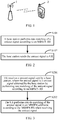
- FIG. 2 is a flowchart of a signal transmission method according to an embodiment of the present invention.
- FIG. 3 is a flowchart of another signal transmission method according to an embodiment of the present invention.
- FIG. 4a is a schematic diagram of a resource element of a data frame according to an embodiment of the present invention.
- FIG. 4b is a schematic diagram of a resource element performing demodulation by using a CRS according to an embodiment of the present invention
- FIG. 4c is a schematic diagram of a resource element performing demodulation by using a DMRS according to an embodiment of the present invention
- FIG. 5 is a schematic structural diagram of a base station according to an embodiment of the present invention.
- FIG. 6 is a schematic structural diagram of user equipment according to an embodiment of the present invention.
- FIG. 7 is a schematic diagram of a composition structure of a base station according fourth possible implementation manner of the fifth aspect, the first RE or the RE group is specifically:
- the present invention further provides user equipment, where the user equipment includes: a receiving unit and a processing unit, where the receiving unit is configured to receive a unicast signal sent by a base station, where the unicast signal is obtained by the base station by performing rate matching of the unicast signal according to a multicast/broadcast single frequency network reference signal MBSFN RS; and the processing unit is configured to perform rate de-matching of the unicast signal according to the MBSFN RS when the receiving unit receives the unicast signal.
- the user equipment includes: a receiving unit and a processing unit, where the receiving unit is configured to receive a unicast signal sent by a base station, where the unicast signal is obtained by the base station by performing rate matching of the unicast signal according to a multicast/broadcast single frequency network reference signal MBSFN RS; and the processing unit is configured to perform rate de-matching of the unicast signal according to the MBSFN RS when the receiving unit receives the unicast signal.
- MBSFN RS
- the receiving unit is further configured to receive downlink control information DCI sent by the base station, where the DCI is used to instruct the UE to perform rate de-matching and receive the unicast signal according to the MBSFN RS; and the processing unit is further configured to perform rate de-matching and receive the unicast signal according to the MBSFN RS.
- a sub frame in which the receiving unit receives the unicast signal includes one or more of: a cell-specific reference signal CRS, a channel state information-reference signal CSI-RS, a channel state information-interference measurement resource CSI-IMR, a demodulation reference signal DMRS, or a positioning reference signal PRS.
- the processing unit is further configured to: when the receiving unit receives the unicast signal, a first RE or an RE group in an RE corresponding to a pilot signal used to demodulate the unicast signal is not used to demodulate the unicast signal.
- the first RE or the RE group is specifically:
- a base station instructs UE to perform rate de-matching and receive a unicast signal in at least one MBSFN subframe according to an MBSFN RS, and an RE is not used to transmit the unicast signal, thereby more properly using MBSFN subframe resources, increasing resource usage, and ensuring continuity and effectiveness of performing broadcast multicast related measurement by the UE.
- a signal transmission method and an apparatus provided in the embodiments of the present invention may be applied to a wireless network of a broadcast multicast communications system, and are particularly applicable to a case in which simultaneous transmission of a unicast service and a multicast service exists, for example, a multicast/broadcast single frequency network system in which transmission is performed in an MBSFN manner.
- FIG. 1 is a schematic diagram of a system architecture of a broadcast multicast communications system according to an embodiment of the present invention.
- the system includes: a base station 1 and user equipment (UE) 2.
- the base station 1 sends downlink control information (Downlink Control Information, DCI) and a unicast or multicast signal to the UE 2.
- DCI Downlink Control Information
- the UE 2 receives, according to the DCI, the unicast or multicast signal sent by the base station 1, and performs demodulation processing.
- the base station 1 may be an evolved NodeB eNodeB, a radio base station NodeB, a radio network controller RNC, a relay node (Relay NodeB, RN), or the like.
- FIG. 2 is a flowchart of a signal transmission method according to an embodiment of the present invention. As shown in FIG. 2 , the signal transmission method in this embodiment of the present invention includes:
- S101 A base station performs rate matching of a unicast signal according to an MBSFN RS.
- a quantity of resource elements (Resource Element, RE) that may be used to transmit the physical layer signal needs to be determined.
- RE resource Element
- an RE that cannot be used to transmit the physical layer signal, and an RE that may be used to transmit the physical layer signal need to be determined, so that a quantity of data units that are mapped to a transmission resource after modulation and coding and that are included in the physical layer signal is determined according to the quantity of REs.
- the quantity of data units need to match the quantity of REs, and the matching process is referred to as rate matching.
- the base station performs rate matching of the unicast signal according to the MBSFN RS, which may be understood as that a resource element RE corresponding to the MBSFN RS is not used to transmit the unicast signal.
- the base station determines, according to the MBSFN RS, a resource element used to transmit the unicast signal, that is, performs resource mapping, and allocates, in a data frame, the resource element used to transmit the unicast signal.
- the base station performs rate matching of the unicast signal according to the MBSFN RS.
- the base station sends the unicast signal to user equipment UE.
- the UE that is interested in an MBMS service performs MBSFN RS related measurement, so that the MBSFN RS absolutely needs to be transmitted in a corresponding subframe.
- some UEs are UEs that are interested in the MBMS service, for the UEs, because the UEs may know in advance that which subframe is an MBSFN subframe, and know that there is an MBSFN RS in the MBSFN subframe, and the UEs may perform MBSFN related measurement by using the MBSFN RS, for example, an M-RSSI (MBMS-Received Signal Strength Indicator, MBMS-received signal strength indicator).
- M-RSSI MBMS-Received Signal Strength Indicator, MBMS-received signal strength indicator
- the base station may directly schedule and send the unicast signal to the UEs, and the UEs may perform rate de-matching and receive the unicast signal according to the MBSFN RS.
- the unicast signal includes transmitted unicast data. Therefore, resource usage is increased, and continuity and effectiveness of performing broadcast multicast related measurement by the UE can be ensured.
- the base station also transmits DCI, the DCI may use an existing DCI format.
- the other UEs may do not know in advance whether there are an MBSFN RS and a unicast signal in the MBSFN subframe of the base station.
- the base station may further dynamically send downlink control information DCI to the UEs.
- the DCI is used to instruct the UE to perform rate de-matching and receive the unicast signal according to the MBSFN RS.
- the DCI is used to instruct the UE to perform rate de-matching and receive the unicast signal in the at least one MBSFN subframe according to the MBSFN RS. Therefore, resource usage is increased, and continuity and effectiveness of performing broadcast multicast related measurement by the UE performing MBMS measurement can be ensured.
- the DCI is used to indicate that a resource element RE corresponding to the MBSFN RS is not used to transmit the unicast signal.
- the DCI is used to indicate that a resource element RE corresponding to an MBSFN RS in the at least one MBSFN subframe is not used to transmit the unicast signal.
- the base station sends the DCI to the UE, and the DCI is used to instruct the UE to receive, in an MBSFN subframe scheduled by the DCI, data of unicast transmission.
- the DCI includes downlink resource scheduling information.
- FIG. 4a includes an RE transmitting an MBSFN RS, an RE transmitting a cell-specific reference signal (Cell-specific Reference Signal, CRS), and an RE (blank) transmitting data.
- CRS Cell-specific Reference Signal
- the base station does not receive, from a network site, any signal that needs to be transmitted in a reserved MBSFN subframe, the subframe is idle and has no MBMS service to transmit; as a result, resource usage is low.
- the unicast signal is transmitted in the subframe.
- the UE receiving the MBMS service still performs MBSFN related measurement in the subframe based on the MBSFN RS, but there is no MBSFN RS in the subframe, which causes only incorrect measurement results, affects accuracy of an MBMS measurement result and effectiveness of performing subsequent processing according to the measurement results.
- a base station performs rate matching of a unicast signal according to an MBSFN RS, so that the base station may transmit the unicast signal by using an idle MBSFN subframe, thereby increasing resource usage.
- the base station may further instruct, by using DCI, the UE to perform rate de-matching and receive the unicast signal in the at least one MBSFN subframe according to the MBSFN RS, which can avoid an idle subframe and increase resource usage.
- the MBSFN RS may always be transmitted in the MBSFN subframe that needs to be measured by the UE, so that the UE performs MBSFN related measurement, thereby ensuring continuity and effectiveness of performing broadcast multicast related measurement by the UE.
- the base station instructs, by using the DCI, the UE to perform rate de-matching and receive the unicast signal according to the MBSFN RS. In this way, the UE is completely controlled by the base station to perform rate de-matching processing of unicast signal transmission, so as to be consistent with processing of the base station and correctly receive a unicast signal.
- the subframe in which the base station sends the unicast signal may further include one or more of: a cell-specific reference signal (Cell-specific Reference Signal, CRS), a channel state information-reference signal (Channel State Information-Reference Signal, CSI-RS), a channel state information-interference measurement resource (Channel State Information-Interference Measurement Resource, CSI-IMR), a demodulation reference signal (Demodulation Reference Signal, DMRS), or a positioning reference signal (Positioning Reference Signal, PRS).
- CRS Cell-specific Reference Signal
- CSI-RS Channel State Information-Reference Signal
- CSI-IMR Channel State Information-Interference Measurement Resource
- CSI-IMR Channel State Information-Interference Measurement Resource
- DMRS Demodulation Reference Signal
- PRS positioning reference signal
- the base station may send control signaling to the UE, to indicate that the subframe in which the unicast signal is transmitted may further include one or more of: a cell-specific reference signal CRS, a channel state information-reference signal CSI-RS, a channel state information-interference measurement resource CSI-IMR, a demodulation reference signal DMRS, or a positioning reference signal PRS.
- the control signaling herein may be higher layer signaling (for example, RRC signaling) or DCI signaling.
- An RE transmitting the CRS, the CSI-RS, the CSI-IM, the DMRS, and the PRS is not used to transmit the unicast signal, so that the base station and the UE need to perform corresponding rate matching and rate de-matching. Therefore, the signals may be transmitted in the MBSFN subframe, for measurement by the UE, and the rate matching and the rate de-matching are accurate.
- the subframe in which the unicast signal is transmitted is at least one MBSFN subframe.
- the subframe in which the unicast signal is transmitted may be any subframe in which the UE assumes that an MBSFN RS is transmitted.
- the method further includes: sending, by the base station, control signaling to the UE, where the control signaling is used to indicate that a first RE or an RE group in an RE corresponding to a pilot signal used to demodulate the unicast signal is not used to demodulate the unicast signal.
- the base station may not send the control signaling used for indication.
- the first RE or the RE group is specifically: an RE or an RE group or a subset of an RE group on which a demodulation pilot corresponding to the unicast signal is overlapped with the MBSFN RS.
- the demodulation pilot may be a CRS or a DMRS.
- the first RE or the RE group specifically includes one or more of the following: an RE or an RE group on which the CRS is overlapped with the MBSFN RS, an RE or an RE group on which the DMRS is overlapped with the MBSFN RS, or an RE or an RE group that is predefined or that is configured by higher layer signaling.
- the control signaling for example, DCI signaling or higher layer signaling (for example, RRC signaling) may be used to indicate that the first RE or the RE group is not used to demodulate the unicast signal.
- the UE when the UE receives the control signaling such as the DCI, according to the control signaling such as the DCI, the first RE or the RE group is not used to demodulate the unicast signal.
- N RE groups are predefined or configured by higher layer signaling, and an information unit in the DCI may indicate a specific RE group that is not used to demodulate a signal of unicast transmission. Therefore, completeness of the MBSFN RS is ensured, accuracy and effectiveness of MBSFN RS related measurement are ensured, and the UE receiving the unicast signal can also demodulate the unicast signal according to an actual demodulation pilot.
- each block in FIG. 4b represents an RE, except a control area (for example, first two symbols), including: an RE transmitting the MBSFN RS, an RE transmitting the CRS, an RE (blank) transmitting data, and an RE on which the CRS is overlapped with the MBSFN RS.
- the RE on which the CRS is overlapped with the MBSFN RS is not used to demodulate the unicast signal.
- each block in FIG. 4c represents an RE, except a control area (for example, first two symbols), including: an RE transmitting the MBSFN RS, an RE transmitting the CRS, an RE transmitting the DMRS, an RE (blank) transmitting data, and an RE on which the DMRS is overlapped with the MBSFN RS.
- the RE on which the DMRS is overlapped with the MBSFN RS is not used to demodulate the unicast signal.
- the DCI may be transmitted by using a physical downlink control channel (Physical Downlink Control Channel, PDCCH) or an enhanced physical downlink control channel (enhanced Physical Downlink Control Channel, ePDCCH).
- PDCCH Physical Downlink Control Channel
- ePDCCH enhanced Physical Downlink Control Channel
- the DCI that is used to indicate unicast transmission in the MBSFN subframe may be predefined to be used to instruct the UE to perform rate de-matching and receive the unicast signal according to the MBSFN RS.
- the DCI may use an existing DCI format.
- a new DCI format may also be used to indicate the foregoing information.
- scrambled DCI corresponding to a unicast-radio network temporary identifier (Unicast-Radio Network Temporary Identifier, U-RNTI) is defined, where the U-RNTI is dedicated to the new DCI format, or DCI having new content or having a new information composition manner is defined.
- U-RNTI Unicast-Radio Network Temporary Identifier
- some composition information units in the existing DCI may be reused to perform the foregoing indication.
- a new information unit may be added to the existing DCI to perform the foregoing indication.
- a bit is added, when the bit is 1, it indicates that the subframe has an MBSFN RS, and an RE on which the MBSFN RS is overlapped is not used to demodulate the signal of unicast transmission, and when the bit is 0, the indication is opposite.
- the new DCI may be limited to being used in only the MBSFN subframe.
- FIG. 3 is a flowchart of another signal transmission method according to an embodiment of the present invention.
- the signal transmission method in this embodiment of the present invention includes:
- S201 UE receives a unicast signal sent by a base station.
- the unicast signal is obtained by the base station by performing rate matching of the unicast signal according to an MBSFN RS, which may be understood as that a resource element RE corresponding to the MBSFN RS is not used to transmit the unicast signal.
- the base station determines, according to the MBSFN RS, a resource element used to transmit the unicast signal, that is, performs resource mapping, and allocates, in a data subframe, the resource element used to transmit the unicast signal.
- the base station performs rate matching of the unicast signal according to the MBSFN RS.
- S202 The UE performs rate de-matching of the unicast signal according to the MBSFN RS when receiving the unicast signal.
- Rate de-matching at a UE side is an opposite process to rate matching at a base station side, and the UE performs rate de-matching of the unicast signal according to the MBSFN RS.
- the UE performs rate de-matching of the unicast signal according to the MBSFN RS.
- the subframe in which the UE receives the unicast signal is at least one MBSFN subframe.
- the subframe in which the UE receives the unicast signal may be any subframe in which the UE assumes that an MBSFN RS is transmitted.
- the UE that is interested in an MBMS service performs MBSFN RS related measurement, so that the MBSFN RS absolutely needs to be transmitted in a corresponding subframe.
- some UEs are UEs that are interested in the MBMS service, for the UEs, because the UEs may know in advance that which subframe is an MBSFN subframe, and know that there is an MBSFN RS in the MBSFN subframe, and the UEs may perform MBSFN related measurement by using the MBSFN RS, for example, an M-RSSI (MBMS-Received Signal Strength Indicator, MBMS-received signal strength indicator).
- M-RSSI MBMS-Received Signal Strength Indicator, MBMS-received signal strength indicator
- the base station may directly schedule and send the unicast signal to the UEs, and the UEs may perform rate de-matching and receive the unicast signal according to the MBSFN RS.
- the unicast signal includes transmitted unicast data. Therefore, resource usage is increased, and continuity and effectiveness of performing broadcast multicast related measurement by the UE can be ensured.
- the base station may further dynamically send downlink control information DCI to the UE, so that some UEs that are not interested in the MBMS service cannot know in advance whether the transmitted MBMS service includes the MBSFN RS.
- the method further includes: receiving, by the UE, the DCI sent by the base station.
- the DCI is used to instruct the UE to perform rate de-matching and receive the transmitted unicast signal according to the MBSFN RS.
- the DCI is further used to instruct the UE to perform rate de-matching and receive the unicast signal in the at least one MBSFN subframe according to the MBSFN RS.
- the DCI is used to indicate that a resource element RE corresponding to the MBSFN RS is not used to transmit the unicast signal.
- the DCI is used to indicate that a resource element RE corresponding to an MBSFN RS in the at least one MBSFN subframe is not used to transmit the unicast signal.
- the UE may also perform rate de-matching of the unicast signal according to the MBSFN RS when receiving the unicast signal.
- the subframe in which the UE receives the unicast signal may further include one or more of: a cell-specific reference signal (Cell-specific Reference Signal, CRS), a channel state information-reference signal (Channel State Information-Reference Signal, CSI-RS), a channel state information-interference measurement resource (Channel State Information-Interference Measurement Resource, CSI-IMR), a demodulation reference signal (Demodulation Reference Signal, DMRS), or a positioning reference signal (Positioning Reference Signal, PRS).
- CRS Cell-specific Reference Signal
- CSI-RS Channel State Information-Reference Signal
- CSI-IMR Channel State Information-Interference Measurement Resource
- CSI-IMR Channel State Information-Interference Measurement Resource
- DMRS Demodulation Reference Signal
- PRS positioning reference signal
- the UE may receive control signaling sent by the base station, where the control signaling is used to indicate that the subframe in which the unicast signal is transmitted may further include one or more of: a cell-specific reference signal CRS, a channel state information-reference signal CSI-RS, a channel state information-interference measurement resource CSI-IMR, a demodulation reference signal DMRS, or a positioning reference signal PRS.
- the control signaling herein may be higher layer signaling (for example, RRC signaling) or DCI signaling.
- An RE transmitting the CRS, the CSI-RS, the CSI-IM, the DMRS, and the PRS is not used to transmit the unicast signal, so that the base station and the UE need to perform corresponding rate matching and rate de-matching. Therefore, the signals may be transmitted in the MBSFN subframe, for measurement by the UE, and the rate matching and the rate de-matching are accurate.
- the method further includes: when the UE receives the unicast signal, a first RE or an RE group in an RE corresponding to a pilot signal used to demodulate the unicast signal is not used to demodulate the unicast signal.
- the first RE or the RE group is specifically: an RE or an RE group or a subset of an RE group on which a demodulation pilot corresponding to the unicast signal is overlapped with the MBSFN RS.
- the demodulation pilot may be a CRS or a DMRS.
- the first RE or the RE group specifically includes one or more of the following: an RE or an RE group on which the CRS is overlapped with the MBSFN RS, an RE or an RE group on which the DMRS is overlapped with the MBSFN RS, or an RE or an RE group that is predefined or that is configured by higher layer signaling.
- the control signaling for example, DCI signaling or higher layer signaling (for example, RRC signaling) may be used to indicate that the first RE or the RE group is not used to demodulate the unicast signal.
- the UE when the UE receives the control signaling such as the DCI, according to the control signaling such as the DCI, the first RE or the RE group is not used to demodulate the unicast signal.
- N RE groups are predefined or configured by higher layer signaling, and an information unit in the DCI may indicate a specific RE group that is not used to demodulate a signal of unicast transmission.
- the UE receiving the unicast signal can also demodulate the unicast signal according to an actual demodulation pilot.
- the method further includes: demodulating, by the UE, the unicast signal by using the CRS according to the DCI (the control signaling), where the RE or the RE group on which the CRS is overlapped with the MBSFN RS is not used to demodulate the unicast signal.
- the DCI the control signaling
- the method further includes: demodulating, by the UE, the unicast signal by using the DMRS according to the DCI, where the RE or the RE group on which the DMRS is overlapped with the MBSFN RS is not used to demodulate the unicast signal.
- the DCI that is sent by the base station and that is received by the UE may not indicate that the RE or the RE group in which the CRS or the DMRS in the MBSFN subframe is overlapped with the MBSFN RS is not used to demodulate the unicast signal.
- the control signaling (for example, DCI or RRC signaling) that is sent by the base station and that is received by the UE may also indicate that the RE or the RE group on which the CRS or the DMRS in the MBSFN subframe is overlapped with the MBSFN RS is not used to demodulate the unicast signal.
- UE performs rate de-matching and receives a unicast signal in at least one MBSFN subframe according to an MBSFN RS, so that the UE may perform effective measurement based on the MBSFN RS, continuity and effectiveness of performing broadcast multicast related measurement by the UE are ensured, MBSFN subframe resources are more properly used, and resource usage is increased.
- the UE receives an indication of a base station, according to the indication, the UE performs rate de-matching and receives the unicast signal in the at least one MBSFN subframe according to the MBSFN RS, an RE that is not used to transmit the unicast signal is indicated, and the UE may determine a subframe in which MBSFN related measurement needs to be performed, and a subframe in which MBSFN related measurement does not need to be performed, thereby more properly using MBSFN subframe resources, increasing resource usage, and ensuring continuity and effectiveness of performing broadcast multicast related measurement by the UE.
- FIG. 5 is a schematic structural diagram of a base station according to an embodiment of the present invention.
- the base station in this embodiment of the present invention includes: a processing unit 301 and a sending unit 302.
- the processing unit 301 is configured to perform rate matching of a unicast signal according to an MBSFN RS.
- a quantity of resource elements (Resource Element, RE) that may be used to transmit the physical layer signal needs to be determined.
- RE resource Element
- an RE that cannot be used to transmit the physical layer signal, and an RE that may be used to transmit the physical layer signal need to be determined, so that a quantity of data units that are mapped to a transmission resource after modulation and coding and that are included in the physical layer signal is determined according to the quantity of REs.
- the quantity of data units need to match the quantity of REs, and the matching process is referred to as rate matching.
- the processing unit 301 performs rate matching of the unicast signal according to the MBSFN RS, which may be understood as that a resource element RE corresponding to the MBSFN RS is not used to transmit the unicast signal.
- the processing unit 301 determines, according to the MBSFN RS, a resource element used to transmit the unicast signal, that is, performs resource mapping, and allocates, in a data frame, the resource element used to transmit the unicast signal.
- the processing unit 301 performs rate matching of the unicast signal according to the MBSFN RS.
- the sending unit 302 is configured to send the unicast signal to the UE.
- the UE that is interested in an MBMS service performs MBSFN RS related measurement, so that the MBSFN RS absolutely needs to be transmitted in a corresponding subframe.
- some UEs are UEs that are interested in the MBMS service, for the UEs, because the UEs may know in advance that which subframe is an MBSFN subframe, and know that there is an MBSFN RS in the MBSFN subframe, and the UEs may perform MBSFN related measurement by using the MBSFN RS, for example, an M-RSSI (MBMS-Received Signal Strength Indicator, MBMS-received signal strength indicator).
- M-RSSI MBMS-Received Signal Strength Indicator, MBMS-received signal strength indicator
- the sending unit 302 may directly schedule and send the unicast signal to the UEs, and the UEs may perform rate de-matching and receive the unicast signal according to the MBSFN RS.
- the unicast signal includes transmitted unicast data. Therefore, resource usage is increased, and continuity and effectiveness of performing broadcast multicast related measurement by the UE can be ensured.
- the base station also transmits downlink control information DCI, the DCI may use an existing DCI format.
- the sending unit 302 may further dynamically send DCI to the UEs.
- the DCI is used to instruct the UE to perform rate de-matching and receive the unicast signal according to the MBSFN RS.
- the DCI is used to instruct the UE to perform rate de-matching and receive the unicast signal in the at least one MBSFN subframe according to the MBSFN RS. Therefore, resource usage is increased, and continuity and effectiveness of performing broadcast multicast related measurement by the UE performing MBMS measurement can be ensured.
- the base station sends the DCI to the UE by using the sending unit 302, and the DCI is used to instruct the UE to receive, in an MBSFN subframe scheduled by the DCI, unicast transmitted data.
- FIG. 4a includes an RE transmitting an MBSFN RS, an RE transmitting a CRS, and an RE (blank) transmitting data.
- the base station provided in this embodiment of the present invention performs rate matching of a unicast signal according to an MBSFN RS, and may transmit the unicast signal by using an idle MBSFN subframe, thereby increasing resource usage.
- the base station may further send DCI by using the sending unit 302, and may instruct the UE to perform rate de-matching and receive the unicast signal in at least one MBSFN subframe according to the MBSFN RS, which may avoid an idle subframe and increase resource usage.
- the MBSFN RS may always be transmitted in the MBSFN subframe that needs to be measured by the UE, so that the UE performs MBSFN related measurement, thereby ensuring continuity and effectiveness of performing broadcast multicast related measurement by the UE.
- the base station instructs, by using the DCI, the UE to perform rate de-matching and receive the unicast signal according to the MBSFN RS.
- the UE is completely controlled by the base station to perform rate de-matching processing of unicast signal transmission, so as to be consistent with processing of the base station and correctly receive a unicast signal.
- the subframe in which the sending unit 302 sends the unicast signal may further include one or more of: a cell-specific reference signal CRS, a channel state information-reference signal CSI-RS, a channel state information-interference measurement resource CSI-IMR, a demodulation reference signal DMRS, or a positioning reference signal PRS.
- a cell-specific reference signal CRS a cell-specific reference signal CRS
- CSI-RS channel state information-reference signal
- CSI-IMR channel state information-interference measurement resource
- DMRS demodulation reference signal
- PRS positioning reference signal
- the sending unit 302 may send control signaling to the UE, to indicate that the subframe in which the unicast signal is transmitted may further include one or more of: a cell-specific reference signal CRS, a channel state information-reference signal CSI-RS, a channel state information-interference measurement resource CSI-IMR, a demodulation reference signal DMRS, or a positioning reference signal PRS.
- the control signaling herein may be higher layer signaling (for example, RRC signaling) or DCI signaling.
- the subframe in which the unicast signal is transmitted is at least one MBSFN subframe.
- the subframe in which the unicast signal is transmitted may be any subframe in which the UE assumes that an MBSFN RS is transmitted.
- the signals may be transmitted in the MBSFN subframe, for measurement by the UE, and the rate matching and the rate de-matching are accurate.
- control signaling sent by the sending unit 302 further includes indication information used to indicate that a first RE or an RE group in an RE corresponding to a pilot signal used to demodulate the unicast signal is not used to demodulate the unicast signal.
- the first RE or the RE group is specifically: an RE or an RE group or a subset of an RE group on which a demodulation pilot corresponding to the unicast signal is overlapped with the MBSFN RS.
- the demodulation pilot may be a CRS or a DMRS.
- the first RE or the RE group specifically includes one or more of the following: an RE or an RE group on which the CRS is overlapped with the MBSFN RS, an RE or an RE group on which the DMRS is overlapped with the MBSFN RS, or an RE or an RE group that is predefined or that is configured by higher layer signaling.
- the control signaling for example, DCI signaling or higher layer signaling (for example, RRC signaling) may be used to indicate that the first RE or the RE group is not used to demodulate the unicast signal.
- the UE when the UE receives the control signaling such as the DCI, according to the control signaling such as the DCI, the first RE or the RE group is not used to demodulate the unicast signal.
- N RE groups are predefined or configured by higher layer signaling, and an information unit in the DCI may indicate a specific RE group that is not used to demodulate a signal of unicast transmission. Therefore, completeness of the MBSFN RS is ensured, accuracy and effectiveness of MBSFN RS related measurement are ensured, and the UE receiving the unicast signal can also demodulate the unicast signal according to an actual demodulation pilot.
- the DCI sent by the sending unit 302 may be further used to indicate that the RE or the RE group on which the CRS is overlapped with the MBSFN RS is not used to demodulate the unicast signal, so that the UE uses the CRS to demodulate the unicast signal.
- the RE on which the CRS is overlapped with the MBSFN RS is not used to demodulate the unicast signal.
- the DCI sent by the sending unit 302 may be further used to indicate that the RE or the RE group on which the DMRS is overlapped with the MBSFN RS is not used to demodulate the unicast signal, so that the UE uses the DMRS to demodulate the unicast signal.
- the RE on which the DMRS is overlapped with the MBSFN RS is not used to demodulate the unicast signal.
- the DCI sent by the sending unit 302 may be transmitted by using a PDCCH or an ePDCCH.
- the DCI that is used to indicate unicast transmission in the MBSFN subframe may be predefined to be used to instruct the UE to perform rate de-matching and receive the unicast signal according to the MBSFN RS.
- the DCI sent by the sending unit 302 may use an existing DCI format.
- the DCI sent by the sending unit 302 may also use a new DCI format to indicate the foregoing information.
- a new DCI format For example, scrambled DCI corresponding to a U-RNTI is defined, where the U-RNTI is dedicated to the new DCI format, or DCI having new content or having a new information composition manner is defined.
- some composition information units in the existing DCI may be reused to perform the foregoing indication.
- a new information unit may be added to the existing DCI to perform the foregoing indication.
- a bit is added, when the bit is 1, it indicates that the subframe has an MBSFN RS, and an RE on which the MBSFN RS is overlapped is not used to demodulate the signal of unicast transmission, and when the bit is 0, the indication is opposite.
- the new DCI may be limited to being used in only the MBSFN subframe.
- FIG. 6 is a schematic structural diagram of user equipment according to an embodiment of the present invention.
- user equipment in this embodiment of the present invention includes: a receiving unit 401 and a processing unit 402.
- the receiving unit 401 is configured to receive a unicast signal sent by a base station.
- the unicast signal is obtained by the base station by performing rate matching of the unicast signal according to an MBSFN RS, which may be understood as that a resource element RE corresponding to the MBSFN RS is not used to transmit the unicast signal.
- the base station determines, according to the MBSFN RS, a resource element used to transmit the unicast signal, that is, performs resource mapping, and allocates, in a data subframe, the resource element used to transmit the unicast signal.
- the base station performs rate matching of the unicast signal according to the MBSFN RS.
- the processing unit 402 is configured to perform rate de-matching of the unicast signal according to the MBSFN RS when the receiving unit 401 receives the unicast signal.
- the processing unit 402 performs rate de-matching of the unicast signal according to the MBSFN RS.
- the subframe in which the receiving unit 401 receives the unicast signal is at least one MBSFN subframe.
- the subframe in which the receiving unit 401 receives the unicast signal may be any subframe in which the UE assumes that the MBSFN RS is transmitted.
- the UE that is interested in an MBMS service performs MBSFN RS related measurement, so that the MBSFN RS absolutely needs to be transmitted in a corresponding subframe.
- some UEs are UEs that are interested in the MBMS service, for the UEs, because the UEs may know in advance that which subframe is an MBSFN subframe, and know that there is an MBSFN RS in the MBSFN subframe, and the UEs may perform MBSFN related measurement by using the MBSFN RS, for example, an M-RSSI (MBMS-Received Signal Strength Indicator, MBMS-received signal strength indicator).
- M-RSSI MBMS-Received Signal Strength Indicator, MBMS-received signal strength indicator
- the base station may directly schedule and send the unicast signal to the UEs, and the UEs may perform rate de-matching and receive the unicast signal according to the MBSFN RS.
- the unicast signal includes transmitted unicast data. Therefore, resource usage is increased, and continuity and effectiveness of performing broadcast multicast related measurement by the UE can be ensured.
- the base station may further send downlink control information DCI to the UE, so that some UEs that are not interested in the MBMS service cannot know in advance whether the transmitted MBMS service includes the MBSFN RS.
- the receiving unit 401 is further configured to receive the DCI sent by the base station.
- the DCI is used to instruct the UE to perform rate de-matching and receive the transmitted unicast signal according to the MBSFN reference signal MBSFN RS.
- the DCI is further used to instruct the UE to perform rate de-matching and receive the unicast signal in the at least one MBSFN subframe according to the MBSFN RS. Therefore, resource usage is increased, and continuity and effectiveness of performing broadcast multicast related measurement by the UE performing MBMS measurement can be ensured.
- the DCI is used to indicate that a resource element RE corresponding to the MBSFN RS is not used to transmit the unicast signal.
- the DCI is used to indicate that a resource element RE corresponding to an MBSFN RS in the at least one MBSFN subframe is not used to transmit the unicast signal.
- the UE may also perform rate de-matching of the unicast signal according to the MBSFN RS when receiving the unicast signal.
- the subframe in which the UE receives the unicast signal may further include one or more of: a cell-specific reference signal CRS, a channel state information-reference signal CSI-RS, a channel state information-interference measurement resource CSI-IMR, a demodulation reference signal DMRS, or a positioning reference signal PRS.
- a cell-specific reference signal CRS a cell-specific reference signal CRS
- CSI-RS channel state information-reference signal
- CSI-IMR channel state information-interference measurement resource
- DMRS demodulation reference signal
- PRS positioning reference signal
- the receiving unit 401 may receive control signaling sent by the base station, to indicate that the subframe in which the unicast signal is transmitted may further include one or more of: a cell-specific reference signal CRS, a channel state information-reference signal CSI-RS, a channel state information-interference measurement resource CSI-IMR, a demodulation reference signal DMRS, or a positioning reference signal PRS.
- the control signaling herein may be higher layer signaling (for example, RRC signaling) or DCI signaling.
- An RE transmitting the CRS, the CSI-RS, the CSI-IM, the DMRS, and the PRS is not used to transmit the unicast signal, so that the base station and the UE need to perform corresponding rate matching and rate de-matching. Therefore, the signals may be transmitted in the MBSFN subframe, for measurement by the UE, and the rate matching and the rate de-matching are accurate.
- the control signaling received by the receiving unit 401 further includes indication information used to indicate that a first RE or an RE group in an RE corresponding to a pilot signal used to demodulate the unicast signal is not used to demodulate the unicast signal.
- the first RE or the RE group is specifically: an RE or an RE group or a subset of an RE group on which a demodulation pilot corresponding to the unicast signal is overlapped with the MBSFN RS.
- the demodulation pilot may be a CRS or a DMRS.
- the first RE or the RE group specifically includes one or more of the following: an RE or an RE group on which the CRS is overlapped with the MBSFN RS, an RE or an RE group on which the DMRS is overlapped with the MBSFN RS, or an RE or an RE group that is predefined or that is configured by higher layer signaling.
- the control signaling for example, DCI signaling or higher layer signaling (for example, RRC signaling) may be used to indicate that the first RE or the RE group is not used to demodulate the unicast signal.
- the UE when the UE receives the control signaling such as the DCI, according to the control signaling such as the DCI, the first RE or the RE group is not used to demodulate the unicast signal.
- N RE groups are predefined or configured by higher layer signaling, and an information unit in the DCI may indicate a specific RE group that is not used to demodulate a signal of unicast transmission.
- the UE receiving the unicast signal can also demodulate the unicast signal according to an actual demodulation pilot.
- the processing unit 402 is further configured to demodulate the unicast signal by using the CRS according to the DCI, where the RE or the RE group on which the CRS is overlapped with the MBSFN RS is not used to demodulate the unicast signal.
- the processing unit 402 is further configured to demodulate the unicast signal by using the DMRS according to the DCI, where the RE or the RE group on which the DMRS is overlapped with the MBSFN RS is not used to demodulate the unicast signal.
- a message (for example, the DCI) that is sent by the base station and that is received by the receiving unit 401 may not indicate that the RE or the RE group on which the CRS or the DMRS in the MBSFN subframe is overlapped with the MBSFN RS is not used to demodulate the unicast signal.
- the message that is sent by the base station and that is received by the receiving unit 401 may also indicate that the RE or the RE group on which the CRS or the DMRS in the MBSFN subframe is overlapped with the MBSFN RS is not used to demodulate the unicast signal.
- the base station may send control signaling to the UE, for example, DCI or RRC signaling, where the control signaling is used to indicate that a pilot signal that is used for demodulation and that corresponds to the first RE or the RE group is not used to demodulate the unicast signal.
- the receiving unit 401 is further configured to receive the control signaling sent by the base station.
- the first RE or the RE group is specifically: an RE or an RE group or a subset of an RE group on which a demodulation pilot corresponding to the unicast signal is overlapped with the MBSFN RS, an RE or an RE group that is predefined or that is configured by higher layer signaling.
- the first RE or the RE group specifically includes one or more of the following: an RE or an RE group on which the CRS is overlapped with the MBSFN RS, an RE or an RE group on which the DMRS is overlapped with the MBSFN RS, or an RE or an RE group that is predefined or that is configured by higher layer signaling.
- the processing unit 402 does not use the first RE or the RE group to demodulate the unicast signal.
- the UE performs rate de-matching and receives the unicast signal in the at least one MBSFN subframe according to an MBSFN RS, so that the UE may perform effective measurement based on the MBSFN RS, continuity and effectiveness of performing broadcast multicast related measurement by the UE are ensured, MBSFN subframe resources are more properly used, and resource usage is increased.
- the UE receives an indication of the base station, according to the indication, the UE performs rate de-matching and receives the unicast signal in the at least one MBSFN subframe according to the MBSFN RS, an RE that is not used to transmit the unicast signal is indicated, and the UE may determine a subframe in which MBSFN related measurement needs to be performed, and a subframe in which MBSFN related measurement does not need to be performed, thereby more properly using MBSFN subframe resources, increasing resource usage, and ensuring continuity and effectiveness of performing broadcast multicast related measurement by the UE.
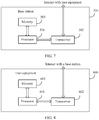
- FIG. 7 is a schematic diagram of a composition structure of a base station 500 according to an embodiment of the present invention.
- the base station 500 includes: a processor 501, a transceiver 502, and a memory 503.
- the transceiver 502 is configured to interact with UE.
- the memory 503 may be a permanent memory, for example, a hard disk drive and a flash memory, and the memory 503 has a software module and a device driver.
- the software module can execute various function modules of the method in the embodiments of the present invention, and the device driver may be a network and interface driver.
- the software components When being enabled, the software components are loaded into the memory 503, and then are accessed by the processor 501 and execute a corresponding instruction.
- the processor 501 is configured to perform rate matching of a unicast signal according to an MBSFN RS.
- the processor 501 is further configured to send the unicast signal to the UE by using the transceiver 502.
- the processor 501 performs rate matching of the unicast signal according to the MBSFN RS, which may be understood as that a resource element RE corresponding to the MBSFN RS is not used to transmit the unicast signal.
- the processor 501 determines, according to the MBSFN RS, a resource element used to transmit the unicast signal, that is, performs resource mapping, and allocates, in a data frame, the resource element used to transmit the unicast signal.
- the processor 501 is further configured to dynamically send DCI to the UE by using the transceiver 502.
- the DCI is used to instruct the UE to perform rate de-matching and receive the unicast signal according to the MBSFN RS.
- the DCI is used to instruct the UE to perform rate de-matching and receive the unicast signal in the at least one MBSFN subframe according to the MBSFN RS. Therefore, resource usage is increased, and continuity and effectiveness of performing broadcast multicast related measurement by the UE performing MBMS measurement can be ensured.
- the DCI is used to indicate that a resource element RE corresponding to the MBSFN RS is not used to transmit the unicast signal.
- the DCI is further used to indicate that a resource element RE corresponding to an MBSFN RS in the at least one MBSFN subframe is not used to transmit the unicast signal.
- the subframe in which the processor 501 sends the unicast signal by using the transceiver 502 further includes one or more of: a cell-specific reference signal CRS, a channel state information-reference signal CSI-RS, a channel state information-interference measurement resource CSI-IMR, a demodulation reference signal DMRS, or a positioning reference signal PRS.
- the processor 501 may further send control signaling to the UE by using the transceiver 502, to indicate that the subframe in which the unicast signal is transmitted may further include one or more of: a cell-specific reference signal CRS, a channel state information-reference signal CSI-RS, a channel state information-interference measurement resource CSI-IMR, a demodulation reference signal DMRS, or a positioning reference signal PRS.
- a cell-specific reference signal CRS a channel state information-reference signal CSI-RS, a channel state information-interference measurement resource CSI-IMR, a demodulation reference signal DMRS, or a positioning reference signal PRS.
- An RE transmitting the CRS, the CSI-RS, the CSI-IM, the DMRS, and the PRS is not used to transmit the unicast signal, so that the base station and the UE need to perform corresponding rate matching and rate de-matching. Therefore, the signals may be transmitted in the MBSFN subframe, for measurement by the UE, and the rate matching and the rate de-matching are accurate.
- the subframe in which the unicast signal is transmitted is at least one MBSFN subframe.
- the subframe in which the unicast signal is transmitted may be any subframe in which the UE assumes that an MBSFN RS is transmitted.
- the processor 501 sends control signaling (signaling, such as DCI or RRC) by using the transceiver 502, where the control instruction may be further used to indicate the UE that a first RE or an RE group in an RE corresponding to a pilot signal used to demodulate the unicast signal is not used to demodulate the unicast signal.
- control signaling signaling, such as DCI or RRC
- the first RE or the RE group is specifically: an RE or an RE group or a subset of an RE group on which a demodulation pilot corresponding to the unicast signal is overlapped with the MBSFN RS, or an RE or an RE group that is predefined or that is configured by higher layer signaling.
- the first RE or the RE group specifically includes one or more of the following: an RE or an RE group on which the CRS is overlapped with the MBSFN RS, an RE or an RE group on which the DMRS is overlapped with the MBSFN RS, or an RE or an RE group that is predefined or that is configured by higher layer signaling.
- the UE when the UE receives the control signaling, according to the control signaling, the first RE or the RE group is not used to demodulate the unicast signal. Therefore, completeness of the MBSFN RS is ensured, accuracy and effectiveness of MBSFN RS related measurement are ensured, and the UE receiving the unicast signal can also demodulate the unicast signal according to an actual demodulation pilot.
- the base station further performs the method in the foregoing embodiment according to the instruction, and details are not described herein again.
- FIG. 8 is a schematic diagram of a composition structure of user equipment 600 according to an embodiment of the present invention.
- the user equipment 600 includes: a processor 601, a transceiver 602, and a memory 603.
- the transceiver 602 is configured to interact with a base station.
- the memory 603 may be a permanent memory, for example, a hard disk drive and a flash memory, and the memory 603 has a software module and a device driver.
- the software module can execute various function modules of the method in the embodiments of the present invention, and the device driver may be a network and interface driver.
- the software components When being enabled, the software components are loaded into the memory 603, and then are accessed by the processor 601 and execute a corresponding instruction.
- the processor 601 is configured to receive, by using the transceiver 602, a unicast signal sent by the base station.
- the unicast signal is obtained by the base station by performing rate matching of the unicast signal according to an MBSFN RS. It may be understood that, a resource element RE corresponding to the MBSFN RS is not used to transmit the unicast signal.
- the base station determines, according to the MBSFN RS, a resource element used to transmit the unicast signal, that is, performs resource mapping, and allocates, in a data subframe, the resource element used to transmit the unicast signal.
- the processor 601 is further configured to perform rate de-matching of the unicast signal according to the MBSFN RS when receiving the unicast signal by using the transceiver 602.
- the processor 601 is further configured to receive, by using the transceiver 602, DCI sent by the base station.
- the DCI is used to instruct the UE to perform rate de-matching and receive the transmitted unicast signal according to the MBSFN reference signal MBSFN RS.
- the DCI is further used to instruct the UE to perform rate de-matching and receive the unicast signal in the at least one MBSFN subframe according to the MBSFN RS.
- the DCI is used to indicate that a resource element RE corresponding to the MBSFN RS is not used to transmit the unicast signal.
- the DCI is used to indicate that a resource element RE corresponding to an MBSFN RS in the at least one MBSFN subframe is not used to transmit the unicast signal.
- the subframe in which the processor 601 receives the unicast signal by using the transceiver 602 may further include one or more of: a cell-specific reference signal CRS, a channel state information-reference signal CSI-RS, a channel state information-interference measurement resource CSI-IMR, a demodulation reference signal DMRS, or a positioning reference signal PRS.
- a cell-specific reference signal CRS a cell-specific reference signal CRS
- CSI-RS channel state information-reference signal
- CSI-IMR channel state information-interference measurement resource
- DMRS demodulation reference signal
- PRS positioning reference signal
- the processor 601 may be further configured to receive, by using the transceiver 602, control signaling sent by the base station, where the control signaling is used to indicate that the subframe in which the unicast signal is transmitted may further include one or more of: a cell-specific reference signal CRS, a channel state information-reference signal CSI-RS, a channel state information-interference measurement resource CSI-IMR, a demodulation reference signal DMRS, or a positioning reference signal PRS.
- the control signaling herein may be higher layer signaling (for example, RRC signaling) or DCI signaling.
- AN RE transmitting the CRS, the CSI-RS, the CSI-IM, the DMRS, and the PRS is not used to transmit the unicast signal, so that the base station and the UE need to perform corresponding rate matching and rate de-matching.
- a first RE or an RE group in an RE corresponding to a pilot signal used to demodulate the unicast signal is not used to demodulate the unicast signal.
- the first RE or the RE group is specifically: an RE or an RE group or a subset of an RE group on which a demodulation pilot corresponding to the unicast signal is overlapped with the MBSFN RS.
- the demodulation pilot may be a CRS or a DMRS.
- the first RE or the RE group specifically includes one or more of the following: an RE or an RE group on which the CRS is overlapped with the MBSFN RS, an RE or an RE group on which the DMRS is overlapped with the MBSFN RS, or an RE or an RE group that is predefined or that is configured by higher layer signaling.
- the control signaling for example, DCI signaling or higher layer signaling (for example, RRC signaling) may be used to indicate that the first RE or the RE group is not used to demodulate the unicast signal.
- the UE receives the control signaling such as the DCI, according to the control signaling such as the DCI, the first RE or the RE group is not used to demodulate the unicast signal.
- N RE groups are predefined or configured by higher layer signaling, and an information unit in the DCI may indicate a specific RE group that is not used to demodulate a signal of unicast transmission.
- the processor 601 is further configured to demodulate the unicast signal by using the CRS according to the control signaling (the DCI), where the RE or the RE group on which the CRS is overlapped with the MBSFN RS is not used to demodulate the unicast signal.
- the control signaling the DCI
- the processor 601 is further configured to demodulate the unicast signal by using the DMRS according to the DCI, where the RE or the RE group on which the DMRS is overlapped with the MBSFN RS is not used to demodulate the unicast signal.
- control signaling for example, DCI or RRC signaling
- the control signaling may not indicate that the RE or the RE group on which the CRS or the DMRS in the MBSFN subframe is overlapped with the MBSFN RS is not used to demodulate the unicast signal.
- the control signaling may indicate that the RE or the RE group on which the CRS or the DMRS in the MBSFN subframe is overlapped with the MBSFN RS is not used to demodulate the unicast signal.
- a base station performs rate matching of a unicast signal according to an MBSFN RS, so that the base station may transmit the unicast signal by using an idle MBSFN subframe, thereby increasing resource usage.
- the base station may further instruct, by using DCI, the UE to perform rate de-matching and receive the unicast signal in the at least one MBSFN subframe according to the MBSFN RS, which can avoid an idle subframe and increase resource usage.
- the MBSFN RS may always be transmitted in the MBSFN subframe that needs to be measured by the UE, so that the UE performs MBSFN related measurement, thereby ensuring continuity and effectiveness of performing broadcast multicast related measurement by the UE.
- the base station instructs, by using the DCI, the UE to perform rate de-matching and receive the unicast signal according to the MBSFN RS. In this way, the UE is completely controlled by the base station to perform rate de-matching processing of unicast signal transmission, so as to be consistent with processing of the base station and correctly receive a unicast signal.
- Steps of methods or algorithms described in the embodiments disclosed in this specification may be implemented by hardware, a software module executed by a processor, or a combination thereof.
- the software module may reside in a random access memory (RAM), a memory, a read-only memory (ROM), an electrically programmable ROM, an electrically erasable programmable ROM, a register, a hard disk, a removable disk, a CD-ROM, or any other form of storage medium known in the art.
Landscapes
- Engineering & Computer Science (AREA)
- Signal Processing (AREA)
- Computer Networks & Wireless Communication (AREA)
- Multimedia (AREA)
- Mobile Radio Communication Systems (AREA)
Claims (14)
- Basisstation (500), wobei die Basisstation Folgendes aufweist: einen Prozessor (501) und einen Sendeempfänger (502), wobei
der Sendeempfänger (502) konfiguriert ist, um mit einem Endgerät zu interagieren; und
der Prozessor (501) konfiguriert ist, um ein Raten-Matching eines Unicast-Signals gemäß einem Multicast-/Broadcast-Einzelfrequenznetzwerk-Referenzsignal, MBSFN RS (multicast/broadcast single frequency network reference signal), durchzuführen; und
durch Verwenden des Sendeempfängers (502) das Unicast-Signal zu dem Endgerät zu senden;
wobei das Raten-Matching eine Menge an Ressourcenelementen, RE, bestimmt, die mit einer Menge an Dateneinheiten, die verwendet werden, um ein physikalische-Schicht-Signal zu übertragen, übereinstimmt, und
wobei der Prozessor (502) eingerichtet ist, um in einem Datenrahmen ein RE zuzuweisen, das verwendet wird, um das Unicast-Signal zu übertragen. - Basisstation (500) nach Anspruch 1, wobei der Prozessor (501) ferner konfiguriert ist, um Downlink-Steuerinformationen, DCI (downlink control information), zu dem Endgerät durch Verwenden des Sendeempfängers (502) zu senden, wobei die DCI verwendet werden, um das Endgerät anzuweisen, ein Raten-Dematching durchzuführen und das Unicast-Signal gemäß dem MBSFN RS zu empfangen.
- Basisstation (500) nach Anspruch 1, wobei ein Teilrahmen, in welchem der Prozessor (501) das Unicast-Signal durch Verwenden des Sendeempfängers (502) sendet, eine(s) oder mehrere von Folgendem aufweist: ein zellenspezifisches Referenzsignal, CRS (cell-specific reference signal), ein Kanalzustandsinformationsreferenzsignal, CSI-RS, eine Kanalzustandsinformationsinterferenzmessressource, CSI-IMR (channel state information-interference measurement resource), ein Demodulationsreferenzsignal, DMRS, oder ein Positionierungsreferenzsignal, PRS.
- Basisstation (500) nach einem der Ansprüche 1 bis 3, wobei der Prozessor (501) ferner konfiguriert ist, um eine Steuersignalisierung zu dem Endgerät durch Verwenden des Sendeempfängers (502) zu senden, wobei die Steuersignalisierung verwendet wird, um anzugeben, dass ein RE oder eine RE-Gruppe oder eine Untergruppe einer RE-Gruppe, auf welchem bzw. welcher sich ein Demodulationspilotsignal entsprechend einem Unicast-Signal mit dem MBSFN RS überlappt, nicht verwendet wird, um das Unicast-Signal zu demodulieren.
- Endgerät (600), wobei das Endgerät (600) Folgendes aufweist: einen Prozessor (601) und einen Sendeempfänger (602), wobei
der Sendeempfänger (602) konfiguriert ist, um mit einer Basisstation zu interagieren, und
der Prozessor (601) konfiguriert ist, um durch Verwenden des Sendeempfängers (602) ein Unicast-Signal zu empfangen, das von der Basisstation gesendet wird,
wobei das Unicast-Signal von der Basisstation durch Durchführen von Raten-Matching des Unicast-Signals gemäß einem Multicast-/Broadcast-Einzelfrequenznetzwerk-Referenzsignal, MBSFN RS, erhalten wird, wobei das Raten-Matching eine Menge an Ressourcenelementen, RE, bestimmt, die mit einer Menge an Dateneinheiten, die verwendet werden, um ein physikalische Schicht-Signal zu übertragen, übereinstimmt, und in einem Datenrahmen ein RE zuweist, das verwendet wird, um das Unicast-Signal zu übertragen; und
ein Raten-Dematching des Unicast-Signals gemäß dem MBSFN RS durchzuführen, wenn das Unicast-Signal durch Verwenden des Sendeempfängers (602) empfangen wird. - Endgerät (600) nach Anspruch 5, wobei der Prozessor (601) ferner konfiguriert ist, um durch Verwenden des Sendeempfängers (602) Downlink-Steuerinformationen, DCI, zu empfangen, die von der Basisstation gesendet werden, wobei die DCI verwendet werden, um das Endgerät (600) anzuweisen, ein Raten-Dematching durchzuführen und das übertragene Unicast-Signal gemäß dem MBSFN RS zu empfangen.
- Endgerät (600) nach Anspruch 6, wobei ein Teilrahmen, in welchem der Prozessor (601) das Unicast-Signal durch Verwenden des Sendeempfängers (602) empfängt, eine(s) oder mehrere von Folgendem aufweist: ein zellenspezifisches Referenzsignal, CRS, ein Kanalzustandsinformationsreferenzsignal, CSI-RS, eine Kanalzustandsinformationsinterferenzmessressource, CSI-IMR, ein DemodulationsReferenzsignal, DMRS, oder ein Positionierungsreferenzsignal, PRS.
- Endgerät (600) nach einem der Ansprüche 5 bis 7, wobei, wenn der Prozessor (601) ferner konfiguriert ist, um durch Verwenden des Sendeempfängers (602) das Unicast-Signal zu empfangen, das von der Basisstation gesendet wird, ein RE oder eine RE-Gruppe oder eine Untergruppe einer RE-Gruppe, auf welchem bzw. welcher sich ein Demodulationspilotsignal entsprechend einem Unicast-Signal mit dem MBSFN RS überlappt, nicht verwendet wird, um das Unicast-Signal zu demodulieren.
- Signalübertragungsverfahren, wobei das Verfahren Folgendes aufweist:Durchführen (S 101) durch die Basisstation (500) eines Raten-Matchings eines Unicast-Signals gemäß einem Multicast-/Broadcast-Einzelfrequenznetzwerk-Referenzsignal, MBSFN RS; undSenden (S 102) durch die Basisstation (500) des Unicast-Signals zu einem Endgerät (600);wobei das Durchführen eines Raten-Matchings das Bestimmen einer Menge an Ressourcenelementen, RE, die mit einer Menge an Dateneinheiten, die verwendet werden, um ein physikalische Schicht-Signal zu übertragen, übereinstimmt, und das Zuweisen in einem Datenrahmen eines RE, das verwendet wird, um das Unicast-Signal zu übertragen, umfasst.
- Verfahren nach Anspruch 9, wobei das Verfahren Folgendes aufweist:
Senden durch die Basisstation (500) von Downlink-Steuerinformationen, DCI, zu dem Endgerät (600), wobei die DCI verwendet werden, um das Endgerät (600) anzuweisen, ein Raten-Dematching durchzuführen und das Unicast-Signal gemäß dem MBSFN RS zu empfangen. - Verfahren nach Anspruch 9, wobei ein Teilrahmen, in welchem die Basisstation (500) das Unicast-Signal sendet, eine(s) oder mehrere von Folgendem aufweist: ein zellenspezifisches Referenzsignal, CRS, ein Kanalzustandsinformationsreferenzsignal, CSI-RS, eine Kanalzustandsinformationsinterferenzmessressource, CSI-IMR, ein DemodulationsReferenzsignal, DMRS, oder ein Positionierungsreferenzsignal, PRS.
- Verfahren nach einem der Ansprüche 9 bis 11, wobei das Verfahren ferner Folgendes aufweist:
Senden durch die Basisstation von Steuersignalisierung zu dem Endgerät, wobei die Steuersignalisierung verwendet wird, um anzuzeigen, dass ein RE oder eine RE-Gruppe oder eine Untergruppe einer RE-Gruppe, auf welchem bzw. welcher sich ein Demodulationspilotsignal entsprechend einem Unicast-Signal mit dem MBSFN RS überlappt, nicht verwendet wird, um das Unicast-Signal zu demodulieren. - Signalübertragungsverfahren, wobei das Verfahren Folgendes aufweist:Empfangen (S 201) durch ein Endgerät (600) eines Unicast-Signals, das von einer Basisstation (500) gesendet wird, wobei das Unicast-Signal von der Basisstation (500) durch Durchführen von Raten-Matching des Unicast-Signals gemäß einem Multicast-/Broadcast-Einzelfrequenznetzwerk-Referenzsignal, MBSFN RS, erhalten wird, wobei das Raten-Matching eine Menge an Ressourcenelementen, RE, bestimmt, die mit einer Menge an Dateneinheiten, die verwendet werden, um ein physikalische-Schicht-Signal zu übertragen, übereinstimmt, und in einem Datenrahmen ein RE zuweist, das verwendet wird, um das Unicast-Signal zu übertragen; undDurchführen durch das Endgerät (600) von Raten-Dematching des Unicast-Signals gemäß dem MBSFN RS, wenn das Unicast-Signal empfangen wird.
- Verfahren nach Anspruch 13, wobei das Verfahren ferner Folgendes aufweist:
Empfangen durch das Endgerät (600) von Downlink-Steuerinformationen, DCI, die von der Basisstation (500) gesendet werden, wobei die DCI verwendet werden, um das Endgerät (600) anzuweisen, Raten-Dematching durchzuführen und das Unicast-Signal gemäß dem MBSFN RS zu empfangen.
Applications Claiming Priority (1)
| Application Number | Priority Date | Filing Date | Title |
|---|---|---|---|
| PCT/CN2014/078129 WO2015176276A1 (zh) | 2014-05-22 | 2014-05-22 | 信号传输方法及装置 |
Publications (3)
| Publication Number | Publication Date |
|---|---|
| EP3148271A1 EP3148271A1 (de) | 2017-03-29 |
| EP3148271A4 EP3148271A4 (de) | 2017-05-17 |
| EP3148271B1 true EP3148271B1 (de) | 2018-10-10 |
Family
ID=54553231
Family Applications (1)
| Application Number | Title | Priority Date | Filing Date |
|---|---|---|---|
| EP14892471.5A Not-in-force EP3148271B1 (de) | 2014-05-22 | 2014-05-22 | Signalübertragungsverfahren und -vorrichtung |
Country Status (5)
| Country | Link |
|---|---|
| US (1) | US10419892B2 (de) |
| EP (1) | EP3148271B1 (de) |
| CN (1) | CN106538009A (de) |
| CA (1) | CA2949870C (de) |
| WO (1) | WO2015176276A1 (de) |
Families Citing this family (5)
| Publication number | Priority date | Publication date | Assignee | Title |
|---|---|---|---|---|
| US9521637B2 (en) * | 2013-02-14 | 2016-12-13 | Blackberry Limited | Small cell demodulation reference signal and initial synchronization |
| US10111050B2 (en) * | 2014-12-22 | 2018-10-23 | Verizon Patent And Licensing Inc. | Interference reduction for eMBMS service |
| US11570752B2 (en) | 2019-12-30 | 2023-01-31 | Qualcomm Incorporated | Monitoring multicast broadcast control information |
| US11671979B2 (en) | 2020-02-10 | 2023-06-06 | Qualcomm Incorporated | Techniques for indicating downlink control information in multicast/broadcast wireless communications |
| EP4133650B1 (de) * | 2020-05-15 | 2025-09-10 | ZTE Corporation | System und verfahren zur mehrfachsendung |
Family Cites Families (9)
| Publication number | Priority date | Publication date | Assignee | Title |
|---|---|---|---|---|
| US8675537B2 (en) * | 2008-04-07 | 2014-03-18 | Qualcomm Incorporated | Method and apparatus for using MBSFN subframes to send unicast information |
| CN101677311A (zh) * | 2008-09-19 | 2010-03-24 | 夏普株式会社 | 单播业务和多媒体广播多播业务复用系统和方法 |
| US8396024B2 (en) * | 2009-01-27 | 2013-03-12 | Motorola Mobility Llc | Cooperative communications using multiple access points to improve data integrity |
| US20110013574A1 (en) * | 2009-07-16 | 2011-01-20 | Chia-Chun Hsu | Method of Handling Unicast Transmission on Multimedia Broadcast Multicast Service Subframe and Related Communication Device |
| CN101998273A (zh) * | 2009-08-16 | 2011-03-30 | 中兴通讯股份有限公司 | 一种指示物理下行控制信息的发送、传输和接收方法及系统 |
| CN102448019B (zh) * | 2010-10-11 | 2014-01-22 | 工业和信息化部电信传输研究所 | 一种在多媒体广播多播业务中提高无线资源利用率的方法 |
| CN102104838B (zh) * | 2011-02-23 | 2013-07-24 | 电信科学技术研究院 | 一种数据传输的方法、系统和设备 |
| US9219994B2 (en) * | 2011-11-09 | 2015-12-22 | Lg Electronics Inc. | Methods for transmitting and receiving downlink data in MBSFN subframe and apparatuses thereof |
| KR20140110676A (ko) * | 2013-03-08 | 2014-09-17 | 인텔렉추얼디스커버리 주식회사 | NCT(New Carrier Type)인 캐리어에서 복조참조신호를 전송 및 수신하는 방법과 장치 |
-
2014
- 2014-05-22 EP EP14892471.5A patent/EP3148271B1/de not_active Not-in-force
- 2014-05-22 WO PCT/CN2014/078129 patent/WO2015176276A1/zh not_active Ceased
- 2014-05-22 CA CA2949870A patent/CA2949870C/en not_active Expired - Fee Related
- 2014-05-22 CN CN201480079165.0A patent/CN106538009A/zh active Pending
-
2016
- 2016-11-21 US US15/357,046 patent/US10419892B2/en active Active
Non-Patent Citations (1)
| Title |
|---|
| None * |
Also Published As
| Publication number | Publication date |
|---|---|
| US10419892B2 (en) | 2019-09-17 |
| CN106538009A (zh) | 2017-03-22 |
| EP3148271A4 (de) | 2017-05-17 |
| US20170070865A1 (en) | 2017-03-09 |
| WO2015176276A1 (zh) | 2015-11-26 |
| EP3148271A1 (de) | 2017-03-29 |
| CA2949870A1 (en) | 2015-11-26 |
| CA2949870C (en) | 2019-03-05 |
Similar Documents
| Publication | Publication Date | Title |
|---|---|---|
| US8467329B2 (en) | Method of transmitting system information related to point-to multipoint service | |
| EP2903370B1 (de) | Verfahren zur verarbeitung eines e-pdcch, netzwerkseitige vorrichtung und benutzervorrichtung | |
| EP3487239B1 (de) | Verfahren und vorrichtung zur halbstatischen übertragung | |
| CN105519222B (zh) | 数据传输方法和设备 | |
| EP3723394B1 (de) | Verfahren und vorrichtung zum empfangen eines subrahmens in verschiedenen formen in einem drahtlosen kommunikationssystem | |
| EP2852236B1 (de) | Ressourcenzuweisungsverfahren und vorrichtung | |
| EP3050386B1 (de) | Verfahren zur bestimmung der startzeit eines physischen downlink-steuerkanals | |
| JP4511593B2 (ja) | 無線通信システムにおける1対多サービスに関する制御情報通知の送受信方法 | |
| JP2018113706A5 (ja) | 基地局、ユーザ装置及び方法 | |
| JP6273071B2 (ja) | 移動通信システム、基地局、mce及びプロセッサ | |
| EP3294026B1 (de) | Netzwerkvorrichtung, endgerätevorrichtung und ressourcenzuweisungsverfahren | |
| EP3240315B1 (de) | Basisstation, benutzerendgerät und kommunikationssteuerungsverfahren | |
| EP2584798B1 (de) | Verfahren, vorrichtung und benutzerendgerät zur ermittlung des dienstempfangsstatus auf benutzerendgerätseite durch die netzseite | |
| US10419892B2 (en) | Base station signal transmission method, base station and terminal | |
| EP3478012A1 (de) | Kommunikationsverfahren, benutzergerät und basisstation | |
| EP2874456A1 (de) | Informationsübertragungsverfahren, endgerät und basisstation | |
| JP6829189B2 (ja) | 無線端末及びネットワーク装置 | |
| EP3244643B1 (de) | Endgerätevorrichtung, netzwerkvorrichtung und gruppenkommunikationsverfahren | |
| CN107005926A (zh) | 一种终端到终端d2d系统中信号收发方法及装置 | |
| US9642159B1 (en) | Use of indication in downlink control information messaging to signal presence of additional downlink control information messaging | |
| JP2018506226A (ja) | ページングメッセージ送信方法、ページングメッセージ受信方法、およびデバイス | |
| CN107295643B (zh) | 一种调度方法、装置和设备 | |
| WO2016127347A1 (zh) | 一种组调度反馈方法、基站和用户设备 | |
| WO2016145594A1 (zh) | 一种控制信息的传输方法、基站和用户设备 | |
| CN102761836B (zh) | 下行集群通信的方法及设备 |
Legal Events
| Date | Code | Title | Description |
|---|---|---|---|
| STAA | Information on the status of an ep patent application or granted ep patent |
Free format text: STATUS: THE INTERNATIONAL PUBLICATION HAS BEEN MADE |
|
| PUAI | Public reference made under article 153(3) epc to a published international application that has entered the european phase |
Free format text: ORIGINAL CODE: 0009012 |
|
| STAA | Information on the status of an ep patent application or granted ep patent |
Free format text: STATUS: REQUEST FOR EXAMINATION WAS MADE |
|
| 17P | Request for examination filed |
Effective date: 20161201 |
|
| AK | Designated contracting states |
Kind code of ref document: A1 Designated state(s): AL AT BE BG CH CY CZ DE DK EE ES FI FR GB GR HR HU IE IS IT LI LT LU LV MC MK MT NL NO PL PT RO RS SE SI SK SM TR |
|
| AX | Request for extension of the european patent |
Extension state: BA ME |
|
| A4 | Supplementary search report drawn up and despatched |
Effective date: 20170421 |
|
| RIC1 | Information provided on ipc code assigned before grant |
Ipc: H04W 4/06 20090101ALI20170413BHEP Ipc: H04L 5/00 20060101ALI20170413BHEP Ipc: H04W 72/04 20090101AFI20170413BHEP Ipc: H04W 72/00 20090101ALN20170413BHEP |
|
| DAX | Request for extension of the european patent (deleted) | ||
| GRAP | Despatch of communication of intention to grant a patent |
Free format text: ORIGINAL CODE: EPIDOSNIGR1 |
|
| STAA | Information on the status of an ep patent application or granted ep patent |
Free format text: STATUS: GRANT OF PATENT IS INTENDED |
|
| RIC1 | Information provided on ipc code assigned before grant |
Ipc: H04W 72/04 20090101AFI20180312BHEP Ipc: H04W 4/06 20090101ALI20180312BHEP Ipc: H04L 5/00 20060101ALI20180312BHEP Ipc: H04W 88/08 20090101ALN20180312BHEP Ipc: H04W 72/00 20090101ALN20180312BHEP |
|
| RIC1 | Information provided on ipc code assigned before grant |
Ipc: H04W 88/08 20090101ALN20180329BHEP Ipc: H04W 72/04 20090101AFI20180329BHEP Ipc: H04W 72/00 20090101ALN20180329BHEP Ipc: H04L 5/00 20060101ALI20180329BHEP Ipc: H04W 4/06 20090101ALI20180329BHEP |
|
| RIC1 | Information provided on ipc code assigned before grant |
Ipc: H04W 4/06 20090101ALI20180405BHEP Ipc: H04W 72/04 20090101AFI20180405BHEP Ipc: H04W 72/00 20090101ALN20180405BHEP Ipc: H04L 5/00 20060101ALI20180405BHEP Ipc: H04W 88/08 20090101ALN20180405BHEP |
|
| INTG | Intention to grant announced |
Effective date: 20180418 |
|
| GRAS | Grant fee paid |
Free format text: ORIGINAL CODE: EPIDOSNIGR3 |
|
| GRAA | (expected) grant |
Free format text: ORIGINAL CODE: 0009210 |
|
| STAA | Information on the status of an ep patent application or granted ep patent |
Free format text: STATUS: THE PATENT HAS BEEN GRANTED |
|
| AK | Designated contracting states |
Kind code of ref document: B1 Designated state(s): AL AT BE BG CH CY CZ DE DK EE ES FI FR GB GR HR HU IE IS IT LI LT LU LV MC MK MT NL NO PL PT RO RS SE SI SK SM TR |
|
| REG | Reference to a national code |
Ref country code: GB Ref legal event code: FG4D |
|
| REG | Reference to a national code |
Ref country code: CH Ref legal event code: EP Ref country code: AT Ref legal event code: REF Ref document number: 1052777 Country of ref document: AT Kind code of ref document: T Effective date: 20181015 |
|
| REG | Reference to a national code |
Ref country code: IE Ref legal event code: FG4D |
|
| REG | Reference to a national code |
Ref country code: DE Ref legal event code: R096 Ref document number: 602014034097 Country of ref document: DE |
|
| REG | Reference to a national code |
Ref country code: NL Ref legal event code: MP Effective date: 20181010 |
|
| REG | Reference to a national code |
Ref country code: LT Ref legal event code: MG4D |
|
| REG | Reference to a national code |
Ref country code: AT Ref legal event code: MK05 Ref document number: 1052777 Country of ref document: AT Kind code of ref document: T Effective date: 20181010 |
|
| PG25 | Lapsed in a contracting state [announced via postgrant information from national office to epo] |
Ref country code: NL Free format text: LAPSE BECAUSE OF FAILURE TO SUBMIT A TRANSLATION OF THE DESCRIPTION OR TO PAY THE FEE WITHIN THE PRESCRIBED TIME-LIMIT Effective date: 20181010 |
|
| PG25 | Lapsed in a contracting state [announced via postgrant information from national office to epo] |
Ref country code: LT Free format text: LAPSE BECAUSE OF FAILURE TO SUBMIT A TRANSLATION OF THE DESCRIPTION OR TO PAY THE FEE WITHIN THE PRESCRIBED TIME-LIMIT Effective date: 20181010 Ref country code: PL Free format text: LAPSE BECAUSE OF FAILURE TO SUBMIT A TRANSLATION OF THE DESCRIPTION OR TO PAY THE FEE WITHIN THE PRESCRIBED TIME-LIMIT Effective date: 20181010 Ref country code: HR Free format text: LAPSE BECAUSE OF FAILURE TO SUBMIT A TRANSLATION OF THE DESCRIPTION OR TO PAY THE FEE WITHIN THE PRESCRIBED TIME-LIMIT Effective date: 20181010 Ref country code: AT Free format text: LAPSE BECAUSE OF FAILURE TO SUBMIT A TRANSLATION OF THE DESCRIPTION OR TO PAY THE FEE WITHIN THE PRESCRIBED TIME-LIMIT Effective date: 20181010 Ref country code: BG Free format text: LAPSE BECAUSE OF FAILURE TO SUBMIT A TRANSLATION OF THE DESCRIPTION OR TO PAY THE FEE WITHIN THE PRESCRIBED TIME-LIMIT Effective date: 20190110 Ref country code: FI Free format text: LAPSE BECAUSE OF FAILURE TO SUBMIT A TRANSLATION OF THE DESCRIPTION OR TO PAY THE FEE WITHIN THE PRESCRIBED TIME-LIMIT Effective date: 20181010 Ref country code: LV Free format text: LAPSE BECAUSE OF FAILURE TO SUBMIT A TRANSLATION OF THE DESCRIPTION OR TO PAY THE FEE WITHIN THE PRESCRIBED TIME-LIMIT Effective date: 20181010 Ref country code: IS Free format text: LAPSE BECAUSE OF FAILURE TO SUBMIT A TRANSLATION OF THE DESCRIPTION OR TO PAY THE FEE WITHIN THE PRESCRIBED TIME-LIMIT Effective date: 20190210 Ref country code: ES Free format text: LAPSE BECAUSE OF FAILURE TO SUBMIT A TRANSLATION OF THE DESCRIPTION OR TO PAY THE FEE WITHIN THE PRESCRIBED TIME-LIMIT Effective date: 20181010 Ref country code: NO Free format text: LAPSE BECAUSE OF FAILURE TO SUBMIT A TRANSLATION OF THE DESCRIPTION OR TO PAY THE FEE WITHIN THE PRESCRIBED TIME-LIMIT Effective date: 20190110 |
|
| PG25 | Lapsed in a contracting state [announced via postgrant information from national office to epo] |
Ref country code: GR Free format text: LAPSE BECAUSE OF FAILURE TO SUBMIT A TRANSLATION OF THE DESCRIPTION OR TO PAY THE FEE WITHIN THE PRESCRIBED TIME-LIMIT Effective date: 20190111 Ref country code: PT Free format text: LAPSE BECAUSE OF FAILURE TO SUBMIT A TRANSLATION OF THE DESCRIPTION OR TO PAY THE FEE WITHIN THE PRESCRIBED TIME-LIMIT Effective date: 20190210 Ref country code: RS Free format text: LAPSE BECAUSE OF FAILURE TO SUBMIT A TRANSLATION OF THE DESCRIPTION OR TO PAY THE FEE WITHIN THE PRESCRIBED TIME-LIMIT Effective date: 20181010 Ref country code: AL Free format text: LAPSE BECAUSE OF FAILURE TO SUBMIT A TRANSLATION OF THE DESCRIPTION OR TO PAY THE FEE WITHIN THE PRESCRIBED TIME-LIMIT Effective date: 20181010 Ref country code: SE Free format text: LAPSE BECAUSE OF FAILURE TO SUBMIT A TRANSLATION OF THE DESCRIPTION OR TO PAY THE FEE WITHIN THE PRESCRIBED TIME-LIMIT Effective date: 20181010 |
|
| REG | Reference to a national code |
Ref country code: DE Ref legal event code: R097 Ref document number: 602014034097 Country of ref document: DE |
|
| PG25 | Lapsed in a contracting state [announced via postgrant information from national office to epo] |
Ref country code: DK Free format text: LAPSE BECAUSE OF FAILURE TO SUBMIT A TRANSLATION OF THE DESCRIPTION OR TO PAY THE FEE WITHIN THE PRESCRIBED TIME-LIMIT Effective date: 20181010 Ref country code: IT Free format text: LAPSE BECAUSE OF FAILURE TO SUBMIT A TRANSLATION OF THE DESCRIPTION OR TO PAY THE FEE WITHIN THE PRESCRIBED TIME-LIMIT Effective date: 20181010 Ref country code: CZ Free format text: LAPSE BECAUSE OF FAILURE TO SUBMIT A TRANSLATION OF THE DESCRIPTION OR TO PAY THE FEE WITHIN THE PRESCRIBED TIME-LIMIT Effective date: 20181010 |
|
| PGFP | Annual fee paid to national office [announced via postgrant information from national office to epo] |
Ref country code: DE Payment date: 20190508 Year of fee payment: 6 |
|
| PLBE | No opposition filed within time limit |
Free format text: ORIGINAL CODE: 0009261 |
|
| STAA | Information on the status of an ep patent application or granted ep patent |
Free format text: STATUS: NO OPPOSITION FILED WITHIN TIME LIMIT |
|
| PG25 | Lapsed in a contracting state [announced via postgrant information from national office to epo] |
Ref country code: SK Free format text: LAPSE BECAUSE OF FAILURE TO SUBMIT A TRANSLATION OF THE DESCRIPTION OR TO PAY THE FEE WITHIN THE PRESCRIBED TIME-LIMIT Effective date: 20181010 Ref country code: EE Free format text: LAPSE BECAUSE OF FAILURE TO SUBMIT A TRANSLATION OF THE DESCRIPTION OR TO PAY THE FEE WITHIN THE PRESCRIBED TIME-LIMIT Effective date: 20181010 Ref country code: SM Free format text: LAPSE BECAUSE OF FAILURE TO SUBMIT A TRANSLATION OF THE DESCRIPTION OR TO PAY THE FEE WITHIN THE PRESCRIBED TIME-LIMIT Effective date: 20181010 Ref country code: RO Free format text: LAPSE BECAUSE OF FAILURE TO SUBMIT A TRANSLATION OF THE DESCRIPTION OR TO PAY THE FEE WITHIN THE PRESCRIBED TIME-LIMIT Effective date: 20181010 |
|
| 26N | No opposition filed |
Effective date: 20190711 |
|
| PG25 | Lapsed in a contracting state [announced via postgrant information from national office to epo] |
Ref country code: SI Free format text: LAPSE BECAUSE OF FAILURE TO SUBMIT A TRANSLATION OF THE DESCRIPTION OR TO PAY THE FEE WITHIN THE PRESCRIBED TIME-LIMIT Effective date: 20181010 |
|
| PGFP | Annual fee paid to national office [announced via postgrant information from national office to epo] |
Ref country code: GB Payment date: 20190522 Year of fee payment: 6 |
|
| REG | Reference to a national code |
Ref country code: CH Ref legal event code: PL |
|
| PG25 | Lapsed in a contracting state [announced via postgrant information from national office to epo] |
Ref country code: CH Free format text: LAPSE BECAUSE OF NON-PAYMENT OF DUE FEES Effective date: 20190531 Ref country code: MC Free format text: LAPSE BECAUSE OF FAILURE TO SUBMIT A TRANSLATION OF THE DESCRIPTION OR TO PAY THE FEE WITHIN THE PRESCRIBED TIME-LIMIT Effective date: 20181010 Ref country code: LI Free format text: LAPSE BECAUSE OF NON-PAYMENT OF DUE FEES Effective date: 20190531 |
|
| REG | Reference to a national code |
Ref country code: BE Ref legal event code: MM Effective date: 20190531 |
|
| PG25 | Lapsed in a contracting state [announced via postgrant information from national office to epo] |
Ref country code: LU Free format text: LAPSE BECAUSE OF NON-PAYMENT OF DUE FEES Effective date: 20190522 |
|
| PG25 | Lapsed in a contracting state [announced via postgrant information from national office to epo] |
Ref country code: TR Free format text: LAPSE BECAUSE OF FAILURE TO SUBMIT A TRANSLATION OF THE DESCRIPTION OR TO PAY THE FEE WITHIN THE PRESCRIBED TIME-LIMIT Effective date: 20181010 |
|
| PG25 | Lapsed in a contracting state [announced via postgrant information from national office to epo] |
Ref country code: IE Free format text: LAPSE BECAUSE OF NON-PAYMENT OF DUE FEES Effective date: 20190522 |
|
| PG25 | Lapsed in a contracting state [announced via postgrant information from national office to epo] |
Ref country code: BE Free format text: LAPSE BECAUSE OF NON-PAYMENT OF DUE FEES Effective date: 20190531 |
|
| PG25 | Lapsed in a contracting state [announced via postgrant information from national office to epo] |
Ref country code: FR Free format text: LAPSE BECAUSE OF NON-PAYMENT OF DUE FEES Effective date: 20190531 |
|
| REG | Reference to a national code |
Ref country code: DE Ref legal event code: R119 Ref document number: 602014034097 Country of ref document: DE |
|
| GBPC | Gb: european patent ceased through non-payment of renewal fee |
Effective date: 20200522 |
|
| PG25 | Lapsed in a contracting state [announced via postgrant information from national office to epo] |
Ref country code: GB Free format text: LAPSE BECAUSE OF NON-PAYMENT OF DUE FEES Effective date: 20200522 |
|
| PG25 | Lapsed in a contracting state [announced via postgrant information from national office to epo] |
Ref country code: CY Free format text: LAPSE BECAUSE OF FAILURE TO SUBMIT A TRANSLATION OF THE DESCRIPTION OR TO PAY THE FEE WITHIN THE PRESCRIBED TIME-LIMIT Effective date: 20181010 Ref country code: DE Free format text: LAPSE BECAUSE OF NON-PAYMENT OF DUE FEES Effective date: 20201201 |
|
| PG25 | Lapsed in a contracting state [announced via postgrant information from national office to epo] |
Ref country code: MT Free format text: LAPSE BECAUSE OF FAILURE TO SUBMIT A TRANSLATION OF THE DESCRIPTION OR TO PAY THE FEE WITHIN THE PRESCRIBED TIME-LIMIT Effective date: 20181010 Ref country code: HU Free format text: LAPSE BECAUSE OF FAILURE TO SUBMIT A TRANSLATION OF THE DESCRIPTION OR TO PAY THE FEE WITHIN THE PRESCRIBED TIME-LIMIT; INVALID AB INITIO Effective date: 20140522 |
|
| PG25 | Lapsed in a contracting state [announced via postgrant information from national office to epo] |
Ref country code: MK Free format text: LAPSE BECAUSE OF FAILURE TO SUBMIT A TRANSLATION OF THE DESCRIPTION OR TO PAY THE FEE WITHIN THE PRESCRIBED TIME-LIMIT Effective date: 20181010 |