EP3148201A1 - Verfahren, vorrichtung und system zur planung von übertragung und empfang von medieninhalten - Google Patents
Verfahren, vorrichtung und system zur planung von übertragung und empfang von medieninhalten Download PDFInfo
- Publication number
- EP3148201A1 EP3148201A1 EP15796789.4A EP15796789A EP3148201A1 EP 3148201 A1 EP3148201 A1 EP 3148201A1 EP 15796789 A EP15796789 A EP 15796789A EP 3148201 A1 EP3148201 A1 EP 3148201A1
- Authority
- EP
- European Patent Office
- Prior art keywords
- network connections
- media contents
- client
- server
- segments
- Prior art date
- Legal status (The legal status is an assumption and is not a legal conclusion. Google has not performed a legal analysis and makes no representation as to the accuracy of the status listed.)
- Granted
Links
Images






Classifications
-
- H—ELECTRICITY
- H04—ELECTRIC COMMUNICATION TECHNIQUE
- H04N—PICTORIAL COMMUNICATION, e.g. TELEVISION
- H04N21/00—Selective content distribution, e.g. interactive television or video on demand [VOD]
- H04N21/20—Servers specifically adapted for the distribution of content, e.g. VOD servers; Operations thereof
- H04N21/25—Management operations performed by the server for facilitating the content distribution or administrating data related to end-users or client devices, e.g. end-user or client device authentication, learning user preferences for recommending movies
- H04N21/262—Content or additional data distribution scheduling, e.g. sending additional data at off-peak times, updating software modules, calculating the carousel transmission frequency, delaying a video stream transmission, generating play-lists
-
- H—ELECTRICITY
- H04—ELECTRIC COMMUNICATION TECHNIQUE
- H04L—TRANSMISSION OF DIGITAL INFORMATION, e.g. TELEGRAPHIC COMMUNICATION
- H04L65/00—Network arrangements, protocols or services for supporting real-time applications in data packet communication
- H04L65/60—Network streaming of media packets
- H04L65/61—Network streaming of media packets for supporting one-way streaming services, e.g. Internet radio
- H04L65/612—Network streaming of media packets for supporting one-way streaming services, e.g. Internet radio for unicast
-
- H—ELECTRICITY
- H04—ELECTRIC COMMUNICATION TECHNIQUE
- H04L—TRANSMISSION OF DIGITAL INFORMATION, e.g. TELEGRAPHIC COMMUNICATION
- H04L65/00—Network arrangements, protocols or services for supporting real-time applications in data packet communication
- H04L65/80—Responding to QoS
-
- H—ELECTRICITY
- H04—ELECTRIC COMMUNICATION TECHNIQUE
- H04N—PICTORIAL COMMUNICATION, e.g. TELEVISION
- H04N21/00—Selective content distribution, e.g. interactive television or video on demand [VOD]
- H04N21/20—Servers specifically adapted for the distribution of content, e.g. VOD servers; Operations thereof
- H04N21/23—Processing of content or additional data; Elementary server operations; Server middleware
- H04N21/24—Monitoring of processes or resources, e.g. monitoring of server load, available bandwidth, upstream requests
- H04N21/2401—Monitoring of the client buffer
-
- H—ELECTRICITY
- H04—ELECTRIC COMMUNICATION TECHNIQUE
- H04N—PICTORIAL COMMUNICATION, e.g. TELEVISION
- H04N21/00—Selective content distribution, e.g. interactive television or video on demand [VOD]
- H04N21/20—Servers specifically adapted for the distribution of content, e.g. VOD servers; Operations thereof
- H04N21/23—Processing of content or additional data; Elementary server operations; Server middleware
- H04N21/24—Monitoring of processes or resources, e.g. monitoring of server load, available bandwidth, upstream requests
- H04N21/2402—Monitoring of the downstream path of the transmission network, e.g. bandwidth available
-
- H—ELECTRICITY
- H04—ELECTRIC COMMUNICATION TECHNIQUE
- H04N—PICTORIAL COMMUNICATION, e.g. TELEVISION
- H04N21/00—Selective content distribution, e.g. interactive television or video on demand [VOD]
- H04N21/60—Network structure or processes for video distribution between server and client or between remote clients; Control signalling between clients, server and network components; Transmission of management data between server and client, e.g. sending from server to client commands for recording incoming content stream; Communication details between server and client
- H04N21/63—Control signaling related to video distribution between client, server and network components; Network processes for video distribution between server and clients or between remote clients, e.g. transmitting basic layer and enhancement layers over different transmission paths, setting up a peer-to-peer communication via Internet between remote STB's; Communication protocols; Addressing
- H04N21/637—Control signals issued by the client directed to the server or network components
- H04N21/6373—Control signals issued by the client directed to the server or network components for rate control, e.g. request to the server to modify its transmission rate
-
- H—ELECTRICITY
- H04—ELECTRIC COMMUNICATION TECHNIQUE
- H04N—PICTORIAL COMMUNICATION, e.g. TELEVISION
- H04N21/00—Selective content distribution, e.g. interactive television or video on demand [VOD]
- H04N21/60—Network structure or processes for video distribution between server and client or between remote clients; Control signalling between clients, server and network components; Transmission of management data between server and client, e.g. sending from server to client commands for recording incoming content stream; Communication details between server and client
- H04N21/63—Control signaling related to video distribution between client, server and network components; Network processes for video distribution between server and clients or between remote clients, e.g. transmitting basic layer and enhancement layers over different transmission paths, setting up a peer-to-peer communication via Internet between remote STB's; Communication protocols; Addressing
- H04N21/637—Control signals issued by the client directed to the server or network components
- H04N21/6377—Control signals issued by the client directed to the server or network components directed to server
Definitions
- the present disclosure relates to a method, device, and system for scheduling transmission and reception of media contents, and more particularly, to a method of scheduling reception of media contents at a client, and the client, a method of scheduling transmission of media contents at a server, and the server, a method of scheduling transmission and reception of media contents at a second server, and the second server, and a system for scheduling transmission and reception of media contents.
- the present disclosure provides a method, apparatus, and system for scheduling transmission and reception of media contents to reduce a time needed for a client to receive the media contents by scheduling the media contents transmitted from a server to the client in transmission and reception of the media contents between the client and the server.
- a method performed by a client, of scheduling reception of media contents, the method including determining a plurality of network connections enabling the reception of the media contents between the client and a server, predicting a buffering timing at which segments of the media contents received in a unit of a buffer size of the client are received through some of the determined plurality of network connections, generating scheduling information for allocating the segments of the media contents to be allocated to the some network connections to each of the plurality of network connections at the predicted buffering timing, and transmitting the generated scheduling information to the server.
- a method, performed by a client, of scheduling reception of media contents may include determining a plurality of network connections enabling the reception of the media contents between the client and a server, predicting a buffering timing at which segments of the media contents received in a unit of a buffer size of the client are received through some of the determined plurality of network connections, generating scheduling information for allocating the segments of the media contents to be allocated to the some network connections to each of the plurality of network connections at the predicted buffering timing, and transmitting the generated scheduling information to the server.
- the scheduling information may include a request for changing a size of the segments of the media contents if the segments of the media contents are allocated to the some network connections.
- the scheduling information may include segment size information of a segment allocatable to each of the plurality of network connections.
- the generating of the scheduling information may include comparing a first reception time, in which the segments of the media contents are received through the some network connections, with a second reception time, in which the segments of the media contents are received through the plurality of network connections, and the transmitting of the generated scheduling information may include transmitting the generated scheduling information based on a result of the comparing of the first reception time with the second reception time.
- the transmitting of a scheduling request may further include transmitting the scheduling request to the server if the first reception time is greater than the second reception time by a threshold value.
- the generating of the scheduling information may include extracting segment size information about a size of a segment of the media contents from a lookup table that defines a relationship between a number of a plurality of network connections and a buffer size and the size of the segment of the media contents allocated to each of the plurality of network connections.
- the method, performed by the client, of scheduling reception of media contents may further include receiving the media contents, based on the transmitted scheduling information.
- the receiving of the media contents may include receiving sub-segments generated as a result of dividing the segments of the media contents, based on the generated scheduling information by the server.
- the receiving of the sub-segments may include at least one sub-segment of an identical number from each of the plurality of network connections.
- the receiving of the at least one sub-segment may include determining a number of sub-segments allocated to each of the plurality of network connections based on a ratio of data transmission rates of the plurality of network connections, if the data transmission rates of the plurality of network connections are different.
- a method, performed by a server, of scheduling transmission of media contents may include determining a plurality of network connections enabling reception of the media contents between a client and the server, predicting a buffering timing at which segments of the media contents received in a unit of a buffer size of the client are received through some of the determined plurality of network connections, and performing scheduling to allocate the segments of the media contents to be allocated to the some network connections to each of the plurality of network connections at the predicted buffering timing.
- a method, performed by a second server, of scheduling transmission and reception of media contents includes determining a plurality of network connections enabling the reception of the media contents between a client and a first server, predicting a buffering timing at which segments of the media contents received by the client in a unit of a buffer size of the client are received through some of the determined plurality of network connections, generating scheduling information for allocating the segments of the media contents to be allocated to the some network connections to each of the plurality of network connections at the predicted buffering timing, and transmitting the generated scheduling information to the first server.
- a client for scheduling reception of media contents includes a controller configured to determine a plurality of network connections enabling the reception of the media contents between the client and a server, a scheduler configured to predict a buffering timing at which segments of the media contents received in a unit of a buffer size of the client are received through some of the determined plurality of network connections, and to generate scheduling information for allocating the segments of the media contents to be allocated to the some network connections to each of the plurality of network connections at the predicted buffering timing, and a communicator configured to transmit the generated scheduling information to the server.
- a server for scheduling transmission of media contents includes a controller configured to determine a plurality of network connections enabling reception of the media contents between a client and the server and a scheduler configured to predict a buffering timing at which segments of the media contents received in a unit of a buffer size of the client are received through some of the determined plurality of network connections and to perform scheduling for allocating the segments of the media contents to be allocated to the some network connections to each of the plurality of network connections at the predicted buffering timing.
- a second server for scheduling transmission and reception of media contents includes a controller configured to determine a plurality of network connections enabling the reception of the media contents between a client and a first server, a scheduler configured to predict a buffering timing at which segments of the media contents received by the client in a unit of a buffer size of the client are received through some of the determined plurality of network connections, and to generate scheduling information for allocating the segments of the media contents to be allocated to the some network connections to each of the plurality of network connections at the predicted buffering timing, and a communicator configured to transmit the generated scheduling information to the first server.
- a system for scheduling transmission and reception of media contents performs predicting a buffering timing at which segments of the media contents received in a unit of a buffer size of the client are received through some of the determined plurality of network connections, generating scheduling information for allocating the segments of the media contents to be allocated to the some network connections to each of the plurality of network connections at the predicted buffering timing, transmitting the generated scheduling information to the server, and transmitting divided segments of the media contents, based on the transmitted scheduling information.
- the term 'including' means that a corresponding component may further include other components unless a specific meaning opposed to the corresponding component is written.
- the term used in the embodiments such as "unit” or “module” indicates a unit for processing at least one function or operation, and may be implemented in hardware, software, or in a combination of hardware and software.
- FIG. 1 is a conceptual view for describing a system 10 for scheduling transmission and reception of media contents, according to an embodiment.
- the system 10 (hereinafter, referred to as 'scheduling system') for scheduling transmission and reception of media contents may include a client device 100 and a server 200.
- the scheduling system 10 illustrated in FIG. 1 includes elements associated with the current embodiment. Thus, it would be understood by those of ordinary skill in the art that general-purpose elements other than the elements illustrated in FIG. 1 may also be included in the scheduling system 10.
- the client 100 transmits data to and receives data from the server 200.
- the client 100 may transmit media contents to and receive media contents from the server 200.
- the client 100 may communicate with a device other than the server 200, such as a proxy server.
- Data that may be transmitted to and received from the server 200 by the client 100 is not limited to the media contents, but herein, for convenience, data will be described as media contents.
- the client 100 receives media contents from the server 200 through a plurality of network connections 50 in a streaming manner.
- the client 100 may include a buffer capable of storing media contents to receive the media contents from the server 200 in the streaming manner.
- the buffer capable of storing media contents may exist outside the client 100.
- the client 100 also generates scheduling information for scheduling transmission of media contents at the server 200.
- the client 100 may generate scheduling information based on the number of plural network connections 50 with the server 200 or a size of a buffer of the client 100. A method of generating the scheduling information at the client 100 will be described in detail with reference to FIG. 2 .
- the client 100 may be implemented in various forms.
- the client 100 described herein may be, but is not limited to, a cellular phone, a smartphone, a laptop computer, a tablet personal computer (PC), or the like.
- the server 200 transmits media contents to the client 100.
- the server 200 transmits media contents stored inside or outside the server 200 to the client 100 through the plurality of network connections 50 between the server 200 and the client 100.
- the server 200 transmits the media contents to the client 100 according to the scheduling information generated based on the number of plural network connections 50 or the buffer size of the client 100. For example, when transmitting the media contents to the client 100 according to the generated scheduling information, the server 200 may deterine a size of a segment that is the unit of transmission of the media contents. A method of transmitting the media contents to the client 100 at the server 200 according to the gnerated scheduling information will be described in detail with reference to FIGS. 2 through 4 .
- the scheduling information may be generated by the client 100 and transmitted to the server 200.
- the server 200 generates scheduling information based on the number of plural network connections 50 with the server 200 or the buffer size of the client 100.
- the server 200 obtains scheduling information that is generated by another device such as a proxy server based on the number of plural network connections 50 with the server 200 or the buffer size of the client 100.
- FIG. 2 is a flowchart illustrating a method of transmitting scheduling information for receiving media contents to the server 200 at the client 100, according to an embodiment.
- the client 100 determines the plurality of network connections 50 enabling the reception of the media contents between the client 100 and the server 200.
- the client 100 monitors a status of a network established between the client 100 and the server 200 to determine the plurality of network connections 50 connecting the client 100 with the server 200.
- the client 100 obtains information about the number of determined plural network connections 50.
- the client 100 predicts a buffering timing at which segments of media contents to be received in the unit of the buffer size of the client 100 are to be received through some of the determined plural network connections 50.
- the client 100 may receive media contents corresponding to the buffer size once entering a buffering mode, and then switch to a play mode.
- the client 100 predicts a time needed to receive the media contents in the buffering mode based on the buffer size and the number of plural network connections 50.
- the client 100 determines whether segments are allocated to the respective plural network connections 50 with the server 200.
- the segment may be the unit of transmission of the media contents from the server 200 to the client 100.
- this is merely an example embodiment, and the unit of transmission of the media contents is not limited to the segment.
- Allocation of segments to the respective plural network connections 50 between the client 100 and the server 200 may require a shorter time to receive the media contents than allocation of segments to some of the plural network connections 50.
- FIG. 4 shows a graph regarding a time needed for the client 100 to receive segments, if the number of plural network connections between the client 100 and the server 200 is 4 and if 6 segments of a preset size are transmitted.
- the 6 segments of a preset size are received before the client 100 switches from the buffering mode to the play mode, and may have a size corresponding to the buffer size of the client 100.
- segments needed to switch to the play mode from the buffering mode are allocated to each of the plural network connections (a first connection, a second connection, a third connection, and a fourth connection) during a unit time U.
- the two remaining segments among the 6 segments for switching from the buffering mode to the play mode transmitted from the server 200 are allocated to the first connection and the second connection.
- the two remaining segments are allocated to some of the plurality of network connections 50, instead of each of the network connections 50, and these segments will be referred to as remaining segments.
- segments are allocated to some (the first connection and the second connection) of the plurality of network connections (the first connection, the second connection, the third connection, and the fourth connection), the remaining network connections do not involve segment transmission for switching from the buffering mode to the play mode. As a result, segments to be transmitted to the client 100 are not efficiently distributed, requiring more time to switch from the buffering mode to the play mode.
- segments needed to switch to the play mode from the buffering mode are allocated to each of the plural network connections (the first connection, the second connection, the third connection, and the fourth connection) during the unit time U.
- a preset segment size is changed to allocate the segments to each of the plural network connections, shortening a time for transmission of the remaining two segments to 0.5U.
- the client 100 according to an embodiment predicts, based on Equation (1), a timing at which segments are allocated to each of some network connections.
- Equation (1) S indicates a size of a buffer of the client 100, and N indicates the number of plural network connections 50.
- A indicates a value obtained by reducing one unit time from a unit time needed for transmission of all segments to the buffer of the client 100 using the plural network connections 50.
- one unit time refers to a time needed to transmit a segment of a preset size from the server 200 to the client 100 through a network connection.
- R indicates the number of remaining segments the client 100 has to receive to switch from the buffering mode to the play mode after the elapse of a unit time A.
- the client 100 may determine that a segment is allocated to some network connections during the last unit time in a time needed for switchover from the buffering mode to the play mode.
- a and R may be calculated based on Equation 1, and then the client 100 may receive the two (R) remaining segments during a second unit time after the elapse of a first unit time (the unit time A). The client 100 predicts that there are the remaining segments to be allocated to only some network connections during the second unit time.
- the client 100 generates scheduling information for allocating the remaining segments to be allocated to some network connections to each of the plurality of network connections at the predicted buffering timing.
- the scheduling information may include segment size information for allocating the remaining segments to be allocated to some network connections to each of the plurality of network connections 50.
- the segment size information may include sub-segment size information for allocating the remaining segments to be allocated to some network connections to each of the plurality of network connections 50.
- the sub-segment size information for allocating the remaining segments to be allocated to some network connections to each of the plurality of network connections 50 may be determined based on Equation (2).
- D N R
- N indicates the number of plural network connections 50
- R indicates the number of remaining segments the client 100 has to receive to switch from the buffering mode to the play mode after the elapse of the unit time A.
- A indicates a value obtained by reducing one unit time from a unit time needed for transmission of all segments to the buffer of the client 100 using the plural network connections 50.
- D which is calculated as a result of solving Equation (2), indicates the number of network connections allocated for each remaining segment to receive R remaining segments through each of the plurality of network connections.
- N has a value of 4
- A has a value of 1
- R has a value of 2.
- D has a value of 2 based on Equation (2). This means that to transmit two remaining segments using each of four network connections, the number of network connections allocated to one remaining segment is 2.
- the client 100 transmits the generated scheduling information to the server 200.
- the server 200 changes the preset size of the segments based on the scheduling information received from the client 100.
- the server 200 allocates generated sub-segments having the changed size to each of the plurality of network connections, based on the scheduling information.
- the scheduling information may include information about the number of network connections allocated to each remaining segment to receive the remaining segments allocated to some network connections in each of the plurality of network connections. If the information about the number of network connections allocated to each remaining segment is 2, the server 200 changes the size of the remaining segment such that one remaining segment is transmitted to the client 100 through two network connections.
- FIG. 3 is a flowchart illustrating a method of determining whether to perform scheduling by predicting a scheduling effect upon reception of media contents at the client 100, according to an embodiment.
- the client 100 determines the plurality of network connections 50 enabling the reception of the media contents between the client 100 and the server 200.
- the client 100 according to an embodiment obtains information about the number of determined plural network connections 50.
- Operation S310 may correspond to operation S210 of FIG. 2 .
- operation S320 the client 100 predicts a buffering timing at which segments to be received in the unit of the buffer size of the client 100 are to be received through some of the determined plural network connections 50. Operation S320 may correspond to operation S220 of FIG. 2 .
- the client 100 In operation S330, the client 100 generates scheduling information for allocating the remaining segments to be allocated to some network connections to each of the plurality of network connections at the predicted buffering timing.
- the scheduling information may include segment size information for allocating the remaining segments to be allocated to some network connections to each of the plurality of network connections 50.
- Operation S330 may correspond to operation S230 of FIG. 2 .
- the client 100 determines whether a difference between a first reception time, in which the remaining segments are received through some network connections and a second reception time, in which the remaining segments are received through the plurality of network connections 50 based on the generated scheduling information exceeds a threshold value.
- the client 100 may determine that generation of the scheduling information has the effect of shortening a time needed to receive the segments. Whether the difference between the first reception time and the second reception time exceeds the threshold value may be determined based on Equation (3).
- E N S ⁇ S N ⁇ N > 1
- Equation (3) N indicates the number of plural network connections 50 and S indicates the buffer size.
- E calculated using Equation (3) is a parameter indicating the effect of shortening a time needed to receive the remaining segments through scheduling.
- the client 100 may determine that generation of the scheduling information has the effect of shortening the time needed to receive the remaining segments.
- the threshold value of 1 is merely an example embodiment of the present disclosure, and the threshold value may be set to various values.
- the client 100 transmits the generated scheduling information to the server 200. If it is determined that generation of the scheduling information has the effect of shortening the time needed to receive the remaining segments, the client 100 according to an embodiment transmits the generated scheduling information to the server 200.
- the client 100 may not transmit the scheduling information to the server 200.
- the client 100 determines whether to perform scheduling based on the prediction of the scheduling effect, thereby reducing a time taken for scheduling of reception of media contents.
- FIG. 5 is a view for describing a method of generating scheduling information by using a lookup table at the client 100, according to an embodiment.
- the client 100 may generate scheduling information from a lookup table which defines a relationship between the number of plural network connections 50 and the buffer size of the client 100, and a size of a segment allocated to each of the plurality of network connections 50.
- the client 100 may determine the number N of plural network connections 50 with the server 200 by monitoring a network state and obtain the buffer size S of the client 100.
- the client 100 extracts segment size information for allocating a segment to each of the plurality of network connections 50 from the lookup table when the number of network connections 50 is N and the buffer size is S.
- the client 100 may shorten a time needed to generate the scheduling information by extracting the segment size information from the lookup table.
- the lookup table may include scheduling effect information.
- the client 100 may also reduce a time needed to determine whether to perform scheduling, by extracting the scheduling effect information corresponding to the number of plural network connections 50 and the buffer size of the client 100 from a previously stored lookup table.
- the lookup table may be stored inside the client 100 or in an external device communicatable with the client 100.
- FIG. 6 is a flowchart illustrating a method of receiving media contents from the server 200 at the client 100 based on generated scheduling information, according to an embodiment.
- the client 100 determines the plurality of network connections 50 enabling the reception of the media contents between the client 100 and the server 200.
- the client 100 according to an embodiment obtains information about the number of determined plural network connections 50. Operation S610 may correspond to operation S310 of FIG. 3 .
- operation S620 the client 100 predicts a buffering timing at which segments to be received in the unit of the buffer size of the client 100 are to be received through some of the determined plural network connections 50. Operation S620 may correspond to operation S320 of FIG. 3 .
- the client 100 In operation S630, the client 100 generates scheduling information for allocating the remaining segments to be allocated to some network connections to each of the plurality of network connections 50 based on data transmission rates of the plurality of network connections at the predicted buffering timing.
- the scheduling information may include segment size information for allocating the remaining segments to be allocated to some network connections to each of the plurality of network connections 50.
- the client 100 may determine the number of network connections allocated to each segment based on Equation (1) and Equation (2), if a difference between the data transmission rates of the plurality of network connections 50 is less than a preset value. Sub segments generated as a result of changing the segment size based on the determined number of network connections are allocated to each of the plurality of network connections 50.
- the client 100 If the data transmission rate difference between the plurality of network connections 50 is greater than or equal to a preset value, the client 100 generates the scheduling information based on a ratio between data transmission rates of the plurality of network connections. If the data transmission rate difference between the plurality of network connections 50 is greater than or equal to the preset value, the scheduling information for allocating the segments to each of the plurality of network connections 50 may be generated based on Equations (4) through (6).
- V i indicates a data transmission rate of an i th network connection and V min indicates a minimum data transmission rate among the plurality of network connections 50.
- H indicates the number of virtual network connections determined based on the minimum data transmission rate among the plurality of network connections 50.
- S indicates the buffer size of the client 100
- A indicates a value obtained by reducing one unit time from a unit time needed for transmission of all segments to the buffer of the client 100 using the virtual network connections.
- one unit time refers to a time needed to transmit a segment of a preset size from the server 200 to the client 100 through a network connection.
- R indicates the number of remaining segments the client 100 has to receive to switch from the buffering mode to the play mode after the elapse of a unit time A.
- D indicates the number of virtual network connections allocated to each remaining segment to receive R remaining segments during an identical unit time.
- Fi indicates a size of a sub-segment allocated to the i tn network connection to download the R remaining segments during the identical unit time.
- operation S640 the client 100 transmits the generated scheduling information to the server 200. If it is determined that generation of the scheduling information has the effect of shortening the time needed to receive the segments, the client 100 according to an embodiment transmits the generated scheduling information to the server 200. Operation S640 may correspond to operation S350 of FIG. 3 .
- the client 100 receives the media contents, based on the transmitted scheduling information.
- the server 200 generates sub-segments by changing the size of remaining segments based on the scheduling information received from the client 100.
- the scheduling information may include information about the number of network connections allocated to each segment to receive the R segments in each of the plurality of network connections.
- the server 200 generates sub-segments by dividing a segment having a preset size by the number of network connections to be allocated.
- the client 100 receives the sub-segments generated as a result of changing the preset size of the segments in the server 200 based on the scheduling information.
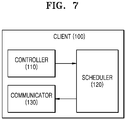
- FIG. 7 is a block diagram of the client 100 for scheduling reception of media contents, according to an embodiment.
- the client 100 for scheduling reception of media contents may include a controller 110, a scheduler 120, and a communicator 130.
- the client 100 for scheduling reception of the media contents which is illustrated in FIG. 7 , includes elements associated with the current embodiment. Thus, it would be understood by those of ordinary skill in the art that general-purpose elements other than the elements illustrated in FIG. 7 may also be included in the client 100.
- the controller 110 controls an overall operation of the client 100 for scheduling reception of media contents.
- the controller 110 may control the scheduler 120 and the communicator 130 overall by executing programs stored in a memory (not shown).
- the controller 110 determines the plurality of network connections 50 enabling the reception of the media contents between the client 100 and the server 200.
- the controller 110 monitors a status of a network established between the client 100 and the server 200 to determine the plurality of network connections 50 connecting the client 100 with the server 200.
- the controller 110 obtains information about the number of determined plural network connections 50.
- the controller 110 predicts an effect corresponding to the scheduling information generated by the scheduler 120.
- the controller 110 determines whether a difference between a first reception time, in which the segments are received through some network connections and a second reception time, in which the segments are received through the plurality of network connections 50 based on the generated scheduling information exceeds a threshold value. For example, if the difference between the first reception time and the second reception time exceeds the threshold value, the controller 110 may determine that generation of the scheduling information has the effect of shortening a time needed to receive the segments.
- the scheduler 120 predicts a buffering timing at which segments received in the unit of the buffer size of the client 100 are received through some of the determined plural network connections 50.
- the scheduler 120 generates scheduling information for allocating the remaining segments to be allocated to some network connections to each of the plurality of network connections at the predicted buffering timing.
- the scheduler 120 determines the number of network connections allocated to one remaining segment to allocate segments to be allocated to some network connections to each of the plurality of network connections, based on the number of plural network connections 50 and the buffer size of the client 100.
- the scheduler 120 may extract scheduling information corresponding to the number of plural network connections 50 and the buffer size of the client 100 from a previously stored lookup table, without a separate operation.
- the previously stored lookup table may include information about the scheduling effect corresponding to the number of plural network connections 50 and the buffer size of the client 100.
- the controller 110 may determine whether the scheduling effect exists, by extracting scheduling effect information corresponding to the buffer size and the number of plural network connections 50 from the lookup table, without needing to perform an operation for determining whether the scheduling effect exists.
- the communicator 130 transmits the generated scheduling information to the server 200.
- the server 200 changes the preset size of the remaining segments based on the scheduling information received from the client 100.
- the server 200 allocates generated sub-segments of the media contents generated as a result of changing the size of the segments based on the scheduling information to each of the plurality of network connections.
- the communicator 130 receives the sub-segments allocated to each of the plurality of network connections.
- FIG. 8 is a flowchart for describing a method of scheduling transmission of media contents at the server 200, according to another embodiment.
- the server 200 determines the plurality of network connections 50 enabling the reception of the media contents between the client 100 and the server 200.
- the server 200 monitors a status of a network established between the client 100 and the server 200 to determine the plurality of network connections 50 connecting the client 100 with the server 200.
- the server 200 obtains information about the number of determined plural network connections 50.
- the server 200 predicts a buffering timing at which segments to be transmitted in the unit of the buffer size of the client 100 are to be transmitted through some of the determined plural network connections 50.
- the server 200 obtains buffer size information of the client 100.
- the server 200 transmits the segments to the client 100 through streaming, the server 200 transmits segments corresponding to the buffer size of the client 100.
- the server 200 may determine the number of segments transmitted to the client 100 based on the obtained buffer size information of the client 100.
- the server 200 determines, based on the determined number of plural network connections 50 and the segment size information of the segments to transmitted, whether the segments are to be transmitted through some of the plural network connections 50. A detailed method of determining whether the segments are to be transmitted through some of the plural network connections 50 has been described with reference to FIG. 4 and Equations (1) and (2).
- the server 200 performs scheduling to allocate the segments to be allocated to some network connections to each of the plurality of network connections at the predicted buffering timing.
- the server 200 obtains the number R of remaining segments by using Equation (1) based on the buffer size and the number of plural network connections 50.
- the server 200 calculates the number of network connections allocated to each remaining segment based on Equation (2).
- the server 200 changes the size of the remaining segment to allocate one remaining segment to each of the calculated number of network connections. For example, if the number of network connections calculated for one remaining segment is 2, the server 200 may generate a sub-segment having a size that is half the size of the remaining segment.
- the server 200 allocates a plurality of sub-segments generated as a result of dividing the remaining segment to each of the plurality of network connections 50.
- the server 200 divides the remaining segments and allocates them to each of the plurality of network connections 50, thereby shortening a time needed to transmit the media contents to the client 100.
- FIG. 9 is a view for describing a method of scheduling transmission of media contents by using a lookup table at the server 200, according to an embodiment.
- the server 200 may generate scheduling information from a lookup table which defines a relationship between the number of plural network connections 50 and the buffer size of the client 100, and a size of segments allocated to each of the plurality of network connections 50.
- the server 200 may determine the number N of plural network connections 50 with the client 100 by monitoring a network state and obtain the buffer size S of the client 100.
- the server 200 extracts segment size information for allocating segments to each of the plurality of network connections 50 from the lookup table when the number of network connections 50 is N and the buffer size is S.
- the server 200 may shorten a time needed to generate the scheduling information by extracting the segment size information from the lookup table.
- the lookup table may include scheduling effect information. If the client 100 performs scheduling and transmits segments to the client 100, the server 200 may determine whether the transmission time is shortened. If it is determined that the scheduling effect does not exist, the server 200 according to an embodiment transmits the segments to the client 100 without performing scheduling.
- the lookup table may include information about whether the scheduling effect exists when the number of plural network connections 50 is N and the buffer size is S. In this case, based on the information about existence of the scheduling effect extracted from the lookup table, the server 200 may schedule the segments and determine whether to transmit the segments to the client 100, without needing a separate operation.
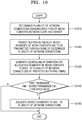
- FIG. 10 is a flowchart illustrating a method of determining whether a scheduling effect exists and performing scheduling based on a determination result at the server 200, according to an embodiment.
- the server 200 determines the plurality of network connections 50 enabling the reception of the media contents between the client 100 and the server 200.
- the server 200 monitors a status of a network established between the client 100 and the server 200 to obtain the determined number of plural network connections 50.
- Operation S1010 may correspond to operation S810.
- the server 200 predicts a buffering timing at which segments to be transmitted in the unit of the buffer size of the client 100 are to be transmitted through some of the determined plural network connections 50. Operation S1020 may correspond to operation S820.
- the server 200 In operation S1030, the server 200 generates scheduling information for allocating the remaining segments to be allocated to some network connections to each of the plurality of network connections at the predicted buffering timing.
- the scheduling information may include information about the number of network connections to be allocated to one remaining segment to allocate the remaining segments to each of the plurality of network connections.
- the information about the number of network connections to be allocated to one remaining segment may be calculated based on Equations (1) and (2) described with reference to FIG. 4 , the number of plural network connections 50, and the buffer size of the client 100.
- the server 200 determines whether a difference between a first transmission time in which the segments are transmitted through some network connections and a second transmission time in which the segments are transmitted through the plurality of network connections 50 based on the generated scheduling information exceeds a threshold value.
- the server 200 may determine that the scheduling has the effect of shortening the buffering time. Whether the difference between the first transmission time and the second transmission time exceeds the threshold value may be determined based on Equation (3).
- the server 200 allocates the divided segments to each of the plurality of network connections 50. If the difference between the first transmission time and the second transmission time exceeds a threshold value, the server 200 divides the remaining segments based on the number of network connections to be allocated to one remaining segment, which is included in the scheduling information. The server 200 allocates the divided segments to each of the plurality of network connections 50 and transmits the segments to the client 100.
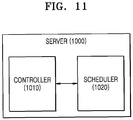
- FIG. 11 is a block diagram of the server 200 for scheduling transmission of media contents according to an embodiment.
- the controller 1010 determines the plurality of network connections 50 enabling the reception of the media contents between the client 200 and the server 100.
- the controller 1010 monitors a status of a network established between the client 100 and the server 200 to determine the plurality of network connections 50 connecting the client 100 with the server 200.
- the controller 1010 obtains information about the number of determined plural network connections 50.
- the scheduler 1020 predicts a buffering timing at which segments transmitted in the unit of the buffer size of the client 100 are transmitted through some of the determined plural network connections 50.
- the scheduler 1020 obtains buffer size information of the client 100.
- the server 200 transmits the segments to the client 100 through streaming, the server 200 transmits segments corresponding to the buffer size of the client 100.
- the scheduler 1020 may determine the number of segments transmitted to the client 100 based on the obtained buffer size information of the client 100.
- the scheduler 1020 determines based on the determined number of plural network connections 50 and the segment size information of the segments to be transmitted, whether the segments are to be transmitted through some of the plural network connections 50.
- the scheduler 1020 performs scheduling to allocate the segments to be allocated to some network connections to each of the plurality of network connections at the predicted buffering timing.
- the scheduler 1020 obtains the number R of remaining segments by using Equation (1) based on the buffer size and the number of plural network connections 50.
- the scheduler 1020 changes the size of the remaining segment to allocate one remaining segment to each of the calculated number of network connections. For example, if the number of network connections calculated for one remaining segment is 2, the scheduler 1020 may generate a sub-segment having a size that is half the size of the remaining segment.
- the scheduler 1020 allocates a plurality of sub-segments generated as a result of dividing the remaining segment to each of the plurality of network connections 50.
- FIG. 12 is a conceptual view for describing a system 20 for scheduling transmission and reception of media contents according to another embodiment.
- the system 20 (hereinafter, referred to as 'scheduling system') for scheduling transmission and reception of media contents may include a client device 100, a first server 200 (corresponding to the server 200 of FIG. 1 ), and a second server 1200.
- the scheduling system 20 illustrated in FIG. 12 includes elements associated with the current embodiment. Thus, it would be understood by those of ordinary skill in the art that general-purpose elements other than the elements illustrated in FIG. 12 may also be included in the scheduling system 10.
- the client 100 transmits data to and receives data from the first server 200 and the second server 1200.
- the client 100 may transmit media contents to and receive media contents from the first server 200.
- the client 100 transmits information needed for transmission and reception of media contents to the second server 1200.
- the client 100 may transmit information about the buffer size of the client 100 to the second server 1200.
- the client 100 receives media contents from the first server 200 through a plurality of network connections 50 in a streaming manner.
- the client 100 may include a buffer capable of storing media contents to receive the media contents from the first server 200 in the streaming manner.
- the client 100 may be implemented in various forms.
- the client 100 described herein may be, but not limited to, a cellular phone, a smartphone, a laptop computer, a tablet personal computer (PC), or the like.
- the first server 200 transmits media contents to the client 100.
- the first server 200 transmits media contents stored inside or outside the first server 200 to the client 100 through the plurality of network connections 50 between the first server 200 and the client 100.
- the first server 200 may communicate with the second server 1200.
- the first server 200 may determine the size of a segment that is the transmission unit of the media contents, based on the scheduling information received from the second server 1200. This will be described in detail with reference to FIG. 13 .
- the second server 1200 may communicate with the client 100 and the first server 200.
- the second server 1200 may obtain information about the buffer size of the client 100 from the client 100.
- the second server 1200 may obtain, from the client 100 or the first server 200, information about the number of plural network connections 50 enabling the reception and transmission of the media contents between the client 100 and the first server 200.
- the second server 1200 may generate scheduling information based on the obtained buffer size of the client 100 and the obtained number of plural network connections 50, so that segments to be transmitted from the first server 200 to the client 100 are allocated to each of the plurality of network connections 50.
- a method of generating the scheduling information at the second server 1200 will be described in detail with reference to FIG. 13 .
- the second server 1200 transmits the generated scheduling information to the first server 200.
- the first server 200 allocates the segments to each of the plurality of network connections 50 based on the scheduling information received from the second server 1200.
- FIG. 13 is a flowchart illustrating a method of generating scheduling information for receiving media contents at the second server 1200 according to an embodiment.
- the second server 1200 determines the plurality of network connections 50 enabling the reception of the media contents between the client 100 and the first server 200.
- the second server 1200 monitors a state of the network established between the client 100 and the first server 200.
- the second server 1200 obtains information about the number of plural network connections 50 connecting the client 100 with the first server 200 as a result of the monitoring.
- the second server 1200 predicts a buffering timing at which segments to be transmitted in the unit of the buffer size of the client 100 are to be transmitted through some of the determined plural network connections 50.
- the second server 1200 obtains information about the size of segments to be transmitted to the client 100 from the first server 200 based on the obtained buffer size of the client 100.
- the first server 200 may transmit segments corresponding to the buffer size through streaming.
- the segments corresponding to the buffer size of the client 100 may be transmitted from the first server 200 to the client 100.
- the second server 1200 determines based on the determined number of plural network connections 50 and the segment size information of the segments to be transmitted, whether the segments are to be transmitted through some of the plural network connections 50.
- a detailed method of determining whether the segments are to be transmitted through some of the plural network connections 50 by the first server 200 may refer to FIG. 4 and Equations (1) and (2).
- the second server 1200 In operation S1330, the second server 1200 generates scheduling information for allocating the remaining segments to be allocated to some network connections to each of the plurality of network connections 50 at the predicted buffering timing.
- the second server 1200 obtains the number R of remaining segments by using Equation (1) based on the buffer size and the number of plural network connections 50.
- the second server 1200 generates scheduling information for changing the size of the remaining segment to allocate one remaining segment to each of the calculated number of network connections.
- a method of generating the scheduling information by the second server 1200 in operation S1330 may correspond to a method of generating the scheduling information by the client 100 in operation S330 of FIG. 2 .
- the second server 1200 transmits the generated scheduling information to the server 200.
- the server 200 generates sub-segments by changing the size of the segments based on the scheduling information received from the second server 1200 to allocate the segments to each of the plurality of network connections 50. For example, if the number of network connections calculated for a segment is 2, the second server 1200 may divide the remaining segment into sub-segments having a size that is half the size of the remaining segment.
- the first server 200 allocates a plurality of sub-segments generated as a result of dividing the remaining segment to each of the plurality of network connections 50.
- the first server 200 divides the remaining segments and allocates them to each of the plurality of network connections 50, thereby shortening a time needed to transmit the media contents to the client 100.
- FIG. 14 is a view for describing a method of scheduling transmission and reception of media contents by using a lookup table at the second server 1200 according to an embodiment.
- the second server 1200 may generate scheduling information from a lookup table which defines a relationship between the number of plural network connections 50 and the buffer size of the client 100, and a size of segments allocated to each of the plurality of network connections 50.
- the second server 1200 may determine the number N of plural network connections 50 enabling the reception and transmission of the media contents between the client 100 and the first server 200 by monitoring a network state, and obtain the buffer size S of the client 100.
- the second server 1200 extracts segment size information for allocating segments to each of the plurality of network connections 50 from the lookup table when the number of network connections 50 is N and the buffer size is S.
- the second server 1200 may shorten a time needed to generate the scheduling information by extracting the segment size information from the lookup table.
- the lookup table may include scheduling effect information. If the second server 1200 performs scheduling and transmits segments to the client 100, the second server 1200 may determine whether the transmission time is shortened. If it is determined that the scheduling effect does not exist, the second server 1200 according to an embodiment transmits the segments to the client 100 without performing scheduling.
- the lookup table may include information about whether the scheduling effect exists when the number of plural network connections 50 is N and the buffer size is S. In this case, based on the information about existence of the scheduling effect extracted from the lookup table, the second server 1200 may generate scheduling information without a separate operation.
- FIG. 15 is a flowchart illustrating a method of determining whether a scheduling effect exists, if scheduling transmission and reception of media contents, at the second server 1200 according to an embodiment of the present disclosure.
- the second server 1200 determines the plurality of network connections 50 enabling the reception of the media contents between the client 100 and the server 200.
- the second server 1200 monitors a status of a network established between the client 100 and the server 200 to obtain the determined number of plural network connections 50.
- Operation S1510 may correspond to operation S1310.
- the second server 1200 predicts a buffering timing at which segments to be transmitted in the unit of the buffer size of the client 100 are to be transmitted through some of the determined plural network connections 50.
- Operation S1020 may correspond to operation S820.
- the second server 1200 generates scheduling information for allocating the remaining segments to be allocated to some network connections to each of the plurality of network connections at the predicted buffering timing.
- the scheduling information may include information about the number of network connections to be allocated to one remaining segment to allocate the remaining segments to each of the plurality of network connections.
- the information about the number of network connections to be allocated to one remaining segment may be calculated based on Equations (1) and (2) described with reference to FIG. 4 , the number of plural network connections 50, and the buffer size of the client 100.
- the second server 1200 determines whether a difference between a first transmission time in which the segments are transmitted through some network connections and a second transmission time in which the segments are transmitted through the plurality of network connections 50 based on the generated scheduling information exceeds a threshold value.
- the second server 1200 may determine that the scheduling has the effect of shortening the buffering time. Whether the difference between the first transmission time and the second transmission time exceeds the threshold value may be determined based on Equation (3).
- the second server 1200 transmits the generated scheduling information to the first server 200. If the difference between the first transmission time and the second transmission time exceeds the threshold value, the first server 1200 transmits the scheduling information to the first server 200. The first server 200 allocates the divided segments to each of the plurality of network connections 50 and transmits the segments to the client 100.
- FIG. 16 is a block diagram of the second server 1200 for scheduling transmission and reception of media contents according to an embodiment.
- the second server 1200 for scheduling reception of media contents may include a controller 1210, a scheduler 1230, and a communicator 1230.
- the second server 1200 for scheduling transmission and reception of the media contents which is illustrated in FIG. 16 , includes elements associated with the current embodiment. Thus, it would be understood by those of ordinary skill in the art that general-purpose elements other than the elements illustrated in FIG. 16 may also be included in the client 100.
- the controller 1210 controls an overall operation of the client 100 for scheduling reception of media contents.
- the controller 1210 may control the scheduler 1220 and the communicator 1230 overall by executing programs stored in a memory (not shown).
- the controller 1210 determines the plurality of network connections 50 enabling the reception of the media contents between the client 100 and the first server 200.
- the controller 1210 monitors a status of a network established between the client 100 and the server 200 to determine the plurality of network connections 50 connecting the client 100 with the server 200.
- the controller 1210 obtains information about the number of determined plural network connections 50.
- the controller 1210 predicts an effect corresponding to the scheduling information generated by the scheduler 1220.
- the controller 1210 determines whether a difference between a first reception time, in which the segments of the media contents are received through some network connections and a second reception time, in which the segments of the media contents are received through the plurality of network connections 50 based on the generated scheduling information exceeds a threshold value. For example, if the difference between the first reception time and the second reception time exceeds the threshold value, the controller 1210 may determine that generation of the scheduling information has the effect of shortening a time needed to receive the segments of the media contents.
- the scheduler 1220 predicts a buffering timing at which segments of the media contents received in the unit of the buffer size of the client 100 are received through some of the determined plural network connections 50.
- the scheduler 2120 generates scheduling information for allocating the segments of the media contents to be allocated to some network connections to each of the plurality of network connections at the predicted buffering timing.
- the scheduler 1220 determines the number of network connections allocated to one segment of the media contents to allocate segments of the media contents to be allocated to some network connections to each of the plurality of network connections, based on the number of plural network connections 50 and the buffer size of the client 100.
- the scheduler 1220 may extract scheduling information corresponding to the number of plural network connections 50 and the buffer size of the client 100 from a previously stored lookup table, without a separate operation.
- the communicator 1230 transmits the generated scheduling information to the first server 200.
- the first server 200 changes the preset size of the segments of the media contents, based on the scheduling information received from the communicator 1230.
- the first server 200 transmits sub-segments generated as a result of changing the size of the segments to the client 100 through each of the plurality of network connections 50.
- An apparatus may be a processor, a memory for storing program data and executing it, a permanent storage such as a disk drive, a communications port for communicating with external devices, and user interface devices, such as a touch panel, a key, a button, etc.
- Methods implemented with a software module or algorithm may be stored as computer-readable codes or program instructions executable on the processor on non-transitory computer-readable recording media.
- non-transitory computer-readable recording media may include a magnetic storage medium (e.g., read-only memory (ROM), random-access memory (RAM), floppy disk, hard disk, etc.) and an optical medium (e.g., a compact disc-ROM (CD-ROM), a digital versatile disc (DVD), etc.), and so forth.
- ROM read-only memory
- RAM random-access memory
- CD-ROM compact disc-ROM
- DVD digital versatile disc
- the non-transitory computer-readable recording medium may be distributed over network coupled computer systems so that computer-readable code may be stored and executed in a distributed fashion.
- the non-transitory medium may be read by a computer, stored in a memory, and executed by a processor.
- the present disclosure may be represented by block components and various process operations. Such functional blocks may be implemented by various numbers of hardware and/or software components which perform specific functions. For example, the present disclosure may employ various integrated circuit components, e.g., memory elements, processing elements, logic elements, look-up tables, and the like, which may carry out a variety of functions under the control of one or more microprocessors or other control devices. Similarly, where the elements of the present disclosure are implemented using software programming or software elements the disclosure may be implemented with any programming or scripting language such as C, C++, Java, assembler, or the like, with the various algorithms being implemented with any combination of data structures, objects, processes, routines or other programming elements. Functional aspects may be implemented as an algorithm executed in one or more processors.
- the present disclosure may employ any number of conventional techniques for electronics configuration, signal processing and/or control, data processing and the like.
- the term “mechanism”, “element”, “means”, or “component” is used broadly and is not limited to mechanical or physical embodiments. The term may include a series of routines of software in conjunction with the processor or the like.
Landscapes
- Engineering & Computer Science (AREA)
- Multimedia (AREA)
- Signal Processing (AREA)
- Computer Networks & Wireless Communication (AREA)
- Databases & Information Systems (AREA)
- Data Exchanges In Wide-Area Networks (AREA)
- Information Transfer Between Computers (AREA)
Applications Claiming Priority (2)
| Application Number | Priority Date | Filing Date | Title |
|---|---|---|---|
| KR1020140060486A KR102216125B1 (ko) | 2014-05-20 | 2014-05-20 | 미디어 컨텐츠의 송수신을 스케쥴링 하는 방법, 장치 및 시스템 |
| PCT/KR2015/005016 WO2015178669A1 (ko) | 2014-05-20 | 2015-05-19 | 미디어 컨텐츠의 송수신을 스케쥴링 하는 방법, 장치 및 시스템 |
Publications (3)
| Publication Number | Publication Date |
|---|---|
| EP3148201A1 true EP3148201A1 (de) | 2017-03-29 |
| EP3148201A4 EP3148201A4 (de) | 2017-11-29 |
| EP3148201B1 EP3148201B1 (de) | 2020-04-15 |
Family
ID=54554270
Family Applications (1)
| Application Number | Title | Priority Date | Filing Date |
|---|---|---|---|
| EP15796789.4A Active EP3148201B1 (de) | 2014-05-20 | 2015-05-19 | Verfahren, vorrichtung und system zur planung von übertragung und empfang von medieninhalten |
Country Status (5)
| Country | Link |
|---|---|
| US (1) | US10630744B2 (de) |
| EP (1) | EP3148201B1 (de) |
| KR (1) | KR102216125B1 (de) |
| CN (1) | CN106416273B (de) |
| WO (1) | WO2015178669A1 (de) |
Families Citing this family (1)
| Publication number | Priority date | Publication date | Assignee | Title |
|---|---|---|---|---|
| KR20220130394A (ko) | 2021-03-18 | 2022-09-27 | 삼성전자주식회사 | 복수의 미디어 스트림을 전송하는 전자 장치 및 그 방법 |
Family Cites Families (21)
| Publication number | Priority date | Publication date | Assignee | Title |
|---|---|---|---|---|
| US7594250B2 (en) * | 1992-04-02 | 2009-09-22 | Debey Henry C | Method and system of program transmission optimization using a redundant transmission sequence |
| US7716312B2 (en) * | 2002-11-13 | 2010-05-11 | Avid Technology, Inc. | Method and system for transferring large data files over parallel connections |
| US20060007882A1 (en) * | 2004-07-07 | 2006-01-12 | Meshnetworks, Inc. | System and method for selecting stable routes in wireless networks |
| US7719967B2 (en) * | 2005-09-28 | 2010-05-18 | Netapp, Inc. | Cumulative TCP congestion control |
| US7783773B2 (en) * | 2006-07-24 | 2010-08-24 | Microsoft Corporation | Glitch-free media streaming |
| EP2095255B1 (de) | 2006-11-30 | 2014-07-23 | Speedbit Ltd. | Beschleunigtes herunterladen und wiedergeben von multimediadateien |
| US8145721B2 (en) | 2007-03-01 | 2012-03-27 | Telefonaktiebolaget L M Ericsson (Publ) | Bit streams combination of downloaded multimedia files |
| US8060653B2 (en) * | 2007-04-23 | 2011-11-15 | Ianywhere Solutions, Inc. | Background synchronization |
| KR100971351B1 (ko) * | 2008-10-22 | 2010-07-20 | 성균관대학교산학협력단 | 씨에이알과 서브 채널을 이용한 근접 주문형 비디오 전송방법 |
| KR101301004B1 (ko) | 2008-11-25 | 2013-08-29 | 에스케이플래닛 주식회사 | 컨텐츠 분산 저장형 멀티미디어 스트리밍 시스템 및 방법 |
| KR20100059117A (ko) | 2008-11-26 | 2010-06-04 | 에스케이텔레콤 주식회사 | 컨텐츠 분산형 스트리밍 시스템, 캐시서버 및 컨텐츠 스트리밍 방법 |
| KR100924309B1 (ko) | 2009-06-04 | 2009-11-02 | 전자부품연구원 | 시간확장성과 버퍼상태판단을 통한 품질 적응적 멀티미디어 데이터 스트리밍 방법 및 시스템 |
| US8386621B2 (en) * | 2010-03-12 | 2013-02-26 | Netflix, Inc. | Parallel streaming |
| KR20120011774A (ko) | 2010-07-29 | 2012-02-08 | 한국전자통신연구원 | 전송 스케쥴링 방법 |
| WO2011150644A1 (zh) * | 2010-12-17 | 2011-12-08 | 华为技术有限公司 | 一种启动阶段的流媒体数据获取、发送方法及装置 |
| EP2477397A1 (de) * | 2011-01-12 | 2012-07-18 | Nxp B.V. | Initialisierung für das HTTP Streaming von multimedialen Dateien über paralelle TCP Verbindungen |
| US8897753B2 (en) * | 2011-10-12 | 2014-11-25 | Motorola Mobility Llc | Method for retrieving content by a wireless communication device having first and second radio access interfaces, wireless communication device and communication system |
| KR101889717B1 (ko) | 2011-11-15 | 2018-08-21 | 삼성전자주식회사 | 무선 통신 시스템에서 자원 할당 스케줄링 방법 및 장치 |
| US20130311614A1 (en) * | 2012-05-21 | 2013-11-21 | Motorola Mobility, Inc. | Method for retrieving content and wireless communication device for performing same |
| US9369513B2 (en) * | 2013-04-12 | 2016-06-14 | Futurewei Technologies, Inc. | Utility-maximization framework for dynamic adaptive video streaming over hypertext transfer protocol in multiuser-multiple input multiple output long-term evolution networks |
| US20140317060A1 (en) * | 2013-04-18 | 2014-10-23 | Intronis, Inc. | Remote backup of large files |
-
2014
- 2014-05-20 KR KR1020140060486A patent/KR102216125B1/ko not_active Expired - Fee Related
-
2015
- 2015-05-19 US US15/312,059 patent/US10630744B2/en active Active
- 2015-05-19 CN CN201580026989.6A patent/CN106416273B/zh not_active Expired - Fee Related
- 2015-05-19 EP EP15796789.4A patent/EP3148201B1/de active Active
- 2015-05-19 WO PCT/KR2015/005016 patent/WO2015178669A1/ko not_active Ceased
Also Published As
| Publication number | Publication date |
|---|---|
| KR102216125B1 (ko) | 2021-02-16 |
| US20170111420A1 (en) | 2017-04-20 |
| US10630744B2 (en) | 2020-04-21 |
| EP3148201A4 (de) | 2017-11-29 |
| EP3148201B1 (de) | 2020-04-15 |
| WO2015178669A1 (ko) | 2015-11-26 |
| CN106416273B (zh) | 2019-11-26 |
| CN106416273A (zh) | 2017-02-15 |
| KR20150133551A (ko) | 2015-11-30 |
Similar Documents
| Publication | Publication Date | Title |
|---|---|---|
| JP6705012B2 (ja) | 伝送リソース指示方法、基地局、ユーザ端末およびシステム | |
| KR102486803B1 (ko) | 업 링크 전송 방법 및 장치 | |
| CN106102180B (zh) | 一种上行传输的方法及基站 | |
| CN106888079B (zh) | 资源分配方法及装置 | |
| JP6047260B2 (ja) | データ送信方法、基地局及びユーザ装置 | |
| CN110418376B (zh) | 数据传输方法及装置 | |
| EP3911086B1 (de) | Verfahren zur auswahl einer uplink-übertragungsressource, endgerät und speichermedium | |
| CN103828463B (zh) | 下行控制信息传输的方法、网络侧设备及用户设备 | |
| JP6542899B2 (ja) | ランダムアクセス方法、端末、および基地局 | |
| KR20200110774A (ko) | Dci 내의 정보 필드 값 결정 방법 및 장치 | |
| US20230039620A1 (en) | Lte resource allocation controller | |
| CN110493879B (zh) | 信息反馈方法及装置、信息发送方法及装置 | |
| RU2718966C1 (ru) | Способ и устройство передачи данных, компьютерная программа и носитель данных | |
| EP3541137A1 (de) | Verfahren und system zur verzögerungsbewussten uplink-planung in einem kommunikationsnetzwerk | |
| EP3298499B1 (de) | Kommunikationsvorrichtung, kommunikationsverfahren und speichermedium | |
| KR20210042384A (ko) | Uci 결합을 전송하기 위한 방법, 단말 및 네트워크 측 장치 | |
| EP3148201B1 (de) | Verfahren, vorrichtung und system zur planung von übertragung und empfang von medieninhalten | |
| CN113891478B (zh) | 一种资源分配指示方法及装置、基站及终端 | |
| CN110519850B (zh) | 传输带宽确定方法及装置 | |
| US10608804B2 (en) | Data transmission method, device, and system | |
| EP2908277A1 (de) | Vorrichtung, Verfahren und nichttransitorisches computerlesbares Speichermedium zur Durchführung einer Sofortnachrichtkommunikation | |
| KR102327204B1 (ko) | 데이터를 송수신하는 방법 및 단말기 | |
| CN110602748A (zh) | 数据接收方法及装置、控制方法及装置 | |
| US10601716B2 (en) | Communication prediction apparatus and communication prediction method, and recording medium storing computer program | |
| US20170230064A1 (en) | Method for transmitting/receiving data by ue and ue therefor |
Legal Events
| Date | Code | Title | Description |
|---|---|---|---|
| STAA | Information on the status of an ep patent application or granted ep patent |
Free format text: STATUS: THE INTERNATIONAL PUBLICATION HAS BEEN MADE |
|
| PUAI | Public reference made under article 153(3) epc to a published international application that has entered the european phase |
Free format text: ORIGINAL CODE: 0009012 |
|
| STAA | Information on the status of an ep patent application or granted ep patent |
Free format text: STATUS: REQUEST FOR EXAMINATION WAS MADE |
|
| 17P | Request for examination filed |
Effective date: 20161208 |
|
| AK | Designated contracting states |
Kind code of ref document: A1 Designated state(s): AL AT BE BG CH CY CZ DE DK EE ES FI FR GB GR HR HU IE IS IT LI LT LU LV MC MK MT NL NO PL PT RO RS SE SI SK SM TR |
|
| AX | Request for extension of the european patent |
Extension state: BA ME |
|
| DAV | Request for validation of the european patent (deleted) | ||
| DAX | Request for extension of the european patent (deleted) | ||
| A4 | Supplementary search report drawn up and despatched |
Effective date: 20171027 |
|
| RIC1 | Information provided on ipc code assigned before grant |
Ipc: H04N 21/24 20110101ALI20171023BHEP Ipc: H04L 29/06 20060101ALI20171023BHEP Ipc: H04N 21/262 20110101AFI20171023BHEP Ipc: H04N 21/6373 20110101ALI20171023BHEP Ipc: H04N 21/6377 20110101ALI20171023BHEP |
|
| STAA | Information on the status of an ep patent application or granted ep patent |
Free format text: STATUS: EXAMINATION IS IN PROGRESS |
|
| 17Q | First examination report despatched |
Effective date: 20180703 |
|
| GRAP | Despatch of communication of intention to grant a patent |
Free format text: ORIGINAL CODE: EPIDOSNIGR1 |
|
| STAA | Information on the status of an ep patent application or granted ep patent |
Free format text: STATUS: GRANT OF PATENT IS INTENDED |
|
| INTG | Intention to grant announced |
Effective date: 20191129 |
|
| GRAS | Grant fee paid |
Free format text: ORIGINAL CODE: EPIDOSNIGR3 |
|
| GRAA | (expected) grant |
Free format text: ORIGINAL CODE: 0009210 |
|
| STAA | Information on the status of an ep patent application or granted ep patent |
Free format text: STATUS: THE PATENT HAS BEEN GRANTED |
|
| AK | Designated contracting states |
Kind code of ref document: B1 Designated state(s): AL AT BE BG CH CY CZ DE DK EE ES FI FR GB GR HR HU IE IS IT LI LT LU LV MC MK MT NL NO PL PT RO RS SE SI SK SM TR |
|
| REG | Reference to a national code |
Ref country code: CH Ref legal event code: EP |
|
| REG | Reference to a national code |
Ref country code: DE Ref legal event code: R096 Ref document number: 602015050796 Country of ref document: DE |
|
| REG | Reference to a national code |
Ref country code: IE Ref legal event code: FG4D |
|
| REG | Reference to a national code |
Ref country code: AT Ref legal event code: REF Ref document number: 1258696 Country of ref document: AT Kind code of ref document: T Effective date: 20200515 |
|
| REG | Reference to a national code |
Ref country code: NL Ref legal event code: FP |
|
| REG | Reference to a national code |
Ref country code: LT Ref legal event code: MG4D |
|
| PG25 | Lapsed in a contracting state [announced via postgrant information from national office to epo] |
Ref country code: PT Free format text: LAPSE BECAUSE OF FAILURE TO SUBMIT A TRANSLATION OF THE DESCRIPTION OR TO PAY THE FEE WITHIN THE PRESCRIBED TIME-LIMIT Effective date: 20200817 Ref country code: SE Free format text: LAPSE BECAUSE OF FAILURE TO SUBMIT A TRANSLATION OF THE DESCRIPTION OR TO PAY THE FEE WITHIN THE PRESCRIBED TIME-LIMIT Effective date: 20200415 Ref country code: LT Free format text: LAPSE BECAUSE OF FAILURE TO SUBMIT A TRANSLATION OF THE DESCRIPTION OR TO PAY THE FEE WITHIN THE PRESCRIBED TIME-LIMIT Effective date: 20200415 Ref country code: GR Free format text: LAPSE BECAUSE OF FAILURE TO SUBMIT A TRANSLATION OF THE DESCRIPTION OR TO PAY THE FEE WITHIN THE PRESCRIBED TIME-LIMIT Effective date: 20200716 Ref country code: IS Free format text: LAPSE BECAUSE OF FAILURE TO SUBMIT A TRANSLATION OF THE DESCRIPTION OR TO PAY THE FEE WITHIN THE PRESCRIBED TIME-LIMIT Effective date: 20200815 Ref country code: NO Free format text: LAPSE BECAUSE OF FAILURE TO SUBMIT A TRANSLATION OF THE DESCRIPTION OR TO PAY THE FEE WITHIN THE PRESCRIBED TIME-LIMIT Effective date: 20200715 Ref country code: FI Free format text: LAPSE BECAUSE OF FAILURE TO SUBMIT A TRANSLATION OF THE DESCRIPTION OR TO PAY THE FEE WITHIN THE PRESCRIBED TIME-LIMIT Effective date: 20200415 |
|
| REG | Reference to a national code |
Ref country code: AT Ref legal event code: MK05 Ref document number: 1258696 Country of ref document: AT Kind code of ref document: T Effective date: 20200415 |
|
| PG25 | Lapsed in a contracting state [announced via postgrant information from national office to epo] |
Ref country code: LV Free format text: LAPSE BECAUSE OF FAILURE TO SUBMIT A TRANSLATION OF THE DESCRIPTION OR TO PAY THE FEE WITHIN THE PRESCRIBED TIME-LIMIT Effective date: 20200415 Ref country code: HR Free format text: LAPSE BECAUSE OF FAILURE TO SUBMIT A TRANSLATION OF THE DESCRIPTION OR TO PAY THE FEE WITHIN THE PRESCRIBED TIME-LIMIT Effective date: 20200415 Ref country code: BG Free format text: LAPSE BECAUSE OF FAILURE TO SUBMIT A TRANSLATION OF THE DESCRIPTION OR TO PAY THE FEE WITHIN THE PRESCRIBED TIME-LIMIT Effective date: 20200715 Ref country code: RS Free format text: LAPSE BECAUSE OF FAILURE TO SUBMIT A TRANSLATION OF THE DESCRIPTION OR TO PAY THE FEE WITHIN THE PRESCRIBED TIME-LIMIT Effective date: 20200415 |
|
| PG25 | Lapsed in a contracting state [announced via postgrant information from national office to epo] |
Ref country code: AL Free format text: LAPSE BECAUSE OF FAILURE TO SUBMIT A TRANSLATION OF THE DESCRIPTION OR TO PAY THE FEE WITHIN THE PRESCRIBED TIME-LIMIT Effective date: 20200415 |
|
| REG | Reference to a national code |
Ref country code: DE Ref legal event code: R097 Ref document number: 602015050796 Country of ref document: DE |
|
| PG25 | Lapsed in a contracting state [announced via postgrant information from national office to epo] |
Ref country code: IT Free format text: LAPSE BECAUSE OF FAILURE TO SUBMIT A TRANSLATION OF THE DESCRIPTION OR TO PAY THE FEE WITHIN THE PRESCRIBED TIME-LIMIT Effective date: 20200415 Ref country code: RO Free format text: LAPSE BECAUSE OF FAILURE TO SUBMIT A TRANSLATION OF THE DESCRIPTION OR TO PAY THE FEE WITHIN THE PRESCRIBED TIME-LIMIT Effective date: 20200415 Ref country code: CZ Free format text: LAPSE BECAUSE OF FAILURE TO SUBMIT A TRANSLATION OF THE DESCRIPTION OR TO PAY THE FEE WITHIN THE PRESCRIBED TIME-LIMIT Effective date: 20200415 Ref country code: CH Free format text: LAPSE BECAUSE OF NON-PAYMENT OF DUE FEES Effective date: 20200531 Ref country code: MC Free format text: LAPSE BECAUSE OF FAILURE TO SUBMIT A TRANSLATION OF THE DESCRIPTION OR TO PAY THE FEE WITHIN THE PRESCRIBED TIME-LIMIT Effective date: 20200415 Ref country code: AT Free format text: LAPSE BECAUSE OF FAILURE TO SUBMIT A TRANSLATION OF THE DESCRIPTION OR TO PAY THE FEE WITHIN THE PRESCRIBED TIME-LIMIT Effective date: 20200415 Ref country code: LI Free format text: LAPSE BECAUSE OF NON-PAYMENT OF DUE FEES Effective date: 20200531 Ref country code: DK Free format text: LAPSE BECAUSE OF FAILURE TO SUBMIT A TRANSLATION OF THE DESCRIPTION OR TO PAY THE FEE WITHIN THE PRESCRIBED TIME-LIMIT Effective date: 20200415 Ref country code: ES Free format text: LAPSE BECAUSE OF FAILURE TO SUBMIT A TRANSLATION OF THE DESCRIPTION OR TO PAY THE FEE WITHIN THE PRESCRIBED TIME-LIMIT Effective date: 20200415 Ref country code: SM Free format text: LAPSE BECAUSE OF FAILURE TO SUBMIT A TRANSLATION OF THE DESCRIPTION OR TO PAY THE FEE WITHIN THE PRESCRIBED TIME-LIMIT Effective date: 20200415 Ref country code: EE Free format text: LAPSE BECAUSE OF FAILURE TO SUBMIT A TRANSLATION OF THE DESCRIPTION OR TO PAY THE FEE WITHIN THE PRESCRIBED TIME-LIMIT Effective date: 20200415 |
|
| PLBE | No opposition filed within time limit |
Free format text: ORIGINAL CODE: 0009261 |
|
| STAA | Information on the status of an ep patent application or granted ep patent |
Free format text: STATUS: NO OPPOSITION FILED WITHIN TIME LIMIT |
|
| PG25 | Lapsed in a contracting state [announced via postgrant information from national office to epo] |
Ref country code: SK Free format text: LAPSE BECAUSE OF FAILURE TO SUBMIT A TRANSLATION OF THE DESCRIPTION OR TO PAY THE FEE WITHIN THE PRESCRIBED TIME-LIMIT Effective date: 20200415 Ref country code: PL Free format text: LAPSE BECAUSE OF FAILURE TO SUBMIT A TRANSLATION OF THE DESCRIPTION OR TO PAY THE FEE WITHIN THE PRESCRIBED TIME-LIMIT Effective date: 20200415 |
|
| REG | Reference to a national code |
Ref country code: BE Ref legal event code: MM Effective date: 20200531 |
|
| 26N | No opposition filed |
Effective date: 20210118 |
|
| PG25 | Lapsed in a contracting state [announced via postgrant information from national office to epo] |
Ref country code: LU Free format text: LAPSE BECAUSE OF NON-PAYMENT OF DUE FEES Effective date: 20200519 |
|
| PG25 | Lapsed in a contracting state [announced via postgrant information from national office to epo] |
Ref country code: IE Free format text: LAPSE BECAUSE OF NON-PAYMENT OF DUE FEES Effective date: 20200519 Ref country code: FR Free format text: LAPSE BECAUSE OF NON-PAYMENT OF DUE FEES Effective date: 20200615 |
|
| PG25 | Lapsed in a contracting state [announced via postgrant information from national office to epo] |
Ref country code: BE Free format text: LAPSE BECAUSE OF NON-PAYMENT OF DUE FEES Effective date: 20200531 Ref country code: SI Free format text: LAPSE BECAUSE OF FAILURE TO SUBMIT A TRANSLATION OF THE DESCRIPTION OR TO PAY THE FEE WITHIN THE PRESCRIBED TIME-LIMIT Effective date: 20200415 |
|
| PGFP | Annual fee paid to national office [announced via postgrant information from national office to epo] |
Ref country code: DE Payment date: 20210420 Year of fee payment: 7 |
|
| PGFP | Annual fee paid to national office [announced via postgrant information from national office to epo] |
Ref country code: GB Payment date: 20210422 Year of fee payment: 7 |
|
| PGFP | Annual fee paid to national office [announced via postgrant information from national office to epo] |
Ref country code: NL Payment date: 20210421 Year of fee payment: 7 |
|
| PG25 | Lapsed in a contracting state [announced via postgrant information from national office to epo] |
Ref country code: TR Free format text: LAPSE BECAUSE OF FAILURE TO SUBMIT A TRANSLATION OF THE DESCRIPTION OR TO PAY THE FEE WITHIN THE PRESCRIBED TIME-LIMIT Effective date: 20200415 Ref country code: MT Free format text: LAPSE BECAUSE OF FAILURE TO SUBMIT A TRANSLATION OF THE DESCRIPTION OR TO PAY THE FEE WITHIN THE PRESCRIBED TIME-LIMIT Effective date: 20200415 Ref country code: CY Free format text: LAPSE BECAUSE OF FAILURE TO SUBMIT A TRANSLATION OF THE DESCRIPTION OR TO PAY THE FEE WITHIN THE PRESCRIBED TIME-LIMIT Effective date: 20200415 |
|
| PG25 | Lapsed in a contracting state [announced via postgrant information from national office to epo] |
Ref country code: MK Free format text: LAPSE BECAUSE OF FAILURE TO SUBMIT A TRANSLATION OF THE DESCRIPTION OR TO PAY THE FEE WITHIN THE PRESCRIBED TIME-LIMIT Effective date: 20200415 |
|
| REG | Reference to a national code |
Ref country code: DE Ref legal event code: R119 Ref document number: 602015050796 Country of ref document: DE |
|
| REG | Reference to a national code |
Ref country code: NL Ref legal event code: MM Effective date: 20220601 |
|
| GBPC | Gb: european patent ceased through non-payment of renewal fee |
Effective date: 20220519 |
|
| PG25 | Lapsed in a contracting state [announced via postgrant information from national office to epo] |
Ref country code: GB Free format text: LAPSE BECAUSE OF NON-PAYMENT OF DUE FEES Effective date: 20220519 Ref country code: DE Free format text: LAPSE BECAUSE OF NON-PAYMENT OF DUE FEES Effective date: 20221201 |
|
| PG25 | Lapsed in a contracting state [announced via postgrant information from national office to epo] |
Ref country code: NL Free format text: LAPSE BECAUSE OF NON-PAYMENT OF DUE FEES Effective date: 20220601 |