EP3145332B1 - Dietary compositions for reducing blood glucose levels and for weight management - Google Patents
Dietary compositions for reducing blood glucose levels and for weight management Download PDFInfo
- Publication number
- EP3145332B1 EP3145332B1 EP15726306.2A EP15726306A EP3145332B1 EP 3145332 B1 EP3145332 B1 EP 3145332B1 EP 15726306 A EP15726306 A EP 15726306A EP 3145332 B1 EP3145332 B1 EP 3145332B1
- Authority
- EP
- European Patent Office
- Prior art keywords
- extract
- blood glucose
- glucose levels
- placebo
- dietary composition
- Prior art date
- Legal status (The legal status is an assumption and is not a legal conclusion. Google has not performed a legal analysis and makes no representation as to the accuracy of the status listed.)
- Active
Links
Images








Classifications
-
- A—HUMAN NECESSITIES
- A61—MEDICAL OR VETERINARY SCIENCE; HYGIENE
- A61K—PREPARATIONS FOR MEDICAL, DENTAL OR TOILETRY PURPOSES
- A61K36/00—Medicinal preparations of undetermined constitution containing material from algae, lichens, fungi or plants, or derivatives thereof, e.g. traditional herbal medicines
- A61K36/18—Magnoliophyta (angiosperms)
- A61K36/185—Magnoliopsida (dicotyledons)
- A61K36/74—Rubiaceae (Madder family)
- A61K36/742—Coffea, e.g. coffee
-
- A—HUMAN NECESSITIES
- A23—FOODS OR FOODSTUFFS; TREATMENT THEREOF, NOT COVERED BY OTHER CLASSES
- A23L—FOODS, FOODSTUFFS OR NON-ALCOHOLIC BEVERAGES, NOT OTHERWISE PROVIDED FOR; PREPARATION OR TREATMENT THEREOF
- A23L2/00—Non-alcoholic beverages; Dry compositions or concentrates therefor; Preparation or treatment thereof
- A23L2/52—Adding ingredients
-
- A—HUMAN NECESSITIES
- A23—FOODS OR FOODSTUFFS; TREATMENT THEREOF, NOT COVERED BY OTHER CLASSES
- A23L—FOODS, FOODSTUFFS OR NON-ALCOHOLIC BEVERAGES, NOT OTHERWISE PROVIDED FOR; PREPARATION OR TREATMENT THEREOF
- A23L23/00—Soups; Sauces; Preparation or treatment thereof
-
- A—HUMAN NECESSITIES
- A23—FOODS OR FOODSTUFFS; TREATMENT THEREOF, NOT COVERED BY OTHER CLASSES
- A23L—FOODS, FOODSTUFFS OR NON-ALCOHOLIC BEVERAGES, NOT OTHERWISE PROVIDED FOR; PREPARATION OR TREATMENT THEREOF
- A23L33/00—Modifying nutritive qualities of foods; Dietetic products; Preparation or treatment thereof
- A23L33/10—Modifying nutritive qualities of foods; Dietetic products; Preparation or treatment thereof using additives
- A23L33/105—Plant extracts, their artificial duplicates or their derivatives
-
- A—HUMAN NECESSITIES
- A23—FOODS OR FOODSTUFFS; TREATMENT THEREOF, NOT COVERED BY OTHER CLASSES
- A23L—FOODS, FOODSTUFFS OR NON-ALCOHOLIC BEVERAGES, NOT OTHERWISE PROVIDED FOR; PREPARATION OR TREATMENT THEREOF
- A23L33/00—Modifying nutritive qualities of foods; Dietetic products; Preparation or treatment thereof
- A23L33/20—Reducing nutritive value; Dietetic products with reduced nutritive value
- A23L33/21—Addition of substantially indigestible substances, e.g. dietary fibres
-
- A—HUMAN NECESSITIES
- A23—FOODS OR FOODSTUFFS; TREATMENT THEREOF, NOT COVERED BY OTHER CLASSES
- A23L—FOODS, FOODSTUFFS OR NON-ALCOHOLIC BEVERAGES, NOT OTHERWISE PROVIDED FOR; PREPARATION OR TREATMENT THEREOF
- A23L33/00—Modifying nutritive qualities of foods; Dietetic products; Preparation or treatment thereof
- A23L33/30—Dietetic or nutritional methods, e.g. for losing weight
-
- A—HUMAN NECESSITIES
- A23—FOODS OR FOODSTUFFS; TREATMENT THEREOF, NOT COVERED BY OTHER CLASSES
- A23L—FOODS, FOODSTUFFS OR NON-ALCOHOLIC BEVERAGES, NOT OTHERWISE PROVIDED FOR; PREPARATION OR TREATMENT THEREOF
- A23L7/00—Cereal-derived products; Malt products; Preparation or treatment thereof
- A23L7/10—Cereal-derived products
- A23L7/109—Types of pasta, e.g. macaroni or noodles
-
- A—HUMAN NECESSITIES
- A61—MEDICAL OR VETERINARY SCIENCE; HYGIENE
- A61K—PREPARATIONS FOR MEDICAL, DENTAL OR TOILETRY PURPOSES
- A61K31/00—Medicinal preparations containing organic active ingredients
- A61K31/70—Carbohydrates; Sugars; Derivatives thereof
- A61K31/7004—Monosaccharides having only carbon, hydrogen and oxygen atoms
-
- A—HUMAN NECESSITIES
- A61—MEDICAL OR VETERINARY SCIENCE; HYGIENE
- A61K—PREPARATIONS FOR MEDICAL, DENTAL OR TOILETRY PURPOSES
- A61K31/00—Medicinal preparations containing organic active ingredients
- A61K31/70—Carbohydrates; Sugars; Derivatives thereof
- A61K31/715—Polysaccharides, i.e. having more than five saccharide radicals attached to each other by glycosidic linkages; Derivatives thereof, e.g. ethers, esters
- A61K31/733—Fructosans, e.g. inulin
-
- A—HUMAN NECESSITIES
- A61—MEDICAL OR VETERINARY SCIENCE; HYGIENE
- A61K—PREPARATIONS FOR MEDICAL, DENTAL OR TOILETRY PURPOSES
- A61K31/00—Medicinal preparations containing organic active ingredients
- A61K31/70—Carbohydrates; Sugars; Derivatives thereof
- A61K31/715—Polysaccharides, i.e. having more than five saccharide radicals attached to each other by glycosidic linkages; Derivatives thereof, e.g. ethers, esters
- A61K31/736—Glucomannans or galactomannans, e.g. locust bean gum, guar gum
-
- A—HUMAN NECESSITIES
- A61—MEDICAL OR VETERINARY SCIENCE; HYGIENE
- A61K—PREPARATIONS FOR MEDICAL, DENTAL OR TOILETRY PURPOSES
- A61K36/00—Medicinal preparations of undetermined constitution containing material from algae, lichens, fungi or plants, or derivatives thereof, e.g. traditional herbal medicines
- A61K36/18—Magnoliophyta (angiosperms)
- A61K36/185—Magnoliopsida (dicotyledons)
- A61K36/48—Fabaceae or Leguminosae (Pea or Legume family); Caesalpiniaceae; Mimosaceae; Papilionaceae
-
- A—HUMAN NECESSITIES
- A61—MEDICAL OR VETERINARY SCIENCE; HYGIENE
- A61K—PREPARATIONS FOR MEDICAL, DENTAL OR TOILETRY PURPOSES
- A61K36/00—Medicinal preparations of undetermined constitution containing material from algae, lichens, fungi or plants, or derivatives thereof, e.g. traditional herbal medicines
- A61K36/18—Magnoliophyta (angiosperms)
- A61K36/185—Magnoliopsida (dicotyledons)
- A61K36/60—Moraceae (Mulberry family), e.g. breadfruit or fig
- A61K36/605—Morus (mulberry)
-
- A—HUMAN NECESSITIES
- A61—MEDICAL OR VETERINARY SCIENCE; HYGIENE
- A61K—PREPARATIONS FOR MEDICAL, DENTAL OR TOILETRY PURPOSES
- A61K47/00—Medicinal preparations characterised by the non-active ingredients used, e.g. carriers or inert additives; Targeting or modifying agents chemically bound to the active ingredient
- A61K47/46—Ingredients of undetermined constitution or reaction products thereof, e.g. skin, bone, milk, cotton fibre, eggshell, oxgall or plant extracts
-
- A—HUMAN NECESSITIES
- A61—MEDICAL OR VETERINARY SCIENCE; HYGIENE
- A61K—PREPARATIONS FOR MEDICAL, DENTAL OR TOILETRY PURPOSES
- A61K9/00—Medicinal preparations characterised by special physical form
- A61K9/0012—Galenical forms characterised by the site of application
- A61K9/0053—Mouth and digestive tract, i.e. intraoral and peroral administration
-
- A—HUMAN NECESSITIES
- A61—MEDICAL OR VETERINARY SCIENCE; HYGIENE
- A61K—PREPARATIONS FOR MEDICAL, DENTAL OR TOILETRY PURPOSES
- A61K9/00—Medicinal preparations characterised by special physical form
- A61K9/08—Solutions
-
- A—HUMAN NECESSITIES
- A61—MEDICAL OR VETERINARY SCIENCE; HYGIENE
- A61P—SPECIFIC THERAPEUTIC ACTIVITY OF CHEMICAL COMPOUNDS OR MEDICINAL PREPARATIONS
- A61P3/00—Drugs for disorders of the metabolism
-
- A—HUMAN NECESSITIES
- A61—MEDICAL OR VETERINARY SCIENCE; HYGIENE
- A61P—SPECIFIC THERAPEUTIC ACTIVITY OF CHEMICAL COMPOUNDS OR MEDICINAL PREPARATIONS
- A61P3/00—Drugs for disorders of the metabolism
- A61P3/04—Anorexiants; Antiobesity agents
-
- A—HUMAN NECESSITIES
- A61—MEDICAL OR VETERINARY SCIENCE; HYGIENE
- A61P—SPECIFIC THERAPEUTIC ACTIVITY OF CHEMICAL COMPOUNDS OR MEDICINAL PREPARATIONS
- A61P3/00—Drugs for disorders of the metabolism
- A61P3/06—Antihyperlipidemics
-
- A—HUMAN NECESSITIES
- A61—MEDICAL OR VETERINARY SCIENCE; HYGIENE
- A61P—SPECIFIC THERAPEUTIC ACTIVITY OF CHEMICAL COMPOUNDS OR MEDICINAL PREPARATIONS
- A61P3/00—Drugs for disorders of the metabolism
- A61P3/08—Drugs for disorders of the metabolism for glucose homeostasis
-
- A—HUMAN NECESSITIES
- A61—MEDICAL OR VETERINARY SCIENCE; HYGIENE
- A61P—SPECIFIC THERAPEUTIC ACTIVITY OF CHEMICAL COMPOUNDS OR MEDICINAL PREPARATIONS
- A61P3/00—Drugs for disorders of the metabolism
- A61P3/08—Drugs for disorders of the metabolism for glucose homeostasis
- A61P3/10—Drugs for disorders of the metabolism for glucose homeostasis for hyperglycaemia, e.g. antidiabetics
-
- A—HUMAN NECESSITIES
- A23—FOODS OR FOODSTUFFS; TREATMENT THEREOF, NOT COVERED BY OTHER CLASSES
- A23V—INDEXING SCHEME RELATING TO FOODS, FOODSTUFFS OR NON-ALCOHOLIC BEVERAGES AND LACTIC OR PROPIONIC ACID BACTERIA USED IN FOODSTUFFS OR FOOD PREPARATION
- A23V2002/00—Food compositions, function of food ingredients or processes for food or foodstuffs
Definitions
- the present invention provides dietary compositions comprising mulberry extract, coffee extract, bean extract, optionally, dietary fibers, and a nutraceutically acceptable carrier.
- the present invention may be used in methods for preventing the increase in postprandial hyperglycemia and hypoglycemia, hyperinsulinemia and diseases and disorders associated therewith, including, endothelial dysfunction, inflammatory conditions, oxidative stress, hyperlipidemia, and consecutive pathologies like insulin resistance, diabetes, visceral obesity, hypertension and cardiovascular diseases.
- Hyperglycemia and postprandial hyperglycemia are related to increased generation of inflammation factors and free radicals responsible for the mitochondrial malfunction and oxidative stress of the endothelial reticulum leading to insulin resistance which is the main cause of diabetes, and metabolic syndrome associated with visceral obesity.
- pharmaceuticals used for treating or preventing the aforementioned disorders exhibit side effects and tend to induce development of tolerance in long term use, resulting in a disability to prevent the ongoing deterioration of glucose homeostasis.
- US 7,125,573 discloses a composition comprising raw coffee bean extract, and, optionally, one or more other additive, including mulberry leaves, and use thereof for reducing hypertension.
- US 2011/0052754 discloses a composition comprising one or more of the following components: (1) a component for supporting healthy thyroid function; (2) a component for increasing satiety; (3) a component for inhibiting carbohydrate uptake and usage, such as, green coffee bean extract, white kidney bean extract and mulberry powder extract; (4) a component for increasing caloric expenditure; and (5) a component for increasing fatty acid oxidation therefore improving lean body composition.
- US 2008/0254153 discloses a composition of water extractible, lipophilic and non-lipophilic bioactive components that are exclusively of fruit or vegetable or plant origin wherein the profile of the bioactive components is similar or identical to that of the corresponding whole fruit or vegetable, and wherein the fruit, vegetable or plant material comprises mulberry and/or coffee.
- the composition is used for treating cardiovascular diseases, cancers or diabetes.
- US 2007/0166320 discloses a functional food comprising an agent for preventing/ameliorating diabetes mellitus and for suppressing an increase in blood glucose level, the agent comprises dried tea tree mushroom and at least one more component, such us, mulberry leaves and the functional food may be in the form of coffee.
- WO 2013/078658 discloses a composition comprising an extract of the berries of Morus spp. for use in the treatment or prevention of conditions linked to foods with a high glycemic index.
- compositions comprising at least two inhibitors selected from an alpha amylase inhibitor, an alpha glucosidase inhibitor, and a sodium dependent glucose transporter inhibitor and use thereof for controlling glucose uptake.
- US 2013/177506 discloses a food supplement comprising chlorogenic acid for bioactive immune support and to aid users in management of weight loss, obesity and/or glucose management, or for general health and well-being of users. There remains an unmet need for a composition of dietary supplements that exhibit significant therapeutic effect in diseases and disorder associated with abnormal blood glucose levels.
- the present invention is defined by the claims and provides dietary compositions and use thereof for maintaining balanced glucose and insulin levels, for reducing blood glucose levels in the treatment of diseases associated therewith, including, postprandial hyperglycemia, for reducing glycemic index of foods and for improving glucose homeostasis.
- the composition may ameliorate dyslipidemia, improve atherosclerotic index and ameliorate fatty liver. Accordingly, the methods of using the present invention may prevent development of, or attenuate, pathological conditions, such as, diabetes, visceral obesity, endothelial dysfunction, low grade inflammation, oxidative stress and metabolic syndromes.
- the dietary compositions of the invention encompass a plurality of nutraceutical supplements, and comprise white mulberry extract comprising 1-deoxynojirimycin, green coffee extract comprising chlorogenic acid, and white bean extract comprising phaseolamin, and optionally, fibers.
- Said composition may be used in the treatment of a disease or disorder selected from the group consisting of diabetes, obesity, hypercholesterolemia, metabolic syndrome and hyperlipidemia, wherein said use comprises maintaining glucose homeostasis; or maintaining insulin homeostasis; or reducing blood glucose in a subject in need thereof.
- the present invention is based in part on the unexpected beneficial effect obtained by combining nutraceutical supplements which do not exert the desired effect when used alone.
- nutraceutical supplements which do not exert the desired effect when used alone.
- the inventors of the present invention have found that each of mulberry extract, green coffee extract and white bean extract reduced glycemia in rats fed on glucose, sucrose or starch in a random, inconsistent, manner (e.g. Example 1).
- administering a combination of all three supplements resulted with a significant reduction in blood glucose in rats fed on sucrose, starch or a high fat diet, and in obese rats (e.g. Examples 2 and 3) and in healthy subjects (e.g. Example 7).
- the specific combination of mulberry extract, green coffee extract and white bean extract is advantageous over combinations including only two plant extracts and over other combinations of three plant extracts (e.g. Example 5).
- the dietary combinations of the invention also induced a significant reduction in fat mass, a significant increase in lean mass and a significant reduction in fat- muscle mass ratio.
- the nutraceutical composition of the invention exerted an unexpected reduction in hypoglycemic episodes in healthy subjects following consumption of food products with high glycemic index.
- the nutraceutically active component is consisting of said coffee extract, white bean extract and mulberry extract.
- said mulberry extract is an extract of white mulberry leaves.
- the composition further comprises dietary fiber.
- the dietary fiber is selected from the group consisting of glucomannan, inulin, psyllium, oat gum (beta glucan), guar gum, pectin, soybean fiber, oat bran, xanthan, cyclodextran, oligofructose, chitin, derivatives and combinations thereof. Each possibility represents a separate embodiment of the present invention.
- the nutraceutical acceptable carrier comprises one or more of sweeteners, flavoring agents, diluents, liposome, licosome matrix and binders. Each possibility represents a separate embodiment of the present invention.
- the composition further comprises one or more flavoring agents, such as, cinnamon.
- the composition further comprises gymnema sylvestre.
- the composition is in an oral dosage form.
- the composition is a lozenge, a tablet, a capsule, a chewable dosage form, a food bar, a suspension, powder, granulate, syrup or a beverage.
- a lozenge a tablet, a capsule, a chewable dosage form, a food bar, a suspension, powder, granulate, syrup or a beverage.
- the composition is a powder form or granulate ready for use after being dissolved in a drink, such as, water.
- the composition further comprises a time release coating.
- the time release coating comprises lecithin.
- the composition further comprises arabinose.
- the use comprises a method for maintaining glucose homeostasis in a subject in need thereof, the method comprising administering to the subject the above-defined dietary composition comprising said mulberry extract, coffee extract and bean extract as the nutraceutically active component.
- the use comprises a method for maintaining insulin homeostasis in a subject in need thereof, the method comprising administering to the subject the above-defined dietary composition comprising said mulbery extract, coffee extract and bean extract as the nutraceutically active component.
- the subject is afflicted with a diseases or disorder selected from the group consisting of diabetes, obesity, hypercholesterolemia, hyperglycemia, postprandial hyperglycemia and hyperlipidemia.
- a diseases or disorder selected from the group consisting of diabetes, obesity, hypercholesterolemia, hyperglycemia, postprandial hyperglycemia and hyperlipidemia.
- reducing blood glucose levels comprises treating prediabetes and diabetes, preventing prediabetes and diabetes, treating obesity, treating hypercholesterolemia, treating hyperlipidemia and treating metabolic syndrome.
- treating prediabetes and diabetes comprises treating prediabetes and diabetes, preventing prediabetes and diabetes, treating obesity, treating hypercholesterolemia, treating hyperlipidemia and treating metabolic syndrome.
- reducing blood glucose levels comprises treating prediabetes. In some embodiments, reducing blood glucose levels comprises treating diabetes. In some embodiments, reducing blood glucose levels comprises preventing diabetes. In some embodiments, reducing blood glucose levels comprises preventing prediabetes. In some embodiments, reducing blood glucose levels comprises treating obesity. In some embodiments, reducing blood glucose levels comprises treating hypercholesterolemia. In some embodiments, reducing blood glucose levels comprises treating hyperlipidemia. In some embodiments, reducing blood glucose levels comprises treating metabolic syndrome.
- the method is for preventing progression of prediabetes and diabetes. In some embodiments, the method is for treating prediabetes and diabetes.
- the method is for inducing satiety.
- the composition is administered orally.
- the reduction in blood glucose levels is maintained for at least one hour following administration of the dietary composition. In some embodiments, the reduction in blood glucose levels is maintained for at least two hours following administration of the dietary composition.
- the composition is administered prior to intake of a meal.
- the use comprises a method for weight management in a subject in need thereof, comprising administering to the subject a diabetic composition comprising mulberry extract, coffee extract, bean extract as the nutraceutically active component and a nutraceutically acceptable carrier.
- the weight management comprises prevention of weight gain and induction of weight loss.
- the subject is afflicted with metabolic syndrome.
- the method is for preventing progression of obesity. In some embodiments, the method is for treating obesity.
- the composition is administered prior to intake of a meal.
- the use comprises a method for preventing and/or treating hypoglycemia or a condition associated with hypoglycemia in a subject in need thereof, the method includes administering to the subject the dietary composition of the invention.
- condition is prediabetes or diabetes.
- preventing hyperglycemia includes detaining progression of prediabetes or diabetes.
- the dietary composition is used for preventing reactive hypoglycemia.
- the condition is insulin resistance. In some embodiments, preventing hyperglycemia includes detaining progression of insulin resistance.
- the method further includes treating prediabetes or diabetes.
- the method further includes treating insulin resistance.
- preventing and/or treating hypoglycemia is maintained for at least one hour following administration of the dietary composition. In some embodiments, preventing and/or treating hypoglycemia is maintained for at least two hours following administration of the dietary composition.
- the subject in need thereof has blood glucose level below 70 mg/dl. In some embodiments, the subject in need thereof has blood glucose level below 65 mg/dl. In some embodiments, the subject in need thereof has blood glucose level below 60 mg/dl.
- the composition is administered before intake of a meal.
- the meal includes at least one food product having a high glycemic index.
- the present invention provides a dietary composition
- a dietary composition comprising mulberry extract comprising 1-deoxynojirimycin, green coffee extract comprising chlorogenic acid, white kidney bean extract comprising phaseolamin, and a nutraceutically acceptable carrier.
- the present invention also provides said dietary composition for use in the treatment in the treatment of a disease or disorder selected from the group consisting of diabetes, obesity, hypercholesterolemia, metabolic syndrome and hyperlipidemia, wherein said use comprises maintaining glucose homeostasis, or maintaining insulin homeostasis, or reducing blood glucose levels, in a subject in need thereof.
- the dietary composition of the invention is devoid of artificially added sweeteners or sugar. In some embodiments, the dietary composition of the invention comprises artificial sugar substitutes.
- saccharin refers to artificially added agents that add sweetness to the composition, including, but not limited to, stevia, sucralose, saccharin and the like.
- 'mulberry extract' includes, but is not limited to, white mulberry (also known as Morus alba) extract and an extract derived from the leaves, fruits, stem, branches or buds of white mulberry, wherein the mulberry extract is rich in 1-deoxynojirimycin (DNJ).
- white mulberry also known as Morus alba
- DNJ 1-deoxynojirimycin
- the coffee extract is a green coffee extract having a concentration of 30-70% chlorogenic acid.
- the coffee extract is obtained from beans of C. Arabica, C. robusta, C. liberica, C. arabusta and combinations thereof. Each possibility represents a separate embodiment of the present invention.
- the raw coffee bean extract is produced by solvent extraction of coffee beans. In some embodiments, the raw coffee bean extract is produced by supercritical fluid extraction of coffee beans. In some embodiments, the raw coffee bean extract is obtained by extracting raw coffee beans with a mixture of water and ethanol.
- the amount of white kidney bean extract containing phaseolamin is standardized for units of activity for amylase inhibition.
- composition refers to a composition of nutraceutical as the active ingredients.
- Nutraceuticals refers to extracts of plants, including herbals, fruits and vegetables.
- the beneficial effect exerted by the dietary compositions of the present invention was assessed, inter alia, in comparison to the effect of therapeutics known to reduce blood glucose, for example, acarbose.
- 'arabinose' refers to arabinose and primarily L-Arabinose (the most common form of arabinose in nature), which is a natural, poorly absorbed pentose (5-carbon monosaccharide) that was previously described as selectively inhibiting intestinal sucrase activity.
- L-Arabinose the most common form of arabinose in nature
- pentose 5-carbon monosaccharide
- Arabinose feeding was shown to reduce the weights of epididymal adipose tissue, plasma insulin and triacylglycerol concentrations, suggesting that L-arabinose modulates, typically via inhibition, the intestinal activity of enzymes which are capable of reducing sucrose and starch utilization and consequently attenuate lipogenesis.
- Acarbose also known as Glucobay®, Precose® and Prandase®, is a commercial anti-diabetic drug prescribed, for the treatment of type 2 diabetes mellitus and, in some countries, for the prevention of diabetes.
- Use of Acarbose is highly associated with side effects, primarily, diarrhea and flatulence.
- Any methods for extracting and collecting bioactive ingredient from a fruit or a plant material may be applied for obtaining the claimed extracts, for example, the method disclosed in US 2008/0254153 .
- the dietary compositions of the invention further comprise dietary fibers.
- the dietary fibers is any one or more of the following glucomannan, inulin, psyllium, oat gum (beta glucan), guar gum, pectin, soybean fiber, polydextran, cyclodextran, oligofructose, chitinin and its derivatives and oat bran. Each possibility represents a separate embodiment of the present invention.
- the dietary compositions of the invention are in a controlled release dosage form. In some embodiments, the dietary compositions of the invention are in a controlled release dosage form selected from the group consisting of: delayed release dosage form, extended release dosage form, sustained release dosage form, slow release dosage form, and combinations thereof. Each possibility represents a separate embodiment of the present invention.
- the dietary compositions of the invention comprise time release coating.
- the dietary compositions of the invention further comprise one or more of lecithin and polyalkylimide polymers, liposome and licosome matrix among others.
- lecithin and polyalkylimide polymers each possibility represents a separate embodiment of the present invention.
- the dietary compositions of the invention are in an oral dosage form suitable for oral administration.
- the dietary compositions of the invention are in an oral form selected from capsules, gelatin capsules, soft capsules, tablets, sugar-coated tablets, pills, pastes or pastilles, gums, powder, granulates or drinkable solutions or emulsions, such as, soups and shots, nutritional bars, syrup or a gel, with a dose of about 0.1 to 100% of the dietary supplements, i.e. the primary composition, which can then be taken directly with water or by any other known means.
- the primary composition i.e. the primary composition
- the dietary composition is provided in a form of powder suitable as a supplement to beverages and food products, such as, milk, orange juice, mineral water, yogurt, pudding, salad, soup among others.
- beverages and food products such as, milk, orange juice, mineral water, yogurt, pudding, salad, soup among others.
- the dietary composition of the invention is provided in a powder form suitable for reconstitution in aqueous solutions, including, suitable beverages, wherein the powder form comprises dehydrated mulberry extract, dehydrated coffee extract, dehydrated bean extract and, optionally, dehydrated arabinose.
- the powder may easily dissolve in the beverage or food products and may, or may not, add flavor thereto.
- the nutraceutical composition is provided in a form of granulate.
- the granulate may be used as a supplement to beverages and food products, such as, milk, orange juice, mineral water, yogurt, pudding, salad, soup among others.
- the granulate may easily dissolve in the beverage or food product and may, or may not, add additional flavor thereto.
- the dietary compositions may also include a sweetener, a stabilizer, an antioxidant, an additive, a flavoring or a colorant.
- a sweetener a stabilizer, an antioxidant, an additive, a flavoring or a colorant.
- the composition further comprises flavoring agents, including, but not limited to, sweeteners (e.g. Aspartame), cinnamon, essential oil extracts, non-alcoholic favoring extracts, non-artificial fruit flavors, artificial extracts and combinations and/or extracts thereof.
- sweeteners e.g. Aspartame
- cinnamon e.g. Aspartame
- essential oil extracts e.g. Aspartame
- non-alcoholic favoring extracts e.g. Aspartame
- non-alcoholic favoring extracts e.g. Aspartame
- non-alcoholic favoring extracts e.g., non-alcoholic favoring extracts
- non-artificial fruit flavors e.g., non-alcoholic favoring extracts
- combinations and/or extracts thereof e.g., cinnamon, cinnamon, essential oil extracts, non-alcoholic favoring extracts, non-artificial fruit flavors, artificial extracts and combinations and/or extracts thereof.
- Tablets can, if desired, be coated or uncoated. Suitable tableting procedures include those generally described in Perry's Chemical Engineer's Handbook (4th Edition 1963 ) and in Pharmaceutical Dosage Forms: Tablets, volumes 1 and 2 (Marcel Dekker 1980 ) among others.
- the composition can also be administered in capsule form. The size of each dosage and the interval of dosing to the patient effectively determine the size and shape of the tablet or capsule. By present preference, each tablet or capsule contains the active ingredients in predetermined amounts to simplify treatment of the subject.
- the use of the dietary composition of the invention comprises a method for reducing blood glucose levels in a subject in need thereof comprising administering to the subject the dietary composition of the invention.
- the method of the invention comprises ameliorating hyperglycemia. In some embodiments, the method of the invention comprises ameliorating postprandial hyperglycemia. In some embodiments, the method of the invention comprises maintaining glucose homeostasis.
- the method of the invention comprises treating or preventing pathological conditions associated with hyperglycemia, such as, oxidative stress and inflammatory conditions, including, inflammation with pathologies, such as, diabetes (insulin resistance), endothelial dysfunction, hyperlipemia, fatty liver, cardiovascular diseases, visceral obesity, ectopic fat deposition (e.g. in skeletal muscles, liver, epicardial tissue, pericardial tissue) and dysfunction of adipocytes.
- pathological conditions associated with hyperglycemia such as, oxidative stress and inflammatory conditions, including, inflammation with pathologies, such as, diabetes (insulin resistance), endothelial dysfunction, hyperlipemia, fatty liver, cardiovascular diseases, visceral obesity, ectopic fat deposition (e.g. in skeletal muscles, liver, epicardial tissue, pericardial tissue) and dysfunction of adipocytes.
- pathological conditions associated with hyperglycemia such as, oxidative stress and inflammatory conditions, including, inflammation with pathologies, such as, diabetes (insulin
- Type -1 diabetes mellitus and Type -2 diabetes mellitus.
- Diabetes is a metabolic disorder characterized by high blood glucose levels or low glucose tolerance, and is estimated to affect 8% of the U.S. population. Diabetes is also significantly associated with higher risk of death from vascular disease, cancer, renal disease, infectious diseases, external causes, intentional self-harm, nervous system disorders, and chronic pulmonary disease.
- Metabolic syndrome in which subjects present with central obesity and at least two other metabolic disorders (such as high cholesterol, high blood pressure, or diabetes) is estimated to affect 25% of the U.S. population. Obesity increases the likelihood to type II diabetes, hypertension, cardiovascular diseases, cancer, gall-stones, kidney dysfunction, arthrosis and joint-skeleton disorders and neurodegenerative diseases (such as, dementia, age dependent cognitive decline) among other diseases.
- 'obesity' as used herein includes all forms of abnormal body weight and weight gain, with distinction that overweight refers to BMI 25-30 kg/m 2 ; obesity refers to
- BMI within the range of 30 to 35 kg/m2
- morbid obesity refers to BMI higher than 35 kg/m 2 .
- Obesity and overweight are estimated to affect about 65% of the U.S. adult population.
- the method comprises inducing satiety.
- appetite control refers to appetite control that may be induced by certain foods, such as, foods rich with fat. Satiety is associated with the absence of hungers, and/or the sensation of feeling full. Induction of satiety as used herein primarily refers to the sensation of being full after a normal-sized meal.
- the method comprises decreasing postprandial insulin level.
- a method for preventing and/or treating hypoglycemia or a condition associated with hypoglycemia in a subject in need thereof includes administering to the subject a dietary composition including mulberry extract, coffee extract and bean extract as the nutraceutically active components.
- the method comprises ameliorating hypoglycemia. In some embodiments, the method comprises ameliorating postprandial hypoglycemia. In some embodiments, the method comprises treating or preventing pathological conditions associated with hypoglycemia, such as, insulin resistance, diabetes, prediabetes, hyperinsulinemia and dysphoria. Each possibility represents a separate embodiment of the present invention.
- ameliorating hypoglycemia comprises maintaining insulin homeostasis. In some embodiments, ameliorating hypoglycemia comprises reducing insulin level.
- insulin level is not merely associated with sugar levels, and accordingly, reduction of blood glucose may not necessarily entail reduction in insulin levels.
- Sugar lowering may be exerted by extra insulin secretion, which is not the case in most of the examples described hereinbelow.
- the dietary composition in addition to reducing blood glucose levels also induces a reduction in insulin level. This effect is clinically highly desired as high levels of insulin are known to induce severe pathologies.
- hypoglycemia refers to a medical condition represented by recurrent episodes of symptomatic low blood sugar occurring after a high carbohydrate meal in non-diabetic subjects.
- hypoglycemia may be a consequence of excessive insulin release triggered by food which continues past the digestion of glucose derived from the meal.
- Other causes of hypoglycemia may be excessive insulin produced in the body (hyperinsulinemia), inborn error of metabolism, medications and poisons, alcohol, hormone deficiencies, prolonged starvation, alterations of metabolism associated with infection and organ failure.
- hypoglycemia refers to blood glucose levels below 75 mg/dl. In some embodiments, hypoglycemia refers to blood glucose levels below 70 mg/dl. In some embodiments, hypoglycemia refers to blood glucose levels below 65 mg/dl. In some embodiments, hypoglycemia refers to blood glucose levels below 60 mg/dl. In some embodiments, hypoglycemia refers to blood glucose levels below 55 mg/dl. In some embodiments, hypoglycemia refers to blood glucose levels below 50 mg/dl.
- preventing hypoglycemia may include detaining progression of prediabetes or diabetes.
- preventing hypoglycemia may include detaining progression of insulin resistance.
- the method may further include treating prediabetes or diabetes.
- the method may further include treating insulin resistance.
- a dietary composition comprising mulberry extract, coffee extract, bean extract as the nutraceutically active component and a nutraceutically acceptable carrier for reducing blood glucose levels.
- the use comprises managing weight gain, thereby losing weight and/or maintaining an acceptable body weight.
- the use comprises the treatment of hyperglycemia and diseases or disorders associated therewith.
- the use comprises maintaining blood glucose homeostasis.
- the use comprises maintaining insulin homeostasis.
- glucose homeostasis refers primarily to postprandial glucose homeostasis, stated otherwise, blood glucose levels that are balanced and do not reach extremely high or extremely low glucose levels which are associated with hyperglycemia or hypoglycemia, respectively.
- glucose homeostasis in humans refers to blood glucose levels within the range of 70 to 130 mg/dL before meals and no more than 180 mg/dL after meals.
- postprandial glucose usually does not exceed 140 mg/dL and is typically maintained around 100 mg/dL.
- 'insulin homeostasis' refers primarily to insulin levels that are balanced and do not reach extremely high or extremely low levels which are associated with pathologies. Typically, balanced insulin levels are within the range of 55 to 80 pmol/L and no more than 100 IU/ml.
- the use comprises managing weight gain, preventing gain of excess weight and/or inducing weight loss in a subject in need thereof.
- weight gain' refers to weight gain normally incurred in a mammal subsequent to malnutrition, abnormal metabolism, post menopause, use of antipsychotics, castration, testosterone decline in men, ovariectomy and ovariohysterectomy among others.
- the term 'excess weight' may refer to body mass exceeding the required BMI.
- compositions of the invention are adapted for administration on a regular basis, including, but not limited to, on daily basis, weekly basis and biweekly basis.
- the animals received aqueous solutions of plant extracts, Acarbose, which served as a positive control (PC) or water, which served as a negative control (NC) at pre-defined quantities via a gastric tube.
- All the plant extracts were provided by MarMar Investment in a solution form, and were administered according to the following doses:
- the extract solutions were prepared so as the amount of liquid administered to a sample animal weighing 350 g was 1mL. Water was administered to the control group in the same manner/volume. Five minutes after the administration of the extracts each rat received a 50% aqueous solution of sucrose in the amount of 2 g/kg body weight via a gastric tube. Subsequent blood glucose levels measurements were taken after 15, 30, 60, 90, 120 and 180 minutes (counting from administration of the glucose solution) using Accu-Chek Go (Roche Diagnostics GmbH, Mannheim, Germany) glucometer and test strips.
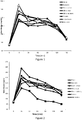
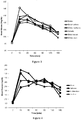
- Figures 1 to 3 exhibit all glucose tolerance tests, expressing blood glucose levels at different time points after administration of 50% glucose solution ( Figure 1 ), 50% sucrose solution ( Figure 2 ) and 40% starch solution ( Figure 3 ), as measured in rats fed on a diet supplemented with individual plant extracts: pomelo, bitter melon, white mulberry, green coffee, arabinose, acarbose (positive control). Water without any supplements served as negative control. Fasting blood glucose levels in all groups of rats subjected to the tolerance tests ranged between 90.9 and 96.2 mg/dL.
- Figure 4 exhibits glucose tolerance tests, expressing blood glucose levels at different time points after administration of 50% glucose solution in rats receiving spinach thylakoids) at high, medium and low doses (1000, 500 and 250 mg/kg body weight, respectively). Water without any supplements served as negative control. Fasting blood glucose levels in all groups of rats subjected to the tolerance tests ranged around 90 to 95 mg/dL.
- Example 2 Plant extract combinations reduce blood glucose levels in vivo
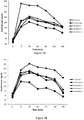
- the solutions of the extracts were prepared so that the volume of liquid administered to an animal weighing 350 g was 1 mL. Water was administered to the control group in a similar manner. Five minutes after administration of the extracts each rat received 50% aqueous solution of sucrose in the amount of 2 g/kg body weight (A) or 40% aqueous solution of starch in the amount of 2 g/kg body weight (B). Subsequent blood glucose levels measurements were taken after 15, 30, 60, 90, 120 and 180 minutes (counting from administration of the sucrose solution) using Accu-Chek Go (Roche Diagnostics GmbH, Mannheim, Germany) glucometer and test strips.
- Accu-Chek Go Roche Diagnostics GmbH, Mannheim, Germany
- combination I triangles
- bean extract 100 mg per 1 kg body weight
- green coffee extract (20 mg per 1 kg body weight) inhibited the initial burst in blood glucose, measured 15min after commencement of the test, to the same level as acarbose
- combination III asterisk containing 25 mg per 1 kg body weight arabinose in addition to the components of combination I had a somewhat relegated initial effect.
- Example 3 Plant extract combinations reduce blood glucose levels in obese rats
- Group HF continued to receive the high fat diet
- group T received the high fat diet supplemented with thylacoids (500mg/kg body mass)
- group P received the high fat diet supplemented with plant extract combination I (white mulberry 120 mg/kg body mass, bean 100 mg/kg body mass, green coffee 20 mg/kg body mass)
- group TP received the high fat diet supplemented with both thylacoids and plant extract combination I.
- test stage the animals were fed with diets prepared by the DBFoF team.
- Rats were deprived of food for 10-12 hours prior to concluding the experiment. On the day of the experiment ended, animals were sacrificed by an intraperitoneal injection of a mixture of xylazine and ketamine, in line with the institutional procedures of the DBFoF and appropriate recommendations on laboratory animals. Blood samples were collected from the caudal caval vein into heparinized tubes. Heparinized blood was centrifuged (350 ⁇ g, 10 min, 4°C), and plasma was separated and stored at -20°C until the analyses. Colorimetric methods were used to determine the levels of glucose (GL).
- BM Body mass
- D.I. dietary intake during the second period Diet/Parameter K HF T P TP SEM P Week 1 BM (g) 360.9 b 391.6 a 390.3 a 386.3 ab 385,4 ab 4.074 0.029 D.I. (g/rat/day) 125.8 116.7 117.1 123.5 126.4 1.674 0.100 Week 2 BM (g) 371.3 b 402.3 a 404.2 a 399.6 a 398.8 a 4.216 0.022 D.I.
- Diet composition (%) Ingredient/Diet K HF G GP Casein 22.5 22.5 22.5 22.5 Cellulose 5 5 5 5 5 Oil 5 - - - Lard - 24 24 24 Vitamin mix 1 1 1 1 Mineral mix 3.5 3.5 3.5 3.5 Choline chloride 0.2 0.2 0.2 0.2 DL-methionine 0.2 0.2 0.2 0.2 Maize starch 62.6 43.6 42.01 41.268 Glucomannan - - 0.954 0.954 Inulin - - 0.636 0.636 White mulberry extract - - - 0.371 Bean extract - - - 0.309 Green coffee extract - - - 0.062 Dietary Energy (%) Protein 23 19 19 19 19 Carbohydrates 65 36 36 36 Fat 12 45 45 45 45 45 45 45 45 45 45 45 45 45 45 45 45 45 45 45 45 45 45 45 45 45 45 45 45 45 45 45 45 45 45 45 45 45 45 45 45 45 45 45 45 45 45 45 45 45 45 45 45 45 45 45 45 45 45 45 45 45
- Group HF continued to receive the high fat diet
- group G received the high fat diet supplemented with dietary fibers (60% w/w glucomannan, 40% w/w inulin, 514 mg/kg body mass)
- group GP received the high fat diet supplemented with plant extract combination I (white mulberry 120 mg/kg body mass, bean 100 mg/kg body mass, green coffee 20 mg/kg body mass) and dietary fibers (second period). Body mass and dietary intake were evaluated during the second period and the results are summarized in Table 6 below. Table 6.
- rats receiving high fat diet supplemented with dietary fibers have a 3.5% reduction in blood glucose levels.
- the reduction in the blood glucose levels reached 6.5%.
- Example 5 Plant extract combinations that do not reduce blood glucose levels
- the solutions of the extracts were prepared so that the amount of liquid administered to an animal weighing 350 g was 1 mL. Water was administered to the control group in a similar manner. Five minutes after administration of the extracts each rat intragastrically received 50% aqueous solution of sucrose in the amount of 2 g/kg body weight (A) or 40% starch solution in the amount of 2 g/kg body weight (B). Subsequent blood glucose levels measurements were taken after 15, 30, 60, 90, 120 and 180 minutes (counting from administration of the sucrose/starch solution) using Accu-Chek Go (Roche Diagnostics GmbH, Mannheim, Germany) glucometer and test strips.
- combination I caused a significantly advantageous reduction in the measured blood glucose levels when compared to alternative combinations of three plant extracts (such as combination VI including white mulberry extract, green coffee extract and bitter melon (asterisk) and combination VII including green coffee extract, bitter melon extract and pomelo extract (circles)).
- three plant extracts such as combination VI including white mulberry extract, green coffee extract and bitter melon (asterisk) and combination VII including green coffee extract, bitter melon extract and pomelo extract (circles)
- substudy 1 blood was drawn intravenously 15, 30, 45, 60, 75, 90 and 120 minutes after the beginning of the study meal, whereas in substudies 2-4 bread consumption time was extended by 5 minutes and blood was drawn 20, 35, 50, 65, 80, 95 and 125 minutes after the beginning of the study meal and glucose levels were measured.
- Substudies 1-3 tested the effects of high, middle and low doses (respectively) of white mulberry extract, white kidney bean extract and green coffee extract separately on postprandial blood glucose and insulin levels.
- Substudy 4 tested the effects of inulin + glucomannan, inulin alone and thylakoids separately on postprandial blood glucose and insulin levels.
- I - white mulberry extract 600 mg
- II - white kidney bean extract 2,000 mg
- III - green coffee extract 800 mg
- IV - placebo I - white mulberry extract
- V - white mulberry extract 400 mg
- VI - white kidney bean extract (1,200 mg)
- VII - green coffee extract 400 mg
- the conducted tests presented in substudies 1-4 and analyses thereof indicate that the investigated test products affect postprandial glucose levels in sera of healthy subjects.
- the white mulberry extract at a dose of 600 mg (substudy 1, product I) is associated with lower glucose level and lower increase of glucose level during the first 15-30 minutes after food intake. Carbohydrate absorption seems to be delayed, thus resulting in a significant increase of glucose level within 75-90 minutes after intake of a meal. Therefore, using just white mulberry extract may not show any effect on the decrease of the glycemic index of the food during the entire 120-minute-long postprandial period.
- substudy 5 the combination included white mulberry extract, white kidney bean extract and green coffee extract and in substudy 6 the combination includes the same extracts as in substudy 5, in combination with inulin and glucomannan.
- SUBSTUDY 5 - Products XVII - white mulberry extract (600 mg) + green coffee extract (400 mg) + white kidney bean extract (1,200 mg), XVIII - placebo.
- SUBSTUDY 6 - Products XIX - white mulberry extract (600 mg) + green coffee extract (400 mg) + white kidney bean extract (1,200 mg) + inulin (2000 mg) + glucomannan (3000 mg), XX - placebo.
- Such phenomenon could be attributed to the delay in carbohydrate absorption.
- substudies 5 and 6 show that combinations XVII and XIX exhibit a potential to suppress an increase in glucose levels after meals in healthy subjects, especially within 20-35 minutes after a high glycemic index meal.
- Substudies 5 and 6 were further cross-examined in order to inspect the influence of test combinations XVII and XIX on insulin levels in different periods of the experiment. It was found that both XVII and XIX exhibit the potential to suppress postprandial increase in insulin levels in healthy subjects, especially within 20-35 minutes after a high glycemic index meal. More favourable results were seen after taking test product XIX, in particular, 50 minutes after a meal. Also, the ingestion of test product XIX correlated with reduced AUC for the postprandial period compared to the control values.
- Example 6 The following substudies present a comparison between the results disclosed in Examples 6 and 7 above was conducted in order to determine the influence of individual products (Example 6) and combinations (Example 7) on blood glucose concentrations and insulin levels.
- the quantities of carbohydrates was elevated from 100 g to 150 g of wheat bread since the tested subjects were healthy (i.e. without carbohydrate metabolism disorders) and in order to emphasize the observed changes in blood glucose levels.
- Placebo products (IV and XVIII) were consumed with 100 g wheat bread or 150 g bread, respectively ( Figure 17 ).
- Placebo products (IV and XX) were consumed with 100 g wheat bread or 150 g bread, respectively ( Figure 17 ).
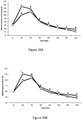
- Glucose levels overtime following consumption of bread and products I (with 100 g bread), XVII (with 150 g bread) or placebo are presented in Figure 19A , as follows: white mulberry extract ( Figure 19A ; squares on a solid line) and a combination of this extract with green coffee and white kidney bean extracts ( Figure 19A ; empty diamonds on a solid line) consumed with 100 g wheat bread and 150 g bread, respectively. Control subjects consumed placebo with 100 g wheat bread or 150 g bread ( Figure 19A ; solid or empty circles on dashed lines, respectively).
- the average glucose levels after taking the combination of products (XVII) were lower compared to those levels after taking the white mulberry preparation (I) alone.
- I - white mulberry extract 600 mg
- XIX - white mulberry extract 600 mg
- green coffee extract 400 mg
- white kidney bean extract 1,200 mg
- inulin 2000 mg
- glucomannan 3000 mg
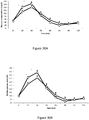
- Glucose levels overtime following consumption of bread and products I (with 100 g bread), XIX (with 150 g bread) or placebo are presented in Figure 20A , as follows: white mulberry extract ( Figure 20A ; squares, solid line) and a combination of this extract with green coffee and white kidney bean extracts, inulin and glucomannan ( Figure 20A ; empty diamonds, solid line) consumed with 100 g wheat bread and 150 g bread, respectively. Control subjects consumed placebo with 100 g wheat bread or 150 g bread ( Figure 20A ; dashed lines, solid or empty circles, respectively). The average blood glucose level did not show substantial differences after taking the white mulberry preparation or the combination product with fiber.
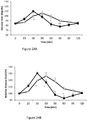
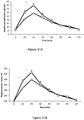
- Glucose levels overtime following consumption of 150 g bread and products VI or XVII are presented in Figure 21A , as follows: white kidney bean extract ( Figure 21A ; squares, solid line) and a combination of this extract with green coffee and white mulberry extracts ( Figure 21A ; empty diamonds, solid line).
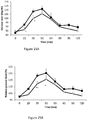
- Glucose levels overtime following consumption of 150 g bread and products VI or XIX are presented in Figure 22A , as follows: white kidney bean extract ( Figure 22A ; squares, solid line) and a combination of this extract with green coffee and white mulberry extracts, inulin and glucomannan ( Figure 22A ; empty diamonds, solid line).
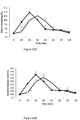
- Glucose absolute and relative levels overtime following consumption of 150 g bread and products VII or XVII are presented in Figs. 23A and 23B , respectively, as follows: green coffee extract ( Figure 23A ; squares, solid line) and a combination of this extract with green coffee and white kidney bean extracts ( Figure 23A ; empty diamonds, solid line). No significant differences were observed following consumption of the single extract (product VII) compared to the combination (product XVII).
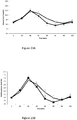
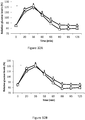
- Glucose absolute and relative levels overtime following consumption of 150 g bread and products VII or XIX are presented in Figs. 24A and 24B , respectively, as follows: green coffee extract ( Figure 24A ; squares, solid line) and a combination of this extract with green coffee and white kidney bean extracts, inulin and glucomannan ( Figure 24A ; empty diamonds, solid line).
- the combination product XIX was more efficient than extract VII in preventing blood glucose increase during the first postprandial phase prior to their return to normal values (i.e. during the initial 35 minutes).
- glucose levels were lower in the single product group. This phenomenon may be attributed to an excessive insulin burst corresponding to the glucose level burst during the first postprandial phase in the single product group.
- Substudy 16 breakfast flakes meal with vanilla milk
- Substudy 17 a blueberry muffin and a blueberry drinking yoghurt
- Substudy 18 pasta with cheese sauce
- Substudy 19 Coke-type beverage (400ml, Coca-Cola®) and PuffcornTM.
- Product XVII placebo
- FIG. 28A shows that when consumption product XVII was 102.2 ⁇ 1.9 mg/dl compared the corresponding levels after consumption of placebo 107.5 ⁇ 2.2 mg/dl.
- t 0; %
- the overall profile of glucose in subjects receiving the product is smooth compared to the peaks and troughs of glucose in the blood of the placebo patients.
- the hypoglycemic episodes (exceptionally low blood glucose) at minute 65 of the placebo group is most likely associated with the high insulin secretion after the high glycemic index meal.
- the preventive effect of the product on hypoglycemia is shown for example, by the following extreme glucose concentration incidents: 49.5 (placebo) vs. 62.5 mg/dl (product XVII, min. 65); and 33.0 (placebo) vs. 51.0 mg/dl (product XVII, min. 80).
Landscapes
- Health & Medical Sciences (AREA)
- Life Sciences & Earth Sciences (AREA)
- Chemical & Material Sciences (AREA)
- Natural Medicines & Medicinal Plants (AREA)
- Veterinary Medicine (AREA)
- Public Health (AREA)
- General Health & Medical Sciences (AREA)
- Animal Behavior & Ethology (AREA)
- Pharmacology & Pharmacy (AREA)
- Medicinal Chemistry (AREA)
- Epidemiology (AREA)
- Engineering & Computer Science (AREA)
- Nutrition Science (AREA)
- Mycology (AREA)
- Botany (AREA)
- Food Science & Technology (AREA)
- Polymers & Plastics (AREA)
- Alternative & Traditional Medicine (AREA)
- Biotechnology (AREA)
- Microbiology (AREA)
- Medical Informatics (AREA)
- Molecular Biology (AREA)
- Diabetes (AREA)
- Nuclear Medicine, Radiotherapy & Molecular Imaging (AREA)
- Bioinformatics & Cheminformatics (AREA)
- Chemical Kinetics & Catalysis (AREA)
- Obesity (AREA)
- Hematology (AREA)
- General Chemical & Material Sciences (AREA)
- Organic Chemistry (AREA)
- Physiology (AREA)
- Endocrinology (AREA)
- Emergency Medicine (AREA)
- Child & Adolescent Psychology (AREA)
- Medicines Containing Plant Substances (AREA)
- Coloring Foods And Improving Nutritive Qualities (AREA)
- Pharmaceuticals Containing Other Organic And Inorganic Compounds (AREA)
- Medicinal Preparation (AREA)
Description
- The present invention provides dietary compositions comprising mulberry extract, coffee extract, bean extract, optionally, dietary fibers, and a nutraceutically acceptable carrier. The present invention may be used in methods for preventing the increase in postprandial hyperglycemia and hypoglycemia, hyperinsulinemia and diseases and disorders associated therewith, including, endothelial dysfunction, inflammatory conditions, oxidative stress, hyperlipidemia, and consecutive pathologies like insulin resistance, diabetes, visceral obesity, hypertension and cardiovascular diseases.
- The high incidence of metabolic disorders in humans and their related impact on health and mortality represents a significant threat to public health. These include obesity and type II diabetes, among others. However, pharmaceuticals currently used as a measure against disorders associated with abnormal glucose blood level, such as, diabetes, obesity, hypercholesterolemia, hyperglycemia, postprandial hyperglycemia and hyperlipidemia are a serious burden for patients since the alleged satisfactory effectiveness is accompanied with many side effects and the long term effects are not sufficiently convincing (Bray et al., Obesity, 23(1):2-3, 2015).
- Hyperglycemia and postprandial hyperglycemia are related to increased generation of inflammation factors and free radicals responsible for the mitochondrial malfunction and oxidative stress of the endothelial reticulum leading to insulin resistance which is the main cause of diabetes, and metabolic syndrome associated with visceral obesity. However, pharmaceuticals used for treating or preventing the aforementioned disorders exhibit side effects and tend to induce development of tolerance in long term use, resulting in a disability to prevent the ongoing deterioration of glucose homeostasis.
- Along with a tendency of the last few decades to recognize the importance of complementary therapies, nutraceutical compositions received great attention as advantageous therapy in certain disorders.
US 7,125,573 discloses a composition comprising raw coffee bean extract, and, optionally, one or more other additive, including mulberry leaves, and use thereof for reducing hypertension. -
US 2011/0052754 discloses a composition comprising one or more of the following components: (1) a component for supporting healthy thyroid function; (2) a component for increasing satiety; (3) a component for inhibiting carbohydrate uptake and usage, such as, green coffee bean extract, white kidney bean extract and mulberry powder extract; (4) a component for increasing caloric expenditure; and (5) a component for increasing fatty acid oxidation therefore improving lean body composition. -
US 2008/0254153 discloses a composition of water extractible, lipophilic and non-lipophilic bioactive components that are exclusively of fruit or vegetable or plant origin wherein the profile of the bioactive components is similar or identical to that of the corresponding whole fruit or vegetable, and wherein the fruit, vegetable or plant material comprises mulberry and/or coffee. The composition is used for treating cardiovascular diseases, cancers or diabetes. -
US 2007/0166320 discloses a functional food comprising an agent for preventing/ameliorating diabetes mellitus and for suppressing an increase in blood glucose level, the agent comprises dried tea tree mushroom and at least one more component, such us, mulberry leaves and the functional food may be in the form of coffee. -
WO 2013/078658 discloses a composition comprising an extract of the berries of Morus spp. for use in the treatment or prevention of conditions linked to foods with a high glycemic index. -
US 2007/009615 discloses compositions comprising at least two inhibitors selected from an alpha amylase inhibitor, an alpha glucosidase inhibitor, and a sodium dependent glucose transporter inhibitor and use thereof for controlling glucose uptake. -
US 2013/177506 discloses a food supplement comprising chlorogenic acid for bioactive immune support and to aid users in management of weight loss, obesity and/or glucose management, or for general health and well-being of users. There remains an unmet need for a composition of dietary supplements that exhibit significant therapeutic effect in diseases and disorder associated with abnormal blood glucose levels. - The present invention is defined by the claims and provides dietary compositions and use thereof for maintaining balanced glucose and insulin levels, for reducing blood glucose levels in the treatment of diseases associated therewith, including, postprandial hyperglycemia, for reducing glycemic index of foods and for improving glucose homeostasis.
- In some aspects, the composition may ameliorate dyslipidemia, improve atherosclerotic index and ameliorate fatty liver. Accordingly, the methods of using the present invention may prevent development of, or attenuate, pathological conditions, such as, diabetes, visceral obesity, endothelial dysfunction, low grade inflammation, oxidative stress and metabolic syndromes. The dietary compositions of the invention encompass a plurality of nutraceutical supplements, and comprise white mulberry extract comprising 1-deoxynojirimycin, green coffee extract comprising chlorogenic acid, and white bean extract comprising phaseolamin, and optionally, fibers. Said composition may be used in the treatment of a disease or disorder selected from the group consisting of diabetes, obesity, hypercholesterolemia, metabolic syndrome and hyperlipidemia, wherein said use comprises maintaining glucose homeostasis; or maintaining insulin homeostasis; or reducing blood glucose in a subject in need thereof.
- The present invention is based in part on the unexpected beneficial effect obtained by combining nutraceutical supplements which do not exert the desired effect when used alone. Specifically, the inventors of the present invention have found that each of mulberry extract, green coffee extract and white bean extract reduced glycemia in rats fed on glucose, sucrose or starch in a random, inconsistent, manner (e.g. Example 1). However, administering a combination of all three supplements resulted with a significant reduction in blood glucose in rats fed on sucrose, starch or a high fat diet, and in obese rats (e.g. Examples 2 and 3) and in healthy subjects (e.g. Example 7). Furthermore, it was surprisingly found that the specific combination of mulberry extract, green coffee extract and white bean extract is advantageous over combinations including only two plant extracts and over other combinations of three plant extracts (e.g. Example 5). Surprisingly, the dietary combinations of the invention also induced a significant reduction in fat mass, a significant increase in lean mass and a significant reduction in fat- muscle mass ratio. In addition, the nutraceutical composition of the invention exerted an unexpected reduction in hypoglycemic episodes in healthy subjects following consumption of food products with high glycemic index.
- In some embodiments, the nutraceutically active component is consisting of said coffee extract, white bean extract and mulberry extract.
- In some embodiments, said mulberry extract is an extract of white mulberry leaves.
- In some embodiments, the composition further comprises dietary fiber. In some embodiments, the dietary fiber is selected from the group consisting of glucomannan, inulin, psyllium, oat gum (beta glucan), guar gum, pectin, soybean fiber, oat bran, xanthan, cyclodextran, oligofructose, chitin, derivatives and combinations thereof. Each possibility represents a separate embodiment of the present invention.
- In some embodiments, the nutraceutical acceptable carrier comprises one or more of sweeteners, flavoring agents, diluents, liposome, licosome matrix and binders. Each possibility represents a separate embodiment of the present invention.
- In some embodiments, the composition further comprises one or more flavoring agents, such as, cinnamon.
- In some embodiments, the composition further comprises gymnema sylvestre.
- In some embodiments, the composition is in an oral dosage form. In some embodiments, the composition is a lozenge, a tablet, a capsule, a chewable dosage form, a food bar, a suspension, powder, granulate, syrup or a beverage. Each possibility represents a separate embodiment of the present invention.
- In some embodiments, the composition is a powder form or granulate ready for use after being dissolved in a drink, such as, water.
- In some embodiments, the composition further comprises a time release coating. In some embodiments, the time release coating comprises lecithin.
- In some embodiments, the composition further comprises arabinose.
- In some embodiments, the use comprises a method for maintaining glucose homeostasis in a subject in need thereof, the method comprising administering to the subject the above-defined dietary composition comprising said mulberry extract, coffee extract and bean extract as the nutraceutically active component.
- In some embodiments, the use comprises a method for maintaining insulin homeostasis in a subject in need thereof, the method comprising administering to the subject the above-defined dietary composition comprising said mulbery extract, coffee extract and bean extract as the nutraceutically active component.
- In some embodiments, the subject is afflicted with a diseases or disorder selected from the group consisting of diabetes, obesity, hypercholesterolemia, hyperglycemia, postprandial hyperglycemia and hyperlipidemia. Each possibility represents a separate embodiment of the present invention.
- In some embodiments, reducing blood glucose levels comprises treating prediabetes and diabetes, preventing prediabetes and diabetes, treating obesity, treating hypercholesterolemia, treating hyperlipidemia and treating metabolic syndrome. Each possibility represents a separate embodiment of the present invention.
- In some embodiments, reducing blood glucose levels comprises treating prediabetes. In some embodiments, reducing blood glucose levels comprises treating diabetes. In some embodiments, reducing blood glucose levels comprises preventing diabetes. In some embodiments, reducing blood glucose levels comprises preventing prediabetes. In some embodiments, reducing blood glucose levels comprises treating obesity. In some embodiments, reducing blood glucose levels comprises treating hypercholesterolemia. In some embodiments, reducing blood glucose levels comprises treating hyperlipidemia. In some embodiments, reducing blood glucose levels comprises treating metabolic syndrome.
- In some embodiments, the method is for preventing progression of prediabetes and diabetes. In some embodiments, the method is for treating prediabetes and diabetes.
- In some embodiments, the method is for inducing satiety.
- In some embodiments, the composition is administered orally.
- In some embodiments, the reduction in blood glucose levels is maintained for at least one hour following administration of the dietary composition. In some embodiments, the reduction in blood glucose levels is maintained for at least two hours following administration of the dietary composition.
- In some embodiments, the composition is administered prior to intake of a meal.
- In some embodiments, the use comprises a method for weight management in a subject in need thereof, comprising administering to the subject a diabetic composition comprising mulberry extract, coffee extract, bean extract as the nutraceutically active component and a nutraceutically acceptable carrier.
- In some embodiments, the weight management comprises prevention of weight gain and induction of weight loss.
- In some embodiments, the subject is afflicted with metabolic syndrome.
- In some embodiments, the method is for preventing progression of obesity. In some embodiments, the method is for treating obesity.
- In some embodiments, the composition is administered prior to intake of a meal.
- In some embodiments, the use comprises a method for preventing and/or treating hypoglycemia or a condition associated with hypoglycemia in a subject in need thereof, the method includes administering to the subject the dietary composition of the invention.
- In some embodiments the condition is prediabetes or diabetes. In some embodiments, preventing hyperglycemia includes detaining progression of prediabetes or diabetes.
- In some embodiments, the dietary composition is used for preventing reactive hypoglycemia.
- In some embodiments, the condition is insulin resistance. In some embodiments, preventing hyperglycemia includes detaining progression of insulin resistance.
- In some embodiments, the method further includes treating prediabetes or diabetes.
- In some embodiments, the method further includes treating insulin resistance.
- In some embodiments, preventing and/or treating hypoglycemia is maintained for at least one hour following administration of the dietary composition. In some embodiments, preventing and/or treating hypoglycemia is maintained for at least two hours following administration of the dietary composition.
- In some embodiments, the subject in need thereof has blood glucose level below 70 mg/dl. In some embodiments, the subject in need thereof has blood glucose level below 65 mg/dl. In some embodiments, the subject in need thereof has blood glucose level below 60 mg/dl.
- In some embodiments, the composition is administered before intake of a meal. In some embodiments, the meal includes at least one food product having a high glycemic index.
- Further embodiments, features, advantages and the full scope of applicability of the present invention will become apparent from the detailed description and drawings given hereinafter.
-
-
Figure 1 represents glucose tolerance test following administration of 50% glucose solution in rats receiving a plant extract selected from pomelo (solid circle), bitter melon (empty triangle), white mulberry (asterisk), white bean (X), green coffee (solid triangle), arabinose (empty circle), acarbose (solid square) as a positive control and water (diamond) as a negative control. -
Figure 2 represents glucose tolerance test following administration of 50% sucrose solution in rats receiving plant extract selected from pomelo, bitter melon, white mulberry, white bean, green coffee, arabinose, acarbose as a positive control and water as a negative control. -
Figure 3 represents glucose tolerance test following administration of 40% starch solution in rats receiving a plant extract selected from pomelo, white mulberry, white bean, green coffee, bitter melon and water as a negative control. -
Figure 4 represents glucose tolerance test following administration of 50% glucose solution in rats receiving spinach (thylakoids) at high dose (1,000 mg/kg body weight), medium dose (500 mg/kg body weight; triangle) and low dose (250 mg/kg body weight), and water as a negative control. -
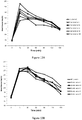
Figure 5 exhibits glucose tolerance test following administration of 50% sucrose solution (A) or 40% starch solution (B), in rats receiving plant extract combination I, combination II, combination III, acarbose as a positive control and water as a negative control. -
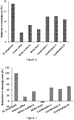
Figure 6 shows blood glucose levels (AUC) exerted by acarbose (positive control), extracts of green coffee, white bean and white mulberry, and plant extract combinations no. I, II and III relative to negative control (water; 100%) in rats fed on 50% sucrose. -
Figure 7 shows blood glucose levels (AUC) exerted by acarbose (positive control), extracts of green coffee, white bean and white mulberry, and plant extract combination no. I, II and III relative to negative control (water; 100%) in rats fed on 40% starch. -
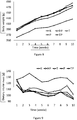
Figure 8 exhibits body mass in rats having diet induced obesity, during 10 weeks of feeding on high-fat diet (HF) supplemented with thylakoids (T), plant extract combination no. I (P) and the combination of thylakoids with plant extract combination no. I (TP). -
Figure 9 exhibits dietary intake in rats having diet induced obesity, during 10 weeks of feeding on high-fat diet (HF) supplemented with thylakoids (T), plant extract combination no. I (P) and the combination of thylakoids with plant extract combination no. I (TP). -
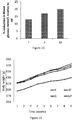
Figure 10 shows reduction in blood glucose level in rats fed on high fat diet supplemented with thylakoids (T), plant extract combination no. I (P) and the combination of thylakoids with plant extract combination no. I (TP), relative to rats fed on high-fat diet devoid of supplements. -
Figure 11 presents rat body mass during in groups fed on high-fat diet (HF), high fat diet supplemented with fibers (G), and high fat diet supplemented with fibers and plant extract combination no. I (GP). -
Figure 12 presents reduction in blood glucose level in rats fed on high fat diet supplemented with fiber (G), or with a combination of fiber and plant extract combination no. I (GP), relative to rats fed on high-fat diet devoid of supplements. -
Figure 13 exhibits glucose tolerance test following administration of a 50% sucrose solution (A) or 40% starch solution (B), in rats receiving plant extract combination I, combination IV, combination V, combination VI, combination VII and water as a negative control. -
Figure 14 shows blood glucose levels (AUC) exerted by plant extract combinations no. I and IV-VII relative to negative control (water; 100%) in rats fed on 50% sucrose (A) or starch (B). -
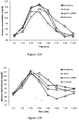
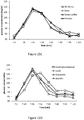
Figures 15A - 15D show blood glucose concentrations in healthy subjects following a meal preceded with consumption of individual extracts of: white mulberry extract (600 mg), white kidney bean extract (2,000 mg), green coffee extract (800 mg) and placebo (15A); white mulberry extract (400 mg), white kidney bean extract (1,200 mg), green coffee extract (400 mg) and placebo (15B); white mulberry extract (200 mg), white kidney bean extract (800 mg), green coffee extract (200 mg) and placebo (15C); and inulin + glucomannan (2+3 g), inulin (5 g), thylakoids (200 mg), and placebo (15D). -
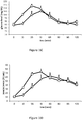
Figures 16A and 16B show blood glucose concentrations (16A) and insulin levels (16B) in healthy subjects following a meal preceded with consumption of a combination (diamonds) of white mulberry extract (600 mg), green coffee extract (400 mg) and white kidney bean extract (1,200 mg), or placebo (squares). -
Figures 16C and 16D show blood glucose concentrations (16C) and insulin levels (16D) in healthy subjects following a meal preceded with consumption of a combination (diamonds) of white mulberry extract (600 mg), green coffee extract (400 mg), white kidney bean extract (1,200 mg) and glucomannan (3000 mg), or placebo (squares). -
Figures 17 shows blood glucose concentrations (mg/dL) in healthy subjects following consumption of placebo with 150 g bread (dashed line, diamonds) or 100 g bread (solid line, squares). *p<0.05; **p<0.01 -
Figures 18 shows the relative concentrations of blood glucose corresponding toFigure 17 . -
Figures 19A and 19B show blood glucose concentrations (mg/dL; 19A) and relative concentrations (%; 19B) in healthy subjects following consumption of white mulberry extract with 100 g bread (squares, solid line), a combination of white mulberry, green coffee and white kidney bean extracts with 150 g bread (empty diamonds, solid line), placebo with 100 g bread (solid circles, dashed line) and placebo with 150 g bread (empty circles, dashed line). *p<0.05; **p<0.01. -
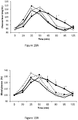
Figures 20A and 20B show blood glucose concentrations (mg/dL; 20A) and relative concentrations (%; 20B) in healthy subjects following consumption of white mulberry extract with 100 g bread (squares, solid line), a combination of white mulberry, green coffee and white kidney bean extracts with 150 g bread (empty diamonds, solid line), placebo with 100 g bread (solid circles, dashed line) and placebo with 150 g bread (empty circles, dashed line). *p<0.05; **p<0.01. -
Figures 21A and 21B show blood glucose concentrations (mg/dL; 21A) and relative concentrations (%; 21B) in healthy subjects following consumption of 150 g bread and: white kidney bean extract (squares, solid line) or a combination of white kidney bean, white mulberry and green coffee extracts (empty diamonds, solid line). -
Figures 22A and 22B show blood glucose concentrations (mg/dL; 22A) and relative concentrations (%; 22B) in healthy subjects following consumption of 150 g bread and: white kidney bean extract (squares, solid line) or a combination of white kidney bean, white mulberry and green coffee extracts, inulin and glucomannan (empty diamonds, solid line). *p<0.05; **p<0.01. -
Figures 23A and 23B show blood glucose concentrations (mg/dL; 21A) and relative concentrations (%; 21B) in healthy subjects following consumption of 150 g bread and: green coffee extract (squares, solid line) or a combination of white kidney bean, white mulberry and green coffee extracts (empty diamonds, solid line). -
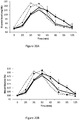
Figures 24A and 24B show blood glucose concentrations (mg/dL; 24A) and relative concentrations (%; 24B) in healthy subjects following consumption of 150 g bread and: green coffee extract (squares, solid line) or a combination of white kidney bean, white mulberry and green coffee extracts, inulin and glucomannan (empty diamonds, solid line). *p<0.05; **p<0.01. -
Figures 25A and 25B show blood glucose concentrations (mg/dL; 25A) and relative concentrations (%; 25B) in healthy subjects following consumption of 150 g bread and: inulin and glucomannan (squares, solid line) or a combination of white kidney bean, white mulberry and green coffee extracts, inulin and glucomannan (empty diamonds, solid line). *p<0.05; **p<0.01. -
Figures 26A and 26B show blood glucose concentrations (mg/dL; 26A) and concentrations relative to fasting at t=0 (%; 26B) in healthy subjects following consumption of a combination of white kidney bean, white mulberry and green coffee extracts (diamonds) or placebo (squares) prior to a meal of breakfast flakes with vanilla milk. *p<0.05; **p<0.01. -
Figures 27A and 27B show insulin concentrations (IU/ml; 27A) and concentrations relative to fasting at t=0 (%; 27B) in healthy subjects following consumption of a combination of white kidney bean, white mulberry and green coffee extracts (diamonds) or placebo (squares) prior to a meal of breakfast flakes with vanilla milk. *p<0.05; **p<0.01. -
Figures 28A and 28B show blood glucose concentrations (mg/dL; 28A) and concentrations relative to fasting at t=0 (%; 28B) in healthy subjects following consumption of a combination of white kidney bean, white mulberry and green coffee extracts (diamonds) or placebo (squares) prior to a meal of blueberry muffin and blueberry yogurt. *p<0.05; **p<0.01. -
Figures 29A and 29B show insulin concentrations (IU/ml; 29A) and concentrations relative to fasting at t=0 (%; 29B) in healthy subjects following consumption of a combination of white kidney bean, white mulberry and green coffee extracts (diamonds) or placebo (squares) prior to a meal of blueberry muffin and blueberry yogurt. *p<0.05; **p<0.01. -
Figures 30A and 30B show blood glucose concentrations (mg/dL; 30A) and concentrations relative to fasting at t=0 (%; 30B) in healthy subjects following consumption of a combination of white kidney bean, white mulberry and green coffee extracts (diamonds) or placebo (squares) prior to a meal of pasta and cheese. *p<0.05; **p<0.01. -
Figures 31A and 31B show insulin concentrations (IU/ml; 31A) and concentrations relative to fasting at t=0 (%; 31B) in healthy subjects following consumption of a combination of white kidney bean, white mulberry and green coffee extracts (diamonds) or placebo (squares) prior to a meal of pasta and cheese. *p<0.05; **p<0.01. -
Figures 32A and 32B show blood glucose concentrations (mg/dL; 32A) and concentrations relative to fasting at t=0 (%; 32B) in healthy subjects following consumption of a combination of white kidney bean, white mulberry and green coffee extracts (diamonds) or placebo (squares) prior to a meal of Coca Cola® and Puffcorn™. *p<0.05; **p<0.01. -
Figures 33A and 33B show insulin concentrations (IU/ml; 33A) and concentrations relative to fasting at t=0 (%; 33B) in healthy subjects following consumption of a combination of white kidney bean, white mulberry and green coffee extracts (diamonds) or placebo (squares) prior to a meal of Coca Cola and Puffcorn™. *p<0.05; **p<0.01. - The present invention provides a dietary composition comprising mulberry extract comprising 1-deoxynojirimycin, green coffee extract comprising chlorogenic acid, white kidney bean extract comprising phaseolamin, and a nutraceutically acceptable carrier. The present invention also provides said dietary composition for use in the treatment in the treatment of a disease or disorder selected from the group consisting of diabetes, obesity, hypercholesterolemia, metabolic syndrome and hyperlipidemia, wherein said use comprises maintaining glucose homeostasis, or maintaining insulin homeostasis, or reducing blood glucose levels, in a subject in need thereof.
- In some embodiments, the dietary composition of the invention is devoid of artificially added sweeteners or sugar. In some embodiments, the dietary composition of the invention comprises artificial sugar substitutes.
- The terms "sugar substitutes", "sweeteners", "artificial sweeteners", and "artificial sugar substitutes", as used herein refer to artificially added agents that add sweetness to the composition, including, but not limited to, stevia, sucralose, saccharin and the like.
- The term 'mulberry extract' as used herein includes, but is not limited to, white mulberry (also known as Morus alba) extract and an extract derived from the leaves, fruits, stem, branches or buds of white mulberry, wherein the mulberry extract is rich in 1-deoxynojirimycin (DNJ).
- In some embodiments, the coffee extract is a green coffee extract having a concentration of 30-70% chlorogenic acid. In some embodiments, the coffee extract is obtained from beans of C. Arabica, C. robusta, C. liberica, C. arabusta and combinations thereof. Each possibility represents a separate embodiment of the present invention.
- In some embodiments, the raw coffee bean extract is produced by solvent extraction of coffee beans. In some embodiments, the raw coffee bean extract is produced by supercritical fluid extraction of coffee beans. In some embodiments, the raw coffee bean extract is obtained by extracting raw coffee beans with a mixture of water and ethanol.
- In some embodiments, the amount of white kidney bean extract containing phaseolamin is standardized for units of activity for amylase inhibition.
- The term 'dietary composition' refers to a composition of nutraceutical as the active ingredients. Nutraceuticals refers to extracts of plants, including herbals, fruits and vegetables.
- As detailed herein below, the beneficial effect exerted by the dietary compositions of the present invention was assessed, inter alia, in comparison to the effect of therapeutics known to reduce blood glucose, for example, acarbose.
- The term 'arabinose' as used herein, refers to arabinose and primarily L-Arabinose (the most common form of arabinose in nature), which is a natural, poorly absorbed pentose (5-carbon monosaccharide) that was previously described as selectively inhibiting intestinal sucrase activity. The significant increase in lipogenic enzyme activities and triacylglycerol concentrations in the liver as induced by dietary sucrose, has been significantly prevented by arabinose. Arabinose feeding was shown to reduce the weights of epididymal adipose tissue, plasma insulin and triacylglycerol concentrations, suggesting that L-arabinose modulates, typically via inhibition, the intestinal activity of enzymes which are capable of reducing sucrose and starch utilization and consequently attenuate lipogenesis.
- Acarbose, also known as Glucobay®, Precose® and Prandase®, is a commercial anti-diabetic drug prescribed, for the treatment of
type 2 diabetes mellitus and, in some countries, for the prevention of diabetes. Use of Acarbose is highly associated with side effects, primarily, diarrhea and flatulence. - Any methods for extracting and collecting bioactive ingredient from a fruit or a plant material may be applied for obtaining the claimed extracts, for example, the method disclosed in
US 2008/0254153 . - In some embodiments, the dietary compositions of the invention further comprise dietary fibers. In some embodiments, the dietary fibers is any one or more of the following glucomannan, inulin, psyllium, oat gum (beta glucan), guar gum, pectin, soybean fiber, polydextran, cyclodextran, oligofructose, chitinin and its derivatives and oat bran. Each possibility represents a separate embodiment of the present invention.
- In some embodiments, the dietary compositions of the invention are in a controlled release dosage form. In some embodiments, the dietary compositions of the invention are in a controlled release dosage form selected from the group consisting of: delayed release dosage form, extended release dosage form, sustained release dosage form, slow release dosage form, and combinations thereof. Each possibility represents a separate embodiment of the present invention.
- In some embodiments, the dietary compositions of the invention comprise time release coating.
- In some embodiments, the dietary compositions of the invention further comprise one or more of lecithin and polyalkylimide polymers, liposome and licosome matrix among others. Each possibility represents a separate embodiment of the present invention.
- In some embodiments, the dietary compositions of the invention are in an oral dosage form suitable for oral administration. In some embodiments, the dietary compositions of the invention are in an oral form selected from capsules, gelatin capsules, soft capsules, tablets, sugar-coated tablets, pills, pastes or pastilles, gums, powder, granulates or drinkable solutions or emulsions, such as, soups and shots, nutritional bars, syrup or a gel, with a dose of about 0.1 to 100% of the dietary supplements, i.e. the primary composition, which can then be taken directly with water or by any other known means. Each possibility represents a separate embodiment of the present invention.
- In some embodiments, the dietary composition is provided in a form of powder suitable as a supplement to beverages and food products, such as, milk, orange juice, mineral water, yogurt, pudding, salad, soup among others. Each possibility represents a separate embodiment of the present invention.
- In some embodiments, the dietary composition of the invention is provided in a powder form suitable for reconstitution in aqueous solutions, including, suitable beverages, wherein the powder form comprises dehydrated mulberry extract, dehydrated coffee extract, dehydrated bean extract and, optionally, dehydrated arabinose. The powder may easily dissolve in the beverage or food products and may, or may not, add flavor thereto.
- In some embodiments, the nutraceutical composition is provided in a form of granulate. The granulate may be used as a supplement to beverages and food products, such as, milk, orange juice, mineral water, yogurt, pudding, salad, soup among others. The granulate may easily dissolve in the beverage or food product and may, or may not, add additional flavor thereto.
- The dietary compositions may also include a sweetener, a stabilizer, an antioxidant, an additive, a flavoring or a colorant. Each possibility represents a separate embodiment of the present invention.
- In some embodiments, the composition further comprises flavoring agents, including, but not limited to, sweeteners (e.g. Aspartame), cinnamon, essential oil extracts, non-alcoholic favoring extracts, non-artificial fruit flavors, artificial extracts and combinations and/or extracts thereof. Each possibility represents a separate embodiment of the present invention.
- Methods for preparing the oral forms are common knowledge. Tablets can, if desired, be coated or uncoated. Suitable tableting procedures include those generally described in Perry's Chemical Engineer's Handbook (4th Edition 1963) and in Pharmaceutical Dosage Forms: Tablets, ) among others. The composition can also be administered in capsule form. The size of each dosage and the interval of dosing to the patient effectively determine the size and shape of the tablet or capsule. By present preference, each tablet or capsule contains the active ingredients in predetermined amounts to simplify treatment of the subject.
- In some embodiments, the use of the dietary composition of the invention comprises a method for reducing blood glucose levels in a subject in need thereof comprising administering to the subject the dietary composition of the invention.
- In some embodiments, the method of the invention comprises ameliorating hyperglycemia. In some embodiments, the method of the invention comprises ameliorating postprandial hyperglycemia. In some embodiments, the method of the invention comprises maintaining glucose homeostasis.
- In some embodiments, the method of the invention comprises treating or preventing pathological conditions associated with hyperglycemia, such as, oxidative stress and inflammatory conditions, including, inflammation with pathologies, such as, diabetes (insulin resistance), endothelial dysfunction, hyperlipemia, fatty liver, cardiovascular diseases, visceral obesity, ectopic fat deposition (e.g. in skeletal muscles, liver, epicardial tissue, pericardial tissue) and dysfunction of adipocytes. Each possibility represents a separate embodiment of the present invention.
- The term 'diabetes' as used herein encompasses, and is interchangeable with, Type -1 diabetes mellitus and Type -2 diabetes mellitus. Diabetes is a metabolic disorder characterized by high blood glucose levels or low glucose tolerance, and is estimated to affect 8% of the U.S. population. Diabetes is also significantly associated with higher risk of death from vascular disease, cancer, renal disease, infectious diseases, external causes, intentional self-harm, nervous system disorders, and chronic pulmonary disease. Metabolic syndrome, in which subjects present with central obesity and at least two other metabolic disorders (such as high cholesterol, high blood pressure, or diabetes) is estimated to affect 25% of the U.S. population. Obesity increases the likelihood to type II diabetes, hypertension, cardiovascular diseases, cancer, gall-stones, kidney dysfunction, arthrosis and joint-skeleton disorders and neurodegenerative diseases (such as, dementia, age dependent cognitive decline) among other diseases.
- The term 'obesity' as used herein includes all forms of abnormal body weight and weight gain, with distinction that overweight refers to BMI 25-30 kg/m2; obesity refers to
- BMI within the range of 30 to 35 kg/m2, and morbid obesity refers to BMI higher than 35 kg/m2. Obesity and overweight are estimated to affect about 65% of the U.S. adult population.
- In some embodiments, the method comprises inducing satiety.
- The term 'satiety' refers to appetite control that may be induced by certain foods, such as, foods rich with fat. Satiety is associated with the absence of hungers, and/or the sensation of feeling full. Induction of satiety as used herein primarily refers to the sensation of being full after a normal-sized meal.
- In some embodiments, the method comprises decreasing postprandial insulin level.
- In some embodiments, there is provided a method for preventing and/or treating hypoglycemia or a condition associated with hypoglycemia in a subject in need thereof, the method includes administering to the subject a dietary composition including mulberry extract, coffee extract and bean extract as the nutraceutically active components.
- In some embodiments, the method comprises ameliorating hypoglycemia. In some embodiments, the method comprises ameliorating postprandial hypoglycemia. In some embodiments, the method comprises treating or preventing pathological conditions associated with hypoglycemia, such as, insulin resistance, diabetes, prediabetes, hyperinsulinemia and dysphoria. Each possibility represents a separate embodiment of the present invention.
- In some embodiments, ameliorating hypoglycemia comprises maintaining insulin homeostasis. In some embodiments, ameliorating hypoglycemia comprises reducing insulin level.
- It is to be understood that, typically, insulin level is not merely associated with sugar levels, and accordingly, reduction of blood glucose may not necessarily entail reduction in insulin levels. Sugar lowering may be exerted by extra insulin secretion, which is not the case in most of the examples described hereinbelow. Thus, the dietary composition in addition to reducing blood glucose levels, also induces a reduction in insulin level. This effect is clinically highly desired as high levels of insulin are known to induce severe pathologies.
- The terms "hypoglycemia", "reactive-hypoglycemia" or "postprandial hypoglycemia" as used herein are interchangeable and refer to a medical condition represented by recurrent episodes of symptomatic low blood sugar occurring after a high carbohydrate meal in non-diabetic subjects. Without being bound by any theory or mechanism, hypoglycemia may be a consequence of excessive insulin release triggered by food which continues past the digestion of glucose derived from the meal. Other causes of hypoglycemia may be excessive insulin produced in the body (hyperinsulinemia), inborn error of metabolism, medications and poisons, alcohol, hormone deficiencies, prolonged starvation, alterations of metabolism associated with infection and organ failure.
- The level of blood glucose defining hypoglycemia may be different for different people, in different circumstances, and for different purposes. However most healthy adults maintain fasting glucose levels above, about, 72 mg/dl, and develop symptoms of hypoglycemia when the glucose falls below that level. In some embodiments, hypoglycemia refers to blood glucose levels below 75 mg/dl. In some embodiments, hypoglycemia refers to blood glucose levels below 70 mg/dl. In some embodiments, hypoglycemia refers to blood glucose levels below 65 mg/dl. In some embodiments, hypoglycemia refers to blood glucose levels below 60 mg/dl. In some embodiments, hypoglycemia refers to blood glucose levels below 55 mg/dl. In some embodiments, hypoglycemia refers to blood glucose levels below 50 mg/dl.
- In some embodiments, preventing hypoglycemia may include detaining progression of prediabetes or diabetes.
- In some embodiments, preventing hypoglycemia may include detaining progression of insulin resistance.
- In some embodiments, the method may further include treating prediabetes or diabetes.
- In some embodiments, the method may further include treating insulin resistance.
- In some embodiments, there is provided use of a dietary composition comprising mulberry extract, coffee extract, bean extract as the nutraceutically active component and a nutraceutically acceptable carrier for reducing blood glucose levels.
- In some embodiments, the use comprises managing weight gain, thereby losing weight and/or maintaining an acceptable body weight.
- In some embodiments, the use comprises the treatment of hyperglycemia and diseases or disorders associated therewith.
- In some embodiments, the use comprises maintaining blood glucose homeostasis.
- In some embodiments, the use comprises maintaining insulin homeostasis.
- The term 'glucose homeostasis' as used herein refers primarily to postprandial glucose homeostasis, stated otherwise, blood glucose levels that are balanced and do not reach extremely high or extremely low glucose levels which are associated with hyperglycemia or hypoglycemia, respectively. Typically, glucose homeostasis in humans refers to blood glucose levels within the range of 70 to 130 mg/dL before meals and no more than 180 mg/dL after meals. In non-diabetic, postprandial glucose usually does not exceed 140 mg/dL and is typically maintained around 100 mg/dL.
- The term 'insulin homeostasis' as used herein refers primarily to insulin levels that are balanced and do not reach extremely high or extremely low levels which are associated with pathologies. Typically, balanced insulin levels are within the range of 55 to 80 pmol/L and no more than 100 IU/ml.
- In some embodiments, the use comprises managing weight gain, preventing gain of excess weight and/or inducing weight loss in a subject in need thereof.
- The term 'weight gain' as used herein refers to weight gain normally incurred in a mammal subsequent to malnutrition, abnormal metabolism, post menopause, use of antipsychotics, castration, testosterone decline in men, ovariectomy and ovariohysterectomy among others.
- The term 'excess weight' may refer to body mass exceeding the required BMI.
- The dietary compositions of the invention are adapted for administration on a regular basis, including, but not limited to, on daily basis, weekly basis and biweekly basis.
- The following examples are presented in order to more fully illustrate some embodiments of the invention.
- An experiment was conducted on 96 male Wistar rats with mean body weight of 381.2 ± 16.6 g, bred at IARFR PAS in Olsztyn. Each study group consisted of 12 rats. The animals were kept in individual cages in a ventilated room at a constant temperature of about 22°C, controlled relative humidity of about 60% and appropriate lighting (day/night, 12/12 hours). During the experimental period, the animals were fed a standard laboratory rodent mix. Rats were deprived of food 12 hours prior to the first measurement of blood glucose levels, while constant access to water was maintained. On the day of the experiment, the rats were weighed and fasting blood glucose measurements were taken, via a scalpel incision at the tip of the tail. Next, the animals received aqueous solutions of plant extracts, Acarbose, which served as a positive control (PC) or water, which served as a negative control (NC) at pre-defined quantities via a gastric tube. All the plant extracts were provided by MarMar Investment in a solution form, and were administered according to the following doses:
- white mulberry extract (mulberry): 120 mg per 1 kg body weight
- bean extract: 100 mg per 1 kg body weight
- green coffee extract (coffee): 20 mg per 1 kg body weight
- bitter melon extract (melon): 150 mg per 1 kg body weight
- pomelo extract: 100 mg per 1 kg body weight
- acarbose preparation: 35 mg per 1 kg body weight
- arabinose preparation: 25 mg per 1 kg body weight
- The extract solutions were prepared so as the amount of liquid administered to a sample animal weighing 350 g was 1mL. Water was administered to the control group in the same manner/volume. Five minutes after the administration of the extracts each rat received a 50% aqueous solution of sucrose in the amount of 2 g/kg body weight via a gastric tube. Subsequent blood glucose levels measurements were taken after 15, 30, 60, 90, 120 and 180 minutes (counting from administration of the glucose solution) using Accu-Chek Go (Roche Diagnostics GmbH, Mannheim, Germany) glucometer and test strips.
- Statistical analysis using Student's t-test was performed for proper interpretation of results. Each result obtained for a particular product was compared to the analogous result obtained in the negative control (water) group. Results are presented in Table 1, below.
Table 1. The effect of individual plant extracts on glucose tolerance tests GLUCOSE Time (min) 0 15 30 60 90 120 180 Water 94.1±7.33 176.4±26.62 161.6±16.54 157.1±8.24 149.9±9.87 142.7±15.63 111.0±13.00 Acarbose 95.6±6.37 168.9±16.33 163.3±22.35 158.0±12.91 157.6±10.20 137.7±10.07 106.8±8.59 Coffee 95.0±6.71 155.8±15.08 140.9±16.25 140.2±11.58 142.5±10.44 135.6±9.63 110.0±8.68 Bean 91.9±5.66 150.8±15.59 144.5±17.21 146.6±9.16 148.7±9.51 136.0±7.68 107.5±9.71 Mulberry 93.2±4.91 157.0±26.39 139.2±12.98 148.0±12.37 143.2±14.09 131.7±11.69 110.7±11.50 Pomelo 93.2±6.90 151.2±16.56 150.5±18.67 155.5±7.34 151.6±8.17 141.9±7.49 107.6±6.65 Melon 95.7±6.37 190.3±17.80 150.7±20.75 157.8±10.16 143.6±10.52 135.9±14.56 111.8±13.67 Arabinose 96.0±3.62 170.9±19.55 157.1±20.27 148.2±18.33 152.2±11.19 137.0±8.96 111.6±14.42 SUCROSE Time (min) 0 15 30 60 90 120 180 Water 94.1±6.19 157.6±21.74 141.2±15.27 136.5±7.49 130.1±8.83 121.5±9.06 112.2±6.81 Acarbose 94.2±7.43 120.0±15.80 114.9±14.48 100.1±7.28 95.5±6.17 94.6±6.02 90.0±6.21 Coffee 93.7±5.82 138.9±11.29 123.6±5.93 124.4±5.93 125.9±7.50 121.1±7.06 115.2±8.13 Bean 93.5±6.52 135.2±15.21 129.8±11.20 126.5±7.42 121.0±7.16 118.8±7.41 107.6±4.50 Mulberry 96.2±6.57 128.8±16.08 133.8±12.69 121.3±4.19 116.5±5.13 113.7±5.85 108.5±5.28 Pomelo 92.7±3.94 143.7±15.18 131.5±11.12 128.2±12.04 123.7±9.49 119.2±6.26 106.7±5.19 Melon 95.8±3.94 140.9±15.83 132.8±6.85 129.7±8.96 127.3±8.60 120.0±7.19 115.8±6.73 Arabinose 94.7±7.31 135.4±14.68 132.9±15.65 132.9±9.06 131.7±7.55 125.4±6.52 123.0±7.25 STARCH Time (min) 0 15 30 60 90 120 180 Water 91.2±2.82 128.7±7.64 130.6±6.67 124.5±9.22 118.5±7.68 114.0±6.74 105.2±7.27 Acarbose 93.5±6.36 120.0±14.97 114.9±14.48 100.1±7.28 95.5±6.17 94.6±6.02 90.0±7.03 Coffee 93.4±4.74 125.1±11.16 123.7±9.84 118.8±8.96 111.5±7.33 113.2±5.12 105.5±4.78 Bean 90.9±5.92 141.2±18.84 130.4±9.14 123.0±9.05 119.3±6.91 115.6±5.74 105.1±6.37 Mulberry 91.1±5.20 119.2±8.75 120.5±7.66 116.7±10.36 111.4±5.40 108.1±5.68 98.5±4.12 Pomelo 92.0±5.51 120.8±10.04 124.7±8.57 117.7±7.44 115.8±6.06 110.7±5.67 103.8±7.31 Melon 92.9±5.84 124.8±8.97 130.7±10.91 117.9±8.59 113.8±9.68 107.5±8.09 106.4±6.64 Arabinose 90.9±5.92 116.3±8.88 123.5±12.49 110.9±7.28 111.5±4.19 106.3±6.54 100.1±6.33 -
Figures 1 to 3 exhibit all glucose tolerance tests, expressing blood glucose levels at different time points after administration of 50% glucose solution (Figure 1 ), 50% sucrose solution (Figure 2 ) and 40% starch solution (Figure 3 ), as measured in rats fed on a diet supplemented with individual plant extracts: pomelo, bitter melon, white mulberry, green coffee, arabinose, acarbose (positive control). Water without any supplements served as negative control. Fasting blood glucose levels in all groups of rats subjected to the tolerance tests ranged between 90.9 and 96.2 mg/dL. -
Figure 4 exhibits glucose tolerance tests, expressing blood glucose levels at different time points after administration of 50% glucose solution in rats receiving spinach thylakoids) at high, medium and low doses (1000, 500 and 250 mg/kg body weight, respectively). Water without any supplements served as negative control. Fasting blood glucose levels in all groups of rats subjected to the tolerance tests ranged around 90 to 95 mg/dL. - Altogether the results indicate that each of the plant extracts, when administered alone, exerts an inconsistent, and to some extent random, effect on glucose levels. At most, the tested plant extracts reduced blood glucose levels merely at early time points (compared to the acarbose). However, blood glucose levels following administration of individual plant extracts was well above blood glucose levels in rats receiving acarbose.
- The effect of plant extract combinations was tested in an experiment conducted with 50 male Wistar rats having mean body weight of 294.9 ± 21.0 g, bred at IARFR PAS in Olsztyn. Each study group consisted of 10 rats. Rats were kept in individual cages in a ventilated at a constant temperature of about 22°C, controlled relative humidity of about 60% and appropriate lighting (day/night, 12/12 hours). During the experimental period, rats were fed the standard laboratory rodent mix. Rats were deprived of food 12 hours prior to the first measurement of blood glucose levels, while constant access to water was maintained. On the day of the experiment, rats were weighed and fasting blood glucose measurements were taken, via a scalpel incision at the tip of the tail. Next, rats were administered water (negative control), acarbose (positive control) or aqueous solutions of pre-defined combinations of plant extracts, as follows:
- acarbose preparation: 35 mg per 1 kg body weight
- combination I: white mulberry extract (120 mg per 1 kg body weight) + bean extract (100 mg per 1 kg body weight) + green coffee extract (20 mg per 1 kg body weight).
- combination II: white mulberry extract (120 mg per 1 kg body weight) + green coffee extract (20 mg per 1 kg body weight) + arabinose preparation (25 mg per 1 kg body weight), (comparative)
- combination III: white mulberry extract (120 mg per 1 kg body weight) + bean extract (100 mg per 1 kg body weight) + green coffee extract (20 mg per 1 kg body weight)+ arabinose preparation (25 mg per 1 kg body weight).
- The solutions of the extracts were prepared so that the volume of liquid administered to an animal weighing 350 g was 1 mL. Water was administered to the control group in a similar manner. Five minutes after administration of the extracts each rat received 50% aqueous solution of sucrose in the amount of 2 g/kg body weight (A) or 40% aqueous solution of starch in the amount of 2 g/kg body weight (B). Subsequent blood glucose levels measurements were taken after 15, 30, 60, 90, 120 and 180 minutes (counting from administration of the sucrose solution) using Accu-Chek Go (Roche Diagnostics GmbH, Mannheim, Germany) glucometer and test strips.
- Statistical analysis using Student's t-test was performed for proper interpretation of results. Each result obtained for a particular product was compared to the analogous result obtained in the negative control (water) group. Results are presented in Table 2, below and in
Figures 5A-5B .Table 2. The effect of plant extract combinations on blood glucose in rats SUCROSE Time (min) 0 15 30 60 90 120 180 Water 82.7±4.32 155.6±10.4 152.1±12.1 151.4±6.46 142.2±5.18 128.0±7.71 113.1±6.08 Acarbose 84.7±4.81 112.2±8.58 121.1±8.93 116.0±6.87 110.2±6.51 109.0±4.66 101.1±5.34 Comb. I 87.4±9.55 113.0±9.70 130.8±6.40 123.7±7.07 121.0±7.51 116.6±7.91 113.5±6.70 Comb. II 89.3±9.29 123.8±7.59 128.3±8.06 122.4±5.62 120.2±6.49 115.5±6.68 110.6±6.11 Comb. III 83.9±6.72 121.4±9.65 132.0±8.89 127.5±5.89 122.0±5.45 119.9±6.83 111.6±9.13 STARCH Time (min) 0 15 30 60 90 120 180 Water 89.2±7.68 118.5±7.96 125.5±8.26 121.7±4.85 120.3±6.46 118.3±6.11 109.8±7.71 Acarbose 89.7±6.09 105.5±9.74 104.6±4.24 97.3±7.18 98.3±6.09 94.8±6.01 88.7±4.87 Comb. I 89.0±5.33 113.2±8.29 117.9±6.47 113.8±4.59 110.7±5.49 106.2±7.14 94.1±6.24 Comb. II 92.2±4.31 115.5±6.94 117.0±6.46 112.4±6.16 110.9±9.20 108.3±8.60 96.5±5.56 Comb. III 87.8±3.70 112.1±8.18 115.2±7.72 113.7±10.5 107.1±6.41 107.3±7.76 92.5±11.3 - Fasting blood glucose levels in all groups of rats subjected to the sucrose tolerance test ranged between 82.7 to 89.3 mg/dL.
- As shown in
Figures 5A and 5B , it was surprisingly found that upon administration of each of the plant extract combinations a significantly milder surge in blood glucose levels was observed, which lasted more than two hours after administration of a solution of 50% sucrose (Figure 5A ) or 40% starch (Figure 5B ). In fact, blood glucose levels in rats receiving the plant extract combinations were comparable to blood glucose levels in rats receiving the anti-diabetic drug acarbose. Moreover, blood glucose levels in rats receiving the plant extract combinations were significantly lower than blood glucose levels in the control group (water). - Unexpectedly, combination I (triangles) including white mulberry extract (120 mg per 1 kg body weight), bean extract (100 mg per 1 kg body weight) and green coffee extract (20 mg per 1 kg body weight) inhibited the initial burst in blood glucose, measured 15min after commencement of the test, to the same level as acarbose, whereas combination III (asterisk) containing 25 mg per 1 kg body weight arabinose in addition to the components of combination I had a somewhat relegated initial effect.
- Furthermore, overall reduction in blood glucose levels during the entire test, represented by %-reduction in the area under the curve (AUC) as compared to control (water), is significantly improved when combinations of plant extracts are administered to rats fed on 50% sucrose (
Figure 6 ) or 40% starch (Figure 7 ) as compared to single extracts of green coffee and white mulberry and resemble the AUC obtained following acarbose administration. - In order to assess whether administration of plant extracts as dietary supplements can positively affect blood glucose levels in animals fed on a high-fat diet an in vivo experiment was performed in two stages: a preliminary stage and a test stage, each lasting 10 weeks. During the preliminary stage, a group of 40 Wistar rats aged about 35 days, originating from a single pack of the IARFR animal house were fed a commercial high fat diet C 1090-45 (Altromin GmbH, Lage, Germany) consisting of 21% crude protein, 22% crude fat, 3.95% crude fiber and 5.1% crude ash. A second group of 10 rats from the same pack and of the same age were fed a commercial low fat diet C 1090-10 (Altromin GmbH, Lage, Germany) consisting of 21% crude protein, 3.9% crude fat, 4.0% crude fiber and 4.7% crude ash. The above diets were significantly different in metabolic energies (ME) obtained from individual components. The details of the diets used in the current experiment are presented in Table 3 below.
Table 3. Dietary compositions (%) Ingredient/Diet K HF T P TP Casein 22.5 22.5 22.5 22.5 22.5 Cellulose 5 5 5 5 5 Oil 5 - - - - Lard - 24 24 24 24 Vitamin mix 11 1 1 1 1 Mineral mix1 3.5 3.5 3.5 3.5 3.5 Choline chloride 0.2 0.2 0.2 0.2 0.2 DL-methionine 0.2 0.2 0.2 0.2 0.2 Maize starch 62.6 43.6 41.95 42.808 41.158 Thylacoids - - 1.65 - 1.65 White mulberry extract - - - 0.396 0.396 Bean extract - - - 0.330 0.330 Green coffee extract - - - 0.066 0.066 Dietary Energy (%) Protein 23 19 19 19 Carbohydrates 65 36 36 36 Fat 12 45 45 45 1 AIN-93MX and AIN-93VM, composition consistent with the recommendations of the American Institute of Nutrition (Reeves, 1997) - Following the 10-week preliminary nutrition period (first period), rats fed the low fat diet served as a control group (K; n = 10), while the animals fed with the high-fat diet were divided into 4 study groups (10 rats per group). Group HF continued to receive the high fat diet, group T received the high fat diet supplemented with thylacoids (500mg/kg body mass), group P received the high fat diet supplemented with plant extract combination I (
white mulberry 120 mg/kg body mass,bean 100 mg/kg body mass,green coffee 20 mg/kg body mass) and group TP received the high fat diet supplemented with both thylacoids and plant extract combination I. During the 10 weeks test stage (second period) the animals were fed with diets prepared by the DBFoF team. - Rats were deprived of food for 10-12 hours prior to concluding the experiment. On the day of the experiment ended, animals were sacrificed by an intraperitoneal injection of a mixture of xylazine and ketamine, in line with the institutional procedures of the DBFoF and appropriate recommendations on laboratory animals. Blood samples were collected from the caudal caval vein into heparinized tubes. Heparinized blood was centrifuged (350 × g, 10 min, 4°C), and plasma was separated and stored at -20°C until the analyses. Colorimetric methods were used to determine the levels of glucose (GL).
- Body mass and dietary intake were evaluated during the second period and the results are summarized in Table 4 below and in
Figures 8-9 . Statistical analysis was carried out using STATISTICA v. 8.0 package (StatSoft Corp., Kraków). One-factor ANOVA analysis was used to assess the effect of the dietary composition on the analyzed parameters. Results are presented as means with the overall standard error of means (SEM) as a measure of variability. The overall SEM was calculated by dividing the standard deviation of the means in all groups by the square root of the total number of animals involved in the experiment. The significance level of P≤0.05 was assumed for the statistical significance analysis.Table 4. Body mass (BM), and dietary intake (D.I.) during the second period Diet/Parameter K HF T P TP SEM P Week 1 BM (g) 360.9b 391.6a 390.3a 386.3ab 385,4ab 4.074 0.029 D.I. (g/rat/day) 125.8 116.7 117.1 123.5 126.4 1.674 0.100 Week 2BM (g) 371.3b 402.3a 404.2a 399.6a 398.8a 4.216 0.022 D.I. (g/rat/day) 129.9a 104.7b 106.0b 108.1b 104.7b 1.990 0.000 Week 3BM (g) 381,0b 414,6a 415.4a 410.5a 412,5a 4.333 0.019 D.I. (g/rat/day) 136.2a 111.7b 107.3b 108.7b 106.5b 1.931 0.000 Week 4BM (g) 392,9b 426,4a 427,3a 420.4a 425.0a 4.445 0.023 D.I. (g/rat/day) 128.9a 112.1b 106.7b 104.6b 105.9b 1.672 0.000 Week 5BM (g) 395.2b 436,3a 435.0a 426.9a 435.5a 4.793 0.008 D.I. (g/rat/day) 122.0a 108.8b 101.3bc 100.4c 104.7bc 1.590 0.000 Week 6BM (g) 396,9b 439,9a 440.0a 430.2a 441.2a 4.851 0.004 D.I. (g/rat/day) 123.1a 104.4b 99.4b 97.2b 102.6b 1.711 0.000 Week 7BM (g) 403.6b 449.5a 447.9a 437.9a 449.2a 4.754 0.002 D.I. (g/rat/day) 127.6a 106.4b 100.2b 99.9b 102.7b 1.797 0.000 Week 8BM (g) 411.3b 456.0a 456.5a 447.2a 460.0a 4.919 0.002 D.I. (g/rat/day) 129.3a 108.9b 105.5b 105.4b 105.4b 1.692 0.000 Week 9BM (g) 419.9b 473.1a 467.8a 458.8a 468.0a 5.131 0.001 D.I. (g/rat/day) 128.3a 115.9b 101.5c 105.1c 98.6c 1.877 0.000 Week 10BM (g) 426.9b 484.4a 476.2a 468.9a 475.4a 5.220 0.002 D.I. (g/rat/day) 119.1a 101.7b 94.4b 96.2b 93.9b 2.182 0.000 Intake weeks 1-10 1270a 1091b 1039b 1050b 1051b 15.71 0.000 aSEM: standard error of the mean, SD for all rats divided by the square root of the total number of rats, n=50,
bMeans with different superscript index letters within the same rows are different at P≤0.05. - As indicated by the data presented in Table 4, and in corresponding
Figures 8 and 9 , among the high-fat groups, the highest final body mass was observed in group HF (484.4 g), namely, the group having a diet devoid of plant extracts supplements. Moreover, the lowest final body mass was observed in group P (468.9 g) which received a high-fat diet supplemented with plant extract combination no. I. Furthermore, dietary intake in all diets supplemented with plant extracts (P, T and PT) was significantly lower compared to the non-supplemented high-fat diet (HF), suggesting that supplementing the diet with the plant extract combinations of the invention induces satiety. (T being a comparative treatment) - Moreover, in rats receiving the high fat diet supplemented with combination no. I of the plant extracts (P) a 17% reduction in blood glucose levels was observed (
Figure 10 ). Similarly, rats receiving high fat diet supplemented with thylakoids (T) showed a 13% reduction in blood glucose levels (Figure 10 ). Surprisingly, high-fat diet supplemented with both thylakoids and plant extracts (TP) resulted in a significant 20% reduction in the blood glucose levels (Figure 10 ). - In order to assess whether administration of plant extracts and/or dietary fibers can positively affect blood glucose levels in rats fed on a high-fat diet an in vivo assay was performed essentially as described in Example 3. The compositions of the diets are presented in Table 5 below.
Table 5. Diet composition (%) Ingredient/Diet K HF G GP Casein 22.5 22.5 22.5 22.5 Cellulose 5 5 5 5 Oil 5 - - - Lard - 24 24 24 Vitamin mix 1 1 1 1 Mineral mix 3.5 3.5 3.5 3.5 Choline chloride 0.2 0.2 0.2 0.2 DL-methionine 0.2 0.2 0.2 0.2 Maize starch 62.6 43.6 42.01 41.268 Glucomannan - - 0.954 0.954 Inulin - - 0.636 0.636 White mulberry extract - - - 0.371 Bean extract - - - 0.309 Green coffee extract - - - 0.062 Dietary Energy (%) Protein 23 19 19 19 Carbohydrates 65 36 36 36 Fat 12 45 45 45 - Following the 10-week preliminary nutrition period (first period), rats fed the low fat diet served as a control group (K; n = 10), while the animals fed with the high-fat diet were divided into 3 study groups (10 rats per group). Group HF continued to receive the high fat diet, group G received the high fat diet supplemented with dietary fibers (60% w/w glucomannan, 40% w/w inulin, 514 mg/kg body mass), and group GP received the high fat diet supplemented with plant extract combination I (
white mulberry 120 mg/kg body mass,bean 100 mg/kg body mass,green coffee 20 mg/kg body mass) and dietary fibers (second period). Body mass and dietary intake were evaluated during the second period and the results are summarized in Table 6 below.Table 6. Body mass (BM), and dietary intake (D.I.) during the second period Diet/Parameter K HF G GP SEM P Week 1 BM (g) 385.9b 412.9a 412.8a 411.4a 3.901 0.015 D.I. (g/rat/day) 113.1 102.5 105.5 107.9 2.808 0.238 Week 2BM (g) 391.7b 416.7a 419.8a 416.4a 4.004 0.017 D.I 117.8a 94.9b 96.8b 96.2b 2.087 0.000 Week 3BM 400.2b 425.0a 429.5a 424.6a 4.160 0.018 D.I. (g/rat/day) 122.6a 96.6b 100.1b 98.6b 2.183 0.000 Week 4BM (g) 408.6b 437.7a 438.2a 434.1a 4.463 0.024 D.I. (g/rat/day) 125.9a 104.0b 97.3b 98.2b 2.392 0.000 Week 5BM (g) 413.1b 444.9a 445.4a 440.1a 4.738 0.019 D.I. (g/rat/day) 130.3a 105.1b 101.5b 101.6b 2.377 0.000 Week 6BM (g) 418.4b 454.2a 453.1a 447.6a 4.924 0.013 D.I. (g/rat/day) 121.1a 100.7b 97.8b 97.1b 2.180 0.000 Week 7BM (g) 420.2b 458.8a 457.2a 451.7a 4.974 0.007 D.I. (g/rat/day) 118.4a 99.8b 95.6b 98.3b 1.862 0.000 Week 8BM (g) 423.7b 466.8a 461.6a 457.0a 5.037 0.002 D.I. (g/rat/day) 118.9a 100.3b 94.0b 95.6b 1.993 0.000 Week 9BM (g) 429.6b 474.8a 469.7a 464.6a 5.172 0.001 D.I. (g/rat/day) 123.6a 101.1b 97.8b 100.7b 2.278 0.000 Dietary intake, days 64-66 53.9a 44.3b 41.2b 42.7b 1.031 0.000 Intake, days 1-66 1146a 949b 927b 937b 17.801 0.000 aSEM: standard error of the mean, SD for all rats divided by the square root of the total number of rats, n=40.
bMeans with different superscript index letters within the same rows are different at P≤0.05. - The animals were deprived of food 10-12 hours before the conclusion of the experiment. On the day the experiment ended, animals were sacrificed by an intraperitoneal injection of a mixture of xylazine and ketamine, in line with the institutional procedures of the DBFoF and appropriate recommendations on laboratory animals. Blood samples were collected from the caudal caval vein into heparinized tubes. Heparinized blood was centrifuged (350 x g, 10 min, 4°C), and plasma was separated and stored at -20°C until the analyses. Colorimetric methods were used to determine the levels of glucose (GL). Statistical analysis was performed as described in Example 3.
- As indicated by the data presented in Table 6, and in
Figure 11 , among the high-fat groups, the highest final body mass was observed in group HF (464.6 g), namely, the group having a diet devoid of plant extracts or fiber supplements. - Furthermore, as shown in
Figure 12 , rats receiving high fat diet supplemented with dietary fibers have a 3.5% reduction in blood glucose levels. Surprisingly, by supplementing the high-fat diet with both dietary fibers and plant extracts, the reduction in the blood glucose levels reached 6.5%. - A comparative experiment, testing the relative effect of different plant extract combinations, was performed on 120 male Wistar rats having mean body weight of 329.7 ± 26.5 g, bred at IRZiBZ PAN in Olsztyn. Each study group consisted of 10 rats. Rats were kept in individual cages in a ventilated at a constant temperature of about 22°C, controlled relative humidity of about 60% and appropriate lighting (day/night, 12/12 hours). During the experimental period, rats were fed the standard laboratory rodent mix. Rats were deprived of food 12 hours prior to the first measurement of blood glucose levels, while constant access to water was maintained. On the day of the experiment, rats were weighed and fasting blood glucose measurements were taken, via a scalpel incision at the tip of the tail. Next, rats were administered water (negative control), or aqueous solutions of pre-defined combinations of plant extracts, as follows:
- combination I: white mulberry extract (120 mg per 1 kg body weight) + bean extract (100 mg per 1 kg body weight) + green coffee extract (20 mg per 1 kg body weight).
- combination IV: white mulberry extract (120 mg per 1 kg body weight) + green coffee extract (20 mg per 1 kg body weight).
- combination V: green coffee extract (20 mg per 1 kg body weight) + bitter melon extract (150 mg per 1 kg body weight).
- combination VI: green coffee extract (20 mg per 1 kg body weight) + bitter melon extract (150 mg per 1 kg body weight) + bean extract (100 mg per 1 kg body weight).
- combination VII: green coffee extract (20 mg per 1 kg body weight) + bitter melon extract (150 mg per 1 kg body weight) + pomelo extract (100 mg per 1 kg body weight).
- The solutions of the extracts were prepared so that the amount of liquid administered to an animal weighing 350 g was 1 mL. Water was administered to the control group in a similar manner. Five minutes after administration of the extracts each rat intragastrically received 50% aqueous solution of sucrose in the amount of 2 g/kg body weight (A) or 40% starch solution in the amount of 2 g/kg body weight (B). Subsequent blood glucose levels measurements were taken after 15, 30, 60, 90, 120 and 180 minutes (counting from administration of the sucrose/starch solution) using Accu-Chek Go (Roche Diagnostics GmbH, Mannheim, Germany) glucometer and test strips.
- Statistical analysis using Student's t-test was performed for proper interpretation of results. Each result obtained for a particular product was compared to the analogous result obtained in the negative control (water) group. Results are presented in Table 7, below and in
Figures 13A-13B .Table 7. The effect of plant extract combinations on blood glucose in rats SUCROSE Time (min) 0 15 30 60 90 120 180 Water 90.1±3.41 155.7±8.19 142.0±9.12 133.6±6.72 128.0±4.76 121.3±3.83 110.3±3.8 Comb. I 90.9±1.66 125.4±6.47 128.1±3.7 117.3±5.93 117.2±4.78 114.2±6.44 109.8±5.2 Comb. IV 89.0±3.65 138.9±7.29 129.4±3.37 128.9±8.67 123.6±6.59 117.2±4.57 110.4±3.3 Comb. V 89.3±4.76 142.5±10.0 131.7±6.82 130.3±2.45 126.6±5.23 122.8±5.71 111.4±3.0 Comb. VI 89.5±2.84 132.8±15.2 127.5±5.87 127.8±5.51 123.6±3.86 117.1±6.44 108.1±4.4 Comb. VII 90.1±3.28 145.5±8.11 137.3±11.5 130.0±8.16 125.3±7.21 122.1±4.12 111.4±4.2 STARCH Time (min) 0 15 30 60 90 120 180 Water 90.5±4.20 122.3±3.92 123.4±4.35 117.9±2.81 115.6±3.53 111.1±4.51 102.5±4.4 Comb. I 90.4±3.75 119.6±3.06 118.4±4.97 110.4±5.78 107.4±3.69 102.0±4.94 93.1±3.96 Comb. IV 88.8±4.64 118.5±6.67 123.7±6.09 112.8±5.79 110.4±7.65 102.2±6.65 96.2±4.92 Comb. V 89.2±2.82 118.7±5.85 119.6±6.96 114.7±7.01 109.6±9.08 105.9±8.52 100.5±8.7 Comb. VI 88.9±5.59 118.5±18.9 122.6±13.1 114.0±9.50 107.5±7.92 101.4±5.42 96.3±7.15 Comb. VII 91.1±2.73 121.7±10.3 121.5±9.22 115.1±7.98 108.7±6.80 106.5±8.59 96.0±6.62 - Fasting blood glucose levels in all groups of rats subjected to the test ranged between 89.0 to 90.9 mg/dL.
- As shown in
Figures 13A and 13B , administration of plant extracts combination I (triangles) resulted in a significantly milder surge in blood glucose levels, as also shown in example 2. Although combinations IV-VII (which are comparative) also reduced the surge in blood glucose levels, the reduction was much less pronounced compared to combination I. This clearly shows that combination I including white mulberry extract, bean extract and green coffee extract is more efficient in reducing blood glucose than combinations including only two plant extracts (such as combination IV including white mulberry extract and green coffee extract (squares) and combination V including green coffee extract and bitter melon extract (cross). Furthermore, the results clearly show that not all combinations of three plant extracts provide optimal results. In fact, combination I caused a significantly advantageous reduction in the measured blood glucose levels when compared to alternative combinations of three plant extracts (such as combination VI including white mulberry extract, green coffee extract and bitter melon (asterisk) and combination VII including green coffee extract, bitter melon extract and pomelo extract (circles)). - Furthermore, overall reduction in blood glucose levels during the entire test, represented by %-reduction in the area under the curve (AUC) as compared to control (water), is significantly better when combinations I is administered to rats fed on 50% sucrose (
Figure 14A ) or 40% starch (Figure 14B ) as compared to combinations IV-VII. - The effects of white mulberry extract, white kidney bean extract, green coffee extract, inulin, glucomannan and thylakoids in different amounts on human blood glucose levels were tested in an experiment conducted with 64 volunteers with BMI at 22.99 29.99 kg/m2. Each study group consisted of 16 healthy subjects. During the experimental period, the subjects were administered a study test product according to the composition and doses mentioned in each substudy, as detailed below, and 15 minutes later the subject received a meal consisting of 100 g (substudy 1) or 150 g (substudies 2-4) wheat bread. In
substudy 1, blood was drawn intravenously 15, 30, 45, 60, 75, 90 and 120 minutes after the beginning of the study meal, whereas in substudies 2-4 bread consumption time was extended by 5 minutes and blood was drawn 20, 35, 50, 65, 80, 95 and 125 minutes after the beginning of the study meal and glucose levels were measured. - Substudies 1-3 tested the effects of high, middle and low doses (respectively) of white mulberry extract, white kidney bean extract and green coffee extract separately on postprandial blood glucose and insulin levels.
Substudy 4 tested the effects of inulin + glucomannan, inulin alone and thylakoids separately on postprandial blood glucose and insulin levels. - In order to detect significant differences in glucose and insulin levels between groups of patients receiving particular preparations (I-IV) the following methods were applied: adaptation of the variance analysis model by making a linear model for each of the groups (approach P1), and Kruskal-Wallis non-parametric test (approach P2). Which approach was selected depended on fulfillment of the following conditions: (1) consistency of the variable's distribution with the normal distribution in both analyzed groups (Shapiro-Wilk test), (2) homoscedasticity (Levene's test). If at least one of the conditions was not fulfilled, approach P2 was selected. In other cases approach PI was selected. Apart from the variables describing levels at particular minutes from the beginning of the test, percentage changes of levels (compared to fasting state) and areas under curves (AUC) were also measured. AUC was determined using the trapezoidal rule. If the conducted test was significant (p-value < 0.05) post-hoc analysis was carried out. Similarly to the first phase of the analysis, if conditions (1) and (2) were fulfilled, the t-test was carried out comparing both groups and if at least one of these conditions was not fulfilled, the non-parametric Wilcoxon's rank sum test was carried out. Statistical significance was set at alpha = 0.05. In order to compare the levels at specific minutes between two selected substudies, the t-test or the Wilcoxon's rank sum test were used, at presuppositions described above. All calculations were made using the R programming environment.
- A tendency towards lower glucose levels (p=0.07) after taking mulberry product I, compared to control IV, was observed at
minute 30 of the test (100.9±2.5 vs. 109.0±3.3 mg/dL, respectively). Atminute 75 of the test an opposite tendency (p=0.09) was observed, (97.6±4.3 vs. 88.4±5.1 mg/dL for I and IV products respectively), which atminute 90 of the test reached statistical significance (p=0.04, 92.6±2.8 vs. 85.8±4.6 mg/dL for I and IV respectively). Analysis of percentage changes of blood glucose levels showed a tendency towards lower increase of glucose levels after taking product I vs. placebo IV at minute 15: 104.5±1.7 (product I) vs. 107.6±1.8 mg/dL (placebo IV), p=0.12; and at minute 30: 120.2±2.8 (product I) vs. 128.6±3.4 mg/dL (placebo IV), p=0.07. In later stages of the test, the percentage increase of glucose levels was higher after taking product I vs. control IV: 116.1±4.5 vs. 104.3±5.8 mg/dL respectively (p=0.06, min. 80) and 110.3±3.0 vs. 101.2±5.2 mg/dL respectively (p=0.03, min. 95). This proves that the intended effect of delayed carbohydrate absorption was achieved. There were no significant differences found either in glucose levels, changes in glucose levels or AUC of glucose levels after taking the products II and III vs. placebo IV. There were no statistically significant differences found in insulin levels in this substudy (Figure 15A ) - A tendency (p=0.10) towards less increase in glucose level was observed at
minute 20 after taking mulberry V vs. control VIII- 109.1±2.2 vs. 116.1±2.8 mg/dL, respectively. A significant reduction of blood glucose levels was witnessed upon taking product VII (green coffee extract), compared to control: atminute 80 of the test, glucose levels were 77.6±3.2 (product VII) vs. 94.0±4.3 mg/dL (placebo VIII), p=0.007, and atminute 95 of the test, glucose levels were 81.2±3.2 (product VII) vs. 91.8±3.8 mg/dL (placebo VIII), p=0.04. - Analysis of percentage changes in levels showed that after taking product VII the increase of glucose levels is significantly lower compared to control. A tendency towards lower increase of glucose levels after taking coffee extract VII vs. control was observed as early as at
minute 50 of the test: 116.7±4.1 (product VII) vs. 126.4±4.8% (placebo VIII), (p=0.12). After 65, 80 and 95 minutes, the differences were statistically significant and amounted to: 98.1±4.6 (VII) vs. 113.8±5.9% (VIII) (p=0.03, 65 min.); 92.7±4.0 (VII) vs. 114.2±5.0% (VIII) (p=0.002, 80 min.); and 96.8±3.6 (VII) vs. 111.2±3.8 % (VIII) (p=0.01, 95 min.). This tendency (p=0.095) remained unchanged also atminute 125 of the test (100.6±3.3 vs. 109.1±3.3% for VII and VIII respectively). Also, a tendency (p=0.08) towards lower AUC of glucose levels was observed: 11089±325 vs. 11956±365 mg*min/dL, for coffee extract VII and placebo VIII respectively. Moreover, significantly lower (p=0.01) AUC for percentage changes in glucose levels were observed after taking product VII vs. placebo VIII (11091±303 vs. 12355±370, respectively) (Figure 15B ). - Further, a tendency (p=0.15) towards lower AUC for percentage changes in glucose levels was witnessed after taking bean extract VI vs. control, which amounted to 11726±447 vs. 12355±370, respectively. This, despite no significant differences in particular time points, percentage changes in glucose levels or AUC of glucose levels. There were no significant differences or tendencies observed for other analyzed parameters including insulin levels.
- There were no significant differences observed between the analyzed parameters relating to blood glucose levels (
Figure 15C ). However,substudy 3 was the only one in which a tendency (p=0.15) towards lower insulin levels was observed, as exemplified inminute 125 after taking product XI vs. placebo XII (31.0±3.3 vs. 39.7±4.2 IU/ml, respectively). Analysis of percentage changes in levels also showed a tendency (p=0.09) towards lower increase in insulin levels after taking product XI vs. placebo XII (279.8±22.7 vs. 358.6±33.3%, respectively). Moreover, a tendency (p=0.14) towards lower value of AUC of insulin levels was observed after taking product XI vs. placebo XII. - A tendency (p=0.06) towards lower glucose levels after taking product XIII (inulin + glucomannan) vs. XVI (placebo) was observed at
minute 20 of the test (92.2±2.8 vs. 98.6±2.5 mg/dL, respectively). Atminute 65 of the test after taking product XV (thylakoids) a tendency (p=0.12) towards lower glucose levels vs. placebo (87.9±3.4 vs. 96.7±3.7 mg/dL, respectively) was also witnessed (Figure 15D ). No significant differences or tendencies were observed for other analyzed parameters including levels of insulin. - The conducted tests presented in substudies 1-4 and analyses thereof indicate that the investigated test products affect postprandial glucose levels in sera of healthy subjects. The white mulberry extract at a dose of 600 mg (
substudy 1, product I) is associated with lower glucose level and lower increase of glucose level during the first 15-30 minutes after food intake. Carbohydrate absorption seems to be delayed, thus resulting in a significant increase of glucose level within 75-90 minutes after intake of a meal. Therefore, using just white mulberry extract may not show any effect on the decrease of the glycemic index of the food during the entire 120-minute-long postprandial period. - No significant differences were observed at various time points after administrations of white kidney bean extracts (phaseolamin) alone. However, when administered at a dose of 1,200 mg (
substudy 2, product VI), a trend towards lower AUC of glucose levels was observed. - The lowest doses of the aforementioned individual extracts (applied in substudy 3) did not seem to exert any effect on postprandial glucose level in healthy people.
- Analysis of the results obtained in
substudy 4 showed a tendency towards lower glucose levels atminute 20 after taking the inulin + glucomannan preparation (XIII) and atminute 65 after taking thylakoids (XV) at the doses applied. - The above tests exhibit non-sufficient reduction in AUC values of glucose levels throughout the entire postprandial period (2 hours).
- The effects of two combinations of dietary fibers and/or extracts (
substudies 5 and 6) on postprandial blood glucose and insulin level were tested based on the protocol described in Example 6, substudies 2-4, hereinabove. Insubstudy 5 the combination included white mulberry extract, white kidney bean extract and green coffee extract and insubstudy 6 the combination includes the same extracts as insubstudy 5, in combination with inulin and glucomannan. - Glucose levels throughout the study are presented in
Figure 16A (diamonds: combination product XVII; squares - placebo product XVIII). Glucose levels at 20 and 35 minutes after meal upon ingestion of test preparation XVII were as follows: 92.8±1.8 (product XVII) vs. 96.6±2.1 mg/dL (placebo XVIII) (p=0.07, 20 min); and 108.8±3.6 (XVII) vs. 114.3±3.3 mg/dL (XVIII) (p=0.039, 35 min), indicating lower glucose levels at these time points. Furthermore, the percentage change in glucose levels was less pronounced after taking the test preparation XVII vs. control XVIII after 20 minutes of the study (108.4±1.6 vs. 114.6±2.0 % for products XVII and XVIII respectively, p=0.005) and after 35 minutes of the study (126.9±3.7 vs. 135.7±4.0 % for products XVII and XVIII respectively, p=0.005). - The corresponding insulin levels (
Figure 16B ) were significantly lower 20 minutes after taking test preparation XVII and a trend towardslower insulin levels 35 minutes after a meal was also observed. After 20 minutes average insulin levels were 16.9±15 IU/mL following the ingestion of test preparation XVII, and 24.9±3.1 IU/mL following the ingestion of placebo XVIII. After 35 minutes, insulin levels were lower after taking the test preparation XVII vs. control XVIII and amounted to 45.1±5.7 vs. 56.1±6.8 IU/mL respectively (p=0.07). Furthermore, after 20 minutes of the study the percentage change in insulin levels was less pronounced after taking combination XVII vs. control XVIII (214.1±22.7 vs. 318.1±39.8 % p=0.006). The trend remained unchanged after 35 minutes of the study (582.9±95.9 vs. 726.1±95.4 % for combination XVII and placebo XVIII respectively, p=0.10). Average insulin levels and the percentage changes in insulin levels were not significantly different for the remaining experimental time points. The areas under the curves (AUC) of the insulin levels were not significantly different either. - Glucose levels throughout the study are presented in
Figure 16C (diamonds: combination product XIX; squares - placebo product XX).As shown inFigure 16C , the overall glucose level and the maximum glucose blood level where lower in subjects consuming the combination product. Specifically, average blood glucose levels after 20 minutes were 86.3±1.3 mg/dL following the ingestion of the test preparation XIX, and 100.6±2.3 mg/dL following the ingestion of the placebo XX (p=0.000005). Atminute 35, average glucose levels amounted to 99.8±3.6 mg/dL vs. 113.2±3.3 mg/dL for product XIX and placebo XX respectively (p=0.01). Moreover, the percentage change in glucose levels was less pronounced after taking combination XIX vs. control (XX) after 20 minutes of the study (102.9±1.4 vs. 117.3±2.0%, for product XIX and placebo XX respectively, p=0.00001) and after 30 minutes of the study (119.2±3.5 vs. 131.5±5.1 % for XIX and XX respectively, p=0.037). - A similar trend was shown for the corresponding insulin levels (
Figure 16D ). For example, significantly lower average insulin levels upon ingestion of test product XIX after 20 minutes (14.9±1.2 IU/mL) vs. placebo XX (34.1±3.7 IU/mL) (p=0.00001). After 35 minutes, average insulin levels were likewise significantly lower after taking test preparation XIX vs. control XX: 35.1±4.2 vs. 67.2±8.7 IU/mL respectively (p=0.0003). At min. 50 of the study a further strong trend towards lower insulin levels was witnessed after taking product XIX vs. control XX: 55.3±6.7 vs. 73.2±9.9 IU/mL respectively (p=0.05). The corresponding percentage changes were as follows: after 20 minutes - 143.8±6.2 vs. 315.6±28.4 % for XIX vs. control XX, respectively, (p=0.00001) and after 35 minutes - 348.1±44.2 vs. 623.7±76.7 % for XIX vs. control XX, respectively (p=0.00003). A substantially reduced average area under the curve (AUC) for the insulin levels after taking preparation XVII vs. XX was also observed: 5,213.4±575.6 vs. 6,258.7±747.8 respectively (p=0.02). - Substudies 5 and 6 were cross-examined in order to inspect the influence of test preparations XVII and XIX on blood glucose levels in different periods of the experiment. It was seen that 20 minutes after a meal the average glucose levels were lower when test product XIX (extracts + fiber) was taken compared to the levels after taking product XVII (extracts only): 86.1±1.5 vs. 92.7±2.1 mg/dL respectively (p=0.0057). After 35 minutes of the study the average glucose levels were again lower for test product XIX compared to test product XVII: 98.2±2.7 vs. 109.3±4.4 mg/dL, respectively (p=0.0088). The corresponding percentages for test product XIX vs. test product XVII were as follows: after 20 minutes: 102.6±1.7 vs. 109.1±1.8%, respectively (p=0.008); after 35 minutes: 117.3±3.7 vs. 128.5±4.4%, respectively (p=0.013).
- Statistical analyses were also undertaken to compare preparations XVII and XIX and matching placebos in
substudies - After 20 minutes of the study a significantly smaller percentage increase in glucose levels related to the fasting values and compared to the placebo was observed after taking product XIX when compared to a decrease in the percentage increase of glucose levels after taking product XVII related to the placebo (-13.7±2.5 vs. -4.5±1.9, respectively, p=0.03).
- After 95 minutes an opposite trend was observed (p=0.06): a smaller increase in the relative change (%) of glucose levels with respect to the fasting values (t=0), and compared to placebo, was recorded for test product XVII (-3.1±4.2), while test product XIX resulted in a greater increase (5.7±5.6). Such phenomenon could be attributed to the delay in carbohydrate absorption.
- In summary,
substudies - Substudies 5 and 6 were further cross-examined in order to inspect the influence of test combinations XVII and XIX on insulin levels in different periods of the experiment. It was found that both XVII and XIX exhibit the potential to suppress postprandial increase in insulin levels in healthy subjects, especially within 20-35 minutes after a high glycemic index meal. More favourable results were seen after taking test product XIX, in particular, 50 minutes after a meal. Also, the ingestion of test product XIX correlated with reduced AUC for the postprandial period compared to the control values.
- The following substudies present a comparison between the results disclosed in Examples 6 and 7 above was conducted in order to determine the influence of individual products (Example 6) and combinations (Example 7) on blood glucose concentrations and insulin levels. The quantities of carbohydrates was elevated from 100 g to 150 g of wheat bread since the tested subjects were healthy (i.e. without carbohydrate metabolism disorders) and in order to emphasize the observed changes in blood glucose levels.
- Placebo products (IV and XVIII) were consumed with 100 g wheat bread or 150 g bread, respectively (
Figure 17 ). As expected, after 20 minutes of the study a significantly higher glucose level was observed after ingesting 150 g of bread (+ placebo XVIII) when compared to 100 g of bread (+ placebo IV) (96.6±2.1 and 91.0±1.5 mg/dL, respectively, p=0.04). Analysis of the percentage changes in glucose levels (Figure 18 ) showed a corresponding increase inglucose levels 20 minutes after taking the 150 g bread meal (+ placebo XVIII) when compared to 100 g of bread (+ placebo IV) (114.6±2.0 vs. 107.6±1.8 %, respectively, p=0.01). - Placebo products (IV and XX) were consumed with 100 g wheat bread or 150 g bread, respectively (
Figure 17 ). As expected, after 20 minutes of the study a significantly higher glucose level was observed after ingesting 150 g of bread (+ placebo XX) when compared to 100 g of bread (+ placebo IV) (100.6±2.3 and 91.0±1.5 mg/dL, respectively, p=0.002). Analysis of the percentage changes in glucose levels (Figure 18 ) shows a corresponding increase inglucose levels 20 minutes after taking the 150 g bread meal (+ placebo XX) when compared to 100 g of bread (+ placebo IV) (117.3±2.0 vs. 107.6±1.8 %, respectively, p=0.001). - Glucose levels overtime following consumption of bread and products I (with 100 g bread), XVII (with 150 g bread) or placebo are presented in
Figure 19A , as follows: white mulberry extract (Figure 19A ; squares on a solid line) and a combination of this extract with green coffee and white kidney bean extracts (Figure 19A ; empty diamonds on a solid line) consumed with 100 g wheat bread and 150 g bread, respectively. Control subjects consumed placebo with 100 g wheat bread or 150 g bread (Figure 19A ; solid or empty circles on dashed lines, respectively). The average glucose levels after taking the combination of products (XVII) were lower compared to those levels after taking the white mulberry preparation (I) alone. Inminute 65 of the experiment blood glucose levels after administration of XVII and I were 92.6±5.4 and. 104.7±4.9 mg/dL respectively (p=0.057). After 80 minutes of the study the corresponding values were 85.2±5.0 vs. 97.6±4.9 mg/dL (p=0.04) and after 95 minutes of the study the blood glucose values were 82.2±3.6 and 92.6±2.8 mg/dL for mulberry extract I and combination XVII respectively (p=0.03). The relative change in glucose levels (Figure 19B ) indicates that after 50 minutes the increase in glucose level is less pronounced for combination XVII compared to white mulberry extract, as follows: 120.7±4.4 vs. 128.6±3.4% (p=0.08, 50 min.); 108.0±5.8 vs. 124.8±5.5% (p=0.045, 65 min.); 99.5±5.5 vs. 116.1±4.5% (p=0.03, 80 min.); and 96.1±4.0 vs. 110.3±3.0%, (p=0.008, 95 min.), respectively. - At the 20 and 35 minutes time point, blood glucose levels seemed to be higher after taking combination XVII vs. mulberry extract I (92.8±1.8 vs. 87.7±1.8 mg/dL respectively, p=0.055; and 108.8±3.6 vs. 100.9±2.5 mg/dL respectively, p=0.09). It is believed that this increase was a result of the higher amount of carbohydrates provided in the meal (150 g vs. 100 g bread). Nevertheless, despite the higher amount of carbohydrates, during 50 to 95 minutes of experiment lower glucose levels were observed in the combination group compared to the corresponding levels after taking an individual extract, highlighting the advantage of the combination over the individual mulberry extract.
- Glucose levels overtime following consumption of bread and products I (with 100 g bread), XIX (with 150 g bread) or placebo are presented in
Figure 20A , as follows: white mulberry extract (Figure 20A ; squares, solid line) and a combination of this extract with green coffee and white kidney bean extracts, inulin and glucomannan (Figure 20A ; empty diamonds, solid line) consumed with 100 g wheat bread and 150 g bread, respectively. Control subjects consumed placebo with 100 g wheat bread or 150 g bread (Figure 20A ; dashed lines, solid or empty circles, respectively). The average blood glucose level did not show substantial differences after taking the white mulberry preparation or the combination product with fiber. However, as noted with respect to the previous substudies, white mulberry extract (product I) was consumed along with a lower amount of carbohydrates - 100 g of bread versus 150 g of wheat bread consumed with the combination product. Thus, the results in fact indicate that the combination product XIX is superior over the single extract product, as it resulted with similar glucose level despite the additional 50 g of bread. This conclusion is further supported by the trend observed after 80 and 95 minutes of the study, where combination XIX resulted with lower glucose levels compared to the individual extract, as follows: 80 minutes - 89.6±2.6 (product I, 100 g bread) vs. 97.6±4.3 mg/dL (product XIX, 150 g bread) (p=0.12); 95 minutes - 87.3±1.8 (product I, 100 g bread) vs. 92.6±2.8 mg/dL (product XIX, 150 g bread) (p=0.13). - The corresponding relative changes in glucose levels (
Figure 20B ) showed a similar trend towards a smaller percentage increase in average glucose levels between consumption of combination XIX versus the mulberry extract: 107.0±3.6 (XIX and 150 g of bread, 80 min.) vs. 116.1±4.5% (I and 100 g of bread, 80 min.) (p=0.12) and 104.2±2.7 (XIX and 150 g of bread, 95 min.) vs. 110.3±3.0% (I and 100 g of bread, 95 min.) (p=0.14). - Glucose levels overtime following consumption of 150 g bread and products VI or XVII are presented in
Figure 21A , as follows: white kidney bean extract (Figure 21A ; squares, solid line) and a combination of this extract with green coffee and white mulberry extracts (Figure 21A ; empty diamonds, solid line). A trend (p=0.16) towards lower glucose levels after taking combination XVII was observed after 20 minutes compared to bean extract VI - 92.8±1.8 vs. 97.9±3.0 mg/dL, respectively. The corresponding relative changes (FIGURE 21B ) showed tendency towards increase in glucose levels after consuming the combination product XVII compared to the single extract (white kidney bean extract, product VI) after 20 minutes of the study (108.4±1.6 vs. 116.7±4.0%, respectively, p=0.13) and after 95 minutes of the study (96.1±4.0 vs. 105.6±4.6%, respectively, p=0.13). - Glucose levels overtime following consumption of 150 g bread and products VI or XIX are presented in
Figure 22A , as follows: white kidney bean extract (Figure 22A ; squares, solid line) and a combination of this extract with green coffee and white mulberry extracts, inulin and glucomannan (Figure 22A ; empty diamonds, solid line). Average glucose levels were substantially lower after taking the combination of products with fiber (product XIX) compared to bean extract alone (product VI) after 20 minutes of the study (86.3±3.6 vs. 97.9±3.0 mg/dL, respectively, p=0.002) and after 35 minutes of the study (99.8±2.6 vs. 109.3±3.6 mg/dL, respectively, p=0.04). The corresponding relative increase in glucose levels (Figure 22B ) was substantially smaller after taking preparation XIX compared to the extract VI after 20 minutes of the study (102.9±1.4 vs. 116.7±4.0%, respectively, p=0.002). - Glucose absolute and relative levels overtime following consumption of 150 g bread and products VII or XVII are presented in
Figs. 23A and 23B , respectively, as follows: green coffee extract (Figure 23A ; squares, solid line) and a combination of this extract with green coffee and white kidney bean extracts (Figure 23A ; empty diamonds, solid line). No significant differences were observed following consumption of the single extract (product VII) compared to the combination (product XVII). - Glucose absolute and relative levels overtime following consumption of 150 g bread and products VII or XIX are presented in
Figs. 24A and 24B , respectively, as follows: green coffee extract (Figure 24A ; squares, solid line) and a combination of this extract with green coffee and white kidney bean extracts, inulin and glucomannan (Figure 24A ; empty diamonds, solid line). As presented inFigure 23A , the combination product XIX was more efficient than extract VII in preventing blood glucose increase during the first postprandial phase prior to their return to normal values (i.e. during the initial 35 minutes). The values of glucose in the blood following 20 and 35 minutes after consuming combination XIX and single extract VII, respectively, are as follows: glucose levels and were as follows: 86.3±1.3 vs. 93.5±2.8 mg/dL respectively (p=0.052, 20 min.) and 99.8±2.6 vs. 109.8±3.6 mg/dL respectively (p=0.03, 35 min.). In the late postprandial phase blood glucose levels were lower in the single product group. This phenomenon may be attributed to an excessive insulin burst corresponding to the glucose level burst during the first postprandial phase in the single product group. The corresponding relative changes (Figure 24B ) also demonstrated a significantly smaller increase in glucose levels following consumption of the combination product XIX during the 20 and 35 minutes of the study compared to the coffee extract, as follows: 102.9±1.4 (extract VII) vs. 111.4±2.6% (combination XIX) after 20 minutes (p=0.02) and 119.2±3.5 (extract VII) vs. 130.4±2.9% (combination XIX) after 35 minutes (p=0,02). - Glucose absolute and relative levels overtime following consumption of 150 g bread and products XIII or XIX are presented in
Figs. 25A and 25B , respectively, as follows: inulin and glucomannan (Figure 25A ; squares, solid line) and a combination of inulin and glucomannan with white kidney bean, white mulberry and green coffee extracts (Figure 25A ; empty diamonds, solid line). Average glucose levels were lower following consumption of the combination of extracts with fiber (product XIX) compared to the fiber alone (product XIII) after 20 minutes of the study: 86.3±1.3 vs. 92.2±2.8 mg/dL, respectively (p=0.04951) and after 35 minutes of the study: 99.8±2.6 vs. 108.3±3.2 mg/dL respectively (p=0.049). The corresponding relative increase (Figure 25B ) showed a similar trend: at 20 minutes - 102.9±1.4 vs. 111.6±2.6%, respectively (p=0.007); at 35 minutes - 119.2±3.5 vs. 131.4±3.9%, respectively (p=0.03). This trend was also witnessed after 95 minutes of the study: 104.2±2.7 (combination XIX) vs. 111.8±3.9% (fiber XIII) (p=0.12) and after 125 minutes of the study: 101.2±2.8 (combination XIX) vs. 108.7±3.5% (fiber XIII) (p=0.10). - The effects of the combination of white mulberry extract, white kidney bean extract and green coffee (product XVII in Example 7, substudy 5) on human blood glucose levels were tested in an experiment conducted with volunteers with BMI ranging from 22.99 to 29.99 kg/m2. Each of the study groups consisted of 30 healthy subjects. During the experimental period, the subjects were administered study test product XVII: white mulberry extract (600 mg) + green coffee extract (400 mg) + white kidney bean extract (1,200 mg) or placebo. Thereafter the participants received a meal according to the description mentioned below, for each substudy: Substudy 16 - breakfast flakes meal with vanilla milk; Substudy 17 - a blueberry muffin and a blueberry drinking yoghurt; Substudy 18 - pasta with cheese sauce and Substudy 19 - Coke-type beverage (400ml, Coca-Cola®) and Puffcorn™.
-
Figures 26A and 26B present glucose concentration (mg/dL) and glucose amounts relative to fasting (t=0; %), respectively, following consumption of the tested combination (Product XVII; diamonds) or placebo (squares). Significantly (p=0.0002) lower levels of glucose were observed 20 minutes after food consumption following consumption of extracts combination XVII relative to placebo: 110.2±2.0 vs. 112.5±3.1 mg/dl, respectively. - A similar trend was observed in glucose amounts relative to fasting (
Figure 26B ): 118.2±2.1 vs. 130.8±2.8% for the tested product and the placebo, respectively (p=0.00002, 20 min.). Thus, at 20 minutes after the meal, the tested product significantly suppressed glucose surge, relative to placebo. This trend was maintained at 35 minutes. - Insulin levels were lower upon administration of combination XVII compared to placebo (
Fig. 27A ) in min. 20: 45.9±4.0 vs. 68.2±5.5 IU/ml, respectively, p=0.0002 and in min. 35: 79.9±9.4 vs. 92.7±9.3 IU/ml, respectively, p=0.037. A significant lower value of the area under the curve for insulin concentrations was also witnessed after ingesting the tested product vs. placebo: 5836.5±585.4 vs. 6578.4±454.8 respectively p=0.04). - A similar trend was observed for the relative (to fasting; t=0) levels of insulin (
Fig. 27B ): 506.8±62.1 vs. 689.6±54.2% (p=0.005, 20 min.) and 848.9±108.5 vs. 958.7±89.3% (p=0.099, 35 min.) for product XVII and placebo, respectively. -
Figures 28A and 28B present glucose concentration (mg/dL) and glucose amounts relative to fasting (t=0; %), respectively, following consumption of the tested combination (Product XVII; diamonds) or placebo (squares) prior to a meal of blueberry muffin and blueberry yogurt. In min. 20 of this substudy significantly (p=0.005) lower levels of glucose were observed after consumption product XVII: 102.2±1.9 mg/dl compared the corresponding levels after consumption of placebo 107.5±2.2 mg/dl (Figure 28A ). Furthermore, percentage increase in glucose concentrations after ingesting the tested product was significantly lower in comparison with control: 117.4±2.3 vs. 123.3±2.6% respectively (p=0.003, 20 min.) (Figure 28B ). - Insulin levels were also lower upon administration of combination XVII vs. control-in min. 20: 47.3±4.7 vs. 59.9±5.3 IU/ml, respectively, p=0.01 and in min. 35: 75.5±7.3 vs. 92.1±7.5 IU/ml, respectively, p=0.069, (
Figure 29A ). The percentage increase in insulin concentrations in comparison after taking product XVII was significantly lower compared with placebo: 401.4±38.3 vs. 532.7±39.6% (p=0.0002, 20 min.) and 627.2±48.4 vs. 815.0±57.8% respectively (p=0.01, 35 min.) (Figure 29B ). -
Figures 30A and 30B present glucose concentration (mg/dL) and glucose amounts relative to fasting (t=0; %), respectively, following consumption of the tested combination (Product XVII; diamonds) or placebo (squares) prior to a meal of pasta and cheese. In this substudy significantly (p=0.0005) lower levels of glucose were determined after consumption of the meal upon administration of extract combination XVII compared with control, in min. 20: 102.5±2.0 vs. 110.3±2.4 mg/dl respectively and in min 35: 110.4±3.1 vs. 116.2 ±3.0 mg/dl respectively (Figure 30A ). Moreover, percentage increase in glucose concentrations after ingesting the tested product was significantly lower in comparison with control: 117.0±1.6 (product XVII) vs. 126.4±2.0% (placebo), (p=0.00007, 20 min.) and 126.0±3.0 (product XVII) vs. 133.8±3.1% (placebo), (p=0.03, 35 min.), (Figure 30B ). - Insulin levels were also lower upon administration of combination XVII vs. control-in min. 20: 41.8±3.9 vs. 60.5±7.0 IU/ml, respectively (p=0.008), and in min. 35: 58.2±4.8 vs. 79.4±7.4 IU/ml, respectively, p=0.001 (
Figure 31A ). A significant lower value of the area under the curve for insulin concentrations was also witnessed after ingesting the tested product vs. placebo: 3938.1±285.1 vs. 4802.8±380.0 respectively p=0.005), (Figure 31A ). The percentage increase in insulin concentrations in comparison after taking product XVII was significantly lower compared with placebo: 339.9±21.5 vs. 472.1±41.4% (p=0.005, 20 min.) and 497.7±41.3 vs. 629.5±50.8% respectively (p=0.002, 35 min.) (Figure 31B ). -
Figures 32A and 32B present glucose concentration (mg/dL) and glucose amounts relative to fasting (t=0; %), respectively, following consumption of the tested combination (Product XVII; diamonds) or placebo (squares) prior to consuming Coca Cola and Puffcorn™. In this substudy significantly lower glucose concentration (p=0.04) was observed 20 minutes after ingestion of the study product compared to placebo (110.6±2.7 vs. 115.6±3.0 mg/dl, respectively). An opposite tendency towards lower glucose concentrations upon taking placebo vs. the studied product was noted in minute 65 (88.6±4.3 vs. 95.4±5.1 mg/dl respectively, p=0.09) and minute 95 (85.6±3.6 vs. 79.0±2.5 mg/dl respectively, p=0.06). The overall profile of glucose in subjects receiving the product is smooth compared to the peaks and troughs of glucose in the blood of the placebo patients. Without being bound by any theory or mechanism, the hypoglycemic episodes (exceptionally low blood glucose) atminute 65 of the placebo group is most likely associated with the high insulin secretion after the high glycemic index meal. The preventive effect of the product on hypoglycemia is shown for example, by the following extreme glucose concentration incidents: 49.5 (placebo) vs. 62.5 mg/dl (product XVII, min. 65); and 33.0 (placebo) vs. 51.0 mg/dl (product XVII, min. 80). - The surge and drop (%) in glucose concentrations relative to fasting values (
Fig. 32B ) were again significantly smaller after ingestion of the study product compared to placebo: 129.0±2.7 vs. 136.0±3.3% respectively (p=0.009). Thus, the relative values also reflected the preventive effect of the product on excess glucose surge and glucose drop, which renders it suitable for treating or preventing hyperglycemia and hypoglycemia and/or maintaining balanced blood sugar concentrations. - Insulin concentrations (
Figure 33A ) were also significantly lower after taking product XVII vs. placebo 35.2±4.7 vs. 45.3±4.7 IU/ml respectively (20 min., p=0.002). Similarly, the rate of increase (%) in insulin concentration compared to fasting values (Figure 33B ) was significantly smaller after ingestion of the study product vs. placebo: 342.2±40.2 vs. 447.7±40.0%, (min. 20, p=0.003), providing further indications that the product exerts a preventive effect on hypoglycemia. - The effects of the combination of white mulberry extract, white kidney bean extract and green coffee (product XVII in Example 7, substudy 5) on hypoglycemia were tested in an experiment conducted with volunteers with BMI ranging from 22.99 to 29.99 kg/m2. Each of the study groups consisted of 30 healthy subjects. During the experimental period subjects were administered study test product XVII: white mulberry extract (600 mg) + green coffee extract (400 mg) + white kidney bean extract (1,200 mg) or placebo. Thereafter the participants received a meal according to the description mentioned below, for each substudy: Substudy 20 - Coca Cola and Puffcorn™; and Substudy 21 - pasta with cheese sauce.
- In this substudy total hypoglycemia incidents were reduced by almost a half (<70 mg/dl), upon ingestion of product XVII compared to placebo (20 vs. 39, respectively, p=0.011). With the hypoglycemia reference point set at <65 mg/dl, 11 hypoglycemia episodes occurred compared to 26 after placebo (p=0,015), and with the reference point at <60 mg/dl there were three times less episodes of hypoglycemia compared to placebo (respectively, 5 vs. 15, p=0.037).
- In
minute 50 of the study no glycemia <70 mg/dl was observed upon taking product XVII vs. 5 hypoglycemia episodes after taking the placebo (<70 mg/dl, p=0.052). This trend maintained also inminute 65 when only 3 episodes of hypoglycemia were observed for XVII compared to 9 episodes in the placebo (<70 mg/dl, p=0.10). Similar tendencies were observed with regard to <65 mg/dl blood glucose incidents, for example, atminute 65 only one hypoglycemic episode was observed after ingestion of the study product compared to 8 episodes after placebo (p=0.026). With the hypoglycemia reference point set at <60 mg/dl, no hypoglycemic episodes were observed atminute 65 after ingestion of the study product versus 5 episodes after placebo (p=0,052). - In this substudy total observed hypoglycemia incidents were again greatly reduced upon ingestion of product XVII vs, placebo (2 vs. 7 incidents respectively, <70mg/dl, p=0.145). In addition, 65 minutes after taking the
study product 2 episodes of glycemia <60 mg/dl were observed versus 8 episodes after placebo (p=0.105).
Claims (13)
- A dietary composition comprising mulberry extract comprising 1-deoxynojirimycin, green coffee extract comprising chlorogenic acid, white kidney bean extract comprising phaseolamin, as the nutraceutically active component and a nutraceutically acceptable carrier.
- The dietary composition of claim 1,
wherein the nutraceutically active component consists of said green coffee extract, said white kidney bean extract and of said mulberry extract; or
wherein said mulberry extract is an extract of white mulberry leaves. - The dietary composition of claim 1,
further comprising a dietary fiber; or
further comprising arabinose. - The dietary composition of any one or more of claims 1 to 3, for use in the treatment of a disease or disorder selected from the group consisting of diabetes, obesity, hypercholesterolemia, metabolic syndrome and hyperlipidemia, wherein said use comprises
maintaining glucose homeostasis; or
maintaining insulin homeostasis; or
reducing blood glucose levels in a subject in need thereof. - The dietary composition for use according to claim 4, wherein said dietary composition is administered prior to intake of a meal.
- The dietary composition, for use according to claim 4 or 5, wherein said use further comprises weight management in a subject in need thereof.
- The dietary composition for use according to claim 6, wherein said use comprises
the prevention of progression of obesity; or
the treatment of obesity. - The dietary composition for use according to any one of claims 4 to 7, wherein said use comprises the prevention or treatment of hyperglycemia or a condition associated with hyperglycemia.
- The dietary composition for use according to claim 8, wherein said use further comprises
the prevention of progression of prediabetes and diabetes; or
the treatment of prediabetes and diabetes. - The dietary composition for use according to claim 8, wherein said condition is associated with hyperglycemia insulin resistance.
- The dietary composition for use according to claim 8, wherein said use further comprises the treatment of insulin resistance.
- The dietary composition for use according to claim 8, wherein said dietary composition is administered before intake of a meal.
- The dietary composition for use according to claim 12, wherein the meal comprises at least one food product having a high glycemic index.
Applications Claiming Priority (2)
| Application Number | Priority Date | Filing Date | Title |
|---|---|---|---|
| US201461978900P | 2014-04-13 | 2014-04-13 | |
| PCT/IB2015/052650 WO2015159195A1 (en) | 2014-04-13 | 2015-04-12 | Dietary compositions for reducing blood glucose levels and for weight management |
Publications (2)
| Publication Number | Publication Date |
|---|---|
| EP3145332A1 EP3145332A1 (en) | 2017-03-29 |
| EP3145332B1 true EP3145332B1 (en) | 2019-09-18 |
Family
ID=53276199
Family Applications (1)
| Application Number | Title | Priority Date | Filing Date |
|---|---|---|---|
| EP15726306.2A Active EP3145332B1 (en) | 2014-04-13 | 2015-04-12 | Dietary compositions for reducing blood glucose levels and for weight management |
Country Status (8)
| Country | Link |
|---|---|
| US (1) | US11071767B2 (en) |
| EP (1) | EP3145332B1 (en) |
| JP (1) | JP6621463B2 (en) |
| CN (1) | CN106456692A (en) |
| AU (1) | AU2015248506B2 (en) |
| CA (1) | CA2945269A1 (en) |
| IL (1) | IL248271A0 (en) |
| WO (1) | WO2015159195A1 (en) |
Families Citing this family (8)
| Publication number | Priority date | Publication date | Assignee | Title |
|---|---|---|---|---|
| CN111345422A (en) * | 2018-12-21 | 2020-06-30 | 中粮营养健康研究院有限公司 | A kind of solid beverage with synergistic hypoglycemic effect and preparation and consumption method thereof |
| CN110693028A (en) * | 2019-10-25 | 2020-01-17 | 陕西中鸿科瑞再生医学研究院有限公司 | Composition for reducing blood sugar and fat |
| WO2021086271A1 (en) * | 2019-10-31 | 2021-05-06 | Mark One Innovation Center Company Limited | A composition containing mulberry extract and production method thereof |
| JP2023522579A (en) * | 2020-04-24 | 2023-05-31 | ソシエテ・デ・プロデュイ・ネスレ・エス・アー | Composition containing fiber and mulberry |
| CA3170264A1 (en) | 2020-04-24 | 2021-10-28 | Christian Darimont-Nicolau | Use of mulberry extract for controlling postprandial glucose response |
| KR102561661B1 (en) * | 2021-11-30 | 2023-08-02 | 주식회사 언리얼모닝 | Baking premix composition having low sugar and high protein capable of being fermented and method for preparing low calorie and sugar restricted bread using the same |
| CN114343099B (en) * | 2022-01-11 | 2024-03-26 | 山东中大药业有限公司 | L-arabinose dietary fiber solid beverage and preparation method thereof |
| EP4486330A1 (en) | 2022-03-02 | 2025-01-08 | Société des Produits Nestlé S.A. | Use of a composition for managing postprandial glucose response and associated disorders |
Family Cites Families (19)
| Publication number | Priority date | Publication date | Assignee | Title |
|---|---|---|---|---|
| JPH11335285A (en) * | 1998-05-25 | 1999-12-07 | Toyotama Koryo Kk | Intestinal controlling and constipation improving medicine and food and drink, and animal feed containing the same |
| JP2000219632A (en) * | 1999-01-28 | 2000-08-08 | Toyotama Koryo Kk | Calorie reducing agent |
| JP3659631B2 (en) | 2000-11-02 | 2005-06-15 | ユニチカ株式会社 | Diet foods, diabetic foods and methods for producing them |
| US6458392B1 (en) | 2000-07-12 | 2002-10-01 | Kao Corporation | Preventive, alleviative or remedy for hypertension |
| US20030003212A1 (en) * | 2001-06-13 | 2003-01-02 | Givaudan Sa | Taste modifiers |
| WO2006016701A1 (en) | 2004-08-13 | 2006-02-16 | Kodaka, Isamu | Agent for preventing/ameliorating diabetes and functional food for preventing/ameliorating diabetes |
| US20070009615A1 (en) * | 2005-04-29 | 2007-01-11 | Litao Zhong | Compositions and methods for controlling glucose uptake |
| HUE040501T2 (en) | 2005-06-10 | 2019-03-28 | Thylabisco Ab | Use of plant cell membrane for the treatment of obesity |
| MY147363A (en) | 2005-09-20 | 2012-11-30 | Nestec Sa | Water dispersible composition and method for preparing same |
| ES2581734T3 (en) | 2006-11-20 | 2016-09-07 | S.I.I.T. S.R.L.-Servizio Internazionale Imballaggi Termosaldanti | Compositions containing Phaseolus vulgaris extract and Alpinia officinarum extract for the prevention and treatment of obesity and type II diabetes |
| CA2685031A1 (en) | 2007-03-19 | 2008-09-25 | Atm Metabolics Lllp | Composition for treating diabetes and metabolic disorders with quercetin, myrcetin and chlorogenic acid |
| KR20110043657A (en) | 2008-07-14 | 2011-04-27 | 틸라비스코 아베 | Large-scale method for preparing thylakoids |
| US9066973B2 (en) | 2009-09-02 | 2015-06-30 | Nuvocare Health Sciences Inc. | Weight loss composition and method |
| US20140037774A1 (en) | 2011-02-25 | 2014-02-06 | Thylabisco Ab | Composition comprising thylakoids for delaying the uptake of molecules |
| US20130177506A1 (en) | 2011-10-27 | 2013-07-11 | Parker E. Atkins | Bio-Available Chlorogenic Acid Preparations for Supplemental Human Consumption and Use |
| CN102524769B (en) * | 2011-11-04 | 2013-06-19 | 博仲盛景医药技术(北京)有限公司 | A kind of mulberry leaf extract, its preparation method and its application |
| CN103998051A (en) * | 2011-12-01 | 2014-08-20 | 雀巢产品技术援助有限公司 | Morus berries and avoiding glucose peaks |
| KR20130078144A (en) | 2011-12-30 | 2013-07-10 | 주식회사 빙그레 | Capsule coffee |
| CN103961395A (en) | 2014-05-21 | 2014-08-06 | 吕健军 | Composition of plant extract and method for regulating and controlling blood sugar by using same |
-
2015
- 2015-04-12 CA CA2945269A patent/CA2945269A1/en not_active Abandoned
- 2015-04-12 US US15/303,021 patent/US11071767B2/en active Active
- 2015-04-12 WO PCT/IB2015/052650 patent/WO2015159195A1/en not_active Ceased
- 2015-04-12 AU AU2015248506A patent/AU2015248506B2/en not_active Expired - Fee Related
- 2015-04-12 JP JP2017504290A patent/JP6621463B2/en not_active Expired - Fee Related
- 2015-04-12 EP EP15726306.2A patent/EP3145332B1/en active Active
- 2015-04-12 CN CN201580031732.XA patent/CN106456692A/en active Pending
-
2016
- 2016-10-09 IL IL248271A patent/IL248271A0/en unknown
Non-Patent Citations (1)
| Title |
|---|
| None * |
Also Published As
| Publication number | Publication date |
|---|---|
| CA2945269A1 (en) | 2015-10-22 |
| AU2015248506B2 (en) | 2020-09-03 |
| AU2015248506A1 (en) | 2016-11-17 |
| IL248271A0 (en) | 2016-11-30 |
| EP3145332A1 (en) | 2017-03-29 |
| JP6621463B2 (en) | 2019-12-18 |
| CN106456692A (en) | 2017-02-22 |
| US11071767B2 (en) | 2021-07-27 |
| JP2017515499A (en) | 2017-06-15 |
| US20170028011A1 (en) | 2017-02-02 |
| WO2015159195A1 (en) | 2015-10-22 |
Similar Documents
| Publication | Publication Date | Title |
|---|---|---|
| US11071767B2 (en) | Dietary compositions for reducing blood glucose levels and for weight management | |
| D Habicht et al. | Momordica charantia and type 2 diabetes: from in vitro to human studies | |
| AU2014306366B9 (en) | Sugar cane derived extracts and methods of treatment | |
| KR102411434B1 (en) | Composition for improvementing, preventing or treating obesity and metabolic diseases comprising fractions or extract of radish leave | |
| EP3861866A1 (en) | Composition comprising molokhia extract as active ingredient for improving gut microbiome or for alleviating, preventing, or treating intestinal inflammation, leaky gut syndrome, obesity, or metabolic disease | |
| KR20210052731A (en) | Composition for preventing or improving fatty liver, diabetes or obesity comprising blackberry extract | |
| JP6105186B2 (en) | Pancreatic lipase inhibitor | |
| KR20210011036A (en) | Composition for preventing, ameliorating or treating metabolic diseases comprising mixture of plant extract as effective component | |
| KR20200125154A (en) | Composition for improvementing, preventing or treating obesity and metabolic diseases comprising fractions or extract of molokhia leave | |
| KR100891881B1 (en) | Composition for preventing and treating vascular disease due to hyperlipidemia and MMP hyperactivity including 3,4,5-trihydroxybenzaldehyde as an active ingredient | |
| KR20200125156A (en) | Composition for improvementing, preventing or treating obesity and metabolic diseases comprising fractions or extract of pepper leave | |
| KR101527890B1 (en) | Composition for Dropping Glucose Containing Dehydrozingerone | |
| WO2018230931A2 (en) | Composition for preventing or treating metabolic diseases | |
| KR100888068B1 (en) | Obesity Inhibitory Composition | |
| KR102178199B1 (en) | a composition comprising an extract of Rhus verniciflua and Eucommia ulmoides, as an active ingredient for preventing or treating obesity | |
| US20080207717A1 (en) | Composition to provide maintenance and nutritional support in glycemic control deficits | |
| KR101948666B1 (en) | Heated Scutellariae Radix extract having effect of decreasing the production of advanced glycation end product and composition comprising the same for antioxidant, anti-inflammation and anti-wrinkle effect | |
| EP2684566A1 (en) | Pharmaceutical composition for preventing and treating complications of diabetes containing a traditional oriental medicine extract or a fraction thereof as an active ingredient | |
| HK1233966A1 (en) | Dietary compositions for reducing blood glucose levels and for weight management | |
| WO2005082390A1 (en) | Fat accumulation inhibitors | |
| KR102343138B1 (en) | Composition for Anti-Diabetes Using an Extract of Portulaca oleracea, etc. | |
| CN111557957A (en) | Composition for oral administration comprising processed myrobalan and use of processed myrobalan | |
| KR20190083071A (en) | Composition for preventing, ameliorating or treating metabolic diseases comprising Cydonia sinensis leaf extract as effective component | |
| KR20250146503A (en) | Composition for preventing, improving or treating osteoporosis comprising Asimina triloba fruit extract as an active ingredient | |
| KR20140077237A (en) | Composition comprising extract of agrimonia pilosa |
Legal Events
| Date | Code | Title | Description |
|---|---|---|---|
| STAA | Information on the status of an ep patent application or granted ep patent |
Free format text: STATUS: THE INTERNATIONAL PUBLICATION HAS BEEN MADE |
|
| PUAI | Public reference made under article 153(3) epc to a published international application that has entered the european phase |
Free format text: ORIGINAL CODE: 0009012 |
|
| STAA | Information on the status of an ep patent application or granted ep patent |
Free format text: STATUS: REQUEST FOR EXAMINATION WAS MADE |
|
| 17P | Request for examination filed |
Effective date: 20161111 |
|
| AK | Designated contracting states |
Kind code of ref document: A1 Designated state(s): AL AT BE BG CH CY CZ DE DK EE ES FI FR GB GR HR HU IE IS IT LI LT LU LV MC MK MT NL NO PL PT RO RS SE SI SK SM TR |
|
| AX | Request for extension of the european patent |
Extension state: BA ME |
|
| DAV | Request for validation of the european patent (deleted) | ||
| DAX | Request for extension of the european patent (deleted) | ||
| STAA | Information on the status of an ep patent application or granted ep patent |
Free format text: STATUS: EXAMINATION IS IN PROGRESS |
|
| 17Q | First examination report despatched |
Effective date: 20180313 |
|
| GRAP | Despatch of communication of intention to grant a patent |
Free format text: ORIGINAL CODE: EPIDOSNIGR1 |
|
| STAA | Information on the status of an ep patent application or granted ep patent |
Free format text: STATUS: GRANT OF PATENT IS INTENDED |
|
| INTG | Intention to grant announced |
Effective date: 20190403 |
|
| GRAS | Grant fee paid |
Free format text: ORIGINAL CODE: EPIDOSNIGR3 |
|
| GRAA | (expected) grant |
Free format text: ORIGINAL CODE: 0009210 |
|
| STAA | Information on the status of an ep patent application or granted ep patent |
Free format text: STATUS: THE PATENT HAS BEEN GRANTED |
|
| AK | Designated contracting states |
Kind code of ref document: B1 Designated state(s): AL AT BE BG CH CY CZ DE DK EE ES FI FR GB GR HR HU IE IS IT LI LT LU LV MC MK MT NL NO PL PT RO RS SE SI SK SM TR |
|
| REG | Reference to a national code |
Ref country code: GB Ref legal event code: FG4D |
|
| REG | Reference to a national code |
Ref country code: CH Ref legal event code: EP |
|
| REG | Reference to a national code |
Ref country code: DE Ref legal event code: R096 Ref document number: 602015038205 Country of ref document: DE |
|
| REG | Reference to a national code |
Ref country code: AT Ref legal event code: REF Ref document number: 1180268 Country of ref document: AT Kind code of ref document: T Effective date: 20191015 |
|
| REG | Reference to a national code |
Ref country code: IE Ref legal event code: FG4D |
|
| REG | Reference to a national code |
Ref country code: CH Ref legal event code: NV Representative=s name: ROMAN VUILLE, CH |
|
| REG | Reference to a national code |
Ref country code: DE Ref legal event code: R082 Ref document number: 602015038205 Country of ref document: DE Representative=s name: STRAUS, ALEXANDER, DIPL.-CHEM.UNIV. DR.PHIL., DE Ref country code: DE Ref legal event code: R082 Ref document number: 602015038205 Country of ref document: DE Representative=s name: 2K PATENT- UND RECHTSANWAELTE PARTNERSCHAFT MB, DE |
|
| REG | Reference to a national code |
Ref country code: NL Ref legal event code: MP Effective date: 20190918 |
|
| PG25 | Lapsed in a contracting state [announced via postgrant information from national office to epo] |
Ref country code: SE Free format text: LAPSE BECAUSE OF FAILURE TO SUBMIT A TRANSLATION OF THE DESCRIPTION OR TO PAY THE FEE WITHIN THE PRESCRIBED TIME-LIMIT Effective date: 20190918 Ref country code: NO Free format text: LAPSE BECAUSE OF FAILURE TO SUBMIT A TRANSLATION OF THE DESCRIPTION OR TO PAY THE FEE WITHIN THE PRESCRIBED TIME-LIMIT Effective date: 20191218 Ref country code: FI Free format text: LAPSE BECAUSE OF FAILURE TO SUBMIT A TRANSLATION OF THE DESCRIPTION OR TO PAY THE FEE WITHIN THE PRESCRIBED TIME-LIMIT Effective date: 20190918 Ref country code: BG Free format text: LAPSE BECAUSE OF FAILURE TO SUBMIT A TRANSLATION OF THE DESCRIPTION OR TO PAY THE FEE WITHIN THE PRESCRIBED TIME-LIMIT Effective date: 20191218 Ref country code: LT Free format text: LAPSE BECAUSE OF FAILURE TO SUBMIT A TRANSLATION OF THE DESCRIPTION OR TO PAY THE FEE WITHIN THE PRESCRIBED TIME-LIMIT Effective date: 20190918 |
|
| REG | Reference to a national code |
Ref country code: SE Ref legal event code: TRGR |
|
| REG | Reference to a national code |
Ref country code: LT Ref legal event code: MG4D |
|
| PG25 | Lapsed in a contracting state [announced via postgrant information from national office to epo] |
Ref country code: RS Free format text: LAPSE BECAUSE OF FAILURE TO SUBMIT A TRANSLATION OF THE DESCRIPTION OR TO PAY THE FEE WITHIN THE PRESCRIBED TIME-LIMIT Effective date: 20190918 Ref country code: LV Free format text: LAPSE BECAUSE OF FAILURE TO SUBMIT A TRANSLATION OF THE DESCRIPTION OR TO PAY THE FEE WITHIN THE PRESCRIBED TIME-LIMIT Effective date: 20190918 Ref country code: GR Free format text: LAPSE BECAUSE OF FAILURE TO SUBMIT A TRANSLATION OF THE DESCRIPTION OR TO PAY THE FEE WITHIN THE PRESCRIBED TIME-LIMIT Effective date: 20191219 Ref country code: AL Free format text: LAPSE BECAUSE OF FAILURE TO SUBMIT A TRANSLATION OF THE DESCRIPTION OR TO PAY THE FEE WITHIN THE PRESCRIBED TIME-LIMIT Effective date: 20190918 |
|
| REG | Reference to a national code |
Ref country code: AT Ref legal event code: MK05 Ref document number: 1180268 Country of ref document: AT Kind code of ref document: T Effective date: 20190918 |
|
| PG25 | Lapsed in a contracting state [announced via postgrant information from national office to epo] |
Ref country code: PT Free format text: LAPSE BECAUSE OF FAILURE TO SUBMIT A TRANSLATION OF THE DESCRIPTION OR TO PAY THE FEE WITHIN THE PRESCRIBED TIME-LIMIT Effective date: 20200120 Ref country code: NL Free format text: LAPSE BECAUSE OF FAILURE TO SUBMIT A TRANSLATION OF THE DESCRIPTION OR TO PAY THE FEE WITHIN THE PRESCRIBED TIME-LIMIT Effective date: 20190918 Ref country code: PL Free format text: LAPSE BECAUSE OF FAILURE TO SUBMIT A TRANSLATION OF THE DESCRIPTION OR TO PAY THE FEE WITHIN THE PRESCRIBED TIME-LIMIT Effective date: 20190918 Ref country code: ES Free format text: LAPSE BECAUSE OF FAILURE TO SUBMIT A TRANSLATION OF THE DESCRIPTION OR TO PAY THE FEE WITHIN THE PRESCRIBED TIME-LIMIT Effective date: 20190918 Ref country code: RO Free format text: LAPSE BECAUSE OF FAILURE TO SUBMIT A TRANSLATION OF THE DESCRIPTION OR TO PAY THE FEE WITHIN THE PRESCRIBED TIME-LIMIT Effective date: 20190918 Ref country code: AT Free format text: LAPSE BECAUSE OF FAILURE TO SUBMIT A TRANSLATION OF THE DESCRIPTION OR TO PAY THE FEE WITHIN THE PRESCRIBED TIME-LIMIT Effective date: 20190918 Ref country code: EE Free format text: LAPSE BECAUSE OF FAILURE TO SUBMIT A TRANSLATION OF THE DESCRIPTION OR TO PAY THE FEE WITHIN THE PRESCRIBED TIME-LIMIT Effective date: 20190918 |
|
| PG25 | Lapsed in a contracting state [announced via postgrant information from national office to epo] |
Ref country code: SM Free format text: LAPSE BECAUSE OF FAILURE TO SUBMIT A TRANSLATION OF THE DESCRIPTION OR TO PAY THE FEE WITHIN THE PRESCRIBED TIME-LIMIT Effective date: 20190918 Ref country code: CZ Free format text: LAPSE BECAUSE OF FAILURE TO SUBMIT A TRANSLATION OF THE DESCRIPTION OR TO PAY THE FEE WITHIN THE PRESCRIBED TIME-LIMIT Effective date: 20190918 Ref country code: IS Free format text: LAPSE BECAUSE OF FAILURE TO SUBMIT A TRANSLATION OF THE DESCRIPTION OR TO PAY THE FEE WITHIN THE PRESCRIBED TIME-LIMIT Effective date: 20200224 Ref country code: SK Free format text: LAPSE BECAUSE OF FAILURE TO SUBMIT A TRANSLATION OF THE DESCRIPTION OR TO PAY THE FEE WITHIN THE PRESCRIBED TIME-LIMIT Effective date: 20190918 |
|
| REG | Reference to a national code |
Ref country code: DE Ref legal event code: R097 Ref document number: 602015038205 Country of ref document: DE |
|
| PLBE | No opposition filed within time limit |
Free format text: ORIGINAL CODE: 0009261 |
|
| STAA | Information on the status of an ep patent application or granted ep patent |
Free format text: STATUS: NO OPPOSITION FILED WITHIN TIME LIMIT |
|
| PG2D | Information on lapse in contracting state deleted |
Ref country code: IS |
|
| PG25 | Lapsed in a contracting state [announced via postgrant information from national office to epo] |
Ref country code: DK Free format text: LAPSE BECAUSE OF FAILURE TO SUBMIT A TRANSLATION OF THE DESCRIPTION OR TO PAY THE FEE WITHIN THE PRESCRIBED TIME-LIMIT Effective date: 20190918 Ref country code: IS Free format text: LAPSE BECAUSE OF FAILURE TO SUBMIT A TRANSLATION OF THE DESCRIPTION OR TO PAY THE FEE WITHIN THE PRESCRIBED TIME-LIMIT Effective date: 20200119 |
|
| 26N | No opposition filed |
Effective date: 20200619 |
|
| PG25 | Lapsed in a contracting state [announced via postgrant information from national office to epo] |
Ref country code: SI Free format text: LAPSE BECAUSE OF FAILURE TO SUBMIT A TRANSLATION OF THE DESCRIPTION OR TO PAY THE FEE WITHIN THE PRESCRIBED TIME-LIMIT Effective date: 20190918 |
|
| PGFP | Annual fee paid to national office [announced via postgrant information from national office to epo] |
Ref country code: FR Payment date: 20200916 Year of fee payment: 6 |
|
| PG25 | Lapsed in a contracting state [announced via postgrant information from national office to epo] |
Ref country code: MC Free format text: LAPSE BECAUSE OF FAILURE TO SUBMIT A TRANSLATION OF THE DESCRIPTION OR TO PAY THE FEE WITHIN THE PRESCRIBED TIME-LIMIT Effective date: 20190918 |
|
| PGFP | Annual fee paid to national office [announced via postgrant information from national office to epo] |
Ref country code: CH Payment date: 20200925 Year of fee payment: 6 Ref country code: SE Payment date: 20200921 Year of fee payment: 6 |
|
| PG25 | Lapsed in a contracting state [announced via postgrant information from national office to epo] |
Ref country code: LU Free format text: LAPSE BECAUSE OF NON-PAYMENT OF DUE FEES Effective date: 20200412 |
|
| REG | Reference to a national code |
Ref country code: BE Ref legal event code: MM Effective date: 20200430 |
|
| PG25 | Lapsed in a contracting state [announced via postgrant information from national office to epo] |
Ref country code: BE Free format text: LAPSE BECAUSE OF NON-PAYMENT OF DUE FEES Effective date: 20200430 |
|
| PG25 | Lapsed in a contracting state [announced via postgrant information from national office to epo] |
Ref country code: IE Free format text: LAPSE BECAUSE OF NON-PAYMENT OF DUE FEES Effective date: 20200412 |
|
| REG | Reference to a national code |
Ref country code: SE Ref legal event code: EUG |
|
| PG25 | Lapsed in a contracting state [announced via postgrant information from national office to epo] |
Ref country code: LI Free format text: LAPSE BECAUSE OF NON-PAYMENT OF DUE FEES Effective date: 20210430 Ref country code: CH Free format text: LAPSE BECAUSE OF NON-PAYMENT OF DUE FEES Effective date: 20210430 Ref country code: SE Free format text: LAPSE BECAUSE OF NON-PAYMENT OF DUE FEES Effective date: 20210413 Ref country code: FR Free format text: LAPSE BECAUSE OF NON-PAYMENT OF DUE FEES Effective date: 20210430 |
|
| PG25 | Lapsed in a contracting state [announced via postgrant information from national office to epo] |
Ref country code: TR Free format text: LAPSE BECAUSE OF FAILURE TO SUBMIT A TRANSLATION OF THE DESCRIPTION OR TO PAY THE FEE WITHIN THE PRESCRIBED TIME-LIMIT Effective date: 20190918 Ref country code: MT Free format text: LAPSE BECAUSE OF FAILURE TO SUBMIT A TRANSLATION OF THE DESCRIPTION OR TO PAY THE FEE WITHIN THE PRESCRIBED TIME-LIMIT Effective date: 20190918 Ref country code: CY Free format text: LAPSE BECAUSE OF FAILURE TO SUBMIT A TRANSLATION OF THE DESCRIPTION OR TO PAY THE FEE WITHIN THE PRESCRIBED TIME-LIMIT Effective date: 20190918 |
|
| PG25 | Lapsed in a contracting state [announced via postgrant information from national office to epo] |
Ref country code: MK Free format text: LAPSE BECAUSE OF FAILURE TO SUBMIT A TRANSLATION OF THE DESCRIPTION OR TO PAY THE FEE WITHIN THE PRESCRIBED TIME-LIMIT Effective date: 20190918 |
|
| REG | Reference to a national code |
Ref country code: DE Ref legal event code: R082 Ref document number: 602015038205 Country of ref document: DE Representative=s name: STRAUS, ALEXANDER, DIPL.-CHEM.UNIV. DR.PHIL., DE |
|
| PGFP | Annual fee paid to national office [announced via postgrant information from national office to epo] |
Ref country code: DE Payment date: 20241030 Year of fee payment: 10 |
|
| PGFP | Annual fee paid to national office [announced via postgrant information from national office to epo] |
Ref country code: GB Payment date: 20241030 Year of fee payment: 10 |
|
| PGFP | Annual fee paid to national office [announced via postgrant information from national office to epo] |
Ref country code: IT Payment date: 20241030 Year of fee payment: 10 |
|
| REG | Reference to a national code |
Ref country code: DE Ref legal event code: R119 Ref document number: 602015038205 Country of ref document: DE |
|
| GBPC | Gb: european patent ceased through non-payment of renewal fee |
Effective date: 20250412 |
|
| PG25 | Lapsed in a contracting state [announced via postgrant information from national office to epo] |
Ref country code: DE Free format text: LAPSE BECAUSE OF NON-PAYMENT OF DUE FEES Effective date: 20251104 |
|
| PG25 | Lapsed in a contracting state [announced via postgrant information from national office to epo] |
Ref country code: GB Free format text: LAPSE BECAUSE OF NON-PAYMENT OF DUE FEES Effective date: 20250412 |
|
| PG25 | Lapsed in a contracting state [announced via postgrant information from national office to epo] |
Ref country code: IT Free format text: LAPSE BECAUSE OF NON-PAYMENT OF DUE FEES Effective date: 20250412 |