EP3141565A1 - Spherical particles - Google Patents
Spherical particles Download PDFInfo
- Publication number
- EP3141565A1 EP3141565A1 EP16188726.0A EP16188726A EP3141565A1 EP 3141565 A1 EP3141565 A1 EP 3141565A1 EP 16188726 A EP16188726 A EP 16188726A EP 3141565 A1 EP3141565 A1 EP 3141565A1
- Authority
- EP
- European Patent Office
- Prior art keywords
- magnesium
- halogen
- spherical particles
- mixture
- boiling point
- Prior art date
- Legal status (The legal status is an assumption and is not a legal conclusion. Google has not performed a legal analysis and makes no representation as to the accuracy of the status listed.)
- Granted
Links
Images
Classifications
-
- C—CHEMISTRY; METALLURGY
- C08—ORGANIC MACROMOLECULAR COMPOUNDS; THEIR PREPARATION OR CHEMICAL WORKING-UP; COMPOSITIONS BASED THEREON
- C08F—MACROMOLECULAR COMPOUNDS OBTAINED BY REACTIONS ONLY INVOLVING CARBON-TO-CARBON UNSATURATED BONDS
- C08F10/00—Homopolymers and copolymers of unsaturated aliphatic hydrocarbons having only one carbon-to-carbon double bond
-
- C—CHEMISTRY; METALLURGY
- C07—ORGANIC CHEMISTRY
- C07C—ACYCLIC OR CARBOCYCLIC COMPOUNDS
- C07C31/00—Saturated compounds having hydroxy or O-metal groups bound to acyclic carbon atoms
- C07C31/28—Metal alcoholates
-
- C—CHEMISTRY; METALLURGY
- C08—ORGANIC MACROMOLECULAR COMPOUNDS; THEIR PREPARATION OR CHEMICAL WORKING-UP; COMPOSITIONS BASED THEREON
- C08F—MACROMOLECULAR COMPOUNDS OBTAINED BY REACTIONS ONLY INVOLVING CARBON-TO-CARBON UNSATURATED BONDS
- C08F10/00—Homopolymers and copolymers of unsaturated aliphatic hydrocarbons having only one carbon-to-carbon double bond
- C08F10/04—Monomers containing three or four carbon atoms
- C08F10/06—Propene
-
- C—CHEMISTRY; METALLURGY
- C08—ORGANIC MACROMOLECULAR COMPOUNDS; THEIR PREPARATION OR CHEMICAL WORKING-UP; COMPOSITIONS BASED THEREON
- C08F—MACROMOLECULAR COMPOUNDS OBTAINED BY REACTIONS ONLY INVOLVING CARBON-TO-CARBON UNSATURATED BONDS
- C08F4/00—Polymerisation catalysts
- C08F4/42—Metals; Metal hydrides; Metallo-organic compounds; Use thereof as catalyst precursors
- C08F4/44—Metals; Metal hydrides; Metallo-organic compounds; Use thereof as catalyst precursors selected from light metals, zinc, cadmium, mercury, copper, silver, gold, boron, gallium, indium, thallium, rare earths or actinides
- C08F4/50—Metals; Metal hydrides; Metallo-organic compounds; Use thereof as catalyst precursors selected from light metals, zinc, cadmium, mercury, copper, silver, gold, boron, gallium, indium, thallium, rare earths or actinides selected from alkaline earth metals, zinc, cadmium, mercury, copper or silver
-
- C—CHEMISTRY; METALLURGY
- C08—ORGANIC MACROMOLECULAR COMPOUNDS; THEIR PREPARATION OR CHEMICAL WORKING-UP; COMPOSITIONS BASED THEREON
- C08J—WORKING-UP; GENERAL PROCESSES OF COMPOUNDING; AFTER-TREATMENT NOT COVERED BY SUBCLASSES C08B, C08C, C08F, C08G or C08H
- C08J3/00—Processes of treating or compounding macromolecular substances
- C08J3/12—Powdering or granulating
-
- C—CHEMISTRY; METALLURGY
- C08—ORGANIC MACROMOLECULAR COMPOUNDS; THEIR PREPARATION OR CHEMICAL WORKING-UP; COMPOSITIONS BASED THEREON
- C08F—MACROMOLECULAR COMPOUNDS OBTAINED BY REACTIONS ONLY INVOLVING CARBON-TO-CARBON UNSATURATED BONDS
- C08F110/00—Homopolymers of unsaturated aliphatic hydrocarbons having only one carbon-to-carbon double bond
- C08F110/04—Monomers containing three or four carbon atoms
- C08F110/06—Propene
-
- C—CHEMISTRY; METALLURGY
- C08—ORGANIC MACROMOLECULAR COMPOUNDS; THEIR PREPARATION OR CHEMICAL WORKING-UP; COMPOSITIONS BASED THEREON
- C08F—MACROMOLECULAR COMPOUNDS OBTAINED BY REACTIONS ONLY INVOLVING CARBON-TO-CARBON UNSATURATED BONDS
- C08F210/00—Copolymers of unsaturated aliphatic hydrocarbons having only one carbon-to-carbon double bond
- C08F210/04—Monomers containing three or four carbon atoms
- C08F210/06—Propene
-
- C—CHEMISTRY; METALLURGY
- C08—ORGANIC MACROMOLECULAR COMPOUNDS; THEIR PREPARATION OR CHEMICAL WORKING-UP; COMPOSITIONS BASED THEREON
- C08F—MACROMOLECULAR COMPOUNDS OBTAINED BY REACTIONS ONLY INVOLVING CARBON-TO-CARBON UNSATURATED BONDS
- C08F2410/00—Features related to the catalyst preparation, the catalyst use or to the deactivation of the catalyst
- C08F2410/06—Catalyst characterized by its size
Definitions
- the invention relates to spherical particles comprising magnesium alcoholates or a mixture of magnesium alcoholates, a process for their preparation and their use.
- US 5965478 (date of application : 13/08/1997, Toho Titanium) describes a magnesium ethanolate having a bulk density of 0.25 - 0.40 g/ml and a particle diameter of 1 to 100 ⁇ m as a component of a Ziegler-Natta catalyst. This is prepared by continuous or batchwise addition of alcohol and magnesium to a reaction mixture which is not defined in more detail. The synthesis takes place at the reflux temperature.
- the flowability of the powder is of great importance for the processing and handling of pulverulent substances.
- a rapid flowing out of the magnesium alcoholate powder saves time and expenditure.
- a good flowability of the magnesium alcoholate powder must also be ensured because this class of substance is highly sensitive to air and water. Residues of substance in drums which have not been emptied completely are a high safety risk. Due to the good flowability, there is also a reduced risk of bridge formation when transferring to silos. Pneumatic delivery of the powder is also facilitated.
- the object of the invention is to prepare spherical particles comprising magnesium alcoholate or mixtures of magnesium alcoholates having a good flowability. These particles can serve, for example, as starting substance (catalyst precursor) for olefin polymerization catalysts.
- the invention provides spherical particles comprising magnesium alcoholates or mixtures of magnesium alcoholates, which are characterized in that they have a poured cone height of less than 17 mm.
- Measurement of the poured cone height under precisely defined conditions is a measure of the flowability of a pulverulent substance.
- the angle of repose is a further evaluation criterion for the flow properties. Since given the same base dimension the poured cone height depends directly on the angle of repose and is considerably easier to determine, this is determined.
- Another method for determination of the flowability of powders is, for example, measurement of the discharge speed using a modified Pfrengle discharge funnel [DIN ISO 4324].
- the invention also provides a process for the preparation of the spherical particles comprising magnesium alcoholates or mixtures of magnesium alcoholates according to the invention, which is characterized in that magnesium, an alcohol or a mixture of various alcohols and a halogen and/or a halogen compound are reacted with one another at below the boiling point of the alcohol component having the lowest boiling point, and the product obtained is separated off and dried.
- the alcohol component having the lowest boiling point can have a boiling point of 68 °C. It can be, for example, methanol.
- the main constituent of the spherical particles according to the invention can in general be magnesium ethanolate.
- the content of the other magnesium alcoholates (in addition to magnesium ethanolate) and of a halogen-containing constituent present can be between 0.001 wt.% and 15 wt.% (in each case based on the total weight).
- Particularly preferred spherical particles are those for which a mixture of ethanol, methanol and isopropanol is employed as the alcohol mixture in the preparation and the contents of the alcoholates in the end product are as follows:
- the spherical particles can comprise small amounts of free alcohols and furthermore Mg(OH) 2 and/or MgCO 3 .
- the magnesium can be employed in the form of strip, filings, granules or also powder. Magnesium which is not coated or coated only with a thin oxide/hydroxide layer is preferred.
- Mono- and polyhydric alcohols which have a linear or branched carbon chain can be employed as alcohols for the synthesis.
- the alcohols can be aliphatic, aromatic or mixed aliphatic-aromatic. Alcohols having 1-10 carbon atoms are preferably employed.
- Ethanol is particularly preferred as the alcohol. If an alcohol mixture is employed, ethanol can be employed as the main constituent and methanol and isopropanol as secondary constituents.
- the mixture of the alcohols can consist of
- the molar ratio of the alcohol or alcohol mixture (calculated as the sum of the moles of the individual constituents of the alcohol mixture) to magnesium can be between 1 and 100. It can be particularly preferably between 3 and 20.
- a non-limiting selection for the halogen or the halogen-containing component is:
- Magnesium alkoxyhalides such as, for example, magnesium ethoxyiodide, magnesium methoxyiodide, magnesium isopropoxyiodide, hydrogen chloride, chloroacetyl chloride and organic acid halides such as benzoyl chloride, phthaloyl chloride, acetyl chloride, propionyl chloride, butyryl chloride, trimethylacetyl chloride, trifluoroacetyl chloride, and chloroacetyl chloride.
- organic acid halides such as benzoyl chloride, phthaloyl chloride, acetyl chloride, propionyl chloride, butyryl chloride, trimethylacetyl chloride, trifluoroacetyl chloride, and chloroacetyl chloride.
- the halogen compound can be an organic acid chloride.
- the acid chloride can be a chloroacetyl chloride.
- Chloroacetyl chloride, iodine, magnesium iodide and magnesium chloride as well as magnesium alkoxyhalides are particularly preferred.
- halogens or halogen-containing substances can be employed in the reaction both in the pure state and in the form of solutions.
- the halogen or the halogen-containing components can also be present in a chemically modified form after the reaction.
- iodine can be present partly as magnesium iodide and/or magnesium alkoxyiodide.
- the reaction can be carried out at a reaction temperature of between 0 °C and 67 °C, it also being possible for the reaction temperature to be changed during the reaction.
- the particle size can be determined by the choice of the reaction temperature.
- the pressure can be between 0.001 and 100 bar.
- the reaction can preferably be carried out under atmospheric pressure.
- the sequence of the addition of the reaction partners can be as desired. The following reaction procedure is particularly preferred:
- the end of the reaction can be recognized by the evolution of hydrogen stopping.
- the reaction time can in general be 5-50 h.
- the product can be washed again, for example with the alcohol mixture used for the preparation, in order to adjust the content of halogen or halogen-containing component.
- the molar ratio of the halogen or halogen component to magnesium at the start of the reaction can be between 0.0001 and 0.5. In the end product, it can be between 0.000001 and 0.5.
- the average particle diameter (d 50 ) of the spherical particles according to the invention can be between 1 and 200 ⁇ m.
- the particle diameter is particularly preferably between 10 and 50 ⁇ m.
- the form of the particles can preferably be spherical.
- the specific surface area can be between 2 and 100 m 2 /g.
- the specific pore volume is between 0.01 ml/g and 4 ml/g.
- the bulk density can be at least 0.25 g/cm 3 .
- the tapped density can be at least 0.35 g/cm 3 .
- the spherical particles according to the invention can be employed as a precursor for olefin polymerization catalysts, thus, for example, as a catalyst support precursor.
- the specific surface area is determined by nitrogen absorption at 77 K in accordance with DIN 66131 (calculation according to the BET model).
- the specific pore volume is measured by mercury intrusion to 2,000 bar in accordance with DIN 66133.
- the particle size distribution is measured with a Microtrac-X100 apparatus from Microtrac in accordance with the principle of laser diffraction using unified scatter technique.
- the apparatus is equipped with one primary (on-axis) laser diode and two secondary (off-axis) laser diodes with one forward and one high-angle photo detector array. The range is 0.04-704 micron.
- the sample is suspended in ethanol before the measurement. Ultrasound was applied for 60 seconds before measurement.
- a Horiba LA-920 was used.
- the samples were suspended in isopropanol and subjected to ultrasound for 60 seconds.
- a circulation speed of 7 was used before measurement.
- the bulk density and the tapped density are determined as follows:
- a given volume of the powder is poured through a funnel into a measuring beaker and its weight is determined.
- a given volume of the powder is poured through a funnel into a measuring beaker and vibrated and its weight is determined.
- the measuring beaker is tared on a balance and covered with a sheet of paper. Thereafter, the filling funnel is placed on the paper. A sample of approx. 150 cm 3 is loosely introduced into the filling funnel. The paper is then removed, so that the sample falls into the measuring beaker. If necessary, the flow of the sample can be assisted by stirring with a rod (or spatula).
- the powder mass piled up above the upper edge of the measuring beaker is skimmed off with a straight-edged blade or ruler at an angle of 45° with respect to the piled-up powder mass.
- the measuring beaker filled with the powder is weighed to 0.1 g and the weight (weight of magnesium alcoholate powder) is recorded.
- the arithmetic mean - in addition to the individual values - of the two determinations is to be stated as the result of the test.
- the measuring beaker is tared on a balance and covered with a sheet of paper. Thereafter, the filling funnel is placed on the paper. A sample of approx. 150 cm 3 is loosely introduced into the filling funnel. The sheet of paper is then removed, so that the sample falls into the measuring beaker. If necessary, the flow of the sample can be assisted by stirring with a rod (or spatula). Thereafter, the contents of the measuring beaker are vibrated (measuring beaker vibrated and tamped) until the powder cannot be compressed further. During this operation, the measuring beaker is constantly topped up with sample material.
- the powder mass piled up above the upper edge of the measuring beaker is skimmed off with a straight-edged blade or ruler at an angle of 45° with respect to the piled-up powder mass.
- the measuring beaker filled with the powder is weighed to 0.1 g and the weight (weight of magnesium alcoholate powder) is recorded.
- the arithmetic mean - in addition to the individual values - of the two determinations is to be stated as the result of the test.
- the alcoholate contents in the end products are determined by hydrolysis of the alcoholate mixtures with acid. After neutralization, the alcohols released are determined by gas chromatography (HP 5890 gas chromatograph with DB 624 as the stationary phase, 2-butanol as the internal standard).
- the halogen content is determined by potentiometric titration after hydrolysis of the sample with ethanol/acetic acid (Metrohm Titroprocessor 682, indicator electrode: silver rod, reference electrode Ag/AgCl/0.1 M HClO 4 )
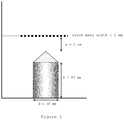
- the poured cone height is determined as follows:
- the wire sieve is fixed to the stand approx. 10 cm above the metal solid cylinder.
- the powder is poured slowly on to the sieve and carefully passed through the sieve by means of the scraper.
- the distance from the sieve to the poured cone tip of the powder is then adjusted to 2 cm.
- sieving of the powder is ended and the poured cone height is read off at the tip of the cone with the surface gauge.
- Figure 1 shows a diagram of the poured cone height measurement.
- the poured cone height is stated in mm.
- the reading error of the poured cone height is 0.1 mm.
- the average deviation of repeated measurements on a sample is 0.2 mm.
- Example 1 Example 2 Example 3 Example 4 Magnesium [g] 145.0 105.0 145.0 145.0 Iodine [g] 10.78 15.68 10.78 10.78 Alcohol mixture [g] 1549.5 1549.5 1549.5 Wt.% (EtOH) 91.2 89.5 91.2 91.2 Wt.% (MeOH) 3.5 5.2 3.5 3.5 Wt.% (i-PrOH) 5.3 5.3 5.3 Wt.% (iodine) based on magnesium 7.5 14.8 7.4 7.4 Reaction temperature [°C] 50 50 50 50 d 10 [ ⁇ m] 3.8 12.2 21.5 4.0 d 50 [ ⁇ m] 18.6 25.0 30.5 22.7 d 90 [ ⁇ m] 25.5 35.9 43.2 30.7 Span 0.71 0.95 0.71 1.18 Bulk density [g/ml] 0.43 0.39 0.44 0.42 Tapped density [g/ml] 0.54 0.49 0.58 0.55 Poured cone height [mm] 12.5 13.3 15.6 13.4 methanol after hydrolysis [w
- a 2-L Buchi glass reactor is equipped with an overhead stirrer with a paddle-type agitator on the bottom of the shaft and a U-shaped agitator staggered directly above the paddle.
- the reactor is charged with absolute ethanol (930 mL, 99.5 %, Aldrich), magnesium turnings (40 g), then chloroacetyl chloride (10.0 mL), all under a nitrogen blanket.
- the stirrer is set to 200 rpm and the reaction is allowed to proceed without temperature control. After 63 hours of stirring, a mixture of needle-like crystals and a flocculent solid is obtained. The solid is unsuitable for converting into a propylene polymerization catalyst.
- the poured cone height of this material is 24.9 mm.
- the particle properties were as follows : d 10 [ ⁇ m] 5.4 d 50 [ ⁇ m] 45.8 d 90 [ ⁇ m] 183.1 Span 3.88
- Gas phase polymerizations are performed in a horizontal, cylindrical reactor measuring 10 cm in diameter and 30 cm in length with a volume of approximately one gallon (3.8 L).
- the reactor is operated in a continuous fashion.
- the reactor is equipped with an off-gas port for recycling reactor gas through a condenser and back through a recycle line to the nozzles in the reactor.
- liquid propylene is used as a quench liquid.
- the catalyst is introduced as a 0.5 to 1.5 wt% slurry in hexane through a liquid propylene-flushed catalyst addition nozzle.
- a mixture of organosilane compound and trialkylaluminum in hexane are fed separately to the reactor through a different liquid propylene-flushed addition nozzle.
- the Al/Mg molar ratio of 6 and the Al/Si molar ratio of 6 is used for all polymerizations.
- polypropylene powder is passed over a weir and discharged through a powder discharge system.
- the polymer bed in the reactor is agitated by paddles attached to a longitudinal shaft within the reactor that is rotated at about 50 rpm.
- the reactor pressure is maintained at 300 psig (2.2 MPa).
- Polymers with targeted melt flow rates are obtained by varying the amount of hydrogen in the reactor.
- Gas composition in the system is monitored via an on-line process gas chromatograph.
- Ethylene content in the reactor is adjusted by a mass-flow meter to vary the ethylene content in the final polymer.
- Ethylene content in the gas composition is monitored via the same on-line process gas chromatograph.
- the production rate is typically about 200 - 250 g/hour in order to maintain a stable process.
- MGE catalyst support (10 g, example 3) is suspended in 200 mL of heptane and transferred under nitrogen to a 1-liter jacketed glass reactor fitted with an overhead stirrer.
- the heptane is removed by decantation.
- Toluene 125 mL is added and the slurry is stirred for 1 minute.
- the stirrer is turned off and the solid is allowed to settle for 1 minute.
- the toluene is removed by decantation.
- 125 mL more of toluene is added, and the stirrer is started.
- TiCl 4 105 mL, Akzo
- TiCl 4 105 mL, Akzo
- the reactor contents are warmed to 57 C and mixed for an additional 30 minutes.
- the temperature is increased and as the temperature reached 100 C, 1.3 mL of di-n-butylphthalate (DNBP) is added and the reaction mixture stirred at 100 C for an additional 90 minutes.
- DNBP di-n-butylphthalate
- the stirrer is stopped and the liquid is removed by filtration through a small filter disk inserted into the slurry. After most of the liquid is removed, 125 mL of toluene and 105 mL of TiCl 4 are added and the slurry stirred at 100 C for 30 minutes. The stirrer is stopped, the solid is allowed to settle, and the liquid is removed through the filter disk. An additional 105 mL of TiCl 4 is added and the slurry stirred for 30 minutes at 100 C. The liquid is removed by filtration and 150 mL of heptane is added. The slurry is stirred at 57 C, the solid is then allowed to settle, and the heptane is removed.
- the resulting solid had a uniform particle size and shape.
- diisobutyldimethoxysilane as the organosilane compound, a 6.6 MFR random copolymer containing 3.2wt% ethylene is obtained.
- the yield is 33,100 g PP/g catalyst, the copolymer powder had a bulk density of 0.40 g/cc, and there are low fines ( ⁇ 1% under 150 microns).
- MGE catalyst support (example 4) is made in a similar manner as described in Example 3, except that some of the alcohol mixture is made up of recycled alcohol mixture from a previous support preparation. The support is converted to a catalyst in a similar manner as described in Example 5.
- diisobutyldimethoxysilane as the organosilane compound, a 3.2 MFR polypropylene is obtained.
- the yield is 24,500 g PP/g catalyst, the polymer powder had a bulk density of 0.46 g/cc, and there are low fines (1.1% under 150 microns).
- the average particle size is 1150 microns and the span is 1.2.
Landscapes
- Chemical & Material Sciences (AREA)
- Organic Chemistry (AREA)
- Health & Medical Sciences (AREA)
- Chemical Kinetics & Catalysis (AREA)
- Medicinal Chemistry (AREA)
- Polymers & Plastics (AREA)
- Engineering & Computer Science (AREA)
- Materials Engineering (AREA)
- Transition And Organic Metals Composition Catalysts For Addition Polymerization (AREA)
- Organic Low-Molecular-Weight Compounds And Preparation Thereof (AREA)
- Polymerization Catalysts (AREA)
Abstract
Description
- The invention relates to spherical particles comprising magnesium alcoholates or a mixture of magnesium alcoholates, a process for their preparation and their use.
- It is known to prepare magnesium alcoholate. Thus,
US 2001/0012908 describes the synthesis of magnesium alcoholates at a temperature of 30 to 60 °C. -
US 5556820 (date of application : 02/03/1994, Idemitsu) describes the preparation of magnesium ethanolate from magnesium and ethanol in the presence of 0.019 to 0.06 gram-atom of halogen per mol of magnesium. -
US 5965478 (date of application : 13/08/1997, Toho Titanium) describes a magnesium ethanolate having a bulk density of 0.25 - 0.40 g/ml and a particle diameter of 1 to 100 µm as a component of a Ziegler-Natta catalyst. This is prepared by continuous or batchwise addition of alcohol and magnesium to a reaction mixture which is not defined in more detail. The synthesis takes place at the reflux temperature. - The flowability of the powder is of great importance for the processing and handling of pulverulent substances. During filling, transferring and emptying operations in particular, for example from barrels or other drums, a rapid flowing out of the magnesium alcoholate powder saves time and expenditure. A good flowability of the magnesium alcoholate powder must also be ensured because this class of substance is highly sensitive to air and water. Residues of substance in drums which have not been emptied completely are a high safety risk. Due to the good flowability, there is also a reduced risk of bridge formation when transferring to silos. Pneumatic delivery of the powder is also facilitated.
- In the case of all the abovementioned known magnesium alcoholates, nothing is said about the flowability of the magnesium alcoholates formed here. There is therefore the need for a form of magnesium alcoholate powders which is distinguished by a good flowability.
- The object of the invention is to prepare spherical particles comprising magnesium alcoholate or mixtures of magnesium alcoholates having a good flowability. These particles can serve, for example, as starting substance (catalyst precursor) for olefin polymerization catalysts.
- The invention provides spherical particles comprising magnesium alcoholates or mixtures of magnesium alcoholates, which are characterized in that they have a poured cone height of less than 17 mm.
- The lower the poured cone height, the better the flowability of the powder.
- Measurement of the poured cone height under precisely defined conditions is a measure of the flowability of a pulverulent substance. The angle of repose is a further evaluation criterion for the flow properties. Since given the same base dimension the poured cone height depends directly on the angle of repose and is considerably easier to determine, this is determined.
- Another method for determination of the flowability of powders is, for example, measurement of the discharge speed using a modified Pfrengle discharge funnel [DIN ISO 4324].
- The invention also provides a process for the preparation of the spherical particles comprising magnesium alcoholates or mixtures of magnesium alcoholates according to the invention, which is characterized in that magnesium, an alcohol or a mixture of various alcohols and a halogen and/or a halogen compound are reacted with one another at below the boiling point of the alcohol component having the lowest boiling point, and the product obtained is separated off and dried.
- The alcohol component having the lowest boiling point can have a boiling point of 68 °C. It can be, for example, methanol.
- The main constituent of the spherical particles according to the invention can in general be magnesium ethanolate. In the case of mixtures of magnesium alcoholates, the content of the other magnesium alcoholates (in addition to magnesium ethanolate) and of a halogen-containing constituent present can be between 0.001 wt.% and 15 wt.% (in each case based on the total weight).
- Particularly preferred spherical particles are those for which a mixture of ethanol, methanol and isopropanol is employed as the alcohol mixture in the preparation and the contents of the alcoholates in the end product are as follows:
- magnesium ethanolate > 80 wt.%
- magnesium methanolate : 0.001-15 wt.%
- magnesium isopropanolate : 0.001-10 wt.%
- halogen or halogen-containing component : 0.001-10 wt.%
- The spherical particles can comprise small amounts of free alcohols and furthermore Mg(OH)2 and/or MgCO3.
- The magnesium can be employed in the form of strip, filings, granules or also powder. Magnesium which is not coated or coated only with a thin oxide/hydroxide layer is preferred.
- Mono- and polyhydric alcohols which have a linear or branched carbon chain can be employed as alcohols for the synthesis. The alcohols can be aliphatic, aromatic or mixed aliphatic-aromatic. Alcohols having 1-10 carbon atoms are preferably employed.
- Examples of the alcohols are:
- Methanol, ethanol, n-propanol, n-butanol, n-pentanol, n-hexanol, n-heptanol, n-octanol, n-nonanol, n-decanol.
- 2-Propanol, 2-butanol, 2-pentanol, 2-hexanol, 2-heptanol, 2-octanol, 2-nonanol, 2-decanol.
- 2-Ethylbutanol, 2-ethylhexanol, 4-methyl-2-pentanol, 3,3,5-trimethylpentanol, 4-methyl-3-heptanol.
- Phenol, benzyl alcohol, 2-phenylethanol, 1-phenyl-1-propanol ethylene glycol, glycerol.
- Ethanol is particularly preferred as the alcohol. If an alcohol mixture is employed, ethanol can be employed as the main constituent and methanol and isopropanol as secondary constituents.
- Preferably the mixture of the alcohols can consist of
- 90 ± 9 wt.-% of ethanol
- 1 to 10 wt.-% of methanol
- 1 to 10 wt.-% of isopropanol
- To facilitate the reaction, however, alcohols having a water content of < 1,000 ppm are preferred. Otherwise, hydroxide layers form on the magnesium, as a result of which the reaction is slowed down.
- The molar ratio of the alcohol or alcohol mixture (calculated as the sum of the moles of the individual constituents of the alcohol mixture) to magnesium can be between 1 and 100. It can be particularly preferably between 3 and 20.
- A non-limiting selection for the halogen or the halogen-containing component is:
- Iodine, bromine, chlorine, magnesium chloride, magnesium bromide, magnesium iodide.
- Magnesium alkoxyhalides, such as, for example, magnesium ethoxyiodide, magnesium methoxyiodide, magnesium isopropoxyiodide, hydrogen chloride, chloroacetyl chloride and organic acid halides such as benzoyl chloride, phthaloyl chloride, acetyl chloride, propionyl chloride, butyryl chloride, trimethylacetyl chloride, trifluoroacetyl chloride, and chloroacetyl chloride.
- Accordingly, the halogen compound can be an organic acid chloride. The acid chloride can be a chloroacetyl chloride.
- Chloroacetyl chloride, iodine, magnesium iodide and magnesium chloride as well as magnesium alkoxyhalides are particularly preferred.
- Mixtures of the abovementioned substances can also be employed.
- The halogens or halogen-containing substances can be employed in the reaction both in the pure state and in the form of solutions. The halogen or the halogen-containing components can also be present in a chemically modified form after the reaction. Thus, for example, after the reaction iodine can be present partly as magnesium iodide and/or magnesium alkoxyiodide.
- The reaction can be carried out at a reaction temperature of between 0 °C and 67 °C, it also being possible for the reaction temperature to be changed during the reaction. The particle size can be determined by the choice of the reaction temperature.
- The pressure can be between 0.001 and 100 bar. The reaction can preferably be carried out under atmospheric pressure. The sequence of the addition of the reaction partners can be as desired. The following reaction procedure is particularly preferred:
- 1) Initial introduction of the alcohol mixture and magnesium into the reaction vessel
- 2) Addition of the halogen component
- The end of the reaction can be recognized by the evolution of hydrogen stopping. The reaction time can in general be 5-50 h.
- After the reaction, the product can be washed again, for example with the alcohol mixture used for the preparation, in order to adjust the content of halogen or halogen-containing component.
- The molar ratio of the halogen or halogen component to magnesium at the start of the reaction can be between 0.0001 and 0.5. In the end product, it can be between 0.000001 and 0.5.
- The average particle diameter (d50) of the spherical particles according to the invention can be between 1 and 200 µm. The particle diameter is particularly preferably between 10 and 50 µm.
- The span, which describes the width of the particle size distribution, is in general below 4, particularly preferably below 1.5, the span being determined according to the following formula.

- The form of the particles can preferably be spherical.
- The specific surface area can be between 2 and 100 m2/g. The specific pore volume is between 0.01 ml/g and 4 ml/g. The bulk density can be at least 0.25 g/cm3. The tapped density can be at least 0.35 g/cm3.
- The spherical particles according to the invention can be employed as a precursor for olefin polymerization catalysts, thus, for example, as a catalyst support precursor.
- The specific surface area is determined by nitrogen absorption at 77 K in accordance with DIN 66131 (calculation according to the BET model).
- The specific pore volume is measured by mercury intrusion to 2,000 bar in accordance with DIN 66133.
- The particle size distribution is measured with a Microtrac-X100 apparatus from Microtrac in accordance with the principle of laser diffraction using unified scatter technique. The apparatus is equipped with one primary (on-axis) laser diode and two secondary (off-axis) laser diodes with one forward and one high-angle photo detector array. The range is 0.04-704 micron. The sample is suspended in ethanol before the measurement. Ultrasound was applied for 60 seconds before measurement.
- Alternatively a Horiba LA-920 was used. In this case the samples were suspended in isopropanol and subjected to ultrasound for 60 seconds. A circulation speed of 7 was used before measurement.
- The bulk density and the tapped density are determined as follows:
- For determination of the bulk density, a given volume of the powder is poured through a funnel into a measuring beaker and its weight is determined.
- For determination of the tapped density, a given volume of the powder is poured through a funnel into a measuring beaker and vibrated and its weight is determined.
- Equipment: *Balance with an error limit of ± 0.1 g
- *Filling funnel with a volume of about 200 cm3
- *Cylindrical measuring beaker of approx.
- 100 cm3 ± 0.5 cm3
- *Sheet of paper
- Two samples are taken from the magnesium alcoholate powder to be tested, which is in the delivery state. The samples are tested under a nitrogen atmosphere. In the event of deviations of greater than 0.03 g/cm3, a triplicate determination is carried out as a control.
- The measuring beaker is tared on a balance and covered with a sheet of paper. Thereafter, the filling funnel is placed on the paper. A sample of approx. 150 cm3 is loosely introduced into the filling funnel. The paper is then removed, so that the sample falls into the measuring beaker. If necessary, the flow of the sample can be assisted by stirring with a rod (or spatula). The powder mass piled up above the upper edge of the measuring beaker is skimmed off with a straight-edged blade or ruler at an angle of 45° with respect to the piled-up powder mass. The measuring beaker filled with the powder is weighed to 0.1 g and the weight (weight of magnesium alcoholate powder) is recorded.
- The bulk density is calculated according to the numerical value of bulk density = weight determined / 100 (in g/cm3 or g/ml). The arithmetic mean - in addition to the individual values - of the two determinations is to be stated as the result of the test.
- The measuring beaker is tared on a balance and covered with a sheet of paper. Thereafter, the filling funnel is placed on the paper. A sample of approx. 150 cm3 is loosely introduced into the filling funnel. The sheet of paper is then removed, so that the sample falls into the measuring beaker. If necessary, the flow of the sample can be assisted by stirring with a rod (or spatula). Thereafter,
the contents of the measuring beaker are vibrated (measuring beaker vibrated and tamped) until the powder cannot be compressed further. During this operation, the measuring beaker is constantly topped up with sample material. - The powder mass piled up above the upper edge of the measuring beaker is skimmed off with a straight-edged blade or ruler at an angle of 45° with respect to the piled-up powder mass. The measuring beaker filled with the powder is weighed to 0.1 g and the weight (weight of magnesium alcoholate powder) is recorded.
- The tapped density is calculated according to the numerical value equation of tapped density = weight determined / 100 (in g/cm3 or g/ml). The arithmetic mean - in addition to the individual values - of the two determinations is to be stated as the result of the test.
- The alcoholate contents in the end products are determined by hydrolysis of the alcoholate mixtures with acid. After neutralization, the alcohols released are determined by gas chromatography (HP 5890 gas chromatograph with DB 624 as the stationary phase, 2-butanol as the internal standard).
- The halogen content is determined by potentiometric titration after hydrolysis of the sample with ethanol/acetic acid (Metrohm Titroprocessor 682, indicator electrode: silver rod, reference electrode Ag/AgCl/0.1 M HClO4)
- The poured cone height is determined as follows:
-
- Metal sieve (mesh width : 1 mm)
Vernier - Metal solid cylinder, d = 38 mm, h = 80 mm
Scraper - The wire sieve is fixed to the stand approx. 10 cm above the metal solid cylinder. To establish the final height of the sieve, the powder is poured slowly on to the sieve and carefully passed through the sieve by means of the scraper. The distance from the sieve to the poured cone tip of the powder is then adjusted to 2 cm. When the poured cone of the powder is uniform in shape, sieving of the powder is ended and the poured cone height is read off at the tip of the cone with the surface gauge.
-
Figure 1 shows a diagram of the poured cone height measurement. - The poured cone height is stated in mm.
- The reading error of the poured cone height is 0.1 mm. The average deviation of repeated measurements on a sample is 0.2 mm.
-
- MFR: Polymer melt flow rate is measured according to ASTM 1238.
- Bulk Density: Polymer powder bulk density is measured according to ASTM D1895B.
- Catalyst particle size distribution: Spherical magnesium ethoxide material and catalyst particle size distributions are measured using a Malvern Mastersizer™ X.
- Polymer particle size distribution: Polypropylene powder particle size distribution and fines are measured using a Malvern Mastersizer™ S.
- Magnesium and the alcohol mixture are initially introduced into a 2 1 stirred container. Thereafter, a solution of iodine alcohol mixture is added. The reaction mixture is heated, while stirring, until the evolution of hydrogen has stopped. The product is filtered off over a pressure filter and dried in a rotary evaporator.
Example 1 Example 2 Example 3 Example 4 Magnesium [g] 145.0 105.0 145.0 145.0 Iodine [g] 10.78 15.68 10.78 10.78 Alcohol mixture [g] 1549.5 1549.5 1549.5 1549.5 Wt.% (EtOH) 91.2 89.5 91.2 91.2 Wt.% (MeOH) 3.5 5.2 3.5 3.5 Wt.% (i-PrOH) 5.3 5.3 5.3 5.3 Wt.% (iodine) based on magnesium 7.5 14.8 7.4 7.4 Reaction temperature [°C] 50 50 50 50 d10 [µm] 3.8 12.2 21.5 4.0 d50 [µm] 18.6 25.0 30.5 22.7 d90 [µm] 25.5 35.9 43.2 30.7 Span 0.71 0.95 0.71 1.18 Bulk density [g/ml] 0.43 0.39 0.44 0.42 Tapped density [g/ml] 0.54 0.49 0.58 0.55 Poured cone height [mm] 12.5 13.3 15.6 13.4 methanol after hydrolysis [wt.%] 7.0 9.8 4.1 4.6 isopropanol after hydrolysis [wt.%] 1.4 0.86 1.9 1.5 Content of iodine [wt.%] 0.63 0.89 0.37 0.7 - A 2-L Buchi glass reactor is equipped with an overhead stirrer with a paddle-type agitator on the bottom of the shaft and a U-shaped agitator staggered directly above the paddle. The reactor is charged with absolute ethanol (930 mL, 99.5 %, Aldrich), magnesium turnings (40 g), then chloroacetyl chloride (10.0 mL), all under a nitrogen blanket. The stirrer is set to 200 rpm and the reaction is allowed to proceed without temperature control. After 63 hours of stirring, a mixture of needle-like crystals and a flocculent solid is obtained. The solid is unsuitable for converting into a propylene polymerization catalyst. The poured cone height of this material is 24.9 mm. The particle properties were as follows :
d10 [µm] 5.4 d50 [µm] 45.8 d90 [µm] 183.1 Span 3.88 - 5 g magnesium is added to 0.5 g iodine in 100 g ethanol. The mixture is heated to reflux temperature (78 °C). 8 portions of 2.5 g Mg and 25 g ethanol are added to this mixture every 5 minutes while the temperature is kept at 78 °C (boiling point of ethanol). Excess ethanol is removed and the poured cone height of the dried product is found to be 19.2 mm. The particle parameters are :
d50 [µm] 42.9 d10 [µm] 16.4 d90 [µm] 70.7 Span 1.27 - 21.8 g magnesium and 275 ml ethanol are filled into a reaction vessel. A solution of 1.62 g iodine in 25 ml ethanol is added. The mixture is stirred under reflux (78 °C) for 20 hours. Excess ethanol is removed and the poured cone height of the dried product is found to be 40.8 mm. The particle parameters are :
d50 [µm] 11.0 d10 [µm] 3.2 d90 [µm] 44.4 Span 3.74 Content of iodine [wt.%] 1.0 - Commercially available magnesium ethanolate from Degussa (d50 ≈ 700 µm) is ground to an average particle diameter of 25.0 µm with a CSM 165 sifter mill (Netzsch). Measurement of the poured cone height gives a value of 19.8 mm.
- Commercially available magnesium ethanolate from Degussa (d50 ≈ 700 µm) is ground to an average particle diameter of 5.2 µm with an AFG 100 fluidized bed counter-jet mill (Hosokawa Alpine). Measurement of the poured cone height gives a value of 19.0 mm.
- Gas phase polymerizations are performed in a horizontal, cylindrical reactor measuring 10 cm in diameter and 30 cm in length with a volume of approximately one gallon (3.8 L). The reactor is operated in a continuous fashion. The reactor is equipped with an off-gas port for recycling reactor gas through a condenser and back through a recycle line to the nozzles in the reactor. In the reactor, liquid propylene is used as a quench liquid. The catalyst is introduced as a 0.5 to 1.5 wt% slurry in hexane through a liquid propylene-flushed catalyst addition nozzle. A mixture of organosilane compound and trialkylaluminum in hexane are fed separately to the reactor through a different liquid propylene-flushed addition nozzle. For all polymerizations the Al/Mg molar ratio of 6 and the Al/Si molar ratio of 6 is used.
- During operation, polypropylene powder is passed over a weir and discharged through a powder discharge system. The polymer bed in the reactor is agitated by paddles attached to a longitudinal shaft within the reactor that is rotated at about 50 rpm. The reactor pressure is maintained at 300 psig (2.2 MPa). Reactor temperature is maintained at 160 F = 71 °C. Polymers with targeted melt flow rates are obtained by varying the amount of hydrogen in the reactor. Gas composition in the system is monitored via an on-line process gas chromatograph. Ethylene content in the reactor is adjusted by a mass-flow meter to vary the ethylene content in the final polymer. Ethylene content in the gas composition is monitored via the same on-line process gas chromatograph. The production rate is typically about 200 - 250 g/hour in order to maintain a stable process.
- MGE catalyst support (10 g, example 3) is suspended in 200 mL of heptane and transferred under nitrogen to a 1-liter jacketed glass reactor fitted with an overhead stirrer.
- The heptane is removed by decantation. Toluene (125 mL) is added and the slurry is stirred for 1 minute. The stirrer is turned off and the solid is allowed to settle for 1 minute. The toluene is removed by decantation. Next, 125 mL more of toluene is added, and the stirrer is started. TiCl4 (105 mL, Akzo) is added slowly. The reactor contents are warmed to 57 C and mixed for an additional 30 minutes. The temperature is increased and as the temperature reached 100 C, 1.3 mL of di-n-butylphthalate (DNBP) is added and the reaction mixture stirred at 100 C for an additional 90 minutes. The stirrer is stopped and the liquid is removed by filtration through a small filter disk inserted into the slurry. After most of the liquid is removed, 125 mL of toluene and 105 mL of TiCl4 are added and the slurry stirred at 100 C for 30 minutes. The stirrer is stopped, the solid is allowed to settle, and the liquid is removed through the filter disk. An additional 105 mL of TiCl4 is added and the slurry stirred for 30 minutes at 100 C. The liquid is removed by filtration and 150 mL of heptane is added. The slurry is stirred at 57 C, the solid is then allowed to settle, and the heptane is removed. Four more warm heptane washes are done in the same way. The resulting solid had a uniform particle size and shape. The particle size distribution of the catalyst is: d10 = 21.80, d50 = 33.24, d90 = 45.69 microns, span = 0.71. Using diisobutyldimethoxysilane as the organosilane compound, a 6.6 MFR random copolymer containing 3.2wt% ethylene is obtained. The yield is 33,100 g PP/g catalyst, the copolymer powder had a bulk density of 0.40 g/cc, and there are low fines (<1% under 150 microns).
- MGE catalyst support (example 4) is made in a similar manner as described in Example 3, except that some of the alcohol mixture is made up of recycled alcohol mixture from a previous support preparation. The support is converted to a catalyst in a similar manner as described in Example 5. The particle size distribution of the catalyst is: d10 = 3.87, d50 = 21.32, d90 = 32.93 microns, span = 1.36. Using diisobutyldimethoxysilane as the organosilane compound, a 3.2 MFR polypropylene is obtained. The yield is 24,500 g PP/g catalyst, the polymer powder had a bulk density of 0.46 g/cc, and there are low fines (1.1% under 150 microns). The average particle size is 1150 microns and the span is 1.2.
Claims (10)
- Spherical particles comprising a mixture of magnesium alcoholates, comprising magnesium ethanolate, obtainable in that magnesium, a mixture of various alcohols and a halogen and/or a halogen compound are reacted with one another at below the boiling point of the alcohol component having the lowest boiling point, and the product obtained is separated off and dried.
- Spherical particles according to claim 1, wherein the content of other, in addition to magnesium ethanolate, magnesium alcoholates and of a halogen-containing constituent present is between 0,001 wt% and 15 wt.%, in each case based on the total weight.
- Spherical particles according to claim 1 or 2, wherein the contents of the alcoholates in the product are as follows:magnesium ethanolate > 80 wt.%magnesium methanolate: 0,001-15 wt.%magnesium isopropanolate: 0,001-10 wt.%halogen or halogen-containing component: 0,001-10 wt.%
- Spherical particles according to any of claims 1 to 3,
wherein the average particle diameter (d50) of particles is between 1 and 200 µm. - A process for the preparation of the spherical particles according to any of claims 1 to 4, wherein magnesium, a mixture of various alcohols and a halogen and/or a halogen compound are reacted with one another at below the boiling point of the alcohol component having the lowest boiling point, and the product obtained is separated off and dried.
- The process according to claim 5, wherein the halogen compound is an organic acid halide.
- The process according to claim 6, wherein the organic acid halide is chloroacetyl chloride.
- The process according to any of claims 5 to 7, wherein the reaction temperature is between 0 and 67 °C.
- The process according to any of claims 5 to 8, wherein the pressure is between 0,001 and 100 bar.
- The use of the spherical particles according to any of claims 1 to 4 as a precursor for olefin polymerization catalysts.
Applications Claiming Priority (3)
| Application Number | Priority Date | Filing Date | Title |
|---|---|---|---|
| DE10352138A DE10352138A1 (en) | 2003-11-04 | 2003-11-04 | Spherical particles |
| EP04797531A EP1680454A1 (en) | 2003-11-04 | 2004-11-03 | Spherical particles |
| PCT/EP2004/012388 WO2005044873A1 (en) | 2003-11-04 | 2004-11-03 | Spherical particles |
Related Parent Applications (1)
| Application Number | Title | Priority Date | Filing Date |
|---|---|---|---|
| EP04797531A Division EP1680454A1 (en) | 2003-11-04 | 2004-11-03 | Spherical particles |
Publications (2)
| Publication Number | Publication Date |
|---|---|
| EP3141565A1 true EP3141565A1 (en) | 2017-03-15 |
| EP3141565B1 EP3141565B1 (en) | 2021-03-17 |
Family
ID=34559477
Family Applications (2)
| Application Number | Title | Priority Date | Filing Date |
|---|---|---|---|
| EP16188726.0A Expired - Lifetime EP3141565B1 (en) | 2003-11-04 | 2004-11-03 | Spherical particles |
| EP04797531A Ceased EP1680454A1 (en) | 2003-11-04 | 2004-11-03 | Spherical particles |
Family Applications After (1)
| Application Number | Title | Priority Date | Filing Date |
|---|---|---|---|
| EP04797531A Ceased EP1680454A1 (en) | 2003-11-04 | 2004-11-03 | Spherical particles |
Country Status (8)
| Country | Link |
|---|---|
| US (1) | US7767772B2 (en) |
| EP (2) | EP3141565B1 (en) |
| JP (1) | JP4829118B2 (en) |
| KR (1) | KR20060130035A (en) |
| CN (1) | CN100535024C (en) |
| BR (1) | BRPI0416198B1 (en) |
| DE (1) | DE10352138A1 (en) |
| WO (1) | WO2005044873A1 (en) |
Families Citing this family (23)
| Publication number | Priority date | Publication date | Assignee | Title |
|---|---|---|---|---|
| KR100807895B1 (en) * | 2006-08-30 | 2008-02-27 | 삼성토탈 주식회사 | Process for producing spherical carrier for olefin polymerization catalyst |
| US8633124B2 (en) | 2008-04-25 | 2014-01-21 | Reliance Industries Limited | Spheroidal particles for olefin polymerization catalyst |
| KR101140112B1 (en) * | 2009-05-22 | 2012-04-30 | 삼성토탈 주식회사 | A preparation method of dialkoxymagnesium support for catalyst for olefin polymerization, a preparation method of catalyst for olefin polymerization using the same and a polymerization method of olefin using the same |
| SA3686B1 (en) * | 2009-10-16 | 2014-10-22 | China Petroleum& Chemical Corp | Catalyst component for olefin polymerization and catalyst comprising the same |
| US20120322958A1 (en) * | 2010-02-25 | 2012-12-20 | Akihiko Yamanaka | Mixed magnesum dialkoxide particulate, method for synthesizing same, and method for use thereof |
| WO2012007963A2 (en) | 2010-07-12 | 2012-01-19 | Reliance Industries Limited | Attrition resistant catalyst system for manufacture of polyolefins |
| WO2012034357A1 (en) | 2010-09-16 | 2012-03-22 | 中国石油化工股份有限公司 | Catalyst carrier for olefin polymerization, solid catalyst component and catalyst |
| JP5854615B2 (en) * | 2011-02-18 | 2016-02-09 | コルコート株式会社 | Method for synthesizing mixed magnesium dialkoxide granules and method for using the same |
| CN102796208B (en) * | 2011-05-27 | 2014-08-06 | 中国石油化工股份有限公司 | Catalyst component for olefin polymerization and preparation method thereof, catalyst for olefin polymerization, and olefin polymerization method |
| MY169729A (en) | 2011-06-28 | 2019-05-14 | Reliance Industries Ltd | Precursor for polyolefin catalyst |
| EP2754648B1 (en) * | 2011-10-19 | 2018-06-13 | Nippon Soda Co., Ltd. | Method for producing magnesium alcoholate |
| EP2794683A1 (en) * | 2011-12-21 | 2014-10-29 | Reliance Industries Limited | A high surface area silicon derivative free magnesium- titanium catalyst system for ethylene polymerization and process of preparation thereof |
| WO2014073000A2 (en) * | 2012-11-08 | 2014-05-15 | Reliance Industries Limited | A process of polymerization of propylene |
| WO2015177764A1 (en) | 2014-05-22 | 2015-11-26 | Reliance Industries Limited | A shape controlled pro-catalyst and a process for preparing the same |
| MY181212A (en) | 2014-05-22 | 2020-12-21 | Reliance Industries Ltd | A shape controlled pro-catalyst and a single pot process for preparing the same |
| EP3280718A4 (en) * | 2015-04-07 | 2018-11-07 | Reliance Industries Limited | A process for controlling particle size distribution of a ziegler-natta catalyst composition |
| CN105801353B (en) * | 2016-04-18 | 2017-09-29 | 德州元光工贸有限公司 | A kind of preparation method of magnesium ethylate |
| CN105801352B (en) * | 2016-04-18 | 2018-02-13 | 德州元光工贸有限公司 | A kind of preparation method of spherical magnesium ethylate |
| CN105777490B (en) * | 2016-04-18 | 2018-02-13 | 德州元光工贸有限公司 | A kind of preparation method of big particle diameter magnesium ethylate |
| EP3489244A1 (en) | 2017-11-28 | 2019-05-29 | Scg Chemicals Co. Ltd. | Magnesium compound, method for producing the same and use thereof |
| US20250083075A1 (en) | 2021-12-17 | 2025-03-13 | Ineos Europe Ag | Filtration device |
| CN114316102B (en) * | 2022-01-18 | 2023-12-22 | 北京吉海川科技发展有限公司 | A kind of magnesium alkoxide carrier, polyethylene catalyst and preparation method thereof |
| WO2024120970A1 (en) | 2022-12-09 | 2024-06-13 | Ineos Europe Ag | Catalyst component |
Citations (6)
| Publication number | Priority date | Publication date | Assignee | Title |
|---|---|---|---|---|
| JPH0374341A (en) * | 1989-08-16 | 1991-03-28 | Korukooto Eng Kk | Synthesis of spherical magnesium alcoholate having narrow particle size distribution |
| EP0461268A1 (en) * | 1989-12-28 | 1991-12-18 | Idemitsu Petrochemical Co. Ltd. | Process for producing olefin polymerization catalyst component and polyolefin |
| US5556820A (en) | 1989-12-28 | 1996-09-17 | Idemitsu Petrochemical Co., Ltd. | Catalyst component for olefin polymerization and process for producing polyolefins |
| US5917100A (en) * | 1993-01-07 | 1999-06-29 | Clariant Gmbh | Process for producing low molecular-weight poly-1-olefins |
| US5965478A (en) | 1995-02-13 | 1999-10-12 | Toho Titanium Co., Ltd. | Solid catalyst component and catalyst for polymerization of olefins |
| US20010012908A1 (en) | 1999-12-15 | 2001-08-09 | Idemitsu Petrochemical Co., Ltd. | Magnesium compound, olefin polymerization catalyst, and method for producing olefin polymer |
Family Cites Families (2)
| Publication number | Priority date | Publication date | Assignee | Title |
|---|---|---|---|---|
| JP3926097B2 (en) * | 1999-12-15 | 2007-06-06 | 出光興産株式会社 | Method for producing magnesium compound, olefin polymerization catalyst, and method for producing olefin polymer |
| GB0001914D0 (en) * | 2000-01-27 | 2000-03-22 | Borealis Polymers Oy | Catalyst |
-
2003
- 2003-11-04 DE DE10352138A patent/DE10352138A1/en not_active Ceased
-
2004
- 2004-11-03 EP EP16188726.0A patent/EP3141565B1/en not_active Expired - Lifetime
- 2004-11-03 JP JP2006537239A patent/JP4829118B2/en not_active Expired - Lifetime
- 2004-11-03 BR BRPI0416198-0A patent/BRPI0416198B1/en not_active IP Right Cessation
- 2004-11-03 EP EP04797531A patent/EP1680454A1/en not_active Ceased
- 2004-11-03 US US10/595,667 patent/US7767772B2/en active Active
- 2004-11-03 KR KR1020067008811A patent/KR20060130035A/en not_active Ceased
- 2004-11-03 WO PCT/EP2004/012388 patent/WO2005044873A1/en not_active Ceased
- 2004-11-03 CN CNB2004800323479A patent/CN100535024C/en not_active Expired - Lifetime
Patent Citations (6)
| Publication number | Priority date | Publication date | Assignee | Title |
|---|---|---|---|---|
| JPH0374341A (en) * | 1989-08-16 | 1991-03-28 | Korukooto Eng Kk | Synthesis of spherical magnesium alcoholate having narrow particle size distribution |
| EP0461268A1 (en) * | 1989-12-28 | 1991-12-18 | Idemitsu Petrochemical Co. Ltd. | Process for producing olefin polymerization catalyst component and polyolefin |
| US5556820A (en) | 1989-12-28 | 1996-09-17 | Idemitsu Petrochemical Co., Ltd. | Catalyst component for olefin polymerization and process for producing polyolefins |
| US5917100A (en) * | 1993-01-07 | 1999-06-29 | Clariant Gmbh | Process for producing low molecular-weight poly-1-olefins |
| US5965478A (en) | 1995-02-13 | 1999-10-12 | Toho Titanium Co., Ltd. | Solid catalyst component and catalyst for polymerization of olefins |
| US20010012908A1 (en) | 1999-12-15 | 2001-08-09 | Idemitsu Petrochemical Co., Ltd. | Magnesium compound, olefin polymerization catalyst, and method for producing olefin polymer |
Also Published As
| Publication number | Publication date |
|---|---|
| EP1680454A1 (en) | 2006-07-19 |
| CN100535024C (en) | 2009-09-02 |
| WO2005044873A1 (en) | 2005-05-19 |
| US7767772B2 (en) | 2010-08-03 |
| CN1875038A (en) | 2006-12-06 |
| EP3141565B1 (en) | 2021-03-17 |
| BRPI0416198B1 (en) | 2015-08-18 |
| JP2007509901A (en) | 2007-04-19 |
| DE10352138A1 (en) | 2005-06-16 |
| KR20060130035A (en) | 2006-12-18 |
| BRPI0416198A (en) | 2007-01-16 |
| JP4829118B2 (en) | 2011-12-07 |
| US20080262178A1 (en) | 2008-10-23 |
Similar Documents
| Publication | Publication Date | Title |
|---|---|---|
| EP3141565B1 (en) | Spherical particles | |
| US7101523B2 (en) | Silica | |
| JP2501024B2 (en) | Catalyst component | |
| TWI626251B (en) | Polypropylene with narrow molecular weight distribution and preparation method thereof | |
| EP2655430B1 (en) | Magnesium dichloride-ethanol adducts and catalyst components obtained therefrom | |
| CN101906017A (en) | Method for preparing alkoxyl magnesium solid particles | |
| JPH0873388A (en) | Production of spherical fine particulate magnesium ethylate | |
| EP4017839A1 (en) | Composition of bhet and use thereof | |
| KR20180042471A (en) | Catalyst components for the polymerization of olefins | |
| KR20100074252A (en) | Method for producing cellulose ether derivative | |
| EP2028217B1 (en) | Process for producing granular carboxylated-polymer particle and granular carboxylated-polymer particle | |
| EP2172997A1 (en) | Gelling agent for batteries | |
| KR20140114439A (en) | Low-chloride lipf6 | |
| EP3201240B1 (en) | Catalyst components for the polymerization of olefins | |
| EP2464671B1 (en) | A catalyst system and a process for the production of polyethylene | |
| CN107987190A (en) | A kind of alkoxyl magnesium particle and its application | |
| EP3738984B1 (en) | Method for producing heterophasic propylene polymer particles | |
| JPH06279540A (en) | Preparation of low-molecular-weight poly 1- olefin | |
| EP3625270B1 (en) | Catalyst components for the polymerization of olefins | |
| JP3034977B2 (en) | Method for producing olefin polymer | |
| EP3861030B1 (en) | Precursors and catalyst components for the polymerization of olefins | |
| EP2726449B1 (en) | Precursor for polyolefin catalyst | |
| JP4093731B2 (en) | Granules of parahydroxybenzoic acid or parahydroxybenzoic acid ester and process for producing the same | |
| EP1614673A1 (en) | CRYSTAL OF p-HYDROXYBENZOIC ANHYDRIDE AND PROCESS FOR PRODUCING THE SAME | |
| JP2005029487A (en) | Glycidyl ether and method for producing the same |
Legal Events
| Date | Code | Title | Description |
|---|---|---|---|
| PUAI | Public reference made under article 153(3) epc to a published international application that has entered the european phase |
Free format text: ORIGINAL CODE: 0009012 |
|
| STAA | Information on the status of an ep patent application or granted ep patent |
Free format text: STATUS: REQUEST FOR EXAMINATION WAS MADE |
|
| 17P | Request for examination filed |
Effective date: 20160914 |
|
| AC | Divisional application: reference to earlier application |
Ref document number: 1680454 Country of ref document: EP Kind code of ref document: P |
|
| AK | Designated contracting states |
Kind code of ref document: A1 Designated state(s): AT BE BG CH CY CZ DE DK EE ES FI FR GB GR HU IE IS IT LI LU MC NL PL PT RO SE SI SK TR |
|
| STAA | Information on the status of an ep patent application or granted ep patent |
Free format text: STATUS: EXAMINATION IS IN PROGRESS |
|
| 17Q | First examination report despatched |
Effective date: 20171024 |
|
| RAP1 | Party data changed (applicant data changed or rights of an application transferred) |
Owner name: INEOS EUROPE AG |
|
| GRAP | Despatch of communication of intention to grant a patent |
Free format text: ORIGINAL CODE: EPIDOSNIGR1 |
|
| STAA | Information on the status of an ep patent application or granted ep patent |
Free format text: STATUS: GRANT OF PATENT IS INTENDED |
|
| INTG | Intention to grant announced |
Effective date: 20201104 |
|
| RIN1 | Information on inventor provided before grant (corrected) |
Inventor name: UHRHAMMER, ROGER Inventor name: MOLLENKOPF, CLAUDINE Inventor name: GRUEN, MICHAEL Inventor name: HEYNE, KLAUS Inventor name: LEE, SAM |
|
| GRAS | Grant fee paid |
Free format text: ORIGINAL CODE: EPIDOSNIGR3 |
|
| GRAA | (expected) grant |
Free format text: ORIGINAL CODE: 0009210 |
|
| STAA | Information on the status of an ep patent application or granted ep patent |
Free format text: STATUS: THE PATENT HAS BEEN GRANTED |
|
| AC | Divisional application: reference to earlier application |
Ref document number: 1680454 Country of ref document: EP Kind code of ref document: P |
|
| AK | Designated contracting states |
Kind code of ref document: B1 Designated state(s): AT BE BG CH CY CZ DE DK EE ES FI FR GB GR HU IE IS IT LI LU MC NL PL PT RO SE SI SK TR |
|
| REG | Reference to a national code |
Ref country code: GB Ref legal event code: FG4D |
|
| REG | Reference to a national code |
Ref country code: CH Ref legal event code: EP |
|
| REG | Reference to a national code |
Ref country code: DE Ref legal event code: R096 Ref document number: 602004054935 Country of ref document: DE |
|
| REG | Reference to a national code |
Ref country code: IE Ref legal event code: FG4D |
|
| REG | Reference to a national code |
Ref country code: AT Ref legal event code: REF Ref document number: 1372185 Country of ref document: AT Kind code of ref document: T Effective date: 20210415 |
|
| REG | Reference to a national code |
Ref country code: NL Ref legal event code: FP |
|
| PG25 | Lapsed in a contracting state [announced via postgrant information from national office to epo] |
Ref country code: BG Free format text: LAPSE BECAUSE OF FAILURE TO SUBMIT A TRANSLATION OF THE DESCRIPTION OR TO PAY THE FEE WITHIN THE PRESCRIBED TIME-LIMIT Effective date: 20210617 Ref country code: GR Free format text: LAPSE BECAUSE OF FAILURE TO SUBMIT A TRANSLATION OF THE DESCRIPTION OR TO PAY THE FEE WITHIN THE PRESCRIBED TIME-LIMIT Effective date: 20210618 Ref country code: FI Free format text: LAPSE BECAUSE OF FAILURE TO SUBMIT A TRANSLATION OF THE DESCRIPTION OR TO PAY THE FEE WITHIN THE PRESCRIBED TIME-LIMIT Effective date: 20210317 |
|
| PG25 | Lapsed in a contracting state [announced via postgrant information from national office to epo] |
Ref country code: SE Free format text: LAPSE BECAUSE OF FAILURE TO SUBMIT A TRANSLATION OF THE DESCRIPTION OR TO PAY THE FEE WITHIN THE PRESCRIBED TIME-LIMIT Effective date: 20210317 |
|
| PG25 | Lapsed in a contracting state [announced via postgrant information from national office to epo] |
Ref country code: CZ Free format text: LAPSE BECAUSE OF FAILURE TO SUBMIT A TRANSLATION OF THE DESCRIPTION OR TO PAY THE FEE WITHIN THE PRESCRIBED TIME-LIMIT Effective date: 20210317 Ref country code: EE Free format text: LAPSE BECAUSE OF FAILURE TO SUBMIT A TRANSLATION OF THE DESCRIPTION OR TO PAY THE FEE WITHIN THE PRESCRIBED TIME-LIMIT Effective date: 20210317 |
|
| PG25 | Lapsed in a contracting state [announced via postgrant information from national office to epo] |
Ref country code: RO Free format text: LAPSE BECAUSE OF FAILURE TO SUBMIT A TRANSLATION OF THE DESCRIPTION OR TO PAY THE FEE WITHIN THE PRESCRIBED TIME-LIMIT Effective date: 20210317 Ref country code: SK Free format text: LAPSE BECAUSE OF FAILURE TO SUBMIT A TRANSLATION OF THE DESCRIPTION OR TO PAY THE FEE WITHIN THE PRESCRIBED TIME-LIMIT Effective date: 20210317 Ref country code: ES Free format text: LAPSE BECAUSE OF FAILURE TO SUBMIT A TRANSLATION OF THE DESCRIPTION OR TO PAY THE FEE WITHIN THE PRESCRIBED TIME-LIMIT Effective date: 20210317 Ref country code: PL Free format text: LAPSE BECAUSE OF FAILURE TO SUBMIT A TRANSLATION OF THE DESCRIPTION OR TO PAY THE FEE WITHIN THE PRESCRIBED TIME-LIMIT Effective date: 20210317 Ref country code: PT Free format text: LAPSE BECAUSE OF FAILURE TO SUBMIT A TRANSLATION OF THE DESCRIPTION OR TO PAY THE FEE WITHIN THE PRESCRIBED TIME-LIMIT Effective date: 20210719 Ref country code: IS Free format text: LAPSE BECAUSE OF FAILURE TO SUBMIT A TRANSLATION OF THE DESCRIPTION OR TO PAY THE FEE WITHIN THE PRESCRIBED TIME-LIMIT Effective date: 20210717 |
|
| REG | Reference to a national code |
Ref country code: DE Ref legal event code: R097 Ref document number: 602004054935 Country of ref document: DE |
|
| PLBE | No opposition filed within time limit |
Free format text: ORIGINAL CODE: 0009261 |
|
| STAA | Information on the status of an ep patent application or granted ep patent |
Free format text: STATUS: NO OPPOSITION FILED WITHIN TIME LIMIT |
|
| PG25 | Lapsed in a contracting state [announced via postgrant information from national office to epo] |
Ref country code: DK Free format text: LAPSE BECAUSE OF FAILURE TO SUBMIT A TRANSLATION OF THE DESCRIPTION OR TO PAY THE FEE WITHIN THE PRESCRIBED TIME-LIMIT Effective date: 20210317 |
|
| 26N | No opposition filed |
Effective date: 20211220 |
|
| PG25 | Lapsed in a contracting state [announced via postgrant information from national office to epo] |
Ref country code: SI Free format text: LAPSE BECAUSE OF FAILURE TO SUBMIT A TRANSLATION OF THE DESCRIPTION OR TO PAY THE FEE WITHIN THE PRESCRIBED TIME-LIMIT Effective date: 20210317 |
|
| PG25 | Lapsed in a contracting state [announced via postgrant information from national office to epo] |
Ref country code: IS Free format text: LAPSE BECAUSE OF FAILURE TO SUBMIT A TRANSLATION OF THE DESCRIPTION OR TO PAY THE FEE WITHIN THE PRESCRIBED TIME-LIMIT Effective date: 20210717 |
|
| PG25 | Lapsed in a contracting state [announced via postgrant information from national office to epo] |
Ref country code: MC Free format text: LAPSE BECAUSE OF FAILURE TO SUBMIT A TRANSLATION OF THE DESCRIPTION OR TO PAY THE FEE WITHIN THE PRESCRIBED TIME-LIMIT Effective date: 20210317 |
|
| REG | Reference to a national code |
Ref country code: CH Ref legal event code: PL |
|
| PG25 | Lapsed in a contracting state [announced via postgrant information from national office to epo] |
Ref country code: LU Free format text: LAPSE BECAUSE OF NON-PAYMENT OF DUE FEES Effective date: 20211103 |
|
| PG25 | Lapsed in a contracting state [announced via postgrant information from national office to epo] |
Ref country code: LI Free format text: LAPSE BECAUSE OF NON-PAYMENT OF DUE FEES Effective date: 20211130 Ref country code: CH Free format text: LAPSE BECAUSE OF NON-PAYMENT OF DUE FEES Effective date: 20211130 |
|
| PG25 | Lapsed in a contracting state [announced via postgrant information from national office to epo] |
Ref country code: IE Free format text: LAPSE BECAUSE OF NON-PAYMENT OF DUE FEES Effective date: 20211103 |
|
| PG25 | Lapsed in a contracting state [announced via postgrant information from national office to epo] |
Ref country code: HU Free format text: LAPSE BECAUSE OF FAILURE TO SUBMIT A TRANSLATION OF THE DESCRIPTION OR TO PAY THE FEE WITHIN THE PRESCRIBED TIME-LIMIT; INVALID AB INITIO Effective date: 20041103 Ref country code: CY Free format text: LAPSE BECAUSE OF FAILURE TO SUBMIT A TRANSLATION OF THE DESCRIPTION OR TO PAY THE FEE WITHIN THE PRESCRIBED TIME-LIMIT Effective date: 20210317 |
|
| P01 | Opt-out of the competence of the unified patent court (upc) registered |
Effective date: 20230518 |
|
| PGFP | Annual fee paid to national office [announced via postgrant information from national office to epo] |
Ref country code: NL Payment date: 20231126 Year of fee payment: 20 |
|
| PGFP | Annual fee paid to national office [announced via postgrant information from national office to epo] |
Ref country code: GB Payment date: 20231127 Year of fee payment: 20 |
|
| PGFP | Annual fee paid to national office [announced via postgrant information from national office to epo] |
Ref country code: IT Payment date: 20231122 Year of fee payment: 20 Ref country code: FR Payment date: 20231127 Year of fee payment: 20 Ref country code: DE Payment date: 20231129 Year of fee payment: 20 Ref country code: AT Payment date: 20231019 Year of fee payment: 20 |
|
| PGFP | Annual fee paid to national office [announced via postgrant information from national office to epo] |
Ref country code: BE Payment date: 20231127 Year of fee payment: 20 |
|
| REG | Reference to a national code |
Ref country code: DE Ref legal event code: R071 Ref document number: 602004054935 Country of ref document: DE |
|
| REG | Reference to a national code |
Ref country code: NL Ref legal event code: MK Effective date: 20241102 |
|
| REG | Reference to a national code |
Ref country code: GB Ref legal event code: PE20 Expiry date: 20241102 |
|
| REG | Reference to a national code |
Ref country code: AT Ref legal event code: MK07 Ref document number: 1372185 Country of ref document: AT Kind code of ref document: T Effective date: 20241103 |
|
| REG | Reference to a national code |
Ref country code: BE Ref legal event code: MK Effective date: 20241103 |
|
| PG25 | Lapsed in a contracting state [announced via postgrant information from national office to epo] |
Ref country code: GB Free format text: LAPSE BECAUSE OF EXPIRATION OF PROTECTION Effective date: 20241102 |
|
| PG25 | Lapsed in a contracting state [announced via postgrant information from national office to epo] |
Ref country code: GB Free format text: LAPSE BECAUSE OF EXPIRATION OF PROTECTION Effective date: 20241102 |
|
| REG | Reference to a national code |
Ref country code: AT Ref legal event code: UEP Ref document number: 1372185 Country of ref document: AT Kind code of ref document: T Effective date: 20210317 |
|
| PG25 | Lapsed in a contracting state [announced via postgrant information from national office to epo] |
Ref country code: TR Free format text: LAPSE BECAUSE OF FAILURE TO SUBMIT A TRANSLATION OF THE DESCRIPTION OR TO PAY THE FEE WITHIN THE PRESCRIBED TIME-LIMIT Effective date: 20210317 |