EP3138890B1 - Aggregationszusammensetzungen, modifizierte partikelförmige metalloxide, modifizierte formungsoberflächen und verfahren zur herstellung und verwendung davon - Google Patents
Aggregationszusammensetzungen, modifizierte partikelförmige metalloxide, modifizierte formungsoberflächen und verfahren zur herstellung und verwendung davon Download PDFInfo
- Publication number
- EP3138890B1 EP3138890B1 EP16193740.4A EP16193740A EP3138890B1 EP 3138890 B1 EP3138890 B1 EP 3138890B1 EP 16193740 A EP16193740 A EP 16193740A EP 3138890 B1 EP3138890 B1 EP 3138890B1
- Authority
- EP
- European Patent Office
- Prior art keywords
- oxides
- vinyl pyridine
- alkyl
- combinations
- mixtures
- Prior art date
- Legal status (The legal status is an assumption and is not a legal conclusion. Google has not performed a legal analysis and makes no representation as to the accuracy of the status listed.)
- Active
Links
Images



Classifications
-
- C—CHEMISTRY; METALLURGY
- C09—DYES; PAINTS; POLISHES; NATURAL RESINS; ADHESIVES; COMPOSITIONS NOT OTHERWISE PROVIDED FOR; APPLICATIONS OF MATERIALS NOT OTHERWISE PROVIDED FOR
- C09K—MATERIALS FOR MISCELLANEOUS APPLICATIONS, NOT PROVIDED FOR ELSEWHERE
- C09K8/00—Compositions for drilling of boreholes or wells; Compositions for treating boreholes or wells, e.g. for completion or for remedial operations
- C09K8/60—Compositions for stimulating production by acting on the underground formation
- C09K8/80—Compositions for reinforcing fractures, e.g. compositions of proppants used to keep the fractures open
- C09K8/805—Coated proppants
-
- C—CHEMISTRY; METALLURGY
- C09—DYES; PAINTS; POLISHES; NATURAL RESINS; ADHESIVES; COMPOSITIONS NOT OTHERWISE PROVIDED FOR; APPLICATIONS OF MATERIALS NOT OTHERWISE PROVIDED FOR
- C09K—MATERIALS FOR MISCELLANEOUS APPLICATIONS, NOT PROVIDED FOR ELSEWHERE
- C09K8/00—Compositions for drilling of boreholes or wells; Compositions for treating boreholes or wells, e.g. for completion or for remedial operations
- C09K8/02—Well-drilling compositions
- C09K8/03—Specific additives for general use in well-drilling compositions
- C09K8/035—Organic additives
-
- C—CHEMISTRY; METALLURGY
- C09—DYES; PAINTS; POLISHES; NATURAL RESINS; ADHESIVES; COMPOSITIONS NOT OTHERWISE PROVIDED FOR; APPLICATIONS OF MATERIALS NOT OTHERWISE PROVIDED FOR
- C09K—MATERIALS FOR MISCELLANEOUS APPLICATIONS, NOT PROVIDED FOR ELSEWHERE
- C09K8/00—Compositions for drilling of boreholes or wells; Compositions for treating boreholes or wells, e.g. for completion or for remedial operations
- C09K8/60—Compositions for stimulating production by acting on the underground formation
- C09K8/62—Compositions for forming crevices or fractures
- C09K8/66—Compositions based on water or polar solvents
- C09K8/68—Compositions based on water or polar solvents containing organic compounds
-
- C—CHEMISTRY; METALLURGY
- C09—DYES; PAINTS; POLISHES; NATURAL RESINS; ADHESIVES; COMPOSITIONS NOT OTHERWISE PROVIDED FOR; APPLICATIONS OF MATERIALS NOT OTHERWISE PROVIDED FOR
- C09K—MATERIALS FOR MISCELLANEOUS APPLICATIONS, NOT PROVIDED FOR ELSEWHERE
- C09K8/00—Compositions for drilling of boreholes or wells; Compositions for treating boreholes or wells, e.g. for completion or for remedial operations
- C09K8/60—Compositions for stimulating production by acting on the underground formation
- C09K8/80—Compositions for reinforcing fractures, e.g. compositions of proppants used to keep the fractures open
-
- C—CHEMISTRY; METALLURGY
- C09—DYES; PAINTS; POLISHES; NATURAL RESINS; ADHESIVES; COMPOSITIONS NOT OTHERWISE PROVIDED FOR; APPLICATIONS OF MATERIALS NOT OTHERWISE PROVIDED FOR
- C09K—MATERIALS FOR MISCELLANEOUS APPLICATIONS, NOT PROVIDED FOR ELSEWHERE
- C09K8/00—Compositions for drilling of boreholes or wells; Compositions for treating boreholes or wells, e.g. for completion or for remedial operations
- C09K8/60—Compositions for stimulating production by acting on the underground formation
- C09K8/84—Compositions based on water or polar solvents
- C09K8/86—Compositions based on water or polar solvents containing organic compounds
- C09K8/88—Compositions based on water or polar solvents containing organic compounds macromolecular compounds
-
- C—CHEMISTRY; METALLURGY
- C09—DYES; PAINTS; POLISHES; NATURAL RESINS; ADHESIVES; COMPOSITIONS NOT OTHERWISE PROVIDED FOR; APPLICATIONS OF MATERIALS NOT OTHERWISE PROVIDED FOR
- C09K—MATERIALS FOR MISCELLANEOUS APPLICATIONS, NOT PROVIDED FOR ELSEWHERE
- C09K8/00—Compositions for drilling of boreholes or wells; Compositions for treating boreholes or wells, e.g. for completion or for remedial operations
- C09K8/56—Compositions for consolidating loose sand or the like around wells without excessively decreasing the permeability thereof
- C09K8/57—Compositions based on water or polar solvents
- C09K8/575—Compositions based on water or polar solvents containing organic compounds
- C09K8/5751—Macromolecular compounds
-
- E—FIXED CONSTRUCTIONS
- E21—EARTH OR ROCK DRILLING; MINING
- E21B—EARTH OR ROCK DRILLING; OBTAINING OIL, GAS, WATER, SOLUBLE OR MELTABLE MATERIALS OR A SLURRY OF MINERALS FROM WELLS
- E21B21/00—Methods or apparatus for flushing boreholes, e.g. by use of exhaust air from motor
- E21B21/08—Controlling or monitoring pressure or flow of drilling fluid, e.g. automatic filling of boreholes, automatic control of bottom pressure
- E21B21/085—Underbalanced techniques, i.e. where borehole fluid pressure is below formation pressure
Definitions
- compositions including aggregating agents for solid materials, substrates or surfaces, where the materials, substrates or surfaces include metal oxide or ceramic solid materials, substrates or surfaces (natural or synthetic), metallic solid materials, substrates or surfaces, polymeric or plastic solid materials, substrates or surfaces(natural or synthetic), solid plant materials, substrates or surfaces(natural or treated), or other types of solid materials, substrates or surfaces or formation surfaces, formation particulate, and formation fines and methods for making and using same.
- compositions including aggregating agents for particulate solid materials or substrates, where the aggregating agents modify surface properties of solid surfaces and surfaces of particulate solid materials increasing their aggregating propensity or properties.
- the present invention relates to coated or modified surfaces and/or particulate solid materials capable of self-aggregation or aggregating to a coated surface.
- methods for aggregating particulate solid materials and for aggregating particulate solid materials to treated solid surfaces especially in downhole applications and in any other application where particulate metal oxide-containing solids aggregation is desirable.
- Embodiments of the present invention are ideally suitable for drilling, completion, fracturing or other oil/gas well operations, where particulate control is needed, enhanced production, reduced flow back, reduced water block in, enhanced load recovery, and changes in zeta potential or aggregation propensity of particulate.
- sand, particulate metal oxide-containing solids or other particulate materials or solid materials are difficult to consolidate in underground formations once placed due to their inability to aggregate or to cling to each other or to form aggregated masses that allow formation fluid flow back through the placed or pumped-in fluids without flowing solids back to the surface.
- other situations occur where formation sand flows due to formation unconsolidated characteristics, and the flowing sand is transported to the surface during well production.
- a method for changing an aggregation potential or propensity of a particulate solid material comprising the step of: contacting the particulate solid material with a composition comprising a polymer having repeat units derived from a heterocyclic or heterocyclic aromatic vinyl monomer, where the hetero atom is a nitrogen atom or a nitrogen atom and another hetero atoms selected from the group consisting of a boron atom, an oxygen atom, a phosphorus atom, a sulfur atom, and/or a germanium.
- the composition may form a partial or complete coating on surfaces of the particulate solid material.
- composition may further comprise a reaction product of an amine and phosphate-containing compound.
- the composition may form a partial or complete coating on surfaces of the particulate solid material.
- the amine may comprise amines having the general formula R 1 ,R 2 NH or mixtures or combinations thereof, where R 1 and R 2 are independently a hydrogen atom or a carbyl group having between about between about 1 and 40 carbon atoms and the required hydrogen atoms to satisfy the valence and where one or more of the carbon atoms can be replaced by one or more hetero atoms selected from the group consisting of boron, nitrogen, oxygen, phosphorus, sulfur or mixture or combinations thereof and where one or more of the hydrogen atoms can be replaced by one or more single valence atoms selected from the group consisting of fluorine, chlorine, bromine, iodine or mixtures or combinations thereof.
- the amine may be selected from the group consisting of aniline and alkyl anilines or mixtures of alkyl anilines, pyridines and alkyl pyridines or mixtures of alkyl pyridines, pyrrole and alkyl pyrroles or mixtures of alkyl pyrroles, piperidine and alkyl piperidines or mixtures of alkyl piperidines, pyrrolidine and alkyl pyrrolidines or mixtures of alkyl pyrrolidines, indole and alkyl indoles or mixture of alkyl indoles, imidazole and alkyl imidazole or mixtures of alkyl imidazole, quinoline and alkyl quinoline or mixture of alkyl quinoline, isoquinoline and alkyl isoquinoline or mixture of alkyl isoquinoline, pyrazine and alkyl pyrazine or mixture of alkyl pyrazine, quinoxaline and alkyl anilines,
- the phosphate-containing compound may comprise phosphate acids and esters having the general formula P(O)(OR 3 )(OR 4 )(OR 5 ) or mixture or combinations thereof, where R 3 , R 4 , and OR 5 are independently a hydrogen atom or a carbyl group having between about between about I and 40 carbon atoms and the required hydrogen atoms to satisfy the valence and where one or more of the carbon atoms can be replaced by one or more hetero atoms selected from the group consisting of boron, nitrogen, oxygen, phosphorus, sulfur or mixture or combinations thereof and where one or more of the hydrogen atoms can be replaced by one or more single valence atoms selected from the group consisting of fluorine, chlorine, bromine, iodine or mixtures or combinations thereof or polymeric forms thereof.
- the reaction products may comprise phosphate esters of alkanol amines having the general formula N[R 7 OP(O)(OH) 2 ] 3 where R 7 is a carbenyl group having between about between about 1 and 40 carbon atoms and the required hydrogen atoms to satisfy the valence and where one or more of the carbon atoms can be replaced by one or more hetero atoms selected from the group consisting of boron, nitrogen, oxygen, phosphorus, sulfur or mixture or combinations thereof and where one or more of the hydrogen atoms can be replaced by one or more single valence atoms selected from the group consisting of fluorine, chlorine, bromine, iodine or mixtures or combinations thereof group including the tri-phosphate ester of tri-ethanol amine or mixtures or combinations thereof.
- R 7 is a carbenyl group having between about between about 1 and 40 carbon atoms and the required hydrogen atoms to satisfy the valence and where one or more of the carbon atoms can be replaced by one or more hetero atoms
- reaction products may comprise phosphate esters of hydroxylated aromatics such as phosphate esters of alkylated phenols such as Nonylphenyl phosphate ester or phenolic phosphate esters.
- reaction products may comprise phosphate esters of diols and polyols such as phosphate esters of ethylene glycol, propylene glycol, or higher glycolic structures.
- the phosphate acid may comprise polyphosphoric acid.
- the particulate solid material may be selected from the group consisting of natural or synthetic metal oxides and/or ceramics, metals, plastics and/or other polymeric solids, solid materials derived from plants, and mixtures or combinations thereof.
- the metal oxides may include any solid oxide of a metallic element of the periodic table of elements.
- the metal oxides and/or ceramics may be selected from the group consisting of include actinium oxides, aluminum oxides, antimony oxides, boron oxides, barium oxides, bismuth oxides, calcium oxides, cerium oxides, cobalt oxides, chromium oxides, cesium oxides, copper oxides, dysprosium oxides, erbium oxides, europium oxides, gallium oxides, germanium oxides, iridium oxides, iron oxides, lanthanum oxides, lithium oxides, magnesium oxides, manganese oxides, molybdenum oxides, niobium oxides, neodymium oxides, nickel oxides, osmium oxides, palladium oxides, potassium oxides, promethium oxides, praseodymium oxides, platinum oxides, rubidium oxides, rhenium oxides, rhodium oxides, ruthenium oxides, scandium oxides, selenium oxides
- the plant materials may be selected from the group consisting of shells of seed bearing plants such as walnut shells, pecan shells, peanut shells, shells for other hard shelled seed forming plants, ground wood or other fibrous cellulosic materials, or mixtures or combinations thereof.
- a method for fracturing a formation comprising the step of: pumping a fracturing fluid including a proppant into a producing formation at a pressure sufficient to fracture the formation and to enhance productivity, where the proppant props open the formation after fracturing and where the proppant comprises a particulate solid treated with a treating composition comprising a polymer having repeat units derived from a heterocyclic or heterocyclic aromatic vinyl monomer, where the hetero atom is a nitrogen atom or a nitrogen atom and another hetero atoms selected from the group consisting of a boron atom, an oxygen atom, a phosphorus atom, a sulfur atom, and/or a germanium.
- the composition may form a partial or complete coating on surfaces of the particulate solid material.
- composition may further comprise a reaction product of an amine and a phosphate-containing compound.
- the composition may form a partial or complete coating on surfaces of the particulate solid material.
- a method for fracturing a formation comprising the step of:
- the fracturing fluid may include an aggregating composition including a polymer having repeat units derived from a heterocyclic or heterocyclic aromatic vinyl monomer, where the hetero atom is a nitrogen atom or a nitrogen atom and another hetero atoms selected from the group consisting of a boron atom, an oxygen atom, a phosphorus atom, a sulfur atom, and/or a germanium and optionally a reaction product of an amine and a phosphate-containing compound, where the aggregating composition is designed to coat surfaces of the formation and formation particulate generated before, during and after fracturing to change a zeta potential or aggregation potential of the surfaces or formation particulate.
- an aggregating composition including a polymer having repeat units derived from a heterocyclic or heterocyclic aromatic vinyl monomer, where the hetero atom is a nitrogen atom or a nitrogen atom and another hetero atoms selected from the group consisting of a boron atom, an oxygen atom, a
- the method may further comprise the step of: pre-treating the formation with an aggregating composition including a polymer having repeat units derived from a heterocyclic or heterocyclic aromatic vinyl monomer, where the hetero atom is a nitrogen atom or a nitrogen atom and another hetero atoms selected from the group consisting of a boron atom, an oxygen atom, a phosphorus atom, a sulfur atom, and/or a germanium and optionally a reaction product of an amine and a phosphate-containing compound, where the aggregating composition is designed to coat surfaces of the formation prior to fracturing to change a zeta potential or aggregation potential of the surfaces and formation particulate formed during fracturing.
- an aggregating composition including a polymer having repeat units derived from a heterocyclic or heterocyclic aromatic vinyl monomer, where the hetero atom is a nitrogen atom or a nitrogen atom and another hetero atoms selected from the group consisting of a boron atom, an oxygen
- a method for drilling comprising the step of: while drilling, circulating a drilling fluid, to provide bit lubrication, heat removal and cutting removal, where the drilling fluid includes an aggregating composition including a polymer having repeat units derived from a heterocyclic or heterocyclic aromatic vinyl monomer, where the hetero atom is a nitrogen atom or a nitrogen atom and another hetero atoms selected from the group consisting of a boron atom, an oxygen atom, a phosphorus atom, a sulfur atom, and/or a germanium and optionally a reaction product of an amine and a phosphate-containing compound and where the composition increases an aggregation potential or propensity and/or alters a zeta potential of any particulate solid in the drilling fluid or that becomes entrained in the drilling fluid to increase solids removal.
- an aggregating composition including a polymer having repeat units derived from a heterocyclic or heterocyclic aromatic vinyl monomer, where the hetero atom is a nitrogen atom or a nitrogen
- a pressure of the drilling fluid may be operated in an over-balanced pressure condition, an under-balanced pressure condition or a managed pressure condition.
- the method may further comprise: upon encountering an underground structure that produces undesirable quantities of particulate solids, changing the first drilling fluid to a second drilling fluid including an aggregating composition comprising a polymer having repeat units derived from a heterocyclic or heterocyclic aromatic vinyl monomer, where the hetero atom is a nitrogen atom or a nitrogen atom and another hetero atoms selected from the group consisting of a boron atom, an oxygen atom, a phosphorus atom, a sulfur atom, and/or a germanium and optionally a reaction product of an amine and a phosphate-containing compound to provide bit lubrication, heat removal and cutting removal and to increase an aggregation potential or decrease the absolute value of a zeta potential of any particulate solids in the drilling fluid or that becomes entrained in the drilling fluid to increase solids removal.
- an aggregating composition comprising a polymer having repeat units derived from a heterocyclic or heterocyclic aromatic vinyl monomer, where the hetero atom is a nitrogen
- the mehod may further comprise the step of: after passing through the structure that produces an undesired quantities of particulate solids, changing the second drilling fluid to the first drilling fluid or a third drilling fluid.
- a method for producing comprising the step of: circulating and/or pumping a fluid into a well on production, where the fluid includes an aggregating composition comprising a polymer having repeat units derived from a heterocyclic or heterocyclic aromatic vinyl monomer, where the hetero atom is a nitrogen atom or a nitrogen atom and another hetero atoms selected from the group consisting of a boron atom, an oxygen atom, a phosphorus atom, a sulfur atom, and/or a germanium and optionally a reaction product of an amine and a phosphate-containing compound to provide bit lubrication, heat removal and cutting removal and to increase an aggregation potential or decrease the absolute value of a zeta potential of any particulate solids in the fluid or that becomes entrained in the fluid to increase solid particle removal and to decrease the potential of the particles to plug the formation and/or the production tubing.
- an aggregating composition comprising a polymer having repeat units derived from a heterocyclic or heterocyclic
- composition may be present in an amount sufficient to control sand and fine production or migration into the production fluids.
- the method may further comprise the step of: depositing a coated particulate solid material treated with a treating composition comprising a polymer having repeat units derived from a heterocyclic or heterocyclic aromatic vinyl monomer, where the hetero atom is a nitrogen atom or a nitrogen atom and another hetero atoms selected from the group consisting of a boron atom, an oxygen atom, a phosphorus atom, a sulfur atom, and/or a germanium and optionally a reaction product of an amine and a phosphate-containing compound forming a partial or complete coating on surfaces of particulate solid material adjacent screen-type sand and fines control devices so that the sand and/or fines are attracted to the coated particles and do not encounter or foul the screen of the screen-type device.
- a treating composition comprising a polymer having repeat units derived from a heterocyclic or heterocyclic aromatic vinyl monomer, where the hetero atom is a nitrogen atom or a nitrogen atom and another hetero atoms selected from the
- a composition comprising a particulate material including a surface having a partial or complete coating deposited thereon, where the coating comprises a polymer having repeat units derived from a heterocyclic or heterocyclic aromatic vinyl monomer, where the hetero atom is a nitrogen atom or a nitrogen atom and another hetero atoms selected from the group consisting of a boron atom, an oxygen atom, a phosphorus atom, a sulfur atom, and/or a germanium and optionally a reaction product of an amine and a phosphate-containing compound and where the coated particles having improved self-aggregating properties.
- a substrate comprising surfaces partially or completed coated with a polymer having repeat units derived from a heterocyclic or heterocyclic aromatic vinyl monomer, where the hetero atom is a nitrogen atom or a nitrogen atom and another hetero atoms selected from the group consisting of a boron atom, an oxygen atom, a phosphorus atom, a sulfur atom, and/or a germanium and optionally a reaction product of an amine and a phosphate-containing compound, where the coating is deformable and where the substrate is ideally suited for filtering fines and/or other particulate materials form a fluid, especially fluids used in oil/gas well drilling, completion, production, fracturing, propping, other production enhancing processes or other related applications.
- a proppant comprising a particular solid material surfaces partially or completed coated with a polymer having repeat units derived from a heterocyclic or heterocyclic aromatic vinyl monomer, where the hetero atom is a nitrogen atom or a nitrogen atom and another hetero atoms selected from the group consisting of a boron atom, an oxygen atom, a phosphorus atom, a sulfur atom, and/or a germanium and optionally a reaction product of an amine and a phosphate-containing compound, where the coating is deformable and is designed to be forced into cavities of a fractured formation and prop the cavities open preventing them from collapsing.
- the present invention provides a particulate metal oxide-containing solid having improved self-aggregating properties.
- the improved self-aggregating or aggregation propensity of the particles derives from the surfaces of the particulate solids having a coating including a polymer including repeat units derived from vinyl monomers including a cyclic or aromatic nitrogen-containing ring or ring system or a polymer having repeat units derived from a heterocyclic or heterocyclic aromatic vinyl monomer, where the hetero atom is a nitrogen atom or a nitrogen atom and another hetero atoms selected from the group consisting of a boron atom, an oxygen atom, a phosphorus atom, a sulfur atom, and/or a germanium and optionally a reaction product of an amine and a phosphate-containing compound.
- the coating can also include a reaction product of an amine and a phosphate containing compound.
- a particulate solid material such as a metal oxide-containing solids having a coating including a polymer including repeat units derived from vinyl monomers including a cyclic or aromatic nitrogen-containing ring or ring system and optionally a reaction product of an amine and a phosphate containing compound, where the coating deforms under pressure and imparts an enhanced aggregating propensity to the solid particles.
- an aggregated particulate solid material such as metal oxide-containing solid composition
- a substrate having surfaces partially or completed coated with a composition of this invention comprising a polymer having repeat units derived from a heterocyclic or heterocyclic aromatic vinyl monomer, where the hetero atom is a nitrogen atom or a nitrogen atom and another hetero atoms selected from the group consisting of a boron atom, an oxygen atom, a phosphorus atom, a sulfur atom, and/or a germanium and optionally a reaction product of an amine and a phosphate-containing compound, where the coating is deformable and where the substrate is ideally suited for filtering fines and/or other particulate materials form a fluid, especially fluids used in oil/gas well drilling, completion, production, fracturing, propping, other production enhancing processes or other related applications.
- the structures can be ceramic or ceramic fibers or wools coated partially or completely with the compositions of this invention. Such structures are well suited for filter media to be used with or without screens.
- a method for changing an aggregation potential or propensity of a particulate solid material such as a metal oxide-containing solid includes the step of contacting the particulate solid material with a composition including a polymer having repeat units derived from a heterocyclic or heterocyclic aromatic vinyl monomer, where the hetero atom is a nitrogen atom or a nitrogen atom and another hetero atoms selected from the group consisting of a boron atom, an oxygen atom, a phosphorus atom, a sulfur atom, and/or a germanium and optionally a reaction product of an amine and a phosphate-containing compound under conditions sufficient for the amine and phosphate containing compound to react forming a coating composition capable of partially or completely coating solid surfaces.
- the present invention provides a method for fracturing a formation including the step of pumping a fracturing fluid including a proppant into a producing formation at a pressure sufficient to fracture the formation and to enhance productivity, where the proppant props open the formation after fracturing and where the proppant comprises a particulate solid treated with a treating composition comprising a polymer including repeat units derived from vinyl monomers including a cyclic or aromatic nitrogen-containing ring or ring system and optionally a reaction product of an amine and a phosphate containing compound under conditions sufficient for the amine and phosphate containing compound to react forming a coating composition capable of partially or completely coating solid surfaces.
- the present invention provides a method for fracturing a formation including the step of pumping a fracturing fluid including a proppant and an aggregating composition of this invention into a producing formation at a pressure sufficient to fracture the formation and to enhance productivity.
- the composition results in a modification of an aggregation propensity, and/or zeta-potential of the proppant, formation particles and formation surfaces so that the formation particles and/or proppant aggregate and/or cling to the formation surfaces.
- the present invention provides a method for fracturing a formation including the step of pumping a fracturing fluid including an aggregating composition of this invention into a producing formation at a pressure sufficient to fracture the formation and to enhance productivity.
- the composition results in a modification of an aggregation propensity and/or zeta-potential of the formation particles and formation surfaces so that the formation particles aggregate and/or cling to the formation surfaces.
- the method can also include the step of pumping a proppant comprising a coated particulate solid composition of this invention after fracturing so that the coated particles prop open the fracture formation and tend to aggregate to the formation surfaces and/or formation particles formed during fracturing.
- a method for drilling including the step of while drilling, circulating a drilling fluid, to provide bit lubrication, heat removal and cutting removal, where the drilling fluid includes an aggregating composition of this invention.
- the composition increases an aggregation potential or propensity and/or alters a zeta potential of any particulate metal oxide-containing solid in the drilling fluid or that becomes entrained in the drilling fluid to increase solids removal.
- the method can be operated in over-pressure conditions or under-balanced conditions or under managed pressure conditions. The method is especially well tailored to under-balanced or managed pressure conditions.
- a method for drilling including the step of while drilling, circulating a first drilling fluid to provide bit lubrication, heat removal and cutting removal.
- the method can be operated in over-pressure conditions or under-balanced conditions or under managed pressure conditions. The method is especially well tailored to under-balanced or managed pressure conditions.
- a method for drilling including the step of while drilling, circulating a first drilling fluid to provide bit lubrication, heat removal and cutting removal.
- the method can be operated in over-pressure conditions or under-balanced conditions or under managed pressure conditions. The method is especially well tailored to under-balanced or managed pressure conditions.
- a method for completion of a well including the step of treating the well with a fluid including a composition of this invention adapted to increase an aggregation potential or decrease in the absolute value of the zeta potential of particulate solids and fines and formation surfaces resulting in fine and sand migration and increasing productivity of the well especially gas productivity.
- a method for producing including the step of circulating and/or pumping a fluid into a well on production, where the fluid includes a composition of this invention, which increases an aggregation potential or decreases the absolute value of the zeta potential of any particulate solid in the fluid or that becomes entrained in the fluid to increase solid particle removal and to decrease the potential of the particles to plug the formation and/or the production tubing.
- Disclosed herein is a method for controlling sand or fines migration including the step of pumping a fluid including a composition of this invention through a matrix at a rate and pressure into a formation to control sand and fine production or migration into the production fluids.
- Disclosed herein is another method for controlling sand or fines migration including the step of depositing a coated particulate solid material of this invention adjacent screen-type sand and fines control devices so that the sand and/or fines are attracted to the coated particles and do not encounter or foul the screen of the screen-type device.
- the aggregating composition of this invention include polymers including repeat units of cyclic or aromatic amines like quinoline or alkyl quinoline, anilines or alkyl anilines, pyrrole or alkyl pyrrole, piperidine or alkyl piperidine, pirrolidine or alkyl pyrrolidine, Imidazole or alkyl imidazole, pyrazine or alkyl pyrazine, pyrimidine or alkyl pyrimidine, quinazoline or alkyl quinazoline.
- compositions can be produced that, when added to a particulate metal-oxide-containing solid or other solid materials or to a suspension or dispersion including a particulate metal-oxide-containing solid or other solid materials, the particles are modified so that an aggregation propensity, aggregation potential and/or a zeta potential of the particles are altered.
- metal-oxide-containing solid particles or other solid particles can be prepared having modified surfaces or portions thereof, where the modified particles have improved aggregation tendencies and/or propensities and/or alter particle zeta potentials.
- compositions and/or the modified metal-oxide-containing solid or other solid particles can be used in oil field applications including drilling, fracturing, producing, injecting, sand control, or any other downhold application.
- modified particulate metal-oxide-containing solid particles or particles of any other solid material can be used any other application where increased particle aggregation potentials are desirable or where decreased absolute values of the zeta potential of the particles, which is a measure of aggregation propensity.
- a coated particulate metal-oxide-containing solid compositions can be formed, where the coating is deformable and the coated particles tend to self-aggregate and tend to cling to surfaces having similar coatings or having similar chemical and/or physical properties to that of the coating. That is to say, that the coated particles tend to prefer like compositions, which increase their self-aggregation propensity and increase their ability to adhere to surface that have similar chemical and/or physical properties.
- the coating compositions of this invention are distinct from known compositions for modifying particle aggregation propensities and that the coated particles are ideally suited as proppants, where the particles have altered zeta potentials that change the charge on the particles causing them to attract and agglomerate.
- compositions are also ideally suited for decreasing fines migrating into a fracture pack or to decrease the adverse impact of fines migration into a fractured pack.
- the chemical systems of this invention can be used as aggregating reagents mainly to control proppant flow back and fine movement as well as improving gas production and load recovery of fracture and squeeze jobs.
- compositions of this invention can be used to coat the formation and formation cuttings during drilling, because the particle tend to self aggregate and/or cling to similar modified formation surfaces.
- an advantage of the self-aggregation is a reduced tendency of the cuttings to foul or plug screens. Additional advantages are to coat the formation walls with a composition of this invention during drilling to consolidate the formation and to consolidate or aggregate fines or particles in the drilling fluid to keep the rheological properties of the drilling fluid from changing and increasing equivalent circulating density (ECD).
- ECD equivalent circulating density
- the invention broadly relates to a composition including a polymer having repeat units derived from a heterocyclic or heterocyclic aromatic vinyl monomer, where the hetero atom is a nitrogen atom or a nitrogen atom and another hetero atoms selected from the group consisting of a boron atom, an oxygen atom, a phosphorus atom, a sulfur atom, and/or a germanium and optionally a reaction product of an amine and a phosphate-containing compound.
- the composition modifies surfaces of solid materials or portions thereof altering the chemical and/or physical properties of the surfaces. The altered properties permit the surfaces to become self attracting or to permit the surfaces to be attractive to material having similar chemical and/or physical properties.
- the composition forms a complete or partial coating on the surfaces of the particles.
- the coating can interact with the surface by chemical and/or physical interactions including, without limitation, chemical bonds, hydrogen bonds, electrostatic interactions, dipolar interactions, hyperpolarizability interactions, cohesion, adhesion, adherence, mechanical adhesion or any other chemical and/or physical interaction that allows a coating to form on the particles.
- the coated particles have a greater aggregation or agglomeration propensity than the uncoated particles.
- the particles before treatment may be free flowing, while after coating are not free flowing, but tend to clump, aggregate or agglomerate.
- the composition is used to coat surfaces of a geological formation, a synthetic metal oxide structure and/or metal-oxide containing particles, the particles will not only tend to aggregate together, the particles also will tend to cling to the coated formation or structural surfaces.
- structures and substrates treated with a composition of this invention where the structures and substrates include surfaces that are partially or completely coated with a composition of this invention.
- the structures or substrates can be ceramic or metallic or fibrous.
- the structures or substrates can be spun such as a glass wool or steel wool or can be honeycombed like catalytic converters or the like that include channels that force fluid to flow through tortured paths so that particles in the fluid are forced in contact with the substrate or structured surfaces.
- Such structures or substrates are ideally suited as particulate filters or sand control media.
- the present invention broadly relates to a method for treating metal oxide-containing surfaces including the step of contacting the metal oxide-containing surface with a composition of this invention.
- the composition forms a coating on the surface altering the properties of the surface so that the surface is now capable to interacting with similarly treated surfaces to form agglomerated and/or aggregated structures.
- the treating can be designed to coat continuous metal oxide containing surfaces and/or the surfaces of metal oxide containing particles. If both are treated, then the particles cannot only self-aggregate, but the particles can also aggregate, agglomerate and/or cling to the coted continuous surfaces.
- the compositions can be used in fracturing fluids, in drilling fluids, in completion fluids, in sand control applications or any other downhole application. Additionally, the coated particles can be used in fracturing fluids.
- structures, screens or filters coated with the compositions of this invention can be used to attract and remove fines that have been modified with the compositions of this invention.
- the present invention broadly relates to methods for fracturing a formation including the step of pumping a fracturing fluid including a composition of this invention into a producing formation at a pressure sufficient to fracture the formation.
- the composition modifies an aggregation potential and/or zeta-potential of formation particles and formation surfaces during fracturing so that the formation particles aggregate and/or cling to the formation surfaces or each other increasing fracturing efficiency and increasing productivity of the fracture formation.
- the composition of this invention can also be used in a pre-pad step to modify the surfaces of the formation so that during fracturing the formation surfaces are pre-coated.
- the prepad step involves pumping a fluid into the formation ahead of the treatment to initiate the fracture and to expose the formation face with fluids designed to protect the formation.
- the fracturing fluid can also include particles that have been prior treated with the composition of this invention, where the treated particles act as proppants to prop open the formation after fracturing. If the fracturing fluid also includes the composition, then the coated particle proppant will adhere to formation surfaces to a greater degree than would uncoated particle proppant.
- the fracturing fluid includes particles coated with a composition of this invention as proppant.
- the particles have a greater self-aggregation propensity and will tend to aggregate in locations that may most need to be propped open.
- the coated proppants are likely to have improved formation penetration and adherence properties. These greater penetration and adherence or adhesion properties are due not only to a difference in the surface chemistry of the particles relative to the surface chemistry of un-treated particles, but also due to a deformability of the coating itself.
- the inventors believe that as the particles are being forced into the formation, the coating will deform to allow the particles to penetrate into a position and as the pressure is removed the particles will tend to remain in place due to the coating interaction with the surface and due to the relaxation of the deformed coating.
- a method for drilling including the step of, while drilling, circulating a drilling fluid to provide bit lubrication, heat removal and cutting removal, where the drill fluid includes a composition of this invention, which increases an aggregation potential or decrease an absolute value of the zeta potential of any particulate solids in the drilling fluid or that becomes entrained in the drilling fluid to increase solids removal.
- a method for drilling including the step of while drilling, circulating a first drilling fluid to provide bit lubrication, heat removal and cutting removal.
- a first drilling fluid to provide bit lubrication, heat removal and cutting removal.
- changing the first drilling fluid for a second drilling fluid including a composition of this invention to provide bit lubrication, heat removal and cutting removal and to increase an aggregation potential or decrease an absolute value of the zeta potential of any solid including particulate metal oxide-containing solids in the drilling fluid or that becomes entrained in the drilling fluid to increase solids removal.
- a method for drilling including the step of, while drilling, circulating a first drilling fluid to provide bit lubrication, heat removal and cutting removal.
- a method for producing including the step of circulating and/or pumping a fluid into, where the fluid includes a composition of this invention, which increases an aggregation potential or decreases an absolute value of the zeta potential of any particulate solid including a metal oxide-containing solid in the fluid or that becomes entrained in the fluid to increase solids removal and to decrease the potential of the particles plugging the formation and/or production tubing.
- Suitable amines include, without limitation, any amine that is capable of reacting with a suitable phosphate containing compound to form a composition that forms a deformable coating on a metal-oxide-containing surface.
- exemplary examples of such amines include, without limitation, any amine of the general formula R 1 ,R 2 NH or mixtures or combinations thereof, where R 1 and R 2 are independently a hydrogen atom or a carbyl group having between about between about 1 and 40 carbon atoms and the required hydrogen atoms to satisfy the valence and where one or more of the carbon atoms can be replaced by one or more hetero atoms selected from the group consisting of boron, nitrogen, oxygen, phosphorus, sulfur or mixture or combinations thereof and where one or more of the hydrogen atoms can be replaced by one or more single valence atoms selected from the group consisting of fluorine, chlorine, bromine, iodine or mixtures or combinations thereof.
- amines suitable for use in this invention include, without limitation, aniline and alkyl anilines or mixtures of alkyl anilines, pyridines and alkyl pyridines or mixtures of alkyl pyridines, pyrrole and alkyl pyrroles or mixtures of alkyl pyrroles, piperidine and alkyl piperidines or mixtures of alkyl piperidines, pyrrolidine and alkyl pyrrolidines or mixtures of alkyl pyrrolidines, indole and alkyl indoles or mixture of alkyl indoles, imidazole and alkyl imidazole or mixtures of alkyl imidazole, quinoline and alkyl quinoline or mixture of alkyl quinoline, isoquinoline and alkyl isoquinoline or mixture of alkyl isoquinoline, pyrazine and alkyl pyrazine or mixture of alkyl pyrazine, quinoxaline and alkyl ani
- Suitable phosphate containing compounds include, without limitation, any phosphate acid and/or any phosphate ester that is capable of reacting with a suitable amine to form a composition that forms a deformable coating on a metal-oxide containing surface or partially or completely coats particulate materials.
- phosphate esters include, without limitation, any phosphate esters of the general formula P(O)(OR 3 )(OR 4 )(OR 5 ) or mixture or combinations thereof, where R 3 , R 4 , and OR 5 are independently a hydrogen atom or a carbyl group having between about between about 1 and 40 carbon atoms and the required hydrogen atoms to satisfy the valence and where one or more of the carbon atoms can be replaced by one or more hetero atoms selected from the group consisting of boron, nitrogen, oxygen, phosphorus, sulfur or mixture or combinations thereof and where one or more of the hydrogen atoms can be replaced by one or more single valence atoms selected from the group consisting of fluorine, chlorine, bromine, iodine or mixtures or combinations thereof.
- phosphate esters include, without limitation, phosphate esters of alkanol amines having the general formula N[R 7 OP(O)(OH) 2 ] 3 where R 7 is a carbenyl group having between about between about 1 and 40 carbon atoms and the required hydrogen atoms to satisfy the valence and where one or more of the carbon atoms can be replaced by one or more hetero atoms selected from the group consisting of boron, nitrogen, oxygen, phosphorus, sulfur or mixture or combinations thereof and where one or more of the hydrogen atoms can be replaced by one or more single valence atoms selected from the group consisting of fluorine, chlorine, bromine, iodine or mixtures or combinations thereof group including the tri-phosphate ester of tri-ethanol amine or mixtures or combinations thereof.
- exemplary examples of phosphate esters include, without limitation, phosphate esters of hydroxylated aromatics such as phosphate esters of alkylated phenols such as Nonylphenyl phosphate ester or phenolic phosphate esters.
- exemplary examples of phosphate esters include, without limitation, phosphate esters of diols and polyols such as phosphate esters of ethylene glycol, propylene glycol, or higher glycolic structures.
- Other exemplary phosphate esters include any phosphate ester than can react with an amine and coated on to a substrate forms a deformable coating enhancing the aggregating potential of the substrate.
- Exemplary phosphate acids include phosphoric acid, polyphosphoric acid or mixtures thereof.
- Suitable solid materials suitable for being coated with the compositions of this invention include, without limitation, metal oxides and/or ceramics, natural or synthetic, metals, plastics and/or other polymeric solids, solid materials derived from plants, or any other solid material that does or may find use in downhole applications or mixtures or combinations thereof.
- Metal oxides including any solid oxide of a metallic element of the periodic table of elements.
- metal oxides and ceramics include actinium oxides, aluminum oxides, antimony oxides, boron oxides, barium oxides, bismuth oxides, calcium oxides, cerium oxides, cobalt oxides, chromium oxides, cesium oxides, copper oxides, dysprosium oxides, erbium oxides, europium oxides, gallium oxides, germanium oxides, iridium oxides, iron oxides, lanthanum oxides, lithium oxides, magnesium oxides, manganese oxides, molybdenum oxides, niobium oxides, neodymium oxides, nickel oxides, osmium oxides, palladium oxides, potassium oxides, promethium oxides, praseodymium oxides, platinum oxides, rubidium oxides, rhenium oxides, rhodium oxides, ruthenium oxides, scandium oxides, selenium oxides, silicon oxides, samarium oxides, silver
- Exemplary examples of plant materials include, without limitation, shells of seed bearing plants such as walnut shells, pecan shells, peanut shells, shells for other hard shelled seed forming plants, ground wood or other fibrous cellulosic materials, or mixtures or combinations thereof.
- shells of seed bearing plants such as walnut shells, pecan shells, peanut shells, shells for other hard shelled seed forming plants, ground wood or other fibrous cellulosic materials, or mixtures or combinations thereof.
- the polymers suitable for use in the compositions of this invention are polymers which include repeat units derived from a heterocyclic or heterocyclic aromatic vinyl monomer, where the hetero atoms is a nitrogen atom or a combination of a nitrogen atom and another hetero atoms selected from the group consisting of boron, oxygen, phosphorus, sulfur, germanium.
- the polymers are homopolymers of cyclic or aromatic nitrogen- containing vinyl monomers, or copolymers of any ethylenically unsaturated monomers that will copolymerize with a cyclic or aromatic nitrogen- containing vinyl monomer.
- the polymers are selected from homopolymers poly-2-vinyl pyridine, poly-4-vinyl pyridine, and mixtures or combinations thereof, copolymers of 2-vinyl pyridine and 4-vinyl pyridine, copolymers of ethylene and 2-vinyl pyridine and/or 4-vinyl pyridine, copolymers of propylene and 2-vinyl pyridine and/or 4-vinyl pyridine, copolymers of acrylic acid and 2-vinyl pyridine and/or 4-vinyl pyridine, copolymers of methacrylic acid and 2-vinyl pyridine and/or 4-vinyl pyridine, copolymers of acrylates and 2-vinyl pyridine and/or 4-vinyl pyridine, copolymers of methacrylates and 2-vinyl pyridine and/or 4-vinyl pyridine, and mixtures of combinations thereof.
- All of these monomers can also includes substituents.
- one or more of the carbon atoms can be replaced by one or more hetero atoms selected from the group consisting of boron, oxygen, phosphorus, sulfur or mixture or combinations thereof and where one or more of the hydrogen atoms can be replaced by one or more single valence atoms selected from the group consisting of fluorine, chlorine, bromine, iodine or mixtures or combinations thereof.
- all of these monomers includes at least one nitrogen atom in the structure.
- Formulation 1 Ingredients and Weight Percentages for Formulation 1 Components wt.% PAP-220 ⁇ 44.72 Phosphate Ester ⁇ 4.87 Methanol 40.41 Reilline 410* 10.00 ⁇ Mixture of alkyl pyridines available from Vertellus ⁇ Reaction product of 78.50 wt.% polyphosphoric acid and 21.50 wt.% tri-ethanol amine * Mixture of poly 4 vinyl pyridine available from Vertellus
- Treated and un-treated sand were tested by mixing 250 grams of 20/40 Badger sand in slurries with concentrations of 22.7 1 (6 gal) of Formulation 1 per 453.6 kg (1000 lb) of sand.
- the sand was rinsed three times and poured into a clear PVC plastic cylinder.
- the tests were started by measuring permeability to brine at a flow rate of 120 cc/min until 5 porous volume were collected and checking the Darcy Flow regime.
- Liquid saturation was then reestablished, when injecting 5 porous volume of the treated brine with the load recovering agent.
- the overburden pressure was set in the radial and axial direction of 1000 psi and the temperature at 21.1 °C (70°F).
- FIG. 1 compares the agglomeration properties of 20/40 sand before treated and after treated with formulation 1 using 22.7 1 (6 gal) of treating system per 453.6 kg (1000 lb) of. In this case, it can be clearly observed that treated sand did not fall when turned the plastic cylinder down.
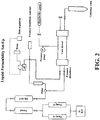
- FIG. 2 a diagram of Core Test Apparatus for determining liquid permeability is shown
- Figure 3 a diagram of Core Test Apparatus for determining gas permeability.
- FIG. 4 compares the agglomeration properties of 20/40 sand before treated and after treated with formulation 1 using 22.7 1 (6 gal) of treating system per 453.6 kg (1000 lb) of. In this case it can be clearly observed that treated sand did not fall when turned the plastic cylinder down.
Landscapes
- Chemical & Material Sciences (AREA)
- Engineering & Computer Science (AREA)
- Life Sciences & Earth Sciences (AREA)
- General Life Sciences & Earth Sciences (AREA)
- Organic Chemistry (AREA)
- Materials Engineering (AREA)
- Geology (AREA)
- Mining & Mineral Resources (AREA)
- Fluid Mechanics (AREA)
- Geochemistry & Mineralogy (AREA)
- Environmental & Geological Engineering (AREA)
- Physics & Mathematics (AREA)
- Mechanical Engineering (AREA)
- Solid-Sorbent Or Filter-Aiding Compositions (AREA)
- Glanulating (AREA)
- Compositions Of Macromolecular Compounds (AREA)
- Pigments, Carbon Blacks, Or Wood Stains (AREA)
- Catalysts (AREA)
- Compounds Of Alkaline-Earth Elements, Aluminum Or Rare-Earth Metals (AREA)
- Lubricants (AREA)
Claims (8)
- Verfahren zum Aufbrechen von Formationen, das den Schritt umfasst:Pumpen eines Aufbrechmediums; undPumpen eines Stützmittels, umfassend eine beschichtete metalloxidhaltige partikuläre feste Zusammensetzung, die mit einer Behandlungszusammensetzung behandelt ist, die ein Polymer beinhaltet, das aus Homopolymeren von Poly-2-vinylpyridin, Poly-4-vinylpyridin und einem Gemisch oder Kombinationen davon, Copolymeren von 2-Vinylpyridin und 4-Vinylpyridin, Copolymeren von Ethylen und 2-Vinylpyridin und/oder 4-Vinylpyridin, Copolymeren von Propylen und 2-Vinylpyridin und/oder 4-Vinylpyridin, Copolymeren von Acrylsäure und 2-Vinylpyridin und/oder 4-Vinylpyridin, Copolymeren von Methacrylsäure und 2-Vinylpyridin und/oder 4-Vinylpyridin, Copolymeren von Acrylaten und 2-Vinylpyridin und/oder 4-Vinylpyridin, Copolymeren von Methacrylaten und 2-Vinylpyridin und/oder 4-Vinylpyridin und Gemischen oder Kombinationen davon ausgewählt ist, die eine partielle oder vollständige Beschichtung auf Oberflächen von metalloxidhaltigem partikulärem festem Material formen,wobei die beschichteten metalloxidhaltigen Partikel die Bruchformation offen halten und dazu neigen, sich an den Formationsoberflächen und/oder Formationspartikeln, die während des Aufbrechens gebildet werden, zu aggregieren, um die Formationsproduktivität zu erhöhen.
- Verfahren nach Anspruch 1, wobei das Aufbrechmedium eine Aggregationszusammensetzung umfasst, die ein Polymer beinhaltet, das aus Homopolymeren von Poly-2-vinylpyridin, Poly-4-vinylpyridin und einem Gemisch oder Kombinationen davon, Copolymeren von 2-Vinylpyridin und 4-Vinylpyridin, Copolymeren von Ethylen und 2-Vinylpyridin und/oder 4-Vinylpyridin, Copolymeren von Propylen und 2-Vinylpyridin und/oder 4-Vinylpyridin, Copolymeren von Acrylsäure und 2-Vinylpyridin und/oder 4-Vinylpyridin, Copolymeren von Methacrylsäure und 2-Vinylpyridin und/oder 4-Vinylpyridin, Copolymeren von Acrylaten und 2-Vinylpyridin und/oder 4-Vinylpyridin, Copolymeren von Methacrylaten und 2-Vinylpyridin und/oder 4-Vinylpyridin und Gemischen oder Kombinationen davon ausgewählt ist, wobei die Aggregatzusammensetzung so ausgelegt ist, dass sie Oberflächen der Formation und Formationspartikel, die vor, während und nach dem Brechen erzeugt werden, beschichtet, um ein Zetapotential oder Aggregationspotential der Oberflächen oder Formationspartikel zu ändern,
und wobei optional das Verfahren ferner den Schritt des Vorbehandelns der Formation mit der Aggregationszusammensetzung umfasst, wobei die Aggregationszusammensetzung so konzipiert ist, dass sie Oberflächen der Formation vor dem Brechen beschichtet, um ein Zetapotential oder Aggregationspotential der Oberflächen und Formationspartikel, die während des Brechens gebildet werden, zu ändern. - Verfahren nach Anspruch 1, wobei die Zusammensetzung ferner ein Reaktionsprodukt einer amin- und phosphathaltigen Verbindung umfasst.
- Verfahren nach Anspruch 3, wobei das Amin Amine mit der allgemeinen Formel R1,R2NH oder Gemische oder Kombinationen davon umfasst, wobei R1 und R2 unabhängig voneinander ein Wasserstoffatom oder eine Carbylgruppe, die zwischen etwa 1 und 40 Kohlenstoffatome und die erforderlichen Wasserstoffatome hat, um die Valenz zu erfüllen, und wobei eines oder mehrere der Kohlenstoffatome durch ein oder mehrere Heteroatome ersetzt sein können, ausgewählt aus der Gruppe, bestehend aus Bor, Stickstoff, Sauerstoff, Phosphor, Schwefel oder einem Gemisch oder Kombinationen davon, und wobei eines oder mehrere der Wasserstoffatome durch ein oder mehrere Atome mit einfacher Valenz ersetzt sein können, ausgewählt aus der Gruppe, bestehend aus Fluor, Chlor, Brom, Iod oder Gemischen oder Kombinationen davon,
und/oder wobei das Amin ausgewählt ist aus der Gruppe, bestehend aus Anilin- und Alkylanilinen oder Gemischen von Alkylanilinen, Pyridinen und Alkylpyridinen oder Gemischen von Alkylpyridinen, Pyrrol und Alkylpyrrolen oder Gemischen von Alkylpyrrolen, Piperidin und Alkylpiperidinen oder Gemischen aus Alkylpiperidinen, Pyrrolidin und Alkylpyrrolidinen oder Gemischen aus Alkylpyrrolidinen, Indol und Alkylindolen oder einem Gemisch aus Alkylindolen, Imidazol und Alkylimidazol oder Gemischen aus Alkylimidazol, Chinolin und Alkylchinolin oder einem Gemisch aus Alkylchinolin, Isochinolin und Alkylisochinolin oder einem Gemisch aus Alkylisochinolin, Pyrazin und Alkylpyrazin oder einem Gemisch aus Alkylpyrazin, Chinoxalin und Alkylchinoxalin oder einem Gemisch aus Alkylchinoxalin, Acridin und Alkylacridin und einem Gemisch aus Alkylacridin, Pyrimidin und Alkylpyrimidin oder einem Gemisch aus Alkylpyrimidin, Chinazolin und Alkylchinazolin oder einem Gemisch aus Alkylchinazolin oder Gemischen oder Kombinationen davon,
und/oder wobei die phosphathaltige Verbindung Phosphatsäuren und Ester mit der allgemeinen Formel P(O)(OR3)(OR4)(OR5) oder ein Gemisch oder Kombinationen davon umfasst, wobei R3, R4 und OR5 unabhängig voneinander ein Wasserstoffatom oder eine Carbylgruppe mit zwischen etwa 1 und 40 Kohlenstoffatomen und den erforderlichen Wasserstoffatomen sind, um die Valenz zu erfüllen, und wobei eines oder mehrere der Kohlenstoffatome durch ein oder mehrere Heteroatome ersetzt sein können, ausgewählt aus der Gruppe, bestehend aus Bor, Stickstoff, Sauerstoff, Phosphor, Schwefel oder einem Gemisch oder Kombinationen davon, und wobei eines oder mehrere der Wasserstoffatome durch ein oder mehrere Atome mit einfacher Valenz ersetzt sein können, ausgewählt aus der Gruppe, bestehend aus Fluor, Chlor, Brom, Iod oder Gemischen oder Kombinationen davon oder polymeren Formen davon, wobei optional die Phosphatsäure Polyphosphorsäure umfasst,
und/oder wobei die Reaktionsprodukte Phosphatester von Alkanolen mit der allgemeinen Formel P(O)(OH)x(OR6)y umfassen, wobei x + y = 3, und unabhängig voneinander ein Wasserstoffatom oder eine Carbylgruppe mit zwischen etwa 1 und 40 Kohlenstoffatomen und den erforderlichen Wasserstoffatomen sind, um die Valenz zu erfüllen, und wobei eines oder mehrere der Kohlenstoffatome durch ein oder mehrere Heteroatome ersetzt sein können, ausgewählt aus der Gruppe, bestehend aus Bor, Stickstoff, Sauerstoff, Phosphor, Schwefel oder einem Gemisch oder Kombinationen davon, und wobei eines oder mehrere der Wasserstoffatome durch ein oder mehrere Atome mit einfacher Valenz ersetzt sein können, ausgewählt aus der Gruppe, bestehend aus Fluor, Chlor, Brom, Iod oder Gemischen oder Kombinationen davon, wie Ethoxyphosphat, Propoxylphosphat oder höheren Alkoxyposphaten oder Gemischen oder Kombinationen davon,
und/oder wobei die Reaktionsprodukte Phosphatester von Alkanolaminen mit der allgemeinen Formel N[R7OP(O)(OH)2]3 umfassen, wobei R7 eine Carbenylgruppe mit zwischen etwa 1 und 40 Kohlenstoffatomen und den erforderlichen Wasserstoffatomen ist, um die Valenz zu erfüllen, und wobei eines oder mehrere der Kohlenstoffatome durch ein oder mehrere Heteroatome ersetzt sein können, ausgewählt aus der Gruppe, bestehend aus Bor, Stickstoff, Sauerstoff, Phosphor, Schwefel oder einem Gemisch oder Kombinationen davon, und wobei eines oder mehrere der Wasserstoffatome durch ein oder mehrere Atome mit einfacher Valenz ersetzt sein können, ausgewählt aus der Gruppe, bestehend aus Fluor, Chlor, Brom, Iod oder Gemischen oder Kombinationen davon, einschließlich des Triphosphatesters von Triethanolamin oder Gemischen oder Kombinationen davon,
und/oder wobei die Reaktionsprodukte Phosphatester von hydroxylierten Aromaten wie Phosphatestern, von alkylierten Phenolen wie Nonylphenylphosphatester oder Phenolphosphatester umfassen,
und/oder wobei die Reaktionsprodukte Phosphatester von Diolen und Polyolen wie Phosphatester von Ethylenglykol, Propylenglykol oder höheren Glykolstrukturen umfassen. - Verfahren nach Anspruch 1, wobei das partikelförmige feste Material aus der Gruppe ausgewählt ist, bestehend aus natürlichen oder synthetischen Metalloxiden und Gemischen oder Kombinationen davon,
und wobei optional die Metalloxide ein beliebiges festes Oxid eines metallischen Elements des Periodensystems beinhalten;
und wobei optional die Metalloxide aus der Gruppe ausgewählt sind, bestehend aus Actiniumoxiden, Aluminiumoxiden, Antimonoxiden, Boroxiden, Bariumoxiden, Wismutoxiden, Calciumoxiden, Ceroxiden, Kobaltoxiden, Chromoxiden, Cäsiumoxiden, Kupferoxiden, Dysprosiumoxiden, Erbiumoxiden, Europiumoxiden, Galliumoxiden, Germaniumoxiden, Iridiumoxiden, Eisenoxiden, Lanthanoxiden, Lithiumoxiden, Magnesiumoxiden, Manganoxiden, Molybdänoxiden, Nioboxiden, Neodymoxiden, Nickeloxiden, Osmiumoxiden, Palladiumoxiden, Kaliumoxiden, Promethiumoxiden, Praseodymoxiden, Platinoxiden, Rubidiumoxiden, Rheniumoxiden, Rhodiumoxiden, Rutheniumoxiden, Scandiumoxiden, Selenoxiden, Siliciumoxiden, Samariumoxiden, Silberoxiden, Natriumoxiden, Strontiumoxiden, Tantaloxiden, Terbiumoxiden, Telluroxiden, Thoriumoxiden, Zinnoxiden, Titanoxiden, Thalliumoxiden, Thuliumoxiden, Vanadiumoxiden, Wolframoxiden, Yttriumoxiden, Ytterbiumoxiden, Zinkoxiden, Zirkoniumoxiden, Keramikstrukturen, hergestellt aus einem oder mehreren dieser Oxide, und gemischten Metalloxiden, einschließlich zwei oder mehr der oben aufgeführten Metalloxide. - Zusammensetzung, umfassend ein metalloxidhaltiges partikelförmiges Material mit einer Oberfläche, auf der eine partielle oder vollständige Beschichtung abgeschieden ist, wobei die Beschichtung ein Polymer umfasst, das aus Homopolymeren von Poly-2-vinylpyridin, Poly-4-vinylpyridin und einem Gemisch oder Kombinationen davon, Copolymeren von 2-Vinylpyridin und 4-Vinylpyridin, Copolymeren von Ethylen und 2-Vinylpyridin und/oder 4-Vinylpyridin, Copolymeren von Propylen und 2-Vinylpyridin und/oder 4-Vinylpyridin, Copolymeren von Acrylsäure und 2-Vinylpyridin und/oder 4-Vinylpyridin, Copolymeren von Methacrylsäure und 2-Vinylpyridin und/oder 4-Vinylpyridin, Copolymeren von Acrylaten und 2-Vinylpyridin und/oder 4-Vinylpyridin, Copolymeren von Methacrylaten und 2-Vinylpyridin und/oder 4-Vinylpyridin und Gemischen oder Kombinationen davon ausgewählt ist.
- Zusammensetzung nach Anspruch 6, wobei die Zusammensetzung ein Stützmittel ist.
- Zusammensetzung nach Anspruch 6 oder 7, wobei das partikelförmige feste Material aus der Gruppe ausgewählt ist, bestehend aus natürlichen oder synthetischen Metalloxiden und Gemischen oder Kombinationen davon,
und wobei optional die Metalloxide ein beliebiges festes Oxid eines metallischen Elements des Periodensystems beinhalten;
und wobei optional die Metalloxide aus der Gruppe ausgewählt sind, bestehend aus Actiniumoxiden, Aluminiumoxiden, Antimonoxiden, Boroxiden, Bariumoxiden, Wismutoxiden, Calciumoxiden, Ceroxiden, Kobaltoxiden, Chromoxiden, Cäsiumoxiden, Kupferoxiden, Dysprosiumoxiden, Erbiumoxiden, Europiumoxiden, Galliumoxiden, Germaniumoxiden, Iridiumoxiden, Eisenoxiden, Lanthanoxiden, Lithiumoxiden, Magnesiumoxiden, Manganoxiden, Molybdänoxiden, Nioboxiden, Neodymoxiden, Nickeloxiden, Osmiumoxiden, Palladiumoxiden, Kaliumoxiden, Promethiumoxiden, Praseodymoxiden, Platinoxiden, Rubidiumoxiden, Rheniumoxiden, Rhodiumoxiden, Rutheniumoxiden, Scandiumoxiden, Selenoxiden, Siliciumoxiden, Samariumoxiden, Silberoxiden, Natriumoxiden, Strontiumoxiden, Tantaloxiden, Terbiumoxiden, Telluroxiden, Thoriumoxiden, Zinnoxiden, Titanoxiden, Thalliumoxiden, Thuliumoxiden, Vanadiumoxiden, Wolframoxiden, Yttriumoxiden, Ytterbiumoxiden, Zinkoxiden, Zirkoniumoxiden, Keramikstrukturen, hergestellt aus einem oder mehreren dieser Oxide, und gemischten Metalloxiden, einschließlich zwei oder mehr der oben aufgeführten Metalloxide.
Applications Claiming Priority (2)
| Application Number | Priority Date | Filing Date | Title |
|---|---|---|---|
| US12/465,437 US8466094B2 (en) | 2009-05-13 | 2009-05-13 | Aggregating compositions, modified particulate metal-oxides, modified formation surfaces, and methods for making and using same |
| EP10250920.5A EP2251394B1 (de) | 2009-05-13 | 2010-05-13 | Verfahren zur Änderung eines Aggregationspotentials |
Related Parent Applications (2)
| Application Number | Title | Priority Date | Filing Date |
|---|---|---|---|
| EP10250920.5A Division EP2251394B1 (de) | 2009-05-13 | 2010-05-13 | Verfahren zur Änderung eines Aggregationspotentials |
| EP10250920.5A Division-Into EP2251394B1 (de) | 2009-05-13 | 2010-05-13 | Verfahren zur Änderung eines Aggregationspotentials |
Publications (2)
| Publication Number | Publication Date |
|---|---|
| EP3138890A1 EP3138890A1 (de) | 2017-03-08 |
| EP3138890B1 true EP3138890B1 (de) | 2020-11-11 |
Family
ID=42313696
Family Applications (2)
| Application Number | Title | Priority Date | Filing Date |
|---|---|---|---|
| EP10250920.5A Active EP2251394B1 (de) | 2009-05-13 | 2010-05-13 | Verfahren zur Änderung eines Aggregationspotentials |
| EP16193740.4A Active EP3138890B1 (de) | 2009-05-13 | 2010-05-13 | Aggregationszusammensetzungen, modifizierte partikelförmige metalloxide, modifizierte formungsoberflächen und verfahren zur herstellung und verwendung davon |
Family Applications Before (1)
| Application Number | Title | Priority Date | Filing Date |
|---|---|---|---|
| EP10250920.5A Active EP2251394B1 (de) | 2009-05-13 | 2010-05-13 | Verfahren zur Änderung eines Aggregationspotentials |
Country Status (4)
| Country | Link |
|---|---|
| US (3) | US8466094B2 (de) |
| EP (2) | EP2251394B1 (de) |
| AU (1) | AU2010201907B2 (de) |
| CA (1) | CA2703437C (de) |
Families Citing this family (41)
| Publication number | Priority date | Publication date | Assignee | Title |
|---|---|---|---|---|
| US8563481B2 (en) | 2005-02-25 | 2013-10-22 | Clearwater International Llc | Corrosion inhibitor systems for low, moderate and high temperature fluids and methods for making and using same |
| US9334713B2 (en) * | 2005-12-09 | 2016-05-10 | Ronald van Petegem | Produced sand gravel pack process |
| US8871694B2 (en) | 2005-12-09 | 2014-10-28 | Sarkis R. Kakadjian | Use of zeta potential modifiers to decrease the residual oil saturation |
| US8084401B2 (en) | 2006-01-25 | 2011-12-27 | Clearwater International, Llc | Non-volatile phosphorus hydrocarbon gelling agent |
| US8728989B2 (en) | 2007-06-19 | 2014-05-20 | Clearwater International | Oil based concentrated slurries and methods for making and using same |
| US7956217B2 (en) | 2008-07-21 | 2011-06-07 | Clearwater International, Llc | Hydrolyzed nitrilotriacetonitrile compositions, nitrilotriacetonitrile hydrolysis formulations and methods for making and using same |
| US9909404B2 (en) | 2008-10-08 | 2018-03-06 | The Lubrizol Corporation | Method to consolidate solid materials during subterranean treatment operations |
| US9945220B2 (en) | 2008-10-08 | 2018-04-17 | The Lubrizol Corporation | Methods and system for creating high conductivity fractures |
| US8835364B2 (en) | 2010-04-12 | 2014-09-16 | Clearwater International, Llc | Compositions and method for breaking hydraulic fracturing fluids |
| US20110265990A1 (en) * | 2010-04-28 | 2011-11-03 | Halliburton Energy Services, Inc. | Sand Control Screen Assembly Having a Surface-Modified Filter Medium and Method for Making Same |
| US8899328B2 (en) | 2010-05-20 | 2014-12-02 | Clearwater International Llc | Resin sealant for zonal isolation and methods for making and using same |
| US8851174B2 (en) | 2010-05-20 | 2014-10-07 | Clearwater International Llc | Foam resin sealant for zonal isolation and methods for making and using same |
| US9033045B2 (en) * | 2010-09-21 | 2015-05-19 | Baker Hughes Incorporated | Apparatus and method for fracturing portions of an earth formation |
| US8841240B2 (en) | 2011-03-21 | 2014-09-23 | Clearwater International, Llc | Enhancing drag reduction properties of slick water systems |
| US9022120B2 (en) | 2011-04-26 | 2015-05-05 | Lubrizol Oilfield Solutions, LLC | Dry polymer mixing process for forming gelled fluids |
| US9464504B2 (en) | 2011-05-06 | 2016-10-11 | Lubrizol Oilfield Solutions, Inc. | Enhancing delaying in situ gelation of water shutoff systems |
| US8944164B2 (en) * | 2011-09-28 | 2015-02-03 | Clearwater International Llc | Aggregating reagents and methods for making and using same |
| AU2012316133A1 (en) | 2011-09-30 | 2014-04-17 | Momentive Specialty Chemicals Inc. | Proppant materials and methods of tailoring proppant material surface wettability |
| US8932996B2 (en) | 2012-01-11 | 2015-01-13 | Clearwater International L.L.C. | Gas hydrate inhibitors and methods for making and using same |
| US10604693B2 (en) | 2012-09-25 | 2020-03-31 | Weatherford Technology Holdings, Llc | High water and brine swell elastomeric compositions and method for making and using same |
| US11254856B2 (en) * | 2013-03-14 | 2022-02-22 | Flotek Chemistry, Llc | Methods and compositions for use in oil and/or gas wells |
| US20180003021A1 (en) * | 2013-04-05 | 2018-01-04 | Baker Hughes, A Ge Company, Llc | Proppant suspension in shale fractures |
| MX381754B (es) | 2013-09-20 | 2025-03-13 | Baker Hughes Inc | Materiales compuestos para uso en operaciones de estimulación y control de arena. |
| EP3046987B8 (de) | 2013-09-20 | 2019-06-26 | Baker Hughes, a GE company, LLC | Verwendung von organophosphor mit verbundwerkstoffe bei bohrlochbehandlungsoperationen |
| AU2014321305B2 (en) | 2013-09-20 | 2017-11-30 | Baker Hughes, A Ge Company, Llc | Method of using surface modifying metallic treatment agents to treat subterranean formations |
| BR112016005651B1 (pt) | 2013-09-20 | 2022-02-08 | Baker Hughes Incorporated | Método de tratamento de uma formação subterrânea silicosa ou contendo óxido de metal (m) penetrada por um poço |
| EP3046986B1 (de) | 2013-09-20 | 2020-07-22 | Baker Hughes Holdings LLC | Verfahren zur verhinderung von bewuchs auf einer metallischen oberfläche mit einem oberflächenverändernden behandlungsmittel |
| US9701892B2 (en) | 2014-04-17 | 2017-07-11 | Baker Hughes Incorporated | Method of pumping aqueous fluid containing surface modifying treatment agent into a well |
| US10669468B2 (en) | 2013-10-08 | 2020-06-02 | Weatherford Technology Holdings, Llc | Reusable high performance water based drilling fluids |
| MX2016006427A (es) * | 2013-11-18 | 2016-10-04 | Lubrizol Oilfield Solutions Inc | Metodos y sistemas para crear fracturas de conductividad alta. |
| US10202828B2 (en) | 2014-04-21 | 2019-02-12 | Weatherford Technology Holdings, Llc | Self-degradable hydraulic diversion systems and methods for making and using same |
| US10017688B1 (en) * | 2014-07-25 | 2018-07-10 | Hexion Inc. | Resin coated proppants for water-reducing application |
| US10001769B2 (en) | 2014-11-18 | 2018-06-19 | Weatherford Technology Holdings, Llc | Systems and methods for optimizing formation fracturing operations |
| CN104563927B (zh) * | 2014-12-03 | 2016-02-10 | 中国石油大学(华东) | 一种适用于欠平衡钻井的井壁稳定方法及实验装置 |
| BR112017025308A2 (pt) * | 2015-05-27 | 2018-07-31 | Lubrizol Oilfield Solutions, Inc. | composições de agregação, composições sólidas de particulado modificado e métodos para produção e uso das mesmas |
| WO2016191463A2 (en) | 2015-05-27 | 2016-12-01 | Lubrizol Oilfield Solutions, Inc. | Polymeric compositions agglomerating compositions, modified solid materials, and methods for making and using same |
| WO2017023935A1 (en) | 2015-08-03 | 2017-02-09 | Ecolab Usa Inc. | Compositions and methods for delayed crosslinking in hydraulic fracturing fluids |
| CA3030763A1 (en) | 2016-07-15 | 2018-01-18 | Ecolab Usa Inc. | Compositions and methods for delayed crosslinking in hydraulic fracturing fluids |
| US10030186B2 (en) * | 2016-08-29 | 2018-07-24 | Quantum Technology Group Limited | Heat transfer medium |
| CN106543989B (zh) * | 2016-11-07 | 2020-02-04 | 北京石大博诚科技有限公司 | 类油基钻井液体系及其制备方法和应用 |
| CN108386187A (zh) * | 2018-03-15 | 2018-08-10 | 中国石油化工股份有限公司 | 基于油井指示曲线分析储层结构的方法 |
Family Cites Families (187)
| Publication number | Priority date | Publication date | Assignee | Title |
|---|---|---|---|---|
| US2196042A (en) | 1938-02-01 | 1940-04-02 | Pyrene Minimax Corp | Fire extinguishing foam stabilizer |
| US2390153A (en) | 1940-06-26 | 1945-12-04 | Kern Rudolf | Condensation products and process of producing same |
| US2329878A (en) * | 1941-03-14 | 1943-09-21 | Graphite Frees Company | Drilling fluid and the method of drilling and lubricating wells |
| NL190730A (de) | 1953-10-09 | |||
| US2805958A (en) | 1955-03-08 | 1957-09-10 | Gen Electric | Preparation of hydrophobic silicas |
| BE603337A (de) | 1960-05-05 | |||
| US3059909A (en) | 1960-12-09 | 1962-10-23 | Chrysler Corp | Thermostatic fuel mixture control |
| US3163219A (en) | 1961-06-22 | 1964-12-29 | Atlantic Refining Co | Borate-gum gel breakers |
| US3301848A (en) | 1962-10-30 | 1967-01-31 | Pillsbury Co | Polysaccharides and methods for production thereof |
| US3301723A (en) | 1964-02-06 | 1967-01-31 | Du Pont | Gelled compositions containing galactomannan gums |
| GB1073338A (en) | 1965-07-21 | 1967-06-21 | British Titan Products | Mixed coating process |
| US3303896A (en) | 1965-08-17 | 1967-02-14 | Procter & Gamble | Process for drilling boreholes in the earth utilizing amine oxide surfactant foaming agent |
| US3565176A (en) | 1969-09-08 | 1971-02-23 | Clifford V Wittenwyler | Consolidation of earth formation using epoxy-modified resins |
| US3856921A (en) | 1970-07-22 | 1974-12-24 | Exxon Research Engineering Co | Promoting scrubbing of acid gases |
| US3722592A (en) * | 1971-12-14 | 1973-03-27 | Atlantic Richfield Co | Paraffin deposition inhibition in oil |
| US4212764A (en) * | 1972-07-03 | 1980-07-15 | Petrolite Corporation | Quaternary polyvinyl heterocyclic compositions and use as corrosion inhibitors |
| FR2224466B1 (de) | 1973-04-04 | 1978-12-01 | Basf Ag | |
| US3933205A (en) | 1973-10-09 | 1976-01-20 | Othar Meade Kiel | Hydraulic fracturing process using reverse flow |
| AR207130A1 (es) | 1973-12-12 | 1976-09-15 | Dow Chemical Co | Un metodo de reducir la viscosidad de un liquido organico |
| US3888312A (en) | 1974-04-29 | 1975-06-10 | Halliburton Co | Method and compositions for fracturing well formations |
| US3960736A (en) | 1974-06-03 | 1976-06-01 | The Dow Chemical Company | Self-breaking viscous aqueous solutions and the use thereof in fracturing subterranean formations |
| US4040967A (en) * | 1974-07-11 | 1977-08-09 | The Dow Chemical Company | Method of fracturing subterranean formations penetrated by a well |
| US3937283A (en) | 1974-10-17 | 1976-02-10 | The Dow Chemical Company | Formation fracturing with stable foam |
| US3965982A (en) | 1975-03-31 | 1976-06-29 | Mobil Oil Corporation | Hydraulic fracturing method for creating horizontal fractures |
| AU506199B2 (en) | 1975-06-26 | 1979-12-20 | Exxon Research And Engineering Company | Absorbtion of co2 from gaseous feeds |
| US4007792A (en) | 1976-02-02 | 1977-02-15 | Phillips Petroleum Company | Hydraulic fracturing method using viscosified surfactant solutions |
| US4067389A (en) | 1976-07-16 | 1978-01-10 | Mobil Oil Corporation | Hydraulic fracturing technique |
| US4113631A (en) | 1976-08-10 | 1978-09-12 | The Dow Chemical Company | Foaming and silt suspending agent |
| US4532052A (en) * | 1978-09-28 | 1985-07-30 | Halliburton Company | Polymeric well treating method |
| FR2439230A1 (fr) | 1978-10-17 | 1980-05-16 | Seppic Sa | Utilisation d'amines grasses pour ameliorer les proprietes des mousses, et les agents moussants ameliores contenant ces amines |
| US4725372A (en) | 1980-10-27 | 1988-02-16 | The Dow Chemical Company | Aqueous wellbore service fluids |
| US4378845A (en) | 1980-12-30 | 1983-04-05 | Mobil Oil Corporation | Sand control method employing special hydraulic fracturing technique |
| US4683068A (en) | 1981-10-29 | 1987-07-28 | Dowell Schlumberger Incorporated | Fracturing of subterranean formations |
| US4374216A (en) * | 1981-12-09 | 1983-02-15 | Celanese Corporation | Stable high solids water-in-oil slurry dispersion composition |
| US4561985A (en) | 1982-06-28 | 1985-12-31 | Union Carbide Corporation | Hec-bentonite compatible blends |
| US4705113A (en) | 1982-09-28 | 1987-11-10 | Atlantic Richfield Company | Method of cold water enhanced hydraulic fracturing |
| US4541935A (en) | 1982-11-08 | 1985-09-17 | The Dow Chemical Company | Hydraulic fracturing process and compositions |
| US4479041A (en) | 1982-11-22 | 1984-10-23 | General Electric Company | Pneumatic ball contact switch |
| US4514309A (en) | 1982-12-27 | 1985-04-30 | Hughes Tool Company | Cross-linking system for water based well fracturing fluids |
| US4490261A (en) * | 1982-12-28 | 1984-12-25 | Mobil Oil Corporation | Acidic high temperature stable aqueous brine fluids viscosified by basic N-heterocyclic polymers |
| US4748011A (en) | 1983-07-13 | 1988-05-31 | Baize Thomas H | Method and apparatus for sweetening natural gas |
| US4506734A (en) | 1983-09-07 | 1985-03-26 | The Standard Oil Company | Fracturing fluid breaker system which is activated by fracture closure |
| US4695389A (en) | 1984-03-16 | 1987-09-22 | Dowell Schlumberger Incorporated | Aqueous gelling and/or foaming agents for aqueous acids and methods of using the same |
| US4549608A (en) | 1984-07-12 | 1985-10-29 | Mobil Oil Corporation | Hydraulic fracturing method employing special sand control technique |
| US4623021A (en) | 1984-11-14 | 1986-11-18 | Mobil Oil Corporation | Hydraulic fracturing method employing a fines control technique |
| US4686052A (en) | 1985-07-08 | 1987-08-11 | Dowell Schlumberger Incorporated | Stabilized fracture fluid and crosslinker therefor |
| US4654266A (en) | 1985-12-24 | 1987-03-31 | Kachnik Joseph L | Durable, high-strength proppant and method for forming same |
| US4660643A (en) | 1986-02-13 | 1987-04-28 | Atlantic Richfield Company | Cold fluid hydraulic fracturing process for mineral bearing formations |
| US4657081A (en) | 1986-02-19 | 1987-04-14 | Dowell Schlumberger Incorporated | Hydraulic fracturing method using delayed crosslinker composition |
| US4739834A (en) | 1986-02-24 | 1988-04-26 | Exxon Research And Engineering Company | Controlled hydraulic fracturing via nonaqueous solutions containing low charge density polyampholytes |
| US4724905A (en) | 1986-09-15 | 1988-02-16 | Mobil Oil Corporation | Sequential hydraulic fracturing |
| US6262125B1 (en) | 1986-12-02 | 2001-07-17 | University Of Florida Research Foundation, Inc. | Sterically hindered tetraamines and method for their production |
| US4714115A (en) | 1986-12-08 | 1987-12-22 | Mobil Oil Corporation | Hydraulic fracturing of a shallow subsurface formation |
| US4848468A (en) | 1986-12-08 | 1989-07-18 | Mobil Oil Corp. | Enhanced hydraulic fracturing of a shallow subsurface formation |
| US4718490A (en) | 1986-12-24 | 1988-01-12 | Mobil Oil Corporation | Creation of multiple sequential hydraulic fractures via hydraulic fracturing combined with controlled pulse fracturing |
| US4741401A (en) | 1987-01-16 | 1988-05-03 | The Dow Chemical Company | Method for treating subterranean formations |
| US4779680A (en) | 1987-05-13 | 1988-10-25 | Marathon Oil Company | Hydraulic fracturing process using a polymer gel |
| BR8702856A (pt) | 1987-06-05 | 1988-12-20 | Petroleo Brasileiro Sa | Processo continuo de fraturamento hidraulico com espuma |
| US4795574A (en) | 1987-11-13 | 1989-01-03 | Nalco Chemical Company | Low temperature breakers for gelled fracturing fluids |
| US4892147A (en) | 1987-12-28 | 1990-01-09 | Mobil Oil Corporation | Hydraulic fracturing utilizing a refractory proppant |
| US4817717A (en) | 1987-12-28 | 1989-04-04 | Mobil Oil Corporation | Hydraulic fracturing with a refractory proppant for sand control |
| US4852650A (en) | 1987-12-28 | 1989-08-01 | Mobil Oil Corporation | Hydraulic fracturing with a refractory proppant combined with salinity control |
| US4830106A (en) | 1987-12-29 | 1989-05-16 | Mobil Oil Corporation | Simultaneous hydraulic fracturing |
| US4926940A (en) | 1988-09-06 | 1990-05-22 | Mobil Oil Corporation | Method for monitoring the hydraulic fracturing of a subsurface formation |
| US4869322A (en) | 1988-10-07 | 1989-09-26 | Mobil Oil Corporation | Sequential hydraulic fracturing of a subsurface formation |
| US4978512B1 (en) | 1988-12-23 | 1993-06-15 | Composition and method for sweetening hydrocarbons | |
| CA2007965C (en) | 1989-02-13 | 1996-02-27 | Jerry J. Weers | Suppression of the evolution of hydrogen sulfide gases from petroleum residua |
| US5169411A (en) | 1989-03-03 | 1992-12-08 | Petrolite Corporation | Suppression of the evolution of hydrogen sulfide gases from crude oil, petroleum residua and fuels |
| US4938286A (en) | 1989-07-14 | 1990-07-03 | Mobil Oil Corporation | Method for formation stimulation in horizontal wellbores using hydraulic fracturing |
| JPH087313Y2 (ja) | 1989-10-13 | 1996-03-04 | 三菱重工業株式会社 | 冷凍装置の制御装置 |
| US5074359A (en) | 1989-11-06 | 1991-12-24 | Atlantic Richfield Company | Method for hydraulic fracturing cased wellbores |
| US5024276A (en) | 1989-11-28 | 1991-06-18 | Shell Oil Company | Hydraulic fracturing in subterranean formations |
| US5110486A (en) | 1989-12-14 | 1992-05-05 | Exxon Research And Engineering Company | Breaker chemical encapsulated with a crosslinked elastomer coating |
| US5005645A (en) | 1989-12-06 | 1991-04-09 | Mobil Oil Corporation | Method for enhancing heavy oil production using hydraulic fracturing |
| US5082579A (en) | 1990-01-16 | 1992-01-21 | Bj Services Company | Method and composition for delaying the gellation of borated galactomannans |
| DE4027300A1 (de) | 1990-08-29 | 1992-03-05 | Linde Ag | Verfahren zur selektiven entfernung anorganischer und/oder organischen schwefelverbindungen |
| US5106518A (en) | 1990-11-09 | 1992-04-21 | The Western Company Of North America | Breaker system for high viscosity fluids and method of use |
| US5099923A (en) | 1991-02-25 | 1992-03-31 | Nalco Chemical Company | Clay stabilizing method for oil and gas well treatment |
| US5224546A (en) | 1991-03-18 | 1993-07-06 | Smith William H | Method of breaking metal-crosslinked polymers |
| CA2071074C (en) * | 1991-06-12 | 2003-01-07 | Fujio Mikami | Hydrophilic coating composition and bath containing same |
| US5877127A (en) | 1991-07-24 | 1999-03-02 | Schlumberger Technology Corporation | On-the-fly control of delayed borate-crosslinking of fracturing fluids |
| CA2073806C (en) | 1991-07-24 | 2003-09-23 | S. Bruce Mcconnell | Delayed borate crosslinking fracturing fluid |
| US5424284A (en) | 1991-10-28 | 1995-06-13 | M-I Drilling Fluids Company | Drilling fluid additive and method for inhibiting hydration |
| US5908814A (en) | 1991-10-28 | 1999-06-01 | M-I L.L.C. | Drilling fluid additive and method for inhibiting hydration |
| US5259455A (en) | 1992-05-18 | 1993-11-09 | Nimerick Kenneth H | Method of using borate crosslinked fracturing fluid having increased temperature range |
| US5228510A (en) | 1992-05-20 | 1993-07-20 | Mobil Oil Corporation | Method for enhancement of sequential hydraulic fracturing using control pulse fracturing |
| US5624886A (en) | 1992-07-29 | 1997-04-29 | Bj Services Company | Controlled degradation of polysaccharides |
| US5246073A (en) | 1992-08-31 | 1993-09-21 | Union Oil Company Of California | High temperature stable gels |
| US5347004A (en) | 1992-10-09 | 1994-09-13 | Baker Hughes, Inc. | Mixtures of hexahydrotriazines useful as H2 S scavengers |
| CA2497728C (en) | 1993-04-05 | 2008-02-19 | Roger J. Card | Control of particulate flowback in subterranean wells |
| US5330005A (en) | 1993-04-05 | 1994-07-19 | Dowell Schlumberger Incorporated | Control of particulate flowback in subterranean wells |
| CA2125513A1 (en) | 1993-07-30 | 1995-01-31 | Kishan Bhatia | Method of treating sour gas and liquid hydrocarbon streams |
| US5402846A (en) | 1993-11-15 | 1995-04-04 | Mobil Oil Corporation | Unique method of hydraulic fracturing |
| US5363919A (en) | 1993-11-15 | 1994-11-15 | Mobil Oil Corporation | Simultaneous hydraulic fracturing using fluids with different densities |
| US5411091A (en) | 1993-12-09 | 1995-05-02 | Mobil Oil Corporation | Use of thin liquid spacer volumes to enhance hydraulic fracturing |
| US5482116A (en) | 1993-12-10 | 1996-01-09 | Mobil Oil Corporation | Wellbore guided hydraulic fracturing |
| US5571315A (en) | 1994-03-14 | 1996-11-05 | Clearwater, Inc. | Hydrocarbon gels useful in formation fracturing |
| US5488083A (en) | 1994-03-16 | 1996-01-30 | Benchmark Research And Technology, Inc. | Method of gelling a guar or derivatized guar polymer solution utilized to perform a hydraulic fracturing operation |
| US5472049A (en) | 1994-04-20 | 1995-12-05 | Union Oil Company Of California | Hydraulic fracturing of shallow wells |
| US5465792A (en) | 1994-07-20 | 1995-11-14 | Bj Services Company | Method of controlling production of excess water in oil and gas wells |
| US5980845A (en) | 1994-08-24 | 1999-11-09 | Cherry; Doyle | Regeneration of hydrogen sulfide scavengers |
| US5462721A (en) | 1994-08-24 | 1995-10-31 | Crescent Holdings Limited | Hydrogen sulfide scavenging process |
| US5688478A (en) | 1994-08-24 | 1997-11-18 | Crescent Holdings Limited | Method for scavenging sulfides |
| US5497831A (en) | 1994-10-03 | 1996-03-12 | Atlantic Richfield Company | Hydraulic fracturing from deviated wells |
| DE4438930C1 (de) | 1994-10-31 | 1995-10-26 | Daimler Benz Ag | Zahnstangenlenkung bzw. -steuerung mit Servomotor |
| US5551516A (en) | 1995-02-17 | 1996-09-03 | Dowell, A Division Of Schlumberger Technology Corporation | Hydraulic fracturing process and compositions |
| US5635458A (en) | 1995-03-01 | 1997-06-03 | M-I Drilling Fluids, L.L.C. | Water-based drilling fluids for reduction of water adsorption and hydration of argillaceous rocks |
| US5833000A (en) | 1995-03-29 | 1998-11-10 | Halliburton Energy Services, Inc. | Control of particulate flowback in subterranean wells |
| US6047772A (en) | 1995-03-29 | 2000-04-11 | Halliburton Energy Services, Inc. | Control of particulate flowback in subterranean wells |
| US5787986A (en) | 1995-03-29 | 1998-08-04 | Halliburton Energy Services, Inc. | Control of particulate flowback in subterranean wells |
| US5775425A (en) | 1995-03-29 | 1998-07-07 | Halliburton Energy Services, Inc. | Control of fine particulate flowback in subterranean wells |
| US5674377A (en) | 1995-06-19 | 1997-10-07 | Nalco/Exxon Energy Chemicals, L.P. | Method of treating sour gas and liquid hydrocarbon |
| US6291405B1 (en) | 1995-09-11 | 2001-09-18 | M-I Llc | Glycol based drilling fluid |
| US5744024A (en) | 1995-10-12 | 1998-04-28 | Nalco/Exxon Energy Chemicals, L.P. | Method of treating sour gas and liquid hydrocarbon |
| US5807812A (en) | 1995-10-26 | 1998-09-15 | Clearwater, Inc. | Controlled gel breaker |
| US5722490A (en) | 1995-12-20 | 1998-03-03 | Ely And Associates, Inc. | Method of completing and hydraulic fracturing of a well |
| US5649596A (en) | 1996-02-27 | 1997-07-22 | Nalco/Exxon Energy Chemicals, L.P. | Use of breaker chemicals in gelled hydrocarbons |
| US5669447A (en) | 1996-04-01 | 1997-09-23 | Halliburton Energy Services, Inc. | Methods for breaking viscosified fluids |
| US5806597A (en) | 1996-05-01 | 1998-09-15 | Bj Services Company | Stable breaker-crosslinker-polymer complex and method of use in completion and stimulation |
| US5964295A (en) | 1996-10-09 | 1999-10-12 | Schlumberger Technology Corporation, Dowell Division | Methods and compositions for testing subterranean formations |
| US6267938B1 (en) | 1996-11-04 | 2001-07-31 | Stanchem, Inc. | Scavengers for use in reducing sulfide impurities |
| US6330916B1 (en) | 1996-11-27 | 2001-12-18 | Bj Services Company | Formation treatment method using deformable particles |
| US6059034A (en) | 1996-11-27 | 2000-05-09 | Bj Services Company | Formation treatment method using deformable particles |
| US6169058B1 (en) | 1997-06-05 | 2001-01-02 | Bj Services Company | Compositions and methods for hydraulic fracturing |
| US5908073A (en) | 1997-06-26 | 1999-06-01 | Halliburton Energy Services, Inc. | Preventing well fracture proppant flow-back |
| GB9714102D0 (en) | 1997-07-04 | 1997-09-10 | Ciba Geigy Ag | Compounds |
| GB2330585B (en) | 1997-10-16 | 2001-08-01 | Nalco Exxon Energy Chem Lp | Gelling agent for hydrocarbon liquid and method of use |
| US6016871A (en) | 1997-10-31 | 2000-01-25 | Burts, Jr.; Boyce D. | Hydraulic fracturing additive, hydraulic fracturing treatment fluid made therefrom, and method of hydraulically fracturing a subterranean formation |
| US6035936A (en) | 1997-11-06 | 2000-03-14 | Whalen; Robert T. | Viscoelastic surfactant fracturing fluids and a method for fracturing subterranean formations |
| AUPP209498A0 (en) | 1998-03-02 | 1998-03-26 | Commonwealth Scientific And Industrial Research Organisation | Hydraulic fracturing of ore bodies |
| US6069118A (en) | 1998-05-28 | 2000-05-30 | Schlumberger Technology Corporation | Enhancing fluid removal from fractures deliberately introduced into the subsurface |
| US6162766A (en) | 1998-05-29 | 2000-12-19 | 3M Innovative Properties Company | Encapsulated breakers, compositions and methods of use |
| US6004908A (en) | 1998-11-25 | 1999-12-21 | Clearwater, Inc. | Rapid gel formation in hydrocarbon recovery |
| US6228812B1 (en) | 1998-12-10 | 2001-05-08 | Bj Services Company | Compositions and methods for selective modification of subterranean formation permeability |
| US6283212B1 (en) | 1999-04-23 | 2001-09-04 | Schlumberger Technology Corporation | Method and apparatus for deliberate fluid removal by capillary imbibition |
| US6133205A (en) | 1999-09-08 | 2000-10-17 | Nalco/Exxon Energy Chemical L.P. | Method of reducing the concentration of metal soaps of partially esterified phosphates from hydrocarbon flowback fluids |
| US6875728B2 (en) | 1999-12-29 | 2005-04-05 | Bj Services Company Canada | Method for fracturing subterranean formations |
| US6471349B1 (en) * | 2000-01-27 | 2002-10-29 | Kodak Polychrome Graphics Llc | Method to prepare a printing plate and printing plate |
| US6247543B1 (en) | 2000-02-11 | 2001-06-19 | M-I Llc | Shale hydration inhibition agent and method of use |
| WO2001088334A2 (en) | 2000-05-15 | 2001-11-22 | Bj Services Company | Well service composition and method |
| CA2432160C (en) | 2001-01-09 | 2010-04-13 | Bj Services Company | Well treatment fluid compositions and methods for their use |
| US6528568B2 (en) | 2001-02-23 | 2003-03-04 | Millennium Inorganic Chemicals, Inc. | Method for manufacturing high opacity, durable pigment |
| KR100376286B1 (ko) * | 2001-03-29 | 2003-03-17 | 광주과학기술원 | 비닐-페닐 피리딘 단량체와 이를 이용하여 제조한 고분자 |
| US8273693B2 (en) | 2001-12-12 | 2012-09-25 | Clearwater International Llc | Polymeric gel system and methods for making and using same in hydrocarbon recovery |
| US20030114315A1 (en) * | 2001-12-12 | 2003-06-19 | Clearwater, Inc. | Polymeric gel system and use in hydrocarbon recovery |
| US6725931B2 (en) | 2002-06-26 | 2004-04-27 | Halliburton Energy Services, Inc. | Methods of consolidating proppant and controlling fines in wells |
| ATE421564T1 (de) | 2002-05-24 | 2009-02-15 | 3M Innovative Properties Co | Verwendung von oberflächenmodifizierten nanopartikeln zur ölgewinnung |
| US6832650B2 (en) | 2002-09-11 | 2004-12-21 | Halliburton Energy Services, Inc. | Methods of reducing or preventing particulate flow-back in wells |
| US7017665B2 (en) | 2003-08-26 | 2006-03-28 | Halliburton Energy Services, Inc. | Strengthening near well bore subterranean formations |
| US7204311B2 (en) | 2003-08-27 | 2007-04-17 | Halliburton Energy Services, Inc. | Methods for controlling migration of particulates in a subterranean formation |
| US7140433B2 (en) | 2003-12-12 | 2006-11-28 | Clearwater International, Llc | Diamine terminated primary amine-aldehyde sulfur converting compositions and methods for making and using same |
| US9018145B2 (en) | 2003-12-23 | 2015-04-28 | Lubrizol Oilfield Solutions, Inc. | Foamer composition and methods for making and using same |
| JP3925932B2 (ja) | 2004-01-08 | 2007-06-06 | 株式会社 東北テクノアーチ | 有機修飾金属酸化物ナノ粒子の製造法 |
| US7517447B2 (en) | 2004-01-09 | 2009-04-14 | Clearwater International, Llc | Sterically hindered N-methylsecondary and tertiary amine sulfur scavengers and methods for making and using same |
| JP2005306778A (ja) * | 2004-04-21 | 2005-11-04 | Basf Ag | 徐放性製剤及びその製造方法 |
| US7971659B2 (en) | 2004-05-05 | 2011-07-05 | Clearwater International, Llc | Foamer/sulfur scavenger composition and methods for making and using same |
| US7721803B2 (en) * | 2007-10-31 | 2010-05-25 | Baker Hughes Incorporated | Nano-sized particle-coated proppants for formation fines fixation in proppant packs |
| US7268100B2 (en) | 2004-11-29 | 2007-09-11 | Clearwater International, Llc | Shale inhibition additive for oil/gas down hole fluids and methods for making and using same |
| US8563481B2 (en) | 2005-02-25 | 2013-10-22 | Clearwater International Llc | Corrosion inhibitor systems for low, moderate and high temperature fluids and methods for making and using same |
| US7452978B2 (en) * | 2005-08-02 | 2008-11-18 | Arius Research, Inc. | Cancerous disease modifying antibodies |
| US7767628B2 (en) | 2005-12-02 | 2010-08-03 | Clearwater International, Llc | Method for foaming a hydrocarbon drilling fluid and for producing light weight hydrocarbon fluids |
| US7350579B2 (en) | 2005-12-09 | 2008-04-01 | Clearwater International Llc | Sand aggregating reagents, modified sands, and methods for making and using same |
| US7392847B2 (en) | 2005-12-09 | 2008-07-01 | Clearwater International, Llc | Aggregating reagents, modified particulate metal-oxides, and methods for making and using same |
| US8946130B2 (en) | 2005-12-09 | 2015-02-03 | Clearwater International Llc | Methods for increase gas production and load recovery |
| US8950493B2 (en) | 2005-12-09 | 2015-02-10 | Weatherford Technology Holding LLC | Method and system using zeta potential altering compositions as aggregating reagents for sand control |
| US8097567B2 (en) | 2006-01-09 | 2012-01-17 | Clearwater International, Llc | Well drilling fluids having clay control properties |
| US8084401B2 (en) | 2006-01-25 | 2011-12-27 | Clearwater International, Llc | Non-volatile phosphorus hydrocarbon gelling agent |
| AU2007222041B2 (en) * | 2006-03-06 | 2011-07-28 | Exxonmobil Upstream Research Company | Method and apparatus for managing variable density drilling mud |
| US7712535B2 (en) | 2006-10-31 | 2010-05-11 | Clearwater International, Llc | Oxidative systems for breaking polymer viscosified fluids |
| US8172952B2 (en) | 2007-02-21 | 2012-05-08 | Clearwater International, Llc | Reduction of hydrogen sulfide in water treatment systems or other systems that collect and transmit bi-phasic fluids |
| US7992653B2 (en) | 2007-04-18 | 2011-08-09 | Clearwater International | Foamed fluid additive for underbalance drilling |
| US7565933B2 (en) | 2007-04-18 | 2009-07-28 | Clearwater International, LLC. | Non-aqueous foam composition for gas lift injection and methods for making and using same |
| US8158562B2 (en) | 2007-04-27 | 2012-04-17 | Clearwater International, Llc | Delayed hydrocarbon gel crosslinkers and methods for making and using same |
| US7942201B2 (en) | 2007-05-11 | 2011-05-17 | Clearwater International, Llc | Apparatus, compositions, and methods of breaking fracturing fluids |
| US8034750B2 (en) | 2007-05-14 | 2011-10-11 | Clearwater International Llc | Borozirconate systems in completion systems |
| US8728989B2 (en) | 2007-06-19 | 2014-05-20 | Clearwater International | Oil based concentrated slurries and methods for making and using same |
| US8099997B2 (en) | 2007-06-22 | 2012-01-24 | Weatherford/Lamb, Inc. | Potassium formate gel designed for the prevention of water ingress and dewatering of pipelines or flowlines |
| US8065905B2 (en) | 2007-06-22 | 2011-11-29 | Clearwater International, Llc | Composition and method for pipeline conditioning and freezing point suppression |
| US8028755B2 (en) | 2007-12-14 | 2011-10-04 | Clearwater International Llc | Quick lock wireline valve/blow-out preventor and methods for making and using same |
| US7989404B2 (en) | 2008-02-11 | 2011-08-02 | Clearwater International, Llc | Compositions and methods for gas well treatment |
| US8141661B2 (en) | 2008-07-02 | 2012-03-27 | Clearwater International, Llc | Enhanced oil-based foam drilling fluid compositions and method for making and using same |
| US7956217B2 (en) | 2008-07-21 | 2011-06-07 | Clearwater International, Llc | Hydrolyzed nitrilotriacetonitrile compositions, nitrilotriacetonitrile hydrolysis formulations and methods for making and using same |
| US8287640B2 (en) | 2008-09-29 | 2012-10-16 | Clearwater International, Llc | Stable foamed cement slurry compositions and methods for making and using same |
| US7932214B2 (en) | 2008-11-14 | 2011-04-26 | Clearwater International, Llc | Foamed gel systems for fracturing subterranean formations, and methods for making and using same |
| US8011431B2 (en) | 2009-01-22 | 2011-09-06 | Clearwater International, Llc | Process and system for creating enhanced cavitation |
| US8093431B2 (en) | 2009-02-02 | 2012-01-10 | Clearwater International Llc | Aldehyde-amine formulations and method for making and using same |
| US9328285B2 (en) | 2009-04-02 | 2016-05-03 | Weatherford Technology Holdings, Llc | Methods using low concentrations of gas bubbles to hinder proppant settling |
-
2009
- 2009-05-13 US US12/465,437 patent/US8466094B2/en active Active
-
2010
- 2010-05-12 CA CA2703437A patent/CA2703437C/en active Active
- 2010-05-12 AU AU2010201907A patent/AU2010201907B2/en active Active
- 2010-05-13 EP EP10250920.5A patent/EP2251394B1/de active Active
- 2010-05-13 EP EP16193740.4A patent/EP3138890B1/de active Active
-
2013
- 2013-06-10 US US13/914,526 patent/US20130274151A1/en not_active Abandoned
- 2013-06-10 US US13/914,513 patent/US20130270012A1/en not_active Abandoned
Non-Patent Citations (1)
| Title |
|---|
| None * |
Also Published As
| Publication number | Publication date |
|---|---|
| AU2010201907B2 (en) | 2012-08-30 |
| EP3138890A1 (de) | 2017-03-08 |
| EP2251394A2 (de) | 2010-11-17 |
| US20100292108A1 (en) | 2010-11-18 |
| AU2010201907A1 (en) | 2010-12-02 |
| US20130270012A1 (en) | 2013-10-17 |
| EP2251394B1 (de) | 2016-11-23 |
| CA2703437A1 (en) | 2010-11-13 |
| US20130274151A1 (en) | 2013-10-17 |
| CA2703437C (en) | 2012-08-21 |
| EP2251394A3 (de) | 2010-12-15 |
| US8466094B2 (en) | 2013-06-18 |
Similar Documents
| Publication | Publication Date | Title |
|---|---|---|
| EP3138890B1 (de) | Aggregationszusammensetzungen, modifizierte partikelförmige metalloxide, modifizierte formungsoberflächen und verfahren zur herstellung und verwendung davon | |
| US7392847B2 (en) | Aggregating reagents, modified particulate metal-oxides, and methods for making and using same | |
| US8944164B2 (en) | Aggregating reagents and methods for making and using same | |
| CA2703460C (en) | Methods for increase gas production and load recovery | |
| US10040991B2 (en) | Zeta potential modifiers to decrease the residual oil saturation | |
| WO2006117510A1 (en) | Methods and compositions for enhancing hydrocarbon production | |
| CA2849947C (en) | Aggregating reagents and methods for making and using same |
Legal Events
| Date | Code | Title | Description |
|---|---|---|---|
| PUAI | Public reference made under article 153(3) epc to a published international application that has entered the european phase |
Free format text: ORIGINAL CODE: 0009012 |
|
| STAA | Information on the status of an ep patent application or granted ep patent |
Free format text: STATUS: THE APPLICATION HAS BEEN PUBLISHED |
|
| AC | Divisional application: reference to earlier application |
Ref document number: 2251394 Country of ref document: EP Kind code of ref document: P |
|
| AK | Designated contracting states |
Kind code of ref document: A1 Designated state(s): AL AT BE BG CH CY CZ DE DK EE ES FI FR GB GR HR HU IE IS IT LI LT LU LV MC MK MT NL NO PL PT RO SE SI SK SM TR |
|
| STAA | Information on the status of an ep patent application or granted ep patent |
Free format text: STATUS: REQUEST FOR EXAMINATION WAS MADE |
|
| 17P | Request for examination filed |
Effective date: 20170901 |
|
| RBV | Designated contracting states (corrected) |
Designated state(s): AL AT BE BG CH CY CZ DE DK EE ES FI FR GB GR HR HU IE IS IT LI LT LU LV MC MK MT NL NO PL PT RO SE SI SK SM TR |
|
| STAA | Information on the status of an ep patent application or granted ep patent |
Free format text: STATUS: EXAMINATION IS IN PROGRESS |
|
| 17Q | First examination report despatched |
Effective date: 20180122 |
|
| RAP1 | Party data changed (applicant data changed or rights of an application transferred) |
Owner name: THE LUBRIZOL CORPORATION |
|
| GRAP | Despatch of communication of intention to grant a patent |
Free format text: ORIGINAL CODE: EPIDOSNIGR1 |
|
| STAA | Information on the status of an ep patent application or granted ep patent |
Free format text: STATUS: GRANT OF PATENT IS INTENDED |
|
| INTG | Intention to grant announced |
Effective date: 20200504 |
|
| GRAJ | Information related to disapproval of communication of intention to grant by the applicant or resumption of examination proceedings by the epo deleted |
Free format text: ORIGINAL CODE: EPIDOSDIGR1 |
|
| STAA | Information on the status of an ep patent application or granted ep patent |
Free format text: STATUS: EXAMINATION IS IN PROGRESS |
|
| GRAR | Information related to intention to grant a patent recorded |
Free format text: ORIGINAL CODE: EPIDOSNIGR71 |
|
| GRAS | Grant fee paid |
Free format text: ORIGINAL CODE: EPIDOSNIGR3 |
|
| STAA | Information on the status of an ep patent application or granted ep patent |
Free format text: STATUS: GRANT OF PATENT IS INTENDED |
|
| GRAA | (expected) grant |
Free format text: ORIGINAL CODE: 0009210 |
|
| STAA | Information on the status of an ep patent application or granted ep patent |
Free format text: STATUS: THE PATENT HAS BEEN GRANTED |
|
| INTC | Intention to grant announced (deleted) | ||
| AC | Divisional application: reference to earlier application |
Ref document number: 2251394 Country of ref document: EP Kind code of ref document: P |
|
| AK | Designated contracting states |
Kind code of ref document: B1 Designated state(s): AL AT BE BG CH CY CZ DE DK EE ES FI FR GB GR HR HU IE IS IT LI LT LU LV MC MK MT NL NO PL PT RO SE SI SK SM TR |
|
| INTG | Intention to grant announced |
Effective date: 20201006 |
|
| REG | Reference to a national code |
Ref country code: GB Ref legal event code: FG4D |
|
| REG | Reference to a national code |
Ref country code: CH Ref legal event code: EP |
|
| REG | Reference to a national code |
Ref country code: AT Ref legal event code: REF Ref document number: 1333468 Country of ref document: AT Kind code of ref document: T Effective date: 20201115 |
|
| REG | Reference to a national code |
Ref country code: DE Ref legal event code: R096 Ref document number: 602010065914 Country of ref document: DE |
|
| REG | Reference to a national code |
Ref country code: IE Ref legal event code: FG4D |
|
| REG | Reference to a national code |
Ref country code: RO Ref legal event code: EPE |
|
| REG | Reference to a national code |
Ref country code: NO Ref legal event code: T2 Effective date: 20201111 |
|
| REG | Reference to a national code |
Ref country code: NL Ref legal event code: MP Effective date: 20201111 |
|
| REG | Reference to a national code |
Ref country code: AT Ref legal event code: MK05 Ref document number: 1333468 Country of ref document: AT Kind code of ref document: T Effective date: 20201111 |
|
| PG25 | Lapsed in a contracting state [announced via postgrant information from national office to epo] |
Ref country code: GR Free format text: LAPSE BECAUSE OF FAILURE TO SUBMIT A TRANSLATION OF THE DESCRIPTION OR TO PAY THE FEE WITHIN THE PRESCRIBED TIME-LIMIT Effective date: 20210212 Ref country code: FI Free format text: LAPSE BECAUSE OF FAILURE TO SUBMIT A TRANSLATION OF THE DESCRIPTION OR TO PAY THE FEE WITHIN THE PRESCRIBED TIME-LIMIT Effective date: 20201111 Ref country code: PT Free format text: LAPSE BECAUSE OF FAILURE TO SUBMIT A TRANSLATION OF THE DESCRIPTION OR TO PAY THE FEE WITHIN THE PRESCRIBED TIME-LIMIT Effective date: 20210311 |
|
| PG25 | Lapsed in a contracting state [announced via postgrant information from national office to epo] |
Ref country code: BG Free format text: LAPSE BECAUSE OF FAILURE TO SUBMIT A TRANSLATION OF THE DESCRIPTION OR TO PAY THE FEE WITHIN THE PRESCRIBED TIME-LIMIT Effective date: 20210211 Ref country code: LV Free format text: LAPSE BECAUSE OF FAILURE TO SUBMIT A TRANSLATION OF THE DESCRIPTION OR TO PAY THE FEE WITHIN THE PRESCRIBED TIME-LIMIT Effective date: 20201111 Ref country code: PL Free format text: LAPSE BECAUSE OF FAILURE TO SUBMIT A TRANSLATION OF THE DESCRIPTION OR TO PAY THE FEE WITHIN THE PRESCRIBED TIME-LIMIT Effective date: 20201111 Ref country code: IS Free format text: LAPSE BECAUSE OF FAILURE TO SUBMIT A TRANSLATION OF THE DESCRIPTION OR TO PAY THE FEE WITHIN THE PRESCRIBED TIME-LIMIT Effective date: 20210311 Ref country code: AT Free format text: LAPSE BECAUSE OF FAILURE TO SUBMIT A TRANSLATION OF THE DESCRIPTION OR TO PAY THE FEE WITHIN THE PRESCRIBED TIME-LIMIT Effective date: 20201111 Ref country code: SE Free format text: LAPSE BECAUSE OF FAILURE TO SUBMIT A TRANSLATION OF THE DESCRIPTION OR TO PAY THE FEE WITHIN THE PRESCRIBED TIME-LIMIT Effective date: 20201111 |
|
| REG | Reference to a national code |
Ref country code: LT Ref legal event code: MG9D |
|
| PG25 | Lapsed in a contracting state [announced via postgrant information from national office to epo] |
Ref country code: HR Free format text: LAPSE BECAUSE OF FAILURE TO SUBMIT A TRANSLATION OF THE DESCRIPTION OR TO PAY THE FEE WITHIN THE PRESCRIBED TIME-LIMIT Effective date: 20201111 |
|
| PG25 | Lapsed in a contracting state [announced via postgrant information from national office to epo] |
Ref country code: SK Free format text: LAPSE BECAUSE OF FAILURE TO SUBMIT A TRANSLATION OF THE DESCRIPTION OR TO PAY THE FEE WITHIN THE PRESCRIBED TIME-LIMIT Effective date: 20201111 Ref country code: CZ Free format text: LAPSE BECAUSE OF FAILURE TO SUBMIT A TRANSLATION OF THE DESCRIPTION OR TO PAY THE FEE WITHIN THE PRESCRIBED TIME-LIMIT Effective date: 20201111 Ref country code: EE Free format text: LAPSE BECAUSE OF FAILURE TO SUBMIT A TRANSLATION OF THE DESCRIPTION OR TO PAY THE FEE WITHIN THE PRESCRIBED TIME-LIMIT Effective date: 20201111 Ref country code: SM Free format text: LAPSE BECAUSE OF FAILURE TO SUBMIT A TRANSLATION OF THE DESCRIPTION OR TO PAY THE FEE WITHIN THE PRESCRIBED TIME-LIMIT Effective date: 20201111 Ref country code: LT Free format text: LAPSE BECAUSE OF FAILURE TO SUBMIT A TRANSLATION OF THE DESCRIPTION OR TO PAY THE FEE WITHIN THE PRESCRIBED TIME-LIMIT Effective date: 20201111 |
|
| REG | Reference to a national code |
Ref country code: DE Ref legal event code: R097 Ref document number: 602010065914 Country of ref document: DE |
|
| PG25 | Lapsed in a contracting state [announced via postgrant information from national office to epo] |
Ref country code: DK Free format text: LAPSE BECAUSE OF FAILURE TO SUBMIT A TRANSLATION OF THE DESCRIPTION OR TO PAY THE FEE WITHIN THE PRESCRIBED TIME-LIMIT Effective date: 20201111 |
|
| PLBE | No opposition filed within time limit |
Free format text: ORIGINAL CODE: 0009261 |
|
| STAA | Information on the status of an ep patent application or granted ep patent |
Free format text: STATUS: NO OPPOSITION FILED WITHIN TIME LIMIT |
|
| 26N | No opposition filed |
Effective date: 20210812 |
|
| PG25 | Lapsed in a contracting state [announced via postgrant information from national office to epo] |
Ref country code: AL Free format text: LAPSE BECAUSE OF FAILURE TO SUBMIT A TRANSLATION OF THE DESCRIPTION OR TO PAY THE FEE WITHIN THE PRESCRIBED TIME-LIMIT Effective date: 20201111 Ref country code: IT Free format text: LAPSE BECAUSE OF FAILURE TO SUBMIT A TRANSLATION OF THE DESCRIPTION OR TO PAY THE FEE WITHIN THE PRESCRIBED TIME-LIMIT Effective date: 20201111 Ref country code: NL Free format text: LAPSE BECAUSE OF FAILURE TO SUBMIT A TRANSLATION OF THE DESCRIPTION OR TO PAY THE FEE WITHIN THE PRESCRIBED TIME-LIMIT Effective date: 20201111 |
|
| PG25 | Lapsed in a contracting state [announced via postgrant information from national office to epo] |
Ref country code: SI Free format text: LAPSE BECAUSE OF FAILURE TO SUBMIT A TRANSLATION OF THE DESCRIPTION OR TO PAY THE FEE WITHIN THE PRESCRIBED TIME-LIMIT Effective date: 20201111 Ref country code: ES Free format text: LAPSE BECAUSE OF FAILURE TO SUBMIT A TRANSLATION OF THE DESCRIPTION OR TO PAY THE FEE WITHIN THE PRESCRIBED TIME-LIMIT Effective date: 20201111 |
|
| REG | Reference to a national code |
Ref country code: CH Ref legal event code: PL |
|
| PG25 | Lapsed in a contracting state [announced via postgrant information from national office to epo] |
Ref country code: LI Free format text: LAPSE BECAUSE OF NON-PAYMENT OF DUE FEES Effective date: 20210531 Ref country code: LU Free format text: LAPSE BECAUSE OF NON-PAYMENT OF DUE FEES Effective date: 20210513 Ref country code: MC Free format text: LAPSE BECAUSE OF FAILURE TO SUBMIT A TRANSLATION OF THE DESCRIPTION OR TO PAY THE FEE WITHIN THE PRESCRIBED TIME-LIMIT Effective date: 20201111 Ref country code: CH Free format text: LAPSE BECAUSE OF NON-PAYMENT OF DUE FEES Effective date: 20210531 |
|
| REG | Reference to a national code |
Ref country code: BE Ref legal event code: MM Effective date: 20210531 |
|
| PG25 | Lapsed in a contracting state [announced via postgrant information from national office to epo] |
Ref country code: IE Free format text: LAPSE BECAUSE OF NON-PAYMENT OF DUE FEES Effective date: 20210513 |
|
| PG25 | Lapsed in a contracting state [announced via postgrant information from national office to epo] |
Ref country code: IS Free format text: LAPSE BECAUSE OF FAILURE TO SUBMIT A TRANSLATION OF THE DESCRIPTION OR TO PAY THE FEE WITHIN THE PRESCRIBED TIME-LIMIT Effective date: 20210311 |
|
| PG25 | Lapsed in a contracting state [announced via postgrant information from national office to epo] |
Ref country code: BE Free format text: LAPSE BECAUSE OF NON-PAYMENT OF DUE FEES Effective date: 20210531 |
|
| PG25 | Lapsed in a contracting state [announced via postgrant information from national office to epo] |
Ref country code: HU Free format text: LAPSE BECAUSE OF FAILURE TO SUBMIT A TRANSLATION OF THE DESCRIPTION OR TO PAY THE FEE WITHIN THE PRESCRIBED TIME-LIMIT; INVALID AB INITIO Effective date: 20100513 Ref country code: CY Free format text: LAPSE BECAUSE OF FAILURE TO SUBMIT A TRANSLATION OF THE DESCRIPTION OR TO PAY THE FEE WITHIN THE PRESCRIBED TIME-LIMIT Effective date: 20201111 |
|
| P01 | Opt-out of the competence of the unified patent court (upc) registered |
Effective date: 20230528 |
|
| PG25 | Lapsed in a contracting state [announced via postgrant information from national office to epo] |
Ref country code: MK Free format text: LAPSE BECAUSE OF FAILURE TO SUBMIT A TRANSLATION OF THE DESCRIPTION OR TO PAY THE FEE WITHIN THE PRESCRIBED TIME-LIMIT Effective date: 20201111 |
|
| PG25 | Lapsed in a contracting state [announced via postgrant information from national office to epo] |
Ref country code: TR Free format text: LAPSE BECAUSE OF FAILURE TO SUBMIT A TRANSLATION OF THE DESCRIPTION OR TO PAY THE FEE WITHIN THE PRESCRIBED TIME-LIMIT Effective date: 20201111 |
|
| PG25 | Lapsed in a contracting state [announced via postgrant information from national office to epo] |
Ref country code: MT Free format text: LAPSE BECAUSE OF FAILURE TO SUBMIT A TRANSLATION OF THE DESCRIPTION OR TO PAY THE FEE WITHIN THE PRESCRIBED TIME-LIMIT Effective date: 20201111 |
|
| PGFP | Annual fee paid to national office [announced via postgrant information from national office to epo] |
Ref country code: DE Payment date: 20250529 Year of fee payment: 16 |
|
| PGFP | Annual fee paid to national office [announced via postgrant information from national office to epo] |
Ref country code: GB Payment date: 20250527 Year of fee payment: 16 |
|
| PGFP | Annual fee paid to national office [announced via postgrant information from national office to epo] |
Ref country code: NO Payment date: 20250530 Year of fee payment: 16 |
|
| PGFP | Annual fee paid to national office [announced via postgrant information from national office to epo] |
Ref country code: FR Payment date: 20250526 Year of fee payment: 16 |
|
| PGFP | Annual fee paid to national office [announced via postgrant information from national office to epo] |
Ref country code: RO Payment date: 20250429 Year of fee payment: 16 |