EP3138768A2 - Ship power-receiving structure, ship power-supplying device and ship power-supplying method - Google Patents
Ship power-receiving structure, ship power-supplying device and ship power-supplying method Download PDFInfo
- Publication number
- EP3138768A2 EP3138768A2 EP16193462.5A EP16193462A EP3138768A2 EP 3138768 A2 EP3138768 A2 EP 3138768A2 EP 16193462 A EP16193462 A EP 16193462A EP 3138768 A2 EP3138768 A2 EP 3138768A2
- Authority
- EP
- European Patent Office
- Prior art keywords
- power
- supplying
- coil
- ship
- receiving
- Prior art date
- Legal status (The legal status is an assumption and is not a legal conclusion. Google has not performed a legal analysis and makes no representation as to the accuracy of the status listed.)
- Granted
Links
Images

Classifications
-
- B—PERFORMING OPERATIONS; TRANSPORTING
- B60—VEHICLES IN GENERAL
- B60L—PROPULSION OF ELECTRICALLY-PROPELLED VEHICLES; SUPPLYING ELECTRIC POWER FOR AUXILIARY EQUIPMENT OF ELECTRICALLY-PROPELLED VEHICLES; ELECTRODYNAMIC BRAKE SYSTEMS FOR VEHICLES IN GENERAL; MAGNETIC SUSPENSION OR LEVITATION FOR VEHICLES; MONITORING OPERATING VARIABLES OF ELECTRICALLY-PROPELLED VEHICLES; ELECTRIC SAFETY DEVICES FOR ELECTRICALLY-PROPELLED VEHICLES
- B60L53/00—Methods of charging batteries, specially adapted for electric vehicles; Charging stations or on-board charging equipment therefor; Exchange of energy storage elements in electric vehicles
- B60L53/10—Methods of charging batteries, specially adapted for electric vehicles; Charging stations or on-board charging equipment therefor; Exchange of energy storage elements in electric vehicles characterised by the energy transfer between the charging station and the vehicle
- B60L53/12—Inductive energy transfer
-
- B—PERFORMING OPERATIONS; TRANSPORTING
- B60—VEHICLES IN GENERAL
- B60L—PROPULSION OF ELECTRICALLY-PROPELLED VEHICLES; SUPPLYING ELECTRIC POWER FOR AUXILIARY EQUIPMENT OF ELECTRICALLY-PROPELLED VEHICLES; ELECTRODYNAMIC BRAKE SYSTEMS FOR VEHICLES IN GENERAL; MAGNETIC SUSPENSION OR LEVITATION FOR VEHICLES; MONITORING OPERATING VARIABLES OF ELECTRICALLY-PROPELLED VEHICLES; ELECTRIC SAFETY DEVICES FOR ELECTRICALLY-PROPELLED VEHICLES
- B60L53/00—Methods of charging batteries, specially adapted for electric vehicles; Charging stations or on-board charging equipment therefor; Exchange of energy storage elements in electric vehicles
- B60L53/30—Constructional details of charging stations
- B60L53/35—Means for automatic or assisted adjustment of the relative position of charging devices and vehicles
- B60L53/38—Means for automatic or assisted adjustment of the relative position of charging devices and vehicles specially adapted for charging by inductive energy transfer
-
- B—PERFORMING OPERATIONS; TRANSPORTING
- B63—SHIPS OR OTHER WATERBORNE VESSELS; RELATED EQUIPMENT
- B63J—AUXILIARIES ON VESSELS
- B63J99/00—Subject matter not provided for in other groups of this subclass
-
- H—ELECTRICITY
- H02—GENERATION; CONVERSION OR DISTRIBUTION OF ELECTRIC POWER
- H02J—ELECTRIC POWER NETWORKS; CIRCUIT ARRANGEMENTS OR SYSTEMS FOR SUPPLYING OR DISTRIBUTING ELECTRIC POWER; SYSTEMS FOR STORING ELECTRIC ENERGY
- H02J50/00—Circuit arrangements or systems for wireless supply or distribution of electric power
- H02J50/10—Circuit arrangements or systems for wireless supply or distribution of electric power using inductive coupling
- H02J50/12—Circuit arrangements or systems for wireless supply or distribution of electric power using inductive coupling of the resonant type
-
- H—ELECTRICITY
- H02—GENERATION; CONVERSION OR DISTRIBUTION OF ELECTRIC POWER
- H02J—ELECTRIC POWER NETWORKS; CIRCUIT ARRANGEMENTS OR SYSTEMS FOR SUPPLYING OR DISTRIBUTING ELECTRIC POWER; SYSTEMS FOR STORING ELECTRIC ENERGY
- H02J50/00—Circuit arrangements or systems for wireless supply or distribution of electric power
- H02J50/80—Circuit arrangements or systems for wireless supply or distribution of electric power involving the exchange of data, concerning supply or distribution of electric power, between transmitting devices and receiving devices
-
- H—ELECTRICITY
- H02—GENERATION; CONVERSION OR DISTRIBUTION OF ELECTRIC POWER
- H02J—ELECTRIC POWER NETWORKS; CIRCUIT ARRANGEMENTS OR SYSTEMS FOR SUPPLYING OR DISTRIBUTING ELECTRIC POWER; SYSTEMS FOR STORING ELECTRIC ENERGY
- H02J50/00—Circuit arrangements or systems for wireless supply or distribution of electric power
- H02J50/90—Circuit arrangements or systems for wireless supply or distribution of electric power involving detection or optimisation of position, e.g. alignment
-
- B—PERFORMING OPERATIONS; TRANSPORTING
- B60—VEHICLES IN GENERAL
- B60L—PROPULSION OF ELECTRICALLY-PROPELLED VEHICLES; SUPPLYING ELECTRIC POWER FOR AUXILIARY EQUIPMENT OF ELECTRICALLY-PROPELLED VEHICLES; ELECTRODYNAMIC BRAKE SYSTEMS FOR VEHICLES IN GENERAL; MAGNETIC SUSPENSION OR LEVITATION FOR VEHICLES; MONITORING OPERATING VARIABLES OF ELECTRICALLY-PROPELLED VEHICLES; ELECTRIC SAFETY DEVICES FOR ELECTRICALLY-PROPELLED VEHICLES
- B60L2200/00—Type of vehicles
- B60L2200/32—Waterborne vessels
-
- B—PERFORMING OPERATIONS; TRANSPORTING
- B60—VEHICLES IN GENERAL
- B60L—PROPULSION OF ELECTRICALLY-PROPELLED VEHICLES; SUPPLYING ELECTRIC POWER FOR AUXILIARY EQUIPMENT OF ELECTRICALLY-PROPELLED VEHICLES; ELECTRODYNAMIC BRAKE SYSTEMS FOR VEHICLES IN GENERAL; MAGNETIC SUSPENSION OR LEVITATION FOR VEHICLES; MONITORING OPERATING VARIABLES OF ELECTRICALLY-PROPELLED VEHICLES; ELECTRIC SAFETY DEVICES FOR ELECTRICALLY-PROPELLED VEHICLES
- B60L2240/00—Control parameters of input or output; Target parameters
- B60L2240/80—Time limits
-
- B—PERFORMING OPERATIONS; TRANSPORTING
- B63—SHIPS OR OTHER WATERBORNE VESSELS; RELATED EQUIPMENT
- B63H—MARINE PROPULSION OR STEERING
- B63H21/00—Use of propulsion power plant or units on vessels
-
- B—PERFORMING OPERATIONS; TRANSPORTING
- B63—SHIPS OR OTHER WATERBORNE VESSELS; RELATED EQUIPMENT
- B63J—AUXILIARIES ON VESSELS
- B63J3/00—Driving of auxiliaries
- B63J3/04—Driving of auxiliaries from power plant other than propulsion power plant
-
- H—ELECTRICITY
- H02—GENERATION; CONVERSION OR DISTRIBUTION OF ELECTRIC POWER
- H02J—ELECTRIC POWER NETWORKS; CIRCUIT ARRANGEMENTS OR SYSTEMS FOR SUPPLYING OR DISTRIBUTING ELECTRIC POWER; SYSTEMS FOR STORING ELECTRIC ENERGY
- H02J2105/00—Networks for supplying or distributing electric power characterised by their spatial reach or by the load
- H02J2105/30—Networks for supplying or distributing electric power characterised by their spatial reach or by the load the load networks being external to vehicles, i.e. exchanging power with vehicles
- H02J2105/31—Networks for supplying or distributing electric power characterised by their spatial reach or by the load the load networks being external to vehicles, i.e. exchanging power with vehicles for ships or vessels
-
- H—ELECTRICITY
- H02—GENERATION; CONVERSION OR DISTRIBUTION OF ELECTRIC POWER
- H02J—ELECTRIC POWER NETWORKS; CIRCUIT ARRANGEMENTS OR SYSTEMS FOR SUPPLYING OR DISTRIBUTING ELECTRIC POWER; SYSTEMS FOR STORING ELECTRIC ENERGY
- H02J50/00—Circuit arrangements or systems for wireless supply or distribution of electric power
- H02J50/005—Mechanical details of housing or structure aiming to accommodate the power transfer means, e.g. mechanical integration of coils, antennas or transducers into emitting or receiving devices
-
- Y—GENERAL TAGGING OF NEW TECHNOLOGICAL DEVELOPMENTS; GENERAL TAGGING OF CROSS-SECTIONAL TECHNOLOGIES SPANNING OVER SEVERAL SECTIONS OF THE IPC; TECHNICAL SUBJECTS COVERED BY FORMER USPC CROSS-REFERENCE ART COLLECTIONS [XRACs] AND DIGESTS
- Y02—TECHNOLOGIES OR APPLICATIONS FOR MITIGATION OR ADAPTATION AGAINST CLIMATE CHANGE
- Y02T—CLIMATE CHANGE MITIGATION TECHNOLOGIES RELATED TO TRANSPORTATION
- Y02T10/00—Road transport of goods or passengers
- Y02T10/60—Other road transportation technologies with climate change mitigation effect
- Y02T10/70—Energy storage systems for electromobility, e.g. batteries
-
- Y—GENERAL TAGGING OF NEW TECHNOLOGICAL DEVELOPMENTS; GENERAL TAGGING OF CROSS-SECTIONAL TECHNOLOGIES SPANNING OVER SEVERAL SECTIONS OF THE IPC; TECHNICAL SUBJECTS COVERED BY FORMER USPC CROSS-REFERENCE ART COLLECTIONS [XRACs] AND DIGESTS
- Y02—TECHNOLOGIES OR APPLICATIONS FOR MITIGATION OR ADAPTATION AGAINST CLIMATE CHANGE
- Y02T—CLIMATE CHANGE MITIGATION TECHNOLOGIES RELATED TO TRANSPORTATION
- Y02T10/00—Road transport of goods or passengers
- Y02T10/60—Other road transportation technologies with climate change mitigation effect
- Y02T10/7072—Electromobility specific charging systems or methods for batteries, ultracapacitors, supercapacitors or double-layer capacitors
-
- Y—GENERAL TAGGING OF NEW TECHNOLOGICAL DEVELOPMENTS; GENERAL TAGGING OF CROSS-SECTIONAL TECHNOLOGIES SPANNING OVER SEVERAL SECTIONS OF THE IPC; TECHNICAL SUBJECTS COVERED BY FORMER USPC CROSS-REFERENCE ART COLLECTIONS [XRACs] AND DIGESTS
- Y02—TECHNOLOGIES OR APPLICATIONS FOR MITIGATION OR ADAPTATION AGAINST CLIMATE CHANGE
- Y02T—CLIMATE CHANGE MITIGATION TECHNOLOGIES RELATED TO TRANSPORTATION
- Y02T90/00—Enabling technologies or technologies with a potential or indirect contribution to GHG emissions mitigation
- Y02T90/10—Technologies relating to charging of electric vehicles
- Y02T90/12—Electric charging stations
-
- Y—GENERAL TAGGING OF NEW TECHNOLOGICAL DEVELOPMENTS; GENERAL TAGGING OF CROSS-SECTIONAL TECHNOLOGIES SPANNING OVER SEVERAL SECTIONS OF THE IPC; TECHNICAL SUBJECTS COVERED BY FORMER USPC CROSS-REFERENCE ART COLLECTIONS [XRACs] AND DIGESTS
- Y02—TECHNOLOGIES OR APPLICATIONS FOR MITIGATION OR ADAPTATION AGAINST CLIMATE CHANGE
- Y02T—CLIMATE CHANGE MITIGATION TECHNOLOGIES RELATED TO TRANSPORTATION
- Y02T90/00—Enabling technologies or technologies with a potential or indirect contribution to GHG emissions mitigation
- Y02T90/10—Technologies relating to charging of electric vehicles
- Y02T90/14—Plug-in electric vehicles
Definitions
- the present invention relates to a ship power-receiving structure, a ship power-supplying device and a ship power-supplying method.
- Priority is claimed on Japanese Patent Application No. 2012-92176 filed on April 13, 2012 , the contents of which are incorporated herein by reference.
- Patent Document 1 Japanese Unexamined Patent Application Publication ( JP-A) No. 2010-11696 , referred to in the following as Patent Document 1.
- electric power is supplied in the following manner.
- a power-supplying coil is provided on a land-side and a power-receiving coil is provided on a ship-side.
- An alternating current having a high frequency (for example, 10 kHz to 30 kHz) is fed to the power-supplying coil, thereby generating electric power in the power-receiving coil.
- the electric power generated in the power-receiving coil is supplied to a power system provided in the ship.
- the power-receiving coil is provided to be protruded from an outer wall of the ship. For this reason, there is a possibility that the power-receiving coil might disturb navigation.
- the power-receiving coil is pulled into the ship after receipt of electric power through the power-receiving coil is finished. In this case, a great deal of time and labor is required to pull the power-receiving coil in.
- the present invention is conceived in view of the above-described circumstances and it is an object thereof to provide a ship power-receiving structure, a ship power-supplying device and a ship power-supplying method in which a power-receiving coil provided on a ship-side supplies electric power from outside of the ship to the ship through the power-receiving coil, the power-receiving coil does not disturb navigation and a great deal of time and labor required to pull the power-receiving coil in the ship can be eliminated after the supply of electric power to the ship is finished.
- a power-receiving structure is a power-receiving structure that is provided in a ship and includes a power-receiving coil capable of wirelessly receiving electric power from a power-supplying coil on a land-side, and an outer wall surface-forming section forming an outer surface of side of the ship, and the power-receiving coil is provided on an inside of the ship from the outer wall surface-forming section, and an electromagnetic field-transmissive section formed of a material through which an electromagnetic field propagates is provided in an opposing portion to the power-receiving coil in the outer wall surface-forming section.
- the material of the electromagnetic field-transmissive section is plastic.
- the plastic is fiber reinforced plastic.
- a power-supplying device is a device configured to supply electric power to a ship having the power-receiving structure and includes a power-supplying coil, provided on a land-side, configured to supply electric power to the power-receiving coil through the electromagnetic field-transmissive section, a supply power measuring section configured to measure electric power supplied to the power-supplying coil, a receiving section configured to receive, from a ship-side, a measured value of electric power received from the power-supplying coil by the power-receiving coil, an efficiency calculating section configured to calculate the efficiency of electric power transmission from the power-supplying coil to the power-receiving coil based on the supplied electric power measured by the supply power measuring section and the measured value of the electric power received by the receiving section, a moving device, provided on the land-side, configured to move the power-supplying coil, and a control device configured to control the moving device to move the power-supplying coil based on the efficiency calculated by the efficiency calculating section, thereby adjusting a position of the power
- a power-supplying method is a power supplying method using the power-supplying device and includes a first step of disposing the power-supplying coil with respect to the power-receiving coil when the ship is moored, a second step of temporarily supplying electric power from the power-supplying coil to the power-receiving coil through the electromagnetic field-transmissive section, and a third step of calculating the efficiency of the electric power transmission from the power-supplying coil to the power-receiving coil in the second step by the efficiency calculating section, and the first to third steps are repeated a predetermined number of times while a position of the power-supplying coil with respect to the power-receiving coil is changed, and the power-supplying coil is disposed, by the control device, in a position of the power-supplying coil where the highest of the efficiencies calculated in the third step is obtained and electric power is continuously supplied from the power-supplying coil to the power-receiving coil in this state.
- a power-supplying method is a power supplying method using the power-supplying device and includes a calculating step of calculating an efficiency of the electric power transmission from the power-supplying coil to the power-receiving coil by the efficiency calculating section while continuously supplying electric power from the power-supplying coil to the power-receiving coil while the ship is moored, and the calculating step is repeated a predetermined number of times while a position of the power-supplying coil is changed by the moving device, and the power-supplying coil is disposed, by the control device, in a position of the power-supplying coil where the highest of the efficiencies calculated in the calculating step is obtained.
- a power-supplying device is a device configured to supply electric power to a ship having the power-receiving structure and includes a power-supplying coil, provided on a land-side, configured to supply electric power to the power-receiving coil through the electromagnetic field-transmissive section, a support supporting the power-supplying coil, and a suction device attached to the support, and the suction device adheres to an outer surface of side of the ship in a state in which the power-supplying coil opposes to the power-receiving coil through the electromagnetic field-transmissive section.
- the power-receiving coil is provided on the inside of the outer wall surface-forming section of the ship and the electromagnetic field-transmissive section formed of a material through which an electromagnetic field propagates is provided in the opposing portion to the power-receiving coil in the outer wall surface-forming section.
- the power-receiving coil is not protruded from the outer surface of side of the ship but can wirelessly receive electric power from the power-supplying coil on the land-side through the electromagnetic field-transmissive section.
- the power-receiving coil does not disturb the navigation of the ship and is not required to be pulled into the ship after the supply of the electric power to the ship is finished.
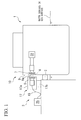
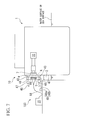
- FIG. 1 shows a ship 1 having a power-receiving structure 10 according to the embodiments of the present invention and a power-supplying device 3 according to a first embodiment of the present invention.
- FIG. 1 is a view showing the ship 1 seen in a front-rear direction.
- the ship 1 can wirelessly receive electric power by the power-receiving structure 10 without using a terminal from a power-supplying coil 5 of the power-supplying device 3 provided on a land.
- the power-receiving structure 10 includes a power-receiving coil 7 capable of wirelessly receiving electric power from the power-supplying coil 5 on a land-side when the ship 1 is moored at a shore and an outer wall surface-forming section 9 forming an outer surface of side of the ship 1 (that is, an outer surface of an outer plate of the ship).
- An electromagnetic field-transmissive section 9a is provided in an opposing portion to the power-receiving coil 7 in the outer wall surface-forming section 9.
- the electromagnetic field-transmissive section 9a is formed of a material through which an electromagnetic field (an electric field and a magnetic field) propagates.
- the electromagnetic field-transmissive section 9a is embedded in a through hole formed by boring a portion to which the power-receiving coil 7 is opposing.
- the power-receiving coil 7 is provided on an inside of the ship 1 from the outer wall surface-forming section 9.
- At least the opposing portion to the power-receiving coil 7 in the outer wall surface-forming section 9 is the electromagnetic field-transmissive section 9a formed of the material through which the electromagnetic field (the electric field and the magnetic field) propagates. Consequently, the power-receiving coil 7 can wirelessly receive electric power from the power-supplying coil 5 on the land-side through the electromagnetic field-transmissive section 9a.
- the material of the electromagnetic field-transmissive section 9a is preferably fiber reinforced plastic (FRP).
- FRP fiber reinforced plastic
- a fiber configured to reinforce plastic is a carbon fiber, a glass fiber, a polyethylene fiber, an aramid fiber or the like and plastic are impregnated in a fiber with an orientation of the fiber held, a plurality of fibers is superposed on each other in different fiber directions or fibers cut finely are mixed into plastic.
- the power-receiving coil 7 can be prevented from directly coming in contact with a support 41.
- the coil 7 or a member formed of a metal such as an electric wire can be prevented from being corroded by sea water. It is desirable that a portion between the electromagnetic field-transmissive section 9a and the outer wall surface-forming section 9 should be sealed with an elastic rubber or the like.
- the electromagnetic field-transmissive section 9a In the outer wall surface-forming section 9, it is possible that only a portion to which the power-receiving coil 7 is opposing in an axial direction thereof (a portion surrounded in a broken line A in FIG. 1 , for example) is the electromagnetic field-transmissive section 9a. Instead, the whole outer wall surface-forming section 9 of the ship 1 may be the electromagnetic field-transmissive section 9a.
- the power receiving coil 7 is not protruded from the outer surface of side of the ship 1 but can wirelessly receive electric power from the power-supplying coil 5 on the land-side through the electromagnetic field-transmissive section 9a.
- the power-receiving coil 7 does not disturb the navigation of the ship 1. Moreover, the power-receiving coil 7 is not required to be pulled into the ship 1 after supply of electric power to the ship 1 is finished. Therefore, a time required to start and stop the receipt of the electric power can be shortened.
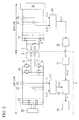
- FIG. 2 shows a circuit configuration including the power-supplying device 3 and the power-receiving coil 7.
- the power-supplying device 3 includes the power-supplying coil 5, a supply power measuring section 11, a receiving section 13, an efficiency calculating section 15, a moving device 17 and a control device 19 as is shown in FIGS. 1 and 2 .
- the power-supplying coil 5 is provided on the land-side.
- An electromagnetic coupling circuit is realized by the power-supplying coil 5 and the power-receiving coil 7 in a state in which the power-supplying coil 5 is close to the power-receiving coil 7. In this state, AC power is supplied to the power-supplying coil 5 so that the power-supplying coil 5 wirelessly transmits electric power to the power-receiving coil 7 via the electromagnetic field-transmissive section 9a.
- the electromagnetic coupling circuit uses an electromagnetic induction system or an electromagnetic field resonance system. In FIG. 2 , two capacitors 6 are connected to the power-supplying coil 5 in series and a capacitor 8 is connected to the power-receiving coil 7 in parallel.
- the supply power measuring section 11 measures electric power supplied to the power-supplying coil 5.
- the supply power measuring section 11 outputs a measured value P 1 (t) of electric power obtained by multiplying a measured value V 1 (t) of a voltage supplied to the power-supplying coil 5 and a measured value I 1 (t) of a current supplied to the power-supplying coil 5.
- the power-supplying device 3 is provided with a rectifier circuit 21, an inverter 23 and an external power supply 25.
- the rectifier circuit 21 coverts AC power from the external power supply 25 into DC power.
- the inverter 23 converts the DC power from the rectifier circuit 21 into AC power and supplies the AC power to the power-supplying coil 5.
- the measured value V 1 (t) of the voltage and the measured value I 1 (t) of the current are obtained by measuring a DC voltage and a direct current, respectively, from the rectifier circuit 21 between the rectifier circuit 21 and the inverter 23.
- the measured value V 1 (t) of the voltage and the measured value I 1 (t) of the current are measured by a voltage measuring device 27 and a current measuring device 29 shown in FIG. 2 , respectively.
- the receiving section 13 receives a measured value of a power receiving amount of the power-receiving coil 7 from the ship 1 side.
- a measured value (a measured value of electric power) P 2 (t) of the power receiving amount is obtained by multiplying a measured value V 2 (t) of a voltage supplied from the power-supplying coil 5 to the power-receiving coil 7 and a measured value I 2 (t) of a current supplied from the power-supplying coil 5 to the power receiving coil 7.
- the ship 1 is provided with a rectifier circuit 31, a power receiving amount measuring section 33 and a transmitting section 35.
- the rectifier circuit 31 converts AC power from the power-receiving coil 7 into DC power and supplies the DC power to a load 32 in the ship 1.
- An electricity storage device may be provided in place of the load 32.
- the power receiving amount measuring section 33 calculates, as the measured value P 2 (t) of the power receiving amount, a value obtained by multiplying a measured value V 2 (t) of a DC voltage from the rectifier circuit 31 and a measured value I 2 (t) of a direct current from the rectifier circuit 31.
- the measured value V 2 (t) of the voltage and the measured value I 2 (t) of the current are measured by a voltage measuring device 37 and a current measuring device 39 shown in FIG. 2 , respectively.
- the transmitting section 35 wirelessly transmits the measured value P 2 (t) of the electric power calculated by the power receiving amount measuring section 33 to the receiving section 13.
- the efficiency calculating section 15 measures an efficiency of electric power transmission from the power-supplying coil 5 to the power-receiving coil 7 based on the measured value P 1 (t) of the electric power measured by the supply power measuring section 11 and the measured value P 2 (t) of the electric power received from the transmitting section 35 on the ship 1 side.
- the moving device 17 is provided on the land-side and moves the power-supplying coil 5 with respect to the land, thereby changing a position of the power-supplying coil 5.
- the moving device 17 is configured to move the power-supplying coil 5 in a horizontal direction along the outer surface of side of the ship 1 and in a vertical direction, thereby enabling adjustment of the position of the power-supplying coil 5.
- the moving device 17 includes a mobile body 17a having the power-supplying coil 5 attached thereto, a moving mechanism 17b configured to move the mobile body 17a in the horizontal direction and in the vertical direction, and a motive power supply (not shown) configured to give motive power configured to move the mobile body 17a to the moving mechanism 17b.
- the moving device 17 may be configured to move the power-supplying coil 5 in the horizontal direction along the outer surface of side of the ship 1 and in the vertical direction, and furthermore, to move the power-supplying coil 5 in an direction perpendicular to the outer surface of side of the ship 1.
- Electric power is supplied by a cable 18 from the external power supply 25 that is stationary with respect to the land to the power-supplying coil 5 attached to the mobile body 17a that is moved with respect to the land.
- the cable 18 may be deformably flexed or may be freely wound off from a drum in order to follow a change in a position of the mobile body 17a of the moving device 17.
- the rectifier circuit 21 and the inverter 23 may be provided in the mobile body 17a or may be provided on the external power supply 25 side so as to be stationary with respect to the land.
- the control device 19 controls the moving device 17 to move the power-supplying coil 5.
- the control device 19 controls the moving device 17 to move the power-supplying coil 5 based on an efficiency ⁇ calculated ty the efficiency calculating section 15, thereby adjusting the position of the power-supplying coil 5 with respect to the power-receiving coil 7.
- the control device 19 performs control of Step S6 which will be described below.
- FIG. 3 is a flowchart showing a first method of supplying electric power to the ship 1 when the ship 1 is moored.
- Step S1 the ship 1 ends navigation and is moored at a predetermined shore. As is shown in FIG. 1 , at this time, the ship 1 collides with a cushioning material 2 provided on a quay and can be thus prevented from directly colliding with the quay.
- Step S2 the power-supplying coil 5 is disposed with respect to the power-receiving coil 7 of the moored ship 1.
- the moving mechanism 17b is disposed or operated to place the power-supplying coil 5 attached to the mobile body 17a of the moving device 17 in the power-supplying device 3 in an opposing position to the power-receiving coil 7 of the ship 1 moored in the Step S1.
- Step S2 It is possible to end the disposition in the Step S2 through the Step S1 by mooring the ship 1 so that the power-receiving coil 7 of the ship 1 opposes to the power-supplying coil 5 provided on the land-side in the Step S 1.
- Step S3 electric power is temporarily supplied from the power-supplying coil 5 to the power-receiving coil 7.
- the electric power supplied to the power-supplying coil 5 that is, the measured value P 1 (t) of the electric power
- the electric power supplied to the power-receiving coil 7 that is, the measured value P 2 (t) of the electric power
- the electric power supplied to the power-supplying coil 5 may be measured a plurality of times at different time points so that an average value of the measured values thus obtained may be set to be the measured value P 1 (t) of the electric power to be used in next Step S4.
- the electric power supplied to the power-receiving coil 7 may be measured a plurality of times at different time points so that the average value of the measured values thus obtained may be set to be the measured value P 2 (t) of the electric power to be used in the next Step S4.
- the efficiency ⁇ of the electric power transmission is calculated by the efficiency calculating section 15.
- the efficiency ⁇ of the electric power transmission is calculated by the efficiency calculating section 15 based on the measured value P 1 (t) of the electric power and the measured value P 2 (t) of the electric power which are measured in the Step S3.
- Step S5 it is judged whether the Steps S2, S3 and S4 have been executed a preset plurality of times (preferably 3 times or more) or not. Between these plurality of executions, the position of the power-supplying coil 5 disposed in the Step S2 with respect to the power-receiving coil 7 is varied (for example, approximately by 10 cm or by 20 cm). These positions may be different from each other in a horizontal direction or in a vertical direction or may be scattered in a grid pattern at an interval in the horizontal direction and in the vertical direction. If the judgment in the Step S5 is Yes (that is, the Steps S2, S3 and S4 have been executed a preset plurality of times), the processing proceeds to Step S6.
- Step S5 If the judgment in the Step S5 is No (that is, the Steps S2, S3 and S4 have been executed a smaller number of times than the preset plurality of times), the processing returns to the Step S2. If the ship 1 floats on the sea surface, a position of the ship 1 with respect to the land is not greatly changed by rise and fall of tides in approximately a few minutes or less. Accordingly, the position of the power-supplying coil 5 with respect to the land may be used in place of the position of the power-supplying coil 5 with respect to the power-receiving coil 7.
- the moving device 7 is controlled by the control device 19 to dispose the power-supplying coil 5 in a position where the highest of the calculated efficiencies ⁇ is obtained during a plurality of executions of the Step S4. In this state, the electric power is continuously supplied from the power-supplying coil 5 to the power-receiving coil 7.
- the power-supplying method it is possible to perform the electric power transmission from the power-supplying coil 5 to the power-receiving coil 7 continuously efficiently. Moreover, a precise mark indicative of the position of the power-receiving coil 7 does not need to be provided on the outer surface of side of the ship 1 in order to position the power-supplying coil 5 with respect to the power-receiving coil 7.
- the electromagnetic coupling circuit preferably uses an electromagnetic field resonance system.
- the efficiency of the electric power transmission from the power-supplying coil 5 to the power-receiving coil 7 is not much reduced. Even if the position of the power-supplying coil 5 with respect to the power-receiving coil 7 is changed due to the rocking motion of the ship 1 that is caused by the wave on the sea surface, consequently, it is possible to prevent the electric power transmission efficiency from being reduced. Thus, it is possible to decrease an efficiency fluctuation amount caused by the rocking motion of the wave.
- FIG. 4 is a flowchart showing a second method of supplying electric power to the ship 1 while the ship 1 is moored.
- the electric power is continuously supplied from the power-supplying coil 5 to the power-receiving coil 7 while the ship 1 is moored, and at the same time, Steps S11, S12, S 13 and S 14, which will be described below, are repeated at a time interval.
- This power-supplying method is performed after the Step S6 explained above, for example.
- Step S11 the position of the power-supplying coil 5 is changed by the control device 19.
- the moving device 17 slightly (for example, approximately by 10 cm) moves the power-supplying coil 5 from the position of the power-supplying coil 5 at the present time to another position.
- the efficiency ⁇ of the electric power transmission from the power-supplying coil 5 to the power-receiving coil 7 is calculated by the efficiency calculating section 15 in a state in which the position of the power-supplying coil 5 is changed in the Step S11. The calculation is carried out by the same method as that in the Step S4.
- Step S13 it is judged whether the number of execution times of the Steps S11 and S12 reaches a preset plurality of times (preferably three times or more) or not. If the judgment is Yes (that is, the Steps S11 and S12 have been executed a preset plurality of times), the processing proceeds to Step S14. If the judgment is No (that is, the number of the execution times of the Steps S11 and S12 is smaller than the preset plurality of times), the processing returns to the Step S11. As an example, it is preferable that a preset number of times should be four and the position of the power-supplying coil 5 should be changed once for each of upward, downward, leftward and rightward directions from the position at the present time in the Step S11.
- the power-supplying coil 5 is disposed, by the control device 19, in the position of the power-supplying coil 5 where the highest of the calculated efficiencies ⁇ is obtained during a plurality of executions of the Step S12.
- the Steps S11, S12, S13 and S14 are executed at a time interval (for example, an interval of one to five minutes). Even if the position of the power-supplying coil 5 with respect to the power-receiving coil 7 is changed to a position where the electric power transmission efficiency is reduced due to the rise and fall of tides or a change in a draft of the ship, accordingly, the position of the power-supplying coil 5 is modified to a position where the electric power transmission efficiency is increased.
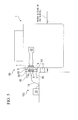
- FIG. 5 shows a configuration of a power-supplying device 103 according to a second embodiment of the present invention.
- the power-supplying device 103 supplies electric power to the ship 1 having the power-receiving structure 10.
- FIG. 5 is a view showing the ship 1 seen in a front-rear direction.
- the power-supplying device 103 according to the second embodiment is different from the power-supplying device 3 according to the first embodiment in that the supply power measuring section 11, the receiving section 13, the efficiency calculating section 15, the moving device 17 and the control device 19 are not provided but a support 41 configured to support the power-supplying coil 5 and a suction device 43 attached to the support 41 are provided instead.
- the power-supplying device 103 includes the support 41 configured to support the power-supplying coil 5 and the suction device 43 attached to the support 41.
- the power-supplying coil 5 can adhere to the outer surface of side of the ship 1 in a state in which the power-supplying coil 5 is opposing to the power-receiving coil 7 through the electromagnetic field-transmissive section 9a.
- the suction device 43 is preferably a vacuum cup attached to the support 41.
- the vacuum cup can adhere to the outer surface of side of the ship by sucking internal air through a sucking source (not shown) via a deformable tube 45.
- the sucking source is a vacuum pump, for example.
- An installation area of the suction device 43 is predetermined to be a predetermined area in which the power-supplying coil 5 and the power-receiving coil 7 oppose to each other through the electromagnetic field-transmissive section 9a with the suction device 43 adhering to the outer surface of side of the ship.
- the surface of the outer surface of side of the ship is made smooth so that the suction device 43 (the vacuum cup) can easily adheres and outside of the installation area the surface is made rough so that the suction device 43 is difficult to adhere.
- the adhesion of the suction device 43 is carried out following a procedure of FIG. 6 in the following manner.
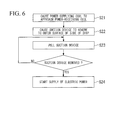
- FIG. 6 is a flowchart showing a procedure for starting supply of electric power to the ship 1 moored at a shore.
- Step S21 the position of the power-receiving coil 7 in the ship 1 is roughly known in advance.
- the power-supplying coil 5 is caused to approach the position of the power-receiving coil 7.
- Step S22 next, the suction device 43 is caused to adhere to the outer surface of side of the ship.
- Step S23 the support 41 (that is, the suction device 43) is pulled away from the outer surface of side of the ship in this state.
- Steps S22 and S23 are repeated until the suction device 43 is not removed from the outer surface of side of the ship even if the support 41 is pulled away from the outer surface of side of the ship.
- Step S24 When the suction device 43 is not removed from the outer surface of side of the ship even if the support 41 is pulled away from the outer surface of side of the ship in the Step S23, it is judged that the suction device 43 adheres to the outer surface of side of the ship within the installation area. Therefore, the processing proceeds to Step S24.
- Step S24 supply of electric power from the power-supplying coil 5 to the power-receiving coil 7 is started in the state in which the suction device 43 adheres to the outer surface of side of the ship. Then, the position of the suction device 43 with respect to the shore is varied by the rise and fall of tides or a change in a draft of the ship.
- the tube 45 is deformably flexed to follow the change in the position.
- the power-supplying coil 5 if the suction device 43 is not removed from the outer surface of side of the ship through the Step S23, the power-supplying coil 5 subsequently moves integrally with the ship 1 and the power-receiving coil 7 by the wave on the water surface or the sea surface, for example. Accordingly, the supply of electric power can be performed stably.
- the efficiency of electric power transmission from the power-supplying coil 5 to the power-receiving coil 7 is not much reduced even if the position of the power-supplying coil 5 with respect to the power-receiving coil 7 is shifted. Even if the power-supplying coil 5 is roughly positioned with respect to the power-receiving coil 7, it is possible to prevent the electric power transmission efficiency from being reduced.
- the power-supplying device 103 according to the second embodiment is not provided with the supply power measuring section 11, the receiving section 13, the efficiency calculating section 15, the moving device 17 or the control device 19.
- the other configurations of the power-supplying device 103 according to the second embodiment are the same as those of the power-supplying device 3 according to the first embodiment.
- a rectifier circuit 21 and an inverter 23 may be provided on the support 41 in the power-supplying device 103 according to the second embodiment, they are preferably provided on the side of the external power supply 25 so as to be stationary with respect to the land in the supply of electric power from the power-supplying coil 5 to the power-receiving coil 7.
- an exhaust valve 47 may be provided in the middle of the tube 45 and a rope switch 48 may be provided between the support 41 and a quay as is shown in FIG. 7 .
- the exhaust valve 47 turns ON/OFF an exhaust in accordance with an electrical command given from the rope switch 48. In a normal state, the exhaust valve 47 is set so as not to carry out the exhaust.
- the rope switch 48 includes a switch 48a and a rope 48b.
- the switch 48a is turned ON/OFF depending on whether the rope 48b is stretched or slackened. Consequently, it is possible to electrically detect whether the rope 48b is stretched or slackened.
- a length of the rope 48b is set in such a manner that the rope 48b is slackened during normal power supply and the cable 18 and the tube 45 are not stretched (that is, they are slackened) even when the rope 48b is stretched.
- the ship 1 leaves the quay with the support 41 adhered to due to an unintended motion of the ship 1, a bad weather or the like.
- the rope 48b of the rope switch 48 is stretched so that the switch 48a is flipped. Consequently, an electrical command is given from the rope switch 48 to the exhaust valve 47 ordering to perform the exhaust.
- the exhaust is performed through the exhaust valve 47, the vacuum state of the tube 45 is released.
- the adhesion of the suction device 43 attached to the support 41 to the outer surface of side of the ship 1 is terminated and the support 41 leaves the ship 1. Therefore, it is possible to prevent the cable 18 or the tube 45 from being broken. It is more preferable to stop an operation of the sucking source (the vacuum pump) simultaneously with the exhaust from the exhaust valve 47.
- the power-supplying device 3 according to the first embodiment or the power-supplying device 103 according to the second embodiment may be provided with a billing device (not shown).
- a billing device (not shown).
- the mobile body 17a is moved in such a manner that the power-supplying coil 5 goes away from the power-receiving coil 7 in the first embodiment or the suction device 43 stops the adhesion to the outer surface of side of the ship and is thus removed from the outer surface of side of the ship in the second embodiment, for example.
- the exhaust valve 47 is provided in the middle of the tube 45, it is also possible to give an electrical command to the exhaust valve 47 in order to perform the exhaust, thereby removing the suction device 43 from the outer surface of side of the ship.
- the power-receiving coil is provided on the inside of the outer wall surface-forming section of the ship and the electromagnetic field-transmissive section formed of a material through which an electromagnetic field propagates is provided in the opposing portion to the power-receiving coil in the outer wall surface-forming section.
- the power-receiving coil is not protruded from the outer surface of side of the ship but can wirelessly receive electric power from the power-supplying coil on the land-side through the electromagnetic field-transmissive section.
- the power-receiving coil does not disturb the navigation of the ship and is not required to be pulled into the ship after the supply of the electric power to the ship is finished.
Landscapes
- Engineering & Computer Science (AREA)
- Power Engineering (AREA)
- Mechanical Engineering (AREA)
- Computer Networks & Wireless Communication (AREA)
- Transportation (AREA)
- Chemical & Material Sciences (AREA)
- Combustion & Propulsion (AREA)
- Ocean & Marine Engineering (AREA)
- Charge And Discharge Circuits For Batteries Or The Like (AREA)
Abstract
Description
- The present invention relates to a ship power-receiving structure, a ship power-supplying device and a ship power-supplying method. Priority is claimed on Japanese Patent Application No.
2012-92176 filed on April 13, 2012 - There are cases where electric power required for a ship is wirelessly supplied to the ship. An example of the power-supplying method is described in Japanese Unexamined Patent Application Publication (
JP-A) No. 2010-11696 - In the Patent Document 1, electric power is supplied in the following manner. In order to wirelessly supply electric power to a moored ship, a power-supplying coil is provided on a land-side and a power-receiving coil is provided on a ship-side. An alternating current having a high frequency (for example, 10 kHz to 30 kHz) is fed to the power-supplying coil, thereby generating electric power in the power-receiving coil. The electric power generated in the power-receiving coil is supplied to a power system provided in the ship.
- In the Patent Document 1, the power-receiving coil is provided to be protruded from an outer wall of the ship. For this reason, there is a possibility that the power-receiving coil might disturb navigation.
- On the other hand, it is also supposed that the power-receiving coil is pulled into the ship after receipt of electric power through the power-receiving coil is finished. In this case, a great deal of time and labor is required to pull the power-receiving coil in.
- The present invention is conceived in view of the above-described circumstances and it is an object thereof to provide a ship power-receiving structure, a ship power-supplying device and a ship power-supplying method in which a power-receiving coil provided on a ship-side supplies electric power from outside of the ship to the ship through the power-receiving coil, the power-receiving coil does not disturb navigation and a great deal of time and labor required to pull the power-receiving coil in the ship can be eliminated after the supply of electric power to the ship is finished.
- In order to achieve the above-described object the present invention is provided as described in claim 1 and the dependent claims.
Details of this are disclosed in the following:
In order to achieve the above-described object, a power-receiving structure according to a first aspect of the present invention is a power-receiving structure that is provided in a ship and includes a power-receiving coil capable of wirelessly receiving electric power from a power-supplying coil on a land-side, and an outer wall surface-forming section forming an outer surface of side of the ship, and the power-receiving coil is provided on an inside of the ship from the outer wall surface-forming section, and an electromagnetic field-transmissive section formed of a material through which an electromagnetic field propagates is provided in an opposing portion to the power-receiving coil in the outer wall surface-forming section. - Moreover, in the power-receiving structure according to a second aspect of the present invention, in the above-described first aspect, the material of the electromagnetic field-transmissive section is plastic. Furthermore, in the power-receiving structure according to a third aspect of the present invention, in the above-described second aspect, the plastic is fiber reinforced plastic.
- A power-supplying device according to a first aspect of the present invention is a device configured to supply electric power to a ship having the power-receiving structure and includes a power-supplying coil, provided on a land-side, configured to supply electric power to the power-receiving coil through the electromagnetic field-transmissive section, a supply power measuring section configured to measure electric power supplied to the power-supplying coil, a receiving section configured to receive, from a ship-side, a measured value of electric power received from the power-supplying coil by the power-receiving coil, an efficiency calculating section configured to calculate the efficiency of electric power transmission from the power-supplying coil to the power-receiving coil based on the supplied electric power measured by the supply power measuring section and the measured value of the electric power received by the receiving section, a moving device, provided on the land-side, configured to move the power-supplying coil, and a control device configured to control the moving device to move the power-supplying coil based on the efficiency calculated by the efficiency calculating section, thereby adjusting a position of the power-supplying coil with respect to the power-receiving coil.
- Furthermore, a power-supplying method according to a first aspect of the present invention is a power supplying method using the power-supplying device and includes a first step of disposing the power-supplying coil with respect to the power-receiving coil when the ship is moored, a second step of temporarily supplying electric power from the power-supplying coil to the power-receiving coil through the electromagnetic field-transmissive section, and a third step of calculating the efficiency of the electric power transmission from the power-supplying coil to the power-receiving coil in the second step by the efficiency calculating section, and the first to third steps are repeated a predetermined number of times while a position of the power-supplying coil with respect to the power-receiving coil is changed, and the power-supplying coil is disposed, by the control device, in a position of the power-supplying coil where the highest of the efficiencies calculated in the third step is obtained and electric power is continuously supplied from the power-supplying coil to the power-receiving coil in this state.
- Moreover, a power-supplying method according to a second aspect of the present invention is a power supplying method using the power-supplying device and includes a calculating step of calculating an efficiency of the electric power transmission from the power-supplying coil to the power-receiving coil by the efficiency calculating section while continuously supplying electric power from the power-supplying coil to the power-receiving coil while the ship is moored, and the calculating step is repeated a predetermined number of times while a position of the power-supplying coil is changed by the moving device, and the power-supplying coil is disposed, by the control device, in a position of the power-supplying coil where the highest of the efficiencies calculated in the calculating step is obtained.
- Furthermore, a power-supplying device according to a second aspect of the present invention is a device configured to supply electric power to a ship having the power-receiving structure and includes a power-supplying coil, provided on a land-side, configured to supply electric power to the power-receiving coil through the electromagnetic field-transmissive section, a support supporting the power-supplying coil, and a suction device attached to the support, and the suction device adheres to an outer surface of side of the ship in a state in which the power-supplying coil opposes to the power-receiving coil through the electromagnetic field-transmissive section.
- According to the present invention, the power-receiving coil is provided on the inside of the outer wall surface-forming section of the ship and the electromagnetic field-transmissive section formed of a material through which an electromagnetic field propagates is provided in the opposing portion to the power-receiving coil in the outer wall surface-forming section. By this configuration, the power-receiving coil is not protruded from the outer surface of side of the ship but can wirelessly receive electric power from the power-supplying coil on the land-side through the electromagnetic field-transmissive section.
- Accordingly, the power-receiving coil does not disturb the navigation of the ship and is not required to be pulled into the ship after the supply of the electric power to the ship is finished.
-
FIG. 1 is a view showing a ship having a power-receiving structure according to embodiments of the present invention and a power-supplying device according to a first embodiment of the present invention. -
FIG. 2 is a view showing circuit configuration on a land-side and a ship-side. -
FIG. 3 is a flowchart showing a first method of supplying electric power to the ship when the ship is moored. -
FIG. 4 is a flowchart showing a second method of supplying electric power to the ship while the ship is moored. -
FIG. 5 is a view showing a power-supplying device according to a second embodiment of the present invention. -
FIG. 6 is a flowchart showing a procedure to be executed before starting supply of electric power to a ship moored at a shore. -
FIG. 7 is a view showing a power-supplying device according to a variant example of the second embodiment of the present invention. - Preferred embodiments of the present invention will be described with reference to the drawings. In each of the drawings, common parts have the same reference numerals and repetitive explanation will be omitted.
-
FIG. 1 shows a ship 1 having a power-receivingstructure 10 according to the embodiments of the present invention and a power-supplyingdevice 3 according to a first embodiment of the present invention.FIG. 1 is a view showing the ship 1 seen in a front-rear direction. - The ship 1 can wirelessly receive electric power by the power-receiving
structure 10 without using a terminal from a power-supplyingcoil 5 of the power-supplyingdevice 3 provided on a land. - The power-receiving
structure 10 includes a power-receivingcoil 7 capable of wirelessly receiving electric power from the power-supplyingcoil 5 on a land-side when the ship 1 is moored at a shore and an outer wall surface-formingsection 9 forming an outer surface of side of the ship 1 (that is, an outer surface of an outer plate of the ship). An electromagnetic field-transmissive section 9a is provided in an opposing portion to the power-receivingcoil 7 in the outer wall surface-formingsection 9. The electromagnetic field-transmissive section 9a is formed of a material through which an electromagnetic field (an electric field and a magnetic field) propagates. At the outer plate of the ship which is the outer wall surface-formingsection 9, the electromagnetic field-transmissive section 9a is embedded in a through hole formed by boring a portion to which the power-receivingcoil 7 is opposing. The power-receivingcoil 7 is provided on an inside of the ship 1 from the outer wall surface-formingsection 9. - According to the present embodiment, at least the opposing portion to the power-receiving
coil 7 in the outer wall surface-formingsection 9 is the electromagnetic field-transmissive section 9a formed of the material through which the electromagnetic field (the electric field and the magnetic field) propagates. Consequently, the power-receivingcoil 7 can wirelessly receive electric power from the power-supplyingcoil 5 on the land-side through the electromagnetic field-transmissive section 9a. - The material of the electromagnetic field-
transmissive section 9a is preferably fiber reinforced plastic (FRP). However, the material of the electromagnetic field-transmissive section 9a is not restricted thereto but may be plastic, for example. A fiber configured to reinforce plastic is a carbon fiber, a glass fiber, a polyethylene fiber, an aramid fiber or the like and plastic are impregnated in a fiber with an orientation of the fiber held, a plurality of fibers is superposed on each other in different fiber directions or fibers cut finely are mixed into plastic. Although an electromagnetic field passes through, the power-receivingcoil 7 can be prevented from directly coming in contact with asupport 41. Thus, thecoil 7 or a member formed of a metal such as an electric wire can be prevented from being corroded by sea water. It is desirable that a portion between the electromagnetic field-transmissive section 9a and the outer wall surface-formingsection 9 should be sealed with an elastic rubber or the like. - In the outer wall surface-forming
section 9, it is possible that only a portion to which the power-receivingcoil 7 is opposing in an axial direction thereof (a portion surrounded in a broken line A inFIG. 1 , for example) is the electromagnetic field-transmissive section 9a. Instead, the whole outer wall surface-formingsection 9 of the ship 1 may be the electromagnetic field-transmissive section 9a. - In the power-receiving
structure 10 in accordance with the present embodiment, thepower receiving coil 7 is not protruded from the outer surface of side of the ship 1 but can wirelessly receive electric power from the power-supplyingcoil 5 on the land-side through the electromagnetic field-transmissive section 9a. - Accordingly, the power-receiving
coil 7 does not disturb the navigation of the ship 1. Moreover, the power-receivingcoil 7 is not required to be pulled into the ship 1 after supply of electric power to the ship 1 is finished. Therefore, a time required to start and stop the receipt of the electric power can be shortened. -
FIG. 2 shows a circuit configuration including the power-supplyingdevice 3 and the power-receiving coil 7. - The power-supplying
device 3 according to the first embodiment of the present invention includes the power-supplyingcoil 5, a supplypower measuring section 11, areceiving section 13, anefficiency calculating section 15, a movingdevice 17 and acontrol device 19 as is shown inFIGS. 1 and2 . - The power-supplying
coil 5 is provided on the land-side. An electromagnetic coupling circuit is realized by the power-supplyingcoil 5 and the power-receivingcoil 7 in a state in which the power-supplyingcoil 5 is close to the power-receivingcoil 7. In this state, AC power is supplied to the power-supplyingcoil 5 so that the power-supplyingcoil 5 wirelessly transmits electric power to the power-receivingcoil 7 via the electromagnetic field-transmissive section 9a. The electromagnetic coupling circuit uses an electromagnetic induction system or an electromagnetic field resonance system. InFIG. 2 , twocapacitors 6 are connected to the power-supplyingcoil 5 in series and acapacitor 8 is connected to the power-receivingcoil 7 in parallel. - The supply power measuring
section 11 measures electric power supplied to the power-supplyingcoil 5. The supplypower measuring section 11 outputs a measured value P1(t) of electric power obtained by multiplying a measured value V1(t) of a voltage supplied to the power-supplyingcoil 5 and a measured value I1(t) of a current supplied to the power-supplyingcoil 5. As is shown inFIG. 2 , the power-supplyingdevice 3 is provided with arectifier circuit 21, aninverter 23 and anexternal power supply 25. Therectifier circuit 21 coverts AC power from theexternal power supply 25 into DC power. Theinverter 23 converts the DC power from therectifier circuit 21 into AC power and supplies the AC power to the power-supplyingcoil 5. The measured value V1(t) of the voltage and the measured value I1(t) of the current are obtained by measuring a DC voltage and a direct current, respectively, from therectifier circuit 21 between therectifier circuit 21 and theinverter 23. The measured value V1(t) of the voltage and the measured value I1(t) of the current are measured by avoltage measuring device 27 and acurrent measuring device 29 shown inFIG. 2 , respectively. - The receiving
section 13 receives a measured value of a power receiving amount of the power-receivingcoil 7 from the ship 1 side. A measured value (a measured value of electric power) P2(t) of the power receiving amount is obtained by multiplying a measured value V2(t) of a voltage supplied from the power-supplyingcoil 5 to the power-receivingcoil 7 and a measured value I2(t) of a current supplied from the power-supplyingcoil 5 to thepower receiving coil 7. - As is shown in
FIG. 2 , the ship 1 is provided with arectifier circuit 31, a power receivingamount measuring section 33 and a transmittingsection 35. Therectifier circuit 31 converts AC power from the power-receivingcoil 7 into DC power and supplies the DC power to aload 32 in the ship 1. An electricity storage device may be provided in place of theload 32. The power receivingamount measuring section 33 calculates, as the measured value P2(t) of the power receiving amount, a value obtained by multiplying a measured value V2(t) of a DC voltage from therectifier circuit 31 and a measured value I2(t) of a direct current from therectifier circuit 31. The measured value V2(t) of the voltage and the measured value I2(t) of the current are measured by avoltage measuring device 37 and acurrent measuring device 39 shown inFIG. 2 , respectively. The transmittingsection 35 wirelessly transmits the measured value P2(t) of the electric power calculated by the power receivingamount measuring section 33 to the receivingsection 13. - The
efficiency calculating section 15 measures an efficiency of electric power transmission from the power-supplyingcoil 5 to the power-receivingcoil 7 based on the measured value P1(t) of the electric power measured by the supplypower measuring section 11 and the measured value P2(t) of the electric power received from the transmittingsection 35 on the ship 1 side. The efficiency ε is calculated in accordance with the following equation.
- The moving
device 17 is provided on the land-side and moves the power-supplyingcoil 5 with respect to the land, thereby changing a position of the power-supplyingcoil 5. The movingdevice 17 is configured to move the power-supplyingcoil 5 in a horizontal direction along the outer surface of side of the ship 1 and in a vertical direction, thereby enabling adjustment of the position of the power-supplyingcoil 5. In other words, the movingdevice 17 includes amobile body 17a having the power-supplyingcoil 5 attached thereto, a movingmechanism 17b configured to move themobile body 17a in the horizontal direction and in the vertical direction, and a motive power supply (not shown) configured to give motive power configured to move themobile body 17a to the movingmechanism 17b. The movingdevice 17 may be configured to move the power-supplyingcoil 5 in the horizontal direction along the outer surface of side of the ship 1 and in the vertical direction, and furthermore, to move the power-supplyingcoil 5 in an direction perpendicular to the outer surface of side of the ship 1. - Electric power is supplied by a
cable 18 from theexternal power supply 25 that is stationary with respect to the land to the power-supplyingcoil 5 attached to themobile body 17a that is moved with respect to the land. Thecable 18 may be deformably flexed or may be freely wound off from a drum in order to follow a change in a position of themobile body 17a of the movingdevice 17. Therectifier circuit 21 and theinverter 23 may be provided in themobile body 17a or may be provided on theexternal power supply 25 side so as to be stationary with respect to the land. - The
control device 19 controls the movingdevice 17 to move the power-supplyingcoil 5. In particular, thecontrol device 19 controls the movingdevice 17 to move the power-supplyingcoil 5 based on an efficiency ε calculated ty theefficiency calculating section 15, thereby adjusting the position of the power-supplyingcoil 5 with respect to the power-receivingcoil 7. In other words, thecontrol device 19 performs control of Step S6 which will be described below. - Next, description will be given of a power-supplying method using the power-supplying
device 3 according to the first embodiment of the present invention. -
FIG. 3 is a flowchart showing a first method of supplying electric power to the ship 1 when the ship 1 is moored. - In Step S1, the ship 1 ends navigation and is moored at a predetermined shore. As is shown in
FIG. 1 , at this time, the ship 1 collides with acushioning material 2 provided on a quay and can be thus prevented from directly colliding with the quay. - In Step S2, the power-supplying
coil 5 is disposed with respect to the power-receivingcoil 7 of the moored ship 1. In other words, the movingmechanism 17b is disposed or operated to place the power-supplyingcoil 5 attached to themobile body 17a of the movingdevice 17 in the power-supplyingdevice 3 in an opposing position to the power-receivingcoil 7 of the ship 1 moored in the Step S1. - It is possible to end the disposition in the Step S2 through the Step S1 by mooring the ship 1 so that the power-receiving
coil 7 of the ship 1 opposes to the power-supplyingcoil 5 provided on the land-side in the Step S 1. - In Step S3, electric power is temporarily supplied from the power-supplying
coil 5 to the power-receivingcoil 7. At this time, the electric power supplied to the power-supplying coil 5 (that is, the measured value P1(t) of the electric power) is measured by the supplypower measuring section 11 and the electric power supplied to the power-receiving coil 7 (that is, the measured value P2(t) of the electric power) is measured by the power receivingamount measuring section 33. - In the Step S3, in consideration of the fact that the ship 1 rolls and pitches by a wave on a water surface or on a sea surface, the electric power supplied to the power-supplying
coil 5 may be measured a plurality of times at different time points so that an average value of the measured values thus obtained may be set to be the measured value P1(t) of the electric power to be used in next Step S4. In the Step S3, similarly, the electric power supplied to the power-receivingcoil 7 may be measured a plurality of times at different time points so that the average value of the measured values thus obtained may be set to be the measured value P2(t) of the electric power to be used in the next Step S4. - In the Step S4, referring to the supply of the electric power from the power-supplying
coil 5 to the power-receivingcoil 7 that is executed in the Step S3, the efficiency ε of the electric power transmission is calculated by theefficiency calculating section 15. In other words, the efficiency ε of the electric power transmission is calculated by theefficiency calculating section 15 based on the measured value P1(t) of the electric power and the measured value P2(t) of the electric power which are measured in the Step S3. - In Step S5, it is judged whether the Steps S2, S3 and S4 have been executed a preset plurality of times (preferably 3 times or more) or not. Between these plurality of executions, the position of the power-supplying
coil 5 disposed in the Step S2 with respect to the power-receivingcoil 7 is varied (for example, approximately by 10 cm or by 20 cm). These positions may be different from each other in a horizontal direction or in a vertical direction or may be scattered in a grid pattern at an interval in the horizontal direction and in the vertical direction. If the judgment in the Step S5 is Yes (that is, the Steps S2, S3 and S4 have been executed a preset plurality of times), the processing proceeds to Step S6. If the judgment in the Step S5 is No (that is, the Steps S2, S3 and S4 have been executed a smaller number of times than the preset plurality of times), the processing returns to the Step S2. If the ship 1 floats on the sea surface, a position of the ship 1 with respect to the land is not greatly changed by rise and fall of tides in approximately a few minutes or less. Accordingly, the position of the power-supplyingcoil 5 with respect to the land may be used in place of the position of the power-supplyingcoil 5 with respect to the power-receivingcoil 7. - In the Step S6, the moving
device 7 is controlled by thecontrol device 19 to dispose the power-supplyingcoil 5 in a position where the highest of the calculated efficiencies ε is obtained during a plurality of executions of the Step S4. In this state, the electric power is continuously supplied from the power-supplyingcoil 5 to the power-receivingcoil 7. - By the power-supplying method, it is possible to perform the electric power transmission from the power-supplying
coil 5 to the power-receivingcoil 7 continuously efficiently. Moreover, a precise mark indicative of the position of the power-receivingcoil 7 does not need to be provided on the outer surface of side of the ship 1 in order to position the power-supplyingcoil 5 with respect to the power-receivingcoil 7. - Referring to the power-supplying method, the electromagnetic coupling circuit preferably uses an electromagnetic field resonance system. In this case, even if the position of the power-supplying
coil 5 with respect to the power-receivingcoil 7 is shifted, the efficiency of the electric power transmission from the power-supplyingcoil 5 to the power-receivingcoil 7 is not much reduced. Even if the position of the power-supplyingcoil 5 with respect to the power-receivingcoil 7 is changed due to the rocking motion of the ship 1 that is caused by the wave on the sea surface, consequently, it is possible to prevent the electric power transmission efficiency from being reduced. Thus, it is possible to decrease an efficiency fluctuation amount caused by the rocking motion of the wave. -
FIG. 4 is a flowchart showing a second method of supplying electric power to the ship 1 while the ship 1 is moored. Referring to the power-supplying method, the electric power is continuously supplied from the power-supplyingcoil 5 to the power-receivingcoil 7 while the ship 1 is moored, and at the same time, Steps S11, S12,S 13 andS 14, which will be described below, are repeated at a time interval. This power-supplying method is performed after the Step S6 explained above, for example. - In the Step S11, the position of the power-supplying
coil 5 is changed by thecontrol device 19. In other words, the movingdevice 17 slightly (for example, approximately by 10 cm) moves the power-supplyingcoil 5 from the position of the power-supplyingcoil 5 at the present time to another position. - In the Step S12, the efficiency ε of the electric power transmission from the power-supplying
coil 5 to the power-receivingcoil 7 is calculated by theefficiency calculating section 15 in a state in which the position of the power-supplyingcoil 5 is changed in the Step S11. The calculation is carried out by the same method as that in the Step S4. - In the Step S13, it is judged whether the number of execution times of the Steps S11 and S12 reaches a preset plurality of times (preferably three times or more) or not. If the judgment is Yes (that is, the Steps S11 and S12 have been executed a preset plurality of times), the processing proceeds to Step S14. If the judgment is No (that is, the number of the execution times of the Steps S11 and S12 is smaller than the preset plurality of times), the processing returns to the Step S11. As an example, it is preferable that a preset number of times should be four and the position of the power-supplying
coil 5 should be changed once for each of upward, downward, leftward and rightward directions from the position at the present time in the Step S11. - In the Step S14, then, the power-supplying
coil 5 is disposed, by thecontrol device 19, in the position of the power-supplyingcoil 5 where the highest of the calculated efficiencies ε is obtained during a plurality of executions of the Step S12. - The Steps S11, S12, S13 and S14 are executed at a time interval (for example, an interval of one to five minutes). Even if the position of the power-supplying
coil 5 with respect to the power-receivingcoil 7 is changed to a position where the electric power transmission efficiency is reduced due to the rise and fall of tides or a change in a draft of the ship, accordingly, the position of the power-supplyingcoil 5 is modified to a position where the electric power transmission efficiency is increased. -
FIG. 5 shows a configuration of a power-supplyingdevice 103 according to a second embodiment of the present invention. The power-supplyingdevice 103 supplies electric power to the ship 1 having the power-receivingstructure 10.FIG. 5 is a view showing the ship 1 seen in a front-rear direction. The power-supplyingdevice 103 according to the second embodiment is different from the power-supplyingdevice 3 according to the first embodiment in that the supplypower measuring section 11, the receivingsection 13, theefficiency calculating section 15, the movingdevice 17 and thecontrol device 19 are not provided but asupport 41 configured to support the power-supplyingcoil 5 and asuction device 43 attached to thesupport 41 are provided instead. - In
FIG. 5 , the power-supplyingdevice 103 includes thesupport 41 configured to support the power-supplyingcoil 5 and thesuction device 43 attached to thesupport 41. The power-supplyingcoil 5 can adhere to the outer surface of side of the ship 1 in a state in which the power-supplyingcoil 5 is opposing to the power-receivingcoil 7 through the electromagnetic field-transmissive section 9a. - The
suction device 43 is preferably a vacuum cup attached to thesupport 41. The vacuum cup can adhere to the outer surface of side of the ship by sucking internal air through a sucking source (not shown) via adeformable tube 45. The sucking source is a vacuum pump, for example. - An installation area of the
suction device 43 is predetermined to be a predetermined area in which the power-supplyingcoil 5 and the power-receivingcoil 7 oppose to each other through the electromagnetic field-transmissive section 9a with thesuction device 43 adhering to the outer surface of side of the ship. For example, within the installation area of thesuction device 43 the surface of the outer surface of side of the ship is made smooth so that the suction device 43 (the vacuum cup) can easily adheres and outside of the installation area the surface is made rough so that thesuction device 43 is difficult to adhere. - Within the installation area, the adhesion of the
suction device 43 is carried out following a procedure ofFIG. 6 in the following manner. -
FIG. 6 is a flowchart showing a procedure for starting supply of electric power to the ship 1 moored at a shore. - In Step S21, the position of the power-receiving
coil 7 in the ship 1 is roughly known in advance. When the ship 1 is moored at the shore, therefore, the power-supplyingcoil 5 is caused to approach the position of the power-receivingcoil 7. - In Step S22, next, the
suction device 43 is caused to adhere to the outer surface of side of the ship. - In Step S23, the support 41 (that is, the suction device 43) is pulled away from the outer surface of side of the ship in this state.
- If the
suction device 43 is removed from the outer surface of side of the ship, consequently, the position of thesupport 41 is shifted, and again, thesuction device 43 is caused to adhere to the outer surface of side of the ship in another position in the Step S22 and thesupport 41 is pulled away from the outer surface of side of the ship in this state in the Step S23. - The operations of the Steps S22 and S23 are repeated until the
suction device 43 is not removed from the outer surface of side of the ship even if thesupport 41 is pulled away from the outer surface of side of the ship. - When the
suction device 43 is not removed from the outer surface of side of the ship even if thesupport 41 is pulled away from the outer surface of side of the ship in the Step S23, it is judged that thesuction device 43 adheres to the outer surface of side of the ship within the installation area. Therefore, the processing proceeds to Step S24. - In the Step S24, supply of electric power from the power-supplying
coil 5 to the power-receivingcoil 7 is started in the state in which thesuction device 43 adheres to the outer surface of side of the ship. Then, the position of thesuction device 43 with respect to the shore is varied by the rise and fall of tides or a change in a draft of the ship. Thetube 45 is deformably flexed to follow the change in the position. - In the power-supplying
device 103 according to the second embodiment, if thesuction device 43 is not removed from the outer surface of side of the ship through the Step S23, the power-supplyingcoil 5 subsequently moves integrally with the ship 1 and the power-receivingcoil 7 by the wave on the water surface or the sea surface, for example. Accordingly, the supply of electric power can be performed stably. - Moreover, it is possible to search for the position of the power-receiving coil 7 (that is, the installation area) based on the judgment whether the
suction device 43 is not removed from the outer surface of side of the ship in the Step S23. For this reason, a precise mark indicative of the position of the power-receivingcoil 7 is not required. - In the power-supplying
device 103 according to the second embodiment, in the case in which the electromagnetic coupling circuit realized by the power-supplyingcoil 5 and the power-receivingcoil 7 uses an electromagnetic field resonance system, the efficiency of electric power transmission from the power-supplyingcoil 5 to the power-receivingcoil 7 is not much reduced even if the position of the power-supplyingcoil 5 with respect to the power-receivingcoil 7 is shifted. Even if the power-supplyingcoil 5 is roughly positioned with respect to the power-receivingcoil 7, it is possible to prevent the electric power transmission efficiency from being reduced. - The power-supplying
device 103 according to the second embodiment is not provided with the supplypower measuring section 11, the receivingsection 13, theefficiency calculating section 15, the movingdevice 17 or thecontrol device 19. The other configurations of the power-supplyingdevice 103 according to the second embodiment are the same as those of the power-supplyingdevice 3 according to the first embodiment. - Although a
rectifier circuit 21 and aninverter 23 may be provided on thesupport 41 in the power-supplyingdevice 103 according to the second embodiment, they are preferably provided on the side of theexternal power supply 25 so as to be stationary with respect to the land in the supply of electric power from the power-supplyingcoil 5 to the power-receivingcoil 7. - In the power-supplying
device 103 according to the second embodiment, moreover, anexhaust valve 47 may be provided in the middle of thetube 45 and arope switch 48 may be provided between thesupport 41 and a quay as is shown inFIG. 7 . - The
exhaust valve 47 turns ON/OFF an exhaust in accordance with an electrical command given from therope switch 48. In a normal state, theexhaust valve 47 is set so as not to carry out the exhaust. - The
rope switch 48 includes aswitch 48a and arope 48b. Theswitch 48a is turned ON/OFF depending on whether therope 48b is stretched or slackened. Consequently, it is possible to electrically detect whether therope 48b is stretched or slackened. A length of therope 48b is set in such a manner that therope 48b is slackened during normal power supply and thecable 18 and thetube 45 are not stretched (that is, they are slackened) even when therope 48b is stretched. - In some cases, the ship 1 leaves the quay with the
support 41 adhered to due to an unintended motion of the ship 1, a bad weather or the like. In these cases, therope 48b of therope switch 48 is stretched so that theswitch 48a is flipped. Consequently, an electrical command is given from therope switch 48 to theexhaust valve 47 ordering to perform the exhaust. When the exhaust is performed through theexhaust valve 47, the vacuum state of thetube 45 is released. Thus, the adhesion of thesuction device 43 attached to thesupport 41 to the outer surface of side of the ship 1 is terminated and thesupport 41 leaves the ship 1. Therefore, it is possible to prevent thecable 18 or thetube 45 from being broken. It is more preferable to stop an operation of the sucking source (the vacuum pump) simultaneously with the exhaust from theexhaust valve 47. - Various shapes, combinations or the like of the components shown in the embodiments are only illustrative and addition, omission, replacement and other changes of the structure can be made without departing from the gist of the present invention. The present invention is not restricted to the above description but is restricted to only the appended claims.
- For example, the power-supplying
device 3 according to the first embodiment or the power-supplyingdevice 103 according to the second embodiment may be provided with a billing device (not shown). In this case, when money is put in the billing device, electric power is supplied from the power-supplyingcoil 5 to the power-receivingcoil 7 for a period of time corresponding to the amount of money. When the period of time passes, supply of electric power from theexternal power supply 25 to the power-supplyingcoil 5 is stopped, themobile body 17a is moved in such a manner that the power-supplyingcoil 5 goes away from the power-receivingcoil 7 in the first embodiment or thesuction device 43 stops the adhesion to the outer surface of side of the ship and is thus removed from the outer surface of side of the ship in the second embodiment, for example. If theexhaust valve 47 is provided in the middle of thetube 45, it is also possible to give an electrical command to theexhaust valve 47 in order to perform the exhaust, thereby removing thesuction device 43 from the outer surface of side of the ship. - According to the present invention, the power-receiving coil is provided on the inside of the outer wall surface-forming section of the ship and the electromagnetic field-transmissive section formed of a material through which an electromagnetic field propagates is provided in the opposing portion to the power-receiving coil in the outer wall surface-forming section. By this configuration, the power-receiving coil is not protruded from the outer surface of side of the ship but can wirelessly receive electric power from the power-supplying coil on the land-side through the electromagnetic field-transmissive section.
- Accordingly, the power-receiving coil does not disturb the navigation of the ship and is not required to be pulled into the ship after the supply of the electric power to the ship is finished.
-
- 1
- ship
- 2
- cushioning material
- 3, 103
- power-supplying device
- 5
- power-supplying coil
- 6
- capacitor
- 7
- power-receiving coil
- 8
- capacitor
- 9
- outer wall surface-forming section
- 9a
- electromagnetic field-transmissive section
- 10
- power-receiving structure
- 11
- supply power measuring section
- 13
- receiving section
- 15
- efficiency calculating section
- 17
- moving device
- 17a
- mobile body
- 17b
- moving mechanism
- 18
- cable
- 19
- control device
- 21
- rectifier circuit
- 23
- inverter
- 25
- external power supply
- 27
- voltage measuring device
- 29
- current measuring device
- 31
- rectifier circuit
- 32
- load
- 33
- power receiving amount measuring section
- 35
- transmitting section
- 37
- voltage measuring device
- 39
- current measuring device
- 41
- support
- 43
- suction device
- 45
- tube
- 47
- exhaust valve
- 48
- rope switch
- Further Statements of Invention:
- [Clause 1] A power-receiving structure provided in a ship, comprising:
- a power-receiving coil capable of wirelessly receiving electric power from a power-supplying coil on a land-side; and
- an outer wall surface-forming section forming an outer surface of side of the ship,
- wherein the power-receiving coil is provided on an inside of the ship from the outer wall surface-forming section, and
- an electromagnetic field-transmissive section formed of a material through which an electromagnetic field propagates is provided in an opposing portion to the power-receiving coil in the outer wall surface-forming section.
- [Clause 2] The power-receiving structure according to clause 1, wherein the material of the electromagnetic field-transmissive section is plastic.
- [Clause 3] The power-receiving structure according to
clause 2, wherein the plastic is fiber reinforced plastic. - [Clause 4] A power-supplying device configured to supply electric power to a ship having the power-receiving structure according to clause 1, the power-supplying device comprising:
- a power-supplying coil, provided on a land-side, configured to supply electric power to the power-receiving coil through the electromagnetic field-transmissive section;
- a supply power measuring section configured to measure electric power supplied to the power-supplying coil;
- a receiving section configured to receive, from a ship-side, a measured value of electric power received from the power-supplying coil by the power-receiving coil;
- an efficiency calculating section configured to calculate an efficiency of electric power transmission from the power-supplying coil to the power-receiving coil based on the supplied electric power measured by the supply power measuring section and the measured value of the electric power received by the receiving section;
- a moving device, provided on the land-side, configured to move the power-supplying coil; and
- a control device configured to control the moving device to move the power-supplying coil based on the efficiency calculated by the efficiency calculating section, thereby adjusting a position of the power-supplying coil with respect to the power-receiving coil.
- [Clause 5] A power-supplying device configured to supply electric power to a ship having the power-receiving structure according to clause 1, the power-supplying device comprising:
- a power-supplying coil, provided on a land-side, configured to supply electric power to the power-receiving coil through the electromagnetic field-transmissive section;
- a support supporting the power-supplying coil; and
- a suction device attached to the support,
- wherein the suction device adheres to an outer surface of side of the ship in a state in which the power-supplying coil opposes to the power-receiving coil through the electromagnetic field-transmissive section.
- [Clause 6] A power supplying method using the power-supplying device according to clause 4, the method comprising:
- a first step of disposing the power-supplying coil with respect to the power-receiving coil when the ship is moored;
- a second step of temporarily supplying electric power from the power-supplying coil to the power-receiving coil through the electromagnetic field-transmissive section; and
- a third step of calculating an efficiency of the electric power transmission from the power-supplying coil to the power-receiving coil in the second step by the efficiency calculating section,
- wherein the first to third steps are repeated a predetermined number of times while a position of the power-supplying coil with respect to the power-receiving coil is changed, and
- the power-supplying coil is disposed, by the control device, in a position of the power-supplying coil where the highest of the efficiencies calculated in the third step is obtained and electric power is continuously supplied from the power-supplying coil to the power-receiving coil in this state.
- [Clause 7] A power supplying method using the power-supplying device according to clause 4, comprising a calculating step of calculating an efficiency of the electric power transmission from the power-supplying coil to the power-receiving coil by the efficiency calculating section while continuously supplying electric power from the power-supplying coil to the power-receiving coil while the ship is moored,
wherein the calculating step is repeated a predetermined number of times while a position of the power-supplying coil is changed by the moving device, and
the power-supplying coil is disposed, by the control device, in a position of the power-supplying coil where the highest of the efficiencies calculated in the calculating step is obtained.
Claims (9)
- A power-supplying device configured to supply electric power to a ship having a power-receiving structure,
the power-receiving structure provided in a ship, comprising:a power-receiving coil capable of wirelessly receiving electric power from a power-supplying coil on a land-side; andan outer wall surface-forming section forming an outer surface of side of the ship,wherein the power-receiving coil is provided on an inside of the ship from the outer wall surface-forming section, andan electromagnetic field-transmissive section formed of a material through which an electromagnetic field propagates is provided in an opposing portion to the power-receiving coil in the outer wall surface-forming section,the power-supplying device comprising:a power-supplying coil, provided on a land-side, configured to supply electric power to the power-receiving coil through the electromagnetic field-transmissive section;a supply power measuring section configured to measure electric power supplied to the power-supplying coil;a receiving section configured to receive, from a ship-side, a measured value of electric power received from the power-supplying coil by the power-receiving coil;an efficiency calculating section configured to calculate an efficiency of electric power transmission from the power-supplying coil to the power-receiving coil based on the supplied electric power measured by the supply power measuring section and the measured value of the electric power received by the receiving section;a moving device, provided on the land-side, configured to move the power-supplying coil; anda control device configured to control the moving device to move the power-supplying coil based on the efficiency calculated by the efficiency calculating section, thereby adjusting a position of the power-supplying coil with respect to the power-receiving coil. - The power-receiving device according to claim 1, wherein the material of the electromagnetic field-transmissive section is plastic.
- The power-receiving device according to claim 2, wherein the plastic is fiber reinforced plastic.
- A power-supplying device configured to supply electric power to a ship having the power-receiving structure, the power-receiving structure provided in a ship, comprising:a power-receiving coil capable of wirelessly receiving electric power from a power-supplying coil on a land-side; andan outer wall surface-forming section forming an outer surface of side of the ship,wherein the power-receiving coil is provided on an inside of the ship from the outer wall surface-forming section, andan electromagnetic field-transmissive section formed of a material through which an electromagnetic field propagates is provided in an opposing portion to the power-receiving coil in the outer wall surface-forming section,the power-supplying device comprising:a power-supplying coil, provided on a land-side, configured to supply electric power to the power-receiving coil through the electromagnetic field-transmissive section;a support supporting the power-supplying coil; anda suction device attached to the support,wherein the suction device adheres to an outer surface of side of the ship in a state in which the power-supplying coil opposes to the power-receiving coil through the electromagnetic field-transmissive section.
- The power-supplying device according to claim 4,
wherein the installation area is made smooth than outside of the installation area. - The power-supplying device according to claim 4 or 5,
wherein the suction device is a vacuum cup,
wherein a tube configured to perform the exhaust for the vacuum cup;
an exhaust valve which turns ON/OFF the exhaust; and
a rope switch which send an electrical command to the rope switch so that turns the ON/OFF; are further provided. - The power-supplying device according to claim 6,
wherein a billing device is further provided, and
wherein the rope switch sends the electrical command to the exhaust valve corresponding to the amount of money that the billing device is put. - A power supplying method using the power-supplying device according to claim 1, the method comprising:a first step of disposing the power-supplying coil with respect to the power-receiving coil when the ship is moored;a second step of temporarily supplying electric power from the power-supplying coil to the power-receiving coil through the electromagnetic field-transmissive section; anda third step of calculating an average value of efficiency of the electric power transmission from the power-supplying coil to the power-receiving coil in the second step by the average value of efficiency calculating section,wherein the first to third steps are repeated a predetermined number of times while a position of the power-supplying coil with respect to the power-receiving coil is changed, andthe power-supplying coil is disposed, by the control device, in a position of the power-supplying coil where the highest of the efficiencies calculated in the third step is obtained and electric power is continuously supplied from the power-supplying coil to the power-receiving coil in this state.
- A power supplying method using the power-supplying device according to claim 1, comprising a calculating step of calculating an average value of efficiency of the electric power transmission from the power-supplying coil to the power-receiving coil by the average value of efficiency calculating section while continuously supplying electric power from the power-supplying coil to the power-receiving coil while the ship is moored,
wherein the calculating step is repeated a predetermined number of times while a position of the power-supplying coil is changed by the moving device, and
the power-supplying coil is disposed, by the control device, in a position of the power-supplying coil where the highest of the average value of efficiencies calculated in the calculating step is obtained.
Applications Claiming Priority (3)
| Application Number | Priority Date | Filing Date | Title |
|---|---|---|---|
| JP2012092176 | 2012-04-13 | ||
| PCT/JP2013/060820 WO2013154131A1 (en) | 2012-04-13 | 2013-04-10 | Power-receiving structure for ship, power supply device, and power supply method |
| EP13775110.3A EP2838178A4 (en) | 2012-04-13 | 2013-04-10 | POWER RECEIVING STRUCTURE FOR SHIP, POWER SUPPLY DEVICE, AND POWER SUPPLY METHOD |
Related Parent Applications (1)
| Application Number | Title | Priority Date | Filing Date |
|---|---|---|---|
| EP13775110.3A Division EP2838178A4 (en) | 2012-04-13 | 2013-04-10 | POWER RECEIVING STRUCTURE FOR SHIP, POWER SUPPLY DEVICE, AND POWER SUPPLY METHOD |
Publications (3)
| Publication Number | Publication Date |
|---|---|
| EP3138768A2 true EP3138768A2 (en) | 2017-03-08 |
| EP3138768A3 EP3138768A3 (en) | 2017-06-21 |
| EP3138768B1 EP3138768B1 (en) | 2020-12-30 |
Family
ID=49327690
Family Applications (2)
| Application Number | Title | Priority Date | Filing Date |
|---|---|---|---|
| EP13775110.3A Withdrawn EP2838178A4 (en) | 2012-04-13 | 2013-04-10 | POWER RECEIVING STRUCTURE FOR SHIP, POWER SUPPLY DEVICE, AND POWER SUPPLY METHOD |
| EP16193462.5A Active EP3138768B1 (en) | 2012-04-13 | 2013-04-10 | Ship power-receiving structure, ship power-supplying device and ship power-supplying method |
Family Applications Before (1)
| Application Number | Title | Priority Date | Filing Date |
|---|---|---|---|
| EP13775110.3A Withdrawn EP2838178A4 (en) | 2012-04-13 | 2013-04-10 | POWER RECEIVING STRUCTURE FOR SHIP, POWER SUPPLY DEVICE, AND POWER SUPPLY METHOD |
Country Status (5)
| Country | Link |
|---|---|
| US (1) | US9742202B2 (en) |
| EP (2) | EP2838178A4 (en) |
| JP (1) | JP5828358B2 (en) |
| CN (1) | CN104221252B (en) |
| WO (1) | WO2013154131A1 (en) |
Families Citing this family (17)
| Publication number | Priority date | Publication date | Assignee | Title |
|---|---|---|---|---|
| WO2016121089A1 (en) * | 2015-01-30 | 2016-08-04 | 中国電力株式会社 | Power supply system and power supply method |
| JP2016163494A (en) * | 2015-03-04 | 2016-09-05 | ヤンマー株式会社 | Ship power supply system |
| FI126893B (en) * | 2016-01-25 | 2017-07-31 | Abb Schweiz Ag | Energy supply for ships |
| DK201670190A1 (en) * | 2016-03-31 | 2017-10-09 | A P Møller - Mærsk As | Boat with connection to shore |
| CN106487063A (en) * | 2016-11-07 | 2017-03-08 | 武汉理工大学 | The wireless charging device of the pure electric ship based on microgrid energy storage and method |
| CN107826222B (en) * | 2017-10-17 | 2020-04-07 | 南通大学 | Unmanned automatic safe wireless charging system for cruise ship |
| CN107769345A (en) * | 2017-12-08 | 2018-03-06 | 武汉理工大学 | A kind of electric yacht wireless charging device |
| CN107947379B (en) * | 2017-12-20 | 2023-08-01 | 温州正泰船岸电气有限公司 | Wireless connection's boats and ships shore power system |
| CN107826223A (en) * | 2018-01-30 | 2018-03-23 | 南通大学 | A kind of floating type intelligent dock device with wireless charging function |
| CN108417370B (en) * | 2018-03-21 | 2019-02-26 | 北京市燃气集团有限责任公司 | Charging system and charging method for automatic force detection robot of gas pipeline |
| GB2579566A (en) * | 2018-12-03 | 2020-07-01 | Bombardier Primove Gmbh | Power transfer device and mooring area for inductively charging a water-bound vehicle |
| GB2579565A (en) * | 2018-12-03 | 2020-07-01 | Bombardier Primove Gmbh | Inductive power transfer device and system for inductively charging a water-bound vehicle and method for operating an inductive power transfer device |
| DE102020113744A1 (en) | 2020-05-20 | 2021-11-25 | Ipt Technology Gmbh | Device and method for inductive transmission of electrical energy to a watercraft and charging system |
| US12191673B2 (en) | 2020-12-03 | 2025-01-07 | C-Innovation, LLC | Marine vessel with repositionable onboard inductive charge system for recharging an onboard rechargeable energy source when servicing offshore wind turbines |
| EP4281309A4 (en) * | 2021-01-20 | 2025-01-15 | Lee, Sze Min George | ELECTRIC CHARGING SYSTEM FOR MARINE VESSELS |
| WO2024185606A1 (en) * | 2023-03-08 | 2024-09-12 | 株式会社デンソー | Coil unit |
| JP7816390B2 (en) * | 2023-03-08 | 2026-02-18 | 株式会社デンソー | Coil unit |
Citations (1)
| Publication number | Priority date | Publication date | Assignee | Title |
|---|---|---|---|---|
| JP2010011696A (en) | 2008-06-30 | 2010-01-14 | Mitsui Eng & Shipbuild Co Ltd | Non-contact power supply system for ships, ship and ship power supply method |
Family Cites Families (22)
| Publication number | Priority date | Publication date | Assignee | Title |
|---|---|---|---|---|
| JPH1028332A (en) * | 1996-07-11 | 1998-01-27 | Sumitomo Wiring Syst Ltd | Charging device for electric vehicles |
| JP2004194444A (en) * | 2002-12-12 | 2004-07-08 | Noritz Corp | Power supply device |
| JP4442517B2 (en) * | 2005-06-07 | 2010-03-31 | パナソニック電工株式会社 | Non-contact power supply device and power supply system for autonomous mobile device |
| JP4604094B2 (en) * | 2008-01-23 | 2010-12-22 | トヨタ自動車株式会社 | Vehicle power supply device and vehicle window material |
| WO2010036980A1 (en) * | 2008-09-27 | 2010-04-01 | Witricity Corporation | Wireless energy transfer systems |
| US8723366B2 (en) * | 2008-09-27 | 2014-05-13 | Witricity Corporation | Wireless energy transfer resonator enclosures |
| KR101248453B1 (en) * | 2008-12-09 | 2013-04-01 | 도요타지도샤가부시키가이샤 | Non-contact power transmission apparatus and power transmission method using a non-contact power transmission apparatus |
| JP5285418B2 (en) * | 2008-12-24 | 2013-09-11 | 株式会社豊田自動織機 | Resonant non-contact power supply device |
| JP2010183814A (en) * | 2009-02-09 | 2010-08-19 | Toyota Industries Corp | Non-contact power transmitter |
| US9186995B2 (en) * | 2009-05-14 | 2015-11-17 | Toyota Jidosha Kabushiki Kaisha | Non-contact power receiving apparatus and vehicle having the same |
| RU2506181C2 (en) * | 2009-07-15 | 2014-02-10 | Кондуктикс-Вампфлер Гмбх | System for inductive charging vehicles equipped with electronic positioning system |
| RU2523708C2 (en) * | 2009-08-19 | 2014-07-20 | Конинклейке Филипс Электроникс Н.В. | Electronic device and suction cup suitable for said electronic device |
| JP2011188733A (en) * | 2010-02-12 | 2011-09-22 | Semiconductor Energy Lab Co Ltd | Moving object, and system and method for wireless power feeding |
| WO2011114527A1 (en) * | 2010-03-19 | 2011-09-22 | 富士通株式会社 | Mobile telephone |
| JP5595098B2 (en) * | 2010-04-16 | 2014-09-24 | 三菱重工鉄構エンジニアリング株式会社 | Power transmission equipment |
| US20110309689A1 (en) * | 2010-06-17 | 2011-12-22 | Semiconductor Energy Laboratory Co., Ltd. | Electric power transmitting device, electric power receiving device, and power supply method using electric power transmitting and receiving devices |
| JP5348183B2 (en) * | 2010-08-18 | 2013-11-20 | 三洋電機株式会社 | Battery built-in equipment and charger |
| EP2722216B1 (en) * | 2011-06-20 | 2019-01-16 | Toyota Jidosha Kabushiki Kaisha | Non-contact power reception device, non-contact power transmission device, and non-contact power reception and transmission system |
| US20140111021A1 (en) * | 2011-06-30 | 2014-04-24 | Toyota Jidosha Kabushiki Kaisha | Power transmission device, power reception device and power transfer system |
| CN202152117U (en) * | 2011-07-22 | 2012-02-29 | 佛山市海天调味食品股份有限公司 | Vacuum adsorption device |
| US20150326028A1 (en) * | 2011-09-21 | 2015-11-12 | Pioneer Corporation | Wireless power transmitting apparatus, wireless power receiving apparatus, and wireless power feeding system |
| US8928182B2 (en) * | 2011-12-16 | 2015-01-06 | Tdk Corporation | Wireless power feeder and wireless power transmission system |
-
2013
- 2013-04-10 EP EP13775110.3A patent/EP2838178A4/en not_active Withdrawn
- 2013-04-10 CN CN201380018821.1A patent/CN104221252B/en active Active
- 2013-04-10 JP JP2014510185A patent/JP5828358B2/en active Active
- 2013-04-10 EP EP16193462.5A patent/EP3138768B1/en active Active
- 2013-04-10 WO PCT/JP2013/060820 patent/WO2013154131A1/en not_active Ceased
-
2014
- 2014-09-11 US US14/483,370 patent/US9742202B2/en active Active
Patent Citations (1)
| Publication number | Priority date | Publication date | Assignee | Title |
|---|---|---|---|---|
| JP2010011696A (en) | 2008-06-30 | 2010-01-14 | Mitsui Eng & Shipbuild Co Ltd | Non-contact power supply system for ships, ship and ship power supply method |
Also Published As
| Publication number | Publication date |
|---|---|
| EP2838178A4 (en) | 2016-05-04 |
| EP3138768A3 (en) | 2017-06-21 |
| CN104221252A (en) | 2014-12-17 |
| EP2838178A1 (en) | 2015-02-18 |
| US20140375140A1 (en) | 2014-12-25 |
| WO2013154131A1 (en) | 2013-10-17 |
| JPWO2013154131A1 (en) | 2015-12-17 |
| EP3138768B1 (en) | 2020-12-30 |
| US9742202B2 (en) | 2017-08-22 |
| JP5828358B2 (en) | 2015-12-02 |
| CN104221252B (en) | 2017-06-23 |
Similar Documents
| Publication | Publication Date | Title |
|---|---|---|
| EP3138768B1 (en) | Ship power-receiving structure, ship power-supplying device and ship power-supplying method | |
| EP2879267B1 (en) | Contactless power-supply system | |
| CN103959603B (en) | power transmission system | |
| US9270138B2 (en) | Electric power transmission system | |
| US10052963B2 (en) | Contactless power transfer system and method of controlling the same | |
| JP2010183814A (en) | Non-contact power transmitter | |
| EP2838174A1 (en) | Underwater power supply system | |
| JP2013017254A (en) | Power transmission system | |
| JP2013183496A (en) | Power transmission system | |
| KR20130141703A (en) | Torque control apparatus and contactless charging system | |
| CN105379063A (en) | Contactless power supply system | |
| JP2013211932A (en) | Power transmission system | |
| CN104904096B (en) | Contactless power supply system | |
| JP2013005593A (en) | Power supply apparatus and power supply system | |
| JP2013158188A (en) | Power transmission system | |
| JP6897371B2 (en) | Vehicle and power transmission system | |
| JP2013211933A (en) | Power transmission system | |
| JP2012217228A (en) | Power transmission system | |
| JP2013132141A (en) | Power transmission system | |
| US20220173619A1 (en) | Power receiver apparatus, power transmission voltage control method, and underwater power supply system | |
| JP2020127269A (en) | Power receiving device | |
| US20220173614A1 (en) | Power receiver apparatus and power control method | |
| KR101271131B1 (en) | Heating system and ship including the same | |
| KR101437155B1 (en) | Power supply method for electromotive forklift truck of cell area in depository and power supply apparatus using the method | |
| JP2013021822A (en) | Antenna |
Legal Events
| Date | Code | Title | Description |
|---|---|---|---|
| PUAI | Public reference made under article 153(3) epc to a published international application that has entered the european phase |
Free format text: ORIGINAL CODE: 0009012 |
|
| STAA | Information on the status of an ep patent application or granted ep patent |
Free format text: STATUS: REQUEST FOR EXAMINATION WAS MADE |
|
| 17P | Request for examination filed |
Effective date: 20161012 |
|
| AC | Divisional application: reference to earlier application |
Ref document number: 2838178 Country of ref document: EP Kind code of ref document: P |
|
| AK | Designated contracting states |
Kind code of ref document: A2 Designated state(s): AL AT BE BG CH CY CZ DE DK EE ES FI FR GB GR HR HU IE IS IT LI LT LU LV MC MK MT NL NO PL PT RO RS SE SI SK SM TR |
|
| PUAL | Search report despatched |
Free format text: ORIGINAL CODE: 0009013 |
|
| AK | Designated contracting states |
Kind code of ref document: A3 Designated state(s): AL AT BE BG CH CY CZ DE DK EE ES FI FR GB GR HR HU IE IS IT LI LT LU LV MC MK MT NL NO PL PT RO RS SE SI SK SM TR |
|
| RIC1 | Information provided on ipc code assigned before grant |
Ipc: B63J 99/00 20090101AFI20170517BHEP Ipc: H02J 7/00 20060101ALI20170517BHEP |
|
| STAA | Information on the status of an ep patent application or granted ep patent |
Free format text: STATUS: EXAMINATION IS IN PROGRESS |
|
| 17Q | First examination report despatched |
Effective date: 20180625 |
|
| GRAP | Despatch of communication of intention to grant a patent |
Free format text: ORIGINAL CODE: EPIDOSNIGR1 |
|
| STAA | Information on the status of an ep patent application or granted ep patent |
Free format text: STATUS: GRANT OF PATENT IS INTENDED |
|
| INTG | Intention to grant announced |
Effective date: 20200723 |
|
| GRAS | Grant fee paid |
Free format text: ORIGINAL CODE: EPIDOSNIGR3 |
|
| GRAA | (expected) grant |
Free format text: ORIGINAL CODE: 0009210 |
|
| STAA | Information on the status of an ep patent application or granted ep patent |
Free format text: STATUS: THE PATENT HAS BEEN GRANTED |
|
| AC | Divisional application: reference to earlier application |
Ref document number: 2838178 Country of ref document: EP Kind code of ref document: P |
|
| AK | Designated contracting states |
Kind code of ref document: B1 Designated state(s): AL AT BE BG CH CY CZ DE DK EE ES FI FR GB GR HR HU IE IS IT LI LT LU LV MC MK MT NL NO PL PT RO RS SE SI SK SM TR |
|
| REG | Reference to a national code |
Ref country code: GB Ref legal event code: FG4D |
|
| REG | Reference to a national code |
Ref country code: DE Ref legal event code: R096 Ref document number: 602013075085 Country of ref document: DE |
|
| REG | Reference to a national code |
Ref country code: AT Ref legal event code: REF Ref document number: 1349690 Country of ref document: AT Kind code of ref document: T Effective date: 20210115 |
|
| REG | Reference to a national code |
Ref country code: IE Ref legal event code: FG4D |
|
| PG25 | Lapsed in a contracting state [announced via postgrant information from national office to epo] |
Ref country code: GR Free format text: LAPSE BECAUSE OF FAILURE TO SUBMIT A TRANSLATION OF THE DESCRIPTION OR TO PAY THE FEE WITHIN THE PRESCRIBED TIME-LIMIT Effective date: 20210331 Ref country code: FI Free format text: LAPSE BECAUSE OF FAILURE TO SUBMIT A TRANSLATION OF THE DESCRIPTION OR TO PAY THE FEE WITHIN THE PRESCRIBED TIME-LIMIT Effective date: 20201230 Ref country code: NO Free format text: LAPSE BECAUSE OF FAILURE TO SUBMIT A TRANSLATION OF THE DESCRIPTION OR TO PAY THE FEE WITHIN THE PRESCRIBED TIME-LIMIT Effective date: 20210330 Ref country code: RS Free format text: LAPSE BECAUSE OF FAILURE TO SUBMIT A TRANSLATION OF THE DESCRIPTION OR TO PAY THE FEE WITHIN THE PRESCRIBED TIME-LIMIT Effective date: 20201230 |
|
| REG | Reference to a national code |
Ref country code: AT Ref legal event code: MK05 Ref document number: 1349690 Country of ref document: AT Kind code of ref document: T Effective date: 20201230 |
|
| PG25 | Lapsed in a contracting state [announced via postgrant information from national office to epo] |
Ref country code: BG Free format text: LAPSE BECAUSE OF FAILURE TO SUBMIT A TRANSLATION OF THE DESCRIPTION OR TO PAY THE FEE WITHIN THE PRESCRIBED TIME-LIMIT Effective date: 20210330 Ref country code: LV Free format text: LAPSE BECAUSE OF FAILURE TO SUBMIT A TRANSLATION OF THE DESCRIPTION OR TO PAY THE FEE WITHIN THE PRESCRIBED TIME-LIMIT Effective date: 20201230 Ref country code: SE Free format text: LAPSE BECAUSE OF FAILURE TO SUBMIT A TRANSLATION OF THE DESCRIPTION OR TO PAY THE FEE WITHIN THE PRESCRIBED TIME-LIMIT Effective date: 20201230 |
|
| REG | Reference to a national code |
Ref country code: NL Ref legal event code: MP Effective date: 20201230 |
|
| PG25 | Lapsed in a contracting state [announced via postgrant information from national office to epo] |
Ref country code: HR Free format text: LAPSE BECAUSE OF FAILURE TO SUBMIT A TRANSLATION OF THE DESCRIPTION OR TO PAY THE FEE WITHIN THE PRESCRIBED TIME-LIMIT Effective date: 20201230 |
|
| REG | Reference to a national code |
Ref country code: LT Ref legal event code: MG9D |
|
| PG25 | Lapsed in a contracting state [announced via postgrant information from national office to epo] |
Ref country code: SK Free format text: LAPSE BECAUSE OF FAILURE TO SUBMIT A TRANSLATION OF THE DESCRIPTION OR TO PAY THE FEE WITHIN THE PRESCRIBED TIME-LIMIT Effective date: 20201230 Ref country code: RO Free format text: LAPSE BECAUSE OF FAILURE TO SUBMIT A TRANSLATION OF THE DESCRIPTION OR TO PAY THE FEE WITHIN THE PRESCRIBED TIME-LIMIT Effective date: 20201230 Ref country code: PT Free format text: LAPSE BECAUSE OF FAILURE TO SUBMIT A TRANSLATION OF THE DESCRIPTION OR TO PAY THE FEE WITHIN THE PRESCRIBED TIME-LIMIT Effective date: 20210430 Ref country code: LT Free format text: LAPSE BECAUSE OF FAILURE TO SUBMIT A TRANSLATION OF THE DESCRIPTION OR TO PAY THE FEE WITHIN THE PRESCRIBED TIME-LIMIT Effective date: 20201230 Ref country code: EE Free format text: LAPSE BECAUSE OF FAILURE TO SUBMIT A TRANSLATION OF THE DESCRIPTION OR TO PAY THE FEE WITHIN THE PRESCRIBED TIME-LIMIT Effective date: 20201230 Ref country code: CZ Free format text: LAPSE BECAUSE OF FAILURE TO SUBMIT A TRANSLATION OF THE DESCRIPTION OR TO PAY THE FEE WITHIN THE PRESCRIBED TIME-LIMIT Effective date: 20201230 Ref country code: NL Free format text: LAPSE BECAUSE OF FAILURE TO SUBMIT A TRANSLATION OF THE DESCRIPTION OR TO PAY THE FEE WITHIN THE PRESCRIBED TIME-LIMIT Effective date: 20201230 |
|
| PG25 | Lapsed in a contracting state [announced via postgrant information from national office to epo] |
Ref country code: PL Free format text: LAPSE BECAUSE OF FAILURE TO SUBMIT A TRANSLATION OF THE DESCRIPTION OR TO PAY THE FEE WITHIN THE PRESCRIBED TIME-LIMIT Effective date: 20201230 Ref country code: AT Free format text: LAPSE BECAUSE OF FAILURE TO SUBMIT A TRANSLATION OF THE DESCRIPTION OR TO PAY THE FEE WITHIN THE PRESCRIBED TIME-LIMIT Effective date: 20201230 |
|
| PG25 | Lapsed in a contracting state [announced via postgrant information from national office to epo] |
Ref country code: IS Free format text: LAPSE BECAUSE OF FAILURE TO SUBMIT A TRANSLATION OF THE DESCRIPTION OR TO PAY THE FEE WITHIN THE PRESCRIBED TIME-LIMIT Effective date: 20210430 |
|
| REG | Reference to a national code |
Ref country code: DE Ref legal event code: R097 Ref document number: 602013075085 Country of ref document: DE |
|
| PG25 | Lapsed in a contracting state [announced via postgrant information from national office to epo] |
Ref country code: AL Free format text: LAPSE BECAUSE OF FAILURE TO SUBMIT A TRANSLATION OF THE DESCRIPTION OR TO PAY THE FEE WITHIN THE PRESCRIBED TIME-LIMIT Effective date: 20201230 Ref country code: IT Free format text: LAPSE BECAUSE OF FAILURE TO SUBMIT A TRANSLATION OF THE DESCRIPTION OR TO PAY THE FEE WITHIN THE PRESCRIBED TIME-LIMIT Effective date: 20201230 |
|
| REG | Reference to a national code |
Ref country code: DE Ref legal event code: R119 Ref document number: 602013075085 Country of ref document: DE |
|
| PLBE | No opposition filed within time limit |
Free format text: ORIGINAL CODE: 0009261 |
|
| STAA | Information on the status of an ep patent application or granted ep patent |
Free format text: STATUS: NO OPPOSITION FILED WITHIN TIME LIMIT |
|
| PG25 | Lapsed in a contracting state [announced via postgrant information from national office to epo] |
Ref country code: DK Free format text: LAPSE BECAUSE OF FAILURE TO SUBMIT A TRANSLATION OF THE DESCRIPTION OR TO PAY THE FEE WITHIN THE PRESCRIBED TIME-LIMIT Effective date: 20201230 Ref country code: ES Free format text: LAPSE BECAUSE OF FAILURE TO SUBMIT A TRANSLATION OF THE DESCRIPTION OR TO PAY THE FEE WITHIN THE PRESCRIBED TIME-LIMIT Effective date: 20201230 Ref country code: MC Free format text: LAPSE BECAUSE OF FAILURE TO SUBMIT A TRANSLATION OF THE DESCRIPTION OR TO PAY THE FEE WITHIN THE PRESCRIBED TIME-LIMIT Effective date: 20201230 |
|
| 26N | No opposition filed |
Effective date: 20211001 |
|
| PG25 | Lapsed in a contracting state [announced via postgrant information from national office to epo] |
Ref country code: LU Free format text: LAPSE BECAUSE OF NON-PAYMENT OF DUE FEES Effective date: 20210410 |
|
| REG | Reference to a national code |
Ref country code: BE Ref legal event code: MM Effective date: 20210430 |
|
| PG25 | Lapsed in a contracting state [announced via postgrant information from national office to epo] |
Ref country code: DE Free format text: LAPSE BECAUSE OF NON-PAYMENT OF DUE FEES Effective date: 20211103 Ref country code: FR Free format text: LAPSE BECAUSE OF NON-PAYMENT OF DUE FEES Effective date: 20210430 Ref country code: LI Free format text: LAPSE BECAUSE OF NON-PAYMENT OF DUE FEES Effective date: 20210430 Ref country code: CH Free format text: LAPSE BECAUSE OF NON-PAYMENT OF DUE FEES Effective date: 20210430 |
|
| PG25 | Lapsed in a contracting state [announced via postgrant information from national office to epo] |
Ref country code: SI Free format text: LAPSE BECAUSE OF FAILURE TO SUBMIT A TRANSLATION OF THE DESCRIPTION OR TO PAY THE FEE WITHIN THE PRESCRIBED TIME-LIMIT Effective date: 20201230 |
|
| PG25 | Lapsed in a contracting state [announced via postgrant information from national office to epo] |
Ref country code: IE Free format text: LAPSE BECAUSE OF NON-PAYMENT OF DUE FEES Effective date: 20210410 |
|
| PG25 | Lapsed in a contracting state [announced via postgrant information from national office to epo] |
Ref country code: IS Free format text: LAPSE BECAUSE OF FAILURE TO SUBMIT A TRANSLATION OF THE DESCRIPTION OR TO PAY THE FEE WITHIN THE PRESCRIBED TIME-LIMIT Effective date: 20210430 |
|
| PG25 | Lapsed in a contracting state [announced via postgrant information from national office to epo] |
Ref country code: BE Free format text: LAPSE BECAUSE OF NON-PAYMENT OF DUE FEES Effective date: 20210430 |
|
| PG25 | Lapsed in a contracting state [announced via postgrant information from national office to epo] |
Ref country code: HU Free format text: LAPSE BECAUSE OF FAILURE TO SUBMIT A TRANSLATION OF THE DESCRIPTION OR TO PAY THE FEE WITHIN THE PRESCRIBED TIME-LIMIT; INVALID AB INITIO Effective date: 20130410 |
|
| PG25 | Lapsed in a contracting state [announced via postgrant information from national office to epo] |
Ref country code: CY Free format text: LAPSE BECAUSE OF FAILURE TO SUBMIT A TRANSLATION OF THE DESCRIPTION OR TO PAY THE FEE WITHIN THE PRESCRIBED TIME-LIMIT Effective date: 20201230 |
|
| PG25 | Lapsed in a contracting state [announced via postgrant information from national office to epo] |
Ref country code: SM Free format text: LAPSE BECAUSE OF FAILURE TO SUBMIT A TRANSLATION OF THE DESCRIPTION OR TO PAY THE FEE WITHIN THE PRESCRIBED TIME-LIMIT Effective date: 20201230 |
|
| PG25 | Lapsed in a contracting state [announced via postgrant information from national office to epo] |
Ref country code: MK Free format text: LAPSE BECAUSE OF FAILURE TO SUBMIT A TRANSLATION OF THE DESCRIPTION OR TO PAY THE FEE WITHIN THE PRESCRIBED TIME-LIMIT Effective date: 20201230 |
|
| PG25 | Lapsed in a contracting state [announced via postgrant information from national office to epo] |
Ref country code: TR Free format text: LAPSE BECAUSE OF FAILURE TO SUBMIT A TRANSLATION OF THE DESCRIPTION OR TO PAY THE FEE WITHIN THE PRESCRIBED TIME-LIMIT Effective date: 20201230 |
|
| PG25 | Lapsed in a contracting state [announced via postgrant information from national office to epo] |
Ref country code: MT Free format text: LAPSE BECAUSE OF FAILURE TO SUBMIT A TRANSLATION OF THE DESCRIPTION OR TO PAY THE FEE WITHIN THE PRESCRIBED TIME-LIMIT Effective date: 20201230 |
|
| PGFP | Annual fee paid to national office [announced via postgrant information from national office to epo] |
Ref country code: GB Payment date: 20260319 Year of fee payment: 14 |