EP3137670B1 - Methods and systems for bleaching textiles - Google Patents
Methods and systems for bleaching textiles Download PDFInfo
- Publication number
- EP3137670B1 EP3137670B1 EP15721452.9A EP15721452A EP3137670B1 EP 3137670 B1 EP3137670 B1 EP 3137670B1 EP 15721452 A EP15721452 A EP 15721452A EP 3137670 B1 EP3137670 B1 EP 3137670B1
- Authority
- EP
- European Patent Office
- Prior art keywords
- ozone
- barrel
- component
- textile
- water
- Prior art date
- Legal status (The legal status is an assumption and is not a legal conclusion. Google has not performed a legal analysis and makes no representation as to the accuracy of the status listed.)
- Active
Links
Images










Classifications
-
- D—TEXTILES; PAPER
- D06—TREATMENT OF TEXTILES OR THE LIKE; LAUNDERING; FLEXIBLE MATERIALS NOT OTHERWISE PROVIDED FOR
- D06F—LAUNDERING, DRYING, IRONING, PRESSING OR FOLDING TEXTILE ARTICLES
- D06F35/00—Washing machines, apparatus, or methods not otherwise provided for
- D06F35/001—Washing machines, apparatus, or methods not otherwise provided for using ozone
-
- D—TEXTILES; PAPER
- D06—TREATMENT OF TEXTILES OR THE LIKE; LAUNDERING; FLEXIBLE MATERIALS NOT OTHERWISE PROVIDED FOR
- D06B—TREATING TEXTILE MATERIALS USING LIQUIDS, GASES OR VAPOURS
- D06B11/00—Treatment of selected parts of textile materials, e.g. partial dyeing
- D06B11/0093—Treatments carried out during or after a regular application of treating materials, in order to get differentiated effects on the textile material
- D06B11/0096—Treatments carried out during or after a regular application of treating materials, in order to get differentiated effects on the textile material to get a faded look
-
- D—TEXTILES; PAPER
- D06—TREATMENT OF TEXTILES OR THE LIKE; LAUNDERING; FLEXIBLE MATERIALS NOT OTHERWISE PROVIDED FOR
- D06B—TREATING TEXTILE MATERIALS USING LIQUIDS, GASES OR VAPOURS
- D06B5/00—Forcing liquids, gases or vapours through textile materials to effect treatment, e.g. washing, dyeing, bleaching, sizing impregnating
-
- D—TEXTILES; PAPER
- D06—TREATMENT OF TEXTILES OR THE LIKE; LAUNDERING; FLEXIBLE MATERIALS NOT OTHERWISE PROVIDED FOR
- D06L—DRY-CLEANING, WASHING OR BLEACHING FIBRES, FILAMENTS, THREADS, YARNS, FABRICS, FEATHERS OR MADE-UP FIBROUS GOODS; BLEACHING LEATHER OR FURS
- D06L4/00—Bleaching fibres, filaments, threads, yarns, fabrics, feathers or made-up fibrous goods; Bleaching leather or furs
-
- D—TEXTILES; PAPER
- D06—TREATMENT OF TEXTILES OR THE LIKE; LAUNDERING; FLEXIBLE MATERIALS NOT OTHERWISE PROVIDED FOR
- D06L—DRY-CLEANING, WASHING OR BLEACHING FIBRES, FILAMENTS, THREADS, YARNS, FABRICS, FEATHERS OR MADE-UP FIBROUS GOODS; BLEACHING LEATHER OR FURS
- D06L4/00—Bleaching fibres, filaments, threads, yarns, fabrics, feathers or made-up fibrous goods; Bleaching leather or furs
- D06L4/10—Bleaching fibres, filaments, threads, yarns, fabrics, feathers or made-up fibrous goods; Bleaching leather or furs using agents which develop oxygen
-
- D—TEXTILES; PAPER
- D06—TREATMENT OF TEXTILES OR THE LIKE; LAUNDERING; FLEXIBLE MATERIALS NOT OTHERWISE PROVIDED FOR
- D06L—DRY-CLEANING, WASHING OR BLEACHING FIBRES, FILAMENTS, THREADS, YARNS, FABRICS, FEATHERS OR MADE-UP FIBROUS GOODS; BLEACHING LEATHER OR FURS
- D06L4/00—Bleaching fibres, filaments, threads, yarns, fabrics, feathers or made-up fibrous goods; Bleaching leather or furs
- D06L4/10—Bleaching fibres, filaments, threads, yarns, fabrics, feathers or made-up fibrous goods; Bleaching leather or furs using agents which develop oxygen
- D06L4/13—Bleaching fibres, filaments, threads, yarns, fabrics, feathers or made-up fibrous goods; Bleaching leather or furs using agents which develop oxygen using inorganic agents
-
- D—TEXTILES; PAPER
- D06—TREATMENT OF TEXTILES OR THE LIKE; LAUNDERING; FLEXIBLE MATERIALS NOT OTHERWISE PROVIDED FOR
- D06L—DRY-CLEANING, WASHING OR BLEACHING FIBRES, FILAMENTS, THREADS, YARNS, FABRICS, FEATHERS OR MADE-UP FIBROUS GOODS; BLEACHING LEATHER OR FURS
- D06L4/00—Bleaching fibres, filaments, threads, yarns, fabrics, feathers or made-up fibrous goods; Bleaching leather or furs
- D06L4/50—Bleaching fibres, filaments, threads, yarns, fabrics, feathers or made-up fibrous goods; Bleaching leather or furs by irradiation or ozonisation
-
- D—TEXTILES; PAPER
- D06—TREATMENT OF TEXTILES OR THE LIKE; LAUNDERING; FLEXIBLE MATERIALS NOT OTHERWISE PROVIDED FOR
- D06M—TREATMENT, NOT PROVIDED FOR ELSEWHERE IN CLASS D06, OF FIBRES, THREADS, YARNS, FABRICS, FEATHERS OR FIBROUS GOODS MADE FROM SUCH MATERIALS
- D06M11/00—Treating fibres, threads, yarns, fabrics or fibrous goods made from such materials, with inorganic substances or complexes thereof; Such treatment combined with mechanical treatment, e.g. mercerising
- D06M11/32—Treating fibres, threads, yarns, fabrics or fibrous goods made from such materials, with inorganic substances or complexes thereof; Such treatment combined with mechanical treatment, e.g. mercerising with oxygen, ozone, ozonides, oxides, hydroxides or percompounds; Salts derived from anions with an amphoteric element-oxygen bond
- D06M11/34—Treating fibres, threads, yarns, fabrics or fibrous goods made from such materials, with inorganic substances or complexes thereof; Such treatment combined with mechanical treatment, e.g. mercerising with oxygen, ozone, ozonides, oxides, hydroxides or percompounds; Salts derived from anions with an amphoteric element-oxygen bond with oxygen, ozone or ozonides
-
- D—TEXTILES; PAPER
- D06—TREATMENT OF TEXTILES OR THE LIKE; LAUNDERING; FLEXIBLE MATERIALS NOT OTHERWISE PROVIDED FOR
- D06P—DYEING OR PRINTING TEXTILES; DYEING LEATHER, FURS OR SOLID MACROMOLECULAR SUBSTANCES IN ANY FORM
- D06P5/00—Other features in dyeing or printing textiles, or dyeing leather, furs, or solid macromolecular substances in any form
- D06P5/13—Fugitive dyeing or stripping dyes
- D06P5/132—Fugitive dyeing or stripping dyes with oxidants
-
- D—TEXTILES; PAPER
- D06—TREATMENT OF TEXTILES OR THE LIKE; LAUNDERING; FLEXIBLE MATERIALS NOT OTHERWISE PROVIDED FOR
- D06F—LAUNDERING, DRYING, IRONING, PRESSING OR FOLDING TEXTILE ARTICLES
- D06F2101/00—User input for the control of domestic laundry washing machines, washer-dryers or laundry dryers
- D06F2101/02—Characteristics of laundry or load
- D06F2101/04—Quantity, e.g. weight
-
- D—TEXTILES; PAPER
- D06—TREATMENT OF TEXTILES OR THE LIKE; LAUNDERING; FLEXIBLE MATERIALS NOT OTHERWISE PROVIDED FOR
- D06F—LAUNDERING, DRYING, IRONING, PRESSING OR FOLDING TEXTILE ARTICLES
- D06F34/00—Details of control systems for washing machines, washer-dryers or laundry dryers
- D06F34/14—Arrangements for detecting or measuring specific parameters
-
- D—TEXTILES; PAPER
- D06—TREATMENT OF TEXTILES OR THE LIKE; LAUNDERING; FLEXIBLE MATERIALS NOT OTHERWISE PROVIDED FOR
- D06F—LAUNDERING, DRYING, IRONING, PRESSING OR FOLDING TEXTILE ARTICLES
- D06F34/00—Details of control systems for washing machines, washer-dryers or laundry dryers
- D06F34/28—Arrangements for programme selection, e.g. control panels therefor; Arrangements for indicating programme parameters, e.g. the selected programme or its progress
- D06F34/32—Arrangements for programme selection, e.g. control panels therefor; Arrangements for indicating programme parameters, e.g. the selected programme or its progress characterised by graphical features, e.g. touchscreens
Definitions
- Embodiments of the present disclosure relate generally to methods and systems for bleaching textiles using ozone gas.
- a hybrid machine that incorporates certain features of a washer, but that also includes an integrated blower for gas distribution inside the machine.
- an ozone dosing control system that allows for maintenance of a constant concentration of ozone in the machine.
- the ozone output measured in grams/hour at this constant concentration in conjunction with the weight of product measured being treated may be referred to as the "bleaching factor.”
- Ozone gas has been used to bleach denim, with mixed results.
- some early attempts used ozone gas produced with various types and brands of ozone generators, and simply injected the ozone into commercial washers.
- the washers were standard commercial machines that the users would modify by sealing up vents and ports in order to get them to "hold” the ozone inside for the process.
- These processes relied primarily on the ozone system's stated output levels and delivered mixed results. They were generally used only for removal of excess indigo dye from denim after processing.
- Some of these machines had ozone analyzers installed on or inside the machines to measure the amount of ozone concentration in the internal machine volume.
- these systems provide only a user-programmed power percentage variability on the ozone generator to vary ozone levels. This results in low reproducibility of bleaching effects, as well as variability based on operator knowledge. It is thus desirable to provide improved ozone bleaching systems.
- WO01/34894 A1 discloses an apparatus for the treatment of fabrics with oxidising gasses such as ozone, in order to bleach them.
- the apparatus includes a housing with a gas tight door, a chamber, a drum barrel and valves for introducing the oxidising gas.
- US5313811 discloses an apparatus for the treatment of fabrics with oxidising gases such as ozone, in order to bleach them.
- the apparatus includes a housing with a door, a chamber and a barrel mounted for rotation therein.
- a venturi mixer for introducing the oxidising gas and a liquid into the chamber and a valve for removing liquid from the chamber.
- US2011/0083282 A1 discloses an apparatus and method for treatment of denim fabric with oxidising gases such as ozone, in order to bleach them.
- the system provides a pass of ozone from a compressor, to an oxygen concentrator, to a pressure regulator, to an ozone generator, past an analyzer, into a washer, and out to an ozone destruct.
- Embodiments of the invention described herein thus provide systems and methods for bleaching textiles that are more reliable and reproducible.
- This disclosure provides for process control that allows a particular dosage rate or concentration of ozone to be held throughout the process.
- This disclosure also provides a hybrid washing machine that includes an integrated blowing system for circulating ozonated air inside the machine during the bleaching process.
- the hybrid washing machine may incorporate features of a sealed vessel, a washing machine, and the air circulation volume typically associated with commercial dryers.
- Embodiments of the present invention provide methods and systems for bleaching textiles with ozone using a hybrid washing machine that is specifically designed to be ozone compatible.
- Embodiments provide an ozone system having specific dosing capability, such that a precise and reproducible bleaching factor may be programmed.
- Embodiments provide a wet ozone bleaching process.
- the wet ozone bleaching process provides for recirculation of ozonated water contained in the machine.
- a dry ozone bleaching process there is provided a dry ozone bleaching process.
- the dry ozone bleaching process provides for circulation and continued introduction of ozone in the air contained in the machine.
- These wet/dry processes are provided by a hybrid washing machine that includes an integrated blower formed in combination therewith. The blower may be used to force ozonated air through the system in a generally uniform manner and to control recirculation.
- FIGS. 1A and 1B illustrate one example of various views of one embodiment of an ozone bleaching system 10.
- This system embodiment is provided with an ozone generator 12, a textile ozone treatment component 14, and an ozone destruct unit 16.
- the ozone generator 12 is shown having an oxygen supply rack 18, but it should be understood that the ozone generator may have an oxygen generator integrally formed therewith.
- the oxygen generator (and/or oxygen supply rack) and the ozone generator may be contained in the same housing.
- the ozone generator 12 may also be provided with a high concentration ozone analyzer 13. High concentration ozone analyzers are generally used for measuring the output of the ozone generator 12, in real time while in operation.
- the ozone generator 12 may be fluidly connected with the textile ozone treatment component 14.
- the textile ozone treatment component 14 is the portion of the system that is loaded with the textiles to be treated.
- the treatment component 14 may be designed as a hybrid washing machine, as described further below.
- An ozone destruct unit 16 is fluidly connected with an outlet of the textile ozone treatment component 14.
- the ozone destruct unit 16 is a safety measure used when dealing with high concentrations of ozone. Because ozone is toxic and can be harmful, before ozonated air can leave the treatment component 14, the high concentrations of ozone must be removed.
- the ozone destruct unit 16 provides a catalytic destruct process that will safely destroy (and convert back to oxygen) any excess ozone that is present in the air that is to be off gassed from the treatment component 14.
- An optional demister 15 may also be included. The demister 15 can help remove any excess moisture from the air to be off gassed before it enters the ozone destruct unit 16.
- the ozone bleaching system 10 described herein may also have a user interface screen.
- This user interface screen may communicate with a computer or processor or other electronic component for controlling weight percent (%wt) of ozone delivered.
- the system may also be designed to control flow rate, temperature, or any other variable that may be determined as useful to the bleaching processes described herein.
- the textile ozone treatment component 14 may be provided with an integrated blower component 20.
- the blower component 20 circulates air flow volume within the treatment component 14. This may be particularly useful for a dry bleaching process.
- the blower component 20 forces ozonated air (and in some instances, fresh air) through the treatment component 14. In one specific design, the blower component 20 may turn over the volume of air in the treatment component 14 as quickly as about once every second.
- the blower component 20 may include a centrifugal fan 38 and a fan exhaust 42.
- the blower component 20 may be a high flow blower that is built into the washer or textile ozone treatment component 14 to allow quick turnover of the air volume in the machine. Forced airflow is believed to provide good contact of the ozone with the textiles/fabrics to be bleached. It is also believed to ensure that proper bleaching occurs in a uniform manner, throughout the load of garments. (At the end of the process, the blower component 20 may also be used to create a force of air to purge the machine during the destruct step. This can eliminate the need for use of a separate external fan for this process.)
- the treatment component 14 may also incorporate features of a washer for performing pre-rinsing and for uniform wetting of the fabric prior to ozonation. It may also incorporate features that allow circulation of ozonated water for bleaching treatment. This may be particularly useful for a wet bleaching process.
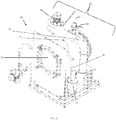
- FIGS. 2 and 3 One example of such a hybrid washing machine 14 is illustrated by FIGS. 2 and 3 .
- This hybrid washing machine 14 has features of both a washing unit and a drying unit incorporated into the same machine 14.
- the machine 14 is shown as having a barrel 24 (or cylinder) for holding textiles to be treated and to provide an enclosed space in which the treatment takes place.
- the barrel 24 may have a door 25 that is openable and closeable to maintain a closed system.
- the door 25 may contain door security provided by a pneumatic cylinder.
- the machine 14 is also shown as having a fluid/water inlet 26 (and accompanying valve) and a fresh air inlet/valve 30.
- the machine 14 may also have a pressure equalization port 31.
- the pressure equalization port 31 may be connected to a dedicated ozone gas release tube 68.
- This release tube 68 may be directly connected to plumbing of the ozone destruct unit 16 in order to allow for ozone gas to escape during the ozonation process and to prevent over-pressurization of the machine. Over pressurizing of the machine could cause ozone leaks and stop gas flow from maintaining proper ozone levels in the vessel, so this port 31 allows ozone to escape the barrel 24 and to be delivered to the ozone destruct unit 16.
- the port 31 may be provided as an open pipe on the highest part of the machine (so that water does not reach it) that directs ozone toward the ozone destruct unit.
- the port 31 is intended to avoid any pressurization in the machine while injecting ozone.
- Water or other solvent may be delivered to the barrel 24 through the fluid/water inlet 26.
- water may be injected to wet or dampen the textiles prior to the dry bleaching treatment.
- the ozone destruct valve 50 is opened when fluid is being injected into the barrel 24 to help equalize pressure inside the barrel 24.
- the blower component 20 causes the air to have a high flow rate with generally good air circulation. This can help provide uniform distribution of ozone within the barrel 24, leading to a uniform bleaching treatment of the textiles contained therein.
- the barrel 24 in order to maintain air circulation/air flow, the barrel 24 may be maintained at a slightly positive pressure in use. In another example, the barrel may be maintained at essentially ambient pressure due to the open decompression valve/port 31 which has a tube 68 connected to the destruct unit 16. It has been found that this may be conducive to creating a generally uniform ozone atmosphere. As the ozone generator 12 injects ozonated air into the machine at the ozone inlet 46, the blower component 20 forces movement of the air. As the barrel 24 becomes filled with ozonated air, the decompression valve/pressure equalization port 31 may maintain a near ambient pressure level within the barrel 24. In other examples, the pressure may be slightly positive. This allows continued flow and recirculation through the barrel 24.
- ozonated air can be continually injected into the barrel through ozone inlet 46.
- the pressure equalization port 31 assists with depressurization of the barrel 24.
- most ozonated air is re-circulated away from and back into the barrel 24 through the blower component 20 at a recirculation inlet 40.
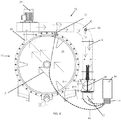
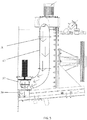
- FIGS. 4 and 5 illustrate schematics of air recirculation through the hybrid washing machine 14. Air flow is generally shown with arrows "A.” In these figures, the machine 14 is shown with a fan portion 38 of the blower component 20. There is also provided a fan exhaust 42, which serves as an air conduit for directing air from the fan portion 38 to the barrel.
- An ozone destruct valve 50 may be provided in order to control the flow of air back into the barrel or out of the barrel. When the ozone destruct valve 50 is closed, ozonated air is recirculated back into the barrel 24. When the ozone destruct valve 50 is opened at the end of the process, all of the ozonated air in the barrel 24 will be forced out of the ozone outlet 52 and into the ozone destruct unit 16.
- the ozone destruct valve/outlet configuration may be considered a high-volume flow valve/outlet because it is used for quickly moving ozonated air out of the barrel 24 and into the ozone destruct unit 16.
- the ozone destruct valve 50/outlet 52 work in conjunction with the high-volume blower component 20 and the fresh air valve 30 in order to force ozonated air out of the barrel 24 and replace it with fresh air during the destruct step.
- the fresh air valve 30 is opened during the ozone destruction step so that fresh air can be pulled in while destructing the ozonized air.
- FIGS. 6-8 show alternate embodiments of a hybrid washing machine.
- the ozone destruct valve 50 may be located closer to the fan 38, allowing the fan exhaust 42 to be shortened.
- FIG. 6 further illustrates one embodiment of a door security feature, which may be provided as a door security cylinder 88.
- FIG. 6 illustrates a humidity injector nozzle 82 and a steam inlet/valve 54. It should be understood that these features may be located at any appropriate location on machine 14. These features allow humidity and/or steam to be injected into the barrel 24 at any time desired during the process. The ability to add humidity may be related to holding a constant moisture level in the fabric throughout the bleaching process. Without humidity or steam, the level of moisture in the barrel may potentially decrease from both the air circulation and the addition of dry ozone gas.
- water or another liquid solvent may be added through the water inlet 26 in order to wet the materials. This may be done as a pre-rinse procedure, with one or more cycles to wet and extract fluid from the textiles. For example, there may be a spin cycle that will allow for various options of moisture retention and/or moisture removal. In other embodiments, it is possible to move directly into an ozonation process, particularly if it is desirable to conduct the bleaching process on soaking wet textiles. (It should also be understood that any water or fluid delivery steps may be eliminated if the process to be conducted on dry textiles.)
- the pressure equalization port 31 remains open any time that ozone is being injected into the machine 14. This is the only place that air can escape the machine, so it provides a depressurization function. Generally, whether in gas injection or just water fill, the port 31 remains open in order to allow air to escape the machine to avoid pressurization. Ozone may then be added into the ozone inlet 46 while the blower component 20 forces its circulation into the barrel 24. In one example, this may be accomplished by injecting ozone from the ozone generator 12 into the ozone/oxygen inlet 46 on the treatment component 14.
- the ozone generator 12 may include one or more pressure gauges in order to confirm that the ozone to be delivered is at an adequate pressure.
- the ozone/oxygen inlet 46 may be directly connected to the ozone generator 12. In one embodiment, the ozone/oxygen inlet 46 may be positioned on the fan exhaust 42. In another embodiment, the ozone/oxygen inlet 46 may have a hose connected therewith. This may allow the ozone generator 12 and the treatment component 14 to be positioned a distance from one another, if desired.
- FIG. 8 shows one potential location for ozone inlet 46.
- Ozone inlet 46 is generally fluidly connected to an ozone generator 12 (not shown in these figures).
- the ozone inlet is positioned on the fan exhaust 42 such that injected ozone will be blown directly into the barrel 24.
- Ozone injected into the ozone inlet 46 is delivered to the barrel 24 due to the force of air from the blower component fan.
- the blower component 20 pushes air from the fan 38, through the fan exhaust 42, picks up ozonated air injected through the ozone inlet 46, and directs the ozonated air into the barrel 24, causing circulation of the ozonated air.
- This ozone recirculation is one of the features that allows the system described herein to be more effective and repeatable than prior systems. It should be understood, however, that this feature, as well as the other features described herein, may be positioned elsewhere on the system.
- the blower component 20 causes circulation and re-circulation of ozone through the system. It can also help with off-gassing or de-gassing processes. For example, when the fan 38 is activated and the ozone destruct valve 50 is open, it is possible to quickly purge ozone from the interior of the machine 14. For example, as ozone is injected into the treatment component 14 and as the blower component 20 circulates ozone, the ozone destruct valve 50 remains closed so that the ozone remains in recirculation. When the ozone destruct valve 50 is opened, the ozonated air in the system is forced out through the ozone destruct outlet 52, to the ozone destruct unit 16.
- the exhausting of air from the barrel 24, through the ozone destruct valve 50, will start to create a vacuum on the barrel 24 void.
- the fresh air valve 30 is opened shortly after the ozone destruct valve 50 to allow fresh air into the barrel 22, satisfying the vacuum being created by ozonated air being forced out of the barrel 24 by the blower component 20, through ozone destruct valve 50 to ozone destruct 16.
- the fresh air valve 30 is only opened as part of the ozone destruct process. It allows fresh air to be pulled into the system and helps push the ozonated air out through the ozone destruct outlet 52.
- the drain 28 may also be opened in order to allow any remaining liquid or moisture to drain from the barrel 24.
- FIG. 8 also illustrates an ozone safety sensor 72.
- This may be an ambient ozone sensor provided in order to detect whether there is a proper/safe ozone level in washer, prior to unlocking the machine door 25.
- This sensor 72 may be activated after the bleaching process has been completed and the ozone has been evacuated from the barrel 24.
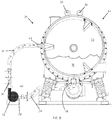
- FIGS. 9 and 18 generally show schematics illustrating water circulation through the machine 14. Water re-circulation may be useful for conducting wet bleaching processes. Water is shown with arrows "W.”
- ozonated water may be injected into the barrel 24 through a venturi injector 100, shown in FIGS. 11 and 12 .
- the venturi injector 100 combines ozone from an ozone generator 12 with water in order to provide ozonated water for a bleaching treatment.
- the venturi injector 100 may also be associated with a dynamic gas reactor 102 which can help agitate/mix ozone and water together.
- the dynamic gas reactor 102 may also be referred to as a static mixer. It is generally provided in order to dissolve the ozone gas into the water, increasing the transfer efficiency of the ozone into the water.
- tap water may be introduced to the barrel 24 via valve 26 in a certain volume, based on the dry weight of the textiles to be treated. Ozone is then dosed into the water, via the water recirculation loop, to reach a programmed dissolved ozone level, tailored for a particular bleaching process that is to be conducted. For example, ozone may be delivered to the water (via an injector 100) being recirculated and then now ozonated water may be re-injected into the barrel 24 through ozonated water inlet 104. Ozonated water may be introduced into the barrel 24 at a certain volume depending on the dry weight of the textiles to be treated. This weight is generally measured in kilograms, but it should be understood that other weight units may be used.
- the dry weight of garments may be correlated or related to the volume of water per garment; in this example, the formula for ozone dosage may be related to the total liters of water inside the machine.
- water may be injected into the barrel 24 through the water inlet 26 prior to a dry bleaching process, in order for the textiles to be wet and rinsed.
- extraneous water may be extracted prior to ozonation.
- the machine will generally be provided with extraction controls that can control and vary the amount of water or moisture that is allowed to remain in the machine. It also may be desirable to be able to vary the amount of water and moisture in order to obtain various bleaching effects.
- ozonated water remains in the barrel 24 throughout the bleaching process.
- a fluid or water re-circulation path is shown by arrows "W" in FIGS. 9 and 11 .
- the fluid may flow in a continuous loop.
- a fluid recirculating pump 32 may be provided for maintaining a flow of water between the barrel 24 and the venturi injector 100.
- Fluid recirculating pump 32 may have a pump inlet line 34 and a pump outlet line 36.
- the pump inlet line 34 may have a barrel connection point 56 at the barrel 24 and a pump connection point 58 at the pump 32.
- the pump outlet line 36 may have a pump connection point 60 at the pump 32 and a barrel connection point 64, leading back into the barrel 24.
- the fluid recirculating pump 32 is a pump capable of pumping lint.
- FIGS. 11 and 12 show water flow "W" through the alternate hybrid washing machines of FIGS 6-8 .
- the dosing check loop 110 may include a sample point 76, at which water may be removed from the barrel 24 of the hybrid washing machine 14.
- the sample point 76 may be used for obtaining sample water out the machine 14, without the need for filtration.
- the machine 14 may be designed with a fine mesh lint screen 77 that is screwed into the washer body via a custom fitting that may be welded onto the washer body in production. Water naturally flows through the screen and out of the washer, into a small void in a sample device. In one example, the water to be tested is allowed to leak out of the machine using gravity force.
- FIG. 16 illustrates a schematic of an exemplary dosing check loop in combination with ozone gas flow.
- the sample volume may then be pumped through a dissolved ozone sensor 114 via a small peristaltic pump 116.
- the dosing check loop system may also be provided with a temperature sensor T in order to measure the ozone washer temperature level. This data may help the system obtain accurate readings in order to alter ozone dosing.
- the dosing check loop 110 may be used to ensure that the water being circulated through the machine 14 is properly ozonated at the desired concentration.
- the dissolved ozone sensor 114 may be a fast response, high-range dissolved ozone sensor that is used to maintain a programmed set point for ozone dosing during a wet bleaching process.
- the dissolved ozone sensor 114 may be designed to measure up to 20 PPM of dissolved ozone, controlled precisely by the PID loop.
- the water makeup system may include a solenoid valve and a roto-meter.
- the makeup water system may pump tested water directly back into the system.
- makeup water may be added through the water inlet 26.
- the water makeup system may be used to replace sample water that has been removed from the machine at a rate that is generally equal to the water loss. This can ensure that proper water volume is maintained throughout a complete wet ozone bleaching process.
- the wet process features may be designed to operate without the need for filtration.
- the dynamic gas reactor 102 may be designed without edges or baffles that would otherwise trap lint. This can eliminate filter cleaning as a maintenance item. A clogged or inoperable filter may cause a critical variable or process failure point.
- the dry process may include the following process steps. Although the steps are numbered for ease of review, they may occur in any appropriate order:
- the wet process may include the following process steps. Although the steps are numbered for ease of review, they may occur in any appropriate order:
- the hybrid washing machine embodiment described herein thus provides the benefits of a commercial washing machine, along with the high-volume blower of a commercial dryer. Additionally, one of the additional benefits of the hybrid washing machine is that it can be used for "normal" washing procedures with no ozone applied. This features adds to the versatility of the equipment. It is possible to use the machine 14 as a dry process, in which the water recirculation flow is not used. It is also possible to use the machine 14 for wet ozone bleaching, due to the presence of the fluid recirculating pump 32. Thus, the ozone bleaching system 10 allows wet processes or dry processes to be conducted in the same machine. It also allows for ozonation process or can be used for normal washing processes when no ozonation process are to be run by the facility.
- Providing a fluid re-circulating pump 32, a venturi ozone injector 100, and an integral blower component 20 on a single hybrid washer 14 delivers a system that provides a complete process solution for chemical treatments, neutralizing, wetting, wet ozone, damp ozone gas application, dry ozone gas application, oxidation by-product removal, and final extraction-all in one machine.
- a complete process solution for chemical treatments neutralizing, wetting, wet ozone, damp ozone gas application, dry ozone gas application, oxidation by-product removal, and final extraction-all in one machine.
- water may be re-circulated through the machine for a rinsing process.
- Use of the system described herein does not require removal of the textiles from one machine to another. Instead, all processes may take place in the same treatment component/machine.
- the hybrid washing machine embodiment provided by this disclosure thus prevents operators from having to prepare wet textiles in one machine and then move the wetted textiles to the ozone process machine. This takes time and labor and can cause varied wetness across various loads of the same product type. Moreover, previous machines provided only gas volume ozone "destruct" after the process, without any way to rinse in the same machine. Again, this takes time and labor to move the textiles back to another machine for rinsing and extracting, or to a dryer for drying.
- the ozone generator 12 may also include an ozone dosing system control 64.
- ozone dosing system control 64 allows a single ozone generator 12 to deliver ozone to multiple textile ozone treatment components 14/hybrid washing machines.
- the dosing control system 64 is designed to control the concentration of ozone delivered so that the ozone concentration may be held constant as the flow rate increases and/or decreases.
- the dosing control system 64 may include a proportional integral derivative (PID) controller.
- PID proportional integral derivative
- the general goal is to maintain the concentration of ozone in the gas that is delivered to each component 14/hybrid washing machine at a constant dosing concentration. Maintaining a constant dosing concentration of ozone allows the process to be reliable and repeatable.
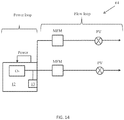
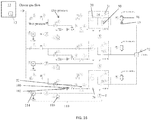
- FIG. 14 shows a schematic illustrating information flow for dosing control.
- the ozone generator 12 may have a high ozone concentration analyzer 13 associated therewith.
- the bleaching factor may be set at grams of ozone to be delivered per hour per weight of textiles (g/hr/weight units). In one specific example, the weight of textiles is measured in kilograms, such that the bleaching factor may be expressed as (g/h/r/kg).
- a software program/computer associated with the system may be designed to receive that input and create the proper ozone flow based thereon.
- a first PID loop measures and controls the power delivered to the ozone generator.
- a second PID loop measures and controls the ozone gas flow rate.
- the second PID loop may include a mass flow meter (MFM) and a proportional valve (PV).
- MFM mass flow meter
- PV proportional valve
- the system may adjust the ozone flow and the generator power in order to achieve the desired output in grams per hour at a desired specified ozone concentration. This allows a constant concentration of ozone gas to be applied based on the weight of textile to be treated.
- the dosing control system 64 delivers the same amount of ozone per unit weight, regardless of the number of machines 14 being serviced by the ozone generator 12 and its ozone dosing system 64.
- This constant concentration may be referred to as a "bleaching factor.”
- the bleaching factor is defined as the rate of ozone production per kilogram of denim (or other textile) material, generally based on dry weight.
- Multiple treatment machines of different sizes may call for different amounts of ozone, but by maintaining a constant dosing concentration by weight constant (e.g., 5-20%/wt%), the treatment process conducted by all machines may result in a similar bleaching factor delivered to textiles treated by the different machines.
- the dosing system provides rate equations such that dosing may be done automatically by the computer controlling the ozone generator 12.
- the ozone generator 12 of the ozone bleaching system 10 may use an ozone analyzer 13 in order to supply an exact dose of ozone in the gas processes.
- the ozone analyzer 13 is a high concentration ozone analyzer.
- the ozone analyzer 13 may provide precise ozone dosing by maintaining a constant concentration by weight. The dose may be controlled by providing a specified amount of ozone at a constant concentration by weight. This will allow for programming of a given "grams/hr/kg of fabric" dose of ozone, at a specific programmed ozone gas concentration by weight, to be supplied for any number of formulas.
- Previous systems have simply used high level sensors to measure the resulting ozone level in the washing machine, as a function of the power percentage setting programmed in before each cycle. They have not used ozone analyzers in the ozone generator itself. They also have not used active PID or %wt concentration controls utilized on previous ozone bleaching systems.
- Each system may be provided with a programmable logic controller (PLC).
- PLC programmable logic controller
- a specific ozone bleaching system may provide ozone dosing and concentration controls programmed into washer formulas. The valves and ozone flow may be controlled by the PLC, as illustrated by FIG. 16 .
- the ozone dosing information is communicated to the ozone system's PLC.
- the ozone concentration by mass can be calculated without any further operator input, and the process equation may be run by the machine automatically.
- Multiple actuation signals may be communicated between the washer and the ozone system during an ozone wet or dry process.
- Exemplary communications include but are not limited to an "operational ready" signal, and signals indicating when to add ozone, how much ozone to add, and the type of ozonation method to use (e.g., wet vs. dry).
- the communications may also include control of some of the washer process valves by the ozone generator system 12. These signals are received by the ozone dosing control system 64, and the system 64 implements changes. They are not operator dependent.
- the wet processing part of the process may allow for a precise dose of water in liters, with an analog flow meter, to each load for uniform pre-wetting of garments.
- This feature may be used in flushing dye, pre-wetting, equalizing moisture content, and removal of dye and unreacted dye materials.
- the hybrid washing machine 14 has controls that integrate the washer-related functions with ozone systems. These controls may be represented on a control panel or other appropriate user interface.
- the panel may be a touch screen, may have knobs/levers, may have buttons, or any other appropriate input mechanism.
- the washer machine may be a Tupesa machine and the ozone generator system may be a Guardian Manufacturing, Inc. ozone generator system.
- the ozone generator 12 may allow for modular expansion of ozone output capability and number of washers that are utilized.
- the system can simultaneously provide individualized ozone output to a single washer or to multiple washers, from a single ozone system.
- the combination of integrated controls with the machine and ozone system can provide precise and repeatable processes for the textile industry.
- the ozone bleaching system 10 can allow operators to create and tailor formulas for specific processes to be run over and over in order to produce tens of thousands of product pieces, with uniform results.
- each hybrid washer machine 22 will then communicate with the ozone generator 12 to "request" the amount of ozone needed to be sent for each process formula.
- These dosing controls can allow the textile producer to easily train employees on the automated process use.
- the washer and ozone system dosing control system 64 can ensure precise wetting, ozone dosing, neutralizing, rinsing, and extracting for any number of customer designed applications.
- valves and check valves may be provided for proper timing of machine pressurization, continuous process flow when needed, and for controlled ozone gas removal when needed in both dry and wet ozone processes.
- Such valves may be provided at or near the water inlet 26, the ozone inlet 46, the ozonated water inlet 104, and/or the ozone destruct outlet 52 (i.e., the ozone destruct valve 50).
- exemplary materials include, but are not limited to, stainless steel, or any other appropriate materials.
- the barrel and other materials in contact with ozone are made of SS316L stainless steel; the door gasket may be made with silicone; the pneumatic valves may be made with PTFE (Teflon) or Kalrez; the bearings and oil seals may be made with a synthetic rubber and flouropolymer elastomer, such as Viton.
- PTFE Teflon
- Kalrez Kalrez
- the bearings and oil seals may be made with a synthetic rubber and flouropolymer elastomer, such as Viton.
- an ozone bleaching system comprising: an ozone generator comprising an ozone dosing control system; a textile ozone treatment component fluidly coupled to the ozone generator, the textile ozone treatment component comprising a barrel for containing textiles to be treated and an integrated blower component for circulating ozonated air through the barrel; and an ozone destruct valve fluidly coupled to an ozone destruct unit.
- Ozone injected into the textile ozone treatment component may be recirculated by the blower component.
- the system may also include a fluid recirculating pump. This allows the textile ozone treatment to be used for wet and dry processes.
- the system may also include a venturi injector for injecting ozonated water into the barrel.
- the ozone dosing control system may control a concentration of ozone delivered to the hybrid washing machine so that the ozone concentration in the machine is held constant as the flow rate increases and/or decreases.
- a hybrid washing machine for use in ozone bleaching, the machine configured for use with dry ozone processes and wet ozone processes, comprising: a barrel for containing items to be ozone bleached; an integrated blower component for circulating ozonated air throughout the barrel; an ozone air inlet; an ozonated water inlet; a fluid recirculating pump; a decompression valve; and an ozone destruct valve fluidly coupled to an ozone destruct unit.
- One exemplary method for dry treating textiles to be bleached with ozone comprises: loading textiles into a hybrid washing machine/blower system as described; delivering water into a water inlet in order to wet the textiles prior to treatment; removing excess water from the textiles; injecting ozone into the barrel of the system; circulating ozone through the system using the blower component; maintaining and appropriate pressure of the barrel using the decompression valve; and evacuating ozone from the barrel via the ozone destruct valve for direction to the ozone destruct unit.
Landscapes
- Engineering & Computer Science (AREA)
- Textile Engineering (AREA)
- Chemical & Material Sciences (AREA)
- Materials Engineering (AREA)
- Health & Medical Sciences (AREA)
- Toxicology (AREA)
- Inorganic Chemistry (AREA)
- Accessory Of Washing/Drying Machine, Commercial Washing/Drying Machine, Other Washing/Drying Machine (AREA)
- Treatment Of Fiber Materials (AREA)
- Detail Structures Of Washing Machines And Dryers (AREA)
- Control Of Washing Machine And Dryer (AREA)
Description
- Embodiments of the present disclosure relate generally to methods and systems for bleaching textiles using ozone gas. In one example, there is provided a hybrid machine that incorporates certain features of a washer, but that also includes an integrated blower for gas distribution inside the machine. There is also provided an ozone dosing control system that allows for maintenance of a constant concentration of ozone in the machine. In one embodiment, the ozone output measured in grams/hour at this constant concentration in conjunction with the weight of product measured being treated may be referred to as the "bleaching factor."
- Ozone gas has been used to bleach denim, with mixed results. For example, some early attempts used ozone gas produced with various types and brands of ozone generators, and simply injected the ozone into commercial washers. The washers were standard commercial machines that the users would modify by sealing up vents and ports in order to get them to "hold" the ozone inside for the process. These processes relied primarily on the ozone system's stated output levels and delivered mixed results. They were generally used only for removal of excess indigo dye from denim after processing.
- Later machines used lower cost commercial "dryer type" machines, in place of washers, in efforts to offer a solution that was more sophisticated than simply connecting an ozone generator to an existing machine. These machines used a small blower to pull ozonated air out of the internal volume of the machines. However, these were dry machines only, not capable of handling any water injected into the system. They also failed to provide any flow rate or circulation of ozone inside the machine during processing.
- Some of these machines had ozone analyzers installed on or inside the machines to measure the amount of ozone concentration in the internal machine volume. However, these systems provide only a user-programmed power percentage variability on the ozone generator to vary ozone levels. This results in low reproducibility of bleaching effects, as well as variability based on operator knowledge. It is thus desirable to provide improved ozone bleaching systems.
-
WO01/34894 A1 -
US5313811 discloses an apparatus for the treatment of fabrics with oxidising gases such as ozone, in order to bleach them. The apparatus includes a housing with a door, a chamber and a barrel mounted for rotation therein. Associated with the housing is a venturi mixer for introducing the oxidising gas and a liquid into the chamber and a valve for removing liquid from the chamber. -
US2011/0083282 A1 discloses an apparatus and method for treatment of denim fabric with oxidising gases such as ozone, in order to bleach them. The system provides a pass of ozone from a compressor, to an oxygen concentrator, to a pressure regulator, to an ozone generator, past an analyzer, into a washer, and out to an ozone destruct. - The invention is as set out in the appended claims. Embodiments of the invention described herein thus provide systems and methods for bleaching textiles that are more reliable and reproducible. This disclosure provides for process control that allows a particular dosage rate or concentration of ozone to be held throughout the process. This disclosure also provides a hybrid washing machine that includes an integrated blowing system for circulating ozonated air inside the machine during the bleaching process. The hybrid washing machine may incorporate features of a sealed vessel, a washing machine, and the air circulation volume typically associated with commercial dryers.
-
FIG. 1A shows a front perspective view of one embodiment of an ozone bleaching system described herein. -
FIG. 1B shows a front plan view of the ozone bleaching system ofFIG. 1A . -
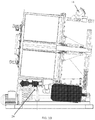
FIG. 2 shows a front perspective view of one embodiment of a hybrid washing machine for ozone treatment. -
FIG. 3 shows a rear perspective view of the hybrid washing machine ofFIG. 2 . -
FIG. 4 shows a front view schematic illustrating air flow circulation through a hybrid washing machine for ozone treatment. -
FIG. 5 shows a side schematic view of the airflow circulation ofFIG. 4 . -
FIG. 6 shows a front plan view of airflow through an alternate embodiment of a hybrid washing machine for ozone treatment. -
FIG. 7 shows a front perspective view of the machine ofFIG. 6 . -
FIG. 8 shows a rear plan view of the machine ofFIG. 6 . -
FIG. 9 shows a front view schematic illustrating water flow circulation through a hybrid washing machine for ozone treatment. -
FIG. 10 shows a side plan view of the machine ofFIG. 9 . -
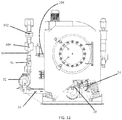
FIG. 11 shows a side plan view of water flow through an alternate embodiment of a hybrid washing machine for ozone treatment. -
FIG. 12 shows a front plan view of the machine ofFIG. 11 . -
FIG. 13 shows a schematic illustrating various components of an ozone bleaching system. -
FIG. 14 shows a schematic illustration of one embodiment of an ozone dosing control system. -
FIG. 15 shows a schematic of a water sample point on a hybrid washing machine. -
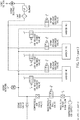
FIG. 16 shows a schematic of ozone gas flow whether used in a dry process or a wet process.FIG. 16 also illustrates that a single ozone generator may supply multiple ozone treatment components. -
FIG. 17 shows a schematic of a dry process treatment. -
FIG. 18 shows a schematic of a wet process treatment. - Embodiments of the present invention provide methods and systems for bleaching textiles with ozone using a hybrid washing machine that is specifically designed to be ozone compatible. Embodiments provide an ozone system having specific dosing capability, such that a precise and reproducible bleaching factor may be programmed. Embodiments provide a wet ozone bleaching process. The wet ozone bleaching process provides for recirculation of ozonated water contained in the machine. In further aspects, there is provided a dry ozone bleaching process. The dry ozone bleaching process provides for circulation and continued introduction of ozone in the air contained in the machine. These wet/dry processes are provided by a hybrid washing machine that includes an integrated blower formed in combination therewith. The blower may be used to force ozonated air through the system in a generally uniform manner and to control recirculation.
-
FIGS. 1A and 1B illustrate one example of various views of one embodiment of anozone bleaching system 10. This system embodiment is provided with anozone generator 12, a textileozone treatment component 14, and an ozonedestruct unit 16. Theozone generator 12 is shown having anoxygen supply rack 18, but it should be understood that the ozone generator may have an oxygen generator integrally formed therewith. For example, the oxygen generator (and/or oxygen supply rack) and the ozone generator may be contained in the same housing. Theozone generator 12 may also be provided with a highconcentration ozone analyzer 13. High concentration ozone analyzers are generally used for measuring the output of theozone generator 12, in real time while in operation. - The
ozone generator 12 may be fluidly connected with the textileozone treatment component 14. In use, the textileozone treatment component 14 is the portion of the system that is loaded with the textiles to be treated. In one specific embodiment, thetreatment component 14 may be designed as a hybrid washing machine, as described further below. - An
ozone destruct unit 16 is fluidly connected with an outlet of the textileozone treatment component 14. Theozone destruct unit 16 is a safety measure used when dealing with high concentrations of ozone. Because ozone is toxic and can be harmful, before ozonated air can leave thetreatment component 14, the high concentrations of ozone must be removed. Theozone destruct unit 16 provides a catalytic destruct process that will safely destroy (and convert back to oxygen) any excess ozone that is present in the air that is to be off gassed from thetreatment component 14. Anoptional demister 15 may also be included. Thedemister 15 can help remove any excess moisture from the air to be off gassed before it enters theozone destruct unit 16. - The
ozone bleaching system 10 described herein may also have a user interface screen. This user interface screen may communicate with a computer or processor or other electronic component for controlling weight percent (%wt) of ozone delivered. The system may also be designed to control flow rate, temperature, or any other variable that may be determined as useful to the bleaching processes described herein. - As shown in
FIGS. 1-5 and17 , the textileozone treatment component 14 may be provided with anintegrated blower component 20. Theblower component 20 circulates air flow volume within thetreatment component 14. This may be particularly useful for a dry bleaching process. Theblower component 20 forces ozonated air (and in some instances, fresh air) through thetreatment component 14. In one specific design, theblower component 20 may turn over the volume of air in thetreatment component 14 as quickly as about once every second. Theblower component 20 may include acentrifugal fan 38 and afan exhaust 42. - In one embodiment, the
blower component 20 may be a high flow blower that is built into the washer or textileozone treatment component 14 to allow quick turnover of the air volume in the machine. Forced airflow is believed to provide good contact of the ozone with the textiles/fabrics to be bleached. It is also believed to ensure that proper bleaching occurs in a uniform manner, throughout the load of garments. (At the end of the process, theblower component 20 may also be used to create a force of air to purge the machine during the destruct step. This can eliminate the need for use of a separate external fan for this process.) - In embodiments in which the textile
ozone treatment component 14 is designed as a hybrid washing machine, thetreatment component 14 may also incorporate features of a washer for performing pre-rinsing and for uniform wetting of the fabric prior to ozonation. It may also incorporate features that allow circulation of ozonated water for bleaching treatment. This may be particularly useful for a wet bleaching process. One example of such ahybrid washing machine 14 is illustrated byFIGS. 2 and3 . Thishybrid washing machine 14 has features of both a washing unit and a drying unit incorporated into thesame machine 14. In these figures, themachine 14 is shown as having a barrel 24 (or cylinder) for holding textiles to be treated and to provide an enclosed space in which the treatment takes place. Thebarrel 24 may have adoor 25 that is openable and closeable to maintain a closed system. In certain embodiments, thedoor 25 may contain door security provided by a pneumatic cylinder. - The
machine 14 is also shown as having a fluid/water inlet 26 (and accompanying valve) and a fresh air inlet/valve 30. Themachine 14 may also have apressure equalization port 31. Thepressure equalization port 31 may be connected to a dedicated ozonegas release tube 68. Thisrelease tube 68 may be directly connected to plumbing of theozone destruct unit 16 in order to allow for ozone gas to escape during the ozonation process and to prevent over-pressurization of the machine. Over pressurizing of the machine could cause ozone leaks and stop gas flow from maintaining proper ozone levels in the vessel, so thisport 31 allows ozone to escape thebarrel 24 and to be delivered to theozone destruct unit 16. In one embodiment, theport 31 may be provided as an open pipe on the highest part of the machine (so that water does not reach it) that directs ozone toward the ozone destruct unit. Theport 31 is intended to avoid any pressurization in the machine while injecting ozone. - Water or other solvent may be delivered to the
barrel 24 through the fluid/water inlet 26. For example, water may be injected to wet or dampen the textiles prior to the dry bleaching treatment. Theozone destruct valve 50 is opened when fluid is being injected into thebarrel 24 to help equalize pressure inside thebarrel 24. Once thebarrel 24 has been filled with ozonated air, theblower component 20 causes the air to have a high flow rate with generally good air circulation. This can help provide uniform distribution of ozone within thebarrel 24, leading to a uniform bleaching treatment of the textiles contained therein. - In one example, in order to maintain air circulation/air flow, the
barrel 24 may be maintained at a slightly positive pressure in use. In another example, the barrel may be maintained at essentially ambient pressure due to the open decompression valve/port 31 which has atube 68 connected to thedestruct unit 16. It has been found that this may be conducive to creating a generally uniform ozone atmosphere. As theozone generator 12 injects ozonated air into the machine at theozone inlet 46, theblower component 20 forces movement of the air. As thebarrel 24 becomes filled with ozonated air, the decompression valve/pressure equalization port 31 may maintain a near ambient pressure level within thebarrel 24. In other examples, the pressure may be slightly positive. This allows continued flow and recirculation through thebarrel 24. As a portion of used ozonated air escapes through thepressure equalization port 31 during the ozone gas injection process and is delivered to theozone destruct unit 16, ozonated air can be continually injected into the barrel throughozone inlet 46. Thus, thepressure equalization port 31 assists with depressurization of thebarrel 24. Additionally, most ozonated air is re-circulated away from and back into thebarrel 24 through theblower component 20 at arecirculation inlet 40. -
FIGS. 4 and5 illustrate schematics of air recirculation through thehybrid washing machine 14. Air flow is generally shown with arrows "A." In these figures, themachine 14 is shown with afan portion 38 of theblower component 20. There is also provided afan exhaust 42, which serves as an air conduit for directing air from thefan portion 38 to the barrel. - An
ozone destruct valve 50 may be provided in order to control the flow of air back into the barrel or out of the barrel. When theozone destruct valve 50 is closed, ozonated air is recirculated back into thebarrel 24. When theozone destruct valve 50 is opened at the end of the process, all of the ozonated air in thebarrel 24 will be forced out of theozone outlet 52 and into theozone destruct unit 16. The ozone destruct valve/outlet configuration may be considered a high-volume flow valve/outlet because it is used for quickly moving ozonated air out of thebarrel 24 and into theozone destruct unit 16. Theozone destruct valve 50/outlet 52 work in conjunction with the high-volume blower component 20 and thefresh air valve 30 in order to force ozonated air out of thebarrel 24 and replace it with fresh air during the destruct step. Thefresh air valve 30 is opened during the ozone destruction step so that fresh air can be pulled in while destructing the ozonized air. -
FIGS. 6-8 show alternate embodiments of a hybrid washing machine. In these embodiments, theozone destruct valve 50 may be located closer to thefan 38, allowing thefan exhaust 42 to be shortened.FIG. 6 further illustrates one embodiment of a door security feature, which may be provided as adoor security cylinder 88. - It is also possible for the hybrid washing machine embodiment to provide for steam and/or humidity to be added during the dry ozone bleaching treatment processes. The use of steam may help make the ozone destruction process proceed more quickly.
FIG. 6 illustrates ahumidity injector nozzle 82 and a steam inlet/valve 54. It should be understood that these features may be located at any appropriate location onmachine 14. These features allow humidity and/or steam to be injected into thebarrel 24 at any time desired during the process. The ability to add humidity may be related to holding a constant moisture level in the fabric throughout the bleaching process. Without humidity or steam, the level of moisture in the barrel may potentially decrease from both the air circulation and the addition of dry ozone gas. - In use, once textiles or garments are loaded into the
barrel 24, water or another liquid solvent may be added through thewater inlet 26 in order to wet the materials. This may be done as a pre-rinse procedure, with one or more cycles to wet and extract fluid from the textiles. For example, there may be a spin cycle that will allow for various options of moisture retention and/or moisture removal. In other embodiments, it is possible to move directly into an ozonation process, particularly if it is desirable to conduct the bleaching process on soaking wet textiles. (It should also be understood that any water or fluid delivery steps may be eliminated if the process to be conducted on dry textiles.) - The
pressure equalization port 31 remains open any time that ozone is being injected into themachine 14. This is the only place that air can escape the machine, so it provides a depressurization function. Generally, whether in gas injection or just water fill, theport 31 remains open in order to allow air to escape the machine to avoid pressurization. Ozone may then be added into theozone inlet 46 while theblower component 20 forces its circulation into thebarrel 24. In one example, this may be accomplished by injecting ozone from theozone generator 12 into the ozone/oxygen inlet 46 on thetreatment component 14. - The
ozone generator 12 may include one or more pressure gauges in order to confirm that the ozone to be delivered is at an adequate pressure. The ozone/oxygen inlet 46 may be directly connected to theozone generator 12. In one embodiment, the ozone/oxygen inlet 46 may be positioned on thefan exhaust 42. In another embodiment, the ozone/oxygen inlet 46 may have a hose connected therewith. This may allow theozone generator 12 and thetreatment component 14 to be positioned a distance from one another, if desired. -
FIG. 8 shows one potential location forozone inlet 46.Ozone inlet 46 is generally fluidly connected to an ozone generator 12 (not shown in these figures). In this example, the ozone inlet is positioned on thefan exhaust 42 such that injected ozone will be blown directly into thebarrel 24. Ozone injected into theozone inlet 46 is delivered to thebarrel 24 due to the force of air from the blower component fan. In the example shown, as illustrated by the arrows "A" inFIG. 4 , theblower component 20 pushes air from thefan 38, through thefan exhaust 42, picks up ozonated air injected through theozone inlet 46, and directs the ozonated air into thebarrel 24, causing circulation of the ozonated air. This ozone recirculation is one of the features that allows the system described herein to be more effective and repeatable than prior systems. It should be understood, however, that this feature, as well as the other features described herein, may be positioned elsewhere on the system. - The
blower component 20 causes circulation and re-circulation of ozone through the system. It can also help with off-gassing or de-gassing processes. For example, when thefan 38 is activated and theozone destruct valve 50 is open, it is possible to quickly purge ozone from the interior of themachine 14. For example, as ozone is injected into thetreatment component 14 and as theblower component 20 circulates ozone, theozone destruct valve 50 remains closed so that the ozone remains in recirculation. When theozone destruct valve 50 is opened, the ozonated air in the system is forced out through theozone destruct outlet 52, to theozone destruct unit 16. The exhausting of air from thebarrel 24, through theozone destruct valve 50, will start to create a vacuum on thebarrel 24 void. Thefresh air valve 30 is opened shortly after theozone destruct valve 50 to allow fresh air into thebarrel 22, satisfying the vacuum being created by ozonated air being forced out of thebarrel 24 by theblower component 20, throughozone destruct valve 50 toozone destruct 16. Thefresh air valve 30 is only opened as part of the ozone destruct process. It allows fresh air to be pulled into the system and helps push the ozonated air out through theozone destruct outlet 52. When the ozone destruct cycle has been completed, thedrain 28 may also be opened in order to allow any remaining liquid or moisture to drain from thebarrel 24. -
FIG. 8 also illustrates anozone safety sensor 72. This may be an ambient ozone sensor provided in order to detect whether there is a proper/safe ozone level in washer, prior to unlocking themachine door 25. Thissensor 72 may be activated after the bleaching process has been completed and the ozone has been evacuated from thebarrel 24. -
FIGS. 9 and18 generally show schematics illustrating water circulation through themachine 14. Water re-circulation may be useful for conducting wet bleaching processes. Water is shown with arrows "W." For a wet process, ozonated water may be injected into thebarrel 24 through aventuri injector 100, shown inFIGS. 11 and12 . Theventuri injector 100 combines ozone from anozone generator 12 with water in order to provide ozonated water for a bleaching treatment. Theventuri injector 100 may also be associated with adynamic gas reactor 102 which can help agitate/mix ozone and water together. Thedynamic gas reactor 102 may also be referred to as a static mixer. It is generally provided in order to dissolve the ozone gas into the water, increasing the transfer efficiency of the ozone into the water. - In one example, tap water may be introduced to the
barrel 24 viavalve 26 in a certain volume, based on the dry weight of the textiles to be treated. Ozone is then dosed into the water, via the water recirculation loop, to reach a programmed dissolved ozone level, tailored for a particular bleaching process that is to be conducted. For example, ozone may be delivered to the water (via an injector 100) being recirculated and then now ozonated water may be re-injected into thebarrel 24 through ozonatedwater inlet 104. Ozonated water may be introduced into thebarrel 24 at a certain volume depending on the dry weight of the textiles to be treated. This weight is generally measured in kilograms, but it should be understood that other weight units may be used. The dry weight of garments may be correlated or related to the volume of water per garment; in this example, the formula for ozone dosage may be related to the total liters of water inside the machine. (It should also be understood that water may be injected into thebarrel 24 through thewater inlet 26 prior to a dry bleaching process, in order for the textiles to be wet and rinsed. However, for a dry process, extraneous water may be extracted prior to ozonation. The machine will generally be provided with extraction controls that can control and vary the amount of water or moisture that is allowed to remain in the machine. It also may be desirable to be able to vary the amount of water and moisture in order to obtain various bleaching effects.) For a wet bleaching process, however, ozonated water remains in thebarrel 24 throughout the bleaching process. - A fluid or water re-circulation path is shown by arrows "W" in
FIGS. 9 and11 . The fluid may flow in a continuous loop. Afluid recirculating pump 32 may be provided for maintaining a flow of water between thebarrel 24 and theventuri injector 100.Fluid recirculating pump 32 may have apump inlet line 34 and apump outlet line 36. Thepump inlet line 34 may have abarrel connection point 56 at thebarrel 24 and apump connection point 58 at thepump 32. Thepump outlet line 36 may have apump connection point 60 at thepump 32 and abarrel connection point 64, leading back into thebarrel 24. In one embodiment, thefluid recirculating pump 32 is a pump capable of pumping lint. This can ensure that the pump can accommodate and provide proper flow through the system. Once the bleaching treatment cycle has been completed, any water remaining in thebarrel 24 may exit throughdrain 28.FIGS. 11 and12 show water flow "W" through the alternate hybrid washing machines ofFIGS 6-8 . - In order to properly dose during the wet bleaching process, it may be desirable to provide a
dosing check loop 110, as shown inFIGS. 15 ,16 , and18 . Thedosing check loop 110 may include asample point 76, at which water may be removed from thebarrel 24 of thehybrid washing machine 14. Thesample point 76 may be used for obtaining sample water out themachine 14, without the need for filtration. In one embodiment, themachine 14 may be designed with a finemesh lint screen 77 that is screwed into the washer body via a custom fitting that may be welded onto the washer body in production. Water naturally flows through the screen and out of the washer, into a small void in a sample device. In one example, the water to be tested is allowed to leak out of the machine using gravity force. -
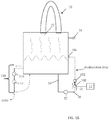
FIG. 16 illustrates a schematic of an exemplary dosing check loop in combination with ozone gas flow. The sample volume may then be pumped through a dissolvedozone sensor 114 via a smallperistaltic pump 116. The dosing check loop system may also be provided with a temperature sensor T in order to measure the ozone washer temperature level. This data may help the system obtain accurate readings in order to alter ozone dosing. Thedosing check loop 110 may be used to ensure that the water being circulated through themachine 14 is properly ozonated at the desired concentration. - In one specific embodiment, the dissolved
ozone sensor 114 may be a fast response, high-range dissolved ozone sensor that is used to maintain a programmed set point for ozone dosing during a wet bleaching process. The dissolvedozone sensor 114 may be designed to measure up to 20 PPM of dissolved ozone, controlled precisely by the PID loop. - In order to accommodate for the sample water removed, there may also be provided a water makeup system. In one specific example, the water makeup system may include a solenoid valve and a roto-meter. In another example, the makeup water system may pump tested water directly back into the system. In a further example, makeup water may be added through the
water inlet 26. In any event, the water makeup system may be used to replace sample water that has been removed from the machine at a rate that is generally equal to the water loss. This can ensure that proper water volume is maintained throughout a complete wet ozone bleaching process. - The wet process features may be designed to operate without the need for filtration. For example, the
dynamic gas reactor 102 may be designed without edges or baffles that would otherwise trap lint. This can eliminate filter cleaning as a maintenance item. A clogged or inoperable filter may cause a critical variable or process failure point. In another embodiment, it may be possible to blow compressed air against thelint screen mesh 77 in order to keep thesampling port 76 accessible. - As discussed, it is possible to use the
ozone bleaching system 10 for use with dry processes, wet processes, and/or humid/steam processes. In one example, the dry process may include the following process steps. Although the steps are numbered for ease of review, they may occur in any appropriate order: - 1. Enter garment weight and select desired process program number on
washer 14 user interface screen. - 2. Load garments into
barrel 24;close door 25. - 3. Close
fresh air valve 30, closeozone destruct valve 50. Beginozone generator 12 warm up. - 4. Start air circulation/
blower component 20 and ozone injection intoozone inlet 46. - 5. Once desired ozone level is reached, a timer on the user interface may count down (for operator information) and the system may maintain dosing of ozone at the indicated level for the appropriate time duration (as described further below). As ozone is injected/circulated, the
pressure port 31 will bleed a small amount of ozonated gas to the ozone destruct unit. (This is likely to be controlled by the computer that is used to set the bleaching the factor, but it should be understood that these steps may be conducted manually, if desired.) - 6. When the process is finished, ozone injection is stopped.
- 7.
Ozone destruct valve 50 andfresh air valve 30 opened, andozone destruct unit 16 then catalyzes ozone until a safe concentration is reached (as indicated by a sensor). Theblower 20 forces air out of thebarrel 24 and into theozone destruct unit 16. - 8. Air recirculation is stopped.
- 9. Appropriate rinsing and/or finishing steps may then be completed. For example, the garments may be rinsed with water with steam heating. Water may be delivered, drained and extracted (for example, by spinning of the barrel). (It should also be understood that rinsing and/or pre-wetting steps may also accompany the dry process, and would generally take place prior to # 3 above.)
- In another example, the wet process may include the following process steps. Although the steps are numbered for ease of review, they may occur in any appropriate order:
- 1. Enter garment weight and select desired process program number, on
washer 14 user interface screen. - 2. Load garments into
barrel 24;close door 25. - 3. Close
fresh air valve 30, closeozone destruct valve 50. Beginozone generator 12 warm up. - 4.
Open water valve 26 and fill machine to proper water level. - 5. Start
venturi injector 100 and injection/re-circulation of ozonated washer intoinlet 104.Fluid recirculation pump 32 maintains flow of ozone-depleted water out of thebarrel 24, through theventuri injector 100 to add ozone back into the water, and delivers the re-ozonated water back into thebarrel 24. - 6. The system may maintain dosing of ozone at the indicated level for the appropriate time duration. As ozonated water is injected/recirculated, a water testing/measuring loop may pull out a small amount of ozonated water for testing and to provide feedback to the computer about the amount of ozone to be injected at the
venturi injector 100 in order to maintain the set dissolved ozone level, for the programmed bleaching process. - 6. When the process is finished, ozone injection is stopped,
circulation pump 32 is stopped, and drain 28 andfresh air valve 30 are opened. - 7. Appropriate rinsing and/or finishing steps may then be completed. For example, the garments may be rinsed with water with steam heating. Water may be delivered, drained and extracted (for example, by spinning of the barrel).
- 8. At the completion of the entire wet bleaching process, excess water in the
barrel 24 is removed viadrain 28. - 9. Prior to beginning a new ozone bleaching cycle, the
water recirculation lines pump 32 with thedrain 28 open, so that the new cycle begins with a clean system. - The hybrid washing machine embodiment described herein thus provides the benefits of a commercial washing machine, along with the high-volume blower of a commercial dryer. Additionally, one of the additional benefits of the hybrid washing machine is that it can be used for "normal" washing procedures with no ozone applied. This features adds to the versatility of the equipment. It is possible to use the
machine 14 as a dry process, in which the water recirculation flow is not used. It is also possible to use themachine 14 for wet ozone bleaching, due to the presence of thefluid recirculating pump 32. Thus, theozone bleaching system 10 allows wet processes or dry processes to be conducted in the same machine. It also allows for ozonation process or can be used for normal washing processes when no ozonation process are to be run by the facility. Providing a fluidre-circulating pump 32, aventuri ozone injector 100, and anintegral blower component 20 on asingle hybrid washer 14 delivers a system that provides a complete process solution for chemical treatments, neutralizing, wetting, wet ozone, damp ozone gas application, dry ozone gas application, oxidation by-product removal, and final extraction-all in one machine. For example, once the ozone treatment has been completed, water may be re-circulated through the machine for a rinsing process. Use of the system described herein does not require removal of the textiles from one machine to another. Instead, all processes may take place in the same treatment component/machine. - The hybrid washing machine embodiment provided by this disclosure thus prevents operators from having to prepare wet textiles in one machine and then move the wetted textiles to the ozone process machine. This takes time and labor and can cause varied wetness across various loads of the same product type. Moreover, previous machines provided only gas volume ozone "destruct" after the process, without any way to rinse in the same machine. Again, this takes time and labor to move the textiles back to another machine for rinsing and extracting, or to a dryer for drying.
- To save time, many operators of prior art machines did not rinse after the ozonation process. This left unreacted die materials in the fabric. These materials have a chemical smell that remains in the fabric, after packaging. This has given a negative image to ozone-processed products (because of the smell when products are unpackaged). By integrating the wetting, ozonation, and rinsing processes into the same machine, these problems can be avoided.
- The
ozone generator 12 may also include an ozonedosing system control 64. One example of a dosing schematic is illustrated inFIG. 14 . Thedosing control system 64 allows asingle ozone generator 12 to deliver ozone to multiple textileozone treatment components 14/hybrid washing machines. Thedosing control system 64 is designed to control the concentration of ozone delivered so that the ozone concentration may be held constant as the flow rate increases and/or decreases. In one embodiment, thedosing control system 64 may include a proportional integral derivative (PID) controller. The general goal is to maintain the concentration of ozone in the gas that is delivered to eachcomponent 14/hybrid washing machine at a constant dosing concentration. Maintaining a constant dosing concentration of ozone allows the process to be reliable and repeatable. -
FIG. 14 shows a schematic illustrating information flow for dosing control. Theozone generator 12 may have a highozone concentration analyzer 13 associated therewith. The bleaching factor may be set at grams of ozone to be delivered per hour per weight of textiles (g/hr/weight units). In one specific example, the weight of textiles is measured in kilograms, such that the bleaching factor may be expressed as (g/h/r/kg). A software program/computer associated with the system may be designed to receive that input and create the proper ozone flow based thereon. A first PID loop measures and controls the power delivered to the ozone generator. A second PID loop measures and controls the ozone gas flow rate. The second PID loop may include a mass flow meter (MFM) and a proportional valve (PV). The system may adjust the ozone flow and the generator power in order to achieve the desired output in grams per hour at a desired specified ozone concentration. This allows a constant concentration of ozone gas to be applied based on the weight of textile to be treated. - In one example, the
dosing control system 64 delivers the same amount of ozone per unit weight, regardless of the number ofmachines 14 being serviced by theozone generator 12 and itsozone dosing system 64. This constant concentration may be referred to as a "bleaching factor." In one example, the bleaching factor is defined as the rate of ozone production per kilogram of denim (or other textile) material, generally based on dry weight. Multiple treatment machines of different sizes may call for different amounts of ozone, but by maintaining a constant dosing concentration by weight constant (e.g., 5-20%/wt%), the treatment process conducted by all machines may result in a similar bleaching factor delivered to textiles treated by the different machines. The dosing system provides rate equations such that dosing may be done automatically by the computer controlling theozone generator 12. - By contrast, prior art machines have not addressed specific dosing of ozone or the concentration by weight concept. Instead, they focused only on measuring ozone once it was delivered to the machine. Once operators loaded textiles into an ozone processing machine, they could not set a bleaching factor (i.e., a rate of ozone production per kilogram of textile) to be delivered. Instead, they had to input several process variables, such as time, ozone generator power output, destruct time, among others. Sensors inside the machines gave a reference of the ozone in the machine, but they did not control level of ozone present via PID loop. The results of treatment depended upon expertise and knowledge of the operator, as opposed to a consistent and reliable setting. The present inventors have solved this problem, at least by recognizing the benefits of dosing ozone vs. measuring ozone already in the machine.
- In one embodiment, the
ozone generator 12 of theozone bleaching system 10 may use anozone analyzer 13 in order to supply an exact dose of ozone in the gas processes. In one example, theozone analyzer 13 is a high concentration ozone analyzer. In one example, theozone analyzer 13 may provide precise ozone dosing by maintaining a constant concentration by weight. The dose may be controlled by providing a specified amount of ozone at a constant concentration by weight. This will allow for programming of a given "grams/hr/kg of fabric" dose of ozone, at a specific programmed ozone gas concentration by weight, to be supplied for any number of formulas. Previous systems have simply used high level sensors to measure the resulting ozone level in the washing machine, as a function of the power percentage setting programmed in before each cycle. They have not used ozone analyzers in the ozone generator itself. They also have not used active PID or %wt concentration controls utilized on previous ozone bleaching systems. - Each system may be provided with a programmable logic controller (PLC). A specific ozone bleaching system may provide ozone dosing and concentration controls programmed into washer formulas. The valves and ozone flow may be controlled by the PLC, as illustrated by
FIG. 16 . When a particular formula is selected in the washer programmer, the ozone dosing information is communicated to the ozone system's PLC. In one example, there may be a custom equation designed for the ozone system. The equation may calculate the ozone delivery from the data entered into the washer programs. For example, the operator need only enter the weight of garments put into the machine (generally in kilograms) and a desired fabric bleaching factor (measured by g/hr/kg). The ozone concentration by mass can be calculated without any further operator input, and the process equation may be run by the machine automatically. Multiple actuation signals may be communicated between the washer and the ozone system during an ozone wet or dry process. Exemplary communications include but are not limited to an "operational ready" signal, and signals indicating when to add ozone, how much ozone to add, and the type of ozonation method to use (e.g., wet vs. dry). The communications may also include control of some of the washer process valves by theozone generator system 12. These signals are received by the ozonedosing control system 64, and thesystem 64 implements changes. They are not operator dependent. - In one embodiment, the wet processing part of the process may allow for a precise dose of water in liters, with an analog flow meter, to each load for uniform pre-wetting of garments. This feature may be used in flushing dye, pre-wetting, equalizing moisture content, and removal of dye and unreacted dye materials.
- In one example, the
hybrid washing machine 14 has controls that integrate the washer-related functions with ozone systems. These controls may be represented on a control panel or other appropriate user interface. The panel may be a touch screen, may have knobs/levers, may have buttons, or any other appropriate input mechanism. - In one specific embodiment, the washer machine may be a Tupesa machine and the ozone generator system may be a Guardian Manufacturing, Inc. ozone generator system. The
ozone generator 12 may allow for modular expansion of ozone output capability and number of washers that are utilized. The system can simultaneously provide individualized ozone output to a single washer or to multiple washers, from a single ozone system. The combination of integrated controls with the machine and ozone system can provide precise and repeatable processes for the textile industry. For example, theozone bleaching system 10 can allow operators to create and tailor formulas for specific processes to be run over and over in order to produce tens of thousands of product pieces, with uniform results. The various production programs, with cycle steps and ozone bleaching factor, may be programmed directly into the washers. In this example, eachhybrid washer machine 22 will then communicate with theozone generator 12 to "request" the amount of ozone needed to be sent for each process formula. These dosing controls can allow the textile producer to easily train employees on the automated process use. The washer and ozone systemdosing control system 64 can ensure precise wetting, ozone dosing, neutralizing, rinsing, and extracting for any number of customer designed applications. - A series of valves and check valves may be provided for proper timing of machine pressurization, continuous process flow when needed, and for controlled ozone gas removal when needed in both dry and wet ozone processes. Such valves may be provided at or near the
water inlet 26, theozone inlet 46, theozonated water inlet 104, and/or the ozone destruct outlet 52 (i.e., the ozone destruct valve 50). - It should be understood that all of the components used in connection with the
ozone bleaching system 10 described herein may be designed to be ozone compatible. Exemplary materials include, but are not limited to, stainless steel, or any other appropriate materials. In specific examples, the barrel and other materials in contact with ozone are made of SS316L stainless steel; the door gasket may be made with silicone; the pneumatic valves may be made with PTFE (Teflon) or Kalrez; the bearings and oil seals may be made with a synthetic rubber and flouropolymer elastomer, such as Viton. These specifics are provided as a single example and are not intended to be limiting in any way. The general goal is to provide all system components, seal components, and other components of a material that is compatible with ozone in order to prevent degradation of the seals/components and to prevent leakage of ozone from the system. - There is thus provided an ozone bleaching system, comprising: an ozone generator comprising an ozone dosing control system; a textile ozone treatment component fluidly coupled to the ozone generator, the textile ozone treatment component comprising a barrel for containing textiles to be treated and an integrated blower component for circulating ozonated air through the barrel; and an ozone destruct valve fluidly coupled to an ozone destruct unit. Ozone injected into the textile ozone treatment component may be recirculated by the blower component.
- In some embodiments, the system may also include a fluid recirculating pump. This allows the textile ozone treatment to be used for wet and dry processes. In this embodiment, the system may also include a venturi injector for injecting ozonated water into the barrel.
- In another embodiment, the ozone dosing control system may control a concentration of ozone delivered to the hybrid washing machine so that the ozone concentration in the machine is held constant as the flow rate increases and/or decreases.
- Further embodiments provide a hybrid washing machine for use in ozone bleaching, the machine configured for use with dry ozone processes and wet ozone processes, comprising: a barrel for containing items to be ozone bleached; an integrated blower component for circulating ozonated air throughout the barrel; an ozone air inlet; an ozonated water inlet; a fluid recirculating pump; a decompression valve; and an ozone destruct valve fluidly coupled to an ozone destruct unit.
- One exemplary method for dry treating textiles to be bleached with ozone, comprises: loading textiles into a hybrid washing machine/blower system as described; delivering water into a water inlet in order to wet the textiles prior to treatment; removing excess water from the textiles; injecting ozone into the barrel of the system; circulating ozone through the system using the blower component; maintaining and appropriate pressure of the barrel using the decompression valve; and evacuating ozone from the barrel via the ozone destruct valve for direction to the ozone destruct unit.
- Changes and modifications, additions and deletions may be made to the structures and methods recited above and shown in the drawings without departing from the scope of the disclosure or the following claims.
Claims (14)
- An ozone bleaching system, comprising:an ozone generator (12);a textile ozone treatment component (14) fluidly coupled to the ozone generator, the textile ozone treatment component comprising a barrel (24) for containing textiles to be treated; andan ozone destruct valve (50) fluidly coupled to an ozone destruct unit (16),
characterized in that:the textile ozone treatment component comprises an integrated high volume blower component (20) configured for circulating ozonated air through the barrel during a dry bleaching process, the integrated high volume blower component (20) comprising a high volume blower fan (38) and a fan exhaust (42), the fan exhaust (42) comprising an ozone inlet (46) configured to receive ozone from the ozone generator (12), wherein in use during a dry bleaching process, the integrated high volume blower component (20) pushes air from the blower fan (38) through the fan exhaust (42) and forces mixed ozonated air created via ozone injected into the ozone inlet (46) mixing with air into the barrel (24) at a high flow rate, causing circulation of ozonated air in the barrel (24);wherein the textile ozone treatment component (14) comprises a re-circulation inlet (40) leading from the barrel (24) of the textile ozone treatment component (14) to the integrated high volume blower component (20), wherein ozone injected into the textile ozone treatment component (14) is recirculated by the blower component (20); andwherein the ozone generator (12) comprises an ozone dosing control system (64) that comprises a first PID (proportional integral derivative) loop that controls power delivered to the ozone generator (12) and a second PID loop that controls ozone gas flow rate using a mass flow meter and a proportional valve, wherein the ozone dosing control system (64) delivers a specified ozone dose at a specified gas concentration by weight based on weight of textiles to be treated. - The system of claim 1, wherein the textile ozone treatment component (14) comprises a hybrid washing machine.
- The system of any of the preceding claims, further comprising demister (15) positioned to receive and treat ozonated air prior to its delivery to the ozone destruct unit (16).
- The system of any of the preceding claims, further comprising a pressure equalization port (31), wherein when the pressure equalization port (31) and the ozone destruct valve (50) are open, ozonated air in the textile ozone treatment component is delivered to the ozone destruct unit (16).
- The system of any of the preceding claims, further comprising a water inlet (26) for injection water for a pre-rinse procedure, for a wet bleaching process, or both.
- The system of any of the preceding claims, further comprising a steam valve (54) or a humidity injection port (82) or both.
- The system of any of the preceding claims, further comprising a fluid recirculating pump (32) and a drain (28) for use during a wet bleaching process.
- The system of claim 7, further comprising a filter or screen (77) between the textile ozone treatment component (14) and the fluid recirculating pump (32).
- The system of any of claims 7-8, wherein the fluid recirculating pump (32) comprises a pump capable of circulating solids and lint without a filtration component.
- The system of any of claims 7-9, wherein water injected into the textile ozone treatment component (14) is re-circulated by the fluid recirculating pump (32).
- The system of any of claims 7-10, further comprising a venturi injector (100) for injecting ozonated water into the barrel (24).
- The system of any of claims 7-11, further comprising a dosing check loop (110).
- The system of any of the preceding claims, wherein the ozone dosing control system (64) controls a concentration by weight of ozone delivered to the textile ozone treatment component (14) so that the ozone concentration by weight in the component is held constant as the flow rate increases and/or decreases based on weight of textile to be treated.
- A method for dry treating textiles to be bleached with ozone, comprising:loading textiles into the system of any of the preceding claims;delivering water into a water inlet (26) in order to wet the textiles prior to treatment;removing excess water from the textiles;injecting ozone into the textile ozone treatment component (14) of the system at a specified dose and concentration by weight based on weight of textiles to be treated;circulating ozone through the component via an integrated high volume blower component (20);maintaining an appropriate pressure of the barrel (24) using a decompression valve (31); andevacuating ozone from the barrel (24) via the ozone destruct valve (50) for direction to the ozone destruct unit (16).
Applications Claiming Priority (2)
| Application Number | Priority Date | Filing Date | Title |
|---|---|---|---|
| US201461983661P | 2014-04-24 | 2014-04-24 | |
| PCT/US2015/027246 WO2015164577A1 (en) | 2014-04-24 | 2015-04-23 | Methods and systems for bleaching textiles |
Publications (2)
| Publication Number | Publication Date |
|---|---|
| EP3137670A1 EP3137670A1 (en) | 2017-03-08 |
| EP3137670B1 true EP3137670B1 (en) | 2019-05-22 |
Family
ID=53059476
Family Applications (1)
| Application Number | Title | Priority Date | Filing Date |
|---|---|---|---|
| EP15721452.9A Active EP3137670B1 (en) | 2014-04-24 | 2015-04-23 | Methods and systems for bleaching textiles |
Country Status (5)
| Country | Link |
|---|---|
| US (1) | US9493896B2 (en) |
| EP (1) | EP3137670B1 (en) |
| CN (1) | CN106661793B (en) |
| TR (1) | TR201909077T4 (en) |
| WO (1) | WO2015164577A1 (en) |
Families Citing this family (14)
| Publication number | Priority date | Publication date | Assignee | Title |
|---|---|---|---|---|
| US10442233B2 (en) * | 2013-09-19 | 2019-10-15 | Revolaze, LLC | System and method of generating a pattern used to process a surface of a fabric through laser irradiation, and fabric created thereby |
| US10227720B2 (en) | 2014-04-24 | 2019-03-12 | Guardian Manufacturing, Inc. | Ozone process for color removal |
| WO2017066000A1 (en) * | 2015-10-14 | 2017-04-20 | Guardian Manufacturing, Inc. | Color removal of water with ozone in a textile bleaching process |
| CN106283480A (en) * | 2016-09-30 | 2017-01-04 | 无锡小天鹅股份有限公司 | Roller washing machine |
| EP3519623B8 (en) * | 2016-10-03 | 2022-07-13 | Acticell GmbH | Environmentally friendly method for local and reproducible bleaching of fabric with ozone |
| US10323357B1 (en) * | 2017-12-28 | 2019-06-18 | Naturon Co., Ltd | Functional substance adsorption device for fiber |
| TR201807275A2 (en) * | 2018-05-23 | 2018-06-21 | Muekremin Buelbuel | A MACHINE WASHING, BLEACHING AND EFFECT MAKING PROCESSING BY RUBBER METHOD |
| KR101918154B1 (en) * | 2018-06-28 | 2019-01-29 | 이효진 | Clothing product decolortion apparatus and method for using ozone |
| CN108978088A (en) * | 2018-07-30 | 2018-12-11 | 上海森浩印染机械有限公司 | The method and apparatus of ozone removal floating color |
| TR201813764A2 (en) * | 2018-09-24 | 2018-11-21 | Muekremin Buelbuel | A ROLLING MACHINE |
| WO2020181242A1 (en) | 2019-03-06 | 2020-09-10 | Guardian Manufacturing, Inc. | Ozone process for color removal and drain system |
| WO2021206663A1 (en) * | 2020-04-09 | 2021-10-14 | Buelbuel Dogan | A thread rolling machine with silent operation feature |
| CN112853648A (en) * | 2020-12-22 | 2021-05-28 | 博格曼(江苏)纺织科技有限公司 | Textile cloth ozone finishing method |
| US12595612B2 (en) | 2021-12-13 | 2026-04-07 | Whirlpool Corporation | Appliance sanitization system that utilizes ozone gas |
Family Cites Families (7)
| Publication number | Priority date | Publication date | Assignee | Title |
|---|---|---|---|---|
| US5313811A (en) | 1992-03-10 | 1994-05-24 | Eric Wasinger | Apparatus for treatment of dyed garments and fabrics with oxidizing gases |
| US6571585B1 (en) * | 1999-11-10 | 2003-06-03 | Eric Wasinger | Apparatus for treatment of dyed garments and fabrics with oxidizing gases |
| DE60221160D1 (en) * | 2002-05-17 | 2007-08-23 | Howa K K | TEXTILING DYEING DEVICE AND METHOD |
| CN1542201A (en) * | 2003-04-29 | 2004-11-03 | 寰宇科技有限公司 | Ozone Laundry System and Method |
| US20110083282A1 (en) * | 2009-10-14 | 2011-04-14 | Jason Myung | Ozone process for denim |
| EP2562136A1 (en) | 2011-08-25 | 2013-02-27 | Primozone Production AB | Distribution of a gas to a plurality of recipients |
| US9562318B2 (en) * | 2012-09-07 | 2017-02-07 | Kevin Jin Youn | Method for decolorizing a denim fabric using ozone |
-
2015
- 2015-04-23 EP EP15721452.9A patent/EP3137670B1/en active Active
- 2015-04-23 US US14/694,120 patent/US9493896B2/en not_active Expired - Fee Related
- 2015-04-23 WO PCT/US2015/027246 patent/WO2015164577A1/en not_active Ceased
- 2015-04-23 TR TR2019/09077T patent/TR201909077T4/en unknown
- 2015-04-23 CN CN201580031795.5A patent/CN106661793B/en not_active Expired - Fee Related
Non-Patent Citations (1)
| Title |
|---|
| None * |
Also Published As
| Publication number | Publication date |
|---|---|
| CN106661793A (en) | 2017-05-10 |
| TR201909077T4 (en) | 2019-07-22 |
| WO2015164577A1 (en) | 2015-10-29 |
| CN106661793B (en) | 2019-01-18 |
| US9493896B2 (en) | 2016-11-15 |
| EP3137670A1 (en) | 2017-03-08 |
| US20150308030A1 (en) | 2015-10-29 |
Similar Documents
| Publication | Publication Date | Title |
|---|---|---|
| US9493896B2 (en) | Methods and systems for bleaching textiles | |
| US10227720B2 (en) | Ozone process for color removal | |
| US20190234011A1 (en) | Ozone process for color removal and drain system | |
| KR100647251B1 (en) | Decolorization processing apparatus and decolorization processing method of textile products | |
| WO2017066000A1 (en) | Color removal of water with ozone in a textile bleaching process | |
| CN102458208B (en) | Household appliance with ozone generator and ozone removal device and related method | |
| CN102933760B (en) | For the method for process clothes at low temperatures and the washing machine being applicable to the method in washing machine | |
| CN109957909B (en) | Method for sterilizing clothes by using washing machine and washing machine capable of implementing method | |
| US20130081214A1 (en) | Method and device for dyeing a textile substrate | |
| US5320873A (en) | Process and apparatus for treating cellulosic fiber-containing fabric to improve durable press and shrinkage resistance | |
| US20110083282A1 (en) | Ozone process for denim | |
| WO2020181242A1 (en) | Ozone process for color removal and drain system | |
| TR202022373A1 (en) | A WASHING MACHINE | |
| KR20230144404A (en) | Laundry treating apparatus and the method for controlling the same | |
| KR100717573B1 (en) | Method and device for evenly applying treatment means on roped fabrics | |
| US20070074354A1 (en) | Method and apparatus for uniform application of treatment agents to a textile rope | |
| WO2020069192A1 (en) | Small-scale cotton processing | |
| EP3812497A1 (en) | Apparatus for decoloring or treating manufactured articles, such as for example items of clothing | |
| EP4215664B1 (en) | A system and a method for processing textiles | |
| US6049993A (en) | System for adapting a dry cleaner machine to the use of hydrocarbon-based cleaning fluids | |
| WO2022146383A2 (en) | Adjusting the gas concentration in the washing machine | |
| JP2002105844A (en) | Apparatus and method for stabilizing form of textile products | |
| WO2022146384A2 (en) | Manually adjusting the gas concentration in the washing machine | |
| HK1074065B (en) | Textile product decoloring device and decoloring method | |
| HK1125982B (en) | Method and device for dyeing a textile substrate |
Legal Events
| Date | Code | Title | Description |
|---|---|---|---|
| STAA | Information on the status of an ep patent application or granted ep patent |
Free format text: STATUS: THE INTERNATIONAL PUBLICATION HAS BEEN MADE |
|
| PUAI | Public reference made under article 153(3) epc to a published international application that has entered the european phase |
Free format text: ORIGINAL CODE: 0009012 |
|
| STAA | Information on the status of an ep patent application or granted ep patent |
Free format text: STATUS: REQUEST FOR EXAMINATION WAS MADE |
|
| 17P | Request for examination filed |
Effective date: 20161122 |
|
| AK | Designated contracting states |
Kind code of ref document: A1 Designated state(s): AL AT BE BG CH CY CZ DE DK EE ES FI FR GB GR HR HU IE IS IT LI LT LU LV MC MK MT NL NO PL PT RO RS SE SI SK SM TR |
|
| AX | Request for extension of the european patent |
Extension state: BA ME |
|
| DAV | Request for validation of the european patent (deleted) | ||
| DAX | Request for extension of the european patent (deleted) | ||
| STAA | Information on the status of an ep patent application or granted ep patent |
Free format text: STATUS: EXAMINATION IS IN PROGRESS |
|
| 17Q | First examination report despatched |
Effective date: 20180911 |
|
| GRAP | Despatch of communication of intention to grant a patent |
Free format text: ORIGINAL CODE: EPIDOSNIGR1 |
|
| STAA | Information on the status of an ep patent application or granted ep patent |
Free format text: STATUS: GRANT OF PATENT IS INTENDED |
|
| RIC1 | Information provided on ipc code assigned before grant |
Ipc: D06B 5/00 20060101ALI20181120BHEP Ipc: D06L 4/10 20170101ALI20181120BHEP Ipc: D06L 4/13 20170101ALI20181120BHEP Ipc: D06M 11/34 20060101ALI20181120BHEP Ipc: D06P 5/13 20060101ALI20181120BHEP Ipc: D06L 4/50 20170101ALI20181120BHEP Ipc: D06F 35/00 20060101ALI20181120BHEP Ipc: D06B 11/00 20060101AFI20181120BHEP Ipc: D06L 4/00 20170101ALI20181120BHEP |
|
| INTG | Intention to grant announced |
Effective date: 20181213 |
|
| GRAS | Grant fee paid |
Free format text: ORIGINAL CODE: EPIDOSNIGR3 |
|
| GRAA | (expected) grant |
Free format text: ORIGINAL CODE: 0009210 |
|
| STAA | Information on the status of an ep patent application or granted ep patent |
Free format text: STATUS: THE PATENT HAS BEEN GRANTED |
|
| AK | Designated contracting states |
Kind code of ref document: B1 Designated state(s): AL AT BE BG CH CY CZ DE DK EE ES FI FR GB GR HR HU IE IS IT LI LT LU LV MC MK MT NL NO PL PT RO RS SE SI SK SM TR |
|
| REG | Reference to a national code |
Ref country code: GB Ref legal event code: FG4D |
|
| REG | Reference to a national code |
Ref country code: CH Ref legal event code: EP |
|
| REG | Reference to a national code |
Ref country code: IE Ref legal event code: FG4D |
|
| REG | Reference to a national code |
Ref country code: DE Ref legal event code: R096 Ref document number: 602015030759 Country of ref document: DE |
|
| REG | Reference to a national code |
Ref country code: AT Ref legal event code: REF Ref document number: 1136236 Country of ref document: AT Kind code of ref document: T Effective date: 20190615 |
|
| REG | Reference to a national code |
Ref country code: NL Ref legal event code: MP Effective date: 20190522 |
|
| REG | Reference to a national code |
Ref country code: LT Ref legal event code: MG4D |
|
| PG25 | Lapsed in a contracting state [announced via postgrant information from national office to epo] |
Ref country code: LT Free format text: LAPSE BECAUSE OF FAILURE TO SUBMIT A TRANSLATION OF THE DESCRIPTION OR TO PAY THE FEE WITHIN THE PRESCRIBED TIME-LIMIT Effective date: 20190522 Ref country code: HR Free format text: LAPSE BECAUSE OF FAILURE TO SUBMIT A TRANSLATION OF THE DESCRIPTION OR TO PAY THE FEE WITHIN THE PRESCRIBED TIME-LIMIT Effective date: 20190522 Ref country code: FI Free format text: LAPSE BECAUSE OF FAILURE TO SUBMIT A TRANSLATION OF THE DESCRIPTION OR TO PAY THE FEE WITHIN THE PRESCRIBED TIME-LIMIT Effective date: 20190522 Ref country code: AL Free format text: LAPSE BECAUSE OF FAILURE TO SUBMIT A TRANSLATION OF THE DESCRIPTION OR TO PAY THE FEE WITHIN THE PRESCRIBED TIME-LIMIT Effective date: 20190522 Ref country code: NO Free format text: LAPSE BECAUSE OF FAILURE TO SUBMIT A TRANSLATION OF THE DESCRIPTION OR TO PAY THE FEE WITHIN THE PRESCRIBED TIME-LIMIT Effective date: 20190822 Ref country code: PT Free format text: LAPSE BECAUSE OF FAILURE TO SUBMIT A TRANSLATION OF THE DESCRIPTION OR TO PAY THE FEE WITHIN THE PRESCRIBED TIME-LIMIT Effective date: 20190922 Ref country code: SE Free format text: LAPSE BECAUSE OF FAILURE TO SUBMIT A TRANSLATION OF THE DESCRIPTION OR TO PAY THE FEE WITHIN THE PRESCRIBED TIME-LIMIT Effective date: 20190522 Ref country code: ES Free format text: LAPSE BECAUSE OF FAILURE TO SUBMIT A TRANSLATION OF THE DESCRIPTION OR TO PAY THE FEE WITHIN THE PRESCRIBED TIME-LIMIT Effective date: 20190522 Ref country code: NL Free format text: LAPSE BECAUSE OF FAILURE TO SUBMIT A TRANSLATION OF THE DESCRIPTION OR TO PAY THE FEE WITHIN THE PRESCRIBED TIME-LIMIT Effective date: 20190522 |
|
| PG25 | Lapsed in a contracting state [announced via postgrant information from national office to epo] |
Ref country code: RS Free format text: LAPSE BECAUSE OF FAILURE TO SUBMIT A TRANSLATION OF THE DESCRIPTION OR TO PAY THE FEE WITHIN THE PRESCRIBED TIME-LIMIT Effective date: 20190522 Ref country code: BG Free format text: LAPSE BECAUSE OF FAILURE TO SUBMIT A TRANSLATION OF THE DESCRIPTION OR TO PAY THE FEE WITHIN THE PRESCRIBED TIME-LIMIT Effective date: 20190822 Ref country code: LV Free format text: LAPSE BECAUSE OF FAILURE TO SUBMIT A TRANSLATION OF THE DESCRIPTION OR TO PAY THE FEE WITHIN THE PRESCRIBED TIME-LIMIT Effective date: 20190522 Ref country code: GR Free format text: LAPSE BECAUSE OF FAILURE TO SUBMIT A TRANSLATION OF THE DESCRIPTION OR TO PAY THE FEE WITHIN THE PRESCRIBED TIME-LIMIT Effective date: 20190823 |
|
| REG | Reference to a national code |
Ref country code: AT Ref legal event code: MK05 Ref document number: 1136236 Country of ref document: AT Kind code of ref document: T Effective date: 20190522 |
|
| PG25 | Lapsed in a contracting state [announced via postgrant information from national office to epo] |
Ref country code: EE Free format text: LAPSE BECAUSE OF FAILURE TO SUBMIT A TRANSLATION OF THE DESCRIPTION OR TO PAY THE FEE WITHIN THE PRESCRIBED TIME-LIMIT Effective date: 20190522 Ref country code: SK Free format text: LAPSE BECAUSE OF FAILURE TO SUBMIT A TRANSLATION OF THE DESCRIPTION OR TO PAY THE FEE WITHIN THE PRESCRIBED TIME-LIMIT Effective date: 20190522 Ref country code: AT Free format text: LAPSE BECAUSE OF FAILURE TO SUBMIT A TRANSLATION OF THE DESCRIPTION OR TO PAY THE FEE WITHIN THE PRESCRIBED TIME-LIMIT Effective date: 20190522 Ref country code: DK Free format text: LAPSE BECAUSE OF FAILURE TO SUBMIT A TRANSLATION OF THE DESCRIPTION OR TO PAY THE FEE WITHIN THE PRESCRIBED TIME-LIMIT Effective date: 20190522 Ref country code: CZ Free format text: LAPSE BECAUSE OF FAILURE TO SUBMIT A TRANSLATION OF THE DESCRIPTION OR TO PAY THE FEE WITHIN THE PRESCRIBED TIME-LIMIT Effective date: 20190522 Ref country code: RO Free format text: LAPSE BECAUSE OF FAILURE TO SUBMIT A TRANSLATION OF THE DESCRIPTION OR TO PAY THE FEE WITHIN THE PRESCRIBED TIME-LIMIT Effective date: 20190522 |
|
| REG | Reference to a national code |
Ref country code: DE Ref legal event code: R097 Ref document number: 602015030759 Country of ref document: DE |
|
| PG25 | Lapsed in a contracting state [announced via postgrant information from national office to epo] |
Ref country code: SM Free format text: LAPSE BECAUSE OF FAILURE TO SUBMIT A TRANSLATION OF THE DESCRIPTION OR TO PAY THE FEE WITHIN THE PRESCRIBED TIME-LIMIT Effective date: 20190522 |
|
| PLBE | No opposition filed within time limit |
Free format text: ORIGINAL CODE: 0009261 |
|
| STAA | Information on the status of an ep patent application or granted ep patent |
Free format text: STATUS: NO OPPOSITION FILED WITHIN TIME LIMIT |
|
| 26N | No opposition filed |
Effective date: 20200225 |
|
| PG25 | Lapsed in a contracting state [announced via postgrant information from national office to epo] |
Ref country code: PL Free format text: LAPSE BECAUSE OF FAILURE TO SUBMIT A TRANSLATION OF THE DESCRIPTION OR TO PAY THE FEE WITHIN THE PRESCRIBED TIME-LIMIT Effective date: 20190522 |
|
| PG25 | Lapsed in a contracting state [announced via postgrant information from national office to epo] |
Ref country code: SI Free format text: LAPSE BECAUSE OF FAILURE TO SUBMIT A TRANSLATION OF THE DESCRIPTION OR TO PAY THE FEE WITHIN THE PRESCRIBED TIME-LIMIT Effective date: 20190522 |
|
| REG | Reference to a national code |
Ref country code: DE Ref legal event code: R119 Ref document number: 602015030759 Country of ref document: DE |
|
| PG25 | Lapsed in a contracting state [announced via postgrant information from national office to epo] |
Ref country code: MC Free format text: LAPSE BECAUSE OF FAILURE TO SUBMIT A TRANSLATION OF THE DESCRIPTION OR TO PAY THE FEE WITHIN THE PRESCRIBED TIME-LIMIT Effective date: 20190522 |
|
| REG | Reference to a national code |
Ref country code: CH Ref legal event code: PL |
|
| PG25 | Lapsed in a contracting state [announced via postgrant information from national office to epo] |
Ref country code: FR Free format text: LAPSE BECAUSE OF NON-PAYMENT OF DUE FEES Effective date: 20200430 Ref country code: LU Free format text: LAPSE BECAUSE OF NON-PAYMENT OF DUE FEES Effective date: 20200423 Ref country code: CH Free format text: LAPSE BECAUSE OF NON-PAYMENT OF DUE FEES Effective date: 20200430 Ref country code: LI Free format text: LAPSE BECAUSE OF NON-PAYMENT OF DUE FEES Effective date: 20200430 Ref country code: DE Free format text: LAPSE BECAUSE OF NON-PAYMENT OF DUE FEES Effective date: 20201103 |
|
| REG | Reference to a national code |
Ref country code: BE Ref legal event code: MM Effective date: 20200430 |
|
| PG25 | Lapsed in a contracting state [announced via postgrant information from national office to epo] |
Ref country code: BE Free format text: LAPSE BECAUSE OF NON-PAYMENT OF DUE FEES Effective date: 20200430 |
|
| GBPC | Gb: european patent ceased through non-payment of renewal fee |
Effective date: 20200423 |
|
| PG25 | Lapsed in a contracting state [announced via postgrant information from national office to epo] |
Ref country code: GB Free format text: LAPSE BECAUSE OF NON-PAYMENT OF DUE FEES Effective date: 20200423 Ref country code: IE Free format text: LAPSE BECAUSE OF NON-PAYMENT OF DUE FEES Effective date: 20200423 |
|
| PG25 | Lapsed in a contracting state [announced via postgrant information from national office to epo] |
Ref country code: MT Free format text: LAPSE BECAUSE OF FAILURE TO SUBMIT A TRANSLATION OF THE DESCRIPTION OR TO PAY THE FEE WITHIN THE PRESCRIBED TIME-LIMIT Effective date: 20190522 Ref country code: CY Free format text: LAPSE BECAUSE OF FAILURE TO SUBMIT A TRANSLATION OF THE DESCRIPTION OR TO PAY THE FEE WITHIN THE PRESCRIBED TIME-LIMIT Effective date: 20190522 |
|
| PGFP | Annual fee paid to national office [announced via postgrant information from national office to epo] |
Ref country code: IT Payment date: 20220310 Year of fee payment: 8 |
|
| PG25 | Lapsed in a contracting state [announced via postgrant information from national office to epo] |
Ref country code: MK Free format text: LAPSE BECAUSE OF FAILURE TO SUBMIT A TRANSLATION OF THE DESCRIPTION OR TO PAY THE FEE WITHIN THE PRESCRIBED TIME-LIMIT Effective date: 20190522 Ref country code: IS Free format text: LAPSE BECAUSE OF FAILURE TO SUBMIT A TRANSLATION OF THE DESCRIPTION OR TO PAY THE FEE WITHIN THE PRESCRIBED TIME-LIMIT Effective date: 20190922 |
|
| PGFP | Annual fee paid to national office [announced via postgrant information from national office to epo] |
Ref country code: TR Payment date: 20220421 Year of fee payment: 8 |
|
| PG25 | Lapsed in a contracting state [announced via postgrant information from national office to epo] |
Ref country code: IT Free format text: LAPSE BECAUSE OF NON-PAYMENT OF DUE FEES Effective date: 20230423 |
|
| PG25 | Lapsed in a contracting state [announced via postgrant information from national office to epo] |
Ref country code: TR Free format text: LAPSE BECAUSE OF NON-PAYMENT OF DUE FEES Effective date: 20230423 |