EP3136189B1 - Chronometrisches überprüfungsverfahren einer uhr - Google Patents
Chronometrisches überprüfungsverfahren einer uhr Download PDFInfo
- Publication number
- EP3136189B1 EP3136189B1 EP15182210.3A EP15182210A EP3136189B1 EP 3136189 B1 EP3136189 B1 EP 3136189B1 EP 15182210 A EP15182210 A EP 15182210A EP 3136189 B1 EP3136189 B1 EP 3136189B1
- Authority
- EP
- European Patent Office
- Prior art keywords
- timepiece
- storage cycle
- axis
- chronometric
- positions
- Prior art date
- Legal status (The legal status is an assumption and is not a legal conclusion. Google has not performed a legal analysis and makes no representation as to the accuracy of the status listed.)
- Active
Links
Images
Classifications
-
- G—PHYSICS
- G04—HOROLOGY
- G04D—APPARATUS OR TOOLS SPECIALLY DESIGNED FOR MAKING OR MAINTAINING CLOCKS OR WATCHES
- G04D7/00—Measuring, counting, calibrating, testing or regulating apparatus
-
- G—PHYSICS
- G04—HOROLOGY
- G04D—APPARATUS OR TOOLS SPECIALLY DESIGNED FOR MAKING OR MAINTAINING CLOCKS OR WATCHES
- G04D7/00—Measuring, counting, calibrating, testing or regulating apparatus
- G04D7/006—Testing apparatus for complete clockworks with regard to external influences or general good working
Definitions
- the invention relates to a method for chronometric testing and/or chronometric measurement and/or chronometric certification of a timepiece or a watch movement. It also relates to a procedure for chronometric testing and/or chronometric measurement and/or chronometric certification of a timepiece or a watch movement implementing such a method. It further relates to a method for producing or manufacturing or adjusting a timepiece or a watch movement. Finally, it relates to a watch movement or a timepiece, in particular a wristwatch, obtained by such a production or manufacturing or adjustment method. The invention also relates to a device for chronometric testing and/or chronometric measurement and/or chronometric certification of a timepiece or a watch movement.
- Accuracy is a key criterion for a wristwatch. It can vary greatly depending on the design of the watch, the quality of the components, the care taken in assembly and adjustment, and also the wearing conditions.
- the German certification differs in that it concerns cased watches, not movements. It is carried out by the weights and measures offices of Thuringia (LMET) and Saxony (SLME), which strictly apply the DIN 8319 standard for the purpose of issuing a "chronometer" certificate.
- LMET Thuringia
- SLME Saxony
- the test program is similar to that of the COSC, namely that the watches are observed for fifteen days, in five watch positions and at three different temperatures. Seven criteria must all be met for a watch to obtain the certificate. They are similar to those of the COSC.
- Patent applications also relate to methods of chronometric measurement or chronometric certification of a timepiece or a watch movement.
- the patent application EP2458458A1 relates to a method for measuring the precision of a mechanical watch using at least one visual display. This is designed to identify and record the configuration of the hands of a timepiece at at least two given times in order to deduce therefrom a first and a second time value displayed by the timepiece. The deviation in the running of the timepiece which is displayed by the device associated with the method is then given by the time difference between these two display values which is compared with the time difference given by a third-party time base.
- the patent application CH704688 relates specifically to a process for certifying a chronograph watch. Such a test is intended to verify in particular the chronometry of the chronograph part of the watch, independently of the operation of the basic movement (preferably previously certified as a chronometer).
- the patent application CH707013 also discloses a chronometric qualification protocol for a time counter. It is specified that two running measurements can be carried out: one in the “CH” position and the other in the “6H” position according to the ISO 3158 standard.
- Grandjean in “Measurement of certain conditions of wearing a wristwatch: temperature, magnetic fields, accelerations due to shocks, positions” (Annual Bulletin of the SSC and the LSRH, Vol. V; 1969 ), which are not very representative of the reality of wearing.
- the aim of the invention is to provide a chronometric control method improving the control methods known from the prior art.
- the invention proposes a control method taking better account of the conditions of wearing wristwatches.
- a method of chronometric control or chronometric certification of a timepiece according to the invention is defined by claim 1.
- control or certification method includes at least two condition readings of the timepiece before and after at least one static storage cycle.
- static storage cycle we mean one or more phases of positioning the timepiece in a predefined position.
- the position of the timepiece in space is defined, as in the ISO 3158 standard, by two rotations from a given original position.
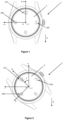
- two orthogonal reference frames R1 and R2 are considered as illustrated by the figures 1 to 3 .
- Timepiece 1 is also considered to have a classic plane 2 dial (even if this is not the case, as will be seen below and as is also described in the ISO 3158 standard).
- the first orthogonal reference frame R1 (O, i, j, k) is a fixed and direct reference frame, with O as the origin at the center of dial 2 of timepiece 1.
- Vectors i and j are horizontal.
- Vector k is vertical and opposite to vector g of the Earth's gravitational field.
- Vectors i and j therefore define a plane perpendicular to vector k.
- the second orthogonal reference frame R2 (O, u, v, w) is a rotating reference frame which is linked to the timepiece 1.
- the orthogonal reference frame R2 (O, u, v, w) is a direct reference frame.
- the vector u is a vector parallel to the plane of the dial such that a line passing through the origin O and oriented along this vector passes through the reference frame 209 corresponding to the 9 o'clock indication of the dial 2.
- the vector v is a vector perpendicular to the plane of the dial 2 and oriented from the plane of the dial 2 towards the crystal 3 of the timepiece 1.
- the vector w is a vector parallel to the plane of the dial such that a line passing through the origin O and oriented along this vector passes through the reference frame 212 corresponding to the 12 o'clock indication of the dial 2.
- the vectors u, v, w are respectively merged with the vectors i, j, k, in other words, the dial of the timepiece is parallel to the gravitational field, the oriented semi-axes Oi (called “Oi” because passing through the origin O and oriented according to the vector i) and Ok (called “Ok” because passing through the origin O and oriented according to the vector k) pass respectively through the marks 209 and 212 of the dial 2 and the vector w is opposite to the vector g of the Earth's gravitational field.
- angles ⁇ and ⁇ thus defined coincide with those of the ISO 3158 standard.
- the method comprises at least two status readings of the timepiece before and after at least a first storage cycle in at least one predefined position of the timepiece, the at least one predefined position being a first inclined position ⁇ of the timepiece.
- the predefined position is the first inclined position ⁇ of the timepiece and, when the first static storage cycle has several predefined positions of the timepiece, the predefined positions include at least the first inclined position ⁇ of the timepiece.
- the first static storage cycle has at least one first inclined position ⁇ of the timepiece.
- a tilted position is such that the plane of the timepiece's dial is neither parallel to the Earth's gravitational field nor perpendicular to the Earth's gravitational field.
- the first inclined position ⁇ is for example such that the normal to the dial (the vector v) forms, with the vector g, an angle (non-oriented) between 110° and 175°, in particular between 110° and 160°, in particular substantially equal to 135°.
- the first position ⁇ is such that the angle ⁇ is equal or substantially equal to 180°.
- the storage cycle may also comprise at least one second inclined position ⁇ ', different from the position ⁇ , in which ⁇ and ⁇ are predetermined.
- the storage cycle is a static storage cycle, i.e., a storage cycle where the timepiece is held stationary in one position in each storage phase.
- the storage times in each phase may be equal. However, preferably, the storage times in each phase of positioning the timepiece are not equal so as to obtain the most faithful image possible of the typical wearing of the timepiece.
- the temperature and/or pressure conditions may change over the duration t of at least one first storage cycle, in particular depending on the storage phases or storage positions of the timepiece.
- An auxiliary timepiece function in particular a chronograph function or a calendar function, may be activated for all or part of the duration t of the storage cycle.
- the method may comprise a second storage cycle of the timepiece, said second storage cycle being provided to cause the timepiece to scan a continuum of positions in space.
- the storage cycle of duration t is reduced to a static storage cycle in one or more predefined positions of the timepiece.
- the storage cycle may include, in addition to a static storage cycle in one or more predefined positions of the timepiece, a dynamic storage cycle of the timepiece.
- dynamic storage we mean a storage mode of the timepiece allowing it to scan a continuum of positions in space, for example by the by means of a suitable device with at least one rotation axis.
- the linear speed of the timepiece may or may not be constant.
- the values of the coefficients a" to g" result from the programming of the dynamic storage device which defines the trajectory of the timepiece in space. More specifically, the values of the coefficients a" to g" are derived from the calculation of the proportion of time spent by the timepiece in each of the positions y, 3H, 6H, 9H, 12H, FH, CH, during its dynamic storage.
- the method of chronometric control or chronometric certification of a timepiece according to the invention comes from the applicant's first and second studies.
- the first study allows us to understand the behavior of the movement in the gravity field in order to define the extent of all the positions that can be associated with each of the watch positions used in each of the storage phases. This study therefore makes it possible in particular to define the transitions between the different watch positions. Thanks to the results of this study, it is possible to establish, in particular on the basis of a chronometric behavior criterion, a correspondence table between each position of the timepiece and a watch position used during the storage phase of the timepiece. In other words, it is possible to associate a watch position with each position in which the timepiece can be found when worn. In mathematical terms, it is therefore possible to carry out a surjection of all the positions that the timepiece can occupy on a set of a few reference positions preferably comprising all or part of the six reference watch positions.
- the longitudes ⁇ i are scanned over 360° according to a predefined angular step, before the latitude ⁇ j is incremented in turn according to a predefined angular step, and so on until a complete "round trip" in latitude of the movement is completed (position CH - position FH - position CH).
- Rate curves M( ⁇ i , ⁇ j ) and amplitude A( ⁇ i , ⁇ j ) for each of the timepiece references tested were thus able to be established.
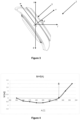
- FIG. 4 illustrates more specifically an isochronism curve representative of a characteristic timepiece.
- the transition limit between the horizontal and vertical behavior of the timepiece is given here when the difference in rate is significant compared to a reference rate value.
- a transition limit can be defined.
- the second study allows us to understand the orientation of the timepiece when worn, in particular to understand its orientation or position when it is on the wearer's wrist.
- the study therefore focused on the acquisition and processing of position measurements during wear.
- it made it possible to identify, through a campaign of experimental measurements, a continuum of positions swept through space by a panel of wearers and the probabilities or times associated with each position in this continuum.
- the probability for each orientation domain can in particular be represented as a function of the longitude ⁇ i and the latitude ⁇ j of the timepiece.
- the probability per orientation domain ( ⁇ i , ⁇ j ) depends on the fineness chosen for the mesh, but the sum of the probabilities is always equivalent to 1.
- the probability density map of the positions indicates, in a completely unexpected way, a high probability density in a particular orientation zone. This represents around 30% of the measured wearing time. This zone is centered on an inclined position obtained by tilting the timepiece typically 45° between the 6H and CH watch positions. This can extend according to the inventors' analysis as follows: 20 ° ⁇ ⁇ j ⁇ ⁇ ′
- the description of the measured data was analyzed and compared with and without the use of the ⁇ position.
- the analysis shows that the description of the behavior of an "average wearer" with the ⁇ position is more representative of the wearer than that without the ⁇ position.
- the storage times in each phase can be proportional to the probabilities associated with each zone of the Figure 5 .
- a region can be defined defining a set of positions of the timepiece associated with the inclined position (region ⁇ represented on the Figure 5 ).
- timepiece means, in particular, a watch movement or a watch.
- a timepiece does not include a dial, it is assumed that it includes a fictitious dial, in particular a fictitious conventional dial or a working dial.
- a working dial is a dial different from the dial that the finished timepiece will have, but which still allows a time-derived indication to be read at any time in order to be able to carry out a chronometric control or chronometric certification operation.
- a chronometric control or chronometric certification device may comprise elements for static storage of at least one timepiece in at least the first position ⁇ .
- the chronometric control or chronometric certification device further comprises elements for static storage of at least one timepiece in at least one conventional watchmaking position defined according to the ISO 3158 standard.
- the storage elements comprise a large-volume housing to allow the simultaneous housing of several timepieces previously arranged or not in packaging dedicated to this purpose.
- At least one status data acquisition element makes it possible to take status readings of at least one timepiece between two cycles or two storage phases of the timepiece.
- the status readings are carried out or not when the timepieces are arranged on the storage elements.
- the status readings preferably make it possible to establish simultaneous status readings of several timepieces.
- these status readings are almost simultaneous, thus making it possible to establish successive readings at high speed, for example by automatic scanning making it possible to obtain images of the different timepieces.
- a chronometric control or chronometric certification device may also comprise elements for setting at least one timepiece into motion which are designed to cause the timepiece to sweep a continuum of positions in space.
- they comprise large-volume housings to allow the simultaneous housing of several timepieces, previously arranged or not, in packaging dedicated to this purpose.
- Condition surveys are carried out or not when the watch parts are placed on the elements that set the watch parts in motion.
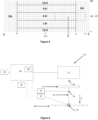
- a specific embodiment of a device 10 for chronometric control or chronometric certification of a timepiece 1 is described below with reference to the Figure 6 . It makes it possible to implement the chronometric control or chronometric certification method which is the subject of the invention.
- the device comprises hardware and/or software elements configured so as to implement the method which is the subject of the invention, in particular the mode of execution of the method described above.
- the support is capable of receiving at least one timepiece.
- the timepiece is removably fixed to the support for the duration of the implementation of the chronometric control or chronometric certification process.
- the support may comprise elements for fixing the timepiece.
- the support may comprise elements for fixing a packaging intended to contain several timepieces.
- the support is pivoted about an axis 20 on the mechanical connecting element 13.
- a pivot connection 22 is for example made between the support and the mechanical connecting element.
- the mechanical connecting element is pivoted about an axis 21 relative to the frame 16.
- a pivot connection 23 is for example made between the connecting element mechanics and the frame.
- Axes 20 and 21 are preferably perpendicular
- the actuating element 14, 15 makes it possible to move the mechanical connecting element relative to the frame 16 and to move the support 12 relative to the mechanical connecting element 13.
- the first actuator 14 makes it possible to move the mechanical connecting element relative to the support 12
- the second actuator 15 makes it possible to move the mechanical connecting element relative to the frame 16.
- the actuators are preferably electromechanical actuators, such as geared motors and/or stepper motors controlled by the logic processing unit.
- the rotation angle of the support relative to the mechanical connecting element about the axis 20 defines the longitude and the rotation angle of the frame relative to the mechanical connecting element about the axis 21 defines the latitude.
- the axes can, however, be arranged differently in space so that a change of a given angle of the longitude or latitude must be executed by a composition of a rotation about the axis 20 and a rotation about the axis 21.
- the status data acquisition element 11 makes it possible to carry out the status readings.
- the acquisition element can be fixedly mounted on the support.
- the acquisition element is controlled by the processing logic unit 18.
- the processing logic unit preferably triggers the acquisition of the status readings.
- the status readings are transmitted to the processing logic unit 18 which comprises a status data processing module 181, in particular an image processing module which makes it possible to determine time data from the position of the hands of the timepiece at a given time.
- the processing module can comprise software elements.
- the processing logic unit 18 is also connected to the reference time base 19 which makes it possible to precisely determine the time elapsed between two status readings of the timepiece.
- the processing logic unit 18 is also connected to a human-machine interface 30.
- the interface makes it possible to control the device, in particular to control or trigger the execution of the method according to the invention.
- the interface also makes it possible to obtain results determined by the execution of the method, in particular to obtain information on the running of the timepiece, in particular information on the running deviation of the timepiece.
- the logic processing unit is, for example, programmed to control the actuating element so as to set the timepiece in motion so that it sweeps or does not sweep a continuum of positions in space.
- a method of carrying out a method of producing or adjusting a timepiece according to the invention is also described below.
- the method comprises a step of implementing the timing control method according to the invention, in particular a mode of executing the timing control method described above.
- the method comprises, in addition to the chronometric control step, at least one step of adjusting the timepiece.
- this adjustment step is dependent on information provided by the chronometric control method, such as the rate deviation provided by the chronometric control method.
- a static storage cycle means any succession of several storage phases.
- a static storage cycle consists of at least one static storage phase in which the timepiece is kept stationary in a determined position.
- Static storage phase means a phase during which the timepiece is immobilized in a determined position. This determined position may be the inclined position ⁇ or a conventional watchmaking position (3H, 6H, 9H, 12H, FH, CH).
- a dynamic storage cycle consists of at least one dynamic storage phase in which the timepiece sweeps a determined continuum of positions in one or more given directions.
- a dynamic storage cycle does not include a static storage phase.
- storage cycle means any period beginning with an initial condition survey of the timepiece and ending with a subsequent condition survey of the timepiece, this duration being used in the chronometric control or chronometric certification process of the timepiece.
- Condition surveys Intermediates can also be carried out between two storage phases of the timepiece, particularly in the case of a static storage cycle of the timepiece.
- conventional dial is meant a dial intended to cooperate with hands movable in rotation around its center, and comprising marks, in particular marks (203) corresponding to the indication "3 o'clock", (206) corresponding to the indication “6 o'clock”, (209) corresponding to the indication "9 o'clock” and (212) corresponding to the indication 12 o'clock.
- the hands rotate in the anti-trigonometric direction or in the clockwise direction when looking at the dial.
- the angle of position of the hands around the center of the dial is proportional to the time.
- the marks of 12 o'clock, 3 o'clock, 6 o'clock and 12 o'clock are arranged respectively at 90° to each other.
- oriented semi-axis and "oriented angle” must be understood in their usual and conventional mathematical sense.
- the orientation of an axis or a semi-axis consequently fixes the orientation of the rotation around this axis or semi-axis.
- a rotation of a body around an oriented semi-axis is positive or has a positive angle when the body rotates clockwise around the semi-axis, the body being observed in the direction of the oriented semi-axis.
Landscapes
- Physics & Mathematics (AREA)
- General Physics & Mathematics (AREA)
- Electric Clocks (AREA)
Claims (11)
- Verfahren zur chronometrischen Prüfung oder zur chronometrischen Zertifizierung einer Uhr (1), umfassend mindestens zwei Zustandserfassungen der Uhr vor und nach mindestens einem ersten statischen Lagerungszyklus, wobei der erste statische Lagerungszyklus ein statischer Lagerungszyklus in mindestens einer vorgegebenen Position der Uhr ist, wobei die mindestens eine vorgegebene Position mindestens eine erste geneigte Position (γ) der Uhr umfasst, wobei die geneigte Position dergestalt ist, dass eine Ebene eines Zifferblatts der Uhr weder parallel zum Erdgravitationsfeld noch senkrecht zum Erdgravitationsfeld ist,
wobei eine Gangabweichung der Uhr gemessen wird und durch die zeitliche Differenz gegeben ist zwischen:- einer zeitlichen Differenz zwischen zwei Anzeigewerten der Uhr, die bei den mindestens zwei Zustandserfassungen der Uhr angezeigt werden, und- einer zeitlichen Differenz zwischen den Zeitpunkten der mindestens zwei Zustandserfassungen der Uhr, die durch eine Referenzzeitbasis gegeben wird. - Verfahren nach Anspruch 1, wobei die erste geneigte Position (γ) durch einen ersten Winkel λ und durch einen zweiten Winkel ϑ definiert ist, die dergestalt sind, dass λ ∈ [135°, 225°] und ϑ ∈ [20°, 85°], insbesondere dergestalt, dass λ ∈ [135°, 225°] und ϑ ∈ [20°, 70°], im Besonderen dergestalt, dass λ ∈ [135°, 225°] und ϑ=45°, mit:- einem ersten direkten rechtwinkligen Koordinatensystem (O, i, j, k) mit einem Ursprung (O) im Mittelpunkt eines Zifferblatts (2) der Uhr, einer ersten ausgerichteten, horizontalen und richtungsfesten Halbachse (Oi), einer zweiten ausgerichteten, horizontalen und richtungsfesten Halbachse (Oj) und einer dritten ausgerichteten, vertikalen, richtungsfesten und zum Gravitationsfeldvektor (g) entgegengesetzten Halbachse (Ok),- einer ersten Position der Uhr, in der die erste Halbachse (Oi) durch eine 9-Uhr-Markierung (209) des Zifferblatts (2) verläuft und die dritte Halbachse (Ok) durch eine 12-Uhr-Markierung (212) des Zifferblatts (2) verläuft,- eine beliebige Position der Uhr ist definiert von der ersten Position aus durch eine Drehung des Winkels λ um die zweite Halbachse (Oj), dann eine Drehung des Winkels ϑ um die erste Halbachse (Oi), wobei λ über ein Intervall zwischen 0° und 360° definiert ist, wobei ϑ über ein Intervall zwischen -90° und 90° definiert ist.
- Verfahren nach Anspruch 2, wobei die erste Position (γ) dergestalt ist, dass der Winkel λ gleich oder im Wesentlichen gleich 180° ist.
- Verfahren nach einem der vorhergehenden Ansprüche, wobei:- der erste statische Lagerungszyklus ferner mindestens eine Lagerungsphase in einer der konventionellen Uhrenpositionen umfasst, insbesondere eine zweite Position 3H (λ=90°; ϑ=0°) und/oder eine dritte Position 6H (λ=180°; ϑ=0°) und/oder eine vierte Position 9H (λ=270°; ϑ=0°) und/oder eine fünfte Position 12H (λ=0°; ϑ=0°) und/oder eine sechste Position CH (ϑ=90°) und/oder eine siebte Position FH (ϑ=-90°) und/oder mindestens eine zweite geneigte Position (γ'); und/oder- das Verfahren einen zweiten Lagerungszyklus der Uhr umfasst, im Besonderen einen zweiten dynamischen Lagerungszyklus der Uhr, in dem die Uhr ein bestimmtes Kontinuum von Positionen durchläuft.
- Verfahren nach einem der vorhergehenden Ansprüche, wobei, bei einem Lagerungszyklus mit einer Dauer (t), die jeweiligen Lagerungszeiten (tγ), (t3H), (t6H), (t9H), (t12H), (tFH), (tCH) , die jeder der Positionen (γ), (3H), (6H), (9H), (12H), (FH), (CH) der Uhr zugeordnet sind, folgendermaßen definiert sind:


- Verfahren nach dem vorhergehenden Anspruch, wobei:

- Verfahren nach einem der Ansprüche 5 und 6, wobei:

- Verfahren nach einem der vorhergehenden Ansprüche, dadurch gekennzeichnet, dass sich die Temperatur- und/oder Druckbedingungen im Laufe der Dauer (t) des Lagerungszyklus ändern, im Besonderen in Abhängigkeit von den Lagerungsphasen der Uhr, insbesondere in Abhängigkeit von den statischen Lagerungsphasen der Uhr, und/oder dadurch gekennzeichnet, dass eine Hilfsuhrfunktion, im Besonderen eine Chronographenfunktion oder eine Kalenderfunktion, während der gesamten oder eines Teils der Dauer (t) des Lagerungszyklus aktiviert ist.
- Verfahren zur Herstellung oder Einstellung einer Uhr, wobei das Verfahren einen Schritt der Durchführung des Verfahrens zur chronometrischen Prüfung nach einem der Ansprüche 1 bis 8 umfasst.
- Verfahren zur Herstellung oder Einstellung nach dem vorhergehenden Anspruch, wobei das Verfahren mindestens einen Einstellschritt umfasst.
- Verfahren zur Herstellung oder Einstellung nach dem vorhergehenden Anspruch, wobei der Einstellschritt von der Gangabweichung abhängig ist.
Priority Applications (4)
| Application Number | Priority Date | Filing Date | Title |
|---|---|---|---|
| EP15182210.3A EP3136189B1 (de) | 2015-08-24 | 2015-08-24 | Chronometrisches überprüfungsverfahren einer uhr |
| US15/240,413 US10228661B2 (en) | 2015-08-24 | 2016-08-18 | Chronometric testing method of a timepiece |
| JP2016162331A JP6815128B2 (ja) | 2015-08-24 | 2016-08-23 | 時計のクロノメーター試験方法 |
| CN201610718717.9A CN106483831B (zh) | 2015-08-24 | 2016-08-24 | 钟表的计时检测方法 |
Applications Claiming Priority (1)
| Application Number | Priority Date | Filing Date | Title |
|---|---|---|---|
| EP15182210.3A EP3136189B1 (de) | 2015-08-24 | 2015-08-24 | Chronometrisches überprüfungsverfahren einer uhr |
Publications (2)
| Publication Number | Publication Date |
|---|---|
| EP3136189A1 EP3136189A1 (de) | 2017-03-01 |
| EP3136189B1 true EP3136189B1 (de) | 2025-04-02 |
Family
ID=53969288
Family Applications (1)
| Application Number | Title | Priority Date | Filing Date |
|---|---|---|---|
| EP15182210.3A Active EP3136189B1 (de) | 2015-08-24 | 2015-08-24 | Chronometrisches überprüfungsverfahren einer uhr |
Country Status (4)
| Country | Link |
|---|---|
| US (1) | US10228661B2 (de) |
| EP (1) | EP3136189B1 (de) |
| JP (1) | JP6815128B2 (de) |
| CN (1) | CN106483831B (de) |
Families Citing this family (7)
| Publication number | Priority date | Publication date | Assignee | Title |
|---|---|---|---|---|
| EP3486734B1 (de) | 2017-11-15 | 2020-09-02 | Montres Breguet S.A. | Chronometrisches überprüfungsverfahren |
| EP3492998B1 (de) * | 2017-12-01 | 2020-08-12 | Montres Breguet S.A. | Dynamisches chronometrisches überprüfungsverfahren |
| CN107991861B (zh) * | 2018-01-26 | 2019-09-13 | 歌尔科技有限公司 | 一种轻智能手表机芯测试方法 |
| EP3561612B1 (de) | 2018-04-23 | 2023-07-26 | Rolex Sa | Zusammenbauverfahren einer uhr |
| CN109164696A (zh) * | 2018-09-29 | 2019-01-08 | 深圳智芯数据服务有限公司 | 一种钟表指针定位方法、校时方法、设备及可读存储介质 |
| CN111025883B (zh) * | 2020-01-02 | 2021-07-09 | 天津海鸥表业集团有限公司 | 一种机芯老化试验方法 |
| EP4419972A1 (de) * | 2021-10-20 | 2024-08-28 | Rolex Sa | Verfahren zum ermitteln eines referenzwertes und verfahren zum einstellen eines referenzwertes |
Family Cites Families (9)
| Publication number | Priority date | Publication date | Assignee | Title |
|---|---|---|---|---|
| FR320220A (fr) * | 1902-04-05 | 1902-12-04 | Fournier Marc | Appareil pour le réglage des montres sur positions |
| BE409010A (de) * | 1934-04-21 | 1935-05-31 | ||
| US2841978A (en) * | 1955-07-12 | 1958-07-08 | Kohn Julius | Watch testing apparatus |
| US4979387A (en) * | 1989-07-31 | 1990-12-25 | Dittmar Norman R | Pendulum position detector |
| FR2665958B1 (fr) * | 1990-08-17 | 1994-10-28 | Maty Sarl Fabrication | Procede et appareil pour controler des pieces d'horlogerie et/ou de bijouterie. |
| EP2458458B1 (de) | 2010-11-26 | 2017-11-15 | The Swatch Group Research and Development Ltd. | Messverfahren der Präzision einer mechanischen Armbanduhr |
| CH704688B1 (fr) | 2011-03-23 | 2015-10-15 | Lvmh Swiss Mft Sa | Procédé de certification de montre-chronographe. |
| US9465367B2 (en) * | 2012-07-13 | 2016-10-11 | Sicpa Holding Sa | Method and system for authenticating using external excitation |
| CH707013B1 (fr) | 2012-09-28 | 2018-08-15 | Lvmh Swiss Mft Sa | Procédé de qualification pour compteur de temps mécanique à affichage analogique. |
-
2015
- 2015-08-24 EP EP15182210.3A patent/EP3136189B1/de active Active
-
2016
- 2016-08-18 US US15/240,413 patent/US10228661B2/en active Active
- 2016-08-23 JP JP2016162331A patent/JP6815128B2/ja active Active
- 2016-08-24 CN CN201610718717.9A patent/CN106483831B/zh active Active
Non-Patent Citations (16)
| Title |
|---|
| "RÈGLEMENT DES CONCOURS DE CHRONOMÉTRES DE MARINE", D2 - EXTRAIT DE LA REVUE CHRONOMÉTRIQUE, JOURNAL DE L’HORLOGERIE FRANÇAISE, VOLUME XXIV DES ANNÉES 1906-1907, February 1906 (1906-02-01) |
| ANONYMOUS: "Adjusted to 4 Positions", NATIONAL ASSOCIATION OF WATCH & CLOCK COLLECTORS, INC. (NAWCC), 25 August 2006 (2006-08-25), XP093357357, Retrieved from the Internet <URL:https://mb.nawcc.org/threads/adjusted-to-4-positions.18172/> |
| ANONYMOUS: "Horological Times - 50 years", AMERICAN WATCHMAKERS-CLOCKMAKERS INSTITUTE, 1 August 2010 (2010-08-01), XP093357388, Retrieved from the Internet <URL:https://www.awci.com/wp-content/uploads/ht/August2010.pdf> |
| ANONYMOUS: "Instruments horaires - Symbolisation des positions de contrôle (ISO 3158:1976) / Timekeeping instruments - Symbolization of control positions (ISO 3158:1976)", SCHWEIZER NORM / NORME SUISSE / NORMA SVIZZERA ISO 3158, 1 April 2022 (2022-04-01), XP093357377 |
| ANONYMOUS: "Watch and Accuracy", PRESTIGETIME.COM (ACCESSED VIA THE WAYBACK MACHINE), 6 October 2014 (2014-10-06), XP093357350, Retrieved from the Internet <URL:https://web.archive.org/web/20141006161816/http://www.prestigetime.com/page.php?accuracy> |
| ANONYMOUS: "WITSCHI GPS RECEIVER", WITSCHI, 1 April 2011 (2011-04-01), XP093357386 |
| D1 - N. MASKELYNE: "An Account of the Going of Mr. John Harrison's Watch, AT THE ROYAL OBSERVATORY, FROM MAY 6th,1766, to MARCH 4th, 1767* TOGETHER WITH The Original Observations and Calculations of the fame", 1767, RICHARDSON AND CLARK |
| D11 - WATCHUSEEK: "Technique for adding shellac to pallet stones", 8 December 2011 (2011-12-08), XP093357360, Retrieved from the Internet <URL:https://www.watchuseek.com/threads/technique-for-adding-shellac-to-palletstones.617997> [retrieved on 20251225] |
| D12 - STRELKI.INFO: "Forum Strelki.info", 11 March 2013 (2013-03-11), Retrieved from the Internet <URL:https://strelki.info/viewtopic.php?start=80&t=335> [retrieved on 20251225] |
| D13 - YUMPU: "Chronoscope M1", 8 May 2014 (2014-05-08), Retrieved from the Internet <URL:https://www.yumpu.com/en/document/view/45072524/chronoscope-m1-cousins-uk> [retrieved on 20251225] |
| D3 - M. PHILLIPS: "Mémoire sur le réglage des chronomètres et des montres dans les positions verticales et inclinées", 1866, DUNOD |
| D4 - GAUTHIER-VILLARS: "Congrès International de Chronométrie, Comptes Rendus des Travaux Procès-Verbaux, Rapports et Mémoires", 1902, GAUTHIER-VILLARS |
| D6 - C.-A. REYMONDIN, CHARLES-ANDRÉ REYMONDIN, GEORGES MONNIER, DIDIER JEANNERET, UMBERTO PELARATTI: "Théorie d'horlogerie", 1998, FÉDÉRATION DES ECOLES TECHNIQUES, ISBN: 2-940025-10-X, article "7.11 Le réglage", pages: 157-166; |
| D9 - INSTRUCTION MANUAL, CHRONOSCOPE M1, WITSCHI ELECTRONIC LTD; HTTPS://WWW.COUSINSUK.COM/PDF/SKUS/1970_T20215.PDF (DATE?) |
| MEISSNER IVAN ET AL: "Horlogerie et Automobile Label mécanique Un nouvel équipement de mesures de l'organe réglant pour la montre mécanique", 26 September 2007 (2007-09-26), pages 45 - 51, XP055780224, Retrieved from the Internet <URL:https://www.qmt-group.com/pdf/Publications/Congres_SSC_2007_(texte).pdf> [retrieved on 20210226] * |
| MEISSNER IVAN, PELLET, G., MÜLLER, U., GERVAISE, H., MEYLAN, S.: "Un nouvel équipement de mesures de l’organe réglant pour la montre mécanique", CONGRÈS INTERNATIONAL DE CHRONOMÉTRIE, 1 January 2007 (2007-01-01) - 2007-09-27, pages 45 - 52, XP093124956 |
Also Published As
| Publication number | Publication date |
|---|---|
| JP2017096914A (ja) | 2017-06-01 |
| US10228661B2 (en) | 2019-03-12 |
| CN106483831A (zh) | 2017-03-08 |
| EP3136189A1 (de) | 2017-03-01 |
| CN106483831B (zh) | 2021-02-19 |
| US20170060097A1 (en) | 2017-03-02 |
| JP6815128B2 (ja) | 2021-01-20 |
Similar Documents
| Publication | Publication Date | Title |
|---|---|---|
| EP3136189B1 (de) | Chronometrisches überprüfungsverfahren einer uhr | |
| CN109782571B (zh) | 计时测试设备 | |
| US20130329040A1 (en) | Method of measuring the accuracy of a mechanical watch | |
| WO2012126978A1 (fr) | Ecrin multifonctions | |
| EP3492998B1 (de) | Dynamisches chronometrisches überprüfungsverfahren | |
| EP3084530A2 (de) | Einstellungsvorrichtung für uhren | |
| EP2864844A1 (de) | Verfahren zur ermittlung einer unwuchteigenschaft eines oszillators | |
| EP3683633A1 (de) | Uhr mit mechanischem oszillator, die ein drahtloses kommunikationsmodul umfasst | |
| CH711303A1 (fr) | Dispositif de correction pour un mouvement horloger mécanique. | |
| WO2023066614A1 (fr) | Procede de determination d'une valeur de repere et procede de reglage d'une valeur de repere | |
| CH704688B1 (fr) | Procédé de certification de montre-chronographe. | |
| EP4022400B1 (de) | Verfahren und system zur unterstützung der einstellung einer mechanischen uhr | |
| EP4459388B1 (de) | Tragbares objekt, insbesondere uhr, mit einer vorrichtung zur detektion des durchgangs der karman-linie, und detektionsverfahren | |
| Naperkoski | Exploring the dynamics of a mechanical watch lever escapement using finite element analysis | |
| CH720759A2 (fr) | Objet portable, notamment montre, muni d'un dispositif de détection du passage de la ligne de Karman, et procédé de détection | |
| CH714329A2 (fr) | Contrôle chronométrique d'un mouvement ou d'une montre. | |
| HK40008529A (en) | Chronometric testing device | |
| HK40008529B (en) | Chronometric testing device | |
| WO2025153445A1 (fr) | Procédé de contrôle d'éléments inertiels horlogers | |
| WO2024261186A1 (fr) | Procédé de contrôle chronométrique d'un mouvement horloger | |
| CH720883A2 (fr) | Procédé de contrôle chronométrique d'un mouvement horloger | |
| CH707013B1 (fr) | Procédé de qualification pour compteur de temps mécanique à affichage analogique. | |
| CH709014B1 (fr) | Dispositif de réglage pour montre. | |
| Buchheim | The Planets | |
| CH704132A2 (fr) | Procédé et dispositif de mesure de la précision d'une pièce d'horlogerie, notamment d'une montre mécanique. |
Legal Events
| Date | Code | Title | Description |
|---|---|---|---|
| PUAI | Public reference made under article 153(3) epc to a published international application that has entered the european phase |
Free format text: ORIGINAL CODE: 0009012 |
|
| STAA | Information on the status of an ep patent application or granted ep patent |
Free format text: STATUS: THE APPLICATION HAS BEEN PUBLISHED |
|
| AK | Designated contracting states |
Kind code of ref document: A1 Designated state(s): AL AT BE BG CH CY CZ DE DK EE ES FI FR GB GR HR HU IE IS IT LI LT LU LV MC MK MT NL NO PL PT RO RS SE SI SK SM TR |
|
| AX | Request for extension of the european patent |
Extension state: BA ME |
|
| STAA | Information on the status of an ep patent application or granted ep patent |
Free format text: STATUS: REQUEST FOR EXAMINATION WAS MADE |
|
| 17P | Request for examination filed |
Effective date: 20170901 |
|
| RBV | Designated contracting states (corrected) |
Designated state(s): AL AT BE BG CH CY CZ DE DK EE ES FI FR GB GR HR HU IE IS IT LI LT LU LV MC MK MT NL NO PL PT RO RS SE SI SK SM TR |
|
| TPAC | Observations filed by third parties |
Free format text: ORIGINAL CODE: EPIDOSNTIPA |
|
| STAA | Information on the status of an ep patent application or granted ep patent |
Free format text: STATUS: EXAMINATION IS IN PROGRESS |
|
| 17Q | First examination report despatched |
Effective date: 20190828 |
|
| P01 | Opt-out of the competence of the unified patent court (upc) registered |
Effective date: 20230530 |
|
| GRAP | Despatch of communication of intention to grant a patent |
Free format text: ORIGINAL CODE: EPIDOSNIGR1 |
|
| STAA | Information on the status of an ep patent application or granted ep patent |
Free format text: STATUS: GRANT OF PATENT IS INTENDED |
|
| INTG | Intention to grant announced |
Effective date: 20241022 |
|
| GRAS | Grant fee paid |
Free format text: ORIGINAL CODE: EPIDOSNIGR3 |
|
| GRAA | (expected) grant |
Free format text: ORIGINAL CODE: 0009210 |
|
| STAA | Information on the status of an ep patent application or granted ep patent |
Free format text: STATUS: THE PATENT HAS BEEN GRANTED |
|
| AK | Designated contracting states |
Kind code of ref document: B1 Designated state(s): AL AT BE BG CH CY CZ DE DK EE ES FI FR GB GR HR HU IE IS IT LI LT LU LV MC MK MT NL NO PL PT RO RS SE SI SK SM TR |
|
| REG | Reference to a national code |
Ref country code: GB Ref legal event code: FG4D Free format text: NOT ENGLISH |
|
| REG | Reference to a national code |
Ref country code: CH Ref legal event code: EP |
|
| REG | Reference to a national code |
Ref country code: IE Ref legal event code: FG4D Free format text: LANGUAGE OF EP DOCUMENT: FRENCH |
|
| REG | Reference to a national code |
Ref country code: DE Ref legal event code: R096 Ref document number: 602015091331 Country of ref document: DE |
|
| REG | Reference to a national code |
Ref country code: NL Ref legal event code: MP Effective date: 20250402 |
|
| PG25 | Lapsed in a contracting state [announced via postgrant information from national office to epo] |
Ref country code: NL Free format text: LAPSE BECAUSE OF FAILURE TO SUBMIT A TRANSLATION OF THE DESCRIPTION OR TO PAY THE FEE WITHIN THE PRESCRIBED TIME-LIMIT Effective date: 20250402 |
|
| REG | Reference to a national code |
Ref country code: AT Ref legal event code: MK05 Ref document number: 1781855 Country of ref document: AT Kind code of ref document: T Effective date: 20250402 |
|
| PG25 | Lapsed in a contracting state [announced via postgrant information from national office to epo] |
Ref country code: ES Free format text: LAPSE BECAUSE OF FAILURE TO SUBMIT A TRANSLATION OF THE DESCRIPTION OR TO PAY THE FEE WITHIN THE PRESCRIBED TIME-LIMIT Effective date: 20250402 Ref country code: PT Free format text: LAPSE BECAUSE OF FAILURE TO SUBMIT A TRANSLATION OF THE DESCRIPTION OR TO PAY THE FEE WITHIN THE PRESCRIBED TIME-LIMIT Effective date: 20250804 Ref country code: FI Free format text: LAPSE BECAUSE OF FAILURE TO SUBMIT A TRANSLATION OF THE DESCRIPTION OR TO PAY THE FEE WITHIN THE PRESCRIBED TIME-LIMIT Effective date: 20250402 |
|
| PGFP | Annual fee paid to national office [announced via postgrant information from national office to epo] |
Ref country code: DE Payment date: 20250812 Year of fee payment: 11 |
|
| REG | Reference to a national code |
Ref country code: LT Ref legal event code: MG9D |
|
| PG25 | Lapsed in a contracting state [announced via postgrant information from national office to epo] |
Ref country code: GR Free format text: LAPSE BECAUSE OF FAILURE TO SUBMIT A TRANSLATION OF THE DESCRIPTION OR TO PAY THE FEE WITHIN THE PRESCRIBED TIME-LIMIT Effective date: 20250703 Ref country code: NO Free format text: LAPSE BECAUSE OF FAILURE TO SUBMIT A TRANSLATION OF THE DESCRIPTION OR TO PAY THE FEE WITHIN THE PRESCRIBED TIME-LIMIT Effective date: 20250702 |
|
| PG25 | Lapsed in a contracting state [announced via postgrant information from national office to epo] |
Ref country code: PL Free format text: LAPSE BECAUSE OF FAILURE TO SUBMIT A TRANSLATION OF THE DESCRIPTION OR TO PAY THE FEE WITHIN THE PRESCRIBED TIME-LIMIT Effective date: 20250402 |
|
| PG25 | Lapsed in a contracting state [announced via postgrant information from national office to epo] |
Ref country code: BG Free format text: LAPSE BECAUSE OF FAILURE TO SUBMIT A TRANSLATION OF THE DESCRIPTION OR TO PAY THE FEE WITHIN THE PRESCRIBED TIME-LIMIT Effective date: 20250402 |
|
| PGFP | Annual fee paid to national office [announced via postgrant information from national office to epo] |
Ref country code: GB Payment date: 20250826 Year of fee payment: 11 |
|
| PG25 | Lapsed in a contracting state [announced via postgrant information from national office to epo] |
Ref country code: HR Free format text: LAPSE BECAUSE OF FAILURE TO SUBMIT A TRANSLATION OF THE DESCRIPTION OR TO PAY THE FEE WITHIN THE PRESCRIBED TIME-LIMIT Effective date: 20250402 |
|
| PG25 | Lapsed in a contracting state [announced via postgrant information from national office to epo] |
Ref country code: AT Free format text: LAPSE BECAUSE OF FAILURE TO SUBMIT A TRANSLATION OF THE DESCRIPTION OR TO PAY THE FEE WITHIN THE PRESCRIBED TIME-LIMIT Effective date: 20250402 |
|
| PGFP | Annual fee paid to national office [announced via postgrant information from national office to epo] |
Ref country code: FR Payment date: 20250828 Year of fee payment: 11 |
|
| PGFP | Annual fee paid to national office [announced via postgrant information from national office to epo] |
Ref country code: CH Payment date: 20250901 Year of fee payment: 11 |
|
| PG25 | Lapsed in a contracting state [announced via postgrant information from national office to epo] |
Ref country code: RS Free format text: LAPSE BECAUSE OF FAILURE TO SUBMIT A TRANSLATION OF THE DESCRIPTION OR TO PAY THE FEE WITHIN THE PRESCRIBED TIME-LIMIT Effective date: 20250702 |
|
| PG25 | Lapsed in a contracting state [announced via postgrant information from national office to epo] |
Ref country code: IS Free format text: LAPSE BECAUSE OF FAILURE TO SUBMIT A TRANSLATION OF THE DESCRIPTION OR TO PAY THE FEE WITHIN THE PRESCRIBED TIME-LIMIT Effective date: 20250802 |
|
| PG25 | Lapsed in a contracting state [announced via postgrant information from national office to epo] |
Ref country code: LV Free format text: LAPSE BECAUSE OF FAILURE TO SUBMIT A TRANSLATION OF THE DESCRIPTION OR TO PAY THE FEE WITHIN THE PRESCRIBED TIME-LIMIT Effective date: 20250402 |
|
| REG | Reference to a national code |
Ref country code: DE Ref legal event code: R026 Ref document number: 602015091331 Country of ref document: DE |
|
| PLBI | Opposition filed |
Free format text: ORIGINAL CODE: 0009260 |
|
| PG25 | Lapsed in a contracting state [announced via postgrant information from national office to epo] |
Ref country code: DK Free format text: LAPSE BECAUSE OF FAILURE TO SUBMIT A TRANSLATION OF THE DESCRIPTION OR TO PAY THE FEE WITHIN THE PRESCRIBED TIME-LIMIT Effective date: 20250402 Ref country code: SM Free format text: LAPSE BECAUSE OF FAILURE TO SUBMIT A TRANSLATION OF THE DESCRIPTION OR TO PAY THE FEE WITHIN THE PRESCRIBED TIME-LIMIT Effective date: 20250402 |
|
| REG | Reference to a national code |
Ref country code: CH Ref legal event code: L10 Free format text: ST27 STATUS EVENT CODE: U-0-0-L10-L00 (AS PROVIDED BY THE NATIONAL OFFICE) Effective date: 20260114 |
|
| PLAX | Notice of opposition and request to file observation + time limit sent |
Free format text: ORIGINAL CODE: EPIDOSNOBS2 |
|
| PG25 | Lapsed in a contracting state [announced via postgrant information from national office to epo] |
Ref country code: CZ Free format text: LAPSE BECAUSE OF FAILURE TO SUBMIT A TRANSLATION OF THE DESCRIPTION OR TO PAY THE FEE WITHIN THE PRESCRIBED TIME-LIMIT Effective date: 20250402 |
|
| PG25 | Lapsed in a contracting state [announced via postgrant information from national office to epo] |
Ref country code: EE Free format text: LAPSE BECAUSE OF FAILURE TO SUBMIT A TRANSLATION OF THE DESCRIPTION OR TO PAY THE FEE WITHIN THE PRESCRIBED TIME-LIMIT Effective date: 20250402 |
|
| PG25 | Lapsed in a contracting state [announced via postgrant information from national office to epo] |
Ref country code: RO Free format text: LAPSE BECAUSE OF FAILURE TO SUBMIT A TRANSLATION OF THE DESCRIPTION OR TO PAY THE FEE WITHIN THE PRESCRIBED TIME-LIMIT Effective date: 20250402 Ref country code: SK Free format text: LAPSE BECAUSE OF FAILURE TO SUBMIT A TRANSLATION OF THE DESCRIPTION OR TO PAY THE FEE WITHIN THE PRESCRIBED TIME-LIMIT Effective date: 20250402 |
|
| PG25 | Lapsed in a contracting state [announced via postgrant information from national office to epo] |
Ref country code: IT Free format text: LAPSE BECAUSE OF FAILURE TO SUBMIT A TRANSLATION OF THE DESCRIPTION OR TO PAY THE FEE WITHIN THE PRESCRIBED TIME-LIMIT Effective date: 20250402 |