EP3135179A1 - Household appliance comprising a gasket - Google Patents
Household appliance comprising a gasket Download PDFInfo
- Publication number
- EP3135179A1 EP3135179A1 EP15425065.8A EP15425065A EP3135179A1 EP 3135179 A1 EP3135179 A1 EP 3135179A1 EP 15425065 A EP15425065 A EP 15425065A EP 3135179 A1 EP3135179 A1 EP 3135179A1
- Authority
- EP
- European Patent Office
- Prior art keywords
- gasket
- seat
- household appliance
- door
- gaskets
- Prior art date
- Legal status (The legal status is an assumption and is not a legal conclusion. Google has not performed a legal analysis and makes no representation as to the accuracy of the status listed.)
- Withdrawn
Links
- 238000007789 sealing Methods 0.000 claims description 8
- 238000005406 washing Methods 0.000 claims description 6
- 239000011521 glass Substances 0.000 claims description 4
- 230000009471 action Effects 0.000 claims description 2
- 239000012815 thermoplastic material Substances 0.000 claims 1
- XLYOFNOQVPJJNP-UHFFFAOYSA-N water Substances O XLYOFNOQVPJJNP-UHFFFAOYSA-N 0.000 description 5
- 239000000853 adhesive Substances 0.000 description 4
- 230000001070 adhesive effect Effects 0.000 description 4
- 238000009434 installation Methods 0.000 description 4
- 238000004519 manufacturing process Methods 0.000 description 4
- 230000008901 benefit Effects 0.000 description 3
- 238000004140 cleaning Methods 0.000 description 3
- 239000003292 glue Substances 0.000 description 3
- 239000000463 material Substances 0.000 description 3
- 238000000034 method Methods 0.000 description 2
- 238000000465 moulding Methods 0.000 description 2
- 230000008569 process Effects 0.000 description 2
- 239000010963 304 stainless steel Substances 0.000 description 1
- 229920002943 EPDM rubber Polymers 0.000 description 1
- 241001465754 Metazoa Species 0.000 description 1
- 229910000589 SAE 304 stainless steel Inorganic materials 0.000 description 1
- 239000004676 acrylonitrile butadiene styrene Substances 0.000 description 1
- 230000002411 adverse Effects 0.000 description 1
- 230000004075 alteration Effects 0.000 description 1
- 238000004891 communication Methods 0.000 description 1
- 238000005520 cutting process Methods 0.000 description 1
- 238000013461 design Methods 0.000 description 1
- 238000012938 design process Methods 0.000 description 1
- 238000011161 development Methods 0.000 description 1
- 238000001035 drying Methods 0.000 description 1
- 229920001971 elastomer Polymers 0.000 description 1
- 235000012438 extruded product Nutrition 0.000 description 1
- 238000001192 hot extrusion Methods 0.000 description 1
- 238000012423 maintenance Methods 0.000 description 1
- 238000012986 modification Methods 0.000 description 1
- 230000004048 modification Effects 0.000 description 1
- 230000000737 periodic effect Effects 0.000 description 1
- 239000004033 plastic Substances 0.000 description 1
- 229920003023 plastic Polymers 0.000 description 1
- 230000000241 respiratory effect Effects 0.000 description 1
- 229920002725 thermoplastic elastomer Polymers 0.000 description 1
Images



Classifications
-
- A—HUMAN NECESSITIES
- A47—FURNITURE; DOMESTIC ARTICLES OR APPLIANCES; COFFEE MILLS; SPICE MILLS; SUCTION CLEANERS IN GENERAL
- A47L—DOMESTIC WASHING OR CLEANING; SUCTION CLEANERS IN GENERAL
- A47L15/00—Washing or rinsing machines for crockery or tableware
- A47L15/42—Details
- A47L15/4251—Details of the casing
- A47L15/4257—Details of the loading door
- A47L15/4263—Door sealing arrangements
-
- A—HUMAN NECESSITIES
- A47—FURNITURE; DOMESTIC ARTICLES OR APPLIANCES; COFFEE MILLS; SPICE MILLS; SUCTION CLEANERS IN GENERAL
- A47L—DOMESTIC WASHING OR CLEANING; SUCTION CLEANERS IN GENERAL
- A47L15/00—Washing or rinsing machines for crockery or tableware
- A47L15/42—Details
- A47L15/4251—Details of the casing
- A47L15/4274—Arrangement of electrical components, e.g. control units or cables
-
- A—HUMAN NECESSITIES
- A47—FURNITURE; DOMESTIC ARTICLES OR APPLIANCES; COFFEE MILLS; SPICE MILLS; SUCTION CLEANERS IN GENERAL
- A47L—DOMESTIC WASHING OR CLEANING; SUCTION CLEANERS IN GENERAL
- A47L15/00—Washing or rinsing machines for crockery or tableware
- A47L15/42—Details
- A47L15/4293—Arrangements for programme selection, e.g. control panels; Indication of the selected programme, programme progress or other parameters of the programme, e.g. by using display panels
-
- D—TEXTILES; PAPER
- D06—TREATMENT OF TEXTILES OR THE LIKE; LAUNDERING; FLEXIBLE MATERIALS NOT OTHERWISE PROVIDED FOR
- D06F—LAUNDERING, DRYING, IRONING, PRESSING OR FOLDING TEXTILE ARTICLES
- D06F39/00—Details of washing machines not specific to a single type of machines covered by groups D06F9/00 - D06F27/00
- D06F39/12—Casings; Tubs
-
- D—TEXTILES; PAPER
- D06—TREATMENT OF TEXTILES OR THE LIKE; LAUNDERING; FLEXIBLE MATERIALS NOT OTHERWISE PROVIDED FOR
- D06F—LAUNDERING, DRYING, IRONING, PRESSING OR FOLDING TEXTILE ARTICLES
- D06F37/00—Details specific to washing machines covered by groups D06F21/00 - D06F25/00
- D06F37/26—Casings; Tubs
- D06F37/266—Gaskets mounted between tub and casing around the loading opening
-
- D—TEXTILES; PAPER
- D06—TREATMENT OF TEXTILES OR THE LIKE; LAUNDERING; FLEXIBLE MATERIALS NOT OTHERWISE PROVIDED FOR
- D06F—LAUNDERING, DRYING, IRONING, PRESSING OR FOLDING TEXTILE ARTICLES
- D06F39/00—Details of washing machines not specific to a single type of machines covered by groups D06F9/00 - D06F27/00
- D06F39/12—Casings; Tubs
- D06F39/14—Doors or covers; Securing means therefor
Definitions
- the present invention relates to a household appliance, in particular a household appliance wherein at least one first portion of an inner space thereof needs to be kept separate from a second portion of said space and/or from an outside environment, so as to prevent water, moisture or dirt from getting into the first portion from the second portion and/or from the outside environment.
- gaskets for isolating particular portions of their inner volume (e.g. portions that house electronic components or the like) from other portions of the household appliance and/or from the outside environment.
- Such gaskets are normally specific for a particular model or series of household appliances, e.g. specific for a particular series of refrigerators or dishwashers having one or more doors of the same size.
- the life of said gaskets is typically shorter than that of a household appliance, so that they need to be replaced at least once in the course of the working life of said household appliance because, due to the cleaning operations necessary for ensuring a satisfactory hygiene level, gaskets tend to wear and/or the adhesive that keeps them attached to the household appliance tends to loose its efficacy. It is in fact well known that mildews tend to develop on gaskets, which can produce spores that, if inhaled, may cause respiratory problems to people and/or animals.
- gaskets are very often designed together with the household appliance, by taking into account the tolerances of the household appliance production process, so that said gaskets will always be capable of providing satisfactory sealing performance within the tolerance ranges that the production process can assure. This makes it necessary to carry out several iterations during the appliance design process, so as to be certain that the gasket will ensure satisfactory sealing performance without adversely affecting the normal operation of the household appliance (e.g. without making a door difficult to close and/or without the gasket tending the wear faster than expected because of excessive pressure on it). To this end, designers often need to design undercuts and/or suitable seats for the gaskets, which often make the process of moulding the various parts making up the household appliance (tub, outer walls, control panel, etc.) more complex.
- the present invention aims at solving these and others problems by providing a household appliance as set forth in the appended claim 1.
- the basic idea of the present invention is to provide a household appliance which comprises a seat and a gasket that can be positioned into said seat, wherein said gasket is so configured that, when said gasket is positioned into said seat, it will deform elastically, thus generating a force that will keep it firmly coupled to said seat.
- gaskets can be removed and reinstalled in a simpler manner compared to prior-art gaskets, so that any installation, periodic service (e.g. gasket cleaning) and replacement operations can be carried out more easily while preserving the structural integrity of the gasket.
- any reference to “an embodiment” will indicate that a particular configuration, structure or feature is comprised in at least one embodiment of the invention. Therefore, the phrase “in an embodiment” and other similar phrases, which may be present in different parts of this description, will not necessarily be all related to the same embodiment. Furthermore, any particular configuration, structure or feature may be combined in one or more embodiments in any way deemed appropriate. The references below are therefore used only for simplicity's sake, and do not limit the protection scope or extension of the various embodiments.
- a household appliance 1 is preferably an electronic dishwasher comprising control electronics that needs to be kept separate from the outside environment and from the other inner spaces of said dishwasher 1 in operation.
- the household appliance 1 comprises a container (equipped with an aperture) for housing electronic components, which comprises the following parts:
- the external panel 2 comprises a front seat 21, into which an elongated gasket 5 can be positioned. More in detail, the gasket 5 is so configured that, when it is inserted into said seat 21, it will deform and generate a force that will keep it firmly coupled to said seat.
- any adhesive or glue for holding the gasket 5 in its working position, thereby facilitating the installation and/or cleaning/service and/or replacement thereof; in fact, said gasket 5 can be installed by simply inserting it into the seat 21, preferably by hand or by using a blunt tool, and can be removed by simply extracting it without paying particular attention because, due to the total absence of any adhesive/glue, no strain will be generated within the gasket, which might tear it or anyway damage it.
- the dishwasher 1 comprises a door 7, preferably made of AISI 304 stainless steel, which provides access to the wash tub.
- the inner portion of said door 7 comprises an edge 71 adapted to ensure a good seal between the outside environment and the inner space of said dishwasher 1, in particular to isolate the compartment 4 from the outside environment.
- the seat 21 is so arranged that, when the gasket 5 is in said seat and the door 7 is closed, the edge 71 of the door 7 will abut against the gasket 5, concentrating much surface unit force against said gasket 5, thus exerting such a pressure on the gasket 5 as to ensure a high degree of sealing, while however requiring just a relatively weak closing force.
- the gaskets 5 are fixed without glue, and this makes it particularly easy to replace the gasket 5 with an identical or similar one once said gasket has worn out and/or become deformed due to the high pressure to which it has been subjected when closed.
- the gasket 5 has an elongated shape, preferably cylindrical, more preferably with an outside diameter of approx. 2.7 mm. This shape allows the gasket 5 to be inserted into and removed from the seat 21 with ease, because the cylindrical shape does not require that the gasket 5 be correctly oriented prior to being inserted, and makes it virtually impossible that said gasket 5 might get stuck into the seat 21 while being removed from said seat 21.
- the gasket is made of a material having a high level of elasticity, preferably rubber. More in detail, the material used in the preferred embodiment of the gasket 5 is thermoplastic rubber of the EPDM+PP type (also known under the commercial name SantopreneTM), which has a hardness of 65 when measured in accordance with the Shore A scale, and which is well suited for hot extrusion, thus allowing easy production of gaskets of different length by simply cutting the extruded product. Furthermore, the gasket 5 is preferably internally hollow, thus having a tube-like shape. This makes it more flexible, so that it can be inserted into and extracted from the seat 21 more easily, and can be more easily compressed by the edge 71.
- the material used in the preferred embodiment of the gasket 5 is thermoplastic rubber of the EPDM+PP type (also known under the commercial name SantopreneTM), which has a hardness of 65 when measured in accordance with the Shore A scale, and which is well suited for hot extrusion, thus allowing easy production of gaskets of different length by simply
- the seat 21 of the outer panel 2 comprises a plurality of fins 22 that allow the gasket 5 to be constrained to the seat 21 at a plurality of distinct points. This facilitates the installation and removal of said gasket from said seats, since the operator or the machine that have to carry out such tasks can insert the fingers or a tool between said fins 22 and easily exert the required force directly on the gasket 5 in the proper direction to engage or disengage said gasket 5 into/from the seat 21.
- the presence of the fins 22 makes it possible to visually check that the gasket 5 has been correctly positioned in the seat 21, so as to be sure that the gasket 5 will not be subjected to excessive strain due to improper installation and/or that said gasket will not be torn/damaged.
- the external panel 2 is preferably made of plastic material, e.g. acrylonitrile butadiene styrene (ABS).
- ABS acrylonitrile butadiene styrene
- the fins 22 can thus be made by moulding, thereby advantageously simplifying the production process for the seats 21, since the control panel 1 can be manufactured by using just a single mould only once (i.e. without having to open and close the mould a number times in order to complete the process in multiple runs) and without requiring any subsequent finishing steps.
- the external panel 2 also comprises a female connector 23 that puts the electronics positioned in the compartment 4 in signal communication with a user interface (not shown in the annexed drawings), which is preferably located on the outer side of the door 7, and through which the user of the dishwasher 1 can select the desired wash programs to be executed by said dishwasher 1.
- the connector 23 mates with another connector of the male type (not shown in the drawings) comprised in the door 7 when the latter is closed.
- the gasket 5 abuts against the bent edge 71 of the door 7 and against at least two parts of the external panel 2 (i.e. against the seat 21), thus advantageously generating a double seal by using, however, only one gasket instead of two.
- a double-seal gasket which can be easily removed in one step for maintenance and/or replacement purposes without needing any special tool, without the risk of damaging said gasket and without leaving any adhesive residues in the seat 21 that might jeopardize the positioning of a new gasket, and hence the overall sealing performance of said new gasket.
- the preferred embodiment of the dishwasher 1 comprises also a second gasket 6 having similar physical characteristics as the above-described gasket 5, which ensures a proper seal between the external panel 2 and the internal one 3, so that no water can seep into the dishwasher 1 should any water be spilled over the top part of said dishwasher 1; said gasket is positioned into a second seat 24, which is so shaped that the gasket 6, when it is inserted into said seat 24, will deform and generate a force that will keep it firmly coupled to said seat.
- the seat 24 has a shape which is compatible with that of the gasket 6 and, preferably, an angular extension that embraces more than half the outer surface of said gasket 6, so that, while installing and/or servicing the dishwasher 1, the gasket 6 will remain firm in the seat 24 even when the internal panel 3 has not yet been coupled to the external panel 2, i.e. when it is not yet in abutment with the gasket 6.
- a first variant envisages the use of at least one gasket, which is similar to the gaskets 5,6 of the above-described main embodiment, in a washing machine (not shown in the annexed drawings). More in detail, the washing machine comprises at least the following parts:
- the seat has a length development that follows the shape of the door, i.e. it is preferably circular, and dimensions that cause the gasket, when it is positioned (curved) within the seat, will abut against a portion of the door (e.g. the edge thereof) when the latter is closed, thereby exerting a sealing action and preventing the water contained in the tub from leaking out through the edges of said door.
- the seat is so configured that the gasket(s), when positioned within said seat, will abut against a portion of the door when the latter is in the closed position.
- the same above-described principle is applied to a top-loading washing machine, wherein the glass door is replaced with a loading hatch and the bent gasket is replaced with four linear segments of a gasket which is similar to the gaskets 5,6 of the main embodiment.
Landscapes
- Engineering & Computer Science (AREA)
- Textile Engineering (AREA)
- Gasket Seals (AREA)
Abstract
Description
- The present invention relates to a household appliance, in particular a household appliance wherein at least one first portion of an inner space thereof needs to be kept separate from a second portion of said space and/or from an outside environment, so as to prevent water, moisture or dirt from getting into the first portion from the second portion and/or from the outside environment.
- As is known, household appliances (such as, for example, washing machines, washing/drying machines, dishwashers, refrigerators, and the like) make large use of gaskets for isolating particular portions of their inner volume (e.g. portions that house electronic components or the like) from other portions of the household appliance and/or from the outside environment. Such gaskets are normally specific for a particular model or series of household appliances, e.g. specific for a particular series of refrigerators or dishwashers having one or more doors of the same size. Also, the life of said gaskets is typically shorter than that of a household appliance, so that they need to be replaced at least once in the course of the working life of said household appliance because, due to the cleaning operations necessary for ensuring a satisfactory hygiene level, gaskets tend to wear and/or the adhesive that keeps them attached to the household appliance tends to loose its efficacy. It is in fact well known that mildews tend to develop on gaskets, which can produce spores that, if inhaled, may cause respiratory problems to people and/or animals.
- Therefore, the market of spare parts for household appliances has to stock gaskets for each model of household appliance still in use, leading to complex warehouse management within a sales network dealing with spare parts for household appliances.
- Unfortunately, when the gaskets of a given household appliance need to be replaced due to wear or after a service intervention that required their removal, it is often the case that original gaskets are no longer available from the spare parts sales network, so that one will have to replace the entire household appliance or to adapt gaskets originally designed for another appliance (usually newer than the one needing gasket replacement). In this latter case, the gasket replacement operation requires the person performing it to have good manual skills, and cannot ensure a satisfactory final result, i.e. it is not possible to ensure that the sealing performance of the gaskets thus replaced will be at least equal to that obtainable with the original gaskets, which would ensure a certain and satisfactory result.
- In fact, gaskets are very often designed together with the household appliance, by taking into account the tolerances of the household appliance production process, so that said gaskets will always be capable of providing satisfactory sealing performance within the tolerance ranges that the production process can assure. This makes it necessary to carry out several iterations during the appliance design process, so as to be certain that the gasket will ensure satisfactory sealing performance without adversely affecting the normal operation of the household appliance (e.g. without making a door difficult to close and/or without the gasket tending the wear faster than expected because of excessive pressure on it). To this end, designers often need to design undercuts and/or suitable seats for the gaskets, which often make the process of moulding the various parts making up the household appliance (tub, outer walls, control panel, etc.) more complex.
- The present invention aims at solving these and others problems by providing a household appliance as set forth in the appended
claim 1. - The basic idea of the present invention is to provide a household appliance which comprises a seat and a gasket that can be positioned into said seat, wherein said gasket is so configured that, when said gasket is positioned into said seat, it will deform elastically, thus generating a force that will keep it firmly coupled to said seat.
- Thanks to this solution, gaskets can be removed and reinstalled in a simpler manner compared to prior-art gaskets, so that any installation, periodic service (e.g. gasket cleaning) and replacement operations can be carried out more easily while preserving the structural integrity of the gasket.
- Further advantageous features of the present invention will be set out in the appended claims.
- These features as well as further advantages of the present invention will become more apparent from the following description of an embodiment thereof as shown in the annexed drawings, which are supplied by way of non-limiting example, wherein:
-
Fig. 1 is a perspective sectional view of a household appliance according to the invention; -
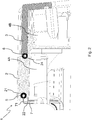
Fig. 2 is a sectional side view of the household appliance ofFig. 1 ; -
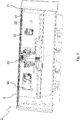
Fig. 3 is a perspective view of a control panel comprised in the household appliance ofFigures 1 and2 ; -
Figs. 4-6 are perspective views of the control panel ofFig. 3 , wherein the gaskets and gasket seats are clearly visible. - In this description, any reference to "an embodiment" will indicate that a particular configuration, structure or feature is comprised in at least one embodiment of the invention. Therefore, the phrase "in an embodiment" and other similar phrases, which may be present in different parts of this description, will not necessarily be all related to the same embodiment. Furthermore, any particular configuration, structure or feature may be combined in one or more embodiments in any way deemed appropriate. The references below are therefore used only for simplicity's sake, and do not limit the protection scope or extension of the various embodiments.
- With reference to
Figures 1 and2 , the following will describe in detail a preferred embodiment of ahousehold appliance 1 according to the present invention; saidhousehold appliance 1 is preferably an electronic dishwasher comprising control electronics that needs to be kept separate from the outside environment and from the other inner spaces of saiddishwasher 1 in operation. For this purpose, thehousehold appliance 1 comprises a container (equipped with an aperture) for housing electronic components, which comprises the following parts: - an
external panel 2, which is preferably positioned in the upper front part of thehousehold appliance 1, i.e. above the wash tub (not shown in the annexed drawings) of the dishwasher, near the loading aperture of said tub; - an
internal panel 3 positioned in the central part of saidhousehold appliance 1, i.e. within theexternal panel 2, and coupled to saidexternal panel 2 so as to form a compartment 4 for housing the control electronics of the dishwasher, wherein said compartment is divided into arear portion 4A and afront portion 4B. - In order to ensure a sufficient degree of sealing between the outside environment and the compartment 4, the
external panel 2 comprises afront seat 21, into which anelongated gasket 5 can be positioned. More in detail, thegasket 5 is so configured that, when it is inserted into saidseat 21, it will deform and generate a force that will keep it firmly coupled to said seat. In this manner, it will not be necessary to use any adhesive or glue for holding thegasket 5 in its working position, thereby facilitating the installation and/or cleaning/service and/or replacement thereof; in fact, saidgasket 5 can be installed by simply inserting it into theseat 21, preferably by hand or by using a blunt tool, and can be removed by simply extracting it without paying particular attention because, due to the total absence of any adhesive/glue, no strain will be generated within the gasket, which might tear it or anyway damage it. - The
dishwasher 1 comprises adoor 7, preferably made of AISI 304 stainless steel, which provides access to the wash tub. The inner portion of saiddoor 7 comprises anedge 71 adapted to ensure a good seal between the outside environment and the inner space of saiddishwasher 1, in particular to isolate the compartment 4 from the outside environment. For this purpose, theseat 21 is so arranged that, when thegasket 5 is in said seat and thedoor 7 is closed, theedge 71 of thedoor 7 will abut against thegasket 5, concentrating much surface unit force against saidgasket 5, thus exerting such a pressure on thegasket 5 as to ensure a high degree of sealing, while however requiring just a relatively weak closing force. This is possible because thegaskets 5 are fixed without glue, and this makes it particularly easy to replace thegasket 5 with an identical or similar one once said gasket has worn out and/or become deformed due to the high pressure to which it has been subjected when closed. - The
gasket 5 has an elongated shape, preferably cylindrical, more preferably with an outside diameter of approx. 2.7 mm. This shape allows thegasket 5 to be inserted into and removed from theseat 21 with ease, because the cylindrical shape does not require that thegasket 5 be correctly oriented prior to being inserted, and makes it virtually impossible that saidgasket 5 might get stuck into theseat 21 while being removed from saidseat 21. - The gasket is made of a material having a high level of elasticity, preferably rubber. More in detail, the material used in the preferred embodiment of the
gasket 5 is thermoplastic rubber of the EPDM+PP type (also known under the commercial name Santoprene™), which has a hardness of 65 when measured in accordance with the Shore A scale, and which is well suited for hot extrusion, thus allowing easy production of gaskets of different length by simply cutting the extruded product. Furthermore, thegasket 5 is preferably internally hollow, thus having a tube-like shape. This makes it more flexible, so that it can be inserted into and extracted from theseat 21 more easily, and can be more easily compressed by theedge 71. - Also with reference to
Figures 3-5 , theseat 21 of theouter panel 2 comprises a plurality offins 22 that allow thegasket 5 to be constrained to theseat 21 at a plurality of distinct points. This facilitates the installation and removal of said gasket from said seats, since the operator or the machine that have to carry out such tasks can insert the fingers or a tool between saidfins 22 and easily exert the required force directly on thegasket 5 in the proper direction to engage or disengage said gasket 5 into/from theseat 21. In addition, the presence of thefins 22 makes it possible to visually check that thegasket 5 has been correctly positioned in theseat 21, so as to be sure that thegasket 5 will not be subjected to excessive strain due to improper installation and/or that said gasket will not be torn/damaged. - The
external panel 2 is preferably made of plastic material, e.g. acrylonitrile butadiene styrene (ABS). Thefins 22 can thus be made by moulding, thereby advantageously simplifying the production process for theseats 21, since thecontrol panel 1 can be manufactured by using just a single mould only once (i.e. without having to open and close the mould a number times in order to complete the process in multiple runs) and without requiring any subsequent finishing steps. - As can be seen in
Fig. 3 , theexternal panel 2 also comprises a female connector 23 that puts the electronics positioned in the compartment 4 in signal communication with a user interface (not shown in the annexed drawings), which is preferably located on the outer side of thedoor 7, and through which the user of thedishwasher 1 can select the desired wash programs to be executed by saiddishwasher 1. To this end, the connector 23 mates with another connector of the male type (not shown in the drawings) comprised in thedoor 7 when the latter is closed. - When the
dishwasher 1 is in an operating condition (i.e. when thedoor 7 is closed), as can be seen inFig. 2 , thegasket 5 abuts against thebent edge 71 of thedoor 7 and against at least two parts of the external panel 2 (i.e. against the seat 21), thus advantageously generating a double seal by using, however, only one gasket instead of two. In this manner, one can obtain the benefits of a double-seal gasket, which can be easily removed in one step for maintenance and/or replacement purposes without needing any special tool, without the risk of damaging said gasket and without leaving any adhesive residues in theseat 21 that might jeopardize the positioning of a new gasket, and hence the overall sealing performance of said new gasket. - By positioning the
gasket 5 into theseat 21, it is possible to avoid that any water spilled over thedishwasher 1 might flow along thebent edge 7 of thedoor 7 and wet the connector 23, resulting in a probable short circuit or anyway an alteration of the signals flowing along said connector 23. - Also with reference to
Fig. 6 , the preferred embodiment of thedishwasher 1 comprises also asecond gasket 6 having similar physical characteristics as the above-describedgasket 5, which ensures a proper seal between theexternal panel 2 and the internal one 3, so that no water can seep into thedishwasher 1 should any water be spilled over the top part of saiddishwasher 1; said gasket is positioned into asecond seat 24, which is so shaped that thegasket 6, when it is inserted into saidseat 24, will deform and generate a force that will keep it firmly coupled to said seat. For this purpose, theseat 24 has a shape which is compatible with that of thegasket 6 and, preferably, an angular extension that embraces more than half the outer surface of saidgasket 6, so that, while installing and/or servicing thedishwasher 1, thegasket 6 will remain firm in theseat 24 even when theinternal panel 3 has not yet been coupled to theexternal panel 2, i.e. when it is not yet in abutment with thegasket 6. This simplifies the task of installing/replacing thegasket 6, avoiding that, while assembling the twopanels gasket 6 might accidentally come out of itsseat 24 and then be very likely pinched between the two panels and damaged, thus not ensuring a proper seal. - When the
gasket 6 is in itsseat 24 and the twopanels Fig. 2 that said gasket 6 abuts against at least a part of theinternal panel 3 and at least two parts of theexternal panel 2, thus advantageously providing a double seal through a single gasket instead of two, leading to the same advantages as already mentioned for thegasket 5. - Of course, the example described so far may be subject to many variations.
- A first variant envisages the use of at least one gasket, which is similar to the
gaskets - a wash tub;
- a loading glass door providing access to said tub;
- at least one seat having a cross-section similar to those of the previously described
seats - The seat has a length development that follows the shape of the door, i.e. it is preferably circular, and dimensions that cause the gasket, when it is positioned (curved) within the seat, will abut against a portion of the door (e.g. the edge thereof) when the latter is closed, thereby exerting a sealing action and preventing the water contained in the tub from leaking out through the edges of said door. In other words, the seat is so configured that the gasket(s), when positioned within said seat, will abut against a portion of the door when the latter is in the closed position.
- According to a variant of this embodiment, the same above-described principle is applied to a top-loading washing machine, wherein the glass door is replaced with a loading hatch and the bent gasket is replaced with four linear segments of a gasket which is similar to the
gaskets - The present description has tackled some of the possible variants, but it will be apparent to the man skilled in the art that other embodiments may also be implemented, wherein some elements may be replaced with other technically equivalent elements. The present invention is not therefore limited to the explanatory examples described herein, but may be subject to many modifications, improvements or replacements of equivalent parts and elements without departing from the basic inventive idea, as set out in the following claims.
Claims (10)
- Household appliance (1) comprising at least one seat (21,24) and one gasket (5,6) that can be positioned into said seat (21) in order to isolate a first inner space of said household appliance from a second inner space of said household appliance (1) and/or from an outside environment,
characterized in that
said gasket (5,6) is so configured that, when it is inserted into said seat (21,24), it will deform and generate a force that will keep it firmly coupled to said seat (21,24). - Household appliance (1) according to claim 1, wherein the seat (21) comprises a plurality of fins (22) allowing the gasket (5) to be constrained to the seat (21) at a plurality of distinct points.
- Household appliance (1) according to claim 1, wherein the seat (24) has such a shape as to embrace more than half the outer surface of said gasket (6).
- Household appliance (1) according to any one of claims 1 to 3, wherein the gasket (5,6) has a cylindrical shape.
- Household appliance (1) according to claim 4, wherein the gasket (5,6) is internally hollow.
- Household appliance (1) according to any one of claims 1 to 5, wherein said gasket (5) is so configured that, when it is inserted into the seat (21,24), it will abut against at least two parts of said seat (21,24), thus exerting a double sealing action.
- Household appliance (1) according to any one of claims 1 to 6, wherein the gasket (5,6) is made of thermoplastic material.
- Household appliance (1) according to any one of claims 1 to 7, comprising a container which comprises an aperture, and which is adapted to house electronic components, wherein the first inner space consists of the inner volume of said container, and wherein the seat (21) of the gasket (5) is positioned along the upper side of the aperture of said container.
- Household appliance (1) according to claim 8, comprising a wash tub and a door (7) providing access to said wash tub, wherein said door (7) comprises an edge (71) configured for abutting against said gasket (5) when said door (7) is in the closed position.
- Washing machine (1) according to any one of the preceding claims, comprising a wash tub and a glass door or a hatch providing access to said wash tub, wherein the seat is configured in a manner such that the gasket(s), when positioned inside said seat, will abut against a portion of the glass door or hatch when the latter is in the closed position.
Priority Applications (1)
| Application Number | Priority Date | Filing Date | Title |
|---|---|---|---|
| EP15425065.8A EP3135179A1 (en) | 2015-08-31 | 2015-08-31 | Household appliance comprising a gasket |
Applications Claiming Priority (1)
| Application Number | Priority Date | Filing Date | Title |
|---|---|---|---|
| EP15425065.8A EP3135179A1 (en) | 2015-08-31 | 2015-08-31 | Household appliance comprising a gasket |
Publications (1)
| Publication Number | Publication Date |
|---|---|
| EP3135179A1 true EP3135179A1 (en) | 2017-03-01 |
Family
ID=54365180
Family Applications (1)
| Application Number | Title | Priority Date | Filing Date |
|---|---|---|---|
| EP15425065.8A Withdrawn EP3135179A1 (en) | 2015-08-31 | 2015-08-31 | Household appliance comprising a gasket |
Country Status (1)
| Country | Link |
|---|---|
| EP (1) | EP3135179A1 (en) |
Cited By (1)
| Publication number | Priority date | Publication date | Assignee | Title |
|---|---|---|---|---|
| CN108968872A (en) * | 2018-08-31 | 2018-12-11 | 杭州川月科技有限公司 | A kind of simple use in dishwasher respirator of structure and dish-washing machine |
Citations (6)
| Publication number | Priority date | Publication date | Assignee | Title |
|---|---|---|---|---|
| DE29509093U1 (en) * | 1995-06-01 | 1995-08-17 | Bosch-Siemens Hausgeräte GmbH, 81669 München | Household dishwasher with a door seal between the washing compartment and the door |
| WO2009083398A1 (en) * | 2007-12-31 | 2009-07-09 | Arcelik Anonim Sirketi | A washer |
| US20090288690A1 (en) * | 2008-05-20 | 2009-11-26 | Electrolux Home Products, Inc. | Sealing device for a dishwasher, and associated apparatus and method |
| DE202010010004U1 (en) * | 2010-07-08 | 2010-10-14 | BSH Bosch und Siemens Hausgeräte GmbH | Dishwasher with at least one built of several units door |
| DE102011003821A1 (en) * | 2011-02-08 | 2012-08-09 | BSH Bosch und Siemens Hausgeräte GmbH | Dishwasher, particularly domestic dishwasher, comprises washing container, which is accessible through front container opening and closed by door for receiving items to be washed |
| EP2486842A2 (en) * | 2011-02-14 | 2012-08-15 | BSH Bosch und Siemens Hausgeräte GmbH | Dishwasher with a mobile door and at least one door seal |
-
2015
- 2015-08-31 EP EP15425065.8A patent/EP3135179A1/en not_active Withdrawn
Patent Citations (6)
| Publication number | Priority date | Publication date | Assignee | Title |
|---|---|---|---|---|
| DE29509093U1 (en) * | 1995-06-01 | 1995-08-17 | Bosch-Siemens Hausgeräte GmbH, 81669 München | Household dishwasher with a door seal between the washing compartment and the door |
| WO2009083398A1 (en) * | 2007-12-31 | 2009-07-09 | Arcelik Anonim Sirketi | A washer |
| US20090288690A1 (en) * | 2008-05-20 | 2009-11-26 | Electrolux Home Products, Inc. | Sealing device for a dishwasher, and associated apparatus and method |
| DE202010010004U1 (en) * | 2010-07-08 | 2010-10-14 | BSH Bosch und Siemens Hausgeräte GmbH | Dishwasher with at least one built of several units door |
| DE102011003821A1 (en) * | 2011-02-08 | 2012-08-09 | BSH Bosch und Siemens Hausgeräte GmbH | Dishwasher, particularly domestic dishwasher, comprises washing container, which is accessible through front container opening and closed by door for receiving items to be washed |
| EP2486842A2 (en) * | 2011-02-14 | 2012-08-15 | BSH Bosch und Siemens Hausgeräte GmbH | Dishwasher with a mobile door and at least one door seal |
Cited By (2)
| Publication number | Priority date | Publication date | Assignee | Title |
|---|---|---|---|---|
| CN108968872A (en) * | 2018-08-31 | 2018-12-11 | 杭州川月科技有限公司 | A kind of simple use in dishwasher respirator of structure and dish-washing machine |
| CN108968872B (en) * | 2018-08-31 | 2020-10-27 | 杭州小月亮科技有限公司 | Dishwasher respirator and dishwasher with simple structure |
Similar Documents
| Publication | Publication Date | Title |
|---|---|---|
| ATE494412T1 (en) | PLASTIC SUDE CONTAINER FOR A WASHING MACHINE OR WASHER DRYER | |
| KR101044696B1 (en) | dish washer | |
| US9777420B2 (en) | Washing machine appliance lid assembly | |
| US20150123524A1 (en) | Sealing member and dishwasher having the same | |
| EP3135179A1 (en) | Household appliance comprising a gasket | |
| EP2468169B1 (en) | Table top dishwasher | |
| KR102940516B1 (en) | Tub fixer apparatus and washing machine comprising the same | |
| JP6803762B2 (en) | Hole plug | |
| EP3064633A1 (en) | Laundry treatment appliance with user interface | |
| WO2014161784A1 (en) | A washer/dryer comprising a lock | |
| KR20100086621A (en) | Drumtype washing machine | |
| KR20070022504A (en) | Combination structure of drum washing machine front panel and side deco | |
| DE102011003821B4 (en) | Dishwasher, in particular household dishwasher | |
| CN109097951B (en) | Washing machine | |
| US20160238264A1 (en) | Dehumidifier | |
| EP3103913B1 (en) | A pipe device for a water-conducting electrical household appliance | |
| ITTO20030048U1 (en) | FIXING DEVICE FOR ANCHORING ON RECEIVING SEAT. | |
| CN109008860A (en) | Liner component and dish-washing machine | |
| CN211834275U (en) | Door body sealing structure of water tank dish washing machine | |
| AU2016430486A1 (en) | Holder for vacuum cleaner dust container | |
| CN201719216U (en) | Inner container bead and embedded dish washer with same | |
| KR100802469B1 (en) | Drum Washing Machine | |
| KR20100007260A (en) | Drum type washing machine | |
| JP5753981B2 (en) | Washing machine drainage mechanism | |
| JP6546873B2 (en) | Drum type washer / dryer |
Legal Events
| Date | Code | Title | Description |
|---|---|---|---|
| PUAI | Public reference made under article 153(3) epc to a published international application that has entered the european phase |
Free format text: ORIGINAL CODE: 0009012 |
|
| STAA | Information on the status of an ep patent application or granted ep patent |
Free format text: STATUS: THE APPLICATION HAS BEEN PUBLISHED |
|
| AK | Designated contracting states |
Kind code of ref document: A1 Designated state(s): AL AT BE BG CH CY CZ DE DK EE ES FI FR GB GR HR HU IE IS IT LI LT LU LV MC MK MT NL NO PL PT RO RS SE SI SK SM TR |
|
| AX | Request for extension of the european patent |
Extension state: BA ME |
|
| STAA | Information on the status of an ep patent application or granted ep patent |
Free format text: STATUS: REQUEST FOR EXAMINATION WAS MADE |
|
| 17P | Request for examination filed |
Effective date: 20170831 |
|
| RBV | Designated contracting states (corrected) |
Designated state(s): AL AT BE BG CH CY CZ DE DK EE ES FI FR GB GR HR HU IE IS IT LI LT LU LV MC MK MT NL NO PL PT RO RS SE SI SK SM TR |
|
| RAP1 | Party data changed (applicant data changed or rights of an application transferred) |
Owner name: WHIRLPOOL EMEA S.P.A. |
|
| STAA | Information on the status of an ep patent application or granted ep patent |
Free format text: STATUS: EXAMINATION IS IN PROGRESS |
|
| 17Q | First examination report despatched |
Effective date: 20180911 |
|
| STAA | Information on the status of an ep patent application or granted ep patent |
Free format text: STATUS: THE APPLICATION IS DEEMED TO BE WITHDRAWN |
|
| 18D | Application deemed to be withdrawn |
Effective date: 20200303 |