EP3134518B1 - Nadph-oxidaseproteine - Google Patents
Nadph-oxidaseproteine Download PDFInfo
- Publication number
- EP3134518B1 EP3134518B1 EP15726231.2A EP15726231A EP3134518B1 EP 3134518 B1 EP3134518 B1 EP 3134518B1 EP 15726231 A EP15726231 A EP 15726231A EP 3134518 B1 EP3134518 B1 EP 3134518B1
- Authority
- EP
- European Patent Office
- Prior art keywords
- seq
- nox
- nox protein
- motif
- protein
- Prior art date
- Legal status (The legal status is an assumption and is not a legal conclusion. Google has not performed a legal analysis and makes no representation as to the accuracy of the status listed.)
- Not-in-force
Links
- 108010002998 NADPH Oxidases Proteins 0.000 title claims description 231
- 102000004722 NADPH Oxidases Human genes 0.000 title claims description 231
- 230000000694 effects Effects 0.000 claims description 64
- 125000003275 alpha amino acid group Chemical group 0.000 claims description 62
- 108090000623 proteins and genes Proteins 0.000 claims description 49
- 102000004169 proteins and genes Human genes 0.000 claims description 43
- 238000004519 manufacturing process Methods 0.000 claims description 35
- 239000012528 membrane Substances 0.000 claims description 30
- 238000012216 screening Methods 0.000 claims description 24
- 241000894006 Bacteria Species 0.000 claims description 22
- 150000001413 amino acids Chemical group 0.000 claims description 20
- 238000001727 in vivo Methods 0.000 claims description 19
- 238000006243 chemical reaction Methods 0.000 claims description 18
- 241000588724 Escherichia coli Species 0.000 claims description 17
- 108020004707 nucleic acids Proteins 0.000 claims description 16
- 102000039446 nucleic acids Human genes 0.000 claims description 16
- 150000007523 nucleic acids Chemical class 0.000 claims description 16
- 239000013604 expression vector Substances 0.000 claims description 15
- 230000001225 therapeutic effect Effects 0.000 claims description 15
- 241000193998 Streptococcus pneumoniae Species 0.000 claims description 12
- 229940031000 streptococcus pneumoniae Drugs 0.000 claims description 12
- 241000588832 Bordetella pertussis Species 0.000 claims description 11
- 241000589517 Pseudomonas aeruginosa Species 0.000 claims description 11
- 241001138501 Salmonella enterica Species 0.000 claims description 11
- 241000607626 Vibrio cholerae Species 0.000 claims description 11
- 238000000338 in vitro Methods 0.000 claims description 10
- -1 superoxide ion Chemical class 0.000 claims description 9
- 229940118696 vibrio cholerae Drugs 0.000 claims description 9
- FWMNVWWHGCHHJJ-SKKKGAJSSA-N 4-amino-1-[(2r)-6-amino-2-[[(2r)-2-[[(2r)-2-[[(2r)-2-amino-3-phenylpropanoyl]amino]-3-phenylpropanoyl]amino]-4-methylpentanoyl]amino]hexanoyl]piperidine-4-carboxylic acid Chemical compound C([C@H](C(=O)N[C@H](CC(C)C)C(=O)N[C@H](CCCCN)C(=O)N1CCC(N)(CC1)C(O)=O)NC(=O)[C@H](N)CC=1C=CC=CC=1)C1=CC=CC=C1 FWMNVWWHGCHHJJ-SKKKGAJSSA-N 0.000 claims description 8
- 125000000539 amino acid group Chemical group 0.000 claims description 8
- 125000000487 histidyl group Chemical group [H]N([H])C(C(=O)O*)C([H])([H])C1=C([H])N([H])C([H])=N1 0.000 claims description 8
- 238000011160 research Methods 0.000 claims description 8
- 230000003115 biocidal effect Effects 0.000 claims description 4
- 230000004936 stimulating effect Effects 0.000 claims description 3
- XJLXINKUBYWONI-DQQFMEOOSA-N [[(2r,3r,4r,5r)-5-(6-aminopurin-9-yl)-3-hydroxy-4-phosphonooxyoxolan-2-yl]methoxy-hydroxyphosphoryl] [(2s,3r,4s,5s)-5-(3-carbamoylpyridin-1-ium-1-yl)-3,4-dihydroxyoxolan-2-yl]methyl phosphate Chemical compound NC(=O)C1=CC=C[N+]([C@@H]2[C@H]([C@@H](O)[C@H](COP([O-])(=O)OP(O)(=O)OC[C@@H]3[C@H]([C@@H](OP(O)(O)=O)[C@@H](O3)N3C4=NC=NC(N)=C4N=C3)O)O2)O)=C1 XJLXINKUBYWONI-DQQFMEOOSA-N 0.000 description 44
- FAPWRFPIFSIZLT-UHFFFAOYSA-M Sodium chloride Chemical compound [Na+].[Cl-] FAPWRFPIFSIZLT-UHFFFAOYSA-M 0.000 description 36
- 229930027945 nicotinamide-adenine dinucleotide Natural products 0.000 description 34
- 238000000034 method Methods 0.000 description 33
- 210000004027 cell Anatomy 0.000 description 30
- 239000003642 reactive oxygen metabolite Substances 0.000 description 26
- 238000012360 testing method Methods 0.000 description 26
- 239000000243 solution Substances 0.000 description 24
- 238000001514 detection method Methods 0.000 description 22
- SLCVBVWXLSEKPL-UHFFFAOYSA-N neopentyl glycol Chemical compound OCC(C)(C)CO SLCVBVWXLSEKPL-UHFFFAOYSA-N 0.000 description 22
- YZXBAPSDXZZRGB-DOFZRALJSA-N arachidonic acid Chemical compound CCCCC\C=C/C\C=C/C\C=C/C\C=C/CCCC(O)=O YZXBAPSDXZZRGB-DOFZRALJSA-N 0.000 description 20
- 239000003599 detergent Substances 0.000 description 20
- 102100030497 Cytochrome c Human genes 0.000 description 18
- 108010075031 Cytochromes c Proteins 0.000 description 18
- 239000011780 sodium chloride Substances 0.000 description 18
- 238000000746 purification Methods 0.000 description 16
- 238000006722 reduction reaction Methods 0.000 description 15
- 238000002835 absorbance Methods 0.000 description 14
- 239000000872 buffer Substances 0.000 description 14
- 238000005259 measurement Methods 0.000 description 14
- JPXMTWWFLBLUCD-UHFFFAOYSA-N nitro blue tetrazolium(2+) Chemical compound COC1=CC(C=2C=C(OC)C(=CC=2)[N+]=2N(N=C(N=2)C=2C=CC=CC=2)C=2C=CC(=CC=2)[N+]([O-])=O)=CC=C1[N+]1=NC(C=2C=CC=CC=2)=NN1C1=CC=C([N+]([O-])=O)C=C1 JPXMTWWFLBLUCD-UHFFFAOYSA-N 0.000 description 14
- 230000009467 reduction Effects 0.000 description 14
- 238000007792 addition Methods 0.000 description 13
- RVTGFZGNOSKUDA-ZNGNCRBCSA-N cyclohexyl-pentyl-maltoside Chemical compound O[C@@H]1[C@@H](O)[C@H](O)[C@@H](CO)O[C@@H]1O[C@@H]1[C@@H](CO)O[C@@H](OCCCCCC2CCCCC2)[C@H](O)[C@H]1O RVTGFZGNOSKUDA-ZNGNCRBCSA-N 0.000 description 12
- OWEGMIWEEQEYGQ-UHFFFAOYSA-N 100676-05-9 Natural products OC1C(O)C(O)C(CO)OC1OCC1C(O)C(O)C(O)C(OC2C(OC(O)C(O)C2O)CO)O1 OWEGMIWEEQEYGQ-UHFFFAOYSA-N 0.000 description 11
- QKNYBSVHEMOAJP-UHFFFAOYSA-N 2-amino-2-(hydroxymethyl)propane-1,3-diol;hydron;chloride Chemical compound Cl.OCC(N)(CO)CO QKNYBSVHEMOAJP-UHFFFAOYSA-N 0.000 description 11
- GUBGYTABKSRVRQ-PICCSMPSSA-N Maltose Natural products O[C@@H]1[C@@H](O)[C@H](O)[C@@H](CO)O[C@@H]1O[C@@H]1[C@@H](CO)OC(O)[C@H](O)[C@H]1O GUBGYTABKSRVRQ-PICCSMPSSA-N 0.000 description 11
- JJCDCMDVPYDUEU-UHFFFAOYSA-N 4-chloro-1-(4-methylphenyl)pyrazolo[3,4-d]pyrimidine Chemical compound C1=CC(C)=CC=C1N1C2=NC=NC(Cl)=C2C=N1 JJCDCMDVPYDUEU-UHFFFAOYSA-N 0.000 description 10
- 229940114079 arachidonic acid Drugs 0.000 description 10
- 235000021342 arachidonic acid Nutrition 0.000 description 10
- 230000014509 gene expression Effects 0.000 description 10
- HWYHZTIRURJOHG-UHFFFAOYSA-N luminol Chemical compound O=C1NNC(=O)C2=C1C(N)=CC=C2 HWYHZTIRURJOHG-UHFFFAOYSA-N 0.000 description 10
- BEKAVONQUWHNMM-IYBATYGCSA-N (2r,3r,4s,5s,6r)-2-[(2r,3s,4r,5r,6r)-6-(7-cyclohexylheptoxy)-4,5-dihydroxy-2-(hydroxymethyl)oxan-3-yl]oxy-6-(hydroxymethyl)oxane-3,4,5-triol Chemical compound O[C@@H]1[C@@H](O)[C@H](O)[C@@H](CO)O[C@@H]1O[C@@H]1[C@@H](CO)O[C@@H](OCCCCCCCC2CCCCC2)[C@H](O)[C@H]1O BEKAVONQUWHNMM-IYBATYGCSA-N 0.000 description 9
- 238000004737 colorimetric analysis Methods 0.000 description 9
- 125000003438 dodecyl group Chemical group [H]C([H])([H])C([H])([H])C([H])([H])C([H])([H])C([H])([H])C([H])([H])C([H])([H])C([H])([H])C([H])([H])C([H])([H])C([H])([H])C([H])([H])* 0.000 description 9
- 239000003112 inhibitor Substances 0.000 description 9
- WUCWJXGMSXTDAV-QKMCSOCLSA-N (2r,3r,4s,5s,6r)-2-[(2r,3s,4r,5r,6r)-6-(6-cyclohexylhexoxy)-4,5-dihydroxy-2-(hydroxymethyl)oxan-3-yl]oxy-6-(hydroxymethyl)oxane-3,4,5-triol Chemical compound O[C@@H]1[C@@H](O)[C@H](O)[C@@H](CO)O[C@@H]1O[C@@H]1[C@@H](CO)O[C@@H](OCCCCCCC2CCCCC2)[C@H](O)[C@H]1O WUCWJXGMSXTDAV-QKMCSOCLSA-N 0.000 description 8
- 125000002704 decyl group Chemical group [H]C([H])([H])C([H])([H])C([H])([H])C([H])([H])C([H])([H])C([H])([H])C([H])([H])C([H])([H])C([H])([H])C([H])([H])* 0.000 description 8
- NLEBIOOXCVAHBD-QKMCSOCLSA-N dodecyl beta-D-maltoside Chemical compound O[C@@H]1[C@@H](O)[C@H](OCCCCCCCCCCCC)O[C@H](CO)[C@H]1O[C@@H]1[C@H](O)[C@@H](O)[C@H](O)[C@@H](CO)O1 NLEBIOOXCVAHBD-QKMCSOCLSA-N 0.000 description 8
- WQGWDDDVZFFDIG-UHFFFAOYSA-N pyrogallol Chemical compound OC1=CC=CC(O)=C1O WQGWDDDVZFFDIG-UHFFFAOYSA-N 0.000 description 8
- 239000011541 reaction mixture Substances 0.000 description 8
- 239000011347 resin Substances 0.000 description 8
- 229920005989 resin Polymers 0.000 description 8
- 238000005063 solubilization Methods 0.000 description 8
- 230000007928 solubilization Effects 0.000 description 8
- 239000000725 suspension Substances 0.000 description 8
- 230000001960 triggered effect Effects 0.000 description 8
- 239000007983 Tris buffer Substances 0.000 description 7
- 239000000284 extract Substances 0.000 description 7
- 230000008569 process Effects 0.000 description 7
- 239000011535 reaction buffer Substances 0.000 description 7
- LENZDBCJOHFCAS-UHFFFAOYSA-N tris Chemical compound OCC(N)(CO)CO LENZDBCJOHFCAS-UHFFFAOYSA-N 0.000 description 7
- MASIZQYHVMQQKI-OIIXUNCGSA-N (2r,3r,4s,5s,6r)-2-[(2r,3s,4r,5r,6r)-4,5-dihydroxy-2-(hydroxymethyl)-6-octoxyoxan-3-yl]oxy-6-(hydroxymethyl)oxane-3,4,5-triol Chemical compound O[C@@H]1[C@@H](O)[C@H](OCCCCCCCC)O[C@H](CO)[C@H]1O[C@@H]1[C@H](O)[C@@H](O)[C@H](O)[C@@H](CO)O1 MASIZQYHVMQQKI-OIIXUNCGSA-N 0.000 description 6
- IAZDPXIOMUYVGZ-UHFFFAOYSA-N Dimethylsulphoxide Chemical compound CS(C)=O IAZDPXIOMUYVGZ-UHFFFAOYSA-N 0.000 description 6
- 108010052285 Membrane Proteins Proteins 0.000 description 6
- 229920000392 Zymosan Polymers 0.000 description 6
- 238000004458 analytical method Methods 0.000 description 6
- HNDVDQJCIGZPNO-UHFFFAOYSA-N histidine Natural products OC(=O)C(N)CC1=CN=CN1 HNDVDQJCIGZPNO-UHFFFAOYSA-N 0.000 description 6
- RAXXELZNTBOGNW-UHFFFAOYSA-N imidazole Natural products C1=CNC=N1 RAXXELZNTBOGNW-UHFFFAOYSA-N 0.000 description 6
- 210000001539 phagocyte Anatomy 0.000 description 6
- 238000002415 sodium dodecyl sulfate polyacrylamide gel electrophoresis Methods 0.000 description 6
- 238000002798 spectrophotometry method Methods 0.000 description 6
- 238000001228 spectrum Methods 0.000 description 6
- 230000000638 stimulation Effects 0.000 description 6
- 102000004190 Enzymes Human genes 0.000 description 5
- 108090000790 Enzymes Proteins 0.000 description 5
- 241000282412 Homo Species 0.000 description 5
- 239000012190 activator Substances 0.000 description 5
- QVGXLLKOCUKJST-UHFFFAOYSA-N atomic oxygen Chemical compound [O] QVGXLLKOCUKJST-UHFFFAOYSA-N 0.000 description 5
- 230000001580 bacterial effect Effects 0.000 description 5
- 210000000170 cell membrane Anatomy 0.000 description 5
- 229940088598 enzyme Drugs 0.000 description 5
- 238000011156 evaluation Methods 0.000 description 5
- 238000012544 monitoring process Methods 0.000 description 5
- 229910052760 oxygen Inorganic materials 0.000 description 5
- 239000001301 oxygen Substances 0.000 description 5
- 239000013641 positive control Substances 0.000 description 5
- 230000003595 spectral effect Effects 0.000 description 5
- PFTAWBLQPZVEMU-DZGCQCFKSA-N (+)-catechin Chemical compound C1([C@H]2OC3=CC(O)=CC(O)=C3C[C@@H]2O)=CC=C(O)C(O)=C1 PFTAWBLQPZVEMU-DZGCQCFKSA-N 0.000 description 4
- LSHVYAFMTMFKBA-TZIWHRDSSA-N (-)-epicatechin-3-O-gallate Chemical compound O([C@@H]1CC2=C(O)C=C(C=C2O[C@@H]1C=1C=C(O)C(O)=CC=1)O)C(=O)C1=CC(O)=C(O)C(O)=C1 LSHVYAFMTMFKBA-TZIWHRDSSA-N 0.000 description 4
- UKPROSIGWJBJGA-IWODYCRQSA-N (2r,3r,4s,5s,6r)-2-[(2r,3s,4r,5r,6r)-4,5-dihydroxy-2-(hydroxymethyl)-6-tetradecoxyoxan-3-yl]oxy-6-(hydroxymethyl)oxane-3,4,5-triol Chemical compound O[C@@H]1[C@@H](O)[C@H](OCCCCCCCCCCCCCC)O[C@H](CO)[C@H]1O[C@@H]1[C@H](O)[C@@H](O)[C@H](O)[C@@H](CO)O1 UKPROSIGWJBJGA-IWODYCRQSA-N 0.000 description 4
- RHXPDNGQJSXOMW-OIIXUNCGSA-N (2r,3r,4s,5s,6r)-2-[(2r,3s,4r,5r,6r)-6-(2-cyclohexylethoxy)-4,5-dihydroxy-2-(hydroxymethyl)oxan-3-yl]oxy-6-(hydroxymethyl)oxane-3,4,5-triol Chemical compound O[C@@H]1[C@@H](O)[C@H](O)[C@@H](CO)O[C@@H]1O[C@@H]1[C@@H](CO)O[C@@H](OCCC2CCCCC2)[C@H](O)[C@H]1O RHXPDNGQJSXOMW-OIIXUNCGSA-N 0.000 description 4
- FDBLAHXBTQUZSM-ZESVGKPKSA-N (2r,3r,4s,5s,6r)-2-[(2r,3s,4r,5r,6r)-6-(3-cyclohexylpropoxy)-4,5-dihydroxy-2-(hydroxymethyl)oxan-3-yl]oxy-6-(hydroxymethyl)oxane-3,4,5-triol Chemical compound O[C@@H]1[C@@H](O)[C@H](O)[C@@H](CO)O[C@@H]1O[C@@H]1[C@@H](CO)O[C@@H](OCCCC2CCCCC2)[C@H](O)[C@H]1O FDBLAHXBTQUZSM-ZESVGKPKSA-N 0.000 description 4
- JRNQXDHDSXBSFV-WXFJLFHKSA-N (2r,3r,4s,5s,6r)-2-[(2r,3s,4r,5r,6r)-6-(4-cyclohexylbutoxy)-4,5-dihydroxy-2-(hydroxymethyl)oxan-3-yl]oxy-6-(hydroxymethyl)oxane-3,4,5-triol Chemical compound O[C@@H]1[C@@H](O)[C@H](O)[C@@H](CO)O[C@@H]1O[C@@H]1[C@@H](CO)O[C@@H](OCCCCC2CCCCC2)[C@H](O)[C@H]1O JRNQXDHDSXBSFV-WXFJLFHKSA-N 0.000 description 4
- KQJSQWZMSAGSHN-UHFFFAOYSA-N (9beta,13alpha,14beta,20alpha)-3-hydroxy-9,13-dimethyl-2-oxo-24,25,26-trinoroleana-1(10),3,5,7-tetraen-29-oic acid Natural products CC12CCC3(C)C4CC(C)(C(O)=O)CCC4(C)CCC3(C)C2=CC=C2C1=CC(=O)C(O)=C2C KQJSQWZMSAGSHN-UHFFFAOYSA-N 0.000 description 4
- HZSOKHVVANONPV-UHFFFAOYSA-N 2-(3-benzyltriazolo[4,5-d]pyrimidin-7-yl)sulfanyl-1,3-benzoxazole Chemical compound N1=NC2=C(SC=3OC4=CC=CC=C4N=3)N=CN=C2N1CC1=CC=CC=C1 HZSOKHVVANONPV-UHFFFAOYSA-N 0.000 description 4
- BUIZTXXZBDUOCR-UHFFFAOYSA-N 6-fluoro-2-(2-methylphenyl)-1,2-benzothiazol-3-one Chemical compound CC1=CC=CC=C1N1C(=O)C2=CC=C(F)C=C2S1 BUIZTXXZBDUOCR-UHFFFAOYSA-N 0.000 description 4
- FGUUSXIOTUKUDN-IBGZPJMESA-N C1(=CC=CC=C1)N1C2=C(NC([C@H](C1)NC=1OC(=NN=1)C1=CC=CC=C1)=O)C=CC=C2 Chemical compound C1(=CC=CC=C1)N1C2=C(NC([C@H](C1)NC=1OC(=NN=1)C1=CC=CC=C1)=O)C=CC=C2 FGUUSXIOTUKUDN-IBGZPJMESA-N 0.000 description 4
- AQKDBFWJOPNOKZ-UHFFFAOYSA-N Celastrol Natural products CC12CCC3(C)C4CC(C)(C(O)=O)CCC4(C)CCC3(C)C2=CC=C2C1=CC(=O)C(=O)C2C AQKDBFWJOPNOKZ-UHFFFAOYSA-N 0.000 description 4
- LSHVYAFMTMFKBA-UHFFFAOYSA-N ECG Natural products C=1C=C(O)C(O)=CC=1C1OC2=CC(O)=CC(O)=C2CC1OC(=O)C1=CC(O)=C(O)C(O)=C1 LSHVYAFMTMFKBA-UHFFFAOYSA-N 0.000 description 4
- DYEFUKCXAQOFHX-UHFFFAOYSA-N Ebselen Chemical compound [se]1C2=CC=CC=C2C(=O)N1C1=CC=CC=C1 DYEFUKCXAQOFHX-UHFFFAOYSA-N 0.000 description 4
- 102000004316 Oxidoreductases Human genes 0.000 description 4
- 108090000854 Oxidoreductases Proteins 0.000 description 4
- 102000003992 Peroxidases Human genes 0.000 description 4
- 102000007056 Recombinant Fusion Proteins Human genes 0.000 description 4
- 108010008281 Recombinant Fusion Proteins Proteins 0.000 description 4
- BUGBHKTXTAQXES-UHFFFAOYSA-N Selenium Chemical compound [Se] BUGBHKTXTAQXES-UHFFFAOYSA-N 0.000 description 4
- ADRVNXBAWSRFAJ-UHFFFAOYSA-N catechin Natural products OC1Cc2cc(O)cc(O)c2OC1c3ccc(O)c(O)c3 ADRVNXBAWSRFAJ-UHFFFAOYSA-N 0.000 description 4
- 235000005487 catechin Nutrition 0.000 description 4
- KQJSQWZMSAGSHN-JJWQIEBTSA-N celastrol Chemical compound C([C@H]1[C@]2(C)CC[C@@]34C)[C@](C)(C(O)=O)CC[C@]1(C)CC[C@]2(C)C4=CC=C1C3=CC(=O)C(O)=C1C KQJSQWZMSAGSHN-JJWQIEBTSA-N 0.000 description 4
- 229950001002 cianidanol Drugs 0.000 description 4
- 108020003468 cytochrome b558 Proteins 0.000 description 4
- 239000000203 mixture Substances 0.000 description 4
- RZJRJXONCZWCBN-UHFFFAOYSA-N octadecane Chemical compound CCCCCCCCCCCCCCCCCC RZJRJXONCZWCBN-UHFFFAOYSA-N 0.000 description 4
- 125000002347 octyl group Chemical group [H]C([*])([H])C([H])([H])C([H])([H])C([H])([H])C([H])([H])C([H])([H])C([H])([H])C([H])([H])[H] 0.000 description 4
- 108040007629 peroxidase activity proteins Proteins 0.000 description 4
- 229940079877 pyrogallol Drugs 0.000 description 4
- 229910052711 selenium Inorganic materials 0.000 description 4
- 239000011669 selenium Substances 0.000 description 4
- 239000013598 vector Substances 0.000 description 4
- 102100025287 Cytochrome b Human genes 0.000 description 3
- 108010075028 Cytochromes b Proteins 0.000 description 3
- 241000206602 Eukaryota Species 0.000 description 3
- PEDCQBHIVMGVHV-UHFFFAOYSA-N Glycerine Chemical compound OCC(O)CO PEDCQBHIVMGVHV-UHFFFAOYSA-N 0.000 description 3
- PRQROPMIIGLWRP-UHFFFAOYSA-N N-formyl-methionyl-leucyl-phenylalanin Chemical compound CSCCC(NC=O)C(=O)NC(CC(C)C)C(=O)NC(C(O)=O)CC1=CC=CC=C1 PRQROPMIIGLWRP-UHFFFAOYSA-N 0.000 description 3
- 108010082695 NADPH Oxidase 5 Proteins 0.000 description 3
- 102000004080 NADPH Oxidase 5 Human genes 0.000 description 3
- 240000004808 Saccharomyces cerevisiae Species 0.000 description 3
- 229920002684 Sepharose Polymers 0.000 description 3
- 108090000190 Thrombin Proteins 0.000 description 3
- 239000003242 anti bacterial agent Substances 0.000 description 3
- 230000000844 anti-bacterial effect Effects 0.000 description 3
- 238000013459 approach Methods 0.000 description 3
- 230000008033 biological extinction Effects 0.000 description 3
- 150000001875 compounds Chemical class 0.000 description 3
- 230000009089 cytolysis Effects 0.000 description 3
- 230000001419 dependent effect Effects 0.000 description 3
- 238000010828 elution Methods 0.000 description 3
- 238000002474 experimental method Methods 0.000 description 3
- 102100021145 fMet-Leu-Phe receptor Human genes 0.000 description 3
- 230000005283 ground state Effects 0.000 description 3
- 238000000265 homogenisation Methods 0.000 description 3
- 230000002401 inhibitory effect Effects 0.000 description 3
- BPHPUYQFMNQIOC-NXRLNHOXSA-N isopropyl beta-D-thiogalactopyranoside Chemical compound CC(C)S[C@@H]1O[C@H](CO)[C@H](O)[C@H](O)[C@H]1O BPHPUYQFMNQIOC-NXRLNHOXSA-N 0.000 description 3
- 239000003607 modifier Substances 0.000 description 3
- 238000001542 size-exclusion chromatography Methods 0.000 description 3
- 239000000758 substrate Substances 0.000 description 3
- 229960004072 thrombin Drugs 0.000 description 3
- 239000013638 trimer Substances 0.000 description 3
- 238000001262 western blot Methods 0.000 description 3
- KCCBGPCYGBPHBR-ZESVGKPKSA-N (2r,3r,4s,5s,6r)-2-[(2r,3s,4r,5r,6r)-4,5-dihydroxy-2-(hydroxymethyl)-6-nonoxyoxan-3-yl]oxy-6-(hydroxymethyl)oxane-3,4,5-triol Chemical compound O[C@@H]1[C@@H](O)[C@H](OCCCCCCCCC)O[C@H](CO)[C@H]1O[C@@H]1[C@H](O)[C@@H](O)[C@H](O)[C@@H](CO)O1 KCCBGPCYGBPHBR-ZESVGKPKSA-N 0.000 description 2
- GTQCHJYVKDXMRU-YMEALESQSA-N (2r,3r,4s,5s,6r)-2-[(2r,3s,4r,5r,6r)-6-hexadecoxy-4,5-dihydroxy-2-(hydroxymethyl)oxan-3-yl]oxy-6-(hydroxymethyl)oxane-3,4,5-triol Chemical compound O[C@@H]1[C@@H](O)[C@H](OCCCCCCCCCCCCCCCC)O[C@H](CO)[C@H]1O[C@@H]1[C@H](O)[C@@H](O)[C@H](O)[C@@H](CO)O1 GTQCHJYVKDXMRU-YMEALESQSA-N 0.000 description 2
- YZNNXXWNKQOETJ-HYLFJBCQSA-N (2r,3r,4s,5s,6r)-2-[(2r,3s,4r,5r,6s)-6-decylsulfanyl-4,5-dihydroxy-2-(hydroxymethyl)oxan-3-yl]oxy-6-(hydroxymethyl)oxane-3,4,5-triol Chemical compound O[C@@H]1[C@@H](O)[C@H](SCCCCCCCCCC)O[C@H](CO)[C@H]1O[C@@H]1[C@H](O)[C@@H](O)[C@H](O)[C@@H](CO)O1 YZNNXXWNKQOETJ-HYLFJBCQSA-N 0.000 description 2
- QFVHZQCOUORWEI-UHFFFAOYSA-N 4-[(4-anilino-5-sulfonaphthalen-1-yl)diazenyl]-5-hydroxynaphthalene-2,7-disulfonic acid Chemical compound C=12C(O)=CC(S(O)(=O)=O)=CC2=CC(S(O)(=O)=O)=CC=1N=NC(C1=CC=CC(=C11)S(O)(=O)=O)=CC=C1NC1=CC=CC=C1 QFVHZQCOUORWEI-UHFFFAOYSA-N 0.000 description 2
- HRPVXLWXLXDGHG-UHFFFAOYSA-N Acrylamide Chemical compound NC(=O)C=C HRPVXLWXLXDGHG-UHFFFAOYSA-N 0.000 description 2
- 108020004635 Complementary DNA Proteins 0.000 description 2
- 102000003983 Flavoproteins Human genes 0.000 description 2
- 108010057573 Flavoproteins Proteins 0.000 description 2
- 241000238631 Hexapoda Species 0.000 description 2
- 101000856695 Homo sapiens Cytochrome b-245 heavy chain Proteins 0.000 description 2
- 101000818522 Homo sapiens fMet-Leu-Phe receptor Proteins 0.000 description 2
- 108010001336 Horseradish Peroxidase Proteins 0.000 description 2
- XEEYBQQBJWHFJM-UHFFFAOYSA-N Iron Chemical compound [Fe] XEEYBQQBJWHFJM-UHFFFAOYSA-N 0.000 description 2
- 102000002247 NADPH Dehydrogenase Human genes 0.000 description 2
- 108010014870 NADPH Dehydrogenase Proteins 0.000 description 2
- 101710123857 NADPH oxidase activator Proteins 0.000 description 2
- OUUQCZGPVNCOIJ-UHFFFAOYSA-M Superoxide Chemical compound [O-][O] OUUQCZGPVNCOIJ-UHFFFAOYSA-M 0.000 description 2
- 238000011481 absorbance measurement Methods 0.000 description 2
- 230000003213 activating effect Effects 0.000 description 2
- 229960000723 ampicillin Drugs 0.000 description 2
- AVKUERGKIZMTKX-NJBDSQKTSA-N ampicillin Chemical compound C1([C@@H](N)C(=O)N[C@H]2[C@H]3SC([C@@H](N3C2=O)C(O)=O)(C)C)=CC=CC=C1 AVKUERGKIZMTKX-NJBDSQKTSA-N 0.000 description 2
- 229940088710 antibiotic agent Drugs 0.000 description 2
- 230000008901 benefit Effects 0.000 description 2
- 230000000975 bioactive effect Effects 0.000 description 2
- 210000004369 blood Anatomy 0.000 description 2
- 239000008280 blood Substances 0.000 description 2
- 238000005119 centrifugation Methods 0.000 description 2
- 229960005091 chloramphenicol Drugs 0.000 description 2
- WIIZWVCIJKGZOK-RKDXNWHRSA-N chloramphenicol Chemical compound ClC(Cl)C(=O)N[C@H](CO)[C@H](O)C1=CC=C([N+]([O-])=O)C=C1 WIIZWVCIJKGZOK-RKDXNWHRSA-N 0.000 description 2
- WOQQAWHSKSSAGF-WXFJLFHKSA-N decyl beta-D-maltopyranoside Chemical compound O[C@@H]1[C@@H](O)[C@H](OCCCCCCCCCC)O[C@H](CO)[C@H]1O[C@@H]1[C@H](O)[C@@H](O)[C@H](O)[C@@H](CO)O1 WOQQAWHSKSSAGF-WXFJLFHKSA-N 0.000 description 2
- 238000012217 deletion Methods 0.000 description 2
- 230000037430 deletion Effects 0.000 description 2
- 230000029087 digestion Effects 0.000 description 2
- 230000005281 excited state Effects 0.000 description 2
- 108010035554 ferric citrate iron reductase Proteins 0.000 description 2
- 238000002523 gelfiltration Methods 0.000 description 2
- 150000003278 haem Chemical group 0.000 description 2
- 238000013537 high throughput screening Methods 0.000 description 2
- 102000050864 human CYBB Human genes 0.000 description 2
- 210000000987 immune system Anatomy 0.000 description 2
- 230000001976 improved effect Effects 0.000 description 2
- 238000000126 in silico method Methods 0.000 description 2
- 238000004949 mass spectrometry Methods 0.000 description 2
- 239000013642 negative control Substances 0.000 description 2
- 210000000440 neutrophil Anatomy 0.000 description 2
- FSVCQIDHPKZJSO-UHFFFAOYSA-L nitro blue tetrazolium dichloride Chemical compound [Cl-].[Cl-].COC1=CC(C=2C=C(OC)C(=CC=2)[N+]=2N(N=C(N=2)C=2C=CC=CC=2)C=2C=CC(=CC=2)[N+]([O-])=O)=CC=C1[N+]1=NC(C=2C=CC=CC=2)=NN1C1=CC=C([N+]([O-])=O)C=C1 FSVCQIDHPKZJSO-UHFFFAOYSA-L 0.000 description 2
- 229940038384 octadecane Drugs 0.000 description 2
- 238000007254 oxidation reaction Methods 0.000 description 2
- 239000008188 pellet Substances 0.000 description 2
- 239000002516 radical scavenger Substances 0.000 description 2
- 230000001105 regulatory effect Effects 0.000 description 2
- 230000019254 respiratory burst Effects 0.000 description 2
- 230000011664 signaling Effects 0.000 description 2
- 150000003384 small molecules Chemical class 0.000 description 2
- 239000002904 solvent Substances 0.000 description 2
- 238000003786 synthesis reaction Methods 0.000 description 2
- 230000008685 targeting Effects 0.000 description 2
- 241000007910 Acaryochloris marina Species 0.000 description 1
- 208000035143 Bacterial infection Diseases 0.000 description 1
- 0 C*CC(C(CC(OC(C*)C1O)=C(*C2)C1O)C2C1O)O[C@@]1OCCCCCCCC1CCCCC1 Chemical compound C*CC(C(CC(OC(C*)C1O)=C(*C2)C1O)C2C1O)O[C@@]1OCCCCCCCC1CCCCC1 0.000 description 1
- 102000000584 Calmodulin Human genes 0.000 description 1
- 108010041952 Calmodulin Proteins 0.000 description 1
- 108020004705 Codon Proteins 0.000 description 1
- 108091035707 Consensus sequence Proteins 0.000 description 1
- 102100025621 Cytochrome b-245 heavy chain Human genes 0.000 description 1
- 102000016911 Deoxyribonucleases Human genes 0.000 description 1
- 108010053770 Deoxyribonucleases Proteins 0.000 description 1
- SNRUBQQJIBEYMU-UHFFFAOYSA-N Dodecane Natural products CCCCCCCCCCCC SNRUBQQJIBEYMU-UHFFFAOYSA-N 0.000 description 1
- 101100278667 Drosophila melanogaster Duox gene Proteins 0.000 description 1
- 101000742439 Enterobacteria phage T4 Head formation protein Proteins 0.000 description 1
- 241001198387 Escherichia coli BL21(DE3) Species 0.000 description 1
- CWYNVVGOOAEACU-UHFFFAOYSA-N Fe2+ Chemical compound [Fe+2] CWYNVVGOOAEACU-UHFFFAOYSA-N 0.000 description 1
- VTLYFUHAOXGGBS-UHFFFAOYSA-N Fe3+ Chemical compound [Fe+3] VTLYFUHAOXGGBS-UHFFFAOYSA-N 0.000 description 1
- 108010074122 Ferredoxins Proteins 0.000 description 1
- 238000005033 Fourier transform infrared spectroscopy Methods 0.000 description 1
- WQZGKKKJIJFFOK-GASJEMHNSA-N Glucose Natural products OC[C@H]1OC(O)[C@H](O)[C@@H](O)[C@@H]1O WQZGKKKJIJFFOK-GASJEMHNSA-N 0.000 description 1
- 101001112224 Homo sapiens Neutrophil cytosol factor 2 Proteins 0.000 description 1
- MHAJPDPJQMAIIY-UHFFFAOYSA-N Hydrogen peroxide Chemical compound OO MHAJPDPJQMAIIY-UHFFFAOYSA-N 0.000 description 1
- 239000000232 Lipid Bilayer Substances 0.000 description 1
- 241000124008 Mammalia Species 0.000 description 1
- 102100023618 Neutrophil cytosol factor 2 Human genes 0.000 description 1
- AUNGANRZJHBGPY-SCRDCRAPSA-N Riboflavin Chemical compound OC[C@@H](O)[C@@H](O)[C@@H](O)CN1C=2C=C(C)C(C)=CC=2N=C2C1=NC(=O)NC2=O AUNGANRZJHBGPY-SCRDCRAPSA-N 0.000 description 1
- 241000194017 Streptococcus Species 0.000 description 1
- 241000694196 Streptococcus pneumoniae R6 Species 0.000 description 1
- 239000012505 Superdex™ Substances 0.000 description 1
- 241001080024 Telles Species 0.000 description 1
- 210000001766 X chromosome Anatomy 0.000 description 1
- 238000009825 accumulation Methods 0.000 description 1
- 230000004913 activation Effects 0.000 description 1
- 238000001042 affinity chromatography Methods 0.000 description 1
- 238000013103 analytical ultracentrifugation Methods 0.000 description 1
- 230000006907 apoptotic process Effects 0.000 description 1
- 208000022362 bacterial infectious disease Diseases 0.000 description 1
- 230000003385 bacteriostatic effect Effects 0.000 description 1
- 238000003236 bicinchoninic acid assay Methods 0.000 description 1
- 230000033228 biological regulation Effects 0.000 description 1
- 230000015572 biosynthetic process Effects 0.000 description 1
- 238000010804 cDNA synthesis Methods 0.000 description 1
- 238000004364 calculation method Methods 0.000 description 1
- 150000001720 carbohydrates Chemical class 0.000 description 1
- 230000015556 catabolic process Effects 0.000 description 1
- 230000003197 catalytic effect Effects 0.000 description 1
- 230000004663 cell proliferation Effects 0.000 description 1
- 230000001413 cellular effect Effects 0.000 description 1
- 230000007248 cellular mechanism Effects 0.000 description 1
- ZAIPMKNFIOOWCQ-UEKVPHQBSA-N cephalexin Chemical compound C1([C@@H](N)C(=O)N[C@H]2[C@@H]3N(C2=O)C(=C(CS3)C)C(O)=O)=CC=CC=C1 ZAIPMKNFIOOWCQ-UEKVPHQBSA-N 0.000 description 1
- 238000012512 characterization method Methods 0.000 description 1
- 238000002512 chemotherapy Methods 0.000 description 1
- 238000004587 chromatography analysis Methods 0.000 description 1
- 208000016532 chronic granulomatous disease Diseases 0.000 description 1
- 238000003776 cleavage reaction Methods 0.000 description 1
- 238000010367 cloning Methods 0.000 description 1
- 238000004040 coloring Methods 0.000 description 1
- 230000000295 complement effect Effects 0.000 description 1
- 239000002299 complementary DNA Substances 0.000 description 1
- 101150047356 dec-1 gene Proteins 0.000 description 1
- 230000007423 decrease Effects 0.000 description 1
- 238000006731 degradation reaction Methods 0.000 description 1
- 230000000368 destabilizing effect Effects 0.000 description 1
- 238000010790 dilution Methods 0.000 description 1
- 239000012895 dilution Substances 0.000 description 1
- 239000003814 drug Substances 0.000 description 1
- 229940079593 drug Drugs 0.000 description 1
- 230000002255 enzymatic effect Effects 0.000 description 1
- 230000001747 exhibiting effect Effects 0.000 description 1
- 229910001447 ferric ion Inorganic materials 0.000 description 1
- 229910001448 ferrous ion Inorganic materials 0.000 description 1
- 239000000706 filtrate Substances 0.000 description 1
- 238000010363 gene targeting Methods 0.000 description 1
- 230000002068 genetic effect Effects 0.000 description 1
- 239000008103 glucose Substances 0.000 description 1
- 210000000224 granular leucocyte Anatomy 0.000 description 1
- 230000005484 gravity Effects 0.000 description 1
- 210000005003 heart tissue Anatomy 0.000 description 1
- TUJKJAMUKRIRHC-UHFFFAOYSA-N hydroxyl Chemical compound [OH] TUJKJAMUKRIRHC-UHFFFAOYSA-N 0.000 description 1
- 230000007124 immune defense Effects 0.000 description 1
- 210000003000 inclusion body Anatomy 0.000 description 1
- 238000011534 incubation Methods 0.000 description 1
- 230000006698 induction Effects 0.000 description 1
- 230000001939 inductive effect Effects 0.000 description 1
- 230000003993 interaction Effects 0.000 description 1
- 230000035992 intercellular communication Effects 0.000 description 1
- 230000010262 intracellular communication Effects 0.000 description 1
- 238000005342 ion exchange Methods 0.000 description 1
- 150000002500 ions Chemical class 0.000 description 1
- 229910052742 iron Inorganic materials 0.000 description 1
- 210000003734 kidney Anatomy 0.000 description 1
- 238000011031 large-scale manufacturing process Methods 0.000 description 1
- 150000002632 lipids Chemical class 0.000 description 1
- 239000007788 liquid Substances 0.000 description 1
- 238000000464 low-speed centrifugation Methods 0.000 description 1
- 239000011159 matrix material Substances 0.000 description 1
- 238000001840 matrix-assisted laser desorption--ionisation time-of-flight mass spectrometry Methods 0.000 description 1
- 238000005374 membrane filtration Methods 0.000 description 1
- 230000009456 molecular mechanism Effects 0.000 description 1
- 230000004118 muscle contraction Effects 0.000 description 1
- 208000025113 myeloid leukemia Diseases 0.000 description 1
- 239000002547 new drug Substances 0.000 description 1
- 239000002773 nucleotide Substances 0.000 description 1
- 125000003729 nucleotide group Chemical group 0.000 description 1
- 101150093139 ompT gene Proteins 0.000 description 1
- 230000003287 optical effect Effects 0.000 description 1
- 230000002018 overexpression Effects 0.000 description 1
- 239000000137 peptide hydrolase inhibitor Substances 0.000 description 1
- 230000021715 photosynthesis, light harvesting Effects 0.000 description 1
- 239000013600 plasmid vector Substances 0.000 description 1
- 230000004481 post-translational protein modification Effects 0.000 description 1
- 238000002360 preparation method Methods 0.000 description 1
- 238000004321 preservation Methods 0.000 description 1
- 230000009257 reactivity Effects 0.000 description 1
- 230000027756 respiratory electron transport chain Effects 0.000 description 1
- 230000000717 retained effect Effects 0.000 description 1
- 239000012465 retentate Substances 0.000 description 1
- 238000012552 review Methods 0.000 description 1
- 230000007017 scission Effects 0.000 description 1
- 230000035939 shock Effects 0.000 description 1
- 239000011537 solubilization buffer Substances 0.000 description 1
- 241000894007 species Species 0.000 description 1
- 238000004611 spectroscopical analysis Methods 0.000 description 1
- 230000007480 spreading Effects 0.000 description 1
- 238000003892 spreading Methods 0.000 description 1
- 238000010186 staining Methods 0.000 description 1
- 238000003756 stirring Methods 0.000 description 1
- 239000012536 storage buffer Substances 0.000 description 1
- 239000000126 substance Substances 0.000 description 1
- 239000006228 supernatant Substances 0.000 description 1
- 125000003831 tetrazolyl group Chemical group 0.000 description 1
- 210000001685 thyroid gland Anatomy 0.000 description 1
- 239000005495 thyroid hormone Substances 0.000 description 1
- 229940036555 thyroid hormone Drugs 0.000 description 1
- 210000001519 tissue Anatomy 0.000 description 1
- 230000001988 toxicity Effects 0.000 description 1
- 231100000419 toxicity Toxicity 0.000 description 1
- 238000010361 transduction Methods 0.000 description 1
- 230000026683 transduction Effects 0.000 description 1
- 238000001890 transfection Methods 0.000 description 1
- 238000012546 transfer Methods 0.000 description 1
- 238000006276 transfer reaction Methods 0.000 description 1
- 230000009466 transformation Effects 0.000 description 1
- 238000013519 translation Methods 0.000 description 1
- 238000010200 validation analysis Methods 0.000 description 1
- 230000000007 visual effect Effects 0.000 description 1
- 238000005406 washing Methods 0.000 description 1
Images






Classifications
-
- C—CHEMISTRY; METALLURGY
- C12—BIOCHEMISTRY; BEER; SPIRITS; WINE; VINEGAR; MICROBIOLOGY; ENZYMOLOGY; MUTATION OR GENETIC ENGINEERING
- C12N—MICROORGANISMS OR ENZYMES; COMPOSITIONS THEREOF; PROPAGATING, PRESERVING, OR MAINTAINING MICROORGANISMS; MUTATION OR GENETIC ENGINEERING; CULTURE MEDIA
- C12N9/00—Enzymes; Proenzymes; Compositions thereof; Processes for preparing, activating, inhibiting, separating or purifying enzymes
- C12N9/0004—Oxidoreductases (1.)
- C12N9/0012—Oxidoreductases (1.) acting on nitrogen containing compounds as donors (1.4, 1.5, 1.6, 1.7)
- C12N9/0036—Oxidoreductases (1.) acting on nitrogen containing compounds as donors (1.4, 1.5, 1.6, 1.7) acting on NADH or NADPH (1.6)
-
- C—CHEMISTRY; METALLURGY
- C12—BIOCHEMISTRY; BEER; SPIRITS; WINE; VINEGAR; MICROBIOLOGY; ENZYMOLOGY; MUTATION OR GENETIC ENGINEERING
- C12Q—MEASURING OR TESTING PROCESSES INVOLVING ENZYMES, NUCLEIC ACIDS OR MICROORGANISMS; COMPOSITIONS OR TEST PAPERS THEREFOR; PROCESSES OF PREPARING SUCH COMPOSITIONS; CONDITION-RESPONSIVE CONTROL IN MICROBIOLOGICAL OR ENZYMOLOGICAL PROCESSES
- C12Q1/00—Measuring or testing processes involving enzymes, nucleic acids or microorganisms; Compositions therefor; Processes of preparing such compositions
- C12Q1/26—Measuring or testing processes involving enzymes, nucleic acids or microorganisms; Compositions therefor; Processes of preparing such compositions involving oxidoreductase
-
- C—CHEMISTRY; METALLURGY
- C12—BIOCHEMISTRY; BEER; SPIRITS; WINE; VINEGAR; MICROBIOLOGY; ENZYMOLOGY; MUTATION OR GENETIC ENGINEERING
- C12Q—MEASURING OR TESTING PROCESSES INVOLVING ENZYMES, NUCLEIC ACIDS OR MICROORGANISMS; COMPOSITIONS OR TEST PAPERS THEREFOR; PROCESSES OF PREPARING SUCH COMPOSITIONS; CONDITION-RESPONSIVE CONTROL IN MICROBIOLOGICAL OR ENZYMOLOGICAL PROCESSES
- C12Q1/00—Measuring or testing processes involving enzymes, nucleic acids or microorganisms; Compositions therefor; Processes of preparing such compositions
- C12Q1/26—Measuring or testing processes involving enzymes, nucleic acids or microorganisms; Compositions therefor; Processes of preparing such compositions involving oxidoreductase
- C12Q1/28—Measuring or testing processes involving enzymes, nucleic acids or microorganisms; Compositions therefor; Processes of preparing such compositions involving oxidoreductase involving peroxidase
-
- C—CHEMISTRY; METALLURGY
- C12—BIOCHEMISTRY; BEER; SPIRITS; WINE; VINEGAR; MICROBIOLOGY; ENZYMOLOGY; MUTATION OR GENETIC ENGINEERING
- C12Y—ENZYMES
- C12Y106/00—Oxidoreductases acting on NADH or NADPH (1.6)
- C12Y106/03—Oxidoreductases acting on NADH or NADPH (1.6) with oxygen as acceptor (1.6.3)
- C12Y106/03001—NAD(P)H oxidase (1.6.3.1), i.e. NOX1
-
- G—PHYSICS
- G01—MEASURING; TESTING
- G01N—INVESTIGATING OR ANALYSING MATERIALS BY DETERMINING THEIR CHEMICAL OR PHYSICAL PROPERTIES
- G01N33/00—Investigating or analysing materials by specific methods not covered by groups G01N1/00 - G01N31/00
- G01N33/48—Biological material, e.g. blood, urine; Haemocytometers
- G01N33/50—Chemical analysis of biological material, e.g. blood, urine; Testing involving biospecific ligand binding methods; Immunological testing
- G01N33/52—Use of compounds or compositions for colorimetric, spectrophotometric or fluorometric investigation, e.g. use of reagent paper and including single- and multilayer analytical elements
-
- G—PHYSICS
- G01—MEASURING; TESTING
- G01N—INVESTIGATING OR ANALYSING MATERIALS BY DETERMINING THEIR CHEMICAL OR PHYSICAL PROPERTIES
- G01N2333/00—Assays involving biological materials from specific organisms or of a specific nature
- G01N2333/90—Enzymes; Proenzymes
- G01N2333/902—Oxidoreductases (1.)
- G01N2333/90209—Oxidoreductases (1.) acting on NADH or NADPH (1.6), e.g. those with a heme protein as acceptor (1.6.2) (general), Cytochrome-b5 reductase (1.6.2.2) or NADPH-cytochrome P450 reductase (1.6.2.4)
Definitions
- the present invention relates to the use for the screening of molecules of therapeutic interest of proteins NADPH oxidases.
- NADPH oxidases are modular tissue-specific proteins very widespread in eukaryotes. They share a catalytic core consisting of an FNR domain ( flavin-containing ferredoxin NADPH oxidoreductase-like ) and an FRD domain ( ferric reductase domain ), linked to the membrane, fixing 2 hemes (Nox 1 to 4).
- FNR domain flavin-containing ferredoxin NADPH oxidoreductase-like
- FRD domain ferric reductase domain
- Nox enzymes are involved in multiple processes such as cell proliferation, apoptosis or intra and intercellular communication.
- the enzymes Duox are involved in the synthesis of thyroid hormones ( Prosser BL et al., X-ROS signaling: rapid mechano-chemo transduction in heart, 2011, Science, 333: 1440-1445 ; De Deken X et al., Cloning of two human thyroid cDNAs encoding new members of the NADPH oxidase family, The Journal of biological chemistry, 275: 23227-23233 ).
- ferric reductases Fe are involved in the reduction of ferric ions to ferrous ions during the importation of iron.
- ROS reactive Oxygen species
- superoxide O 2 • - ions hydrogen peroxide
- H 2 O 2 hydrogen peroxide
- OH • hydroxyl radical OH •
- ROS reactive Oxygen species
- Mammalian Nox proteins have in particular been expressed heterologously in different eukaryotic organisms, such as in insect cells ( Rotrosen D et al., Production of recombinant cytochrome b558 allows reconstitution of the phagocyte NADPH oxidase solely from recombinant proteins, J Biol Chem, 1993, Jul 5, 268 (19): 14256-60 ) or in yeast ( Ostuni MA et al., Expression of functional mammal flavocytochrome b (558) in yeast: comparison with improved insect cell system. Biochim Biophys Acta, 2010 Jun, 1798 (6): 1179-88 ).
- heterologous expression systems have also been tested in an attempt to produce eukaryotic Nox proteins in prokaryotic organisms, in particular in the bacterium Escherichia coli, but only truncated forms of the eukaryotic Nox proteins have been produced ( Han CH et al., Characterization of the flavoprotein domain of gp91phox which has NADPH diaphorase activity, J Biochem, 2001 Apr, 129 (4): 513-20 ; Nisimoto Y et al. Activation of the flavoprotein domain of gp91phox upon interaction with N-terminal p67phox (1-210) and the Rac complex, Biochemistry, 2004, Jul 27, 43 (29): 9567-75 ).
- the present invention aims to propose the use of Nox proteins, identified and characterized for the first time in prokaryotes.
- the use of these Nox proteins thus has the advantage of allowing the production of functional proteins in large quantities and at lower cost compared to eukaryotic Nox proteins.
- Nox or "protein NADPH oxidase” refers to an enzyme catalyzing the electron transfer reaction from an electron donor, homologous to NADPH, to a final acceptor which is oxygen molecular. This results in the production of reactive oxygen species.
- NADPH oxidase activity of the Nox proteins occurs naturally in vivo in the organisms which produce them, but it can also be demonstrated and measured in vitro using specific tests, via reduction reactions showing the production of superoxide ion (by colorimetry following the reduction of cytochrome c, or the reduction of NBT (Nitro Blue Tetrazolium), or also by fluorescence using the Red amplex, and by chemiluminescence using luminol).
- membrane part refers to the amino acids which are found arranged in the lipid bilayer of the cell, when the Nox protein is expressed in a functional manner. This membrane part contains the 2 hemes of the Nox protein and is essentially composed of folded amino acids in the form of a helices.
- the present invention is based on the surprising observation made by the inventors that there are proteins from the Nox family in prokaryotes.
- the inventors have identified motifs present on the amino acid sequence of these Nox proteins, which motifs make it possible to correctly identify and annotate said Nox proteins.
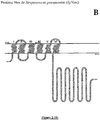
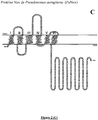
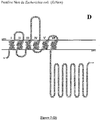
- the inventors' approach is based on the identification of (i) a consensus motif corresponding to the FAD binding domain, (ii) a consensus motif corresponding to the NADPH binding domain and (iii) a domain comprising from 3 to 7 transmembrane helices (identified from the amino acid sequence) containing 2 bis-histidyl units of 12 to 14 amino acids separated by at least 20 amino acids (the length of a transmembrane helix), which are found in association in Nox proteins.
- the inventors have also surprisingly identified additional patterns present in most prokaryotic Nox, making it possible to distinguish them from eukaryotic Nox.
- amino acids indicated in square brackets correspond to alternative amino acids for the position considered on the consensus sequence.
- Nox proteins used according to the invention correspond to Nox proteins identified in prokaryotic organisms. However, it is not excluded that Nox proteins as defined above can be identified in eukaryotic organisms.
- the subject of the invention is the use of a Nox protein as defined above, in which said first motif is chosen from the group consisting of sequences SEQ ID NO: 8, SEQ ID NO: 9 and SEQ ID NO: 10.
- sequences SEQ ID NO: 8 to 10 correspond respectively to the patterns present on the Nox proteins of Streptococcus pneumoniae, Pseudomonas aeruginosa and Escherichia coli (SEQ ID NO: 8), Salmonella enterica and Bordetella pertussis (SEQ ID NO: 9) and Vibrio cholerae (SEQ ID NO: 10).
- the invention relates to the use of a Nox protein as defined above, in which said second motif is chosen from the group consisting of sequences SEQ ID NO: 11, SEQ ID NO: 12, SEQ ID NO: 13 and SEQ ID NO: 14.
- sequences SEQ ID NO: 11 to 14 correspond respectively to the motifs present on the Nox proteins of Streptococcus pneumoniae (SEQ ID NO: 11), Pseudomonas aeruginosa, Salmonella enterica and Bordetella pertussis (SEQ ID NO: 12), Vibrio cholerae (SEQ ID NO: 13) and Escherichia coli (SEQ ID NO: 14).
- the invention relates to the use of a NOX protein as defined above, in which said third motif is chosen from the group consisting of sequences SEQ ID NO: 15, SEQ ID NO: 16, SEQ ID NO: 17, SEQ ID NO: 18, SEQ ID NO: 19 and SEQ ID NO: 20.
- sequences SEQ ID NO: 15 to 20 correspond respectively to the motifs present on the Nox proteins of Streptococcus pneumoniae (SEQ ID NO: 15), Pseudomonas aeruginosa (SEQ ID NO: 16), Escherichia coli (SEQ ID NO: 17), Vibrio cholerae (SEQ ID NO: 18), Salmonella enterica (SEQ ID NO: 19) and Bordetella pertussis (SEQ ID NO: 20).
- the invention relates to the use of a NOX protein as defined above, in which said fourth motif is chosen from the group consisting of the sequences SEQ ID NO: 21, SEQ ID NO: 22 and SEQ ID NO: 23.
- sequences SEQ ID NO: 21 to 23 correspond respectively to the motifs present on the Nox proteins of Streptococcus pneumoniae, Salmonella enterica, Escherichia coli and Bordetella pertussis (SEQ ID NO: 21), Pseudomonas aeruginosa (SEQ ID NO: 22) and Vibrio cholerae (SEQ ID NO: 23).
- the invention relates to the use of a Nox protein as defined above, in which the amino acid sequence of the Nox protein comprises, or consists of, a sequence having at least 90% identity, preferably 91%, 92%, 93%, 94%, 95%, 96%, 97%, 98%, 99% or 100% identity with SEQ ID NO: 24.
- sequence SEQ ID NO: 24 corresponds to a Nox protein identified in Streptococcus pneumoniae.
- the "percentage identity" between two amino acid sequences is determined by comparing the two optimally aligned sequences, through a comparison window.
- the part of the amino acid sequence in the comparison window can thus include additions or deletions (for example "gaps") with respect to the reference sequence (which would not include these additions or these deletions) so to obtain an optimal alignment between the two sequences.
- the percentage identity is calculated by determining the number of positions for which an amino acid residue is identical in the two sequences compared, then by dividing the number of positions for which there is identity between the two amino acid residues, by the total number of positions in the comparison window, then multiplying the result by one hundred in order to obtain the percentage of identity in amino acids of the two sequences together.
- the subject of the invention is the use of a NOX protein as defined above, in which the amino acid sequence of the Nox protein comprises, or consists of, a sequence having at least 90% identity, preferably 91%, 92%, 93%, 94%, 95%, 96%, 97%, 98%, 99% or 100% identity with SEQ ID NO: 25.
- sequence SEQ ID NO: 25 corresponds to a Nox protein identified in Pseudomonas aeruginosa.
- the subject of the invention is the use of a NOX protein as defined above, in which the amino acid sequence of the Nox protein comprises, or consists of, a sequence having at least 90% identity, preferably 91%, 92%, 93%, 94%, 95%, 96%, 97%, 98%, 99% or 100% identity with SEQ ID NO: 26.
- sequence SEQ ID NO: 26 corresponds to a Nox protein identified in Escherichia coli.
- the invention relates to the use of a Nox protein as defined above, in which the amino acid sequence of the Nox protein comprises, or consists of, a sequence having at least 90% identity, preferably 91%, 92%, 93%, 94%, 95%, 96%, 97%, 98%, 99% or 100% identity with SEQ ID NO: 27.
- sequence SEQ ID NO: 27 corresponds to a Nox protein identified in Vibrio cholerae.
- the invention relates to the use of a Nox protein as defined above, in which the amino acid sequence of the Nox protein comprises, or consists of, a sequence having at least 90% identity, preferably 91%, 92%, 93%, 94%, 95%, 96%, 97%, 98%, 99% or 100% identity with SEQ ID NO: 28.
- sequence SEQ ID NO: 28 corresponds to a Nox protein identified in Salmonella enterica.
- the invention relates to the use of a Nox protein as defined above, in which the amino acid sequence of the Nox protein comprises, or consists of, a sequence having at least 90% identity, preferably 91%, 92%, 93%, 94%, 95%, 96%, 97%, 98%, 99% or 100% identity with SEQ ID NO: 29.
- sequence SEQ ID NO: 29 corresponds to a Nox protein identified in Bordetella pertussis.
- the invention relates to the use of a Nox protein as defined above, in which the amino acid sequence of the Nox protein comprises, or consists of, a sequence chosen from the group consisting of sequences SEQ ID NO: 24 to 351.
- sequences SEQ ID NO: 24 to 351 correspond to 328 sequences of Nox proteins identified among the sequences accessible in the databases on January 22, 2014.
- the invention relates to the use of a NOX protein as defined above, in which the amino acid sequence of the Nox protein comprises, or consists of, a sequence chosen from the group consisting of SEQ sequences ID NO: 24, SEQ ID NO: 25, SEQ ID NO: 26, SEQ ID NO: 27, SEQ ID NO: 28 and SEQ ID NO: 29.
- said Nox protein is a protein of a prokaryotic organism, said prokaryotic organism preferably being chosen from the group consisting of Streptococcus pneumoniae, Pseudomonas aeruginosa, Escherichia coli, Vibrio cholerae, Salmonella enterica and Bordetella pertussis.
- said Nox protein is an isolated protein.
- said Nox protein is a recombinant protein.
- the term “recombinant protein” refers to a protein produced in a cell into which the gene coding for this protein has been introduced, as for example example using a plasmid vector.
- a recombinant protein can be produced heterologously in a cell in an organism different from the one in which it was originally identified.
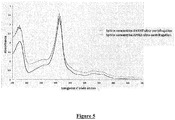
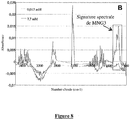
- said Nox protein has a spectrophotometric spectral signature of 250 to 700 nm similar, preferably identical, to one of the spectral signatures of 250 to 700 nm presented in the figure 5 .
- the presence of hemes in the Nox protein can indeed be viewed by performing a measurement using the spectrophotometry technique.
- the presence of hemes induces a characteristic spectral signature from 250 to 700 nm, with a peak at 410 nm when the protein is in its oxidized state.
- Another characteristic spectrum of Nox is the difference spectrum (reduced spectrum minus oxidized spectrum) having a major peak at 425nm and another peak at 558nm.
- the invention relates to the use of a Nox protein as defined above, said Nox protein having NADPH oxidase activity causing ROS production in the presence of an electron donor, said activity NADPH oxidase being capable of being detected in a sample comprising said Nox protein by means of a reaction showing the production of superoxide ion, preferably by a reduction in cytochrome c or by a reduction in NBT (Nitro Blue Tetrazolium) , and preferably using an absorbance measurement by spectrophotometry, by chemiluminescence or by a colorimetric test, carried out from the sample.
- NBT Niro Blue Tetrazolium
- the invention also relates to the use in vitro, ex vivo or in vivo, of a nucleic acid coding for a Nox protein defined above as a research tool for screening molecules of therapeutic interest, said nucleic acid. not being used in vivo in humans.
- said nucleic acid comprises, or consists of, a sequence chosen from the group consisting of sequences SEQ ID NO: 352, SEQ ID NO: 353, SEQ ID NO: 354, SEQ ID NO: 355, SEQ ID NO : 356, SEQ ID NO: 357, SEQ ID NO: 358, SEQ ID NO: 359, SEQ ID NO: 360, SEQ ID NO: 361, SEQ ID NO: 362 and SEQ ID NO: 363.
- sequences SEQ ID NO: 352 to 357 correspond to nucleic acids coding for Nox proteins identified in S. pneumoniae (SEQ ID NO: 352), P. aeruginosa (SEQ ID NO: 353), E. coli (SEQ ID NO: 354), V. cholerae (SEQ ID NO: 355), S. enterica (SEQ ID NO: 356) and B. pertussis (SEQ ID NO: 357).
- sequences SEQ ID NO: 358 to 363 correspond to nucleic acids, the codons of which have been optimized to allow the expression of Nox proteins from S. pneumoniae (SEQ ID NO: 358), P. aeruginosa (SEQ ID NO: 359 ), E. coli (SEQ ID NO: 360), V. cholerae (SEQ ID NO: 361), S. enterica (SEQ ID NO: 362) and B. pertussis (SEQ ID NO: 363), with a poly tail -histidine and a thrombin cleavage site.
- the invention relates to the use in vitro, ex vivo or in vivo, of an expression vector comprising a nucleic acid as defined above, as a research tool for the screening of molecules having a therapeutic interest, said expression vector not being used in vivo in humans.
- said expression vector as defined above comprises, or consists of, a sequence chosen from the group consisting of sequences SEQ ID NO: 364, SEQ ID NO: 365, SEQ ID NO: 366, SEQ ID NO: 367, SEQ ID NO: 368 and SEQ ID NO: 369.
- the invention relates to the use in vitro, ex vivo or in vivo, of a cell containing at least one expression vector as defined above, as a research tool for the screening of molecules of interest therapeutic, said cell not being used in vivo in humans.
- said cell is a bacterium, preferably chosen from the group consisting of Escherichia coli, Streptococcus pneumoniae, Pseudomonas aeruginosa, Vibrio cholerae, Salmonella enterica and Bordetella pertussis.
- a method for preparing a Nox protein as defined above, from a cellular extract of cells producing said protein, contained in an appropriate solution comprises a step of solubilization of the cell membranes of said cell extract to suspend said protein in said appropriate solution.
- Nox proteins are difficult to produce and purify because it is difficult to solubilize the membrane to release the Nox protein without destabilizing its structure.
- the use of an unsuitable detergent also leads to degradation of the Nox protein.
- the step of solubilization of said cell membrane can be carried out using at least one detergent from the maltoside family, preferably chosen from the group of dodecyl maltosides.
- the detergent will thus line the membrane part, replacing the membrane lipids.
- the detergent will then maintain the three-dimensional structure of the Nox protein which will maintain the hemes, during the purification, in the membrane part.
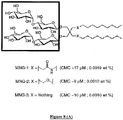
- said at least one detergent can be Lauryl Maltose Neopentyl Glycol (MNG3).
- said at least one detergent may be a mixture of detergents, in particular maltosides, preferably a mixture of CYMAL-7 / DDM or DDM / MNG3.
- the step of solubilization of said cell membrane can be carried out using a solution comprising 50 mM Tris HCl at pH 7, 300 mM NaCl and 5 mM MNG3 .
- a method as defined above can comprise, at the end of the solubilization step, a step of purification of said Nox protein in suspension in the appropriate solution.
- said at least one detergent can be used at a concentration of 0.01 mM to 0.2 mM, preferably 0.03 mM during said purification step.
- the step of purifying said Nox protein can be carried out by chromatography, preferably using a resin having a high affinity for an amino acid motif present on said protein , said amino acid motif preferably being a poly-histidine tail.
- said resin can be sepharose.
- said resin is balanced with the same solution as that used for the solubilization of the membrane, preferably with a solution comprising 50 mM Tris HCl at pH 7, 300 mM NaCl and 5 mM MNG3.
- said cells can be bacteria, preferably chosen from the group consisting of Streptococcus pneumoniae, Pseudomonas aeruginosa, Escherichia coli, Vibrio cholerae, Salmonella enterica and Bordetella pertussis.
- a method as defined above may comprise, after said purification step, a size exclusion chromatography step, in particular in a column, preferably using a 50 mM Tris HCl pH 7, 300 mM buffer. NaCl and 20 to 100 ⁇ M MNG3.
- the buffer used for the purification step contains 30 ⁇ M of MNG3.
- a method as defined above may comprise, after said step of size exclusion chromatography, a step of depletion of the detergent.
- the detergent depletion step eliminates the excess detergent from the Nox protein in an affinity column (or ion exchange column).
- 10 column volumes are used to wash the excess MNG3 and the elution is carried out with a 50 mM Tris HCl pH 7 buffer, 300 mM NaCl and 20 ⁇ M MNG3.
- Nox proteins used according to the invention can be effectively expressed in bacteria, with a significant yield of the order of a milligram of pure and functional protein per liter of culture, this allows large-scale production and at very low cost.
- the Nox proteins used according to the invention have numerous advantages for the screening of molecules of therapeutic interest. In a non-exhaustive manner, these can, for example, be activated with only NADPH, or an analog of NADPH, and are practical to implement insofar as it is a single component enzymatic system.
- the invention relates to the above use in which said NOX protein is used in vitro.
- the invention relates to the above use in which said NOX protein is used ex vivo.
- the invention relates to the above use in which said NOX protein is used in vivo in a non-human animal.
- said Nox protein constitutes a model therapeutic target.
- the Nox proteins used according to the invention constitute particularly interesting model proteins, all the more so since they are homologs to eukaryotic Nox proteins, and in particular human Nox proteins. Indeed, the similarity between SpNox and Nox2 is identical to the similarity between Nox2 and Nox5.
- the use of the Nox proteins of the invention for the pre-screening or the screening of molecules of therapeutic interest would therefore make it possible to increase the probability of identifying new active drugs for eukaryotic Nox.
- said protein in the use of the Nox protein defined above, is brought into contact with at least one molecule of therapeutic interest.
- said Nox protein in the use of the Nox protein defined above, is adsorbed on a support, preferably from a poly-histidine label present on said Nox protein.
- said support is a plate, preferably a 96-well plate.
- the NADPH oxidase activity of said Nox protein and / or the production of ROS is measured, in the presence or in the absence of said at least one molecule of therapeutic interest.
- the use of the Nox protein defined above is for identifying molecules capable of modulating its NADPH oxidase activity.
- the use of the Nox protein defined above is for identifying molecules capable of modulating its NADPH oxidase activity, said Nox protein being a prokaryotic protein.
- the use of the Nox protein defined above is for identifying molecules capable of modulating the NADPH oxidase activity of another Nox protein.
- a prokaryotic Nox protein as defined above is to identify molecules capable of modulating the NADPH oxidase activity of a eukaryotic Nox protein.
- the use of the Nox protein defined above is for the screening of molecules capable of modulating the production of ROS by said Nox protein or by another Nox protein.
- the use of the Nox protein defined above is for the screening of molecules capable of reducing or inhibiting the production of ROS by said Nox protein or by another Nox protein.
- the use of the Nox protein defined above is for the screening of molecules capable of stimulating the production of ROS by said Nox protein or by another Nox protein.
- the use of the Nox protein defined above is for the screening of molecules capable of exhibiting antibiotic properties.
- the identification of molecules capable of stimulating the production of ROS by a bacterial Nox can also allow the potentiation of known antibiotics. Indeed, the production of endogenous ROS in the bacteria can have the consequence of making resistant bacteria resistant to antibiotics.
- Such molecules increasing the production of ROS by NOX can thus be used in combination with an antibiotic for the treatment of certain bacterial infections.
- an activating molecule of a prokaryotic NOX protein is capable of causing production of ROS when it is administered to a bacterium and, therefore, is capable of constituting an effective antibacterial molecule.
- the invention relates to the above use in which said nucleic acid, said expression vector or said cell is used in vitro.
- the invention relates to the above use in which said nucleic acid, said expression vector or said cell is used ex vivo.
- the invention relates to the above use in which said nucleic acid, said expression vector or said cell is used in vivo in a non-human animal.
- prokaryotic Nox proteins can be produced on a large scale and at low cost, it is interesting to use them to test and select beforehand molecules capable of acting on eukaryotic Nox proteins, the latter being more difficult to produce in sufficient quantities.
- the production of ROS by said prokaryotic Nox protein in step a), and / or by said eukaryotic Nox protein in step b), can be determined by performing an absorbance measurement by spectrophotometry, and in particular by a test. colorimetric, chemiluminescence or fluorescence.
- Steps a) and b) can be carried out in plates, preferably 96-well plates.
- Step a) can be performed in a plate, preferably 96-well plates, and step b) can be performed in a spectrophotometry tank.
- Step a) can be carried out in a spectrophotometry tank and step b) can be carried out in a plate, preferably 96-well plates.
- G- [I / S / V / L] -G- [V / I / A / F] - [T / A / S] - [P / Y / T / A] (SEQ ID NO: 4) can be used to identify an amino acid sequence capable of encoding a Nox protein.
- said FAD motif from step b) can comprise the sequence: [P / A / S / E / F] -H- [P / S / A] -F- [T / S] - [L / I / M / V] (SEQ ID NO: 2).
- An identification method as defined above can comprise a step of detection in said amino acid sequence of an additional motif S1: [G / S / A] - [Q / D] -F- [A / V / T / L / F] - [F / Y / W / L / R] - [L / V / I / F / W ] (SEQ ID NO: 1), and where if said amino acid sequence comprises said additional motif S1, then said amino acid sequence is capable of encoding a Nox protein.
- An identification method as defined above can comprise a step of detection in said amino acid sequence of an additional motif S2: [K / R] -XXG- [D / G] -X- [T / S] (SEQ ID NO: 3), and where if said amino acid sequence comprises said additional motif S2, then said amino acid sequence is capable of encoding a Nox protein.
- the said amino acid sequence can be coded by a nucleotide sequence present on a bacterial genome.
- a detergent from the maltoside family can be used for the solubilization of Nox proteins.
- said detergent is preferably chosen from the group of dodecyl-maltosides.
- the first 2 filters select the sequences containing the patterns G [I / S / V / L] G [V / I / A / F] [T / A / S] [P / Y / T / A] (SEQ ID NO : 4) (NADPH binding domain) and H [P / S / A] F [T / S] [L / I / M / V] (SEQ ID NO: 6) (FAD binding domain), defined from the sequences of the 48 most similar proteins compared to the human Nox2 protein (Uniprot code: P04839). The sequences of the 48 proteins were identified by carrying out a BlastP search on public databases.
- the third filter selects the sequences which contain the 4 histidine residues responsible for coordinating the 2 heme parts of the cytochrome b motif. It is thus sought 2 bis-histidyl units separated by at least 20 amino acids (the size of a transmembrane helix), each of the bis-histidyl units consisting of 2 residues
- the first 2 filters select the sequences containing the patterns G [I / S / V / L] G [V / I / A / F] [T / A / S] [P / Y / T / A] (SEQ ID NO : 4) (NADPH binding domain) and H [P / S / A] F [T / S] [L / I / M / V] (SEQ ID NO: 6) (FAD binding domain), defined from the sequences of the 48 most similar proteins compared to the human Nox2 protein (Uniprot code: P04839). The sequences of the 48 proteins were identified by carrying out a BlastP search on public databases.
- the third filter selects the sequences which contain the 4 histidine residues responsible for coordinating the 2 heme parts of the cytochrome b motif. It is thus sought 2 bis-histidyl units separated by at least 20 amino acids (the size of a transmembrane helix), each of the bis-histidyl units consisting of 2 residues histidine separated by 12, 13 or 14 amino acid residues. TMHMM software was used to locate the transmembrane propellers. Sequences with more than 7 predicted ⁇ helices (i.e. the number of propellers found in Duox1-2) were not retained, while sequences with at least 3 predicted ⁇ helices were selected for take into account any prediction errors.
- the multiple alignments of the identified Nox protein sequences were carried out using the Clustal Omega software by performing 2 iterations.
- a phylogenetic tree was constructed with PhyML 3.0 software from the sequences of 150 putative Nox proteins ( Figure 1 ).
- the gene coding for the SpNox protein (code UniProt # Q8CZ28) of Streptococcus pneumoniae R6 (taxonomic identifier # 171101) has been synthesized and optimized to cause heterologous expression in Escherichia coli. Bases encoding a poly-histidine tag as well as a thrombin digestion site were added to the 5 'side of the complementary DNA encoding SpNox.
- the translation of the gene introduces 18 amino acids on the amino-terminal side of the protein before digestion with thrombin and only 4 amino acids (GSRS) after.
- the gene thus modified was cloned into the vector pUC57.
- the modified gene was introduced into the expression vector pQlinkN between the restriction sites NotI and BamHI under the control of a tac promoter, inducible to IPTG (isopropyl ⁇ -D-1 -thiogalactopyranoside), and this vector also carries an ampicillin resistance gene.
- the vector was introduced by heat shock transformation into a strain of Escherichia coli BL21 (DE3) pLysS (phenotype: F - ompT hsdSB (r B - m B - ) gal dcm (DE3) pLysS (Cam R )) chloramphenicol.
- the bacteria were then immediately cultured for 1 hour at 37 ° C. in an LB medium (Luria Bertani) without selection pressure. A fraction of this culture was then spread on a petri dish and incubated at 37 ° C overnight.
- a culture was started in a liquid medium in the presence of chloramphenicol (34 ⁇ g / ml) and ampicillin (100 ⁇ g / ml) at 37 ° C., with stirring overnight.
- the culture was inoculated from the preculture according to a 1/20 th dilution of the final volume.
- the culture was placed at 37 ° C and in an orbital shaker with a speed of 180rpm.
- the optical density of the medium was followed at 600 nm until the value of 1.5 was reached.
- the overexpression of the Sp NOX protein was induced by the addition to the medium of a concentration of 0.1 mM IPTG for 4 h and at 210 rpm.
- the bacteria were harvested by centrifugation at low speed (7000g, 30 min, 4 ° C) and stored at -80 ° C.
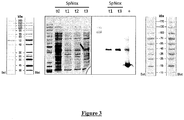
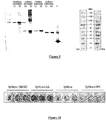
- the level of expression of the SpNOX protein was then checked by performing an SDS-PAGE analysis and confirmed by Western blot ( Figure 3 ).
- the bacterial pellet was taken up in a 50 mM Tris HCl buffer at pH 7, 250 mM NaCl and 10% glycerol to which a cocktail of anti-proteases (complete ULTRA Tablets, EDTA-free, Roche Applied Science) was thus added. than DNase at a concentration of 10 ⁇ g / ml (Sigma-Aldrich).
- the cells were mechanically lysed using a micro-fluidizer (M-1105, Microfluidics, USA) at 1,400 Psi in 5 successive passages. A visual check of the viscosity of the sample is important at this stage. Unlysed bacteria, cell debris and inclusion bodies were separated by low speed centrifugation (8000g, 20 min, 4 ° C).
- the supernatant was centrifuged at very high speed for 1 hour at 250,000 g and at 4 ° C.
- the pellet was taken up in a 50 mM Tris pH7 buffer and the total protein concentration is determined by the BCA technique (bicinchoninic acid assay) and the absorbance is measured at 562 nm according to the protocol made available by the supplier (Sigma- Aldrich).
- the sample is stored at -80 ° C at a concentration of 20 mg / ml of total protein.
- the membranes were solubilized in a 50 mM Tris HCl buffer at pH 7, 300 mM NaCl and 5 mM MNG3 (lauryl Maltose NeoPentyl Glycol - NG310-MNG - Affymetrix) at a final concentration of 0.5 mg / ml of total protein. .
- Ni-NTA Sepharose High performance resin (GE Healthcare Life Sciences), initially equilibrated in the same solubilization buffer, was added to the sample at a concentration of 1 ml of resin per 15 mg of protein. The whole was incubated with shaking at 4 ° C overnight.
- the protein loaded resin was placed on a gravity column until the filtrate was completely drained.
- Several washes were carried out with a buffer of 50 mM Tris HCl pH7, 300 mM NaCl, 50 ⁇ M MNG3 and 50 mM imidazole until the absorbance at 280 nm is stabilized.
- a 300 mM level of imidazole makes it possible to elute the protein by spreading the retentate over 3 to 5 ml.
- the spectral signature of the different fractions was evaluated between 200 and 700 nm and the purification was followed by SDS-PAGE.
- the purest fractions were combined and concentrated by membrane filtration with a size limit of 30kDa (Amicon® Ultra-4 - Millipore).
- the sample thus prepared was centrifuged at high speed, 150000g, for 20 minutes and at 4 ° C.
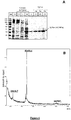
- the yield and the quality of the purification were evaluated by spectroscopy ( Figure 5 ) and SDS-PAGE ( Figure 6 ).
- a size exclusion chromatography step is necessary.
- a Superdex 200 10/300 GL column (GE Healthcare Life Sciences) was used with a mobile phase consisting of a 50 mM Tris HCl pH 7 buffer, 300 mM NaCl and 50 ⁇ M MNG3.
- the elution is monitored by absorbance at 280 nm using a ⁇ KTA FPLC type system (GE Healthcare Life Sciences).
- the purity of the protein was analyzed by SDS-PAGE and mass spectrometry ( Figure 6 ).
- CM Sepharose Fast Flow affinity column (GE Healthcare Life Sciences) was used to deplete the excess detergent of the Sp Nox protein.
- the sample was diluted in order to bring the NaCl concentration below the 15 mM threshold using a 50 mM Tris HCl pH7 and 20 ⁇ M MNG3 buffer.
- the amount of resin used is dependent on the amount of protein available with a ratio of 0.5 ml of resin to 3 mg of SpNox.
- Ten column volumes were used to wash the excess MNG3. 65 to 70% of the protein was recovered.
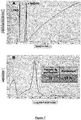
- the sample was checked by FT-IR spectroscopy and analytical ultracentrifugation ( Figure 7 ).
- the sample obtained can be concentrated and / or stored.
- This test is performed on 10 ⁇ g of BL21 (DE3) pLyS membrane proteins overexpressing SpNox in a total volume of 1 ml.
- the spectrophotometer is used for kinetics of 5 min and at a wavelength of 550nm.
- the reaction buffer is the membrane resuspension buffer (50mM Tris pH7)
- the blank is carried out on 10 ⁇ g of membrane of BL21 (DE3) pLyS overexpressing SpNox and 100 ⁇ M cytochrome c.
- the reaction is then triggered by the addition of 100 ⁇ M FAD and 200 ⁇ M NADPH.
- the NADPH oxidase activity is then quantified by calculating the slope of the curve thus obtained ( Figure 4 ).
- the d (DO) / D (t) ratio obtained is between 0.1 and 0.5.
- This test is carried out on 1 ⁇ g SpNox in a total volume of 1 ml using the spectrophotometer for a kinetics of 5 min and at a wavelength of 550 nm.
- the reaction buffer is the protein conservation buffer (50mM Tris pH7, 300mM NaCl, 0.03 ⁇ 0.02 mM MNG3)
- the blank is carried out on 1 ⁇ g SpNox and 100 ⁇ M cytochrome c.
- the reaction is then triggered by the addition of 100 ⁇ M FAD and 200 ⁇ M NADPH.
- the NADPH oxidase activity is then measured by means of the slope of the curve thus obtained.
- the result obtained is 24 nanomoles of reduced cytochrome c per minute per microgram of SpNox (or more generally, between 12 and 60 nanomoles of reduced cytochrome c per minute per microgram of Sp Nox).
- This activity can be measured at different concentrations of NaCl (0 - 1M), KCl and MNG3.
- HEK 293 Human Embryonic Kidney
- PMN Polymorphonuclear leukocytes
- This test is carried out on 30 to 100 ⁇ g of PLB985 membranes in a total volume of 1000 ⁇ L.
- the reaction buffer is 1X PBS.
- PLB985 membrane 30-100 ⁇ g of PLB985 membrane are incubated with increasing concentrations of a molecule A for 5 - 20min at 25 ° C in a volume of 100ul.
- 0.5-4mM of arachidonic acid, 10-30 ⁇ M of FAD and 100-500nM trimer (non-prenylated trimer, rac 1Q61L) are added to the reaction mixture and incubated with the membranes for 5-20 min at 25 ° C according to the protocol described in Mizrahi et al.,
- a prenylated p47phox-p67phox-Racl chimera is a Quintessential NADPH oxidase activator: membrane association and functional capacity. J Biol Chem, 2010. 285 (33): p. 25485-99 .
- the reaction is then triggered by the addition of 900 ⁇ L of PBS containing the substrate for NADPH oxidase, 100-400 ⁇ M NADPH (final) and 100 ⁇ M final for cytochrome c (or NBT) which will allow monitoring of the reaction.
- This technique is based on the principle of energy dissipation by light emission by a compound when it returns from an excited state to a ground state.
- the chemiluminescence reaction applied is based on an oxidation reaction of luminol (5-Amino-2,3-dihydro-1,4-phthalazinedione) dependent on the peroxidase HRPO (horseradish peroxidase).
- HRPO horseradish peroxidase
- This test is carried out on 0.1-1 ⁇ g of SpNox in a total volume of 100 - 200 ⁇ L.
- the plate reader is used for a kinetics of 5 min-20 min.
- the reaction buffer is 50mM Tris pH7, 300mM NaCl, 0.03 ⁇ 0.02 mM MNG3.
- 0.1-1 ⁇ g SpNox are incubated with increasing concentrations of a molecule A for 5-20min at 25 ° C. 10-100 ⁇ M luminol and 10-50 U / ml HRPO are added to the reaction mixture and incubated with the protein Sp Nox and the molecule A at 25 ° C. protected from light and for 5 min.
- This test is performed on 0.1 - 1 ⁇ g SpNox in a total volume of 100 - 200 ⁇ L.
- the plate reader is used for kinetics of 5 - 20min and at a wavelength of 550nm.
- the reaction buffer is the SpNox preservation buffer (50mM Tris pH7, 300mM NaCl, 0.03mM ⁇ 0.02 mM MNG3)
- 0.1-1 ⁇ g SpNox are incubated with increasing concentrations of a molecule A for 5-20min at 25 ° C. 10 - 30 ⁇ M cytochrome c are added to the reaction mixture and the reaction is then triggered by the addition of 20-50 ⁇ M FAD and 20-150 ⁇ M NADPH.
- the NADPH oxidase activity is then quantified by calculating the slope of the curve obtained following the reduction of cytochrome c (or NBT).
- This activity can be measured at different concentrations of NaCl (0-1M) and MNG3.
- Sp Nox is incubated with a reaction mixture containing the test molecule, NBT, FAD and the protein conservation buffer for 5 to 20 min at 25 ° C. The reaction is then triggered by the addition of NADPH.
- the NADPH oxidase activity is then quantified as an end point by determining the intensity of the coloration compared to a positive control.
- the positive control is carried out with the Sp Nox protein alone, with no molecule to be tested.
- the "Z 'score" is between 0.7 and 0.8 depending on the experience.
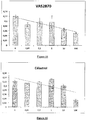
- the monitoring of the NADPH oxidase activity of the enzyme can be carried out in colorimetry (or in chemiluminescence) ( Figure 10 ).
- prokaryotic NOX proteins can also be used to identify anti-bacterial molecules, whether or not said molecules have an effect on eukaryotic NOX proteins.
- molecules that have an activating effect on prokaryotic NOX proteins are likely to have a bactericidal or bacteriostatic effect on bacteria, by increasing the production of ROS in bacteria.
- This technique is based on the principle of dissipation of energy by emission of light by a compound when it returns from an excited state to its initial state.
- the chemiluminescence reaction applied is based on an oxidation reaction of luminol (5-Amino-2,3-dihydro-1,4-phthalazinedione) dependent on peroxidase HRPO (horseradish peroxidase) and intrinsic peroxidase MPO.
- HRPO horseradish peroxidase
- MPO peroxidase MPO
- the return of the excited luminol to its ground state is accompanied by an emission of light quantified by a luminometer.
- the light emission is directly proportional to the NADPH oxidase activity according to the protocol described in Dahlgren, C. and A. Karlsson, Respiratory burst in human neutrophils. J Immunol Methods, 1999. 232 (1-2): p. 3-14 .
- This test is carried out on 5 ⁇ 10 5 cells in a total volume of 250 ⁇ L.
- the plate reader is used for kinetics of 15-45min.
- the reaction buffer is PBS.
- 5 x 10 5 PLB985 cells are incubated with increasing concentrations of a molecule A for 5-20 min at 25 ° C.
- 20 mM glucose, 20 ⁇ M luminol and 10 U / ml HRPO are added to the reaction mixture and incubated with the cells and the molecule A at 25 ° C. protected from light and for 5 min.
- Velocities of 0.00015 to 0.0005 mM of reduced cytochrome c are obtained per minute for 5 micrograms of total membrane proteins.
- This test is carried out on 4-20ug of PLB985 membrane in a total volume of 200 ⁇ L.
- the plate reader is used for kinetics of 5 min.
- the reaction buffer is 1X PBS.
- PLB985 membrane 4-20 ⁇ g of PLB985 membrane are incubated with increasing concentrations of a molecule A for 5 to 20 min at 25 ° C. in a volume of 100 ⁇ l. 0.10-1mM of arachidonic acid, 10-50 ⁇ M of FAD and the trimer are added to the reaction mixture and incubated with the membranes for 5-20 min at 25 ° C according to the protocol described in Mizrahi, A., et al., A prenylated p47phox-p67phox-Rac1 chimera is a Quintessential NADPH oxidase activator: membrane association and functional capacity. J Biol Chem, 2010. 285 (33): p. 25485-99 .
- the reaction is then triggered by the addition of 100 ⁇ L of PBS containing the substrate for NADPH oxidase, 100-400 ⁇ M NADPH and 100 ⁇ M of cytochrome c (or NBT) which will allow monitoring of the reaction.
Landscapes
- Chemical & Material Sciences (AREA)
- Life Sciences & Earth Sciences (AREA)
- Health & Medical Sciences (AREA)
- Organic Chemistry (AREA)
- Engineering & Computer Science (AREA)
- Zoology (AREA)
- Wood Science & Technology (AREA)
- Genetics & Genomics (AREA)
- Bioinformatics & Cheminformatics (AREA)
- Biochemistry (AREA)
- General Health & Medical Sciences (AREA)
- Molecular Biology (AREA)
- General Engineering & Computer Science (AREA)
- Immunology (AREA)
- Biotechnology (AREA)
- Microbiology (AREA)
- Proteomics, Peptides & Aminoacids (AREA)
- Biomedical Technology (AREA)
- Physics & Mathematics (AREA)
- Analytical Chemistry (AREA)
- Hematology (AREA)
- Medicinal Chemistry (AREA)
- Biophysics (AREA)
- Urology & Nephrology (AREA)
- Cell Biology (AREA)
- Food Science & Technology (AREA)
- General Physics & Mathematics (AREA)
- Pathology (AREA)
- Measuring Or Testing Involving Enzymes Or Micro-Organisms (AREA)
- Peptides Or Proteins (AREA)
- Micro-Organisms Or Cultivation Processes Thereof (AREA)
- Enzymes And Modification Thereof (AREA)
Claims (15)
- Verwendung in vitro, ex vivo oder in vivo, als Suchwerkzeug zur Siebung von ein therapeutisches Interesse aufweisenden Molekülen, eines Nox-Proteins mit:- einem Bereich, 3 bis 7 transmembranäre Helices umfassend,und verfügend über eine Aminosäuresequenz, Folgendes umfassend:- wenigstens 2 Bis-histidyl-Motive, wobei jedes der Bis-histidyl-Motive aus 2 Histidinresten besteht, getrennt nach 12, 13 oder 14 Aminosäureresten, wobei sich die 2 Bis-histidyl-Motive in dem Membranteil befinden und durch eine transmembranäre Helix getrennt sind, und- wenigstens ein erstes Motiv, bestehend aus der Sequenz:
[G/S/A]-[Q/D]-F-[AN/T/L/F]-[F/Y/W/L/R]-[LN/I/F/W] (SEQ ID NO: 1), und- wenigstens ein zweites Motiv, bestehend aus der Sequenz:
[P/A/S/E/F]-H-[P/S/A]-F-[T/S]-[L/I/MN] (SEQ ID NO: 2), und- wenigstens ein drittes Motiv, bestehend aus der Sequenz:
[K/R]-X-X-G-[D/G]-X-[T/S] (SEQ ID NO: 3), wobei X für eine beliebige natürliche Aminosäure steht, und- wenigstens ein viertes Motiv, bestehend aus der Sequenz:wobei das Nox-Protein nicht in vivo bei einem Menschen verwendet wird.
[G-[I/SN/L]-G-[V/I/A/F]-[T/A/S]-[P/Y/T/A] (SEQ ID NO: 4), - Verwendung nach Anspruch 1, wobei in der Aminosäuresequenz des Nox-Proteins:das erste Motiv ausgewählt ist aus der Gruppe bestehend aus den Sequenzen: SEQ ID NO: 8, SEQ ID NO: 9 und SEQ ID NO: 10, und/oderdas zweite Motiv ausgewählt ist aus der Gruppe bestehend aus den Sequenzen: SEQ ID NO: 11, SEQ ID NO: 12, SEQ ID NO: 13 und SEQ ID NO: 14, und/oderdas dritte Motiv ausgewählt ist aus der Gruppe bestehend aus den Sequenzen: SEQ ID NO: 15, SEQ ID NO: 16, SEQ ID NO: 17, SEQ ID NO: 18, SEQ ID NO: 19, SEQ ID NO: 20, und/oderdas vierte Motiv ausgewählt ist aus der Gruppe bestehend aus den Sequenzen: SEQ ID NO: 21, SEQ ID NO: 22 und SEQ ID NO: 23.
- Verwendung nach einem der Ansprüche 1 oder 2, wobei die Aminosäuresequenz des Nox-Proteins eine Sequenz mit wenigstens 90 % Identität, bevorzugt 95 % Identität, mit einer der Sequenzen ausgewählt aus der Gruppe bestehend aus: SEQ ID NO: 24, SEQ ID NO: 25, SEQ ID NO: 26, SEQ ID NO: 27, SEQ ID NO: 28 und SEQ ID NO: 29, umfasst oder aus dieser besteht.
- Verwendung nach einem der Ansprüche 1 oder 2, wobei die Aminosäuresequenz des Nox-Proteins eine Sequenz ausgewählt aus der Gruppe bestehend aus den Sequenzen: SEQ ID NO: 24 bis 351 umfasst oder aus dieser besteht.
- Verwendung nach einem der Ansprüche 1 bis 4, wobei das Nox-Protein über eine NADPH-Oxydasenaktivität verfügt, in Anwesenheit eines Elektronenspenders zu einer Produktion von ROS führend,
wobei die NADPH-Oxydase wahrscheinlich in einer das Protein enthaltenden Probe erkannt wird mittels einer Reaktion, die die Produktion von Superoxydionen zeigt. - Verwendung nach einem der Ansprüche 1 bis 5, wobei das Nox-Protein ein modellhaftes therapeutisches Ziel aufweist.
- Verwendung nach einem der Ansprüche 1 bis 6, wobei das Nox-Protein ein Prokaryotprotein ist, das verwendet wird, um Moleküle zu identifizieren, fähig, die NADPH-Oxydasenaktivität mit einem Nox-Eukaryotprotein zu modifizieren.
- Verwendung nach einem der Ansprüche 1 bis 7, wobei das Nox-Protein auf einem Träger absorbiert wird.
- Verwendung nach einem der Ansprüche 1 bis 5 zur Siebung von Molekülen, die wahrscheinlich antibiotische Eigenschaften aufweisen.
- Verwendung nach Anspruch 5, zur Siebung von Molekülen, die wahrscheinlich antibiotische Eigenschaften aufweisen, fähig, die ROS-Produktion durch das Nox-Protein zu stimulieren.
- Verwendung, in vitro, ex vivo oder in vivo als Suchwerkzeug zur Siebung von ein therapeutisches Interesse aufweisenden Molekülen:- einer Nukleinsäure, ein Nox-Protein codierend wie in einem der Ansprüche 1 bis 5 definiert,- eines Expressionsvektors, die Nukleinsäure enthaltend, oder- einer Zelle, den Expressionsvektor enthaltend,wobei die Nukleinsäure, der Expressionsvektor und die Zelle nicht in vivo bei einem Menschen verwendet werden.
- Verwendung nach Anspruch 11, wobei die Nukleinsäure eine Sequenz ausgewählt aus der Gruppe bestehend aus den Sequenzen SEQ ID NO: 352 bis 363 umfasst oder aus dieser besteht.
- Verwendung nach Anspruch 11, wobei die Nukleinsäure eine Sequenz ausgewählt aus der Gruppe bestehend aus den Sequenzen SEQ ID NO: 364 bis 369 umfasst oder aus dieser besteht.
- Verwendung nach Anspruch 11, wobei die Zelle eine Bakterie ist.
- Verwendung nach Anspruch 14, wobei die Zelle eine Bakterie ist ausgewählt aus der Gruppe bestehend aus Escherichia coli, Streptococcus pneumoniae, Pseudomonas aeruginosa, Vibrio cholerae, Salmonella enterica und Bordetella pertussis.
Applications Claiming Priority (2)
| Application Number | Priority Date | Filing Date | Title |
|---|---|---|---|
| FR1453616A FR3020070B1 (fr) | 2014-04-22 | 2014-04-22 | Proteines nadph oxydases |
| PCT/FR2015/051101 WO2015162383A1 (fr) | 2014-04-22 | 2015-04-22 | Proteines nadph oxydases |
Publications (2)
| Publication Number | Publication Date |
|---|---|
| EP3134518A1 EP3134518A1 (de) | 2017-03-01 |
| EP3134518B1 true EP3134518B1 (de) | 2020-06-10 |
Family
ID=51483560
Family Applications (1)
| Application Number | Title | Priority Date | Filing Date |
|---|---|---|---|
| EP15726231.2A Not-in-force EP3134518B1 (de) | 2014-04-22 | 2015-04-22 | Nadph-oxidaseproteine |
Country Status (6)
| Country | Link |
|---|---|
| US (2) | US10533161B2 (de) |
| EP (1) | EP3134518B1 (de) |
| BR (1) | BR112016024717A2 (de) |
| CA (1) | CA2946956C (de) |
| FR (1) | FR3020070B1 (de) |
| WO (1) | WO2015162383A1 (de) |
Families Citing this family (1)
| Publication number | Priority date | Publication date | Assignee | Title |
|---|---|---|---|---|
| WO2022204449A1 (en) * | 2021-03-26 | 2022-09-29 | Arizona Board Of Regents On Behalf Of The University Of Arizona | Low molecular weight hydrogels comprising thioglycolipids |
Family Cites Families (6)
| Publication number | Priority date | Publication date | Assignee | Title |
|---|---|---|---|---|
| DK1189935T3 (da) * | 1999-06-25 | 2009-02-09 | Wyeth Corp | Ekstraktion af integrale membranproteiner |
| WO2002077183A2 (en) * | 2001-03-21 | 2002-10-03 | Elitra Pharmaceuticals, Inc. | Identification of essential genes in microorganisms |
| GB0107658D0 (en) * | 2001-03-27 | 2001-05-16 | Chiron Spa | Streptococcus pneumoniae |
| WO2004011670A2 (en) * | 2002-07-31 | 2004-02-05 | Georgia Tech Research Corporation | Methods and compositions for nad(p)(h) oxidases |
| US20050130260A1 (en) * | 2003-12-15 | 2005-06-16 | Lars Linden | Refolded membrane protein in monodisperse form |
| WO2011062864A2 (en) * | 2009-11-17 | 2011-05-26 | Emory University | Inhibitors of nox enzymes and methods of use thereof |
-
2014
- 2014-04-22 FR FR1453616A patent/FR3020070B1/fr not_active Expired - Fee Related
-
2015
- 2015-04-22 WO PCT/FR2015/051101 patent/WO2015162383A1/fr not_active Ceased
- 2015-04-22 EP EP15726231.2A patent/EP3134518B1/de not_active Not-in-force
- 2015-04-22 US US15/306,137 patent/US10533161B2/en not_active Expired - Fee Related
- 2015-04-22 BR BR112016024717-5A patent/BR112016024717A2/pt not_active Application Discontinuation
- 2015-04-22 CA CA2946956A patent/CA2946956C/fr active Active
-
2019
- 2019-12-16 US US16/716,202 patent/US10968436B2/en not_active Expired - Fee Related
Non-Patent Citations (1)
| Title |
|---|
| None * |
Also Published As
| Publication number | Publication date |
|---|---|
| CA2946956C (fr) | 2022-08-23 |
| FR3020070A1 (fr) | 2015-10-23 |
| FR3020070B1 (fr) | 2018-11-02 |
| EP3134518A1 (de) | 2017-03-01 |
| WO2015162383A1 (fr) | 2015-10-29 |
| US10533161B2 (en) | 2020-01-14 |
| US20170088826A1 (en) | 2017-03-30 |
| US20200181583A1 (en) | 2020-06-11 |
| BR112016024717A2 (pt) | 2018-01-30 |
| CA2946956A1 (fr) | 2015-10-29 |
| US10968436B2 (en) | 2021-04-06 |
Similar Documents
| Publication | Publication Date | Title |
|---|---|---|
| Wang et al. | Streptococcus gordonii LuxS/autoinducer‐2 quorum‐sensing system modulates the dual‐species biofilm formation with Streptococcus mutans | |
| Brouwer et al. | The paradigm that all oxygen-respiring eukaryotes have cytosolic CuZn-superoxide dismutase and that Mn-superoxide dismutase is localized to the mitochondria does not apply to a large group of marine arthropods | |
| Grouneva et al. | Influence of ascorbate and pH on the activity of the diatom xanthophyll cycle‐enzyme diadinoxanthin de‐epoxidase | |
| Yasutake et al. | A single mutation at the ferredoxin binding site of P450 Vdh enables efficient biocatalytic production of 25‐hydroxyvitamin D3 | |
| Hobmeier et al. | Adaptation to varying salinity in Halomonas elongata: much more than ectoine accumulation | |
| Kato et al. | Identification of a gene essential for protoporphyrinogen IX oxidase activity in the cyanobacterium Synechocystis sp. PCC6803 | |
| Saeedi Saravi et al. | Gut microbiota-dependent increase in phenylacetic acid induces endothelial cell senescence during aging | |
| Boynton et al. | Identification of Escherichia coli HemG as a novel, menadione-dependent flavodoxin with protoporphyrinogen oxidase activity | |
| Song et al. | Chemotaxis-mediated degradation of PAHs and heterocyclic PAHs under low-temperature stress by Pseudomonas fluorescens S01: Insights into the mechanisms of biodegradation and cold adaptation | |
| Naguib et al. | An evolutionary conserved detoxification system for membrane lipid–derived peroxyl radicals in Gram-negative bacteria | |
| Nishikawa et al. | Roles of vacuolar H+-ATPase in the oxidative stress response of Candida glabrata | |
| Choi et al. | Tyrosol blocks E. coli anaerobic biofilm formation via YbfA and FNR to increase antibiotic susceptibility | |
| Babbitt et al. | Conserved residues of the human mitochondrial holocytochrome c synthase mediate interactions with heme | |
| CA2912495A1 (fr) | Procede d'inactivation d'une proteine prion | |
| EP3134518B1 (de) | Nadph-oxidaseproteine | |
| Tang et al. | Development of an effective meropenem/KPC-2 inhibitor combination to combat infections caused by carbapenem-resistant Klebsiella pneumoniae | |
| De Leo et al. | Cardiolipin increases in chromatophores isolated from Rhodobacter sphaeroides after osmotic stress: structural and functional roles | |
| Wen et al. | Characterization of an FMO variant of Chlorobaculum tepidum carrying bacteriochlorophyll a esterified by geranylgeraniol | |
| Vekshin | Biophysics of mitochondria | |
| Bramkamp et al. | Functional modules of KdpB, the catalytic subunit of the Kdp-ATPase from Escherichia coli | |
| Xu et al. | Investigating the molecular mechanisms of Pseudalteromonas sp. LD-B1's algicidal effects on the harmful alga Heterosigma akashiwo | |
| Cheraghi et al. | Structural and functional effects of circular permutation on firefly luciferase: in vitro assay of caspase 3/7 | |
| Xu et al. | Inhibition of non-enzymatic glycation by capsaicin: targeting AGE-induced diabetic complications | |
| Regina et al. | Bacterial production and reconstitution in proteoliposomes of Solanum lycopersicum CAT2: a transporter of basic amino acids and organic cations | |
| Santos et al. | Functional and structural studies of the disulfide isomerase D sb C from the plant pathogen X ylella fastidiosa reveals a redox‐dependent oligomeric modulation in vitro |
Legal Events
| Date | Code | Title | Description |
|---|---|---|---|
| STAA | Information on the status of an ep patent application or granted ep patent |
Free format text: STATUS: THE INTERNATIONAL PUBLICATION HAS BEEN MADE |
|
| PUAI | Public reference made under article 153(3) epc to a published international application that has entered the european phase |
Free format text: ORIGINAL CODE: 0009012 |
|
| STAA | Information on the status of an ep patent application or granted ep patent |
Free format text: STATUS: REQUEST FOR EXAMINATION WAS MADE |
|
| 17P | Request for examination filed |
Effective date: 20161114 |
|
| AK | Designated contracting states |
Kind code of ref document: A1 Designated state(s): AL AT BE BG CH CY CZ DE DK EE ES FI FR GB GR HR HU IE IS IT LI LT LU LV MC MK MT NL NO PL PT RO RS SE SI SK SM TR |
|
| AX | Request for extension of the european patent |
Extension state: BA ME |
|
| RIN1 | Information on inventor provided before grant (corrected) |
Inventor name: HAJJAR, CHRISTINE Inventor name: FIESCHI, FRANCK Inventor name: DUPUY, JEROME Inventor name: CHERRIER, MICKAEL |
|
| DAV | Request for validation of the european patent (deleted) | ||
| DAX | Request for extension of the european patent (deleted) | ||
| STAA | Information on the status of an ep patent application or granted ep patent |
Free format text: STATUS: EXAMINATION IS IN PROGRESS |
|
| 17Q | First examination report despatched |
Effective date: 20171103 |
|
| GRAP | Despatch of communication of intention to grant a patent |
Free format text: ORIGINAL CODE: EPIDOSNIGR1 |
|
| STAA | Information on the status of an ep patent application or granted ep patent |
Free format text: STATUS: GRANT OF PATENT IS INTENDED |
|
| INTG | Intention to grant announced |
Effective date: 20191218 |
|
| GRAS | Grant fee paid |
Free format text: ORIGINAL CODE: EPIDOSNIGR3 |
|
| GRAA | (expected) grant |
Free format text: ORIGINAL CODE: 0009210 |
|
| STAA | Information on the status of an ep patent application or granted ep patent |
Free format text: STATUS: THE PATENT HAS BEEN GRANTED |
|
| RAP1 | Party data changed (applicant data changed or rights of an application transferred) |
Owner name: CENTRE NATIONAL DE LA RECHERCHE SCIENTIFIQUE Owner name: UNIVERSITE GRENOBLE ALPES |
|
| AK | Designated contracting states |
Kind code of ref document: B1 Designated state(s): AL AT BE BG CH CY CZ DE DK EE ES FI FR GB GR HR HU IE IS IT LI LT LU LV MC MK MT NL NO PL PT RO RS SE SI SK SM TR |
|
| REG | Reference to a national code |
Ref country code: GB Ref legal event code: FG4D Free format text: NOT ENGLISH |
|
| REG | Reference to a national code |
Ref country code: CH Ref legal event code: EP Ref country code: AT Ref legal event code: REF Ref document number: 1279218 Country of ref document: AT Kind code of ref document: T Effective date: 20200615 |
|
| REG | Reference to a national code |
Ref country code: DE Ref legal event code: R096 Ref document number: 602015054066 Country of ref document: DE |
|
| REG | Reference to a national code |
Ref country code: IE Ref legal event code: FG4D Free format text: LANGUAGE OF EP DOCUMENT: FRENCH |
|
| REG | Reference to a national code |
Ref country code: NL Ref legal event code: FP |
|
| REG | Reference to a national code |
Ref country code: LT Ref legal event code: MG4D |
|
| PG25 | Lapsed in a contracting state [announced via postgrant information from national office to epo] |
Ref country code: SE Free format text: LAPSE BECAUSE OF FAILURE TO SUBMIT A TRANSLATION OF THE DESCRIPTION OR TO PAY THE FEE WITHIN THE PRESCRIBED TIME-LIMIT Effective date: 20200610 Ref country code: LT Free format text: LAPSE BECAUSE OF FAILURE TO SUBMIT A TRANSLATION OF THE DESCRIPTION OR TO PAY THE FEE WITHIN THE PRESCRIBED TIME-LIMIT Effective date: 20200610 Ref country code: GR Free format text: LAPSE BECAUSE OF FAILURE TO SUBMIT A TRANSLATION OF THE DESCRIPTION OR TO PAY THE FEE WITHIN THE PRESCRIBED TIME-LIMIT Effective date: 20200911 Ref country code: FI Free format text: LAPSE BECAUSE OF FAILURE TO SUBMIT A TRANSLATION OF THE DESCRIPTION OR TO PAY THE FEE WITHIN THE PRESCRIBED TIME-LIMIT Effective date: 20200610 Ref country code: NO Free format text: LAPSE BECAUSE OF FAILURE TO SUBMIT A TRANSLATION OF THE DESCRIPTION OR TO PAY THE FEE WITHIN THE PRESCRIBED TIME-LIMIT Effective date: 20200910 |
|
| PG25 | Lapsed in a contracting state [announced via postgrant information from national office to epo] |
Ref country code: BG Free format text: LAPSE BECAUSE OF FAILURE TO SUBMIT A TRANSLATION OF THE DESCRIPTION OR TO PAY THE FEE WITHIN THE PRESCRIBED TIME-LIMIT Effective date: 20200910 Ref country code: HR Free format text: LAPSE BECAUSE OF FAILURE TO SUBMIT A TRANSLATION OF THE DESCRIPTION OR TO PAY THE FEE WITHIN THE PRESCRIBED TIME-LIMIT Effective date: 20200610 Ref country code: RS Free format text: LAPSE BECAUSE OF FAILURE TO SUBMIT A TRANSLATION OF THE DESCRIPTION OR TO PAY THE FEE WITHIN THE PRESCRIBED TIME-LIMIT Effective date: 20200610 Ref country code: LV Free format text: LAPSE BECAUSE OF FAILURE TO SUBMIT A TRANSLATION OF THE DESCRIPTION OR TO PAY THE FEE WITHIN THE PRESCRIBED TIME-LIMIT Effective date: 20200610 |
|
| REG | Reference to a national code |
Ref country code: AT Ref legal event code: MK05 Ref document number: 1279218 Country of ref document: AT Kind code of ref document: T Effective date: 20200610 |
|
| PG25 | Lapsed in a contracting state [announced via postgrant information from national office to epo] |
Ref country code: AL Free format text: LAPSE BECAUSE OF FAILURE TO SUBMIT A TRANSLATION OF THE DESCRIPTION OR TO PAY THE FEE WITHIN THE PRESCRIBED TIME-LIMIT Effective date: 20200610 |
|
| PG25 | Lapsed in a contracting state [announced via postgrant information from national office to epo] |
Ref country code: IT Free format text: LAPSE BECAUSE OF FAILURE TO SUBMIT A TRANSLATION OF THE DESCRIPTION OR TO PAY THE FEE WITHIN THE PRESCRIBED TIME-LIMIT Effective date: 20200610 Ref country code: RO Free format text: LAPSE BECAUSE OF FAILURE TO SUBMIT A TRANSLATION OF THE DESCRIPTION OR TO PAY THE FEE WITHIN THE PRESCRIBED TIME-LIMIT Effective date: 20200610 Ref country code: AT Free format text: LAPSE BECAUSE OF FAILURE TO SUBMIT A TRANSLATION OF THE DESCRIPTION OR TO PAY THE FEE WITHIN THE PRESCRIBED TIME-LIMIT Effective date: 20200610 Ref country code: EE Free format text: LAPSE BECAUSE OF FAILURE TO SUBMIT A TRANSLATION OF THE DESCRIPTION OR TO PAY THE FEE WITHIN THE PRESCRIBED TIME-LIMIT Effective date: 20200610 Ref country code: SM Free format text: LAPSE BECAUSE OF FAILURE TO SUBMIT A TRANSLATION OF THE DESCRIPTION OR TO PAY THE FEE WITHIN THE PRESCRIBED TIME-LIMIT Effective date: 20200610 Ref country code: ES Free format text: LAPSE BECAUSE OF FAILURE TO SUBMIT A TRANSLATION OF THE DESCRIPTION OR TO PAY THE FEE WITHIN THE PRESCRIBED TIME-LIMIT Effective date: 20200610 Ref country code: CZ Free format text: LAPSE BECAUSE OF FAILURE TO SUBMIT A TRANSLATION OF THE DESCRIPTION OR TO PAY THE FEE WITHIN THE PRESCRIBED TIME-LIMIT Effective date: 20200610 Ref country code: PT Free format text: LAPSE BECAUSE OF FAILURE TO SUBMIT A TRANSLATION OF THE DESCRIPTION OR TO PAY THE FEE WITHIN THE PRESCRIBED TIME-LIMIT Effective date: 20201012 |
|
| PG25 | Lapsed in a contracting state [announced via postgrant information from national office to epo] |
Ref country code: PL Free format text: LAPSE BECAUSE OF FAILURE TO SUBMIT A TRANSLATION OF THE DESCRIPTION OR TO PAY THE FEE WITHIN THE PRESCRIBED TIME-LIMIT Effective date: 20200610 Ref country code: SK Free format text: LAPSE BECAUSE OF FAILURE TO SUBMIT A TRANSLATION OF THE DESCRIPTION OR TO PAY THE FEE WITHIN THE PRESCRIBED TIME-LIMIT Effective date: 20200610 Ref country code: IS Free format text: LAPSE BECAUSE OF FAILURE TO SUBMIT A TRANSLATION OF THE DESCRIPTION OR TO PAY THE FEE WITHIN THE PRESCRIBED TIME-LIMIT Effective date: 20201010 |
|
| REG | Reference to a national code |
Ref country code: DE Ref legal event code: R097 Ref document number: 602015054066 Country of ref document: DE |
|
| PLBE | No opposition filed within time limit |
Free format text: ORIGINAL CODE: 0009261 |
|
| STAA | Information on the status of an ep patent application or granted ep patent |
Free format text: STATUS: NO OPPOSITION FILED WITHIN TIME LIMIT |
|
| PG25 | Lapsed in a contracting state [announced via postgrant information from national office to epo] |
Ref country code: DK Free format text: LAPSE BECAUSE OF FAILURE TO SUBMIT A TRANSLATION OF THE DESCRIPTION OR TO PAY THE FEE WITHIN THE PRESCRIBED TIME-LIMIT Effective date: 20200610 |
|
| 26N | No opposition filed |
Effective date: 20210311 |
|
| PG25 | Lapsed in a contracting state [announced via postgrant information from national office to epo] |
Ref country code: SI Free format text: LAPSE BECAUSE OF FAILURE TO SUBMIT A TRANSLATION OF THE DESCRIPTION OR TO PAY THE FEE WITHIN THE PRESCRIBED TIME-LIMIT Effective date: 20200610 |
|
| PG25 | Lapsed in a contracting state [announced via postgrant information from national office to epo] |
Ref country code: MC Free format text: LAPSE BECAUSE OF FAILURE TO SUBMIT A TRANSLATION OF THE DESCRIPTION OR TO PAY THE FEE WITHIN THE PRESCRIBED TIME-LIMIT Effective date: 20200610 |
|
| PG25 | Lapsed in a contracting state [announced via postgrant information from national office to epo] |
Ref country code: LU Free format text: LAPSE BECAUSE OF NON-PAYMENT OF DUE FEES Effective date: 20210422 |
|
| PG25 | Lapsed in a contracting state [announced via postgrant information from national office to epo] |
Ref country code: IE Free format text: LAPSE BECAUSE OF NON-PAYMENT OF DUE FEES Effective date: 20210422 |
|
| PG25 | Lapsed in a contracting state [announced via postgrant information from national office to epo] |
Ref country code: IS Free format text: LAPSE BECAUSE OF FAILURE TO SUBMIT A TRANSLATION OF THE DESCRIPTION OR TO PAY THE FEE WITHIN THE PRESCRIBED TIME-LIMIT Effective date: 20201010 |
|
| PGFP | Annual fee paid to national office [announced via postgrant information from national office to epo] |
Ref country code: NL Payment date: 20220426 Year of fee payment: 8 |
|
| PGFP | Annual fee paid to national office [announced via postgrant information from national office to epo] |
Ref country code: GB Payment date: 20220429 Year of fee payment: 8 Ref country code: FR Payment date: 20220428 Year of fee payment: 8 Ref country code: DE Payment date: 20220426 Year of fee payment: 8 |
|
| PGFP | Annual fee paid to national office [announced via postgrant information from national office to epo] |
Ref country code: CH Payment date: 20220510 Year of fee payment: 8 Ref country code: BE Payment date: 20220428 Year of fee payment: 8 |
|
| PG25 | Lapsed in a contracting state [announced via postgrant information from national office to epo] |
Ref country code: HU Free format text: LAPSE BECAUSE OF FAILURE TO SUBMIT A TRANSLATION OF THE DESCRIPTION OR TO PAY THE FEE WITHIN THE PRESCRIBED TIME-LIMIT; INVALID AB INITIO Effective date: 20150422 |
|
| PG25 | Lapsed in a contracting state [announced via postgrant information from national office to epo] |
Ref country code: CY Free format text: LAPSE BECAUSE OF FAILURE TO SUBMIT A TRANSLATION OF THE DESCRIPTION OR TO PAY THE FEE WITHIN THE PRESCRIBED TIME-LIMIT Effective date: 20200610 |
|
| REG | Reference to a national code |
Ref country code: DE Ref legal event code: R119 Ref document number: 602015054066 Country of ref document: DE |
|
| REG | Reference to a national code |
Ref country code: CH Ref legal event code: PL |
|
| REG | Reference to a national code |
Ref country code: NL Ref legal event code: MM Effective date: 20230501 |
|
| GBPC | Gb: european patent ceased through non-payment of renewal fee |
Effective date: 20230422 |
|
| REG | Reference to a national code |
Ref country code: BE Ref legal event code: MM Effective date: 20230430 |
|
| PG25 | Lapsed in a contracting state [announced via postgrant information from national office to epo] |
Ref country code: GB Free format text: LAPSE BECAUSE OF NON-PAYMENT OF DUE FEES Effective date: 20230422 |
|
| PG25 | Lapsed in a contracting state [announced via postgrant information from national office to epo] |
Ref country code: NL Free format text: LAPSE BECAUSE OF NON-PAYMENT OF DUE FEES Effective date: 20230501 Ref country code: LI Free format text: LAPSE BECAUSE OF NON-PAYMENT OF DUE FEES Effective date: 20230430 Ref country code: GB Free format text: LAPSE BECAUSE OF NON-PAYMENT OF DUE FEES Effective date: 20230422 Ref country code: FR Free format text: LAPSE BECAUSE OF NON-PAYMENT OF DUE FEES Effective date: 20230430 Ref country code: DE Free format text: LAPSE BECAUSE OF NON-PAYMENT OF DUE FEES Effective date: 20231103 Ref country code: CH Free format text: LAPSE BECAUSE OF NON-PAYMENT OF DUE FEES Effective date: 20230430 |
|
| PG25 | Lapsed in a contracting state [announced via postgrant information from national office to epo] |
Ref country code: BE Free format text: LAPSE BECAUSE OF NON-PAYMENT OF DUE FEES Effective date: 20230430 |
|
| PG25 | Lapsed in a contracting state [announced via postgrant information from national office to epo] |
Ref country code: MK Free format text: LAPSE BECAUSE OF FAILURE TO SUBMIT A TRANSLATION OF THE DESCRIPTION OR TO PAY THE FEE WITHIN THE PRESCRIBED TIME-LIMIT Effective date: 20200610 |
|
| PG25 | Lapsed in a contracting state [announced via postgrant information from national office to epo] |
Ref country code: TR Free format text: LAPSE BECAUSE OF FAILURE TO SUBMIT A TRANSLATION OF THE DESCRIPTION OR TO PAY THE FEE WITHIN THE PRESCRIBED TIME-LIMIT Effective date: 20200610 |
|
| PG25 | Lapsed in a contracting state [announced via postgrant information from national office to epo] |
Ref country code: MT Free format text: LAPSE BECAUSE OF FAILURE TO SUBMIT A TRANSLATION OF THE DESCRIPTION OR TO PAY THE FEE WITHIN THE PRESCRIBED TIME-LIMIT Effective date: 20200610 |