EP3134416B1 - Metal organic framework (mof) yellow phosphors and their applications in white light emitting devices - Google Patents
Metal organic framework (mof) yellow phosphors and their applications in white light emitting devices Download PDFInfo
- Publication number
- EP3134416B1 EP3134416B1 EP15782650.4A EP15782650A EP3134416B1 EP 3134416 B1 EP3134416 B1 EP 3134416B1 EP 15782650 A EP15782650 A EP 15782650A EP 3134416 B1 EP3134416 B1 EP 3134416B1
- Authority
- EP
- European Patent Office
- Prior art keywords
- tcbpe
- compound
- article
- manufacture
- ligand
- Prior art date
- Legal status (The legal status is an assumption and is not a legal conclusion. Google has not performed a legal analysis and makes no representation as to the accuracy of the status listed.)
- Not-in-force
Links
- XMIFYVJZYNTBTI-UHFFFAOYSA-N OC(c(cc1)cc2c1-c(ccc(C(O)=O)c1)c1C2=O)=O Chemical compound OC(c(cc1)cc2c1-c(ccc(C(O)=O)c1)c1C2=O)=O XMIFYVJZYNTBTI-UHFFFAOYSA-N 0.000 description 1
- IIIWRSPHUBZZOB-UHFFFAOYSA-N OC(c(cc1)ccc1-c(cc1)ccc1C(c(cc1)ccc1-c(cc1)ccc1C(O)=O)=C(c(cc1)ccc1-c(cc1)ccc1C(O)=O)c(cc1)ccc1-c(cc1)ccc1C(O)=O)=O Chemical compound OC(c(cc1)ccc1-c(cc1)ccc1C(c(cc1)ccc1-c(cc1)ccc1C(O)=O)=C(c(cc1)ccc1-c(cc1)ccc1C(O)=O)c(cc1)ccc1-c(cc1)ccc1C(O)=O)=O IIIWRSPHUBZZOB-UHFFFAOYSA-N 0.000 description 1
- CHGYKYXGIWNSCD-UHFFFAOYSA-N OC(c1cc(C(O)=O)nc(C(O)=O)c1)=O Chemical compound OC(c1cc(C(O)=O)nc(C(O)=O)c1)=O CHGYKYXGIWNSCD-UHFFFAOYSA-N 0.000 description 1
- PHQYMDAUTAXXFZ-UHFFFAOYSA-N OC(c1ccc(C(C(F)(F)F)(C(F)(F)F)c(cc2)ccc2C(O)=O)cc1)=O Chemical compound OC(c1ccc(C(C(F)(F)F)(C(F)(F)F)c(cc2)ccc2C(O)=O)cc1)=O PHQYMDAUTAXXFZ-UHFFFAOYSA-N 0.000 description 1
Images


Classifications
-
- C—CHEMISTRY; METALLURGY
- C09—DYES; PAINTS; POLISHES; NATURAL RESINS; ADHESIVES; COMPOSITIONS NOT OTHERWISE PROVIDED FOR; APPLICATIONS OF MATERIALS NOT OTHERWISE PROVIDED FOR
- C09K—MATERIALS FOR MISCELLANEOUS APPLICATIONS, NOT PROVIDED FOR ELSEWHERE
- C09K11/00—Luminescent materials, e.g. electroluminescent or chemiluminescent
- C09K11/06—Luminescent materials, e.g. electroluminescent or chemiluminescent containing organic luminescent materials
-
- C—CHEMISTRY; METALLURGY
- C07—ORGANIC CHEMISTRY
- C07F—ACYCLIC, CARBOCYCLIC OR HETEROCYCLIC COMPOUNDS CONTAINING ELEMENTS OTHER THAN CARBON, HYDROGEN, HALOGEN, OXYGEN, NITROGEN, SULFUR, SELENIUM OR TELLURIUM
- C07F3/00—Compounds containing elements of Groups 2 or 12 of the Periodic Table
- C07F3/003—Compounds containing elements of Groups 2 or 12 of the Periodic Table without C-Metal linkages
-
- C—CHEMISTRY; METALLURGY
- C09—DYES; PAINTS; POLISHES; NATURAL RESINS; ADHESIVES; COMPOSITIONS NOT OTHERWISE PROVIDED FOR; APPLICATIONS OF MATERIALS NOT OTHERWISE PROVIDED FOR
- C09D—COATING COMPOSITIONS, e.g. PAINTS, VARNISHES OR LACQUERS; FILLING PASTES; CHEMICAL PAINT OR INK REMOVERS; INKS; CORRECTING FLUIDS; WOODSTAINS; PASTES OR SOLIDS FOR COLOURING OR PRINTING; USE OF MATERIALS THEREFOR
- C09D5/00—Coating compositions, e.g. paints, varnishes or lacquers, characterised by their physical nature or the effects produced; Filling pastes
- C09D5/22—Luminous paints
-
- F—MECHANICAL ENGINEERING; LIGHTING; HEATING; WEAPONS; BLASTING
- F21—LIGHTING
- F21K—NON-ELECTRIC LIGHT SOURCES USING LUMINESCENCE; LIGHT SOURCES USING ELECTROCHEMILUMINESCENCE; LIGHT SOURCES USING CHARGES OF COMBUSTIBLE MATERIAL; LIGHT SOURCES USING SEMICONDUCTOR DEVICES AS LIGHT-GENERATING ELEMENTS; LIGHT SOURCES NOT OTHERWISE PROVIDED FOR
- F21K9/00—Light sources using semiconductor devices as light-generating elements, e.g. using light-emitting diodes [LED] or lasers
- F21K9/60—Optical arrangements integrated in the light source, e.g. for improving the colour rendering index or the light extraction
- F21K9/64—Optical arrangements integrated in the light source, e.g. for improving the colour rendering index or the light extraction using wavelength conversion means distinct or spaced from the light-generating element, e.g. a remote phosphor layer
-
- F—MECHANICAL ENGINEERING; LIGHTING; HEATING; WEAPONS; BLASTING
- F21—LIGHTING
- F21V—FUNCTIONAL FEATURES OR DETAILS OF LIGHTING DEVICES OR SYSTEMS THEREOF; STRUCTURAL COMBINATIONS OF LIGHTING DEVICES WITH OTHER ARTICLES, NOT OTHERWISE PROVIDED FOR
- F21V9/00—Elements for modifying spectral properties, polarisation or intensity of the light emitted, e.g. filters
- F21V9/30—Elements containing photoluminescent material distinct from or spaced from the light source
-
- F—MECHANICAL ENGINEERING; LIGHTING; HEATING; WEAPONS; BLASTING
- F21—LIGHTING
- F21V—FUNCTIONAL FEATURES OR DETAILS OF LIGHTING DEVICES OR SYSTEMS THEREOF; STRUCTURAL COMBINATIONS OF LIGHTING DEVICES WITH OTHER ARTICLES, NOT OTHERWISE PROVIDED FOR
- F21V9/00—Elements for modifying spectral properties, polarisation or intensity of the light emitted, e.g. filters
- F21V9/40—Elements for modifying spectral properties, polarisation or intensity of the light emitted, e.g. filters with provision for controlling spectral properties, e.g. colour, or intensity
-
- C—CHEMISTRY; METALLURGY
- C09—DYES; PAINTS; POLISHES; NATURAL RESINS; ADHESIVES; COMPOSITIONS NOT OTHERWISE PROVIDED FOR; APPLICATIONS OF MATERIALS NOT OTHERWISE PROVIDED FOR
- C09K—MATERIALS FOR MISCELLANEOUS APPLICATIONS, NOT PROVIDED FOR ELSEWHERE
- C09K2211/00—Chemical nature of organic luminescent or tenebrescent compounds
- C09K2211/18—Metal complexes
- C09K2211/183—Metal complexes of the refractory metals, i.e. Ti, V, Cr, Zr, Nb, Mo, Hf, Ta or W
-
- C—CHEMISTRY; METALLURGY
- C09—DYES; PAINTS; POLISHES; NATURAL RESINS; ADHESIVES; COMPOSITIONS NOT OTHERWISE PROVIDED FOR; APPLICATIONS OF MATERIALS NOT OTHERWISE PROVIDED FOR
- C09K—MATERIALS FOR MISCELLANEOUS APPLICATIONS, NOT PROVIDED FOR ELSEWHERE
- C09K2211/00—Chemical nature of organic luminescent or tenebrescent compounds
- C09K2211/18—Metal complexes
- C09K2211/188—Metal complexes of other metals not provided for in one of the previous groups
-
- F—MECHANICAL ENGINEERING; LIGHTING; HEATING; WEAPONS; BLASTING
- F21—LIGHTING
- F21Y—INDEXING SCHEME ASSOCIATED WITH SUBCLASSES F21K, F21L, F21S and F21V, RELATING TO THE FORM OR THE KIND OF THE LIGHT SOURCES OR OF THE COLOUR OF THE LIGHT EMITTED
- F21Y2115/00—Light-generating elements of semiconductor light sources
- F21Y2115/10—Light-emitting diodes [LED]
-
- Y—GENERAL TAGGING OF NEW TECHNOLOGICAL DEVELOPMENTS; GENERAL TAGGING OF CROSS-SECTIONAL TECHNOLOGIES SPANNING OVER SEVERAL SECTIONS OF THE IPC; TECHNICAL SUBJECTS COVERED BY FORMER USPC CROSS-REFERENCE ART COLLECTIONS [XRACs] AND DIGESTS
- Y02—TECHNOLOGIES OR APPLICATIONS FOR MITIGATION OR ADAPTATION AGAINST CLIMATE CHANGE
- Y02B—CLIMATE CHANGE MITIGATION TECHNOLOGIES RELATED TO BUILDINGS, e.g. HOUSING, HOUSE APPLIANCES OR RELATED END-USER APPLICATIONS
- Y02B20/00—Energy efficient lighting technologies, e.g. halogen lamps or gas discharge lamps
Definitions
- the present invention relates to metal organic frameworks useful as yellow phosphors and their applications in white light emitting devices.
- WLEDs white light-emitting diodes
- existing approaches to fabricate WLEDs include (a) combination of three primary colored LED chips, namely red, green, and blue (RGB) diodes; or (b) phosphor-conversion (PC), in which either a yellow-emitting phosphor is coated on a blue LED chip or red, green and blue emitting phosphors are coated on a UV (or near UV) chip to produce white light.
- PC phosphor-conversion
- a yellow-emitting phosphor is coated on a blue LED chip or red, green and blue emitting phosphors are coated on a UV (or near UV) chip to produce white light.
- UV or near UV
- PC-LEDs rather than RGB-LEDs, because the latter type is more expensive.
- RGB and white phosphors require use of a UV chip, which is associated with drawbacks such as higher energy and costs, as well as possible leak of UV radiation.
- WLEDs made of yellow phosphor-coated blue LED are more preferred for their apparent advantages.
- almost all commercial phosphors are oxides, sulfides, oxysulfides, oxynitrides, or nitrides doped with rare-earth ions (e.g. europium, terbium, and yttrium).
- the rare earth ions play a crucial role in controlling the color and quality of the light emitted by these phosphors.
- the critical supply issue that the world is facing today has pushed the search for alternative rare-earth free phosphors to a level of urgency.
- searching for rare-earth-free phosphors has become one of the most important and critical aspects in the research and development of white light-emitting diodes (WLEDs).
- MOFs Metal organic frameworks
- gas storage and separation a direct white light emitting MOF was first reported in 2009, followed by several subsequent studies on different types of MOF structures.
- Other studies include Eu 2+ doped MOF that emits yellow light; and most recently a white emitting MOF composed of blue and yellow emitting framework and encapsulated Re-complex, respectively.
- the MOFs must be excited by UV or near-UV radiation.
- Patent document US7985868B1 describes the preparation and characterization of two zinc hybrid luminescent structures based on the flexible and emissive linker molecule, trans-(4-R,4'-R') stilbene, where R and R' are mono- or poly-coordinating groups, which retain their luminescence within these solid materials.
- This invention addresses this need.
- This invention provides novel rare-earth-free yellow phosphors by incorporating highly emissive organic ligands into three-dimensional metal-organic frameworks.
- the compounds form new types of crystalline structures and give bright yellow emission when excited by blue light. They have the highest quantum yields among all metal-organic yellow or white phosphors reported to date. Coupled with their high luminescent and thermal stability, as well as their solution processability, the new phosphors demonstrate considerable promise for use in WLEDs.
- One aspect of the disclosure provides a polymeric coordination compound capable of forming a microporous metal organic framework, characterized by a plurality of layers comprising two-dimensional arrays of repeating structural units of formula M a (L 1 ) b (L 2 ) c .xS, wherein: M is a transition metal cation;
- the compound exhibits characteristics of yellow phosphors and is capable of emitting white light upon irradiation by a blue light.
- L 2 does not contain a phenylene moiety (-C 6 H 4 -) moiety
- L 1 contains more than one phenylene moiety (-C 6 H 4 -) moiety in 1, 2, 3 or 4 arms of the ligand.
- repeating units M 2 (L 1 ) ⁇ x DMA (Formula II), wherein M is Zn, Cd, or Zr; x is 0 or an integer; and L 1 is tcbpe, tcbpe-F, ttzbpe, or tctpe.
- M is Zn;
- L 1 is tcbpe; each Zn atom is tetrahedrally coordinated to O atoms from four different tcbpe ligand; all the carboxylate groups of tcbpe are bidentate with each O atom coordinated to a different Zn atom; two adjacent Zn atoms form an eight-membered ring with carboxylate groups from the ligand; and wherein the overall framework is three-dimensional (3D) with 1D channel along the c axis.
- repeating units of M a (L 1 ) b (tppe) c ⁇ xS (Formula III), wherein M is Zn, Cd, or Zr; b is greater than 0; and L 1 is a bi-carboxylate or tricarboxylate ligand selected from benzene-1,3,5-tricarboxylate (btc), 2-fluorobenzene-1,3,5-tricarboxylate (btc-f), pyridine-2,4,6-tricarboxylate, 2-aminobenzene-1,3,5-tricarboxylate, 1,3,5-triazine-2,4,6-tricarboxylate, [1,1'-biphenyl]-4,4-dicarboxylate (bpdc), 4,4'-(perfluoropropane-2,2-diyl)dibenzoate (hfipbb), 9-oxo-9H-fluorene-2,7-dicar
- the repeating units comprises a primary building unit (PBU) and a paddle-wheel based secondary building unit (SBU), wherein M is Zn;
- the PBU comprises an octahedrally coordinated zinc metal connected to four oxygen atoms in two carboxylate groups from two different L 1 ligands and two N atoms from two different tppe ligands; each zinc atom of said SBU bonds to four carboxylate oxygen atoms from four L 1 ligands and an O atom from the solvent molecule S; and
- S is DMA.
- the two types of building units PBU and SBU are connected by the L 1 ligand, forming a 3D net, and two identical nets interpenetrate to for a 3D framework.
- L 1 is btc.
- L 1 is selected from tcbpe, tcbpe-F, tcbpe-CH 3 , tctpe, tcpe, tcbpe-NH 2 , ttzbpe, and derivatives thereof; and L 2 is selected from 4,4'-bpy, bpee, bpe, and derivatives thereof.
- Another aspect of the invention provides an article of manufacture comprising one or more compounds of the present invention.
- the one or more compounds are deposited in a pattern in the article such that a light of one or more patterned colors are emitted upon exposure to one or more exciting wavelengths.
- the article of manufacture further include a light emitting device having a light source capable of producing one or more wavelengths simultaneously or sequentially in the range of about 300 - 750 nm.
- the light source comprises a light-emitting diode (LED) having a wavelength in the range of about 400 - 500 nm.
- the compound emits a white light when being exposed to an exciting wavelength.
- the article of manufacture contain a compound having repeating units of M 2 (L 1 ) ⁇ x DMA, wherein M is selected from Zn, Cd, and Zr; x is 0 or an integer; and L 1 is selected from tcbpe, tcbpe-F, ttzbpe, and tctpe.
- the article of manufacture contain a compound having repeating units of M a (L 1 ) b (tppe) c ⁇ xS, wherein M is Zn; S is DMA; and L 1 is selected from benzene-1,3,5-tricarboxylate (btc), 2-fluorobenzene-1,3,5-tricarboxylate (btc-f), pyridine-2,4,6-tricarboxylate, 2-aminobenzene-1,3,5-tricarboxylate, 1,3,5-triazine-2,4,6-tricarboxylate, [1,1'-biphenyl]-4,4'-dicarboxylate (bpdc), 4,4'-(perfluoropropane-2,2-diyl)dibenzoate (hfipbb), 9-oxo-9H-fluorene-2,7-dicarboxylate (ofdc), 9-(hydroxymethyl)-9H-fluorene-2,7-
- Another aspect of the disclosure provides a method of producing a light comprising exposing the compound of claim 1 to an exciting wavelength.
- the exciting wavelength is about 400 - 700 nm. In some embodiments, the exciting wavelength is produced by a LED in the range of about 430-460 nm and the compound emits a white light upon exposure to the exciting wavelength.
- Another aspect of the disclosure provides a method of preparing a compound of the present invention comprising (a) mixing a salt of M with L 1 and optionally L 2 in an organic solvent; and (b) heating the mixture at a temperature for a sufficient time to obtain the compound.
- the organic solvent is DMA.
- the present invention provides novel compounds and device for generating white lighting or display.
- the present invention provides a new type of luminescent MOF (LMOF) yellow phosphors free of rare-earth metals.
- LMOF luminescent MOF
- QY quantum yield
- ⁇ ex 360-450 nm
- an analog refers to a compound that bears substantial structural similarities to another compound.
- an analog of L 1 ligand may bear a methyl group in an aryl ring as opposed to a hydrogen in the same position of the L 1 ligand.
- One aspect of the disclosure provides a polymeric coordination compound capable of forming a microporous metal organic framework, characterized by a plurality of layers comprising two-dimensional arrays of repeating structural units of formula of M a (L 1 ) b (L 2 ) c ⁇ xS, wherein:
- the compound exhibit characteristics of yellow phosphors and is capable of emitting white light upon irradiation by a blue light.
- L 1 when L 2 does not contain a phenylene moiety (-C 6 H 4 -) moiety, L 1 contains three or more phenylene moieties (-C 6 H 4 -) moiety. In some embodiments, L 1 contains 2, 3, 4 or more phenylene moiety (-C 6 H 4 -) moiety in each arm of the ligand.
- Suitable metal atoms or cations for M include those from the main group elements and from the subgroup elements of the periodic system of the elements, namely of the groups Ia, Ia, IIIa, IVa to VIIIa and Ib to VIb.
- the metal include Mg, Ca, Sr, Ba, Sc, Y, Ti, Zr, Hf, V, Nb, Ta, Cr, Mo, W, Mn, Re, Fe, Ru, Os, Co, Rh, Ir, Ni, Pd, Pt, Cu, Ag, Au, Zn, Cd, Hg, Al, Ga, In, Tl, Si, Ge, Sn, Pb, As, Sb, and Bi.
- Non-limiting examples of cations include Mg 2+ , Ca 2+ , Sr 2+ , Ba 2+ , Sc 3+ , Y 3+ , Ti 4+ , Zr 4+ , Hf 4+ , V 4+ , V 3+ , V2 + , Nb 3+ , Ta 3+ , Cr 3+ , Mo 3+ , W 3+ , Mn 3+ , Mn 2+ , Re 3+ , Re 2+ , Fe 3+ , Fe 2+ , Ru 3+ , Ru 2+ , Os 3+ , Os 2+ , Co 3+ , Co 2+ , Rh 2+ , Rh + , Ir 2+ , Ir + , Ni 2+ , Ni + , Pd 2+ , Pd + , Pt 2+ , Pt + , Cu 2+ , Cu + , Ag + , Au + , Zn 2+ , Cd 2+ , Hg 2+ , Al 3+
- L 1 is an organic ligand which may contain 1, 2, 3, or 4 carboxylate group for binding to M.
- Non-limiting examples of L 1 include 4',4'",4'"",4'"""-(ethene-1,1,2,2-tetrayl)tetrakis([1,1'-biphenyl] -4-carboxylic acid) (tcbpe), 4',4"',4""',4"""'-(ethene-1,1,2,2-tetrayl)tetrakis([1,1'-biphenyl]-3-fluoro-4-carboxylic acid) (tcbpe-F), 1,1,2,2-tetrakis(4'-(2H-tetrazol-5-yl)- [1,1'-biphenyl] -4-yl)ethane (ttzbpe), 4",4'"",4""""",4'""""""-(ethene-1,1,2,2-t
- L 1 is selected from tcbpe, tcbpe-F, ttzbpe, and tctpe.
- each L 1 may contain 2-16, all subunits included, phenylene (-C 6 H 4 -) in a single ligand.
- L 1 contains 4, 8, 12 or 16 phenylene (-C 6 H 4 -).
- the phenylene moieties may be evenly distributed to 2 or 4 arms of the ligand. In some embodiments, the phenylene moieties are evenly distributed to 4 arms of the ligand.
- L 2 is an organic ligand containing 1, 2, 3, or 4 nitrogen atoms capable of coordinating to M.
- each L 2 may contain 2-16, all subunits included, phenylene (-C 6 H 4 -) in a single ligand.
- each L 2 contains 2, 4, 8, 12 or 16 phenylene (-C 6 H 4 -).
- the phenylene moieties may be evenly distributed to 2 or 4 arms of the ligand.
- the phenylene moieties are evenly distributed to 2 arms of the ligand. For example, when c is greater than 0, L 2 may contain 2, 4, 6 or 8 phenylene moieties evenly distributed in 2 or 4 arms. Similarly, L 2 may contain 4 coordinating nitrogen atoms evenly distributed in 4 arms.
- the subscripts a, b and c are each an integer independently selected from 0 to 20, all subunits included. In some embodiments, a, b and c are each an integer independently selected from 0, 1, 2, 3, 4, 5, 6, 7, 8, 9 and 10.
- the number X is an integer or a fractional number selected from 0 to 30, all subunits or factional numbers included. Non-limiting examples of X include 0, 0.25, 0.5, 1, 1.5, 2, 2.5, 5, 10, 15 and 20.
- S represents a solvent molecule capable of coordinating to M or as a guest molecule.
- S is a solvent molecule bearing sulfur, oxygen or nitrogen capable of coordinating to M.
- Non-limiting examples include DMF (dimethylformamide), DMA (dimethylacetamide), dioxane, and THF.
- M, L 1 , L 2 , S, a, b, c, and x can be combined in various ratio to control the color of the compound.
- the number of phenylene in L 1 and L 2 may contribute to the changes in wavelength and intensity of the emission spectra.
- M, L 1 , L 2 , S, a, b, c, and x are so combined that the compound comprises a crystalline 3-dimensional framework having characteristics of yellow phosphors and capable of emitting white light upon irradiation by a blue light.
- L 1 is selected from tcbpe, tcbpe-F, tcbpe-CH 3 , tctpe, tcpe, tcbpe-NH 2 , ttzbpe, and derivatives thereof; and L 2 is selected from 4,4'-bpy, bpee, bpe, and derivatives thereof.
- the repeating unit of Formula I is represented as M 2 (L 1 ) ⁇ x DMA (Formula II).
- M can be selected from Zn, Cd, and Zr.
- X is 0 or an integer.
- L 1 is selected from tcbpe, tcbpe-F, ttzbpe, and tctpe.
- the repeating unit of Formula I is represented as M 2 (L 1 ) ⁇ x DMA.
- M is Zn and L 1 is tcbpe.
- Each Zn atom is tetrahedrally coordinated to O atoms from four different tcbpe ligand. All the carboxylate groups of tcbpe are bidentate with each O atom coordinating to a different Zn atom.
- Two adjacent Zn atoms form an eight-membered ring with carboxylate groups from the ligand.
- the overall framework is three-dimensional (3D) with ID channel along the c axis.
- the repeating unit has a formula of M a (L 1 ) b (tppe) c ⁇ xS (Formula III), wherein M is Zn, Cd, or Zr; b is greater than 0; and L 1 is a bi-carboxylate or tricarboxylate ligand selected from benzene-1,3,5-tricarboxylate (btc), 2-fluorobenzene-1,3,5-tricarboxylate (btc-f), pyridine-2,4,6-tricarboxylate, 2-aminobenzene-1,3,5-tricarboxylate, 1,3,5-triazine-2,4,6-tricarboxylate, [1,1'-biphenyl]-4,4-dicarboxylate (bpdc), 4,4'-(perfluoropropane-2,2-diyl)dibenzoate (hfipbb), 9-oxo-9H-fluorene-2,7-
- the compound comprises a primary building unit (PBU) and a paddle-wheel based secondary building unit (SBU), wherein M is Zn;
- the PBU comprises an octahedrally coordinated zinc metal connected to four oxygen atoms in two carboxylate groups from two different L 1 ligands and two N atoms from two different tppe ligands; each zinc atom of the SBU bonds to four carboxylate oxygen atoms from four L 1 ligands and an O atom from the solvent molecule S; and
- S is DMA.
- two types of building units PBU and SBU are connected by the L 1 ligand, forming a 3D net, and two identical nets interpenetrate to for a 3D framework.
- the L 1 ligand is btc.
- Formula III is represented by M 6 (btc) 4 (tppe) 2 ⁇ 2DMA] ⁇ 11DMA wherein M is Zn or Cd.
- Formula III is Zr 3 (btc) 4 (tppe) c , wherein c is 1 or 2.
- the LMOFs comprise Zn metal and one or two ligands.
- the emission will primarily be ligand based, and in the case of two ligands, different combinations may exist, e.g., (a) both ligands are emissive, (b) they contribute differently in the HOMO and LUMO of the resultant LMOF, or (c) one of them is highly emissive with a high-lying HOMO and the other, non-emissive with a low-lying LUMO. In the latter case, a ligand-to-ligand charge transfer (LLCT) will most likely lead to a strong emission at lower energy.
- LLCT ligand-to-ligand charge transfer
- tetra(4-(pyrid-4-yl)phenyl)ethylene (4-tppe or tppe) and 4',4"',4"',4""'-(ethene-1,1,2,2-tetrayl)tetrakis([1,1 '-biphenyl] -4-carboxylic acid) (tcbpe) are selected as they emit strongly in yellow and green region, respectively (510 and 548 nm) under ultraviolet radiation.
- the new MOFs are synthesized by solvothermal reactions.
- the carboxylate groups are bidentate with each O atom connecting a different Zn atom.
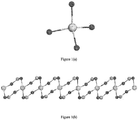
- Two adjacent Zn atoms form an eight-membered ring with carboxylate groups from the ligand, which is in its chair confirmation ( Fig. 1b ).
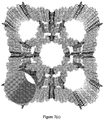
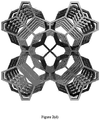
- the overall framework is three-dimensional (3D) with 1D channel along the c axis ( Fig. 1c ).
- Compound 2 (LMOF-251) is a two-fold interpenetrated three-dimensional (3D) framework.
- the structure is built on two different building units: a primary building unit (PBU) and a paddle-wheel based secondary building unit (SBU), as shown in Fig. 2a and 2b .
- PBU primary building unit
- SBU paddle-wheel based secondary building unit
- the octahedrally coordinated zinc metal in the PBU is connected to four oxygen atoms in two carboxylate groups from two different btc ligands and two N atoms from two different tppe ligands.
- Each zinc atom of the SBU bonds to four carboxylate oxygen atoms from four btc linkers and an O atom from DMA solvent molecule.
- the two types of building units are connected by the btc linkers, forming a 3D net. Two such identical nets interpenetrate to give rise to the overall 3D framework ( Fig. 2c and 2d ).
- the rare-earth-free MOF yellow phosphors like compounds 1 and 2 can be effectively excited by blue light and assembled in a WLED device with a blue chip. They exhibit significantly enhanced emission intensity compared to the constituent ligand and have the highest quantum yield among all white and yellow emitting hybrid phosphors (including MOFs) reported to date. In addition, high thermal and moisture stability of both the crystal structure and photoluminescence are achieved. A solution processing procedure is developed for use in fabricating flexible light fixtures. The exceptionally high performance of this compound makes it an outstanding candidate for use as an alternate yellow phosphor in white LEDs.
- Non-limiting embodiments of the article of manufacture include a lighting device, a display, or anything that contain compounds of the present invention as a coating or a decoration.
- a sign plate may have one or more compounds coated on the surface in a pattern. When exposed to a light source of suitable wavelengths, the plate may display a pattern in one or more desirable colors.
- the article of manufacture may also be a lighting device comprising a bulb coated with one or more compounds of the present invention. Suitable exciting wavelengths allow for illumination in desirable colors.
- the coating may be in any pattern such as stripes, circles and characters.
- the article of manufacture is a light emitting device having a light source capable of producing an exciting wavelength in the range of about 300 - 750 nm, all sub-units and sub-ranges included.
- the variable exciting wavelengths allow for emission of different color, excitation of compounds of different composition, and display of different patterns.
- the exciting wavelengths may be produced simultaneously or sequentially.
- Non-limiting examples of the exciting wavelengths include about 300, 320, 340, 3360, 380, 400, 420, 440, 460, 480, 500, 520, 540, 560, 580, 600, 620, 640, 660, 680, and 700 nm.
- the light emitting device may include a light source such as a UV lamp, a light-emitting diode (LED), or a laser.
- the light emitting device is an LED.
- the LED is capable of producing an exciting wavelength of about 400 - 500 nm, all sub-units and sub-ranges included. Non-limiting examples include about 410- 420, 420-430, 430-440, 440-450, 450-455, 455-460, 460- 465, and 465- 470 nm. Further examples include about 410, 420, 430, 440, 445, 450, 455, 460, 465, 470, 475, 480, 485, 490, 495 and 500 nm.
- Various colors can be emitted by compounds of the present invention.
- the wavelengths include from about 350 - 750 nm, all subunits and sub-ranges included.
- the compound emits a white color.
- the article of manufacture may contain any compound of Formula I of the present invention.
- the compound contains repeating units having the formula of M 2 (L 1 ) ⁇ x DMA, wherein M is selected from Zn, Cd, and Zr; x is 0 or an integer; and L 1 is selected from tcbpe, tcbpe-F, ttzbpe, and tctpe.
- compound contains repeating units having the formula of M a (L 1 ) b (tppe) c ⁇ xS, wherein M is Zn; S is DMA; and L 1 is selected from benzene-1,3,5-tricarboxylate (btc), 2-fluorobenzene-1,3,5-tricarboxylate (btc-f), pyridine-2,4,6-tricarboxylate, 2-aminobenzene-1,3,5-tricarboxylate, 1,3,5-triazine-2,4,6-tricarboxylate, [1,1'-biphenyl]-4,4-dicarboxylate (bpdc), 4,4'-(perfluoropropane-2,2-diyl)dibenzoate (hfipbb), 9-oxo-9H-fluorene-2,7-dicarboxylate (ofdc), 9-(hydroxymethyl)-9H-fluorene-2,7-dicarboxylate
- Another aspect of the present disclosure provides a method of producing a light comprising exposing the compound of the present invention to a suitable exciting wavelength.
- the exciting wavelength range about 300 - 750 nm, all subunits and sub-ranges included as described above. The actual wavelength to be used depends on the compound and the desirable color of light to be emitted.
- the exciting wavelength is about 400 - 700 nm. In some embodiments, the exciting wavelength is about 430 - 400 nm.
- the light source is an LED having an exciting wavelength of about 455-460 nm and leads to the emission of a white light.
- Another aspect of the disclosure provides a method of producing the above described compound.
- the method comprises (a) mixing a salt of M with L 1 and optionally L 2 in an organic solvent; and (b) heating the mixture at a temperature for a sufficient time to obtain the compound.
- the mixture is optionally sonicated to promote distribution of the starting materials.
- Non-limiting examples of counter ions (anions) of the salt include nitrates, sulfates, and chlorides.
- the salt may be solvated with for example water.
- Suitable organic solvents include for example dimethylformamide (DMF), dimethylacetamide (DMA), dioxane and other solvents capable of coordinating to M.
- the solvent is DMA.
- Heating can be provided by regular thermal heating or microwave heating.
- the temperature and length in time of heating depend on the specific compound to be prepared and can be readily modified by one or ordinary skill in the art without undue experiments.
- the temperature is about 50 - 500 °C, all subunits and sub-ranges included. Examples include of the temperature include about 80, 100, 150, 200, 250, 300, 350 and 400 °C.
- Non-limiting embodiments for the length of heating vary from about 5 seconds to about 5 days. Examples of the length in time include about 1, 5, 10, 20, 25, 30, 40, and 50 hours.
- the emission properties of a series of organic molecules were evaluated computationally using the density functional theory (DFT). Calculations were performed with Guassian 09 suite of programs.
- the B3LYP 2-4 hybrid functional and DGDZVP basis set were applied.
- the corrected band gaps (E cor .) were based on the experimental band gap of tcbpe. From Table 2, possible yellow emitting candidates are tcbpe, tcbpe-F, ttzbpe, and tctpe. Table 2.
- tpe-based ligand The general synthesis of tpe-based ligand can be found in Scheme 1.
- the starting material, tpe-Br is synthesized according to a reported method ( V. S. Vyas, M. Banerjee and R. Rathore, Tetrahedron Letters, 2009, 50, 6159-6162 ).
- the tcbpe-ester (2.43 g, 2.8 mmol) was dissolved in THF (30 mL) and then conc. KOH solution (3M, 30 mL) was added. The mixture was refluxed for more than 4 h. After the reaction completed, the solution was cooled to room temperature and concentrated under reduced pressure. The concentrated solution was acidified with conc. HCl to form precipitate. The mixture was cooled and vacuum filtered and the precipitate was washed with water and dried. The product was obtained as yellow powder in 90.5% yield (2.06 g).
- the tcbpe-F-ester (2.50g, 2.65 mmol) was dissolved in THF (30 mL) and then conc. KOH solution (3M, 30mL) was added. The mixture was refluxed overnight. After the reaction completed, the solution was cooled to room temperature and concentrated under reduced pressure. The concentrated solution was acidified with conc. HCl to form precipitate. The mixture was cooled and vacuum filtered and the precipitate was washed with water and dried.
- Transparent light yellow single crystals were harvested through filtration, washed with DMA, and dried in air ( ⁇ 80% yield based on tcbpe), which were analyed by microscope, and thermal gravimetric analysis, and single crystal X-ray (Table 2) and powder X-ray diffractions.
- Synchrotron X-ray sources at the Advanced Light Source 11.3.1 Chemical Crystallography beam line were used to collect low temperature (100 K) single crystal diffraction data for LMOF-231.
- the crystals were twinned; CELL_NOW 8 was used to determine the two orientation matrices of the two components.
- SAINT8.27B 9 was used to integrate the intensities for both components.
- the raw data in the APEXII suite of programs were corrected for absorption effects using TWINABS.
- the diffuse reflectance of solid samples were collected on a Shimadzu UV-3600 spectrophotometer at room temperature with a BaSO 4 standard as the baseline. The diffuse reflectance was converted to Kubelka-Munk Function as shown below.
- the photoluminsecence (PL) study was conducted on a Varian Cary Eclipse spectrophotometer. Measurements were taken on solid samples. For optional absorption, fluorescence spectroscopy and other related measurements of the materials prepared.
- the quantum yields of ligands and LMOFs were measured on a Hamamatsu C9220-03 system. Solids samples were used for all measurements. See Table 4. Table 4. A summary of quantum yields. Vacuum was applied while heating. Emission wavelength was acquired on Hamamatsu system.
- the MOFs built on 4-tppe could be divided into two subgroups with tricarboxylic acids and dicarboxylic acids, respectively.
- a summary of the carboxylic acids used in the LMOFs built on 4-tppe is listed in Table 5.
- Table 5. A summary of the carboxylic acids for LMOFs built on 4-tppe.
- Tricarboxylic Acids benzene-1,3,5-tricarboxylic acid H 3 btc 2-fluorobenzene-1,3,5-tricarboxylic acid (H 3 btc-f) pyridine-2,4,6-tricarboxylic acid 2-aminobenzene-1,3,5-tricarboxylic acid 1,3,5-triazine-2,4,6-tricarboxylic acid Dicarboxylic Acids [1,1'-biphenyl]-4,4'-dicarboxylic acid (H 2 bpdc) 4,4'-(perfluoropropane-2,2-diyl)dibenzoic acid (H 2 hfipbb) 9-oxo-9H-fluorene-2,7-dicarboxylic acid (H 2 ofdc) 9-(hydroxymethyl)-9H-fluorene-2,7-dicarboxylic acid 9H-fluorene-2,
- the glass vial was heated to 150 °C and maintained at this temperature for 24 h before it was cooled to room temperature. Colorless needlelike crystals were obtained after filtration. The product was analyzed by microscope, powder X-ray diffraction, and thermal gravimetric analysis.
- the octahedrally coordinated zinc metal in the PBU is connected to four oxygen atoms from two different carboxylate groups from two different linkers.
- the zinc atoms of the SBU are coordinated to a total of eight oxygen atoms from four carboxylate groups of four btc linkers.
- One solvent DMA molecule is coordinated to each zinc metal center.
- These two types of building blocks are connected by the btc linkers, forming the overall 3D framework.
- the N-based tppe linker connects the zinc atoms of the primary building unit within the framework.
- the point symbol of the framework is ⁇ 6 ⁇ 2.8 ⁇ 4 ⁇ 2 ⁇ 6 ⁇ 2.8 ⁇ 4 ⁇ 6 ⁇ 4.8 ⁇ 2 ⁇ 5 with a 4-nodal net topology.
- the diffuse reflectance of solid samples were collected on a Shimadzu UV-3600 spectrophotometer at room temperature with a BaSO 4 standard as the baseline. The diffuse reflectance was converted to Kubelka-Munk Function as shown below.
- the photoluminsecence (PL) study was conducted on a Varian Cary Eclipse spectrophotometer. Measurements were taken on solid samples.
- the DFT calculations also show the emission of compound 1 is tcbpe (ligand) based.
- the emission is a LLCT type. It is red shifted with regard to that of tppe, and is much stronger compared to the tppe ligand itself. This may be attributed to the stabilization of ligand within MOF which could reduce the non-radiative decay rate and the formation of the framework structure which could maximize the intramolecular/intermolecular interactions among the organic linkers for their energy transfer.
- CIE Commission International de I'Eclairage
- a white LED device was assembled using a 5 mm 455-460 nm blue LED chip and sample 2 coated on the surface of the chip.
- the coating solution was prepared by dispersing powders of 2 in ethyl acetate under ultrasonication for 1 h.
- the blue LED bulb was dipped into the suspension solution for several times until a thin and uniform film was formed on the surface of the bulb.
- Bright white light was generated when a 3V voltage was applied.
- the well-dispersive nature of compound 2 in selected solutions makes it possible to coat the samples on flexible substrates such as a rope or thin cotton strings, which is not achievable with traditional inorganic yellow phosphors.
- Thermal and moisture stability of the yellow phosphor was examined at various temperatures.
- the thermal gravimetric analysis (TGA) of Compounds 1 and 2 displays continuously weight loss from room temperature to 150 and 200 °C, respectively. Both compounds remain stable until ⁇ 450 and ⁇ 300 °C before framework decomposition occurs.
- the PXRD patterns collected after the samples were heated at different temperatures for a given period of time show the structures are stable up to 150 and 180 °C, respectively. Both structures also exhibit high photoluminescence (PL) stability. Very small variation in the PL intensity was observed on 2 upon heating to 140 °C (decrease: ⁇ 8%).
Landscapes
- Chemical & Material Sciences (AREA)
- Engineering & Computer Science (AREA)
- Organic Chemistry (AREA)
- Physics & Mathematics (AREA)
- Spectroscopy & Molecular Physics (AREA)
- Materials Engineering (AREA)
- General Engineering & Computer Science (AREA)
- Wood Science & Technology (AREA)
- Life Sciences & Earth Sciences (AREA)
- Microelectronics & Electronic Packaging (AREA)
- Optics & Photonics (AREA)
- Organic Low-Molecular-Weight Compounds And Preparation Thereof (AREA)
- Led Device Packages (AREA)
- Pyridine Compounds (AREA)
Description
- This application claims priority under 35 USC §119(e) to
U.S. Provisional Patent Application Serial No. 61/984,154, filed on April 25, 2015 - This invention was made in part with government support under Grant No. DMR-1206700 awarded by the National Science Foundation. The government has certain rights in the invention.
- The present invention relates to metal organic frameworks useful as yellow phosphors and their applications in white light emitting devices.
- Because of their lower energy consumption, higher efficiency and longer lifetime, white light-emitting diodes (WLEDs) are gradually replacing incandescent lamps and fluorescent lamps. Existing approaches to fabricate WLEDs include (a) combination of three primary colored LED chips, namely red, green, and blue (RGB) diodes; or (b) phosphor-conversion (PC), in which either a yellow-emitting phosphor is coated on a blue LED chip or red, green and blue emitting phosphors are coated on a UV (or near UV) chip to produce white light. In addition, (c) coating direct white light emitting phosphors on a UV chip has also proven to be another effective method to generate phosphor converted WLEDs. Examples of white-emitting phosphors include inorganic-organic hybrid semiconductor bulk materials based on 2D-[Zn2S2(L)] (L= monoamine), nanomaterials, rare earth elements doped inorganic materials and metal complexes.
- Most of today's commercially available products are PC-LEDs rather than RGB-LEDs, because the latter type is more expensive. Among various PC-LEDs, both RGB and white phosphors require use of a UV chip, which is associated with drawbacks such as higher energy and costs, as well as possible leak of UV radiation. WLEDs made of yellow phosphor-coated blue LED are more preferred for their apparent advantages. At present, almost all commercial phosphors are oxides, sulfides, oxysulfides, oxynitrides, or nitrides doped with rare-earth ions (e.g. europium, terbium, and yttrium). The rare earth ions play a crucial role in controlling the color and quality of the light emitted by these phosphors. However, the critical supply issue that the world is facing today has pushed the search for alternative rare-earth free phosphors to a level of urgency. In fact, searching for rare-earth-free phosphors has become one of the most important and critical aspects in the research and development of white light-emitting diodes (WLEDs).
- Metal organic frameworks (MOFs) have shown a variety of potential applications, such as gas storage and separation, catalysis, chemical sensing and explosive detection. In the area of MOF based phosphors, a direct white light emitting MOF was first reported in 2009, followed by several subsequent studies on different types of MOF structures. Other studies include Eu2+ doped MOF that emits yellow light; and most recently a white emitting MOF composed of blue and yellow emitting framework and encapsulated Re-complex, respectively. However, in all cases, the MOFs must be excited by UV or near-UV radiation. Shustova et al. studied turn-on fluorescence in tetraphenylethylene-based MOFs in a paper published in the JOURNAL OF THE AMERICAN CHEMICAL SOCIETY, vol. 133, no. 50, 21 December 2011 (2011-12-21), pages 20126-20129.
- Patent document W=
2013058845A1 discloses a system for generating potential MOFs. - Patent document
US7985868B1 describes the preparation and characterization of two zinc hybrid luminescent structures based on the flexible and emissive linker molecule, trans-(4-R,4'-R') stilbene, where R and R' are mono- or poly-coordinating groups, which retain their luminescence within these solid materials. - Therefore, developing new types of yellow phosphors and/or white light emitting materials that are energy efficient, cost-effective, free of rare earth elements, and can be excited by blue light is of great importance and in high demand.
- The present invention addresses this need. This invention provides novel rare-earth-free yellow phosphors by incorporating highly emissive organic ligands into three-dimensional metal-organic frameworks. The compounds form new types of crystalline structures and give bright yellow emission when excited by blue light. They have the highest quantum yields among all metal-organic yellow or white phosphors reported to date. Coupled with their high luminescent and thermal stability, as well as their solution processability, the new phosphors demonstrate considerable promise for use in WLEDs.
- One aspect of the disclosure provides a polymeric coordination compound capable of forming a microporous metal organic framework, characterized by a plurality of layers comprising two-dimensional arrays of repeating structural units of formula Ma(L1)b(L2)c.xS, wherein: M is a transition metal cation;
- L1 is an organic ligand comprising 2 to 4 carboxylic acid groups or tetrazolyl groups, wherein at least one of said carboxylic acid groups or tetrazolyl groups is coordinated to a M in the same structural unit, and at least a second of said carboxylic acid groups or tetrazolyl groups is coordinated to a M in a different repeating structural unit within the same layer containing a two-dimensional array of repeating structural units;
- L2 is an organic ligand comprising 2 to 4 nitrogen atoms capable of coordinating to M, wherein L2 coordinates to a M in a layer, and L2 extends essentially perpendicularly from a plane defined by said layer containing a two-dimensional array of repeating structural units to further coordinate with a second M in a repeating structural unit in an adjacent layer;
- S is a solvent capable of coordinating to M or as a guest molecule;
- a and b are each independently an integer greater than 0;
- c is an integer equal or greater than 0;
- x is a fractional number or an integer equal or greater than 0; and
- M, L1, L2, S, a, b, c, and x are so combined that the compound defines channels and pores of molecular size throughout the structure of the compound; and
- provided that when L2 does not contain a phenylene moiety (-C6H4-) moiety, L1 contains 3 or more phenylene moieties.
- In some embodiments, the compound exhibits characteristics of yellow phosphors and is capable of emitting white light upon irradiation by a blue light. In some embodiments, when L2 does not contain a phenylene moiety (-C6H4-) moiety, L1 contains more than one phenylene moiety (-C6H4-) moiety in 1, 2, 3 or 4 arms of the ligand.
- In some embodiments there is provided repeating units M2(L1)·xDMA (Formula II), wherein M is Zn, Cd, or Zr; x is 0 or an integer; and L1 is tcbpe, tcbpe-F, ttzbpe, or tctpe.
- In some embodiments of Formula II, M is Zn; L1 is tcbpe; each Zn atom is tetrahedrally coordinated to O atoms from four different tcbpe ligand; all the carboxylate groups of tcbpe are bidentate with each O atom coordinated to a different Zn atom; two adjacent Zn atoms form an eight-membered ring with carboxylate groups from the ligand; and wherein the overall framework is three-dimensional (3D) with 1D channel along the c axis.
- In some embodiments, there is provided repeating units of Ma(L1)b(tppe)c·xS (Formula III), wherein M is Zn, Cd, or Zr; b is greater than 0; and L1 is a bi-carboxylate or tricarboxylate ligand selected from benzene-1,3,5-tricarboxylate (btc), 2-fluorobenzene-1,3,5-tricarboxylate (btc-f), pyridine-2,4,6-tricarboxylate, 2-aminobenzene-1,3,5-tricarboxylate, 1,3,5-triazine-2,4,6-tricarboxylate, [1,1'-biphenyl]-4,4-dicarboxylate (bpdc), 4,4'-(perfluoropropane-2,2-diyl)dibenzoate (hfipbb), 9-oxo-9H-fluorene-2,7-dicarboxylate (ofdc), 9-(hydroxymethyl)-9H-fluorene-2,7-dicarboxylate, 9H-fluorene-2,7-dicarboxylate, 9-formyl-9H-fluorene-2,7-dicarboxylate, benzene-1,4-dicarboxylate, naphthalene-1,5-dicarboxylate, naphthalene-1,4-dicarboxylate, 4,4'-oxydibenzoate, (E)-4,4'-(ethene-1,2-diyl)dibenzoate, (E)-4,4'-(diazene-1,2-diyl)dibenzoate, 4,4'-sulfonyldibenzoate, and derivatives thereof.
- In some embodiments of Formula III, the repeating units comprises a primary building unit (PBU) and a paddle-wheel based secondary building unit (SBU), wherein M is Zn; the PBU comprises an octahedrally coordinated zinc metal connected to four oxygen atoms in two carboxylate groups from two different L1 ligands and two N atoms from two different tppe ligands; each zinc atom of said SBU bonds to four carboxylate oxygen atoms from four L1 ligands and an O atom from the solvent molecule S; and S is DMA. In some embodiments,the two types of building units PBU and SBU are connected by the L1 ligand, forming a 3D net, and two identical nets interpenetrate to for a 3D framework. In some embodiments, L1 is btc. In some embodiments, Formula III is (a) M6(btc)4(tppe)2·2DMA]·11DMA (btc = benzene-1,3,5-tricarboxylic acid), wherein M is Zn or Cd, or (b) Zr3(btc)4(tppe)c, wherein c is 1 or 2.
- In some embodiment of Formula I, L1 is selected from tcbpe, tcbpe-F, tcbpe-CH3, tctpe, tcpe, tcbpe-NH2, ttzbpe, and derivatives thereof; and L2 is selected from 4,4'-bpy, bpee, bpe, and derivatives thereof.
- Another aspect of the invention provides an article of manufacture comprising one or more compounds of the present invention.
- In some embodiments, the one or more compounds are deposited in a pattern in the article such that a light of one or more patterned colors are emitted upon exposure to one or more exciting wavelengths.
- In some embodiments, the article of manufacture further include a light emitting device having a light source capable of producing one or more wavelengths simultaneously or sequentially in the range of about 300 - 750 nm. In some embodiments, the light source comprises a light-emitting diode (LED) having a wavelength in the range of about 400 - 500 nm. In some embodiments, the compound emits a white light when being exposed to an exciting wavelength.
- In some embodiments, the article of manufacture contain a compound having repeating units of M2(L1)·xDMA, wherein M is selected from Zn, Cd, and Zr; x is 0 or an integer; and L1 is selected from tcbpe, tcbpe-F, ttzbpe, and tctpe.
- In some embodiments, the article of manufacture contain a compound having repeating units of Ma(L1)b(tppe)c·xS,, wherein M is Zn; S is DMA; and L1 is selected from benzene-1,3,5-tricarboxylate (btc), 2-fluorobenzene-1,3,5-tricarboxylate (btc-f), pyridine-2,4,6-tricarboxylate, 2-aminobenzene-1,3,5-tricarboxylate, 1,3,5-triazine-2,4,6-tricarboxylate, [1,1'-biphenyl]-4,4'-dicarboxylate (bpdc), 4,4'-(perfluoropropane-2,2-diyl)dibenzoate (hfipbb), 9-oxo-9H-fluorene-2,7-dicarboxylate (ofdc), 9-(hydroxymethyl)-9H-fluorene-2,7-dicarboxylate, 9H-fluorene-2,7-dicarboxylate, 9-formyl-9H-fluorene-2,7-dicarboxylate, benzene-1,4-dicarboxylate, naphthalene-1,5-dicarboxylate, naphthalene-1,4-dicarboxylate, 4,4'-oxydibenzoate, (E)-4,4'-(ethene-1,2-diyl)dibenzoate, (E)-4,4'-(diazene-1,2-diyl)dibenzoate, 4,4'-sulfonyldibenzoate, and derivatives thereof.
- Another aspect of the disclosure provides a method of producing a light comprising exposing the compound of claim 1 to an exciting wavelength.
- In some embodiments, the exciting wavelength is about 400 - 700 nm. In some embodiments, the exciting wavelength is produced by a LED in the range of about 430-460 nm and the compound emits a white light upon exposure to the exciting wavelength.
- Another aspect of the disclosure provides a method of preparing a compound of the present invention comprising (a) mixing a salt of M with L1 and optionally L2 in an organic solvent; and (b) heating the mixture at a temperature for a sufficient time to obtain the compound. In some embodiments, the organic solvent is DMA.
- These and other aspects of the present invention will be described in greater detail below.
-
-
Figure 1(a) illustrates the primary building unit of Compound 1 with the tetrahedrally coordinated Zn2+. -
Figure 1(b) illustrates the secondary building unit of Compound 1 with a chained formed by coordinated Zn2+. -
Figure 1(c) illustrates the overall 3D framework of Compound 1. -
Figure 2(a) illustrates the primary building unit of Compound 2. -
Figure 2(b) illustrates the secondary building unit of Compound 2. -
Figure 2(c) illustrates the overall 3D framework viewed along the [100] axis of Compound 2. -
Figure 2(d) illustrates the topological net of Compound 2. - Various embodiments of the present invention provides novel compounds and device for generating white lighting or display. In particular, the present invention provides a new type of luminescent MOF (LMOF) yellow phosphors free of rare-earth metals. These compounds have exceptionally high quantum yield (QY, e.g. 100-64.4% at λex= 360-450 nm) and can be excited effectively by blue light. It also exhibits high thermal and photoluminescent stability. The impressive performance of these LMOFs makes them promising yellow phosphors for use in WLEDs.
- Throughout this patent document, various publications are referenced. While the following text may reference or exemplify specific elements of a ligand or a method of generating light, it is not intended to limit the scope of the invention to such particular reference or examples. Various modifications may be made by those skilled in the art, in view of practical and economic considerations, such as the substituents of the ligand and the article of manufacture comprising the compound of the present invention.
- The articles "a" and "an" as used herein refers to "one or more" or "at least one," unless otherwise indicated. That is, reference to any element or component of the present invention by the indefinite article "a" or "an" does not exclude the possibility that more than one of the element or component is present.
- The term "about" as used herein refers to the referenced numeric indication plus or minus 10% of that referenced numeric indication.
- The term "analog" as used herein refers to a compound that bears substantial structural similarities to another compound. For example, an analog of L1 ligand may bear a methyl group in an aryl ring as opposed to a hydrogen in the same position of the L1 ligand.
- One aspect of the disclosure provides a polymeric coordination compound capable of forming a microporous metal organic framework, characterized by a plurality of layers comprising two-dimensional arrays of repeating structural units of formula of Ma(L1)b(L2)c·xS, wherein:
- M is a transition metal cation;
- L1 is an organic ligand comprising 2 to 4 carboxylic acid groups or tetrazolyl groups, wherein at least one of said carboxylic acid groups or tetrazolyl groups is coordinated to a M in the same structural unit, and at least a second of said carboxylic acid groups or tetrazolyl groups is coordinated to a M in a different repeating structural unit within the same layer containing a two-dimensional array of repeating structural units;
- L2 is an organic ligand comprising 2 to 4 nitrogen atoms capable of coordinating to M, wherein L2 coordinates to a M in a layer, and L2 extends essentially perpendicularly from a plane defined by said layer containing a two-dimensional array of repeating structural units to further coordinate with a second M in a repeating structural unit in an adjacent layer;
- S is a solvent capable of coordinating to M or as a guest molecule;
- a and b are each independently an integer greater than 0;
- c is an integer equal or greater than 0;
- x is a fractional number or an integer equal or greater than 0; and
- M, L1, L2, S, a, b, c, and x are so combined that the compound defines channels and pores of molecular size throughout the structure of the compound; and
- provided that when L2 does not contain a phenylene moiety (-C6H4-) moiety, L1 contains 3 or more phenylene moieties.
- In some embodiments, the compound exhibit characteristics of yellow phosphors and is capable of emitting white light upon irradiation by a blue light.
- In some embodiments, when L2 does not contain a phenylene moiety (-C6H4-) moiety, L1 contains three or more phenylene moieties (-C6H4-) moiety. In some embodiments, L1 contains 2, 3, 4 or more phenylene moiety (-C6H4-) moiety in each arm of the ligand.
- Suitable metal atoms or cations for M include those from the main group elements and from the subgroup elements of the periodic system of the elements, namely of the groups Ia, Ia, IIIa, IVa to VIIIa and Ib to VIb. Examples of the metal include Mg, Ca, Sr, Ba, Sc, Y, Ti, Zr, Hf, V, Nb, Ta, Cr, Mo, W, Mn, Re, Fe, Ru, Os, Co, Rh, Ir, Ni, Pd, Pt, Cu, Ag, Au, Zn, Cd, Hg, Al, Ga, In, Tl, Si, Ge, Sn, Pb, As, Sb, and Bi. Non-limiting examples of cations include Mg2+, Ca2+, Sr2+, Ba2+, Sc3+, Y3+, Ti4+, Zr4+, Hf4+, V4+, V3+, V2+, Nb3+, Ta3+, Cr3+, Mo3+, W3+, Mn3+, Mn2+ , Re3+, Re2+, Fe3+, Fe2+, Ru3+, Ru2+, Os3+, Os2+, Co3+, Co2+, Rh2+, Rh+, Ir2+, Ir+, Ni2+, Ni+, Pd2+, Pd+, Pt2+, Pt+, Cu2+, Cu+, Ag+, Au+, Zn2+, Cd2+, Hg2+, Al3+, Ga3+, In3+, Tl3+, Si4+, Si2+, Ge4+, Ge2+, Sn4+, Sn2+, Pb4+, Pb2+, As5+, As3+, As+, Sb5+, Sb3+, Sb+, Bi5+, Bi3+ and Bi+. In some embodiments, M is an atom or cation of Zn, Cd, or Zr. M in Formula I may represent one or more metal atoms or cations.
- L1 is an organic ligand which may contain 1, 2, 3, or 4 carboxylate group for binding to M. Non-limiting examples of L1 include 4',4'",4'"",4'"""-(ethene-1,1,2,2-tetrayl)tetrakis([1,1'-biphenyl] -4-carboxylic acid) (tcbpe), 4',4"',4""',4"""'-(ethene-1,1,2,2-tetrayl)tetrakis([1,1'-biphenyl]-3-fluoro-4-carboxylic acid) (tcbpe-F), 1,1,2,2-tetrakis(4'-(2H-tetrazol-5-yl)- [1,1'-biphenyl] -4-yl)ethane (ttzbpe), 4",4'"",4"""",4'"""""-(ethene-1,1,2,2-tetrayl)tetrakis(([1,1':4',1"-terphenyl]-4-carboxylic acid)) (tctpe), and {1,2,4,5-tetrakis[4'-carboxy(1,1 '-biphenyl-4-yl)]benzene} (tcbpb), 1,1,2,2-tetrakis(4-(2H-tetrazol-5-yl)phenyl)ethene (ttzpe). In some embodiments, L1 is selected from tcbpe, tcbpe-F, ttzbpe, and tctpe. In some embodiments, each L1 may contain 2-16, all subunits included, phenylene (-C6H4-) in a single ligand. In some embodiments, L1 contains 4, 8, 12 or 16 phenylene (-C6H4-). The phenylene moieties may be evenly distributed to 2 or 4 arms of the ligand. In some embodiments, the phenylene moieties are evenly distributed to 4 arms of the ligand.
- L2 is an organic ligand containing 1, 2, 3, or 4 nitrogen atoms capable of coordinating to M. In some embodiments, each L2 may contain 2-16, all subunits included, phenylene (-C6H4-) in a single ligand. In some embodiments, each L2 contains 2, 4, 8, 12 or 16 phenylene (-C6H4-). The phenylene moieties may be evenly distributed to 2 or 4 arms of the ligand. In some embodiments, the phenylene moieties are evenly distributed to 2 arms of the ligand. For example, when c is greater than 0, L2 may contain 2, 4, 6 or 8 phenylene moieties evenly distributed in 2 or 4 arms. Similarly, L2 may contain 4 coordinating nitrogen atoms evenly distributed in 4 arms.
- The subscripts a, b and c are each an integer independently selected from 0 to 20, all subunits included. In some embodiments, a, b and c are each an integer independently selected from 0, 1, 2, 3, 4, 5, 6, 7, 8, 9 and 10. The number X is an integer or a fractional number selected from 0 to 30, all subunits or factional numbers included. Non-limiting examples of X include 0, 0.25, 0.5, 1, 1.5, 2, 2.5, 5, 10, 15 and 20.
- S represents a solvent molecule capable of coordinating to M or as a guest molecule. In some embodiments, S is a solvent molecule bearing sulfur, oxygen or nitrogen capable of coordinating to M. Non-limiting examples include DMF (dimethylformamide), DMA (dimethylacetamide), dioxane, and THF.
- M, L1, L2, S, a, b, c, and x can be combined in various ratio to control the color of the compound. For example, the number of phenylene in L1 and L2 may contribute to the changes in wavelength and intensity of the emission spectra. In some embodiments, M, L1, L2, S, a, b, c, and x are so combined that the compound comprises a crystalline 3-dimensional framework having characteristics of yellow phosphors and capable of emitting white light upon irradiation by a blue light.
- In some embodiments, L1 is selected from tcbpe, tcbpe-F, tcbpe-CH3, tctpe, tcpe, tcbpe-NH2, ttzbpe, and derivatives thereof; and L2 is selected from 4,4'-bpy, bpee, bpe, and derivatives thereof.
- In some embodiments, the repeating unit of Formula I is represented as M2(L1)·xDMA (Formula II). M can be selected from Zn, Cd, and Zr. X is 0 or an integer. L1 is selected from tcbpe, tcbpe-F, ttzbpe, and tctpe.
- In some embodiments, the repeating unit of Formula I is represented as M2(L1)·xDMA. M is Zn and L1 is tcbpe. Each Zn atom is tetrahedrally coordinated to O atoms from four different tcbpe ligand. All the carboxylate groups of tcbpe are bidentate with each O atom coordinating to a different Zn atom. Two adjacent Zn atoms form an eight-membered ring with carboxylate groups from the ligand. The overall framework is three-dimensional (3D) with ID channel along the c axis.
- In some embodiments, the repeating unit has a formula of Ma(L1)b(tppe)c·xS (Formula III), wherein M is Zn, Cd, or Zr; b is greater than 0; and L1 is a bi-carboxylate or tricarboxylate ligand selected from benzene-1,3,5-tricarboxylate (btc), 2-fluorobenzene-1,3,5-tricarboxylate (btc-f), pyridine-2,4,6-tricarboxylate, 2-aminobenzene-1,3,5-tricarboxylate, 1,3,5-triazine-2,4,6-tricarboxylate, [1,1'-biphenyl]-4,4-dicarboxylate (bpdc), 4,4'-(perfluoropropane-2,2-diyl)dibenzoate (hfipbb), 9-oxo-9H-fluorene-2,7-dicarboxylate (ofdc), 9-(hydroxymethyl)-9H-fluorene-2,7-dicarboxylate, 9H-fluorene-2,7-dicarboxylate, 9-formyl-9H-fluorene-2,7-dicarboxylate, benzene-1,4-dicarboxylate, naphthalene-1,5-dicarboxylate, naphthalene-1,4-dicarboxylate, 4,4'-oxydibenzoate, (E)-4,4'-(ethene-1,2-diyl)dibenzoate, (E)-4,4'-(diazene-1,2-diyl)dibenzoate, 4,4'-sulfonyldibenzoate, and derivatives thereof.
- In some embodiments of Formula III, the compound comprises a primary building unit (PBU) and a paddle-wheel based secondary building unit (SBU), wherein M is Zn; the PBU comprises an octahedrally coordinated zinc metal connected to four oxygen atoms in two carboxylate groups from two different L1 ligands and two N atoms from two different tppe ligands; each zinc atom of the SBU bonds to four carboxylate oxygen atoms from four L1 ligands and an O atom from the solvent molecule S; and S is DMA.
- In some embodiments of Formula III, two types of building units PBU and SBU are connected by the L1 ligand, forming a 3D net, and two identical nets interpenetrate to for a 3D framework.
- In some embodiments, the L1 ligand is btc. In some embodiments, Formula III is represented by M6(btc)4(tppe)2·2DMA]·11DMA wherein M is Zn or Cd. In some embodiments, Formula III is Zr3(btc)4(tppe)c, wherein c is 1 or 2.
- In some embodiments, the LMOFs comprise Zn metal and one or two ligands. In the case of one ligand, the emission will primarily be ligand based, and in the case of two ligands, different combinations may exist, e.g., (a) both ligands are emissive, (b) they contribute differently in the HOMO and LUMO of the resultant LMOF, or (c) one of them is highly emissive with a high-lying HOMO and the other, non-emissive with a low-lying LUMO. In the latter case, a ligand-to-ligand charge transfer (LLCT) will most likely lead to a strong emission at lower energy. In some embodiments, tetra(4-(pyrid-4-yl)phenyl)ethylene (4-tppe or tppe) and 4',4"',4""',4"""'-(ethene-1,1,2,2-tetrayl)tetrakis([1,1 '-biphenyl] -4-carboxylic acid) (tcbpe) are selected as they emit strongly in yellow and green region, respectively (510 and 548 nm) under ultraviolet radiation. The new MOFs are synthesized by solvothermal reactions. Single crystal X-ray diffraction analysis reveals that they crystallize in monoclinic (C2/c) and triclinic (P-1(2)) space groups with a general formula Zn2(tcbpe)·xDMA (1 ·xDMA, DMA = dimethylacetamide) and [Zn6(btc)4(tppe)2·2DMA]·11DMA (2·11DMA, H3btc = benzene-1,3,5-tricarboxylic acid). Each Zn atom in Compound 1 (LMOF-231) is tetrahedrally coordinated to O atoms from four different tcbpe ligand (
Fig. 1a ). All the carboxylate groups are bidentate with each O atom connecting a different Zn atom. Two adjacent Zn atoms form an eight-membered ring with carboxylate groups from the ligand, which is in its chair confirmation (Fig. 1b ). The overall framework is three-dimensional (3D) with 1D channel along the c axis (Fig. 1c ). Compound 2 (LMOF-251) is a two-fold interpenetrated three-dimensional (3D) framework. The structure is built on two different building units: a primary building unit (PBU) and a paddle-wheel based secondary building unit (SBU), as shown inFig. 2a and 2b . The octahedrally coordinated zinc metal in the PBU is connected to four oxygen atoms in two carboxylate groups from two different btc ligands and two N atoms from two different tppe ligands. Each zinc atom of the SBU bonds to four carboxylate oxygen atoms from four btc linkers and an O atom from DMA solvent molecule. The two types of building units are connected by the btc linkers, forming a 3D net. Two such identical nets interpenetrate to give rise to the overall 3D framework (Fig. 2c and2d ). - The rare-earth-free MOF yellow phosphors like compounds 1 and 2 can be effectively excited by blue light and assembled in a WLED device with a blue chip. They exhibit significantly enhanced emission intensity compared to the constituent ligand and have the highest quantum yield among all white and yellow emitting hybrid phosphors (including MOFs) reported to date. In addition, high thermal and moisture stability of both the crystal structure and photoluminescence are achieved. A solution processing procedure is developed for use in fabricating flexible light fixtures. The exceptionally high performance of this compound makes it an outstanding candidate for use as an alternate yellow phosphor in white LEDs.
- Another aspect of the invention provides an article of manufacture comprising one or more of the above described compounds. Non-limiting embodiments of the article of manufacture include a lighting device, a display, or anything that contain compounds of the present invention as a coating or a decoration. For example, a sign plate may have one or more compounds coated on the surface in a pattern. When exposed to a light source of suitable wavelengths, the plate may display a pattern in one or more desirable colors. The article of manufacture may also be a lighting device comprising a bulb coated with one or more compounds of the present invention. Suitable exciting wavelengths allow for illumination in desirable colors. The coating may be in any pattern such as stripes, circles and characters.
- In some embodiments, the article of manufacture is a light emitting device having a light source capable of producing an exciting wavelength in the range of about 300 - 750 nm, all sub-units and sub-ranges included. The variable exciting wavelengths allow for emission of different color, excitation of compounds of different composition, and display of different patterns. The exciting wavelengths may be produced simultaneously or sequentially. Non-limiting examples of the exciting wavelengths include about 300, 320, 340, 3360, 380, 400, 420, 440, 460, 480, 500, 520, 540, 560, 580, 600, 620, 640, 660, 680, and 700 nm.
- The light emitting device may include a light source such as a UV lamp, a light-emitting diode (LED), or a laser. In some embodiments, the light emitting device is an LED. In some embodiments, the LED is capable of producing an exciting wavelength of about 400 - 500 nm, all sub-units and sub-ranges included. Non-limiting examples include about 410- 420, 420-430, 430-440, 440-450, 450-455, 455-460, 460- 465, and 465- 470 nm. Further examples include about 410, 420, 430, 440, 445, 450, 455, 460, 465, 470, 475, 480, 485, 490, 495 and 500 nm.
- Various colors can be emitted by compounds of the present invention. Non-limiting examples of the wavelengths include from about 350 - 750 nm, all subunits and sub-ranges included. In some embodiments, the compound emits a white color.
- The article of manufacture may contain any compound of Formula I of the present invention. In some embodiments, the compound contains repeating units having the formula of M2(L1)·xDMA, wherein M is selected from Zn, Cd, and Zr; x is 0 or an integer; and L1 is selected from tcbpe, tcbpe-F, ttzbpe, and tctpe. In some embodiments, compound contains repeating units having the formula of Ma(L1)b(tppe)c·xS,, wherein M is Zn; S is DMA; and L1 is selected from benzene-1,3,5-tricarboxylate (btc), 2-fluorobenzene-1,3,5-tricarboxylate (btc-f), pyridine-2,4,6-tricarboxylate, 2-aminobenzene-1,3,5-tricarboxylate, 1,3,5-triazine-2,4,6-tricarboxylate, [1,1'-biphenyl]-4,4-dicarboxylate (bpdc), 4,4'-(perfluoropropane-2,2-diyl)dibenzoate (hfipbb), 9-oxo-9H-fluorene-2,7-dicarboxylate (ofdc), 9-(hydroxymethyl)-9H-fluorene-2,7-dicarboxylate, 9H-fluorene-2,7-dicarboxylate, 9-formyl-9H-fluorene-2,7-dicarboxylate, benzene-1,4-dicarboxylate, naphthalene-1,5-dicarboxylate, naphthalene-1,4-dicarboxylate, 4,4'-oxydibenzoate, (E)-4,4'-(ethene-1,2-diyl)dibenzoate, (E)-4,4'-(diazene-1,2-diyl)dibenzoate, 4,4'-sulfonyldibenzoate, and derivatives thereof.
- Another aspect of the present disclosure provides a method of producing a light comprising exposing the compound of the present invention to a suitable exciting wavelength. Non-limiting embodiments of the exciting wavelength range about 300 - 750 nm, all subunits and sub-ranges included as described above. The actual wavelength to be used depends on the compound and the desirable color of light to be emitted. In some embodiments, the exciting wavelength is about 400 - 700 nm. In some embodiments, the exciting wavelength is about 430 - 400 nm. In some embodiments, the light source is an LED having an exciting wavelength of about 455-460 nm and leads to the emission of a white light.
- Another aspect of the disclosure provides a method of producing the above described compound. In general, the method comprises (a) mixing a salt of M with L1 and optionally L2 in an organic solvent; and (b) heating the mixture at a temperature for a sufficient time to obtain the compound. The mixture is optionally sonicated to promote distribution of the starting materials.
- Various salts of M can be used in the preparation. Non-limiting examples of counter ions (anions) of the salt include nitrates, sulfates, and chlorides. As a starting material, the salt may be solvated with for example water.
- Suitable organic solvents include for example dimethylformamide (DMF), dimethylacetamide (DMA), dioxane and other solvents capable of coordinating to M. In some embodiments, the solvent is DMA.
- Heating can be provided by regular thermal heating or microwave heating. The temperature and length in time of heating depend on the specific compound to be prepared and can be readily modified by one or ordinary skill in the art without undue experiments. In some non-limiting exemplary embodiments, the temperature is about 50 - 500 °C, all subunits and sub-ranges included. Examples include of the temperature include about 80, 100, 150, 200, 250, 300, 350 and 400 °C. Non-limiting embodiments for the length of heating vary from about 5 seconds to about 5 days. Examples of the length in time include about 1, 5, 10, 20, 25, 30, 40, and 50 hours.
- The following non-limiting examples set forth herein below illustrate certain aspects of the disclosure.
- The emission properties of a series of organic molecules were evaluated computationally using the density functional theory (DFT). Calculations were performed with Guassian 09 suite of programs. The B3LYP2-4 hybrid functional and DGDZVP basis set were applied. The corrected band gaps (Ecor.) were based on the experimental band gap of tcbpe. From Table 2, possible yellow emitting candidates are tcbpe, tcbpe-F, ttzbpe, and tctpe.
Table 2. A computational study of emission properties of potential ligands Method B3LYP Corrected Estimated Emission Basis Set DGDZVP Ligand HOMO (eV) LUMO (eV) □E (eV) □Ecor (eV) □em (nm) 
-5.98 -1.35 4.63 3.63 342 
-6.66 -2.45 4.21 3.21 386 
-5.77 -1.64 4.13 3.13 396 
-5.60 -1.52 4.08 3.08 403 
-6.17 -2.29 3.88 2.88 430 
-6.40 -2.68 3.72 2.72 456 
-5.85 -2.26 3.59 2.59 479 
-5.43 -1.84 3.59 2.59 479 
-5.40 -1.93 3.47 2.47 502 
-5.70 -2.25 3.46 2.46 505 
-6.10 -2.68 3.42 2.42 512 
-5.60 -2.18 3.42 2.42 513 
-5.80 -2.39 3.41 2.41 514 
-5.87 -2.46 3.41 2.40 517 
-5.65 -2.31 3.34 2.34 530 - The general synthesis of tpe-based ligand can be found in Scheme 1. The starting material, tpe-Br is synthesized according to a reported method (V. S. Vyas, M. Banerjee and R. Rathore, Tetrahedron Letters, 2009, 50, 6159-6162).

- Synthesis of tcbpe (R1 to R4 = H in Scheme 1): To a 250 mL three-neck flask, tetra-(4-bromo-phenyl)ethylene (tpe-Br, 2.85 g, 4.4 mmol), 4-(methoxycarbonyl)phenylboronic acid (5.00 g, 27.8mmol) and Pd(PPh3)4 (0.20 g) were added, then THF (tetrahydrofuran, 100 mL) and K2CO3 aqueous solution(3.0 M, 15 mL) were added under nitrogen protection at room temperature, the mixture solution was kept at 90 °C for 3 days. After cooling to room temperature, the reaction solution was extracted with dichloromethane for three times. The organic phase was washed with water, dried with anhydrous magnesium sulfate and then subject to flash chromatography using dichloromethane as fluent. The product tcbpe-ester was obtained as green-yellow solid in 63.6% yield (2.43 g). 1H NMR (400 MHz, CDCl3) δ 8.07 (d, 8H, J = 8.1Hz), 7.64(d, 8H, J = 8.0Hz), 7.45(d, 8H, J = 7.9Hz), 7.21(d, 8H, J = 8.0Hz), 3.93(s, 12H); 13C NMR (100 MHz, CDCl3) δ 167.1, 145.0, 143.6, 140.8, 138.2, 132.2, 130.2, 129.0, 126.9, 52.3; MS (EI): calcd. for C58H44O8: 868.3036; Found, 868 (M+). Anal. Calcd for C58H44O8: C, 80.17%; H, 5.10%. Found: C, 79.81%; H, 5.37%.
- The tcbpe-ester (2.43 g, 2.8 mmol) was dissolved in THF (30 mL) and then conc. KOH solution (3M, 30 mL) was added. The mixture was refluxed for more than 4 h. After the reaction completed, the solution was cooled to room temperature and concentrated under reduced pressure. The concentrated solution was acidified with conc. HCl to form precipitate. The mixture was cooled and vacuum filtered and the precipitate was washed with water and dried. The product was obtained as yellow powder in 90.5% yield (2.06 g). 1H NMR (400 MHz, DMSO-d6) δ 12.96, 7.97 (d, 8H, J = 7.7Hz), 7.77 (d, 8H, J = 7.7 Hz), 7.62 (d, 8H, J = 7.6Hz), 7.20 (d, 8H, J = 7.6Hz); 13C NMR (100 MHz, DMSO-d6) δ 167.1, 143.4, 143.1, 140.2, 137.1, 131.6, 129.9, 129.6, 126.5; MS (MALDI-TOF): calculated. for : 812.2410; Found, 812.7 (M +). Anal. Calcd for C54H36O8: C, 79.79%; H, 4.46%. Found: C, 79.91%; H, 4.38%.
- Synthesis of tcbpe-F (R1 = F, R2 to R4 = H in Scheme 1): To a 250ml three-neck flask, tetra-(4-bromo-phenyl)ethylene (tpe-Br, 2.71 g, 4.2 mmol), 3-fluoro-4-(methoxycarbonyl)phenylboronic acid (5.00g, 25.2 mmol) and Pd(PPh3)4 (0.40g) were added, then THF (100 mL) and K2CO3 aqueous solution (3.0M, 15 mL) were added under nitrogen protection at room temperature. The mixture solution was kept at 90 °C for three days. After cooling to room temperature, the reaction solution was extracted with dichloromethane for three times (100 mL × 3). The organic phase was washed with water, dried with anhydrous magnesium sulfate. The crude mixture was purified by flash chromatography using dichloromethane/methanol (V : V = 40 : 1) as fluent. The product, tcbpe-F-ester, was obtained as green-yellow solid in 63.3% yield (2.50 g). 1H NMR (400 MHz, CDCl3) δ: 7.90 (t, J = 10.8 Hz), 7.36 (d, 8H, J = 11.2 Hz), 7.28 (m, 8H), 7.12(d, 8H, J = 11.2 Hz), 3.87 (s, 12H).
- The tcbpe-F-ester (2.50g, 2.65 mmol) was dissolved in THF (30 mL) and then conc. KOH solution (3M, 30mL) was added. The mixture was refluxed overnight. After the reaction completed, the solution was cooled to room temperature and concentrated under reduced pressure. The concentrated solution was acidified with conc. HCl to form precipitate. The mixture was cooled and vacuum filtered and the precipitate was washed with water and dried. The product tcbpe-F was obtained as yellow powder in 92.3% yield (2.17g), 1H NMR (400 MHz, DMSO-d 6) δ: 13.26, 7.95 (t, 4H, J = 10.8 Hz), 7.72 (d, 8H, J = 11.2 Hz), 7.66 (m, 8H), 7.23(d, 8H, J = 11.2 Hz), MS (ESI) m/z : 882.9 (M-H+).
- The solvothermal method was used to synthesize luminescent metal-organic frameworks (LMOFs) as demostrated in Scheme 2.
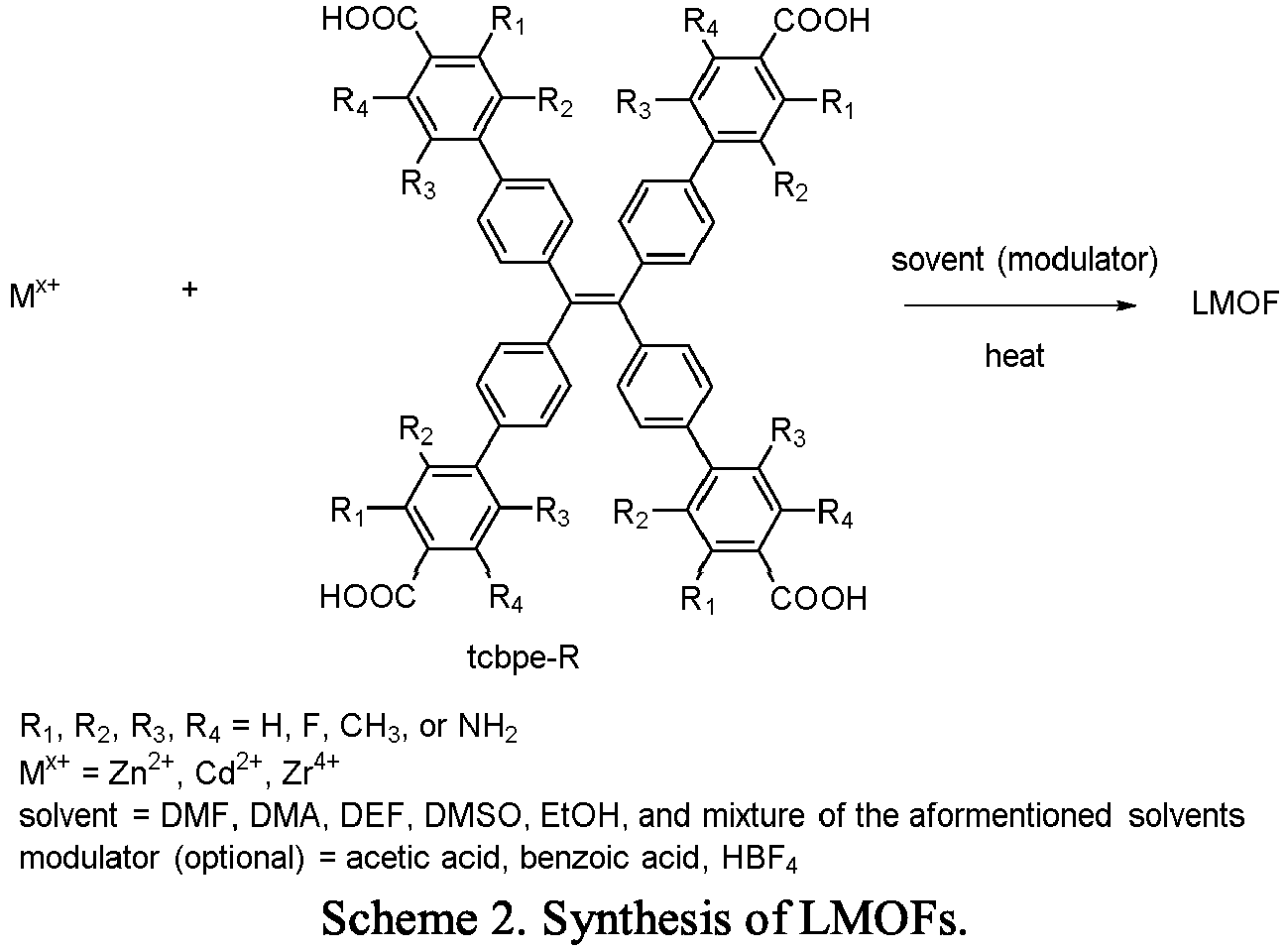
- To a 20 mL glass vial, Zn(NO3)2·6H2O (0.0892 g, 0.30 mmol), tcbpe (0.0244 g, 0.03 mmol), and N,N'-dimethylacetamide (DMA, 2 mL) were added. The glass vial was capped and sonicated at room temperature for a few minutes until a clear solution was obtained. The sealed glass vial was kept at 120 °C for 48 hours. Transparent light yellow single crystals were harvested through filtration, washed with DMA, and dried in air (∼80% yield based on tcbpe), which were analyed by microscope, and thermal gravimetric analysis, and single crystal X-ray (Table 2) and powder X-ray diffractions.
- To a 20 mL glass vial, ZrCl4·6H2O (0.0350 g, 0.15 mmol) and acetic acid (0.69 mL, 12 mmol) were added. The mixture was sonicated to afford a clear solution. Then tcbpe (0.0244 g, 0.03 mmol), and N,N'-dimethylformamide (DMF, 4 mL) were added. The glass vial was capped and sonicated again at room temperature for a few minutes until a clear solution was obtained. The sealed glass vial was kept at 120 °C for 48 hours. Yellowish powder was harvested through filtration, washed with DMF, and dried in air, which was analyzed by powder X-ray diffraction and thermal gravimetric analysis.
- To a 20 mL glass vial, ZrCl4·6H2O (0.0350 g, 0.15 mmol) and acetic acid (0.69 mL, 12 mmol) were added. The mixture was sonicated to afford a clear solution. Then tcbpe (0.0244 g, 0.03 mmol), and DMA (4 mL) were added. The glass vial was capped and sonicated again at room temperature for a few minutes until a clear solution was obtained. The sealed glass vial was kept at 120 °C for 48 hours. Yellowish powder was harvested through filtration, washed with DMA, and dried in air, which was analyzed by powder X-ray diffraction and thermal gravimetric analysis.
- To a 20 mL glass vial, ZrCl4·6H2O (0.0350 g, 0.15 mmol) and acetic acid (0.69 mL, 12 mmol) were added. The mixture was sonicated to afford a clear solution. Then tcbpe (0.0244 g, 0.03 mmol), and N,N'-diethylformamide (DEF, 4 mL) were added. The glass vial was capped and sonicated again at room temperature for a few minutes until a clear solution was obtained. The sealed glass vial was kept at 120 °C for 48 hours. White powder was harvested through filtration, washed with DEF, and dried in air, which was analyzed by powder X-ray diffraction thermal gravimetric analysis.
- Synchrotron X-ray sources at the Advanced Light Source 11.3.1 Chemical Crystallography beam line were used to collect low temperature (100 K) single crystal diffraction data for LMOF-231. Reflection data for compound 1 were collected using a three-circle Bruker D8 diffractometer equipped with an APEXII detector (λ = 0.77490 Å) with 180 to scans, at 0.3 steps, with settings of φ = 0, 120, and 240. The crystals were twinned; CELL_NOW8 was used to determine the two orientation matrices of the two components. SAINT8.27B9 was used to integrate the intensities for both components. At the same time, the raw data in the APEXII suite of programs were corrected for absorption effects using TWINABS. The parameters are listed in Table 3.
Table 3. Single crystal data for LMOF-231 at 100 K Compound Zn2(tcbpe)·xDMA (LMOF-231) Formula C54H31O8Zn2 M 938.81 Crystal system Monoclinic Space group C 2/c a/Å 36.929(5) b/Å 31.080(4) c/Å 11.8533(17) α/o 90.00 β/ο 99.228(2) γ/o 90.00 V, Å3 13429(3) Z 8 Temperature (K) 100(2) □□(radiation wavelength) Å 0.77490 D, g/cm3 0.929 Reflections collected 18590 R1 a [I > 2σ(I)] 0.0767 wR2b [I > 2σ(I)] 0.2534 Goodness-of-fit 1.164 a R1=∑|Fo-Fc|/∑|Fo|
b wR2=∑[w(Fo 2-Fc 2)2]/w(Fo 2)2]1/2 - Gas sorption measurements were carried out on a volumetric gas sorption analyzer (Autosorb-1 MP, Quantachrome Instruments). Ultra high purity N2 (99.999%) was used for the experiment. Cryogenic temperature (77K) was achieved by using liquid nitrogen as coolant. About 120 mg as made sample was outgassed at 423 K overnight under dynamic vacuum and the subsequent degassed sample was used for the gas sorption experiment. The N2 isotherm was collected in a pressure range from 10-7 to 1 atm at 77K. Surface area was analyzed using Autosorbv1.50 software. The BET surface are for LMOF-231' (the ourgassed LMOF-231) is 833 m2/g.
- The diffuse reflectance of solid samples were collected on a Shimadzu UV-3600 spectrophotometer at room temperature with a BaSO4 standard as the baseline. The diffuse reflectance was converted to Kubelka-Munk Function as shown below. The photoluminsecence (PL) study was conducted on a Varian Cary Eclipse spectrophotometer. Measurements were taken on solid samples. For optional absorption, fluorescence spectroscopy and other related measurements of the materials prepared.
- The quantum yields of ligands and LMOFs were measured on a Hamamatsu C9220-03 system. Solids samples were used for all measurements. See Table 4.
Table 4. A summary of quantum yields. Vacuum was applied while heating. Emission wavelength was acquired on Hamamatsu system. Sample name Excitation (Emission) wavelength (nm) Quantum yield (%) for yellow emission QY (%) after heating at 150°C for 12 hrs QY decrease (%) YAG:Ce 455 (550) 100.3 tcbpe 365 (544) 117.3 450 (548) 82.8 455 (548) 78.8 LMOF-231 360 (520) 114.6 455 (530) 70.5 LMOF-231' 450 (550) 81.2 59.8 21.4 455 (550) 77.4 - The MOFs built on 4-tppe could be divided into two subgroups with tricarboxylic acids and dicarboxylic acids, respectively. A summary of the carboxylic acids used in the LMOFs built on 4-tppe is listed in Table 5.
Table 5. A summary of the carboxylic acids for LMOFs built on 4-tppe. Type of Carboxylic Acids Ligand Tricarboxylic Acids 

benzene-1,3,5-tricarboxylic acid (H3btc) 2-fluorobenzene-1,3,5-tricarboxylic acid (H3btc-f) 

pyridine-2,4,6-tricarboxylic acid 2-aminobenzene-1,3,5-tricarboxylic acid 
1,3,5-triazine-2,4,6-tricarboxylic acid Dicarboxylic Acids 

[1,1'-biphenyl]-4,4'-dicarboxylic acid (H2bpdc) 4,4'-(perfluoropropane-2,2-diyl)dibenzoic acid (H2hfipbb) 

9-oxo-9H-fluorene-2,7-dicarboxylic acid (H2ofdc) 9-(hydroxymethyl)-9H-fluorene-2,7-dicarboxylic acid 

9H-fluorene-2,7-dicarboxylic acid 9-formyl-9H-fluorene-2,7-dicarboxylic acid 

terephthalic acid naphthalene-1,5-dicarboxylic acid 

naphthalene-1,4-dicarboxylic acid 4,4'-oxydibenzoic acid 

(E)-4,4'-(ethene-1,2-diyl)dibenzoic acid (E)-4,4'-(diazene-1,2-diyl)dibenzoic acid 
4,4'-sulfonyldibenzoic acid - Synthesis of 4-tppe: The synthesis of 4-tppe is shown in Scheme 3.

- 1) 1,1,2,2-tetrakis(4-bromophenyl)ethene (A). 75mmol (25G) 1,1,2,2-tetraphenylethene was placed in a watch glass on the rack of a desiccator. 585mmol (30ml) bromide liquid was poured in the bottom of the desiccator. The desiccator was closed with a small hole leaving to release HBr formed from the reaction. After 7 days, the yellow solid was collected and recrystallized with dichloromethane/methanol (2:1) to give white crystals. Yield: 37g, 76%. 1H NMR (CDCl3, 300MHz, 298K): δ6.84 (d, 8H, HβArH), 7.26 (d, 8H, HaArH). Additional peaks: δ7.26 (m, CDCl3), δ1.6 (m, H2O).
- 2) 1,1,2,2-tetrakis(4-(pyridin-4-yl)phenyl)ethene (4-tppe) (B). 2.8mmol (1.8g) A, 16.68mmol (2.05g) pyridine-4-boronic acid, 0.93mmol (207mg) Pd(OAc)2 were added into a 250ml flask. 18.5mmol (3.93g) K3PO4 was dissolved in 5ml water and then the solution was added into the same flask. 100ml DMF and 1.38mmol (390mg) P(cy)3 ware added in to the flask too. Blow N2 into the system and reflux at 160 °C for 48h. After cooling down to room temperature, the product was first vacuum evaporated and then extracted with chloroform for three times. The organic phase was then washed with water, dry with anhydrous magnesium sulfate. The final yellow powder product was purified by column with eluent of CH2Cl3: MeOH=30:1 with yield ∼50%. 1H NMR (CDCl3, 300MHz, 298K): δ8.66 (br, 8H, Hα-Py), 7.46-7.50 (m, 16H, ArH), 7.25 (br, 8H, Hβ-Py). Additional peaks: δ7.26 (m, CDCl3), δ1.6 (m, H2O).
- Synthesis of H3btc-F: The synthesis of H3btc-F can be found in Scheme 4.

- 14.48 mmol (2 g) 2-fluoro-1,3,5-trimethylbenzene were emulsified in 106 ml boiling water. 67.4 mmol (10.64 g) of potassium permanganate were mixed with 45.55 mmol (5 g) sodium carbonate and added into the refluxing solution in 10 portions over a period of 72 h. The manganese (IV) oxide was removed by filtration and treated twice with 50 ml boiling water. The combined aqueous solutions were concentrated in vacuum to 60 ml and acidified with diluted hydrogen chloride up to pH=3.5 to give 1.5 g (6.57 mmol), yield 46% of a white powder. 1H NMR (D2O, 300 MHz, 298 K): δ8.4 (d, 2H, ArH).
- The solvothermal method was used to synthesize luminescent metal-organic frameworks (LMOFs) as demonstrated in Schemes 5 and 6.


- Synthesis of [Zn6(btc)4(tppe)2(DMA)2]·11DMA (LMOF-251 or 2): (reference example) 0.060 mmol (18 mg) Zn(NO3)2·6H2O, 0.040 mmol (8.4 mg) H3btc, 0.02 mmol (12.8 mg) 4-tppe were dissolved in 15 ml DMA in a glass vial. Then 0.3 ml HBF4 was added into the vial. The capped vial was ultrasonicated until the solution was clear and then put into a 150 °C oven for 2 days. The needle shaped crystals were isolated and washed with 10 ml DMA for 3 times. The product was analyzed by microscope, single crystal X-ray diffraction (crystal structure illustrated in
Fig. 2 ), powder X-ray diffraction, and thermal gravimetric analysis. - Synthesis of [Znx(btc-f)y(tppe)z(DMA)m]·nDMA (LMOF-252): (reference example) 0.060mmol (18mg) Zn(NO3)2·6H2O, 0.040mmol (9mg) H3btc-f, 0.02mmol (12.8mg) 4-tppe were dissolved in 3ml DMA in a glass vial. Then 0.05ml HBF4 was added into the vial. The capped vial was ultrasonicated until the solution was clear and then put into a 150 °C oven for 2 days. The yellow crystalline powder were isolated and washed with 10ml DMA for 3 times. The product was analyzed by powder X-ray diffraction, and thermal gravimetric analysis.
- Synthesis of Zn2(bpdc)2(tppe) (LMOF-241): (reference example) 4,4'-biphenyldicarboxylic acid (H2bpdc, 0.012 g, 0.05 mmol), 1,1,2,2-tetrakis(4-(pyridin-4-yl)phenyl)ethene (4-tppe, 0.013 g, 0.02 mmol) and Zn(NO3)2·6H2O (0.015 g, 0.05 mmol) in DMA / DMSO / isopropanol (4:1:1 v/v/v, 12 mL) were sealed in a 20-mL glass vial. The glass vial was heated to 150 °C and maintained at this temperature for 24 h before it was cooled to room temperature. Colorless needlelike crystals were obtained after filtration. The product was analyzed by microscope, powder X-ray diffraction, and thermal gravimetric analysis.
- Synthesis of Znx(ofdc)y(tppe)z (LMOF-261): (reference example) 0.050mmol (14mg) Zn(NO3)2·6H2O, 0.030mmol (9mg) 9-fluorenone-2,7-dicarboxylic acid (H2ofdc), 0.008mmol (5mg) 4-tppe were dissolved in 5ml DMA, 2ml DMSO and 8ml isopropanol in a glass vial. Then 0.05ml HBF4 was added into the vial. The capped vial was ultrasonicated until the solution was clear and then put into a 150 °C oven for 2 days. The yellow crystalline powder were isolated and washed with 10ml DMA for 3 times. The product was analyzed by microscope, powder X-ray diffraction, and thermal gravimetric analysis.
- Synthesis of Znx(hfipbb)y(tppe)z (LMOF-271): (reference example) 0.050mmol (15mg) Zn(NO3)2·6H2O, 0.050mmol (20mg) 4,4'-(hexafluoroisopropylidene)bis(benzoic acid) (H2hfipbb), 0.008mmol (5mg) 4-tppe were dissolved in 7ml DMA and 8ml isopropanol in a glass vial. Then 0.05ml HBF4 was added into the vial. The capped vial was ultrasonicated until the solution was clear and then put into a 150 °C oven for 3 days. The yellow crystalline powder were isolated and washed with 10ml DMA for 3 times. The product was analyzed by microscope, powder X-ray diffraction, and thermal gravimetric analysis.
- Single-crystal synchrotron X-ray diffraction data of LMOF-251 were collected and analyzed at the Advanced Light Source (ALS) in Lawrence Berkeley National Laboratory. The structure was solved by direct methods and refined by full-matrix least-squares on F2 using the Bruker SHELXTL package.
- Single crystal data show that the new metal organic framework [Zn6(btc)4(tppe)2(DMA)2·11DMA (H3btc: benzene-1,3,5-tricarboxylic acid; tppe: tetra(4-(pyrid-4-yl)phenyl)ethylene; DMA: dimethylacetamide) (1·11DMA) is a two-fold interpenetrated 3D framework. It crystallizes in triclinic space group P-1(2). The structure is composed of two different building units with one primary building unit (PBU) and one paddle wheel based secondary building unit (SBU). The octahedrally coordinated zinc metal in the PBU is connected to four oxygen atoms from two different carboxylate groups from two different linkers. The zinc atoms of the SBU are coordinated to a total of eight oxygen atoms from four carboxylate groups of four btc linkers. One solvent DMA molecule is coordinated to each zinc metal center. These two types of building blocks are connected by the btc linkers, forming the overall 3D framework. On the other hand, the N-based tppe linker connects the zinc atoms of the primary building unit within the framework. The point symbol of the framework is {6^2.8^4}2{6^2.8}4{6^4.8^2}5 with a 4-nodal net topology. The single crystal structure data are listed in Table 6.
Table 6. Single crystal data for LMOF-251 at 150(2) K. Compound [Zn6(btc)4(tppe)2(DMA)2]·11DMA (LMOF-251) Empirical formula C136H94N10O26Zn6 Formula weight 2676.43 Crystal system Triclinic Space group P-1 a/Å 10.117(5) b/Å 29.539(5) c/Å 29.556(5) α/° 91.446(5) β/° 93.321(5) γ/° 91.615(5) V, Å3 8811(5) Z 2 Temperature, K 150(2) □□(radiation wavelength), Å 0.71073 D, g/cm3 1.009 Reflections collected 89633 Absorption coefficient, mm-1 0.859 F(000) 2736 Crystal size, mm3 0.31 x 0.28 x 0.26 Theta range for data collection, deg 1.38 to 25.00 Index ranges -12<=h<=12, -35<=k<=35, -35<=1<=35 Independent reflections 30897 [R(int) = 0.1037] Completeness to theta = 30.49° 99.7 % Absorption correction Semi-empirical from equivalents Max. and min. transmission 0.8076 and 0.7767 Refinement method Full-matrix least-squares on F2 Data / restraints / parameters 30897 / 108 / 1603 Final R indices [I>2sigma(I)] R1 = 0.0674, wR2 = 0.1413 R indices (all data) R1 = 0.1135, wR2 = 0.1524 Goodness-of-fit on F2 1.005 - Gas sorption measurements were carried out on a volumetric gas sorption analyzer (Autosorb-1 MP, Quantachrome Instruments). Ultra high purity N2 (99.999%) was used for the experiment. Cryogenic temperature (77K) was achieved by using liquid nitrogen as coolant. About 100 mg CH2Cl2 exchanged sample was outgassed at 313K overnight under dynamic vacuum and the subsequent degassed sample was used for the gas sorption experiment. The N2 isotherm was collected in a pressure range from 10-7 to 1 atm at 77K. Surface area was analyzed using Autosorbv1.50 software. The BET surface are for LMOF-241' (the ourgassed form of LMOF-241) is 1280 m2/g.
- The diffuse reflectance of solid samples were collected on a Shimadzu UV-3600 spectrophotometer at room temperature with a BaSO4 standard as the baseline. The diffuse reflectance was converted to Kubelka-Munk Function as shown below.
The photoluminsecence (PL) study was conducted on a Varian Cary Eclipse spectrophotometer. Measurements were taken on solid samples. - The quantum yields of ligand and LMOFs were measured on a Hamamatsu C9220-03 system. Solids samples were used for all measurements.
Table 3. A summary of quantum yields. Sample name Excitation wavelength (nm) Emission Wavelength (nm) Quantum yield (%) YAG:Ce 455 530 100.3 4-tppe 400 500 57.2 420 505 40.2 440 510 34 450 514 33.2 460 515 32.1 LMOF-251 400 530 88.0 420 530 69.7 440 530 69.2 450 530 64.4 460 530 59.5 - The excitation and emission spectra of the powder samples of compound 1 and 2 and their ligands were measured at room temperature. While free H3btc does not emit in visible light region the free tppe ligand emits green light upon excitation at 440 nm, which is due presumably to the intramolecular π-π* transition. The density functional theory (DFT) calculation of the molecular orbital of tppe ligand shows the HOMO and LUMO orbitals are π and π* orbitals respectively. Upon excitation at the same wavelength, compound 2 emits yellow light with an emission maximum at ∼530 nm and a quantum yield of 69.2%, a significant increase compared to 34.0% for the ligand. The DFT calculations also show the emission of compound 1 is tcbpe (ligand) based. In the case of compound 2, the emission is a LLCT type. It is red shifted with regard to that of tppe, and is much stronger compared to the tppe ligand itself. This may be attributed to the stabilization of ligand within MOF which could reduce the non-radiative decay rate and the formation of the framework structure which could maximize the intramolecular/intermolecular interactions among the organic linkers for their energy transfer.
- The Commission International de I'Eclairage (CIE) coordinates of 1 and 2 were calculated to be (0.37, 0.56) and (0.35, 0.58), respectively, well within the yellow range and close to the CIE coordinates of commercial yellow phosphor cerium doped yttrium aluminum garnet (YAG:Ce) (0.37, 0.58). The QY values for both 1 and 2 obtained at several selected excitation energies are listed in Table 1. To the best of our knowledge, these values mark the highest among all white and yellow emitting MOFs reported to date.
Table 1. Quantum yields of compound 1-2 and tppe ligand. QY (%) λex (nm) 400 420 450 460 440 440 a 1 100 b - 81.2 77.4 c - - 2 88.0 69.7 64.4 59.5 69.2 46.5 tppe 57.2 40.2 33.2 32.1 34.0 30.0 a Measured after sample was heated at 150 °C for 12 hours.
b λex = 360 nm
c λex = 455 nm - A white LED device was assembled using a 5 mm 455-460 nm blue LED chip and sample 2 coated on the surface of the chip. The coating solution was prepared by dispersing powders of 2 in ethyl acetate under ultrasonication for 1 h. The blue LED bulb was dipped into the suspension solution for several times until a thin and uniform film was formed on the surface of the bulb. Bright white light was generated when a 3V voltage was applied. The well-dispersive nature of compound 2 in selected solutions makes it possible to coat the samples on flexible substrates such as a rope or thin cotton strings, which is not achievable with traditional inorganic yellow phosphors.
- Thermal and moisture stability of the yellow phosphor was examined at various temperatures. The thermal gravimetric analysis (TGA) of Compounds 1 and 2 displays continuously weight loss from room temperature to 150 and 200 °C, respectively. Both compounds remain stable until ∼450 and ∼300 °C before framework decomposition occurs. The PXRD patterns collected after the samples were heated at different temperatures for a given period of time show the structures are stable up to 150 and 180 °C, respectively. Both structures also exhibit high photoluminescence (PL) stability. Very small variation in the PL intensity was observed on 2 upon heating to 140 °C (decrease: < 8%).
Claims (9)
- A polymeric coordination compound capable of forming a microporous metal organic framework, characterized by repeating structural units of formula of M2(L1)·xDMA, wherein
M is selected from Zn, Cd, and Zr;
L1 is selected from 4',4"',4""',4"""'-(ethene-1,1,2,2-tetrayl)tetrakis([1,1'-biphenyl]-3-fluoro-4- carboxylic acid) (tcbpe-F), or 4',4"',4""',4"""'-(ethene-1,1,2,2-tetrayl)tetrakis([1,1'-biphenyl]-4-carboxylic acid) (tcbpe); and
x is 0 or an integer. - The compound of claim 1, wherein M is Zn; L1 is tcbpe; each Zn atom is tetrahedrally coordinated to O atoms from four tcbpe ligand; all of the carboxylate groups of tcbpe are bidentate with each O atom coordinating to a different Zn atom; two adjacent Zn atoms form an eight-membered ring with carboxylate groups from the ligand; and the overall framework of the compound is three-dimensional (3D) with 1D channel along the c axis.
- An article of manufacture comprising one or more compounds of claim 1.
- The article of manufacture of claim 3, wherein the one or more compounds are deposited in a pattern in the article of manufacture such that a light of one or more colors are emitted in a pattern upon exposure to one or more exciting wavelengths.
- The article of manufacture of claim 3, further comprising a light emitting device having a light source capable of producing one or more wavelengths simultaneously or sequentially in the range of 300 - 750 nm.
- The article of manufacture of claim 5, wherein the light source comprises a light-emitting diode (LED) having a wavelength in the range of 400 - 500 nm.
- The article of manufacture of claim 5, wherein the compound emits a white light when being exposed to an exciting wavelength.
- The article of manufacture of claim 3, wherein the compound is Zn2(tcbpe)·xDMA.
- The compound of claim 1, which is Zn2(tcbpe)·xDMA.
Applications Claiming Priority (2)
| Application Number | Priority Date | Filing Date | Title |
|---|---|---|---|
| US201461984154P | 2014-04-25 | 2014-04-25 | |
| PCT/US2015/027583 WO2015164784A1 (en) | 2014-04-25 | 2015-04-24 | Metal organic framework (mof) yellow phosphors and their applications in white light emitting devices |
Publications (3)
| Publication Number | Publication Date |
|---|---|
| EP3134416A1 EP3134416A1 (en) | 2017-03-01 |
| EP3134416A4 EP3134416A4 (en) | 2018-07-04 |
| EP3134416B1 true EP3134416B1 (en) | 2020-12-09 |
Family
ID=54333295
Family Applications (1)
| Application Number | Title | Priority Date | Filing Date |
|---|---|---|---|
| EP15782650.4A Not-in-force EP3134416B1 (en) | 2014-04-25 | 2015-04-24 | Metal organic framework (mof) yellow phosphors and their applications in white light emitting devices |
Country Status (5)
| Country | Link |
|---|---|
| US (1) | US10800968B2 (en) |
| EP (1) | EP3134416B1 (en) |
| JP (1) | JP6731855B2 (en) |
| CN (1) | CN106459095B (en) |
| WO (1) | WO2015164784A1 (en) |
Families Citing this family (43)
| Publication number | Priority date | Publication date | Assignee | Title |
|---|---|---|---|---|
| CN105541885A (en) * | 2016-01-26 | 2016-05-04 | 南阳师范学院 | Niacin derivative ligand samarium metal complex with light-emitting function and preparation method thereof |
| CN105968377B (en) * | 2016-06-17 | 2019-04-05 | 江苏科技大学 | A kind of luminescent metal organic framework compound and its preparation method and application |
| CN107188801B (en) * | 2017-05-15 | 2020-05-05 | 天津大学 | Tetraphenyl ethylene ion complex-based divalent copper ion fluorescent probe and preparation method and application thereof |
| WO2019091389A1 (en) * | 2017-11-07 | 2019-05-16 | The Hong Kong University Of Science And Technology | Fluorescent probes for silver ion detection |
| US11567023B2 (en) * | 2018-03-22 | 2023-01-31 | Kabushiki Kaisha Toshiba | Molecular detection apparatus and molecular detection method |
| CN108997433B (en) * | 2018-07-24 | 2020-07-31 | 江苏科技大学 | Manganese-based luminescent metal organic framework material and preparation method and application thereof |
| CN110776523B (en) * | 2018-07-30 | 2022-04-29 | 天津师范大学 | Ultra-stable three-dimensional luminous zinc (II) metal organic framework material and preparation method and application thereof |
| WO2020043087A1 (en) * | 2018-08-27 | 2020-03-05 | The Hong Kong University Of Science And Technology | Method of detecting human serum albumin in biological fluids |
| CN109400898B (en) * | 2018-10-25 | 2021-05-18 | 陕西科技大学 | A kind of manganese coordination polymer and its preparation method and application |
| CN109294564B (en) * | 2018-11-30 | 2021-06-01 | 东南大学 | Preparation method of WLED fluorescent powder, prepared fluorescent powder and application thereof |
| CN109633144B (en) * | 2018-12-28 | 2020-07-14 | 南昌大学 | A fluorescent immunochromatographic test strip prepared with aggregation-induced luminescent fluorescent microspheres as beacon carriers |
| CN109651126A (en) * | 2019-01-17 | 2019-04-19 | 杭州师范大学 | A kind of preparation method of tetraphenyl ethylene yl carboxylic acid organic ligand and its complex |
| CN111995513B (en) * | 2019-05-27 | 2022-11-01 | 天津键凯科技有限公司 | Preparation method of 9-hydroxymethyl-fluorenic acid |
| CN110123801B (en) * | 2019-06-12 | 2022-05-24 | 南方科技大学 | Use of a multi-arm AIE molecule in the preparation of antibacterial drugs and antibacterial drugs |
| CN110511740A (en) * | 2019-07-18 | 2019-11-29 | 广东工业大学 | A fluorescent probe for detecting hypochlorous acid and its preparation method and application |
| CN110669037B (en) * | 2019-10-15 | 2023-03-28 | 西北师范大学 | Application of zinc metal organic framework complex in fluorescent recognition of lead ions |
| CN110790941B (en) * | 2019-11-14 | 2021-08-27 | 重庆师范大学 | Zinc-organic coordination polymer containing meso helical chain and preparation method and application thereof |
| US11387250B2 (en) | 2019-12-20 | 2022-07-12 | Sandisk Technologies Llc | Three-dimensional memory device containing metal-organic framework inter-word line insulating layers |
| US11296028B2 (en) | 2019-12-20 | 2022-04-05 | Sandisk Technologies Llc | Semiconductor device containing metal-organic framework inter-line insulator structures and methods of manufacturing the same |
| US11493180B2 (en) | 2020-07-08 | 2022-11-08 | Abdullah Alrasheed | Cleansing lamp utilizing metal-organic framework |
| US11430736B2 (en) | 2020-08-24 | 2022-08-30 | Sandisk Technologies Llc | Semiconductor device including having metal organic framework interlayer dielectric layer between metal lines and methods of forming the same |
| CN112831056A (en) * | 2020-12-28 | 2021-05-25 | 南京艾姆材料科技有限公司 | Preparation and application method of large-aperture Zn-MOF material |
| CN113101283B (en) * | 2021-04-15 | 2022-10-21 | 南方科技大学 | Application of polyphenyl ring conjugated molecule in preparation of antiviral drug and antiviral drug |
| CN113480905B (en) * | 2021-08-04 | 2022-03-25 | 陕西科技大学 | Leather coating with fluorescent response to benzene-series VOCs and preparation method thereof |
| CN113549224B (en) * | 2021-08-15 | 2022-06-14 | 福州大学 | A metal covalent organic framework material with intrinsic white light emission |
| CN113861434B (en) * | 2021-09-14 | 2022-10-21 | 南开大学 | Novel magnesium-based MOF material and solution processing method of MOF material |
| CN113929920B (en) * | 2021-11-05 | 2022-07-12 | 苏州大学 | Photoinduced nonlinear expansion coordination polymer and preparation method thereof |
| CN114181399A (en) * | 2021-11-09 | 2022-03-15 | 华南理工大学 | Metal organic framework material, preparation thereof and application thereof in quick response of hydrogen chloride gas |
| CN114213671B (en) * | 2021-12-31 | 2023-01-06 | 南京理工大学 | A metal-organic framework-based fluorescence sensor of nitrogen-rich heterocyclic compounds and its preparation method and application |
| CN114806546B (en) * | 2022-05-18 | 2024-07-12 | 南京大学 | Organic framework materials based on fluorescent molecules and preparation methods and applications thereof |
| CN114752072B (en) * | 2022-05-30 | 2023-07-18 | 山西大学 | Zn metal-organic framework material and white light phosphor material and preparation method thereof |
| CN114957694B (en) * | 2022-05-30 | 2024-06-07 | 天津大学 | Solvent-free coordination rare earth MOF material and preparation method and application thereof |
| CN116283564A (en) * | 2022-08-02 | 2023-06-23 | 陕西科技大学 | Synthesis of ligands based on butylpentyl derivatives and preparation method of self-assembled tetranuclear cluster coordination compounds |
| CN115785467B (en) * | 2022-11-28 | 2023-08-29 | 重庆师范大学 | Triple interpenetrating dinuclear Zn 2 MOF material, preparation method thereof and application of MOF material in preparation of orange-yellow light LED device |
| CN116120577B (en) * | 2023-02-01 | 2024-05-28 | 重庆师范大学 | Dual-core porous light-conversion material and its preparation method and application in the preparation of warm yellow LED devices |
| CN116120581B (en) * | 2023-02-01 | 2024-06-04 | 重庆师范大学 | Fused heterocyclic MOF material, preparation method thereof and application thereof in preparation of red light LED device |
| CN116120582B (en) * | 2023-02-10 | 2024-08-27 | 山东瑞捷新材料有限公司 | Titanium-rare earth-based metal organic framework material and preparation method and application thereof |
| CN116769182A (en) * | 2023-07-03 | 2023-09-19 | 宁波大学 | Spin-crossed Fe (II) complex magnetic porous crystal material and preparation method and application thereof |
| CN117210220B (en) * | 2023-08-02 | 2026-01-30 | 闽都创新实验室 | Two-photon luminescent micro/nano materials, their preparation method, and their applications |
| CN117106117B (en) * | 2023-10-25 | 2024-02-13 | 传化智联股份有限公司 | ZnPF-1 catalyst containing Nd and Al elements and its preparation and application in the preparation of polybutadiene |
| CN118914315B (en) * | 2024-08-19 | 2025-03-21 | 苏州科技大学 | A method for detecting hydroquinone by electrochemiluminescence based on aggregation-induced emission Cd-MOF |
| CN119241858B (en) * | 2024-09-29 | 2025-10-31 | 福建师范大学 | Amorphous metal-organic framework microspheres, their preparation method and applications |
| CN120971721B (en) * | 2025-08-06 | 2026-03-27 | 云南师范大学 | A dual-mode biosensor for tobacco mosaic virus (TMV), its preparation method and its application |
Family Cites Families (7)
| Publication number | Priority date | Publication date | Assignee | Title |
|---|---|---|---|---|
| US4356429A (en) * | 1980-07-17 | 1982-10-26 | Eastman Kodak Company | Organic electroluminescent cell |
| AU2003295754A1 (en) * | 2002-11-20 | 2004-06-15 | Rutgers, The State University | Porous polymeric coordination compounds |
| US7985868B1 (en) * | 2006-11-01 | 2011-07-26 | Sandia Corporation | Hybrid metal organic scintillator materials system and particle detector |
| JP5009078B2 (en) * | 2007-07-30 | 2012-08-22 | 株式会社東海理化電機製作所 | Cylinder lock and unlocking device having the same |
| US8367419B2 (en) * | 2009-06-25 | 2013-02-05 | Rutgers, The State University Of New Jersey | Compositions and methods for detection of explosives |
| US8758482B2 (en) * | 2011-05-02 | 2014-06-24 | Rutgers, The State University Of New Jersey | Methods and compositions for removing carbon dioxide from a gaseous mixture |
| WO2013058845A1 (en) * | 2011-07-06 | 2013-04-25 | Northwestern University | System and method for generating and/or screening potential metal-organic frameworks |
-
2015
- 2015-04-24 CN CN201580025602.5A patent/CN106459095B/en not_active Expired - Fee Related
- 2015-04-24 WO PCT/US2015/027583 patent/WO2015164784A1/en not_active Ceased
- 2015-04-24 JP JP2016564255A patent/JP6731855B2/en not_active Expired - Fee Related
- 2015-04-24 EP EP15782650.4A patent/EP3134416B1/en not_active Not-in-force
- 2015-04-24 US US15/306,677 patent/US10800968B2/en active Active
Non-Patent Citations (1)
| Title |
|---|
| None * |
Also Published As
| Publication number | Publication date |
|---|---|
| JP2017519721A (en) | 2017-07-20 |
| EP3134416A4 (en) | 2018-07-04 |
| CN106459095B (en) | 2020-03-10 |
| EP3134416A1 (en) | 2017-03-01 |
| WO2015164784A1 (en) | 2015-10-29 |
| US10800968B2 (en) | 2020-10-13 |
| CN106459095A (en) | 2017-02-22 |
| JP6731855B2 (en) | 2020-07-29 |
| US20170044428A1 (en) | 2017-02-16 |
Similar Documents
| Publication | Publication Date | Title |
|---|---|---|
| US10800968B2 (en) | Metal organic framework (MOF) yellow phosphors and their applications in white light emitting devices | |
| Han et al. | Intercluster aurophilicity-driven aggregation lighting circularly polarized luminescence of chiral gold clusters | |
| Yuan et al. | Controllable supramolecular structures and luminescent properties of unique trimeric Zn (II) 8-hydroxyquinolinates tuned by functional substituents | |
| Yang et al. | Synthesis and photoluminescent properties of four novel trinuclear europium complexes based on two tris-β-diketones ligands | |
| US20200263085A1 (en) | Luminescent and dispersible hybrid materials combining ionic and coordinate bonds in molecular crystals | |
| KR101591484B1 (en) | Rare earth europium coordination complex and application using same as light emitting material | |
| Shao et al. | Synthesis and photophysical properties of europium (iii)–β-diketonate complexes applied in LEDs | |
| CN105968377A (en) | Luminous metal organic frame compound and preparing method and application thereof | |
| JP7837140B2 (en) | Rare earth complexes with an indanedione skeleton | |
| Yuan et al. | Structure and photophysical properties of a dimeric Zn (II) complex based on 8-hydroxyquinoline group containing 2, 6-dichlorobenzene unit | |
| Cepeda et al. | Enhancing luminescence properties of lanthanide (iii)/pyrimidine-4, 6-dicarboxylato system by solvent-free approach | |
| Demakov et al. | Intense multi-colored luminescence in a series of rare-earth metal–organic frameworks with aliphatic linkers | |
| Wang et al. | Synthesis, radii dependent self-assembly crystal structures and luminescent properties of rare earth (III) complexes with a tripodal salicylic derivative | |
| Ikawa et al. | Photoluminescence color tuning of phosphorescent bis-cyclometalated iridium (III) complexes by ancillary ligand replacement | |
| CN106995696A (en) | A kind of zinc-base luminescent metal organic framework material and its preparation method and application | |
| Gangan et al. | Tuning of the excitation wavelength in Eu 3+-aminophenyl based polyfluorinated β-diketonate complexes: a red-emitting Eu 3+-complex encapsulated in a silica/polymer hybrid material excited by blue light | |
| Levina et al. | Effects of combining fluorinated and non-fluorinated monocarboxylate anions in lanthanide complexes on the structure and photoluminescence properties | |
| Wu et al. | Metal ion coordination enhancing quantum efficiency of ligand phosphorescence in a double-stranded helical chain coordination polymer of Pb 2+ with nicotinic acid | |
| CN108752382A (en) | The double phosphine three-fold coordination cuprous halide complexs of terphenyl and synthetic method and application | |
| Song et al. | Luminescent properties of Ag (I)/Cu (I) coordination polymers: crystal structures and high intensity luminescence of a PMMA-doped hybrid material based on a quinoline-2, 3-dicarboxylic acid ligand | |
| Shu et al. | Simultaneous fluorescence and phosphorescence in Zn (II)–zwitterionic coordination polymers with tunable colors | |
| Nafikov et al. | Synthesis, Structures, and Photoluminescent Properties of Manganese (II) Complexes with 3-Chloro-6-(3, 5-dimethyl-1 H-pyrazol-1-yl) pyridazine | |
| CN111233924A (en) | Carbazole derivatives and preparation methods thereof, cuprous halide nanoclusters and preparation methods, applications and devices thereof | |
| JP5506306B2 (en) | Luminescent substance | |
| WO2006080515A1 (en) | Substituted ethynyl gold-nitrogenated heterocyclic carbene complex and organic electroluminescent device using same |
Legal Events
| Date | Code | Title | Description |
|---|---|---|---|
| STAA | Information on the status of an ep patent application or granted ep patent |
Free format text: STATUS: THE INTERNATIONAL PUBLICATION HAS BEEN MADE |
|
| PUAI | Public reference made under article 153(3) epc to a published international application that has entered the european phase |
Free format text: ORIGINAL CODE: 0009012 |
|
| STAA | Information on the status of an ep patent application or granted ep patent |
Free format text: STATUS: REQUEST FOR EXAMINATION WAS MADE |
|
| 17P | Request for examination filed |
Effective date: 20161102 |
|
| AK | Designated contracting states |
Kind code of ref document: A1 Designated state(s): AL AT BE BG CH CY CZ DE DK EE ES FI FR GB GR HR HU IE IS IT LI LT LU LV MC MK MT NL NO PL PT RO RS SE SI SK SM TR |
|
| AX | Request for extension of the european patent |
Extension state: BA ME |
|
| DAV | Request for validation of the european patent (deleted) | ||
| DAX | Request for extension of the european patent (deleted) | ||
| RIC1 | Information provided on ipc code assigned before grant |
Ipc: C09K 11/06 20060101ALI20180201BHEP Ipc: C07F 3/06 20060101AFI20180201BHEP |
|
| A4 | Supplementary search report drawn up and despatched |
Effective date: 20180606 |
|
| RIC1 | Information provided on ipc code assigned before grant |
Ipc: C07F 3/06 20060101AFI20180530BHEP Ipc: F21K 9/64 20160101ALI20180530BHEP Ipc: F21Y 115/10 20160101ALI20180530BHEP Ipc: F21V 9/30 20180101ALI20180530BHEP Ipc: C09K 11/06 20060101ALI20180530BHEP Ipc: C09D 5/22 20060101ALI20180530BHEP |
|
| STAA | Information on the status of an ep patent application or granted ep patent |
Free format text: STATUS: EXAMINATION IS IN PROGRESS |
|
| 17Q | First examination report despatched |
Effective date: 20190418 |
|
| GRAP | Despatch of communication of intention to grant a patent |
Free format text: ORIGINAL CODE: EPIDOSNIGR1 |
|
| STAA | Information on the status of an ep patent application or granted ep patent |
Free format text: STATUS: GRANT OF PATENT IS INTENDED |
|
| INTG | Intention to grant announced |
Effective date: 20191213 |
|
| GRAS | Grant fee paid |
Free format text: ORIGINAL CODE: EPIDOSNIGR3 |
|
| GRAA | (expected) grant |
Free format text: ORIGINAL CODE: 0009210 |
|
| STAA | Information on the status of an ep patent application or granted ep patent |
Free format text: STATUS: THE PATENT HAS BEEN GRANTED |
|
| AK | Designated contracting states |
Kind code of ref document: B1 Designated state(s): AL AT BE BG CH CY CZ DE DK EE ES FI FR GB GR HR HU IE IS IT LI LT LU LV MC MK MT NL NO PL PT RO RS SE SI SK SM TR |
|
| REG | Reference to a national code |
Ref country code: GB Ref legal event code: FG4D |
|
| REG | Reference to a national code |
Ref country code: AT Ref legal event code: REF Ref document number: 1343342 Country of ref document: AT Kind code of ref document: T Effective date: 20201215 Ref country code: CH Ref legal event code: EP |
|
| REG | Reference to a national code |
Ref country code: DE Ref legal event code: R096 Ref document number: 602015063276 Country of ref document: DE |
|
| REG | Reference to a national code |
Ref country code: IE Ref legal event code: FG4D |
|
| PG25 | Lapsed in a contracting state [announced via postgrant information from national office to epo] |
Ref country code: FI Free format text: LAPSE BECAUSE OF FAILURE TO SUBMIT A TRANSLATION OF THE DESCRIPTION OR TO PAY THE FEE WITHIN THE PRESCRIBED TIME-LIMIT Effective date: 20201209 Ref country code: RS Free format text: LAPSE BECAUSE OF FAILURE TO SUBMIT A TRANSLATION OF THE DESCRIPTION OR TO PAY THE FEE WITHIN THE PRESCRIBED TIME-LIMIT Effective date: 20201209 Ref country code: NO Free format text: LAPSE BECAUSE OF FAILURE TO SUBMIT A TRANSLATION OF THE DESCRIPTION OR TO PAY THE FEE WITHIN THE PRESCRIBED TIME-LIMIT Effective date: 20210309 Ref country code: GR Free format text: LAPSE BECAUSE OF FAILURE TO SUBMIT A TRANSLATION OF THE DESCRIPTION OR TO PAY THE FEE WITHIN THE PRESCRIBED TIME-LIMIT Effective date: 20210310 |
|
| REG | Reference to a national code |
Ref country code: AT Ref legal event code: MK05 Ref document number: 1343342 Country of ref document: AT Kind code of ref document: T Effective date: 20201209 |
|
| PG25 | Lapsed in a contracting state [announced via postgrant information from national office to epo] |
Ref country code: BG Free format text: LAPSE BECAUSE OF FAILURE TO SUBMIT A TRANSLATION OF THE DESCRIPTION OR TO PAY THE FEE WITHIN THE PRESCRIBED TIME-LIMIT Effective date: 20210309 Ref country code: LV Free format text: LAPSE BECAUSE OF FAILURE TO SUBMIT A TRANSLATION OF THE DESCRIPTION OR TO PAY THE FEE WITHIN THE PRESCRIBED TIME-LIMIT Effective date: 20201209 Ref country code: SE Free format text: LAPSE BECAUSE OF FAILURE TO SUBMIT A TRANSLATION OF THE DESCRIPTION OR TO PAY THE FEE WITHIN THE PRESCRIBED TIME-LIMIT Effective date: 20201209 |
|
| REG | Reference to a national code |
Ref country code: NL Ref legal event code: MP Effective date: 20201209 |
|
| PG25 | Lapsed in a contracting state [announced via postgrant information from national office to epo] |
Ref country code: NL Free format text: LAPSE BECAUSE OF FAILURE TO SUBMIT A TRANSLATION OF THE DESCRIPTION OR TO PAY THE FEE WITHIN THE PRESCRIBED TIME-LIMIT Effective date: 20201209 Ref country code: HR Free format text: LAPSE BECAUSE OF FAILURE TO SUBMIT A TRANSLATION OF THE DESCRIPTION OR TO PAY THE FEE WITHIN THE PRESCRIBED TIME-LIMIT Effective date: 20201209 |
|
| REG | Reference to a national code |
Ref country code: LT Ref legal event code: MG9D |
|
| PG25 | Lapsed in a contracting state [announced via postgrant information from national office to epo] |
Ref country code: EE Free format text: LAPSE BECAUSE OF FAILURE TO SUBMIT A TRANSLATION OF THE DESCRIPTION OR TO PAY THE FEE WITHIN THE PRESCRIBED TIME-LIMIT Effective date: 20201209 Ref country code: CZ Free format text: LAPSE BECAUSE OF FAILURE TO SUBMIT A TRANSLATION OF THE DESCRIPTION OR TO PAY THE FEE WITHIN THE PRESCRIBED TIME-LIMIT Effective date: 20201209 Ref country code: SM Free format text: LAPSE BECAUSE OF FAILURE TO SUBMIT A TRANSLATION OF THE DESCRIPTION OR TO PAY THE FEE WITHIN THE PRESCRIBED TIME-LIMIT Effective date: 20201209 Ref country code: PT Free format text: LAPSE BECAUSE OF FAILURE TO SUBMIT A TRANSLATION OF THE DESCRIPTION OR TO PAY THE FEE WITHIN THE PRESCRIBED TIME-LIMIT Effective date: 20210409 Ref country code: RO Free format text: LAPSE BECAUSE OF FAILURE TO SUBMIT A TRANSLATION OF THE DESCRIPTION OR TO PAY THE FEE WITHIN THE PRESCRIBED TIME-LIMIT Effective date: 20201209 Ref country code: SK Free format text: LAPSE BECAUSE OF FAILURE TO SUBMIT A TRANSLATION OF THE DESCRIPTION OR TO PAY THE FEE WITHIN THE PRESCRIBED TIME-LIMIT Effective date: 20201209 Ref country code: LT Free format text: LAPSE BECAUSE OF FAILURE TO SUBMIT A TRANSLATION OF THE DESCRIPTION OR TO PAY THE FEE WITHIN THE PRESCRIBED TIME-LIMIT Effective date: 20201209 |
|
| PG25 | Lapsed in a contracting state [announced via postgrant information from national office to epo] |
Ref country code: AT Free format text: LAPSE BECAUSE OF FAILURE TO SUBMIT A TRANSLATION OF THE DESCRIPTION OR TO PAY THE FEE WITHIN THE PRESCRIBED TIME-LIMIT Effective date: 20201209 Ref country code: PL Free format text: LAPSE BECAUSE OF FAILURE TO SUBMIT A TRANSLATION OF THE DESCRIPTION OR TO PAY THE FEE WITHIN THE PRESCRIBED TIME-LIMIT Effective date: 20201209 |
|
| REG | Reference to a national code |
Ref country code: DE Ref legal event code: R097 Ref document number: 602015063276 Country of ref document: DE |
|
| PG25 | Lapsed in a contracting state [announced via postgrant information from national office to epo] |
Ref country code: IS Free format text: LAPSE BECAUSE OF FAILURE TO SUBMIT A TRANSLATION OF THE DESCRIPTION OR TO PAY THE FEE WITHIN THE PRESCRIBED TIME-LIMIT Effective date: 20210409 |
|
| PLBE | No opposition filed within time limit |
Free format text: ORIGINAL CODE: 0009261 |
|
| STAA | Information on the status of an ep patent application or granted ep patent |
Free format text: STATUS: NO OPPOSITION FILED WITHIN TIME LIMIT |
|
| PG25 | Lapsed in a contracting state [announced via postgrant information from national office to epo] |
Ref country code: AL Free format text: LAPSE BECAUSE OF FAILURE TO SUBMIT A TRANSLATION OF THE DESCRIPTION OR TO PAY THE FEE WITHIN THE PRESCRIBED TIME-LIMIT Effective date: 20201209 Ref country code: IT Free format text: LAPSE BECAUSE OF FAILURE TO SUBMIT A TRANSLATION OF THE DESCRIPTION OR TO PAY THE FEE WITHIN THE PRESCRIBED TIME-LIMIT Effective date: 20201209 |
|
| REG | Reference to a national code |
Ref country code: DE Ref legal event code: R119 Ref document number: 602015063276 Country of ref document: DE |
|
| 26N | No opposition filed |
Effective date: 20210910 |
|
| PG25 | Lapsed in a contracting state [announced via postgrant information from national office to epo] |
Ref country code: SI Free format text: LAPSE BECAUSE OF FAILURE TO SUBMIT A TRANSLATION OF THE DESCRIPTION OR TO PAY THE FEE WITHIN THE PRESCRIBED TIME-LIMIT Effective date: 20201209 Ref country code: DK Free format text: LAPSE BECAUSE OF FAILURE TO SUBMIT A TRANSLATION OF THE DESCRIPTION OR TO PAY THE FEE WITHIN THE PRESCRIBED TIME-LIMIT Effective date: 20201209 Ref country code: ES Free format text: LAPSE BECAUSE OF FAILURE TO SUBMIT A TRANSLATION OF THE DESCRIPTION OR TO PAY THE FEE WITHIN THE PRESCRIBED TIME-LIMIT Effective date: 20201209 Ref country code: MC Free format text: LAPSE BECAUSE OF FAILURE TO SUBMIT A TRANSLATION OF THE DESCRIPTION OR TO PAY THE FEE WITHIN THE PRESCRIBED TIME-LIMIT Effective date: 20201209 |
|
| PG25 | Lapsed in a contracting state [announced via postgrant information from national office to epo] |
Ref country code: LU Free format text: LAPSE BECAUSE OF NON-PAYMENT OF DUE FEES Effective date: 20210424 |
|
| REG | Reference to a national code |
Ref country code: BE Ref legal event code: MM Effective date: 20210430 |
|
| PG25 | Lapsed in a contracting state [announced via postgrant information from national office to epo] |
Ref country code: FR Free format text: LAPSE BECAUSE OF NON-PAYMENT OF DUE FEES Effective date: 20210430 Ref country code: DE Free format text: LAPSE BECAUSE OF NON-PAYMENT OF DUE FEES Effective date: 20211103 Ref country code: LI Free format text: LAPSE BECAUSE OF NON-PAYMENT OF DUE FEES Effective date: 20210430 Ref country code: CH Free format text: LAPSE BECAUSE OF NON-PAYMENT OF DUE FEES Effective date: 20210430 |
|
| PG25 | Lapsed in a contracting state [announced via postgrant information from national office to epo] |
Ref country code: IE Free format text: LAPSE BECAUSE OF NON-PAYMENT OF DUE FEES Effective date: 20210424 |
|
| PG25 | Lapsed in a contracting state [announced via postgrant information from national office to epo] |
Ref country code: IS Free format text: LAPSE BECAUSE OF FAILURE TO SUBMIT A TRANSLATION OF THE DESCRIPTION OR TO PAY THE FEE WITHIN THE PRESCRIBED TIME-LIMIT Effective date: 20210409 |
|
| PG25 | Lapsed in a contracting state [announced via postgrant information from national office to epo] |
Ref country code: BE Free format text: LAPSE BECAUSE OF NON-PAYMENT OF DUE FEES Effective date: 20210430 |
|
| PG25 | Lapsed in a contracting state [announced via postgrant information from national office to epo] |
Ref country code: HU Free format text: LAPSE BECAUSE OF FAILURE TO SUBMIT A TRANSLATION OF THE DESCRIPTION OR TO PAY THE FEE WITHIN THE PRESCRIBED TIME-LIMIT; INVALID AB INITIO Effective date: 20150424 |
|
| P01 | Opt-out of the competence of the unified patent court (upc) registered |
Effective date: 20230516 |
|
| PG25 | Lapsed in a contracting state [announced via postgrant information from national office to epo] |
Ref country code: CY Free format text: LAPSE BECAUSE OF FAILURE TO SUBMIT A TRANSLATION OF THE DESCRIPTION OR TO PAY THE FEE WITHIN THE PRESCRIBED TIME-LIMIT Effective date: 20201209 |
|
| PG25 | Lapsed in a contracting state [announced via postgrant information from national office to epo] |
Ref country code: MK Free format text: LAPSE BECAUSE OF FAILURE TO SUBMIT A TRANSLATION OF THE DESCRIPTION OR TO PAY THE FEE WITHIN THE PRESCRIBED TIME-LIMIT Effective date: 20201209 |
|
| PGFP | Annual fee paid to national office [announced via postgrant information from national office to epo] |
Ref country code: GB Payment date: 20240429 Year of fee payment: 10 |
|
| PG25 | Lapsed in a contracting state [announced via postgrant information from national office to epo] |
Ref country code: MT Free format text: LAPSE BECAUSE OF FAILURE TO SUBMIT A TRANSLATION OF THE DESCRIPTION OR TO PAY THE FEE WITHIN THE PRESCRIBED TIME-LIMIT Effective date: 20201209 |
|
| PG25 | Lapsed in a contracting state [announced via postgrant information from national office to epo] |
Ref country code: TR Free format text: LAPSE BECAUSE OF FAILURE TO SUBMIT A TRANSLATION OF THE DESCRIPTION OR TO PAY THE FEE WITHIN THE PRESCRIBED TIME-LIMIT Effective date: 20201209 |
|
| GBPC | Gb: european patent ceased through non-payment of renewal fee |
Effective date: 20250424 |
|
| PG25 | Lapsed in a contracting state [announced via postgrant information from national office to epo] |
Ref country code: GB Free format text: LAPSE BECAUSE OF NON-PAYMENT OF DUE FEES Effective date: 20250424 |