EP3132385B1 - Verfahren und systeme zur erzeugung und auslesung von 2d-strichcodes - Google Patents
Verfahren und systeme zur erzeugung und auslesung von 2d-strichcodes Download PDFInfo
- Publication number
- EP3132385B1 EP3132385B1 EP15780070.7A EP15780070A EP3132385B1 EP 3132385 B1 EP3132385 B1 EP 3132385B1 EP 15780070 A EP15780070 A EP 15780070A EP 3132385 B1 EP3132385 B1 EP 3132385B1
- Authority
- EP
- European Patent Office
- Prior art keywords
- information
- access address
- private information
- barcode
- server
- Prior art date
- Legal status (The legal status is an assumption and is not a legal conclusion. Google has not performed a legal analysis and makes no representation as to the accuracy of the status listed.)
- Active
Links
Images






Classifications
-
- G—PHYSICS
- G06—COMPUTING OR CALCULATING; COUNTING
- G06F—ELECTRIC DIGITAL DATA PROCESSING
- G06F16/00—Information retrieval; Database structures therefor; File system structures therefor
- G06F16/90—Details of database functions independent of the retrieved data types
- G06F16/95—Retrieval from the web
- G06F16/955—Retrieval from the web using information identifiers, e.g. uniform resource locators [URL]
- G06F16/9554—Retrieval from the web using information identifiers, e.g. uniform resource locators [URL] by using bar codes
-
- G—PHYSICS
- G06—COMPUTING OR CALCULATING; COUNTING
- G06K—GRAPHICAL DATA READING; PRESENTATION OF DATA; RECORD CARRIERS; HANDLING RECORD CARRIERS
- G06K19/00—Record carriers for use with machines and with at least a part designed to carry digital markings
- G06K19/06—Record carriers for use with machines and with at least a part designed to carry digital markings characterised by the kind of the digital marking, e.g. shape, nature, code
- G06K19/06009—Record carriers for use with machines and with at least a part designed to carry digital markings characterised by the kind of the digital marking, e.g. shape, nature, code with optically detectable marking
- G06K19/06037—Record carriers for use with machines and with at least a part designed to carry digital markings characterised by the kind of the digital marking, e.g. shape, nature, code with optically detectable marking multi-dimensional coding
-
- G—PHYSICS
- G06—COMPUTING OR CALCULATING; COUNTING
- G06K—GRAPHICAL DATA READING; PRESENTATION OF DATA; RECORD CARRIERS; HANDLING RECORD CARRIERS
- G06K7/00—Methods or arrangements for sensing record carriers, e.g. for reading patterns
- G06K7/10—Methods or arrangements for sensing record carriers, e.g. for reading patterns by electromagnetic radiation, e.g. optical sensing; by corpuscular radiation
- G06K7/14—Methods or arrangements for sensing record carriers, e.g. for reading patterns by electromagnetic radiation, e.g. optical sensing; by corpuscular radiation using light without selection of wavelength, e.g. sensing reflected white light
- G06K7/1404—Methods for optical code recognition
- G06K7/1408—Methods for optical code recognition the method being specifically adapted for the type of code
- G06K7/1417—2D bar codes
-
- H—ELECTRICITY
- H04—ELECTRIC COMMUNICATION TECHNIQUE
- H04L—TRANSMISSION OF DIGITAL INFORMATION, e.g. TELEGRAPHIC COMMUNICATION
- H04L63/00—Network architectures or network communication protocols for network security
- H04L63/10—Network architectures or network communication protocols for network security for controlling access to devices or network resources
-
- H—ELECTRICITY
- H04—ELECTRIC COMMUNICATION TECHNIQUE
- H04L—TRANSMISSION OF DIGITAL INFORMATION, e.g. TELEGRAPHIC COMMUNICATION
- H04L9/00—Cryptographic mechanisms or cryptographic arrangements for secret or secure communications; Network security protocols
- H04L9/06—Cryptographic mechanisms or cryptographic arrangements for secret or secure communications; Network security protocols the encryption apparatus using shift registers or memories for block-wise or stream coding, e.g. DES systems or RC4; Hash functions; Pseudorandom sequence generators
- H04L9/0643—Hash functions, e.g. MD5, SHA, HMAC or f9 MAC
Definitions
- the present disclosure relates to the field of information processing technologies, and in particular, to methods and systems for generating and reading 2D barcodes.
- a 2D barcode has found wide application for its characteristics such as wide encoding range and high fault tolerance.
- a Quick Response (QR) 2D barcode is one type of 2D barcode, and each QR2D barcode is represented in the form of an image, where the image is a square array.
- the generation of a 2D barcode refers to conversion of information into an image
- reading of a 2D barcode refers to conversion of an image into information.
- the types and quantity of information recorded in a 2D barcode keep growing, especially, information involving privacy of a user.
- 2D barcode software installed on a terminal scans the 2D barcode
- information recorded in the 2D barcode may be directly obtained.
- information recorded in a 2D barcode is private information
- security of the private information cannot be protected. Therefore, how to generate and read a 2D barcode for private information becomes an issue that draws people's attention.
- a first manner of generating a 2D barcode is: acquiring private information, and enciphering the private information; and generating a 2D barcode according to the enciphered private information.
- a first manner of reading a 2D barcode is: acquiring a 2D barcode, and scanning the 2D barcode, to obtain enciphered private information; and deciphering the enciphered private information by using a deciphering manner corresponding to an enciphering manner, to obtain the private information, and using the private information as a reading result of the 2D barcode.
- a second manner of generating a 2D barcode is: acquiring private information and a private information indicator, the private information indicator being for distinguishing private information from nonprivate information and indicating whether to present the private information; and generating a 2D barcode according to the private information and the private information indicator.
- a second manner of reading a 2D barcode is: scanning a 2D barcode, to obtain private information and a private information indicator, so that if the private information indicator indicates to present the private information, the private information is used as a reading result of the 2D barcode, and if the private information indicator indicates not to present the private information, the reading result of the 2D barcode is empty, that is, the private information cannot be read.
- private information is enciphered, so that information recorded in a generated 2D barcode includes the enciphered private information; however, the enciphered private information is at a risk of being cracked, resulting in that security of private information cannot be ensured, and a cost of generating a 2D barcode is increased for enciphering of private information.
- a deciphering manner corresponding to an enciphering manner needs to be used, so that a cost of reading a 2D barcode is increased, and application of a 2D barcode is adversely affected.
- a generated 2D barcode includes private information, and security of private information cannot be ensured either.
- presentation of private information may be indicated by using a private information indicator, security of private information still cannot be ensured.
- patent publication US 8,356,033B2 discloses a photographing device which is capable of easily uploading a photographic image to an online album server in an album system by using a wireless communication function and is capable of easily setting up management information of the photographic image.
- patent publication WO 2014/044183 A1 discloses methods and devices for resource sharing. Address information of a resource to be shared can be acquired by a user device in response to a sharing request. A two-dimensional barcode corresponding to the address information of the resource can be generated by the user device. The generated two-dimensional barcode can be published by the user device to one or more of an Internet platform and a specified Internet communication application client via a network.
- embodiments of the present invention provide methods and systems for generating and reading 2D barcodes.
- the technical solutions are as follows:
- a method for generating a 2D barcode including:
- a method for reading a 2D barcode including: acquiring, by a terminal, the 2D barcode including an information access address, and scanning the 2D barcode, to obtain the information access address included in the 2D barcode, the information access address being for accessing private information; the information access address at least comprises an information identifier of the private information, a check identifier and a time identifier corresponding to the private information;
- a first terminal for generating a 2D barcode including:
- a server including:
- a system for generating a 2D barcode comprising: a first terminal for reading the 2D barcode, the terminal including: an acquisition module, configured to acquire a private information input by a user;
- a system for reading a 2D barcode comprising: a second terminal for reading the 2D barcode, comprising:
- Private information input by a user is sent to a server through a network, an information access address returned by the server through the network is received, and a 2D barcode including the information access address is generated; a 2D barcode including an information access address is acquired and scanned to obtain the information access address included in the 2D barcode, the information access address is sent to a server through a network, and private information returned by the server through the network is then received; and therefore, generation and reading of a 2D barcode are implemented without enciphering and deciphering, costs of generating and reading a 2D barcode are reduced, an application scope of a 2D barcode is broadened, and a generated and read 2D barcode includes an information access address, so that security of private information is ensured.
- an embodiment of the present invention provides a method for generating a 2D barcode.
- the method is applicable to a system for generating a 2D barcode.
- the system includes a terminal and a server, and the terminal and the server are both in a network environment.
- a procedure of the method includes:
- the receiving the information access address returned, through the network, by the server includes: receiving, the information access address that is returned by the server through the network and at least includes an information identifier of the private information.
- the receiving the information access address returned, through the network, by the server includes: receiving, the information access address that is returned by the server through the network and at least includes an information identifier of the private information and a check identifier and/or a time identifier corresponding to the private information.
- a procedure of the method provided in the embodiment of the present invention includes:
- the generating an information access address corresponding to the private information includes:
- the method further includes:
- private information input by a user is sent to a server through a network, an information access address returned by the server through the network is received, and a 2D barcode including the information access address is generated; therefore, generation of a 2D barcode is implemented without enciphering and deciphering, a cost of generating a 2D barcode is reduced, an application scope of a 2D barcode is broadened, and a generated 2D barcode includes an information access address, so that security of private information is ensured.
- an embodiment of the present invention provides a method for reading a 2D barcode.
- the method is applicable to a system for reading a 2D barcode.
- the system includes a terminal and a server, and the terminal and the server are both in a network environment.
- a procedure of the method includes:
- the information access address at least includes an information identifier of the private information
- the receiving the private information returned, through the network, by the server includes: receiving, after the server finds the private information according to the information identifier of the private information included in the information access address, the private information returned through the network.
- the information access address further includes a check identifier and/or a time identifier corresponding to the private information
- the receiving the private information returned, through the network, by the server includes: receiving, after the server finds the private information according to an information identifier of the private information and the check identifier and/or the time identifier corresponding to the private information included in the information access address, the private information returned through the network.
- a procedure of the method provided in the embodiment of the present invention includes:
- the information access address includes an information identifier of the private information; and the searching prestored private information for private information corresponding to the information access address includes: searching the prestored private information for the private information corresponding to the information identifier included in the information access address.
- the information access address further includes a check identifier and/or a time identifier; and the searching the prestored private information for the private information corresponding to the information identifier included in the information access address includes:
- a 2D barcode including an information access address is acquired and scanned to obtain the information access address included in the 2D barcode, the information access address is sent to a server through a network, and the private information returned by the server through the network is received; therefore, reading of a 2D barcode is implemented without deciphering, a cost of reading a 2D barcode is reduced, an application scope of a 2D barcode is broadened, and a read 2D barcode includes an information access address, so that security of private information is ensured.
- An embodiment of the present invention provides a method for generating a 2D barcode.
- the method provided in the embodiment of the present invention is described in detail with reference to the above content in Embodiment 1.
- a procedure of the method includes: 501: A terminal acquires private information input by a user, and sends the acquired private information to a server through a network.
- a manner of acquiring private information input by a user is not specifically limited in this embodiment.
- Specific implementation includes, but is not limited to: providing an information input interface, the input interface being further provided with a submit button; and acquiring information input, through the information input interface, by a user, and using, when it is detected that the user clicks the submit button, the information input, through the information input interface, by the user as the acquired private information input by the user.
- the method provided in this embodiment includes, but is not limited to, sending the acquired private information to the server through the network.
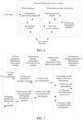
- the secure 2D barcode service system includes a client program and an information storage subsystem.
- the client program includes an information processing module and a 2D barcode module.
- the information processing module is connected to a user input, and the 2D barcode module is connected to scanning of a 2D barcode by a user.
- the information storage subsystem includes a data processing module, a network service module, and a 2D barcode information database.
- the network service module is connected to the scanning of the 2D barcode by the user.
- the user input correspondingly acquires private information input by the user, and the information processing module is configured to send the private information to a server through a network.
- the server receives the private information sent, through the network, by the terminal, and stores the private information.
- the network service module is configured to receive the private information sent, through the network, by the terminal, and transfer the private information to the data processing module, so that the data processing module saves the private information in the 2D barcode information database.
- private information is stored on a server, so that a generated 2D barcode does not include private information, so that security of private information is ensured.
- a manner in which the server stores the private information is not specifically limited in this embodiment, and includes, but is not limited to, storing each piece of private information according to an information identifier of the private information.
- the server generates an information access address corresponding to the private information.
- the server Because private information is stored on a server side, to access private information, in the method provided in this embodiment, the server generates the information access address corresponding to the private information, the information access address being for accessing the private information.
- the generated information access address may be one Uniform Resource Locator (URL).
- the generating an information access address corresponding to the private information includes, but is not limited to:
- a manner of acquiring the information identifier of the private information is not specifically limited in this embodiment.
- Specific implementation includes, but is not limited to, calculating a Message Digest Algorithm 5 (MDS) value according to the entire private information, and the MDS value is a 64-bit 8-byte integral type.
- the MDSvalue is used as the acquired information identifier of the private information. Because one information identifier corresponds to one piece of private information, an information identifier is used as an information access address, so that private information may be accessed by using an information identifier.
- MDS Message Digest Algorithm 5
- the method further includes, but is not limited to:
- the foregoing procedure may be categorized into the following three cases: In a first case, during the acquiring an information identifier of the private information, a check identifier corresponding to the private information may be acquired, and the check identifier corresponding to the private information may be stored; and the information access address including the information identifier of the private information and the check identifier corresponding to the private information is generated.
- a time identifier corresponding to the private information may be acquired; and the information access address including the information identifier of the private information and the time identifier corresponding to the private information is generated.
- a check identifier and a time identifier corresponding to the private information may be acquired, and the check identifier and the time identifier corresponding to the private information are stored; and the information access address including the information identifier of the private information and the check identifier and the time identifier corresponding to the private information is generated.
- Neither of manners of acquiring a check identifier and/or a time identifier corresponding to the private information is specifically limited in this embodiment.
- Specific implementation includes, but is not limited to, randomly generating a 64-bit 8-byte integral type value, and using the value as the acquired check identifier corresponding to the private information, the check identifier being for checking the validity of the information access address; and generating a 64-bit 8-byte integral type timestamp according to server time, and using the timestamp as the acquired time identifier corresponding to the private information, the time identifier being for checking effectiveness of information access address.
- the information access address includes one parameter id, and parameter values are a user information ID, a check KEY value, and a timestamp.
- the user information ID corresponds to the information identifier of the private information
- the check KEY value corresponds to the check identifier corresponding to the private information
- the timestamp corresponds to the time identifier corresponding to the private information.
- the data processing module is configured to generate the information access address corresponding to the private information.
- the server returns the information access address to the terminal through the network.
- a manner of returning the information access address to the terminal through the network is not limited.
- the data processing module may send the private address to the network service module, and the network server module returns the information access address to the terminal through the network.
- the terminal receives the information access address returned, through the network, by the server.
- the information processing module is configured to receive the information access address returned, through the network, by the server.
- the information processing module after receiving the information access address returned, through the network, by the server, the information processing module further stores the information access address, and display whether the private information is successfully processed.
- the terminal generates a 2D barcode including the information access address.
- the 2D barcode module is configured to generate the 2D barcode including the information access address.
- the generated 2D barcode may be a QR 2D barcode. Because the generated 2D barcode does not include private information, so that security of the private information is ensured.
- the 2D barcode module after generating the 2D barcode including the information access address, the 2D barcode module further displays the 2D barcode.
- step 501 corresponds to that a user inputs information, and user information is sent through a network
- step 502 and step 503 corresponds to that the user information is transferred, an ID value of the user information is calculated, the user information is saved, the user information has been saved, and a URL for acquiring the information is generated
- step 504 and step 505 correspond to that the URL for acquiring the information is returned, and the URL for acquiring the information is returned through the network, and it is displayed whether processing is successful.
- private information input by a user is sent to a server through a network, an information access address returned by the server through the network is received, and a 2D barcode including the information access address is generated; therefore, generation of a 2D barcode is implemented without enciphering, a cost of generating a 2D barcode is reduced, an application scope of a 2D barcode is broadened, and a generated 2D barcode includes an information access address, so that security of private information is ensured.
- an embodiment of the present invention provides a method for reading a 2D barcode.
- the method provided in the embodiment of the present invention is described in detail. Referring to FIG. 8 , a procedure of the method includes:
- a terminal acquires a 2D barcode including an information access address, and scans the 2D barcode, to obtain the information access address included in the 2D barcode, the information access address being for accessing private information.
- a 2D barcode may be generated by using the method provided in Embodiment 3 above, and the 2D barcode is used as the acquired 2D barcode including the information access address.
- the 2D barcode may be scanned by using a 2D barcode scanning device.
- the 2D barcode scanning device may be a mobile phone, a tablet computer, and the like. Because the acquired 2D barcode includes the information access address, after the 2D barcode is scanned, the information access address included in the 2D barcode may be obtained, the information access address being for accessing private information.
- a user scans a 2D barcode to correspondingly acquire a 2D barcode including an information access address
- a 2D barcode module is configured to scan the 2D barcode, to obtain the information access address included in the 2D barcode.
- the terminal sends the information access address to a server through a network.
- the information access address is sent to the server through the network.
- a manner of sending is not specifically limited in this embodiment.
- the information processing module may send the information access address to the server through the network.
- the information access address may be a URL of a network Hyper Text Transfer Protocol (HTTP)/Hypertext Transfer Protocol over Secure Socket Layer (HTTPS) request.
- HTTP Hyper Text Transfer Protocol
- HTTPS Hypertext Transfer Protocol over Secure Socket Layer
- the server receives the information access address sent, through the network, by the terminal and for accessing private information.
- the network service module is configured to receive the information access address sent, through the network, by the terminal and for accessing private information, and transfer the information access address to the data processing module.
- the server searches prestored private information for private information corresponding to the information access address.
- a manner of searching for the private information corresponding to the information access address is not limited.
- the prestored private information may be directly searched for the private information corresponding to the information access address.
- the prestored private information may be rapidly searched for the private information corresponding to the information identifier included in the information access address.
- the information access address further includes a check identifier and/or a time identifier; the searching the prestored private information for the private information corresponding to the information identifier included in the information access address includes:
- the information access address provided in this embodiment may include the information identifier of the private information, or may further include the information identifier of the private information and the check identifier corresponding to the private information, or may further include the information identifier of the private information and the time identifier corresponding to the private information, or may further include the information identifier of the private information, the check identifier corresponding to the private information, and the time identifier corresponding to the private information.
- four types of information access addresses during the search for the private information, four cases are included:
- the determination of whether the time identifier included in the information access address is ineffective includes, but is not limited to, comparing time recorded in the timestamp with time of a current server; if a difference value between the time recorded in the timestamp and the time of the current server is greater than a preset time threshold, it is determined that the time identifier included in the information access address is ineffective, and it is returned that acquisition of private information fails; and if the difference value between the time recorded in the timestamp and the time of the current server is not greater than the preset time threshold, it is determined that the time identifier included in the information access address is effective.
- the preset time threshold may be 5 minutes. Certainly, in addition to the above preset time threshold, other preset time thresholds such as 4 minutes and 6 minutes may be further used, and are specifically limited in this embodiment.
- the data processing module is configured to search the prestored private information for the private information corresponding to the information access address, the prestored private information being stored in the 2D barcode information database.
- a manner of returning the found private information to the terminal through the network is not limited.
- the data processing module after finding the private information corresponding to the information access address from the prestored private information, the data processing module sends the found private information to the network service module, so that the network service module returns the found private information to the terminal through the network.
- the information processing module is configured to receive the private information returned, through the network, by the server, and use the private information as a reading result of the 2D barcode.
- step 801 and step 802 correspond to that a picture of a 2D barcode is generated and displayed, a user scans the 2D barcode and initiates a network request, and pulls and saves information;
- step 803 and step 804 correspond to that an information pull request is initiated, a URL of the request is transmitted, the URL of the request is parsed, an ID value is acquired, the validity of the request is examined, a check KEY value is compared, a comparison result is returned, effectiveness of the request is examined, a timestamp is checked, it is checked that the timestamp fails, the check result is returned, and information is searched for according to an ID; and step 805 and step 806 correspond to that the information corresponding to the ID is returned, the acquired information is returned, and the acquired information is returned through the network.
- a 2D barcode including an information access address is acquired and scanned to obtain the information access address included in the 2D barcode, the information access address is sent to a server through a network, and private information returned by the server through the network is then received; therefore, reading of a 2D barcode is implemented without deciphering, a cost of reading a 2D barcode is reduced, an application scope of a 2D barcode is broadened, and a read 2D barcode includes an information access address, so that security of private information is ensured.
- an embodiment of the present invention provides a terminal for generating a 2D barcode, the terminal including:
- the receiving module 1003 is configured to receive the information access address that is returned by the server through the network and at least includes an information identifier of the private information.
- private information input by a user is sent to a server through a network, an information access address returned by the server through the network is received, and a 2D barcode including the information access address is generated; therefore, generation of a 2D barcode is implemented without enciphering, a cost of generating a 2D barcode is reduced, an application scope of a 2D barcode is broadened, and a generated 2D barcode includes an information access address, so that security of private information is ensured.
- an embodiment of the present invention provides a server, the server including:
- the generation module 1103 includes:
- the acquisition unit 11031 is further configured to: when an information identifier of the private information is acquired, acquire a check identifier and/or a time identifier corresponding to the private information;
- an embodiment of the present invention provides a terminal for reading a 2D barcode, the terminal including:
- the information access address obtained through scanning by the scanning module 1302 at least includes an information identifier of the private information; and the receiving module 1304 is configured to receive, after the server finds the private information according to the information identifier of the private information included in the information access address, the private information returned through the network.
- the information access address obtained through scanning by the scanning module 1302 further includes a check identifier and/or a time identifier corresponding to the private information; and the receiving module 1304 is configured to receive, after the server finds the private information according to an information identifier of the private information and the check identifier and/or the time identifier corresponding to the private information included in the information access address, the private information returned through the network.
- a 2D barcode including an information access address is acquired and scanned to obtain the information access address included in the 2D barcode, the information access address is sent to a server through a network, and private information returned by the server through the network is then received; therefore, reading of a 2D barcode is implemented without deciphering, a cost of reading a 2D barcode is reduced, an application scope of a 2D barcode is broadened, and a read 2D barcode includes an information access address, so that security of private information is ensured.
- an embodiment of the present invention provides a server, the server including:
- the information access address received by the receiving module 1401 includes an information identifier of the private information; and the search module 1402 is configured to search the prestored private information for the private information corresponding to the information identifier included in the information access address.
- the information access address received by the receiving module 1401 further includes a check identifier and/or a time identifier.
- the search module 1402 includes:
- an information access address sent by a terminal through a network and for accessing private information is received, and private information corresponding to the information access address found from prestored private information is returned to the terminal through the network, so that the terminal uses the private information as a reading result of a 2D barcode; therefore, reading of a 2D barcode is implemented without deciphering, a cost of reading a 2D barcode is reduced, an application scope of a 2D barcode is broadened, and a read 2D barcode includes an information access address, so that security of private information is ensured.
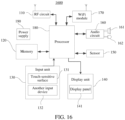
- FIG. 16 is a schematic structural diagram of a terminal involved in the embodiment of the present invention, and the terminal may be configured to implement the method for generating a 2D barcode provided in the above embodiment.
- the terminal 1600 may include components such as a Radio Frequency (RF) circuit 110, a memory 120 including one or more computer readable storage media, an input unit 130, a display unit 140, a sensor 150, an audio circuit 160, a Wireless Fidelity (WiFi) module 170, a processor 180 including one or more processing cores, and a power supply 190.
- RF Radio Frequency
- WiFi Wireless Fidelity
- FIG. 16 does not constitute a limitation to the terminal, and the terminal may include more components or fewer components than those shown in the figure, or some components may be combined, or a different component deployment may be used.
- the RF circuit 110 may be configured to receive and send signals during an information receiving and sending process or a call process. Particularly, downlink information from a base station is received and then delivered to one or more processors 180 for processing. In addition, related uplink data is sent to the base station.
- the RF circuit 110 includes, but is not limited to, an antenna, at least one amplifier, a tuner, one or more oscillators, a subscriber identity module (SIM) card, a transceiver, a coupler, a low noise amplifier (LNA), and a duplexer.
- SIM subscriber identity module
- the RF circuit 110 may also communicate with a network and another device by wireless communication.
- the wireless communication may use any communications standard or protocol, which includes, but is not limited to, Global System for Mobile communications (GSM), General Packet Radio Service (GPRS), Code Division Multiple Access (CDMA), Wideband Code Division Multiple Access (WCDMA), Long Term Evolution (LTE), e-mail, Short Messaging Service (SMS), and the like.
- GSM Global System for Mobile communications
- GPRS General Packet Radio Service
- CDMA Code Division Multiple Access
- WCDMA Wideband Code Division Multiple Access
- LTE Long Term Evolution
- SMS Short Messaging Service
- the memory 120 may be configured to store a software program and module.
- the processor 180 runs the software program and module stored in the memory 120, to implement various functional applications and data processing.
- the memory 120 may mainly include a program storage area and a data storage area.
- the program storage area may store an operating system, an application program required by at least one function (such as a sound playback function and an image display function), and the like.
- the data storage area may store data (such as audio data and an address book) created according to use of the terminal 1600, and the like.
- the memory 120 may include a high speed random access memory, and may also include a nonvolatile memory, such as at least one magnetic disk storage device, a flash memory, or another volatile solid-state storage device. Accordingly, the memory 120 may further include a memory controller, so that the processor 180 and the input unit 130 access the memory 120.
- the input unit 130 may be configured to receive input digit or character information, and generate a keyboard, mouse, joystick, optical, or track ball signal input related to the user setting and function control.
- the input unit 130 may include a touch-sensitive surface 131 and another input device 132.
- the touch-sensitive surface 131 which may also be referred to as a touch screen or a touch panel, may collect a touch operation of a user on or near the touch-sensitive surface (such as an operation of a user on or near the touch-sensitive surface 131 by using any suitable object or accessory, such as a finger or a stylus), and drive a corresponding connection apparatus according to a preset program.
- the touch-sensitive surface 131 may include two parts: a touch detection apparatus and a touch controller.
- the touch detection apparatus detects a touch position of the user, detects a signal generated by the touch operation, and transfers the signal to the touch controller.
- the touch controller receives the touch signal from the touch detection apparatus, converts the touch signal into touch point coordinates, and sends the touch point coordinates to the processor 180.
- the touch controller can receive and execute a command sent from the processor 180.
- the touch-sensitive surface 131 may be may be a resistive, capacitive, infrared, or surface sound wave type touch-sensitive surface.
- the input unit 130 may further include the another input device 132.
- the another input device 132 may include, but is not limited to, one or more of a physical keyboard, a functional key (such as a volume control key or a switch key), a track ball, a mouse, and a joystick.
- the display unit 140 may be configured to display information input by the user or information provided for the user, and various graphical user interfaces of the terminal 1600.
- the graphical user interfaces may be formed by a graph, a text, an icon, a video, and any combination thereof.
- the display unit 140 may include a display panel 141.
- the display panel 141 may be configured by using a liquid crystal display (LCD), an organic light-emitting diode (OLED), or the like.
- the touch-sensitive surface 131 may cover the display panel 141. After detecting a touch operation on or near the touch-sensitive surface 131, the touch-sensitive surface 131 transfers the touch operation to the processor 180, so as to determine the type of the touch event.
- the processor 180 provides a corresponding visual output on the display panel 141 according to the type of the touch event.
- the touch-sensitive surface 131 and the display panel 141 are used as two separate parts to implement input and output functions, in some embodiments, the touch-sensitive surface 131 and the display panel 141 may be integrated to implement the input and output functions.
- the terminal 1600 may further include at least one sensor 150, such as an optical sensor, a motion sensor, and other sensors.
- the optical sensor may include an ambient light sensor and a proximity sensor.
- the ambient light sensor may adjust luminance of the display panel 141 according to brightness of the ambient light.
- the proximity sensor may switch off the display panel 141 and/or backlight when the terminal 1600 is moved to the ear.
- a gravity acceleration sensor may detect magnitude of accelerations in various directions (generally on three axes), may detect magnitude and a direction of the gravity when static, and may be applied to an application that recognizes the attitude of the mobile phone (for example, switching between landscape orientation and portrait orientation, a related game, and magnetometer attitude calibration), a function related to vibration recognition (such as a pedometer and a knock), and the like.
- Other sensors such as a gyroscope, a barometer, a hygrometer, a thermometer, and an infrared sensor, which may be configured in the terminal 1600, are not further described herein.
- the audio circuit 160, a loudspeaker 161, and a microphone 162 may provide audio interfaces between the user and the terminal 1600.
- the audio circuit 160 may convert received audio data into an electric signal and transmit the electric signal to the loudspeaker 161.
- the loudspeaker 161 converts the electric signal into a sound signal for output.
- the microphone 162 converts a collected sound signal into an electric signal.
- the audio circuit 160 receives the electric signal and converts the electric signal into audio data, and outputs the audio data to the processor 180 for processing. Then, the processor 180 sends the audio data to, for example, another terminal by using the RF circuit 110, or outputs the audio data to the memory 120 for further processing.
- the audio circuit 160 may further include an earplug jack, so as to provide communication between a peripheral earphone and the terminal 1600.
- WiFi is a short distance wireless transmission technology.
- the terminal 1600 may help, by using the WiFi module 170, the user to receive and send e-mails, browse a webpage, access stream media, and so on, which provides wireless broadband Internet access for the user.
- FIG. 16 shows the WiFi module 170, it may be understood that the wireless communications unit is not a necessary component of the terminal 1600, and when required, the wireless communications unit may be omitted as long as the scope of the essence of the present disclosure is not changed.
- the processor 180 is the control center of the terminal 1600, and is connected to various parts of the mobile phone by using various interfaces and lines. By running or executing the software program and/or module stored in the memory 120, and invoking data stored in the memory 120, the processor 180 performs various functions and data processing of the terminal 1600, thereby performing overall monitoring on the mobile phone.
- the processor 180 may include one or more processing cores.
- the processor 180 may integrate an application processor and a modem.
- the application processor mainly processes an operating system, a user interface, an application program, and the like.
- the modem mainly processes wireless communication. It may be understood that the foregoing modem may also not be integrated into the processor 180.
- the terminal 1600 further includes the power supply 190 (such as a battery) for supplying power to the components.
- the power supply may be logically connected to the processor 180 by using a power management system, thereby implementing functions such as charging, discharging and power consumption management by using the power management system.
- the power supply 190 may further include any component, such as one or more direct current or alternate current power supplies, a re-charging system, a power supply fault detection circuit, a power supply converter or an inverter, and a power supply state indicator.
- the terminal 1600 may further include a camera, a Bluetooth module, and the like, which are not further described herein.
- the display unit of the terminal is a touch screen display, and the terminal further includes a memory and one or more programs.
- the one or more programs are stored in the memory and configured to be executed by one or more processors.
- the one or more programs contain instructions for executing the following operations:
- the memory of the terminal further includes an instruction for executing the following operation: the receiving an information access address returned, through the network, by the server includes: receiving the information access address that is returned by the server through the network and at least includes an information identifier of the private information.
- the memory of the terminal further includes an instruction for executing the following operation: the receiving an information access address returned, through the network, by the server includes: receiving the information access address that is returned by the server through the network and at least includes an information identifier of the private information and a check identifier and/or a time identifier corresponding to the private information.
- private information input by a user is sent to a server through a network, an information access address returned by the server through the network is received, and a 2D barcode including the information access address is generated; therefore, generation of a 2D barcode is implemented without enciphering, a cost of generating a 2D barcode is reduced, an application scope of a 2D barcode is broadened, and a generated 2D barcode includes an information access address, so that security of private information is ensured.
- An embodiment of the present invention further provides a computer readable storage medium.
- the computer readable storage medium may be a computer readable storage medium included in the memory in the above embodiment, or may also be a computer readable storage medium that exists separately and is not installed in the terminal.
- the computer readable storage medium stores one or more programs, the one or more programs are used by one or more processors to execute one method for generating a 2D barcode, the method including:
- the memory of the terminal further includes an instruction for executing the following operation: the receiving the information access address returned, through the network, by the server includes: receiving the information access address that is returned by the server through the network and at least includes an information identifier of the private information.
- the memory of the terminal further includes an instruction for executing the following operation: receiving an information access address returned, through the network, by the server includes: receiving the information access address that is returned by the server through the network and at least includes an information identifier of the private information and a check identifier and/or a time identifier corresponding to the private information.
- private information input by a user is sent to a server through a network, an information access address returned by the server through the network is received, and a 2D barcode including the information access address is generated; therefore, generation of a 2D barcode is implemented without enciphering, a cost of generating a 2D barcode is reduced, an application scope of a 2D barcode is broadened, and a generated 2D barcode includes an information access address, so that security of private information is ensured.
- An embodiment of the present invention provides a graphical user interface, and the graphical user interface is used on a terminal.
- the terminal includes a touch screen display, a memory, and one or more processors configured to execute one or more programs.
- the graphical user interface includes:
- private information input by a user is sent to a server through a network, an information access address returned by the server through the network is received, and a 2D barcode including the information access address is generated; therefore, generation of a 2D barcode is implemented without enciphering, a cost of generating a 2D barcode is reduced, an application scope of a 2D barcode is broadened, and a generated 2D barcode includes an information access address, so that security of private information is ensured.
- FIG. 17 is a schematic structural diagram of a server provided in an embodiment of the present invention.
- the server 1700 may have big differences due to different configurations or performance, and may include one or more central processing units (CPU) 1722 (for example, one or more processors), a memory 1732, and one or more storage media 1730 (for example, one or more massive storage devices) for storing application programs 1742 or data 1744.
- the memory 1732 and the storage medium 1730 may be stored temporarily or stored permanently.
- the program stored in the storage medium 1730 may include one or more modules (not shown), and each module may include operations on a series of instructions in the server 1700:
- the following instructions may be further included: the generating an information access address corresponding to the private information includes:
- the following instructions may be further included: during the acquiring an information identifier of the private information, further including:
- the central processing unit 1722 may be set to communicate with the storage medium 1730, and operations of a series of instructions in the storage medium 1730 are executed on the server 1700.
- the server 1700 may further include one or more power supplies 1726, one or more wired or wireless network interfaces 1750, one or more input/output interfaces 1758, and/or, one or more operating systems 1741, for example, Windows Server TM , Mac OS X TM , Unix TM , Linux TM , and FreeBSD TM .
- private information sent by a terminal through a network is received and stored, an information access address corresponding to the private information is generated and returned to the terminal through the network, so that the terminal generates a 2D barcode according to the information access address; therefore, generation of a 2D barcode is implemented without enciphering, a cost of generating a 2D barcode is reduced, an application scope of a 2D barcode is broadened, and a generated 2D barcode includes an information access address, so that security of private information is ensured.
- the terminal for generating a 2D barcode and the server provided in the foregoing embodiments generate a 2D barcode
- the foregoing division of functional modules is only used as an example for description. In practical applications, the foregoing functions may be allocated to be accomplished by different functional modules according to needs, that is, the internal structures of the terminal and the server are divided into different functional modules to accomplish all or some of the functions described above.
- the terminal for generating a 2D barcode and the server provided in the foregoing embodiments share the same concept with the embodiments of the method for generating a 2D barcode, and reference may be made to the method embodiments for the specific implementation processes of the terminal and the server, which are no longer elaborated herein.
- an embodiment of the present invention provides a system for generating a 2D barcode, and the system includes: a terminal 1801 and a server 1802.
- the terminal 1801 is configured to acquire private information input by a user, and send the private information to the server 1802 through a network, so that the server 1802 stores the private information, and generates an information access address corresponding to the private information.
- the terminal 1801 is further configured to receive the information access address returned by the server 1802 through the network.
- the terminal 1801 is further configured to generate a 2D barcode including the information access address.
- the terminal 1801 is configured to receive the information access address that is returned by the server 1802 through the network and at least includes an information identifier of the private information.
- the terminal 1801 is configured to receive the information access address that is returned by the server 1802 through the network and at least includes an information identifier of the private information and a check identifier and/or a time identifier corresponding to the private information.
- terminals 1801 and servers 1802 there may be one or more terminals 1801 and servers 1802, and reference may be made to Embodiment 5 and Embodiment 6 above for the structures of the terminal 1801 and the server 1802, which are not specifically limited in this embodiment.
- private information input by a user is sent to a server through a network, an information access address returned by the server through the network is received, and a 2D barcode including the information access address is generated; therefore, generation of a 2D barcode is implemented without enciphering and deciphering, a cost of generating a 2D barcode is reduced, an application scope of a 2D barcode is broadened, and a generated 2D barcode includes an information access address, so that security of private information is ensured.
- FIG. 19 is a schematic structural diagram of a terminal involved in the embodiment of the present invention.
- the terminal may be configured to implement the method for reading a 2D barcode provided in the foregoing embodiment. Specifically:
- the terminal 1900 may include components such as a Radio Frequency (RF) circuit 210, a memory 220 including one or more computer readable storage media, an input unit 230, a display unit 240, a sensor 250, an audio circuit 260, a Wireless Fidelity (WiFi) module 270, a processor 280 including one or more processing cores, and a power supply 290.
- RF Radio Frequency
- the RF circuit 210 may be configured to receive and send signals during an information receiving and sending process or a call process. Particularly, downlink information from a base station is received and then delivered to one or more processors 280 for processing. In addition, related uplink data is sent to the base station.
- the RF circuit 210 includes, but is not limited to, an antenna, at least one amplifier, a tuner, one or more oscillators, a subscriber identity module (SIM) card, a transceiver, a coupler, a low noise amplifier (LNA), and a duplexer.
- SIM subscriber identity module
- the RF circuit 210 may also communicate with a network and another device by wireless communication.
- the wireless communication may use any communications standard or protocol, which includes, but is not limited to, Global System for Mobile communications (GSM), General Packet Radio Service (GPRS), Code Division Multiple Access (CDMA), Wideband Code Division Multiple Access (WCDMA), Long Term Evolution (LTE), e-mail, Short Messaging Service (SMS), and the like.
- GSM Global System for Mobile communications
- GPRS General Packet Radio Service
- CDMA Code Division Multiple Access
- WCDMA Wideband Code Division Multiple Access
- LTE Long Term Evolution
- SMS Short Messaging Service
- the memory 220 may be configured to store a software program and module.
- the processor 280 runs the software program and module stored in the memory 220, to implement various functional applications and data processing.
- the memory 220 may mainly include a program storage area and a data storage area.
- the program storage area may store an operating system, an application program required by at least one function (such as a sound playback function and an image display function), and the like.
- the data storage area may store data (such as audio data and an address book) created according to use of the terminal 1900, and the like.
- the memory 220 may include a high speed random access memory, and may also include a nonvolatile memory, such as at least one magnetic disk storage device, a flash memory, or another volatile solid-state storage device. Accordingly, the memory 220 may further include a memory controller, so that the processor 280 and the input unit 230 access the memory 220.
- the input unit 230 may be configured to receive input digit or character information, and generate a keyboard, mouse, joystick, optical, or track ball signal input related to the user setting and function control.
- the input unit 230 may include a touch-sensitive surface 231 and another input device 232.
- the touch-sensitive surface 231 which may also be referred to as a touch screen or a touch panel, may collect a touch operation of a user on or near the touch-sensitive surface (such as an operation of a user on or near the touch-sensitive surface 231 by using any suitable object or accessory, such as a finger or a stylus), and drive a corresponding connection apparatus according to a preset program.
- the touch-sensitive surface 231 may include two parts: a touch detection apparatus and a touch controller.
- the touch detection apparatus detects a touch position of the user, detects a signal generated by the touch operation, and transfers the signal to the touch controller.
- the touch controller receives the touch signal from the touch detection apparatus, converts the touch signal into touch point coordinates, and sends the touch point coordinates to the processor 280. Moreover, the touch controller can receive and execute a command sent from the processor 280.
- the touch-sensitive surface 231 may be may be a resistive, capacitive, infrared, or surface sound wave type touch-sensitive surface.
- the input unit 230 may further include the another input device 232.
- the another input device 232 may include, but is not limited to, one or more of a physical keyboard, a functional key (such as a volume control key or a switch key), a track ball, a mouse, and a joystick.
- the display unit 240 may be configured to display information input by the user or information provided for the user, and various graphical user interfaces of the terminal 1900.
- the graphical user interfaces may be formed by a graph, a text, an icon, a video, and any combination thereof.
- the display unit 240 may include a display panel 241.
- the display panel 241 may be configured by using a liquid crystal display (LCD), an organic light-emitting diode (OLED), or the like.
- the touch-sensitive surface 231 may cover the display panel 241. After detecting a touch operation on or near the touch-sensitive surface 231, the touch-sensitive surface 231 transfers the touch operation to the processor 280, so as to determine the type of the touch event.
- the processor 280 provides a corresponding visual output on the display panel 241 according to the type of the touch event.
- the touch-sensitive surface 231 and the display panel 241 are used as two separate parts to implement input and output functions, in some embodiments, the touch-sensitive surface 231 and the display panel 241 may be integrated to implement the input and output functions.
- the terminal 1900 may further include at least one sensor 250, such as an optical sensor, a motion sensor, and other sensors.
- the optical sensor may include an ambient light sensor and a proximity sensor.
- the ambient light sensor may adjust luminance of the display panel 241 according to brightness of the ambient light.
- the proximity sensor may switch off the display panel 241 and/or backlight when the terminal 1900 is moved to the ear.
- a gravity acceleration sensor may detect magnitude of accelerations in various directions (generally on three axes), may detect magnitude and a direction of the gravity when static, and may be applied to an application that recognizes the attitude of the mobile phone (for example, switching between landscape orientation and portrait orientation, a related game, and magnetometer attitude calibration), a function related to vibration recognition (such as a pedometer and a knock), and the like.
- Other sensors such as a gyroscope, a barometer, a hygrometer, a thermometer, and an infrared sensor, which may be configured in the terminal 1900, are not further described herein.
- the audio circuit 260, a loudspeaker 261, and a microphone 262 may provide audio interfaces between the user and the terminal 1900.
- the audio circuit 260 may convert received audio data into an electric signal and transmit the electric signal to the loudspeaker 261.
- the loudspeaker 261 converts the electric signal into a sound signal for output.
- the microphone 262 converts a collected sound signal into an electric signal.
- the audio circuit 260 receives the electric signal and converts the electric signal into audio data, and outputs the audio data to the processor 280 for processing. Then, the processor 280 sends the audio data to, for example, another terminal by using the RF circuit 210, or outputs the audio data to the memory 220 for further processing.
- the audio circuit 260 may further include an earplug jack, so as to provide communication between a peripheral earphone and the terminal 1900.
- WiFi is a short distance wireless transmission technology.
- the terminal 1900 may help, by using the WiFi module 270, the user to receive and send e-mails, browse a webpage, access stream media, and so on, which provides wireless broadband Internet access for the user.
- FIG. 19 shows the WiFi module 270, it may be understood that the wireless communications unit is not a necessary component of the terminal 1900, and when required, the wireless communications unit may be omitted as long as the scope of the essence of the present disclosure is not changed.
- the processor 280 is the control center of the terminal 1900, and is connected to various parts of the mobile phone by using various interfaces and lines. By running or executing the software program and/or module stored in the memory 220, and invoking data stored in the memory 220, the processor 280 performs various functions and data processing of the terminal 1900, thereby performing overall monitoring on the mobile phone.
- the processor 280 may include one or more processing cores.
- the processor 280 may integrate an application processor and a modem.
- the application processor mainly processes an operating system, a user interface, an application program, and the like.
- the modem mainly processes wireless communication. It may be understood that the foregoing modem may also not be integrated into the processor 280.
- the terminal 1900 further includes the power supply 290 (such as a battery) for supplying power to the components.
- the power supply may be logically connected to the processor 280 by using a power management system, thereby implementing functions such as charging, discharging and power consumption management by using the power management system.
- the power supply 290 may further include any component, such as one or more direct current or alternate current power supplies, a re-charging system, a power supply fault detection circuit, a power supply converter or an inverter, and a power supply state indicator.
- the terminal 1900 may further include a camera, a Bluetooth module, and the like, which are not further described herein.
- the display unit of the terminal is a touch screen display, and the terminal further includes a memory and one or more programs.
- the one or more programs are stored in the memory and configured to be executed by one or more processors.
- the one or more programs contain instructions for executing the following operations:
- the memory of the terminal further includes instructions for executing the following operations:
- the memory of the terminal further includes instructions for executing the following operations:
- a 2D barcode including an information access address is acquired and scanned to obtain the information access address included in the 2D barcode, the information access address is sent to a server through a network, and the private information returned by the server through the network is then received; therefore, reading of a 2D barcode is implemented without deciphering, a cost of reading a 2D barcode is reduced, an application scope of a 2D barcode is broadened, and a read 2D barcode includes an information access address, so that security of private information is ensured.
- An embodiment of the present invention further provides a computer readable storage medium.
- the computer readable storage medium may be a computer readable storage medium included in the memory in the above embodiment, or may also be a computer readable storage medium that exists separately and is not installed in the terminal.
- the computer readable storage medium stores one or more programs, the one or more programs are used by one or more processors to execute one method for reading a 2D barcode, the method including:
- the memory of the terminal further includes instructions for executing the following operations:
- the memory of the terminal further includes instructions for executing the following operations:
- a 2D barcode including an information access address is acquired and scanned to obtain the information access address included in the 2D barcode, the information access address is sent to a server through a network, and the private information returned by the server through the network is then received; therefore, reading of a 2D barcode is implemented without deciphering, a cost of reading a 2D barcode is reduced, an application scope of a 2D barcode is broadened, and a read 2D barcode includes an information access address, so that security of private information is ensured.
- An embodiment of the present invention provides a graphical user interface, and the graphical user interface is used on a terminal.
- the terminal includes a touchscreen display, a memory, and one or more processors configured to execute one or more programs.
- the graphical user interface includes:
- a 2D barcode including an information access address is acquired and scanned to obtain the information access address included in the 2D barcode, the information access address is sent to a server through a network, and the private information returned by the server through the network is then received; therefore, reading of a 2D barcode is implemented without deciphering, a cost of reading a 2D barcode is reduced, an application scope of a 2D barcode is broadened, and a read 2D barcode includes an information access address, so that security of private information is ensured.
- FIG. 20 is a schematic structural diagram of a server provided in an embodiment of the present invention.
- the server 2000 may have big differences due to different configurations or performance, and may include one or more central processing units (CPU) 2022 (for example, one or more processors), a memory 2032, and one or more storage media 2030 (for example, one or more massive storage devices) for storing application programs 2042 or data 2044.
- the memory 2032 and the storage medium 2030 may be stored temporarily or stored permanently.
- the program stored in the storage medium 2030 may include one or more modules (not shown), and each module may include operations on a series of instructions in the server 2000:
- the information access address includes an information identifier of the private information; and the searching prestored private information for private information corresponding to the information access address includes: searching the prestored private information for the private information corresponding to the information identifier included in the information access address.
- the central processing unit 2022 may be set to communicate with the storage medium 2030, and operations of a series of instructions in the storage medium 2030 are executed on the server 2000.
- the server 2000 may further include one or more power supplies 2026, one or more wired or wireless network interfaces, 2050, one or more input/output interfaces 2058, and/or, one or more operating systems 2041, for example, Windows Server TM , Mac OS X TM , Unix TM , Linux TM , and FreeBSD TM .
- an information access address sent by a terminal through a network is received, and private information corresponding to the information access address found from prestored private information is returned to the terminal through the network, so that the terminal uses the private information as a reading result of a 2D barcode; therefore, reading of a 2D barcode is implemented without deciphering, a cost of reading a 2D barcode is reduced, an application scope of a 2D barcode is broadened, and a read 2D barcode includes an information access address, so that security of private information is ensured.
- the terminal for reading a 2D barcode and the server provided in the foregoing embodiments read a 2D barcode
- the foregoing division of functional modules is only used as an example for description. In practical applications, the foregoing functions may be allocated to be accomplished by different functional modules according to needs, that is, the internal structures of the terminal and the server are divided into different functional modules to accomplish all or some of the functions described above.
- the terminal for generating a 2D barcode and the server provided in the foregoing embodiments share the same concept with the embodiments of the method for reading a 2D barcode, and reference may be made to the method embodiments for the specific implementation processes of the terminal and the server, which are no longer elaborated herein.
- an embodiment of the present invention provides a system for reading a 2D barcode.
- the system includes: a terminal 2101 and a server 2102.
- the terminal 2101 is configured to acquire a 2D barcode including an information access address, and scan the 2D barcode, to obtain the information access address included in the 2D barcode, the information access address being for accessing private information.
- the terminal 2101 is further configured to send the information access address to the server 2102 through a network, so that the server 2102 searches for corresponding private information according to the information access address.
- the terminal 2101 is further configured to receive the private information returned, through the network, by the server 2102, and use the private information as a reading result of the 2D barcode.
- the terminal 2101 is configured to receive, after the server 2102 finds the private information according to the information identifier of the private information included in the information access address, the private information returned through the network.
- the information access address obtained through scanning by the terminal 2101 further includes a check identifier and/or a time identifier corresponding to the private information.
- the terminal 2101 is configured to receive, after the server 2102 finds the private information according to an information identifier of the private information and the check identifier and/or the time identifier corresponding to the private information included in the information access address, the private information returned through the network.
- terminals 1801 and servers 1802 there may be one or more terminals 1801 and servers 1802, and reference may be made to Embodiment 7 and Embodiment 8 above for the structures of the terminal 1801 and the server 1802, which are not specifically limited in this embodiment.
- a 2D barcode including an information access address is acquired and scanned to obtain the information access address included in the 2D barcode, the information access address is sent to a server through a network, and the private information returned by the server through the network is then received; therefore, reading of a 2D barcode is implemented without deciphering, a cost of reading a 2D barcode is reduced, an application scope of a 2D barcode is broadened, and a read 2D barcode includes an information access address, so that security of private information is ensured.
- the program may be stored in a computer readable storage medium.
- the storage medium may be a read-only memory, a magnetic disk, an optical disc, or the like.
Landscapes
- Engineering & Computer Science (AREA)
- Theoretical Computer Science (AREA)
- Physics & Mathematics (AREA)
- General Physics & Mathematics (AREA)
- General Engineering & Computer Science (AREA)
- Databases & Information Systems (AREA)
- Computer Networks & Wireless Communication (AREA)
- Signal Processing (AREA)
- Computer Security & Cryptography (AREA)
- Computing Systems (AREA)
- Computer Hardware Design (AREA)
- Data Mining & Analysis (AREA)
- Electromagnetism (AREA)
- Artificial Intelligence (AREA)
- Computer Vision & Pattern Recognition (AREA)
- Toxicology (AREA)
- General Health & Medical Sciences (AREA)
- Power Engineering (AREA)
- Health & Medical Sciences (AREA)
- Information Transfer Between Computers (AREA)
- Storage Device Security (AREA)
Claims (8)
- Verfahren zum Erzeugen eines 2D-Barcodes, wobei das Verfahren umfasst:Erfassen (101, 501) einer privaten Information, die von einem Benutzer über ein erstes Endgerät eingegeben wird, und Senden (101, 501) der privaten Information durch das erste Endgerät über ein Netzwerk an einen Server, der so konfiguriert ist, die private Information zu speichern und eine Informationszugriffsadresse zu erzeugen, die der privaten Information entspricht; wobei die Informationszugriffsadresse mindestens eine Informationskennung der privaten Information, einen Prüfidentifizierer und einen Zeitidentifizierer der privaten Information umfasst;Empfangen (102, 505) der Informationszugriffsadresse, die vom Server über das Netzwerk zurückgesendet wurde, durch das erste Endgerät; undErzeugen (103, 506) des 2D-Barcodes durch das erste Endgerät, wobei der 2D-Barcode die Informationszugriffsadresse enthält;Empfangen (201, 502) der privaten Information durch den Server, die über das Netzwerk von dem ersten Endgerät gesendet wurde, und Speichern der privaten Information;Erzeugen (202, 503) der Informationszugriffsadresse durch den Server, die der privaten Information entspricht; undZurücksenden (203, 504) der Informationszugriffsadresse durch den Server über das Netzwerk an das erste Endgerät, sodass, wenn ein zweites Endgerät den 2D-Barcode scannt, die in dem 2D-Barcode enthaltene Informationszugriffsadresse empfangen und an den Server gesendet wird, der Server die zuvor gespeicherte private Information entsprechend der Informationskennung der privaten Information durchsucht, nachdem er festgestellt hat, dass der in der Informationszugriffsadresse enthaltene Prüfidentifizierer mit dem zuvor gespeicherten Prüfidentifizierer übereinstimmt und der in der Informationszugriffsadresse enthaltene Zeitidentifizierer gültig ist, und der Server die private Information an das zweite Endgerät zurücksendet.
- Verfahren nach Anspruch 1, wobei das Erzeugen der Informationszugriffsadresse, die der privaten Information entspricht, umfasst:
Erfassen der Informationskennung der privaten Information durch den Server und Speichern der Informationskennung, wobei eine Informationskennung einer privaten Information entspricht. - Verfahren nach Anspruch 2, wobei das Erfassen der Informationskennung der privaten Information weiterhin umfasst:
Erfassen des Prüfidentifizierers und/oder des Zeitidentifizierers, die der privaten Information entsprechen, durch den Server und Speichern des Prüfidentifizierers, der der privaten Information entspricht. - Verfahren zum Lesen eines 2D-Barcodes, wobei das Verfahren umfasst:Erfassen (301, 801) des 2D-Barcodes durch ein zweites Endgerät, das eine Informationszugriffsadresse enthält, und Scannen des 2D-Barcodes, um die in dem 2D-Barcode enthaltene Informationszugriffsadresse zu erhalten, wobei die Informationszugriffsadresse für den Zugriff auf eine private Information bestimmt ist; wobei die Informationszugriffsadresse mindestens eine Informationskennung der privaten Information, einen Prüfidentifizierer und einen Zeitidentifizierer der privaten Information umfasst;Senden (302, 802) der Informationszugriffsadresse durch das zweite Endgerät über ein Netzwerk an einen Server, der so konfiguriert ist, zuvor gespeicherte private Information, die der privaten Information entspricht, anhand der Informationskennung der privaten Information zu durchsuchen, nachdem festgestellt wurde, dass der in der Informationszugriffsadresse enthaltene Prüfidentifizierer mit einem zuvor gespeicherten Prüfidentifizierer übereinstimmt und der in der Informationszugriffsadresse enthaltene Zeitidentifizierer gültig ist, wobei der Server so konfiguriert ist, die private Information an das zweite Endgerät zurückzusenden;Empfangen (401, 803) der durch das zweite Endgerät über das Netzwerk gesendeten Informationszugriffsadresse durch den Server zur Zugriff auf die private Information;Durchsuchen (402, 804) der zuvor gespeicherten privaten Information durch den Server, die der privaten Information entspricht, anhand der in der Informationszugriffsadresse enthaltenen Informationskennung, nachdem festgestellt wurde, dass der in der Informationszugriffsadresse enthaltene Prüfidentifizierer mit dem zuvor gespeicherten Prüfidentifizierer übereinstimmt und der in der Informationszugriffsadresse enthaltene Zeitidentifizierer nicht ungültig ist; undZurücksenden (403, 805) der gefundenen privaten Information durch den Server über das Netzwerk an das zweite Endgerät, sodass das zweite Endgerät die private Information als Leseergebnis des 2D-Barcodes verwendet,Empfangen (303, 806) der privaten Information durch das zweite Endgerät, die über das Netzwerk vom Server zurückgesendet wurde, und Verwenden der privaten Information als Leseergebnis des 2D-Barcodes.
- Verfahren zum Lesen eines 2D-Barcodes nach Anspruch 4, wobei das Verfahren umfasst:Empfangen (201, 502) der privaten Information durch den Server, die über ein Netzwerk von einem ersten Endgerät gesendet wurde, und Speichern der privaten Information;Erzeugen (202, 503) der Informationszugriffsadresse durch den Server, wobei die Informationszugriffsadresse der privaten Information entspricht, die durch den Server empfangen wurde;Zurücksenden (203, 504) der Informationszugriffsadresse durch den Server über das Netzwerk an das erste Endgerät, das den 2D-Barcode erfasst (301, 801).
- Verfahren zum Lesen eines 2D-Barcodes nach Anspruch 5, wobei das Verfahren umfasst:Erfassen (101, 501) der privaten Information durch das erste Endgerät, die von einem Benutzer eingegeben wurde, und Senden (101, 501) der privaten Information durch das erste Endgerät über das Netzwerk an den Server,Empfangen (102, 505) der durch den Server über das Netzwerk zurückgesendeten Informationszugriffsadresse durch das erste Endgerät; undErzeugen (103, 506) des 2D-Barcodes durch das erste Endgerät, wobei der 2D-Barcode die Informationszugriffsadresse enthält.
- System zum Erzeugen eines 2D-Barcodes, umfassend:
ein erstes Endgerät zum Erzeugen des 2D-Barcodes, umfassend:ein Erfassungsmodul (1001), das dazu konfiguriert ist, private Information zu erfassen, die von einem Benutzer eingegeben wird;ein Sendemodul (1002), das dazu konfiguriert ist, die private Information über ein Netzwerk an einen Server zu senden, der so konfiguriert ist, die private Information zu speichern und eine Informationszugriffsadresse zu erzeugen, die der privaten Information entspricht; wobei die Informationszugriffsadresse mindestens eine Informationskennung der privaten Information, einen Prüfidentifizierer und einen Zeitidentifizierer der privaten Information umfasst;ein erstes Empfangsmodul (1003), das dazu konfiguriert ist, die durch den Server über das Netzwerk zurückgesendete Informationszugriffsadresse zu empfangen; undein erstes Erzeugungsmodul (1004), das dazu konfiguriert ist, einen 2D-Barcode zu erzeugen, der die Informationszugriffsadresse umfasst; wobei der 2D-Barcode so konfiguriert ist, dass, wenn ein zweites Endgerät den 2D-Barcode scannt, die in dem 2D-Barcode enthaltene Informationszugriffsadresse empfangen und an den Server gesendet wird, und der Server zuvor gespeicherte private Information, die der privaten Information entspricht, anhand der Informationskennung der privaten Information durchsucht, nachdem festgestellt wurde, dass der in der Informationszugriffsadresse enthaltene Prüfidentifizierer mit einem zuvor gespeicherten Prüfidentifizierer übereinstimmt und der in der Informationszugriffsadresse enthaltene Zeitidentifizierer gültig ist, und der Server die private Information an das zweite Endgerät zurücksendet, undder Server umfassend:ein zweites Empfangsmodul (1101), das dazu konfiguriert ist, die private Information zu empfangen, die über das Netzwerk durch das erste Endgerät gesendet wurde;ein Speichermodul (1102), das dazu konfiguriert ist, die private Information zu speichern;ein zweites Erzeugungsmodul (1103), das dazu konfiguriert ist, die Informationszugriffsadresse zu erzeugen, die der privaten Information entspricht; undein Rücksendemodul (1104), das dazu konfiguriert ist, die Informationszugriffsadresse über das Netzwerk an das erste Endgerät zurückzusenden, das so konfiguriert ist, dass das erste Endgerät den 2D-Barcode basierend auf der Informationszugriffsadresse erzeugt; wobei, nachdem ein zweites Endgerät den 2D-Barcode gescannt hat, die in dem 2D-Barcode enthaltene Informationszugriffsadresse empfangen und an den Server gesendet wird, der Server die zuvor gespeicherte private Information, die der privaten Information entspricht, anhand der Informationskennung der privaten Information durchsucht, nachdem festgestellt wurde, dass der in der Informationszugriffsadresse enthaltene Prüfidentifizierer mit dem zuvor gespeicherten Prüfidentifizierer übereinstimmt und der in der Informationszugriffsadresse enthaltene Zeitidentifizierer gültig ist, und der Server die private Information an das zweite Endgerät zurücksendet. - System zum Lesen eines 2D-Barcodes, umfassend:
ein zweites Endgerät zum Lesen des 2D-Barcodes, umfassend:ein Erfassungsmodul (1301), das dazu konfiguriert ist, den 2D-Barcode zu erfassen, der eine Informationszugriffsadresse umfasst; wobei die Informationszugriffsadresse mindestens eine Informationskennung der privaten Information, einen Prüfidentifizierer und einen Zeitidentifizierer der privaten Information umfasst;ein Scannermodul (1302), das dazu konfiguriert ist, den 2D-Barcode zu scannen, um die in dem 2D-Barcode enthaltene Informationszugriffsadresse zu erhalten, wobei die Informationszugriffsadresse zum Zugriff auf die private Information bestimmt ist;ein Sendemodul (1303), das dazu konfiguriert ist, die Informationszugriffsadresse über ein Netzwerk an einen Server zu senden, der so konfiguriert ist, zuvor gespeicherte private Information, die der privaten Information entspricht, anhand der Informationskennung der privaten Information zu durchsuchen, nachdem festgestellt wurde, dass der in der Informationszugriffsadresse enthaltene Prüfidentifizierer mit einem zuvor gespeicherten Prüfidentifizierer übereinstimmt und der Zeitidentifizierer in der Informationszugriffsadresse gültig ist, wobei der Server so konfiguriert ist, die private Information an das zweite Endgerät zurückzusenden;ein erstes Empfangsmodul (1304), das dazu konfiguriert ist, die durch den Server über das Netzwerk zurückgesendete private Information zu empfangen; undein Lesemodul (1305), das dazu konfiguriert ist, die private Information als Leseergebnis des 2D-Barcodes zu verwenden, und der Server zur Suche nach zuvor gespeicherter Information, die als Leseergebnis des durch ein erstes Endgerät erzeugten 2D-Barcodes verwendet werden soll,wobei der Server umfasst:ein zweites Empfangsmodul (1401), das dazu konfiguriert ist, eine durch das zweite Endgerät über ein Netzwerk gesendete Informationszugriffsadresse zu empfangen, um auf die private Information zuzugreifen;ein Suchmodul (1402), das dazu konfiguriert ist, die zuvor gespeicherte private Information, die der privaten Information entspricht, anhand der in der Informationszugriffsadresse enthaltenen Informationskennung zu durchsuchen, nachdem festgestellt wurde, dass der in der Informationszugriffsadresse enthaltene Prüfidentifizierer mit dem zuvor gespeicherten Prüfidentifizierer übereinstimmt und der in der Informationszugriffsadresse enthaltene Zeitidentifizierer nicht ungültig ist; undein Rücksendemodul (1403), das dazu konfiguriert ist, die gefundene private Information über das Netzwerk an das zweite Endgerät zurückzusenden, sodass das zweite Endgerät die private Information als Leseergebnis des 2D-Barcodes verwendet.
Applications Claiming Priority (2)
| Application Number | Priority Date | Filing Date | Title |
|---|---|---|---|
| CN201410154998.0A CN104376353B (zh) | 2014-04-17 | 2014-04-17 | 二维码的生成、读取方法、终端及服务器 |
| PCT/CN2015/076861 WO2015158300A1 (en) | 2014-04-17 | 2015-04-17 | Methods and terminals for generating and reading 2d barcode and servers |
Publications (3)
| Publication Number | Publication Date |
|---|---|
| EP3132385A1 EP3132385A1 (de) | 2017-02-22 |
| EP3132385A4 EP3132385A4 (de) | 2017-04-05 |
| EP3132385B1 true EP3132385B1 (de) | 2024-12-18 |
Family
ID=52555249
Family Applications (1)
| Application Number | Title | Priority Date | Filing Date |
|---|---|---|---|
| EP15780070.7A Active EP3132385B1 (de) | 2014-04-17 | 2015-04-17 | Verfahren und systeme zur erzeugung und auslesung von 2d-strichcodes |
Country Status (4)
| Country | Link |
|---|---|
| US (2) | US9798824B2 (de) |
| EP (1) | EP3132385B1 (de) |
| CN (1) | CN104376353B (de) |
| WO (1) | WO2015158300A1 (de) |
Families Citing this family (16)
| Publication number | Priority date | Publication date | Assignee | Title |
|---|---|---|---|---|
| CN104376353B (zh) | 2014-04-17 | 2016-08-17 | 腾讯科技(深圳)有限公司 | 二维码的生成、读取方法、终端及服务器 |
| CN105809213B (zh) * | 2016-03-02 | 2018-08-14 | 东方通信股份有限公司 | 配备二维条码存折的使用方法 |
| CN105774298B (zh) * | 2016-03-02 | 2018-07-27 | 东方通信股份有限公司 | 支持二维条码功能的存折及其使用方法 |
| CN105868811B (zh) * | 2016-04-05 | 2018-09-07 | 东方通信股份有限公司 | 射频存折的存折读写装置及其使用方法 |
| US9965931B2 (en) * | 2016-09-14 | 2018-05-08 | The Boeing Company | Systems and methods for interfacing with an aircraft cabin control system |
| CN106936912A (zh) * | 2017-03-14 | 2017-07-07 | 上海城市水资源开发利用国家工程中心有限公司 | 一种二次供水信息监控方法及系统 |
| JP7098910B2 (ja) * | 2017-11-02 | 2022-07-12 | ブラザー工業株式会社 | 二次元コード生成プログラムおよび二次元コード印刷システム |
| CN109064154B (zh) * | 2018-06-12 | 2021-08-06 | 拉扎斯网络科技(上海)有限公司 | 一种信息传输方法及相关装置 |
| CN109658091A (zh) * | 2018-12-13 | 2019-04-19 | 青岛博宁福田智能交通科技发展有限公司 | 基于二维码的业务实现方法、系统、设备及存储介质 |
| CN109615048A (zh) * | 2018-12-21 | 2019-04-12 | 北京知道创宇信息技术有限公司 | 一种网址处理方法、装置、服务器及用户终端 |
| CN110297807B (zh) * | 2019-07-01 | 2023-03-14 | 深圳盒子信息科技有限公司 | 一种二维码管理方法和装置 |
| CN110769029B (zh) * | 2019-09-11 | 2023-10-31 | 中国平安财产保险股份有限公司 | 一种车主联系方法及服务器、计算机设备和存储介质 |
| CN110706135A (zh) * | 2019-09-24 | 2020-01-17 | 支付宝(杭州)信息技术有限公司 | 合约处理方法以及装置 |
| US11917068B1 (en) | 2020-06-29 | 2024-02-27 | Thomas William Maloney | System, apparatus, and method for secure exchange of personal information |
| CN112287253A (zh) * | 2020-10-28 | 2021-01-29 | 张家港市爱上旅途网络科技有限公司 | 信息显示方法及系统 |
| CN114024843A (zh) * | 2021-11-08 | 2022-02-08 | 北京天融信网络安全技术有限公司 | 设备注册方法、装置、设备及存储介质 |
Citations (2)
| Publication number | Priority date | Publication date | Assignee | Title |
|---|---|---|---|---|
| US20020042779A1 (en) * | 2000-10-11 | 2002-04-11 | Yoshimichi Osaka | Method for authenticating users |
| EP1537717B1 (de) * | 2002-09-13 | 2009-02-18 | Sun Microsystems, Inc. | System für digitale inhaltszugriffskontrolle |
Family Cites Families (12)
| Publication number | Priority date | Publication date | Assignee | Title |
|---|---|---|---|---|
| US6837436B2 (en) * | 1996-09-05 | 2005-01-04 | Symbol Technologies, Inc. | Consumer interactive shopping system |
| US6972863B2 (en) * | 2001-03-19 | 2005-12-06 | Hewlett-Packard Development Company, L.P. | Direct barcode printing from internet database |
| US7542923B2 (en) * | 2002-07-26 | 2009-06-02 | Sony Corporation | System and method for generating a unique identifier that can be used to integrate an offline experience with an online experience |
| JP5655600B2 (ja) * | 2011-01-31 | 2015-01-21 | 株式会社リコー | アルバムシステム、撮影装置、サーバ、プログラム |
| CN102855323A (zh) * | 2012-09-11 | 2013-01-02 | 北京蜂侠飞科技有限公司 | 基于二维码的信息共享方法和系统 |
| CN102833353A (zh) * | 2012-09-19 | 2012-12-19 | 腾讯科技(深圳)有限公司 | 资源分享方法和用户设备 |
| CN103049726A (zh) * | 2012-12-07 | 2013-04-17 | 广州中国科学院先进技术研究所 | 一种行驶证或驾驶证的防伪验证系统及防伪方法 |
| CN103065116B (zh) * | 2012-12-31 | 2016-03-23 | 王石磊 | 一种客户端识别二维码的方法及系统 |
| CN103078868B (zh) * | 2013-01-15 | 2016-08-24 | 广州多益网络科技有限公司 | 一种二维码的应用方法和系统 |
| CN103294834B (zh) * | 2013-06-28 | 2016-06-15 | 百度在线网络技术(北京)有限公司 | 通过二维码进行搜索的方法及搜索引擎 |
| CN103400173A (zh) | 2013-07-25 | 2013-11-20 | 中国科学院信息工程研究所 | 一种含隐私信息的二维码生成及读取方法 |
| CN104376353B (zh) * | 2014-04-17 | 2016-08-17 | 腾讯科技(深圳)有限公司 | 二维码的生成、读取方法、终端及服务器 |
-
2014
- 2014-04-17 CN CN201410154998.0A patent/CN104376353B/zh active Active
-
2015
- 2015-04-17 WO PCT/CN2015/076861 patent/WO2015158300A1/en not_active Ceased
- 2015-04-17 EP EP15780070.7A patent/EP3132385B1/de active Active
-
2016
- 2016-06-27 US US15/193,655 patent/US9798824B2/en active Active
-
2017
- 2017-09-12 US US15/701,646 patent/US9965565B2/en active Active
Patent Citations (2)
| Publication number | Priority date | Publication date | Assignee | Title |
|---|---|---|---|---|
| US20020042779A1 (en) * | 2000-10-11 | 2002-04-11 | Yoshimichi Osaka | Method for authenticating users |
| EP1537717B1 (de) * | 2002-09-13 | 2009-02-18 | Sun Microsystems, Inc. | System für digitale inhaltszugriffskontrolle |
Also Published As
| Publication number | Publication date |
|---|---|
| US9965565B2 (en) | 2018-05-08 |
| EP3132385A4 (de) | 2017-04-05 |
| US9798824B2 (en) | 2017-10-24 |
| US20160306892A1 (en) | 2016-10-20 |
| EP3132385A1 (de) | 2017-02-22 |
| CN104376353B (zh) | 2016-08-17 |
| CN104376353A (zh) | 2015-02-25 |
| US20180004854A1 (en) | 2018-01-04 |
| WO2015158300A1 (en) | 2015-10-22 |
Similar Documents
| Publication | Publication Date | Title |
|---|---|---|
| WO2015158300A1 (en) | Methods and terminals for generating and reading 2d barcode and servers | |
| US12041447B2 (en) | Image sharing method and system, and electronic device | |
| US9703971B2 (en) | Sensitive operation verification method, terminal device, server, and verification system | |
| EP3200487B1 (de) | Nachrichtenverarbeitungsverfahren und vorrichtung | |
| US10853437B2 (en) | Method and apparatus for invoking application programming interface | |
| CN110869907B (zh) | 一种浏览应用页面的方法及终端 | |
| US20170316781A1 (en) | Remote electronic service requesting and processing method, server, and terminal | |
| WO2015000422A1 (en) | Method,device and system for detecting potential phishing websites | |
| AU2018425774A1 (en) | Application function implementation method and electronic device | |
| US20170323115A1 (en) | Method and apparatus for remotely deleting information | |
| US11582179B2 (en) | Information search method, terminal, network device, and system | |
| US11063962B2 (en) | Malicious URL detection method and apparatus, terminal, and computer storage medium | |
| CN111177612B (zh) | 一种页面登录鉴权的方法及相关装置 | |
| US20160308879A1 (en) | Application-Based Service Providing Method, Apparatus, and System | |
| CN104391629B (zh) | 定向发送消息的方法、显示消息的方法、服务器及终端 | |
| WO2015062234A1 (zh) | 移动终端资源处理方法、装置和设备 | |
| CN109600340B (zh) | 操作授权方法、装置、终端以及服务器 | |
| CN107995151B (zh) | 登录验证方法、装置及系统 | |
| EP2869233A1 (de) | Verfahren, Vorrichtung und Endgerät zum Schutz eines Anwendungsprogramms | |
| CN104966024B (zh) | 一种防护数据库的方法及装置 | |
| US11327845B2 (en) | Image synchronization method and device, and server | |
| CN107995150A (zh) | 身份验证方法及装置 | |
| CN105791253A (zh) | 一种获取网站的认证信息的方法和装置 | |
| WO2015014267A1 (en) | Data processing method, terminal and product for backing up and restoring data thereof | |
| TW201503937A (zh) | 一種數據安全性的檢測方法、裝置和系統 |
Legal Events
| Date | Code | Title | Description |
|---|---|---|---|
| STAA | Information on the status of an ep patent application or granted ep patent |
Free format text: STATUS: THE INTERNATIONAL PUBLICATION HAS BEEN MADE |
|
| PUAI | Public reference made under article 153(3) epc to a published international application that has entered the european phase |
Free format text: ORIGINAL CODE: 0009012 |
|
| STAA | Information on the status of an ep patent application or granted ep patent |
Free format text: STATUS: REQUEST FOR EXAMINATION WAS MADE |
|
| 17P | Request for examination filed |
Effective date: 20160606 |
|
| AK | Designated contracting states |
Kind code of ref document: A1 Designated state(s): AL AT BE BG CH CY CZ DE DK EE ES FI FR GB GR HR HU IE IS IT LI LT LU LV MC MK MT NL NO PL PT RO RS SE SI SK SM TR |
|
| AX | Request for extension of the european patent |
Extension state: BA ME |
|
| A4 | Supplementary search report drawn up and despatched |
Effective date: 20170307 |
|
| RIC1 | Information provided on ipc code assigned before grant |
Ipc: H04L 29/06 20060101AFI20170301BHEP Ipc: G06K 7/14 20060101ALI20170301BHEP Ipc: H04L 9/06 20060101ALI20170301BHEP Ipc: G06F 17/30 20060101ALI20170301BHEP Ipc: G06K 19/06 20060101ALI20170301BHEP |
|
| DAV | Request for validation of the european patent (deleted) | ||
| DAX | Request for extension of the european patent (deleted) | ||
| STAA | Information on the status of an ep patent application or granted ep patent |
Free format text: STATUS: EXAMINATION IS IN PROGRESS |
|
| 17Q | First examination report despatched |
Effective date: 20190125 |
|
| RAP3 | Party data changed (applicant data changed or rights of an application transferred) |
Owner name: TENCENT TECHNOLOGY (SHENZHEN) COMPANY LIMITED |
|
| REG | Reference to a national code |
Ref country code: DE Ref legal event code: R079 Free format text: PREVIOUS MAIN CLASS: H04L0029060000 Ipc: H04L0009400000 Ref country code: DE Ref legal event code: R079 Ref document number: 602015090662 Country of ref document: DE Free format text: PREVIOUS MAIN CLASS: H04L0029060000 Ipc: H04L0009400000 |
|
| RIC1 | Information provided on ipc code assigned before grant |
Ipc: G06F 16/955 20190101ALI20230630BHEP Ipc: H04L 9/40 20220101AFI20230630BHEP |
|
| GRAP | Despatch of communication of intention to grant a patent |
Free format text: ORIGINAL CODE: EPIDOSNIGR1 |
|
| STAA | Information on the status of an ep patent application or granted ep patent |
Free format text: STATUS: GRANT OF PATENT IS INTENDED |
|
| INTG | Intention to grant announced |
Effective date: 20240415 |
|
| GRAJ | Information related to disapproval of communication of intention to grant by the applicant or resumption of examination proceedings by the epo deleted |
Free format text: ORIGINAL CODE: EPIDOSDIGR1 |
|
| STAA | Information on the status of an ep patent application or granted ep patent |
Free format text: STATUS: EXAMINATION IS IN PROGRESS |
|
| GRAP | Despatch of communication of intention to grant a patent |
Free format text: ORIGINAL CODE: EPIDOSNIGR1 |
|
| STAA | Information on the status of an ep patent application or granted ep patent |
Free format text: STATUS: GRANT OF PATENT IS INTENDED |
|
| INTC | Intention to grant announced (deleted) | ||
| INTG | Intention to grant announced |
Effective date: 20240807 |
|
| GRAS | Grant fee paid |
Free format text: ORIGINAL CODE: EPIDOSNIGR3 |
|
| GRAA | (expected) grant |
Free format text: ORIGINAL CODE: 0009210 |
|
| STAA | Information on the status of an ep patent application or granted ep patent |
Free format text: STATUS: THE PATENT HAS BEEN GRANTED |
|
| AK | Designated contracting states |
Kind code of ref document: B1 Designated state(s): AL AT BE BG CH CY CZ DE DK EE ES FI FR GB GR HR HU IE IS IT LI LT LU LV MC MK MT NL NO PL PT RO RS SE SI SK SM TR |
|
| REG | Reference to a national code |
Ref country code: GB Ref legal event code: FG4D |
|
| REG | Reference to a national code |
Ref country code: CH Ref legal event code: EP |
|
| REG | Reference to a national code |
Ref country code: DE Ref legal event code: R096 Ref document number: 602015090662 Country of ref document: DE |
|
| REG | Reference to a national code |
Ref country code: IE Ref legal event code: FG4D |
|
| REG | Reference to a national code |
Ref country code: LT Ref legal event code: MG9D |
|
| PG25 | Lapsed in a contracting state [announced via postgrant information from national office to epo] |
Ref country code: HR Free format text: LAPSE BECAUSE OF FAILURE TO SUBMIT A TRANSLATION OF THE DESCRIPTION OR TO PAY THE FEE WITHIN THE PRESCRIBED TIME-LIMIT Effective date: 20241218 |
|
| PG25 | Lapsed in a contracting state [announced via postgrant information from national office to epo] |
Ref country code: FI Free format text: LAPSE BECAUSE OF FAILURE TO SUBMIT A TRANSLATION OF THE DESCRIPTION OR TO PAY THE FEE WITHIN THE PRESCRIBED TIME-LIMIT Effective date: 20241218 |
|
| PG25 | Lapsed in a contracting state [announced via postgrant information from national office to epo] |
Ref country code: BG Free format text: LAPSE BECAUSE OF FAILURE TO SUBMIT A TRANSLATION OF THE DESCRIPTION OR TO PAY THE FEE WITHIN THE PRESCRIBED TIME-LIMIT Effective date: 20241218 |
|
| PG25 | Lapsed in a contracting state [announced via postgrant information from national office to epo] |
Ref country code: NO Free format text: LAPSE BECAUSE OF FAILURE TO SUBMIT A TRANSLATION OF THE DESCRIPTION OR TO PAY THE FEE WITHIN THE PRESCRIBED TIME-LIMIT Effective date: 20250318 |
|
| REG | Reference to a national code |
Ref country code: NL Ref legal event code: MP Effective date: 20241218 |
|
| PG25 | Lapsed in a contracting state [announced via postgrant information from national office to epo] |
Ref country code: LV Free format text: LAPSE BECAUSE OF FAILURE TO SUBMIT A TRANSLATION OF THE DESCRIPTION OR TO PAY THE FEE WITHIN THE PRESCRIBED TIME-LIMIT Effective date: 20241218 Ref country code: GR Free format text: LAPSE BECAUSE OF FAILURE TO SUBMIT A TRANSLATION OF THE DESCRIPTION OR TO PAY THE FEE WITHIN THE PRESCRIBED TIME-LIMIT Effective date: 20250319 |
|
| PG25 | Lapsed in a contracting state [announced via postgrant information from national office to epo] |
Ref country code: RS Free format text: LAPSE BECAUSE OF FAILURE TO SUBMIT A TRANSLATION OF THE DESCRIPTION OR TO PAY THE FEE WITHIN THE PRESCRIBED TIME-LIMIT Effective date: 20250318 |
|
| PG25 | Lapsed in a contracting state [announced via postgrant information from national office to epo] |
Ref country code: NL Free format text: LAPSE BECAUSE OF FAILURE TO SUBMIT A TRANSLATION OF THE DESCRIPTION OR TO PAY THE FEE WITHIN THE PRESCRIBED TIME-LIMIT Effective date: 20241218 |
|
| REG | Reference to a national code |
Ref country code: AT Ref legal event code: MK05 Ref document number: 1753145 Country of ref document: AT Kind code of ref document: T Effective date: 20241218 |
|
| PG25 | Lapsed in a contracting state [announced via postgrant information from national office to epo] |
Ref country code: SM Free format text: LAPSE BECAUSE OF FAILURE TO SUBMIT A TRANSLATION OF THE DESCRIPTION OR TO PAY THE FEE WITHIN THE PRESCRIBED TIME-LIMIT Effective date: 20241218 |
|
| PG25 | Lapsed in a contracting state [announced via postgrant information from national office to epo] |
Ref country code: PL Free format text: LAPSE BECAUSE OF FAILURE TO SUBMIT A TRANSLATION OF THE DESCRIPTION OR TO PAY THE FEE WITHIN THE PRESCRIBED TIME-LIMIT Effective date: 20241218 |
|
| PGFP | Annual fee paid to national office [announced via postgrant information from national office to epo] |
Ref country code: DE Payment date: 20250417 Year of fee payment: 11 |
|
| PG25 | Lapsed in a contracting state [announced via postgrant information from national office to epo] |
Ref country code: ES Free format text: LAPSE BECAUSE OF FAILURE TO SUBMIT A TRANSLATION OF THE DESCRIPTION OR TO PAY THE FEE WITHIN THE PRESCRIBED TIME-LIMIT Effective date: 20241218 |
|
| PG25 | Lapsed in a contracting state [announced via postgrant information from national office to epo] |
Ref country code: IS Free format text: LAPSE BECAUSE OF FAILURE TO SUBMIT A TRANSLATION OF THE DESCRIPTION OR TO PAY THE FEE WITHIN THE PRESCRIBED TIME-LIMIT Effective date: 20250418 |
|
| PG25 | Lapsed in a contracting state [announced via postgrant information from national office to epo] |
Ref country code: PT Free format text: LAPSE BECAUSE OF FAILURE TO SUBMIT A TRANSLATION OF THE DESCRIPTION OR TO PAY THE FEE WITHIN THE PRESCRIBED TIME-LIMIT Effective date: 20250421 |
|
| PG25 | Lapsed in a contracting state [announced via postgrant information from national office to epo] |
Ref country code: EE Free format text: LAPSE BECAUSE OF FAILURE TO SUBMIT A TRANSLATION OF THE DESCRIPTION OR TO PAY THE FEE WITHIN THE PRESCRIBED TIME-LIMIT Effective date: 20241218 |
|
| PGFP | Annual fee paid to national office [announced via postgrant information from national office to epo] |
Ref country code: FR Payment date: 20250415 Year of fee payment: 11 |
|
| PG25 | Lapsed in a contracting state [announced via postgrant information from national office to epo] |
Ref country code: AT Free format text: LAPSE BECAUSE OF FAILURE TO SUBMIT A TRANSLATION OF THE DESCRIPTION OR TO PAY THE FEE WITHIN THE PRESCRIBED TIME-LIMIT Effective date: 20241218 Ref country code: RO Free format text: LAPSE BECAUSE OF FAILURE TO SUBMIT A TRANSLATION OF THE DESCRIPTION OR TO PAY THE FEE WITHIN THE PRESCRIBED TIME-LIMIT Effective date: 20241218 |
|
| PG25 | Lapsed in a contracting state [announced via postgrant information from national office to epo] |
Ref country code: SK Free format text: LAPSE BECAUSE OF FAILURE TO SUBMIT A TRANSLATION OF THE DESCRIPTION OR TO PAY THE FEE WITHIN THE PRESCRIBED TIME-LIMIT Effective date: 20241218 |
|
| PG25 | Lapsed in a contracting state [announced via postgrant information from national office to epo] |
Ref country code: CZ Free format text: LAPSE BECAUSE OF FAILURE TO SUBMIT A TRANSLATION OF THE DESCRIPTION OR TO PAY THE FEE WITHIN THE PRESCRIBED TIME-LIMIT Effective date: 20241218 |
|
| PG25 | Lapsed in a contracting state [announced via postgrant information from national office to epo] |
Ref country code: IT Free format text: LAPSE BECAUSE OF FAILURE TO SUBMIT A TRANSLATION OF THE DESCRIPTION OR TO PAY THE FEE WITHIN THE PRESCRIBED TIME-LIMIT Effective date: 20241218 |
|
| PG25 | Lapsed in a contracting state [announced via postgrant information from national office to epo] |
Ref country code: SE Free format text: LAPSE BECAUSE OF FAILURE TO SUBMIT A TRANSLATION OF THE DESCRIPTION OR TO PAY THE FEE WITHIN THE PRESCRIBED TIME-LIMIT Effective date: 20241218 |
|
| REG | Reference to a national code |
Ref country code: DE Ref legal event code: R097 Ref document number: 602015090662 Country of ref document: DE |
|
| PG25 | Lapsed in a contracting state [announced via postgrant information from national office to epo] |
Ref country code: DK Free format text: LAPSE BECAUSE OF FAILURE TO SUBMIT A TRANSLATION OF THE DESCRIPTION OR TO PAY THE FEE WITHIN THE PRESCRIBED TIME-LIMIT Effective date: 20241218 |
|
| PLBE | No opposition filed within time limit |
Free format text: ORIGINAL CODE: 0009261 |
|
| STAA | Information on the status of an ep patent application or granted ep patent |
Free format text: STATUS: NO OPPOSITION FILED WITHIN TIME LIMIT |
|
| REG | Reference to a national code |
Ref country code: CH Ref legal event code: L10 Free format text: ST27 STATUS EVENT CODE: U-0-0-L10-L00 (AS PROVIDED BY THE NATIONAL OFFICE) Effective date: 20251029 |
|
| REG | Reference to a national code |
Ref country code: CH Ref legal event code: H13 Free format text: ST27 STATUS EVENT CODE: U-0-0-H10-H13 (AS PROVIDED BY THE NATIONAL OFFICE) Effective date: 20251125 |
|
| 26N | No opposition filed |
Effective date: 20250919 |
|
| PG25 | Lapsed in a contracting state [announced via postgrant information from national office to epo] |
Ref country code: LU Free format text: LAPSE BECAUSE OF NON-PAYMENT OF DUE FEES Effective date: 20250417 |
|
| PG25 | Lapsed in a contracting state [announced via postgrant information from national office to epo] |
Ref country code: MC Free format text: LAPSE BECAUSE OF FAILURE TO SUBMIT A TRANSLATION OF THE DESCRIPTION OR TO PAY THE FEE WITHIN THE PRESCRIBED TIME-LIMIT Effective date: 20241218 |
|
| REG | Reference to a national code |
Ref country code: BE Ref legal event code: MM Effective date: 20250430 |
|
| PG25 | Lapsed in a contracting state [announced via postgrant information from national office to epo] |
Ref country code: BE Free format text: LAPSE BECAUSE OF NON-PAYMENT OF DUE FEES Effective date: 20250430 |
|
| PG25 | Lapsed in a contracting state [announced via postgrant information from national office to epo] |
Ref country code: CH Free format text: LAPSE BECAUSE OF NON-PAYMENT OF DUE FEES Effective date: 20250430 |
|
| PGFP | Annual fee paid to national office [announced via postgrant information from national office to epo] |
Ref country code: GB Payment date: 20260324 Year of fee payment: 12 |
|
| PG25 | Lapsed in a contracting state [announced via postgrant information from national office to epo] |
Ref country code: IE Free format text: LAPSE BECAUSE OF NON-PAYMENT OF DUE FEES Effective date: 20250417 |